Article

Agroclimatic and Agronomic Factors Affecting Triticale Grain Quality


by
Beniamin-Emanuel Andraș
1,2,
Peter-Balazs Acs
1,2,
Vasile-Adrian Horga
1,*,
Edward Muntean
1,3,
Susana Mondici
2,
Ionuț Racz
1,3 and
Marcel Matei Duda
1
1
University of Agricultural Sciences and Veterinary Medicine of Cluj-Napoca, No. 3-5 Manastur Str., 400372 Cluj-Napoca, Romania
2
Agricultural Research Development Station, 447180 Livada, Romania
3
Agricultural Research Development Station, 401100 Turda, Romania
*
Author to whom correspondence should be addressed.
Nitrogen 2026, 7(2), 52; https://doi.org/10.3390/nitrogen7020052 (registering DOI)
Submission received: 29 March 2026 / Revised: 10 May 2026 / Accepted: 11 May 2026 / Published: 13 May 2026

Abstract

Nitrogen is a key determinant of both yield and quality in cereal crops; however, its efficiency is strongly influenced by environmental conditions and genotype. This study evaluated the impact of different sowing densities and nitrogen fertilization regimes on grain quality indices in four triticale (×Triticosecale Wittmack) varieties—Negoiu, Utrifun, Zvelt, and Tulnic—using a split-plot arrangement of the 4 × 3 × 3 type, under the climatic conditions of northwestern Romania. The experiment, conducted over two contrasting growing seasons (2021–2023), employed a split-plot design testing three sowing densities (450, 550, and 650 seeds/m2) and three fertilization levels: basic soil nitrogen fertilization, soil + foliar N-P-K application, and soil + foliar + biostimulant. The results indicated that climatic variability had a predominant effect on grain quality, followed by the genetic characteristics of the varieties and their response to water stress. In the drought-affected 2021–2022 season, the Zvelt variety recorded the highest protein content (14.2%), significantly outperforming the control (13.3%). Supplementary foliar fertilization and the use of biostimulants under drought conditions did not improve quality; in some cases, they led to significant decreases in protein content (from 14.36% to 13.69%) and thousand-kernel weight (TKW). Under optimal precipitation conditions in the 2022–2023 season, supplementary fertilization significantly improved hectoliter weight and TKW (reaching 46.7 g compared to 44.2 g in the soil-only treatments). Higher sowing densities (650 seeds/m2) generally led to decreases in hectoliter weight and TKW in favorable years. These results suggest that nitrogen fertilization can improve triticale quality. In this study, high yields, both quantitatively and qualitatively, appear to be mainly influenced by varieties and climatic conditions, especially water availability during critical growth stages.

1. Introduction

Nitrogen is the primary essential macronutrient for plants, playing a key role in agricultural productivity by stimulating vegetative growth and grain maturation. It is involved in the synthesis of proteins, enzymes, and essential metabolic molecules such as nucleic acids, ATP, and chlorophyll. Yield quantity and quality depend on nitrogen application at optimal rates and appropriate phenological stages [1,2].
However, nitrogen represents a major variable cost, and its use efficiency (NRE) in annual crops is often below 50%, being strongly influenced by the interaction between application rate and water availability. Monitoring soil properties, climatic conditions, and plant biophysical parameters is essential for optimizing nitrogen fertilization [3,4]. Technological and climatic factors significantly influence grain quality, expressed as test weight, protein content, and thousand-kernel weight (TKW) [5].
Cereals (species from the Poaceae family) occupy the largest area among cultivated plants worldwide, covering almost 920 million hectares [6]. Triticale (×Triticosecale Wittmack), a synthetic hybrid of wheat (Triticum aestivum) and rye (Secale cereale), presents unique challenges and opportunities for nitrogen management [7]. While it inherits stress resistance from rye and a high yield potential from wheat, its root system is often less developed than that of other cereals like maize, limiting its ability to scavenge soil resources. Consequently, targeted mineral fertilization—particularly split applications of nitrogen—is necessary to sustain high yields. Recent agronomic strategies have increasingly integrated foliar fertilization and biostimulants to bypass soil-related uptake limitations and improve grain quality parameters, specifically under abiotic stress.
The protein content of triticale grains, according to current research, is variable, depending on the author. It ranges between 10.2% and 19.4% [8]. According to some studies, triticale grains contain 12% to 22% protein [9], while other authors report protein contents between 11% and 14% [10], depending on the genotype and environmental factors.
Triticale grains have a higher lysine content compared to wheat grains, 2.56 (g/16 N) [11] or 0.33–0.71% [12], better protein digestibility, and a mineral balance that makes them particularly important [13]. In Sweden, 80 triticale genotypes were identified with an average starch content of 65.5% and an average protein content of 11.7% [14]. Through breeding, triticale inherited valuable traits from rye, such as resistance to stress factors, along with a high lysine content [15,16]. Due to its valuable chemical composition, it is used in various industries and forms.
Since its introduction into agricultural systems worldwide, triticale grains have been used mainly in pig and poultry feeding [17]. Straw, as a by-product, is used for animal feed or bedding. Due to its high biomass production, triticale is also widely used for silage.
In Romania, triticale biomass yields can reach up to 16 t/ha, with some varieties exceeding 11–16 t/ha [18]. The crop is also used for grazing in mixtures with grasses such as Lolium multiflorum [19].
Due to its high starch content and amylolytic activity, triticale is suitable for bioethanol production [20,21], while the grain is also used in aquaculture feeds for species such as Oreochromis niloticus, Salmo salar, and Cyprinus carpio [22,23,24].
Triticale straw is utilized in the pulp and paper industry [25,26], and its flour is applied in food packaging materials and bakery products because of its low gluten content [27,28,29,30,31].
Additionally, triticale contains bioactive compounds such as lunasin and phenolic acids, which have antioxidant, anti-inflammatory, antimicrobial, and cardioprotective effects [32,33].
The results suggest that climatic factors, especially water availability, have a strong influence on triticale grain quality. The effect of nitrogen fertilization varied depending on moisture conditions, with positive responses in favorable years and limited or negative effects under drought. Sowing density also affected quality parameters, mainly through increased competition for resources under better growing conditions. Overall, grain quality appears to be shaped by the interaction between climate and agronomic practices, particularly under variable water availability.

2. Materials and Methods

2.1. Experimental Sites, Soil and Climate

The study was conducted over two consecutive growing seasons (2021–2022 and 2022–2023). It was established in the experimental fields at the Agricultural Research and Development Station in Livada, Satu Mare County (lat. 47°51′, long. 23°08; altitude 120–130 m), located in the northwest of Romania. The experimental site location is illustrated in Figure 1.
The type of soil on which the experiment was established is a typical preluvosol, characterized by a low humus content in the arable layer (2.82%) and an acidic pH of 5.19. This type of soil is composed of the following horizons:
Ap horizon—plowed surface layer (0–18 cm), affected by mechanical tillage, with a low humus content, acidic pH, and 20.9% clay;
Ao horizon—extends from 18 to 40 cm, light-colored, acidic, with 21.1% clay;
AB horizon—transitional layer at 40–55 cm, pH 6.53, with 27% clay;
Bt1w horizon—at 55–70 cm, characterized by clay accumulation and a yellowish-reddish color due to Fe oxides, formed under water stagnation conditions;
Bt2w horizon—at 70–110 cm, with a low pH and high clay content (33.1%) (Table 1).
The climatic conditions during the testing period were one of the main elements that influenced the obtained results, being the dominant factor together with the genetics of the tested varieties. The study began in October 2021 and was completed in June 2023. During this entire period, climatic conditions were recorded throughout the growing season of the triticale crops.
The first year (2021–2022) was characterized by slightly higher temperatures (+0.6 °C compared to the multi-year average), but more importantly by a severe moisture deficit (−90.7 mm), with extreme values recorded in spring and early summer (especially in June and May). This indicates a predominantly dry year, with pronounced water stress during critical growth stages.
In contrast, the second year (2022–2023) was significantly warmer (+1.8 °C) and overall wetter (+34.8 mm), although the precipitation distribution was uneven, with deficits in some months (May, June, and October) and excess in others (December). Winter temperatures were considerably above normal, suggesting atypical overwintering conditions.
Overall, the first year was dominated by drought and water stress, while the second year provided more favorable moisture conditions but with greater thermal variability, leading to different physiological responses in plants (Table 2).

2.2. Biological Material

Four triticale varieties developed by the National Agricultural Research and Development Institute Fundulea were evaluated: Negoiu, Utrifun, Zvelt, and Tulnic. These varieties are registered in the Official Catalogue of Plant Varieties in Romania [34,35].
Negoiu is a variety with a thick and elastic stem, reaching a height of 110–120 cm under usual cultivation conditions. The spikes are large, dull white, awned, and semi-dense. The awns are evenly distributed along the entire length of the spike. The grains are oval, voluminous, elongated, and light red in color. Under these conditions, the thousand-kernel weight ranges between 48 and 54 g, and the hectoliter weight between 72 and 74 kg/hL. It shows good lodging resistance due to its elastic stems and deep root system [36].
Utrifun, registered in 2018, has a semi-erect growth habit at the tillering stage. The stem is thick with prominent nodes, and plant height ranges between 85 and 95 cm under optimal vegetation conditions. The spikes are large, white, and awned. The grains are well-developed, red, and elongated. Under these conditions, the thousand-kernel weight ranges from 45 to 50 g, and the hectoliter weight from 72 to 76 kg/hL. It carries the dominant dwarfing gene Ddw1, which provides good lodging resistance [37].
Zvelt, registered in 2020, has a semi-erect growth habit at the tillering stage. Under favorable growth conditions, plant height reaches 100–110 cm, and the leaves are bright intense green. The grains are of large size, white, and elongated. The thousand-kernel weight ranges from 44 to 54 g, and the hectoliter weight from 75 to 77 kg/hL. Zvelt has good resistance to lodging and winter conditions [38].
Tulnic, registered in 2017, has a semi-prostrate growth habit at the tillering stage. Under normal vegetation conditions, plant height ranges from 110 to 118 cm. The spike is large, semi-dense, and awned, with dull white grains. The grains are substantial, elongated, and light red in color. The thousand-kernel weight ranges between 45 and 58 g, and the hectoliter weight between 73 and 75 kg/hL. This variety shows lodging resistance and a high level of resistance to pre-harvest sprouting [39].

2.3. Experimental Design

The experiment was organized as a split-plot design with three replications involving three experimental factors (4 × 3 × 3), and the plot size was 10 m2 (Table 3):
Factor A: Variety had four levels: A1—represented by Negoiu, A2—represented by Utrifun, A3—represented by Zvelt, and A4—represented by Tulnic.
Factor B: Nitrogen fertilization regime had three levels: B1—represented by soil fertilization in the autumn and spring, B2—represented by soil fertilization + foliar fertilization, and B3—represented by soil fertilization + foliar fertilization + biostimulator.
Factor C: Sowing density had three levels: C1—represented by 450 seeds/m2, C2—represented by 550 seeds/m2, and C3—represented by 650 seeds/m2.

2.4. Technology and Materials Used

The preceding crop in both study years was fodder peas (cv. Magistra Liv). After harvest in July, the field was cultivated using a disc harrow. Ploughing was carried out in September at a depth of 23–25 cm. Subsequently, the land was prepared with two passes of a disc harrow.
Basic soil fertilization was applied at a rate of 150 kg/ha using a complex fertilizer DAP (ammoniacal nitrogen and phosphorus pentoxide), in an 18:46:0 ratio, for all experimental variants. This was followed by seedbed preparation prior to sowing, incorporating the fertilizer into the soil.
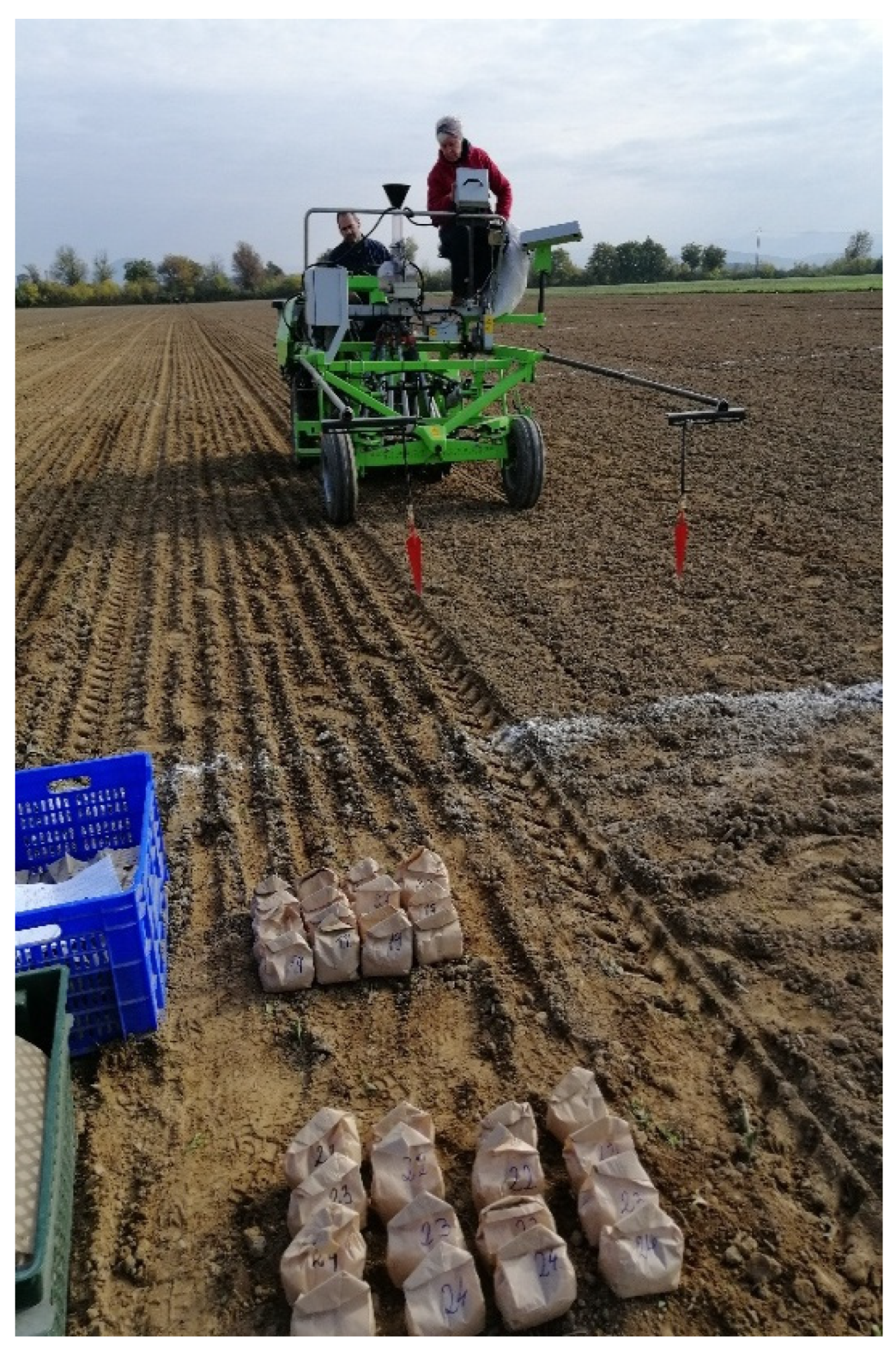
Sowing (October 2021 and 2022) of the four triticale varieties was carried out in experimental plots of 12 m2, 10 m2 for harvest, in three replications, using a Wintersteiger experimental seeder (Figure 2).
During the two years of the study, in the spring, supplementary fertilization was carried out with 300 kg/ha calcium ammonium nitrate, which has an active substance of 27% nitrogen. Weed control was carried out using the herbicide Sekator Progress OD, produced by Bayer, at a dose of 0.15 L/ha in April.
Disease control was performed using the fungicide Nativo Pro, produced by Bayer at a dose of 0.6 L/ha.
The cultivation technology was applied for all experimental variants. Exceptions were the B2 and B3 variants, which in May (2022 and 2023) were additionally fertilized as follows:
  • B2: Foliar fertilization with Solar 10–10–10 + ME at a dose of 3 L/ha. The product contains 10% nitrogen, 10% phosphorus, 10% potassium, and microelements: 0.03% copper, 0.15% zinc, 0.02% boron, and 0.025% magnesium.
  • B3: Supplementary fertilization with Solar 10–10–10 + ME and with Cropmax, a super-concentrated organic biostimulant that contains plant growth stimulators (auxins, cytokinins, and gibberellins), organic amino acids, plant vitamins and enzymes, as well as macro- and microelements such as: nitrogen (N): 0.2%, phosphorus (P): 0.4%, potassium (K): 0.02%, iron: 220 mg/L, magnesium: 550 mg/L, zinc: 49 mg/L, manganese: 54 mg/L, copper: 35 mg/L, boron: 70 mg/L, calcium, molybdenum, cobalt, and nickel: 10 mg/L.
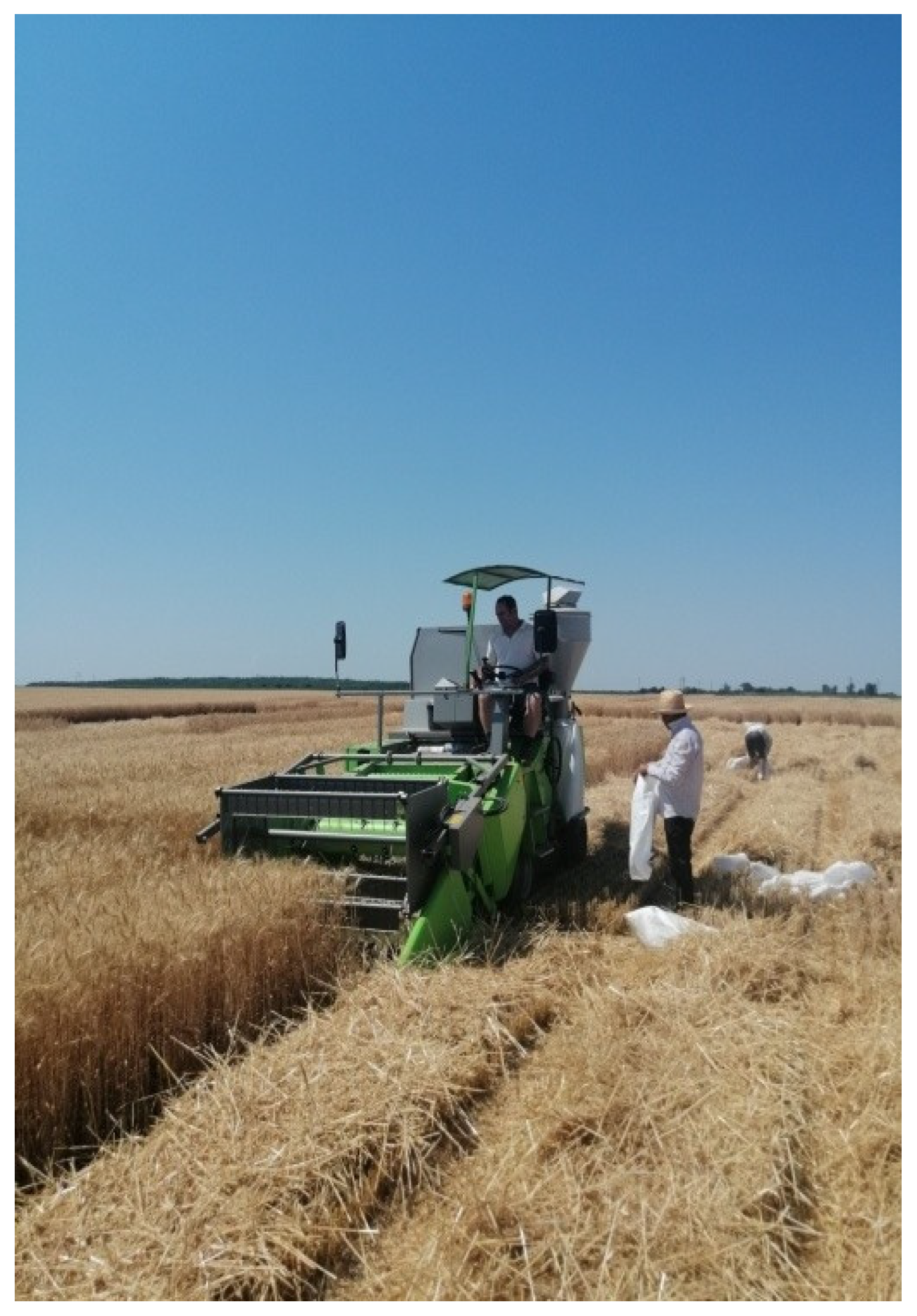
  • The harvest of the experiment took place in July 2022 and 2023, with the Wintersteiger experimental combine (Figure 3).

2.5. Determination of Quality Indices and Statistical Analysis

The harvested grain samples were analyzed for key quality parameters: protein content, thousand-kernel weight (TKW, g), and hectoliter weight (kg/hL). The protein content of the grains was determined after harvest using the NIR analyser Granolyser (Pfeuffer, Germany).
The data were processed by analysis of variance (ANOVA) using the statistical software Polifact to assess the significance of individual factors and their interactions. Means were compared using the least significant difference test at significance levels of p < 0.05 (), p < 0.01 (), and p < 0.001 (), in order to highlight quality differences among the four triticale varieties and their response to changes in sowing density and the influence of foliar fertilizers and biostimulants, as well as the genotypes’ reaction to the interaction of experimental factors under specific climatic conditions.

3. Results

The analysis of variance shows that variety (A), fertilization (B), and their interaction (A × B) had a significant influence on the studied parameters in both years.
In 2021–2022, variety had a highly significant effect (F = 15.751 **), followed by fertilization (F = 4.345 *) and the A × B interaction (F = 5.521 **). In 2022–2023, the effect of fertilization became much stronger (F = 29.048 ***), followed by variety (F = 10.528 **) and A × B interaction (F = 18.520 ***), all showing high significance.
In contrast, sowing density (C) did not have a significant effect in either year (F = 2.350 ns and 0.707 ns, respectively). Similarly, none of the interactions involving density (A × C, B × C, and A × B × C) were statistically significant, indicating the limited role of plant density under the tested conditions.
Overall, the results suggest that genotype and fertilization played an important role in driving variation, while sowing density does not appear to have had a significant influence on the analyzed trait in either experimental year (Table 4).
All three experimental factors had the greatest influence on hectoliter weight in 2022–2023. Under the drought conditions of 2021–2022, the interaction between variety and fertilization had the greatest influence on hectoliter weight (Table 5).
The three experimental factors and the interaction between them had a stronger influence on the thousand-kernel weight in the second year of the study. In 2021–2022, significant influences on TKW were observed from the variety and sowing rate (Table 6).
In the drought year (2021/2022), Zvelt recorded the highest protein content (14.2%), significantly above the control (p < 0.01), while Utrifun had the lowest value (12.8%). Differences in hectoliter weight were not statistically significant. For thousand-kernel weight (TKW), all varieties showed lower values than the control, indicating reduced grain filling under stress conditions.
In the more favorable year (2022/2023), protein content differences were small and mostly not significant. Hectoliter weight increased significantly in all varieties (p < 0.001), with the highest value in Tulnic (+9.0%). However, TKW decreased in all varieties compared to the control, with Tulnic showing the greatest reduction.
Overall, hectoliter weight responded positively to improved climatic conditions, protein content was mainly genotype-dependent, and TKW was the most sensitive trait to environmental variation (Table 7).
In the first year of the study, supplementary fertilization with foliar fertilizer and biostimulator did not improve grain quality; instead, it led to a decrease, particularly in protein content, with the recorded differences being significant decreases. In the second year of the study, the average protein content was 14.36%, compared to 13.69% in the variants fertilized with both foliar fertilizer and biostimulator. Climatic conditions and fertilization in the first year of the study did not result in significant differences in hectoliter weight.
Under optimal growing conditions, in the second year of the study, supplementary fertilization with foliar fertilizer and a biostimulator led to an increase in grain weight.
In the first year of the study, the fertilization scheme did not significantly influence thousand-kernel weight (TKW).
In the second year, the application of supplementary foliar fertilizer and biostimulator resulted in significantly higher TKW values (46.1 g and 46.7 g) compared to the basic soil fertilization (44.2 g), with statistically significant differences where applicable (Table 8).
Sowing density did not significantly influence protein content. However, the control variant recorded the highest overall values. In 2023, sowing density had no significant effect on protein content, with the highest density (650 seeds/m2) showing similar or slightly higher values than the control (14.1–14.2%). In 2022, increasing sowing density did not improve quality traits; at 650 seeds/m2, hectoliter weight was lower than the control (69.5 kg/hL). In both years, the control generally performed best, while in 2023 the highest density (C3) recorded the lowest thousand-kernel weight.
It was observed that in a year with optimal climatic conditions increasing plant density per unit area led to a decrease in hectoliter weight and TKW (Table 9).
In the first year of the study, the Zvelt variety recorded the highest protein content compared to the control. It showed a 1.2% increase over the control, especially at 650 seeds/m2 under soil fertilization, reaching 14.5% protein. At 550 and 650 seeds/m2 with soil + foliar + biostimulator fertilization, the protein content was 14.2%, 1.2% higher than the control (13.0%). At 450 seeds/m2 with soil fertilization, Zvelt recorded a 14.0% protein, 1.0% above the control.
The Utrifun variety showed the lowest protein content, but the differences were not statistically significant, regardless of sowing density or fertilization scheme. Hectoliter weight was not significantly affected by the interaction of factors, except for Utrifun at 550 seeds/m2 with soil + foliar fertilization, which showed a significant decrease (73.4 kg/hL vs. 76.2 kg/hL in the control).
TKW was strongly influenced by the interaction of factors. Utrifun at 450 and 550 seeds/m2 with soil + foliar fertilization showed significant decreases (40.9 g and 38.5 g) compared to the control (49.4 g and 48.0 g). Tulnic at 450 seeds/m2 with soil + foliar fertilization showed a very significant decrease (41.9 g) compared to the control (49.4 g).
Increasing sowing density and applying additional fertilization generally reduced TKW in the first year of the study.
In the second year of the study, under higher precipitation, Tulnic at 450 seeds/m2 with soil + foliar + biostimulator fertilization achieved the highest protein content (14.8%), significantly higher than the control (13.5%).
Utrifun at 450 seeds/m2 with soil fertilization recorded a lower protein content (12.8%), 2.2% below the control, representing a significant decrease. Under favorable conditions, Tulnic improved performance, while Utrifun showed a lower protein content, especially at low densities and basic fertilization.
Changes in sowing density for Utrifun (550 and 650 seeds/m2) increased protein content. However, some treatments still showed significant decreases compared to the control. When soil + foliar + biostimulator fertilization was applied, no significant differences were observed in protein content.
Hectoliter weight was strongly affected by the interaction of factors in the second year. Tulnic showed the highest values. The maximum increase was +7.7 kg/hL at 450 seeds/m2 with soil fertilization (a very significant increase). Values decreased with higher density and additional fertilization but remained significantly higher than the control.
Zvelt, Utrifun, and Tulnic at 550 seeds/m2 with foliar fertilization showed significant increases. Zvelt at 650 seeds/m2 also showed significant improvements. With full fertilization and higher densities, differences were very significantly positive compared to the control.
For TKW in the second year, chemical fertilization alone showed no significant effects. Foliar fertilizer and biostimulator generally reduced TKW. Tulnic at 550 seeds/m2 with soil + foliar + biostimulator showed a significant decrease (43.8 g vs. 52.8 g in the control).
Overall, foliar fertilization reduced grain weight under optimal conditions, while biostimulants partially mitigated the negative effects. Under optimal vegetation conditions, treatments did not increase TKW but rather caused reductions (Table 10).

4. Discussion

Due to the diverse uses of triticale, improving both yield and quality per unit area is an important objective. In practice, chemical fertilization, especially nitrogen application, is commonly used to increase productivity, given nitrogen’s essential role in the structure of proteins, nucleic acids, phospholipids, and chlorophyll. Nitrogen thus contributes to supporting plant growth and development processes, as well as water-use efficiency. Nitrogen deficiency induces plant stress, reducing both yield and quality [40]. Previous studies have shown that protein content is influenced by fertilization regime, genotype, cropping system, and especially climatic conditions. Under optimal conditions, conventional systems may achieve higher quality, although integrated systems are often preferred due to their lower environmental impact [41]. Triticale also contains phenolic acids mainly in the bran fraction, with higher concentrations reported under integrated systems with reduced inputs. Climatic conditions are a major determinant of yield components such as thousand-kernel weight (TKW) and hectoliter weight. Studies from Bulgaria and other regions confirm strong year-to-year variability in these traits due to weather fluctuations [42]. In Montenegro, a study of 4 triticale varieties showed that yield and quality indices are influenced by variety, fertilization, and the interaction between these two factors. It was found that the mass of 1000 grains was highest when 120 kg/ha of fertilizer was used, and the variety “Favorit” had the highest protein content throughout the study period [43]. In Romania, 22 triticale varieties were tested, which were sown after different preceding crops (sunflower and corn), and the soil was prepared using two different systems (plowing and disc harrow), with the two varieties fertilized in six different ways. The lack of fertilization in the variants led to an increase in the thousand kernel weight, due to the number of grains per spike and the number of spikes per square meter. Protein content was significantly influenced by variety, followed by fertilization. The highest hectolitric weight was recorded in the variants prepared with the plow and fertilized with fractional nitrogen [44] Nitrogen fertilization led to in-creased yield and quality indices, such as protein content [45]. In Poland, a study was conducted by adding boron to the fertilization scheme, and the results were significantly higher when nitrogen and boron were used in the fertilization scheme, influencing the increase in the thousand kernel weight. Fertilization with 160 kg/ha recorded negative differences regarding the decrease in the thousand kernel weight [46]. Hecto-litric weight depends on the variety and fertilization level, with the highest mass being recorded in the “Kg20” variety in both years of study, which was fertilized with 120 kg/ha of nitrogen [47]. In a study where three sowing rates (140, 280, 420 plants/m2) were tested, the grain yield was not significantly influenced, but the mass of 1000 grains and the number of grains per spike showed a significant linear decrease as the sowing rate increased. However, protein and lysine content was not influenced by sowing rate [48]. In the Mediterranean basin, the best results were obtained when triti-cales were sown earlier and with a sowing rate between 100 and 300 plants/m2 [49]. Triticale reacts very well to nitrogen and phosphorus fertilization, as shown in a study from Jugastreni, Romania, where at 170 kg/ha N and 130 kg/ha phosphorus, commercial substance, yields of over 9000 kg/ha were [50]. Meteorological and soil conditions influence the quality indices of triticale grains, especially gluten, which is present in smaller proportions in triticale grains compared to wheat [51]. In Bulgaria, it was con-firmed that unfavorable climatic conditions influence both quality and yield, and that quality and yield are also influenced by variety, with the most productive varieties exhibiting ecological plasticity [52]. Yield is primarily influenced by climatic conditions and the chosen variety, with sowing rates also influencing yield. In a study of three varieties (Stil, Gorun, and Plai), sown at 500 seeds/m2, the yields were around 4000 kg/ha. Sown at 300 and 400 seeds/m2, Stil recorded 7200 and 6200 kg/ha, Gorun recorded 7000 and 6600 kg/ha, while Plai recorded the lowest yield at 300 and 400 seeds/m2, 5000 and 4900 kg/ha [53].
In a study conducted in Estonia aimed at increasing the protein content of four triticale varieties, it was demonstrated that nitrogen fertilization applied in spring at the tillering stage led to an increase in protein content, with an average rise of 1.57%. Compared with the control variants, the nitrogen-fertilized varieties showed an in-crease in protein content ranging between 1.74% and 2.77%, depending on the variety. Some varieties exhibited a significant increase in protein content when fertilized with nitrogen rates between N100 and N160 [54].
In a three-year experiment evaluating two triticale varieties (Favorit and Trijumf) and their response to nitrogen fertilization at different rates (60, 90, and 120 kg N ha−1), the best results in terms of gluten value were obtained in the variants fertilized with 120 kg N ha−1 [55].
In an experiment conducted in Montenegro, five triticale varieties were fertilized with nitrogen according to three schemes (60, 90, and 120 kg ha−1 N). The results showed that each triticale variety responded differently to nitrogen fertilization. The variety Tango recorded the highest thousand-kernel weight, while Triumph had the lowest hectoliter weight. An important finding was that nitrogen fertilization led to a significant increase in both thousand-kernel weight and hectoliter weight [56].
The greatest influence on the protein content was exerted by the variety and ferti-lization factors, as well as their interaction. A study was conducted on the effects of herbicide application on the parameters of triticale over a period of three years. The climatic conditions influenced 60% of the yield in the first year, 88% of the TKW (thou-sand kernel weight) in the second year, and 80% of the hectolitric weight in the third year [57].

5. Conclusions

This study shows that nitrogen management is an important factor influencing triticale grain quality, but its effect is strongly dependent on the interaction between genotype and climatic conditions, especially water availability.
Genotypic differences were clearly expressed across the two experimental years. The Zvelt variety showed higher protein content and stability under drought conditions (14.2%), while Tulnic showed more favorable responses in hectoliter weight under conditions with adequate precipitation. These results indicate that grain quality traits are strongly influenced by genotype, particularly under contrasting environmental conditions.
The response to supplementary fertilization with foliar N-P-K and biostimulants varied depending on moisture conditions. Under drought stress, these treatments did not improve grain quality and were associated in some cases with decreases in protein content and thousand-kernel weight. Under more favorable climatic conditions, they contributed to increases in grain filling and hectoliter weight, indicating a clear dependence of fertilization efficiency on environmental conditions.
Sowing density (450–650 seeds/m2) did not significantly influence protein content, showing relatively stable values across treatments. However, in favorable conditions, higher densities tended to reduce hectoliter weight and thousand-kernel weight.
Overall, the results highlight that grain quality in triticale is mainly shaped by the interaction between genotype, fertilization strategy, and climatic conditions, with water availability playing a key role in determining the effectiveness of agronomic inputs.

Author Contributions

Conceptualization, Resources, Data collection, Writing—original draft, B.-E.A.; Methodology, S.M.; Validation, V.-A.H. and M.M.D.; Software, P.-B.A.; Formal analysis, P.-B.A. and V.-A.H.; Visualization, Supervision, I.R.; Writing—review, E.M.; Validation, Writing—review and editing, Supervision, M.M.D. All authors have read and agreed to the published version of the manuscript.

Funding

This research received no external funding.

Institutional Review Board Statement

Not applicable.

Informed Consent Statement

Not applicable.

Data Availability Statement

All data are included within the article.

Acknowledgments

The authors express their gratitude to the University of Agricultural Sciences and Veterinary Medicine, Cluj-Napoca, Romania, and the Agricultural Research Development Station, Livada, Romania, for supporting the publication of this article.

Conflicts of Interest

The authors declare no conflicts of interest related to this article.

References

  1. Rangel, G.D.S.; Pastor, T.D.S.; Ferreira, V.R.; Costa, T.D.O.; Carvalho, R.C.B.; Souza, M.D.O.; Berilli, A.P.C.G.; Berilli, S.D.S. Influence of Nitrogen Sources on Physiological Processes and Morphological Development of Yellow Passion Fruit Seedlings. Nitrogen 2026, 7, 8. [Google Scholar] [CrossRef]
  2. Dhakal, G.; Fujino, T.; Magar, S.T.; Araki, Y. Optimizing Nitrogen and Water Use Efficiency in Wheat Cropping Systems Through Integrated Application of Biochar and Bokashi Under Different Irrigation Regimes. Nitrogen 2025, 6, 21. [Google Scholar] [CrossRef]
  3. Yu, J.; Wang, J.; Leblon, B.; Song, Y. Nitrogen Estimation for Wheat Using UAV-Based and Satellite Multispectral Imagery, Topographic Metrics, Leaf Area Index, Plant Height, Soil Moisture, and Machine Learning Methods. Nitrogen 2022, 3, 1–25. [Google Scholar] [CrossRef]
  4. Ohyama, T.; Hasegawa, H.; Harada, N.; Takahashi, Y.; Ohtake, N.; Ono, Y.; Borodin, I.A. Effects of Nitrogen Application and Planting Density on the Growth and Seed Yield of Four Russian Varieties of Soybean (Glycine max L. Merr.). Nitrogen 2026, 7, 2. [Google Scholar] [CrossRef]
  5. Chețan, F.; Chețan, C.; Șimon, A.; Ceclan, O.A.; Hirișcău, D.; Rezi, R.; Popa, A.; Bărdaș, M.; Urdă, C.; Călugăr, R.E.; et al. The Impact of Soil Tillage Systems and Fertilization Strategies on Winter Wheat Yield Under the Variable Weather Conditions of the Transylvanian Plain. Nitrogen 2026, 7, 12. [Google Scholar] [CrossRef]
  6. Available online: https://www.fao.org/faostat/en/#data/QCL (accessed on 20 January 2025).
  7. Miller, T.E. Systematics and evolution. In Wheat Breeding; Lupton, F.G.H., Ed.; Springer: Dordrecht, The Netherlands, 1987; pp. 1–30. [Google Scholar]
  8. Gașpar, I.; Reichbuch, I. Secara; Editura Academiei Republicii Socialiste: Bucharest, Romania, 1978. [Google Scholar]
  9. Lorenz, K.; Pomeranz, Y. The history, development, and utilization of triticale. Crit. Rev. Food Sci. Nutr. 2009, 49, 175–280. [Google Scholar] [CrossRef]
  10. Heger, J.; Eggum, B.O. The nutritional values of some high-yielding cultivars of triticale. J. Cereal Sci. 1991, 14, 63–71. [Google Scholar] [CrossRef]
  11. Biel, W.; Kazimierska, K.; Bashutska, U. Nutritional value of wheat, triticale, barley and oat grains. Acta Sci. Pol. Zootech. 2020, 19, 19–28. [Google Scholar] [CrossRef]
  12. Fraś, A.; Gołębiewska, K.; Gołębiewski, D.; Mańkowski, D.R.; Boros, D.; Szecowka, P. Variability in the chemical composition of triticale grain, flour and bread. J. Cereal Sci. 2016, 71, 66–72. [Google Scholar] [CrossRef]
  13. Cionca, I.; Lupuț, I.; Rusu, T. Triticale review: Navigating past achievements, current realities and future horizons in agricultural innovation. Agricultura 2024, 129–130, 28–35. [Google Scholar]
  14. Pettersson, D.; Aman, P. The Variation in Chemical Composition of Triticales Grown in Sweden. Acta Agric. Scand. 1987, 37, 20–26. [Google Scholar] [CrossRef]
  15. Fraś, A.; Gołębiewska, K.; Gołębiewski, D.; Wiśniewska, M.; Gzowska, M.; Mańkowski, D.R. Utilization of triticale (×Triticosecale Wittmack) and residual oat flour in breadmaking. Czech J. Food Sci. 2021, 39, 226–233. [Google Scholar] [CrossRef]
  16. Hulse, J.H.; Spurgeon, D. Triticale. Sci. Am. 1974, 231, 72–81. [Google Scholar] [CrossRef]
  17. Glamočlija, N.; Starčević, M.; Ćirić, J.; Šefer, D.; Glišić, M.; Baltić, M.Z.; Marković, R.; Spasić, M.; Glamočlija, D. The importance of triticale in animal nutrition. Vet. J. Repub. Srp. 2018, 18, 73–94. [Google Scholar] [CrossRef]
  18. Ion, V.; Basa, A.G.; Epure, L.I.; Dumbrava, M.; Dinica, N. Above-ground biomass at different triticale varties in the specific conditions from south Romania. Agric. For. 2015, 61, 203–210. [Google Scholar]
  19. Baron, V.S.; Juskiw, P.E.; Aljarrah, M. Triticale as a Forage. In Triticale; Springer Nature: Berlin/Heidelberg, Germany, 2015; pp. 189–212. [Google Scholar]
  20. Mojović, L.; Pejin, D.; Rakin, M.; Pejin, J.; Nikolić, S.; Djukić-Vuković, A. How to improve the economy of bioethanol production in Serbia. Renew. Sustain. Energy Rev. 2012, 16, 6040–6047. [Google Scholar] [CrossRef]
  21. Pejin, D.J.; Mojović, L.V.; Pejin, J.D.; Grujić, O.S.; Markov, S.L.; Nikolić, S.B.; Marković, M.N. Increase in bioethanol production yield from triticale by simultaneous saccharification and fermentation with application of ultrasound. J. Chem. Technol. Biotechnol. 2011, 87, 170–176. [Google Scholar] [CrossRef]
  22. Dawood, M.A.O.; Amer, A.A.; Elbialy, Z.I.; Gouda, A.H. Effects of including triticale on growth performance, digestive enzyme activity, and growth-related genes of Nile tilapia (Oreochromis niloticus). Aquac. 2020, 528, 735568. [Google Scholar] [CrossRef]
  23. Hughes, S.G. Use of triticale as a replacement for wheat middlings in diets for Atlantic salmon. Aquaculture 1990, 90, 173–178. [Google Scholar] [CrossRef]
  24. Marković, G.; Ćirković, M.; Lujić, J.; Pantović, J. Comparison of the Nutritive Value of Wheat and Triticale in Fish Diet. In VI International Conference “Water & Fish”, Faculty of Agriculture, Belgrade-Zemun, Serbia, June 12–14 2013; University of Belgrade, Faculty of Agriculture: Belgrade, Serbia, 2013; pp. 233–237. [Google Scholar]
  25. Bates, I.; Plazonić, I.; Seleš, V.R.; Barbarić-Mikočević, Ž. Determining the quality of paper substrates containing triticale pulp for printing industry. Nord. Pulp Pap. Res. J. 2020, 35, 272–278. [Google Scholar] [CrossRef]
  26. Tarrés, Q.; Ehman, N.V.; Vallejos, M.E.; Area, M.C.; Delgado-Aguilar, M.; Mutjé, P. Lignocellulosic nanofibers from triticale straw: The influence of hemicelluloses and lignin in their production and properties. Carbohydr. Polym. 2017, 163, 20–27. [Google Scholar] [CrossRef]
  27. Salvucci, E.; Rossi, M.; Colombo, A.; Pérez, G.; Borneo, R.; Aguirre, A. Triticale flour films added with bacteriocin-like substance (BLIS) for active food packaging applications. Food Packag. Shelf Life 2019, 19, 193–199. [Google Scholar] [CrossRef]
  28. Galoburda, R.; Straumite, E.; Sabovics, M.; Kruma, Z. Dynamics of Volatile Compounds in Triticale Bread with Sourdough: From Flour to Bread. Foods 2020, 9, 1837. [Google Scholar] [CrossRef]
  29. Leon, A.E.; Rubiolo, A.; Anon, M.C. Use of Triticale Flours in Cookies: Quality Factors. Cereal Chem. 1996, 73, 779–784. [Google Scholar]
  30. Bonastre, O.; Pérez, G.T.; Gómez, M.; Ribotta, P.D.; Moiraghi, M.; León, A.E. Use of wheat, triticale and rye flours in layer cake production. Int. J. Food Sci. Technol. 2010, 45, 697–706. [Google Scholar] [CrossRef]
  31. Doschanov, J.; Khamraev, N.; Saparbaeva, N.; Yusupova, S. Bread Quality and Organoleptic Indicators of Triticale Varieties Grown in the Khorezm Region. Ann. Rom. Soc. Cell Biol. 2021, 25, 5151–5164. [Google Scholar]
  32. Nakurte, I.; Klavins, K.; Kirhnere, I.; Namniece, J.; Adlere, L.; Matvejevs, J.; Kronberga, A.; Kokare, A.; Strazdina, V.; Legzdina, L.; et al. Discovery of lunasin peptide in triticale (×Triticosecale Wittmack). J. Cereal Sci. 2012, 56, 510–514. [Google Scholar] [CrossRef]
  33. Jańczak-Pieniążek, M.; Horvat, D.; Viljevac Vuletić, M.; Kovačević Babić, M.; Buczek, J.; Szpunar-Krok, E. Antioxidant Potential and Phenolic Acid Profiles in Triticale Grain under Integrated and Conventional Cropping Systems. Agriculture 2023, 13, 1078. [Google Scholar] [CrossRef]
  34. Available online: https://www.incda-fundulea.ro/index_en.html (accessed on 10 February 2026).
  35. Available online: https://istis.ro/wp-content/uploads/2024/07/ISTIS-CATALOG-OFICIAL-2024.pdf (accessed on 10 February 2026).
  36. Available online: https://www.incda-fundulea.ro/fise/negoiu.pdf (accessed on 10 February 2026).
  37. Available online: https://www.incda-fundulea.ro/fise/pdf/Triticale/Utrifun.pdf (accessed on 10 February 2026).
  38. Available online: https://www.incda-fundulea.ro/fise/pdf/Triticale/Zvelt.pdf (accessed on 11 February 2026).
  39. Available online: https://www.incda-fundulea.ro/fise/pdf/Triticale/Tulnic.pdf (accessed on 11 February 2026).
  40. Wang, Q.; Li, S.; Li, J.; Huang, D. The Utilization and Roles of Nitrogen in Plants. Forests 2024, 15, 1191. [Google Scholar] [CrossRef]
  41. Janczak-Pieniazek, M.; Kaszuba, J. The Influence of Agrotechnical Factors on the Yield and Quality Parameters of Winter Triticale Grain. Agriculture 2024, 14, 2219. [Google Scholar] [CrossRef]
  42. Stoyanov, H. Stability and adaptability of yield and yield related traits in bulgarian triticale (×Triticosecale Wittm.) cultivars in drought conditions. AgroLife Sci. J. 2022, 11, 201–212. [Google Scholar] [CrossRef]
  43. Lalević, D.; Miladinović, B.; Biberdžić, M.; Vuković, A.; Milenković, L. Differences in grain yield and grain quality traits of winter triticale depending on the variety, fertilizer and weather conditions. Appl. Ecol. Environ. Res. 2022, 20, 3779–3792. [Google Scholar] [CrossRef]
  44. Dumbravă, M.; Ion, V.; Epure, L.I.; Băsa, A.G.; Ion, N.; Dușa, E.M. Grain Yield and Yield Components at Triticale under Different Technological Conditions. Agric. Agric. Sci. Procedia 2016, 10, 94–103. [Google Scholar] [CrossRef]
  45. Lestingi, A.; Bovera, F.; De Giorgio, D.; Ventrella, D.; Tateo, A. Effects of tillage and nitrogen fertilisation on triticale grain yield, chemical composition and nutritive value. J. Sci. Food Agric. 2010, 90, 2440–2446. [Google Scholar] [CrossRef]
  46. Bielski, S.; Romaneckas, K.; Šarauskis, E. Impact of Nitrogen and Boron Fertilization on Winter Triticale Productivity Parameters. Agronomy 2020, 10, 279. [Google Scholar] [CrossRef]
  47. Lalević, D.; Biberdžić, M.; Jelić, M.; Barać, S. The characteristics of triticale cultivated in rural areas. Agric. For. 2012, 58, 27–34. [Google Scholar]
  48. Gebre-Mariam, H.; Larter, E.N. Effect of plant density on yield, yield components and quality in triticale and glenlea wheat. Can. J. Plant Sci. 1979, 59, 679–683. [Google Scholar] [CrossRef]
  49. Bassu, S.; Asseng, S.; Giunta, F.; Motzo, R. Optimizing triticale sowing densities across the Mediterranean basin. Field Crops Res. 2013, 144, 167–178. [Google Scholar] [CrossRef]
  50. Cionca, I.; Lupuț, I.; Rusu, T. Exploring the pretability potential of triticale cultivation in the Lăpuș depression, Romania: A scientific analysis. Agricultura 2024, 129–130, 190–198. [Google Scholar]
  51. Erekul, O.; Kohn, W. Effect of Weather and Soil Conditions on Yield Components and Bread-Making Quality of Winter Wheat (Triticum aestivum L.) and Winter Triticale (Triticosecale Wittm.) Varieties in North-East Germany. J. Agron. Crop Sci. 2006, 192, 452–464. [Google Scholar] [CrossRef]
  52. Stoyanov, H. Response of Bulgarian triticale cultivars to unfavorable environments. Bulg. J. Crop Sci. 2020, 57, 17–29. [Google Scholar]
  53. Sinescu, V. Fertilizarea Foliară a Culturii de Triticale. 2010, pp. 2–3. Available online: https://www.samanatorul.ro/editura/2010/Vasilichia_Tudose_Sinescu-Culturi_de_triticosecale.pdf (accessed on 11 February 2026).
  54. Alaru, M.; Laur, Ü.; Jaama, E. Influence of nitrogen and weather conditions on the grain quality of winter triticale. Agron. Res. 2003, 1, 3–10. [Google Scholar]
  55. Zečević, V.; Knezević, D.; Bošković, J.; Milenković, S. Effect of nitrogen and ecological factors on quality of winter triticale cultivars. Genetika 2010, 42, 465–474. [Google Scholar] [CrossRef]
  56. Lalević, D.; Biberdžić, M.; Ilić, Z.; Milenković, L.; Tmušić, N.; Stojiljković, J. Effect of cultivar and increased nitrogen quantities on some productive traits of triticale. Agric. For. 2019, 65, 127–136. [Google Scholar] [CrossRef]
  57. Petrova, Z.; Stoyanov, H. Effect of application of foliar herbicides on the productivity and physical parameters of triticale cultiva rs (×Triticosecale Wittm.). Agric. Sci. Technol. 2024, 16, 63–68. [Google Scholar]
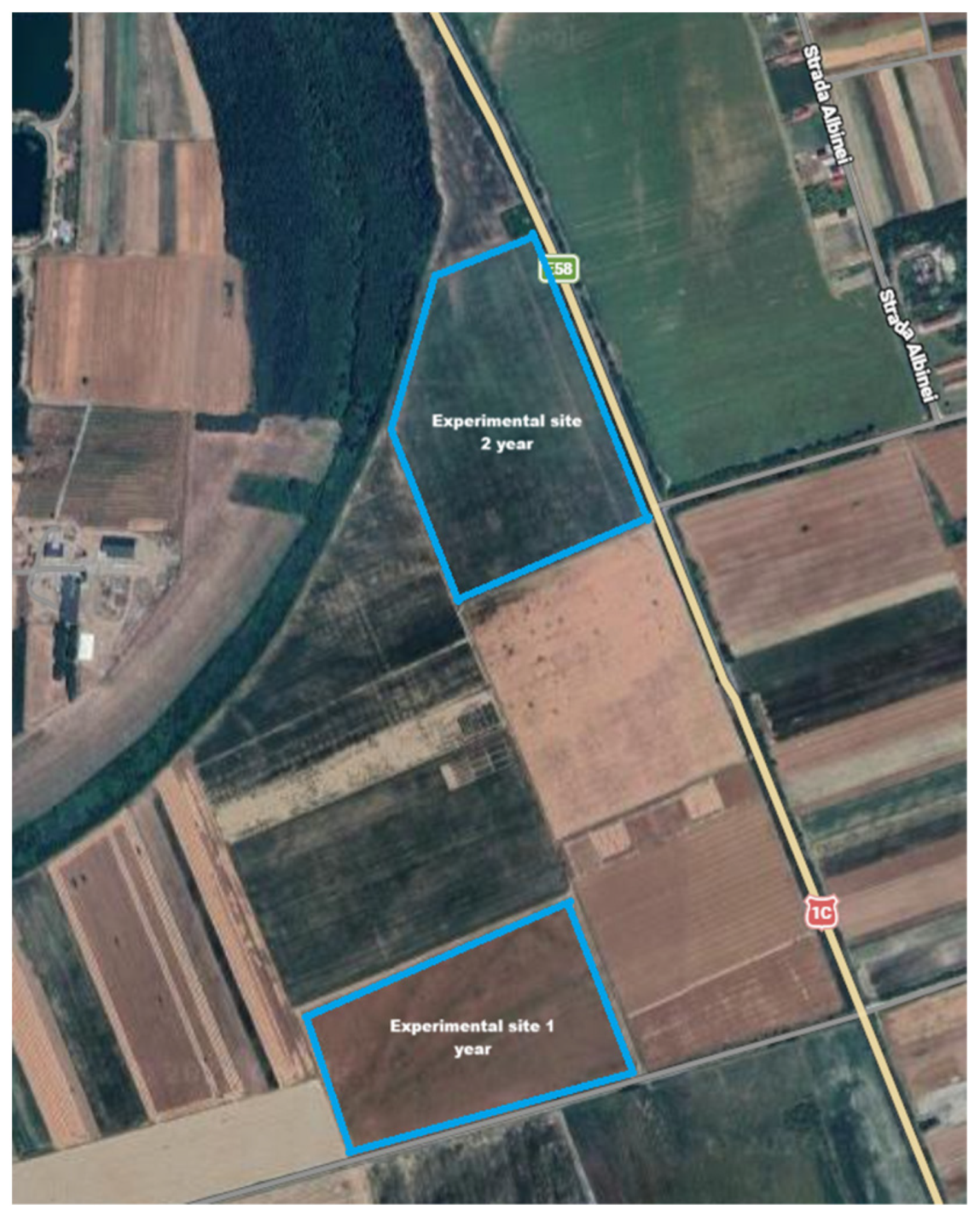
Figure 1. Location of the experimental fields.
Nitrogen 07 00052 g001
Figure 2. Sowing experience with Wintersteiger seeder, October 2022.
Nitrogen 07 00052 g002
Figure 3. Harvesting experience with Wintersteiger combine, July 2023.
Nitrogen 07 00052 g003
Table 1. Soil characteristics of the experimental fields in Livada.
ComponentU. M.
cm
Ap
0–18
Ao
18–40
AB
40–55
Bt1w
55–70
55–70
Bt2w
70–110
80–95
20–3030–40
Humus (C × 1.72)%2.821.440.900.900.843.24
N total%0.1680.1020.0720.0680.064-
pH in water-5.196.246.656.535.625.28
Clay (<0.002 mm)% g/g20.921.123.127.032.433.1
Apparent densityg/cm31.351.541.491.48-1.48
UM—unit of measure; Ap, Ao, AB, Bt1w, Bt2w—soil horizons; N total—nitrogen total.
Table 2. Monthly and mean temperatures and monthly and mean amounts of rainfall during the two cropping seasons (2021/2022 and 2022/2023).
Month2021–20222022–2023
Temp. (°C)Multi-Year AverageDiff.±Rainfall (mm/m2)Multi-Year SumDiff.±Temp. (°C)Multi-Year AverageDiff.± Rainfall (mm/m2)Multi-Year SumDiff.±
Oct.9.09.8−0.813.554.6−4111.89.8229.254.2−25
Noi.5.34.80.565.455.89.66.24.81.478.856.222.6
Dec.1.10.11.0119.361.058.33.10.13111.361.849.5
Jan.−1.8−2.10.376.649.027.64.8−2.06.869.149.319.8
Feb.2.80.12.746.143.92.21.50.11.466.044.221.8
Mar.4.44.7−0.31.345.7−44.06.44.71.745.845.70.1
Apr.8.910.5−1.656.950.536.49.610.5−0.973.350.922.4
May16.315.80.517.976.4−59.016.315.80.519.775.5−55.8
Jun.22.119.03.110.391.1−81.019.719.00.770.290.8−20.6
Mean temp. (°C)7.67.00.6 8.87.01.8
Mean amount of rainfall (mm/m2) 437.30528.0−90.7 563.4528.634.8
(Source: weather station, A.R.D.S. Livada.)
Table 3. Layout of the experiment.
A1B1C1C2C3C1C2C3C1C2C3
B2C1C2C3C1C2C3C1C2C3
B3C1C2C3C1C2C3C1C2C3
A2B1C1C2C3C1C2C3C1C2C3
B2C1C2C3C1C2C3C1C2C3
B3C1C2C3C1C2C3C1C2C3
A3B1C1C2C3C1C2C3C1C2C3
B2C1C2C3C1C2C3C1C2C3
B3C1C2C3C1C2C3C1C2C3
A4B1C1C2C3C1C2C3C1C2C3
B2C1C2C3C1C2C3C1C2C3
B3C1C2C3C1C2C3C1C2C3
A1—Negoiu, A2—Utrifun, A3—Zvelt, A4—Tulnic; B1—soil fertilization in the autumn and spring, B2—soil fertilization + foliar fertilization, B3—soil fertilization + foliar fertilization + biostimulator; C1—450 seeds/m2, C2—550 seeds/m2, C3—650 seeds/m2.
Table 4. ANOVA for protein content (2021–2022 and 2022–2023).
Source of VarianceDegrees of Freedom
(DF)
Mean SquareTest F
2021–20222022–20232021–20222022–2023
Variety (A)38.6517.32115.751 **10.528 **
Fertilization (B)20.6735.5654.345 *29.048 ***
A × B60.8553.5485.521 **18.520 ***
Density (C)20.6330.1482.350 ns0.707 ns
A × C60.0670.1810.249 ns0.865 ns
B × C40.0630.1130.233 ns0.540 ns
A × B × C120.0510.0990.190 ns0.472 ns
Error A60.5490.695--
Error B160.0150.192--
Error C480.0260.002--
Total107----
ns—non-significant, *—significantly positive, **—distinctly significantly positive, ***—very significantly positive.
Table 5. ANOVA for hectoliter weight (2021–2022 and 2022–2023).
Source of VarianceDegrees of Freedom
(DF)
Mean SquareTest F
2021–20222022–20232021–20222022–2023
Variety (A)315.815164.8572.071 ns132.458 ***
Fertilization (B)22.12820.3251.929 ns8.264 **
A × B65.6231.9025.095 **0.773 ns
Density (C)21.6815.3361.274 ns4.703 **
A × C60.5451.0180.413 ns0.898 ns
B × C40.8291.1750.628 ns1.036 ns
A × B × C121.5391.4601.166 ns1.287 ns
Error A61.1621.245--
Error B160.1101.460--
Error C480.0130.335--
Total107----
ns—non-significant, **—distinctly significantly positive, ***—very significantly positive.
Table 6. ANOVA for TKW (2021–2022 and 2022–2023).
Source of VarianceDegrees of Freedom
(DF)
Mean SquareTest F
2021–20222022–20232021–20222022–2023
Variety (A)3227.252104.34123.262 **21.673 **
Fertilization (B)21.15261.5220.261 ns15.366 ***
A × B65.23918.0261.187 ns4.502 **
Density (C)211.83429.2153.443 *14.280 ***
A × C61.3311.8170.387 ns0.888 ns
B × C40.6071.2940.177 ns0.633 ns
A × B × C122.9251.8060.851 ns0.883 ns
Error A69.7694.814--
Error B160.0414.004--
Error C480.6432.046--
Total107----
ns—non-significant, *—significantly positive, **—distinctly significantly positive, ***—very significantly positive.
Table 7. Influence of factor A (variety) on quality indices.
YearVarietyProtein ContentHectoliter WeightTKW
%±kg/hL±g±
2021/
2022
Negoiu (A1)13.3100.0(Ck)75.7100.0(Ck)47.5100.0(Ck)
Utrifun (A2)12.896.7 ns74.998.8 ns41.386.8 000
Zvelt (A3)14.2106.9 **76.5101.0 ns44.192.7 000
Tulnic (A4)13.4101.0 ns76.4100.9 ns41.687.5 000
LSD(p 5%) = 0.49
(p 1%) = 0.75
(p 0.1%) = 1.20
(p 5%) = 1.84
(p 1%) = 2.79
(p 0.1%) = 4.48
(p 5%) = 2.08
(p 1%) = 3.16
(p 0.1%) = 5.07
2022/
2023
Negoiu (A1)14.2100.0(Ck)66.7100.0(Ck)48.2100.0(Ck)
Utrifun (A2)13.494.2 069.1104.5 ***46.295.8 0
Zvelt (A3)14.6102.3 ns70.5105.6 ***44.692.7 00
Tulnic (A4)14.4101.4 ns72.7109.0 ***43.790.6 000
LSD(p 5%) = 0.56
(p 1%) = 0.84
(p 0.1%) = 1.35
(p 5%) = 0.74
(p 1%) = 1.13
(p 0.1%) = 1.8
(p 5%) = 1.46
(p 1%) = 2.22
(p 0.1%) = 3.56
Ck—control, ns—non-significant, 000—very significantly negative, 00—distinctly significantly negative, 0—significantly negative, **—distinctly significantly, ***—very significantly positive, LSD—least significant difference.
Table 8. Influence of factor B (fertilization) on quality indices.
YearVariantProtein ContentHectoliter WeightTKW
%±kg/hL±g±
2021/
2022
(B1) Soil fertilization 13.53100.0(Ck)76.2100.0(Ck)44.8100.0(Ck)
(B2) Soil fertilization + foliar fertilization13.4999.7 ns75.899.6 ns43.499.2 ns
(B3) Soil fertilization + foliar fertilization
+ biostimulator (B3)
13.2898.1 075.799.4 ns43.699.7 ns
LSD(p 5%) = 0.20
(p 1%) = 0.27
(p 0.1%) = 0.37
(p 5%) = 0.52
(p 1%) = 0.72
(p 0.1%) = 1.00
(p 5%) = 1.05
(p 1%) = 1.45
(p 0.1%) = 1.99
2022/
2023
(B1) Soil fertilization 14.36100.0(Ck)69.1100.0(Ck)44.2100.0(Ck)
(B2) Soil fertilization + foliar fertilization14.38100.2 ns70.2101.6 **46.1104.2 **
(B3) Soil fertilization + foliar fertilization
+ biostimulator (B3)
13.6995.4 00070.5102.1 **46.7105.7 ***
LSD(p 5%) = 0.22
(p 1%) = 0.30
(p 0.1%) = 0.41
(p 5%) = 0.78
(p 1%) = 1.08
(p 0.1%) = 1.49
(p 5%) = 1.00
(p 1%) = 1.38
(p 0.1%) = 1.90
Ck—control, ns—non-significant, 000—very significantly negative, 0—significantly negative, **—distinctly significantly, ***—very significantly positive, LSD—least significant difference.
Table 9. Influence of factor C (sowing rate) on quality indices.
YearVariantProtein ContentHectoliter WeightTKW
%±kg/hL±g±
2021/
2022
550 seeds/m2(C2)13.6100.0(Ck)76.1100.0(Ck)43.3100.0(Ck)
450 seeds/m2(C1)13.498.4 ns75.899.6 ns44.3102.2 *
650 seeds/m2(C3)13.398.2 ns75.799.4 ns43.299.8 ns
LSD(p 5%) = 0.25
(p 1%) = 0.33
(p 0.1%) = 0.43
(p 5%) = 0.54
(p 1%) = 0.73
(p 0.1%) = 0.95
(p 5%) = 0.88
(p 1%) = 1.17
(p 0.1%) = 1.53
2022/
2023
550 seeds/m2(C2)14.1100.0(Ck)70.1100.0(Ck)46.0100.0(Ck)
450 seeds/m2(C1)14.2100.8 ns70.2100.1 ns46.4100.9 ns
650 seeds/m2(C3)14.1100.0 ns69.599.1 044.697.1 000
LSD(p 5%) = 0.22
(p 1%) = 0.29
(p 0.1%) = 0.38
(p 5%) = 0.50
(p 1%) = 0.67
(p 0.1%) = 0.88
(p 5%) = 0.68
(p 1%) = 0.90
(p 0.1%) = 1.18
Ck—control, ns—non-significant, 000—very significantly negative, 0—significantly negative, *—significantly positive, LSD—least significant difference.
Table 10. The influence of the interaction of factors A × B × C (variety × fertilization × sowing rate) on quality indices.
YearSymbolProtein ContentHectoliter WeightTKW
%±kg/hL±g±
2021/
2022
A1 × B1 × C113.5100.0(Ck)76.1100.0(Ck)48.9100.0(Ck)
A2 × B1 × C112.995.5 ns75.298.9 ns42.887.5 00
A3 × B1 × C114.5107.9 *76.1100.0 ns44.190.2 0
A4 × B1 × C113.096.5 ns76.7100.8 ns42.186.1 00
A1 × B1 × C213.8100.0(Ck)75.7100.0(Ck)46.3100.0(Ck)
A2 × B1 × C213.194.7 ns75.9100.2 ns41.389.3 0
A3 × B1 × C214.5105.1 ns76.8101.4 ns44.796.5 ns
A4 × B1 × C213.496.9 ns76.9101.5 ns42.491.6 0
A1 × B1 × C313.3100.0(Ck)75.87100.0(Ck)47.5100.0(Ck)
A2 × B1 × C312.896.5 ns75.399.3 ns41.286.8 00
A3 × B1 × C314.5109.3 *75.83100.0 ns43.090.6 0
A4 × B1 × C312.997.2 ns77.5102.2 ns40.986.2 00
A1 × B2 × C113.2100.0(Ck)75.9100.0(Ck)49.4100.0(Ck)
A2 × B2 × C112.796.2 ns74.498.0 ns40.982.9 000
A3 × B2 × C113.9105.6 ns76.5100.8 ns43.588.0 00
A4 × B2 × C113.87105.3 ns76.0100.1 ns41.984.8 000
A1 × B2 × C213.40100.0(Ck)76.2100.0(Ck)48.0100.0(Ck)
A2 × B2 × C213.3799.8 ns73.496.3038.580.3 000
A3 × B2 × C214.07105.0 ns76.8100.7 ns44.592.8 ns
A4 × B2 × C213.97104.2 ns77.3101.4 ns41.386.1 00
A1 × B2 × C313.2100.0(Ck)75.5100.0(Ck)46.4100.0(Ck)
A2 × B2 × C312.897.0 ns73.297.0 ns40.086.2 00
A3 × B2 × C313.7104.3 ns77.03102.0 ns45.197.1 ns
A4 × B2 × C313.8105.1 ns77.5102.6 ns41.589.3 0
A1 × B3 × C113.2100.0(Ck)75.8100.0(Ck)47.9100.0(Ck)
A2 × B3 × C112.594.2 ns75.499.5 ns42.388.3 00
A3 × B3 × C114.1106.8 ns75.9100.2 ns45.695.3 ns
A4 × B3 × C113.299.5 ns76.0100.3 ns41.987.5 00
A1 × B3 × C213.0100.0(Ck)75.6100.0(Ck)47.1100.0(Ck)
A2 × B3 × C212.899.0 ns75.9100.4 ns42.389.8 0
A3 × B3 × C214.2109.3 *76.7101.5 ns42.590.4 0
A4 × B3 × C213.4103.1 ns76.3101.0 ns40.987.0 00
A1 × B3 × C313.0100.0(Ck)75.03100.0(Ck)46.4100.0(Ck)
A2 × B3 × C312.697.2 ns74.9799.9 ns42.090.5 0
A3 × B3 × C314.2109.0 *77.0102.6 ns43.694.0 ns
A4 × B3 × C313.2101.3 ns73.698.1 ns41.389.1 0
LSD(p 5%) = 0.91
(p 1%) = 1.26
(p 0.1%) = 1.76
(p 5%) = 2.54
(p 1%) = 3.62
(p 0.1%) = 5.30
(p 5%) = 3.65
(p 1%) = 5.10
(p 0.1%) = 7.21
2022/
2023
A1 × B1 × C115.0100.0(Ck)65.5100.0(Ck)46.4100.0(Ck)
A2 × B1 × C112.885.300068.9105.2 **45.297.4 ns
A3 × B1 × C115.2101.3 ns69.4106.0 ***43.994.5 ns
A4 × B1 × C114.798.0 ns73.2111.8 ***44.896.9 ns
A1 × B1 × C214.6100.0(Ck)65.7100.0(Ck)44.7100.0(Ck)
A2 × B1 × C212.988.40069.1105.3 **45.1100.9 ns
A3 × B1 × C215.1103.0 ns69.4105.7 **43.296.7 ns
A4 × B1 × C214.7100.2 ns72.3110.2 ***44.198.8 ns
A1 × B1 × C314.4100.0(Ck)66.0100.0(Ck)42.8100.0(Ck)
A2 × B1 × C313.191.20068.7104.1 *44.9104.8 ns
A3 × B1 × C315.0104.4 ns68.9104.4 **42.599.4 ns
A4 × B1 × C314.7102.1 ns71.8108.8 ***42.8100.1 ns
A1 × B2 × C114.7100.0(Ck)68.3100.0(Ck)50.9100.0(Ck)
A2 × B2 × C113.591.8070.5103.2 *47.693.5 0
A3 × B2 × C115.1102.7 ns70.4103.1 *45.789.8 00
A4 × B2 × C114.497.7 ns72.8106.5 ***43.585.3 000
A1 × B2 × C214.3100.0(Ck)66.4100.0(Ck)49.5100.0(Ck)
A2 × B2 × C213.594.0 ns70.4106.1 ***47.195.3 ns
A3 × B2 × C215.2105.8 ns71.4107.5 ***44.790.3 00
A4 × B2 × C214.398.6 ns72.4109.1 ***43.587.9 000
A1 × B2 × C314.6100.0(Ck)66.1100.0(Ck)47.7100.0(Ck)
A2 × B2 × C313.693.1069.8105.6 **45.795.9 ns
A3 × B2 × C315.4105.9 ns70.03106.0 ***43.691.4 00
A4 × B2 × C314.397.9 ns73.6111.0 ***43.190.3 00
A1 × B3 × C113.50100.0(Ck)68.1100.0(Ck)49.8100.0(Ck)
A2 × B3 × C113.53100.2 ns69.8102.4 ns47.294.7 ns
A3 × B3 × C113.499.3 ns71.5105.0 **47.194.4 ns
A4 × B3 × C114.8109.6 **73.6108.1 ***44.388.8 00
A1 × B3 × C213.6100.0(Ck)67.8100.0(Ck)52.8100.0(Ck)
A2 × B3 × C213.7101.0 ns70.1103.4 *46.588.1 000
A3 × B3 × C213.498.8 ns72.5106.9 ***46.588.1 000
A4 × B3 × C214.2104.7 ns73.7108.7 ***43.883.1 000
A1 × B3 × C313.3100.0(Ck)66.8100.0(Ck)49.0100.0(Ck)
A2 × B3 × C313.9104.5 ns70.1104.8 **46.093.9 0
A3 × B3 × C313.299.2 ns70.8105.9 ***44.590.9 00
A4 × B3 × C313.9104.5 ns71.1106.4 ***43.188.0 000
LSD(p 5%) = 0.90
(p 1%) = 1.26
(p 0.1%) = 1.80
(p 5%) = 2.05
(p 1%) = 2.82
(p 0.1%) = 3.86
(p 5%) = 2.90
(p 1%) = 4.03
(p 0.1%) = 5.64
Ck—control, ns—non-significant, 000—very significantly negative, 00—distinctly significantly negative, 0—significantly negative, *—significantly positive, **—distinctly significantly, ***—very significantly positive, LSD—least significant difference.
Disclaimer/Publisher’s Note: The statements, opinions and data contained in all publications are solely those of the individual author(s) and contributor(s) and not of MDPI and/or the editor(s). MDPI and/or the editor(s) disclaim responsibility for any injury to people or property resulting from any ideas, methods, instructions or products referred to in the content.