


Abstract
The rapid proliferation of Internet of Things (IoT) technologies has transformed the modern home into a complex cyber–physical ecosystem encompassing hundreds of millions of connected devices globally. Smart homes support automation, energy management, and healthcare monitoring, but they also introduce a broad and evolving range of security and privacy challenges. This review examines 233 sources published between 2018 and May 2025, selected through a PRISMA-informed process covering five major academic databases and relevant standards and technical reports. It discusses communication protocols, including Matter, develops a Threat-Layer-Defense synthesis matrix covering ten attack categories; examines the practical limitations of AI-based anomaly detection and blockchain-based trust management; and derives recommendations for manufacturers, platform providers, users, and regulators. Privacy challenges, regulatory frameworks, and user behavior are considered alongside technical threats. The findings suggest that scalable smart home security requires coordinated progress in protocol standardization, enforceable device update lifecycles, gateway-level anomaly detection, and privacy-preserving local analytics rather than reliance on a single technical solution.
1. Introduction
The Internet of Things (IoT) has emerged as one of the most consequential technological paradigms of the early twenty-first century. Building on the general IoT survey by Salih et al. [1], the present paper narrows its focus to the smart home, one of the most dynamic and security-critical deployment domains. The scale of adoption is significant: approximately 478–482 million homes worldwide were equipped with at least one smart device by 2025 [2], with annual shipments reaching 1.77 billion units [3] and a global market valuation of approximately $147.5 billion [4]. Total global IoT endpoints across all sectors independently exceeded 15 billion in 2025 [5], a distinct and larger population that encompasses industrial, automotive, and infrastructure deployments.
The security implications are severe and documented. Data throughout 2023 identified smart televisions (34%), smart plugs (18%), DVRs (13%), and home routers (12%) as the most exploited device categories [6], with buffer overflow vulnerabilities comprising 28.25% and DoS-class weaknesses 27.20% of identified vulnerabilities [6]. A persistent behavioral gap compounds the risk: 76% of users are aware of security risks, but only 24% perform regular firmware updates [7].
Existing surveys on smart home IoT security vary in scope and methodology. Table 1 compares this review with six representative prior works across eight dimensions. The review combines a PRISMA-informed methodology (Section 2) with an analysis of smart home applications and communication architectures (Section 1.2 and Section 3), a Threat-Layer-Defense synthesis matrix (Section 4.5), an examination of AI datasets and evaluation challenges (Section 7.1), an assessment of blockchain applicability (Section 7.2), and stakeholder-oriented recommendations (Section 8.2). The research questions are introduced in Section 2.1 and revisited in the conclusion.
Table 1.
Comparison of This Survey with Representative Prior Works Across Eight Dimensions.
1.1. Motivation and Problem Statement
Smart home deployments differ from industrial or enterprise IoT in four respects that affect security design. First, the extreme device heterogeneity spanning constrained Class 1 devices (sensors, actuators) to full-featured hubs and voice assistants creates an attack surface that no single protocol or defense mechanism can uniformly protect. Second, the residential deployment context means that end users, not trained administrators, are responsible for device configuration, firmware updates, and network segmentation. Third, the intimate nature of smart home data (occupancy patterns, health metrics, behavioral routines) elevates privacy risks to a level commensurate with technical security threats. Fourth, the market fragmentation across ecosystems (Apple HomeKit, Google Home, Amazon Alexa, Matter) produces interoperability gaps that attackers exploit through cross-app interference and insecure bridge implementations. These four factors guided our decision to conduct a structured, PRISMA-informed review that maps the threat landscape, evaluates existing and emerging defenses, and identifies actionable gaps for each stakeholder group.
1.2. Smart Home Ecosystem and Architecture Overview
A smart home integrates IoT-enabled devices and sensors to enable remote monitoring, control, and automation of domestic functions, relying on end devices, communication networks, and cloud or edge computing platforms [13,14,15]. The ecosystem is dominated by four major platforms (Apple HomeKit, Google Home, Amazon Alexa, and the emerging Matter standard [16]) alongside a fragmented base of proprietary manufacturers. This fragmentation is a primary source of interoperability and security challenges [9]. Devices range from environmental sensors and smart locks to voice assistants and healthcare wearables; each category carries specific attack vectors discussed in Section 4.
Smart home architecture follows a five-layer model [1,17]: Perception Layer (sensors, actuators), Network Layer (wireless/wired protocols), Middleware Layer (cloud/edge analytics, AI inference), Application Layer (mobile apps, voice control, automation logic), and Business Layer (policy management, third-party integration, access control). An Adaptation Layer between the Perception and Network layers bridges heterogeneous device protocols [17]. No single communication protocol is optimal across all security dimensions; relevant trade-offs in latency, range, encryption support, and known vulnerabilities are considered throughout the review.
1.3. Contributions and Advantages over Prior Surveys
Table 1 compares this review with six representative prior works across eight dimensions. Several earlier surveys address smart home IoT security with a narrower scope or without a systematic review method. Aldahmani et al. [8] focus on smart home security but do not use PRISMA or provide a combined assessment of AI, blockchain, and stakeholder recommendations. Yuan et al. [9] examine threats but do not cover Matter or dataset evaluation challenges. Hammi et al. [10] focus on vulnerabilities without addressing AI-based detection or blockchain applicability. The present review applies reproducible inclusion and exclusion criteria to 233 sources, examines the conditions under which AI-based detection and blockchain may provide practical value, as well as their remaining limitations, introduces a Threat-Layer-Defense matrix covering ten attack categories, and summarizes recommendations for manufacturers, platform providers, end users, and regulators.
The paper is structured as follows: Section 1 provides the motivation, defines the smart home ecosystem and architecture, and positions this survey relative to prior works. Section 2 presents the PRISMA-informed methodology and research questions. Section 3 maps smart home applications to their security linkages. Section 4 and Section 5 classify threats and privacy risks. Section 6 and Section 7 assess existing defenses and emerging solutions. Section 8 proposes research directions and stakeholder recommendations. Section 9 discusses limitations. Section 10 concludes.
2. Survey Methodology
2.1. Research Questions
This systematic review follows the Preferred Reporting Items for Systematic Reviews and Meta-Analyses (PRISMA) 2020 guidelines [18] adapted for scoping reviews in computer science. The review is organized around five research questions (RQs) that are explicitly addressed in the corresponding sections and revisited in the conclusion:
- RQ1: Which communication protocols dominate smart home IoT deployments and what are their specific security limitations? (Section 1.2, Section 3 and Section 6.2)
- RQ2: What are the most persistent and impactful threat categories across the device, network, cloud, and application layers of smart home systems? (Section 4)
- RQ3: Which existing defenses address these threats, where do known gaps remain, and what is the research priority for each? (Section 4.5 and Section 6)
- RQ4: Under what specific conditions do AI-based anomaly detection and blockchain-based trust management provide practical, demonstrable security value, and where do they fall short? (Section 7)
2.2. Search Strategy
Literature searches were conducted in January–May 2025 across five major academic databases: IEEE Xplore, ACM Digital Library, Elsevier ScienceDirect, Springer Link, and MDPI Open Access Repository. Authoritative grey literature from ENISA, NIST, the Connectivity Standards Alliance (CSA/Matter), and Gartner were incorporated for standards and market context.
The primary search string was: (“Internet of Things” OR “IoT”) AND (“smart home” OR “home automation” OR “connected home”) AND (“security” OR “privacy” OR “cyber” OR “attack” OR “vulnerability”). Complementary strings targeted AI anomaly detection, blockchain security and Matter protocol specifically. The systematic search was completed in May 2025. Works published after this date fall outside the review scope; readers are encouraged to consult recent literature for developments in the smart home security domain, where threat profiles shifted substantially between 2020 and 2025.
2.3. Inclusion and Exclusion Criteria
Included: peer-reviewed journal/conference papers published in January 2018–May 2025; English language; addresses IoT security, privacy, architecture, or applications in a domestic context; available as full text. Excluded: non-domestic IoT focus without smart home relevance; papers superseded by more recent work from the same group; inadequate quality (no peer review, no references, or clear methodological deficiency). Market data from authoritative industry sources (Statista, Ericsson, Juniper Research) was accepted for quantitative market context.
2.4. Search Results and PRISMA Flow
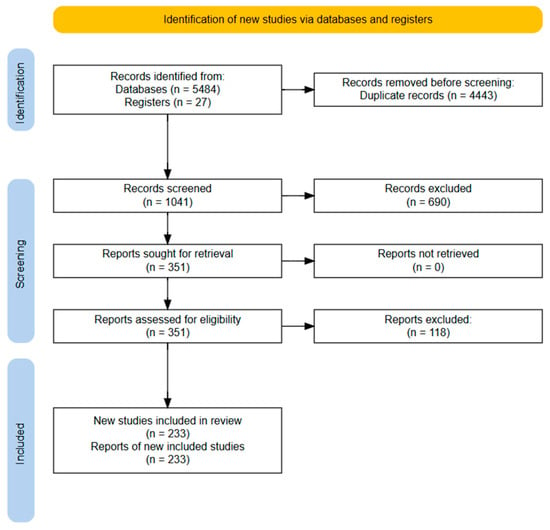
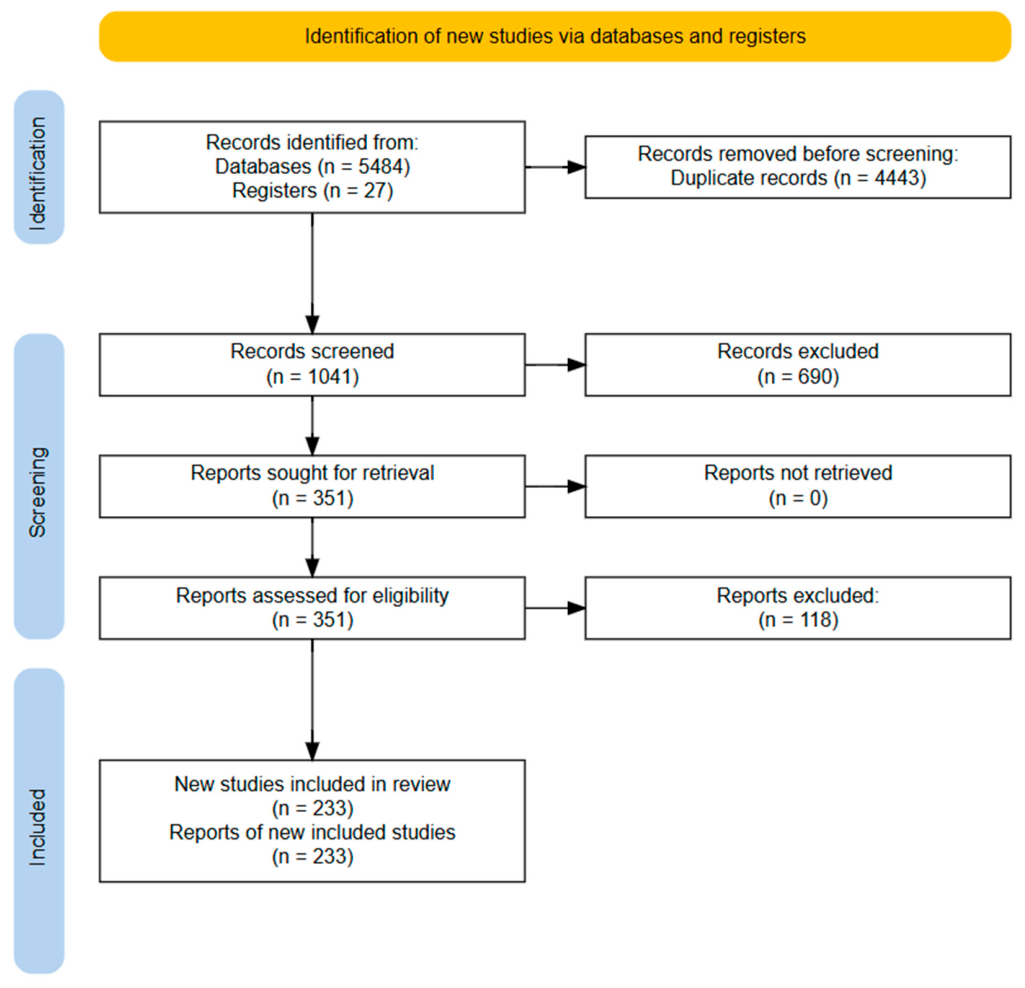
Table 2 summarizes the literature search results by database. The analytical corpus comprises 233 sources: 189 peer-reviewed journal or conference papers, 22 standards documents or authoritative technical reports, and 22 market context sources as illustrated in Figure 1. References cited in this paper represent a curated selection of the most impactful works from this corpus, prioritizing IEEE, ACM, Elsevier, Springer, and MDPI publications. Temporal distribution shows a pronounced increase in smart home security publications from 2020 onward, consistent with accelerated adoption and associated growth in research attention. An AI-based language tool was used for grammar checking and language refinement of selected passages during manuscript preparation; all content was reviewed and verified by the authors. The PRISMA 2020 checklist is provided as Supplementary Table S1. Full characteristics of all 233 included sources are provided in Table S2 of the Supplementary Materials.
Table 2.
Literature Search Results by Database (PRISMA-Informed).
Figure 1.
PRISMA2020 Literature Selection Flow Diagram.
3. Applications of IoT in Smart Homes and Security Linkage
Smart home applications are presented here not as independent capabilities but in direct connection to the security and privacy risks they introduce, providing the motivating context for the threat analysis in Section 4.
3.1. Energy Management and Environmental Control
Smart thermostats apply machine learning to occupancy patterns to optimize HVAC, with independently verified energy savings of 10–23% [19,20]. Smart metering and demand response programs enable grid participation. Security linkage: sub-second smart meter readings enable occupancy inference without any device compromise, a passive privacy threat addressed in Section 5 [21].
3.2. Security and Surveillance
AI-powered cameras with motion detection and facial recognition, video doorbells, smart locks with access logging, and professional monitoring integration define the smart security segment [22]. Security linkage: facial recognition data, continuous video streams, and cloud-hosted recordings represent high-sensitivity data assets whose unauthorized access constitutes both a security breach and a privacy violation; cloud storage exposure is the dominant attack vector for this category [6].
3.3. Healthcare and Assisted Living
Ambient assisted living (AAL) systems deploy distributed sensors to monitor elderly or disabled residents, detecting falls and tracking medication adherence [23]. Wearable IoT devices continuously measure biometric parameters for remote clinical monitoring, extending the telemedicine paradigm documented in Salih et al. [1]. Security linkage: biometric and health data represent the highest-sensitivity category under GDPR and equivalent frameworks; unauthorized access carries direct physical and legal consequences.
3.4. Comfort, Entertainment, and Automation
Voice-controlled assistants serve as automation hubs; scene-based rules encode conditional behaviors. Matter-compatible cross-ecosystem automation is progressively reducing fragmentation barriers [16]. Security linkage: automation logic creates unsafe actuation risks, unauthorized commands triggering lock release, thermostat manipulation, or appliance activation, which cross-app interference attacks (Section 4.4) exploit [24].
3.5. Smart City Integration
Smart homes contribute to city-level environmental monitoring, grid demand response, and EV charging infrastructure [25]. Security linkage: cross-domain data integration creates attack propagation pathways; a compromised smart home device may serve as an entry point into broader city infrastructure, multiplying the impact of a single-device compromise.
4. Security Threats and Vulnerabilities
4.1. Attack Surface Overview
The smart home attack surface spans device, network, cloud/edge, and application layers. Heterogeneous devices, default credentials, irregular firmware cycles, and absent security baselines create a high-value target environment [8]. Buffer overflow remains the leading vulnerability class (28.25%), followed by DoS-class weaknesses (27.20%), both persistent despite being well-understood, due to constrained hardware and weak manufacturer incentives [6].
4.2. Device-Level Vulnerabilities
- Default Credentials: Devices shipped with unchanged defaults enable trivial unauthorized access—operationally the most exploited weakness and the root cause of the Mirai botnet that disrupted critical Internet infrastructure in 2016.
- Insecure Firmware: Known CVEs, hardcoded credentials, and exposed debug interfaces (UART, JTAG) allow local exploitation. Long device lifecycles mean significant portions of installed bases run end-of-support firmware.
- Lack of Secure Boot: Without cryptographic firmware verification at startup, devices are vulnerable to persistent compromise via firmware replacement attacks.
- Physical Tampering: Devices in accessible locations are subject to hardware-level attacks including side-channel analysis and fault injection, particularly relevant for smart locks and outdoor cameras.
4.3. Network-Level Attacks
- Man-in-the-Middle (MitM): Misconfigured or absent TLS enables interception and command modification. Independent security analysis of Amazon Alexa confirmed exploitable third-party skill attack surfaces [26].
- Botnet Recruitment and DDoS: Resource-constrained devices with predictable behavior are routinely recruited into botnets (Mirai, Mozi, BrickerBot) for large-scale DDoS attacks. DoS vulnerability prevalence of 27.20% indicates systemic susceptibility [6,27].
- Replay Attacks: Systems without nonce-based challenge-response authentication are vulnerable to credential replay, enabling authentication bypass without decryption.
- Protocol Downgrade: In heterogeneous networks, adversaries may force negotiation of weaker legacy protocol versions, undermining encryption.
4.4. Cloud and Application-Level Threats
- Insecure APIs: REST and MQTT cloud management APIs with inadequate authentication enable mass-device takeover. A single vulnerable API endpoint can expose the entire device population of a manufacturer.
- Cross-App Interference: Malicious or compromised automation applications can issue unauthorized device commands through shared platform state, as formally analyzed in IotCom [24].
- Supply Chain Attacks: Compromised firmware or software distributed through legitimate update channels represents a high-impact, difficult-to-detect threat vector [28].
4.5. Threat-Layer-Defense Synthesis Matrix
Table 3 consolidates ten attack categories with their targeted layers, affected protocols, representative attacks, primary defenses, remaining gaps, research priority (High/Medium), and priority research needs.
Table 3.
Original Synthesis Matrix: Threat-Layer-Defense Analysis with Defense Gaps, Priority, and Research Needs.
5. Privacy Challenges in Smart Home IoT
Privacy and security constitute distinct but intersecting risk dimensions. Security threats target device integrity and service availability; privacy risks arise from the systematic collection, retention, and sharing of behavioral data, independently of any external attack. Smart home devices generate rich profiles: occupancy patterns, sleep schedules, dietary habits, and health trajectories. Data minimization deficiencies are widespread: empirical analysis shows that devices collect substantially more data than their stated function requires, with data transmitted to manufacturer cloud servers without meaningful user visibility or control [29].
Inference attacks present a significant privacy risk. Sub-second smart meter readings can identify individual appliances and accurately infer occupancy without any device compromise [30]. Encrypted traffic metadata alone, packet timing, size, and frequency, can identify device types and infer domestic activities without decryption [21]. Robotic vacuum cleaners that generate floor-plan maps represent a recently identified category of high-sensitivity data with unclear data governance [29].
The regulatory landscape is evolving, but enforcement remains incomplete. GDPR imposes data minimization, purpose limitation, and right-to-erasure requirements. The EU Cyber Resilience Act (CRA, entering force October 2024) mandates security-by-design and vulnerability disclosure for all connected products marketed in the EU [31]. The UK Product Security and Telecommunications Infrastructure (PSTI) Act (2024) bans default passwords and requires published vulnerability disclosure policies. The US IoT Cybersecurity Improvement Act requires NIST-aligned security standards for government-procured IoT [32]. Empirical research demonstrates that even technically sophisticated users remain uncertain about what their devices collect and what mitigations are available [33].
6. Existing Security Mechanisms
6.1. Authentication and Access Control
MFA combining knowledge, possession, and biometric factors is the current best practice for smart home access management. Matter mandates certificate-based device attestation via PKI, ensuring cryptographic device identity verification at commissioning [16]. ABAC and RBAC provide fine-grained authorization differentiation [34]. Practical certificate management for non-technical households remains unresolved, and certificate revocation infrastructure for consumer IoT devices is largely absent, unlike in enterprise PKI deployments.
6.2. Encryption and Secure Communication
TLS 1.3 and DTLS provide channel encryption for device-to-cloud and device-to-device communication. CoAP with DTLS and MQTT with TLS are the dominant application-layer implementations [35]. WPA3 with Simultaneous Authentication of Equals (SAE) addresses the KRACK and dictionary attack vulnerabilities of WPA2-PSK [36]. A persistent operational problem is TLS misconfiguration, expired certificates, weak cipher suites, and disabled validation, which undermines encryption even where nominally deployed [11].
6.3. Intrusion Detection Systems
Network-based IDS monitor smart home traffic for signatures or behavioral anomalies. Rule-based systems fail against novel vectors; anomaly-based systems are more robust but require per-device baselines and are sensitive to legitimate behavioral changes that generate false positives [27]. Practical edge deployment on constrained home routers, rather than the cloud, remains architecturally and computationally challenging for current gateway hardware generations.
6.4. Firmware Update Security
Cryptographically signed OTA updates with preinstallation verification are the mandatory baseline. Because appliances often remain in service for a decade beyond firmware support, a substantial and growing fraction of deployed devices carry unpatched CVEs [6]. Potential systemic mitigations include mandatory minimum update support periods (proposed in CRA and PSTI), community-maintained open-source firmware, and ISP-level network-layer protection for end-of-life devices.
7. Emerging Solutions: Capabilities and Limitations
7.1. AI-Based Threat Detection: Capabilities, Datasets, and Limitations
AI and machine learning can complement rule-based systems by identifying previously unseen traffic patterns. LSTM networks for temporal traffic analysis and CNNs for static feature extraction have shown strong performance in detecting IoT botnet traffic and intrusion patterns in controlled settings [37]. Federated learning can reduce the privacy risks associated with centralizing residential traffic for model training: local models are trained on each home gateway, while only parameter updates are shared with a central aggregator [38].
Several limitations affect the practical use of these methods:
- False Positive Rate: Models trained on one household’s behavioral baseline perform poorly in others due to occupant and appliance diversity. False alarm rates of even 1% translate to multiple false alerts per day in a home with tens of devices, a level that rapidly erodes user trust and leads to system disablement [39].
- Dataset Limitations: Most published results use laboratory or synthetic datasets (e.g., N-BaIoT, MedBIoT, IoT-23, Edge-IIoTset [40]) that do not reflect real residential behavioral variability, device heterogeneity, or legitimate traffic evolution over months. The absence of longitudinal, demographically diverse real-home datasets is a fundamental constraint on progress [37,38].
- Adversarial Robustness: Adversarial traffic crafting, generating device communications that evade an anomaly model while conducting an attack, is underexplored in smart home literature. Evasion attacks against smart home physical event verification have been demonstrated [39], but systematic adversarial robustness evaluation is absent from most published IDS proposals.
- Edge Deployment Constraints: Capable AI inference on Class 1 IoT devices (≤128 KB RAM) remains infeasible with current model architectures. Gateway-class deployment (e.g., home router with 256 MB+ RAM) is achievable but requires model compression and quantization techniques [41,42].
- Explainability: IDS systems for domestic users must explain decisions in non-technical language to be actionable. The explainability gap between high-performance deep learning models and user-comprehensible outputs is an unresolved design challenge.
AI-based detection can still be useful at the gateway level, but its practical use depends on these constraints.
7.2. Blockchain for Smart Home Security: Potential and Limitations
Blockchain’s properties, decentralization, immutability, cryptographic verification, and smart contract-based access control, map onto several smart home security requirements. Decentralized identity systems enable device attestation without dependence on manufacturer certificate authorities [10,43]. Immutable audit logs provide forensic evidence. Smart contract policies can be enforced cryptographically [44].
Consortium blockchain architectures, in which a defined set of trusted nodes collectively validate transactions, are proposed for smart home environments as a balance between decentralization and real-time IoT performance [11]. This choice is technically necessary: public blockchain Proof-of-Work consensus is computationally and energetically infeasible on smart home microcontrollers. Even Proof-of-Stake variants impose latency incompatible with time-sensitive actuation such as lock release or alarm triggering.
In most smart home scenarios, however, blockchain remained largely theoretical in 2025. The main issue is architectural fit: trustless decentralization and censorship resistance are rarely necessary in a domestic threat model dominated by external attackers. A properly configured local controller using PKI, hardware security modules (HSMs), or secure enclaves can provide comparable authentication and integrity with lower latency, energy use, and implementation complexity. Before adopting blockchain, practitioners should identify which required property cannot be provided by standard PKI or a trusted local controller [45]. Blockchain may offer distinct value in narrower settings that require verifiable multi-party audit trails, such as rental properties, elder-care environments with multiple caregivers, or insurance-verified security claims. These use cases require further empirical evaluation.
8. Future Research Directions and Practical Recommendations
8.1. Research Priorities Derived from Identified Gaps
- AI False Positive Reduction and Cross-Household Generalization: Transfer learning, domain adaptation, and online learning for smart home profiles; longitudinal real-home benchmark datasets; adversarial robustness evaluation protocols.
- Lightweight Cryptography and Secure Boot for Class 1 Devices: Integration of NIST ASCON (standardized 2023) [46] into secure boot and attestation for devices ≤128 KB RAM at commercially viable cost.
- Matter Third-Party Integration Security Audit: Formal verification of cross-app interaction policies; independent auditing of Matter cloud-bridge implementations and SDK security.
- Privacy-Preserving Local Analytics: Edge-deployable differential privacy and homomorphic encryption at the gateway level, enabling household analytics without cloud exposure.
- 6G Smart Home Security Architecture: Security modeling for 6G-connected smart homes addressing network slicing, reconfigurable intelligent surfaces, and AI-native 6G trust models.
- Blockchain Use Case Delimitation: Empirical definition of conditions where decentralized trust architectures outperform PKI; experimental comparison in rental and elder care deployments.
- User-Centered Security Design: HCI-grounded tools for non-expert users with automatic security baseline enforcement; co-design with elderly and accessibility-focused populations.
8.2. Stakeholder-Oriented Practical Recommendations
Table 4 presents structured recommendations for the four primary stakeholder groups whose actions collectively determine real-world smart home security outcomes.
Table 4.
Stakeholder-Oriented Practical Recommendations.
9. Limitations
This survey has several limitations. First, although the PRISMA-informed methodology provides systematic coverage across five databases, restricting the search to English-language publications may exclude relevant work from other regions, particularly East Asia. Second, the rapid evolution of IoT technologies means that findings related to specific protocol vulnerabilities and Matter limitations may need to be updated as new versions are released. Third, this review focuses primarily on consumer-grade smart home devices; industrial and enterprise IoT deployments with different threat models and regulatory requirements are outside its scope. Fourth, the High/Medium priorities in the Threat-Layer-Defense matrix (Table 3) reflect the authors’ assessment of the available evidence rather than a formal meta-analytic ranking. Fifth, the conclusions regarding AI-based detection and blockchain reflect the current state of these technologies; advances in federated learning, edge computing, and zero-knowledge proofs may change the applicability boundaries described in Section 7. Finally, the stakeholder recommendations in Section 8 are derived from the reviewed literature and expert judgment rather than empirical validation with manufacturers or end users.
10. Conclusions
This review analyzed 233 sources using a PRISMA-informed process and combined the findings in a discussion of communication protocols, the Threat-Layer-Defense matrix in Table 3, an evaluation of AI-based detection and blockchain, and stakeholder recommendations.
The findings address the five research questions. Communication protocols differ in their security trade-offs, and Matter improves device attestation and interoperability but does not eliminate risks associated with legacy devices. Default credentials, buffer overflows, and DDoS-related weaknesses remain persistent threats, while Table 3 links these threats to defenses, unresolved gaps, and research priorities. AI-based detection is most promising at the gateway level but remains constrained by false positives, dataset limitations, and adversarial robustness; blockchain is useful mainly in multi-party audit settings where PKI alone is insufficient. Privacy risks arising from behavioral profiling require both technical safeguards and stakeholder action.
Overall, wider deployment of secure smart home systems will require stronger standards and regulatory support for credential management, firmware updates, and minimum encryption requirements. Matter addresses important architectural weaknesses, although its benefits apply mainly to newer devices. Gateway-level AI can support anomaly detection when false positives are managed, but it should not be presented as comprehensive protection. Privacy also requires data minimization, local processing where feasible, and enforceable privacy-by-design requirements at the device and platform levels.
Future empirical work will target validation of the threat taxonomy through real-world smart home network datasets and experimental evaluation of federated AI security models under longitudinal residential deployment conditions.
Supplementary Materials
The following supporting information can be downloaded at: https://www.mdpi.com/article/10.3390/bdcc10080252/s1. Table S1: PRISMA 2020 Checklist; Table S2: Study Characteristics of Included Sources.
Author Contributions
Conceptualization, D.R.; methodology, D.R.; software, D.R., J.J., P.K. and N.S.; validation, D.R., J.J., P.K. and N.S.; formal analysis, D.R.; investigation, D.R., J.J., P.K. and N.S.; data curation, J.J., P.K. and N.S.; writing—original draft preparation, D.R.; writing—review and editing, D.R., J.J., P.K. and N.S.; visualization, J.J., P.K. and N.S.; supervision, D.R.; project administration, D.R. All authors have read and agreed to the published version of the manuscript.
Funding
This research received no external funding.
Institutional Review Board Statement
Not applicable.
Informed Consent Statement
Not applicable.
Data Availability Statement
No new data were created or analyzed in this study. Data sharing is not applicable to this article.
Acknowledgments
During the preparation of this manuscript, the authors used ChatGPT (GPT-5.5) for grammar checking and language refinement of selected passages. The authors have reviewed and edited the output and take full responsibility for the content of this publication.
Conflicts of Interest
The authors declare no conflicts of interest.
Abbreviations
The following abbreviations are used in this manuscript:
| ABAC | Attribute-Based Access Control |
| AAL | Ambient Assisted Living |
| AI | Artificial Intelligence |
| API | Application Programming Interface |
| APT | Advanced Persistent Threat |
| ASCON | Authenticated Encryption (NIST Lightweight Cryptography Standard, 2023) |
| CoAP | Constrained Application Protocol |
| CRA | Cyber Resilience Act (EU) |
| CSA | Connectivity Standards Alliance |
| CVE | Common Vulnerabilities and Exposures |
| DDoS | Distributed Denial of Service |
| DTLS | Datagram Transport Layer Security |
| DoS | Denial of Service |
| ENISA | European Union Agency for Cybersecurity |
| GDPR | General Data Protection Regulation |
| HCI | Human–Computer Interaction |
| HSM | Hardware Security Module |
| HVAC | Heating, Ventilation, and Air Conditioning |
| IDS | Intrusion Detection System |
| IoT | Internet of Things |
| ISP | Internet Service Provider |
| JTAG | Joint Test Action Group (hardware debug interface) |
| KRACK | Key Reinstallation Attack |
| LSTM | Long Short-Term Memory |
| MFA | Multi-Factor Authentication |
| MitM | Man-in-the-Middle |
| MQTT | Message Queuing Telemetry Transport |
| NFV | Network Functions Virtualization |
| NIST | National Institute of Standards and Technology |
| NISTIR | NIST Interagency/Internal Report |
| OTA | Over-the-Air (update) |
| PKI | Public Key Infrastructure |
| PRISMA | Preferred Reporting Items for Systematic Reviews and Meta-Analyses |
| PSK | Pre-Shared Key |
| PSTI | Product Security and Telecommunications Infrastructure (Act, UK) |
| RBAC | Role-Based Access Control |
| REST | Representational State Transfer |
| RQ | Research Question |
| SAE | Simultaneous Authentication of Equals |
| SDK | Software Development Kit |
| SDN | Software-Defined Networking |
| TLS | Transport Layer Security |
| UART | Universal Asynchronous Receiver–Transmitter |
| WPA2 | Wi-Fi Protected Access 2 |
| WPA3 | Wi-Fi Protected Access 3 |
References
- Salih, K.O.M.; Rashid, T.A.; Radovanovic, D.; Bacanin, N. A Comprehensive Survey on the Internet of Things with the Industrial Marketplace. Sensors 2022, 22, 730. [Google Scholar] [CrossRef] [Scilit] [PubMed]
- Statista Research Department. Number of Smart Homes Worldwide 2020–2025. Statista. 2024. Available online: https://www.statista.com/outlook/dmo/smart-home/worldwide (accessed on 22 May 2026).
- Statista Research Department. Smart Home Device Shipments Worldwide 2020–2025. Statista. 2021. Available online: https://www.statista.com/statistics/1223274/ (accessed on 22 May 2026).
- Statista Research Department. Smart Home. Statistics & Facts; Statista. 2025. Available online: https://www.statista.com/topics/2430/smart-homes/ (accessed on 22 May 2026).
- Ericsson AB. Ericsson Mobility Report November 2024; Ericsson: Stockholm, Sweden, 2024; Available online: https://www.ericsson.com/en/reports-and-papers/mobility-report (accessed on 22 May 2026).
- Bitdefender; NETGEAR. The 2024 IoT Security Landscape Report; NETGEAR: San Jose, CA, USA, 2024; Available online: https://www.netgear.com/hub/network/2024-iot-threat-report/ (accessed on 19 May 2026).
- Opara, V.; Chao, P.; Odera, D. Addressing IoT Vulnerabilities in Smart Homes. In Proceedings of the 2025 8th International Conference on Software Engineering and Information Management (ICSEIM 2025); ACM: New York, NY, USA, 2025. [Google Scholar] [CrossRef] [Scilit]
- Aldahmani, A.; Ouni, B.; Lestable, T.; Debbah, M. Cyber-Security of Embedded IoTs in Smart Homes: Challenges, Requirements, Countermeasures, and Trends. IEEE Open J. Veh. Technol. 2023, 4, 281–292. [Google Scholar] [CrossRef] [Scilit]
- Yuan, B.; Wan, J.; Wu, Y.H.; Zou, D.; Chen, Z. On the Security of Smart Home Systems: A Survey. J. Comput. Sci. Technol. 2023, 38, 228–247. [Google Scholar] [CrossRef] [Scilit]
- Hammi, B.; Zeadally, S.; Khatoun, R.; Nebhen, J. Survey on Smart Homes: Vulnerabilities, Risks, and Countermeasures. Comput. Secur. 2022, 117, 102677. [Google Scholar] [CrossRef] [Scilit]
- Bhuyan, M.; Kashihara, S.; Fall, D.; Taenaka, Y.; Kadobayashi, Y. A Survey on Blockchain, SDN and NFV for the Smart-Home Security. Internet Things 2022, 20, 100588. [Google Scholar] [CrossRef] [Scilit]
- Zia, M.F.; Siddiqua, M.; Ouameur, M.A.; Bagaa, M.; Al Turjman, F. Securing the Future: A Survey on Smart Home Security in IoT-Integrated Smart Cities. Adv. Netw. 2025, 12, 1–18. [Google Scholar] [CrossRef] [Scilit]
- Lombardi, M.; Pascale, F.; Santaniello, D. Internet of Things: A General Overview between Architectures, Protocols and Applications. Information 2021, 12, 87. [Google Scholar] [CrossRef] [Scilit]
- Gubbi, J.; Buyya, R.; Marusic, S.; Palaniswami, M. Internet of Things (IoT): A Vision, Architectural Elements, and Future Directions. Future Gener. Comput. Syst. 2013, 29, 1645–1660. [Google Scholar] [CrossRef] [Scilit]
- Lin, J.; Yu, W.; Zhang, N.; Yang, X.; Zhang, H.; Zhao, W. A Survey on Internet of Things: Architecture, Enabling Technologies, Security and Privacy, and Applications. IEEE Internet Things J. 2017, 4, 1125–1142. [Google Scholar] [CrossRef] [Scilit]
- Connectivity Standards Alliance. Matter Specification Version 1.3; CSA: San Ramon, CA, USA, 2024; Available online: https://csa-iot.org/developer-resource/specifications-download-request/ (accessed on 22 May 2026).
- Muccini, H.; Moghaddam, M.T. IoT Architectural Styles. In Software Architecture; Springer: Berlin, Germany, 2018; pp. 68–85. [Google Scholar] [CrossRef] [Scilit]
- Page, M.J.; McKenzie, J.E.; Bossuyt, P.M.; Boutron, I.; Hoffmann, T.C.; Mulrow, C.D.; Shamseer, L.; Tetzlaff, J.M.; Akl, E.A.; Brennan, S.E.; et al. The PRISMA 2020 Statement: An Updated Guideline for Reporting Systematic Reviews. BMJ 2021, 372, n71. [Google Scholar] [CrossRef] [Scilit] [PubMed]
- Chen, Z.; O’Neill, Z.; Wen, J.; Pradhan, O.; Yang, T.; Lu, X.; Lin, G.; Miyata, S.; Lee, S.; Shen, C.; et al. A Review of Data-Driven Fault Detection and Diagnostics for Building HVAC Systems. Appl. Energy 2023, 339, 121030. [Google Scholar] [CrossRef] [Scilit]
- Drgoňa, J.; Arroyo, J.; Cupeiro Figueroa, I.; Blum, D.; Arendt, K.; Kim, D.; Ollé, E.P.; Oravec, J.; Wetter, M.; Vrabie, D.L.; et al. All You Need to Know About Model Predictive Control for Buildings. Annu. Rev. Control 2020, 50, 190–232. [Google Scholar] [CrossRef] [Scilit]
- Apthorpe, N.; Reisman, D.; Feamster, N. A Smart Home Is No Castle: Privacy Vulnerabilities of Encrypted IoT Traffic. arXiv 2017, arXiv:1705.06805. [Google Scholar] [CrossRef] [Scilit]
- Chowdhury, S.S.; Sarkar, S.; Syamal, S.; Sengupta, S.; Ghosh, S. IoT Based Smart Security and Home Automation System. In Proceedings of the 2019 IEEE 10th Annual Ubiquitous Computing, Electronics & Mobile Communication Conference (UEMCON), New York, NY, USA, 10–12 October 2019; IEEE: Piscataway, NJ, USA, 2019; pp. 577–582. [Google Scholar] [CrossRef] [Scilit]
- Mamdiwar, S.D.; Shakruwala, Z.; Chadha, U.; Srinivasan, K.; Chang, C.Y. Recent Advances on IoT-Assisted Wearable Sensor Systems for Healthcare Monitoring. Biosensors 2021, 11, 372. [Google Scholar] [CrossRef] [Scilit] [PubMed]
- Alhanahnah, M.; Stevens, C.; Chen, B.; Yan, Q.; Bagheri, H. IotCom: Dissecting Interaction Threats in IoT Systems. IEEE Trans. Softw. Eng. 2023, 49, 1523–1539. [Google Scholar] [CrossRef] [Scilit]
- Adil, M.; Khan, M.K. Emerging IoT Applications in Sustainable Smart Cities for COVID-19. Sustain. Cities Soc. 2021, 75, 103311. [Google Scholar] [CrossRef] [Scilit] [PubMed]
- Pathak, S.; Islam, S.A.; Jiang, H.; Xu, L.; Tomai, E. A Survey on Security Analysis of Amazon Echo Devices. High-Confid. Comput. 2022, 2, 100087. [Google Scholar] [CrossRef] [Scilit]
- Gelgi, M.; Guan, Y.; Arunachala, S.; Samba Siva Rao, M.; Dragoni, N. Systematic Literature Review of IoT Botnet DDoS Attacks and Evaluation of Detection Techniques. Sensors 2024, 24, 3571. [Google Scholar] [CrossRef] [Scilit] [PubMed]
- Liu, P.; Zheng, Y.; Sun, C.; Qin, C.; Fang, D.; Liu, M.; Sun, L. FITS: Inferring Intermediate Taint Sources for Effective Vulnerability Analysis of IoT Device Firmware. In Proceedings of the 28th ACM International Conference on Architectural Support for Programming Languages and Operating Systems, Volume 4 (ASPLOS ’23), Vancouver, BC, Canada, 25–29 March 2023; ACM: New York, NY, USA, 2023; pp. 138–152. [Google Scholar] [CrossRef] [Scilit]
- Magara, T. Internet of Things (IoT) of Smart Homes: Privacy and Security. J. Electr. Comput. Eng. 2024, 2024, 7716956. [Google Scholar] [CrossRef] [Scilit]
- Vojkovic, G.; Milenkovic, M.; Katulic, T. IoT and Smart Home Data Breach Risks from the Perspective of Data Protection and Information Security Law. Bus. Syst. Res. J. 2020, 11, 167–185. [Google Scholar] [CrossRef] [Scilit]
- European Union Agency for Cybersecurity (ENISA). Cybersecurity of Smart Home Devices; ENISA: Athens, Greece, 2023; Available online: https://www.enisa.europa.eu/publications/cybersecurity-of-smart-home-devices (accessed on 22 May 2026).
- NISTIR 8228; Considerations for Managing IoT Cybersecurity and Privacy Risks. National Institute of Standards and Technology: Gaithersburg, MD, USA, 2019. [CrossRef] [Scilit]
- Löbner, S.; Tronnier, F.; Miller, L.; Lindemann, J. An In-Depth Analysis of Security and Privacy Concerns in Smart Home IoT Devices Through Expert User Interviews. In Information Security Education—Challenges in the Digital Age; IFIP Advances in Information and Communication Technology; Drevin, L., Leung, W.S., von Solms, S., Eds.; Springer: Cham, Switzerland, 2024; Volume 707, pp. 97–110. [Google Scholar] [CrossRef] [Scilit]
- Al-Fuqaha, A.I.; Guizani, M.; Mohammadi, M.; Aledhari, M.; Ayyash, M. Internet of Things: A Survey on Enabling Technologies, Protocols, and Applications. IEEE Commun. Surv. Tutor. 2015, 17, 2347–2376. [Google Scholar] [CrossRef] [Scilit]
- Colakovic, A.; Hadzialic, M. Internet of Things (IoT): A Review of Enabling Technologies, Challenges, and Open Research Issues. Comput. Netw. 2018, 144, 17–39. [Google Scholar] [CrossRef] [Scilit]
- Wi-Fi Alliance. Wi-Fi CERTIFIED WPA3 Specification Version 3.0; Wi-Fi Alliance: Austin, TX, USA, 2022; Available online: https://www.wi-fi.org/file/wpa3-specification (accessed on 22 May 2026).
- Meidan, Y.; Bohadana, M.; Mathov, Y.; Mirsky, Y.; Shabtai, A.; Breitenbacher, D.; Elovici, Y. N-BaIoT: Network-Based Detection of IoT Botnet Attacks Using Deep Autoencoders. IEEE Pervasive Comput. 2018, 17, 12–22. [Google Scholar] [CrossRef] [Scilit]
- Nguyen, T.D.; Marchal, S.; Miettinen, M.; Fereidooni, H.; Asokan, N.; Sadeghi, A.R. DIOT: A Federated Self-Learning Anomaly Detection System for IoT. In Proceedings of the 2019 IEEE 39th International Conference on Distributed Computing Systems (ICDCS 2019); IEEE: Piscataway, NJ, USA, 2019; pp. 756–767. [Google Scholar] [CrossRef]
- Ozmen, M.O.; Song, R.; Farrukh, H.; Celik, Z.B. Evasion Attacks and Defenses on Smart Home Physical Event Verification. In Proceedings of the 30th Annual Network and Distributed System Security Symposium (NDSS 2023); Internet Society: Reston, VA, USA, 2023. [Google Scholar] [CrossRef] [Scilit]
- Ferrag, M.A.; Friha, O.; Hamouda, D.; Maglaras, L.; Janicke, H. Edge-IIoTset: A New Comprehensive Realistic Cyber Security Dataset of IoT and IIoT Applications for Centralized and Federated Learning. IEEE Access 2022, 10, 40281–40306. [Google Scholar] [CrossRef] [Scilit]
- Aazam, M.; Zeadally, S.; Harras, K.A. Deploying Fog Computing in Industrial IoT and Industry 4.0. IEEE Trans. Ind. Inform. 2018, 14, 4674–4682. [Google Scholar] [CrossRef] [Scilit]
- Lin, J.; Chen, W.-M.; Lin, Y.; Cohn, J.; Gan, C.; Han, S. MCUNet: Tiny Deep Learning on IoT Devices. In Advances in Neural Information Processing Systems 33 (NeurIPS 2020); Larochelle, H., Ranzato, M., Hadsell, R., Balcan, M.-F., Lin, H.-T., Eds.; Curran Associates, Inc.: Red Hook, NY, USA, 2020; Volume 33, pp. 11711–11722. Available online: https://papers.neurips.cc/paper/2020/hash/86c51678350f656dcc7f490a43946ee5-Abstract.html (accessed on 22 May 2026).
- Hammi, M.T.; Hammi, B.; Bellot, P.; Serhrouchni, A. Bubbles of Trust: A Decentralized Blockchain-Based Authentication System for IoT. Comput. Secur. 2018, 78, 126–142. [Google Scholar] [CrossRef] [Scilit]
- Elloh Adja, Y.C.; Hammi, B.; Serhrouchni, A.; Zeadally, S. A Blockchain-Based Certificate Revocation Management and Status Verification System. Comput. Secur. 2021, 104, 102209. [Google Scholar] [CrossRef] [Scilit]
- Obaidat, M.A.; Rawashdeh, M.; Alja’afreh, M.; Abouali, M.; Thakur, K.; Karime, A. Exploring IoT and Blockchain: A Comprehensive Survey on Security, Integration Strategies, Applications and Future Research Directions. Big Data Cogn. Comput. 2024, 8, 174. [Google Scholar] [CrossRef] [Scilit]
- National Institute of Standards and Technology. Lightweight Cryptography Standardization: ASCON Selected; NIST: Gaithersburg, MD, USA, 2023. Available online: https://csrc.nist.gov/projects/lightweight-cryptography (accessed on 22 May 2026).

Disclaimer/Publisher’s Note: The statements, opinions and data contained in all publications are solely those of the individual author(s) and contributor(s) and not of MDPI and/or the editor(s). MDPI and/or the editor(s) disclaim responsibility for any injury to people or property resulting from any ideas, methods, instructions or products referred to in the content. |
© 2026 by the authors. Licensee MDPI, Basel, Switzerland. This article is an open access article distributed under the terms and conditions of the Creative Commons Attribution (CC BY) license.