


Abstract
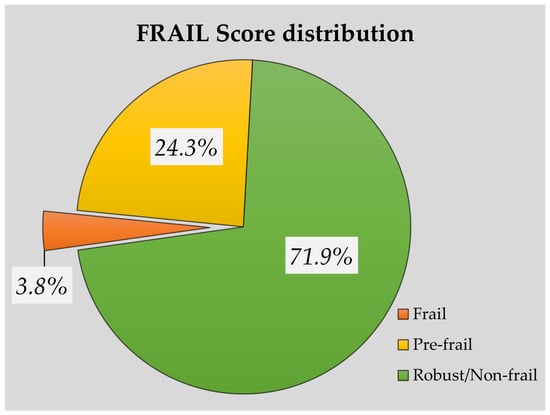
Diabetes complications may increase frailty rates among the elderly, leading to falls, immobility, dependency, hospitalizations, and death. The study aimed to assess any association between frailty status and glycaemic control among older adults with type 2 diabetes mellitus at Kenyatta National Hospital, Kenya. We conducted a cross-sectional study of 430 older individuals aged 60+ years with type 2 diabetes at a specialized diabetes clinic using a modified FRAIL scale. Mean age was 69.1 years; 65.7% were female and 76.2% completed primary school. Frailty prevalence was 3.8%, pre-frailty constituted 24.3%, and robust/non-frail comprised 71.9%. It was associated with age, social status, health knowledge, duration of DM, blood pressure, body mass index, high-density lipoprotein-C, and renal failure. Mean fasting plasma glucose (FPG) was 8.7 mmol/L, with 60% having FPG > 7 mmol/L; mean glycated haemoglobin (HbA1C) was 8.0%, with 41% having HbA1C > 8%. Glycaemic control was correlated with number of medications, blood pressure, and lipidaemia, but not age, sex, or social status. No correlation was found between frailty and glycaemic control: frailty versus FPG (r = 0.038, p = 0.459; χ2 = 0.699, p = 0.705) and HbA1C (r = −0.009, p = 0.877; χ2 = 0.046, p = 0.977). Low frailty prevalence was noted, with no association to glycaemic control. Our findings provide evidence for conducting frailty assessments in chronic disease care.
1. Introduction
The older adult population in sub-Saharan Africa is growing at an unprecedented rate, which is also associated with a sharp rise in geriatric syndromes. By 2050, the number of older persons will triple in Africa, which will be home to 80% of the world’s elderly [1]. In Kenya, according to the 2019 census, 5.8% or 2.7 million adults were aged 60 years or older [2].
Frailty is conceptualised as decreased physiological reserve and heightened vulnerability to both internal and external stressors [3]. The frail elderly, unlike their non-frail counterparts, are more likely to become dependent on others and take longer to recover, after succumbing to a minor illness [4]. This common geriatric syndrome is associated with increased risks of falls, disability, dependency, hospitalisations, and death [5,6]. The global prevalence of frailty derived mainly from high-income countries varies from 4–59.1%, whereas limited studies across African settings report a wider range of 9.25–77.1% [3,6,7,8,9,10]. Within high-income countries, there is an emphasis on the early detection and screening of frailty, which provide opportunities to slow its progression through proven interventions [11,12]. Low- and middle-income countries should prepare much better for this demographic eventuality. Frailty can be measured through five components of the Fried’s frailty phenotype or through the Frailty Index, which uses 9–92 accumulated deficits [3,13,14,15]. Various standardised tools exist for frailty measurement, each with its advantages and disadvantages [16]. The International Association of Nutrition and Ageing (IANA) FRAIL instrument is a subjective test based on yes/no answers to five questions measuring the different components of the physical phenotype. The FRAIL scale measures fatigue (self-reported exhaustion), resistance (ability to climb a flight of stairs), ambulation (ability to walk one block), illness (>5 illnesses), and weight loss (>5%). It requires no special instruments and can even be used by laypeople within community or hospital settings [11]. Furthermore, the FRAIL scale has proven to be useful in multiple disciplines, can predict mortality, and has been validated among Black populations [17,18].
Diabetes mellitus is a global public health threat affecting 422 million adults globally, impacting 14.2 million people in sub-Saharan Africa, and resulting in devastating complications and death [19,20]. It is a highly prevalent and costly condition, with patients in the United States spending 2.3 times more for medical expenditures than those without diabetes [21]. In Kenya, one-half of total hospital admissions and over 55% of hospital deaths are attributable to non-communicable diseases [22,23]. Currently, the local prevalence of diabetes is 3.1%, which is expected to increase to 3.4% by 2050 [24]. Optimal glycaemic control refers to a glycated haemoglobin (HbA1c) level of 7% or less [25,26]. On the basis of this cut-off, several local studies have reported poor control among patients [20,25,27,28,29]. However, international guidelines recommend a more conservative glycaemic control target of 8% among elderly individuals [30]. Despite this shift, local Kenyan guidelines fail to specify treatment adjustments and geriatrician referrals for the elderly [31,32]. Therefore, less experienced healthcare providers may be oblivious to subtle differences when treating older adults with diabetes compared to younger populations [33,34]. Currently, a more holistic and comprehensive approach focusing on organ (kidney and heart) protection for elderly people with diabetes is recommended rather than a narrow “glucocentric” care [35]. Further, diabetes not only impoverishes the elderly but also affects families and communities [36]. Cost of care analysis of diabetes in Kenya indicates that the finances needed for direct and indirect costs may be out of reach for retired and unemployed senior citizens [26,27,37].
The interrelationships between frailty, geriatric syndrome, and comorbidities such as type 2 diabetes are complex and are not fully understood. The incidence of frailty is two to five times greater in patients with diabetes than in those without [38,39]. This higher rate could arise from the fact that diabetes is an independent risk factor for falls, hip fractures, premature death, comorbid diseases, and geriatric syndromes such as polypharmacy, depression, cognitive impairment, urinary incontinence, and chronic pain [39]. The pathophysiology of frailty among patients with diabetes can be attributed to low-grade inflammation, low testosterone, and nutritional deficiencies (including protein and vitamin D), among other pathways [39]. According to prior studies, frailty can be prevented and treated through appropriate interventions, such as nutrition, exercise, rational prescriptions, and improved psychosocial health [4,5,40]. Currently, there is limited research on frailty in sub-Saharan Africa [8,41,42]. Frailty complicates diabetes management, directly or indirectly, and it is imperative to investigate its correlates and consequences within the local context. Despite numerous studies on diabetes in Kenya, none have specifically examined frailty status or glycaemic control among elderly individuals. The study aimed to assess any association between frailty status and glycaemic control among older adults with type 2 diabetes mellitus (T2DM) at Kenyatta National Hospital (KNH), Kenya.
2. Materials and Methods
2.1. Design, Setting, Participants, Sampling
In this paper, we report cross-sectional analytical findings from a mixed-methods study. The qualitative results of key-informant interviews among 15 older adults are not presented in this paper. Participants were recruited from a specialist outpatient diabetes and endocrinology clinic at KNH, a leading referral hospital in Kenya. This facility has a capacity of 1800 beds, 50 inpatient wards, 22 outpatient clinics, 24 theatres, a busy Accident and Emergency Department and over 6000 staff. The facility attracts patients from all over the country and within East Africa. Patients with active Social Health Authority (SHA) membership may access services at no upfront costs; otherwise, clients have to pay user fees in cash for outpatient consultation, tests and medicines. We purposefully selected this site on the basis of its size and the clinic on the basis of the study population.
We targeted all older adults with T2DM attending the Diabetes and Endocrinology Centre. The inclusion criteria were age ≥60 years, diagnosis or treatment for type 2 diabetes mellitus, and seeking outpatient services at the Diabetes and Endocrinology Centre, KNH. The Constitution of Kenya (COK, 2010) Article 260 [43] defines ‘older members of society’ as anyone who has reached the age of sixty (60) years. We excluded those without caregivers who were unable to communicate due to severe illness or severe mental deterioration, those requiring emergency services or admission and vulnerable persons, such as those who were incarcerated or institutionalised.
We calculated the sample size on the basis of an expected frailty prevalence of 50% from previous studies and obtained a sample size of 428 participants via Daniel’s formula [44].
where
n = [Z2 × P (1 − P)] ÷ d2
n = sample size;
Z = Z score for 95% confidence interval (Z = 1.96);
P = prevalence (estimated at 50% from previous studies);
d = desired degree of precision or accuracy; p value (0.05).
n = [1.962 × 0.5(1 − 0.5)] ÷ (0.052) = 384.16 ~ 385
Adjusted for a 10% refusal rate,
n = 385 ÷ (1 − 0.1) = 427.78 ~ 428
Therefore, a minimum of 428 older adults with T2DM were needed. From Day 1, the study utilised a consecutive sampling technique to approach every participant reporting to the diabetic clinic and who met the eligibility criteria until the target sample size (n) was reached.
2.2. Data Collection
Data were collected over a period of 7 months from 12 September 2024 to 24 March 2025. After training, a research assistant approached eligible participants in a low voice at various waiting points within the clinic, keeping in mind the usual patient flow. For interested participants, the assistant explained the study objectives, benefits, and risks, aiming to enrol all those who met the inclusion criteria in a separate consultation room. A hardcopy research assistant-administered questionnaire was utilised to collect data from participants or abstracting from medical records. The study questionnaire was developed by DMM and reviewed by JT and OWT. It mainly consisted of clear, concise and non-ambiguous closed-ended multiple-choice questions, beginning with easier questions and utilizing skip logic. The study tool was available to the participants in English and Swahili (Kenya’s national languages) or their accompanying caregiver (if there was a communication barrier with the older person). At times, verbatim translations to a local language were used whenever necessary. Pre-testing of the questionnaire was performed among 15 older adults with diabetes at a different county referral hospital, and cognitive interviewing was performed.
Independent variables included socio-demographic characteristics (e.g., age in years, gender, ethnic group, education, religion, employment, civil status, income, living alone or with others, caregiver, family functioning (APGAR score), overcrowding, satisfaction with health services, previous monthly income), and glycaemic control [latest fasting plasma glucose (FPG), glycated haemoglobin levels (HbA1c) with good control defined as FPG < 7 mmol/L and/or HbA1c < 8%, based on international guidelines among the elderly] [30]. Intervening variables included clinical factors [vital signs (weight, height, and body mass index, BMI; systolic, diastolic and mean arterial blood pressures)], medical history (duration of illness, known comorbidities, disability), health status group (risk-based classification based on Cuban primary healthcare system), alcohol, smoking, falls, fractures, polypharmacy (number of medications), health knowledge [knowledge of T2DM symptoms (high blood sugar, low blood sugar, sweating, dizziness, urinating a lot, increased appetite), knowledge of glycaemic targets (control (Random blood sugar < 11.1 mmol/L, FPG < 7 mmol/L, HbA1c < 7%) and knowledge of diabetes-associated complications (eye problems, kidney problems, heart attack, stroke, foot infections, pain)], health seeking patterns [location of diagnosis (private, public, non-governmental organisation), location of regular follow-up and/or refills, other diabetes-related consultations (if not the same)], laboratory factors [latest report within a two-year period on lipid profile (triglycerides, total cholesterol, low-density lipoprotein, high density lipoprotein), and renal functions (urea, creatinine, and estimated glomerular filtration rate using the MDRD formula)] [45].
This study did not collect any blood samples or perform laboratory tests. Instead, we retrospectively retrieved the latest verified laboratory results as documented in the patient’s medical files over the previous 24 months, as far back as 31 December 2022. The KNH-accredited biochemistry laboratory (ISO 15189:2022 certified by KENAS [46]) uses a Mindray BS 2000 M platform analyser (Shenzhen Mindray Biomedical Electronics Co., Ltd., Shenzhen, China) and Mindray reagents. The analyser machine uses the spectrophotometry principle and is calibrated each time reagents are reloaded and controls are run before running samples. Internal quality control is performed daily, whereas external quality assurance is performed monthly under the RIQAS program. The HbA1c, lipid profile concentrations (triglycerides, low-density lipoproteins, high-density lipoproteins, and total cholesterol levels) and renal functions (urea, creatinine) were measured in accordance with the technical standard operating procedure for the operation of the aforementioned chemistry analyser, KNH/LABMED/CLIN.CHEM/001P dated 6 January 2025. FPG is usually performed as a point-of-care test by a laboratory technician based within the KNH Diabetes and Endocrinology Centre for every diabetic patient via a standard functional Accu-check® glucometer, Roche Diabetes Care India Pvt. Ltd, Mumbai, India.
2.3. Modified Frailty Measurement
According to the IANA, the FRAIL scale is based on 5 questions derived from the Cardiovascular Health Study Frailty Index and Rockwood Scale [18]. It can be clinician- or self-administered and does not require face-to-face examination or special equipment [47]. The five components of the FRAIL scale were assessed as follows. Fatigue was assessed as “How much of the time during the past 4 weeks did you feel tired?” Resistance was assessed as “By yourself and not using aids, do you have any difficulty walking up a flight of stairs?” Ambulation was assessed as “By yourself and not using aids, would you have any difficulty walking down to the main KNH gate (approximately 1.5 km)?”. Illnesses were assessed as having more than 5 diagnosed comorbidities: “Did a doctor ever tell you that you have [illness]? How many?” Finally, unintentional weight loss was assessed as greater or equal to 4.5 kg or 5% in the last 12 months and a score of 0 or 1 assigned [48]. This was to be calculated on the basis of the current weight and the previous year’s weight. Even though weight loss is a subjective measure, it was difficult to assess this since most people do not ordinarily measure their weight in their daily lives [49]. A total score of 0 indicates robust/non-frail health status, a score of 1–2 represents pre-frail health status, and a score of 3–5 signifies frail status. In the present study, since the previous weight recordings were not captured on the patient’s medical file but rather in a patient health diary and thus were missing, a modified four-item FRAIL scale was utilised; however, the scoring criteria remained unadjusted, with frailty defined as 3 or more. In previous studies, participants with missing items of the FRAIL were excluded from analysis [50], while in another study the Time Up and Go Test was used as a proxy to falls history and an alternative to weight loss [49].
2.4. Data Management and Statistical Analysis
For confidentiality, a unique study identification number was used to link the data to patient-identifiable health information. A hardcopy research notebook containing both the patient’s hospital number and the study identification number was stored separately and not digitised. The questionnaires and consent forms did not contain any identifiable health information. Data were transferred by double entry by the principal investigator onto two separate spreadsheets, Microsoft Excel, Microsoft Corporation, Redmond (WA), United States via the following formula on a third sheet [=IF(EXACT(Sheet1!A2,Sheet2!A2),0,Sheet1!A2&”/”&Sheet2!A2)]. Discrepancies were verified via the original hardcopy questionnaire. The principal investigator managed the data storage, keeping the hard copy questionnaires in a locked room, while softcopy data were stored on a password-protected laptop device. The data were then transferred to SPSS statistical package, IBM Corp., Armonk, NY, USA, version 29, for cleaning and analysis. The descriptive statistics included the mean, median, mode, range, frequency, percentage, standard deviation, and standard error of the mean (SEM). The data were displayed as tables, cross-tabulations, graphs, box plots, and histograms for easy visualisation. Inferential statistics were performed for predictors of frailty status and glycaemic control via chi-square tests, Pearson’s correlation and ordinal logistic regression. The first ordinal regression model was based on sociodemographic characteristics, such as sex, age (continuous), age-group, marital status, highest education, living alone, and caregiver presence, and consisted of 411 cases. In the second model, clinical factors such as duration of diabetes (in years and categories), diagnosis facility, number of medicines and polypharmacy, knowledge of symptoms, glycaemic targets, diabetes complications, disability, intake of alcohol and cigarette smoking were added to Model 1. In the final third model, numerical and categorical values on vital signs (BMI) and laboratory parameters (FPG, HbA1c, lipid levels and estimated glomerular filtration rate) were added to the variables in Model 2. We calculated measures of Goodness of fit, MacFadden pseudo-R score and adjusted Odds Ratio (aOR). A p value < 0.05 was considered to indicate statistical significance.
3. Results
3.1. Sociodemographic and Socioeconomic Characteristics
We enrolled 430 participants, slightly exceeding the calculated sample size, yielding a response rate of 100.5%. The answer rate, calculated as the proportion of participants who answered a particular question, varied from 67.7% (family functioning) to 99.8% (race). Table 1 and Table S1 describe the sociodemographic and socioeconomic characteristics of the participants, respectively. In summary, the mean age was 69.08 ± 0.355 years, the majority were female, and the primary education completion rate was greater than 75%. Most lived with cohabitants in functional families, and one-third had caregivers. Although 25.7% were self-employed, a substantial majority of 73.1% were unemployed, retired or considered as stay-at-home individuals. Most of the elderly, at 78.3%, self-reported being in a “very bad” economic situation. In terms of the previous month’s income, 37.4% earned fewer than US$ 38 (5000 Kenyan shillings), whereas 23.9% received US$ 154–377 (20,000–49,999 Kenyan shillings). The majority lived in high-quality houses on the basis of the durability of the type of building materials.
Table 1.
Demographic characteristics of the participants (N = 430).
3.2. Health Knowledge, Health-Seeking Patterns and Clinical Factors
Table 2 and Table S2 highlight the medical history and services accessed by older adults with diabetes. The mean duration of diabetes was 12.45 ± 0.416 SEM years. The most common comorbid medical conditions were high blood pressure, eye problems, arthritis, and heart disease. We reported a high rate of polypharmacy of 59.5%. The participants were knowledgeable in terms of diabetes symptoms, glycaemic targets, and complications. Most of the respondents, at 95.5%, were satisfied with the service delivery at the hospital. The majority of the elderly patients living with diabetes who were diagnosed in public hospitals was at 73.1%, 98.1% had their follow-up clinics conducted in public hospitals, while 35.3% had prescriptions refilled at a public hospital alone and 40% at both public and private hospitals. In terms of additional medical consultations, 17.0% of the participants had visited an eye doctor/optician, whereas 10.2% had seen a nutritionist.
Table 2.
Clinical factors of the participants.
3.3. Laboratory Parameters
The mean FPG was 8.7 ± 0.204 SEM mmol/L, with the majority having elevated FPG, whereas the mean HbA1c was 8.0 ± 0.130 SEM %, with the majority having achieved control. The mean urea, creatinine, and estimated glomerular filtration rates were 5.3 ± 0.170 mmol/L, 88.1 ± 3.047 mmol/L, and 96.6 ± 3.943 SEM mL/min/1.73 m2, respectively. The mean triglyceride, low-density lipoprotein, high-density lipoprotein, and total cholesterol levels were 1.49 ± 0.620 mmol/L, 2.36 ± 0.557 mmol/L, 1.23 ± 0.225 mmol/L, and 3.95 ± 0.688 SEM mmol/L, respectively. The frequencies and proportions are displayed in Table 3.
Table 3.
Laboratory parameters of the participants.
3.4. Frailty Status
The mean FRAIL score was 0.49 ± 0.042, with 3.8% and 24.3% classified as frail and prefrail, respectively. The data presented in Figure 1 and Table 4 also includes proportions for the individual FRAIL components and incidences of falls and fractures in the last year.
Figure 1.
Distribution of participants by frailty status.
Table 4.
Proportion of participant responses to FRAIL Scale components, N = 427.
3.5. Associations Between Participant Characteristics, Frailty Status, and Glycaemic Control
Table S3 shows the Pearson correlations for various continuous variables by frailty score, FPG class and HbA1c class. The means, standard deviations and sample sizes are also displayed for each variable. The FPG level was correlated with the number of medications, with a correlation coefficient of −0.127 and p < 0.05, and systolic blood pressure, with a correlation of 0.117 and p < 0.05, whereas the HbA1c level was correlated with high-density lipoprotein, with a correlation of −0.139 and p < 0.05. However, both the FPG and HbA1c levels were independent of age; FPG had a correlation of −0.023 and p = 0.650, whereas HbA1c had a correlation of −0.049 and p = 0.379. The frailty score was correlated with age, with a correlation of 0.287 and p < 0.001, diastolic blood pressure had a correlation of −0.121 and p < 0.05, and BMI had a correlation of 0.107 and p < 0.05. Frailty scores were not linearly correlated with FPG, with a correlation of 0.038 and p = 0.459, 95% CI −0.063 to −0.138) nor HbA1c, with a correlation of −0.009 and p = 0.877, 95% CI −0.117 to −0.100.
In Table S4, categorical variables were compared using Chi-square tests of independence. No significant association was observed between frailty status and fasting plasma glucose, with χ2 = 0.699 and p = 0.705, or between frailty status and HbA1c, with χ2 = 0.046 and p = 0.977. Thus, the null hypothesis of no association between glycaemic control and frailty status could not be rejected. Similarly, glycaemic control showed no association with age group, where FPG yielded χ2 = 5.143 and p = 0.642, and HbA1c yielded χ2 = 4.405 and p = 0.732. No associations were found with sex, where fasting plasma glucose yielded χ2 = 0.125 and p = 0.723, and HbA1c yielded χ2 = 0.611 and p = 0.434. Living alone was also not associated with glycaemic control, with FPG yielding χ2 = 0.560 and p = 0.454, and HbA1c yielding χ2 = 2.604 and p = 0.107. Finally, caregiver presence was not associated, with fasting plasma glucose yielding χ2 = 0.412 and p = 0.521, and HbA1c yielding χ2 = 0.074 and p = 0.785.
There was a significant association between frailty status and age group, with χ2 = 64.064 and p < 0.001; marital status, with χ2 = 28.822 and p < 0.001; and caregiver presence, with χ2 = 34.160 and p < 0.001. No association was observed with sex, where χ2 = 3.546 and p = 0.170. Frailty status was also associated with chronic kidney disease stage, with χ2 = 27.735 and p < 0.01, but not with polypharmacy or ethnic origin.
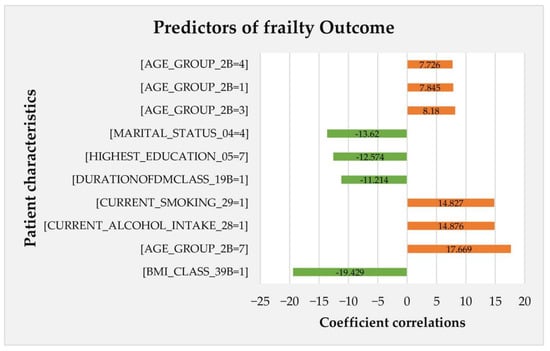
In Table S5 and Figure 2, predictors of frailty status are presented using ordinal logistic regression models. Model 1 achieved an accuracy of 11.4%, as indicated by the McFadden pseudo-R2 value, with frailty status being associated with being married, adjusted odds ratio (aOR) = 0.499, p < 0.05, and caregiver presence, aOR = 2.259, p < 0.001. The second model showed improved accuracy at 23.8%, with frailty associated with the number of medications, knowledge of glycaemic targets, and disability. In the final model, performance increased to 40.1%, and the factors associated with frailty status were similar to those in Model 2. Specifically, frailty was associated with the number of medications, aOR = 1.974, p < 0.01, polypharmacy, aOR = 0.137, p < 0.05, and knowledge of glycaemic targets, aOR = 0.008, p < 0.001.
Figure 2.
Top 10 most significant positive and negative predictors of frailty status based on ordinal logistic regression. Negative correlations are depicted in green, while positive correlations are in orange.
4. Discussion
4.1. Frailty Prevalence and Correlates
The present study adds to the growing number of reports on frailty and multimorbidity within low- and middle-income countries, particularly in Africa. In this study, we did not find any association between glycaemic control and frailty status. However, a previous study in Kenya among older persons revealed that self-reported diabetes was a risk factor for frailty, even greater than concomitant HIV infection [8]. Earlier reviews revealed that frailty is two to five times more common among patients with diabetes than among non-diabetes patients [38,39]. The link between diabetes and frailty status could arise from both conditions sharing similar predisposing factors and similar pathophysiological pathways. The elderly are more susceptible to cardiovascular diseases and skeletal muscle loss [51]. Hyperglycaemia in individuals with type 2 diabetes, chronic inflammation, malnutrition, inactivity, comorbidities, medications and hospitalisation eventually lead to sarcopenia (loss of muscle strength). Patients with type 2 diabetes have accelerated aging and are at risk of osteo-sarcopenia, falls, hip fractures, polypharmacy, depression, and poor cognition, which can all lead to frailty, as well as premature death [51,52,53,54].
In this study, the average frailty score and overall frailty prevalence were lower than those reported earlier in coastal Kenya [8]. The low frailty rate could perhaps be attributed to a younger population, obtaining specialist care at a referral hospital, or limitations with the modified 4-item FRAIL scale. However, a recent study in the Caribbean by the lead author also reported a similar rate [55]. However, Cuba has a much older populace, with a better healthcare system that emphasises primary care programs among older adults and preventive measures. In Nigeria, a recent study reported a low prevalence of less than 10% [56]. Possible reasons for low frailty prevalence in studies among older adults with HIV in Africa included geographical location, higher physical activity levels, better and more frequent access to health services and type of frailty instrument used [42,57,58].
In the present study, frailty status was associated with age, marital status, living alone, health knowledge level, disability, BMI, diastolic blood pressure and chronic kidney disease stage but not sex or polypharmacy. Previous international reviews on frailty revealed similar frailty correlates, such as age, low socioeconomic status, diet, sedentary lifestyle, depression, and cardiometabolic diseases such as diabetes, as well as female sex, unlike the present study [51,52]. With respect to local studies on diabetes in Kenya, our study included much older participants [20,29]. Most were female, married and had attained formal education. Although one ethnic group predominated, both glycaemic control and frailty status were not influenced by ethnicity. Moreover, the reason for the lack of association between frailty and gender could not be ascertained.
The World Health Organisation Integrated Care for Older People (ICOPE) guidelines call for effective screening, personalised geriatric assessment, person-centred care plans, appropriate geriatric referrals, and support for caregivers and communities through multidisciplinary and intersectoral approaches [59]. The International Conference of Frailty and Sarcopenia Research (ICFSR), on the other hand, recommends frailty screening for all older adults; comprehensive clinical assessments for those who screen positive; establishing a comprehensive plan to manage sarcopenia, polypharmacy, and weight loss; offering a multicomponent physical activity programme including the pre-frail; recommending protein/caloric supplementation for those with weight loss; and providing social support [12]. However, some pharmacological interventions, such as vitamin D supplementation, cognitive therapy, and hormone therapy, have been proven inefficacious in managing frailty [12].
To our knowledge, we report for the first time the use of a modified version of the FRAIL scale in Kenya. The FRAIL instrument is a simple screening test that can be performed by lay persons or self-administered and does not require specialised equipment [11]. It has been validated across various health disciplines, various geographical regions, including Australia, the United States, Mexico and Europe, and even among Black populations [16,17,18]. The scores for resistance and ambulation in the current study were higher than those for fatigue and having greater than five illnesses. In a global systematic review on frailty incidence involving studies from low-resource settings, the FRAIL scale was the second-most common instrument, used in 7 out of 29 studies [60]. This instrument was utilised in South Africa in a study evaluating cognitive impairment among preoperative older patients [61]. Although non-equivalent, the FRAIL scale is comparable to the Fried’s phenotype and may be limited by disability and difficulty in walking [13]. In Brazil, the Fried’s phenotype correlated with measures of fall risk, such as the Time Up and Go Test Test [6].
In Kenya, other frailty tools, including the Edmonton Frail Scale, the Critical Frailty Scale and the Survey of Health, Ageing and Retirement in Europe—Frailty Instrument, have been utilized [8,62]. However, comprehensive geriatric assessment (CGA), which is often considered the reference standard test, requires a multidisciplinary team and considerable time [14]. The aforementioned Cuban study utilised the CGA and the Cuban frailty criteria for annual screening at a family doctor’s clinic [55]. In Nigeria, the Fried’s phenotype criteria produced similar results to high-income countries, with a frailty prevalence of 7.3% [56]. The global ICFSR guidelines actually recommend the use of the FFP rather than the full CGA as a confirmatory post-screening test [12].
4.2. Diabetes, Glycaemic Control and Other Clinical Factors
Approximately 10% of adults globally have diabetes, and about 30–50% of patients with type 2 diabetes in the United States, Japan, India and the Caribbean are over 65 years of age [32,54,63,64]. The average duration of diabetes in the present study was greater than that reported in previous studies in Kenya, where shorter durations of illness ranging between 8–11 years were reported [20,25,26]. In a previous study, more than four-fifths of the participants had poor glycaemic control on the basis of a lower HbA1c cut-off, and approximately three-quarters were overweight or obese, which is very similar to the present findings [20]. Fewer than half of the participants in the present study were aware of diabetes symptoms, with a majority aware of glycaemic targets and diabetes-associated complications. The level of awareness could influence adherence to clinics, medication and lifestyle measures and therefore needs to be enhanced through continuous patient education. At a rural facility in Kenya, the majority of patients had received hospital-based diabetes education, with over half knowing the signs of hypoglycaemia [27]. It can be extrapolated that patients at KNH, the current study site, also received similar, if not better, diabetes education. Compared with other studies in rural Kenya, very few patients in the present study engaged in risky health behaviours such as smoking or alcohol consumption [27].
Although the mean glycaemic level among our study participants was suboptimal, the majority of the elderly achieved good HbA1c control. In the present study, glycaemic levels were associated with systolic blood pressure control, duration of diabetes, number of medications, and triglyceride and high-density lipoprotein levels but not age, sex, ethnic group or social status. Previously, glycaemic control was linked to sociodemographic factors such as age, sex and ethnicity [65]. The HbA1c target of 8% used in this study is based upon the recommendation of the European Diabetes Working Party among the elderly [30]. Whereas a target of 7.5% remains the standard for the ‘biologically young’ older adult, reasonable targets for the frail include HbA1c levels between 7.5 and 8.5% and FPG ranging from 6 to 10 mmol/L [54]. This relaxed cut-off point is suitable for disabled, bedridden, and neurologically impaired individuals and those receiving assisted feeding to prevent hypoglycaemic episodes [30]. Patients with extreme HbA1c levels (low or high) are also at risk of diabetes complications [39]. HbA1c levels > 8.0% have been associated with polyuria, polydipsia, nocturia, urinary infections, candidiasis and immunosuppression [32].
Hypertension was the most common comorbid disease in the present study, followed by eye disorders and diseases and arthritis. This finding was similar to those of two earlier studies in which comorbid hypertension was reported among 57% and 78% of participants [26,27]. Multimorbidity affects more than 80% of patients with diabetes and is associated with age and duration of diabetes [53]. In this study, elevated average systolic blood pressures and normal average diastolic pressures were reported. While a previous study reported higher off-optimal lipid levels ranging from 29–60%, in the present investigation, dyslipidaemia ranged from 11–17%, suggesting better control at the present site from treatment and lifestyle interventions [20]. Clinicians should also target a blood pressure control of <130/80 mm Hg and low-density lipoprotein levels of <2.6 mmol/L [30]. In this study, the majority of patients had adequate renal function, with only approximately one-fifth having stage 3 to 5 chronic kidney disease. Renal impairment has been shown to increase the risk of frailty [53].
Polypharmacy was a relatively common finding among our elderly participants. Although we reported the number of medications, we did not collect data on types of medications nor adherence to treatment, which could have influenced glycaemic control. In a recent qualitative study at a tertiary private facility, patients had a good understanding of the type of medications but not their specific drug names; they believed that all the medicines were necessary but were concerned about the costs [66].
4.3. Cost of Care
Poor glycaemic control may be associated with the duration of illness and the cost of medications. In this study, most participants relied on resources from public facilities, which were at times limited, requiring participants to pay user fees and purchase unstocked drugs from retail pharmacies. Compared with patients at a county referral hospital, patients at KNH had better drug availability and were seen less frequently but spent more [26]. Newer oral anti-hyperglycaemic agents such as dipeptidyl peptidase-4 (DPP-4) inhibitors may be preferred due to lower side effects and better cardiovascular outcomes, although this may come at additional costs [35]. In Cote d’Ivoire, frailty increased health utilisation and medical expenditure costs, especially through primary care consultations and self-medication [7]. In the United States, the total estimated cost of diagnosed diabetes was US $327 billion, including direct medical costs and reduced productivity [21].
In the present study, most participants reported low levels of income. A majority were unemployed, with at least a quarter being self-employed and two-fifths earning less than US$ 38 (5000 Kenyan shillings) per month. Although we did not determine the cost of care among our patients, previous studies in rural and urban Kenya estimated that, on average, most patients spent between US$ 8–35 (1000–4500 Kenya shillings) on direct costs and an additional US$ 1–8 (100–1000 Kenya shillings) on indirect costs such as transport [26,27,37]. In rural Kenya, medicines account for most of the total direct costs of care, followed by transport costs, which increase among those with comorbid hypertension [37]. With inflation and economic hardship, it can only be assumed that the economic burden for our older patients attending a specialist clinic in a referral hospital in the city of Nairobi is much greater. Compared with those in nearby country referral hospitals, patients visiting national referral hospitals spend almost four times more on transport and direct healthcare costs [26]. In China, ill-health was a major contributor of poverty, with non-communicable diseases leading to catastrophic out-of-pocket medical expenditure and disrupting school and work-related activities [36].
4.4. Strengths and Limitations
The use of an interview-administered questionnaire is an effective strategy among respondents who are assumed to have high illiteracy rates. This ensured that research assistants could crosscheck the comprehension of each question and rephrase unclear questions if necessary.
The FRAIL scale is based on the classical Fried’s phenotype criterion and is similar across high- and low-income countries [56]. Since the omission of weight loss in the present modified FRAIL scale could have resulted in a low frailty prevalence, compilation and automation of all patient records may avert future data loss and even allow for digitized retrospective frailty assessments. Machine learning and artificial intelligence techniques have been used to determine frailty, with better accuracy reported for the five-item FRAIL scale compared to other frailty measures [67]. Although frailty is usually associated with being underweight, obesity can also be associated with sarcopenia, a condition referred to as ‘sarcopenic obesity’ [5,54]. Very few participants in the present study were underweight. In another study, researchers in China used BMI < 18.5 kg/m2 as an indicator of frailty rather than weight loss [68].
Due to limited resources, we could not perform current laboratory tests on glycaemic levels, lipid profile, and renal tests but relied on retrospective data over a two-year window. The associations between frailty or glycaemic control with these tests could therefore be inaccurate. Furthermore, HbA1c is not an imperfect test. It is affected by anaemia and genetic haemoglobin disorders and is useful after three months but not sooner [69]. However random blood sugar tests were up-to-date, as they are required before every consultation.
4.5. Implications and Recommendations
- Finally, frailty screening and management should be integrated into the workflow of primary care providers [40,52]. The FRAIL scale is a simple tool that can be used by clinicians, patients or caregivers and takes less than 5 min. Clinicians should use frailty scores to have discussions with their patients, introduce multicomponent frailty interventions such as exercise, nutrition, medication review and social support, and train the entire primary care team on frailty screening and management [52].
- To deal with incomplete assessments, especially due to missing weight measurements, interventions could include empowering both the elderly patient and clinician to track weight changes regularly, to allow for weight loss calculation. Another alternative is to modify the scale with a surrogate measure such as BMI < 18.5 kg/m2 or the Time Up To Go Test, as previously highlighted [49,68].
- Although it remains unclear whether frailty screening is a cost-effective intervention, timely referrals should be made to geriatrician specialists for the frail elderly with complex issues [12]. Policies on health investments in frailty screening and management ought to be based on the best evidence, however, frail elderly diabetic patients with disabilities and multi-morbidities are usually unfairly excluded from clinical trials [23,30].
- Providers caring for elderly patients with diabetes should aim to achieve guideline-recommended HbA1c targets while avoiding hypoglycaemic episodes.
- Since the present study failed to prove an association between diabetes or other comorbidities and frailty, a case–control or cohort study design across different patient populations and alternative frailty instruments may identify relationships, confounders and temporal associations.
5. Conclusions
We reported a low frailty prevalence using the FRAIL scale, poor glycaemic control, uncontrolled blood pressure, high obesity levels, and socioeconomic challenges. Frailty status was not associated with glycaemic control.
Supplementary Materials
The following supporting information can be downloaded at: https://www.mdpi.com/article/10.3390/jgg74020012/s1, Table S1: Socioeconomic factors among participants (N = 430); Table S2: Health knowledge and health-seeking patterns among participants; Table S3: Correlations of continuous variables with frailty status and glycaemic control; Table S4: Chi-square associations of categorical variables with frailty and glycaemic levels; Table S5: Ordinal logistic regression of frailty status predictors.
Author Contributions
Conceptualisation: D.M.M. and J.T., methodology: D.M.M. and R.W., Data collection, software, formal analysis, and resources: D.M.M., writing—original draft preparation: D.M.M., writing—reviewing and editing: D.M.M., J.T., O.W.T. and R.W., supervision: J.T., O.W.T. and R.W. All the authors met the criteria of authorship and have read and agreed to the published version of the manuscript. All authors have read and agreed to the published version of the manuscript.
Funding
This research received no external funding.
Institutional Review Board Statement
The study was conducted in accordance with the Declaration of Helsinki. Academic and ethical approval for the study was obtained from the Graduate School of Kenyatta University (ref. P151/21461/2022 on 30 September 2025) and KNH/University of Nairobi Ethics Review Committee (ref. no. P854/11/2023 26 April 2024), respectively. Study permits were obtained from the National Commission for Science, Technology, and Innovation (ref. no. NACOSTI/P/24/36340 11 June 2024) and KNH’s Department of Medicine.
Informed Consent Statement
Informed written consent was obtained from all subjects involved in the study prior to data collection through signing of consent forms in English or Swahili.
Data Availability Statement
This article is based on research originally conducted as part of the investigator’s master’s thesis, titled ‘Frailty status and type 2 diabetes control among older adults at Kenyatta National Hospital, Kenya’, submitted to the Department of Family Medicine, Community Health and Epidemiology, in 2025. The thesis was supervised by J.T., O.W.T. and R.W. The manuscript has been revised and adapted for journal publication. The author confirms that the content has not been previously published or disseminated and complies with ethical standards for original publication. The thesis is currently unpublished and not publicly available. However, the data that support these findings have been included in the manuscript and Supplementary Files, and all data will be made publicly accessible as a thesis publication under Kenyatta University’s Institutional Repository for Master Thesis and Dissertations (https://ir-library.ku.ac.ke/communities/b07742cf-4d33-4bc5-9052-06a31cc24d15 accessed on 21 April 2026).
Acknowledgments
The authors wish to thank all participants in the study. We acknowledge input from Gulnaz Mohamoud, Consultant Family Physician, Aga Khan University Hospital, and Irene Njeri, Consultant Physician and Endocrinologist, Kiambu Level 5 Hospital, during the project conceptualisation stage.
Conflicts of Interest
The authors declare no conflicts of interest.
Abbreviations
The following abbreviations are used in this manuscript:
| aOR | adjusted Odds Ratio |
| BMI | Body Mass Index |
| CGA | Comprehensive Geriatric Assessment |
| FPG | Fasting Plasma Glucose |
| HbA1c | Glycated Haemoglobin |
| IANA | International Association of Nutrition and Ageing |
| KNH | Kenyatta National Hospital |
| SEM | Standard Error of Mean |
| T2DM | Type 2 Diabetes Mellitus |
References
- United Nations. UN Decade of Healthy Ageing. 2022. Available online: https://www.who.int/initiatives/decade-of-healthy-ageing (accessed on 26 February 2023).
- KNBS. 2019 Kenya Population and Housing Census Analytical Report on Population Dynamics, Nairobi, 2022. Available online: https://www.knbs.or.ke/wp-content/uploads/2023/09/2019-Kenya-population-and-Housing-Census-Analytical-Report-on-Population-Dynamics.pdf (accessed on 16 December 2025).
- Fried, L.P.; Tangen, C.M.; Walston, J.; Newman, A.B.; Hirsch, C.; Gottdiener, J.; Seeman, T.; Tracy, R.; Kop, W.J.; Burke, G.; et al. Frailty in older adults: Evidence for a phenotype. J. Gerontol. A Biol. Sci. Med. Sci. 2001, 56, M146–M157. [Google Scholar] [CrossRef] [Scilit]
- Clegg, A.; Young, J.; Iliffe, S.; Rikkert, M.O.; Rockwood, K. Frailty in elderly people. Lancet 2013, 381, 752–762. [Google Scholar] [CrossRef] [Scilit] [PubMed]
- George, N.L.; Nethathe, G.D. Frailty: What the South African surgeon needs to know. S. Afr. J. Surg. 2019, 57, 24–29. [Google Scholar] [CrossRef] [Scilit]
- Taguchi, C.K.; de Lemos Menezes, P.; Melo, A.C.S.; de Santana, L.S.; Conceição, W.R.S.; de Souza, G.F.; Araújo, B.C.L.; da Silva, A.R. Frailty syndrome and risks for falling in the elderly community. CoDAS 2022, 8, e20210025. [Google Scholar] [CrossRef] [Scilit]
- Ambagtsheer, R.C.; Moussa, R.K. Association of frailty with health service utilisation and health care expenditure in sub-Saharan Africa: Evidence from Côte d’Ivoire. BMC Geriatr. 2021, 21, 1–12. [Google Scholar] [CrossRef] [Scilit]
- Mwangala, P.N.; Nasambu, C.; Wagner, R.G.; Newton, C.R.; Abubakar, A. Prevalence and Factors Associated with Frailty Among Older Adults Living with HIV Compared to Their Uninfected Peers From the Kenyan Coast. Int. J. Public. Health. 2024, 69, 1606284. [Google Scholar] [CrossRef] [Scilit]
- Pathai, S.; Gilbert, C.; Weiss, H.A.; Cook, C.; Wood, R.; Bekker, L.G.; Lawn, S.D.F. Frailty in HIV-infected adults in South Africa. J. Acquir. Immune. Defic. Syndr. 2013, 62, 43–51. [Google Scholar] [CrossRef] [Scilit]
- Kasa, A.S.; Lee, S.-C.; Chang, H.-C. Frailty in older people living in Africa: A systematic review of prevalence and associated factors. Arch. Gerontol. Geriatr. Plus 2024, 1, 100078. [Google Scholar] [CrossRef] [Scilit]
- The Improvement Hub (ihub). Frailty Screening and Assessment Tools Comparator, 1st ed.; Healthcare Improvement Scotland: Glasgow, Scotland, 2017; pp. 1–24. Available online: http://ihub.scot/media/2457/frailty-screening-and-assessment-tools-comparator.pdf (accessed on 17 February 2023).
- Dent, E.; Morley, J.E.; Cruz-Jentoft, A.J.; Woodhouse, L.; Rodríguez-Mañas, L.; Fried, L.P.; Woo, J.; Aprahamian, I.; Sanford, A.; Lundy, J.; et al. Physical frailty: ICFSR international clinical practice guidelines for identification and management. J. Nutr. Health Aging. 2019, 23, 771–787. [Google Scholar] [CrossRef] [Scilit]
- Cesari, M.; Gambassi, G.; Van Kan, G.A.; Vellas, B. The frailty phenotype and the frailty index: Different instruments for different purposes. Age Ageing 2014, 43, 10–12. [Google Scholar] [CrossRef] [Scilit]
- Rolfson, D.B.; Majumdar, S.R.; Tsuyuki, R.T.; Tahir, A.; Rockwood, K. Validity and reliability of the Edmonton Frail Scale. Age Ageing 2006, 35, 526–529. [Google Scholar] [CrossRef] [Scilit]
- Searle, S.D.; Mitnitski, A.; Gahbauer, E.A.; Gill, T.M.; Rockwood, K. A standard procedure for creating a frailty index. BMC Geriatr. 2008, 8, 24. [Google Scholar] [CrossRef] [Scilit]
- Morley, J.E. Frailty and sarcopenia in elderly. Wien. Klin. Wochenschr. 2016, 128, 439–445. [Google Scholar] [CrossRef] [Scilit] [PubMed]
- Maxwell, C.A.; Dietrich, M.S.; Miller, R.S. The FRAIL Questionnaire: A Useful Tool for Bedside Screening of Geriatric Trauma Patients. J. Trauma. Nurs. 2018, 25, 242–247. [Google Scholar] [CrossRef] [Scilit] [PubMed]
- Morley, J.E.; Malmstrom, T.K.; Miller, D.K. A simple frailty questionnaire (FRAIL) predicts outcomes in middle aged african americans. J. Nutr. Health Aging. 2012, 16, 601–608. [Google Scholar] [CrossRef] [Scilit]
- Mohammed, A.S.; Adem, F.; Tadiwos, Y.; Woldekidan, N.A.; Degu, A. Level of adherence to the dietary recommendation and glycemic control among patients with type 2 diabetes mellitus in Eastern Ethiopia: A cross-sectional study. Diabetes Metab Syndr Obes. 2020, 2020, 2605–2612. [Google Scholar] [CrossRef] [Scilit] [PubMed]
- Nduati, N.J.; Simon, K.; Eva, N.; Lawrence, M. Factors associated with glycemic control among type 2 diabetes patients attending Mathari National Teaching Hospital, Nairobi Kenya. J. Endocrinol. Diabetes 2016, 3, 1–11. [Google Scholar] [CrossRef] [Scilit]
- Yang, W.; Dall, T.M.; Beronjia, K.; Lin, J.; Semilla, A.P.; Chakrabarti, R. Economic costs of diabetes in the U.S. in 2017. Diabetes Care 2018, 41, 917–928. [Google Scholar] [CrossRef] [Scilit]
- Ministry of Health. STEPwise Survey for Non Communicable Diseases Risk Factors 2015 Report. Health Wellbeing 2015, 5, 8–179. Available online: https://aphrc.org/publication/kenya-stepwise-survey-for-non-communicable-diseases-risk-factors-2015-report/ (accessed on 16 December 2025).
- Thakur, J.S.; Nangia, R.; Singh, S. Progress and challenges in achieving noncommunicable diseases targets for the sustainable development goals. FASEB Bioadv. 2021, 3, 563. [Google Scholar] [CrossRef] [Scilit]
- International Diabetes Federation. Kenya: Diabetes Country Report 2000–2050. Diabetes Atlas 2025. Available online: https://diabetesatlas.org/data-by-location/country/kenya/ (accessed on 11 October 2025).
- Matheka, D.M.; Kilonzo, J.M.; Munguti, C.M.; Mwangi, P.W. Pattern, knowledge and practices of HbA1C testing among diabetic patients in a Kenyan tertiary referral hospital. Global Health. 2013, 9, 2–5. [Google Scholar] [CrossRef] [Scilit] [PubMed]
- Mwavua, S.M.; Ndungu, E.K.; Mutai, K.K.; Joshi, M.D. A comparative study of the quality of care and glycemic control among ambulatory type 2 diabetes mellitus clients, at a Tertiary Referral Hospital and a Regional Hospital in Central Kenya. BMC Res. Notes. 2016, 9, 12. [Google Scholar] [CrossRef] [Scilit] [PubMed]
- Rono, E.; Ngure, K.; Mutai, J. Diabetes Management Among Diabetic Patients Attending Longisa Level Four Hospital, Kenya. J. Health. Med. Nurs. 2018, 3, 19–37. [Google Scholar]
- Waari, G.; Mutai, J.; Gikunju, J. Medication adherence and factors associated with poor adherence among type 2 diabetes mellitus patients on follow-up at Kenyatta National Hospital, Kenya. Pan Afr. Med. J. 2018, 29, 82. [Google Scholar] [CrossRef] [Scilit]
- Wambui Charity, K.; Kumar, A.M.V.; Hinderaker, S.G.; Chinnakali, P.; Pastakia, S.D.; Kamano, J. Do diabetes mellitus patients adhere to self-monitoring of blood glucose (SMBG) and is this associated with glycemic control? Experiences from a SMBG program in western Kenya. Diabetes Res. Clin. Pract. 2016, 112, 37–43. [Google Scholar] [CrossRef] [Scilit]
- Chen, L.-K.; Chen, Y.-M.; Lin, M.-H.; Peng, L.-N.; Hwang, S.-J. Care of elderly patients with diabetes mellitus: A focus on frailty. Ageing Res. Rev. 2010, 9, S18–S22. [Google Scholar] [CrossRef] [Scilit]
- Ministry of Health; Division of Non-Communicable Diseases. Clinical Guidelines on Management of Diabetes Mellitus. Nairobi. 2023. Available online: http://guidelines.health.go.ke:8000/media/National_DM_Guidelines_Version_15_2024_Signed-compressed.pdf (accessed on 16 December 2025).
- Strain, W.D.; Hope, S.V.; Green, A.; Kar, P.; Valabhji, J.; Sinclair, A.J. Type 2 diabetes mellitus in older people: A brief statement of key principles of modern day management including the assessment of frailty. A national collaborative stakeholder initiative. Diabet. Med. 2018, 35, 838–845. [Google Scholar] [CrossRef] [Scilit]
- Byszewski, A.; Bezzina, K.; Latrous, M. What kind of doctor do you want to be? Geriatric medicine podcast as a career planning resource. Biomed Res Int. 2017, 2017, 6183148. [Google Scholar] [CrossRef] [Scilit]
- Won, C.W.; Kim, S.; Swagerty, D. Why geriatric medicine is important for Korea: Lessons learned in the United States. J Korean Med. Sci. 2018, 33, e175. [Google Scholar] [CrossRef] [Scilit]
- Lee, J.-E.; Won, J.C. Paradigm shift from glucocentric to organ protection for the management of hyperglycemia in patients with type 2 diabetes. Cardiovasc. Prev. Pharmacother. 2024, 6, 116–122. [Google Scholar] [CrossRef] [Scilit]
- Zhou, Y.; Guo, Y.; Liu, Y. Health, income and poverty: Evidence from China’s rural household survey. Int. J. Equity Health 2020, 19, 36. [Google Scholar] [CrossRef] [Scilit] [PubMed]
- Oyando, R.; Njoroge, M.; Nguhiu, P.; Sigilai, A.; Kirui, F.; Mbui, J.; Bukania, Z.; Obala, A.; Munge, K.; Etyang, A.; et al. Patient costs of diabetes mellitus care in public health care facilities in Kenya. Int. J. Health Plann. Manag. 2020, 35, 290–308. [Google Scholar] [CrossRef] [Scilit] [PubMed]
- Kong, L.N.; Lyu, Q.; Yao, H.Y.; Yang, L.; Chen, S.Z. The prevalence of frailty among community-dwelling older adults with diabetes: A meta-analysis. Int J Nurs Stud. 2021, 119, 103952. [Google Scholar] [CrossRef] [Scilit] [PubMed]
- Yanase, T.; Yanagita, I.; Muta, K.; Nawata, H. Frailty in elderly diabetes patients. Endocr. J. 2018, 65, 1–11. [Google Scholar] [CrossRef] [Scilit]
- Chen, C.Y.; Gan, P.; How, C.H. Approach to frailty in the elderly in primary care and the community. Singap. Med. J. 2018, 59, 240–245. [Google Scholar] [CrossRef] [Scilit]
- Biritwum, R.B.; Minicuci, N.; Yawson, A.E.; Theou, O.; Mensah, G.P.; Naidoo, N.; Wu, F.; Guo, Y.; Zheng, Y.; Jiang, Y.; et al. Prevalence of and factors associated with frailty and disability in older adults from China, Ghana, India, Mexico, Russia and South Africa. Maturitas 2016, 91, 8–18. [Google Scholar] [CrossRef] [Scilit]
- Bristow, C.; George, G.; Hillsmith, G.; Rainey, E.; Urasa, S.; Koipapi, S.; Kisoli, A.; Boni, J.; Saria, G.A.; Ranasinghe, S.; et al. Low levels of frailty in HIV-positive older adults on antiretroviral therapy in northern Tanzania. J. Neurovirol. 2021, 27, 58–69. [Google Scholar] [CrossRef] [Scilit]
- Government of Kenya. The Constitution of Kenya 2010. National Council for Law Reporting. Available online: https://parliament.go.ke/statutory-documents (accessed on 15 April 2026).
- Pourhoseingholi, M.A.; Vahedi, M.; Rahimzadeh, M. Sample size calculation in medical studies. Gastroenterol. Hepatol. Bed Bench 2013, 6, 14–17. [Google Scholar]
- Levey, A.S.; Bosch, J.P.; Lewis, J.B.; Greene, T.; Rogers, N.; Roth, D. A more accurate method to estimate glomerular filtration rate from serum creatinine: A new prediction equation. Modification of Diet in Renal Disease Study Group. Ann. Intern. Med. 1999, 130, 461–470. [Google Scholar] [CrossRef] [Scilit]
- Tsimillis, K.C.; Michael, S. Accreditation of medical laboratories: What is new in ISO 15189:2022. Accredit. Qual. Assur. 2024, 29, 175–182. [Google Scholar] [CrossRef] [Scilit]
- Gong, S.; Qian, D.; Riazi, S.; Chung, F.; Englesakis, M.; Li, Q.; Huszti, E.; Wong, J. Association between the FRAIL scale and postoperative complications in older surgical patients: A systematic review and meta-analysis. Anesth. Analg. 2023, 136, 251–261. [Google Scholar] [CrossRef] [Scilit] [PubMed]
- Anh, D.; Nguyen, T.; Nguyen, T.; Nguyen, T.V. The validity of the FRAIL scale in frailty screening among Vietnamese older people. Aging Med. Healthc. 2022, 13, 87–92. [Google Scholar] [CrossRef] [Scilit]
- Xu, L.; Wang, W.; Xu, Y.; Yang, B. Efficacy of a modified FRAIL scale in predicting the peri-operative outcome of hepatectomy in older adults (aged ≥ 75 years): A model development study. BMC Geriatr. 2023, 23, 770. [Google Scholar] [CrossRef] [Scilit] [PubMed]
- Rodríguez-Laso, Á; Martín-Lesende, I.; Sinclair, A.; Sourdet, S.; Tosato, M.; Rodríguez-Mañas, L. Diagnostic accuracy of the FRAIL scale plus functional measures for frailty screening: A cross-sectional study. BJGP Open 2022, 6. [Google Scholar] [CrossRef] [Scilit]
- Soto, M.E.; Pérez-Torres, I.; Rubio-Ruiz, M.E.; Cano-Martínez, A.; Manzano-Pech, L.; Guarner-Lans, V. Frailty and the Interactions between Skeletal Muscle, Bone, and Adipose Tissue-Impact on Cardiovascular Disease and Possible Therapeutic Measures. Int. J. Mol. Sci. 2023, 24, 4534. [Google Scholar] [CrossRef] [Scilit]
- Abbasi, M.; Rolfson, D.; Khera, A.S.; Dabravolskaj, J.; Dent, E.; Xia, L. Identification and management of frailty in the primary care setting. CMAJ 2018, 190, E1134–E1140. [Google Scholar] [CrossRef] [Scilit]
- Sinclair, A.J.; Abdelhafiz, A.H. Multimorbidity, Frailty and Diabetes in Older People–Identifying Interrelationships and Outcomes. J Pers Med. 2022, 12, 1911. [Google Scholar] [CrossRef] [Scilit]
- Sanz-Cánovas, J.; López-Sampalo, A.; Cobos-Palacios, L.; Ricci, M.; Hernández-Negrín, H.; Mancebo-Sevilla, J.J.; Álvarez-Recio, E.; López-Carmona, M.D.; Pérez-Belmonte, L.M.; Gómez-Huelgas, R.; et al. Management of type 2 diabetes mellitus in elderly patients with frailty and/or sarcopenia. Int. J. Environ. Res. Public. Health. 2022, 19, 8677. [Google Scholar] [CrossRef] [Scilit]
- Mutonga, D.M.; Lapadula, M.C.; Martínez, B.M.G.; Rodríguez, Y.Á. Prevalence and factors associated with frailty in elderly people living in urban areas: Casino Deportivo, 2020. Cien Saude Colet. 2026, 30, e04042024. [Google Scholar]
- Ojagbemi, A.; Abiona, T.; Gureje, O. Frailty in the Ibadan study of aging-characterization and association with disability, quality of life and healthcare utilization. Afr. J. Med Med Sci. 2019, 48, 507–517. [Google Scholar]
- Cournil, A.; Eymard-Duvernay, S.; Diouf, A. Bone aging and frailty syndrome after 10 years of ARV treatment in Senegal. Bull. Soc. Pathol. Exot. 2014, 107, 238–240. [Google Scholar] [CrossRef] [Scilit] [PubMed]
- Eke, U.A.; Wasserstein, K.; Susman, C.; Eke, A.C.; Mohanty, K.; Schmalzle, S.; Viviano, N.; Hoffmann, J.D.; Pandit, N.S.; Palmeiro, R.; et al. The Performance of a New Multidimensional Frailty Index in Comparison to the Frailty Phenotype to Assess Frailty in People Living with HIV 50 Years of Age and Older in an Urban HIV Clinic. J. AIDS HIV Treat. 2025, 7, 27. [Google Scholar] [CrossRef] [Scilit] [PubMed]
- Banerjee, A.; Sadana, R. Integrated Care for Older People (ICOPE): From Guidelines To Demonstrating Feasibility. J. Frailty Aging. 2021, 10, 103–109. [Google Scholar] [CrossRef] [Scilit] [PubMed]
- Davidson, S.L.; Lee, J.; Emmence, L.; Bickerstaff, E.; Rayers, G.; Davidson, E.; Richardson, J.; Anderson, H.; Walker, R.; Dotchin, C. Systematic review and meta-analysis of the prevalence of frailty and pre-frailty amongst older hospital inpatients in low- and middle-income countries. Age Ageing 2025, 54, afae279. [Google Scholar] [CrossRef] [Scilit]
- Amado, L.A.; Perrie, H.; Scribante, J.; Ben-Israel, K.A. Preoperative cognitive dysfunction in older elective noncardiac surgical patients in South Africa. Br. J. Anaesth. 2020, 125, 275–281. [Google Scholar] [CrossRef] [Scilit]
- Prabhu, S.; Oyaro, B.; Wanje, G.; Aunon, F.M.; Juarez, N.G.; Flaherty, B.P.; McCormick, W.; Andrew, M.K.; Jaoko, W.; McClelland, R.S.; et al. Application of a Social Vulnerability Index and Its Associations with Physical Frailty and Disability in a Cross-sectional Study of Older Kenyan Women Living with and without HIV. J. Frailty Aging 2024, 13, 552–560. [Google Scholar] [CrossRef] [Scilit]
- CDC. National Diabetes Statistics Report, Atlanta. 2026. Available online: https://gis.cdc.gov/grasp/diabetes/diabetesatlas-statsreport.html (accessed on 26 March 2026).
- Magliano, D.J.; Boyko, E.J. IDF Diabetes Atlas 10th edition scientific committee. In IDF DIABETES ATLAS [Internet], 10th ed.; International Diabetes Federation: Brussels, Belgium, 2021; Chapter 3, Global picture. Available online: https://www.ncbi.nlm.nih.gov/books/NBK581940/ (accessed on 26 March 2026).
- Hailu, S.; Rockers, P.; Vian, T.; Onyango, M.; Laing, R.; Wirtz, V. Access to diabetes medicines at the household level in eight counties of Kenya. Int. J. Tuberc. Lung Dis. 2018, 22, 585–590. [Google Scholar] [CrossRef] [Scilit]
- Kamau, M.; Nyanja, N.; Lusambili, A.M.; Shabani, J.; Mohamoud, G. Knowledge, attitudes and beliefs toward polypharmacy among older people attending Family Medicine Clinic, Nairobi, Kenya. BMC Geriatr. 2024, 24, 132. [Google Scholar] [CrossRef] [Scilit]
- Yang, C.C.; Chen, P.H.; Yang, C.H.; Dai, C.Y.; Luo, K.H.; Chen, T.H.; Chuang, H.-Y.; Kuo, C.-H. Physical frailty identification using machine learning to explore the 5-item FRAIL scale, Cardiovascular Health Study index, and Study of Osteoporotic Fractures index. Front Public Health. 2024, 12, 1303958. [Google Scholar] [CrossRef] [Scilit]
- Cai, R.; Chao, J.; Gao, C.; Gao, L.; Hu, K.; Li, P. Association between sleep duration and cognitive frailty in older Chinese adults: Prospective cohort study. JMIR Aging 2025, 8, e65183. [Google Scholar] [CrossRef] [Scilit]
- Fujibayashi, K.; Hayashi, M.; Yokokawa, H.; Naito, T. Changes in antidiabetic prescription patterns and indicators of diabetic control among 200,000 patients over 13 years at a single institution in Japan. Diabetol. Metab. Syndr. 2016, 8, 72. [Google Scholar] [CrossRef] [Scilit]

Disclaimer/Publisher’s Note: The statements, opinions and data contained in all publications are solely those of the individual author(s) and contributor(s) and not of MDPI and/or the editor(s). MDPI and/or the editor(s) disclaim responsibility for any injury to people or property resulting from any ideas, methods, instructions or products referred to in the content. |
© 2026 by the authors. Published by MDPI on behalf of the Italian Society of Gerontology and Geriatrics (SIGG). Licensee MDPI, Basel, Switzerland. This article is an open access article distributed under the terms and conditions of the Creative Commons Attribution (CC BY) license.