Article

Association Between Neuropsychiatric Symptoms of Dementia and Caregiver Outcomes: A Cross-Sectional Study in Primary Care


by
Constança Paúl
1,2,
Marta Vieira e Silva
1,*,
Susana Sousa
1,2 and
Laetitia Teixeira
1,2
1
Institute of Biomedical Sciences Abel Salazar, University of Porto, 4050-313 Porto, Portugal
2
RISE—Health, 4050-313 Porto, Portugal
*
Author to whom correspondence should be addressed.
J. Gerontol. Geriatr. 2026, 74(2), 13; https://doi.org/10.3390/jgg74020013
Submission received: 23 January 2026 / Revised: 19 April 2026 / Accepted: 21 April 2026 / Published: 24 April 2026

Abstract

Neuropsychiatric symptoms in dementia impact diagnosis and caregiver burden. Informal caregivers effectively identify cognitive changes and confirm the care receiver’s symptoms. This study aims to examine the association between neuropsychiatric symptoms in primary care users with probable dementia and caregiver burden and depression, as reported by informal caregivers, and describe the most frequent neuropsychiatric symptoms in this population. This cross-sectional study included 101 primary care users aged 65+ with mental health concerns identified by their General Practitioner and informal caregivers, excluding those in institutional care, without memory concerns and an informal caregiver, or without Neuropsychiatric Inventory Questionnaire (NPI-Q) data. The sample (79.4 ± 7.7 years) was 53.5% female, 33.7% had no formal education, and 60.4% presented probable dementia per Global Deterioration Scale. The NPI-Q total score and the distress dimension score were 10.1 (sd = 5.6) and 11.9 (sd = 9.1), respectively. The most reported symptoms were agitation/aggression (69.3%) and apathy/indifference (65.3%). We found a significant positive association between NPI-Q total and Distress scores and Caregiver Burden Scale, 0.296 (p = 0.023) and 0.417 (p < 0.001), and between NPI-Q total and Distress scores and AB Clinician Depression Screen, 0.227 (p = 0.023) and 0.416 (p < 0.001). Probable dementia was linked to more neuropsychiatric symptoms and greater caregiver burden and depression. Training for caregivers can improve the quality of care and, as a result, may reduce burnout and depression.

1. Introduction

Dementia is a significant problem that affects people with the disease, their families and caregivers. As the global population ages, the number of people with dementia is expected to rise. Currently, more than 55 million people worldwide live with dementia, and this figure is expected to reach 153 million by 2050 [1,2]. Epidemiological studies reveal significant differences in the prevalence of dementia worldwide, particularly in Europe, which may be related to methodological variations (e.g., diagnostic criteria, assessment tools, and study design), as well as geographical variations (e.g., Southern Europe vs. Northern Europe; urban vs. rural settings) [3].
In Portugal, it was estimated that 193,516 people had dementia in 2019, a figure expected to rise to 346,905 by 2050 due to population aging and the associated prevalence of the disease [4]. Dementia is a progressive neurodegenerative disease that impairs multiple higher-order cortical functions. Dementia symptoms can be divided into cognitive and non-cognitive. Non-cognitive symptoms are neuropsychiatric symptoms (NPS), also known as behavioral and psychological symptoms of dementia (BPSD). Neuropsychiatric symptoms can occur at any stage of dementia. While cognitive impairment is not caused by NPS, these symptoms often occur together and can exacerbate it, leading to a greater loss of independence [5].
The presence of NPS, including agitation, irritability, disinhibition, apathy, sleep disturbances, and depression, in people with dementia affects their quality of life. Besides the presence of symptoms, their severity and symptom profile are important factors in the level of discomfort for the patient as well as the burden on the caregiver. The number and frequency of NPS provide an indication of symptom intensity and the level of discomfort experienced by the person with dementia. However, symptom frequency is not always systematically assessed in the family context [6,7].
Previous studies have shown that agitation/aggression and apathy/indifference are the most prevalent NPS experienced by people with dementia and are particularly impactful, correlating with higher scores on depression and burden scales among informal caregivers [8,9,10]. Other common symptoms experienced by people with dementia include irritability, sleep disturbances, depression, and anxiety, although their impact on caregiver burnout is not consistent across different studies. Euphoria, hallucinations, and delusions are the least common, even though their significance should not be disregarded [11,12,13,14,15,16]. A detailed summary of symptom prevalence reported in the literature [9,11,12,13,14,15,16,17,18] is provided in the Supplementary Table S1.
The more symptoms associated with people with dementia, the greater the stress felt by caregivers, namely symptoms of depression and anxiety that impact personal/social well-being and condition caregiving [6,14,17,19,20]. The burden on informal caregivers can extend to multiple areas, such as psychological distress, deterioration in physical health, social isolation, and depressive and anxiety symptoms, often outweighing the impact of cognitive or functional decline of the person with probable dementia [11,12,13,21,22,23]. In Portugal, research highlights that informal care is predominantly provided by women, mainly daughters or spouses who frequently live with the person with dementia. Cultural expectations of family responsibility contribute to high rates of co-residential care and underuse of formal support services, despite caregivers reporting significant unmet practical, emotional, and informational needs [24].
Therefore, this study aimed to examine the association between neuropsychiatric symptoms in primary care users with probable dementia and caregiver burden and depression, as reported by informal caregivers, and describe the most frequent neuropsychiatric symptoms in this population.

2. Materials and Methods

2.1. Population and Sample

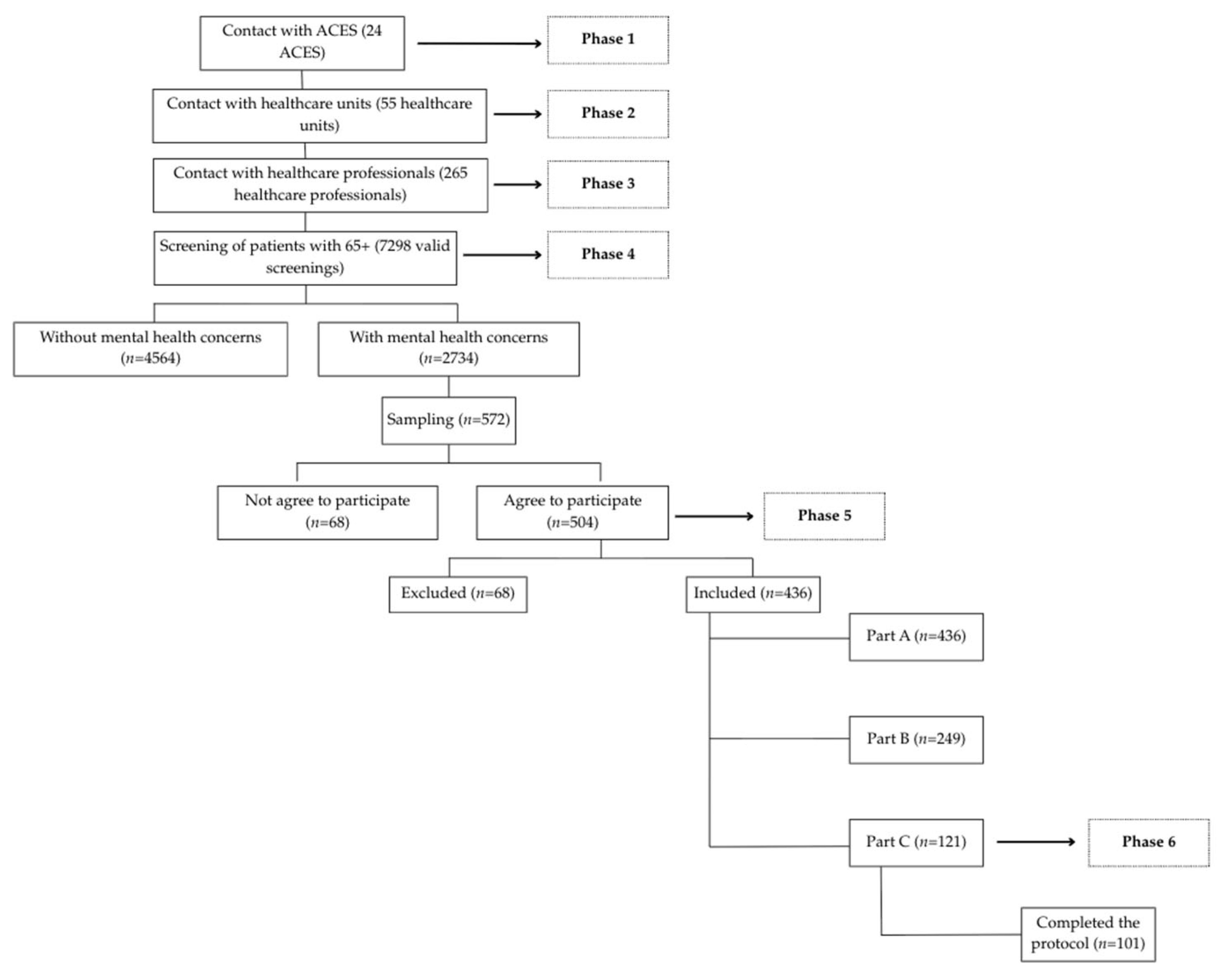
This is a part of a larger observational cross-sectional study about “Needs of Care for People with Dementia,” in which the objective was to identify the needs of people with mental health concerns identified by General Practitioners (GPs). The inclusion criteria were: (i) to be a user of a primary care unit in the Portuguese North Regional Health Authority (ARS Norte); (ii) aged 65 years or older; (iii) living in the community; (iv) presence of mental health concerns perceived by the GP; and (v) identification of a primary caregiver. The exclusion criteria were: (i) living in a nursing home, hospital, or psychiatric institution; (ii) absence of memory concerns (patients classified in stage 1 of the GDS); (iii) no informal caregiver; and (iv) no or incomplete NPI-Q information. The protocol of the larger study included 3 parts, each one for different persons: Part A—Patient with probable dementia; Part B—health professional (GP); and Part C: informal caregiver. Figure 1 shows the data collection of this study.
Considering our objectives, only Part C of the protocol was considered for this study. Excluding incomplete protocols (n = 20), the actual sample comprises 101 individuals aged 65 years and over of primary care users with mental health concerns. More information could be obtained in Teixeira and colleagues [25]. The study was submitted to the Ethics Committee of the ARS-Norte and was approved unanimously on 7 January 2014 (Reference No. 6/2014). All participants signed the informed consent form, complying with the Declaration of Helsinki.
This study was carried out in several phases:
Phase 1: Establishment of institutional contact with the ACES/ULS (Associations of Health Centers).
Phase 2: After the contact with the ACES/ULS, healthcare units were contacted.
Phase 3: Contact with healthcare professionals who were part of the healthcare units that agreed to participate. Selection of training sessions was provided to health professionals and interviewers, the latter being specifically prepared to apply the assessment protocols and support the professionals involved.
Phase 4: Administration of the screening tool “Community Assessment of Risk and Treatment Strategies (CARTS) Program” [26] by the GPs to all patients, who could be potential participants (considering the inclusion and exclusion criteria) (n = 7298). This phase was performed in order to identify people with mental health concerns.
Phase 5: Considering only patients with mental health concerns, a random sample of this group, stratified by sex, age, and ACES, was recruited. The first contact with the selected participant was performed by the receptionist of the health care unit. If participants agreed to participate, the assessment protocols were applied (n = 504). After the agreement to participate, 436 eligible participants were selected. The interviews, which lasted between 30 min and 1 h, were conducted primarily at health care facilities or, when necessary, at the participants’ homes, after obtaining their informed consent. Participants were informed that participation was voluntary and that refusal or withdrawal would not affect their access to healthcare services. All fieldwork was supervised and monitored through regular meetings.
Phase 6: This study focuses only on protocol C. This protocol was applied to the 121 caregivers, but only 101 completed the protocol.
More information can be obtained at Sousa and colleagues [27,28].

2.2. Measures

The study protocol was based on the Community Assessment of Risk and Treatment Strategies (CARTS) Program [26], developed at University College Cork, Ireland, which provided the framework for participant screening and recruitment procedures in the present study. The assessment protocol included sociodemographic information of the primary care user (age, sex, marital status and level of education); the Global Deterioration Scale (GDS); informal caregiver burden and depression (CBS and ABCDS); and the prevalence of NPS in primary care users. Some of the following descriptions of the instruments are also mentioned in other studies [20,21,22].
Global Deterioration: Global Deterioration Scale (GDS) [29], Portuguese version [30] allows to classify the individuals qualitatively along seven stages of primary degenerative dementia (Stage 1—No Cognitive Decline, Stage 2—Very Mild Cognitive Decline, Stage 3—Mild Cognitive Decline, Stage 4—Moderate Cognitive Decline, Stage 5—Moderately, Stage 6—Severe Cognitive Decline and Stage 7—Very Severe Cognitive Decline). The GDS is a tool that facilitates the assessment of subjective cognitive complaints. It provides an overview of the stages of cognitive function in people living with primary degenerative dementia and was developed as a qualitative measure of disease severity. Therefore, it is not a diagnostic tool. A general description of the symptoms and clinical characteristics of each stage of dementia is presented to help the interviewer decide on the level of cognition and function.
Neuropsychiatric symptoms: Neuropsychiatric Inventory (NPI-Q) [31], Portuguese version [32] is a brief version of the Neuropsychiatric Inventory and allows the evaluation of psychopathology in dementia and its repercussions on the caregivers’ overload. The coefficient of internal consistency (Cronbach’s alpha) of the NPI-Q is 0.76. The neuropsychiatric symptoms are Delusions, Hallucinations, Agitation or Aggression, Depression or Dysphoria, Anxiety, Elation or Euphoria, Apathy or Indifference, Disinhibition, Irritability or Lability, Motor Disturbance, Nocturnal Behaviors and Appetite and Eating. For each symptom, it assesses the presence (yes/no), severity (1. Low; 2. Moderate; and 3. Severe) and caregiver distress (0. Not at all; 1. Minimally; 2. Mildly; 3. Moderately; 4. Severely; and 5. Very severe or extremely). The Total Score represents the sum of all scale items, indicating overall severity. The Distress Dimension Score sums only the distress-related items.
Depression: AB Clinician Depression Screen (ABCDS) [33] is a brief version of the Geriatric Depression Scale [34] and is composed of five dichotomous questions (yes/no). The final score varies between 0 and 5, and individuals with a score equal to or higher than 3 have a high probability of depression in caregivers. The instrument was included as part of a standardized protocol for a larger study, ensuring consistency and reliability.
Burden: Caregiver Burden Scale (CBS) [35], Portuguese version [36] assesses caregiver burden include 5 items with 6 possible answers (0. never, 1. almost never, 2. very little of the time, 3. a little of the time, 4. some of the time, 5. most of the time and 6. all the time). The coefficient of internal consistency (Cronbach’s alpha) of the CBS is 0.88. The final score varies between 0 and 30, and a score equal to or greater than 15 is an indicator of burden in caregivers.

2.3. Data Analysis

The description of the sample was performed using absolute and relative frequencies or mean and standard deviation (sd), according to the type of variable. The association between scales was evaluated using the Pearson correlation coefficient. Group comparison was performed through the Pearson Chi-Square test (for presence/absence of symptoms) and independent sample t-test (for NPI-Q scores). A significant level of 0.05 was considered, and all analyses were performed using IBM SPSS Statistics version 29.0.

3. Results

Characteristics of the Sample

The characteristics of the sample are presented in Table 1. The overall mean age was 79.4 years (sd = 7.7 years, range: [65–97] years), 54 (53.5%) were female, and 34 (33.7%) had no formal education. Half of the samples were married, and 41 (41.90%) were widowed. Based on GDS, 61 (60.4%) of the primary care users presented probable dementia.
Neuropsychiatric symptoms rely on a caregiver-informant interview, and Table 2 describes the distribution of NPI-Q items, according to presence and severity of symptoms, an NPI-Q total score and distress dimension score. The most reported symptoms were agitation/aggression (69.3%), followed by apathy/indifference (65.3%). The least reported were euphoria/elation (14.9%), hallucinations (17.8%) and delusions (19.8%). In terms of severity, evaluated only on participants with the presence of the symptoms, the symptoms with a higher percentage of moderate or severe were irritability/lability and agitation/aggression. Considering the total score and the distress dimension score, the mean scores were 10.1 (sd = 5.6) and 11.9 (sd = 9.1), respectively.
Table 3 presents the comparison of primary care users without (GDS ≤ 3) and with probable dementia (GDS ≥ 4) according to the presence of symptoms and NPI-Q scores. Results revealed significant differences between the two groups for the presence of euphoria/elation, apathy/elation and aberrant motor behaviors. For the three symptoms, the percentage of presence was higher for primary care users with probable dementia. Additionally, the two groups presented differences in the mean of NPI-Q scores (total and distress dimension), with the primary care users with probable dementia presenting a higher mean score for the two scales.
Considering caregivers’ mental health, 53.3% presented burden and 40.8% probable depression. A significant and positive association between neuropsychiatry symptoms (NPI-Q) scores and caregiver burden and depression was found (Table 4).

4. Discussion

The caregivers were able to report the existence and severity of the symptoms (NPI-Q) of the person they were caring for. The analysis of NPS in primary care users with probable dementia proved to be very useful. Most symptoms are more frequent and severe in individuals with dementia. Furthermore, both the total score and the distress dimension score significantly discriminate between individuals with and without dementia, supporting the diagnosis. The association between the care recipient’s NPS and the caregivers’ burden and depression can serve as a basis for interventions that focus on the caregivers’ ability to deal with problematic behaviors and, subsequently, to increase their own well-being and desirably improve the quality of care provided.
This study highlights the importance of the influence of NPS on caregivers’ experiences, revealing a clear link to both caregiver burnout and depression associated with this situation. These results are consistent with other studies [8,10] that identified NPS as the primary contributors to the distress of informal caregivers and the deterioration of mental well-being. Furthermore, another study [23] showed that the combination of different NPS can affect caregiver burden in different ways, highlighting the complexity of this relationship.
Among our study, agitation/aggression and apathy/indifference were found to be the most common symptoms, which were highly related to caregiver burden and depression. These results were consistent with previous studies [9,11,13,15,18,37]. On the other hand, irritability, depression, anxiety, and nocturnal behavior, though common, were not found to have any significant association with caregiver burden. This could be due to various factors, such as differences in caregiver burden levels, caregiver coping styles, family support, and cultural differences. These issues, however, need to be considered cautiously [6].
Likewise, lower prevalence rates were observed for euphoria, hallucinations, and delusions, which is consistent with previous studies, suggesting a reduced impact on caregiver burden [11,12,13,14,15,16]. In general, these results emphasize the significance of attending NPS in primary care settings, with a focus on those that are most strongly associated with caregiver burden. Caregivers’ coping strategies can be developed through different interventions, such as psychoeducation, self-care techniques, support groups, and environmental changes, which can reduce caregiver burden and depression, thus improving the quality of care not only for caregivers but also for care receivers [8,17,19,23]. This supports the view that caregiver burden should be understood as a multidimensional construct shaped by both patient-related and caregiver-related factors [22].
This study has some limitations. First, the number of participants does not allow the generalization of results for all the dyads of caregivers/person with probable dementia. Second, as it was a transversal study, we cannot infer that dementia was the only cause of NPS. Third, caregiver characteristics (e.g., age, gender, relationship to the care recipient, number of caregiving hours) were not comprehensively described, which may have influenced the interpretation of the results. Fourth, in this study, no power analysis was conducted prior to the start of the research process. Since there were no previous studies in the Portuguese context that provided information on the prevalence of mental health problems in this population, it was impossible to estimate the optimal sample size required.
Future studies will benefit by collecting the previous clinical story of the people with dementia and should investigate in more detail which NPS contribute to the depressive and exhaustion symptoms of caregivers; how the relationship between the caregiver and the care recipient can influence the level of burden and symptoms associated with depression; understand which are the greatest predictors of caregiver burden taking into account their biopsychosocial characteristics; and understand which may be the most effective protective factors in reducing caregiver burden and depression. Also, to understand if there are differences in caregiver burden according to the duration of this role, or if the set/severity of NPS is unrelated to the duration of care.

5. Conclusions

Although NPS are clearly one of the main factors contributing to caregiver burden, how the caregiver manages the symptoms is also a relevant focus. Each caregiver reacts differently to the NPS present in people with dementia and has different skills to manage them. In this way, caregivers are exposed to a high risk of developing psychological distress, such as depression, anxiety and burnout [34]. It is, therefore, crucial to empower caregivers with strategies to cope with NPS in people with dementia, to improve their quality of life and reduce burden and depression. In addition, it is important to find solutions that can respond to the psychological and physical difficulties inherent in caring for people with dementia [17]. Thus, it is proposed to promote physical exercise (which may help to decrease depression symptoms), psychoeducation programs for the role of caregiver and self-care practices (could contribute to alleviate caregiver burden), the creation of support groups to increase social participation (may be beneficial to decrease social isolation), the use of relaxation techniques (which may help manage agitation), learning to adjust the environment to the needs of the person being cared for (which may help minimize behavioral changes).

Supplementary Materials

The following supporting information can be downloaded at: https://www.mdpi.com/article/10.3390/jgg74020013/s1, Table S1: Prevalence of Neuropsychiatric Symptoms.

Author Contributions

L.T. and C.P. conceived the research project design, L.T. conducted the data analysis, M.V.e.S. and C.P. wrote the manuscript and M.V.e.S., L.T., C.P. and S.S. reviewed the manuscript. All authors have read and agreed to the published version of the manuscript.

Funding

This research received no external funding.

Institutional Review Board Statement

The study was conducted in accordance with the Declaration of Helsinki and approved by the Ethics Committee of ARS-Norte (protocol code 6/2014 on 7 January 2014). The detailed methodological aspects are reported and can be consulted elsewhere [25].

Informed Consent Statement

Informed consent was obtained from all subjects involved in the study. Written informed consent has been obtained from the patient(s) to publish this paper.

Data Availability Statement

The datasets for this article are not publicly available because this study is part of a larger study. Requests to access the datasets should be directed to C.P., paul@icbas.up.pt.

Conflicts of Interest

The authors declare no conflicts of interest.

Abbreviations

The following abbreviations are used in this manuscript:
NPI-QNeuropsychiatric Inventory Questionnaire
NPSNeuropsychiatric Symptoms
GDSGlobal Deterioration Scale
CBSCaregiver Burden Scale
ABCDS ABClinician Depression Screen

References

  1. Nichols, E.; Steinmetz, J.; Vollset, S.; Fukutaki, K.; Chalek, J.; Abd-Allah, F.; Abdoli, A.; Abualhasan, A.; Abu-Gharbieh, E.; Akram, T.T.; et al. Estimation of the global prevalence of dementia in 2019 and forecasted prevalence in 2050. Lancet Public Health 2022, 7, 105–125. [Google Scholar] [CrossRef]
  2. World Health Organization. Supporting families to care for people with dementia. Bull. World Health Organ. 2017, 95, 734–735. [Google Scholar] [CrossRef] [Scilit]
  3. Cao, Q.; Tan, C.C.; Xu, W.; Hu, H.; Cao, X.-P.; Dong, Q.; Tan, L.; Yu, J.-T. The prevalence of dementia: A systematic review and meta-analysis. J. Alzheimers Dis. 2020, 73, 1157–1166. [Google Scholar] [CrossRef] [Scilit] [PubMed]
  4. Alzheimer Europe. Dementia in Europe Yearbook 2019: Estimating the Prevalence of Dementia in Europe; Alzheimer Europe: Luxembourg, 2019. [Google Scholar]
  5. Abreu, W.; Tolson, D.; Jackson, G.A.; Costa, N. A cross-sectional study of family caregiver burden and psychological distress linked to frailty and functional dependency of a relative with advanced dementia. Dementia 2020, 19, 301–318. [Google Scholar] [CrossRef] [Scilit]
  6. Borelli, W.V.; Augustin, M.C.; de Oliveira, P.B.F.; Reggiani, L.C.; Bandeira-de-Mello, R.G.; Schumacher-Schuh, A.F.; Chaves, M.L.F.; Castilhos, R.M. Neuropsychiatric symptoms in patients with dementia associated with increased psychological distress in caregivers during the COVID-19 pandemic. J. Alzheimers Dis. 2021, 80, 1705–1712. [Google Scholar] [CrossRef] [Scilit]
  7. Lucijanic, J.; Bazdaric, K.; Lucijanic, M.; Malekovic, H.; Hanzevacki, M.; Juresa, V. Predictors of health-related quality of life in informal caregivers. Psychiatr. Danub. 2021, 33, 189–198. [Google Scholar]
  8. Chen, Y.J.; Su, J.A.; Chen, J.S.; Liu, C.H.; Griffiths, M.D.; Tsai, H.C.; Chang, C.; Lin, C.Y. Examining the association between neuropsychiatric symptoms among people with dementia and caregiver mental health: Are caregiver burden and affiliate stigma mediators? BMC Geriatr. 2023, 23, 27. [Google Scholar] [CrossRef] [Scilit]
  9. Dauphinot, V.; Delphin-Combe, F.; Mouchoux, C.; Dorey, A.; Bathsavanis, A.; Makaroff, Z.; Rouch, I.; Krolak-Salmon, P. Risk factors of caregiver burden among patients with Alzheimer’s disease or related disorders: A cross-sectional study. J. Alzheimers Dis. 2015, 44, 907–916. [Google Scholar] [CrossRef] [Scilit]
  10. Pinyopornpanish, K.; Soontornpun, A.; Wongpakaran, T.; Wongpakaran, N.; Tanprawate, S.; Pinyopornpanish, K.; Nadsasarn, A.; Pinyopornpanish, M. Impact of behavioral and psychological symptoms of Alzheimer’s disease on caregiver outcomes. Sci. Rep. 2022, 12, 18470. [Google Scholar] [CrossRef] [Scilit] [PubMed]
  11. Baharudin, A.D.; Din, N.C.; Subramaniam, P.; Razali, R. The associations between behavioral-psychological symptoms of dementia (BPSD) and coping strategy, burden of care and personality style among low-income caregivers of patients with dementia. BMC Public Health 2019, 19, 447. [Google Scholar] [CrossRef] [Scilit] [PubMed]
  12. Basu, I.; Mukhopadhyay, S. Neuropsychiatric symptoms of dementia and caregivers’ burden: A study among Indian caregivers. Dement. Neuropsychol. 2022, 16, 332–340. [Google Scholar] [CrossRef] [Scilit]
  13. Hanzevacki, M.; Lucijanic, J.; Librenjak, D.; Lucijanic, M.; Juresa, V. Unique contributions of specific neuropsychiatric symptoms to caregiver burden. Cogn. Neuropsychiatry 2023, 28, 327–332. [Google Scholar] [CrossRef] [Scilit]
  14. Kamoga, R.; Mubangizi, V.; Owokuhaisa, J.; Muwanguzi, M.; Natakunda, S.; Rukundo, G.Z. Behavioral and psychological symptoms of dementia: Prevalence, symptom severity, and caregiver distress. Int. J. Environ. Res. Public Health 2023, 20, 2336. [Google Scholar] [CrossRef] [Scilit]
  15. Rosdinom, R.; Zarina, M.Z.; Zanariah, M.S.; Marhani, M.; Suzaily, W. BPSD, cognitive impairment and caregiver burden. Prev. Med. 2013, 57, 67–69. [Google Scholar] [CrossRef] [Scilit]
  16. Yahya, A.; Anand, K.S.; Bajaj, B.K.; Garg, J. Behavioral and psychological symptoms in dementia (BPSD) and its impact on caregiver burden. J. Med. Sci. Clin. Res. 2018, 6, 560–568. [Google Scholar] [CrossRef] [Scilit]
  17. International Psychogeriatric Association. IPA Complete Guides to Behavioral and Psychological Symptoms of Dementia (BPSD); IPA: Milwaukee, WI, USA, 2015. [Google Scholar]
  18. Mukherjee, A.; Biswas, A.; Roy, A.; Biswas, S.; Gangopadhyay, G.; Das, S.K. Behavioural and psychological symptoms of dementia. Dement. Geriatr. Cogn. Disord. Extra 2017, 7, 354–365. [Google Scholar] [CrossRef] [Scilit] [PubMed]
  19. Duan, C.; Zhu, M.; Li, X.; Yue, L. Influencing factors of depressive and anxiety symptoms among caregivers of Alzheimer’s disease patients: A cross-sectional study. J. Alzheimers Dis. 2025, 109, 1264–1273. [Google Scholar] [CrossRef] [Scilit] [PubMed]
  20. Lin, P.C.; Lin, H.T.; Yang, Y.H.; Yang, Y.H. The effects of caregiver characteristics on BPSD of patients with dementia. Aging Ment. Health 2022, 26, 263–269. [Google Scholar] [CrossRef] [Scilit] [PubMed]
  21. García-Martín, V.; De Hoyos-Alonso, M.C.; Delgado-Puebla, R.; Ariza-Cardiel, G.; del Cura-González, I. Burden in caregivers of primary care patients with dementia. BMC Geriatr. 2023, 23, 4234. [Google Scholar] [CrossRef] [Scilit] [PubMed]
  22. Steinsheim, G.; Malmedal, W.; Follestad, T.; Olsen, B.; Saga, S. Factors associated with subjective burden among informal caregivers. BMC Geriatr. 2023, 23, 4358. [Google Scholar] [CrossRef] [Scilit]
  23. van den Kieboom, R.; Snaphaan, L.; Mark, R.; van Assen, M.; Bongers, I. The effects of neuropsychiatric symptom clusters in people with dementia on family caregiver burden. J. Alzheimers Dis. 2024, 100, 1289–1298. [Google Scholar] [CrossRef] [Scilit]
  24. Barbosa, F.; Voss, G.; Delerue Matos, A. Health impact of providing informal care in Portugal. BMC Geriatr. 2020, 20, 1841. [Google Scholar] [CrossRef] [Scilit] [PubMed]
  25. Teixeira, L.; Dos Santos, P.M.; Alves, S.; Azevedo, M.J.; Duarte, M.G.; Leuschner, A.; Paúl, C. Screening of dementia in Portuguese primary care. Front. Med. 2017, 4, 197. [Google Scholar] [CrossRef] [Scilit] [PubMed]
  26. O’Caoi O’Caoimh, R.; Gao, Y.; Svendrovski, A.; Healy, E.; O’Connell, E.; O’Keeffe, G.; Cronin, U.; Igras, E.; O’Herlihy, E.; Fitzgerald, C.; et al. The Risk Instrument for Screening in the Community (RISC): A new instrument for predicting risk of adverse outcomes in community-dwelling older adults. BMC Geriatr. 2015, 15, 92. [Google Scholar] [CrossRef] [Scilit] [PubMed]
  27. Sousa, S.; Teixeira, L.; Paul, C. Assessment of major neurocognitive disorders in primary health care. Front. Psychol. 2020, 11, 1413. [Google Scholar] [CrossRef] [Scilit]
  28. Sousa, S.; Paúl, C.; Teixeira, L. Predictors of major depressive disorder in older people. Int. J. Environ. Res. Public Health 2021, 18, 11894. [Google Scholar] [CrossRef] [Scilit]
  29. Reisberg, B.; Ferris, S.H.; de Leon, M.J.; Crook, T. The Global Deterioration Scale for assessment of dementia. Am. J. Psychiatry 1982, 139, 1136–1139. [Google Scholar] [CrossRef] [Scilit]
  30. Leitão, O.; Nina, A.; Monteiro, I. Escala de Deterioração Global (GDS). In Escalas e Testes na Demência; Grupo de Estudos de Envelhecimento Cerebral e Demência (GEECD), Ed.; Lidel: Lisboa, Portugal, 2008. [Google Scholar]
  31. Kaufer, D.I.; Cummings, J.L.; Ketchel, P.; Smith, V.; MacMillan, A.; Shelley, T.; Lopez, O.L.; DeKosky, S.T. Validation of the NPI-Q, a brief clinical form of the Neuropsychiatric Inventory. J. Neuropsychiatry Clin. Neurosci. 2000, 12, 233–239. [Google Scholar] [CrossRef]
  32. Ferreira, A.; Ribeiro, O.; Martins, S.; Fernandes, L. Inventário Neuropsiquiátrico (NPI): Contributo para a validação da versão portuguesa. Sinapse 2014, 14, 152. [Google Scholar]
  33. Molloy, D.W.; Standish, T.I.; Dubois, S.; Cunje, A. A short screen for depression: ABCDS. Int. Psychogeriatr. 2006, 18, 481–492. [Google Scholar] [CrossRef] [Scilit]
  34. Yesavage, J.A.; Brink, T.L.; Rose, T.L.; Lum, O.; Huang, V.; Adey, M.; Leirer, V.O. Development and validation of a geriatric depression screening scale. J. Psychiatr. Res. 1983, 17, 37–49. [Google Scholar] [CrossRef] [Scilit] [PubMed]
  35. Zarit, S.H.; Reever, K.E.; Bach-Peterson, J. Relatives of the impaired elderly: Correlates of feelings of burden. Gerontologist 1980, 20, 649–655. [Google Scholar] [CrossRef] [Scilit] [PubMed]
  36. Sequeira, C. Adaptação e validação da Escala de Sobrecarga do Cuidador de Zarit. Rev. Enferm. Ref. 2010, 12, 9–16. [Google Scholar]
  37. Garcia-Alberca, J.M.; Cruz, B.; Lara, J.P.; Garrido, V.; Gris, E.; Lara, A.; Castilla, C. Disengagement coping partially mediates the relationship between caregiver burden and anxiety and depression in caregivers of people with Alzheimer’s disease. J. Affect. Disord. 2012, 136, 848–856. [Google Scholar] [CrossRef] [Scilit] [PubMed]
Figure 1. Data collection flowchart.
Jgg 74 00013 g001
Table 1. Sample characteristics of primary care users (n = 101).
n (%)
Total101
Sex (female)54 (53.5)
Age, mean (sd)79.4 (7.7)
Education [without formal education]34 (33.7)
Marital status
Single6 (6.0)
Married50 (50.0)
Divorced3 (3.0)
Widowed41 (41.0)
Table 2. Distribution of NPI-Q items according to presence and severity, total score and distress dimension score (n = 101).
Neuropsychiatric Symptoms PresenceSeverity
LowModerateSevere
Delusions20 (19.8)7 (35.0)7 (35.0)6 (30.0)
Hallucinations18 (17.8)10 (55.6)4 (22.2)4 (22.2)
Agitation/aggression70 (69.3)15 (21.4)23 (32.9)32 (45.7)
Dysphoria/depression52 (51.5)15 (31.5)26 (48.1)11 (20.4)
Anxiety52 (51.5)20 (38.5)13 (25.0)19 (36.5)
Euphoria/elation15 (14.9)4 (26.6)7 (46.7)4 (26.7)
Apathy/indifference66 (65.3)19 (28.8)15 (22.7)32 (48.5)
Disinhibition32 (31.7)10 (31.3)9 (28.1)13 (40.6)
Irritability/lability59 (58.4)11 (18.6)26 (44.1)22 (37.3)
Aberrant motor behaviors36 (35.6)15 (41.7)5 (13.9)16 (44.4)
Nocturnal behavior49 (48.5)19 (38.8)17 (34.7)13 (26.5)
Appetite/eating disturbances28 (27.7)10 (35.7)7 (25.0)11 (39.3)
Total score, mean (sd) [range]10.1 (5.6) [0–24]
Distress dimension score, mean (sd) [range]11.9 (9.1) [0–39]
Table 3. Comparison of groups according to NPI-Q symptoms (presence) and scores (total and distress dimension) (n = 101).
Neuropsychiatric Symptoms GDS ≤ 3GDS ≥ 4p
n (%)n (%)
Delusions8 (20.0)12 (19.7)1.000
Hallucinations5 (12.5)13 (21.3)0.387
Agitation/aggression26 (65.0)44 (72.1)0.590
Dysphoria/depression20 (50.0)34 (55.7)0.718
Anxiety19 (47.5)33 (54.1)0.656
Euphoria/elation2 (5.0)13 (21.3)0.049
Apathy/indifference19 (47.5)47 (77.0)0.005
Disinhibition8 (20.0)24 (39.3)0.068
Irritability/lability22 (55.0)37 (60.7)0.721
Aberrant motor behaviors9 (22.5)27 (44.3)0.043
Nocturnal behavior20 (50.0)29 (47.5)0.969
Appetite/eating disturbances12 (30.0)16 (26.2)0.852
mean (sd)mean (sd)
Total score8.0 (4.9)11.5 (5.7)0.002 **
Distress dimension score9.1 (8.4)13.7 (9.1)0.0011 **
** p < 0.001; GDS (Global Deterioration Scale).
Table 4. Correlation between NPI-Q scores (total and distress dimension) and CBS and ABDCS scales (n = 101).
CBSABCDS
NPI-Q Total score0.296 (p = 0.023) *0.227 (p = 0.023) *
Distress dimension score0.417 (p < 0.001) **0.416 (p < 0.001) **
CBS (Caregiver Burden Scale), ABCDS (AB Clinician Depression Screen), and NPI-Q (Neuropsychiatric Inventory Questionnaire). * p < 0.05; ** p < 0.001.
Disclaimer/Publisher’s Note: The statements, opinions and data contained in all publications are solely those of the individual author(s) and contributor(s) and not of MDPI and/or the editor(s). MDPI and/or the editor(s) disclaim responsibility for any injury to people or property resulting from any ideas, methods, instructions or products referred to in the content.