


Abstract
To explore the relationship between features of pocket parks and restorative effects, this paper conducted a systematic review and synthesized existing empirical literature. Following the PRISMA guidelines, six databases were searched using keywords related to pocket parks and restorative outcomes. A total of 19 articles were identified. Results indicate that: (1) Research shows distinct regional phases, shifting from Northern European dominance to Asian leadership (particularly China) post-2019, with notable gaps in South America and Africa. (2) Current studies predominantly rely on cross-sectional designs and subjective assessments. (3) While existing research has evolved from initial investigations into visual landscapes and infrastructure in relation to restorative effects, expanding to encompass soundscapes and topographical dimensions, critical dimensions including nocturnal environments and intelligent technologies remain underexplored within pocket park studies. (4) Evidence confirms plant diversity, natural aesthetics, open views, enclosed boundaries, and moderate soundscapes enhance restoration, whereas excessive hardscapes and dense recreational facilities reduce effectiveness.
1. Introduction
With over half the global population (55%) now living in cities—an increase projected to reach 68% by 2050 [1]—rapid urbanization intensifies psychological and physical stress in dense, bustling settings [2]. Stress contributes to a range of health problems (from cardiovascular disease to anxiety) and accounts for more than 75% of physician visits [3,4,5,6], which underscores the imperative need for stress mitigation techniques.
The “restorative environment” theory suggests that the natural environment can significantly reduce people’s stress [7]. Pocket parks are one of the most underrated yet potentially valuable natural micro-environments in an urban area [8]. Urban pocket parks are not universally defined, but researchers generally agree on the following description: an urban pocket park is a small, natural space (<5000 m2) integrated into the urban landscape that provides a quiet escape from the busy streets of the city [9,10,11]. There are different types of urban pocket parks based on their locations, including courtyard pockets, road-nearby pockets, passage pockets, framed pockets, island pockets, and urban pockets within city blocks [12]. As a complement to larger parks—which are often sparse in dense urban areas and less accessible for daily use—pocket parks can fulfill the need for people to have daily contact with nature, while also providing the opportunity for people to receive restorative benefits from nature [13].
Currently, the focus on the connection between urban natural environments and restoration has mainly been on large parks [14]. Due to the scarcity of space in urban areas and the high population density, coupled with the growing recognition that daily exposure to nature is critical for stress relief, some researchers have shifted their focus to pocket parks [13]. In terms of research objects, existing empirical studies exploring the relationship between pocket parks’ features and their restorative effects have covered multiple demographic dimensions. Studies targeting college students are prominent [7,15,16], and such studies mostly focus on restorative needs in the context of academic stress. Several other studies have expanded the scope of the study to include park users of different ages [17,18]. As for the selection of experimental scenarios, existing studies are mainly divided into two categories: “simulated environment” and “real scene”. Some studies are based on “simulated environments”, using forms such as photographs [19], videos [16], and spatial abstraction models [20] to explore the association between the landscape features of pocket parks and their restorative effects; others conduct on-site investigations in real pocket parks [21,22] to capture the real interaction between users and the surrounding environment. Methods of research adopted by existing studies include subjective measurement, objective measurement, and both subjective and objective measurement. Subjective measurement tools include standardized scales such as the Perceived Restorativeness Scale (PRS) [23], Restoration Outcome Scale (ROS) [18], as well as self-designed questionnaires [24]; objective measurement involves physiological indicators such as heart rate variability (HRV), skin conductance level (SCL) [16], and electroencephalogram (EEG) [25]. The existing studies on the relationship between the features of pocket parks and their restorative effects demonstrate significant differences in sample groups, as well as substantial heterogeneity in methods and measurement tools used. This high degree of heterogeneity may lead to scattered research results [26]. Therefore, it is necessary to systematically sort out the core findings in different contexts (such as the general relationship between natural elements (e.g., grasslands, trees) and restorative effects) through a review in order to avoid the limitations of individual studies affecting the understanding of overall laws. In addition to the aforementioned empirical studies, there are currently several review studies focusing on pocket parks. A review conducted by Zhang and Han compared 32 English publications with 33 Chinese publications, and attempted to summarize the similarities and differences between English and Chinese papers regarding definitions of pocket parks, topics for research, and research trends [27]. Kerishnan and Maruthaveeran conducted a review of 15 papers to provide an evidence-based summary of pocket parks’ usage and benefits [28]. Dong et al. conducted a review of 276 papers using Citespace 6.2, examining the factors that influence people’s decision to use pocket parks, pocket parks’ design methods, and their benefits [29]. Recent reviews have provided an interpretation and analysis of the literature on a specific topic, and have contributed to our understanding of pocket parks; however, those reviews have not paid special attention to research on the relationship between the characteristics of pocket parks and their restorative effects that people have increasingly focused on in recent years, and therefore have not conducted in-depth research on this relationship [11]. They either focus on cross-cultural comparisons, summarize usage and benefits in a general way, or sort out research factors and design methods on a large scale, but all lack a detailed discussion of the relationship between environmental features and restorative effects. The lack of knowledge about environmental restoration features associated with pocket parks makes it difficult for city planners and landscape architects to design pocket parks that are appropriate for people’s restoration needs. It is therefore necessary to conduct a systematic review of studies regarding the relationship between specific environmental design features of pocket parks and restoration. With reference to studies selected from peer-reviewed journals, two objectives were addressed in this review: (a) to compile and summarize the current research state on pocket parks’ environmental restoring features in terms of publication years, countries/regions, sample characteristics, research methodologies, and key findings; and (b) to identify the exact environmental features of pocket parks associated with restorative effects.
2. Method: A Systematic Review
PRISMA guidelines were followed in conducting this systematic review on 8 August 2024. A total of six databases were searched, including CINAHL, EMBASE, Medline, PsycINfo, PubMed, and Web of Science (core collection). There were two parts to the keyword search: (1) pocket parks (“pocket park”, “small urban green space”, “small urban park”, “vest-pocket park”, “minipark”, “small urban green space”, “small neighbourhood park”, “small green space”, “vest pocket park”, “pop-up park”, “guerrilla gardening”, “tactical urbanism”, “urban acupuncture”, and “DIY urbanism”); (2) restoration (“restoration”, “perceived restorativeness”, “restorative”, “environmental psychology”, “recreation area”, restorativeness, health, and stress). The selection of these keywords was based on previous related systematic reviews [27,29,30,31]. A complete list of keywords can be found in Supplementary Materials (Tables S1–S7). The review was registered with the Open Science Framework (Registration DOI https://doi.org/10.17605/OSF.IO/MCN4R).
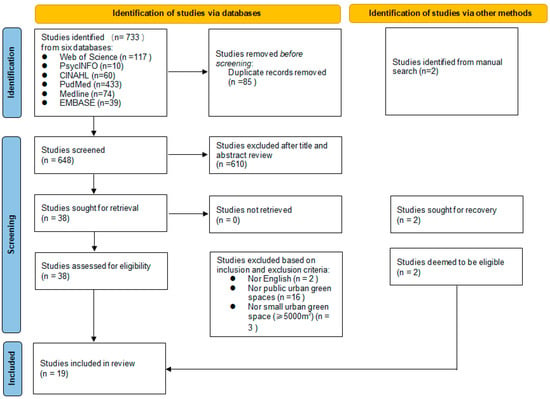
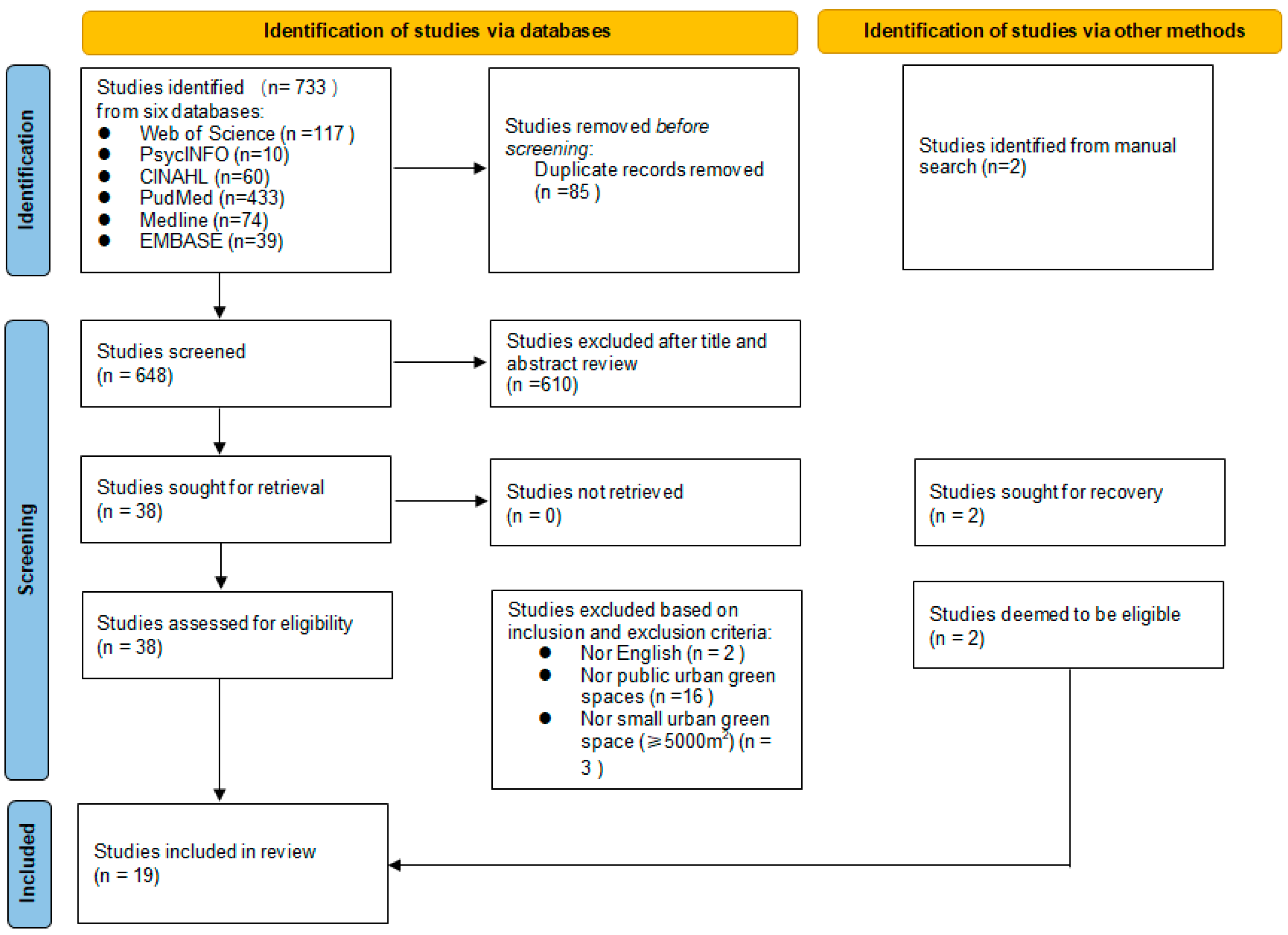
As shown in Figure 1, the review process was divided into three steps: title screening, abstract screening, and full-text screening. In the first step, the output from the databases was downloaded and managed using the EndNote citation program (X9). A total of 733 articles were initially included in the analysis. After removing 85 duplicate entries, the titles and abstracts of the remaining articles were screened, with 38 identified for further review. The full texts of the remaining articles were then screened, resulting in 17 articles. To ensure comprehensive coverage, the authors also reviewed the references of the included studies, previous systematic reviews on related topics, and relevant studies known to them (Table S8). Two additional articles were manually selected as a result of this process. As a result, 19 articles were included in the systematic review. This review selected articles based on the following criteria: (a) the term “pocket park” used in this review refers to small urban green spaces (<5000 m2) with a clearly defined area for public use; (b) the study included empirical findings associated with the restoration and environmental design characteristics of pocket parks; (c) the study was peer-reviewed; and (d) the study was published in English. All private urban green spaces, such as enclosed residential parks, playgrounds, and parks belonging to a particular organization or group, were excluded. No time limit was set for the search. In the initial screening phase, authors (Y.Z. and L.F.) removed articles with clearly irrelevant titles and abstracts. Two authors (Y.Z. and A.Y.) independently reviewed the full texts of all eligible articles to identify studies that should be included in the systematic review. Using SPSSPRO software (https://www.spsspro.com/), it was calculated that the Cohen kappa coefficient of two reviewers during the full-text screening was 0.609 (p < 0.05). A third author (L.F.) was consulted if there was a disagreement between the two reviewers. The main characteristics and outcomes were extracted by Y.Z. and confirmed by L.F. and A.Y., with any disagreements resolved by discussion.
Figure 1.
Flow diagram showing article selection process.
3. Results
The contents of above 19 studies, including author name, publication year, region, sample characteristic, study design method, and key findings were extracted, and they are provided in Table 1.
Table 1.
Characteristics of included studies.
3.1. Study Characteristic
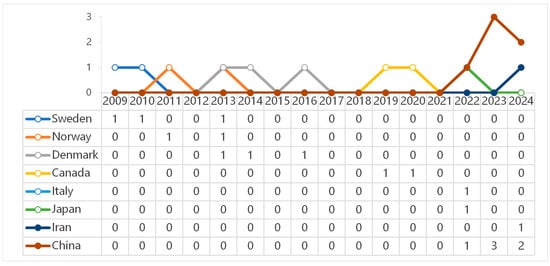
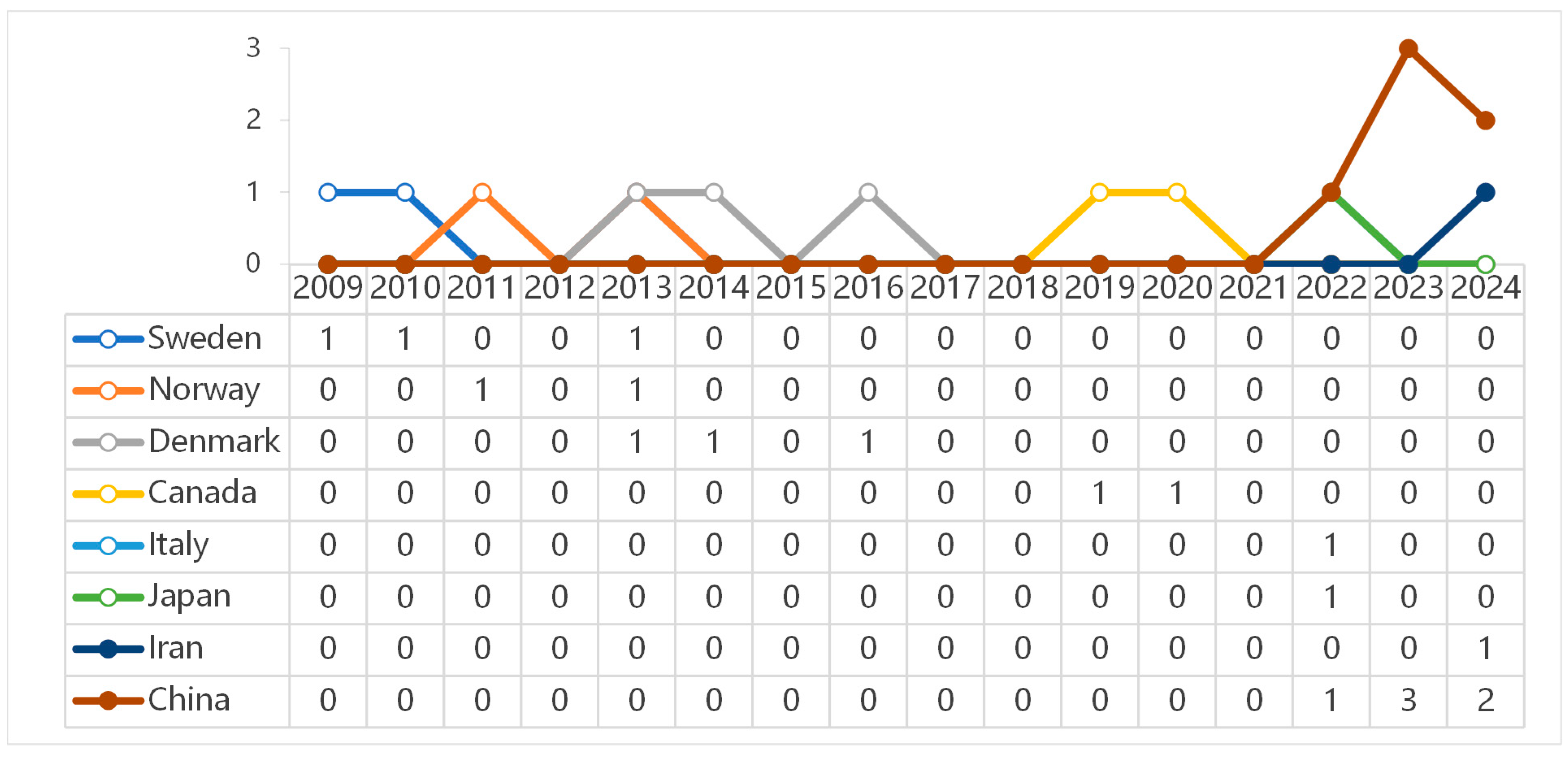
Nineteen studies were included, with years of publication ranging from 2009 to 2024 (Figure 2). Eight of the studies were published between 2009 and 2016, and they were all conducted in Nordic countries, namely Norway, Sweden, and Denmark. Five of the eight studies were conducted by Nordh’s research group [21,22,23,24,25], and three were conducted by Peschardt’s research group [26,27,28]. No relevant studies were found in 2017 and 2018 regarding the relationship between features of pocket parks and restoration. In the period between 2019 and 2024, 11 studies were published. Six of the eleven studies were conducted in China [7,29,30,31,32,33], followed by two from Canada [34,35], and one each from Japan [36], Italy [37], and Iran [38]. Above results revealed that research on the relationship between environmental features of pocket parks and their restorative effect has regained attention in the last five years.
Figure 2.
Publication trends.
The participants under investigation varied greatly in size. The sample sizes ranged from 6 [27] participants to 686 [26]. Many participants were young with 42.1% (n = 8) of the studies recruiting university students, and the other studies recruited park users or local residents. In two studies, specific populations have been studied. These included people above 60 years [36] and people with indications of psychological distress [7].
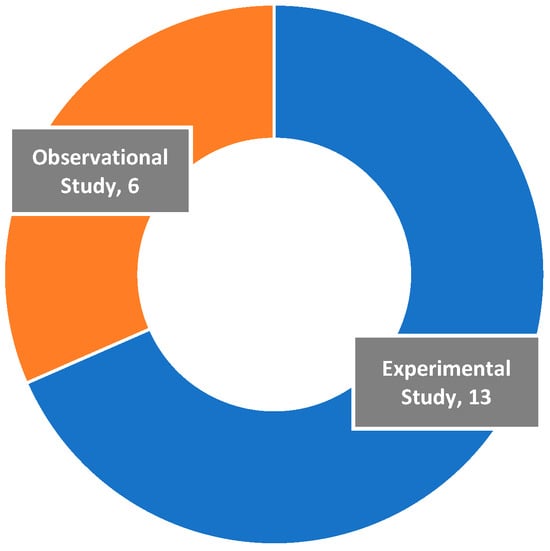
In terms of research design, there are 13 experimental studies and 6 observational studies (Figure 3). An experimental study is one conducted under controlled experimental or quasi-experimental conditions, either on-site or in a laboratory. Observational studies involve research that does not directly intervene with the study population or manipulate the study environment [39]. In this review, experimental studies examined the restorative effect of pocket parks by using photographs, text [7,21,22,23,24,25], or videos [30,32] as replicas of the real world environment, or by measuring the change in restorative effects resulting from small changes within the same outdoor pocket park [33,34,35,38].
Figure 3.
Study design.
3.2. Assessment of Pocket Park Features
The environmental features of pocket parks were assessed using various measurement methods. Two studies utilized the Environmental Assessment of Public Recreation Spaces Tool (EAPRS) [16,17], one study [18] utilized the Neighborhood Green Space Tool (NGST), one study [23] utilized Perceived Sensory Dimensions (PSDs) and one study [35] utilized Natural Environment Scoring Tool (NEST) to abstract environmental features from pocket parks. PSDs [38] are primarily used to assess characteristics related to sensory experiences and psychological restoration (e.g., tranquility, social connections) in parks. NEST [39] and NGST [40] emphasize the overall quality and multipurpose support of natural environments (e.g., green view index, usability). EAPRS [41] focuses specifically on the physical environment and functionality of parks (e.g., paving, seating, cafes).
There were four studies that quantified the visual environmental features of the pocket park using the picture square measurement method [7,10,19,37] and one used semantic image segmentation [36]. By computing the percentage of environmental elements to indicate the landscape compositions of each site, those two methods help people establish models of environmental elements and restoration effects. In five studies [17,20,21,22,34], sound assessment tools were used to quantify the relationship between the sound environment and the restoration of pocket parks. These tools included the Swedish Soundscape-Quality Protocol (SSQP), tools for identifying sound sources (e.g., Sound list), as well as tools for measuring and evaluating sound intensity (e.g., sound level measurements). The SSQP [42] is an effective tool for describing and comparing soundscapes and their perceived affective quality. Two studies [24,32] used eye tracking method to determine which environmental components people focus on when deciding whether a space is restorative or not. Four studies used questionnaires or interviews to determine which pocket park components contributed to high versus low restoration likelihood ratings [15,21,25,33].
3.3. Assessment of Restoration
The majority of the 19 articles reviewed (16/19) used subjective approaches to assess restorative perceptions. In three articles [16,25,37], the relationship between restoration and features of pocket parks was measured using a mixed methodology, combining subjective and objective approaches.
3.3.1. Subjective Measures
Studying the subjective restorative effects of pocket parks, 68.4% (13 out of 19) utilized a single method, and the remainder [16,18,19,21,22,37] used two or more methods. Five of these nineteen studies used the Perceived Restorativeness Scale (PRS) [16,17,19,23,37], three used the Perceived Restorativeness Soundscape Scale (PRSS) [20,22,34], and one used the Restorative Component Scale (RCS) [36]. The three scales were developed based on the assumptions of Kaplan’s attention restoration theory (ART). ART focuses on restoring the capacity to direct attention by providing environmental support. According to the theory, restorative experiences are characterized by being away, fascination, extent, and compatibility [43].
Two studies [16,25] used the Profile of Mood States (POMS) scale. The Restoration Outcome Scale (ROS) [18], Chalder Fatigue Scale-14 (FS-14) [37], Visual Analog Scale (VAS) [37], and Mental Health Inventory (MHI-5) [35] were also used to assess the subjective restorative effects of pocket parks. POMS examines a person’s psychological state in a natural environment in real time, using a 30-item scale to measure six emotions: anger, confusion, depression, fatigue, tension, and vigor [44]. The ROS is a method for evaluating the restorative emotional and cognitive effects of nature and green spaces [45]. The FS-14 was used to assess subjective feelings of mental fatigue [37]. VAS is a widely used tool to assess the intensity of pain [46]. The MHI-5 is an assessment tool for examining depression and anxiety symptoms [47].
In addition to the aforementioned survey methods, nine studies [7,10,15,19,21,22,24,32,33] employed self-designed questionnaires and/or interviews to identify restorative experiences that related to park components. In Nordh and Ostby’s (2013) study, university students in Norway were assigned an evaluation assignment. They were asked to rate, on a scale of 0 to 10, the likelihood that the parks displayed on the screen could serve as temporary rest and restoration areas. Each park photograph was displayed for 15 s. The participants were also requested to provide examples of which aspects of the park photographs led them to give high or low scores, illustrating the influence of these elements on the evaluation of the parks’ restorative potential [15].
3.3.2. Objective Measures
Three studies employed bio-monitoring methods to assess the psychological benefits of pocket parks. Two of these studies utilized multiple assessment tools, including collection of heart rate variability (HRV), electromyography (EMG), and skin conductance level (SCL) data [16], as well as heart rate (HR) and blood pressure (BP) levels [37]. One study [25] used electroencephalography (EEG) to assess participants’ emotional states and their responses to pocket park stimuli. HRV [48] is an effective indicator of autonomic nervous system function and cardiac load, and it can reflect the regulatory capability of the cardiac autonomic nervous system. EMG [49] is a sensitive indicator of emotional pleasure. It is the electrical signals accompanying the nervous system’s control of facial muscle activity (contraction or relaxation). People are generally relaxed when their facial frowning muscles cease to contract. SCL [50] measures the absolute value of skin electricity between two points on the body and can be used to determine arousal levels [51]. EEG allows researchers to measure participants’ brain activity in order to assess their emotional states and reactions to different landscape stimuli [52].
3.4. Associations Between Pocket Park Features and Restoration
By utilizing the classification methods of previous relevant studies [7,17,18] this review examines the relationship between pocket park features and their restorative effects.
3.4.1. Visual Natural Features and Restoration
The literature review contains 19 studies, 15 of which examine the relationship between pocket parks’ visual natural features and their restoration effects. The number of studies related to this theme accounts for 78.9% of the total, making it a core area of discussion within the field.
Studies have shown that there is a significant positive correlation between plant types [7,16,37], plant colors [37], natural aesthetics [35], and the restoration experience. Specifically, rich plant diversity, harmonious color combinations, and high-standard natural aesthetic designs can enhance the restoration experience of users.
Nine studies examined the relationship between the green ground cover/green view index and the restoration effect. Eight [7,15,16,17,21,33,36,37] of these studies produced significant positive results. Nevertheless, Lu et al. reported different findings [18]. Lu et al. employed the method of on-site measurement to investigate the impact of 11 environmental features of three pocket parks in Tokyo on the mental restoration and vitality of 202 elderly individuals. Green view index values were found to be related to ROS values in a fitting curve relationship. ROS scores began to decline when the green view index reached 0.4.
Four studies [10,15,19,32] explored the relationship between grass and restoration levels, and the results indicated a significant positive relationship. The relationship between trees/shrubs and restorative experiences was examined in five studies, and four [7,10,15,19] of them reported positive correlations. Nordh, Hagerhall, and Holmqvist used eye tracking to investigate how likely it is that one will be able to relax and recover in pocket parks [32]. During the research process, the researchers evaluated the environmental factors that participants looked at when assessing the possibility of restoration. Study photos were selected based on their potential for restoration, with some having a high potential and others having a low potential. Each photo was displayed for 10 s. According to the research findings, there was a negative correlation between trees and restoration, although it was not statistically significant. Three [10,15,19] of the four studies that investigated the relationship between flowers and restoration showed positive correlations, with one [15] being statistically significant. In Nordh, Hagerhall, and Holmqvist’s (2013) study, a negative correlation between flowers and restoration was reported, but it was not statistically significant [32].
Of the six studies that examined the relationship between water features and restoration likelihood, five found a positive correlation, four [7,10,15,19] of which were statistically significant. The remaining one study, conducted by Lu et al. (2022), found that the presence of large areas of water in a pocket park decreased subjective vitality among elderly Japanese participants [18].
3.4.2. Facility Features and Restoration
Seven studies examined the relationship between rest facilities and pocket parks’ restorative effects. People looked for seating when they were assessing whether an environment is restorative [15,21,24,37]. College students who participated in the research stated that “good seating” allows for easier recovery [37,53]. The number of seats in pocket parks was also significantly positively correlated with the psychological restoration of the elderly [18]. In terms of tables and restoration, Peschardt, Stigsdotter, and Schipperrijn’s study with park users in Denmark as participants found an insignificant negative correlation between the two [17].
The relationship between recreational and sports facilities and restoration was investigated in three studies. According to these studies, cafes, playgrounds [17], fitness facilities [7], skateboard ramps, and courts [35] were found to negatively influence restorative effects.
The relationship between pavement and restoration was examined in four studies [15,16,18,36]. The results of these studies indicated that a well-designed pavement could provide users with a restorative experience. It is important to note, however, that if the area of hard pavement is too large then it is not conducive to positive experiences [15,16].
3.4.3. Spatial Form Features and Restoration
The relationship between spatial form features and restoration was examined in six studies. Studies have shown that restoration is positively correlated with topographic variations [16,33,36]. Pocket parks with an open view [16] and enclosed boundaries [15,18] can offer a safe resting place for users, promoting both physiological and psychological restoration. Under-bridge pocket parks with naturalistic features and tunnel views reduced stress, improved creativity and mental clarity, improved well-being, and accelerated restoration [25].
3.4.4. Sound Features and Restoration
A total of five studies examined the relationship between park sounds and restoration. In three studies, gentle human voices [21], pleasant bird songs [20,21] and soft sound of small fountains [20,34] were found to enhance the restorative effects of the environment. In a study conducted by Steele et al., they found that adding Musikiosks to pocket parks facilitated a sense of belonging and safety, and made it easier for people to engage in desired activities [22]. Wang et al. conducted an experiment on soundscape restoration in office-type pocket parks within a semi-anechoic chamber, identifying three restorative soundscape dimensions: “attractiveness”, “coordination”, and “disengagement”. Despite the importance of all three dimensions, “attractiveness” is viewed as the most critical factor when it comes to soundscape restoration in pocket parks of the office type [20]. Pechardt, Stigsdotter and Schipperrijn studied the relationship between noise and recovery and discovered that parks with lower sound levels (such as pocket parks that are situated away from mechanical sounds such as traffic, or pocket parks that do not have playgrounds which experience periodic high levels of noise from children playing) were preferred for the purpose of resting and restoring [17].
Additionally, beyond visual natural features, facilities, spatial forms, and sounds, 5 of the 19 studies investigated the relationship between other park features and restoration. These studies reported supportive restorative environmental factors including a tranquil atmosphere [15,23], scenic beauty [7,16], and rich cultural elements [16,35].
4. Discussion
4.1. Developing of Research over Time
In this review, we identified that research regarding the relationship between the environmental features of urban pocket parks and restoration can be divided into two periods: the first is up to 2016, and the second is from 2019 onwards. In 2017 and 2018, there was a research gap. Up to 2016, all studies were conducted in Northern Europe by two research teams. A few studies were conducted in Canada and Italy from 2019 onwards, but most were conducted in Asian countries, including China (n = 6), Japan (n = 1), and Iran (n = 1). The popularity of this line of research is highest in China. This may be due to the recent construction or improvement of many Chinese pocket parks, providing researchers with the opportunity to evaluate the potential impact of these new or improved pocket parks [54]. In this review, no relevant research findings were identified in South America, Oceania, or Africa. Therefore, it is speculated that further research in this field may be required in the above-mentioned regions.
The literature analysis identified that over time, research themes have evolved from topics such as the relationship between visual natural features (e.g., grass, tree) [19] and park infrastructure (e.g., benches and pavements) [15] with restoration to the relationship between soundscapes (such as the sound of small fountains) [34] and recreation facilities [7] with restoration. Nevertheless, it should be noted that all of the research included in this review was conducted during the day-time, and no research has been conducted to examine the relationship between night-time lighting of pocket parks and their restorative effects. This gap is noteworthy given that modern lifestyle changes have led urban residents to extend their activities into the evening [55]. Artificial lighting in green spaces is not only a crucial component of landscape design, but also essential for supporting leisure activities at night [56]. There are also no studies that examine the role of smart technologies (such as sensors and virtual reality technologies) and other sensory landscape stimuli, including olfactory and tactile stimuli, in psychological and physiological recovery. Research could be conducted in the future to explore the impact of the above-mentioned factors on the restorative effects of pocket parks.
4.2. Methodologies in Studying the Relationship Between Pocket Park Environments and Restoration
Cross-sectional design (including observational and experimental studies) was predominant in the reviewed studies on this topic. Our research found only one longitudinal study evaluating the effects of a specific intervention. Steele et al. examined the impact of a Musikiosk on the quality of urban public experiences of pocket park users before, during its installation, and after it had been removed from the park over a period of seven months [22]. The Musikiosk was found to have no significant effect on the restorative evaluation of the park’s soundscape, but users reported new experiences of relaxation and restoration as a result of its presence. Even after the Musikiosk was removed from the park, its positive psychological impact on users persisted, sustained by their memories of the interactive experiences and continued reflections on the engagement process. Cross-sectional and longitudinal studies can complement each other in determining the relationship between park environmental features and restoration. A longitudinal study, on the other hand, generally provides more detailed information and stronger evidence of causality [57]. More longitudinal studies are required to better understand the long-term restorative effects of pocket park environment characteristics, despite the typically higher investment of manpower and financial resources required. By incorporating factors such as season, weather, and year into future longitudinal studies, we may be able to better understand the restorative effects of pocket parks.
Based on the review of the included studies, all studies used subjective measures to assess restorative effects, such as rating scales and interviews. Three studies (15.8% of the articles reviewed) examined restorative effects using both subjective and objective measures. Measuring the restorative components of pocket parks with objective measures supplements subjective methods, forming the basis for a clear understanding of the role of pocket parks in human physiological and psychological restoration. Unlike perceived restorative benefits, objective indicators reflect measurable, quantifiable, and comparable physical characteristics [58]. In the current state of research, very little is known about the relationship between pocket park attributes and physiological restoration in humans. In order to clarify the relationship between pocket park attributes and human physiological restoration, more research is necessary.
4.3. Existing Knowledge of Pocket Park Environments and Restoration
Research on the restorative effects of pocket parks has predominantly centered on visual natural features, with empirical studies highlighting significant positive correlations between plant-related attributes (e.g., species diversity, color variation, overall natural aesthetics) as well as green ground cover/green view index and enhanced restorative experiences. These findings align with the “being away” and “soft fascination” mechanisms described in Kaplan’s attention restoration theory (ART) [43]. This theory [43] suggests that people can relieve stress in natural environments. It emphasizes that directed attention (the effortful focus necessary for tasks such as urban navigation or work) becomes fatigued over time, particularly in dense urban areas filled with jarring stimuli (e.g., traffic, advertisements) that demand constant attention. However, the lush greenery and natural visuals in pocket parks create a distinct separation from urban stimuli like traffic and advertisements, firstly fulfilling the “being away” criterion by mentally detaching users from attention-demanding urban tasks; secondly, these visual features—such as diverse vegetation, varied colors, and overall natural aesthetics—provide “soft fascination” as their intrinsically engaging and low-demand stimuli allow the attention system to rest, replenish depleted mental resources, and thus alleviate fatigue [43,59,60]. Water features remain contentious when it comes to their restorative potential. Even though water is often regarded as a highly restorative element in landscape design [61,62], empirical evidence suggests otherwise: four studies report significant positive effects while one study reports a notable negative outcome. In Lu et al.’s study, for example, elderly Japanese participants in a pocket park with extensive water areas displayed reduced subjective vitality [18]. This discrepancy may not be attributed solely to spatial constraints (i.e., large water bodies occupying limited rest space in small pocket parks): it may also reflect contextual factors such as water feature design (e.g., excessive openness creating feelings of exposure) [63] or user-specific needs (e.g., elderly individuals prioritizing accessibility over visual appeal) [64]. This inconsistency may partly stem from the limitations of existing studies on water features in pocket parks [65] as well as a lack of methodological quality, such as over-reliance on subjective self-reports, insufficient operationalization of “water features” (for example, failing to distinguish between static and dynamic water), and a lack of attention to contextual and user-specific factors. To address these limitations, future studies should adopt mixed-methods approaches, combining physiological metrics (e.g., heart rate variability) with qualitative insights to unpack how specific attributes—shape (regular vs. irregular), depth, and state (static vs. dynamic)—mediate restorative outcomes. Beyond this, future investigations on pocket parks should also explicitly examine additional issues, such as the ratio of water area to rest space to clarify whether large water bodies undermine restoration by occupying limited functional space; how features like the openness of water features affect restorative effects [63]; and the relationship between user heterogeneity (such as age-related needs), water area size, and restorative effects.
Research findings indicate that seating capacity and rest facilities within pocket parks are positively associated with restoration outcomes, while entertainment and sports facilities have a negative impact on the restoration process. Well-designed park pavements can provide users with a restorative experience. Nevertheless, the restorative potential of hard-surfaced pavements is diminished when they cover a large area. Hard-surfaced areas and areas concentrated with entertainment and sports facilities are typically areas of intensive human activity and social interaction. In previous studies, pocket parks have been shown to serve primarily two functions: “social interaction” and “rest and restoration” [11]. Entertainment/sports facilities and hard-surfaced areas are positively associated with social interaction [43], but they do not provide conducive conditions for people to rest and relax. The presence of green ground cover is positively correlated with rest and relaxation, but negatively correlated with social interaction [17]. Therefore, it is often difficult for pocket parks to simultaneously meet people’s needs for rest and social interaction in the actual use process. As a result, if space conditions permit, during the design and planning stage of pocket parks independent “functional zones” should be considered. In this way, it is possible to better meet the diverse needs of different people in terms of rest, social interaction, etc., and enhance the comprehensive use value of pocket parks. Furthermore, from a research standpoint, researchers could conduct focused studies on specific functional zones—for example, comparing the greening density of quiet zones and sports zones to examine their differential effects on people’s relaxation. In this way, ambiguous conclusions could be avoided as a result of the intermixing of activity types and environmental characteristics across different functional zones, thus increasing the practical utility of research findings.
Topographical variations, open views, enclosed boundaries, and low canopy density all contributed to enhancing the restoration effect. Under-bridge pocket parks with tunnel views effectively promoted users’ restoration experiences and relieved stress. The Prospect-Refuge Theory [66,67] contends that individuals feel secure and content when surrounded by environments that offer both a view and a sense of enclosure. This is in line with the conclusions of this review, namely that topographical variations, open views, enclosed boundaries, low canopy density (which avoids excessive enclosure and maintains visual openness), and under-bridge pocket parks with tunnel views (which balance openness and enclosure) were positively correlated with restoration.
Natural sound sources, such as birds’ songs and fountain sounds, play a significant role in enhancing the psychological restoration effect of the environment. This positive impact is likely mainly due to the masking effect of natural sound sources, which can effectively reduce the interference of common noise sources in cities, such as traffic noise, on people, thus helping users enter into a relaxed state [68]. However, the type of sound source does not solely determine the impact of sound on psychological restoration. This review study also found that when a sound source is subjectively judged as noise by an individual there is a significant negative correlation between it and restoration [17]. This conclusion is in line with previous research findings in the field of soundscape; when the sound level exceeds 65–70 dB(A) regardless of the type of sound source it is highly likely to be perceived as noise by people, thus weakening the restoration effect of the environment originally possessed [69].
4.4. Limitations of This Study
This review has some limitations. First, the sampled populations of the included studies in this review exhibit demographic homogeneity. In the reviewed studies, 42% exclusively examined student park users, with only one looking at older adults and one at individuals experiencing psychological distress. The over-reliance on student cohorts may introduce bias, since their perceptions of restorative environments may differ from those of other groups. Data disproportionately reflect younger, academically oriented populations, potentially overlooking the unique restorative needs of diverse user groups. Second, methodological constraints undermine the robustness of the aggregated conclusions, raising questions about research feasibility, data quality, and conclusion reliability. Many studies relied heavily on self-reported measures (e.g., perceived restoration scales) without triangulating with objective physiological metrics (e.g., heart rate variability or cortisol levels), limiting the precision of assessing “restorative effects”—a complex, multi-dimensional construct. Additionally, most studies lack longitudinal follow-ups, further reducing the rigor of causal inferences. Finally, as noted initially, the review is limited by publication bias—the exclusive inclusion of peer-reviewed papers may overemphasize studies with statistically significant or positive findings [70]—and language restriction, as confining analysis to English-language literature risks excluding relevant research from non-English contexts which might offer culturally specific insights into restorative environments [71].
5. Conclusions
As the first systematic review to assess the relationship between urban pocket parks’ environmental features and their restorative effects, the findings reveal the following key conclusions. Firstly, the research shows stage-based development characteristics. Before 2016, European research teams held the leading position in this field, but after 2019, Asian countries (especially China) have taken over. Nevertheless, there are still gaps in regions such as South America and Africa. Secondly, the research topics have gradually expanded from the initial focus on visual landscapes and infrastructure to multiple dimensions such as soundscapes and topography. There is, however, insufficient exploration of the night-time environment, smart technologies, and multisensory stimulation. Thirdly, existing evidence indicates that plant diversity, natural aesthetics, topographic variations, and moderate soundscapes (such as the sounds of birdsong, humans, and water) significantly promote restoration, while excessively hardened ground surfaces and densely arranged activity facilities may weaken the restorative effects. Methodology-wise, most research relies on cross-sectional designs and subjective evaluations. There is an urgent need to strengthen longitudinal tracking and a measurement system that combines subjective and objective methods.
Supplementary Materials
The following supporting information can be downloaded at: https://www.mdpi.com/article/10.3390/urbansci9080326/s1, Table S1: Search terms; Table S2: Web of Science (Core Collection) search results (searched on 8 August 2024); Table S3: PsycINFO search results (searched on 8 August 2024); Table S4: CINAHL search results (searched via EBSCOhost on 8 August 2024); Table S5: PubMed search results (searched via EBSCOhost on 8 August 2024); Table S6:Medline search results (searched on 8 August 2024); Table S7: EMBASE search results (searched on 8 August 2024); Table S8: Previously published related systematic reviews.
Author Contributions
The study design, Y.Z. and A.Y.; methodology, Y.Z. and L.F.; formal analysis, Y.Z. and L.F.; writing—drafting, Y.Z.; writing—review and editing, Y.Z., A.Y., and L.F. All authors have read and agreed to the published version of the manuscript.
Funding
This research was supported by the Shanghai Philosophy and Social Science Planning Project (2021ECK002).
Data Availability Statement
The original contributions presented in the study are included in the article/Supplementary Material, further inquiries can be directed to the corresponding author.
Acknowledgments
We would like to thank WenJie Duan, School of Social and Public Administration, East China University of Science and Technology, for his advice during the early process.
Conflicts of Interest
The authors declare no conflicts of interest.
References
- Syamili, M.; Takala, T.; Korrensalo, A.; Tuittila, E.-S.J.U.F. Happiness in urban green spaces: A systematic literature review. Urban For. Urban Green. 2023, 86, 128042. [Google Scholar] [CrossRef] [Scilit]
- Cox, D.T.; Gaston, K.J. Human–nature interactions and the consequences and drivers of provisioning wildlife. Philos. Trans. R. Soc. B Biol. Sci. 2018, 373, 20170092. [Google Scholar] [CrossRef] [Scilit] [PubMed]
- Steptoe, A.; Kivimäki, M. Stress and cardiovascular disease. Nat. Rev. Cardiol. 2012, 9, 360–370. [Google Scholar] [CrossRef] [Scilit]
- Rajoo, K.S.; Karam, D.S.; Abdullah, M.Z. The physiological and psychosocial effects of forest therapy: A systematic review. Urban For. Urban Green. 2020, 54, 126744. [Google Scholar] [CrossRef] [Scilit]
- Lee, J.; Papa, F.; Jaini, P.A.; Alpini, S.; Kenny, T. An epigenetics-based, lifestyle medicine–driven approach to stress management for primary patient care: Implications for medical education. Am. J. Lifestyle Med. 2020, 14, 294–303. [Google Scholar] [CrossRef] [Scilit]
- Lu, P.; Zhang, Y.; Xia, G.; Zhang, W.; Xu, R.; Wang, C.; Guo, Y.; Li, S. Attributable risks associated with hospital outpatient visits for mental disorders due to air pollution: A multi-city study in China. Environ. Int. 2020, 143, 105906. [Google Scholar] [CrossRef] [Scilit]
- Peng, H.Y.; Li, X.J.; Yang, T.T.; Tan, S.H. Research on the Relationship between the Environmental Characteristics of Pocket Parks and Young People’s Perception of the Restorative Effects-A Case Study Based on Chongqing City, China. Sustainability 2023, 15, 3943. [Google Scholar] [CrossRef] [Scilit]
- Forsyth, A.; Musacchio, L. Designing Small Parks: A Manual for Addressing Social and Ecological Concerns; John Wiley & Sons: Hoboken, NJ, USA, 2005. [Google Scholar]
- Naghibi, M.; Faizi, M.; Ekhlassi, A. Design possibilities of leftover spaces as a pocket park in relation to planting enclosure. Urban For. Urban Green. 2021, 64, 127273. [Google Scholar] [CrossRef] [Scilit]
- Nordh, H.; Alalouch, C.; Hartig, T. Assessing restorative components of small urban parks using conjoint methodology. Urban For. Urban Green. 2011, 10, 95–103. [Google Scholar] [CrossRef] [Scilit]
- Peschardt, K.K.; Schipperijn, J.; Stigsdotter, U.K. Use of small public urban green spaces (SPUGS). Urban For. Urban Green. 2012, 11, 235–244. [Google Scholar] [CrossRef] [Scilit]
- Narandžić, T.; Ljubojević, M. Urban space awakening–identification and potential uses of urban pockets. Urban Ecosyst. 2022, 25, 1111–1124. [Google Scholar] [CrossRef] [Scilit]
- Kerishnan, P.B.; Maruthaveeran, S.; Maulan, S.J.U.f. Investigating the usability pattern and constraints of pocket parks in Kuala Lumpur, Malaysia. Urban For. Urban Green. 2020, 50, 126647. [Google Scholar] [CrossRef] [Scilit]
- Liu, L.; Qu, H.; Ma, Y.; Wang, K.; Qu, H. Restorative benefits of urban green space: Physiological, psychological restoration and eye movement analysis. J. Environ. Manag. 2022, 301, 113930. [Google Scholar] [CrossRef] [Scilit]
- Nordh, H.; Ostby, K. Pocket parks for people—A study of park design and Use. Urban For. Urban Green. 2013, 12, 12–17. [Google Scholar] [CrossRef] [Scilit]
- Huang, Y.B.; Lin, X.Q.; Lin, S.M.; Chen, Z.Y.; Fu, W.C.; Wang, M.H.; Dong, J.W. Pocket Parks: A New Approach to Improving the Psychological and Physical Health of Recreationists. Forests 2023, 14, 1983. [Google Scholar] [CrossRef] [Scilit]
- Peschardt, K.K.; Stigsdotter, U.K.; Schipperrijn, J. Identifying Features of Pocket Parks that May Be Related to Health Promoting Use. Landsc. Res. 2016, 41, 79–94. [Google Scholar] [CrossRef] [Scilit]
- Lu, S.; Oh, W.; Ooka, R.; Wang, L. Effects of Environmental Features in Small Public Urban Green Spaces on Older Adults’ Mental Restoration: Evidence from Tokyo. Int. J. Environ. Res. Public Health 2022, 19, 5477. [Google Scholar] [CrossRef] [Scilit]
- Nordh, H.; Hartig, T.; Hagerhall, C.M.; Fry, G. Components of small urban parks that predict the possibility for restoration. Urban For. Urban Green. 2009, 8, 225–235. [Google Scholar] [CrossRef] [Scilit]
- Wang, Y.P.; Deng, X.; Cui, Y.Q.; Zhao, X. A Study of Soundscape Restoration in Office-Type Pocket Parks. Buildings 2024, 14, 1047. [Google Scholar] [CrossRef] [Scilit]
- Chiesi, L.; Costa, P. Small Green Spaces in Dense Cities: An Exploratory Study of Perception and Use in Florence, Italy. Sustainability 2022, 14, 4105. [Google Scholar] [CrossRef] [Scilit]
- Steele, D.; Bild, E.; Tarlao, C.; Guastavino, C. Soundtracking the Public Space: Outcomes of the Musikiosk Soundscape Intervention. Int. J. Environ. Res. Public Health 2019, 16, 1865. [Google Scholar] [CrossRef] [Scilit]
- Peschardt, K.K.; Stigsdotter, U.K. Associations between park characteristics and perceived restorativeness of small public urban green spaces. Landsc. Urban Plan. 2013, 112, 26–39. [Google Scholar] [CrossRef] [Scilit]
- Nordh, H.; Hagerhall, C.M.; Holmqvist, K. Exploring View Pattern and Analysing Pupil Size as a Measure of Restorative Qualities in Park Photos. In Proceedings of the 2nd International Conference on Landscape and Urban Horticulture, Bologna, Italy, 9–13 June 2010; pp. 767–772. [Google Scholar]
- Naghibi, M.; Farrokhi, A.; Faizi, M. Small Urban Green Spaces: Insights into Perception, Preference, and Psychological Well-being in a Densely Populated Areas of Tehran, Iran. Environ. Health Insights 2024, 18, 11786302241248314. [Google Scholar] [CrossRef] [Scilit] [PubMed]
- Cegarra-Navarro, J.G.; Ruiz, F.J.A.; Martinez-Caro, E.; Garcia-Perez, A. Turning heterogeneity into improved research outputs in international R&D teams. J. Bus. Res. 2021, 128, 770–778. [Google Scholar] [CrossRef] [Scilit]
- Zhang, H.; Han, M. Pocket parks in English and Chinese literature: A review. Urban For. Urban Green. 2021, 61, 127080. [Google Scholar] [CrossRef] [Scilit]
- Kerishnan, P.B.; Maruthaveeran, S. Factors contributing to the usage of pocket parks―A review of the evidence. Urban For. Urban Green. 2021, 58, 126985. [Google Scholar] [CrossRef] [Scilit]
- Dong, J.; Guo, R.; Guo, F.; Guo, X.; Zhang, Z. Pocket parks-A systematic literature review. Environ. Res. Lett. 2023, 18, 083003. [Google Scholar] [CrossRef] [Scilit]
- Menardo, E.; Brondino, M.; Hall, R.; Pasini, M. Restorativeness in natural and urban environments: A meta-analysis. Psychol. Rep. 2021, 124, 417–437. [Google Scholar] [CrossRef] [Scilit]
- Weber, A.M.; Trojan, J. The Restorative Value of the Urban Environment: A Systematic Review of the Existing Literature. Environ. Health Insights 2018, 12, 1178630218812805. [Google Scholar] [CrossRef] [Scilit]
- Nordh, H.; Hagerhall, C.M.; Holmqvist, K. Tracking Restorative Components: Patterns in Eye Movements as a Consequence of a Restorative Rating Task. Landsc. Res. 2013, 38, 101–116. [Google Scholar] [CrossRef] [Scilit]
- Peschardt, K.K.; Stigsdotter, U.K. Evidence for Designing Health Promoting Pocket Parks. Int. J. Archit. Res. 2014, 8, 149–164. [Google Scholar] [CrossRef] [Scilit]
- Trudeau, C.; Steele, D.; Guastavino, C. A Tale of Three Misters: The Effect of Water Features on Soundscape Assessments in a Montreal Public Space. Front Psychol 2020, 11, 570797. [Google Scholar] [CrossRef] [Scilit] [PubMed]
- Wang, P.W.; Han, L.R.; Hao, R.S.; Mei, R. Understanding the relationship between small urban parks and mental health: A case study in Shanghai, China. Urban For. Urban Green. 2022, 78, 127784. [Google Scholar] [CrossRef] [Scilit]
- Yin, Y.; Shao, Y.; Wang, Y.; Wu, L. Developing a Pocket Park Prescription Program for Human Restoration: An Approach That Encourages Both People and the Environment. Int. J. Environ. Res. Public Health 2023, 20, 6642. [Google Scholar] [CrossRef] [Scilit] [PubMed]
- Xu, J.Y.; Qiu, B.; Zhang, F.; Zhang, J.G. Restorative Effects of Pocket Parks on Mental Fatigue among Young Adults: A Comparative Experimental Study of Three Park Types. Forests 2024, 15, 286. [Google Scholar] [CrossRef] [Scilit]
- Stoltz, J.; Grahn, P. Perceived sensory dimensions: An evidence-based approach to greenspace aesthetics. Urban For. Urban Green. 2021, 59, 126989. [Google Scholar] [CrossRef] [Scilit]
- Gidlow, C.; van Kempen, E.; Smith, G.; Triguero-Mas, M.; Kruize, H.; Gražulevičienė, R.; Ellis, N.; Hurst, G.; Masterson, D.; Cirach, M. Development of the natural environment scoring tool (NEST). Urban For. Urban Green. 2018, 29, 322–333. [Google Scholar] [CrossRef] [Scilit]
- Gidlow, C.J.; Ellis, N.J.; Bostock, S.J.L. Development of the neighbourhood green space tool (NGST). Landsc. Urban Plan. 2012, 106, 347–358. [Google Scholar] [CrossRef] [Scilit]
- Saelens, B.E.; Frank, L.D.; Auffrey, C.; Whitaker, R.C.; Burdette, H.L.; Colabianchi, N. Measuring physical environments of parks and playgrounds: EAPRS instrument development and inter-rater reliability. J. Phys. Act. Health 2006, 3, S190–S207. [Google Scholar] [CrossRef] [Scilit]
- Axelsson, Ö. How to measure soundscape quality. In Proceedings of the Euronoise 2015 Conference, Maastricht, The Netherlands, 31 May–3 June 2015; pp. 1477–1481. [Google Scholar]
- Kaplan, S. The restorative benefits of nature: Toward an integrative framework. J. Environ. Psychol. 1995, 15, 169–182. [Google Scholar] [CrossRef] [Scilit]
- Shacham, S. A shortened version of the Profile of Mood States. J. Personal. Assess. 1983, 47, 305–306. [Google Scholar] [CrossRef] [Scilit] [PubMed]
- Takayama, N.; Korpela, K.; Lee, J.; Morikawa, T.; Tsunetsugu, Y.; Park, B.-J.; Li, Q.; Tyrvainen, L.; Miyazaki, Y.; Kagawa, T. Emotional, Restorative and Vitalizing Effects of Forest and Urban Environments at Four Sites in Japan. Int. J. Environ. Res. Public Health 2014, 11, 7207–7230. [Google Scholar] [CrossRef] [Scilit] [PubMed]
- Begum, M.R.; Hossain, M.A. Validity and reliability of visual analogue scale (VAS) for pain measurement. J. Med. Case Rep. Rev. 2019, 2, 394–402. [Google Scholar]
- Cuijpers, P.; Smits, N.; Donker, T.; Ten Have, M.; de Graaf, R. Screening for mood and anxiety disorders with the five-item, the three-item, and the two-item Mental Health Inventory. Psychiatry Res. 2009, 168, 250–255. [Google Scholar] [CrossRef] [Scilit]
- Fujimura, T.; Okanoya, K. Heart rate variability predicts emotional flexibility in response to positive stimuli. Psychology 2012, 3, 578–582. [Google Scholar] [CrossRef]
- Lang, P.J. The emotion probe: Studies of motivation and attention. Am. Psychol. 1995, 50, 372. [Google Scholar] [CrossRef]
- Ge, Y.; Chen, Y.; Liu, Y.; Li, W.; Sun, X. Electrophysiological measures applied in user experience studies. Adv. Psychol. Sci. 2014, 22, 959. [Google Scholar] [CrossRef] [Scilit]
- Hedblom, M.; Gunnarsson, B.; Iravani, B.; Knez, I.; Schaefer, M.; Thorsson, P.; Lundström, J.N. Reduction of physiological stress by urban green space in a multisensory virtual experiment. Sci. Rep. 2019, 9, 10113. [Google Scholar] [CrossRef] [Scilit]
- Chiang, Y.-C.; Li, D.; Jane, H.-A. Wild or tended nature? The effects of landscape location and vegetation density on physiological and psychological responses. Landsc. Urban Plan. 2017, 167, 72–83. [Google Scholar] [CrossRef] [Scilit]
- Priya, U.K.; Senthil, R. Analysis of urban residential greening in tropical climates using quantitative methods. Environ. Sci. Pollut. Res. Int. 2024, 31, 44096–44119. [Google Scholar] [CrossRef] [Scilit]
- Yang, B.; Hong, B. Pocket park in urban regeneration of China: Policy and perspective. City Environ. Interact. 2023, 19, 100109. [Google Scholar] [CrossRef] [Scilit]
- Gao, M.; Zhu, X. Lighting the night: Unveiling the restorative potential of urban green spaces in nighttime environments. Urban For. Urban Green. 2025, 107, 128769. [Google Scholar] [CrossRef] [Scilit]
- Ngesan, M.R.; Karim, H.A.; Zubir, S.S. Human behaviour and activities in relation to Shah Alam urban park during nighttime. Procedia-Soc. Behav. Sci. 2012, 68, 427–438. [Google Scholar] [CrossRef] [Scilit]
- Liu, J.; Green, R.J.J.U.F. The effect of exposure to nature on children’s psychological well-being: A systematic review of the literature. Urban For. Urban Green. 2023, 81, 127846. [Google Scholar] [CrossRef] [Scilit]
- Tsurumi, T.; Managi, S. Environmental value of green spaces in Japan: An application of the life satisfaction approach. In Wealth, Inclusive Growth and Sustainability; Routledge: Oxfordshire, UK, 2019; pp. 195–224. [Google Scholar]
- Ulrich, R.S.; Simons, R.F.; Losito, B.D.; Fiorito, E.; Miles, M.A.; Zelson, M. Stress recovery during exposure to natural and urban environments. J. Environ. Psychol. 1991, 11, 201–230. [Google Scholar] [CrossRef] [Scilit]
- Kellert, S.R.; Wilson, E.O. The Biophilia Hypothesis; Island Press: Washington, DC, USA, 1993. [Google Scholar]
- Berto, R. Exposure to restorative environments helps restore attentional capacity. J. Environ. Psychol. 2005, 25, 249–259. [Google Scholar] [CrossRef] [Scilit]
- Regan, C.L.; Horn, S.A. To nature or not to nature: Associations between environmental preferences, mood states and demographic factors. J. Environ. Psychol. 2005, 25, 57–66. [Google Scholar] [CrossRef] [Scilit]
- Lis, A.; Iwankowski, P. Where do we want to see other people while relaxing in a city park? Visual relationships with park users and their impact on preferences, safety and privacy. J. Environ. Psychol. 2021, 73, 101532. [Google Scholar] [CrossRef] [Scilit]
- Farage, M.A.; Miller, K.W.; Ajayi, F.; Hutchins, D. Design principles to accommodate older adults. Glob. J. Health Sci. 2012, 4, 2. [Google Scholar] [CrossRef] [Scilit]
- White, M.; Smith, A.; Humphryes, K.; Pahl, S.; Snelling, D.; Depledge, M. Blue space: The importance of water for preference, affect, and restorativeness ratings of natural and built scenes. J. Environ. Psychol. 2010, 30, 482–493. [Google Scholar] [CrossRef] [Scilit]
- Appleton, J. The Experience of Landscape; Revised Edition; Wiley: London, UK, 1975. [Google Scholar]
- Appleton, J. The Experience of Landscape; Wiley: Chichester, UK, 1996. [Google Scholar]
- Watts, G.R.; Pheasant, R.J.; Horoshenkov, K.V. Predicting perceived tranquillity in urban parks and open spaces. Environ. Plan. B Plan. Des. 2010, 38, 585–594. [Google Scholar] [CrossRef] [Scilit]
- Zhang, M.; Kang, J. Towards the evaluation, description, and creation of soundscapes in urban open spaces. Environ. Plan. B Plan. Des. 2007, 34, 68–86. [Google Scholar] [CrossRef] [Scilit]
- Mlinarić, A.; Horvat, M.; Šupak Smolčić, V. Dealing with the positive publication bias: Why you should really publish your negative results. Biochem. Medica 2017, 27, 447–452. [Google Scholar] [CrossRef] [Scilit]
- Lauge, N.R.; Paul, M. The prevalence of and factors associated with inclusion of non-English language studies in Campbell systematic reviews: A survey and meta-epidemiological study. Syst. Rev. 2018, 7, 129. [Google Scholar]

Disclaimer/Publisher’s Note: The statements, opinions and data contained in all publications are solely those of the individual author(s) and contributor(s) and not of MDPI and/or the editor(s). MDPI and/or the editor(s) disclaim responsibility for any injury to people or property resulting from any ideas, methods, instructions or products referred to in the content. |
© 2025 by the authors. Licensee MDPI, Basel, Switzerland. This article is an open access article distributed under the terms and conditions of the Creative Commons Attribution (CC BY) license (https://creativecommons.org/licenses/by/4.0/).