


Abstract
The management of tangible cultural heritage assets in the framing of the authorised cultural heritage discourse entails the identification, documentation, and evaluation of sites for their cultural heritage significance and their subsequent recognition in government-authorised heritage lists. This inscription enables the imposition of administrative controls and protective instruments that inhibit development actions that may impact the integrity of the asset and enable management interventions to limit the detrimental effects of environmental decay. While the listing generates a static entity, the values that underlie the heritage assessment that led to the listing are mutable qualities, as are the cultural, social, and economic conditions in which the heritage is embedded. Given the mutability, often due to intergenerational change, there is a need to review the heritage lists so that they remain fit for purpose. This paper outlines a methodology to assess the universe of heritage assets in a heritage register to arrive at a resilient and, in particular, defensible heritage management regime. A case study, conducted in Albury, NSW (Australia), exemplifies the methodological approach.
1. Introduction
Cultural heritage arises out of the interactions of people among themselves as well as the environment in which they live. The results of these interactions can manifest themselves in several forms. People’s social interactions with each other, as well as with the environment in which they live, may result in intangible cultural heritage that finds its expression, for example, in skills, language, folklore, practices, and customs. Tangible cultural heritage arises from physical interactions with the environment, evident in the built and constructed environment, cultural modifications to landscapes, refuse and resource extraction sites, as well as in a wide range of moveable objects and artefacts of varied sises and materials. What makes these interactions significant and worth preserving as heritage is the cultural values that a community associates with them [1,2], coupled with the desire to maintain these tangible and intangible elements for the benefit of the current community [3,4,5] and, purportedly, for future generations [6].
What has been termed the “authorised heritage discourse” [7] promotes the management of cultural heritage assets based on the tenet of a largely “objective,” open, accessible, and inclusive assessment of heritage values [8,9,10,11]. That, however, is both illusory [12] and ignores the roles of the “experts” [13,14,15], their generational limitations [16], and the epistemology of their knowledge [17]. The management of moveable cultural heritage items occurs in the context of museums and archives and is governed by administrative and curatorial protocols that define whether and how an item is acquired, [18,19] conserved, [20,21] stored, [22] and exhibited [23,24].
The management of immovable cultural heritage assets, either singly or in the form of heritage conservation areas/historic districts, occurs via a range of administrative and technical protocols [25] that govern how an identified and classified heritage asset is protected (within bounds) from decay (via conservation management plans [9,26,27,28,29]), the impact of natural and anthropogenic hazards (via disaster management plans [30,31]) and undue modification and alteration (via development control plans [32,33]). Fundamental to all such management is that, following identification and documentation, these assets have been evaluated against a set of criteria as being significant and worthy of preservation [29,33,34,35,36,37,38,39,40]. Assets that pass this threshold are then inscribed in a heritage list or register that publicly signals the given asset’s special status, and the inclusion of which usually affords the asset a level of protection [41,42,43].
Depending on the remit of these heritage lists or registers (local vs. state vs. national vs. global), the included items should, collectively, reflect the social, cultural, political, and economic history of the local government area, state, or nation. The question arises, however, whether or to what extent these heritage lists and registers fulfill that premise.
This paper will expand on the current discourse. Its focus is the exploration and provision of a conceptual framework for the assessment and evaluation of the comprehensiveness of heritage registers.
Given that this paper is conceptual and not empirical research-based, it does not follow the common IMRAD (Introduction, Methodology, Results, and Discussion) format of papers. Rather, it will provide a conceptual framing of cultural heritage planning for local governments. Based on sections defining the asset base and examining whether heritage registers are static or dynamic administrative artefacts, it will provide a conceptualisation of the asset universe and outline an approach to assess whether the listed asset base of a given community is fit for purpose and reflective of the trajectories of its social and economic history. The paper then exemplifies this through a case study of a local government area (LGA) situated in New South Wales (NSW), Australia.
2. Conceptual Framing of Cultural Heritage Planning for Local Governments
As noted, the standard cultural heritage management process has been termed the “authorised heritage discourse” [7] and promotes the active management of cultural heritage assets. On an individual asset level, this includes the identification, evaluation, and registration of properties as well as a suite of interventionist approaches to ensure the preservation of the cultural significance of these assets through conservation and preservation management to counteract environmental decay and the impact from natural and anthropogenic hazards. Each asset has its own specific issues and needs that derive from these. Since meeting these needs usually requires the allocation of resources in terms of staff time, external professional expertise, and funds for materials and works, the prioritisation of competing demands will need to be managed ethically and equitably. To ensure this, systematic and defensible heritage planning is required on a community-wide level.
Given that cultural heritage items and places form part of the collective social and cultural memory of a community, and given that their tangible presence in the physical environment contributes to the mental health of the community [3,44], it is generally accepted that community involvement and engagement in the heritage planning process are essential [45,46,47,48,49], even though dissonance between professionals and community members may emerge [13], which is largely due to epistemological differences [17]. Irrespective of the specific legal ownership of the individual heritage item, cultural heritage items should be seen as community assets. Following from this, cultural heritage management and planning ought to be regarded as part of social policy in a given community.
2.1. Defining the Asset Base
Any such planning must be placed on firm foundations of a well-defined and well-understood asset base—that body of heritage items and places that are inscribed on the heritage lists or registers because they were deemed culturally significant and worthy of protection and active management. This is not the venue to discuss the legal limitations of such protection due to administrative or political actions (e.g., [50]). Pertinent to this discussion is that many assets have undergone change since their inscription on the heritage list/register due to environmental decay, as a result of (un)authorised alteration of their fabric, because community values have changed, or because new knowledge has emerged that was not evident at the time of initial nomination and evaluation. In some instances, heritage assets remain on the heritage list/register even though they have been lost due to catastrophic events or (un)authorized demolition.
Consequently, every so often heritage lists/registers need to be formally reviewed to ascertain whether the asset base is still current and whether, in fact, these lists/registers are an accurate reflection of the collective universe of heritage assets that should, again collectively, reflect the social, cultural, political, and economic history of the local government area (or state or nation). A question to be answered in a review is whether, or to what extent, the heritage list/register actually fulfills that premise. Such a review, when undertaken, needs to be academically and ethically rigorous to avoid political decisions that are, or may be construed as, beholden to short-term, self-serving development interests
2.2. Asset Bases: Static or Dynamic Administrative Artefacts?
Lists of assets (sites, places) deemed to be of heritage significance to a given community are administrative artefacts that, in the ideal world, are reflective of public opinion. Realistically, however, these lists are subject to methodological constraints that need to be acknowledged up front: while the significance of items included in a given heritage list should have been assessed against a set of pre-defined criteria [34], that assessment remains, within bounds, rather subjective, given the epistemology of knowledge held by the nominators as well as by the assessors [17]. As heritage nominations and listings are decided upon by administrative and political entities (e.g., local councils), decision-making dynamics also include the role of the “experts” [13,14] and their generational limitations [16]. As heritage values are not static but are mutable qualities [2,51] that are subject to intergenerational change [16], an interpretation and re-interpretation of sites included on a heritage register will become inevitable.
Commonly, community-focused heritage lists or registers are not dynamic entities that are responsive to generational change, but are static, the main characteristic of which is accretion and expansion as assets of different, more recent periods or conceptual framing are continually being added. Because it is economically and administratively expedient, it is common, during reviews, to uncritically “grandfather in” the existing individually listed assets, as long as these assets are still extant and have not been modified beyond recognition. Consequently, no, or only very little effort is made to reassess the statements of significance of the individual assets and to examine whether the state significance is still applicable, and if so, whether it is in fact appropriately argued and substantiated.
Heritage Conservation Areas are groups of buildings, streetscapes, landscapes, or entire suburbs with particular heritage values, where individual places may not demonstrate significance on their own, but which collectively form a cohesive entity that gives the heritage conservation area a distinct identity. A heritage conservation area aims to protect the cultural significance of the heritage items and spaces that a community values and the contributions these make to the streetscape, whilst ensuring there is room for opportunity to adapt to changing needs. It is a way of managing change that allows development but ensures this is sympathetic to the local streetscape character [52]. Commonly, local communities have identified and listed several of these heritage conservation areas that cover different parts and streetscapes. Just as individual heritage assets, heritage conservation areas should also contribute to explaining a community’s trajectory of cultural, social, economic, and political development. While community-focused heritage lists/registers are rarely queried whether their content is still “fit for purpose,” the system of local heritage conservation areas is even less likely to be reevaluated. Heritage management at the local government level tends to be reactive rather than proactive.
2.3. Heritage Assets and Contemporary Realities
In the Australian setting, the reach and powers of heritage controls that had been established during the heydays of heritage conservation in the 1970s and early 1980s have been gradually and steadily wound back [52] in order to reduce the perceived burden on the planning system. Population increases have generated a demand for additional housing, while sectoral disruptions due to the COVID-19 pandemic, as well as subsequent cost-of-living crises, have exposed shortages overall, especially in affordable housing supply [53]. As the demand cannot solely be met by urban sprawl, which is both expensive and unsustainable [54], the densification of existing and established urban cores of many communities has been discussed [55]. Predictably, these developments will lead to further pressures on heritage assets, in particular assets in heritage conservation areas. Indeed, some jurisdictions have enacted programmes that focus on intensification and density increases in the urban core, primarily in the vicinity of transportation corridors. The New South Wales State government, for example, released the Transport Oriented Development Programme aimed at “increasing the capacity for more mid-rise housing and mixed-use development within 400 m of… well-located transport hubs and town centres.” [56]. The development controls associated with the program “will apply in heritage conservation areas… [where relevant heritage controls will apply to the extent they are not inconsistent with the new standards’ [56] overriding local councils’ [57] and heritage professionals’ concerns [58,59]. Transport or transit-oriented development is not confined to the NSW setting but has been advocated in other jurisdictions [60,61,62,63,64] suggesting that development pressures on heritage assets will also play out in other communities.
At this juncture, therefore, it is imperative that a given community’s defined heritage asset base, as identified by inclusion on the local government and state heritage lists, is both conceptually and compositionally defensible. While recognising that heritage values are mutable entities subject to intergenerational change [16] and while recognising that heritage evaluation is, to some degree, subjective and informed by the epistemology of the assessor [17], all items included in heritage lists need to have a defensible statement of heritage significance that clearly sets out the cultural heritage values applicable to the item and substantiates these with documentary evidence. Items that are grandfathered in from times where the criteria of “being old” or “looking historic” sufficed for inclusion and instances where assets were included as ambit claims for future assessment are no longer justifiable and will need to be formally reevaluated. At a time when heritage assets are increasingly under threat, with development imperatives trouncing many other considerations, heritage listings must be defensible by being justifiable and verifiable. This can be achieved by anchoring each listed heritage asset in a coherent conceptual framework.
2.4. Conceptualising the Asset Universe
A community’s tangible heritage needs to be understood as an array of assets comprising museum objects, individual properties (buildings, places), and conservation areas that document and exemplify the social, cultural, economic, and political development of a given community through time. The cultural heritage management policy of any local government area should aim to identify, manage, and protect those heritage items that have been assessed as significant to represent the cultural heritage of that community. Setting aside special assets that have significance due to their strong or special association with the life or works of (a group of) persons or their ability to demonstrate a high degree of aesthetic, creative, or technical achievement, all items should be reflective of and be able to best exemplify the course or pattern of the social, cultural and economic development of one or more communities (either spatially or culturally circumscribed) within a local government area (council, shire, county) over time.
The universe of heritage assets, both in its tangible and intangible manifestations, can then be conceptualised along three axes: chronological, thematic, and social (Figure 1). In addition, on a functional level, all heritage assets can be classified as residential, agricultural, commercial, and military, or as subcategories such as railways, roads, or specific architectural styles.
Figure 1.
Heritage items in conceptual space. Blue: Items belonging to the same theme but to different chronological periods; Green: Items belonging to the same theme but to different social classes; Red: Items belonging to the same chronological period but to different themes.
The chronological axis is self-explanatory. A given community’s cultural, social, economic, and political history can be organised in time slices that are bounded by significant events that affected the community’s trajectory thereafter. All assets created during or in their function related to a given time slice, say the immediate post-World War II era, can be considered together, illuminating and reflecting the social, economic, and environmental conditions at that time in all their tangible and intangible manifestations.
A given community’s cultural, social, economic, and political history can also be organised into common threads and themes that best explain that specific community’s development trajectory through time. The use of historic themes to organise a community’s, state’s, or nation’s heritage is common practice in Australia (see below), but also in New Zealand [65], and had been employed in the USA [66] as well as Canada [67]. The development of historic themes is a requirement for all cultural heritage studies compiled for local government areas in NSW [68] and other jurisdictions in Australia [69,70]. Such themes are based on the historic trajectories of social and economic development of a locality or community, and the relationship of these to the wider trajectories and historic themes at the state [71] and the national level [72,73]. Examples of such themes can be broad in scope, such as colonisation, industrialisation, or urbanisation, or they can be narrow in scope, such as conceptualising a community as a mining or railway town or classifying a community as a place of the exercise of government control in a given area (e.g., with a regional courthouse and jail or a community defined by a war-time detention camp).
Since a given community’s cultural, social, economic, and political history can also be seen through the lens of social class and how this affected where and how people worked, lived, and recreated [74], the items included in a heritage list should also be reflective of the differing aspirations of the diverse social strata of society in the various time slices. Each of these historic themes and each of the time slices within the themes, and ideally also the different social classes, should be able to be exemplified with one or more heritage assets that are included on the heritage list/register.
Differential conservation may make it difficult, however, to ensure the adequate representation of assets associated with the lower rungs of the social ladder. Historically, social class differences manifested themselves not only in the level of ostentatious and decorative features of façades or landscaping of the grounds, but more fundamentally in the choice and affordability of building materials. Stone and brick were materials of choice for the upper end of the social scale, while bark and tent canvas (“calico”) were at the bottom end. Not surprisingly, as time elapsed, structures erected from less durable materials, such as weatherboard and canvas, have perished, while structures erected from quarried stone have persisted, thereby skewing the social representation among the surviving historic building stock.
The housing data for Albury (NSW), the community that will serve as the case study to be discussed in this paper (see below), can serve as an example. Over time, the number of buildings made from organic material declined steadily (Figure 2) from a maximum of 86.5% in 1856 to a low of 28.7% in 1901 (Table 1). This decline not only in proportions but also in absolute numbers reflects both the increased affluence of Albury as a community (in new/replacement construction) and the loss of historic fabric as early as the late nineteenth century. Ideally, a community’s heritage list should be represented as a three-dimensional matrix.
Figure 2.
Proportions of building materials of dwellings in Albury between 1851 and 1901 (for data see Table 1).
Table 1.
Mode of construction of dwellings in Albury between 1851 and 1901 [75,76,77,78,79,80,81,82,83,84].
2.5. Review Process
A review of an existing heritage asset list should comprise two discrete elements: a review of the integrity of the heritage list and a review of its comprehensiveness (Figure 3). This review process needs to be preceded and informed by a comprehensive study of the historic themes against which the heritage assets need to be seen. In instances where such documents exist, it will be incumbent to review their currency, ensuring that findings of recent research have been incorporated as apposite.
Figure 3.
Flowchart of the review process.
Any assessment of the cultural heritage significance of existing and nominated listings is governed by the relevant guidelines of the heritage authorities. The specific process, required evidence base, and criteria of these will differ between countries (e.g., Canada [85]; England [40]; New Zealand [86]; and the USA [87]) and, depending on the legislated structure, may also differ between states within a country. While exhibiting basic commonalities, in the Australian setting, there are differences in the significance criteria between New South Wales [88] and the other states [36,37,38].
A review of the integrity of the heritage list entails canvassing each listed item and a conservation area as to its physical existence and integrity. This is necessary as heritage lists are static administrative artefacts expressed in planning documents (such as Local Environmental Plans in NSW) rather than dynamically updated inventories. Consequently, at the time of review, some properties may no longer exist as they were destroyed in catastrophic events (house fires, natural disasters) or have been demolished (authorised or not). Other properties may have been modified beyond recognition (authorised or not), negating any cultural significance they may have once possessed. Finally, heritage listings may contain administrative errors (such as incorrect street addresses or lot numbers).
In the ideal world, the significance assessment of each listed property is scrutinised to assess whether it is sufficiently detailed, it needs to be updated with newly discovered information and needs its references update to the now revised historic themes. It is highly unlikely that those heritage assets that had been properly assessed against the previous historic themes will lose significance when assessed against the revised historic themes. What is more likely is that such scrutiny will identify properties which had been uncritically “grandfathered in” from earlier listings, but for which the significance assessment is only cursory or even non-existent. Given the administrative cost of formally assessing the cultural heritage significance of these properties, local councils commonly do not have the appetite to engage in such scrutiny.
A review of the comprehensiveness of the heritage list commonly entails a public call for the nomination of items to be considered for listing. Ideally, it also includes a gap analysis that examines whether the listed asset base of the community is fit for purpose and reflective of the trajectories of its social and economic history. Identified gaps are then systematically investigated to ascertain whether the universe of unlisted heritage places contains items that fit the criteria. These, together with the items nominated by the public, are then formally assessed against the significance criteria (see above).
In reality, however, systematic and academically rigorous gap analyses are absent. Where such analyses are mentioned in heritage planning documents, they tend to be based on a review of the existing heritage lists and a call for nominations of new items that the community deems important. Exceptions to this are rare. On record are two examples, one where a council had identified the need for additional thematic studies to fill potential gaps (e.g., Woollahra [89]) and one where a council analysed the existing thematic history to identify gaps (e.g., Bendigo [90]).
3. Case Study
3.1. Background
While legal and administrative frameworks differ in their detail between jurisdictions, they are fundamentally similar. All heritage legislation and the resulting administrative frameworks tend to comprise administrative, regulatory, and educative components. Apart from provisions that discuss a heritage management agency’s remit, establishment, composition, and powers, all legislation defines the classes of heritage assets, their identification and listing for management purposes, as well as the levels of protection and any punitive powers to address transgressions and violations. Many acts also contain educative provisions geared towards public education and asset interpretation. As this case study is situated in New South Wales (NSW), Australia, the following relates to this jurisdiction.
The Indigenous Australian (“Aboriginal”) heritage sites in New South Wales (NSW) are safeguarded under the National Parks and Wildlife Act (NSW) [91], as well as the Environmental Planning and Assessment Act (NSW) at the local government level [92]. Non-Indigenous heritage sites are safeguarded under the Heritage Act (NSW) [93,94], as well as the Environmental Planning and Assessment Act.
The protective component of the heritage management framework in NSW, as governed by the Heritage Act (NSW) [93,94], comprises assets (places, sites, structures, etc.) of cultural heritage value that have been identified, assessed, and evaluated as significant for the cultural and natural heritage of the state as a whole or for one of the Local Government Areas (LGA). In the NSW heritage framework, places are identified and nominated on a case-by-case basis, or as part of community-based heritage studies [17]. Following an assessment of their cultural heritage values using a set of criteria [34], sites can be determined to be significant at a local (i.e., LGA), a state (i.e., NSW), a national (i.e., Australia-wide), and an international level, which is pre-assessed by the Commonwealth [95] and, following formal nomination, by UNESCO [96].
The management and protection of those assets that are deemed significant at the local and state levels are governed by the Environmental Planning and Assessment Act (NSW) at the local government level [92] as well as by the Heritage Act (NSW) [94] (state-level significance only), with heritage assets identified and listed in the community’s Local Environmental Plan (LEP). These heritage assets can be individual places (e.g., a site, a residence, or a bridge) or groups of items (e.g., a small group of houses) which are listed in the LEP (in schedule 5) [92], or they can be larger groups of items in a spatially defined area that are collectively identified as a heritage conservation area [52]. Any alterations require the local council’s consent according to the provisions of the Development Control Plan (DCP) [32] (Figure 4).
Figure 4.
Relationship of heritage management actions in New South Wales.
Irrespective of jurisdiction, the extent of protection afforded to heritage assets varies depending on what aspect of the asset contributes to its cultural heritage significance. Broadly speaking, in terms of individually listed assets, the protection only extends to the external building envelope in its setting (in the form of a described curtilage around them), unless aspects of the building’s interior (as a whole or in part) have also been identified as culturally significant [97]. Again, broadly speaking, the protection of individual items within a heritage conservation area extends to that part of the building envelope that is visible from the street and that contributes to the significance of that heritage conservation area. In the case of heritage conservation areas, the curtilage extends to the side and rear, thus preventing overshadowing of the building envelope through multistorey extensions or buildings erected on adjacent properties [52]. Any proposed modification or alteration of a heritage asset will be assessed against the item’s significance. Any conflict between the project owner’s/developer’s intent and the heritage management decisions under the DCP, if unresolved, can be adjudicated by the Land and Environment Court [98].
3.2. The Case Study Locations
Albury (Bungumbrawatha in Wiradjuri language), a community of 56,000 people, is a local government area and regional service centre located at the southern border of New South Wales, Australia [99]. Separated by the 2.5 km wide floodplain of the Murray (Millewa) River and a state border (to Victoria) lies Wodonga, a community of 43,250 people (Figure 5) [100]. Since about a quarter of the Wodonga population commutes to Albury each day [101]; that community must also be considered a stakeholder in Albury’s heritage [102].
Figure 5.
Map of Albury showing Wiradjuri toponomy.
The Wiradjuri Council of Elders is the recognised custodian of Country, the unceded lands on which the Albury local government area is located. Pursuant to the wishes of the Wiradjuri community, the term “Aboriginal” (instead of “Indigenous Australian”) will be used for this paper.
Albury was chosen as the case study as the author was instrumentally involved in the recent heritage review for that local government area, carried out the revision of thematic histories, reviewed the heritage conservation areas, and authored a range of supporting research studies.
3.3. Heritage Management in Albury
Assets on the heritage list, as well as heritage conservation areas, do not exist in isolation but have been developed over time. When reviewing the system, it is imperative that the dynamics of the historic trajectories are understood [103] and that the background of the predecessor studies [104] is considered in terms of intergenerational change [16].
In the Albury Local Government Area, the beginnings of heritage conservation in the modern sense commenced with the launch of the Albury-Wodonga National Growth Centre in October 1973, as part of a (short-lived) national decentralisation scheme [105,106]. Since rapid growth was envisaged, with Albury-Wodonga expected to become a joint city of 200,000 people by the year 2000, heritage management circles were concerned about the impact unbridled development might have on the town’s heritage. The National Trust of Australia (NSW), acting swiftly, carried out an initial assessment in November 1973 [107], followed by a formal study in 1976 [108], with some places deemed worthy of inclusion in the Register of the National Trust. Subsequent to the passage of the Heritage Act (NSW) in December 1977 [93], the newly formed NSW Heritage Council selected a number of central Albury buildings in 1979 for inclusion in the Heritage Register (gazetted on 12 October), thereby protecting them from uncontrolled demolition [109]. That list was based on and did not deviate substantively from the list of items already included on the Register of the National Trust. In parallel, the Albury-Wodonga Development Corporation (AWDC), implementing its Development Plan, commissioned a survey of the land it had acquired in Thurgoona, which at that time still formed part of Hume Shire [110,111,112].
The first formal, comprehensive Local Environmental Plan for Albury was gazetted on 18 June 1982. It listed 521 properties, all of which were items already identified in 1976 [113]. Based on the recommendations of the 1973 and 1976 studies by the National Trust (NSW) [103,107], the first Albury Local Environmental Plan of 1982 defined the entire central historic core of the town as a heritage conservation area (Figure 6) [113]. The five-part Albury Central Area Heritage Study of 1988, which involved a modicum of community consultation, identified places on various criteria, including their association with major historical themes important to Albury’s history [114,115,116,117,118]. That study, which identified 365 properties (e.g., Figure 7 and Figure 8), as well as 26 streetscapes [115], was augmented by a Draft Environmental Plan and Draft Development Control Plan [119].
Figure 6.
Delineation of Albury’s first heritage conservation area (shaded) as defined in the LEP 1982 [113].
Figure 7.
An example of established heritage included on the National Trust List of 1974. Historic theme: “Albury as a Site of Governmental Control”. Former Telegraph Office (1886), now Murray Conservatorium, corner of Dean and Olive Streets, Albury, NSW (photo by the author, July 2025).
Figure 8.
An example of established heritage was included in the first heritage study of 1988. Historic theme “Albury as an Immigrant Community”. Betro Abikahir’s “Australian Buildings” (1912), corner of Dean and David Streets, Albury, NSW (photo by the author, February 2024).
The 1988 study directly informed the provisions of the Local Environmental Plan 1990, which was significantly more conservative than its 1982 predecessor, substantially pruning the protective listings. While the 1988 heritage study had identified twenty-six streetscapes that were deemed worthy of preservation [115], a draft LEP listed nineteen areas [119], which the Local Environmental Plan of 1990 then condensed into fifteen discrete heritage conservation areas [120]. That LEP contained 977 properties, 165 of which were individually listed items, with the remainder contained in heritage conservation areas [121]. Additional items were listed in 1993 when the suburb of Thurgoona was transferred from Hume Shire to Albury [122]. The LEP was consolidated in 1995, and the heritage list was updated by removing 46 residential properties and adding 36 others, including some industrial features [123]. The heritage conservation areas identified in the LEP of 1990 were retained in subsequent LEPs [122,123,124]. Up to this point, all heritage studies and LEPs were silent on the matter of Aboriginal cultural heritage (Table 2, Table 3).
Table 2.
Heritage items included in heritage studies, heritage lists, and LEPs, broken down by broad category (sorted by frequency in the LEP 2010 [125]).
Table 3.
Historic Trajectory of the development of the Heritage Conservation Areas in the Albury LGA [103]. Abbreviations: DCP—Development Control Plan; LEP—Local Environmental Plan; N—Nominated; SC—Streetscape. The lettering “1A”, “A1”, “6-1”, etc., is the code attributed to the given area in the relevant documents.
A 1997 study examining the applicability of the principal Australian historic themes framework [72] to the Albury LGA identified imbalances such as an over-representation of heritage places associated with wealth, privilege, and social elitism, while heritage places associated with women, children, young people, families, and older people were under-represented, as were sites associated with multi-cultural heritage in general [73,126].
In 2003, Albury City commissioned two heritage studies: a review of the Albury study and a study specifically for the suburb of Lavington, which, although having been incorporated into Albury (from Hume Shire) as far back as 1962, had been largely overlooked in the heritage planning instruments. The study removed 24 items from the heritage list that had been demolished or had been included due to administrative errors (non-existent properties). It added 20 sites in Lavington [127] and another 26 items in the rest of Albury [128]. The 2003 study also added Holmwood Cross as a new heritage conservation area (C16) [129]. Throughout, the conservation area system had been maintained without a formal review of the constituent components of each conservation area.
The findings of the study had flow-on effects on the revised LEP of 2010, which represents a seismic shift in the heritage thinking of AlburyCity, as it, for the first time, formally acknowledged Aboriginal cultural heritage in its objectives [125]. In August 2021, AlburyCity completed the City-Wide Aboriginal Cultural Heritage Study [130], which now includes specific guidelines for the protection of sites listed on the publicly inaccessible Aboriginal Heritage Information Management System [131], as well as predictive models that allow the identification of areas that may contain Aboriginal Heritage places. The predictive model primarily informs decisions on land use planning and development approvals of new suburbs. In 2022, AlburyCity commissioned a heritage review that surveyed community attitudes related to heritage [102,132], developed a set of historic themes [133,134,135,136,137], examined the list of heritage items on the LEP of 2010, systematically reviewed the cultural significance of each existing heritage conservation area, and evaluated the level of contribution made by each property in the conservation area [129,138,139,140,141,142,143,144,145,146,147,148,149,150,151,152,153,154].
3.4. Historic Themes
As noted earlier, the development of a community can be organised into local, state [71] and national [72] historic themes that best explain that community’s development trajectory through time. It is expected that all local themes can be mapped to the historic themes that have been developed for the state and national level. The development of local historic themes is a requirement for all cultural heritage studies compiled for local government areas in NSW [68]. The first set of historic themes relevant to Albury was developed by the historian Bruce Pennay as part of the 1988 study, who had grouped Albury’s history into the themes of Albury as “a border community,” “ a crossing place,” “a town adjusting its physical setting on a river between hills,” “a regional centre,” and “a place with varied and multi-cultural people” [114]. Within these, Pennay identified five key phases: from crossing place to municipality (1824–1859); growth through the long boom (1861–1891); depression at the turn of the century (1888–1908); suburbanisation (1980–1919) and development since the Second World War [114]. In 1993, AlburyCity commissioned an analysis of the streetscape of Dean Street, the town’s main commercial axis [155]. While Pennay’s historic analysis progressed along main chronological lines, it encompassed, for the first time, a formal recognition of Aboriginal places, actually settlements, including their naming of “Bungambrawatha” and “Mungabareena” (Figure 5). Pennay subsequently revised the themes as part of the 2003 heritage study, restructuring them into “Albury as a Border Community,” “as a rural service centre,” “as a thoroughfare town,” and “as a migrant centre.” [156].
As part of the Albury Heritage Review 2022 [157] the historic themes were reviewed and reassessed by the present author. A set of five themes was formulated that underpin the understanding of heritage in the Albury Local Government Area:
- Albury as an Aboriginal Community [136],
- Albury as a Site of Governmental Control [135],
- Albury as a Border Community [134],
- Albury as a Regional Service Centre [133],
- Albury as an Immigrant Community [137].
The chronological framework within each of the historic themes followed the major phases in Albury’s social, economic, and cultural development:
- Life before Invasion (pre-1824),
- Invasion and its aftermath (1824–1850),
- A rural service centre at the border (1851–1900),
- A regional town in not-so-white Australia (1901–1945),
- Beginnings of multi-cultural Albury (1945–1972),
- Albury as a Regional Growth Centre (1972–2000),
- Contemporary Albury as a Regional Centre (2000–present).
The term “invasion” addresses the forced, and most certainly uninvited, annexation of Aboriginal Country by British settler colonialists [158,159]. On Wiradjuri country, this was met with armed resistance in the Bathurst area in the early 1820s (“Wiradjuri wars”) [160,161]. Renewed armed resistance in the Narrandera area in 1839 [160] manifested itself in the Albury area in the form of occasional guerrilla tactics such as the spearing of cattle [136]. As the term “invasion” is both academically accurate and defensible [162] and preferred by Indigenous Australian communities [163], it is therefore used by the author when writing the historical theme documents. This approach is informed by the author’s positioning as a non-Indigenous researcher using Indigenist standpoint theory [50,164]. Although defensible, the term remains contested among segments of the Australian public [165]. Indeed, to the Albury council, the term “invasion” was deemed unpalatable and replaced with “Frontier Wars” when the Draft Heritage Strategy was released [166].
3.5. Analysis of the Heritage List
As part of the Albury Heritage Review 2022, the author carried out a desktop assessment of all items included in Schedule 5 of the Local Environmental Plan currently in force (Albury LEP 2010) [125]. All properties were classified according to the historic themes, the time slices of the chronological framework, and their attribution to a social class.
The chronological allocation of items was based on historic dates of erection and/or primary utilisation derived from contemporary newspaper sources (accessed on microfilm and via the National Library of Australia’s digitisation platform Trove [167]) as well as historic research.
The allocation of items to historic themes was based on intent and function (e.g., government structure), ethnicity and cultural affiliation (e.g., Hindu and Sikh cremation grounds), and economics (e.g., commercial buildings). Some items straddle historic themes and thus can belong to two themes. An example is the Albury Railway Station (1882), which was built by the then NSW colonial government. Its placement, facing a road to the rural wheat district rather than the already established main street of Albury, demonstrates colonial governmental power disregarding civic interests (theme “Albury as a Site of Governmental Control”). The Albury Railway Station also has an extremely long passenger platform, as well as a very long, covered railway goods platform, both necessitated by the fact that the NSW and Victorian governments could not agree on a uniform railway gauge. Both gauges met at the Albury station, and in consequence all passengers (and all goods) had to swap trains across the platform at Albury (theme: “Albury as a Border Community”).
The classification of the social class at the time of urban expansion or formal subdivision follows that developed by the ANU Centre for Social Research, which factors in economic, social, and cultural capital: “established affluent”, “emergent affluent”, “mobile middle”, “established middle,” and “established working” [74].
In total, 502 properties have been classified as belonging to 260 items on schedule 5 of the Albury LEP 2010, and some items comprise more than one property (Table 4).
Table 4.
Correlation matrix of the representation of listed heritage items in terms of the identified historic themes, time slices, and social strata. Gaps that will be filled if the items that have been nominated as part of the Albury Heritage Review 2022 are accepted and will become formally listed are indicated with an “N.” Adapted from [168,169].
The correlation matrix of the representation of listed heritage items in terms of the identified historic themes and time slices revealed considerable gaps. The overwhelming majority of items (94%) fall into the theme of “Albury as a regional service center.” Within that theme, the time slices “a rural service center at the border (1851–1900)” (42.3% of all items) and “a regional town in not-so-white Australia (1901–1945)” (49.4% of all items) dominate. This preponderance is hardly surprising considering the historic trajectory of the identification of heritage items, where most were identified in the 1970s and 1980s, and the fact that during that period heritage conservation emphasised historic residential neighbourhoods. The time slice “Albury as a Regional Growth Centre” (1972–2000), which covers the decentralisation scheme of the Whitlam era and subsequent developments, is severely under-represented. Examples belonging to that time slice have been nominated for listing (Figure 9 and Figure 10) [103].
Figure 9.
Example of a nominated item identified by gap analysis. Historic theme: “Albury as a Site of Governmental Control”. Social Housing complex 520 Crisp Street, Albury (NSW), designed in 1977 and 1978 by Housing Commission of NSW Specialist Design Architect Theodoros “Tao” Gofers (photo by the author, September 2022) [103].
Figure 10.
Example of a nominated item identified by gap analysis. Historic theme “Albury as a Regional Service Centre”. Holy Spirit Catholic Church, 550 Prune Street, Albury (NSW), designed in 1976 and 1977 by Architects Hirst & Kennedy (photo by the author, September 2022) [103].
When considering the representation of the social strata, there is inevitably a correlation between the total number of items included in a theme and the probability that all classes are represented. This is quite evident when considering the theme of “Albury as a Regional Service Centre.” All social strata are represented for the time slice “A rural service centre at the border” (1851–1900), and all but “established affluent” are represented for the time slice “A regional town in not-so-white Australia” (1901–1945). Thereafter, both the overall number of properties belonging to time slices and the range of social strata drop off dramatically.
The early time slices “a rural service centre at the border” (1851–1900) and “a regional town in not-so-white Australia” (1901–1945) dominate the theme “Albury as a Site of Governmental Control.” This is largely due to the various government offices in Dean Street and the numerous heritage items associated with the railway station and its complex array of infrastructure that was required to handle the interchange between the different gauges of the NSW and Victorian railway systems.
The theme “Albury as an Immigrant Community” is confined to the time slice “a regional town in not-so-white Australia” (1901–1945) with an emphasis on the sites associated with the Lebanese businesses and Indian Hawkers. Worth noting in this context is that some properties have a component that relates to the theme of “Albury as an Immigrant Community,” but their primary listing is not for that theme. An example would be the Albury Pioneer cemetery, which has a small Chinese section and which also harbours the burials of the owners of the Lebanese businesses.
The almost universal absence of the time slice “Contemporary Albury as a Regional Centre” (2000–present) is understandable, given that heritage evaluation is based on the principle of hindsight and that not enough time has elapsed for properties to be deemed to possess cultural heritage significance, but a methodology to overcome this has been devised [170]. Two properties, Charles Sturt University’s Environmental Sciences Building and NSW TAFE’s National Environment Centre, belong in this time slice and represent the theme of “Albury as a Site of Governmental Control,” while the Laotian temple represents the theme “Albury as an Immigrant Community.”
Not represented at all is the theme “Albury as an Aboriginal Community.” The other four themes also fail to include items that represent the time slices in “Life before Invasion” (pre-1824) and “Invasion and its aftermath” (1824–1850). Some of this gap has been addressed by the nomination of Aboriginal heritage sites as part of the Albury Heritage Review 2022, primarily by adding places belonging to the time slices in “Life before Invasion” (pre-1824) and “Invasion and its aftermath” (1824–1850), as well as “Albury as a Regional Growth Centre” (1972–2000).
3.6. Analysis of the Conservation Areas
The heritage provisions of the first Albury Local Environmental Plan of 1982 include a heritage conservation area which encompassed the entire central historic core of the town (Figure 6) [113]. That was broken up into discrete areas in subsequent heritage studies, with the 1988 heritage study identifying twenty-six streetscapes, deemed worthy of preservation [115], while a draft LEP of 1990 listed nineteen areas [119]. The formally promulgated LEP of 1990 condensed these into fifteen discrete heritage conservation areas [120] which were retained in subsequent LEPs [122,123,124]. Holmwood Cross was added as a new heritage conservation area (C16) in 2003 [129] (Table 3). According to the Local Environmental Plan currently in force (Albury LEP 2010) [125], Albury has 16 conservation areas (Figure 11).
Figure 11.
The current heritage conservation areas in Albury, defined in the LEP 2010 [125].
As part of the Albury Heritage Review 2022, all heritage conservation areas included in the Albury LEP, except for Railway Precinct (C13), were individually reviewed, and their statement of cultural heritage significance was revised in light of the new findings. In the process, all properties within each heritage conservation area were assessed as to their level of contribution to the significance of the heritage conservation area (i.e., contributory, neutral, or detracting) [52]. The Railway Precinct was excluded from the review because the railway land, as well as all the structures erected thereon, is under the sole control of Transport for NSW and because their management is regulated under State Heritage (NSW Environment and Heritage) and Transport for NSW guidelines, with AlburyCity having only an advisory role without any decision-making control.
The majority of HCAs in the Albury LGA are collections of buildings within a spatially circumscribed area. Exceptions are the Botanic Gardens as a designed cultural landscape (which is also a listed heritage item in its own right), the railway precinct, and the Monument Hill Parklands. The latter is a conglomerate of regrowth of Box-Gum Grassy Woodland, punctuated by heritage items along the Dean Street axis [171].
The sixteen heritage conservation areas, as well as their precincts, have been classified in Table 5. Although not specifically assessed in depth, sufficient detail is in hand to be able to include both the Botanic Gardens (C2) and the Railway HCA (C13). Also included is the proposed St. John’s heritage conservation area in Thurgoona. Nineteen of the heritage conservation areas or their precincts are residential in character, with an additional heritage conservation area being both residential and governmental (Albury High School Precinct). Three HCA are ecclesiastical in character, representing the Anglican, Catholic, and Presbyterian (now United) congregations. One heritage conservation area (Dean Street) is commercial [146], one a cultural landscape (Botanic Gardens), and one predominantly natural location (Monument Hill, C10) [150]. The heritage conservation areas represent a range of social classes, ranging from “affluent” (parts of Olive Street in the Guinea Street Precinct, C1-5) [141] to “established working” class (South Albury, C14) [151].
A correlation matrix of the representation of heritage conservation areas in terms of the identified historic themes and time slices reveals considerable gaps (Table 5). The overwhelming majority of HCA falls into the theme of “Albury as a regional service center”, and within that theme, the majority of HCA belongs to the time slice “a rural service center at the border (1851–1900)” followed by the time slice “a regional town in not-so-white Australia (1901–1945).” This preponderance is hardly surprising considering the historic trajectory of the major growth phases, but also the nature of the identification and creation of heritage conservation areas emphasising historic residential neighbourhoods.
Under-represented among HCA are the themes “Albury as an Immigrant Community”, which is only represented by the eastern end of the Dean Street HCA, which is dominated by former stores of Lebanese immigrants. The theme of “Albury as a Site of Governmental Control” is represented by three existing and one nominated HCA, spanning the period from the time slice “a rural service centre at the border (1851–1900)” to “Albury as a Regional Growth Centre” (1972–2000) (Table 5). The theme “Albury as a Border Community” is represented by the Railway Heritage Conservation Area (C13) and its complex array of infrastructure that has been required to handle the interchange between the different gauges of the NSW and Victorian railway systems. Not represented at all is the theme “Albury as an Aboriginal Community.” Chronologically, the established heritage conservation areas fail to represent the time slices “Life before Invasion” (pre-1824), “Invasion and its aftermath” 1824–1850), and “Contemporary Albury as a Regional Centre” (2000–present) (Table 5).
As part of the heritage review 2022, six heritage conservation areas (or precincts therein) have been recommended for delisting: The Botanic Gardens (C2), St David’s (C4), and St Patrick’s (C12) are essentially duplications of spatially well-defined and tight groups of individually listed heritage items, where an additional delineation of a heritage conservation area does not materially provide additional protection or benefits. The remaining three heritage conservation areas (or precincts therein) recommended to be delisted were the Albury High School (C1-1) [138] and David Street (North) (C1-3) [172] precincts of the Bonegilla Conservation Area, as well as the Mount Street Conservation Area (C11) [173]. In all three cases, the cohesiveness of the heritage conservation area was loose or very loose, as the constituent properties represent an incoherent mix with a large number of neutral and detracting places. Furthermore, the heritage conservation areas in question possess only low or no significance in themselves and to the wider picture of Albury’s heritage. The removal of these areas has little impact on the representative social and chronological spread of heritage conservation areas in the LGA.
Table 5.
Correlation matrix of the coverage of heritage conservation areas in terms of the identified historic themes, time slices, and social strata. Gaps that will be filled if the items that have been nominated as part of the Albury Heritage Review 2022 are accepted and formally listed are indicated with an “N.” Extracted from [174]. For locations, see Figure 11.
The current heritage review considered the nomination of St John’s Hill, the first estate to be designed and released for subdivision in the new community of Thurgoona, conceptualised and planned in the mid-1970s by the Albury-Wodonga Development Corporation. Its organic, curvo-linear street pattern and unique setting of houses on blocks (with variable setback, orientation, and placement on the block) reflecting a then-current, innovative planning scheme, make the suburb important to the understanding of Albury’s expansion in the 1970s.
The more recent suburbs, which are bounded by pre-existing land boundaries, commonly parcels of agricultural land, have been developed by private developers using plans that maximise the number of building lots while complying with minimum requirements for green space. The buildings erected in these suburbs maximise floor space with only the legally mandated minimum setbacks from the lateral boundaries. The resulting suburbs are non-descript and interchangeable with other contemporaneous suburbs in other regional service centres or the metropolitan periphery. Even using futurist hindsight methodology [170], none of these suburbs constitutes a potential heritage conservation area, either now or in the foreseeable future.
By their nature, heritage conservation areas are groups of heritage assets that are both spatially and conceptually circumscribed. As such, some of the identified themes of Albury’s heritage may not lend themselves to heritage conservation areas. The theme “Albury as a Border Community,” for example, addresses Albury’s position along the state border and how this shaped the community. While there is a considerable number of individual properties that reflect the theme [175], only the railway station complex comprises sufficient conceptually unified properties to warrant a conservation area. Similarly, except for the cluster of Lebanese businesses and buildings at the eastern end of Dean Street, there are no conceptually unified groups of properties associated with immigrants and their history to warrant a conservation area. The absence of the “Contemporary Albury as a Regional Centre” (2000–present) is understandable given that heritage evaluation is based on the principle of hindsight and that not enough time has elapsed for properties to be deemed to possess cultural heritage significance (even though individual properties have been listed or have been nominated).
3.7. Implications for the Management of Albury’s Heritage
The identified gaps are disconcerting. A few gaps will be filled if the items that have been nominated as part of the Albury Heritage Review 2022 are accepted and listed in a future Local Environmental Plan (marked with “N” in Table 4). While for some themes (e.g., “Albury as a Border Community”) it may be difficult to find additional tangible heritage assets, other themes, such as “Albury as an Immigrant Community,” may well be able to be “fleshed out.” A future heritage strategy may consider including an aim to fill some of the gaps.
One thematic and chronological gap in the matrix of heritage conservation areas is particularly disconcerting. While there are individual places being nominated for the heritage list, there are, at present, no heritage conservation areas that are associated with the Aboriginal community of Albury, and there are also no heritage conservation areas that reflect the time slices “Life before Invasion” (pre-1824) and “Invasion and its aftermath” (1824–1850). Mungabareena Reserve, which was gazetted as an Aboriginal Place in 2016 [176], fits conceptually into that space, although its protective and administrative regime differs markedly from that of conservation areas. While the environment around Albury has seen dramatic alteration since invasion and thus no longer reflects the cultural landscape of the pre-invasion and immediate post-invasion era (even Mungabareena), there are spatially circumscribed areas in Glenroy, Springdale Heights, and West Albury that are associated with the NSW State Government-initiated resettlement scheme of the early 1970s [175]. Given the identified gap in thematic representation, it would be apposite to engage in consultation to explore how the Aboriginal community of Albury perceives the locations associated with the resettlement scheme and whether they wish to nominate one or more of these for possible listing as a heritage conservation area.
In some instances, existing gaps can no longer be filled as representative examples have been lost. Instances of these are the former sand hills in South Albury, where Aboriginal people buried their dead, but which had been quarried for sand (for construction) in the nineteenth century [136], or the former Chinese settlement (“camp”) also in South Albury [137]. In both instances, the sites have been built over, obliterating any traces. There is ample room, for example, for a scheme to signal the former presence of historic and heritage sites through interpretive panels or commemorative plaques that are backed up by QR-code-accessible websites. Likewise, formal consideration could be given to dual naming, thereby making a start at reversing the obliteration of Aboriginal toponyms by the British settler-colonialist society.
4. Discussion
Cultural heritage arises from interactions among people and between people and the natural and built environment, producing intangible practices and tangible fabric whose significance depends on community value attribution and intergenerational stewardship. The management of this tends to occur via heritage registers, which are not neutral inventories but administrative artefacts that manifest the priorities, epistemologies, cultural assumptions, and political realities of the time in which they were compiled.
The conceptual framework advanced here, i.e., mapping the universe of heritage assets across chronological, thematic, and social axes, offers a practical way to interrogate whether a register is collectively representative of a community’s history, rather than an assemblage of places selected for convenience, architectural fashion, curatorial habit, and mere happenstance. The preceding analysis illustrates how indiscriminate and static list maintenance, i.e., accretion with minimal reassessment, may result in an indefensible heritage system at the very time that policy and market settings are intensifying pressure on heritage places. Transit-oriented upzoning and housing imperatives, in themselves legitimate public goals, can too easily override poorly substantiated listings or loosely defined conservation areas. The solution is not to oppose growth per se, but to strengthen the evidentiary base and governance of heritage. Each listed item or conservation area should have a current and defensible statement of significance. Cyclical, criteria-led reviews, adding and removing heritage assets to the heritage lists, need to ensure that the thematic histories are still current and that the asset base reflects a community’s cultural, social, economic, and political history in all three conceptual axes (chronological, thematic, and social). Where fabric has disappeared, interpretive strategies via plaques, digital overlays, or dual naming could be elevated from “nice to have” to core heritage responses, ensuring that intangible, erased, or dispersed histories are still legible in place. Heritage management is about social and community policy and strategy, yet this is commonly not articulated very well.
Beyond the specifics and confines of the case study, it needs to be recognised that any nomination and evaluation process of heritage assets will always have limitations. A gap analysis based on the historic themes, for example, may identify that not all time slices are represented for all of the themes. A subsequent survey may find that relevant example items are no longer extant, making it impossible to fill the lacunae. A minor solution may be to recognised the former existence of such heritage assets through commemorative and interpretive plaques. In the case study of Albury, for example, that could entail commemorating the former existence of the 1870s Chinese “camp” or the 1920s to 1950s Chinese market gardens and interpreting the significant contribution the Chinese made to Albury as a community.
The process itself is also subject to limitations, as it will always be exposed to the epistemological constraints of the assessors [17]. While a gap analysis should be executed with intellectual rigour, in the case of community-based heritage studies, a tension or even dissonance may exist between the values and opinions of professional experts, council staff, and community members [13]. In a committee setting, it is conceivable that council staff may not support some recommendations, as these, although defensible as being intellectually rigorous, may be deemed politically sensitive in instances where elected councillors are beholden to a development agenda. Rather than pursuing a defensible recommendation to be debated and decided at a council meeting, this is often peremptorily avoided. In a different context, community members may choose to ignore expert recommendations due to nostalgic or solastalgic notions and sentiments attached to an existing site or heritage conservation area, although that place or area has demonstrably no cultural heritage significance (as assessed by the professional and the committee). While the former will lead to the lack of protection and potential loss of the asset or at least its integrity, the latter example will be open to challenge by developers in the Land and Environment Court.
Finally, while an LGA’s Development Control Plan specifies how development applications for heritage items should be managed and provides guidance for council’s decision-making, there is, by necessity, some latitude in interpretation. As developers can challenge council decisions in the Land and Environment Court, some council staff may peremptorily apply more latitude to some development applications. The precedent set thereby will be difficult to set aside in future disputes, as it will be likely to carry weight in future court challenges. The resulting decision creep will reduce heritage protection incrementally but steadily. Importantly, it does so in a reactive and piecemeal manner, creating an artefact of process rather than an intellectually defensible conceptual artefact based on review and reflection. An off-ramp is provided in the form of a heritage strategy that is formulated on the basis of a rigorous and defensible heritage review, as this allows “calling time” on previous decision-making practices and thus negates the value of “established” precedents.
5. Conclusions
Cultural heritage planning, embedded in the social and political realities of the day, will always create an administrative artefact, the value of which depends on the quality of the review that precedes it. A thorough and holistic heritage review, as demonstrated in the example, entails the assessment of the validity and integrity of the extant heritage list, a refreshing and, if necessary, reformulation of the historic themes that reflect the cultural, social, and economic developments and trajectories of the community, and the conduct of an intellectually rigorous gap analysis. In combination, this represents an intellectually defensible foundation for an informed heritage policy and, based on that, a heritage strategy that will guide the protection, management, and interpretation of identified heritage assets, as well as the education of non-specialist council staff, councillors, and the public at large. In an age where cost-of-living and associated pressures on affordable housing see governments looking at avenues to loosen heritage protection protocols to stimulate development, the defensibility of existing heritage lists and the protection afforded by these is paramount. This conceptual paper, and the included case study as a worked example, have shown how this can be approached.
Supplementary Materials
The following supporting information can be downloaded at: https://www.mdpi.com/article/10.3390/urbansci10020084/s1. References [129,132,133,134,135,136,137,138,139,140,141,142,143,144,145,146,147,148,149,150,151,152,153,154,172,173,177,178] are in the Supplementary Materials.
Funding
Part of this research was funded by Albury City as part of a city-wide heritage study to inform future heritage listings and a heritage strategy being developed.
Institutional Review Board Statement
Not applicable.
Informed Consent Statement
Not applicable.
Data Availability Statement
The data set for the case study can be found at DOI: https://doi.org/10.26189/e366f011-76c2-4728-9348-f37feaff3ebe.
Conflicts of Interest
The author declares no conflicts of interest.
References
- de la Torre, M. Values and heritage conservation. Herit. Soc. 2013, 6, 155–166. [Google Scholar] [CrossRef] [Scilit]
- Fredheim, L.H.; Khalaf, M. The significance of values: Heritage value typologies re-examined. Int. J. Herit. Stud. 2016, 22, 466–481. [Google Scholar] [CrossRef] [Scilit]
- Spennemann, D.H.R. The Nexus between Cultural Heritage Management and the Mental Health of Urban Communities. Land 2022, 11, 304. [Google Scholar] [CrossRef] [Scilit]
- Smith, G.S.; Messenger, P.M.; Soderland, H.A. Heritage Values in Contemporary Society; Routledge: Abingdon, UK, 2017. [Google Scholar]
- Mydland, L.; Grahn, W. Identifying heritage values in local communities. Int. J. Herit. Stud. 2012, 18, 564–587. [Google Scholar] [CrossRef] [Scilit]
- Spennemann, D.H.R. Futurist rhetoric in U.S. historic preservation: A review of current practice. Int. Rev. Public Nonprofit Mark. 2007, 4, 91–99. [Google Scholar] [CrossRef] [Scilit]
- Smith, L. Uses of Heritage; Routledge: Abingdon, UK, 2006. [Google Scholar]
- Howard, P. Heritage: Management, Interpretation, Identity; A&C Black: London, UK, 2003. [Google Scholar]
- Kerr, J.S. The Conservation Plan: A Guide to the Preparation of Conservation Plans for Places of European Cultural Significance; National Trust of Australia, New South Wales: Sydney, Australia, 1985. [Google Scholar]
- Cleere, H. Archaeological Heritage Management in the Modern World; Routledge: Abingdon, UK, 2012. [Google Scholar]
- Murtagh, W.J. Keeping Time: The History and Theory of Preservation in America; John Wiley and Sons: New York, NY, USA, 1997. [Google Scholar]
- De Cesari, C. Regimes and the State. In Thinking Through Heritage Regimes; Bendix, R.F., Eggert, A., Peselmann, A., Eds.; Universitätsverlag Gottingen: Göttingen, Germany, 2012; pp. 399–413. [Google Scholar]
- Spennemann, D.H.R. Your solution, their problem. Their solution, your problem: The Gordian Knot of Cultural Heritage Planning and Management at the Local Government Level. disP 2006, 42, 30–40. [Google Scholar] [CrossRef] [Scilit]
- Sandbrook, C.; Scales, I.R.; Vira, B.; Adams, W.M. Value plurality among conservation professionals. Conserv. Biol. 2011, 25, 285–294. [Google Scholar] [CrossRef] [Scilit]
- Graham, K.; Spennemann, D.H.R. Heritage managers and their Attitudes towards Disaster Management for cultural heritage resources in New South Wales, Australia. Int. J. Emerg. Manag. 2006, 3, 215–237. [Google Scholar] [CrossRef] [Scilit]
- Spennemann, D.H.R. The Shifting Baseline Syndrome and Generational Amnesia in Heritage Studies. Heritage 2022, 5, 2007–2027. [Google Scholar] [CrossRef] [Scilit]
- Spennemann, D.H.R. The usefulness of the Johari Window for the Cultural Heritage Planning Process. Heritage 2023, 6, 724–741. [Google Scholar] [CrossRef] [Scilit]
- Gerstenblith, P. Acquisition and deacquisition of museum collections and the fiduciary obligations of museums to the public. Cardozo J. Int’l Comp. L. 2003, 11, 409. [Google Scholar]
- Vicente, E.; Camarero, C.; Garrido, M.J. Insights into Innovation in European Museums: The impact of cultural policy and museum characteristics. Public Manag. Rev. 2012, 14, 649–679. [Google Scholar] [CrossRef] [Scilit]
- Lucchi, E. Review of preventive conservation in museum buildings. J. Cult. Herit. 2018, 29, 180–193. [Google Scholar] [CrossRef] [Scilit]
- Gorman, G.E.; Shep, S.J. Preservation Management for Libraries, Archives and Museums; Facet Publishing: London, UK, 2006. [Google Scholar]
- Shaw, W.M. Preserving preservation: Maintaining meaning in museum storage. In Museum Storage and Meaning; Routledge: New York, NY, USA, 2017; pp. 152–168. [Google Scholar]
- Stolow, N. Conservation policy and the exhibition of museum collections. Bull. Am. Inst. Conserv. 1976, 16, 12–20. [Google Scholar] [CrossRef] [Scilit]
- Ajmat, R.; Sandoval, J.; Arana Sema, F.; O’donell, B.; Gor, S.; Alonso, H. Lighting design in museums: Exhibition vs. preservation. In Structural Studies, Repairs and Maintenance of Heritage Architecture XII; WIT Press: Cambridge, MA, USA, 2011; Volume 118, pp. 195–206. [Google Scholar]
- Spennemann, D.H.R. An Integrated Architecture for successful Heritage Site Management Planning. CRM J. Herit. Steward. 2007, 4, 18–28. [Google Scholar]
- Jokilehto, J. Conservation principles in the international context. In Conservation; Routledge: New York, NY, USA, 2010; pp. 73–83. [Google Scholar]
- Feilden, B. Conservation of Historic Buildings; Routledge: New York, NY, USA, 2007. [Google Scholar]
- Historic England. Conservation Principles, Policies and Guidance for the Sustainable Management of the Historic Environment; Historic Buildings and Monuments Commission for England: London, UK, 2008. [Google Scholar]
- Grimmer, A.E. The Secretary of the Interior’s Standards for the Treatment of Historic Properties with Guidelines for Preserving, Rehabilitating, Restoring & Reconstructing Historic Buildings (36 CFR 67); Technical Preservation Services, National Park Service, U.S. Department of the Interior: Washington, DC, USA, 2017.
- Laidlaw, P.; Spennemann, D.H.R.; Allen, C. Protecting cultural assets from bushfires: A question of comprehensive planning. Disasters 2008, 32, 66–81. [Google Scholar] [CrossRef] [Scilit]
- Rosa, A.; Santangelo, A.; Tondelli, S. Investigating the integration of cultural heritage disaster risk management into urban planning tools. The Ravenna case study. Sustainability 2021, 13, 872. [Google Scholar] [CrossRef] [Scilit]
- Albury City Council. Albury Development Control Plan 2010 as Amended on 29 October 2016; Albury City Council: Albury, Australia, 2016.
- Havinga, L.; Colenbrander, B.; Schellen, H. Heritage significance and the identification of attributes to preserve in a sustainable refurbishment. J. Cult. Herit. 2020, 43, 282–293. [Google Scholar] [CrossRef] [Scilit]
- Environment and Heritage Group. Assessing Heritage Significance. Guidelines for Assessing Places and Objects Against the Heritage Council of NSW Criteria; Environment and Heritage Group, Department of Planning and Environment: Sydney, Australia, 2023; Volume 2.
- SA Heritage Council. Guidelines for Interpreting State Heritage Criteria. Assessing Places for State Heritage Listing; South Australian Heritage Council: Adelaide, Australia, 2020.
- Heritage Branch. Assessing Cultural Heritage Significance. Using the Cultural Heritage Criteria; Heritage Branch, Department of Environment and Heritage Protection: Brisbane, Australia, 2013.
- Heritage Council. The State Register of Heritage Places. A Guide to Assessing Cultural Heritage Significance; Heritage Council of Western Australia: Perth, Australia, 2023.
- Heritage Council of Victoria. Assessing the Cultural Heritage Significance of Places and Objects for Possible State Heritage Listing: The Victorian Heritage Register Criteria and Threshold Guidelines; Heritage Council of Victoria: Melbourne, Australia, 2020.
- Heritage Policy Branch. Commonwealth Heritage List Criteria. 2021. Available online: https://www.dcceew.gov.au/parks-heritage/heritage/about/commonwealth-heritage/commonwealth-heritage-list-criteria (accessed on 30 June 2024).
- Historic England. Analysing Significance in Heritage Assets; Historic England: London, UK, 2019. [Google Scholar]
- Gensheimer, T.R.; Guichard, C.L. World Heritage and National Registers: Stewardship in Perspective; Routledge: New York, NY, USA, 2017. [Google Scholar]
- Smythe, C.W. The National Register framework for protecting cultural heritage places. Georg. Wright Forum 2009, 26, 14–27. [Google Scholar]
- Kiperman, F. Registers of transience: Heritage and urban change. In Routledge Handbook of Cultural Landscape Practice; Routledge: New York, NY, USA, 2023; pp. 417–422. [Google Scholar]
- Giliberto, F. Heritage, Mental Health and Well-Being. In Heritage and Our Sustainable Future; UK National Commission for UNESCO & Praxis at University of Leeds: Leeds, UK, 2021; pp. 1–6. [Google Scholar]
- Liu, Y.; Jin, X.; Dupre, K. Engaging stakeholders in contested urban heritage planning and management. Cities 2022, 122, 103521. [Google Scholar] [CrossRef] [Scilit]
- Li, J.; Krishnamurthy, S.; Roders, A.P.; Van Wesemael, P. Community participation in cultural heritage management: A systematic literature review comparing Chinese and international practices. Cities 2020, 96, 102476. [Google Scholar] [CrossRef] [Scilit]
- Chirikure, S.; Manyanga, M.; Ndoro, W.; Pwiti, G. Unfulfilled promises? Heritage management and community participation at some of Africa’s cultural heritage sites. Int. J. Herit. Stud. 2010, 16, 30–44. [Google Scholar] [CrossRef] [Scilit]
- van Knippenberg, K.; Boonstra, B.; Boelens, L. Communities, Heritage and Planning: Towards a Co-Evolutionary Heritage Approach. Plan. Theory Pract. 2022, 23, 26–42. [Google Scholar] [CrossRef] [Scilit]
- Spennemann, D.H.R. Gauging Community Values in Historic Preservation. CRM J. Herit. Steward. 2006, 3, 6–20. Available online: https://npshistory.com/newsletters/crm/journal-v3n2.pdf (accessed on 22 November 2025).
- Langham, R. Indigenist standpoint theory for history teachers. Teach. Hist. 2024, 58, 44–47. [Google Scholar]
- Brown, S. Mute or mutable? Archaeological significance, research and cultural heritage management in Australia. Aust. Archaeol. 2008, 67, 19–30. [Google Scholar] [CrossRef] [Scilit]
- Spennemann, D.H.R. What actually is a Heritage Conservation Area? A Management Critique based on a Systematic Review of NSW Planning Documents. Heritage 2023, 6, 5270–5304. [Google Scholar] [CrossRef] [Scilit]
- Gurran, N.; Shrestha, P. Planning, housing, and affordability: Lessons from the COVID-19 pandemic. In Australian Urban Policy. Prospects and Pathways; Freestone, R., Randolph, B., Steele, W., Eds.; ANU Press: Canberra, Australia, 2024; pp. 369–386. [Google Scholar]
- Bueno-Suárez, C.; Coq-Huelva, D. Sustaining what is unsustainable: A review of urban sprawl and urban socio-environmental policies in North America and Western Europe. Sustainability 2020, 12, 4445. [Google Scholar] [CrossRef] [Scilit]
- Ruming, K.J.; Liu, S.; Pinnegar, S.; Crommelin, L.; Gillon, C.; Easthope, H. Delivering suburban densification: Diverse resident groups and strategies of support and resistance. Urban Stud. 2025, 62, 868–890. [Google Scholar] [CrossRef] [Scilit]
- DPHI. Transport Oriented Development Program; Department of Planning, Housing and Infrastructure, NSW Government: Sydney, Australia, 2023.
- Local Government NSW. Inquiry into Development of the Transport Oriented Development Program. In Portfolio Committee No. 7—Planning and Environment Enquiry; Submission 3 April 2024; Local Government NSW: Sydney, Australia, 2024. [Google Scholar]
- Rappoport, P. Transport-Oriented-Development and its Effects on Heritage Conservation Areas. 2025. Available online: https://www.heritage21.com.au/uncategorized/transport-oriented-development-and-its-effects-on-heritage-conservation-areas/#:~:text=Firstly%2C%20a%20distinction%20needs%20to,up%20to%20heritage%2Dlisted%20status. (accessed on 20 August 2025).
- National Trust of Australia (NSW). Housing Reforms in NSW; National Trust of Australia (NSW): Sydney, Australia, 2024. [Google Scholar]
- Ibraeva, A.; de Almeida Correia, G.H.; Silva, C.; Antunes, A.P. Transit-oriented development: A review of research achievements and challenges. Transp. Res. Part A Policy Pract. 2020, 132, 110–130. [Google Scholar] [CrossRef] [Scilit]
- Knowles, R.D.; Ferbrache, F.; Nikitas, A. Transport’s historical, contemporary and future role in shaping urban development: Re-evaluating transit oriented development. Cities 2020, 99, 102607. [Google Scholar] [CrossRef] [Scilit]
- Alattar, D.A.; Furlan, R. Urban regeneration in Qatar: A comprehensive planning strategy for the transport oriented development of Al-Waab. J. Urban Regen. Renew. 2017, 11, 168–193. [Google Scholar] [CrossRef] [Scilit]
- Su, S.; Zhang, H.; Wang, M.; Weng, M.; Kang, M. Transit-oriented development (TOD) typologies around metro station areas in urban China: A comparative analysis of five typical megacities for planning implications. J. Transp. Geogr. 2021, 90, 102939. [Google Scholar] [CrossRef] [Scilit]
- Kim, H.; Park, S.H.; So, J. Identifying walkability factors for urban metro station areas toward transit-oriented development. Int. J. Urban Sci. 2024, 29, 804–824. [Google Scholar] [CrossRef] [Scilit]
- Clayworth, P. Historic Heritage Thematic Frameworks. Their Use as Tools for Management and Interpretation; Science & Technical Publishing: Wellington, New Zealand, 2008. [Google Scholar]
- US National Park Service. Revision of the National Park Service’s Thematic Framework; U.S. Department of the Interior, National Park Service, History Division: Washington, DC, USA, 1996.
- Parks Canada. National Historic Sites of Canada System Plan—Thematic Framework; Parks Canada: Ottawa, ON, Canada, 2000.
- NSW Heritage Office. Community-Based Heritage Studies; NSW Heritage Office: Parramatta, Australia, 2013.
- Heritage Council of Victoria. Victoria’s Framework of Historical Themes; Department of Planning and Community Development: Melbourne, Australia, 2010.
- Council, S.A.H. Historic Themes for South Australia; South Australian Heritage Council: Adelaide, Australia, 2022.
- NSW Heritage Office. New South Wales Historical Themes. Table Showing Correlation of National, State and Local Themes, with Annotations and Examples; NSW Heritage Office: Sydney, Australia, 2001.
- Australian Heritage Commission. Australian Historic Themes: A Framework for Use in Heritage Assessment and Management; Australian Heritage Commission: Canberra, Australia, 2000.
- Verrocchio, J.; Pennay, B. Relating Proposed Principal Australian Historic Themes to a Local Government Area, Albury, NSW; Johnstone Centre, Charles Sturt University: Albury, Australia, 1997; p. 94. [Google Scholar]
- Sheppard, J.; Biddle, N. Social Class in Australia: Beyond the ‘Working’ and ‘Middle’ Classes; Australian Data Archive, The Australian National University: Canberra, Australia, 2015. [Google Scholar]
- Colonial Secretary’s Office. Census of the Colony of New South Wales on the 2nd March 1846; Supplement to the New South Wales Government Gazette, of Tuesday, November 3, 1846; New South Wales Government Gazette: Sydney, Australia, 1846; pp. 1328–1378.
- Colonial Secretary’s Office. Census of the Colony of New South Wales on the 1st March 1851; New South Wales Government Gazette: Sydney, Australia, 1851.
- Colonial Secretary’s Office. Census of the Colony of New South Wales on the 1st March 1856; New South Wales Government Gazette: Sydney, Australia, 1857.
- Coghlan, T.A. Results of a Census of New South Wales Taken for the Night of the 31st March, 1901; William Applegate Gullick, Government Printer: Sydney, Australia, 1904.
- Coghlan, T.A. Results of a Census of New South Wales Taken for the Night of the 5th April, 1891; Charles Potter, Government Printer: Sydney, Australia, 1894.
- Colonial Secretary’s Office. New South Wales Census of 1871; Thomas Richards: Sydney, Australia, 1873.
- Government of New South Wales. Census of the Colony of New South Wales on the 7th April 1861; New South Wales Government Gazette: Sydney, Australia, 1862.
- Anonymous. Local Census Returns. Albury Banner, 6 May 1871; p. 2 col. d.
- Anonymous. The Census of the Albury and Hume Districts. Ovens and Murray Advertiser, 21 May 1881; p. 1 col. g.
- Anonymous. The Census. Albury Banner, 20 May 1881; p. 8 col. d.
- CEAA. Technical Guidance for Assessing Physical and Cultural Heritage or any Structure, Site or Thing That Is of Historical, Archeological, Paleontological or Architectural Significance Under the Canadian Environmental Assessment Act, 2012; Canadian Environmental Assessment Agency: Ottawa, ON, Canada, 2015. [Google Scholar]
- O’Brien, R.; Barnes-Wylie, J. Significance Assessment Guidelines. Guidelines for Assessing Historic Places and Historic Areas for the New Zealand Heritage List/Rārangi Kōrero; Heritage New Zealand Pouhere Taonga: Wellington, New Zealand, 2019. [Google Scholar]
- U.S. Department of the Interior. The Secretary of the Interior’s Standards for Rehabilitation and Guidelines for Rehabilitating Historic Buildings (36 CFR 67); Technical Preservation Services, National Park Service, U.S. Department of the Interior: Washington, DC, USA, 2011.
- NSW Heritage Office. Investigating Heritage Significance; NSW Heritage Office: Parramatta, Australia, 2004.
- Woollahra Municipal Council. Heritage Gap Analysis; Woollahra Muncipal Council: Woollahra, Australia, 2021. [Google Scholar]
- Schmeder, N.; Helms, D. City of Greater Bendigo Heritage Gap Analysis; Landmark Heritage Pty Ltd.: Flemington, Australia, 2019. [Google Scholar]
- NSW Parliamentary Counsel’s Office. Act New South Wales Act 80 of 1974; An Act to Consolidate and Amend the Law Relating to the Establishment, Preservation and Management of National Parks, Historic Sites and Certain Other Areas and the Protection of CERTAIN ABORIGINAL OBJECTS; to Repeal the Wild Flowers and Native Plants Protection Act 1927, the Fauna Protection Act 1948, the National Parks and Wildlife Act 1967 and Certain Other Enactments; to Amend the Local Government Act 1919 and Certain Other Acts in Certain Respects; and for Purposes Connected Therewith (New South Wales); Asssented: 19 August 2022; NSW Parliamentary Counsel’s Office: Sydney, Australia, 1974.
- NSW Parliamentary Counsel’s Office. An Act to Institute a System of Environmental Planning and Assessment for the State of New South Wales. (New South Wales); Act Asssented: 21 December 1979 [Amended 1 July 2020]; NSW Parliamentary Counsel’s Office: Sydney, Australia, 1979.
- NSW Parliamentary Counsel’s Office. An Act to Conserve the Environmental Heritage of the State (New South Wales); Act Asssented: 5 April 1977; NSW Parliamentary Counsel’s Office: Sydney, Australia, 1977.
- New South Wales Consolidated Acts. Heritage Act as Amended to 30 October 2023. 2023. Available online: http://www8.austlii.edu.au/cgi-bin/viewdb/au/legis/nsw/consol_act/ha197786/ (accessed on 25 November 2025).
- Heritage Policy Branch. World Heritage Listing Process. 2021. Available online: https://www.dcceew.gov.au/parks-heritage/heritage/about/world/world-heritage-listing-process (accessed on 30 June 2024).
- UNESCO. Operational Guidelines for the Implementation of the World Heritage Convention; UNESCO: Paris, France, 2011.
- Albury City Council. Albury Development Control Plan 2010; Albury City Council: Albury, Australia, 2010.
- Land and Environment Court of NSW. Heritage. 2023. Available online: https://lec.nsw.gov.au/publications-and-resources/issues-in-focus/heritage.html (accessed on 30 June 2024).
- Australian Bureau of Statistics. Albury 2021 Census Community Profile. 2021. Available online: https://abs.gov.au/census/find-census-data/community-profiles/2021/LGA10050 (accessed on 5 April 2024).
- Australian Bureau of Statistics. Wodonga 2021 Census Community Profile. 2021. Available online: https://abs.gov.au/census/find-census-data/quickstats/2021/LGA27170 (accessed on 5 April 2024).
- Spennemann, D.H.R. “No Entry into New South Wales”: COVID-19 and the Historic and Contemporary Trajectories of the Effects of Border Closures on an Australian Cross-Border Community. Land 2021, 10, 610. [Google Scholar] [CrossRef] [Scilit]
- Spennemann, D.H.R. Community Perceptions of the Importance of Heritage Protection Relative to Other Local Government Council Operations. Urban Sci. 2023, 7, 119. [Google Scholar] [CrossRef] [Scilit]
- Spennemann, D.H.R. Albury Heritage Study 2022. Assessments of the Recommended Additions to Schedule 5 of the Albury’s Local Environmental Plan Report to Albury City; SAEVS, Charles Sturt University: Albury, Australia, 2024; p. 71. [Google Scholar]
- Power, A.; Smyth, K. Heritage, health and place: The legacies of local community-based heritage conservation on social wellbeing. Health Place 2016, 39, 160–167. [Google Scholar] [CrossRef] [Scilit]
- Pennay, B. Making a City in the Country: The Albury-Wodonga National Growth Centre Project 1973–2003; UNSW Press: Sydney, Australia, 2005. [Google Scholar]
- Stein, C. The Growth and Development of Albury-Wodonga 1972–2006: United and Divided. Ph.D. Thesis, Macquarie University, Sydney, Australia, 2012. [Google Scholar]
- National Trust of Australia (NSW). Conservation in the Albury/Wodonga Growth Centre Area; A Report Prepared by the National Trust of Australia (New South Wales) Basedona Visit to the Study Area, In November 1973, Undertaken at the Request of the Cities Commission; National Trust of Australia (NSW): Sydney, Australia, 1974. [Google Scholar]
- Latona, K. City of Albury Central Area Urban Conservation Study; A study prepared for Albury City Council by The National Trust of Australia (New South Wales); National Trust of Australia: Sydney, Australia, 1976. [Google Scholar]
- Landa, P. Schedule of Buildings in Albury protected under the Heritage Act 1977. Government Gazette of the State of New South Wales, 12 October 1979; p. 5125.
- Bick, D. Historic Buildings Survey Thurgoona. August 1979; Albury-Wodonga Development Corporation: Albury, Australia, 1979.
- Bick, D. Survey of Historic Buildings. Stage 2; Albury-Wodonga Development Corporation: Albury, Australia, 1980.
- Bick, D. Survey of Historic Buildings. 3rd survey. December 1980; Albury-Wodonga Development Corporation: Albury, Australia, 1980.
- Minister for Planning. Albury Local Environmental Plan nº 8 under the Environmental Planning and Assessment Act 1979. Government Gazette of the State of New South Wales, 18 June 1982; pp. 2806–2816.
- Pennay, B. Albury Central Area Heritage Study—A Thematic History; Albury City Council and Heritage Council of NSW: Albury, Australia, 1988; p. 48.
- Winston-Gregson, J.H. Albury Central Area Heritage Study—Physical Evidence Report; Albury City Council and Heritage Council of NSW: Albury, Australia, 1988; p. 31.
- Grant, A. Albury Central Area Heritage Study—Landscape Analysis; Albury City Council and Heritage Council of NSW: Albury, Australia, 1988; p. 9.
- Colleran, J.; O’Dwyer, P. Albury Central Area Heritage Study–Conservation Policy and Implementation Report; Albury City Council and Heritage Council of NSW: Albury, Australia, 1988; p. 47.
- O’Dwyer, P. Albury Central Area Heritage Study–Heritage Register; Albury City Council and Heritage Council of NSW: Albury, Australia, 1991.
- Albury City. Albury Central Area Heritage Study–Draft for Environmental Planning And Assessment Act 1979; Albury Local And Environmental Plan No 77; Albury City Council and Heritage Council of NSW: Albury, Australia, 1990; pp. 205–226.
- Albury City. Albury Central Area Heritage Study–Draft Albury Development Control Plan-Heritage Conservation Guidelines; Albury City Council and Heritage Council of NSW: Albury, Australia, 1990; pp. 227–271.
- Minister for Planning. Albury (City Centre) Local Environmental Plan nº 72 under the Environmental Planning and Assessment Act 1979. Government Gazette of the State of New South Wales, 21 December 1990; pp. 11338–11349.
- Minister for Planning. Albury Local Environmental Plan nº 88 under the Environmental Planning and Assessment Act 1979. Government Gazette of the State of New South Wales, 25 June 1993; pp. 3211–3225.
- Minister for Planning. Albury Local Environmental Plan 1995 Under the Environmental Planning and Assessment Act 1979; NSW Minister for Planning: Sydney, Australia, 1995.
- Minister for Planning. Albury Local Environmental Plan 2000 Under the Environmental Planning and Assessment Act 1979; NSW Minister for Planning: Sydney, Australia, 2000; Volume 2000/405.
- Minister for Planning. Albury Local Environmental Plan 2010 Under the Environmental Planning and Assessment Act 1979; NSW Minister for Planning: Sydney, Australia, 2010; Volume 2010/433.
- Australian Heritage Commission. Australian Historic Themes: A Framework for Use in Heritage Assessment and Management; Australian Heritage Commission: Canberra, Australia, 2001.
- City of Albury. City of Albury–Lavington Heritage Study; Albury City Council: Albury, Australia, 2004.
- City of Albury. City of Albury–City Wide Heritage Study 2003; Albury City Council: Albury, Australia, 2004.
- Spennemann, D.H.R. Albury Heritage Review 2022. Revised Statement of Cultural Heritage Significance for the Holmwood Cross Conservation Area (Heritage Conservation Area C16); School of Agricultural, Environmental and Veterinary Sciences, Charles Sturt University: Albury, Australia, 2024. [Google Scholar]
- Truscott, W.; Overberg, R. Albury City-Wide Aboriginal Cultural Heritage Study; Jacobs Group (Australia) Pty Limited: Wangaratta, Australia, 2021. [Google Scholar]
- NSW Office of Environment and Heritage. Aboriginal Heritage Information Management System (AHIMS) Web Services. 2022. Available online: https://www.environment.nsw.gov.au/awssapp/Login.aspx?ReturnUrl=%2fawssapp (accessed on 12 May 2022).
- Spennemann, D.H.R. Albury Heritage Study 2022. The Findings of Three Community Surveys, Autumn 2022. Report to Albury City; School of Agricultural, Environmental and Veterinary Sciences, Charles Sturt University: Albury, Australia, 2022; p. 70. [Google Scholar]
- Spennemann, D.H.R. Albury Heritage Review 2022. Historic Themes for Albury (NSW). Albury as a Regional Service Centre and the Principal Heritage Sites Associated with This Theme. Report to Albury City; School of Agricultural, Environmental and Veterinary Sciences, Charles Sturt University: Albury, Australia, 2024. [Google Scholar]
- Spennemann, D.H.R. Albury Heritage Review 2022. Historic Themes for Albury (NSW). Albury as a Border Community and the Principal Heritage Sites Associated with This Theme. Report to Albury City; School of Agricultural, Environmental and Veterinary Sciences; Charles Sturt University: Albury, Australia, 2024. [Google Scholar]
- Spennemann, D.H.R. Albury Heritage Review 2022. Historic Themes for Albury (NSW). Albury as a Site of Governmental Control and the Principal Heritage Sites Associated with This Theme. Report to Albury City; School of Agricultural, Environmental and Veterinary Sciences, Charles Sturt University: Albury, Australia, 2024. [Google Scholar]
- Spennemann, D.H.R. Albury Heritage Review 2022. Historic Themes for Albury (NSW). Albury as an Aboriginal Community and the Principal Heritage Sites Associated with This Theme. Report to Albury City; School of Agricultural, Environmental and Veterinary Sciences, Charles Sturt University: Albury, Australia, 2024. [Google Scholar]
- Spennemann, D.H.R. Albury Heritage Review 2022. Historic Themes for Albury (NSW). Albury as an Immigrant Community and the Principal Heritage Sites Associated with This Theme. Report to Albury City; School of Agricultural, Environmental and Veterinary Sciences, Charles Sturt University: Albury, Australia, 2024. [Google Scholar]
- Spennemann, D.H.R. Albury Heritage Review 2022. Revised Statement of Cultural Heritage Significance for the Bonegilla Conservation Area, Albury High School Precinct (Heritage Conservation Area C1, Section 1); School of Agricultural, Environmental and Veterinary Sciences, Charles Sturt University: Albury, Australia, 2024. [Google Scholar]
- Spennemann, D.H.R. Albury Heritage Review 2022. Revised Statement of Cultural Heritage Significance for the Bonegilla Conservation Area, Crisp Street Precinct (Heritage Conservation Area C1, Section 2); School of Agricultural, Environmental and Veterinary Sciences, Charles Sturt University: Albury, Australia, 2024. [Google Scholar]
- Spennemann, D.H.R. Albury Heritage Review 2022. Revised Statement of Cultural Heritage Significance for the Bonegilla Conservation Area, George Street Precinct (Heritage Conservation Area C1, Section 4); School of Agricultural, Environmental and Veterinary Sciences, Charles Sturt University: Albury, Australia, 2024. [Google Scholar]
- Spennemann, D.H.R. Albury Heritage Review 2022. Revised Statement of Cultural Heritage Significance for the Bonegilla Conservation Area, Guinea Street Precinct (Heritage Conservation Area C1, Section 5); School of Agricultural, Environmental and Veterinary Sciences; Charles Sturt University: Albury, Australia, 2024. [Google Scholar]
- Spennemann, D.H.R. Albury Heritage Review 2022. Revised Statement of Cultural Heritage Significance for the Bonegilla Conservation Area, Jones Street Precinct (Heritage Conservation Area C1, Section 6); School of Agricultural, Environmental and Veterinary Sciences, Charles Sturt University: Albury, Australia, 2024. [Google Scholar]
- Spennemann, D.H.R. Albury Heritage Review 2022. Revised Statement of Cultural Heritage Significance for the Bonegilla Conservation Area, Wyse Street Precinct (Heritage Conservation Area C1, Section 7); School of Agricultural, Environmental and Veterinary Sciences, Charles Sturt University: Albury, Australia, 2024. [Google Scholar]
- Spennemann, D.H.R. Albury Heritage Review 2022. Revised Statement of Cultural Heritage Significance for the Bungambrawatha Creek Conservation Area (Heritage Conservation Area C3); School of Agricultural, Environmental and Veterinary Sciences, Charles Sturt University: Albury, Australia, 2024. [Google Scholar]
- Spennemann, D.H.R. Albury Heritage Review 2022. Revised Statement of Cultural Heritage Significance for the David Street Conservation Area (Heritage Conservation Area C5); School of Agricultural, Environmental and Veterinary Sciences, Charles Sturt University: Albury, Australia, 2024. [Google Scholar]
- Spennemann, D.H.R. Albury Heritage Review 2022. Revised Statement of Cultural Heritage Significance for the Dean Street Conservation Area (Heritage Conservation Area C6); School of Agricultural, Environmental and Veterinary Sciences, Charles Sturt University: Albury, Australia, 2024. [Google Scholar]
- Spennemann, D.H.R. Albury Heritage Review 2022. Revised Statement of Cultural Heritage Significance for the Forrest Hill Conservation Area (Heritage Conservation Area C7); School of Agricultural, Environmental and Veterinary Sciences, Charles Sturt University: Albury, Australia, 2024. [Google Scholar]
- Spennemann, D.H.R. Albury Heritage Review 2022. Revised Statement of Cultural Heritage Significance for the Hanel Street Conservation Area (Heritage Conservation Area C8); School of Agricultural, Environmental and Veterinary Sciences, Charles Sturt University: Albury, Australia, 2024. [Google Scholar]
- Spennemann, D.H.R. Albury Heritage Review 2022. Revised Statement of Cultural Heritage Significance for the Kenilworth Street Conservation Area (Heritage Conservation Area C9); School of Agricultural, Environmental and Veterinary Sciences, Charles Sturt University: Albury, Australia, 2024. [Google Scholar]
- Spennemann, D.H.R. Albury Heritage Review 2022. Revised Statement of Cultural Heritage Significance for the Monument Hill Parklands Conservation Area (Heritage Conservation Area C10); School of Agricultural, Environmental and Veterinary Sciences, Charles Sturt University: Albury, Australia, 2024. [Google Scholar]
- Spennemann, D.H.R. Albury Heritage Review 2022. Revised Statement of Cultural Heritage Significance for the South Albury Conservation Area (Heritage Conservation Area C14); School of Agricultural, Environmental and Veterinary Sciences, Charles Sturt University: Albury, Australia, 2024. [Google Scholar]
- Spennemann, D.H.R. Albury Heritage Review 2022. Revised Statement of Cultural Heritage Significance for the St David’s Conservation Area (Heritage Conservation Area C4); School of Agricultural, Environmental and Veterinary Sciences, Charles Sturt University: Albury, Australia, 2024. [Google Scholar]
- Spennemann, D.H.R. Albury Heritage Review 2022. Revised Statement of Cultural Heritage Significance for the St Patrick’s Conservation Area (Heritage Conservation Area C12); School of Agricultural, Environmental and Veterinary Sciences, Charles Sturt University: Albury, Australia, 2024. [Google Scholar]
- Spennemann, D.H.R. Albury Heritage Review 2022. Revised Statement of Cultural Heritage Significance for the Swift Street Conservation Area (Heritage Conservation Area C15); School of Agricultural, Environmental and Veterinary Sciences, Charles Sturt University: Albury, Australia, 2024. [Google Scholar]
- Collett, F.; Fransen, N. Albury Main Street Project. Vol. 1 Report; Freeman Collett & Partners: Sydney, Australia, 1993. [Google Scholar]
- Albury City Council. Albury City Wide Heritage Study 2003. Vol. 1: The Study; Planning and Engineering Business Unit, Albury City Council: Albury, Australia, 2003.
- AlburyCity. Heritage Review. Round 3: Public Exhibition of Draft Heritage Strategy and Study [Complete]. 2025. Available online: https://web.archive.org/web/20251028024432/https://engaging.alburycity.nsw.gov.au/heritage-review (accessed on 28 October 2025).
- Craven, R. Using the Right Words: Appropriate Terminology for Indigenous Australian Studies; School of Teacher Education, University of New South Wales in association with the Council for Aboriginal Reconciliation: Sydney, Australia, 1996. [Google Scholar]
- Davies, T.; Davis, J. ‘Unspeaking the empire’: Disentangling the colonial legacy of English education in Australia. Chang. Engl. 2024, 31, 15–27. [Google Scholar] [CrossRef] [Scilit]
- Clear, J. The Wiradjuri Wars: Analysing the Evolution of Settler Colonial Violence in New South Wales, 1822–1841. Ph.D. Thesis, Macquarie University, Sydney, Australia, 2021. [Google Scholar]
- Read, P. A Hundred Years War: The Wiradjuri People and the State; ANU Press: Canberra, Australia, 1988. [Google Scholar]
- Bedford, A.; Kerby, M.; Baguley, M.; Maddock, D. The very marrow of the national idea: Frontier wars and the Australian curriculum. Hist. Encount. 2023, 10, 22–37. [Google Scholar] [CrossRef] [Scilit]
- Glynn-Mcdonald, R. Truth Telling. Invasion Day (Australia Day). 2023. Available online: https://www.commonground.org.au/article/australia-day (accessed on 15 November 2025).
- Phillips, J. Indigenous Australian Studies, indigenist standpoint pedagogy, and student resistance. In The Oxford Encyclopedia of Global Perspectives on Teacher Education; Oxford University Press: Oxford, UK, 2019; Volume 257. [Google Scholar]
- Selvanathan, H.P.; Jetten, J.; Crimston, C.R. Australia Day or Invasion Day? Perspectives on the continuing impact of colonialism underlies public contestations around Australia’s national day. Political Psychol. 2023, 44, 61–77. [Google Scholar] [CrossRef] [Scilit]
- AlburyCity. Heritage Review-Heritage Strategy 2025–2035 [Draft]; Albury City Council: Albury, Australia, 2025.
- National Library of Australia. Trove. Australian and Online Resources. 2024. Available online: http://trove.nla.gov.au (accessed on 1 May 2024).
- Spennemann, D.H.R. Albury Heritage Review 2022. To What Extent Are Albury’s Historic Themes Represented in the Albury Heritage List? A Gap Analysis; SAEVS, Charles Sturt University: Albury, Australia, 2024. [Google Scholar]
- AlburyCity. Heritage Review—Assessment Recommended Updates to Schedule 5 Albury LEP 2010; Albury City Council: Albury, Australia, 2025.
- Spennemann, D.H.R. Conceptualizing a Methodology for Cultural Heritage Futures: Using Futurist Hindsight to make ‘Known Unknowns’ Knowable. Heritage 2023, 6, 548–566. [Google Scholar] [CrossRef] [Scilit]
- Spennemann, D.H.R. Albury Heritage Review 2022. Revised Statement of Cultural Heritage Significance for the Monument Hill Parklands Conservation Area (Heritage Conservation Area C10); School of Agricultural, Environmental and Veterinary Sciences, Charles Sturt University: Albury, Australia, 2023. [Google Scholar]
- Spennemann, D.H.R. Albury Heritage Review 2022. Assessment and Revised Statement of Cultural Heritage Significance for the Bonegilla Conservation Area, David Street (North) Precinct (Heritage Conservation Area C1, Section 3); School of Agricultural, Environmental and Veterinary Sciences, Charles Sturt University: Albury, Australia, 2024. [Google Scholar]
- Spennemann, D.H.R. Albury Heritage Review 2022. Discussing the Cultural Heritage Significance for the Mount Street Conservation Area (Heritage Conservation Area C11); School of Agricultural, Environmental and Veterinary Sciences, Charles Sturt University: Albury, Australia, 2024. [Google Scholar]
- Spennemann, D.H.R. Albury Heritage Review 2022. A Critical Appraisal of the System of Heritage Conservation Areas in the Albury Local Government Area; SAEVS, Charles Sturt University: Albury, Australia, 2024. [Google Scholar]
- Spennemann, D.H.R. Albury Heritage Review 2022. Historic Themes for Albury (NSW) and the Principal Heritage Sites Associated with These; School of Agricultural, Environmental and Veterinary Sciences, Charles Sturt University: Albury, Australia, 2023. [Google Scholar]
- Speakman, M. Mungabareena Aboriginal Place. NSW Government Gazette, 14 October 2016; pp. 2771–2772.
- Spennemann, D.H.R. Albury Heritage Review 2022. Contributions Made by the Individual Properties to the Streetscape Value of the Dean Street Section of the Dean Street Conservation Area (Heritage Conservation Area C6); School of Agricultural, Environmental and Veterinary Sciences, Charles Sturt University: Albury, Australia, 2023. [Google Scholar]
- Spennemann, D.H.R. Albury Heritage Study 2022. Narrative Review of Studies and Policies Related to the Management of Cultural Heritage in Albury, NSW. Report to Albury City; Charles Sturt University: Albury, NSW, Australia, 2022; p. 39. [Google Scholar] [CrossRef]
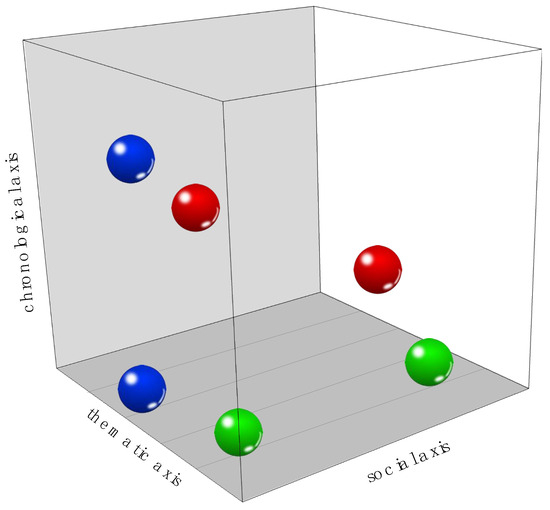
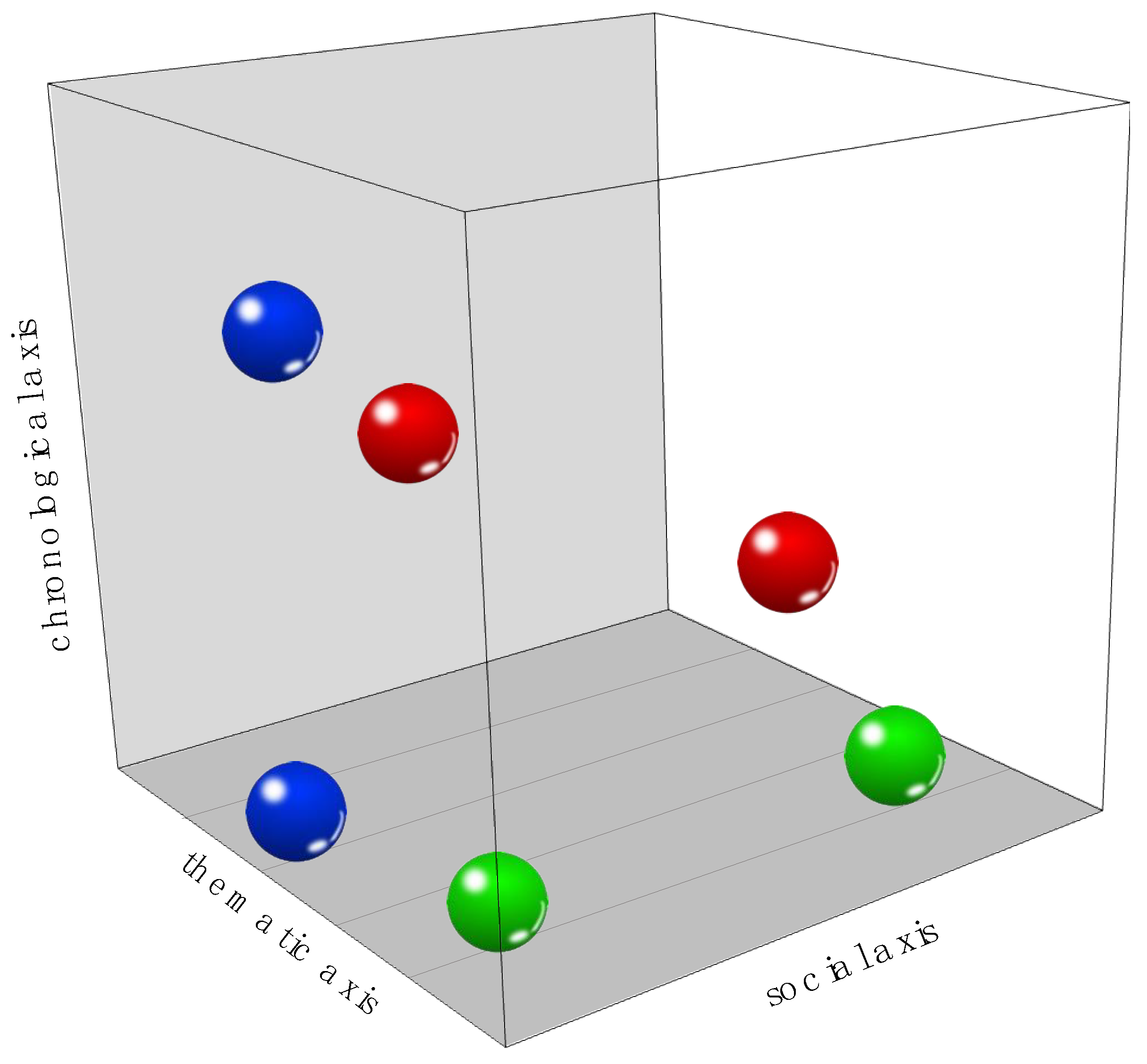
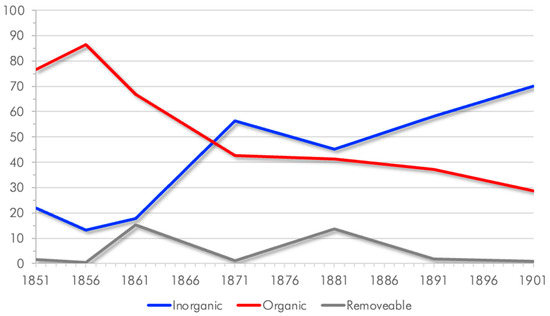
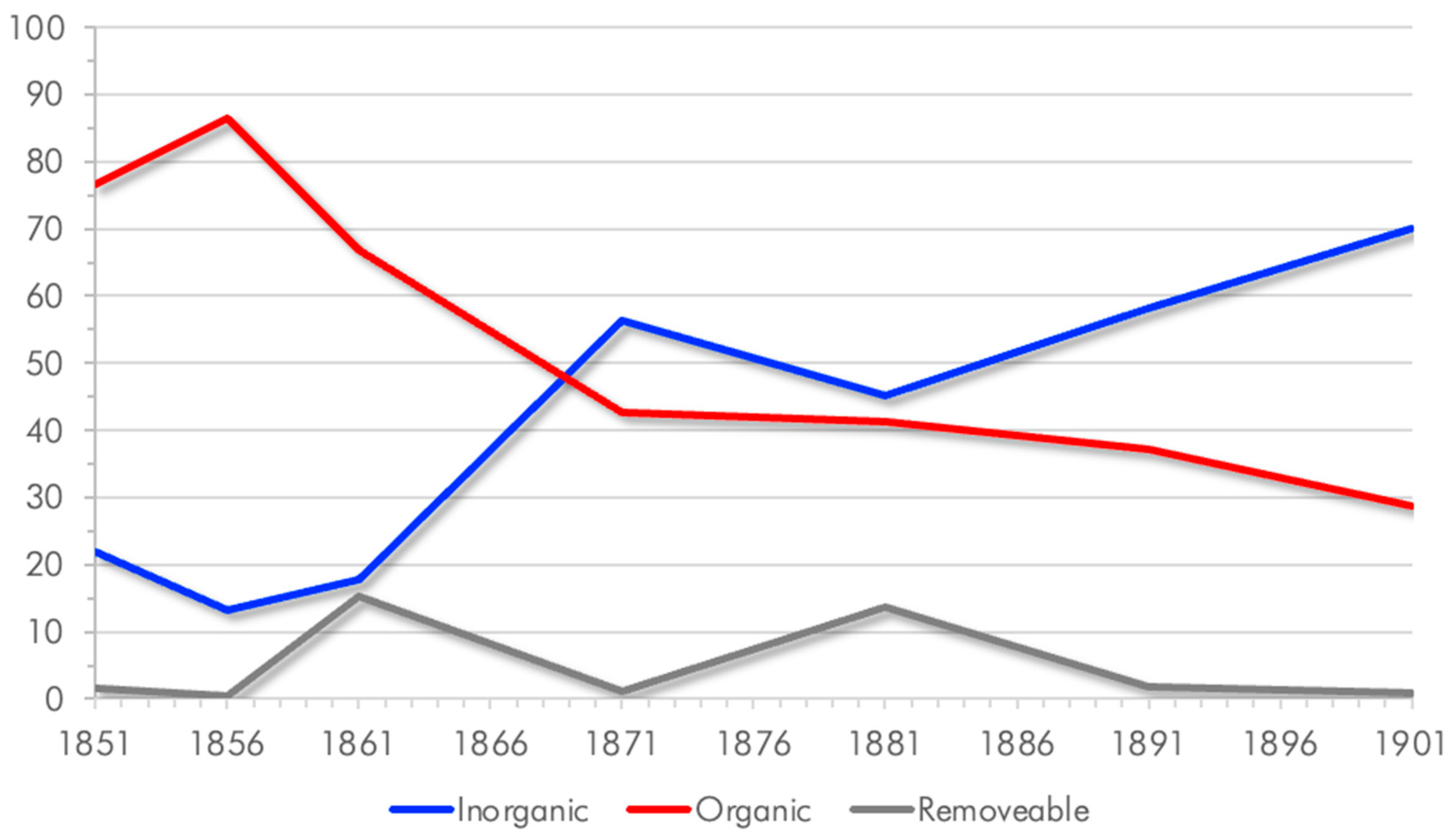
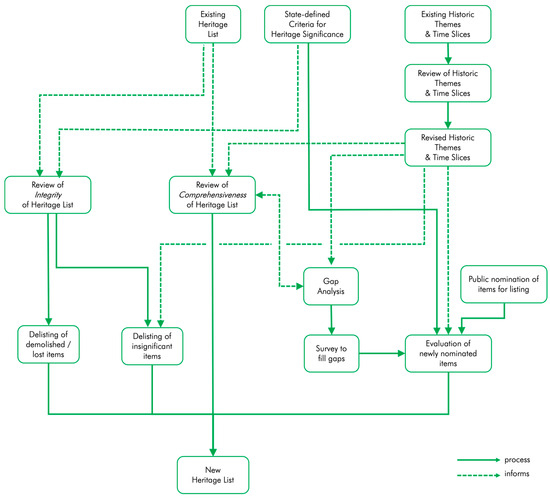
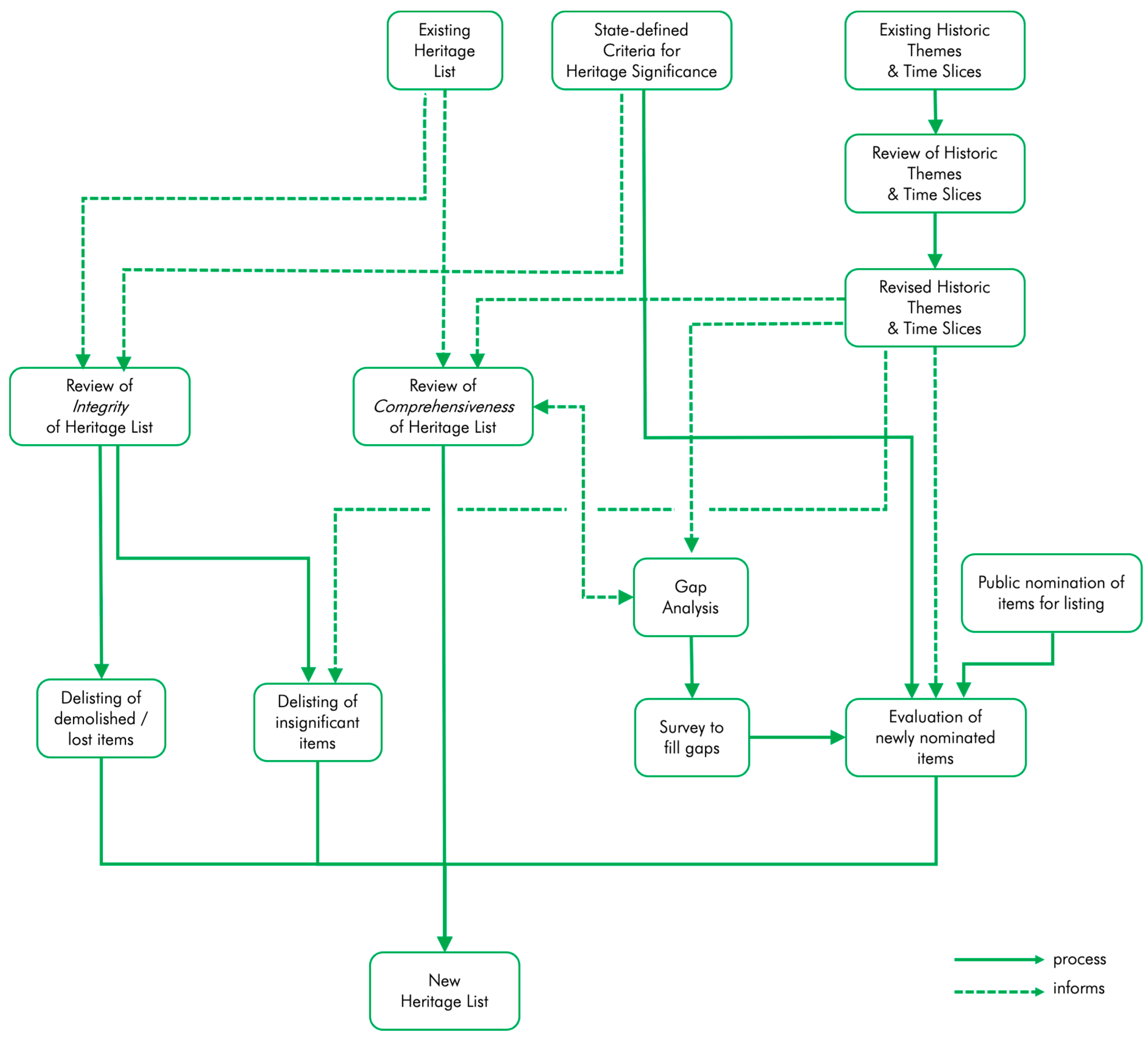
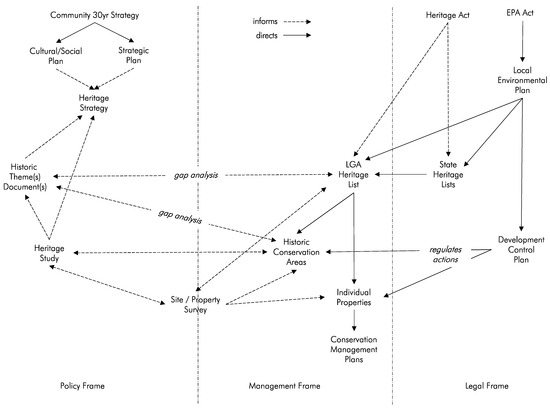
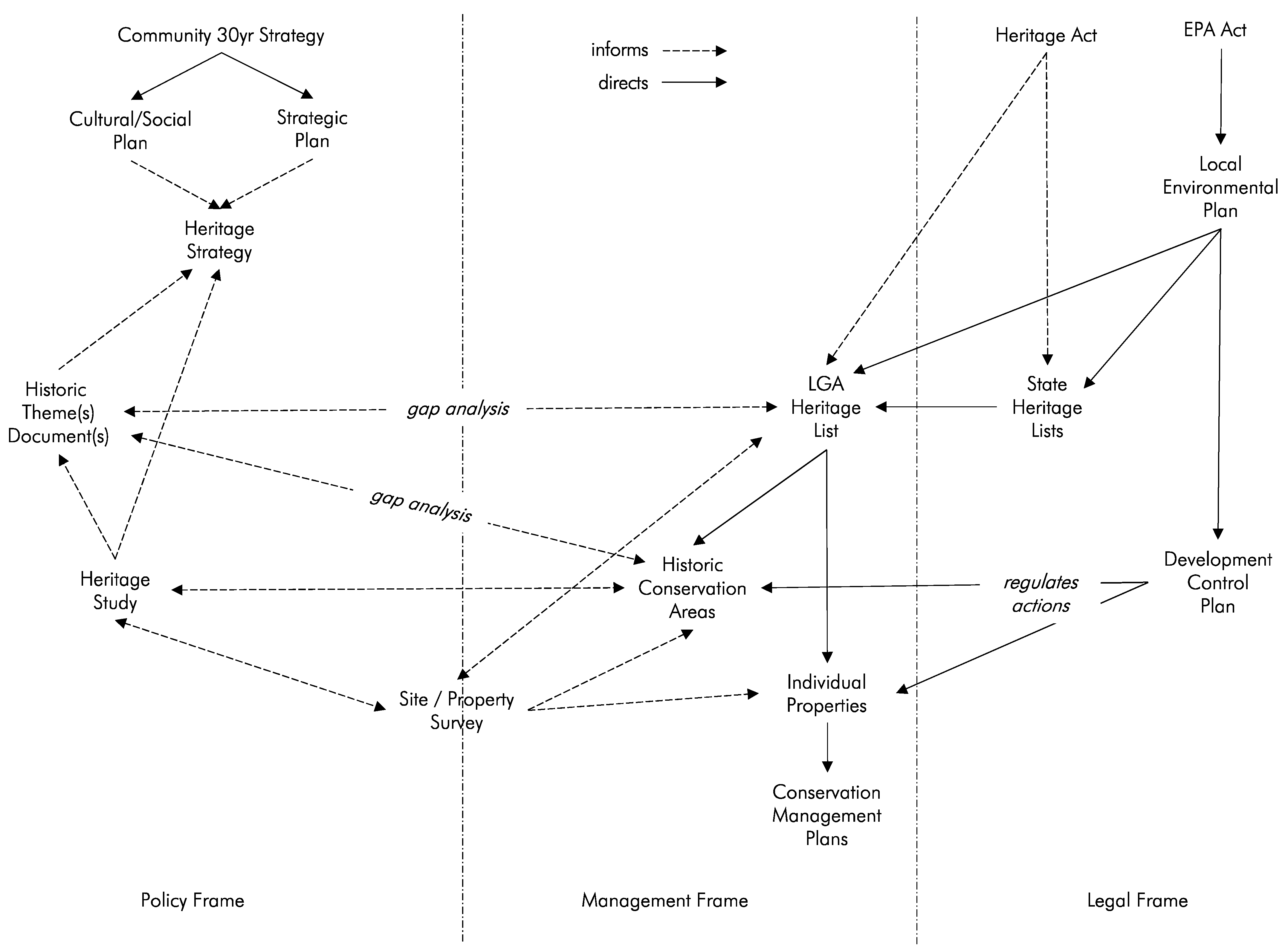
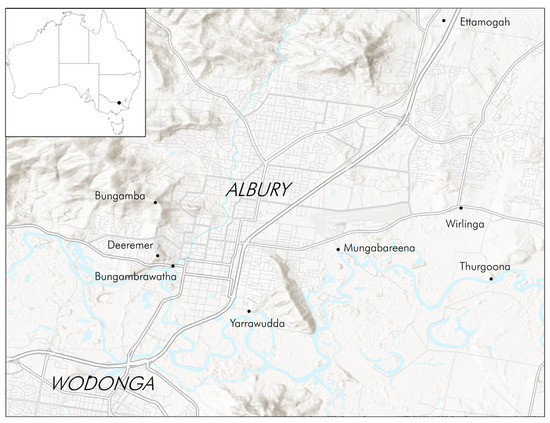
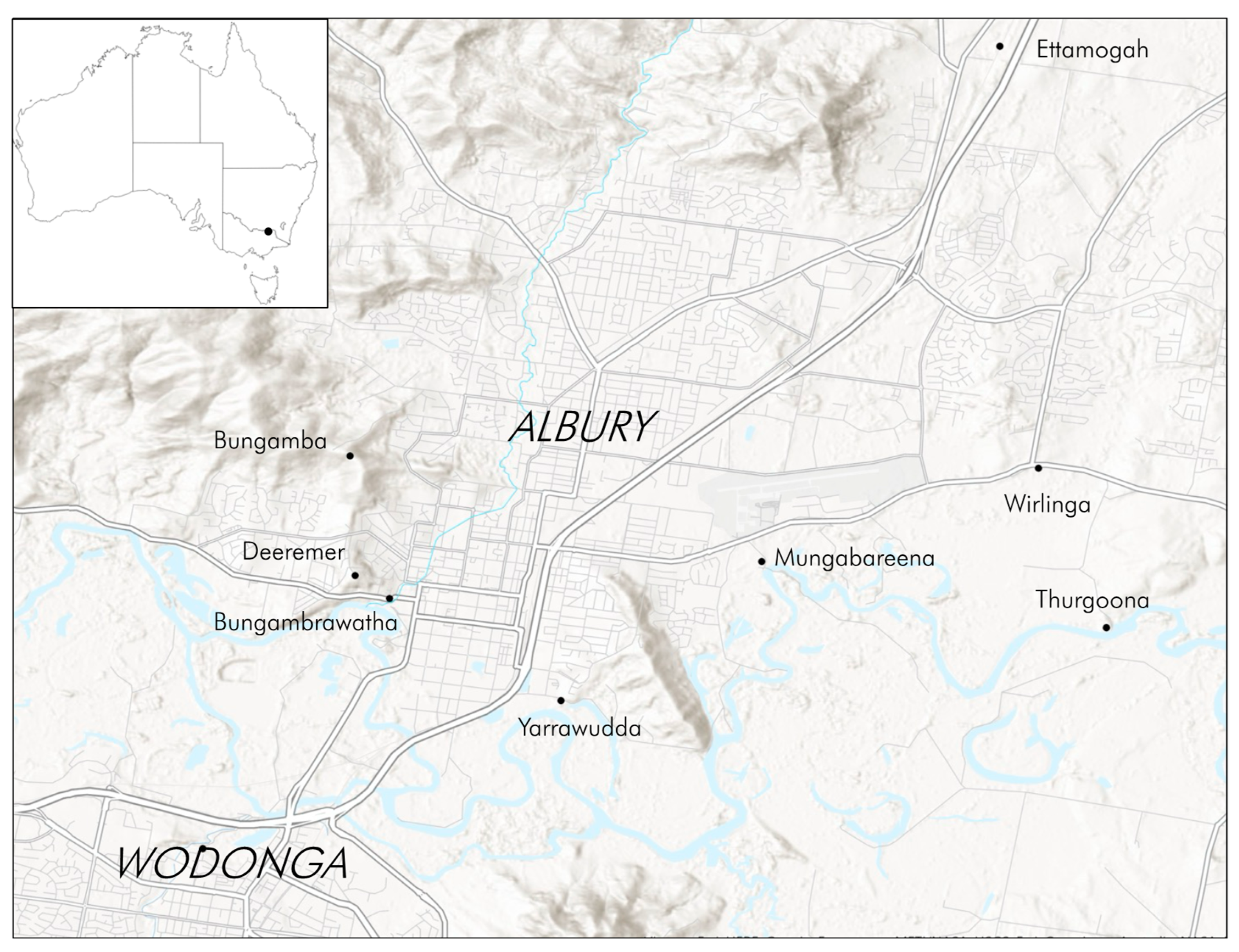
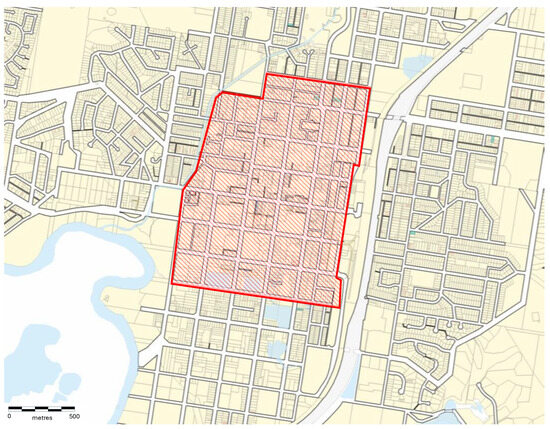
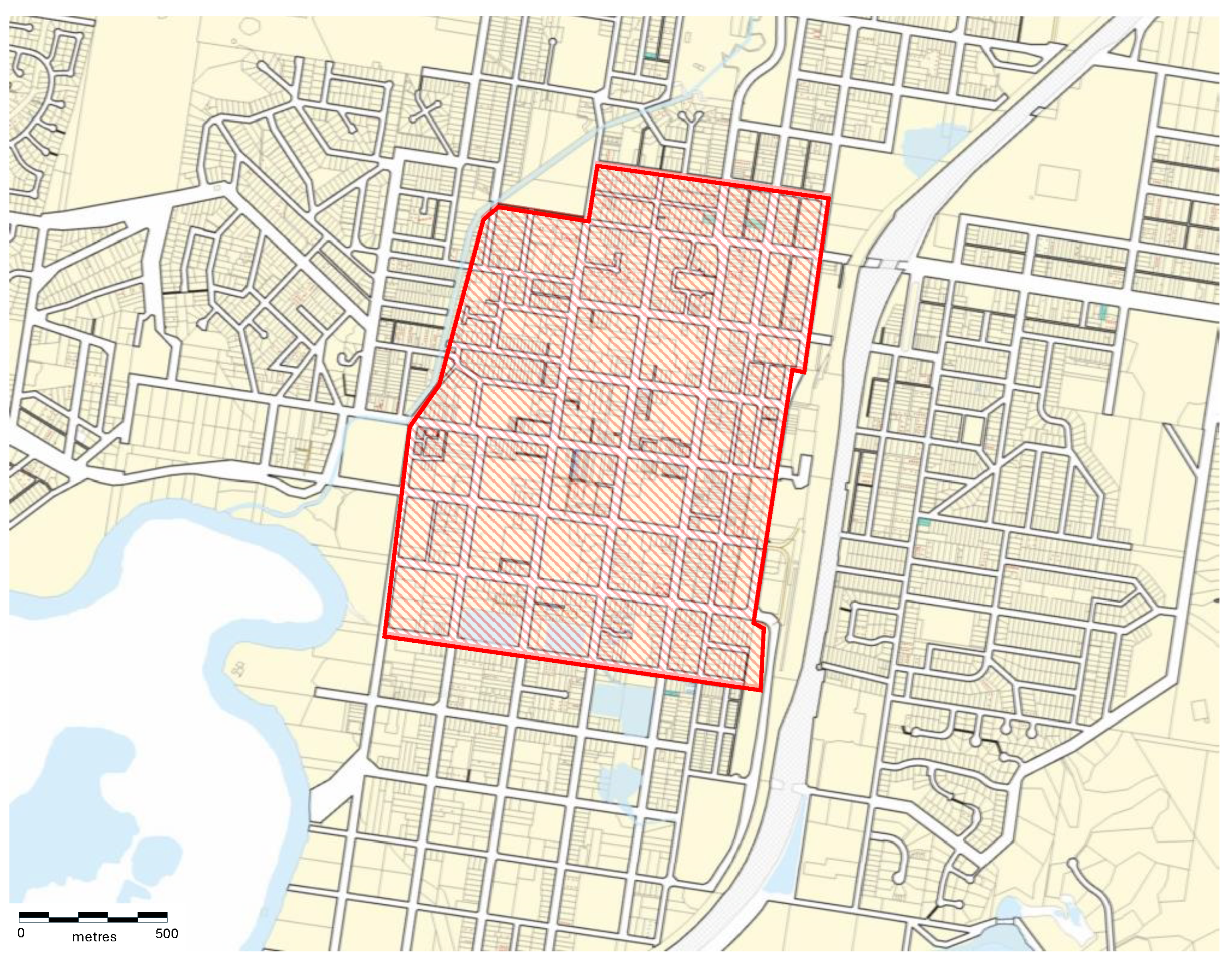
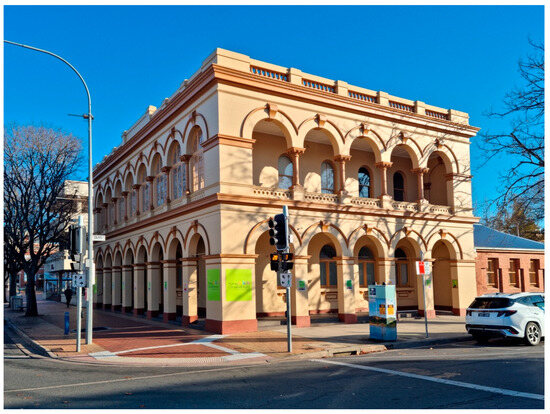
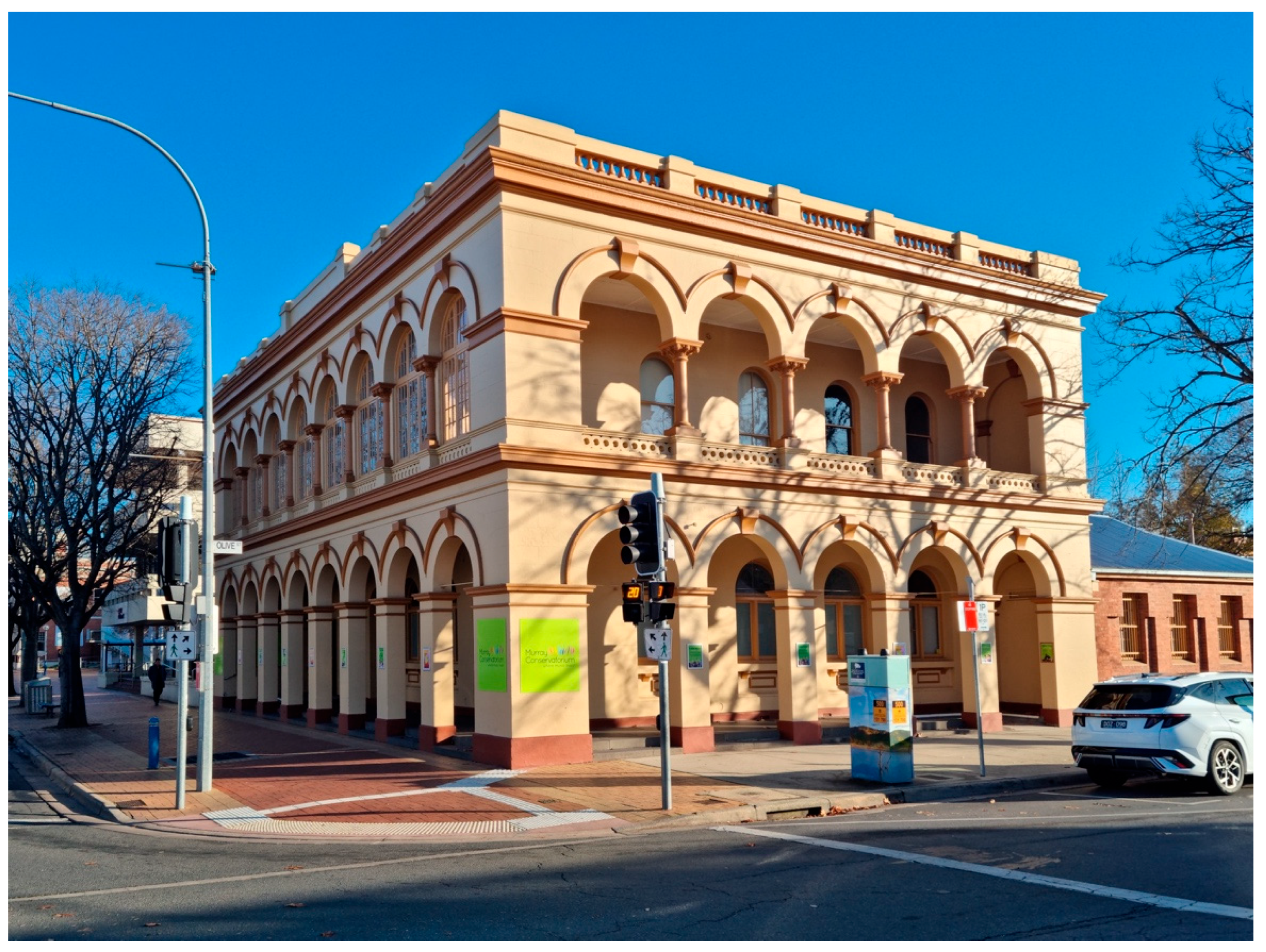


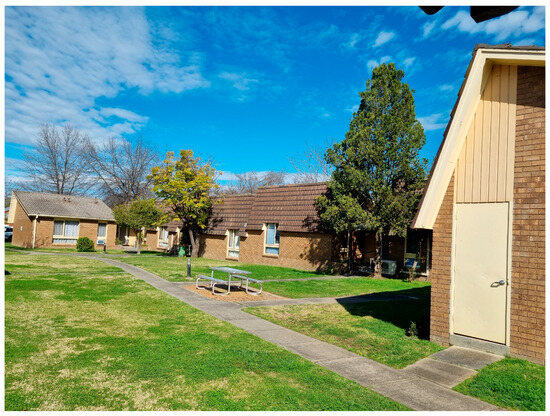
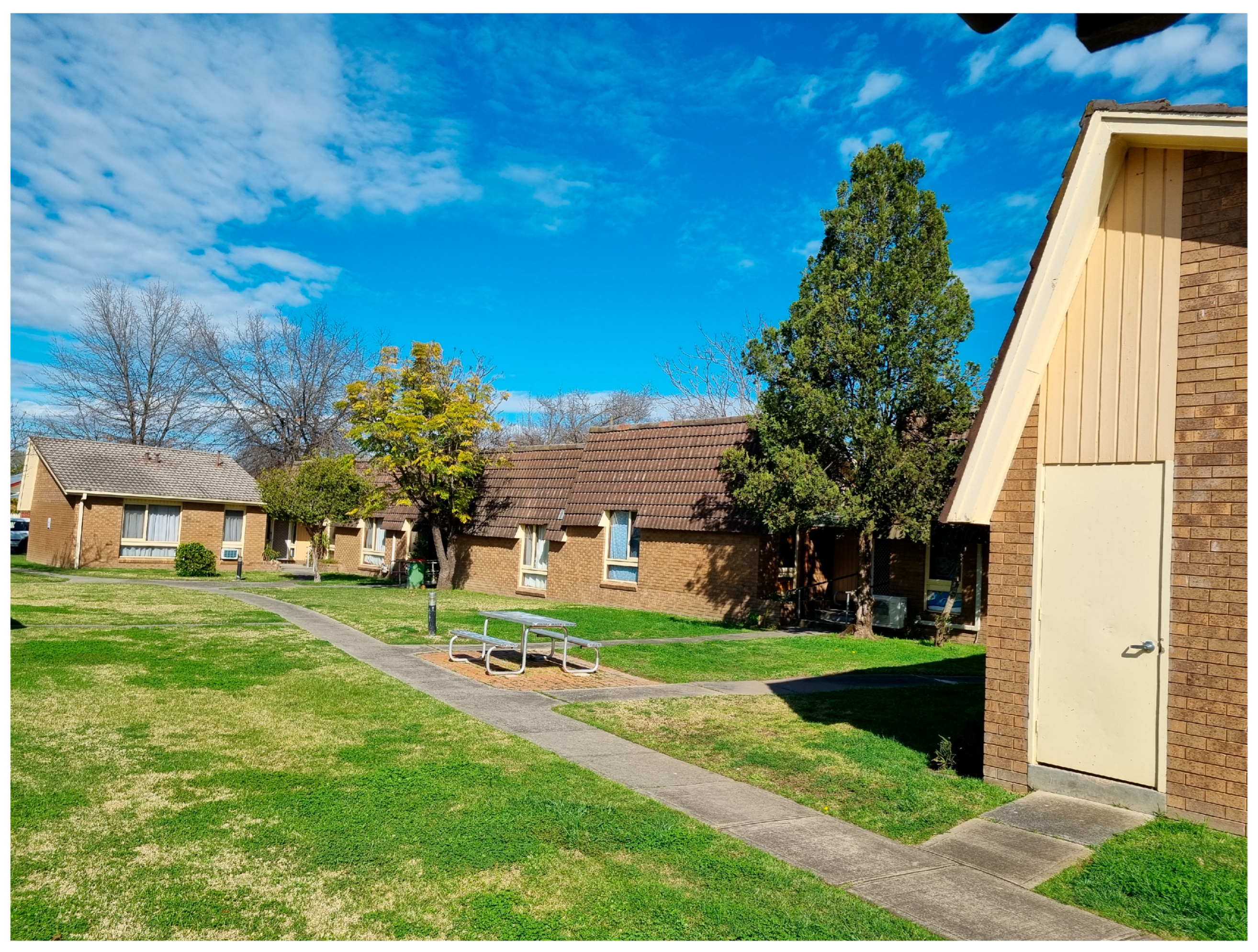
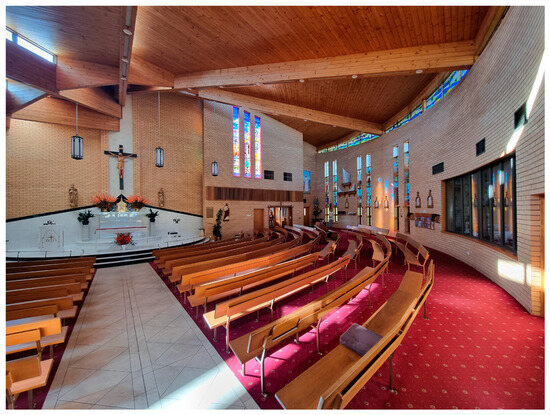
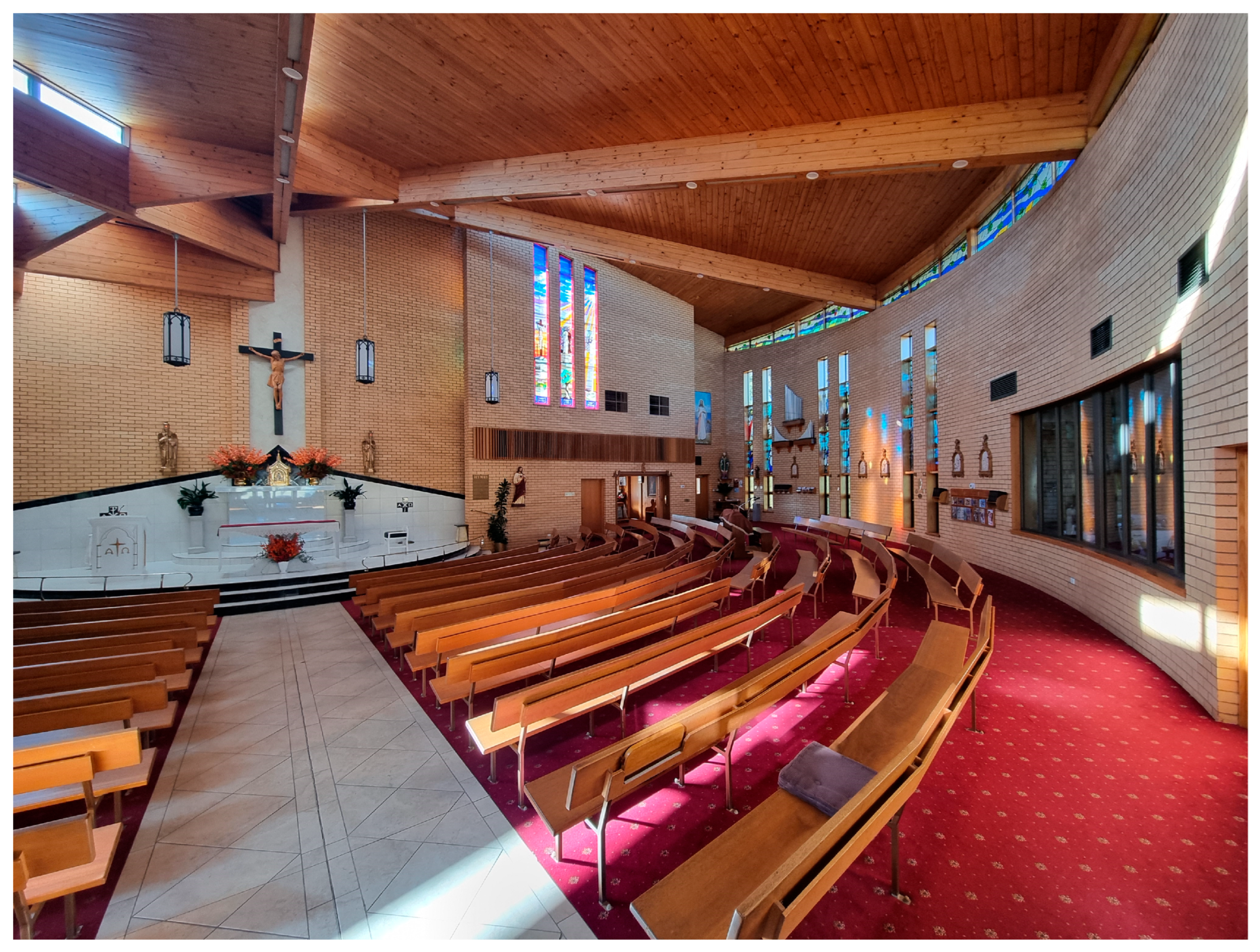
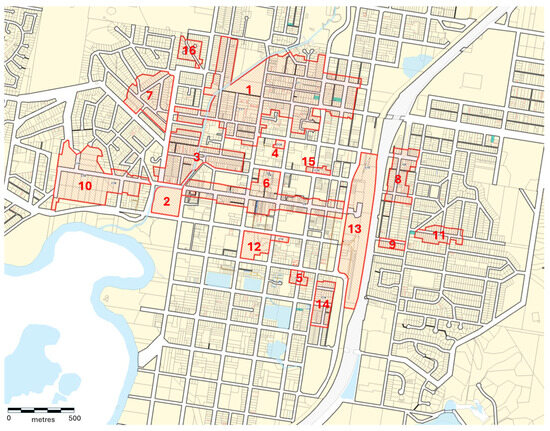
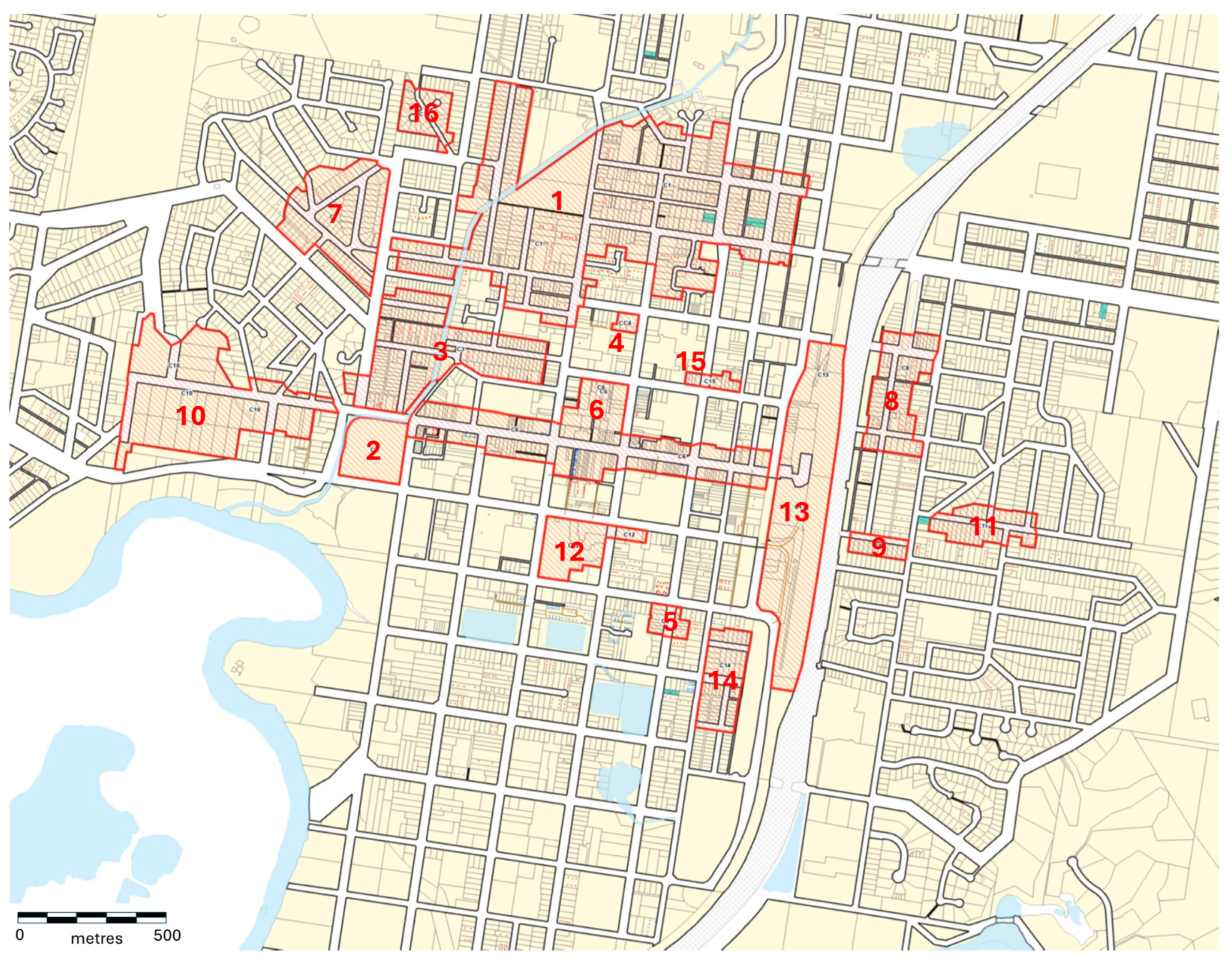

Disclaimer/Publisher’s Note: The statements, opinions and data contained in all publications are solely those of the individual author(s) and contributor(s) and not of MDPI and/or the editor(s). MDPI and/or the editor(s) disclaim responsibility for any injury to people or property resulting from any ideas, methods, instructions or products referred to in the content. |
© 2026 by the author. Licensee MDPI, Basel, Switzerland. This article is an open access article distributed under the terms and conditions of the Creative Commons Attribution (CC BY) license.