


Abstract
Background: Anthranilamides have attracted increasing attention due to their antispasmodic and anti-inflammatory effects. The present study aimed to comparatively evaluate the effects of three previously synthesized anthranilamides, namely 2-chloro-N-(2-(phenethylcarbamoyl)phenyl)benzamide (1), 2-amino-N-(3-chlorophenethyl)benzamide (2), and 2-(2-chloro-2-phenylacetamido)-N-(3,4-dimethoxyphenethyl)benzamide (3), on cognitive functions in rats and to find if those molecules could act as potential active substances for the treatment of diseases of cognitive dysfunctions. Preclinical evidence and in silico calculations suggest that these compounds may affect the acetylcholinesterase activity, which could indirectly enhance cognitive performance. Methods: Two-way active avoidance test, activity cage test, and two passive avoidance tests—step-through and step-down test—were performed. Naïve male Wistar rats were divided into 4 groups (8 rats in each group): the control group treated with DMSO and the experimental groups with the tested compounds, orally at a dose of 5 mg/kg. Results: The synthesized compounds did not impair the locomotor activity of the tested rats, with no apparent signs of motor suppression during the activity cage test. In the active avoidance test, compound (3) impaired both learning and the long-term memory test, compound (2) increased the number of conditioned stimuli responses on the 12th day as a sign of improved long-term memory, while compound (1) did not affect performance in this test. In the step-down test for passive avoidance learning it was established that compound (2) has a positive impact on the process of learning, whereas compound (1) improves learning, short-term memory, and long-term memory. Conclusions: Our results demonstrate that anthranilamide derivatives do not produce a pronounced depressant or stimulant effect on the central nervous system. Compounds (1) and (2) showed cognitive-enhancing properties, with effects varying depending on the behavioral paradigm applied. These findings highlight the potential of specific anthranilamide derivatives as modulators of learning and memory processes.
1. Introduction
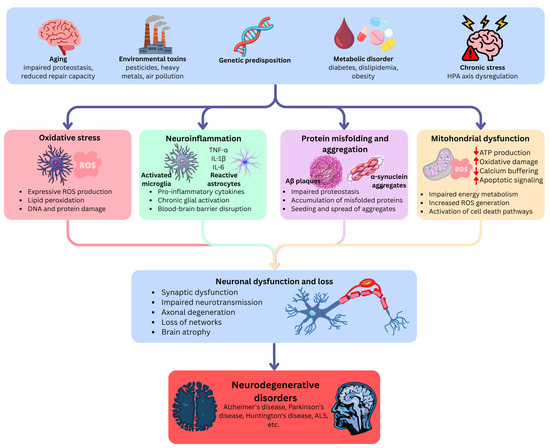
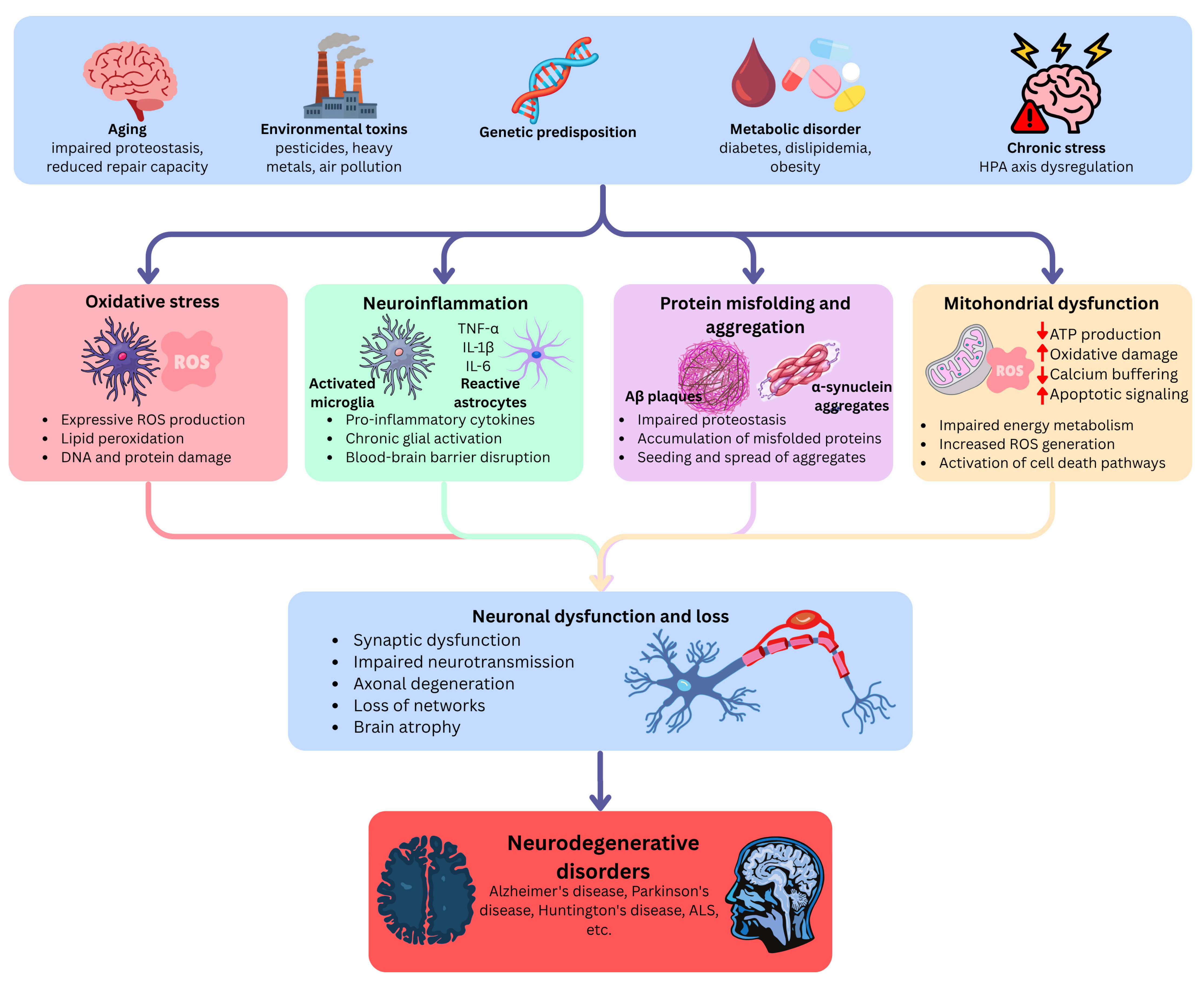
Alzheimer’s disease (AD), which mostly affects the elderly and includes age as a major risk factor, is the most common type of dementia [1]. AD is a chronic, progressive neurological illness characterized by behavioral problems, memory loss, and cognitive decline [2]. AD appears to have a complicated and multifaceted etiology [3,4]. Although the abnormal build-up and deposition of β-amyloid peptides into extracellular plaques [5,6] and the hyperphosphorylation of tau [5,7] are its main characteristics, the pathogenesis also involves neuronal loss [8], neuroinflammation [9], and oxidative stress [10] (Figure 1).
Figure 1.
Key pathophysiological mechanisms contributing to neuronal dysfunction and neurodegenerative disorders.
Even though there is no treatment for AD, therapies exist that may slow down disease progression or relieve symptoms. Medications can be divided into two groups: those that alleviate symptoms and those that reduce clinical decline [11].
The most widely used pharmacological approaches include acetylcholinesterase (AChE) inhibitors [12,13]. Cholinesterase (ChE) inhibitors, which include rivastigmine, donepezil, galantamine, and tacrine, improve cognition and memory by raising ACh levels; however, they do not change the course of the disease [14,15]. Memantine, on the other hand, is a glutamate inhibitor and antagonist of N-methyl-D-aspartic acid receptors, which modulates glutamatergic signaling and reduces excitotoxicity [16,17,18,19,20].
However, these therapies provide limited clinical benefits, are associated with adverse effects, and do not adequately address the complex and multifactorial mechanisms involved in neurodegeneration [11,12,13,21]. Acetylcholinesterase inhibitors (AChEIs)—including donepezil, rivastigmine, and galantamine—frequently trigger peripheral cholinergic side effects, primarily gastrointestinal symptoms such as nausea, vomiting, diarrhea, anorexia, and abdominal pain [11,12,16]. Tacrine, the first approved AChEI, was largely withdrawn due to significant hepatotoxicity [12,16]. Furthermore, central cholinergic hyperstimulation can lead to sleep disturbances, insomnia, vivid dreams, and bradycardia [12,21]. On the other hand, memantine, an uncompetitive N-methyl-D-aspartate (NMDA) receptor antagonist, is associated with adverse effects such as dizziness, headache, confusion, constipation, and somnolence [16,17,20]. These adverse profiles often limit dose escalation and compromise patient adherence, underscoring the necessity for novel drug candidates with improved safety profiles [11,12,13,21].
The poor clinical response observed in a substantial subset of patients stems from both patient-specific factors and intrinsic drug limitations [1,2,11,12]. Patient-specific factors include genetic variability (e.g., APOE ε4 allele status, cytochrome P450 polymorphisms affecting drug metabolism), disease heterogeneity, stage of pathology (e.g., extensive degeneration of cholinergic neurons in late-stage AD rendering AChEIs ineffective due to lack of substrate), and age-related comorbidities [1,2,12]. Intrinsic drug limitations arise because current agents provide purely symptomatic relief without addressing the multifactorial and progressive nature of neurodegeneration, such as amyloid-β accumulation, tau hyperphosphorylation, neuroinflammation, and synaptic toxicity [4,5,7,9,11,14,16].
Since many patients do not respond well to current medical treatments, finding novel therapeutic strategies to treat AD remains a major clinical goal. In addition to increasing efficacy, the development of therapeutic agents should ensure a positive safety profile, including minimal adverse effects on the gastrointestinal tract, which is one of the most prevalent drawbacks of present drugs. The development of multifunctional neuroprotective drugs that concurrently target several disease pathways, such as oxidative stress, neuroinflammation, neurotransmitter imbalance, and synaptic dysfunction, has thus received increased focus. In this regard, small compounds with a combination of anti-inflammatory, antioxidant, or neuromodulatory effects are interesting candidates for the identification of novel drugs for cognitive enhancement.
The benzamide nucleus continues to be the focus of drug discovery efforts for a variety of therapeutic targets. The widespread use of the benzamide nucleus in pharmaceuticals and therapeutic prospects has made it a valuable entity to investigate. Anticancer, antiviral, antimicrobial, anti-inflammatory, antimalarial, anticonvulsant, antitubercular, antioxidant, and analgesic properties are just a few of the biologically active benzamide derivatives that have been found [22,23,24,25,26,27,28,29,30]. The presence of the benzamide nucleus, specifically 2-aminobenzamide (anthranilamide), in a number of medications and physiologically active compounds provides an incentive to investigate current chemical structures for the delivery of target medications.
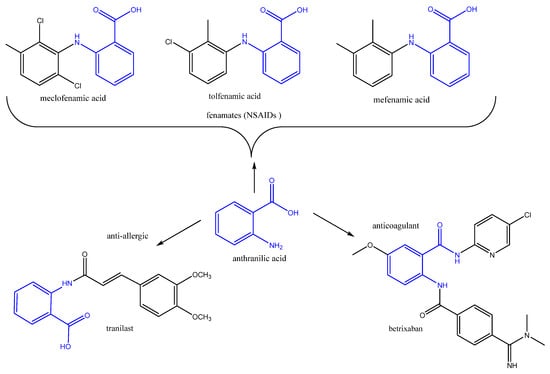
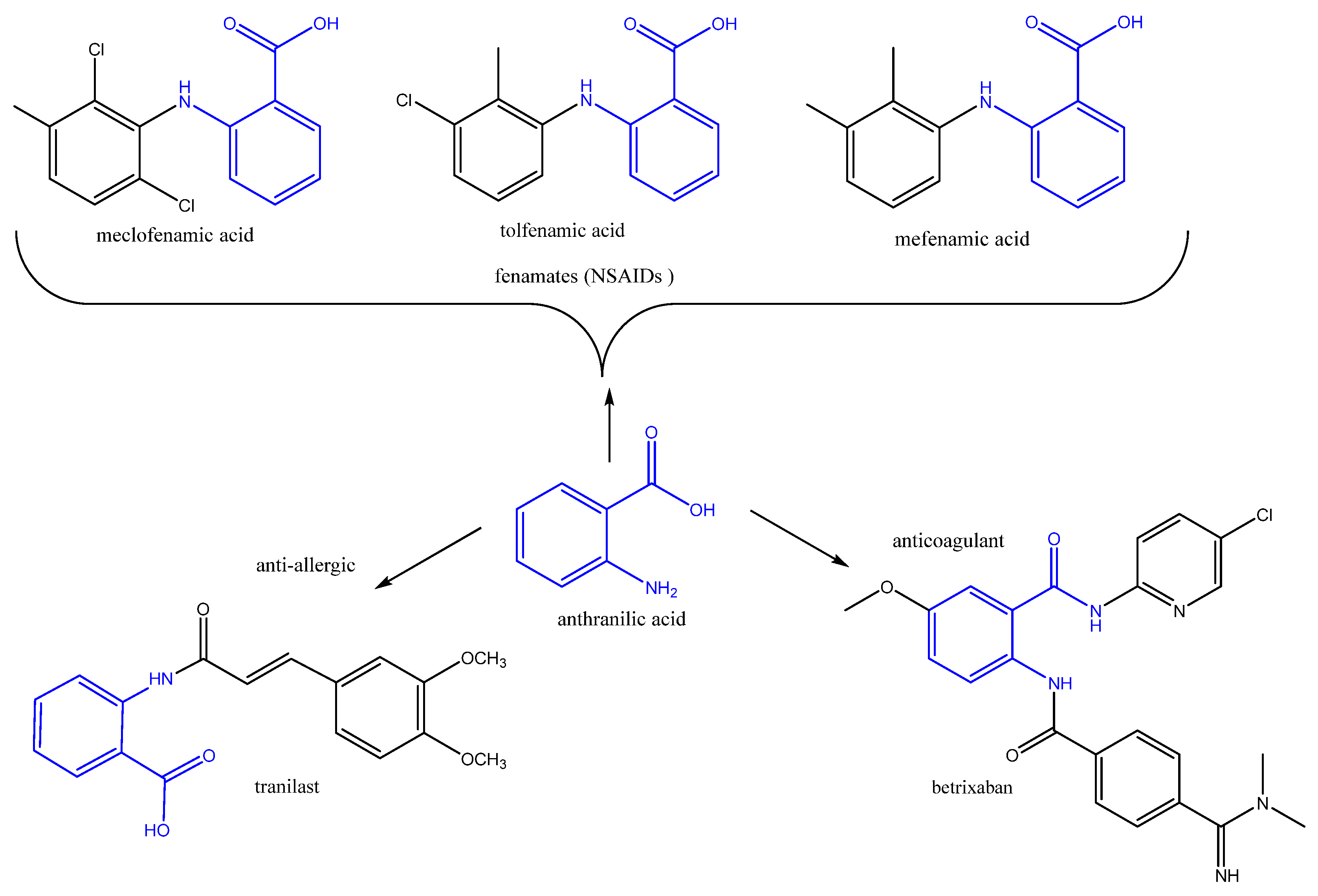
Anthranilates and anthranilamides gained more attention in the field of drug discovery due to their anti-inflammatory, antiviral, immunosuppressive, anticancer, antithrombotic, antidiabetic, and analgesic properties [31,32,33,34,35] (Figure 2).
Figure 2.
Structures of anthranilic acid and anthranilamide drugs.
The presence of carboxamide and amine groups provides beneficial binding interactions within the active pocket of specific enzymes, while amine functional groups are present in both ChE and MAO inhibitors. Amide groups are also a valuable pharmacophore of commercial MAO inhibitors, such as moclobemide and lazabemide.
The rationale for investigating anthranilamide derivatives stems from the privileged nature of the 2-aminobenzamide core, which exhibits diverse neuropharmacological actions [22,31,32,35]. Recent studies have demonstrated that anthranilic acid-derived molecules possess neuroprotective potential and central activity; for instance, synthetic anthranilate derivatives like HFP034 protect against glutamate-induced excitotoxicity in rat hippocampus [31]. Furthermore, in our previous reports, anthranilamides bound to phenethylamines (1–3) were synthesized as anti-inflammatory [36] and antispasmodic [37,38] agents, displaying potent smooth muscle contractile activity [39]. Since the pharmacological mechanisms regulating gastrointestinal smooth muscle contractility overlap with neurotransmitter systems responsible for learning and memory, we reasoned that these anthranilamide derivatives could also modulate central cognitive functions [40,41,42,43,44].
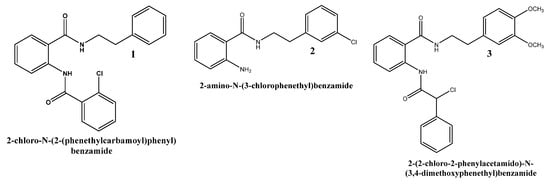
The selected structures (1), (2), and (3) (Figure 3) also provide an opportunity to assess whether differences in substitution patterns are associated with differences in learning and memory-related behavioral responses. Different substitution patterns may have different effects on their pharmacological characteristics from the structure–activity relationship standpoint. The three synthesized anthranilamides differ on their 2-phenylethylamine moiety. Compound (1) has unsubstituted 2-phenylethylamine, which may promote interactions with hydrophobic areas of biological targets. Compound (2) obtains a 3-chlorophenethyl substituent. A chlorine as a substituent increases the lipophilicity of the entire molecule, resulting in greater partitioning of a chlorinated substance into the lipophilic phase of a cell membrane or the lipophilic domains of a protein [45]. Compound (3) has the most intricate substitution pattern having a 3,4-dimethoxyphenethyl group. The latter adds methoxy groups that could alter the hydrogen-bond acceptor capacity, lipophilicity, and electrical characteristics of the molecule.
Figure 3.
Structures of the selected anthranilamides.
Besides, all the three structures differ in their substituent at the anthranilamide core’s 2nd position. Compound (1) has a 2-chlorobenzamide moiety, which influences the lipophilicity, metabolic stability, and electronic distribution of the molecule. Together, with the carboxamide group it can change biological and physicochemical behavior of the molecule [46]. Compound (3) has a 2-chloro-2-phenylacetamido fragment, which affects chemical and biological properties via its reactive α-chloro group, amide hydrogen-bonding capacity, and lipophilic phenyl ring. It alters also reactivity, protein binding, and crystal packing [47]. Compound (2) provides the ability to form hydrogen bonds by a free amino group at the anthranilamide core’s 2-position. The presence of a free amino group significantly affects its intramolecular hydrogen bonding, chemical reactivity as a nucleophile, and provides an ability to act as metal chelator [48].
Therefore, compounds (1), (2), and (3) may interact differently with molecular targets implicated in cognitive processes due to changes in the balance of hydrophobicity, hydrogen-bonding capacity, steric characteristics, and aromatic surface. The comparative analysis of these structurally distinct derivatives offers a starting point for connecting anthranilamide substitution patterns to their behavioral effects.
These compounds’ structural diversity makes them especially well suited for a comparative study since variations in the substitution pattern may affect their biological interactions and behavioral impacts. Therefore, the current investigation offers a comparative evaluation of three anthranilamides utilizing multiple complementary behavioral paradigms. Thus, using active and passive avoidance tests, the current study sought to compare the effects of three structurally different anthranilamides on learning and memory in rats.
2. Materials and Methods
2.1. Test Substances
All solvents and reagents were obtained from Merck (Merck KGaA, Darmstadt, Germany). Compound purity was assessed by thin-layer chromatography (TLC) using precoated 0.2 mm silica gel 60 plates (Merck KGaA, Darmstadt, Germany). Structural characterization was performed by infrared (IR), 1H-NMR, and 13C-NMR spectroscopy. NMR measurements were carried out at room temperature (approximately 295 K) using a Bruker Avance III HD 500 spectrometer (Bruker, Billerica, MA, USA) operating at 500 MHz.
2.1.1. Synthesis of 2-Amino-N-Phenethylbenzamides or Their Diamides
Isatoic anhydride (1.63 g, 10 mmol) was combined with 2.10 mL (15 mmol) of the appropriate amine 2-phenylethylamine for compound (1), 2-(3-chlorophenyl)ethylamine for compound (2), or 3,4-dimethoxyphenethylamine for compound (3), in dichloromethane (30 mL). The reaction mixtures were stirred overnight at room temperature. The resulting solutions were filtered through neutral Al2O3 and concentrated. The structures of the resulting hybrid molecules were confirmed by spectral analysis.
For the subsequent acylation step, a solution of the corresponding 2-amino-N-phenethylbenzamide (3 mmol) and the appropriate acyl chloride (3.5 mmol) in dichloromethane (10 mL) was prepared. 2-Chlorobenzoyl chloride was used for compound (1), whereas α-chlorophenylacetyl chloride was used for compound (3). After 10 min, triethylamine (3.4 mmol) was added. Approximately 30 min later, the reaction mixture was washed successively with diluted HCl (1:4), Na2CO3, and H2O, followed by drying over anhydrous Na2SO4. The mixture was then filtered through a short column packed with neutral Al2O3 and concentrated. The structures of the synthesized compounds were verified by spectral analysis, while the data for compound (1) were also consistent with previously reported literature data.
2.1.2. 2-Chloro-N-(2-(phenethylcarbamoyl)phenyl)benzamide (1) [37,49,50]
2-amino-N-(3-chlorophenethyl)benzamide (2): 1H-NMR: 2.91 (t, J = 7.1, 2 H, CH2), 3.67 (q, J = 5,10, 2 H, CH2) 5.46 (broad s, 2 H, NH2), 6.15 (s, 1 H, NH), 6.64 (td, J = 7.6, 1 H, Ar), 6.68–6.70 (m, 1 H, Ar), 7.13–7.15 (m, 1 H, Ar), 7.20 (s, 1 H, Ar), 7.21 (s, 1 H, Ar), 7.25–7.26 (m, 2 H, Ar), 7.29 (s, 1 H, Ar); 13C-NMR: 169.4, 148.7, 141.08, 134.5, 132.35, 129.96, 129.95, 127.05, 126.8, 117.3, 116.08, 116.04, 40.6, 35.5. FT-IR, cm−1: 3434 ν(N–H, -NH2), 3332 v (-N-H, -NH2), ν(-N-H, >NH-amide), 3065 ν(Csp2-H, -Ph), 3065 ν(C-H, Ph), 2935 νas(C–H, CH2), 1645 v (>C=O), secondary amide I, 1536 δ(N-H) + v(C-N), trans- secondary amide II, 1294 ν(C-N), secondary amide III, 1082 δ (meta-Ph-Cl) [17].
2-(2-chloro-2-phenylacetamido)-N-(3,4-dimethoxyphenethyl)benzamide (3): 1H-NMR (500 MHz, CDCl3) δ 2.91 (t, J = 6.8, 2 H, CH2), 3.71–3.73 (m, 2 H, CH2), 3.85 (s, 3 H, OCH3), 3.89 (s, 3 H, OCH3), 5.47 (s, 1 H, CHCl), 6.35 (t, J = 4.9, 1 H, CONH), 6.73–6.86 (m, 3 H, CH(Cl) overlapped with Ar), 7.07 (td, J = 7.6; 1.5, 1 H, Ar), 7.33–7.42 (m, 5 H, Ar), 7.43–7.47 (m, 1 H, Ar), 7.59–7.61 (m, 2 H, Ar), 8.54 (dd, J = 8.3, 1, 1 H, Ar), 12.05 (broad s, 1 H, CONH); 13C-NMR (126 MHz, CDCl3) δ 168.67, 166.6, 149.16, 147.88, 138.65, 132.5, 129.09, 128.9, 127.89, 126.37, 123.66, 121.39, 120.7, 111.9, 111.49, 62.2, 55.97, 55.88, 41.3, 34.99; FT-IR, cm−1: 3321 ν(-N-H, >NH-amide), 2990 νas (Csp3-H, -OCH3), 2943 νas (Csp3-H, >CH2), 2838 νs (Csp3-H, >CH2), 1676 ν (>C=O), secondary amide I, 1624 ν (>C=O), secondary amide I, 1596 ν (C-C=C, -Phortho), ν (C-C=C, -Ph1,2,4), ν (C-C=C, -Phmono), 1550 δ (N-H) and ν (C-N), trans-secondary amide II, 1513 ν (C-C=C, -Phortho), ν (C-C=C, -Ph1,2,4), δ (N-H) and ν (C-N), trans-secondary amide II, 1326 ν (C-C=C, -Phortho), 1312 δ (N-H) and ν (C-N), trans-secondary amide II, 1294 ν (C-C=C, -Phmono), ν (C-N), secondary amide III, 1159 δ (-Csp2-H, -Phortho), δ (C-C=C, -Phmono), ρ (-CH2-)/ν (N-C) in –NH-CH2, 1141 ρ (-CH2-)/ν(N-C) in –NH-CH2, 1037 ρ (-CH2-)/ν (N-C) in –NH-CH2, 1023 δ (-Csp2-H, -Phmono), ν (C-Cl), 970 ν (-Csp2-H, -Phmono), 957 γ (-Csp2-H, -Phmono), 909 γ (-Csp2-H, -Phmono), γ (-Csp2-H, -Phortho), γ (-Csp2-H, -Ph1,2,4) [15].
2.2. Computational Methods
The investigated compounds were subjected to in silico analysis using publicly available web-based computational tools. SwissADME was used for the prediction of ADME properties, ProTox-II for toxicity assessment, and PASS Online (Prediction of Activity Spectra for Substances) for prediction of probable biological activities. Potential molecular targets of the synthesized anthranilamide derivatives were predicted using the SwissTargetPrediction web tool. The analysis was performed based on the chemical structures of compounds (1)–(3).
2.3. Animals and Experimental Design
The experimental animals were naïve, healthy, sexually mature male Wistar rats, 3 months of age at the beginning of the experiment, with a body weight of 200 ± 20 g. The animals were maintained under standard laboratory conditions (12 h light-dark cycle, 22 ± 2 °C, 55 ± 5% humidity) with free access to food and water. They were randomly divided into four groups (each group consisted of eight animals, n = 8), and treated with the synthesized molecules once daily (orally, via gavage) 60 min before testing in the apparatuses according to the methodologies described below. The control group received orally DMSO (0.1 mL/100 g b.w.), while groups 1, 2, and 3 received solutions of molecules (1), (2), and (3) orally in a dose of 5 mg/kg b.w. All experimental methods were applied sequentially to the same experimental animals.
2.4. Methods for In Vivo Assessment of the Effects on Motor Activity and Cognitive Abilities in Rats
2.4.1. Method for Assessment of Locomotor Activity and Exploratory Behavior in Rats—Activity Cage Test
Spontaneous locomotor activity was assessed using an automatic Multiple Activity Cage (47420, Ugo Basile, Gemonio, Italy), consisting of an electronic recording unit and a cage equipped with infrared sensors for measuring horizontal and vertical movements. Each animal was placed individually in the plastic cage for 5 min. Movements within the cage interrupted one or more infrared beams, and the number of beam interruptions was automatically detected and recorded by the electronic system. This assessment was included to exclude potential false-positive or false-negative results related to increased or reduced locomotor activity, respectively. The test was performed on the 1st and 11th day from the initiation of treatment of the animals with the investigated substance. The test provides data on the exploratory behavior of rats, where horizontal movements reflect locomotor activity, while vertical movements are an indicator of anxiety.
2.4.2. Method for Active Avoidance Learning in Rats—Shuttle-Box Test
A fully automated shuttle-box apparatus (Ugo Basile, Gemonio, Italy) was used for the assessment of conditioned avoidance learning and memory. During the acquisition phase, rats received 30 trials per day over five consecutive days. Long-term memory retention was evaluated on day 12. Each trial consisted of a conditioned stimulus (CS), comprising a light and buzzer (670 Hz, 70 dB, 6 s), followed after 12 s by an unconditioned stimulus (UCS) consisting of an electrical foot shock (0.4 mA, 3 s). The following behavioral parameters were recorded: the number of avoidances, representing conditioned responses (CR); the number of escapes, representing unconditioned responses (UCR); and the number of inter-trial crossings.
2.4.3. Method for Passive Avoidance Learning in Rats—Step-Through Test
Passive avoidance learning and memory were assessed using a step-through apparatus (Ugo Basile, Gemonio, Italy) consisting of two compartments, one dark and one brightly illuminated, connected by an automatically operated sliding door. The study included two consecutive days of training, followed by a short-term memory test 24 h later and a long-term memory test on day 7 from the start of the experiment. Three trials were performed each day, with 60-min intervals between trials. At the beginning of each trial, the rat was placed in the illuminated compartment. After a 7-s delay, the door opened for 12 s, allowing the animal to enter the dark compartment. Once the rat entered the dark compartment, the door closed and an aversive electrical foot shock (0.4 mA, 9 s) was delivered. The time spent in the illuminated compartment was recorded in seconds (s), with a maximum latency (cut-off time) of 178 s. Successful learning was defined as the rat remaining in the illuminated compartment for the maximum duration during two consecutive training trials.
2.4.4. Method for Passive Avoidance Learning in Rats—Step-Down Test
Passive avoidance learning and memory were assessed using a step-down apparatus (Ugo Basile, Gemonio, Italy), consisting of a transparent acrylic chamber with an electrified grid floor and an elevated platform in the center. The training was carried out over two consecutive days. At the start of each trial, the rat was placed on the platform, and stepping down onto the grid floor was followed by an electric shock (0.4 mA, 10 s). Short-term memory was tested 24 h after training, while long-term memory was assessed on day 7. The memory tests were performed without electrical stimulation. Both the training and memory tests included two trials, with a 60-min interval between trials. The latency time was recorded as the time the animal remained on the platform. Rats that remained on the platform for more than 60 s during two consecutive training trials were considered to have learned the passive avoidance response. During the monitoring and evaluation of the effects of the target substances on cognitive abilities and motor activity in laboratory animals, it was established that they may induce temporary discomfort or mild disorientation in the animals. Considering the use of these anthranilamides with demonstrated non-toxic in silico activity, the expected effect of the experiments may be classified according to the criteria of the Bulgarian Food Safety Agency (BFSA) as a procedure of mild severity.
2.5. Statistical Methods
Statistical analysis was performed using IBM SPSS Statistics 19.0. All data are presented as mean ± SEM. The data were analyzed using repeated measures one-way ANOVA, followed by the Tukey post hoc test. The value of p < 0.05 was considered statistically significant.
2.6. Ethical Statement
All experiments were conducted in compliance with the European Convention for the Protection of Vertebrate Animals used for experimental and other scientific purposes. Official permits were obtained in accordance with the Bulgarian national and academic procedures: Statement No. 316 from 23 May 2024 of the Ethics Committee at the Medical University of Plovdiv, Bulgaria, as well as by the Animal Health and Welfare Directorate of the Bulgarian Food Safety Agency, Permit No. 400 valid through 6 June 2029.
3. Results and Discussion
Acetylcholine (ACh) is a neurotransmitter that integrates peripheral and central physiology through carefully synchronized signaling pathways. Cholinergic circuits in the central nervous system (CNS) control cognition, learning and memory, arousal, reward, and decision-making. ACh controls both voluntary and involuntary physiological activities in the peripheral nervous system via mediating neuromuscular transmission and autonomic regulation. Crucially, ACh is also a major mediator of the brain-body axis, connecting bottom-up signals from the immune system and gut with top-down autonomic and neuroendocrine control [51].
AD medications now target mostly acetylcholinesterase (AChE). These medications work to restore the cholinergic neurotransmission compromised by the neurodegeneration that causes the cognitive effects linked to AD by blocking AChE and the physiological breakdown of (ACh). These medications are controversial nowadays, primarily because they become less effective.
Specific drugs used in medicine can have an impact on SM contractility as well as on learning and memory processes. The reason for this is the involvement of neurotransmitters and receptors that participate in the regulation of muscle tone at the peripheral level and cognitive functions at the central level.
For example, atropine and scopolamine are cholinolytics that block muscarinic ACh receptors (mAChRs), leading to relaxation of SM in the gastrointestinal tract (GIT), but also to memory impairment. According to the cholinergic hypothesis underlying Alzheimer-type dementia, ACh is the principal mediator involved in the regulation of cognitive processes. Its deficiency or inability to bind to receptors in specific brain structures within the CNS, namely the cerebral cortex and the hippocampus, results in impaired memory functions. Scopolamine-induced amnesia is a well-known and established model in experimental pharmacology [52].
Memory impairment is not restricted to modulation of the cholinergic system, however, and can also occur following enhancement of inhibitory neurotransmission. Diazepam and midazolam are benzodiazepines that enhance GABAergic neurotransmission, induce smooth muscle relaxation (they are used in spasms and seizures of various origins), exert anxiolytic effects, as well as amnestic effects (anterograde amnesia) [53].
A similar relationship between peripheral effects and cognitive disturbances can be observed with opioid analgesics, although these effects are mediated through a different neurotransmitter system. The opioid analgesics morphine and fentanyl inhibit intestinal peristalsis, but also cause amnesia, sedation, and confusion.
Other pharmacological agents can influence memory more indirectly through modulation of neuronal excitability and calcium-dependent signaling. The calcium antagonists verapamil and nifedipine, by blocking the influx of calcium ions into the smooth muscles of blood vessels, induce vascular relaxation. Therefore, their main clinical application is in the treatment of hypertension and angina pectoris. They also affect memory through their action on neurons and have found a place as adjunctive therapy in the treatment of Alzheimer-type dementia [54].
Guided by the principle of discovering new drugs with a better safety profile, higher selectivity, more effective action, and reduction in adverse effects, including cognitive impairment, which often accompanies the use of certain spasmolytics, we investigated the potential of three previously synthesized compounds that demonstrated the best spasmolytic and anti-inflammatory activity on learning and memory processes and potential treatment of neurodegenerative disorders. The compounds, namely 2-chloro-N-(2-(phenethylcarbamoyl)phenyl)benzamide (1), 2-amino-N-(3-chlorophenethyl)benzamide (2), and 2-(2-chloro-2-phenylacetamido)-N-(3,4-dimethoxyphenethyl)benzamide (3) (Figure 3), were previously obtained using a standard protocol of ring-opening of isatoic anhydride with 2-phenylethylamine for (1), 3-chloro-2-phenylethylamine for (2), and 3,4-dimethoxy-2-phenylethylamine for (3). Then, two of the compounds were finally applied in an acylation reaction to obtain compounds (1) and (3). All three anthranilamide derivatives were synthesized via a straightforward, scalable two-step chemical method starting from commercially available isatoic anhydride and phenethylamines. Compared to natural product extraction, chemical synthesis offers distinct pharmaceutical and economic advantages, including high reaction yields, low cost of starting materials, batch-to-batch structural reproducibility, and ease of structural modification during lead optimization.
3.1. In Silico Predictions
The methodical application of tests, a crucial stage in the search for new drugs, is constrained by multiple factors. The quantity of synthesized experimental compounds, the quantitative limitations of tissue samples, and the moral obligation to limit animal research are a few examples of these concerns. In this perspective, it is reasonable to think that in silico computer models are both an excellent addition to and a potential replacement for biological investigations, and that they could even totally replace biological investigations [55]. In order to achieve this goal, we have chosen to incorporate many software products into our ongoing investigation of hybrid compounds of interest as possible therapeutic options. A compound must reach its pharmacological target within the body, reach a suitable concentration at the site of action, and stay in a bioactive form for a sufficient amount of time in order to be employed as a drug. Poor pharmacokinetics and bioavailability cause many promising physiologically active compounds to fail as medications. Using free SwissADME web tool, the absorption, distribution, metabolism, and excretion (ADME) characteristics of the target compounds were evaluated in silico [55]. We have also utilized the Pro-Tox II program to evaluate the toxicity and PASS Online Program (Prediction of Activity Spectra for Substances) to calculate the anticipated biological effects [56,57,58] of the compounds compared.
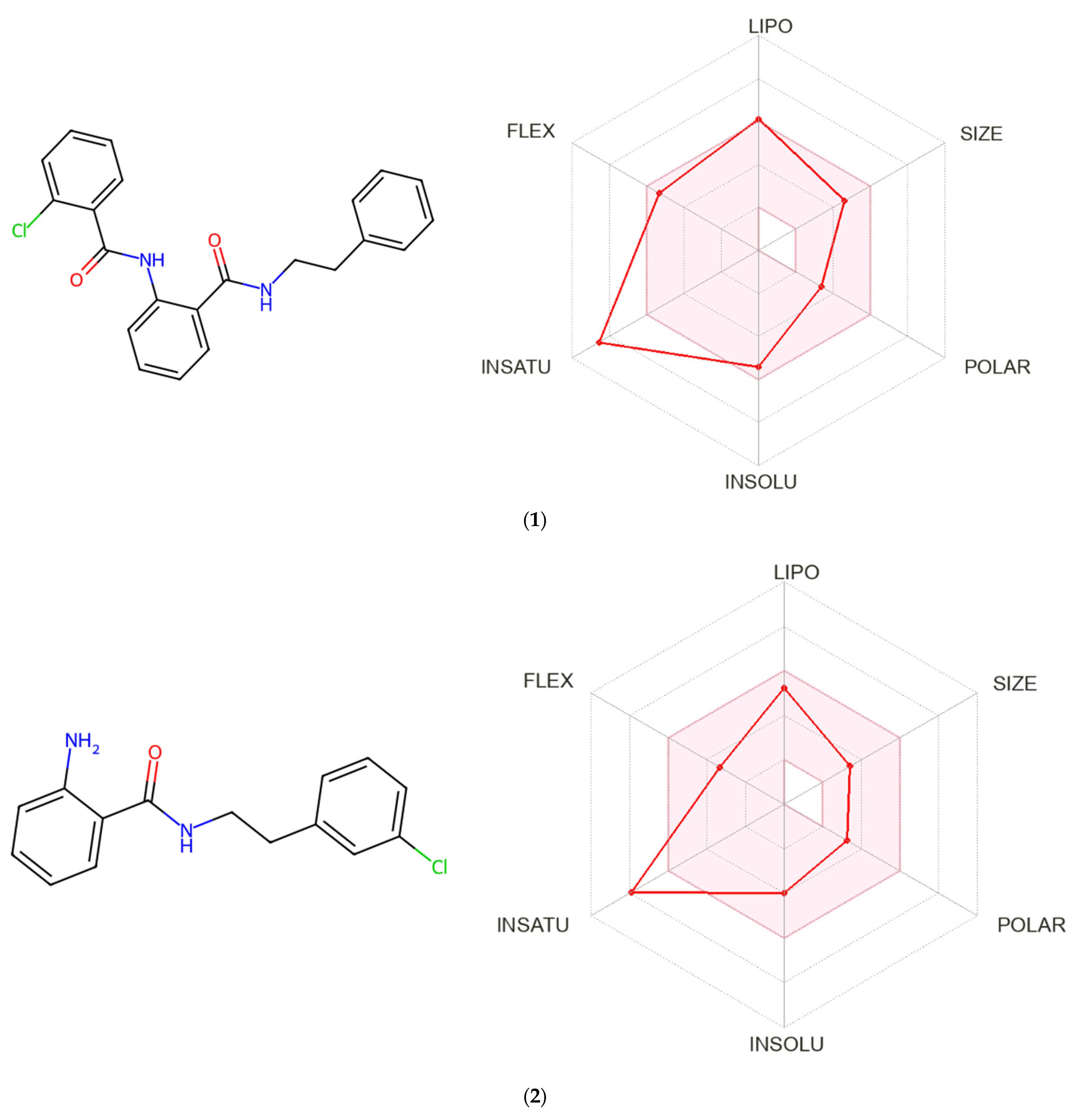
According to Lipinski’s rule of five [59], the ADME investigation (https://www.swissadme.ch/index.php accessed on 6 August 2026) demonstrated that the compounds have good GI absorption. Compounds (1) and (2) can pass across the blood–brain barrier, except compound (3).
Compounds (1) and (2) satisfied the standard parameters (Table 1) for molecular weight (MW < 400), while compound (3) has a molecular weight of 452.93 g/mol. XLOGP3 is below 5.2 for all the compounds; ESOL (estimated solubility) is less than 6; polarity or TPSA is between 55.12 and 76.66, which complies with the rule to be between 20 and 130 Å2; and finally, flexibility or RB is less than 9 for (1) and (2) but 11 for compound (3).
Table 1.
ADME parameters of the compounds (1), (2), and (3) representing drug-likeness.
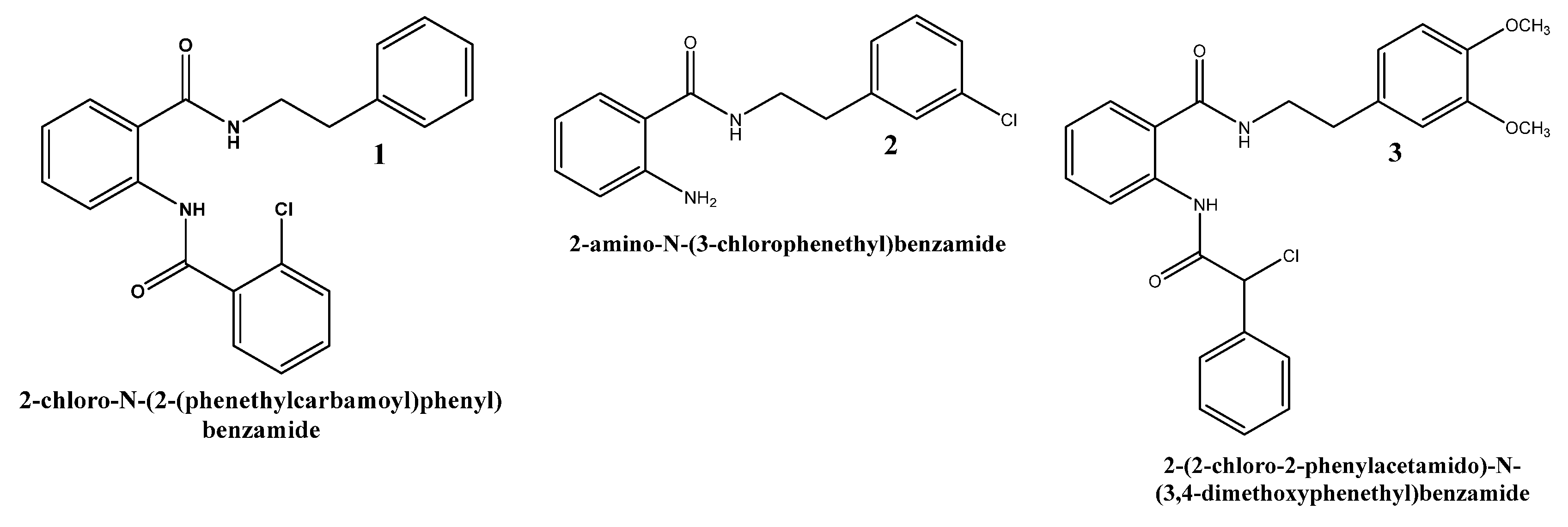
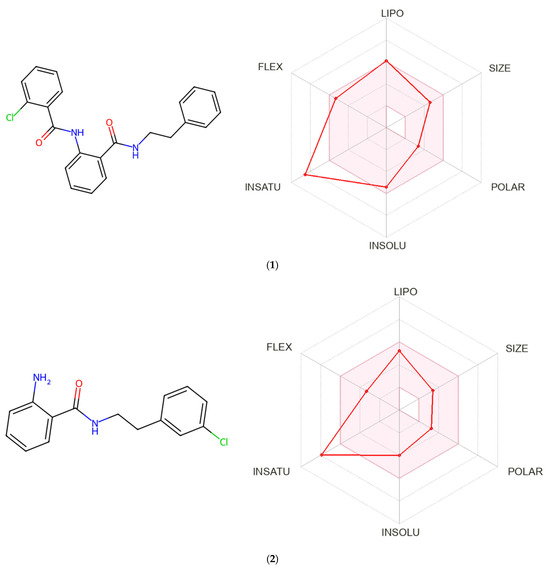
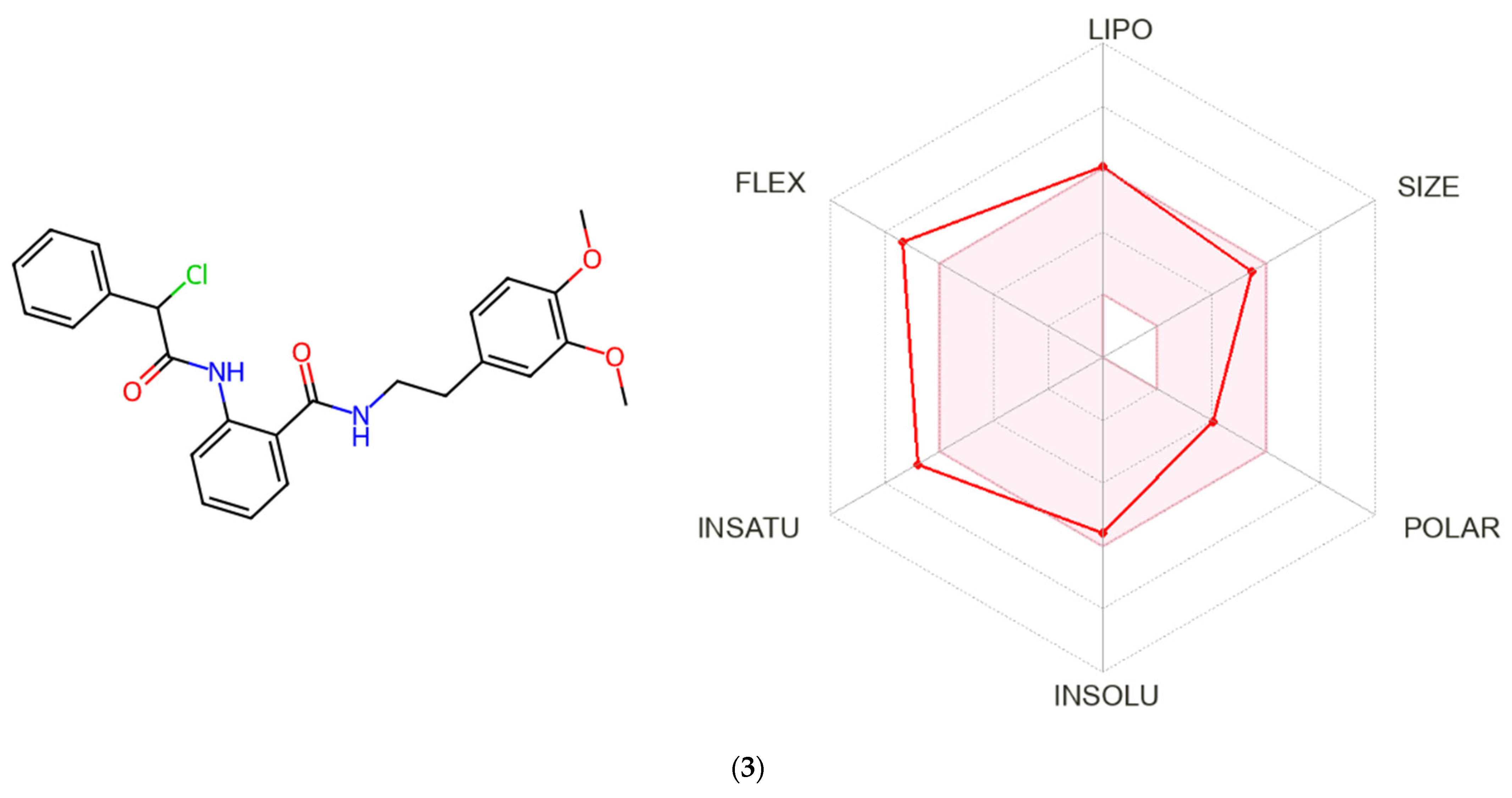
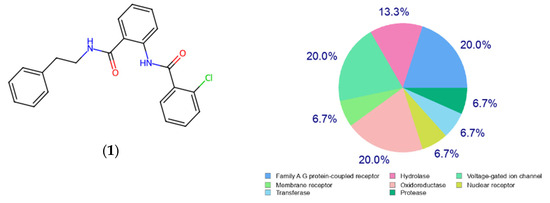
For a quick evaluation of drug-likeness, Bioavailability Radars of the compounds are shown (Figure 4). Lipophilicity, size, polarity, solubility, flexibility, and saturation are the six physicochemical characteristics that are considered. The pink area indicates the optimal range for each molecular property: lipophilicity, expressed as XLOGP3, ranging from −0.7 to +5.0; molecular size, with a molecular weight (MW) of 150–500 g/mol; polarity, represented by a TPSA of 20–130 Å2; solubility, with a log S value not exceeding 6; saturation, defined as a fraction of sp3-hybridized carbon atoms of at least 0.25; and flexibility, represented by no more than 9 rotatable bonds [55].
Figure 4.
Bioavailability radars of the compounds.
The calculations showed that compound (3) violates 3 of Lipinski’s criteria: XLOGP3 > 3.5, number of rotatable bonds RB > 7, and molecular weight Mw > 350. The drug does not interact with any of the CYP isoforms and is not anticipated to pass across the blood–brain barrier.
Based on the calculated data, we can assume that compounds (1) and (2) can be considered not-orally bioactive due to insaturation, while (3) is predicted not-orally bioactive due to its flexibility.
The SwissADME target prediction (https://www.swisstargetprediction.ch/) the three compounds share stronger chemical similarity with AChE.
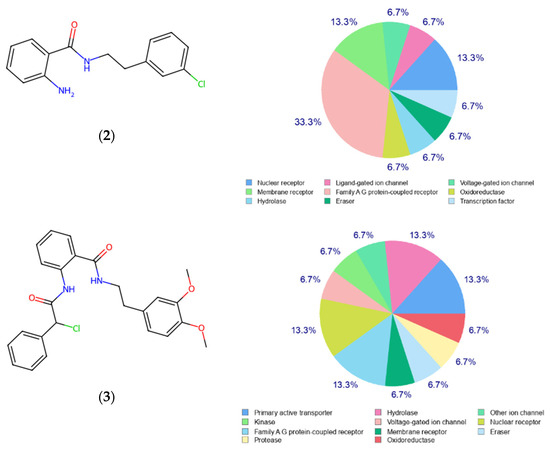
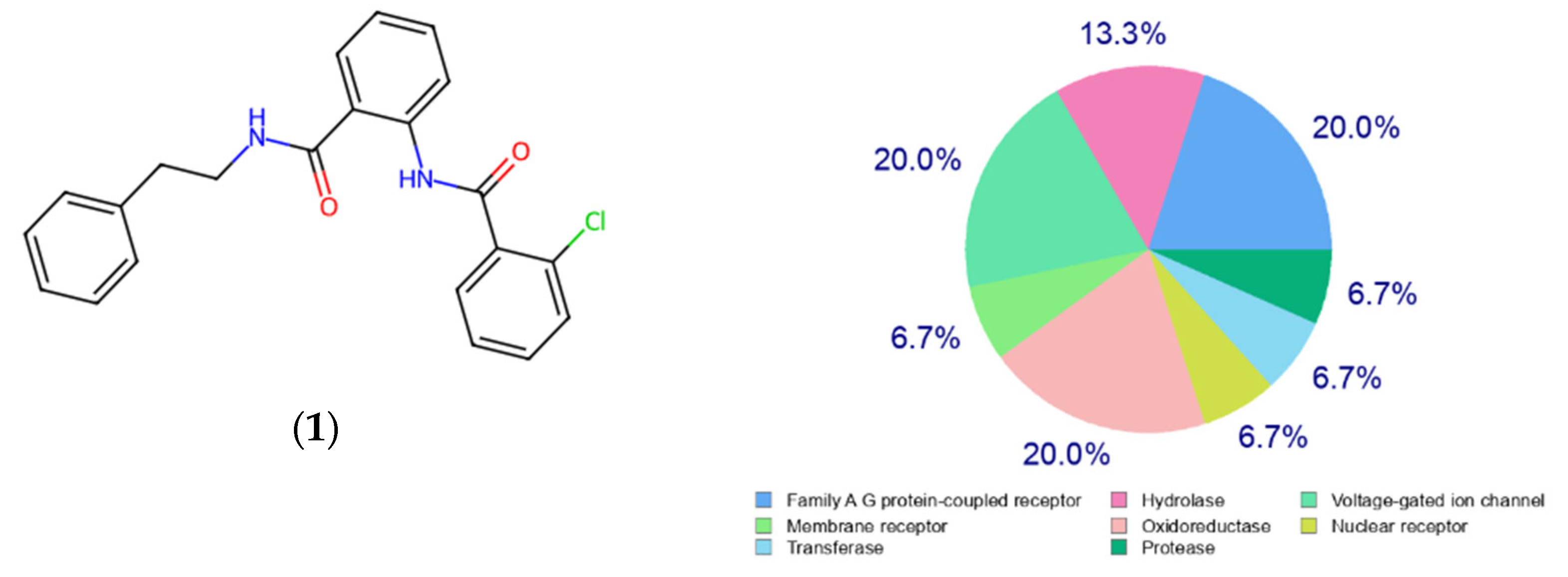
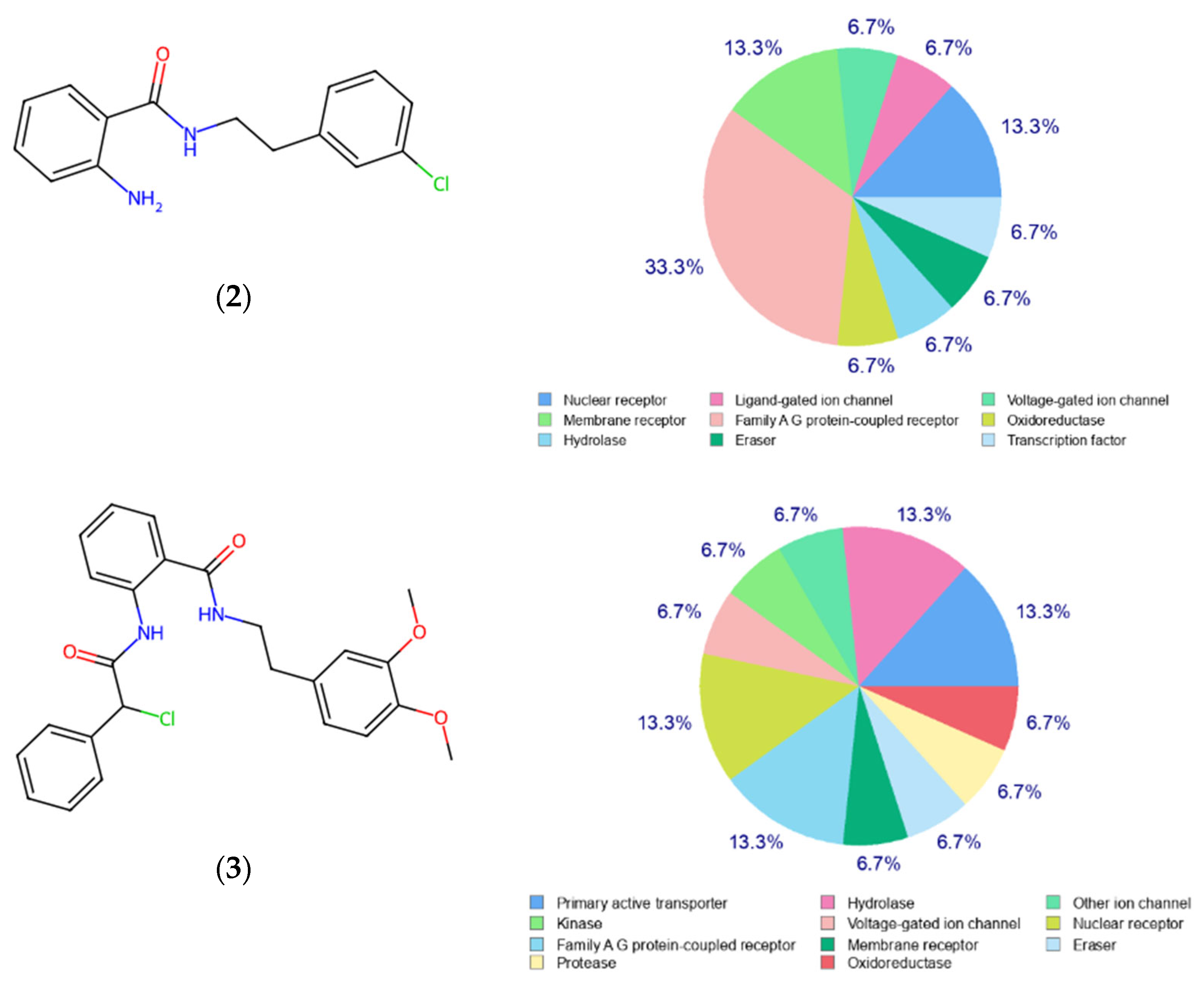
As shown in Table 2, SwissTargetPrediction offers insightful information on the possible targets of the compounds, exposing a wide range of interactions. There are a number of notable targets, all of which have important implications for comprehending the pharmacological effects of these molecules (Figure 5).
Table 2.
Target prediction for the compounds using SwissTargetPrediction web tool.
Figure 5.
Predicted target classes for compounds using Swiss Target Prediction web tool.
A broad spectrum of possible targets for all the compounds was revealed by the target prediction study. These targets indicate potential anti-inflammatory, spasmolytic, and neuroprotective properties for the compounds.
Target PTGES suggests interference with the arachidonic acid pathway, which contributes to the anti-inflammatory effects of the compounds, as reported in previous studies [15,16,17]. Furthermore, interactions with PTPN1 suggest that immunological responses are modulated.
Smooth muscle tone is regulated, among other mechanisms, by voltage-dependent T-type calcium channels. Calcium entry into SM cells is reduced when these low-voltage-activated channels are blocked, directly linking T-type channel inhibition to spasmolytic and muscle-relaxing effects through the attenuation of muscle contraction and prevention of spasms. Importantly, the involvement of T-type calcium channels is not limited to the regulation of smooth muscle contractility, as these channels also play a significant role in neuronal function and cognitive processes. In the central nervous system, T-type calcium channels contribute to neuronal burst firing, synaptic plasticity, and network oscillations in brain regions such as the hippocampus and dorsal subiculum, thereby influencing spatial learning, contextual memory formation, and memory retrieval. This dual involvement of calcium-dependent mechanisms in smooth muscle contractility and central neuronal function provides a potential mechanistic link between the previously observed effects of pharmacological agents on smooth muscle activity and their possible effects on cognitive processes. Building on our previous findings demonstrating that compounds (1), (2), and (3) affect SM contractile activity [36,37,38], the present study was designed to explore whether these compounds also influence central nervous system functions, with particular emphasis on learning and memory.
Additionally, the compound’s potential in neurodegenerative disorders is consistent with its interaction with SIGMAR1, a traditional neuroprotective target involved in cellular stress responses, ion channel control, and cell survival in the central nervous system.
All the compounds were predicted to interact with AChE. Modulation or inhibition of this enzyme helps preserve acetylcholine levels, commonly associated with symptomatic and protective strategies in Alzheimer’s disease. In addition, compound (2) was predicted to interact with neuronal acetylcholine receptor subunit CHRNA, which promotes anti-inflammatory pathways and neuronal cell survival.
Together, these varied interactions highlight the compounds multifaceted therapeutic potential and highlight the need for additional experimental validation to clarify the exact molecular mechanisms underlying their neuroprotective effect.
The SwissTargetPrediction web tool is used for the equal probabilities indicated for each target in Table 2. The ligand-based method used by this tool assesses the query compounds chemical similarity to known ligands of possible targets. The algorithms may give identical baseline probabilities to substances that share structural characteristics with several targets. Furthermore, uniform predictions may result from the tool’s inadequacies in differentiating between closely related binding sites.
The low probability shown in Table 2 of the SwissTargetPrediction software (http://www.swisstargetprediction.ch/, accessed on 13 August 2026) are a result of the tool’s ligand-based methodology, which only offers a preliminary screening of possible targets. Even though the probability are less than 0.0236, they may nevertheless point to possible interactions that need more research, especially if these targets are pertinent to the compound’s anticipated therapeutic benefits. Among the predicted targets listed in Table 2, those directly implicated in learning, memory consolidation, and cholinergic signaling, specifically AChE, M1 muscarinic receptors (CHRM1), α7 nicotinic acetylcholine receptors (CHRNA7), and T-type calcium channels (CACNA1 G/H/I), have been prioritized as primary targets for prospective in vitro enzymatic and receptor-binding validation assays. Cytochrome P450 (CYP) inhibition results in pharmacological toxicity [60,61]. According to the calculations, compounds (1) and (2) can inhibit the CYP2 C9 and CYP2 C19 isoforms. Compound (3) cannot react with any of the isoforms. This means a low level of drug–drug interactions, alternative clearance pathways, and can process of UDP-glucuronosyltransferases (UGT2 B12) [62].
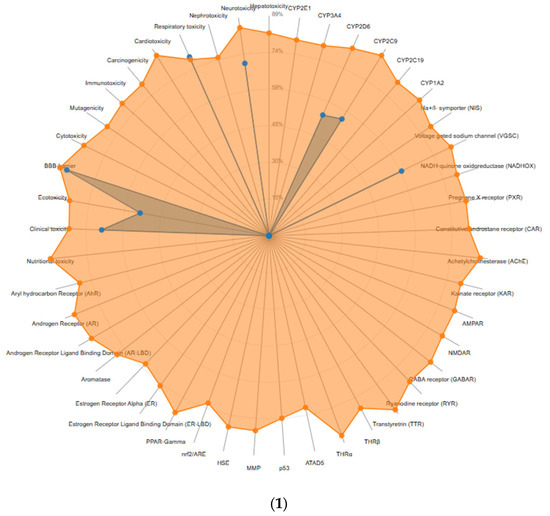
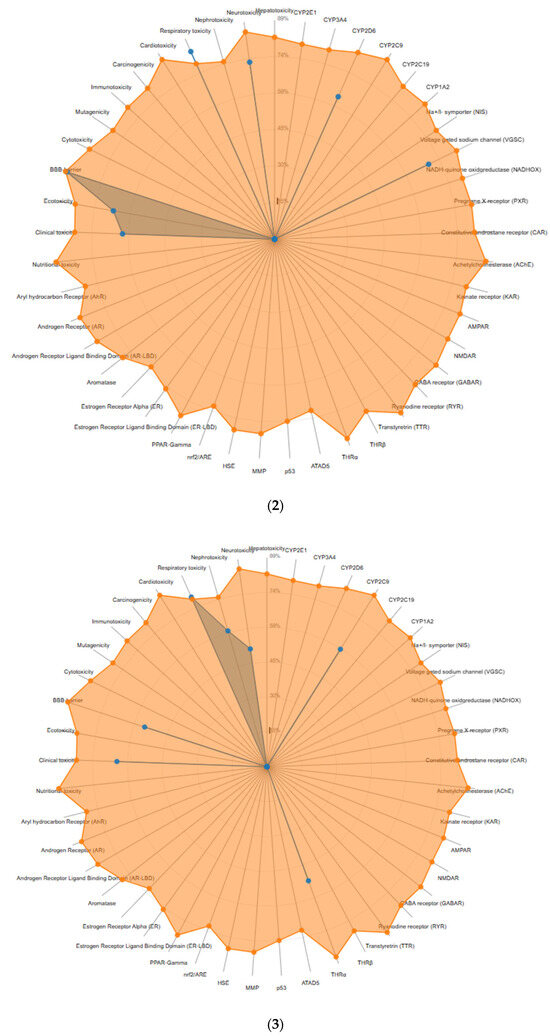
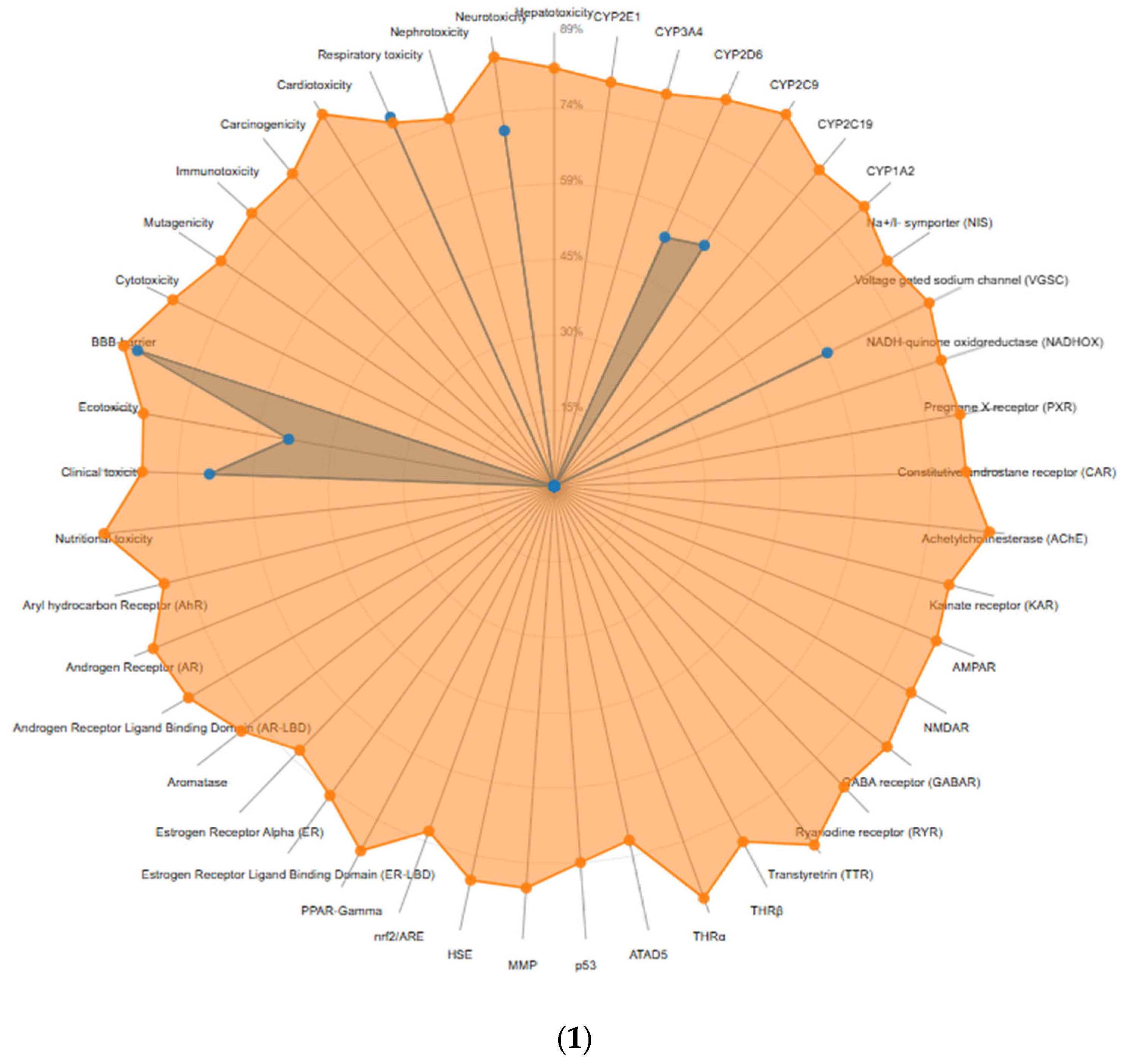
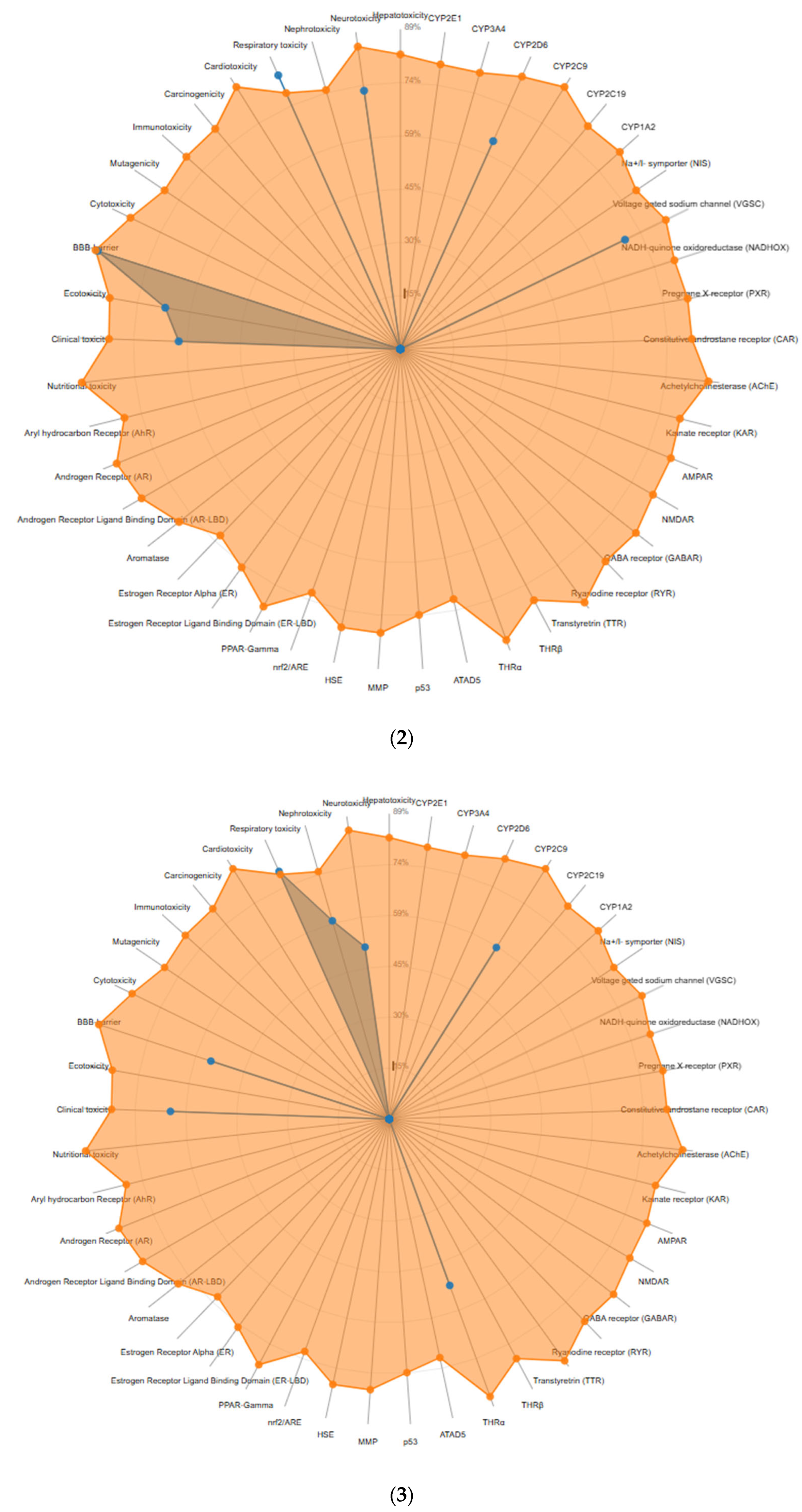
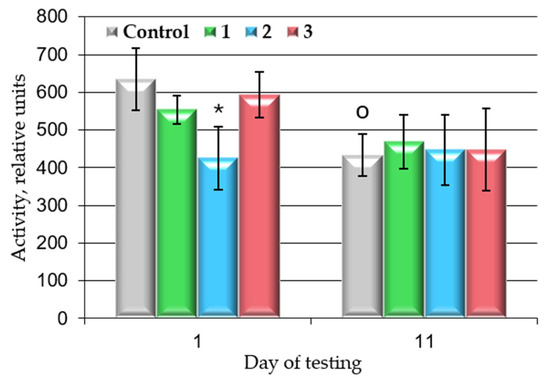
According to Pro Tox-II acute toxicity data (https://tox.charite.de/protox3/ accessed on 6 August 2026), compounds (1) and (3) have a toxicity class 4 (on a 1–6 scale, where 1 is highest and 6 is lowest toxicity) with estimated LD50 is in the range of 2000 mg/kg, while compound (2) has a toxicity class 3 (LD50 = 262 mg/kg). The toxicological evaluation of the compounds is shown on radar charts on Figure 6. The orange umbrella represents the safety extent, while the blue dots are indicative of toxicity. It is a concern when the blue dots cover 70% of the area of the chart.
Figure 6.
Radar charts elucidating the toxicological evaluation of compounds (1), (2), and (3).
The PASS online (https://way2drug.com/PASSOnline/index.php accessed on 7 August 2026) predicted the spasmolytic activity for all the compounds, age-related degeneration (for compound (2), neurologic disorders treatment (for compound (2), mental retardation treatment (for compound (1), and phobic disorder treatment (for all the compounds).
Our previous studies demonstrated that several anthranilic acid-derived compounds possess pronounced smooth muscle relaxant and spasmolytic properties. In particular, the anthranilic acid hybrids and their diamides produced concentration-dependent relaxation of rat gastric smooth muscle [36,37,38]. Since cholinergic signalling plays an important role in the regulation of gastrointestinal smooth muscle contractility, the interaction of these compounds with cholinergic-mediated responses may represent a relevant pharmacological aspect of their activity. AChE is a key neurotransmitter involved not only in regulating gastrointestinal smooth muscle contractility but also in central processes underlying learning and memory. Therefore, the previously observed effects of these compounds on cholinergic-mediated smooth muscle responses provide a rationale for further investigating whether anthranilamide derivatives may also influence behavioral functions associated with cognitive performance.
Taken together, our previous findings on the SM effects of anthranilamide derivatives provided a rationale for extending the investigation of their pharmacological profile to the central nervous system. Since cholinergic and calcium-dependent mechanisms are involved in both SM regulation and neuronal processes underlying cognition, we hypothesized that these compounds might also influence behavioral functions related to learning and memory. Therefore, the present study was undertaken to characterize the effects of compounds (1), (2), and (3) on cognitive performance in rats using complementary behavioral paradigms, with the aim of determining whether their previously observed peripheral activity is accompanied by distinct effects on learning and memory.
3.2. In Vivo Methods of Studying Cognitive Functions
Anthranilic acid derivatives have long been studied for their anti-inflammatory, analgesic, and antithrombotic effects. Subsequent studies demonstrated additional antiviral and antidiabetic activities [32,63]. Only a limited number of studies have looked at them as potential candidates for the treatment of anxiety, depression, and epilepsy [34]. More recently, Yang et al. isolated anthranilic acid-based alkaloids from the natural indigo plant (Persicaria tinctoria), which demonstrated both neuroprotective activity and AChE inhibition [64]. Emerging evidence suggests that anthranilic derivatives may modulate central nervous system function through the regulation of glutamate release in cerebrocortical synaptosomes. In this context, Lu et al. synthesized butyl 2-[2-(2-fluorophenyl)acetamido]benzoate (HFP034), which exhibited neuroprotective effects by preventing glutamate excitotoxicity, reducing neuronal death, lowering glutamate concentrations, and attenuating glial activation in the hippocampus of kainic acid-treated rats [31]. The cholinergic hypothesis remains one of the main concepts underlying current therapeutic approaches for AD. Modulation of centrally expressed mAChRs has been associated with the regulation of learning and memory processes, highlighting the importance of developing new selective ligands, such as M2 receptor modulators, as well as multifunctional compounds capable of influencing more than one pharmacological target [65].
Although the synthesized anthranilamides (1), (2), and (3) were not originally designed as cognition-enhancing agents, the accumulating evidence for the neuropharmacological potential of anthranilic acid derivatives, together with the limited data on the cognitive effects of synthetic anthranilamides, provided the rationale for the present study. Therefore, we investigated the effects of the compounds on learning and memory in rats using the activity cage, shuttle-box, step-through, and step-down behavioral tests.
Learning and memory are evaluated behaviorally using complex paradigms that examine different aspects of cognitive processes. Active and passive avoidance tests are particularly helpful among the established methods for evaluating associative learning, conditioned response acquisition, and memory retention. These methods are recognized paradigms for assessing learning and memory [66].
The two-way active avoidance paradigm evaluates an animal’s capacity to develop a suitable behavioral response ahead of an unpleasant stimulus. Therefore, learning, memory, stimulus discrimination, and an appropriate motor response are involved in the shuttle-box test, which represents the acquisition and retention of an associative conditioned response. Two-way active avoidance is still used in recent experiments as a sensitive behavioral paradigm to study rat learning and memory [67]. Passive avoidance tests, on the other hand, evaluate an animal’s capacity to repress a reaction that has already been reinforced. Animals learn to link entering a dark compartment with an unpleasant stimulus during the step-through process, and they thereafter avoid this compartment during the retention trial [68]. Therefore, it is usual to interpret increased step-through latency as better retention of the taught avoidance response. In current research examining memory impairment and cognitive protection in mouse models, the step-through paradigm is still often employed. The step-down passive avoidance test, on the other hand, offers a complementary assessment of avoidance learning and memory [66]. Therefore, using both step-through and step-down procedures can lessen reliance on a single behavioral paradigm while producing convergent evidence for changes in memory retention.
Crucially, general locomotor activity must be taken into account when interpreting avoidance performance. Genuine cognitive effects may be mimicked or obscured by changes in spontaneous motor activity, arousal, or exploratory behavior that affect performance in tasks requiring an active behavioral response. When analyzing the results of cognitive tests, the activity cage can be a crucial behavioral control because it offers an objective assessment of spontaneous horizontal and vertical activity [69,70]. For this objective, our recent study has integrated shuttle-box active avoidance test, activity-cage test, and other cognitive tests [71].
3.2.1. Activity Cage Test
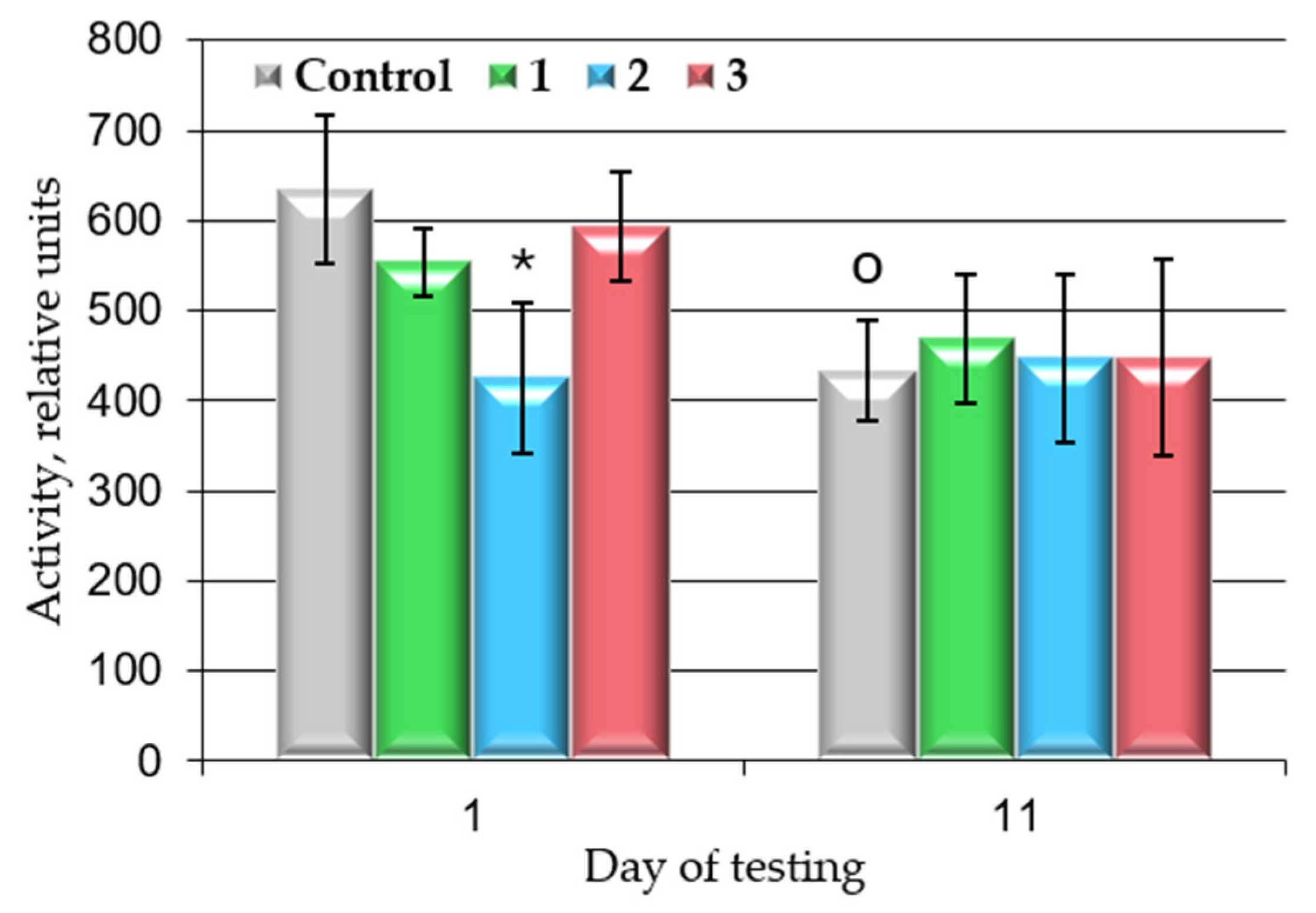
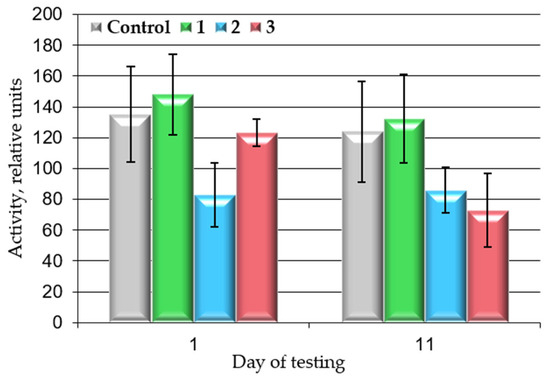
On the first day of testing, administration of compound (2) resulted in a significant reduction in horizontal locomotor activity relative to the control animals (Figure 7). In contrast, no significant differences in the number of horizontal movements were detected between the control group and the groups treated with compounds (1) and (3).
Figure 7.
Activity cage test for horizontal locomotor activity—number of horizontal movements. o = p < 0.05—comparison within the control group on the first and the corresponding testing day; * = p < 0.05—comparison between the experimental group and the control group on the same testing day. Data are presented as Mean ± SEM (n = 8 rats per group).
During the retest performed on day 11, the control rats showed a significant decrease in horizontal locomotor activity, reflected by a lower number of horizontal movements compared with day 1 (p < 0.05). The corresponding values in the three compound-treated groups remained comparable to those of the control animals on day 11.
No significant changes in vertical locomotor activity were detected in the control group between days 1 and 11 (Figure 8). Animals receiving compound (1) displayed a number of vertical movements similar to that observed in the control group. Treatment with compounds (2) and (3) resulted in lower numbers of vertical movements on both experimental days relative to the respective controls; however, these differences did not reach statistical significance.
Figure 8.
Activity cage test for vertical locomotor activity—number of vertical movements. Data are presented as Mean ± SEM (n = 8 rats per group).
The results obtained from this test allow the conclusion that the compounds do not impair the locomotor activity of the animals, do not exert a myorelaxant effect on skeletal musculature, and also do not produce a pronounced depressant or stimulant effect on the CNS.
3.2.2. Shuttle-Box Test
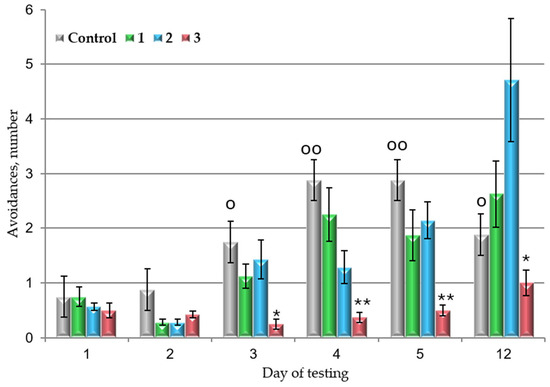
During active avoidance conditioning in the Shuttle-box, the control rats showed a significant increase in conditioned responses (avoidances) on training days 3 (p < 0.05), 4 and 5 (p < 0.01), as well as during the memory test (p < 0.05), when compared with day 1 (Figure 9). Treatment with compound (2) resulted in a significant reduction in the number of avoidances on the fourth training day (p < 0.05) relative to the control group. However, during the memory assessment, this group exhibited a significant increase in avoidances compared with the control animals on day 12 (p < 0.05). In contrast, administration of compound (3) significantly decreased the number of conditioned responses on training days 3 (p < 0.05), 4 and 5 (p < 0.01), as well as during the day 12 memory test (p < 0.05), compared with the respective control values.
Figure 9.
Shuttle-box active learning test—number of conditional responses (avoidances). o = p < 0.05 and oo = p < 0.01—comparison within the control group on the first and the corresponding testing day; * = p < 0.05 and ** = p < 0.01—comparison between the experimental group and the control group on the same testing day. Data are presented as Mean ± SEM (n = 8 rats per group).
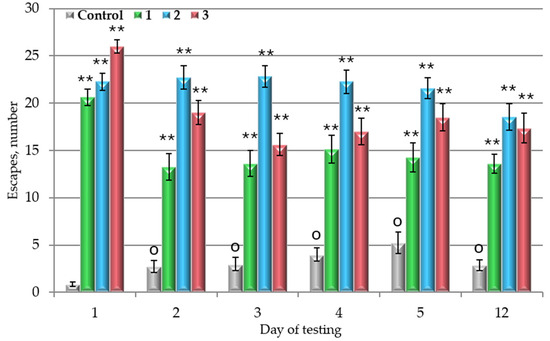
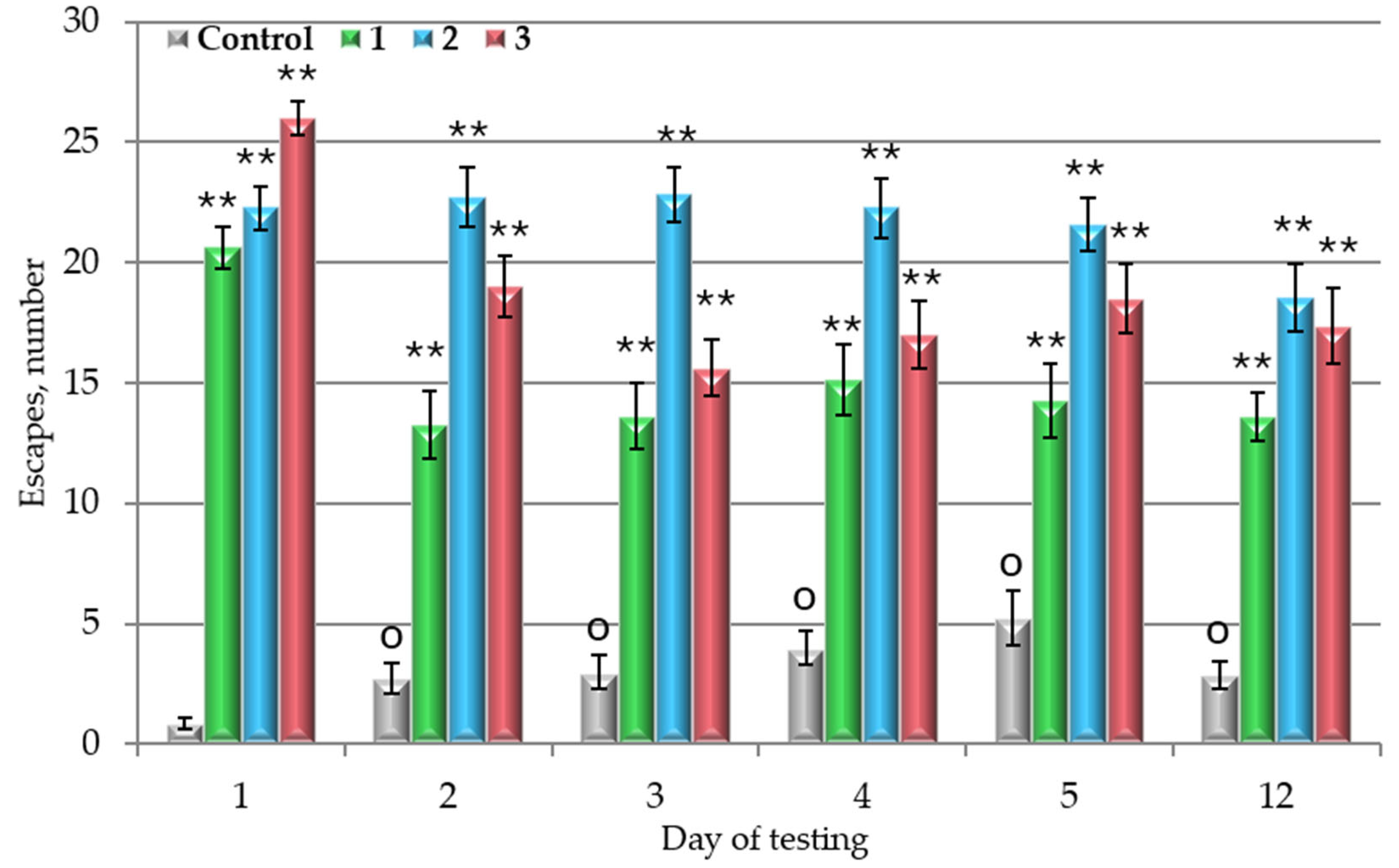
In this test, the control animals showed a significant increase in the number of unconditioned responses (escapes) on training days 2–5 (p < 0.05) and during the long-term memory assessment on day 12 (p < 0.05), relative to their performance on the first training day (Figure 10). In comparison with the corresponding control group, all three compound-treated groups exhibited significantly more escape responses throughout the five-day training period (p < 0.01), with the difference remaining significant during the memory test (p < 0.01).
Figure 10.
Shuttle-box test for active learning—number of unconditional responses. o = p < 0.05—comparison within the control group on the first and the corresponding testing day; ** = p < 0.01—comparison between the experimental group and the control group on the same testing day. Data are presented as Mean ± SEM (n = 8 rats per group).
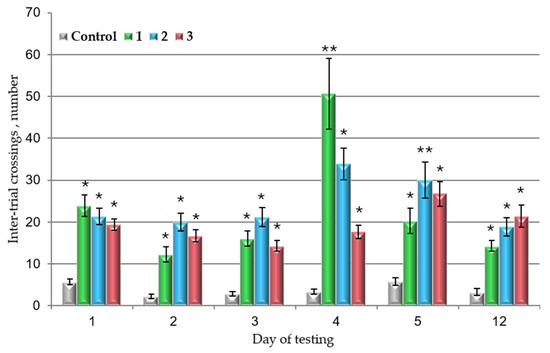
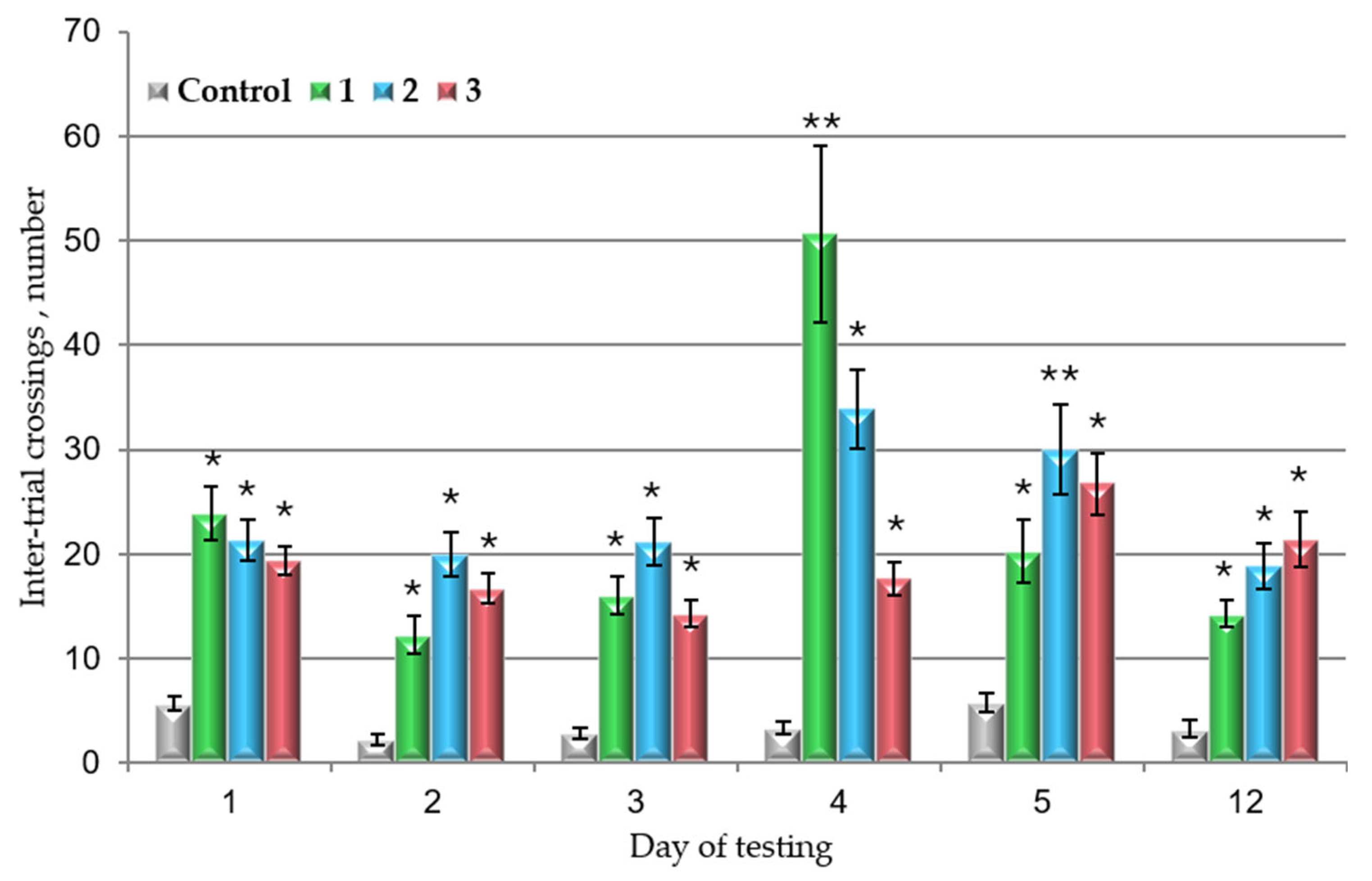
Across the five training days, all three compound-treated groups showed a significant increase in intertrial crossings compared with the control group on the respective days (p < 0.05). A significant increase was also observed during the memory test (p < 0.05). On the fourth training day, animals treated with compound (1) exhibited a further increase in intertrial crossings compared with the corresponding control group (p < 0.01). Similarly, treatment with compound (2) resulted in a significant increase in intertrial crossings on the fifth training day (p < 0.01) relative to the control group (Figure 11).
Figure 11.
Shuttle-box test for active learning—number of inter-trial crossings. * = p < 0.05, ** = p < 0.01—comparison between the experimental group and the control group on the same testing day. Data are presented as Mean ± SEM (n = 8 rats per group).
In the Shuttle-box test for active avoidance learning with punitive reinforcement, it was established that the three compounds exert different effects on the cognitive functions of learning and memory. Compound (3) impaired both learning and long-term memory. The compound (2) did not affect learning but improved long-term memory retention. Compound (1) did not substantially affect cognitive functions. All three investigated compounds increased the locomotor activity of the animals, expressed by the increased number of intertrial crossings both during the five training days and in the memory test.
3.2.3. Step-Through Test
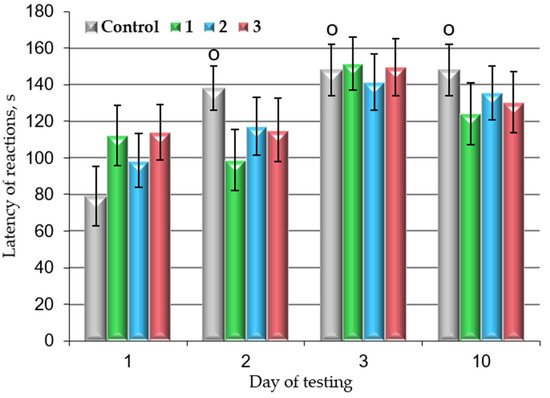
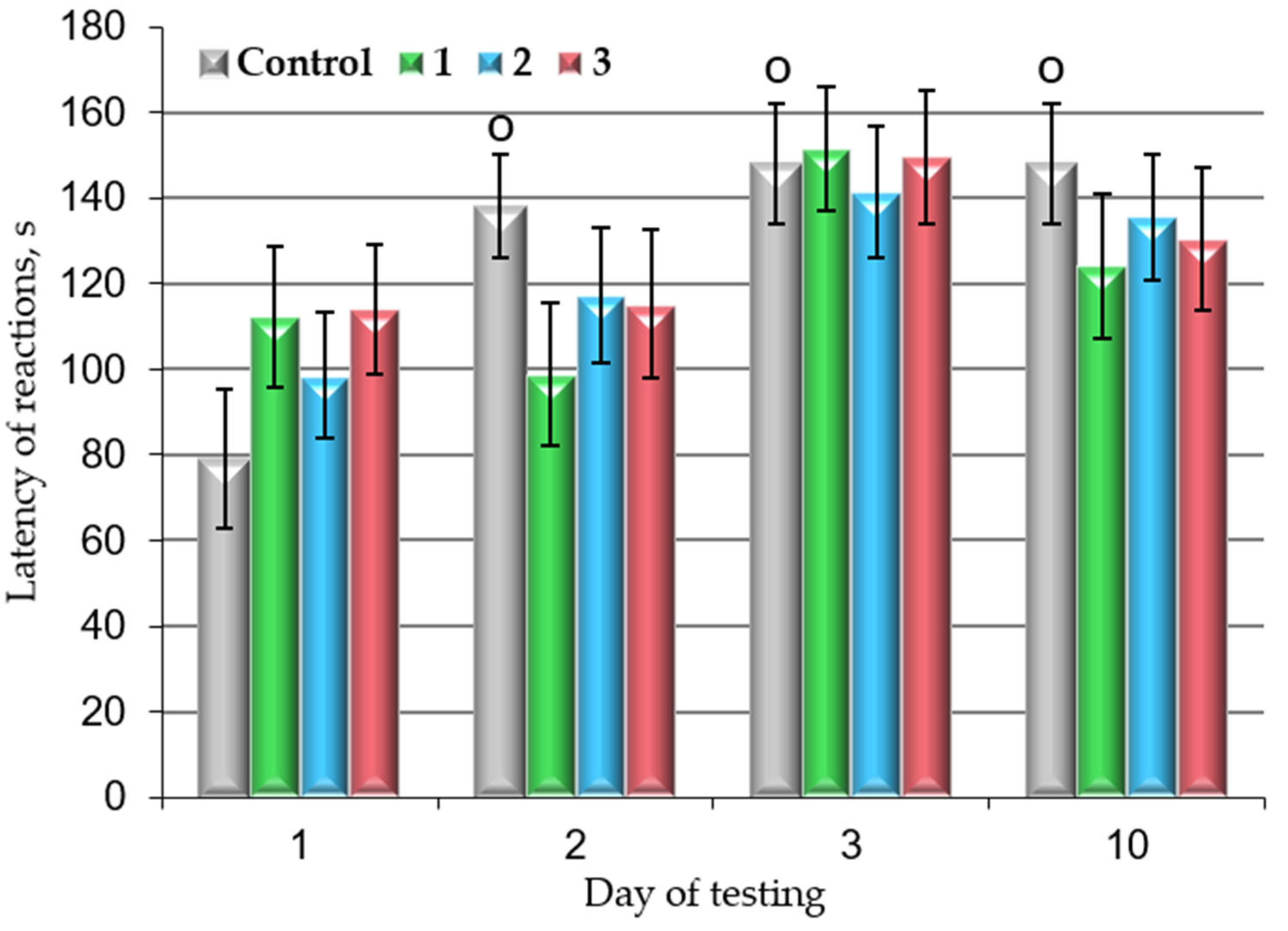
In the Step-through test for passive avoidance learning, the control group of rats significantly increased the latency time spent in the illuminated compartment of the apparatus on the 2nd training day, as well as in the short-term memory (p < 0.05) and long-term memory tests (p < 0.05), compared to the control group on day 1 (Figure 12). The groups of animals treated with the three investigated compounds (1), (2), and (3) during the two-day training session and the two memory tests exhibited response latencies very close to those of the control group on the corresponding days.
Figure 12.
Step-through passive learning test with negative reinforcement. o = p < 0.05—comparison within the control group on the first and the corresponding testing day. Data are presented as Mean ± SEM (n = 8 rats per group).
Based on the obtained results from the Step-through test for passive avoidance learning with punitive reinforcement, it can be concluded that the three investigated compounds (1), (2), (3) do not impair the learning and memory processes in rodents, showing results extremely close to those of the control group.
3.2.4. Step-Down Test
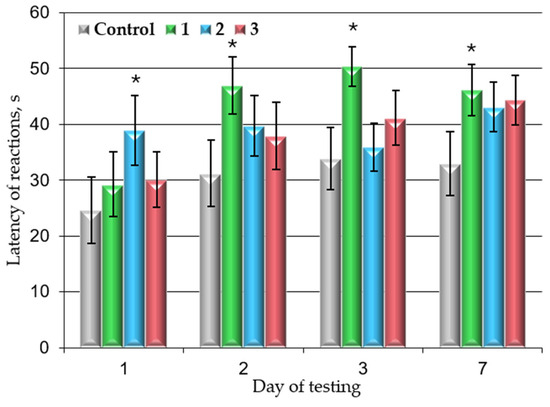
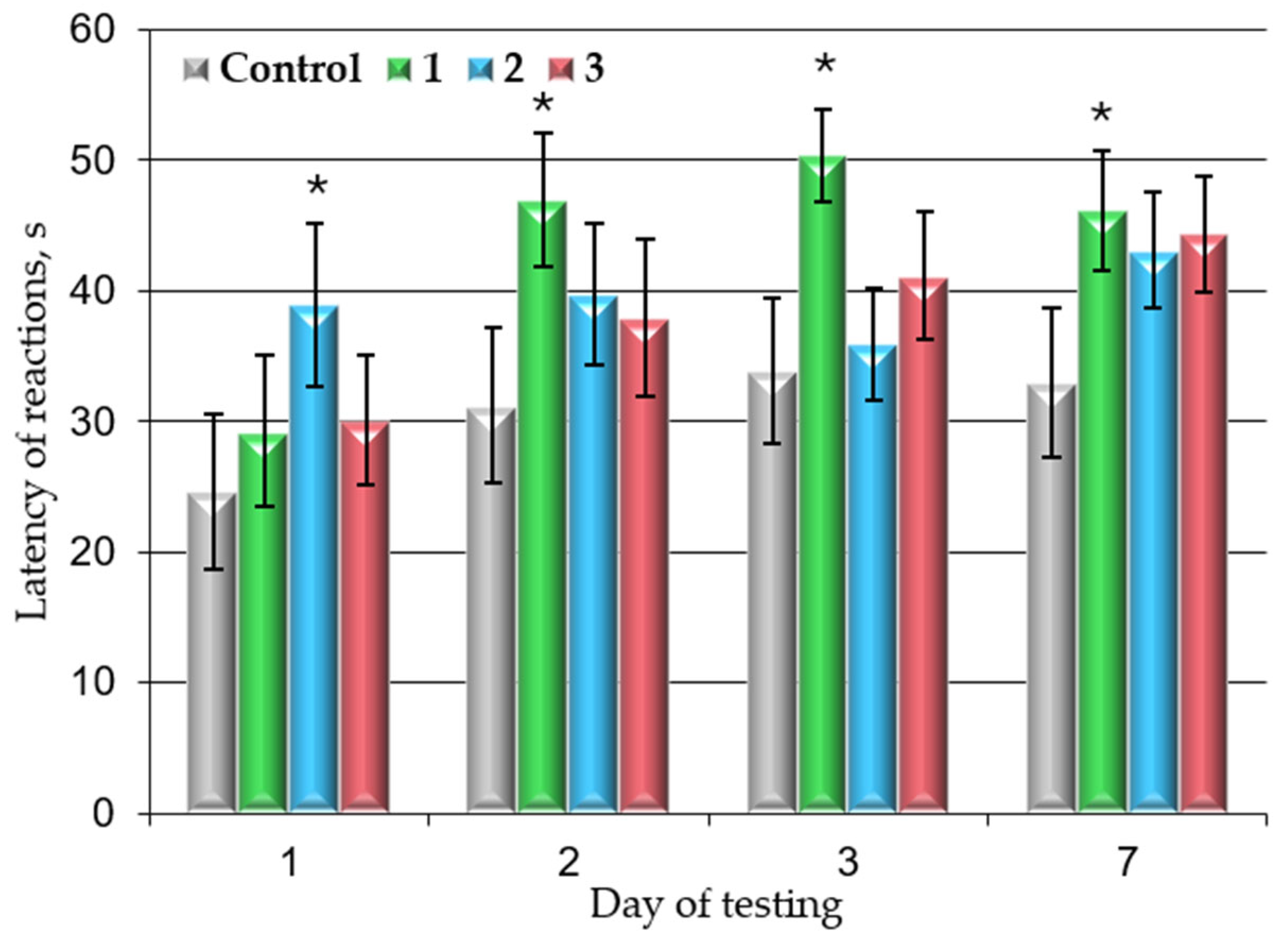
In this passive avoidance learning test, animals from the control group showed a slight, statistically non-significant increase in the latency time spent on the vibrating platform of the apparatus during the training sessions, as well as during both memory tests, compared to day 1 (Figure 13). The animals treated with compound (2) significantly increased the latency time of response on the first training day (p < 0.05) compared to the control group on the same day. The group treated with compound (1) significantly increased the response latency on the second training day (p < 0.05) and in both memory tests, compared to the control animals on the corresponding days. The animals receiving compound (3) also showed increased latency time during training and the memory tests, but this increase was statistically non-significant.
Figure 13.
Step-down passive learning test with negative reinforcement. * = p < 0.01—comparison of the experimental group to the control group on the same testing day. Data are presented as Mean ± SEM (n = 8 rats per group).
In the Step-down test for passive avoidance learning with punitive reinforcement, it was established that compound (2) has a positive impact on the process of learning, whereas compound (1) improves both learning and short-term memory, as well as long-term memory. In this test, compound (3) did not exert a substantial effect on cognitive functions.
The results of in vivo studies validate the in silico calculations. While the compound was selected due to its strongest antispasmodic, anti-inflammatory, and antimicrobial activity, in silico calculations and in vivo experiments rejected compound (3) as a likely candidate for the treatment of neurodegenerative diseases. Compounds (1) and (2) proved to be the most promising candidates in these investigations. Even though they shared the same anthranilamide scaffold, the three compounds showed clearly different activities. Compound (1), with 2-chlorobenzamide moiety and phenethylcarbamoyl substituent, showed the best cognitive profile. This was proved by the step-down passive avoidance test, where it enhanced learning and both short- and long-term memory. We can assume that the presence of the phenethylcarbamoyl fragment and the chloro-substituted benzamide moiety may contribute to a molecular arrangement favorable for modulation of cognitive processes.
Compound (2) also showed positive effects, enhancing learning in the step-down test and increasing conditioned responses in the long-term memory assessment of the active avoidance test. Compound (2)’s activity further suggests that the lipophilic chlorophenethyl moiety and the presence and location of a free amino group, which provides hydrogen-bonding, may be significant factors for this activity.
In contrast, compound (3) contained the more chemically complicated 2-chloro-2-phenylacetamido fragment and a 3,4-dimethoxyphenethyl substituent. Compound (3) has a longer amide-containing substituent and more aromatic and methoxy-substituted structural elements than compounds (1) and (2). These changes generated an adverse profile due to the change on its steric hindrance, molecular flexibility, physicochemical features, or interactions with biological targets, and therefore its distinct biological activity.
3.3. Methodological Limitations
A few aspects of the present study should be considered when interpreting the obtained results. The experiments were performed in naïve rats and therefore represent an initial investigation of the effects of anthranilamide derivatives on learning and memory rather than a direct assessment of their efficacy in a pathological model of neurodegeneration. In addition, this work combined behavioural evaluation with in silico target prediction. However, direct experimental investigation of the molecular mechanisms underlying the observed effects was beyond the scope of the current study. The predicted interactions with acetylcholinesterase and other cholinergic targets should therefore guide further investigation. Future biochemical and molecular assessment of cholinergic signaling, together with evaluation in appropriate models of cognitive impairment, will help to clarify the mechanisms responsible for the observed behavioural effects and further define the therapeutic potential of these compounds.
4. Conclusions
The current study showed that the investigated anthranilamides have structure-dependent effects on memory and learning. Despite having the same anthranilamide scaffold, the three compounds exhibited distinctly diverse characteristics due to variations in the aromatic ring substitution pattern and the type of amide-linked substituents, which affords different steric hindrance, molecular flexibility, physicochemical features, or interactions with biological targets.
Overall, the obtained results imply that the anthranilamide scaffold has effects on cognitive processes, but these effects can be significantly altered by structural modifications. Compounds (1) and (2) seem to have the most promising cognitive profiles, showing a tendency for cognitive-enhancing properties, while compound (3)’s structural features might be less promising for this activity. Therefore, the current results offer an initial SAR framework for more anthranilamide derivative improvement. The observed behavioural effects provide direct in vivo evidence that structural modifications of the anthranilamide derivatives influence learning and memory. The computational analysis supports these findings by identifying potential molecular targets that could contribute to the observed effects, although their direct involvement remains to be experimentally validated. Further studies integrating behavioural, biochemical, and molecular approaches will establish the structure–activity relationships and clarify the mechanisms underlying the cognitive effects of anthranilamide derivatives.
Author Contributions
Conceptualization, S.N., D.D. and M.M.; methodology, D.D., K.S., I.S. and V.G.; validation, D.D., I.S. and V.G.; formal analysis, D.D., K.S., M.M. and V.G.; investigation, I.S., V.G., D.D. and K.S.; data curation, D.D. and K.S.; writing—original draft preparation, M.M., D.D., K.S. and I.S.; writing—review and editing, S.N., D.D., M.M. and V.G.; visualization, D.D., K.S., M.M. and V.G.; supervision, S.N.; project administration, D.D. and S.N. All authors have read and agreed to the published version of the manuscript.
Funding
This research was funded by the National Fund for Scientific Research in Bulgaria, National Program for Basic Research Projects—2023, Scientific Project No KP-06-H73/11, and project No NO-26/2025, Medical University of Plovdiv.
Institutional Review Board Statement
The procedures used in this study agreed with the European Communities Council Directive 2010/63/EU for animal experiments. The experimental procedures were conducted in strict compliance with national rules on animal experiments and were approved by the Bulgarian Food Safety Agency, Permit No. 400 from 23 May 2024 until 6 June 2029.
Data Availability Statement
The data presented in this study are available on request from the corresponding authors.
Conflicts of Interest
The authors declare no conflicts of interest.
Abbreviations
The following abbreviations are used in this manuscript:
| ACh | Acetylcholine |
| AChE | Acetylcholinesterase |
| AD | Alzheimer’s disease |
| ADME | Absorption, distribution, metabolism, and excretion |
| ANOVA | Analysis of variance |
| BBB | Blood–brain barrier |
| BFSA | Bulgarian Food Safety Agency |
| b.w. | Body weight |
| ChE | Cholinesterase |
| CNS | Central nervous system |
| CR | Conditioned responses |
| CS | Conditioned stimuli |
| CYP | Cytochrome P450 |
| DMSO | Dimethyl sulfoxide |
| GABA | Gamma-aminobutyric acid (GABAergic) |
| GIT | Gastrointestinal tract |
| IBS | Irritable bowel syndrome |
| IR | Infrared (spectroscopy) |
| mAChRs | Muscarinic acetylcholine receptors |
| NMR | Nuclear magnetic resonance |
| rt | Room temperature |
| SEM | Standard error of the mean |
| SM | Smooth muscle |
| TLC | Thin-layer chromatography |
| TPSA | Topological polar surface area |
| UCR | Unconditioned responses |
| UCS | Unconditioned stimulus |
References
- Scheltens, P.; Blennow, K.; Breteler, M.M.B.; de Strooper, B.; Frisoni, G.B.; Salloway, S.; Van der Flier, W.M. Alzheimer’s Disease. Lancet 2016, 388, 505–517. [Google Scholar] [CrossRef] [Scilit]
- Knopman, D.S.; Amieva, H.; Petersen, R.C.; Chételat, G.; Holtzman, D.M.; Hyman, B.T.; Nixon, R.A.; Jones, D.T. Alzheimer Disease. Nat. Rev. Dis. Primers 2021, 7, 33. [Google Scholar] [CrossRef] [Scilit]
- Jarne-Ferrer, J.; Pallàs, M.; Griñán-Ferré, C.; Bellver-Sanchis, A. Investigating the Synergistic Neuroprotective Effects of Plant-Derived Antioxidants and the Psychedelic N,N-Dimethyltryptamine in Alzheimer’s Disease Therapy. Cells 2025, 14, 934. [Google Scholar] [CrossRef] [Scilit]
- Breijyeh, Z.; Karaman, R. Comprehensive Review on Alzheimer’s Disease: Causes and Treatment. Molecules 2020, 25, 5789. [Google Scholar] [CrossRef] [Scilit]
- Masters, C.L.; Bateman, R.; Blennow, K.; Rowe, C.C.; Sperling, R.A.; Cummings, J.L. Alzheimer’s Disease. Nat. Rev. Dis. Primers 2015, 1, 15056. [Google Scholar] [CrossRef] [Scilit]
- Gouras, G.K.; Olsson, T.T.; Hansson, O. β-Amyloid Peptides and Amyloid Plaques in Alzheimer’s Disease. Neurotherapeutics 2015, 12, 3–11. [Google Scholar] [CrossRef] [Scilit]
- Muralidar, S.; Ambi, S.V.; Sekaran, S.; Thirumalai, D.; Palaniappan, B. Role of Tau Protein in Alzheimer’s Disease: The Prime Pathological Player. Int. J. Biol. Macromol. 2020, 163, 1599–1617. [Google Scholar] [CrossRef] [Scilit]
- Nobili, A.; Latagliata, E.C.; Viscomi, M.T.; Cavallucci, V.; Cutuli, D.; Giacovazzo, G.; Krashia, P.; Rizzo, F.R.; Marino, R.; Federici, M.; et al. Dopamine Neuronal Loss Contributes to Memory and Reward Dysfunction in a Model of Alzheimer’s Disease. Nat. Commun. 2017, 8, 14727. [Google Scholar] [CrossRef] [Scilit]
- Calsolaro, V.; Edison, P. Neuroinflammation in Alzheimer’s Disease: Current Evidence and Future Directions. Alzheimers Dement. 2016, 12, 719–732. [Google Scholar] [CrossRef] [Scilit]
- Ionescu-Tucker, A.; Cotman, C.W. Emerging Roles of Oxidative Stress in Brain Aging and Alzheimer’s Disease. Neurobiol. Aging 2021, 107, 86–95. [Google Scholar] [CrossRef] [Scilit]
- ALNasser, M.N.; Alboraiy, G.M.; Alsowig, E.M.; Alqattan, F.M. Cholinesterase Inhibitors from Plants and Their Potential in Alzheimer’s Treatment: Systematic Review. Brain Sci. 2025, 15, 215. [Google Scholar] [CrossRef] [Scilit]
- Farlow, M. A Clinical Overview of Cholinesterase Inhibitors in Alzheimer’s Disease. Int. Psychogeriatr. 2002, 14, 93–126. [Google Scholar] [CrossRef] [Scilit]
- Žužek, M.C. Advances in Cholinesterase Inhibitor Research—An Overview of Preclinical Studies of Selected Organoruthenium(II) Complexes. Int. J. Mol. Sci. 2024, 25, 9049. [Google Scholar] [CrossRef] [Scilit]
- Alhazmi, H.A.; Albratty, M. An Update on the Novel and Approved Drugs for Alzheimer Disease. Saudi Pharm. J. 2022, 30, 1755–1764. [Google Scholar] [CrossRef] [Scilit]
- Thawabteh, A.M.; Ghanem, A.W.; AbuMadi, S.; Thaher, D.; Jaghama, W.; Karaman, D.; Karaman, R. Recent Advances in Therapeutics for the Treatment of Alzheimer’s Disease. Molecules 2024, 29, 5131. [Google Scholar] [CrossRef] [Scilit]
- Briggs, R.; Kennelly, S.P.; O’Neill, D. Drug Treatments in Alzheimer’s Disease. Clin. Med. 2016, 16, 247–253. [Google Scholar] [CrossRef] [Scilit]
- Parsons, C.G.; Stöffler, A.; Danysz, W. Memantine: A NMDA Receptor Antagonist That Improves Memory by Restoration of Homeostasis in the Glutamatergic System—Too Little Activation Is Bad, Too Much Is Even Worse. Neuropharmacology 2007, 53, 699–723. [Google Scholar] [CrossRef] [Scilit]
- Lipton, S.A. Pathologically-Activated Therapeutics for Neuroprotection: Mechanism of NMDA Receptor Block by Memantine and S-Nitrosylation. Curr. Drug Targets 2007, 8, 621–632. [Google Scholar] [CrossRef] [Scilit]
- Koch, H.J.; Szecsey, A.; Haen, E. NMDA-Antagonism (Memantine): An Alternative Pharmacological Therapeutic Principle in Alzheimer’s and Vascular Dementia. Curr. Pharm. Des. 2004, 10, 253–259. [Google Scholar] [CrossRef] [Scilit]
- Lanskey, J.H.; Jafarian, A.; Hughes, L.E.; Karadag, M.; Kocagoncu, E.; Rouse, M.A.; Adams, N.E.; Naessens, M.; Raymont, V.; Woolrich, M.; et al. Alzheimer’s Disease and Memantine Effects on NMDA-Receptor Blockade: Non-Invasive In Vivo Insights from Magnetoencephalography. Mol. Psychiatry 2026, 31, 1587–1596. [Google Scholar] [CrossRef] [Scilit]
- Audira, G.; Ngoc Anh, N.T.; Ngoc Hieu, B.T.; Malhotra, N.; Siregar, P.; Villalobos, O.; Villaflores, O.B.; Ger, T.-R.; Huang, J.-C.; Chen, K.H.-C.; et al. Evaluation of the Adverse Effects of Chronic Exposure to Donepezil (An Acetylcholinesterase Inhibitor) in Adult Zebrafish by Behavioral and Biochemical Assessments. Biomolecules 2020, 10, 1340. [Google Scholar] [CrossRef] [Scilit]
- Liu, Z.; Jiang, A.; Wang, Y.; Xu, P.; Zhang, Q.; Wang, Y.; Zhang, B. In Silico, Synthesis and Anticancer Evaluation of Benzamide Tryptamine Derivatives as Novel eEF2K Inhibitors. Bioorg. Med. Chem. Lett. 2022, 67, 128759. [Google Scholar] [CrossRef] [Scilit]
- Zhang, C.; Tang, Y.S.; Meng, C.R.; Xu, J.; Zhang, D.L.; Wang, J.; Hu, C. Design, Synthesis, Molecular Docking Analysis and Biological Evaluations of 4-[(Quinolin-4-Yl)Amino]Benzamide Derivatives as Novel Anti-Influenza Virus Agents. Int. J. Mol. Sci. 2022, 23, 6307. [Google Scholar] [CrossRef] [Scilit]
- Rosado-Lugo, J.D.; Sun, Y.; Banerjee, A.; Cao, Y.; Datta, P.; Zhang, Y.; Parhi, A.K. Evaluation of 2,6-Difluoro-3-(Oxazol-2-Ylmethoxy)Benzamide Chemotypes as Gram-Negative FtsZ Inhibitors. J. Antibiot. 2022, 75, 385–395. [Google Scholar] [CrossRef] [Scilit]
- Li, J.; Hu, X.; Zhang, H.; Peng, Y.; Li, S.; Xiong, Y.; Wang, Z. N-2-(Phenylamino)Benzamide Derivatives as Dual Inhibitors of COX-2 and Topo I Deter Gastrointestinal Cancers via Targeting Inflammation and Tumor Progression. J. Med. Chem. 2022, 65, 10481–10505. [Google Scholar] [CrossRef] [Scilit]
- Zapotoczna, M.; Boksmati, N.; Donohue, S.; Bahtiar, B.; Boland, A.; Somali, H.A.; O’Neill, E. Novel Anti-Staphylococcal and Anti-Biofilm Properties of Two Antimalarial Compounds: MMV665953 {1-(3-Chloro-4-Fluorophenyl)-3-(3,4-Dichlorophenyl)Urea} and MMV665807 {5-Chloro-2-Hydroxy-N-[3-(Trifluoromethyl)Phenyl]Benzamide}. J. Med. Microbiol. 2017, 66, 377–387. [Google Scholar] [CrossRef] [Scilit]
- Nikalje, A.P.G.; Shaikh, A.N.; Shaikh, S.I.; Khan, F.A.K.; Sangshetti, J.N.; Shinde, D.B. Microwave-Assisted Synthesis and Docking Study of N-(2-Oxo-2-(4-Oxo-2-Substituted Thiazolidin-3-Ylamino)Ethyl)Benzamide Derivatives as Anticonvulsant Agents. Bioorg. Med. Chem. Lett. 2014, 24, 5558–5562. [Google Scholar] [CrossRef] [Scilit]
- Srinivasarao, S.; Nandikolla, A.; Suresh, A.; Van Calster, K.; De Voogt, L.; Cappoen, D.; Sekhar, K.V.G.C. Seeking Potent Anti-Tubercular Agents: Design and Synthesis of Substituted-N-(6-(4-(Pyrazine-2-Carbonyl)Piperazine/Homopiperazine-1-Yl)Pyridin-3-Yl)Benzamide Derivatives as Anti-Tubercular Agents. RSC Adv. 2020, 10, 12272–12288. [Google Scholar] [CrossRef] [Scilit]
- Perin, N.; Roskaric, P.; Sovic, I.; Bocek, I.; Starcevic, K.; Hranjec, M.; Vianello, R. Amino-Substituted Benzamide Derivatives as Promising Antioxidant Agents: A Combined Experimental and Computational Study. Chem. Res. Toxicol. 2018, 31, 974–984. [Google Scholar] [CrossRef] [Scilit]
- Sakr, A.; Kothayer, H.; Ibrahim, S.M.; Baraka, M.M.; Rezq, S. 1,4-Dihydroquinazolin-3(2H)-yl Benzamide Derivatives as Anti-Inflammatory and Analgesic Agents with an Improved Gastric Profile: Design, Synthesis, COX-1/2 Inhibitory Activity and Molecular Docking Study. Bioorg. Chem. 2019, 84, 76–86. [Google Scholar] [CrossRef] [Scilit]
- Lu, C.-W.; Lin, C.-J.; Hsieh, P.-W.; Chiu, K.-M.; Lee, M.-Y.; Lin, T.-Y.; Wang, S.-J. An Anthranilate Derivative Inhibits Glutamate Release and Glutamate Excitotoxicity in Rats. Int. J. Mol. Sci. 2022, 23, 2641. [Google Scholar] [CrossRef] [Scilit]
- Prasher, P.; Sharma, M. Medicinal Chemistry of Anthranilic Acid Derivatives: A Mini Review. Drug Dev. Res. 2021, 82, 945–958. [Google Scholar] [CrossRef] [Scilit]
- Aly, M.M.; Mohamed, Y.A.; El-Bayouki, K.A.; Basyouni, W.M.; Abbas, S.Y. Synthesis of Some New 4(3H)-Quinazolinone-2-Carboxaldehyde Thiosemicarbazones and Their Metal Complexes and a Study on Their Anticonvulsant, Analgesic, Cytotoxic and Antimicrobial Activities—Part-1. Eur. J. Med. Chem. 2010, 45, 3365–3373. [Google Scholar] [CrossRef] [Scilit]
- Radulović, N.S.; Miltojević, A.B.; Randjelović, P.J.; Stojanović, N.M.; Boylan, F. Effects of Methyl and Isopropyl N-Methylanthranilates from Choisya ternata Kunth (Rutaceae) on Experimental Anxiety and Depression in Mice. Phytother. Res. 2013, 27, 1334–1338. [Google Scholar] [CrossRef] [Scilit]
- Beus, M.; Persoons, L.; Daelemans, D.; Schols, D.; Savijoki, K.; Varmanen, P.; Yli-Kauhaluoma, J.; Pavić, K.; Zorc, B. Anthranilamides with Quinoline and β-Carboline Scaffolds: Design, Synthesis, and Biological Activity. Mol. Divers. 2022, 26, 2595–2612. [Google Scholar] [CrossRef] [Scilit]
- Milusheva, M.; Todorova, M.; Gledacheva, V.; Stefanova, I.; Feizi-Dehnayebi, M.; Pencheva, M.; Nedialkov, P.; Tumbarski, Y.; Yanakieva, V.; Tsoneva, S.; et al. Novel Anthranilic Acid Hybrids—An Alternative Weapon against Inflammatory Diseases. Pharmaceuticals 2023, 16, 1660. [Google Scholar] [CrossRef] [Scilit]
- Milusheva, M.; Stoyanova, M.; Gledacheva, V.; Stefanova, I.; Todorova, M.; Pencheva, M.; Stojnova, K.; Tsoneva, S.; Nedialkov, P.; Nikolova, S. 2-Amino-N-Phenethylbenzamides for Irritable Bowel Syndrome Treatment. Molecules 2024, 29, 3375. [Google Scholar] [CrossRef] [Scilit]
- Milusheva, M.; Gledacheva, V.; Stefanova, I.; Feizi-Dehnayebi, M.; Mihaylova, R.; Nedialkov, P.; Cherneva, E.; Tumbarski, Y.; Tsoneva, S.; Todorova, M.; et al. Synthesis, Molecular Docking, and Biological Evaluation of Novel Anthranilic Acid Hybrid and Its Diamides as Antispasmodics. Int. J. Mol. Sci. 2023, 24, 13855. [Google Scholar] [CrossRef] [Scilit]
- Nieto, C.; Manchado, A.; García-González, Á.; Díez, D.; Garrido, N.M. 2-Heteroarylethylamines in Medicinal Chemistry: A Review of 2-Phenethylamine Satellite Chemical Space. Beilstein J. Org. Chem. 2024, 20, 1880–1893. [Google Scholar] [CrossRef] [Scilit]
- Li, B.; Duysen, E.G.; Volpicelli-Daley, L.A.; Levey, A.I.; Lockridge, O. Regulation of Muscarinic Acetylcholine Receptor Function in Acetylcholinesterase Knockout Mice. Pharmacol. Biochem. Behav. 2003, 74, 977–986. [Google Scholar] [CrossRef] [Scilit]
- Huang, Q.; Liao, C.; Ge, F.; Ao, J.; Liu, T. Acetylcholine Bidirectionally Regulates Learning and Memory. J. Neurorestoratol. 2022, 10, 100002. [Google Scholar] [CrossRef] [Scilit]
- Hasselmo, M.E. The Role of Acetylcholine in Learning and Memory. Curr. Opin. Neurobiol. 2006, 16, 710–715. [Google Scholar] [CrossRef] [Scilit]
- Chen, Z.-R.; Huang, J.-B.; Yang, S.-L.; Hong, F.-F. Role of Cholinergic Signaling in Alzheimer’s Disease. Molecules 2022, 27, 1816. [Google Scholar] [CrossRef] [Scilit]
- Bainbridge, N.K.; Koselke, L.R.; Jeon, J.; Bailey, K.R.; Wess, J.; Crawley, J.N.; Wrenn, C.C. Learning and Memory Impairments in a Congenic C57BL/6 Strain of Mice That Lacks the M2 Muscarinic Acetylcholine Receptor Subtype. Behav. Brain Res. 2008, 190, 50–58. [Google Scholar] [CrossRef] [Scilit]
- Manolov, S.; Ivanov, I.; Bojilov, D.; Nikolova, G. (±)-N-(3-Chlorophenethyl)-2-(6-Methoxynaphthalen-2-yl)Propanamide. Molbank 2023, 2023, M1625. [Google Scholar] [CrossRef] [Scilit]
- Ghare, S. Synthesis of 2-Chloro-Benzamides for Evaluation Antimicrobial and Disinfectant Activity: Part-I. Curr. Trends Pharm. Pharm. Chem. 2024, 6, 26–27. [Google Scholar] [CrossRef] [Scilit]
- Thimme Gowda, B.; Kožíšek, J.; Tokarčík, M.; Fuess, H. 2-Chloro-N-Phenylacetamide. Acta Crystallogr. Sect. E Crystallogr. Commun. 2008, 64, o987. [Google Scholar] [CrossRef] [Scilit]
- Raut, S.; Heck, A.; Vishwanatha, J.; Sarkar, P.; Mody, A.; Luchowski, R.; Gryczynski, Z.; Gryczynski, I. Fluorescent Properties of Antioxidant Cysteine ABZ Analogue. J. Photochem. Photobiol. B Biol. 2011, 102, 241–245. [Google Scholar] [CrossRef] [Scilit]
- Westwell, A.D.; Brancale, A.; William, R.; Clarkson, E. BCL-3 Inhibitors. WO2016016728A2. 4 February 2016. Available online: https://patents.google.com/patent/WO2016016728A2/en (accessed on 2 September 2026).
- Yoko, K.; Takatsugu, T.; Kazuya, O.; Yuji, O.; Takumi, A. Oxazine Derivative and Pharmaceutical Use Thereof. JP2016030747A. 3 July 2016. Available online: https://scholar.google.com/scholar_lookup?title=Oxazine+Derivative+and+Pharmaceutical+Use+Thereof&author=Yoko,+K.&author=Takatsugu,+T.&author=Kazuya,+O.&author=Yuji,+O.&author=Takumi,+A.&publication_year=2016 (accessed on 2 September 2026).
- Gao, Y.; Zhou, T.; Lai, X.; Fei, E. Acetylcholine in Brain–Body Communication: Biological Mechanisms and Physiological Roles. Int. J. Mol. Sci. 2026, 27, 4686. [Google Scholar] [CrossRef] [Scilit]
- Hernández-Rodríguez, M.; Mera Jiménez, E.; Nicolás-Vázquez, M.I.; Miranda-Ruvalcaba, R. Dihydroergotamine Increases Histamine Brain Levels and Improves Memory in a Scopolamine-Induced Amnesia Model. Int. J. Mol. Sci. 2024, 25, 3710. [Google Scholar] [CrossRef] [Scilit]
- Segura, I.A.; McGhee, J.; Della Sala, S.; Cowan, N.; Pompéia, S. A Reappraisal of Acute Doses of Benzodiazepines as a Model of Anterograde Amnesia. Hum. Psychopharmacol. 2021, 36, e2774. [Google Scholar] [CrossRef] [Scilit]
- Popović, N.; Morales-Delgado, N.; Vidal Mena, D.; Alonso, A.; Pascual Martínez, M.; Caballero Bleda, M.; Popović, M. Verapamil and Alzheimer’s Disease: Past, Present and Future. Front. Pharmacol. 2020, 11, 562. [Google Scholar] [CrossRef] [Scilit]
- Daina, A.; Michielin, O.; Zoete, V. SwissADME: A Free Web Tool to Evaluate Pharmacokinetics, Drug-Likeness and Medicinal Chemistry Friendliness of Small Molecules. Sci. Rep. 2017, 7, 42717. [Google Scholar] [CrossRef] [Scilit]
- Anzali, S.; Barnickel, G.; Cezanne, B.; Krug, M.; Filimonov, D.; Poroikov, V. Discriminating between Drugs and Nondrugs by Prediction of Activity Spectra for Substances (PASS). J. Med. Chem. 2001, 44, 2432–2437. [Google Scholar] [CrossRef] [Scilit]
- Mathew, B.; Suresh, J.; Anbazhagan, S. Synthesis and PASS-Assisted In Silico Approach of Some Novel 2-Substituted Benzimidazole Bearing a Pyrimidine-2,4,6(Trione) System as Mucomembranous Protector. J. Pharm. Bioallied Sci. 2013, 5, 39–43. [Google Scholar] [CrossRef] [Scilit]
- Ekins, S.; Olechno, J.; Williams, A.J. Dispensing Processes Impact Apparent Biological Activity as Determined by Computational and Statistical Analyses. PLoS ONE 2013, 8, e62325. [Google Scholar] [CrossRef] [Scilit]
- Lipinski, C.A.; Lombardo, F.; Dominy, B.W.; Feeney, P.J. Experimental and Computational Approaches to Estimate Solubility and Permeability in Drug Discovery and Development Settings. Adv. Drug Deliv. Rev. 2001, 46, 3–26. [Google Scholar] [CrossRef] [Scilit]
- Mazumder, K.; Emran Hossain, M.; Aktar, A.; Mohiuddin, M.W.; Kishore Kumar, S.; Biswas, B.; Abdullah Nur, A.; Ahsan Abid, M.; Fukase, K. In Silico Analysis and Experimental Evaluation of Ester Prodrugs of Ketoprofen for Oral Delivery: With a View to Reduce Toxicity. Processes 2021, 9, 2221. [Google Scholar] [CrossRef] [Scilit]
- Deodhar, M.; Al Rihani, S.B.; Arwood, M.J.; Darakjian, L.; Dow, P.; Turgeon, J.; Michaud, V. Mechanisms of CYP450 Inhibition: Understanding Drug-Drug Interactions Due to Mechanism-Based Inhibition in Clinical Practice. Pharmaceutics 2020, 12, 846. [Google Scholar] [CrossRef] [Scilit]
- Oda, S.; Fukami, T.; Yokoi, T.; Nakajima, M. A Comprehensive Review of UDP-Glucuronosyltransferase and Esterases for Drug Development. Drug Metab. Pharmacokinet. 2015, 30, 30–51. [Google Scholar] [CrossRef] [Scilit]
- Kwon, I.-S.; Kwak, J.H.; Pyo, S.; Lee, H.-W.; Kim, A.; Schmitz, F.J. Oscarellin, an Anthranilic Acid Derivative from a Philippine Sponge, Oscarella stillans, as an Inhibitor of Inflammatory Cytokines in Macrophages. J. Nat. Prod. 2017, 80, 149–155. [Google Scholar] [CrossRef] [Scilit]
- Yang, P.-Y.; Wang, Y.-J.; Xi, Y.-F.; Xin, B.-S.; Zhang, W.-Q.; Lin, B.; Yao, G.-D.; Lou, L.-L.; Huang, X.-X.; Song, S.-J. Targeted Discovery of Anthranilic Acid-Based Alkaloids with Neuroprotective and Acetylcholinesterase Inhibitory Effects from Natural Indigo Plant (Persicaria tinctoria) Using DeepSAT Technology. Ind. Crops Prod. 2025, 226, 120718. [Google Scholar] [CrossRef] [Scilit]
- Szabó, R.; Szepesi Kovács, D.; Kiss, D.J.; Yazdi, Z.N.; Tóth, A.D.; Brea, J.; Loza, M.I.; Meszéna, D.; Wittner, L.; Ulbert, I.; et al. Design, Synthesis, and Evaluation of a New Fluorescent Ligand for the M2 Muscarinic Acetylcholine Receptor. ACS Med. Chem. Lett. 2025, 16, 552–559. [Google Scholar] [CrossRef] [Scilit]
- Ghafarimoghadam, M.; Mashayekh, R.; Gholami, M.; Fereydani, P.; Shelley-Tremblay, J.; Kandezi, N.; Sabouri, E.; Motaghinejad, M. A Review of Behavioral Methods for the Evaluation of Cognitive Performance in Animal Models: Current Techniques and Links to Human Cognition. Physiol. Behav. 2022, 244, 113652. [Google Scholar] [CrossRef] [Scilit]
- López-Moraga, A.; De Ceuninck, M.; Van der Heyden, Y.; Vercammen, L.; Palme, R.; Vervliet, B.; Beckers, T.; Luyten, L. Differential Effects of Chronic Restraint Stress on Two Active Avoidance Tasks in Rats. Prog. Neuropsychopharmacol. Biol. Psychiatry 2026, 144, 111586. [Google Scholar] [CrossRef] [Scilit]
- Eagle, A.L.; Wang, H.; Robison, A.J. Sensitive Assessment of Hippocampal Learning Using Temporally Dissociated Passive Avoidance Task. Bio Protoc. 2016, 6, e1821. [Google Scholar] [CrossRef] [Scilit]
- Martin, J.-R. Locomotor Activity: A Complex Behavioural Trait to Unravel. Behav. Process. 2003, 64, 145–160. [Google Scholar] [CrossRef] [Scilit]
- Schmidt-Kassow, M.; Kaiser, J. The Brain in Motion—Cognitive Effects of Simultaneous Motor Activity. Front. Integr. Neurosci. 2023, 17, 1127310. [Google Scholar] [CrossRef] [Scilit]
- Dimitrova, D.; Getova, D.; Saracheva, K. Effects of 3R,16S-2-Hydroxyethyl Apovincaminate (HEAPO), Donepezil and Galantamine on Learning and Memory Retention in Naïve Wistar Rats. Acta Pharm. 2023, 73, 91–105. [Google Scholar] [CrossRef] [Scilit]

Disclaimer/Publisher’s Note: The statements, opinions and data contained in all publications are solely those of the individual author(s) and contributor(s) and not of MDPI and/or the editor(s). MDPI and/or the editor(s) disclaim responsibility for any injury to people or property resulting from any ideas, methods, instructions or products referred to in the content. |
© 2026 by the authors. Licensee MDPI, Basel, Switzerland. This article is an open access article distributed under the terms and conditions of the Creative Commons Attribution (CC BY) license.