


Abstract
High-Intensity Functional Training (HIFT) is a training method that has garnered increasing attention due to the rise in hybrid competitions such as CrossFit or Hyrox, a race format combining strength and endurance tasks in a fixed structure. Therefore, an integrative approach is needed to help us understand which physiological capacities this training method enhances. Objectives: This scoping review aimed to map the current scientific literature related to HIFT, with a particular focus on physiological and psychobiological determinants of performance in hybrid competition contexts. Methods: Following the methodological framework of Arksey and O’Malley and the PRISMA-ScR guidelines, a systematic search was conducted in Web of Science, Scopus, and PubMed. Thirty-nine studies published between 2015 and 2025 were included. Results: HIFT was found to improve key physical attributes such as aerobic capacity, muscular strength, anaerobic power, and fatigue tolerance. Increases in VO2max ranging from 8% to 15% and strength gains of 10% to 20% in major lifts were commonly reported. Improvements in local muscular endurance, power output, and recovery capacity were also observed. The physiological benefits appeared more pronounced in trained individuals, especially those with greater resistance training volume. In addition, psychobiological responses, including perceived exertion, cognitive control, and motivation, were explored in several studies, with more experienced athletes showing higher fatigue tolerance and better performance consistency under stress. Conclusions: HIFT enhances essential physical attributes applicable to hybrid events. The findings support the use of HIFT as a foundational method for training athletes involved in demanding multi-domain fitness settings, without attributing these benefits specifically to any single competitive event.
1. Introduction
Performance in hybrid sport disciplines, defined as competitive formats that combine cyclical endurance elements (e.g., running, rowing) with functional strength tasks (e.g., weightlifting, carries, callisthenics) within a fixed or timed structure, depends on the integration of strength and endurance capacities, which raises the challenge of concurrent training, defined as the combination of strength and endurance exercises in the same session or within a periodised programme [1,2]. Theoretical frameworks such as the interference effect and the theory of adaptation pathways are essential to understanding the physiological complexity of concurrent training, especially in hybrid formats. The interference effect refers to the idea that combining strength and endurance training, particularly when done in the same session or with insufficient recovery, can limit the full development of one or both capacities. For example, intense endurance training may reduce the gains typically expected from strength training. The theory of adaptation pathways complements this by proposing that the body adapts differently depending on the type, order, and intensity of the training stimulus. When multiple demands are placed on the body at once, the way they are sequenced can influence which adaptations dominate. In hybrid competitions, where strength and endurance are constantly mixed with little rest, understanding these principles helps coaches and athletes structure training to improve both capacities without compromising performance [3,4].
Within the framework of high-intensity training, HIFT (high-intensity functional training) has gained popularity as a method that integrates functional movements with high loads and minimal rests, with the aim of improving general and functional fitness [5].
This approach incorporates elements of weightlifting, cardiovascular conditioning and gymnastic exercises, optimising physical domains such as strength, coordination, speed and agility [6]. Due to the rise in these HIFT methods, hybrid competitions are becoming increasingly popular in the world of competitive sports. One of the best-known sports in this field is CrossFit. This sport incorporates routines named “WOD” (Work Of the Day), which combine varied functional movements performed at high intensity [7].
Another hybrid competition that is growing in popularity is HYROX, which integrates running with structured functional exercises. HYROX, for instance, is a well-known competitive event that integrates running intervals with functional exercises in a fixed sequence. What differentiates HYROX from CrossFit is its standardised format and the specific combination of prolonged endurance (8 × 1 km runs) with repeated high-intensity tasks performed with minimal recovery time between them (SkiErg, Sled Push/Pull, Burpee Broad Jump, RowErg, Farmers Carry, Sandbag Lunges and Wall Balls). Recent studies have begun to analyse the acute physiological responses and performance factors associated with HYROX identifying its main physical demands and suggests the need for specific preparation strategies [8].
Despite widespread use, few reviews systematically map physiological and psychobiological determinants of performance in HIFT or hybrid formats. Given the increasing popularity of HIFT-based competitions, understanding performance indicators is necessary to optimise science-based programming and training.
Considering all of this, this scoping review aims to explore the literature on physiological adaptations, performance predictors, and psychobiological responses associated with HIFT. By focusing on both general HIFT practice and its implementation in structured competitions, the review seeks to support practitioners in optimising training protocols.
2. Materials and Methods
2.1. Study Design
The SALSA structure [9] was used for the development of this review. This framework uses four critical phases (Search, AppraisaL, Synthesis and Analysis) to both guide and evaluate a scoping review. This scoping review was conducted in accordance with the PRISMA-ScR (Preferred Reporting Items for Systematic Reviews and Meta-Analyses extension for Scoping Reviews) guidelines [10]. The review protocol was not registered in any public database.
We followed the 5 stages of the methodological framework for scoping reviews Arksey and O’Malley [11] and the recommendations and additional proposals of Codina [12]: (1) identification of the research question (s); (2) search for relevant studies; (3) selection of studies; (4) data extraction and analysis; and (5) collection, synthesis and presentation of results.
The choice of a scoping review is motivated by the need to map an emerging field (HIFT or hybrid formats), where methodological diversity, heterogeneity of studies and the lack of a consolidated empirical basis make the use of traditional systematic reviews or meta-analyses unsuitable.
2.2. Eligibility Criteria
The following inclusion criteria were established:
- Studies published from 2015 onwards.
- Languages: English or Spanish.
- Participants aged 16 and over.
Thematic focus on High Intensity Functional Training (HIFT), CrossFit, concurrent training or HYROX-type hybrid competitions.
Studies related to clinical populations (e.g., chronic disease, cancer, Parkinson’s), pregnancy, injury prevention, nutrition or interventions not directly related to performance or physical training were excluded.
2.3. Information Sources and Search Strategy
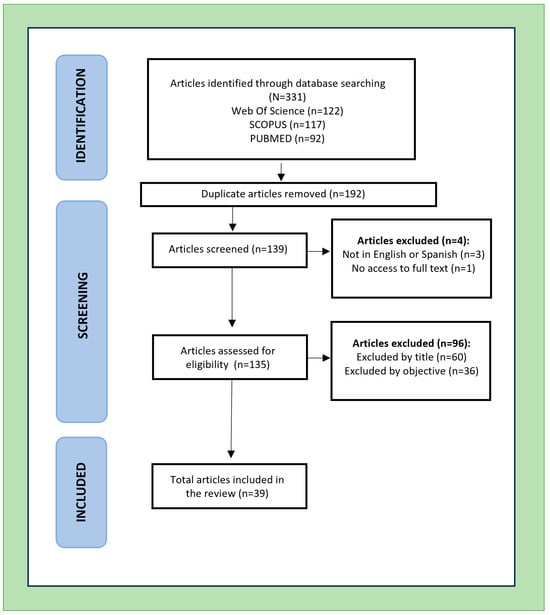
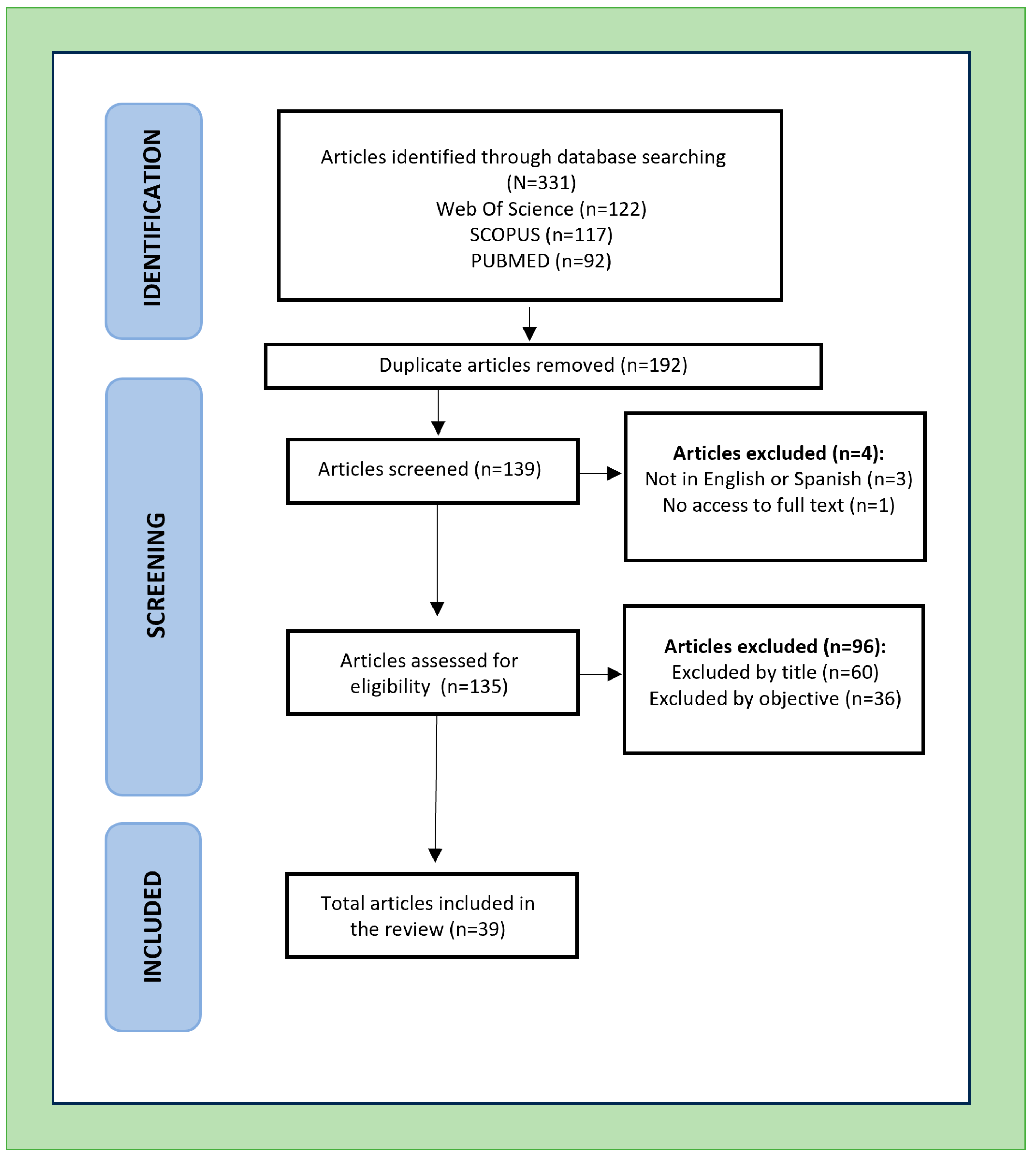
The literature search was conducted between December 2024 and May 2025 in three databases: Web of Science, Scopus, and PubMed. Search terms were combined using Boolean operators and adapted for each database. The complete search strategy included the following string: (“concurrent training” OR “Crosstraining” OR “high intensity functional training”) AND (“CrossFit” OR “HYROX” OR “hybrid competitions”). Filters were applied to include only peer-reviewed journal articles published in English or Spanish between 2015 and 2025. A total of 331 records were retrieved: 122 from Web of Science, 117 from Scopus, and 92 from PubMed. After removing 192 duplicates, 139 articles were screened based on title and abstract. Studies were included if they (1) investigated high-intensity functional training (HIFT) protocols or hybrid training modalities (e.g., CrossFit, HYROX), (2) reported physiological or psychobiological outcomes, and (3) involved healthy adult populations. Exclusion criteria were: (a) studies not published in English or Spanish, (b) lack of access to full text, (c) non-peer-reviewed sources, and (d) studies that did not address physiological or performance-related variables. Following screening and full-text assessment, 39 studies met the inclusion criteria and were analysed in the review.
2.4. Selecting Sources of Evidence
The results of the searches were exported to EndNoteTM20 for automatic removal of duplicates. Titles and abstracts were then independently assessed by two reviewers. Those studies that met the criteria were read in full text to confirm inclusion. Discrepancies were resolved by consensus or, if necessary, by consulting a third reviewer.
2.5. Data Mining
The data were organised and recorded in an Excel spreadsheet. For each study included, the following variables were extracted: author/year, study design, sample characteristics, objectives, methodology, main findings and conclusions.
2.6. Quality Assessment
The quality of the included studies was assessed using the AXIS (Appraisal Tool for Cross-Sectional Studies) tool, developed specifically to evaluate cross-sectional studies.
This tool allows common methodological weaknesses to be identified through 20 items covering key aspects such as: clarity of objectives, appropriateness of design, justification of sample size, sample selection process, validity of measures used, and transparency in the presentation of results [13].
For interpretive purposes, the studies were classified into three levels according to the percentage of items met: high quality (≥75%), moderate quality (50–74%), and low quality (<50%). This categorization was not used as an exclusion criterion, but it did allow for contextualising the findings and qualifying the degree of confidence in the results.
3. Results
The PRISMA flow chart summarising the study selection process is presented in Figure 1.
Figure 1.
Flowchart.
After applying the inclusion and exclusion criteria, 39 articles were selected for analysis (Table 1):
Table 1.
Summary of study characteristics.
The synthesis of the results was structured along four main thematic axes:
3.1. Physiological Demands
Nine studies [8,14,15,17,21,22,26,27,28] analysed physiological responses revealing that HIFT methods markedly improve VO2max, maximal strength, power and localised muscular endurance. These capabilities are essential to tolerate the cumulative stress of consecutive workouts. A combination of high-intensity intermittent efforts with sustained loads, which require high energy efficiency and recovery capacity, was observed. Along these lines, a study simulating a full HYROX competition showed a high cardiovascular demand, with approximately 80% of the time in very high heart rate zones (41.6% in Zone 4 [80–90% HRmax] and 50.5% in Zone 5 [90–100% HRmax]), as well as significant levels of lactate and perceived exertion, especially in the final stations [8]. Studies such as Brandt et al. and Wang et al. [8,14], using meta-analysis, confirmed substantial improvements in VO2max, maximum strength, and lactate tolerance. D’Hulst et al. [19] documented advanced physiological profiles in elite athletes with VO2 values of up to 4.64 L/min in men.
3.2. Predictors of Performance
Eight studies [8,16,17,18,19,24,35,40] identified key variables associated with hybrid competition performance. Key predictors included lean mass, lower body strength, VO2 peak, functional sports experience and optimised body composition. Research in elite CrossFit athletes showed that the ability to generate power and sustain it under fatigue is critical in fast transitional formats [19]. Complementarily, it has been verified that higher VO2max, lower body fat percentage and high volume of resistance training correlated with better performance [8,40], underlining the importance of aerobic fitness and structural efficiency in this type of disciplines.
Zeitz, Cook [40] found a negative correlation between VO2max and completion time in the WOD “Fran” (r = −0.72). Similarly, Ponce-García, García-Romero [16] and Mangine, Tankersley [41] that lean mass and competitive experience are robust predictors of performance in high-intensity tests.
3.3. Adaptations to Training
Six articles [14,20,31,36,45,47] addressed the adaptations induced by HIFT programmes. Significant improvements in aerobic and anaerobic capacity, neuromuscular parameters and metabolic efficiency were documented. In addition, it was shown that high-intensity sessions generate a physiological environment that stimulates hormonal, autonomic and immunological responses relevant to the improvement of functional performance [21,26,27,28]. Crawford, Drake [47] and Luis Mate-Munoz, Budurin [31] demonstrated increases in strength, anaerobic power, and metabolic efficiency after 6-week interventions. Hollerbach, Cosgrove [36] showed significant improvements in muscle strength and endurance after university HIFT programmes.
3.4. Psychobiological Responses
Four studies [15,27,29,30] examined perception of exertion, subjective fatigue and recovery. Prior functional training experience was associated with better fatigue tolerance, greater cognitive efficiency during exertion and less performance decline in prolonged testing. These psychobiological variables are particularly relevant in hybrid competitions, where mental resilience may determine performance consistency.
Santos, Morais [15] observed a greater perception of effort and lactate concentration in HIFT sessions compared to HICT. De Brito, Fernandes [27] found that more experienced athletes showed less cognitive fatigue and more efficient execution times during the “Fran” WOD.
In addition to the thematic categorisation, several studies reported concrete quantitative data on physiological improvements. For instance, studies such as Wang, Soh [14] and D’Hulst, Hodzic [19] reported increases in VO2max of between 8 and 15% following HIFT programmes. In terms of maximum strength, improvements of 10 to 20% in 1RM were documented in exercises such as squats or thrusters (Kapsis, Tsoukos [32], Leitao, Dias [35]). Likewise, localised muscle endurance increased by 12 to 25% in functional exercises and maximum repetition tests (Hollerbach, Cosgrove [36], Adami, Rocchi [33]). These improvements are relevant for withstanding the cumulative load of hybrid competitions, where the ability to maintain performance under fatigue is critical.
Although not all studies differentiated by sex, Ponce-García, García-Romero [16] reported that men have higher absolute values of anaerobic power, although the differences are reduced when adjusted for muscle mass. In terms of experience level, Adami, Rocchi [33] and De Brito, Fernandes [27] showed that advanced athletes have higher VO2max levels, maximum strength, and better fatigue tolerance. In terms of modality, only Brandt, Ebel [8] specifically analysed the HYROX format, showing a majority cardiovascular load (80% of the time in Z4 and Z5), while most studies focused on CrossFit-type protocols. Therefore, the lack of comparative data prevented a more in-depth analysis between disciplines.
Based on a simplified assessment of methodological quality based on design, assessment tools used, and internal validity criteria, the 39 studies included in this review were classified as follows: 12 studies were considered high quality (systematic reviews, meta-analyses, or robust experimental designs), 17 were of moderate quality (well-structured observational studies), and 10 were of low methodological quality (narrative reviews, small samples, or no statistical control).
In order to facilitate the overall interpretation of the findings, a summary of the four thematic areas identified is presented below, together with the number of associated studies, the main results found, representative studies, and the predominant methodological quality. This table provides an integrated view of the effects of high-intensity functional training (HIFT) in hybrid competition contexts, as well as the areas with the greatest scientific rigour and those where evidence gaps persist (Table 2).
Table 2.
Summary of thematic axes, number of studies, main findings, key studies, and prevailing methodological quality.
4. Discussion
The main finding of this scoping review is that high-intensity functional training (HIFT) consistently enhances key physical attributes such as strength, power, and aerobic capacity in trained populations [14,17]. These improvements are attributed to neuromuscular adaptations, increased metabolic efficiency, and greater training density, all of which are essential in hybrid competitions where repeated strength-endurance efforts are required. Moreover, the reviewed evidence highlights the psychophysiological demands of HIFT, especially in competitive formats like CrossFit and HYROX, where minimal rest intervals amplify cumulative load and fatigue-related responses [8,15].
Despite the observed consistency in key outcomes, methodological limitations across the included studies restrict the strength and generalisability of the conclusions. Many studies employed small sample sizes, e.g., n < 20 [15,17], which increases the risk of statistical noise and reduces external validity. Additionally, considerable heterogeneity was observed in terms of training protocols, session structures, and outcome measures (e.g., different WODs, durations, or instruments). This variability complicates direct comparison and limits the precision with which improvements can be attributed to specific HIFT formats or intensities. While positive trends are clear, caution is needed when extrapolating results to broader or non-athletic populations.
These findings align with the interference effect model, which posits that simultaneous demands on strength and endurance systems can hinder maximal adaptation if not properly sequenced or recovered. The cumulative fatigue and neuromuscular stress described in several studies [8,27] illustrate the need for structured programming that minimises concurrent interference. Likewise, the theory of adaptation pathways is supported by the observation that training outcomes vary depending on intensity, exercise order, and training history—suggesting that chronic exposure to HIFT may channel adaptations more efficiently when stimuli are periodised and strategically targeted.
It is important to acknowledge that not all findings were consistent. For instance, while most studies reported positive correlations between VO2max and performance [40], others failed to identify any single physiological predictor with strong explanatory power [25]. Similarly, although strength improvements were widely documented, few studies differentiated results by sex or training level [16], limiting generalisation. Additionally, outcomes related to recovery varied depending on whether passive or active rest was applied, and definitions and protocols differed across studies, reducing comparability. These discrepancies highlight the need for more standardised research designs within the HIFT literature.
Another relevant consideration is the impact of accumulated fatigue on movement technique, which may increase injury risk if not properly managed [16,35]. Consequently, structured training planning, appropriate workload distribution, and tailored recovery strategies are crucial to maximising performance while preserving athlete safety. Evidence also suggests that athletes with greater experience tolerate fatigue more effectively, maintaining technique quality under pressure [27,33]. Furthermore, the nature of rest between efforts influences recovery: passive rest appears to promote physiological restoration, while active rest maintains cardiovascular load—an important consideration in hybrid formats where rest intervals are minimal.
The use of physiological and biomechanical monitoring tools (e.g., heart rate variability, motion analysis) is recommended to adjust training loads and prevent overuse-related issues.
The predominance of aerobic contribution in HYROX, as evidenced by the high proportion of time spent in upper heart rate zones (~80%) and elevated lactate levels [8], reinforces the importance of aerobic efficiency and fatigue resistance in this format. However, the limited number of studies specifically addressing HYROX restricts the ability to draw firm, modality-specific conclusions, especially compared to the more extensive body of research on CrossFit. Differences in repetition volume, rest structure, and exercise specificity likely modulate both acute responses and chronic adaptations.
Future research should prioritise well-designed longitudinal studies with standardised HIFT protocols to better understand long-term adaptations. Specifically, randomised controlled trials comparing CrossFit and HYROX formats over 8–12 weeks would allow clearer insights into modality-specific effects. Key outcomes should include VO2max, lactate threshold, neuromuscular fatigue, hormonal markers, and perceived recovery. Samples should be stratified by sex, age, and training level to explore differential adaptations. Furthermore, studies should incorporate both physiological (e.g., HRV, creatine kinase) and perceptual (e.g., RPE, PRS) recovery indicators. Finally, field-based research monitoring injury incidence and biomechanical changes during real competitions would support applied training design and injury prevention strategies in hybrid sport contexts.
5. Conclusions
The systematic review indicates that high-intensity functional training generates positive adaptations in strength and endurance, but can also induce significant fatigue, affecting performance and execution technique. In hybrid competitions efficient fatigue and recovery management are key factors to optimise performance and to minimise the risk of injury.
Continuous monitoring of physiological and biomechanical parameters will allow optimisation of training programmes and reduce the risk of excessive fatigue and injury. In addition, future studies should focus on assessing muscle fatigue along with metabolic and physiological analyses for a deeper understanding of the impact of high-intensity training on endurance athletes.
Funding
This research received no external funding.
Data Availability Statement
Data is contained within the article.
Conflicts of Interest
The authors declare no conflict of interest.
References
- Coffey, V.G.; Hawley, J.A. Concurrent exercise training: Do opposites distract? J. Physiol. 2017, 595, 2883–2896. [Google Scholar] [CrossRef] [Scilit]
- Schlegel, P. CrossFit® Training Strategies from the Perspective of Concurrent Training: A Systematic Review. J. Sports Sci. Med. 2020, 19, 670–680. [Google Scholar]
- Gao, J.; Yu, L. Effects of concurrent training sequence on VO(2max) and lower limb strength performance: A systematic review and meta-analysis. Front. Physiol. 2023, 14, 1072679. [Google Scholar]
- Wilson, J.M.; Marin, P.J.; Rhea, M.R.; Wilson, S.M.; Loenneke, J.P.; Anderson, J.C. Concurrent training: A meta-analysis examining interference of aerobic and resistance exercises. J. Strength Cond. Res. 2012, 26, 2293–2307. [Google Scholar] [CrossRef] [Scilit]
- Brito, M.A.; Fernandes, J.R.; De Carvalho, P.H.B.; Brito, C.J.; Aedo-Muñoz, E.; Soto, D.A.S.; Miarka, B. Acute Effect of a Cross-Training Benchmark on Psychophysiological Factors of Cross-Training According to Performance. Sport Mont. 2023, 21, 9–15. [Google Scholar] [CrossRef] [Scilit]
- Fernando, W.; Santos, W.; Barbieri, J.; de Medeiros Lima, L.E.; Miguel, H.; Guedes, D., Jr.; da Silva, R.P.; Marchioni, E.; Moriggi, R., Jr. Physical capacities and anthropometric measures between Crossfit® practitioners and Crosstraining. Multidiscip. Sci. J. 2021, 3, e2021006. [Google Scholar] [CrossRef] [Scilit]
- Claudino, J.G.; Gabbett, T.J.; Bourgeois, F.; Souza, H.d.S.; Miranda, R.C.; Mezêncio, B.; Soncin, R.; Filho, C.A.C.; Bottaro, M.; Hernandez, A.J.; et al. CrossFit Overview: Systematic Review and Meta-analysis. Sports Med.-Open 2018, 4, 11. [Google Scholar] [CrossRef] [Scilit]
- Brandt, T.; Ebel, C.; Lebahn, C.; Schmidt, A. Acute physiological responses and performance determinants in Hyrox(©)—A new running-focused high intensity functional fitness trend. Front. Physiol. 2025, 16, 1519240. [Google Scholar] [CrossRef] [Scilit]
- Booth, A.; Papaioannou, D.; Sutton, A. Systematic Approaches to a Successful Literature Review; Sage: Thousand Oaks, CA, USA, 2012. [Google Scholar]
- Tricco, A.C.; Lillie, E.; Zarin, W.; O’Brien, K.K.; Colquhoun, H.; Levac, D.; Moher, D.; Peters, M.D.J.; Horsley, T.; Weeks, L.; et al. PRISMA Extension for Scoping Reviews (PRISMA-ScR): Checklist and Explanation. Ann. Intern. Med. 2018, 169, 467–473. [Google Scholar] [CrossRef] [Scilit] [PubMed]
- Arksey, H.; O’Malley, L. Scoping studies: Towards a methodological framework. Int. J. Soc. Res. Methodol. 2005, 8, 19–32. [Google Scholar] [CrossRef] [Scilit]
- Codina, L. Scoping Reviews: Características, Frameworks Principales y Uso en Trabajos Académicos, 2022. Available online: https://www.lluiscodina.com/scoping-reviews-guia/ (accessed on 25 May 2025).
- Downes, M.J.; Brennan, M.L.; Williams, H.C.; Dean, R.S. Development of a critical appraisal tool to assess the quality of cross-sectional studies (AXIS). BMJ Open 2016, 6, e011458. [Google Scholar] [CrossRef] [Scilit]
- Wang, X.; Soh, K.G.; Zhang, L.; Liu, X.; Ma, S.; Zhao, Y.; Sun, C. Effects of high-intensity functional training on physical fitness in healthy individuals: A systematic review with meta-analysis. BMC Public Health 2025, 25, 528. [Google Scholar] [CrossRef] [Scilit]
- Santos, D.A.; Morais, N.S.; Viana, R.B.; Costa, G.C.; Andrade, M.S.; Vancini, R.L.; Weiss, K.; Knechtle, B.; de Lira, C.A. Comparison of physiological and psychobiological acute responses between high intensity functional training and high intensity continuous training. Sports Med. Health Sci. 2025, 7, 68–76. [Google Scholar] [CrossRef] [Scilit] [PubMed]
- Ponce-García, T.; García-Romero, J.; Carrasco-Fernández, L.; Castillo-Domínguez, A.; Benítez-Porres, J. Sex differences in anaerobic performance in CrossFit® athletes: A comparison of three different all-out tests. PeerJ 2025, 13, e18930. [Google Scholar] [CrossRef] [Scilit] [PubMed]
- Tibana, R.A.; Dominski, F.H.; Andrade, A.; De Sousa, N.M.F.; Voltarelli, F.A.; de Sousa Neto, I.V. Exploring the relationship between Total Athleticism score and CrossFit® Open Performance in amateur athletes: Single measure involving body fat percentage, aerobic capacity, muscle power and local muscle endurance. Eur. J. Transl. Myol. 2024, 34, 97–105. [Google Scholar]
- Martinho, D.V.; Rebelo, A.; Gouveia, É.R.; Field, A.; Costa, R.; Ribeiro, A.S.; Casonatto, J.; Amorim, C.; Sarmento, H. The physical demands and physiological responses to CrossFit®: A scoping review with evidence gap map and meta-correlation. BMC Sports Sci. Med. Rehabil. 2024, 16, 196. [Google Scholar] [CrossRef] [Scilit]
- D’hUlst, G.; Hodžić, D.; Leuenberger, R.; Arnet, J.; Westerhuis, E.; Roth, R.; Schmidt-Trucksäss, A.; Knaier, R.; Wagner, J. Physiological Profiles of Male and Female CrossFit Athletes. Int. J. Sports Physiol. Perform. 2024, 19, 780–791. [Google Scholar] [CrossRef] [Scilit]
- Wang, X.; Soh, K.G.; Samsudin, S.; Deng, N.; Liu, X.; Zhao, Y.; Akbar, S.; Gardasevic, J. Effects of high-intensity functional training on physical fitness and sport-specific performance among the athletes: A systematic review with meta-analysis. PLoS ONE 2023, 18, e0295531. [Google Scholar] [CrossRef] [Scilit] [PubMed]
- Sant’Ana, L.D.O.; Evmenenko, A.; Vianna, J.M.; Machado, S.; Teixeira, D.S. Autonomic responses and internal load analysis through acute assessment of heart rate variability after a high-intensity functional training session. Arch. De Med. Del Deporte 2023, 40, 155–161. [Google Scholar]
- Pearson, R.C.; Olenick, A.A.; Jenkins, N.T. Metabolic Response During High-Intensity Interval Exercise and Resting Vascular and Mitochondrial Function In Crossfit Participants. Kinesiology 2023, 55, 228–244. [Google Scholar] [CrossRef] [Scilit]
- Moscatelli, F.; Messina, G.; Polito, R.; Porro, C.; Monda, V.; Monda, M.; Scarinci, A.; Dipace, A.; Cibelli, G.; Messina, A.; et al. Aerobic and Anaerobic Effect of CrossFit Training: A Narrative Review. Sport Mont. 2023, 21, 123–128. [Google Scholar] [CrossRef] [Scilit]
- Meier, N.; Sietmann, D.; Schmidt, A. Comparison of Cardiovascular Parameters and Internal Training Load of Different 1-h Training Sessions in Non-elite CrossFit® Athletes. J. Sci. Sport Exerc. 2023, 5, 130–141. [Google Scholar] [CrossRef] [Scilit]
- Meier, N.; Schlie, J.; Schmidt, A. CrossFit®: ‘Unknowable’ or Predictable?—A Systematic Review on Predictors of CrossFit® Performance. Sports 2023, 11, 112. [Google Scholar] [CrossRef] [Scilit] [PubMed]
- McDougle, J.M.; Mangine, G.T.; Townsend, J.R.; Jajtner, A.R.; Feito, Y. Acute physiological outcomes of high-intensity functional training: A scoping review. PeerJ 2023, 11, e14493. [Google Scholar] [CrossRef] [Scilit] [PubMed]
- Brito, M.A.; Fernandes, J.R.; Carvalho, P.H.B.D.; Brito, C.J.; Muñoz, E.A.; Soto, D.; Miarka, A.S.B. Acute effect of high-intensity functional training (HIFT) using a benchmark on cognition and physiological parameters according to the competitive level. J. Phys. Educ. Sport 2023, 23, 1432–1440. [Google Scholar]
- Sousa Neto, I.V.D.; Sousa, N.M.F.D.; Neto, F.R.; Falk Neto, J.H.; Tibana, R.A. Time-course effects of functional fitness sessions performed at different intensities on the metabolic, hormonal, and BDNF responses in trained men. BMC Sports Sci. Med. Rehabil. 2022, 14, 22. [Google Scholar]
- Neto, I.V.d.S.; de Sousa, N.M.F.; Neto, F.R.; Neto, J.H.F.; Tibana, R.A. Time Course of Recovery Following CrossFit® Karen Benchmark Workout in Trained Men. Front. Physiol. 2022, 13, 899652. [Google Scholar] [CrossRef] [Scilit]
- Martinez-Gomez, R.; Valenzuela, P.L.; Lucia, A.; Barranco-Gil, D. Comparison of Different Recovery Strategies After High-Intensity Functional Training: A Crossover Randomized Controlled Trial. Front. Physiol. 2022, 13, 819588. [Google Scholar] [CrossRef] [Scilit]
- Maté-Muñoz, J.L.; Budurin, M.; González-Lozano, S.; Heredia-Elvar, J.R.; Cañuelo-Márquez, A.M.; Barba-Ruiz, M.; Muriarte, D.; Garnacho-Castaño, M.V.; Hernández-Lougedo, J.; García-Fernández, P.; et al. Physiological Responses at 15 Minutes of Recovery after a Session of Functional Fitness Training in Well-Trained Athletes. Int. J. Environ. Res. Public Health 2022, 19, 8864. [Google Scholar]
- Kapsis, D.P.; Tsoukos, A.; Psarraki, M.P.; Douda, H.T.; Smilios, I.; Bogdanis, G.C. Changes in Body Composition and Strength after 12 Weeks of High-Intensity Functional Training with Two Different Loads in Physically Active Men and Women: A Randomized Controlled Study. Sports 2022, 10, 7. [Google Scholar] [CrossRef] [Scilit]
- Adami, P.E.; Rocchi, J.E.; Melke, N.; Macaluso, A. Physiological comparison between competitive and beginner high intensity functional training athletes. J. Hum. Sport Exerc. 2022, 17, 540–552. [Google Scholar] [CrossRef] [Scilit]
- Adami, P.E.; Rocchi, J.E.; Melke, N.; De Vito, G.; Bernardi, M.; Macaluso, A. Physiological profile comparison between high intensity functional training, endurance and power athletes. Eur. J. Appl. Physiol. 2022, 122, 531–539. [Google Scholar] [CrossRef] [Scilit]
- Leitão, L.; Dias, M.; Campos, Y.; Vieira, J.G.; Sant’Ana, L.; Telles, L.G.; Tavares, C.; Mazini, M.; Novaes, J.; Vianna, J. Physical and Physiological Predictors of FRAN CrossFit(R) WOD Athlete’s Performance. Int. J. Environ. Res. Public Health 2021, 18, 4070. [Google Scholar] [CrossRef] [Scilit]
- Hollerbach, B.S.; Cosgrove, S.J.; DeBlauw, J.A.; Jitnarin, N.; Poston, W.S.C.; Heinrich, K.M. Muscular Strength, Power, and Endurance Adaptations after Two Different University Fitness Classes. Sports 2021, 9, 107. [Google Scholar] [CrossRef] [Scilit]
- Bustos-Viviescas, B.J.; Acevedo-Mindiola, A.A.; Osorio, R.D.M. Relationship of continuous and intermittent maximal aerobic speed to crossfit® wod karen performance in physically active subjects. Rev. Cuba. De Investig. Biomed. 2021, 40, 1–14. [Google Scholar]
- Ben-Zeev, T.; Okun, E. High-Intensity Functional Training: Molecular Mechanisms and Benefits. Neuromolecular Med. 2021, 23, 335–338. [Google Scholar] [CrossRef] [Scilit] [PubMed]
- Adami, P.E.; Rocchi, J.E.; Melke, N.; Macaluso, A. Physiological profile of high intensity functional training athletes. J. Hum. Sport Exerc. 2021, 16, 675–688. [Google Scholar] [CrossRef] [Scilit]
- Zeitz, E.K.; Cook, L.F.; Dexheimer, J.D.; Lemez, S.; Leyva, W.D.; Terbio, I.Y.; Tran, J.R.; Jo, E. The Relationship between CrossFit® Performance and Laboratory-Based Measurements of Fitness. Sports 2020, 8, 112. [Google Scholar] [CrossRef] [Scilit] [PubMed]
- Mangine, G.T.; Tankersley, J.E.; McDougle, J.M.; Velazquez, N.; Roberts, M.D.; Esmat, T.A.; VanDusseldorp, T.A.; Feito, Y. Predictors of CrossFit Open Performance. Sports 2020, 8, 102. [Google Scholar] [CrossRef] [Scilit]
- Cavedon, V.; Milanese, C.; Marchi, A.; Zancanaro, C. Different amount of training affects body composition and performance in High-Intensity Functional Training participants. PLoS ONE 2020, 15, e0237887. [Google Scholar] [CrossRef] [Scilit]
- Neto, J.H.F.; Kennedy, M.D. The Multimodal Nature of High-Intensity Functional Training: Potential Applications to Improve Sport Performance. Sports 2019, 7, 33. [Google Scholar] [CrossRef] [Scilit] [PubMed]
- Feito, Y.; Giardina, M.J.; Butcher, S.; Mangine, G.T. Repeated anaerobic tests predict performance among a group of advanced CrossFit-trained athletes. Appl. Physiol. Nutr. Metab. 2019, 44, 727–735. [Google Scholar] [CrossRef] [Scilit] [PubMed]
- Cosgrove, S.J.; Crawford, D.A.; Heinrich, K.M. Multiple Fitness Improvements Found after 6-Months of High Intensity Functional Training. Sports 2019, 7, 203. [Google Scholar] [CrossRef] [Scilit] [PubMed]
- Tibana, R.A.; de Sousa, N.M.F.; Prestes, J.; Voltarelli, F.A. Lactate, heart rate and rating of perceived exertion responses to shorter and longer duration crossfit® training sessions. J. Funct. Morphol. Kinesiol. 2018, 3, 60. [Google Scholar] [CrossRef] [Scilit]
- Crawford, D.A.; Drake, N.B.; Carper, M.J.; DeBlauw, J.; Heinrich, K.M. Are Changes in Physical Work Capacity Induced by High-Intensity Functional Training Related to Changes in Associated Physiologic Measures? Sports 2018, 6, 26. [Google Scholar] [CrossRef] [Scilit]
- Brisebois, M.E.; Rigby, B.R.; Nichols, D.L. Physiological and Fitness Adaptations after Eight Weeks of High-Intensity Functional Training in Physically Inactive Adults. Sports 2018, 6, 146. [Google Scholar] [CrossRef] [Scilit]

Disclaimer/Publisher’s Note: The statements, opinions and data contained in all publications are solely those of the individual author(s) and contributor(s) and not of MDPI and/or the editor(s). MDPI and/or the editor(s) disclaim responsibility for any injury to people or property resulting from any ideas, methods, instructions or products referred to in the content. |
© 2025 by the authors. Licensee MDPI, Basel, Switzerland. This article is an open access article distributed under the terms and conditions of the Creative Commons Attribution (CC BY) license (https://creativecommons.org/licenses/by/4.0/).