


Abstract
Thermal elevation and residual chlorine pollution are two anthropogenic stressors that co-occur in estuarine waters affected by coastal power plant effluents. A 30-day exposure experiment was established with six treatment combinations comprising three temperatures (27 °C, 28 °C, and 30 °C) and two residual chlorine concentrations (0 mg/L and 0.02 mg/L) on Meretrix meretrix. Sampling was conducted on days 0, 10, 20 and 30 of the trial. The results indicated that elevated temperature (30 °C) significantly suppressed shell height and total body weight, while residual chlorine (0.02 mg/L) exerted time-dependent effects on shell length and width, with a significant interactive effect on shell length only at day 30. Crude lipid content declined with increasing temperature and residual chlorine exposure, whereas moisture and ash contents showed significant two-way interactions at all sampling time points. Intestinal amylase activity was continuously regulated by both stressors, with interactive responses on days 10 and 20, and was significantly suppressed under combined high temperature and residual chlorine stress. Collectively, we infer that combined exposure to elevated temperature and residual chlorine impairs shell growth, muscle biochemical composition and intestinal amylase activity of M. meretrix. Long-term experiments are required to further clarify the joint toxic effects of thermal stress and residual chlorine on the clam species.
Key Contribution:
This study revealed that single and combined exposure to elevated temperature and residual chlorine significantly altered shell growth performance and muscle proximate composition of Meretrix meretrix, suppressed intestinal amylase activity, and disrupted somatic mineral and energy metabolism. Thermal elevation and residual chlorine jointly regulated energy allocation strategies via distinct physiological pathways, aggravated energy lipid consumption and tissue nutrient imbalance induced by single stress, and further impaired the digestive function of clams under estuarine compound pollution.
1. Introduction
With the development of the social economy and the improvement of residents’ living standards, electricity consumption by industrial enterprises and households in China has maintained a continuous growth trend [1]. A large number of power plants have been constructed nationwide since the 1980s. Due to freshwater scarcity, most power plants in China are built along the coast, utilizing seawater as circulating coolant [2]. This process releases large-volume thermal effluents with high flow rates and temperatures well above ambient seawater. These discharges contain waste heat and chlorine-based biocides used to mitigate pipeline marine biofouling [3]. The discharge of thermal effluents containing residual chlorine into the sea may pose ecological risks to mariculture in adjacent areas, particularly for bivalve shellfish. Unlike motile organisms that can move away from contaminated water, bivalves are sessile and depend on filtering large volumes of seawater through their gills, so they cannot avoid residual chlorine and are exposed to it continuously. This exposure can impair their growth, survival, and reproduction, alter the diversity and abundance of biological communities, and shift habitat conditions [4,5]. For instance, sustained thermal stress has been shown to reduce thermotolerance and increase population mortality in Mytilus edulis [6]. In Perna canaliculus, sustained high temperatures increased disease prevalence and impaired reproductive capacity [7]. Studies on Mytilus coruscus showed that high temperatures affected ribosomal structure, inhibited translation, caused protein misfolding or denaturation, and eventually led to mortality [8]. For Ruditapes philippinarum, temperature significantly influenced filtration rate, ingestion rate, assimilation efficiency, and respiration rate [9]. Similarly, elevated seawater temperature induced oxidative/nitrosative stress and triggered apoptosis via excessive production of reactive oxygen species (ROS) and reactive nitrogen species (RNS) in Ruditapes philippinarum [10].
Residual chlorine exposure exerts multiple adverse biological impacts on shellfish, which are not restricted to lethal mortality but also include growth retardation, impaired shell development, altered feeding behaviour and physiological dysfunction [11]. For example, mortality of Cyclina sinensis rose with increasing chlorine concentration and exposure time, reaching 100% at 96 h under 400, 450, and 500 mg/L treatments [12]. Sub-lethal chlorine stress also induces substantial growth inhibition in bivalves. Increasing chlorine concentrations led to progressive growth suppression in Perna viridis [13]. In Mytilus edulis, chlorine exposure reduced shell growth and induced remarkable changes in shell structure and biomineralization [14]. Chronic low-level residual chlorine (0.125 mg/L) markedly constrained the growth of Cyclina sinensis [15]. Even at concentrations below 1 mg/L, residual chlorine significantly suppressed shellfish growth and depressed feeding rates [16]. In addition to growth and shell impairment, chlorine can alter behavioural performance: at 0.5 mg/L residual chlorine, the valve-opening frequency of Dreissena polymorpha dropped to 1/18 of the control level (0 mg/L) [17].
The complexity of the aquatic environment means that abnormal temperature changes may interact with multiple stressors, resulting in unpredictable complex responses [18]. It was demonstrated that the activities of antioxidant enzymes (GSH-PX, CAT, and SOD) and the non-enzymatic antioxidant GSH in Pinctada fucata were significantly regulated by temperature and salinity, whereas POX and AKP activities primarily showed positive responses to increasing temperature. Interaction analysis revealed that the temperature–salinity combined effect significantly affected CAT and SOD activities, but no significant interactive effect was observed for GSH-PX [19]. At 25 °C, low pH can inhibit immune function and induce cellular damage in mussels, whereas at 30 °C, high temperature exacerbates the toxic effects of low pH, and synergistic interactions between these two stressors trigger more severe immune impairment and oxidative stress [20]. Elevated temperatures can increase the uptake rate of chemical pollutants in ectothermic organisms by raising their metabolic and ventilation rates, thereby promoting bioaccumulation in body tissues and ultimately leading to greater chemical toxicity at higher temperatures [21]. In the study of M. edulis, exposure to nZnO at the winter temperature (10 °C) elicited a strong transcriptomic response involving multiple immune and inflammation-related genes, concurrently stimulating phagocytosis and hemocyte mortality while inhibiting hemocyte adhesion; however, at the summer experimental temperature (15 °C), this immune response was considerably attenuated. Notably, although the transcriptional profile induced by dissolved zinc closely resembled that of nZnO exposure, the magnitude of the transcriptional alteration was substantially lower [22]. Therefore, when assessing the impacts of environmental factors on aquatic organisms, it is necessary to consider the interactive effects among environmental factors in aquatic ecosystems. This is because interactive effects are not merely the additive sum of two independent responses, but can also be synergistic or antagonistic [23]. For example, compared with the individual effects of hypoxia or ocean acidification, their synergistic interaction caused significantly greater reductions in survival and growth in early-stage bivalves, as exemplified by bay scallops (Argopecten irradians) and hard clams (Mercenaria mercenaria) [24]. In Mytilus edulis, low salinity intensified the adverse effects of elevated temperature on shell formation and mortality [25].
Meretrix meretrix is an intertidal, burrowing, filter-feeding bivalve that prefers fine sandy tidal flats in estuarine embayments [26]. With its tender meat, high nutritional value, abundant high-quality protein, flavor amino acids, and various mineral elements, M. meretrix is highly favored by consumers and has become one of the most economically important bivalve species in China. In recent years, the progressive expansion of coastal power plants has led to the continuous discharge of thermal effluents and chlorinated tailwater into adjacent mariculture areas, creating a combined stressor environment of elevated temperature and residual chlorine. Previous studies have confirmed that environmental fluctuations exert pronounced impacts on shell morphology and somatic growth of bivalves [27]. Furthermore, environmental stress elevates organisms’ energy demands. When energy supply becomes insufficient, stored lipids are rapidly mobilized to meet metabolic requirements. A previous investigation on Dicathais orbita reported significant reductions in lipid contents after 3- and 12-week thermal exposure [28]. Such lipid depletion not only acts as an early biomarker of energy imbalance but also deteriorates the edible quality and commercial value of this economically important mollusk. The nutritional status of bivalves is fundamentally governed by their feeding, digestion and nutrient absorption efficiencies. Amylase serves as a core digestive enzyme in carbohydrate metabolism [29], which hydrolyzes starch and glycogen to supply substrates for clam growth and development; accordingly, amylase activity is a critical physiological indicator reflecting digestive performance [30]. Nevertheless, limited information is available regarding the combined toxic effects of elevated temperature and residual chlorine on growth performance, proximate nutritional composition and intestinal amylase activity of Meretrix meretrix. Therefore, the present study aims to investigate the single and interactive influences of thermal stress and residual chlorine exposure on shell growth, tissue nutritional components and amylase activity in M. meretrix. The findings will provide scientific references for evaluating the comprehensive threats of climate warming and coastal chlorination pollution to shellfish food safety and offer theoretical support for the sustainable development of bivalve aquaculture.
2. Materials and Methods
2.1. Preparation of Chemical Materials
Chlorine dioxide was sourced from South Ranch effervescent tablets (effective chlorine content: 35%). Tablets were ground into a fine powder, accurately weighed, and dissolved in deionized water to prepare 1000 mg/L stock solution via magnetic stirring for 20 min. Prior to each water renewal, the stock solution was diluted with filtered seawater to the target residual chlorine concentration (0.02 mg/L) and mixed for 10 min to ensure homogeneity.
2.2. Experimental Animals
After sampling from the Rudong clam farming area, M. meretrix were transported to the laboratory and temporarily reared in glass tanks with filtered seawater. Considering the impact of summer temperature, the acclimatization temperature was set to 27 °C, the historical average summer seawater temperature recorded near a coal-fired power plant. Starting from an initial temperature of 23 °C, heating rods (BN-Q200) were employed to adjust the temperature at a rate of 1 °C/d until reaching the acclimatization temperature. After reaching the acclimatization temperature, acclimatization was continued for an additional five days. During the acclimation period, microalgae were supplied twice daily at 09:00 and 17:00. Thirty minutes after each feeding, uneaten microalgae and faecal matter were siphoned out, and one-third of the seawater was renewed. Throughout acclimatization, dissolved oxygen levels were maintained above 6.0 mg/L, with salinity at 28 ppt, pH between 7.4 and 7.8, and a photoperiod of 12 h light:12 h dark. Following acclimatization, healthy Meretrix meretrix of uniform size (shell length: 19.4 ± 0.5 mm; shell width: 17.6 ± 0.3 mm; shell height: 9.4 ± 0.5 mm; body weight: 2.47 ± 0.66 g) were selected for experimentation, based on a rapid shell-closure reflex to mechanical disturbance and normal siphon extension.
2.3. Experimental Steps
The experiment was conducted using a 3 × 2 factorial design with three temperature levels (27, 28, and 30 °C) and two residual chlorine concentrations (0 and 0.02 mg/L), giving six treatment combinations (27 °C/0 mg/L, 28 °C/0 mg/L, 30 °C/0 mg/L, 27 °C/0.02 mg/L, 28 °C/0.02 mg/L, and 30 °C/0.02 mg/L), each replicated in triplicate in 50-L tanks (18 tanks total) with 60 clams per replicate. Temperature was incrementally raised from 27 to 30 °C via heating rods (BN-Q200), while the 0.02 mg/L chlorine level, an environmentally relevant low threshold with ecological significance [31,32], was maintained to assess non-lethal effects. During the experiment, water was replaced every six hours, and then residual chlorine was added to reach the target concentration of 0.02 mg/L. Commercial mixed-diatom feed (South Ranch, Nanhua Qianmu, Zhengzhou, China) was supplied as feed twice daily, in the morning and afternoon. Dissolved oxygen in the experimental water was maintained above 6.0 mg/L, salinity was kept at 28 ppt, and pH was controlled from 7.4 to 7.8. The experiment lasted 30 days, and samples were collected at four time points: 0, 10, 20 and 30 days.
2.4. Sample Collection
During the experiment, 10 individuals of M. meretrix were randomly collected from each replicate at 0, 10, 20 and 30 days. For each sampled clam, shell height, shell length and shell width were measured with an electronic vernier caliper, and the wet weight was determined using an analytical balance. Immediately after shell morphometric measurements, muscle and intestinal tissues were dissected from these same 10 individuals. All tissue samples were stored at −20 °C for subsequent determinations of muscle nutritional indicators and intestinal amylase activity.
2.5. Determination of Muscle Composition
The contents of moisture, crude lipid and ash in the muscle of M. meretrix were determined according to AOAC method [33]. Moisture content was analysed by drying samples to a constant weight at 105 °C (AOAC, 2005; method No. 950.46). The crude lipid content was determined by soxhlet extraction (AOAC, 2005; method No. 2003.05). The samples were incinerated at 550 °C in a muffle furnace, and the ash content was determined by weight loss method (AOAC, 2005; method No. 923.03).
2.6. Determination of Amylase
Approximately 100 mg of intestinal tissue from M. meretrix was transferred into a 2 mL centrifuge tube containing one grinding bead, followed by the addition of 900 μL 0.9% sterile saline. Intestinal tissues were homogenized using a high-speed tissue grinder to prepare tissue homogenate. The homogenate was centrifuged at 3500 r/min for 10 min at 4 °C in a refrigerated centrifuge, and the supernatant was collected for subsequent analysis. The activities of related amylase indicators were measured using commercial assay kits purchased from Nanjing Jiancheng Bioengineering Institute, including the total protein kit (Total protein, TP, A045-4-1) and α-amylase kit (α-Amylase, AMS, C016-1-2). All experimental operations were strictly performed in accordance with the manufacturer’s instructions.
2.7. Statistical Analysis
Prior to analysis, Shapiro–Wilk’s W test was used to evaluate the normality of the data, and Levene’s test was used to check the homogeneity of variances by employing SPSS 26.0 statistical software. The effects of chlorine, temperature, and their interactions were analyzed by two-way ANOVA. When interactions between factors were found, significant effects of temperature were analyzed by one-way ANOVA at each fixed chlorine level, and Tukey’s HSD post hoc multiple range tests were performed to determine which treatments were different. Similarly, significant effects of chlorine at each time point were determined for each temperature level by using Student’s t-test. A biplot graph was constructed showing both measured variables and observations, i.e., four sampling times of each experimental condition. For all analyses, p < 0.05 was set as the threshold for statistical significance. All data are presented as mean ± standard deviation (SD).
3. Results
3.1. Growth Performance
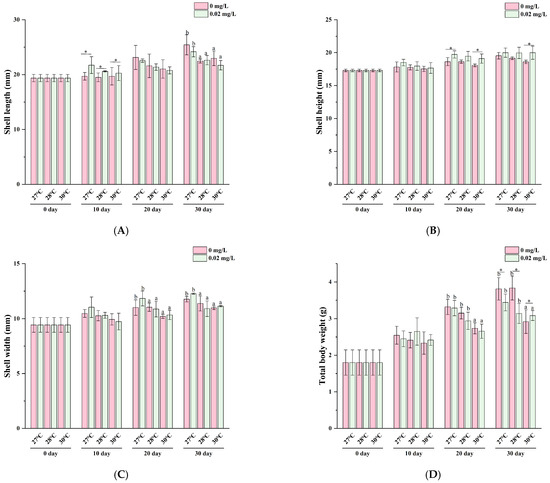
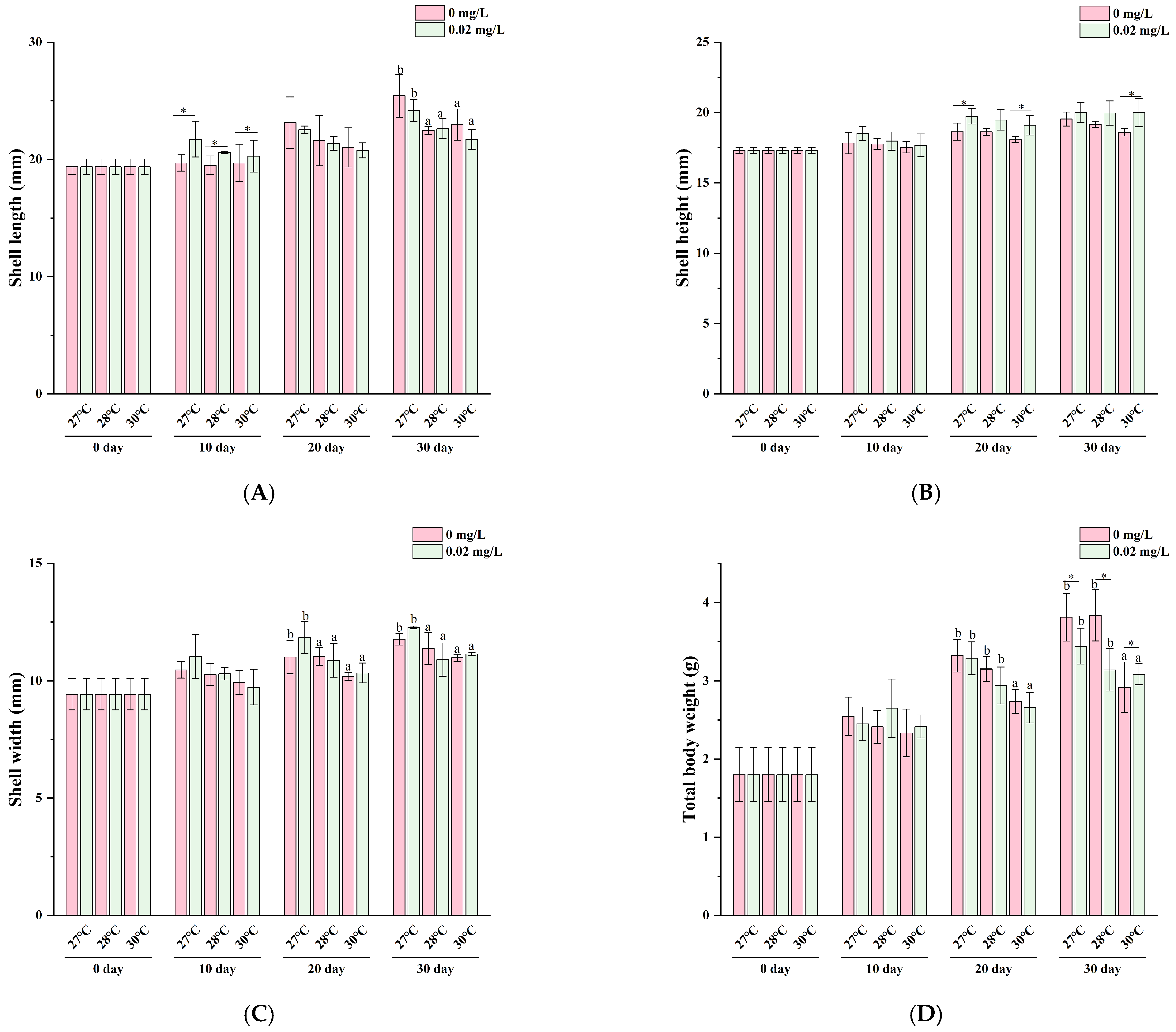
The shell length, shell height, shell width, and total body weight of M. meretrix under different temperature and residual chlorine treatments are presented in Figure 1A–D, with corresponding two-way ANOVA statistical outputs shown in Table 1.
Figure 1.
Shell length (A), Shell height (B), Shell width (C), and Total body weight (D) of M. meretrix exposed to different combinations of chlorine and temperature for 30 days. Note: Different letters indicate significant differences between three temperature levels within each residual chlorine treatment (p < 0.05). The columns sharing the asterisk between two residual chlorine levels at each fixed temperature are significantly different at each sampling time (p < 0.05).
Table 1.
Summary of two-way ANOVA outputs showing the main and interactive effects of temperature and residual chlorine on shell length, shell height, shell width, and total body weight of M. meretrix. Temperature treatments: 27 °C, 28 °C and 30 °C; residual chlorine treatments: 0 mg/L and 0.02 mg/L. df, degrees of freedom; MS, mean square; F, F-value; p, probability value. Significant effects (p < 0.05) are presented in bold font.
Temperature and residual chlorine exerted significant independent effects on the shell length of M. meretrix on Day 10 and Day 30, respectively. On Day 10, residual chlorine significantly altered shell length, with clams exposed to 0.02 mg/L residual chlorine exhibiting markedly longer shells than the 0 mg/L control group. On Day 30, shell length under the 27 °C temperature treatment was significantly greater than that at 28 °C and 30 °C. Two-way ANOVA revealed that residual chlorine exerted a significant main effect on shell length on Day 10, whereas a significant interactive effect between temperature and residual chlorine was only detected on Day 30 (Table 1; Figure 1A).
On Day 20 and Day 30, shell height of M. meretrix under the 27 °C treatment was significantly higher than those exposed to 28 °C and 30 °C. Two-way ANOVA indicated that temperature exerted significant main effects on clam shell height exclusively on Day 20 and Day 30, while residual chlorine showed no significant effect on shell height throughout the entire experimental period (Table 1; Figure 1B).
At 27 °C and 30 °C, shell width of M. meretrix in the 0.02 mg/L residual chlorine group was significantly higher than that in the 0 mg/L control group on Day 20. On Day 30, significantly greater shell width was observed in the 0.02 mg/L residual chlorine treatment relative to the 0 mg/L group under the 30 °C temperature condition. Two-way ANOVA demonstrated that residual chlorine exerted a significant main effect on shell width, yet no significant effects of residual chlorine on shell height were detected across the entire experimental period (Table 1; Figure 1C).
Total body weight of M. meretrix was significantly affected by temperature and residual chlorine throughout the experiment, whereas no significant interactive effect was detected between the two factors. On Day 20 and Day 30, total weight of M. meretrix under the 30 °C treatment was markedly lower than those subjected to 27 °C and 28 °C. Additionally, total weight in the 0.02 mg/L residual chlorine group was significantly lower than that of the 0 mg/L control group on Day 30. Two-way ANOVA showed that temperature exerted significant main effects on total body weight on Day 20 and Day 30, while significant effects of residual chlorine on total weight were only observed on Day 30 (Table 1; Figure 1D).
3.2. Muscle Proximate Composition
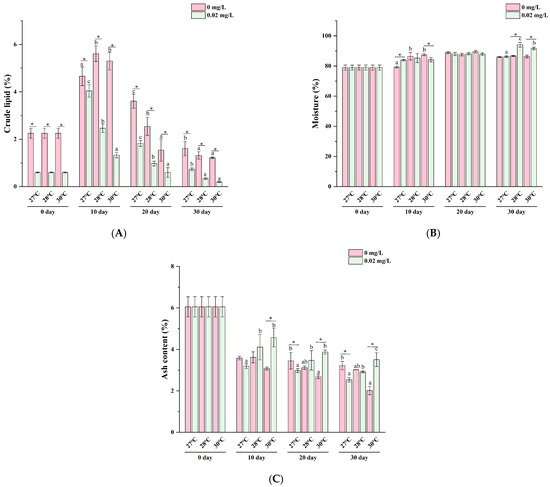
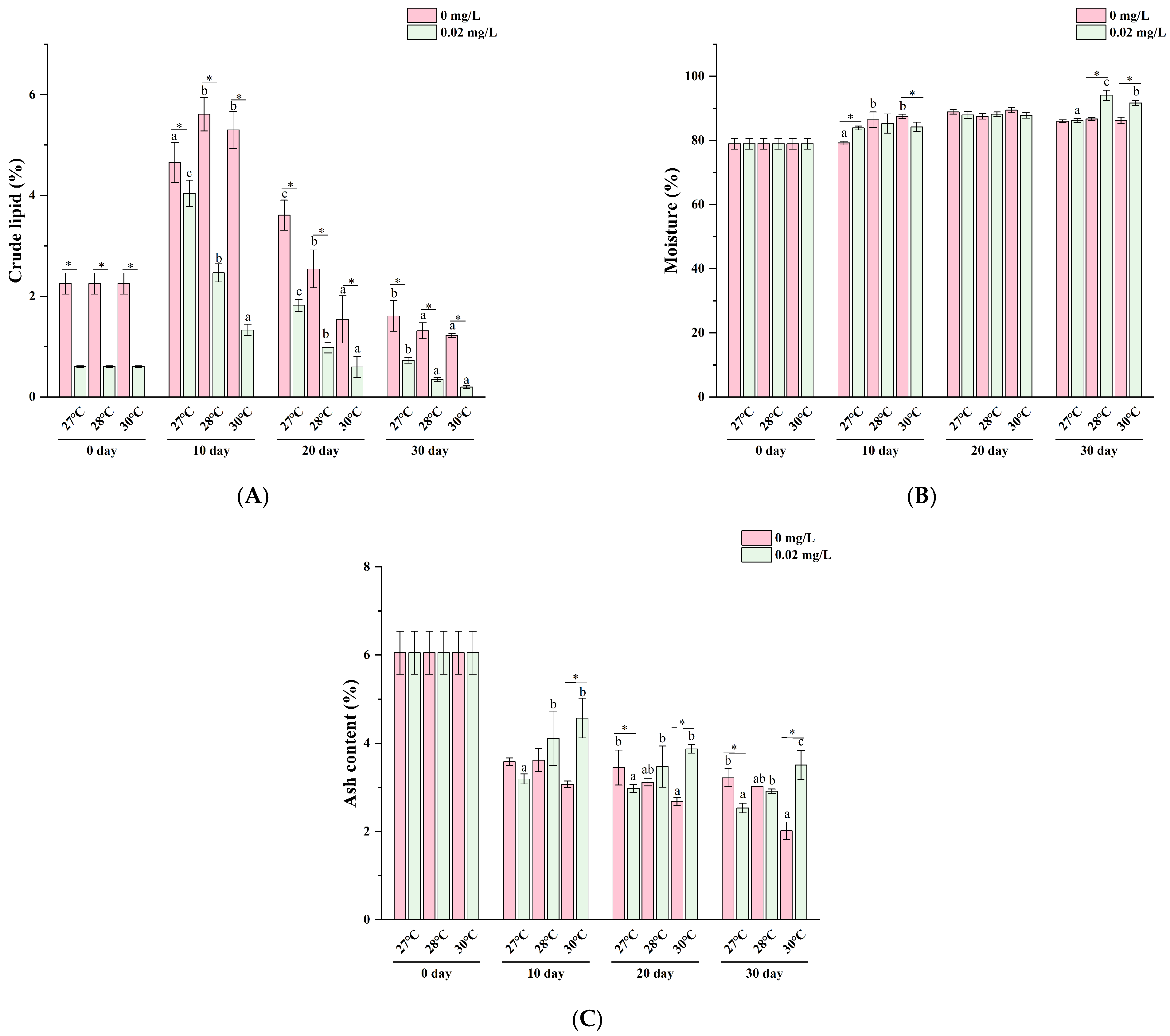
The crude lipid, moisture, and ash content in muscle of M. meretrix under different temperature and residual chlorine treatments are presented in Figure 2A–C, with corresponding two-way ANOVA statistical outputs shown in Table 2.
Figure 2.
Crude lipid (A), Moisture (B), and Ash content (C) of M. meretrix exposed to different combinations of residual chlorine and temperature for 30 days. Note: Different letters indicate significant differences between three temperature levels within each residual chlorine treatment (p < 0.05). The columns sharing the asterisk between two residual chlorine levels at each fixed temperature are significantly different at each sampling time (p < 0.05).
Table 2.
Summary of two-way ANOVA outputs showing the main and interactive effects of temperature and residual chlorine on muscle proximate composition (crude lipid, moisture, and ash content) of M. meretrix. Temperature treatments: 27 °C, 28 °C and 30 °C; residual chlorine treatments: 0 mg/L and 0.02 mg/L. df, degrees of freedom; MS, mean square; F, F-value; p, probability value. Significant effects (p < 0.05) are presented in bold font.
At each temperature level, the crude lipid content in the muscle of M. meretrix was significantly higher in the 0 mg/L residual chlorine group than in the 0.02 mg/L chlorine group. Across the entire experimental period, under identical residual chlorine concentrations, crude muscle lipid content declined significantly with increasing temperature on all sampling days except Day 10. Two-way ANOVA revealed that temperature and residual chlorine exerted significant main effects on muscle crude lipid content, and a significant interactive effect between the two factors was only detected on Day 10 (Table 2; Figure 2A).
On Day 10, muscle moisture content of M. meretrix increased with rising temperature under the 0 mg/L residual chlorine treatment. At 27 °C and 30 °C, residual chlorine concentration exerted a significant effect on muscle moisture. On Day 30, significant differences in muscle moisture were observed among temperature groups at 0.02 mg/L residual chlorine; the 27 °C group exhibited the lowest moisture level, whereas the 28 °C group had the highest moisture content. Two-way ANOVA revealed that temperature and residual chlorine imposed pronounced effects on muscle moisture on Day 10 and Day 30, with significant interactive effects detected at both sampling time points (Table 2; Figure 2B).
At 0 mg/L residual chlorine, muscle ash content decreased significantly with rising temperature; in contrast, muscle ash content increased significantly as temperature increased under the 0.02 mg/L chlorine treatment. Furthermore, at 30 °C, ash content in the 0 mg/L chlorine group was significantly lower than that in the 0.02 mg/L group. Two-way ANOVA indicated that temperature, residual chlorine, and their interactive effect exerted significant influences on ash content throughout the entire experimental period (Table 2; Figure 2C).
3.3. Intestinal Digestive Enzyme Activities
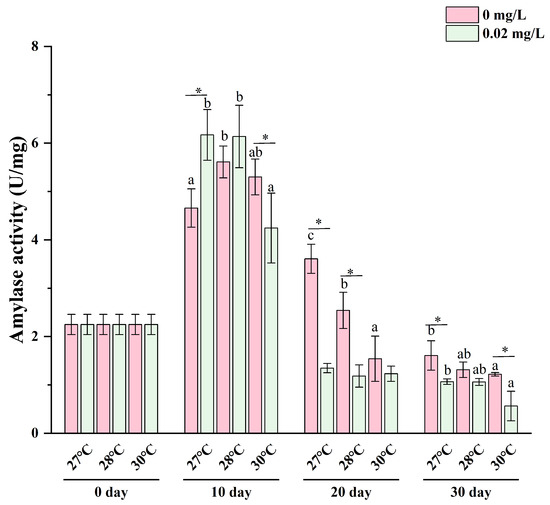
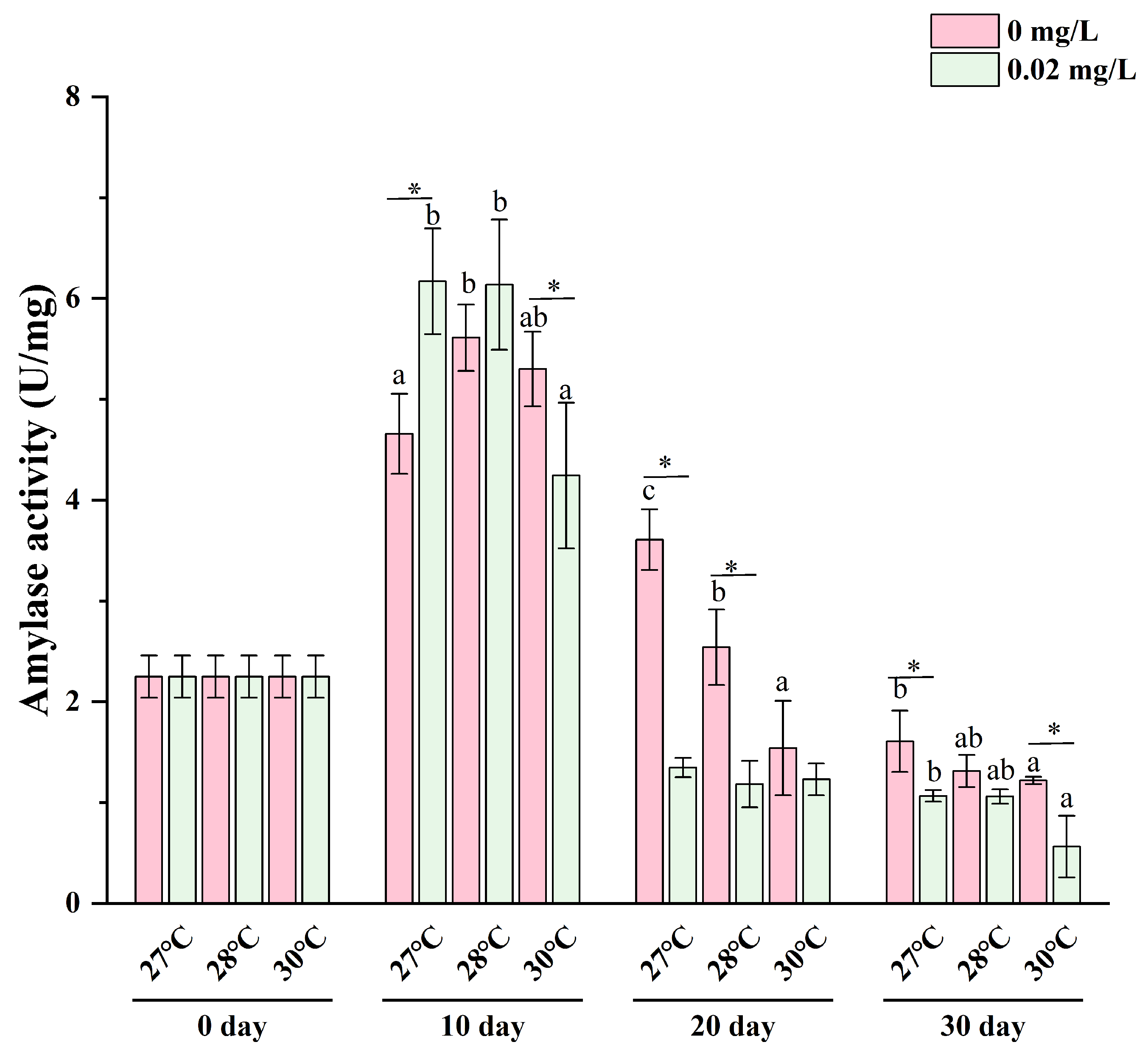
The amylase activity of M. meretrix under different temperature and residual chlorine treatments is presented in Figure 3, with corresponding two-way ANOVA statistical outputs shown in Table 3.
Figure 3.
Amylase activity of M. meretrix exposed to different combinations of residual chlorine and temperature for 30 days. Note: Different letters indicate significant differences between three temperature levels within each residual chlorine treatment (p < 0.05). The columns sharing the asterisk between two residual chlorine levels at each fixed temperature are significantly different at each sampling time (p < 0.05).
Table 3.
Summary of two-way ANOVA outputs showing the main and interactive effects of temperature and residual chlorine on amylase activity of M. meretrix. Temperature treatments: 27 °C, 28 °C and 30 °C; residual chlorine treatments: 0 mg/L and 0.02 mg/L. df, degrees of freedom; MS, mean square; F, F-value; p, probability value. Significant effects (p < 0.05) are presented in bold font.
Intestinal amylase activity of M. meretrix was significantly affected by temperature and residual chlorine across the whole experimental trial. On Day 10, amylase activity increased with rising temperature under the 0 mg/L residual chlorine treatment, whereas the opposite trend was observed at 0.02 mg/L residual chlorine, where amylase activity declined as temperature rose. At 27 °C, amylase activity was significantly higher in the 0.02 mg/L chlorine group relative to the 0 mg/L control. On Day 20 and Day 30, amylase activity decreased with elevated temperature when residual chlorine was maintained at 0 mg/L. Additionally, under identical temperature conditions, the 0 mg/L chlorine group exhibited significantly higher amylase activity than the 0.02 mg/L group. Two-way ANOVA revealed that temperature and residual chlorine exerted significant main effects on intestinal amylase activity throughout the entire experiment, with significant interactive effects detected on Day 10 and Day 20 (Table 3; Figure 3).
4. Discussion
Temperature is widely recognized as one of the most critical environmental factors governing the growth, physiological performance, and energy allocation of marine bivalves [34,35]. In parallel, residual chlorine derived from chlorine dioxide disinfection, commonly employed in coastal power plant cooling systems and aquaculture facilities, represents an anthropogenic oxidative stressor with the potential to impair bivalve health [12,36]. Despite the ecological and economic importance of M. meretrix as a commercially valuable clam species along the Chinese coast, the interactive effects of elevated temperature and residual chlorine on its growth performance remain poorly understood. Our results revealed that M. meretrix exhibited optimal shell growth and total body weight gain at 27 °C, whereas exposure to 30 °C significantly suppressed shell length, shell height, and total body weight, particularly during the later stages of the 30-day experiment (Days 20–30). This finding is consistent with the thermal metabolic theory in bivalves, which posits that growth is maximized within a species-specific optimal thermal range, beyond which energy allocation shifts from somatic growth toward elevated basal metabolic maintenance [37].
Residual chlorine at 0.02 mg/L exerted complex, time-dependent effects on the growth of M. meretrix. Notably, on Day 10, clams exposed to residual chlorine exhibited significantly greater shell length than those in the 0 mg/L control group, and at 27 °C and 30 °C on Day 20, shell width was also enhanced in the chlorine-treated group. This transient growth stimulation may reflect a hormetic response, wherein low-level oxidative stress induces compensatory metabolic adjustments during the initial exposure phase. However, by Day 30, the total body weight of clams in the 0.02 mg/L chlorine group was significantly lower than that of the 0 mg/L control, indicating that prolonged exposure ultimately imposes a net energetic cost. Similarly, long-term chlorine dioxide exposure (≥40 mg/L) significantly reduced shell length and body weight gain in the clam Cyclina sinensis over a 90-day period [15].
A significant interactive effect between temperature and residual chlorine on shell length was detected exclusively on Day 30, indicating that the synergistic impact of these two stressors intensifies with prolonged exposure duration. The lack of significant interactions at earlier time points (Days 10 and 20) suggests that M. meretrix may possess a degree of short-term physiological plasticity that buffers combined stress effects. However, as exposure persists, the cumulative energetic burden of simultaneously coping with thermal stress and oxidative challenge exceeds the capacity of compensatory mechanisms, resulting in interactive suppression of growth. This temporal pattern parallels the findings of Sui (2022), who reported that combined effects of ocean acidification and microplastics on oyster larval development were not always additive but became more pronounced as exposure progressed [38].
The proximate composition of bivalve muscle tissue, including moisture, crude lipid, and ash content, serves as a key indicator of nutritional status and energy reserve dynamics in response to environmental stress. In the present study, both temperature and residual chlorine significantly altered the muscle proximate composition of M. meretrix, with pronounced interactive effects observed at multiple sampling time points.
Crude lipid content in the muscle of M. meretrix declined significantly with increasing temperature across nearly all sampling days and was consistently lower in the 0.02 mg/L chlorine group relative to the 0 mg/L control. The temperature-dependent depletion of muscle lipids is consistent with the established paradigm that elevated temperature accelerates basal metabolic rate in bivalves, thereby increasing the catabolism of energy reserves, particularly lipids, to meet heightened energy demands [39]. Lipids represent a critical long-term energy storage form in marine bivalves due to their high caloric content, and their mobilization under thermal stress reflects a strategic reallocation of metabolic resources from storage to immediate energy supply [40]. The additional reduction in crude lipid content induced by residual chlorine exposure likely reflects oxidative lipid damage and enhanced lipid peroxidation. Chlorine dioxide and its reactive byproducts are known to generate reactive oxygen species (ROS) upon entering bivalve tissues, which can directly oxidize polyunsaturated fatty acids in membrane phospholipids and storage lipids [11]. The significant interactive effect between temperature and chlorine on crude lipid content on Day 10 further suggests that the combination of thermal and oxidative stressors synergistically accelerates lipid mobilization and peroxidation during the early phase of exposure.
Muscle moisture content exhibited a complex, temperature- and chlorine-dependent pattern. Under the 0 mg/L chlorine treatment, moisture content increased with rising temperature on Day 10, whereas under 0.02 mg/L chlorine on Day 30, the lowest moisture level was observed at 27 °C and the highest at 28 °C. The inverse relationship between lipid content and moisture content observed in many treatments is consistent with the general principle that water replaces the void space created by lipid depletion in muscle tissue [41]. However, the significant interactive effects between temperature and chlorine on moisture content at Days 10 and 30 suggest that chlorine-induced alterations in osmoregulatory function and cell membrane permeability may additionally contribute to changes in tissue hydration status [10].
Ash content, representing the inorganic mineral fraction of muscle tissue, was significantly influenced by temperature, residual chlorine, and their interaction throughout the entire experimental period. The divergent responses observed under different chlorine treatments are particularly noteworthy: at 0 mg/L chlorine, ash content decreased with rising temperature, whereas at 0.02 mg/L chlorine, ash content increased with elevated temperature. The temperature-dependent decline in ash content in the control group may reflect temperature-driven adjustments in mineral metabolism and shell formation dynamics, whereby minerals are preferentially allocated to shell growth at optimal temperatures. Conversely, the increase in ash content under combined chlorine and thermal stress may indicate chlorine-induced disruption of mineral homeostasis, potentially involving altered calcium signaling and shell deposition processes.
Collectively, the marked alterations in muscle proximate composition observed under combined temperature and chlorine stress indicate a substantial remodeling of energy reserves and mineral balance, which has direct implications for the nutritional quality and physiological condition of M. meretrix. From an aquaculture and fisheries perspective, the depletion of crude lipid content under both elevated temperature and chlorine exposure is particularly concerning, as lipids contribute not only to energy storage but also to the organoleptic quality and nutritional value of bivalves destined for human consumption [42].
Digestive enzymes, particularly α-amylase, play a central role in carbohydrate digestion and energy acquisition in bivalves, and their activity is highly sensitive to environmental perturbations, including temperature fluctuations and chemical stressors [29]. In this study, temperature exerted a pronounced influence on amylase activity, with the direction of the effect dependent on both the exposure duration and the presence of residual chlorine. Under the 0 mg/L chlorine control condition, amylase activity decreased with increasing temperature on Days 20 and 30, suggesting that prolonged exposure to supra-optimal temperatures (28–30 °C) impairs the digestive capacity of M. meretrix. This finding aligns with previous studies demonstrating that thermal stress suppresses digestive enzyme activities in marine bivalves. Residual chlorine at 0.02 mg/L significantly suppressed intestinal amylase activity relative to the 0 mg/L control on Days 20 and 30, regardless of temperature. This suppressive effect may arise through several non-mutually exclusive mechanisms. The significant interactive effect between temperature and chlorine on amylase activity on Days 10 and 20 is of particular interest. On Day 10, amylase activity exhibited contrasting thermal response patterns under the two chlorine treatments: it increased with rising temperature at 0 mg/L chlorine but decreased with rising temperature at 0.02 mg/L chlorine. By Days 20 and 30, the interactive effect diminished (becoming non-significant on Day 30), and amylase activity was consistently lower in the chlorine-treated groups across all temperature levels, indicating that the suppressive effect of chronic chlorine exposure eventually overrides temperature-dependent modulation. This is consistent with the results of other studies on the activity of mussel amylase [43]. A similar compensatory increase in digestive enzyme activity has also been reported in fish under mild stress. With the prolongation of stress time (20–30 days), continuous metabolic pressure may lead to limited resources of synthetic enzyme proteins, or cause damage to the digestive gland cells themselves, resulting in an irreversible decrease in enzyme activity. This is consistent with the results of the study on the effect of temperature stress on the digestive function of California mussels [44,45]. This study found that the superposition of residual chlorine significantly aggravated the inhibitory effect of high temperature on amylase activity. This is consistent with the results of studies on the synergistic inhibition of digestive enzyme activity in aquatic animals by heavy metal pollutants and temperature [46,47]. The mechanism may be that residual chlorine aggravates the oxidative damage of intestinal or digestive gland tissues and directly destroys the structure and function of enzymes [48]. This study shows that long-term combined stress of temperature and residual chlorine can seriously damage the digestive function of clams, and the two have a synergistic inhibitory effect, which explains why the growth of clams is inhibited under combined stress from the physiological level.
5. Conclusions
In summary, exposure to elevated temperature (30 °C) and residual chlorine (0.02 mg/L), either individually or in combination, significantly altered growth performance, modified muscle proximate composition and suppressed intestinal amylase activity in M. meretrix. Moreover, the adverse toxic impacts intensified with prolonged exposure duration. These results reveal the high vulnerability of M. meretrix to the interactive pressure of ocean warming and anthropogenic chemical contaminants in coastal habitats. Future investigations should extend the exposure period beyond 30 days and integrate transcriptomic, proteomic and metabolomic approaches to dissect the underlying molecular mechanisms driving these physiological responses.
Author Contributions
S.H.: Writing—review and editing, Writing—original draft, Formal analysis, and Data curation. S.W.: Writing—review and editing, Writing—original draft, Formal analysis, and Data curation. H.H.: Writing—review and editing, Methodology, and Conceptualization. W.Y.: Writing—review and editing. S.Q.: Formal analysis. P.G.: Data curation. Y.S.: Funding acquisition. Y.Y.: Project administration. M.J.: Writing—review and editing, Project administration, Methodology, Funding acquisition, and Conceptualization. L.L.: Writing—review and editing, Project administration, Methodology, and Funding acquisition. All authors have read and agreed to the published version of the manuscript.
Funding
This study was funded by research grants from the National Natural Science Foundation of China (No. 41706142).
Institutional Review Board Statement
The animal operation was carried out in accordance with the regulations and approved by the Animal Care and Use Committee of the East China Sea Fisheries Research Institute, Chinese Academy of Fishery Sciences (approval ID: ECSFRI41; approval date: 1 September 2025).
Data Availability Statement
The data that support the findings of this study are available from the corresponding author, Lei Li, upon reasonable request.
Conflicts of Interest
The authors declare no conflicts of interest.
References
- Qi, Y.; Tang, M.; Dang, D.; Qi, C. The Allometric Growth Relationship between Electricity Consumption and Economics in China. PLoS ONE 2023, 18, e0291671. [Google Scholar] [CrossRef] [Scilit] [PubMed]
- Liu, J.; Zhao, D.; Gerbens-Leenes, P.W.; Guan, D. China’s Rising Hydropower Demand Challenges Water Sector. Sci. Rep. 2015, 5, 11446. [Google Scholar] [CrossRef] [Scilit] [PubMed]
- Biedunkova, O.; Kuznietsov, P.; Pinchuk, O.; Trach, Y. Thermal Discharges from Nuclear Power Plants: A Review of Their Effects on Aquatic Ecosystems and Environmental Chemical Processes. Water Air Soil Pollut. 2026, 237, 665. [Google Scholar] [CrossRef] [Scilit]
- Coulter, D.P.; Sepúlveda, M.S.; Troy, C.D.; Höök, T.O. Thermal Habitat Quality of Aquatic Organisms near Power Plant Discharges: Potential Exacerbating Effects of Climate Warming. Fish. Manag. Ecol. 2014, 21, 196–210. [Google Scholar] [CrossRef] [Scilit]
- Cai, L.; Rao, Y.; Zhao, X.; Yang, D.; Zhou, X.; Wang, D.; Yue, X. Spatial and Seasonal Distributions of Ten Species of Benthic Macrofauna and Twelve Water Environmental Factors in a Subtidal Zone near the Daya Bay Nuclear Power Plant. Front. Mar. Sci. 2023, 9, 1093468. [Google Scholar] [CrossRef] [Scilit]
- Seuront, L.; Nicastro, K.R.; Zardi, G.I.; Goberville, E. Decreased Thermal Tolerance under Recurrent Heat Stress Conditions Explains Summer Mass Mortality of the Blue Mussel Mytilus edulis. Sci. Rep. 2019, 9, 17498. [Google Scholar] [CrossRef] [Scilit] [PubMed]
- Copedo, J.S.; Webb, S.C.; Ragg, N.L.C.; Ericson, J.A.; Venter, L.; Schmidt, A.J.; Delorme, N.J.; Alfaro, A.C. Histopathological Changes in the Greenshell Mussel, Perna canaliculus, in Response to Chronic Thermal Stress. J. Therm. Biol. 2023, 117, 103699. [Google Scholar] [CrossRef] [Scilit] [PubMed]
- Wang, Y.; Lin, S.; Xu, L.; Ye, Y.; Qi, P.; Wang, W.-F.; Buttino, I.; Li, H.-F.; Guo, B.-Y. Comparative Transcriptomic Analysis Revealed Changes in Multiple Signaling Pathways Involved in Protein Degradation in the Digestive Gland of Mytilus coruscus during High-Temperatures. Comp. Biochem. Physiol. Part D Genom. Proteom. 2023, 46, 101060. [Google Scholar] [CrossRef] [Scilit] [PubMed]
- Han, K.N.; Lee, S.W.; Wang, S.Y. The Effect of Temperature on the Energy Budget of the Manila Clam, Ruditapes philippinarum. Aquac. Int. 2008, 16, 143–152. [Google Scholar] [CrossRef] [Scilit]
- Rahman, M.S.; Rahman, M.S. Effects of Elevated Temperature on Prooxidant-Antioxidant Homeostasis and Redox Status in the American Oyster: Signaling Pathways of Cellular Apoptosis during Heat Stress. Environ. Res. 2021, 196, 110428. [Google Scholar] [CrossRef] [Scilit] [PubMed]
- Han, S.; Fan, Y.; Zhang, X.; Hu, H.; Wang, F.; Liu, L.; Bao, J.; Li, L.; Jiang, M. Transcriptomic and WGCNA Analysis of Immune and Antioxidant Responses in Meretrix Meretrix under Combined Thermal and Residual Chlorine Stress. Comp. Biochem. Physiol. Part D Genom. Proteom. 2026, 58, 101760. [Google Scholar] [CrossRef] [Scilit] [PubMed]
- Wang, S.; Ren, G.; Li, D.; Fan, S.; Yan, S.; Shi, J.; Liu, M.; Dong, Z. Transcriptome Reveals the Immune and Antioxidant Effects of Residual Chlorine Stress on Cyclina sinensis. Front. Mar. Sci. 2023, 10, 1105065. [Google Scholar] [CrossRef] [Scilit]
- Badakumar, B.; Inbakandan, D.; Venkatnarayanan, S.; Krishna Mohan, T.V.; Nancharaiah, Y.V.; Pandey, N.K.; Veeramani, P.; Sriyutha Murthy, P. Physiological and Biochemical Response in Green Mussel Perna viridis Subjected to Continuous Chlorination: Perspective on Cooling Water Discharge Criteria. Chemosphere 2024, 359, 142191. [Google Scholar] [CrossRef] [Scilit] [PubMed]
- Thompson, I.S.; Richardson, C.A.; Seed, R.; Walker, G. Quantification of Mussel (Mytilus edulis) Growth from Power Station Cooling Waters in Response to Chlorination Procedures. Biofouling 2000, 16, 1–15. [Google Scholar] [CrossRef] [Scilit]
- Wang, C.; Ren, G.; Yan, S.; Zhou, G.; Li, Z.; Chen, Y.; Dong, Z. Long-Term Effects of Chlorine Stress on the Growth and Biochemical Indices of Cyclina sinensis. Front. Mar. Sci. 2025, 12, 1603510. [Google Scholar] [CrossRef] [Scilit]
- Xin, L.; Youping, S.; Lihong, Q. Marine Ecological Impact Analysis of Residual Chlorine Emission from LNG Transfer Station. E3S Web Conf. 2023, 393, 2009. [Google Scholar] [CrossRef] [Scilit]
- Rajagopal, S.; Van der Velde, G.; Gaag, M.; Jenner, H. Sublethal Responses of Zebra Mussel, Dreissena polymorpha to Low-Level Chlorination: An Experimental Study. Biofouling 2002, 18, 95–104. [Google Scholar] [CrossRef] [Scilit]
- Kazmi, S.S.U.H.; Wang, Y.; Cai, Y.; Wang, Z. Temperature Effects in Single or Combined with Chemicals to the Aquatic Organisms: An Overview of Thermo-Chemical Stress. Ecol. Indic. 2022, 143, 109354. [Google Scholar] [CrossRef] [Scilit]
- Yang, J.; Fu, Z.; Yu, G.; Ma, Z.; Wang, X. Combined Effects of Temperature and Salinity on Antioxidants in the Immune System of the Pearl Oyster Pinctada fucata. Fishes 2022, 7, 260. [Google Scholar] [CrossRef] [Scilit]
- Wu, F.; Lu, W.; Shang, Y.; Kong, H.; Li, L.; Sui, Y.; Hu, M.; Wang, Y. Combined Effects of Seawater Acidification and High Temperature on Hemocyte Parameters in the Thick Shell Mussel Mytilus Coruscus. Fish Shellfish Immunol. 2016, 56, 554–562. [Google Scholar] [CrossRef] [Scilit] [PubMed]
- Schiedek, D.; Sundelin, B.; Readman, J.; Macdonald, R. Interactions between Climate Change and Contaminants. Mar. Pollut. Bull. 2008, 54, 1845–1856. [Google Scholar] [CrossRef] [Scilit] [PubMed]
- Graney, R. The Influence of Substrate, pH, Diet and Temperature upon Cadmium Accumulation in the Asiatic Clam (Corbicula fluminea) in Laboratory Artificial Streams. Water Res. 1984, 18, 833–842. [Google Scholar] [CrossRef] [Scilit]
- Crain, C.M.; Kroeker, K.; Halpern, B.S. Interactive and Cumulative Effects of Multiple Human Stressors in Marine Systems. Ecol. Lett. 2008, 11, 1304–1315. [Google Scholar] [CrossRef] [Scilit] [PubMed]
- Griffith, A. Hypoxia and Acidification Have Additive and Synergistic Negative Effects on the Growth, Survival, and Metamorphosis of Early Life Stage Bivalves. PLoS ONE 2014, 9, e83648. [Google Scholar] [CrossRef] [Scilit] [PubMed]
- Hiebenthal, C. Interactive Effects of Temperature and Salinity on Shell Formation and General Condition in Baltic Sea Mytilus edulis and Arctica islandica. Aquat. Biol. 2012, 14, 289–298. [Google Scholar] [CrossRef] [Scilit]
- Li, A.; Bai, Y.; Zhu, L.; Xue, S.; Li, J.; Li, X.; Liu, L.; Liu, L.; Mao, Y. Diet Composition and Feeding Habits of Meretrix Meretrix and Mactra Veneriformis in the Northern Bohai Sea Based on High-Throughput Sequencing. Sci. Rep. 2025, 15, 16203. [Google Scholar] [CrossRef] [Scilit] [PubMed]
- Knights, A.M.; Norton, M.J.; Lemasson, A.J.; Stephen, N. Ocean Acidification Mitigates the Negative Effects of Increased Sea Temperatures on the Biomineralization and Crystalline Ultrastructure of Mytilus. Front. Mar. Sci. 2020, 7, 567228. [Google Scholar] [CrossRef] [Scilit]
- Tate, R.D.; Benkendorff, K.; Ab Lah, R.; Kelaher, B.P. Ocean Acidification and Warming Impacts the Nutritional Properties of the Predatory Whelk, Dicathais orbita. J. Exp. Mar. Biol. Ecol. 2017, 493, 7–13. [Google Scholar] [CrossRef] [Scilit]
- Shang, Y.; Wei, S.; Chang, X.; Mao, Y.; Dupont, S.; Kar-Hei Fang, J.; Hu, M.; Wang, Y. Sex-Specific Digestive Performance of Mussels Exposed to Warming and Starvation. Front. Physiol. 2022, 13, 991098. [Google Scholar] [CrossRef] [Scilit] [PubMed]
- Inomata, N.; Kanda, K.; Cariou, M.L.; Tachida, H.; Yamazaki, T. Evolution of the Response Patterns to Dietary Carbohydrates and the Developmental Differentiation of Gene Expression of α-Amylase in Drosophila. J. Mol. Evol. 1995, 41, 1076–1084. [Google Scholar] [CrossRef] [Scilit] [PubMed]
- Vannoni, M.; Grant, A.; Sheahan, D.; Créach, V. Evaluating the Impact of Residual Low Chlorine Concentration on Phytoplankton Communities by Flow Cytometry. Chemosphere 2024, 367, 143634. [Google Scholar] [CrossRef] [Scilit] [PubMed]
- Taylor, P.A. An Evaluation of the Toxicity of Various Forms of Chlorine to Ceriodaphnia dubia. Environ. Toxicol. Chem. 1993, 12, 925–930. [Google Scholar] [CrossRef] [Scilit]
- AOAC. Official Methods of Analysis of AOAC International, 18th ed.; AOAC International: Gaithersburgm, MD, USA, 2005. [Google Scholar]
- Grant, J. The Relationship of Bioenergetics and the Environment to the Field Growth of Cultured Bivalves. J. Exp. Mar. Biol. Ecol. 1996, 200, 239–256. [Google Scholar] [CrossRef] [Scilit]
- Wang, C.; Chai, X.; Wang, H.; Tang, B.; Liu, B. Growth Performance of the Clam, Meretrix Meretrix, Breeding-Selection Populations Cultured in Different Conditions. Acta Oceanolog. Sin. 2013, 32, 82–87. [Google Scholar] [CrossRef] [Scilit]
- Chavan, P.; Kumar, R.; Joshi, H.; Kirubagaran, R.; Venugopalan, V.P. Multimarker Study of the Effects of Antifouling Biocide on Benthic Organisms: Results Using Perna viridis as Candidate Species. Environ. Sci. Pollut. Res. 2018, 25, 20407–20418. [Google Scholar] [CrossRef] [Scilit] [PubMed]
- Zhuang, S.; Liu, X. The Influence of Fresh Weight and Water Temperature on Metabolic Rates and the Energy Budget of Meretrix meretrix Linnaeus. Mar. Biol. 2006, 150, 245–252. [Google Scholar] [CrossRef] [Scilit]
- Sui, Y.; Zheng, L.; Chen, Y.; Xue, Z.; Cao, Y.; Mohsen, M.; Nguyen, H.; Zhang, S.; Lv, L.; Wang, C. Combined Effects of Short Term Exposure to Seawater Acidification and Microplastics on the Early Development of the Oyster Crassostrea rivularis. Aquaculture 2022, 549, 737746. [Google Scholar] [CrossRef] [Scilit]
- Liu, C.; Shang, Y.; Gul, S.; Hu, M.; Wang, Y. Energetic Adaptations of Bivalves under Environmental Stress: A Comprehensive Review on Bioenergetics and Aquaculture Sustainability. Rev. Aquac. 2025, 17, e70052. [Google Scholar] [CrossRef] [Scilit]
- Torres-Rodríguez, M.; Hachero-Cruzado, I.; Navas-Triano, J.I. Effect of the High Temperature on Growth, Metabolism, and Fatty Acid Profile of the Clam Ruditapes decussatus Culture with and without Substrate. Animals 2026, 16, 675. [Google Scholar] [CrossRef] [Scilit] [PubMed]
- Lowe, T.E.; Ryder, J.M.; Carragher, J.F.; Wells, R.M.G. Flesh Quality in Snapper, Pagrcrs auratus, Affected by Capture Stress. J. Food Sci. 1993, 58, 771–773. [Google Scholar] [CrossRef] [Scilit]
- Marin, M.G.; Moschino, V.; Deppieri, M.; Lucchetta, L. Variations in Gross Biochemical Composition, Energy Value and Condition Index of T. philippinarum from the Lagoon of Venice. Aquaculture 2003, 219, 859–871. [Google Scholar] [CrossRef] [Scilit]
- James Bond, J.A.; Escobar, P.I.; Hood, N.Z.; Hong, H.C.; Rankins, D.R.; Chan, G.; Betancourt, J.V.; Brocco French, K.; Procter, N.D.; Wehrle, B.A.; et al. Mussels Enhance Digestive Enzyme Activity in Preparation for Stressful Fluctuating Environments. J. Comp. Physiol. B 2026, 196, 1–16. [Google Scholar] [CrossRef] [Scilit] [PubMed]
- Chan, G.; Gracey, A.Y.; Solares, E.; Wehrle, B.A.; Connor, K.M. Cycles of Heat Exposure Elevate Metabolic Enzyme Genes and Alters Digestion in Mussels. Front. Mar. Sci. 2023, 10, 1120695. [Google Scholar] [CrossRef] [Scilit]
- Pham, T.; Hong, H.C.; Swig, B.; German, D.P.; Connor, K.M. Elevated Aerial Temperature Modulates Digestive Enzyme Activities in Mytilus californianus. Comp. Biochem. Physiol. B Biochem. Mol. Biol. 2023, 265, 110825. [Google Scholar] [CrossRef] [Scilit] [PubMed]
- Fathy, R.F. Divergent Perspectives on the Synergistic Impacts of Thermal-Chemical Stress on Aquatic Biota within the Framework of Climate Change Scenarios. Chemosphere 2024, 355, 141810. [Google Scholar] [CrossRef] [Scilit] [PubMed]
- Hu, T.; Ye, C.; Ning, Z.; Liu, T.; Mu, W. Effect of Toxicity of Chromium (VI) Stressors Alone and Combined to High Temperature on the Histopathological, Antioxidation, Immunity, and Energy Metabolism in Fish Phoxinus lagowskii. Fishes 2024, 9, 168. [Google Scholar] [CrossRef] [Scilit]
- Xu, L.; Wang, Y.; Lin, S.; Li, H.; Qi, P.; Buttino, I.; Wang, W.; Guo, B. Insights into the Response in Digestive Gland of Mytilus coruscus under Heat Stress Using TMT-Based Proteomics. Animals 2023, 13, 2248. [Google Scholar] [CrossRef] [Scilit] [PubMed]

Disclaimer/Publisher’s Note: The statements, opinions and data contained in all publications are solely those of the individual author(s) and contributor(s) and not of MDPI and/or the editor(s). MDPI and/or the editor(s) disclaim responsibility for any injury to people or property resulting from any ideas, methods, instructions or products referred to in the content. |
© 2026 by the authors. Licensee MDPI, Basel, Switzerland. This article is an open access article distributed under the terms and conditions of the Creative Commons Attribution (CC BY) license.