


Abstract
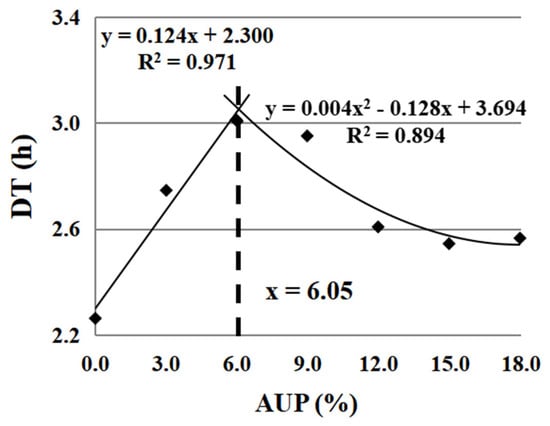
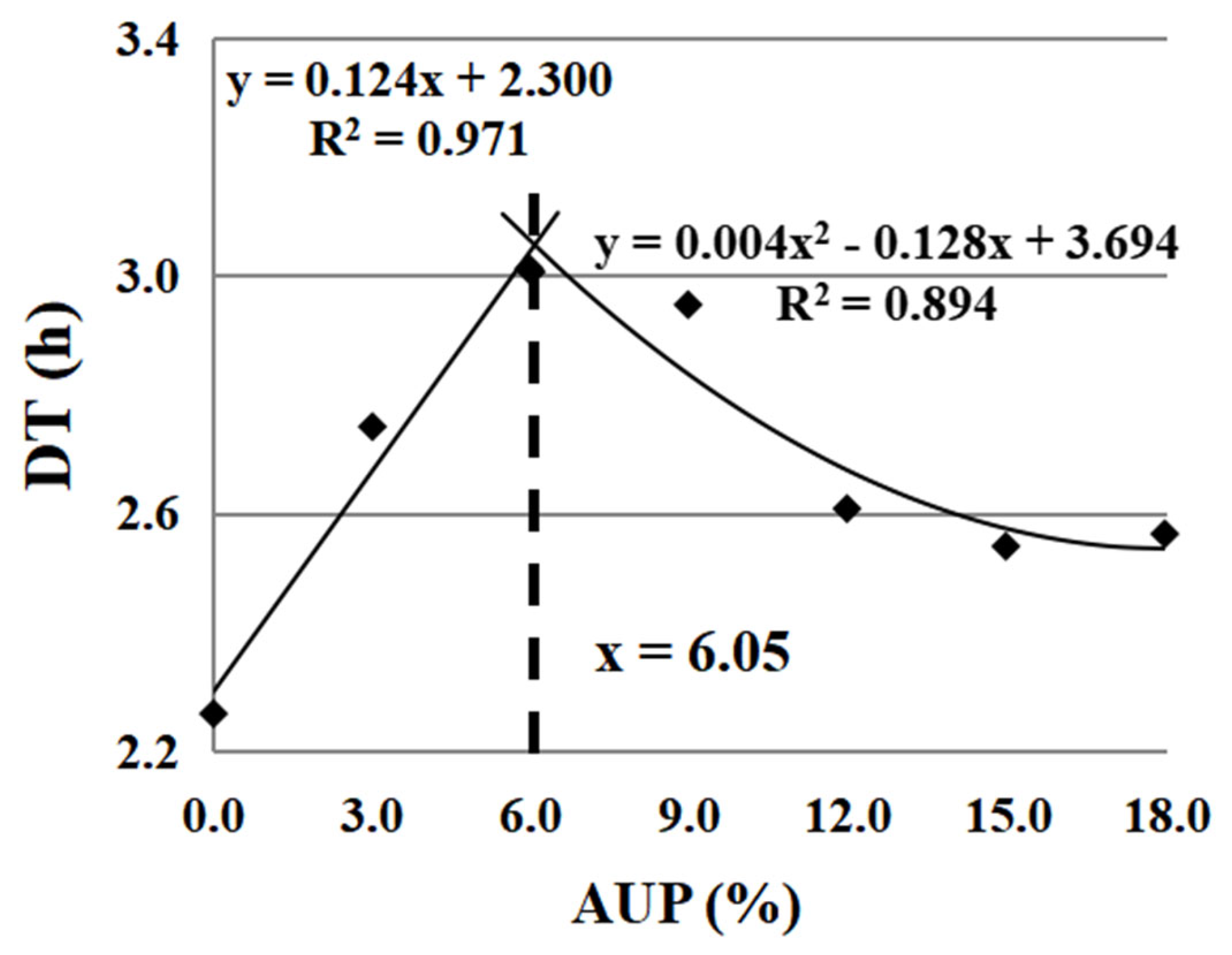
The goal of this study is to assess how dietary Atractylodes lancea ultrafine powder (AUP) affects crucian carp (Carassius auratus) growth, body composition, and hypoxia tolerance. A total of 630 crucian carp (13.21 ± 0.17 g) were fed diets containing 0.0%, 3.0%, 6.0%, 9.0%, 12.0%, 15.0%, and 18.0% AUP for 15 days. In crucian carp, dietary AUP was observed to improve protein content and decrease weight gain and fat content (p < 0.05). The ideal AUP addition level for fish was 13.04%, based on broken-line regression analysis of the protein concentration in fish bodies. The tissues and organs of crucian carp showed increased enzymatic antioxidant activities and non-enzymatic antioxidant levels, indicating that dietary AUP reduced the production of reactive oxygen species (ROS) and inhibited lipid oxidation (p < 0.05). This study shows that dietary AUP has a significant anti-obesity impact in fish, which is strongly linked to boosting the anabolism of protein and antioxidant defense as well as improving glucose metabolism to reduce glucose as the raw material for body fat synthesis. Additionally, under hypoxic conditions, the addition of AUP increased duration time (DT) and decreased crucian carp oxygen consumption rate (p < 0.05). The DT broken-line regression study verified that 6.05% is the ideal AUP level for fish. According to our research, dietary AUP strengthens fish’s resistance to hypoxia by modifying the metabolism of proteins and carbohydrates for energy production and enhancing antioxidant defense in respiration-related tissues and organs. In conclusion, AUP may be a natural way to reduce fish obesity and hypoxic stress.
Key Contribution:
Dietary AUP enhances the hypoxia tolerance by adjusting the metabolism processes of carbohydrates and proteins for energy production in fish. By lowering weight increase and body fat content while raising body protein content in fish, AUP has a remarkable anti-obesity impact. Through both enzymatic and non-enzymatic antioxidant actions, AUP can lower the production of reactive oxygen species (ROS) and lipid oxidation in fish tissues and organs.
1. Introduction
The availability of dissolved oxygen (DO) in aquatic environments critically dominates fish growth [1]. DO can crucially deliver oxygen to tissues to support aerobic metabolism in the fish body and remarkably affects fish farming [2]. However, in shallow freshwater bodies the natural O2 level can vary widely over the course of a day from low levels during the night to sometimes heavy oversaturation during the day [3]. Although aquaculture systems are commonly managed with aeration or water exchange, hypoxic episodes may still occur, particularly under high stocking density, elevated water temperature, and excessive accumulation of organic matter such as uneaten feed and metabolic wastes [4]. These conditions can increase O2 consumption by fish and microorganisms while reducing O2 availability in the water [5,6]. In addition, DO levels may fluctuate over time because of feeding activity, microbial decomposition, diurnal changes, or temporary limitations in aeration efficiency [4,7]. In captivity, fish usually face chronic and repetitive stressors, including hypoxia and the subsequent reoxygenation [5,6]. Hypoxic conditions in aquaculture can damage fish physiology and metabolism [7,8]. According to existing studies, hypoxia-reoxygenation retards fish growth performance and breaks their antioxidant defense mechanisms [1,9,10]. Consequently, it is important to further investigate strategies to alleviate the harmful effect induced by hypoxic stress.
Liu et al. reported that natural products, namely polysaccharides, alkaloids, saponins, flavonoids and active peptides, contribute well to anti-hypoxic treatment for high-altitude disease, which is a typical disease of hypoxia in plateau regions above 2500 m above sea level [11]. It has been reported that the antioxidant activity of herbs decides their anti-hypoxia efficacy [11]. Diets enriched with ascorbic acid, a common antioxidant, reduce the effects of hypoxia insult on juvenile tambaqui (Colossoma macropomum) [12]. Atractylodes lancea, which contains terpenoids, flavonoids, steroids, polysaccharides, etc., known for its many health-promoting qualities, has long been used for apparent antioxidative activities [13]. Therefore, it is reasonable to hypothesize that Atractylodes lancea could cut down hypoxic stress in fish. However, limited data are available regarding how Atractylodes lancea affects hypoxia tolerance in fish. Previous studies have shown that feeding Atractylodes lancea polysaccharides can improve the growth and productive performance in early-weaned piglets and laying hens, respectively [14]. Other reports indicated that Atractylodes lancea and its ethanol extract decreased the body weight and liver lipid content in obese mice [15,16]. Nevertheless, the impact of Atractylodes lancea on the growth performance and body composition in fish has not yet been reported.
The ultrafine powder of herbs presents better therapeutic efficacy than the regular powder of the herbs, known for their small diameter (less than 45 μm, up to 90% of the sample), nice surface properties, higher integrity in chemical composition, and improving dissolution and absorption in the gastrointestinal tract of animals [17]. Consequently, this study highlights the potential protective efficacy of Atractylodes lancea ultrafine powder (AUP) in mitigating hypoxia stress in crucian carp (Carassius auratus), thus assisting in applying it as a solution to improve hypoxia resilience in aquaculture systems, ultimately helping address the critical threats faced in fish farming.
2. Materials and Methods
2.1. Preparation of AUP
The roots of Atractylodes lancea were purchased from the Xuzhou Huaijingtang Trading Co., Ltd. (Xuzhou, China). First of all, the authenticity of Atractylodes lancea was determined using a pharmacopeia. Following the drying process in a blast drying oven (Jinghong DHG-9030A, Shanghai Jinghong Experimental Equipment Co., Ltd., Shanghai, China) at 50 °C, the roots were finely ground into powder using a Chinese medicine grinder (Ronghao RHP-2000A, Changzhou Ronghao Machinery Manufacturing Co., Ltd., Changzhou, China) and passed through a 300-mesh sieve using the procedure described in the literature [18,19], ensuring that the particle size did not exceed 0.045 mm. The processes were kept at below 20 °C to prevent the active ingredients of Atractylodes lancea from deactivation. An amount of 630 g of resulting powder (AUP) was used for the next feed preparation. The dry AUP was stored in airtight containers, protected from light, and kept at −20 °C until further analysis.
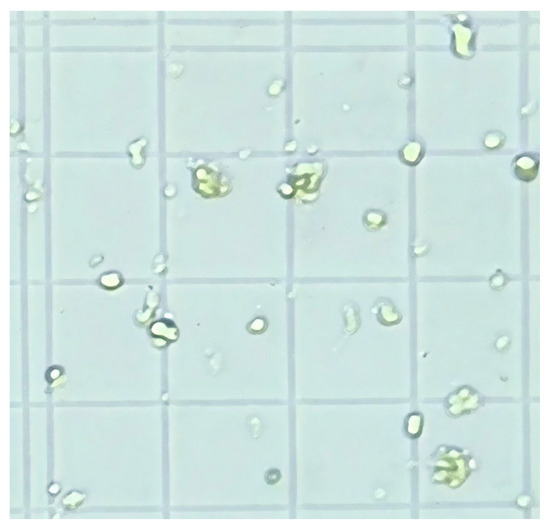
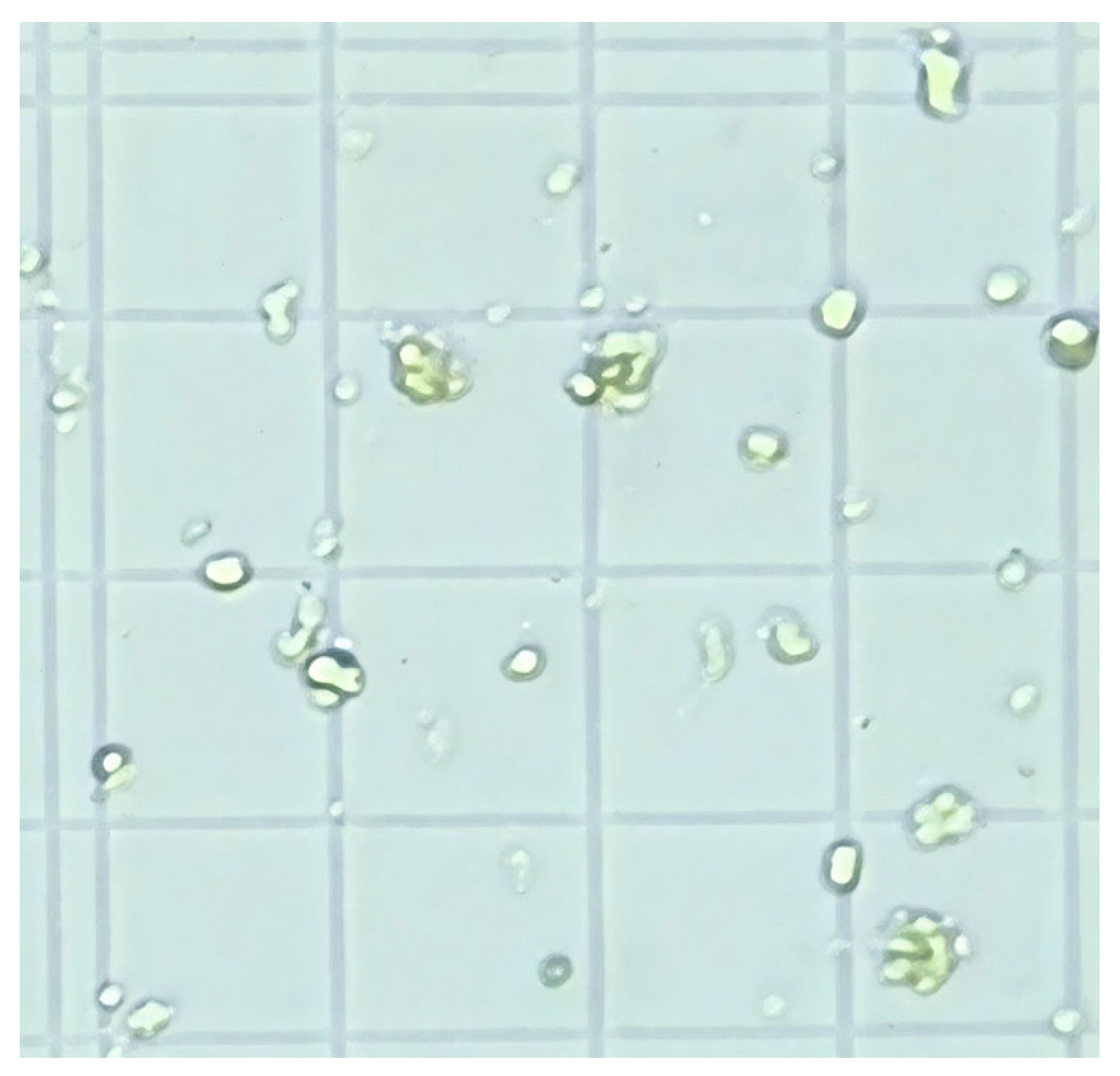
Size distribution of AUP was measured by the hemocytometer method [6]. An amount of 10 mg of AUP was placed into a 10 mL centrifuge tube, added with 5 mL of ultrapure water, and shaken well. Then, the suspension of AUP was injected into the counting plate. The diameter of 200 particles was evaluated on the plate. The average size of particle was determined to be 0.0096 ± 0.0020 mm (Figure 1). Each sample was measured in triplicate.
Figure 1.
Size distribution of Atractylodes lancea ultrafine powder (AUP). The side length of each small square is 0.05 mm in hemocytometer.
2.2. Animal Experiment Diets
Firstly, the levels of moisture, crude protein, crude lipid, and ash in AUP were confirmed with the Association of Official Analytical Chemists (AOAC) methods [20,21]. Dry matter (moisture) was weighed according to weight loss drying at the temperature of 105 °C. Crude protein was calculated by the Kjeldahl method and multiplying the nitrogen by 6.25. The calculation of crude lipid was by Soxhlet extraction with petroleum ether. Ash was calculated from the weight loss after incineration of the samples at 550 °C in a muffle furnace (SX2-8-10, Shanghai SUN Experimental Instrument Co., Ltd., Shanghai, China). Dry matter, crude protein, crude lipid, and ash levels were illustrated in Table 1. The manufacturing procedure of basal and experimental feeds proceeded as followed in the previous literature [22].
Table 1.
Composition of Atractylodes lancea ultrafine powder (AUP).
The basal diet composed 6.07% crude lipid and 34.07% crude protein, which was incorporated with 3.0%, 6.0%, 9.0%, 12.0%, 15.0%, and 18.0% AUP to formulate 6 types of experimental diets, respectively. In order to ensure that each experimental diet has the same crude protein and crude fat content, wheat flour decreased by 12.96%, 25.93%, 38.89%, 51.86%, 64.82%, and 77.79%; corn oil decreased by 10.00%, 20.00%, 30.00%, 40.00%, 50.00%, and 60.00%; and rapeseed meal increased by 14.00%, 28.00%, 42.00%, 56.00%, 70.00%, and 84.00% for compensating for the AUP contribution, respectively. All diets were made into pellet feeds (1.5 mm) and dried at 50 °C. After cooling to room temperature, the feeds, sealed in plastic bags, were preserved at −20 °C for later use. The feeds underwent proximate analyses as per the AOAC methods. Table 2 lists the composition of the basal diet.
Table 2.
Composition and proximate analysis on the basal diet.
2.3. Feeding Trial
Fish farms in Neijiang, China, were the source of crucian carp. Their native habitat is carefully recreated in the laboratory; for example, the temperature is controlled at 22.0 ± 1.0 °C [23]. Experimenters changed the dechlorinated water each day and maintained a natural light cycle. Using tap water as the water source, in compliance with relevant water quality parameters. A cabinet air conditioner (Gree KFR-50LW, Gree Electric Appliances, Inc. of Zhuhai, Zhuhai, China) is used to regulate indoor temperature, thereby controlling water temperature. A mercury thermometer was employed for temperature monitoring, and a water quality analyzer (Octaderm W-II, Wuxi Octaderm Biotechnology Co., Ltd., Wuxi, China) served for measuring the water quality every 2 days. The fish were fed the baseline diet. A total of 630 crucian carps (average weight: 13.21 ± 0.17 g) were placed into 7 experimental groups. Each group had 3 tanks, and each tank had 30 fish. Among all these groups, the group fed with the basic diet was considered the control group, while the remaining 6 groups received diets supplemented with 3.0%, 6.0%, 9.0%, 12.0%, 15.0%, and 18.0% of AUP. Experimenters fed all fish groups 4 times each day and performed rigorous observation to ensure they were satiated with no overfeeding. Uneaten feed particles (feed residues) were counted, and their weight was calculated (weight of uneaten feed particles = number of uneaten particles × average weight of each particle) and used for correction of feed intake (FI).
After the 15 days of raising and fasting for 24 h, fish in each tank were sequentially counted and weighed. The initial number, final number, initial body weight (IBW), final body weight (FBW), and feed consumed were used to calculate the weight gain (WG), the specific growing rate (SGR) [21], FI, feed efficiency (FE) [24], and survival rate (SR) [25].
WG (g fish−1) = FBW (g fish−1) − IBW (g fish−1)
SGR (% day−1) = 100 × [ln FBW (g fish−1) − ln IBW (g fish−1)]/experimental duration (day)
FI (g fish−1) = [feed consumed (g) − feed residues (g)]/final number of fish
FE (%) = 100 × WG/FI
SR (%) = 100 × (final fish count/initial fish count)
At the commencement and conclusion of the feeding trial, body composition samples were collected as follows. Initial sampling: 30 fish were randomly selected from the source population. Final sampling: 5 fish were randomly sampled in tanks. The weight loss of fish after drying at 105 °C was taken into account to confirm the moisture content in the fish body. Subsequently, dried samples were homogenized and then analyzed via a FOSS DA1650 Near-Infrared Reflectance Spectrometer (Fosun Analytical Instruments (Suzhou) Co., Ltd., Suzhou, China) for the content of crude protein, crude lipid, and ash, as per the method of Cheli et al. (2012) and Reddersen et al. (2013) [26,27]. The calculation of body composition content was based on the following formula.
Body composition (%) = dried body composition (%) × [1 − moisture (%)]
2.4. Sampling
For the sample collection, 10 fish from each tank were anesthetized using a 50 mg L−1 benzocaine solution for euthanasia, followed by being chilled on ice for the mitigation of tissue degradation [28]. Fish body weight and ruler measurement were executed for the calculation of condition factor (CF) [29]. Blood samples acquired from each group through caudal puncture were placed into heparinized syringes, followed by 3 min of centrifugation (1000× g, 4 °C) within one hour. The levels of triglyceride (TG), glucose (GLU), total protein (TP), total amino acid (TAA), and plasma ammonia (PA) were measured in plasma that was collected from blood. The red blood cells (RBCs) were preserved at −80 °C for the confirmation of methemoglobin (MetHb), hydrogen peroxide (H2O2) and malondialdehyde (MDA) levels. Subsequently, intestines were stripped from the hepatopancreas among the overall internal organs that were extracted from the abdominal cavity. The hepatosomatic and intestinal weights and intestinal length were measured for the calculation of the hepatosomatic index (HSI), intestosomatic index (ISI) [30], and intestine length index (ILI) [29].
CF (%) = 100 × [body weight (g fish−1)]/[body length (cm)]3
HSI (%) = 100 × [hepatopancreas weight (g fish−1)]/[body weight]
ISI (%) = 100 × [intestine weight (g fish−1)]/[body weight]
ILI (%) = 100 × [intestine length (cm)]/[body length (cm)]
All tissues then underwent liquid nitrogen freezing before being preserved at −80 °C. Intestinal tissues were for the assessment of anti-superoxide anion (ASA) and superoxide dismutase (SOD) activities, and glutathione (GSH) and MDA content. Hepatopancreatic tissues were for the assessment of glutamate-oxaloacetate transaminase (GOT), catalase (CAT), and glutathione peroxidase (GPx) activities and H2O2 content. Also, the gills were quickly isolated and preserved at −80 °C for assays measuring GOT, glutamate-pyruvate transaminase (GPT), and GPx activities and GSH level. To conduct the assays for lactate dehydrogenase (LDH), GOT, and GPT activities as well as H2O2 levels, the muscle tissues were promptly harvested and stored at −80 °C.
2.5. Hypoxia Trial
In our previous study [23], fishes (10 per tank) were weighed for body weight (BW, g) when the feeding experiment was finished. Hypoxia assays were employed using a saturated dissolved oxygen water volume (WV, L) of 29.23 times the BW of the fish. The oxygen consumption rate (OCR, mg g−1 h−1) of the fish body was calculated based on the initial dissolved oxygen (IDO, mg L−1) concentration and final dissolved oxygen (FDO, mg L−1) concentration of the water and duration of hypoxia (DT, h: The period from the closure of the bottle mouth to the loss of balance in the fish was considered the DT) in an experimental bottle using the following formula.
OCR = [(IDO − FDO) × WV]/(DT × BW)
2.6. Ethics Statement
The procedures described above were performed as per the ethical guidelines set by the Institutional Ethics Committee of the Chinese Institute of Chemical Biology. Experiments acquired the approval from the Institutional Animal Care and Use Committee of Neijiang Normal University, ensuring that the research adhered to relevant ethical considerations and guidelines for the humane treatment of animals (Approval Code: JM2023-11, Approval Date: 17 July 2023).
2.7. Biochemical Analysis
Tissue samples underwent homogenization in a solution encompassing 9 part (w/v)-refrigerated physiological saline. Following that, this homogenate was subjected to 20 min of centrifugation (3200× g, 4 °C), with the resulting supernatant stored for analyzing biochemical indicators. The measurement of GOT, GPT, and LDH activities followed the method in the literature [31]. The evaluations of SOD, CAT, GPx, and ASA activities and the GSH level were conducted using the known techniques [23,29]. The measurement of H2O2 and MetHb levels adhered to the method described in the literature [32]. MDA measurement followed the method of literature [33]. Measurement of total soluble proteins was conducted as per Bradford’s methodology [34]. Hb content measurement was based on the following paper [35]. All biochemical indicators in plasma were ascertained using the commercial kits from Nanjing Jiancheng Bioengineering Institute, Nanjing, China.
2.8. Statistical Analysis
All experimental data were in the format of means ± standard deviation (SD). Prior to statistical testing, the Shapiro–Wilk test was used to verify the normality of data distribution, and the Levene test was applied to assess the homogeneity of variances for all variables. Once the assumptions for one-way analysis of variance (ANOVA) were satisfied, significant differences among the experimental groups were assessed using SPSS 13.0 software (SPSS Inc., Chicago, IL, USA). If the ANOVA results demonstrated significant differences (p < 0.05), Duncan’s multiple range test was conducted for post hoc comparisons, identifying the specific group pairs with significant differences. p < 0.05 indicated statistical significance.
3. Results
3.1. Effects of Dietary AUP on Growth Performance in Crucian Carp
As listed in Table 3, compared with participants not receiving the treatment, the supplement to AUP markedly reduced the WG, SGR, and FE (Table 3). A significant decline of WG, SGR, and FE was noted at 6.0%, 6.0%, and 3.0% of AUP supplementation, respectively (p < 0.05, Table 3), whereas fish fed the diet containing 18.0% AUP exhibited the lowest values..
Table 3.
Effect of dietary supplementation with graded levels of Atractylodes lancea ultrafine powder (AUP) for 15 days on growth performance in crucian carp.
3.2. Effects of Dietary AUP on Body and Organ Parameters of Crucian Carp
As presented in Table 4, CF, intestine weight, and ISI initially exhibited an increase followed by decreases with increasing dietary AUP levels in crucian carp. The parameters above showed the maximum value at 12.0%, 3.0%, and 12.0% AUP addition, respectively, but did not differ significantly compared with the control and subsequently declined as the increase in supplement of AUP (Table 4). The intestinal length and ILI at 3.0% of AUP addition were higher than those in the participants not receiving the treatment (p < 0.05); they peaked at 6.0% of AUP addition but subsequently. In contrast to the control, the hepatopancreas weight and HSI were significantly decreased at 9.0% of AUP addition (p < 0.05) and subsequently tended to stabilize (Table 4).
Table 4.
Condition factor (CF), intestinal length, intestinal length index (ILI), intestine weight, intestosomatic index (ISI), hepatopancreas weight and hepatosomatic index (HSI) of crucian carp fed diets containing graded levels of Atractylodes lancea ultrafine powder (AUP) for 15 days.
3.3. Effects of Dietary AUP on Body Composition of Crucian Carp
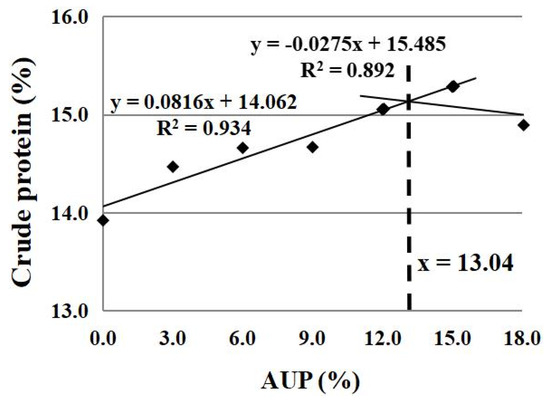
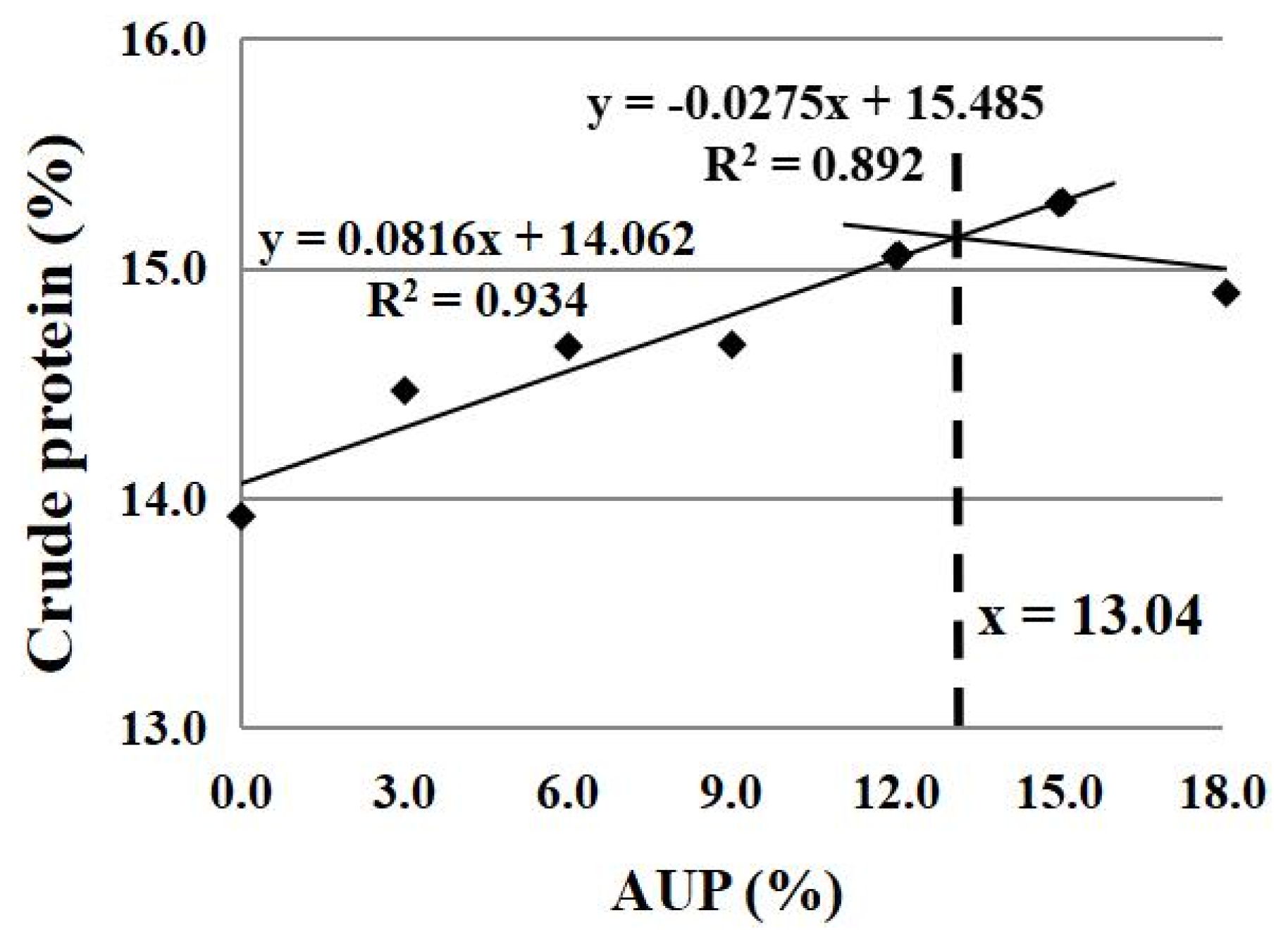
As presented in Table 5, moisture levels showed no significance. Relative to the control group, the crude protein and true protein contents in crucian carp were significantly enhanced at 6.0% and 9.0% of AUP addition, respectively (p < 0.05), and reached the maximum value at 15.0% of AUP addition. According to broken-line regression analysis, the optimal dietary levels of AUP for crude protein content were determined to be 13.04% (Figure 2). The crude lipid content in crucian carp was significantly reduced at 6.0% of AUP addition (p < 0.05), followed by a continuous decrease with rising AUP supplementation (p < 0.05, Table 5).
Table 5.
The contents of moisture, crude protein, crude lipid, ash and true protein in crucian carp fed diets containing graded levels of Atractylodes lancea ultrafine powder (AUP) for 15 days.
Figure 2.
Broken-line regression analysis of crude protein content in crucian carp fed with different concentrations of Atractylodes lancea ultrafine powder (AUP) for 15 days.
3.4. Effects of Dietary AUP on Hypoxic Tolerance in Crucian Carp
Relative to the participants not receiving the treatment, 3.0% of the AUP treatment group exhibited remarkably prolonged hypoxic DT (p < 0.05) and obviously lowered OCR (p < 0.05), and the value reached its maximum and minimum at 6.0% of AUP addition, respectively (Table 6). According to regression analysis that adopted the broken-line model based on DT data, the optimum addition for hypoxia tolerance was 6.05% of AUP (Figure 3).
Table 6.
Effect of dietary supplementation with graded levels of Atractylodes lancea ultrafine powder (AUP) for 15 days on the hypoxic tolerance indicators in crucian carp.
Figure 3.
Broken-line regression analysis of durative time (DT) of crucian carp fed with different concentrations of Atractylodes lancea ultrafine powder (AUP) for 15 days.
3.5. Effects of Dietary AUP on Biochemical Parameters in Plasma of Crucian Carp
In the plasma of crucian carp treated with AUP, the levels of PA, TG, and GLU initially exhibited a decrease followed by increases with increasing dietary AUP levels in crucian carp. They achieved the lowest values at 9.0%, 12.0%, and 9.0% AUP, respectively, and then rose as the supplemental dose of AUP increased (Table 7). In the plasma of crucian carp treated with AUP, the levels of TP and TAA exhibited an increasing-to-decreasing trend. They peaked at 12.0% of AUP and then decreased as the supplemental level of AUP rose (Table 7).
Table 7.
The content of plasma ammonia (PA), total amino acids (TAAs), total protein (TP), glucose (GLU) and triglyceride (TG) in plasma of crucian carp fed diets containing graded levels of Atractylodes lancea ultrafine powder (AUP) for 15 days.
3.6. Effects of Dietary AUP on Biochemical Index in Intestines of Crucian Carp
The intestines of crucian carp fed 9.0%, 3.0%, and 9.0% of AUP showed a significant increase in ASA and SOD activities, as well as the GSH level, in comparison to the control group (p < 0.05), respectively. These values peaked at 9.0%, 9.0%, and 12.0% of AUP addition in feeds, respectively, and then decreased as the supplemental level of AUP increased (Table 8). Additionally, in the intestines of crucian carp treated with AUP, the MDA level initially exhibited a decrease followed by increases, meeting the minimum at 15.0% of AUP (p < 0.05) and then rising as the supplemental amount of AUP increased (Table 8).
Table 8.
The activities of anti-superoxide anion (ASA) and superoxide dismutase (SOD) as well as the content of malondialdehyde (MDA) and reduced glutathione (GSH) in intestines of crucian carp fed diets containing graded levels of Atractylodes lancea ultrafine powder (AUP) for 15 days.
3.7. Effects of Dietary AUP on Biochemical Index in Hepatopancreas of Crucian Carp
The GOT, CAT, and GPx activities in the hepatopancreas of crucian carp were significantly increased by dietary AUP supplementation at concentrations of 12.0%, 3.0%, and 3.0% in comparison to the control, respectively. These activities peaked at 12.0%, 6.0%, and 6.0% of AUP, respectively, and then decreased as the supplemental level of AUP increased (Table 9). In the hepatopancreas of crucian carp treated with AUP, the H2O2 level showed a decreasing-to-increasing trend, reaching its lowest values in 12.0% AUP (p < 0.05) and then rising as the supplemental level of AUP increased (Table 9).
Table 9.
The activities of glutamate-oxaloacetate transaminase (GOT), catalase (CAT) and glutathione peroxidase (GPx), as well as level of hydrogen peroxide (H2O2), in hepatopancreas of crucian carp fed diets containing graded levels of Atractylodes lancea ultrafine powder (AUP) for 15 days.
3.8. Effects of Dietary AUP on Biochemical Indicators in RBCs of Crucian Carp
The H2O2 and MDA levels exhibited a gradual decrease at rising concentrations of AUP addition in RBCs of crucian carp and were higher than those in the control group at 3.0% and 6.0% AUP additions (p < 0.05, Table 10). The MetHb content demonstrated a decreasing-to-increasing trend, reaching the lowest value at 12.0% of AUP addition (p < 0.05), subsequently ascended as the supplemental level of AUP increased (Table 10).
Table 10.
The levels of methemoglobin (MetHb), hydrogen peroxide (H2O2) and malondialdehyde (MDA) in red blood cells of crucian carp fed diets containing graded levels of Atractylodes lancea ultrafine powder (AUP) for 15 days.
3.9. Effects of Dietary AUP on Biochemical Parameters in Gills of Crucian Carp
In contrast to the control, dietary AUP supplementation significantly enhanced GSH level at 15.0% AUP addition (p < 0.05), which gradually increased with the AUP concentrations in diets in gills of crucian carp (Table 11). The GOT and GPT activities clearly rose at 3.0% and 9.0% AUP addition compared to the control group (p < 0.05), peaked at 6.0% and 9.0% AUP addition, respectively, and then declined as the AUP addition increased (Table 11). The activity of GPx peaked at 6.0% AUP addition and subsequently declined with higher AUP levels (p < 0.05, Table 11).
Table 11.
The activities of glutamate-oxaloacetate transaminase (GOT), glutamate-pyruvate transaminase (GPT) and glutathione peroxidase (GPx) as well as the contents of reduced glutathione (GSH) in gills of crucian carp fed diets containing graded levels of Atractylodes lancea ultrafine powder (AUP) for 15 days.
3.10. Effects of Dietary AUP on Biochemical Indicators in Muscle of Crucian Carp
Dietary AUP supplementation significantly raised the GOT activity in crucian carp muscle at 9.0% AUP addition (p < 0.05), peaked at 12.0% AUP addition, and then decreased as AUP addition increased (Table 12). At 3.0% and 9.0% AUP addition, respectively, dietary AUP supplementation markedly increased GPT and LDH activities in comparison to the control (p < 0.05). As AUP concentrations in feeds increased, these activities gradually increased in crucian carp muscle (Table 12). The H2O2 level in crucian carp muscle was considerably lowered by dietary AUP supplementation at 6.0% (p < 0.05) compared to the control, and it fell marginally as AUP concentrations increased in diets (Table 12).
Table 12.
The activities of glutamate-oxaloacetate transaminase (GOT), glutamate-pyruvate transaminase (GPT) and lactate dehydrogenase (LDH), as well as the content of hydrogen peroxide, (H2O2) in muscle of crucian carp fed diets containing graded levels of Atractylodes lancea ultrafine powder (AUP) for 15 days.
4. Discussion
4.1. Dietary AUP Reduced the Growth Performance in Fish
In fish, FE, WG, and SGR can reflect the growth performance [36,37]. The current results showed that crucian carp fed diets enriched with AUP decreased WG, SGR, and FE, which is consistent with previous findings that Atractylodes lancea therapy decreased mouse body weight [16]. According to our research, eating AUP reduces fish growth performance. The digestive and absorptive capacities of fish are favorably connected with their growth [38]. The intestines and hepatopancreas are essential digestive organs in fish that are critical for the absorption and processing of nutrients [39]. According to our research, crucian carp’s intestinal length and ILI were enhanced by dietary AUP. However, the intestine weight and ISI were not significantly improved in AUP-fed crucian carp. Moreover, a significant reduction in the hepatopancreatic weight and HSI was observed in AUP-fed crucian carp. The aforementioned findings imply that eating AUP may prevent fish from developing hepatopancreas. As of right now, no research has been done on the effects of AUP on fish digestive organs. Since digestive enzymes aid in the breakdown of nutrients and directly contribute to increased appetite and nutrient consumption, fish digestive capacity is primarily dependent on the effectiveness of digestive enzyme systems and the absorptive capacity of the intestinal epithelium [40]. Among these, lipase facilitates the hydrolysis of ester bonds in substrates that include phospholipids, cholesterol esters, and triglycerides [41]. One study found that the ethanol extract of Atractylodes lancea dramatically inhibited lipase in humans [15]. Taken together, dietary AUP reduces the growth performance by inhibiting the hepatopancreatic development and the lipase activity in fish.
4.2. The Anti-Obesity Effect of AUP in Fish
At present, the excessive accumulation of lipid in the fish body and liver has become one of the urgent problems to be solved in the aquaculture industry [42]. The anti-obesity effect manifests as the decreases in WG and body fat content in animals [16]. In this study, dietary AUP reduced the lipid content and increased the protein content in crucian carp. Broken-line regression analysis of protein content in the fish body indicated that the inclusion level of AUP at 13.04% in the diet showed the maximum level. It has been reported that Atractylodes lancea lowers the hepatic lipid content in mice [16]. The above results show that AUP has the anti-obesity effect on fish, conforming to the finding that the ethanol extract of Atractylodes lancea has the anti-obesity effect on obesity in mice [15].
Changes in protein content in fish bodies may be closely related to their metabolism. Protein is the primary energy source in fish [24]. Aminotransferases GOT and GPT are primarily responsible for controlling protein metabolism; their forward reactions direct amino acids into the TCA cycle for energy production by deamination [43,44], whereas their reverse reactions enable amino acid anabolism [45,46]. According to our research, crucian carp’s hepatopancreatic GOT and muscle GOT and GPT activities were improved by dietary AUP supplementation. PA content is positively associated with the catabolic breakdown of protein because ammonia is the primary byproduct of protein catabolism in teleosts [47]. TP and TAA concentration in plasma are also positively correlated with the synthesis efficiency of protein [48]. According to our finding, dietary AUP reduced the PA content and enhanced the TP and TAA concentration in plasma of crucian carp. Existing studies have not studied how Atractylodes lancea affects the protein metabolism in fish. The results above indicate that AUP improves the anabolism of protein, which may be the reason for the increase in protein content in the fish’s body.
The change in lipid content in a fish’s body may be well related to the carbohydrate metabolism. Dietary carbohydrates are substrates essential for the synthesis of body fat and non-essential amino acids, which provide animals with energy to maintain their normal growth [49]. As a simple carbohydrate that can be directly digested and absorbed, GLU is one of the basic energy substances [50,51]. The GLU metabolism process can provide the energy for fish to maintain normal physiological functions, thereby reducing the fish body’s dependence on protein and fat consumption [50,51]. The TG level in plasma is considered an important indicator related to lipid metabolism and can reflect the nutritional status of fish [52]. The experimental data showed that dietary AUP reduced the content of TG and GLU in the plasma of crucian carp. The results in this study are consistent with the report that dietary Atractylodes lancea reduced the TG and GLU levels in the serum of high-fat diet (HFD)-fed mice [16]. The decrease in plasma TG content may be closely related to the reduced lipase activity [15]. As a vital enzyme in anaerobic glycolysis, LDH stimulates energy generation via GLU metabolism [53]. Our study confirmed the efficacy of dietary AUP supplementation in strengthening LDH activity in crucian carp muscle. Previous studies have not well elucidated how Atractylodes lancea affects the LDH activity in metabolizing organs of fish. In this study, dietary AUP improves the GLU metabolism for energy supply in fish. The results above confirm that dietary AUP can reduce the lipid content in a fish’s body by reducing GLU as the raw material for synthesizing body fat.
4.3. Dietary AUP Intensified the Antioxidant Capacity in Fish
Organisms can continuously produce ROS during metabolic processes [54]. ROS, such as O2−, H2O2 and ·OH, oxidizes the cellular components of lipids and proteins, resulting in the lipid oxidation and inactivation of key enzymes in fish cells [53]. In our study, AUP addition considerably raised the ASA activity in intestines and reduced the H2O2 level in hepatopancreas and muscle of crucian carp. Dietary AUP restricted the formation of ROS in fish tissues and organs. This result conforms to the previous report that atractylodin, a major active ingredient of Atractylodes lancea, decreased the ROS level in the liver of HFD mice [55]. Lipid oxidation, manifested by higher MDA levels, is a crucial biomarker of ROS-induced damage [56]. In our study, dietary AUP reduced the MDA level in the intestines of crucian carp, consistent with the findings of other studies that dietary atractylodin considerably reduced the MDA level in the liver of HFD mice [55]. The results suggest that AUP addition decreases lipid oxidation by inhibiting ROS generation in fish.
The antioxidant systems in fish may dominate the effects of AUP on ROS and lipid oxidation. Fishes have evolved enzymatic antioxidants that counteract ROS in their organs and tissues [57]. SOD, a vital enzyme in antioxidant systems, transforms O2− into H2O2 and O2 [56]. Subsequently, enzymes of GPx and CAT participate in the detoxification of H2O2 [58]. The administration of Atractylodes lancea polysaccharide produced a remarkably stronger SOD activity in the intestines of mice induced by cisplatin [59]. This study found that dietary AUP significantly increased the SOD activity in the intestines and CAT and GPx activities in the hepatopancreas of crucian carp. Fish neutralize intracellular ROS primarily by relying on non-enzymatic antioxidants of GSH [57]. The finding in the study that AUP addition elevated the GSH level in crucian carps’ intestines conforms to a previous study demonstrating that dietary polysaccharides from Atractylodes lancea enhanced GSH levels in intestines of mice induced by cisplatin [59]. Previous studies seldom highlight the variation in the above parameters in fish digestive organs after AUP addition. These findings demonstrate that dietary AUP can scavenge ROS and prevent lipid oxidation by raising the levels of both enzymatic and non-enzymatic antioxidants in fish tissues and organs. This is one of the rare research projects that thoroughly investigates the effects of AUP on oxidative stress indicators in fish tissues and organs: it shows that dietary AUP may improve fish vitality and stress tolerance in aquaculture environments.
4.4. Dietary AUP Intensified the Hypoxia Tolerance in Fish
DO is a vital limiting factor in fish farming since sufficient oxygen levels essentially maintain the fishes’ aerobic metabolism [2]. The oxygen concentration changes obviously in freshwater ecosystems seasonally and daily, severely restricting the growth and development of fish suffering hypoxia and subsequent reoxygenation events [3]. In this study, dietary AUP supplementation increased DT in hypoxic crucian carp, resulting in increased hypoxia tolerance. During this process, DO level in the water decreased from 8.17 mg L−1 to 0.11 mg L−1 in the experimental bottle. The ideal AUP addition levels for fish were found to be 6.05% using broken-line regression analysis of DT. Few studies have looked at how AUP affects fish in hypoxic environments. Fish usually have their metabolic rate adjusted considering the low-oxygen environments [60]. One important physiological adaptation mechanism that improves long-term survival performance in hypoxic conditions is metabolic rate depression [61]. OCR critically indicates the aerobic metabolic activity [62,63]. In this study, dietary AUP addition reduced OCR in crucian carp under hypoxic conditions, hinting at the efficacy of dietary AUP in intensifying fish hypoxia tolerance by attenuating aerobic metabolic activity. The fish gill is an osmoregulatory organ and a respiratory organ [64]. GOT and GPT primarily participate in fish protein metabolism [40,45]. Collectively, AUP supplementation increased GPT and GOT activities in the gills of crucian carp. According to our finding, dietary AUP benefits protein metabolism and energy supply in fish gills. Of note, in a hypoxic environment, animals produce energy primarily by virtue of anaerobic glycolysis [61,65]. On these accounts, AUP reduces protein catabolism and stimulates anaerobic glycolysis in fish, thereby intensifying the hypoxia tolerance. All these necessitate the elucidation of the promoting mechanisms of AUP against hypoxia resilience in fish in future research.
During breathing, RBCs are primarily responsible for the transportation of O2 and the removal of CO2 [66]. In RBCs, Hb is an O2-carrying protein, which can bind to O2 to form oxygenated Hb that takes charge of releasing O2 to the animal tissues [23]. Oxygenated Hb can undergo spontaneous oxidation, producing O2− and MetHb incapable of binding or transporting O2 in RBCs [67]. O2− dismutation promotes H2O2 to be formed, and the H2O2 reacts with heme Fe2+ for the generation of ·OH [66]. Hypoxia is accompanied by higher MDA levels in gills of Mugil cephalus [68]. The present investigation revealed the decreased levels of MetHb, H2O2 and MDA in RBCs of crucian carp fed with AUP. In harmony with the present results, the Atractylodes lancea polysaccharide decreased the H2O2 level in the intestines of mice induced by cisplatin [59]. These results demonstrate the reduced ROS production and the oxidation of cellular components. In aquatic creatures, antioxidants can play a critical role in preserving the health and functionality of tissues and organs [69]. Fish gills are susceptible to ROS damage because they are frequently subjected to environmental stress and exhibit large concentrations of hemoglobin and erythrocytes [64]. This study confirmed that AUP addition enhanced the GPx activity and GSH level in crucian carp gills, which conforms to a previous study demonstrating that dietary atractylodin elevated the GSH level in the liver of HFD mice [55]. Seldom have studies emphasized how AUP affects the aforementioned characteristics in fish gills and red blood cells. In our study, dietary AUP supplementation attenuates ROS generation and the oxidation of cellular components through strengthening the enzymatic antioxidant activity and non-enzymatic antioxidant level, indicating an improved antioxidant capacity in fish RBCs and gills. According to these theories, adding AUP to fish diets increases their ability to withstand hypoxia by boosting the antioxidant capacity of their respiration-related tissues and organs.
5. Conclusions
To sum up, dietary AUP reduces the growth performance of fish and has a remarkable anti-obesity effect. The broken-line regression analysis of protein content in the fish body confirms the optimal AUP addition levels for fish to be 13.04%. In our study, the anti-obesity effects of AUP on fish can be explained by the enhanced GLU metabolism for reducing GLU as the raw material for synthesizing body fat and improving the anabolism of protein and antioxidant defense. Additionally, dietary AUP increases antioxidant defense in fish respiration-related tissues and organs and modifies the metabolism of proteins and carbs for energy production, hence enhancing hypoxia tolerance. The ideal AUP addition level for fish is 6.05%, according to the DT broken-line regression analysis. According to this study, AUP naturally reduces fish stress and obesity brought on by hypoxia, offering a possible dietary approach for enhancing fish obesity and resistance in low-oxygen environments.
Author Contributions
Conceptualization: T.Z., J.P., H.L. and G.C.; Data curation: T.Z., J.P., Y.Y., M.L., X.S. and T.X.; Formal analysis: H.L., T.Z. and J.P.; Investigation: T.Z., J.P., Y.Y., M.L., X.S. and T.X.; Methodology: H.L., G.C., Q.Y., J.X., X.S. and T.X.; Project administration: H.L., T.Z. and J.X.; Supervision: Q.Y. and G.C.; Funding acquisition: H.L. and Q.Y.; Validation and visualization: H.L., T.Z. and J.X.; Writing—review and editing: H.L.; Writing—original draft preparation: T.Z. and H.L. All authors have read and agreed to the published version of the manuscript.
Funding
This work was supported by the Sichuan Science and Technology Program [grant number 2025ZNSFSC0206] and the Talent Program of Neijiang Normal University [grant number R2019015].
Institutional Review Board Statement
All procedures were approved by the Neijiang Normal University Institutional Animal Care and Use Committee (Approval Code: JM2023-11 and approval date: 17 July 2023).
Data Availability Statement
The data of this study can be provided by the corresponding author upon request.
Conflicts of Interest
The authors declare no conflicts of interest.
References
- Mustafa, S.A.; Al-Subiai, S.N.; Davies, S.J.; Jha, A.N. Hypoxia-induced oxidative DNA damage links with higher level biological effects including specific growth rate in common carp, Cyprinus carpio L. Ecotoxicology 2011, 20, 1455–1466. [Google Scholar] [CrossRef] [Scilit] [PubMed]
- Mohsen, A.-T.; Monier, M.N.; Hossein, H.S.; Caterina, F. Fish response to hypoxia stress: Growth, physiological, and immunological biomarkers. Fish Physiol. Biochem. 2019, 45, 997–1013. [Google Scholar] [CrossRef] [Scilit] [PubMed]
- Lushchak, V.I.; Bagnyukova, T.V. Hypoxia induces oxidative stress in tissues of a goby, the rotan Perccottus glenii. Comp. Biochem. Physiol. Part B 2007, 148, 390–397. [Google Scholar] [CrossRef] [Scilit] [PubMed]
- Boyd, C.E.; Torrans, E.L.; Tucker, C.S. Dissolved Oxygen and Aeration in Ictalurid Catfish Aquaculture. J. World Aquac. Soc. 2018, 49, 7–70. [Google Scholar] [CrossRef] [Scilit]
- Nikinmaa, M. Oxygen-dependent cellular functions—Why fishes and their aquatic environment are a prime choice of study. Comp. Biochem. Physiol. Part A Mol. Integr. Physiol. 2002, 133, 1–16. [Google Scholar] [CrossRef] [Scilit] [PubMed]
- Li, H.-T.; Wu, M.; Wang, J.; Qin, C.-J.; Long, J.; Zhou, S.-S.; Yuan, P.; Jing, X.-Q. Protective role of Angelica sinensis extract on trichlorfon-induced oxidative damage and apoptosis in gills and erythrocytes of fish. Aquaculture 2020, 519, 734895. [Google Scholar] [CrossRef] [Scilit]
- Pollock, M.S.; Clarke, L.M.J.; Dubé, M.G. The effects of hypoxia on fishes: From ecological relevance to physiological effects. Environ. Rev. 2007, 15, 1–14. [Google Scholar] [CrossRef] [Scilit]
- Remen, M.; Oppedal, F.; Torgersen, T.; Imsland, A.K.; Olsen, R.E. Effects of cyclic environmental hypoxia on physiology and feed intake of post-smolt Atlantic salmon: Initial responses and acclimation. Aquaculture 2011, 326, 148–155. [Google Scholar] [CrossRef] [Scilit]
- Lushchak, V.I.; Lushchak, L.P.; Mota, A.A.; Hermes-Lima, M. Oxidative stress and antioxidant defenses in goldfish Carassius auratus during anoxia and reoxygenation. Am. J. Physiol.-Regul. Integr. Comp. Physiol. 2001, 280, R100–R107. [Google Scholar] [CrossRef] [Scilit] [PubMed]
- Jordan, R.; Rachel, L. Thresholds for Reduction in Fish Growth and Consumption Due to Hypoxia: Implications for Water Quality Guidelines to Protect Aquatic Life. Environ. Manag. 2022, 70, 431–447. [Google Scholar] [CrossRef] [Scilit] [PubMed]
- Liu, J.; Ge, Z.; Jiang, X.; Zhang, J.; Sun, J.; Mao, X. A comprehensive review of natural products with anti-hypoxic activity. Chin. J. Nat. Med. 2023, 21, 499–515. [Google Scholar] [CrossRef] [Scilit] [PubMed]
- Chagas, E.C.; Val, A.L. Ascorbic acid reduces the effects of hypoxia on the Amazon fish tambaqui. J. Fish Biol. 2006, 69, 608–612. [Google Scholar] [CrossRef] [Scilit]
- Wang, S.; Yang, Y.; Wang, Y.; Wang, W.; Zhang, M.; Chen, Y. Chemical composition and pharmacological activities of Atractylodes lancea: A review. Asian J. Tradit. Med. 2024, 19, 159–171. [Google Scholar]
- Gao, Y.; Wang, D.; Ma, X.; Li, J.; Wang, D.; Chen, B.; Yang, X.; Leng, H. The biological function of Atractylodes lancea and its application in animal husbandry: A review. Front. Vet. Sci. 2024, 11, 1518433. [Google Scholar] [CrossRef] [Scilit] [PubMed]
- Ping, J.; Julie, T.-C.; Brandon, C.; Mesfin, Y.; Mandee, H.; Mei, H.; Catherine, M.; Misun, O.; Hyunjin, K.; Min, C.; et al. Lipase inhibition and antiobesity effect of Atractylodes lancea. Planta Medica 2014, 80, 577–582. [Google Scholar] [CrossRef] [Scilit] [PubMed]
- Song, G.Y.; Kim, S.M.; Back, S.; Yang, S.B.; Yang, Y.M. Atractylodes Lancea and Its Constituent, Atractylodin, Ameliorates Metabolic Dysfunction-Associated Steatotic Liver Disease via AMPK Activation. Biomol. Ther. 2024, 32, 778–792. [Google Scholar] [CrossRef] [Scilit] [PubMed]
- Li, Z.X.; Zhao, G.D.; Xiong, W.; Linghu, K.G.; Ma, Q.S.; Cheang, W.S.; Yu, H.; Wang, Y. Immunomodulatory effects of a new whole ingredients extract from Astragalus: A combined evaluation on chemistry and pharmacology. Chin. Med. 2019, 14, 12. [Google Scholar] [CrossRef] [Scilit] [PubMed]
- Yang, L.-W.; Sun, P.; Gai, G.-S.; Yang, Y.-F.; Wang, Y.-R. Physicochemical characterization of Baizhi particles by ultrafine pulverization. Int. J. Miner. Metall. Mater. 2011, 18, 247–251. [Google Scholar] [CrossRef]
- Yue, J.; Lu, C.Q.; Lin, H.Y.; Wang, X.N.; Zheng, J.Q.; Gooneratne, R.; Chen, J.J. Effect of Ultrafine Pulverization of Senecio Scandens on Growth, Immune System and Faecal Microorganisms in Piglets. Pak. Vet. J. 2016, 36, 425–430. [Google Scholar]
- ShiYen, S.; ShuLin, S. Juvenile tilapia (Oreochromis niloticus × Oreochromis aureus) requires dietary myo-inositol for maximal growth. Aquaculture 2005, 243, 273–277. [Google Scholar] [CrossRef] [Scilit]
- Zhou, X.Q.; Zhao, C.R.; Jiang, J.; Feng, L.; Liu, Y. Dietary lysine requirement of juvenile Jian carp (Cyprinus carpio var. Jian). Aquac. Nutr. 2008, 14, 381–386. [Google Scholar] [CrossRef] [Scilit]
- Li, H.; Yang, D.; Li, Z.; He, M.; Li, F.; Jiang, J.; Tang, S.; Peng, P.; Du, W.; Ma, Y.; et al. Effects of Angelica sinensis extracts on lipid oxidation in fish feeds and growth performance of juvenile Jian carp (Cyprinus carpio var. Jian). Anim. Nutr. 2019, 5, 109–114. [Google Scholar] [CrossRef] [Scilit] [PubMed]
- Li, H.; Lu, L.; Wu, M.; Xiong, X.; Luo, L.; Ma, Y.; Liu, Y. The effects of dietary extract of mulberry leaf on growth performance, hypoxia-reoxygenation stress and biochemical parameters in various organs of fish. Aquac. Rep. 2020, 18, 100494. [Google Scholar] [CrossRef] [Scilit]
- Cui, Y.; Ma, Q.; Limbu, S.M.; Du, Z.; Zhang, N.; Li, E.; Chen, L. Effects of dietary protein to energy ratios on growth, body composition and digestive enzyme activities in Chinese mitten-handed crab, Eriocheir sinensis. Aquac. Res. 2017, 48, 2243–2252. [Google Scholar] [CrossRef] [Scilit]
- Ai, Q.; Mai, K.; Tan, B.; Xu, W.; Zhang, W.; Ma, H.; Liufu, Z. Effects of dietary vitamin C on survival, growth, and immunity of large yellow croaker, Pseudosciaena crocea. Aquaculture 2006, 261, 327–336. [Google Scholar] [CrossRef] [Scilit]
- Cheli, F.; Battaglia, D.; Pinotti, L.; Baldi, A. State of the art in feedstuff analysis: A technique-oriented perspective. J. Agric. Food Chem. 2012, 60, 9529–9542. [Google Scholar] [CrossRef] [Scilit] [PubMed]
- Reddersen, B.; Fricke, T.; Wachendorf, M. Effects of sample preparation and measurement standardization on the NIRS calibration quality of nitrogen, ash and NDFom content in extensive experimental grassland biomass. Anim. Feed Sci. Technol. 2013, 183, 77–85. [Google Scholar] [CrossRef] [Scilit]
- Xu, J.; Chen, G.; Wu, M.; Yang, Q.; Li, H. The Extract of Astragalus membranaceus Inhibits Lipid Oxidation in Fish Feed and Enhances Growth Performance and Antioxidant Capacity in Jian Carp (Cyprinus carpio var. Jian). Fishes 2023, 8, 594. [Google Scholar] [CrossRef] [Scilit]
- Jiang, W.D.; Feng, L.; Liu, Y.; Jiang, J.; Zhou, X.Q. Growth, digestive capacity and intestinal microflora of juvenile Jian carp (Cyprinus carpio var. Jian) fed graded levels of dietary inositol. Aquac. Res. 2009, 40, 955–962. [Google Scholar] [CrossRef] [Scilit]
- Li, H.; Tang, S.; Du, W.; Jiang, J.; Peng, P.; Yuan, P.; Liao, Y.; Long, J.; Zhou, S. The effects of ethoxyquin and Angelica sinensis extracts on lipid oxidation in fish feeds and growth, digestive and absorptive capacities and antioxidant status in juvenile red carp (Cyprinus carpio var. xingguonensis): A comparative study. Fish. Physiol. Biochem. 2018, 45, 43–61. [Google Scholar] [CrossRef] [Scilit] [PubMed]
- Hong, Y.; Jiang, W.; Kuang, S.; Hu, K.; Tang, L.; Liu, Y.; Jiang, J.; Zhang, Y.; Zhou, X.; Feng, L. Growth, digestive and absorptive capacity and antioxidant status in intestine and hepatopancreas of sub-adult grass carp Ctenopharyngodonidella fed graded levels of dietary threonine. J. Anim. Sci. Biotechnol. 2015, 6, 34. [Google Scholar] [CrossRef] [Scilit] [PubMed]
- Li, H.-T.; Feng, L.; Jiang, W.-D.; Liu, Y.; Jiang, J.; Li, S.-H.; Zhou, X.-Q. Oxidative stress parameters and anti-apoptotic response to hydroxyl radicals in fish erythrocytes: Protective effects of glutamine, alanine, citrulline and proline. Aquat. Toxicol. 2013, 126, 169–179. [Google Scholar] [CrossRef] [Scilit] [PubMed]
- Maqsood, S.; Benjakul, S. Comparative studies of four different phenolic compounds on in vitro antioxidative activity and the preventive effect on lipid oxidation of fish oil emulsion and fish mince. Food Chem. 2009, 119, 123–132. [Google Scholar] [CrossRef] [Scilit]
- Bradford, M.M. A rapid and sensitive method for the quantitation of microgram quantities of protein utilizing the principle of protein-dye binding. Anal. Biochem. 1976, 72, 248–254. [Google Scholar] [CrossRef] [PubMed]
- Drabkin, D.L. Spectrophotometric studies; the crystallographic and optical properties of the hemoglobin of man in comparison with those of other species. J. Biol. Chem. 1946, 164, 703–723. [Google Scholar] [CrossRef] [Scilit] [PubMed]
- Jin, M.; Lu, Y.; Pan, T.; Zhu, T.; Yuan, Y.; Sun, P.; Zhou, F.; Ding, X.; Zhou, Q. Effects of dietary n-3 LC-PUFA/n-6 C18 PUFA ratio on growth, feed utilization, fatty acid composition and lipid metabolism related gene expression in black seabream, Acanthopagrus schlegelii. Aquaculture 2019, 500, 521–531. [Google Scholar] [CrossRef] [Scilit]
- Choi, J.; Lee, K.W.; Han, G.S.; Byun, S.-G.; Lim, H.J.; Kim, H.S. Dietary inclusion effect of krill meal and various fish meal sources on growth performance, feed utilization, and plasma chemistry of grower walleye pollock (Gadus chalcogrammus, Pallas 1811). Aquac. Rep. 2020, 17, 100331. [Google Scholar] [CrossRef] [Scilit]
- Zhou, X.Q.; Zhao, C.R.; Lin, Y. Compare the effect of diet supplementation with uncoated or coated lysine on juvenile Jian Carp (Cyprinus carpio Var. Jian). Aquac. Nutr. 2007, 13, 457–461. [Google Scholar] [CrossRef] [Scilit]
- Liu, Y.; Feng, L.; Jiang, J.; Liu, Y.; Zhou, X.Q. Effects of dietary protein levels on the growth performance, digestive capacity and amino acid metabolism of juvenile Jian carp (Cyprinus carpio var. Jian). Aquac. Res. 2009, 40, 1073–1082. [Google Scholar] [CrossRef] [Scilit]
- Li, H.; Wu, M.; Jiang, J.; Sun, X.; Chen, L.; Feng, M.; Yuan, D.; Wen, Z.; Qin, C. The extracts of Angelica sinensis restore the digestive and absorptive capacity through improving antioxidant status in digestive organs of fish treated with trichlorfon. Aquac. Res. 2019, 50, 490–504. [Google Scholar] [CrossRef] [Scilit]
- Howard, W.; Schotz, M.C. The lipase gene family. J. Lipid Res. 2002, 43, 993–999. [Google Scholar] [CrossRef] [Scilit] [PubMed]
- Chunhong, H.; Tiaoyi, X.; Yi, H.U.; Yurong, Z.; Qiaolin, L.I.U. Analysis on Research Status of Fatty Liver Disease in Aquaculture Fish. Chin. J. Anim. Nutr. 2014, 26, 1715–1722. [Google Scholar] [CrossRef]
- Gottlieb, M.; Wang, Y.; Teichberg, V.I. Blood-mediated scavenging of cerebrospinal fluid glutamate. J. Neurochem. 2003, 87, 119–126. [Google Scholar] [CrossRef] [Scilit] [PubMed]
- Boyko, M.; Stepensky, D.; Gruenbaum, B.F.; Gruenbaum, S.E.; Melamed, I.; Ohayon, S.; Glazer, M.; Shapira, Y.; Zlotnik, A. Pharmacokinetics of glutamate-oxaloacetate transaminase and glutamate-pyruvate transaminase and their blood glutamate-lowering activity in naïve rats. Neurochem. Res. 2012, 37, 2198–2205. [Google Scholar] [CrossRef] [Scilit] [PubMed]
- Metón, I.; Mediavilla, D.; Caseras, A.; Cantó, E.; Fernández, F.; Baanante, I.V. Effect of diet composition and ration size on key enzyme activities of glycolysis–gluconeogenesis, the pentose phosphate pathway and amino acid metabolism in liver of gilthead sea bream (Sparus aurata). Br. J. Nutr. 1999, 82, 223–232. [Google Scholar] [CrossRef] [Scilit]
- Abdel-Tawwab, M.; Ahmad, M.H.; Khattab, Y.A.E.; Shalaby, A.M.E. Effect of dietary protein level, initial body weight, and their interaction on the growth, feed utilization, and physiological alterations of Nile tilapia, Oreochromis niloticus (L.). Aquaculture 2009, 298, 267–274. [Google Scholar] [CrossRef] [Scilit]
- Sinha, A.K.; Giblen, T.; AbdElgawad, H.; Rop, M.D.; Asard, H.; Blust, R.; Boeck, G.D. Regulation of amino acid metabolism as a defensive strategy in the brain of three freshwater teleosts in response to high environmental ammonia exposure. Aquat. Toxicol. 2013, 130–131, 86–96. [Google Scholar] [CrossRef] [Scilit] [PubMed]
- Liu, X.; Zou, D.; Wang, Y.; Zhuang, Y.; Liu, Y.; Li, Y.; Sun, Z.; Ye, C. Replacement of fish meal with cottonseed protein concentrate in Chinese mitten crab (Eriocheir sinensis): Nutrient digestibility, growth performance, free amino acid profile, and expression of genes related to nutrient metabolism. Anim. Nutr. 2024, 17, 447–462. [Google Scholar] [CrossRef] [Scilit] [PubMed]
- Saha, S.K.; Pathak, N.N. Fundamentals of Animal Nutrition; Springer: Singapore, 2021. [Google Scholar]
- Xu, W.; Zhang, Q.; Chen, Y.; Zhang, Y.; Zhou, C. Effects of dietary carbohydrate types on growth performance, innate immunity, antioxidant ability and glucose metabolism of brook trout Salvelinus fontinalis. Aquac. Res. 2020, 51, 4638–4648. [Google Scholar] [CrossRef] [Scilit]
- Taj, S.; Li, X.; Zhou, Q.; Irm, M.; Yuan, Y.; Shi, B.; Shen, Y.; Jin, M.; Irfan, M. Insulin-mediated glycemic responses and glucose homeostasis in black sea bream (Acanthopagrus schlegelii) fed different carbohydrate sources. Aquaculture 2021, 540, 736726. [Google Scholar] [CrossRef] [Scilit]
- Wang, X.; Li, Y.; Hou, C.; Gao, Y.; Wang, Y. Physiological and molecular changes in large yellow croaker (Pseudosciaena crocea R.) with high-fat diet-induced fatty liver disease. Aquac. Res. 2015, 46, 272–282. [Google Scholar] [CrossRef] [Scilit]
- Li, H.; Liu, H.; Wu, S.; Ai, C.; Yang, Q.; Jia, J.; Xu, X.; Wu, M.; Jiang, J. Effects of Ferulic Acid on Respiratory Metabolism, Oxidative Lesions, and Apoptotic Parameters in Gills and Red Blood Cells of Carp (Cyprinus carpio Var. Jian) Response to Copper. Antioxidants 2024, 13, 314. [Google Scholar] [CrossRef] [Scilit] [PubMed]
- Matés, J.M.; Sánchez-Jiménez, F.M. Role of reactive oxygen species in apoptosis: Implications for cancer therapy. Int. J. Biochem. Cell Biol. 2000, 32, 157–170. [Google Scholar] [CrossRef] [Scilit] [PubMed]
- Qingyan, Y.; Yun, J.; Di, W.; Jingwen, C.; Zhitian, J.; Zhen, Z.; Liyan, L.; Qihua, L.; Qian, W.; Gang, Z. Atractylodin alleviates nonalcoholic fatty liver disease by regulating Nrf2-mediated ferroptosis. Heliyon 2023, 9, e18321. [Google Scholar] [CrossRef] [Scilit] [PubMed]
- Feng, L.; Zhao, S.; Chen, G.; Jiang, W.; Liu, Y.; Jiang, J.; Hu, K.; Li, S.; Zhou, X. Antioxidant status of serum, muscle, intestine and hepatopancreas for fish fed graded levels of biotin. Fish Physiol. Biochem. 2014, 40, 499–510. [Google Scholar] [CrossRef] [Scilit] [PubMed]
- Martínez-Álvarez, R.M.; Morales, A.E.; Sanz, A. Antioxidant defenses in fish: Biotic and abiotic factors. Rev. Fish Biol. Fish. 2005, 15, 75–88. [Google Scholar] [CrossRef] [Scilit]
- Meng, N.; Mei, L.; Jianfeng, L.; Guoqiang, M.; Julin, Y.; Zhimin, G. Stocking density alters growth performance, serum biochemistry, digestive enzymes, immune response, and muscle quality of largemouth bass (Micropterus salmoides) in in-pond raceway system. Fish Physiol. Biochem. 2021, 47, 1243–1255. [Google Scholar] [CrossRef] [Scilit] [PubMed]
- Chen, Y.; Ma, S.; Cui, J.; Huang, A.; Chen, Z.; Pi, D.; Yi, Z.; Ye, H.; Ma, M.; Ouyang, M. Atractylodes lancea (Thunb.) DC polysaccharide structural properties and its protective impact on cisplatin-induced gastrointestinal harm by restoring the intestinal barrier and gut flora. Int. J. Biol. Macromol. 2025, 318, 145232. [Google Scholar] [CrossRef] [Scilit] [PubMed]
- Storey, K.B.; Storey, J.M. Metabolic rate depression in animals: Transcriptional and translational controls. Biol. Rev. Camb. Philos. Soc. 2004, 79, 207–233. [Google Scholar] [CrossRef] [Scilit] [PubMed]
- Lushchak, V.I.; Bagnyukova, T.V.; Lushchak, O.V.; Storey, J.M.; Storey, K.B. Hypoxia and recovery perturb free radical processes and antioxidant potential in common carp (Cyprinus carpio) tissues. Int. J. Biochem. Cell Biol. 2005, 37, 1319–1330. [Google Scholar] [CrossRef] [Scilit] [PubMed]
- Witeska, M.; Kondera, E.; Lipionoga, J.; Jastrzębska, A. Changes in oxygen consumption rate and red blood parameters in common carp Cyprinus carpio L. after acute copper and cadmium exposures. Fresenius Environ. Bull. 2010, 19, 115–122. [Google Scholar]
- Wei, Z.; Zhen-Dong, C.; Shi-Jian, F. The effects of dissolved oxygen levels on the metabolic interaction between digestion and locomotion in Cyprinid fishes with different locomotive and digestive performances. J. Comp. Physiol. B Biochem. Syst. Environ. Physiol. 2012, 182, 641–650. [Google Scholar] [CrossRef] [Scilit] [PubMed]
- Sinha, A.K.; Zinta, G.; AbdElgawad, H.; Asard, H.; Blust, R.; Boeck, G.D. High environmental ammonia elicits differential oxidative stress and antioxidant responses in five different organs of a model estuarine teleost (Dicentrarchus labrax). Comp. Biochem. Physiol. Part C 2015, 174–175, 21–31. [Google Scholar] [CrossRef] [Scilit] [PubMed]
- Shiau, S.-Y.; Peng, C.-Y. Protein-sparing effect by carbohydrates in diets for tilapia, Oreochromis niloticus × O. aureus. Aquaculture 1993, 117, 327–334. [Google Scholar] [CrossRef] [Scilit]
- Cimen, M.Y. Free radical metabolism in human erythrocytes. Clin. Chim. Acta 2008, 390, 1–11. [Google Scholar] [CrossRef] [Scilit] [PubMed]
- Johnson, R.M.; Goyette, G.; Ravindranath, Y.; Ho, Y.-S. Hemoglobin autoxidation and regulation of endogenous H2O2 levels in erythrocytes. Free Radic. Biol. Med. 2005, 39, 1407–1417. [Google Scholar] [CrossRef] [Scilit] [PubMed]
- Xiong, X.; Huang, G.; Peng, Y.; Liu, X. Effect of hypoxia on growth performance, energy metabolism and oxidative stress of Mugil cephalus. J. Fish. China 2016, 40, 73–82. [Google Scholar] [CrossRef]
- Winston, G.W.; Di Giulio, R.T. Prooxidant and antioxidant mechanisms in aquatic organisms. Aquat. Toxicol. 1991, 19, 137–161. [Google Scholar] [CrossRef] [Scilit]

Disclaimer/Publisher’s Note: The statements, opinions and data contained in all publications are solely those of the individual author(s) and contributor(s) and not of MDPI and/or the editor(s). MDPI and/or the editor(s) disclaim responsibility for any injury to people or property resulting from any ideas, methods, instructions or products referred to in the content. |
© 2026 by the authors. Licensee MDPI, Basel, Switzerland. This article is an open access article distributed under the terms and conditions of the Creative Commons Attribution (CC BY) license.