


Abstract
Whether it is a plant- or animal-based bio-inspiration design, it has always been able to address one or more product/component optimisation issues. Today’s scientists or engineers look to nature for an optimal, economically viable, long-term solution. Similarly, a proposal is made in this current work to use seven different bio-inspired structures for automotive impact resistance. All seven of these structures are derived from plant and animal species and are intended to be tested for compressive loading to achieve load-bearing capacity. The work may even cater to optimisation techniques to solve the real-time problem using algorithm-based generative shape designs built using CATIA V6 in unit dimension. The samples were optimised with Rhino 7 software and then simulated with ANSYS workbench. To carry out the comparative study, an experimental work of bioprinting in fused deposition modelling (3D printing) was carried out. The goal is to compare the results across all formats and choose the best-performing concept. The results were obtained for compressive load, flexural load, and fatigue load conditions, particularly the number of life cycles, safety factor, damage tolerance, and bi-axiality indicator. When compared to previous research, the results are in good agreement. Because of their multifunctional properties combining soft and high stiffness and lightweight properties of novel materials, novel materials have many potential applications in the medical, aerospace, and automotive sectors.
1. Introduction
Nature is constantly subjected to external noise factors, and it overcomes the variations by tweaking and healing on its own. We, as humans, are always inspired by nature, particularly by things such as living and non-living organisms. There is inspiration drawn from both factors, namely living organisms such as animals, aquatic snails, and plant species, and non-living organisms such as ancient stones, various ores, and so on [1]. In each of these, some unique value propositions are extracted to arrive at an optimal solution to the externally caused effect. Bio-inspirations are transformed into technologies such as bullet trains in locomotion, sustainable buildings based on termite house architecture, bio-decorations focusing on ergonomic and aesthetic designs, self-healing materials in sutures, surfaces derived from shark skin to efficiently overcome deep-sea tides, and adhesion aspects derived from amphibians, to name a few. Recently, bio-inspired design structures are identifying many applications such as aerospace [2,3], the automotive sector [3,4], as well as biomedical fields [5]. Rudraksha, with its scientific name Elaeocarpus ganitrus, has unique features to protect its seeds from damage due to mechanical or thermal loads [6]. Rudraksha plants are self-reliant to protect their own seeds along with nutrition and preserve them from early germination of seeds [7]. The structure is efficient enough to behave as a hard shell when external load occurs and, at times, behave as a soft form for opening seed germination [8]. The structural evolution is so unique for Rudraksha that researchers have capitalised on the design form/function in contour building architectures and material applications [9,10,11]. This has made inroads into diversified applications in the science [12,13,14] and engineering [15,16] domains. The tortoiseshell is another such bio-inspiration model that has recently focused on hydrodynamic and strength aspects [17], stiffness of the shell [18], the behaviour of the shell for static and dynamic loading [19], comparison of micro and macro properties [20], performance of rib-suture structure [21], and load distribution of suture mechanism [22,23].
Bamboo is another such structure that came to the limelight due to its tensile strength and stiffness [24], along with plenty of fibrous members aligned uniformly [25]. Naturally, composite materials have columnar, porous, well-graded, and lightweight designs [26] that evolved over a million years into bionic structures that can be adopted for structural design. Green buildings and construction are gaining much more importance recently due to their lightweight, low shrinkage rate. Their thermal conductivity is less for bamboo than concrete, sand, and bricks [27]. Storage of carbon, high impact energies, and spectacular mechanical properties are features of green buildings when compared to timber [28]. Green buildings are biodegradable and have a fast rate of growth to maturity [29,30]. Similar to Rudraksha, walnuts are also a useful waste residue left after processing the nuts from the pulp [31]. Walnuts have antioxidant and antidiabetic properties and are preferred in food preservatives [32]. The walnut shell has cellulose 23.9%, hemicellulose 22.4%, 50.1% lignin, and 3.4% ash [33]. More than 50% of lignin will result in a hard-core structure, and a higher cellulose percentage will result in fossil fuel applications [34]. The current work aims to mimic nature-based plants and animals for structures and develop the same with a unit model to arrive at an optimal design. The emphasis is on creating similar structures with the solid modelling tool CATIA V6 and then solving for optimal conditions with the simulation tool ANSYS Workbench. However, to compare experimental and simulation results and validate the results, Rhino 7.1 includes an optimisation tool known as algorithmically generated models.
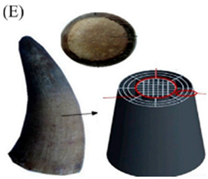
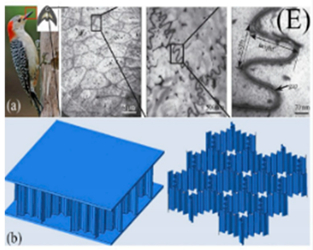
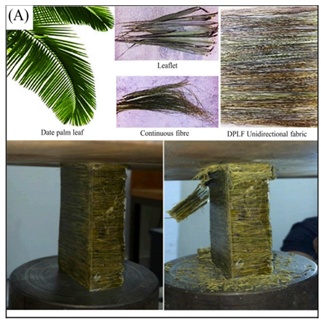
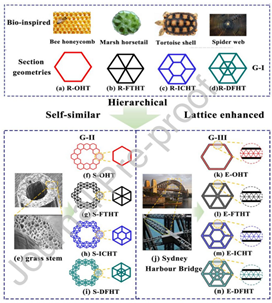
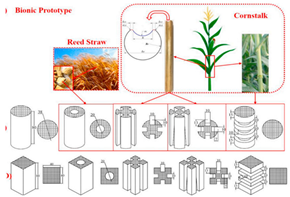
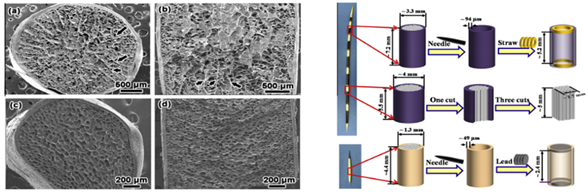
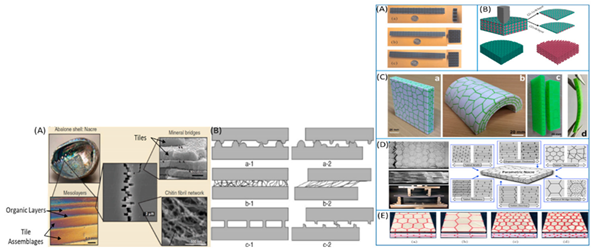
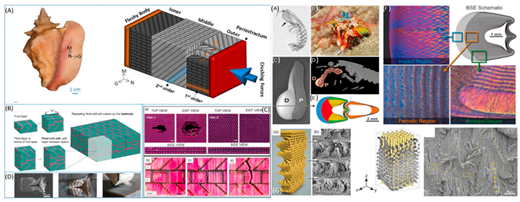
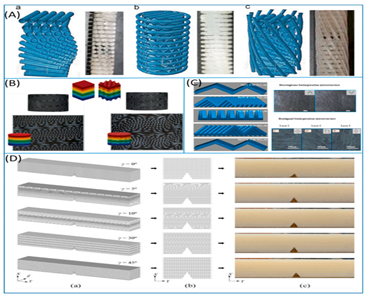
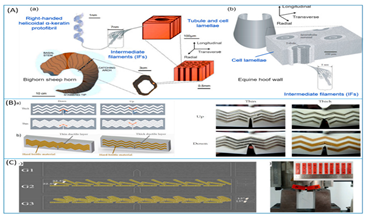
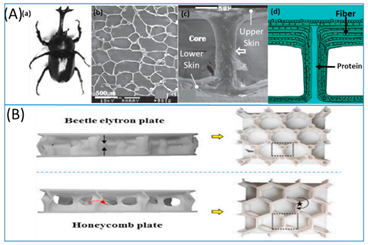
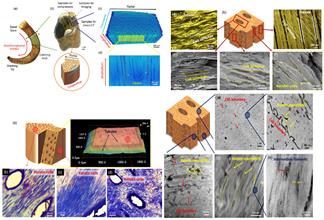
Table 1 illustrates the various generic bio-inspired design structures with their mechanical properties studied per ASTM standards. The structures are exemplified with beetle forewing, woodpecker beetle, date palm leaf, corn stalk and reed, Vero white, big sheep horn, hierarchical 3D porous materials, and functionally graded porous bones.
Table 1.
Bio-inspired design models built by predecessor authors.
2. Background
The primary motivator for this entire project is the use of nature-derived structures/patterns to improve the structural rigidity or robustness of the automotive vehicle’s front, side, or rare region. There were quite a good number of bio-based designs extracted from nature. Among them, the identified design structures are critically well equipped with the strength-to-weight ratio, and long-lasting, sustainable models. These include the Rudraksh, Bambusa tulda structure, sheep horn scale, tortoiseshell structure, and walnut structure. etc.
3. Why Choose These Patterns?
Elaeocarpus ganitrus beads are the dried stones of the fruit of the Elaeocarpus ganitrus tree. These beads are hard in physical appearance and have good strength encompassed. These beads have internal hollow portions, with a varying number of hollows in different beads. Altogether this bead can be taken into the study as a bio-inspired model for its characteristics and specifications. When compared to other varieties of wood, it is extremely sturdy and develops quite quickly. Bambusa tulda is a fast-growing medium-sized tropical clumping bamboo native to the Indian subcontinent, Indochina, Tibet, and Yunnan. It is a popular and sustainable building material because of its resilience. Bambusa tulda’s micro-structure and resulting strength make it the perfect material for bikes and hundreds of other uses. When compared to wood, Bambusa tulda fibre is 2–3 times stronger than timber.
Sheep horn serves as the attack and defence weapon during combat. The sheep horn displays amazing mechanical, impact resistance, and energy absorption properties. The ridged pattern we observed on the sheep horn helps promote the properties mentioned above. Thus, we can replicate the sheep horn pattern on a cube and check for various properties such as equivalent stress, total deformation, etc. Tortoiseshell is used as a shield or guard to protect it from the worst climates and other species. The tortoiseshell displays amazing impact resistance and energy/shock absorption properties and acts as the best-covering object. The chip-like structures we observed on the shell help promote the properties mentioned above. Thus, we can replicate the tortoiseshell pattern on a cube and check for various properties such as equivalent stress, total deformation, etc. A Juglans nigra is the edible seed of a drupe of any tree of the genus Juglans. It is hard in physical appearance and has good strength. It has a varying number of hollow cross-sections inside it. This can be taken as a good bio-inspired seed for its characteristics and specifications.
4. Materials and Methods
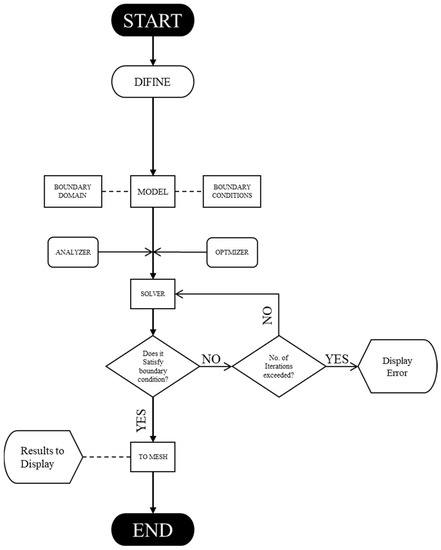
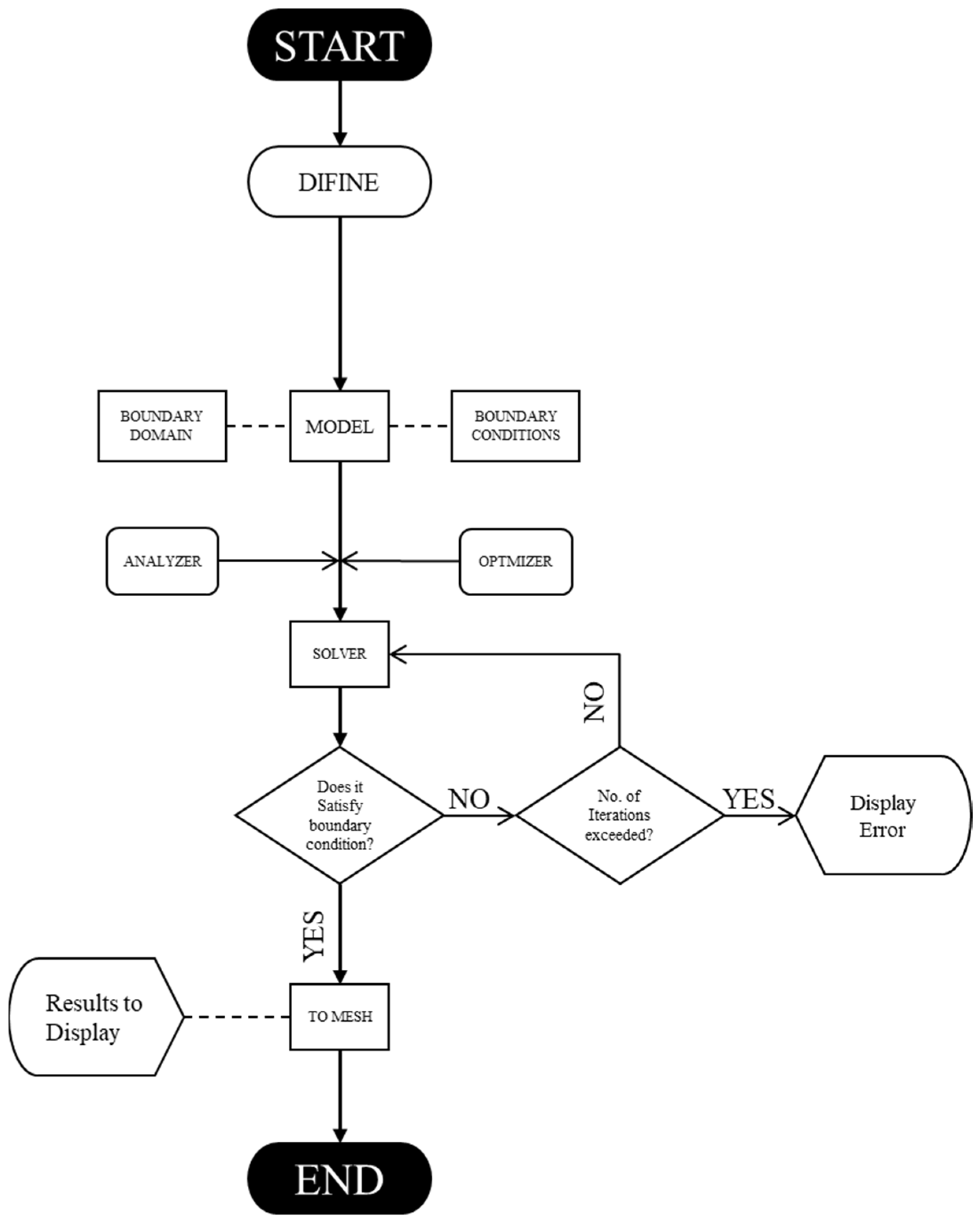
The inspiration to work on crashworthiness for an automotive vehicle derived from two unique areas. Firstly, bio-inspired (nature-inspired) models are extracted from bio species, plant-based species, and even animal scales. Secondly, motivation from the software developed using optimal design methods, such as Altair Hyperworks, inspired solid thinking, Rhino 7 as shown in Figure 1 and Ansys workbench topology optimisation.
Figure 1.
Process map for the flow of optimisation using Rhino 7.
4.1. Bioinspired Model Selection
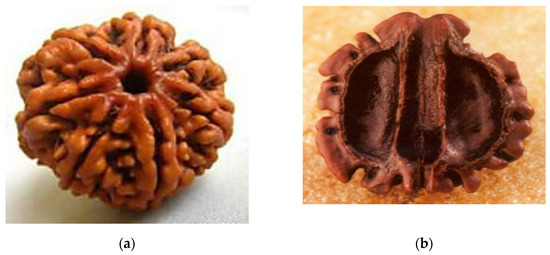
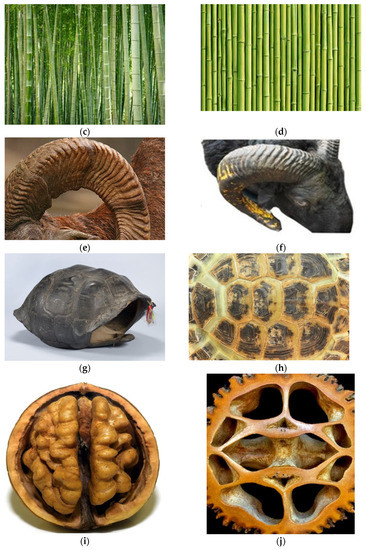
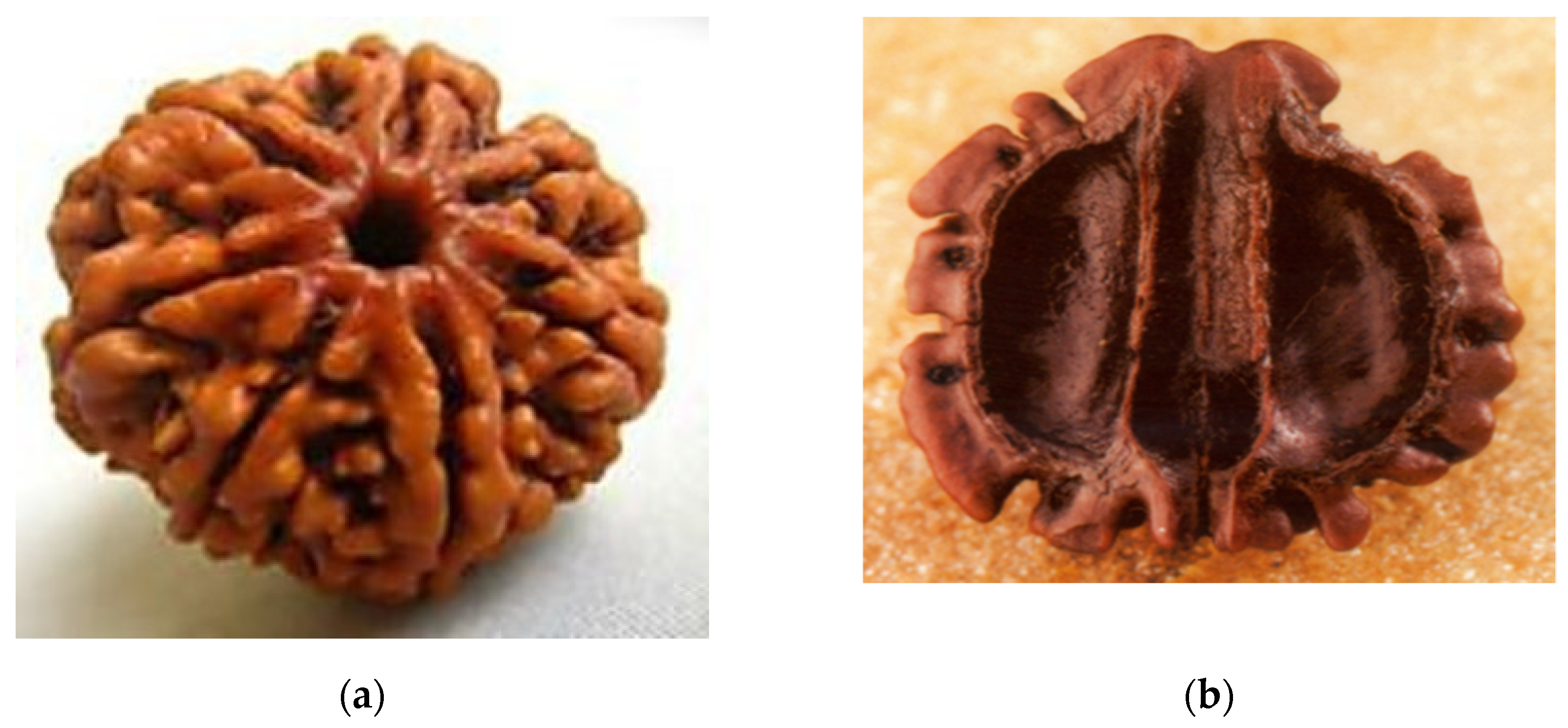
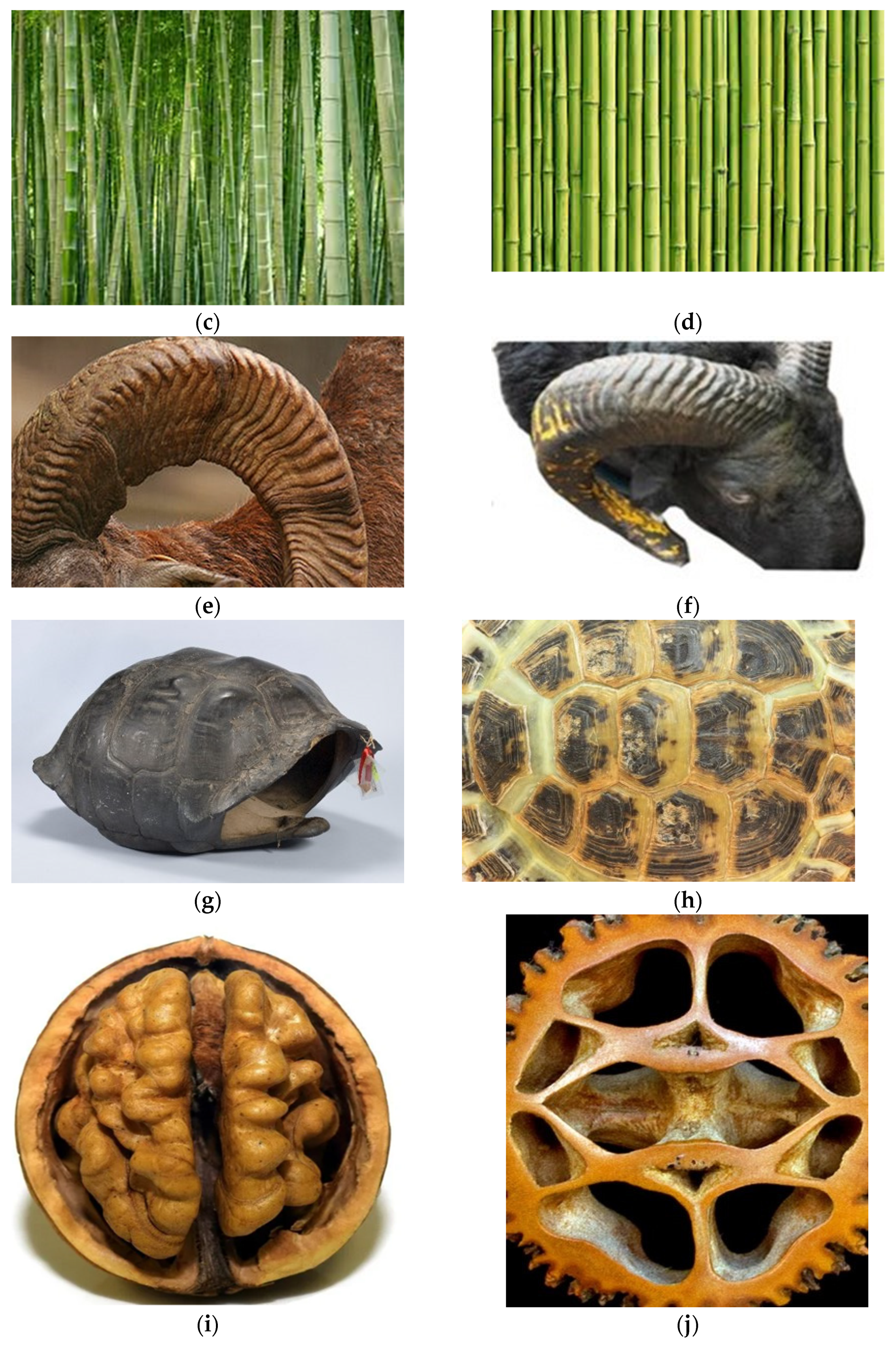
The entire literature review has progressed to the point where the identification of new and novel patterns for experimental and simulation study serves as the foundation for future work. The pattern of each identified model has been an inspiration for years since their inception on earth, and authors have clearly distinguished the model with its cross-section, as shown in Figure 2.
Figure 2.
Bio-inspired patterns; (a) Rudraksha; (b) Rudraksha cross-section; (c) Bambusa tulda; (d) Bambusa tulda front view; (e) sheep horn outer scale; (f) sheep horn outer scale; (g) tortoiseshell; (h) top view of tortoiseshell; (i) walnut; (j) walnut cross-section.
4.2. Algorithmically Generated Models
4.2.1. Algorithmically Generated Model (AGM)
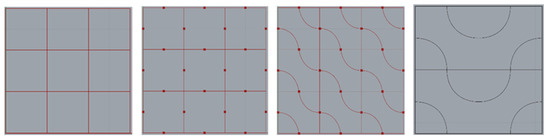
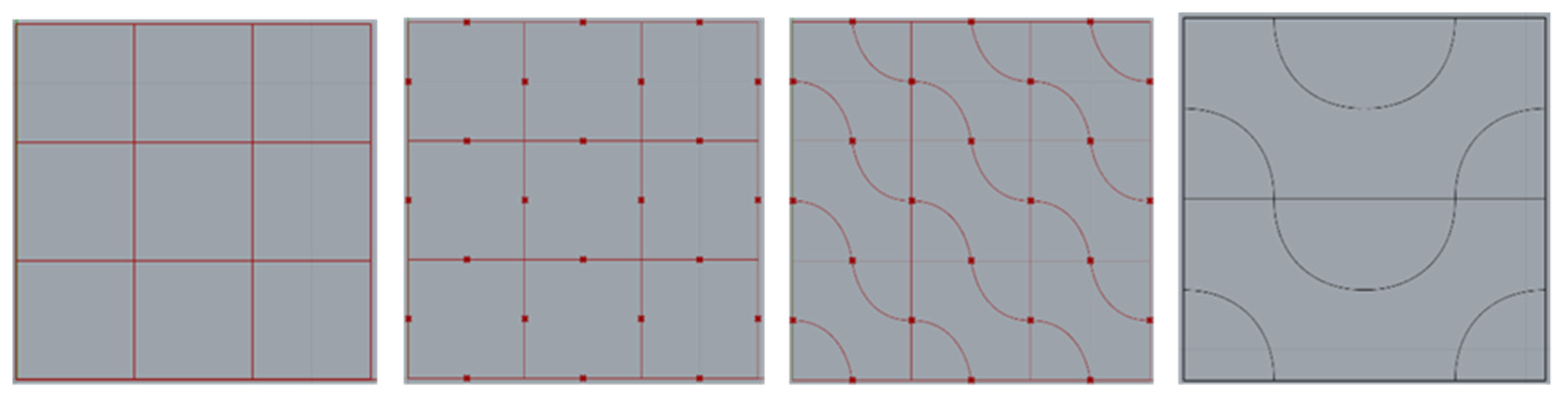
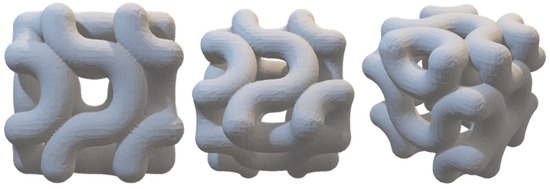
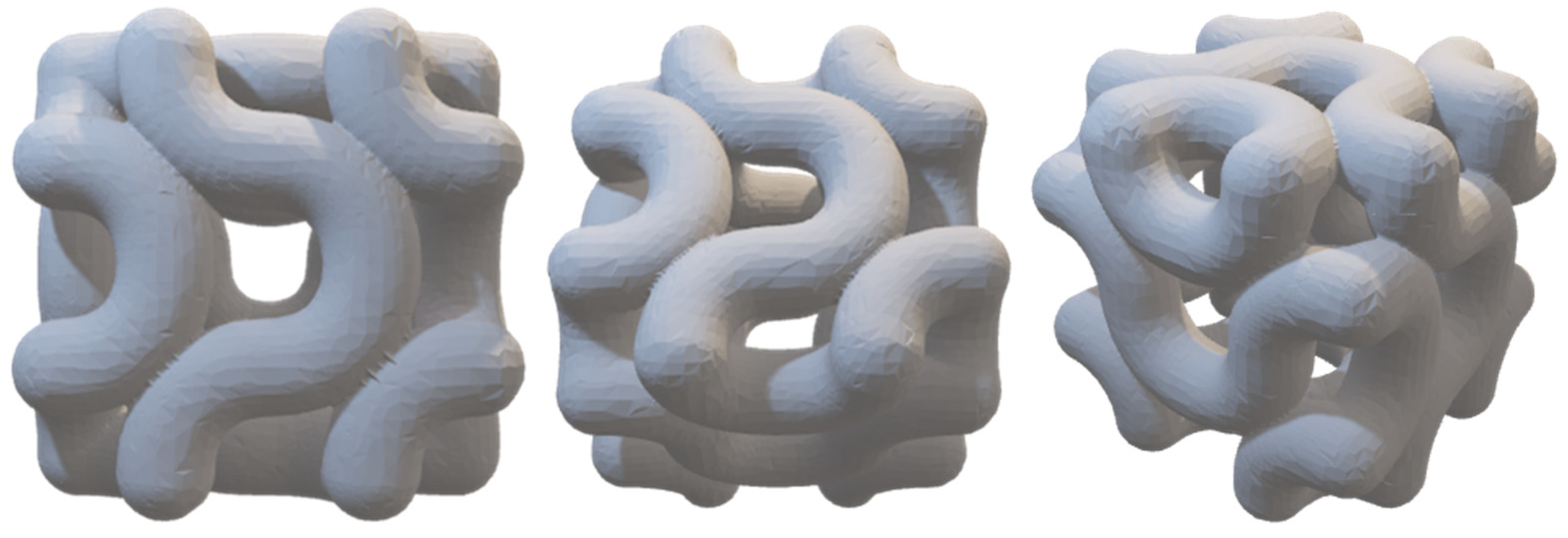
Algorithmically generated models (AGMs) are Rhino 7, and Grasshopper was chosen as the software. A 10 mm × 10 mm × 10 mm cube was used, which subsequently split into nine parts of 3 × 3 mm each (Figure 3). Each mini-centre square was linked (Figure 4), and they were given a curvature of 00 to 2700 (Figure 5). This curvature was further changed as needed, with a 30 mm3 cube inserted in the surface and the curves given a thickness. The folds of dried instant noodles were the inspiration for this construction. This structure is a straightforward algorithmic manipulation of 2-D geometry.
Figure 3.
The resulting 3-D geometry was 300 percent upscaled and utilised for testing.
Figure 4.
Algorithmically generated model using Rhino 7.
Figure 5.
Process workflow in Grasshopper.
4.2.2. Bendsoe and Sigmund Optimisation Model
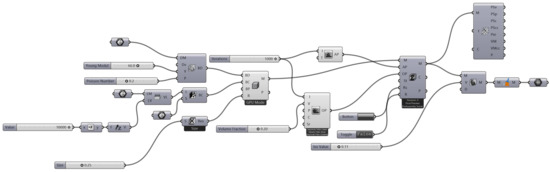
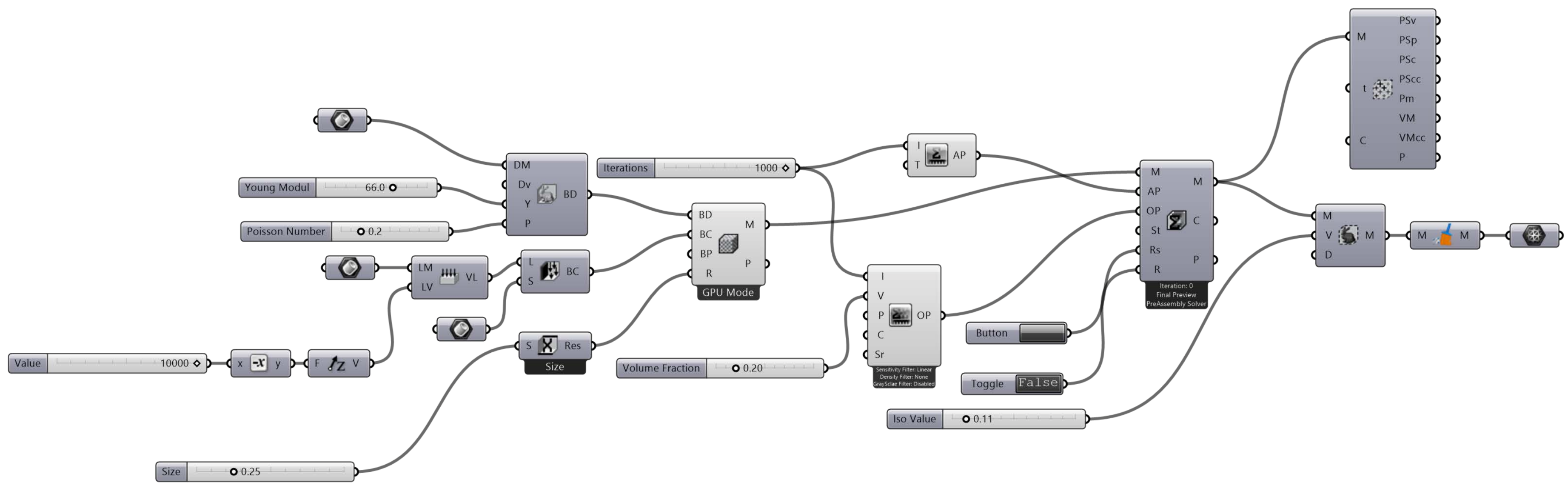
A topology optimisation technique was used to produce this ideal design of an elastic structure. It entails determining the best material distribution in a computational domain that minimises compliance (or, equivalently, optimises stiffness) of the final structure while adhering to a set volume fraction restriction. The Bendsoe and Sigmund Grasshopper Workflow is shown in Figure 6.
Figure 6.
Bendsoe and Sigmund Grasshopper Workflow.
A Bendsoe and Sigmund Optimisation on a 2.54 mm (height) and 2.54 mm (diameter) cylinder produced this result. The material used was BSH, and the loading was 100,000 kN under compression, as shown in Figure 7.
Figure 7.
Bendsoe and Sigmund Optimization Model.
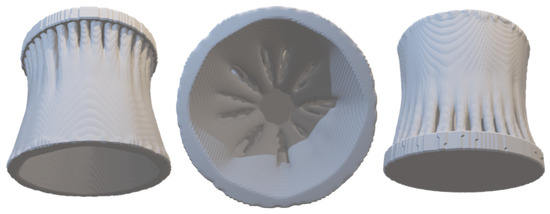
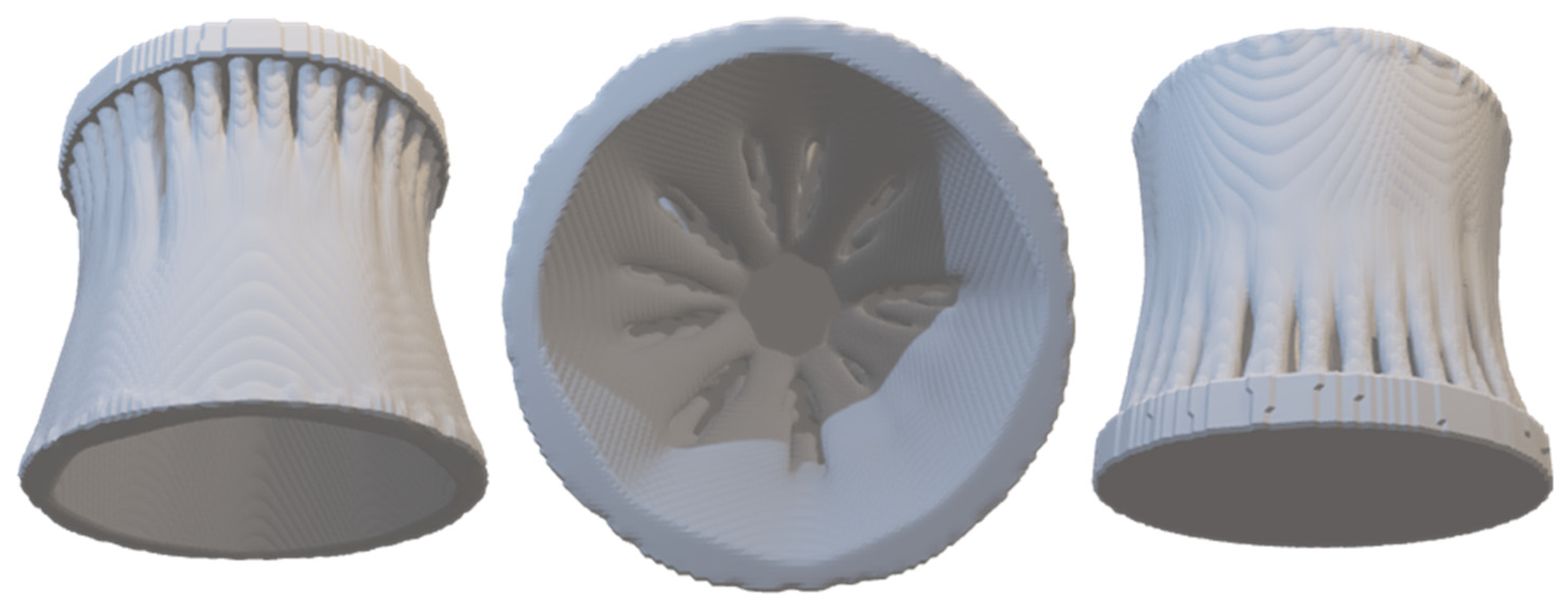
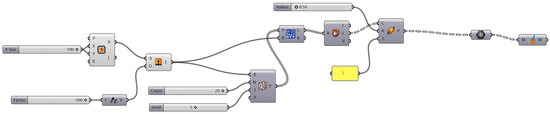
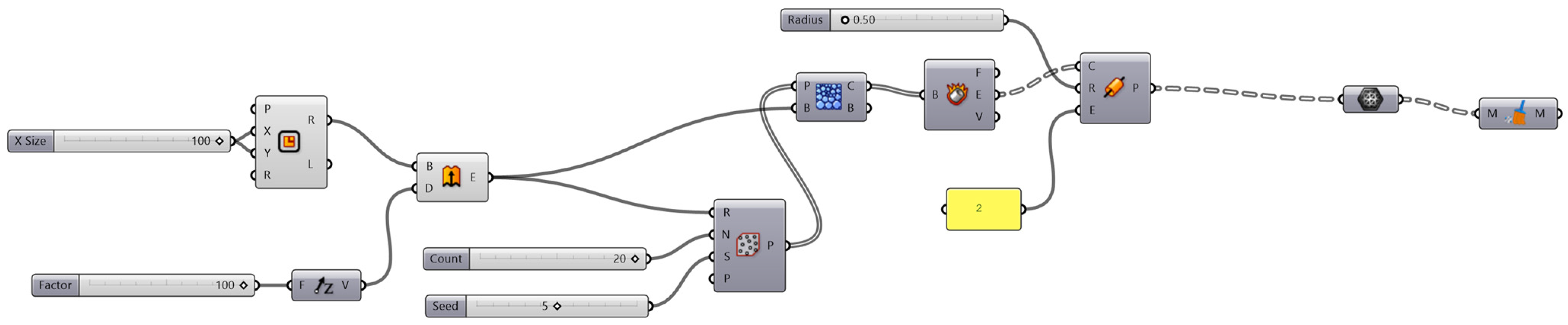
4.2.3. Lorimerlite
A topology optimisation technique was used. Show in Figure 8.
Figure 8.
Lorimerlite Grasshopper Workflow.
5. Solid Modelling
This section is divided into subheadings. It provides a concise and precise description of the experimental results, their interpretation, as well as the experimental conclusions that can be drawn.
5.1. Elaeocarpus ganitrus (Rudraksha) Model
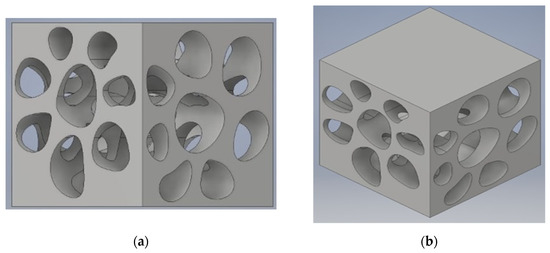
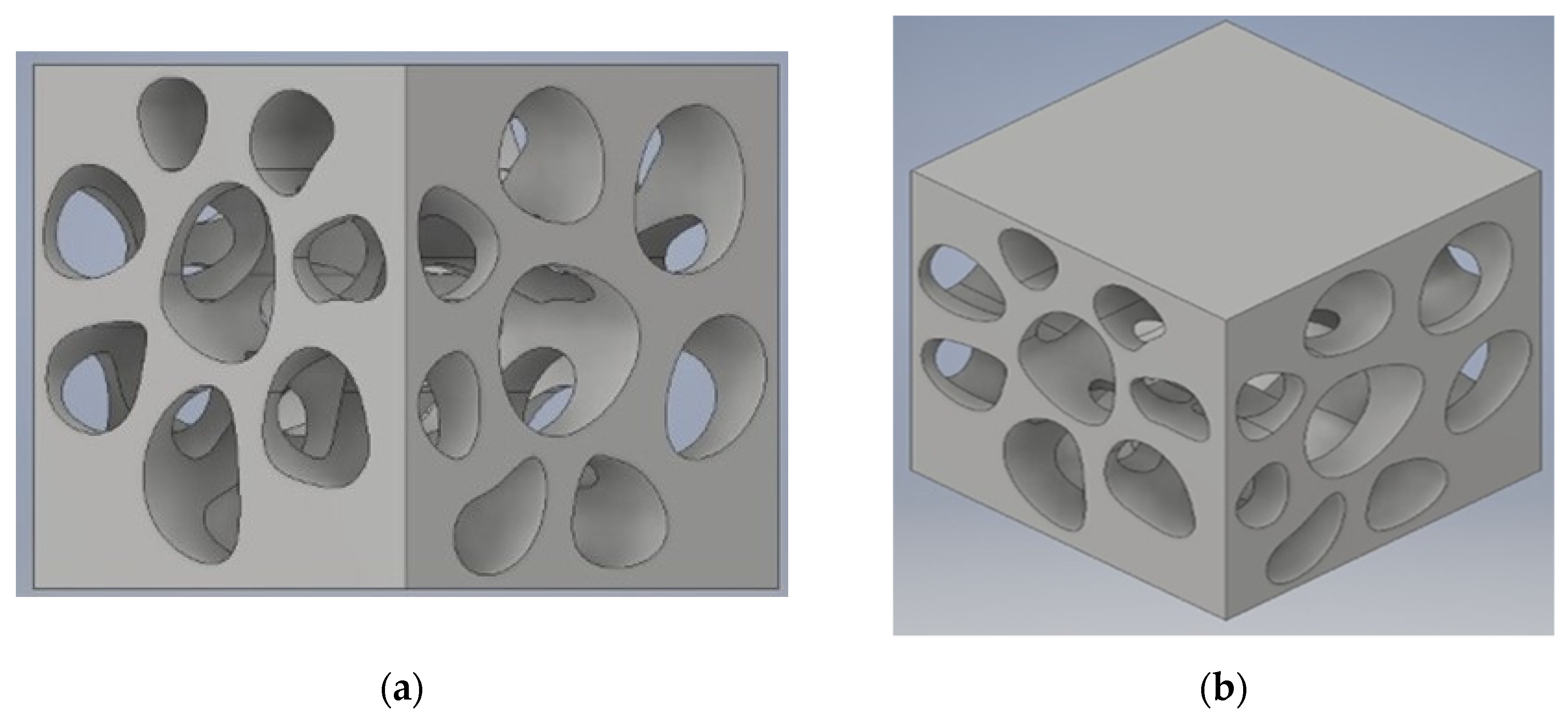
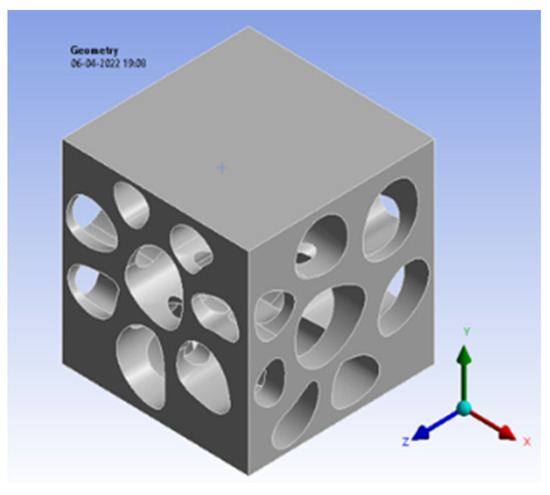
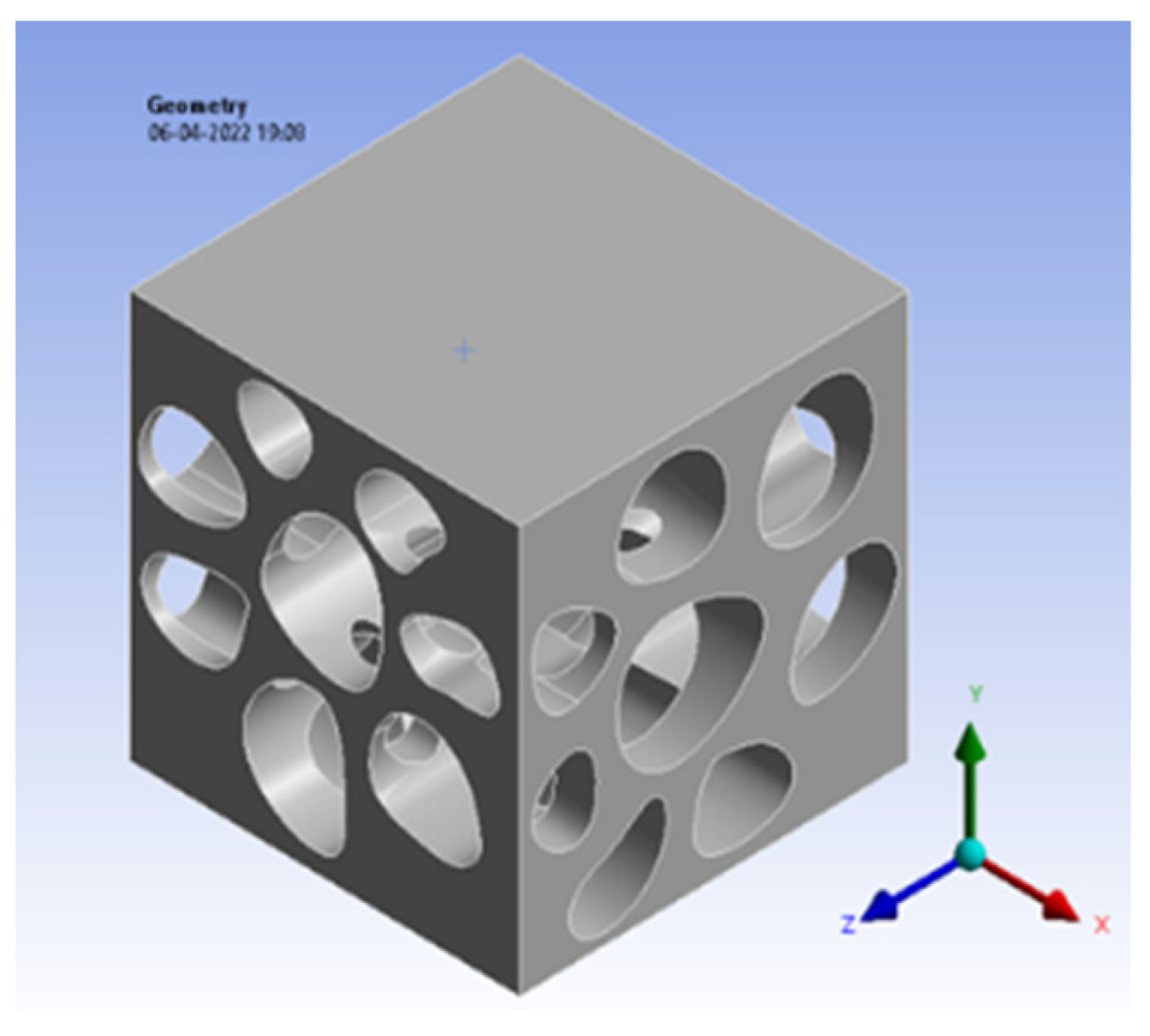
The bio-inspired cross-sectional pattern of this Elaeocarpus ganitrus was modelled in Fusion360, and the pattern of 20 × 20 × 20 mm was built. The pattern is shown below in Figure 9a,b in various views.
Figure 9.
(a) Elaeocarpus ganitrus model front view; (b) Isometric view.
5.2. Bambusa tulda (Indian Bamboo) Model
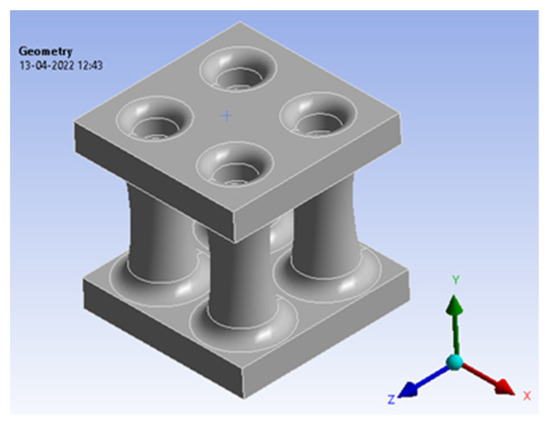
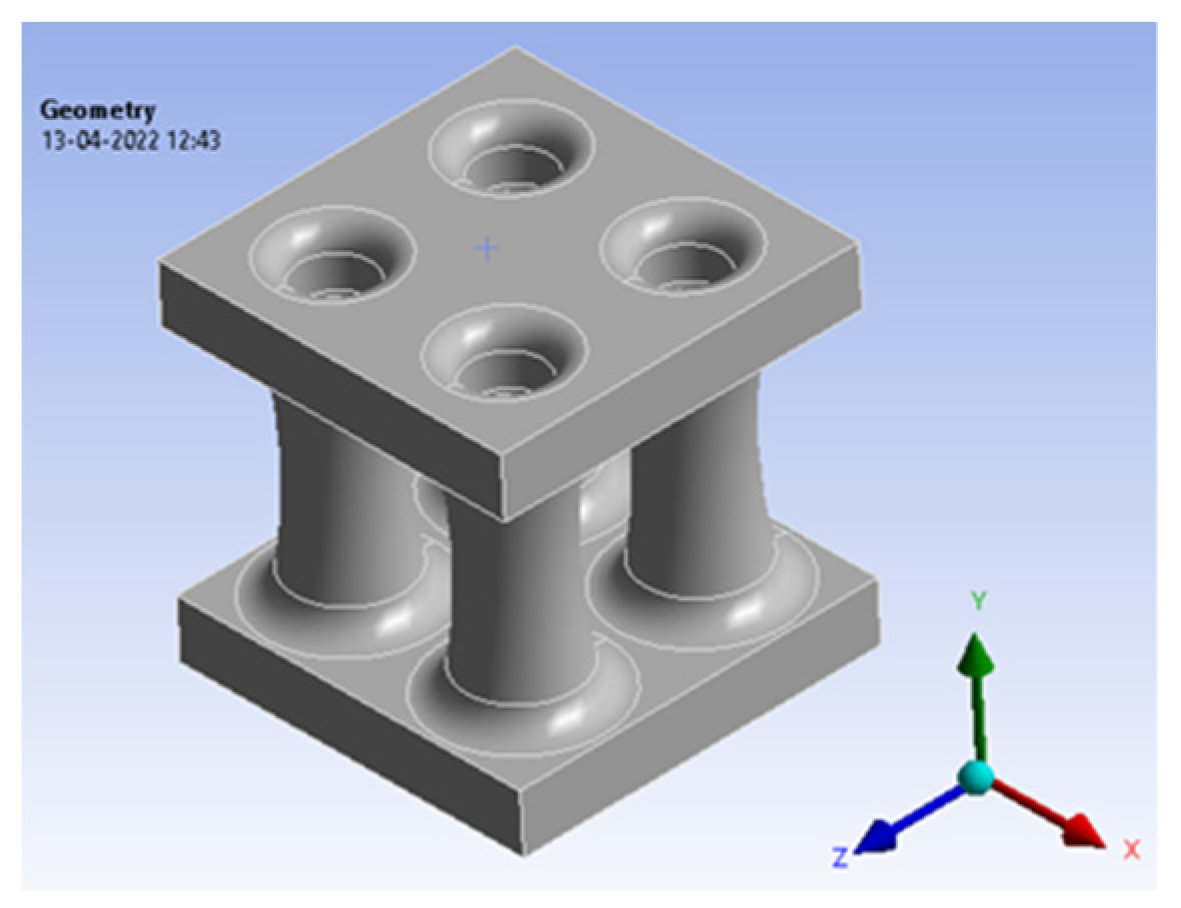
Because of its high tension and compressive strength, Bambusa tulda is an excellent reinforcing material. The flexural strength of the beam with Bambusa tulda reinforcement is higher, which aids in the better utilisation of Bambusa tulda. Tensile strength is greater than compressive strength. The design in Figure 10 was created with Fusion 360 software and measures 30 × 30 × 30 mm.
Figure 10.
Bambusa tulda model isometric view.
5.3. Sheep Horn Model
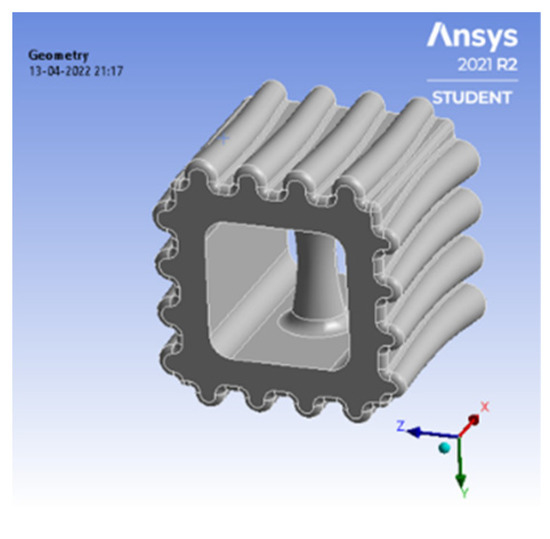
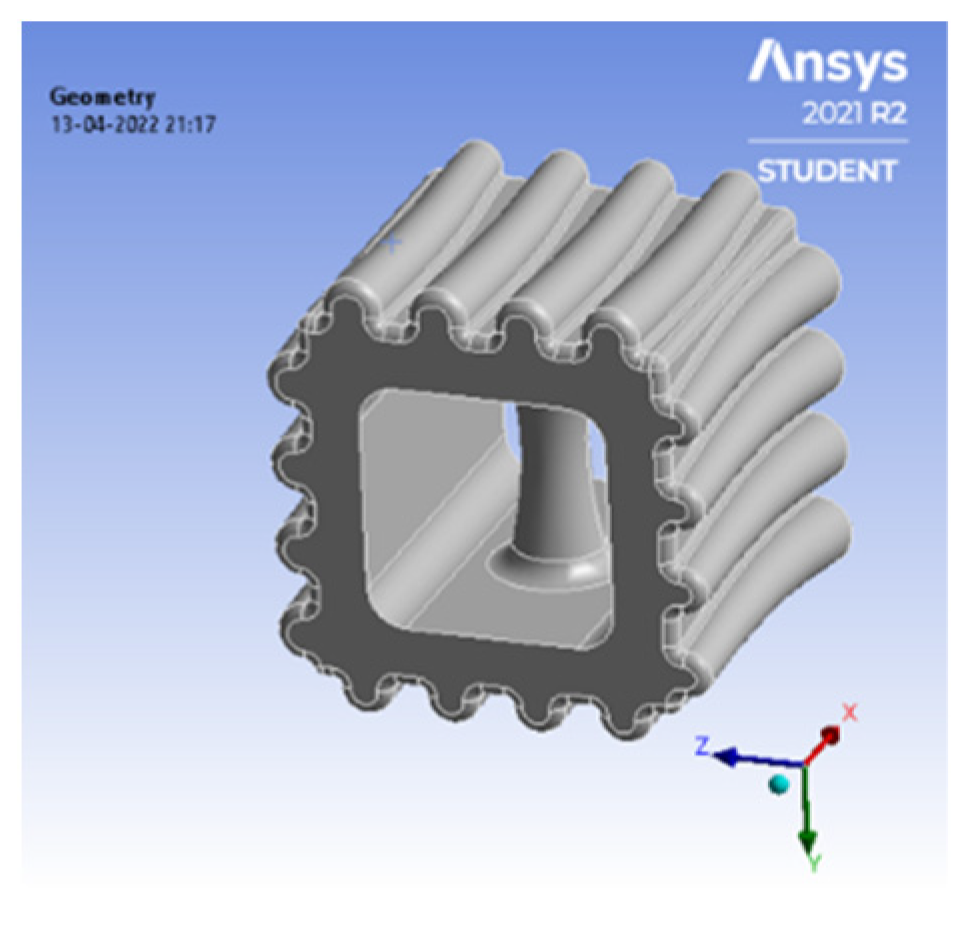
A 3D model of the cube was rendered, and the sheep horn pattern was embossed via CATIA 3D experience software. The pattern, as shown in Figure 11 is made up of 20 × 20 × 20 mm.
Figure 11.
Sheep horn scale.
5.4. Tortoiseshell
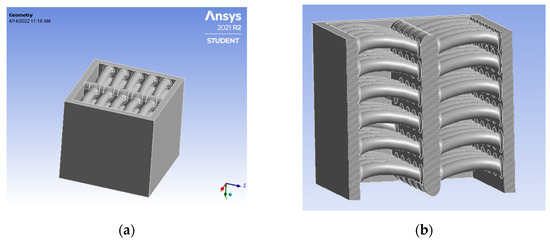
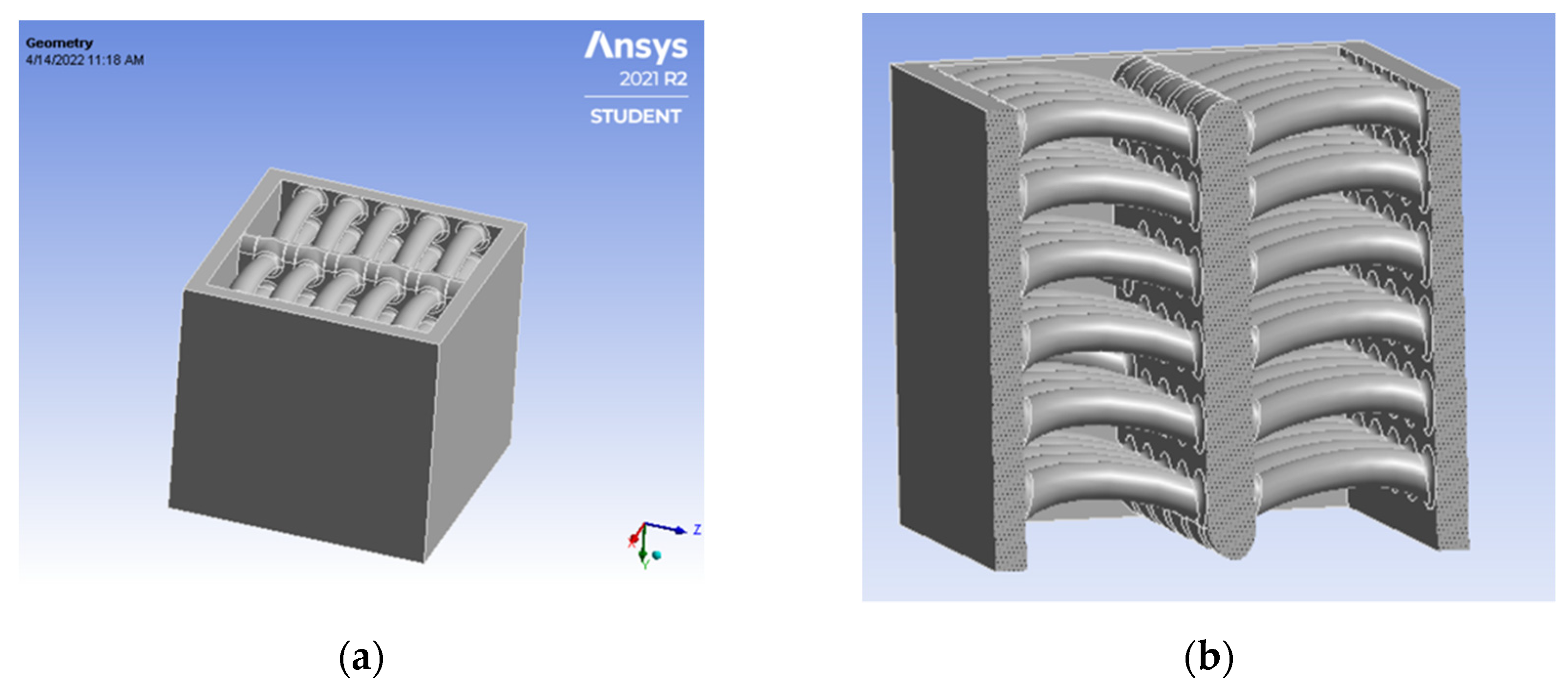
A 3D model of the cube was rendered, and the sheep horn pattern was embossed via Fusion 360 software. Figure 12 was built with a 20 × 20 × 20 mm size.
Figure 12.
(a) Tortoiseshell isometric view; (b) Cross-sectional view.
5.5. Juglans nigra (Walnut)
The bio-inspired cross-section pattern of the Juglans nigra is modelled in Fusion 360, and the pattern is built with a size of 20 × 20 × 20 mm. The pattern is shown below in Figure 13.
Figure 13.
Walnut model view.
6. Simulation Study
The simulation of the bio-inspired pattern was carried out using Ansys Workbench. The simulation was carried out for two different materials, i.e., structural steel and sheep horn. A load of 10,000 N was applied on top of the structure, and the base of the cube was fixed in all six degrees of freedom.
6.1. Elaeocarpus ganitrus Model
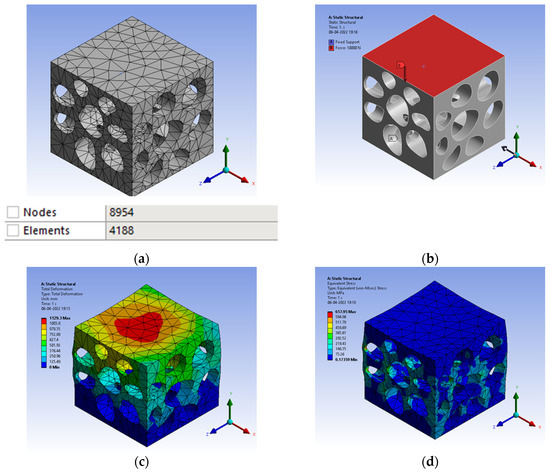
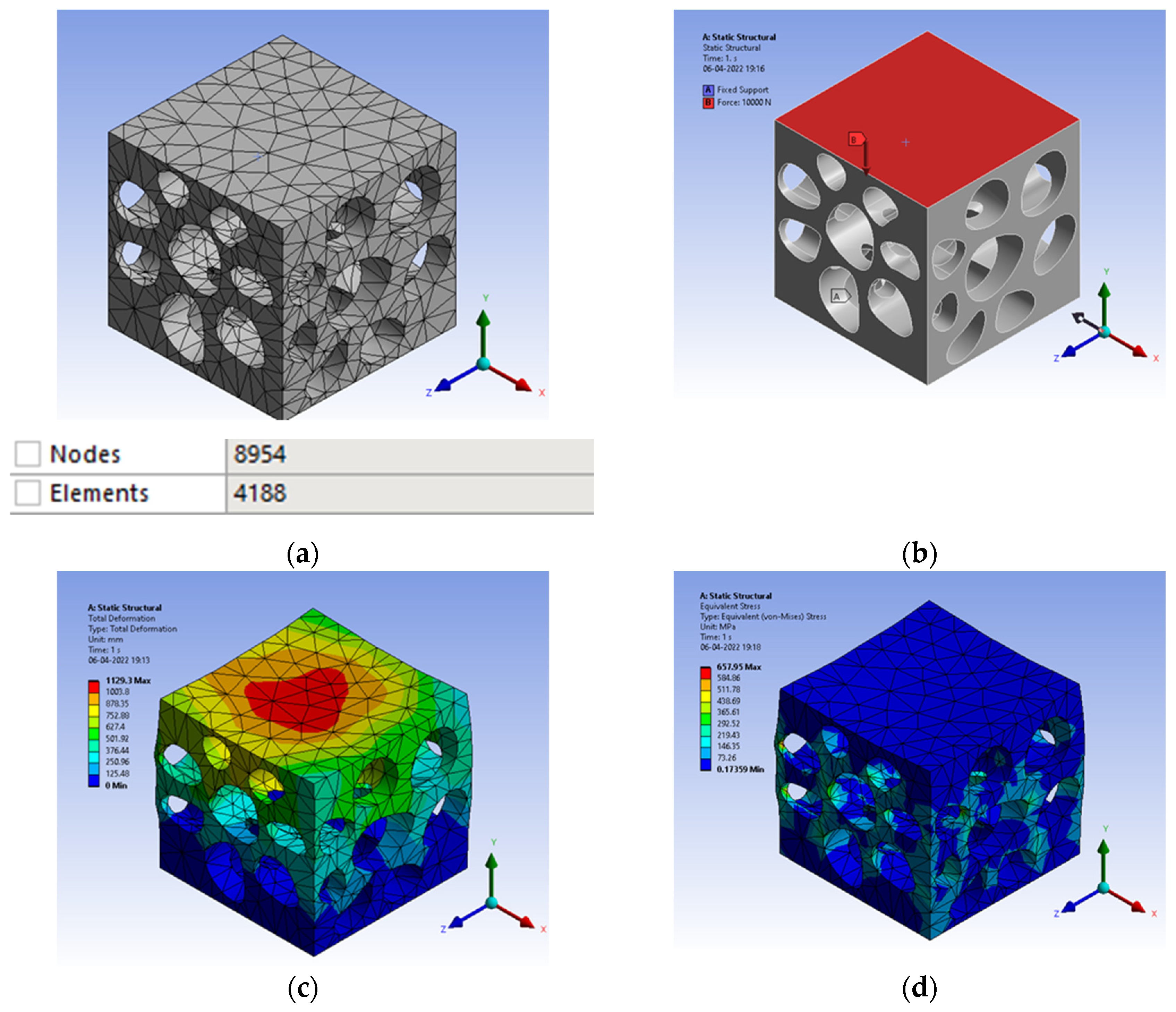
The bio-inspiration from Elaeocarpus ganitrus showed a lot of prominence in the structural application as the load in compression resulted in von mises stress of 657 MPa, as shown in Figure 14b. Mesh carried out with tetrahedron element made with ‘Solid 92’, a 10-noded elemental model, as shown in Figure 14a. Figure 14a infer nodes 8954 and elements 4188 were appropriate for the simulation. The element size with the H-type method is preferred to arrive at the convergence of the solution. The total deformation shows a slightly higher condition of deformation compared to the solid model. Figure 14c has the total deformation and Figure 14d deals with stress results.
Figure 14.
(a) Mesh generation; (b) Loads and boundary conditions; (c) Total deformation; (d) Von mises stress.
6.2. Bambusa tulda Model
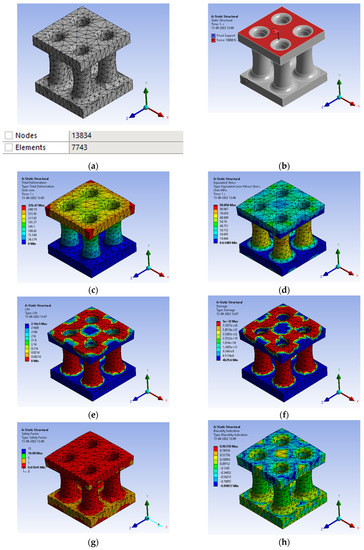
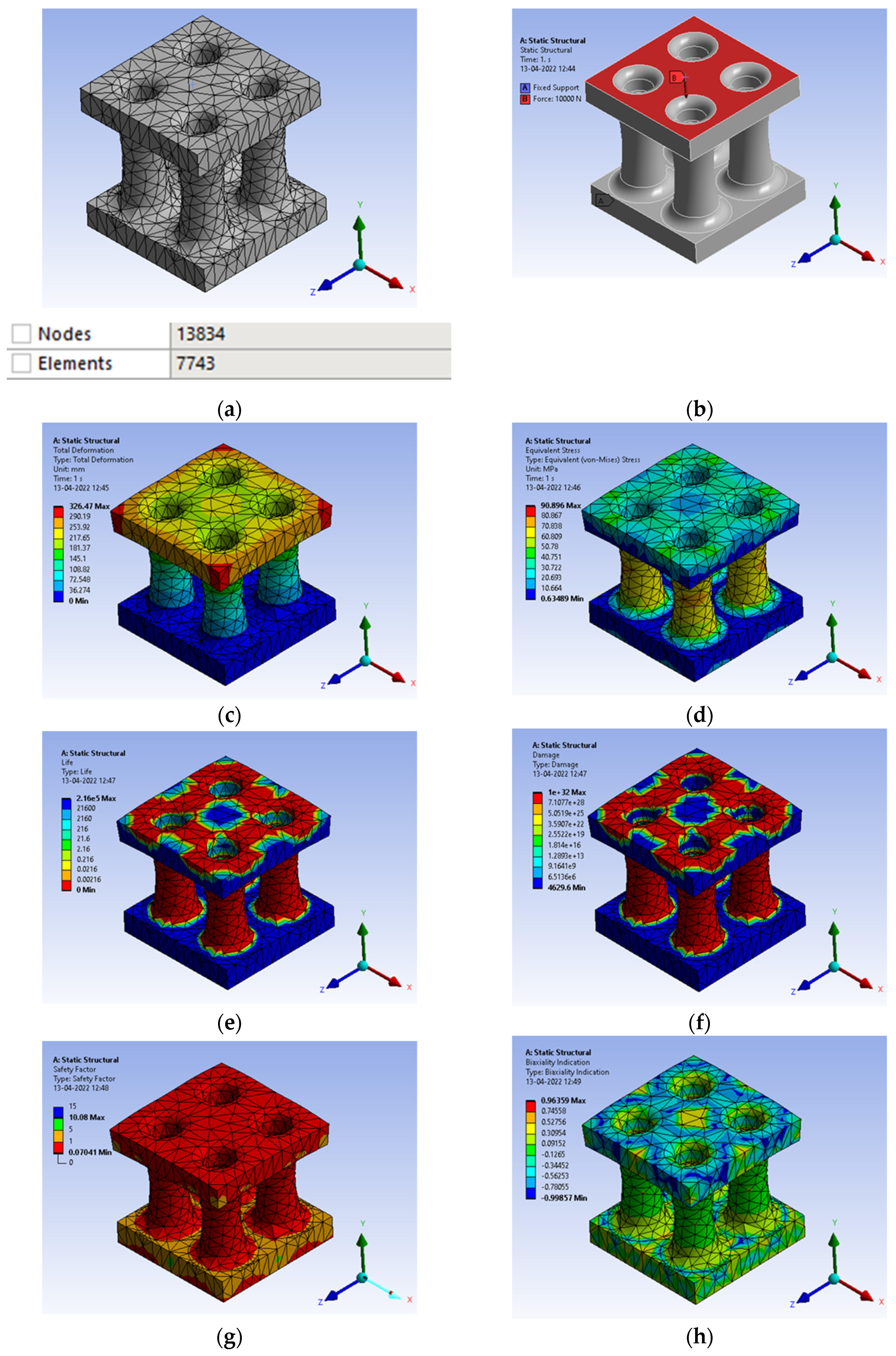
Bamboo or bambusa tulda is an inspiration in nature for its structural property, such as tensile strength and oxygen filter model, and has equal potential to replace the Thermo Mechanically Treated (TMT) rod in concrete columns. However, when it comes to simulation comparison, it does fit well as the replacement for structural applications, showing enormous potential with 90 MPa in Figure 15d as lower than the yield value of 110 MPa. Further, fatigue analysis is carried out for identification of the number of cycles as shown in Figure 15e for the stress-based approach with mean stress Goodman modified theory showing 2.16 × 10⁵ cycles. The mesh generation shows nodes 13834 and elements 7743, resulting in a convergence solution. A load of 10,000 N is acting in compressive form with a fixed support at the bottom surface. A total deformation of 326.47 mm was observed in Figure 15c.
Figure 15.
(a) Mesh generation; (b) Loads and boundary conditions; (c) Total deformation; (d) Von mises stress; (e) Life cycle; (f) Damage; (g) Factor of safety; (h) Biaxiality indication.
6.3. Sheep Horn Model
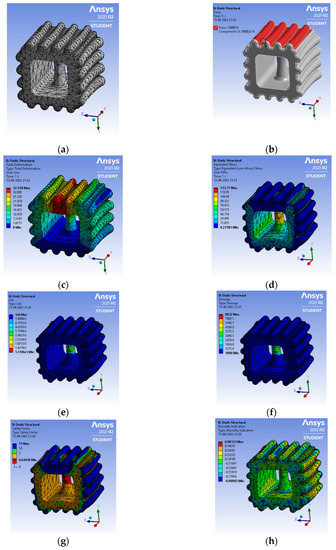
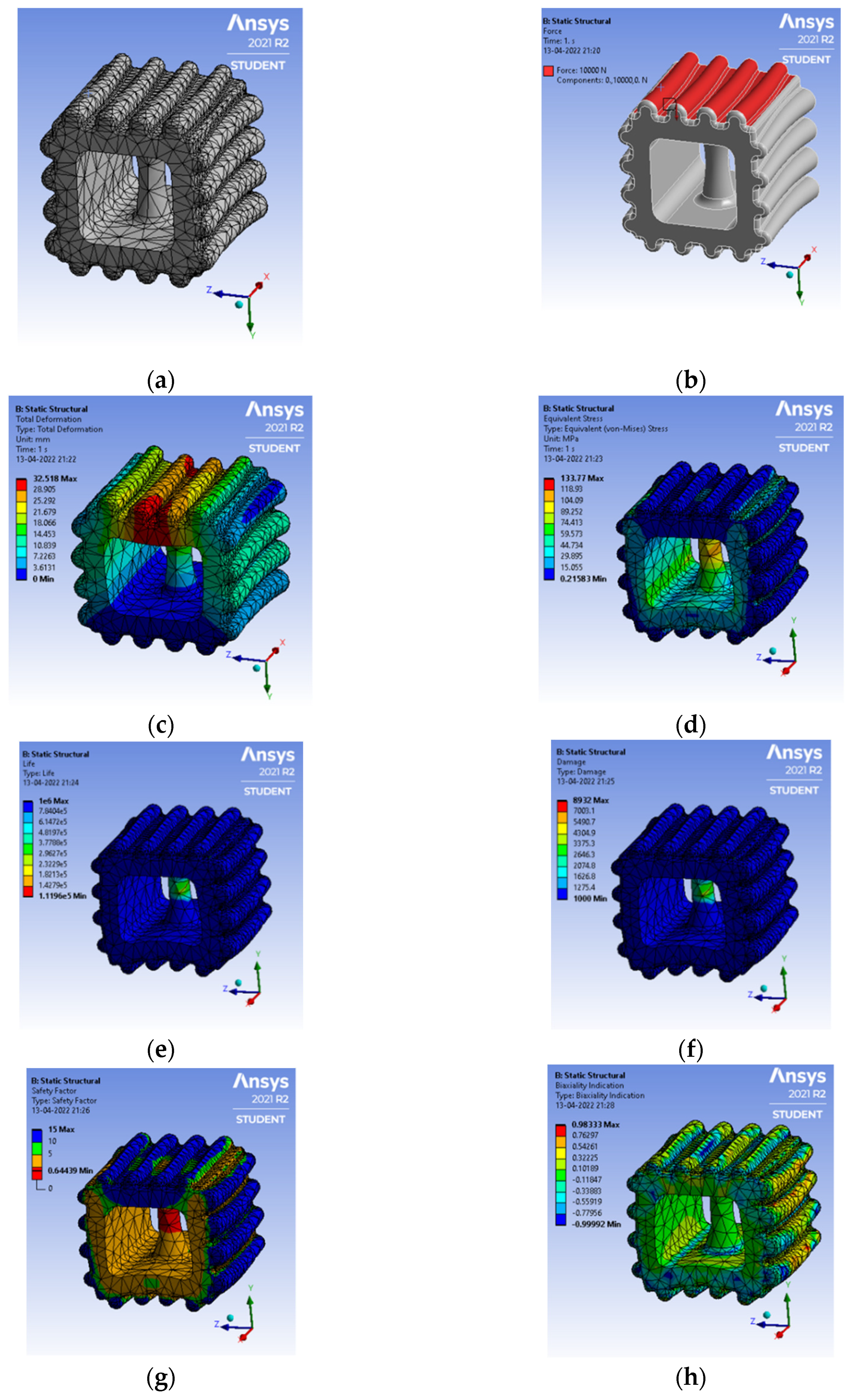
Sheep horn outer skin mimicked the structure of a typical kind, as shown in Figure 16a, with mesh generation of a tetrahedron element, and the load applied on top of the structure results in a total deformation of 32 mm and von mises stress of 133.7 MPa, as shown in Figure 16c, d, respectively. The outer structure mimicked the horn’s outer skin with an embossing [stiffener] kind of structure. Figure 16e shows the life cycle as 1.11 × 10⁵, slightly higher than any typical component’s design life cycle. The factor of safety shows as 0.64 but needs to be in the range of 1.1 to 1.5.
Figure 16.
(a) Mesh generation; (b) Loads and boundary conditions; (c) Total deformation; (d) Von mises stress; (e) Life cycle; (f) Damage; (g) Factor of safety; (h) Biaxiality indication.
6.4. Tortoise Model
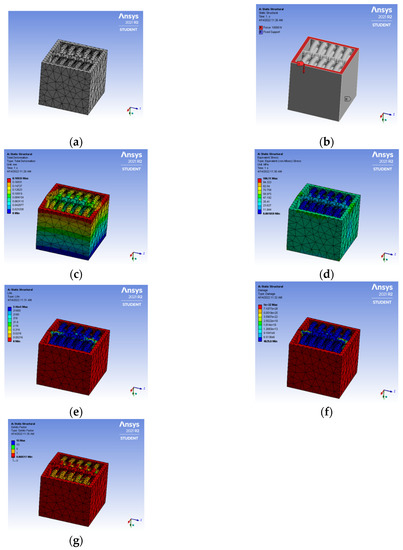
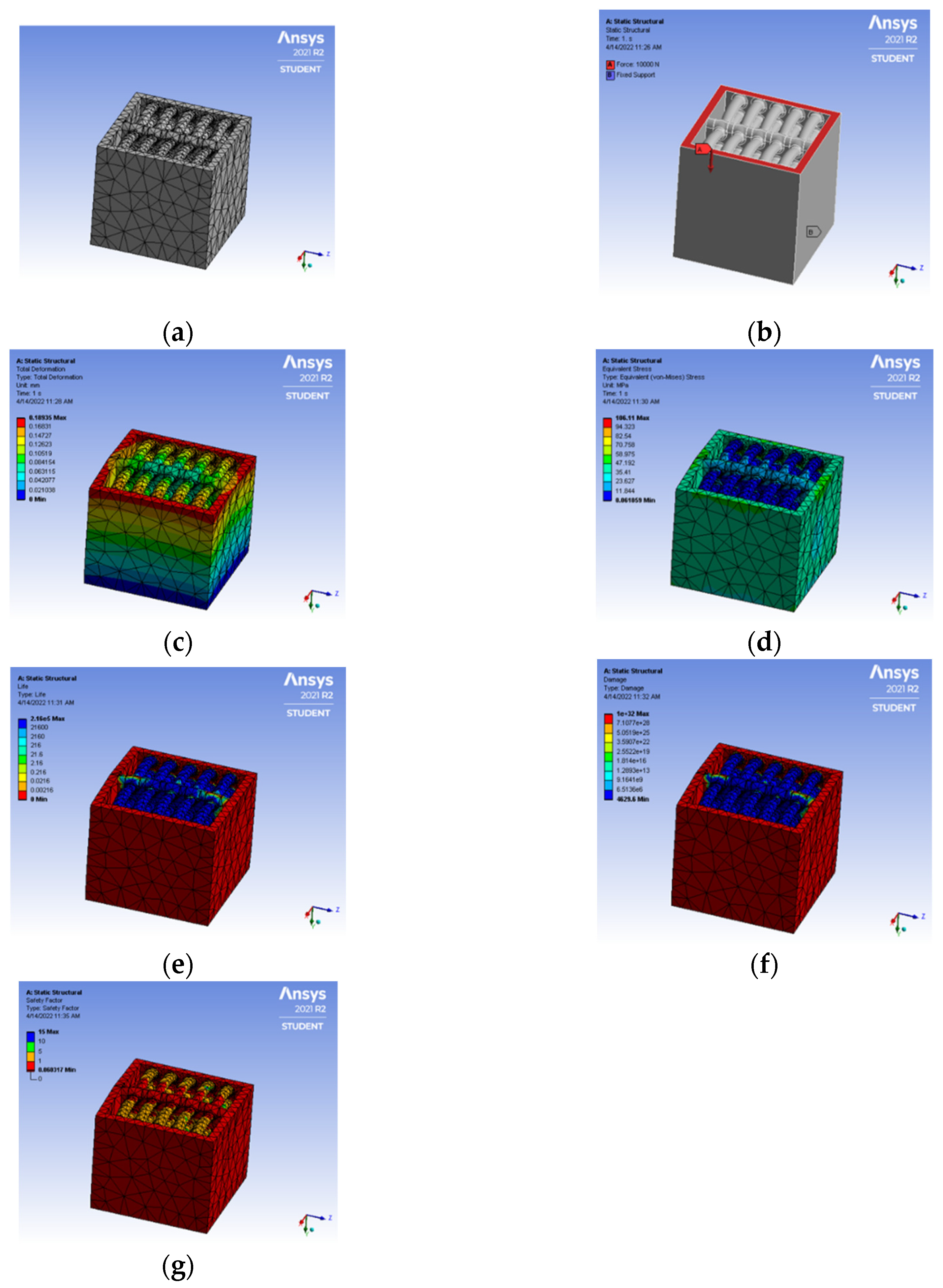
The tortoiseshell structure has been a benchmarked model when it comes to biomimicking nature-based species. The uniqueness of the tortoiseshell structure is it builds an unconventional design structure between the carapace to vertebrae and ribs. This typical structure is built in the CATIA model and converted into neutral file format .stp for further analysis in the ANSYS workbench. In Figure 17a–g, the entire process of simulation is depicted, with as low as 0.18 mm total deformation and von mises stress of 106 MPa. The material is safe in terms of the ultimate criteria of Polylactic acid (PLA) for 3D printing conditions. The life cycle of the member is typically above the design life cycle criteria, i.e., 2.16 × 10⁵ cycles.
Figure 17.
(a) Mesh generation; (b) Loads and boundary conditions; (c) Total deformation; (d) Von mises stress; (e) Life cycle; (f) Damage; (g) Factor of safety.
6.5. Juglans regia (Walnut) Model
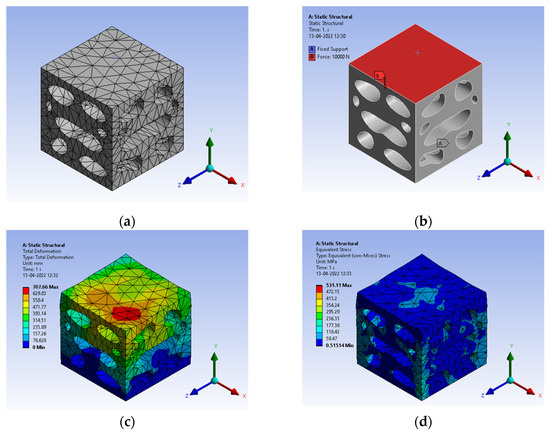
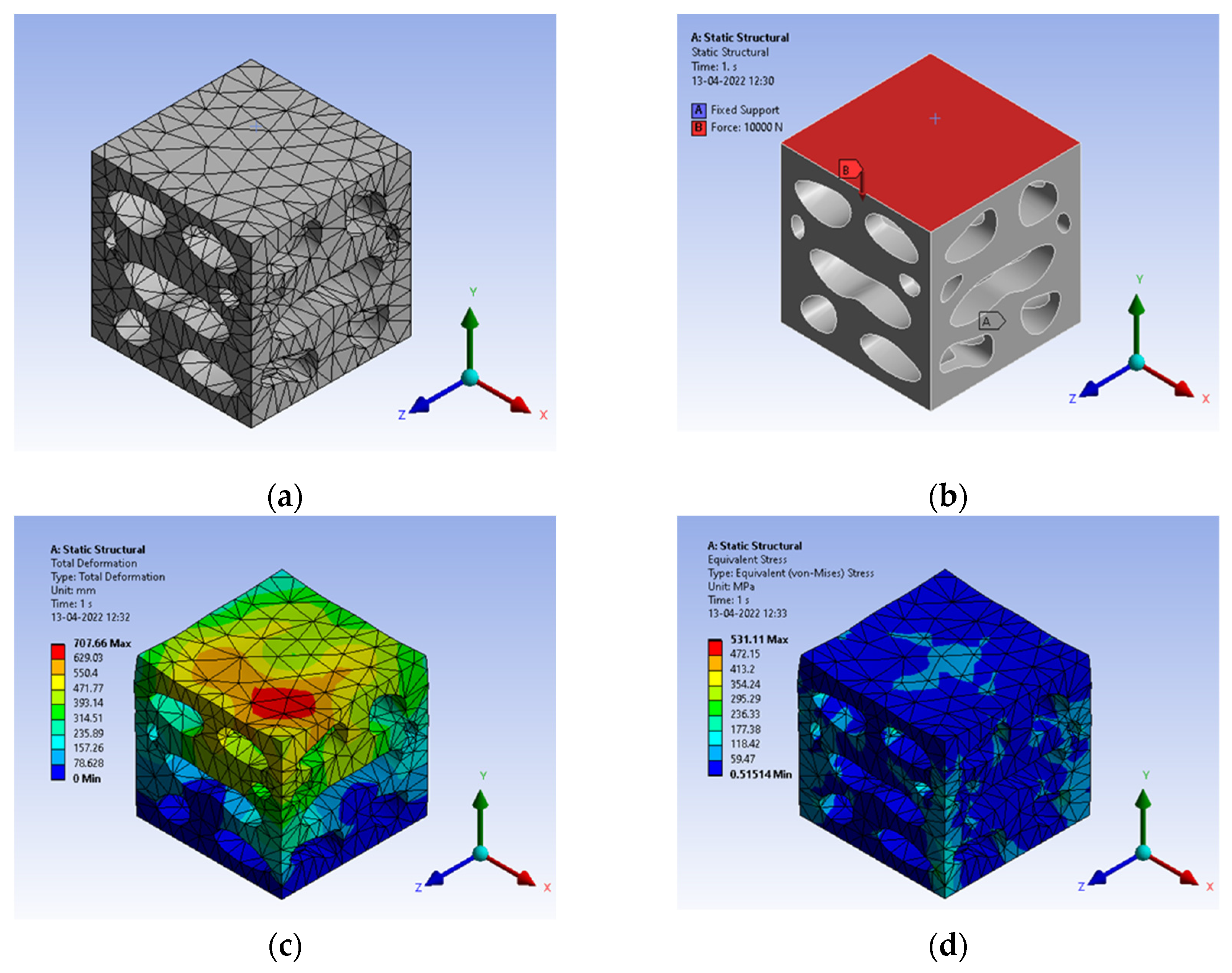
Another plant-based species with a unique structure and highly impact resistive model is the walnut. Juglans regia is versatile in its structure due to the pericarp to endocarp structure transformation because of internal shape and size decided by walnut seed forms. Once the walnut is extracted from the endocarp, the internal structure is mimicked for its highly compressive and impact-resistant application. In Figure 18a–d, the entire process of simulation is carried out to arrive at outcomes with total deformation observed of 707 mm and von mises stress of 472 MPa, which is higher in value for its design criteria limit.
Figure 18.
(a) Mesh generation; (b) Loads and boundary conditions; (c) Total deformation; (d) Von mises stress.
7. Experimental Work
7.1. Algorithmatically Generated Models (AGM)
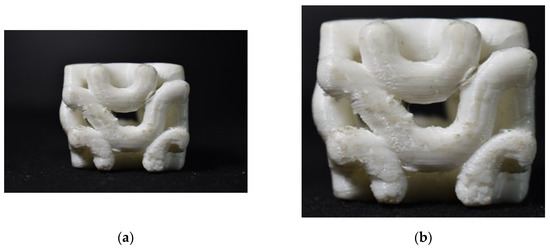
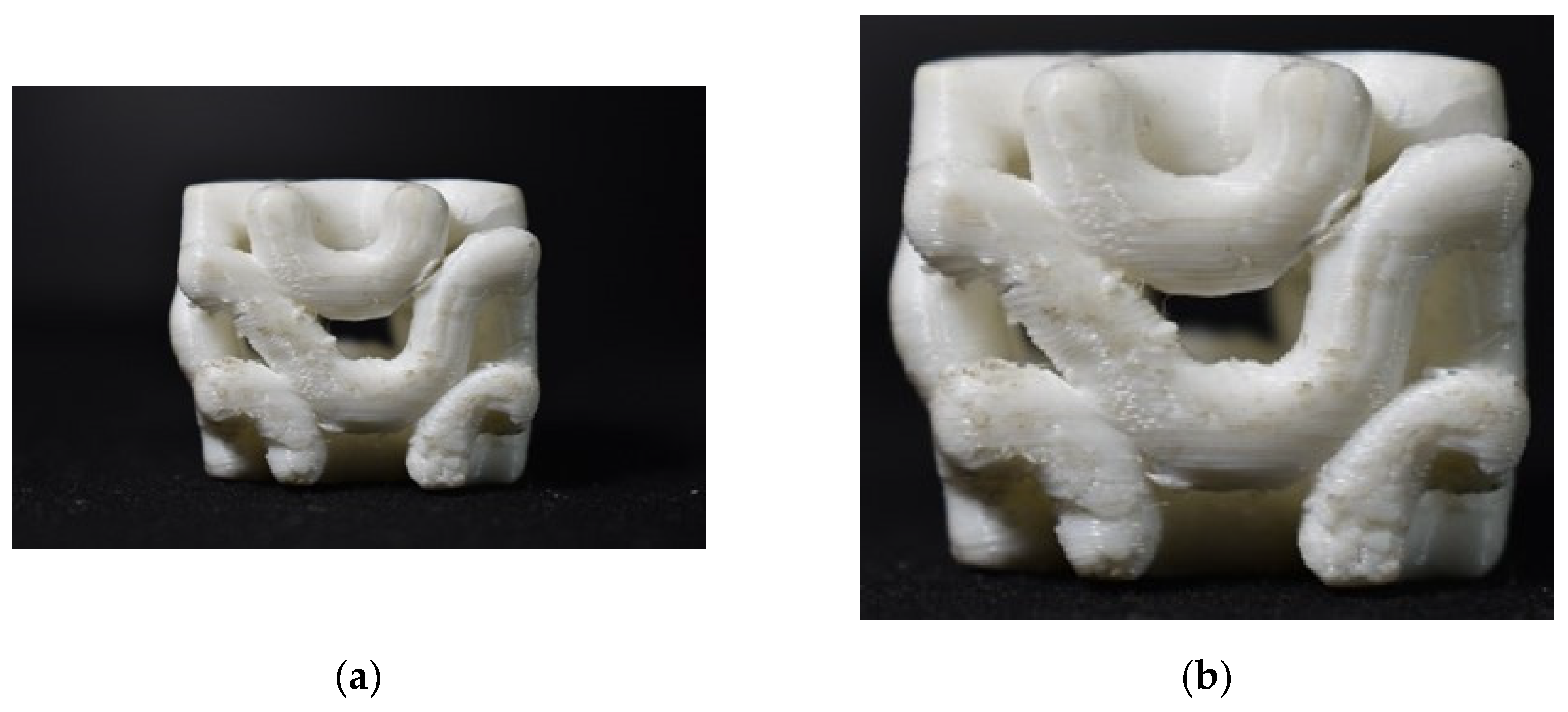
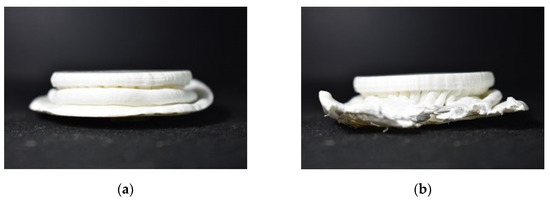
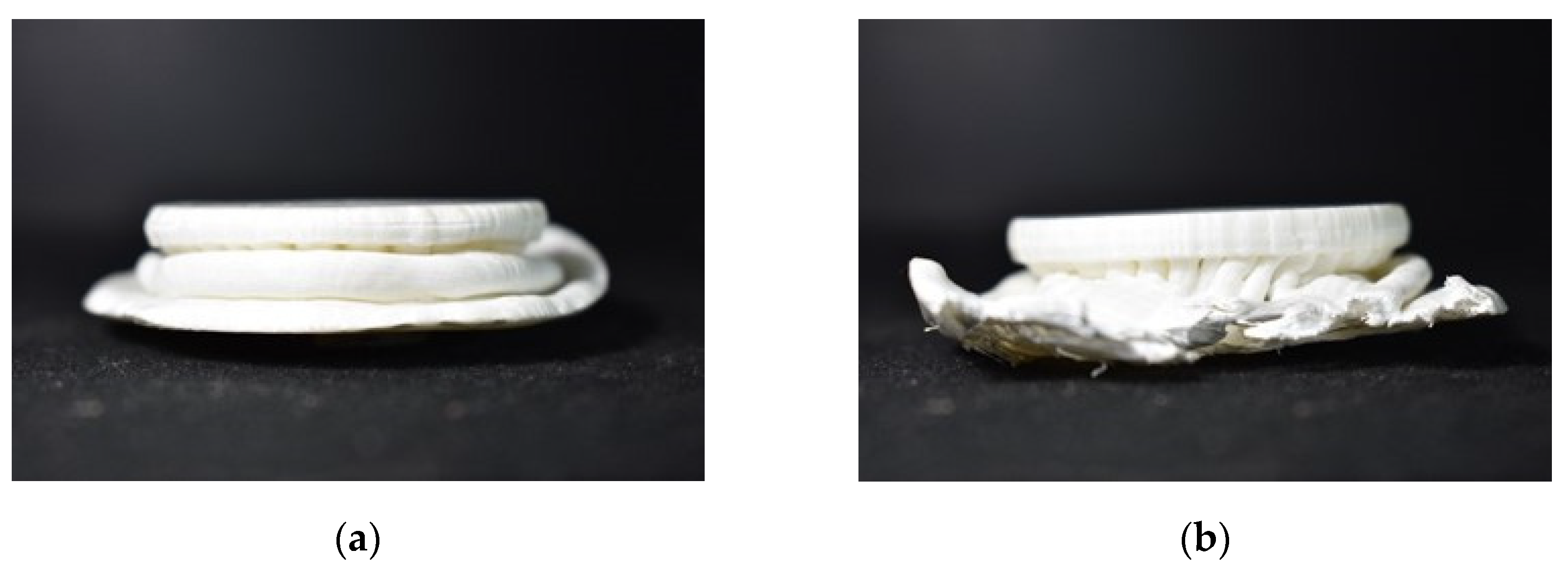
The work is partially fulfilled if experimental aspects are not dealt with in the course of the research activity. The AGM and Bendsoe and Sigmund models have been able to withstand the highest ultimate load for a typical 3D printed structure using the Rhino 7 software model. Figure 19a is inferred as a 3D printed model with 1293 lbf load-bearing capacity for ultimate force. The observations drawn in Figure 20a are the Bendsoe and Sigmund models, and have resulted in an ultimate force load-bearing capacity of 2222 lbf, which is the highest among all the cases.
Figure 19.
(a) A 3D printed AGM; (b) Tested model with failed structure.
Figure 20.
(a) Compressed model; (b) Failed model while testing.
7.2. Bio-Inspired Models
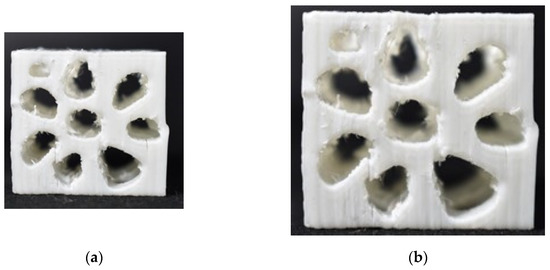
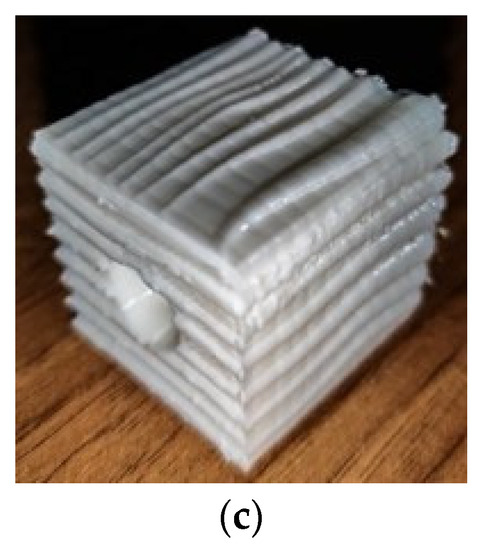
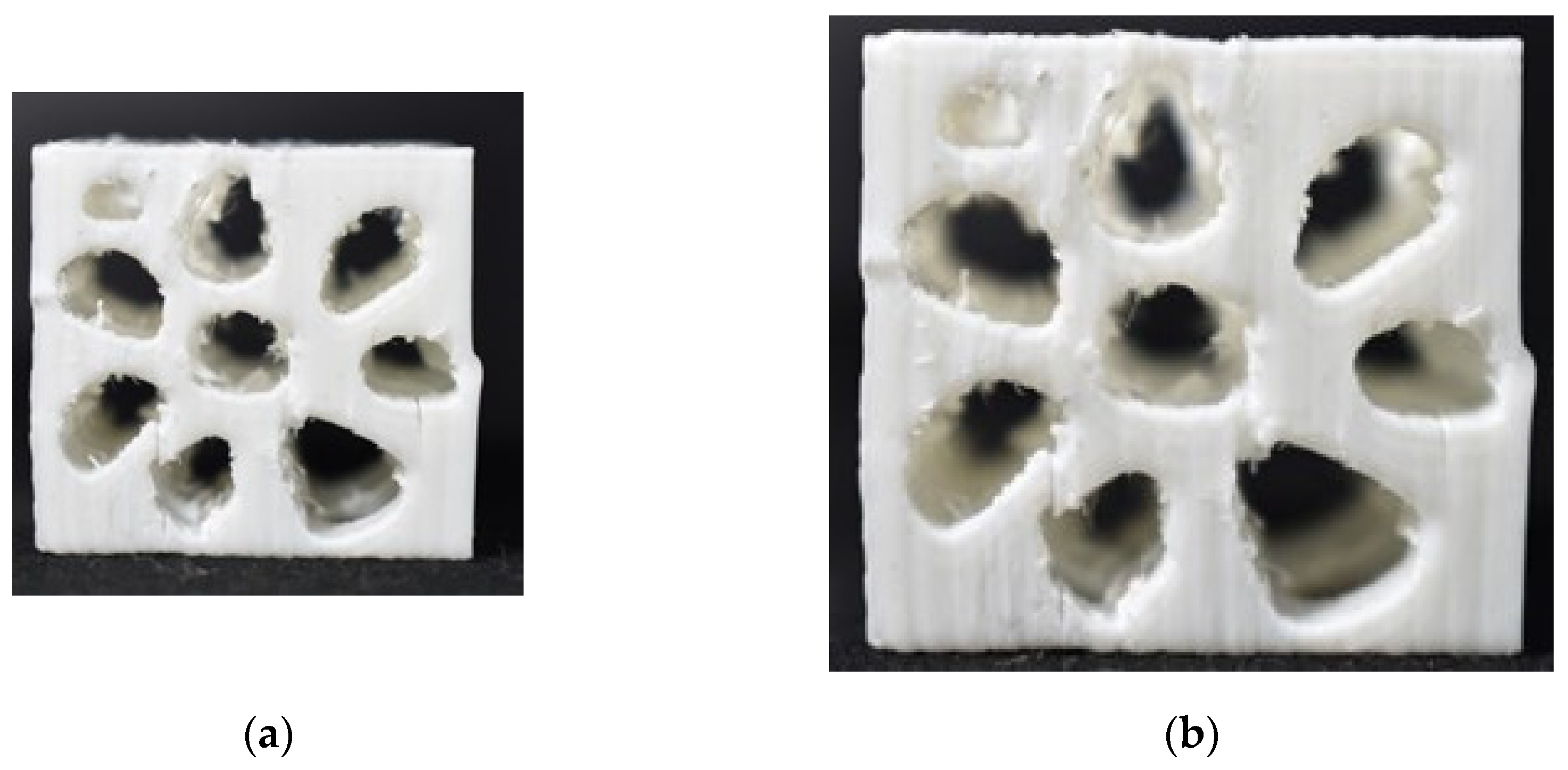
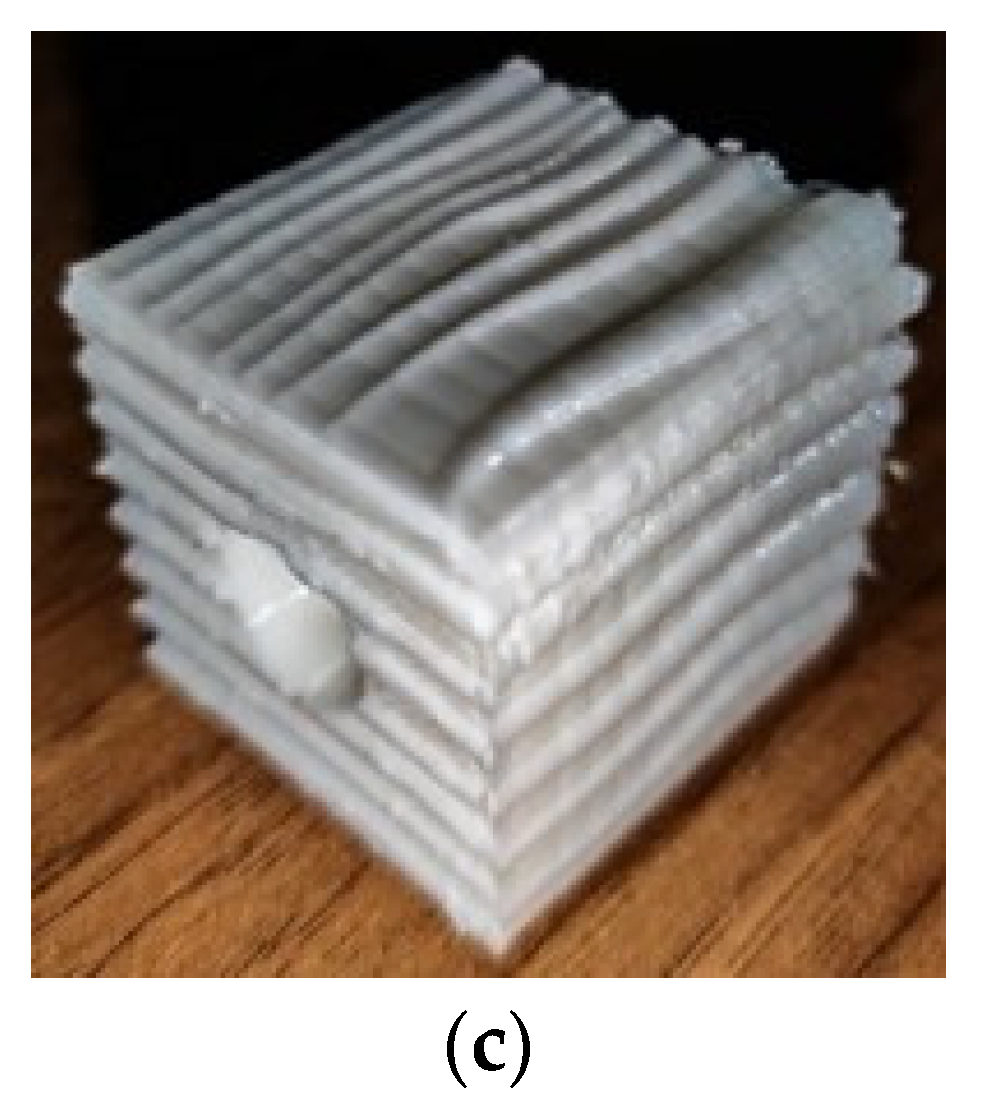
A typical case of the walnut structure with a 3D printed model is illustrated in Figure 21a, and adjacent to that Figure 21b shows a compression-tested and failed model of the same 3D printed model.
Figure 21.
(a) Compressed Rudraksha model; (b) Failed Rudraksha model; (c) Horn mimic model.
8. Results and Discussion
The current work focused on eight different bio-inspired patterns, and each design structure was subjected to a number of iterations to arrive at an optimal design model. The entire result section does a comparative study with respect to mechanical strength, as shown in Table 2. In the entire study, the Bendsoe and Sigmund model has equivalent load-bearing capacity compared to the 50% filled standard model.
Table 2.
Generic comparison of a few cases for mechanical strength.
Furthermore, the study covers the simulation study for mechanical strength, as illustrated in Table 3. These seven kinds of bio-inspired patterns are compared for total deformation, von mises and maximum principal stress theory, fatigue life cycle, and factor of safety calculation using the ANSYS workbench software tool. Among all the five bio-inspired patterns, the tortoiseshell has the lowest total deformation of 0.189 mm and maximum principal stress of 106 MPa, resulting in the most optimal model. Table 4 depicts the bamboo structure, Table 5 the Rudraksha, Table 6 the horn embossing pattern, Table 7 the tortoise vertebral structure, and Table 8 the walnut structure for three types of material study structural steel, sheep horn, and PLA. The sheep horn and structural steel material-based study revealed fatigue life cycle and factor of safety. The investigation carried out for Rudraksha with 1800–3000 N of compressive load resulted in higher specific strength in comparison to brick, concrete, and porcelain [53]. However, the shell observed with high Vickers hardness (210 ± 30 MPa) differentiated with the commercial aluminum (1100–0, annealed). Based on the observation with Rudraksha, various other shell structures such as walnuts, hazelnuts, pecans, and almonds were later investigated. In addition, the shell described above is thought to have five times lower compressive loads than Rudraksha [54,55]. However, the highest mechanical properties observed for Rudraksha have been reported to arise through numerous distinct structural features, such as highly lignified and multiple shapes of sclereids [56,57,58]. Furthermore, in the case of bamboo culms subjected to axial compressive and tangential load for a three-case failure loading of high, medium, and low conditions. The obtained results show ~99 ± 5 MPa, ~101 ± 5 Mpa, and ~100 ± 5 MPa, respectively. However, tangential loading has ~17 ± 1 MPa, ~20 ± 1 MPa, and ~16 ± 1 MPa, respectively. The results are in close agreement with Awalluddin [59]. Onche [60] developed a compressive strength model of bamboo using the empirical relation of fleck and budiansky [61]. The work focused on the modelling failure analysis of composites. Korde and west [62] depicted the kinking and the fibre buckling of fibre within a band when subjected to compressive load.
Table 3.
Simulation study comparison for sheep horn material.
Table 4.
Simulation study comparison for bamboo structure.
Table 5.
Simulation study comparison for Rudraksha structure.
Table 6.
Simulation study comparison for horn structure.
Table 7.
Simulation study comparison for tortoise vertebral structure.
Table 8.
Simulation study comparison for walnut structure.
9. Conclusions
The study on seven bio-inspired models for automotive impact resistive application has resulted in the following outcomes:
- ➢ Development of a unique process map for optimization model using the Rhino 7 software tool to realize the least material condition logic in geometric dimensioning and tolerancing.
- ➢ Creation of a database for seven bio-inspired models for the typical mechanical property extraction such as tensile strength, flexural strength, fatigue behaviour parameters viz, life cycle, the factor of safety, damage tolerance, and bi-axiality indication.
- ➢ Production of complex geometrical shapes using an experimental method known as fuse deposition modelling (FDM) and arriving at the outcomes to further compare experimental results with simulation results and earlier data to draw a conclusion.
- ➢ Generation of design methods in the future in terms of designing and optimizing 3D complex models, as well as conducting a combined parametric and topology optimization scheme.
- ➢ The maximum principal stresses for Rudraksh, Bambusa tulda, sheep horn, tortoiseshell, and Juglans nigra are 657.95 MPa, 90.89 MPa, 145.44 MPa, 106.11 MPa, and 531.11 MPa, respectively, and their fatigue life cycles were 2.16 × 10⁵, 2.16 × 10⁵, 1 × 10⁶, 1 × 10⁶ and 2.16 × 10⁵, respectively.
Author Contributions
Conceptualisations, A.Y.P.; methodology, A.Y.P.; software, A.Y.P., C.H., G.S., S.M.K., A.M.C., V.B.S. and R.M.C.; validation, A.Y.P., C.H., G.S., S.M.K., A.M.C. and R.M.C.; formal analysis, A.Y.P., C.H., G.S., S.M.K., A.M.C., V.B.S., R.M.C. and M.B.P.; investigation, A.Y.P., C.H., G.S., S.M.K., A.M.C., R.M.C., S.N.M. and M.B.P.; resources, C.H., G.S., S.M.K., A.M.C., R.M.C. and S.N.M.; data curation, C.H., G.S., S.M.K., A.M.C., V.B.S. and R.M.C.; writing—A.Y.P., C.H., G.S., S.M.K., A.M.C., V.B.S. and R.M.C.; writing—review and editing, C.H., G.S., S.M.K., A.M.C., V.B.S., R.M.C., M.E.M.S., I.M.R.F. and M.B.P.; visualization, A.Y.P.; supervision, A.Y.P. and B.B.K.; project administration, I.M.R.F., M.E.M.S. and A.Y.P.; funding acquisition, I.M.R.F., M.E.M.S. and A.Y.P. All authors have read and agreed to the published version of the manuscript.
Funding
This research received external funding from La Fondation Dassault Systèmes. Dassault System Foundation (DSF) Project ID: IN-2021-2-02.
Data Availability Statement
Not applicable.
Acknowledgments
The authors extend their appreciation to the La Fondation team of Dassault systems Pvt Ltd. Pune, for funding the work through the research initiative program under the grant number Dassault System Foundation (DSF) Project ID: IN-2021-2-02. The authors sincerely thank the KLE Technological University administrative members, such as Ashok S Shettar, Prakash Tewari, and B. L. Desai, for their continuous support in completing the entire research work.
Conflicts of Interest
The authors declare no conflict of interest.
References
- Benyus, A Biomimicry Primer, Biomimicry 3.8. Available online: https://asknature.org/resource/a-biomimicry-primer (accessed on 29 October 2022).
- Ward Rashidi, M.R.; Frank, G.; Seifert, R.; Chapkin, W.; Baur, J.; Walgren, P. Biomimicry of the armadillo carapace for the design of bending cylinders for aerospace applications. In Proceedings of the AIAA Scitech 2019 Forum, San Diego, CA, USA, 7–11 January 2019; p. 1632. [Google Scholar] [CrossRef] [Scilit]
- Wijegunawardana, I.D.; de Mel, W.R. Biomimetic Designs for Automobile Engineering: A Review. Int. J. Automot. Mech. Eng. 2021, 18, 9029–9041. [Google Scholar] [CrossRef] [Scilit]
- Xu, F.; Wang, J.; Hua, L. Multi-objective biomimetic optimisation design of stiffeners for automotive door based on vein unit of dragonfly wing. Proc. Inst. Mech. Eng. Part. C J. Mech. Eng. Sci. 2022, 236, 4551–4564. [Google Scholar] [CrossRef] [Scilit]
- Yadroitsev, I.; Krakhmalev, P.; Yadroitsava, I.; Du Plessis, A. Qualification of Ti6Al4V ELI alloy produced by laser powder bed fusion for biomedical applications. Jom 2018, 70, 372–377. [Google Scholar] [CrossRef] [Scilit]
- Zhang, W.; Wang, X.Q.; Li, Z.Y. The protective shell: Sclereids and their mechanical function in corollas of some species of Camellia (Theaceae). Plant. Biol. 2011, 13, 688–692. [Google Scholar] [CrossRef] [Scilit] [PubMed]
- Zhang, W.; Xue, Y.; Yang, S.; Wang, Y.; Zhao, H. Sclereids are strong enough to support the delicate corollas: Experimental and computational data evidence from Camellia sinensis (L.). Sci. Rep. 2017, 7, 43788. [Google Scholar] [CrossRef] [Scilit]
- Huss, J.C.; Gierlinger, N. Functional packaging of seeds. New Phytol. 2021, 230, 2154–2163. [Google Scholar] [CrossRef] [Scilit]
- Abeles, F.B.; Biles, C.L. Characterisation of peroxidases in lignifying peach fruit endocarp. Plant. Physiol. 1991, 95, 269–273. [Google Scholar] [CrossRef] [Scilit]
- Antreich, S.J.; Xiao, N.; Huss, J.C.; Gierlinger, N. Cellulosic wall thickenings restrict cell expansion to shape the 3D puzzle sclereids of the walnut shell. bioRxiv 2020, 11, 390906. [Google Scholar]
- Dardick, C.; Callahan, A.M. Evolution of the fruit endocarp: Molecular mechanisms underlying adaptations in seed protection and dispersal strategies. Front. Plant. Sci. 2014, 5, 284. [Google Scholar] [CrossRef] [Scilit]
- Hayama, H.; Ito, A.; Shimada, T.; Kashimura, Y. Cellulose synthesis during endocarp hardening of peach fruit. J. Hortic. Sci. Biotechnol. 2006, 81, 651–655. [Google Scholar] [CrossRef] [Scilit]
- Antreich, S.J.; Xiao, N.; Huss, J.C.; Horbelt, N.; Eder, M.; Weinkamer, R.; Gierlinger, N. The puzzle of the walnut shell: A novel cell type with interlocked packing. Adv. Sci. 2019, 6, 1900644. [Google Scholar] [CrossRef] [Scilit]
- Huss, J.C.; Antreich, S.J.; Bachmayr, J.; Xiao, N.; Eder, M.; Konnerth, J.; Gierlinger, N. Topological interlocking and geometric stiffening as complementary strategies for strong plant shells. Adv. Mater. 2020, 32, 2004519. [Google Scholar] [CrossRef] [Scilit] [PubMed]
- van Casteren, A.; Strait, D.S.; Swain, M.V.; Michael, S.; Thai, L.A.; Philip, S.M.; Saji, S.; Al-Fadhalah, K.; Almusallam, A.S.; Shekeban, A.; et al. Hard plant tissues do not contribute meaningfully to dental microwear: Evolutionary implications. Sci. Rep. 2020, 10, 582. [Google Scholar] [CrossRef] [Scilit] [PubMed]
- Stayton, C.T. Biomechanics on the half shell: Functional performance influences patterns of morphological variation in the emydid turtle carapace. Zoology 2011, 114, 213–223. [Google Scholar] [CrossRef] [Scilit] [PubMed]
- Damiens, R.; Rhee, H.; Hwang, Y. Compressive behavior of a turtle’s shell: Experiment, modeling, and simulation. J. Mech. Behav. Biomed. Mater. 2012, 6, 106–112. [Google Scholar] [CrossRef] [Scilit]
- Zhang, W.; Wu, C.; Zhang, C.; Chen, Z. Numerical study of the mechanical response of turtle shell. J. Bionic Eng. 2012, 9, 330–335. [Google Scholar] [CrossRef] [Scilit]
- Achrai, B.; Wagner, H.D. Micro-structure and mechanical properties of the turtle carapace as a biological composite shield. Acta Biomater. 2013, 9, 5890–5902. [Google Scholar] [CrossRef] [Scilit]
- Achrai, B.; Bar-on, B.; Wagner, H.D. Bending mechanics of the red-eared slider turtle carapace. J. Mech. Behav. Biomed. Mater. 2014, 30, 223–233. [Google Scholar] [CrossRef] [Scilit]
- Achrai, B.; Wagner, H.D. The red-eared slider turtle carapace under fatigue loading: The effect of rib-suture arrangement. Mater. Sci. Eng. 2015, C53, 128–133. [Google Scholar] [CrossRef] [Scilit]
- Magwene, M.P.; Socha, J.J. Biomechanics of turtle shells: How whole shells fail in compression. J. Exp. Zool. 2013, 319A, 86–98. [Google Scholar] [CrossRef] [Scilit]
- Liu, Z.; Meyers, M.A.; Zhang, Z.; Ritchie, R.O. Functional gradients and heterogeneities in biological materials: Design principles, functions, and bioinspired applications. Prog. Mater. Sci. 2017, 88, 467–498. [Google Scholar] [CrossRef] [Scilit]
- Libonati, F.; Buehler, M.J. Advanced structural materials by bioinspiration. Adv. Eng. Mater. 2017, 19, 1600787. [Google Scholar] [CrossRef] [Scilit]
- Ha, N.S.; Lu, G. A review of recent research on bio-inspired structures and materials for energy absorption applications. Compos. Part. B Eng. 2020, 181, 1–38. [Google Scholar] [CrossRef] [Scilit]
- Wegst, U.G.K.; Bai, H.; Saiz, E.; Tomsia, A.P.; Ritchie, R.O. Bioinspired structural materials. Nat. Mater. 2015, 14, 23–36. [Google Scholar] [CrossRef] [Scilit]
- Wegner, C.; Minnaert, L.; Ohlberger, S.; Pulka, S. Bionic structures: From stalks to skyscrapers. Sci. Sch. 2017, 12–16. Available online: http://www.voxeljet.de/en/case-studies/case-studies/bionic-structures-in-architecture/ (accessed on 29 October 2022).
- Jiao, J.; Tang, P. Application of bamboo in a design–build course: Lianhuadang Farm project. Front. Archit. Res. 2019, 8, 549–563. [Google Scholar] [CrossRef] [Scilit]
- He, M.; Li, Z.; Sun, Y.; Ma, R. Experimental investigations on mechanical properties and column buckling behavior of structural bamboo. Struct. Des. Tall Spec. Build. 2015, 24, 491–503. [Google Scholar] [CrossRef] [Scilit]
- Correal, J.F. Bamboo Design and Construction; Elsevier: Amsterdam, The Netherlands, 2016. [Google Scholar] [CrossRef] [Scilit]
- Vishal, K.; Rajkumar, K.; Sabarinathan, P.; Dhinakaran, V. Mechanical and Wear Characteristics Investigation on 3D Printed Silicon Filled Poly (Lactic Acid) Biopolymer Composite Fabricated by Fused Deposition Modeling. Silicon 2022, 1–13. [Google Scholar] [CrossRef] [Scilit]
- Essabir, H.; Nekhlaoui, S.; Malha, M.; Bensalah, M.; Arrakhiz, F.; Qaiss, A.; Bouhfid, R. Biocomposites based on polypropylene reinforced with Almond Shells particles: Mechanical and thermal properties. Mater. Des. 2013, 51, 225–230. [Google Scholar] [CrossRef] [Scilit]
- Jahanban-Esfahlan, A.; Ostadrahimi, A.; Tabibiazar, M.; Amarowicz, R. A comprehensive review on the chemical constituents and functional uses of walnut (Juglans spp.) husk. Int. J. Mol. Sci. 2019, 20, 3920. [Google Scholar] [CrossRef] [Scilit]
- Vishal, K.; Rajkumar, K.; Nitin, M.S.; Sabarinathan, P. Kigelia africana fruit biofibre polysaccharide extraction and biofibre development by silane chemical treatment. Int. J. Biol. Macromol. 2022, 209, 1248–1259. [Google Scholar] [CrossRef] [Scilit]
- Xiang, J.; Du, J. Energy absorption characteristics of bio-inspired honeycomb structure under axial impact loading. Mater. Sci. Eng. A 2017, 696, 283–289. [Google Scholar] [CrossRef] [Scilit]
- Hao, P.; Du, J. Energy absorption characteristics of bio-inspired honeycomb column thin-walled structure under impact loading. J. Mech. Behav. Biomed. Mater. 2018, 79, 301–308. [Google Scholar] [CrossRef] [Scilit]
- Xiang, J.; Du, J.; Li, D.; Scarpa, F. Numerical analysis of the impact resistance in aluminum alloy bi-tubular thin-walled structures designs inspired by beetle elytra. J. Mater. Sci. 2017, 52, 13247–13260. [Google Scholar] [CrossRef] [Scilit]
- Yu, X.; Pan, L.; Chen, J.; Zhang, X.; Wei, P. Experimental and numerical study on the energy absorption abilities of trabecular–honeycomb biomimetic structures inspired by beetle elytra. J. Mater. Sci. 2019, 54, 2193–2204. [Google Scholar] [CrossRef] [Scilit]
- Zou, M.; Yu, Y.-J.; Zhang, R.-R.; Wei, C.-G.; Wang, H.-X. Simulation analysis of energy-absorption properties of thin-wall tube based on horn structure. J. Jilin Univ. 2015, 45, 1863–1868. [Google Scholar] [CrossRef]
- San Ha, N.; Lu, G.; Xiang, X. Energy absorption of a bio-inspired honeycomb sandwich panel. J. Mater. Sci. 2019, 54, 6286–6300. [Google Scholar]
- Mahdi, E.; Ochoa, D.; Vaziri, A.; Eltai, E. Energy absorption capability of date palm leaf fiber reinforced epoxy composites rectangular tubes. Compos. Struct. 2019, 224, 111004. [Google Scholar] [CrossRef] [Scilit]
- Wang, Z.; Zhang, J.; Li, Z.; Shi, C. On the crashworthiness of bio-inspired hexagonal prismatic tubes under axial compression. Int. J. Mech. Sci. 2020, 186, 105893. [Google Scholar] [CrossRef] [Scilit]
- Song, J.; Xu, S.; Xu, L.; Zhou, J.; Zou, M. Experimental study on the crashworthiness of bio-inspired aluminum foam-filled tubes under axial compression loading. Thin-Walled Struct. 2020, 155, 106937. [Google Scholar] [CrossRef] [Scilit]
- Yang, W.; McKittrick, J. Separating the influence of the cortex and foam on the mechanical properties of porcupine quills. Acta Biomater. 2013, 9, 9065–9074. [Google Scholar] [CrossRef] [Scilit] [PubMed]
- Ingrole, A.; Aguirre, T.G.; Fuller, L.; Donahue, S.W. Bioinspired energy absorbing material designs using additive manufacturing. J. Mech. Behav. Biomed. Mater. 2021, 119, 104518. [Google Scholar] [CrossRef] [Scilit]
- Huang, W.; Zaheri, A.; Jung, J.-Y.; Espinosa, H.D.; Mckittrick, J. Hierarchical structure and compressive deformation mechanisms of bighorn sheep (Ovis canadensis) horn. Acta Biomater. 2017, 64, 1–14. [Google Scholar] [CrossRef] [Scilit] [PubMed]
- Yin, H.; Zheng, X.; Wen, G.; Zhang, C.; Wu, Z. Design optimization of a novel bio-inspired 3D porous structure for crashworthiness. Compos. Struct. 2020, 255, 112897. [Google Scholar] [CrossRef] [Scilit]
- Xiang, X.; Zou, S.; Ha, N.S.; Lu, G.; Kong, I. Energy absorption of bio-inspired multi-layered graded foam-filled structures under axial crushing. Compos. Part B Eng. 2020, 198, 108216. [Google Scholar] [CrossRef] [Scilit]
- Lazarus, B.S.; Velasco-Hogan, A.; Río, T.G.-D.; Meyers, M.A.; Jasiuk, I. A review of impact resistant biological and bioinspired materials and structures. J. Mater. Res. Technol. 2020, 9, 15705–15738. [Google Scholar] [CrossRef] [Scilit]
- de Oliveira, L.; Tonatto, M.L.P.; Coura, G.L.C.; Freire, R.T.S.; Panzera, T.H.; Scarpa, F. Experimental and numerical assessment of sustainable bamboo core sandwich panels under low-velocity impact. Constr. Build. Mater. 2021, 292, 123437. [Google Scholar] [CrossRef] [Scilit]
- Du, Y.; Gu, D.; Xi, L.; Dai, D.; Gao, T.; Zhu, J.; Ma, C. Laser additive manufacturing of bio-inspired lattice structure: Forming quality, microstructure and energy absorption behavior. Mater. Sci. Eng. A 2019, 773, 138857. [Google Scholar] [CrossRef] [Scilit]
- Ramírez-Gil, F.J.; Silva, E.C.N.; Montealegre-Rubio, W. Through-thickness perforated steel plates optimized for ballistic impact applications. Mater. Des. 2021, 212, 110257. [Google Scholar] [CrossRef] [Scilit]
- Jennings, J.S.; Macmillan, N.H. A tough nut to crack. J. Mater. Sci. 1986, 21, 1517–1524. [Google Scholar] [CrossRef] [Scilit]
- Kaupp, G.; Naimi-Jamal, M.R. Nutshells’ mechanical response: From nanoindentation and structure to bionics models. J. Mater. Chem. 2011, 21, 8389–8400. [Google Scholar] [CrossRef] [Scilit]
- Schüler, P.; Speck, T.; Bührig-Polaczek, A.; Fleck, C. Structure-function relationships in macadamia integrifolia seed coats—fundamentals of the hierarchical microstructure. PLoS ONE 2014, 9, e102913. [Google Scholar] [CrossRef] [Scilit]
- Hartung, M.; Storey, W. The development of the fruit of macadamia. J. Agric. Res. 1939, 59, 397. [Google Scholar]
- Strohschen, B. Vergleichende Morphologische und Anatomische Untersuchungen zur Fruchtentwicklung von drei Vertretern der Familie der Proteaceae: Macadamia Integrifolia. Ph.D. Thesis, Rheinische Friedrich-Wilhelms-Universität Bonn, Bonn, Germany, 1985. [Google Scholar]
- Wang, C.-H.; Mai, Y.-W. Deformation and fracture of Macadamia nuts part 1: Deformation analysis of nut-in-shell. Int. J. Fract. 1994, 69, 67–85. [Google Scholar] [CrossRef] [Scilit]
- Awalluddin, D.; Azreen, M.; Ariffin, M.; Osman, M.H.; Warid, M. Mechanical properties of different bamboo species. MATEC Web Conf. 2017, 138, 01024. [Google Scholar] [CrossRef] [Scilit]
- Onche, E.O.; Azeko, S.T.; Obayemi, J.D.; Oyewole, O.K.; Ekwe, N.B.; Rahbar, N.; Soboyejo, W.O. Compressive deformation of Bambusa vulgaris-Schrad in the transverse and longitudinal orientations. J. Mech. Behav. Biomed. Mater. 2020, 108, 103750. [Google Scholar] [CrossRef] [Scilit]
- Budiansky, B.; Fleck, N.A. Compressive failure of fibre composites. J. Mech. Phys. Solids 1993, 41, 183–211. [Google Scholar] [CrossRef] [Scilit]
- Wen, Z.; Li, M. Compressive properties of functionally graded bionic bamboo lattice structures fabricated by fdm. Materials 2021, 14, 4410. [Google Scholar] [CrossRef] [Scilit]



Publisher’s Note: MDPI stays neutral with regard to jurisdictional claims in published maps and institutional affiliations. |
© 2022 by the authors. Licensee MDPI, Basel, Switzerland. This article is an open access article distributed under the terms and conditions of the Creative Commons Attribution (CC BY) license (https://creativecommons.org/licenses/by/4.0/).