


Abstract
The NIOSH Lifting Equation is widely used to evaluate manual material handling tasks by identifying lifting risk through load reduction multipliers based on task geometry. However, while it provides a means of classifying risk, it does not estimate spinal forces and therefore cannot quantify the biomechanical load experienced at the lumbar spine. In contrast, biomechanical simulations can estimate spinal compression with high fidelity, but they require motion capture systems and specialized software that are not practical for most workplace assessments. This study aimed to bridge these approaches by developing a family of mixed-effect statistical models that predict L4/L5 spinal compression forces using the geometric parameters of the NIOSH framework combined with posture-specific biomechanical descriptors at peak-loading poses extracted from digital simulations. Data were aggregated from multiple experimental lifting studies in which standardized NIOSH parameters and corresponding spinal compression forces were obtained through validated digital human modeling. Mixed-effects regression was used to establish the relationship between task geometry, joint posture, load weight, and spinal compression. The resulting predictive equation demonstrated strong agreement with simulation-derived forces and effectively captured the contributions of subject, task and body positioning to the spinal compression force across diverse lifting tasks. Importantly, the variance structure of the model’s coefficients allows the contribution of risk to be attributed either to task-related factors or to subject-specific movement behaviors, reinforcing the safety relevance of the framework. Horizontal reach, vertical hand height, and load magnitude emerged as dominant predictors, with trunk posture providing additional explanatory power. The model offers ergonomists a practical, biomechanics-informed tool that extends the descriptive capacity of the NIOSH framework by enabling direct estimation of spinal compression forces without the need for full biomechanical simulations.
1. Introduction
Manual material handling continues to be a leading cause of work-related musculoskeletal disorders, particularly low back injuries, across diverse industrial environments [1,2,3]. Prior research has demonstrated that low-back disorder risk emerges from interactions among posture, load magnitude, movement strategy, cumulative exposure, and internal spinal loading rather than from a single mechanical threshold alone. Foundational studies have identified biomechanical loading variables and lifting characteristics as important contributors to occupational low-back disorders and have highlighted the importance of considering both peak and cumulative exposure when evaluating lifting-related risk [4,5,6].
To reduce these risks, ergonomists commonly rely on the NIOSH Lifting Equation [7], a widely implemented method that quantifies task demands through multiplicative factors describing load weight, horizontal and vertical location, asymmetry, coupling quality, and task frequency [8,9,10]. Although highly practical and easy to apply in the field, the equation does not estimate spinal loads and cannot represent the complex biomechanical interactions that influence lumbar stress during lifting. Consequently, the NIOSH framework is often regarded as an efficient screening tool, yet an incomplete model of the mechanisms driving low-back injury risk [11,12,13].
Biomechanical simulations and inverse-dynamics approaches provide a contrasting perspective by offering detailed estimates of L4/L5 compression forces based on posture, kinematics, anthropometrics, and musculoskeletal loading [14,15,16,17]. These models capture nonlinear interactions and individual-specific movement strategies, but they require specialized software, laboratory-grade motion capture, and technical expertise. As a result, practitioners face a methodological divide: they may use a simplified tool that is broadly accessible but biomechanically limited, or advanced computational models that provide high fidelity but are impractical in most workplace assessments. Recent investigations have emphasized discrepancies between NIOSH multiplier outputs and simulated spinal loads, renewing debate over how well simplified ergonomic formulas can represent the multifactorial nature of spinal loading [18,19,20]. Detailed biomechanical investigations have further demonstrated that internal spinal loading varies substantially with task geometry, trunk motion, and load placement and that variability in compression exposure may provide additional information beyond deterministic ergonomic thresholds [21,22].
Although both approaches provide valuable insight into lifting safety, they address risk from different perspectives and exhibit complementary limitations. Threshold-based methods, such as the NIOSH Lifting Equation [23] and commonly cited spinal compression limits provide practical guidance and support rapid workplace screening, but they rely on fixed criteria and therefore offer limited ability to represent variability associated with anthropometry, posture selection, and individual lifting strategies [24]. Conversely, biomechanical simulations estimate internal loading with greater mechanical realism and can capture subject-specific responses, but they require specialized instrumentation and computational resources that limit broad implementation. As a result, there remains a need for approaches that preserve biomechanical relevance while improving the ability to represent variability across subjects and lifting conditions. The present work addresses this need by using a statistical framework to relate task descriptors and posture characteristics to spinal compression outcomes across heterogeneous lifting scenarios.
The present study bridges this gap by developing mixed-effects statistical models that link traditional NIOSH lifting parameters and posture descriptors to L4/L5 spinal compression forces derived from validated digital human modeling. By aggregating data from multiple laboratory studies and harmonizing posture variables across protocols, we evaluate the extent to which NIOSH descriptors predict actual biomechanical loading and quantify the relative contribution of load, object location, and body posture. The goal is to create an empirically grounded, biomechanics-informed extension of the NIOSH framework—one that maintains field usability while improving predictive precision. The proposed models are not intended to replace detailed musculoskeletal analyses but to provide task-level estimates of spinal compression exposure suitable for ergonomic screening and comparative risk assessment. To our knowledge, this is the first study to derive a continuous statistical model of spinal compression based on pooled biomechanical simulations explicitly mapped onto NIOSH lifting parameters. Ultimately, the results offer ergonomists a complementary analytical tool that enhances risk assessment capabilities without requiring full motion-capture-based simulation.
2. Materials and Methods
2.1. Study Overview
This study developed a statistical framework linking NIOSH lifting parameters to spinal compression forces derived from previously published experimental and simulation-based investigations. Compression-force estimates were treated as reference outputs from validated digital human modeling rather than as independently derived biomechanical quantities. The pooled dataset was constructed exclusively from information already reported in the contributing publications and did not rely on unpublished data or additional information requested from external investigators. Published posture descriptors, biomechanical outputs, and task characteristics were extracted and reorganized into a harmonized structure suitable for secondary analysis.
To achieve this objective, we aggregated data from five studies that used consistent methodologies based on motion capture, digital human modeling, and biomechanical force estimation. From each study, only those postures associated with peak spinal loading were extracted, as these represented the moments most relevant to evaluating lifting risk. The resulting pooled dataset enabled the development of regression models that map NIOSH task descriptors to L4/L5 spinal compression forces.
2.2. Ethical Approval
The present study represents a secondary pooled analysis based exclusively on previously published and deidentified data. No new human-subject recruitment, data collection, or participant interaction was performed as part of this work. Accordingly, no additional institutional review was required for the present analysis. Ethical oversight applicable to the original data collection procedures is described in the corresponding source publications.
2.3. Source Studies and Inclusion Criteria
Five studies met the criteria for inclusion in the present analysis [14,16,25,26,27]. Inclusion required that the published studies reported sufficient detail to reconstruct standardized NIOSH descriptors and obtain comparable estimates of L4/L5 compression. Study selection, therefore, depended not only on the variables originally measured but also on the completeness and compatibility of the reported information.
These studies spanned a range of occupational and simulated lifting contexts, including industrial lifting tasks [26], healthcare patient handling [16], dynamic simulation validation [27], brewery work [14], and virtual reality–based lifting [25]. To ensure methodological consistency, each study had to employ motion capture, integrate the captured movement into a validated digital human model, and estimate spinal compression forces at the L4/L5 segment using inverse dynamics or static/dynamic biomechanical models. Additionally, each study needed to include well-defined lifting or load-handling tasks with identifiable peak-force postures, and to report sufficient task descriptors to compute or infer the relevant NIOSH lifting parameters. This ensured that all extracted postures could be represented within a common NIOSH-based task framework.
A total of 106 peak-loading observations were retained from the five source studies after harmonization and posture extraction. Although the number of observations was intentionally restricted to peak-loading postures to preserve biomechanical comparability across studies, the resulting dataset captures substantial variation in load magnitude, hand location, posture, and participant characteristics. The pooled design, therefore, prioritizes diversity of lifting conditions over dense sampling within any individual task domain.
2.4. Data Harmonization Approach
Although the source studies differed in task purpose, load mass, and experimental environment, a harmonization process was applied to ensure comparability across datasets. Harmonization was performed using only information available in the published studies. Reported task descriptors, posture characteristics, and estimated compression values were reformatted into a unified structure to permit consistent comparison and mixed-effects analysis across studies. In each study, lifting trials were reviewed, and the posture associated with the maximal spinal compression force was identified. These peak-load postures were selected because they represent the biomechanical extremes most relevant to evaluating instantaneous mechanical demand during lifting tasks. The present framework, therefore, focuses on estimating peak spinal compression exposure rather than cumulative loading accumulated across the full lifting sequence. Each posture was then standardized into a common format that included NIOSH lifting parameters (horizontal distance, vertical location, travel distance, asymmetry, frequency, coupling classification, and load weight), participant anthropometrics, and the predicted L4/L5 compression force. Coordinate systems and units were aligned with NIOSH definitions and the outputs of the JACK biomechanics engine. When multiple repetitions of a task were available, their peak-force values were averaged unless the original study design required separate treatment of individual repetitions. The resulting harmonized dataset allowed all postures to be analyzed within a single statistical modeling framework.
2.5. Task and Pose Extraction
For the purposes of this study, only the task components from each source paper that corresponded to high-load postures were extracted and incorporated into the pooled dataset. Despite differences in occupational domain and context, all five studies followed a common experimental pattern in which participants performed a defined lifting or load-handling task under controlled conditions, while posture and spinal loading were estimated through integrated motion-capture and digital human modeling procedures. In each case, the investigators identified specific moments within the task that produced the highest predicted spinal load, and these moments formed the basis for the present analysis.
In the industrial lifting study [26], participants lifted or carried loads ranging from 5 to 10 kg while maintaining standardized foot placement and fixed object positions. The analyzed poses included the squat-like posture during floor pickup and a forward-reaching posture when placing the object on an elevated surface. These poses consistently produced the greatest compression forces in the lumbar spine.
In the healthcare patient-transfer study [16], participants moved a 25 kg patient mannequin from a wheelchair to a hospital bed at two different heights, and also assisted the mannequin from sitting to standing. The investigators identified three postures that produced the highest lumbar loading: a deeply flexed trunk position during initial patient lift, a forward-leaning posture when positioning the mannequin over the bed, and an asymmetric trunk-bending posture during the sit-to-stand assistance. These postures were used in the pooled dataset because they represent typical high-risk moments encountered in patient handling.
In the virtual reality lifting study [25], participants lifted a 10 kg box from the floor and placed it on a table in both a real and a VR environment. The two postures identified for analysis were the squatting posture at load pickup and the trunk-flexed posture during object placement. These postures were extracted in both real and virtual environments to understand how differences in posture representation might influence the biomechanical outputs.
In the brewery ergonomics study [14], real workers performed two common keg-handling tasks involving empty (14 kg) and full (72 kg) beer kegs while maintaining naturalistic foot placement and self-selected lifting strategies. In the first task—lifting an empty keg from the floor to a 1 m-high cleaning platform—the critical poses were a squat-like posture during the initial floor pickup and a near-neutral upper-body posture when placing the keg on the stand. In the second task—lifting a full 72 kg keg from the floor and stacking it on another keg—the highest lumbar forces occurred during a deep-squat retrieval posture and during the forward-reaching placement phase while the arms were extended. Across both tasks, these postures consistently produced the largest compressive forces at L4/L5.
In addition to these tasks, a digital human modeling validation study [27] contributed peak-load postures from various repetitive industrial actions generated through Siemens JACK and Task Simulation Builder tools. These postures typically involved either maximum trunk flexion or the largest external moment arm between the load and the lumbar spine.
Although the specific tasks varied, each study contributed postures representing biomechanically meaningful loading conditions. By limiting extraction to these peak-load postures, the current analysis focuses on those moments that directly influence the relationship between NIOSH multipliers and spinal compression forces. The harmonized set of extracted postures forms the basis for all subsequent statistical modeling.
2.6. Motion Capture and Data Acquisition
Although the five source studies employed slightly different data-collection systems, all relied on established motion capture protocols ensuring comparable posture estimation across experiments. Two studies used inertial motion capture systems (Xsens MVN Awinda, Xsens 3D Motion Tracking Technology, Enschede, The Netherlands), while others employed optical motion capture or motion-tracking derived from digital human simulations. In each case, kinematic data were sampled at frequencies ranging from 60 to 240 Hz and low-pass filtered using cut-off frequencies appropriate for human lifting movement. Retroreflective or inertial sensors were placed on standard anatomical landmarks, following either Plug-in Gait conventions or manufacturer-specified IMU placement protocols.
The motion capture systems recorded three-dimensional joint angles, segment orientations, and whole-body postures during each lifting task. Only the frames corresponding to the peak-loading postures identified in the source studies were extracted for this analysis. These frames were selected either based on the maximal L4/L5 compression reported in the original study. All extracted kinematic frames were exported as joint-angle sets and imported into a common modeling environment for harmonization.
2.7. Digital Human Modeling Integration
Across all source studies, posture-dependent loading was estimated using a digital human model implemented within the Siemens JACK ergonomics software (v9.0, Siemens software, Plano, TX, USA). Although the studies differed in their specific use of inverse kinematics or motion-driven animation, each produced a full-body model scaled to the participant’s anthropometrics. The skeletal joints of each digital model were aligned with the corresponding motion capture landmarks to ensure accurate reproduction of posture.
In studies using Xsens [16,17], the DHM_Xsens model was used to drive a biomechanically enriched JACK manikin (DHM_JACK). The skeletal mapping between the two environments ensured that segment orientations, particularly those of the trunk, pelvis, and upper extremities, were reproduced with high fidelity. In studies using optical motion capture or Task Simulation Builder (TSB) outputs, posture files were imported directly into JACK after appropriate scaling and orientation alignment.
For the present analysis, all digital human models were standardized to produce posture outputs in a consistent reference frame. Joint angles for the trunk, hips, knees, shoulders, and elbows were exported for all peak-loading postures and merged into the unified dataset. This uniform representation ensured that all biomechanical simulations were comparable across the aggregated studies.
2.8. Biomechanical Estimation of Spinal Compression
Spinal loading was estimated in all studies using the biomechanics module of the Siemens JACK software, which integrates anthropometric scaling, linked-segment inverse dynamics, and muscle-force estimation. The L4/L5 joint was selected as the site of interest because it is commonly used as the biomechanical reference point for evaluating compressive lumbar loads during lifting.
For each extracted posture, the model calculated the gravitational and inertial contributions of segmental masses, as well as the external loads applied through the hands. Hand forces were either measured experimentally (in VR comparison tasks) or assigned based on the mass of the handled object as described in the original studies. When subjects supported a patient mannequin or industrial object, the external load magnitude assigned to each hand followed the conventions established by the source study.
The JACK biomechanics engine produced estimates of peak compressive force at L4/L5, which were extracted from each posture and entered into the pooled dataset. Because all models used the same computational engine and similar anthropometric scaling procedures, the resulting force estimates were comparable across studies.
2.9. Mixed-Effects Regression Modeling
To ensure that the regression framework appropriately captured the biomechanical and experimental variability present in the combined dataset, multiple mixed-effects model specifications were developed and examined. The models differed in both their fixed-effects structure and their treatment of random effects. In some specifications, all available biomechanical predictors were included, while in others the set of predictors was reduced by removing individual joint-angle variables or task-related factors. This allowed the modeling procedure to explore how sensitive the estimation of L4/L5 compressive force was to the inclusion or exclusion of specific parameters, as well as how consistently different predictors contributed to spinal loading across lifting contexts. Nomenclature for all variables can be found in Table A1.
Because the dataset contained repeated measurements nested within subjects, tasks, and studies, the random-effects structure was also varied across models. Some of the candidate models included random intercepts at the subject level only, whereas others introduced random intercepts for both subjects and tasks. A subset of the models further expanded the random-effects structure by introducing random slopes for selected biomechanical variables, such as the load or horizontal distance, enabling the model to account for subject-specific responses to these parameters. A more complex specification also allowed correlations between random intercepts and random slopes, thereby increasing the capacity of the model to represent heterogeneity in lifting strategies and movement patterns.
All candidate models were specified as linear mixed-effects regressions predicting L4/L5 compression force from task descriptors and posture variables. The predictor variables included in the model originated from the pooled dataset assembled from the five source studies described in Section 2.3 and therefore reflected empirical variability observed across the contributing experiments. No externally defined probability distributions derived from literature sources were imposed on these predictors. Instead, the statistical assumptions of the framework were introduced through the mixed-effects formulation, in which random effects and residual errors were modeled as normally distributed components and variance parameters were estimated using Restricted Maximum Likelihood (REML).
In general form, the models can be written as:
where is the estimated L4/L5 compression force (N) for observation ; are fixed-effect predictors (e.g., Load, H, V, Sex, Coupling, and joint angles); are fixed-effect coefficients; , and are random intercepts associated with the subject, task, and study corresponding to observation ; and is the residual error term. Random intercepts are included in each model selectively, as illustrated in Table 1. For each model, the fixed-effect predictors , their symbols, units, and biomechanical definitions are summarized in Table A1, while estimated coefficients and random intercepts for each model specification are reported in Table A2 and Table A3.
Table 1.
Overview of the mixed-effects model specifications evaluated during the model-development process. Each model is described in terms of the predictors it included, the random-effects structure applied, and the number of fixed coefficients, random coefficients, and covariance parameters that resulted from its design.
Consistent with standard linear mixed-effects modeling assumptions, the response variable was modeled as conditionally Gaussian after accounting for the specified fixed and random effects. Random effects and residual errors were assumed to follow zero-centered normal distributions with variance estimated through restricted maximum likelihood estimation (REML). Independence was not assumed globally across all observations; rather, observations were allowed to share structured variability through the random-effects terms, while residual independence was assumed conditionally after accounting for subject-, task-, and study-level grouping.
For models that included subject-specific random slopes, the equation was extended as:
where and represent subject-specific deviations from the population-average slopes for Load and horizontal distance, respectively (included depending on model specification).
Each model was fitted using REML in MATLAB 2023a, and the resulting coefficients and variance components were recorded. Model comparison was performed using likelihood-based fit statistics (AIC, BIC, log-likelihood, and deviance), residual standard deviation, convergence behavior, coefficient stability, and biomechanical interpretability. Formal likelihood ratio tests were not systematically applied because several candidate models differed simultaneously in fixed-effects composition and random-effects structure and therefore were not strictly nested. Consequently, information-theoretic criteria were used to compare model quality while accounting for model complexity. Cross-validation and external validation procedures were not performed because the limited sample size and hierarchical organization of repeated observations nested within subjects and tasks reduced the feasibility of partitioning the data into independent training and testing subsets. Therefore, model evaluation focused on internal consistency and stability of parameter estimates across model specifications.
The purpose of this modeling phase was to systematically examine how different assumptions about fixed and random effects influence the representation of spinal compression. Table 1 summarizes the structural characteristics of all candidate models, including the predictors included in each specification, the random-effects structures that were tested, and the corresponding number of fixed parameters, random parameters, and covariance components. These models collectively provided a comprehensive foundation for understanding how different components of the NIOSH equation and associated joint angles contribute to the prediction of spinal loading.
3. Results
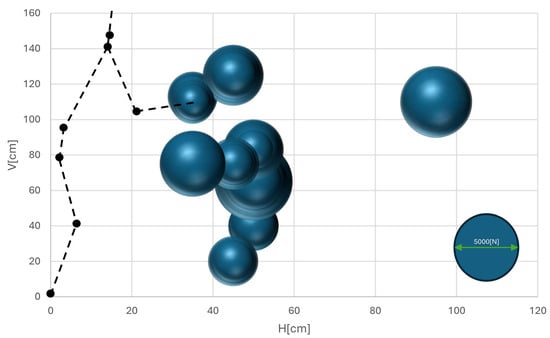
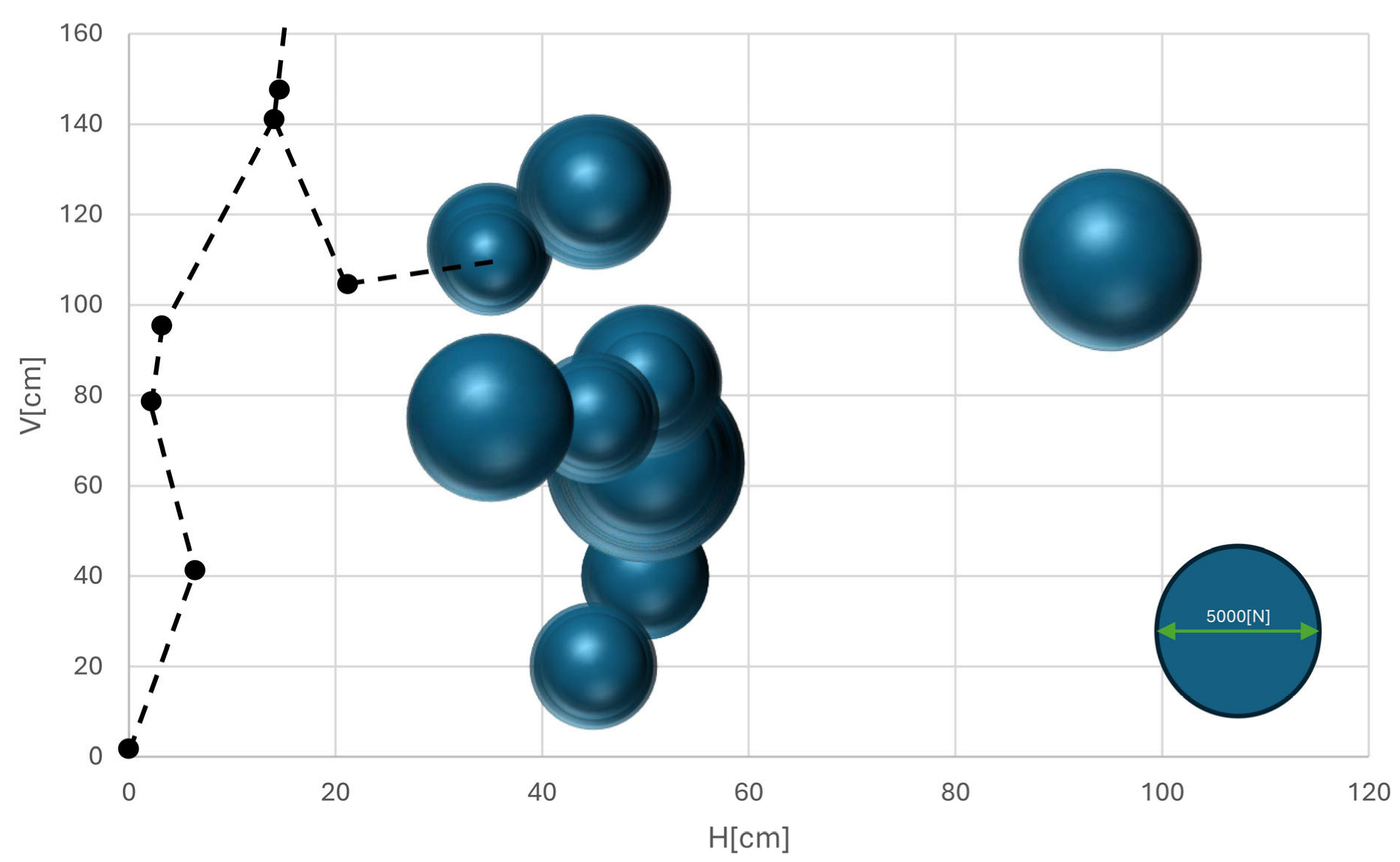
The distribution of compression forces, postural variables, and lifting parameters reflected substantial variability both within and across participants, tasks, and study protocols. Across all studies, peak L4/L5 compression forces ranged from ~800 N to ~6200 N, with an overall mean of 2762.3 N (SD = 1266.5 N). As illustrated in Figure 1, lumbar compressive forces exhibit substantial variability across the horizontal–vertical workspace. Lower compressive forces are generally observed at shorter horizontal reaches and moderate vertical hand positions, whereas higher compressive forces are concentrated in regions associated with larger horizontal distances and higher vertical hand heights. Importantly, Figure 1 also demonstrates that multiple compressive-force magnitudes can occur at the same hand location, indicating that loading is influenced not only by hand position but also by external load magnitude and whole-body joint configuration. These magnitudes are consistent with published laboratory lifting studies and fall well below the 6400 N NIOSH Action Limit, but above the 3400 N Recommended Limit for many trials [7]. A total of 106 lifting observations drawn from multiple studies were included in the final dataset. Before identifying a final regression model, a series of twelve mixed-effects model specifications were fitted to quantify how different combinations of fixed and random effects influenced the representation of L4/L5 compressive loading. These models ranged from a baseline fixed-effects formulation with no random effects (Model 0) to increasingly complex mixed-effects structures incorporating random intercepts, random slopes, and covariance terms (Models 1–11).
Figure 1.
Distribution of task postures in the horizontal–vertical workspace. Each point represents the hand position defined by horizontal distance from the feet (x-axis) and vertical distance from the floor (y-axis). Bubble diameter is scaled proportionally to the estimated L4/L5 compression force to provide visual comparison of loading magnitude across observations. A reference scale is provided in the lower-right corner of the figure to facilitate interpretation of bubble size. Because overlapping observations may reduce visual precision, the figure is intended to support comparative interpretation rather than extraction of exact numerical values. The figure is intended to visualize how compressive loading varies across task geometry rather than to convey quantitative force values.
Each model was evaluated using likelihood-based fit statistics (AIC, BIC, log-likelihood), convergence behavior, and stability of parameter estimates. This systematic comparison allowed the modeling framework to isolate the contribution of individual predictors, evaluate the necessity of subject- and task-level random effects, and examine whether additional complexity in the random-effects structure improved model performance.
Table 2 summarizes the model fit indices, including Akaike Information Criterion (AIC), Bayesian Information Criterion (BIC), log-likelihood, deviance, and residual standard deviation.
Table 2.
Summary of model performance indices.
Across the set of models, the inclusion of random intercepts for SubjectID and TaskID was consistently associated with substantial reductions in residual variance relative to the baseline fixed-effects model. Model 0, which omitted all random effects, produced the largest residual standard deviation (SD = 258 N i.e., ~9.3% of the average), indicating that a fixed-effects-only formulation was insufficient to account for between-subject and between-task variability present in the data. Introducing random intercepts for SubjectID and TaskID (e.g., Models 1, 2, 7, 8, 9, 10, and 11) reduced the residual SD to approximately 135 N (i.e., ~5% of the average), demonstrating that hierarchical variance components captured a meaningful proportion of unexplained variability.
Models incorporating random slopes (Models 3 and 4) further reduced deviance and improved log-likelihood values. These models produced the lowest AIC values in the set (1374.4 and 1370.5, respectively), consistent with expectations when additional variance components are introduced. However, these improvements were associated with large increases in the number of random-effects parameters (78 and 114, respectively), reflecting the added flexibility provided by subject-specific slopes and expanded covariance structures.
Conversely, the more restricted random-effects structures in Models 5 and 6 highlighted the consequences of under-specifying hierarchical variability. Removing either SubjectID or TaskID as random intercepts increased both AIC and residual variance, confirming that both levels of clustering contributed meaningfully to the structure of the data.
Overall, the pattern of results demonstrates that the hierarchical nature of the data—arising from repeated measures nested within subjects and tasks—requires mixed-effects modeling to achieve appropriate variance partitioning. Models with random intercepts for both SubjectID and TaskID consistently showed substantial improvements over the fixed-effects baseline.
Although Models 3 and 4 achieved slightly improved fit statistics, these gains were accompanied by substantially increased model complexity and reduced coefficient stability. In contrast, Model 11 retained the principal biomechanical predictors while minimizing parameter count and maintaining consistent coefficient estimates across specifications. From an ergonomic and interpretive standpoint, Model 11 therefore provides the most favorable balance between explanatory performance, robustness, and practical usability.
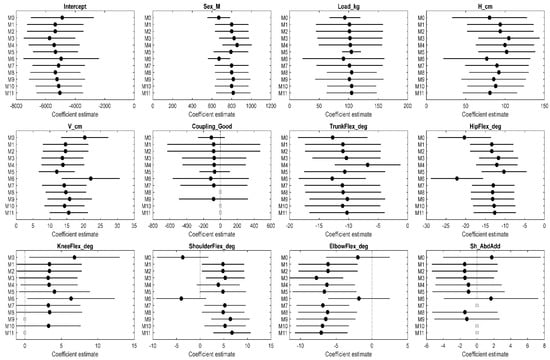
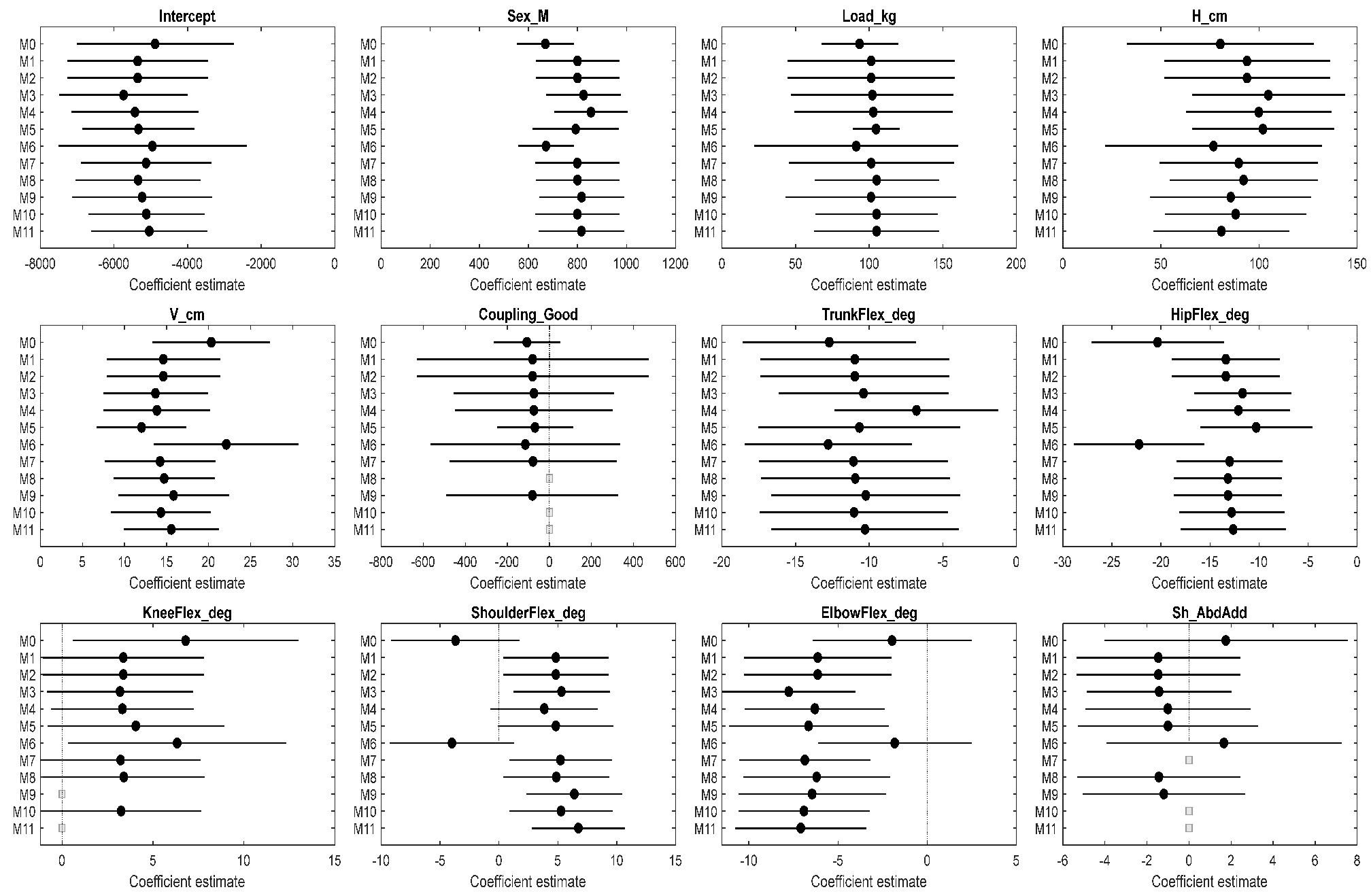
Figure 2 presents the estimated fixed-effect coefficients for all twelve regression models, expressed as Estimate ± Standard Error. This Figure provides a comprehensive view of how each predictor contributes to L4/L5 compressive force under varying model specifications, and it highlights the stability—or sensitivity—of each parameter across the full model set. For a detailed assessment of the coefficients see Table A2.
Figure 2.
Regression Coefficients Forest Plot.
Across all models, the coefficients for Load, horizontal distance, and vertical position remained consistently positive and generally preserved their relative ordering across model specifications. However, the associated standard errors indicate that uncertainty remained non-negligible for some estimates, reflecting variability across subjects, tasks, and source studies represented in the pooled dataset. Accordingly, interpretation should emphasize the consistency of coefficient direction and persistence across models rather than exact numerical agreement of coefficient magnitude.
Similarly, the coefficient for Sex (coded 0 = female, 1 = male) remained positive across all models. This effect should not be interpreted as a direct biological influence of sex on spinal compression but rather as a surrogate descriptor reflecting anthropometric differences captured through digital human model scaling. Because body dimensions, mass distribution, and segment properties are parameterized differently within the JACK biomechanics framework, this coefficient likely represents combined effects of anthropometric scaling and posture-dependent mechanics rather than an independent physiological effect.
Postural variables exhibited more nuanced behavior. Hip flexion and trunk flexion retained negative coefficients in every model, reflecting their consistent role in altering trunk orientation and increasing internal moment generation. These coefficients varied modestly in magnitude across models but retained similar directional effects, suggesting that hip and trunk posture contribute reliably to compression even when random effects absorb a substantial portion of between-subject and between-task variability. Elbow flexion also displayed a stable negative effect in nearly all models, although the precision of its estimate improved substantially when random intercepts were included, demonstrating the importance of variance partitioning for upper-limb predictors.
Other postural variables—including knee flexion, shoulder flexion, and especially shoulder abduction/adduction—showed wider variability in both magnitude and precision. Their coefficients frequently changed sign or exhibited larger standard errors in models with more complex random-effects structures. This suggests that these joint angles may exert smaller or more context-dependent influences on spinal loading, or that their biomechanical contribution overlaps with stronger predictors such as hip and trunk posture.
Coupling quality showed no consistent effect and remained close to zero in all models that included it, while shoulder abduction/adduction demonstrated large uncertainty and inconsistent coefficient behavior across model specifications. To evaluate whether these variables influenced interpretation of the remaining predictors, subsequent model families progressively excluded these parameters (Models 7–11). Their removal did not materially alter the magnitude, direction, or statistical significance of the principal coefficients associated with load magnitude, horizontal distance, vertical position, sex, trunk posture, and hip posture. This pattern suggests that the excluded variables contributed limited independent explanatory information and that model simplification primarily improved parsimony without changing the interpretation of the dominant biomechanical effects.
Figure 2 also shows the statistical significance patterns for each predictor across all models. When the error bar crosses zero, is an indication that the null hypothesis cannot be rejected, and therefore the p-value is larger than 0.05.
Across the entire model set, several parameters emerged as highly stable predictors of compressive force. Load, horizontal reach, vertical height, sex, and hip flexion retained statistical significance (p < 0.05) in nearly all model configurations. These effects remained robust regardless of whether random intercepts were specified for subjects, tasks, or studies, demonstrating that these predictors consistently account for substantial variance in spinal compression. Their influence aligns with biomechanical expectations, as these parameters directly alter external moments and musculoskeletal demand during lifting.
Trunk flexion also demonstrated a strong and consistent effect across most models, although its significance was reduced in the highest-complexity mixed-effects formulations, where random-effects variance absorption increased standard errors. Elbow flexion showed a similar pattern, achieving significance in most mixed-effects models but not in fixed-effects-only configurations, suggesting that correct modeling of inter-individual variability is necessary to detect its influence.
Other posture variables exhibited less consistent effects. Knee flexion and shoulder flexion reached significance in several models but fell above the p-value threshold in others, indicating that their contribution may be modulated by interactions with other joint angles or by variation in individual movement strategies. In contrast, coupling quality and shoulder abduction/adduction were not significant in any model. Their lack of statistical influence suggests that these factors do not meaningfully affect L4/L5 compression within the combined dataset, or that any potential effects are overshadowed by larger biomechanical determinants. For a detailed value of the p-values, see Table A3.
Table 3 shows the random-effect standard deviations illustrating how variance is distributed between subjects, tasks, studies (when applicable), and residual error. Random-effect standard deviations for SubjectID (105–710 N across models) correspond to 4–26% of the mean compressive force (2762 N), indicating substantial inter-individual variance in lifting strategy and anthropometry. Likewise, TaskID_SD values (106–164 N) correspond to 4–6% of the mean, reflecting consistent variability attributable to task geometry.
Table 3.
Random Factor Magnitudes.
Models incorporating random intercepts for subjects and tasks displayed substantially reduced residual variance, confirming that inter-individual and inter-task differences are meaningful contributors to overall variability in spinal compression. Models with random slopes for Load or H (Models 3 and 4) show increased subject-level variance, indicating that individuals differ not only in their baseline compression levels but also in their sensitivity to changes in lifting geometry.
Overall, Figure 2 and Table 3 demonstrate that while the absolute value of coefficients varies somewhat with the random-effects structure, the core biomechanical relationships remain stable. Load magnitude, reach distances, trunk posture, and hip posture consistently emerge as the strongest and most reliable predictors of compressive loading. Variables with less consistent coefficients appear more sensitive to individual lifting strategies or correlated movement patterns. This comprehensive comparison supports the selection of a model structure that balances explanatory power, coefficient stability, and interpretability.
Model fit varied substantially across the model set. Models incorporating random intercepts for both subjects and tasks consistently outperformed fixed-effects-only models, reducing residual variance by approximately 50% and improving AIC and BIC criteria. The most complex random-effects models (e.g., those incorporating multiple random slopes Model 3, Model 4) achieved the lowest AIC values but also displayed increased instability in parameter estimation and reduced statistical significance for several predictors. More parsimonious models—particularly those retaining only task and subject random intercepts—struck a better balance between fit quality and interpretability.
Taken together, the results demonstrate that a subset of NIOSH parameters—including load magnitude, horizontal reach, vertical height, as well as biomechanical variables such as trunk and hip posture, and demographic effects—serve as the primary determinants of compressive loading at the L4/L5 joint. These findings support the use of a mixed-effects modeling framework to account for inter-study and inter-individual variability and suggest a possible pathway for augmenting traditional NIOSH-based ergonomic assessment with compression estimation rather than replacing the original formulation. One potential implementation would involve using standard NIOSH task descriptors as inputs to estimate expected spinal compression and identify situations in which similar lifting indices may correspond to substantially different biomechanical demands.
4. Discussion
The purpose of this study was to examine how the primary variables that form the basis of the NIOSH Lifting Equation contribute to L4/L5 spinal compression when evaluated continuously across a pooled dataset of lifting tasks. By unifying data from five independent studies and applying a mixed-effects regression framework capable of partitioning variance among subjects, tasks, and studies, the present work provides a mechanistic understanding of how load, lifting geometry, and body posture shape lumbar loading. The findings confirm long-standing assumptions embedded in the NIOSH model while also revealing nuanced relationships between posture and spinal demand that are not explicitly captured by the traditional multipliers.
An important consequence of the present methodology is that the analysis was intentionally restricted to postures associated with peak estimated spinal compression. Accordingly, the proposed models should be interpreted as predictors of peak biomechanical exposure rather than cumulative spinal burden. This distinction is relevant because cumulative exposure frameworks evaluate injury risk through integration of loading magnitude, repetition, duration, and recovery over time, whereas the present approach isolates the most mechanically demanding configurations. Peak and cumulative loading, therefore, represent complementary but distinct perspectives of ergonomic risk. The current framework aligns more closely with screening approaches aimed at identifying high-demand task configurations rather than estimating long-term dose accumulation.
An additional consequence of this methodological choice is that the framework does not explicitly represent dynamic loading characteristics such as lifting velocity, acceleration, inertial effects, or temporal evolution of posture. Although the source studies included movement capture and biomechanical reconstruction procedures, the present harmonization strategy retained only postures associated with peak estimated compression and therefore does not model complete loading trajectories. Prior biomechanical work has shown that dynamic factors may influence spinal loading magnitude and timing; consequently, the present framework should be interpreted as an estimation of peak compression exposure rather than a complete dynamic loading model. Future work may extend the framework by incorporating time-resolved biomechanical variables and cumulative exposure measures.
Across every model evaluated, the magnitude of the external load emerged as the strongest and most stable determinant of compressive force. This is entirely consistent with lumbar biomechanics: external loads translate directly into increased spinal extensor force requirements, and because these muscles operate with relatively short moment arms, even modest increases in load create disproportionately large increases in compression. The consistency of this effect, even under the most complex random-effects structures, indicates that interpersonal differences in skill, lifting strategy, or strength do not meaningfully alter the fundamental mechanical coupling between load magnitude and lumbar demand.
Interpretation of the sex effect requires particular caution. Although the coefficient remained positive across model formulations, sex was not intended to represent an independent biomechanical mechanism. Instead, it functions as a surrogate for anthropometric characteristics embedded within the digital human modeling process. The Siemens JACK biomechanics engine applies sex-dependent scaling of segment geometry, body mass distribution, and inertial properties, which influence the estimated spinal compression forces. Consequently, the observed coefficient likely reflects differences in modeled anthropometry and posture strategy rather than an intrinsic physiological susceptibility to compression loading. Future work should evaluate whether direct inclusion of anthropometric variables such as stature, body mass, trunk length, or segment proportions reduces or replaces the observed sex effect.
Horizontal reach and vertical height followed closely in magnitude and stability of effect. Both variables reflect the geometric configuration of the lift and therefore the size of the external moment the spinal extensors must counteract. Horizontal distance directly increases the moment arm, requiring larger extensor forces to maintain equilibrium; this relationship is one of the foundational principles of the NIOSH equation. The present results confirm this in a continuous modeling framework: increased reach reliably increased compressive force across all models, and the strength of this effect was comparable to what would be predicted from biomechanical moment calculations. Vertical location contributed in a more complex manner, as lower starting positions typically require greater trunk flexion, which shifts the combined center of mass anteriorly and increases lumbar loading.
Posture-specific predictors, particularly hip flexion and trunk flexion, also played a meaningful and consistent role. Both variables represent the inclination of the torso and the forward displacement of the upper body’s center of mass. Their significance in nearly all models demonstrates that posture exerts an independent influence on lumbar loading beyond what can be explained by hand location alone. This is biomechanically logical: two lifts with identical H and V values can impose different trunk moments depending on whether the worker accomplishes the lift with hip flexion, lumbar flexion, or a combined strategy. The present findings reinforce the value of capturing posture directly rather than inferring it indirectly from hand location.
Upper-limb posture contributed smaller but still meaningful effects. Shoulder and elbow flexion alter the position of the external load relative to the body, effectively increasing distal moment arms as the arms move forward. While these effects were minor compared to the large mechanical consequences of H and V, their significance in many models suggests that even small changes in upper-limb positioning influence the mechanical environment of the spine.
In contrast, shoulder abduction and coupling quality were not reliable predictors of compression once geometric and postural variables were included. Their persistent non-significance may reflect a relatively small independent contribution to peak spinal compression compared with dominant mechanical determinants such as load magnitude and hand location. Although formal multicollinearity diagnostics were not performed, progressive exclusion of these variables across model families did not materially alter the estimated coefficients of the remaining predictors. This stability suggests that their limited contribution reflects low explanatory value rather than substantial confounding or parameter redundancy. Coupling quality may still influence other dimensions of ergonomic performance—such as task controllability or perceived difficulty—but its independent contribution to peak compression appears limited within the present dataset.
Residual variance patterns further illuminate the limits of the fixed-effects structure. Mixed-effects models with random intercepts for subject and task consistently produced residual standard deviations around 130–150 N, representing approximately 5–7% of typical compressive loads during manual lifting. This magnitude of unexplained variability is biomechanically realistic given individual differences in musculature, co-contraction patterns, anthropometry, and subtle postural variations not captured in discrete joint angles. The relatively small residuals in these models suggest that the principal biomechanical determinants of compression were successfully captured and that the fixed-effects structure is appropriately specified for the available data. The dramatically reduced residual variance in the high-complexity models, particularly those with random slopes for load or reach, should therefore be interpreted with caution; while these models appeared to fit the data more closely, they introduced instabilities indicative of overfitting.
Indeed, the comparison among candidate models highlights the importance of balancing goodness-of-fit with biomechanical plausibility. Models that introduced random slopes for load or horizontal location (Models 3 and 4) achieved lower AIC values, but only by dramatically increasing the number of random parameters and producing covariance matrices with near-perfect correlations. These models effectively forced individualized load–response relationships onto each subject, despite no biomechanical justification for such variability once posture and geometry were controlled. The instability of their coefficients, the loss of significance in previously stable predictors, and the near-singularity of their covariance structures all indicate that these models overfit the present dataset rather than revealing meaningful subject-specific differences. In contrast, simpler models with only subject and task intercepts (Models 10 and 11) maintained stable coefficient estimates, showed clear biomechanical interpretability, and avoided overfitting while preserving strong model performance. These more parsimonious models are therefore best suited for ergonomic applications and for interpreting the relative contribution of lifting variables to spinal compression.
The present findings should also be interpreted considering limitations in model validation. Formal likelihood ratio testing was not feasible across all candidate specifications because several models were not strictly nested. In addition, external validation and cross-validation procedures were not performed due to sample size constraints and the hierarchical organization of the dataset. Accordingly, the reported performance metrics should be interpreted as indicators of internal model consistency rather than definitive evidence of predictive generalizability. Future studies should evaluate the framework using independent datasets and grouped validation approaches.
A related limitation is that only peak-loading postures were analyzed. Consequently, the framework does not account for cumulative mechanical exposure, fatigue effects, recovery periods, or temporal sequencing of lifting actions. Future developments could incorporate time-resolved biomechanical measures and cumulative dose metrics to extend the framework beyond peak exposure estimation.
The standard deviation associated with SubjectID—which captures inter-individual differences in spinal loading—ranges from approximately 105 to 711 N across the models. This indicates that between-subject variability alone accounts for fluctuations equivalent to roughly 4–26% of the mean compressive force, highlighting the substantial influence of individual anthropometrics and lifting strategies on spinal loading. Similarly, the TaskID random-effects standard deviation falls between 106 and 164 N, representing an additional 4–6% variation attributable to differences among lifting conditions. Together, these random components demonstrate that variability arising from the performer and the task is nontrivial and must be accounted for when interpreting the effects of load and posture on predicted L4/L5 compression forces (see Table A2).
Taken together, these findings reinforce and extend the fundamental principles embedded in the NIOSH Lifting Equation. Load, horizontal reach, and vertical location remain the dominant determinants of spinal compression, consistent with decades of biomechanical modeling. However, the present results also demonstrate that posture directly influences compression independent of hand location. This suggests that ergonomic assessments may benefit from explicitly incorporating trunk and hip posture when feasible, particularly in digital human modeling environments or sensor-based field assessments. At the same time, variables such as coupling quality and knee posture—while relevant from a task-difficulty perspective—do not appear to substantially alter spinal compression and therefore may be better conceptualized as contributors to risk via pathways other than biomechanical loading.
The study does have limitations. The dataset represents a relatively small number of conditions drawn from five published papers, and not all NIOSH multipliers—such as asymmetry and frequency—were represented. The analysis focuses on static loading postures rather than full dynamic sequences, and the biomechanical models used in the source studies may differ slightly in their internal assumptions. Nevertheless, the consistency of results across multiple model structures and task conditions suggests that the core conclusions are robust.
Another limitation of the present framework is that explicit interaction effects among biomechanical predictors were not systematically modeled. The analysis emphasized main effects and hierarchical variability to preserve interpretability and reduce model complexity relative to the available sample size. Future studies may explore interactions among load magnitude, posture, anthropometry, and task geometry to determine whether nonlinear combinations further improve prediction of spinal compression.
Overall, this study provides a quantitative, posture-sensitive understanding of how the primary variables in the NIOSH Lifting Equation relate to spinal compression. By anchoring these relationships in biomechanics and validating them through mixed-effects modeling, the work offers a foundation for future efforts to refine ergonomic assessment tools, integrate sensor-based posture tracking, and better understand the mechanical drivers of low-back loading in occupational lifting.
5. Conclusions
This study quantified the contribution of load, lifting geometry, and body posture to L4/L5 spinal compression by integrating data from multiple experimental studies within a unified mixed-effects modeling framework. The results reaffirm the central role of load magnitude, horizontal reach, and vertical lifting height as the primary biomechanical drivers of lumbar compression, while also demonstrating that trunk and hip posture exert independent and meaningful effects beyond those captured by hand location alone. Upper-limb posture contributes modestly, whereas coupling quality, knee flexion, and shoulder abduction show limited relevance to peak compressive loading.
Models incorporating random intercepts for subjects and tasks provided the most stable and biomechanically interpretable estimates, whereas more complex random-slope structures led to overfitting without meaningful improvements in explanatory power.
In our view, Model 11 provides the best overall formulation for ergonomic use because it achieves the most favorable balance between parsimony, interpretability, and coefficient stability. Although some intermediate models yield marginally lower AIC/BIC values, Model 11 uses the fewest parameters while retaining the core fixed effects that remained stable across specifications.
These findings highlight both the robustness of the core NIOSH lifting variables and the value of supplementing them with direct measures of posture when evaluating spinal loading. Collectively, the results provide an evidence-based foundation for refining ergonomic risk assessments and guiding future enhancements to lifting analysis tools.
Author Contributions
Conceptualization, D.P. and X.J.; methodology, D.P. and X.J.; software, X.J.; validation, D.P. and X.J.; formal analysis, D.P.; investigation, X.J.; resources, D.P.; data curation, X.J.; writing—original draft preparation, D.P.; writing—review and editing, D.P. and X.J.; visualization, D.P.; supervision, D.P.; project administration, D.P.; funding acquisition, D.P. All authors have read and agreed to the published version of the manuscript.
Funding
This research received no external funding.
Institutional Review Board Statement
Not applicable.
Informed Consent Statement
This paper used de-identified data from published research.
Data Availability Statement
These data were derived from the following resources available in the public domain [14,16,25,26,27]. The original contributions presented in this study are included in the article. Further inquiries can be directed to the corresponding author.
Acknowledgments
During the preparation of this manuscript, the authors used Grammarly (Version 14.1270.0) for the purposes of finding grammatical mistakes, spelling errors, and typos. The authors have reviewed and edited the output and take full responsibility for the content of this publication.
Conflicts of Interest
The authors declare no conflict of interest.
Appendix A
This appendix provides supplementary material supporting the regression analyses presented in the manuscript. Table A1 summarizes the full nomenclature of all biomechanical, anthropometric, and task-related variables included in the mixed-effects regression models, along with their units and operational definitions. Table A2 reports the corresponding fixed- and random-effects coefficients for all twelve regression models, including standard errors. Table A3 presents the p-value comparison across models, with non-significant results highlighted for clarity. Together, these tables offer a complete reference for interpreting the statistical framework used to estimate L4/L5 spinal compression forces across studies, participants, and lifting conditions.
Table A1.
Nomenclature of Variables Included in the Regression Models.
Table A2.
Regression Coefficients Table.
Table A3.
p-Value Comparison Table. Bolded Value are not Significant.
References
- Bernardes, J.M.; Wanderck, C.; Moro, A.R.P. Participatory Ergonomic Intervention for Prevention of Low Back Pain: Assembly Line Redesign Case. Work 2012, 41, 5993–5998. [Google Scholar] [CrossRef] [Scilit] [PubMed]
- Das, B. Adverse Health Effects and Perceived Musculoskeletal Pain in the Sawmill Workers of West Bengal, India. Toxicol. Ind. Health 2023, 40, 9–22. [Google Scholar] [CrossRef] [Scilit] [PubMed]
- Matijevich, E.S.; Völgyesi, P.; Zelik, K.E. A Promising Wearable Solution for the Practical and Accurate Monitoring of Low Back Loading in Manual Material Handling. Sensors 2021, 21, 340. [Google Scholar] [CrossRef] [Scilit] [PubMed]
- Kumar, S. Theories of musculoskeletal injury causation. Ergonomics 2001, 44, 17–47. [Google Scholar] [CrossRef] [PubMed]
- Marras, W.S.; Lavender, S.A.; Leurgans, S.E.; Fathallah, F.A.; Ferguson, S.A.; Allread, W.G.; Rajulu, S.L. Biomechanical risk factors for occupationally related low back disorders. Ergonomics 1995, 38, 377–410. [Google Scholar] [CrossRef] [Scilit] [PubMed]
- Norman, R.; Wells, R.; Neumann, P.; Frank, J.; Shannon, H.; Kerr, M. A comparison of peak vs cumulative physical work exposure risk factors for the reporting of low back pain in the automotive industry. Clin. Biomech. 1998, 13, 561–573. [Google Scholar] [CrossRef] [Scilit] [PubMed]
- Waters, T.R.; Putz-Anderson, V.; Garg, A. Applications Manual for the Revised NIOSH Lifting Equation; National Institute for Occupational Safety and Health: Cincinnati, OH, USA, 1994. [Google Scholar]
- Donisi, L.; Cesarelli, G.; Pisani, N.; Ponsiglione, A.M.; Ricciardi, C.; Capodaglio, E. Wearable Sensors and Artificial Intelligence for Physical Ergonomics: A Systematic Review of Literature. Diagnostics 2022, 12, 3048. [Google Scholar] [CrossRef] [Scilit] [PubMed]
- Jung, S.; Su, B.; Wang, H.; Lu, L.; Xie, Z.; Xu, X.; Fitts, E. A Computer Vision-Based Lifting Task Recognition Method. Proc. Hum. Factors Ergon. Soc. Annu. Meet. 2022, 66, 1210–1214. [Google Scholar] [CrossRef] [Scilit]
- Meepradit, P.; Sunee, N.; Chantrasa, R. The Application of NIOSH Lifting Equation to Prevent Musculoskeletal Disorder Risks. J. Biosci. Med. 2015, 3, 39–44. [Google Scholar] [CrossRef]
- Punnett, L.; Wegman, D.H. Work-Related Musculoskeletal Disorders: The Epidemiologic Evidence and the Debate. J. Electromyogr. Kinesiol. 2004, 14, 13–23. [Google Scholar] [CrossRef] [Scilit] [PubMed]
- Teeple, E.; Dennerlein, J.T.; Hashimoto, D.M.; Soto, L.; Losina, E.; Katz, J.N. An Ergonomic Assessment of Hospital Linen Bag Handling. New Solut. A J. Environ. Occup. Health Policy 2017, 27, 210–224. [Google Scholar] [CrossRef] [Scilit] [PubMed]
- Waters, T.; Lu, M.L.; Piacitelli, L.A.; Werren, D.; Deddens, J.A. Efficacy of the Revised NIOSH Lifting Equation to Predict Risk of Low Back Pain Due to Manual Lifting. J. Occup. Environ. Med. 2011, 53, 1061–1067. [Google Scholar] [CrossRef] [Scilit] [PubMed]
- Ji, X.; Hettiarachchige, R.O.; Littman, A.L.; Lavery, N.L.; Piovesan, D. Prevent workers from injuries in the Brewing Company via using digital human modelling technology. Appl. Sci. 2023, 13, 3593. [Google Scholar] [CrossRef] [Scilit]
- Ji, X.; Hettiarachchige, R.O.; Littman, A.L.; Piovesan, D. Using digital human modelling to evaluate the risk of musculoskeletal injury for workers in the healthcare industry. Sensors 2023, 23, 2781. [Google Scholar] [CrossRef] [Scilit] [PubMed]
- Ji, X.; Littman, A.; Hettiarachchige, R.O.; Piovesan, D. The effect of key anthropometric and biomechanics variables affecting the lower back forces of healthcare workers. Sensors 2023, 23, 658. [Google Scholar] [CrossRef] [Scilit] [PubMed]
- Ji, X.; Miller, J.; Gao, X.; Al Tamimi, Z.; Arzalluz, I.; Piovesan, D. An ergonomics analysis of archers through motion tracking to prevent injuries and improve performance. Sensors 2024, 24, 1862. [Google Scholar] [CrossRef] [Scilit] [PubMed]
- Refai, M.I.; Varrecchia, T.; Chini, G.; Ranavolo, A.; Sartori, M. Assessing low-back loading during lifting using personalized electromyography-driven trunk models and NIOSH-based risk levels. Front. Bioeng. Biotechnol. 2025, 13, 1486931. [Google Scholar] [CrossRef] [Scilit] [PubMed]
- Behjati, M.; Arjmand, N. Biomechanical Assessment of the NIOSH Lifting Equation in Asymmetric Load-Handling Activities Using a Detailed Musculoskeletal Model. Hum. Factors 2019, 61, 191–202. [Google Scholar] [CrossRef] [Scilit] [PubMed]
- Ghezelbash, F.; Shirazi-Adl, A.; Plamondon, A.; Arjmand, N. Comparison of different lifting analysis tools in estimating lower spinal loads—Evaluation of NIOSH criterion. J. Biomech. 2020, 112, 110024. [Google Scholar] [CrossRef] [Scilit] [PubMed]
- Granata, K.P.; Marras, W.S. An EMG-assisted model of trunk loading during free-dynamic lifting. J. Biomech. 1995, 28, 1309–1317. [Google Scholar] [CrossRef] [Scilit] [PubMed]
- Marras, W.S.; Granata, K.P.; Davis, K.G.; Allread, W.G.; Jorgensen, M.J. Spine loading and probability of low back disorder risk as a function of box location on a pallet. Hum. Factors Ergon. Manuf. Serv. Ind. 1997, 7, 323–336. [Google Scholar] [CrossRef] [Scilit]
- Waters, T.R.; Putz-Anderson, V.; Garg, A.; Fine, L.J. Revised NIOSH equation for the design and evaluation of manual lifting tasks. Ergonomics 1993, 36, 749–776. [Google Scholar] [CrossRef] [Scilit] [PubMed]
- Marras, W.S.; Lavender, S.A.; Leurgans, S.E.; Rajulu, S.L.; Allread, W.G.; Fathallah, F.A.; Ferguson, S.A. The role of dynamic three-dimensional trunk motion in occupationally-related low back disorders. The effects of workplace factors, trunk position, and trunk motion characteristics on risk of injury. Spine 1993, 18, 617–628. [Google Scholar] [CrossRef] [Scilit] [PubMed]
- Ji, X.; Gao, X.; Swierski, E. Evaluating the Accuracy of Virtual Reality in Replicating Real-Life Human Postures and Forces for Injury Risk Assessment. Sensors 2024, 24, 7049. [Google Scholar] [CrossRef] [Scilit] [PubMed]
- Ji, X.; Hernandez, J.; Schweitzer, E.; Littman, A. The Accuracy of Dynamic Simulation with the Use of TSB within JACK Siemens PLM software. In Proceedings of the International Conference on Industrial Engineering and Operations Management, Monterrey, Mexico, 3–5 November 2021. [Google Scholar]
- Ji, X.; Tiari, S. Posture evaluation for the full-body dynamic simulation in JACK Siemens PLM. Int. J. Hum. Factors Ergon. 2022, 9, 261–281. [Google Scholar] [CrossRef] [Scilit]

Disclaimer/Publisher’s Note: The statements, opinions and data contained in all publications are solely those of the individual author(s) and contributor(s) and not of MDPI and/or the editor(s). MDPI and/or the editor(s) disclaim responsibility for any injury to people or property resulting from any ideas, methods, instructions or products referred to in the content. |
© 2026 by the authors. Licensee MDPI, Basel, Switzerland. This article is an open access article distributed under the terms and conditions of the Creative Commons Attribution (CC BY) license.