


Abstract
In recent years, plastic recycling has emerged as a critical concern in environmental protection and waste management. Among the various techniques for repurposing plastic waste into valuable products, extrusion of filaments for 3D printing has proven to be a highly effective method. A thorough understanding of the crystallization behavior of recycled plastics used in 3D printing is essential, as it significantly influences their final performance. This review provides an in-depth analysis of the crystallization behavior and crystallinity of recycled semi-crystalline polymers, with particular emphasis on recycled commodity plastics such as recycled polyethylene terephthalate (rPET), recycled polypropylene (rPP), and recycled high-density polyethylene (rHDPE). Recent research published between 2015 and 2025 was systematically synthesized and provides information on sources of plastic waste, additives employed, and recycling processes involved, with the findings summarized in a table that highlights their effects on polymer crystallinity. Furthermore, the key factors impacting the crystallinity of 3D-printed recycled plastics were examined, including the influence of additives, multiple processing cycles, printing parameters, and thermal treatments. Research gaps and the challenges faced during the printing process were also identified and discussed. By consolidating recent findings, this review provides a comprehensive understanding of the crystallization behavior of recycled plastics in 3D printing, thereby providing guidance for future research and developing strategies to optimize the performance of these materials.
1. Introduction
Growing global concern over plastic waste and environmental sustainability has accelerated efforts to incorporate recycled materials into manufacturing processes. Numerous industries have implemented various initiatives to help reduce plastic waste, while researchers have conducted extensive studies on recycling plastic products and minimizing their environmental impact. The growing demand for affordable and sustainable 3D printable polymers has sparked interest in the development of recycled filaments from recycled materials. These filaments can be produced from various waste thermoplastics, including high-density polyethylene (HDPE), low-density polyethylene (LDPE), polyethylene terephthalate (PET), polypropylene (PP), and polystyrene (PS). Three-dimensional (3D) printing offers a promising avenue for reusing recycled plastics, as it can create complex and customized parts with minimal material waste [1]. Figure 1 illustrates trends in plastic packaging waste generation and recycling rates in the European Union (EU) from 2013 to 2023. The data reveals a consistent rise in packaging waste production throughout the years, while recycling efforts peaked until 2021. A slight decline in both waste generation and recycling rates was observed in 2022 and 2023. Despite these fluctuations, the recycling rate remains markedly lower than 50% of the total waste generated.
Figure 1.
Plastic packaging waste generated and recycled in the EU from 2013–2023 (kg per capita) (article published on 22 October 2025) [2].
Plastic packaging materials are integral to daily life, with PET, PP, HDPE, and LDPE emerging as commodity plastics that are the most commonly utilized. These plastics are present in a wide array of everyday products: PET is frequently used in beverage bottles and food trays; PP is used in items such as cutlery, plates, straws, and bottle caps; while HDPE and LDPE are often employed for detergent and milk bottles, shopping bags, and various types of wrapping materials. The thermoplastic nature of these materials allows them to exist in either semi-crystalline or amorphous states, which contributes to their versatility across diverse applications. Their widespread use not only underscores their functional advantages but also emphasizes the importance of responsible usage and effective recycling strategies to mitigate environmental impacts. Crystallinity of these materials is critical in 3D printing, as it directly influences dimensional stability, tensile strength, and thermal resistance, thereby further emphasizing the need to consider their properties when selecting materials for various applications [3,4,5]. Repeated thermal processing of thermoplastic waste into feedstock for 3D printing and part fabrication can lead to polymer chain scission, decreased molecular weight, and contamination, all of which can jeopardize the integrity of the material [6,7]. While research on virgin plastics such as polylactic acid (PLA), PET, and PP has illuminated crystallization and crystallinity during and after the printing process, the crystallinity of recycled plastic waste remains less explored. Key questions remain regarding the factors that significantly affect crystallization behavior and how these factors affect the crystallinity of recycled polymers. Crystallization imparts unique characteristics to semi-crystalline polymers that distinguish them from amorphous polymers; however, it can also pose challenges during processing. Therefore, understanding the behavior of semi-crystalline polymers during 3D printing is essential to fully leverage their potential. Some studies have explored the use of additives, 3D printing parameters, and thermal treatments to enhance crystallinity in recycled materials. However, comprehensive reviews that integrate these findings within the context of 3D printing remain limited. This study aims to provide insights into recycled polyethylene terephthalate (rPET), recycled polypropylene (rPP), and recycled high-density polyethylene (rHDPE), focusing on their crystallization and crystallinity, polymer recycling approaches, and the challenges associated with recycled polymers. The methodology adopted, aims and objectives, and outline of this study are reported in subsequent sections.
The specific objective of this study are as follows:
- -
- To synthesize the crystallization and the challenges associated with recycling.
- -
- To review the literature on the recycling of semi-crystalline polymers using 3D printing and their effect on crystallinity.
- -
- To explore the factors affecting the crystallinity of recycled plastics.
- -
- To examine the effects of printing parameters on the crystallinity of recycled plastics.
- -
- To develop a Sanky diagram illustrating the factors influencing the crystallinity of recycled plastics in 3D printing.
- -
- To discuss the challenges associated with 3D printing rPET, rPP, and rHDPE.
- -
- To review the literature on the crystallization kinetics models and crystalline morphology in 3D printing.
2. Methodology
A comprehensive and systematic review was conducted in accordance with the PRISMA guidelines [8], and explicit confirmation of adherence has been provided in this section to ensure methodological transparency and reproducibility. Figure 2 illustrates the review methodology, showing the search and selection process used in this study. The reviews focused on the crystallization of recycled plastic and associated challenges; the crystallinity properties of 3D-printed recycled plastic; factors affecting the crystallinity of recycled plastics; and 3D printing parameters affecting crystallinity. Articles were retrieved from the Scopus database, covering publications up to 2025. The following keywords were searched across all fields: “additive manufacturing” OR “3D printing” AND “thermoplastics” AND “recycling” AND “crystallinity”. To minimize bias in the review process, well-defined inclusion and exclusion criteria were established prior to the evaluation of the relevant publications. Table 1 presents the different criteria along with descriptions and illustrative examples. This approach helps readers grasp how these criteria are formulated and applied throughout the study. This search initially resulted in 1898 publications, including journal articles, review papers, book chapters, books, and conference papers. The results were further filtered before screening. The exclusion criteria included publications prior to 2015, non-English language articles, and documents that were neither journal articles nor review papers. From this, 1558 were assessed for eligibility. Next, 1505 articles were discarded because they were not focused on 3D printing, recycling, or crystallinity. After full-text review, only 53 papers were confirmed to be valid and were included in this review paper. No further restrictions were applied regarding journal impact factors or quartile classifications due to the limited number of studies available on this topic. These articles were then summarized to cover the goals of the review.
Figure 2.
PRISMA flow diagram.
Table 1.
Defining the inclusion and exclusion criteria in this study adopted by Carrera-Rivera et al. [9].
Figure 3 illustrates the distribution of the articles included in this review, spanning from 2015 to 2025. Initial publication output between 2015 and 2017 is minimal, suggesting early-stage development of the research domain. A pronounced growth phase begins in 2018, followed by a steady increase in publication frequency, reaching a maximum around 2021. This surge corresponds to intensified research efforts in recycled polymer materials, additive manufacturing, and sustainability-driven manufacturing processes. Although a slight reduction is observed in 2022, publication activity remains consistently high through 2024, indicating consolidation and continued advancement of the field. The reduced count in 2025 likely reflects partial-year coverage. Overall, the publication trend highlights the rapid evolution and current significance of the topic addressed in this review.
Figure 3.
Articles analysis by year.
The most critical and relevant information for this review was obtained by thoroughly reviewing each publication’s abstract, conclusions, and materials and methods sections. The abstract provided a brief overview of the study aims, key findings, and overall significance. The conclusions summarized research outcomes and implications, facilitating a clear understanding of the influence on each study on the crystallinity of recycled materials, the challenges associated with using rPET, rPP and rHDPE in 3D printing, and the identification of existing research gaps in this area. Additionally, this review incorporated studies that primarily explored the origins of plastic waste, pre-processing methods utilized before 3D printing, and their effects on crystallinity. This review also focused on factors influencing crystallinity, as well as challenges encountered during recycling processes using 3D printing technologies.
3. Recycling of Semi-Crystalline Polymers Using 3D Printing
Crystallization imparts unique characteristics to semi-crystalline polymers that distinguish them from amorphous polymers. Currently, recycling of semi-crystalline plastic waste materials is underutilized as feedstock for fused filament fabrication (FFF) due to their inherent crystallinity, which often results in shrinkage and warping during the 3D printing process [10,11]. Furthermore, crystallization by FFF occurs in a distinct manner, as heat is repeatedly introduced as filaments are deposited onto pre-existing sections of the component [12]. Shear forces are introduced both in the nozzle and during filament deposition [13]. Consequently, the crystallization processes in 3D-printed parts are inherently complex [12]. For instance, research has indicated that the level of crystallinity can differ not only between single 3D-printed components but also considerably within a single deposited strand [14]. This variation is also evident in print patterns that effectively retain heat [15], or in areas, such as corners, where printing speed is slower [16], allowing crystallization to occur over extended periods and leading to a higher degree of crystallinity. Many techniques have been used to identify crystallinity values and regions, including differential scanning calorimetry (DSC), polarized optical microscope (POM), Raman spectrometry, and synchrotron X-ray scattering techniques (i.e., wide-angle X-ray diffraction (WAXD) and small-angle X-ray scattering (SAXS)) [15,16].
Numerous studies have explored the recycling of plastic materials through 3D printing, focusing on PET [17,18,19], PP [20,21,22,23], and HDPE [24,25,26,27,28]. Each of these materials presents unique challenges during recycling. Some studies utilized virgin resources and reprocessed materials [22,24,25], commercially graded recycled materials [20,23], or materials obtained directly from waste materials [17,19,21,26]. However, materials derived from plastic waste may pose challenges during 3D printing, as additives or impurities in these materials can compromise performance during recycling. Moreover, some studies did not focus on the crystallization and crystallinity of the printed samples [20,23,27]. Among these materials, PET is recognized as the most recyclable plastic in the world, easily recognizable by the number 1 in the resin identification code (RIC) [29]. Table 2 summarizes studies on the recycling of plastic waste for 3D printing applications, with a primary focus on PET, PP, and HDPE. In these studies, various waste sources, including PET bottles, food packaging, and egg trays, were processed using single/twin-screw extruders, mainly through FFF. Some researchers incorporated additives, such as reactive elastomers [17], biochar [30], glass fiber [26,28], and compatibilizers [31] to modify crystallinity, tensile strength, and mechanical properties. Preceding studies, shown in Table 2, indicate that both additives and processing conditions significantly impact crystallinity, with certain additives improving strength and durability while others reduce it. Furthermore, the findings reveal that only one study using fused granulate fabrication (FGF) focuses on the crystallinity of rHDPE. Overall, recycled materials tend to exhibit mechanical properties that differ from those of virgin plastics, highlighting the need for careful optimization in 3D printing applications.
Recycling processes can alter polymer chains through chain breakage [17], introduce impurities [32], and cause thermal degradation [33], all of which contribute to unpredictable crystallization behavior. Compared to virgin materials, where crystallization can be more precisely controlled through thermal management, recycled plastics typically require additional modifications, such as the incorporation of additives—including reactive elastomer, biochar, corn husk fiber, etc. [17,21,30]—to enhance their properties. Despite the increasing use of recycled materials in additive manufacturing, there is insufficient systematic understanding of how recycling processes influence crystallization behavior and crystallinity, and how these properties influence the quality and performance of 3D-printed parts. In the following section, the review provides a comprehensive investigation of the crystallization behavior of recycled plastic waste in the context of 3D printing. It focuses on the effects of material modifications (e.g., through additives), recycling processes (including multiple recycling cycles), 3D-printing parameters, and thermal treatment on crystallization. By identifying key research gaps, this review aims to support the development of effective strategies to enhance the performance, reliability, and sustainability of recycled plastic waste in additive manufacturing.
Table 2.
Recycling of semi-crystalline plastic waste materials for 3D printing and their crystallinity properties.
4. Crystallization Behavior and Challenges in 3D Printing of Recycled Plastic
The crystallization behavior of recycled plastics plays a vital role in determining the final properties of 3D-printed parts, including structural, thermal, and mechanical properties [39]. Furthermore, the crystallization temperature and rate of recrystallization can be strongly influenced by the previous crystallization and melt temperatures [40]. Compared to virgin plastics, recycled plastics face additional challenges due to their prior thermal history and the additives added during initial manufacturing process. These factors can alter molecular structure and lead to inconsistent crystallinity, thereby affecting mechanical performance [41]. In 3D printing, crystallization can occur during elongated periods, resulting in an elevated degree of crystallinity [14]. This crystallization is influenced by the plastic composition, the number of recycling cycles, and the processing conditions employed during 3D printing. Additionally, the use of additives [17,18], appropriate thermal treatments [34], and optimized 3D printing parameters [11,17,34] presents potential strategies to control crystallization and achieve the desired material properties. Nonetheless, the inherent variability among recycled materials, characterized by different additives used during production, and the complexity of their thermal and mechanical histories, pose continuous challenges in the realm of 3D printing [42].
Crystallization behavior, especially the extent of the crystalline structure, plays a crucial role in the deformation of parts made from semi-crystalline polymers printed using material extrusion additive manufacturing [43]. According to Hsiang Loh et al. [44], warping often occurs when printing semi-crystalline polymers due to rapid temperature changes between the extrusion process and the ambient environment. This phenomenon leads to uneven plastic shrinkage and bending, as well as issues such as a greasy build surface, and/or infills and walls being set too high [44]. The formation of crystalline structures during cooling leads to shrinkage in printed parts [45], resulting in issues such as warpage, delamination, and detachment of the printed part [46]. Shrinkage is particularly prominent in semi-crystalline polymers due to significant reduction in volume during crystallization, as crystalline regions are denser than amorphous regions [11]. In other words, semi-crystalline polymers tend to shrink more than amorphous polymers [47]. Whereas warpage occurs due to complex and uneven shrinkage caused by different cooling rates [48]. Furthermore, a high degree of crystallinity negatively impacts dimensional stability, leading to issues such as anisotropic shrinkage and warpage in printed parts [49]. Figure 4 illustrates the general structure of semi-crystalline polymers, which consists of dense crystalline structures within amorphous regions formed during the cooling stage. The cooling rate of the polymer melt during the manufacturing process significantly influences its degree of crystallinity [50]. During 3D printing, various factors can influence the volume of this region; therefore, a comprehensive understanding of crystallization is essential, as it significantly affects overall crystallinity, which in turn impacts the dimensional stability and mechanical performance of 3D-printed parts made from recycled plastics.
Figure 4.
Schematic illustration of structure development in semi-crystalline polymers during cooling from the melt, showing the formation of a dense crystalline structure coexisting with amorphous chain regions.
5. Factors Affecting Crystallinity of 3D Printed Recycled Plastics
The crystallinity of 3D-printed polymers is strongly influenced by the printing conditions or parameters. Factors such as thermal cycles, cooling rates, contamination, and repeated melt processing play a critical role in determining the final crystalline structure and, consequently, the mechanical and thermal performance of the printed parts. This section aims to investigate the factors affecting crystallinity in recycled plastics, including the effects of additives, the selection of printing parameters, and post-printing thermal treatments on mechanical performance.
5.1. Effects of Additives
Additives are commonly incorporated during the initial production of plastic products to impart specific properties, such as improved durability, flexibility, UV resistance, or flame retardancy, depending on the desired properties. In recycled plastics, however, these additives may act as impurities, potentially influencing the material behavior unpredictably during reprocessing and 3D printing. In the context of additive manufacturing, new additives are often incorporated into recycled plastics to enhance and modify their final properties. Among the additives used in the recycling of semi-crystalline materials using 3D printing are elastomers as impact modifiers [17], toughening agents [35], compatibilizers [31] and chain extenders [33], and glass fiber and powder [26,28,32].
5.1.1. Impact Modifier and Compatibilizer
In a study conducted by Toth et al. [17], ethylene-butyl-acrylate-glycidyl-methacrylate (EBA-GMA) was utilized as an impact modifier in recycled PET (rPET) at concentrations of 5 wt%, 10 wt%, 15 wt%, and 20 wt%. The results revealed a decrease in the crystallinity of both the printed samples and the filaments as the rigid amorphous content increased. This was evidenced by cold crystallization occurring during heating at temperatures ranging from 127 °C to 132 °C (Figure 5). Additionally, the incorporation of EBA-GMA into rPET increased the shrinkage of the rPET filament, resulting in a porous structure. This porosity subsequently affected mechanical properties, with flexural strength decreasing exponentially with increasing EBA-GMA content. In another study, Zander and Boteler [35] investigated the use of micronized rubber powder and SEBS as toughening agents in rPET. They discovered that the crystallization temperature of the blends decreased compared to neat rPET. This could be due to the plasticizing effect of the rubber/elastomers, which increased chain mobility and facilitated crystallization. Furthermore, the neat rPET and rPET/SEBS-MA exhibited the largest cold crystallization peak areas, indicating lower crystallinity than other formulations. Results indicated that the crystallinity of the blend containing rubber powder (rPET/rubber) was higher, followed by blends with SEBS (rPET/SEBS), blends containing both rubber powder and SEBS (rPET/SEBS-MA), and neat rPET. In a separate study, Zander et al. [31] incorporated a compatibilizer into rPP/rPET blends. They discovered that the crystallization temperature of rPET was largely unaffected by blending with rPP, except in the 75 wt% rPET blend and the SEBS-MA compatible blend. Moreover, the addition of SEBS-MA into rPP/rPET blends has increased the ultimate tensile strength (UTS). Meanwhile, Morales et al. [37] incorporated rice husk (RH) and maleic anhydride grafted polypropylene (PP-g-MAH) as a compatibilizer into rPP formulations. Their study revealed a decrease in both crystallinity and enthalpy of fusion of the composite, although the addition of PP-g-MAH improved the printing performance of rPP. Furthermore, utilizing an rPP/RH composite with PP-g-MAH and a particle size of 150 μm enhanced warping by 62% compared to rPP alone.
Figure 5.
Crystallinity and cold crystallization of rPET containing EBA-GMA as impact modifier [17].
5.1.2. Biochar
Idrees et al. [30] investigated the incorporation of biochar at concentrations of 0.5 wt%, 1 wt%, 3 wt%, and 5 wt% into rPET. They reported a modest increase in the crystallinity of the printed composites, from 10.1% at a biochar concentration of 0.5 wt% to 13.7% at 3.0 wt%. The study also reported a decrease in the cold crystallization temperature with increasing biochar content, indicating that biochar functions effectively as a nucleating agent, thereby enhancing the crystallization rate. Although tensile strength of the composites decreased with increasing biochar content, it remained higher than that of neat rPET, highlighting enhanced performance of the composites despite the reduction in strength.
5.1.3. Glass Powder and Glass Fiber
In a study on rPP, Kristiawan et al. [32] investigated the effects of incorporating 2.5 wt%, 5 wt%, and 10 wt% glass powder (GP). They observed that the crystallization temperature of the printed rPP increased from 129.5 °C (rPP) to 131 °C (rPP with 10 wt% GP). Additionally, while rPP exhibited a single, sharp melting peak at 157 °C, the rPP with 10 wt% GP displayed a bimodal, broader melting peak at 152 °C and 165 °C. This indicates a reduction in crystallinity due to GP addition. In the case of rHDPE, Daniele et al. [26] incorporated glass fiber as a filler and observed that the crystallinity of rHDPE (54%) was higher than that of virgin HDPE (48%). They further noted that degradation in rHDPE caused a reduction in molecular chain length, resulting in higher crystallinity but diminished mechanical properties. Recently, Ghabezi et al. [28] investigated the impact of glass fiber on both filament and printed rHDPE. Their findings demonstrated that the tensile strength of both the filament and printed rHDPE increased with the addition of glass fiber up to 45 wt%; however, a decline of tensile strength was observed at 60 wt%. Additionally, they noted that the crystallization temperature of the printed rHDPE parts was slightly higher than that of the rHDPE filament. The study also suggested that factors such as cooling rate during processing can influence the crystallization temperature.
5.1.4. HDPE Contamination
Vaucher et al. [19] investigated the effect of HDPE contamination at concentrations of 2 wt%, 5 wt%, and 10 wt% on rPET printed samples. They found that increasing the HDPE content in both filaments and printed parts of rPET/HDPE blends led to an increase in crystallinity. However, the crystallinity declined at 10 wt% of HDPE in both filament and printed samples. They proposed that the inclusion of HDPE may act as a germination point or nucleation point during the crystallization process. Similarly, Tabary and Fayazfar [18] asserted that increasing the amount of the additive acting as a uniform nucleation site promotes the formation of branched structures, thereby elevating the crystallization temperature. They also reported that the morphology of the printed samples showed a gap between rPET and HDPE, which could be attributed to crystallization shrinkage and thermal shrinkage due to rapid cooling; however, this phenomenon was not observed in the filament specimens, which had a slow cooling rate. Furthermore, the presence of 2 wt% HDPE resulted in a slight increase in Young’s modulus, albeit with brittle properties. In contrast, the addition of 5 wt% and 10 wt% HDPE not only increased the strain but also introduced a distinct yield point.
5.1.5. Corn Husk Fiber
Meanwhile, Yap et al. [21] investigated the incorporation of corn husk fiber (CHF) at 2.5 wt%, 5 wt%, and 7.5 wt% into rPP; DSC analysis showed a slight increase in crystallinity compared to neat rPP. The crystallinity increased from 41.8% at 2.5 wt% to 43.2% at 7.5 wt%. They attributed the higher crystallinity in the composites to the CHF content, noting that it did not directly affect shrinkage of the printed part. However, tensile strength decreased with increasing CHF content. In general, the molar mass of polymers tends to drastically decrease when reprocessed in the presence of contaminants, as reported by Garcia et al. [51] and Cruz et al. [52]. Contaminated samples also exhibited shorter crystallization times. Polymer crystallization proceeds via a two-step process involving nucleation, followed by crystal growth. Additionally, the utilization of pigment in the production of PP has been reported to influence its crystallinity [53,54,55]. Pigments in plastic waste serve as contaminants that hinder recycling processes while also frequently acting as nucleating agents. According to Fitaroni [56], the contaminants which are positioned between the polymer chains can enhance mobility, thereby increasing the diffusivity of the chains. This, in turn, accelerates the growth of spherulites [56].
5.1.6. Others
Ghabezi et al. [36] examined the impact of incorporating basalt fiber as an additive to rPP filament for 3D printing. Their study revealed that basalt fiber decreased both the melting and crystallization temperatures of rPP. Tensile strength increased with higher basalt fiber content, peaking at 5 wt% (38.19 MPa) before declining at 8 wt% (37.6 MPa). Furthermore, the incorporation of short fibers improved the consistency of filament diameter and minimized die swell during printing. In another study, Chong et al. [38] investigated the crystallization of rHDPE filaments filled with activated carbon (AC) at 2 wt%, 4 wt%, 6 wt%, and 8 wt% using Raman spectroscopy. Their results revealed that increasing AC content in rHDPE decreased the crystallinity of the filament materials, resulting in a more uniform surface with reduced crazing. Furthermore, they found that the tensile strength of the composites increased with increasing AC content (i.e., 2 wt% to 8 wt%) from 13 MPa to 17 MPa, with elongation at break ranging from 5.7% to 6.4%. However, the presence of PP in the rHDPE composites significantly increased the elongation at break, reaching 54.2% at 8 wt% of AC. Tabary and Fayazfar [18] incorporated proprietary additive at varying concentrations (i.e., 0.5 wt%, 0.75 wt%, 1.0 wt%, and 1.5 wt%) in rPET. They observed that crystallization shifted to higher temperatures as the concentration of proprietary additive increased. Notably, at 0.5 wt%, the degree of crystallinity decreased, indicating disruption of the crystallization process. However, increasing the proprietary additive concentration to 0.75 wt% and 1.0 wt% improved the degree of crystallinity, alongside a corresponding increase in UTS up to 1.0 wt%. The study suggested that higher additive concentrations enhanced chain mobility, thereby facilitating optimal crystallization.
In light of the reviewed papers, the studies highlight the significant influence of additives on the crystallization behavior and crystallinity of rPET, rPP, and rHDPE. In rPET, the addition of rubber powder and biochar enhances crystallinity, while impact modifiers and proprietary additives typically decrease it. For rPP, incorporating corn husk fiber leads to increased crystallinity, whereas glass powder and rice husk tend to reduce it. Meanwhile, rHDPE exhibits enhanced crystallinity when glass fiber and activated carbon are added, surpassing the performance of virgin rHDPE. These findings emphasize the critical role of carefully selecting appropriate additives to customize the properties of recycled polymers for specific applications, ultimately improving both their performance and sustainability across various industries.
5.2. Effect of 3D Printing Parameters
This section reviews the effect of various 3D printing parameters, such as nozzle temperature, bed temperature, print speed, and cooling fan speed on the crystallization behavior of 3D-printed plastic waste. This review can provide insights into the optimal conditions for producing high-quality and sustainable 3D-printed materials from recycled plastics. Research on the influence of printing parameters on the crystallization behavior of 3D-printed recycled plastic waste remains limited, as previous studies have primarily focused on mechanical properties. To address this gap, this review also considers the effects of various printing parameters on several types of virgin semi-crystalline plastics, including PP. This broader perspective aims to enhance the understanding of how the 3D-printing process is applied to recycled plastics.
Toth et al. [17] investigated the effect of cooling fan speed on rPET and reported that the initial crystallinity of both printed and filament samples was reduced due to rapid cooling during production. The cooling rate is a crucial factor affecting the semi-crystallinity of rPET. Rapid cooling leads to a lower degree of crystallinity, resulting in a semi-crystalline material with a higher proportion of amorphous regions, which, in turn, affects its mechanical properties, such as causing reduced tensile modulus. In contrast, slower cooling results in greater crystallinity, thereby enhancing the tensile modulus. Similarly, Ferrari et al. [34] reported the effect of cooling fan speed on rPET filament. They found that rPET filaments extruded with slow cooling had higher crystallinity than those extruded with rapid cooling. However, the printed sample produced from a rapid-cooling filament exhibited lower crystallinity than that of the slow-cooling filament, but higher than that of the filament cooled rapidly. The tensile strength of the rPET demonstrated a similar trend to that of the crystallinity value. Furthermore, Andrzejewski et al. [57] also reported that the formation of crystallinity in rPET is strongly dependent on the cooling conditions. In another study, Van De Voorde et al. [11] investigated the effects of cooling fan, build plate, and printing temperature during 3D printing of rPET. They found that rPET exhibited low crystallinity (1.4%) when printed at the build plate and printing temperatures of 40 °C and 250 °C, respectively, resulting in transparent printed parts. Conversely, when the build plate and printing temperatures were set to 100 °C and 275 °C, respectively, with no cooling fan (not-cooled), rPET showed high crystallinity (21.2%), which corresponded to the opaque appearance of the printed parts. The study also noted that a higher build plate temperature of 100 °C effectively prevented shrinkage in the printed parts. Both virgin PET and rPET printed at this elevated build plate temperature demonstrated high dimensional accuracy, with no signs of shrinkage. Moreover, rPET that was cooled exhibited ductile fracture during plastic elongation, while not-cooled rPET showed brittle behavior, consistent with the degree of crystallinity and its influence on modulus.
In a different study, Petersmann et al. [14] investigated the effects of nozzle temperature (200 °C and 150 °C) and printing speed (2.25 mm/s and 22.5 mm/s) on the crystallinity of 3D-printed PP samples. Their findings indicated that higher temperatures led to greater crystallinity, whereas higher printing speeds led to lower crystallinity. Additionally, they observed the formation of spherulites of varying sizes, along with oriented crystalline structures that developed at the interfaces of the strands and extended towards the core. Chatterjee et al. [4] investigated the effects of various parameters, such as temperature, bed temperature, print layer thickness, and infill rate, on the melt crystallization of PP dumbbell samples. They found that sample printed at higher print temperature of 250 °C exhibited higher crystallinity (68.25%) compared to those printed at lower print temperature of 200 °C, which achieved only 46.15% crystallinity. Tensile strength followed a similar trend, with the sample printed at 250 °C demonstrating a 27.59 MPa, whereas those printed at 200 °C showed 21.29 MPa.
The above studies highlight that the slower cooling rates promote the formation of more crystalline structures in rPET, whereas rapid cooling generally leads to the development of amorphous phases with lower crystallinity. Additionally, the studies demonstrate that elevated build plate and nozzle temperatures enhance the crystallinity of rPET printed parts. In PP printed parts, higher nozzle temperatures increase crystallinity, whereas higher printing speeds tend to reduce it. Currently, the investigation of the 3D-printing parameters on the crystallization of recycled plastic waste remains limited. A thorough investigation of how different parameters affect recycled plastics will provide researchers with a deeper understanding of how to manipulate material crystallinity, ultimately improving the mechanical properties of printed products.
5.3. Effect of Multiple Recycling Cycles
Repeated recycling cycles lead to progressive degradation and fragmentation of the polymer chains. These changes significantly alter molecular weight, viscosity, and thermal stability, which in turn directly affect crystallization behavior as it is a critical factor in determining the mechanical strength, dimensional stability, and thermal resistance of 3D-printed parts. Studies have shown that multiple recycling cycles can affect the crystallinity of filaments [22,24,58,59], thereby affecting the quality of printed objects. This section examines the impact of successive recycling cycles on the crystallization behavior of plastics used in 3D printing, focusing on how these changes influence material performance and print quality. The strength of 3D-printed plastic parts made from recycled materials is generally lower than that of parts printed from virgin plastics. Therefore, it is essential to understand the significant changes that occur in recycled thermoplastic materials during repeated extrusions. These changes include chain scission, variations in viscosity, and reductions in strength [60].
An increase in crystallinity typically enhances tensile strength and modulus; however, excessive crystallinity reduces ductility and promotes brittle fracture behavior, while inconsistent crystallization can cause defects at the micro- and macro-levels [61]. Such defects may include warping, poor layer adhesion, or surface imperfections. Understanding this relationship can help in developing strategies to enhance material performance through optimized processing techniques, as each recycling cycle may require different temperature and cooling settings to achieve desirable material properties. Since limited studies have been conducted on recycled plastic, this section primarily focuses on the effects of multiple recycling cycles on virgin polymers, such as PP, polyethylene terephthalate glycol (PETG), HDPE, and polyamide 12 (PA 12), using 3D printing [22,25,58,62]. In a study on PP, Vidakis et al. [25] reported that DSC analysis showed minimal changes in crystallinity after six recycling cycles. However, Raman spectra revealed a decrease in the intensity of specific bands with increasing recycling cycles, implying possible degradation, which in turn affected tensile and flexural properties. For PA 12, DSC analysis revealed a decrease in crystallinity with repeated processing up to sixth cycles [58], similar to trends observed for PETG recycling, where Raman spectra showed diminished intensity with an increasing number of recycling cycles [62]. This reduction in intensity may be attributed to the shortening of polymer macromolecular chains/chain scission that occurs during multiple extrusion cycles. Furthermore, PA 12 tends to shrink significantly upon cooling contributing to an issue during printing [44]. In HDPE, crystallinity decreased from 33.67% to 26.4% after multiple extrusions, potentially due to chain scission during reprocessing [22]. Similar findings were reported for LDPE, where multiple extrusions led to reduced crystallinity [63]. Additionally, multiple extrusions were also found to homogenize the melting temperature, degradation temperature, and flow properties of mixed plastic wastes [63]. However, Kumar et al. [24] found that the crystallinity and tensile properties of HDPE filaments increased as the recycling cycles increased. Furthermore, Bahlouli et al. [64] reported that the brittleness of high-impact PP (HiPP) tends to increase with multiple reprocessing runs due to chain scission in the amorphous matrix and the growth of cavitation.
Previous studies have documented the effects of reprocessing cycles on extrudates and injection-molded products made from rPET and rHDPE, as well as PP [65,66]. Itim and Philip [65] observed that the crystallinity of rPET decreased with increasing recycling cycles. Furthermore, they found that incorporating 5% PP into rPET further reduced the crystallinity of the resulting blends. In contrast, Oblak et al. [66] reported that the crystallinity of rHDPE only decreased after the 20th reprocessing cycle. Their findings on hardness and modulus demonstrated similar trends with increased reprocessing cycles.
Notably, most researchers have used virgin materials subjected to multiple processing cycles in 3D printing [22,24,25,58,62]. The preceding studies highlight that the crystallinity and mechanical properties of semi-crystalline polymers decline with increasing recycling cycles, primarily due to chain scission. Different types of polymers exhibit different numbers of recycling cycles before crystallinity begins to decline. Investigating the effects of multiple recycling cycles on 3D-printed plastic waste is critical, as it can provide more valuable insights into material behavior, given the additional heat exposure during recycling and the differing properties of different plastic types.
5.4. Effect of Thermal Treatment
Generally, crystallization can be initiated through mechanical means, such as stress or strain, or through thermal processes [34]. Thermal or heat treatment plays a pivotal role in controlling the crystallization behavior of 3D-printed plastics, thereby significantly influencing their final material properties, including mechanical strength, dimensional stability, and thermal resistance. Heat treatment, particularly through annealing, enhances mechanical performance by minimizing microvoid ratios within the component and yielding more homogeneous and durable parts [67]. Annealing is particularly effective for improving the mechanical properties of 3D-printed components along the deposition direction. This process involves heating the polymer part to a designated temperature, maintaining that temperature for a specified duration, and then gradually cooling the part to room temperature [68]. In the context of 3D printing, annealing has also been proven beneficial for enhancing layer adhesion and dimensional stability in printed parts [69]. It can effectively recover interlayer adhesion or interlayer strength in 3D-printed samples [68,70]. Studies on the effect of the annealing process on the crystallization of recycled plastics in 3D printing are limited, and none have examined rPET or rHDPE. This section also reviews findings from other semi-crystalline plastics, such as rPLA, PLA, and PETG, to provide a more comprehensive understanding of these effects.
Eryildiz et al. [71] explored the impact of annealing temperature, duration, and cooling method on the mechanical properties of rPP printed samples. Their findings showed that annealing significantly improved the mechanical performance of rPP samples compared with non-annealed samples. Notably, they found that high temperatures combined with short durations under room temperature cooling (155 °C for 30 min) resulted in enhanced impact resistance. Conversely, lower temperatures maintained for extended periods during slow cooling (55 °C for 4 h) yielded higher tensile strength. However, they also cautioned that prolonged annealing at elevated temperatures could lead to over-crystallization, which increases rigidity and predisposes rPP to brittle fracture. Tănase et al. [72] investigated the effect of annealing on 3D-printed rPLA, reporting that crystallinity as measured by DSC and XRD increased when the sample was annealed at 75 °C for 3 h compared to a non-annealed sample. Furthermore, the ultimate strength of the sample improved slightly, from 33.57 MPa to 36.68 MPa, after annealing. They also observed that increasing the infill density further enhanced the ultimate strength of annealed samples, suggesting that annealing amplifies the stiffening effect of higher infill densities. Similarly, Ghasemkhani et al. [73] discovered that the annealed sample at 75 °C exhibited high tensile and impact strengths. Raising the temperature up to 130 °C significantly improved molecular chain mobility, reducing porosity, promoting greater crystallinity, and, consequently, improving flexural strength. According to Jiang et al. [74], the annealing process enhances molecular mobility at elevated temperatures, allowing polymer chains to realign into more structured and organized crystalline formations. Yu et al. [75] further investigated the effects of annealing on 3D-printed PLA. Through DSC and XRD analysis, they revealed that crystallinity increased with annealing time at 100 °C, and tensile strength improved with longer annealing duration and higher temperatures. In addition, Liesenfeld et al. [69] reported that increasing the annealing temperature boosted crystallization in both natural PLA and printed PLA-reinforced printed parts. Annealing time was also found to influence crystallization, with longer durations promoting enhanced diffusional activity and polymer crystallinity at a constant temperature. However, at extremely high temperatures, the percentage increase in crystallinity may slightly decrease due to thermal degradation.
Bhandari et al. [68] explained that the increase in the tensile properties of PETG due to annealing is driven by improved interlayer polymer incorporation, which provides adhesion, rather than by an increase in crystallinity. The study found that interlayer tensile strength could be recovered through post-processing when the annealing temperature exceeded glass transition temperature of the amorphous polymer. Annealing at temperatures higher than the glass transition temperature allowed the interlayer tensile strength of 3D-printed PETG-CF parts to reach levels comparable to that of 3D-printed neat PETG parts. While thermal treatments offer several benefits, they also present challenges, particularly for recycled plastics.
The preceding studies highlight that the temperature and duration of heat treatment must be carefully controlled to avoid further degradation while maximizing the reorganization of polymer chains. Heat treatment through annealing allows the polymer chains to realign, resulting in better structural organization, enhanced layer adhesion, increased crystallinity, and improved mechanical properties. However, excessive heat exposure such as prolonged annealing durations can lead to over-crystallization and exacerbate the degradation of recycled materials, leading to diminished mechanical properties and dimensional instability. Moreover, different types of plastic materials exhibit unique crystallization characteristics, requiring optimization of thermal treatment parameters for each material. However, studies on the effects of post-heat treatments, such as annealing, on the crystallization of 3D-printed plastic waste products remain limited.
5.5. Summary: Factors Affecting Crystallinity
This review highlights various strategies for utilizing plastic waste in FFF 3D printing. However, studies specifically addressing the crystallinity of 3D-printed rPET, rPP, and rHDPE remain comparatively limited. Figure 6 presents a Sankey diagram summarizing current research on the factors influencing crystallinity in 3D-printed recycled plastics. The illustrates material-dependent trends and reveals significant disparities in research focus.
Figure 6.
Sankey diagram illustrating major factors affecting crystallinity in the 3D printing of recycled plastics.
In the literature, rPET has received the most substantial research attention. Most studies have focused on incorporating additives such as biochar, rubber powder, and proprietary fillers, reflecting a strong interest in enhancing mechanical performance through structural modification. Although compatibilizers and impact modifiers have also been explored, they receive comparatively less focus. Conversely, fewer studies have examined the influence of 3D printing parameters, such as bed temperature, nozzle temperature, and cooling fan speed, on the crystallinity of rPET. Among these parameters, cooling fan speed has shown a particularly pronounced effect. Research addressing multiple recycling cycles is relatively scarce, and studies on thermal treatment methods, including annealing or post-print heat exposure, is minimal. For rPP, research has similarly emphasized additive incorporation, particularly natural fibers and particulate reinforcements, including corn husk fiber, basalt fiber, glass powder, and rice husk. Studies investigating the use of compatibilizers in the 3D printing of rPP remain limited. The effects of thermal treatment and multiple recycling cycles for rPP are also not extensively explored, and only a small number of studies have examined how 3D printing parameters affect its crystallinity. Overall, rHDPE appears to be the least investigated material. Existing studies have primarily concentrated on additive incorporation and the effects of multiple recycling cycles, reflecting interest in degradation behavior during extrusion and reprocessing. However, investigations into the impacts of specific 3D-printing parameters and thermal treatment on the crystallinity of rHDPE are scarce. Notably, studies investigating the influence of multiple recycling cycles for both rPET and rHDPE have primarily relied on extrusion-based reprocessing rather than 3D printing. This approach highlights a significant gap in understanding crystallinity evolution under actual 3D-printing conditions. Thermal treatment of both materials has also received little attention.
Overall, the Sankey diagram indicates compelling evidence that additive modification is the most widely studied factor across all recycled plastics. Processing parameters have been emphasized in studies of rPET and rPP, whereas rHDPE remains significantly underexplored. Moreover, integrated studies that concurrently evaluate the effects of additives, printing conditions, recycling cycles, and thermal treatment are scarce. This fragmentation underscores significant opportunities for systematic research to elucidate the interconnected effects of material formulation and processing variables on crystallinity.
6. Challenges in the Use of rPET, rPP and rHDPE in 3D Printing
The integration of recycled plastics in 3D printing poses significant challenges. These challenges primarily stem from alterations in physical properties after recycling, contamination concerns, and the impact of processing conditions on material performance. This section seeks to explore the challenges related to the utilization of recycled plastics, specifically rPET, rPP, and rHDPE, in 3D printing, while offering an in-depth review of the challenges of material behavior, processing techniques, and approaches employed.
6.1. Challenges in 3D Printing of rPET
PET is a versatile polymer with applications ranging from packaging and textile fibers to automotive components and various biomedical applications. It is commonly used in single-use plastic products such as beverage bottles, salad containers, and egg trays; therefore, recycling PET is not only favorable but essential for reducing plastic waste in the environment. However, the 3D printing of rPET is challenging due to the deterioration of its physical properties after recycling compared to virgin PET, including reduced viscosity and melt strength, as well as chain scission [18]. Vaucher et al. [19] highlights in their study that one of the main challenges associated with using PET as a feedstock for 3D printing is its crystallinity. Semi-crystalline polymers often adversely affect the printing process, causing issues such as excessive shrinkage [10]. Mishra et al. [41] highlighted that rPET experiences both thermal and mechanical degradation during the recycling process, leading to reduced molecular weight, chain scission, and lower intrinsic viscosity, further complicating the recycling process due to low viscosity. Furthermore, contaminants introduced throughout the life cycle of PET can lead to chain scission reactions in post-consumer polymer melts, thereby causing inconsistent flowability [76]. These contaminants may also act as stress concentrators, further compromising the mechanical properties of the printed parts [41]. According to Nait et al. [77], mechanical recycling exposes PET to extrusion conditions that may promote both chain scission and coupling reactions.
Bakir et al. [78] highlighted several challenges encountered during their initial study of 3D printing with rPET using commercial Ultrafuse filament. Their findings indicated that the 3D-printing process with rPET was prone to issues such as nozzle clogging, inadequate adhesion, and filament decomposition. Toth et al. [17] reported that brittleness is the primary challenge associated with printing recycled PET. As a result, some researchers have introduced impact modifiers or toughening agents during the materials processing [17,35]. According to Schyns and Shaver [76], chain extension may lead to the formation of excess acid groups, which can accelerate degradation rates. As a result, the recycling process for post-consumer PET is more complex than initially anticipated [79]. Additionally, PET is prone to shrinkage and warpage due to its elevated fusion temperature and inadequate control over crystallinity. PET also absorbs water, which can lead to a reduction in molecular weight, and it exhibits weak interfacial bonding between layers [31].
Furthermore, Andrzejewski et al. [57] highlighted that rPET poses significant challenges due to its low viscosity, which leads to inconsistent flow rates and non-uniform filament diameters during the recycling process. This variability not only complicates the spooling of filament but also underscores the sensitivity of rPET to processing conditions [60]. Furthermore, the inconsistent melt flow behavior of rPET can adversely affect layer adhesion, weakening interlayer bonding and ultimately diminishing the load-bearing capacity of the final printed parts [41]. Together, these factors illustrate the complexity of utilizing rPET in 3D printing applications and highlight the need for improved processing techniques to enhance its performance. To address these issues, Tabary & Fayazfar [18] have introduced proprietary additives to increase the viscosity of rPET. Moreover, rPET is susceptible to moisture absorption, which, if not properly dried before printing, can cause hydrolytic degradation, reducing molecular weight and further diminishing the material’s mechanical performance of the material [41].
6.2. Challenges in 3D Printing of rPP
PP is one of the most widely produced and utilized polymers. Its extensive application in short-lived products [80] contributes significantly to its substantial presence in post-consumer plastic waste. It is commonly used in packaging applications due to its excellent chemical resistance and ease of processing. However, the relatively short lifespan of PP-based packaging contributes to its prevalence in plastic waste streams, resulting in adverse environmental impacts [32]. Virgin PP has been reported to pose challenges during 3D printing, including warping, low crystallinity, and limited mechanical performance [71]. Owing to the semi-crystalline nature of PP, achieving rPP printed specimens with high geometrical accuracy can be quite challenging. Furthermore, PP components fabricated via additive manufacturing often experience shrinkage and warping during processing [81], as well as degradation of the polymer structure due to multiple heating cycles [32]. Warpage and poor interlayer adhesion are among the major challenges associated with printing PP-based materials [21]. To address these studies, several studies have explored the integration of fillers in rPP to reduce volumetric shrinkage while simultaneously enhancing mechanical properties. Bertolino et al. [82] investigated the rheological behavior of different grades of PP and their effects on shrinkage in 3D-printed materials. They found that volumetric shrinkage in PP could be modified through the addition of inorganic fillers such as talc to improve printability and final product quality. Yap et al. [21] investigated the use of corn husk fiber (CHF) into rPP and discovered that it effectively reduces shrinkage and warpage in printed parts. However, they also claimed that warpage and poor adhesion could cause printed layers to detach from the build plate, which occurred across all CHF loadings. Furthermore, increasing CHF content was observed to impair interlayer adhesion in the printed rPP, adversely affecting the tensile properties of the printed part. In another study, Morales et al. [37] investigated the effects of rice husk and PP-g-MAH in rPP and reported pronounced warping in both rPP and its composites during printing. They further noted that rPP composites could not be successfully printed into test specimens without the inclusion of PP-g-MAH. Kristiawan et al. [32] incorporated glass powder (GP) into rPP and observed that the resulting filament exhibited uneven surfaces with trapped air, as illustrated in Figure 7a. Moreover, impurities present in rPP-based packaging were found to cause unstable filament diameters during extrusion. These impurities also led to nozzle clogging, compromised layer adhesion, and, in some cases, halted the printing process. Additionally, warpage was observed in the Izod impact specimens, where the initial printed layer was drawn toward the center due to material shrinkage, as shown in Figure 8a.
Figure 7.
Extruded filament of (a) rPP, (b) rPP-GP 2.5 wt%, (c) rPP-GP 5 wt%, (d) rPP-GP 10 wt%, and (e) PP [32].
Figure 8.
Printed Izod impact specimen (a) rPP and (b) rPP + 10% glass powder [32].
6.3. Challenges in 3D Printing of rHDPE
HDPE is a highly versatile and widely produced thermoplastic that is extensively used across diverse industries due to its notable mechanical properties [25], good chemical resistance [48], and high recyclability [83]. It is commonly used in everyday products such as milk bottles, containers, and pipes [28,48]. Despite its high recyclability, the use of HDPE as a material for 3D printing remains limited, mainly due to issues such as warpage and shrinkage [48]. The most significant challenge in 3D printing HDPE arises from its semi-crystalline nature. During cooling, the crystallization of the polymer causes substantial thermal shrinkage and warpage [66]. This situation makes FFF considerably challenging, as warpage severely impairs the adhesion of printed objects to the build plate and hampers the interdiffusion between extruded filament strands [25,84]. Vidakis et al. [25] reported that these challenges make the 3D printing of HDPE-based materials almost impossible or achievable only with structural defects. Similarly, Schirmeister et al. [84] found that 3D printing HDPE using FFF is problematic due to significant shrinkage, void formation, and warpage, along with poor adhesion both to the build plates and extruded HDPE strands. Chong et al. [85] reported, based on prior studies, that HDPE tends to undergo significant shrinkage, curling, or warping upon cooling. Since FFF 3D printers fabricate objects layer by layer, the initial layers, having cooled and thus exhibiting lower temperatures, are particularly prone to shrinkage, which can cause curling or shape distortion. Furthermore, stresses generated during the printing process can cause printed objects to tear apart due to limited mechanical stability, thereby making HDPE rarely used in commercial 3D printing applications [85]. Furthermore, HDPE has inherently low surface energy as a result of its polyolefin structure [86], which leads to poor adhesion to 3D printer build plates. HDPE typically adheres well only to other heated HDPE [87]. This lack of adhesion causes the parts to slip or shift during printing, making it difficult to maintain proper registry between layers [87]. In the 3D printing of rHDPE, Gudadhe et al. [87] found that an adhesive was needed to successfully print rHDPE onto a glass substrate, as the printed object debonded after only a few deposited lines, preventing completion of the print. In another study, Ghabezi et al. [28] reported that even adhesives specifically designed for HDPE filaments performed unsatisfactorily with rHDPE; instead, the application of three to four layers of PP packing tape on the build plate was required to adequately secure the printed object. Furthermore, Gudadhe et al. [87] also observed that increasing the height of the FFF-printed rectangular rHDPE bar led to increased warpage. Steven et al. [48] investigated the effects of incorporating dammar gum into 3D-printed HDPE. Their findings revealed that, although the addition of dammar gum effectively reduced shrinkage and warpage, it also led to a reduction in tensile strength, as dammar gum is inherently more brittle than HDPE. The incorporation of dammar gum restricts the mobility of HDPE chains, thereby reducing the formation of crystalline structures and minimizing filament blending shrinkage [48]. Due to the aforementioned shrinkage and adhesion challenges, the use of HDPE as a feedstock material in 3D printing remains limited. To compensate for the degradation in mechanical properties associated with recycling, some researchers have incorporated fillers, such as glass fiber, into rHDPE formulations [25,27]. Ghabezi et al. [28] identified a critical threshold in the reinforcement of rHDPE with glass fibers, reporting that glass fiber contents exceeding 45 wt% resulted in a decline in the tensile properties of both the filament and the 3D-printed samples. This decline was attributed to factors such as fiber agglomeration and increased void content. On the other hand, Daniele et al. [26] explored the incorporation of glass fibers into rHDPE in combination with compatibilizers to mitigate the loss in mechanical performance; however, this approach resulted in increased material brittleness.
7. Crystallization Kinetics Models in 3D Printing
The mechanical properties of semicrystalline polymers strongly depend on their crystallization kinetics, which are influenced by molecular chain structure and temperature effects [88]. Crystallization kinetics encompasses two key mechanisms governing the crystallinity of polymers, which are nucleation and the growth of ordered regions [89]. During the processing of semicrystalline polymers, cooling causes the molecular structure to arrange into ordered crystalline regions, which subsequently affects the mechanical properties. Furthermore, factors such as temperature, cooling rate, and molecular structure affect the rate and final structure of this kinetic process [88,89]. In 3D printing, the crystallization process becomes more complex, as it can influenced by processing parameters such as bed temperature, nozzle temperature, chamber temperature, cooling fan speed, and printing speed, which affect the semicrystalline structure [12]. Crystallization kinetics of polymer materials can be investigated under isothermal [12,88] or non-isothermal conditions [12,89,90,91]. Several models are used to study crystallization kinetics, including the Johnson–Mehl–Avrami–Kolmogorov theory, the Avrami–Weibull model, and the Nakamura–Hoffman–Lauritzen model. Among these models, the Avrami equation is frequently used to investigate crystallization phases in plastic materials [88,89,90,91]. However, there are limitations in studies focused on the 3D-printing process, particularly concerning recycled semicrystalline plastics.
Generally, DSC is utilized to obtain the crystallization kinetics of materials. This technique effectively quantifies the heat flow associated with thermal transitions in a sample as the temperature varies. In isothermal studies, the Avrami model is widely used to describe the crystallization process in polymers. Furthermore, nucleation and crystal growth were assumed to occur randomly and independently throughout the material [92]. The Avrami equation is presented in the following equation:
where is the degree of crystallization, ω is the crystallization rate constant, and m is the Avrami exponent. Both ω and m depend on the type of nucleation. In practice, polymers often undergo non-isothermal crystallization, in which the temperature changes continuously during the process [93], and this is also applicable to the 3D-printing process. Nakamura [94] extended the Avrami equation for the study of non-isothermal crystallization, and the degree of crystallization is presented as follows:
The main advantage of the Nakamura model is its consideration of non-isothermal crystallization kinetics [90]. Moreover, Hoffman–Lauritzen extended the Avrami equation by employing the Nakamura model to predict the non-isothermal crystallization kinetics for under varying cooling rate situations [95]:
where T is typically set as 30 K below the glass transition temperature, both f and ΔT can be calculated as follows:
A recent study by Parviz et al. [90] focused on the crystallization kinetics of carbon fiber-reinforced co-polyamide (CoPA) composites in 3D printing. They employed an Avrami-based model (Equation (1)), which was then extended to the Nakamura model (Equation (2)) and subsequently to the Hoffman–Lauritzen model (Equation (3)), to analyze the transient temperature at the midpoint of the bottom layer of the printed sample. The results revealed that the Hoffman–Lauritzen crystallization model accurately predicted the thermal history of the extrudate post-deposition, indicating that the cooling rate significantly affects the crystallization behavior of the composites. These results correlated with the experimental and numerical data. In another study, McIlroy and Graham [91] used the Avrami equation as a mathematical framework to model crystal impingement in polycaprolactone (PCL) and integrated it with flow models to describe polymer stretch and orientation during typical non-isothermal FFF flow. The Avrami-based kinetics revealed that crystallization did not occur uniformly throughout the filament. Furthermore, the model predicted the formation of smaller spherulites in the outer skin layer and larger spherulites in the bulk of the deposited filament.
For recycled materials, Barati et al. [96] demonstrated the non-isothermal crystallization kinetics of recycled PET (rPET) in blends with recycled polypropylene (rPP) using models developed by Jeziorny, Ozawa, Mo, and Tobin or the Jeziorny-modified Avrami equation. The model demonstrated that adding rPP to the blends significantly promoted the primary crystallization of rPET. Furthermore, the Avrami exponent, n values obtained from the Jeziorny-modified Avrami values, and the related Tobin model results indicated that the inclusion of chain extender promoted the formation of rPET spherulites with unsophisticated geometries. Moreover, cross-validation of the results using Mo’s kinetic method confirmed that secondary crystallization growth occurred simultaneously with primary crystallization during non-isothermal cooling. Zhang et al. [88] studied isothermal crystallization kinetics in relation to the molding process and mechanical properties of poly(etheretherketone) (PAEK) over a temperature range of 260 °C to 285 °C. From the Avrami equation (Equation (4)), the value of n1 for PAEK ranged between 3.05 and 3.44. This range suggests that when = 3, the growth of spherulites occurs in three dimensions, while values of n greater than 3 indicate a more complex mode of spherulite growth [88,93,97].
where k is crystallization rate constant, n is the Avrami exponent, and is the relative crystallinity.
Notably, most studies have established crystallization kinetics using mathematical frameworks such as the Avrami equation and its non-isothermal extensions, including the Nakamura and Hoffman–Lauritzen models, to track these changes over time. While some studies have begun to use modified models to examine recycled blends (such as rPET and rPP), these often rely on DSC to observe phase transitions in the compounded sample rather than real-time printing analysis. From this, studies on recycled 3D printing still remain limited and require further investigation.
8. Crystalline Morphology in 3D Printing
Crystallization kinetics models are used to describe the rate and mechanism of phase transformation; however, they do not comprehensively address the spatial arrangement of crystalline structures in 3D-printed parts. Merely considering the degree of crystallinity is inadequate for explaining dimensional instability, interlayer bonding strength, or the anisotropic mechanical performance observed in recycled polymers. Therefore, a thorough structural characterization of semicrystalline plastic is essential to support kinetic analysis and further explain crystallization behavior and the mechanical properties of 3D-printed recycled materials. Current techniques, such as DSC, have limitations in providing information on structural arrangement, crystal orientation, and even the spherulite structure of 3D-printed samples [98]. Therefore, advanced structural characterization techniques are essential for establishing a clearer relationship between crystallization behavior and structural properties, thereby improving performance. Several researchers have utilized techniques such as SAXS and WAXS to observe the in situ crystalline morphology of 3D-printed samples [15,16,99,100]. In situ analysis during 3D printing offers several advantages by providing quantitative structural information and real-time insight into the physics of the printing process [99]. Techniques such as SAXS/WAXS allow researchers to monitor the structural development of polymers in real time as they transition from a molten state to a solidified semicrystalline morphology [100]. Additionally, these techniques allow for comparative studies of crystallization at different heights of the deposited strand, but have limitations in evaluating along the printing strand direction under different processing parameters [16,99]. Moreover, in situ analysis can capture transient thermal gradients and link them to the onset of crystallinity during the printing process [15,101]. Figure 9 shows the experimental setup used by several researchers for in situ analysis. Gaining insight into these relationships may facilitate advances in the optimization of printing process parameters, ultimately enhancing material performance.
Figure 9.
Experimental setup for in situ SAXS and WAXS analysis during the 3D-printing process. (a) setup as described by Shmueli et al. [15] and (b) Configuration utilized by Ezquerra et al. [99].
Nogales et al. [16] investigated individual layers and the welding zone between layers using SAXS and WAXS in the printing of isotactic polypropylene (iPP). They found that the polymer was more crystalline in the middle of the deposited layer and less crystalline at the interface. Furthermore, higher crystallinity was observed near the printed corners, which was attributed to a deceleration of the print head. The results demonstrated that depositing a new layer over an existing layer caused partial melting of the pre-existing underlayer surface. This process increased the average distance between the remaining crystalline lamellae, as observed in SAXS, thereby facilitating polymer chain interdiffusion and strengthening the weld between layers. Similar results were reported by Ezquerra et al. [99] in the 3D printing of poly(vinylidene fluoride) (PVDF), where crystallinity was lowest at the interfaces and highest in the bulk of the printed line. Furthermore, the average distance between lamellae initially decreased during the crystallization process. Two-dimensional SAXS patterns revealed that the orientation of crystalline lamellae was highest at both interfaces (i.e., the polymer-air (surface of the deposited filament) and the welding zone). In another study, Shmueli et al. [15] investigated two orientations during the 3D printing of PLA using WAXS, namely perpendicular and parallel to the beam, as shown in Figure 10. Based on the WAXS results, the PLA materials were initially amorphous in both orientations and began to crystallize at 120 °C, occurring after 70 s for the perpendicular orientation and 96 s for the parallel orientation, as shown in Figure 11. Furthermore, they found that the parallel orientation achieved a significantly higher degree of crystallinity than the perpendicular orientation, leading to the storage modulus of parallel-oriented samples being nearly four times that of perpendicular-oriented samples.
Figure 10.
Two modes used for printing the structures relative to the X-ray beam direction. In-situ WAXS measurements were performed, where the structures were irradiated at the position marked with a plus sign (+), (a) perpendicular orientation to the beam. (b) parallel orientation to the beam [15].
Figure 11.
Two-dimensional WAXS patterns obtained as a function of time from the location marked with (+) in Figure 10, at positions (top) parallel to the beam and (bottom) perpendicular to the beam [15].
da Silva et al. [100] conducted SAXS and WAXS analyses to explore the effect of printing speeds on LDPE structures during 3D printing. Their findings showed that at lower printing speeds, the SAXS pattern exhibited an isotropic ring, indicating that the lamellar crystals were randomly distributed, as shown in Figure 12a. As the printing speed increases, the scattering became highly anisotropic, indicating a higher degree of order and alignment of the lamellar crystals along the extrusion axis (Figure 12b). At intermediate speeds, a combination of both isotropic and anisotropic scattering was observed. Moreover, the WAXS pattern captured the intense (110) and (200) reflections of LDPE, indicating the development of an anisotropic morphology.
Figure 12.
SAXS patterns of the PCL extrudate measured with the incident X-ray beam positioned at increasing distances from the exit of the extruder die (x = 0 mm). The left-hand image is closest to the extruder die, while those on the right are positioned further away; (a) low printing speed, (b) high printing speed [99].
Although anisotropy was visible in the WAXS pattern, it was notably less pronounced than that observed in the corresponding SAXS pattern. They also found that the LDPE possessed a twisted arrangement of chain-folded lamellar crystals. Due to this twisted morphology, the preferred orientation of lamellar crystals cannot be accurately evaluated using WAXS patterns alone.
Preceding studies have utilized advanced in situ techniques such as SAXS and WAXS to monitor the real-time structural development of polymers such as iPP, PVDF, PLA, and LDPE during 3D printing. These studies highlight that crystallinity is typically higher in the bulk or the middle of the printed line or filament and lower at the interfaces (welding zones), thereby facilitating better layer interdiffusion. Studies have also demonstrated that printing speed and orientation directly influence the degree of order and alignment of lamellar crystals, which significantly impacts the storage modulus and ductility. Despite these advancements, a significant research gap remains in recycled plastics, as current studies primarily focus on virgin polymers.
9. Conclusions and Outlook
This paper presents a comprehensive analysis of the crystallization behavior of recycled semi-crystalline polymers in 3D printing, with a focus on rPET, rPP, and rHDPE. This review underscores the critical factors affecting crystallinity and mechanical performance, including the use of additives, the implications of multiple processing cycles, printing parameters, and thermal treatments, as well as the challenges associated with processing rPET, rPP, and rHDPE. Based on this review, the following conclusions can be drawn:
- The incorporation of additives plays a crucial role in influencing crystallization temperature, thereby modifying both the crystallinity and mechanical properties of recycled polymers used in 3D printing. Studies have shown that additives can either enhance or diminish crystallinity, depending on their chemical composition, concentration, and the type of plastic waste.
- Printing parameters substantially affect crystallization temperature. Slow cooling rates promote the formation of more crystalline structures in rPET, whereas rapid cooling generally leads to amorphous phases with lower crystallinity. Furthermore, elevated build plate and nozzle temperatures enhance the crystallinity of rPET. Meanwhile, in PP printed parts, higher nozzle temperatures increase crystallinity, whereas higher printing speeds tend to reduce it.
- Repeated recycling cycles alter the molecular weight, crystallization behavior, and crystalline structure of materials, which in turn impact print quality and mechanical reliability. However, direct studies examining the effects of multiple recycling cycles of post-consumer plastic waste in the context of 3D printing remain scarce.
- Thermal treatments, such as annealing, have been shown to enhance crystallinity, interlayer adhesion, and mechanical performance; however, excessive heat exposure leads to over-crystallization and promotes degradation.
- Despite their potential, the use of rPET, rPP, and rHDPE in 3D printing is challenged by brittleness, inconsistent melt flow, shrinkage, warpage, and poor interlayer adhesion. Although additives and process optimization strategies can alleviate some of these issues, they may also compromise printability, crystallinity, and mechanical performance. While many trends observed in virgin polymers apply to recycled plastics, existing research on feedstocks from recycled materials remains limited and often prioritizes mechanical properties, with crystallinity receiving comparatively less attention. Future studies should prioritize mapping the processing windows for recycled plastics that integrate crystallinity, microstructure, and dimensional accuracy, thereby enabling more reliable industrial-scale 3D-printing guidelines.
- While crystallization kinetics models such as the Avrami and Nakamura equations effectively predict phase transformation rates, they cannot fully address the complex spatial arrangements and anisotropic performance observed in 3D-printed structures. Advanced in situ characterization techniques such as SAXS and WAXS are therefore essential to provide real-time, quantitative insights into crystalline morphology and orientation, which directly dictate the final mechanical properties. Integrating these structural and kinetic approaches is crucial for bridging the existing research gap and optimizing the performance of 3D-printed recycled polymers.
Recycling plastic waste through 3D printing presents a valuable opportunity to mitigate plastic waste and tackle environmental issues. Ongoing research and development in this field are crucial for unlocking the full potential of plastic waste for 3D-printing applications. Insights from the reviewed studies underscore the need for continuous efforts to optimize the factors influencing crystallinity, which is key to enhancing material properties. As the discipline evolves, incorporating plastic waste into 3D printing has the potential to drive significant technological advancements, ultimately fostering broader adoption and enhancing the effectiveness of this innovative recycling method.
Author Contributions
Conceptualization: Z.Z.; methodology: Z.Z.; validation: Z.Z.; investigation: Z.Z.; writing—original draft: Z.Z.; writing—review and editing, Z.Z., A.R. and P.R.; supervision: A.R. and P.R. All authors have read and agreed to the published version of the manuscript.
Funding
This study was funded by the European Commission under Horizon Europe Marie Skłodowska-Curie Research Actions (MSCA)—PF (Project No:101110016) at the University of Malta.
Data Availability Statement
No new data were created or analyzed in this study. Data sharing is not applicable.
Acknowledgments
The authors would like to extend our sincere appreciation to the University of Malta for granting us access to the articles utilized in this manuscript.
Conflicts of Interest
The authors declare no conflicts of interest.
Abbreviations
The following abbreviations are used in this manuscript:
| rPET | recycled polyethylene terephthalate |
| rPP | recycled polypropylene |
| rHDPE | recycled high-density polyethylene |
| PET | polyethylene terephthalate |
| HDPE | high-density polyethylene |
| PP | polypropylene |
| PS | polystyrene |
| PLA | polylactic acid |
| LDPE | Low-density polyethylene |
| FFF | Fused Filament Fabrication |
| FGF | Fused Filament Fabrication |
| DSC | Differential Scanning Calorimetry |
| XRD | X-Ray Diffraction |
| WAXD | wide-angle X-ray diffraction |
| SAXS | small-angle X-ray scattering |
| EBA-GMA | Ethylene-butyl-acrylate-glycidyl-methacrylate |
| PA | Proprietary additive |
| SEBS | Styrene-ethylene-butadiene-styrene |
| MMT | Montmorillonite |
| CHF | Corn husk fiber |
| BF | Basal fiber |
| GP | Glass powder |
| RH | Rice husk |
| PP-g-MAH | Polypropylene-grafted-maleic anhydride |
| GF | Glass fiber |
| AC | Activated carbon |
| MA | Maleic anhydride |
| RIC | resin identification code |
References
- Al Rashid, A.; Koç, M. Additive manufacturing for sustainability and circular economy: Needs, challenges, and opportunities for 3D printing of recycled polymeric waste. Mater. Today Sustain. 2023, 24, 100529. [Google Scholar] [CrossRef] [Scilit]
- Plastic Packaging Waste in the EU: 35.3 kg per Person. Available online: https://ec.europa.eu/eurostat/en/web/products-eurostat-news/w/ddn-20251022-1 (accessed on 25 October 2025).
- Cadete, M.S.; Gomes, T.E.P.; Gonçalves, I.; Neto, V. Influence of 3D-printing deposition parameters on crystallinity and morphing properties of PLA-based materials. Prog. Addit. Manuf. 2025, 10, 127–137. [Google Scholar] [CrossRef] [Scilit]
- Chatterjee, R.; SK, M.T.; Chanda, J.; Acharya, S.; Basu, D.; Ghosh, P.; Mukhopadhyay, R.; Bandyopadhyay, A. How open-stage melt crystallization affects tensile and shrinkage properties of 3D printed polypropylene. Polym. Eng. Sci. 2023, 63, 2985–2998. [Google Scholar] [CrossRef] [Scilit]
- Hu, Y.; Liao, Y.; Zheng, Y.; Ikeda, K.; Okabe, R.; Wu, R.; Ozaki, R.; Xu, J.; Xu, Q. Influence of cooling rate on crystallization behavior of semi-crystalline polypropylene: Experiments and mathematical modeling. Polymers 2022, 14, 3646. [Google Scholar] [CrossRef] [Scilit]
- Pinho, A.C.; Amaro, A.M.; Piedade, A.P. 3D printing goes greener: Study of the properties of post-consumer recycled polymers for the manufacturing of engineering components. Waste Manag. 2020, 118, 426–434. [Google Scholar] [CrossRef] [Scilit]
- Turku, I.; Kasala, S.; Kärki, T. Characterization of polystyrene wastes as potential extruded feedstock filament for 3D printing. Recycling 2018, 3, 57. [Google Scholar] [CrossRef] [Scilit]
- Page, M.J.; McKenzie, J.E.; Bossuyt, P.M.; Boutron, I.; Hoffmann, T.C.; Mulrow, C.D.; Shamseer, L.; Tetzlaff, J.M.; Akl, E.A.; Brennan, S.E.; et al. The PRISMA 2020 statement: An updated guideline for reporting systematic reviews. BMJ 2021, 372, n71. [Google Scholar] [CrossRef] [Scilit]
- Carrera-Rivera, A.; Ochoa, W.; Larrinaga, F.; Lasa, G. How-to conduct a systematic literature review: A quick guide for computer science research. MethodsX 2022, 9, 101895. [Google Scholar] [CrossRef] [Scilit]
- Vaes, D.; Van Puyvelde, P. Semi-crystalline feedstock for filament-based 3D printing of polymers. Prog. Polym. Sci. 2021, 118, 101411. [Google Scholar] [CrossRef] [Scilit]
- Van de Voorde, B.; Katalagarianakis, A.; Huysman, S.; Toncheva, A.; Raquez, J.M.; Duretek, I.; Holzer, C.; Cardon, L.; Bernaerts, K.V.; Van Hemelrijck, D.; et al. Effect of extrusion and fused filament fabrication processing parameters of recycled poly(ethylene terephthalate) on the crystallinity and mechanical properties. Addit. Manuf. 2022, 50, 102518. [Google Scholar] [CrossRef] [Scilit]
- Sattler, R.; Zhang, R.; Gupta, G.; Du, M.; Runge, P.M.; Altenbach, H.; Androsch, R.; Beiner, M. Influence of crystallization kinetics and flow behavior on structural inhomogeneities in 3D-printed parts made from semi-crystalline polymers. Macromolecules 2024, 57, 3066–3080. [Google Scholar] [CrossRef] [Scilit]
- Northcutt, L.A.; Orski, S.V.; Migler, K.B.; Kotula, A.P. Effect of processing conditions on crystallization kinetics during materials extrusion additive manufacturing. Polymer 2018, 154, 182–187. [Google Scholar] [CrossRef] [Scilit]
- Petersmann, S.; Spoerk-Erdely, P.; Feuchter, M.; Wieme, T.; Arbeiter, F.; Spoerk, M. Process-induced morphological features in material extrusion-based additive manufacturing of polypropylene. Addit. Manuf. 2020, 35, 101384. [Google Scholar] [CrossRef] [Scilit]
- Shmueli, Y.; Jiang, J.; Zhou, Y.; Xue, Y.; Chang, C.C.; Yuan, G.; Satija, S.K.; Lee, S.; Nam, C.Y.; Kim, T.; et al. Simultaneous in Situ X-ray Scattering and Infrared Imaging of Polymer Extrusion in Additive Manufacturing. ACS Appl. Polym. Mater. 2019, 1, 1559–1567. [Google Scholar] [CrossRef] [Scilit]
- Nogales, A.; Gutiérrez-Fernández, E.; García-Gutiérrez, M.C.; Ezquerra, T.A.; Rebollar, E.; Sics, I.; Malfois, M.; Gaidukovs, S.; Gēcis, E.; Celms, K.; et al. Structure development in polymers during fused filament fabrication (FFF): An in situ small-and wide-angle X-ray scattering study using synchrotron radiation. Macromolecules 2019, 52, 9715–9723. [Google Scholar] [CrossRef] [Scilit]
- Toth, L.; Slezák, E.; Bocz, K.; Ronkay, F. Progress in 3D printing of recycled PET. Mater. Today Sustain. 2024, 26, 100757. [Google Scholar] [CrossRef] [Scilit]
- Tabary, S.A.A.B.; Fayazfar, H.R. Circular economy solutions for plastic waste: Improving rheological properties of recycled polyethylene terephthalate (r-PET) for direct 3D printing. Prog. Addit. Manuf. 2024, 10, 2795–2804. [Google Scholar] [CrossRef] [Scilit]
- Vaucher, J.; Demongeot, A.; Michaud, V.; Leterrier, Y. Recycling of bottle grade PET: Influence of HDPE contamination on the microstructure and mechanical performance of 3D printed parts. Polymers 2022, 14, 5507. [Google Scholar] [CrossRef] [Scilit]
- Arrigo, R.; Battegazzore, D.; Bernagozzi, G.; Cravero, F.; Ribero Pedraza, D.N.; Frache, A. Recycled PP for 3D printing: Material and processing optimization through design of experiment. Appl. Sci. 2022, 12, 10840. [Google Scholar] [CrossRef] [Scilit]
- Yap, L.K.; Chun, K.S.; Yeng, C.M.; Kiat, O.T.; Huey, H.S.; Hunt, T.C.; Meng, P.M. Effects of corn husk fiber as filler in recycled single-use polypropylene for fused filament fabrication. J. Vinyl Addit. Technol. 2024, 30, 620–634. [Google Scholar] [CrossRef] [Scilit]
- Vidakis, N.; Petousis, M.; Tzounis, L.; Maniadi, A.; Velidakis, E.; Mountakis, N.; Papageorgiou, D.; Liebscher, M.; Mechtcherine, V. Sustainable additive manufacturing: Mechanical response of polypropylene over multiple recycling processes. Sustainability 2021, 13, 159. [Google Scholar] [CrossRef] [Scilit]
- Stoof, D.; Pickering, K. Sustainable composite fused deposition modelling filament using recycled pre-consumer polypropylene. Compos. B Eng. 2018, 135, 110–118. [Google Scholar] [CrossRef] [Scilit]
- Kumar, S.; Ramesh, M.R.; Doddamani, M. Recycling potential of MWCNTs/HDPE nanocomposite filament: 3D printing and mechanical characterization. J. Mater. Cycles Waste Manag. 2023, 25, 1168–1178. [Google Scholar] [CrossRef] [Scilit]
- Vidakis, N.; Petousis, M.; Maniadi, A. Sustainable additive manufacturing: Mechanical response of high-density polyethylene over multiple recycling processes. Recycling 2021, 6, 4. [Google Scholar] [CrossRef] [Scilit]
- Daniele, R.; Armoni, D.; Dul, S.; Alessandro, P. From nautical waste to additive manufacturing: Sustainable recycling of high-density polyethylene for 3D printing applications. J. Compos. Sci. 2023, 7, 320. [Google Scholar] [CrossRef] [Scilit]
- Teng, P.S.P.; Tee, C.H.; Tan, H.B.; Leong, K.F. Material extrusion-based printing optimization of recycled HDPE filaments made from used milk jugs. Mater. Sci. Addit. Manuf. 2024, 3, 4084. [Google Scholar] [CrossRef] [Scilit]
- Ghabezi, P.; Sam-Daliri, O.; Flanagan, T.; Walls, M.; Harrison, N.M. Mechanical and microstructural analysis of glass Fibre-Reinforced high density polyethylene thermoplastic waste composites manufactured by material extrusion 3D printing technology. Compos.-A Appl. Sci. Manuf. 2025, 194, 108930. [Google Scholar] [CrossRef] [Scilit]
- Zakaria, Z.; Osman, H.; Rahim, N.A.A.; Munusamy, Y.; Ismail, H. Recycled polyethylene terephthalate blends and composites: Impact of PET waste, engineering design, and their applications. In Recycled Polymer Blends and Composites: Processing, Properties, and Applications; Springer International Publishing: Cham, Switzerland, 2023; pp. 417–435. [Google Scholar] [CrossRef] [Scilit]
- Idrees, M.; Jeelani, S.; Rangari, V. Three-dimensional-printed sustainable biochar-recycled PET composites. ACS Sustain. Chem. Eng. 2018, 6, 13940–13948. [Google Scholar] [CrossRef] [Scilit]
- Zander, N.E.; Gillan, M.; Burckhard, Z.; Gardea, F. Recycled polypropylene blends as novel 3D printing materials. Addit. Manuf. 2019, 22, 122–130. [Google Scholar] [CrossRef] [Scilit]
- Kristiawan, R.B.; Rusdyanto, B.; Imaduddin, F.; Ariawan, D. Glass powder additive on recycled polypropylene filaments: A sustainable material in 3D printing. Polymers 2021, 14, 5. [Google Scholar] [CrossRef] [Scilit]
- Patra, N.R.; Negi, Y.S. Thermal, structural, and rheological modifications in recycled polyethylene terephthalate for a sustainable alternative source for additive manufacturing. Polym. Eng. Sci. 2022, 62, 2486–2497. [Google Scholar] [CrossRef] [Scilit]
- Ferrari, F.; Esposito Corcione, C.; Montagna, F.; Maffezzoli, A. 3D printing of polymer waste for improving people’s awareness about marine litter. Polymers 2020, 12, 1738. [Google Scholar] [CrossRef] [Scilit]
- Zander, N.E.; Boelter, Z.R. Rubber toughened recycled polyethylene terephthalate for material extrusion additive manufacturing. Polym. Int. 2021, 70, 742–748. [Google Scholar] [CrossRef] [Scilit]
- Ghabezi, P.; Flanagan, T.; Harrison, N. Short basalt fibre reinforced recycled polypropylene filaments for 3D printing. Mater. Lett. 2022, 326, 132942. [Google Scholar] [CrossRef] [Scilit]
- Morales, M.A.; Porras, J.; Maranon, A.; Casas, J.P.; Hernandez, C.; Michaud, V.; Porras, A. Effect of Polypropylene-Grafted-Maleic Anhydride and Rice Husk Particle Size on 3D-Printing Filament Composites from Recycled Polypropylene. Polym. Compos. 2025, 46, 15125–15141. [Google Scholar] [CrossRef] [Scilit]
- Chong, S.; Yang, T.C.K.; Lee, K.C.; Chen, Y.F.; Juan, J.C.; Tiong, T.J.; Huang, C.M.; Pan, G.T. Evaluation of the physico-mechanical properties of activated-carbon enhanced recycled polyethylene/polypropylene 3D printing filament. Sādhanā 2020, 45, 57. [Google Scholar] [CrossRef] [Scilit]
- Shaqour, B.; Abuabiah, M.; Abdel-Fattah, S.; Juaidi, A.; Abdallah, R.; Abuzaina, W.; Qarout, M.; Verleije, B.; Cos, P. Gaining a better understanding of the extrusion process in fused filament fabrication 3D printing: A review. Int. J. Adv. Manuf. Technol. 2021, 114, 1279–1291. [Google Scholar] [CrossRef] [Scilit]
- Shang, Y. The melt memory effects polymer crystallization. J. Polym. Sci. 2024, 62, 2340–2354. [Google Scholar] [CrossRef] [Scilit]
- Mishra, V.; Ror, C.K.; Negi, S.; Veeman, D. Recycling PET Waste into Functional 3D Printing Material: Effect of Printing Temperature on Physio-mechanical Properties of PET Parts. J. Mater. Eng. Perform. 2025, 34, 26778–26790. [Google Scholar] [CrossRef] [Scilit]
- Kassab, A.; Al Nabhani, D.; Mohanty, P.; Pannier, C.; Ayoub, G.Y. Advancing plastic recycling: Challenges and opportunities in the integration of 3D printing and distributed recycling for a circular economy. Polymers 2023, 15, 3881. [Google Scholar] [CrossRef] [Scilit]
- Ju, W.; Gao, X.; Su, Y.; Luo, F.; Wang, D. Direct relationship between crystalline structure and part deformation of polypropylene copolymer parts fabricated by material extrusion additive manufacturing. J. Polym. Sci. 2023, 61, 2665–2676. [Google Scholar] [CrossRef] [Scilit]
- Hsiang Loh, G.; Pei, E.; Gonzalez-Gutierrez, J.; Monzón, M. An overview of material extrusion troubleshooting. Appl. Sci. 2020, 10, 4776. [Google Scholar] [CrossRef] [Scilit]
- Chu, J.S.; Koay, S.C.; Chan, M.Y.; Choo, H.L.; Ong, T.K. Recycled plastic filament made from post-consumer expanded polystyrene and polypropylene for fused filament fabrication. Polym. Eng. Sci. 2022, 62, 3786–3795. [Google Scholar] [CrossRef] [Scilit]
- Lei, L.; Yao, Z.; Zhou, J.; Wei, B.; Fan, H. 3D printing of carbon black/polypropylene composites with excellent microwave absorption performance. Compos. Sci. Technol. 2020, 200, 108479. [Google Scholar] [CrossRef] [Scilit]
- Spoerk, M.; Sapkota, J.; Weingrill, G.; Fischinger, T.; Arbeiter, F.; Holzer, C. Shrinkage and warpage optimization of expanded-perlite-filled polypropylene composites in extrusion-based additive manufacturing. Macromol. Mater. Eng. 2017, 302, 1700143. [Google Scholar] [CrossRef] [Scilit]
- Steven, S.; Lutfhyansyah, N.R.; Syanatha, A.D.; Setiamarga, B.H.; Mardiyati, Y. Using dammar gum to reduce the warpage and shrinkage of high-density polyethylene (HDPE) 3D printing filament. Prog. Addit. Manuf. 2024, 9, 2225–2233. [Google Scholar] [CrossRef] [Scilit]
- Fischer, J. Handbook of Molded Part Shrinkage and Warpage, 2nd ed.; William Andrew, Inc.: Norwich, UK; New York, NY, USA, 2012; p. 31. [Google Scholar]
- Andraju, N.; Curtzwiler, G.W.; Ji, Y.; Kozliak, E.; Ranganathan, P. Machine-learning-based predictions of polymer and postconsumer recycled polymer properties: A comprehensive review. ACS Appl. Mater. Interfaces 2022, 14, 42771–42790. [Google Scholar] [CrossRef] [Scilit]
- Garcia, P.S.; Cruz, S.A.; Nerín, C. Comparison of different extrusion processes for cleaning the recycled polypropylene removing volatile and non-volatile contaminants. Prog. Rubber Plast. Recycl. Technol. 2014, 30, 37–54. [Google Scholar] [CrossRef] [Scilit]
- Cruz, S.A.; Scuracchio, C.H.; Fitaroni, L.B.; Oliveira, É.C. The use of melt rheology and solution viscometry for degradation study of post-consumer poly (ethylene terephthalate): The effects of the contaminants, reprocessing and solid state polymerization. Polym. Test. 2017, 60, 236–241. [Google Scholar] [CrossRef] [Scilit]
- Mubarak, Y.; Martin, P.J.; Harkin-Jones, E. Effect of nucleating agents and pigments on crystallisation, morphology, and mechanical properties of polypropylene. Plast. Rubber Compos. 2000, 29, 307–315. [Google Scholar] [CrossRef] [Scilit]
- Ullah, J.; Harkin-Jones, E.; McIlhagger, A.; Magee, C.; Tormey, D.; Dave, F.; Sherlock, R.; Dixon, D. The effect of masterbatch pigments on the crystallisation, morphology, and shrinkage behaviour of Isotactic Polypropylene. J. Polym. Res. 2022, 29, 183. [Google Scholar] [CrossRef] [Scilit]
- Suzuki, S.; Mizuguchi, J. Pigment-induced crystallization in colored plastics based on partially crystalline polymers. Dyes Pigment. 2003, 61, 69–77. [Google Scholar] [CrossRef] [Scilit]
- Fitaroni, L.B.; De Oliveira, É.C.; Marcomini, A.L.; Paranhos, C.M.; Freitas, F.L.; Cruz, S.A. Reprocessing and solid state polymerization on contaminated post-consumer PET: Thermal and crystallization behavior. J. Polym. Environ. 2020, 28, 91–99. [Google Scholar] [CrossRef] [Scilit]
- Andrzejewski, J.; Chmielewski, P.; Osinski, F.; Markowski, M.; Marciniak-Podsadna, L.; Piasecki, A. Use of Recycled Poly (ethylene terephthalate)-Based (rPET) Blends in Additive Manufacturing Techniques to Prepare Sustainable, Tough, and Heat-Resistant Parts. ACS Sustain. Chem. Eng. 2024, 12, 17383–17405. [Google Scholar] [CrossRef] [Scilit]
- Vidakis, N.; Petousis, M.; Tzounis, L.; Maniadi, A.; Velidakis, E.; Mountakis, N.; Kechagias, J.D. Sustainable additive manufacturing: Mechanical response of polyamide 12 over multiple recycling processes. Materials 2021, 14, 466. [Google Scholar] [CrossRef] [Scilit]
- Pongmuksuwan, P.; Intawong, N.; Srisungsitthisunti, P. Recycling PET Bottles for 3D-Printing Filament: Effect of Chain Extender. Mater. Sci. Forum 2023, 1103, 103–108. [Google Scholar] [CrossRef] [Scilit]
- Mishra, V.; Negi, S.; Kar, S. FDM-based additive manufacturing of recycled thermoplastics and associated composites. J. Mater. Cycles Waste Manag. 2023, 25, 758–784. [Google Scholar] [CrossRef] [Scilit]
- Erokhin, K.S.; Naumov, S.A.; Ananikov, V.P. Analysis, classification and remediation of defects in material extrusion 3D printing. Russ. Chem. Rev. 2023, 92. [Google Scholar] [CrossRef] [Scilit]
- Vidakis, N.; Petousis, M.; Tzounis, L.; Grammatikos, S.A.; Porfyrakis, E.; Maniadi, A.; Mountakis, N. Sustainable additive manufacturing: Mechanical response of polyethylene terephthalate glycol over multiple recycling processes. Materials 2021, 14, 1162. [Google Scholar] [CrossRef] [Scilit]
- Ahmadi, M.; Zabihi, O.; Nazarloo, H.A.; Shirvanimoghaddam, K.; Duan, X.; Adetunji, P.; Egan, B.; Naebe, M. Effects of melt-state shear homogenization on catalytic pyrolysis of mixed plastic waste for feedstock recycling. Mater. Today Sustain. 2023, 22, 100343. [Google Scholar] [CrossRef] [Scilit]
- Bahlouli, N.; Pessey, D.; Raveyre, C.; Guillet, J.; Ahzi, S.; Dahoun, A.; Hiver, J.M. Recycling effects on the rheological and thermomechanical properties of polypropylene-based composites. Mater. Des. 2012, 33, 451–458. [Google Scholar] [CrossRef] [Scilit]
- Itim, B.; Philip, M. Effect of multiple extrusions and influence of PP contamination on the thermal characteristics of bottle grade recycled PET. Polym. Degrad. Stab. 2015, 117, 84–89. [Google Scholar] [CrossRef] [Scilit]
- Oblak, P.; Gonzalez-Gutierrez, J.; Zupančič, B.; Aulova, A.; Emri, I. Processability and mechanical properties of extensively recycled high density polyethylene. Polym. Degrad. Stab. 2015, 114, 133–145. [Google Scholar] [CrossRef] [Scilit]
- Gul, O.; Eyri, B.; Karsli, N.G.; Yilmaz, T. Investigation of the effects of salt remelting treatment on the tensile, flexure, hardness and adhesive wear behavior of 3D-printed PET. Prog. Addit. Manuf. 2025, 11, 337–353. [Google Scholar] [CrossRef] [Scilit]
- Bhandari, S.; Lopez-Anido, R.A.; Gardner, D.J. Enhancing the interlayer tensile strength of 3D printed short carbon fiber reinforced PETG and PLA composites via annealing. Addit. Manuf. 2019, 30, 100922. [Google Scholar] [CrossRef] [Scilit]
- Liesenfeld, J.; Jablonski, J.J.; da Silva, J.R.F.; Buenos, A.A.; Scheuer, C.J. Impact of annealing on the characteristics of 3D-printed graphene-reinforced PLA composite. J. Manuf. Process. 2024, 128, 133–157. [Google Scholar] [CrossRef] [Scilit]
- Kumar, K.S.; Soundararajan, R.; Shanthosh, G.; Saravanakumar, P.; Ratteesh, M. Augmenting effect of infill density and annealing on mechanical properties of PETG and CFPETG composites fabricated by FDM. Mater. Today Proc. 2021, 45, 2186–2191. [Google Scholar] [CrossRef] [Scilit]
- Eryildiz, M.; Kosa, E.; Akgun, I.C.; Yavuzer, B. Enhancing the Mechanical Performance of Fused Deposition Modeling-Printed Recycled Polypropylene through Annealing Temperature, Duration, and Cooling Method. J. Mater. Eng. Perform. 2025, 34, 16032–16048. [Google Scholar] [CrossRef] [Scilit]
- Tănase, M.; Portoacă, A.I.; Diniță, A.; Brănoiu, G.; Zamfir, F.; Sirbu, E.E.; Călin, C. Optimizing mechanical properties of recycled 3D-printed PLA parts for sustainable packaging solutions using experimental analysis and machine learning. Polymers 2024, 16, 3268. [Google Scholar] [CrossRef] [Scilit]
- Ghasemkhani, A.; Pircheraghi, G.; Mehrabadi, N.R.; Eshraghi, A. Effects of heat treatment on the mechanical properties of 3D-printed polylactic acid: Study of competition between crystallization and interlayer bonding. Mater. Today Commun. 2024, 39, 109266. [Google Scholar] [CrossRef] [Scilit]
- Jiang, Z.; Liu, P.; Sue, H.J.; Bremner, T. Effect of annealing on the viscoelastic behavior of poly(ether-ether-ketone). Polymer 2019, 160, 231–237. [Google Scholar] [CrossRef] [Scilit]
- Yu, W.; Wang, X.; Yin, X.; Ferraris, E.; Zhang, J. The effects of thermal annealing on the performance of material extrusion 3D printed polymer parts. Mater. Des. 2023, 226, 111687. [Google Scholar] [CrossRef] [Scilit]
- Schyns, Z.O.; Shaver, M.P. Mechanical recycling of packaging plastics: A review. Macromol. Rapid Commun. 2021, 42, 2000415. [Google Scholar] [CrossRef] [Scilit]
- Nait-Ali, K.L.; Bergeret, A.; Ferry, L.; Colin, X. Chain branching detection by Cole–Cole modeling of rheological properties changes during PET mechanical recycling. Polym. Test. 2012, 31, 500–504. [Google Scholar] [CrossRef] [Scilit]
- Bakır, A.A.; Atik, R.; Özerinç, S. Effect of fused deposition modeling process parameters on the mechanical properties of recycled polyethylene terephthalate parts. J. Appl. Polym. Sci. 2021, 138, 49709. [Google Scholar] [CrossRef] [Scilit]
- Raheem, A.B.; Noor, Z.Z.; Hassan, A.; Abd Hamid, M.K.; Samsudin, S.A.; Sabeen, A.H. Current developments in chemical recycling of post-consumer polyethylene terephthalate wastes for new materials production: A review. J. Clean. Prod. 2019, 225, 1052–1064. [Google Scholar] [CrossRef] [Scilit]
- Van Eygen, E.; Laner, D.; Fellner, J. Circular economy of plastic packaging: Current practice and perspectives in Austria. Waste Manag. 2018, 72, 55–64. [Google Scholar] [CrossRef] [Scilit] [PubMed]
- Spoerk, M.; Holzer, C.; Gonzalez-Gutierrez, J. Material extrusion-based additive manufacturing of polypropylene: A review on how to improve dimensional inaccuracy and warpage. J. Appl. Polym. Sci. 2020, 137, 48545. [Google Scholar] [CrossRef] [Scilit]
- Bertolino, M.; Battegazzore, D.; Arrigo, R.; Frache, A. Designing 3D printable polypropylene: Material and process optimisation through rheology. Addit. Manuf. 2021, 40, 101944. [Google Scholar] [CrossRef] [Scilit]
- Enderle, H.F. Polyethylene: High-density. In Encyclopedia of Materials: Science and Technology; Buschow, K.H.J., Ed.; Pergamon: Oxford, UK, 2021; pp. 7172–7180. [Google Scholar]
- Schirmeister, C.G.; Hees, T.; Licht, E.H.; Mülhaupt, R. 3D printing of high density polyethylene by fused filament fabrication. Addit. Manuf. 2019, 28, 152–159. [Google Scholar] [CrossRef] [Scilit]
- Chong, S.; Pan, G.T.; Khalid, M.; Yang, T.C.K.; Hung, S.T.; Huang, C.M. Physical characterization and pre-assessment of recycled high-density polyethylene as 3D printing material. J. Polym. Environ. 2017, 25, 136–145. [Google Scholar] [CrossRef] [Scilit]
- Murthy, V.S.M.D.; Vaidya, U. Improving the adhesion of glass/polypropylene (glass-PP) and high-density polyethylene (HDPE) surfaces by open air plasma treatment. Int. J. Adhes. Adhes. 2019, 95, 102435. [Google Scholar] [CrossRef] [Scilit]
- Gudadhe, A.; Bachhar, N.; Kumar, A.; Andrade, P.; Kumaraswamy, G. Three-dimensional printing with waste high-density polyethylene. ACS Appl. Polym. 2019, 1, 3157–3164. [Google Scholar] [CrossRef] [Scilit]
- Zhang, J.; Yu, K.; Luo, Y.; Li, W.; Zhong, X.; Liu, G.; Bao, J.; Chen, C. Isothermal Crystallization Kinetics and Their Effect on the Molding Process and Mechanical Properties of PAEK and PEEK. Polymers 2025, 17, 2713. [Google Scholar] [CrossRef] [Scilit]
- Bentalib, S.; van Drongelen, M.; Klompen, E.T.; Helthuis, N.G.; Akkerman, R. Isothermal and non-isothermal crystallization kinetics modelling of neat and composite PA410. Polymer 2025, 328, 128432. [Google Scholar] [CrossRef] [Scilit]
- Parviz, H.; Eder, M.A.; Sarhadi, A. Coupled heat transfer–crystallization analysis in continuous carbon fiber-reinforced thermoplastic composites 3D printing: Simulation and experimental validation. Prog. Addit. Manuf. 2025, 10, 2747–2763. [Google Scholar] [CrossRef] [Scilit]
- McIlroy, C.; Graham, R.S. Modelling flow-enhanced crystallisation during fused filament fabrication of semi-crystalline polymer melts. Addit. Manuf. 2018, 24, 323–340. [Google Scholar] [CrossRef] [Scilit]
- Avrami, M. Kinetics of phase change. I General theory. J. Chem. Phys. 1939, 7, 1103–1112. [Google Scholar] [CrossRef] [Scilit]
- Lingcong, M.; Fengyu, M.; Yajuan, W.; Ying, P.; Fei, L.; Jin, W. Revisiting polymer crystallization kinetics: Experimental validation of the Mo equation for modified PET systems. Front. Mater. 2025, 12, 1619133. [Google Scholar] [CrossRef] [Scilit]
- Nakamura, K.; Watanabe, T.; Katayama, K.; Amano, T. Some aspects of non-isothermal crystallization of polymers. I. Relationship between crystallization temperature, crystallinity, and cooling conditions. J. Appl. Polym. Sci. 1972, 16, 1077–1109. [Google Scholar] [CrossRef] [Scilit]
- Vyazovkin, S.; Sbirrazzuoli, N. Isoconversional approach to evaluating the Hoffman-Lauritzen parameters (U* and Kg) from the overall rates of non-isothermal crystallization. Macromol. Rapid. Commun. 2004, 25, 733–738. [Google Scholar] [CrossRef] [Scilit]
- Barati, A.; Wang, P.; Liu, S.; Dashtimoghadam, E. Reactive blending of recycled poly (ethylene terephthalate)/recycled polypropylene: Kinetics modeling of non-isothermal crystallization. ACS Omega 2023, 8, 15062–15074. [Google Scholar] [CrossRef] [Scilit]
- Brüster, B.; Montesinos, A.; Reumaux, P.; Pérez-Camargo, R.A.; Mugica, A.; Zubitur, M.; Müller, A.J.; Dubois, P.; Addiego, F. Crystallization kinetics of polylactide: Reactive plasticization and reprocessing effects. Polym. Degrad. Stab. 2018, 148, 56–66. [Google Scholar] [CrossRef] [Scilit]
- SAXS vs. DSC. Available online: https://www.xenocs.com/saxs-in-practice/saxs-vs-dsc/#:~:text=Moreover%2C%20when%20analyzing%20samples%20consisting,technology%20%5B1%2D3%5D (accessed on 20 March 2026).
- Ezquerra, T.A.; Nogales, A.; García-Gutiérrez, M.C.; Rebollar, E.; Gálvez, O.; Šics, I.; Malfois, M. Probing structure development in Poly (vinylidene Fluoride) during “operando” 3-D printing by small and wide angle X-ray scattering. Polymer 2022, 249, 124827. [Google Scholar] [CrossRef] [Scilit]
- da Silva, D.P.; Pinheiro, J.; Abdulghani, S.; Kamma Lorger, C.; Martinez, J.C.; Solano, E.; Mateus, A.; Pascoal-Faria, P.; Mitchell, G.R. Changing the paradigm-controlling polymer morphology during 3D printing defines properties. Polymers 2022, 14, 1638. [Google Scholar] [CrossRef] [Scilit] [PubMed]
- Zakaria, Z.; Rochman, A.; Refalo, P. Process parameter optimization for 3D printing of post-industrial recycled PP through in-situ thermal analysis. Prog. Addit. Manuf. 2026, 1–15. [Google Scholar] [CrossRef] [Scilit]
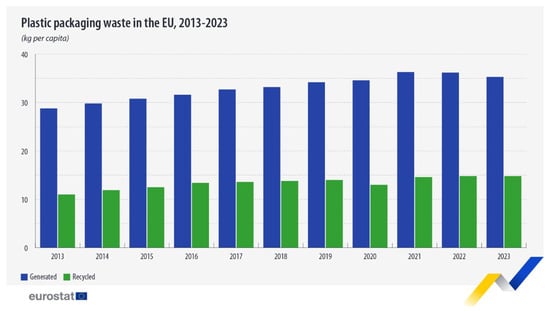
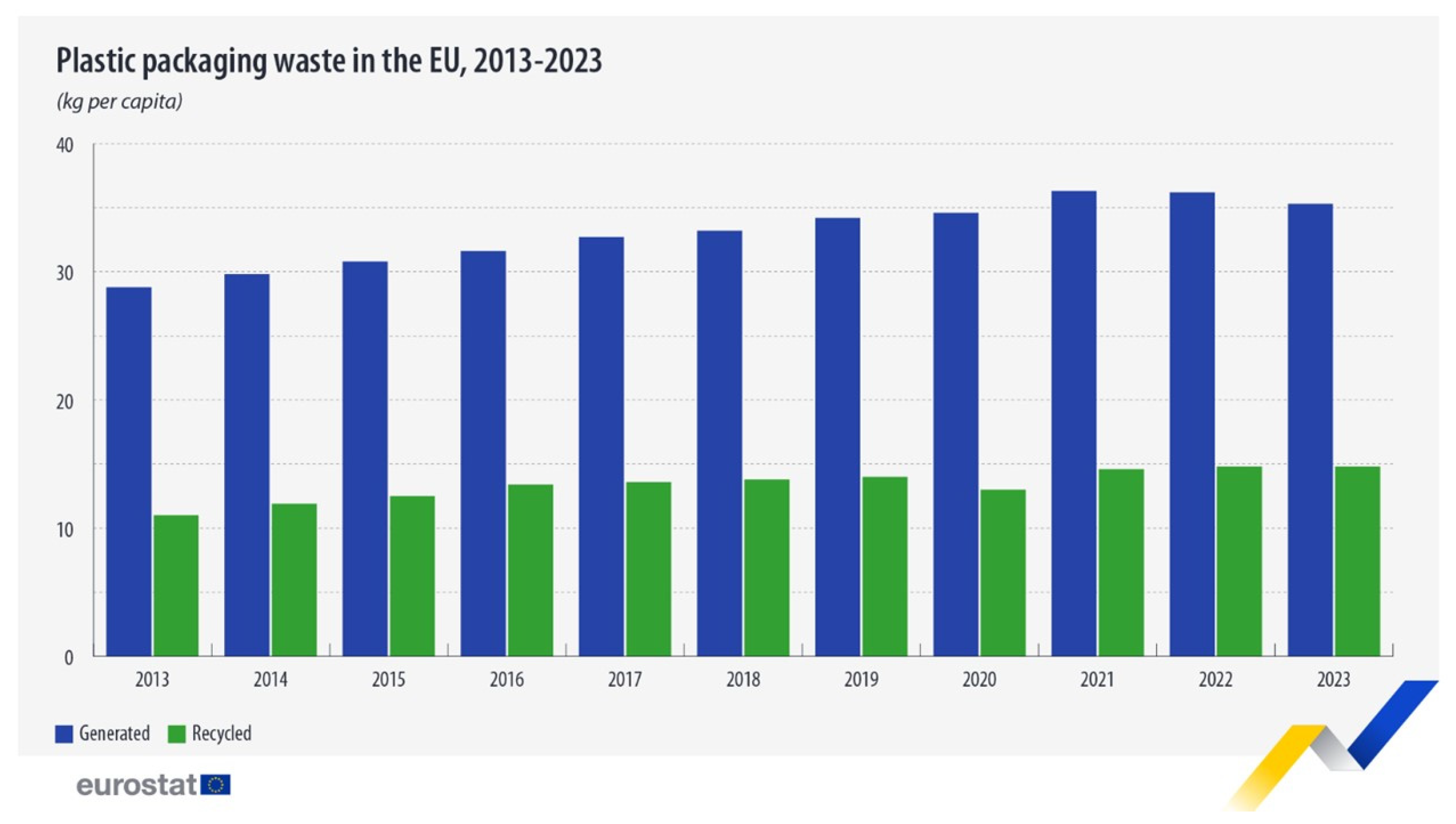
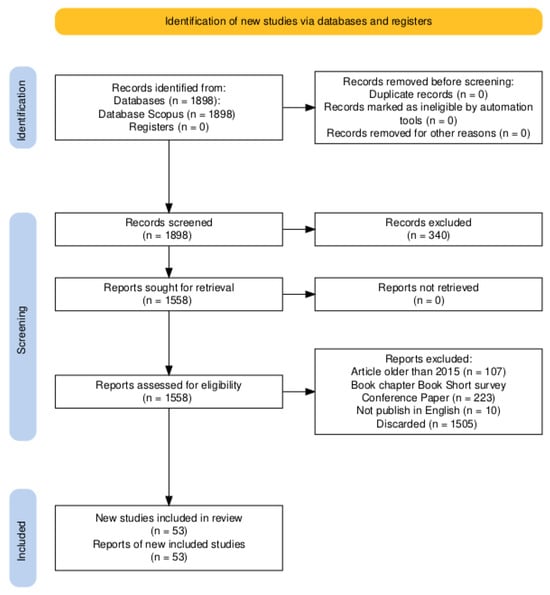
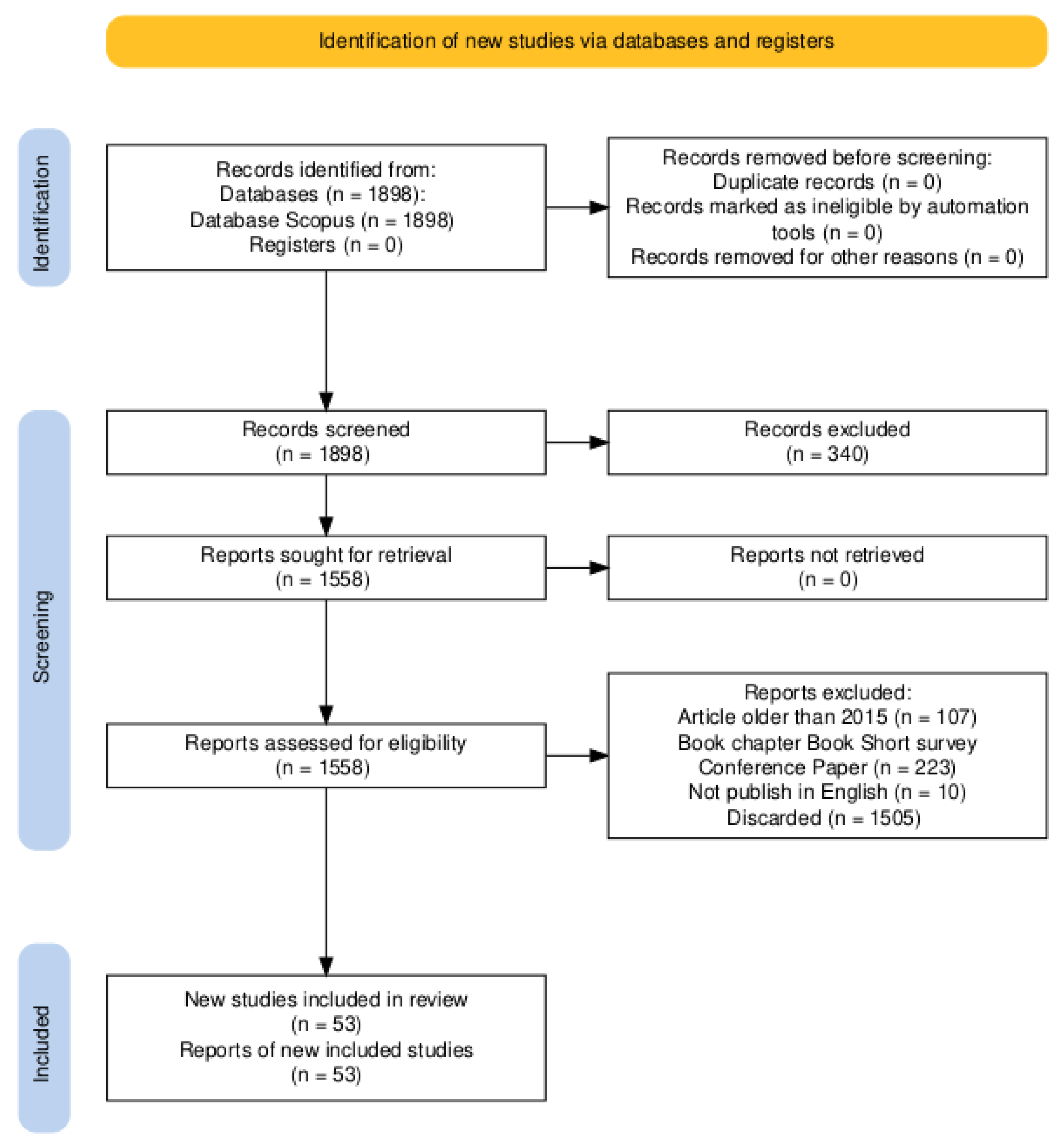
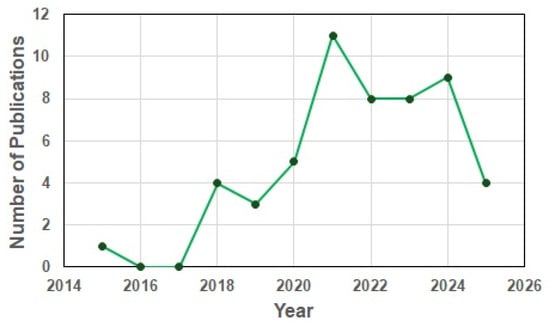
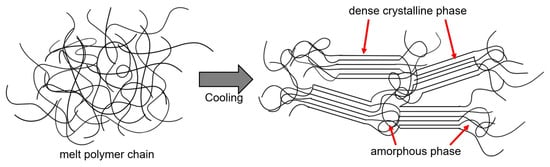
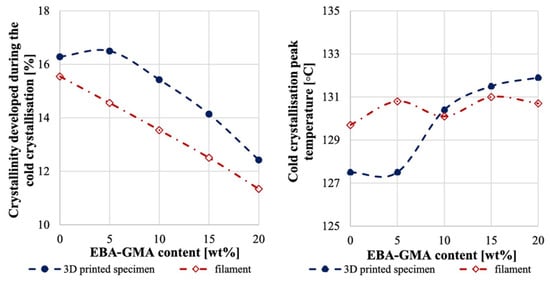
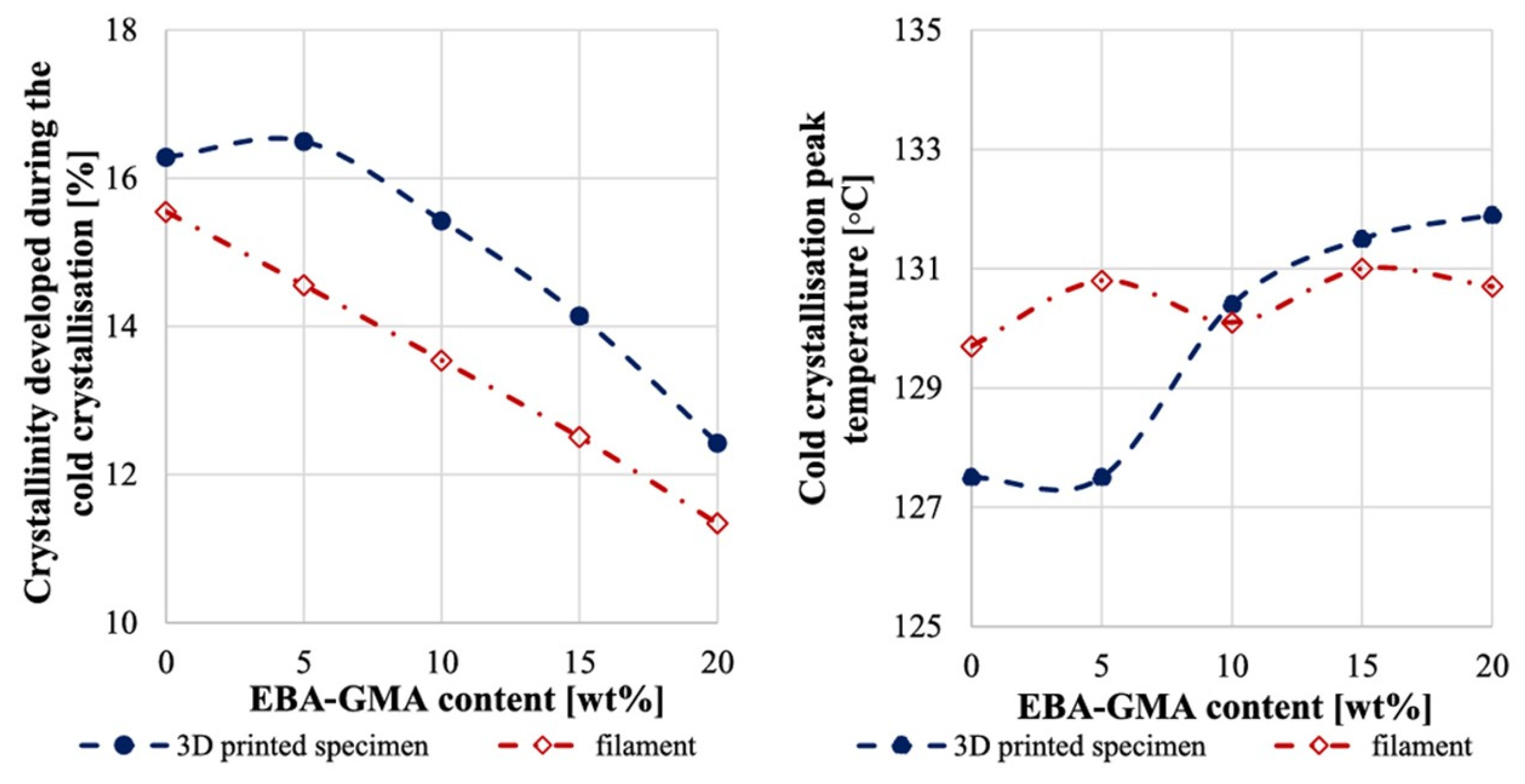
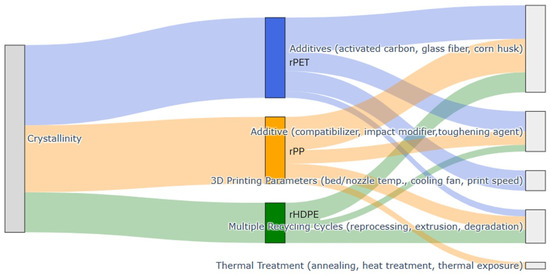
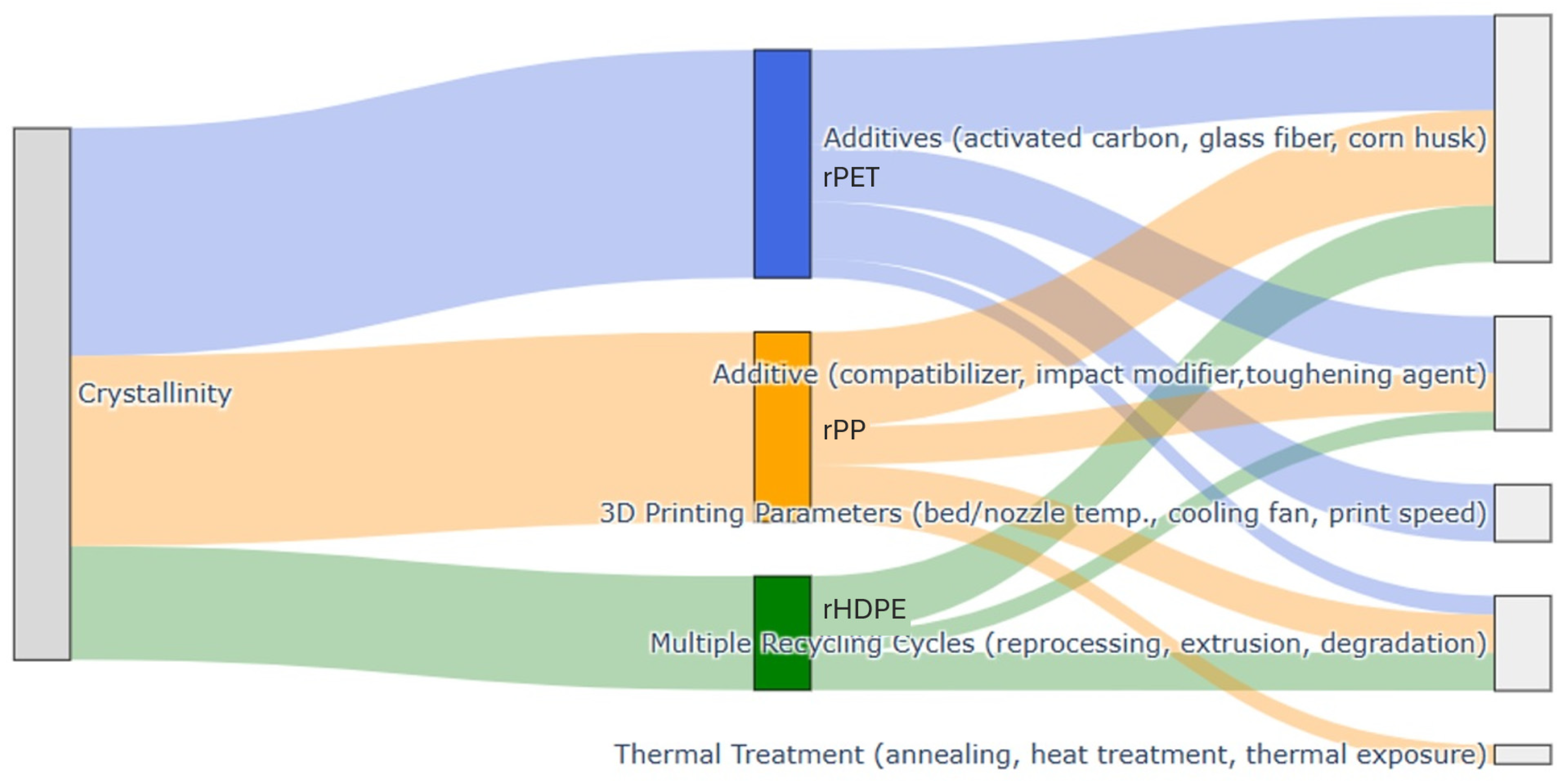
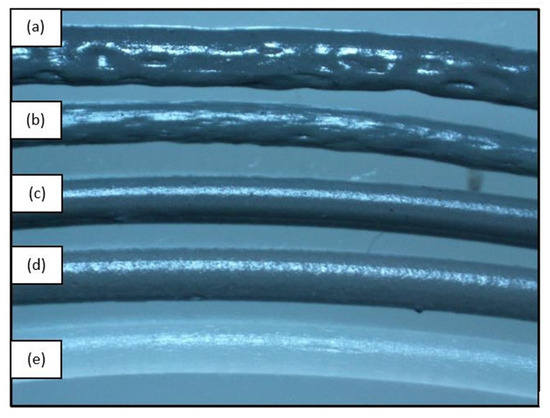
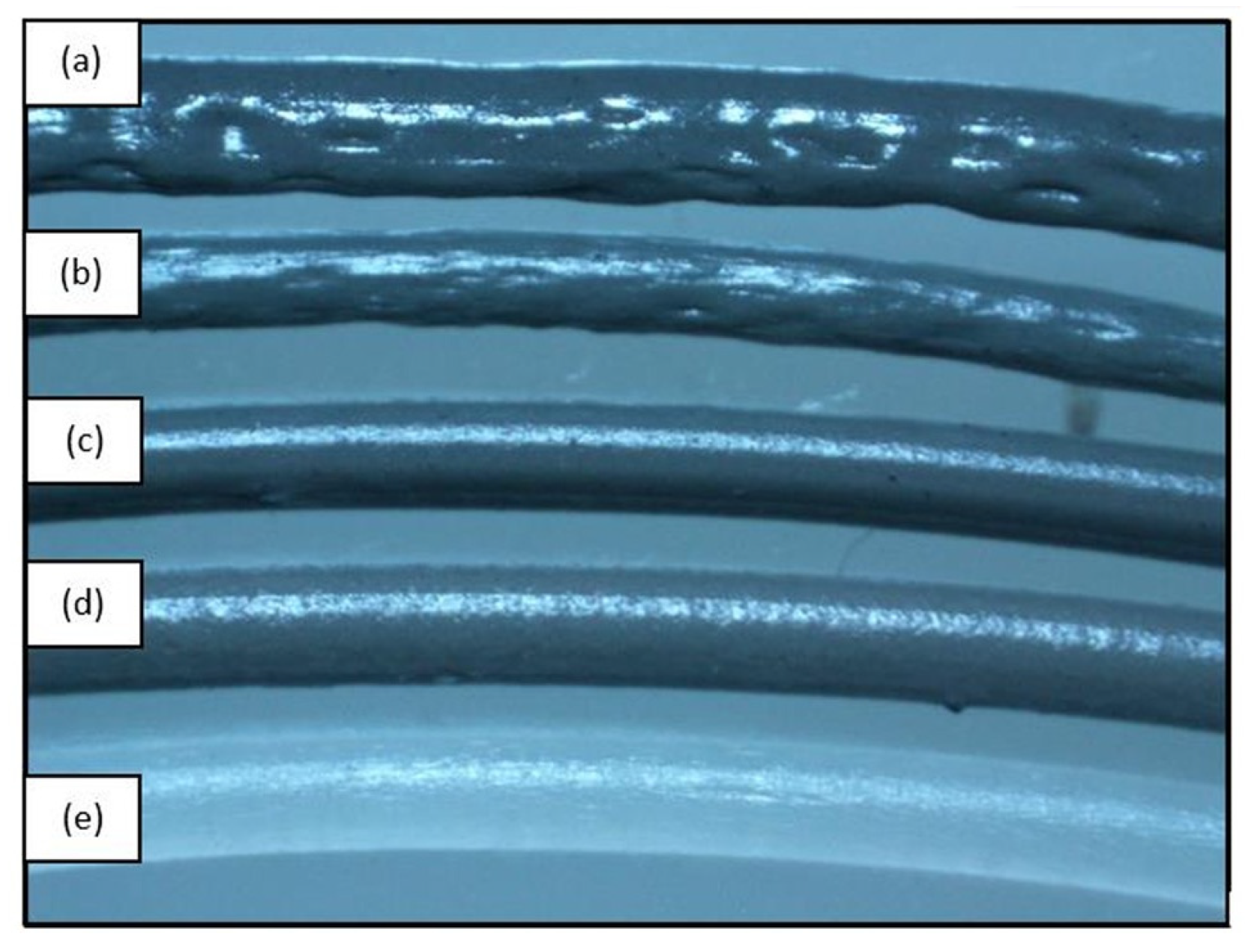
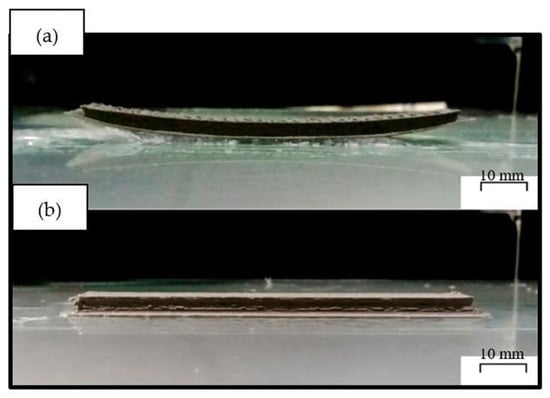
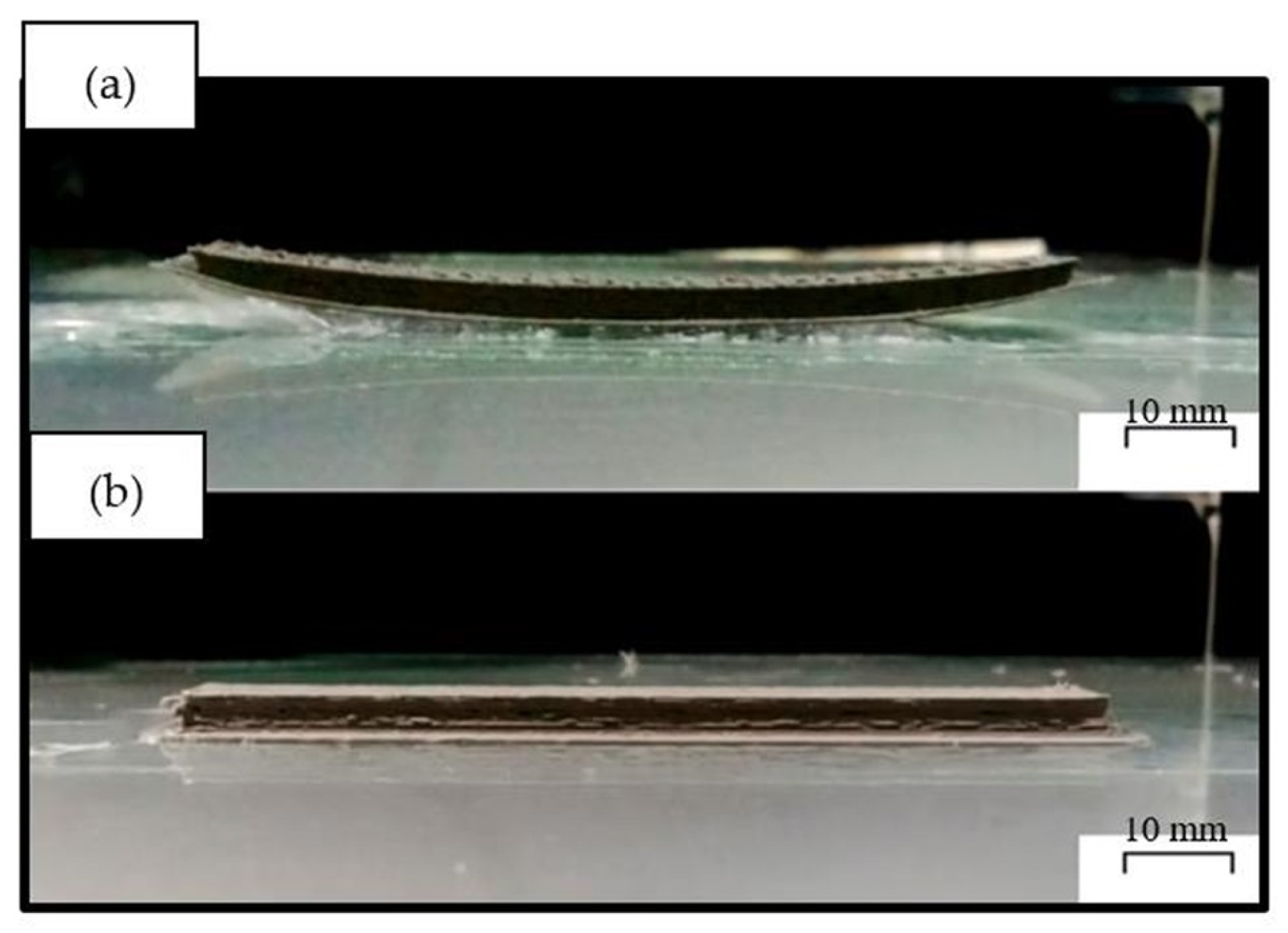
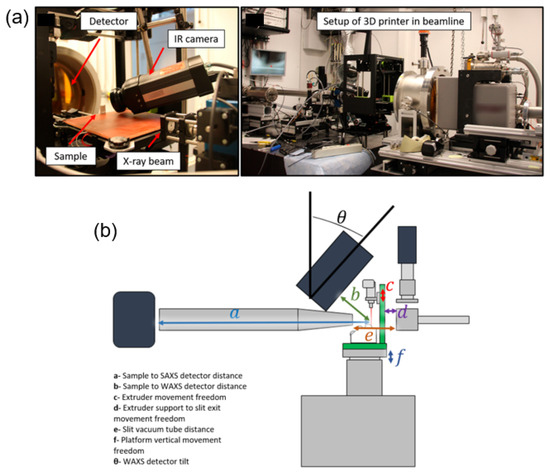
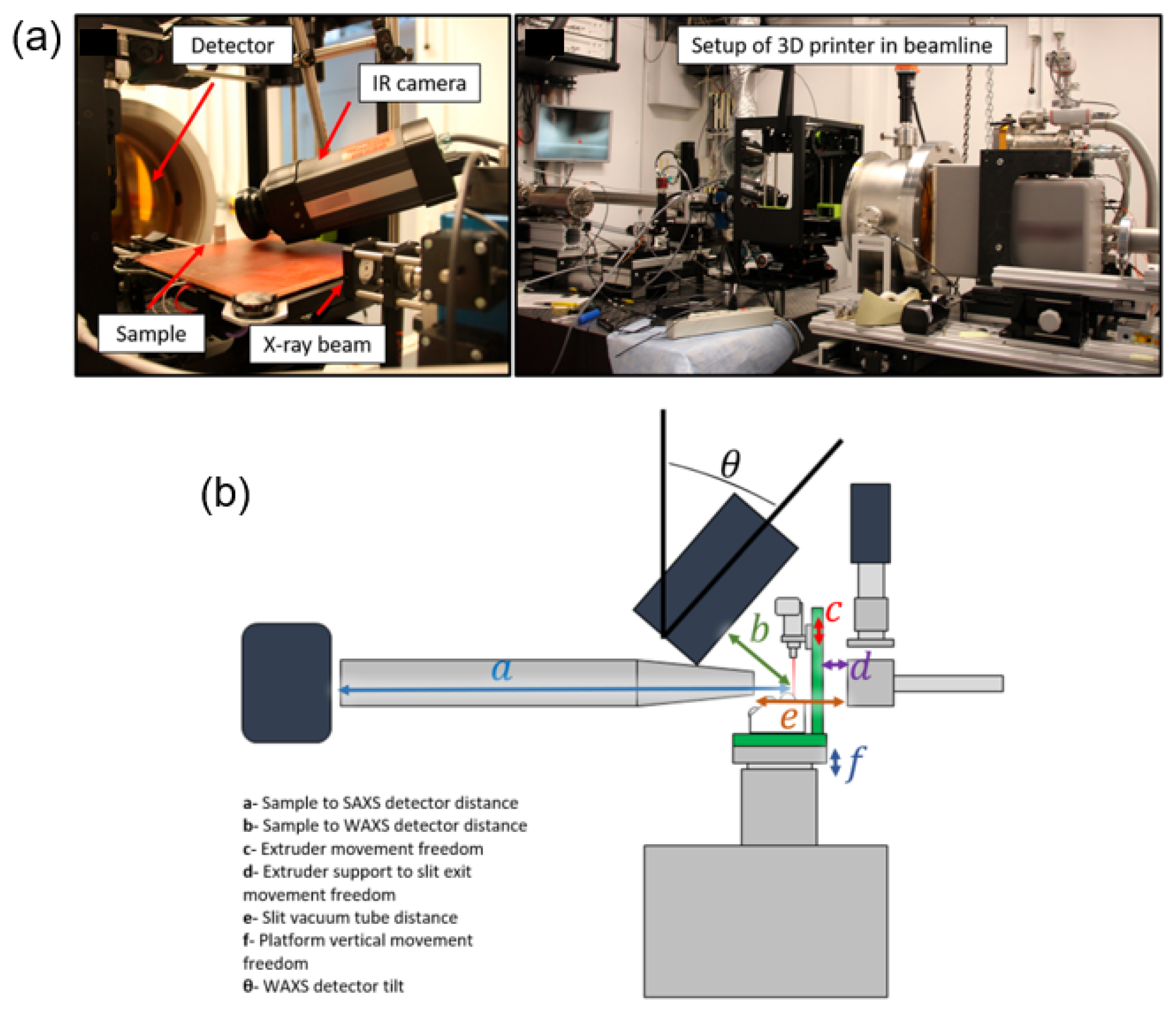
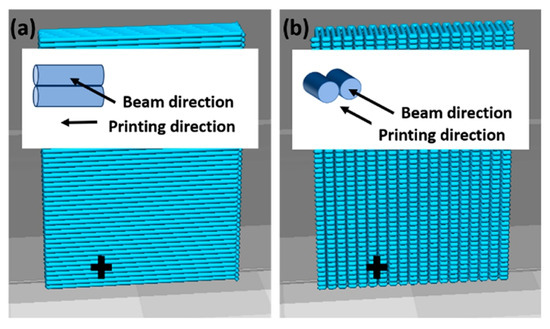
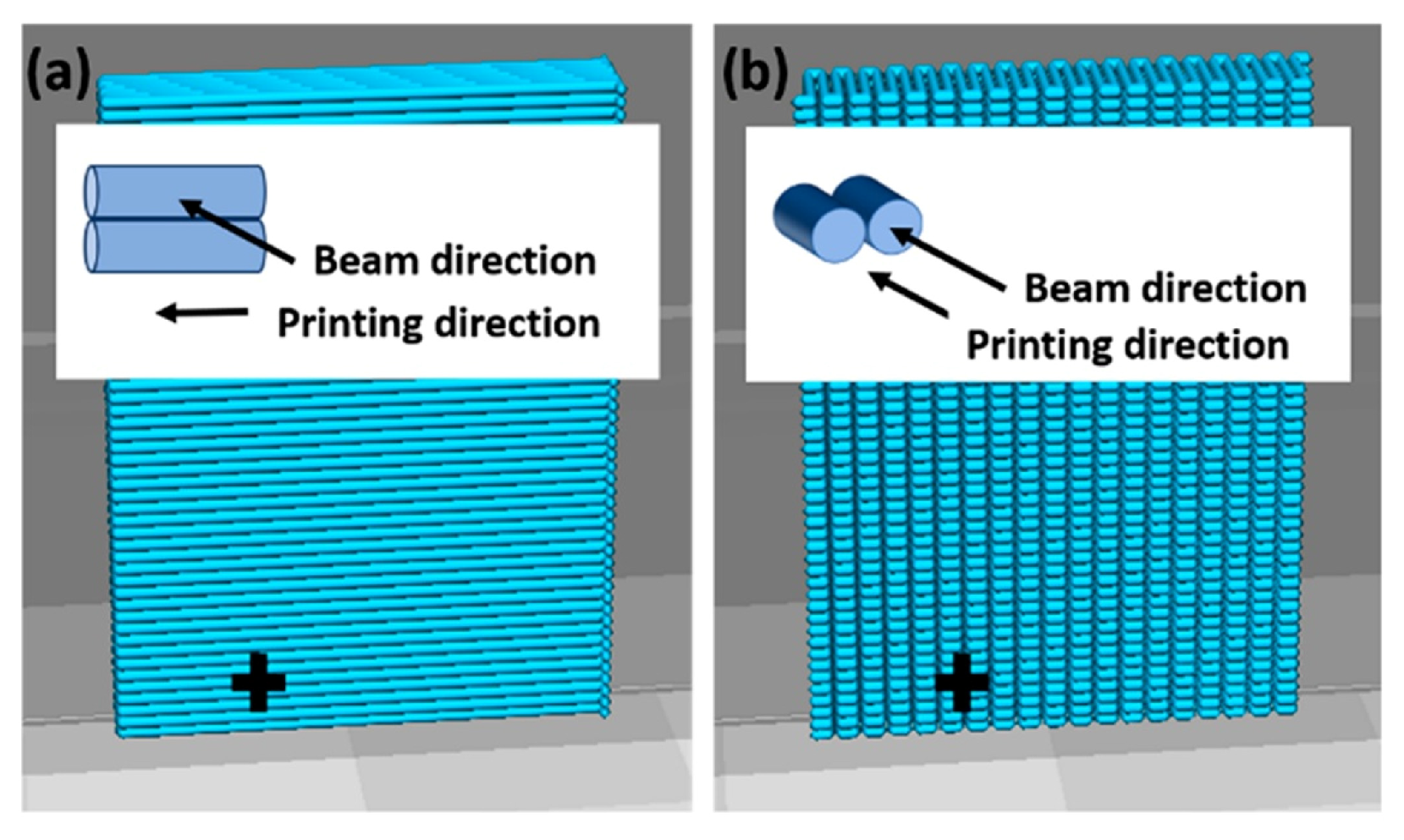
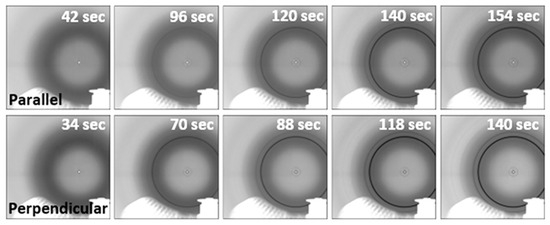
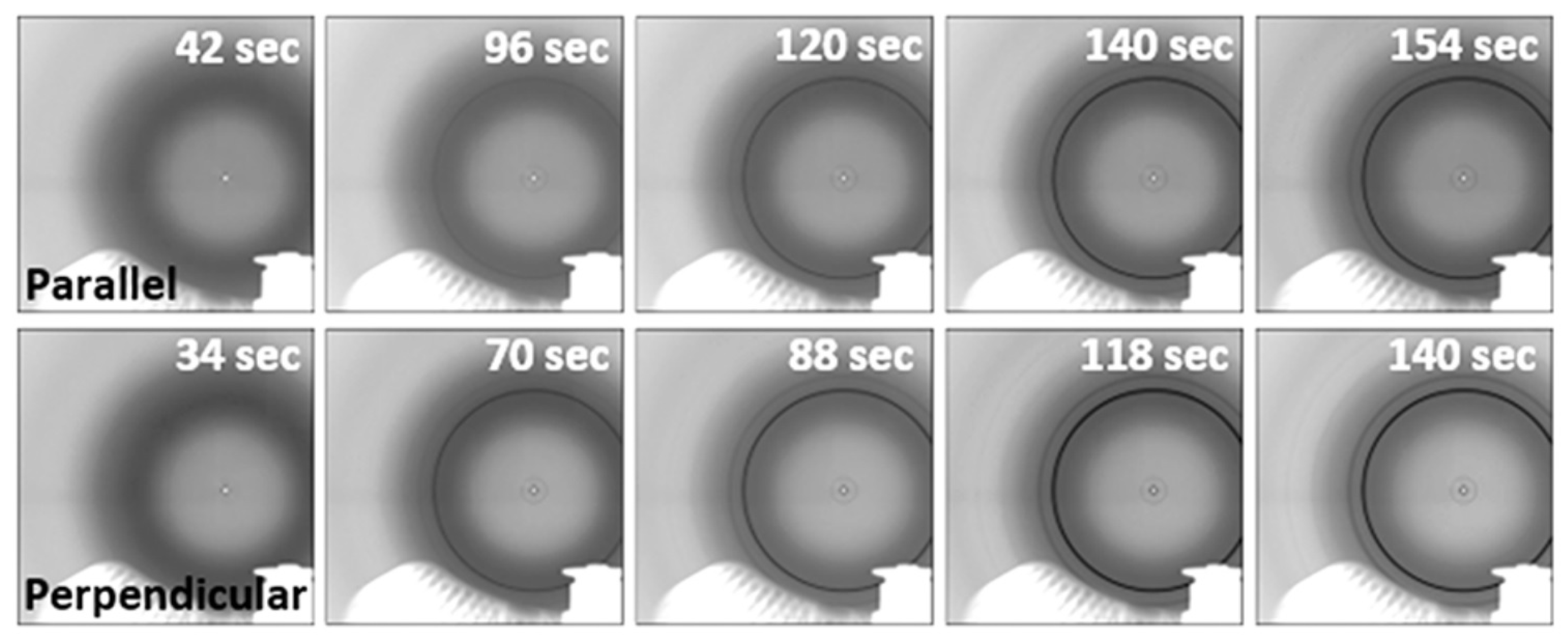
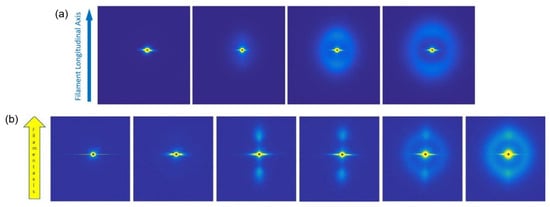
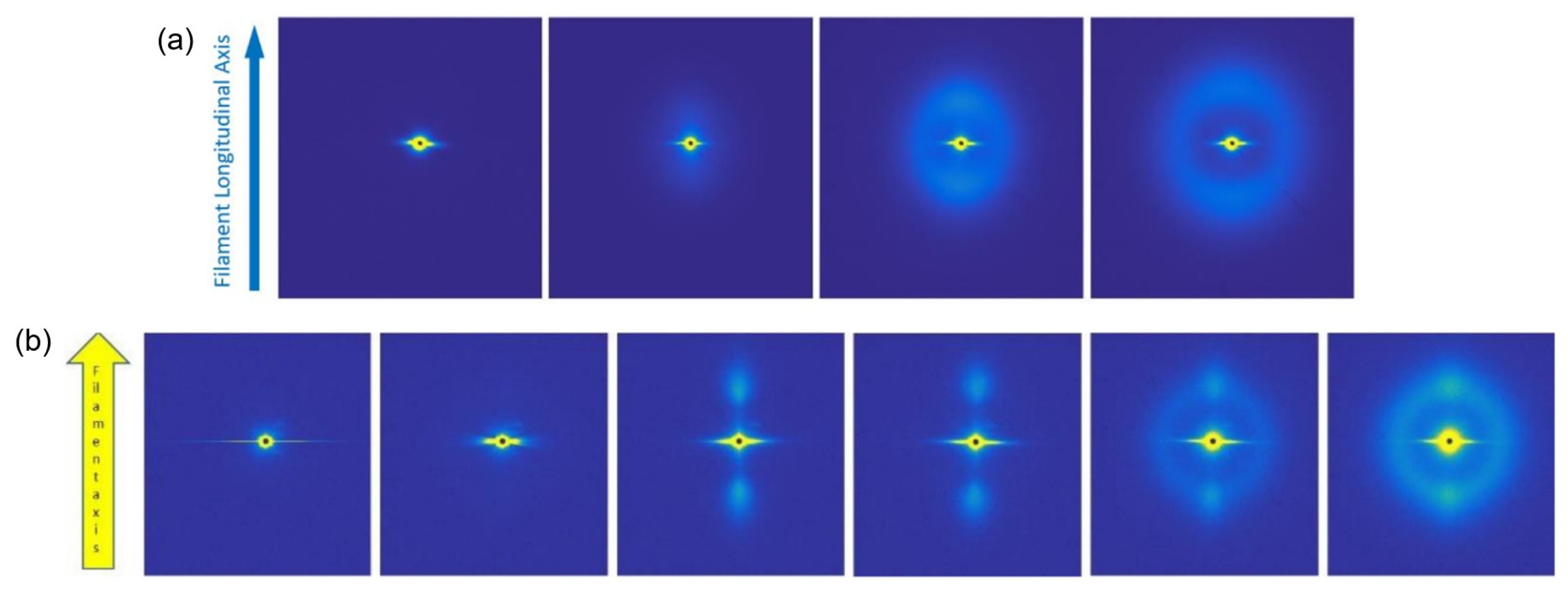

Disclaimer/Publisher’s Note: The statements, opinions and data contained in all publications are solely those of the individual author(s) and contributor(s) and not of MDPI and/or the editor(s). MDPI and/or the editor(s) disclaim responsibility for any injury to people or property resulting from any ideas, methods, instructions or products referred to in the content. |
© 2026 by the authors. Licensee MDPI, Basel, Switzerland. This article is an open access article distributed under the terms and conditions of the Creative Commons Attribution (CC BY) license.