
Article

Thermal Recycling of Gypsum–Hemp Bio-Concrete: Experimental Evaluation of Dehydration Conditions and Properties Evolution

1
LMGC, University Montpellier, IMT Mines Ales, CNRS, 30100 Ales, France
2
Polymers Composites and Hybrids (PCH), IMT Mines Ales, 30100 Ales, France
3
IMT Mines Ales, 30100 Ales, France
4
Plâtres Vieujot, 95230 Soisy-sous-Montmorency, France
*
Author to whom correspondence should be addressed.
Recycling 2026, 11(4), 71; https://doi.org/10.3390/recycling11040071
Submission received: 26 February 2026 / Revised: 27 March 2026 / Accepted: 30 March 2026 / Published: 2 April 2026

Abstract

The building sector is a major source of CO2 emissions and construction waste, motivating the development of sustainable materials and end-of-life recycling strategies. Bio-concretes, combining mineral binders with plant-based aggregates, offer low density and favorable hygrothermal performance but remain insufficiently studied with respect to recyclability, particularly for gypsum-based materials. This study experimentally investigates the thermal recycling of gypsum–hemp bio-concrete, in which gypsum acts as the binder and hemp shiv as the aggregate. Thermogravimetric analysis of individual constituents and the bio-concrete was conducted to identify a temperature range enabling gypsum dehydration without hemp degradation. Controlled oven treatments at selected temperature–time couples were then applied to determine optimal recycling conditions, followed by the bio-concrete remanufacturing using 100% recycled constituents. Physical, thermal, and mechanical properties were evaluated before and after recycling under controlled conditions. Results show that a treatment at 180 °C for 60 min enables effective gypsum dehydration (18–20% mass loss) while preserving hemp integrity. Recycled gypsum–hemp bio-concrete exhibits increased density (368 to 587 kg·m−3) and compressive strength (0.05 to 0.52 MPa), accompanied by a moderate increase in thermal conductivity (0.081 to 0.096 W·m−1·K−1). These findings demonstrate the feasibility of 100% thermal recycling of gypsum–hemp bio-concrete without constituent separation.

1. Introduction

The environmental impact of buildings contributes significantly to climate change through energy consumption, material production, and construction waste generation [1,2]. The construction sector alone accounts for a substantial share of global greenhouse gas emissions and raw material extraction, making it a critical target for sustainability-driven innovation. In response, low environmental impact building materials have been increasingly studied to reduce environmental impacts associated with construction [3,4]. In addition to reducing embodied carbon, such materials can also divert agricultural and industrial byproducts from landfill, thereby contributing to waste reduction, resource efficiency, and industrial ecology through material recycling and circular use.
In this context, the recycling of construction and demolition waste (CDW) has emerged as a key strategy to reduce both resource consumption and environmental burdens. CDW represents a significant fraction of total solid waste worldwide, yet it also provides an opportunity for resource recovery and circular material use [5,6,7]. For instance, recycled concrete aggregates (RCA), obtained from crushed concrete debris, can partially replace non-recycled aggregates in new mixtures. Although the incorporation of RCA may lead to moderate reductions in compressive strength (typically around 10% for 50% replacement), it remains a viable solution when appropriate quality control and mix design adjustments are applied [5]. These approaches illustrate the broader potential of recycling strategies in the construction sector.
Among the low environmental impact materials, bio-concrete has attracted growing attention over the past decades due to its potential to combine low environmental impact with adequate functional performance for building envelopes [8,9,10,11]. In this study, the term “bio-concrete” is used to describe concretes composed of a mineral binder (e.g., lime, gypsum, or earth) and plant-based aggregates derived from agricultural byproducts. These bio-concretes are typically non-load-bearing and are primarily designed for thermal and hygric regulation rather than structural applications. The incorporation of plant aggregates increases total porosity and reduces bulk density, while also improving thermal insulation, moisture buffering capacity, and acoustic damping [12,13]. These coupled properties make bio-concrete particularly suitable for wall infill, insulation layers, and envelope components in low-energy buildings.
Representative examples of bio-concrete include hemp bio-concrete, straw bio-concrete, and rice-husk bio-concrete, each combining a mineral binder with lignocellulosic aggregates exhibiting distinct morphologies and physicochemical properties. Among them, hemp bio-concrete has been extensively studied due to the availability, renewability, and favorable intrinsic properties of hemp shiv [14,15,16,17,18]. Hemp shiv refers to the woody inner core of the hemp stem, obtained as a byproduct during fiber extraction. It is characterized by low density, high porosity, and a cellular structure that promotes thermal insulation through air entrapment [19]. Moreover, the use of hemp (Cannabis sativa L.) in construction materials has attracted increasing attention due to its high cellulose content and significant carbon sequestration capacity during growth [20,21]. When incorporated into cementitious or bio-based composites, hemp fibers can enhance ductility, fracture energy, and thermal insulation properties [5]. From this point of view, recycling strategies are essential to ensure that the sequestered carbon is preserved beyond the end of life of the building in which the material is used. Due to its air-filled pore network and interconnected porosity, hemp bio-concrete exhibits low thermal conductivity and enhances indoor thermal comfort under both winter and summer conditions, as demonstrated by experimental, numerical, and in situ studies reported in the literature [22,23,24,25,26,27]. In addition, the hygroscopic behavior of hemp shiv enables passive regulation of indoor humidity, which can further enhance occupant comfort and indoor air quality.
Gypsum has recently been investigated as an alternative binder for hemp bio-concrete. Compared with lime-based binders classically used, gypsum helps to reinforce the cohesion and strength of hemp bio-concrete by providing better adhesion with the hemp shiv, and enhanced fire resistance due to its endothermic dehydration behavior [28,29]. These characteristics allow gypsum–hemp bio-concrete to maintain sufficient mechanical integrity to support its self-weight while preserving lightweight and insulating properties.
Despite the growing use of hemp-based bio-concrete since the 1990s and its estimated service life of 50–100 years, the question of end-of-life is beginning to arise [19]. In recent years, some works have been initiated on the end-of-life management of lime-based hemp concretes, with studies focusing on organic valorization (composting, methanization), energy valorization (biofuels or pellets), and recycling [30]. The authors have shown that recycling and methanization are the most promising scenarios. However, recycling was carried out as a partial replacement for non-recycled aggregates. More generally, recent studies on recycled composites combining recycled aggregates and hemp fibers have demonstrated promising environmental and functional performance. While compressive strength may decrease in some cases, these materials exhibit improved ductility, adequate durability, and enhanced thermal performance, making them particularly suitable for non-structural and energy-efficient building applications [5].
To date, no study has addressed the end-of-life recycling of gypsum–hemp bio-concrete, even though gypsum offers a specific advantage through its reversible dehydration at temperatures below 200 °C [31]. This characteristic could enable the development of a bulk thermal recycling process in which the bio-concrete can be recycled without prior separation of its constituents, thereby substantially simplifying the recycling pathway.
The objective of this study is therefore to experimentally assess the feasibility of 100% thermal recycling of gypsum–hemp bio-concrete. The methodology combines thermogravimetric analysis, controlled oven-heating experiments, and full remanufacturing of recycled materials, followed by physical, thermal, and mechanical characterization. The main goals are (a) to determine optimal thermal treatment conditions and (b) to evaluate the performance of recycled bio-concrete compared with the reference material. The work focuses on (i) identifying an optimal temperature–time couple that enables gypsum dehydration and restores gypsum reactivity, while preserving the physicochemical integrity of hemp shiv, and (ii) evaluating the evolution of thermal, physical, and mechanical properties after recycling under controlled conditions. By addressing these points, this study provides original experimental evidence in the field of recycling materials and strengthens the scientific basis for integrating gypsum–hemp bio-concrete into circular construction practices.

2. Results and Discussion

2.1. Identification of Recycling Parameters

Thermogravimetric analysis (TGA) was conducted separately on hemp shiv, gypsum, and gypsum–hemp bio-concrete in order to identify the thermal events governing moisture loss, phase transformations, and material degradation, and to define a compatible temperature window for recycling.
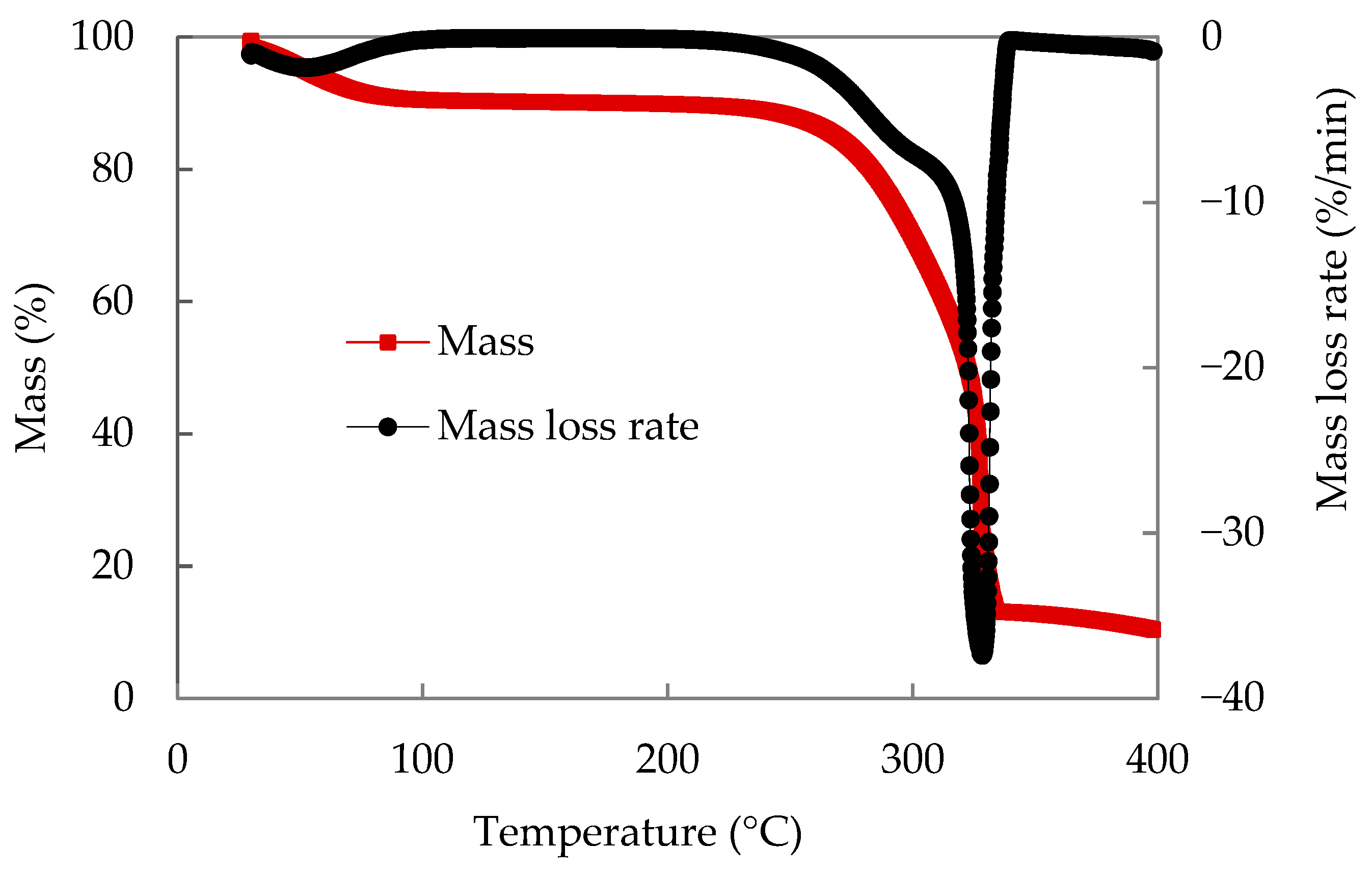
For hemp shiv, the TGA curve (Figure 1) exhibits an initial mass loss of 9.5% below 100 °C, which is attributed to the evaporation of physically adsorbed and capillary water contained within the highly porous lignocellulosic structure. This first stage is followed by a thermally stable plateau up to approximately 200 °C, indicating that no significant chemical degradation occurs within this range. Beyond 200 °C, a pronounced mass loss is observed, corresponding to the onset of thermal decomposition of hemicellulose and cellulose. The mass loss rate curve reveals a maximum value at 328 °C, with a peak value exceeding 37%/min, which is characteristic of cellulose depolymerization. This behavior confirms that temperatures above 200 °C would induce irreversible degradation of hemp shiv, leading to loss of structural integrity, porosity, and insulating functionality. Consequently, the recycling temperature must be maintained well below this threshold to preserve the hemp shiv.
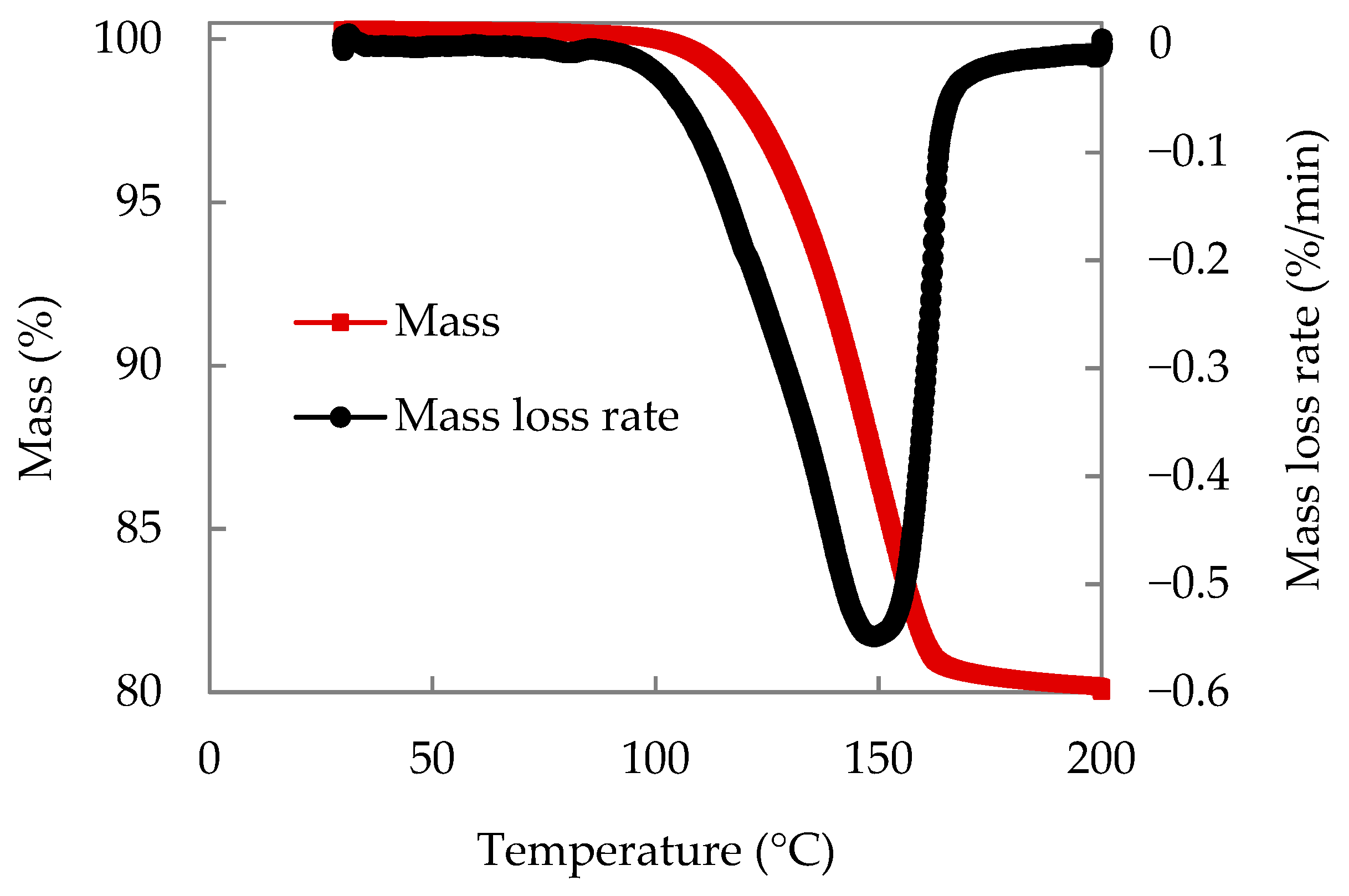
In contrast, gypsum exhibits a distinctly different thermal response (Figure 2). An initial minor mass loss below 100 °C (0.5%) corresponds to residual free moisture. The dominant mass loss occurs between 120 and 180 °C, with a total mass reduction of around 18–20%, which is associated with the dehydration of calcium sulfate dihydrate ( C a S O 4 · 2 H 2 O ) into calcium sulfate hemihydrate and, progressively, anhydrite (Equations (1) and (2)) [32]. The mass loss rate curve shows a clear dehydration peak at 150 °C, after which the mass stabilizes near 200 °C, indicating completion of dehydration. This reversible phase transformation under moderate thermal conditions forms the basis for gypsum recyclability.
C a S O 4 · 2 H 2 O C a S O 4 · 1 2 H 2 O + 3 2 H 2 O
C a S O 4 · 1 2 H 2 O C a S O 4 + 1 2 H 2 O
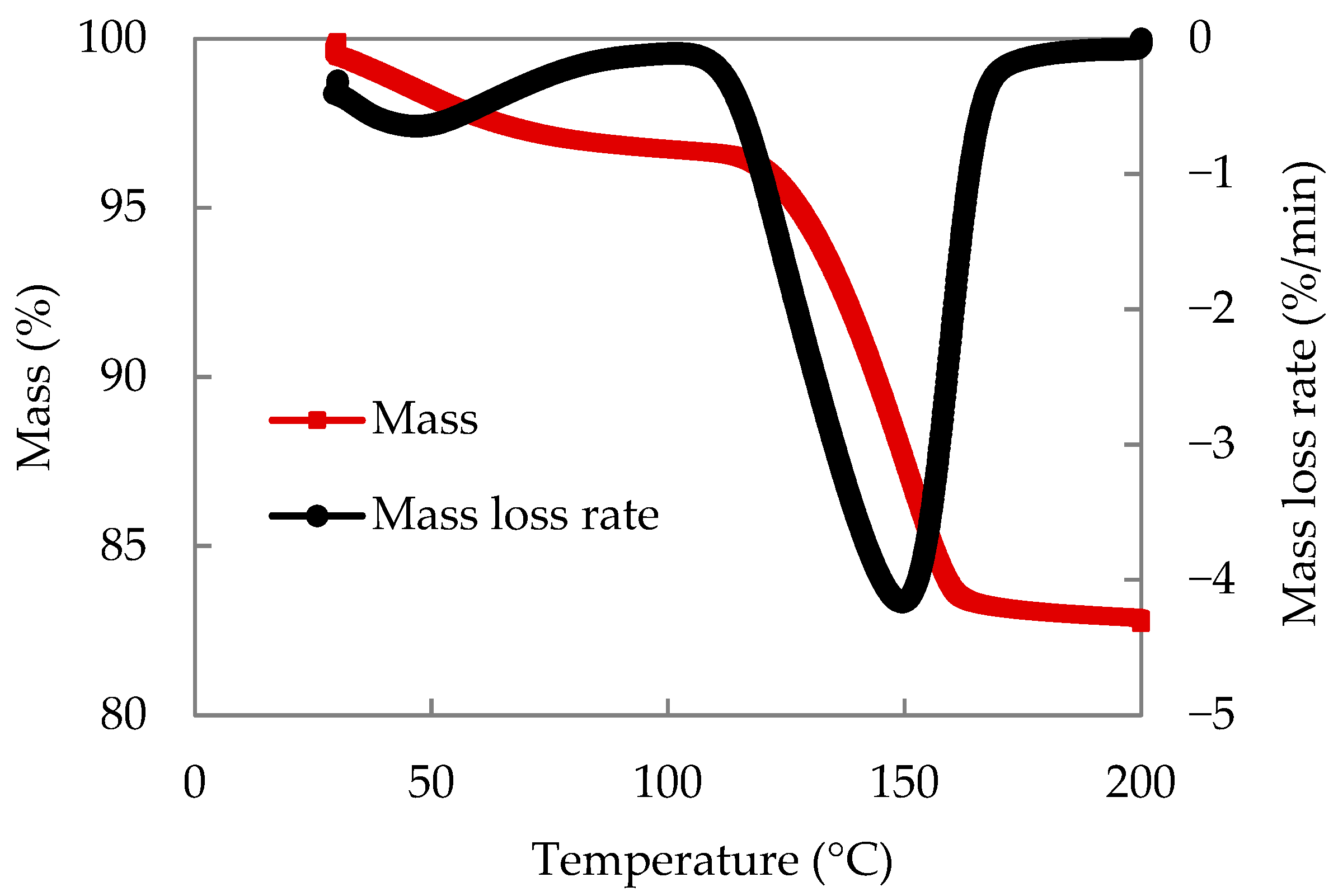
For gypsum–hemp bio-concrete (composed of 64 wt% gypsum and 36 wt% hemp shiv as described in Section 3. “Materials and Methods”), the TGA curve (Figure 3) reflects the superposition of the behaviors of both constituents while highlighting their thermal compatibility. An initial mass loss of 3.3% below 100 °C is observed and attributed to the evaporation of free and hygroscopically bound water present in both the gypsum matrix and the hemp shiv. This is followed by a second mass loss stage between 100 and 180 °C, corresponding to gypsum dehydration within the bio-concrete. The mass loss rate curve shows a maximum of 4.16%/min at a temperature peak of 150 °C, which closely corresponds to the dehydration peak of pure gypsum. However, the intensity of the mass loss rate is slightly reduced due to dilution by the hemp shiv fraction (36 wt%). Importantly, no additional mass loss is detected up to 200 °C, confirming that hemp shiv remains thermally stable within this temperature range when embedded in the gypsum matrix.
These results support the selection of a recycling temperature range between 150 and 180 °C, within which the gypsum binder can be effectively dehydrated and reactivated while preserving the structural integrity and functional properties of the hemp shiv. More generally, the TGA results provide quantitative evidence that the thermal response of gypsum and hemp shiv is sufficiently decoupled to permit a controlled bulk thermal recycling process. The clear separation between gypsum dehydration temperatures and hemp degradation thresholds constitutes a key physicochemical prerequisite for achieving 100% recycling of gypsum–hemp bio-concrete without prior separation of constituents, thereby supporting the feasibility of the proposed recycling strategy. Nevertheless, temperature alone is not sufficient to fully characterize the recycling process, as the kinetics of gypsum dehydration are also strongly governed by the duration of thermal exposure. The following section therefore focuses on identifying an optimal temperature–time couple that ensures complete binder dehydration while minimizing energy used and preserving bio-aggregate integrity.

2.2. Oven Drying of Gypsum–Hemp Bio-Concrete

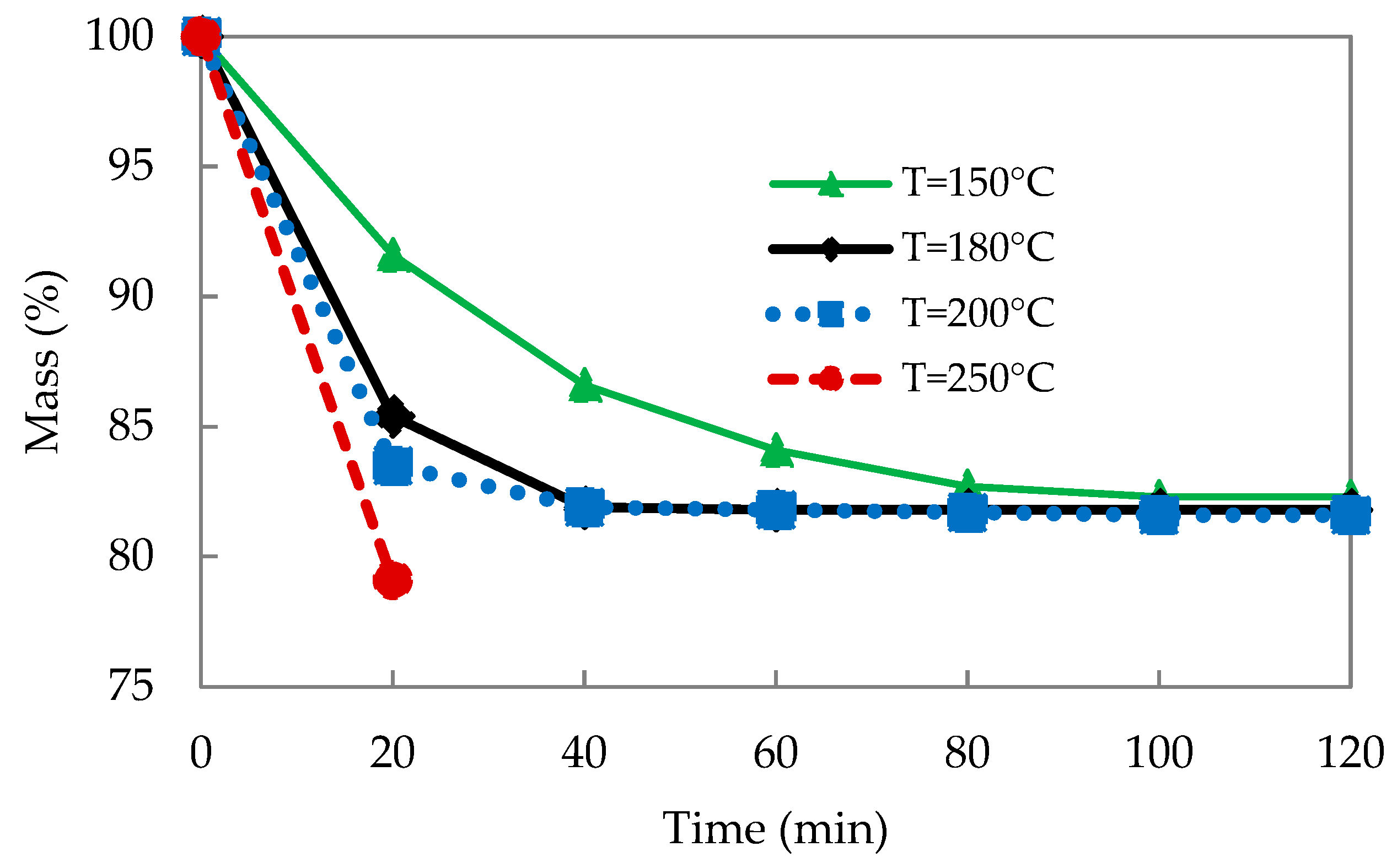
Oven-drying experiments were conducted to complement the TGA results and to investigate the kinetics of gypsum dehydration at the bio-concrete scale (crushed materials as described in Section 3.5 “Recycling Procedure”) to find the optimal temperature–time couple. Figure 4 presents the evolution of mass loss as a function of drying time for different treatment temperatures. Mass loss was monitored by periodically removing the specimens from the oven, weighing them, and returning them to the oven.
At 150 °C, mass loss progresses gradually and does not reach stabilization within the first hour of treatment. After 60 min, the mass loss remains limited to 15.9%, indicating that dehydration of gypsum is still incomplete at this stage. For reference, the expected mass loss is between 18 and 20%, as indicated by Figure 3. Even after 120 min, the total mass loss reaches only about 17%, approaching but not fully achieving the theoretical dehydration mass loss inferred from TGA. These results demonstrate that, although thermodynamically feasible, gypsum dehydration at 150 °C is kinetically limited and requires extended residence times to reach completion.
At 180 °C, dehydration proceeds significantly faster. Figure 4 shows that a mass loss of 18.2% is achieved within 60 min, after which the curves plateau, indicating stabilization of mass and completion of the dehydration process. Increasing the drying duration beyond 60 min does not result in further measurable mass loss, confirming that gypsum dehydration is essentially complete under these conditions. Similar behavior is observed at 200 °C, where stabilization is reached even slightly earlier, with mass loss values converging toward 18.2% within 60 min. The close agreement between the stabilized mass loss values at 180 °C and 200 °C suggests that higher temperatures do not significantly increase the extent of dehydration but primarily accelerate its kinetics. The convergence of stabilized mass-loss values with those obtained from TGA supports the reliability of the oven-drying protocol.
It should be noted that at 250 °C, the test was stopped after 20 min due to the observation of smoke, indicating the onset of hemp shiv pyrolysis. This is confirmed by comparing the mass losses at 200 °C and 250 °C, with the latter showing an additional 5–10% mass loss attributable to partial pyrolysis of the hemp shiv.
Overall, these results highlight that both temperature and time are critical parameters governing gypsum dehydration at the bio-concrete scale. While lower temperatures, such as 150 °C, require prolonged treatment durations, a temperature of 180 °C enables complete dehydration within a practical time frame of 60 min, without exceeding the thermal stability threshold of hemp shiv. This temperature–time couple therefore represents an effective compromise between kinetic efficiency, energy consumption, and preservation of bio-aggregate integrity, and was retained for subsequent recycling experiments.

2.3. Density and Thermal Conductivity

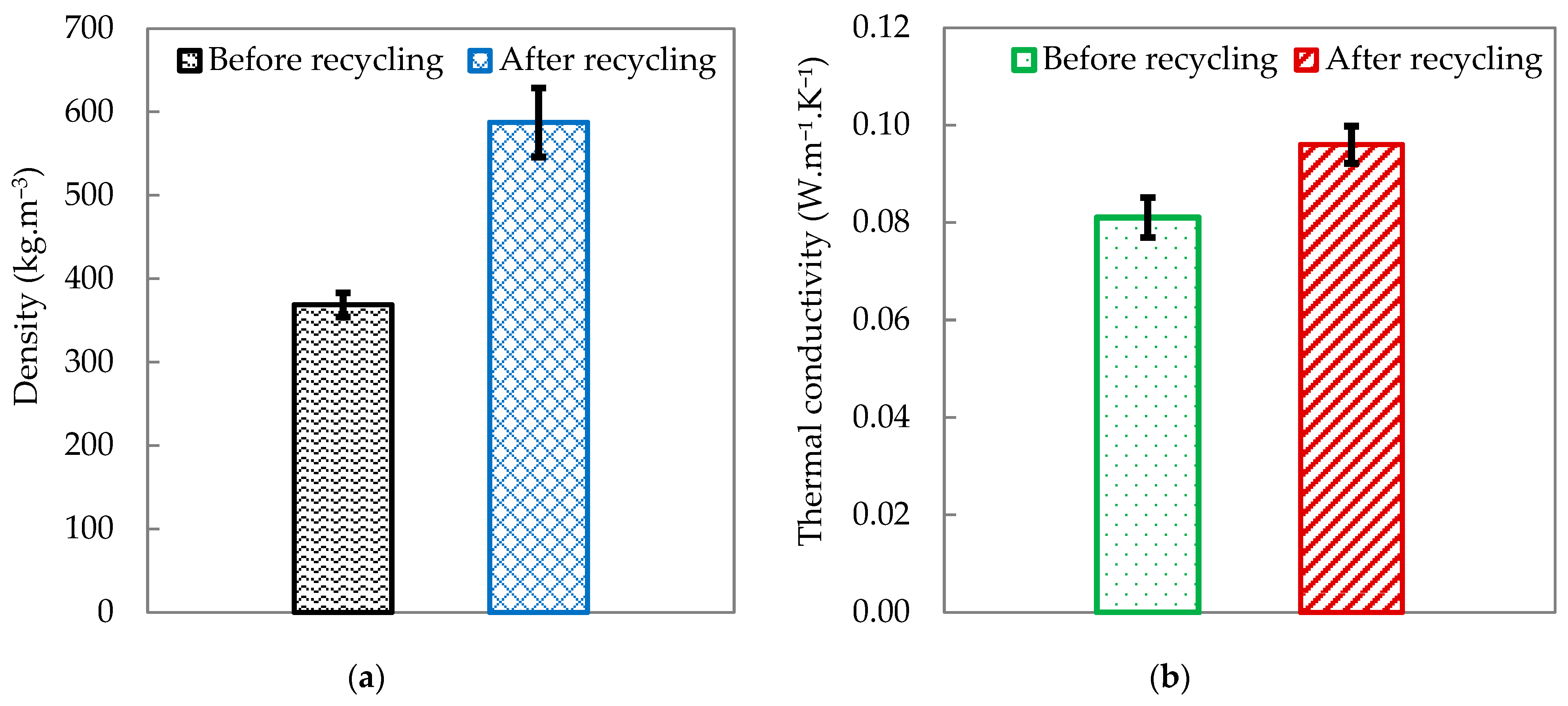
To manufacture the recycled bio-concrete, recycling was carried out using the temperature–time couple defined above (180 °C, 60 min). Figure 5 illustrates the apparent density and thermal conductivity of gypsum–hemp bio-concrete before and after recycling. The apparent density increased markedly from 368 kg·m−3 for the reference bio-concrete to 587 kg·m−3 after recycling, corresponding to an increase of approximately 60%. This densification can be attributed to several coupled mechanisms induced by the recycling process. First, mechanical crushing leads to partial collapse of the initial porous network and redistribution of fine gypsum particles. Second, remanufacturing using dehydrated gypsum promotes improved particle packing and matrix continuity during rehydration. Finally, partial rearrangement and closer contact between hemp shiv particles and the gypsum matrix are likely to reduce intergranular porosity, contributing to higher bulk density.
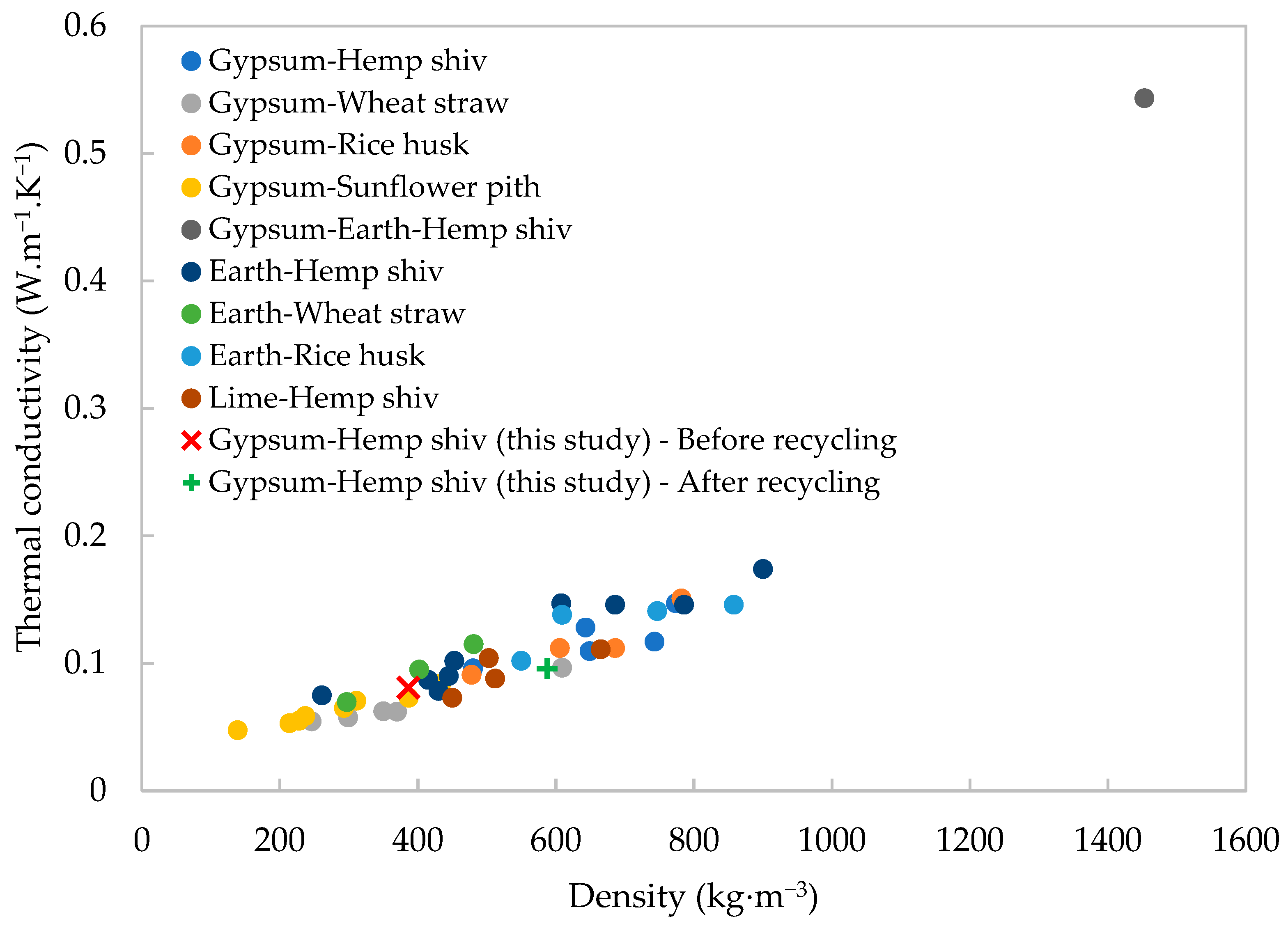
Thermal conductivity results presented in Figure 5b show a corresponding increase from 0.081 W·m−1·K−1 for the reference bio-concrete to 0.096 W·m−1·K−1 after recycling. Although this represents an increase of 18%, the recycled material remains within the typical thermal conductivity range reported for lightweight bio-concretes with comparable densities [33,34]. The observed trend is consistent with the well-established dependence of thermal conductivity on bulk density in bio-concretes, as confirmed by measurements from our previous work (Figure 6). Specifically, increased solid-phase connectivity and reduced air volume fraction lead to enhanced heat transfer [34]. It is important to note that the increase in thermal conductivity remains moderate relative to the significant gain in density and mechanical performance. This indicates that the recycled gypsum–hemp bio-concrete retains its insulating character despite structural densification. Overall, the combined density and thermal conductivity results confirm that thermal recycling modifies the pore structure without compromising the material’s functional role as a lightweight insulating component. It should be noted that the material was considered isotropic for this study. This assumption is reasonable given the random distribution of particles and the consistency of the manufacturing process throughout the different stages of the cycle; however, it should be further investigated in future work.

2.4. Compression Properties

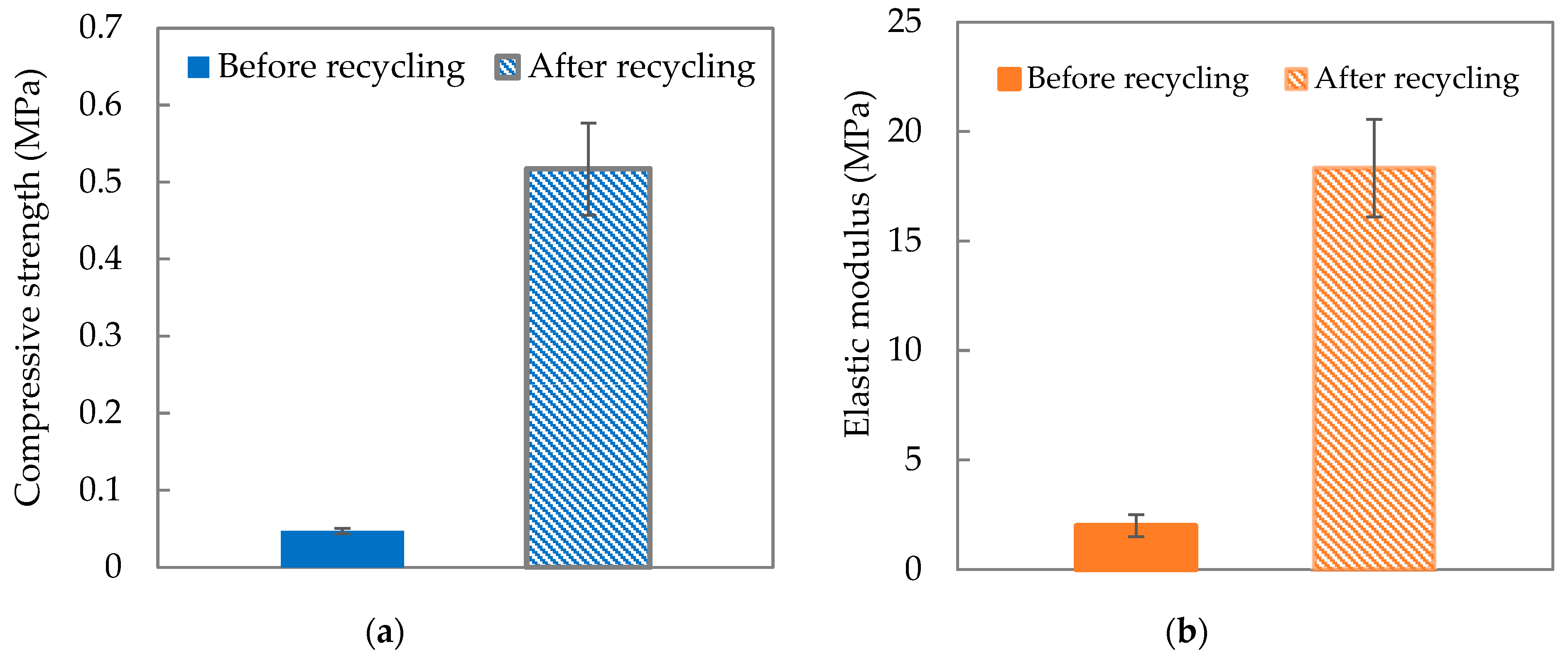
Figure 7 reports compressive strength and elastic modulus for both reference and recycled bio-concretes. A substantial increase in compressive strength is observed after recycling, with mean values rising from 0.05 MPa for reference bio-concrete to 0.52 MPa after recycling. Similarly, the elastic modulus increased from 2 MPa to 18 MPa, indicating a significant enhancement in stiffness. These improvements are directly linked to the increased density and improved microstructural cohesion resulting from crushing, dehydration, and remanufacturing. They could also be attributed to enhanced binder reactivity during gypsum rehydration, which may improve interfacial bonding between the gypsum matrix and the hemp shiv. The measured mechanical properties are consistent with values reported in the literature for bio-concretes, which typically exhibit compressive strengths below 1 MPa and an elastic modulus lower than 24 MPa [15,33,35]. The strengthening effect, observed after recycling, can be explained by enhanced binder continuity after gypsum rehydration, as well as potentially enhanced load transfer at the binder–aggregate interface.
The recycled material exhibits a more compact and mechanically efficient skeleton, while still retaining deformable, non-brittle behavior typical of hemp-based bio-concretes. A noticeable standard deviation can be observed in both strength and elastic modulus values (Figure 7). This variability is attributed to the inherent heterogeneity of plant-based composites, including non-uniform hemp shiv orientation, local density gradients, and variations in binder distribution. Overall, these results are encouraging for the recycling and reuse of biobased concretes and confirm that these materials can be integrated into a circular economy framework, while retaining their insulating and self-supporting properties.

3. Materials and Methods

3.1. Materials and Manufacturing Procedure

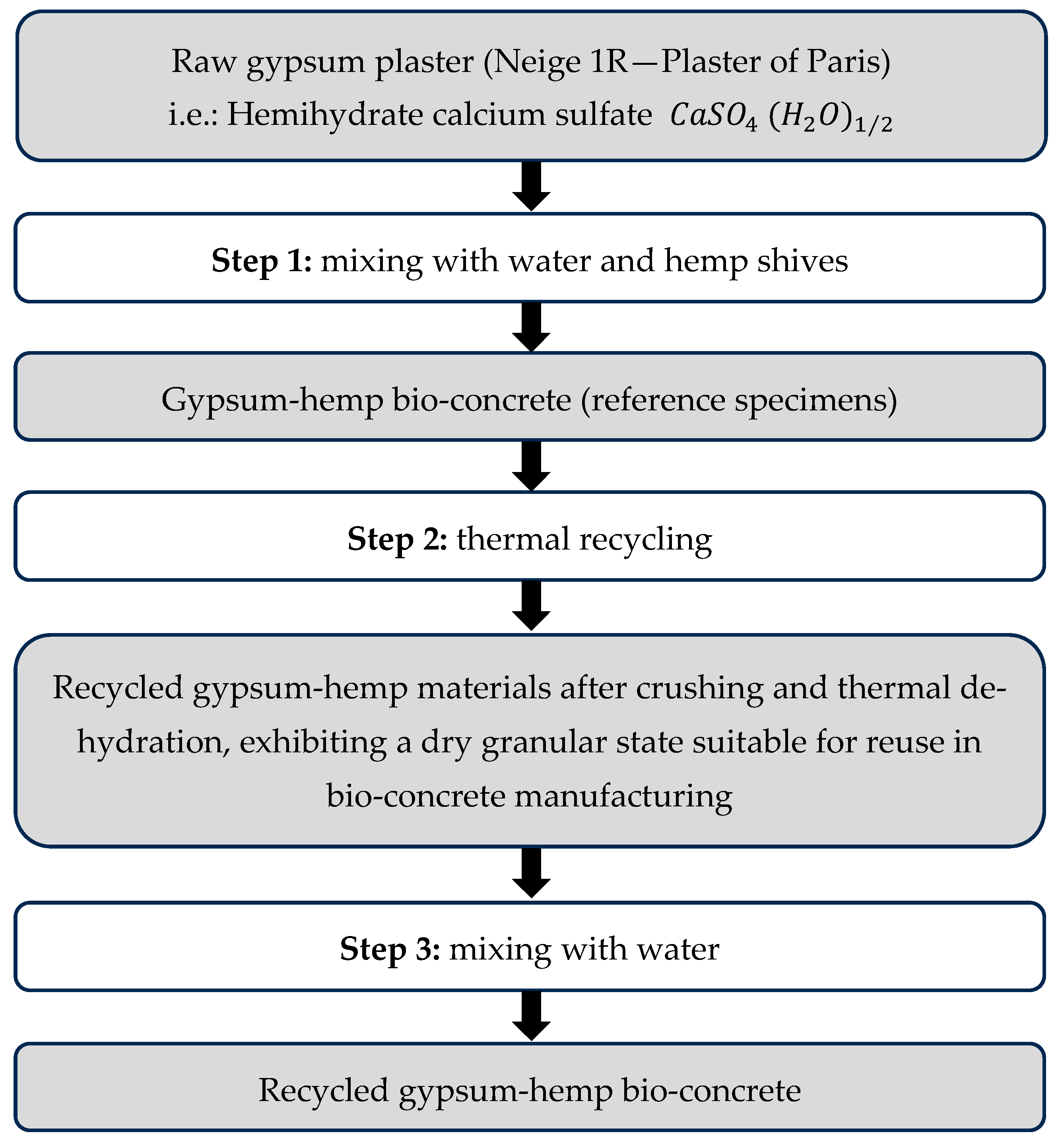
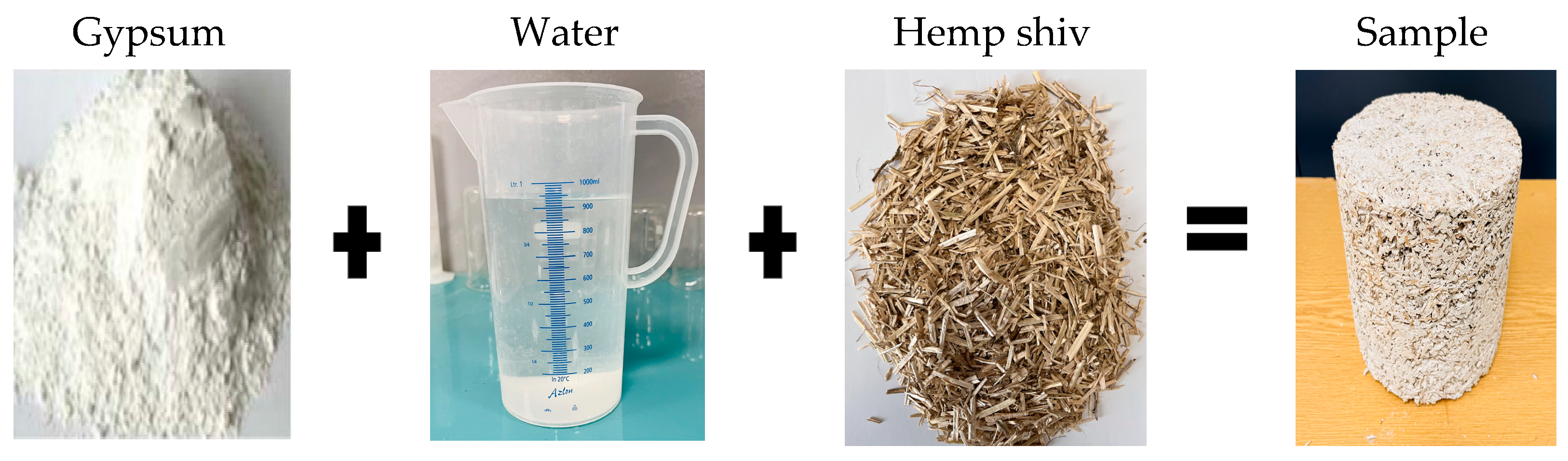
Figure 8 summarizes the manufacturing sequence, from the initial bulk raw materials to the recycled gypsum–hemp bio-concrete. Figure 9 presents the materials used for sample preparation.
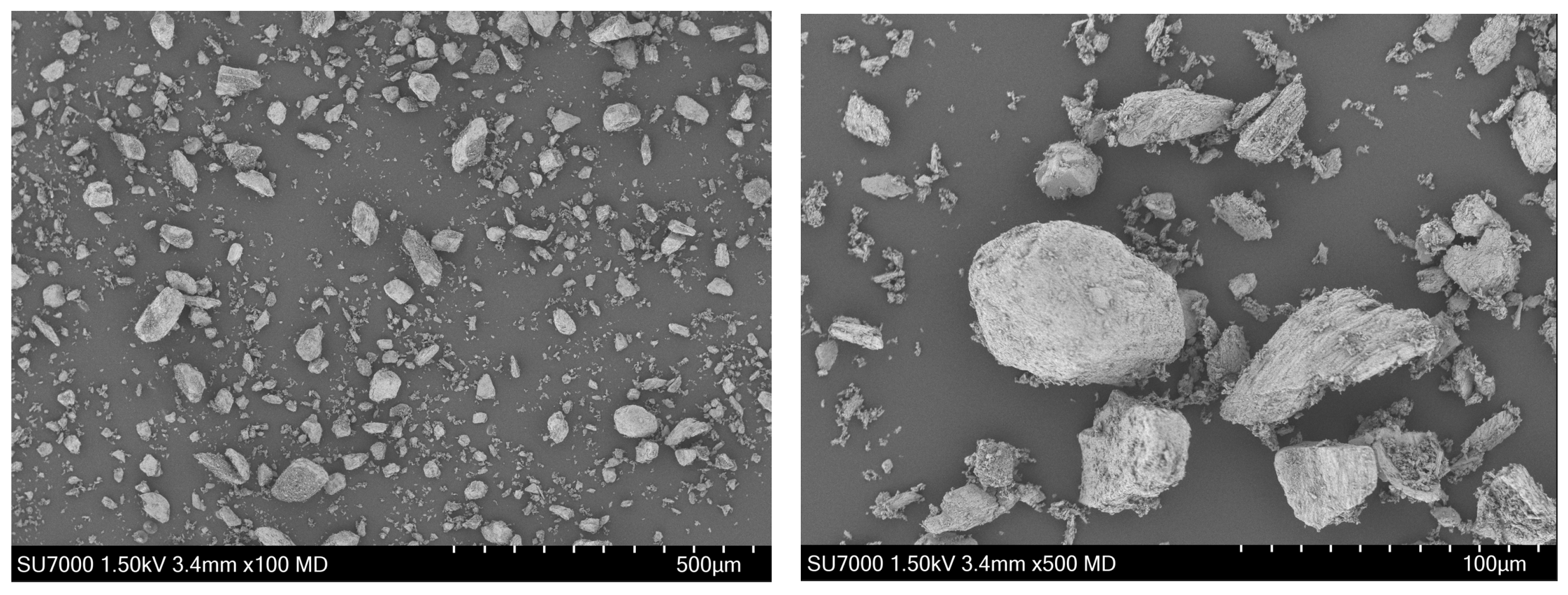
Reference samples were first produced using natural gypsum hemihydrate (Neige 1R, Plâtre Vieujot, Soisy-sous-Montmorency, France) as the binder. Gypsum has an apparent density of 1200 kg·m−3 and an absolute density of 2325 kg·m−3, measured with a helium pycnometer. Gypsum was a relatively fine plaster, with a particle size distribution characterized as follows: 34% retained on the 63 µm sieve, 5% on the 160 µm sieve, and less than 1% on the 250 µm sieve. Scanning Electron Microscopy (SEM) (Quanta FEG FEI 200, Tokyo, Japan) observations were performed to complement the particle size distribution analysis and to provide a detailed characterization of the morphology and surface features of the materials used. The gypsum particles (Figure 10) exhibit an angular morphology with irregular shapes. Their fine particle size and high specific surface area are expected to enhance hydration kinetics and promote efficient binder reactivity.
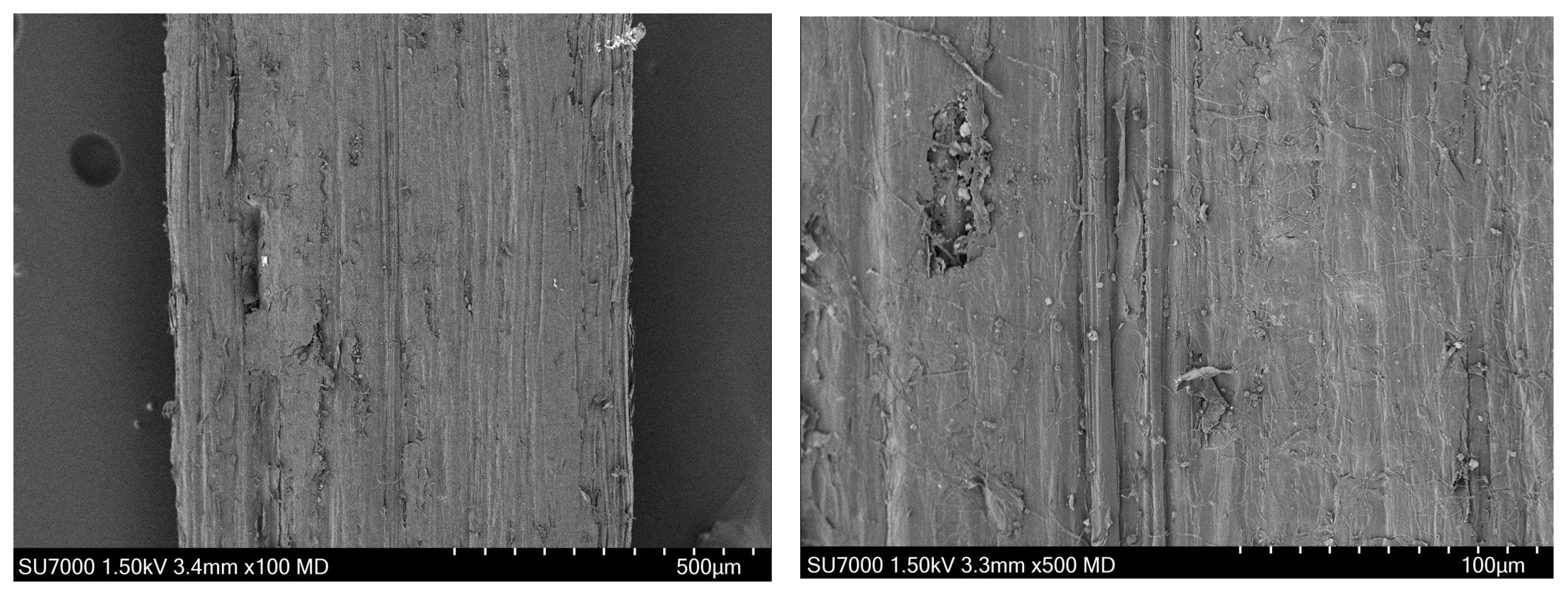
Hemp shiv with particle lengths ranging from 5 to 20 mm was supplied by Jardiland (Paris, France). The selected particle size distribution corresponds to commonly used hemp aggregates for insulating bio-concretes, balancing workability and porosity [36]. SEM observations of hemp shiv particle (Figure 11) reveal a highly porous and anisotropic cellular structure, composed of elongated tubular elements and interconnected voids typical of lignocellulosic materials. This hierarchical porosity plays a crucial role in governing water absorption, internal curing processes, and the development of the pore network within the bio-concrete, thereby strongly influencing its thermal and hygrothermal performance. In addition, the rough and heterogeneous surface texture of the hemp shiv is expected to promote mechanical interlocking with the mineral binder, contributing to interfacial adhesion within the bio-concrete.
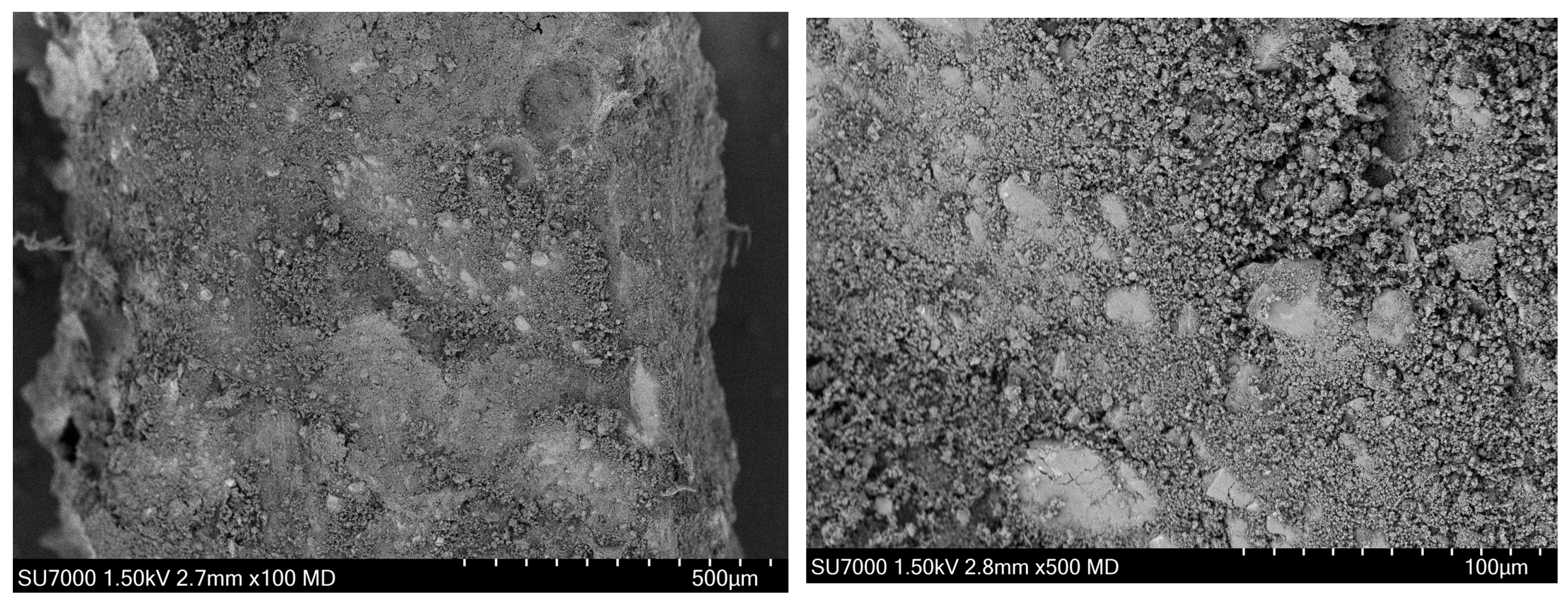
The mix design was defined using a binder-to-aggregate mass ratio of 1.8 (i.e., 64 wt% binder and 36 wt% aggregate) and a water-to-binder ratio of 1.56, corresponding to a water-to-(binder + aggregate) ratio of 1. These ratios were selected based on previous optimization studies aiming to achieve lightweight materials with stable mechanical cohesion, low thermal conductivity, and good fire behavior [18,29,37]. SEM observations of particles extracted from the bio-concrete (Figure 12) reveal that gypsum crystals extensively coat and completely penetrate the surface of the hemp particles, indicating the formation of a strong mechanical interlocking at the interface. This interfacial bonding plays a critical role in ensuring effective load transfer within the composite and directly influences its macroscopic mechanical behavior. More generally, the binder-to-aggregate ratio governs matrix continuity and interfacial load transfer, whereas the water content controls workability, hydration kinetics, and pore structure development, ultimately influencing the thermal and hygrothermal properties of the material [38,39,40].
Before mixing, the gypsum and hemp shiv were preconditioned under controlled conditions (23 °C, 50% relative humidity) until stabilization, to ensure consistent and reproducible hydration reactions. Bio-concrete manufacturing was carried out in a concrete mixer following a reproducible protocol. Gypsum and water were first mixed for 2 min to ensure homogeneous slurry formation, after which hemp shiv was gradually introduced and mixed for an additional 7 min to promote uniform coating of aggregates. The fresh mixture was then cast into cylindrical molds (11 cm diameter, 22 cm height) to produce the samples. At least three specimens were tested for each property to ensure reproducibility.

3.2. Thermogravimetric Analysis

Thermogravimetric analysis (TGA) was conducted on gypsum, hemp shiv, and gypsum–hemp bio-concrete using a PerkinElmer TGA 8000 (Waltham, MA, USA). Approximately 10 mg of finely ground material was used for each test. Grinding was necessary to ensure material homogeneity at this scale and to minimize uncertainties. TGA was selected as a key tool to identify dehydration and degradation thresholds under a controlled oxidizing atmosphere, providing critical insight into the feasibility of thermal recycling strategies. The applied temperature programs are summarized in Table 1. For each test, an isotherm was applied for 1 min, then a temperature ramp at 10 °C/min, and finally an isotherm for 10 min.

3.3. Thermal Conductivity and Density Measurement

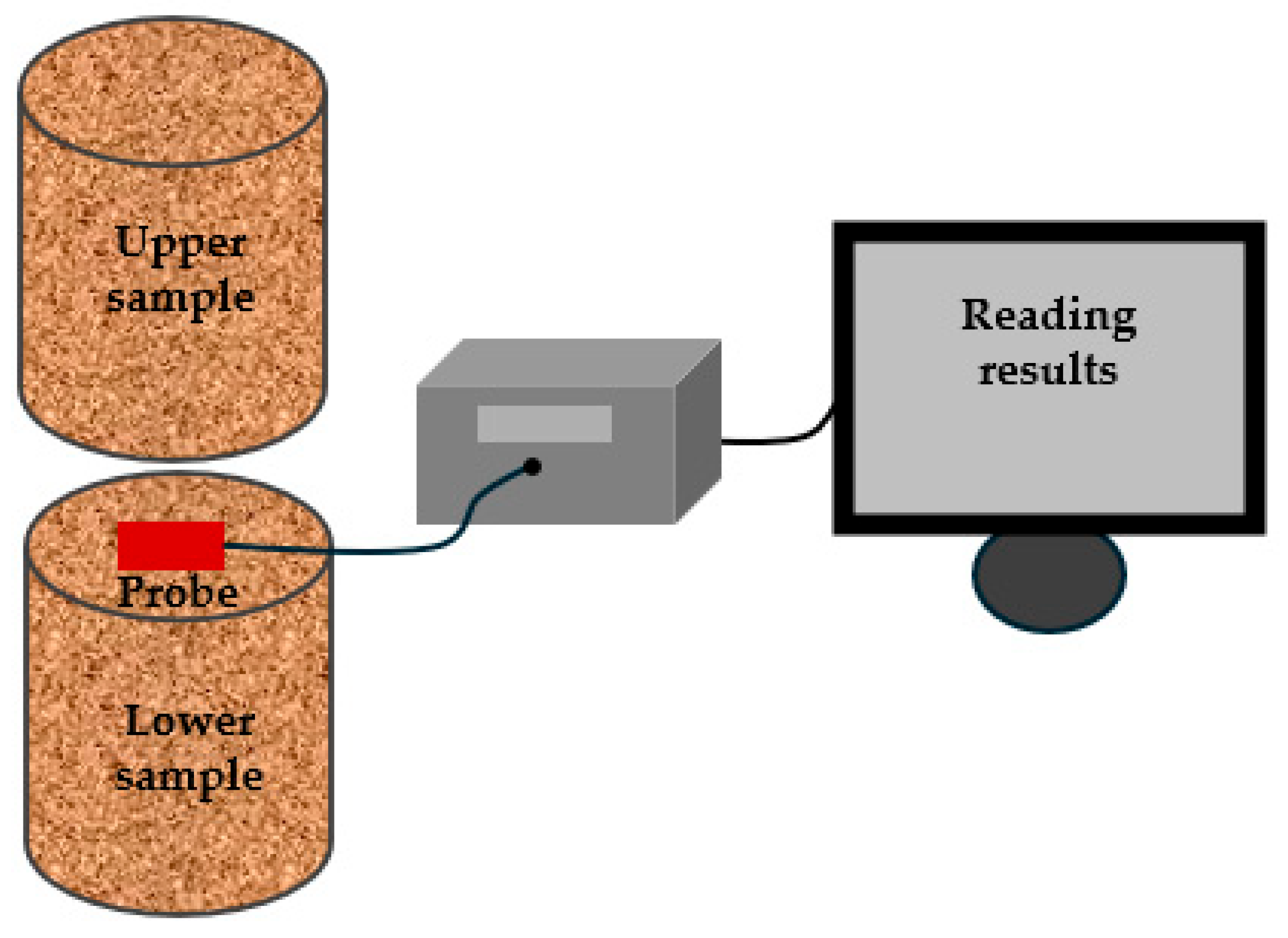
Thermal conductivity was measured using the transient hot-wire method (FP2C, Neotim, Albi, France) [41,42]. This method involves generating a Joule-effect heat flux and measuring the temperature variation over time by means of a thermocouple associated with the heating element of a hot-wire probe (Figure 13).
A power of 0.1 W was applied, and the heating time was set at 80 s. These parameters were chosen based on preliminary tests to avoid excessive temperature rise of the probe, which is limited to 20 °C. Thermal conductivity can then be calculated using Equation (3). All specimens were conditioned at 23 °C and 50% relative humidity until mass stabilization prior to testing. These conditions were maintained consistently for all tests, both before and after recycling, to ensure comparability of the results. Controlling conditions are essential, as humidity can significantly influence heat transfer mechanisms in bio-based materials. Apparent density was calculated from stabilized mass and geometric volume.
λ =   P 4 π L   Δ ln t Δ T = P 4 π L     ζ  
where
λ is the thermal conductivity (W·m−1·K−1);
P is the power dissipated by Joule effect (W);
L is the length of the line source (m);
ζ = ΔT/Δln(t) is the temperature variation per logarithmic unit of time, which is a long-term slope (K).

3.4. Compression Tests

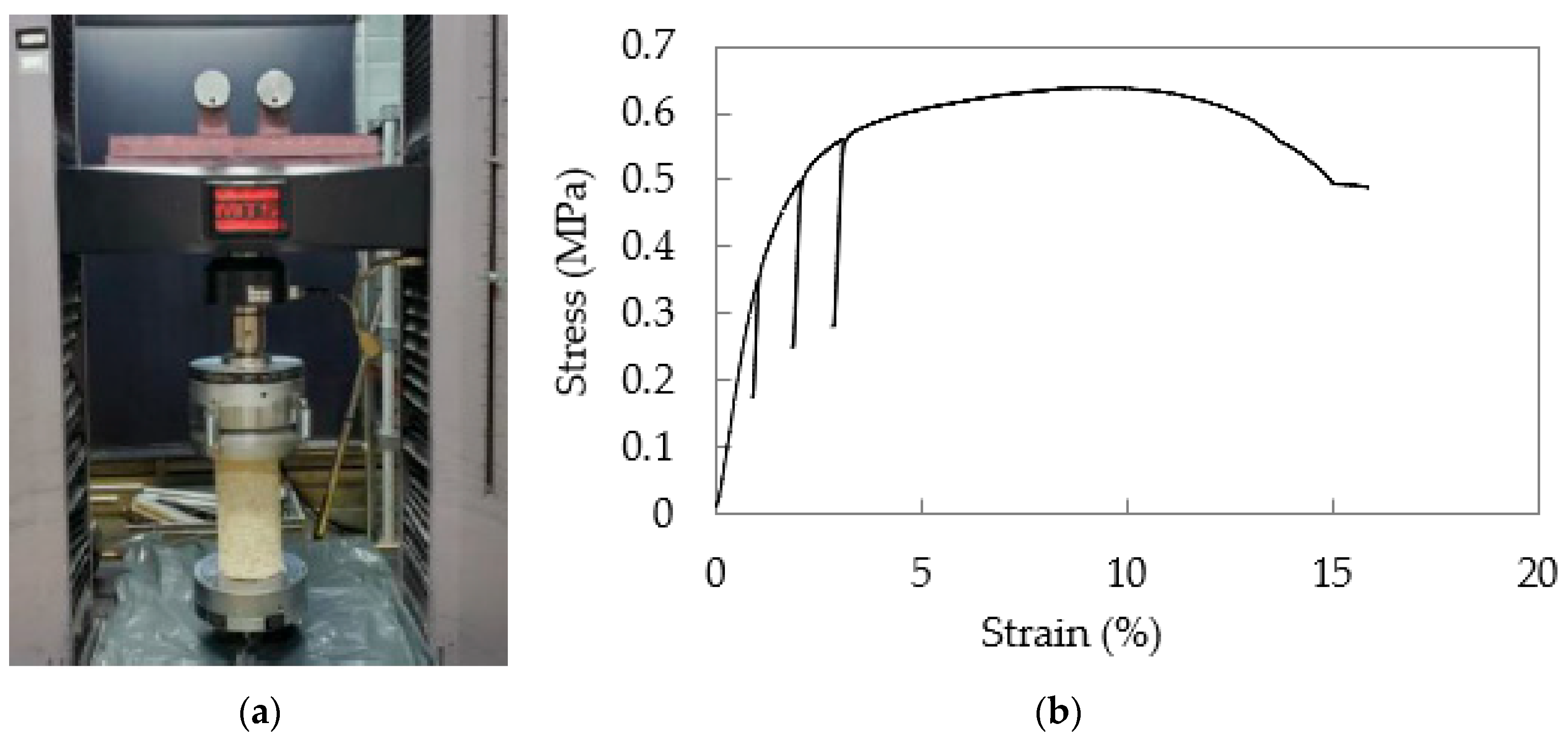
The compressive mechanical properties of the specimens (11 cm diameter, 22 cm height) were evaluated using a MTS electromechanical testing machine (Criterion, New York, NY, USA) with a 50 kN capacity (Figure 14a). Compression tests were performed under displacement control at a rate of 5.4 mm/min. Loading–unloading cycles were applied to characterize the compressive properties. This cyclic protocol is more appropriate than monotonic loading for hemp-based bio-concretes (highly deformable and non-brittle materials), which generally exhibit progressive compaction rather than sudden brittle failure [19]. Three loading–unloading cycles were conducted at nominal strains of 1%, 2%, and 3% (Figure 14b), with unloading proceeding until the stress dropped to 50% of its peak value. Strain was calculated as the displacement divided by the initial specimen height. The compressive strength was defined as the maximum stress reached during loading, while the elastic modulus was determined from the slopes of the unloading curves.

3.5. Recycling Procedure

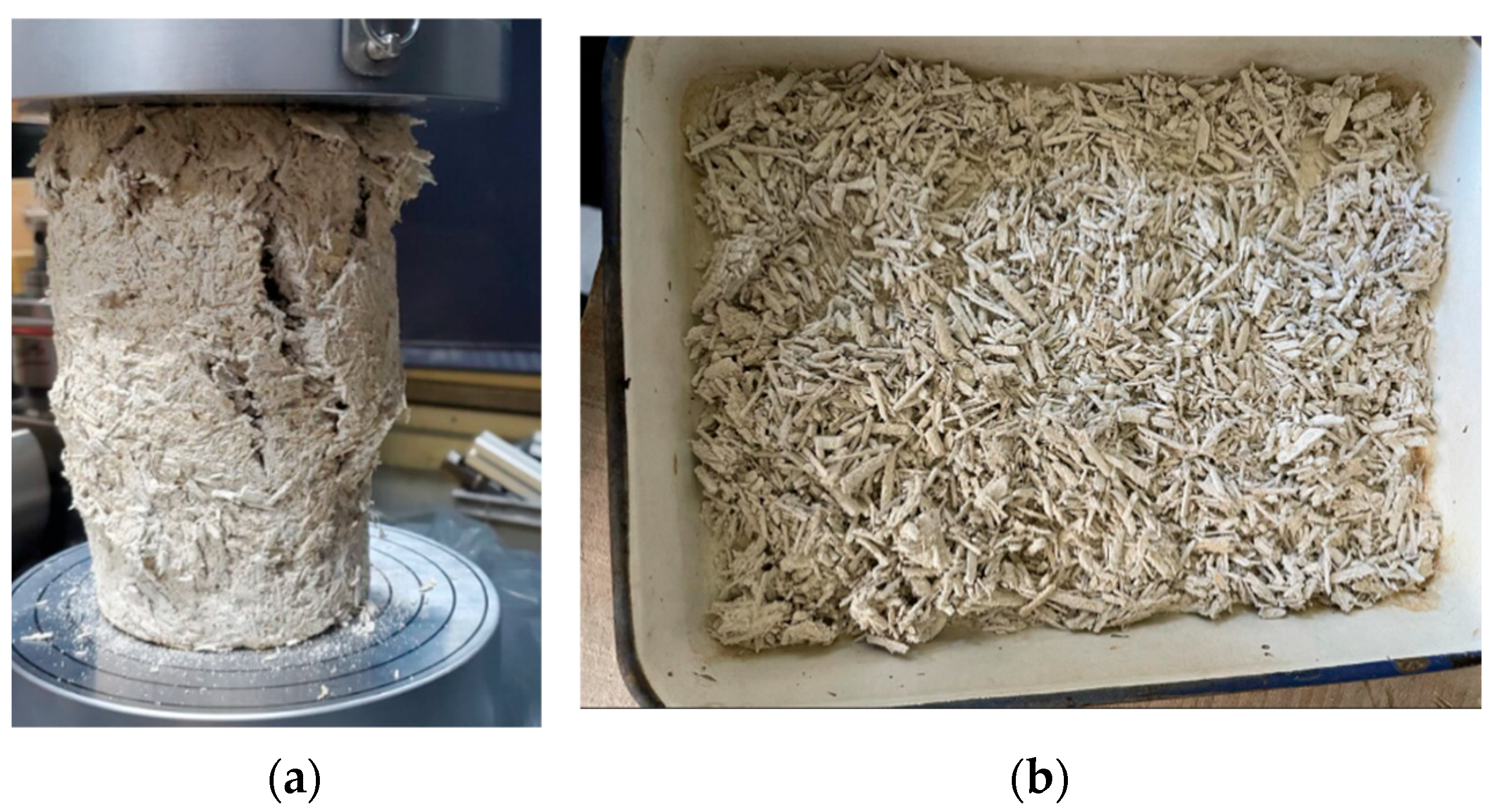
Figure 15a shows the reference sample (i.e., prior to recycling) after the compression test. Following this test, the samples were mechanically crushed into a granular state (Figure 15b). Crushing was performed manually to avoid excessive fragmentation of hemp shiv (i.e., to preserve its fibrous morphology, particle size range, and cellular structure while avoiding excessive fines). The remaining fragments exhibited a characteristic size ranging approximately from 2 to 5 cm. However, this step alone was insufficient to restore gypsum reactivity, making subsequent thermal treatment necessary. To recover this reactivity, the crushed materials were subjected to oven heating at temperatures of 150, 180, 200, and 250 °C for durations ranging from 20 to 120 min. Samples were weighed at regular intervals (20 min) to monitor mass loss and dehydration kinetics. Based on preliminary observations of hemp degradation, 250 °C was set as the upper safety limit. This approach allowed identification of a temperature–time couple ensuring effective gypsum dehydration while minimizing risks of hemp shiv degradation.
Recycled bio-concrete was then remanufactured using the same constituent materials as the reference bio-concrete, exclusively derived from the recycled bulk material (i.e., after oven drying), with no addition of virgin components. The mixing procedure was identical to that of the reference bio-concrete. The adjusted water-to-(binder + aggregate) ratio (1.14) for recycled materials was determined experimentally to compensate for increased water demand due to higher surface area and reactivity of dehydrated gypsum particles. This adjustment was made to ensure consistent workability. This choice ensures that observed property changes can be attributed primarily to recycling effects rather than formulation differences.
Subsequently, thermal conductivity, density, and compressive properties were measured on the recycled gypsum–hemp bio-concrete samples, strictly following the same experimental protocols described previously (see Section 3.3 and Section 3.4), to enable a direct comparison with the reference bio-concrete.

4. Conclusions

This study demonstrates the feasibility of fully thermally recycling gypsum–hemp bio-concrete without separating its constituents, supporting circular strategies in sustainable construction. Thermogravimetric and oven-drying analyses identified 180 °C for 60 min as an appropriate condition, achieving effective gypsum dehydration and binder reactivation while preserving hemp shiv integrity. Thermal recycling increased apparent density (from 368 to 587 kg·m−3) and substantially enhanced compressive strength and elastic modulus. Although thermal conductivity increased moderately (from 0.08 to 0.096 W·m−1·K−1), the recycled material remains within the range of lightweight insulating bio-concretes, confirming its functional suitability for building envelopes.
By investigating dehydration conditions and the resulting evolution of material properties, this study demonstrates the feasibility of thermally recycling gypsum–hemp bio-concrete. The proposed approach limits waste generation, avoids phase separation, and preserves the material’s functional performance, supporting its integration into a circular economy framework. Nevertheless, its large-scale applicability remains to be validated.
Future work should therefore focus on a comprehensive assessment of the environmental footprint of the recycling process, particularly in terms of energy demand and CO2 emissions, in order to quantify its overall sustainability. Extending this approach to other types of bio-concretes would also help evaluate its broader applicability. In addition, further optimization of post-recycling formulation parameters (e.g., water content, particle size distribution, and binder reactivity) could improve mechanical and thermal performance. Such developments would facilitate the industrial implementation of this recycling route and strengthen its relevance within circular economy strategies in the construction sector.

Author Contributions

Conceptualization, P.U., R.S. and M.P.; methodology, P.U., R.S., T.L., A.B., M.R. and W.B.; validation, P.U. and R.S.; formal analysis, P.U., T.L., A.B., M.R. and W.B.; investigation, T.L., A.B., M.R. and W.B.; resources, M.P.; data curation, A.B., M.R., W.B., T.L. and P.U.; writing—original draft preparation, P.U.; writing—review and editing, R.S., M.P. and T.L.; visualization, P.U.; supervision, P.U., T.L. and R.S.; funding acquisition, M.P. All authors have read and agreed to the published version of the manuscript.

Funding

This research received no external funding.

Data Availability Statement

The original contributions presented in this study are included in the article. Further inquiries can be directed to the corresponding author.

Acknowledgments

The authors thank Alexandre Cheron (IMT Mines Alès) for his technical support during the compression tests and Jean-Claude Roux (IMT Mines Alès) for conducting the SEM observations.

Conflicts of Interest

Marc Potin is an employee of Plâtres Vieujot. The other authors declare no conflicts of interest. Plâtres Vieujot had no role in the design of the study; in the collection, analyses, or interpretation of data; in the writing of the manuscript; or in the decision to publish the results.

References

  1. Zhong, X.; Hu, M.; Deetman, S.; Steubing, B.; Lin, H.X.; Hernandez, G.A.; Harpprecht, C.; Zhang, C.; Tukker, A.; Behrens, P. Global Greenhouse Gas Emissions from Residential and Commercial Building Materials and Mitigation Strategies to 2060. Nat. Commun. 2021, 12, 6126. [Google Scholar] [CrossRef] [PubMed]
  2. Elhegazy, H.; Zhang, J.; Amoudi, O.; Zaki, J.N.; Yahia, M.; Eid, M.; Mahdi, I. An Exploratory Study on the Impact of the Construction Industry on Climate Change. J. Ind. Integr. Manag. 2024, 09, 397–418. [Google Scholar] [CrossRef]
  3. Lecompte, T. Matériaux Bio-Sourcés Pour Le Bâtiment et Stockage Temporaire de Carbone. Constr. Responsab. 2024, C8124V2. [Google Scholar] [CrossRef]
  4. Correa de Melo, P.; Caldas, L.R.; Masera, G.; Pittau, F. The Potential of Carbon Storage in Bio-Based Solutions to Mitigate the Climate Impact of Social Housing Development in Brazil. J. Clean. Prod. 2023, 433, 139862. [Google Scholar] [CrossRef]
  5. Ghosn, S.; Cherkawi, N.; Hamad, B. Studies on Hemp and Recycled Aggregate Concrete. Int. J. Concr. Struct. Mater. 2020, 14, 54. [Google Scholar] [CrossRef]
  6. Pawluczuk, E.; Kalinowska-Wichrowska, K.; Soomro, M. Alkali-Activated Mortars with Recycled Fines and Hemp as a Sand. Materials 2021, 14, 4580. [Google Scholar] [CrossRef]
  7. Srour, I.; Chehab, G.; Gharib, N. Recycling Construction Materials in a Developing Country: Four Case Studies. Int. J. Eng. Manag. Econ. 2010, 3, 135–151. [Google Scholar] [CrossRef]
  8. Collet-Foucault, F. Caractérisation Hydrique et Thermique de Matériaux de Génie Civil à Faibles Impacts Environnementaux. Ph.D. Thesis, INSA Rennes, Rennes, France, 2004. [Google Scholar]
  9. Arnaud, L.; Amziane, S. Les Bétons de Granulats D’origine Végétale: Application au Béton de Chanvre; HERMES: Paris, France, 2013; ISBN 978-2-7462-3809-1. [Google Scholar]
  10. Lagouin, M.; Magniont, C.; Sénéchal, P.; Moonen, P.; Aubert, J.-E.; Laborel-préneron, A. Influence of Types of Binder and Plant Aggregates on Hygrothermal and Mechanical Properties of Vegetal Concretes. Constr. Build. Mater. 2019, 222, 852–871. [Google Scholar] [CrossRef]
  11. Kourtaa, S. Contribution au Développement D’un Nouvel Éco-Liant Chaux—Sédiment Marin en vue D’applications pour Bétons Agro-Sourcés. Ph.D. Thesis, Ecole Nationale Supérieure Mines-Télécom Lille Douai, Douai, France, 2022. [Google Scholar]
  12. Collet, F. Hygric and Thermal Properties of Bio-Aggregate Based Building Materials. In Bio-Aggregates Based Building Materials: State-of-the-Art Report of the RILEM Technical Committee 236-BBM; Springer: Dordrecht, The Netherlands, 2017; Volume 23, pp. 125–147. [Google Scholar]
  13. Glé, P.; Gourdon, E.; Arnaud, L. Acoustical Properties of Materials Made of Vegetable Particles with Several Scales of Porosity. Appl. Acoust. 2011, 72, 249–259. [Google Scholar] [CrossRef]
  14. Collet, F.; Pretot, S. Experimental Highlight of Hygrothermal Phenomena in Hemp Concrete Wall. Build. Environ. 2014, 82, 459–466. [Google Scholar] [CrossRef]
  15. Niyigena, C.; Amziane, S.; Chateauneuf, A.; Arnaud, L.; Bessette, L.; Collet, F.; Lanos, C.; Escadeillas, G.; Lawrence, M.; Magniont, C.; et al. Variability of the Mechanical Properties of Hemp Concrete. Mater. Today Commun. 2016, 7, 122–133. [Google Scholar] [CrossRef]
  16. Jami, T.; Karade, S.R.; Singh, L.P. A Review of the Properties of Hemp Concrete for Green Building Applications. J. Clean. Prod. 2019, 239, 117852. [Google Scholar] [CrossRef]
  17. Ahmed, A.T.M.F.; Islam, M.Z.; Mahmud, M.S.; Sarker, M.E.; Islam, M.R. Hemp as a Potential Raw Material toward a Sustainable World: A Review. Heliyon 2022, 8, e08753. [Google Scholar] [CrossRef] [PubMed]
  18. Lopes, T.; Labeni, S.; Sonnier, R.; Ferry, L.; Regazzi, A.; Uwizeyimana, P.; Aprin, L.; Delot, P.; de Menibus, A.H.; Potin, M. Ignition of Biobased Concretes. Constr. Build. Mater. 2024, 440, 137423. [Google Scholar] [CrossRef]
  19. Chabannes, M. Formulation et Étude des Propriétés Mécaniques d’Agrobétons Légers Isolants à Base de Balles de Riz et de Chènevotte Pour l’éco-Construction. Ph.D. Thesis, Université Montpellier, Montpellier, France, 2015. [Google Scholar]
  20. Mastali, M.; Abdollahnejad, Z.; Pacheco-Torgal, F. Carbon Dioxide Sequestration of Fly Ash Alkaline-Based Mortars Containing Recycled Aggregates and Reinforced by Hemp Fibres. Constr. Build. Mater. 2018, 160, 48–56. [Google Scholar] [CrossRef]
  21. Laktim, M.C.; Formisano, A. Hemp Fibre Treatments in Bio-Composites: A Review for Sustainable and Resilient Structures. Buildings 2025, 15, 4238. [Google Scholar] [CrossRef]
  22. Chabannes, M.; Garcia-Diaz, E.; Clerc, L.; Bénézet, J.-C.; Becquart, F. Lime and Hemp or Rice Husk Concretes for the Building Envelope: Applications and General Properties. In Lime Hemp and Rice Husk-Based Concretes for Building Envelopes; Chabannes, M., Garcia-Diaz, E., Clerc, L., Bénézet, J.-C., Becquart, F., Eds.; Springer International Publishing: Cham, Switzerland, 2018; pp. 45–98. ISBN 978-3-319-67660-9. [Google Scholar]
  23. Delannoy, G. Durabilité D’isolants À Base de Granulats Végétaux. Ph.D. Thesis, Paris Est, Paris, France, 2018. [Google Scholar]
  24. Moujalled, B.; Aït Ouméziane, Y.; Moissette, S.; Bart, M.; Lanos, C.; Samri, D. Experimental and Numerical Evaluation of the Hygrothermal Performance of a Hemp Lime Concrete Building: A Long Term Case Study. Build. Environ. 2018, 136, 11–27. [Google Scholar] [CrossRef]
  25. Asli, M.; Brachelet, F.; Sassine, E.; Antczak, E. Thermal and Hygroscopic Study of Hemp Concrete in Real Ambient Conditions. J. Build. Eng. 2021, 44, 102612. [Google Scholar] [CrossRef]
  26. Aversa, P.; Marzo, A.; Tripepi, C.; Sabbadini, S.; Dotelli, G.; Lauriola, P.; Moletti, C.; Luprano, V.A.M. Hemp-Lime Buildings: Thermo-Hygrometric Behaviour of Two Case Studies in North and South Italy. Energy Build. 2021, 247, 111147. [Google Scholar] [CrossRef]
  27. Barbhuiya, S.; Bhusan Das, B. A Comprehensive Review on the Use of Hemp in Concrete. Constr. Build. Mater. 2022, 341, 127857. [Google Scholar] [CrossRef]
  28. Iucolano, F.; Liguori, B.; Aprea, P.; Caputo, D. Thermo-Mechanical Behaviour of Hemp Fibers-Reinforced Gypsum Plasters. Constr. Build. Mater. 2018, 185, 256–263. [Google Scholar] [CrossRef]
  29. Lopes, T.; Sturlèse, L.; Sonnier, R.; Reynaud, C.; Regazzi, A.; Hellouin de Menibus, A.; Wielezynski, F.; Ferry, L.; Aprin, L.; Potin, M.; et al. Smoldering in Biobased Concretes. Constr. Build. Mater. 2025, 498, 143949. [Google Scholar] [CrossRef]
  30. Delannoy, G.; Becquart, F.; Tinel, L.; Huguet, C.; Lepochat, S. Etude Des Possibilités de Fin de Vie Du Béton de Chanvre. Acad. J. Civ. Eng. 2024, 42, 149–159. [Google Scholar] [CrossRef]
  31. Yu, Q.L.; Brouwers, H.J.H. Thermal Properties and Microstructure of Gypsum Board and Its Dehydration Products: A Theoretical and Experimental Investigation. Fire Mater. 2012, 36, 575–589. [Google Scholar] [CrossRef]
  32. Ritterbach, L. Investigations on Dehydration and Rehydration Processes in the CaSO4–H2O System at Controlled Time, Temperature and Humidity Conditions. Ph.D. Thesis, Universität zu Köln, Cologne, Germany, 2021. [Google Scholar]
  33. Cérézo, V. Propriétés Mécaniques, Thermiques et Acoustiques D’un Matériau À Base de Particules Végétales: Approche Expérimentale et Modélisation Théorique. Ph.D. Thesis, INSA Lyon, Villeurbanne, France, 2005. [Google Scholar]
  34. Collet, F.; Pretot, S. Thermal Conductivity of Hemp Concretes: Variation with Formulation, Density and Water Content. Constr. Build. Mater. 2014, 65, 612–619. [Google Scholar] [CrossRef]
  35. Arnaud, L.; Gourlay, E. Experimental Study of Parameters Influencing Mechanical Properties of Hemp Concretes. Constr. Build. Mater. 2012, 28, 50–56. [Google Scholar] [CrossRef]
  36. Piątkiewicz, W.; Narloch, P.; Wólczyńska, Z.; Mańczak, J. Effect of Hemp Shive Granulometry on the Thermal Conductivity of Hemp–Lime Composites. Materials 2025, 18, 3458. [Google Scholar] [CrossRef]
  37. Alves Lopes, T.M.; Uwizeyimana, P.; Sonnier, R.; Ferry, L.; Regazzi, A.; Aprin, L.; Delot, P.; Hellouin de Ménibus, A.; Potin, M. Chapter 8—Fire Performance of Hemp Concrete. In Advances in Bio-Based Materials for Construction and Energy Efficiency; Pacheco-Torgal, F., Tsang, D.C.W., Eds.; Elsevier: Amsterdam, The Netherlands, 2025; pp. 199–228. [Google Scholar]
  38. Bardouh, R.; Toussaint, E.; Amziane, S.; Marceau, S. Evaluating the Mechanical Performance of Bio-Based Concrete: The Role of Aggregate Type and Orientation in Compression Cyclic Loading. Clean. Eng. Technol. 2026, 30, 101139. [Google Scholar] [CrossRef]
  39. Benmahiddine, F.; Cherif, R.; Bennai, F.; Belarbi, R.; Tahakourt, A.; Abahri, K. Effect of Flax Shives Content and Size on the Hygrothermal and Mechanical Properties of Flax Concrete. Constr. Build. Mater. 2020, 262, 120077. [Google Scholar] [CrossRef]
  40. Liu, M.Y.J.; Alengaram, U.J.; Jumaat, M.Z.; Mo, K.H. Evaluation of Thermal Conductivity, Mechanical and Transport Properties of Lightweight Aggregate Foamed Geopolymer Concrete. Energy Build. 2014, 72, 238–245. [Google Scholar] [CrossRef]
  41. Healy, J.J.; de Groot, J.J.; Kestin, J. The Theory of the Transient Hot-Wire Method for Measuring Thermal Conductivity. Phys. BC 1976, 82, 392–408. [Google Scholar] [CrossRef]
  42. Merckx, B.; Dudoignon, P.; Garnier, J.-P.; Martemianov, S. Development of Effective Thermal Conductivity Measurement in Geomaterials by Surface Transient Hot-Wire Method. Int. J. Heat Mass. Transf. Theory Appl. IREHEAT 2013, 1, 242–248. [Google Scholar]
Figure 1. Thermogravimetric analysis (TGA) of hemp shiv under a controlled oxidizing atmosphere with a heating rate of 10 °C/min.
Recycling 11 00071 g001
Figure 2. Thermogravimetric analysis (TGA) of gypsum under a controlled oxidizing atmosphere with a heating rate of 10 °C/min.
Recycling 11 00071 g002
Figure 3. Thermogravimetric analysis (TGA) of gypsum–hemp bio-concrete under a controlled oxidizing atmosphere with a heating rate of 10 °C/min.
Recycling 11 00071 g003
Figure 4. Oven drying of gypsum–hemp bio-concrete over time.
Recycling 11 00071 g004
Figure 5. (a) Density of gypsum–hemp concrete before and after recycling. (b) Thermal conductivity of gypsum–hemp concrete before and after recycling.
Recycling 11 00071 g005
Figure 6. Thermal conductivity of bio-concretes as a function of density.
Recycling 11 00071 g006
Figure 7. Compression properties before and after recycling: (a) Compressive strength. (b) Elastic modulus.
Recycling 11 00071 g007
Figure 8. Manufacturing sequence from bulk raw materials to recycled gypsum–hemp bio-concrete.
Recycling 11 00071 g008
Figure 9. Materials used in this study.
Recycling 11 00071 g009
Figure 10. Scanning Electron Microscopy (SEM) image of gypsum particles.
Recycling 11 00071 g010
Figure 11. Scanning Electron Microscopy (SEM) image of hemp shiv.
Recycling 11 00071 g011
Figure 12. Scanning Electron Microscopy (SEM) image of hemp shiv coated with gypsum.
Recycling 11 00071 g012
Figure 13. Principle of thermal conductivity measurement using hot-wire method.
Recycling 11 00071 g013
Figure 14. (a) Compression test. (b) Illustration of a stress–strain curve with loading–unloading cycles.
Recycling 11 00071 g014
Figure 15. (a) Reference gypsum–hemp bio-concrete sample after compression testing. (b) Crushed material obtained from the reference bio-concrete sample.
Recycling 11 00071 g015
Table 1. TGA temperature programs.
MaterialHemp ShivGypsumGypsum–Hemp Bio-Concrete
Isotherm [°C] for 1 min303030
Ramp [°C] at 10 °C/min[30; 400][30; 200][30; 200]
Isotherm [°C] for 10 min400200200
Disclaimer/Publisher’s Note: The statements, opinions and data contained in all publications are solely those of the individual author(s) and contributor(s) and not of MDPI and/or the editor(s). MDPI and/or the editor(s) disclaim responsibility for any injury to people or property resulting from any ideas, methods, instructions or products referred to in the content.