


Highlights
What are the main findings?
- •
- Floral development models are explained with typical ornamental plant examples.
- •
- Effects of abiotic and biotic factors on floral traits are analyzed.
- •
- Modern breeding methods, research challenges and future directions are presented.
What are the implications of the main findings?
- •
- An integrated framework advances the understanding of floral morphotype formation.
- •
- Multi-omics and functional validation may accelerate floral trait improvement.
- •
- Understanding genotype–environment interactions may improve floral trait stability.
Abstract
Ornamental plants encompass herbaceous to woody trees with rich interspecific diversity and morphological divergence; they are also horticultural crops of great ornamental, economic, and ecological importance. Floral morphotype constitutes a pivotal ornamental trait and a critical breeding indicator for novel cultivar improvement. Herein, we review floral morphotype formation from a multilevel regulatory perspective, focusing on the genetic and developmental networks, environmental signals, and biotic interactions that collectively shape floral diversity in ornamentals. We further summarize major technical approaches used in floral development research and highlight current knowledge gaps, particularly the limited understanding of interactions among regulatory layers. This review provides new insights into the mechanisms underlying floral diversification and offers a conceptual framework for targeted breeding of ornamental cultivars with novel floral morphology.
1. Introduction
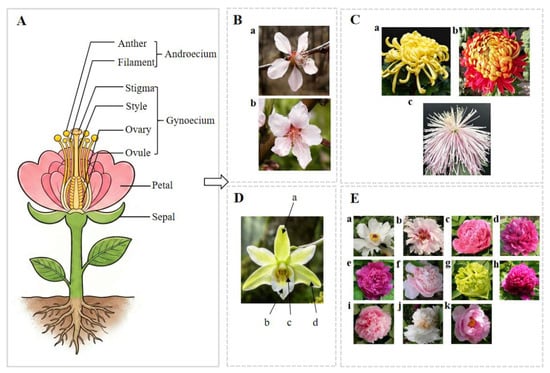
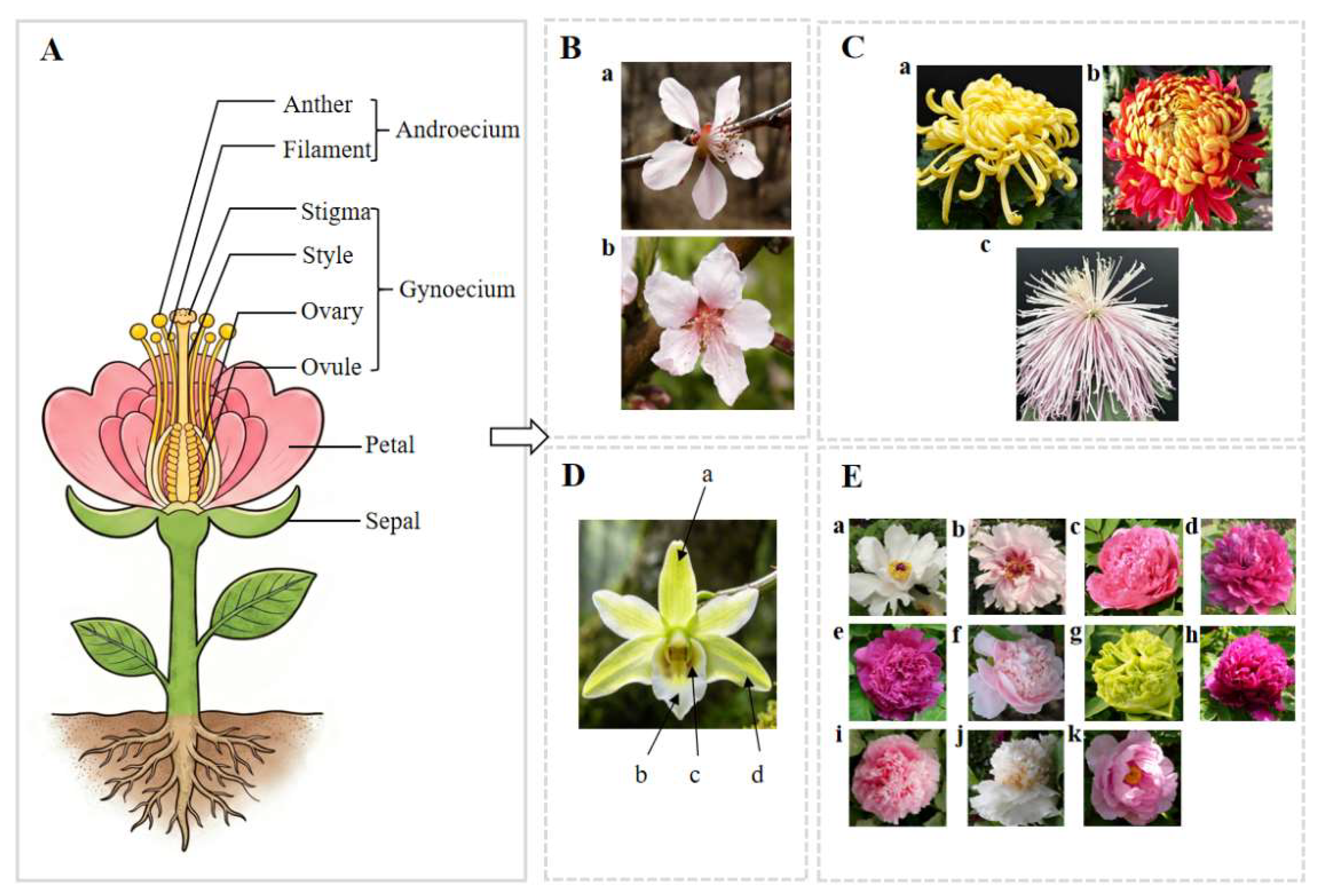
The cultivation and domestication of ornamental plants have been closely associated with human civilization and cultural development for centuries [1]. As valuable horticultural resources, ornamental plants contribute to aesthetic, economic, and ecological benefits [2,3,4]. Flowers are the primary ornamental organs in ornamental plants. In typical angiosperms, flowers are composed of four concentric whorls of organs—sepals, petals, gynoecium, and androecium—from the outermost to the innermost layer (Figure 1A), which together constitute the calyx, corolla, androecium, and gynoecium, respectively [5]. Floral morphology is defined as the diverse patterns of morphological variation in floral architecture across plant species, which is primarily governed by the morphology, quantity, and spatial arrangement of floral organs [6]. Developmental traits, including floral organ identity, cell proliferation, floral symmetry, and organ growth, are considered regulatory processes contributing to floral morphotype formation rather than equivalent definitions of floral morphotypes.
Figure 1.
Classification Display of Floral Morphotypes in Different Ornamental Plants. Note: (A) Schematic diagram of floral structure. (B) Two floral morphotypes of peach flower. (a): Non-showy; (b) Showy. (C) Different petal types of chrysanthemum. (a) Spatulate petal cultivar ‘Xihu Liuyue’; (b) Flat petal cultivar ‘Jinbei Dahong’; (c) Tubular petal cultivar ‘Bainiang Chaofeng’. (D) Structure diagram of Dendrobium flowers. a: sepals; b: labial petal; c: pistil column; d petals. (E) Eleven major floral morphotypes of tree peony. (a) Single-lobe type ‘Feng Dan’; (b) Lotus-type ‘Hong Ban Bai’; (c) Chrysanthemum type ‘Rou Fu Rong’; (d) Rose-type ‘Luo Yang Hong’; (e) Anemone type ‘Qinglong Wo Mochi’; (f) Crown type ‘Zhao Fen’; (g) Globular type ‘Dou Lv’; (h) Melaleuca proliferate-flower type ‘Ge Jin Zi’; (i) Tower-like proliferate-flower type ‘Ying Luo Bao Zhu’; (j) Golden circle type ‘Yao Huang’; (k) Golden stamen type ‘Shu Nv Zhuang’.
Floral morphology is a major determinant of the ornamental value of ornamental plants and serves as an important criterion for cultivar classification. Because floral architecture varies substantially among species, the criteria used to define floral morphotypes are also highly species-specific. In peach (Prunus persica L.), flowers are generally classified into rose and bell types according to corolla size and floral morphology [7,8] (Figure 1B). In chrysanthemum (Chrysanthemum morifolium), floral morphotype diversity is primarily associated with the structural organization of the capitulum, which consists of outer ray florets and inner disc florets, giving rise to three representative flower types [9,10,11] (Figure 1C). The floral organ structure of Dendrobium officinale has typical characteristics of orchids, which is composed of three sepals, three petals (one of which is specialized as a labial petal) and one pistil column. As the organ with the most ornamental value and functional specificity in its flowers, lip petals show significant interspecific and genetic variation in morphology, size, color and pattern, which is an important manifestation of floral morphotype diversity and adaptive evolution [12] (Figure 1D). In contrast, floral morphotype classification in tree peony (Paeonia suffruticosa) integrates multiple floral traits, including petal number, organ morphology, organ arrangement, and the degree of petaloidy, resulting in eleven recognized floral morphotypes [13,14,15,16] (Figure 1E). Double flowers in numerous ornamental plants hold great research value, marked by abundant petaloid organs, wrinkled expanded petals, and occasional inner extra florets [17]. For tree peony, stamen petalody serves as the primary driver of diverse double-flower morphotypes [18]. Additionally, petalody derived from other floral organs in peony has become a prominent research hotspot.
Despite substantial progress in floral diversity and developmental regulation, the mechanisms underlying floral morphology formation in ornamental plants remain incompletely understood. Existing studies have mainly examined individual genes, developmental processes, or species, with limited integration of genetic, environmental, and biotic regulation. Functional validation in non-model ornamental species is also scarce, hindering the application of molecular findings to breeding.
This review summarizes recent advances in floral morphology regulation, covering floral form classification, genetic and developmental networks, environmental and biotic influences, and breeding strategies. It further highlights key knowledge gaps and provides perspectives for understanding floral diversification and developing ornamental cultivars with novel and stable floral traits.
Literature Selection and Review Scope
The relevant literature was identified through searches of Web of Science, PubMed, Scopus, CNKI, and Google Scholar using combinations of keywords including “floral morphology,” “floral morphotype,” “flower development,” “MADS-box,” “TCP,” “environmental regulation,” “biotic interaction,” and “ornamental plants/species.” Publications from 2020 to 2026 were primarily considered, with earlier studies included when they represented foundational discoveries. Articles published in English and Chinese were considered. Studies were included when they provided experimental evidence or significant insights into floral morphology formation, regulatory mechanisms, environmental responses, or breeding applications in ornamental plants. Studies unrelated to floral traits, or focusing solely on general agronomic characteristics without relevance to floral morphology, were excluded. Model species were included when they provided conserved developmental mechanisms relevant to ornamental plants.
2. Molecular Regulatory Mechanisms of Floral Morphotypes
2.1. The MADS-Box Gene Family
Among the transcription factor families involved in floral development, the MADS-box gene family has emerged as the core regulator of floral organ identity and morphogenesis. The family was named after four founding members—MCM1 from Saccharomyces cerevisiae, AGAMOUS (AG) from Arabidopsis thaliana, DEFICIENS (DEF) from Antirrhinum majus, and the human serum response factor (SRF)—all of which contain a highly conserved MADS-box DNA-binding domain of approximately 56–58 amino acids [19,20]. In plants, MADS-box transcription factors regulate numerous developmental processes, including vegetative growth, floral transition, floral organ specification, gametophyte development, and fruit ripening, and have become the molecular framework underpinning the classical ABCDE model of flower development [21,22].
2.2. The ABCDE Model of Floral Development
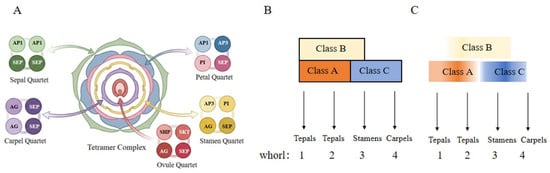
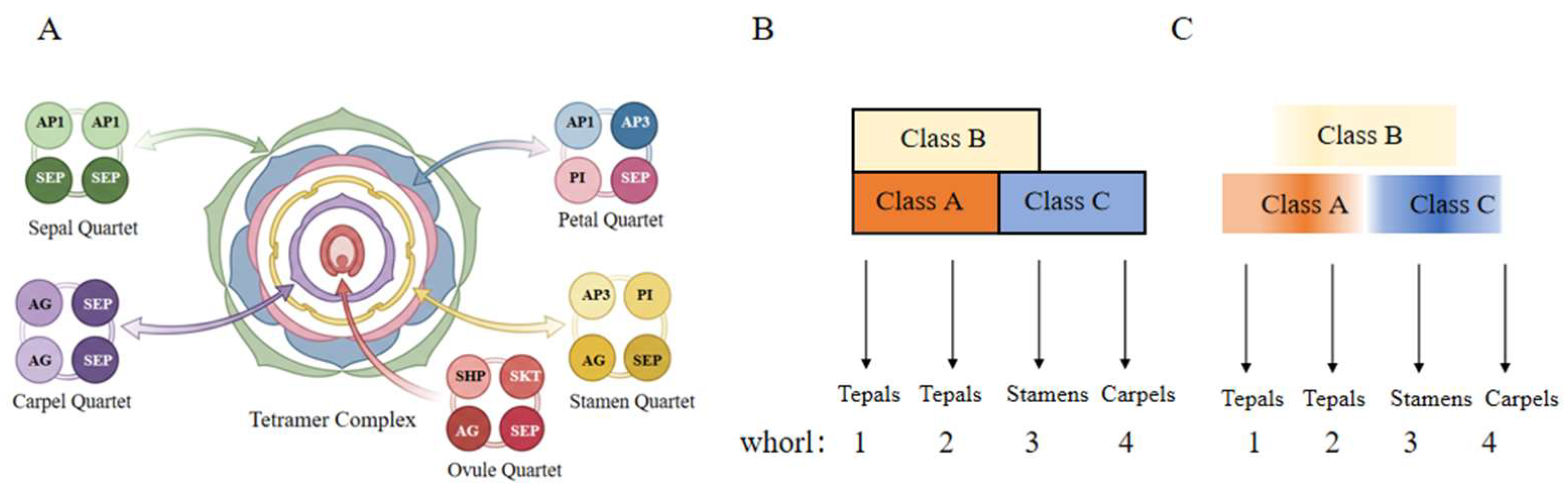
In 1991, the ABC model of floral development was first proposed. According to this model, A-function genes alone specify sepal formation; the combined action of A-function genes and B-function genes regulates petal development; B-function genes and C-function genes coordinate to mediate stamen formation; and C-function genes independently govern carpel development [23,24,25]. Subsequently, D-function genes were identified in petunia (Petunia hybrida) and were shown to specifically regulate ovule development, extending the original ABC model to the ABCD framework [26]. With advances in subsequent research, class E genes were identified to play an essential role in the formation and development of sepals, petals, stamens, carpels and ovules, which ultimately led to the establishment of the ABCDE model for floral organ development [27]. Class A genes are primarily composed of AP1 (APETALA1) and AP2 (APETALA2), while class B genes consist mainly of AP3 (APETALA3) and PI (PISTILLATA). The major class C gene is AG (AGAMOUS), class D genes are predominantly represented by FBP7 (FLORAL BINDING PROTEIN 7) and FBP11 (FLORAL BINDING PROTEIN 11), and class E genes are principally the SEP (SEPALLATA) gene family. Building on the ABCDE model, the tetramer model of floral development was proposed, which posits that floral homeotic proteins assemble into tetrameric complexes (Figure 2A). In plants, perturbations to gene function (e.g., mutations or aberrant expression levels) often induce morphological variations in floral organs. Studies have demonstrated that the simultaneous overexpression of class A, B, C and E floral organ identity genes in the model plant Arabidopsis thaliana can trigger the transformation of leaves into floral organ structures [28].
Figure 2.
Models related to floral organ development. Note: (A) The tetramer model governing floral organ development; (B) Boundary sliding model of flower organ development: Class B genes are expressed in the 1st, 2nd and 3rd whorls of floral organs, and the organs of the 1st and 2nd whorls develop into tepals. (C) Boundary attenuation model of flower organ development: Floral identity genes show variable expression across floral whorls, with reduced expression and overlapping domains at organ boundaries.
Although the classical ABCDE model successfully explains floral organ identity in most angiosperms, it cannot fully account for the diversity of floral architectures observed in some ornamental species. van Tunen et al. proposed a modified ABC model, namely the boundary sliding model. In this model, the expression of class B genes extends to the first floral whorl, causing both the first and second whorls to differentiate into petal-like structures (Figure 2B). This mechanism well accounts for the typical whorled flower architecture of non-grass monocots such as Tulipa gesneriana, whose outer two whorls consist of identical petaloid tepals [29,30].
However, the expansion of B-class gene expression domains cannot fully explain the specialized floral morphologies observed in many early-diverging angiosperms. The boundary attenuation model effectively addresses this issue and accounts for the extensive floral organ transformation in double-flower varieties of Rosa chinensis and tree peony, including stamen and sepal petalody. This model proposes that floral organ identity genes are expressed in all floral whorls with differential expression levels. Specifically, weakened expression of identity genes at organ boundaries leads to overlapping expression domains of different regulatory genes, ultimately giving rise to transitional floral organ phenotypes [31] (Figure 2C).
In short, these refined models emphasize that dynamic shifts in the spatial domains and expression levels of floral organ identity genes provide a mechanistic basis for floral organ transformation and the evolution of diverse floral morphology in ornamental plants.
2.3. The A, B, C, D, and E Functional Classes of the MADS-Box Gene Family in Ornamental Plants
A-class floral homeotic genes primarily regulate floral meristem identity and the specification of sepals and petals, although their functions have diversified among ornamental species [32]. In the ABCDE model, AP1 is a MADS-box transcription factor, whereas AP2 is a non-MADS factor regulated post-transcriptionally by miR172. The miR172–AP2 module controls floral organ identity and double-flower formation. In rose, a transposon insertion in RcAP2L disrupts the miR172-binding site, producing a miR172-insensitive allele that represses RcAG expression and promotes petal proliferation [33]. Reduced miR172 accumulation and increased RcAP2 expression in double-flowered cultivars further support this regulatory relationship [34]. Similarly, deletion of the miR172-binding site in PmAP2L enhances AP2 activity and induces stamen petaloidy and double flowers in Prunus mume [35]. Thus, miR172-mediated AP2 regulation contributes to floral organ identity and petalody, with species-specific effects on floral morphotype.
Additionally, in rose, RcAP1 contributes to floral meristem transition and sepal formation, whereas RcAP2 regulates floral organ identity and sepal/petal fate. Together, they contribute to stamen petaloidy [36]. In Camellia japonica, CjAPL1 and CjAPL2 regulate sepal-to-petal conversion and floral organ number [37]. Whereas overexpression of the lily genes LMADS5, LMADS6, and LMADS7 induces homeotic conversion of floral organs [38].
Thus, A-class genes have conserved roles in meristem determination and floral organ identity, whereas species-specific regulatory changes contribute to variation in organ number, petaloidy, and floral morphotypes.
B-class floral homeotic genes, mainly represented by AP3 and PI, are conserved regulators of petal and stamen identity and play essential roles in floral organ specification and diversification. In Magnolia wufengensis, MAwuPI is predominantly expressed in tepals and stamens. Its ectopic expression in the Arabidopsis pi-1 mutant partially restores stamen development but fails to fully rescue petal identity, supporting a conserved role in stamen specification but suggesting species-specific divergence in petal development [39]. In orchids (Cymbidium spp.), B-class proteins interact with AGL6 to form MADS-box complexes involved in sepal, petal, and labellum development. Disruption of the OAP3-1/OAGL6-2/OPI complex alters floral symmetry and induces labellum-like features in ventral sepals, indicating that diversification of B-class protein interactions contributes to specialized floral organ development [40]. Overall, B-class genes primarily regulate floral organ identity, whereas changes in their interactions may further affect organ specialization and floral symmetry. However, heterologous expression in Arabidopsis may not fully reflect the endogenous functions of these genes in ornamental species.
AG, a Class C gene of the MADS-box gene family, primarily regulates the differentiation and development of stamens and carpels. In recent years, its regulatory role in the floral development of ornamental plants has also been validated. Studies on Rose (Rosa rugosa Thunb.) have revealed that low-temperature treatment elevates the methylation level of the RhAG promoter, thereby repressing RhAG expression and increasing petal number [41]. This indicates that double-flowered roses can be bred by repressing RhAG expression. In the double-flowered lily cultivar, LelAG1 expression in the third and fourth floral whorls declines as stamen petalody intensifies [42], implying that AG homologs suppress double-flower formation in lily. In Chinese roses, RhAG expression levels are higher in single-petaled flowers than in double flowers [43]. Nevertheless, these expression-based studies mainly provide correlative evidence, and further functional validation through genetic manipulation is required to confirm the causal role of AG homologs in regulating ornamental floral traits.
D-class genes, represented by STK and its homologs, primarily regulate ovule identity and development. In Phalaenopsis aphrodite, PhSTK is predominantly expressed in the column, ovary, and ovule, with transcript accumulation increasing during ovary development and reaching the highest level in mature ovules, suggesting a conserved role in ovule formation based on expression evidence [44]. E-class genes, mainly represented by the SEPALLATA (SEP) family, function as central cofactors in the ABCDE model by interacting with A, B, C, and D-class MADS-box proteins to specify the identities of all floral organs. In Prunus mume, four PmSEP genes have been identified, among which PmSEP2 and PmSEP3 contribute to stamen and carpel development, whereas PmSEP1 and PmSEP4 are associated with sepal specification [45]. Two genes, MASAKO S1 and MASAKO S3, were isolated from the rose. Phylogenetic analysis revealed that MASAKO S1 is homologous to SEP1/SEP2 in Arabidopsis, whereas MASAKO S3 is homologous to SEP3. Both genes were detected to be expressed in petals, suggesting their potential involvement in petal development [46]. Functional studies in Chinese rose further demonstrated that ectopic expression of MASAKO S3 induces leaf-like structures in petals, supporting its role in maintaining petal identity [47]. Similarly, overexpression of TeSEP4 in marigold (Tagetes erecta) alters petal and stamen development and affects floral organ number. Protein interaction analysis further demonstrated that TeSEP4 participates in higher-order MADS-box complexes, including interactions with B-class proteins such as TePI–TeAP3-2 [48]. In tree peony ‘Zhao Fen’, overexpression of PsuSEP3L significantly increases petal number in both single and semi-double flowers, suggesting that SEP genes contribute to petal proliferation and floral morphology diversification [49]. Beyond SEP genes, the AGL6 subfamily represents another group of SEP-like MADS-box regulators involved in floral development. In Chinese rose, low-temperature stress causes abnormal receptacle development accompanied by reduced RhAGL6 expression. Silencing of RhAGL6 results in receptacle malformation, providing direct functional evidence for the role of AGL6 in regulating floral development under environmental conditions [50,51].
2.4. The TCP Gene Family
The TCP gene family comprises plant-specific transcription factors involved in regulating plant growth and development. Members of this family contain a conserved TCP domain that mediates DNA binding and transcriptional regulation of downstream targets [52]. Among TCP genes, CYC-like members play key roles in floral symmetry and organ growth. In snapdragon, CYC is the first identified TCP gene associated with floral asymmetry, regulating dorsal floral organ development, petal and stamen identity, and cell proliferation. Mutations in CYC and DICHOTOMA result in altered floral symmetry and morphology, providing direct genetic evidence for their roles in floral patterning [53,54].
Beyond snapdragon, CYC-like genes have been widely implicated in floral diversification among ornamental plants. Heterologous overexpression of AtTCP1 in Arabidopsis thaliana promotes petal enlargement by increasing cell size, supporting the role of TCP genes in floral organ growth regulation [55]. In Asteraceae, differential expression of CYC homologs between ray and disc florets contributes to diverse floral forms, with higher expression generally associated with elongated ray florets [56,57]. For example, CmCYC2c regulates petal growth patterns in chrysanthemum, contributing to the formation of distinct petal shapes [10]. Similarly, differential expression of LaTCP1 influences petal size differences in Iberis amara. Studies have demonstrated that the LaTCP1 gene—a CYC homologue in Bent Flower—exhibits significantly higher expression in the smaller adaxial petals, whereas its expression is markedly lower in the larger abaxial petals [58]. A total of 50 TCP gene family members were identified in Dendrobium species, which are distributed across three Dendrobium sections. Quantitative real-time PCR (qRT-PCR) analysis revealed that DchTCP2 and DchTCP13 were highly expressed in lateral floral organs (sepals, petals and labella), suggesting their involvement in the morphogenesis of these organs in Dendrobium species [59]. In wild-type Cyclamen persicum, the petal margins are intact and ripple-free. In contrast, the petals of CpTCP1 transgenic lines exhibit continuous wavy folds at the margins and overall inward curling [60,61], which significantly improves the ornamental value of cyclamen flowers.
2.5. Effects of Other Gene Families on Floral Morphotypes in Ornamental Plants
Beyond the well-known MADS-box and TCP families, many other gene types also contribute significantly to the regulation of plant floral form. Some of these genes independently govern floral organ development, whereas others interact with classic floral morphotype genes, collectively driving the evolution of floral morphology in plants. In peach, TOE-type transcription factor genes represent a major subfamily of the AP2 gene family, whose canonical function is to restrict petal number. Loss of miR172 target sites confers gain-of-function effects on TOE family genes, thereby elevating petal quantity and contributing to the formation of double flowers [62]. The OfGATA9 gene has been identified in sweet Osmanthus (Osmanthus fragrans), and its overexpression in tobacco results in an increase in floral size and epidermal cell dimensions; transcriptomic analysis revealed that OfGATA9 overexpression modulates the expression of multiple gene families, including bHLHs and the MADS-box gene family [63]. The PAN gene acts as a key regulator of floral organ primordium number and floral meristem size, and is notably responsible for ensuring that flowers develop the canonical four whorls of floral organs (sepals, petals, stamens, and carpels). Loss-of-function mutations in PAN have been identified in Arabidopsis thaliana, which result in the formation of pentamerous floral structures in this species [64]. PAN and ROXY1 interact physically and cooperatively regulate the number of petal-initiated floral primordia [65]. Transient silencing of RhMYB17 in rose leads to a reduction in the number of petaloid stamens and an increase in that of normal petals; additionally, RhMYB17 can bind to the promoters of RhAP2 and RhAP2L to activate their expression [66], which suggests that RhMYB17 interacts with class A genes to jointly modulate floral organ formation in rose.
2.6. Hormonal Signaling–Molecular Regulation Crosstalk in Floral Morphogenesis
Phytohormonal regulation is involved throughout plant development and contributes substantially to floral morphogenesis. As an intermediate regulatory layer, phytohormones integrate molecular networks with cellular processes to regulate floral development and morphology. In Rosa hybrida, RhDAO1 regulates IAA catabolism and local IAA abundance. RhDAO1 silencing elevates petal number and triggers stamen-to-petal conversion, with expression changes in floral-identity genes (RhAP2, RhAG, RhSHP1). Exogenous IAA partially recapitulates these phenotypes and facilitates stamen–petal transformation [67]. Studies on tree peony have shown that exogenous GA3 promotes flower-bud development and improves flowering quality. Meanwhile, it elevates endogenous GA3 and IAA contents while reducing ABA levels, and modulates the expression of GA-, IAA-, and ABA-related genes as well as PsSOC1, PsSPL9 and PsSVP [68]. Auxin promotes petal cell proliferation and elongation in chrysanthemum, potentially through TCP-associated transcriptional regulation [69]. These phenomena all indicate that the signaling role of phytohormones is closely related to molecular regulatory mechanisms.
In summary, floral morphotype formation in ornamental plants is governed by multilayered networks involving transcriptional, post-transcriptional, and epigenetic regulation. Through the ABCDE model, MADS-box genes primarily determine floral organ identity, stamen development, and petaloidy, whereas TCP genes regulate floral symmetry, organ growth, and cell morphogenesis. These regulatory modules interact with other transcription factors, including AP2/TOE and GATA families, and are further modulated by microRNA-mediated regulation, phytohormones and epigenetic mechanisms, integrating developmental programs with environmental signals to generate diverse floral morphotypes (Table 1).
Table 1.
Impacts of functional genes on flower types of ornamental plants.
3. Environmental Factors Influencing Floral Morphotypes of Ornamental Plants
Floral form diversification in ornamental plants is not solely determined by genetic programs but is also strongly shaped by environmental cues, including temperature, light availability, water status, and atmospheric conditions. These environmental factors influence floral development either directly through changes in plant physiological processes or indirectly by regulating the expression of floral regulatory genes [70,71].
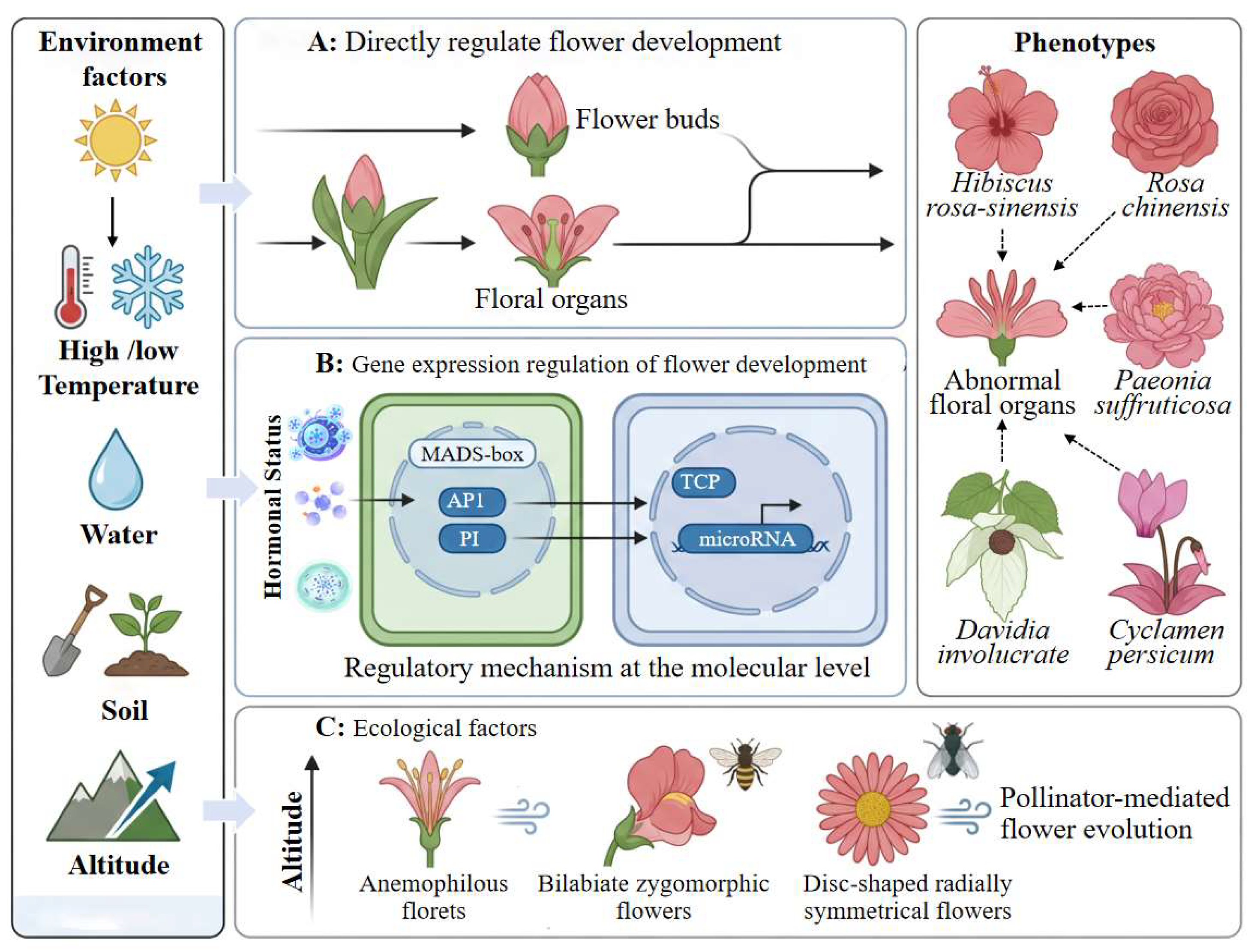
Light conditions influence floral development primarily by regulating resource allocation and developmental gene expression. In Chinese hibiscus (Hibiscus rosa-sinensis), which exhibits single, double, and undulate-petaled floral forms, light intensity significantly influences floral morphotypes in a cultivar-dependent manner, suggesting that different genetic backgrounds may adopt distinct light-response strategies during flower development [72]. Similar responses have been observed in tree peony, where appropriate light conditions promote photosynthetic efficiency and flower diameter, although optimal light requirements vary among cultivars [73] (Figure 3A). At the molecular level, long-day conditions in rose upregulate the expression of floral development-related genes such as AP1 and TCP12, promoting the balance between petal primordium differentiation and cell proliferation and consequently enhancing floral doubleness, whereas short-day conditions reduce petal numbers through repression of these genes [74] (Figure 3B).
Figure 3.
Effects of environmental factors on floral morphotypes of ornamental plants. Note: (A) Environmental factors directly affect the flower shapes of ornamental plants. (B) Environmental factors indirectly affect the flower shapes of ornamental plants. (C) The effect of ecological factors (altitude) on the flower shapes of ornamental plants.
Temperature represents another critical environmental regulator of floral morphology. Global warming and elevated temperatures can disrupt floral development, inducing abnormal traits such as sepal abscission, pedicel curvature, and sepal petaloidy in roses [75]. Conversely, moderate low-temperature exposure promotes petal enlargement and thickening, thereby improving the ornamental quality of rose cultivars [76]. Environmental temperature can also regulate floral architecture through molecular mechanisms. For example, heat stress enhances the binding activity of the MADS-box protein HvMADS1 to CArG-box elements, activating HvCKX3 expression and maintaining normal inflorescence architecture in barley, demonstrating the conserved role of MADS-box-mediated environmental responses in floral developmental regulation [77].
Water availability and precipitation patterns further contribute to the evolution of floral morphotypes. Excessive moisture may accelerate floral senescence and organ abortion through pathogen infection, whereas water limitation can impair floral organ development. In the dove tree (Davidia involucrata), specialized white bracts protect exposed stamens from rainfall and maintain pollen viability, representing an adaptive modification of floral architecture under humid environments [78]. Comparative analyses of spring-flowering species further revealed that floral orientation and pollen protection strategies influence pollen longevity under rainfall conditions, suggesting that precipitation regimes have contributed to the evolution of diverse floral morphologies across habitats [79].
Altitudinal gradients drive floral morphotype diversity through shifts in environmental conditions and pollinator assemblages, often accompanied by changes in pollination strategies and reproductive adaptation. Labiate flowers, primarily pollinated by bees, are better suited to warm, arid low-altitude environments. In contrast, grasses rely on wind pollination, but their small spikelets suffer from low pollination efficiency under the rainy and windy conditions typical of high altitudes, making them more common in lowland areas. Discoid flowers are more frequent at high altitudes, as their structure facilitates pollinator landing and visitation. Observations from eastern Italian mountains further suggest that, although floral morphotype richness remains relatively stable along altitudinal gradients, the relative composition of morphotypes shifts with elevation, with anemophilous flowers being more common at lower elevations and discoid forms becoming more prevalent at higher elevations [80]. Floral symmetry in plants generally tends toward radial symmetry with increasing altitude. This is because the dominant pollinator taxa shift from bees to flies at higher altitudes, and flies prefer to visit radially symmetric flowers, leading to the widespread distribution of such flowers in high-altitude areas [81] (Figure 3C).
These studies have revealed the complex pathways by which environmental factors regulate floral morphotype formation in plants, providing a crucial theoretical basis for understanding the phenotypic plasticity and adaptive evolution of floral morphotypes.
4. Relationships Between Biotic Factors and Floral Morphotypes of Ornamental Plants
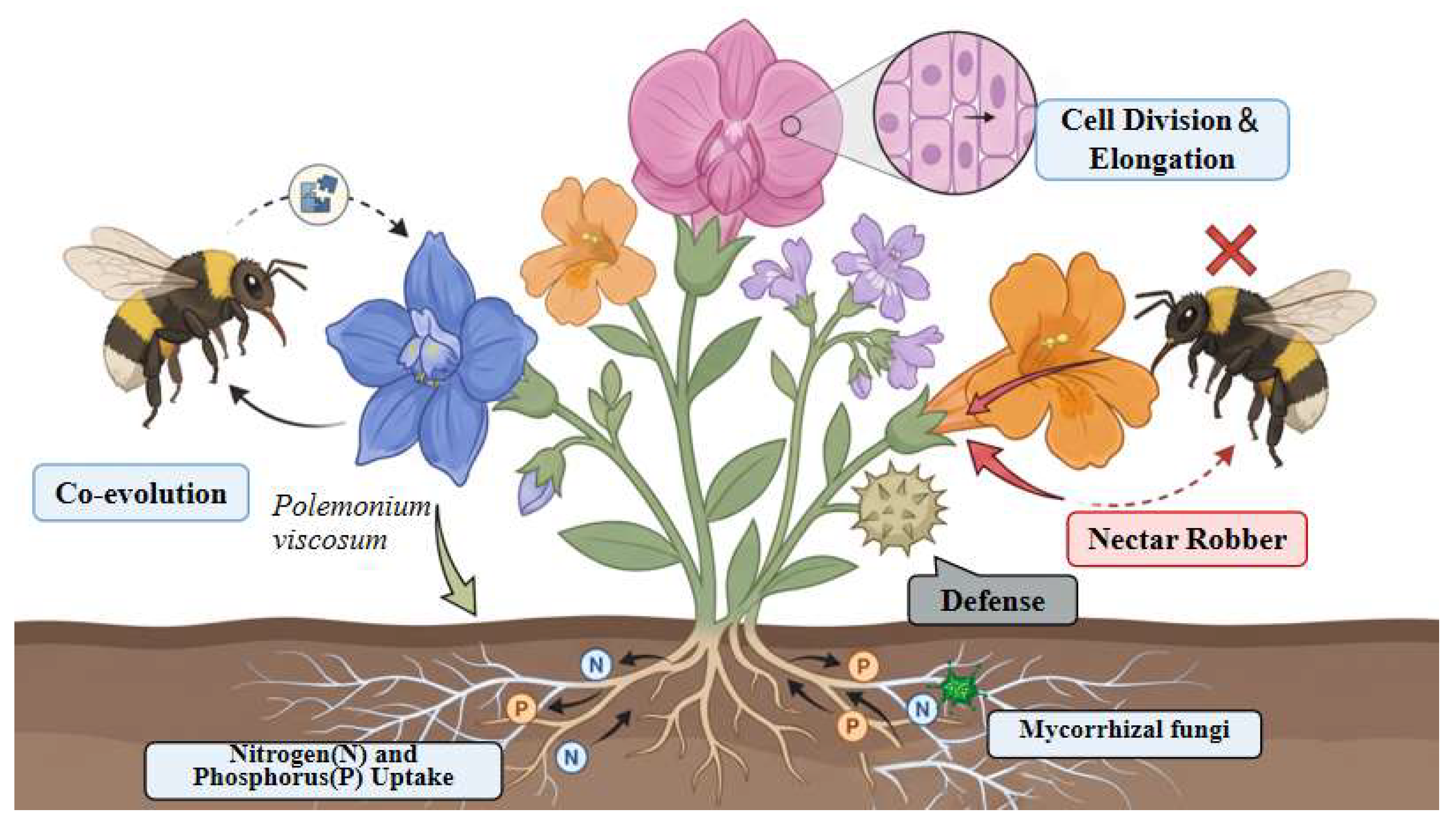
Since the Darwinian era, the academic community has generally recognized the coevolution in morphological characteristics between plants and pollinators, which has jointly shaped highly specialized pollination systems. In this system, the distinct morphological characteristics and foraging habits of pollinators have become important selective pressures on the diversification of floral traits [82]. In addition, other biotic factors can also affect changes in plant floral morphotypes. For example, the negative impacts of nectar robbers on some plants drive them to evolve defensive structures. Nectar robbing refers to the behavior where flower visitors access nectar by drilling holes directly in the corolla instead of entering through its normal opening. This phenomenon is relatively common among bees, particularly bumblebees and carpenter bees, which exhibit this behavior more frequently. Conversely, if nectar robbers exert positive impacts on plants, they can also drive the evolution of floral traits toward adaptive directions [83]. Studies on sticky polemonium (Polemonium viscosum) have shown that its pollinator, the bumblebee, prefers to visit flowers with long, outwardly spreading corolla tubes, and this selective preference has ultimately shaped the formation of funnel-shaped corollas [84]. Although the traditional view holds that different pollinators are the main driving force behind the diversification of floral morphotypes [85], researchers have found in studies on plants of the Melastomataceae that significant differences in floral morphotypes have emerged despite a single pollinator. This indicates that the relationship between pollinators and floral morphotypes is an indirect, competition-mediated association [86]. Most plant roots form symbioses with mycorrhizal fungi, which can help plants absorb nutrient elements such as phosphorus and nitrogen from the soil, may promote petal cell division and elongation, and potentially result in floral morphotypes with larger petals and more stable petal numbers [87]. Thus, symbiotic microorganisms are also “invisible regulators” of floral morphotype construction (Figure 4).
Figure 4.
Effects of biotic factors on floral morphotypes of ornamental plants.
Nevertheless, the roles of other biotic factors, including herbivores and pathogens, remain poorly understood in relation to floral morphotype formation. In particular, direct evidence linking these interactions to floral developmental pathways and specific morphological changes is scarce. Thus, the current evidence does not yet support a comprehensive understanding of biotic regulation of floral morphotypes, highlighting the need for further studies integrating ecological interactions with physiological, molecular, and developmental mechanisms.
5. Key Technologies and Methods in the Study of Floral Morphotypes of Ornamental Plants
5.1. Breeding Technologies for Floral Morphotype Improvement
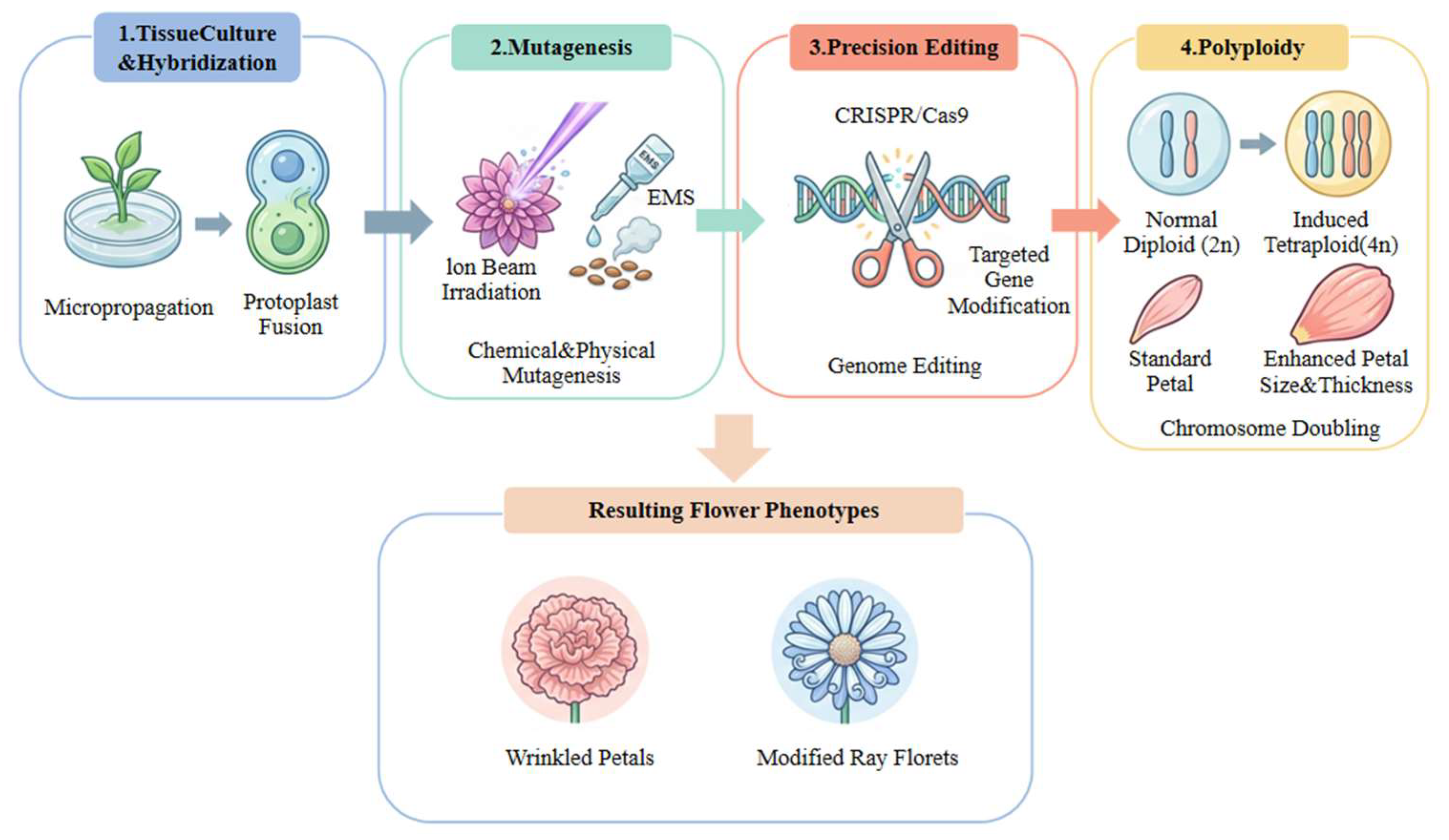
Recent advances in floral morphotype improvement of ornamental plants have been increasingly facilitated by modern biotechnology, which provides diverse strategies for generating, selecting, and precisely modifying genetic variation (Figure 5). Tissue culture-based approaches serve as fundamental platforms for many breeding technologies by enabling plant regeneration, genetic manipulation, and the recovery of novel variants. For example, somatic hybridization between chrysanthemum and Artemisia species has successfully generated intergeneric germplasm through protoplast fusion, producing floral traits potentially combining characteristics from both parental species [88]. Similarly, embryo rescue technology overcomes reproductive barriers in rose breeding, effectively shortening breeding cycles and accelerating the development of cultivars with diverse floral morphotypes [89]. Generating genetic variation remains a central strategy for ornamental flower improvement. Mutation breeding exploits artificially induced genetic changes to create novel floral traits and has contributed substantially to the development of new floral morphotypes [90]. Ion beam irradiation in chrysanthemum can modify both flower pigmentation and ray floret morphology, expanding the diversity of floral morphotypes [91]. EMS (ethyl methanesulfonate), characterized by high efficiency and relatively low cost, has been widely applied in ornamental plant breeding [92,93]. In snapdragon, EMS-induced mutants with altered plant architecture and leaf morphology demonstrated its potential for generating developmental variation [94]. Furthermore, integration of EMS mutagenesis with TILLING reverse genetics enables early identification of target mutations before visible phenotypic changes occur, providing an efficient approach for perennial ornamental species with long generation cycles [95].
Figure 5.
Main technologies and methods for floral morphotype establishment in ornamental plants.
Compared with conventional mutagenesis, genome-editing technologies provide a more precise approach for modifying floral traits. The CRISPR/Cas9 system has emerged as a powerful tool for targeted genetic improvement in ornamental plants [96]. In petunia, multiplex CRISPR/Cas9 editing of FT/TFL1 family genes generated compact plant architecture and altered inflorescence development, traits that may indirectly influence ornamental value by modifying plant form and flowering display rather than directly changing floral morphotypes [97]. However, the application of gene editing in ornamental crops remains limited due to challenges associated with transformation efficiency, regeneration capacity, genome availability, and regulatory considerations [98]. Thus, conventional mutagenesis breeding, as a low-cost and efficient method for generating genetic variation, remains crucial for ornamental plant breeding.
Artificial polyploid induction represents another effective strategy for modifying floral morphology by altering cellular and organ-level characteristics. Chromosome doubling generally increases cell size, which can subsequently influence floral organ dimensions and texture. For example, tetraploid lavender (Lavandula × intermedia) exhibits enlarged petals compared with diploid plants [99], while tetraploid rose mallow (Hibiscus moscheutos) develops thicker and more textured petals with enhanced ornamental value [100]. Future floral morphotype breeding will likely rely on the integration of complementary approaches, combining the broad variation generated by mutagenesis and polyploidization with the precision of genome editing, thereby establishing multilayered breeding strategies tailored to specific ornamental objectives.
5.2. Omics-Based Approaches to Floral Morphotype Research
Beyond approaches aimed at generating or modifying floral traits, genomic and transcriptomic technologies have become increasingly important for dissecting the genetic and molecular basis of floral morphotype formation. Genome-wide association studies (GWASs) can link natural phenotypic variation with genomic loci and facilitate the identification of candidate genes associated with floral traits such as petal number, flower size, and inflorescence architecture in ornamental plants [101]. RNA sequencing (RNA-seq) and transcriptomic analyses provide complementary information by identifying differentially expressed genes and co-expressed regulatory modules associated with distinct floral morphotypes and developmental stages [102]. In addition, DNA affinity purification sequencing (DAP-seq) enables genome-wide identification of transcription factor binding sites, helping to establish direct regulatory relationships between key floral regulators and their downstream targets [103]. Together, these approaches connect phenotypic variation with genomic loci, gene expression patterns, regulatory networks, and direct transcription factor–target interactions, thereby providing a mechanistic framework for understanding floral morphotype formation and guiding subsequent functional validation and molecular breeding.
6. Outlook
Floral morphology represents a key component of ornamental plant diversity, shaped by the interaction of developmental regulation, environmental responses, and artificial selection. Although substantial progress has been made in identifying genes and regulatory networks involved in floral development, several fundamental questions remain unresolved.
The genetic mechanisms underlying complex floral traits, particularly double-flower formation and other highly diversified morphotypes, remain incompletely understood in many ornamental species. Functional validation of candidate genes is still largely limited to a few model plants or well-established ornamental crops, while many non-model species lack efficient transformation systems and genetic resources. Expanding functional genomics approaches in diverse ornamental plants will be essential to uncover species-specific regulatory mechanisms.
The relationship between genotype and environmental responses requires further investigation. Environmental factors such as temperature, light, and water availability can modify floral traits, but how multiple environmental signals interact with developmental networks to determine floral morphology and trait stability remains unclear. Elucidating genotype–environment interactions will be critical for predicting floral performance under variable cultivation conditions.
In addition, the role of biotic interactions in floral morphotype diversification remains poorly understood. Research has focused mainly on pollinator-mediated selection, which can shape floral symmetry, color, and architecture. Other factors, including herbivory and microbial interactions, may also affect floral development through resource allocation, defense responses, and hormonal regulation, but their links to floral developmental regulators remain largely unexplored. Integrating ecological studies with functional genomics will help clarify how biotic interactions shape ornamental floral traits.
Although genome editing, induced mutagenesis, and polyploidization provide promising strategies for modifying ornamental traits, their practical application remains constrained by transformation efficiency, genetic complexity, off-target effects, and the limited availability of validated target genes in many ornamental species. Future integration of multi-omics analysis, precise genome engineering, and improved breeding platforms will facilitate the development of stable and diverse floral morphotypes.
Author Contributions
X.H. (Xing He): writing—original draft, conceptualization, data curation. Q.G.: formal analysis, writing—review and editing, supervision. Z.L.: software, investigation. X.H. (Xiaogai Hou): writing—review and editing, supervision, project administration, funding acquisition. All authors have read and agreed to the published version of the manuscript.
Funding
This research was funded by the National Natural Science Foundation of China [Grant No. U23A20211, 32401649].
Data Availability Statement
No new data were created or analyzed in this study. Data sharing is not applicable to this article.
Acknowledgments
During the preparation of this manuscript, the first author used ChatGPT (GPT-5) to generate ideas for some of the images.Specifically, ChatGPT was used to generate initial ideas for the organization of concepts and relationships to be illustrated. The final figures were independently designed, edited, and verified by the authors based on the scientific content and literature cited in the manuscript. The authors have reviewed and revised the output and assume full responsibility for the content of this publication.
Conflicts of Interest
The authors declare no conflicts of interest.
References
- Ching, F.D.K.; Jarzombek, M.M.; Prakash, V. (Eds.) A Global History of Architecture; Wiley: Hoboken, NJ, USA, 2017; p. 864. [Google Scholar]
- Herazo, L.C.S.; Aguilar-Cortés, G.; Martínez-Castellanos, G.; Month, A.E.A.; Martínez-Reséndiz, G. Ornamental plants in constructed wetlands: A review. Hydrobiologia 2026, 853, 3901–3919. [Google Scholar] [CrossRef] [Scilit]
- Orlóci, L.; Fekete, A. Ornamental Plants and Urban Gardening. Plants 2023, 12, 4096. [Google Scholar] [CrossRef] [Scilit] [PubMed]
- Sandoval-Herazo, L.C.; Alvarado-Lassman, A.A.; Marín-Muñiz, J.L.; Méndez-Contreras, J.M.; Zamora-Castro, S.A. Effects of the Use of Ornamental Plants and Different Substrates in the Removal of Wastewater Pollutants through Microcosms of Constructed Wetlands. Sustainability 2018, 10, 1594. [Google Scholar] [CrossRef] [Scilit]
- Wang, H.Z.; Zhang, R.; Cheng, J.; Duan, X.S.; Zhao, H.Q.; Shan, H.Y.; Kong, H.Z. Diversity of flowers in basic structure and its underlying molecular mechanisms. Sci. China Life Sci. 2019, 49, 292–300. [Google Scholar] [CrossRef] [Scilit]
- Cruz-Valderrama, J.E.; Bernal-Gallardo, J.J.; Herrera-Ubaldo, H.; de Folter, S. Building a Flower: The Influence of Cell Wall Composition on Flower Development and Reproduction. Genes 2021, 12, 978. [Google Scholar] [CrossRef] [Scilit] [PubMed]
- Meng, G.; Zhu, G.R.; Fang, W.C.; Chen, C.W.; Wang, X.W.; Wang, L.R.; Cao, K. Genome-wide Association Study Identified SNP Alleles and Candidate Genes for Flower Shape Trait in Peach (Prunus persica). J. Plant Genet. Resour. 2022, 23, 505–517. [Google Scholar] [CrossRef]
- Ji, S.Q.; Wang, L.R.; Li, Y.; Zhu, G.R.; Cao, K.; Fang, W.C.; Chen, C.W.; Wang, X.W.; Zhang, Q.; Wu, J.L. Identification of peach flower genotype (Non-showy/Showy), development of flower-type related molecular markers. J. Fruit Sci. 2023, 40, 422–431. [Google Scholar] [CrossRef]
- Elomaa, P.; Zhao, Y.; Zhang, T. Flower heads in Asteraceae-recruitment of conserved developmental regulators to control the flower-like inflorescence architecture. Hortic. Res. 2018, 5, 491–500. [Google Scholar] [CrossRef] [Scilit] [PubMed]
- Qiu, T.; Li, S.; Zhao, K.; Jia, D.; Chen, F.; Ding, L. Morphological Characteristics and Expression Patterns of CmCYC2c of Different Flower Shapes in Chrysanthemum morifolium. Plants 2023, 12, 3728. [Google Scholar] [CrossRef] [Scilit] [PubMed]
- Song, X.; Xu, Y.; Gao, K.; Fan, G.; Zhang, F.; Deng, C.; Dai, S.; Huang, H.; Xin, H.; Li, Y. High-density genetic map construction and identification of loci controlling flower-type traits in Chrysanthemum (Chrysanthemum × morifolium Ramat.). Hortic. Res. 2020, 7, 108. [Google Scholar] [CrossRef] [Scilit] [PubMed]
- Song, Y.; Zhu, H.; Ao, D.; Liu, A.; Lu, D.; He, F. Mechanism of Transcription Factor APETALA3-3 Regulating Floral Morphogenesis in Dendrobium officinale Based on DAP-Seq and RNA-seq Analysis. Chin. J. Trop. Crops 2025, 46, 1052–1063. [Google Scholar] [CrossRef]
- Wang, R.H.; Ding, J.L. Flower form and flower color of tree peony (Paeonia suffruticosa). China Flowers Hortic. 2017, 2, 22–23. [Google Scholar] [CrossRef]
- Ji, H.L.; Wang, X.H.; Wang, R.H.; Ma, H.P.; Wang, E.Q. Research Progress of Peony Flower Type. Spec. Wild Econ. Anim. Plant Res. 2022, 44, 164–167. [Google Scholar] [CrossRef]
- Zhao, D.; An, H.; Tao, J. Unlocking the molecular secrets of Paeonia plants: Advances in key gene mining and molecular breeding technology. Hortic. Res. 2025, 12, uhaf090. [Google Scholar] [CrossRef] [Scilit] [PubMed]
- Wang, S.; Gao, J.; Xue, J.; Xue, Y.; Li, D.; Guan, Y.; Zhang, X. De novo sequencing of tree peony (Paeonia suffruticosa) transcriptome to identify critical genes involved in flowering and floral organ development. BMC Genom. 2019, 20, 572. [Google Scholar] [CrossRef] [Scilit] [PubMed]
- Chen, W.; Zhou, Y.Y.; Luo, P.; Cui, Y. Molecular Mechanism of Petal Doubling of Flower in Angiosperm. Bull. Bot. 2024, 59, 257–277. [Google Scholar] [CrossRef]
- Yuan, J.; Jiang, S.; Jian, J.; Liu, M.; Yue, Z.; Xu, J.; Li, J.; Xu, C.; Lin, L.; Jing, Y.; et al. Genomic basis of the giga-chromosomes and giga-genome of tree peony Paeonia ostii. Nat. Commun. 2022, 13, 7328. [Google Scholar] [CrossRef] [Scilit] [PubMed]
- Messenguy, F.; Dubois, E. Role of MADS box proteins and their cofactors in combinatorial control of gene expression and cell development. Gene 2003, 316, 1–21. [Google Scholar] [CrossRef] [Scilit] [PubMed]
- Qiu, Y.; Li, Z.; Walther, D.; Köhler, C. Updated Phylogeny and Protein Structure Predictions Revise the Hypothesis on the Origin of MADS-box Transcription Factors in Land Plants. Mol. Biol. Evol. 2023, 40, 194. [Google Scholar] [CrossRef] [Scilit] [PubMed]
- Qiu, Y.; Köhler, C. Endosperm Evolution by Duplicated and Neofunctionalized Type I MADS-Box Transcription Factors. Mol. Biol. Evol. 2022, 39, 9. [Google Scholar] [CrossRef] [Scilit] [PubMed]
- Adhikari, P.B.; Kasahara, R.D. An Overview on MADS Box Members in Plants: A Meta-Review. Int. J. Mol. Sci. 2024, 25, 8233. [Google Scholar] [CrossRef] [Scilit] [PubMed]
- Heijmans, K.; Morel, P.; Vandenbussche, M. MADS-box Genes and Floral Development: The Dark Side. J. Exp. Bot. 2012, 63, 5397–5404. [Google Scholar] [CrossRef] [Scilit] [PubMed]
- Bowman, J.L.; Meyerowitz, E.M. Genetic control of pattern formation during flower development in Arabidopsis. Symp. Soc. Exp. Biol. 1991, 45, 89–115. [Google Scholar] [PubMed]
- Coen, E.S.; Meyerowitz, E.M. The war of the whorls: Genetic interactions controlling flower development. Nature 1991, 353, 31–37. [Google Scholar] [CrossRef] [Scilit] [PubMed]
- Colombo, L.; Franken, J.; Koetje, E.; van Went, J.; Dons, H.J.M.; Angenent, G.C.; van Tunen, A.J. The petunia MADS box gene FBP11 determines ovule identity. Plant Cell 1995, 7, 1859–1868. [Google Scholar] [CrossRef] [Scilit] [PubMed]
- Wang, Q.; Lyu, T.; Lyu, Y. Exploring the molecular mechanism of sepal formation in the decorative flowers of hydrangea macrophylla ′Endless Summer′ based on the ABCDE model. Int. J. Mol. Sci. 2022, 23, 14112. [Google Scholar] [CrossRef] [Scilit] [PubMed]
- Theissen, G.; Melzer, R.; Rumpler, F. MADS-domain transcription factors and the floral quartet model of flower development: Linking plant development and evolution. Development 2016, 143, 3259–3271. [Google Scholar] [CrossRef] [Scilit] [PubMed]
- van Tunen, A.J.; Eikelboom, W.; Angenent, G.C. Floral organogenesis in Tulipa. Flower. Newsl. 1993, 16, 33–38. [Google Scholar]
- Xue, L.; Dai, J.; Fu, R.; Wu, N.; Yu, J.; Dong, J.; Yang, T.; Fan, J. Functional Studies on the LiAG1 Gene of Lilium ‘Ice Pink Queen’ in Flower Development. Plants 2025, 14, 323. [Google Scholar] [CrossRef] [Scilit] [PubMed]
- Soltis, D.E.; Chanderbali, A.S.; Kim, S.; Buzgo, M.; Soltis, P.S. The ABC Model and its Applicability to Basal Angiosperms. Ann. Bot. 2007, 100, 155–163. [Google Scholar] [CrossRef] [Scilit] [PubMed]
- Wu, Q.; Wu, Y.; Li, R.; Cao, H.; Li, Z.; Li, Q.; Zhou, L. Research Progress on the Regulation of Plant Floral Organ Development by the MADS-box Gene Family. Int. J. Mol. Sci. 2025, 26, 8946. [Google Scholar] [CrossRef] [Scilit] [PubMed]
- François, L.; Verdenaud, M.; Fu, X.; Ruleman, D.; Dubois, A.; Vandenbussche, M.; Bendahmane, A.; Raymond, O.; Just, J.; Bendahmane, M. A miR172 target-deficient AP2-like gene correlates with the double flower phenotype in roses. Sci. Rep. 2018, 8, 12912. [Google Scholar] [CrossRef] [Scilit] [PubMed]
- Sui, M.; Yan, H.; Wang, Z.; Qiu, X.; Jian, H.; Wang, Q.; Chen, M.; Zhang, H.; Tang, K. Identification of microRNA associated with flower organ development in Rosa chinensis ‘Viridiflora’. Plant Sci. J. 2019, 37, 37–46. [Google Scholar] [CrossRef]
- Liu, W.; Zheng, T.; Qiu, L.; Guo, X.; Li, P.; Yong, X.; Li, L.; Ahmad, S.; Wang, J.; Cheng, T.; et al. A 49-bp deletion of PmAP2L results in a double flower phenotype in Prunus mum. Hortic. Res. 2024, 11, 17. [Google Scholar] [CrossRef] [Scilit] [PubMed]
- Han, Y.; Tang, A.; Yu, J.; Cheng, T.; Wang, J.; Yang, W.; Pan, H.; Zhang, Q. RcAP1, a Homolog of APETALA1, is Associated with Flower Bud Differentiation and Floral Organ Morphogenesis in Rosa chinensis. Int. J. Mol. Sci. 2019, 20, 3557. [Google Scholar] [CrossRef] [Scilit] [PubMed]
- Sun, Y.; Fan, Z.; Li, X.; Li, J.; Yin, H. The APETALA1 and FRUITFUL homologs in Camellia japonica and their roles in double flower domestication. Mol. Breed. 2014, 33, 821–834. [Google Scholar] [CrossRef] [Scilit]
- Chen, M.-K.; Lin, I.C.; Yang, C.H. Functional analysis of three lily (Lilium longiflorum) APETALA1-like MADS box genes in regulating floral transition and formation. Plant Cell Physiol. 2008, 49, 704–717. [Google Scholar] [CrossRef] [Scilit] [PubMed]
- Liu, W.; Shen, X.; Liang, H.; Wang, Y.; He, Z.; Zhang, D.; Chen, F. Isolation and Functional Analysis of PISTILLATA Homolog From Magnolia wufengensis. Front. Plant Sci. 2018, 9, 1743. [Google Scholar] [CrossRef] [Scilit] [PubMed]
- Hsu, H.-F.; Chen, W.-H.; Shen, Y.-H.; Hsu, W.-H.; Mao, W.-T.; Yang, C.-H. Multifunctional evolution of B and AGL6 MADS box genes in orchids. Nat. Commun. 2021, 12, 902. [Google Scholar] [CrossRef] [Scilit] [PubMed]
- Ma, N.; Chen, W.; Fan, T.; Tian, Y.; Zhang, S.; Zeng, D.; Li, Y. Low temperature-induced DNA hypermethylation attenuates expression of RhAG, an AGAMOUS homolog, and increases petal number in rose (Rosa hybrida). BMC Plant Biol. 2015, 15, 237. [Google Scholar] [CrossRef] [Scilit] [PubMed]
- Akita, Y.; Nakada, M.; Kanno, A. Effect of the expression level of an AGAMOUS-like gene on the petaloidy of stamens in the double-flowered lily, ‘Elodie’. Sci. Hortic. 2011, 128, 48–53. [Google Scholar] [CrossRef] [Scilit]
- Tian, Y.; Fan, T.; Zhang, G.; Li, Y. Expression and Analysis of Key Genes of Excessive Double Flowers in Rose Caused by Low Temperature. Chin. J. Trop. Crops 2016, 37, 1147–1154. [Google Scholar] [CrossRef]
- Yuan, X.; Xu, S.; Zhang, Y.; Liang, F.; Jiang, S.; Niu, S.; Cui, B. Cloning of the floral organ identity gene PhSTK from Phalaenopsis and its expression analysis in floral organ mutants. Plant Physiol. J. 2022, 58, 1565–1574. [Google Scholar] [CrossRef]
- Zhou, Y.; Xu, Z.; Yong, X.; Ahmad, S.; Yang, W.; Cheng, T.; Wang, J.; Zhang, Q. SEP-class genes in Prunus mume and their likely role in floral organ development. BMC Plant Biol. 2017, 17, 10. [Google Scholar] [CrossRef] [Scilit] [PubMed]
- Dubois, A.; Carrere, S.; Raymond, O.; Pouvreau, B.; Cottret, L.; Roccia, A.; Onesto, J.-P.; Sakr, S.; Atanassova, R.; Baudino, S.; et al. Transcriptome database resource and gene expression atlas for the rose. BMC Genom. 2012, 13, 638. [Google Scholar] [CrossRef] [Scilit] [PubMed]
- Gion, K.; Suzuri, R.; Ishiguro, K.; Katsumoto, Y.; Tsuda, S.; Tanaka, Y.; Mouradova, E.; Brugliera, F.; Chandler, S. Genetic engineering of floricultural crops: Modification of flower colour, flowering and shape. Acta Hortic. 2012, 953, 209–216. [Google Scholar] [CrossRef] [Scilit]
- Zhang, C.; Wei, L.; Yu, X.; Li, H.; Wang, W.; Wu, S.; Duan, F.; Bao, M.; Chan, Z.; He, Y. Functional conservation and divergence of SEPALLATA-like genes in the development of two-type florets in marigold. Plant Sci. 2021, 309, 110938. [Google Scholar] [CrossRef] [Scilit] [PubMed]
- Li, R.; Zuo, D.; Wang, D.; Song, C.; Zhou, Y.; Li, R.; Lei, Y.; Guo, Q.; Guo, L.; Guo, D.; et al. Global Landscape of Alternative Splicing in Tree Peony Floral Organs and the Mechanism Underlying PsuSEP3L-and PsuSEP3S-Mediated Flower Type Diversification. Plant Cell Environ. 2026, 49, 447–449. [Google Scholar] [CrossRef] [Scilit] [PubMed]
- Dreni, L.; Zhang, D. Flower development: The evolutionary history and functions of the AGL6 subfamily MADS-box genes. J. Exp. Bot. 2016, 67, 1625–1638. [Google Scholar] [CrossRef] [Scilit] [PubMed]
- Jing, W.; Zhang, S.; Zhao, Q.; Liu, Y.; Zhao, L.; Gao, J.; Ma, N.; Zhou, X.; Li, Y. The MADS-box gene RhAGL6 plays a master role in regulating the receptacle malformation in rose at low temperature. Hortic. Plant J. 2024, 10, 1214–1229. [Google Scholar] [CrossRef] [Scilit]
- Lin, Y.-F.; Chen, Y.-Y.; Hsiao, Y.-Y.; Shen, C.-Y.; Hsu, J.-L.; Yeh, C.-M.; Mitsuda, N.; Ohme-Takagi, M.; Liu, Z.-J.; Tsai, W.-C. Genome-wide identification and characterization of TCP genes involved in ovule development of Phalaenopsis equestris. J. Exp. Biol. 2016, 67, 5051–5066. [Google Scholar] [CrossRef] [Scilit] [PubMed]
- Corley, S.B.; Carpenter, R.; Copsey, L.; Coen, E. Floral asymmetry involves an interplay between TCP and MYB transcription factors in Antirrhinum. Proc. Natl. Acad. Sci. USA 2005, 102, 5068–5073. [Google Scholar] [CrossRef] [Scilit] [PubMed]
- Luo, D.; Carpenter, R.; Vincent, C.; Copsey, L.; Coen, E. Origin of floral asymmetry in Antirrhinum. Nature 1996, 383, 794–799. [Google Scholar] [CrossRef] [Scilit] [PubMed]
- Cubas, P.; Coen, E.; Zapater, J.M. Ancient asymmetries in the evolution of flowers. Curr. Biol. 2001, 11, 1050–1052. [Google Scholar] [CrossRef] [Scilit] [PubMed]
- Broholm, S.K.; Tähtiharju, S.; Laitinen, R.A.E.; Albert, V.A.; Teeri, T.H.; Elomaa, P. A TCP domain transcription factor controls flower type specification along the radial axis of the Gerbera (Asteraceae) inflorescence. Proc. Natl. Acad. Sci. USA 2008, 105, 9117–9122. [Google Scholar] [CrossRef] [Scilit] [PubMed]
- Shen, C.-Z.; Chen, J.; Zhang, C.-J.; Rao, G.-Y.; Guo, Y.-P. Dysfunction of CYC2g is responsible for the evolutionary shift from radiate to disciform flowerheads in the Chrysanthemum group (Asteraceae: Anthemideae). Plant J. 2021, 106, 1024–1038. [Google Scholar] [CrossRef] [Scilit] [PubMed]
- Busch, A.; Zachgo, S. Control of corolla monosymmetry in the Brassicaceae Iberis amara. Proc. Natl. Acad. Sci. USA 2007, 104, 16714–16719. [Google Scholar] [CrossRef] [Scilit] [PubMed]
- Huang, Y.; Zhao, X.; Zheng, Q.; He, X.; Zhang, M.-M.; Ke, S.; Li, Y.; Zhang, C.; Ahmad, S.; Lan, S.; et al. Genome-Wide Identification of TCP Gene Family in Dendrobium and Their Expression Patterns in Dendrobium chrysotoxum. Int. J. Mol. Sci. 2023, 24, 14320. [Google Scholar] [CrossRef] [Scilit] [PubMed]
- Tanaka, Y.; Yamamura, T.; Oshima, Y.; Mitsuda, N.; Koyama, T.; Ohme-Takagi, M.; Terakawa, T. Creating ruffled flower petals in Cyclamen persicum by expression of the chimeric cyclamen TCP repressor. Plant Biotechnol. 2011, 28, 141–147. [Google Scholar] [CrossRef] [Scilit]
- Narumi, T.; Aida, R.; Koyama, T.; Yamaguchi, H.; Sasaki, K.; Shikata, M.; Nakayama, M.; Ohme-Takagi, M.; Ohtsubo, N. Arabidopsis chimeric TCP3 repressor produces novel floral traits in Torenia fournieri and Chrysanthemum morifolium. Plant Biotechnol. 2011, 28, 131–140. [Google Scholar] [CrossRef] [Scilit]
- Gattolin, S.; Cirilli, M.; Pacheco, I.; Ciacciulli, A.; Linge, C.D.S.; Mauroux, J.; Lambert, P.; Cammarata, E.; Bassi, D.; Pascal, T.; et al. Deletion of the miR172 target site in a TOE-type gene is a strong candidate variant for dominant double-flower trait in Rosaceae. Plant J. 2018, 96, 358–371. [Google Scholar] [CrossRef] [Scilit] [PubMed]
- Wang, Y.; Peng, L.; Chen, Q.; Xia, M.; Ning, A.; Dong, B.; Zhong, S.; Deng, J.; Zhao, H. A GATA transcription factor OfGATA9 positively regulates flower size of sweet osmanthus. BMC Genom. 2025, 26, 859. [Google Scholar] [CrossRef] [Scilit] [PubMed]
- Chuang, C.-F.; Running, M.P.; Williams, R.W.; Meyerowitz, E.M. The PERIANTHIA gene encodes a bZIP protein involved in the determination of floral organ number in Arabidopsis thaliana. Genes Dev. 1999, 13, 334–344. [Google Scholar] [CrossRef] [Scilit] [PubMed]
- Li, S.; Lauri, A.; Ziemann, M.; Busch, A.; Bhave, M.; Zachgo, S. Nuclear activity of ROXY1, a glutaredoxin interacting with TGA factors, is required for petal development in Arabidopsis thaliana. Plant Cell 2009, 21, 429–441. [Google Scholar] [CrossRef] [Scilit] [PubMed]
- Yang, T.; Wang, Y.; Li, Y.; Liang, S.; Yang, Y.; Huang, Z.; Li, Y.; Gao, J.; Ma, N.; Zhou, X. The transcription factor RhMYB17 regulates the homeotic transformation of floral organs in rose (Rosa hybrida) under cold stress. J. Exp. Bot. 2024, 75, 2965–2981. [Google Scholar] [CrossRef] [Scilit] [PubMed]
- Chen, W.; Ding, Z.; Shen, Y.; Zhou, Y.; Luo, P.; Cui, Y. Dioxygenase RhDAO1 regulates floral organ identity by controlling auxin homeostasis in miniature rose (Rosa hybrida). Hortic. Plant J. 2026, 12, 1185–1203. [Google Scholar] [CrossRef] [Scilit]
- Guan, Y.; Xue, J.; Xue, Y.; Yang, R.; Wang, S.; Zhang, X. Effect of exogenous GA3 on flowering quality, endogenous hormones, and hormone- and flowering-associated gene expression in forcing-cultured tree peony (Paeonia suffruticosa). J. Integr. Agric. 2019, 18, 1295–1311. [Google Scholar] [CrossRef] [Scilit]
- Wang, J.; Wang, H.; Ding, L.; Song, A.; Shen, F.; Jiang, J.; Chen, S.; Chen, F. Transcriptomic and hormone analyses reveal mechanisms underlying petal elongation in Chrysanthemum morifolium ‘Jinba’. Plant Mol. Biol. 2017, 93, 593–606. [Google Scholar] [CrossRef] [Scilit] [PubMed]
- Ramírez-Mosqueda, M.A.; Iglesias-Andreu, L.G.; Bautista-Aguilar, J.R. The Effect of Light Quality on Growth and Development of In Vitro Plantlet of Stevia rebaudiana Bertoni. Sugar Tech 2016, 19, 331–336. [Google Scholar] [CrossRef] [Scilit]
- Zhang, L.; Ferguson, L.; Whiting, M.D. Temperature effects on pistil viability and fruit set in sweet cherry. Sci. Hortic. 2018, 241, 8–17. [Google Scholar] [CrossRef] [Scilit]
- Siregar, A.Y.; Salamah, A. Variation of leaf morphology of hibiscus rosa-sinensis l. under various light intensities at Universitas Indonesia campus area and Citayam, Depok. IOP Conf. Ser. Earth Environ. Sci. 2020, 524, 12002. [Google Scholar] [CrossRef] [Scilit]
- Zhu, W.Y.; Song, H.; Zhao, S.W.; Wang, L.Y. Effect of Shading Treatment on Photosynthetic Characteristics and Flower Quality of Paeonia suffruticosa. Acta Bot. Boreali-Occident. Sin. 2012, 32, 731–738. [Google Scholar]
- Lu, J.; Sun, J.; Jiang, A.; Bai, M.; Fan, C.; Liu, J.; Ning, G.; Wang, C. Alternate expression of CONSTANS-LIKE 4 in short days and CONSTANS in long days facilitates day-neutral response in Rosa chinensis. J. Exp. Bot. 2020, 71, 4057–4068. [Google Scholar] [CrossRef] [Scilit] [PubMed]
- Jagadish, S.V.K.; Bahuguna, R.N.; Djanaguiraman, M.; Gamuyao, R.; Prasad, P.V.V.; Craufurd, P.Q. Implications of High Temperature and Elevated CO2 on Flowering Time in Plants. Front. Plant Sci. 2016, 7, 913. [Google Scholar] [CrossRef] [Scilit] [PubMed]
- Shin, Y.C.; Yeon, J.Y.; Kim, W.S. Influence of Suboptimal Temperature on Flower Quality and Floral Organ Development in Spray-Type Cut Rose ‘Pink Shine’. Horticulturae 2023, 9, 816. [Google Scholar] [CrossRef] [Scilit]
- Li, G.; Kuijer, H.N.J.; Yang, X.; Liu, H.; Shen, C.; Shi, J.; Betts, N.; Tucker, M.R.; Liang, W.; Waugh, R.; et al. MADS1 maintains barley spike morphology at high ambient temperatures. Nat. Plants 2021, 7, 1093–1107. [Google Scholar] [CrossRef] [Scilit] [PubMed]
- Sun, J.-F.; Gong, Y.-B.; Renner, S.S.; Huang, S.-Q. Multifunctional bracts in the dove tree Davidia involucrata (Nyssaceae: Cornales): Rain protection and pollinator attraction. Am. Nat. 2008, 171, 119–124. [Google Scholar] [CrossRef] [Scilit] [PubMed]
- Mao, Y.Y.; Huang, S.Q. Pollen resistance to water in 80 angiosperm species: Flower structures protect rain-susceptible pollen. New Phytol. 2009, 183, 892–899. [Google Scholar] [CrossRef] [Scilit] [PubMed]
- Fantinato, E.; Giovanetti, M.; Del Vecchio, S.; Buffa, G. Altitudinal patterns of floral morphologies in dry calcareous grasslands. Plant Sociol. 2016, 53, 83–90. [Google Scholar] [CrossRef] [Scilit] [PubMed]
- Lázaro, A.; Totland, Ø. The influence of floral symmetry, dependence on pollinators and pollination generalization on flower size variation. Ann. Bot. 2014, 114, 157–165. [Google Scholar] [CrossRef] [Scilit] [PubMed]
- Huang, S.Q. Most effective pollinator principle of floral evolution: Evidence and query. Chin. Bull. Life Sci. 2014, 26, 118–124. [Google Scholar] [CrossRef]
- Zhang, Y.W.; Wang, Y.; Guo, Y.H. The Effects of Nectar Robbing on Plant Reproduction and Evolution. Chin. J. Plant Ecol. 2006, 30, 695–702. [Google Scholar] [CrossRef] [Scilit][Green Version]
- Galen, C.; Cuba, J. Down the tube: Pollinators, predators, and the evolution of flower shape in the alpine skypilot, Polemonium viscosum. Evolution 2001, 55, 1963–1971. [Google Scholar] [CrossRef] [Scilit] [PubMed]
- Armbruster, W.S. Floral specialization and angiosperm diversity: Phenotypic divergence, fitness trade-offs and realized pollination accuracy. AoB Plants 2014, 6, plu003. [Google Scholar] [CrossRef] [Scilit] [PubMed]
- Kopper, C.; Schönenberger, J.; Dellinger, A.S. High floral disparity without pollinator shifts in buzz-bee-pollinated Melastomataceae. New Phytol. 2024, 242, 2322–2337. [Google Scholar] [CrossRef] [Scilit] [PubMed]
- Hyjazie, B.F.; Sargent, R.D. Manipulation of soil mycorrhizal fungi influences floral traits. New Phytol. 2024, 242, 675–686. [Google Scholar] [CrossRef] [Scilit] [PubMed]
- Furuta, H.; Shinoyama, H.; Nomura, Y.; Maeda, M.; Makara, K. Production of intergeneric somatic hybrids of chrysanthemum [Dendranthema × grandiflorum (Ramat.) Kitamura] and wormwood (Artemisia sieversiana JF Ehrh. ex. Willd) with rust (Puccinia horiana Henning) resistance by electrofusion of protoplasts. Plant Sci. 2004, 166, 695–702. [Google Scholar] [CrossRef] [Scilit]
- Caser, M.; Dente, F.; Ghione, G.G.; Mansuino, A.; Giovannini, A.; Scariot, V. Shortening of selection time of Rosa hybrida by in vitro culture of isolated embryos and immature seeds. Propag. Ornam. Plants 2014, 14, 139–144. [Google Scholar]
- Lenawaty, D.Y.; Sukma, D.; Syukur, M.; Suprapta, D.N.; Nurcholis, W.; Aisyah, S.I. Increasing the diversity of marigold (Tagetes sp.) by acute and chronic chemical induced mutation of EMS (Ethyl Methane Sulfonate). Biodiversitas J. Biol. Divers. 2022, 23, 1399. [Google Scholar] [CrossRef] [Scilit]
- Matsumura, A.; Nomizu, T.; Furutani, N.; Hayashi, K.; Minamiyama, Y.; Hase, Y. Ray florets color and shape mutants induced by 12C5+ ion beam irradiation in chrysanthemum. Sci. Hortic. 2010, 123, 558–561. [Google Scholar] [CrossRef] [Scilit]
- Din, A.; Qadri, Z.A.; Wani, M.A.; Banday, N.; Iqbal, S.; Nazki, I.T.; Wani, F.J. Enhancing Flower Color Diversity in Chrysanthemum cv. “Candid” through Ethyl Methane Sulfonate Mutagenesis: A Promising Approach for Ornamental Crop Improvement. ACS Agric. Sci. Technol. 2023, 3, 1004–1013. [Google Scholar] [CrossRef] [Scilit]
- Kayalvizhi, K.; Kumar, A.R.; Sankari, A.; Anand, M. Induction of Mutation in Flower Crops-A Review. Int. J. Curr. Microbiol. Appl. Sci. 2020, 9, 1320–1329. [Google Scholar] [CrossRef] [Scilit]
- Heffron, L.; Blowers, A.; Korban, S. (237) Chemical Mutagenesis in Snapdragon (Antirrhinum majus). HortScience 2006, 41, 1021A. [Google Scholar] [CrossRef] [Scilit]
- Wilde, D.; Chen, Y.; Jiang, P.; Bhattacharya, A. Targeted mutation breeding of horticultural plants. Emir. J. Food Agric. 2012, 24, 31–41. [Google Scholar] [CrossRef] [Scilit]
- Liu, X.; Wu, S.; Xu, J.; Sui, C.; Wei, J. Application of CRISPR/Cas9 in plant biology. Acta Pharm. Sin. B 2017, 7, 292–302. [Google Scholar] [CrossRef] [Scilit] [PubMed]
- Abdulla, M.F.; Mostafa, K.; Kavas, M. CRISPR/Cas9-mediated mutagenesis of FT/TFL1 in petunia improves plant architecture and early flowering. Plant Mol. Biol. 2024, 114, 13. [Google Scholar] [CrossRef] [Scilit] [PubMed]
- Giovannini, A.; Laura, M.; Nesi, B.; Savona, M.; Cardi, T. Genes and genome editing tools for breeding desirable phenotypes in ornamentals. Plant Cell Rep. 2021, 40, 461–478. [Google Scholar] [CrossRef] [Scilit] [PubMed]
- Urwin, N.A.R. Generation and characterisation of colchicine induced polyploid Lavandula × intermedia. Euphytica 2014, 197, 331–339. [Google Scholar] [CrossRef] [Scilit]
- Li, Z.; Ruter, J.M. Development and Evaluation of Diploid and Polyploid Hibiscus moscheutos. HortScience 2017, 52, 676–681. [Google Scholar] [CrossRef] [Scilit]
- Saint-Oyant, L.H.; Ruttink, T.; Hamama, L.; Kirov, I.; Lakhwani, D.; Zhou, N.N.; Bourke, P.M.; Daccord, N.; Leus, L.; Schulz, D.; et al. A high-quality genome sequence of Rosa chinensis to elucidate ornamental traits. Nat. Plants 2018, 4, 473–484. [Google Scholar] [CrossRef] [Scilit] [PubMed]
- Zhang, X.; Lin, S.; Wu, Q.; Wang, Q.; Shi, C.; Bao, M.; Bendahmane, M.; Fu, X.; Wu, Z. Transcriptome and morphological analyses of double flower formation in Dianthus chinensis. Hortic. Plant J. 2024, 10, 181–193. [Google Scholar] [CrossRef] [Scilit]
- Lin, Z.; Lu, C.; Wang, Y.; Wei, Y.; Gao, J.; Li, J.; Xie, Q.; Jin, J.; Sun, Y.; Zhu, W.; et al. A novel CsbZIP26–CsSEP4–CsSPL18 regulatory module governs gynostemium morphology and floral architecture in Cymbidium sinense. Hortic. Res. 2026, 13, uhaf329. [Google Scholar] [CrossRef] [Scilit] [PubMed]

Disclaimer/Publisher’s Note: The statements, opinions and data contained in all publications are solely those of the individual author(s) and contributor(s) and not of MDPI and/or the editor(s). MDPI and/or the editor(s) disclaim responsibility for any injury to people or property resulting from any ideas, methods, instructions or products referred to in the content. |
© 2026 by the authors. Licensee MDPI, Basel, Switzerland. This article is an open access article distributed under the terms and conditions of the Creative Commons Attribution (CC BY) license.