


Abstract
The ripe fruits of blackcurrant (Ribes nigrum L.) are rich in vitamin C, anthocyanins, and flavonoids. Besides being consumed fresh, the fruits can be processed into fruit juices, jams, wines, and other products, exhibiting considerable economic and nutritional value. Flavonoids are a class of important plant secondary metabolites with antioxidant, anti-inflammatory, and anti-cancer properties. Although previous studies have confirmed the involvement of multiple structural genes and transcription factors in flavonoid biosynthesis, the specific role of the dihydroflavonol 4-reductase (DFR) gene in regulating flavonoid accumulation during fruit development of blackcurrant remains to be clearly elucidated. In this study, we identified an RnDFR gene located in the nucleus and cytoplasm, which has the same expression trend as flavonoid content in fruit development stages. Overexpression of RnDFR improved the flavonoid accumulation and upregulated the expression levels of related structural genes (4CL, CHS, LDOX, ANR, and UFGT) in tomato. Transiently overexpressing RnDFR in blackcurrant fruit also increased the content of flavonoids and DFR enzyme activity, whereas silencing RnDFR resulted in the opposite effect. In addition, overexpression of RnDFR in tomato seedlings improved cold and drought tolerance by increasing flavonoid accumulation, reducing membrane lipid peroxidation damage and enhancing the activities of antioxidant enzymes. This study systematically reveals the key role of RnDFR in flavonoid biosynthesis and the enhancement of cold and drought tolerance, and offers an important theoretical basis for future efforts to optimize flavonoid content in blackcurrant and improve fruit nutritional quality.
1. Introduction
Flavonoids are structurally and characteristically diverse, with a basic skeleton of C6-C3-C6 (two benzene rings linked by three carbon atoms) [1], and are natural substances with variable phenolic structures [2]. To date, more than 9000 flavonoids have been identified [3,4], which are classified into different subclasses based on structural differences: chalcones, aurones, flavanones, flavones, isoflavones, dihydroflavonols, flavonols, leucoanthocyanidins, anthocyanins, and proanthocyanidins [5]. In the biosynthetic pathway, the relevant genes can be divided into two categories: EBGs (including PAL, C4H, 4CL, CHS, CHI, F3H, F3′H, and F3′5′H), and LBGs (including FLS, DFR, LDOX, ANR and UFGT) [6,7]. Among them, the enzyme encoded by the LBG DFR reduces dihydroflavonols to leucoanthocyanidins, providing important precursors for subsequent synthetic steps and playing a key role in flavonoid synthesis. Currently, this gene has been cloned from plants such as peanut (Arachis hypogaea) [8], rose (Rosa rugosa) [9], tobacco (Nicotiana tabacum) [10], tea (Camellia sinensis) [11], eggplant (Solanum melongena) [12], chrysanthemum (Chrysanthemum morifolium) [13], iris (Iris lactea), and pepper (Capsicum annuum L.) [14].
In the regulation of plant flavonoid metabolism, the DFR gene competes with flavonol synthase (FLS) for binding to dihydroflavonols, which inhibits anthocyanin synthesis and drives the directional accumulation of flavan-3-ols and flavonols (e.g., quercetin glycosides) [8]. Functional studies have shown that the expression regulation of the DFR gene exhibits multi-dimensional characteristics. In maize, metallothionein promotes the specific accumulation of apigenin by activating the PAL/CHS/DFR gene cluster. In tobacco transgenic plants with GbDFR6 (from ginkgo), the content of epigallocatechin gallate was upregulated, while the expression of seven flavonoids was downregulated [10]. The homologous DFR gene in tea plants affects their bitterness and astringency as well as antioxidant activity by regulating catechin metabolism [11]. In cranberries and other plants, the coordinated expression of DFR and F3′5′H genes directionally promotes the synthesis of delphinidin glycosides [15]. These findings confirm the core function of DFR as a “molecular switch” in flavonoid metabolism. Further transcriptional regulation studies have revealed that transcription factors such as ANAC078 and MdWRKY11 bind to the promoters of DFR and related genes, mediating flavonoid synthesis to respond to photooxidative stress or regulate color development [16,17]. In Arabidopsis thaliana, the MYB-bHLH-WD40 multi-factor complex regulates DFR expression through a spatiotemporally specific module [18], while multi-omics analysis of kiwifruit (Actinidia chinensis) has shown that AcDFR1/2 act as hub genes in flavonoid synthesis, with their expression positively correlated with the activity of MYB/bHLH family factors, and weighted gene co-expression network analysis (WGCNA) has been used to clarify their regulatory association with flavonol accumulation [19,20]. These findings have constructed a two-layer regulatory system of “enzymatic competition–transcriptional network” for flavonoid metabolism, providing a theoretical basis for crop quality improvement and precise synthesis of natural products.
In various plants, the DFR gene has been confirmed to be a key node in the regulation of cold and drought tolerance. Under drought and cold stress, structural genes related to flavonoid biosynthesis (e.g., PAL, CHS, DFR) and transcription factors (e.g., WRKY, MYB) are significantly upregulated, driving the accumulation of metabolites (such as flavones, flavonols, and anthocyanins), and enhancing plant resistance. Upon exposure to drought stress, the expression levels of genes TaCHS and TaDFR in wheat are dramatically upregulated, resulting in a substantial increase in the levels of phenolic and flavonoid compounds [21]. DFR1 interacts with proline dehydrogenases PDH1/2 and P5CDH to maintain proline homeostasis, thereby conferring drought and freezing tolerance to Arabidopsis thaliana [22]. The transcription factor MdNAC104 enhances the cold tolerance of apple plants by activating the DFR gene to promote anthocyanin accumulation in apples [23]. In tea plant research, treatment with the novel cold resistance inducer AMHA significantly increases the expression level of the DFR gene and improves anthocyanin content by 1.8 times, indicating that DFR is involved in enhancing antioxidant defense and cold resistance [24]. Taken together, DFR is a pivotal late-step enzyme in the plant flavonoid biosynthesis pathway, which catalyzes the conversion of dihydroflavonols to leucoanthocyanidins and directly determines the metabolic flux toward anthocyanins and proanthocyanidins. As a key determinant of flavonoid accumulation, DFR not only governs the biosynthesis of major flavonoid end products but also plays an essential role in enhancing plant stress tolerance. By promoting the production of flavonoid antioxidants, DFR effectively facilitates ROS scavenging, reduces oxidative damage, and improves plant adaptation to various abiotic stresses. Therefore, DFR acts as a critical link between flavonoid biosynthesis and plant stress resistance, representing an important gene for uncovering the molecular mechanism underlying stress tolerance.
Blackcurrant (Ribes nigrum L.) belongs to the genus Ribes of the Grossulariaceae family. Its mature berries are rich in ascorbic acid, anthocyanins, flavanols, and quercetin derivatives, with a total flavonoid content of up to 12.7 ± 1.3 mg/g fresh weight (FW) (determined by HPLC), and exhibit antioxidant, anti-inflammatory, and anti-cancer effects. The DFR gene is a key gene for regulating plant flavonoid synthesis, and its function has been extensively studied in many other plants, where it has been confirmed to be involved in various abiotic stress responses. Current research on blackcurrant mainly focuses on genetic diversity [25], the molecular mechanism of fruit quality formation [26], the identification and metabolic regulation of secondary metabolites [27], the physiological mechanism of secondary bud germination [28], and mechanism of resistance to powdery mildew [29,30]. However, there are few studies on structural genes and regulatory genes related to flavonoid biosynthesis in blackcurrant.
In this study, the coding sequence (CDS) of RnDFR gene from blackcurrant was cloned. Through overexpression in tomato, transient overexpression and RNAi silencing in blackcurrant fruits, the positive effects of RnDFR on flavonoid synthesis were identified. This indicates that DFR, as a key rate-limiting enzyme in flavonoid synthesis, plays a core role in regulating metabolic flux and product specificity. Furthermore, to investigate whether the RnDFR gene enhances the drought and cold tolerance of plants by promoting flavonoid accumulation, drought and low-temperature stress treatments were conducted on tomato overexpression lines (OE-RnDFR) and wild-type (WT) plants, with the determination of relevant physiological indicators. The results confirmed that the RnDFR gene plays a pivotal role in improving drought and cold resistance, owing to an increase in antioxidant capacity and a decrease in oxidative damage. The present findings lay a solid foundation for enhancing the quality and functional component content of black currant fruit through genetic engineering.
2. Materials and Methods
2.1. Plant Materials and Growth Conditions
Blackcurrant was planted in the field at the Horticultural Experimental Station of Northeast Agricultural University (Harbin, China, 126.7° E, 45.7° N). Tomato (Micro-Tom) (Solanum lycopersicum) and transgenic tomato plants were grown in artificial climate incubators (light intensity 4000 lx) at a temperature of 24 °C, under long-day conditions (16 h of light/8 h of darkness).
2.2. Determination of Flavonoid Content and DFR Enzyme Activity
Total flavonoid contents of blackcurrant fruit at different growth stages were measured using assay kit BC1330 (Solarbio, Beijing, China) by a spectrophotometric method (with three repetitions). Rutin (10 mg/mL) was used as the standard solution and diluted to the required concentration. Blackcurrant fruits were dried to constant weight in a 60 °C oven, then ultrasonically extracted with 70% aqueous methanol in a 60 °C water bath (300 Hz, 30 min), followed by centrifugation at 12,000× g for 10 min at 25 °C. Then, the supernatant was absorbed and the absorbance was measured at 470 nm. The determination of flavonoid content in tomatoes also followed these methods. The DRF enzyme activity in green tomato fruits and blackcurrant fruits was determined using commercial kits (YuanJu, Shanghai, China). DFR enzyme activity was assayed using dihydroquercetin (taxifolin) as the substrate. One unit of DFR enzyme activity was defined as the amount of enzyme required to catalyze the conversion of 1 μmol of substrate or the formation of 1 μmol of product per minute under the specified conditions.
2.3. Gene Cloning and Vector Construction
Total RNA was extracted from blackcurrant using the RNAprep Pure Polysaccharide & Polyphenol Plant Total RNA Extraction Kit (Solarbio, Beijing, China). The RNA quality was assessed numerically by measuring OD260/280 and RIN values, confirming high-quality RNA with no observed DNA contamination or RNA degradation. The first-strand cDNA was synthesized with ReverTra Ace qPCR RT Master Mix with gDNA Remover. Based on the nucleic acid sequence of the reference gene DFR (Gene ID: c183820.graph_c4) obtained from the transcriptome (NCBI SRA: PRJNA1131118), a pair of specific primers was designed using Primer 5.0 software with its CDS region as the template. The primers were synthesized by Ruibo Xingke Co., Ltd. (Beijing, China), then diluted with an appropriate amount of ddH2O and aliquoted according to the requirements of the synthesis report, followed by storage at −20 °C. The PCR reaction mixture was prepared as follows: 25 µL high-fidelity enzyme (KOD One™ PCR Master Mix, TOYOBO, Osaka, Japan), 2 µL each of forward and reverse specific primers, 4 µL diluted cDNA, and 17 µL nuclease-free water. The conditions were: pre-denaturation at 95 °C for 30 s, followed by 35 cycles. Each cycle consisted of denaturation at 98 °C for 10 s, annealing at 56 °C for 5 s, extension at 68 °C for 20 s, and termination at 4 °C. The PCR amplification products were identified by 1% agarose gel electrophoresis, and the gel extraction of the target fragment was completed by following the instructions of the FastPure® Gel DNA Extraction Mini Kit (Vazyme Biotech Co., Ltd., Nanjing, China).
The pHG and pTCK303 (from Ruibo Xingke Co., Ltd., Beijing, China) were used as the overexpression and silencing vectors, respectively. Primers containing double enzyme digestion sequences, restriction sites and specific amplification sequences were designed with Primer 5.0, and plasmids were extracted using an Omega kit (Omega Bio-tek, Inc., Norcross, USA). For the overexpression vector, the linearized vector was obtained via purification after double enzyme digestion with BamH I/Pst I (5 min each at 37 °C and 65 °C), and then ligated with the vector at 50 °C for 30 min using Tiangen EasyGenoDNA Recombination System (#VI201-02). For the silencing vector, Sac I/Spe I was used for enzyme digestion of the first fragment and the empty vector; after correct recombination and sequencing, BamH I/Kpn I was employed to digest the plasmid containing the first fragment and the second fragment in a 40 μL system for 1 h. After purification, the digested product was ligated with the PCR fragment at 16 °C for 30 min using the aforementioned recombination system. Finally, the ligation product was transformed into E. coli, which was plated and cultured at 37 °C for 16 h; after colony PCR and positive identification, the correct plasmid was stored at −20 °C.
2.4. Sequence Alignment, Phylogenetic Analysis, and Subcellular Localization
Sequences were spliced and aligned using EMBOSS Needle, and the nucleic acid sequence of the gene was translated with DNAMAN 5.2. The translated amino acid sequence was subjected to BLAST (https://blast.ncbi.nlm.nih.gov/Blast.cgi, accessed on 12 April 2026) in NCBI, and sequences with high homology from other species were selected for similarity alignment. A phylogenetic tree was constructed using MEGA 7.0.
A 50 μL aliquot of DFR bacterial solution was added to 50 mL of liquid YEB medium, and cultured overnight in a shaker at 28 °C with a rotation speed of 200 rpm. After cultivation, the bacterial cells were collected by centrifugation and the supernatant was discarded. The bacterial cells were washed three times by repeating the steps of adding 10 mM MgCl2 solution, centrifuging, and discarding the supernatant. Then, the bacterial cells were resuspended in a resuspension solution (10 mM MgCl2, 10 mM MES, and 200 μM acetosyringone) until the OD600 value reached 0.4. The obtained infection solution was left to stand at 25 °C for 2–3 h, and then injected into the expanded leaves of tobacco. The tobacco plants were first cultured under low-light conditions for 24 h, and then transferred to an environment with 16 h light/8 h dark alternation for 48–60 h of cultivation. After cultivation, the tobacco leaves were sampled to prepare slides, which were observed under a laser confocal microscope.
2.5. Acquisition and Identification of Transgenic Tomatoes
Agrobacterium-mediated transformation was performed using GV3101 competent cells (Weidi Biology, Shanghai, China). The target gene plasmid was introduced into Agrobacterium via the heat shock method (ice bath → liquid nitrogen → recovery at 28 °C, each step for 5 min). After activation, the Agrobacterium was spread on a selective medium containing Kan/Rif for cultivation. Tomato cotyledons (5 × 5 mm) and hypocotyls (0.5–0.6 mm) were cut and pre-cultured, then immersed in an Agrobacterium suspension with an OD600 value of 0.5 for co-cultivation. Subsequently, they were transferred to a screening medium to induce callus and adventitious buds, followed by subculture until complete plants were formed. After gradient hardening, the plants were transplanted. Transgenic seeds were collected, sown, and screened, with WT (wild type) as controls. DNA was extracted from the leaves of transgenic lines, and PCR verification was conducted using DFR+, DFR− and Actin primers.
2.6. Transient Injection of Blackcurrant
Agrobacterium containing the recombinant vector was inoculated into LB medium supplemented with kanamycin and acetosyringone, and cultured with shaking. After centrifugation, the Agrobacterium was resuspended in sterile water and diluted with buffer to an OD600 value of 0.6–0.8. A syringe was used to aspirate the bacterial solution for injecting into the fruits. After 48–72 h of cultivation, the fruits were stored at −80 °C.
2.7. Quantitative Real-Time PCR (qRT-PCR) Analysis
Specific primers for the target genes in tomato fruits and blackcurrant fruits were designed using Primer 5.0 (Supplemental Table S1). The target genes were amplified using a quantitative real-time PCR instrument (Analytik Jena, Thuringia, Germany), with THUNDERBIRD Next SYBR qPCR Mix as the fluorescent quantitative dye. SlActin was used as the reference gene in tomato fruits, and β-Actin was used as the reference gene in blackcurrant fruits. The 2−ΔΔCt method was employed to calculate the relative expression level of the genes.
2.8. Stress Treatment and Determination of Indexes Related to Flavonoid Biosynthesis
Wild-type (WT) and T2-generation transgenic (OE-RnDFR) tomato plants grown in nutrient pots for three weeks were subjected to stress treatments. Drought stress was induced by withholding water for 10 days, while low-temperature stress was applied by placing plants at −4 °C for 3 h. Each treatment consisted of ten pots for WT and OE with three replicates.
After cold and drought treatment, the expression of the RnDFR gene for WT and OE tomato leaves was determined by the method in Section 2.7. The flavonoid content and DFR enzyme activity for WT and OE tomato leaves were determined according to Section 2.2. Measurements for all indicators were performed in triplicate.
2.9. ROS Staining and Determination of Physiological Indicators
The phenotype of plants was recorded and physiological indicators were measured. Tomato leaves were stained using a commercial kit (Solarbio, Beijing, China), decolorized with 70% ethanol until transparent, and then made into slides for microscopic observation and photography.
The commercial kits (Solarbio, Beijing, China) were employed to determine the content of malondialdehyde (MDA) and hydrogen peroxide (H2O2), as well as the concentration of superoxide anion (O2·−) of WT and OE tomato leaves. Additionally, the activities of superoxide dismutase (SOD), peroxidase (POD), and catalase (CAT) of WT and OE tomato leaves were measured according to the solarbio assay kits (No. BC0175, No. BC0095, No. BC0205). Measurements for indicators were all performed in triplicate.
2.10. Statistical Analyses
Data were analyzed using IBM SPSS Statistics v26 software. Comparisons among multiple groups were performed using one-way ANOVA followed by Tukey’s multiple comparison test; comparisons between two groups were performed using Student’s t-test. The results of metabolic analysis and flavonoid identification were obtained using metabolomic data generated from a previous study [26]. Data visualization was performed using GraphPad Prism 10 and Adobe Illustrator 2024. Each value is the mean ± standard deviation (SD) of three biologically independent replicates.
3. Results
3.1. Identification of Genes Related to Flavonoid Synthesis
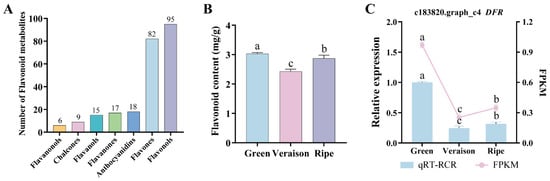
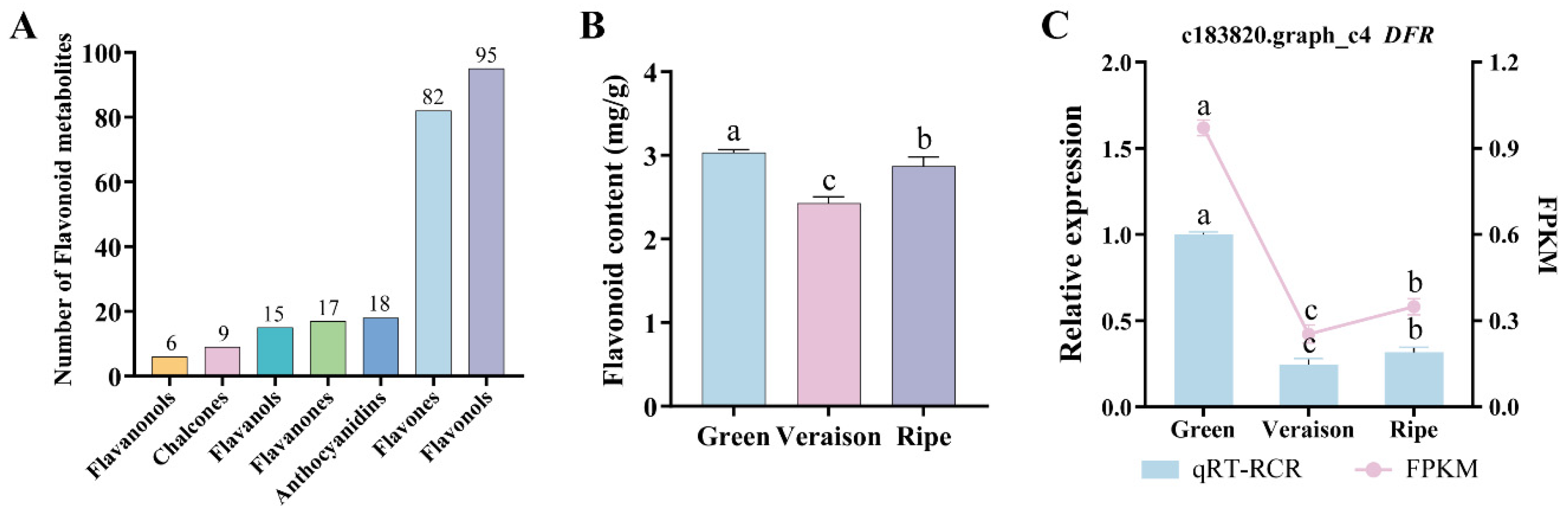
Metabolomic analysis further identified 242 flavonoid compounds, which were divided into seven categories, including six dihydroflavonols, nine chalcones, 15 flavanols, 17 dihydroflavones, 18 anthocyanins, 82 flavones, and 95 flavonols (Figure 1A). To investigate the changes in flavonoid content in blackcurrant during different stages of growth and development, a quantitative analysis of flavonoids was conducted in the green fruit stage, veraison stage, and ripe stage. The flavonoid content was highest during the green fruit stage, then it gradually decreased. From the veraison to the ripening stage, the flavonoid content increases (Figure 1B). A structural gene DFR (c183820.graph_c4) in the flavonoid biosynthetic pathway was identified from the transcriptome, and its FPKM values showed a similar trend to the content of flavonoids. Moreover, qRT-PCR analysis revealed that the gene expression level was significantly upregulated at the green fruit stage (p < 0.05), then showed a trend of first decreasing and then increasing at the color transition stage and mature stage (Figure 1C). This expression pattern was positively correlated with the change in flavonoid content, suggesting that the DFR gene may be a key regulatory factor in flavonoid biosynthesis in blackcurrant fruit.
Figure 1.
Metabolic analysis of flavonoid biosynthesis and identification of related genes in blackcurrant. (A) Proportional content of flavonoids in blackcurrant fruit. (B) Flavonoid content in distinct developmental stages. (C) The expression level of DFR gene in distinct developmental stages. Lowercase letters indicate statistical significance (p < 0.05).
3.2. Sequence Alignment and Subcellular Localization
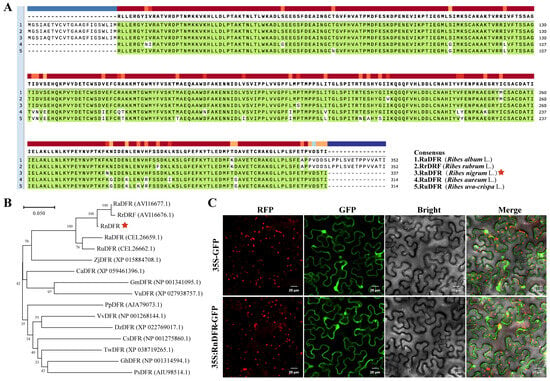
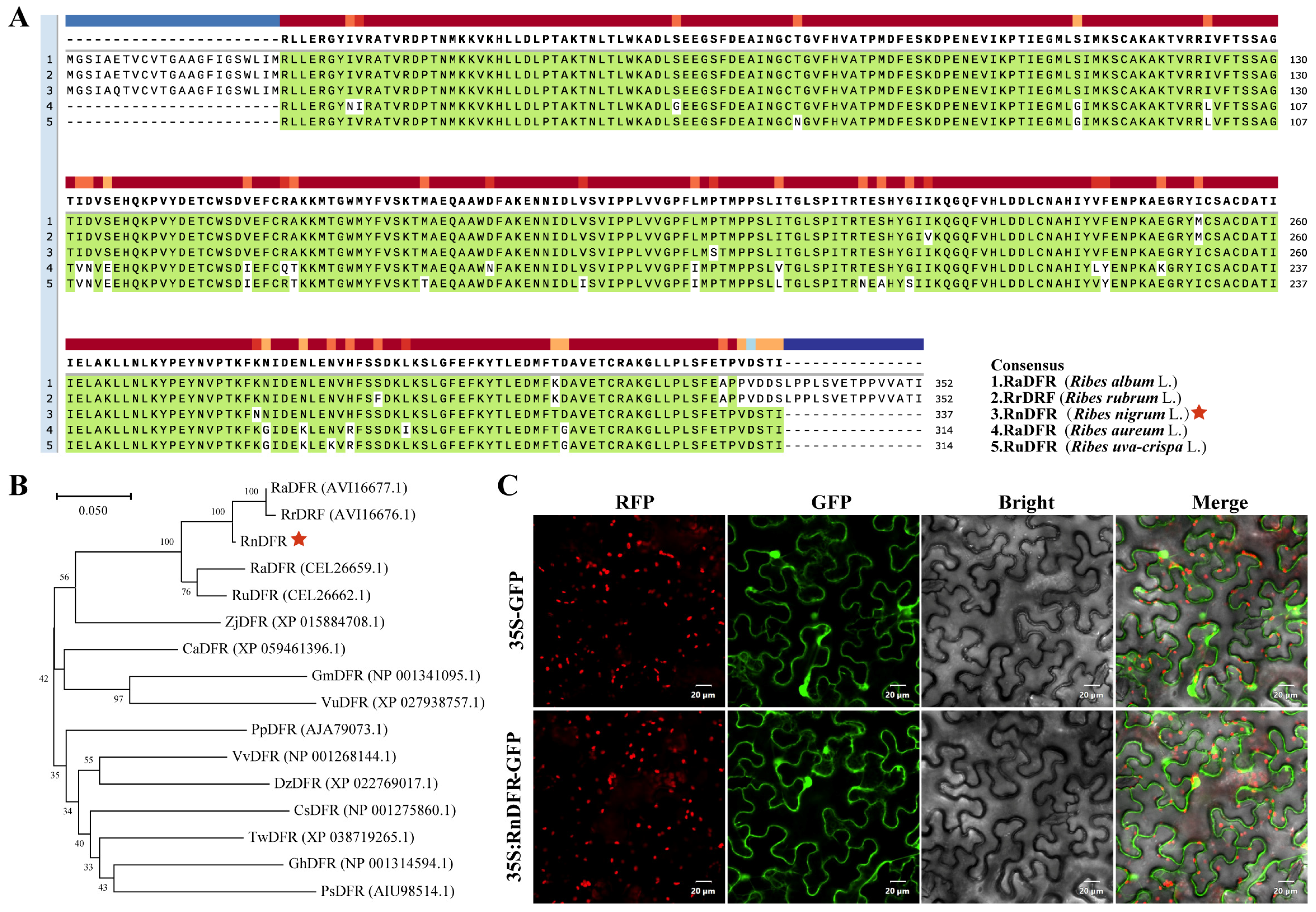
The CDS of RnDFR was amplified by RT-PCR, encoding a protein of 337 amino acids. BLASTP in NCBI was used for homology matching of the RnDFR protein sequence. It was found that RaDFR (AV116677.1) from Ribes album L., RrDFR (AV116676.1) from Ribes rubrum L., RaDFR (CEL26659.1) from Ribes aureum L., and RuDFR (CEL26662.1) from Ribes uva-crispa have high homology with the RnDFR in Ribes nigrum L. (Figure 2B). Phylogenetic analysis further placed RnDFR in the same clade as RaDFR and RrDFR.
Figure 2.
Sequence alignment, phylogenetic tree analysis and subcellular localization. (A) Sequence alignment. (B) Phylogenetic tree. The red asterisk represents the gene of this study. (C) Subcellular localization. GFP: green fluorescent protein; RFP: red fluorescent protein; Bright: bright field; Merge: overlay of fluorescence and bright field images. Scale bar = 20 μm.
Subcellular localization enables the determination of the specific location of the RnDFR. The RnDFR expression vector and the empty pHG-GFP vector were respectively introduced into the epidermal cells of tobacco leaves via an agrobacterium-mediated transient injection method, and their localization was observed under a laser confocal microscope. As shown in Figure 2C, the fluorescent signal of green fluorescent protein (GFP) was widely expressed in the cells, indicating that the RnDFR was localized in the nucleus and cytoplasm.
3.3. Stable Transformation of RnDFR Gene in Tomato
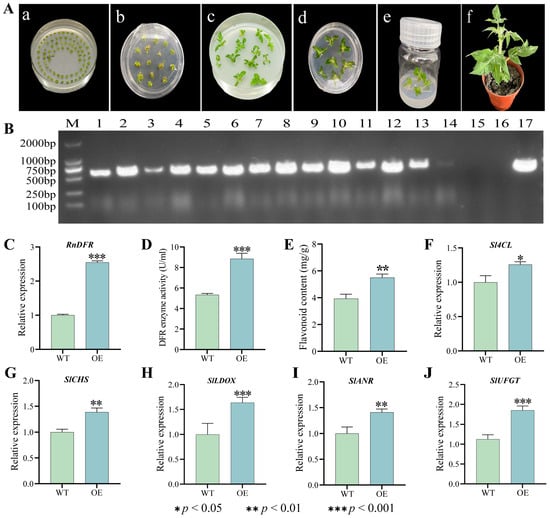
Using agrobacterium-mediated transformation, the RnDFR gene was introduced into Micro-Tom tomatoes. After co-cultivation, selection, differentiation, and rooting steps (Figure 3A), transgenic plant lines were obtained (Figure 3B). PCR-based genotyping confirmed successful integration of the transgene in all 13 overexpression lines (OE #1–#13), with specific bands clearly detected; in contrast, no amplification products were observed in the wild-type (WT #15) or empty vector (EV #16) controls. The expression level of RnDFR significantly increased in the transformed lines according to qRT-PCR, with the highest relative expression level reaching 2.55 times that of the WT (Figure 3C). The accumulation of flavonoid content in overexpression lines was higher than that in WT fruits (1.49 times), and the activity of DFR enzyme was 1.66 times that of WT fruits (Figure 3D,E). The expression levels of Sl4CL, SlCHS, SlLDOX, SlANR, and SlUFGT, which are involved in the flavonoid biosynthesis pathway, were determined in overexpression lines, and all genes were upregulated (Figure 3F–J).
Figure 3.
Stable transformation of tomatoes, and determination of related indicators for WT and OE in tomato green fruit stage. (A) (a) Co-cultivation. (b) Selection culture. (c) Elongation culture. (d) Rooting culture. (e) Seedling hardening. (f) Transplantation. (B) PCR identification of tomatoes transformed with RnDFR gene. M: DL 2000 DNA Marker; 1–13: PCR results of the RnDFR gene; 14: PCR results with H2O as the template; 15: PCR results of WT; 16: empty vector; 17: positive control. (C) Gene expression levels of RnDFR in tomato green fruit stage of WT and OE. (D) DFR enzyme activity of WT and OE. (E) Flavonoid content of WT and OE. (F–J) Changes in the expression levels of Sl4CL, SlCHS, SlLDOX, SlANR, and SlUFGT.
3.4. Transient Transformation of RnDFR Gene in Blackcurrant Fruit
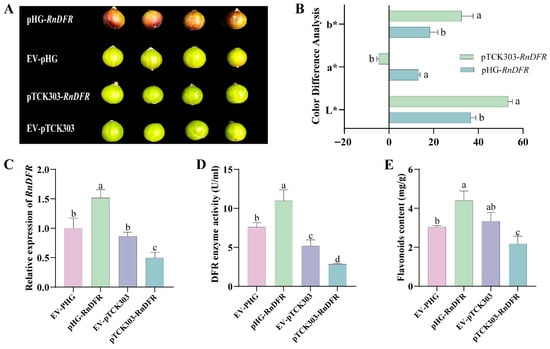
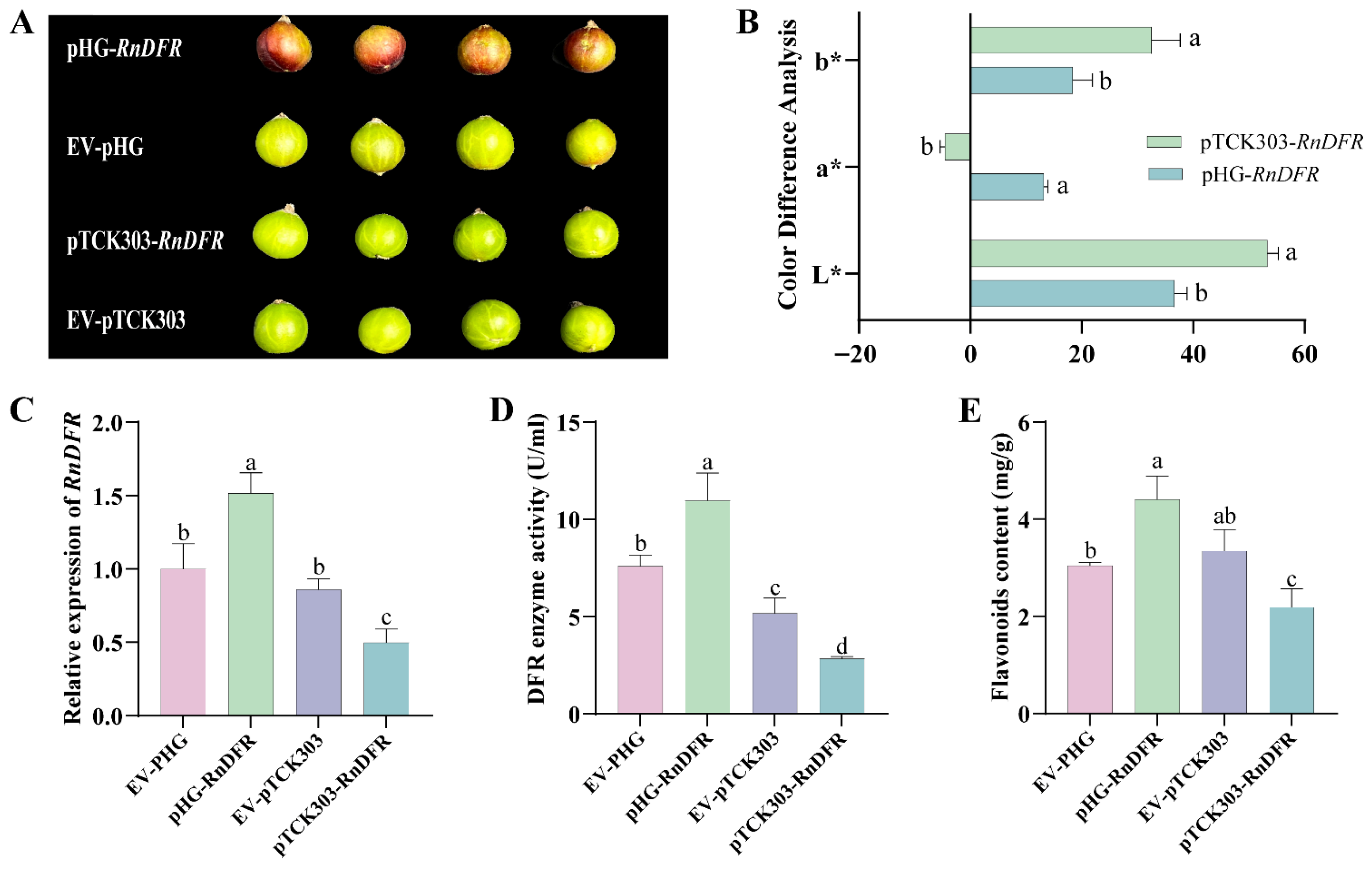
The green stage of blackcurrant fruits was selected for transient overexpression and RNAi silencing. After injection, the fruits were dark-cultured for 48 h, then light-cultured for 48 h. Phenotypic analysis showed that fruits with overexpression of the RnDFR gene exhibited a significant red phenotype (Figure 4A). More importantly, there were significant differences in color between the silent groups and overexpression groups (Figure 4B). qRT-PCR results showed that the gene expression level of RnDFR in fruits after transient overexpression was higher than that in the control group (EV-pHG), with an upregulation fold of 1.51. After injection of the inhibitory expression vector, the gene expression level decreased to 1/2 of that in the control group (EV-pTCK303) (Figure 4C). Enzyme activity detection indicated that transient overexpression of RnDFR resulted in an enzyme activity of 10.97 U/mL, which was 44.34% higher than that of the control group (EV-pHG). In contrast, silencing RnDFR led to a significant decrease in enzyme activity to 2.84 U/mL, representing a 45.17% reduction compared to the control group (EV-pTCK303) (Figure 4D). In addition, the flavonoid content in control fruits was 3.04 mg/g DW, while that in transient overexpression fruits reached 4.40 mg/g DW, an increase of approximately 44.73%. After silencing of RnDFR, the flavonoid content in fruits was significantly lower than that in the control group, with the flavonoid content in silenced fruits being 2.18 mg/g DW, a decrease of approximately 34.73% (Figure 4E).
Figure 4.
RnDFR gene positively regulates the flavonoid biosynthesis in blackcurrant fruits. (A) Phenotypic changes of blackcurrant fruits after RnDFR transient transformation. (B) Color difference analysis diagram. (C) The changes in RnDFR gene expression levels in blackcurrant fruits. (D) The changes in DFR enzyme activity in blackcurrant fruits. (E) The changes in flavonoid content in blackcurrant fruits. Lowercase letters indicate statistical significance (p < 0.05).
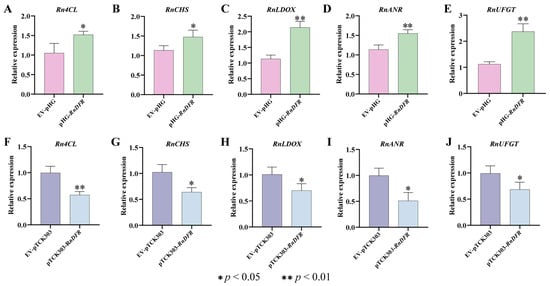
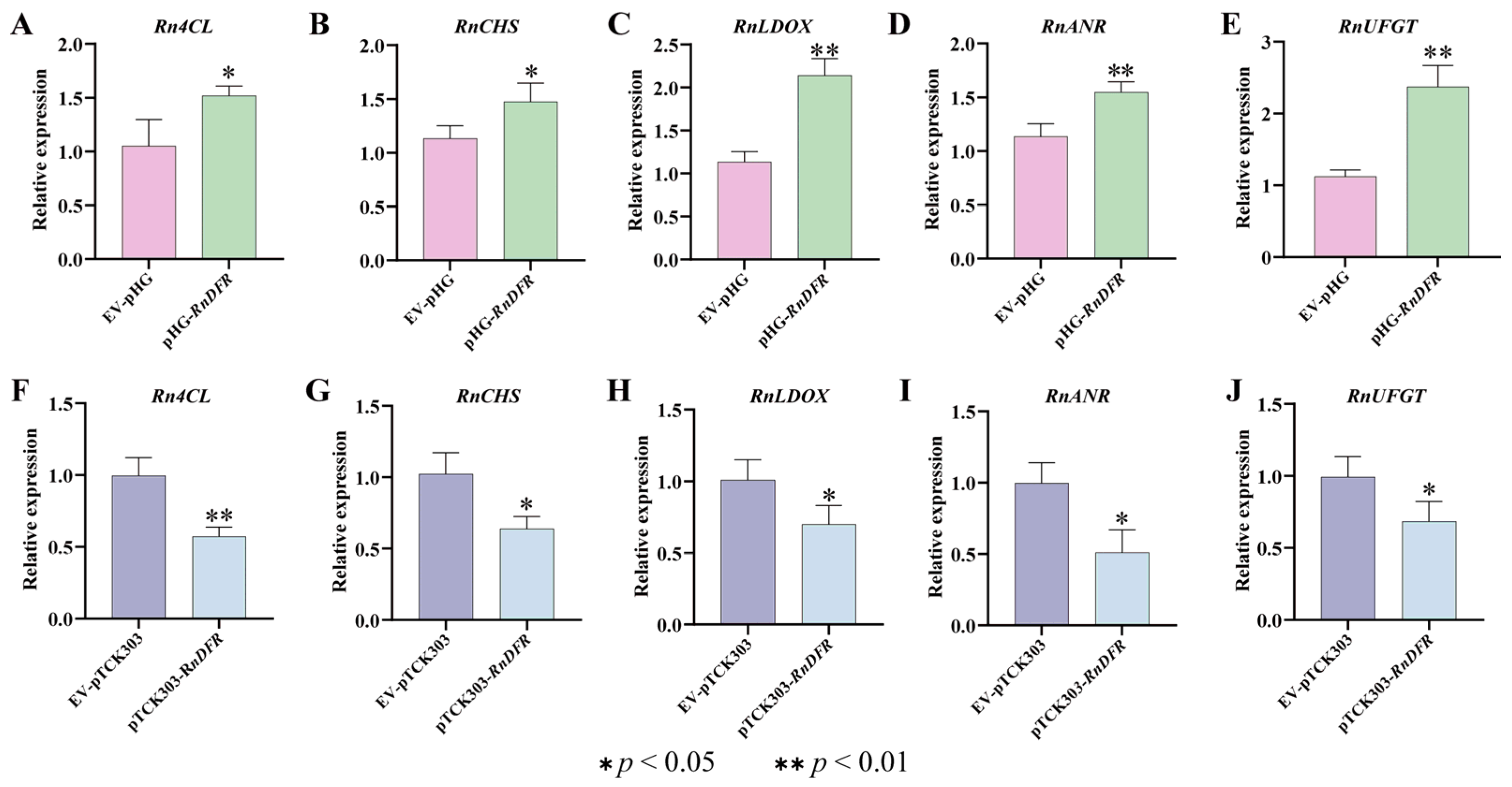
The expression changes of pathway-related structural genes (Rn4CL, RnCHS, RnANR, RnLDOX, and RnUFGT) were detected by qRT-PCR. As shown in Figure 5, overexpression of RnDFR significantly activated the flavonoid biosynthesis pathway in blackcurrant. The upstream genes Rn4CL and RnCHS were upregulated to 1.5- and 1.4-fold, respectively (Figure 4A,B). The expression levels of downstream genes RnLDOX, RnANR, and RnUFGT increased to 1.9-, 1.5-, and 2.2-fold, respectively (Figure 5C–E). Conversely, RNAi silencing of RnDFR significantly inhibited the entire flavonoid pathway, with the expression levels of Rn4CL, RnCHS, RnANR, RnLDOX, and RnUFGT decreasing by approximately 42.8%, 36.1%, 49.9%, 30.1%, and 31.7%, respectively (Figure 5F–J).
Figure 5.
Changes in gene expression related to flavonoid synthesis. (A–E) Gene expression levels of Rn4CL, RnCHS, RnLDOX, RnANR, and RnUFGT between EV-pHG and pHG-RnDFR. (F–J) Gene expression levels of Rn4CL, RnCHS, RnLDOX, RnANR, and RnUFGT between EV-pTCK303 and pTCK303-RnDFR.
3.5. Tolerance of Transgenic Lines to Cold and Drought Stress
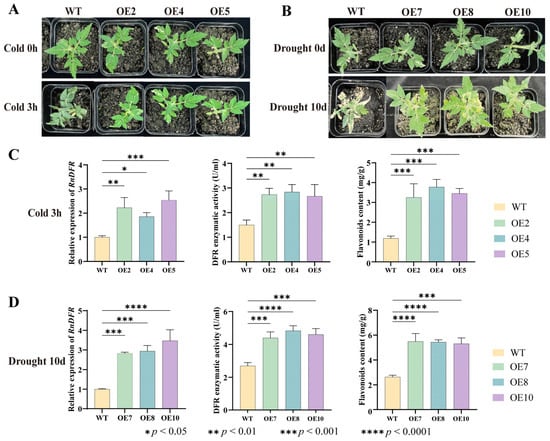
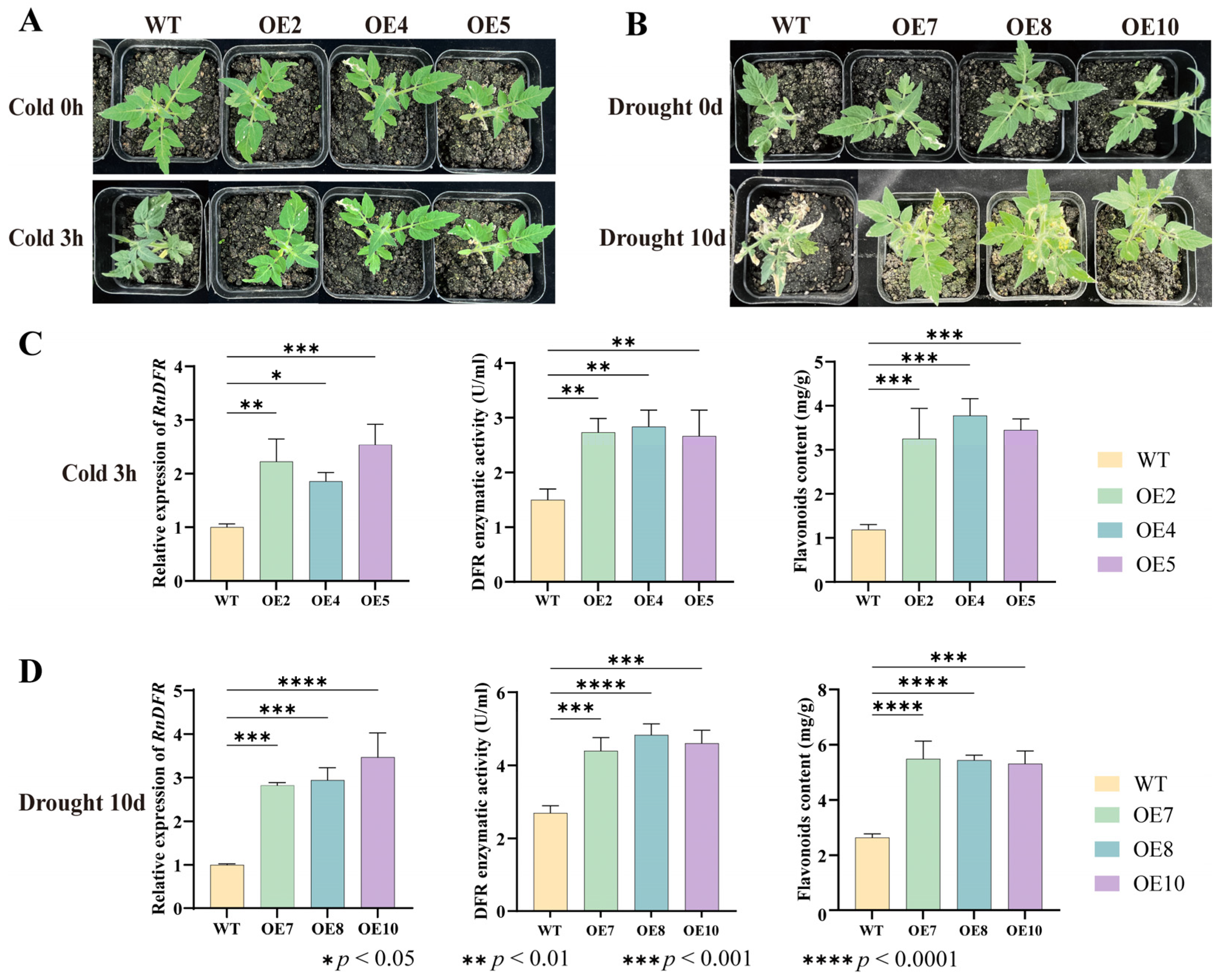
After the stress treatments, phenotypic analysis revealed that after cold treatment, WT tomato leaves showed wilting and drooping, whereas T2-generation transgenic tomato leaves (OE2, OE4, and OE5) exhibited less water loss (Figure 6A). After drought treatment, both WT and transgenic tomato leaves (OE7, OE8, and OE10) showed wilting; however, transgenic tomatoes only had a few lower leaves turning yellow, while WT plants exhibited whole-plant withering (Figure 6B), indicating that RnDFR transformation enhanced tomato tolerance to both cold and drought stress.
Figure 6.
Phenotypic and physiological analysis of RnDFR overexpression under cold and drought stress. (A,B) Growth status of overexpression lines (OE) and wild type (WT) under cold stress (−4 °C, 3 h) and drought stress (10 d). (C,D) Changes in RnDFR expression level, DFR enzymatic activity, and flavonoid content under cold and drought stress.
To confirm whether RnDFR enhances resistance through the regulation of flavonoid content, the relevant parameters were determined. After 3 h of cold stress, the relative expression level of RnDFR in OE was increased by 1.85- to 2.53-fold compared to WT (Figure 6C). Correspondingly, DFR enzyme activity increased by 77.8–88.86% compared to WT (Figure 6C). Meanwhile, flavonoid content determination showed that WT plants had a flavonoid content of 1.18 mg/g, while overexpression lines accumulated 3.25–3.77 mg/g (Figure 6C). After 10 days of drought treatment, RnDFR expression in OE reached extremely significant increases of 2.82- to 3.47-fold compared to WT (Figure 6D). Regarding DFR enzyme activity, WT plants showed 2.70 U/mL, while overexpression lines increased by 62.96–78.89% compared to WT (Figure 6D). Flavonoid content detection indicated that WT plants contained 2.64 mg/g, while overexpression lines reached 5.31–5.48 mg/g, representing a 101.14–107.58% increase over WT (Figure 6D). These results fully demonstrate that RnDFR gene overexpression can effectively promote flavonoid accumulation by enhancing DFR enzyme activity, thereby improving tomato plant tolerance to cold and drought stress.
3.6. Determination of ROS Changes and Related Physiological Indices After Stress
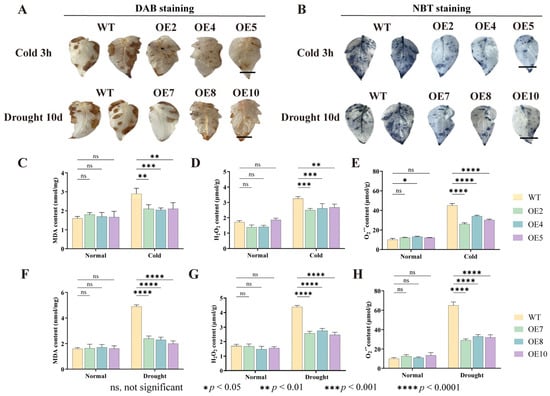
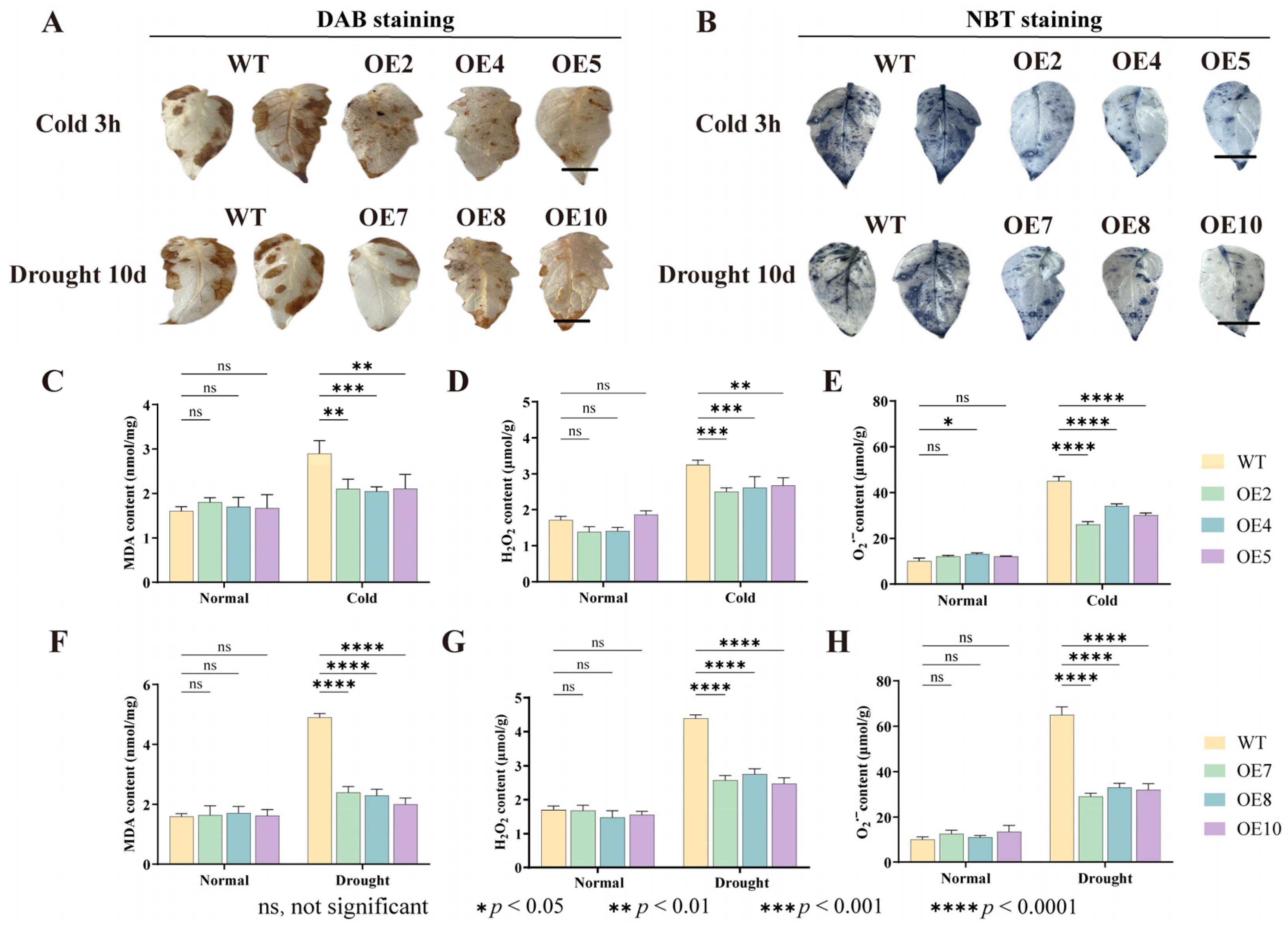
DAB and NBT staining were performed on leaves of WT and transgenic tomato plants. As shown in Figure 7A,B, after 3 h of low-temperature treatment, WT leaves displayed large areas of brown DAB precipitation and deep blue NBT staining, indicating massive accumulation of H2O2 and O2·−. In contrast, the overexpression lines OE2, OE4, and OE5 showed reduced staining intensity, demonstrating substantially decreased reactive oxygen species (ROS) accumulation. Similarly, after 10 days of drought treatment, WT leaves exhibited severe browning and blue staining, whereas the damage in overexpression lines OE7, OE8, and OE10 was alleviated. These results indicate that transgenic tomato leaves accumulated less H2O2 and O2·− after stress treatment, possessed stronger ROS-scavenging capacity, and demonstrated enhanced resistance to low-temperature and drought stresses. Under normal growth conditions, there were no significant differences in MDA, H2O2, and O2·− content among different lines (Figure 7C–H). Under cold stress, MDA content in WT plants increased from 1.6 μmol/g under normal conditions to 2.9 μmol/g, while overexpression lines only rose to 2.05–2.11 μmol/g, representing a 27.24–29.31% reduction compared to WT (Figure 7C). Regarding H2O2 content, overexpression lines maintained 2.49–2.67 μmol/g, showing a 17.59–23.14% decrease compared to WT under cold stress (Figure 7D). The O2·− content in WT also was higher than in overexpression lines (Figure 7E). Under drought stress, MDA, H2O2, and O2·− content were all higher than in overexpression lines (Figure 7F–H). These results demonstrate that RnDFR effectively activated the antioxidant defense system by promoting flavonoid accumulation and scavenging excessively accumulated ROS, thereby alleviating membrane lipid peroxidation damage and maintaining cell membrane integrity and stability.
Figure 7.
Analysis of reactive oxygen species metabolism and membrane lipid peroxidation in RnDFR overexpression tomato plants under cold and drought stress. (A) DAB staining; (B) NBT staining; (C–E) MDA, H2O2 and O2·− content under cold stress (−4 °C, 3 h); (F–H) MDA, H2O2 and O2·− content under drought stress (10 d).
3.7. Antioxidant Enzyme Activity Assay
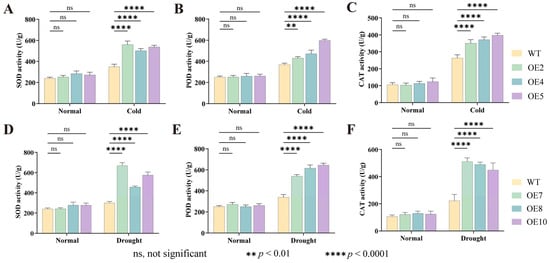
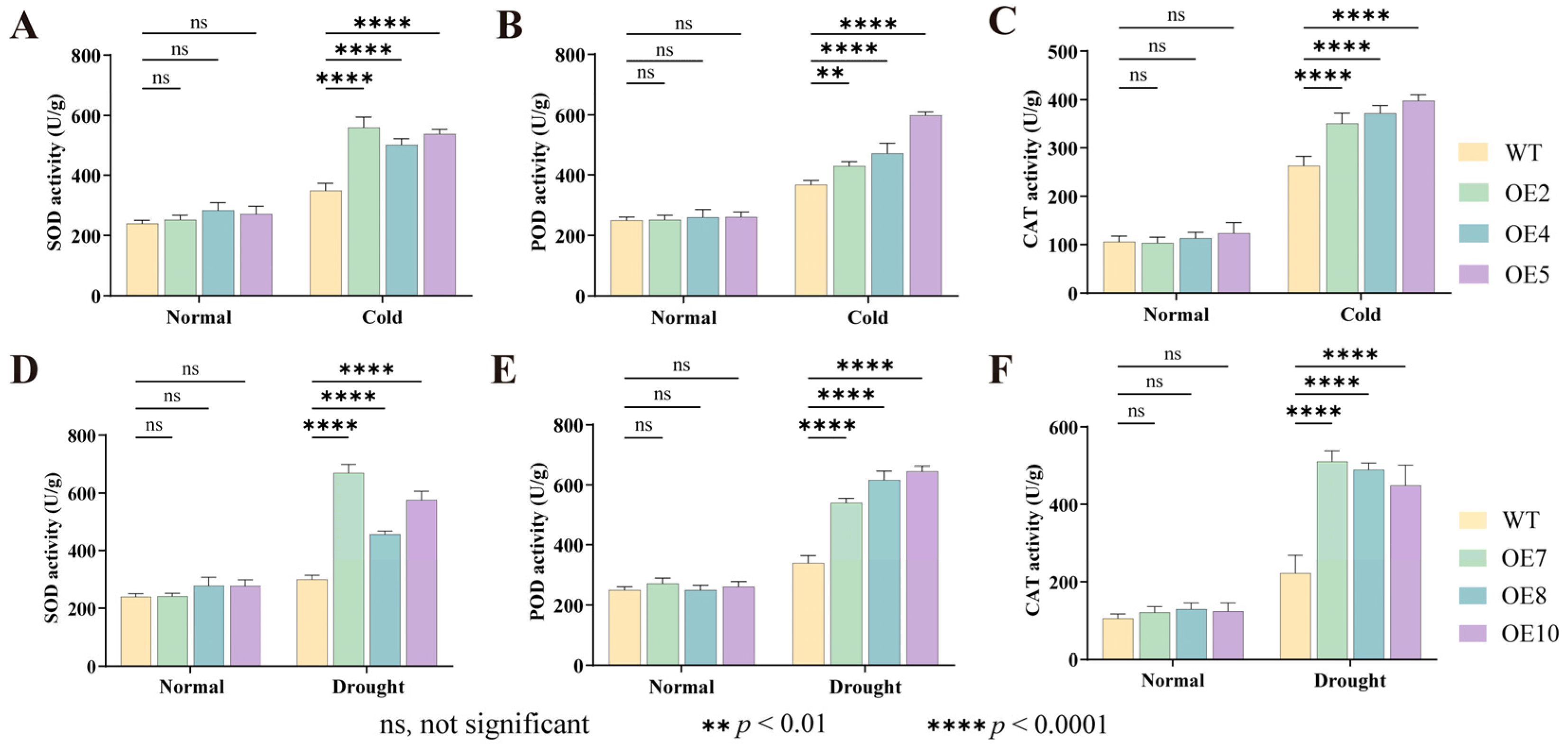
To further explore the antioxidant mechanism by which RnDFR overexpression enhances stress resistance in tomato plants, this study systematically measured antioxidant enzyme activities. Under normal growth conditions, there were no significant differences in SOD, POD, and CAT activities between WT and overexpression lines (Figure 8A–F). SOD activity in overexpression lines was higher than in WT after cold stress. Regarding POD activity, WT increased to 368 U/g, whereas overexpression lines reached 430–598 U/g, representing a 16.84–62.5% increase compared to stressed WT. CAT activity in WT rose to 263 U/g, while overexpression lines reached 351–398 U/g (Figure 8A–C). After 10 days of drought stress, SOD activity in WT increased to 301.52 U/g, while overexpression lines showed a 91.03–122.20% increase compared to stressed WT (Figure 8D). Compared to WT after drought stress, POD and CAT activities were increased (Figure 8E,F). Comprehensive comparison revealed that under both stress conditions, the three antioxidant enzyme activities in overexpression lines were significantly increased compared to WT, with the magnitude of enhancement under drought stress generally greater than that under cold stress, particularly the most remarkable increase in CAT activity.
Figure 8.
Comparison of antioxidant enzyme activities between transgenic lines and wild type under cold and drought stress. (A–C) Changes in SOD, POD, and CAT activity under cold stress. (D–F) Changes in SOD, POD, and CAT activity under drought stress.
4. Discussion
Flavonoids constitute a significant group of secondary metabolites in plants, playing essential roles in growth, development, and defense mechanisms. They contribute to various functions including antioxidant properties, protection against ultraviolet radiation, and enhanced resistance to biotic and abiotic stresses [31,32,33]. DFR is a critical enzyme in the flavonoid biosynthesis pathway, responsible for converting dihydroflavonols to leucoanthocyanidins, which is a pivotal step determining the diversity and accumulation of flavonoids in plants, thereby influencing their coloration, antioxidant capacity, and stress resistance [34,35,36]. Based on the transcriptomic analysis previously conducted by our research group, it was found that the flavonoid synthase gene, DFR, exhibits a unique expression pattern during blackcurrant fruit development: its transcription level reaches a peak in the green fruit stage, decreases briefly thereafter, and then increases as the fruit matures (Figure 1B,C). This dynamic change shows a significant positive correlation with the accumulation trend of flavonoid metabolites in fruits.
The DFR gene has been verified for its functional conservation across multiple crops. For instance, overexpression of MdDFR from apple (Malus domestica) significantly promotes anthocyanin accumulation in transgenic tobacco (Nicotiana tabacum) [37]. In European sweet cherry (Prunus avium), DFR1 and six other genes form a core regulatory network for flavonoid synthesis. The expression of DFR homologous genes in ‘Jinyan’ kiwifruit shows strict collinearity with the accumulation of 16 flavonoid compounds [38]. The synergistic upregulation of the PAL-CHS-CHI-DFR enzyme module in rice (Oryza sativa) drives the differential accumulation of isoflavones and flavonols [39]. In the present study, multiple technical approaches were employed to verify the function of the RnDFR gene. After introducing the RnDFR gene into tomato via agrobacterium-mediated transformation, qRT-PCR analysis confirmed a significant positive correlation between RnDFR gene expression level and flavonoid content. Specifically, in T2-generation transgenic tomato lines, the expression level of the RnDFR gene was 2.6 times higher than that in WT (Figure 3C), and the total flavonoid content increased by 1.6 times compared to the WT (Figure 3E). The DFR enzyme activity was increased in OE-RnDFR (Figure 3D). Meanwhile, the expression levels of genes related to the flavonoid biosynthesis pathway (4CL, CHS, LDOX, ANR and UFGT) were all upregulated (Figure 3F–J). Overexpression and RNAi-mediated silencing vectors were constructed and transiently transformed into green fruits of blackcurrant for functional characterization. In the transient overexpression fruits, the expression level of the RnDFR gene was upregulated by 1.51 times, accompanied by a synergistic increase in flavonoid content and DFR enzyme activity (Figure 4C–E). In the RNAi-RnDFR-silenced fruits, the RnDFR gene expression level decreased to 50% of the control, and flavonoid content and DFR enzyme activity were decreased (Figure 4C–E). Further determination of related gene expression revealed that RnDFR overexpression could synergistically upregulate the expression of key structural genes in the flavonoid biosynthesis pathway, including Rn4CL, RnCHS, RnLDOX, RnANR, and RnUFGT (Figure 5A–E), whereas RnDFR silencing led to downregulation of these genes (Figure 5F–J). These results showed that elevated expression of RnDFR not only promotes the catalytic reaction in the late stage of flavonoid biosynthesis but also triggers a feedback regulatory loop, thereby enhancing the expression of upstream structural genes. We propose three potential regulatory mechanisms underlying how RnDFR overexpression may coordinately upregulate upstream genes. First, feedback regulation: RnDFR overexpression promotes downstream flavonoid accumulation, and these end products may activate upstream genes via positive feedback. The flavonoid pathway has complex feedback networks [40], supporting this hypothesis. Second, transcription factor cascade activation: RnDFR can interact with transcription factors to participate in the accumulation of anthocyanins, thus upregulating upstream genes. For example, three MYB transcription factors, MYB11207, MYB47415 and MYB79714, can participate in anthocyanin accumulation through interaction with DFR [41]. Third, metabolite signaling: DFR-catalyzed dihydroflavonol intermediates may act as signaling molecules to activate upstream genes. Overexpression of wintersweet (Chimonanthus praecox) CpDFR1 enhanced anthocyanin accumulation and upregulated the expression of NtF3H and NtF3′H [42]. In rose (Rosa damascena), it has been reported that DFR overexpression leads to the upregulation of upstream genes such as CHS and CHI [43], consistent with our observations. These non-exclusive mechanisms may act synergistically to enhance flavonoid accumulation. Future studies will verify these hypotheses to clarify the RnDFR regulatory network.
Flavonoids are a class of non-enzymatic antioxidants that exert a strong influence within the non-enzymatic antioxidant system, contributing to the protection against oxidative stress [44]. The DFR enzyme promotes the biosynthesis of these flavonoids, and the accumulated flavonoids further contribute to ROS scavenging and reducing oxidative damage. Consistent with this mechanism, previous reports have indicated that the DFR gene can enhance plant tolerance to stresses through two primary pathways: “flavonoid metabolism regulation” and “osmotic balance maintenance”. DFR1 in Arabidopsis thaliana can inhibit proline degradation and promote flavonoid synthesis to improve drought and freezing tolerance [22]. Under drought conditions, treatment with calcium oxide nanoparticles in rapeseed (Brassica napus) can upregulate the expression of the DFR gene and other flavonoid synthesis-related genes, thereby enhancing drought tolerance [45]. The DFR gene in wheat (Triticum aestivum) can form an “osmotic protection–oxidative defense” stress resistance regulatory loop by regulating proline metabolism and flavonoid content [46]. In this study, RnDFR expression, DFR enzyme activity, and flavonoid content were all significantly higher in overexpression lines than in WT under both stresses (Figure 6C,D). These results indicate that overexpression of RnDFR enhances flavonoid accumulation by elevating DFR enzyme activity, thus strengthening cold and drought tolerance in tomato.
Drought and cold stress cause oxidative stress, thereby leading to increased contents of MDA, H2O2 and O2·−. In this study, the levels of MDA, H2O2 and O2·− showed no significant difference under normal conditions. However, we found that the contents of MDA, H2O2 and O2·− in OE-RnDFR were reduced under drought and cold compared to the WT (Figure 7C–H), suggesting that RnDFR-transgenic tomatoes exhibit a strong ROS-scavenging ability. A similar response to drought stress has been reported: the OsCHI3 gene enhanced the drought tolerance of rice by scavenging reactive oxygen species via the flavonoid and abscisic acid metabolic pathways [47]. This study also observed a significant increase in SOD, POD, and CAT activity in RnDFR-transgenic tomatoes exposed to cold and drought stress (Figure 8A–F). The accumulation of SOD, POD, and CAT enzymes protects plants from adverse effects of stress. Our analysis revealed that RnDFR positively regulates the accumulation of SOD, POD, and CAT enzymes to resist drought and cold stress. These results indicate that RnDFR overexpression can effectively scavenge excessively accumulated reactive oxygen species by activating the antioxidant enzyme system, thereby enhancing tomato plant tolerance to cold and drought stresses.
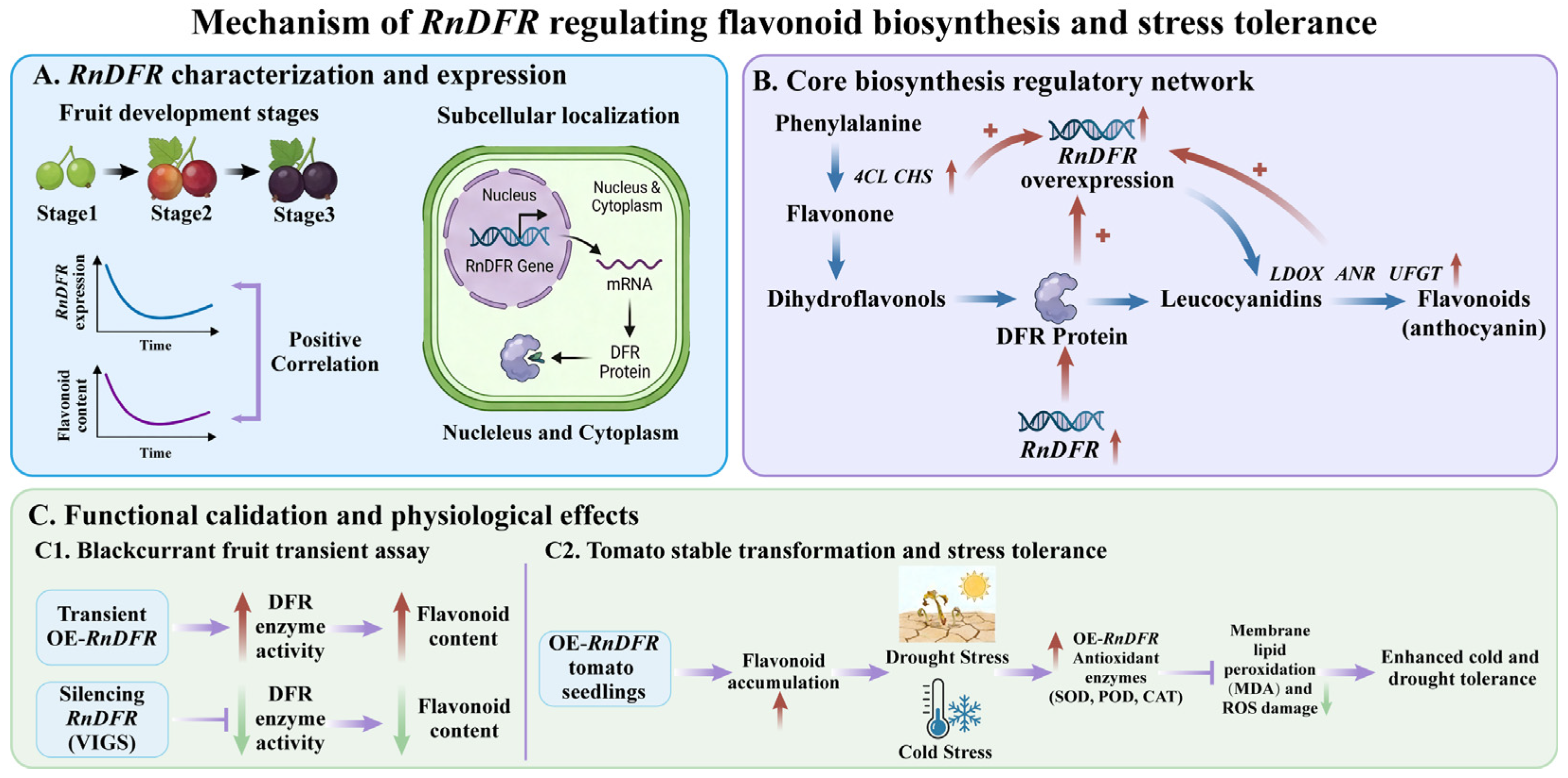
Based on the above research results, the mechanism underlying RnDFR-mediated flavonoid accumulation and abiotic stress tolerance was proposed (Figure 9). Specifically, overexpression of RnDFR significantly upregulates key structural genes and triggers a positive feedback loop, enhancing the entire metabolic flux to promote flavonoid accumulation. Additionally, the increased flavonoid accumulation in RnDFR-overexpressing plants enhances antioxidant enzyme activities, reduces ROS-induced damage, and consequently confers cold and drought stress tolerance.
Figure 9.
Mechanism of RnDFR regulating flavonoid biosynthesis and stress tolerance. + stands for enhancement, red arrows indicate upregulation and green arrows indicate downregulation of gene expression/flavonoid content.
5. Conclusions
In the current study, the RnDFR gene (Unigene ID: c183820.graph_c4) from blackcurrant that was positively correlated with flavonoid content during the fruit development process was identified through transcriptome analysis. After cloning its complete coding sequence, an overexpression vector was constructed, and stable transformation into tomato was achieved, suggesting RnDFR positively regulates flavonoid synthesis and increases the expression levels of 4CL, CHS, LDOX, ANR, and UFGT genes in tomato. Meanwhile, transient overexpression and RNAi silencing of the RnDFR gene were performed in green blackcurrant fruits. The results showed that RnDFR overexpression increased flavonoid content, while RNAi silencing decreased it, confirming that RnDFR acts as a core regulatory factor for flavonoid synthesis. Additionally, after drought and cold treatments, OE-RnDFR promoted flavonoid biosynthesis by upregulating DFR enzyme activity, consequently improving tomato tolerance to cold and drought stresses. The stress resistance-related indicators in OE-RnDFR were superior to those of the WT. These results confirm that RnDFR can enhance the cold and drought tolerance of plants by promoting flavonoid synthesis. This study demonstrates that RnDFR overexpression enhances flavonoid accumulation and abiotic stress resistance, offering a promising target for blackcurrant improvement. Nevertheless, the adaptive role of this gene under natural conditions requires further investigation.
Supplementary Materials
The following supporting information can be downloaded at: https://www.mdpi.com/article/10.3390/horticulturae12040485/s1. Table S1: Primers used in qRT-PCR.
Author Contributions
Conceptualization, K.L.; methodology, M.J.; software, Y.X.; validation, H.G.; formal analysis, M.J.; investigation, K.L.; resources, J.H.; data curation, Y.X.; writing—original draft preparation, M.J. and Y.X.; writing—review and editing, J.H. and D.Q.; visualization, M.J.; supervision, H.G.; project administration, D.Q.; funding acquisition, D.Q. All authors have read and agreed to the published version of the manuscript.
Funding
This research was funded by the National Natural Science Foundation of China (32572948); National Grape Technology System Harbin Blue Honeysuckle Comprehensive Experimental Station (CARS-29-10), and National Key Research and Development Program of China (2022YFD1600500).
Data Availability Statement
The original contributions presented in this study are included in the article/Supplementary Material. Further inquiries can be directed to the corresponding author.
Conflicts of Interest
The authors declare no conflicts of interest.
Abbreviations
The following abbreviations are used in this manuscript:
| EBGs | Early biosynthetic genes |
| PAL | Phenylalanine ammonia lyase |
| C4H | Cinnamic acid-4-hydroxylase |
| 4CL | 4-coumarate: CoA ligase |
| CHS | Chalcone synthase |
| CHI | Chalcone isomerase |
| F3H | Flavanone-3-hydroxylase |
| F3′H | Flavonoid 3′-hydroxylase |
| F3′5′H | Flavonoid 3′,5′-hydroxylase |
| LBGs | Late biosynthetic genes |
| FLS | Flavonol synthase |
| DFR | Dihydroflavonol-4-reductase |
| LDOX | Leucoanthocyanidin dioxygenase |
| ANR | Anthocyanidin reductase |
| UFGT | UDP-glucose: flavonoid-3-O-glucosyltransferase |
| RIN | RNA integrity number |
| ROS | Reactive oxygen species |
| SOD | Superoxide dismutase |
| POD | Peroxidase |
| CAT | Catalase |
| MDA | Malondialdehyde |
| H2O2 | Hydrogen peroxide |
| O2·− | Superoxide anion |
References
- Ghasemzadeh, A. Flavonoids and Phenolic Acids: Role and Biochemical Activity in Plants and Human. J. Med. Plants Res. 2011, 5, 6697–6703. [Google Scholar] [CrossRef] [Scilit]
- Zhang, Z.; He, Y.; Zhang, X. Flavonoids and Pectins. In Pectins—Extraction, Purification, Characterization and Applications; Masuelli, M., Ed.; IntechOpen: London, UK, 2020; ISBN 978-1-78984-071-1. [Google Scholar]
- Romanelli, G.P.; Virla, E.G.; Duchowicz, P.R.; Gaddi, A.L.; Ruiz, D.M.; Bennardi, D.O.; Del Valle Ortiz, E.; Autino, J.C. Sustainable Synthesis of Flavonoid Derivatives, QSAR Study and Insecticidal Activity against the Fall Armyworm, Spodoptera Frugiperda (Lep.: Noctuidae). J. Agric. Food Chem. 2010, 58, 6290–6295. [Google Scholar] [CrossRef] [Scilit] [PubMed]
- Yonekura-Sakakibara, K.; Higashi, Y.; Nakabayashi, R. The Origin and Evolution of Plant Flavonoid Metabolism. Front. Plant Sci. 2019, 10, 943. [Google Scholar] [CrossRef] [Scilit] [PubMed]
- Hussain, T.; Tan, B.; Murtaza, G.; Liu, G.; Rahu, N.; Saleem Kalhoro, M.; Hussain Kalhoro, D.; Adebowale, T.O.; Usman Mazhar, M.; Rehman, Z.U.; et al. Flavonoids and Type 2 Diabetes: Evidence of Efficacy in Clinical and Animal Studies and Delivery Strategies to Enhance Their Therapeutic Efficacy. Pharmacol. Res. 2020, 152, 104629. [Google Scholar] [CrossRef] [Scilit] [PubMed]
- Xu, W.; Dubos, C.; Lepiniec, L. Transcriptional Control of Flavonoid Biosynthesis by MYB–bHLH–WDR Complexes. Trends Plant Sci. 2015, 20, 176–185. [Google Scholar] [CrossRef] [Scilit]
- Ni, J.; Zhao, Y.; Tao, R.; Yin, L.; Gao, L.; Strid, Å.; Qian, M.; Li, J.; Li, Y.; Shen, J.; et al. Ethylene Mediates the Branching of the Jasmonate-induced Flavonoid Biosynthesis Pathway by Suppressing Anthocyanin Biosynthesis in Red Chinese Pear Fruits. Plant Biotechnol. J. 2020, 18, 1223–1240. [Google Scholar] [CrossRef] [Scilit]
- Wan, L.; Lei, Y.; Yan, L.; Liu, Y.; Pandey, M.K.; Wan, X.; Varshney, R.K.; Fang, J.; Liao, B. Transcriptome and Metabolome Reveal Redirection of Flavonoids in a White Testa Peanut Mutant. BMC Plant Biol. 2020, 20, 161. [Google Scholar] [CrossRef] [Scilit]
- Katsumoto, Y.; Fukuchi-Mizutani, M.; Fukui, Y.; Brugliera, F.; Holton, T.A.; Karan, M.; Nakamura, N.; Yonekura-Sakakibara, K.; Togami, J.; Pigeaire, A.; et al. Engineering of the Rose Flavonoid Biosynthetic Pathway Successfully Generated Blue-Hued Flowers Accumulating Delphinidin. Plant Cell Physiol. 2007, 48, 1589–1600. [Google Scholar] [CrossRef] [Scilit]
- Ni, J.; Zhang, N.; Zhan, Y.; Ding, K.; Qi, P.; Wang, X.; Ding, W.; Xu, M. Transgenic Tobacco Plant Overexpressing Ginkgo Dihydroflavonol 4-Reductase Gene GbDFR6 Exhibits Multiple Developmental Defects. Front. Plant Sci. 2022, 13, 1066736. [Google Scholar] [CrossRef] [Scilit]
- Ruan, H.; Shi, X.; Gao, L.; Rashid, A.; Li, Y.; Lei, T.; Dai, X.; Xia, T.; Wang, Y. Functional Analysis of the Dihydroflavonol 4-Reductase Family of Camellia Sinensis: Exploiting Key Amino Acids to Reconstruct Reduction Activity. Hortic. Res. 2022, 9, uhac098. [Google Scholar] [CrossRef] [Scilit]
- Wang, X.; Chen, X.; Luo, S.; Ma, W.; Li, N.; Zhang, W.; Tikunov, Y.; Xuan, S.; Zhao, J.; Wang, Y.; et al. Discovery of a DFR Gene That Controls Anthocyanin Accumulation in the Spiny Solanum Group: Roles of a Natural Promoter Variant and Alternative Splicing. Plant J. 2022, 111, 1096–1109. [Google Scholar] [CrossRef] [Scilit]
- Lim, S.-H.; Park, B.; Kim, D.-H.; Park, S.; Yang, J.-H.; Jung, J.-A.; Lee, J.; Lee, J.-Y. Cloning and Functional Characterization of Dihydroflavonol 4-Reductase Gene Involved in Anthocyanin Biosynthesis of Chrysanthemum. Int. J. Mol. Sci. 2020, 21, 7960. [Google Scholar] [CrossRef] [Scilit] [PubMed]
- An, Y.; Li, N.; Zhang, R.; Wang, S.; Wang, J. Identification and Characterization of DFR Gene Family and Cloning of Candidate Genes for Anthocyanin Biosynthesis in Pepper (Capsicum annuum L.). BMC Plant Biol. 2025, 25, 830. [Google Scholar] [CrossRef] [Scilit] [PubMed]
- Yu, T.; Han, G.; Luan, Z.; Zhu, C.; Zhao, J.; Sheng, Y. Functional Analysis of Genes GlaDFR1 and GlaDFR2 Encoding Dihydroflavonol 4-Reductase (DFR) in Gentiana lutea L. Var. Aurantiaca (M. Laínz) M. Laínz. BioMed Res. Int. 2022, 2022, 1382604. [Google Scholar] [CrossRef] [Scilit] [PubMed]
- Morishita, T.; Kojima, Y.; Maruta, T.; Nishizawa-Yokoi, A.; Yabuta, Y.; Shigeoka, S. Arabidopsis NAC Transcription Factor, ANAC078, Regulates Flavonoid Biosynthesis under High-Light. Plant Cell Physiol. 2009, 50, 2210–2222. [Google Scholar] [CrossRef] [Scilit]
- Wang, N.; Liu, W.; Zhang, T.; Jiang, S.; Xu, H.; Wang, Y.; Zhang, Z.; Wang, C.; Chen, X. Transcriptomic Analysis of Red-Fleshed Apples Reveals the Novel Role of MdWRKY11 in Flavonoid and Anthocyanin Biosynthesis. J. Agric. Food Chem. 2018, 66, 7076–7086. [Google Scholar] [CrossRef] [Scilit]
- Li, S. Transcriptional Control of Flavonoid Biosynthesis: Fine-Tuning of the MYB-bHLH-WD40 (MBW) Complex. Plant Signal. Behav. 2014, 9, e27522. [Google Scholar] [CrossRef] [Scilit]
- Qian, Y.; Zhang, T.; Yu, Y.; Gou, L.; Yang, J.; Xu, J.; Pi, E. Regulatory Mechanisms of bHLH Transcription Factors in Plant Adaptive Responses to Various Abiotic Stresses. Front. Plant Sci. 2021, 12, 677611. [Google Scholar] [CrossRef] [Scilit]
- Liu, Y.; Lv, G.; Yang, Y.; Ma, K.; Ren, X.; Li, M.; Liu, Z. Interaction of AcMADS68 with Transcription Factors Regulates Anthocyanin Biosynthesis in Red-Fleshed Kiwifruit. Hortic. Res. 2023, 10, uhac252. [Google Scholar] [CrossRef] [Scilit]
- Hou, L.; Yang, X.; Dong, X.; Ding, M.; Zhu, X.; Shao, J. Effect of Environmental Stresses on the Contents of Total Flavonoids and Corresponding Gene Expression in Fagopyrum Tataricum During Florescence. J. Nucl. Agric. Sci. 2016, 30, 0184–0192. [Google Scholar]
- Ren, Y.; Miao, M.; Meng, Y.; Cao, J.; Fan, T.; Yue, J.; Xiao, F.; Liu, Y.; Cao, S. DFR1-Mediated Inhibition of Proline Degradation Pathway Regulates Drought and Freezing Tolerance in Arabidopsis. Cell Rep. 2018, 23, 3960–3974. [Google Scholar] [CrossRef] [Scilit]
- Mei, C.; Yang, J.; Mei, Q.; Jia, D.; Yan, P.; Feng, B.; Mamat, A.; Gong, X.; Guan, Q.; Mao, K.; et al. MdNAC104 Positively Regulates Apple Cold Tolerance via CBF-dependent and CBF-independent Pathways. Plant Biotechnol. J. 2023, 21, 2057–2073. [Google Scholar] [CrossRef] [Scilit] [PubMed]
- Chen, X.; Zhou, N.; Yu, L.; Han, Z.; Guo, Y.; Ndombi, S.N.; Zhang, H.; Jiang, J.; Duan, Y.; Zou, Z.; et al. Plant Resistance Inducer AMHA Enhances Antioxidant Capacities to Promote Cold Tolerance by Regulating the Upgrade of Glutathione S-Transferase in Tea Plant. Hortic. Res. 2025, 12, uhaf073. [Google Scholar] [CrossRef] [Scilit] [PubMed]
- Sun, X.; Zhan, Y.; Li, S.; Liu, Y.; Fu, Q.; Quan, X.; Xiong, J.; Gang, H.; Zhang, L.; Qi, H.; et al. Complete Chloroplast Genome Assembly and Phylogenetic Analysis of Blackcurrant (Ribes nigrum), Red and White Currant (Ribes rubrum), and Gooseberry (Ribes uva-crispa) Provide New Insights into the Phylogeny of Grossulariaceae. PeerJ 2023, 11, e16272. [Google Scholar] [CrossRef] [Scilit] [PubMed]
- Zhang, X.; Zhang, D.; Li, W.; Li, J.; Li, S.; Zhang, W.; Zhang, P.; Cui, K.; Huo, J.; Gang, H.; et al. Transcriptome Profiling Reveals the Regulatory Mechanisms of AsA (Ascorbic Acid) and Flavonoid Synthesis and Metabolic Processes in Fruit Development of Ribes nigrum L. Mol. Genet. Genom. 2025, 300, 62. [Google Scholar] [CrossRef] [Scilit]
- Wang, H.; Gang, H.; Chen, J.; Liu, J.; Zhang, X.; Fu, C.; Shao, K.; Wang, X.; Qin, D.; Huo, J. Transcriptomic and Metabolomic Analyses Reveal Molecular and Metabolic Regulation of Anthocyanin Biosynthesis in Three Varieties of Currant. Food Res. Int. 2024, 196, 115056. [Google Scholar] [CrossRef] [Scilit]
- Qin, D.; Wang, H.; Zhang, C.; Yu, Z.; Gao, Y.G.; Xie, F.; Hung, N.; Huo, J. Effects of GA3 and ABA on the Respiratory Pathways during the Secondary Bud Burst in Black Currants. J. For. Res. 2017, 28, 705–712. [Google Scholar] [CrossRef] [Scilit]
- Li, W.; Qin, D.; Ma, R.; Li, S.; Wang, L. Comparative Evaluation of Physiological and Molecular Responses of Blackcurrant Varieties to Powdery Mildew Infection. Front. Plant Sci. 2024, 15, 1445839. [Google Scholar] [CrossRef] [Scilit]
- Zhao, X.; Chen, A.; Gong, X.; Zhang, P.; Cui, K.; Li, S.; Zhang, W.; Zhu, C.; Gang, H.; Huo, J.; et al. Metabolite-Mediated Responses of Phyllosphere Microbiota to Powdery Mildew Infection in Resistant and Susceptible Black Currant Cultivars. Hortic. Res. 2025, 12, uhaf092. [Google Scholar] [CrossRef] [Scilit]
- Falcone Ferreyra, M.L.; Rius, S.P.; Casati, P. Flavonoids: Biosynthesis, Biological Functions, and Biotechnological Applications. Front. Plant Sci. 2012, 3, 222. [Google Scholar] [CrossRef] [Scilit]
- Yang, H.; Zhong, S.; Chen, C.; Tan, F.; Luo, P. Expression Profiling and Putative Biosynthetic Network of Flavonoids by Global Analysis with Simplified Omics Data Elucidating the Large Potential of Akebia Trifoliata as an Herbal Industrial Plant. Ind. Crops Prod. 2024, 212, 118360. [Google Scholar] [CrossRef] [Scilit]
- Gao, Y.; Jahan, T.; Hao, L.; Shi, Y.; Ma, C.; Huda, M.d.N.; Chen, H.; Li, W.; Fernie, A.R.; He, Y.; et al. UV-B Responsive Flavonoid Synthesis Contributes to Tartary Buckwheat High-Altitude Adaption. Plant Biotechnol. J. 2025, 23, 5211–5228. [Google Scholar] [CrossRef] [Scilit] [PubMed]
- Wang, H.; Fan, W.; Li, H.; Yang, J.; Huang, J.; Zhang, P. Functional Characterization of Dihydroflavonol-4-Reductase in Anthocyanin Biosynthesis of Purple Sweet Potato Underlies the Direct Evidence of Anthocyanins Function against Abiotic Stresses. PLoS ONE 2013, 8, e78484. [Google Scholar] [CrossRef] [Scilit] [PubMed]
- Li, Y.; Liu, X.; Cai, X.; Shan, X.; Gao, R.; Yang, S.; Han, T.; Wang, S.; Wang, L.; Gao, X. Dihydroflavonol 4-Reductase Genes from Freesia Hybrida Play Important and Partially Overlapping Roles in the Biosynthesis of Flavonoids. Front. Plant Sci. 2017, 8, 428. [Google Scholar] [CrossRef] [Scilit]
- Aiguo, Z.; Ruiwen, D.; Cheng, W.; Cheng, C.; Dongmei, W. Insights into the Catalytic and Regulatory Mechanisms of Dihydroflavonol 4-Reductase, a Key Enzyme of Anthocyanin Synthesis in Zanthoxylum bungeanum. Tree Physiol. 2023, 43, 169–184. [Google Scholar] [CrossRef] [Scilit]
- Lim, S.-H.; You, M.-K.; Kim, D.-H.; Kim, J.K.; Lee, J.-Y.; Ha, S.-H. RNAi-Mediated Suppression of Dihydroflavonol 4-Reductase in Tobacco Allows Fine-Tuning of Flower Color and Flux through the Flavonoid Biosynthetic Pathway. Plant Physiol. Biochem. 2016, 109, 482–490. [Google Scholar] [CrossRef] [Scilit]
- Mao, J.; Gao, Z.; Wang, X.; Yao, D.; Lin, M.; Chen, L. Integrated Transcriptome and Targeted Metabolome Analyses Provide Insights into Flavonoid Biosynthesis in Kiwifruit (Actinidia chinensis). Sci. Rep. 2024, 14, 19417. [Google Scholar] [CrossRef] [Scilit]
- Qi, Q.; Li, W.; Yu, X.; Zhang, B.; Shang, L.; Xie, Y.; Li, Y.; Ding, A.; Shi, J.; Dou, Y.; et al. Genome-wide Analysis, Metabolomics, and Transcriptomics Reveal the Molecular Basis of ZlRc Overexpression in Promoting Phenolic Compound Accumulation in Rice Seeds. Food Front. 2023, 4, 849–866. [Google Scholar] [CrossRef] [Scilit]
- Chen, L.; Cheng, Y.; Hong, G. Molecular Insights into the Regulation of Flavonoid Biosynthesis in Fruits. Hortic. Res. 2026, 13, uhaf306. [Google Scholar] [CrossRef] [Scilit]
- Zhang, H.; Yang, B.; Liu, J.; Guo, D.; Hou, J.; Chen, S.; Song, B.; Xie, C. Analysis of Structural Genes and Key Transcription Factors Related to Anthocyanin Biosynthesis in Potato Tubers. Sci. Hortic. 2017, 225, 310–316. [Google Scholar] [CrossRef] [Scilit]
- He, S. Metabolome and Transcriptome Analysis of the Color Mechanism of Chimonanthus praecox and the Function Verification of CpDFR1 Gene. Master’s Thesis, Southwest University, Chongqing, China, 2025. (In Chinese) [Google Scholar] [CrossRef]
- Gudarzi, A.; Soorni, A.; Golchini, M.M.; Meratian Esfahani, S. Characterization of Gene Expression and Anthocyanin Accumulation in Rosa Damascena during Petal Development. Discov. Plants 2024, 1, 66. [Google Scholar] [CrossRef] [Scilit]
- Gill, S.S.; Tuteja, N. Reactive Oxygen Species and Antioxidant Machinery in Abiotic Stress Tolerance in Crop Plants. Plant Physiol. Biochem. 2010, 48, 909–930. [Google Scholar] [CrossRef] [Scilit]
- Ayyaz, A.; Batool, I.; Zhang, K.; Hannan, F.; Sun, Y.; Qin, T.; Athar, H.-R.; Zafar, Z.U.; Farooq, M.A.; Zhou, W. Unravelling Mechanisms of CaO Nanoparticle-Induced Drought Tolerance in Brassica napus: An Analysis of Metabolite and Nutrient Profiling. Environ. Sci. Nano 2024, 11, 2550–2567. [Google Scholar] [CrossRef] [Scilit]
- Dubrovna, O.V.; Priadkina, G.O.; Mykhalska, S.I.; Komisarenko, A.G. Drought-Tolerance of Transgenic Winter Wheat with Partial Suppression of the Proline Dehydrogenase Gene. Regul. Mech. Biosyst. 2022, 13, 385–392. [Google Scholar] [CrossRef] [Scilit]
- Liu, T.; Liu, L.; Zhou, T.; Chen, Y.; Zhou, H.; Lyu, J.; Zhang, D.; Shi, X.; Yuan, D.; Ye, N.; et al. Chalcone Isomerase Gene (OsCHI3) Increases Rice Drought Tolerance by Scavenging ROS via Flavonoid and ABA Metabolic Pathways. Crop J. 2025, 13, 372–384. [Google Scholar] [CrossRef] [Scilit]
Disclaimer/Publisher’s Note: The statements, opinions and data contained in all publications are solely those of the individual author(s) and contributor(s) and not of MDPI and/or the editor(s). MDPI and/or the editor(s) disclaim responsibility for any injury to people or property resulting from any ideas, methods, instructions or products referred to in the content. |
© 2026 by the authors. Licensee MDPI, Basel, Switzerland. This article is an open access article distributed under the terms and conditions of the Creative Commons Attribution (CC BY) license.