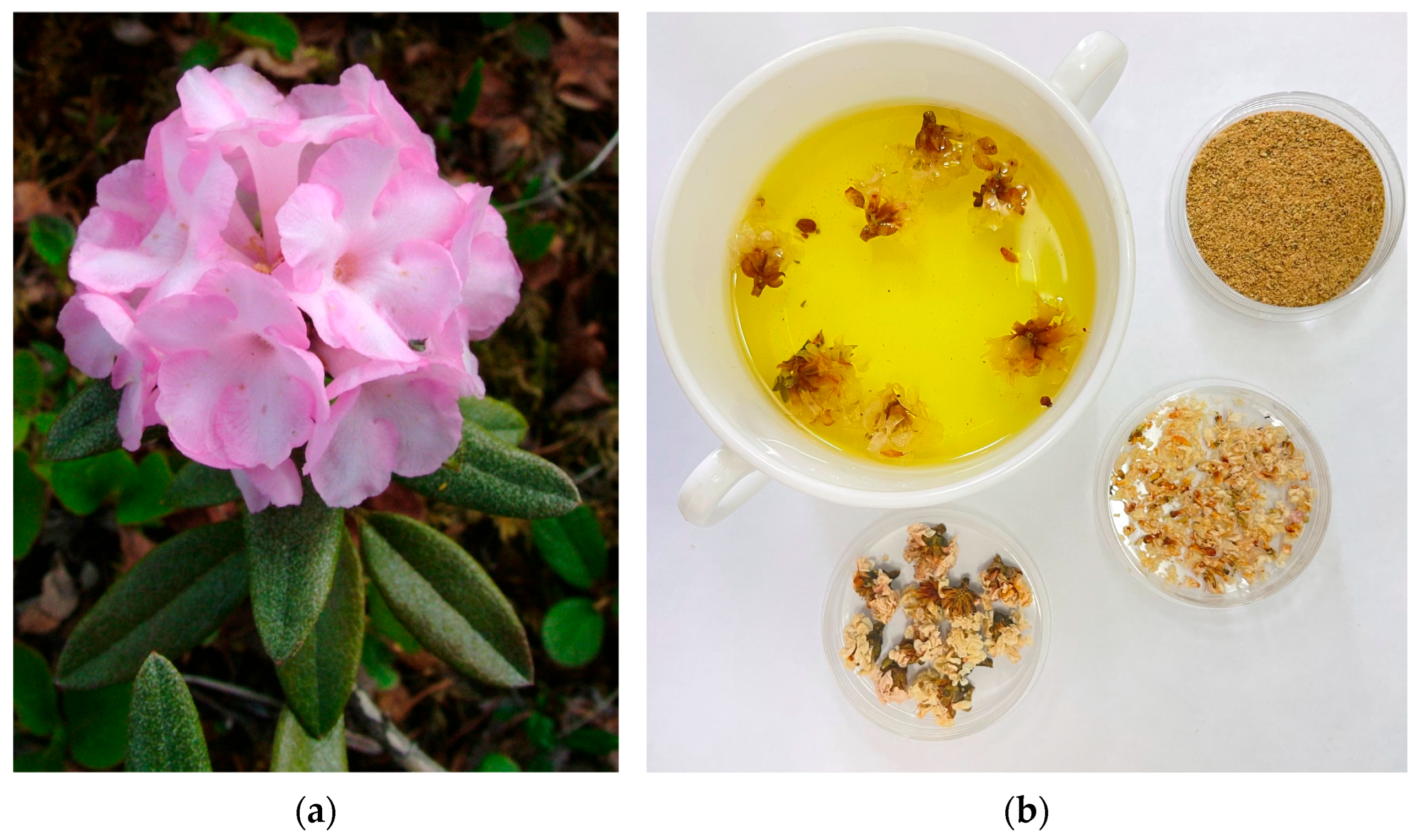

Rhododendron adamsii Flowers as a Potential Source of Tea-Derived Flavonoid Antioxidants




Abstract
1. Introduction
2. Materials and Methods
2.1. Plant Material
2.2. Chemical Composition Assays
2.3. Antioxidant Assays
2.4. High-Performance Chromatography with Photodiode Array and Ion Trap-Time-of-Flight Mass Spectrometry Detection (HPLC-PDA-IT-TOF-MS)
2.5. Plant Extract Preparation
2.6. Monosaccharide Analysis of the HPLC Eluates
2.7. Microcolumn Fast HPLC–UV Assay with Precolumn Incubation with DPPH and Fe2+ Ions
2.8. Statistical and Multivariate Analysis
3. Results and Discussion
3.1. Chemical Composition of Rhododendron adamsii Flowers and Their Radical Scavenging Activity
3.2. LC-MS Profiling of Flavonoids in R. adamsii Flowers
3.2.1. Dihydroflavonols: Taxifolin and Glycosides
3.2.2. Flavonols: Myricetin and Glycosides
3.2.3. Flavonols: Quercetin and Glycosides
3.2.4. Flavonols: Kaempferol and Glycosides
3.2.5. Single (Non-Diverse) Flavonoids
3.2.6. Non-Flavonoid Components
3.2.7. Occurrence of Compounds in R. adamsii Populations
3.3. Quantitative Analysis of Flavonoids in Rhododendron adamsii Flowers
3.4. Effect of Grinding Rhododendron adamsii Flowers on Flavonoid Content and Antioxidant Activity of Tea Extracts
3.5. Rhododendron adamsii Flower Tea: Outlook and Recommendations
4. Conclusions
Supplementary Materials
Author Contributions
Funding
Data Availability Statement
Acknowledgments
Conflicts of Interest
Abbreviations
| ABTS•+ | 2,2′-azino-bis(3-ethylbenzothiazoline-6-sulfonic acid) radicals |
| Br• | Bromine radicals |
| Cl• | Chlorine radicals |
| DMPD• | N,N-dimethyl-p-phenylenediamine dihydrochloride radicals |
| DPPH• | 2,2-diphenyl-1-picrylhydrazyl radicals |
| DW | Dry weight |
| FeCA | Fe2+-chelating activity |
| HG | Hand-ground |
| HPLC-PDA-IT-TOF-MS | High-performance chromatography with photodiode array and ion trap-time-of-flight mass spectrometry detection |
| HPLC-UV | High-performance chromatography with ultraviolet detection |
| Kae | Kaempferol |
| LC-MS | Liquid chromatography-mass spectrometry |
| Myr | Myricetin |
| NO | Nitric oxide (II) |
| OH• | Hydroxyl radicals |
| O2•− | Superoxide radicals |
| PCA | Principal component analysis |
| PV | Pulverized |
| Que | Quercetin |
| Tax | Taxifolin |
| TFCs | Total flavonoids content |
| TPCs | Total phenolic compounds content |
| UG | Unground |
References
- Popescu, R.; Kopp, B. The genus Rhododendron: An ethnopharmacological and toxicological review. J. Ethnopharmacol. 2013, 147, 42–62. [Google Scholar] [CrossRef] [Scilit] [PubMed]
- Olennikov, D.N.; Nikolaev, V.M.; Chirikova, N.K. Sagan Dalya tea, a new “old” probable adaptogenic drug: Metabolic characterization and bioactivity potentials of Rhododendron adamsii leaves. Antioxidants 2021, 10, 863. [Google Scholar] [CrossRef] [Scilit] [PubMed]
- Malyschev, L.I. Flora of Siberia; CRC Press: Boca Raton, FL, USA, 2006; Volume 11, 310p. [Google Scholar]
- Aseeva, T.A.; Yakovlev, G.P. Reference-Book of Traditional Tibetan Medicine Herbs; Nauka: Novosibirsk, Russia, 2013; 292p. (In Russian) [Google Scholar]
- Ddud Rtsi (The Canon of Tibetan Medicine); Dashiev, D.B., Translator; Vostochnaya Literatura: Moscow, Russia, 2001; 766p. (In Russian) [Google Scholar]
- Sanzhai-Jamtso, D. Vaidurya onbo (Garland of Blue Beryl); Dashiev, D.B., Translator; Nauka: Moscow, Russia, 2014; 1286p. (In Russian) [Google Scholar]
- Prajna, S. Kunpan-Duji (Amrita Extract Beneficial for Everyone); Dashiev, D.B., Translator; Vostochnaya Literatura: Moscow, Russia, 2008; 214p. (In Russian) [Google Scholar]
- Phuntsok, D. Shel Phreng (Necklace of Pure Crystal); Dashiev, D.B., Translator; Nauka: Moscow, Russia, 2017; 494p. (In Russian) [Google Scholar]
- Damdinzhapova, O. Buryat-Mongolian Cuisine; NovaPrint: Ulan-Ude, Russia, 2018; 240p. (In Russian) [Google Scholar]
- Rogachev, A.D.; Fomenko, V.V.; Salnikova, O.I. Comparative analysis of essential oil compositions from leaves and stems of Rhododendron adamsii, R. aureum, and R. dauricum. Chem. Nat. Compd. 2006, 42, 426–430. [Google Scholar] [CrossRef] [Scilit]
- Razgonova, M.; Zakharenko, A.; Ercisli, S.; Grudev, V.; Golokhvast, K. Comparative analysis of Far East sikhotinsky rhododendron (Rh. sichotense) and East Siberian rhododendron (Rh. adamsii) using supercritical CO2-extraction and HPLC-ESI-MS/MS spectrometry. Molecules 2020, 25, 3774. [Google Scholar] [CrossRef] [Scilit]
- Chernonosov, A.A.; Karpova, E.A.; Karakulov, A.V. Metabolomic profiling of three Rhododendron species from Eastern Siberia by liquid chromatography with high-resolution mass spectrometry. S. Afr. J. Bot. 2023, 157, 622–634. [Google Scholar] [CrossRef] [Scilit]
- Kukina, T.P.; Elshin, I.A.; Sal’nikova, O.I. Composition of lipophilic lomponents of Rhododendron adamsii Rehd. ether extract and activity against SARS-CoV-2 main protease. Russ. J. Bioorganic Chem. 2023, 49, 1730–1739. [Google Scholar] [CrossRef] [Scilit]
- Jha, A.K.; Khalid, M.A.; Labh, S.N. In vitro antioxidant and antibacterial activities of medicinal flower Laligurans Rhododendron arboreum collected from Kathmandu Valley, Nepal. Int. J. Food Sci. 2024, 2024, 6073042. [Google Scholar] [CrossRef] [Scilit]
- Postolache, A.N.; Veleșcu, I.D.; Stoica, F.; Crivei, I.C.; Arsenoaia, V.N.; Usturoi, M.G.; Constantinescu, C.G.; Lipșa, F.D.; Frunză, G.; Simeanu, D.; et al. A clean-label formulation of fortified yogurt based on rhododendron flower powder as a functional ingredient. Foods 2023, 12, 4365. [Google Scholar] [CrossRef] [Scilit]
- Achhami, H.; Pachhai, B.B.; Chaudhary, S.; Manandhar, P.; Bhatt, L.R. Physicochemical, nutritional, antinutritional and antioxidant properties of juice and wines from Rhododendron arboreum Sm. petals. Appl. Food Res. 2025, 5, 100929. [Google Scholar] [CrossRef] [Scilit]
- Jung, S.J.; Kim, D.H.; Hong, Y.H. Flavonoids from the flower of Rhododendron yedoense var. poukhanense and their antioxidant activities. Arch. Pharm. Res. 2007, 30, 146–150. [Google Scholar] [CrossRef] [Scilit]
- Zhang, M.; Lou, B.; Zhang, Y.; Lin, Q.; Huang, Y.; Li, Y. Analysis of flavonoids in Rhododendron pulchrum flowers by HPLCMS/MS. Int. J. Agric. Biol. 2020, 24, 1464–1468. [Google Scholar] [CrossRef] [Scilit]
- Wang, S.; Huang, S.; Yang, J. Metabolite profiling of violet, white and pink flowers revealing flavonoids composition patterns in Rhododendron pulchrum Sweet. J. Biosci. 2021, 46, 3. [Google Scholar] [CrossRef] [Scilit] [PubMed]
- Harborne, J.B. Gossypetin and herbacetin as taxonomic markers in higher plants. Phytochemistry 1969, 8, 177–183. [Google Scholar] [CrossRef] [Scilit]
- Yang, Q.; Li, Z.; Ma, Y.; Fang, L.; Liu, Y.; Zhu, X.; Dong, H.; Wang, S. Metabolite analysis reveals flavonoids accumulation during flower development in Rhododendron pulchrum sweet (Ericaceae). PeerJ 2024, 12, e17325. [Google Scholar] [CrossRef] [Scilit]
- Dede, E.; Genc, N.; Elmastas, M.; Aksit, H.; Erenler, R. Chemical constituents isolated from Rhododendron ungernii with antioxidant profile. Nat. Prod. J. 2019, 9, 238–243. [Google Scholar] [CrossRef] [Scilit]
- Shi, X.; Wang, Y.; Gong, S.; Liu, X.; Tang, M.; Tang, J.; Sun, W.; Yi, Y.; Gong, J.; Zhang, X. The preliminary analysis of flavonoids in the poetals of Rhododendron delavayi, Rhododendron agastum and Rhododendron irroratum infected with Neopestalotiopsis clavispora. Int. J. Mol. Sci. 2024, 25, 9605. [Google Scholar] [CrossRef] [Scilit]
- Olennikov, D.N.; Dudareva, L.V.; Osipenko, S.N.; Penzina, T.A. Chemical composition of essential oils from leaves of Rhododendron dauricum and R. aureum. Chem. Nat. Compd. 2009, 45, 450–452. [Google Scholar] [CrossRef] [Scilit]
- Olennikov, D.N.; Tankhaeva, L.M. Phenolic compounds from Rhododendron dauricum from Baikal region. Chem. Nat. Compd. 2010, 46, 471–473. [Google Scholar] [CrossRef] [Scilit]
- Olennikov, D.N.; Dudareva, L.V.; Osipenko, S.N.; Penzina, T.A. Chemical composition of Rhododendron aureum (gold rosebay) essential oil from Pribaikal’e (Russian Federation). J. Serb. Chem. Soc. 2010, 75, 209–215. [Google Scholar] [CrossRef] [Scilit]
- Padalia, R.C.; Verma, D.K.; Arora, C.; Mahish, P.K. Essential Oils: Sources, Production and Applications; De Gruyter: Berlin, Germany, 2023; pp. 25–47. [Google Scholar] [CrossRef] [Scilit]
- Olennikov, D.N.; Chirikova, N.K.; Vasilieva, A.G.; Fedorov, I.A. LC-MS profile, gastrointestinal and gut microbiota stability and antioxidant activity of Rhodiola rosea herb metabolites: A comparative study with subterranean organs. Antioxidants 2020, 9, 526. [Google Scholar] [CrossRef] [Scilit]
- Fogliano, V.; Verde, V.; Randazzo, G.; Ritieni, A. Method for measuring antioxidant activity and its application to monitoring the antioxidant capacity of wines. J. Agric. Food Chem. 1999, 47, 1035–1040. [Google Scholar] [CrossRef] [Scilit] [PubMed]
- Olennikov, D.N.; Kashchenko, N.I.; Chirikova, N.K. Foliar application of salicylic acid stimulates phenolic compound accumulation and antioxidant potential in Saposhnikovia divaricata herb. Horticulturae 2025, 11, 895. [Google Scholar] [CrossRef] [Scilit]
- Olennikov, D.N.; Vasilieva, A.G.; Chirikova, N.K. Fragaria viridis fruit metabolites: Variation of LC-MS profile and antioxidant potential during ripening and storage. Pharmaceuticals 2020, 13, 262. [Google Scholar] [CrossRef] [Scilit] [PubMed]
- Olennikov, D.N.; Kashchenko, N.I.; Chirikova, N.K. A novel HPLC-assisted method for investigation of the Fe2+-chelating activity of flavonoids and plant extracts. Molecules 2014, 19, 18296–18316. [Google Scholar] [CrossRef] [Scilit]
- Yang, P.; Xu, F.; Li, H.-F.; Wang, Y.; Li, F.-C.; Shang, M.-Y.; Liu, G.-X.; Wang, X.; Cai, S.-Q. Detection of 191 taxifolin metabolites and their distribution in rats using HPLC-ESI-IT-TOF-MSn. Molecules 2016, 21, 1209. [Google Scholar] [CrossRef] [Scilit]
- Olennikov, D.N.; Chirikova, N.K. Phenolic compounds of six unexplored Asteraceae species from Asia: Comparison of wild and cultivated plants. Horticulturae 2024, 10, 486. [Google Scholar] [CrossRef] [Scilit]
- Olennikov, D.N.; Kashchenko, N.I. New flavonol acetates of O-glucuronides from three Polygonum species. Chem. Nat. Compd. 2025, 61, 447–451. [Google Scholar] [CrossRef] [Scilit]
- Kashchenko, N.I.; Olennikov, D.N.; Chirikova, N.K. Metabolites of Geum aleppicum and Sibbaldianthe bifurca: Diversity and α-glucosidase inhibitory potential. Metabolites 2023, 13, 689. [Google Scholar] [CrossRef] [Scilit]
- Olennikov, D.N.; Kashchenko, N.I. Foliar application of salicylic acid induced a greater accumulation of isorhamnetin O-glycosides than quercetin O-glycosides in Calendula officinalis flowers. Appl. Biochem. Microbiol. 2025, 61, 1227–1237. [Google Scholar] [CrossRef] [Scilit]
- Olennikov, D.N.; Markova, K.V.; Chirikova, N.K.; Gornostay, T.G.; Velichko, V.V.; Potanina, O.G. Composition and antilipase activity of C,O-glycosylflavones from yellow-skinned varieties of Cucumis sativus L. (Cucurbitaceae). Pharm. Chem. J. 2025, 58, 1705–1712. [Google Scholar] [CrossRef] [Scilit]
- Olennikov, D.N.; Taraskin, V.V.; Chirikova, N.K. New coumarins from the family Apiaceae. III. Lomatin and phlojodicarpin glycosides from Phlojodicarpus sibiricus. Chem. Nat. Comp. 2025, 61, 1081–1084. [Google Scholar] [CrossRef] [Scilit]
- Khatri, D.; Poudel, A.; Ray, M.K.; Gupta, N.K.; Baral, P.; Kunwar, S.; Parajuli, S.; Purja, S.; Adhikari, S.; Tripathi, J.; et al. Phytochemical profiling and antioxidant potential of three Rhododendron species collected from Mustang District, Nepal. Himal. Biodivers. 2025, 10, 100–109. [Google Scholar] [CrossRef] [Scilit]
- Badawy, S.A.; Hassan, A.R.; Abu Bakr, M.S. UPLC-qTOF-MS/MS profiling of phenolic compounds in Fagonia arabica L. and evaluation of their cholinesterase inhibition potential through in-vitro and in-silico approaches. Sci. Rep. 2025, 15, 5244. [Google Scholar] [CrossRef] [Scilit] [PubMed]
- Chosson, E.; Chaboud, A.; Chulia, A.J.; Raynaud, J. Dihydroflavonol glycosides from Rhododendron ferrugineum. Phytochemistry 1998, 49, 1431–1433. [Google Scholar] [CrossRef] [Scilit]
- Lee, H.S.; Jang, H.D.; Kim, T.H.; An, D.H.; Kwon, Y.E.; Kim, E.J.; Jung, J.I.; Min, S.; Kim, H.K.; Park, K.-H. In vitro study on the effects of Rhododendron mucronulatum branch extract, taxifolin-3-O-arabinopyranoside and taxifolin on muscle loss and muscle atrophy in C2C12 murine skeletal muscle cells. Int. J. Mol. Sci. 2026, 27, 570. [Google Scholar] [CrossRef] [Scilit]
- Kim, T.H.; Jang, H.D.; Kim, Y.J.; Kwon, Y.E.; Park, S.M.; Kim, M.S.; Lee, S.H. Chemotaxonomic significance of taxifolin-3-O-arabinopyranoside in Chinese Rhododendron genus. J. Forest Environ. Sci. 2024, 40, 123–140. [Google Scholar] [CrossRef]
- Buckingham, J.; Munasinghe, V.R.N. Dictionary of Flavonoids; CRC Press: Boca Raton, FL, USA, 2015; 1031p. [Google Scholar]
- Fossen, T.; Frøystein, A.N.; Andersen, Ø.M. Myricetin 3-rhamnosyl(1→6)galactoside from Nymphaéa marliacea. Phytochemistry 1998, 49, 1997–2000. [Google Scholar] [CrossRef] [Scilit]
- Louis, A.; Petereit, F.; Lechtenberg, M.; Deters, A.; Hensel, A. Phytochemical characterization of Rhododendron ferrugineum and in vitro assessment of an aqueous extract on cell toxicity. Planta Med. 2010, 76, 1550–1557. [Google Scholar] [CrossRef] [Scilit]
- Olennikov, D.N.; Prokopyev, A.S. Phenolic compounds of Rhodiola algida (Ledeb.) Fisch. & C.A. Mey.: New glycosides of herbacetin, HPLC-MS profile and organ-specific distribution. Russ. J. Plant Physiol. 2024, 71, 98. [Google Scholar] [CrossRef] [Scilit]
- Harborne, J.; Williams, C. Leaf survey of flavonoids and simple phenols in the genus Rhododendron. Phytochemistry 1971, 10, 2727–2744. [Google Scholar] [CrossRef] [Scilit]
- Karpova, E.A.; KArakulov, A.V. Flavonoids of some Rhododendron species of flora of Siberia and the Far East. Chem. Plant Raw Mater. 2013, 17, 119–126. [Google Scholar] [CrossRef] [Scilit]
- Oganesyan, E.T.; Bandyukova, V.A.; Shinkarenko, A.L. Quercetin araboglycosides from some species of Rhododendron. Chem. Nat. Compd. 1971, 7, 346. [Google Scholar] [CrossRef] [Scilit]
- Dai, S.; Yu, D. Studies on the flavonoids in stem of Rhododendron anthopogonoide. Zhongguo Zhong Yao Za Zhi 2005, 30, 1830–1833. [Google Scholar] [PubMed]
- Park, J.I.; Kim, M.J.; Lee, K.H.; Oh, S.H.; Kang, Y.H.; Kim, H. Determination of flavonoid glycoside isomers using vision transformer and tandem mass spectrometry. Plants 2024, 13, 3401. [Google Scholar] [CrossRef] [Scilit]
- Qiang, L.; Liping, W.; Peimin, D.; Xuejun, Z.; Xiaoxiao, Q.; Lijun, Z.; Tongmeng, Y.; Ying, W.; Linlin, L.; Ming, H.; et al. A combined strategy of mass fragmentation, post-column cobalt complexation and shift in ultraviolet absorption spectra to determine the uridine 5-diphospho-glucuronosyltransferase metabolism profiling of flavones after oral administration of a flavone mixture in rats. J. Chromatogr. A 2015, 1395, 116–128. [Google Scholar] [CrossRef] [Scilit]
- Chauhan, J.S.; Sultan, M.; Srivastava, S.K. Two new glycoflavones from the roots of Phyllanthus niruri. Planta Med. 1977, 32, 217–222. [Google Scholar] [CrossRef] [Scilit] [PubMed]
- Łyko, L.; Olech, M.; Nowak, R. LC-ESI-MS/MS characterization of concentrated polyphenolic fractions from Rhododendron luteum and their anti-inflammatory and antioxidant activities. Molecules 2022, 27, 827. [Google Scholar] [CrossRef] [Scilit]
- Zeng, K.; Ban, S.; Cao, Z.; Cao, P.; Luo, X.; Wang, R.; Zhao, Z.; Xu, J. Phytochemical and chemotaxonomic study on the leaves of Rhododendron amesiae. Biochem. Syst. Ecol. 2021, 95, 104232. [Google Scholar] [CrossRef] [Scilit]
- Neverova, N.A.; Levchuk, A.A.; Ostroukhova, L.A.; Medvedeva, E.N.; Onuchina, N.A.; Babkin, V.A. Distribution of extractive substances in wood of the Siberian larch (Larix sibirica Ledeb.). Russ. J. Bioorganic Chem. 2013, 39, 712–719. [Google Scholar] [CrossRef] [Scilit]
- Miean, K.H.; Mohamed, S. Flavonoid (myricetin, quercetin, kaempferol, luteolin, and apigenin) content of edible tropical plants. J. Agric. Food Chem. 2001, 49, 3106–3112. [Google Scholar] [CrossRef] [Scilit]
- Kreft, I.; Fabjan, N.; Yasumoto, K. Rutin content in buckwheat (Fagopyrum esculentum Moench) food materials and products. Food Chem. 2006, 98, 508–512. [Google Scholar] [CrossRef] [Scilit]
- Habtemariam, S. Antioxidant and rutin content analysis of leaves of the common buckwheat (Fagopyrum esculentum Moench) grown in the United Kingdom: A case study. Antioxidants 2019, 8, 160. [Google Scholar] [CrossRef] [Scilit] [PubMed]
- Tobar-Delgado, E.; Mejía-España, D.; Osorio-Mora, O.; Serna-Cock, L. Rutin: Family farming products’ extraction sources, industrial applications and current trends in biological activity protection. Molecules 2023, 28, 5864. [Google Scholar] [CrossRef] [Scilit] [PubMed]
- Shomali, A.; Das, S.; Arif, N.; Sarraf, M.; Zahra, N.; Yadav, V.; Aliniaeifard, S.; Chauhan, D.K.; Hasanuzzaman, M. Diverse physiological roles of flavonoids in plant environmental stress responses and tolerance. Plants 2022, 11, 3158. [Google Scholar] [CrossRef] [Scilit]
- Zheng, T.; Zhang, D.-L.; Sun, B.-Y.; Liu, S.-M. Evaluating the impacts of climate factors and flavonoids content on Chinese prickly ash peel color based on HPLC-MS and structural equation model. Foods 2022, 11, 2539. [Google Scholar] [CrossRef] [Scilit]
- Książkiewicz, M.; Karczewska, M.; Nawrot, F.; Korybalska, K.; Studzińska-Sroka, E. Traditionally used edible flowers as a source of neuroactive, antioxidant, and anti-inflammatory extracts and bioactive compounds: A narrative review. Molecules 2025, 30, 677. [Google Scholar] [CrossRef] [Scilit]
- Carboni, A.D.; Di Renzo, T.; Nazzaro, S.; Marena, P.; Puppo, M.C.; Reale, A. A comprehensive review of edible flowers with a focus on microbiological, nutritional, and potential health aspects. Foods 2025, 14, 1719. [Google Scholar] [CrossRef] [Scilit]
- Ferreira, J.; Tkacz, K.; Turkiewicz, I.P.; Santos, M.I.; Belas, A.; Lima, A.; Wojdyło, A.; Sousa, I. Influence of particle size and extraction methods on phenolic content and biological activities of pear pomace. Foods 2023, 12, 4325. [Google Scholar] [CrossRef] [Scilit]
- Shahi, D.K.; Achhami, H.; Karki, N.; Pachhai, B.B.; Rai, E.; Gautam, D.; Joshi, M.K. Phytochemical properties, antioxidant and antimicrobial activities, and colorimetric pH responsiveness of Rhododendron arboreum Sm. flower extract from Manma-Kalikot, Nepal. J. Inst. Sci. Technol. 2025, 30, 115–123. [Google Scholar] [CrossRef] [Scilit]
- Jeon, J.; Kim, H.G.; Um, B.H.; Kim, C.Y. Rapid detection of antioxidant flavonoids in azalea (Rhododendron mucronulatum) flowers using on-line HPLC-ABTS+ system and preparative isolation of three flavonoids by centrifugal partition chromatography. Sep. Sci. Technol. 2011, 46, 518–524. [Google Scholar] [CrossRef] [Scilit]
- Bondonno, N.P.; Dalgaard, F.; Kyrø, C. Flavonoid intake is associated with lower mortality in the Danish Diet Cancer and Health Cohort. Nat. Commun. 2019, 10, 3651. [Google Scholar] [CrossRef] [Scilit]
- Vogiatzoglou, A.; Mulligan, A.A.; Lentjes, M.A.H.; Luben, R.N.; Spencer, J.P.E. Flavonoid intake in European adults (18 to 64 Years). PLoS ONE 2015, 10, e0128132. [Google Scholar] [CrossRef] [Scilit]
- Kodama, D.H.; Gonçalves, A.E.S.S.; Lajolo, F.M.; Genovese, M.I. Flavonoids, total phenolics and antioxidant capacity: Comparison between commercial green tea preparations. Food Sci. Technol. 2010, 30, 1077–1082. [Google Scholar] [CrossRef] [Scilit]
- Mazurenko, M.T. Life Forms of Heathers of the Upper Kolyma; Far Eastern Scientific Center: Vladivostok, Russia, 1981; pp. 3–29. (In Russian) [Google Scholar]
- Mazurenko, M.T. Flora and Vegetation of Chukotka; Far Eastern Scientific Center: Vladivostok, Russia, 1978; pp. 80–117. (In Russian) [Google Scholar]
- Ayanskaya, N.S. Experience of introduction of some Siberian species of Rhododendrons in the State Botanical Garden of the USSR Academy of Sciences. Proc. Bot. Inst. USSR Acad. Sci. 1966, 2, 518–524. (In Russian) [Google Scholar]
- Filimonova, E.N.; Sizykh, S.V. Some results of introducing species of the genus Rhododendron L. into cultivation in the botanical garden of Irkutsk State University. Bull. Irkutsk State Agric. Acad. 2011, 44, 126–132. (In Russian) [Google Scholar]



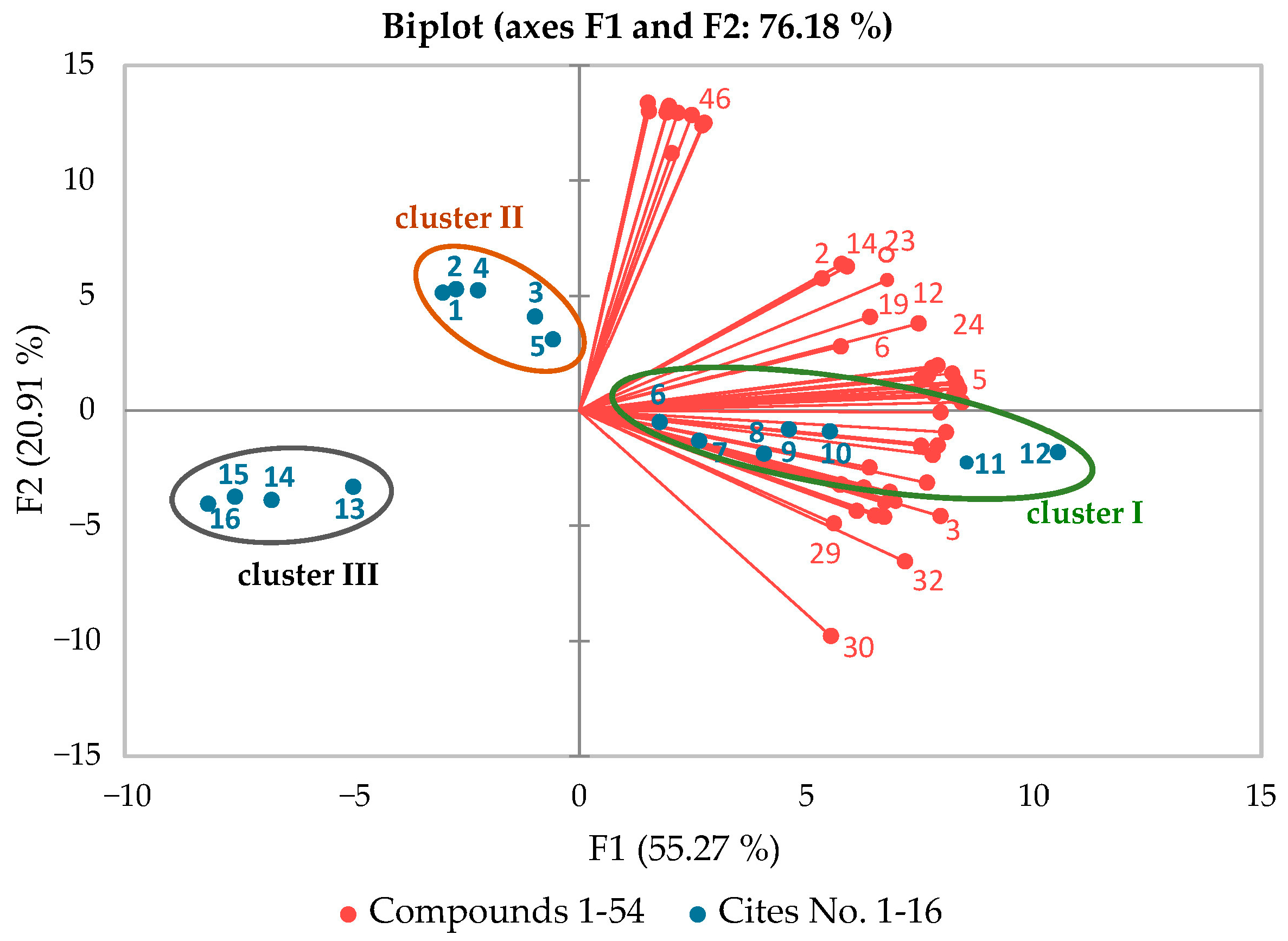
| Site No. | Coordinates | Region | Collection Place (Voucher No.) | Height, a.m.s.l. | Collection Year |
|---|---|---|---|---|---|
| No. 1 | 72°14′32.9″ N 126°57′26.6″ E | Siberia | Republic Sakha (Yakutia), Bulunskii ulus (YAK-ERI-0620-073/062) | 35 | 2020 |
| No. 2 | 71°37′58.7″ N 128°53′13.3″ E | Siberia | Republic Sakha (Yakutia), Bulunskii ulus, Tiksi (YAK-ERI-0620-073/065) | 40 | 2020 |
| No. 3 | 71°00′45.2″ N 127°27′34.6″ E | Siberia | Republic Sakha (Yakutia), Bulunskii ulus (YAK-ERI-0621-064/081) | 280 | 2021 |
| No. 4 | 72°07′18.1″ N 110°33′16.0″ E | Siberia | Krasnoyarskii Krai, Dolgano-Nenetskii Region (KRA-ERI-0623-021/015) | 40 | 2023 |
| No. 5 | 70°32′06.2″ N 101°19′16.8″ E | Siberia | Krasnoyarskii Krai, Dolgano-Nenetskii Region (KRA-ERI-0618-021/003) | 250 | 2018 |
| No. 6 | 63°02′23.6″ N 138°23′40.4″ E | Siberia | Republic Sakha (Yakutia), Tomponskii ulus (YAK-ERI-0619-005/051) | 820 | 2019 |
| No. 7 | 63°21′18.2″ N 152°37′47.4″ E | Far East | Magadan Oblast, Srednekanskii Region (MAG-ERI-0520-034/032) | 470 | 2020 |
| No. 8 | 56°31′02.8″ N 118°38′22.2″ E | Siberia | Zabaykalsky Krai, Kalarskii Region (ZAB-ERI-0523-071/064) | 1650 | 2023 |
| No. 9 | 55°34′28.2″ N 113°38′10.5″ E | Siberia | Republic Buryatia, Bauntovskii Region (BUR-ERI-0522-031/016) | 1580 | 2022 |
| No. 10 | 51°17′18.3″ N 105°15′38.3″ E | Siberia | Republic Buryatia, Dzhidinskii Region (BUR-ERI-0517-037/054) | 2080 | 2017 |
| No. 11 | 51°55′55.8″ N 102°26′07.6″ E | Siberia | Republic Buryatia, Tunkinskii Region (BUR-ERI-0521-028/018) | 1370 | 2021 |
| No. 12 | 51°43′25.2″ N 101°00′03.9″ E | Siberia | Republic Buryatia, Tunkinskii Region (BUR-ERI-0519-018/023) | 2020 | 2019 |
| No. 13 | 51°58′14.0″ N 95°29′20.8″ E | Siberia | Republic Tyva, Kaa-Khemskii Region (TYV-ERI-0522-017/091) | 2250 | 2022 |
| No. 14 | 52°50′35.6″ N 93°22′38.1″ E | Siberia | Krasnoyarskii Krai, Ermakovskii Region (KRA-ERI-0621-067/011) | 1800 | 2021 |
| No. 15 | 50°39′26.1″ N 99°19′08.3″ E | Mongolia | Hovstgol, Ulaan-Uul (MON-ERI-0519-015/033) | 1850 | 2019 |
| No. 16 | 46°58′24.6″ N 101°16′54.9″ E | Mongolia | Bulgan, Arkhangai (MON-ERI-0522-029/008) | 2950 | 2022 |
| Compound Group | Value Range | Linear Correlation Data 1 | p-Value |
|---|---|---|---|
| Essential oil, % | 0.05–0.53 | y = −0.0171x + 0.4357; r2 = 0.2180 | 0.07 |
| Lipids, % | 0.63–2.93 | y = −0.0894x + 2.3414; r2 = 0.2897 | 0.03 |
| Total phenolics, % | 13.53–16.83 | y = −1.2377x + 19.595; r2 = 0.9956 | 6.70 × 10⁻¹⁸ |
| Flavonols, % | 9.30–11.43 | y = −0.8478x + 13.482; r2 = 0.9910 | 1.01 × 10⁻¹⁵ |
| Dihydroflavonols, % | 2.11–3.81 | y = −0.2737x + 4.2855; r2 = 0.9621 | 2.39 × 10⁻¹¹ |
| Catechins, % | 0.01–0.12 | y = −0.0057x + 0.0999; r2 = 0.3391 | 0.02 |
| Procyanidins, % | 0.001–0.031 | y = −0.0009x + 0.0158; r2 = 0.2086 | 0.08 |
| Polysaccharides, % | 2.08–9.63 | y = −0.2109x + 7.2613; r2 = 0.1831 | 0.10 |
| DPPH, IC50, μg/mL | 2.39–14.53 | – |
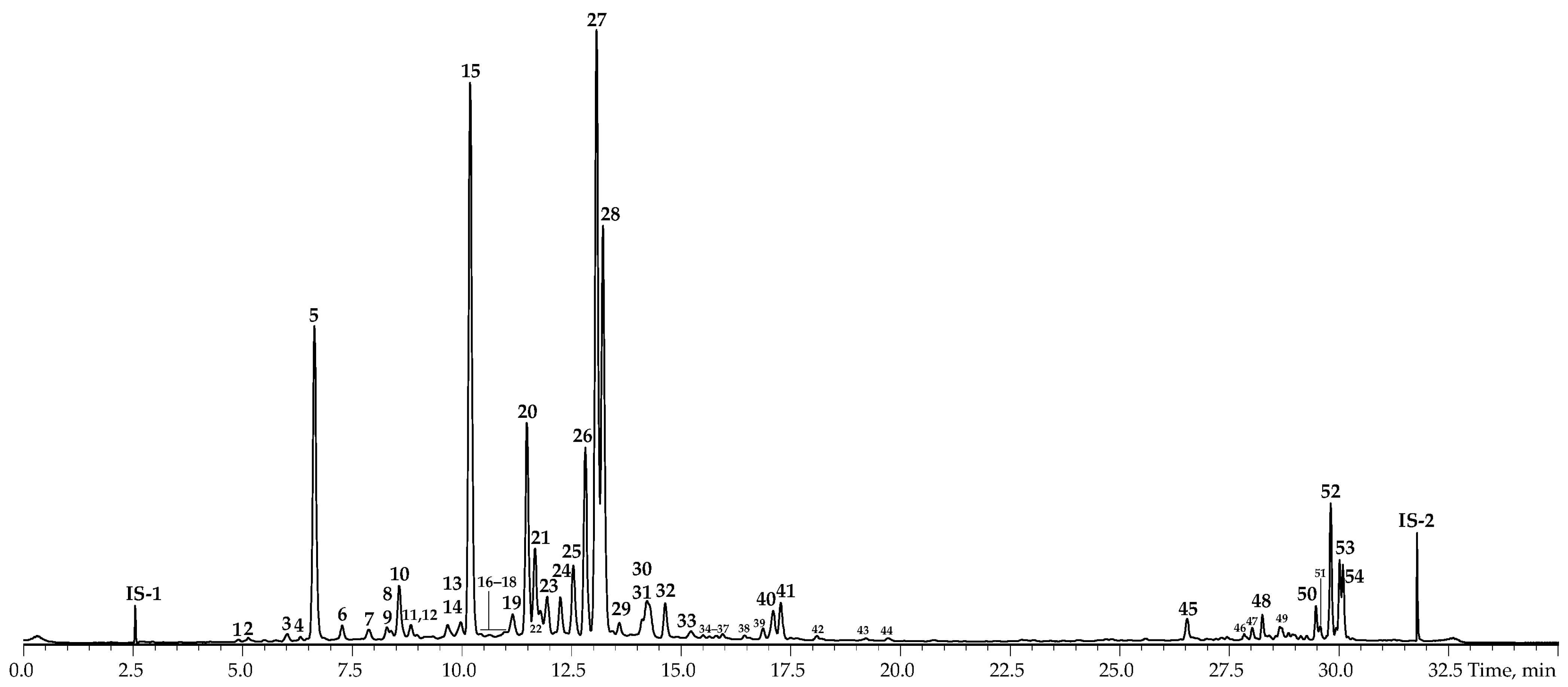
| No. | tR, min | Compound | MF (Error, ppm) | MS, [M–H]−, m/z | MS 2, m/z | UVP 1 | IL 2 | Early Found in R. adamsii Leaves [Ref.] | Occurrence of Compound 3, % |
|---|---|---|---|---|---|---|---|---|---|
| 1 | 4.90 | 4-O-Caffeoyl-quinic acid, trans-isomer | C16H18O9 (1.1) | 353 | 179 | C1 | 1 (SA, 65969, 98) | Yes [23] | 18.8 |
| 2 | 5.14 | 1-O-Caffeoyl β-glucose | C15H18O9 (0.2) | 341 | 179 | C1 | 1 (MCE, W416228, 97) | No | 25.0 |
| 3 | 6.01 | Taxifolin 3-O-glucoside (glucodistylin) | C21H22O12 (1.0) | 465 | 303 | F1 | 1 (CF, CFN99389, 98) | No | 43.8 |
| 4 | 6.42 | 1-O-Feruloyl β-glucose | C16H20O9 (0.7) | 355 | 193 | C1 | 1 (Sy, FG509, 98) | No | 56.3 |
| 5 | 6.65 | 5-O-Caffeoyl-quinic acid, trans-isomer | C16H18O9 (1.1) | 353 | 179 | C1 | 1 (SA, 94419, 98) | Yes [23] | 100 |
| 6 | 7.27 | Vitexin 2′′-O-rhamnoside | C27H30O14 (0.8) | 577 | 431 | F2 | 1 (CF, CFN98177, 98) | No | 56.3 |
| 7 | 7.91 | Myricetin 3-O-rutinoside | C27H30O17 (1.0) | 625 | 479, 317 | F3 | 1 (MN, M38196, 98) | Yes [23] | 62.5 |
| 8 | 8.28 | (+)-Catechin | C16H18O9 (1.2) | 289 | F4 | 1 (SA, PHR1963, 95) | Yes [23] | 62.5 | |
| 9 | 8.33 | Myricetin 3-O-glucoside (isomyricitrin) | C21H20O13 (1.7) | 479 | 317 | F3 | 1 (SA, 9AD2400F, 98) | Yes [23] | 75.0 |
| 10 | 8.57 | 5-O-p-Coumaroyl-quinic acid, trans-isomer | C16H18O8 (0.7) | 337 | 163 | C2 | 1 (SA, 935573, 95) | No | 100 |
| 11 | 8.84 | Taxifolin O-hexoside | C21H22O12 (1.2) | 465 | 303 | F1 | 3 [33] | No | 100 |
| 12 | 8.91 | Myricetin 3-O-galactoside (gmelinoside I) | C21H20O13 (1.0) | 479 | 317 | F3 | 1 (CF, CFN97817, 98) | Yes [23] | 81.3 |
| 13 | 9.66 | Taxifolin 3′-O-glucoside | C21H22O12 (0.5) | 465 | 303 | F1 | 1 (CF, CFN96494, 98) | No | 100 |
| 14 | 10.02 | Taxifolin O-pentoside | C20H20O11 (0.9) | 435 | 303 | F1 | 3 [33] | No | 100 |
| 15 | 10.22 | Taxifolin 3-O-arabinopyranoside | C20H20O11 (0.3) | 435 | 303 | F1 | 1 (VI, 06344, 94) | No | 100 |
| 16 | 10.53 | Quercetin O-pentoside | C20H18O11 (0.9) | 433 | 301 | F5 | 2 [34] | No | 12.5 |
| 17 | 10.77 | Quercetin O-pentoside | C20H18O11 (1.4) | 433 | 301 | F5 | 2 [34] | No | 31.3 |
| 18 | 11.02 | Myricetin O-pentoside | C20H18O12 (1.0) | 449 | 317 | F3 | 2 [35] | No | 31.3 |
| 19 | 11.15 | Myricetin 3-O-arabinopyranoside | C20H18O12 (1.7) | 449 | 317 | F3 | 1 (MCE, N0581, 98) | No | 100 |
| 20 | 11.48 | Quercetin 3-O-glucoside (isoquercitrin) | C21H20O12 (0.4) | 463 | 301 | F6 | 1 (SA, 16654, 98) | Yes [23] | 100 |
| 21 | 11.46 | Quercetin 3-O-galactoside (hyperoside) | C21H20O12 (0.2) | 463 | 301 | F6 | 1 (SA, 00180585, 98) | Yes [18,23,28,29,30] | 100 |
| 22 | 11.78 | Taxifolin (dihydroquercetin) | C15H12O7 (0.9) | 303 | F1 | 1 (SA, PHL89284, 95) | Yes [18,23,28,29,30] | 100 | |
| 23 | 11.94 | Myricetin 3′-O-glucoside (cannabiscitrin) | C21H20O13 (1.1) | 479 | 317 | F7 | 1 (CF, CFN95278, 98) | No | 100 |
| 24 | 12.24 | Quercetin 3-O-arabinofuranoside (avicularin) | C20H18O11 (1.0) | 433 | 301 | F6 | 1 (CF, CFN98961, 98) | Yes [17,23,28,30] | 100 |
| 25 | 12.53 | Quercetin 3-O-arabinopyranoside (guaijaverin) | C20H18O11 (1.4) | 433 | 301 | F6 | 1 (CF, CFN98211, 98) | No | 100 |
| 26 | 12.81 | Quercetin 3-O-xylopyranoside (reynoutrin) | C20H18O11 (1.0) | 433 | 301 | F6 | 1 (CF, CFN96236, 98) | No | 100 |
| 27 | 13.06 | Quercetin 3-O-rhamnoside (quercitrin) | C21H20O11 (0.9) | 447 | 301 | F6 | 1 (SA, PHL89346, 95) | Yes [17,23,29] | 100 |
| 28 | 12.81 | Myricetin 3′-O-xyloside (tent.) | C20H18O12 (1.5) | 449 | 317 | F7 | 2 [35] | No | 100 |
| 29 | 13.28 | Kaempferol 3-O-arabinofuranoside (juglanin) | C20H18O10 (0.5) | 417 | 285 | F8 | 1 (CF, CFN96238, 98) | Yes [23] | 81.3 |
| 30 | 14.05 | Kaempferol 3-O-arabinopyranoside | C20H18O10 (0.9) | 417 | 285 | F8 | 1 (BOC, NP1830, 95) | No | 62.5 |
| 31 | 14.21 | Myricetin | C15H10O8 (1.2) | 317 | 1 (CF, CFN98877, 98) | Yes [18,23,28,29,30] | 100 | ||
| 32 | 14.63 | Kaempferol 3-O-rhamnoside (afzelin) | C21H20O10 (0.7) | 431 | 285 | F8 | 1 (CF, CFN98757, 98) | Yes [30] | 81.3 |
| 33 | 15.22 | Quercetin 4′-O-glucoside (spiraeoside) | C21H20O12 (0.7) | 463 | 301 | F6 | 1 (CF, CFN70300, 98) | No | 62.5 |
| 34 | 15.51 | Quercetin O-hexoside | C21H20O12 (0.9) | 463 | 301 | F6 | 2 [34] | No | 37.5 |
| 35 | 15.61 | Quercetin 3′-O-glucoside | C21H20O12 (1.1) | 463 | 301 | F6 | 1 (CF, CFN95271, 98) | No | 37.5 |
| 36 | 15.79 | Quercetin O-pentoside | C20H18O11 (1.5) | 433 | 301 | F6 | 2 [34] | No | 31.3 |
| 37 | 15.98 | Quercetin O-pentoside | C20H18O11 (1.9) | 433 | 301 | F6 | 2 [34] | No | 37.5 |
| 38 | 16.47 | Quercetin O-desoxyhexoside | C21H20O11 (1.8) | 447 | 301 | F6 | 2 [34] | No | 37.5 |
| 39 | 16.92 | Kaempferol 4′-O-glucoside | C21H20O11 (1.0) | 447 | 285 | F8 | 1 (FA, 004347, 95) | No | 25.0 |
| 40 | 17.09 | Quercetin | C15H10O7 (0.2) | 301 | F6 | 1 (SA, Q4951, 95) | Yes [17,18,23,28,29,30] | 100 | |
| 41 | 17.33 | Kaempferol O-pentoside | C20H18O10 (0.5) | 417 | 285 | F8 | 2 [36] | No | 100 |
| 42 | 18.11 | Kaempferol O-pentoside | C20H18O10 (1.7) | 417 | 285 | F8 | 2 [36] | No | 12.5 |
| 43 | 19.20 | Kaempferol O-desoxyhexoside | C21H20O10 (0.8) | 431 | 285 | F8 | 2 [36] | No | 18.8 |
| 44 | 19.74 | Kaempferol | C15H10O6 (0.3) | 285 | F8 | 1 (SA, 96353, 99) | Yes [17,18,23,29] | 12.5 | |
| 45 | 26.53 | Quercetin O-desoxyhexoside O-acetate | C23H22O12 (0.5) | 489 | 447, 301 | F6 | 2 [37] | No | 75.0 |
| 46 | 27.89 | Quercetin O-desoxyhexoside O-acetate | C23H22O12 (0.7) | 489 | 447, 301 | F6 | 2 [37] | No | 81.3 |
| 47 | 27.93 | Myricetin O-pentoside O-acetate | C22H20O13 (2.1) | 491 | 449, 317 | F7 | 2 [35] | No | 75.0 |
| 48 | 28.20 | Myricetin O-pentoside O-acetate | C22H20O13 (1.5) | 491 | 449, 317 | F7 | 2 [35] | No | 75.0 |
| 49 | 28.69 | Quercetin O-desoxyhexoside di-O-acetate | C25H24O13 (1.4) | 531 | 489, 447, 301 | F6 | 2 [37] | No | 75.0 |
| 50 | 29.47 | Myricetin O-pentoside di-O-acetate | C24H22O14 (1.1) | 533 | 491, 449, 317 | F7 | 2 [35] | No | 75.0 |
| 51 | 29.63 | Quercetin O-desoxyhexoside di-O-acetate | C25H24O13 (1.1) | 531 | 489, 447, 301 | F6 | 2 [37] | No | 75.0 |
| 52 | 29.87 | Myricetin O-pentoside di-O-acetate | C24H22O14 (1.7) | 533 | 491, 449, 317 | F7 | 2 [35] | No | 100 |
| 53 | 30.02 | Myricetin O-pentoside di-O-acetate | C24H22O14 (1.2) | 533 | 491, 449, 317 | F7 | 2 [35] | No | 81.3 |
| 54 | 30.11 | Quercetin O-pentoside di-O-acetate | C24H22O13 (1.9) | 517 | 475, 433, 301 | F6 | 2 [37] | No | 75.0 |
| IS-1 | 2.52 | Cucumoside L (internal standard 1) | C34H42O21 (2.1) | 785 | 623, 461 | F1 | 1 (LC, [38], 92) | – | – |
| IS-2 | 31.92 | Phlojodicarpin (internal standard 2) | C15H16O5 (0.9) | 275 | Co | 1 (LC, [39], 93) | – | – |
| Phenolic Compounds | min, mg/g DW | max, mg/g DW | Median, mg/g DW | IQR * |
|---|---|---|---|---|
| Taxifolin glycosides | 2.40 | 33.90 | 22.87 | 11.53 |
| Taxifolin aglycone | 0.09 | 1.79 | 1.01 | 0.40 |
| Total taxifolins (dihydroflavonols) | 2.51 | 35.17 | 23.89 | 11.86 |
| Myricetin non-acylated glucosides | 4.06 | 31.87 | 21.53 | 7.85 |
| Myricetin acylated glucosides | 0.10 | 13.92 | 6.21 | 4.09 |
| Myricetin glycosides | 4.16 | 38.83 | 27.75 | 9.17 |
| Myricetin aglycone | 0.52 | 3.82 | 2.08 | 1.31 |
| Total myricetins | 4.68 | 42.65 | 29.84 | 9.69 |
| Quercetin non-acylated glucosides | 8.89 | 60.72 | 39.28 | 16.13 |
| Quercetin acylated glucosides | 0.00 | 5.08 | 2.03 | 2.06 |
| Quercetin glucosides | 8.89 | 63.02 | 41.31 | 14.13 |
| Quercetin aglycone | 0.10 | 1.73 | 0.90 | 0.71 |
| Total quercetins | 9.08 | 64.66 | 42.22 | 14.72 |
| Kaempferol non-acylated glucosides | 0.22 | 4.23 | 1.82 | 2.11 |
| Kaempferol aglycone | 0.00 | 0.01 | 0.00 | 0.00 |
| Total kaempferols | 0.22 | 4.24 | 1.82 | 2.11 |
| Total flavonol glycosides | 13.31 | 106.08 | 70.89 | 17.95 |
| Total flavonol aglycones | 0.71 | 5.47 | 2.99 | 1.34 |
| Total flavonols | 14.02 | 111.55 | 73.89 | 19.59 |
| Total catechins (flavan-3-ols) | 0.00 | 0.81 | 0.07 | 0.02 |
| Total apigenins (flavones) | 0.00 | 0.01 | 0.00 | 0.01 |
| Total flavonoids | 16.53 | 147.54 | 97.86 | 31.80 |
| Benzoic acid derivatives | 0.10 | 1.62 | 0.78 | 0.95 |
| Hydroxycinnamates | 2.04 | 6.98 | 4.50 | 2.95 |
| Total non-flavonoids | 2.21 | 8.54 | 5.28 | 3.92 |
| Total phenolic compounds identified | 18.74 | 155.82 | 103.14 | 35.34 |
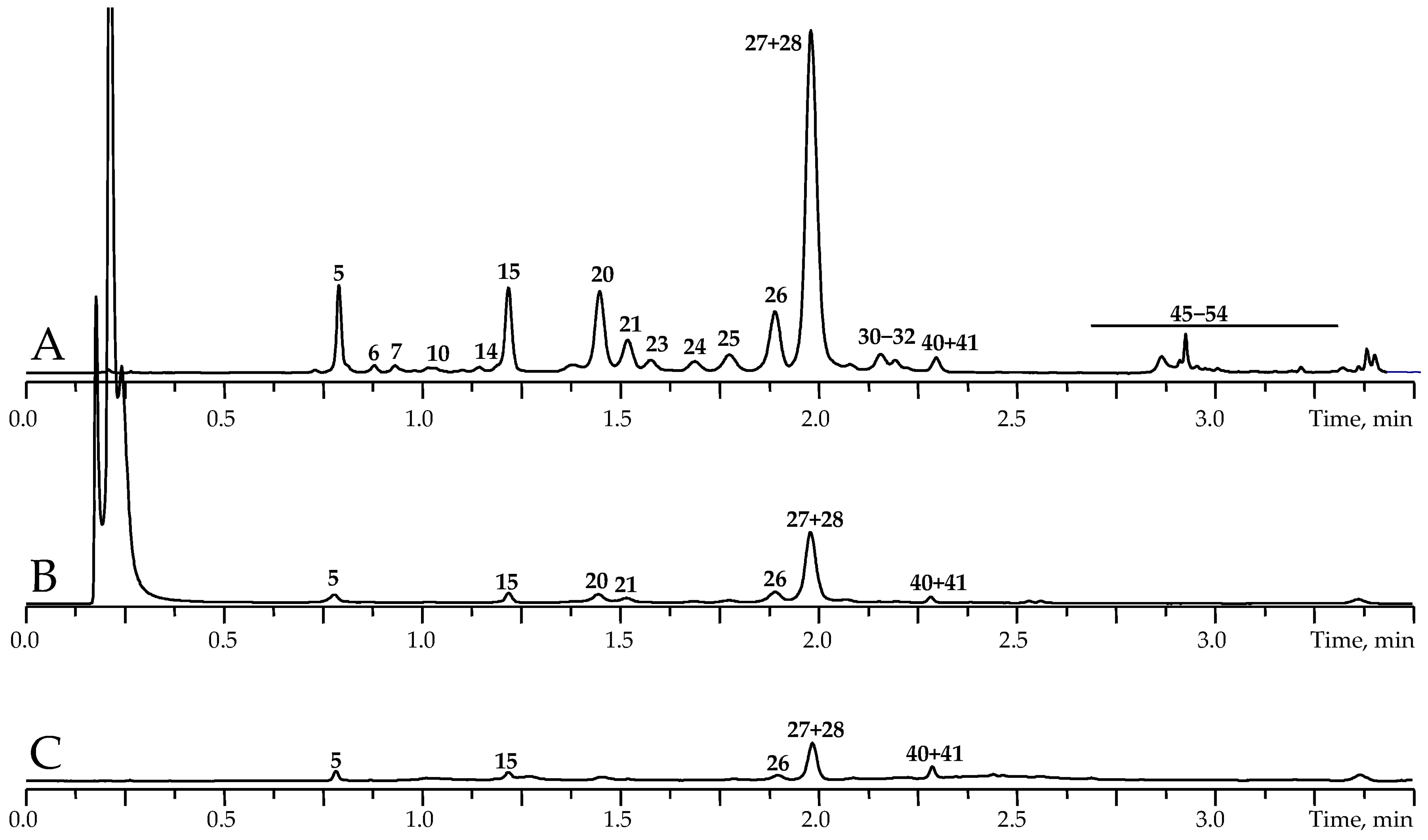
| Compound | Grinding Type | ||
|---|---|---|---|
| Unground | Hand-Ground | Pulverized | |
| Taxifolin 3-O-arabinopyranoside | 29.27 ± 0.58 | 30.42 ± 0.61 | 39.95 ± 0.80 * |
| Quercetin 3-O-glucoside (isoquercitrin) | 6.04 ± 0.12 | 6.53 ± 0.14 * | 12.63 ± 0.26 * |
| Quercetin 3-O-galactoside (hyperoside) | 3.35 ± 0.06 | 3.52 ± 0.06 | 5.66 ± 0.11 * |
| Myricetin 3′-O-glucoside (cannabiscitrin) | 2.05 ± 0.04 | 2.28 ± 0.04 * | 3.28 ± 0.07 * |
| Quercetin 3-O-arabinofuranoside (avicularin) | 1.72 ± 0.03 | 2.03 ± 0.04 * | 3.17 ± 0.06 * |
| Quercetin 3-O-arabinopyranoside (guaijaverin) | 2.48 ± 0.05 | 3.22 ± 0.06 * | 4.50 ± 0.09 * |
| Quercetin 3-O-xyloside (reynoutrin) | 5.36 ± 0.10 | 6.34 ± 0.12 * | 9.37 ± 0.18 * |
| Quercetin 3-O-rhamnoside (quercitrin) | 19.08 ± 0.38 | 19.74 ± 0.40 * | 28.25 ± 0.57 * |
| Myricetin 3′-O-xyloside | 16.69 ± 0.33 | 17.53 ± 0.32 * | 25.54 ± 0.50 * |
| Myricetin | 1.89 ± 0.04 | 2.24 ± 0.04 * | 3.23 ± 0.06 * |
| Kaempferol 3-O-rhamnoside (afzelin) | 0.24 ± 0.00 | 0.64 ± 0.02 * | 1.18 ± 0.02 * |
| Quercetin | 0.20 ± 0.00 | 0.40 ± 0.01 * | 1.04 ± 0.02 * |
| Kaempferol O-pentoside 41 | traces | 0.12 ± 0.00 | 0.93 ± 0.02 * |
| Myricetin O-pentoside di-O-acetate 52 | traces | traces | 0.63 ± 0.02 |
| Myricetin O-pentoside di-O-acetate 53 | traces | traces | 0.40 ± 0.01 |
| Quercetin O-pentoside di-O-acetate 54 | traces | traces | 0.25 ± 0.01 |
| Total flavonoid content | 88.37 | 95.01 | 140.01 |
| Assay | Grinding Value | |||
|---|---|---|---|---|
| Unground | Hand-Ground | Pulverized | Trolox | |
| DPPH•, IC50, μg/mL | 5.12 ± 0.15 * | 4.97 ± 0.14 * | 3.05 ± 0.09 * | 11.63 ± 0.22 |
| ABTS•+, IC50, μg/mL | 3.90 ± 0.10 * | 3.67 ± 0.10 * | 2.11 ± 0.05 * | 4.21 ± 0.07 |
| DMPD•, IC50, μg/mL | 59.34 ± 2.37 * | 54.11 ± 2.19 | 38.11 ± 1.50 * | 53.16 ± 1.59 |
| OH•, IC50, μg/mL | 14.08 ± 0.61 * | 12.73 ± 0.52 * | 9.63 ± 0.41 * | 16.08 ± 0.64 |
| O2•−, IC50, μg/mL | 83.35 ± 3.32 * | 79.16 ± 2.69 * | 52.69 ± 2.10 * | 93.67 ± 3.74 |
| Cl•, mg trolox/g | 450.09 ± 9.02 * | 486.25 ± 9.70 * | 537.14 ± 11.28 * | 1000 |
| Br•, mg trolox/g | 408.20 ± 8.16 * | 421.37 ± 10.11 * | 509.28 ± 10.61 * | 1000 |
| NO, IC50, mg/mL | 0.81 ± 0.04 | 0.78 ± 0.03 * | 0.52 ± 0.02 * | 0.85 ± 0.04 |
| FeCA, mM Fe2+-ions/g | 1.87 ± 0.05 * | 2.01 ± 0.05 * | 2.59 ± 0.07 * | 1.51 ± 0.04 |
Disclaimer/Publisher’s Note: The statements, opinions and data contained in all publications are solely those of the individual author(s) and contributor(s) and not of MDPI and/or the editor(s). MDPI and/or the editor(s) disclaim responsibility for any injury to people or property resulting from any ideas, methods, instructions or products referred to in the content. |
© 2026 by the authors. Licensee MDPI, Basel, Switzerland. This article is an open access article distributed under the terms and conditions of the Creative Commons Attribution (CC BY) license.
Share and Cite
Olennikov, D.N.; Kashchenko, N.I.; Chirikova, N.K. Rhododendron adamsii Flowers as a Potential Source of Tea-Derived Flavonoid Antioxidants. Horticulturae 2026, 12, 484. https://doi.org/10.3390/horticulturae12040484
Olennikov DN, Kashchenko NI, Chirikova NK. Rhododendron adamsii Flowers as a Potential Source of Tea-Derived Flavonoid Antioxidants. Horticulturae. 2026; 12(4):484. https://doi.org/10.3390/horticulturae12040484
Chicago/Turabian StyleOlennikov, Daniil N., Nina I. Kashchenko, and Nadezhda K. Chirikova. 2026. "Rhododendron adamsii Flowers as a Potential Source of Tea-Derived Flavonoid Antioxidants" Horticulturae 12, no. 4: 484. https://doi.org/10.3390/horticulturae12040484
APA StyleOlennikov, D. N., Kashchenko, N. I., & Chirikova, N. K. (2026). Rhododendron adamsii Flowers as a Potential Source of Tea-Derived Flavonoid Antioxidants. Horticulturae, 12(4), 484. https://doi.org/10.3390/horticulturae12040484