


Abstract
Salinity is a major constraint on lettuce (Lactuca sativa L.) production and is known to inhibit seed germination. However, the physiological and biochemical processes underlying this sensitivity remain unclear. Therefore, this study aimed to investigate how salinity affects seed germination in two lettuce cultivars, ‘Susan’ (a highly salt-sensitive cultivar) and ‘Yafa’ (a low salt-sensitive cultivar), with particular emphasis on the roles of catalase and endo-β-mannanase enzyme activities. Seeds were subjected to both low salinity (0, 0.1, 0.2, 0.3, 0.5, 1, 3, and 5 mM NaCl) and high salinity (0, 10, 20, 40, 80, 160, and 320 mM NaCl) under standard germination conditions to evaluate germination percentage, mean germination time, and enzyme activity. Seedling emergence was also assessed in different growing media, including perlite, sand, peatmoss, and cocopeat. The results showed that salinity significantly reduced germination percentage and seedling length and increased mean germination time, with inhibition occurring at ≥0.1 mM NaCl in ‘Susan’ and ≥40 mM NaCl in ‘Yafa’; both cultivars failed to germinate at 320 mM. The ’Yafa’ had a high seedling emergence in all growing media, but ’Susan‘ seeds only emerged in perlite, which had the lowest salinity. Catalase activity increased markedly under salt stress, particularly in ‘Susan,’ indicating elevated oxidative burden, while endo-β-mannanase activity declined with increasing salinity, especially in the highly salt-sensitive cultivar of ‘Susan’. Correlation analysis showed that germination percentage had a significant and positive correlation with endo-β-mannanase activity and had a significant and negative correlation with catalase activity across salinity levels. In conclusion, salinity-induced inhibition of lettuce seed germination appears to be associated with changes in antioxidant enzyme activity and reduced endosperm weakening capacity, as reflected by altered catalase and endo-β-mannanase activities, thereby contributing to cultivar-dependent differences in salt sensitivity.
1. Introduction
Lettuce (Lactuca sativa L.), a member of the family Asteraceae, is a globally important leafy vegetable crop, valued for its fast growth, nutritional attributes, and high consumer demand [1]. The success and uniformity of seed germination are critical for commercial seedling production, particularly as controlled cultivation and soilless propagation systems become more widespread [2]. Consistent germination ensures synchronized growth, efficient use of space and resources, and uniform crop performance [3]. As a result, the germination phase represents one of the most important stages of crop establishment [3]. Despite advances in seed technology and improvements in propagation environments, irregular or poor germination is still frequently reported in substrate-grown lettuce in nurseries [4].
Substrates such as sand blends, coconut coir, peatmoss, and formulated soilless mixes are widely used for commercial lettuce propagation [4]. These media are selected not only for favorable physical characteristics—including water retention, porosity, and aeration—but also for their biological and chemical properties, such as nutrient availability and pathogen suppression [5]. However, they vary considerably in chemical composition—particularly in salt concentration, commonly expressed as electrical conductivity—which can strongly influence germination performance [6]. Salinity stress is a major constraint for lettuce production, as it restricts seed water uptake through osmotic stress and may cause ion toxicity from excessive Na+ and Cl− accumulation [7]. Lettuce is considered highly salt-sensitive compared with many other crops [1,8]. Although the inhibitory effects of salinity on lettuce growth and yield have been widely reported [9], the biochemical mechanisms underlying salt-induced inhibition during seed germination remain insufficiently characterized. Germination in lettuce requires coordinated oxidative regulation and enzymatic weakening of the endosperm to allow radicle protrusion [10,11]. However, the extent to which salinity modulates key enzymes involved in these processes, particularly catalase and endo-β-mannanase, has not been clearly elucidated.
Seed germination in lettuce begins with water uptake and ends with radicle protrusion through the micropylar endosperm [12,13]. Two processes are especially critical during radicle emergence: endosperm weakening [13] and oxidative balance. Salt stress is known to induce reactive oxygen species, which play signaling roles at controlled levels. However, excessive reactive oxygen species lead to oxidative damage, impairing membranes, cellular metabolism, and proteins [14,15]. Catalase, a metalloenzyme, serves as a key antioxidant defense, removing hydrogen peroxide and mitigating oxidative damage caused by environmental stresses, including salinity [16,17]. It is a key biochemical marker of oxidative stress response [18]. Elevated catalase activity has been reported in plants under osmotic stress, functioning as a primary defense against reactive oxygen species [19,20,21].
Parallel to oxidative regulation, mechanical weakening of the micropylar endosperm is essential for radicle protrusion in lettuce [10,13,22,23]. Endo-β-mannanase is the primary enzyme facilitating this process, hydrolyzing mannans within the cell wall to reduce mechanical resistance and mobilize stored carbohydrates [10]. It plays a central role in weakening the endosperm cell wall and mobilizing hemicellulose reserves during germination [22,24]. Its expression is closely regulated during the pre-radicle stage and has been directly linked to dormancy release, thermodormancy, and successful germination in lettuce seeds [25,26,27,28]. In thermotolerant lettuce genotypes, the endosperm exhibited lower mechanical resistance, as determined by puncture tests, compared with thermosensitive genotypes [29]. Salinity may inhibit endo-β-mannanase expression or activity, thereby preventing or slowing endosperm weakening even when imbibition occurs [30]. Thus, salinity may interfere with germination not only by preventing water absorption and causing ion toxicity but also by inhibiting endo-β-mannanase or enhancing catalase [30,31,32,33]. Although both enzyme systems are known to participate in germination [11,30,34], their response to salinity stress has not been sufficiently explored.
To date, most investigations of salinity stress in lettuce have emphasized relatively high NaCl concentrations and conventional growth systems, offering limited insight into the biochemical effects of the mild salinity levels frequently found in commercial substrates. To the best of current knowledge, no studies have explicitly linked seed germination failure under salinity with changes in germination-related enzyme activity. Based on these knowledge gaps, we hypothesized that salinity inhibits lettuce germination and may be associated with changes in catalase (antioxidant enzyme) and endo-β-mannanase (endosperm weakening enzyme), and that these changes would differ between cultivars with contrasting salt sensitivities. To test this hypothesis, we evaluated the impact of NaCl stress on germination percentage, mean germination time, and seedling development in two lettuce cultivars with contrasting salinity responses, ‘Susan’ (highly salt-sensitive) and ‘Yafa’ (low salt-sensitive). In addition, the activities of catalase and endo-β-mannanase during germination were examined across different salinity levels, along with seedling emergence in several growing media (perlite, sand, peatmoss, and cocopeat). The findings provide insights into the physiological and biochemical mechanisms underlying varietal differences in lettuce seed performance under salinity stress.
2. Materials and Methods
2.1. Seed Material
Seeds of two romaine lettuce cultivars were used in this study: ‘Susan’, a highly salt-sensitive cultivar supplied by Atyaf Al Dahab for Agriculture and Trade Company (Amman, Jordan), and ‘Yafa’, a low salt-sensitive cultivar obtained from Althaher Company for Agricultural Services (Naour, Jordan). Seeds were kept at 5 °C until the experiments were initiated.
2.2. Seed Germination Testing Under Salinity Stress Treatments
Seeds of the two lettuce cultivars were evaluated under salinity stress in a standard germination test [35]. The effect of low salinity was assessed using three replicates of 50 seeds for each cultivar placed on two blotter papers moistened with 10 mL NaCl solutions at concentrations of 0, 0.1, 0.2, 0.3, 0.5, 1, 3, and 5 mM (Experiment 1). The seeds were incubated in transparent 12 cm polystyrene containers with lids and enclosed in plastic bags to minimize moisture loss. However, because the low salt-sensitive cultivar (‘Yafa’) showed no reduction in germination under these low salinity conditions, a second experiment was performed using a wider NaCl gradient. In this follow-up experiment (Experiment 2), the same germination procedure and replication scheme were used, but NaCl concentrations were increased to 10, 20, 40, 80, 160, and 320 mM to better characterize cultivar responses to higher levels of salinity stress. Containers were incubated under continuous light (24 h photoperiod) at 25 °C for 8 days, as lettuce seeds are positively photoblastic and light is known to stimulate germination. Germination (radicle protrusion) was recorded on days 2, 4, 6, and 8 to determine mean germination time (MGT) using the following equation:
where ni represents the number of seeds germinated at time ti, and Σni is the total number of germinated seeds. At the end of the experiment, the percentage of normal seedlings and the seedling shoot length were measured. Normal seedlings were defined as those producing both radicle and plumule without visible defects.
2.3. Seedling Emergence and Growth in Different Growing Media
Seedling emergence and shoot length of two lettuce cultivars were evaluated in seven growing media: perlite, sand, peatmoss, cocopeat before washing, cocopeat after washing, peatmoss + perlite (2:1), peatmoss + cocopeat (1:1), and perlite + cocopeat (1:2). Before planting, the electrical conductivity (EC) and pH of each medium were determined using a 1:5 (w/v) growing medium–water suspension. Briefly, 10 g of air-dried medium was weighed into a glass beaker, and 50 mL of distilled water was added. The mixture was thoroughly stirred to dissolve soluble salts and allowed to stand for 30 min. The suspension was then filtered, and EC and pH were measured in the filtrate.
The growing media were pre-moistened to near container capacity by gradually adding distilled water thoroughly until uniform moisture was achieved. Excess water was allowed to drain freely, and the media were adjusted to a moisture level at which no free water was released upon gentle compression by hand. For each medium, three replicates of 25 seeds were sown per treatment in plastic pots, incubated at 25 °C under continuous light (24 h photoperiod), and evaluated for seedling emergence and shoot length 8 days after sowing.
2.4. Catalase Extraction and Assay
For each cultivar, three replicates of 25 seeds from the germination experiments conducted under different salinity levels were sampled for catalase activity determination. Enzyme activity was measured on days 1, 2, 4, 6, and 8 of the germination test using a Catalase Activity Assay Kit (ab83464, Abcam, St. Louis, MO, USA, UK). Approximately 100 mg of whole plant tissue from each treatment was homogenized in 1.5 mL microcentrifuge tubes, and catalase activity (nmol min−1 mL−1) was determined using an H2O2 standard curve following the manufacturer’s instructions.
2.5. Endo-β-Mannanase Extraction and Assay
For each cultivar, endo-β-mannanase activity was determined for three replicates of 25 seeds from the germination experiments conducted under different salinity treatments. Enzyme activity was measured on days 1, 2, 4, 6, and 8 using an Endo-β-Mannanase Microplate Assay Kit (abx298907, Abbexa, Cambridge, UK). For each treatment, approximately 100 mg of plant tissue was homogenized in 1.5 mL microcentrifuge tubes using a small pestle. Endo-β-mannanase activity (U g−1) was calculated from the standard curve provided with the kit according to the manufacturer’s instructions.
2.6. Experimental Design and Statistical Analysis
The experiment was conducted in a completely randomized design (CRD) with three replicates. Before statistical analysis, data were tested for normal distribution to verify the assumptions of parametric analysis. All data were subjected to one-way analysis of variance (ANOVA) using JMP 5.0 software (SAS Institute Inc., Cary, NC, USA). Mean comparisons were performed using the Student’s t-test at the 5% probability level.
In addition, Pearson correlation analysis was performed to examine the relationships among catalase (CAT) activity, endo-β-mannanase activity, seed germination percentage, and mean germination time (MGT). Regression analysis was conducted to further evaluate the predictive relationships between enzyme activities and germination parameters under salinity stress.
3. Results
3.1. Salinity Stress and Seed Germination and Seedling Growth
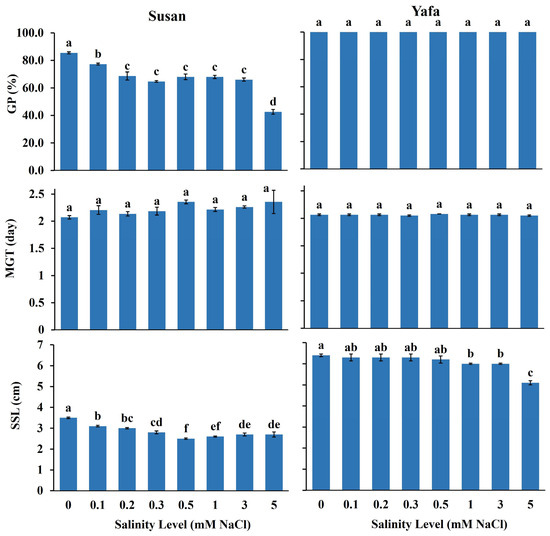
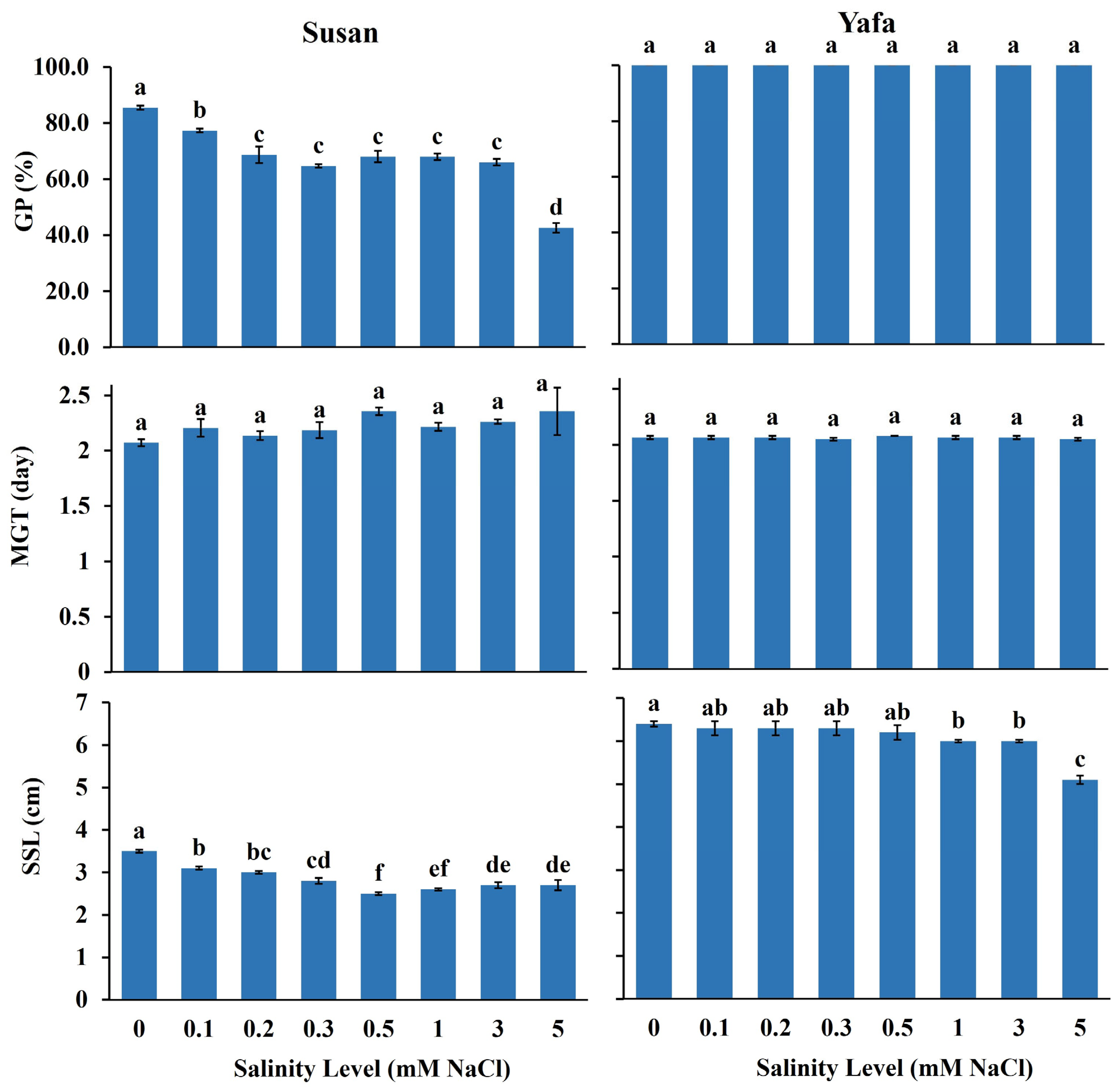
Under low-salinity conditions (0–5 mM NaCl), germination percentage of the highly salt-sensitive cultivar ‘Susan’ declined significantly as NaCl concentration increased (p < 0.05), decreasing from 85.3% at 0 mM to 42.6% at 5 mM (Figure 1 and Figure S1). In contrast, germination in the low salt-sensitive cultivar ‘Yafa’ remained unaffected, maintaining 100% across all treatments. Mean germination time followed a similar trend, increasing in ‘Susan’ with rising salinity, whereas no significant differences were detected among salinity levels in ‘Yafa’. Overall, ‘Yafa’ germinated faster than ‘Susan’, particularly at higher concentrations within the low-salinity range (0.3–5 mM NaCl). Low salinity (0–5 mM NaCl) also affected seedling shoot length. In the control treatment (0 mM), shoot length measured 3.5 cm in ‘Susan’ and 6.4 cm in ‘Yafa’ (Figure 1). Increasing salinity significantly reduced shoot length in ‘Susan’ (p < 0.05), particularly above 0.3 mM, where values declined to 2.5–2.8 cm. In ‘Yafa’, shoot length decreased only at 1–5 mM NaCl, but remained consistently higher than that of ‘Susan’ across all treatments.
Figure 1.
Germination percentage, mean germination time, and seedling shoot length in a standard germination test at 25 °C for two cultivars of lettuce, ‘Susan’ (the highly salt-sensitive cultivar) and ‘Yafa’ (the low salt-sensitive cultivar), at low levels of salinity (0–5 mM NaCl) in Experiment 1. Means followed by the same letters within columns are not significantly different according to the Student’s t-test at the 0.05 probability level. Bars indicate the standard error of the mean (n = 3).
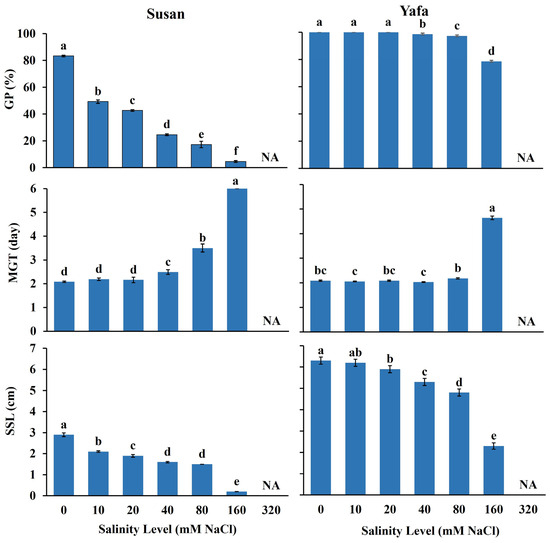
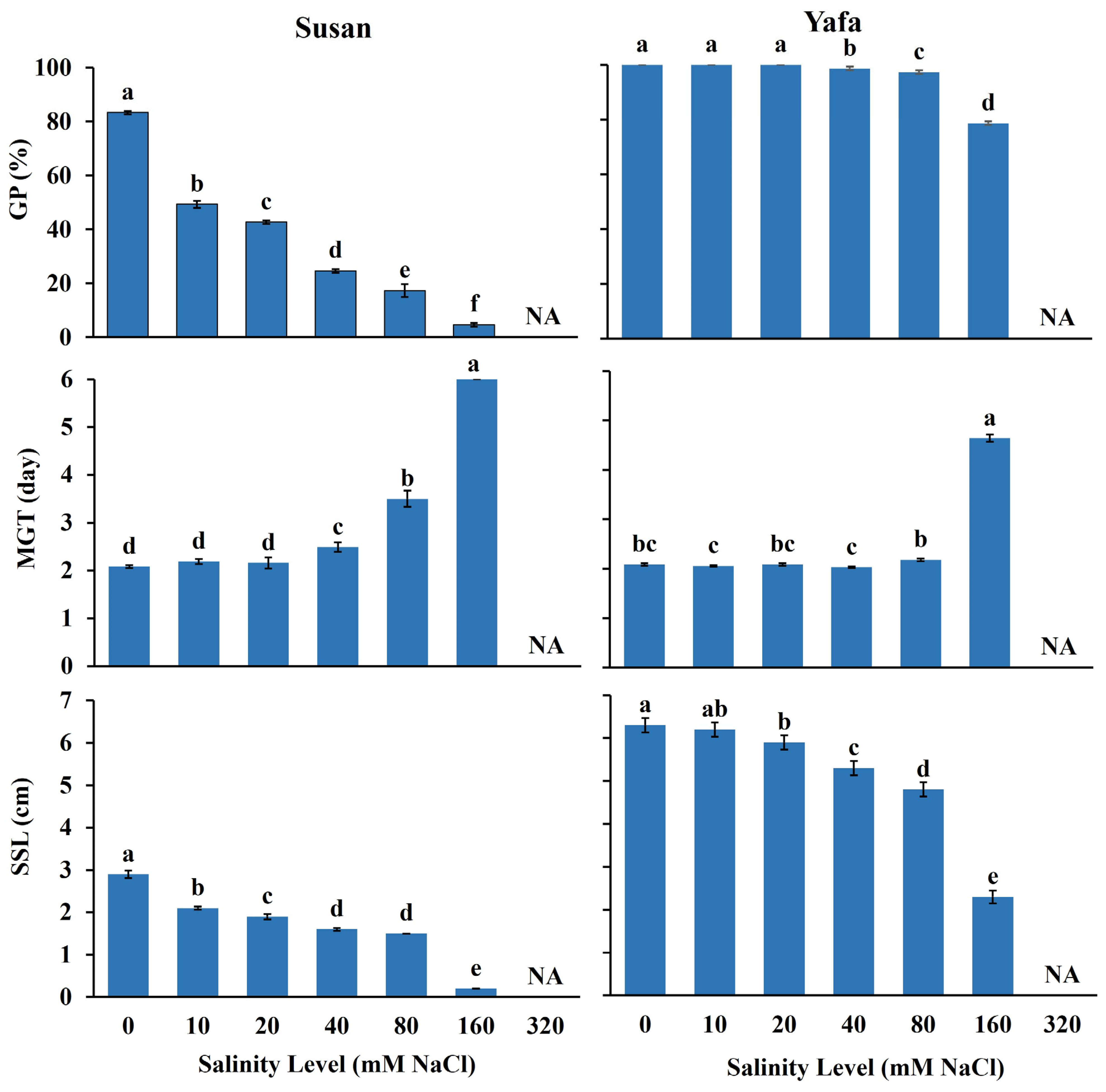
At higher salinity levels (10–320 mM NaCl), germination declined progressively in both cultivars (Figure 2 and Figure S2). In ‘Susan’, germination dropped sharply from 83.3% at 0 mM to 49.3% at 10 mM NaCl and reached 0% at 320 mM. ‘Yafa’ showed a more gradual response, maintaining 100% germination up to 20 mM NaCl, with only a minor reduction at 40 mM (98.6%), before declining at higher concentrations. Complete inhibition occurred in both cultivars at 320 mM NaCl. Across all salinity treatments (0–160 mM), ‘Yafa’ consistently exhibited higher germination percentages than ‘Susan’. Mean germination time also increased with rising salinity, indicating delayed germination under stress (Figure 2). In ‘Susan’, a significant increase in mean germination time occurred at 40 mM NaCl (p < 0.05), whereas ‘Yafa’ showed a significant delay only at much higher salinity (160 mM NaCl). Overall, ‘Yafa’ maintained faster germination than ‘Susan’ across the high salinity range, particularly between 80 and 160 mM NaCl. Seedling shoot length declined with increasing salinity in both cultivars (Figure 2). In ‘Susan’, shoot length decreased significantly (p < 0.05) from 2.9 cm at 0 mM to 0.2 cm at 160 mM NaCl. In contrast, ‘Yafa’ showed only a slight reduction, from 6.3 cm in the control to 5.9 cm at 20 mM NaCl. Across all salinity levels tested (0–160 mM), ‘Yafa’ maintained longer shoot growth than ‘Susan’.
Figure 2.
Germination percentage, mean germination time, and seedling shoot length in a standard germination test at 25 °C for two cultivars of lettuce, ‘Susan’ (the highly salt-sensitive cultivar) and ‘Yafa’ (the low salt-sensitive cultivar), at high levels of salinity (0–320 mM NaCl) in Experiment 2. Means followed by the same letters within columns are not significantly different according to Student’s t-test at the 0.05 probability level. Bars indicate the standard error of the mean (n = 3). NA indicates not applicable due to zero germination under the corresponding treatment.
3.2. Salinity Level (EC) and pH of Growing Media
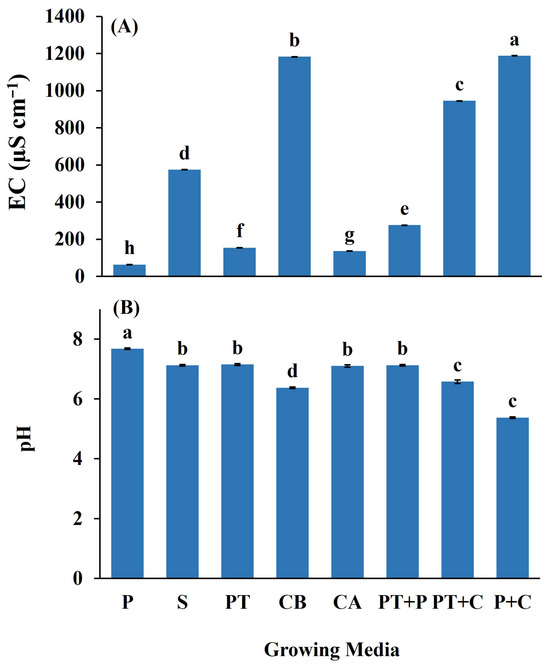
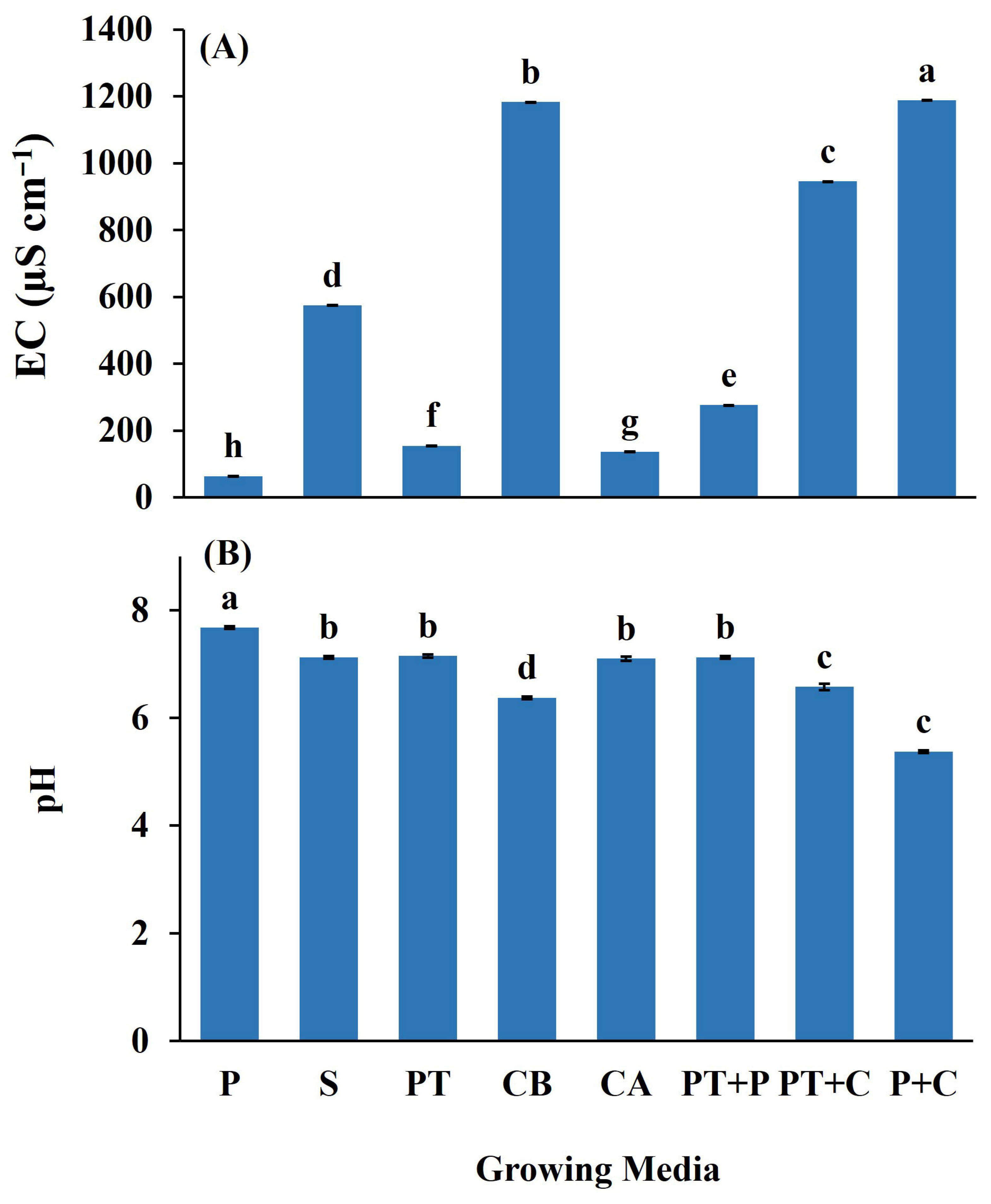
Electrical conductivity (EC) differed significantly among the tested growing media (p < 0.05) (Figure 3A). EC values ranged from 63.3 µS cm−1 in perlite to 1187 µS cm−1 in the perlite + cocopeat mixture. Washing cocopeat markedly reduced EC from 1182 to 136 µS cm−1 (p < 0.05). The pH of the growing media varied between 5.37 (perlite + cocopeat) and 7.67 (perlite), with significant differences observed among media types (Figure 3B).
Figure 3.
Electrical conductivity (EC) (A) and pH (B) of perlite (P), sand (S), peatmoss (PT), cocopeat before washing (CB), cocopeat after washing (CA), peatmoss + perlite (PT+P), peatmoss + cocopeat (PT+C), and perlite + cocopeat (P+C) growing media. Means followed by the same letters within columns are not significantly different according to the Student’s t-test at the 0.05 probability level. Bars indicate the standard error of the mean (n = 3).
3.3. Seedling Emergence and Growth in Different Growing Media
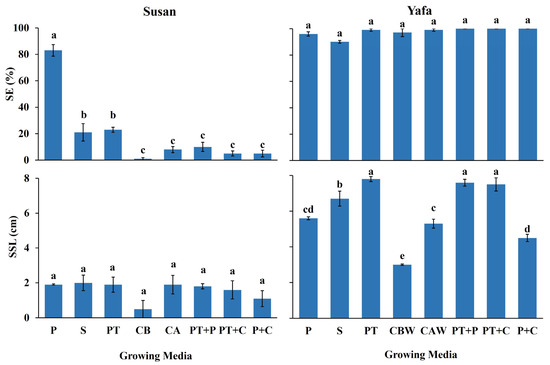
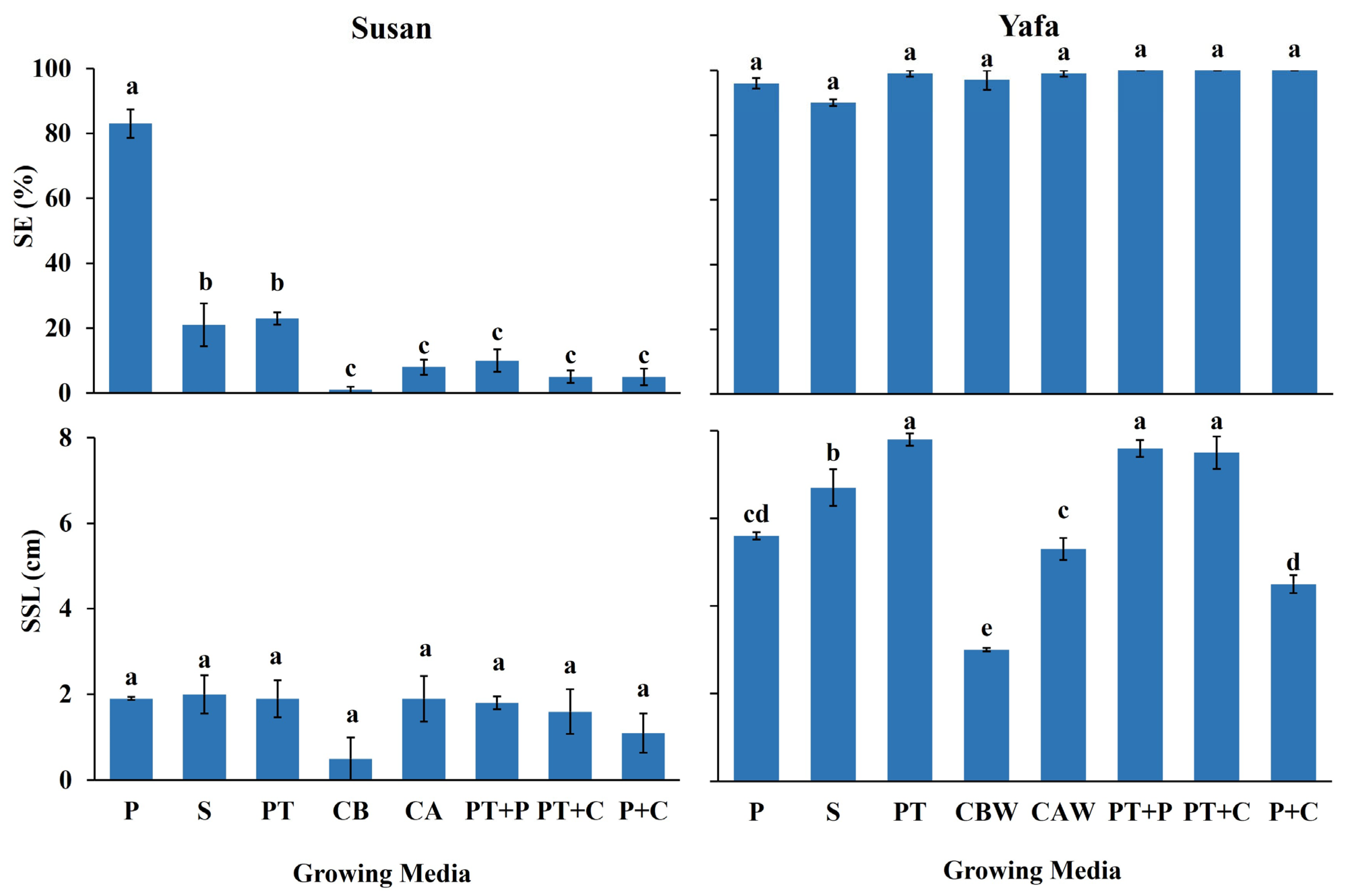
Seedling emergence differed significantly among the growing media for the highly salt-sensitive cultivar ‘Susan’ (p < 0.05) (Figure 4 and Figure S3). The highest emergence (83%) was observed in perlite, whereas much lower emergence (1–23%) occurred in the other media, including sand, peatmoss, cocopeat (before and after washing), and mixed substrates. In contrast, the emergence of the low salt-sensitive cultivar ‘Yafa’ remained high (96–100%) and did not vary significantly among growing media. Seedling shoot length of ‘Susan’ was not significantly affected by the type of growing medium, ranging from 1.55 to 2.03 cm. For ‘Yafa’; however, shoot length decreased significantly (p < 0.05), declining from 7.8 cm in peatmoss to 3.0 cm in unwashed cocopeat. Nevertheless, shoot length in ‘Yafa’ remained consistently greater than that of ‘Susan’ across all tested media (Figure 4).
Figure 4.
Seedling emergence percentage (SE) and seedling shoot length (SSL) at 25 °C for two cultivars of lettuce, ‘Susan’ (the highly salt-sensitive cultivar) and ‘Yafa’ (the low salt-sensitive cultivar) grown in 8 growing media: Perlite (P), sand (S), peatmoss (PT), cocopeat before washing (CB), cocopeat after washing (CA), peatmoss + perlite (PT+P), peatmoss + cocopeat (PT+C), and perlite + cocopeat (P+C). Means followed by the same letters within columns are not significantly different according to the Student’s t-test at the 0.05 probability level. Bars indicate the standard error of the mean (n = 3).
3.4. Enzyme Activity Response to Salinity
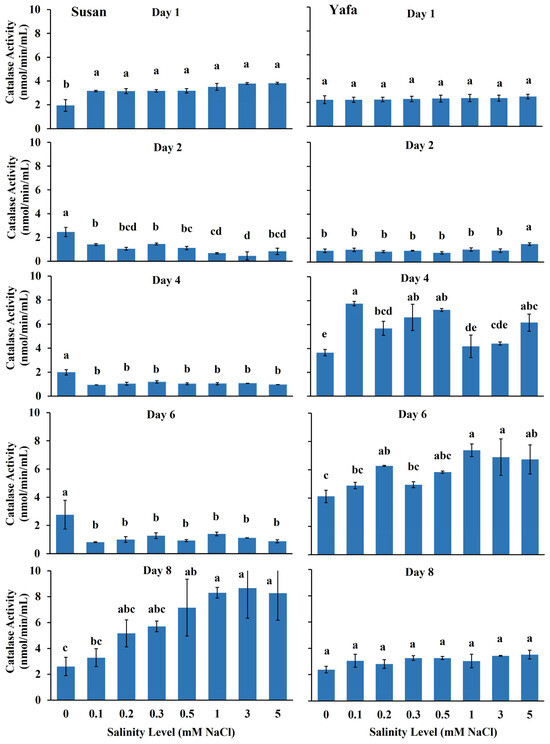
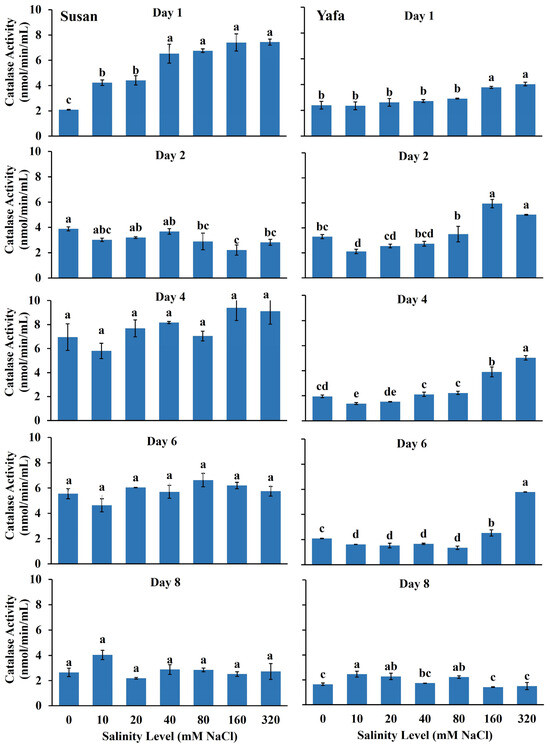
Catalase activity increased in response to salinity, but it showed cultivar-dependent responses to low salinity during germination (Figure 5). In the highly salt-sensitive cultivar ‘Susan’, catalase activity increased under low salinity on day 1 and again on day 8 of germination, whereas during the intermediate stages (days 2–6), catalase activity was generally lower under salinity treatments compared with the control. In contrast, the low salt-sensitive cultivar ‘Yafa’ showed smaller changes in catalase activity at early stages, with increases observed mainly on days 4 and 6 under several low-salinity treatments. Under the high-salinity gradient (10–320 mM NaCl), catalase activity increased more consistently in both cultivars. ‘Susan’ responded rapidly, showing elevated catalase levels from the earliest sampling points, whereas ‘Yafa’ exhibited a delayed response, with significant increases only at high NaCl levels (≥160 mM) (Figure 6). Across most sampling points, catalase activity was higher in ‘Susan’ than in ‘Yafa’, suggesting a stronger antioxidant enzyme response to salinity in the highly salt-sensitive cultivar.
Figure 5.
Effect of low levels of salinity (0–5 mM NaCl) on catalase activity for two cultivars of lettuce, ‘Susan’ (the highly salt-sensitive cultivar) and ‘Yafa’ (the low salt-sensitive cultivar), during the standard germination test. Means followed by the same letters within columns are not significantly different according to Student’s t-test at the 0.05 probability level. Bars indicate the standard error of the mean (n = 3).
Figure 6.
Effect of high levels of salinity (0–320 mM NaCl) on catalase enzyme activity for two cultivars of lettuce, ‘Susan’ (the highly salt-sensitive cultivar) and ‘Yafa’ (the low salt-sensitive cultivar), during the standard germination test. Means followed by the same letters within columns are not significantly different according to the Student’s t-test at the 0.05 probability level. Bars indicate the standard error.
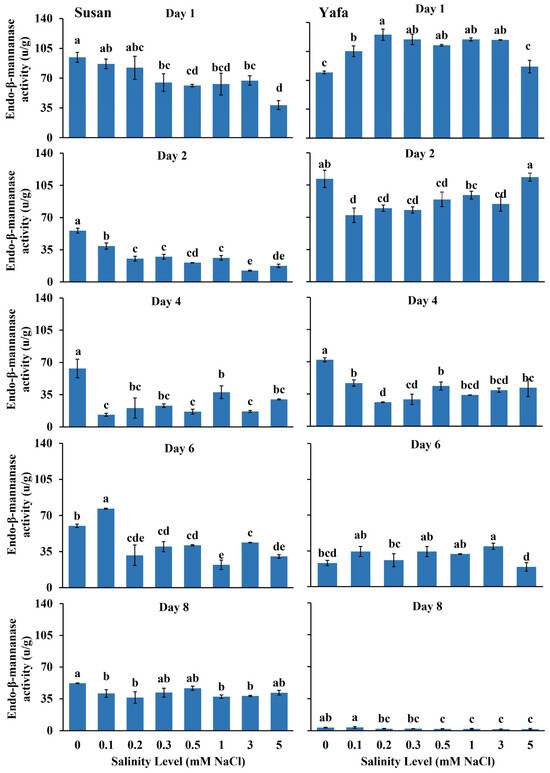
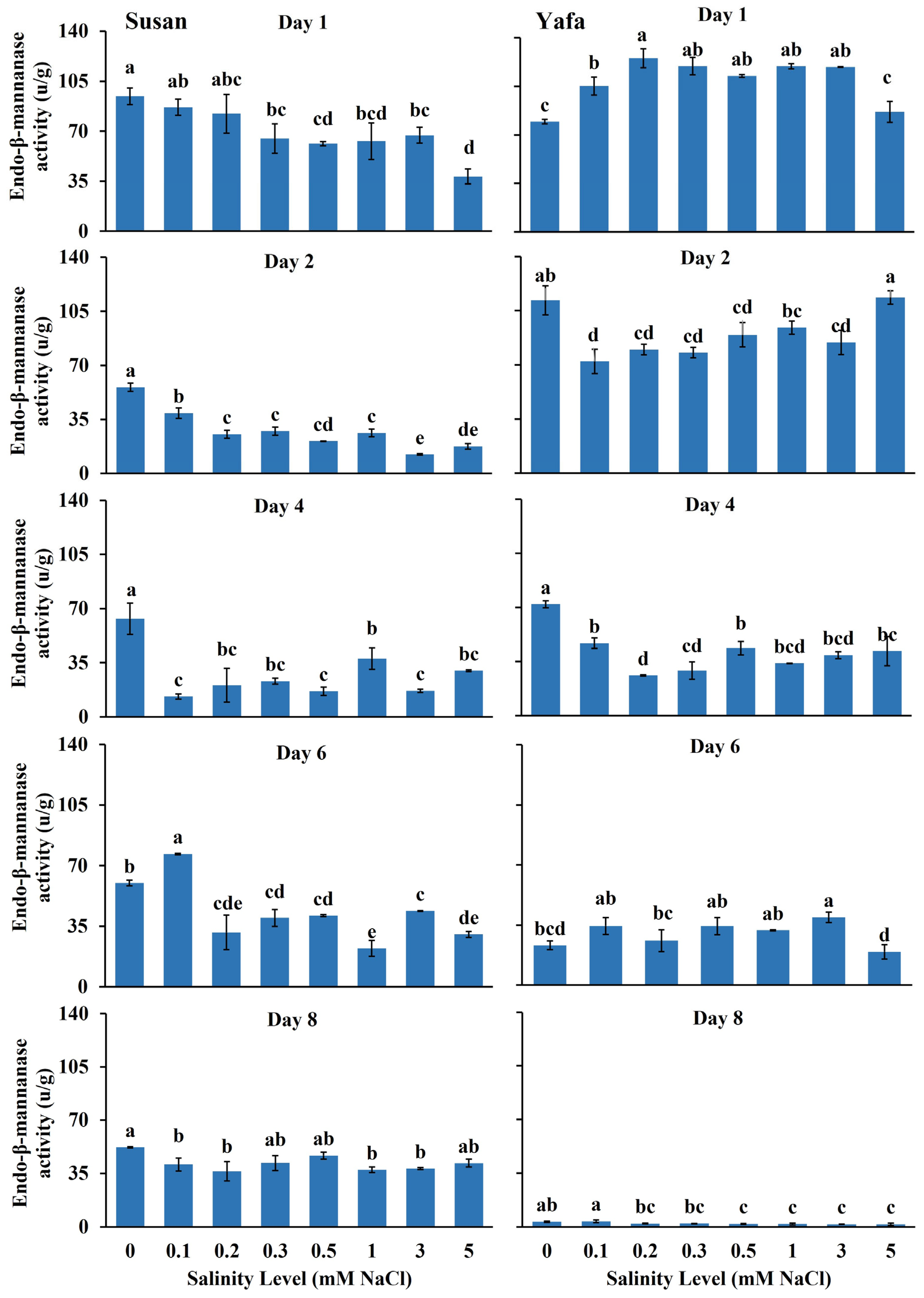
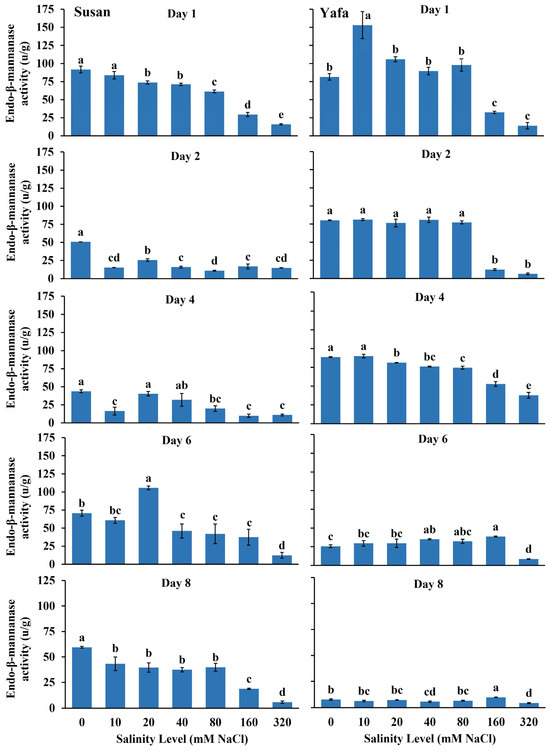
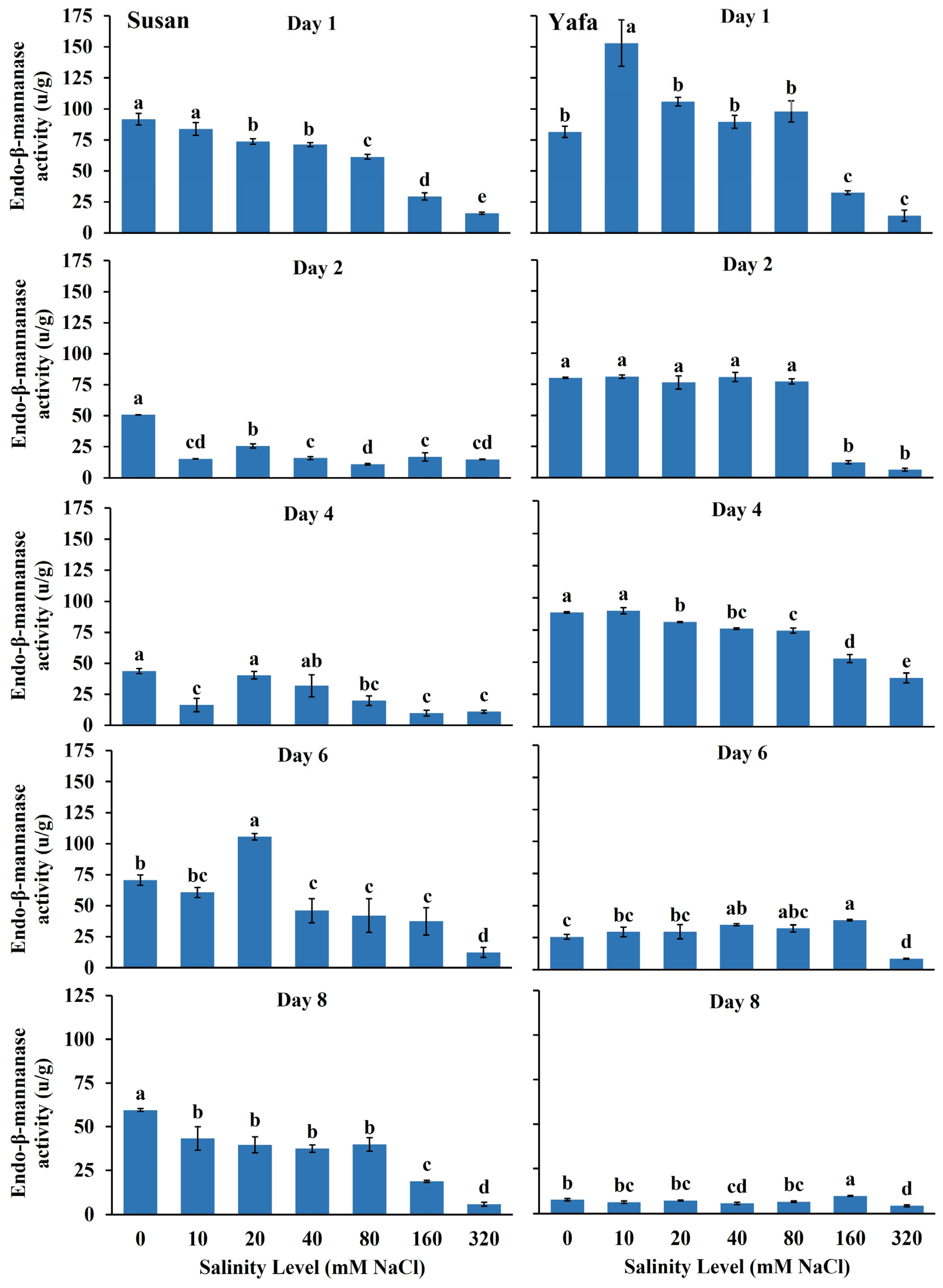
Endo-β-mannanase activity generally declined with increasing salinity, although trends differed between salinity range and cultivar (Figure 7 and Figure 8). At low salinity (0–5 mM NaCl), activity in ‘Susan’ decreased progressively with increasing NaCl, while ‘Yafa’ maintained relatively higher and more stable enzyme activity during early germination (Figure 7). Under high salinity (10–320 mM NaCl), inhibition of endo-β-mannanase was more pronounced, particularly in ‘Susan’, where activity dropped sharply at moderate and high salt levels (Figure 8). ‘Yafa’ showed greater resilience, maintaining activity up to moderate salinity before declining at the highest concentrations. Early in germination, ‘Yafa’ exhibited higher enzyme activity than ‘Susan’, whereas at later time points (days 6 and 8), ‘Susan’ showed comparatively higher values under some treatments, likely reflecting stress-induced metabolic disruption rather than functional germination support.
Figure 7.
Effect of low levels of salinity (0–5 mM NaCl) on endo-β-mannanase activity for two cultivars of lettuce, ‘Susan’ (the highly salt-sensitive cultivar) and ‘Yafa’ (the low salt-sensitive cultivar), during the standard germination test. Means followed by the same letters within columns are not significantly different according to the Student’s t-test at the 0.05 probability level. Bars indicate the standard error of the mean (n = 3).
Figure 8.
Effect of high levels of salinity (0–320 mM NaCl) on endo-β-mannanase activity for two cultivars of lettuce, ‘Susan’ (the highly salt-sensitive cultivar) and ‘Yafa’ (the low salt-sensitive cultivar), during the standard germination test. Means followed by the same letters within columns are not significantly different according to the Student’s t-test at the 0.05 probability level. Bars indicate the standard error of the mean (n = 3).
3.5. Relationships Between Enzyme Activity and Germination Parameters
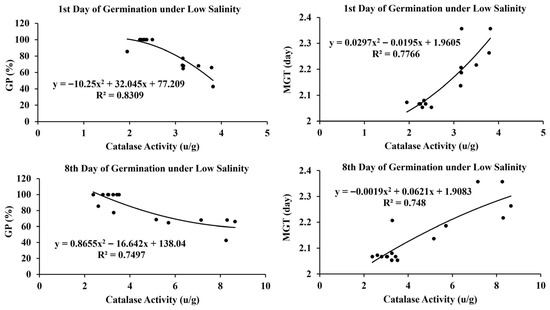
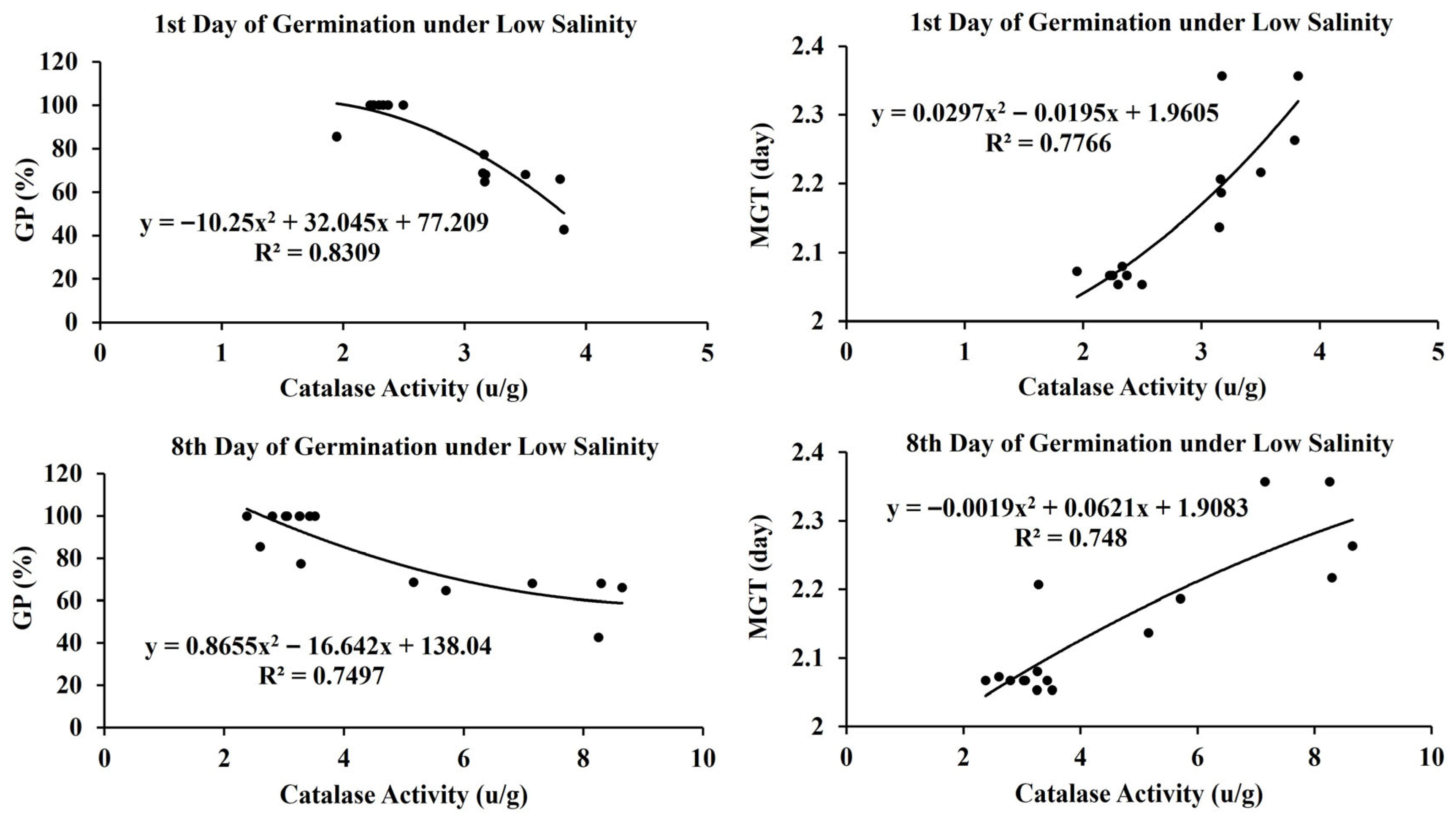
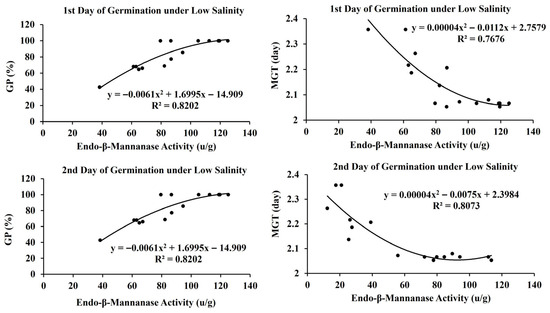
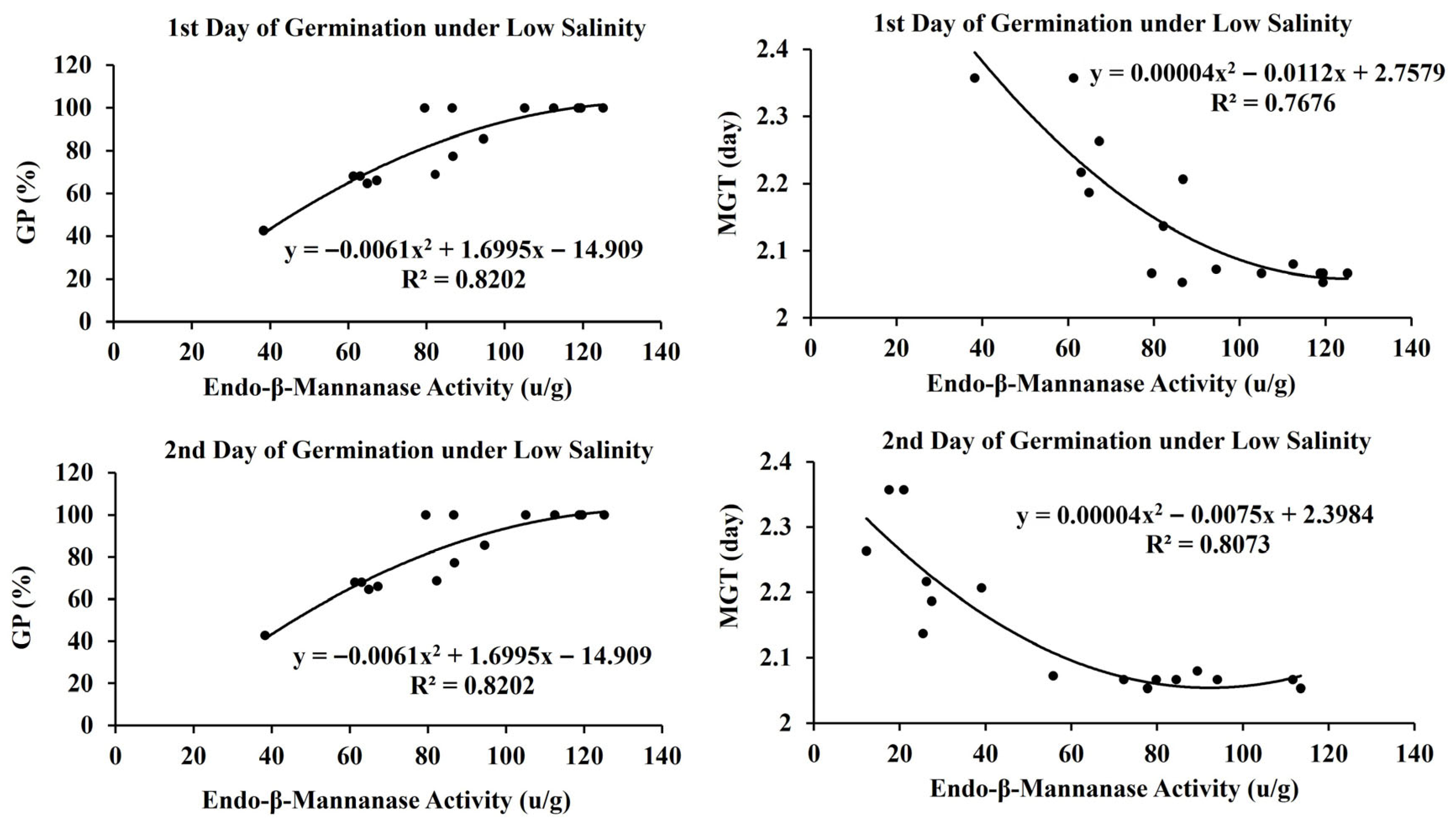
Under low salinity (0–5 mM NaCl), catalase activity had a significant and negative relationship with the germination percentage (R2 = 0.75–0.83 across assessment days), and had a significant and positive relationship with mean germination time (R2 = 0.75–0.78) (Figure 9). In contrast, endo-β-mannanase activity showed a significant and positive relationship with the germination percentage (R2 ≈ 0.82) and a significant and negative relationship with mean germination time (R2 = 0.77–0.81), suggesting that higher enzyme activity supported more complete and faster germination (Figure 10).
Figure 9.
The relationship between the catalase activity on the 1st and 8th days of germination and the final seed germination percentage (GP) and mean germination time (MGT) under low salinity stress (0–5 mM NaCl).
Figure 10.
The relationship between the endo-β-mannanase activity on the 1st and 2nd days of germination and the final seed germination percentage (GP) and mean germination time (MGT) under low salinity stress (0–5 mM NaCl).
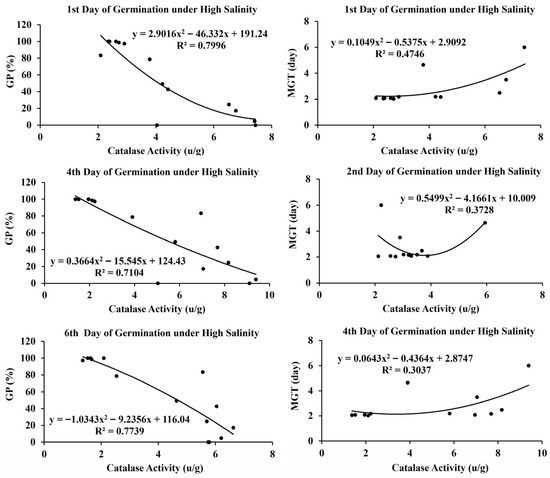
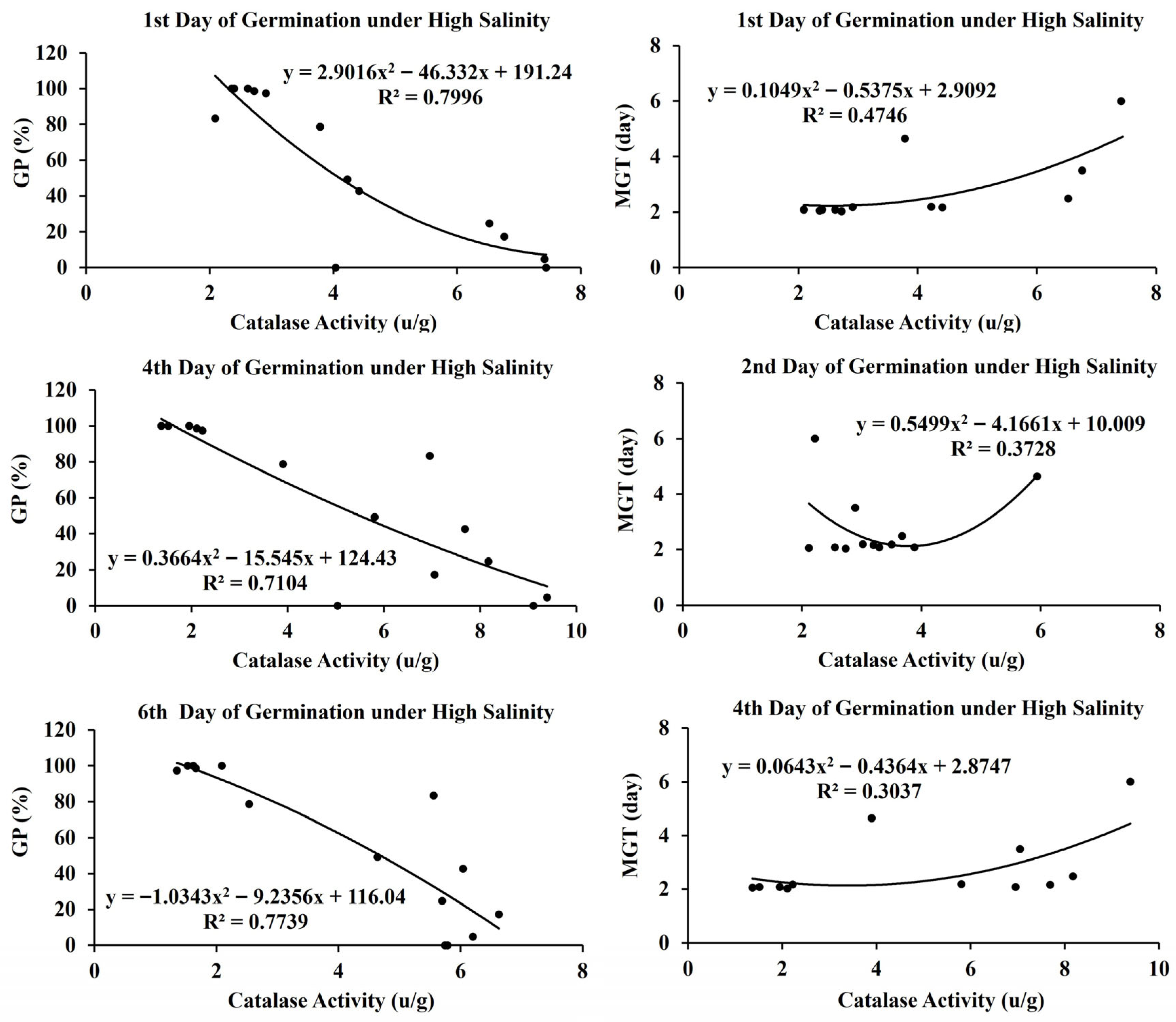
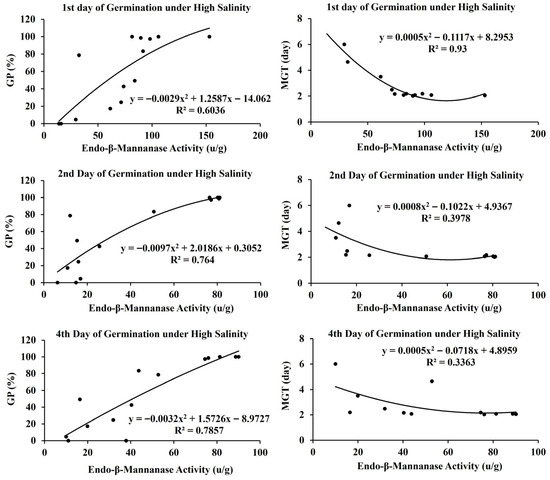
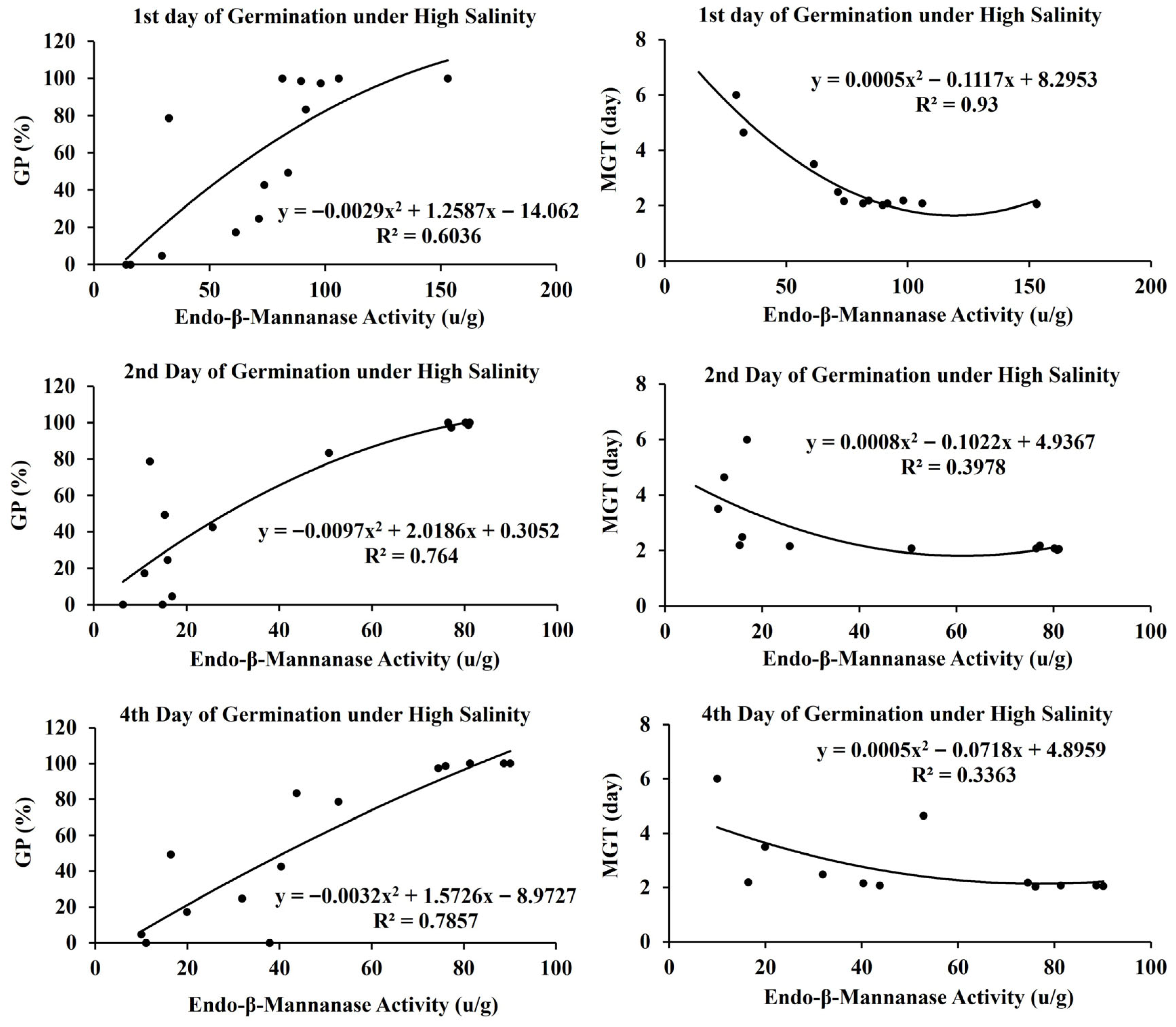
Under high salinity (10–320 mM NaCl), catalase activity remained significantly and negatively correlated with the germination percentage (R2 = 0.71–0.80 across days) and significantly and positively correlated with mean germination time (Figure 11). However, at some stages, the strength of the relationship was slightly lower (R2 = 0.30–0.47). Similarly, endo-β-mannanase activity had a significant and positive relationship with the germination percentage (R2 = 0.60–0.79) and a significant and negative relationship with mean germination time, with the strongest correlation recorded during early germination (R2 up to 0.93) (Figure 12). Overall, the regression patterns indicate that impaired germination under salinity stress is strongly correlated with reduced endosperm-weakening activity (lower endo-β-mannanase) and increased oxidative activity (higher catalase).
Figure 11.
The relationship between catalase activity on the 1st, 4th, and 6th days of germination and final seed germination percentage (GP), and between catalase activity on the 1st, 2nd, and 4th days of germination and mean germination time (MGT) under high salinity stress (0–320 mM NaCl).
Figure 12.
The relationship between the endo-β-mannanase activity on the 1st, 2nd, and 4th days of germination and the final seed germination percentage (GP) and mean germination time (MGT) under high salinity stress (0–320 mM NaCl).
4. Discussion
The results of the controlled NaCl gradient experiments confirm that lettuce germination is highly sensitive to salt stress and that this sensitivity varies markedly between cultivars. Across the low-salinity range, germination of the highly salt-sensitive cultivar ‘Susan’ declined even at minimal NaCl levels, while ‘Yafa’ remained unaffected up to 5 mM NaCl (Figure 1). This aligns with the general understanding that seeds may enter an osmotically imposed dormancy when exposed to water stress, leading to reduced germination under drought or salinity [30,36]. Similar sensitivity has been reported in lettuce at threshold NaCl exposure, where even 10 mM NaCl (3.4 mS cm−1 EC) caused measurable yield losses [37]. In the present study, the increase in mean germination time in ‘Susan’ confirms earlier findings that salinity slows germination by reducing water availability, altering reserve mobilization, and affecting protein organization [31,32,33]. Shoot elongation declined with increasing salinity in both cultivars, but inhibition began at much lower concentrations in ‘Susan’ than in ‘Yafa’, consistent with previous work showing salinity-induced reductions in lettuce seedling growth and elongation [36,38,39]. The consistently shorter shoot length of ‘Susan’, even in the control treatment, also reflects known genotype-specific differences in growth under saline conditions [40].
The contrasting responses of the two cultivars became more pronounced under high salinity (Figure 2). Earlier studies reported that lettuce germination slows markedly around 50 mM NaCl in cultivars such as ‘Vista’ and ‘Verte’ and only at higher concentrations in more tolerant genotypes like ‘Romaine’ and ‘Augusta’ [41]. Our findings are consistent with this pattern: ‘Susan’ exhibited strong inhibition and delayed germination from 40 to 160 mM NaCl, whereas ‘Yafa’ retained faster germination until much higher salt levels. These trends resemble observations in other studies where germination speed and subsequent growth declined sharply at 100 mM NaCl [42], and where lettuce growth was highest at 0 mM and lowest at elevated salinity [43]. The suppression of shoot elongation under high salinity also matches earlier reports demonstrating reduced lettuce biomass under salt stress [44,45,46] and parallels findings in cabbage showing shoot and root stunting as salinity increases [47]. Such reductions in plant height and biomass likely reflect osmotic stress, disrupted mineral uptake, and ion toxicity caused by Na+ and Cl− accumulation [48]. The complete loss of germination at 320 mM NaCl aligns with previous studies showing no root or shoot development beyond 200 mM NaCl [42], confirming the severe sensitivity of lettuce to extreme salinity.
Our results showed that seedling emergence varied significantly among the commonly used nursery growing media. Seedlings emerged readily in low-salinity substrates such as perlite (EC = 63.4 µS cm−1), while emergence declined sharply in peat-based and cocopeat media with higher EC levels (163–1187 µS cm−1). This contrast was most pronounced in the highly salt-sensitive cultivar ‘Susan,’ whereas the low salt-sensitive cultivar ‘Yafa’ emerged consistently across all substrates. These patterns highlight the crucial influence of substrate salinity on seedling emergence. Because the EC of a growing medium is largely determined by its component materials [49], the reduced emergence in peat-based and cocopeat substrates reflects their higher salt content. The superior performance of perlite—a substrate known to contain minimal salinity [50]—may also be related to its favorable aeration and water-retention properties [51]. In contrast, organic materials with elevated salt levels, such as almond shells, have been shown to restrict growth in sensitive crops [52], and many studies recommend inorganic substrates like sand or rockwool when salinity is a limiting factor [53]. Notably, washing cocopeat reduced its EC and improved emergence in the present study, supporting prior evidence that systematic washing can remove excess NaCl [49]. Collectively, these findings indicate that even small differences in substrate salinity can substantially suppress seedling emergence in sensitive lettuce cultivars and may explain nursery establishment failures that occur despite high standard seed germination.
The biochemical responses observed in this study strongly support the physiological patterns described. Under low salinity stress, the contrasting catalase responses between cultivars suggest that antioxidant enzyme regulation during germination differs between highly salt-sensitive and low salt-sensitive cultivars. The higher catalase activity observed in ‘Susan’ at early and late stages of germination may reflect a stronger antioxidant enzyme response to salinity, whereas the more stable catalase activity in ‘Yafa’ is consistent with its better germination performance under low salinity (Figure 5). This trend is consistent with reports that salinity increases catalase activity, membrane leakage, and reactive oxygen species accumulation [14,54]. As catalase plays a central role in detoxifying H2O2 under stress conditions, thereby limiting oxidative damage and protecting cellular structures through antioxidant defense systems [11,55,56], the elevated catalase activity observed in ‘Susan’ indicates that this cultivar experienced greater oxidative stress. Higher catalase activity coincided with reduced germination percentage and increased mean germination time (Figure 9 and Figure 11), a pattern also reported in lettuce seedlings exposed to salt [57,58]. Under high salinity (0–320 mM), ‘Susan’ maintained significantly higher catalase activity across multiple days of germination than ‘Yafa’, confirming that sensitive seeds activate antioxidant pathways more intensely in response to damage but are less effective at maintaining physiological balance (Figure 6).
In contrast to catalase, endo-β-mannanase activity—which facilitates endosperm weakening and radicle protrusion—declined with increasing salinity, particularly in ‘Susan’ (Figure 7). Lettuce seeds typically exhibit low mannanase activity prior to germination [59], but in the present study, ‘Yafa’ maintained higher enzyme activity in the early days of germination under both low and high salinity. This higher activity corresponded with greater germination and lower mean germination time (faster germination) (Figure 10 and Figure 12), which aligns with earlier observations that mannanase activity increases just before radicle emergence [60,61,62,63,64]. Reduced mannanase activity has been repeatedly linked with poor germination, low vigor, and slower radicle emergence [65,66,67,68,69]. Reduction in the expression of endo-β-1,4-mannanase was associated with thermoinhibition (29 °C)-induced suppression of germination in Apium graveolens (celery) seeds, resulting from inhibition of embryo growth mediated by a gibberellin (GA)–abscisic acid (ABA)-regulated mechanism [34]. After-ripening promoted cucumber seed maturation, increasing total and normal germination by up to 110% and 156%, respectively, and accelerating germination by up to 56% [30]. This improvement was accompanied by a marked increase in endo-β-mannanase activity, which was positively associated with enhanced expression of the CsMAN2 gene during seed maturation [30]. Correlation analysis revealed that endo-β-mannanase activity was positively associated with seed viability parameters (r = 0.859 and r = 0.864, p < 0.001), while showing a significant negative correlation with abscisic acid (ABA) levels (r = −0.666, p < 0.05) [30]. Consistent with this, mannanase activity decreased at lower salinity levels in ‘Susan’ compared with ‘Yafa’, mirroring the cultivar-specific patterns reported in tomato, where tolerant genotypes maintain higher mannanase activity under saline conditions [70,71,72,73]. Similarly, salt stress reduced the expression of xyloglucan endotransglucosylase genes (the LsXTHs) related to cell wall hydrolases involved in micropylar endosperm weakening during lettuce seed germination [13]. The ability of ‘Yafa’ to preserve mannanase activity even at 10–160 mM NaCl suggests that effective endosperm weakening is a key component of its germination tolerance.
Taken together, the integration of physiological and biochemical data provides a clear explanation for the cultivar-dependent differences in germination under salinity. In ‘Susan’, salt stress simultaneously induced oxidative imbalance—reflected by elevated catalase activity—and restricted endosperm weakening through suppressed endo-β-mannanase activity, resulting in delayed and reduced germination. In contrast, ‘Yafa’ maintained more stable oxidative regulation and sufficient mannanase activity to support early radicle protrusion, enabling successful germination across a wider salinity range. These results provide a coherent framework linking salinity, enzyme activity, and germination responses, and they help explain the frequent emergence failures observed in sensitive lettuce cultivars under nursery conditions with even mildly saline growing media.
5. Conclusions
Salinity negatively affected seed germination and seedling emergence in lettuce, with clear differences between cultivars. The cultivar ‘Yafa’ exhibited low sensitivity to salinity, maintaining higher germination and better seedling growth than the highly salt-sensitive cultivar ‘Susan’. Seedling emergence of ‘Susan’ was reduced in all tested growing media except perlite, which had the lowest electrical conductivity (EC) and salinity, whereas ‘Yafa’ maintained high emergence across all growing media. These contrasting responses were associated with differences in catalase and endo-β-mannanase activities under saline conditions. Overall, the results suggest that cultivar-specific biochemical responses play an important role in determining lettuce germination performance under salinity stress.
Supplementary Materials
The following supporting information can be downloaded at: https://www.mdpi.com/article/10.3390/horticulturae12030390/s1, Figure S1: Seed germination under low salinity; Figure S2: Seed germination under high salinity; Figure S3: Seedling emergence in different growing media.
Author Contributions
Conceptualization, N.H.S.; methodology, N.H.S., N.A.A.-Q. and R.I.M.A.; validation, N.H.S., N.A.A.-Q., R.I.M.A. and A.S.E.; formal analysis, N.H.S.; resources, N.H.S. and N.A.A.-Q.; data curation, N.H.S., N.A.A.-Q., R.I.M.A. and A.S.E.; writing—original draft, N.H.S., N.A.A.-Q. and R.I.M.A.; writing—review and editing, N.H.S., N.A.A.-Q. and A.S.E.; visualization, N.H.S., N.A.A.-Q., R.I.M.A. and A.S.E.; investigation, R.I.M.A.; supervision, N.H.S. and N.A.A.-Q.; project administration, N.H.S. and N.A.A.-Q.; funding acquisition, N.H.S. and N.A.A.-Q. All authors have read and agreed to the published version of the manuscript.
Funding
This study received financial support from the Deanship of Research at Jordan University of Science and Technology, Irbid, Jordan, under grant number 129/2022.
Data Availability Statement
The data are included in the manuscript.
Acknowledgments
Extended thanks to the Deanship of Research at Jordan University of Science and Technology for the financial support (Grant Number 129/2022).
Conflicts of Interest
The authors declare no conflicts of interest.
References
- Agius, C. The Yield and Quality of Lettuce Crop, Grown in Different Growing Media; University of Malta Msida: Msida, Malta, 2015. [Google Scholar]
- Raviv, M.; Lieth, J.H.; Bar-Tal, A.; Silber, A. Growing plants in soilless culture: Operational conclusions. In Soilless Culture; Elsevier: Amsterdam, The Netherlands, 2019; pp. 545–571. [Google Scholar]
- Reed, R.C.; Bradford, K.J.; Khanday, I. Seed germination and vigor: Ensuring crop sustainability in a changing climate. Heredity 2022, 128, 450–459. [Google Scholar] [CrossRef] [Scilit]
- Farghly, K.A.; Ahmed, M.M.; Eissa, M.A.; Abdalla, R.M.; Gomah, H.H. Can compost be an alternative to germination media for growing lettuce seedlings in nurseries? Assiut J. Agric. Sci. 2025, 56, 267–282. [Google Scholar] [CrossRef] [Scilit]
- Singh, J.; Nigam, R.; Tiwari, A.; Rathi, M. Effect of different soilless media on the growth and development of Horticultural Crops. Int. J. Agric. Invent. 2024, 9, 68–77. [Google Scholar] [CrossRef] [Scilit]
- Awang, Y.; Shaharom, A.S.; Mohamad, R.B.; Selamat, A. Chemical and physical characteristics of cocopeat-based media mixtures and their effects on the growth and development of Celosia cristata. Am. J. Agric. Biol. Sci. 2009, 4, 63–71. [Google Scholar] [CrossRef] [Scilit]
- Khajeh-Hosseini, M.; Powell, A.; Bingham, I. The interaction between salinity stress and seed vigour during germination of soyabean seeds. Seed Sci. Technol. 2003, 31, 715–725. [Google Scholar] [CrossRef] [Scilit]
- Shannon, M.; Grieve, C. Tolerance of vegetable crops to salinity. Sci. Hortic. 1998, 78, 5–38. [Google Scholar] [CrossRef] [Scilit]
- Adhikari, N.D.; Simko, I.; Mou, B. Phenomic and physiological analysis of salinity effects on lettuce. Sensors 2019, 19, 4814. [Google Scholar] [CrossRef] [Scilit]
- Messina, F. Protocolli Sostenibili di Seed Priming per Potenziare la Performance di Germinazione Della Lattuga (Lactuca sativa L.); Università degli studi di Pavia: Pavia, Italy, 2025. [Google Scholar]
- Yildirim, E.; Ermiş, S.; Özden, E.; Demir, I. Perspective Chapter: Insights into Seed Germination–Physiological and Environmental Mechanisms. In New Perspectives on Seed Germination; Yildirim, E., Ermiş, S., Özden, E., Eds.; IntechOpen: London, UK, 2025. [Google Scholar]
- Bewley, J.D.; Bradford, K.J.; Hilhorst, H.W.M.; Nonogaki, H. Seeds: Physiology of Development, Germination and Dormancy, 3rd ed.; Springer: New York, NY, USA, 2013. [Google Scholar]
- Zhang, Q.; Zhang, A.; Yang, L.; Wei, J.; Bei, J.; Xu, Z.; Wang, X.; Chen, B. Identification of XTH family genes and expression analysis of endosperm weakening in lettuce (Lactuca sativa L.). Agronomy 2024, 14, 324. [Google Scholar] [CrossRef] [Scilit]
- Shams, M.; Yildirim, E.; Ekinci, M.; Turan, M.; Dursun, A.; Parlakova, F.; Kul, R. Exogenously applied glycine betaine regulates some chemical characteristics and antioxidative defence systems in lettuce under salt stress. Hortic. Environ. Biotechnol. 2016, 57, 225–231. [Google Scholar] [CrossRef] [Scilit]
- Türkan, I.; Demiral, T. Recent developments in understanding salinity tolerance. Environ. Exp. Bot. 2009, 67, 2–9. [Google Scholar] [CrossRef] [Scilit]
- Mizuno, M.; Kamei, M.; Tsuchida, H. Ascorbate peroxidase and catalase cooperate for protection against hydrogen peroxide generated in potato tubers during low-temperature storage. IUBMB Life 1998, 44, 717–726. [Google Scholar] [CrossRef] [Scilit] [PubMed]
- Mhamdi, A.; Queval, G.; Chaouch, S.; Vanderauwera, S.; Van Breusegem, F.; Noctor, G. Catalase function in plants: A focus on Arabidopsis mutants as stress-mimic models. J. Exp. Bot. 2010, 61, 4197–4220. [Google Scholar] [CrossRef] [Scilit]
- Nandi, A.; Yan, L.-J.; Jana, C.K.; Das, N. Role of catalase in oxidative stress-and age-associated degenerative diseases. Oxidative Med. Cell. Longev. 2019, 2019, 9613090. [Google Scholar] [CrossRef] [Scilit] [PubMed]
- Park, S.-J.; Huang, Y.; Ayoubi, P. Identification of expression profiles of sorghum genes in response to greenbug phloem-feeding using cDNA subtraction and microarray analysis. Planta 2006, 223, 932–947. [Google Scholar] [CrossRef] [Scilit]
- Gadjev, I.; Vanderauwera, S.; Gechev, T.S.; Laloi, C.; Minkov, I.N.; Shulaev, V.; Apel, K.; Inzé, D.; Mittler, R.; Van Breusegem, F. Transcriptomic footprints disclose specificity of reactive oxygen species signaling in Arabidopsis. Plant Physiol. 2006, 141, 436–445. [Google Scholar] [CrossRef] [Scilit] [PubMed]
- Gallego, S.M.; Benavides, M.P.; Tomaro, M.L. Effect of heavy metal ion excess on sunflower leaves: Evidence for involvement of oxidative stress. Plant Sci. 1996, 121, 151–159. [Google Scholar] [CrossRef] [Scilit]
- Bewley, J.D. Breaking down the walls—A role for endo-β-mannanase in release from seed dormancy? Trends Plant Sci. 1997, 2, 464–469. [Google Scholar] [CrossRef] [Scilit]
- Chen, B.; Ma, J.; Xu, Z.; Wang, X. Abscisic acid and ethephon regulation of cellulase in the endosperm cap and radicle during lettuce seed germination. J. Integr. Plant Biol. 2016, 58, 859–869. [Google Scholar] [CrossRef] [Scilit]
- Chauhan, P.S.; Puri, N.; Sharma, P.; Gupta, N. Mannanases: Microbial sources, production, properties and potential biotechnological applications. Appl. Microbiol. Biotechnol. 2012, 93, 1817–1830. [Google Scholar] [CrossRef] [Scilit]
- Nascimento, W.M.; Cantliffe, D.J.; Huber, D.J. Thermotolerance in lettuce seeds: Association with ethylene and endo-β-mannanase. J. Am. Soc. Hortic. Sci. 2000, 125, 518–524. [Google Scholar] [CrossRef] [Scilit]
- Halmer, P.; Bewley, J.; Thorpe, T. An enzyme to degrade lettuce endosperm cell walls. Appearance of a mannanase following phytochrome-and gibberellin-induced germination. Planta 1976, 130, 189–196. [Google Scholar] [CrossRef] [Scilit]
- Dutta, S.; Bradford, K.J.; Nevins, D.J. Endo-β-mannanase activity present in cell wall extracts of lettuce endosperm prior to radicle emergence. Plant Physiol. 1997, 113, 155–161. [Google Scholar] [CrossRef] [Scilit]
- Cavasin, P.Y.; Santos, H.O.d.; Oliveira, T.F.; Pereira, J.A.; Gama, A.B.N.d.; Pereira, W.V.S. Endo-β-mannanase and superoxide dismutase as enzymatic markers for lettuce seeds thermotolerance. J. Seed Sci. 2023, 45, e202345008. [Google Scholar] [CrossRef] [Scilit]
- Sung, Y.; Cantliffe, D.J.; Nagata, R.T. Seed developmental temperature regulation of thermotolerance in lettuce. J. Am. Soc. Hortic. Sci. 1998, 123, 700–705. [Google Scholar] [CrossRef] [Scilit]
- Özden, E.; Türkhan, A.; Gözen, V.; Aydın, A. Physiological and molecular responses of immature cucumber seed under after-ripening treatments. Sci. Hortic. 2024, 337, 113487. [Google Scholar] [CrossRef] [Scilit]
- Ibrahim, E.A. Seed priming to alleviate salinity stress in germinating seeds. J. Plant Physiol. 2016, 192, 38–46. [Google Scholar] [CrossRef] [Scilit] [PubMed]
- Keshavarzi, M.H.B. The effect of different NaCl concentration on germination and early seedling growth of Artemisia annua L. Int. J. Agric. 2012, 2, 135. [Google Scholar]
- Sharma, A.D.; Rathore, S.V.S.; Srinivasan, K.; Tyagi, R.K. Comparison of various seed priming methods for seed germination, seedling vigour and fruit yield in okra (Abelmoschus esculentus L. Moench). Sci. Hortic. 2014, 165, 75–81. [Google Scholar] [CrossRef] [Scilit]
- Walker, M.; Nakabayashi, K.; Gawthrop, F.; Leubner-Metzger, G. The initiation of embryo growth in imbibed celery mericarps marks a key mechanism by which temperature signals are integrated to regulate germination timing. J. Exp. Bot. 2025. Epub ahead of printing. [Google Scholar] [CrossRef] [Scilit]
- ISTA. International Rules for Seed Testing; International Seed Testing Association: Bassersdorf, Switzerland, 1999. [Google Scholar]
- Nasri, N.; Saïdi, I.; Kaddour, R.; Lachaâl, M. Effect of salinity on germination, seedling growth and acid phosphatase activity in lettuce. Am. J. Plant Sci. 2015, 6, 57–63. [Google Scholar] [CrossRef]
- Miceli, C.; Moncada, A.; Vetrano, F.; Iapichino, G.; D’Anna, F.; Miceli, A. Effect of agronomic practices on yield and quality of borage at harvest and during storage as minimally-processed produce. Agronomy 2020, 10, 242. [Google Scholar] [CrossRef] [Scilit]
- Ahmed, S.; Ahmed, S.; Roy, S.K.; Woo, S.H.; Sonawane, K.D.; Shohael, A.M. Effect of salinity on the morphological, physiological and biochemical properties of lettuce (Lactuca sativa L.) in Bangladesh. Open Agric. 2019, 4, 361–373. [Google Scholar] [CrossRef] [Scilit]
- Vetrano, F.; Moncada, A.; Miceli, A. Use of gibberellic acid to increase the salt tolerance of leaf lettuce and rocket grown in a floating system. Agronomy 2020, 10, 505. [Google Scholar] [CrossRef] [Scilit]
- Bartha, C.; Fodorpataki, L.; Martinez-Ballesta, M.d.C.; Popescu, O.; Carvajal, M. Sodium accumulation contributes to salt stress tolerance in lettuce cultivars. J. Appl. Bot. Food Qual.-Angew. Bot. 2015, 88, 42–48. [Google Scholar]
- Nasri, N.; Kaddour, R.; Rabhi, M.; Plassard, C.; Lachaal, M. Effect of salinity on germination, phytase activity and phytate content in lettuce seedling. Acta Physiol. Plant. 2011, 33, 935–942. [Google Scholar] [CrossRef] [Scilit]
- de Souza Lemos Neto, H.; de Almeida Guimarães, M.; Sampaio, I.M.G.; de Araújo Hendges, A.R.A.; de Oliveira, A.B.; Filho, S.M. Silicon (Si) reduces the effects of salt stress on germination and initial growth of lettuce (Lactuca sativa L.). Aust. J. Crop Sci. 2018, 12, 1410–1418. [Google Scholar] [CrossRef] [Scilit]
- Demir, Z.; Kiran, S. Effect of vermicompost on macro and micro nutrients of lettuce (Lactuca sativa var. Crispa) under salt stress conditions. Kahramanmaraş Sütçü İmam Üniversitesi Tarım Ve Doğa Derg. 2020, 23, 33–43. [Google Scholar] [CrossRef] [Scilit]
- Barassi, C.A.; Ayrault, G.; Creus, C.M.; Sueldo, R.J.; Sobrero, M.T. Seed inoculation with Azospirillum mitigates NaCl effects on lettuce. Sci. Hortic. 2006, 109, 8–14. [Google Scholar] [CrossRef] [Scilit]
- Ekinci, M.; Yildirim, E.; Dursun, A.; Turan, M. Mitigation of salt stress in lettuce (Lactuca sativa L. var. Crispa) by seed and foliar 24-epibrassinolide treatments. HortScience 2012, 47, 631–636. [Google Scholar] [CrossRef] [Scilit]
- Yildirim, E.; Karlidag, H.; Dursun, A. Salt tolerance of Physalis during germination and seedling growth. Pak. J. Bot. 2011, 43, 2673–2676. [Google Scholar]
- Bernardes, P.M.; Mengarda, L.H.G.; Lopes, J.C.; Nogueira, M.U.; Rodrigues, L.L. Physiological quality of cabbage seed with high and low viability under salt stress. Nucleus 2015, 12, 77–86. [Google Scholar] [CrossRef] [Scilit]
- Ashraf, M.; Harris, P.J.C. Photosynthesis under stressful environments: An overview. Photosynthetica 2013, 51, 163–190. [Google Scholar] [CrossRef] [Scilit]
- Carlile, W.R.; Cattivello, C.; Zaccheo, P. Organic growing media: Constituents and properties. Vadose Zone J. 2015, 14, 1–13. [Google Scholar] [CrossRef] [Scilit]
- Zahedifar, M.; Dehghani, S.; Moosavi, A.A.; Gavili, E. Temporal variation of total and DTPA-extractable heavy metal contents as influenced by sewage sludge and perlite in a calcareous soil. Arch. Agron. Soil Sci. 2017, 63, 136–149. [Google Scholar] [CrossRef] [Scilit]
- Van Gerrewey, T.; Vandecruys, M.; Ameloot, N.; Perneel, M.; Van Labeke, M.-C.; Boon, N.; Geelen, D. Microbe-plant growing media interactions modulate the effectiveness of bacterial amendments on lettuce performance inside a plant factory with artificial lighting. Agronomy 2020, 10, 1456. [Google Scholar] [CrossRef] [Scilit]
- Kennard, N.; Stirling, R.; Prashar, A.; Lopez-Capel, E. Evaluation of recycled materials as hydroponic growing media. Agronomy 2020, 10, 1092. [Google Scholar] [CrossRef] [Scilit]
- Olle, M.; Ngouajio, M.; Siomos, A. Vegetable quality and productivity as influenced by growing medium: A review. Agriculture 2012, 99, 399–408. [Google Scholar]
- Al-Taey, D.K.; Majid, Z.Z. Study effect of kinetin, bio-fertilizers and organic matter application in lettuce under salt stress. J. Glob. Pharma Technol. 2018, 10, 148–164. [Google Scholar]
- Gadelha, C.G.; Miranda, R.D.S.; Alencar, N.L.M.; Costa, J.H.; Prisco, J.T.; Gomes-Filho, E. Exogenous nitric oxide improves salt tolerance during establishment of Jatropha curcas seedlings by ameliorating oxidative damage and toxic ion accumulation. J. Plant Physiol. 2017, 212, 69–79. [Google Scholar] [CrossRef] [Scilit] [PubMed]
- Gill, S.S.; Tuteja, N. Reactive oxygen species and antioxidant machinery in abiotic stress tolerance in crop plants. Plant Physiol. Biochem. 2010, 48, 909–930. [Google Scholar] [CrossRef] [Scilit] [PubMed]
- Alves, R.D.C.; Nicolau, M.C.M.; Checchio, M.V.; Sousa Junior, G.D.S.; Oliveira, F.D.A.D.; Prado, R.M.; Gratão, P.L. Salt stress alleviation by seed priming with silicon in lettuce seedlings: An approach based on enhancing antioxidant responses. Bragantia 2020, 79, 19–29. [Google Scholar] [CrossRef] [Scilit]
- Mahmoudi, H.; Kaddour, R.; Huang, J.; Nasri, N.; Olfa, B.; M’Rah, S.; Hannoufa, A.; Lachaâl, M.; Ouerghi, Z. Varied tolerance to NaCl salinity is related to biochemical changes in two contrasting lettuce genotypes. Acta Physiol. Plant. 2011, 33, 1613–1622. [Google Scholar] [CrossRef] [Scilit]
- Gong, X.; Bassel, G.W.; Wang, A.; Greenwood, J.S.; Bewley, J.D. The emergence of embryos from hard seeds is related to the structure of the cell walls of the micropylar endosperm, and not to endo-β-mannanase activity. Ann. Bot. 2005, 96, 1165–1173. [Google Scholar] [CrossRef] [Scilit]
- Dulson, J.; Bewley, J.D. Mannanase from Lactuca sativa: Metabolic requirements for production and partial purification. Phytochemistry 1989, 28, 363–369. [Google Scholar] [CrossRef] [Scilit]
- Halmer, P. De no vo synthesis of mannanase by the endosperm of Lactuca sativa. Phytochemistry 1989, 28, 371–378. [Google Scholar] [CrossRef] [Scilit]
- Halmer, P.; Bewley, J.D. Mannanase production by the lettuce endosperm: Control by the embryo. Planta 1979, 144, 333–340. [Google Scholar] [CrossRef] [Scilit]
- Nijsse, J.; Erbe, E.; Brantjes, N.; Schel, J.; Wergin, W.P. Low-temperature scanning electron microscopic observations on endosperm in imbibed and germinated lettuce seeds. Can. J. Bot. 1998, 76, 509–516. [Google Scholar] [CrossRef] [Scilit]
- Wang, A.; Li, J.; Bewley, J.D. Molecular cloning and characterization of an endo-β-mannanase gene expressed in the lettuce endosperm following radicle emergence. Seed Sci. Res. 2004, 14, 267–276. [Google Scholar] [CrossRef] [Scilit]
- Abdul-Baki, A.A.; Anderson, J.D. Physiological and biochemical deterioration of seeds. In Germination Control. Metabolism, and Pathology; Elsevier: Amsterdam, The Netherlands, 1972; pp. 283–315. [Google Scholar]
- Livesley, M.A.; Bray, C.M. The effects of ageing upon α-amylase production and protein synthesis by wheat aleurone layers. Ann. Bot. 1991, 68, 69–73. [Google Scholar] [CrossRef] [Scilit]
- Nascimento, W.M.; Cantliffe, D.J.; Huber, D.J. Endo-β-mannanase activity and seed germination of thermosensitive and thermotolerant lettuce genotypes in response to seed priming. Seed Sci. Res. 2001, 11, 255–264. [Google Scholar] [CrossRef] [Scilit]
- Nascimento, W.M.; Cantliffe, D.J.; Huber, D.J. Seed aging affects ethylene production and endo-β-mannanase activity during lettuce seed germination at high temperature. Seed Sci. Technol. 2005, 33, 11–17. [Google Scholar] [CrossRef] [Scilit]
- Petruzzelli, L.; Taranto, G. Amylase activity and loss of viability in wheat. Ann. Bot. 1990, 66, 375–378. [Google Scholar] [CrossRef] [Scilit]
- Ercolano, M.R.; Carli, P.; Soria, A.; Cascone, A.; Fogliano, V.; Frusciante, L.; Barone, A. Biochemical, sensorial and genomic profiling of traditional Italian tomato varieties. Euphytica 2008, 164, 571–582. [Google Scholar] [CrossRef] [Scilit]
- Moles, T.M.; Pompeiano, A.; Huarancca Reyes, T.; Scartazza, A.; Guglielminetti, L. The efficient physiological strategy of a tomato landrace in response to short-term salinity stress. Plant Physiol. Biochem. 2016, 109, 262–272. [Google Scholar] [CrossRef] [Scilit] [PubMed]
- Nomaguchi, M.; Nonogaki, H.; Morohashi, Y. Development of galactomannan-hydrolyzing activity in the micropylar endosperm tip of tomato seed prior to germination. Physiol. Plant. 1995, 94, 105–109. [Google Scholar] [CrossRef] [Scilit]
- Moles, T.M.; Guglielminetti, L.; Huarancca Reyes, T. Differential effects of sodium chloride on germination and post-germination stages of two tomato genotypes. Sci. Hortic. 2019, 257, 108730. [Google Scholar] [CrossRef] [Scilit]
Disclaimer/Publisher’s Note: The statements, opinions and data contained in all publications are solely those of the individual author(s) and contributor(s) and not of MDPI and/or the editor(s). MDPI and/or the editor(s) disclaim responsibility for any injury to people or property resulting from any ideas, methods, instructions or products referred to in the content. |
© 2026 by the authors. Licensee MDPI, Basel, Switzerland. This article is an open access article distributed under the terms and conditions of the Creative Commons Attribution (CC BY) license.