


Abstract
Active packaging using edible coating could be an essential and sustainable alternative solution to preserve the properties of fruits and to prevent food loss and food waste. Chitosan, a linear polysaccharide obtained by deacetylation of chitin, has been widely used as an edible coating of fruits. Therefore, this study aimed to develop a chitosan-based edible coating incorporated with Aloe vera and beeswax. Edible coatings were formulated with the following proportions: (% V/W: chitosan: Aloe vera: beeswax) as F1 (chitosan 79.5%: Aloe vera extract 19.5%: beeswax 1%), F2 (chitosan 79.2%: Aloe vera extract 19.2%: beeswax 1.5%), and F3 (chitosan 79%: Aloe vera extract 19%: beeswax 2%). After characterization, films were applied to Musa paradisiaca (banana) and Diospyros kaki (persimmons) varieties: Hychia and Fuyu, respectively, of Khyber Pakhtunkhwa, Pakistan. The film containing a higher concentration of beeswax, F3, attained the lowest moisture content (22.12% ± 0.57). The edible coatings, especially (F3) treated fruits, improved significantly in the quality attributes of banana and persimmon as: % weight loss (95.11 ± 0.023, 158 ± 0.81), pH (5.3 ± 0.005, 5.67 ± 0.005), titratable acidity (0.521% ± 0.05, 0.692% ± 0.002), total antioxidant capacity (34.6%, 49.2%), decay incidence (30%, 45%). Chitosan and Aloe vera extract incorporated with a beeswax edible coating had a significant effect on all the studied characteristics and there was an increased shelf life for both M. paradisiaca and D. kaki. Our findings demonstrated that a coating enriched with Aloe vera extract and beeswax is an efficient bioformulation to improve shelf life, preserve the properties of fruit, and prevent food loss.
Keywords:
chitosan; Aloe vera; beeswax; edible coating; food loss; food packaging; food waste reduction 1. Introduction
New sustainable solutions for food packaging are a necessity to prevent food waste and to meet environmental requirements. Food packaging trends have been changing, mainly due to consumer concerns about environmental protection and the prevention of food waste. The development of edible films and coatings can be much more than packaging, with additional functions such as antioxidant, antimicrobial, and nutritional properties, among others [1]. The sustainability and resilience of agrifood systems are key concepts to ensure environmental standards in agriculture and food security [2]. Traditional plastic packaging and chemical preservatives often lead to environmental pollution and potential health risks, while edible coatings, as biodegradable and safe packaging alternatives, can effectively preserve the properties of fruits, reduce postharvest losses, and align with the sustainability goals of agrifood systems.
There are concerns about their safety, serious health issues, and environmental side effects, which makes it necessary to investigate novel materials and techniques for food preservation as a substitute to solve the deficiencies of traditional materials [3]. Polysaccharides such as starch, chitosan, cellulose, pectin, and their derivatives are the most employed compounds for fruit coatings as active packaging or edible films [4]. Chitosan is a linear polysaccharide derived from chitin by deacetylation. Chitosan coatings are used to prolong the shelf life of fruit, reducing softening and chilling injury [5]. Their film-forming abilities, along with their superior non-poisonous, antibacterial, antifungal, biocompatible, and biological disintegrating characteristics, prove it as an excellent candidate for bio-edible film coatings extending the shelf life of fruits and vegetables in combination with various other nutritious agents [6]. Chitosan has been shown to have an antifungal effect that is in opposition to major postharvest fruit infections, including B. cinerea, P. italicum, P. expansum [7], M. fructicola [8], and A. kikuchiana. Similarly, a study [9] assessed the potential of chitosan-based coatings in the modulation of the bacteriome (the bacteriome is the comprehensive community of bacteria residing in a specific environment) on tomato carposphere. The results showed that chitosan edible coatings can be a promising control strategy to control postharvest diseases in tomatoes. Currently, there is a growing interest in the use of Aloe vera gel as a safe and environmentally friendly postharvest treatment. The Aloe vera gel mostly contains medicinal components, especially phenolic compounds. Aloe vera coatings, along with other extracts, can improve the postharvest shelf life of various fruits by delaying their respiration rates, moisture loss and microbial decay [10]. Fruits treated with chitosan and ascorbic acid exhibited a significant decrease in the production of Malondialdehyde (MDA) and superoxide free radicals [11]. Existing studies have mostly focused on the application of chitosan–Aloe vera/beeswax coatings on fruits such as strawberries and mangoes. However, no research has been reported on the adaptability of such coatings to the endemic Musa paradisiaca (banana) and Diospyros kaki (persimmon) varieties: Hychia and Fuyu, respectively, of the Khyber Pakhtunkhwa, Pakistan region of Pakistan. Moreover, by optimizing the ratio of the three components (designing gradient formulations F1–F3), this study systematically explored the regulatory mechanism of beeswax concentrations on the physicochemical properties of the coating and its fruit preservation efficacy, providing a targeted solution for the active packaging of perishable fruits.
The purpose of the current study was to develop an efficient bioformulation for the active packaging of soft fruits using edible coatings enriched with Aloe vera plant extract and beeswax in order to increase their shelf life, preserve the properties of the fruits and prevent food loss and food waste.
2. Material and Methods
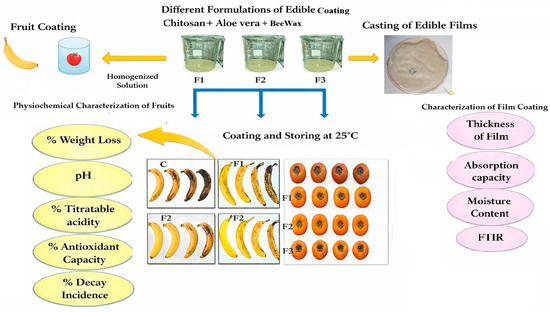
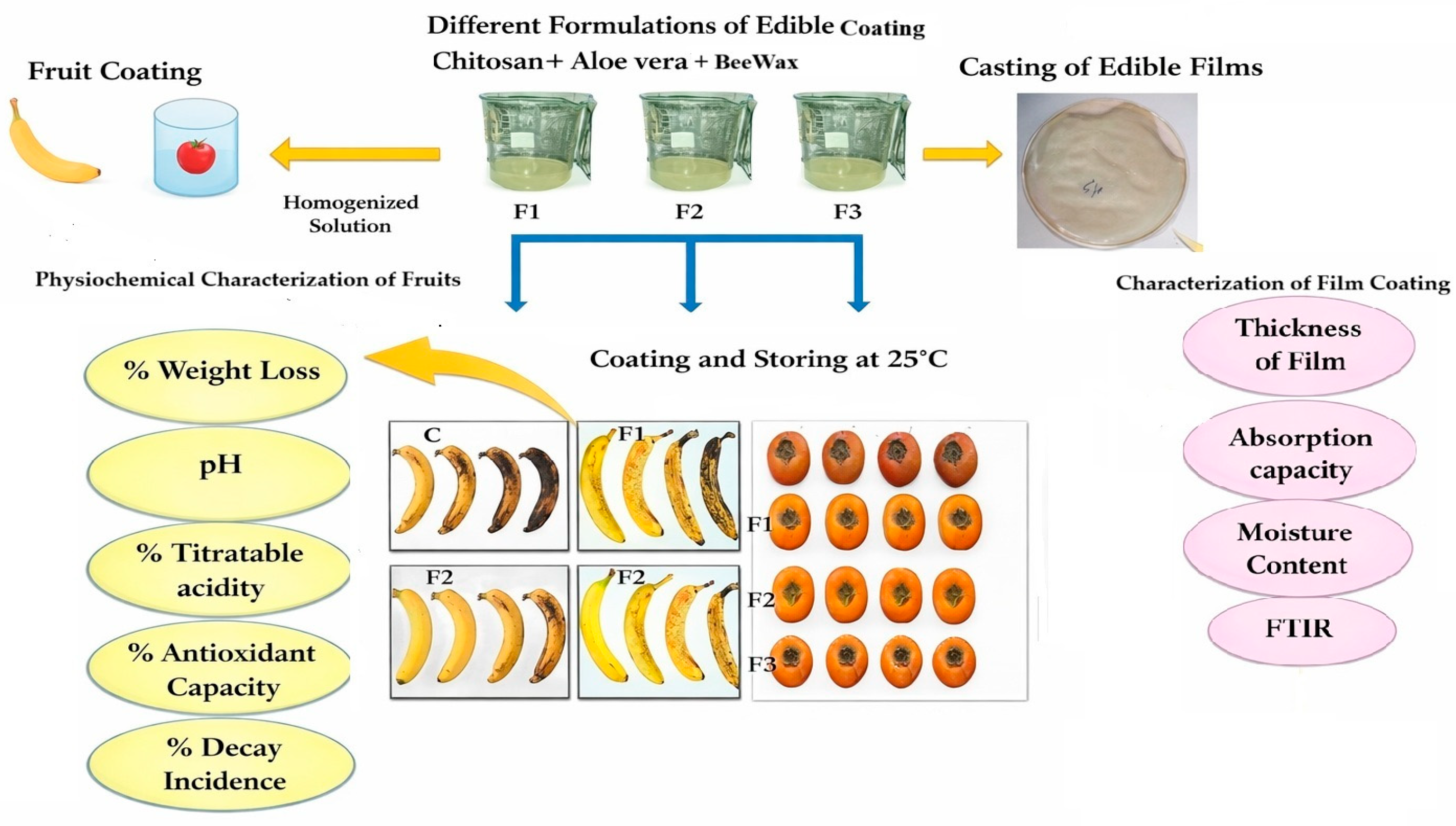
Figure 1 shows a step-wise graphical representation of study.
Figure 1.
Schematic representation of study work flow.
2.1. Fruit Selection
M. paradisiaca (banana) with yellow-green skin color (maturity stage 3) and D. kaki (persimmon) of the yellow-orange stage with uniform appearance (i.e., size, shape, and color) were randomly selected from the commercial market without having any physical damage or fungal infection. Selected fruits were washed firstly with distilled water and then disinfected by immersing them in sodium hypochlorite for five minutes. Subsequently, all the fruits were air-dried for complete surface water removal and then bananas and persimmons were randomly divided into 4 groups (control group, T1 group, T2 group, T3 group), with 3 replicates per group and 10 fruits per replicate.
2.2. Preparation of Edible Coating Film
Film-forming solutions were prepared in three steps as follows: Firstly, 1 g of chitosan (Sigma-Aldrich 448,869—Low Molecular Weight, Saint Loius, MO, USA), was dissolved in 100 mL of 2% glacial acetic acid solution on a magnetic stirrer (SCI FINETECH, Model No: FTMP-10, Seoul, Republic of Korea) (260 rpm) at a temperature of 80 °C for 30 min to make 1% chitosan solution w/v [12]. Fresh Aloe vera leaves were harvested and the outer cortex was separated to expose the gel. The gel matrix was homogenized in a blender to yield a mucilaginous gel that was filtered to discard the fibrous fraction and then made ready for utilization. Three different formulation were prepared by mixing all components in different ratios, i.e., F1 (chitosan 79.5%: Aloe vera extract 19.5%: beeswax 1%), F2 (chitosan 79.2%: Aloe vera extract 19.2%: beeswax 1.5%), and F3 (chitosan 79%: Aloe vera extract 19%: beeswax 2%)”. The chitosan–Aloe vera solution was a pre-prepared mixture containing 25% Aloe vera and 75% of 1% chitosan solution, and beeswax was added to the mixed solution according to the specified proportion. All the formulations were homogenized on a magnetic stirrer (SCI FINETECH, Model No: FTMP-10 Republic of Korea) (1500 rpm) for 45 min. In the next step, the films were prepared by using the gel casting method [12]. Film forming solution was filtered by using cheese cloth to remove clumps or debris and then 20 g of each solution was poured into Petri dishes (90 mm diameter), ensuring no air bubbles formed prior to casting. Afterwards, the solutions were dried at 40 °C in an oven (Model no: WP25A, Cornelious, Osseo, MN, USA) for 48 h and dried films were peeled off the container before testing. Films, used for testing water solubility, were kept at 25 °C and 0% relative humidity by placing them for 48 h in a closed container containing silica gel. For further examination, the rest of the films were placed in polyethylene bags.
2.3. Characterization of Film Coating
2.3.1. Measurement of Film Thickness
Film thickness was measured by using a digital micrometer device (OPTEC 0.01 mm Model no: CHAAA012, Ambala, India) at five different positions and their mean was considered as the final thickness. The thickness of the film varies according to the concentration of Aloe vera–chitosan and beeswax.
2.3.2. Absorption Capacity in Water and Acetic Acid Measurements
The water solubility of the films was analyzed according to the referenced method, which was adopted with slight modifications [13]. The initial dry weight of the films was calculated and then they were placed in water for 24 h with periodic stirring and the final dry weight of the films was calculated after drying at 40 °C in a oven (Model no: WP25A, Cornelious, USA) for 12 h. Water solubility was calculated according to the given Equation (1).
The solubility in acetic acid (Sigma Aldrich 99.9% purity; Saint Loius, MO, USA) was measured according to the method in [14] with certain modifications. For measuring the solubility in an acidic medium, the initial dry weight of the films was calculated and then the films were slowly immersed in acetic acid (14.5 mL) for 24 h. The film was removed from acetic acid medium and placed on a blotting plate to remove excess acetic acid and then weighed again. The absorption capacity was measured as:
where ms = mass of immersed film, mi = mass of dried film.
Absorption capacity in acidic medium = ms − mi/mi
2.3.3. Moisture Content Calculation of Edible Films
To calculate the moisture content of the film, the gravimetric method was adopted. The films were cut into rectangular pieces of equal size and weighed as m1. After that, the films were dried in an oven (Model no: WP25A, Cornelious, USA) at 35 °C for 24 h and then weighed as m2. The total moisture of the film was calculated according to the following Equation (2).
2.3.4. Fourier Transform Infrared Spectroscopy Measurement
The structures of the prepared composites were evaluated by using Fourier transform infrared spectroscopy (FTIR) (Model M 2000 Midac Corporation Ltd., Costa Mesa, CA, USA). The spectra of the prepared films were recorded between 400 and 4000 cm−1 with 100 scans averaged with a resolution of 4 cm−1.
2.4. Application of Coating on Fruits
Prepared coating formulations were applied on banana and persimmon fruits by dipping the fruits in the coating solution. Fruits in each group were dipped in the coating formulations, separately, for the same time under ambient conditions (25 °C, R.H. 70%).
After drying the coatings, all the samples were stored at 18 °C and 75 ± 5% R.H to mimic the market environment. Physiochemical analysis was evaluated after a 12-day interval. Each sample was marked with the group name as T1, T2 and T3.
2.5. Measurement of %Weight Loss
The weight of the fruits was measured with digital balance (Model no: 12051; India Mark; New Delhi, India) before starting the experiment (0 day) and then periodically at 4-day intervals until 12 days. Later, the percentage weight loss was calculated according to the following Equation (3).
2.6. Measurement of pH of Fruits
pH of the pulp was calculated by following the method of [15]. A total of 5 g of each sample was blended in a blender and homogenized in 20 mL of distilled water for 5 min and filtered. The pH of the pulp was calculated by a digital pH meter (pH—98,107, Shanghai, China). pH of fruits was measured at 0-, 4-, 8-, and 12-day intervals.
2.7. Titratable Acidity Calculations of Fruits
Titratable acidity was measured using an already available method [12]. For the assay, 5 g of fruit pulp was added to 50 mL of hot distilled water (80 °C) for 10 min and then filtered with cloth sheet. A 5 mL aliquot of the filtrate was titrated with 0.1 N NaOH by using 1% w/v phenolphthalein (Sigma Aldrich; CAS No.: 77-09-8) as an indicator. The volume of NaOH used in titration was recorded and then total titratable acidity was measured by using the formula Equation (4).
2.8. Antioxidant Activity Measurement
The extract was prepared by blending a sample of each fruit pulp (5 g) homogenized with 80% methanol (50 mL) with constant stirring at room temperature on a shaker for 30 min. Afterward, the prepared solutions were filtered, and the collected filtrate was centrifuged at 1500 rpm for 20 min to obtain supernatant for the assay. The DPPH (2, 2-diphenyl-1-picrylhydrazyl) solution was prepared by adding DPPH (0.0025 g) (Sigma Aldrich) in 85% ethanol (10 mL). For the antioxidant assay, DPPH (950 µL) solution was added finally to the prepared extract (150 µL), and placed in the dark for 30 min. Absorbance was measured at 517 nm by UV/vis Spectrophotometry (Model: C-7200S; PEAK INSTRUMENTS INC., Houston, TX, USA) using the following Equation (5).
2.9. Decay Incidence Measurement
Disease incidence, representing the % of infected portion of the fruit, was measured. The surface of fruits was photographed and analyzed for the area of decayed regions using ImageJ software version J1 to calculate the decay rate (decay area/total fruit surface area × 100%). Meanwhile, visual grading (1–5 grades) was used for cross-validation to ensure data reliability. Scale was observed as 1 = not infected, 2 = 1–25% infected, 3 = 26–50% infected, 4 = 51–75% infected, and 5 = 76–100% infected. The percentage of the decay was calculated as in Equation (6).
2.10. Statistical Analysis
The experimental variants were completely randomized. The statistical analysis was performed with an ANOVA using SPSS software version 28.0.1 (IBM Corporation, Armonk, NY, USA). Means were compared using Duncan’s multiple range tests at p < 0.05. The results of this study are expressed as means ± SEM.
3. Results
The overall work flow of the study is presented in Figure 1.
3.1. Absorption Capacity in Water and Acetic Acid
The absorption capacity of edible films in water and acetic acid change with the beeswax concentration. The absorption capacity of edible films in water and acetic acid ranges from 4.9% to 2.83% and 5.27% to 4.1%, respectively. The highest absorption capacity is of formulation F1 containing the least amount of beeswax, i.e., containing 1% beeswax in a 99% Aloe vera–chitosan solution, in contrast to F3 that contained 2% beeswax in a 98% Aloe vera–chitosan solution.
3.2. Moisture Content of Edible Films
The moisture content of the edible films was 25.82% for formulation F1, 24.27% for formulation F2, and 22.17% for formulation F3. The moisture content of the edible films depends greatly on the beeswax concentration due to its hydrophobic nature. This demonstrated that the film having the highest amount of beeswax has a lower moisture content as compared to a film having moderate levels of beeswax. The mean ± SEM values of studied physiochemical parameters of edible films containing different concentrations of Aloe vera–chitosan and beeswax were showed in Table 1.
Table 1.
The mean ± SEM values of studied physiochemical parameters of edible films containing different concentrations of Aloe vera–chitosan and beeswax.
3.3. Fourier Transform Infrared Spectroscopy (FTIR)
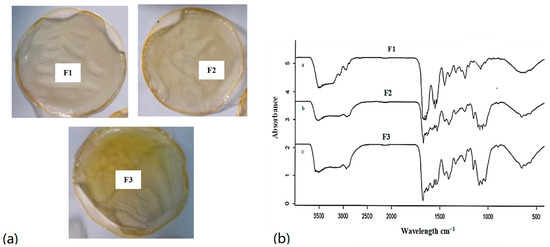
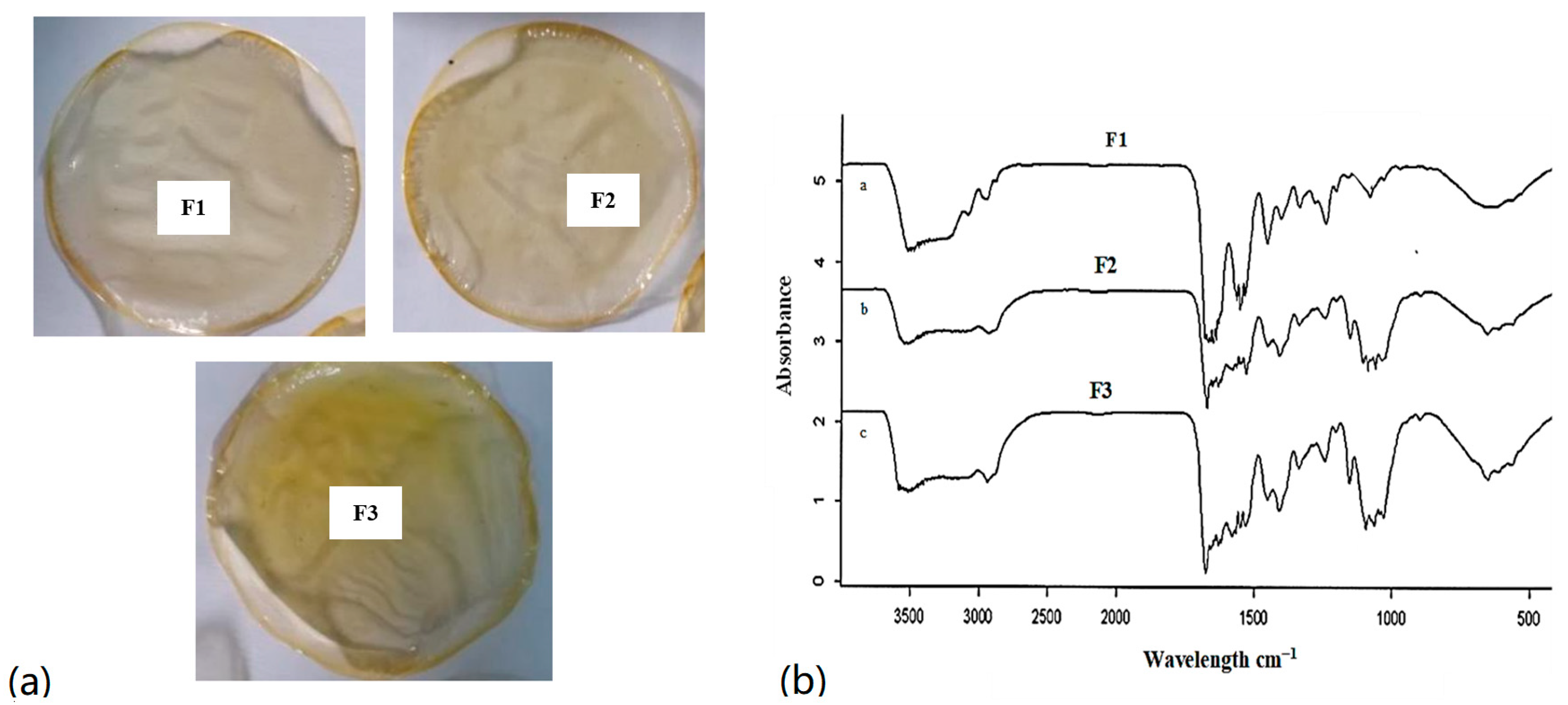
The FTIR spectra of all three films containing 1%, 1.5%, and 2% concentrations of beeswax in films F1, F2 and F3 are depicted in Figure 2. The films demonstrated characteristic bands at 1637 and 1570 cm−1 (assigned to an amide bond); 3400–3500 cm−1 (assigned to O–H and N–H stretching); and 900 and 1150 cm−1 (assigned to pyranose rings and amino groups). Intense absorption bands at 1637 appeared in the FTIR spectra of the chitosan/beeswax-based films, indicating the successful incorporation of beeswax into chitosan.
Figure 2.
Film formulations and their Fourier Transform Infrared (FTIR) spectra. (a) Films of different concentrations of Aloe vera–chitosan and beeswax. F1 represents formulation 1 (79.5:19.5:1), F2 represents formulation 2 (79.2:19.2:1.5) and F3 represents formulation 3 (79:19:2). (b) FTIR spectra of the prepared films. Peak a (F1), Peak b (F2) and Peak c (F3) showed FTIR spectra of studied formulations.
3.4. Weight Loss of Fruits
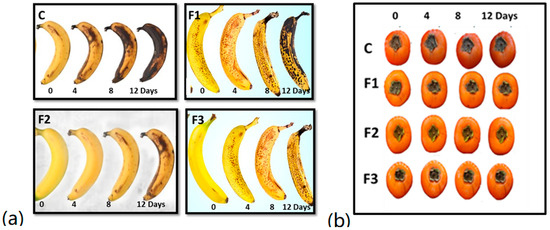
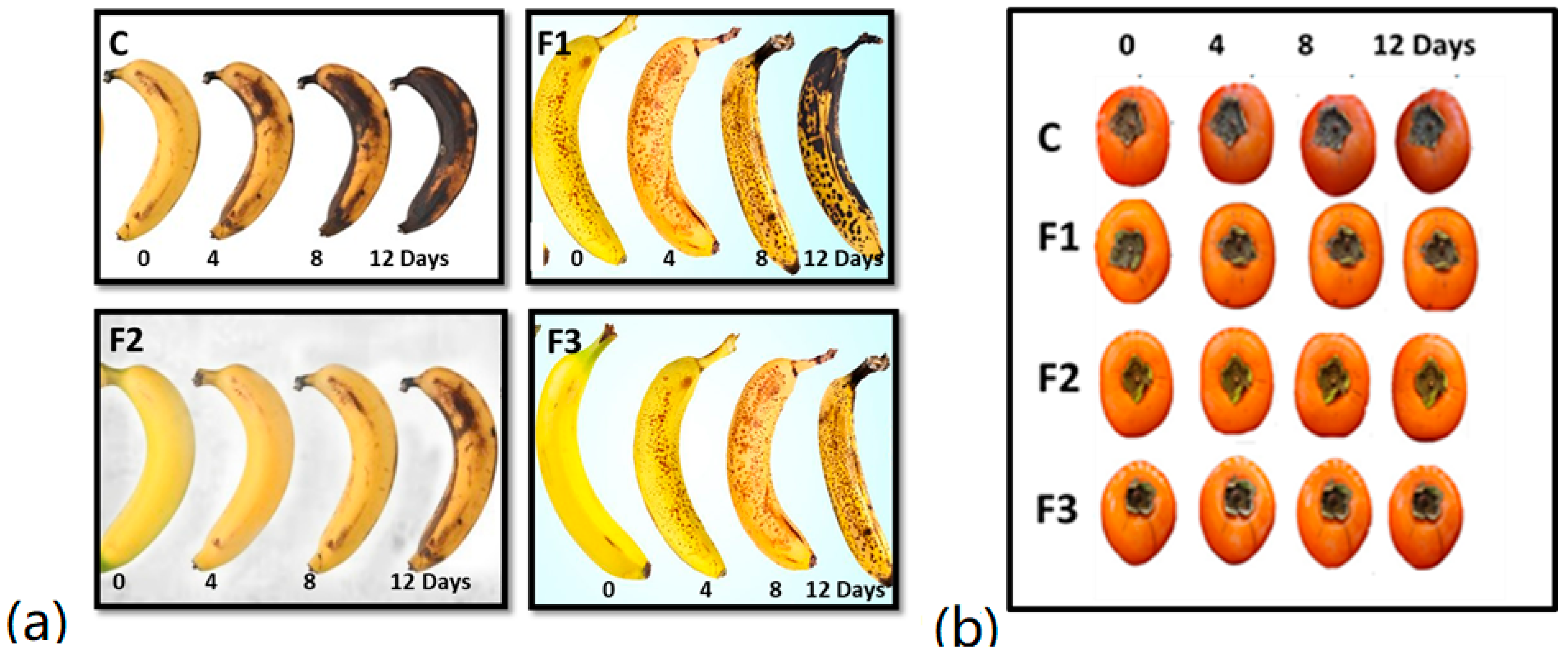
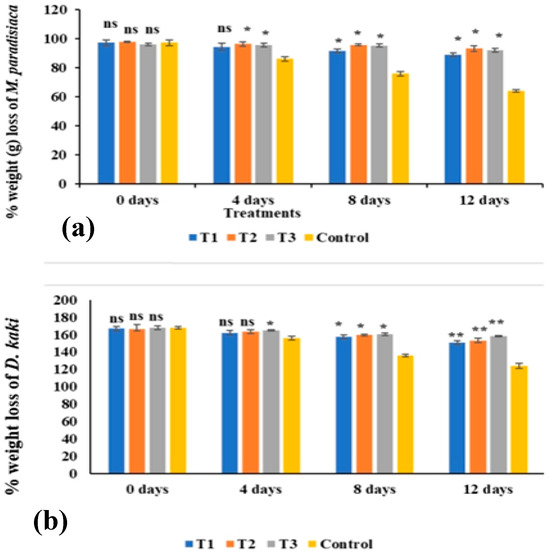
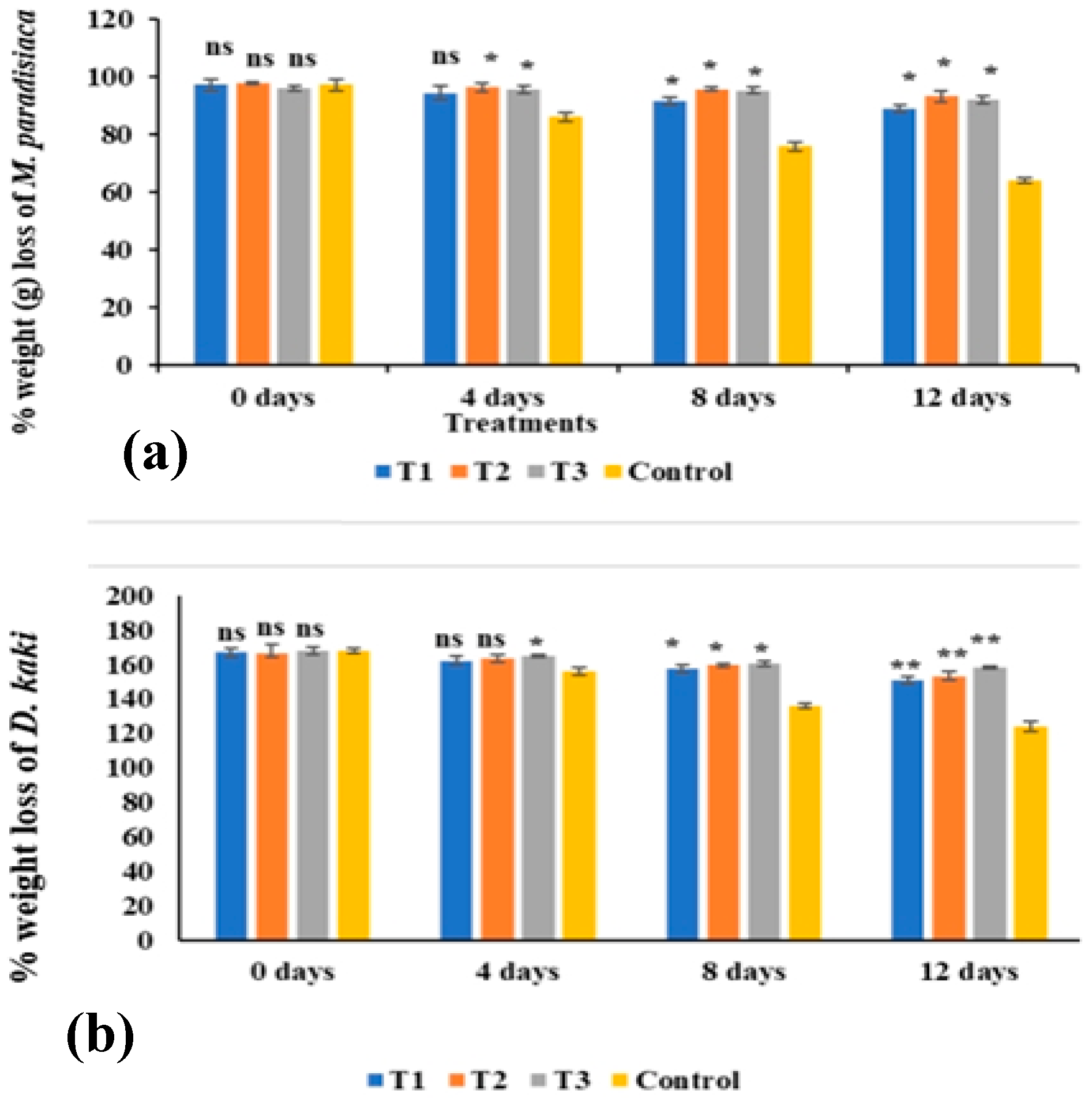
All the formulations were applied on both soft fruits as presented in Figure 3a,b. Edible coatings consisting of different concentrations of Aloe vera–chitosan and beeswax showed a significant effect on enhancing the shelf life of fruits in comparison with the control. Data was presented as means ± SEM and the mean weight (grams) of bananas at day 0 in the control, T1, T2, and T3 treatments was 97.24 ± 0.004, 97.09 ± 0.012, 97.60 ± 0.032 and 95.90 ± 0.03, respectively. Moreover, the mean weight of bananas at day 12 was 64.09 ± 0.023, 88.93 ± 0.032, 95.11 ± 0.023 and 94.95 ± 0.03 in the control, T1, T2 and T3 treatments. The analysis of variance (ANOVA) showed a significant difference in weight loss between control and edible-coated bananas after an interval of 12 days (p = 0.01). Figure 4a indicates the percentage weight loss of bananas in different treatments with the maximum percentage of weight loss occurring in the control as compared to T3 (containing 2% beeswax) with the minimum percentage of weight loss.
Figure 3.
Physical conditions of coated and uncoated fruits ((a) M. paradisiaca and (b) D. kaki) at different time intervals.
Figure 4.
Weight loss % of soft fruits treated with different formulations of edible coatings (Aloe vera–chitosan and beeswax) at different time intervals (4–12 days). (a) Edible coating applied on M. paradisiaca. (b) Edible coating applied on D. kaki. Each bar represents the mean % ± SEM of all treated and control groups. ** p < 0.005, * p < 0.05, ns: no significant difference.
Similarly, the edible coating applied on persimmons also showed significant effects. The mean ± SEM of the weight of persimmons at day 0 in the control, T1, T2, and T3 treatments of persimmons were 167.24 ± 0.312, 166.06 ± 0.74, 166.70 ± 0.39, and 167.90± 0.45, respectively, and at day 12, the T1, T2, and T3 treatments of persimmons were at 134.09 ± 0.32, 150.93 ± 0.97, 153.11 ± 0.38 and 158 ± 0.81, respectively. This indicated that the weight loss percentage was at a slower rate as compared to the control group, which had a much faster rate (Figure 4b). The analysis of variance also showed that there was significant difference in the edible-coated groups, i.e., p = 0.03, in comparison to the control group.
3.5. pH of Fruits
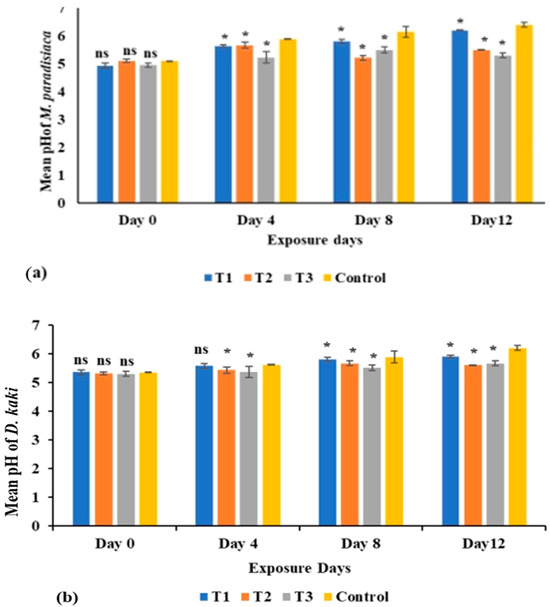
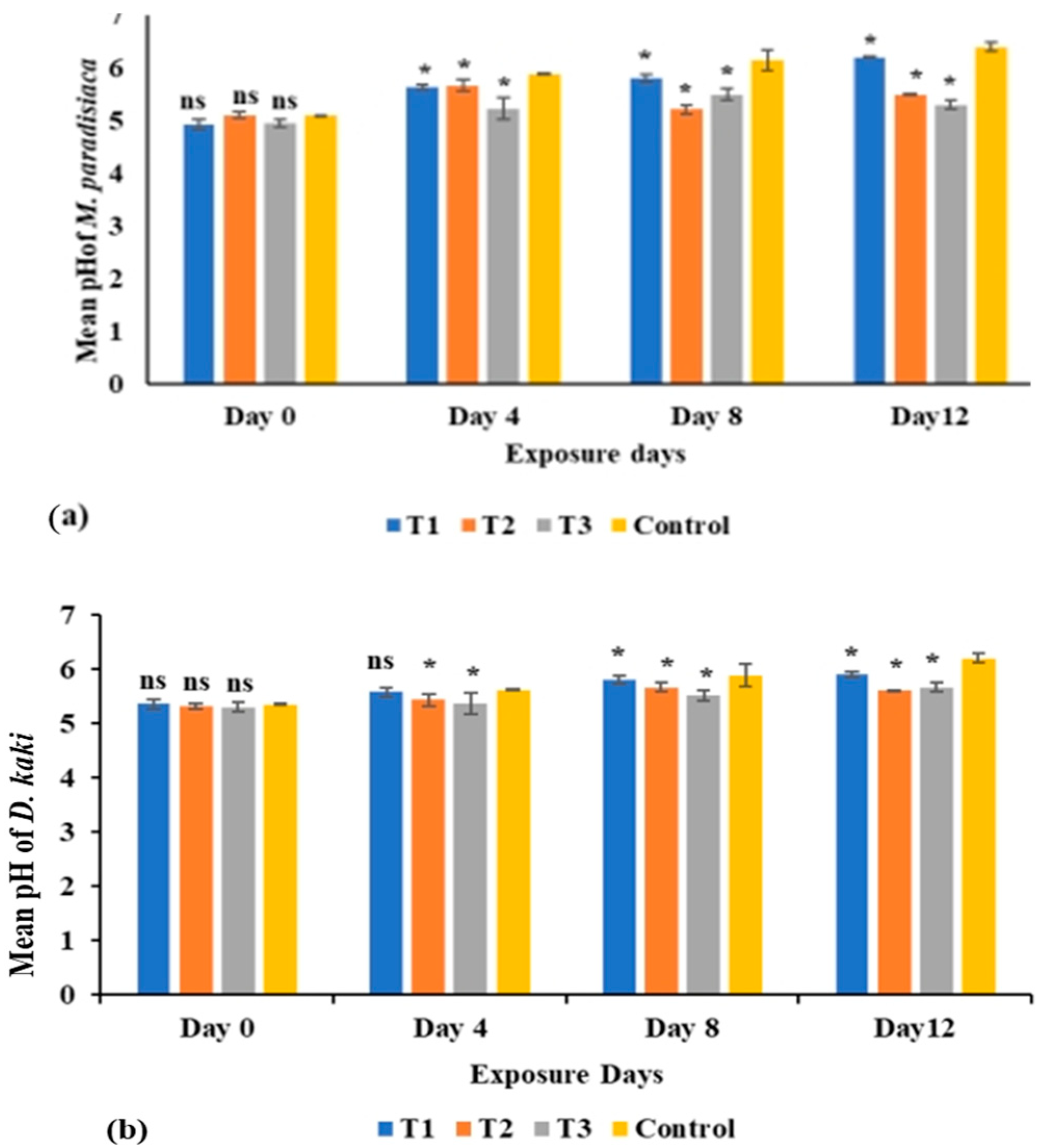
The mean ± SEM of the pH of bananas in response to different concentrations of chitosan–Aloe vera and beeswax were calculated at different time intervals. At day 0, the values in the control, T1, T2, and T3 treatments were 5.09 ± 0.038, 4.93 ± 0.024, 5.11 ± 0.018 and 4.95 ± 0.023, respectively. Additionally, the mean pH of bananas at day 12 in the same treatment were 7.24 ± 0.026, 6.20 ± 0.005, 5.5 ± 0.009 and 5.3 ± 0.005, respectively. The results indicated that uncoated or control fruits have attained a higher pH as compared to coated fruits, and among the coated ones, the lowest pH has been shown by treatment T3 with the maximum beeswax to chitosan–Aloe vera ratio solution. The analysis of variance (ANOVA) showed that all the edible coating formulations significantly hindered the pH of bananas (p = 0.023) in contrast to uncoated or control bananas. Figure 5a depicts the pH of bananas with a steady change in the treatment T3 group (containing 98% chitosan) as compared to the treatment T1 (containing 99% chitosan) and control groups. During the storage period, the concentration of chitosan in the edible coating formulations significantly affected the pH of persimmons. At an increased storage duration, the rate of change in the pH of persimmon variably increased among all the treatments. The uncoated persimmons had a speedy increase in pH as compared to the edible-coated persimmons (Figure 3). The mean ± SEM of the pH of uncoated persimmon fruits raised from 5.35 ± 0.038 to 6.02 ± 0.026 from day 0 to 12 while the treatments T1, T2 and T3 of persimmons showed pH variations from 5.35 ± 0.018 to 5.9 ± 0.009, 5.31 ± 0.018 to 5.6 ± 0.057, and 5.33 ± 0.023 to 5.67 ± 0.005, respectively, from day 0 to day 12. The analysis of variance (ANOVA) indicated a significant difference in the pH of persimmons between uncoated and edible-coated persimmons after the 12th day (p = 0.001) (Figure 5b). The reason for the high pH of the control and uncoated fruit is that as they decay (ripen and eventually spoil), there is primarily a reduction in the organic acids that were present in the unripe fruit.
Figure 5.
Mean pH of soft fruits treated with different formulations of edible coatings (Aloe vera–chitosan and beeswax) at different time intervals (4–12 days). (a) Edible coating applied on M. paradisiaca. (b) Edible coating applied on D. kaki. Each bar represents the mean % ± SEM of all treated and control groups. * p < 0.05: ns. no significant difference.
3.6. Titratable Acidity of Fruits
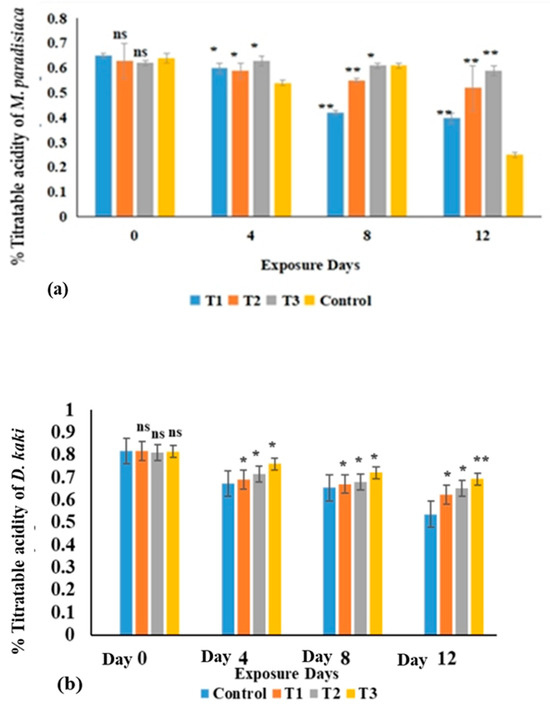
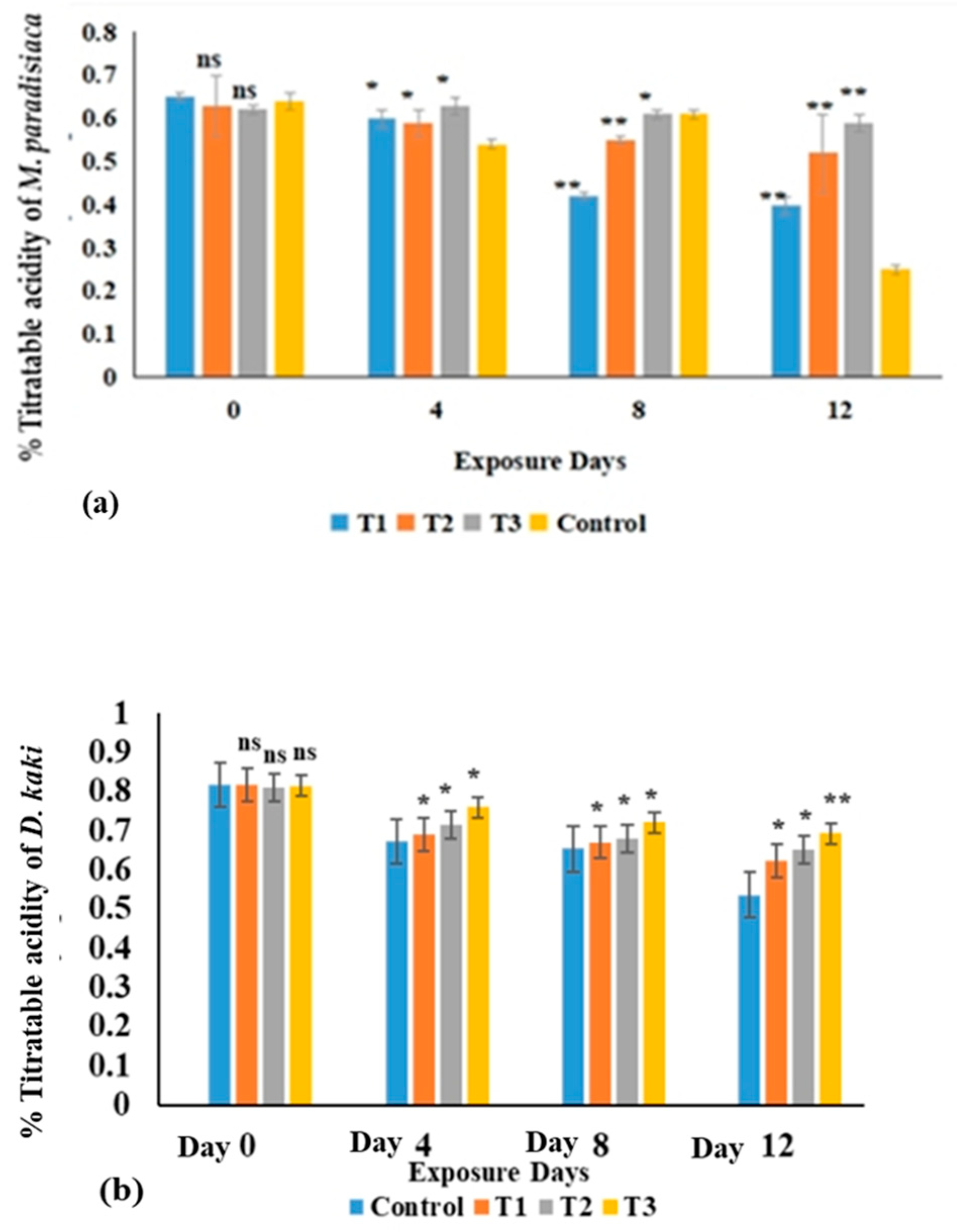
Titratable acidity measures the total amount of acid present in the sample. Figure 6 represents the effect of Aloe vera–chitosan + beeswax concentration and storage time on the % titratable acidity of bananas. The % titratable acidity decreases along with the storage period, but abruptly changes in uncoated fruits. The 98% Aloe vera–chitosan concentration exhibited a minimal change in titratable acidity (from 0.534% to 0.452%) during storage at an interval of 12 days in ambient conditions. At the first day, the means ± SEM of the titratable acidity % of bananas were 0.640% ± 0.002, 0.650% ± 0.007, 0.63% ± 0.002 and 0.62% ± 0.001 on the last day of storage, and they were 0.452% ± 0.012, 0.527% ± 0.009, 0.594% ± 0.002 and 0.251% ± 0.05 in the control, T1, T2 and T3 banana treatments, respectively. The analysis of variance showed the significant difference between control and edible-coated bananas (p = 0.02) (Figure 6a). Likewise, the mean titratable acidity % of persimmons also showed variations in different treatments. In uncoated persimmon fruits, it decreased from 0.817 to 0.536% after the 12th day. At day 0, they were 0.817 ± 0.006, 0.817 ± 0.005, 0.811 ± 0.008 and 0.814 ± 0.005 in the control, T1, T2 and T3 groups, while they were 0.536 ± 0.032, 0.623 ± 0.001, 0.65 ± 0.002 and 0.692 ± 0.002 at day 12 of the persimmon fruit treatment, respectively. The change in % titratable acidity slowed down with the increase in the beeswax concentration (Figure 6b). A significant difference between the edible-coated and uncoated persimmons was found (p = 0.003).
Figure 6.
% Titratable acidity of soft fruits treated with different concentrations of edible coatings (Aloe vera–chitosan and beeswax) at different time intervals (4–12 days). (a) Edible coating applied on M. paradisiaca. (b) Edible coating applied on D. kaki. Each bar represents the mean % ± SEM of all treated and control groups. ** p < 0.005: * p < 0.05: ns. no significant difference.
3.7. Antioxidant Activity of Fruits
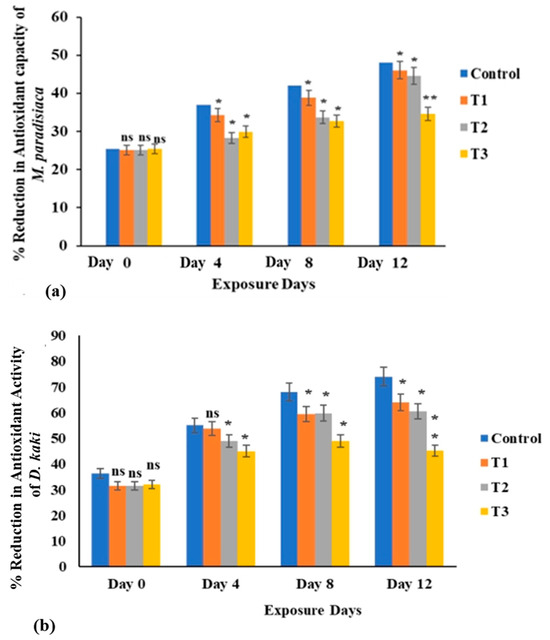
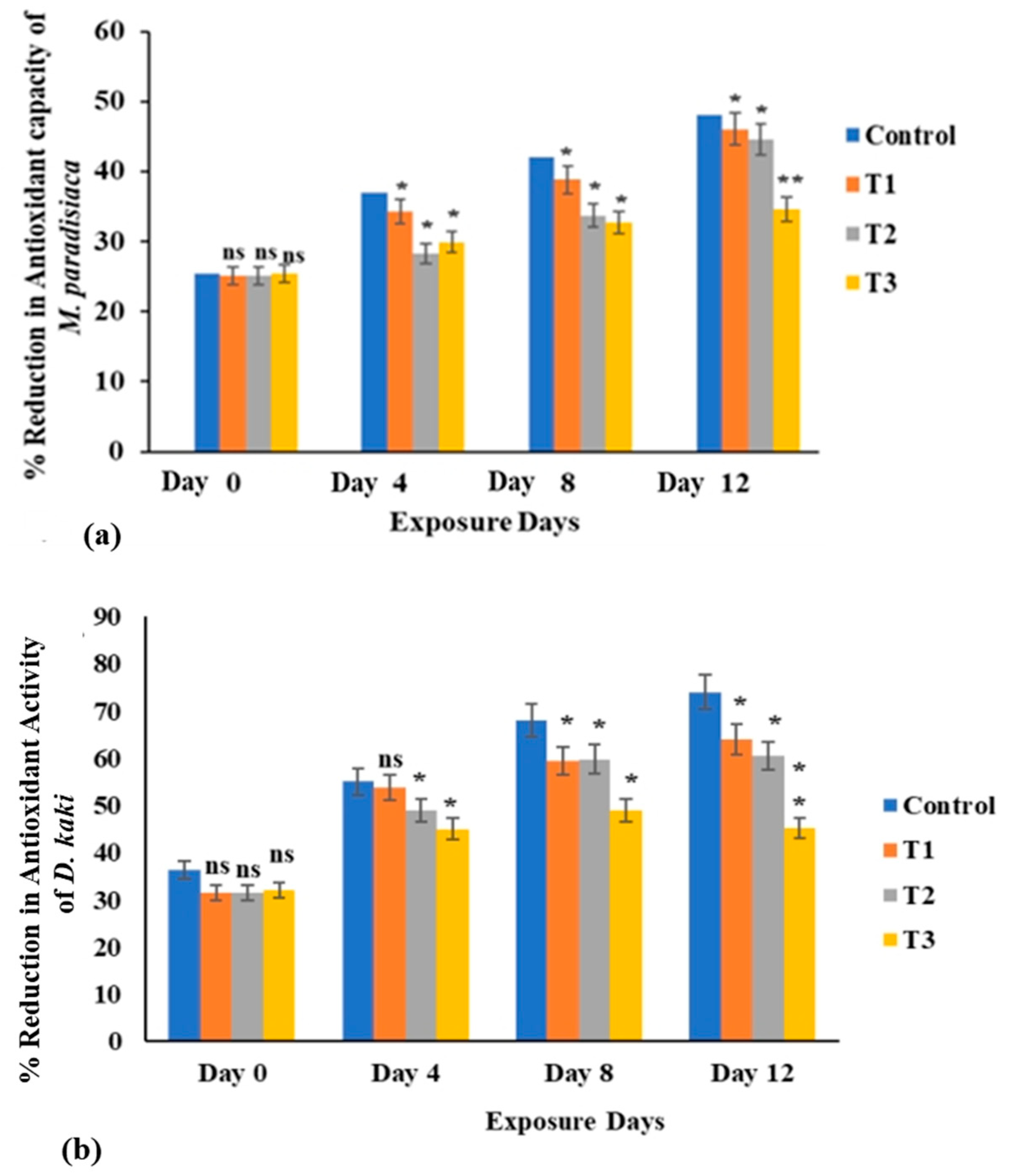
The capability of different concentrations of edible coating formulations in maintaining the % free radical scavenging activity of bananas during the storage period is presented in Figure 7. The % reduction in the free radical scavenging activity of treatment T3 increased at a slower rate as compared to uncoated and other treated bananas. It showed a gradual reduction during the storage period with the maximum reduction exhibited in uncoated bananas (25.4 ± 0.06) at day 0 and 48.0 ± 0.07 at the 12th day. The antioxidant activity of bananas in formulation T1 (containing 99% Aloe vera–chitosan) at different time intervals was 25.1 ± 0.054 (0 day), 34.3 ± 0.10 (4 day), 38.8 ± 0.056 (8 day) and 46.0 ± 0.005 (12 day). The antioxidant activity of bananas in formulation T2 (containing 98.5% Aloe vera–chitosan) at different time intervals was 25.1 (0 day), 28.3 ± 0.032 (4 day), 33.7 ± 0.054 (8 day), and 44.5 ± 0.07 (12 day), while in formulation T3, they were 25.4 ± 0.021 ± 0.12, 29.9 ± 0.06, 32.7 ± 0.056, and 34.6 ± 0.006 at the same observational time intervals. The analysis of variance showed the significant difference between the uncoated and coated fruits is (p = 0.001) (Figure 7a).
Figure 7.
% Reduction in antioxidant capacity of soft fruits applied with different formulations of edible coatings (Aloe vera–chitosan and beeswax) at different time intervals (4–12 days). (a) Edible coating applied on M. paradisiaca. (b) Edible coating applied on D. kaki. Each bar represents the mean % ± SEM of all treated and control groups. ** p < 0.005, * p < 0.05, ns: no significant difference.
The uncoated persimmon fruits showed a more pronounced change in antioxidant activity as compared to coated fruits. The uncoated fruits exhibited variations from 36.3 ± 0.02 to 76.0 ± 0.34 during the storage period as represented in Figure 7b. The antioxidant activity of persimmon in formulation T1 (containing 99% Aloe vera–chitosan) at different time intervals was 31.5 ± 0.006 (0 day), 53.7 ± 0.03 (4 day), 59.5 ± 0.45 (8 day) and 64.1 ± 0.025 (12 day). The antioxidant activity of persimmon in formulation T2 (containing 98.5 Aloe vera–Chitosan) at different time intervals were 31.5 ± 0.006 (0 day), 49.0 ± 0.54 (4 day), 59.8 ± 0.064 (8 day), and 60.5 ± 0.12 (12 day), while in formulation T3, they were 32.0 ± 0.006, 45.0 ± 0.09, 45.5 ± 0.07, and 49.2 ± 0.12 at the same observational time intervals. According to the analysis of variance, there is a significant difference between uncoated and edible-coated persimmon fruits (p = 0.003).
3.8. Decay Incidence
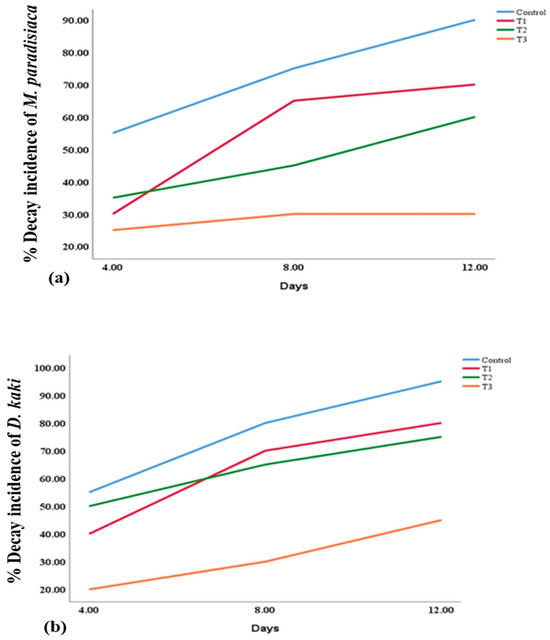
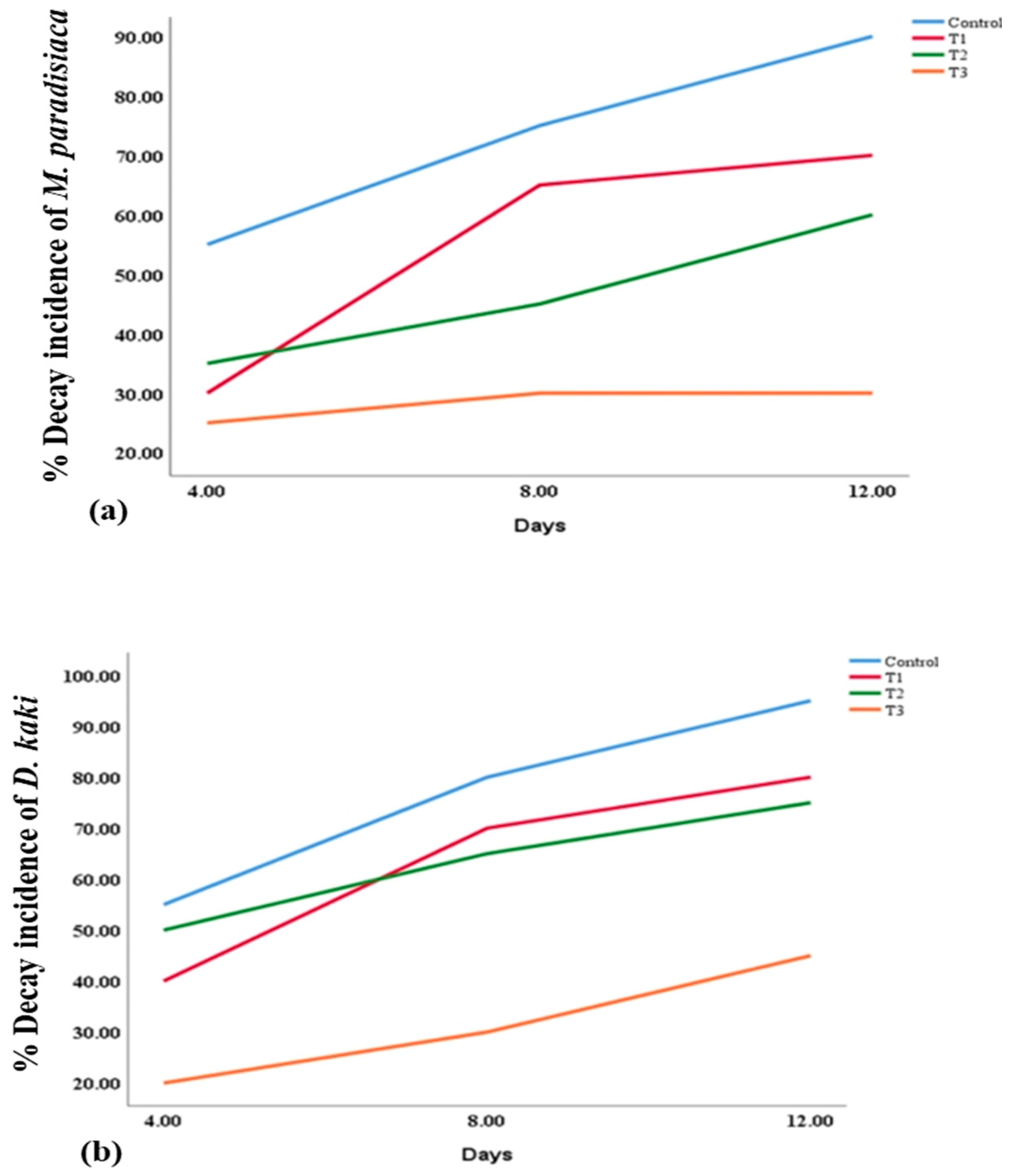
The percentage decay incidence of bananas during the storage of 12 days at ambient conditions was observed and showed Figure 8. The maximum decay was exhibited by uncoated bananas at day 0, it was 0% in all the groups while at the day 12 percentage decay incidence were 90 ± 0.32, 70 ± 0.6, 60 ± 0.54 and 30 ± 0.76 in control, T1, T2 and T3 groups respectively. The decay incidence was more pronounced during the first 8 days, and it became steady during the last four days. However, during the last four days the %decay incidence in the formulation T3 (containing 2% beeswax) was persistent and it was much slow in formulation T2 (containing 1.5% beeswax) as compared to T1 (containing 1% beeswax) and control group bananas (Figure 8a).
Figure 8.
% Decay incidence of soft fruits applied with different formulations of edible coatings (Aloe vera–Chitosan and Beeswax) at different time intervals (4–12 days). (a) Edible coating applied on M. paradisiaca. (b) Edible coating applied on D. kaki. Each bar represents the mean % ± SEM of all treated and control groups.
Similarly, the % decay incidence of persimmons also increased during the storage period but the rate at which decay occurred was varied (Figure 8b). The % decay incidence of the control group of persimmons was 55 ± 0.12 and 80 ± 0.22 at day 4 and 8, and reached a maximum level of 95 ± 0.021 on the last day of the experimental trial. At the last day of storage, the % decay incidence levels of formulations T1, T2 and T3 were 80 ± 0.2, 75 ± 0.32 and 45 ± 0.21, respectively. The persimmons present in the treatment T3 with a 98% Aloe vera–chitosan solution provide the greatest hindrance to fungal infection.
4. Discussion
In the present study, chitosan and Aloe vera, along with beeswax, were used as a coating material. The present findings align with the previous reported utility of chitosan-based edible coatings to enhance the shelf life of fruits. Figs coated with a chitosan–Aloe vera film had an enhanced shelf life [16]. The hydrophobicity of beeswax enables the high-concentration beeswax coating (F3) to form a denser moisture barrier layer (data showed that F3 had the lowest moisture content of 22.17%), reducing fruit transpiration and water loss. Therefore, the weight loss rate of fruits in the F3 treatment group was significantly lower than that in the F1 group and the control group (banana: 95.11 ± 0.023; persimmon: 158 ± 0.81), This study found that when the beeswax concentration exceeds 2%, it may affect the gas permeability of the coating. In addition, the phenolic compounds in Aloe vera extract synergize with the amino groups of chitosan to enhance the damage to fungal cell membranes (FTIR analysis showed an enhanced characteristic peak of amide bonds at 1637 cm−1, indicating the successful combination of components). Thus, the F3 treatment group achieved the lowest decay rate (banana: 30%; persimmon: 45%). Tween 20 was also added because it acts as a surfactant with both a hydrophilic part that is sustained in the polar environment and a lipophilic part that prefers to be in the non-polar environment [12].
To test the efficacy of the physical characteristics of the prepared edible films, such as film thickness, absorption capacity, and moisture content, an FTIR analysis of the different formulations was conducted. The decrease in the thickness was observed with the decrease in beeswax concentration. Similar reduction values were also reported in previous findings [17]. The absorption capacity of the films varied in water and acetic medium. The change in the absorption extent was due to the varied concentration of beeswax as it was hydrophobic and helped in maintaining the inner environment of the fruit along with chitosan. These results were in concordance with other studies done by [18,19]. This was due to the fact that beeswax provides excellent resistance to moisture.
Different quality parameters of coated fruits were also measured to determine the effectiveness of the coated film. The weight loss of fruit after harvest is largely due to water loss and nutrient consumption in the processes of respiration and transpiration [20]. Previous studies have suggested that edible coatings with beeswax and coconut oil reduce water loss in lemons [21]; similarly, thyme oil [22,23], olive leaf extract and guar gum with ginseng extract can reduce weight loss in stored sweet cherries. It was found that in comparison to the control group, all the treated group of fruits showed weight loss at a much slower rate. This was according to the study of [24]. Formulations with higher beeswax concentrations retained the maximum amount of water. Efficient hydrogen bonding between the hydroxyl group of polysaccharides and water absorption substances in the edible coating formulations is linked with the decrease in weight loss.
The pH of fruit is an important factor to determine the ripening of fruit. The pH value of immature fruit is highly acidic. With the increase in the postharvest period, the pH of the fruit increases, as the organic acids present in the fruit transform into sugars, which is basically a sign of maturation [25]. The rate of the pH increase in persimmons and bananas was slow during the first eight days of the treatment in the present study and after that, there is a steady increase in the pH of the coated fruits, which showed that the coating film effectively retarded the change in pH compared to the uncoated fruits that showed a speedy change in their pH from the very first day of the experiment. The result of the current study is also supported by the study of [12,26], who coated mangoes and strawberries with similar coating formulations. The untreated fruits showed a rapid decrease in titratable acidity, whereas all the coating treatments showed a slower decrease in titratable acidity. These occurrences would likely be associated with the most critical period of fruit ripening, which is characterized by an excessive requirement for substrates and metabolites as power sources or as components of other metabolic processes. The previous results also showed that incorporation of a beeswax emulsion in to chitosan–Aloe vera mixture reduces the water vapor permeability, and retards pH changes in mangos [27].
Total antioxidant capacity is the determination of free radicals scavenged. The free radical scavenging activity of bananas and persimmons has been credited to different substances such as phenols, carotenoids, and Vitamin C [27,28]. Untreated fruits showed an abrupt decrease in antioxidants, while the coated fruits, especially with a 2% beeswax formulation, reduced the process of senescence at a much greater rate. The results obtained from the current study were in concordance with the results obtained by [26,27,29,30] in which fruits treated with different types of edible materials were used. Ref. [31] stated that chitosan and Aloe vera coatings improved the overall antioxidant activity of sweet cherries, without negative effects on the content of bioactive compounds of fruits. The decay incidence of the fruits was measured visually, and the disease incidence scale was adjusted. In the present study, the fruits in the control group showed the maximum level of fungal infection. However, all the treated fruits showed infections at varied rates. Among the treated fruits, a minimal fungal infection level was shown by the formulation having a 98% chitosan–Aloe vera solution. The decay incidence decreased with increases in the concentration of beeswax. Thus, the finding confirmed that the use of chitosan has excellent antifungal characteristics that prevent fungal infections. Additionally, when a fungal cell encounters the fruit surface, chitosan attaches to the membrane of the fungus by strong electrostatic interaction with the help of its amino group. Moreover, the previous study also reported the Aloe vera extract used in the formulation released phenol-related components that provide a hindrance to fungal infection. The film also provides excellent retardation to oxygen permeability and reduced fungal infection among the edible-coated treated fruits [32].
The present results demonstrated that edible fruit coatings reduce postharvest losses of soft fruits, which are prone to rapid spoilage due to their high respiration rate and microbial degradation. Applications of chitosan–Aloe vera–beeswax edible coatings could be used as natural biodegradable alternatives to synthetic preservatives.
5. Conclusions
The application of chitosan edible films incorporated with beeswax and Aloe vera extract could be beneficial in retarding the ripening process of M. paradisiaca and D. kaki, maintaining the quality and controlling the decay incidence of fruits. The shelf life of banana and persimmon could be prolonged up to several days upon the application of edible coatings. Overall, the edible coating prepared with 98% Aloe vera–chitosan and a 2% beeswax solution was proven to be the most effective coating for fruits in terms of % weight loss, decay incidence, titratable acidity, total antioxidant capacity, and decay incidence. Active packaging using edible coatings enriched with Aloe vera plant extract and beeswax could be an essential and sustainable alternative solution to preserve the properties of fruits and to prevent food loss and food waste.
Author Contributions
Conceptualization, M.P. (Mahnoor Pervez), M.Y. and M.P. (Monica Popescu); Methodology, M.P. (Mahnoor Pervez), A.T. and M.Y.; Software, G.C.P., A.T. and M.Y.; Validation, G.C.P., A.T., F.M., M.Y. and M.P. (Monica Popescu); Formal analysis, M.P. (Mahnoor Pervez), G.C.P., F.M. and M.P. (Monica Popescu); Investigation, M.P. (Mahnoor Pervez), G.C.P. and F.M.; Resources, M.P. (Mahnoor Pervez) and F.M.; Data curation, G.C.P., A.T. and M.P. (Monica Popescu); Writing—original draft, M.P. (Mahnoor Pervez); Writing—review & editing, M.P. (Mahnoor Pervez), G.C.P. and M.P. (Monica Popescu); Visualization, M.P. (Mahnoor Pervez); Supervision, M.P. (Mahnoor Pervez); Project administration, M.P. (Mahnoor Pervez). All authors have read and agreed to the published version of the manuscript.
Funding
This research received no external funding.
Institutional Review Board Statement
No animal/human or clinical samples were involved.
Data Availability Statement
All required data is incorporated in the original article.
Conflicts of Interest
The authors declare no conflict of interest.
References
- Gaspar, M.C.; Braga, M.E. Edible films and coatings based on agrifood residues: A new trend in the food packaging research. Curr. Opin. Food Sci. 2023, 50, 101006. [Google Scholar] [CrossRef] [Scilit]
- Popescu, G.C.; Popescu, M.; Pampana, S.; Khondker, M.; Umehara, M.; Hayashi, H.; Touch, N. Introduction: Sustainability as an agroecological strategy toward resilience in agricultural systems. Agron. J. 2023, 115, 2657–2664. [Google Scholar] [CrossRef] [Scilit]
- Lodhi, G.; Kim, Y.-S.; Hwang, J.-W.; Kim, S.-K.; Jeon, Y.-J.; Je, J.-Y.; Ahn, C.-B.; Moon, S.-H.; Jeon, B.-T.; Park, P.-J. Chitooligosaccharide and its derivatives: Preparation and biological applications. BioMed Res. Int. 2014, 2014, 654913. [Google Scholar] [CrossRef] [Scilit]
- Duong, N.T.C.; Uthairatanakij, A.; Laohakunjit, N.; Jitareerat, P.; Kaisangsri, N. An innovative single step of cross-linked alginate-based edible coating for maintaining postharvest quality and reducing chilling injury in rose apple cv.’Tabtimchan’ (Syzygium samarangenese). Sci. Hortic. 2022, 292, 110648. [Google Scholar] [CrossRef] [Scilit]
- Mahmoudi, R.; Razavi, F.; Rabiei, V.; Palou, L.; Gohari, G. Postharvest chitosan-arginine nanoparticles application ameliorates chilling injury in plum fruit during cold storage by enhancing ROS scavenging system activity. BMC Plant Biol. 2022, 22, 555. [Google Scholar] [CrossRef] [Scilit]
- Xing, Y.; Xu, Q.; Jiang, L.; Cao, D.; Lin, H.; Che, Z.; Ma, Y.; Li, X.; Cai, Y. Effect of different coating materials on the biological characteristics and stability of microencapsulated Lactobacillus acidophilus. RSC Adv. 2015, 5, 22825–22837. [Google Scholar] [CrossRef] [Scilit]
- Liu, J.; Tian, S.; Meng, X.; Xu, Y. Effects of chitosan on control of postharvest diseases and physiological responses of tomato fruit. Postharvest Biol. Technol. 2007, 44, 300–306. [Google Scholar] [CrossRef] [Scilit]
- Yang, L.; Zhao, P.; Wang, L.; Filippus, I.; Meng, X. Synergistic effect of oligochitosan and silicon on inhibition of Monilinia fructicola infections. J. Sci. Food Agric. 2010, 90, 630–634. [Google Scholar] [CrossRef] [Scilit] [PubMed]
- Rai, S.; Singh, S.; Pathak, N.; Sharma, S. Assessing the potential of chitosan based coatings in modulation of bacteriome on tomato carposphere. Postharvest Biol. Technol. 2024, 209, 112684. [Google Scholar] [CrossRef] [Scilit]
- Nourozi, F.; Sayyari, M. Enrichment of Aloe vera gel with basil seed mucilage preserve bioactive compounds and postharvest quality of apricot fruits. Sci. Hortic. 2020, 262, 109041. [Google Scholar] [CrossRef] [Scilit]
- Zhang, Y.; Luo, D.; Ma, Y.; Zhang, Q.; Lin, X.; Peng, J.; Wan, X.; Huang, S.; Dong, X. Effect of Melatonin Treatment on Antioxidant Metabolism and Storage Quality of “Fengtang” Plum. Int. J. Fruit Sci. 2025, 25, 20–39. [Google Scholar] [CrossRef] [Scilit]
- Velickova, E.; Winkelhausen, E.; Kuzmanova, S.; Alves, V.D.; Moldão-Martins, M. Impact of chitosan-beeswax edible coatings on the quality of fresh strawberries (Fragaria ananassa cv Camarosa) under commercial storage conditions. LWT-Food Sci. Technol. 2013, 52, 80–92. [Google Scholar] [CrossRef] [Scilit]
- Colla, E.; do Amaral Sobral, P.J.; Menegalli, F.C. Amaranthus cruentus flour edible films: Influence of stearic acid addition, plasticizer concentration, and emulsion stirring speed on water vapor permeability and mechanical properties. J. Agric. Food Chem. 2006, 54, 6645–6653. [Google Scholar] [CrossRef] [Scilit]
- Gutiérrez, T.J.; Morales, N.J.; Tapia, M.S.; Pérez, E.; Famá, L. Corn starch 80: 20 “waxy”: Regular, “native” and phosphated, as bio-matrixes for edible films. Procedia Mater. Sci. 2015, 8, 304–310. [Google Scholar] [CrossRef] [Scilit]
- Eshetu, A.; Ibrahim, A.M.; Forsido, S.F.; Kuyu, C.G. Effect of beeswax and chitosan treatments on quality and shelf life of selected mango (Mangifera indica L.) cultivars. Heliyon 2019, 5, e01116. [Google Scholar] [CrossRef] [Scilit]
- Kaur, N.; Somasundram, C.; Razali, Z.; Ahmed, Z.F.R. Sustainable Aloe vera/chitosan-based edible coatings reduce postharvest loss of stored fresh figs (Ficus carica L.). Front. Sustain. Food Syst. 2024, 8, 1459600. [Google Scholar] [CrossRef] [Scilit]
- Sultan, M.; Hafez, O.M.; Saleh, M.A.; Youssef, A.M. Smart edible coating films based on chitosan and beeswax–pollen grains for the postharvest preservation of Le Conte pear. RSC Adv. 2021, 11, 9572–9585. [Google Scholar] [CrossRef] [Scilit]
- Mayachiew, P.; Devahastin, S.; Mackey, B.M.; Niranjan, K. Effects of drying methods and conditions on antimicrobial activity of edible chitosan films enriched with galangal extract. Food Res. Int. 2010, 43, 125–132. [Google Scholar] [CrossRef] [Scilit]
- Liu, Y.; Yuan, Y.; Duan, S.; Li, C.; Hu, B.; Liu, A.; Wu, D.; Cui, H.; Lin, L.; He, J. Preparation and characterization of chitosan films with three kinds of molecular weight for food packaging. Int. J. Biol. Macromol. 2020, 155, 249–259. [Google Scholar] [CrossRef] [Scilit]
- Sogvar, O.B.; Saba, M.K.; Emamifar, A. Aloe vera and ascorbic acid coatings maintain postharvest quality and reduce microbial load of strawberry fruit. Postharvest Biol. Technol. 2016, 114, 29–35. [Google Scholar] [CrossRef] [Scilit]
- Nasrin, T.A.A.; Rahman, M.A.; Arfin, M.S.; Islam, M.N.; Ullah, M.A. Effect of novel coconut oil and beeswax edible coating on postharvest quality of lemon at ambient storage. J. Agric. Food Res. 2020, 2, 100019. [Google Scholar] [CrossRef] [Scilit]
- Nabifarkhani, N.; Sharifani, M.; Daraei Garmakhany, A.; Ganji Moghadam, E.; Shakeri, A. Effect of nano-composite and Thyme oil (Tymus vulgaris L.) coating on fruit quality of sweet cherry (Takdaneh Cv) during storage period. Food Sci. Nutr. 2015, 3, 349–354. [Google Scholar] [CrossRef] [Scilit]
- Zam, W. Effect of alginate and chitosan edible coating enriched with olive leaves extract on the shelf life of sweet cherries (Prunus avium L.). J. Food Qual. 2019, 2019, 8192964. [Google Scholar] [CrossRef] [Scilit]
- Aziz, T.; Hassan, M.K.; Talukder, F.U.; Rahman, M.S. Effects of different concentrations of chitosan on shelf life and quality of banana fruit. Int. J. Hortic. Sci. Technol. 2021, 8, 1–12. [Google Scholar]
- Moalemiyan, M.; Ramaswamy, H.S.; Maftoonazad, N. Pectin-based edible coating for shelf-life extension of ataulfo mango. J. Food Process Eng. 2012, 35, 572–600. [Google Scholar] [CrossRef] [Scilit]
- Amin, U.; Khan, M.A.; Akram, M.E.; Said Al-Tawaha, A.R.M.; Laishevtcev, A.; Shariati, M.A. Characterization of compisote edible films from aloe vera gel, beeswax and chitosan. Slovak J. Food Sci./Potravin. 2019, 13, 854–862. [Google Scholar] [CrossRef] [Scilit]
- Amin, U.; Khan, M.K.I.; Khan, M.U.; Ehtasham Akram, M.; Pateiro, M.; Lorenzo, J.M.; Maan, A.A. Improvement of the performance of chitosan—Aloe vera coatings by adding beeswax on postharvest quality of mango fruit. Foods 2021, 10, 2240. [Google Scholar] [CrossRef] [Scilit] [PubMed]
- Naser, F.; Rabiei, V.; Razavi, F.; Khademi, O. Effect of calcium lactate in combination with hot water treatment on the nutritional quality of persimmon fruit during cold storage. Sci. Hortic. 2018, 233, 114–123. [Google Scholar] [CrossRef] [Scilit]
- Ebrahimi, F.; Rastegar, S. Preservation of mango fruit with guar-based edible coatings enriched with Spirulina platensis and Aloe vera extract during storage at ambient temperature. Sci. Hortic. 2020, 265, 109258. [Google Scholar] [CrossRef] [Scilit]
- Saleem, M.S.; Ejaz, S.; Anjum, M.A.; Ali, S.; Hussain, S.; Nawaz, A.; Naz, S.; Maqbool, M.; Abbas, A.M. Aloe vera gel coating delays softening and maintains quality of stored persimmon (Diospyros kaki Thunb.) Fruits. J. Food Sci. Technol. 2022, 59, 3296–3306. [Google Scholar] [CrossRef] [Scilit]
- Afonso, S.; Oliveira, I.; Ribeiro, C.; Vilela, A.; Meyer, A.S.; Gonçalves, B. Innovative edible coatings for postharvest storage of sweet cherries. Sci. Hortic. 2023, 310, 111738. [Google Scholar] [CrossRef] [Scilit]
- Xing, Y.; Yang, H.; Guo, X.; Bi, X.; Liu, X.; Xu, Q.; Wang, Q.; Li, W.; Li, X.; Shui, Y. Effect of chitosan/Nano-TiO2 composite coatings on the postharvest quality and physicochemical characteristics of mango fruits. Sci. Hortic. 2020, 263, 109135. [Google Scholar] [CrossRef] [Scilit]

Disclaimer/Publisher’s Note: The statements, opinions and data contained in all publications are solely those of the individual author(s) and contributor(s) and not of MDPI and/or the editor(s). MDPI and/or the editor(s) disclaim responsibility for any injury to people or property resulting from any ideas, methods, instructions or products referred to in the content. |
© 2026 by the authors. Licensee MDPI, Basel, Switzerland. This article is an open access article distributed under the terms and conditions of the Creative Commons Attribution (CC BY) license.