1. Introduction
Sugar beet
(Beta vulgaris L.) is a biennial herbaceous plant belonging to the Amaranthaceae family, with its origin traced to the European coast around 8500 BCE. As a sugar crop widely cultivated across the globe, it is derived from the wild species Beta maritima, native to the Mediterranean coast. Andreas Marggraf first discovered that the roots of sugar beets contain the same crystals as those present in sugarcane stems [
1]. As one of the most important sugar-making raw materials globally, sugar beet is the world’s second-largest sugar crop after sugarcane. Currently, sugar produced from sugar beet accounts for 30% of the world’s total sugar output [
2,
3], playing a crucial role in meeting global sugar demand [
4]. Although China is not the country of origin of sugar beet, the history of sugar beet cultivation in China can be traced back to the early 20th century. Sugar beet exhibits high drought tolerance, cold hardiness, and salt tolerance. It is mainly cultivated in the relatively cool northwest, northeast, and northern China regions, serving as the primary sugar crop in northern China [
5]. Its sugar is accumulated in the taproot, whose sugar content typically ranges from 13% to 20% [
6].
By-products generated during the sugar production process from sugar beet also exhibit considerable reuse value [
7,
8,
9]. Beyond its primary application in sugar extraction, sugar beet is widely utilized in the food processing and brewing industries, can also be directly used as animal feed, and possesses potential as an energy material [
10,
11,
12,
13], demonstrating diverse practical values [
14]. Additionally, sugar beet is rich in nutritional value [
15] and plays an important role in safeguarding food security and dietary health [
16,
17].
As a sugar crop and potential energy crop in northern China, its industrial development directly impacts the economic efficiency of the sugar manufacturing industry and the nation’s sugar supply security [
18]. As China gradually expands its sugar beet cultivation scale, sugar manufacturers are placing increasingly higher demands on raw materials. Leveraging hybrid vigor to overcome the yield and quality limitations of traditional varieties has become a key focus in sugar beet breeding [
19].
Previous studies have confirmed that sugar beet hybrids exhibit prominent advantages compared with conventional varieties: the yield is increased by 15–20%, the root sugar content is raised by 1.2–1.8 percentage points, and the stress resistance is significantly superior, enabling better adaptation to adverse growth conditions. In the sugar beet heterosis utilization system, the monogerm binary sterile line serves as the female parent supporting hybrid seed production. It is essentially a stable fertility system formed through specific pollination combinations. Its core function is to provide a stable sterile female parent for hybrid production, ensure efficient pollination by male parent pollen during hybridization, and avoid the reduction in hybrid purity caused by female selfing, which would restrict the breeding process [
20].
The development of monogerm binary male-sterile lines of sugar beet is achieved by pollinating alloplasmic monogerm male-sterile lines of sugar beet with monogerm maintainer lines [
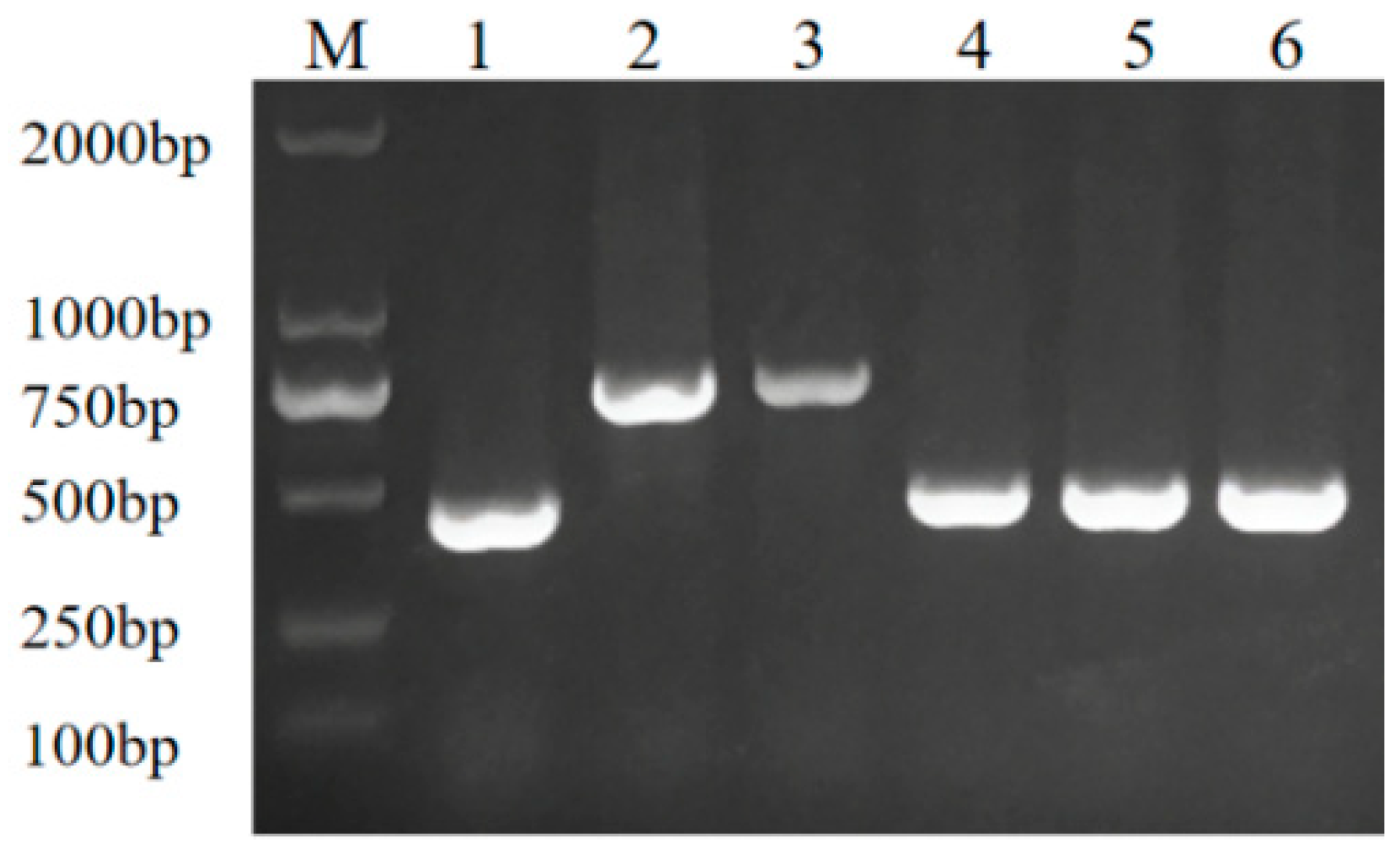
21]. Therefore, the number of female parents available for hybrid seed production depends on the quantities of monogerm CMS (cytoplasmic male-sterile) lines and maintainer lines. Traditionally, the identification of male-sterile lines or maintainer lines has been performed using the hybridization method: to identify a male-sterile line, the candidate line must be pollinated with a known maintainer line. After harvesting the seeds, they are subjected to southern multiplication to cultivate mother roots, which are then vernalized to induce flowering. If no pollen is produced after flowering, the line is confirmed as a CMS line. For the identification of maintainer lines, the candidate line is used to pollinate a known male-sterile line. If the progeny exhibit male sterility, the candidate line is confirmed as a homozygous maintainer line. This traditional identification method not only takes approximately three years but also requires a substantial investment of material and financial resources. In contrast, marker-assisted breeding technology can accurately identify the fertility type of individual plants in sugar beet lines or varieties, as well as the composition of fertility-related genes in their nuclei within a short period. Furthermore, the fertility identification of sugar beet binary male-sterile lines is a core link in ensuring the purity of their use as female parents for hybrids and improving seed production efficiency, which requires simultaneous verification of CMS traits and nuclear recessive maintainer genes. Among these methods, based on the polymorphism of the mitochondrial TR1 locus, PCR amplification is performed on sugar beet monogerm binary male-sterile lines using TR1 primers, and the cytoplasmic type is determined according to the size of the amplified bands: if the band size is less than 500 bp, the cytoplasmic type is indicated to be the sterile S-type; when the amplified band size exceeds 500 bp, the cytoplasmic type is indicated to be the fertile N-type [
22,
23]. The identification of nuclear-related fertility genes is mainly achieved using s17 primers, combined with restriction enzyme digestion analysis using two restriction enzymes,
Hap II and
Hind III [
24].
The identification of nuclear-related fertility genes is mainly achieved using the s17 primer and requires restriction enzyme digestion analysis with two enzymes,
Hap II and
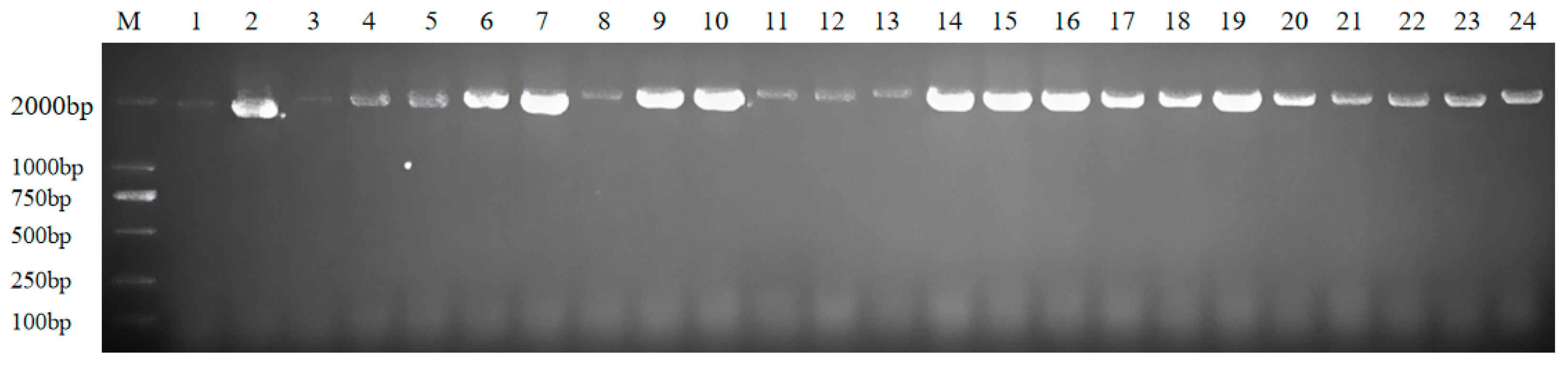
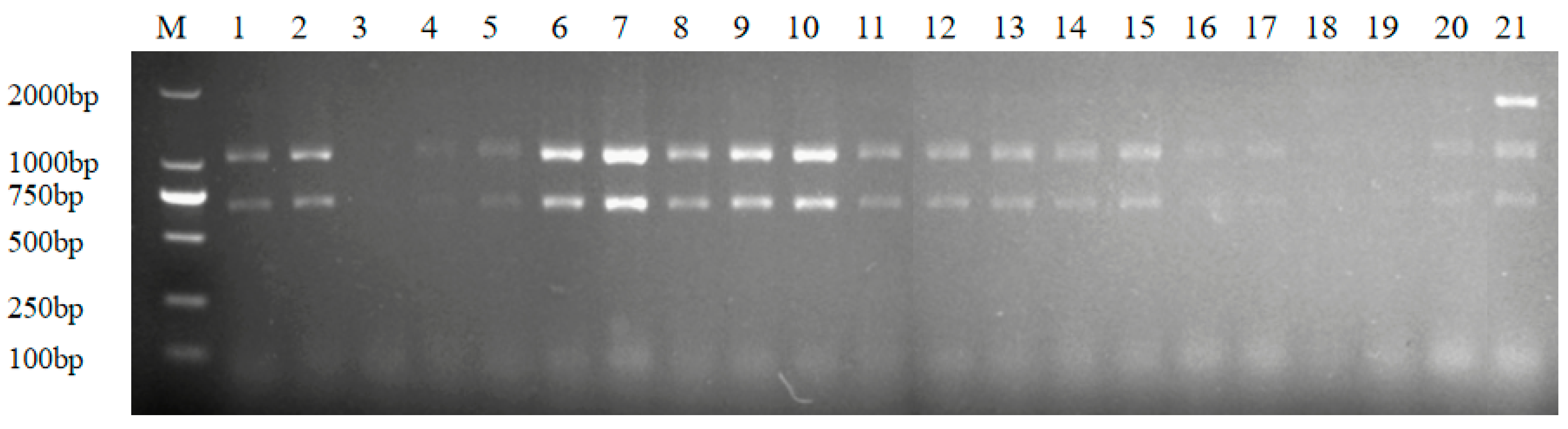
Hind III. The amplification products of the s17 primer typically fall into three types: 1800 bp, 1300 bp, and the 1800 bp/1300 bp combined type. Among these, only the 1800 bp amplification band can proceed to subsequent restriction enzyme digestion identification, while the other types can be directly excluded. For the 1800 bp amplification product, further genotypic identification is needed via double restriction enzyme digestion with
Hap II and
Hind III. According to Taguchi et al. [
22], three band patterns may appear in the restriction enzyme digestion products, each corresponding to a different allele combination: a single 1800 bp band (corresponding to the 5/5 allele combination), three bands of 1800 bp + 1000 bp + 700 bp (corresponding to the 4/5 genotype), and two bands of 1000 bp + 700 bp (corresponding to the 4/4 genotype). It should be noted that this study only confirmed that the 4/4 type is identical to the known homozygous recessive nuclear sterile genotype (
rf1/
rf1), i.e., linked to the
bvORF20L non-restorer allele; however, no clear conclusion has yet been drawn regarding whether the 5/5 and 4/5 types are associated with the recessive nuclear sterile gene. Although the formation of different band patterns arises from variations in individual bases, whether these variations affect the fertility phenotype remains to be verified [
23]. Therefore, in this study, only the 4/4 type, which exhibits two bands of 1000 bp + 700 bp, was identified as the homozygous recessive nuclear sterile genotype (
rf1/
rf1); the 5/5 and 4/5 types were initially regarded as potential recessive nuclear sterile genotypes, requiring further verification through subsequent field experiments. However, whether other restriction digestion patterns also harbor homozygous recessive genes associated with nuclear sterility remains to be investigated. Currently, molecular marker-assisted fertility testing has been studied in rice [
25], soybean [
26] and wheat [
27].
In this study, a marker-assisted identification method was used to identify the fertility genotypes of 7 monogerm binary male-sterile lines of sugar beet developed by three different scientific research groups. This study systematically analyzes the fertility status of seven sugar beet germplasm resources using molecular marker technology, verifies the application value of this approach in identifying monogerm binary male-sterile lines, and provides a scientific basis and technical reference for sugar beet breeding practice.
2. Materials and Methods
2.1. Plant Materials
The experimental materials consisted of 7 monogerm binary male-sterile line germplasm resources (297 individual plants) provided by the Jilin Academy of Agricultural Sciences, the Shihezi Sugar Beet Research Institute, and the Sugar Beet Improvement Team of Heilongjiang University. The experimental mother root was planted in April 2025 at the Heilongjiang University Experimental Base in Hulan District, Harbin City, Heilongjiang Province. Seven monogerm binary male-sterile line germplasm resources were planted in ridges by strain, with a plant spacing of 0.4 m and a row spacing of 0.68 m. Detailed information on the strains used in the field planting experiment is shown in (
Table 1).
2.2. Test Reagents and Instruments
Test reagents: 2 × CTAB buffer (Solarbio Science & Technology Co., Ltd., Beijing, China); DNA extraction reagent (Biotopped Technology Co., Ltd., Beijing, China); isopropanol (Tianjin Fuyu Biochemical Co., Ltd., Tianjin, China); TE buffer (Solarbio Science & Technology Co., Ltd., Beijing, China); 2 × Rapid Taq Master Mix (Biotopped Technology Co., Ltd., Beijing, China); Agarose (Solarbio Science & Technology Co., Ltd., Beijing, China); Hap II enzyme (Harbin Baoshide Biotech Co., Ltd., Harbin, China); Hind III enzyme (Harbin Baoshide Biotech Co., Ltd., Harbin, China); 10 × M Buffer (Harbin Baoshide Biotech Co., Ltd., Harbin, China); 50 × TAE solution (Solarbio Science & Technology Co., Ltd., Beijing, China); Gold View nucleic acid dye (Solarbio Science & Technology Co., Ltd., Beijing, China); 2000 bp marker (Tiangen Biotech (Beijing) Co., Ltd., Beijing, China); absolute ethanol (Tianjin Fuyu Biochemical Co., Ltd., Tianjin, China).
Experimental Instruments: High-speed cryogenic tissue grinder (Wuhan Servicebio Technology Co., Ltd., Wuhan, China); HB120-S LED Digital Display Heating Metal Bath (Dragon Laboratory Instruments (Beijing) Co., Ltd., Beijing, China); MINIP-2500 Microplate Centrifuge (Hangzhou Mio Instrument Co., Ltd., Hangzhou, China); high-speed centrifuge (Changsha Intai Instrument Co., Ltd., Changsha, China); electronic balance (Sartorius Scientific Instruments (Beijing) Co., Ltd., Beijing, China); MV-100 vortex mixer (Wuhan Servicebio Technology Co., Ltd., Wuhan, China); Bio-Rad Power Pac 3000 electrophoresis system (Bio-Rad Laboratories, Inc., Hercules, CA, USA); Veriti 96-Well Thermal Cycler (Thermo Fisher Scientific, Waltham, MA, USA); Bio-Rad gel imaging system (Bio-Rad Laboratories, Inc., Hercules, CA, USA); NanoDrop 2000/2000c UV-Vis spectrophotometer (Thermo Fisher Scientific, Waltham, MA, USA); SIM-F124 Ice Maker (Sanyo Electric Co., Ltd., Osaka, Japan).
2.3. DNA Template Preparation
This experiment uses molecular marker technology to identify the fertility genotype of sweet menu embryo binary sterile lines. The cytoplasmic fertility type was identified using TR1 primers, while the nuclear fertility type was determined via the s17 molecular marker. Following PCR amplification of the DNA templates, 1% agarose gel electrophoresis was performed. All primers were synthesized by Shanghai Sengong Biotech Co., Ltd. The specific primer sequences are listed in (
Table 2).
Genomic DNA was extracted from young sugar beet leaves sampled from the field using the CTAB method [
28]. The concentration and purity of the extracted DNA were determined with a micro-volume UV–visible spectrophotometer. The DNA was diluted to 200 ng/μL and stored at 4 °C for subsequent use, while the remaining genomic DNA stock solution was cryopreserved at −20 °C.
2.4. PCR Reaction System and Program
PCR reaction system (10 μL): 2 × Rapid Taq Master Mix 5 μL, forward and reverse primers 0.2 μL each, DNA diluent 1 μ L, ddH2O 3.6 μL.
PCR reaction program: pre-denaturation at 95 °C for 3 min; denaturation at 94 °C for 25 s, annealing at 60 °C for 25 s, extension at 72 °C for 2 min, a total of 25 cycles; extension at 72 °C for 5 min.
2.5. Electrophoresis
After PCR amplification, 1% agarose gel electrophoresis containing Gold View is used, and a 2000 bp marker is used as the DNA molecular weight standard for comparison. The sample size is 5 μL, and electrophoresis is carried out for 30 min under a constant voltage of 120 V. Finally, the strips are observed and photographed in the gel imager.
2.6. Enzyme Digestion Validation Methods Related to the Rf1 Site
If the molecular marker band size corresponding to the Rf1 locus associated with sugar beet nuclear fertility is 1800 bp, the PCR product requires further restriction enzyme digestion (using Hap II and Hind III) to identify its fertility genotype.
The total reaction volume for the Rf1 locus genotyping double-digestion reaction is 10 μL. The reaction mixture consists of 5 μL of s17 amplification product, 0.25 μL each of Hap II and Hind III enzymes, 2 μL of 10× M Buffer, and 2.5 μL of ddH2O.
The restriction enzyme digestion protocol was as follows: 37 °C for 3 h. The PCR amplification products were detected by 1% agarose gel electrophoresis, followed by band observation and photography using a gel documentation system.
4. Discussion
The cytoplasmic types and fertility genotypes at the nuclear Rf1 locus of 297 plants from seven monogerm diploid CMS lines of sugar beet, provided by three Chinese research institutions, were systematically identified using TR1 and s17 molecular markers. Cytoplasmic identification results showed that Lines 2 to 7 had a 100% proportion of S-type cytoplasm with stable sterility, indicating that no maintainer lines were mixed into the CMS lines during their propagation. In Line 1, 6.67% of N-type cytoplasm was detected, suggesting that maintainer lines were inadvertently mixed into the diploid CMS line during its development; this was inferred to be associated with the admixture of maintainer lines into the maternal CMS line. This contamination was mainly caused by mechanical admixture during seed production or harvesting. When CMS lines and maintainer lines were planted in close proximity, harvest contamination was likely to occur. A single maintainer seed mixed into the CMS line could develop into a maintainer mother root, which would further produce a large number of maintainer seeds, eventually leading to a certain proportion of maintainer plants in the diploid CMS population. It should be emphasized that the admixture of maintainer lines into CMS lines is one of the key risks affecting the purity of sugar beet hybrids, whereas the reverse admixture (i.e., CMS lines into maintainer lines) has no adverse impact on the stability and purity of diploid CMS lines.
Similarly, in the identification of the Rf1 locus in the nuclear genome, a target band of 1800 bp was amplified in 93.27% (277 plants) of the materials, indicating that most materials possessed the expected nuclear fertility genotype. However, a composite band pattern of 1800/1300 bp was detected in 6.73% (20 plants) of Lines 4 to 7, suggesting that restorer alleles had introgressed. This contamination phenomenon may be attributed to two aspects: first, during the development of monogerm diploid CMS lines, since sugar beet is an outcrossing crop with a pollen dispersal distance of up to 1000–2000 m, insufficient isolation distance between CMS lines and restorer lines during planting may lead to pollination by foreign restorer pollen, resulting in nuclear gene contamination; second, in the nuclear fertility gene background of maintainer lines themselves, individual plants may retain restorer genes, although this probability is relatively low. Regardless of the pathway, it will cause some individuals in the diploid CMS lines (used as the female parent of hybrids) to carry restorer genes and produce pollen, thereby affecting the overall purity of sugar beet hybrids.
At the allelic level, an amplification band of 1800 bp obtained using the s17 marker in this study was basically identified as carrying homozygous recessive nuclear sterility-related genes. Further restriction enzyme digestion showed that only the 4/4 genotype was confirmed as a candidate material carrying homozygous recessive nuclear sterility-related genes; currently, whether the 5/5 and 4/5 genotypes represent homozygous recessive sterility genes remains unclear and requires further verification. This genotyping result was consistent with the findings of Moritani et al. [
24], who studied the
Rf1 locus in sugar beet using CAPS markers—they also found that the dd(L) genotype (corresponding to the 4/4 genotype in this study) was highly associated with the maintainer line genotype, while no maintainer lines were detected in other band patterns, verifying the applicability of the s17 marker in monogerm sugar beet CMS lines. Meanwhile, the phenomenon of restorer gene admixture observed in this study was similar to that reported by Taguchi et al. [
22] in polygerm sugar beet CMS lines, where restorer gene introgression was also identified as one of the main factors affecting the purity of CMS lines.
Notably, compared with traditional hybrid identification methods, the molecular marker system adopted in this study can complete fertility identification at the seedling stage, shortening the breeding cycle by 3 years and significantly improving breeding efficiency. However, this study also has certain limitations: due to the limited sample size for restriction enzyme digestion verification, only 5 plants were randomly selected from each line (35 plants in total) for Hap II + Hind III double enzyme digestion verification. The obtained genotype frequencies (17.1% for 5/5 genotype, 8.6% for 4/5 genotype, and 74.3% for 4/4 genotype) only reflect the distribution of the verified samples and have not been extrapolated to all 277 plants. Therefore, this study does not provide conclusions, such as the restorer gene frequency of each line, that require large-sample support. Future studies should expand the sample size and combine field phenotype surveys to further verify the universality of this marker system.
From a cross-crop perspective, male sterility is not only a core bottleneck in sugar beet breeding but also a common constraint on the genetic improvement of other high-value crops such as soybean. As a typical self-pollinating crop, the utilization of heterosis in soybean must rely on a complete CMS “three-line” system, which has not yet been maturely promoted. The main reasons are as follows: the scarcity of CMS line germplasm resources with uneven combining ability and a prolonged breeding cycle of 6–9 years; the rarity and poor stability of restorer lines—for some restorer lines, the fertility of the resulting hybrid F
1 is significantly affected by short light conditions, and the pollen fertility rate of weak restorer lines can drop sharply from 30–40% to 0.2–11.9%, resulting in almost no pod setting; and the complex interaction between CMS lines and restorer lines increases the difficulty in screening strong heterotic combinations [
29]. In contrast, as a crop utilizing vegetative organs, sugar beet does not require the participation of restorer lines, leading to a relatively simplified breeding pathway. The existence of this common male sterility challenge suggests that the TR1 + s17 molecular marker identification system established in this study is not only applicable to the purity control of sugar beet CMS lines but also can provide technical reference for the breeding of CMS lines and the purification of parents in related crops such as soybean.
In summary, the TR1 + s17 molecular marker system established in this study can effectively identify the fertility genotypes of monogerm diploid CMS lines of sugar beet, thereby providing reliable technical support for the purity control of female parents in hybrid seed production. In the subsequent seed propagation process, isolation measures should be further strengthened, and parent purification should be carried out in combination with molecular markers to reduce the risk of admixture of maintainer lines and restorer genes from the source.
5. Conclusions
In this study, TR1 and s17 molecular markers were used to systematically identify the cytoplasmic and nuclear fertility genotypes of 297 plants from seven monogerm diploid CMS lines of sugar beet, provided by three Chinese research institutions. The results of cytoplasmic identification showed that the proportion of S-type cytoplasm in Lines 2 to 7 was 100% with stable sterility, and 6.67% of N-type cytoplasm was detected in Line 1, suggesting that maintainer lines had been mixed into this line during its development, mainly due to mechanical admixture during seed production or harvesting. In the identification of the nuclear Rf1 locus, a target band of 1800 bp was amplified in 93.27% (277 plants) of the materials; among these, Lines 1 to 3 all showed a single 1800 bp band pattern with homozygous and consistent nuclear fertility genotypes. A composite band pattern of 1800/1300 bp was detected in 6.73% (20 plants) of Lines 4 to 7, indicating the introgression of restorer alleles, which may be related to foreign restorer pollen contamination or residual restorer genes in the maintainer parent lines. Double enzyme digestion verification based on 35 samples showed that only the 4/4 genotype (double bands of 1000 bp + 700 bp) could be confirmed as a candidate material carrying homozygous recessive nuclear sterility-related genes (rf1/rf1), while the corresponding relationship between the 5/5 and 4/5 genotypes and recessive nuclear sterility genes remains unclear and requires further verification through subsequent field experiments.
This study confirmed that the TR1 + s17 molecular marker system can quickly and accurately identify the fertility genotypes of monogerm diploid CMS lines of sugar beet at the seedling stage. Compared with traditional hybrid identification methods, it shortens the breeding cycle by 3 years, significantly improving breeding efficiency. To ensure the purity of three-way hybrids, it is recommended that isolation measures be strengthened during the parent propagation process and that molecular marker-assisted purification be integrated to eliminate the risks of maintainer line admixture and restorer gene introgression from the source. Future studies should expand the sample size and combine field phenotype surveys to further verify the universality of this marker system, thereby improving the accuracy of identification.