


Abstract
Traditional Yuluxiang pear cultivation employs wide row spacing to facilitate sunlight penetration and ventilation, but this reduces land use efficiency. Therefore, this study investigated the effects of intercropping dandelions in Yuluxiang pear orchards on soil environment, pear tree growth, and fruit quality. The experiment included three treatments: monoculture (M), dandelion intercropping (DI), and dandelion intercropping combined with microbial organic fertilizer application (DI + MF). Results indicated that the combined DI + MF treatment enhanced soil nutrients by increasing the content of Alkaline Hydrolyzable Nitrogen (AN), Total phosphorus (TP), and Available phosphorus (AP). The DI treatment altered the microbial community structure, enriching beneficial bacteria (such as the phyla Acidobacteriota and Actinomycetota) and fungi (such as the phyla Mucorales and Basidiomycota), thereby enhancing nutrient cycling. Treatment effects were most pronounced in the topsoil layer (0–20 cm) and diminished with increasing depth. Regarding tree physiology, DI treatment increased leaf Symbolic Consistency (Gs) and Intercellular CO2 Concentration (Ci). The DI + MF treatment significantly boosted leaf chlorophyll content, with both intercropping treatments improving tree photosynthesis and nutritional status. In terms of fruit quality, the DI + MF treatment demonstrated the best overall performance. Its single fruit weight reached the highest values at all stages (143.86 g, 315.48 g, and 515.03 g), while the soluble solids content peaked at 130 days post-flowering, with increased levels of sugars, Vitamin C (VC), total phenols, and flavonoids in the fruit. This significantly enhanced both the external appearance and internal quality of the fruit. Research indicates that the DI + MF treatment can systematically enhance soil quality, tree vitality, and fruit quality in Yuluxiang pear orchards by improving soil physicochemical properties, regulating microbial communities, and boosting tree physiological functions.
1. Introduction
Yuluxiang Pear is a high-quality mid-season pear variety developed by the Fruit Tree Research Institute of the Shanxi Academy of Agricultural Sciences through crossbreeding Pyrus sinkiangensis as the female parent and Snow Pear as the male parent [1]. This variety features tender flesh with a snow-like texture, large fruit size, a nearly spherical shape, and a smooth, delicate surface with a waxy coating that retains moisture exceptionally well [2]. At harvest, the fruit skin is green with red stripes; after storage, it turns yellow with a more vibrant color, making it highly popular among consumers. To ensure fruit quality standards, domestic Yuluxiang pear orchards predominantly adopt cultivation models emphasizing ventilation and light penetration. However, compared to advanced orchards abroad, issues such as extensive management practices, declining fruit quality, and inefficient soil utilization severely constrain the sustainable development of China’s pear industry [3,4,5]. To enhance the economic and ecological benefits of Yuluxiang pear orchards, in-depth research is needed on high-quality, high-yield cultivation models for Yuluxiang pears. To ensure fruit quality, these orchards primarily employ cultivation methods such as tall-stem training and dense planting, resulting in relatively large plant and row spacings that lead to inefficient soil utilization. Therefore, implementing appropriate intercropping between rows can fully utilize resources while maximizing economic benefits and enhancing soil fertility [6].
Intercropping, as a soil management practice, is widely recognized for its role in enhancing soil biodiversity, orchard productivity, and land use efficiency, optimizing resource utilization, and improving ecosystem benefits [7,8]. Research indicates that intercropped cover crops can increase the relative abundance of certain bacteria, promote plant residue decomposition and nutrient cycling, thereby facilitating nutrient accumulation in orchard soils [9]. Numerous studies have already explored the effects of intercropping on orchards. Huang Guohua et al. [10] summarized the current status of orchard cover cropping research both domestically and internationally. They thoroughly elucidated the significant role of orchard cover cropping in carbon sequestration, summarized its effects on fruit tree growth and development, orchard yield, and fruit quality, as well as its impact on soil organic carbon sequestration, soil microbial carbon, and soil physicochemical properties. This research revealed the carbon sequestration mechanisms of orchard cover cropping cultivation systems. By comparing the effects of intercropping maize and chili peppers in prickly ash orchards, researchers concluded that adopting suitable intercropping systems in prickly ash orchards enhances the soil macroaggregate content and its contribution to soil nutrients, thereby improving soil nutrient supply capacity [11]. Intercropping morel mushrooms in pear orchards has been demonstrated to enhance pear fruit quality while significantly increasing orchard utilization rates and promoting economic benefits [12]. Although extensive research has explored intercropping in orchards, studies on dandelion intercropping in Yuluxiang pear orchards remain relatively scarce. Dandelion, with the botanical name Taraxacum officinale, also known as “popo ding,” is a perennial herbaceous plant belonging to the genus Taraxacum in the Asteraceae family. It possesses remarkable cold tolerance and vitality, along with exceptional resistance to both drought and waterlogging. Dandelions are an ideal groundcover for orchard cover cropping due to their early spring regreening, long green period, and extensive root system [13]. Dandelion not only has medicinal uses but can also be applied in functional foods and cosmetics due to its anti-inflammatory properties, making it an economically viable crop worthy of promotion and cultivation [14,15]. Arta Kronberga et al. examined the feasibility of cultivating wild dandelion populations in an organic farming system. The results revealed that dandelion wild populations can be used for domestication, breeding and the selection of accessions most suitable for the pharmaceutical or food industries [16]. Wei Minghui et al. studied flowering dandelions and found that mild drought stress can increase the content of medicinal components to varying degrees. As drought stress intensifies, both above-ground and below-ground biomass generally decrease, while the root-to-shoot ratio increases [17]. This demonstrates that drought conditions promote the growth of dandelion roots, enabling them to affect deeper soil. Therefore, intercropping dandelions in Yuluxiang pear orchards not only conserves water and nutrients while enhancing fruit quality and yield, but also optimizes the use of space beneath pear trees, increasing both resource utilization and economic output per unit of land. Furthermore, intercropping dandelions effectively suppresses weed growth, thereby reducing labor requirements for orchard management [17]. Since dandelions require adequate water and nutrients for growth, the appropriate optimization of existing fertilization and irrigation practices is necessary to avoid adverse effects on pear fruit quality and maintain the ecological balance of the orchard ecosystem. Considering the long-term impact of intercropping on orchards, a continuous annual intercropping system with dandelions combined with fertilization treatments was adopted to systematically evaluate the sustained effects of this model on pear fruit quality and yield [18].
Domestic and international research on the Yuluxiang pear has primarily focused on enhancing yield, improving fruit quality, strengthening disease resistance, and optimizing post-harvest storage. However, studies on intercropping with cash crops in orchards and regulating soil nutrients during the growing season remain insufficient [19,20,21,22]. Therefore, the study systematically compared indicators such as single fruit weight, sugar-acid composition, leaf chlorophyll content, and photosynthetic performance under the treatment of dandelion intercropping combined with microbial organic fertilizer versus conventional monocropping. The comparison was based on evaluating the growth, yield, and economic benefits of Yuluxiang pear trees under both treatments. Additionally, soil nutrient and microbial factors were analyzed to comprehensively assess the impact of dandelion intercropping on both fruit quality and soil health. This research provides valuable theoretical insights for exploring cost-saving and efficiency-enhancing intercropping practices in Yuluxiang pear orchards, improving soil and fruit quality, boosting economic and ecological benefits, and advancing the sustainable development of Yuluxiang pear orchard systems.
2. Materials and Methods
2.1. Overview of the Test Site
The experiment was conducted at the pear demonstration orchard of the Fruit Tree Research Institute, Shanxi Agricultural University (120°32′ E, 37°23′ N). During the trial period, the Yuluxiang pear orchard followed its established management practices. Irrigation was conducted four times annually: once after spring onset (March), once after pear blossoming (late April), one to two times during the fruit enlargement period (mid-July), and once in late October. Fertilization was applied twice a year: topdressing during the fruit enlargement stage (mid-July) and basal fertilization after harvest. For top dressing, we used a compound fertilizer with higher phosphorus and potassium content. In the first year, trenches were dug on both sides of the tree trunk in a radial pattern. In subsequent years, fertilization was applied in alternating inward and outward figure-eight patterns. Fertilizer was applied at 1.5 kg per tree and then irrigated. For the autumn base fertilizer application, farmyard manure (e.g., sheep manure) was applied at a rate of approximately 60 metric tons per hectare. The application method combined trench application with broadcast spreading, followed by rotary tillage.
2.2. Test Materials and Test Design
The experimental material was an 18-year-old Yuluxiang pear orchard. The pear trees in this orchard were trained to a high-stem open-center form, with a spacing of 6 m between trees and 5 m between rows. Prior to sowing dandelions beginning in 2017, the plot was weeded following standard pear orchard management practices. The dandelions in each plot could be harvested 4 to 6 times per year, with each harvest yielding between 250 and 400 kg. This resulted in an annual total production ranging from 1000 to 2000 kg. Each harvest was sold to herbal medicine companies at a price of CNY 4 per kg.
The experimental design included three treatments: monoculture (M), dandelion intercropping (DI), and dandelion intercropping combined with microbial organic fertilizer application (DI + MF). Each experimental plot contained 55 trees and covered an area of 666.67 m2. The M treatment involved weeding between rows in the Yuluxiang pear orchard, with rotary tillage performed monthly and manual mowing conducted once every 20 days. The DI treatment involved cultivating dandelions between fruit tree rows without additional weeding. The DI + MF treatment involved cultivating dandelions between fruit tree rows alongside fertilizer application. The fertilizer applied was the Hatz Trichoderma bio-organic fertilizer developed by the national pear industry technical system’s fertilizer specialist. Application method: Apply fertilizer annually from May to June at a rate of 1.5 kg per tree, through both spraying and irrigation.
2.3. Collection of Soil, Leaf, and Fruit Samples
Sampling was conducted at 90 days after flowering (25 July, fruit enlargement stage), 110 days after flowering (14 August, rapid fruit enlargement stage), and 130 days after flowering (3 September, fruit maturity stage) in 2025.
2.3.1. Soil Sample Collection
Soil samples were collected at three depths—0–20 cm, 20–40 cm, and 40–60 cm—from a point 80 cm from the pear tree trunk [23,24,25]. To obtain regionally representative soil samples, a five-point composite sampling method was employed: five sampling points equidistant from tree rows were selected within the Yuluxiang pear orchard. Equal quantities from these points were mixed to form a single analytical sample, which was used to assess average field nutrient levels. After removing stones and impurities, the soil was passed through a 20-mesh sieve. The soil was divided into three equal portions: one portion was air-dried naturally then passed through a 150-mesh sieve and stored at room temperature in paper bags for the analysis of soil physicochemical properties and mineral element content; another portion was stored at −40 °C for measuring soil microbial abundance; the final portion was stored at −80 °C for soil microbial community analysis.
2.3.2. Collection of Leaf and Fruit Samples
Randomly select mature new shoots from the northeast, southeast, northwest, and southwest directions of the fruit tree, and analyze the third to fifth leaves from the base of the shoot. Collect 30 leaves per sampling. Rinse thoroughly with distilled water and dry with a cotton cloth. Divide into two portions: one portion is immediately tested for chlorophyll content, while the other is first dried in a 105 °C oven for 1 h, then transferred to a 60 °C oven for 12 h. Remove and grind into a powder, and store at room temperature in paper bags for the determination of leaf element content.
At each stage, randomly select 10 fruits from the outer canopy of pear trees subjected to different treatments for analysis. The fruit samples were divided into two portions: one for immediate assessment of external quality attributes, soluble solids content, and firmness; the other was chopped, homogenized, and stored frozen at −80 °C for subsequent analysis of internal quality characteristics.
2.4. Test Method
2.4.1. Soil Sample Analysis
Soil moisture content was determined using the oven-drying method. A fresh soil sample was placed into a pre-weighed, dry aluminum container (mass of container = m). The container with the fresh sample was weighed immediately to obtain the total fresh mass (m1). The sample was then oven-dried at 105 °C for 12 h. The sample was removed, cooled in a desiccator, and immediately weighed to obtain the dry weight (m2). The calculation formula is as follows: Soil moisture content = (m1 − m2)/(m1 − m) × 100%.
For the determination of the mineral element content in soil, refer to Bao Shidan’s Soil Agrochemical Analysis.
The reference for soil microbial counts is Zhou Deqing’s Microbiology Tutorial.
Soil enzyme activity was measured using the Boxbio kit. Soil Catalase (S-CAT) Activity Assay Kit (AKEN001U-25S), Soil Urease (S-UE) Activity Assay Kit (AKEN023C-25S) and Soil Sucrase (S-SC) Activity Assay Kit (AKEN019C-25S) all comes from Beijing Boxbio Science & Technology Co., Ltd. in Beijing China.
Soil microbial communities were sequenced by Shanghai Ling’en Biotechnology Co., Ltd. in Shanghai, China. [26].
2.4.2. Leaf and Fruit Sample Analysis
The chlorophyll content of leaves was determined using the extraction method. Fresh leaf samples were cut into fine segments (approximately 0.2 cm in length), thoroughly mixed, and a sample weighing 0.10–0.20 g was transferred into a 25 mL volumetric flask or a stoppered test tube. Then, 0.5 mL of pure acetone and 10–15 mL of 80% acetone were added. Any leaf fragments adhering to the vessel walls were washed down into the acetone solution. The vessel was covered and kept in the dark at room temperature overnight to extract the pigments, with shaking performed 3–4 times during this period. The following day, after confirming complete chlorophyll extraction (indicated by bleaching of the leaf tissue to white), the volume was adjusted to the 25 mL mark with 80% acetone. After filtration or centrifugation, the absorbance of the supernatant was measured at wavelengths of 663 nm, 645 nm, and 470 nm, using 80% acetone as a blank.
The determination of mineral element content in leaves refers to Bao sidan’s Soil and Agricultural Chemical Analysis.
Leaf photosynthetic parameters were measured using the LI-6400 photosynthesis meter come from Beijing LiGaotai Technology Co., Ltd in Bejing China. Measurements were conducted on a clear morning in mid-August.
Fruit appearance quality was measured using a vernier caliper (accurate to 0.01 mm). Fruit weight was measured using an electronic balance with an accuracy of 0.01 g. Fruit hardness was determined using a handheld fruit hardness tester GY-1. The soluble solids content was measured using a PAL-5 digital refractometer (ATAGO Co., Ltd., in Tokyo Japan). The soluble sugar content was determined using the anthrone colorimetric method. The titratable acid content was measured as follows: Take 10 mL of fruit juice, add 90 mL of distilled water, mix thoroughly, and let stand for 30 min. Take 20 mL of the prepared test solution, add phenolphthalein indicator and 0.1 mol·L−1 NaOH, repeating the procedure three times for each treatment. The total phenolic content in fruits was determined using the Folin–Ciocalteu method; the flavonoid content was measured spectrophotometrically; and the Vitamin C content was quantified by titration with sodium 2,6-dichlorophenol indophenol. The fructose, glucose, sucrose, and sorbitol levels in fruits were measured using the boxbio kit. The Fructose Content Assay Kit (HK Enzymatic Method) (AKSU083-1U), D-Glucose Content Assay Kit (GOPOD Format) (AKSU001C), Plant Sucrose Content Assay Kit (AKPL006C) and Sorbitol Content Assay Kit (AKSU006C) all comes from Beijing Boxbio Science & Technology Co., Ltd. in Beijing China.
2.5. Data Analysis
Statistical analysis and the organization of data were performed using Microsoft Excel 2022. Data analysis and processing were conducted using SPSS Statistics 27. GraphPad Prism 8, Adobe Photoshop CC, www.chiplot.online, and Adobe Illustrator 2024 were utilized for data visualization and graphing.
3. Results
3.1. The Effect of Intercropping Yuluxiang Pears on Soil Physicochemical Properties and Mineral Element Content
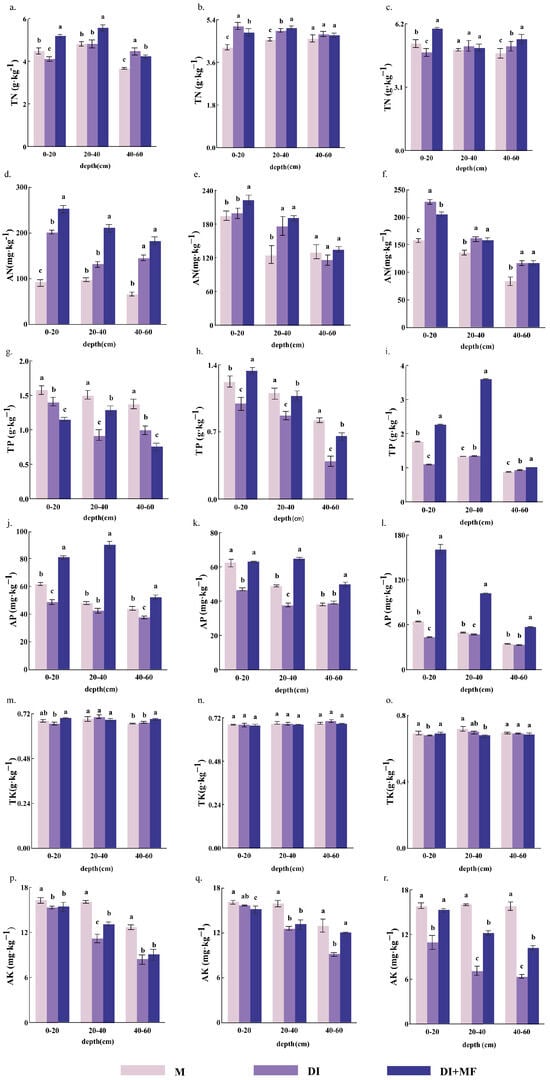
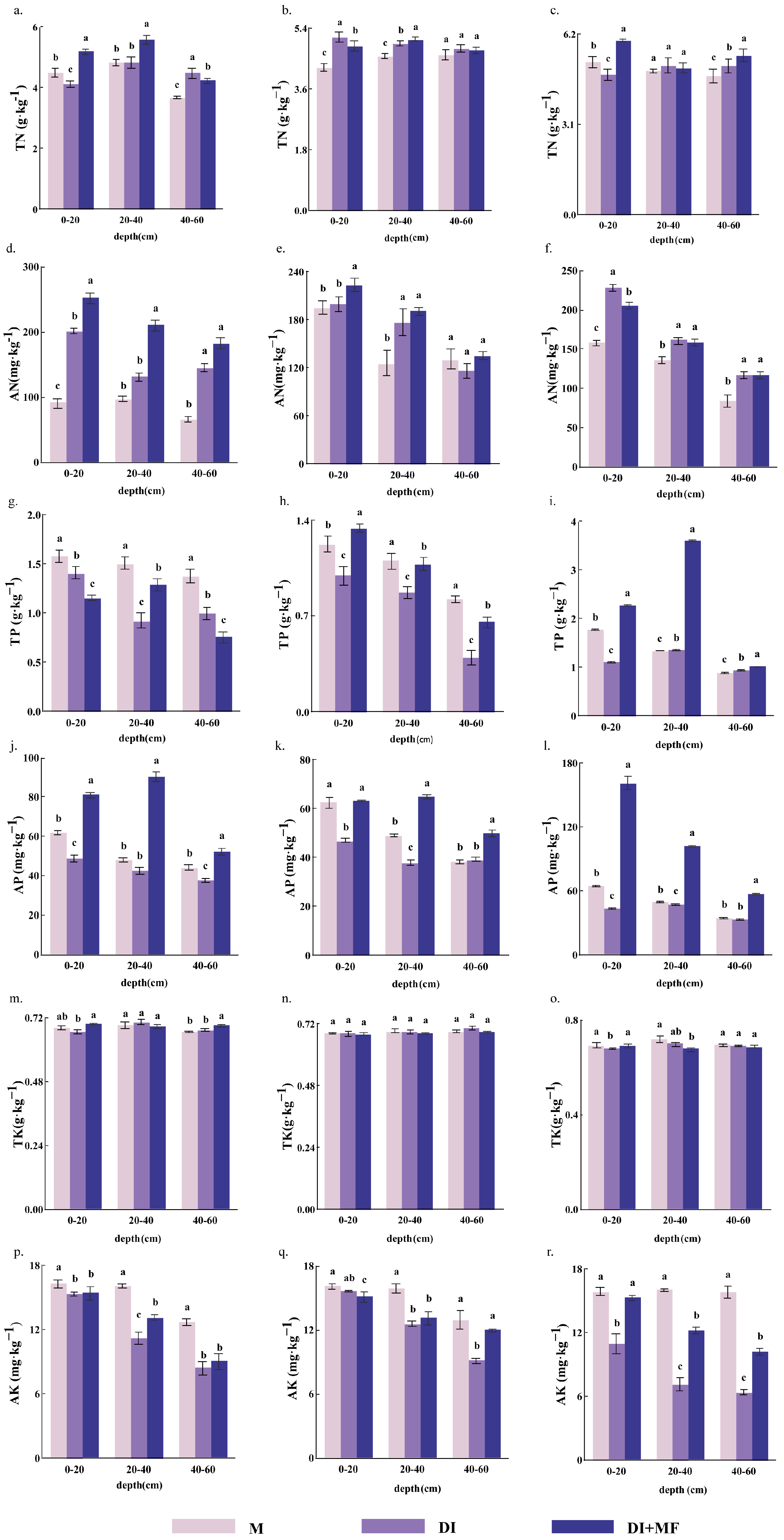
Both the DI and DI + MF treatments affected soil physicochemical properties. Among these treatments, the DI + MF treatment demonstrated more pronounced effects in improving soil nutrients and physicochemical properties. Compared with the M treatment, both DI and DI + MF treatments improved soil nitrogen-related indicators and the available phosphorus content. The Total nitrogen (TN) and Total phosphorus (TP) levels in orchard soil showed a trend of first decreasing and then increasing as fruit development progressed. At different stages and depths, the DI + MF treatment resulted in higher TN, Available phosphorus (AP), and Total potassium (TK) levels than other treatments. At depths of 0–20 cm, 90 and 130 days after flowering, the soil TN, AP, TK, and Available phosphorus (AK) contents in the DI treatment were lower than those in the M and d DI + MF treatments (Figure 1a–c,j–r). TN and Alkali-hydrolyzable nitrogen (AN) in the M treatment peaked at 110 and 130 days after flowering, respectively (Figure 1b,c,e,f), and were significantly higher than in the other two treatments. The AN content in the M treatment was the lowest across all periods and soil layers, with significant differences among the three treatments. Regarding TP content, the DI + MF treatment showed lower levels at 90 days after flowering, with the lowest values observed at 110 days after flowering. However, at 130 days after flowering, the TP content in the DI + MF treatment was significantly higher than in the other two treatments (Figure 1i,j). The DI treatment reduced soil AP and AK levels at different stages (Figure 1j–l,p–r); at 110 days after flowering, no significant differences were observed in soil TK content among the three treatments (Figure 1m–o). Overall, the DI + MF treatment significantly increased soil AN and AP content (Figure 1d–f,j–l).
Figure 1.
Effects of three treatments at different time points on soil mineral element content. (a) Total nitrogen (TN) 90 days after flowering; (b) TN 110 days after flowering; (c) TN 130 days after flowering; (d) alkali-hydrolyzable nitrogen (AN) 90 days after flowering; (e) AN 110 days after flowering; (f) AN 130 days after flowering; (g) total phosphorus (TP) 90 days after flowering; (h) TP 110 days after flowering; (i) TP 130 days after flowering; (j) available phosphorus (AP) 90 days after flowering; (k) AP 110 days after flowering; (l) AP 130 days after flowering; (m) total potassium (TK) 90 days after flowering; (n) TK 110 days after flowering; (o) TK 130 days after flowering; (p) available potassium (AK) 90 days after flowering; (q) AK 110 days after flowering; (r) AK 130 days after flowering. Note: Different lowercase letters in the figure indicate a significant difference at the p < 0.05 level. The same below.
3.2. The Effect of Intercropping Yuluxiang Pears on Soil Microbial Abundance and Enzyme Activity
3.2.1. The Effect of Intercropping Yuluxiang Pears on Soil Microbial Abundance
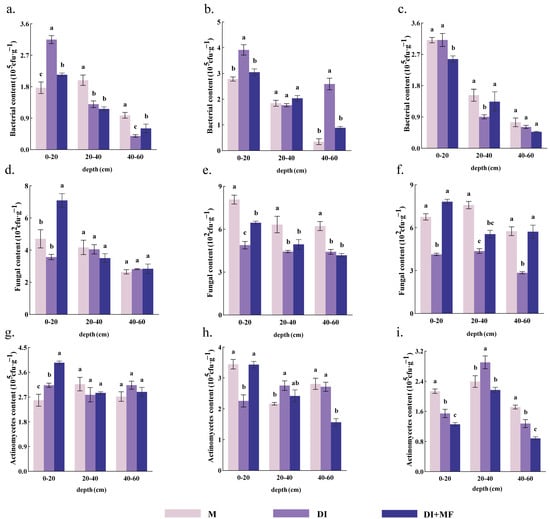
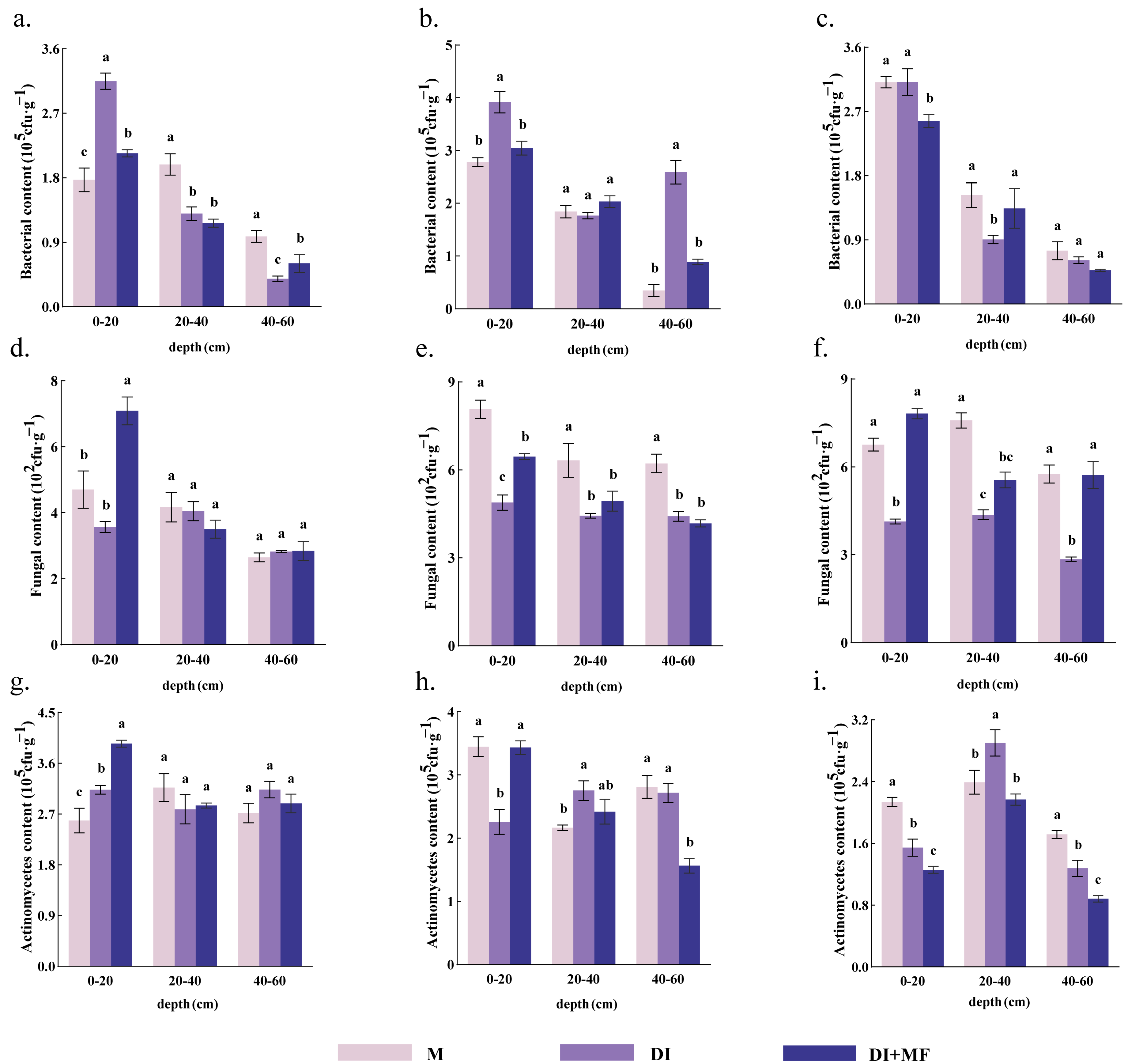
As shown in Figure 2, the soil bacterial counts under different treatments exhibited an initial increase followed by a decline during fruit development, with variations in soil microbial abundance observed across different stages among treatments. At a soil depth of 0–20 cm, the soil bacterial count in the DI treatment was significantly higher than in the M treatment and the DI + MF treatment. The bacterial count in the M treatment gradually increased with fruit development, reaching its lowest levels at 90 and 110 days after flowering. It then rose at 130 days after flowering, exceeding that of the DI + MF treatment. Overall, bacterial counts in all treatments gradually decreased with increasing soil depth, reaching their lowest levels at 40–60 cm. Except for the 0–20 cm depth at 90 days after flowering, fungal counts in the M treatment were higher than in the other two treatments at all other time points. Compared with the DI treatment, the DI + MF treatment increased soil fungal abundance at 130 days after flowering (Figure 2d–f). DI treatment reduced fungal abundance in the soil. Except at the 20–40 cm soil depth 90 days after flowering, significant differences in soil fungal abundance were observed among treatments at all other time points. The number of actinomycetes in the soil of the Yuluxiang pear orchard gradually decreases as the fruit grows and develops. At 90 days after flowering, the soil at a depth of 0–20 cm showed the highest number of actinomycetes in plots where DI + MF treatment. At 130 days after flowering, the DI treatment exhibited a greater abundance of actinomycetes in the soil at a depth of 20–40 cm compared to other treatment areas. The number of actinomycetes under the DI + MF treatment at 90 and 130 days after flowering gradually decreased with increasing depth.
Figure 2.
Effects of three treatments on soil microbial abundance at different time points. (a) Bacterial count 90 days after flowering; (b) bacterial count 110 days after flowering; (c) bacterial count 130 days after flowering; (d) fungal count 90 days after flowering; (e) fungal count 110 days after flowering; (f) fungal count 130 days after flowering; (g) actinomycetes count 90 days after flowering; (h) actinomycetes count 110 days after flowering; (i) actinomycetes count 130 days after flowering.
3.2.2. The Effect of Intercropping Yuluxiang Pears on Soil Enzyme Activity
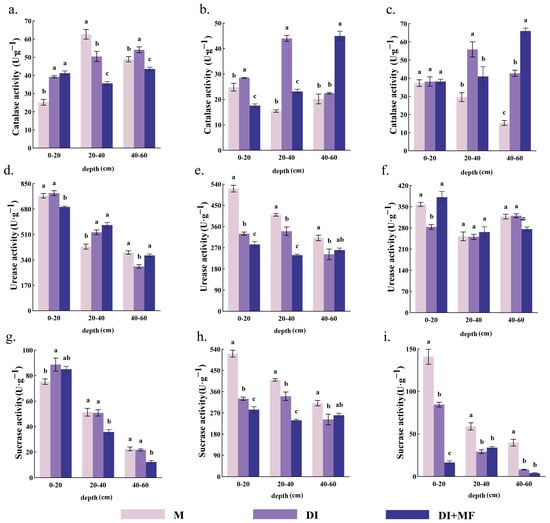
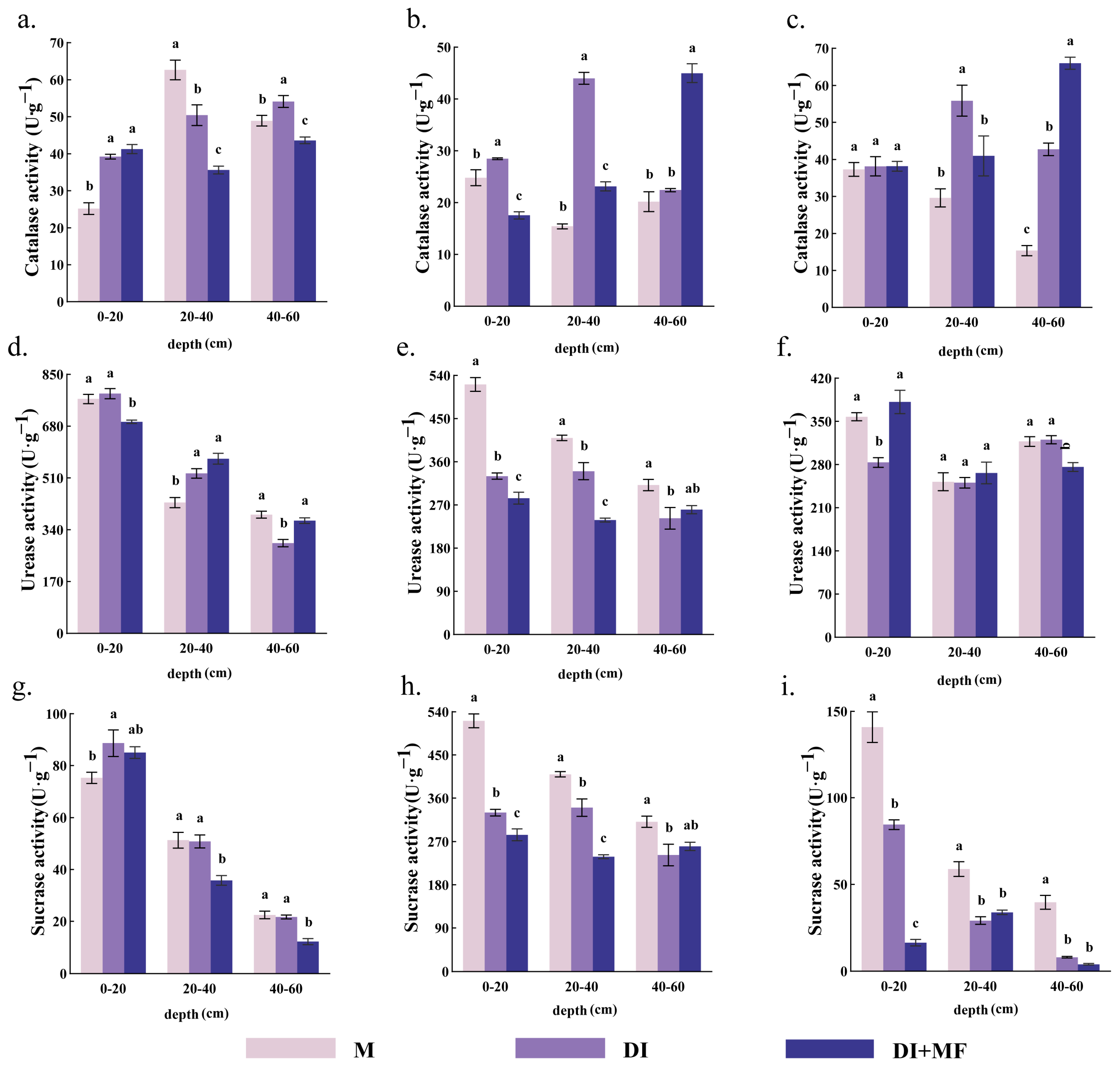
Compared with M treatment, both the DI and DI + MF treatments reduced soil urease and sucrase activity. As shown in Figure 3, at 110 and 130 days after flowering, soil Catalase activity at the 20–40 cm depth was higher in the DI treatment than in the other two treatments. The highest soil catalase activity (65.998 U·g−1) was observed at the 40–60 cm depth in the DI + MF treatment. Soil urease activity gradually decreases with fruit development and ripening. At 90 days after flowering, soil catalase and sucrase activities are relatively low, while urease activity remains relatively high. Overall, the enzyme activity of different treatments showed an opposite trend with increasing soil depth. The trend in soil sucrase activity was quite pronounced, particularly at 110 and 130 days after flowering. Significant differences in soil enzyme activity were observed among treatments. At the 0–20 cm depth, the M treatment exhibited higher soil sucrase activity. Furthermore, at 90 and 130 days after flowering, the M treatment also increased soil sucrase activity at the 20–40 cm and 40–60 cm depths. Soil enzyme activities under different treatments all exhibited enrichment in the topsoil layer. Enzyme activities and nutrient contents in the 0–20 cm topsoil layer were generally significantly higher than those in the 20–60 cm layer, showing a continuous decline with increasing soil depth.
Figure 3.
Effects of three treatments on soil enzyme activity at different time points. (a) Catalase activity 90 days after flowering; (b) catalase activity 110 days after flowering; (c) catalase activity 130 days after flowering; (d) urease activity 90 days after flowering; (e) urease activity 110 days after flowering; (f) urease activity 130 days after flowering; (g) sucrase activity 90 days after flowering; (h) sucrase activity 110 days after flowering; (i) sucrase activity 130 days after flowering.
3.3. The Effect of Intercropping Yuluxiang Pears on Soil Microbial Communities
3.3.1. The Effect of Intercropping Yuluxiang Pears on the Composition of Soil Bacterial and Fungal Microbial Communities
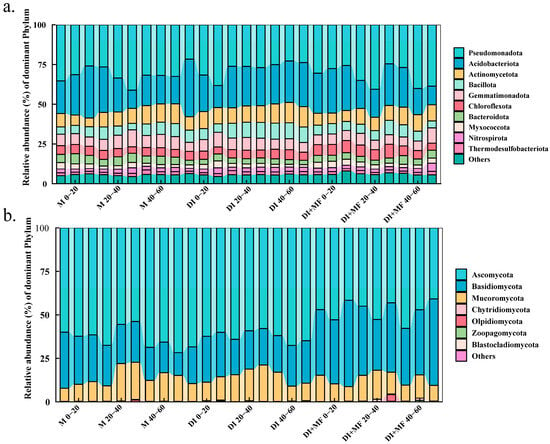
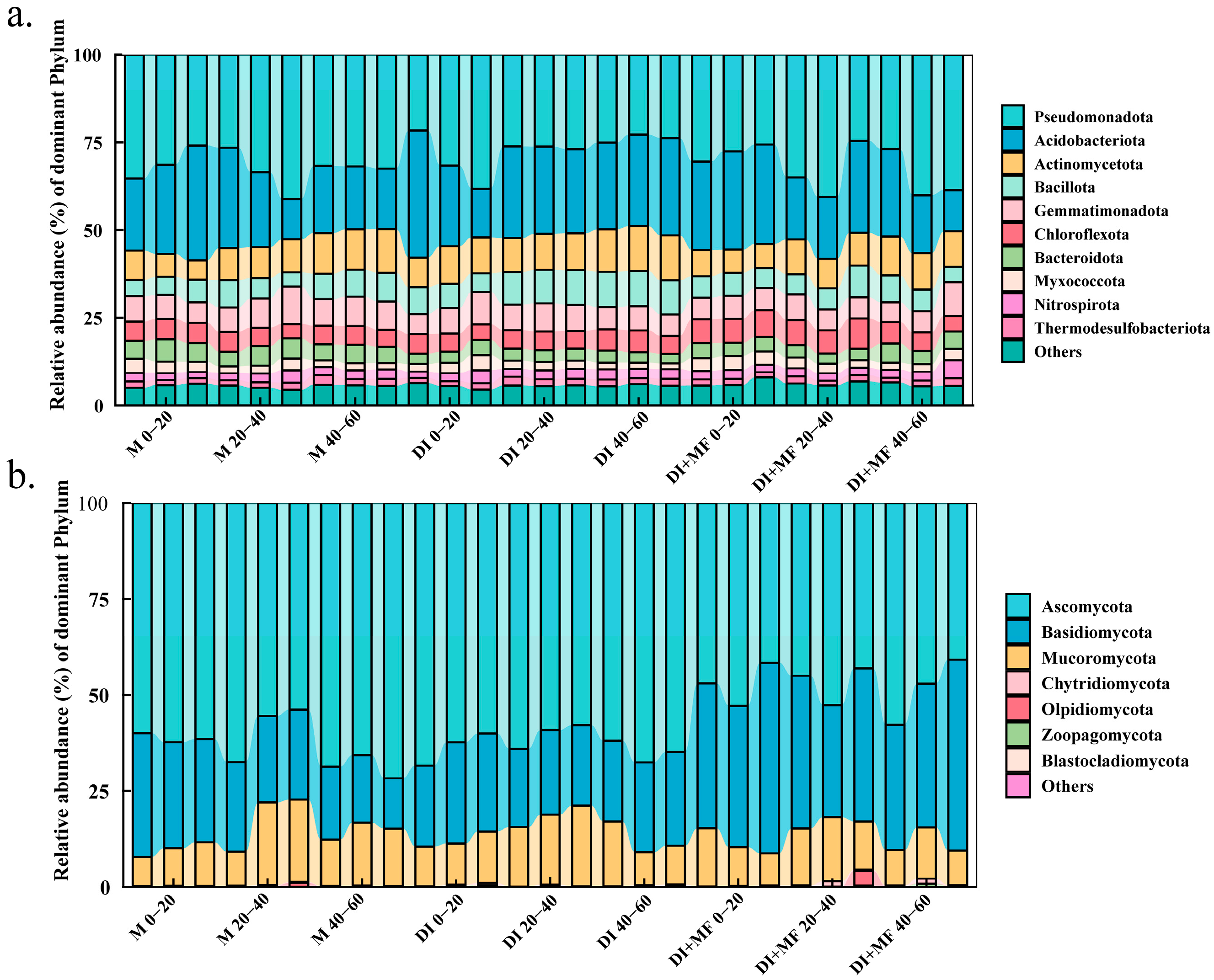
Microbial analysis of mature soil (Figure 4) revealed that the primary bacterial composition comprised 11 phyla. The top five phyla with a relatively high abundance were Pseudomonadota (30.45%), Acidobacteria (22.82%), Actinomycetota (9.71%), Bacillota (7.14%), and Gemmatimonadota (7.14%), with their combined relative abundance exceeding 75%. Studies indicate that the DI treatment increased the relative abundance of the Acidobacteria, Actinomycetota, and Bacillota, whereas the DI + MF treatment primarily elevated the relative abundance of the Acidobacteria and Bacillota phyla. Under DI treatments, the relative abundance of the Pseudomonadota decreased; however, it remained relatively high in the 0–20 cm soil layer under DI treatment. Under the DI + MF, the relative abundance of Acidobacteria and Bacillota in the 0–20 cm soil layer was significantly higher than in the other two treatments. This indicates that dandelion intercropping has a substantial impact on the microbial community in the topsoil of Yuluxiang pear orchards. The relative abundance distribution of soil fungi encompasses seven phyla, with the top three phyla exhibiting the highest relative abundances being Ascomycota (57.75%), Basidiomycota (28.28%), and Mucoromycota (13.31%). Together, these three phyla account for 99% of the total relative abundance. As shown in Figure 4, the DI treatment increased the relative abundance of the Mucoromycota in soil fungi, while the DI + MF treatment significantly increased the relative abundance of the Basidiomycota. At depths of 0–20 cm, the relative abundance of both Ascomycota and Basidiomycota increased to varying degrees with the DI and DI + MF treatments.
Figure 4.
Effects of three treatments on soil microbial community structure 130 days after flowering. (a) Relative abundance of phylum assemblages in soil bacterial communities across three treatments; (b) relative abundance of phylum Composition in soil bacterial communities across three treatments.
3.3.2. The Effect of Intercropping Yuluxiang Pears on Soil Bacterial and Fungal Microbial Community Diversity
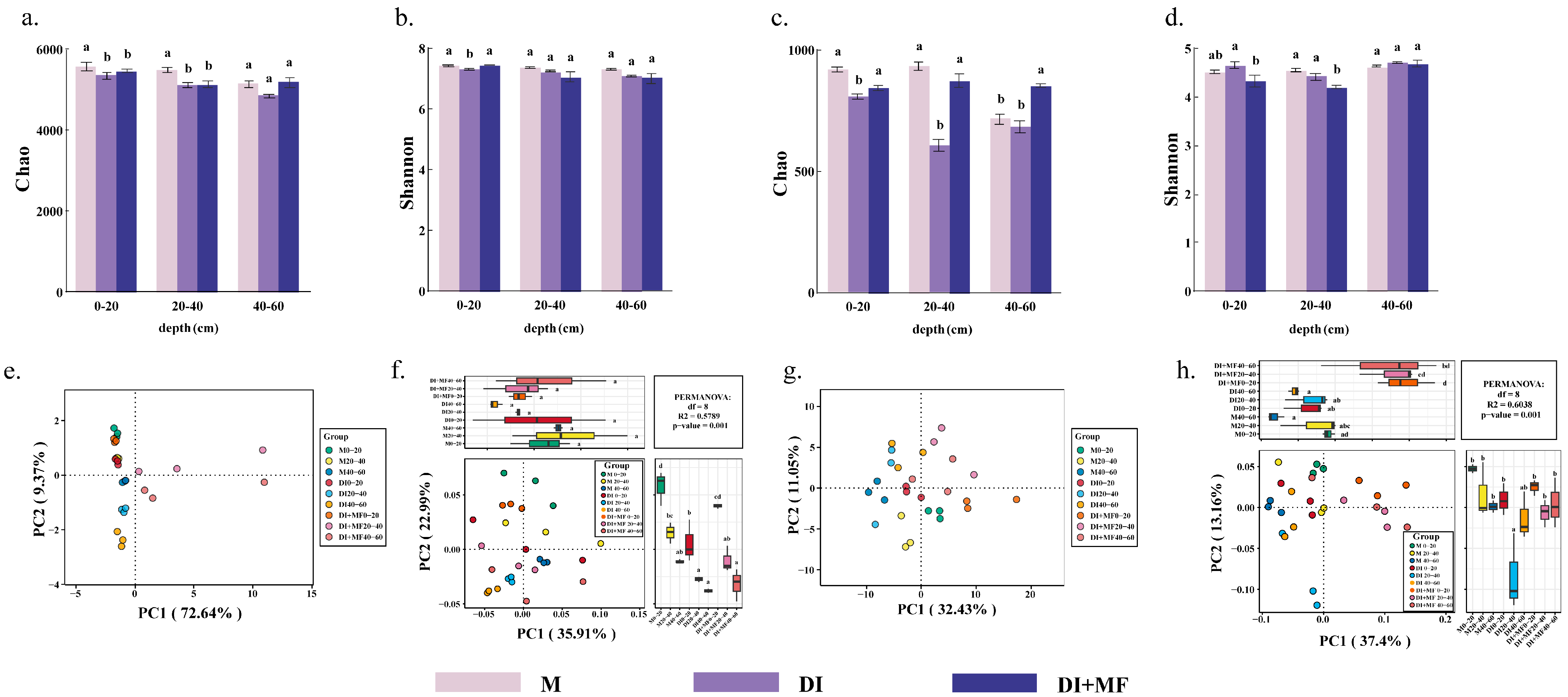
Alpha diversity is used to analyze microbial community diversity within a sample. Through single-sample diversity analysis, it reflects the richness and diversity levels of the microbial community within the sample. In contrast, the DI + MF treatment significantly increased the bacterial Shannon index in the 0–20 cm soil layer. Regarding fungal communities, the DI + MF treatment significantly improved the soil’s Chao index. Particularly at the 40–60 cm soil depth, this index reached 851.18, which was significantly higher than the other two treatments. The DI treatment significantly increased the Shannon index of soil fungi, reaching maximum values at depths of 0–20 cm and 40–60 cm, at 4.66 and 4.71, respectively.
Beta diversity reflects the similarity or dissimilarity in microbial community structure among different samples. The PCA analysis results indicate (Figure 5e) that PC1 explains 72.64% of the variance, suggesting that this axis represents the primary direction for distinguishing microbial community differences among treatments. PC2 explains only 9.37% of the variance, contributing relatively little. From the distribution trend, the sample points from different treatments show a certain degree of separation along the PC1 axis, indicating that different treatments exert a significant influence on the structure of soil microbial communities. Among these, samples DI and DI + MF treatments exhibited greater dispersion, indicating that these two treatments exerted a more pronounced effect on microbial community structure. The fungal samples exhibited considerable dispersion, with PC1 explaining 32.43% of the variance and PC2 explaining 11.05% of the variance. As shown in the figure, the distribution of soil samples at different depths exhibits variations. Topsoil samples (0–20 cm) showed greater dispersion, whereas samples from deeper layers were more clustered. This indicates higher fungal microbial diversity in the topsoil. Principal Coordinate Analysis (PCoA) is a non-parametric dimensionality reduction technique commonly used to investigate similarities or differences in the composition of sample communities. PCoA of Weighted Unifrac distances visualized a significant separation of microbial community structures among the treatment groups (Figure 5f,h). The bacterial PCoA analysis results (Figure 5f) indicate that PC1 and PC2 explain 35.91% and 22.99% of the variation in community structure, respectively, with a cumulative contribution rate of 58.90%. This suggests that these two coordinate axes effectively reflect the structural differences in soil microbial communities among different treatments. The PERMANOVA test revealed that the different treatments accounted for approximately 57.89% of the variation in the phylogenetic structure of the soil bacterial community (R2 = 0.5789, p = 0.001), indicating a significant influence on its microbial community structure. As shown in the figure, the sample distributions across different treatments are relatively dispersed, indicating significant differences between treatments. The DI + MF treatment showed a significant shift to the upper left at the 0–20 cm depth, exhibiting a marked difference compared to the DI treatment alone. As depth increases, the distance between samples from different treatments at the 20–40 cm and 40–60 cm depths decreases, and their distribution becomes more dispersed. The PCoA analysis results for fungi showed that PC1 and PC2 explained 37.40% and 13.16% of the variation in community structure, respectively. Similarly, PERMANOVA indicated that the different treatments had a significant effect on the soil fungal community, explaining approximately 60.38% of the variation in its phylogenetic structure (R2 = 0.6038, p = 0.001) (Figure 5h). Samples in the PCoA plot were primarily distributed along a gradient on the PC1 axis. Samples from the M treatment predominantly clustered in the second quadrant of the PC1 axis (toward negative PC1 values), while those from the DI + MF treatment showed relative separation. Simultaneously, soil samples from different depths subjected to the same treatment also exhibited a certain degree of separation along the PC2 axis (Figure 5h).
Figure 5.
Effects of different treatments on soil microbial community diversity 130 days after flowering. (a) Chao index of bacteria; (b) Shannon index of bacteria; (c) Chao index of fungi; (d) Shannon index of fungi; (e) bacterial PCA analysis; (f) bacterial PCoA analysis; (g) fungal PCA analysis; (h) fungal PCoA analysis.
3.4. Effects of Intercropping Yuluxiang Pears on Leaf Growth Parameters
3.4.1. The Effect of Intercropping Yuluxiang Pears on Leaf Chlorophyll Content
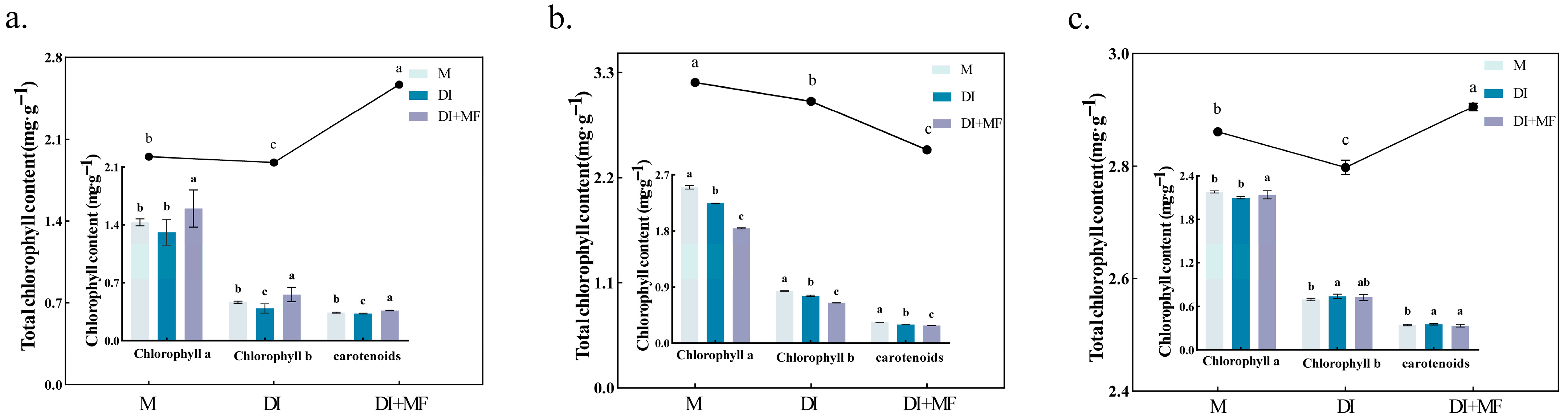
As shown in Figure 6, significant differences in leaf total chlorophyll content were observed among treatments. The total chlorophyll content in the DI + MF treatment reached its peak at 90 days and 130 days after flowering, while the DI treatment showed the lowest levels during these two periods. The highest total chlorophyll content was observed in the M treatment at 110 days after flowering. Overall, the chlorophyll content in leaves showed an initial increase followed by a decline as fruit developed. Chlorophyll a constituted the largest proportion of leaf chlorophyll. Its concentration peaked at 90 and 130 days after flowering in the DI + MF treatment while it was lowest in the DI treatment. No significant differences were observed between the DI and M treatments. At 110 days after flowering, the DI + MF treatment reduced leaf chlorophyll a content (Figure 6b). The DI + MF treatment increased leaf chlorophyll b content at 90 and 130 days after flowering. Compared to the M treatment, the DI reduced leaf chlorophyll b content at 90 days after flowering but increased it at 130 days after flowering. Additionally, except at 110 days after flowering, the leaf carotenoid content in the DI + MF treatment was higher than in the M treatment (Figure 6a,c). However, the DI treatment reduced leaf carotenoid content at 90 days after flowering (Figure 6a).
Figure 6.
Effects of three treatments on leaf chlorophyll content at different growth stages. (a) Chlorophyll content in leaves of the three treatments at 90 days after flowering; (b) chlorophyll content in leaves of the three treatments at 110 days after flowering; (c) chlorophyll content in leaves of the three treatments at 90 days after flowering.
3.4.2. The Effect of Intercropping Yuluxiang Pears on Leaf Element Content
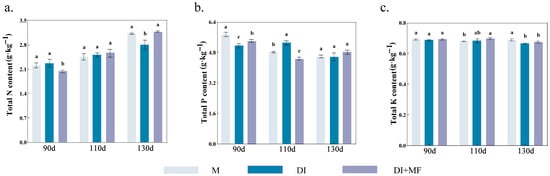
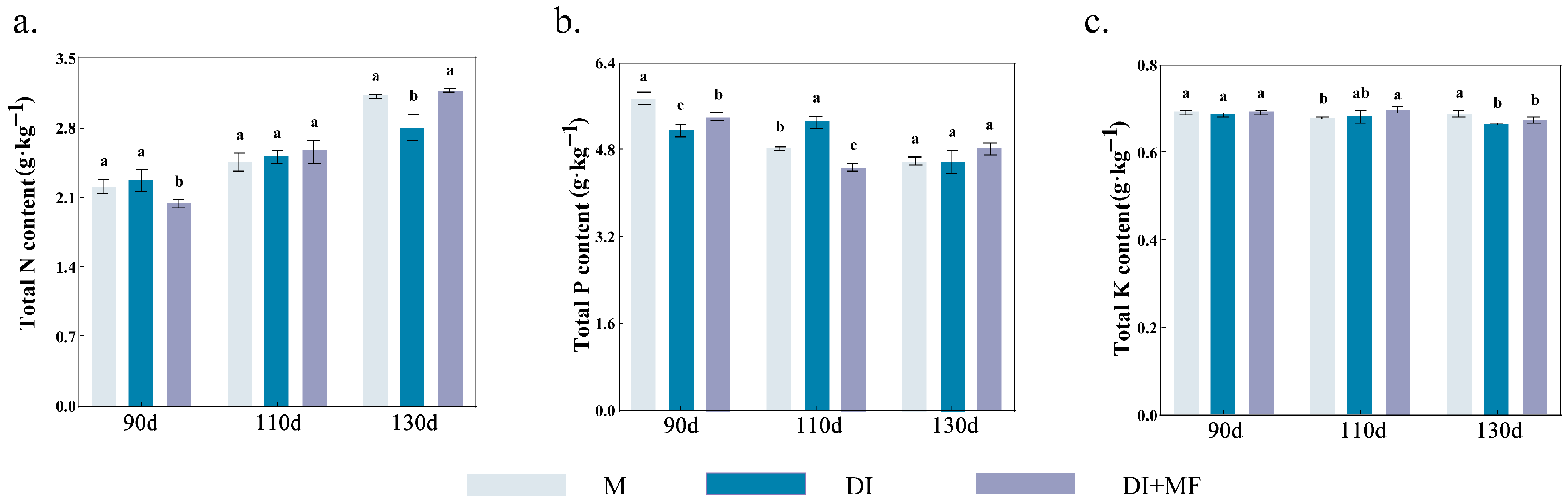
The DI + MF treatment significantly increased elemental content in leaves. As shown in Figure 7a, the TN content in leaves gradually increased with fruit development. At 90 days after flowering, the DI treatment exhibited higher TN content, but at 130 days after flowering, it was lower than the other two treatments. At 110 and 130 days after flowering, the TN content in plots receiving the DI + MF treatment exceeded that of other treatments, indicating that this approach supplied abundant nitrogen to the Yuluxiang pear orchard. The TP content in leaves gradually decreased as the fruit developed. Compared with the M treatment, the DI treatment significantly increased the TP content in leaves at 110 days after flowering. The DI + MF treatment further enhanced the TP content in leaves at 130 days after flowering (Figure 7b). At 90 days after flowering, the TP content in leaves treated with DI + MF treatment was lower than that in the M treatment. At 130 days after flowering, no significant differences were observed in TP content among the three treatments. TK in leaves remained relatively stable throughout the developmental process, indicating that the fruit trees’ potassium demand and uptake processes were relatively consistent. No significant differences were observed among the three treatments at 90 days after flowering. The TK content in leaves treated with DI was higher at 110 days after flowering. The DI + MF treatment increased the TK content in leaves at both 110 and 130 days after flowering (Figure 7c).
Figure 7.
Effects of three treatments on leaf elements at different growth stages. (a) TN Content in Leaves; (b) TP Content in Leaves; (c) TK Content in Leaves.
3.4.3. The Effect of Intercropping Yuluxiang Pears on Photosynthetic Parameters of Cabbage Leaves
As shown in Table 1, significant differences exist in the photosynthetic indices of pear tree leaves under different treatments. The Pn was lower in the M treatment, while no significant difference was observed between the DI treatment and the DI + MF treatment. The DI treatment exhibited the highest Gs and Ci. The DI + MF treatment showed the lowest Gs. These differences may result from the regulatory effects of the DI and DI + MF practices on stomatal aperture, which could subsequently influence leaf Tr.
Table 1.
Effects of three treatments on leaf photosynthesis at different time points.
3.5. The Effect of Intercropping Yuluxiang Pears on Fruit Quality
Comparing fruit quality across the three treatments during the three growth stages, Table 2 shows that compared to the M treatment, both the DI and DI + MF treatments increased single fruit weight, fruit diameter and length. Specifically, at 90 days after flowering, the DI + MF treatment yielded the highest single fruit weight (143.863 g) and the greatest fruit shape index (0.99). However, it also exhibited the lowest soluble solids content (10.067%) and fruit moisture content (0.866%). At 110 days after flowering, the DI treatment exhibited the highest fruit shape index (0.926), shortest pedicel length (23.240 mm), and highest soluble solids content (12.820%); during this period, the DI + MF had the highest single fruit weight (315.479 g). At 130 days after flowering, the single fruit weight remained highest (515.013 g) in the DI + MF treatment; the fruit shape index was also superior to the other two treatments (0.99). In contrast, the M treatment exhibited the highest soluble solids content (13.030%) at this stage, the greatest fruit moisture content (0.964), and the lowest fruit firmness (3.387 kg·cm−2).
Table 2.
Effects of three treatments on fruit quality at different stages.
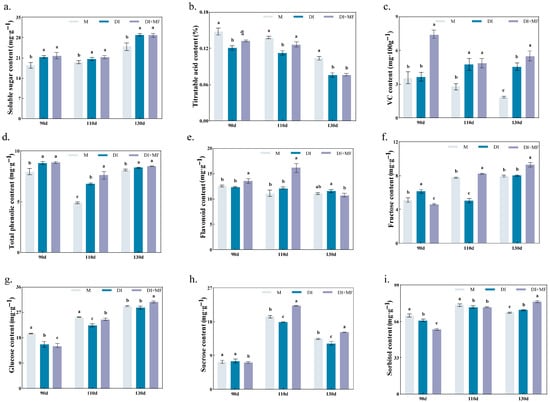
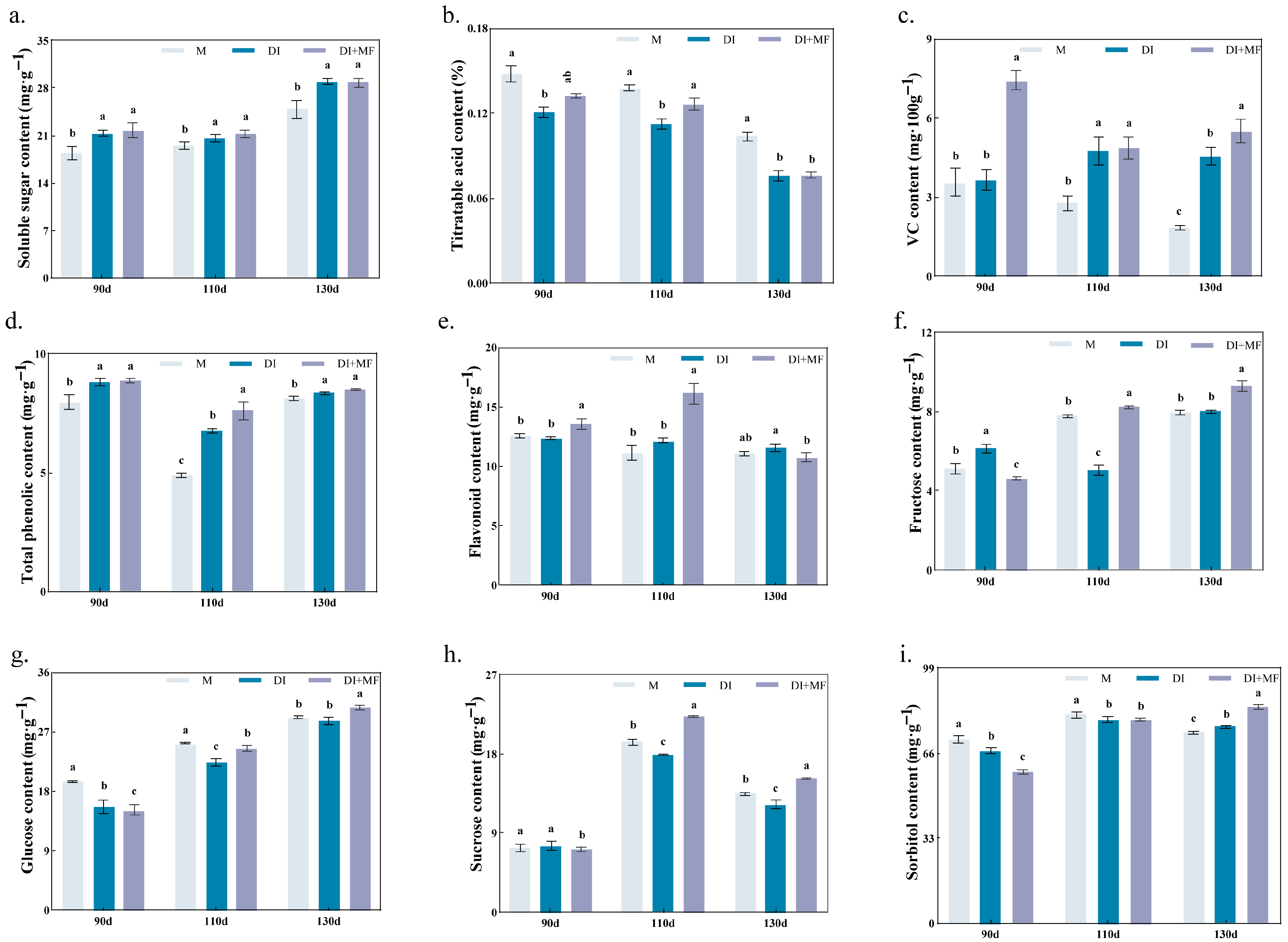
As shown in Figure 8, the DI and DI + MF treatments increased the fruit sugar content and reduced titratable acid content. The soluble sugar content increased progressively during fruit development (Figure 8a). At different stages, both the DI and DI + MF treatments all yielded a significantly higher soluble sugar content than the M treatment. Fruit titratable acidity was lowest in the DI treatment, intermediate in the DI + MF treatment, and highest in the M treatment. The DI + MF treatment significantly increased the VC content in fruits at 90 days and 130 days after flowering. The total phenolic content of fruits in the M treatment reached its lowest value (4.907 mg·g−1) at 110 days after flowering. In contrast, it reached its highest value (8.865 mg·g−1) in the DI + MF treatment at 90 days after flowering. Additionally, the DI + MF treatment significantly increased the fruit flavonoid content at 110 days after flowering. This indicates that the DI + MF treatment enhances fruit antioxidant capacity. The DI + MF treatment significantly increased the levels of fructose, glucose, sucrose, and sorbitol in fruits 130 days after flowering. Compared with the M treatment, the DI treatment increased the fructose and sucrose content in fruits at 90 days after flowering, decreased the fructose, glucose, sucrose, and sorbitol content in fruits at 110 days after flowering, and increased the sorbitol content in fruits at 130 days after flowering. At 90 days after flowering, the glucose, sucrose, and sorbitol contents in the M treatment were higher than those in the DI and DI + MF treatments. However, these contents decreased at 130 days after flowering. In conclusion, both DI and DI + MF treatments contribute to improving fruit quality. Among these treatments, the DI + MF treatment yields more significant improvements in fruit quality.
Figure 8.
Effects of three treatments on fruit internal quality at different growth stages. (a) Soluble sugar content in fruit under different treatments at different stages; (b) titratable acid content of fruit under different treatments at different stages; (c) VC content in fruit under different treatments at different stages; (d) total phenolic content in fruit under different treatments at different stages; (e) fruit flavonoid content at different stages and under different treatments; (f) fruit fructose content under different treatments at different stages; (g) glucose content in fruit under different treatments at different stages; (h) sucrose content in fruits under different treatments at different stages; (i) sorbitol content in fruit under different treatments at different stages.
3.6. Correlation Analysis Between Soil Physicochemical Properties and Fruit Quality
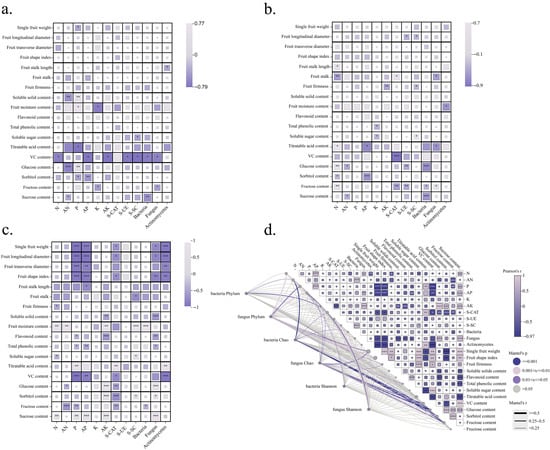
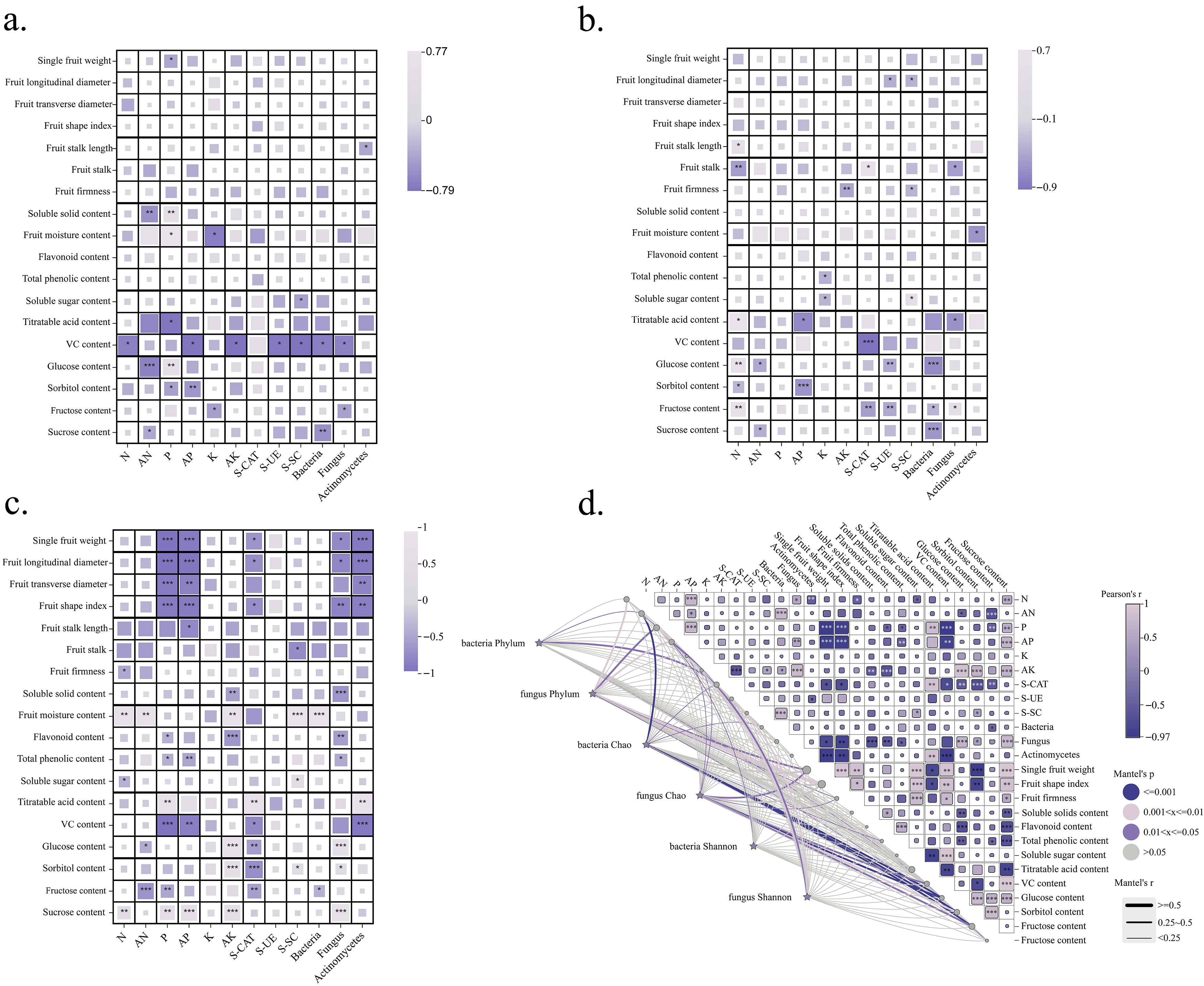
Research on the correlation between soil physicochemical properties and fruit quality is a significant topic in orchard studies, revealing how soil as the growth medium for fruit trees directly or indirectly influences the final quality of the fruit. As shown in Figure 9a, at 90 days after flowering, the soil TP content exhibited a significant positive correlation with fruit soluble solids, moisture, and glucose contents, while showing a significant negative correlation with fruit sorbitol and titratable acid contents. The fruit VC content exhibits significant correlations with most soil indicators. At 110 days after flowering, the soil TN content showed significant positive correlations with the fruit titratable acidity, glucose, fructose, and sorbitol contents. The contents of AP showed a significant negative correlation with the titratable acid and sorbitol content. Soil catalase activity showed a significant negative correlation with the fruit VC content, while exhibiting a significant positive correlation with fruit stalk thickness. Soil sucrase activity showed a significant positive correlation with the fruit soluble sugar content. Simultaneously, soil bacterial abundance was significantly negatively correlated with fruit glucose, fructose, and sucrose contents.
Figure 9.
Correlation analysis between soil physicochemical properties and fruit quality in Yuxiang pear orchards at different growth stages. (a) Correlation between soil mineral elements and fruit quality 90 days after flowering; (b) correlation between soil mineral elements and fruit quality 110 days after flowering; (c) correlation between soil mineral elements and fruit quality 130 days after flowering; (d) correlation matrix of soil nutrients, enzyme activity, microbial diversity, and fruit quality indicators based on Pearson’s correlation coefficient (r). Note: * represents signiffcance p < 0.05, ** represents signiffcance p < 0.01, *** represents significance p < 0.001.
At 130 days after flowering, the correlation between soil properties and fruit quality became more pronounced. As shown in Figure 9c, the soil TP and AP content exhibited significant negative correlations with the single fruit weight, fruit length and width, and VC content, while showing significant positive correlations with the titratable acid content. This indicates that the balance between TP and AP contents influences pedicel development, fruit firmness, and fruit shape index. The TN and AN contents showed significant positive correlations with fruit moisture content and sucrose content. Fruit moisture content also exhibited significant positive correlations with soil AK content, sucrase activity, and bacterial population. Soil catalase activity was negatively correlated with fruit VC, glucose, sorbitol, and fructose contents. The relationships among soil microbial community structure (relative abundance and composition), key physicochemical properties, enzyme activities, microbial abundance, and fruit quality were analyzed using Mantel tests and correlation heatmaps. The results indicate that soil microbial community structure and relative abundance significantly influence soil physicochemical properties, enzyme activity, and fruit quality. The community composition and diversity of soil bacteria and fungi (relative abundance at the phylum level, Chao1 index, and Shannon index) showed significant correlations with key soil nutrients (AN, AP, TK, etc.) and enzyme activities (soil catalase, urease, etc.) (high absolute values of Pearson’s |r| and Mantel’s p ≤ 0.05). Simultaneously, the soil microbial community structure and relative abundance were also correlated with fruit quality indicators, particularly with the accumulation of sugars such as glucose and sorbitol. This further indicates that soil nutrient cycling processes are closely linked to microbial metabolic activities.
4. Discussion
4.1. The Effects of Intercropping Yuluxiang Pears on Soil Nutrients and Microorganisms
Soil nutrients play a vital role in enhancing crop yields, improving soil quality, and achieving sustainable agricultural development. As the foundation for plant growth and biological interactions, the physicochemical properties and biological processes of soil directly influence ecosystem productivity [27]. Previous studies have shown that traditional no-till orchards suffer from declining soil fertility. However, when green manure crops are intercropped in orchards, soil fertility generally exhibits lower levels of organic matter and nitrogen, while a relatively abundant readily available nitrogen and phosphorus content is observed, which is conducive to the sustainable development of the apple industry [28]. This study compared soil nutrients and physicochemical properties in Yuluxiang pear orchards during key fruit development stages under the M, DI, and DI + MF treatments. It demonstrated that both DI and DI + MF treatments contribute to improving soil physicochemical properties and soil nutrients. Yan Caixin et al. [29] found that orchards under intercropping significantly increased the soil organic carbon, total nitrogen, available nitrogen, total phosphorus, and total potassium content compared to pre-intercropping levels. Compared to monocropping systems, intercropping significantly increased soil total nitrogen, available nitrogen, and total potassium content, while soil pH values were higher than in monocropping systems. This study found that DI treatments significantly increased the TN and AN content in the soil, indicating that these two treatments markedly enhance soil nitrogen supply capacity, optimize effective nitrogen cycling, and improve sustained nitrogen availability. Compared with M treatments, the DI + MF treatment also significantly increased the total phosphorus and available phosphorus content in the 0–40 cm soil profile at 110 and 130 days after flowering. The TP content increased by 36.24% and 24.30%, respectively, while AP increased by 28.13% and 17.04%. AN content increased by 34.70% and 71.37%, and 27.44% and 11.78%, respectively. This indicates that both DI and DI + MF treatments contribute to maintaining soil fertility and structural stability [30]; however, TP, AP, and AK levels were lower in DI treatments at 110 days after flowering and 130 days after flowering. This may be related to the rapid fruit enlargement during this period, which intensifies nutrient competition with dandelions growing concurrently. At 130 days after flowering (fruit maturity stage), due to the significant nutrient demands of fruit development, the DI + MF treatment effectively replenished essential soil elements. Consequently, it exhibited a marked difference compared to both the M and DI treatments.
Soil microorganisms constitute a group of organisms in soil that primarily engage in catabolic processes, exhibiting remarkably rich biological activity. Their types and quantities vary with the soil formation environment and soil depth. Through processes such as oxidation and decomposition within the soil, they promote the decomposition of soil organic matter and the transformation of nutrients [31,32]. Simultaneously, soil enzymes serve as the core biochemical drivers of soil material transformation and energy cycling. Derived primarily from microorganisms, plant roots, and animal secretions, their activity levels directly reflect the vigor of the soil life system, thereby influencing soil fertility formation and the realization of ecological functions [33]. The results of this experiment indicate that, except for fungal abundance at 110 days after flowering and actinomycete abundance at 130 days after flowering, the DI and DI + MF treatments increased microbial abundance in the 0–20 cm soil layer. This finding aligns with previous studies [34,35], suggesting that the DI and DI + MF treatments exert significant regulatory effects on soil microbial communities. The DI + MF treatment significantly increased soil fungal abundance. This effect may be attributed to the treatment’s enhancement of soil nutrient content, which promotes fungal carbon metabolism and consequently accelerates their growth and reproduction. Additionally, due to the extensive root system of dandelions, the DI + MF treatment has improved soil moisture and aeration to a certain extent. This provides a suitable growth environment for microbial groups such as bacteria and fungi that thrive in different conditions [36,37]. Soil catalase primarily originates from microorganisms and root exudates of plants. In this study, the DI + MF treatment enhanced soil catalase activity. This effect may be attributed to dandelion root exudates boosting microbial metabolic activity and promoting catalase synthesis [38]. Soil urease activity is typically positively correlated with soil microbial abundance, organic matter content, total nitrogen, and available phosphorus, and can reflect the conversion status of soil organic nitrogen. Both the DI and DI + MF treatments increased soil urease activity. Correspondingly, soil nitrogen content also rose in both treatments. The DI + MF treatment also increased the AP content in the soil. This indicates that the DI and DI + MF treatments have positive implications for TN and TP supply and conversion efficiency in Yuluxiang pear orchards. Enhanced urease activity accelerates the conversion of AN, such as urea, into AN available to plants, thereby facilitating its uptake and utilization by fruit trees. Additionally, soil enzyme activity in plots treated with DI and DI + MF treatments showed a gradual decrease with increasing soil depth, consistent with previous research findings [39]. Soil sucrase can hydrolyze sucrose into glucose and fructose. Compared with the M treatment, both the DI and DI + MF treatments reduced soil sucrase activity. This may be attributed to increased soil nitrogen availability, which in turn affected the balance of microbial carbon and nitrogen metabolism [40]. Overall, the enhancement of soil enzyme activity contributes to improving soil structure, consistent with previous research findings [41].
Analysis of soil microbial community composition, α-diversity, and β-diversity revealed that different management practices significantly influenced the soil microbial community structure in Yuluxiang pear orchards, with effects being particularly pronounced in the top-soil layer. Hu Yinghui et al. [42]. investigated the effects of mulching on soil microbial community structure, physicochemical properties, and fruit quality in cold-climate apple orchards. The relative abundance of soil microorganisms under different treatments varied with treatment and soil layer in this study. The soil bacterial communities primarily comprised phyla such as Pseudomonadota, Acidobacteriota, Actinomycetota, Bacillota, and Gemmatimonadota. Following intercropping, the relative abundance of groups like Acidobacteriota—which promote nutrient cycling and interactions with plant roots—increased. This suggests that dandelion root exudates may enhance the complexity and stability of soil organic matter after intercropping. The relative abundance of Pseudomonadota, a dominant bacterial phylum, increased at depths of 0–20 cm under intercropping treatments. This further indicated that the effects of different treatments on microbial communities exhibit distinct surface differentiation characteristics, with relatively limited influence on deeper soil layers. Regarding fungi, the soil microbiome primarily was composed of Ascomycota, Basidiomycota, and Mucoromycota. Among these, the relative abundance of Ascomycota was highest in the topsoil layer of the DI treatment, reaching 63.52% of the total, which represented an increase of 3.80% compared to the M treatment. The DI + MF treatment significantly increased the relative abundance of the Basidiomycota phylum to 41.36%, representing a 43.17% increase over the M treatment. This indicates that the DI treatment can improve soil microbial community structure, consistent with previous research findings [43,44]. Additionally, the relative abundance of Mucoromycota was higher in the DI treatment than in the M treatment. This indicates that intercropping dandelions in Yuluxiang pear orchards promotes organic matter decomposition, enhances nutrient uptake efficiency in fruit trees, and facilitates the mutual growth and development of both fruit trees and dandelions. This finding aligns with the research results of A. Unc et al. [45]. The alpha diversity of soil microbial communities reflects the richness and evenness of species within a single soil sample, serving as a key indicator for assessing the structural complexity and ecological functional potential of that sample’s microbial community. In this study, significant differences were observed in the Chao1 and Shannon indices among different treatments, particularly in the 0–20 cm and 20–40 cm soil layers. The DI treatment reduced the Shannon index of soil fungi, which contradicts some previous studies [42]. This may be related to the inhibitory effect of dandelion root exudates on specific microbial groups. Janke et al. found that the Shannon index of soils in polyculture orchards was lower than that in monoculture orchards, consistent with the results of this study. The underlying mechanism requires further investigation [46]. In contrast, i the DI + MF treatment increased the Chao1 index of soil fungi. The DI treatment significantly elevated the Shannon index of fungi, indicating that soil fungal communities exhibited higher species richness and evenness following dandelion intercropping, with a more stable structure. Overall, although the DI treatment did not significantly alter soil bacterial abundance or diversity, it markedly influenced microbial community composition. The DI + MF treatment significantly increased fungal abundance in microbial communities, consistent with previous research findings [47]. The first two principal components (PC1 and PC2) of the fungal community PCA explained less than 70% of the total variance. This unexplained variation underscores the high-dimensional complexity of microbial community data. To better resolve this complexity, future studies could incorporate additional environmental variables or use constrained ordination models. Given the high-dimensional and sparse nature of microbial community data, this study employed β-diversity analysis based on Weighted Unifrac distance (PCoA visualization and PERMANOVA statistical testing) to more reasonably assess differences in community structure. The effect of different treatments on bacterial and fungal community structures was assessed using PCA and tested via PERMANOVA. The analysis revealed significant effects of treatment on both communities (p = 0.001). PERMANOVA analysis further clarified the significant contributions of different treatments and soil layers to community variation. The PCoA analysis revealed differences in community structure among different treatments and soil layers as a whole. PCoA analysis of bacterial communities revealed that in the 0–20 cm soil profile, bacterial communities in the M treatment were distinctly separated from those in the DI and DI + MF treatments. The three treatment groups exhibited systematic directional shifts along the primary PCA axis, which identifies the D1 and D1 + MF treatments as key drivers of changes in microbial community structure. In the PCoA analysis of fungi, the sample points from the DI + MF treatment were distinctly separated from the other two treatments. This may be attributed to the DI + MF treatment enhanced soil available nutrients, thereby altering the microenvironment of the Yuluxiang pear orchard soil. As soil depth increases, the distances between treatment plots in the PCoA space decrease, indicating diminished community differences. This suggests that deeper soil layers are less influenced by current management practices, with their microbial structures being more controlled by long-term physicochemical conditions and substrate availability. This study also found that the relative abundance of microbial taxa at different phylum levels exhibited differential responses to specific elements and enzyme activities, indicating that soil element content and enzyme activity are not only products of microbial activity but also, conversely, influence microbial community composition and function.
4.2. The Effect of Intercropping Yuluxiang Pears on Leaf and Fruit Quality
Intercropping in orchards significantly impacts the growth of fruit trees. This study found that the leaf chlorophyll content initially increased and then decreased as fruit develops. The DI + MF treatment significantly increased the total chlorophyll, TN, TP, and TK contents in leaves at 90 and 130 days after flowering. Leaf mineral content serves as an effective indicator of the overall nutritional status of fruit trees. Research by Feng Fan et al. [48] indicated that the chlorophyll content in fruit tree leaves significantly increased following orchard cover cropping. Planting white clover effectively enhances the chlorophyll content in fruit tree leaves, thereby improving their photosynthetic characteristics. This study also found that compared with the M treatment, both the DI and DI + MF treatments increased the Pn, Gs, and Ci in leaves. This may be related to changes in the microenvironment of the Yuluxiang pear orchard induced by DI treatment.
The results of this study indicated that the DI and DI + MF treatments contribute to improving the quality of Yuluxiang pear fruit. The effect of the DI + MF treatment was more pronounced at 130 days after flowering. Compared with the M treatment, the DI + MF treatment significantly increased the soluble sugar and VC content in fruit while reducing the titratable acidity content. This finding aligns with conclusions from most studies indicating that orchard intercropping improves fruit quality [49,50,51]. This study demonstrated that, unlike common legume or grass intercrops, dandelion served as a drought-tolerant living mulch and thereby significantly enhanced the phosphorus and total potassium content in orchard soil and pear tree leaves. Wang Linyuan et al. reported that Se, Fe, K, and Mg positively influence kiwifruit quality [52]. Liu Zhoubin et al. inbred “SJ11-3” pepper was cultured in yellow brown soil, paddy soil, fluvo-aquic soil, and pastoral soil, and the factors affecting the absorption of trace elements and fruit quality were analyzed. The results showed that the available potassium was the major determinant of the vitamin C content of pepper [53]. Therefore, we hypothesize that cultivating dandelions in pear orchards could specifically enhance fruit quality by improving phosphorus and potassium nutrition. Soil, as the growth medium for fruit trees, forms a dynamic, interactive micro-ecological environment through its physicochemical properties and biological activity. This environment profoundly influences the final quality of fruit through multi-level mechanisms. This study found that the community structure and diversity of soil bacteria and fungi (as reflected in phylum-level composition and the Chao1 index) not only showed significant positive correlations with soil nutrients and key enzyme activities, but also were closely associated with important indicators of fruit quality. This indicates that during the fruit ripening stage, correlations between soil parameters and fruit quality indices became significantly stronger. Soil microorganisms indirectly yet profoundly influence fruit sugar metabolism and nutrient accumulation by regulating nutrient transformation and soil biochemical processes. Additionally, microbial communities in the soil interact with elements and associated enzyme systems to promote organic matter decomposition and nutrient transformation, thereby indirectly regulating the synthesis and balance of sugars, organic acids, and flavor compounds within the fruit [54].
5. Conclusions
The DI treatment in Yuluxiang pear orchards positively impacted orchard soil, tree growth, and fruit quality. This effect is particularly pronounced when combined with microbial organic fertilizer application. In terms of soil nutrients, the DI + MF treatment significantly increased soil AN, TP, AP, and TK contents. Except for TK, significant differences in soil elements were observed across all treatments at different growth stages, indicating that both the DI and DI + MF treatments improved soil nutrient structure. In terms of microbial communities, the DI treatment significantly altered soil microbial community structure, specifically manifested by increased relative abundances of the Acidobacteriota, Actinomycetota, and Bacillota phyla within bacterial communities, and the Mucoromycota and Basidiomycota phyla within fungal communities. This indicates that the DI + MF treatment can promote nutrient cycling, stabilize soil structure, and enhance organic matter transformation by regulating the abundance of soil microbial communities. The increased relative abundance of Actinomycetota, Basidiomycota, and Mucoromycota further reflects that the DI and DI + MF treatments help maintain microbial community balance, thereby promoting nutrient cycling and ecosystem stability in Yuluxiang pear orchards. Leaves treated with the DI + MF treatment exhibited a higher total chlorophyll content. The DI treatment also produced the highest Gs and Ci, while moderately increasing mineral element content in leaves. These findings indicate that the DI treatment enhances the photosynthesis and nutrient conversion in fruit trees. In terms of fruit quality, the DI + MF treatment yielded the highest individual fruit weight and the highest soluble solids content at 130 days after flowering. However, no significant differences in fruit quality were observed between the M and DI treatments. Therefore, the DI + MF management effectively improves soil nutrient status and maintains the ecological balance of microbial communities. This ensures the healthy growth of fruit trees and high-quality fruit production, further enhancing the overall ecological benefits of the Yuluxiang pear orchard and fostering a sound ecological cycle.
Author Contributions
Conceptualization, X.G., X.Y. and S.Y.; methodology, X.G.; software, X.G.; validation, X.G. and J.W.; formal analysis, X.G.; investigation, X.G., Q.A. and J.W.; resources, X.G., Y.Z. and Q.A.; data curation, X.G.; writing—original draft preparation, X.G.; writing—review and editing, X.G., Y.Z. and S.Y.; visualization, X.G. and S.Y.; supervision, X.G. and S.Y.; project administration, S.Y.; funding acquisition, S.Y. All authors have read and agreed to the published version of the manuscript.
Funding
This research was funded by Corps Science and Technology Program Projects 2024AB040; Key Research and Development Program of Shanxi Province 202402140601010-02; Construction Project of the Fruit Tree Doctoral Workstation at the National Modern Agricultural Industrial Park in Quwo County SXRTFWZB2506-26-3; Shanxi Province Major Science and Technology Special Projects Program: Challenge-Based Project Selection Initiative 202201140601027-2; Shanxi Agricultural University Research Projects YZGC036; Shanxi Agricultural University Science and Technology Innovation Enhancement Project CXGC202425; Shanxi Provincial Higher Education Institution Scientific and Technological Innovation Project Funding 2023L044; Shanxi Provincial Basic Research Program Grant Project 202403021222097; Shanxi Agricultural University Local Cooperation Program XDHZYLXY2025-02.
Data Availability Statement
The original contributions presented in this study are included in the article. Further inquiries can be directed to the corresponding authors.
Conflicts of Interest
The authors declare no conflicts of interest.
References
- Ji, X.; Wu, N.; Xue, F.; Gao, X.; Zhao, L. Preliminary study on the causes of ‘Yulu Pear’ fruit drop before harvest. Plant Health Med. 2023, 2, 36–42. [Google Scholar] [CrossRef]
- Jia, Y.; Li, X.; Xu, Z. Research on the current application status and development trends of high-quality and high-yield cultivation techniques for Yuluxiang Pears. J. Smart Agric. 2023, 3, 54–57. [Google Scholar] [CrossRef]
- Zhou, H.; Qiao, Y. Current status and development strategies of the ningxia haiyuan perfume pear industry. Pract. Tech. Inf. Fruit Trees 2025, 12, 49–52. [Google Scholar]
- Zhang, S.; Xie, Z. Current status, trends, main problems and the suggestions on development of pear industry in China. J. Fruit Sci. 2019, 36, 1067–1072. [Google Scholar] [CrossRef]
- Zhao, D.; Cheng, C.; Cao, Y.; Zhang, S.; Zhang, Y.; Hou, G. Research on the current status and development strategy of China’s pear industry. Jiangsu Agric. Sci. 2010, 501–504. [Google Scholar] [CrossRef]
- Zhao, Y. Study on the Relationship Between Distribution Channels and Quality and Distribution Efficiency of Fresh Pears in Hebei Province. Master’s Thesis, Hebei University, Baoding, China, 2017. [Google Scholar]
- Ding, T.; Duan, T. Research progress on the influence of orchard green manure on fruit treesoil-microbe system. J. Fruit Sci. 2021, 38, 2196–2208. [Google Scholar] [CrossRef]
- Sun, W.; Zhao, M.; Dong, T.; Ma, M. Effects of different intercropping patterns on soil organic carbon content, enzyme activity, and aggregate stability in Apple orchards on the loess Plateau. Sci. Rep. 2025, 15, 34573. [Google Scholar] [CrossRef] [Scilit]
- Zhu, J.; Zhang, Y.; Shao, C.; Lv, B.; Zhang, G.; Wang, Q.; Sun, H. Ecological regulation strategies for mutualistic symbiosis among medicinal plants in intercropping systems. J. Chin. Med. Mater. 2024, 47, 1574–1582. [Google Scholar] [CrossRef]
- Huang, G.; Ning, X.; Lu, Y.; Lin, M.; Gao, Z.; Wang, X. Research progress on carbon sequestration potential and its effects based on grass planting model in the orchard. North. Hortic. 2023, 47, 146–153. [Google Scholar]
- Wu, C.; He, J.; Wu, W.; Cai, J.; Xiang, Y. Effects of intercropping on stoichiometric characteristics and nutrients contribution rate of soil aggregates in Rosa roxbunghii Tratt. orchard. Acta Agric. Zhejiangensis 2023, 35, 1132–1143. [Google Scholar]
- Liu, J. Study on Intercropping Different Varieties of Morchella in Pear Orchards and Its Impact on Pear Quality. Master’s Thesis, Yangzhou University, Yangzhou, China, 2023. [Google Scholar]
- Fan, F.; Yan, S.; Hu, H.; Liu, Y.; Liu, Z. Structural Characterization, Antioxidant Activity, and In Vitro Simulated Digestion of Dandelion Root Polysaccharides. Sci. Technol. Food Ind. 2025, 46, 93–101. [Google Scholar] [CrossRef]
- Zan, L.; Wang, R.; Guo, H.; Xin, J.; Wang, S.; Zhao, X.; Li, H. Analysis of Anti-inflammatory Components and Mechanisms in Taraxacum mongolicum Water Extract Based on UPLC-Q-TOF/MS and Network Pharmacology. Food Sci. 2025, 46, 1–17. [Google Scholar]
- Fan, F.; Yan, S.; Liu, Y.; Liu, Z. Research Progress on Chemical Structure, Extraction and Separation, Biological Activity and Application of Pugongying (Dandelion) Polysaccharides. Chin. Arch. Tradit. Chin. Med. 2025, 43, 246–252. [Google Scholar] [CrossRef]
- Kronberga, A.; Nakurte, I.; Kaļāne, L.; Vecvanags, A.; Jakovels, D.; Fiļipovs, J.; Mežaka, I. Cultivation potential of Taraxacum campylodes G.E.Haglund wild populations: Morphological and biochemical variation. Plant Genet. Resour. Charact. Util. 2023, 21, 71–80. [Google Scholar] [CrossRef] [Scilit]
- Wei, M.; Fan, X.; Yang, L.; Zhou, G.; Zou, L.; Shi, W.; Li, C.; Xiao, S.; Pu, C.; Yan, H. Spatiotemporal accumulation patterns of pharmacodynamic components in Taraxacum officinale and their response to drought stress. China J. Chin. Mater. Medica 2025, 10, 1–11. [Google Scholar] [CrossRef] [Scilit]
- Chatzistathis, T.; Kavvadias, V.; Sotiropoulos, T.; Papadakis, I.E. Organic Fertilization and Tree Orchards. Agriculture 2021, 11, 692. [Google Scholar] [CrossRef] [Scilit]
- Li, J.; Ma, Y.; Cui, T.; Liu, S.; Li, L. Transcriptome Profiling Reveals Potential Genes Involved in Salicylic Acid-Induced Arbutin Synthesis in Pear. Horticulturae 2024, 10, 622. [Google Scholar] [CrossRef] [Scilit]
- Zhao, L.; Yan, S.; Wang, Y.; Xu, G.; Zhao, D. Evaluation of the Effect of Preharvest Melatonin Spraying on Fruit Quality of ‘Yuluxiang’ Pear Based on Principal Component Analysis. Foods 2023, 12, 3507. [Google Scholar] [CrossRef] [Scilit]
- Hou, Y.; Zhang, X.; Gao, Z.; Chen, T.; Zhang, L. Relationships between fungal diversity and fruit quality of Yuluxiang pear during low temperature storage. Front. Microbiol. 2023, 14, 1132271. [Google Scholar] [CrossRef] [Scilit]
- Yu, X.; Gao, X.; Wang, J.; Yang, S. Effects of branch bending on branch growth, sugar content and sucrose metabolizing enzyme activities in Yuluxiangli. J. Northwest A F Univ. (Nat. Sci. Ed.) 2026, 54, 92–100. [Google Scholar] [CrossRef]
- Qin, S.; Jiao, K.; He, J.; Lyu, D. Forage crops alter soil bacterial and fungal communities in an apple orchard. Acta Agric. Scand. Sect. B—Soil Plant Sci. 2015, 66, 229–236. [Google Scholar] [CrossRef] [Scilit]
- Wang, L.; Qin, Y.; Wu, H.; Dan, Y.; Hao, X.; Xiao, F.; Chen, H. Selection of green manure varieties and effects of grass management modes on soil fertility in kiwifruit orchards. J. Fruit Sci. 2023, 40, 1885–1893. [Google Scholar] [CrossRef]
- Jiao, K.; Wu, Y.; Guo, B.; Zhang, L.; Li, Y.; Song, P. Regulation of microbial community structure, function, and nutrient of apple orchard soil by interplanting red clover. Front. Sustain. Food Syst. 2023, 7, 1197624. [Google Scholar] [CrossRef] [Scilit]
- Duan, J.; Li, S.; Li, P.; Jiang, R.; Wang, Z.; Li, X.; Dong, C.; Xu, Y.; Shen, Q. Effects of Trichoderma bio-organic fertilizer on key rhizosphere microorganisms and growth and development of pear container seedlings. J. Plant Nutr. Fertil. 2024, 30, 2118–2128. [Google Scholar]
- Wei, T.; Li, H.; Wang, G.; Chen, W.; Li, G. Effects of artificial grass cover on doil microbial diversity, soil metabolome and fruit quality in Lingwu Longjiao Orchards. Acta Hortic. Sin. 2026, 53, 185–201. [Google Scholar] [CrossRef]
- Yang, R.; Zhang, J.; Cui, H.; Lu, B.; Wang, T. Long-term substitution of chemical fertilizers with green manure maintains yield and improves soil quality in the wheat-maize intercropping system in the Hexi Oasis Irrigation Area. J. Plant Nutr. Fertil. 2025, 31, 1703–1712. [Google Scholar]
- Yan, C.; Zhao, Y.; Hu, F.; Rui, K.; Chen, Z.; Zhang, S.; Fan, H. Community structure and diversity of soil bacteria in intercropping Arachis pintoi under Areca Catechu forest. Soil Fertil. Sci. China 2022, 52, 42–53. [Google Scholar]
- Zhao, Q.; Wei, C.; Ma, H.; Ma, Z.; Yan, C.; Xian, A.; Tang, X.; Shi, J.; Cao, L. Effects of Long-term Grass Cultivation on Soil Nutrients, Enzyme Activities and Microbial Diversity in Tropical Latosol Orchards. Chin. J. Trop. Crops 2025, 46, 2802–2815. [Google Scholar]
- Yang, R.; Sun, Z.; Gong, Y.; Zhou, P.; Zhang, X.; Wang, J.; Dong, Q.; Gao, F. The impact of nutrient deficiency on the structure of soil microbial communities within a double-cropping system. Front. Plant Sci. 2025, 16, 1487687. [Google Scholar] [CrossRef] [Scilit]
- Lin, H.; Liu, Y.; Luo, H.; Wang, T.; Lin, Z.; Su, D.; Lin, X.; Lin, D. Effects of Planting Varieties of Arundo Grass on Soil Enzyme Activities and Microbial Community. Fujian J. Agric. Sci. 2022, 37, 675–682. [Google Scholar] [CrossRef]
- Zhang, H.; Liu, Y.; Yang, Y.; Ji, H.; Zhang, D. Research progress on methods for determining soil enzyme activity and influencing factors. Mod. Agric. Sci. Technol. 2025, 97–101. [Google Scholar]
- Lin, Y.; Xue, Q.; Yan, X. Effect of mulching mode and wheat root on soil microbial flora. Chin. J. Eco-Agric. 2008, 16, 1389–1393. [Google Scholar] [CrossRef] [Scilit]
- Yang, X.; Gong, B.; Liu, C.; Wang, Y.; Xu, Y. Effects of Long-Term Sod Culture Management on Soil Fertility, Enzyme Activities, Soil Microorganisms, and Fruit Yield and Quality in “Jiro” Sweet Persimmon Orchard. Plants 2024, 13, 1573. [Google Scholar] [CrossRef] [Scilit] [PubMed]
- Sun, Y.; Wu, Z.; Hu, F.; Fan, H.; He, W.; Zhao, L.; Guo, C.; Bao, X.; Chai, Q.; Zhao, C. Maize and Pea Root Interactions Promote Symbiotic Nitrogen Fixation, Thereby Accelerating Nitrogen Assimilation and Partitioning in Intercropped Pea. Agronomy 2025, 15, 1615. [Google Scholar] [CrossRef] [Scilit]
- Liu, P.F.; Zhao, Y.K.; Ma, J.N.; Cao, Y.; Zhang, M.X.; Yu, J.; Guan, H.B.; Xing, Y.S.; Wang, X.Q.; Jia, X. Impact of various intercropping modes on soil quality, microbial communities, yield and quality of Platycodon grandiflorum (Jacq.) A. DC. BMC Plant Biol. 2025, 25, 503. [Google Scholar] [CrossRef] [Scilit] [PubMed]
- Gong, Q.; Zhai, B.; Zheng, W.; Liu, J.; Zheng, Z.; Zhao, Z.; Li, Z.; Wang, C. Effects of grass cover combined with different fertilization regimes on soil nutrients and enzyme activities in apple orchard in Weibei dryland, China. Chin. J. Appl. Ecol. 2018, 29, 205–212. [Google Scholar] [CrossRef]
- Jing, Z.; Li, T.; Long, M.; Ma, W. The effects of cover crops on soil enzyme activity and soil microorganisms in kiwifruit orchards. Pratacult. Sci. 2020, 37, 1710–1718. [Google Scholar]
- Yan, C.; Zhao, Y.; Li, S.; Xiao, M.; Fan, H. Effects of different intercropping patterns on soil enzyme activity and fungal community of young jackfruit orchard. South China Fruits 2024, 53, 92–99. [Google Scholar] [CrossRef]
- Zhang, Y.; Han, M.; Song, M.; Tian, J.; Song, B.; Hu, Y.; Zhang, J.; Yao, Y. Intercropping with Aromatic Plants Increased the Soil Organic Matter Content and Changed the Microbial Community in a Pear Orchard. Front. Microbiol. 2021, 12, 616932. [Google Scholar] [CrossRef] [Scilit]
- Hu, Y.; Bu, H.; Gu, G.; Yang, Y.; Yu, W. The effects of mulching on soil microbial community structure, physicochemical properties, and fruit quality in cold-climate apple orchards. North. Hortic. 2025, 1–13. [Google Scholar]
- Wang, C.; Liang, Q.; Liu, J.; Zhou, R.; Lang, X.; Xu, S.; Li, X.; Gong, A.; Mu, Y.; Fang, H.; et al. Impact of intercropping grass on the soil rhizosphere microbial community and soil ecosystem function in a walnut orchard. Front. Microbiol. 2023, 14, 1137590. [Google Scholar] [CrossRef] [Scilit] [PubMed]
- Li, X.; Chu, Y.; Jia, Y.; Yue, H.; Han, Z.; Wang, Y. Changes to bacterial communities and soil metabolites in an apple orchard as a legacy effect of different intercropping plants and soil management practices. Front. Microbiol. 2022, 13, 956840. [Google Scholar] [CrossRef] [Scilit]
- Unc, A.; Eshel, G.; Unc, G.A.; Doniger, T.; Sherman, C.; Leikin, M.; Steinberger, Y. Vineyard soil microbial community under conventional, sustainable and organic management practices in a Mediterranean climate. Soil Res. 2020, 59, 253–265. [Google Scholar] [CrossRef] [Scilit]
- Janke, R.R.; Menezes-Blackburn, D.; Al Hamdi, A.; Rehman, A. Organic Management and Intercropping of Fruit Perennials Increase Soil Microbial Diversity and Activity in Arid Zone Orchard Cropping Systems. Sustainability 2024, 16, 9391. [Google Scholar] [CrossRef] [Scilit]
- Qin, M.-F.; Li, L.-T.; Singh, J.; Sun, M.-Y.; Bai, B.; Li, S.-W.; Ni, J.-P.; Zhang, J.-Y.; Zhang, X.; Wei, W.-L.; et al. Construction of a high-density bin-map and identification of fruit quality-related quantitative trait loci and functional genes in pear. Hortic. Res. 2022, 9, uhac141. [Google Scholar] [CrossRef] [Scilit]
- Feng, F.; Xie, K.; Aibibula, Y.; Wan, J. Effects of intercrop forages on weed control, soil and tree nutrients in orchards. Xinjiang Agric. Sci. 2023, 60, 982–991. [Google Scholar]
- Muhetaer, Z.; Gulimire, K.; Aihaiti, K.; Wu, Z.; Mahemuti, A. Effects of green manure intercropping on soil fertility and fruit quality in “Huizao” Jujube orchard. Soil Fertil. Sci. China 2024, 135–142. [Google Scholar]
- Guo, L.; Liu, S.; Zhang, P.; Hakeem, A.; Song, H.; Yu, M.; Wang, F. Effects of Different Mulching Practices on Soil Environment and Fruit Quality in Peach Orchards. Plants 2024, 13, 827. [Google Scholar] [CrossRef] [Scilit]
- Wei, W.; Liu, T.; Zhang, S.; Shen, L.; Wang, X.; Li, L.; Zhu, Y.; Zhang, W. Root spatial distribution and belowground competition in an apple/ryegrass agroforestry system. Agric. Syst. 2024, 215, 103869. [Google Scholar] [CrossRef] [Scilit]
- Wang, L.; Xu, D.; Zhang, Y.; Yang, S. The Influence of Soil on Fruit Elemental Characteristics and Quality in Kiwifruit Production Area at Northern Foothills of Qinling Mountains. J. Fujian For. Sci. Technol. 2025, 52, 87–95+101. [Google Scholar] [CrossRef]
- Liu, Z.; Huang, Y.; Tan, F.; Chen, W.; Ou, L. Effects of Soil Type on Trace Element Absorption and Fruit Quality of Pepper. Front. Plant Sci. 2021, 12, 698796. [Google Scholar] [CrossRef] [Scilit] [PubMed]
- Gao, N.; Wang, W.; Wen, H.; Shang, Z.; Yang, S.; Zhang, H.; Zou, Y.; Qin, J. Preliminary study on the effects of intercropping perilla on microorganisms and enzyme activities in kiwifruit inter-root soil and fruit quality. China Fruits 2024, 37–47+56. [Google Scholar] [CrossRef]

Disclaimer/Publisher’s Note: The statements, opinions and data contained in all publications are solely those of the individual author(s) and contributor(s) and not of MDPI and/or the editor(s). MDPI and/or the editor(s) disclaim responsibility for any injury to people or property resulting from any ideas, methods, instructions or products referred to in the content. |
© 2026 by the authors. Licensee MDPI, Basel, Switzerland. This article is an open access article distributed under the terms and conditions of the Creative Commons Attribution (CC BY) license.