


Abstract
Enzymatic browning in fresh-cut apples causes a decrease in sensory quality, commodity value reduction and economic losses. Various physical, chemical and biotechnological methods have been developed to inhibit browning in fresh-cut apples. In the present study, we propose a promising alternative approach using a combination of lysine (Lys) and arginine (Arg)—two natural amino acids—which effectively delayed browning in fresh-cut apples. Lys/Arg treatment impeded weight loss while maintaining firmness and soluble solid content. Molecular docking and phenolic contents showed that Lys/Arg could delay browning in fresh-cut apples by inhibiting polyphenol oxidase (PPO) activity and reducing phenolic substrates. Furthermore, transcriptomic analysis showed that Lys/Arg treatment improved stress tolerance and reactive oxygen species (ROS) scavenging capacity. RT-qPCR confirmed that Lys/Arg treatment inhibited the transcription of key PPO-related genes and induced the expression of genes associated with antioxidant capacity, which collectively reduced PPO activity and enhanced the antioxidant capacity of fresh-cut apples. In conclusion, Lys/Arg treatment can delay fresh-cut apple browning by decreasing PPO activity, regulating phenolic metabolism and enhancing ROS scavenging, which provides a promising alternative approach to delaying visual browning and maintaining selected physicochemical attributes of fresh-cut apples.
1. Introduction
Recently, the consumption of ready-to-eat fresh-cut fruits and vegetables has been gaining popularity due to their freshness, convenience, cost-effectiveness, and nutritional content [1]. Apples are widely recognized as marketable fruits due to their high contents of vitamin C, polyphenols, etc., leading to high market demand for fresh-cut apples [2,3]. However, rapid browning, physiological changes and microbial proliferation in fresh-cut apples are significant challenges for the storage industry [4]. Among these issues, enzymatic browning has the strongest influence [5]. Fresh-cut apple browning has a negative impact on taste, odor, texture, nutritional value, and color, which leads to diminished sensory quality and commodity value, thus causing economic losses [6]. Therefore, studies on the inhibition of apple browning caused by fresh cutting are of great significance.
Several studies have suggested that the underlying mechanism of enzymatic browning in fresh-cut apples is closely associated with the metabolism of polyphenol oxidase (PPO), phenols, and reactive oxygen system (ROS) [7]. PPO, a copper-containing metalloprotein, occupies a key role as a phenolase that drives enzymatic browning in fresh-cut apples [8,9]. A well-accepted hypothesis suggests that intact apple tissue does not undergo browning due to the spatial separation of phenols and PPO [10]. However, cutting destroys this physical partition, facilitating interaction between phenols and PPO, thus inducing enzymatic browning. Therefore, inhibiting PPO activity is the preferred method to delay browning in fresh-cut apples [11]. Notably, phenolic substances are another key factor affecting the rate of enzymatic browning independent of PPO activity. Enzymatic browning could also be influenced by regulating the levels of phenolic substances. For example, eugenol, riboflavin and modified atmosphere (MA) treatments have been found to inhibit enzymatic browning by regulating the content of phenolic substances [5,12,13]. Persic, Mikulic-Petkovsek [14] found that the contents of total phenols, chlorogenic acid, procyanidins, and catechins in fresh-cut apples were strongly correlated with the rate of browning. Moreover, ROS also play important roles in enzymatic browning. The mechanical damage incurred during fresh cutting results in ROS accumulation, which accelerates membrane lipid peroxidation and permeability, thereby aggravating browning. Therefore, enhancing ROS scavenging is crucial for inhibiting browning in fresh-cut apples [15,16].
Various physical methods, such as hot water, low temperature, a controlled atmosphere, and ultra-Violet C (UV-C), have been reported to inhibit enzymatic browning in fresh-cut apples [17]. However, physical methods often incur high costs. Citric acid, sodium metabisulfite, sodium pyrosulfite, chlorine dioxide, ascorbic acid, and calcium ascorbate are chemical inhibitors that can be used to delay fresh-cut apple browning [18,19,20,21]. Calcium ascorbate has been widely employed in the fresh-cut apple industry for many years; however, new technologies are continuously being explored [22]. It was reported that sodium chloride (NaCl) treatment could partially replace calcium ascorbate to inhibit surface browning on fresh-cut apple slices [23]. Additionally, there has been some interest in safe and natural browning inhibitors extracted from plants in recent years. Natural compounds, such as cyanidin-3-sophoroside extracted from mangosteen peel and lycopene extracted from tomato skin, as well as green tea extracts, onion extracts, and sea buckthorn leaf extracts, have been reported to suppress enzymatic browning in fresh-cut apples or potatoes by inhibiting PPO activity [8,24,25,26,27].
A new approach to study the roles of amino acids in regulating browning in fresh-cut fruits and vegetables has recently been developed. Certain concentrations of exogenous glycine, valine, methionine, phenylalanine, isoleucine, aspartic acid, glutamic acid, and proline treatments can inhibit browning in fresh-cut potatoes [28,29,30,31]. In addition, exogenous GABA, arginine, and L-cysteine have shown significant inhibitory effects on browning in fresh-cut apples [16,32,33,34]. It has been proven that changing the pH value of fresh-cut products can decrease PPO activity, thus inhibiting fresh-cut browning. For example, treatment with aspartic acid or glutamic acid inhibited browning in fresh-cut potatoes by repressing the PPO activity via lowering the pH value [29,35]. Transcriptomics, as a powerful tool for analyzing global gene expression profiles, has been increasingly applied to decipher the molecular mechanisms of enzymatic browning in fruits. This method enables the identification of key differentially expressed genes (DEGs) involved in PPO, phenol, and ROS metabolism, as well as the exploration of regulatory networks underlying browning responses. It has been successfully used to clarify browning mechanisms in apples and other fruits, such as pears and bananas [36,37,38]. In this research, we found that 2.0% Lys combined with 1.0% Arg solution (1:1; v/v) showed better browning inhibition than treatment of fresh-cut apples with Lys or Arg separately. Meanwhile, the anti-browning mechanisms of Lys/Arg treatment were explored through physiological and gene expression analysis, with transcriptomics employed to systematically identify browning-related DEGs and identify the potential molecular regulatory pathways mediated by Lys/Arg.
2. Materials and Methods
2.1. Materials and Treatment
Fresh apples (Malus pumila Mill., ‘Red Fuji’) were purchased from Xili Town, Yiyuan County, Zibo City, Shandong Province, China. The selected apples (200–250 g in weight, 8–10 cm in length and diameter) were packed in cartons and lined with foam mesh sleeves during transportation to our laboratory’s cold storage facility. Only apples with uniform shape and size, appealing color and texture, and the absence of observable diseases, insect infestation, and mechanical damage were directly used for the subsequent experiments.
Preparation of Lys/Arg composite solution: L-lysine (≥99% purity, food-grade) and L-arginine (≥99% purity, food-grade) were purchased from Zhuhai Fanhai Biotechnology Co., Ltd. (Zhuhai, Guangdong, China.) The solution was prepared using dd H2O with the following steps: first, 20.0 g of Lys was dissolved in 500 mL ultrapure water under magnetic stirring (300 rpm) at 25 °C; then, 10.0 g of Arg was added to the above solution and stirred continuously until fully dissolved; finally, dd H2O was added to make the total volume 1000 mL, resulting in a 2.0% Lys + 1.0% Arg (1:1, v/v) composite solution. And the solution temperature was maintained at 25 ± 1 °C during treatment.
A total of 72 apples were randomly divided into two groups, each containing 36 apples. All apples were cut into 864 slices of 10–20 mm in thickness using an apple slicer (RY-331, Zhejiang Fasole Home Products Co., Ltd., Jinhua, Zhejiang, China) that had been aseptically treated by soaking in a 0.20 g L−1 NaClO (NaClO, food-grade, purchased from Sinopharm Chemical Reagent Co., Ltd., Shanghai, China) solution for 5 min and subsequently rinsed with sterile distilled water and air-dried; the apple fruits were also sterilized with 0.20 g L−1 NaClO solution for 5 min. The cutting process was completed within 2 min at 4 °C (refrigerated environment) to minimize browning before treatment. The fresh-cut apples were dipped immediately after cutting to avoid pre-treatment browning. A total of 432 apple slices were soaked in distilled water as the control group (CK), and the other 432 slices were soaked in the 2.0% Lys + 1.0% Arg (1:1, v/v) composite solution for 10 min as the Lys/Arg treatment group, and then all of them were dried with gauze. Subsequently, apple slices were placed into polyethylene (PE) zip-lock bags (150 mm length × 220 mm width × 120 µm thickness, purchased from Qingdao Haida Packaging Co., Ltd., Qingdao, Shandong, China) with a fill ratio of approximately 40% (v/v) (each bag contained 12 apple slices). Notably, the PE bags were naturally folded (not hermetically sealed) to allow natural air circulation within the bags; no strict modified atmosphere (MA) control was implemented. For each treatment (CK and Lys/Arg) and each storage time point (0, 2, 4, 6, 8 and 10 d), 6 biological replicate bags were prepared (n = 6). Each bag was used only once for sampling (no repeated opening) to avoid cross-contamination and gas composition disturbance. For 3 biological replicate bags, 6 apple slices in each bag were used for sensory evaluation, and the other 6 apple slices were used to determine the phenotypic parameters. Another 3 biological replicate bags were used for sampling at 0, 2, 4, 6, 8 and 10 d in liquid nitrogen and stored at −80 °C for physiological index measurements.
2.2. The Measurements of Sensory and Phenotypic Indicators
Changes in the color of fresh-cut apples were determined using a colorimeter (CR-400, Minolta Co., Osaka, Japan) calibrated using a standard whiteboard (L* = 97.06, a* = 0.04, b* = 2.01).
Overall sensory quality evaluation was conducted by an internal, trained panel consisting of 6 researchers. Panel recruitment was based on their prior experience in fresh-cut fruit quality evaluation and willingness to participate in sensory training. Training sessions were conducted to standardize the understanding of evaluation criteria, including familiarization with browning levels, texture characteristics, and potential off-flavors of fresh-cut apples. All evaluations were performed in a dedicated sensory booth (temperature: 23 ± 1 °C; lighting: uniform white fluorescent light, 500 lx) to avoid environmental interference. Six apple slices were randomly selected from each of the three biologically replicated bags, and then the slices were randomly allocated to six panelists, with each panelist receiving one slice from each biologically replicated bag for sensory evaluation.
The sensory quality evaluation was conducted based on a scale of 0–9, where scores of 7–9 indicated excellent quality with no browning or water loss, and extremely vibrant color; 5–6 indicated good quality with slight browning and minimal water loss, and bright color; 3–4 indicated fair quality with slight browning and water loss, and darker color; 1–2 indicated poor quality with moderate browning, severe water loss, and dim color; and 0 indicated inedible quality.
The firmness of fresh-cut apples was measured using a durometer (LX-A, TE-CLOCK Corporation, Okaya, Japan). Firmness was measured from three different positions on the surface of each fresh-cut apple, with approximately 10 mm intervals.
The weight loss in fresh-cut apples was measured using an electronic scale (LQ-C5001, Shanghai Liangping Instrument & Meter Co., Ltd., Shanghai, China), and calculated as follows:
in which A indicates the weight (g) of fresh-cut apples stored for 0, 2, 4, 6, 8, and 10 d, B indicates the weight (g) of fresh-cut apples stored for 0 d.
Weight loss (%) = (B − A)/B × 100%
The soluble solid content of fresh-cut apples was measured using a digital handheld pocket refractometer (PAL-1) purchased from ATAGO Co., Ltd. (Guangzhou, China).
2.3. Obtaining Apple Pulp with Different pH Values
An analysis was conducted to assess the relationship between different pH values and PPO activity. Six apples were selected, with each group consisting of two apples and comprising three repetitions. Apples were washed, peeled, cut into small pieces (2.0 g), and homogenized to obtain apple pulp. To achieve different pH levels in the apple flesh, 1% phosphoric acid (H3PO4) and 100 mM NaOH solutions were used to adjust the initial pH of apple flesh to the following values: 3.7, 4.7, 5.7, 6.7, 7.7, 8.7, 9.7, 10.7.
2.4. PPO Activity Analysis of Fresh-Cut Apples and Apple Pulp with Different pH Values
The PPO analysis of fresh-cut apples was done according to Zhang et al. with minor modifications [39]. Approximately 2 g of apple tissue was homogenized with 0.05 g of polyvinylpyrrolidone (PVPP) and 4 mL of 0.1 mol L−1 phosphate buffer (pH 6.4), and left overnight at 4 °C. The resultant mixture was centrifuged at 12,000× g for 30 min at 4 °C, and the obtained supernatant was used as the crude enzyme in subsequent PPO analysis.
The reaction mixture for determining PPO activity consisted of 0.75 mL of the obtained supernatant, 1.5 mL of 100 mM phosphate buffer (pH 6.8), and 0.75 mL of 100 mM catechol solution, which was subjected to centrifugation at 12,000× g for 30 min at 4 °C. PPO activity was determined in the obtained supernatant every 30 s for 3 min by measuring changes in absorbance at 420 nm. One unit of enzyme activity was defined as a 0.01 increase in absorbance per minute under the experimental conditions and expressed as units of activity per kilogram of fresh weight, U kg−1.
2.5. Molecular Docking Between PPO and Lys/Arg
The binding mode between PPO and Lys/Arg were simulated by molecular docking, which referred to the method of Zhang et al. [39]. The 3D structure of the MdPPO1 enzyme of apples (6ELS) was obtained from RCSB (https://www.rcsb.org/) and the 3D structure of ligand (Lys/Arg) was obtained from PubChem (https://pubchem.ncbi.nlm.nih.gov/) accessed on 1 November 2024. Hydrogen-bonding force visualization was implemented by PyMOL(Version 2.6) software (http://www.pymol.org/pymol) accessed on 1 November 2024. The 2D result was displayed through PROTEINS PLUS (https://proteins.plus/) accessed on 1 November 2024.
2.6. Measurements of Hydrogen Peroxide (H2O2), Superoxide Anion (O2•−) Contents and Capacities of ABTS, DPPH Scavenging
The O2•− content was determined according to the method of Wang et al. [40]. Fresh-cut apple samples (3.0 g) were measured and added to 4.0 mL of extraction buffer (containing 1 mmol L−1 EDTA, 0.3% Triton X-100, 2% PVPP, 0.05 mol L−1 phosphate buffer solution buffer pH 7.8) and were fully ground and centrifuged at 12,000× g, 4 °C for 20 min. The supernatant was mixed with PBS buffer (0.05 mol L−1, pH 7.8) and hydroxylamine hydrochloride solution (1 mmol L−1). After incubation at 25 °C for 60 min, 1.0 mL p-aminobenzene sulfonic acid solution (17 mmol L−1) and 1.0 mL1 naphthylamine solution (7 mmol L−1) were added to the mixture and incubated at 25 °C for 20 min. The mixture described above without incubation at 25 °C was referred to as control. The absorbance was measured at 530 nm and the superoxide anion content was measured according to the standard curve formula (y = 0.0141x + 0.006, R2 = 0.999). H2O2 was determined with kits (Suzhou Grace Biotechnology Co., Ltd., Suzhou, China).
For ABTS and DPPH determination, the method was conducted based on Zhang et al. [39]. A 20 μL test solution and 3 mL ABTS solution were mixed and the light-avoidance reaction was performed for 10 min and the OD734 nm was recorded with 95% ethanol as a control. For DPPH, the OD517 nm was recorded.
2.7. Activities of Catalase (CAT) and Superoxide Dismutase (SOD)
The activities of CAT and SOD were detected based on the method of Zhang et al. [34]. An amount of 0.5 g frozen apple powder was added to the extraction buffer PBS (0.1 mol L−1 pH 7.5) containing dithiothreitol (DTT, 5 mmol L−1). The supernatant was collected after being centrifuged for 40 min (10000× g, 4 °C). The absorbance of the reaction solution containing 2.9 mL of 30% H2O2 (2 mmol L−1) and 100 μL of the supernatant was measured at 240 nm.
For SOD activity, the crude SOD enzyme extract (0.1 mL) was sequentially combined with PBS (1.7 mL, 50 mmol L−1 pH 7.8), methionine solution (0.3 mL, 130 mmol L−1), nitroblue tetrazolium (NBT) (0.3 mL, 750 μmol L−1), EDTA-Na2 (0.3 mL, 100 μmol L−1) and riboflavin (0.3 mL, 20 μmol L−1). Two sets of controls (PBS solution) were established: one was kept in darkness, while the other was exposed to illumination for 15 min. The absorbance at 560 nm was evaluated. Three replicates were set for each treatment.
2.8. Determination of Monophenol Contents by High-Performance Liquid Chromatography (HPLC)
The preparation of the standard solution and sample extraction for HPLC was done according to the national industry standard NY/T 2795-2015 method, with slight changes.
The monophenol contents were determined by a Shimadzu HPLC instrument (Shimadzu Corporation, Kyoto, Japan). The mobile phase used in HPLC and the elution procedure are shown in Table S1. A 20 μL sample enters the column (C18, 4.6 mm × 250 mm, particle size of 5 μm, Shimadzu Corporation, Kyoto, Japan) at a flow rate of 0.8 mL min−1 with a column temperature of 40 °C. Detection was performed at the wavelength of 280 nm by a PDA detector.
2.9. Transcriptomics Analysis
The FastPure Universal Plant Total RNA Isolation Kit (Novozan, Nanjing, China) was used to extract the total RNA from the Lys/Arg treatment group and the control group (CK) of fresh-cut apple samples. The quantity and quality of obtained RNA samples were assessed in an Agilent 2100 Bioanalyzer (Agilent Technologies, Santa Clara, CA, USA). The RNA-seq library was prepared using the NEBNext® Ultra™ RNA Library Prep Kit for Illumina® (San Diego, CA, USA), and library quality was verified by the Agilent 2100 Bioanalyzer; subsequent high-throughput sequencing was performed on an Illumina platform by Beijing Novogene Technology Co., Ltd. (BGI, Shenzhen, China).
Clean reads were mapped against the reference gene set using HISAT2. Sequencing depth and read distribution onto reference genes were analyzed to obtain a comprehensive view of the sequencing results and quality. Gene expression levels were calculated using the reads per kilobase per million mapped reads (RPKM) method. Unique transcripts displaying a significance level of p ≤ 0.001, Benjamin-Hochberg false discovery rate (FDR) ≤ 0.05, and fold change ≥2 were considered as significant differentially expressed genes (DEGs).
2.10. qRT-PCR Analysis
The total RNA of fresh-cut apples was extracted as described above. The EVO M-MLV Kit (AG, Cat. No. AG11706, Guangzhou, China) was used for cDNA synthesis. qRT-PCR was performed, referring to Tian et al. [41] Primers used in this study were obtained from NCBI which are listed in Table S2. MdActin7 (LOC103453508) was used as the internal control gene in RT-qPCR assays.
3. Results and Analysis
3.1. Effects of Lys/Arg Treatment on Browning in Fresh-Cut Apples
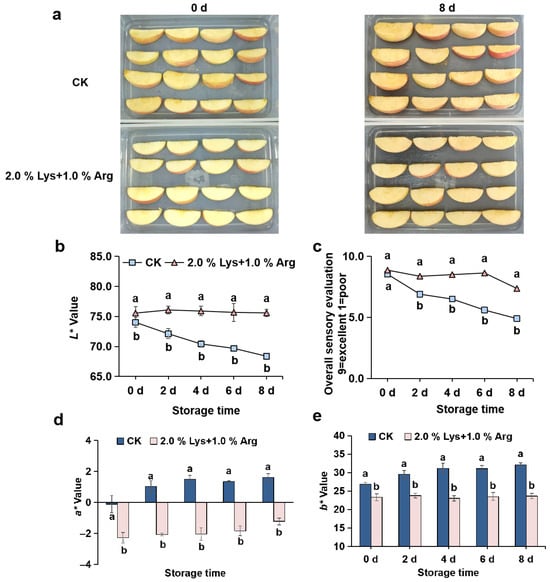
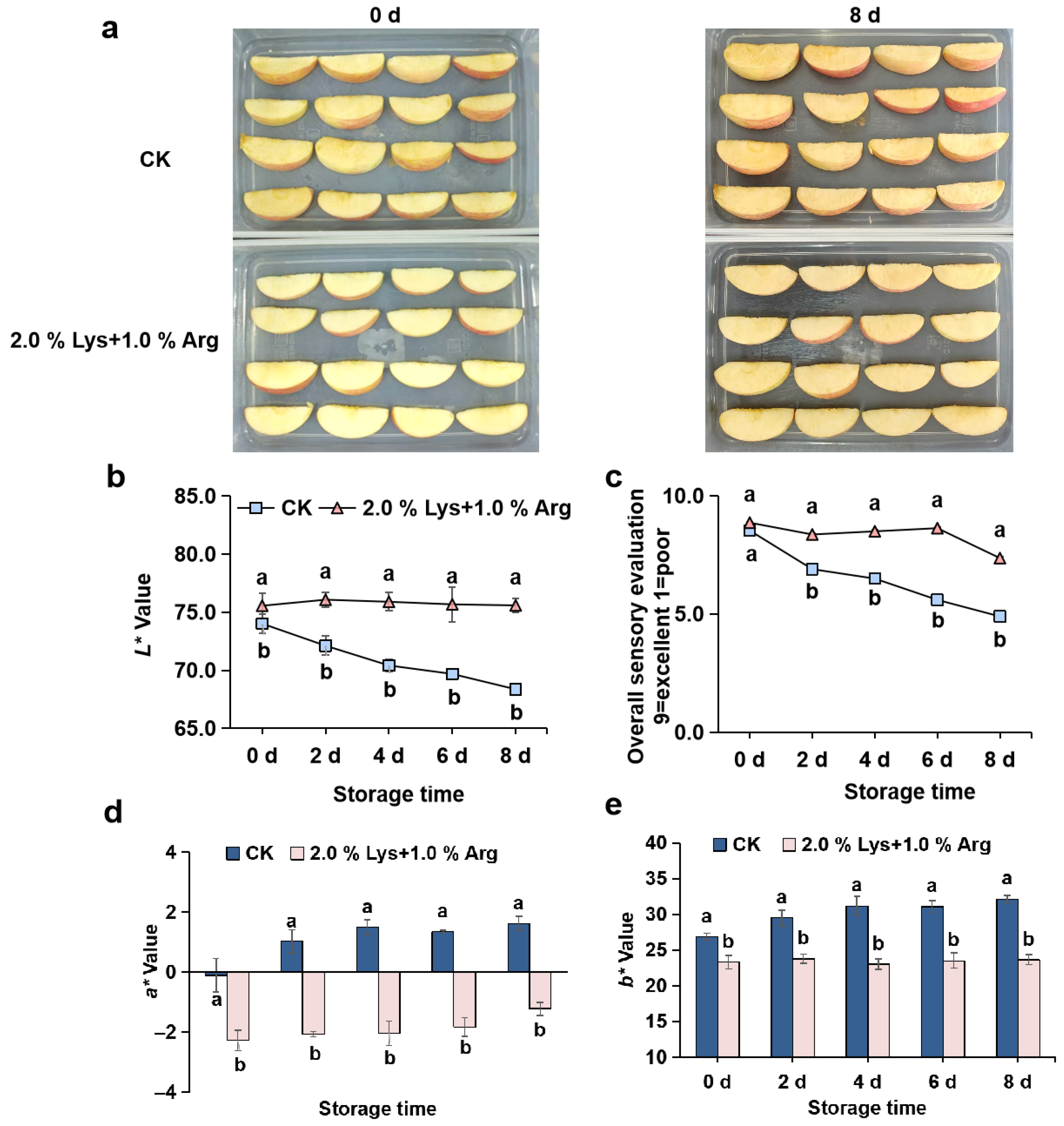
The effects of Lys/Arg treatment on browning in fresh-cut apples were assessed in this study. The L* values and overall sensory evaluation scores of fresh-cut apples are shown in Figure 1a–c. Fresh-cut apples treated with the Lys/Arg treatment combined solution for 10 min only displayed minimal browning after storage for 8 d at 2–4 °C. Additionally, the degree of browning after Lys/Arg treatment was less than that after single amino acid treatment (Figure S1). In contrast, more substantial browning was observed in the CK, resulting in loss of commercial value (Figure 1a).
Figure 1.
Effects of Lys/Arg treatment on browning inhibition in fresh-cut apples. (a) Phenotype of fresh-cut apples. (b) L* value. (c) Overall sensory evaluation. (d) a* value. (e) b* value. Each experiment was conducted with three biological replicates and three technical replicates. Vertical bars indicate standard deviations, and different letters indicate significant differences at each storage time point (p < 0.05).
The L* values and overall sensory evaluation scores of CK apple slices decreased rapidly after cutting. However, these metrics remained at a higher level after treatment with Lys/Arg. (Figure 1b,c). Meanwhile, the a* and b* values remained consistently lower (Figure 1d,e). As shown in Figure 1c, apple slices treated with Lys/Arg still displayed good quality with an overall sensory evaluation score higher than five on day 8, indicating that treatment with Lys/Arg effectively delayed visual browning and maintained key quality attributes of fresh-cut apples for 8 d.
3.2. Effects of Lys/Arg Treatment on Firmness, Weight Loss, Soluble Solids, and PPO Activity of Fresh-Cut Apples
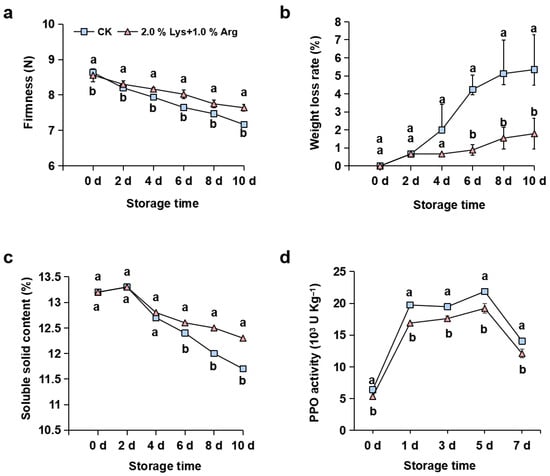
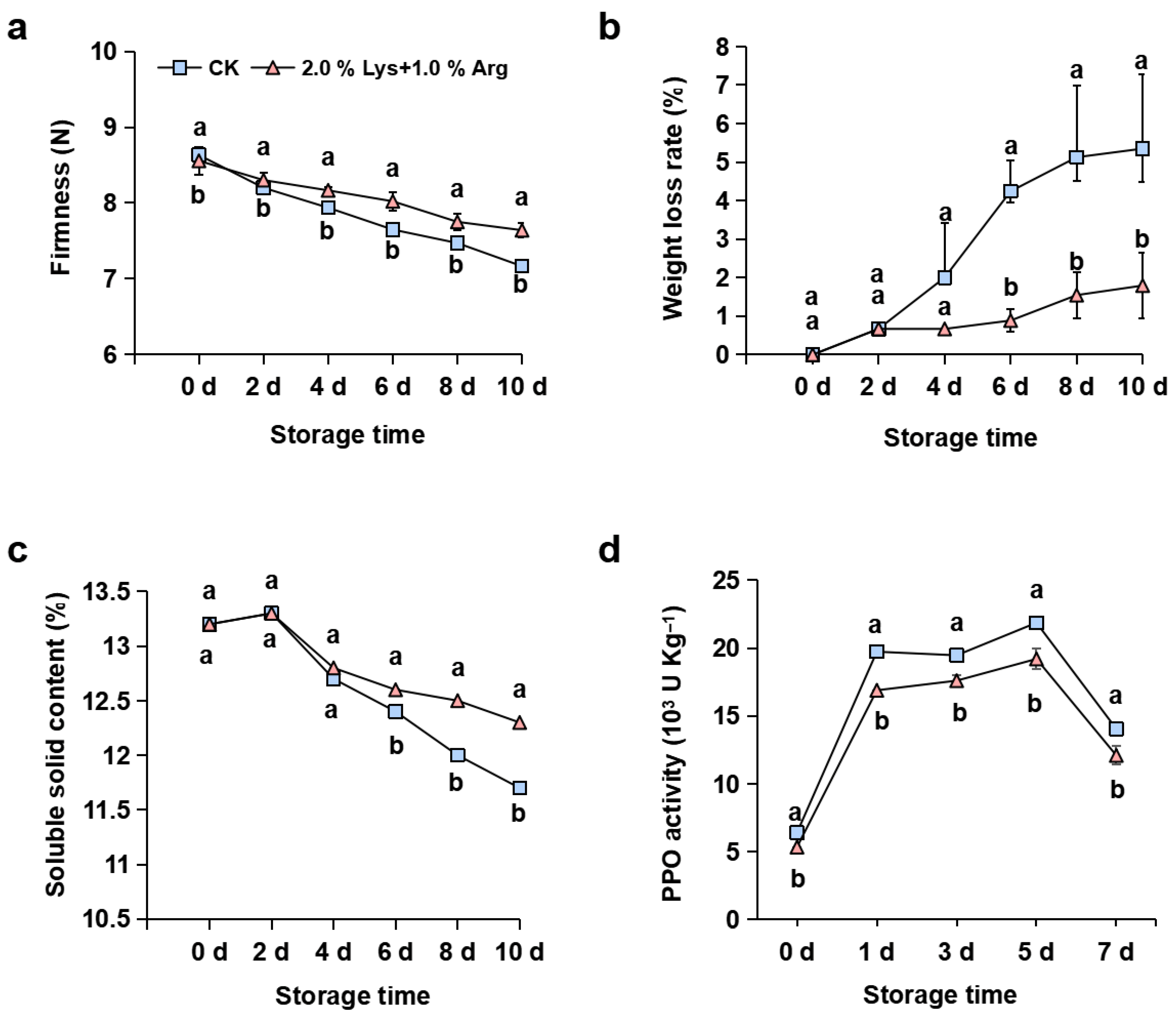
Subsequently, the effects of treatment with Lys/Arg on the firmness, weight loss, and soluble solid content of fresh-cut apples were investigated, with the results presented in Figure 2a–c. As shown in Figure 2a, the firmness of both CK- and Lys/Arg-treated slices declined after cutting, whereas the firmness in the Lys/Arg treatment group was observably higher than that in the CK after 4 d. The weight loss in the Lys/Arg treatment group was significantly lower than that in the CK after 4 d (Figure 2b). After 4 d of storage, the content of soluble solids in the Lys/Arg treatment group was markedly higher than that in the CK after 4 d (Figure 2c). Taken together, the Lys/Arg treatment not only delayed browning in fresh-cut apples but also maintained the hardness and soluble solid content and inhibited weight loss.
Figure 2.
Effect of treatment with a combined solution of Lys/Arg on phenotypic indicators and PPO activity of fresh-cut apples during an eight-day storage period at 2–4 °C. (a) Firmness, (b) weight loss, (c) soluble solid content, (d) PPO activity. Each experiment was conducted with three biological replicates and three technical replicates. Vertical bars indicate standard deviations, and different letters indicate significant differences at each storage time point (p < 0.05).
To further explore the browning delay mechanisms of the Lys/Arg treatment, the PPO activity was determined within 8 d (Figure 2d). The PPO activity of fresh-cut apple slices increased first and then decreased after cutting, while that of Lys/Arg-treated fresh-cut apple slices remained consistently lower compared to CK apple slices during the storage period (Figure 2d). These results indicate that Lys/Arg treatment may delay browning in fresh-cut apples by reducing PPO activity.
3.3. Effects of Lys/Arg Treatment on pH and PPO Activity of Apple Flesh
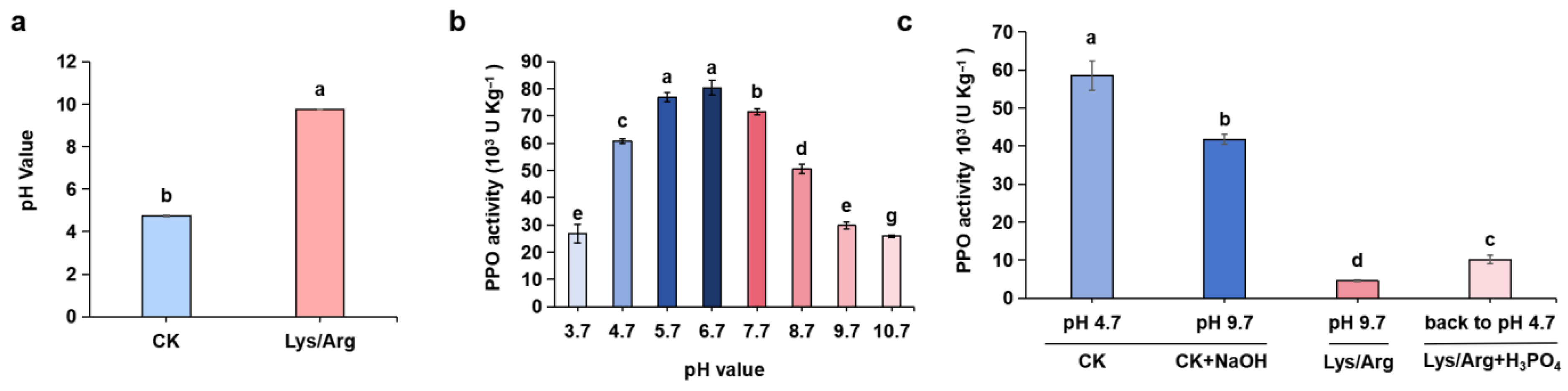
PPO activity was highest in apple pulp at its optimal pH. To determine whether the pH of the Lys/Arg solution has an impact on the activity of PPO in apples, solutions at various pH values were applied to apple pulp and PPO activity was measured (Figure 3). The pH of the Lys/Arg combined solution was first measured. As shown in Figure 3a, the pH value of apple flesh in the control group (CK) was 4.7, and the Lys/Arg treatment enhanced the pH value of apple pulp to 9.7. Subsequently, phosphoric acid (H3PO4) solution (1.0%) and NaOH solution (100 mM) were used to adjust the pH values of apple pulp to 3.7, 4.7, 5.7, 6.7, 7.7, 8.7, 9.7, and 10.7, respectively. Then, the PPO activities of apple pulp under different pH conditions were measured. The results reveal that the optimal pH value for apple PPO activity was 6.7, and PPO activity decreased when the pH value was higher or lower than 6.7 (Figure 3b).
Figure 3.
Effect of treatment with a combined solution of Lys/Arg on PPO activity of apple pulp. (a) pH value of apple pulp in the control group (CK) and the Lys/Arg treatment group. (b) PPO activity in different pH values of apple pulp. (c) Inhibition of PPO activity in apple pulp treated with the Lys/Arg solution was not exclusively dependent on pH. CK, control group of apple pulp. CK + NaOH, pH of apple pulp was adjusted to 9.7 with NaOH solution. The pH of apple pulp submitted to treatment with the 2.0% Lys + 1.0% Arg combined solution was 9.7. Phosphoric acid (H3PO4) solution (1.0%) was used to adjust the pH values of apple pulp to 4.7 after treatment with the 2.0% Lys + 1.0% Arg combined solution. Each experiment was conducted with three biological replicates and three technical replicates. Vertical bars indicate standard deviations, and different letters indicate significant differences at each storage time point (p < 0.05).
Additionally, NaOH solution (100 mM) was used to adjust the pH of apple flesh to 9.7 (CK + NaOH, pH = 9.7) and H3PO4 (1.0%) solution was used to adjust the pH value to 4.7 after treatment with Lys/Arg (Lys/Arg + H3PO4, pH = 4.7). The PPO activity of apple pulp was then measured in the CK (pH = 4.7), CK + NaOH (pH = 9.7), Lys/Arg (pH = 9.7), and Lys/Arg + H3PO4 (pH = 4.7) groups (Figure 3c). Compared with CK, the PPO activity of apple pulp in the other three experimental groups was consistently lower. Specifically, the PPO activity in the Lys/Arg treatment group was lower than that in the CK + NaOH treatment group. Notably, the PPO activity in the Lys/Arg + H3PO4 treatment group (pH = 4.7) was higher than that in the Lys/Arg treatment group (pH = 9.7). Therefore, Lys/Arg treatment could reduce the PPO activity of apple pulp by increasing the apple pulp pH value; however, this was not the only influencing factor.
3.4. Molecular Docking
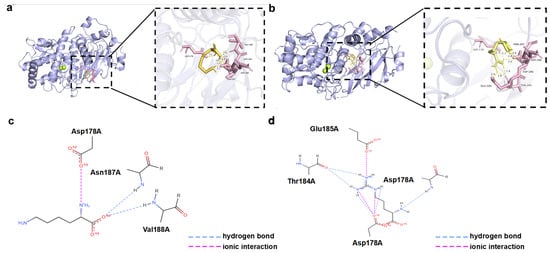
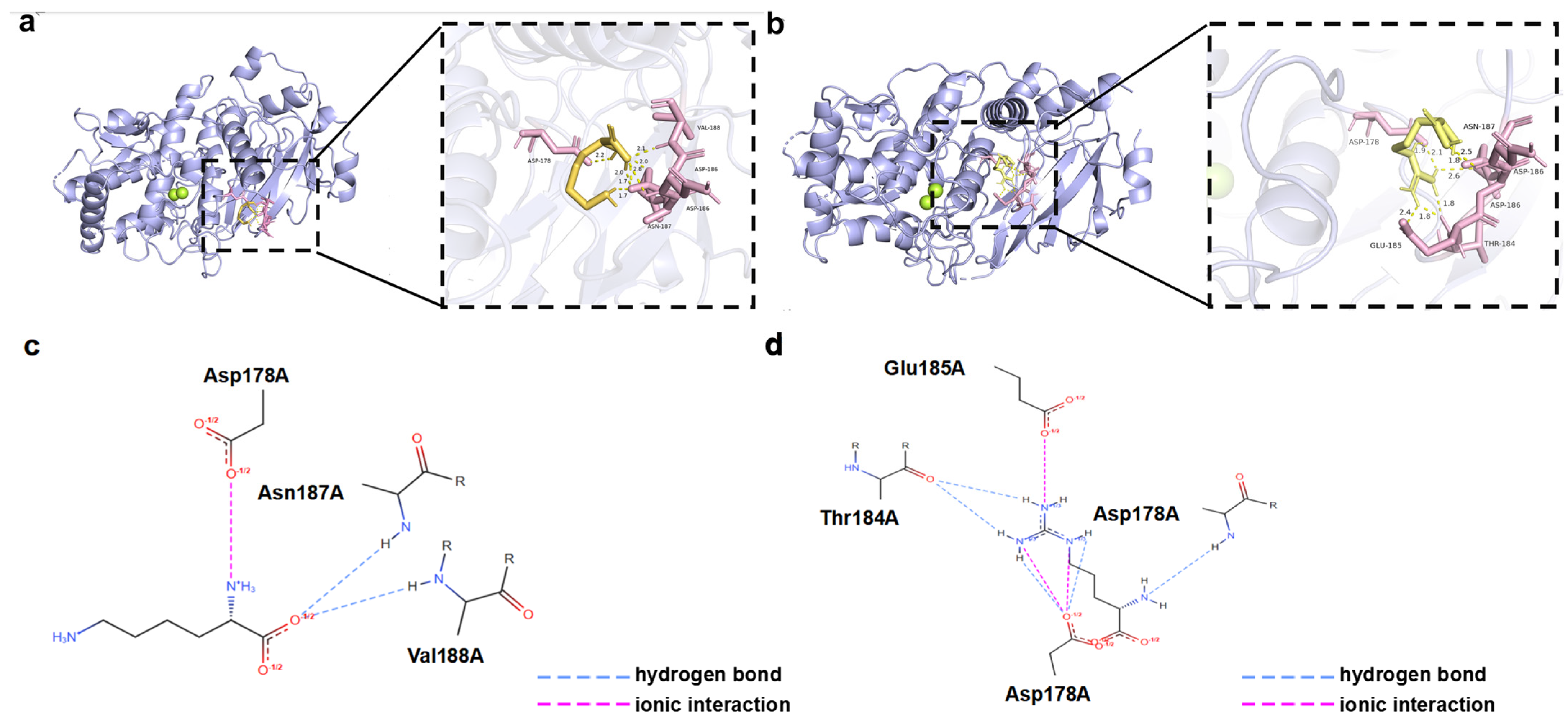
To further explore the mechanism of action through which the Lys/Arg combination treatment inhibits PPO activity, a model combining MdPPO1 and Lys/Arg was simulated. The results (Figure 4a,b) show that Lys and Arg bound effectively to PPO, with binding energies of −7.43 kcal mol−1 and −7.72 kcal mol−1, respectively. Meanwhile, the binding sites of Lys and Arg are close to the copper ion active center of PPO. According to the results obtained using PROTEINS PLUS (Figure 4c,d), the ligand molecules all bound to the active pocket of PPO and produced hydrogen bonds and ionic interactions. Hydrogen bonds formed between Lys and Asn-187A and Val-188A of PPO, and ionic interaction was generated between it and Asp-178A. Compared to Lys, the binding energy between Arg and PPO was lower and more hydrogen bonds and ionic interactions occurred. Hydrogen bonds were formed between Arg and Thr-184A and Asp-178A, and ionic interaction was generated between it and Glu-185A, Asp-178A.
Figure 4.
Inhibition of PPO activity by Lys/Arg in vitro. (a) Three-dimensional (3D) view of the interaction between Lys and MdPPO1. (b)Three-dimensional (3D) view of the interaction between Arg and MdPPO1. (c) Two-dimensional (2D) ligand interaction map between Lys and MdPPO1. (d) Two-dimensional (2D) ligand interaction map between Arg and MdPPO1. Purple represents the MdPPO1 model; green spheres represent copper ions; yellow stick models represent the small molecules Lys and Arg; and pink stick models represent the amino acid residues at the binding sites of MdPPO1.
The above results indicate that Lys/Arg acts as a competitive inhibitor of PPO activity, mainly by forming hydrogen bonds and ionic interactions, which is consistent with the findings of Liao et al. [42]. Moreover, Lys and Arg bind to different sites on PPO, allowing their combination to inhibit PPO activity. This may explain the better inhibition of the combined treatment than the single treatment, as shown in Figure S1.
3.5. Effects of Exogenous Lys/Arg Treatment Promoted on ROS Scavenging in Fresh-Cut Apple
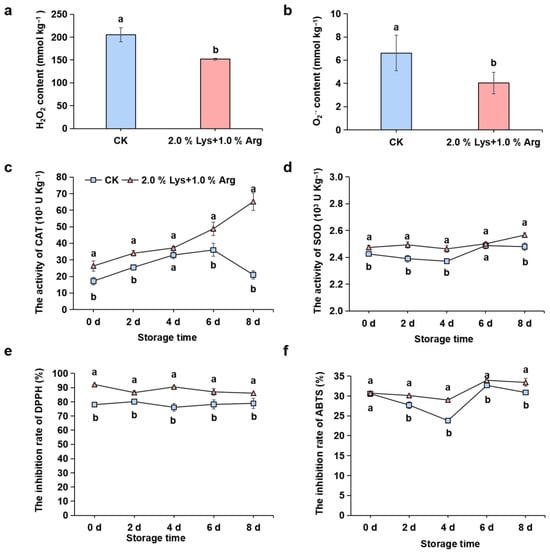
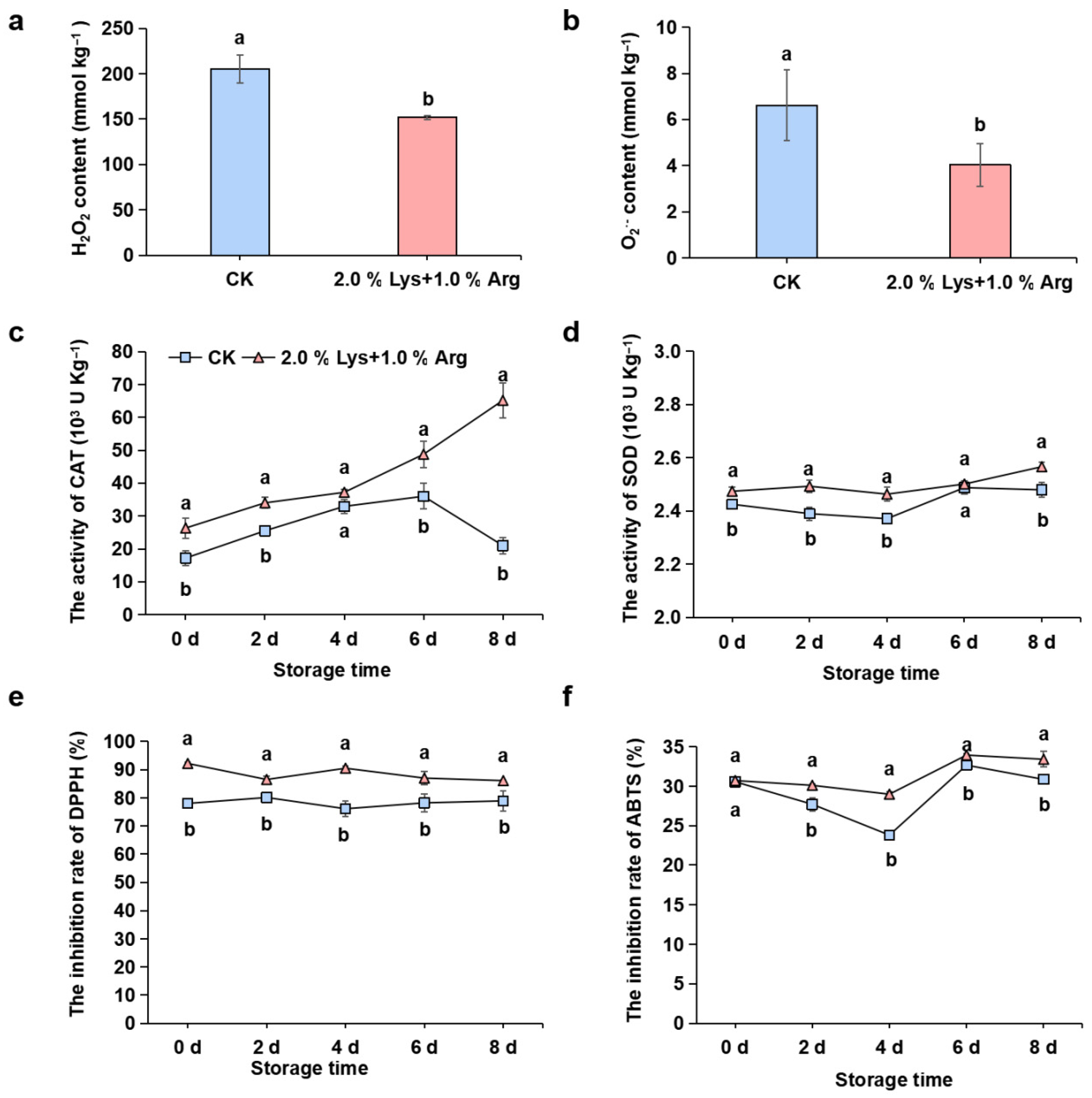
The H2O2 and O2•− contents of fresh-cut apples with Lys/Arg treatment were determined, as shown in Figure 5a and b. The activities of CAT and SOD were subsequently measured for the entire storage period (0-8 d). The contents of H2O2 and O2•− were significantly reduced after Lys/Arg treatment. Meanwhile, the activity of CAT continued to rise and was significantly higher than that in the control group (Figure 5c). The activity of SOD varied gently during the storage period but was also higher than that in the control group (Figure 5d), which indicates that Lys/Arg treatment may enhance ROS scavenging ability, consequently reducing enzymatic browning in fresh-cut apples. Meanwhile, DPPH and ABTS scavenging rates were significantly higher during the storage period than those in the control group (Figure 5e,f). Therefore, Lys/Arg treatment enhanced ROS scavenging capacity by inducing activities of CAT and SOD and increasing DPPH and ABTS scavenging rates.
Figure 5.
Lys/Arg treatment enhanced ROS scavenging in fresh-cut apples. Contents of H2O2 (a), contents of O2•− (b), activity of CAT (c), activity of SOD (d), DPPH (e) and ABTS (f) scavenging rates. Each experiment was conducted with three biological replicates and three technical replicates. Vertical bars indicate standard deviations, and different letters indicate significant differences at each storage time point (p < 0.05).
3.6. Effects of Lys/Arg Treatment on Phenolic Substance Content
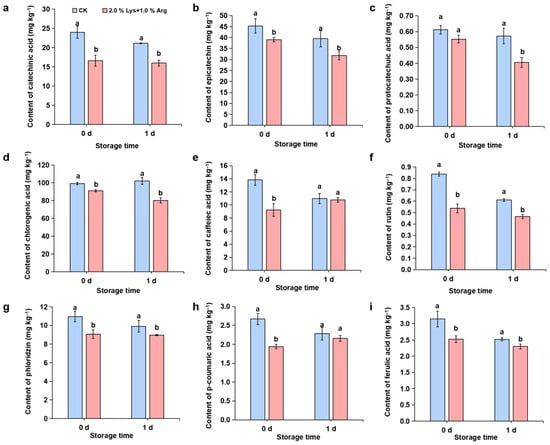
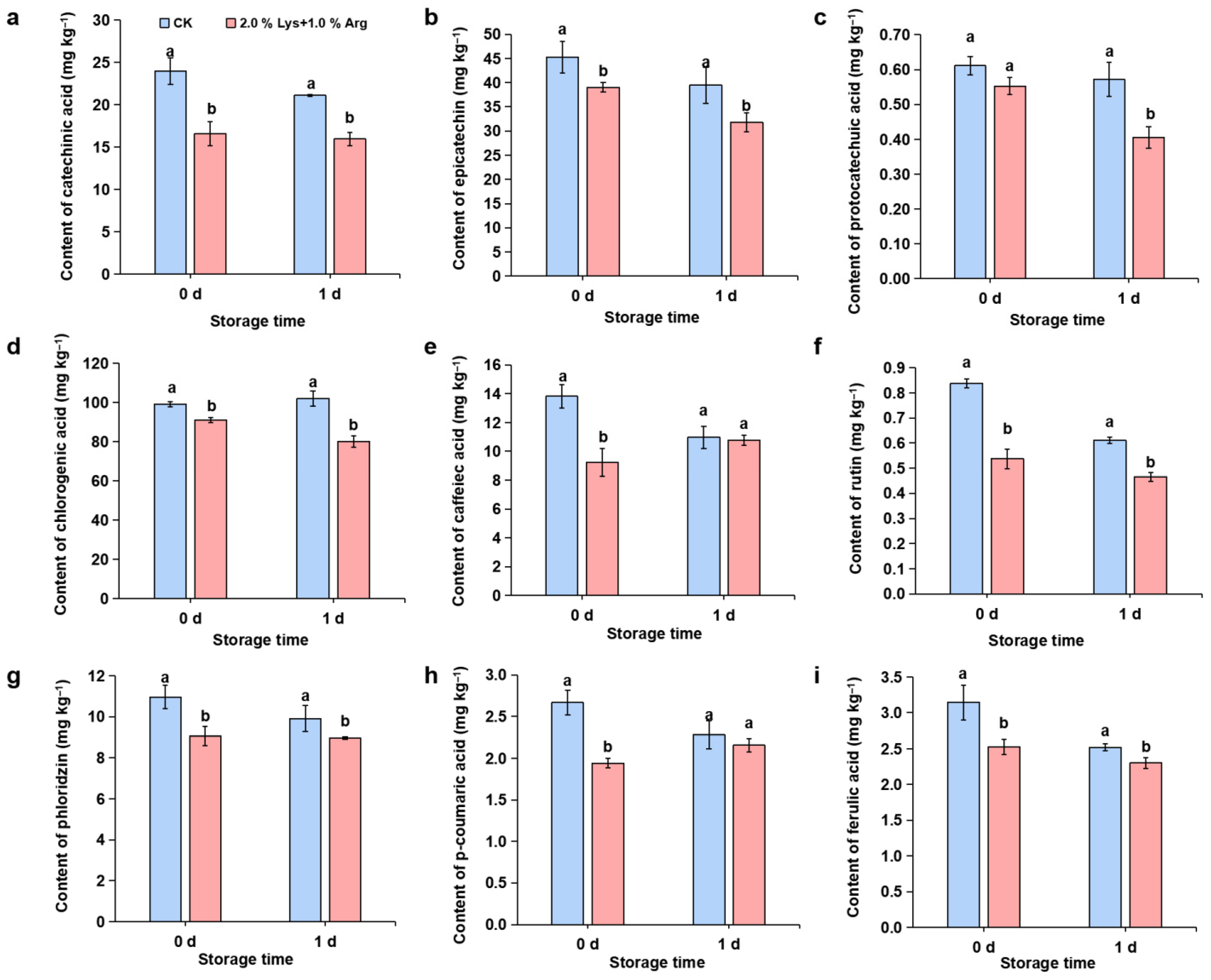
Browning in fresh-cut apples is mainly due to the binding of phenolics with PPO, producing quinone and eventually forming melanin, resulting in surface browning. Zou et al. [43] showed that the phenolic contents may contribute to early browning in fresh-cut apples. Therefore, we determined the contents of nine phenolics after Lys/Arg treatment. The results show that the phenolic content in fresh-cut apples with Lys/Arg treatment was reduced, when compared to that in the control group (Figure 6a–i). In addition to protocatechuic acid, the other eight phenolic substances were all decreased at 0 h and significantly different from the control group. Catechin, epicatechin, protocatechic acid, chlorogenic acid and pherpidin are the main phenolic substances in apples that act as PPO substrates, leading to apple browning. After treatment with Lys/Arg, the contents of catechin, epicatechin and chlorogenic acid were significantly decreased, whereas the content of pherpidin was not significant in fresh-cut apple. In addition, it has been previously reported that ferulic acid, p-coumaric acid, caffeic acid, and rutin are substrates of PPO and POD, leading to fresh-cut apple browning [44,45]. Their contents decreased to different degrees after Lys/Arg treatment. Furthermore, the total phenolic content decreased significantly. A reduction in browning substrate contents lowers browning in fresh-cut apples.
Figure 6.
The changes in the contents of phenolic substances after treatment. (a) Catechinic acid. (b) Epicatechin. (c) Protocatechuic acid. (d) Chlorogenic acid. (e) Caffeic acid. (f) Rutin. (g) Phloridzin. (h) p-coumaric acid. (i) Ferulic acid. Each experiment was conducted with three biological replicates and three technical replicates. Vertical bars indicate standard deviations, and different letters indicate significant differences at each storage time point (p < 0.05).
3.7. Transcriptome Analysis of Apple After Lys/Arg Treatment
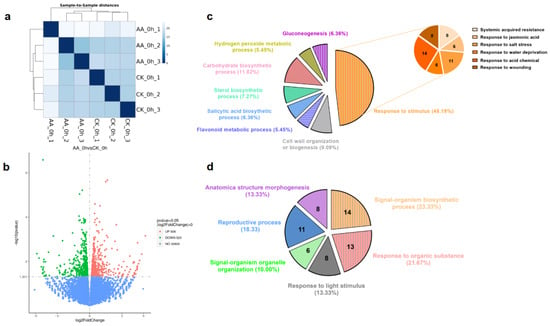
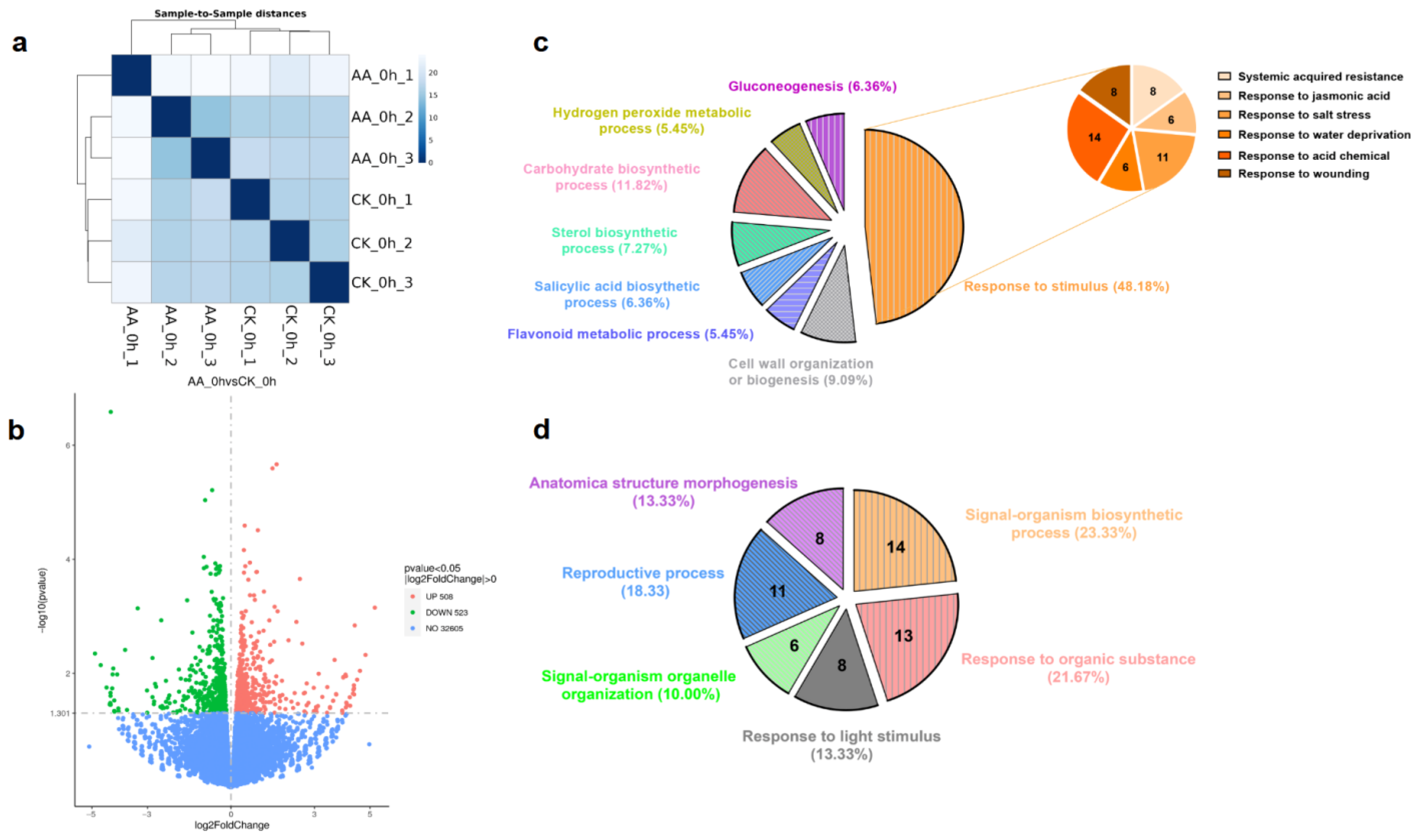
To further investigate the mechanisms through which Lys/Arg treatment delays browning in fresh-cut apples, transcriptome analysis of fresh-cut apples with and without Lys/Arg treatment was carried out. As fresh-cut apples with and without Lys/Arg treatment 10 min showed significantly different browning phenotypes (Figure 1), samples for RNA-seq analysis were collected 10 min after Lys/Arg treatment. After filtering raw data, checking sequencing errors and GC content distribution, an average of 4.65 Gb clean reads per sample was obtained, with a 0.03% error rate. Among these, approximately 92.5% of clean reads were mapped to the apple reference genome for differential analysis. The correlations between the groups are shown in Figure 7a, with high reproducibility between the groups, indicating reliable transcriptome results. Volcano plots reveal differences in gene expression (Figure 7b). A total of 508 genes were upregulated and 523 genes were downregulated after treatment.
Figure 7.
Transcriptomic analysis of differentially expressed genes (DEGs) of fresh-cut apples. (a) Cluster analysis plot between Lys/Arg and control group. (b) The volcano plot of the differential genes between Lys/Arg and control group at 0 h. (c,d) Upregulated and downregulated genes are categorized based on biological function. Biological functional categories were analyzed by AgriGOv2 (http://systemsbiology.cau.edu.cn/agriGOv2/FAQ.php) accessed on 15 November 2024.
To establish an overview of the impacts of Lys/Arg treatment on inhibiting fresh-cut apple browning, the DEGs were analyzed through GO enrichment using the AgriGOv2 online software. Mainly biological functional categories of upregulated DEGs were enriched in response to the stimulus (48.18%), carbohydrate biosynthesis (11.82%), cell wall organization or biogenesis (9.09%), sterol biosynthesis (7.27%), salicylic acid (SA) biosynthesis (6.36%), gluconeogenesis (6.36%), hydrogen peroxide metabolism (5.45%), and flavonoid metabolism (5.45%) (Figure 7c). These results suggest that Lys/Arg treatment may enhance the tolerance of stresses in apples, helping to inhibit enzymatic browning. In addition, genes related to cell wall organization or biogenesis were upregulated after Lys/Arg treatment, indicating that Lys/Arg treatment may alter cell wall formation to enhance the firmness of fresh-cut apples (Figure 2a). The upregulation of genes related to hydrogen peroxide and flavonoid metabolic processes may enhance ROS scavenging, consequently reducing enzymatic browning in fresh-cut apples. Furthermore, the flavonoid metabolic process is closely related to the level of secondary metabolites, such as phenolic compounds, which may play a key role in enzymatic browning. The biological functional categories of downregulated DEGs were focused on signal—organism biosynthesis (23.33%), responses to organic substance (21.67%), reproductive process (18.33%), anatomical structure morphogenesis (13.33%), responses to light stimuli (13.33%), and signal—organism organelle organization (10.00%) (Figure 7d).
3.8. Transcription Factors Involved in Modulating Browning Inhibition via Lys/Arg Treatment in Fresh-Cut Apples
Transcription factors (TFs) could influence gene expression and play key roles in the regulation of various biological processes. A total of 19 DEGs (16 upregulated and three downregulated) encoding TFs were identified, which accounted for 8.7% of all DEGs (Table 1). These TF-encoding genes belong to different families, including two WRKY TFs, two bZIP TFs, two ERF TFs, four NB-ARC TFs, and others. Among these genes, MD13G1122100, MD07G1248400, MD03G1107900 and MD00G1096600 were significantly upregulated and involved in responses to stresses and the ethylene signaling pathway. Moreover, upregulated MD06G1132100, MD13G1077900, MD17G1217100, and MD00G1096600 were described as regulators in response to auxin or abscisic acid. In addition, MD02G1071900, MD11G1034400, MD11G1031300, and MD07G1028000 were induced by the Lys/Arg treatment and related to SA biosynthesis and systemic acquired resistance (SAR).
Table 1.
Transcription factors identified in all DEGs.
Taken together, these findings suggest that phytohormones may play an important role in regulating browning in apples. Additionally, upregulated genes such as MD03G1107900, MD06G1132100, MD13G1122100, MD12G1061900, MD17G1217100, and MD11G1187100 were found to be involved in the response to abiotic stresses. This result aligns with the GO enrichment analysis indicating that transcriptional regulation plays a crucial role in enhancing resistance to browning in fresh-cut apples triggered by the Lys/Arg treatment (Figure 7). However, the function of these TFs needs to be further explored to unveil their precise mechanism in regulating browning in apples.
3.9. Analysis of Genes Involved in Modulating Browning Inhibition
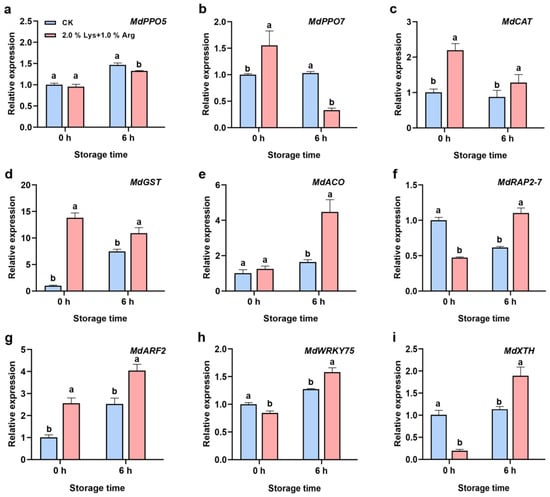
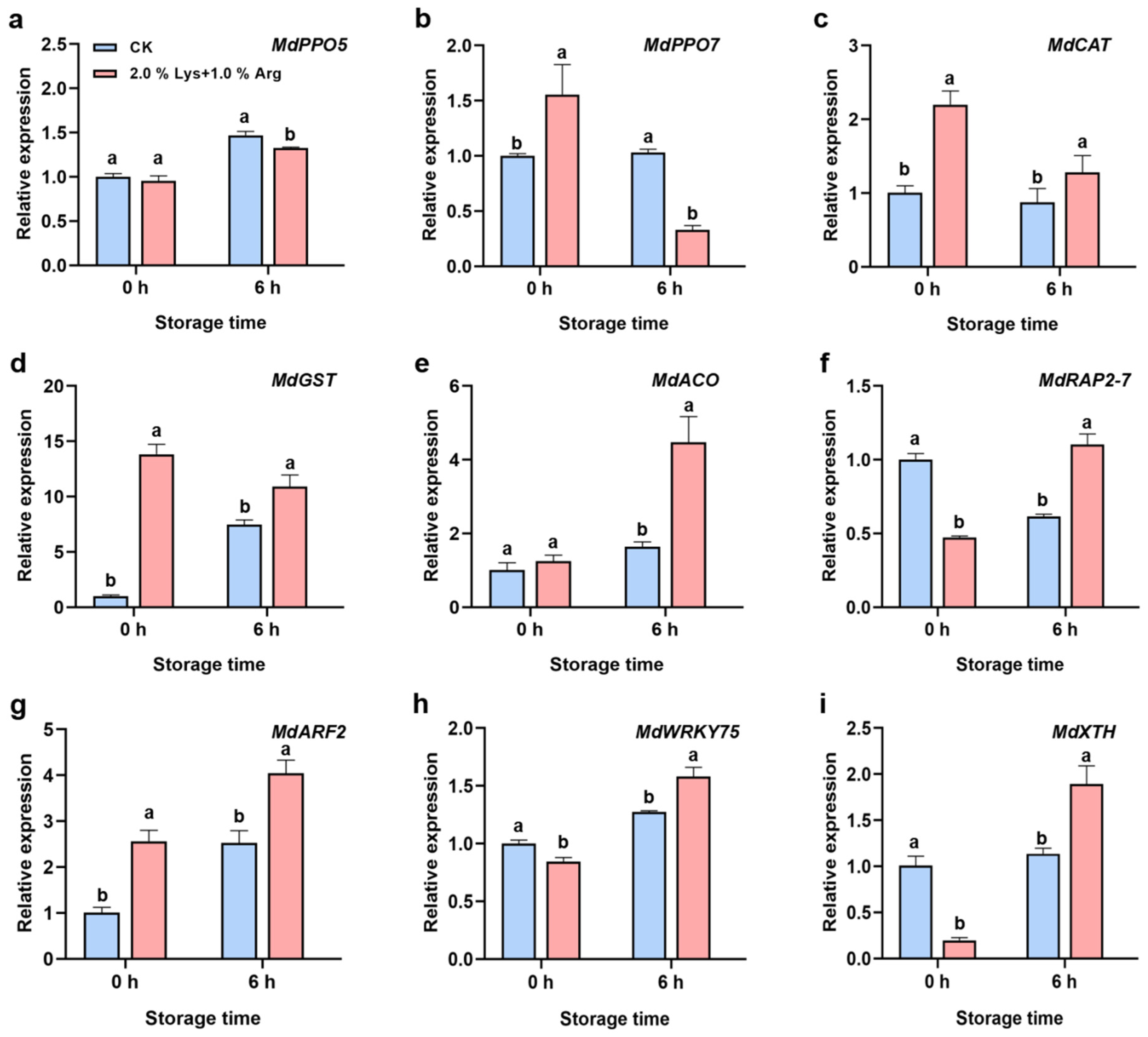
With decreased PPO activity and increased antioxidant capacity and ROS scavenging capacity, the gene expression levels of two PPO genes, MdCAT and MdGST, were determined. Transcript levels of MdPPO5 and MdPPO7 were repressed, and the gene expression levels of MdGST and MdCAT were increased (Figure 8a–d). Notably, MdPPO7, as the main gene associated with browning in apples, was downregulated by 3.13-fold at 6 h after Lys/Arg treatment. MdCAT and MdGST were upregulated by 2.20-fold and 13.82-fold after the treatment, respectively. Then, we determined the expression of the ethylene synthase gene MdACO and the ethylene response factor MdRAP2-7. It was found that their transcript levels were significantly increased compared to the control at 6 h after treatment. In addition, the expression of transcription factors MdARF2 and MdWRKY75 was also induced at Lys/Arg which related to abiotic stress response and resistance [46]. The firmness of fresh-cut apples with Lys/Arg treatment was higher than that in the control group during the storage period (Figure 2a). Therefore, the expression of genes regulated to cell wall synthesis was determined. MdXTH, an important gene for cell wall remodeling, was upregulated at 6 h after treatment. These results indicate that Lys/Arg treatment may regulate genes related to PPO, antioxidants, key transcription factors, and endotransglucosylase/hydrolases to inhibit browning in fresh-cut apples.
Figure 8.
The transcriptional level of MdPPO5 (a), MdPPO7 (b), MdCAT (c), MdGST (d), MdACO (e), MdARP2-7 (f), MdARF2 (g), MdWRKY75 (h), MdXTH (i) in fresh-cut apple. Each experiment was conducted with three biological replicates and three technical replicates. Vertical bars indicate standard deviations, and different letters indicate significant differences at each storage time point (p < 0.05).
3.10. Correlation Analysis Between Physiological Indicators and Gene Expression
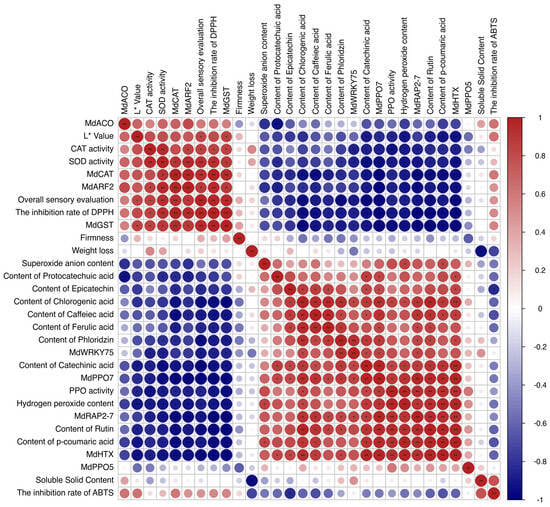
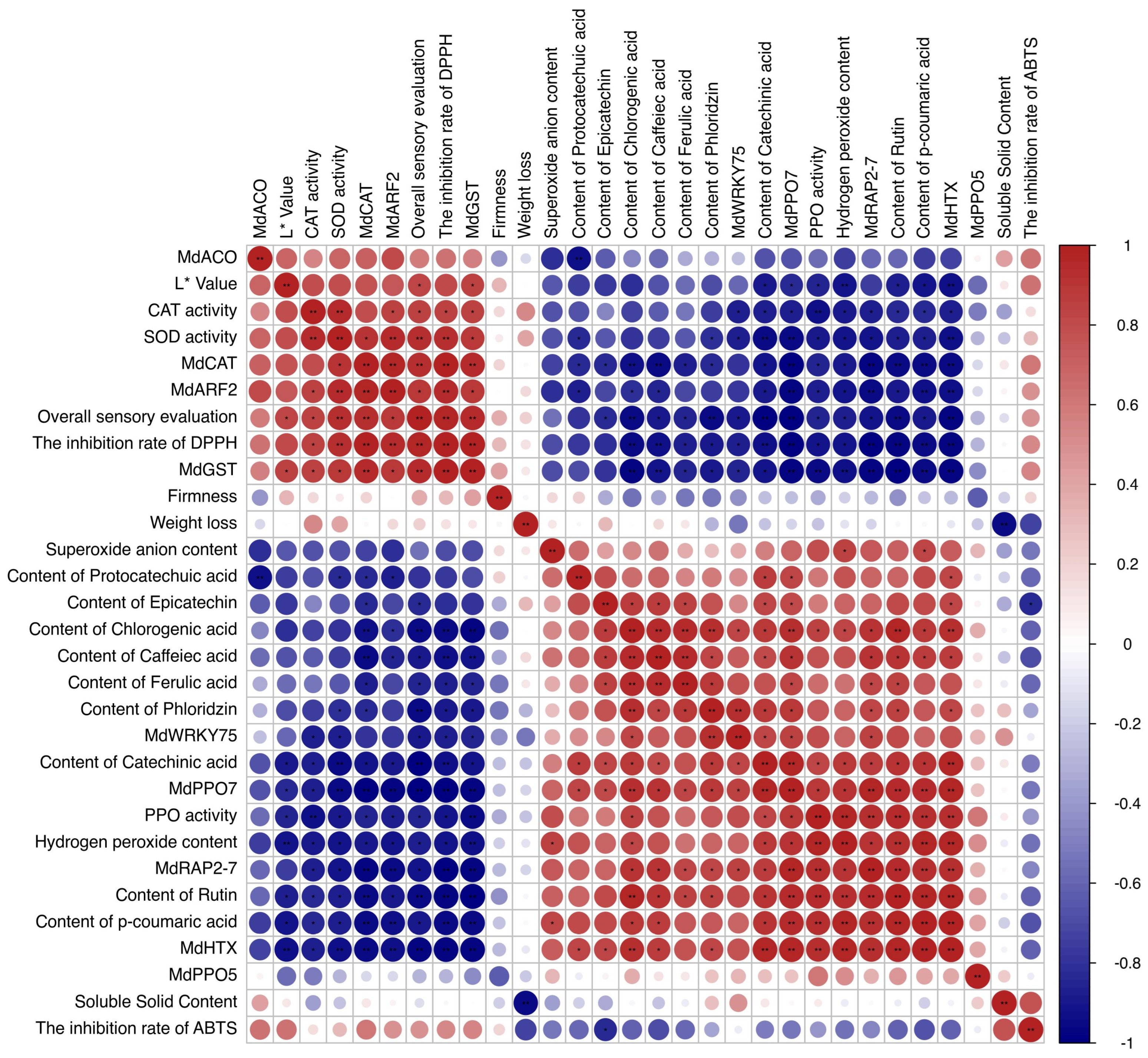
To further clarify the intrinsic links between the physiological changes and gene expression patterns induced by Lys/Arg treatment, a correlation analysis was performed (Figure 9). The results show that browning-related indicators (L* value, overall sensory evaluation) were significantly positively correlated with CAT activity, SOD activity, DPPH scavenging rate, ABTS scavenging rate, and the expression levels of genes including MdCAT, MdGST, MdACO, MdRAP2-7, MdARF2, MdWRKY75, and MdXTH (p < 0.05 or p < 0.01). In contrast, these browning-related indicators were significantly negatively correlated with PPO activity, H2O2 content, O2− content, and the expression levels of MdPPO5 and MdPPO7 (p < 0.05 or p < 0.01). Among these, the expression levels of MdPPO7 showed the strongest negative correlation with the L* value, confirming its key role in Lys/Arg-mediated browning inhibition. Additionally, the phenolic content was negatively correlated with the degree of browning and positively correlated with antioxidant enzyme activities, further supporting that Lys/Arg treatment delays browning through multiple synergistic pathways.
Figure 9.
The linear correlation coefficient between physiological indicators and gene expression of fresh-cut apples. Red and blue represent a positive and negative correlation between the two indicators, respectively. * Represents a significant correlation (p < 0.05), and ** represents an extremely significant correlation (p < 0.01).
4. Discussion
Biological amino acids, as natural compounds, have been gaining increasing attention due to their potential to inhibit browning in fresh-cut vegetables and fruits [6]. In this context, we explored the application of a Lys/Arg combination to treat fresh-cut apples. Our findings reveal that a 2.0% Lys and 1.0% Arg (1:1, v/v) combination solution efficiently delayed browning and maintained key physicochemical quality attributes of fresh-cut apples for 8 d when stored at 2–4 °C (Figure 1). Moreover, the Lys/Arg treatment mitigated weight, firmness, and soluble solid content decreases in fresh-cut apples (Figure 2). As natural amino acids, Lys and Arg are essential for human health. Therefore, the Lys/Arg combined solution may be considered a promising alternative browning inhibitor that offers nutritional value. However, it is still necessary to address environmental control, appropriate packaging, safe reagent dosages and sensory quality optimization in our future research.
PPO is a key factor affecting enzymatic browning in fresh-cut apples. Herein, we found that Lys/Arg treatment significantly inhibited PPO activity (Figure 2d). The pH of apple flesh treated with the Lys/Arg combined solution was 9.7 (Figure 3a). It is known that pH values closely affect PPO activity, and extremely acidic or alkaline conditions are known to inhibit PPO activity [47,48,49]. Therefore, treatment with Lys/Arg could inhibit PPO activity by increasing the pH value. However, our results show that the PPO activity of apple flesh treated with the Lys/Arg combined solution was lower compared to that of the NaOH (CK + NaOH) treatment at the same pH. Moreover, upon reverting the pH to the control level (CK), the PPO activity of apple flesh treated with Lys/Arg (pH 4.7) partially recovered but was still lower than that of the control (Figure 3c). This suggests that other mechanisms, distinct from a pH increase, are involved in the inhibition of PPO activity by Lys/Arg. According to the molecular docking analysis, both Lys and Arg could bind with apple PPO. Therefore, we inferred that the Lys/Arg combination treatment inhibits fresh-cut apple PPO through increasing the pH and intermolecular interaction forces.
In this study, Lys/Arg treatment significantly delayed the browning rate in fresh-cut apples by increasing the pH. It should be noted that relevant research and practice have confirmed that the reasonable addition of alkaline compounds does not induce bitterness in food: Nyamende et al. [50] found that dipping minimally processed ‘Granny Smith’ apples in alkaline electrolyzed water (AIEW, pH 11–13) for 10 min effectively inhibited browning. After 9 days of storage at 2 °C, the apples still maintained good sensory quality, with no adverse sensory changes observed. Research on pummelo juice also showed that adjusting the pH with sodium bicarbonate did not result in additional bitterness in the juice [51]. In addition, the core bitter-inducing substances in fruits and vegetables (such as alkaloids and terpenoids) are naturally present in extremely low concentrations in apple pulp, and the content of phenolic substances shows a significant downward trend under Lys/Arg treatment. Meanwhile, both production data and the sensory evaluation results from this study indicate that the amount of residual solution and its derivatives on the surface of fresh-cut apples after treatment with these alkaline amino acids are far from the levels that could cause human taste discomfort or other adverse sensations. In this study, we focused on investigating the significant effect of Lys/Arg treatment on slowing browning in fresh-cut apples, while the role of this treatment in microbial inhibition was not explored or investigated. The application of combined treatment with alkaline compounds and antimicrobial substances, which can enhance the antimicrobial effect and simultaneously reduce browning in fresh-cut fruits, will be studied in future research.
Unlike potatoes, the browning process in apples is different [52]. Endogenous phenolic compounds, acting as browning substrates, play important factors in fresh-cut apples [5]. We determined the contents of nine phenolic substances and found that their contents were decreased to varying degrees (Figure 6). Zou et al. showed that the phenolic content in browning-resistant apples was always lower than in “Fuji” apples [43]. The contents of browning substrates—including chlorogenic acid, catechin, epicatechin, and phlorizin [53,54]—in apples were significantly reduced, suggesting that the Lys/Arg combination may delay browning by reducing the phenolic substrate content. The contents of caffeic acid, p-coumaric acid, ferulic acid, and rutin were lower in fresh-cut apples after Lys/Arg treatment (Figure 6). Caffeic acid has been reported to be the main substrate for POD but not for PPO [55]. p-coumaric acid can bind to the active site of PPO and be oxidized by PPO from several sources. The oxidation of p-coumaric acid results in the formation of o-caffeoquinone, which is different to the chloroquinone in apple browning or the melanin pigments in tyrosine oxidation [56,57]. Exogenous or endogenous p-coumaric acid may oxidize but does not exacerbate browning in fresh-cut apple. Studies have shown that rutin inhibits significant PPO activity, as confirmed in potatoes [58]. We speculate that rutin and ferulic acid play similar roles in apples. The experimental results indicate that both the ferulic acid and rutin contents were reduced; therefore, whether ferulic acid and rutin have inhibitory effects on fresh-cut apple browning is worth exploring in the future.
The ROS system primarily includes H2O2 and O2•−, and elevated ROS levels are toxic to plant cells [59]. Under cutting stress, the O2•− content in apples first decreases rapidly, subsequently converts to H2O2 under the action of SOD, and is finally cleared by CAT. In this study, after Lys/Arg treatment, the content of O2•− significantly decreased, and the increasing SOD and CAT activities resulted in decreased H2O2 content (Figure 5a–d), consistent with the results shown in Figure 9. Meanwhile, fresh-cut apples treated with Lys/Arg had higher DPPH and ABTS radical clearance within 8 d when stored at 4 °C. Moreover, we also found that MdCAT and MdGST gene expression significantly increased, improving antioxidant capacity. These results demonstrate that, in addition to reducing PPO activity, decreased oxidative damage may also play a critical role in inhibiting fresh-cut apple browning.
To further investigate the potential mechanism for the inhibitory effect of the Lys/Arg treatment on browning in fresh-cut apples, transcriptomics analysis was performed. Our transcriptomic findings revealed that 218 DEGs which regulate enzymatic browning were influenced by the Lys/Arg treatment. Moreover, GO enrichment analysis revealed that transcript levels of genes associated with responses to stimulus, cell wall organization or biogenesis, sterol biosynthesis, gluconeogenesis, SA biosynthesis, hydrogen peroxide metabolism, and flavonoid metabolism were upregulated. (Figure 7c). Among the upregulated DEGs, genes associated with stimulus response were the most highly enriched. Plants often encounter various environmental stresses during their lifetime, such as drought, salt, wounding, and biotic stresses. Moreover, a large number of genes that play a positive role in resistance and adaptation to stresses in plants are induced under unfavorable conditions [60]. Therefore, certain acclimation treatments to stresses could enhance plants’ tolerance to browning [61,62,63]. Herein, it was found that the Lys/Arg treatment induced the expression of multiple stress-related genes, suggesting that inhibition of apple browning mediated by Lys/Arg is closely associated with enhanced tolerance to various types of stress. Furthermore, we investigated the expression levels of genes involved in PPO, ROS, and ethylene synthesis, and found that the expression levels of StPPO7-related genes were significantly downregulated and significantly negatively correlated with the browning degree L* values and sensory evaluation scores of fresh-cut apples (Figure 8b and Figure 9). Zou et al. [43] indicated that StPPO7 is the most important gene affecting browning in “Fuji” apples, which is perhaps the reason for the delay to browning in fresh-cut apples treated with Lys/Arg. As an endogenous signal molecule with dual effects, ethylene can enhance membrane stability and regulate phenolic metabolism and PPO activity when its endogenous level is maintained at an appropriate range [64]. The increased MdACO gene expression in this study may have led to increased endogenous ethylene content, thus inhibiting browning in fresh-cut apples. Therefore, it is worth exploring the mechanism of ethylene in regulating fresh-cut apple browning in the future. In addition, the transcript levels of two transcription factor genes, MdARF2 and MdWRKY75, which are related to abiotic stress and resistance improvement, were investigated [46]. It has been previously shown that the WRKY transcription factor can bind the promoter region of MdPPO7 and positively regulate its expression [43]. Thus, these genes and transcription factors may be the key genes that delay browning in fresh-cut apples and improve their antioxidant capacity.
In addition, our RNA-seq analysis identified several transcription factors (TFs) (Table 1) associated with increased stress tolerance or phytohormone responses. SA is a key phytohormone enhancing plants’ tolerance to stress. It has been reported that SA treatment could maintain pear quality during cold storage and inhibit browning in Chinese chestnuts by suppressing PPO activity [65,66]. In the present study, the expression of seven genes related to SA biosynthesis was upregulated, indicating that the inhibition of browning in fresh-cut apples by the Lys/Arg treatment may be mediated through increased endogenous production of SA. Further studies will focus on exploring the roles of these TFs in Lys/Arg-mediated tolerance to browning in apples, in order to uncover the underlying molecular mechanisms.
5. Conclusions
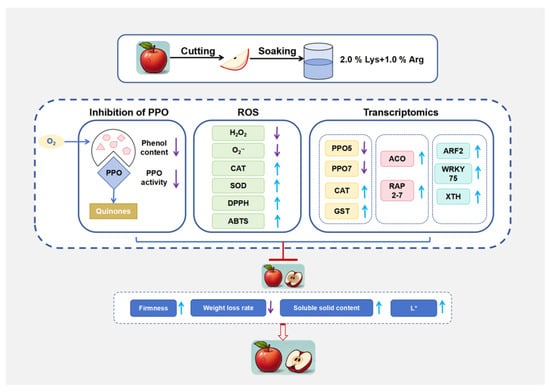
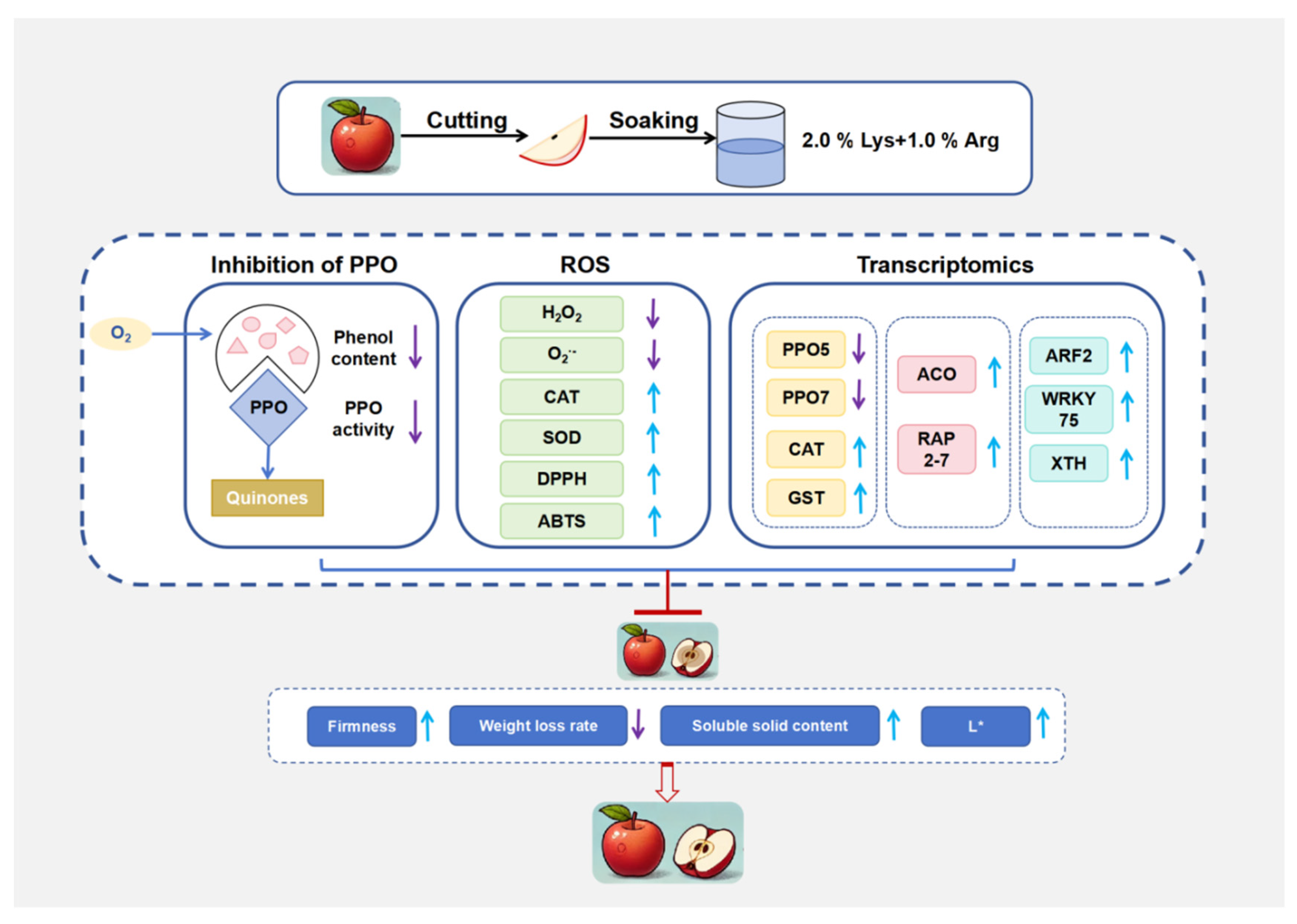
In summary, Lys/Arg treatment is a promising natural alternative approach that effectively delays enzymatic browning and maintains key physicochemical quality attributes of fresh-cut apples for 8 d when stored at 2–4 °C. This treatment exerts browning-inhibitory effects through multi-faceted physiological and biochemical regulation: it suppresses PPO activity, reduces the total phenolic content, and enhances antioxidant capacity by activating SOD and CAT activities, thereby elevating DPPH and ABTS radical scavenging rates in fresh-cut apple tissue. Transcriptomic analysis further unraveled the molecular underpinnings of these effects, revealing that Lys/Arg treatment enhances plant tolerance to cutting stress and reinforces ROS scavenging via the transcriptional regulation of stress-responsive and antioxidant-related genes (Figure 10). Collectively, this study validates the efficacy of a Lys/Arg combination as a safe, nutritional browning inhibitor and, by integrating physiological, biochemical, and transcriptomic approaches, provides novel molecular insights into the exogenous amino acid-mediated browning inhibition in fresh-cut fruits. The findings of this work offer new ideas for the development of natural, efficient browning inhibitors as promising alternatives to conventional agents, with further benchmarking required for industrial adoption to delay browning and maintain the quality attributes of fresh-cut fruits and vegetables under refrigerated storage.
Figure 10.
The mode of action of Lys/Arg combined treatment for inhibition of fresh-cut apple browning. The upward arrow indicates the up-regulation of gene expression or an increase in substance content; the downward arrow indicates the down-regulation of gene expression or a decrease in substance content; a red horizontal line denotes an inhibitory effect, and a red arrow denotes a promotional effect.
Supplementary Materials
The following supporting information can be downloaded at: https://www.mdpi.com/article/10.3390/horticulturae12020210/s1, Figure S1: Single and compound treatment with Lys and Arg delayed the browning of fresh-cut apples; Table S1: The mobile phase used in HPLC and the elution procedure; Table S2: The primers used in this research.
Author Contributions
Y.L. (Yating Liu): Investigation, Writing—original draft, Writing—review and editing. S.W.: Writing—original draft, Investigation, Visualization. K.Y.: Investigation, Visualization. Y.L. (Yu Li): Investigation, Data Curation. Q.D.: Investigation, Visualization, Resources. J.S.: Supervision. S.Z.: Writing—original draft, Writing—review and editing, Supervision, Project administration. P.L.: Conceptualization, Writing—review and editing, Supervision, Project administration, Funding acquisition. All authors have read and agreed to the published version of the manuscript.
Funding
This research was supported mainly by the grants from the Natural Science Foundation of Shandong Province (ZR2024MC160). We would like to declare that this study involves the use of humans only on sensory panels and those who took part on sensory panels are the authors of this manuscript and all the authors confirm that they gave their consent to take part and use their information.
Data Availability Statement
The data set is available on request from the authors, as the original data is currently stored in our research group. If needed, readers can contact the authors to request it.
Conflicts of Interest
The authors declare that they have no known competing financial interests or personal relationships that could have appeared to influence the work reported in this paper.
References
- Pan, Y.; Chen, L.; Pang, L.; Chen, X.; Jia, X.; Li, X. Ultrasound treatment inhibits browning and improves antioxidant capacity of fresh-cut sweet potato during cold storage. RSC Adv. 2020, 10, 9193–9202. [Google Scholar] [CrossRef] [Scilit]
- Amanor-Atiemoh, R.; Zhou, C.; Abdullaleef Taiye, M.; Sarpong, F.; Wahia, H.; Amoa-Owusu, A.; Ma, H.; Chen, L. Effect of ultrasound-ethanol pretreatment on drying kinetics, quality parameters, functional group, and amino acid profile of apple slices using pulsed vacuum drying. J. Food Process. Eng. 2020, 43, e13347. [Google Scholar] [CrossRef] [Scilit]
- Khudyakov, D.; Sosnin, M.; Shorstkii, I.; Okpala, C.O.R. Cold filamentary microplasma pretreatment combined with infrared dryer: Effects on drying efficiency and quality attributes of apple slices. J. Food Process. Eng. 2022, 329, 111049. [Google Scholar] [CrossRef] [Scilit]
- Jiang, Q.; Zhang, M.; Xu, B. Application of ultrasonic technology in postharvested fruits and vegetables storage: A review. Ultrason. Sonochem. 2020, 69, 105261. [Google Scholar] [CrossRef] [Scilit]
- Zha, Z.; Tang, R.; Wang, C.; Li, Y.; Liu, S.; Wang, L.; Wang, K. Riboflavin inhibits browning of fresh-cut apples by repressing phenolic metabolism and enhancing antioxidant system. Postharvest Biol. Technol. 2022, 187, 111867. [Google Scholar] [CrossRef] [Scilit]
- Moon, K.M.; Kwon, E.B.; Lee, B.; Kim, C.Y. Recent trends in controlling the enzymatic browning of fruit and vegetable products. Molecules 2020, 25, 2754. [Google Scholar] [CrossRef] [Scilit] [PubMed]
- Zambrano-Zaragoza, M.L.; Gutiérrez-Cortez, E.; Real, A.D.; González-Reza, R.M.; Galindo-Pérez, M.J.; Quintanar-Guerrero, D. Fresh-cut Red Delicious apples coating using tocopherol/mucilage nanoemulsion: Effect of coating on polyphenol oxidase and pectin methylesterase activities. Food Res. Int. 2014, 62, 974–983. [Google Scholar] [CrossRef] [Scilit]
- Salminen, W.F.; Russotti, G. Synergistic interaction of ascorbic acid and green tea extract in preventing the browning of fresh cut apple slices. J. Food Process. Pres. 2017, 41, e13192. [Google Scholar] [CrossRef] [Scilit]
- Fan, X. Chemical inhibition of polyphenol oxidase and cut surface browning of fresh-cut apples. Crit. Rev. Food Sci. 2023, 63, 8737–8751. [Google Scholar] [CrossRef] [Scilit] [PubMed]
- Sultan, M.Z.; Farouk, K.A.; Elbagoury, M.M.; Yahia, E.M. Trends in biochemical, anatomical mechanisms and molecular aspects in enzymatic browning of apples: A review. Eur. Food Res. Technol. 2025, 251, 3305–3326. [Google Scholar] [CrossRef] [Scilit]
- Shrestha, L.; Kulig, B.; Moscetti, R.; Massantini, R.; Pawelzik, E.; Hensel, O.; Sturm, B. Optimisation of physical and chemical treatments to control browning development and enzymatic activity on fresh-cut apple slices. Foods 2020, 9, 76. [Google Scholar] [CrossRef] [Scilit]
- Zhu, L.; Hu, W.; Murtaza, A.; Iqbal, A.; Li, J.; Zhang, J.; Li, J.; Kong, M.; Xu, X.; Pan, S. Eugenol treatment delays the flesh browning of fresh-cut water chestnut (Eleocharis tuberosa) through regulating the metabolisms of phenolics and reactive oxygen species. Food Chem. X 2022, 14, 100307. [Google Scholar] [CrossRef] [Scilit] [PubMed]
- Pace, B.; Capotorto, I.; Cefola, M.; Minasi, P.; Montemurro, N.; Carbone, V. Evaluation of quality, phenolic and carotenoid composition of fresh-cut purple Polignano carrots stored in modified atmosphere. J. Food Compos. Anal. 2020, 86, 103363. [Google Scholar] [CrossRef] [Scilit]
- Peršić, M.; Mikulič-Petkovšek, M.; Slatnar, A.; Veberič, R. Chemical composition of apple fruit, juice and pomace and the correlation between phenolic content, enzymatic activity and browning. LWT-Food Sci. Technol. 2017, 82, 23–31. [Google Scholar] [CrossRef] [Scilit]
- Tao, R.; Zhang, F.; Tang, Q.; Xu, C.; Ni, Z.; Meng, X. Effects of curcumin-based photodynamic treatment on the storage quality of fresh-cut apples. Food Chem. 2019, 274, 415–421. [Google Scholar] [CrossRef] [Scilit]
- Gao, H.; Wu, S.; Zeng, Q.; Li, P.; Guan, W. Effects of exogenous γ-aminobutyric acid treatment on browning and food-borne pathogens in fresh-cut apples. Postharvest Biol. Technol. 2018, 146, 1–8. [Google Scholar] [CrossRef] [Scilit]
- Chen, C.; Hu, W.; Yubo, H.; Jiang, A.; Zhang, R. Effect of citric acid combined with UV-C on the quality of fresh-cut apples. Postharvest Biol. Technol. 2016, 111, 126–131. [Google Scholar] [CrossRef] [Scilit]
- Marrufo-Hernández, N.A.; Palma-Orozco, G.; Beltrán, H.I.; Nájera, H. Purification, partial biochemical characterization and inactivation of polyphenol oxidase from Mexican Golden Delicious apple (Malus domestica). J. Food Biochem. 2017, 41, e12356. [Google Scholar] [CrossRef] [Scilit]
- Remorini, D.; Landi, M.; Tardelli, F.; Lugani, A.; Massai, R.; Graziani, G.; Fogliano, V.; Guidi, L. Effect of chlorine dioxide and ascorbic acid on enzymatic browning and shelf life of fresh-cut Red Delicious and Granny Smith apples. J. Food Process. Pres. 2015, 39, 2925–2934. [Google Scholar] [CrossRef] [Scilit]
- Ali, H.M.; El-Gizawy, A.M.; El-Bassiouny, R.E.; Saleh, M.A. Browning inhibition mechanisms by cysteine, ascorbic acid and citric acid, and identifying PPO-catechol-cysteine reaction products. J. Food Sci. Technol. 2015, 52, 3651–3659. [Google Scholar] [CrossRef] [Scilit]
- Aguayo, E.; Requejo-Jackman, C.; Stanley, R.A.; Woolf, A.B. Effects of calcium ascorbate treatments and storage atmosphere on antioxidant activity and quality of fresh-cut apple slices. Postharvest Biol. Technol. 2010, 57, 52–60. [Google Scholar] [CrossRef] [Scilit]
- Mola, S.; Uthairatanakij, A.; Srilaong, V.; Aiamla-or, S.; Jitareerat, P. Impacts of sodium chlorite combined with calcium chloride, and calcium ascorbate on microbial population, browning, and quality of fresh-cut rose apple. Agric. Nat. Resour. 2016, 50, 331–337. [Google Scholar] [CrossRef] [Scilit]
- Li, Y.; Wills, R.; Golding, J. Sodium chloride, a cost effective partial replacement of calcium ascorbate and ascorbic acid to inhibit surface browning on fresh-cut apple slices. LWT-Food Sci. Technol. 2015, 64, 503–507. [Google Scholar] [CrossRef] [Scilit]
- Lim, W.Y.; Cheun, C.F.; Wong, C.W. Inhibition of enzymatic browning in sweet potato (Ipomoea batatas (L.)) with chemical and natural anti-browning agents. J. Food Process. Preserv. 2019, 43, e14195. [Google Scholar] [CrossRef] [Scilit]
- Zhang, Z.; Peng, Y.; Meng, W.; Pei, L.; Zhang, X. Browning inhibition of seabuckthorn leaf extract on fresh-cut potato sticks during cold storage. Food Chem. 2022, 389, 133076. [Google Scholar] [CrossRef] [Scilit]
- Martínez-Hernández, G.B.; Castillejo, N.; Artés–Hernández, F. Effect of fresh–cut apples fortification with lycopene microspheres, revalorized from tomato by-products, during shelf life. Postharvest Biol. Technol. 2019, 156, 110925. [Google Scholar] [CrossRef] [Scilit]
- Hemachandran, H.; Anantharaman, A.; Mohan, S.; Mohan, G.; Kumar, D.T.; Dey, D.; Kumar, D.; Dey, P.; Choudhury, A.; George Priya Doss, C.; et al. Unraveling the inhibition mechanism of cyanidin-3-sophoroside on polyphenol oxidase and its effect on enzymatic browning of apples. Food Chem. 2017, 227, 102–110. [Google Scholar] [CrossRef] [Scilit]
- Meng, Z.; Wang, T.; Malik, A.U.; Wang, Q. Exogenous isoleucine can confer browning resistance on fresh-cut potato by suppressing polyphenol oxidase activity and improving the antioxidant capacity. Postharvest Biol. Technol. 2022, 184, 111772. [Google Scholar] [CrossRef] [Scilit]
- Feng, Y.; Qiqi, L.; Pei, L.; Shi, J.; Wang, Q. Aspartic acid can effectively prevent the enzymatic browning of potato by regulating the generation and transformation of brown product. Postharvest Biol. Technol. 2020, 166, 111209. [Google Scholar] [CrossRef] [Scilit]
- Liu, P.; Xu, N.; Liu, R.; Liu, J.; Peng, Y.; Wang, Q. Exogenous proline treatment inhibiting enzymatic browning of fresh-cut potatoes during cold storage. Postharvest Biol. Technol. 2022, 184, 111754. [Google Scholar] [CrossRef] [Scilit]
- Ali, H.M.; El-Gizawy, A.M.; El-Bassiouny, R.E.; Saleh, M.A. The role of various amino acids in enzymatic browning process in potato tubers, and identifying the browning products. Food Chem. 2016, 192, 879–885. [Google Scholar] [CrossRef] [Scilit]
- Zhao, P.; Li, W.; Zhen, C.; Wang, K.; Qin, Z.; Gao, H. Transcriptomic analysis of the effects of γ-aminobutyric acid treatment on browning and induced disease resistance in fresh-cut apples. Postharvest Biol. Technol. 2021, 181, 111686. [Google Scholar] [CrossRef] [Scilit]
- Wills, R.; Li, Y. Use of arginine to inhibit browning on fresh cut apple and lettuce. Postharvest Biol. Technol. 2016, 113, 66–68. [Google Scholar] [CrossRef] [Scilit]
- Zhang, X.; Liu, J.; Su, L.; Zhang, S.; Shi, J.; Wang, Q.; Peng, Y. Pre-cut L-cysteine treatment inhibited the browning of fresh-cut apples by regulating enzyme activities and amino acid levels. Postharvest Biol. Technol. 2023, 205, 112528. [Google Scholar] [CrossRef] [Scilit]
- Song, Z.; Qiao, J.; Tian, D.; Dai, M.; Guan, Q.; He, Y.; Liu, P.; Shi, J. Glutamic acid can prevent the browning of fresh-cut potatoes by inhibiting PPO activity and regulating amino acid metabolism. LWT-Food Sci. Technol. 2023, 180, 114735. [Google Scholar] [CrossRef] [Scilit]
- Chen, J.; Li, Y.; Li, F.; Yuan, D. Physiological, metabolome, and transcriptome analysis revealed the effect of ethyl 3-amino-3-thioxopropanoate on the browning of fresh-cut banana during storage. Postharvest Biol. Technol. 2024, 218, 113176. [Google Scholar] [CrossRef] [Scilit]
- Wang, J.; Li, F.; Zhang, X.; Sun, W.; Ali, M.; Li, X.; Zhang, X. Combined transcriptomic and targeted metabolomic analysis reveals the mechanism of flesh browning in cold stored ‘Fuji’ apple fruit. Sci. Hortic. 2023, 320, 112195. [Google Scholar] [CrossRef] [Scilit]
- Zhou, H.; Tian, M.; Huang, W.; Luo, S.; Hu, H.; Zhang, Y.; Zhang, L.; Li, P. Physiological and transcriptomic analysis of ‘Whangkeumbae’ pear core browning during low-temperature storage. Gene Expr. Patterns 2020, 36, 119113. [Google Scholar] [CrossRef] [Scilit] [PubMed]
- Zhang, S.; Wang, S.; Li, Y.; Wang, J.; Shi, J.; Peng, Y.; Liu, P. Ursolic acid, a natural endogenous compound, inhibits browning in fresh-cut apples. Postharvest Biol. Technol. 2025, 219, 113228. [Google Scholar] [CrossRef] [Scilit]
- Wang, W.; Cao, Z.; Hou, F.; Shi, J.; Jiao, J.; Chen, L.; Gong, Z.; Wang, Y. Quality maintenance mechanism of oxalic acid treatment in fresh-cut apple fruit during storage based on nontarget metabolomics analysis. Food Chem. 2024, 436, 137685. [Google Scholar] [CrossRef] [Scilit] [PubMed]
- Tian, X.; Li, Y.; Wang, S.; Zou, H.; Xiao, Q.; Ma, B.; Ma, F.; Li, M. Glucose uptake from the rhizosphere mediated by MdDOF3-MdHT1.2 regulates drought resistance in apple. Plant Biotechnol. J. 2024, 22, 1566–1581. [Google Scholar] [CrossRef] [Scilit]
- Liao, T.; Zhou, L.; Liu, J.; Zou, L.; Dai, T.; Liu, W. Inhibitory mechanism of salicylic acid on polyphenol oxidase: A cooperation between acidification and binding effects. Food Chem. 2021, 348, 129100. [Google Scholar] [CrossRef] [Scilit]
- Zou, H.; Li, C.; Wei, X.; Xiao, Q.; Tian, X.; Zhu, L.; Ma, B.; Ma, F.; Li, M. Expression of the polyphenol oxidase gene MdPPO7 is modulated by MdWRKY3 to regulate browning in sliced apple fruit. Plant Physiol. 2025, 197, kiae614. [Google Scholar] [CrossRef] [Scilit]
- Neves, V.A.; Picchi, D.G.; Silva, M.A. Some biochemical properties of polyphenoloxidase from spearmint (Mentha arvensis). Braz. Arch. Biol. Technol. 2009, 52, 1001–1010. [Google Scholar] [CrossRef] [Scilit]
- Sullivan, M.L.; Foster, J.L. Perennial peanut (Arachis glabrata Benth.) contains polyphenol oxidase (PPO) and PPO substrates that can reduce post-harvest proteolysis. J. Sci. Food Agric. 2013, 93, 2421–2428. [Google Scholar] [CrossRef] [Scilit] [PubMed]
- Wang, C.; Zhao, Y.; Han, P.; Yu, J.; Hao, Y.; Xu, Q.; You, C.; Hu, D. Auxin response factor gene is involved in ABA signaling and salt stress response in apple. J. Integr. Agric. 2022, 21, 2264–2274. [Google Scholar] [CrossRef] [Scilit]
- Zhang, S. Recent advances of polyphenol oxidases in plants. Molecules 2023, 28, 2158. [Google Scholar] [CrossRef] [Scilit] [PubMed]
- Benaceur, F.; Chaibi, R.; Berrabah, F.; Neifar, A.; Leboukh, M.; Benaceur, K.; Nouioua, W.; Rezzoug, A.; Bouazzara, H.; Gouzi, H.; et al. Purification and characterization of latent polyphenol oxidase from truffles (Terfezia arenaria). Int. J. Biol. Macromol. 2020, 145, 885–893. [Google Scholar] [CrossRef] [Scilit]
- de Oliveira Carvalho, J.; Orlanda, J.F.F. Heat stability and effect of pH on enzyme activity of polyphenol oxidase in buriti (Mauritia flexuosa Linnaeus f.) fruit extract. Food Chem. 2017, 233, 159–163. [Google Scholar] [CrossRef] [Scilit] [PubMed]
- Nyamende, N.E.; Sigge, G.; Belay, Z.A.; Mpahleni, B.; Caleb, O.J. Impacts of Electrolyzed Water Treatments on Bioactive Compounds and Microbial and Visual Quality of Minimally Processed ‘Granny Smith’ Apples. Appl. Sci. 2024, 14, 8696. [Google Scholar] [CrossRef] [Scilit]
- Kore, V.T.; Chakraborty, I. Efficacy of various techniques on biochemical characteristics and bitterness of pummelo juice. J. Food Sci. Technol. 2015, 52, 6073–6077. [Google Scholar] [CrossRef] [Scilit]
- Espley, R.V.; Leif, D.; Plunkett, B.; McGhie, T.; Henry-Kirk, R.; Hall, M.; Johnston, J.W.; Punter, M.P.; Boldingh, H.; Nardozza, S.; et al. Red to brown: An elevated anthocyanic response in apple drives ethylene to advance maturity and fruit flesh browning. Front. Plant Sci. 2019, 10, 1248. [Google Scholar] [CrossRef] [Scilit]
- Singh, B.; Suri, K.; Shevkani, K.; Kaur, A.; Kaur, A.; Singh, N. Enzymatic browning of fruit and vegetables: A review. In Enzymes in Food Technology, 1st ed.; Kuddus, M., Ed.; Springer: Singapore, 2018; pp. 63–78. [Google Scholar] [CrossRef] [Scilit]
- Kschonsek, J.; Wolfram, T.; Stöckl, A.; Böhm, V. Polyphenolic compounds analysis of old and new apple cultivars and contribution of polyphenolic profile to the in vitro antioxidant capacity. Antioxidants 2018, 7, 20. [Google Scholar] [CrossRef] [Scilit]
- Bayrakdar, A.; Türkhan, A.; Kaya, E.D.; Gür, B. A novel inhibitor study on peroxidase activity in the presence of caffeic acid: An in vitro and in silico mechanism research. Food Biosci. 2023, 56, 103230. [Google Scholar] [CrossRef] [Scilit]
- Sukhonthara, S.; Kaewka, K.; Theerakulkait, C. Inhibitory effect of rice bran extracts and its phenolic compounds on polyphenol oxidase activity and browning in potato and apple puree. Food Chem. 2016, 190, 922–927. [Google Scholar] [CrossRef] [Scilit] [PubMed]
- Jiang, S.; Penner, M.H. The effect of p-Coumaric acid on browning inhibition in potato polyphenol oxidase-catalyzed reaction mixtures. Foods 2022, 11, 577. [Google Scholar] [CrossRef] [Scilit] [PubMed]
- Li, J.; Wang, H.; Lu, Y.; Tangfen, M.; Xiong, J.; He, S.; Liu, H. Inhibitory effect of tartary buckwheat seedling extracts and associated flavonoid compounds on the polyphenol oxidase activity in potatoes (Solanum tuberosum L.). J. Integr. Agric. 2019, 18, 2173–2182. [Google Scholar] [CrossRef] [Scilit]
- Zhang, J.; Zhao, J.; Zuo, X.; You, W.; Ru, X.; Xu, F.; Jin, P.; Zheng, Y.; Cao, S. Glutamate application maintains quality and antioxidant capacity of fresh-cut carrots by modulating GABA shunt, phenylpropanoid and ROS metabolism. Food Chem. 2024, 443, 138545. [Google Scholar] [CrossRef] [Scilit] [PubMed]
- Zhang, H.; Zhu, J.; Gong, Z.; Zhu, J. Abiotic stress responses in plants. Nat. Rev. Genet. 2022, 23, 104–119. [Google Scholar] [CrossRef] [Scilit]
- Ma, S.; Chen, L.; Peng, Y.; Shi, J. Pre-cut hot water treatment can inhibit the browning of fresh-cut apple by regulating phenylpropanoid pathway metabolism. Acta Hortic. 2021, 1319, 199–208. [Google Scholar] [CrossRef] [Scilit]
- Bußler, S.; Ehlbeck, J.; Schlüter, O.K. Pre-drying treatment of plant related tissues using plasma processed air: Impact on enzyme activity and quality attributes of cut apple and potato. Innov. Food Sci. Emerg. Technol. 2017, 40, 78–86. [Google Scholar] [CrossRef] [Scilit]
- Li, Z.; Li, B.; Li, M.; Fu, X.; Zhao, X.; Min, D.; Li, F.; Li, X.; Zhang, X. Hot air pretreatment alleviates browning of fresh-cut pitaya fruit by regulating phenylpropanoid pathway and ascorbate-glutathione cycle. Postharvest Biol. Technol. 2022, 190, 111954. [Google Scholar] [CrossRef] [Scilit]
- DeEll, J.R.; Lum, G.B.; Mostofi, Y.; Lesage, S.K. Timing of Ethylene Inhibition Affects Internal Browning and Quality of ‘Gala’ Apples in Long-Term Low Oxygen Storage. Front. Plant Sci. 2022, 13, 914441. [Google Scholar] [CrossRef] [Scilit] [PubMed]
- Zhou, D.; Li, L.; Wu, Y.; Fan, J.; Ouyang, J. Salicylic acid inhibits enzymatic browning of fresh-cut Chinese chestnut (Castanea mollissima) by competitively inhibiting polyphenol oxidase. Food Chem. 2015, 171, 19–25. [Google Scholar] [CrossRef] [Scilit] [PubMed]
- Adhikary, T.; Gill, P.S.; Jawandha, S.K.; Bhardwaj, R.D.; Anurag, R.K. Browning and quality management of pear fruit by salicylic acid treatment during low temperature storage. J. Sci. Food Agric. 2021, 101, 853–862. [Google Scholar] [CrossRef] [Scilit]

Disclaimer/Publisher’s Note: The statements, opinions and data contained in all publications are solely those of the individual author(s) and contributor(s) and not of MDPI and/or the editor(s). MDPI and/or the editor(s) disclaim responsibility for any injury to people or property resulting from any ideas, methods, instructions or products referred to in the content. |
© 2026 by the authors. Licensee MDPI, Basel, Switzerland. This article is an open access article distributed under the terms and conditions of the Creative Commons Attribution (CC BY) license.