Article

Stage-Dependent Dynamics of the Rhizosphere Bacterial Community in Cultivated Morchella sextelata

1
College of Life and Environmental Sciences, Huangshan University, Huangshan 245041, China
2
School of Tourism, Huangshan University, Huangshan 245041, China
*
Author to whom correspondence should be addressed.
Horticulturae 2026, 12(2), 211; https://doi.org/10.3390/horticulturae12020211
Submission received: 14 January 2026 / Revised: 5 February 2026 / Accepted: 6 February 2026 / Published: 9 February 2026
(This article belongs to the Special Issue Cultivation, Preservation and Molecular Regulation of Edible Mushroom)

Abstract

As a high-value edible mushroom, Morchella sextelata faces several cultivation challenges, including unstable yields, continuous cropping constraints, and soil-borne diseases. The rhizosphere soil microbial community plays a crucial role in morel growth, yet its dynamic changes across different developmental stages remain poorly understood. In this study, M. sextelata cultivated in the Huangshan City was selected as the study system. Rhizosphere soil physicochemical properties and bacterial community structure were analyzed across six stages: the primordium stage, needle tip stage, mulberry stage, young mushroom stage, fruiting stage, and blank soil before planting. High-throughput sequencing, combined with soil physicochemical analyses, was used to characterize the dynamic rhizosphere bacterial community changes and their associations with soil factors. The results showed that rhizosphere soil remained weakly acidic throughout the growth period. The soil C/N ratio decreased significantly, indicating dynamic changes in carbon and nitrogen use efficiency. Bacterial diversity gradually declined during development, while a relatively stable community structure was established. The dominant phyla were Proteobacteria, Acidobacteria, Bacteroidetes, Actinobacteria, and Firmicutes, with relative abundances varying among growth stages. At the genus level, Candidatus Koribacter, Massilia, Mucilaginibacter, Janthinobacterium, and Sphingomonas predominated. Notably, Mucilaginibacter was progressively enriched during growth and showed a positive correlation with total carbon, whereas Massilia was significantly negatively correlated with the C/N ratio. This study clarifies the stage-dependent dynamics of the rhizosphere bacterial community in M. sextelata and provides a theoretical basis for improving cultivation stability through soil microbiome regulation.

1. Introduction

Morel is a macrofungus belonging to the phylum Ascomycota, order Pezizales, and genus Morchella [1]. It is a rare and highly valued edible mushroom with substantial nutritional and medicinal importance [2,3]. Morels are rich in polysaccharides, amino acids, fatty acids, organic acids, and minerals [4,5,6,7,8]. Previous studies indicate that morels exhibit diverse biological activities, including anticancer, immunomodulatory, antioxidant, antiproliferative, antitumor, and anti-inflammatory effects [9,10,11,12,13]. These attributes highlight their strong potential for applications in functional foods and biomedicine.
Morels have gained increasing global attention because of their nutritional value. Although artificial cultivation was first achieved in the 1980s, stable domestication and large-scale cultivation were not established in China until the early 21st century [14,15]. The annual production of fresh morels reached 15,000 tons in 2020 [16]. In recent years, rising market demand has accelerated the expansion of commercial morel production. The literature reports that the annual cultivation area of morels was stable at 16,000–20,000 ha, and the yield of morels in paddy fields can reach 504 kg/km2 in China [17,18]. However, several challenges continue to limit sustainable field cultivation, including unstable yields, high susceptibility to pathogenic infections, and strong sensitivity to environmental variation. For example, continuous cropping can significantly reduce yields [19]. Pathogenic fungi such as Penicillium, Trichoderma, and Aspergillus further constrain production [20]. In addition, morels are highly sensitive to heavy metal accumulation, posing risks to both yield and product safety [21]. Many of these constraints are closely associated with the soil microbiome, which plays a key role in morel growth and development.
Soil parameters affect the rhizosphere microorganisms of edible mushroom, such as pH, water, and organic matter, etc. During cultivation, morel mycelia primarily obtain nutrients from soil and nutrient bags to support growth [22]. Consequently, the soil environment is a critical factor regulating mycelial development and fruiting body formation. Specifically, temperature, humidity, pH, and nutrition affect the mycelial development and fruiting body formation of morels [23]. Moisture is an important medium for soil bacterial transmission. A wet environment is conducive to the growth of morels, and the optimal soil moisture should be controlled between 85 and 90% [24]. High-throughput sequencing has been widely used to characterize rhizospheric soil microbiomes. For example, Benucci et al. analyzed fungal and prokaryotic communities in soils associated with M. sextelata grown in outdoor greenhouses using 16S rRNA and ITS amplicon sequencing [25]. An increasing number of studies have examined rhizospheric microbiomes of morels, revealing that microbial composition varies with cultivar, cultivation region, and rotation mode [14,22,26,27,28]. Accordingly, this study analyzed rhizospheric soil physicochemical properties and bacterial community diversity and composition of M. sextelata at different growth stages, providing a theoretical basis for daily cultivation and post-harvest soil management in Huangshan City.

2. Materials and Methods

2.1. The Cultivation of the Morel

The experiment was carried out with the M. sextelata HSUM10001 cultivar. The spawn and exogenous nutrient bags were provided by Huangshan Qijun Agricultural Technology Co., Ltd (Huangshan, China). The weight of each exogenous nutrient bag was 400 g, including 89% wheat grain, 10% rice husk, and 1% quicklime. The cultivation of M. sextelata was followed by a technical protocol [29]. The following conditions were maintained in the greenhouse throughout the cultivation process: air temperature below 20 °C; soil temperature between 8 °C and 12 °C; relative air humidity at 85–90%; and the use of a shading net providing 60–70% shade.

2.2. Sample Collection

Rhizosphere soil samples of M. sextelata at different cultivation stages were collected from December 2023 to March 2024 at the base of Huangshan University (29°40′ N, 118°16′ E, Huangshan, China) using a three-point sampling method. Six stages were sampled: primordium stage (YJ), needle tip stage (ZJ), mulberry stage (SS), young mushroom stage (YG), fruiting stage (CG), and blank soil before planting (XS). At each sampling point along the ridge, spaced 2–3 m apart, the top 2 cm of soil was removed. Inter-root soil from a depth of 2–8 cm was then collected using a 10 cm soil auger. Soils from the three points at each stage were thoroughly homogenized to obtain one composite sample. Each composite sample was divided into three equal subsamples, placed in sterile plastic bags, and transported to the laboratory under cooled conditions [30]. All samples were stored at −80 °C for subsequent analyses of soil physicochemical properties and high-throughput sequencing.

2.3. Soil Physiochemical Analysis

Soil pH was measured using a glass electrode. Briefly, 10 g of soil was suspended in distilled water at a soil-to-liquid ratio of 1:2.5 (w/v), following the method described by Zhao et al. [31]. Soil total carbon (TC) and total nitrogen (TN) were determined using an elemental analyzer (Vario EL III, Elementar, Hanau, Germany). Carbon and nitrogen contents and the soil C/N ratio were calculated based on these measurements [32].

2.4. DNA Extraction, PCR Amplification and Sequencing

Total genomic DNA was extracted from rhizosphere soil using the E.Z.N.A.® Soil DNA Kit (Omega Bio-Tek, Norcross, USA) according to the manufacturer’s protocols. The bacterial 16S rRNA gene was amplified by PCR using primers 27F (5′-AGAGTTTGATCCTGGCTCAG-3′) and 1492R (5′-AAGTCGTAACAAGGTARCCGTA-3′). The PCR reaction system and cycling conditions followed previously reported protocols [33]. PCR products were verified by 2% agarose gel electrophoresis, purified, and sequenced on the PacBio Sequel platform. Amplicon sequencing was conducted by Shanghai Biozeron Biotechnology Co., Ltd. (Shanghai, China). The raw data are available in the NCBI Short Reads Archive (BioProject PRJNA1398512).

2.5. Bioinformatics Analysis

Raw reads were processed using SMRT Link Analysis software v9.0 to generate high-quality sequences. These sequences were clustered into operational taxonomic units (OTUs) at 98.65% similarity using UPARSE v7.1, and chimeric sequences were identified and removed with UCHIME. Species annotation was performed using the RDP classifier v2.2 against the Silva 16S rRNA database with a confidence threshold of 80%. Based on OTU representative sequences, community composition was analyzed at multiple taxonomic levels, including domain, phylum, class, order, family, genus, and species [34].

2.6. Statistical Analyses

Rarefaction analysis was conducted using Mothur v1.21.1 to assess alpha diversity, including the Chao, ACE, and Shannon indices [35]. R v4.0 software was used to generate comparative taxonomic bar charts for sample groups at different levels and community distribution bar charts for individual samples. Beta diversity was evaluated using UniFrac, and results were visualized by principal coordinates analysis (PCoA) [36]. Sparse curves were generated based on OTUs, and Venn diagrams were used to compare core OTUs among samples. The LefSe analysis (screening criteria: p < 0.05, LDA score > 2) was used to obtain the indicator species between groups based on the OTU abundance matrix. The co-occurrence network was built using Spearman rank correlation analysis for studying sample microbial communities. To characterize microbial functions, functional annotation and metabolic pathway analyses were performed using the KEGG database. Finally, relative abundance data of bacterial communities at the genus level were used as species variables, soil physicochemical properties were used as environmental variables, and redundancy analysis (RDA) was performed in Canoco to examine correlations between bacterial taxa and soil factors. All data are presented as means ± standard error (SE), and the differential abundance analysis was conducted using analysis of compositions of microbiomes (ANCOM) [37].

3. Results

3.1. Soil Physicochemical Properties

The physicochemical properties of rhizosphere soil associated with M. sextelata varied significantly across growth stages (Table 1). All soil samples were slightly acidic, with pH values ranging from 5.05 to 6.19. The lowest pH was observed at the ZJ stage (5.05), whereas the highest pH occurred at the SS stage (6.19), followed by a gradual decline to 5.70. The soil carbon to nitrogen (C/N) ratio decreased continuously across stages, dropping sharply from 21.90 at the XS stage to 5.86 at the YJ stage and further to 0.87 at the CG stage. Total sulfur (TS) content peaked at 3.67% during the YJ stage and then declined steadily to 0.12% at the CG stage, which was comparable to the XS stage (0.16%). These results indicate substantial shifts in rhizosphere nutrient cycling during M. sextelata development.

3.2. Bacterial Community Structure and Relative Abundance

Third-generation amplicon high-throughput sequencing was used to analyze rhizosphere soil samples of M. sextelata at different growth stages. A total of 503,427 raw reads were generated, of which 83,471 high-quality sequences were retained after quality filtering. Sequence lengths ranged from 1401 to 1500 bp (Figure S1). Rarefaction curves for all samples reached saturation, confirming sufficient sequencing depth and reliable representation of bacterial community composition (Figure S2).
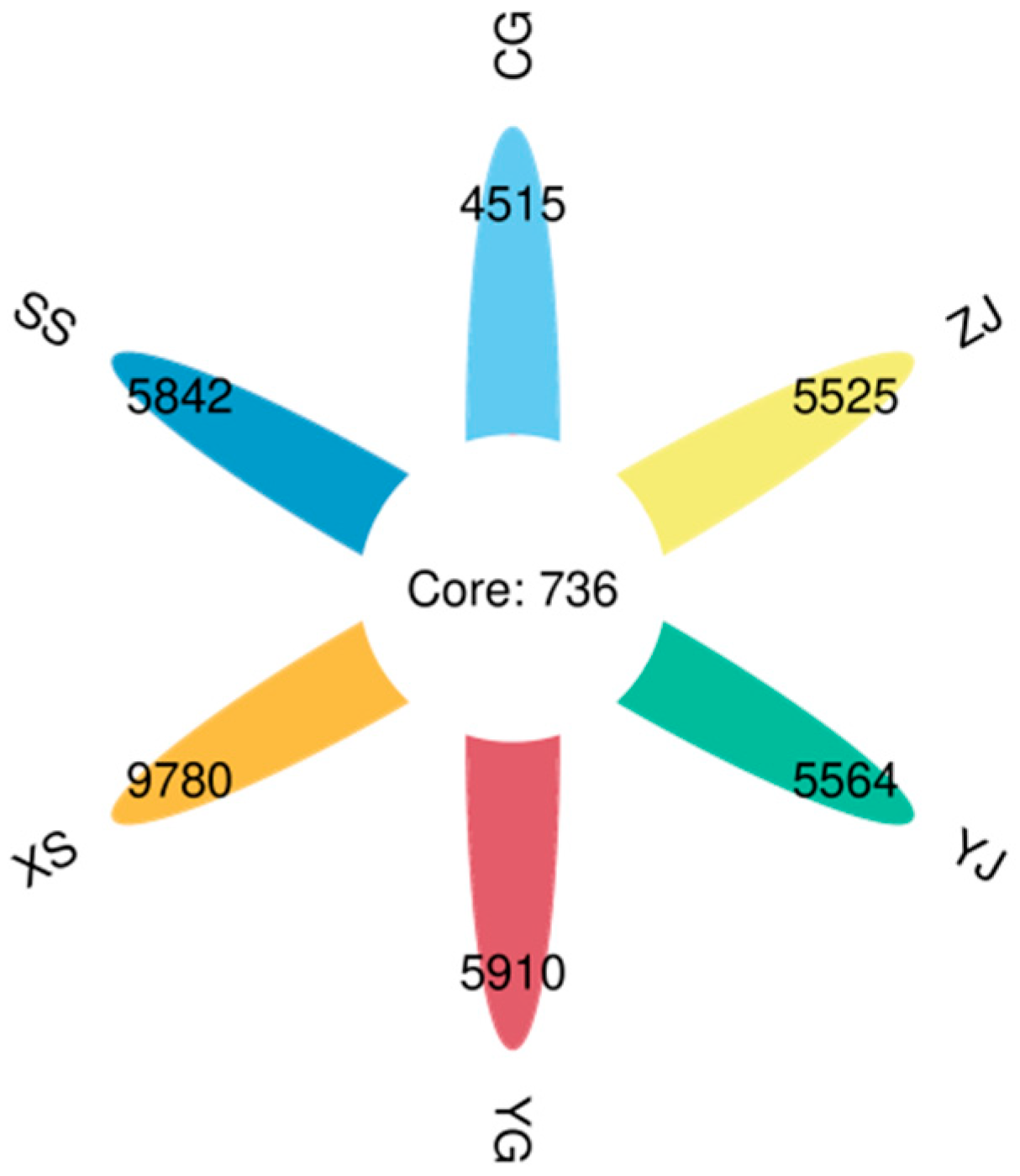
Operational taxonomic unit (OTU) clustering identified 37,872 bacterial OTUs across all growth stages, including 736 core OTUs shared among stages (Figure 1). The XS stage contained the highest number of unique OTUs (9780). In contrast, unique OTU numbers at subsequent stages (YJ, SS, ZJ, YG, CG) remained at moderate to low levels and were consistently lower than those at the XS stage. Unlike the pronounced decline observed after the primordium stage, OTU numbers showed only minor fluctuations during later stages. Overall, the rhizospheric bacterial community of M. sextelata exhibited a relatively stable structure throughout growth, suggesting adaptation to the developmental requirements of M. sextelata.

3.3. Microbial Community Diversity

Alpha diversity analysis was conducted to characterize changes in richness and evenness of rhizosphere microbial communities associated with M. sextelata from pre-cultivation to maturity. Significant differences in alpha diversity were detected among growth stages (Table 2). For species richness indices, Chao1 and ACE reached their maximum values in XS samples at 7690 and 8179, respectively, indicating the highest species richness in pre-cultivation soils. In contrast, the lowest Chao1 value (4150) and ACE value (4395) were observed in CG samples, reflecting a progressive decline in total rhizosphere bacterial abundance during M. sextelata growth.
Similar patterns were observed for species diversity (Shannon index) and community evenness (Pielou index). The highest Shannon index (8.33) and Pielou index (0.9993) occurred in XS samples, indicating high diversity and near-uniform species distribution prior to cultivation. However, both indices declined with plant development, reaching their lowest values at the CG stage (Shannon index: 6.83; Pielou index: 0.8271).

3.4. Principal Coordinate Analysis

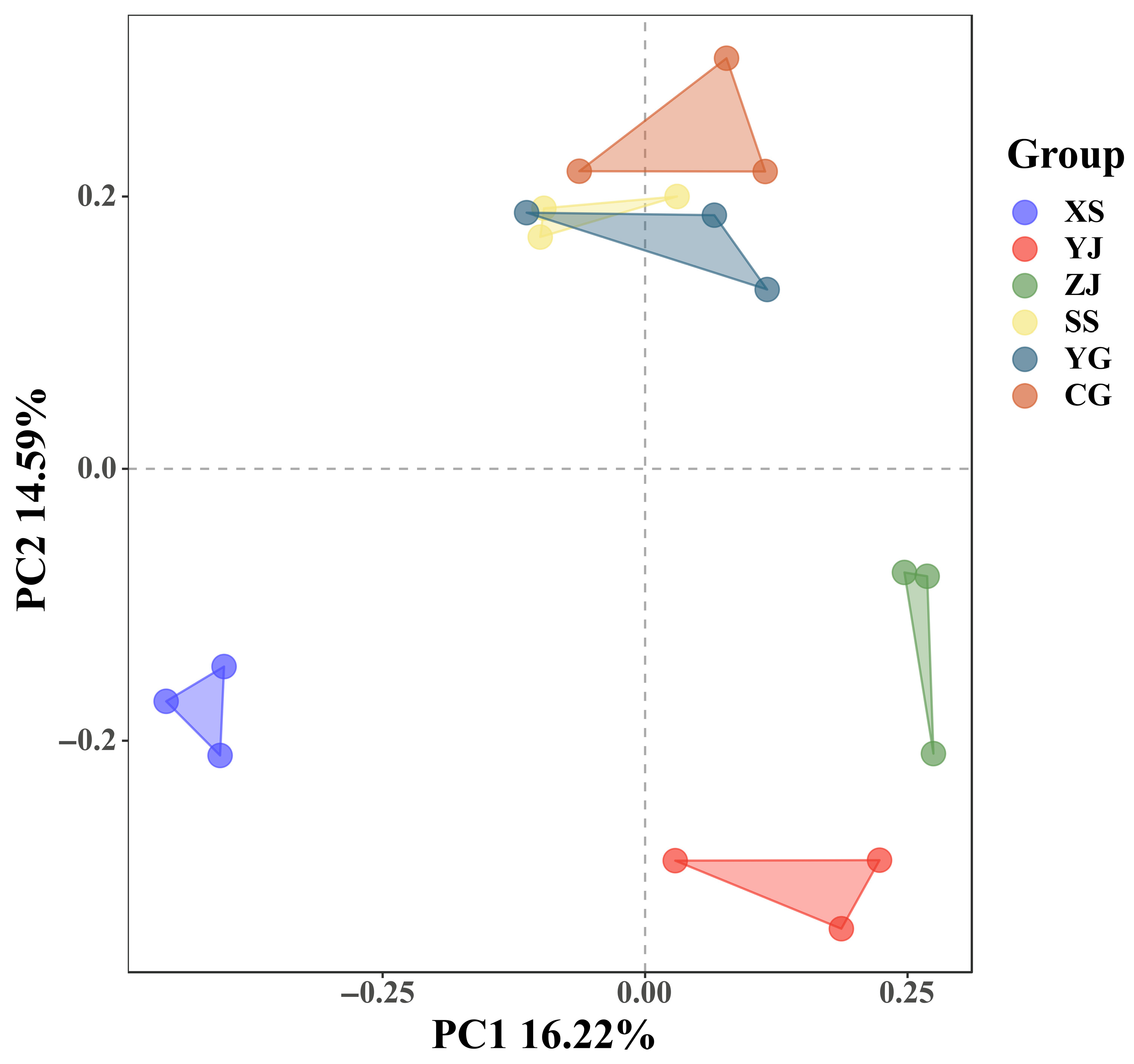
PCoA based on Bray–Curtis distance revealed clear separation of soil bacterial communities across M. sextelata growth stages (Figure 2). Growth stage significantly influenced community composition, explaining 30.81% of the total variation. The first two principal coordinates accounted for 16.22% (PC1) and 14.59% (PC2) of the variance, respectively. During early growth stages (XS, YJ, ZJ), rhizosphere bacterial communities were clearly separated, indicating pronounced structural differences. In contrast, communities from later stages (SS, YG, CG) clustered closely, suggesting increasingly similar community compositions. Additionally, the XS stage has a smaller intragroup distance, suggesting less variability within its group. Conversely, YJ, YG and CG stages exhibit a wide intragroup distance, indicating significant variability within the group.

3.5. Soil Bacterial Community Composition Analysis

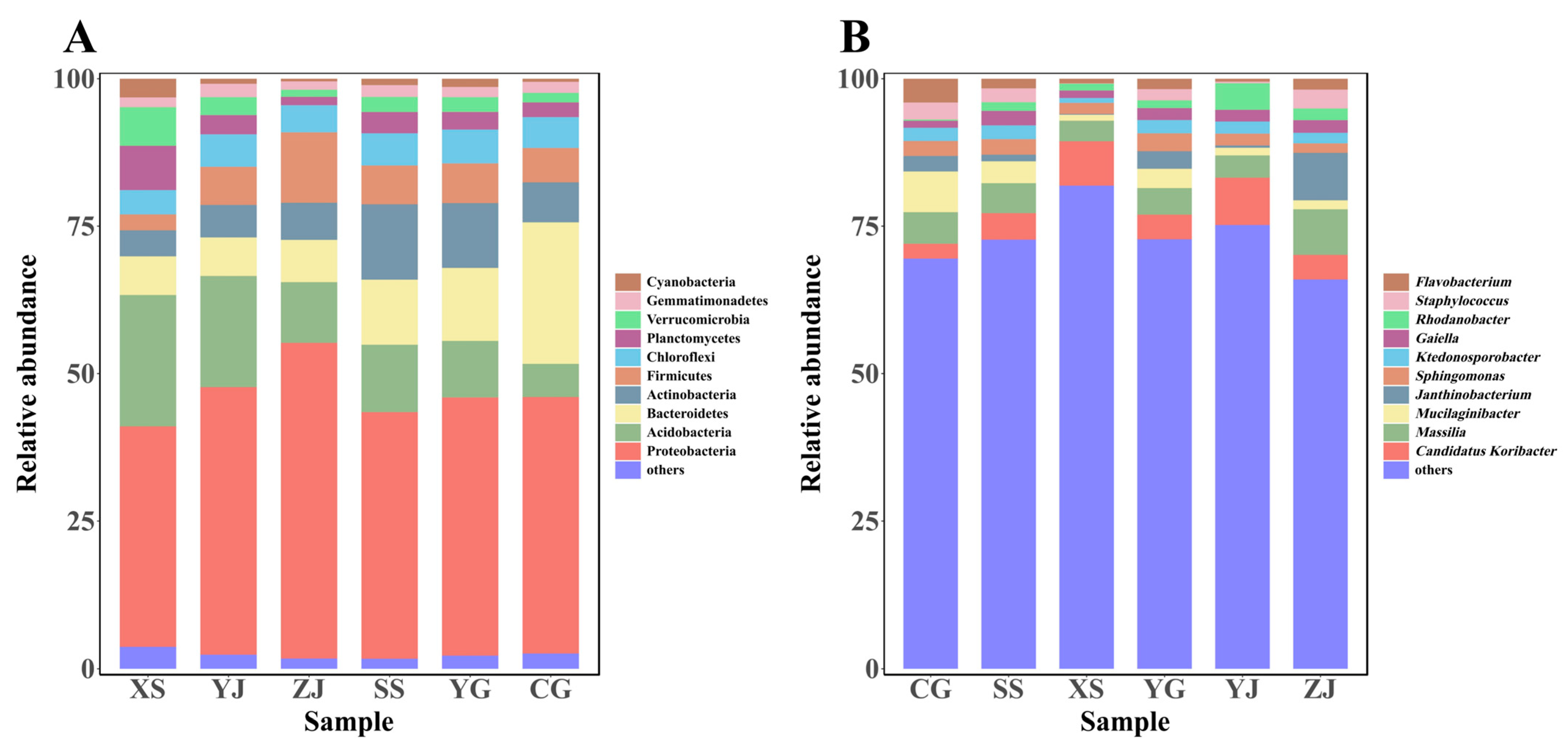
A total of 45 phyla, 75 classes, 166 orders, 356 families, and 1275 genera of bacteria were detected in the rhizosphere soil of M. sextelata across different growth stages. Bacterial community compositions were further analyzed at the phylum and genus levels. The phylum-level distribution across growth stages is shown in Figure 3A. The dominant phyla were Proteobacteria, Acidobacteria, Bacteroidetes, Actinobacteria, and Firmicutes, with mean relative abundances of 44.2%, 13.0%, 11.3%, 7.8%, and 6.7%, respectively, together accounting for nearly 83.0% of total bacterial abundance. Overall, bacterial taxa were largely consistent among the six stages, although stage-dependent differences in community composition were evident. Proteobacteria showed an increase–decrease–increase pattern with plant growth, whereas Acidobacteria exhibited a declining trend, with the highest abundance at the YJ stage and the lowest at the CG stage. Bacteroidetes reached its maximum relative abundance at the CG stage. Actinobacteria and Firmicutes peaked at the SS and ZJ stages, respectively. In contrast, Chloroflexi and Gemmatimonadetes remained relatively stable across all growth stages.
At the genus level, the top 10 bacterial genera were selected for comparative analysis (Figure 3B). The dominant genera were Candidatus Koribacter, Massilia, Mucilaginibacter, Janthinobacterium, and Sphingomonas, accounting for 5.1%, 5.0%, 2.9%, 2.6%, and 2.3% of total abundance, respectively. The relative abundance of Candidatus Koribacter decreased over time, with the highest abundance at the YJ stage and the lowest at the CG stage. Massilia and Janthinobacterium both showed peak abundances at the ZJ stage and minimum levels at the YJ stage. In contrast, Mucilaginibacter displayed a gradual increasing trend during growth stages, reaching its highest relative abundance at the CG stage.

3.6. Differences in Soil Bacterial Communities

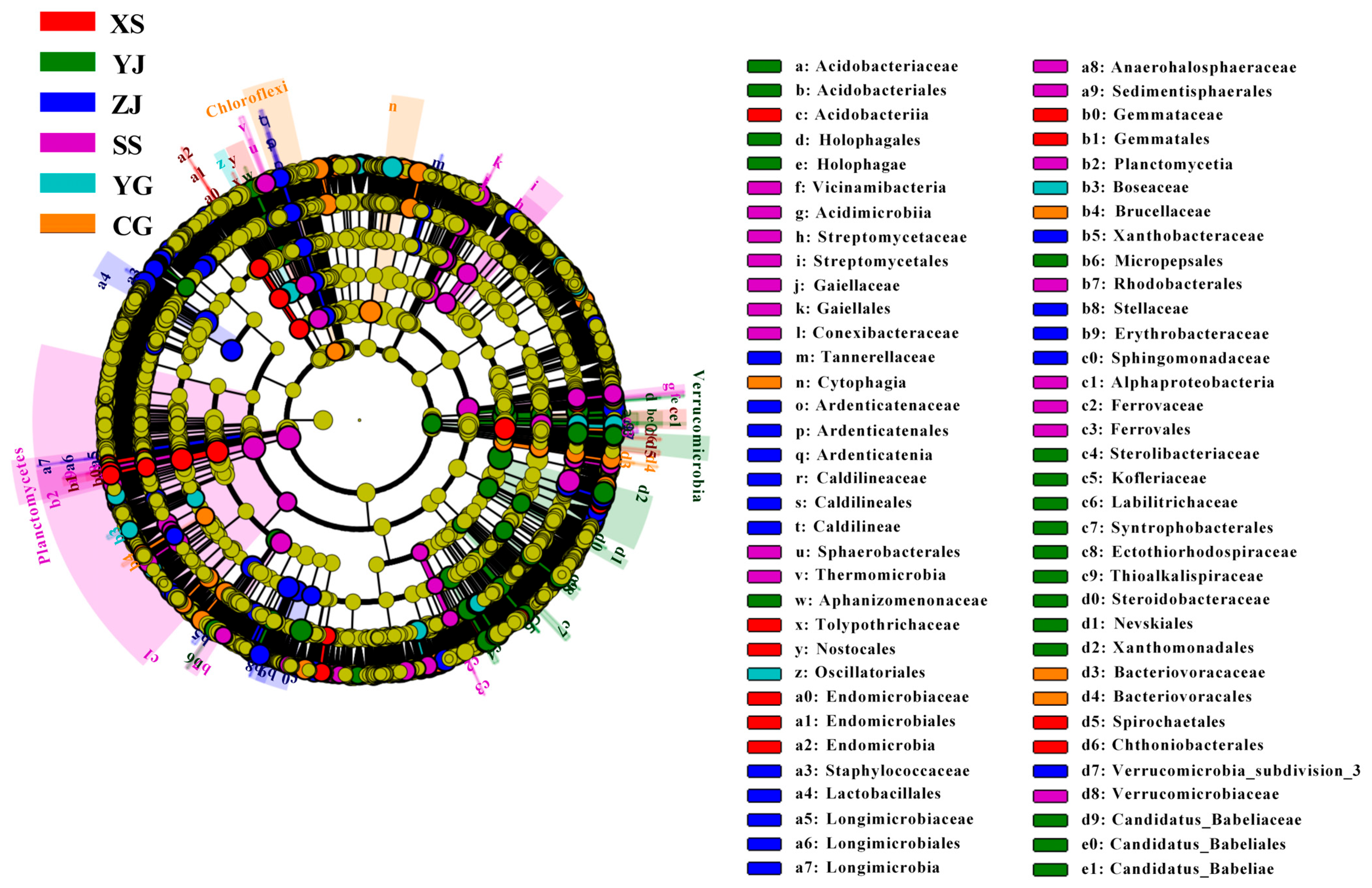
The LefSe analysis was based on the rhizosphere soil bacterial community composition of M. sextelata across different growth stages (Figure 4). There was a significant difference in the indicator species of soil samples from the M. sextelata. Specifically, there were 18 bacterial indicator species in the YJ stage, including Acidobacteriaceae, Acidobacteriales, Holophagales, Holophagae, Aphanizomenonaceae, Micropepsales, Sterolibacteriaceae, Kofleriaceae, Labilitrichaceae, Syntrophobacterales, Ectothiorhodospiraceae, Thioalkalispiraceae, Steroidobacteraceae, Nevskiales, Xanthomonadales, Candidatus_Babeliaceae, Candidatus_Babeliales, and Candidatus_Babeliae. Furthermore, there were 4 bacterial indicator species in the CG stage, including Cytophagia, Brucellaceae, Bacteriovoracaceae, and Bacteriovoracales. These indicator species play a very important role in affecting the differences in bacterial community composition in the rhizosphere soil of M. sextelata. Moreover, the microbial co-occurrence network of soil bacterial communities in all samples was constructed using Spearman rank correlation analysis (Figure S3). Proteobacteria, Acidobacteria, and Bacteroidetes occupied the main nodes.

3.7. Correlation Analysis Between Soil Bacterial Community and Mineral Elements

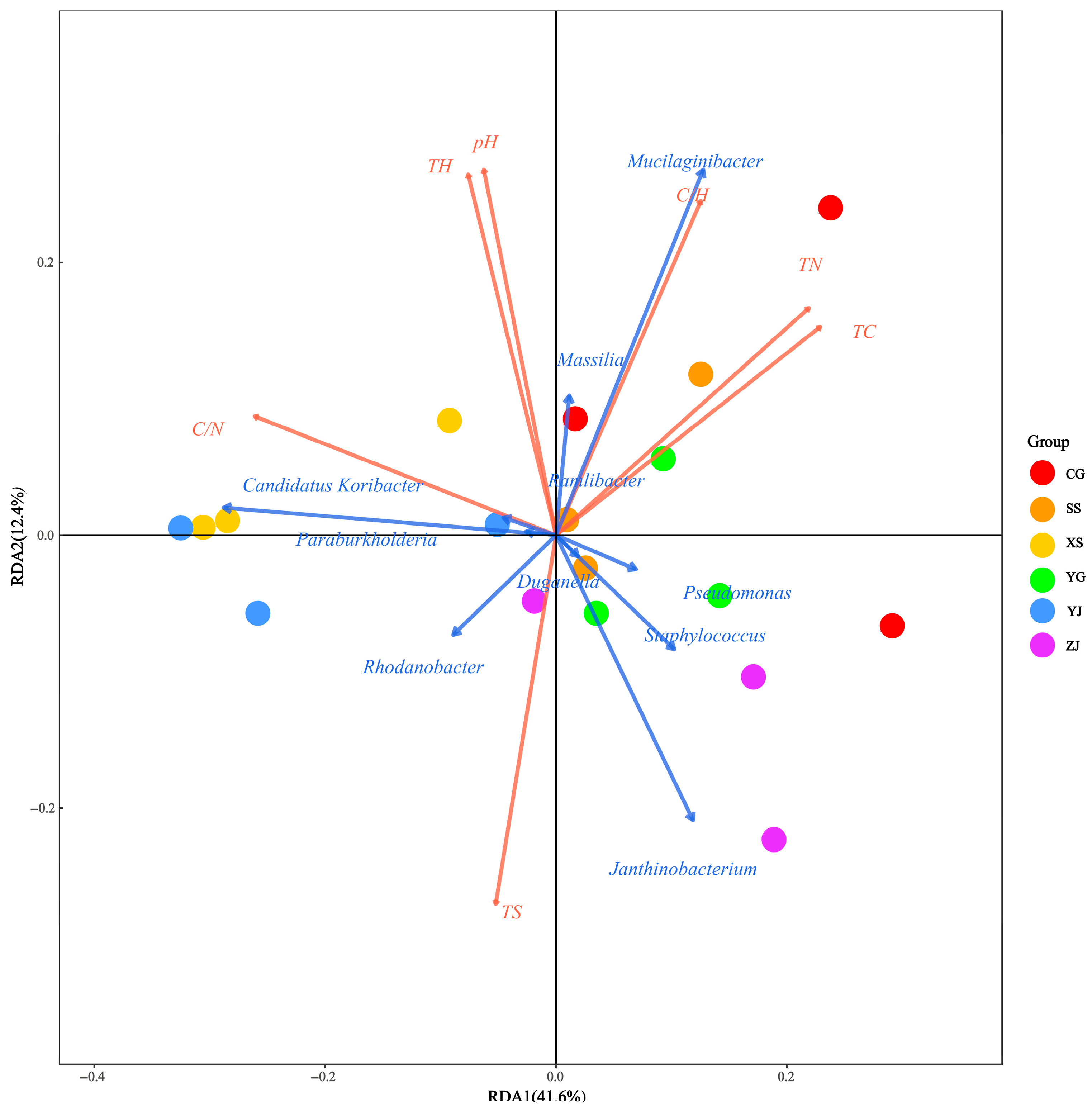
To explore correlations between the rhizosphere soil bacterial community of M. sextelata and soil environmental factors, ten dominant bacterial genera and six soil variables were selected for RDA (Figure 5). The results showed significant associations between soil environmental factors and the dominant bacterial community. The first and second RDA axes explained 41.6% and 12.4% of the variance, respectively, accounting for 54.0% in total. Specifically, Mucilaginibacter showed a significant positive correlation with TC and TN. In contrast, Massilia was significantly negatively correlated with the C/N ratio but positively correlated with TC and TN, indicating a preference for readily decomposable organic carbon sources. Moreover, Candidatus Koribacter was significantly positively correlated with the C/N ratio. Janthinobacterium and Rhodanobacter were significantly positively correlated with the C/N ratio. These results suggest a potential mechanism by which M. sextelata regulates the proliferation of specific microbial taxa through modifications of rhizosphere soil physicochemical properties.

3.8. Functional Analysis

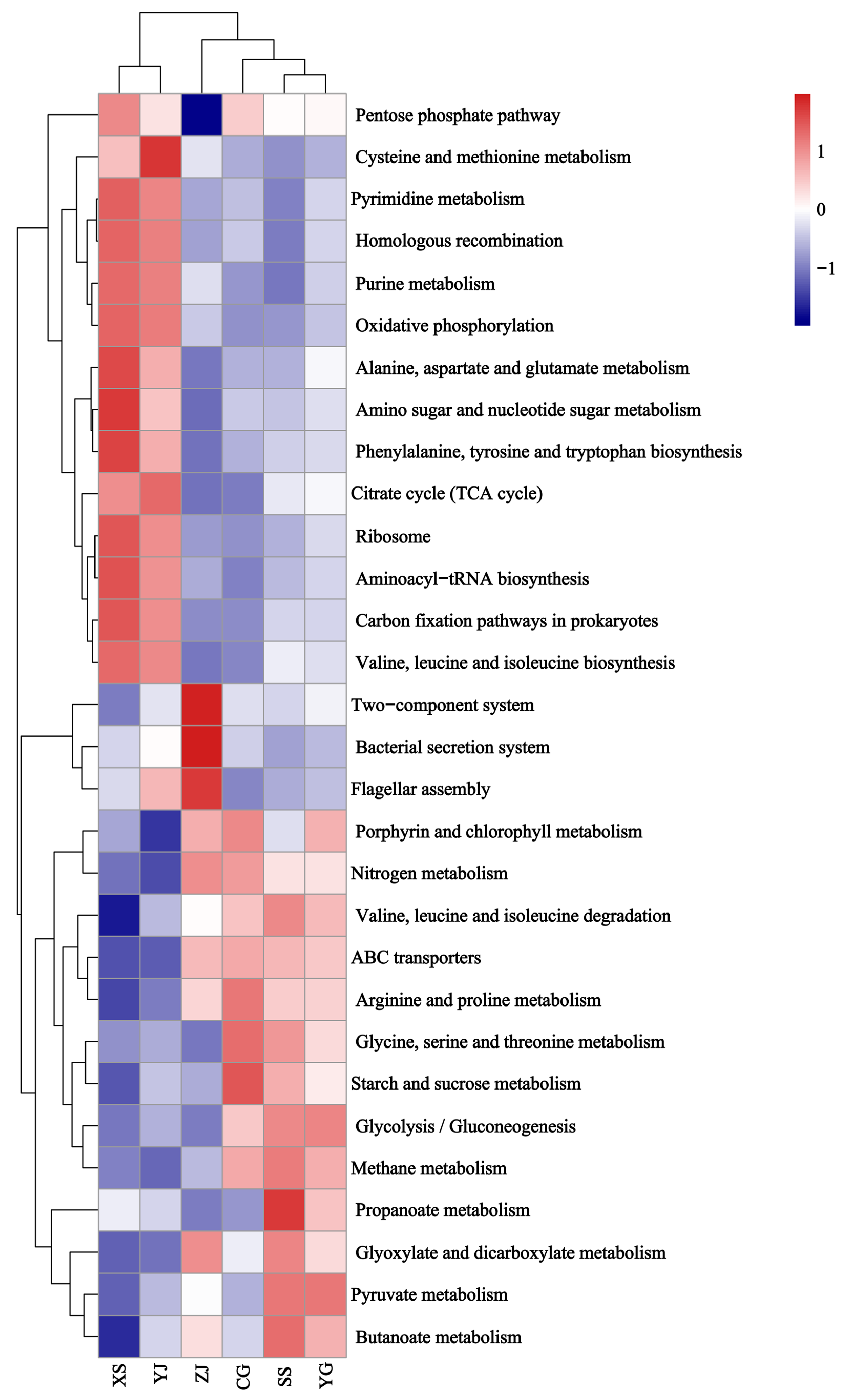
To explore functions of the rhizosphere soil bacterial community, we performed a functional analysis of M. sextelata across different growth stages based on the KEGG orthology database (Figure 6). The results showed that the majority of enriched KEGG pathways were related to metabolism (72.00%), environmental information processing (11.68%), and cellular processes (8.37%). Specifically, pathways related to cysteine and methionine metabolism were enriched at the YJ stage. At the ZJ stage, the rhizosphere soil bacteria were enriched in two-component system, bacterial secretion system, and flagellar assembly pathways. The pathways related to propanoate metabolism, starch, and sucrose metabolism were enriched at the SS and CG stages, respectively. At the late growth stage of M. sextelata, the soil microbiome was enriched in nitrogen metabolism, ABC transporters, and arginine and proline metabolism pathways.

4. Discussion

Morels are widely recognized as edible and medicinal fungi with high economic and nutritional value and have been increasingly cultivated worldwide in recent years. However, morel cultivation remains unstable, often resulting in severe yield losses and, in extreme cases, complete crop failure. This instability has markedly constrained the sustainable development of the morel industry. Major limiting factors include continuous cropping barriers, soil physicochemical properties, and soil-borne diseases [19,27,38]. The soil microbial community plays an important role in the growth of M. sextelata. The study on the rhizosphere fungal community of M. sextelata can provide a reference for disease prevention [24,39]. However, compared with the rhizosphere fungal community, most of the studies focused on the rhizosphere bacterial community. Therefore, this study aimed to elucidate the relationships between dynamic changes in rhizospheric soil bacterial community structure and physicochemical properties of M. sextelata across different growth stages in Huangshan City. The findings are expected to provide a theoretical basis for optimizing morel cultivation and management practices.
A weakly acidic soil is conducive to the growth of bacteria and fungi [30]. In this study, M. sextelata grew under acidic soil conditions throughout its entire growth period, with the highest acidity observed at the needle stage. However, this result is inconsistent with previous reports and may be attributable to regional differences in cultivation conditions [40,41]. In addition, the rhizospheric soil C/N ratio showed a decreasing trend during M. sextelata growth, indicating dynamic shifts in carbon and nitrogen utilization efficiency. This pattern likely reflects the saprophytic nature of M. sextelata, as soil organic carbon and nitrogen are progressively enriched during its growth [28]. Furthermore, carbon and nitrogen sources affected the interaction between Morchella spp. and bacteria dispersed along the hypha [42]. Accordingly, sodium nitrate has been reported as an optimal nitrogen source for morel cultivation [43]. Besides the C, N, and pH factors of soil, potassium, phosphorus, sucrose, and starch may be the soil factors determining the growth of Morchella [30]. Among these, potassium was the key nutrient for mycelial growth and primordium formation of morels [44]. The nitrogen, potassium loss, and phosphorus accumulation were the main reasons for the decline in morel yield under continuous cropping [28]. Therefore, potassium can be supplemented during the cultivation of morels. Moreover, Mn significantly promoted mycelia growth rates of morels, and trace elements such as Fe, Zn, and Mn may also affect yield outcomes of morels [23].
Rhizosphere microorganisms are considered important for improving host health and soil fertility [45]. Previous studies have shown that the community composition and relative abundance of rhizosphere microorganisms can be significantly altered by some edible mushrooms across different growth environments [46,47]. In this study, Proteobacteria, Acidobacteria, and Bacteroidetes were the dominant bacterial phyla in the rhizosphere soil of M. sextelata. Proteobacteria showed the highest relative abundance across all growth stages, consistent with a previous report [48]. These three phyla have also been identified as major rhizosphere microbial components in M. galilaea and M. esculenta [27,49]. However, marked variations in the relative abundances of these phyla were observed across the growth stages of M. sextelata. Specifically, the relative abundance of Bacteroidetes increased steadily from 6.5% at the primordium stage to 24.0% at the fruiting stage. Additionally, the relative abundance of Actinobacteria first increased and then decreased, reaching its maximum at the mulberry stage. This pattern differs from previous findings [27], possibly due to differences in cultivation regions.
The influence of microbial communities on M. sextelata growth was further examined. The top 10 dominant bacterial genera were selected for comparative analysis. Among them, Candidatus Koribacter and Rhodanobacter were most abundant at the primordium stage. The relative abundance of Candidatus Koribacter declined sharply from the primordium stage to the needle tip stage, which may resemble the role of Candida nitrosocosmicus in nutrient transformation and supply [49]. Massilia, Janthinobacterium, Sphingomonas, and Flavobacterium were identified as key microbial biomarkers associated with the growth stages of M. sextelata [27]. Among which, Sphingomonas has the ability to decompose lignocellulose, which helps to elongate mycelia and metabolize nutrients [50]. Notably, Massilia appears to play an important role in promoting growth and development. Sphingomonas has been linked to yield in Agaricus bisporus [51], and Janthinobacterium has been detected in both rhizosphere soil and the stipe of M. sextelata [25]. The relative abundance of Flavobacterium increased progressively with maturation and became a core member of the ascocarp microbiome [25]. Similarly, Mucilaginibacter showed a gradual increase during the growth of M. sextelata. This genus has been reported to promote plant growth [52], and in this study it was positively correlated with total carbon, suggesting a potential role in carbon transformation [53]. Moreover, the increase in Proteobacteria bacteria may help to improve the ascocarp yield of morels, such as Pseudomonas, which was stimulated by hyphal growth [23]. Bacillus has been found to have a significant effect on the growth and development of Morchella fruiting body [20].

5. Conclusions

This study revealed dynamic changes in the rhizosphere soil bacterial community of M. sextelata in the Huangshan City and identified microbial groups closely associated with its growth stages. The results showed that M. sextelata growth altered the rhizosphere microenvironment, leading to a continuous decline in the soil C/N ratio and a gradual reduction in bacterial diversity. Additionally, Proteobacteria, Acidobacteria, and Bacteroidetes dominated the rhizosphere bacterial community. Key taxa were closely associated with soil carbon and nitrogen components, including Massilia and Mucilaginibacter. This study provides an important scientific basis for improving cultivation through microbial management. Future research should integrate metagenomics and metabonomics to elucidate the functional pathways of key bacterial communities and the molecular mechanisms underlying their interactions with M. sextelata, thereby supporting the sustainable development of morel cultivation.

Supplementary Materials

The following supporting information can be downloaded at https://www.mdpi.com/article/10.3390/horticulturae12020211/s1; Figure S1: High-quality sample sequence length distribution; Figure S2: Rarefaction curves of rhizosphere soil bacteria in Morchella sextelata at different growth stages; Figure S3: Microbial co-occurrence network analysis. Each point represents an OTU, and the line connecting two nodes represents a significant correlation in the abundance of the two OTUs. The color of the node represents the phylum level taxonomy to which the OTU belongs, and the size of the node is its degree in the network.

Author Contributions

Conceptualization and methodology, X.S.; formal analysis and data curation, P.C., T.Y., R.Y., R.L., G.G. and Z.G.; investigation and writing, P.C. All authors have read and agreed to the published version of the manuscript.

Funding

This research was funded by the natural science major project of Anhui province’s education department (2023AH040174), the open research project of the rural revitalization collaborative technical service center of Anhui province (Huangshan University) (XCZXZD2302). We would like to thank the program for excellent scitech innovation teams of universities in Anhui province (2023AH010054). We would also like to thank the scientific and technological innovation research project of Huangshan University (XSKY202401), the university synergy innovation program of Anhui province (GXXT2023054), the Huizhou mushroom industry and microbial technology innovation center of Huangshan university (kypt202001) and the first level discipline of Huangshan University (ylxk202101).

Data Availability Statement

The raw data supporting the conclusions of this manuscript will be made available to the authors, without undue reservation, to any qualified researcher. Publicly available datasets were analyzed in this study. The original data have been deposited into the NCBI SRA database with the accession number PRJNA1398512.

Conflicts of Interest

The authors declare no conflicts of interest.

Abbreviations

The following abbreviations are used in this manuscript:
YJPrimordium stage
ZJNeedle tip stage
SSMulberry stage
YGYoung mushroom stage
CGFruiting stage
XSBlank soil before planting
PCRPolymerase chain reaction
RDPRibosomal database project
OTUOperational Taxonomic Units
ACEAbundance-based Coverage Estimator
KEGGKyoto Encyclopedia of Genes and Genomes
RDARedundancy analysis
PCoAPrincipal coordinates analysis
SEStandard error
LDALinear discriminant analysis
ANCOMAnalysis of compositions of microbiomes

References

  1. Cravero, M.; Bonito, G.; Chain, P.S.; Bindschedler, S.; Junier, P. A new species of true morel from Switzerland: Morchella helvetica, sp. nov. Mycologia 2024, 116, 1101–1109. [Google Scholar] [CrossRef]
  2. Tietel, Z.; Masaphy, S. True morels (Morchella)—Nutritional and phytochemical composition, health benefits and flavor: A review. Crit. Rev. Food. Sci. 2018, 58, 1888–1901. [Google Scholar] [CrossRef] [PubMed]
  3. Shen, Q.; Li, C.; Xie, M.; Li, W.; Qian, Z.; Zhang, J. A novel PCR-based approach for rapid identification of Morchella sextelata using species-specific primers. Curr. Microbiol. 2020, 77, 232–237. [Google Scholar] [CrossRef]
  4. Tian, J.F.; Zhang, Z.; Shang, Y.H.; Zheng, Y. Extraction, structure and antioxidant activity of the polysaccharides from morels (Morchella spp.): A review. Int. J. Biol. Macromol. 2024, 264, 130656. [Google Scholar] [CrossRef] [PubMed]
  5. Gao, J.; Fang, D.L.; Kimatu, B.M.; Chen, X.; Wu, X.; Du, J.X.; Yang, Q.; Chen, H.; Zheng, H.H.; An, X.X.; et al. Analysis of umami taste substances of morel mushroom (Morchella sextelata) hydrolysates derived from different enzymatic systems. Food Chem. 2021, 362, 130192. [Google Scholar] [CrossRef]
  6. Liu, T.; Wu, X.; Long, W.; Xu, Y.; Yu, Y.; Wang, H. The effects of different postharvest drying temperatures on the volatile flavor components and non-volatile metabolites of Morchella sextelata. Horticulturae 2024, 10, 812. [Google Scholar] [CrossRef]
  7. Qiu, Z.; Ren, S.; Zhao, J.; Cui, L.; Li, H.; Jiang, B.; Zhang, M.; Shu, L.; Li, T. Comparative analysis of the nutritional and biological properties between the pileus and stipe of Morchella sextelata. Front. Nutr. 2024, 10, 1326461. [Google Scholar] [CrossRef]
  8. Sarikurkcu, C.; Halil Solak, M.; Tarkowski, P.; Ćavar Zeljković, S. Minerals, phenolics, and biological activity of wild edible mushroom, Morchella steppicola Zerova. Nat. Prod. Res. 2022, 36, 6101–6105. [Google Scholar] [CrossRef]
  9. Ramya, H.; Ravikumar, K.S.; Ajith, T.A.; Fathimathu, Z.; Janardhanan, K.K. Anticancer activity of the bioactive extract of the morel mushroom (Morchella elata, Ascomycetes) from Kashmir Himalaya (India) and identification of major bioactive compounds. Int. J. Med. Mushrooms 2023, 25, 41–52. [Google Scholar] [CrossRef]
  10. Meng, X.; Che, C.C.; Zhang, J.J.; Gong, Z.J.; Si, M.R.; Yang, G.; Cao, L.; Liu, J.F. Structural characterization and immunomodulating activities of polysaccharides from a newly collected wild Morchella sextelata. Int. J. Biol. Macromol. 2019, 129, 608–614. [Google Scholar] [CrossRef]
  11. Tang, Y.; Chen, J.L.; Li, F.H.; Yang, Y.X.; Wu, S.R.; Ming, J. Antioxidant and antiproliferative activities of modified polysaccharides originally isolated from Morchella Angusticepes peck. J. Food Sci. 2019, 84, 448–456. [Google Scholar] [CrossRef] [PubMed]
  12. Liu, C.; Sun, Y.; Mao, Q.; Guo, X.; Li, P.; Liu, Y.; Xu, N. Characteristics and antitumor activity of Morchella esculenta polysaccharide extracted by pulsed electric field. Int. J. Mol. Sci. 2016, 17, 986. [Google Scholar] [CrossRef]
  13. Dissanayake, A.A.; Mills, G.L.; Bonito, G.; Rennick, B.; Nair, M.G. Chemical composition and anti-inflammatory and antioxidant activities of extracts from cultivated morel mushrooms, species of genus Morchella (Ascomycota). Int. J. Med. Mushrooms 2021, 23, 73–83. [Google Scholar] [CrossRef] [PubMed]
  14. Longley, R.; Niccoló Benucci, G.M.; Mills, G.; Bonito, G. Fungal and bacterial community dynamics in substrates during the cultivation of morels (Morchella rufobrunnea) indoors. FEMS Microbiol. Lett. 2019, 366, fnz215. [Google Scholar] [CrossRef]
  15. Liu, W.; He, P.; Shi, X.; Zhang, Y.; Perez-Moreno, J.; Yu, F. Large-scale field cultivation of Morchella and relevance of basic knowledge for its steady production. J. Fungi 2023, 9, 855. [Google Scholar] [CrossRef] [PubMed]
  16. Yu, F.M.; Jayawardena, R.S.; Thongklang, N.; Lv, M.L.; Zhu, X.T.; Zhao, Q. Morel production associated with soil nitrogen-fixing and nitrifying microorganisms. J. Fungi 2022, 8, 299. [Google Scholar] [CrossRef]
  17. Zhang, L.; Si, B.; Lv, M.; Zhu, Q.; Du, H.; Ma, W.; Qu, J. Vegetable–mushroom rotation increases morel (Morchella esculenta L.) yields by improving soil micro-environments and enhancing overall soil quality. Plants 2025, 14, 3317. [Google Scholar] [CrossRef]
  18. Duan, M.; Yang, C.; Bao, L.; Han, D.; Wang, H.; Zhang, Y.; Liu, H.; Yang, S. Morchella esculenta cultivation in fallow paddy fields and drylands affects the diversity of soil bacteria and soil chemical properties. Front. Genet. 2023, 14, 1251695. [Google Scholar] [CrossRef]
  19. Zhang, Y.; Sun, S.; Luo, D.; Mao, P.; Rosazlina, R.; Martin, F.; Xu, L. Decline in morel production upon continuous cropping is related to changes in soil mycobiome. J. Fungi 2023, 9, 492. [Google Scholar] [CrossRef]
  20. Liu, W.Y.; Guo, H.B.; Bi, K.X.; Sibirina, A.L.; Qi, X.J.; Yu, X.D. Determining why continuous cropping reduces the production of the morel Morchella sextelata. Front. Microbiol. 2022, 13, 903983. [Google Scholar] [CrossRef]
  21. Li, X.; Fu, T.; Li, H.; Zhang, B.; Li, W.; Zhang, B.; Wang, X.; Wang, J.; Chen, Q.; He, X.; et al. Safe production strategies for soil-covered cultivation of morel in heavy metal-contaminated soils. J. Fungi 2023, 9, 765. [Google Scholar] [CrossRef] [PubMed]
  22. Tan, H.; Kohler, A.; Miao, R.Y.; Liu, T.H.; Zhang, Q.; Zhang, B.; Jiang, L.; Wang, Y.; Xie, L.; Tang, J.; et al. Multi-omic analyses of exogenous nutrient bag decomposition by the black morel Morchella importuna reveal sustained carbon acquisition and transferring. Environ. Microbiol. 2019, 21, 3909–3926. [Google Scholar] [CrossRef]
  23. Liu, Q.; Liu, H.; Chen, C.; Wang, J.; Han, Y.; Long, Z. Effects of element complexes containing Fe, Zn and Mn on artificial morel’s biological characteristics and soil bacterial community structures. PLoS ONE 2017, 12, e0174618. [Google Scholar] [CrossRef]
  24. Yan, Q.; Wang, P.; Liu, Z.; Yu, Y.; Tan, X.; Huang, X.; Wen, J.; Zhang, W. High-throughput sequencing uncovers fungal community succession during Morchella sextelata development. J. Fungi 2025, 11, 364. [Google Scholar] [CrossRef]
  25. Benucci, G.M.N.; Longley, R.; Zhang, P.; Zhao, Q.; Bonito, G.; Yu, F. Microbial communities associated with the black morel Morchella sextelata cultivated in greenhouses. PeerJ 2019, 7, e7744. [Google Scholar] [CrossRef]
  26. Wang, J.; Cai, W.; Jin, Q.; Fan, L.; Guo, Z.; Feng, W. Improving the yield and quality of Morchella spp. using agricultural waste. J. Fungi 2025, 11, 703. [Google Scholar] [CrossRef]
  27. Zhang, F.S.; Long, L.; Hu, Z.Y.; Yu, X.R.; Liu, Q.Y.; Bao, J.K.; Long, Z.F. Analyses of artificial morel soil bacterial community structure and mineral element contents in ascocarp and the cultivated soil. Can. J. Microbiol. 2019, 65, 738–749. [Google Scholar] [CrossRef] [PubMed]
  28. Zhao, J.; Zeng, R.; Zhang, C.; He, B.; Zhang, Q.; Zhou, Q.; Gong, Z.; Liu, H.; Liu, S. Comparative analysis of soil properties before and after Morchella sextelata cultivation across various soil types. Front. Microbiol. 2025, 16, 1700246. [Google Scholar] [CrossRef]
  29. Yan, Q.; Zhang, W.; Wang, Q.; Yang, T.; Wang, P.; Yu, Y.; Tan, X.; Kang, X.; Wen, J. Screening of substrates and optimization of formulations for exogenous nutrient bags of Morchella sextelata (black morel). Horticulturae 2025, 11, 863. [Google Scholar] [CrossRef]
  30. Yue, Y.; Hao, H.; Wang, Q.; Xiao, T.; Zhang, Y.; Chen, Q.; Chen, H.; Zhang, J. Dynamics of the soil microbial community associated with Morchella cultivation: Diversity, assembly mechanism and yield prediction. Front. Microbiol. 2024, 15, 1345231. [Google Scholar] [CrossRef] [PubMed]
  31. Zhao, Z.B.; He, J.Z.; Geisen, S.; Han, L.L.; Wang, J.T.; Shen, J.P.; Wei, W.X.; Fang, Y.T.; Li, P.P.; Zhang, L.M. Protist communities are more sensitive to nitrogen fertilization than other microorganisms in diverse agricultural soils. Microbiome 2019, 7, 33. [Google Scholar] [CrossRef] [PubMed]
  32. Zhang, M.; Wan, Z.; Gao, W.; Zhang, Y. Effects of Chinese fir retention density on soil bacterial community structure in Chinese fir and betula luminifera mixed forests plantations in China. Forests 2024, 15, 2107. [Google Scholar] [CrossRef]
  33. Cui, P.; Wu, H.; Jiang, T.; Tao, J.; Zhu, Z.; Liu, P.; Yu, L.; Zhang, Y. Diversity and antibacterial potential of the Actinobacteria associated with Apis mellifera ligustica. Front. Microbiol. 2022, 13, 1056176. [Google Scholar] [CrossRef]
  34. Wang, X.H.; Kou, Y.P.; Liu, J.; Zhao, W.Q.; Liu, Q. Soil microbial legacy determines mycorrhizal colonization and root traits of conifer seedlings during subalpine forest succession. Plant Soil 2023, 485, 361–375. [Google Scholar] [CrossRef]
  35. Chen, B.; Shao, G.; Zhou, T.; Fan, Q.; Yang, N.; Cui, M.; Zhang, J.; Wu, X.; Zhang, B.; Zhang, R. Dazomet changes microbial communities and improves morel mushroom yield under continuous cropping. Front. Microbiol. 2023, 14, 1200226. [Google Scholar] [CrossRef]
  36. Tkacz, A.; Pini, F.; Turner, T.R.; Bestion, E.; Simmonds, J.; Howell, P.; Greenland, A.; Cheema, J.; Emms, D.M.; Uauy, C.; et al. Agricultural selection of wheat has been shaped by plant-microbe interactions. Front. Microbiol. 2020, 11, 132. [Google Scholar] [CrossRef]
  37. Mandal, S.; Van Treuren, W.; White, R.A.; Eggesbø, M.; Knight, R.; Peddada, S.D. Analysis of composition of microbiomes: A novel method for studying microbial composition. Microb. Ecol. Health Dis. 2015, 26, 27663. [Google Scholar] [CrossRef]
  38. Zhang, Y.Y.; Xu, H.Y.; Ding, J.; Qin, B.F.; Zhou, G.X. First report of Cladosporium scabrellum causing stipe spot disease of Morchella importuna in China. Plant Dis. 2024, 108, 225. [Google Scholar] [CrossRef]
  39. Feng, W.; Wang, J.; Jin, Q.; Guo, Z.; Cai, W. Analysis of soil fungal community characteristics of Morchella sextelata under different rotations and intercropping patterns and influencing factors. Agriculture 2025, 15, 823. [Google Scholar] [CrossRef]
  40. Li, Y.; Lin, W.; Chen, J.; Lin, J.; Feng, R.; Yan, J.; Miao, R.; Gan, B. Nitrates and microbiome components engaged in denitrification within soil regulate Morchella spp. growth. Horticulturae 2024, 10, 905. [Google Scholar] [CrossRef]
  41. Tan, H.; Liu, T.; Yu, Y.; Tang, J.; Jiang, L.; Martin, F.M.; Peng, W. Morel production related to soil microbial diversity and evenness. Microbiol. Spectr. 2021, 9, e00229-21. [Google Scholar] [CrossRef] [PubMed]
  42. Lohberger, A.; Spangenberg, J.E.; Ventura, Y.; Bindschedler, S.; Verrecchia, E.P.; Bshary, R.; Junier, P. Effect of organic carbon and nitrogen on the interactions of Morchella spp. and bacteria dispersing on their mycelium. Front. Microbiol. 2019, 10, 124. [Google Scholar] [CrossRef] [PubMed]
  43. Kanwal, H.K.; Reddy, M.S. Effect of carbon, nitrogen sources and inducers on ligninolytic enzyme production by Morchella crassipes. World J. Microbiol. Biotechnol. 2011, 27, 687–691. [Google Scholar] [CrossRef]
  44. Li, Q.; Xiong, C.; Huang, W.; Li, X. Controlled surface fire for improving yields of Morchella importuna. Mycol. Prog. 2017, 16, 1057–1063. [Google Scholar] [CrossRef]
  45. Lei, S.N.; Xu, X.H.; Cheng, Z.Q.; Xiong, J.; Ma, R.Q.; Zhang, L.L.; Yang, X.R.; Zhu, Y.X.; Zhang, B.H.; Tian, B.Y. Analysis of the community composition and bacterial diversity of the rhizosphere microbiome across different plant taxa. Microbiologyopen 2019, 8, e00762. [Google Scholar] [CrossRef]
  46. Tang, S.J.; Fan, T.T.; Jin, L.; Lei, P.; Shao, C.X.; Wu, S.L.; Yang, Y.; He, Y.L.; Ren, R.; Xu, J. Soil microbial diversity and functional capacity associated with the production of edible mushroom Stropharia rugosoannulata in croplands. PeerJ 2022, 10, e14130. [Google Scholar] [CrossRef]
  47. Shen, A.; Tan, Y.; Shen, B.; Liu, L.; Li, J.; Tan, Z.; Zeng, L. The soil bacterial community structure in a Lactarius hatsudake tanaka plantation during harvest. Microorganisms 2024, 12, 1376. [Google Scholar] [CrossRef]
  48. Zhang, C.; Shi, X.; Zhang, J.; Zhang, Y.; Wang, W. Dynamics of soil microbiome throughout the cultivation life cycle of morel (Morchella sextelata). Front. Microbiol. 2023, 14, 979835. [Google Scholar] [CrossRef] [PubMed]
  49. Yan, Q.; Wang, P.; Liu, Z.; Yu, Y.; Tan, X.; Huang, X.; Wen, J.; Zhang, W. Analysis of soil microbial community structure and function in Morchella esculenta habitats in Jilin province. Agronomy 2025, 15, 15. [Google Scholar] [CrossRef]
  50. Gohar, D.; Põldmaa, K.; Tedersoo, L.; Aslani, F.; Furneaux, B.; Henkel, T.; Saar, I.; Smith, M.E.; Bahram, M. Global diversity and distribution of mushroom-inhabiting bacteria. Environ. Microbiol. Rep. 2022, 14, 254–264. [Google Scholar] [CrossRef]
  51. Wang, Y.H.; Yang, X.Y.; Wan, L.Z.; Ren, H.X.; Qu, L.; Guo, H.D.; Dong, L.L.; Lu, X.; Ren, P.F. Influence of the casing layer on the specific volatile compounds and microorganisms by Agaricus bisporus. Front. Microbiol. 2023, 14, 1154903. [Google Scholar] [CrossRef] [PubMed]
  52. Fan, D.; Smith, D.L. Mucilaginibacter sp. K improves growth and induces salt tolerance in nonhost plants via multilevel mechanisms. Front. Plant Sci. 2022, 13, 938697. [Google Scholar] [CrossRef] [PubMed]
  53. Yao, C.; Tao, N.; Liu, J.; Liang, M.; Wang, H.; Tian, G. Differences in soil microbiota of continuous cultivation of Ganoderma leucocontextum. Agronomy 2023, 13, 888. [Google Scholar] [CrossRef]
Figure 1. Venn distribution of rhizosphere soil bacteria in Morchella sextelata at different growth stages.
Horticulturae 12 00211 g001
Figure 2. Venn distribution of rhizosphere soil bacteria in Morchella sextelata at different growth stages.
Horticulturae 12 00211 g002
Figure 3. The relative abundances of rhizosphere soil bacteria in different growth stages of Morchella sextelata: (A) phylum level; (B) genus level.
Horticulturae 12 00211 g003
Figure 4. Taxonomic cladogram of LEfSe at a logarithmic LDA score > 2.0 of the rhizosphere soil bacterial community composition of Morchella sextelata across different growth stages.
Horticulturae 12 00211 g004
Figure 5. Relationship between the top ten dominant bacterial genera RDA and soil environmental factors. Note: Each point represented one sample. Red arrows represented environmental factors, and blue arrows represented dominant bacteria. The strength of the correlation with bacterial communities was indicated by arrow length, with longer arrows denoting stronger correlations. The correlation between environmental factors and dominant bacteria was reflected by the angle between their arrows: an acute angle indicated a positive correlation, a right angle indicated no correlation, and an obtuse angle indicated a negative correlation.
Horticulturae 12 00211 g005
Figure 6. Variations in KEGG functions of the soil microbiome in different growth stages of Morchella sextelata.
Horticulturae 12 00211 g006
Table 1. Physicochemical properties of the soil samples of Morchella sextelata at different growth stages.
SampleTNTCTSC/NpH
XS0.06 ± 0.03 c0.96 ± 0.08 b0.16 ± 0.03 c21.90 ± 14.78 b5.53 ± 0.49 ab
YJ0.18 ± 0.03 c1.04 ± 0.14 b3.67 ± 0.50 a5.86 ± 0.31 a5.70 ± 0.03 ab
ZJ0.33 ± 0.05 c1.07 ± 0.15 b3.57 ± 1.12 a3.35 ± 0.83 a5.05 ± 0.06 b
SS0.45 ± 0.07 c1.15 ± 0.13 b2.26 ± 0.38 ab2.60 ± 0.43 a6.19 ± 0.36 a
YG0.96 ± 0.27 b1.59 ± 0.09 a0.81 ± 1.11 bc1.75 ± 0.49 a6.00 ± 0.68 ab
CG1.87 ± 0.35 a1.62 ± 0.19 a0.12 ± 0.02 c0.87 ± 0.09 a5.70 ± 0.29 ab
Note: the same letter on the same index indicates that there is no significant difference between the groups at p < 0.05.
Table 2. Statistics of sequencing output across sample groups and alpha diversity indices of the bacterial community.
SampleChao1ACEShannonSimpsonPielou
XS7690 ± 617 a8179 ± 577 a8.33 ± 0.23 a0.9993 ± 0.00 a0.9376 ± 0.01 a
YJ5203 ± 205 b5459 ± 208 b7.48 ± 0.08 bc0.9973 ± 0.00 a0.8792 ± 0.01 bc
ZJ4657 ± 686 bc4857 ± 747 bc7.12 ± 0.01 cd0.9937 ± 0.00 b0.8472 ± 0.01 cd
SS5391 ± 690 b5697 ± 708 b7.61 ± 0.21 b0.9976 ± 0.00 a0.8909 ± 0.02 b
YG5184 ± 231 b5478 ± 293 b7.56 ± 0.16 b0.9979 ± 0.00 a0.8878 ± 0.02 b
CG4150 ± 600 c4395 ± 570 c6.83 ± 0.45 d0.9922 ± 0.00 b0.8271 ± 0.03 d
Note: the same letter on the same index indicates that there is no significant difference between the groups at p < 0.05.
Disclaimer/Publisher’s Note: The statements, opinions and data contained in all publications are solely those of the individual author(s) and contributor(s) and not of MDPI and/or the editor(s). MDPI and/or the editor(s) disclaim responsibility for any injury to people or property resulting from any ideas, methods, instructions or products referred to in the content.