


Abstract
Substrate composition plays a vital role in the soilless cultivation of Helleborus; high-quality substrates can create optimal growth conditions and enhance plant quality. However, knowledge regarding suitable substrates for Helleborus remains limited. The aim of the study was to test the effects of different substrates on growth of potted Helleborus × hybridus seedlings. In total, 12 treatments were formulated by mixing organic components (moss peat, cocopeat, domestic peat) with inorganic particles (perlite, kanuma soil, vermiculite) at a 1:1 ratio, using moss peat moss as the control. The results indicated that substrates of moss peat + vermiculite (1:1) and cocopeat + vermiculite (1:1) significantly promoted plant height, shoot number, leaf number, and root development. The treatment with domestic peat + perlite + kanuma soil + vermiculite (3:1:1:1) yielded the highest soluble protein content, whereas the CK group showed the highest soluble sugar content. A comprehensive evaluation by Principal Component Analysis (PCA) identified moss peat + vermiculite (1:1) as the optimal substrate, followed by coir + vermiculite (1:1). Considering economic costs and environmental protection factors, the cocopeat + vermiculite (1:1) mixture demonstrated superior potential. Collectively, our study clarifies the effects of different substrate compositions and provides new insights for achieving cleaner and more efficient soilless cultivation of Helleborus.
1. Introduction
Hellebore (Helleborus L.), a perennial herbaceous plant in the Ranunculaceae family, is renowned for its diverse flower colors and unique floral forms. With a long history of cultivation in Europe, numerous cultivars with outstanding garden merit have been developed [1,2,3]. Blooming in late winter to early spring, Helleborus stands out as a key ornamental plant in gardens due to its distinctive flowering period, favored by many gardeners [4]. Using Helleborus for various landscapes adds significant visual interest and color. It can also be arranged in flowerbeds alongside shrubs or perennials that bloom in different seasons, which ensures the garden remains visually engaging throughout the year [5]. In Western Europe, both cut flowers and potted plants of Helleborus are particularly popular. The plant is often used as a rare and premium material in innovative and artistic flower arrangements [6]. In addition to horticultural value, hellebores also possess medicinal properties [7,8,9]. Current studies indicate that several plants of the genus Helleborus are widely used as ethnomedicines for treating different diseases. Helleborus has demonstrated positive anti-hyperglycaemic, immunomodulatory, and anti-inflammatory effects [10]. In addition, its root extracts contain numerous medicinally active ingredients and potent cardiac glycosides, showing potential in cancer treatment and the inhibition of tumor cell proliferation, which has become a recent focus in pharmacological and medical research [7,11]. Thus, an increased supply of Helleborus can lead to more appealing garden designs and also diversify the offerings of the cut flower market. Furthermore, it holds potential to contribute to developments in medicine and pharmacology. Currently, the cultivation of Helleborus is expanding. In addition to ground planting, pot cultivation is emerging as a significant and popular practice. Consequently, potted Helleborus plants show strong market prospects [12].
Potted Helleborus offers the advantages of easy mobility and display, making it significant for the expansion of the industry. The cultivation of potted ornamentals is fundamentally linked to the use of growing media. Substrate cultivation is a form of soilless cultivation. For potted flowers, soilless cultivation is being extensively and widely applied due to its water and fertilizer conservation, labor reduction, and high efficiency [13]. Compared to planting in soil, substrate cultivation can reduce costs and produce high-quality flowers. It also demonstrates excellent performance in terms of air permeability, water retention, and nutrient supply. When a growing substrate with optimal physical and hydraulic properties substitutes for the functions of soil, it provides better support for the growth and development of potted plants [14].
The physical and chemical properties of different substrates influence the growth of ornamental plants. Therefore, in soilless cultivation, substrates should be adjusted according to the specific requirements of the plants [15,16]. For the research subject of this paper, Helleborus × hybridus, there is a scarcity of scientific literature comparing the effects of different composite substrates on its growth. Previous studies have demonstrated that a potting growth substrate composed of peat and mineral soil at a 1:1 (v:v) ratio has a significant impact on the growth and flowering of Corsican hellebore in the first and second years [1]. Peat, with superior PH and EC values and rich nutrient content, has been widely used in potted plants as a common component of substrates in horticulture [17]. However, excessive peat extraction exerts adverse impacts on the environment and climate, and the use of peat as a growth medium continuously deteriorates wetland ecosystem conditions [18,19]. Moreover, peat acquisition also results in significant carbon emissions, exacerbating climate change issues. In addition to these concerns, peat has inherent limitations in water retention and aeration [20]. Therefore, there is an urgent need to find a cheap, environmentally friendly substrate that performs well to entirely or partially replace peat [14,21]. Cocopeat, a by-product of the coconut industry, has long been regarded as an alternative to peat [22]. Similarly, domestic reed peat is often used as a low-cost cultivation substrate. Both of them possess favorable physical and chemical properties and can be considered to replace the peat component in potting substrates [23]. Regarding the mineral component of the potting mix for Helleborus, the selection should be based on the suitable growth environment for the plants. Perlite is the most common choice due to its stable, porous structure, which enhances aeration within the substrate blend [24]. Similarly, kanuma soil offers excellent drainage and is slightly acidic, making it well-suited for potted Helleborus [25]. As for vermiculite, it provides both aeration and water retention, maintaining ideal soil moisture for healthy root development, which is also widely used in horticulture due to its low cost [26]. Adding these mineral soils to the growth medium can affect the plant’s growth and its overall ornamental appeal.
Therefore, the current study was planned to assess the effect of substrate type on growth and physiological characteristics of Helleborus × hybridus seedlings, to screen out a clean, environmentally friendly, and low-cost growing substrate, thereby providing a scientific basis for the pot cultivation of hellebore.
2. Materials and Methods
2.1. Plant Materials and Experimental Treatments
The present experiment was conducted at the forested site of Northwest A&F University from May to September 2024 (The temperature data recorded during the experiment can be seen in Appendix A, Table A1). We selected moss peat (Pindstrup, Ryomgaard, Denmark), cocopeat (The Scotts Miracle-Gro Company, Marysville, OH, USA), and domestic peat (Hengxing, Changchun, China) as the organic components, and perlite (Zhongsen, Xinyang, China), vermiculite (Taianhetai, Tai’an, China), and kanuma soil (Taianhetai, Tai’an, China) as the mineral components. These were combined to create thirteen different substrate compositions (Table 1). The seedlings were potted on May 1st in plastic pots (diameter = 10 cm, height = 8 cm). A controlled-release fertilizer (ICL, Tel Aviv, Israel) with a nitrogen, phosphorus, and potassium ratio of 14:14:14 was mixed in the substrate at a dosage of 2 kg m−3 with one seedling per pot. At this stage, the seedlings were uniform, with a height ranging from 5.5 to 6 cm and each having nine true leaves. A total of 13 experimental groups were established, including one control group (CK) and twelve treatment groups (T1 to T12), with 12 replicates for each treatment. Weeding during cultivation was performed manually with a hand hoe, and the plants were inspected daily. The plants were also watered uniformly according to the weather, with watering carried out twice a week and no watering on rainy days.
Table 1.
Cultivation experiment plan with different substrate compositions.
2.2. Determination of Physical Properties of Substrates
The bulk density and porosity of the growing media were determined using a 100 cm3 cutting ring. A cutting ring with a volume of 100 cm3 was weighed (recorded as W1), then filled with naturally dried mixed substrate and weighed again (W2). After water saturation for 24 h, the sample was reweighed (W3). Soil bulk weight and total porosity were calculated according to the following formula:
Bulk density = (W2 − W1)/V
Total porosity = (W3 − W2)/V × 100%
The growth media were used for the estimation of pH using a pH meter (FE28-Standard, METTLER TOLEDO, Greifensee, Switzerland) and electrical conductivity using an EC meter (DDS-307A, INESA Scientific Instrument, Shanghai, China). Total N and P were determined by Continuous Flow Analyzer (San++ Compact, Skalar Analytical B. V. Co., Ltd., Breda, The Netherlands) after H2SO4-H2O2 digestion of the growth substrate, and total K was estimated by Flame Photometer (M410, SHERWOOD, Nottingham, UK).
2.3. Determination of Seedling Growth and Physiological Indices
Plant measurements involved assessing the number of shoots, leaf count, and plant height every 20 days during the growth period. Plant height was measured from the base branching point to the tallest point of the plant. Six seedlings were randomly selected for destructive sampling, after which the roots and stems were separated and weighed to determine their fresh and dry weights. Additionally, root length and root surface area were measured using a root scanner (WinRHIZO, Delta-T Devices, Burwell, UK).
At the end of the experiment, mature leaves were randomly sampled from potted Helleborus × hybridus seedlings in each treatment replicate. After washing, a 0.1 g sample from each replicate was weighed and stored in an ultra-low temperature freezer for subsequent analysis. Chlorophyll content was determined using the acetone extraction method [27]. Soluble protein concentration was measured by the Coomassie Brilliant Blue method. Soluble sugar content was quantified using the anthrone colourimetry method [28,29,30,31]. Each assay was performed with three biological replicates per treatment.
2.4. Statistical Analysis
One-way analysis of variance (ANOVA) and principal component analysis (PCA) were performed using SPSS 26.0 (IBM, New York, NY, USA, 2019), containing all the indices; the LSD (least significant difference) method (p < 0.05) was used for multiple comparisons. A ranking was established based on F values from the Principal Component Analysis (PCA). These F-values represent the aggregated scores of each substrate across the principal components, with each component’s score multiplied by its respective weight.
3. Results
3.1. Physical and Chemical Properties of Substrate
Table 2 displays the physical and chemical properties of several substrates. The physical properties, viz. pH, EC, bulk density and total porosity, and the chemical properties, viz. total nitrogen, phosphorus, and potassium. In terms of pH, the treatment groups of each substrate composition were acidic, with little difference in pH between the treatments. The same situation exists with respect to soil EC values. However, the bulk density and total porosity were significantly different among different soil media compositions. The T10 group had the highest bulk density, while the T5 group with cocopeat and perlite had the lowest. Regarding total porosity, T3 had the most extensive total porosity, and T2 had the least total porosity. For substrates with the same organic component, media mixtures containing perlite consistently showed a lower bulk density compared to those with other mineral soils. In contrast, mixtures containing kanuma soil showed a higher bulk density. Regarding total porosity, treatments that included vermiculite exhibited greater total porosity than those containing other mineral components.
Table 2.
Physical and chemical properties of different substrate compositions.
In terms of chemical properties, the treatment groups (T5–T8) containing cocopeat generally exhibited lower concentrations of total nitrogen and total phosphorus than those containing moss peat and domestic peat. The maximum value of total nitrogen was obtained in T9; the maximum total phosphorus content was recorded in the control group. When the organic component was the same, treatments containing vermiculite had higher total potassium content, while treatments containing perlite had higher total nitrogen content.
3.2. Growth and Development of Seedlings
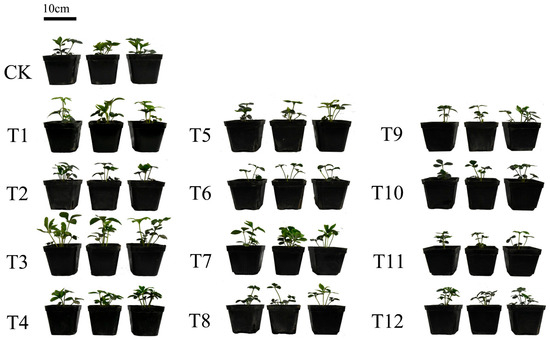
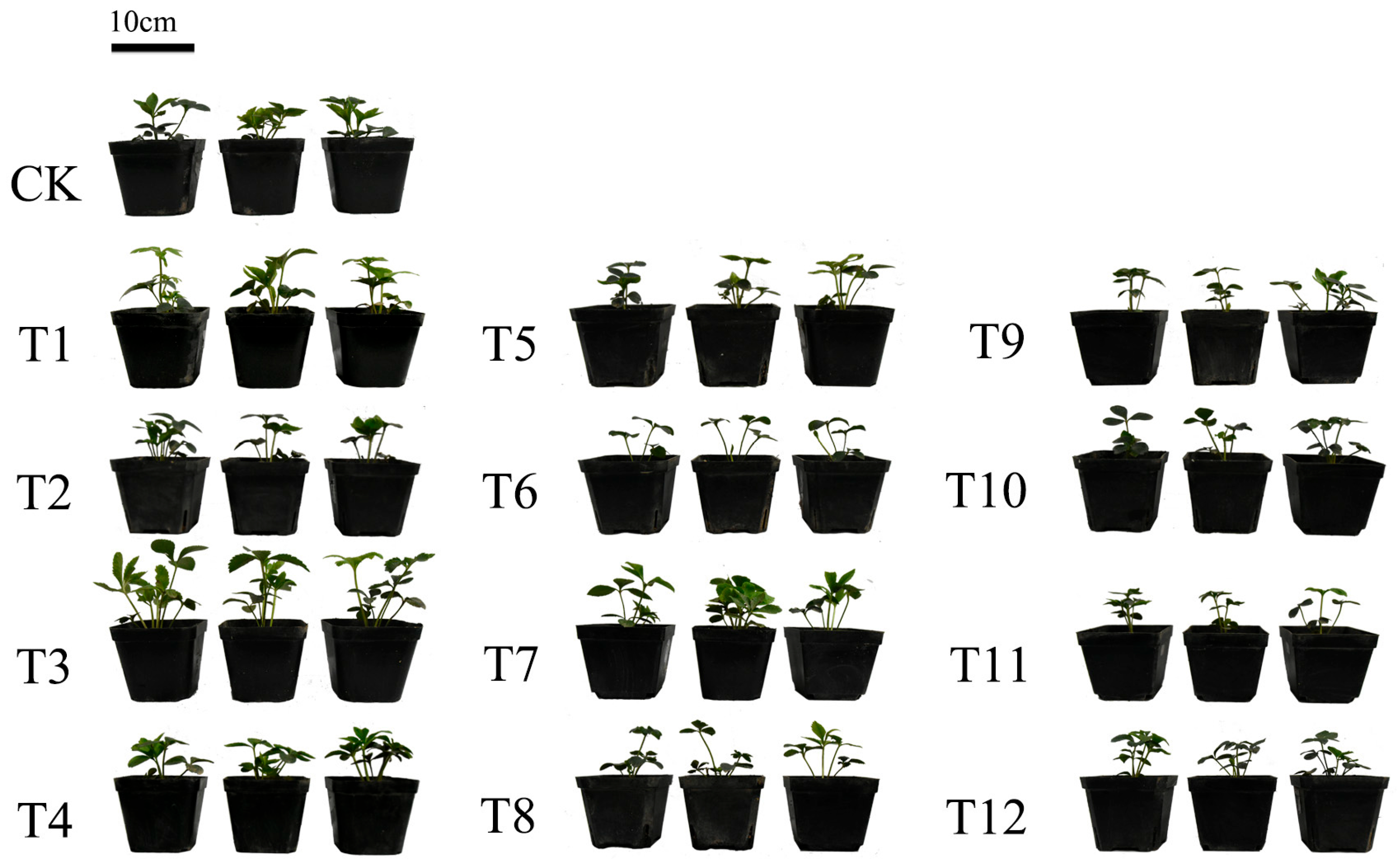
The substrate composition significantly affected the growth parameters of Helleborus × hybridus seedlings, including plant height (cm), leaf number, and shoot number (Table 3, Figure 1). At 140 days of cultivation, the plant height was significantly better (9.31 cm) in T3, followed by T2 (9.12 cm). With the same mineral component in the substrates, seedlings grown in moss peat achieved a greater average plant height compared to those treatments containing cocopeat and domestic peat. T7 showed the highest leaf count (23.83), significantly outperforming other treatments. T6 had the fewest leaves (13.17), showing significant differences from most groups but comparable results to T9 and T11 (A summary table of the growth stages and data-collection intervals can be seen in Appendix A, Table A2). When the mineral component was the same, substrates containing moss peat and cocopeat produced a statistically higher average number of leaves compared to those with domestic peat. A similar trend was observed for the number of shoots. Among the treatments, T7 exhibited the highest shoot number (6.25), significantly greater than other treatments, while T6 showed the lowest shoot count (4.08).
Table 3.
Growth and development of seedlings in different substrate compositions.
Figure 1.
Effect of substrate compositions on the growth of potted seedlings.
Further analysis focused on the effect of different mineral soils within a given organic substrate. When the organic component consisted of either moss peat or cocopeat, the inclusion of vermiculite resulted in significantly greater plant height, leaf number, and shoot number. In contrast, when domestic peat was part of the media, varying the mineral component did not lead to any significant differences in these growth parameters.
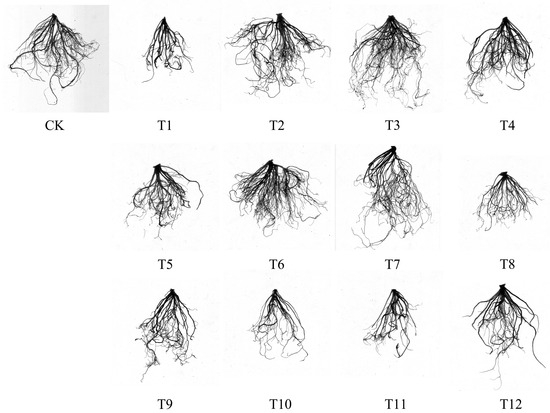
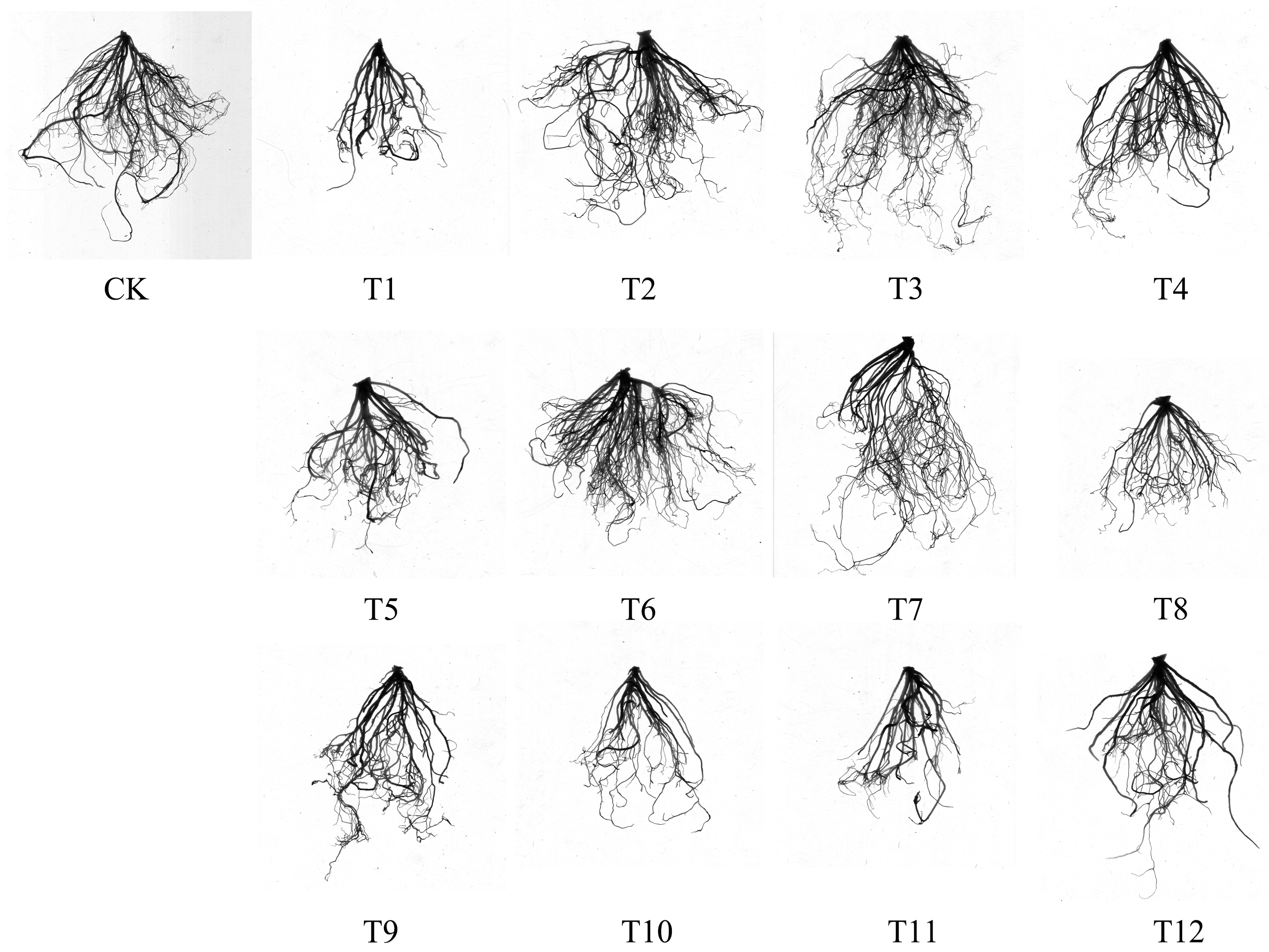
Plants grown in T3 developed the longest total root length (666.34 cm), followed by CK (656.71 cm) and T7 (581.01 cm). Compared to the control (CK), both kanuma soil and perlite in the substrates decreased root length. While the incorporation of vermiculite showed a tendency to promote root growth, the increase was not statistically significant. Furthermore, the largest root surface area was recorded for T3 (141.29 cm2), slightly exceeding that of T7 (128.28 cm2) and CK (128.06 cm2). The smallest value was observed in T10 (80.98 cm2), which was significantly lower than that of T3 (Table 3, Figure 2). Except for vermiculite, no other mineral or organic component improved root surface area, and the positive effect of vermiculite on this parameter was also not significant.
Figure 2.
Effects of different substrate compositions on seedling root system development.
3.3. Effect of Different Substrate Compositions on Chlorophyll Content in Seedlings
The chlorophyll a and b content of Helleborus × hybridus seedlings showed no significant variation across all 13 substrate compositions (Table 4), suggesting that this physiological parameter was largely unaffected by the differences in growing media.
Table 4.
Chlorophyll value in leaves of seedlings in 13 treatments.
3.4. Effect of Different Substrate Compositions on Seedling Biomass
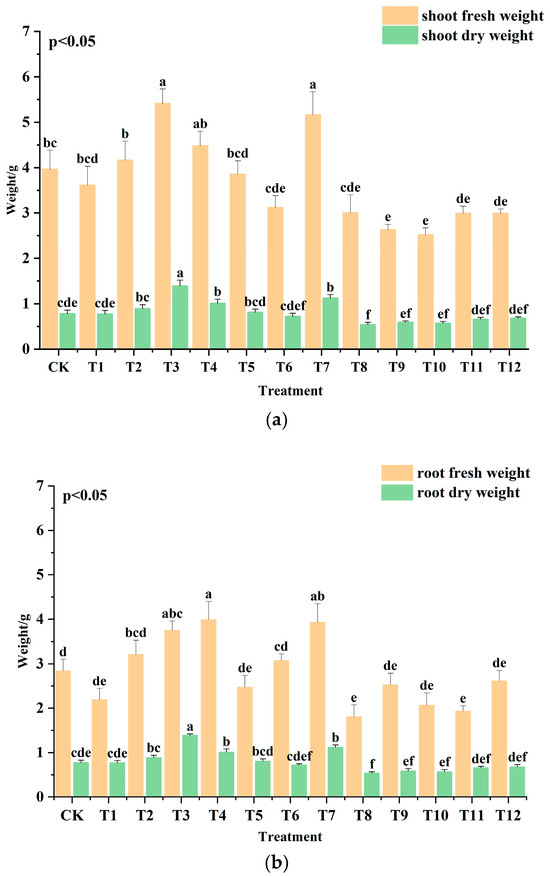
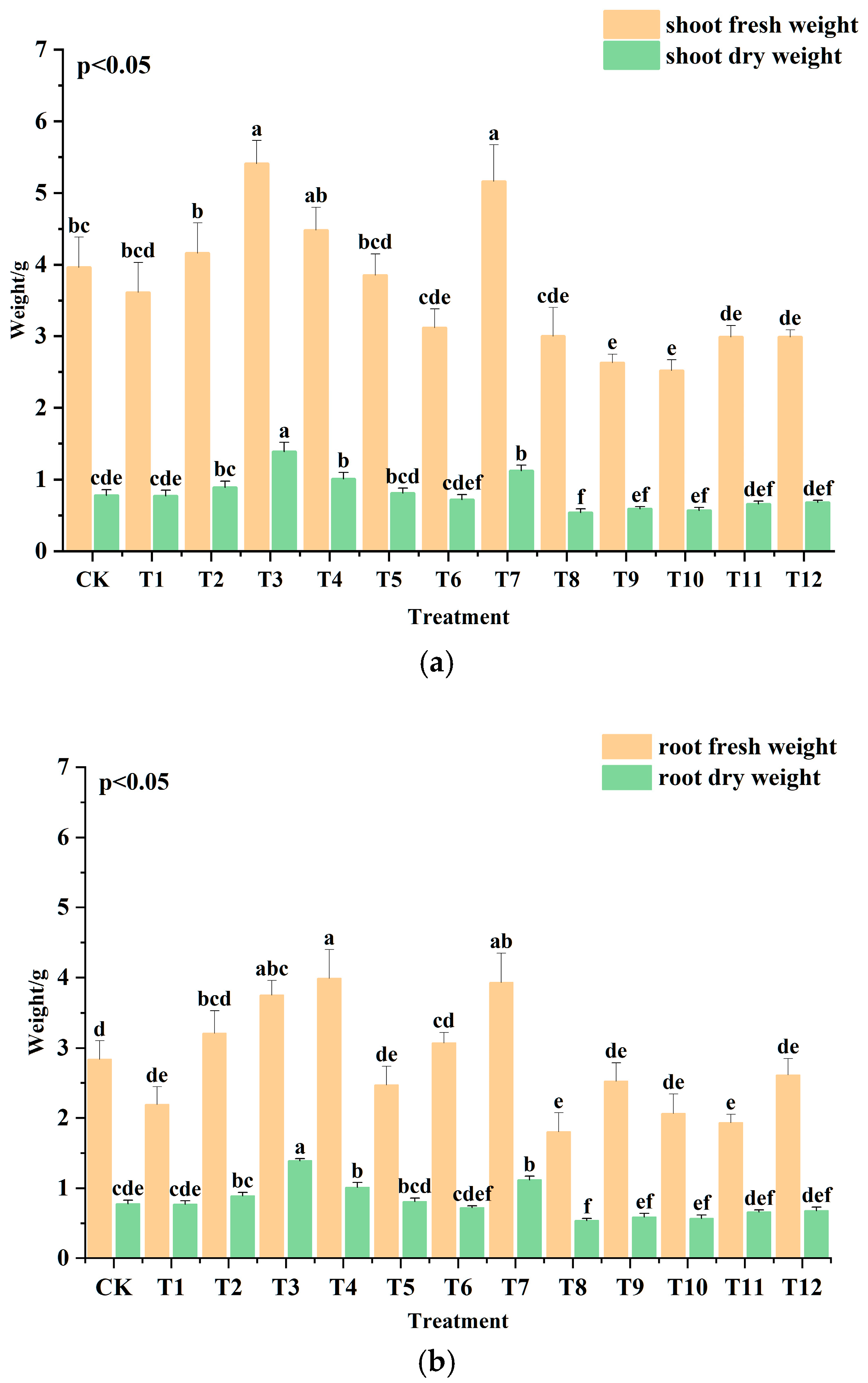
As shown in Figure 3a, the fresh weight and dry weight of seedling shoots differed significantly among treatments (p < 0.05). The T3 treatment yielded the highest fresh weight (5.41 g), while T10 showed the lowest (2.52 g). The fresh weights of the T3 (5.41 g) and T7 (5.16 g) treatment groups were significantly higher than those of the control group (CK). Regarding dry weight, the T3 treatment group had the greatest dry weight (1.39 g), showing a significant difference from the other treatment groups. The T8 treatment recorded the minimum dry weight (0.54 g), which was 0.24 g lower than the control. Seedlings cultivated in media containing vermiculite exhibited higher fresh and dry shoot biomass compared to other treatments. With the same mineral soil, substrates that contained domestic peat as the organic component reduced the fresh weight and dry weight of seedling shoots. Additionally, no significant differences were observed in the shoot fresh and dry weight among the media containing domestic peat.
Figure 3.
The effect of different substrate compositions on (a) the shoot weight (g) and (b) the root weight (g) of seedlings, cultivated in the 13 marked treatment groups (CK, T1–T12), for five months (May to September 2024). The vertical coordinate represents the weight (g); the horizontal coordinates represent the 13 treatment groups CK, T1–T12. Different lowercase letters indicate significant differences (p < 0.05), as determined by LSD’s (least significant difference) multiple range test.
In terms of fresh and dry weight of roots, there were still significant differences between the different substrate compositions (Figure 3b). Maximum root fresh weight was achieved in the T4 treatment (3.99 g) and the minimum was achieved in T8 (1.80 g). However, the root dry weight of the T3 (1.39 g) was the highest among all treatments. The weight of T8 (0.54 g) remained the smallest and differed significantly from that of group T3. No significant differences were observed in the fresh and dry weights of seedlings grown in the various substrates when either perlite was used as the mineral soil component or domestic peat was used as the organic component.
3.5. Effect of Different Substrate Compositions on Soluble Protein of Seedlings
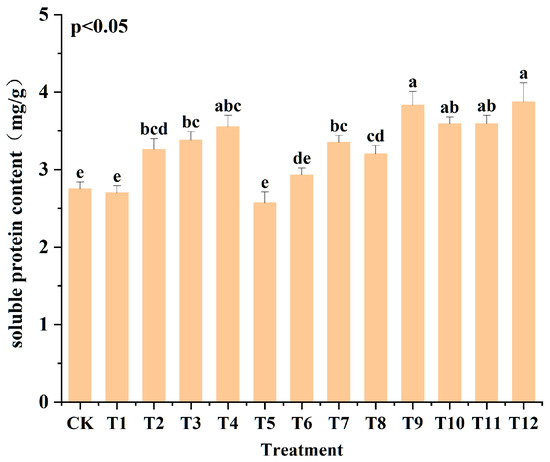
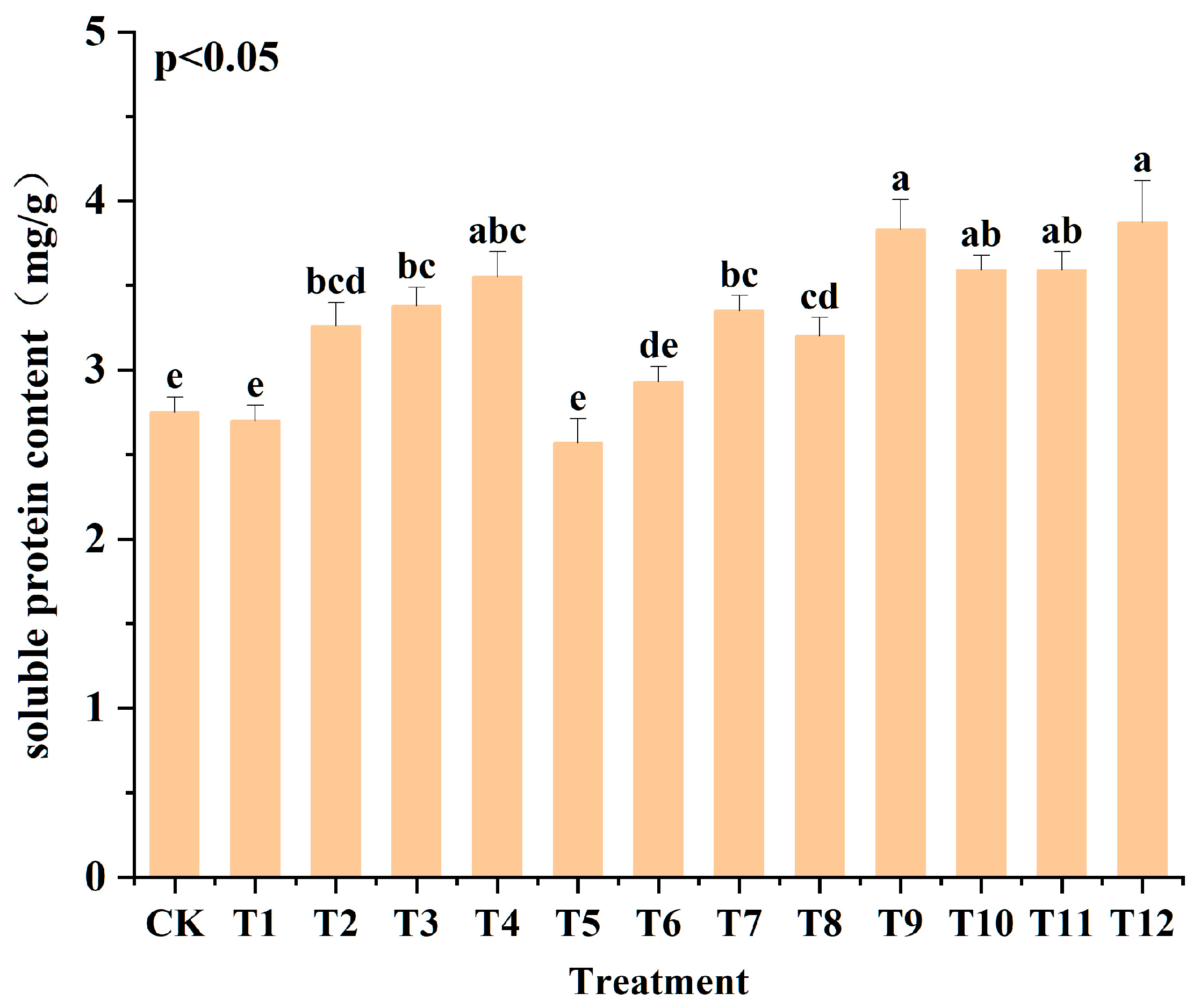
Overall, soluble protein content in seedlings varied significantly across substrate treatments (p < 0.05; Figure 4). The soluble protein content of T9 (3.83 mg/g) and T12 (3.87 mg/g) were higher than other groups, but there was no significant difference between these two groups. T5 exhibited the lowest soluble protein content (2.57 mg/g), which was 1.3 mg/g lower than the maximum value. Contrary to the findings for the growth parameters, Helleborus × hybridus seedlings possessed a higher soluble protein content when cultivated in substrates containing domestic peat, provided the mineral soil component was held constant. Conversely, the use of cocopeat as the organic component resulted in a lower soluble protein content.
Figure 4.
Changes in soluble protein content in seedlings under different treatments. (The vertical coordinate represents the soluble protein content (mg/g). The horizontal coordinates represent the 13 treatment groups CK, T1–T12). Different lowercase letters indicate significant differences (p < 0.05), as determined by LSD’s (least significant difference) multiple range test.
3.6. Effect of Different Substrate Compositions on Soluble Sugar of Seedlings
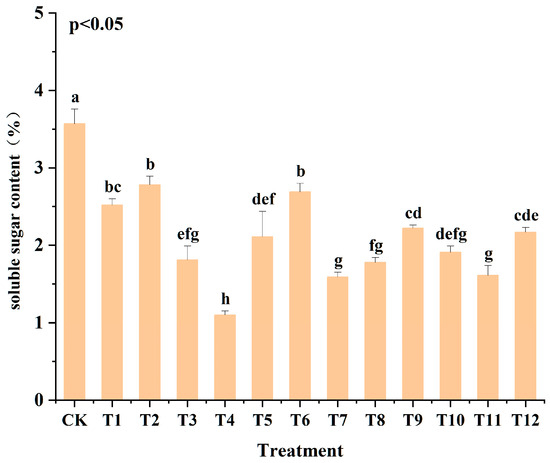
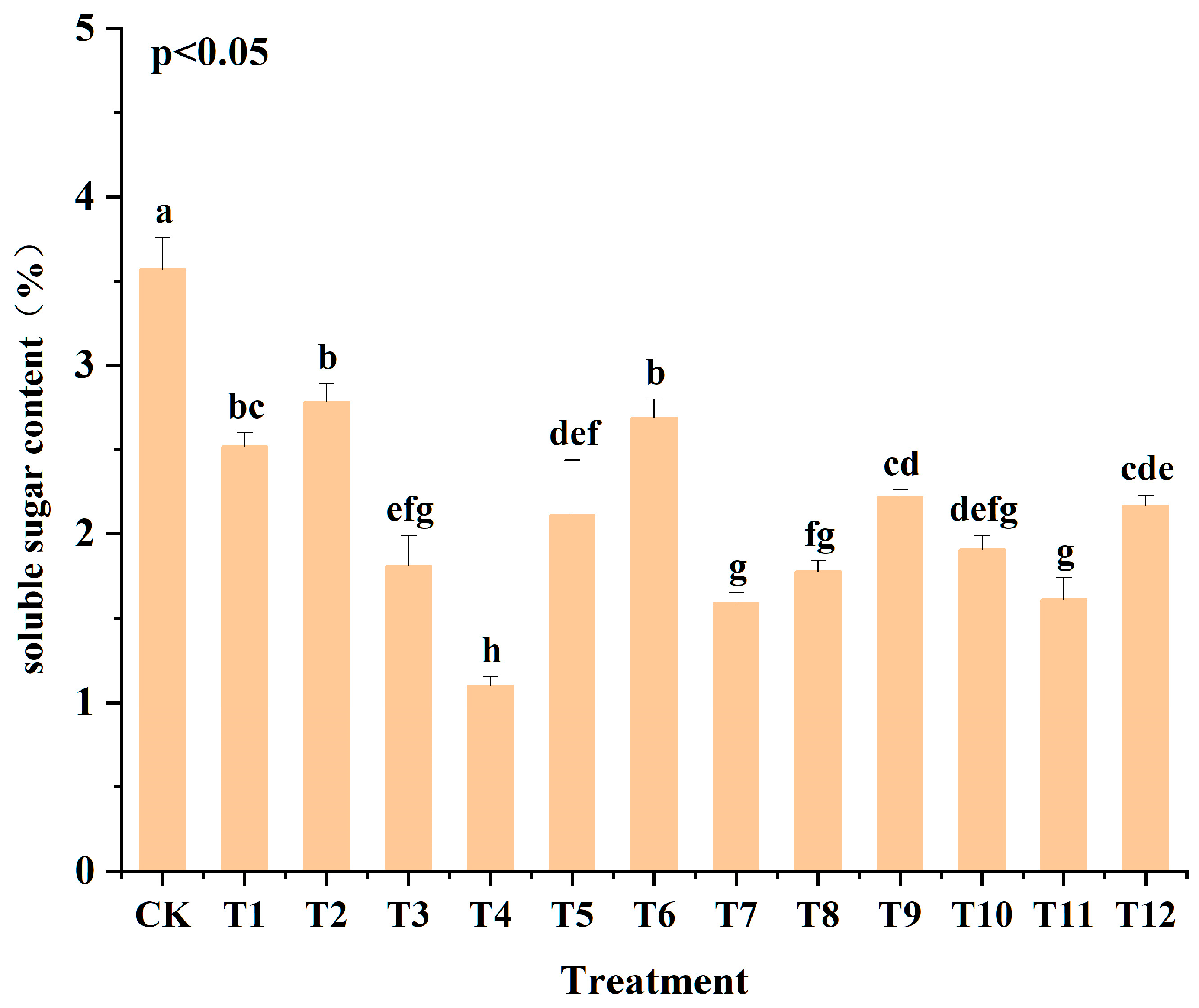
Figure 5 illustrates the variations in soluble sugar content among different seedling groups. The culture medium composition significantly influenced the soluble sugar content (p < 0.05). The CK treatment exhibited the highest soluble protein content (3.57%), whereas the T7 treatment had the lowest content (1.58%). Furthermore, the CK treatment group had significantly higher levels of soluble sugar compared to the other treatment groups. When the mineral soil component was held constant, seedlings grown in substrates containing moss peat exhibited a higher soluble sugar content.
Figure 5.
Changes in soluble sugar content in seedlings under different treatments. (The vertical coordinate represents the soluble sugar content (mg/g). The horizontal coordinates represent the 13 treatment groups CK, T1–T12). Different lowercase letters indicate significant differences (p < 0.05), as determined by LSD’s (least significant difference) multiple range test.
3.7. Comprehensive Evaluation of Different Substrate Compositions
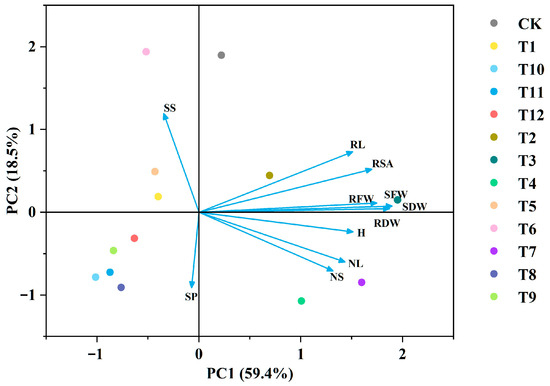
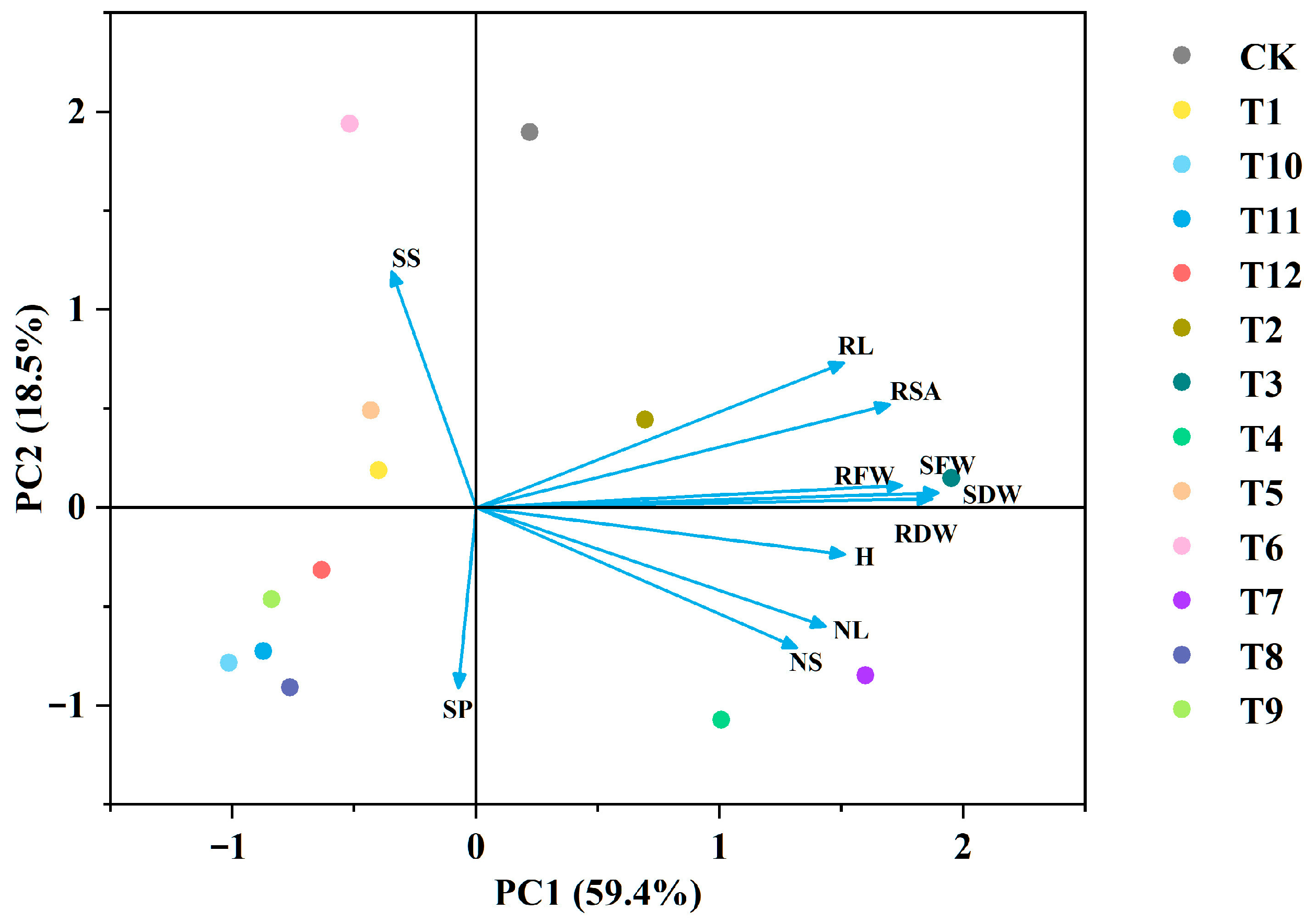
Principal component analysis (PCA) was employed to evaluate the growth performance of seedlings across different composite substrates. A higher comprehensive score derived from the analysis indicates superior growth conditions for seedlings in the corresponding substrate (Figure 6). There are 4 significant components, which account for 89.24% of the total variance. As shown in the matrix in Table 5, the relationship between indicators and principal components is defined by loading values, each representing the correlation coefficient between a component and its corresponding variable. A loading coefficient greater than 0.4 is generally considered to signify a strong correlation.
Figure 6.
Principal component analysis (PCA) based on the growth parameters and physiological indices of seedlings under different growing media. H, plant height; NS, number of shoots; NL, number of leaves; SDW, shoot dry weight; SFW, shoot fresh weight; RDW, root dry weight; RFW, root fresh weight; RL, root length; RSA, root surface area; SS, soluble sugar; SP, soluble protein.
Table 5.
Initial factor load matrix.
The growth of seedlings was thoroughly evaluated using composite ratings (F). Based on this analysis, the optimal substrate composition for promoting seedling growth was identified (Table 6). According to the comprehensive scores derived from the PCA, the ranking of the composite growth score indices of Helleborus × hybridus seedlings across different treatment groups, from highest to lowest, was as follows: T3 > T7 > T4 > T2 > CK > T6 > T12 > T5 > T9 > T1 > T10 > T8 > T11. The result indicates that T3 (moss peat: vermiculite = 1:1, v:v) provided the most favorable growth conditions, followed by T7 (cocopeat: vermiculite = 1:1, v:v) as a secondary suitable option. In contrast, T10 (domestic peat: kanuma soil = 1:1, v:v), T8 (cocopeat: perlite: kanuma soil: vermiculite = 3:1:1:1, v:v:v:v), and T11 (domestic peat: vermiculite = 1:1, v:v) demonstrated the poorest performance and are not recommended for use in container cultivation of seedlings.
Table 6.
Comprehensive evaluation of different substrate composition, F represents the comprehensive score of the media components, and Rank is the ranking grade of each treatment. Fn is the score of this substrate combination in the nth component (n = 1, 2, 3, 4). By multiplying each score by its corresponding weight and summing them, we obtain the F value.
4. Discussion
The growth substrate for potted plants directly influences root-system development, photosynthetic capacity, and nutrient uptake, all of which play important roles in plant growth. Studies on the soilless cultivation of potted ornamentals—such as chrysanthemum [21], petunia [14], calendula [17], and rose [32], have been reported in the literature. Hellebores, potted plants with high ornamental value and a distinctive flowering period, are widely used in landscaping. Currently, potted hellebores have emerged as a significant domestic market demand, so it is particularly necessary to find a substrate that is suitable for the growth of hellebores with lightweight and inexpensive properties [6]. In other studies on potted ornamental plants, potted roses grown in a mix of vermiculite + coconut fiber and sand + coconut fiber achieved better growth results [33]. For petunias, a growing media composition of cocopeat, vermicompost, and vermiculite (2:1:1) is the optimal treatment, promoting better morphological development and achieving high-quality flower production [14]. This experiment observed the growth and physiological characteristics of Helleborus × hybridus seedlings under different media compositions. Our comprehensive evaluation identified the T3 (moss peat:vermiculite= 1:1, v:v) and T7 (cocopeat:vermiculite = 1:1, v:v) treatments as the most effective for promoting seedling growth. Although peat is often considered an ideal substrate component, its use is increasingly limited by environmental sustainability issues and high costs. Conversely, both coir and vermiculite offer compelling advantages, being more affordable, lightweight, and environmentally friendly. This makes their combination a promising substrate formula for producing potted Helleborus. These findings share similarities with common substrate formulation strategies for other commercially important ornamental plants, including roses and petunias.
4.1. The Physical and Chemical Properties of the Substrate Compositions
The physical and chemical properties of the substrate directly influence plant growth, with bulk density, porosity, pH, EC, and nutrient content being particularly critical [16]. Generally, the suitable bulk density for potted plant growth ranges from 0.1 to 0.8 g/cm3 [34], with total porosity spanning from 54% to 96% [35]. For Helleborus × hybridus seedlings, the optimal pH is 5.3–7.4 and the optimal EC is 0.5–1.0 dS m−1 [1,36]. The root system of Helleborus × hybridus requires a loose physical soil structure for its growth. Bulk density, which measures the looseness and compactness of a substrate, can inhibit root growth at excessively high levels, thereby affecting plant yield and quality [37]. Consequently, within the optimal range for cultivating potted Helleborus × hybridus, a lower substrate bulk density promotes root system development. Similarly, ornamental plants generally prefer loose, well-aerated soil environments. This is because adequate porosity ensures a favorable balance between water retention and aeration, facilitates nutrient regulation, and provides the physical space necessary for root elongation and metabolic activity [37]. Therefore, an ideal soilless cultivation substrate should possess a low bulk density and high total porosity [38].
Regarding chemical properties, substrates containing coir exhibited lower total nitrogen and phosphorus contents. This deficiency results from the inherently low levels of these nutrients in coir compared to domestic peat and moss peat [39]. Treatments with added vermiculite showed increased potassium levels. Vermiculite is a form of expanded mica, produced by heating at over 1000 °C [40], which naturally contains a certain amount of potassium [41]. In this study, treatments T3 (moss peat:vermiculite = 1:1, v:v) and T7 (cocopeat:vermiculite = 1:1) provided an optimal combination of favorable physical properties and a nutritional profile that fully supported the development of Helleborus × hybridus seedlings, thus creating a relatively ideal environment for their growth.
4.2. Growth Parameters and Biomass of Helleborus × hybridus Seedlings
The composition of different growing media distinctly influenced their physical and chemical properties [42]. These parameters, in turn, regulated plant growth by affecting nutrient availability, water usability, and substrate aeration. The results indicate that the addition of vermiculite effectively improved plant growth performance. Specifically, T3 (moss peat:vermiculite = 1:1) demonstrated superior root length, root surface area, and plant height compared to other groups. This advantage is attributed to its adequate N, P, and K content, lower bulk density, and higher porosity. T7 (cocopeat:vermiculite = 1:1) performed well in terms of shoot and leaf number, which is also likely due to the favorable bulk density and porosity of the substrate. A similar trend was observed for the biomass of seedlings. Furthermore, substrates containing moss peat showed good performance in promoting seedling height, a result attributed to the higher nutrient content in the moss peat. This is consistent with findings in Oncidium baueri, where the addition of vermiculite as a mineral amendment has also been shown to achieve better growth [43].
4.3. Chlorophyll Content of Helleborus × hybrids Seedlings
Chlorophyll is the primary pigment involved in plant photosynthesis and also serves as one of the indicators for assessing plant growth status [44]. Higher photosynthetic activity generally corresponds to increased chlorophyll content, leading to greater nutrient production [45,46,47]. In this experiment, the impact of various composite substrates on the chlorophyll content of Helleborus × hybrids seedlings was not significant, which indicates that the compositions of these substrate groups do not affect the photosynthetic capacity of the seedlings.
This phenomenon is likely attributable to the low-light conditions of the forested experimental site. Given that Helleborus × hybrids seedlings cannot tolerate direct sunlight and require shading or partial shading. In this low-light conditions, all seedlings likely conducted photosynthesis at a similar rate, regardless of the substrate. Therefore, we can conclude that plant growth depends not just on the growing media, but also on external environmental conditions like light and temperature [48].
4.4. Soluble Sugar and Protein of Helleborus × hybrids Seedlings
In terms of soluble protein content in plants, the T9 and T11 treatment groups significantly outperformed the other groups. Conversely, the CK showed a marked difference from the other treatment groups in soluble sugar content. Notably, the contents of soluble sugar and soluble protein tend to gradually accumulate within plants under conditions of either soil water deficit or excessive soil moisture [49,50,51]. Therefore, the substrate components of these three treatment groups are less optimal than those of other groups in terms of aeration and water permeability. The CK group contained only moss peat which dried out more rapidly under the uniform watering regime. This occurred because peat tends to shrink and becomes hydrophobic upon drying. The resulting mild drought stress led to an accumulation of soluble sugars in the seedlings. A response also documented in Chimonanthus praecox [52]. While the T9 (domestic peat:perlite = 1:1) and T11 (domestic peat:perlite:kanuma soil:vermiculite = 3:1:1:1) showed unremarkable physical properties, their high nitrogen content accounts for their elevated soluble protein levels. This aligns with findings from Yang Liu et al., which indicate that soluble protein content rises with increased soil water and nitrogen availability [29].
4.5. Comprehensive Evaluation of the Composition of Substrate
Morphological development and physiological parameters of Helleborus seedlings were systematically evaluated using principal component analysis (PCA) to assess thirteen different substrate compositions. The results demonstrated that the T3 treatment group (peat:vermiculite = 1:1, v:v) exhibited the optimal performance. Vermiculite is characterized by its light weight, soft texture, and sterile structure. This inorganic component can be blended with organic substrates to enhance aeration and porosity in less porous substrates [53]. Therefore, the T3 treatment, which contains vermiculite, can be considered an ideal growth substrate for Helleborus × hybridus seedlings. However, the medium composition of the T3 treatment group still contained a portion of moss peat, failing to meet current needs for low-carbon sustainability and production cost savings. Moreover, compared to peat, cocopeat readily absorbs water but does not release it as easily as peat. Cocopeat provides stability for crop production owing to its low chemical reactivity to moisture changes and is employed in soilless strawberry systems to improve profits and productivity [54,55]. As a sustainable alternative, T7 treatment, which substitutes peat with coir in the vermiculite mixture, presents a viable option despite its slightly lower PCA score. Awang et al. demonstrated that a mixture of coconut coir and inorganic substrates improved the growth medium for Celosia cristata [56]. Similarly, Tanya et al. revealed that chrysanthemums exhibited superior growth performance when cultivated in a mixed substrate of cocopeat and vermiculite [28]. However, compared to peat, cocopeat does not provide more nutrients. Furthermore, the fiber content in commercial cocopeat products is inconsistent. Substrates with excessively high coir fiber content can retard seedling growth. Therefore, selecting a coir substrate with moderate fiber content and low cost presents a challenge for the potted production of Helleborus.
Generally, the substrate composition used as a growth medium for plants can significantly influence plant growth. Furthermore, different soilless substrates, due to their distinct physical and chemical properties, foster unique microbial communities [57]. These microbes, in turn, affect the compatibility between the plant and the substrate. A diverse substrate composition can modulate microbial activity, ultimately reducing nitrogen loss, improving cation exchange capacity, and enhancing root disease resistance [58].
Helleborus is a popular ornamental plant worldwide, but as an emerging flower in China, there is a lack of theoretical guidance for its commercial production. The findings of this study address this gap by providing the horticultural industry with a suitable substrate formulation. Before large-scale cultivation, optimizing substrate formulations combined with scientific irrigation and fertilization protocols will enable both high-quality and standardized commercial production of potted Helleborus.
5. Conclusions
With growing demand for potted plants in urban floral markets, there is an urgent need for lightweight and efficient growth substrates that reduce cultivation costs and facilitate transportation and display. Potted hellebore holds high attention and promising development prospects in the floral market, making the substrate used for cultivating this ornamental plant increasingly crucial. In this study, one-year-old Helleborus × hybridus seedlings were grown in thirteen different composite substrates. The findings indicate that vermiculite best promotes growth when organic components are the same, and moss peat yields the highest-quality plants when mineral components are equal. Through a comprehensive analysis of morphological and physiological indicators, it was concluded that T3 (moss peat:vermiculite = 1:1, v:v) and T7 (cocopeat:vermiculite = 1:1, v:v) are suitable substrates for the growth of Helleborus × hybridus seedlings. From the perspectives of environmental sustainability and cost efficiency, we recommend adopting the cocopeat vermiculite mixture (T7) for commercial cultivation. This substrate combination ensures robust plant growth while meeting the large-scale production requirements of the ornamental plant market. It is also advisable to use growing media with low bulk density and high porosity for other potted ornamental plants.
Author Contributions
Conceptualization, Y.P. and J.G.; methodology, Y.P.; software, Y.P.; validation, J.G. and X.C.; formal analysis, Y.P.; investigation, J.G.; resources, X.C.; data curation, X.S.; writing—original draft preparation, Y.P.; writing—review and editing, L.D.; visualization, X.S.; funding acquisition, L.D. All authors have read and agreed to the published version of the manuscript.
Funding
This research was supported by the Shaanxi Province Key Research and Development Program (grant No. 2024NC-YBXM-076), the Science and Technology Plan Project of Yangling Demonstration Zone, China (grant No. 2025CYFZ-14), and the Fundamental Research Funds for the Central Universities (Z1090323181).
Data Availability Statement
The original contributions presented in this study are included in the article. Further inquiries can be directed to the corresponding author.
Conflicts of Interest
The authors declare no conflict of interest.
Appendix A
Table A1.
Mean monthly meteorological data recorded at Northwest A&F University, during 2024.
Table A2.
Plant height, leaf number, and shoot number of the seedlings at each growth stage.
References
- Henschke, M.; Czuchaj, P.K.; Szczepaniak, S.J. Growth and flowering of Helleborus argutifolius (Viviani) grown in pots depending on substrate type. Acta Agrobot. 2014, 67, 91–96. [Google Scholar] [CrossRef] [Scilit]
- Kušen, M.; Židovec, V.; Prebeg, T. Ornamental characteristics, assortment and winter flowering hellebores (Helleborus spp.) cultivation. Glas. Zaštite Bilja 2021, 44, 4–12. [Google Scholar] [CrossRef] [Scilit]
- Gong, X.; Cao, X.; Chen, C.; Peng, Y.; Zhang, J.; Shi, X.; Du, L. Non-deep simple epicotyl morphophysiological dormancy in seeds of Helleborus thibetanus (Ranunculaceae). Sci. Hortic. 2024, 338, 113685. [Google Scholar] [CrossRef] [Scilit]
- Lowder, A.W.; Kraus, H.T.; Blazich, F.A.; Warren, S.L. Day/Night temperatures influence growth and photosynthesis during containerized production of selected species of Helleborus (Hellebores). J. Environ. Hortic. 2010, 28, 179–186. [Google Scholar] [CrossRef] [Scilit]
- Zhang, R.; Dao, P.; Duan, Y.; Li, R. Cultivation Techniques and Value Analysis of Helleborus in China. J. Agric. 2024, 14, 72. [Google Scholar]
- Šušek, A. Perspectives of Christmas rose (Helleborus niger L.) genetic improvement. Agricultura 2016, 13, 11–19. [Google Scholar] [CrossRef] [Scilit]
- Cuny, E.; Klingler, F. Efficient Isolation and Structure Analysis of (+)-Ranuncoside, a Unique Tricyclic Spiroacetal Glycoside, from Christmas Rose (Helleborus niger L.). Nat. Prod. Commun. 2022, 17. [Google Scholar] [CrossRef] [Scilit]
- Niimi, Y.; Han, D.; Abe, S. Temperatures affecting embryo development and seed germination of Christmas rose (Helleborus niger) after sowing. Sci. Hortic. 2005, 107, 292–296. [Google Scholar] [CrossRef] [Scilit]
- Cuny, E. Bioactive Ingredients of Helleborus niger L. (Christmas Rose): The Renaissance of an Old Medicinal Herb—A Review. Nat. Prod. Commun. 2023, 18. [Google Scholar] [CrossRef] [Scilit]
- Li, S.; Chen, X.; Tang, J.; Zhang, D.; Jiang, Y.; Zhang, H.; Song, X.; Wang, W.; Li, Y. Genus Helleborus: A comprehensive review of phytochemistry, pharmacology and clinical applications. Nat. Prod. Res. 2025, 39, 888–904. [Google Scholar] [CrossRef] [Scilit]
- Felenda, J.E.; Turek, C.; Mörbt, N.; Herrick, A.; Müller, M.B.; Stintzing, F.C. Preclinical evaluation of safety and potential of black hellebore extracts for cancer treatment. BMC Complement. Altern. Med. 2019, 19, 105. [Google Scholar] [CrossRef] [Scilit]
- Nejad, A.R.; Ismaili, A. Changes in growth, essential oil yield and composition of geranium (Pelargonium graveolens L.) as affected by growing media. J. Sci. Food Agric. 2013, 94, 905–910. [Google Scholar] [CrossRef] [Scilit] [PubMed]
- Qiu, Z.; Wang, Q.; Zhang, J.; Zhou, W.; Chen, X.; Zhu, X. Comprehensive evaluation of the effects of different composite substrates on the growth of tree peony. Plant Growth Regul. 2025, 105, 861–874. [Google Scholar] [CrossRef] [Scilit]
- Singh, A.K.; Kumar, R.; Tomar, K.S.; Gupta, A.K.; Kumar, H.; Patel, R. Influence of potting media composition on quality flower production of petunia (Petunia hybrida). J. Plant Nutr. 2023, 46, 3101–3108. [Google Scholar] [CrossRef] [Scilit]
- Majkowska-Gadomska, J.; Mikulewicz, E.; Dobrowolski, A. Mineral nutrient concentrations in the rhizomes of ginger (Zingiber officinale Rosc.) grown in different horticultural substrates. J. Elem. 2018, 23, 333–339. [Google Scholar] [CrossRef] [Scilit]
- Ortiz-Delvasto, N.; Garcia-Ibañez, P.; Olmos-Ruiz, R.; Bárzana, G.; Carvajal, M. Substrate composition affects growth and physiological parameters of blueberry. Sci. Hortic. 2023, 308, 111528. [Google Scholar] [CrossRef] [Scilit]
- Kumar, R.; Singh, A.K.; Tomar, K.; Gupta, A.K. Effects of different media on growth and flowering traits of Calendula officinalis L. Bangladesh J. Bot. 2022, 51, 417–424. [Google Scholar] [CrossRef] [Scilit]
- Gruda, N.S. Advances in soilless culture and growing media in today’s horticulture—An editorial. Agronomy 2022, 12, 2773. [Google Scholar] [CrossRef] [Scilit]
- Atzori, G.; Pane, C.; Zaccardelli, M.; Cacini, S.; Massa, D. The role of Peat-Free organic substrates in the sustainable management of soilless cultivations. Agronomy 2021, 11, 1236. [Google Scholar] [CrossRef] [Scilit]
- Schober, T.; Präger, A.; Hartung, J.; Hensmann, F.; Graeff-Hönninger, S. Growth dynamics and yield formation of Cannabis (Cannabis sativa) cultivated in differing growing media under semi-controlled greenhouse conditions. Ind. Crops Prod. 2023, 203, 117172. [Google Scholar] [CrossRef] [Scilit]
- Lu, Y.; Zhou, T.; Guo, J.; Zhong, J.; Li, D.; Shi, H.; Liu, C.; Xiang, R.; Sun, M. Effects of substitute substrate, water, and fertilizer management on the growth of potted chrysanthemums. Horticulturae 2024, 10, 138. [Google Scholar] [CrossRef] [Scilit]
- Holman, J.; Bugbee, B.; Chard, J.K. A Comparison of Coconut Coir and Sphagnum Peat as Soil-Less Media Components for Plant Growth; Utah State Research and Scholarship (Utah State University): Logan, UT, USA, 2005. [Google Scholar]
- Popescu, G.C.; Popescu, M. Effects of different potting growing media for Petunia grandiflora and Nicotiana alata Link & Otto on photosynthetic capacity, leaf area, and flowering potential. Chil. J. Agric. Res. 2015, 75, 21–26. [Google Scholar] [CrossRef] [Scilit]
- Ors, S.; Anapali, O. Effect of soil addition on physical properties of perlite based media and strawberry cv. Camarosa plant growth. Sci. Res. Essays 2010, 5, 3430–3433. [Google Scholar]
- Sugita, H.; Morimoto, K.; Saito, T.; Hara, J. Effects of soils on environmental stability of spent MG-Based and CA-Based adsorbents containing arsenite. Sustainability 2024, 16, 4008. [Google Scholar] [CrossRef] [Scilit]
- Sabahy, A.; Bhansawi, A.; Ali, S.; El-Haddad, Z. Physical and chemical properties of some soilless media. Misr J. Agric. Eng. 2015, 32, 381–392. [Google Scholar] [CrossRef] [Scilit]
- Yue, H.F.; Zhou, M.; Hou, X.-K.; Yang, X.; Zhao, H.; Xu, M.S.; Wang, L.; Liu, H.M.; Wuyun, T.-N.; Zhu, G.P.; et al. Effects of nitrogen, phosphorus and potassium on phenotype, photosynthesis and biomass accumulation at juvenile phase of Prunus Armeniaca× Sibirica. Pak. J. Bot. 2022, 54, 577–588. [Google Scholar] [CrossRef] [Scilit]
- Thakur, T.; Grewal, H.S. Influence of potting media compositions on flower production of chrysanthemum (Chrysanthemum morifolium Ramat) cultivar Kikiobiory. J. Plant Nutr. 2019, 42, 1861–1867. [Google Scholar] [CrossRef] [Scilit]
- Liu, Y.; Zhang, Q.; Li, Y. Water-Fertilizer Coupling Impacts Osmotic Regulation Substances in Lonicera caeruleae Seedlings. Pol. J. Environ. Stud. 2022, 31, 2717–2728. [Google Scholar] [CrossRef] [Scilit]
- Gandonou, C.B.; Errabii, T.; Abrini, J.; Idaomar, M.; Senhaji, N.S. Selection of callus cultures of sugarcane (Saccharum sp.) tolerant to NaCl and their response to salt stress. Plant Cell Tissue Organ Cult. 2006, 87, 9–16. [Google Scholar] [CrossRef] [Scilit]
- Matsuda, R.; Kubota, C. Variation of Total Soluble Protein Content in Fruit among Six Greenhouse Tomato Cultivars. HortScience 2010, 45, 1645–1648. [Google Scholar] [CrossRef] [Scilit]
- Fascella, G.; Mammano, M.M.; D’Angiolillo, F.; Rouphael, Y. Effects of conifer wood biochar as a substrate component on ornamental performance, photosynthetic activity, and mineral composition of potted Rosa rugosa. J. Hortic. Sci. Biotechnol. 2017, 93, 519–528. [Google Scholar] [CrossRef] [Scilit]
- Colombo, R.C.; Favetta, V.; Faria, R.T.D. Substrates and irrigation levels for growing desert rose in pots. Cienc. Agrotecnologia 2018, 42, 69–79. [Google Scholar] [CrossRef] [Scilit]
- Guo, S. Research on solid cultivation substrates, current status, and development trends. Trans. Chin. Soc. Agric. Eng. 2005, z2, 1–4. [Google Scholar]
- Prasad, M. Physical, chemical and biological properties of coir dust. Int. Symp. Grow. Media Plant Nutr. Hortic. 1996, 450, 21–29. [Google Scholar] [CrossRef] [Scilit]
- Henschke, M.; Szczepaniak, S.; Czuchaj, P.; Kozik, E. The effect of calcium carbonate and top dressing with Peters Professional Special on the growth and flowering of Helleborus lividus Aiton. Folia Hortic. 2009, 21, 105–117. [Google Scholar] [CrossRef] [Scilit]
- Wang, Y.; Cao, T.; Li, J.; Zhou, H.; Zhang, H. Study on the main physicochemical characteristics of different plant cultivation substrates and their effects on standard roses. Plant Soil Environ. 2024, 70, 799–808. [Google Scholar] [CrossRef] [Scilit]
- Awang, Y.; Shaharom, A.S.; Mohamad, R.B.; Selamat, A. Chemical and physical characteristics of cocopeat-based media mixtures and their effects on the growth and development of Celosia cristata. Am. J. Agric. Biol. Sci. 2009, 4, 63–71. [Google Scholar] [CrossRef] [Scilit]
- Handreck, K.A. Properties of coir dust, and its use in the formulation of soilless potting media. Commun. Soil Sci. Plant Anal. 1993, 24, 349–363. [Google Scholar] [CrossRef] [Scilit]
- Schafer, G.; Lerner, B.L. Physical and chemical characteristics and analysis of plant substrate. Ornam. Hortic. 2022, 28, 181–192. [Google Scholar] [CrossRef] [Scilit]
- Gunter, M.E. Differentiation of commercial vermiculite based on statistical analysis of bulk chemical data: Fingerprinting vermiculite from Libby, Montana USA. Am. Mineral. 2005, 90, 749–754. [Google Scholar] [CrossRef] [Scilit]
- Singh, A.K.; Singh, R.; Kumar, R.; Gupta, A.K.; Kumar, H.; Rai, A.; Kanawjia, A.; Tomar, K.S.; Pandey, G.; Singh, B.; et al. Evaluating Sustainable and Environment Friendly Growing Media Composition for Pot Mum (Chrysanthemum morifolium Ramat.). Sustainability 2022, 15, 536. [Google Scholar] [CrossRef] [Scilit]
- Faria, R.T.D.; Rego, L.D.V.; Bernardi, A.; Molinari, H. Performance of differents genotyps of Brazilian orchid cultivation in alternatives substrates. Braz. Arch. Biol. Technol. 2001, 44, 337–342. [Google Scholar] [CrossRef] [Scilit]
- Rabinowitch, E.I. The role of chlorophyll in photosynthesis. Sci. Am. 1965, 213, 74–83. [Google Scholar] [CrossRef] [Scilit]
- Liu, X.; Li, L.; Li, M.; Su, L.; Lian, S.; Zhang, B.; Li, X.; Ge, K.; Li, L. AhGLK1 affects chlorophyll biosynthesis and photosynthesis in peanut leaves during recovery from drought. Sci. Rep. 2018, 8, 2250. [Google Scholar] [CrossRef] [Scilit]
- He, Y.; Li, Y.; Li, H.; Guo, Q. Effects of Different Ratios of Coal Gangue and to Garden Soil Composite Substrates on the Growth and Physiology of Rhododendron Delavayi Franch. Seedlings. J. Soil Sci. Plant Nutr. 2025, 25, 543–549. [Google Scholar] [CrossRef] [Scilit]
- Liu, Z.; Sun, N.; Yang, S.; Zhao, Y.; Wang, X.; Hao, X.; Qiao, Z. Evolutionary transition from C3 to C4 photosynthesis and the route to C4 rice. Biologia 2013, 68, 577–586. [Google Scholar] [CrossRef] [Scilit]
- Başari, M.; Pirlak, L. Pine Cone as a Plant Growing Media in Strawberry. Appl. Fruit Sci. 2025, 67, 346. [Google Scholar] [CrossRef] [Scilit]
- Carmo-Silva, A.E.; Francisco, A.; Powers, S.J.; Keys, A.J.; Ascensão, L.; Parry, M.A.; Arrabaça, M.C. Grasses of different C4 subtypes reveal leaf traits related to drought tolerance in their natural habitats: Changes in structure, water potential, and amino acid content. Am. J. Bot. 2009, 96, 1222–1235. [Google Scholar] [CrossRef] [Scilit] [PubMed]
- Bhattacharya, A. Soil Water Deficit and Physiological Issues in Plants; Springer Ebooks: Singapore, 2021. [Google Scholar]
- Wang, J.; Lin, W.; Zhao, Y.; Meng, C.; Ma, A.; Xue, L.; Kuang, Y.; Tian, P. Physiological and biochemical responses of Festuca sinensis seedlings to temperature and soil moisture stress. Funct. Plant Biol. 2017, 44, 1007. [Google Scholar] [CrossRef] [Scilit] [PubMed]
- Jiang, T.; Zhou, L. Effects of PEG simulated drought on the germination of Chimonanthus praecox seeds and the physiological response of seedlings to drought. Seed Sci. Technol. 2022, 50, 227–233. [Google Scholar] [CrossRef] [Scilit]
- De Faria, R.T.; Stegani, V.; Bertoncelli, D.J.; Alves, G.A.C.; De Assis, A.M. Substratos para o cultivo de orquídeas epífitas. Semin. Cienc. Agrar. 2018, 39, 2851. [Google Scholar] [CrossRef] [Scilit]
- Hellemans, B. Environmental Control and Paprika Growing Technique; Substratus Res. Center: Amsterdam, the Netherlands, 2006. [Google Scholar]
- Offord, C.A.; Muir, S.; Tyler, J.L. Growth of selected Australian plants in soilless media using coir as a substitute for peat. Aust. J. Exp. Agric. 1998, 38, 879. [Google Scholar] [CrossRef] [Scilit]
- Awang, N. Growth Dynamics of Celosia cristata Grown in Cocopeat, Burnt Rice Hull and Kenaf Core Fiber Mixtures. Am. J. Agric. Biol. Sci. 2010, 5, 70–76. [Google Scholar] [CrossRef] [Scilit]
- Montagne, V.; Charpentier, S.; Cannavo, P.; Capiaux, H.; Grosbellet, C.; Lebeau, T. Structure and activity of spontaneous fungal communities in organic substrates used for soilless crops. Sci. Hortic. 2015, 192, 148–157. [Google Scholar] [CrossRef] [Scilit]
- Ibekwe, A.M.; Poss, J.A.; Grattan, S.R.; Grieve, C.M.; Suarez, D. Bacterial diversity in cucumber (Cucumis sativus) rhizosphere in response to salinity, soil pH, and boron. Soil Biol. Biochem. 2010, 42, 567–575. [Google Scholar] [CrossRef] [Scilit]

Disclaimer/Publisher’s Note: The statements, opinions and data contained in all publications are solely those of the individual author(s) and contributor(s) and not of MDPI and/or the editor(s). MDPI and/or the editor(s) disclaim responsibility for any injury to people or property resulting from any ideas, methods, instructions or products referred to in the content. |
© 2025 by the authors. Licensee MDPI, Basel, Switzerland. This article is an open access article distributed under the terms and conditions of the Creative Commons Attribution (CC BY) license (https://creativecommons.org/licenses/by/4.0/).