Article

Silica Nanoparticles Improve Drought Tolerance in Ginger by Modulating the AsA-GSH Pathway, the Glyoxalase System and Photosynthetic Metabolism


1
Engineering Research Center of Ecology and Agricultural Use of Wetland, Ministry of Education/Hubei Key Laboratory of Waterlogging Disaster and Agricultural Use of Wetland, Yangtze University, Jingzhou 434023, China
2
College of Smart Agriculture, Chongqing University of Arts and Sciences, Chongqing 402160, China
3
Department of Plant Pathology, Yezin Agricultural University, Yezin, Nay Pyi Taw 15013, Myanmar
4
Institute of High Latitude Crops, Shanxi Agricultural University, Datong 037008, China
*
Authors to whom correspondence should be addressed.
These authors contributed equally to this work.
Horticulturae 2025, 11(12), 1467; https://doi.org/10.3390/horticulturae11121467
Submission received: 30 October 2025 / Revised: 27 November 2025 / Accepted: 3 December 2025 / Published: 4 December 2025
(This article belongs to the Special Issue Responses to Abiotic Stresses in Horticultural Crops—2nd Edition)

Abstract

Drought stress (DS) is a primary environmental factor that limits the production of ginger (Zingiber officinale Roscoe). Silica nanoparticles (SiNPs) have been shown to enhance drought resistance in ginger by modulating water relations. However, the specific impact of SiNPs on the antioxidant and glyoxalase system responses to DS remains unclear. To investigate the impact of SiNP100 on photosynthetic and antioxidant metabolism in ginger under DS, four treatments were designed in this study: control (CK), drought stress (DS), silica nanoparticles (SiNP100) application, and the combined treatment of DS and SiNP100 (DS + SiNP100). The results showed that SiNP100 alleviated DS-induced damage by improving photosynthetic parameters, chlorophyll content, and the efficiency of photosystems I and II. DS significantly increased the levels of reactive oxygen species (ROS), malondialdehyde (MDA), and methylglyoxal (MG), thereby inducing oxidative stress. SiNP100 mitigated this effect by reducing ROS accumulation and enhancing the activities of superoxide dismutase (SOD), peroxidase (POD), and catalase (CAT). Furthermore, SiNP100 boosted the ascorbate–glutathione (AsA-GSH) cycle by increasing the activities of key enzymes (APX, DHAR, MDHAR, and GR) and upregulating the expression of ZoDHAR2, ZoAPX1, and ZoGR2. This leads to higher ascorbate and glutathione levels in ginger. SiNP100 also bolstered the glyoxalase system, as evidenced by increased activities of glyoxalase I (Gly I) and glyoxalase II (Gly II), alongside the upregulation of ZoGLY1 expression, thereby promoting methylglyoxal (MG) detoxification. In conclusion, SiNP100 enhances drought tolerance in ginger by reinforcing the antioxidant defense system, AsA-GSH cycle, and methylglyoxal detoxification system, thereby protecting photosynthetic metabolism and promoting growth.

1. Introduction

Drought stands as a pivotal environmental stressor posing a significant threat to global agricultural productivity. It disrupts numerous physiological pathways in plants, triggering severe impairments such as disturbances to water and nutrient homeostasis, excessive accumulation of reactive oxygen species (ROS), and diminished activity of enzymes associated with photosynthesis and antioxidant defense systems [1]. Drought-induced oxidative stress is primarily triggered by the overproduction of ROS, including superoxide anions (O2), hydrogen peroxide (H2O2), and hydroxyl radicals (OH) [2]. In response, plants have evolved diverse resistance and adaptation mechanisms, encompassing both enzymatic and non-enzymatic antioxidant systems, to reduce oxidative damage [3]. The enzymatic antioxidants include catalase (CAT), superoxide dismutase (SOD), ascorbate peroxidase (APX), glutathione reductase (GR), dehydroascorbate reductase (DHAR), and monodehydroascorbate reductase (MDHAR). Non-enzymatic antioxidants include ascorbic acid (AsA), glutathione (GSH), alkaloids, non-protein amino acids, and phenolic compounds (e.g., phenols, flavonoids, and carotenoids) [4]. The AsA-GSH cycle is crucial for safeguarding cells against oxidative damage and relies on the coordinated function of key antioxidant enzymes (APX, MDHAR, DHAR, and GR) and metabolites (AsA and GSH) [5]. Additionally, methylglyoxal (MG), a cytotoxic byproduct of glycolysis and photosynthesis, accumulates in plants under abiotic stress [6]. At low concentrations, MG functions as a signal molecule, with its homeostasis maintained through the synchronized operation of MG-producing and scavenging systems, including glyoxalase I (Gly I), glyoxalase II (Gly II), and glyoxalase III (Gly III) [7]. Overall, the AsA-GSH cycle and glyoxalase system are critical for enhancing plant resilience to drought stress (DS). Their synergistic cooperation in drought-stressed plants warrants further investigation to develop effective strategies for mitigating the harmful effects of drought.
Studies have shown that the introduction of exogenous substances is an effective strategy for enhancing plant drought resistance [1,8]. Silicon, the second most prevalent mineral in the soil after oxygen, has been extensively documented to diminish abiotic stress in plants [9]. Silicon-mediated alleviation of DS primarily occurs through enhanced plant growth, increased nutrient absorption, improved photosynthetic rates, and activation of the antioxidant defense system [4]. Recently, nanoparticles (NPs) have gained considerable attention for their ability to help plants overcome abiotic stresses, owing to their smaller structure, which allows for easier penetration of leaf and cell wall pores, and a higher surface-to-volume ratio [10]. Silica nanoparticles (SiNPs) have been shown to positively impact plant growth under abiotic stress through various mechanisms, including promoting nutrient and water uptake, synthesizing osmotic adjustment compounds, modulating antioxidant enzyme activity and reducing ROS levels [11,12]. For instance, Zhu et al. [13] reported that exogenous application of SiNP100 played a critical role in maintaining water balance, regulating stomatal opening, and controlling root water absorption in ginger under DS. In strawberry, the addition of 50 mg/L SiNPs significantly improved overall plant growth by increasing osmolytes, chlorophyll content, and chlorophyll fluorescence [14]. Liang et al. [11] found that SiO2-NPs alleviated salt and low-temperature stress in cotton seedling by reducing the Na+/K+ ratio and enhancing CAT and GR activities. However, a comprehensive comparative analysis of the effects of SiNPs on ROS-scavenging and MG-detoxifying systems in drought-stressed plants is still lacking.
Ginger (Zingiber officinale Roscoe), an important culinary spice with significant nutritional and medicinal value [15], has been cultivated and used in China for over 2000 years. As the world’s leading producer, consumer, and exporter of ginger, China has experienced a steady surge in the demand for this crop [16,17]. However, ginger is particularly vulnerable to DS, especially during the growth and development stages of rhizomes. Thus, exploring strategies to mitigate the negative impacts of drought on ginger is essential for sustaining agricultural productivity. Our previous studies showed that SiNPs can enhance the drought resistance of ginger [13], the underlying mechanisms remain relatively unexplored. Therefore, this study aimed to investigate the effects of SiNPs on the drought resistance of ginger, with a specific focus on photosynthetic performance, the antioxidant defense system, and the glyoxalase detoxification pathway. In addition, key genes involved in the antioxidant defense and glyoxalase metabolic pathways were analyzed. This study establishes a theoretical basis for utilizing SiNPs to enhance drought resistance in ginger.

2. Materials and Methods

2.1. Plant Material and Treatment

The “Fengtou” ginger was planted in plastic pots (25 × 30 cm) with one plant per pot, utilizing a uniform blend of soil, sand, and farm manure in a 1:1:1 ratio. SiNPs were procured from Sigma-Aldrich (St. Louis, MO, USA) (Lot 637238, 99.5% purity, particle size of 10–20 nm). The pots were positioned in the greenhouse kept at 26 °C, with a 16 h photoperiod and an 8 h dark phase, and a relative humidity of 65–75%.
Fifty days after sowing, 50–60 cm gingers were selected and treated as follows: (1) Control (CK): Distilled water (5 mL) was sprayed on both sides of all ginger leaves at 100% field capacity (FC); (2) SiNP100: Foliar treatment with 100 mg L−1 SiNPs (5 mL) at 100% FC; (3) Drought stress (DS): Distilled water (5 mL) was applied to the ginger leaves at 50% FC; (4) Drought + SiNP100 (DS + SiNP100): 100 mg L−1 SiNPs were sprayed on ginger leaves at 50% FC. The first spray was 7 days prior to reaching 50% FC in the DS, and DS + SiNP100 treatments, followed by two additional foliar applications 10 and 20 days after FC reached 50%. All plants were measured and sampled 35 d after treatment.

2.2. FDA-PI Staining in Ginger Root

Ginger root tips (1 cm) were stained with 5 μg·mL−1 fluorescein diacetate (FDA) for 5 min, followed by 3 μg·mL−1 propidium iodide (PI) for 10 min. FDA and PI were purchased from Sigma-Aldrich (St. Louis, MO, USA). After staining, the samples were rinsed three times with ddH2O. Root vitality was assessed by examining the samples under a fluorescence microscope (Carl Zeiss AG, Jena, Germany), where viable cells exhibited green fluorescence and dead cells exhibited red fluorescence.

2.3. Analysis of Chlorophyll Content, Photosynthetic Parameters and Chlorophyll Fluorescence

The first fully expanded leaf (from the top) was collected to determine the chlorophyll content 35 d after treatment. Leaf samples (0.2 g) were extracted with 10 mL of extracting solution (contains ethanol, acetone, and water) and incubated at 25 °C for 24 h in the dark. After the green color of the leaves faded, the absorbance was measured at 665, 649, and 470 nm using a UV-2600 spectrophotometer (Shimadzu Corporation, Kyoto, Japan). The chlorophyll concentration was calculated based on absorbance. Chl a = (13.95 × A665 − 6.88 × A649) × V/(1000 × w), Chl b = (24.96 × A649 − 7.32 × A665) × V/(1000 × w), and Car = (1000 × A470 − 2.05 × Chl a − 114.8 × Chl b)/245 × V/(1000 × w). In the equation, V is the total volume of the extract (mL), and w is the fresh weight of the sample (g). The outcomes were expressed as µg per gram of fresh weight (µg−1 FW).
Chlorophyll fluorescence was measured on the third fully expanded leaf (from the top) 35 d after treatment. Leaves were fixed on the reaction plate and placed in a dark box for the dark reaction for 20 min. Maximum photochemical efficiency of PSII (Fv/Fm), photochemical quenching (qP), and nonphotochemical quenching (NPQ) were measured using a Modulated Chlorophyll Fluorometer (PAM 2500, Walz, Germany).
Net photosynthetic rate (Pn), transpiration rate (Tr), intercellular CO2 concentration (Ci), and stomatal conductance (Gs) were ascertained on the third fully expanded leaf (from the top) using a Yaxin-1102 portable photosynthetic analyzer (Beijing Yaxin Science and Technology Co., Ltd., Beijing, China). All assessments were conducted between 9:00–11:00 am after 35 d of treatment.

2.4. Analysis of Stomatal Aperture

The stomatal structures of the leaves were observed using scanning electron microscopy (SEM (JSM-7100F, Tokyo, Japan)) [18]. Suitable leaves were selected, cut and fixed in FAA fixative (70% ethanol: glacial acetic acid: formalin = 90:5:5). Leaves were dehydrated with 75%, 85%, 95%, 100%, and 100% alcohol for 20 min. After dehydration, the samples were soaked in isoamyl acetate overnight. Then, the samples were dried thoroughly for 4 h in a Critical Point Dryer (Rockville, MD, USA), sputter-coated with gold at 5 mA and 1.5 kV using a coater (Ion Sputter JFC-1100, Tokyo, Japan), and observed using a SEM (JSM-7100F, Tokyo, Japan). And using Image Pro Plus 6.0 software calculates the number of stomata per 1 mm2 leaf, which is the stomatal density, and randomly selects 6 complete and clear stomata from each image to calculate proportion of open stomata, area, length, and width.

2.5. Analysis of Enzyme Activities

Ginger leaves were collected 35 d post-treatment for the extraction of crude enzymes using a method adapted from Mittal et al. [19]. Samples (0.2 g) were frozen and subsequently ground in 5 mL of chilled PBS buffer (0.05 mol·L−1, pH 7.8). The processed was centrifugated (5425 R, Eppendorf AG, Hamburg, Germany) at 10,000 rpm for 20 min at 4 °C, and the obtained supernatant was used to determinate SOD, POD, CAT and APX activities.
SOD activity was measured according to the method described by Giannopolitis and Ries [20]. Specifically, 0.1 mL of the enzyme extract was added to 3 mL of a reaction mixture containing 65 mM PBS buffer, 13 mM methionine, 75 μM NBT, 10 μM EDTA, and 2 μM riboflavin. After mixing, the control tube was placed in the dark, while the determination tube was placed in the light for 15 min, and the absorbance was measured using a UV-2600 spectrophotometer (Shimadzu Corporation, Kyoto, Japan) at 560 nm.
POD activity was measured as described by Nickel and Cunningham [21]. The enzyme extract (0.3 mL) was mixed with 25 mM guaiacol solution and 13 mM H2O2. Subsequently, the absorbance was measured using a UV-2600 spectrophotometer (Shimadzu Corporation, Kyoto, Japan) at 470 nm.
CAT activity was measured as described by Beers et al. [22]. briefly, 0.1 mL of enzyme extract was mixed with 20 mM H2O2 solution, and the absorbance was measured using a UV-2600 spectrophotometer (Shimadzu Corporation, Kyoto, Japan) at 240 nm.
APX activity was measured as described by Nakano et al. [23]. Briefly, 50 μL of the enzyme extract was added to a reaction mixture containing ascorbate (AsA), and the decrease in absorbance was measured using a UV-2600 spectrophotometer (Shimadzu Corporation, Kyoto, Japan) at 290 nm.
GR activity was measured as described by Hasanuzzaman et al. [24]. Briefly, the crude enzyme solution was extracted from 0.2 g of sample with a pre-cooled extraction buffer (50 mM Tris-HCl, pH 7.5, 1 mM EDTA, 1 mM DTT). The reaction system (1 mL) contained 50 mM potassium phosphate buffer (pH 7.5), 1 mM EDTA, 1 mM GSSG, and 0.1 mM NADPH. The decrease in absorbance was measured using a UV-2600 spectrophotometer (Shimadzu Corporation, Kyoto, Japan) at 340 nm.
DHAR and MDHAR activities were measured as described by Hasanuzzaman et al. [25]. Briefly, the crude enzyme solution was extracted from 0.2 g of sample with a pre-cooled potassium phosphate buffer (50 mM, pH 7.5, containing 0.1 mM EDTA). DHAR activity was determined by measuring the rate of increase in absorbance at 265 nm in the reaction system containing 2.5 mM GSH and 0.2 mM DHA. MDHAR activity was determined by measuring the oxidation rate of NADH in a reaction system containing 0.2 mM NADH and MDHA produced by 0.5 mM ascorbic acid (AsA) at 340 nm.
Gly I and Gly II activities were determined per the methodology described by Hasanuzzaman et al. [25]. Samples (0.2 g) were extracted using precooled Tris-HCl buffer (50 mM, pH 7.5, containing 1 mM DTT). Gly I activity was determined by measuring the formation rate of S-D-lactylglutathione (SLG) in a reaction system containing 1 mM GSH and 1 mM methylglyoxal (MG) at 240 nm. Gly II activity was determined by measuring the hydrolysis rate of SLG in the reaction system containing 0.2 mM SLG at 240 nm.

2.6. Analyses of Histochemical Staining in the Ginger

3,3′-diaminobenzidine (DAB) and nitroblue tetrazolium (NBT) were used to visualize the H2O2 and O2 contents in the leaves of ginger, respectively. The third fresh leaf (from the top) of the ginger was separately placed in 50 mg mL−1 DAB staining solution and 50 mg mL−1 NBT staining solution. After the leaves turned brown and blue, they were placed in 90% ethanol to remove chlorophyll. The samples were photographed using a camera (Canon Inc., Tokyo, Japan).
For lipid peroxidation analysis, root tips ranging from 1–1.5 cm were stained using the Schiff reagent technique [26]. Specifically, ginger roots were soaked in Schiff’s reagent for 60 min until they turned pink, followed by washing with potassium sulfite solution (0.5%, w/v, K2SO3 in 0.05 M HCl). The samples were then photographed using a camera (Canon Inc., Tokyo, Japan).
Evans blue staining as outlined by Zhu et al. [26]. After 35 d, the root tips were soaked in 0.5% (w/v) Evans blue solution for 1 h, washed three times with phosphate buffer (50 mM, pH 7.5), boiled with 95% ethanol to remove chlorophyll, and photographed under an optical microscope (BX51, Olympus, Tokyo, Japan).

2.7. Determination of Related Substance Content

Contents of O2, H2O2, and malondialdehyde (MDA) were determined using a superoxide anion measurement kit, a hydrogen peroxide measurement kit (Solarbio, Beijing, China), and an MDA measurement kit (Jiancheng Bio, Nanjing, China), respectively. The determination method was according to the kit instructions.
Ascorbic acid (AsA) and dehydroascorbic acid (DHA) contents were determined according to the method described by Hasanuzzaman et al. [25]. Briefly, Samples (0.2 g) were ground and centrifuged (5425 R, Eppendorf AG, Hamburg, Germany) in an ice bath with a precooled 5% metaphosphoric acid solution. The supernatant was taken, one of which was reduced by dithiothreitol (DTT) to determine the total ascorbic acid content, and the other was directly determined for AsA content without reduction. Both of them were reacted with phosphoric acid, 2,2′-bipyridine and FeCl3 at 40 °C for 60 min, and the absorbance was measured at 525 nm. DHA content was calculated by the difference between total ascorbic acid and AsA. ASA = [(F1 − 1 − F0)/(F2 − 2 − F0)] × (C0 × V/W). DHA = [(F2 − F1)/(F2 − F0)] × (C0 × V). Among them, C is the concentration of ASA standard (µmol·mL−1), V is the total volume of the extract (mL), and W is the fresh weight of the sample (g).
GSH content was measured according to the method outlined by Hasan et al. [27]. Samples (0.2 g) were mixed with 5 mL of 10% TCA (v/v), and the homogenates were centrifuged (5425 R, Eppendorf AG, Hamburg, Germany) at 1500 rpm for 10 min at 4 °C. The reaction solution comprised 2.6 mL of PBS (150 mmol·L−1, pH 7.4), 0.15 mL of DTNB (6 mmol·L−1), and 0.25 mL of the supernatant. The mixture was maintained at 30 °C for 5 min, and the absorbance was measured at 420 nm using a UV-2600 spectrophotometer (Shimadzu Corporation, Kyoto, Japan).
Methylglyoxal (MG) content was determined based on the method described by Wild et al. [28]. A 0.2 g sample was extracted with 1 mL of 0.5 M cold perchloric acid. Then 300 μL of 7.2 mmol 1,2-diaminobenzene was introduced into 700 μL of the supernatant and maintained for 30 min. A series of calibration standard solutions methylglyoxal (Sigma-Aldrich, St. Louis, MO, USA) were prepared by diluting the stock solution to concentrations of 0, 5, 10, 20, 50, and 100 μmol·L−1. The standard curve was constructed by plotting the measured absorbance at 336 nm against the concentration of the calibration standards. The MG content in the samples was calculated by interpolating their measured absorbance at 336 nm onto this standard curve.
GSSG activity was determined using a GSSG activity kit (Suzhou Grace Biotechnology Co., Ltd, Suzhou, China). The determination method was according to the kit instructions.

2.8. RT-qPCR Analysis

Nine candidate genes involved in AsA-GSH cycle were determined by RT-qPCR using a CFX 96 Real-Time PCR system (Bio-Rad, Hercules, CA, USA). The primer sequences were designed using Primer Premier 5.0. The relative expression levels of were calculated using the 2−ΔΔCt method using RBP as the internal standard.

2.9. Statistical Analysis

The test data were processed and plotted using SPSS 25.0 (IBM Corp., Armonk, NY, USA), and Microsoft Excel 2018 (Microsoft Corp., Redmond, WA, USA). Duncan’s multiple tests were performed at a p-value of 0.05. Data in figures are means ± SE (n = 3–8).

3. Results

3.1. Effects of SiNP100 on the Biomass of Ginger

Drought stress (DS) results in wilted curled leaves while the wilted and curled leaves were largely alleviated by SiNP100 addition (Figure 1(A1–A4)), suggesting that the exogenous application of SiNP100 might be relief the damage caused by DS. Figure 1(B1–B4) shows the root morphology of the different treatments. DS results in smaller root as compared with CK, while SiNP100 addition improved the growth of root under stress condition. As shown in Figure 1C1–C4, DS significantly reduced root vitality, while the application of exogenous SiNP100 significantly increased root vitality. DS significantly reduced the fresh weight of root, stem, leaf and rhizome of ginger by 37.84%, 61.64%, 53.49% and 65.23%, respectively. DS + SiNP100 substantially increased the levels of these indexes compared with DS (Figure 1D–G).

3.2. Effects of SiNP100 on Photosynthetic Pigments and Photosynthesis-Related Parameters

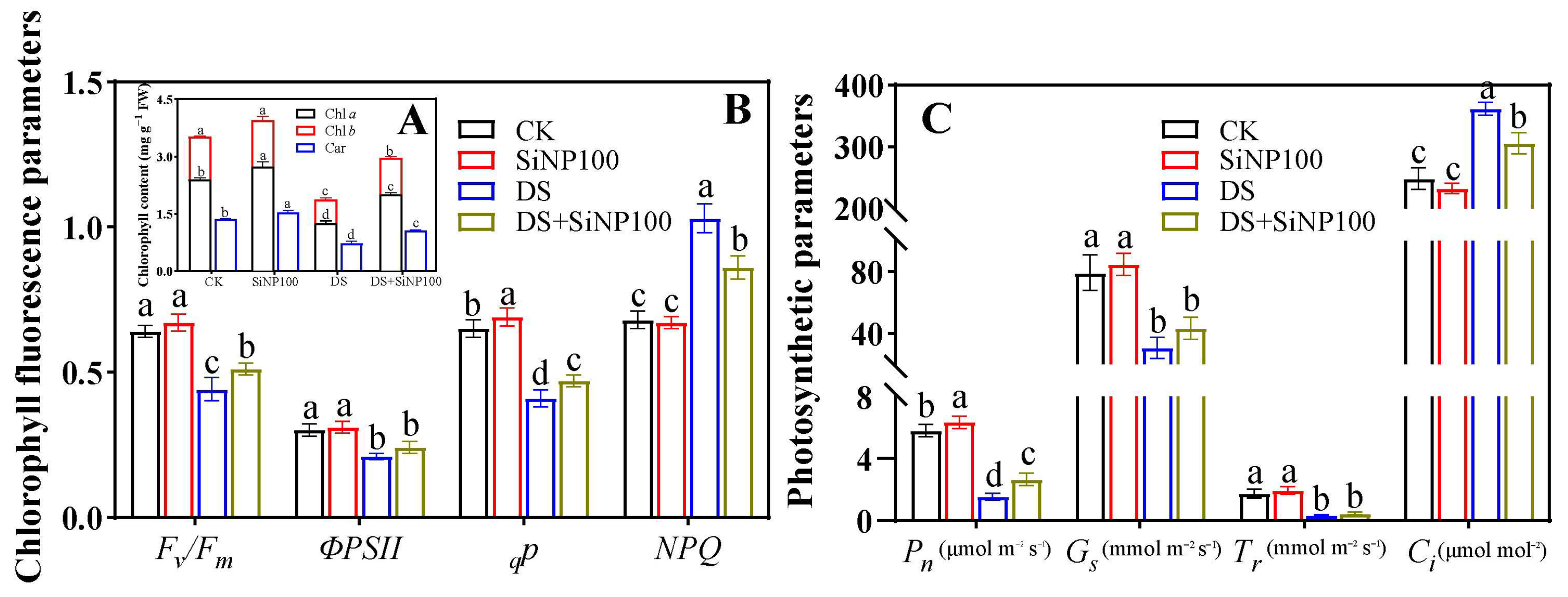
The foliar application of SiNP100 under normal conditions, resulted in varying improvements in photosynthetic pigment content, with significant increases in Chl a and carotenoids (Car) contents compared to CK (Figure 2A). Compared to CK, DS significantly reduced the content of Chl a, Chl b, and Car by 48.75%, 44.14%, and 46.67%, respectively. However, exogenous SiNP100 application under drought conditions substantially mitigated these decreases.
Under well-watered conditions, as compared with CK, SiNP100 exert no significant effect on the fluorescence parameters of ginger leaves. DS resulted in substantial reductions in Fv/Fm, qP, and ΦPSII by 33.33%, 30%, and 36.92%, respectively, compared to the control. Compared with DS, DS + SiNP100 treatment significantly enhanced Fv/Fm and qP, whereas ΦPSII did not show a significant increase. DS also caused a marked increase in NPQ by 53.84% relative to the control, which was significantly reduced by 16.50% upon SiNP100 application (Figure 2B).
Compared to the control, foliar application of SiNP100 under normal conditions, led to increases in Pn, Gs, and Tr, with Pn showing the most significant change. Under DS, Pn, Gs, and Tr were significantly reduced by 73.45%, 61.44%, and 78.86%, respectively, while Ci increased by 45.72%. SiNP100 application alleviated these effects, resulting in a 72.73% increase in Pn and a 15.53% reduction in Ci in DS + SiNP100 (Figure 2C).

3.3. Effect of SiNP100 on Plant Stomatal Properties Under Drought Stress

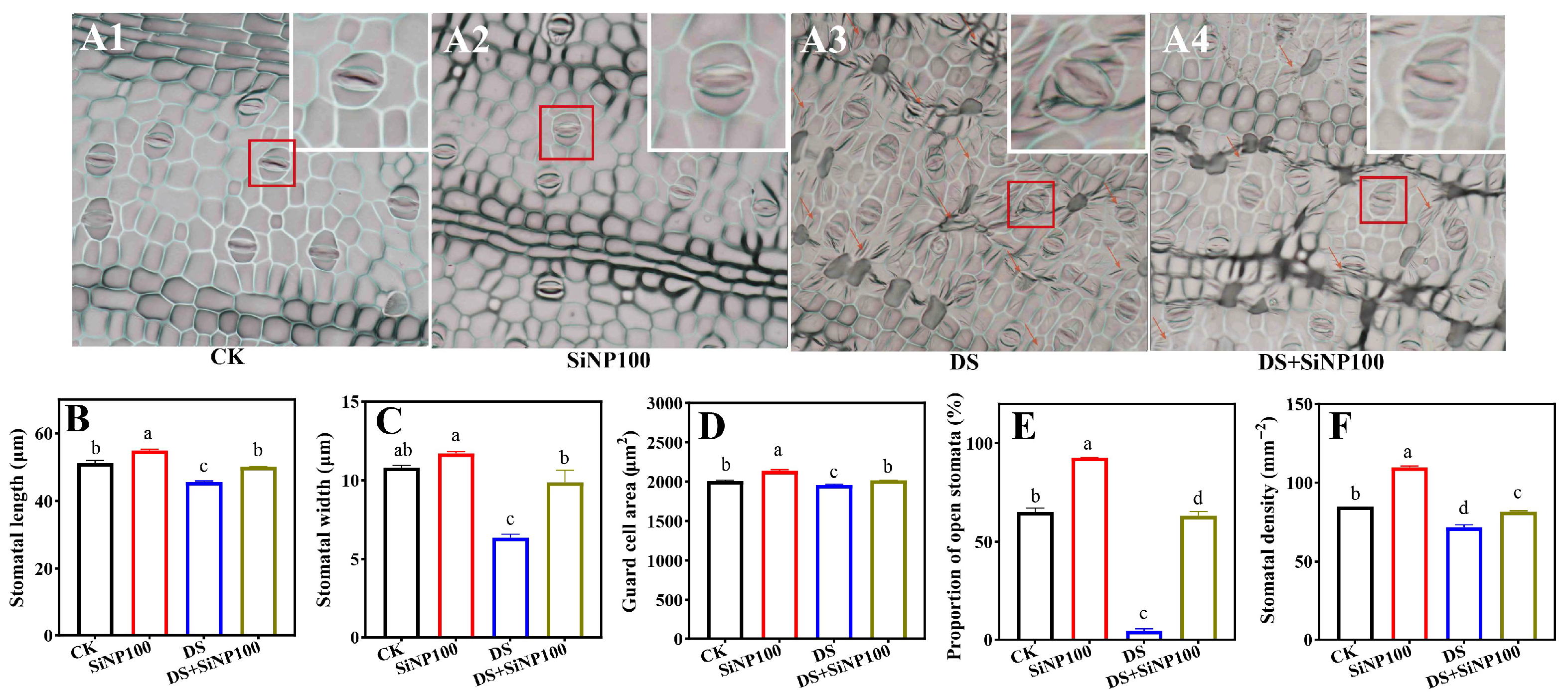
Compared with the control treatment, SiNP100 treatment increased stomatal length, stomatal width, guard cell area, proportion of open stomata and stomatal density (Figure 3). DS significantly reduced stomatal length, stomatal width, guard cell area, proportion of open stomata and stomatal density by 11.69%, 40.91%, 2.4%, 93.05% and 15.68%, respectively, over the control. However, exogenous SiNP100 supplementation significantly increased these indexes in compared to the DS.

3.4. Effects of SiNP100 on OS Markers and Antioxidant Enzyme Activities

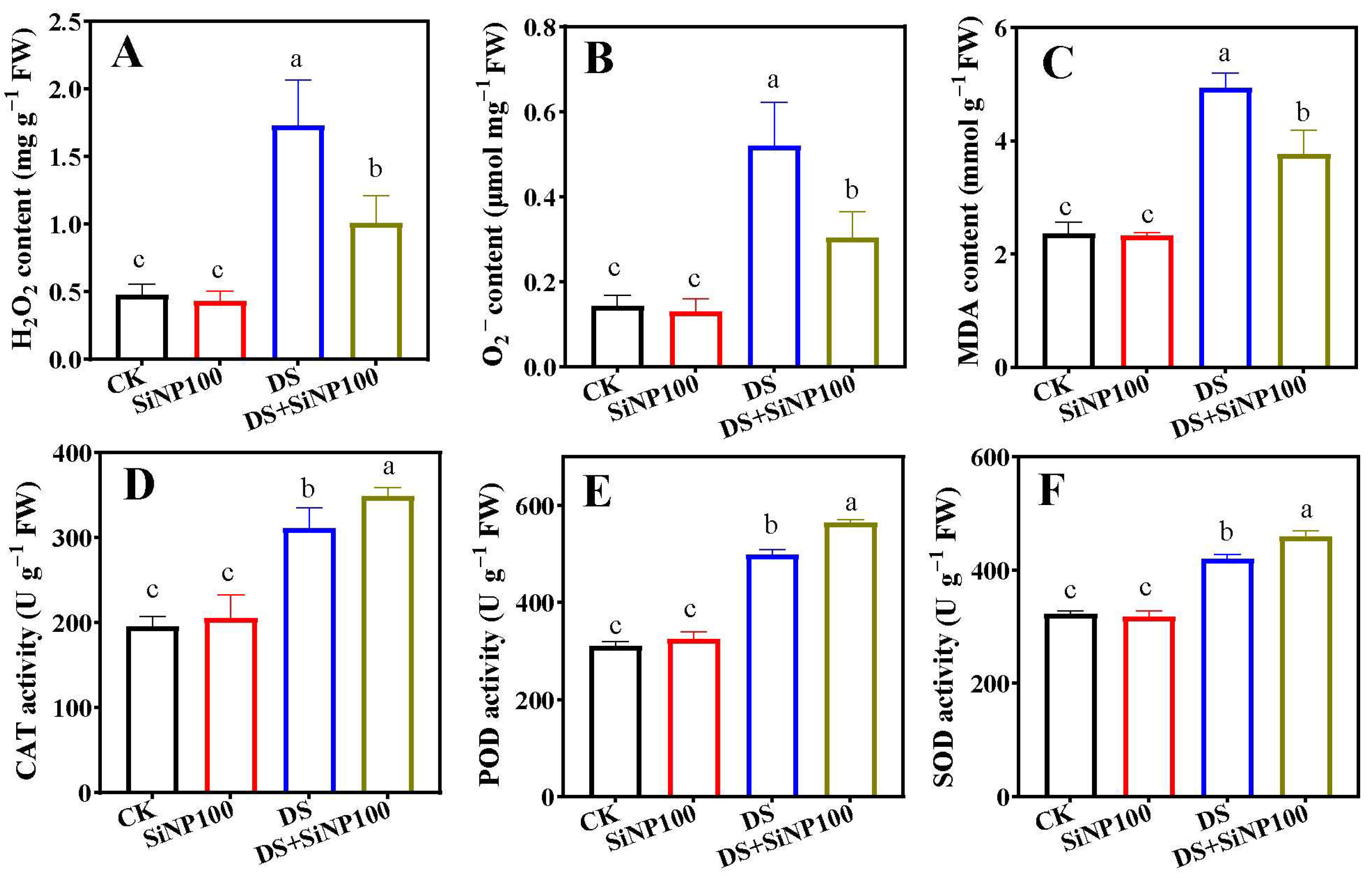
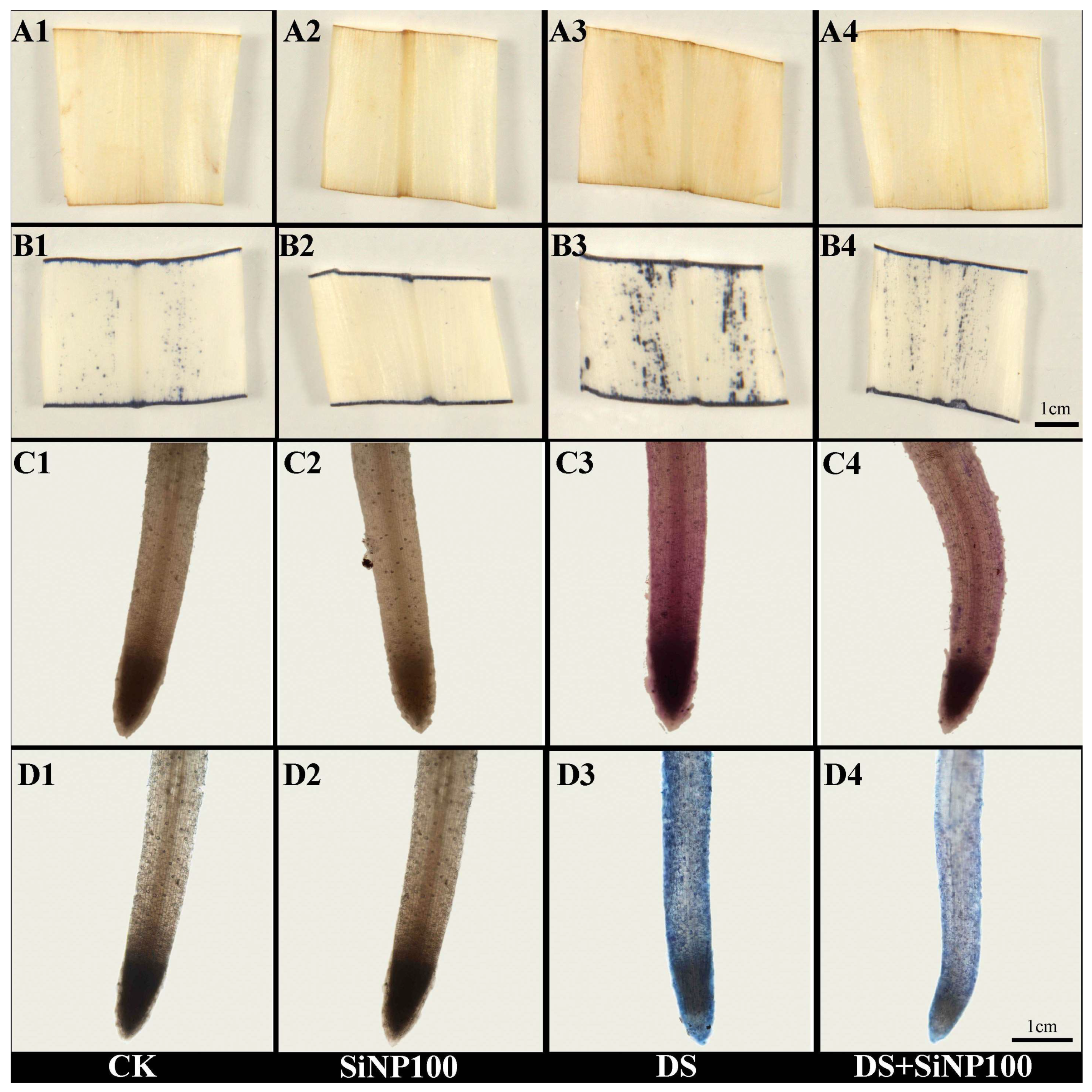
H2O2 (Figure 4A and Figure 5A), O2 (Figure 4B and Figure 5B), and MDA (Figure 4C), did not exhibit significant changes following SiNP100 treatment versus the control group. DS markedly elevated the level of H2O2, O2, and MDA, whereases the exogenous application of SiNP100 notably reduced these indicators in ginger, compared to drought treatment alone. To assess membrane lipid peroxidation and root tissue integrity, histochemical staining (Figure 5) using NBT, DAB, Schiff’s reagent, and trypan blue was performed. Staining patterns in ginger leaves treated with SiNP100 under non-stress conditions were similar to those of the control group. Under DS, the intensity of H2O2 (Figure 5(B3)) and O2 (Figure 5(A3)) staining spots in the leaves were largely higher than in the control treatment, whereas SiNP100 reduced these spots noticeably in drought-stressed plants. Root tissues from drought-stressed plants displayed more intense staining with Schiff’s reagent and Evans blue, indicative of increased membrane damage, but SiNP100 application considerably weakened this staining.
Under well-watered conditions, SiNP100 application did not considerably affect CAT (Figure 4D), POD (Figure 4E), and SOD (Figure 4F) activity. DS, however, greatly elevated the activity of these antioxidant enzymes. The addition of SiNP100 under DS leads to a substantial enhancement in CAT, POD, and SOD versus DS alone.

3.5. Effects of SiNP100 on Ascorbate and Glutathione Pool

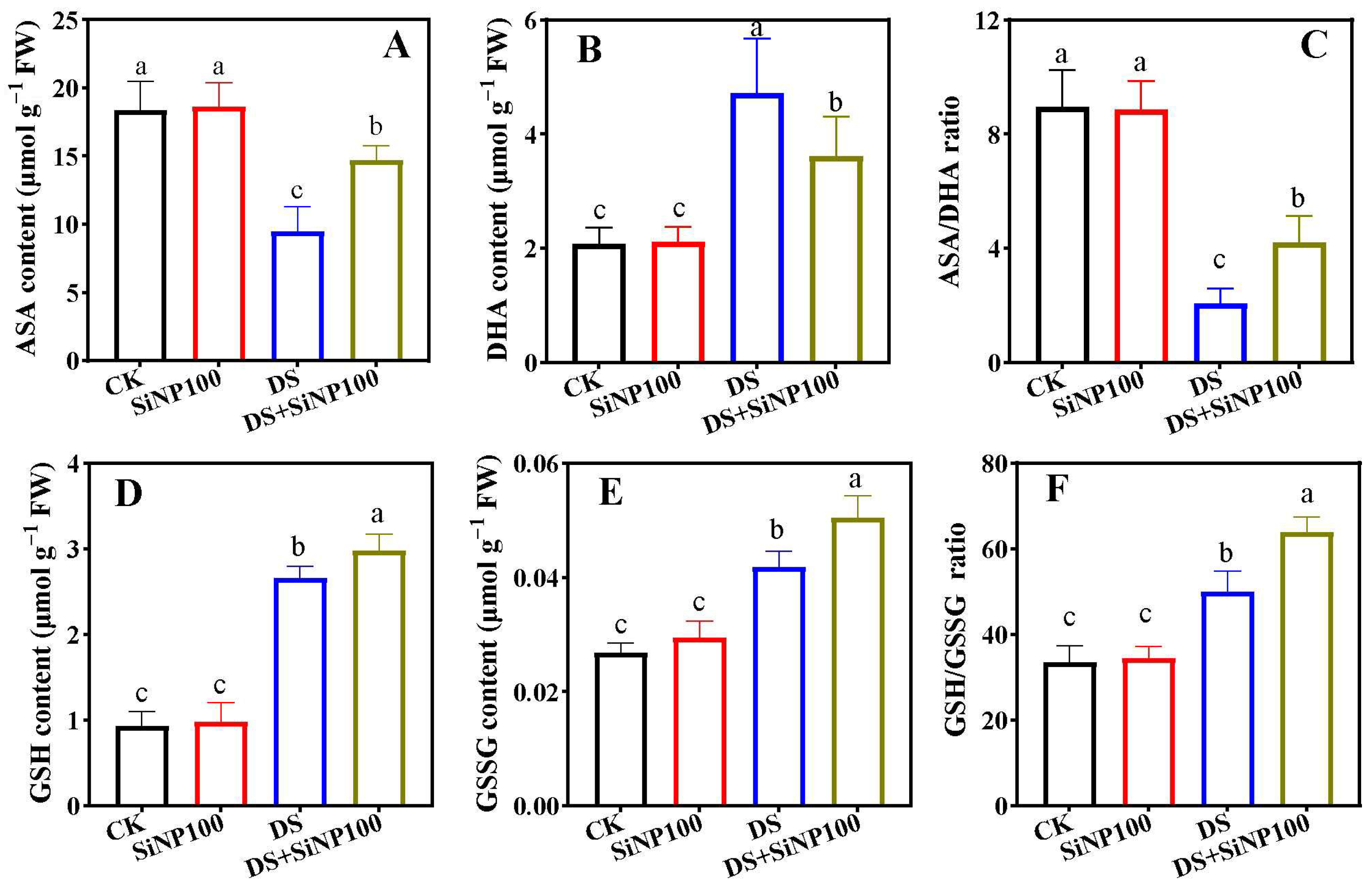
Under non-stress conditions, applying SiNP100 showed no notable effects on AsA, DHA, or the AsA/DHA ratio. However, under DS, ascorbate content and the AsA/DHA ratio diminished, while DHA content elevated markedly (Figure 6A–C). DS also led to a considerable elevation of GSH and GSSG levels, accompanied by a marked enhancement in the GSH/GSSG proportion relative to the control treatment (Figure 6D–F). Exogenous SiNP100 supplementation markedly enhanced AsA content and the AsA/DHA ratio, while DHA content was markedly reduced. Moreover, GSH and GSSG contents, as well as the GSH/GSSG ratio, were notably elevated in SiNP100-treated plants versus drought-stressed plants without SiNP100.

3.6. Effects of SiNP100 on AsA-GSH Cycle Enzymes and Related Gene Expression

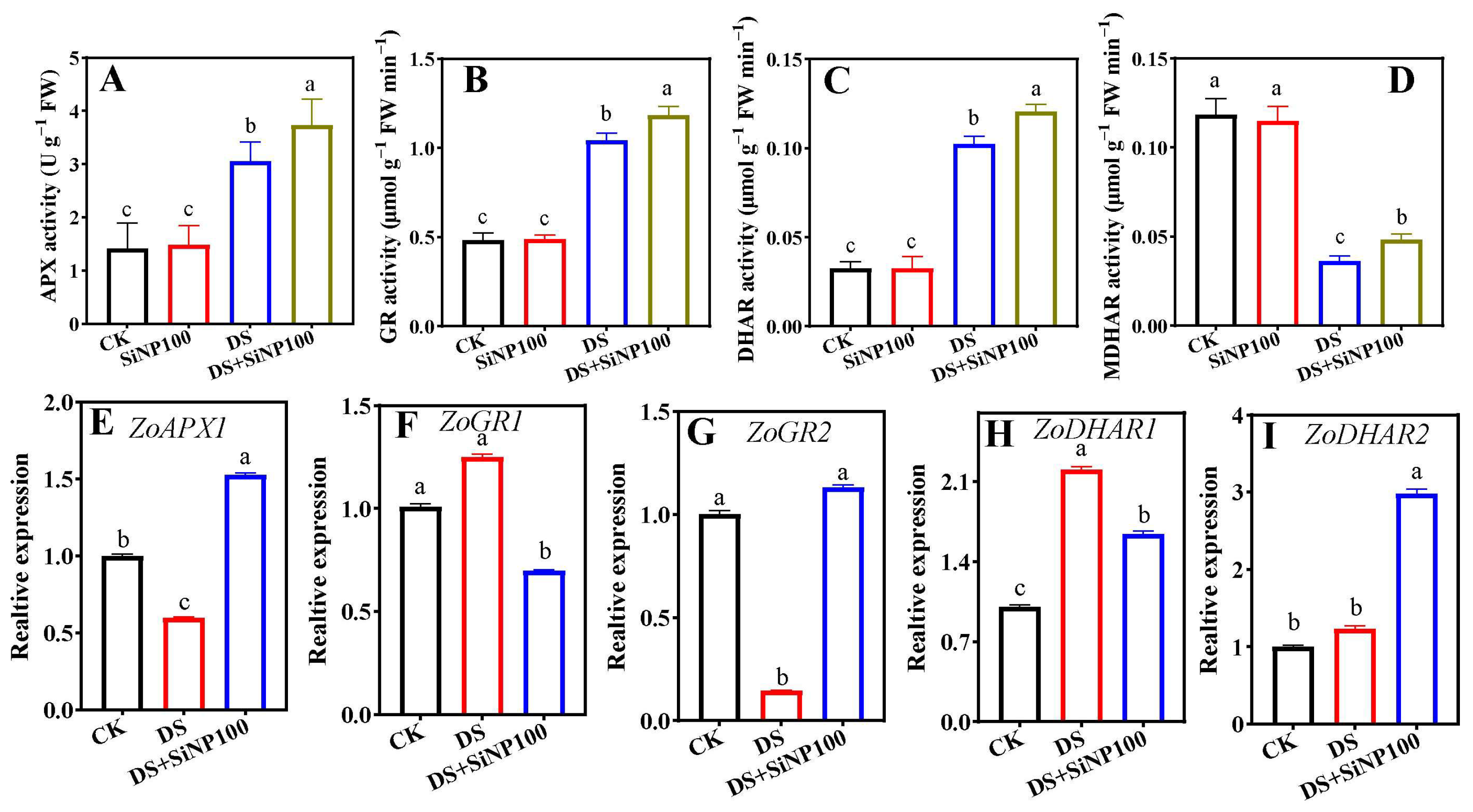
Under non-stress conditions, SiNP100 had negligible effects on DHAR, MDHAR, APX, and GR activities in ginger leaves (Figure 7A–D). In contrast, DS markedly elevated APX, GR, and DHAR activities, while MDHAR activity decreased. Exogenous SiNP100 treatment under DS further significantly elevated APX, GR, and DHAR activities and alleviated MDHAR activity.
Compared to CK, ZoAPX1 and ZoGR2 gene levels were notably diminished under DS, while SiNP100 treatment substantially enhanced these two gene levels. Under DS conditions, other genes exhibited elevated expression patterns with varying magnitudes. Notably, the ZoDHAR1 gene level elevated notably. In the presence of SiNP100, expression levels differed from those in DS alone, with ZoGR1 and ZoDHAR1 showing significant decreases, while the expression of ZoDHAR2 was further elevated (Figure 7E–I).

3.7. Effects of SiNP100 on Glyoxalse System Enzymes and Related Gene Expression

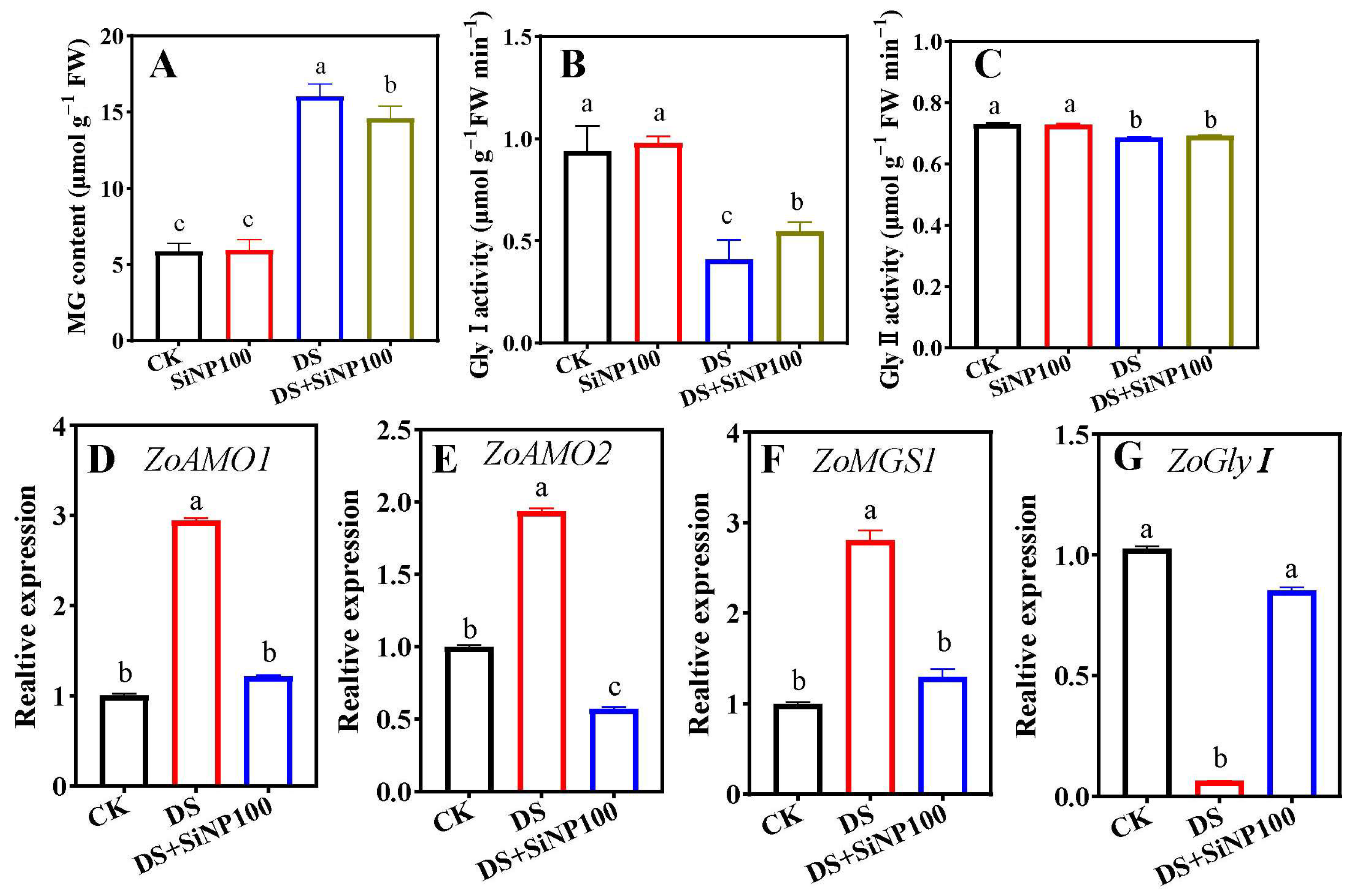
The SiNP100 treatment did not substantially alter the MG content or Gly I and Gly II enzyme activities compared to the control (Figure 8A–C). DS substantially elevated MG accumulation in ginger leaves, while diminishing the enzymatic activities of Gly I and Gly II. Conversely, exogenous SiNP100 application under DS markedly enhanced Gly I activity and markedly reduced MG content.
DS notably elevated ZoAMO1, ZoAMO2 and ZoMGS1 gene levels, while the supplementation of SiNP100 considerably diminished the transcription levels of these genes (Figure 8D–F). Additionally, DS treatment substantially decreased ZoGly I expression (Figure 8G), whereas DS + SiNP100 application resulted in a substantial enhancement in ZoGly I expression.

3.8. Pearson Correlation and Principal Component Analysis

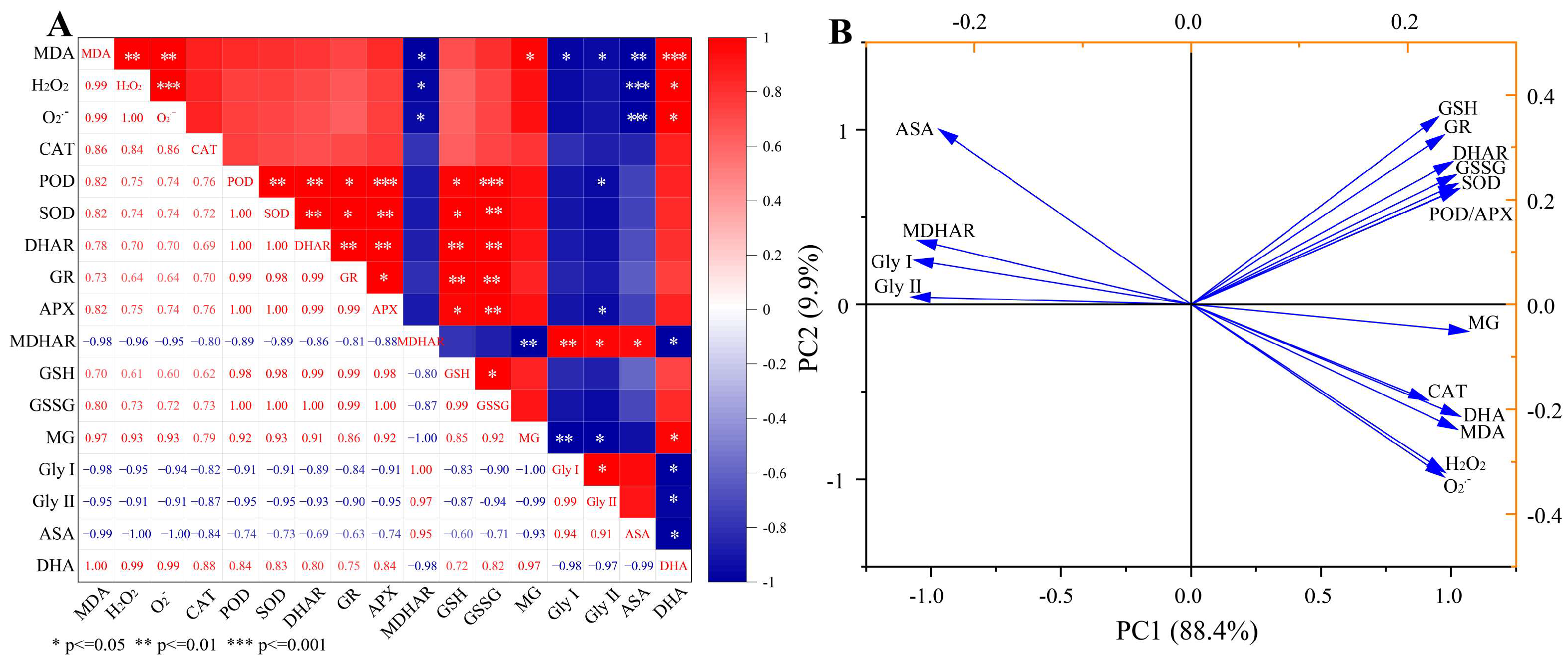
Correlation analysis revealed significant relationships between nine related enzyme activities and five associated substance contents in the MG system in ginger leaves under DS following SiNP100 treatment (Figure 9A).
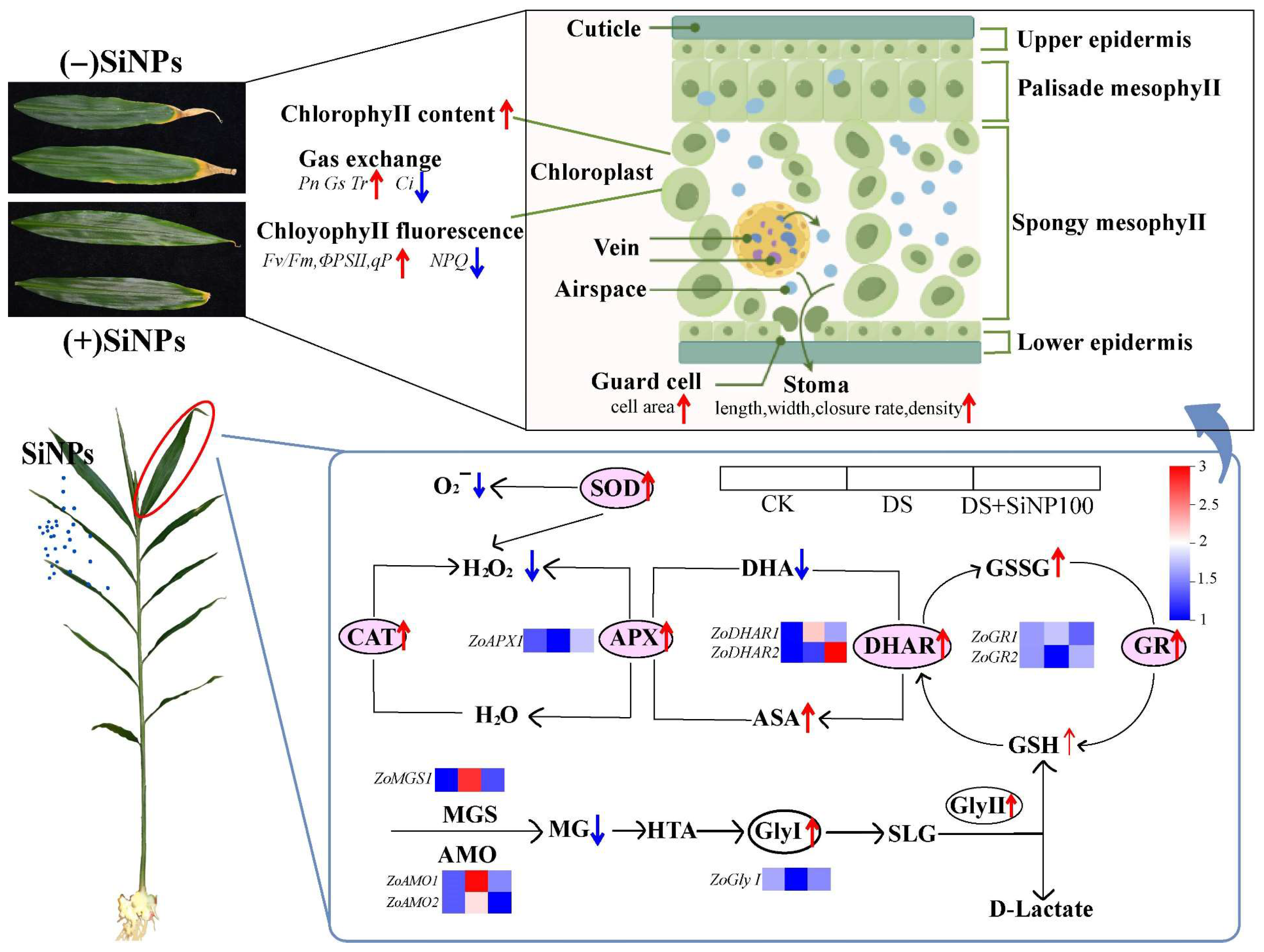
Specifically, following SiNP100 treatment (Figure 10), ASA content exhibited a significant positive correlation with MDHAR activities while GS content was negative correlated with MDHAR activities significantly. DHA content was significantly negatively correlated with MDHAR, Gly I, and Gly II activity. Furthermore, both GSH and GSSG contents were significantly positively correlated with DHAR, APX, POD, SOD, and GR activities. PCA of these parameters revealed that the total variance accounted for by the first two principal components was 98.3%, with PC1 and PC2 explaining 88.4% and 9.9%, respectively (Figure 9B).

4. Discussion

DS is a significant abiotic factor that restricts crop productivity. Present and previous research demonstrated that DS notably impairs ginger growth, but supplementation with SiNP100 alleviates its adverse effects, as shown in alleviated leaf wilted and root growth (Figure 1) [13]. Photosynthesis, a fundamental life process in plants, serves as the cornerstone for their growth, development, and reproduction [9]. In this study, DS markedly reduced chlorophyll content, chlorophyll fluorescence (Fv/Fm), photosynthetic rates, and gas exchange parameters. However, exogenous SiNP100 supplementation mitigated these detrimental effects, likely due to enhanced chlorophyll concentrations (Figure 2A) and improved water content. This alleviation in turn contributed to the better growth of ginger under DS. These findings align with previous studies in strawberries, where SiNPs were shown to increase the content of photosynthetic pigments, carbohydrates and proline in leaves under drought conditions [14]. Furthermore, under drought stress conditions, plants regulate stomatal aperture size and stomatal density to control water vapor and gas exchange between the internal and the external environment. The findings in the present study revealed that DS markedly diminished the stomatal length, width, density, and proportion of open stomata of ginger leaves, suggesting that plants can restrict water evaporation by changing stomatal characteristics. Under DS, SiNP100 maintained stomatal opening and formation as SiNP100 enhanced the stomatal length, width and stomatal density, potentially contributing to elevated stomatal conductance and leaf water status as shown in Figure 2 and our previous study [13,29], thereby enhancing water use efficiency and mitigating the damage caused by adverse conditions.
ROS are byproducts of various metabolic processes in cellular compartments such as chloroplasts, mitochondria, and peroxisomes [30]. DS exacerbates ROS accumulation in plant cells, leading to protein degradation, membrane lipid peroxidation, and other cellular damages, ultimately resulting in cell death [3]. Previous studies have shown that SiO2NPs can reduce ROS levels and lipid peroxidation in maize seedlings under DS [31]. Compared to drought-treated ginger plants, exogenous SiNP100 application markedly reduced O2 and H2O2 levels. Histochemical staining of O2 and H2O2 further validated these results (Figure 5A,B). Excessive concentrations of H2O2 and O2 can induce lipid peroxidation, leading to membrane damage and dysfunction of membrane proteins [4]. MDA, a consequence of lipid peroxidation, serves as a common marker for measuring oxidative stress within plant systems. In this study, SiNP100 treatment alleviated the increased MDA content in ginger under DS. To resist drought-induced negative impacts, plants have evolved various antioxidant defense systems, which include both enzymatic (e.g., SOD, POD, CAT, APX) and non-enzymatic (e.g., AsA, GSH) antioxidants to scavenge excess ROS [3]. SOD functions as a key defender against ROS through its ability to transform superoxide radicals into H2O2. Other enzymes, including CAT, APX, GPX, and GST, are highly effective in detoxifying H2O2 across various cellular compartments, maintaining cellular homeostasis [2]. In green pea (Pisum sativum L.), foliar application of 50 ppm SiO2NPs substantially elevated enzymatic antioxidant activities like CAT, APX, SOD, and GR, while also reducing H2O2 and MDA content in leaves under DS [32]. Similarly, in this study, SiNP100-treated ginger exhibited markedly higher activity of CAT, POD, SOD (Figure 4D–F), strengthening the antioxidative defense system of ginger under DS, as evidenced by reduced levels of ROS and MDA accumulation (Figure 4A–C).
The cellular redox balance in plants is regulated not only by antioxidant enzymes (CAT, POD, SOD) and non-enzymatic antioxidants but also by the glutathione- ascorbate cycle (AsA-GSH). This pathway serves as a crucial mechanism in reducing oxidative stress under drought conditions. Essential enzymes in this cycle, encompassing APX, GR, DHAR, and MDHAR, facilitate the detoxification of ROS. Both AsA and GSH, distributed across chloroplasts, cytoplasm, apoplast, mitochondria, and peroxisomes, efficiently scavenge H2O2. ASA, a predominant water-soluble redox molecule, catalyzes the conversion of H2O2 to H2O via APX, resulting in its oxidation to DHA following ROS scavenging. GSH, a thiol-based antioxidant, is crucial in ROS [33]. Liu et al. [34] demonstrated that exogenous silicon application enhances AsA-GSH cycle enzyme activity, notably APX, MDHAR, and GR, leading to increased levels of AsA and GSH in chilling-stressed cucumber leaves, thus alleviating oxidative stress. In this study, DS triggered a decline in AsA quantities and an elevation in DHA, likely due to the diminished activity of MDHAR, which is involved in regenerating AsA from DHA [5]. This imbalance lowered the AsA/DHA ratio, exacerbating oxidative stress. Treatment with SiNP100 under drought conditions enhanced the enzymatic activity of APX, MDHAR, and DHAR, leading to increased AsA and GSH concentrations and an elevated AsA/DHA ratio, thereby promoting the AsA-GSH cycle. Gene expression analysis revealed that DS upregulated ZoDHAR1 and ZoDHAR2, while SiNP100 reduced the expression of ZoDHAR1 (though still higher than in the control treatment) and further elevated ZoDHAR2 compared to DS alone.
Under DS, the expression of ZoAPX1 and ZoGR2 genes was downregulated, while SiNP100 treatment markedly increased their expression, surpassing even the control levels. This finding aligns with the increased APX and GR activities induced by SiNP100. However, DS alone led to the expression of these genes, which did not correspond to the activities of their respective enzymes. This discrepancy may be attributed to the differing responses of isoenzymes to various substrates. Additionally, SiNP100 treatment induced gene expression patterns distinct from DS alone, as observed with ZoGR1, whose expression was markedly elevated by DS but decreased with SiNP100 treatment. In barley, despite similar trends in GST gene expression and enzyme activity, there is no absolute correlation, as GST isoenzymes exhibit different responses to substrates [35]. Thus, further characterization of additional APX and GR isoforms and their responses to DS and SiNP100 treatment is warranted.
The elevated AsA/DHA ratio following SiNP100 treatment suggests that SiNP100 may restore the redox status of the AsA and GSH pools, thus maintaining redox buffering in ginger. During H2O2 scavenging, GR and DHAR primarily supply the reduced forms of glutathione and ascorbate for APX [36]. GR, a flavoenzyme, mediates the NADPH-dependent conversion of GSSG into GSH, which is essential for the ascorbate–glutathione cycle and for sustaining an optimal GSH/GSSG ratio in plants [37]. Kang et al. [38] reported that salicylic acid markedly upregulated the transcription of GST1, GST2, GR, and MDHAR genes, enhancing plant drought resistance by modulating AsA and GSH cycles. In this study, DS markedly increased GR activity, likely due to elevated GSSG levels. GSH, as both an osmoregulatory and non-enzymatic antioxidant, serves a critical function in mitigating oxidative damage catalyzing H2O2 decomposition into H2O. Under DS, Si notably enhanced APX, GPX, and GR activities, while decreasing DHAR activity in Glycyrrhiza uralensis seedlings [39]. In this investigation, SiNP100 enhanced GR activity, thereby increasing GSH levels, which likely contributed to the improvement of the GSH pool. Under DS, SiNP100 further increased GSSG content, suggesting that additional GSH oxidation occurred to scavenge elevated ROS. However, the concurrent increase in GSH levels after SiNP100 treatment under DS implies the synthesis of new GSH to compensate for the increased oxidative load. The substantial elevate in total glutathione (GSH + GSSG) after SiNP100 treatment supports this hypothesis.
The GSH/GSSG ratio is a widely used indicator of the redox state in organisms, with a decrease in this ratio typically signaling increased oxidative stress [40]. Many studies have reported a reduced GSH/GSSG ratio in plants under abiotic stress conditions, with Si and/or SiNPs being shown to enhance this ratio [33,40]. In this study, both GR activity and the GSH/GSSG ratio increased DS, with SiNP100 further elevating them, which contradicts the expected trend observed in many studies. Notably, the GSH/GSSG ratio reflects the balance between GSH and GSSG, which is affected by diverse elements. Thus, additional research is necessary to determine if the GSH/GSSG ratio effectively indicates oxidative conditions in ginger under DS. Lin et al. [37] suggested that in wheat, minimal cadmium (Cd) concentrations swiftly exhaust inherent GSH due to elevated cellular requirements for SH compounds, leading to a reduced GSH/GSSG ratio. However, under higher levels of Cd stress, GSH synthesis is induced to mitigate stress, resulting in a higher GSH/GSSG ratio. Consequently, further investigations are necessary to explore the regulatory effect of SiNP100 on the GSH/GSSG ratio across different levels of DS. Overall, these findings lend support to the notion that exogenous SiNP100 enhances the capacity for ROS clearance, thereby promoting the optimal functioning of the AsA-GSH cycle in ginger. This is achieved by further boosting APX, GR, DHAR, and MDHAR activities, as well as increasing GSH and GSSG levels, which may form the physiological basis for SiNP100-induced drought tolerance in ginger.
MG, a byproduct of various metabolic pathways such as glycolysis, photosynthesis, and lipid peroxidation, functions as a crucial signaling compound at low concentrations [41]. However, under abiotic stress, MG accumulates to toxic levels, contributing to ROS production and impairing normal cellular function [42]. Consequently, MG has been recognized as a valuable biochemical indicator for evaluating plant resistance to abiotic stress [42]. In this investigation, MG overproduction was detected in plants under DS, consistent with findings in tomato and maize [42,43].
The glyoxalase system is an essential and ubiquitous mechanism in plants for maintaining MG homeostasis. Methylglyoxal synthase (MGS) and acetol monooxygenase (AMO) function as essential catalysts in MG production, while Gly I and Gly II work in conjunction with GSH to detoxify MG by converting it into 2-hydroxyl acids. This process contributes to reducing the harmful impacts of MG accumulation in cells [44,45]. Hossen et al. [46] demonstrated that DS induces MG accumulation in rice, increasing Gly I activity but decreasing that of Gly-II. In the present study, DS similarly reduced both Gly I and Gly II activities, suggesting a disruption in the MG detoxification system. However, SiNP100 treatment markedly reduced MG accumulation and increased Gly I activity, indicating that SiNP100 alleviates MG buildup by enhancing Gly function. These results correspond with the observations of Xie et al. [47], who demonstrated that in tomato, a combined application of Mel and GA3 under salt stress improved MG detoxification system by upregulating both Gly I and Gly II activities.
Previous studies showed that the overexpression of Gly I and/or Gly II enhances plant growth and increases yield under abiotic stress conditions, including in tobacco and rice [48,49]. Here, DS resulted in elevated ZoAMO1, ZoAMO2, and ZoMGS1 levels, while the expression of ZoGLY I diminished. SiNP100 treatment reversed this trend, decreasing the expression of ZoAMO1, ZoAMO2, and ZoMGS1 to control levels. These findings correspond to the measured influence of SiNP100 on MG content and Gly I activity, suggesting that SiNP100 effectively enhances the MG detoxification system.

5. Conclusions

SiNP100 enhanced chlorophyll content, chlorophyll fluorescence, and photosynthesis in ginger under DS, contributing to improved growth. SiNP100 activated the antioxidant defense system (CAT, GR, SOD, and APX), the AsA-GSH cycle (ASA and GSH), and the glyoxalase system, thereby reducing the accumulation of H2O2, O2, MDA, and MG. This in turn alleviated oxidative damage and preserved the integrity of cellular membranes. Our results lead to a model where SiNPs promotes the stress resistance of ginger which may in parallel to and/or dependent on antioxidant and AsA-GSH pathway. These findings underscore the potential of SiNP100 as an effective means to boost ginger’s tolerance to drought conditions, providing a theoretical foundation for future research into the mechanisms underlying SiNP-induced drought resistance in ginger.

Author Contributions

Y.Z. and C.S. designed and performed the experiment. M.Q., S.F., P.Y. and W.H. conducted the experiments. S.F. and X.L. carried out the statistical analysis and data interpretation. C.S. and Y.Z. wrote the manuscript. Y.L., J.Y., X.L. and H.W.W.K. contributed to the editing of the manuscript. All authors have read and agreed to the published version of the manuscript.

Funding

This work was supported by the Hubei International Science and Technology Cooperation Project (2024EHA011); Hubei Key Laboratory of Waterlogging Disaster and Agricultural Use of Wetland (KFG202422); Youth Project of Chongqing Education Commission (KJQN202401319); Yongchuan District of Chongqing Natural Science Foundation Project (2024yc-cxfz30091). Chongqing Municipal Science and Technology Commission, China, grant number (CSTB2022NSCQ-MSX1558).

Data Availability Statement

The datasets presented in this study are not readily available due to concerns about potential reproduction, publication as new data, or plagiarism. Requests to access the datasets should be directed to the corresponding author, who will evaluate the purpose and scope of the data use to ensure ethical and appropriate application.

Conflicts of Interest

The authors declare no conflicts of interest.

References

  1. Feng, D.; Liu, W.; Chen, K.; Ning, S.; Gao, Q.; Chen, J.; Liu, J.; Sun, X.; Xu, W. Exogenous Substances Used to Relieve Plants from Drought Stress and Their Associated Underlying Mechanisms. Int. J. Mol. Sci. 2024, 25, 9249. [Google Scholar] [CrossRef] [PubMed]
  2. Hasanuzzaman, M.; Bhuyan, M.H.M.B.; Zulfiqar, F.; Raza, A.; Mohsin, S.M.; Mahmud, J.A.; Fujita, M.; Fotopoulos, V. Reactive Oxygen Species and Antioxidant Defense in Plants under Abiotic Stress: Revisiting the Crucial Role of a Universal Defense Regulator. Antioxidants 2020, 9, 681. [Google Scholar] [CrossRef] [PubMed]
  3. Jiang, Z.; van Zanten, M.; Sasidharan, R. Mechanisms of plant acclimation to multiple abiotic stresses. Commun. Biol. 2025, 8, 655. [Google Scholar] [CrossRef] [PubMed]
  4. Garcia-Caparros, P.; De Filippis, L.; Gul, A.; Hasanuzzaman, M.; Ozturk, M.; Altay, V.; Lao, M.T. Oxidative stress and antioxidant metabolism under adverse environmental conditions: A review. Bot. Rev. 2021, 87, 421–466. [Google Scholar] [CrossRef]
  5. Hasanuzzaman, M.; Bhuyan, M.H.M.B.; Anee, T.I.; Parvin, K.; Nahar, K.; Mahmud, J.A.; Fujita, M. Regulation of Ascorbate-Glutathione Pathway in Mitigating Oxidative Damage in Plants under Abiotic Stress. Antioxidants 2019, 8, 384. [Google Scholar] [CrossRef]
  6. Guo, L.; Ling, L.; Wang, X.Q.; Cheng, T.; Wang, H.Y.; Ruan, Y.Y. Exogenous Hydrogen Sulfide and Methylglyoxal Alleviate Cadmium-Induced Oxidative Stress in Salix matsudana Koidz by Regulating Glutathione Metabolism. BMC Plant Biol. 2023, 23, 73. [Google Scholar] [CrossRef]
  7. Zheng, Q.Q.; Xin, J.P.; Zhao, C.; Tian, R. Role of Methylglyoxal and Glyoxalase in the Regulation of Plant Response to Heavy Metal Stress. Plant Cell Rep. 2024, 43, 103. [Google Scholar] [CrossRef]
  8. Tian, Z.; He, J.; Wang, Z.; Zhang, Z.; Quinet, M.; Meng, Y. Exogenous melatonin enhances drought tolerance and germination in common buckwheat seeds through the coordinated effects of antioxidant and osmotic regulation. BMC Plant Biol. 2025, 25, 613. [Google Scholar]
  9. Khan, A.L. Silicon: A valuable soil element for improving plant growth and CO2 sequestration. J. Adv. Res. 2025, 71, 43–54. [Google Scholar] [CrossRef]
  10. Li, Y.T.; Zan, T.X.; Li, K.K.; Hu, H.J.; Yang, T.Q.; Yin, J.L.; Zhu, Y.X. Silica Nanoparticles Promote the Germination of Salt-Stressed Pepper Seeds and Improve Growth and Yield of Field Pepper. Sci. Hortic. 2024, 337, 113570. [Google Scholar] [CrossRef]
  11. Liang, Y.P.; Liu, H.; Zhang, Y.Y.; Li, P.H.; Fu, Y.Y.; Li, S.; Gao, Y. Exogenous Application of Silica Nanoparticles Mitigates Combined Salt and Low-Temperature Stress in Cotton Seedlings by Improving the K+/Na+ Ratio and Antioxidant Defense. Plant Stress 2024, 14, 100597. [Google Scholar] [CrossRef]
  12. Yan, G.; Huang, Q.; Zhao, S.; Xu, Y.; He, Y.; Nikolic, M.; Nikolic, N.; Liang, Y.; Zhu, Z. Silicon nanoparticles in sustainable agriculture: Synthesis, absorption, and plant stress alleviation. Front. Plant Sci. 2024, 15, 1393458. [Google Scholar] [CrossRef] [PubMed]
  13. Zhu, Y.X.; Xi, K.Y.; Ma, H.H.; Yang, P.H.; Wang, Y.H.; Li, H.L.; Yin, J.L.; Qin, M.L.; Liu, Y.Q. Exogenous Silica Nanoparticles Improve Drought Tolerance in Ginger by Modulating the Water Relationship. Environ. Sci. Nano 2024, 11, 1259–1270. [Google Scholar] [CrossRef]
  14. Zahedi, S.M.; Moharrami, F.; Sarikhani, S.; Padervand, M. Selenium and Silica Nanostructure-Based Recovery of Strawberry Plants Subjected to Drought Stress. Sci. Rep. 2020, 10, 17672. [Google Scholar] [CrossRef] [PubMed]
  15. Zhang, M.; Zhao, R.; Wang, D.; Wang, L.; Zhang, Q.; Wei, S.; Lu, F.; Peng, W.; Wu, C. Ginger (Zingiber officinale Rosc.) and its bioactive components are potential resources for health beneficial agents. Phytother Res. 2021, 35, 711–742. [Google Scholar] [CrossRef]
  16. Han, S.; Han, X.W.; Li, Y.T.; Guo, F.L.; Qi, C.D.; Liu, Y.Q.; Fang, S.Y.; Yin, J.L.; Zhu, Y.X. Genome-Wide Characterization and Function Analysis of Ginger (Zingiber officinale Roscoe) ZoGRFs in Responding to Adverse Stresses. Plant Physiol. Biochem. 2024, 207, 108392. [Google Scholar] [CrossRef]
  17. Yin, F.M.; Zhang, S.Y.; Cao, B.L.; Xu, K. Low pH Alleviated Salinity Stress of Ginger Seedlings by Enhancing Photosynthesis, Fluorescence, and Mineral Element Contents. PeerJ 2021, 9, e10832. [Google Scholar] [CrossRef]
  18. Zieliński, J.; Tomaszewski, D.; Guzicka, M.; Maciejewska-Rutkowska, I. Stomata on the Pericarp of Species of the Genus Rosa L. (Rosaceae). Plant Syst. Evol. 2010, 284, 49–55. [Google Scholar] [CrossRef]
  19. Mittal, S.; Kumari, N.; Sharma, V. Differential Response of Salt Stress on Brassica juncea: Photosynthetic Performance, Pigment, Proline, D1 and Antioxidant Enzymes. Plant Physiol. Biochem. 2012, 54, 17–26. [Google Scholar] [CrossRef]
  20. Giannopolitis, C.N.; Ries, S.K. Superoxide Dismutases: I. Occurrence in Higher Plants. Plant Physiol. 1977, 59, 309–314. [Google Scholar] [CrossRef]
  21. Nickel, K.S.; Cunningham, B.A. Improved Peroxidase Assay Method Using Leuco 2,3,6-Trichloroindophenol and Application to Comparative Measurements of Peroxidatic Catalysis. Anal. Biochem. 1969, 27, 292–299. [Google Scholar] [CrossRef]
  22. Beers, R.F.; Sizer, I.W. A Spectrophotometric Method for Measuring the Breakdown of Hydrogen Peroxide by Catalase. J. Biol. Chem. 1952, 195, 133–140. [Google Scholar] [CrossRef] [PubMed]
  23. Nakano, Y.; Asada, K. Hydrogen Peroxide Is Scavenged by Ascorbate-Specific Peroxidase in Spinach Chloroplasts. Plant Cell Physiol. 1981, 22, 867–880. [Google Scholar] [CrossRef]
  24. Hasanuzzaman, M.; Hossain, M.A.; Fujita, M. Selenium-Induced Up-Regulation of the Antioxidant Defense and Methylglyoxal Detoxification System Reduces Salinity-Induced Damage in Rapeseed Seedlings. Biol. Trace Elem. Res. 2011, 143, 1704–1721. [Google Scholar] [CrossRef] [PubMed]
  25. Hasanuzzaman, M.; Nahar, K.; Alam, M.M.; Fujita, M. Modulation of Antioxidant Machinery and the Methylglyoxal Detoxification System in Selenium-Supplemented Brassica napus Seedlings Confers Tolerance to High Temperature Stress. Biol. Trace Elem. Res. 2014, 161, 297–307. [Google Scholar] [CrossRef]
  26. Zhu, Y.; Jiang, X.; Zhang, J.; He, Y.; Zhu, X.; Zhou, X.; Gong, H.; Yin, J.; Liu, Y. Silicon Confers Cucumber Resistance to Salinity Stress through Regulation of Proline and Cytokinins. Plant Physiol. Biochem. 2020, 156, 209–220. [Google Scholar] [CrossRef]
  27. Hasan, M.M.; Ali, M.A.; Soliman, M.H.; Alqarawi, A.A.; Abd_Allah, E.F.; Fang, X.W. Insights into 28-Homobrassinolide (HBR)-Mediated Redox Homeostasis, AsA-GSH Cycle, and Methylglyoxal Detoxification in Soybean under Drought-Induced Oxidative Stress. J. Plant Interact. 2020, 15, 371–385. [Google Scholar] [CrossRef]
  28. Wild, R.; Ooi, L.; Srikanth, V.; Münch, G. A Quick, Convenient and Economical Method for the Reliable Determination of Methylglyoxal in Millimolar Concentrations: The N-Acetyl-L-Cysteine Assay. Anal. Bioanal. Chem. 2012, 403, 2577–2581. [Google Scholar] [CrossRef]
  29. Zhu, Y.; Xu, X.; Hu, Y.; Han, W.; Yin, J.; Li, H.; Gong, H. Silicon Improves Salt Tolerance by Increasing Root Water Uptake in Cucumis sativus L. Plant Cell Rep. 2015, 34, 1629–1646. [Google Scholar] [CrossRef]
  30. Shi, Y.; Zhang, Y.; Yao, H.J.; Wu, J.W.; Sun, H.; Gong, H.J. Silicon Improves Seed Germination and Alleviates Oxidative Stress of Bud Seedlings in Tomato under Water Deficit Stress. Plant Physiol. Biochem. 2014, 78, 27–36. [Google Scholar] [CrossRef]
  31. Al-Mokadem, A.Z.; Sheta, M.H.; Mancy, A.G.; Hussein, H.A.A.; Kenawy, S.K.M.; Sofy, A.R.; Abu-Shahba, M.S.; Mahdy, H.M.; Sofy, M.R.; Al-Bakry, A.F.; et al. Synergistic Effects of Kaolin and Silicon Nanoparticles for Ameliorating Deficit Irrigation Stress in Maize Plants by Upregulating Antioxidant Defense Systems. Plants 2023, 12, 2221. [Google Scholar] [CrossRef] [PubMed]
  32. Sutuliene, R.; Rageliene, L.; Samuoliene, G.; Brazaityte, A.; Urbutis, M.; Miliauskiene, J. The Response of Antioxidant System of Drought-Stressed Green Pea (Pisum sativum L.) Affected by Watering and Foliar Spray with Silica Nanoparticles. Horticulturae 2022, 8, 35. [Google Scholar] [CrossRef]
  33. Hasanuzzaman, M.; Nahar, K.; Anee, T.I.; Fujita, M. Exogenous Silicon Attenuates Cadmium-Induced Oxidative Stress in Brassica napus L. by Modulating AsA-GSH Pathway and Glyoxalase System. Front. Plant Sci. 2017, 8, 1061. [Google Scholar] [CrossRef] [PubMed]
  34. Liu, J.J.; Lin, S.H.; Xu, P.L.; Wang, X.J.; Bai, J.G. Effects of Exogenous Silicon on the Activities of Antioxidant Enzymes and Lipid Peroxidation in Chilling-Stressed Cucumber Leaves. Agric. Sci. China 2009, 8, 1075–1086. [Google Scholar] [CrossRef]
  35. Rezaei, M.K.; Shobbar, Z.S.; Shahbazi, M.; Abedini, R.; Zare, S. Glutathione S-Transferase (GST) Family in Barley: Identification of Members, Enzyme Activity, and Gene Expression Pattern. J. Plant Physiol. 2013, 170, 1277–1284. [Google Scholar] [CrossRef]
  36. Tripathi, D.K.; Singh, S.; Singh, V.P.; Prasad, S.M.; Chauhan, D.K.; Dubey, N.K. Silicon Nanoparticles More Efficiently Alleviate Arsenate Toxicity than Silicon in Maize Cultivar and Hybrid Differing in Arsenate Tolerance. Front. Environ. Sci. 2016, 4, 46. [Google Scholar] [CrossRef]
  37. Lin, R.Z.; Wang, X.R.; Luo, Y.; Du, W.C.; Guo, H.Y.; Yin, D.Q. Effects of Soil Cadmium on Growth, Oxidative Stress and Antioxidant System in Wheat Seedlings (Triticum aestivum L.). Chemosphere 2007, 69, 89–98. [Google Scholar] [CrossRef]
  38. Kang, G.Z.; Li, G.Z.; Liu, G.Q.; Xu, W.; Peng, X.Q.; Wang, C.Y.; Zhu, Y.J.; Guo, T.C. Exogenous Salicylic Acid Enhances Wheat Drought Tolerance by Influence on the Expression of Genes Related to Ascorbate-Glutathione Cycle. Biol. Plant. 2013, 57, 718–724. [Google Scholar] [CrossRef]
  39. Ma, X.; Xu, Z.C.; Lang, D.Y.; Zhou, L.; Zhang, W.J.; Zhang, X.H. Comprehensive Physiological, Transcriptomic, and Metabolomic Analyses Reveal the Synergistic Mechanism of Bacillus pumilus G5 Combined with Silicon Alleviate Oxidative Stress in Drought-Stressed Glycyrrhiza uralensis Fisch. Front. Plant Sci. 2022, 13, 1033915. [Google Scholar] [CrossRef]
  40. Srivastava, R.K.; Pandey, P.; Rajpoot, R.; Rani, A.; Gautam, A.; Dubey, R.S. Exogenous Application of Calcium and Silica Alleviates Cadmium Toxicity by Suppressing Oxidative Damage in Rice Seedlings. Protoplasma 2015, 252, 959–975. [Google Scholar] [CrossRef]
  41. Lin, Y.H.; Zhou, Y.N.; Liang, X.G.; Jin, Y.K.; Xiao, Z.D.; Zhang, Y.J.; Huang, C.; Hong, B.; Chen, Z.Y.; Zhou, S.L.; et al. Exogenous Methylglyoxal Alleviates Drought-Induced ‘Plant Diabetes’ and Leaf Senescence in Maize. J. Exp. Bot. 2024, 75, 1982–1996. [Google Scholar] [CrossRef] [PubMed]
  42. Kaya, C.; Ugurlar, F.; Ashraf, M.; Alyemeni, M.N.; Ahmad, P. Exploring the Synergistic Effects of Melatonin and Salicylic Acid in Enhancing Drought Stress Tolerance in Tomato Plants through Fine-Tuning Oxidative-Nitrosative Processes and Methylglyoxal Metabolism. Sci. Hortic. 2023, 321, 112368. [Google Scholar] [CrossRef]
  43. Hoque, T.S.; Hossain, M.A.; Mostofa, M.G.; Burritt, D.J.; Fujita, M.; Tran, L.P. Methylglyoxal: An Emerging Signaling Molecule in Plant Abiotic Stress Responses and Tolerance. Front. Plant Sci. 2016, 7, 1341. [Google Scholar] [CrossRef] [PubMed]
  44. Li, Z.G. Methylglyoxal and Glyoxalase System in Plants: Old Players, New Concepts. Bot. Rev. 2016, 82, 183–203. [Google Scholar] [CrossRef]
  45. Sankaranarayanan, S.; Jamshed, M.; Kumar, A.; Skori, L.; Scandola, S.; Wang, T.N.; Spiegel, D.; Samuel, M.A. Glyoxalase Goes Green: The Expanding Roles of Glyoxalase in Plants. Int. J. Mol. Sci. 2017, 18, 898. [Google Scholar] [CrossRef]
  46. Hossen, M.S.; Karim, M.F.; Fujita, M.; Bhuyan, M.H.M.B.; Nahar, K.; Masud, A.A.C.; Mahmud, J.A.; Hasanuzzaman, M. Comparative Physiology of Indica and Japonica Rice under Salinity and Drought Stress: An Intrinsic Study on Osmotic Adjustment, Oxidative Stress, Antioxidant Defense and Methylglyoxal Detoxification. Stresses 2022, 2, 156–178. [Google Scholar] [CrossRef]
  47. Xie, Q.L.; Zhang, Y.; Cheng, Y.X.; Tian, Y.L.; Luo, J.J.; Hu, Z.L.; Chen, G.P. The Role of Melatonin in Tomato Stress Response, Growth and Development. Plant Cell Rep. 2022, 41, 1631–1650. [Google Scholar] [CrossRef]
  48. Singla-Pareek, S.L.; Reddy, M.K.; Sopory, S.K. Genetic Engineering of the Glyoxalase Pathway in Tobacco Leads to Enhanced Salinity Tolerance. Proc. Natl. Acad. Sci. USA 2003, 100, 14672–14677. [Google Scholar] [CrossRef]
  49. Zeng, Z.M.; Xiong, F.J.; Yu, X.H.; Gong, X.P.; Luo, J.T.; Jiang, Y.D.; Kuang, H.C.; Gao, B.J.; Niu, X.L.; Liu, Y.S. Overexpression of a Glyoxalase Gene, OsGly I, Improves Abiotic Stress Tolerance and Grain Yield in Rice (Oryza sativa L.). Plant Physiol. Biochem. 2016, 109, 62–71. [Google Scholar] [CrossRef]
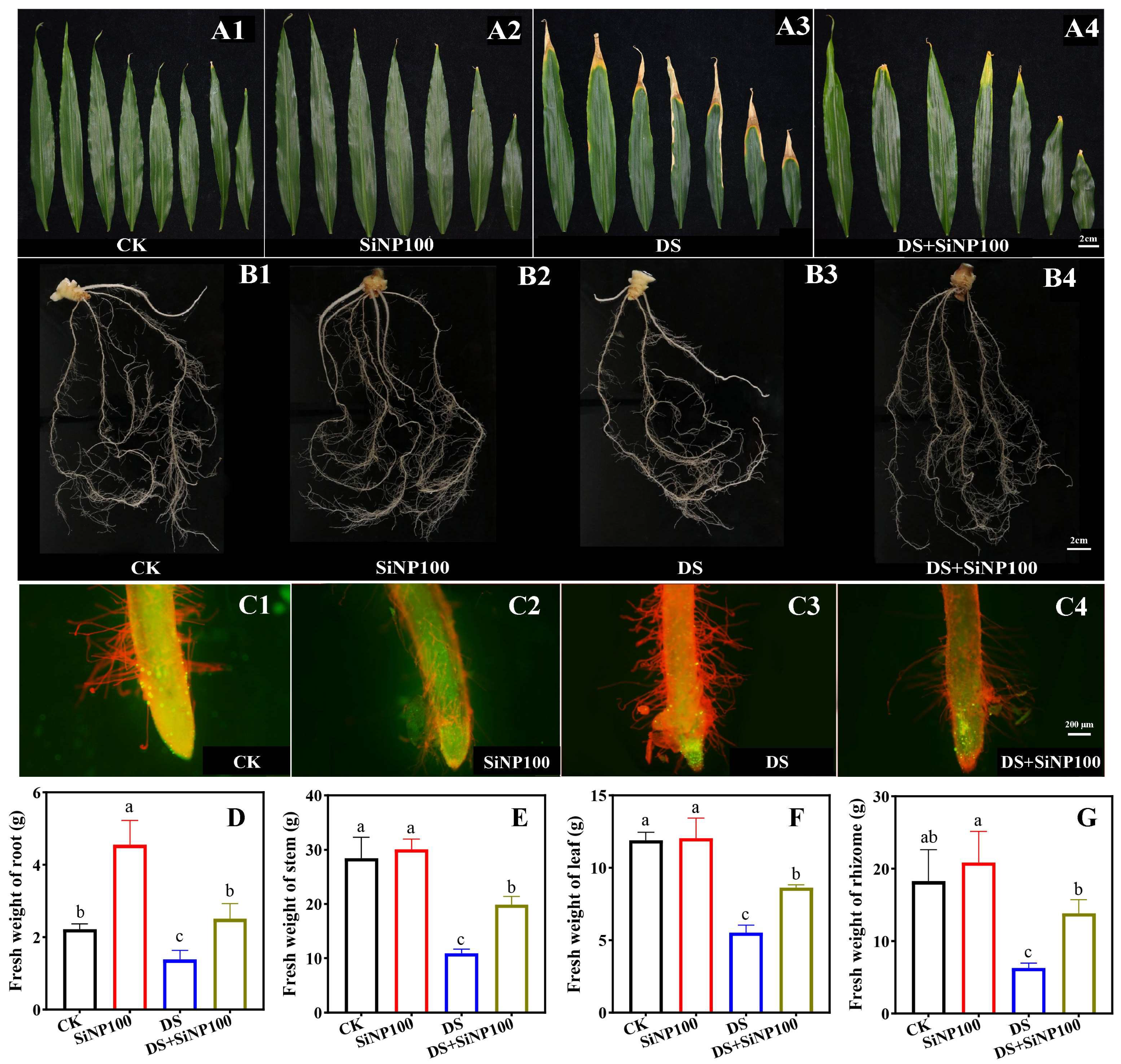
Figure 1. Effects of SiNP100 on plant growth under DS. Leaves phenotype of ginger (A1A4). Roots phenotype of ginger (B1B4). FDA-PI staining of root tips of ginger (C1C4). Biomass of root (D), stem (E), leaf (F), and rhizome (G). Data are presented as means ± SE. Different lowercase letters represent the significance between different treatments and the means were compared using Duncan’s multiple range test (p < 0.05).
Horticulturae 11 01467 g001
Figure 2. Effects of SiNP100 on chlorophyll content (A), chlorophyll fluorescence parameters (B) and photosynthetic parameters (C) under DS. Data are presented as means ± SE. Different lowercase letters represent the significance between different treatments and the means were compared using Duncan’s multiple range test (p < 0.05).
Horticulturae 11 01467 g002
Figure 3. Effects of SiNP100 on the stomatal characteristics of ginger leaves under DS. Analysis of stomatal apertures at 10× magnification (A1A4). Analysis of stomatal length (B), stomatal width (C), guard cell area (D), proportion of open stomata (E) and stomatal density (F). Data are presented as means ± SE. Different lowercase letters represent the significance between different treatments and the means were compared using Duncan’s multiple range test (p < 0.05).
Horticulturae 11 01467 g003
Figure 4. Effects of SiNP100 on ROS, MDA content and antioxidant enzyme activities under DS. Content of H2O2 (A), O2 (B), and MDA (C). Activities of CAT (D), POD (E), and SOD (F). Data are presented as means ± SE. Different lowercase letters represent the significance between different treatments and the means were compared using Duncan’s multiple range test (p < 0.05).
Horticulturae 11 01467 g004
Figure 5. Histochemical staining analysis of SiNP100 on ginger. Histochemical staining of superoxide anions using NBT (A1A4). NBT staining (A1A4). DAB staining (B1B4). Schiff’s reagent staining (C1C4). Evans blue staining (D1D4).
Horticulturae 11 01467 g005
Figure 6. Effects of SiNP100 on the ascorbate (AC) and glutathione pool (DF) in ginger leaves under DS. Data are presented as means ± SE. Different lowercase letters represent the significance between different treatments and the means were compared using Duncan’s multiple range test (p < 0.05).
Horticulturae 11 01467 g006
Figure 7. Effects of SiNP100 on AsA-GSH cycle enzymes (AD) and related genes expression (EI) in ginger leaves under DS. Data are presented as means ± SE. Different lowercase letters represent the significance between different treatments and the means were compared using Duncan’s multiple range test (p < 0.05).
Horticulturae 11 01467 g007
Figure 8. Effects of SiNP100 on glyoxalase system enzymes (AC) and related genes expression (DG) in ginger leaves under DS. Data are presented as means ± SE. Different lowercase letters represent the significance between different treatments and the means were compared using Duncan’s multiple range test (p < 0.05).
Horticulturae 11 01467 g008
Figure 9. Pearson correlation and principal component analysis. Heatmap of Pearson’s correlation coefficient (A) and principal component analysis (B).
Horticulturae 11 01467 g009
Figure 10. Schematic representation showing the effect of SiNP100 alleviating DS in ginger. The heatmap displays the RT-qPCR results of different treatments of related genes. The red upward arrow indicates an increase, while the blue downward arrow signifies a decrease.
Horticulturae 11 01467 g010
Disclaimer/Publisher’s Note: The statements, opinions and data contained in all publications are solely those of the individual author(s) and contributor(s) and not of MDPI and/or the editor(s). MDPI and/or the editor(s) disclaim responsibility for any injury to people or property resulting from any ideas, methods, instructions or products referred to in the content.