


Abstract
Pulque is a traditional Mexican beverage produced by the spontaneous fermentation of “aguamiel”, the sap of several Agave species. Fermentation is driven by adding a previously fermented inoculum, locally known as “semilla”, whose microbial community contributes to the sensory and physicochemical properties of the beverage. The objective of this study was to provide a preliminary characterization of the microbial taxonomic composition and functional potential of pulque inoculant prepared from Agave mapisaga and Agave salmiana using shotgun metagenomic sequencing. Six inoculum samples were sequenced on the DNBSEQ using 150 bp paired-end reads. Metagenomic DNA was extracted using a CTAB-based protocol and analyzed in the Galaxy platform. The workflow included quality filtering, host-sequence removal, taxonomic classification with Kraken2, assembly with MEGAHIT, and functional annotation with eggNOG Mapper. Bacterial communities in inoculum from A. mapisaga and A. salmiana sap were dominated by Acetobacter (68.1% and 58.3%) and Leuconostoc (19.5% and 21.9%). Komagataeibacter was more abundant in A. mapisaga inoculum (3.8%), whereas Zymomonas was more abundant in A. salmiana inoculum (11.7%). The greatest species-level difference was observed for Zymomonas mobilis, whose mean relative abundance was 6.4-fold higher in A. salmiana. Fungal communities were dominated by Saccharomyces (91.4% and 72.7%) and Kluyveromyces (6.6% and 25.5%) in A. mapisaga and A. salmiana, respectively. Across all replicates, the most abundant species were Acetobacter sp. AC2005 (23.9%), Saccharomyces paradoxus (17.0%), and Zymomonas mobilis (12.9%), together accounting for approximately 54% of the total relative abundance. Kluyveromyces marxianus was 3.9-fold more abundant in A. salmiana inoculum, whereas Saccharomyces paradoxus was 1.26-fold more abundant in A. mapisaga inoculum. Alpha-diversity analysis indicated higher bacterial diversity in A. mapisaga inoculum, with a Shannon index of 2.74 and 35 exclusive species, whereas A. salmiana inoculum showed greater fungal diversity, with a Shannon index of 0.68. These differences were not statistically significant (p > 0.05). However, beta-diversity analysis suggested substantial separation between the microbial communities associated with the two Agave species (R2 ≈ 0.92). Functional annotation identified genes potentially associated with carbohydrate metabolism, sucrose degradation, and secondary metabolite biosynthesis. These findings suggest that the agave species used as the sap source may influence the taxonomic composition and functional potential of microbial communities involved in pulque fermentation.
1. Introduction
Pulque is a traditional Mexican beverage produced through the spontaneous fermentation of aguamiel, the sap of several Agave species. The process involves complex microbial communities composed mainly of lactic acid bacteria, acetic acid bacteria, and yeasts, which transform sugars and contribute to the sensory and physicochemical properties of this beverage. Frequently reported genera include Zymomonas, Leuconostoc, Acetobacter, Lactobacillus, and Saccharomyces [1,2].
Fermentation is commonly initiated with an inoculum known as “semilla”, consisting of previously fermented aguamiel rich in microbial consortia. Unlike standardized industrial starter cultures, pulque inoculum may vary according to environmental conditions, production practices, geographical location, and the Agave species used as the sap source [3,4].
Previous studies on pulque microbiology have mainly used culture-dependent methods or targeted sequencing of bacterial 16S rRNA genes and fungal ITS regions [5]. Although these approaches have identified dominant microbial groups, they provide incomplete representation of microbial diversity and limited information on functional potential. Shotgun metagenomic sequencing enables the direct analysis of total microbial DNA, allowing simultaneous characterization of community composition and prediction of metabolic functions [6,7].
Aguamiel supports diverse microbial populations because of its high sugar content and physicochemical characteristics, which favor the coexistence of bacteria and yeasts involved in alcoholic, lactic, and acetic fermentation. Differences in sap composition among Agave species may also affect the structure and relative abundance of microbial communities [8]. Substrate composition, carbohydrate availability, and local fermentation conditions are known to influence microbial dynamics in traditional fermented beverages [9]; however, the taxonomic composition and functional potential of pulque inoculum derived from different Agave species remain insufficiently characterized.
Metagenomic analysis of fermented foods is also limited by the difficulty of extracting high-quality DNA. Polysaccharides, polyphenols, proteins, and other compounds present in fermented matrices can interfere with DNA purification, library preparation, and downstream analyses [10]. Therefore, an effective DNA extraction protocol is essential for reliable metagenomic characterization. The objective of this study was to provide a preliminary characterization of the microbial taxonomic composition and functional potential of pulque inoculum prepared from Agave mapisaga and Agave salmiana using shotgun metagenomic sequencing. The results provide initial evidence that Agave species used as the sap source may be associated with differences in inoculum microbial composition. Analysis of additional species, locations, and production conditions will be necessary to determine the relative importance of Agave species in shaping pulque inoculum microbiomes.
2. Materials and Methods
2.1. Agave Identification
Plant material was taxonomically identified by comparing rosette, leaf, terminal spine, and marginal tooth morphology with the descriptions and taxonomic keys of Gentry [11] and García-Mendoza [12].
2.2. Pulque Inoculum Preparation
Aguamiel was collected from A. mapisaga (BTR) and A. salmiana (VTR) plants cultivated by traditional pulque producers in Temoaya, State of Mexico. Mature plants, typically 5 to 15 years old, were prepared for sap extraction shortly before emergence of the flowering stalk. The central portion of each plant was removed to form a bowl-shaped cavity known as ‘cajete’. The cavity was scraped daily to maintain sap flow, and the accumulated aguamiel was collected twice daily using a traditional hollow gourd called an “acocote” [5].
Aguamiel from both species was collected on 20 July 2025 and transported in separate sterile 10 L containers. Pulque inocula (“semilla”) were prepared in six sterile 5 L plastic containers, with three biological replicates per Agave species. During the initial stage, 2 L of fresh aguamiel were added to each container and allowed to ferment spontaneously for eight days. At the end of this period, the cultures had reached the transition from alcoholic to acetic fermentation, locally known as the “punto de corte” and characterized by the formation of a white surface layer.
During the maturation stage, each inoculum was supplemented daily with 250 mL of fresh aguamiel for 18 days. Maturity was assessed according to traditional criteria, including the characteristic color, aroma, and flavor of the “semilla”. Samples for metagenomic analysis were collected on day 19 of this stage. Maturation was conducted from 28 July to 15 August 2025, at an average temperature of 22 °C.
2.3. Sample Collection and Preservation
After homogenization, three 300 μL technical replicates were collected from each inoculum and mixed individually with 300 μL DNA/RNA Shield solution (Zymo Research, R1100, Irvine, CA, USA) in sterile microcentrifuge tubes. Samples were transported on ice to the Molecular Markers Laboratory at Colegio de Postgraduados, Campus Montecillo, and stored at −20 °C until DNA extraction.
2.4. Metagenomic DNA Extraction
Metagenomic DNA was extracted using a CTAB-based protocol modified from Wilson [13]. Frozen samples were thawed at room temperature and centrifuged at 12,716× g for 10 min. The pellets were resuspended in 565 μL of TE buffer (pH 8.0), followed by the addition of 30 μL of 10% SDS (Invitrogen, Frederick, MD, USA) and 4.5 μL of proteinase K at a concentration of 20 mg mL-1 (Vilnus, Lithuania). Samples were incubated at 37 °C for 1 h and mixed every 10 min.
Subsequently, 100 μL of 5 M NaCl and 80 μL of CTAB/NaCl solution were added, and the samples were incubated at 65 °C for 10 min. RNA was removed by 10 mg mL-1 of RNase A (Sigma, St Luis, MO, USA) treatment, followed by extraction with chloroform:isoamyl alcohol (24:1) and phenol:chloroform:isoamyl alcohol (25:24:1). DNA was precipitated with isopropanol at −20 °C for 1 h. The resulting pellets were washed with 70% ethanol, air-dried, resuspended in 30 μL of TE buffer (pH 8.0), and stored at −20 °C until sequencing.
2.5. DNA Quality Assessment
DNA concentration and integrity were evaluated by BGI Genomics (Hong Kong, China) using microplate-based quantification and electrophoresis on 1% agarose gels at 150 V for 40 min. According to BGI internal criteria, DNA quality was classified as Level A, suitable for library preparation and sequencing; Level B, partially compliant with sequencing requirements; or Level C, unsuitable for library preparation and sequencing.
2.6. Metagenomic Sequencing
Metagenomic sequencing was performed at BGI Genomics using the DNBSEQ platform with 150 bp paired-end reads. Raw reads were preprocessed to remove adapters, contaminants, and low-quality sequences according to the company’s quality-control protocols.
2.7. Bioinformatic Analysis
Bioinformatic analyses were performed using the Galaxy public server (version 26.1.rc1; https://usegalaxy.org) accessed on 4 April 2026. Read quality was assessed with FastQC (Galaxy Version 0.74+galaxy0), and filtering was conducted with fastp, using a minimum Phred score of 20, a minimum read length of 50 bp, and a maximum of five ambiguous bases (N). Reads mapping to the human genome (hg38) or the Agave americana reference genome (GCA_032274545.1) were removed with Bowtie2 (Galaxy Version 2.5.5+galaxy0), and only unmapped reads were retained.
Taxonomic classification was performed with Kraken2 (Galaxy Version 2.17.1+galaxy0) using the standard prebuilt core nucleotide database derived from NCBI nt (version 2024-09-04). Taxonomic reports were generated with KrakenTools (Galaxy Version 1.2.1+galaxy0). Relative abundance was calculated as the percentage of reads assigned to each taxon within a sample by Kraken2 for each sample. Species-level classifications corresponded to Kraken2 assignments based on the reference sequences available in the database.
2.8. Metagenome Assembly and Functional Annotation
Metagenomes were assembled separately for each sample using MEGAHIT (Galaxy Version 1.2.9+galaxy2) with k-mer sizes of 21, 29, 39, 59, 79, 99, 119, and 141 and a minimum contig length of 1000 bp. Assembly quality was assessed with QUAST (Galaxy version 5.3.0+galaxy1).
Genes were predicted and annotated with Prokka (Galaxy Version 1.14.6+galaxy1). Predicted protein sequences were further annotated against the eggNOG (Galaxy Version 2.1.13+galaxy) database to assign orthologous groups and putative metabolic functions.
2.9. Statistical Analysis
Microbial diversity was analyzed using the Kosmos Edison platform (https://platform.edisonscientific.com) accessed on 7 May 2026. Taxa with relative abundances below 0.05% were excluded. Alpha diversity was estimated using the Shannon, Simpson, and Chao1 indices, whereas beta diversity was evaluated using Bray–Curtis dissimilarity matrices. Differences in community structure were explored using principal coordinates analysis (PCoA), non-metric multidimensional scaling (NMDS), and principal component analysis (PCA) and tested using permutational multivariate analysis of variance (PERMANOVA).
Species with relative abundance greater than 1% in at least one of the six replicates were included in the differential-abundance analysis. Differences between BTR and VTR inocula were evaluated using Welch’s two-sample t-test applied on log2-transformed relative abundances. p-values were adjusted for multiple comparisons using the Benjamini–Hochberg false discovery rate procedure, with statistical significance defined as q < 0.05.
As a sensitivity analysis, groups were also compared using an exact two-sided Mann–Whitney U test on untransformed relative abundances. Effect sizes were reported as log2 fold change, calculated as log2(BTR/VTR).
3. Results
3.1. Taxonomic Composition of Pulque Inocula
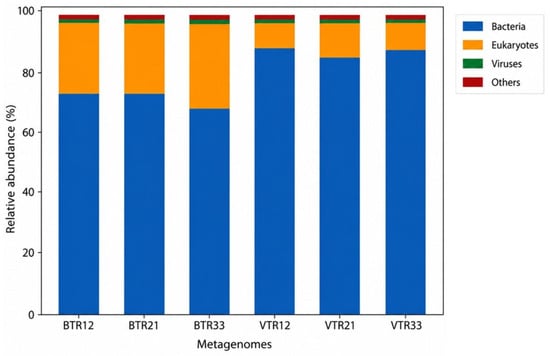
Metagenomic analyses revealed that pulque inocula from both agave species were dominated by bacteria and fungi, whereas viruses and other eukaryotes occurred at low relative abundances (Figure 1). Bacteria were the most dominant group in both inocula, with a higher proportion in A. salmiana, followed by fungi.
Figure 1.
Relative abundance of bacteria, eukaryotes, viruses, and other organisms in pulque inoculum samples prepared from the sap of A. mapisaga (BTR) and A. salmiana (VTR).
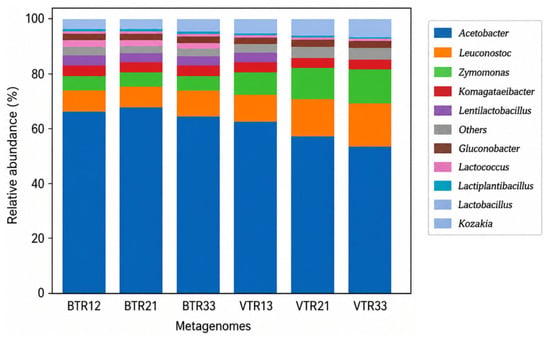
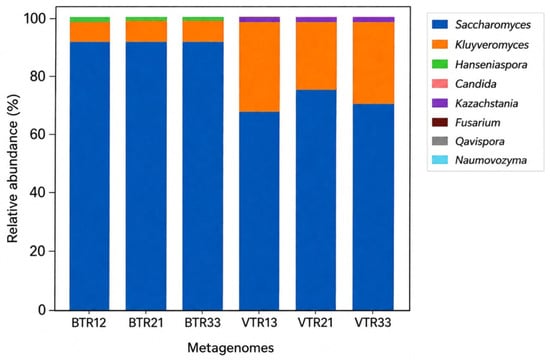
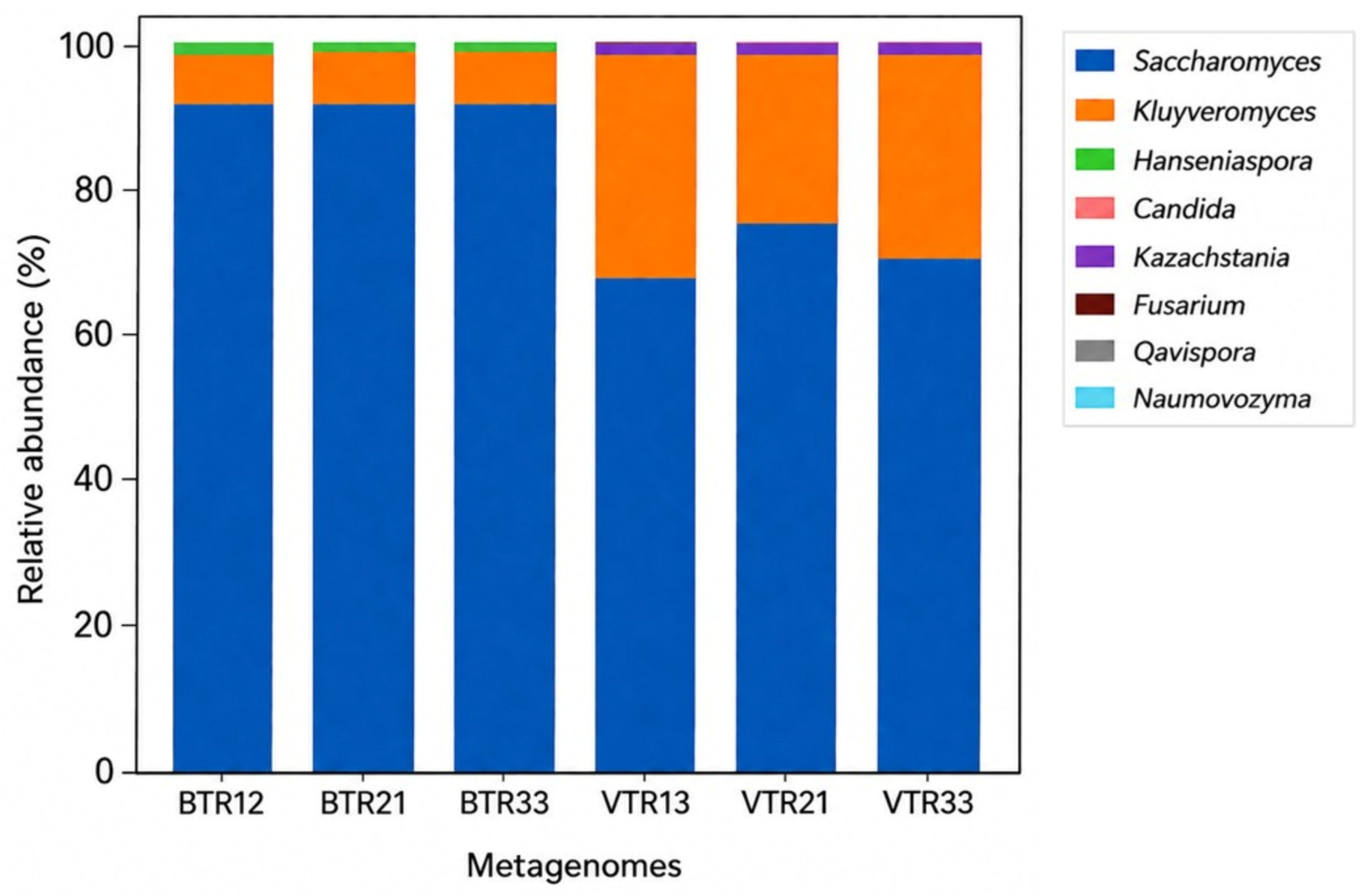
At the genus level (Figure 2), bacterial communities in inoculum from A. mapisaga and A. salmiana sap were dominated by Acetobacter (68.1% and 58.3%) and Leuconostoc (19.5% and 21.9%). Fungal communities were dominated by the fermentative yeasts Saccharomyces and Kluyveromyces, with other fungal genera detected at lower relative abundances (Figure 3).
Figure 2.
Relative abundance of the dominant bacterial genera in metagenomes of pulque inocula prepared from the sap of A. mapisaga (BTR) and A. salmiana (VTR).
Figure 3.
Relative abundance (%) of the dominant fungal genera in metagenomes of pulque inocula prepared from the sap of A. mapisaga (BTR) and A. salmiana (VTR).
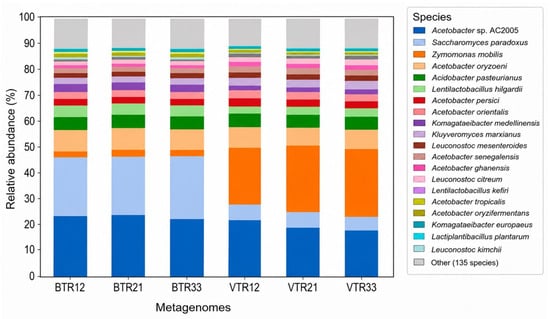
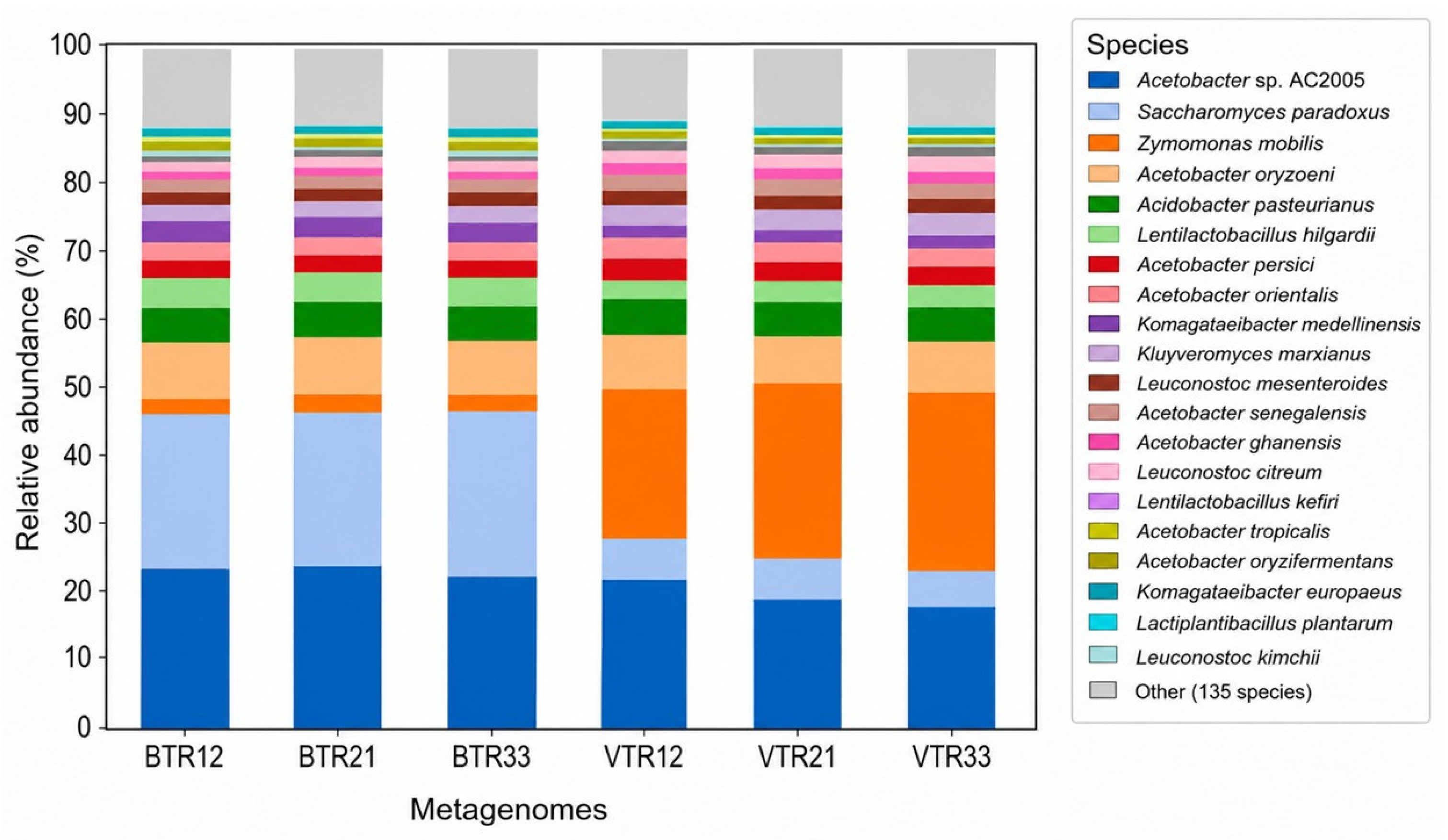
At the species level, the dominant taxa were Acetobacter sp. AC2005, Zymomonas mobilis, and Saccharomyces paradoxus. Their relative abundance differed between inocula: S. paradoxus was more abundant in A. mapisaga, whereas Z. mobilis was more abundant in A. salmiana (Figure 4).
Figure 4.
Relative abundance (%) of the dominant microbial species in metagenomes of pulque inocula prepared from the sap of A. mapisaga (BTR) and A. salmiana (VTR).
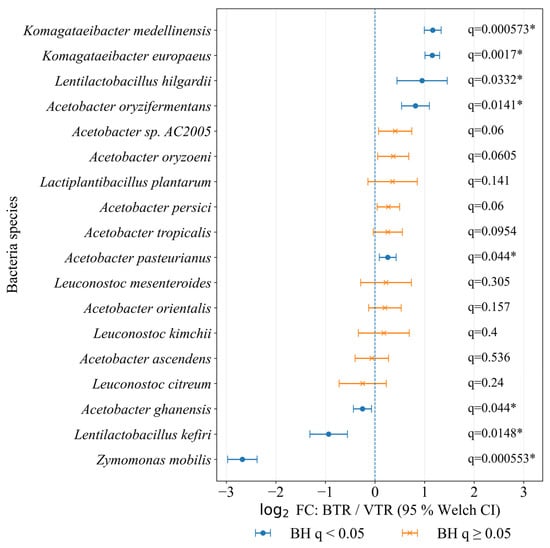
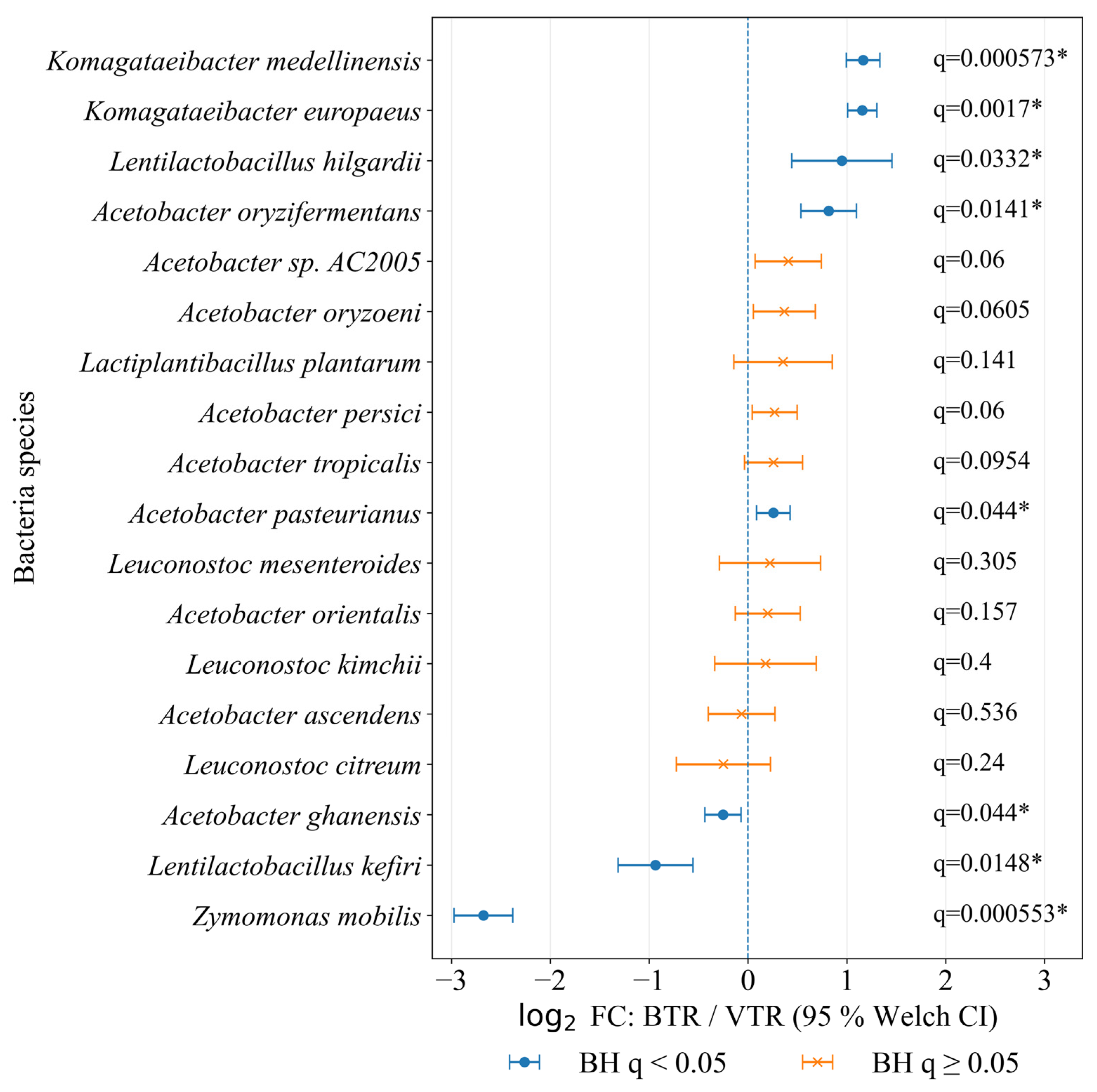
Eight of the 18 bacterial species analyzed differed significantly between BTR and VTR according to Welch’s t-test on log2-transformed relative abundances after false discovery rate correction (q < 0.05; Figure 5). None of the exact Mann–Whitney U tests yielded p < 0.05. However, with only three observations per group, the smallest attainable two-sided exact p-value was 0.10. Thus, the nonsignificant Mann–Whitney results do not demonstrate equivalence between inocula but reflect the limited statistical resolution of the test. The significant parametric results should therefore be interpreted as exploratory statistical evidence.
Figure 5.
Differences in bacterial species-level composition between pulque inocula prepared from the sap of Agave mapisaga (BTR) and Agave salmiana (VTR), as determined using Welch t-test and log2 fold-change analysis. FC denotes fold change. * Statistically significant differences at q < 0.05.
The largest bacterial difference was observed from Zymomonas mobilis, whose mean relative abundance was approximately 6.4-fold higher in VTR than in BTR. Four additional bacterial species showed suggestive differences but did not meet the false discovery rate threshold: Acetobacter sp. AC2005 (q = 0.0600), Acetobacter persici (q = 0.0600), Acetobacter oryzoeni (q = 0.0605), and Acetobacter tropicalis (q = 0.0954).
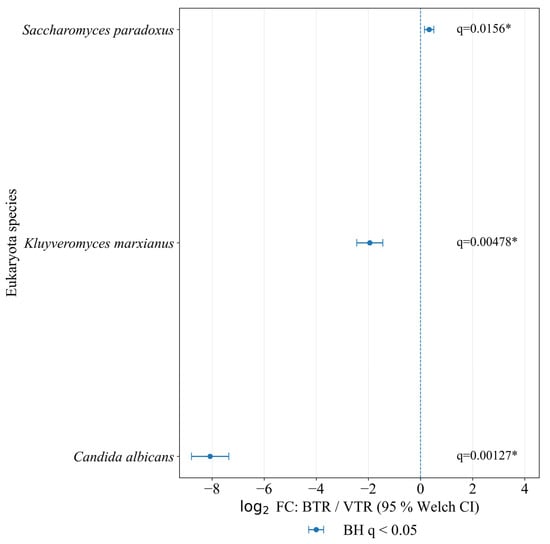
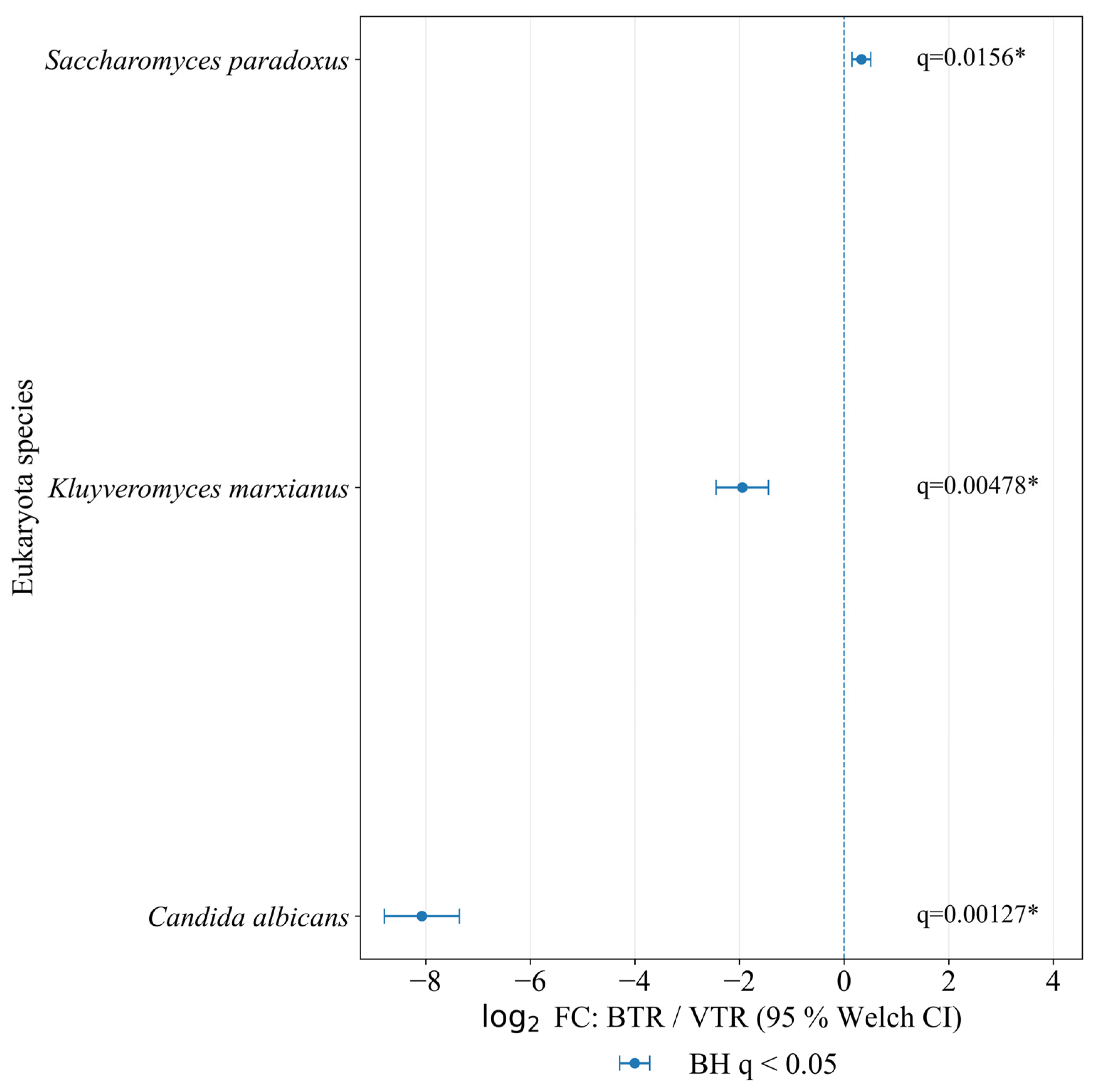
All three fungal species differed significantly between inocula in the log2-Welch analysis (q < 0.05; Figure 6). Candida albicans was detected only in VTR, at relative abundance ranging from approximately 1.19% to 1.69%. Kluyveromyces marxianus showed the largest fold difference, with a mean relative abundance 3.9-fold higher in VTR than in BTR. In contrast, Saccharomyces paradoxus was approximately 1.26-fold more abundant in BTR, corresponding to an absolute difference of approximately 18.62 percentage points between group means.
Figure 6.
Differences in eukaryota species-level composition between pulque inocula prepared from the sap of Agave mapisaga (BTR) and Agave salmiana (VTR), as determined using Welch t-test and log2 fold-change analysis. FC denotes fold change. * Statistically significant differences at q < 0.05.
No viral taxa differed significantly between BTR and VTR after false discovery rate correction.
3.2. Diversity Analyses
Alpha diversity did not differ significantly between A. mapisaga (BTR) and A. salmiana (VTR) inoculum at either the genus or species level (p > 0.05). Nevertheless, VTR showed a trend toward greater bacterial diversity, with higher Shannon (1.343 vs. 1.254) and Simpson (0.628 vs. 0.522) indices, whereas Chao1 richness was similar between groups. The strongest trend occurred in the fungal community, for which VTR had approximately twice the Shannon (0.639 vs. 0.303) and Simpson (0.396 vs. 0.143) values observed in BTR, along with higher estimated richness (Table 1).
Table 1.
Genus-level alpha diversity of bacterial, fungal, and viral communities in pulque inoculum prepared from the sap of A. mapisaga (BTR) and A. salmiana (VTR).
Bray–Curtis-based beta diversity analysis detected no significant differences in microbial community composition between inocula from the two agave species (PERMANOVA, p > 0.05). The highest proportion of explained variation was observed for fungal communities (R2 = 0.938; p = 0.094), followed by the total microbial community (R2 = 0.917; p = 0.107) and bacterial communities (R2 = 0.879; p = 0.111). Viral communities showed little variation between inoculum types (R2 = 0.005; p = 1.000; Table 2).
Table 2.
Genus-level beta diversity of microbial communities in pulque inoculum prepared from the sap of A. mapisaga (BTR) and A. salmiana (VTR).
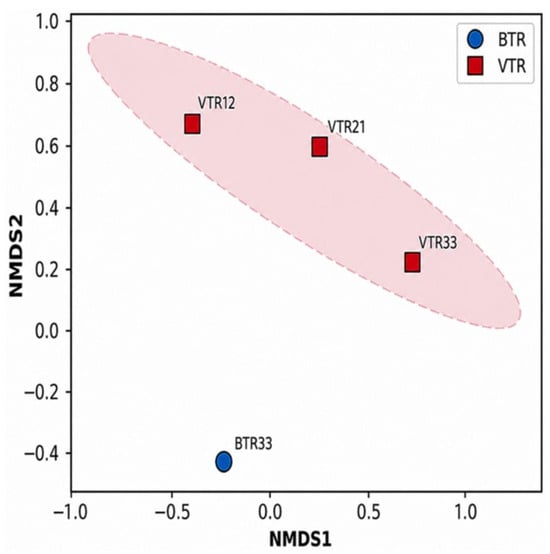
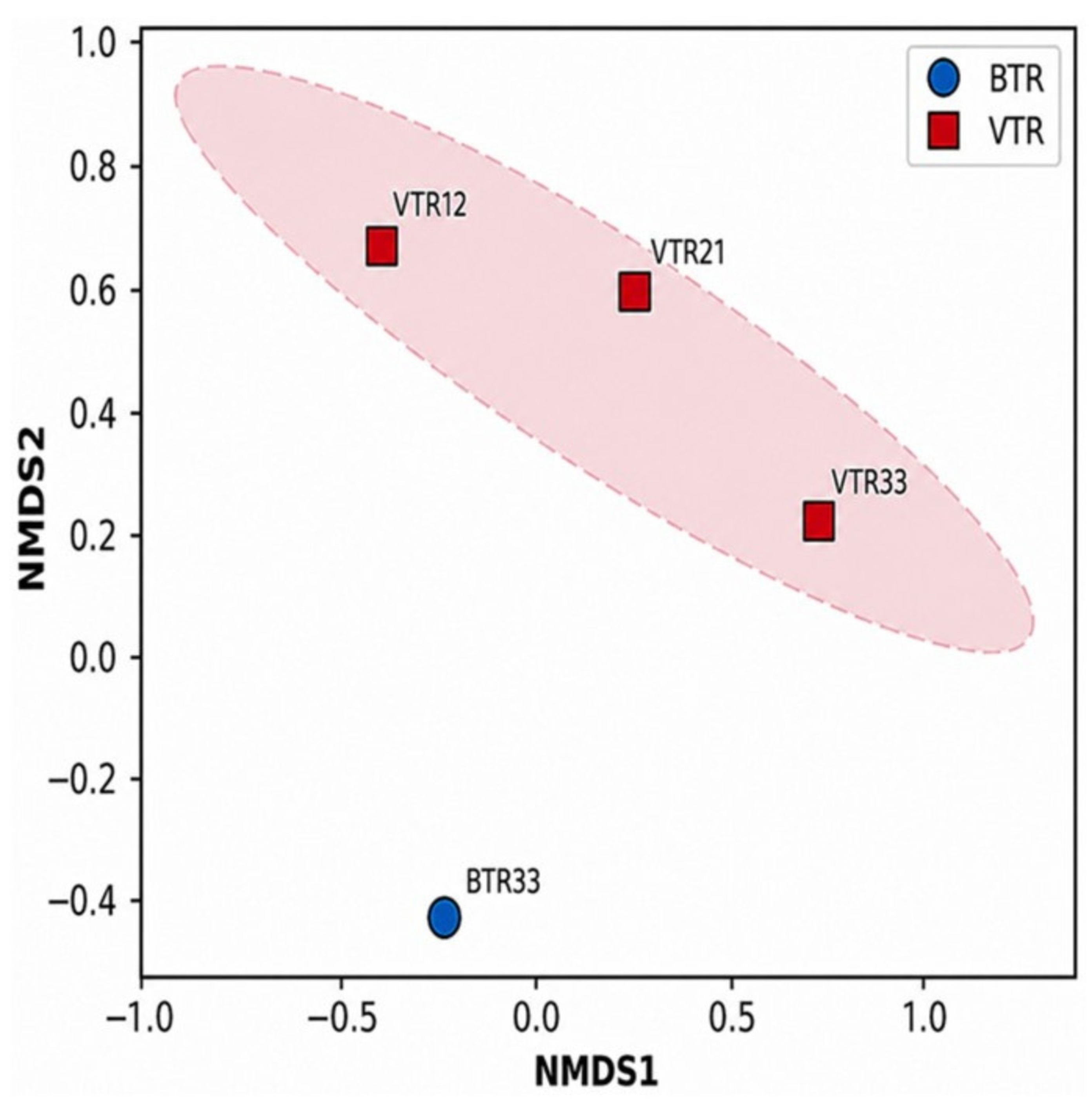
The analysis of multivariate homogeneity of group dispersions (PERMDISP) detected no significant differences in within-group dispersion for any taxonomic group (p > 0.05), indicating that the PERMANOVA results were not confounded by unequal variability among groups. Overall, no significant differences in community composition were detected between inoculum, although fungal communities showed the strongest tendency toward compositional separation (Figure 7).
Figure 7.
Non-metric multidimensional scaling (NMDS) of microbial communities in pulque inoculum prepared from the sap of A. mapisaga (BTR) and A. salmiana (VTR), based on Bray–Curtis dissimilarities. The shaded ellipse illustrates withing-group multivariate dispersion in the NMDS ordination space.
3.3. Functional Annotation of Metagenomes
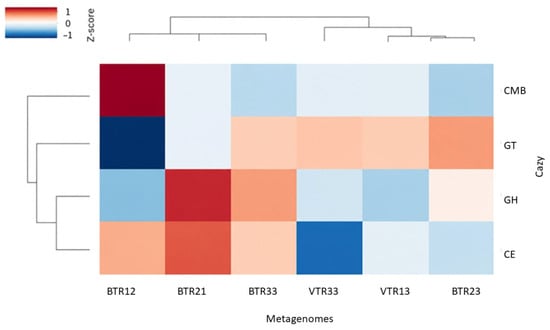
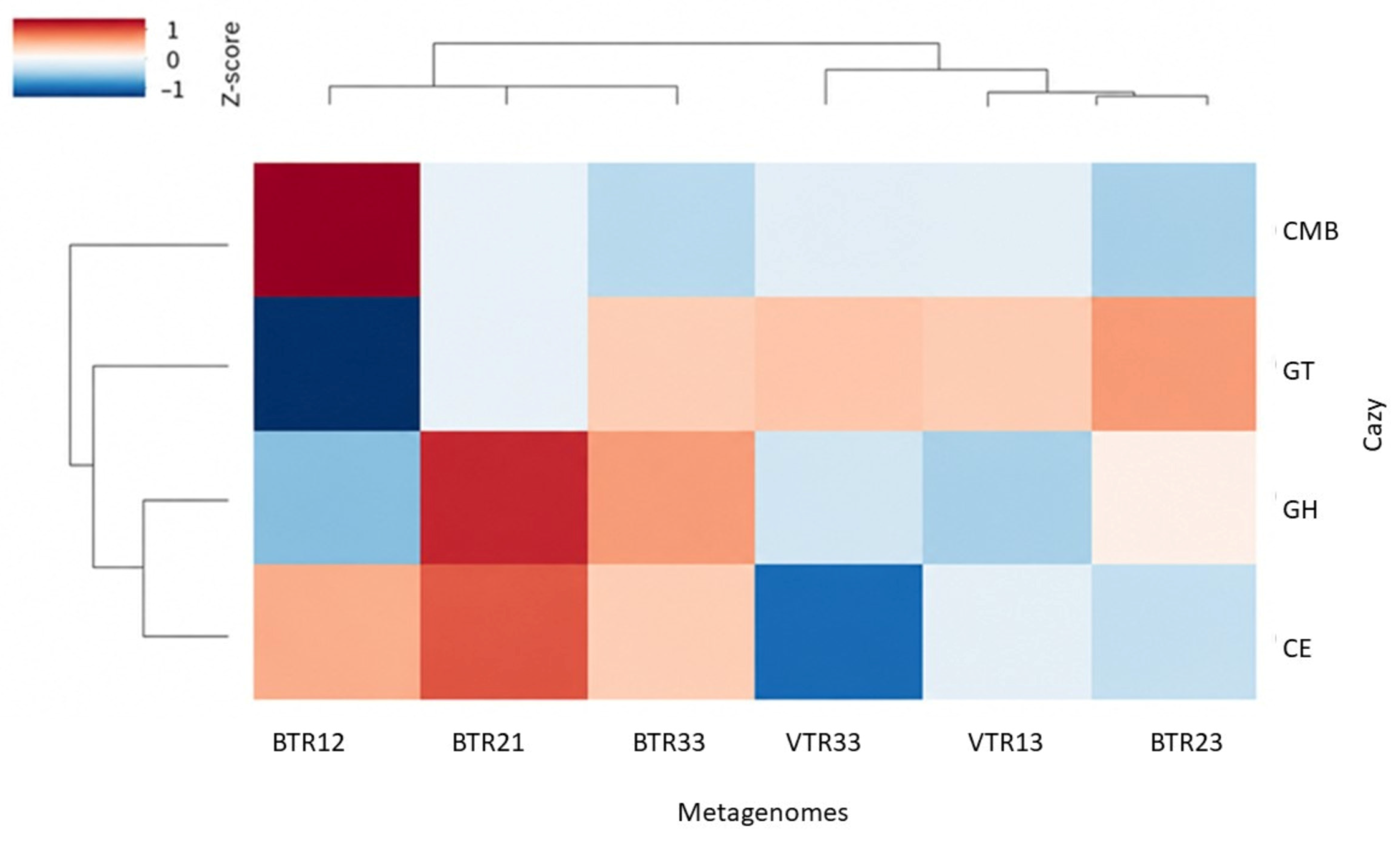
Functional annotation of predicted genes identified several carbohydrate-active enzyme (CAZy) families potentially involved in complex carbohydrates. The most represented enzyme classes were glycosyltransferases (GTs), glycoside hydrolases (GHs), carbohydrate esterases (CEs), and carbohydrate-binding modules (CBMs). These enzymes may contribute to polysaccharide transformation and sugar utilization during fermentation (Figure 8). However, their specific functions and activities require experimental confirmation.
Figure 8.
Heatmap showing the relative abundance of major carbohydrate-active enzyme (CAZy) classes in metagenomes of pulque inoculum prepared from Agave mapisaga (BTR) and Agave salmiana (VTR).
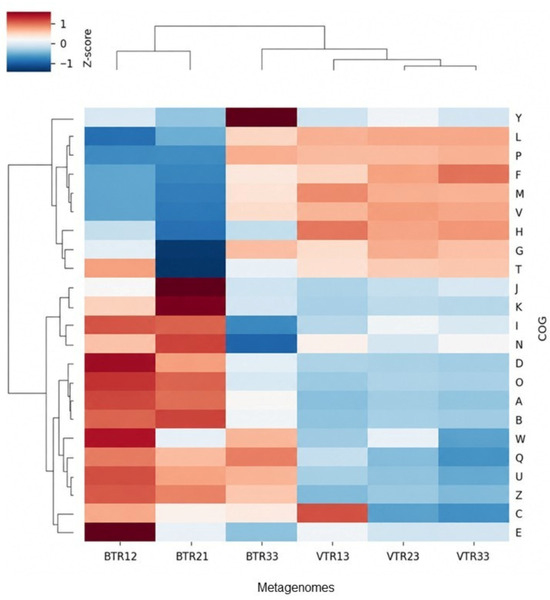
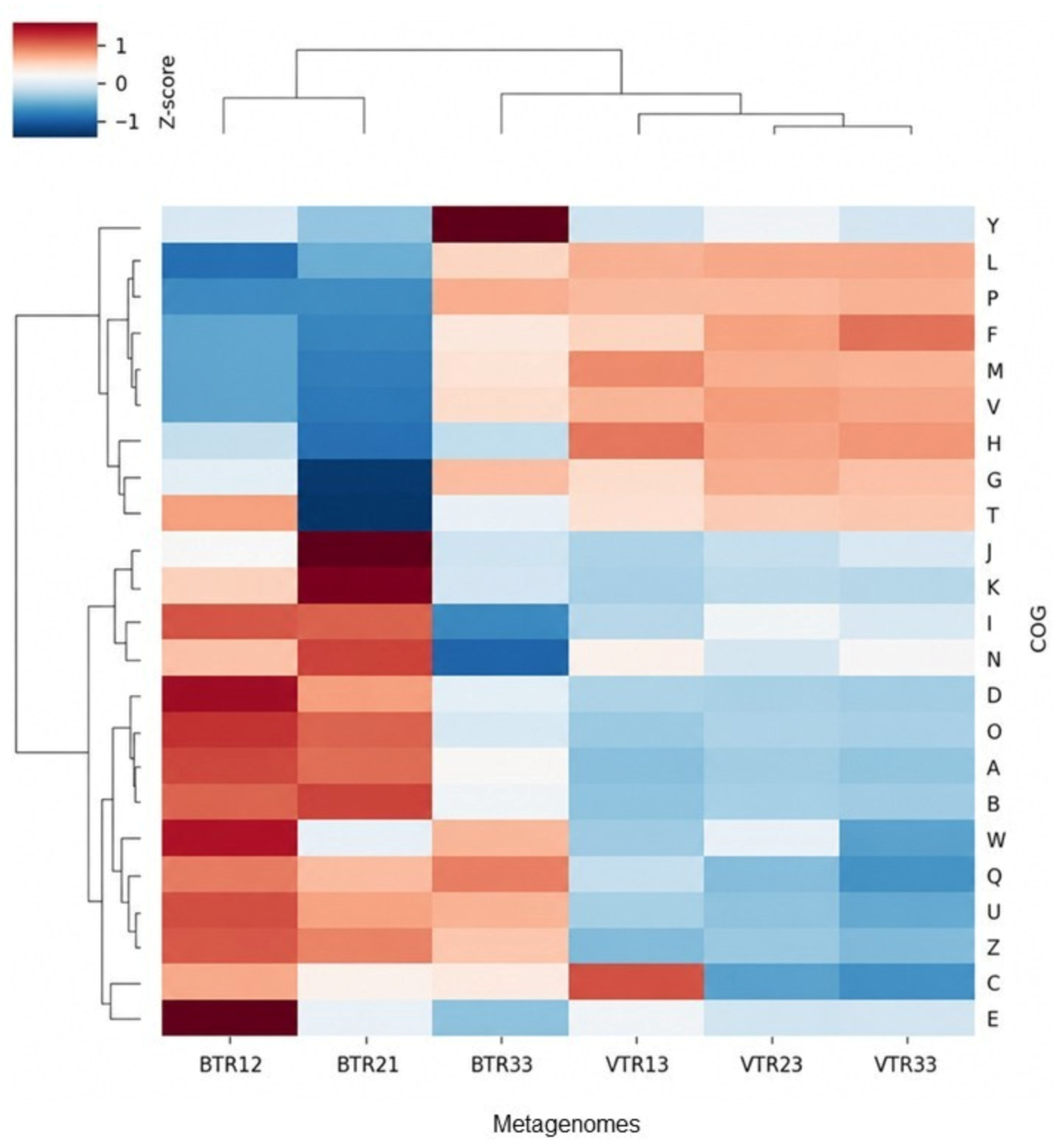
Genes potentially involved in carbohydrate utilization were abundant, consistent with the sugar-rich composition of aguamiel and the fermentative nature of the microbial communities. COG annotation also suggested functional differences between inoculum (Figure 9). The A. salmiana inoculum showed higher relative abundances of genes assigned to DNA replication, recombination, and repair (Category L) and cell wall/membrane/envelope biogenesis (Category M). In contrast, the A. mapisaga inoculum had more genes related to RNA processing and modification (Category A), chromatin structure and dynamics (Category B), and transcription (Category K). These patterns may reflect differences in the dominant microbial groups present in each inoculum.
Figure 9.
Heatmap with hierarchical clustering of COG category relative abundances in metagenomes of pulque inoculum prepared from Agave mapisaga (BTR) and Agave salmiana (VTR).
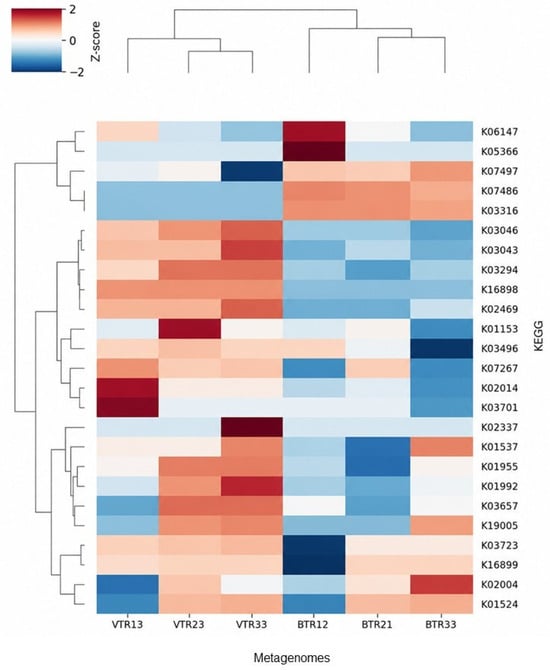
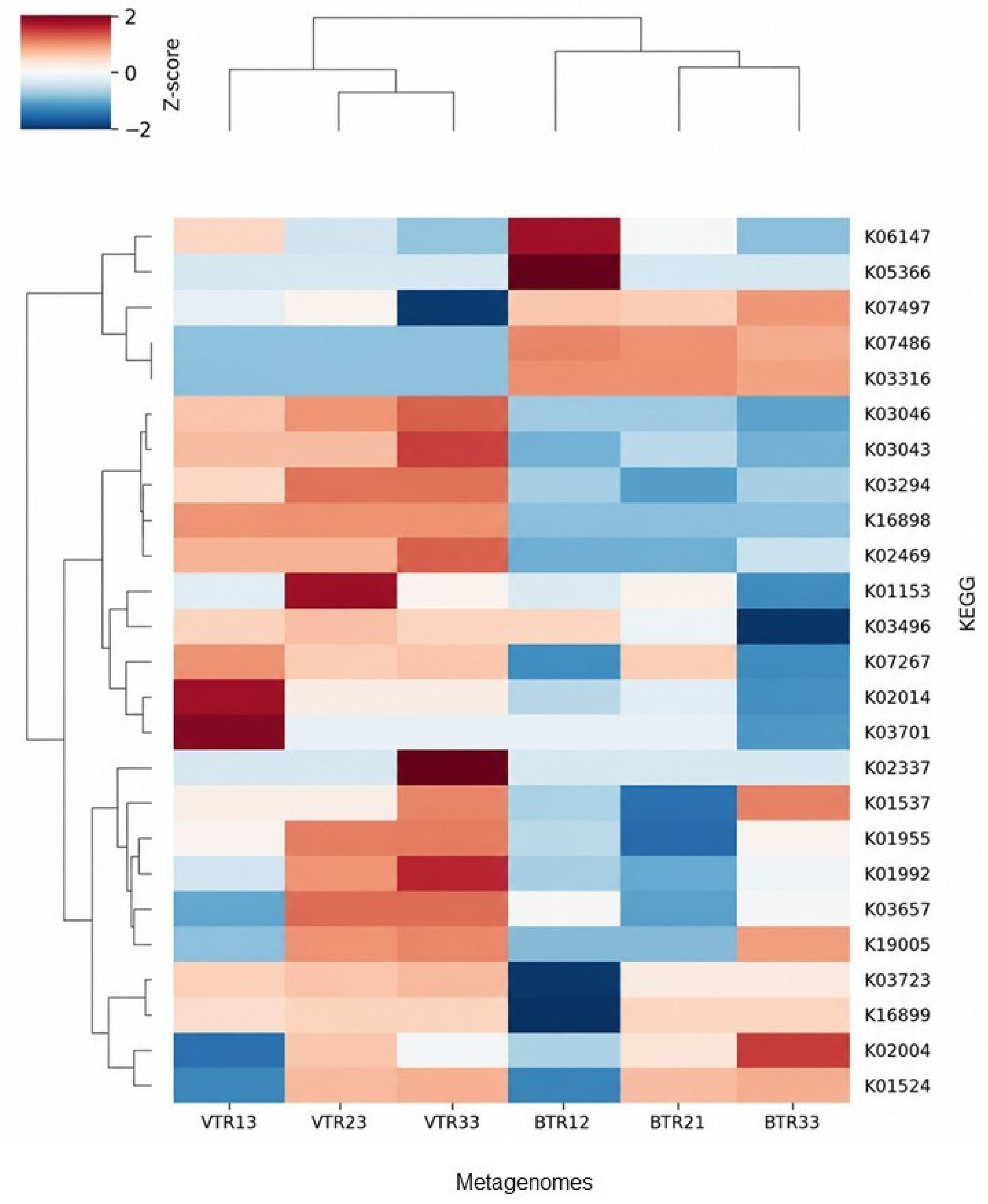
KEGG Orthologs (KO) annotation suggested potential functional differences between inoculum (Figure 10). The A. mapisaga inoculum showed higher relative abundances of orthologs associated with nutrient transport, energy metabolism, and metabolic regulation, including ABC transporters K06147, K02004, and K01537. These functions may indicate greater potential for nutrient uptake and carbohydrate utilization, although functional activity cannot be confirmed from functional annotation alone.
Figure 10.
Heatmap with hierarchical clustering of KEGG orthologs (KO) relative abundances in metagenomes of pulque inoculum prepared from Agave mapisaga (BTR) and Agave salmiana (VTR).
The A. salmiana inoculum showed higher abundances of orthologs related to stress response and DNA repair (K03701); protein synthesis (K02994 and K02337); and carbohydrate metabolism (K01153 and K01992). This profile may reflect adaptation to fermentation-related stress, but transcriptomic, proteomic, or biochemical analyses are required to confirm these interpretations.
4. Discussion
This shotgun metagenomic analysis provides new insights into the microbial ecology of traditional pulque inoculum prepared from A. mapisaga and A. salmiana sap. Although alpha and beta diversity metrics did not differ statistically between inoculum types, exploratory differences in taxonomic composition and predicted functional profiles suggest the botanical origin of the aguamiel may influence the relative abundance and metabolic potential of fermentation-associated microorganisms. Whether these taxonomic differences translate into functional variation remains an open question. The main differences involved Zymomonas mobilis, Kluyveromyces marxianus, and Saccharomyces paradoxus. However, the limited number of biological replicates prevents firm conclusions regarding the effect of Agave species.
These findings support the hypothesis that, beyond maintaining a conserved core microbiome, different agave species may create distinct ecological niches that shape the abundance of specific microbial taxa and their associated metabolic functions, dominated primarily by bacteria and fermentative yeasts [14], associated with lactic, acetic, and alcoholic fermentations involved in sugar transformation and organic acid production [2,15]. In particular, the high abundance of Acetobacter, Leuconostoc, and Zymomonas detected in the present study supports the importance of acetic acid bacteria and lactic acid bacteria in the stabilization and maturation of pulque inocula.
The predominance of Acetobacter may be related to the advanced fermentation stage at which inoculum was collected. Ethanol accumulation and oxygen exposure during this stage can favor the oxidative metabolism of acetic acid bacteria and the production of acetic acid [14]. Similar patterns have been reported in pulque and other traditional fermented beverages, in which Acetobacter contributes to acidification and sensory development [16,17]. Leuconostoc may contribute to heterolactic fermentation and the production of organic acids and exopolysaccharides associated with pulque viscosity.
The detection of Zymomonas mobilis, a bacterium frequently associated with pulque fermentation [18], is consistent with its capacity for efficient ethanol production through the Entner–Doudoroff pathway and its adaptation to sugar-rich fermentative environments such as aguamiel [19]. Its higher relative abundance in inoculum derived from A. salmiana may be related to differences in aguamiel composition or physicochemical conditions, although these factors were not directly evaluated.
Fungal communities were dominated by Saccharomyces and Kluyveromyces, two genera commonly involved in alcoholic fermentation. The greater relative abundance of Saccharomyces paradoxus in A. mapisaga inocula may reflect differences in substrate composition or yeast adaptation. Nevertheless, sugar availability, environmental conditions, and production practices may also influence yeast community structure during spontaneous fermentations [20,21,22].
The shared microbiome may result from repeated inoculum propagation and similar traditional production conditions. Several microorganisms identified in this study can persist throughout pulque fermentation, including Kluyveromyces marxianus, Saccharomyces arboricola, S. cerevisiae, S. cerevisiae × S. kudriavzevii, S. eubayanus, and S. kudriavzevii [3]. In addition, a starter culture containing S. cerevisiae, Zymomonas mobilis, and Lactobacillus plantarum has been reported to reproduce sensory characteristics like those of traditional pulque [23]. These observations support the existence of a stable consortium of microorganisms that underpins the fermentation process while allowing compositional variability among production systems.
Further studies should include more Agave species, producers, locations, and fermentation stages to determine whether botanical origin consistently influences pulque inoculum microbiomes. Integrating metagenomic, metatranscriptomic, metabolomic, and biochemical analyses should help verify predicted functions related to primary fermentation metabolism, the activity of enzymes involved in polysaccharide and carbohydrate degradation, the biosynthesis of B-complex vitamins, and potential probiotic functions associated with benefits to human health [1,18,24]. These approaches could also determine whether the observed taxonomic and functional patterns persist throughout fermentation and influence the sensory, nutritional, and functional characteristics of pulque.
Metagenomic results could additionally guide the targeted isolation and characterization of abundant fermentation-associated microorganisms. Single-strain and mixed-culture fermentation assays, together with appropriate safety evaluations, would be required to confirm their functional roles and assess their potential use as starter cultures.
5. Conclusions
Shotgun metagenomic analysis revealed that pulque inoculum prepared from A. mapisaga and A. salmiana contained complex microbial communities dominated by fermentative bacteria and yeasts, particularly Acetobacter, Leuconostoc, Zymomonas, Saccharomyces, and Kluyveromyces. Although alpha and beta diversity metrics did not differ significantly between inoculum types, exploratory differences were observed in taxonomic composition and predicted functions related to carbohydrate metabolism, cellular repair, and stress response.
Author Contributions
Conceptualization, G.M.-M. and J.A.C.-S.; methodology, G.M.-M., J.A.C.-S. and M.H.-R.; software, G.M.-M. and J.A.C.-S.; validation, A.M.-C.; formal analysis, G.M.-M. and J.A.C.-S.; investigation, G.M.-M. and J.A.C.-S.; resources, J.A.C.-S.; data curation, G.M.-M. and J.A.C.-S.; writing—original draft preparation, G.M.-M. and J.A.C.-S.; writing—review and editing, M.H.-R., A.M.-C., G.M.-M. and J.A.C.-S.; visualization, G.M.-M. and J.A.C.-S.; supervision, J.A.C.-S. and M.H.-R.; project administration, J.A.C.-S.; funding acquisition, J.A.C.-S. All authors have read and agreed to the published version of the manuscript.
Funding
This research received no external funding.
Institutional Review Board Statement
Not applicable.
Informed Consent Statement
Not applicable.
Data Availability Statement
The data generated and analyzed during this study are available from the corresponding author upon request.
Acknowledgments
The authors thank the Colegio de Postgraduados for providing laboratory facilities and technical support. They also acknowledge the bioinformatic Galaxy public server (version 26.1.rc1; https://usegalaxy.org), accessed in 4 April 2026, and computational resources used for metagenomic analysis. The first author acknowledges the scholarship provided by the National Council of Humanities, Science and Technology (CONAHCYT), now the Secretariat of Science, Humanities, Technology and Innovation (SECIHTI), in support of her scientific training and research.
Conflicts of Interest
The authors declare no conflicts of interest.
References
- Huezo-Sánchez, A.R.; Ortega-Rodríguez, E.M.; Pérez-Armendáriz, B.; El-Kassis, E.G. Characterization of bacterial diversity in aguamiel and two types of pulque from the Zacatlán region, México. Fermentation 2023, 9, 564. [Google Scholar] [CrossRef] [Scilit]
- Astudillo-Melgar, F.; Hernández-Chávez, G.; Rodríguez-Alegría, M.E.; Ochoa-Leyva, A.; López Munguía, A.; Escalante, A. Evaluating the temporal stability of the core microbiota in traditional Mexican pulque fermentation. Food Biosci. 2025, 71, 107306. [Google Scholar] [CrossRef] [Scilit]
- Chacón-Vargas, K.; Torres, J.; Giles-Gómez, M.; Escalante, A.; Gibbons, J.G. Genomic profiling of bacterial and fungal communities and their predictive functionality during pulque fermentation by whole-genome shotgun sequencing. Sci. Rep. 2020, 10, 15115. [Google Scholar] [CrossRef] [Scilit] [PubMed]
- Silva-López, N.L.; Martínez-Hernández, S.; Figueredo-Urbina, C.J. Microorganismos asociados al aguamiel en el agave pulquero en Hidalgo, México. Pädi Bol. Cient. Cienc. Básicas Ing. ICBI 2025, 12, 92–101. [Google Scholar] [CrossRef] [Scilit]
- Valdivieso Solís, D.G.; Vargas Escamilla, C.A.; Mondragón Contreras, N.; Galván Valle, G.A.; Gilés-Gómez, M.; Bolívar, F.; Escalante, A. Sustainable production of pulque and maguey in Mexico: Current situation and perspectives. Front. Sustain. Food Syst. 2021, 5, 678168. [Google Scholar] [CrossRef] [Scilit]
- Escalante, A.; Rodríguez, M.E.; Martínez, A.; López-Munguía, A.; Bolívar, F.; Gosset, G. Characterization of bacterial diversity in pulque, a traditional Mexican alcoholic fermented beverage, as determined by 16S rDNA analysis. FEMS Microbiol. Lett. 2004, 235, 273–279. [Google Scholar] [CrossRef] [PubMed]
- Pita-Galeana, M.A.; Ruhle, M.; López-Vázquez, L.; de Anda-Jáuregui, G.; Hernández-Lemus, E. Computational metagenomics: State of the art. Int. J. Mol. Sci. 2025, 26, 9206. [Google Scholar] [CrossRef] [Scilit] [PubMed]
- Ortiz-Basurto, R.I.; Pourcelly, G.; Doco, T.; Williams, P.; Dornier, M.; Belleville, M.-P. Analysis of the main components of the aguamiel produced by the maguey-pulquero (Agave mapisaga) throughout the harvest period. J. Agric. Food Chem. 2008, 56, 3682–3687. [Google Scholar] [CrossRef] [Scilit] [PubMed]
- Lappe-Oliveras, P.; Avitia, M.; Sánchez-Robledo, S.D.; Castillo-Plata, A.K.; Pedraza, L.; Baquerizo, G.; le Borgne, S. Genotypic and phenotypic diversity of Kluyveromyces marxianus isolates obtained from the elaboration process of two traditional mexican alcoholic beverages derived from Agave: Pulque and henequen (Agave fourcroydes) mezcal. J. Fungi 2023, 9, 795. [Google Scholar] [CrossRef] [Scilit] [PubMed]
- Song, D.; Yang, L.; Zhang, C. Omics-guided construction of microbial consortia for reproducible traditional fermented foods and beverages. Foods 2026, 15, 1643. [Google Scholar] [CrossRef] [Scilit] [PubMed]
- Gentry, H.S. Agaves of Continental North America; University of Arizona Press: Tucson, AZ, USA, 1982. [Google Scholar] [CrossRef] [Scilit]
- García-Mendoza, A.J. Agavaceae. In Flora del Valle de Tehuacán-Cuicatlán; Medina, R., Ed.; Fascículo 88; Instituto de Biología, Universidad Nacional Autónoma de México: Mexico City, Mexico, 2011; pp. 1–95. [Google Scholar]
- Wilson, K. Preparation of genomic DNA from bacteria. Curr. Protoc. Mol. Biol. 2001, 56, 2–4. [Google Scholar] [CrossRef] [Scilit]
- Jurtshuk, P., Jr. Bacterial metabolism. In Medical Microbiology, 4th ed.; Baron, S., Ed.; Chapter 4; University of Texas Medical Branch at Galveston: Galveston, TX, USA, 1996. Available online: https://www.ncbi.nlm.nih.gov/books/NBK7919/ (accessed on 13 May 2026).
- Rocha-Arriaga, C.; Espinal-Centeno, A.; Martínez-Sánchez, S.; Caballero-Pérez, J.; Alcaraz, L.D.; Cruz-Ramírez, A. Deep microbial community profiling along the fermentation process of pulque, a major biocultural resource of Mexico. bioRxiv 2019. [Google Scholar] [CrossRef] [Scilit]
- Shen, H.; Wang, T.; Dong, W.; Sun, G.; Liu, J.; Peng, N.; Zhao, S. Metagenome-assembled genome reveals species and functional composition of Jianghan chicken gut microbiota and isolation of Pediococcus acidilactic with probiotic properties. Microbiome 2024, 12, 25. [Google Scholar] [CrossRef] [Scilit] [PubMed]
- Noriega-Juárez, A.D.; Meza-Espinoza, L.; García-Magaña Mde, L.; Ortiz-Basurto, R.I.; Chacón-López, M.A.; Anaya-Esparza, L.M.; Montalvo-González, E. Aguamiel, a traditional mexican beverage: A review of its nutritional composition, health effects and conservation. Foods 2025, 14, 134. [Google Scholar] [CrossRef] [Scilit] [PubMed]
- Escalante, A.; López Soto, D.R.; Velázquez Gutiérrez, J.E.; Gilés-Gómez, M.; Bolívar, F.; López-Munguía, A. Pulque, a traditional mexican alcoholic fermented beverage: Historical, microbiological, and technical aspects. Front. Microbiol. 2016, 7, 1026. [Google Scholar] [CrossRef] [Scilit] [PubMed]
- He, M.; Wu, B.; Qin, H.; Ruan, Z.; Tan, F.; Wang, J.; Shui, Z.; Dai, L.; Zhu, Q.; Pan, K.; et al. Zymomonas mobilis: A novel platform for future biorefineries. Biotechnol. Biofuels 2014, 7, 101. [Google Scholar] [CrossRef] [Scilit] [PubMed]
- Delgado-Ospina, J.; Puerta-Polanco, L.F.; Grande-Tovar, C.D.; Cuervo, R.A.; Navia-Porras, D.P.; Poveda-Perdomo, L.G.; Fernández-Daza, F.F.; Chaves-López, C. Explorando el microbiota central de cuatro diferentes bebidas fermentadas tradicionales de los Andes colombianos. Fermentation 2022, 8, 733. [Google Scholar] [CrossRef] [Scilit]
- Carboni, A.D.; Martins, G.N.; Gómez-Zavaglia, A.; Castilho, P.C. Lactic acid bacteria in the production of traditional fermented foods and beverages of Latin America. Fermentation 2023, 9, 315. [Google Scholar] [CrossRef] [Scilit]
- Villarreal-Morales, S.L.; Muñiz-Márquez, D.B.; Michel-Michel, M.; González-Montemayor, Á.-M.; Escobedo-García, S.; Salas-Tovar, J.A.; Flores-Gallegos, A.C.; Rodríguez-Herrera, R. Aguamiel a fresh beverage from Agave spp. Sap with functional properties. In Natural Beverages; Grumezescu, A.M., Holban, A.M., Eds.; Academic Press: Cambridge, MA, USA, 2019; pp. 179–208. [Google Scholar] [CrossRef] [Scilit]
- Bautista-Moreno, F.A.; Gilés-Gómez, M.; Silva-Chávez, M.A.; Severiano-Pérez, P.; Rodríguez-Alegría, M.E.; Hernández-Chávez, G.; Bolívar, F.; Escalante, A. Design of a minimal starter culture for controlled fermentation of maguey sap: Microbial and sensory comparison with traditional pulque. Food Biosci. 2025, 74, 107880. [Google Scholar] [CrossRef] [Scilit]
- Gilés-Gómez, M.; Morales-Huerta, X.; Pastelin-Palacios, R.; López-Macías, C.; Flores-Montesinos, M.S.; Astudillo-Melgar, F.; Escalante, A. Analysis of the probiotic potential of Lactiplantibacillus plantarum LB1_P46 isolated from the Mexican fermented pulque beverage: A functional and genomic analysis. Microorganisms 2024, 12, 1652. [Google Scholar] [CrossRef] [Scilit] [PubMed]

Disclaimer/Publisher’s Note: The statements, opinions and data contained in all publications are solely those of the individual author(s) and contributor(s) and not of MDPI and/or the editor(s). MDPI and/or the editor(s) disclaim responsibility for any injury to people or property resulting from any ideas, methods, instructions or products referred to in the content. |
© 2026 by the authors. Licensee MDPI, Basel, Switzerland. This article is an open access article distributed under the terms and conditions of the Creative Commons Attribution (CC BY) license.