


Abstract
Lactic acid bacteria (LAB) are Gram-positive cocci or rods from different genera and species that synergistically coexist with yeasts in cereal sourdoughs. Although the production and consumption of sourdough breads have increased in the last decade, there are still few studies that identify the LABs present in sourdoughs of different origins. In this study, we identified LAB strains isolated from wheat sourdoughs sourced from bakeries in north-western Spain and from experimental sourdoughs developed by a baker with four different cereal flours: wheat, rye, spelt, and tritordeum. Through a combination of MALDI-TOF and pheS gene sequence analyses, we identified Lactiplantibacillus plantarum and Levilactobacillus brevis in all analysed sourdoughs. Moreover, Lactiplantibacillus paraplantarum, Lacticaseibacillus paracasei, Lactococcus lactis, Pediococcus pentosaceus, and Weissella paramesenteroides were identified in different sourdoughs. These species were also isolated from sourdoughs obtained in other European countries, although we did not identify the other LAB genera identified in some of them. Our results demonstrate the need to identify the LAB species from sourdoughs of different origins prior to designing suitable starters for inoculated sourdoughs, particularly those produced with innovative flours. To our knowledge, this is the first report on the identity of LABs present in tritordeum sourdoughs in Spain.
1. Introduction
The production and consumption of bread made with sourdoughs (called levain in French, sauerteig in German, pasta madre or lievito madre in Italian, and masa madre in Spanish) have increased considerably in the last decade. Sourdoughs can be developed with different cereals, and traditionally, wheat and rye are the most common cereals used in Europe [1]. More recently, spelt, an ancient variety of wheat [2], and tritordeum, a hybrid of wheat and barley developed in Spain at the end of the last century [3], have also been employed. Currently, tritordeum is cultivated in several European countries. The highest producers are Spain, Italy, and Greece [4], where this cereal is already being used to produce bread as a reliable alternative to wheat in the development of low-gluten breads [5,6,7] to improve their digestibility [8].
Sourdoughs are characterized by very complex biological systems dominated by lactic acid bacteria (LABs), which synergistically coexist with yeasts that are well adapted to this acidic environment but are present at lower cell concentrations than LABs [9]. LABs isolated from sourdoughs are generally accepted as safe microorganisms that play important roles in food fermentation and preservation and therefore could be used to formulate novel starters for the bakery industry [10]. LABs are Gram-positive cocci or rods belonging to different families, genera, and species included in the order Lactobacillales [11]. They are ubiquitous bacteria in different systems, such as cereals in which flours contain LABs responsible for fermentation processes during food production [12]. The production and consumption of sourdough bread have increased considerably in the last decade, and studies on the identity and diversity of LABs in sourdoughs have been carried out in different countries, demonstrating that they belong to more than 100 species from 25 genera [13].
The genera Lactobacillus, Leuconostoc, Lactococcus, Pediococcus, and Weissella have been found in several European countries. They have been identified in wheat sourdoughs from Italy [14,15,16,17,18,19,20,21,22,23], France [24,25,26] and Belgium [27,28,29], Lactobacillus, Leuconostoc, Pediococcus and Weissella in Austria [30], Bulgaria [31], and Turkey [32,33,34], and Lactobacillus and Weissella in Greece [35]. In rye sourdoughs, Lactobacillus, Leuconostoc, Lactococcus, and Weissella have been found in Italy [17]; Lactobacillus in France [26]; Lactobacillus, Leuconostoc, Pediococcus, and Weissella in Austria [30] and Belgium [36]; Lactobacillus, Pediococcus, and Weissella in Estonia [37,38]; Lactobacillus and Pediococcus in Bulgaria [30,39]; Lactobacillus, Leuconostoc, and Pediococcus in Lithuania [40]; Lactobacillus, Leuconostoc, Pediococcus, Lactococcus and Weissella in Turkey [33,41]; and Leuconostoc and Weissella in Spain [42]. In oat sourdoughs the genera Lactobacillus, Leuconostoc, Pediococcus, and Weissella have been identified in Ireland [43]. In barley sourdoughs Lactobacillus, Pediococcus, and Leuconostoc have been found in Turkey [44], and Lactobacillus, Leuconostoc, and Weissella in Belgium [45]. In spelt sourdoughs Lactobacillus, Leuconostoc, Lactococcus, and Pediococcus have been identified in Belgium [27], and Pediococcus, Leuconostoc, and Weissella have been found in Italy [46]. In broa, a traditional ancient breadfrom Portugal produced with maize and rye flours, Lactobacillus, Leuconostoc, Lactococcus, and Pediococcus have been identified [47,48].
Most of these studies were performed before the genus Lactobacillus was split into several new genera, as proposed by Zheng et al. [49]. Several studies were conducted afterwards identifying species from some of these new genera; particularly the genera Companilactobacillus, Fructilactobacillus, Furfurilactobacillus, Lacticaseibacillus, Lactiplantibacillus, Latilactobacillus, Lentiplantibacillus, Levilactobacillus, Limosilactobacillus, Loigolactobacillus, and Paucilactobacillus were found in sourdoughs produced with different cereals in various European regions [50,51,52].
Studies published in the last decade enabled the identification of some of these new genera in wheat sourdoughs in Austria, Belgium, Bulgaria, France, Greece, Italy, Moldavia, and Turkey; in rye sourdoughs in Austria, Belgium, Estonia, France, Lithuania, and the United Kingdom; in spelt sourdoughs in Belgium and Italy; in triticale (hybrid of wheat and rye) sourdoughs in Belgium; in mixed wheat and rye and/or spelt sourdoughs in Spain; and in tritordeum sourdoughs in Italy [10,53,54,55,56,57,58,59,60,61,62]. A number of these new genera were also identified in sourdoughs composed of different cereals in Belgium, France, and the United Kingdom [63] and in traditional sourdoughs collected through a citizen science initiative in Belgium, France, the Netherlands, and Spain as part of the HealthFerm project [64]. The identification of LABs in these European sourdoughs has been mainly achieved via the sequencing of the 16S rRNA gene and in some studies via MALDI-TOF MS [30,34,57,58] or pheS gene analyses [22,26,27,28,29,36]. Nevertheless, as far as we know, to date these methods have not been used in combination to assess LABs in sourdoughs.
Despite the range of studies conducted during last decade that focused on the identification of LAB species in sourdoughs worldwide, there is still a lack of data on the identity of LABs present in sourdoughs in many European countries. Therefore, more studies are necessary as the identification of LAB strains from sourdoughs produced in different regions with different types of flours would likely contribute to discovering a greater LAB biodiversity [39] and would enable the design of new starters to formulate new types of breads. Therefore, the aim of this study was to identify the LABs isolated from different cereal sourdoughs produced in north-western Spain via MALDI-TOF MS and pheS gene analyses, which have been combined in previous works to identify LAB in fermented foods [65,66].
2. Materials and Methods
2.1. LAB Isolation and Counting
LAB strains were isolated from wheat sourdoughs produced in different bakeries in three provinces of north-western Spain—Ávila, Salamanca, and Zamora—which were used to isolate yeasts in a previous study [67]. We also isolated LAB strains from experimental firm and liquid sourdoughs produced by an expert baker (E. Mateos) with flours of wheat, spelt, rye and tritordeum (Tables S1 and S2). These experimental sourdoughs were created through spontaneous fermentation of the cereal flours and propagated for about one month via daily back-slopping, as described by Chiva et al. [67].
To perform the isolation, 10 g samples from each sourdough were weighed, and 90 mL of sterile peptone water (1 g/L peptone, 8.5 g/L NaCl) was added in 250 mL flasks. The mixtures were incubated at 28 °C for 1 h with shaking at 200 rpm. Subsequently, 5 mL of each mixture were centrifuged at low speed (3000× g) to remove the flour residue. Serial decimal dilutions from the resulting supernatants were inoculated onto MRS agar plates (Man, Rogosa and Sharpe medium, Sigma Co., Saint Louis, MO, USA). The plates were incubated at 28 °C for 4 days under aerobic conditions. At this time, the colonies were counted and transferred to new plates to obtain pure cultures for species identification.
2.2. MALDI-TOF MS and Data Analysis
Sample preparation and MALDI-TOF MS analysis were carried out as previously described [68]. Briefly, bacterial biomass (5–100 mg) was prepared using a matrix solution of saturated alpha-cyano-4-hydroxycinnamic acid (α-HCCA; Bruker Daltonics, Leipzig, Germany) in 50% acetonitrile and 2.5% trifluoroacetic acid. Mass spectrometry measurements were performed on an Autoflex III MALDI-TOF/TOF mass spectrometer (Bruker Daltonics, Leipzig, Germany) equipped with a 200 Hz smart beam laser. Replicate analyses were performed in triplicate for each sample from independent target spots. Spectra were recorded in the linear, positive mode at a laser frequency of 200 Hz within a mass range of 2000 to 20,000 Da. The instrumental settings included an IS1 voltage of 20 kV, an IS2 voltage maintained at 18.6 kV, a lens voltage of 6 kV, and an extraction delay time of 40 ns. For each individual spectrum, a total of 500 laser shots were accumulated and analysed (10 × 50 laser shots from distinct positions of the target spot). External mass calibration was validated using the Bruker Bacterial Test Standard (BTS) (Bruker Daltonics, Leipzig, Germany) [69]. Microbial identification was performed according to the standard logarithmic score values and thresholds recommended by the manufacturer. For cluster analysis, a dendrogram was constructed based on the comparison of main strain-specific spectra using the statistical toolbox in Matlab 7.1 (MathWorks Inc., Natick, MA, USA) integrated within the MALDI Biotyper 3.0 software (Bruker Daltonics, Leipzig, Germany), applying a correlation distance measure and average linkage hierarchical clustering.
2.3. Genomic DNA Extraction and Phylogenetic Analysis of pheS Gene
Genomic DNA of isolated strains was extracted with the Bacterial DNA Extraction Kit (Sigma-Aldrich, Saint Louis, MO, USA) following the manufacturer’s instructions. The amplification and sequencing of pheS genes were carried out as indicated by Doan et al. [65]. The sequences obtained were compared with those from the GenBank using the Blastn programme [70]. The obtained sequences and those of related bacteria retrieved from GenBank were aligned using the Clustal W program [71]. The phylogenetic distances were calculated according to Kimura’s two-parameter model [72], and phylogenetic trees were inferred using the neighbour joining model [73]. MEGA 7.0 [74] was used for all the phylogenetic analyses.
3. Results
3.1. LAB Cell Counting and Strain Isolation
The number of LABs in the bakery sourdoughs (mBAL) and experimental firm or liquid sourdoughs ranged from 2 (±0.04) to 9 (±0.1) × 107 CFU g−1 and 1 (±0.03) to 3 (±0.07) × 109 CFU g−1, respectively. A total of 213 and 166 strains were isolated from the bakery sourdoughs produced with wheat flours (mBAL) and experimental (firm and liquid) sourdoughs (one month old) formulated with wheat, rye, spelt, and tritordeum flours, respectively (Table 1). All of these strains were identified via MALDI-TOF MS.
Table 1.
Results of the identification via MALDI-TOF and pheS gene sequence analyses of LAB strains isolated from fermented sourdoughs produced with different cereal flours.
3.2. MALDI-TOF MS Analysis
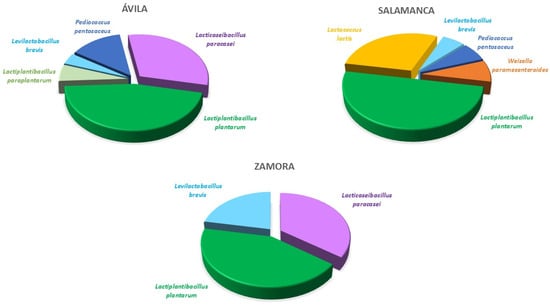
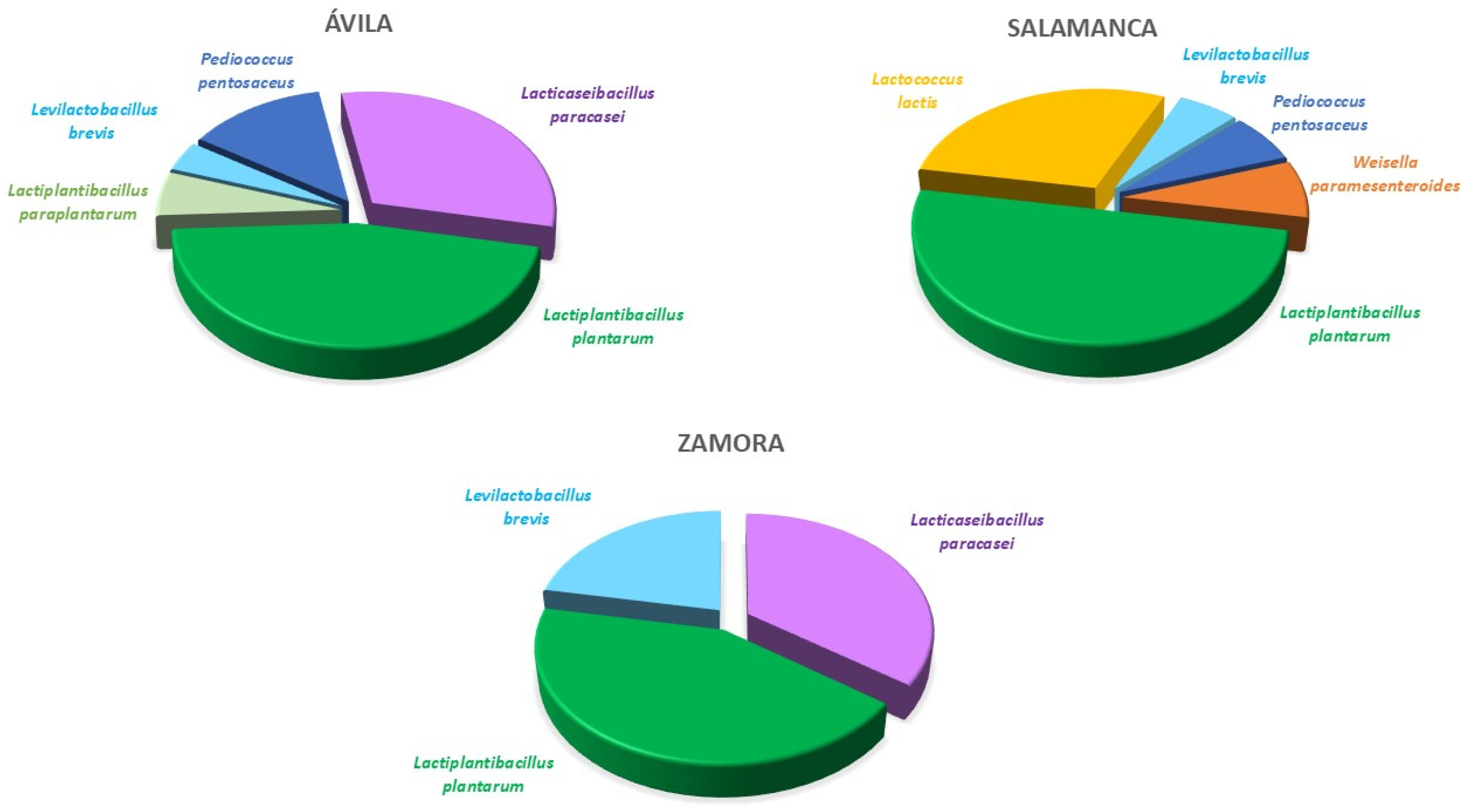
For sourdoughs baked in different provinces of north-western Spain with wheat flours, the results of the LAB analysis revealed that these strains matched with scores higher than 2.0 with respect to Lacticaseibacillus (Lc.) paracasei, Lactiplantibacillus (Lt.) plantarum, Lactiplantibacillus (Lt.) paraplantarum, Levilactobacillus (Lv.) brevis, Lactococcus (L.) lactis, Pediococcus (P.) pentosaceus, and Weissella (W.) paramesenteroides (Table 1 and Table S3). The most abundant species in the wheat fermented sourdoughs from Ávila bakeries was Lt. plantarum, with 46% of the isolated strains, followed by Lc. paracasei with 31%, P. pentosaceus with 13%, Lt. paraplantarum, and Lv. brevis with less than 10% for each one (Figure 1 and Table 2). In Salamanca bakeries, the most frequently isolated species was Lt. plantarum, with 50% of strains, followed by L. lactis with 29% of strains and Lv. brevis, P. pentosaceus, and W. paramesenteroides with less than 10% in each case. In Zamora bakeries, Lt. plantarum was the most frequently isolated species, with 43% of strains, followed by Lc. paracasei with 35% of strains and Lv. brevis with 22% (Figure 1 and Table 2).
Figure 1.
Pie charts showing the distribution of the different species of LAB strains isolated from wheat sourdoughs produced in bakeries from different provinces of north-western Spain.
Table 2.
Percentages of the LAB species isolated in this study.
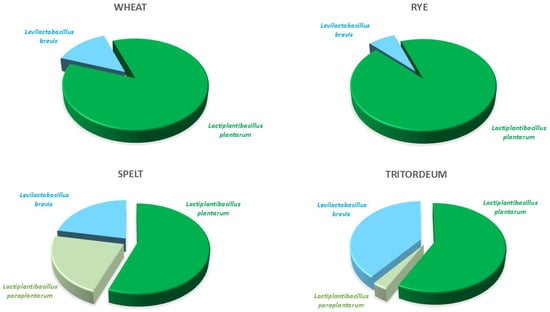
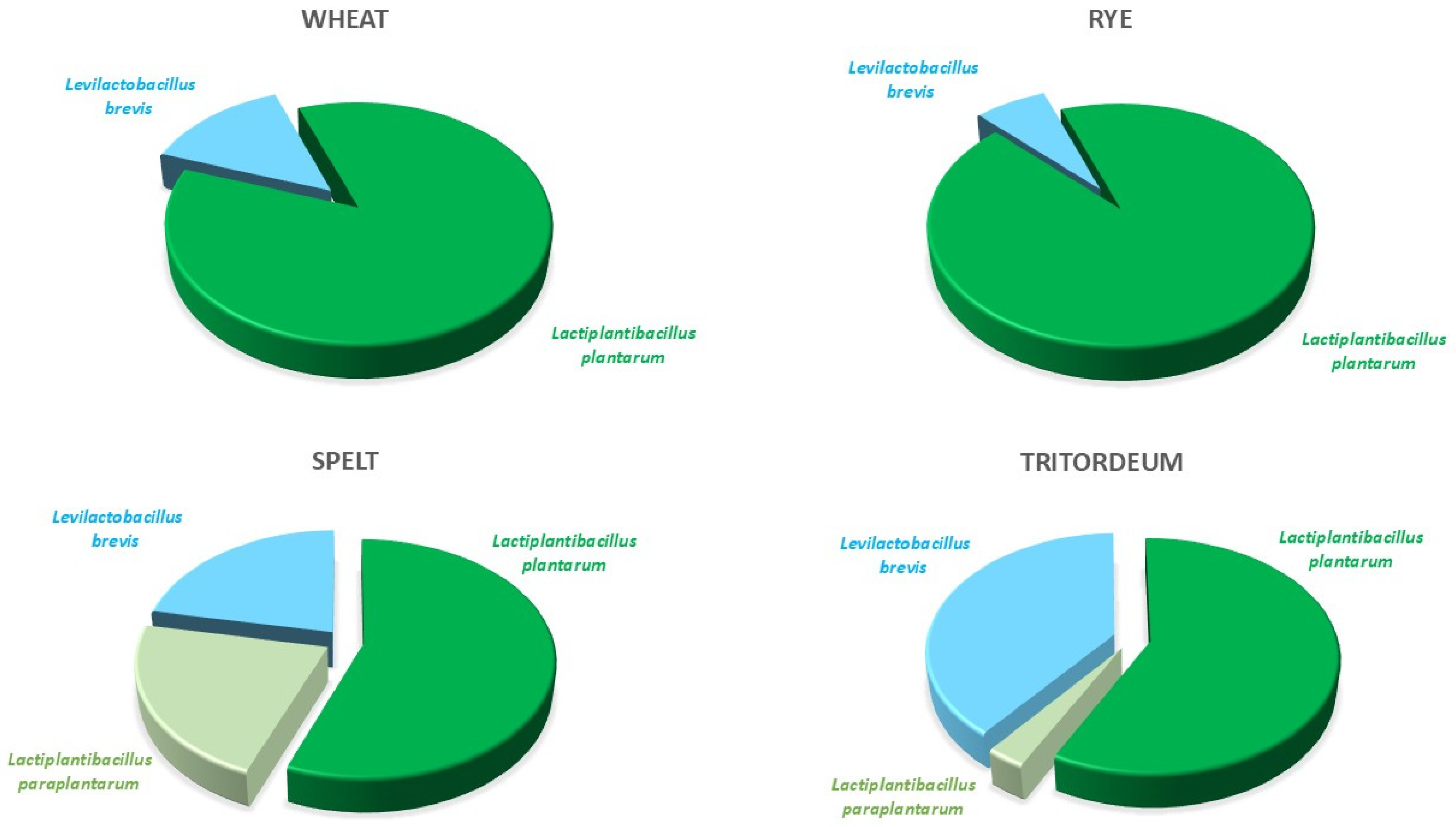
The LAB strains isolated from liquid and firm sourdoughs formulated with different cereal flours matched with scores higher than 2.0 with respect to Lt. plantarum, Lt. paraplantarum, and Lv. brevis (Table 1 and Table S3). The most abundant species (more than 50% of strains) in all these sourdoughs was Lt. plantarum—particularly in those elaborated with wheat and rye, where more than 85% of the isolated strains belonged to this species. Lv. brevis was also identified in all sourdoughs, although in smaller amounts with less than 40% of the isolated strains. In wheat and rye sourdoughs, Lt. paraplantarum was not found, representing its only proportion lower than 25% in sourdoughs baked with spelt and tritordeum (Figure 2 and Table 2). Although we found some differences between firm and liquid sourdoughs from the same cereal, this was the case for the minority of species, such as Lv. brevis in the case of rye and Lt. paraplantarum in the case of tritordeum (Figure 2 and Table 2).
Figure 2.
Pie charts showing the distribution of the different species of LAB strains isolated from one-month-old experimental sourdoughs formulated with different cereal flours.
3.3. pheS Gene Analysis
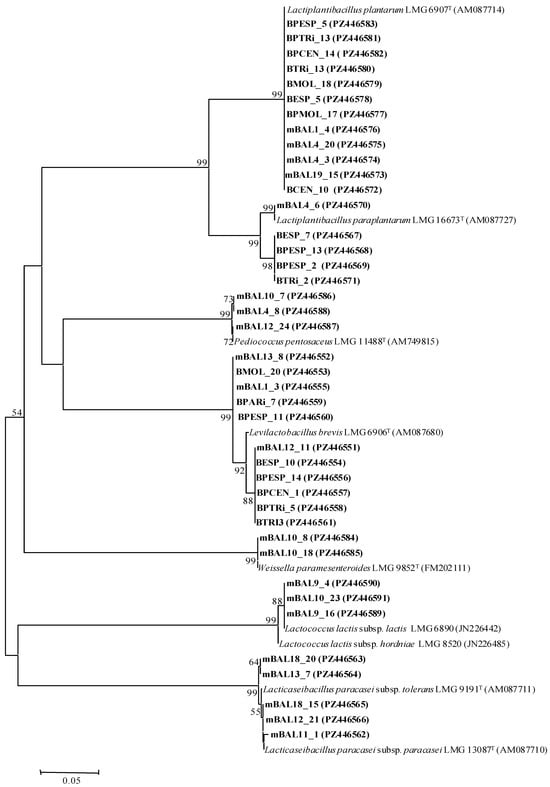
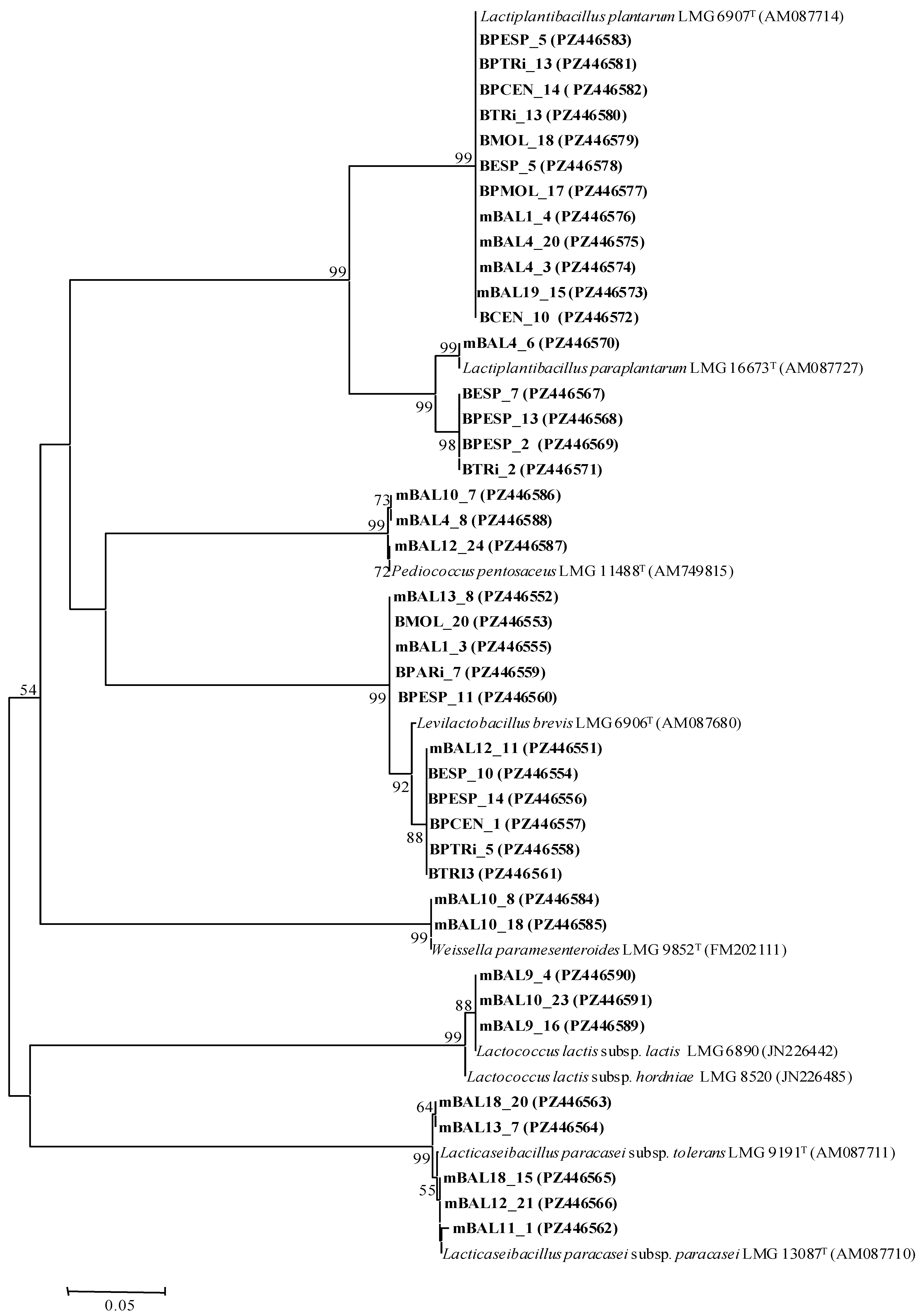
The analysis of partial sequences of pheS gene of strains isolated from different sourdoughs and representative of different MALDI-TOF MS groups revealed that they clustered with the type strains of the LAB species identified with this methodology (Figures S1–S7, Table 1). The results of the pheS analysis confirmed the identification obtained after MALDI-TOF MS analysis at genus and species levels for all strains isolated in this study, with similarity values of pheS gene sequences ranging from 97.9% to 100% (Figure 3 and Table 1). All strains identified via MALDI-TOF MS as Lt. plantarum, W. paramesenteroides, or L. lactis exhibited 100% similarity with respect to the type strain of this species. In the case of Lc. paracasei, all strains demonstrated 99.7% similarity with respect to the type strain. In the case of Lv. brevis, the strains clustered into two separate groups, one of them with 98.7% similarity and other with 99.2% similarity with respect to the type strain. In the two remaining cases, the strains clustered into two separate groups, one of them with 100% similarity with respect to the type strain of the species identified via MALDI-TOF MS and the one exhibiting different similarity values with respect to those of the type strains. This was the case for Lt. paraplantarum, with 97.9% similarity, and P. pentosaceus, with 99.7% similarity, with respect to the type strains of these species (Table 1).
Figure 3.
Neighbour joining phylogenetic unrooted tree based on pheS partial gene sequences (400 nt), showing the taxonomic location of representative strains from different groups of MALDI-TOF MS found in this study. Bootstrap values calculated for 1000 replications are indicated. Bar, 5 nt substitution per 100 nt. Accession numbers from Genbank are presented in brackets.
4. Discussion
LABs isolated from sourdoughs are generally considered safe microorganisms that play important roles in food fermentation and preservation and could be used in the formulation of novel starters for the bakery industry [10]. In Europe, the EFSA (European Food Safety Authority) has updated the list of “qualified presumption of safety (QPS) recommended microbiological agents intentionally added to food or feed”, including the current names of species of lactic acid bacteria [75]. To date more than 100 species belonging to more than 25 LAB genera have been isolated in sourdoughs [13], but few studies have been performed on the LAB species present in sourdoughs from specific countries. Therefore, the identification of LAB strains isolated from unstudied fermented matrices elaborated in different geographical locations would likely enhance our knowledge of their diversity and biotechnological potential [39]. LAB identification has been achieved using different approaches, but the MALDI-TOF MS methodology combined with pheS gene analysis has not been previously used for LAB identification in sourdoughs. However, these two methodologies have been used to identify LABs in some fermented foods [36,38] as the resolution of pheS gene analysis for the differentiation of LAB species is higher than that of the 16S rRNA gene and other housekeeping genes, such as rpoA [76]. Therefore, in the present study we used these two methods to identify LAB strains isolated from sourdoughs from 11 bakeries (Table S1) and in 10 one-month-old sourdoughs, experimentally formulated with four different cereal flours (Table S2). The results we obtained confirmed that MALDI-TOF MS and pheS gene analyses constitute a reliable combined approach for LAB identification, as has been demonstrated previously in other fermented foods [65,66].
We found differences in the LAB composition between the bakery and experimental wheat sourdoughs, since some species isolated in the bakery sourdough were not found in experimental ones, as was the case for L. lactis, Lc. paracasei, P. pentosaceus, W. paramesenteroides, and Lt. paraplantarum (Figure 1 and Figure 2, Table 2). This may be attributed to different back-slopping practices (the use of fermented sourdough from previous batches) in the different Spanish bakeries and to the microorganisms naturally present at each bakery. Some researchers have already observed that higher numbers of reinoculation cycles in bakeries facilitates a high level of biodiversity and microbial stability in their sourdoughs compared to experimental breads, which are produced de novo or under restricted conditions that fail to replicate real-life environments [13,15,16].
In this study, the LAB species identified in sourdoughs from north-western Spain—Lv. brevis, Lt. plantarum, Lt. paraplantarum, Lc. paracasei, L. lactis, and P. pentosaceus—are included in the updated list of EFSA [75], and they have also been isolated in other European countries in sourdoughs formulated with the cereals analysed in this study: wheat, rye, spelt, and tritordeum [50,51,52]. Among these cereals, wheat is most traditionally used for bread-making in Europe [1], and rye is the second most used cereal after wheat [77]. Spelt is currently a trendy crop in some areas of Europe [78], and tritordeum is a promising cereal, which is already being used in some European countries’ bakeries [79].
In Europe, studies on the LABs isolated from sourdoughs formulated with these cereals have demonstrated that Lv. brevis and Lt. plantarum are common in wheat sourdoughs in countries such as Belgium in northern Europe; Austria, France, and Moldavia in central Europe; and Bulgaria, Greece, Italy, Spain, and Turkey in southern Europe. To date, the remaining species identified in this work have been identified in fewer countries: Lc. paracasei was found in France, Italy, and Turkey; L. lactis was found in France, Greece, Italy, and Moldavia; P. pentosaceus was found in Bulgaria, France, Italy, and Turkey; Lt. paraplantarum was found in Bulgaria, France, Italy, and Turkey; and W. paramesenteroides was found in Italy and Turkey (Table 3).
Table 3.
LABs identified in the cereal sourdoughs in this study in European countries where they have been found.
In rye sourdoughs, Lv. brevis and Lt. plantarum were also found in more countries than the other species identified in this study. They were found in Belgium, Estonia, Lithuania, and the UK, whereas Lc. paracasei was isolated in Estonia and the UK; L. lactis was found in Estonia, Lithuania, and Turkey; and P. pentosaceus was identified in Estonia (Table 3).
Regarding spelt sourdoughs, Lt. plantarum and Lv. brevis were also the most commonly identified LABs in European countries, including Belgium, Bulgaria, and Italy. In Italy Lt. paraplantarum and P. pentosaceus were also isolated, whereas L. lactis was found in Belgium (Table 3).
Finally, the LAB species present in tritordeum sourdoughs have only been analysed in Italy to date [48]. In agreement with our results, Lt. plantarum and Weissella paramesenteroides were identified in Italian tritordeum sourdoughs, but Lt. paraplantarum and Lv. brevis were absent in these sourdoughs, which in turn contained strains of Weissella confusa, Weissella cibaria, and Leuconostoc mesenteroides, which were not found in this study (Table 3).
According to our results and those of studies performed in other European countries, the LAB species that are most widely distributed in this continent in wheat, rye, spelt, and tritordeum sourdoughs are Lv. brevis and Lt. plantarum, and Lc. paracasei and P. pentosaceus as well as L. lactis, Lt. paraplantarum, and Weissella cibaria are less common (Table 3).
5. Conclusions
Through the use of MALDI-TOF MS and pheS gene sequence analyses, we identified six genera of LABs—Lactiplantibacillus, Levilactobacillus, Lacticaseibacillus (all of them previously included into the genus Lactobacillus), Lactococcus, Pediococcus, and Weissella—in sourdoughs experimentally formulated with wheat, rye, spelt, or tritordeum by a baker in north-western Spain. Lt. plantarum and Lv. brevis were identified in all experimental sourdoughs (liquid and firm). These species have also been isolated in different cereal sourdoughs produced in European countries, confirming that they could be used in starters for bread production. It is remarkable that Lt. paraplantarum was identified in the sourdoughs formulated with tritordeum—a cereal developed in Spain and increasingly incorporated into bread production in other countries, such as Italy— in addition to Lt. plantarum and Lv. brevis. Our results agree with previous studies that have examined LABs in cereal sourdoughs from other European countries.
Supplementary Materials
The following supporting information can be downloaded at https://www.mdpi.com/article/10.3390/fermentation12080367/s1: Table S1. Sourdoughs produced in bakeries from different Spanish provinces. Table S2. Cereals used for sourdoughs created by the baker Enrique Mateos-Horganero from “Repostería Enrique Mateos” bakery in Entrala (Zamora province). Table S3. Results of the MALDI-TOF MS analysis. Figure S1. Cluster analysis of MALDI-TOF MS spectra of the strains belonging to the species Lacticaseibacillus paracasei identified in this study. Distance is displayed in relative units. Figure S2. Cluster analysis of MALDI-TOF MS spectra of the strains belonging to the species Lactiplantibacillus plantarum identified in this study. Distance is displayed in relative units. Figure S3. Cluster analysis of MALDI-TOF MS spectra of the strains belonging to the species Lactiplantibacillus paraplantarum identified in this study. Distance is displayed in relative units. Figure S4. Cluster analysis of MALDI-TOF MS spectra of the strains belonging to the species Lactococcus lactis identified in this study. Distance is displayed in relative units. Figure S5. Cluster analysis of MALDI-TOF MS spectra of the strains belonging to the species Levilactobacillus brevis identified in this study. Distance is displayed in relative units. Figure S6. Cluster analysis of MALDI-TOF MS spectra of the strains belonging to the species Pediococcus pentosaceus identified in this study. Distance is displayed in relative units. Figure S7. Cluster analysis of MALDI-TOF MS spectra of the strains belonging to the species Weissella paramesenteroides identified in this study. Distance is displayed in relative units.
Author Contributions
Conceptualization, M.T., E.V., M.Á.S. and R.R.; methodology, M.T., E.V., M.Á.S., R.R., R.C., L.C.-L., F.S.-J. and J.A.U.; validation, M.T., E.V., M.Á.S., R.R., R.C., L.C.-L., F.S.-J. and J.A.U.; investigation R.C., L.C.-L., J.A.U., F.S.-J. and A.J.-L.; resources, A.J.-L.; writing—original draft preparation, E.V. and M.T.; writing—review and editing, M.T., E.V., M.Á.S., R.R., F.S.-J., L.C.-L. and R.C.; visualisation, M.T., E.V., M.Á.S., R.R., R.C., F.S.-J. and L.C.-L.; supervision, M.T., E.V. and M.Á.S.; project administration, M.T.; funding acquisition, M.T., M.Á.S. and E.V. All authors have read and agreed to the published version of the manuscript.
Funding
This experimental work was supported in part by Projects Propan (funding number: IPT-2012-1321-06000) and InnoStarPan (funding number: RTC-2015-4391). Funders: Spanish Ministry of Science and Innovation (MICINN) and FEDER (European Regional Development Fund).
Institutional Review Board Statement
Not applicable.
Informed Consent Statement
Not applicable.
Data Availability Statement
The original contributions presented in this study are included in the article/Supplementary Material. Further inquiries can be directed to the corresponding author.
Acknowledgments
We thank the baker E. Mateos-Horganero for the elaboration of the experimental sourdoughs analysed in this work (Repostería Mateos S.A.-Pan del Duero-Mahorpan, 49721, Zamora, Spain; mahorpan@hotmail.com). We also thank M.A. Carbajo for collecting some bakery sourdoughs from Zamora (Asezpan, Association of Bread Manufacturers, Zamora, Spain); flour factories for providing raw cereal materials and technical information; members of the Propan and Innostarpan R&D Consortia (companies Atrian Bakers, Apliena, Ofice S.L., and Agrasys S.L., at their headquarters in Barcelona, Spain; and AB Mauri Food, S.A., at their headquarters in Córdoba, Spain). This work is also based upon the work from European COST Action 18101, SOURDOMICS-Sourdough biotechnology network towards novel, healthier, and sustainable food, and bioprocesses, supported by COST, where R.C. and M.T. were members. R.C. and M.T. acknowledge the support of the Excellence Program of Junta de Castilla y León (Escalera de Excelencia CLU-2017-03 co-financed by the P.O. FEDER de Castilla y León 14-20; IES007P17). M.T. is grateful to T. Benítez (University of Sevilla, Spain) and A. Hinnebusch (NICHD, NIH, USA) for their mentoring and continued support.
Conflicts of Interest
The authors declare no conflicts of interest.
Abbreviations
The following abbreviations are used in this manuscript:
| LAB | Lactic Acid Bacteria |
| MALDI-TOF MS | Matrix Assisted Laser Desorption/Ionisation Time-of-Flight |
| DNA | Deoxyribonucleic Acid |
| RNA | Ribonucleic Acid |
References
- Suchintita Das, R.; Tiwari, B.K.; Garcia-Vaquero, M. The Fundamentals of Bread Making: The Science of Bread. In Traditional European Breads: An Illustrative Compendium of Ancestral Knowledge and Cultural Heritage; Garcia-Vaquero, M., Pastor, K., Orhun, G.E., McElhatton, A., Rocha, J.M.F., Eds.; Springer Nature: Cham, Switzerland, 2023; pp. 1–40. [Google Scholar]
- Lechterbeck, J.; Kerig, T. Inventions, innovations and the origins of spelt wheat. Veget. Hist. Archaeobotany 2024, 33, 547–557. [Google Scholar] [CrossRef] [Scilit]
- Martín, A.; Alvarez, J.B.; Martín, L.M.; Barro, F.; Ballesteros, J. The development of tritordeum: A novel cereal for food processing. J. Cereal Sci. 1999, 30, 85–95. [Google Scholar] [CrossRef] [Scilit]
- Sajid Mushtaq, B.; Nikoloudaki, O.; Gobbetti, M.; Di Cagno, R. Exploring alternative cereal flours and their potential for sourdough fermentation: Insights from tritordeum and pseudocereals. Adv. Food Nutr. Res. 2025, 117, 155–192. [Google Scholar] [CrossRef] [Scilit] [PubMed]
- Sánchez-León, S.; Haro, C.; Villatoro, M.; Vaquero, L.; Comino, I.; González-Amigo, A.B.; Vivas, S.; Pastor, J.; Sousa, C.; Landa, B.B.; et al. Tritordeum breads are well tolerated with preference over gluten-free breads in non-celiac wheat-sensitive patients and its consumption induce changes in gut bacteria. J. Sci. Food Agric. 2021, 101, 3508–3517. [Google Scholar] [PubMed]
- Vaquero, L.; Comino, I.; Vivas, S.; Rodríguez-Martín, L.; Giménez, M.J.; Pastor, J.; Sousa, C.; Barro, F. Tritordeum: A novel cereal for food processing with good acceptability and significant reduction in gluten immunogenic peptides in comparison with wheat. J. Sci. Food Agric. 2018, 98, 2201–2209. [Google Scholar] [PubMed]
- Haro, C.; Guzmán-López, M.H.; Marín-Sanz, M.; Sánchez-León, S.; Vaquero, L.; Pastor, J.; Comino, I.; Sousa, C.; Vivas, S.; Landa, B.B.; et al. Consumption of tritordeum bread reduces immunogenic gluten intake without altering the gut microbiota. Foods 2022, 11, 1439. [Google Scholar] [CrossRef] [Scilit] [PubMed]
- Nitride, C.; D’Auria, G.; Dente, A.; Landolfi, V.; Picariello, G.; Mamone, G.; Blandino, M.; Romano, R.; Ferranti, P. Tritordeum as an Innovative Alternative to Wheat: A Comparative Digestion Study on Bread. Molecules 2022, 27, 1308. [Google Scholar] [CrossRef] [Scilit] [PubMed]
- Lau, S.W.; Chong, A.Q.; Chin, N.L.; Talib, R.A.; Basha, R.K. Sourdough Microbiome Comparison and Benefits. Microorganisms 2021, 9, 1355. [Google Scholar] [CrossRef] [Scilit] [PubMed]
- Boyaci Gunduz, C.P.; Agirman, B.; Gaglio, R.; Franciosi, E.; Francesca, N.; Settanni, L.; Erten, H. Evaluation of the variations inchemical and microbiological properties of the sourdoughs produced with selected lactic acid bacteria strains during fermentation. Food Chem. 2022, 14, 100357. [Google Scholar] [CrossRef] [Scilit] [PubMed]
- Ludwig, W.; Schleifer, K.H.; Whitman, W.B. Lactobacillales ord. nov. In Association with Bergey’s Manual Trust; John Wiley & Sons, Inc.: Hoboken, NJ, USA, 2015. [Google Scholar] [CrossRef] [Scilit]
- Ashaolu, T.J.; Reale, A. A holistic review on Euro-Asian lactic acid bacteria fermented cereals and vegetables. Microorganisms 2020, 8, 1176. [Google Scholar] [CrossRef] [Scilit] [PubMed]
- De Vuyst, L.; González-Alonso, V.; Raditya Wardhana, Y.; Pradal, I. Taxonomy and species diversity of sourdough lactic acid bacteria. In Handbook on Sourdough Biotechnology, 2nd ed.; Gobbetti, M., Gänzle, M., Eds.; Springer Nature: Cham, Switzerland, 2023; pp. 97–160. [Google Scholar]
- Corsetti, A.; Lavermicocca, P.; Morea, M.; Baruzzi, F.; Tosti, N.; Gobbetti, M. Phenotypic and molecular identification and clustering of lactic acid bacteria and yeasts from wheat (species Triticum durum and Triticum aestivum) sourdoughs of Southern Italy. Int. J. Food Microbiol. 2001, 64, 95–104. [Google Scholar] [CrossRef] [Scilit] [PubMed]
- Minervini, F.; Lattanzi, A.; De Angelis, M.; Di Cagno, R.; Gobbetti, M. Influence of artisan bakery- or laboratory-propagated sourdoughs on the diversity of lactic acid bacterium and yeast microbiotas. Appl. Environ. Microbiol. 2012, 78, 5328–5340. [Google Scholar] [CrossRef] [Scilit]
- Minervini, F.; Di Cagno, R.; Lattanzi, A.; De Angelis, M.; Antonielli, L.; Cardinali, G.; Cappelle, S.; Gobbetti, M. Lactic acid bacterium and yeast microbiotas of 19 sourdoughs used for traditional/typical italian breads: Interactions between ingredients and microbial species diversity. Appl. Environ. Microbiol. 2012, 78, 1251–1264. [Google Scholar] [CrossRef] [Scilit] [PubMed]
- Ercolini, D.; Pontonio, E.; De Filippis, F.; Minervini, F.; La Storia, A.; Gobbetti, M.; Di Cagno, R. Microbial ecology dynamics during rye and wheat sourdough preparation. Appl. Environ. Microbiol. 2013, 79, 7827–7836. [Google Scholar] [CrossRef] [Scilit] [PubMed]
- Corbo, M.R.; Bevilacqua, A.; Campaniello, D.; Speranza, B.; Sinigaglia, M. Selection of promising lactic acid bacteria as starter cultures for sourdough: Using a step-by-step approach through quantitative analyses and statistics. J. Sci. Food Agric. 2014, 94, 1772–1780. [Google Scholar] [PubMed]
- Di Cagno, R.; Pontonio, E.; Buchin, S.; De Angelis, M.; Lattanzi, A.; Valerio, F.; Gobbetti, M.; Calasso, M. Diversity of the lactic acid bacterium and yeast microbiota in the switch from firm- to liquid-sourdough fermentation. Appl. Environ. Microbiol. 2014, 80, 3161–3172. [Google Scholar] [CrossRef] [Scilit] [PubMed]
- Manini, F.-; Brasca, M.; Plumed-Ferrer, C.; Morandi, S.; Erba, D.; Casiraghi, M.C. Study of the Chemical Changes and Evolution of Microbiota During Sourdoughlike Fermentation of Wheat Bran. Cereal Chem. 2014, 91, 342–349. [Google Scholar] [CrossRef] [Scilit]
- Manini, F.; Casiraghi, M.C.; Poutanen, K.; Brasca, M.; Erba, D.; Plumed-Ferrer, C. Characterization of lactic acid bacteria isolated from wheat bran sourdough. LWT Food Sci. Technol. 2016, 66, 275–283. [Google Scholar] [CrossRef] [Scilit]
- Martorana, A.; Giuffrè, A.M.; Capocasale, M.; Zappia, C.; Sidari, R. Sourdoughs as a source of lactic acid bacteria and yeasts with technological characteristics useful for improved bakery products. Eur. Food Res. Technol. 2018, 244, 1873–1885. [Google Scholar] [CrossRef] [Scilit]
- Reale, A.; Di Renzo, T.; Boscaino, F.; Nazzaro, F.; Fratianni, F.; Aponte, M. Lactic acid bacteria biota and aroma profile of italian traditional sourdoughs from the irpinian area in Italy. Front. Microbiol. 2019, 10, 1621. [Google Scholar]
- Michel, E.; Monfort, C.; Deffrasnes, M.; Guezenec, S.; Lhomme, E.; Barret, M.; Sicard, D.; Dousset, X.; Onno, B. Characterization of relative abundance of lactic acid bacteria species in French organic sourdough by cultural, qPCR and MiSeq high-throughput sequencing methods. Int. J. Food Microbiol. 2016, 239, 35–43. [Google Scholar] [CrossRef] [Scilit] [PubMed]
- Robert, H.; Gabriel, V.; Fontagné-Faucher, C. Biodiversity of lactic acid bacteria in French wheat sourdough as determined by molecular characterization using species-specific PCR. Int. J. Food Microbiol. 2009, 135, 53–59. [Google Scholar] [CrossRef] [Scilit] [PubMed]
- Lhomme, E.; Lattanzi, A.; Dousset, X.; Minervini, F.; De Angelis, M.; Lacaze, G.; Onno, B.; Gobbetti, A. Lactic acid bacterium and yeast microbiotas of sixteen French traditional sourdoughs. Food Microbiol. 2015, 215, 161–170. [Google Scholar]
- Van der Meulen, R.; Scheirlinck, I.; Van Schoor, A.; Huys, G.; Vancanneyt, M.; Vandamme, P.; De Vuyst, L. Population dynamics and metabolite target analysis of lactic acid bacteria during laboratory fermentations of wheat and spelt sourdoughs. Appl. Environ. Microbiol. 2007, 73, 4741–4750. [Google Scholar] [CrossRef] [Scilit] [PubMed]
- Scheirlinck, I.; Van der Meulen, R.; Van Schoor, A.; Vancanneyt, M.; De Vuyst, L.; Vandamme, P.; Huys, G. Influence of geographical origin and flour type on diversity of lactic acid bacteria in traditional Belgian sourdoughs. Appl. Environ. Microbiol. 2007, 73, 6262–6269. [Google Scholar] [CrossRef] [Scilit] [PubMed]
- Scheirlinck, I.; Van der Meulen, R.; De Vuyst, L.; Vandamme, P.; Huys, G. Molecular source tracking of predominant lactic acid bacteria in traditional Belgian sourdoughs and their production environments. J. Appl. Microbiol. 2009, 106, 1081–1092. [Google Scholar] [CrossRef] [Scilit] [PubMed]
- Fraberger, V.; Unger, C.; Kummer, C.; Domig, K.J. Insights into microbial diversity of traditional Austrian sourdough. Food Sci. Technol. 2020, 127, 109358. [Google Scholar] [CrossRef] [Scilit]
- Petkova, M.; Stefanova, P.; Gotcheva, V.; Angelov, A. Isolation and characterization of lactic acid bacteria and yeasts from typical Bulgarian sourdoughs. Microorganisms 2021, 9, 1346. [Google Scholar] [CrossRef] [Scilit] [PubMed]
- Dertli, E.; Mercan, E.; Arıcı, M.; Yılmaz, M.T.; Sagdıç, O. Characterisation of lactic acid bacteria from Turkish sourdough and determination of their exopolysaccharide (EPS) production characteristics. LWT-Food Sci. Technol. 2016, 71, e116–e124. [Google Scholar] [CrossRef] [Scilit]
- Yağmur, G.; Tanguler, H.; Leventdurur, S.; Bağder Elmacı, S.; Ünal Turhan, E.; Francesca, N.; Settanni, L.; Moschetti, G.; Erten, H. Identification of Predominant Lactic Acid Bacteria and Yeasts of Turkish Sourdoughs and Selection of Starter Cultures for Liquid Sourdough Production Using Different Flours and Dough Yields. Pol. J. Food Nutr. Sci. 2016, 66, 99–107. [Google Scholar] [CrossRef] [Scilit]
- Sevgili, A.; Erkmen, O.; Koçaslan, S. Identification of lactic acid bacteria and yeasts from traditional sourdoughs and sourdough production by enrichment. Czech J. Food Sci. 2021, 39, 312–318. [Google Scholar] [CrossRef] [Scilit]
- De Vuyst, L.; Schrijvers, V.; Paramithiotis, S.; Hoste, B.; Vancanneyt, M.; Swings, J.; Kalantzopoulos, G.; Tsakalidou, E.; Messens, W. The biodiversity of lactic acid bacteria in Greek traditional wheat sourdoughs is reflected in both composition and metabolite formation. Appl. Environ. Microbiol. 2002, 68, 6059–6069. [Google Scholar] [CrossRef] [Scilit] [PubMed]
- Weckx, S.; Van der Meulen, R.; Maes, D.; Scheirlinck, I.; Huys, G.; Vandamme, P.; De Vuyst, L. Lactic acid bacteria community dynamics and metabolite production of rye sourdough fermentations share characteristics of wheat and spelt sourdough fermentations. Food Microbiol. 2010, 27, 1000–1008. [Google Scholar] [CrossRef] [Scilit] [PubMed]
- Bessmeltseva, M.; Viiard, E.; Simm, J.; Paalme, T.; Sarand, I. Evolution of bacterial consortia in spontaneously started rye sourdoughs during two months of daily propagation. PLoS ONE 2014, 9, e95449. [Google Scholar] [CrossRef] [Scilit] [PubMed]
- Viiard, E.; Bessmeltseva, M.; Sim, J.; Talve, T.; Aaspõllu, A.; Paalme, T.; Sarand, I. Diversity and Stability of Lactic Acid Bacteria in Rye Sourdoughs of Four Bakeries with Different Propagation Parameters. PLoS ONE 2016, 11, e0148325. [Google Scholar] [CrossRef] [Scilit] [PubMed]
- Ganchev, I.; Koleva, Z.; Kizheva, Y.; Moncheva, P.; Hristova, P. Lactic acid bacteria from spontaneosly fermented rye sourdough. Bulg. J. Agric. Sci. 2014, 20, 69–73. [Google Scholar]
- Bartkiene, E.; Lele, V.; Ruzauskas, M.; Domig, K.J.; Starkute, V.; Zavistanaviciute, P.; Bartkevics, V.; Pugajeva, I.; Klupsaite, D.; Juodeikiene, G.; et al. Lactic acid bacteria isolation from spontaneous sourdough and their characterization including antimicrobial and antifungal properties evaluation. Microorganisms 2019, 8, 64. [Google Scholar] [CrossRef] [Scilit] [PubMed]
- Ispirli, H.; Demirbaş, F.; Yüzer, M.O.; Dertli, E. Identification of lactic acid bacteria from spontaneous rye sourdough and determination of their functional characteristics. Food Biotech. 2018, 32, 222–235. [Google Scholar] [CrossRef] [Scilit]
- Llamas-Arriba, M.G.; Hernández-Alcántara, A.M.; Mohedano, M.L.; Chiva, R.; Celador-Lera, L.; Velázquez, E.; Prieto, A.; Dueñas, M.T.; Tamame, M.; López, P. Lactic acid bacteria isolated from fermented doughs in Spain produce dextrans and riboflavin. Foods 2021, 10, 2004. [Google Scholar] [CrossRef] [Scilit] [PubMed]
- Hüttner, E.K.; Dal Bello, F.; Arendt, E.K. Identifcation of lactic acid bacteria isolated from oat sourdoughs and investigation into their potential for the improvement of oat bread quality. Eur. Food Res. Technol. 2010, 230, 849–857. [Google Scholar] [CrossRef] [Scilit]
- Çakır, E.; Arıcı, M.; Durak, M.Z. Biodiversity and techno-functional properties of lactic acid bacteria in fermented hull-less barley sourdough. J. Biosci. Bioeng. 2020, 130, 450–456. [Google Scholar] [CrossRef] [Scilit] [PubMed]
- Harth, H.; Van Kerrebroeck, S.; De Vuyst, L. Community dynamics and metabolite target analysis of spontaneous, backslopped barley sourdough fermentations under laboratory and bakery conditions. Int. J. Food Microbiol. 2016, 228, 22–32. [Google Scholar] [CrossRef] [Scilit] [PubMed]
- Korcari, D.; Ricci, G.; Quattrini, M.; Fortina, M.G. Microbial consortia involved in fermented spelt sourdoughs: Dynamics and characterization of yeasts and lactic acid bacteria. Lett. Appl. Microbiol. 2020, 70, 48–54. [Google Scholar] [CrossRef] [Scilit] [PubMed]
- Rocha, J.M.; Malcata, F.X. On the microbiological profile of traditional Portuguese sourdough. J. Food Prot. 1999, 62, 1416–1429. [Google Scholar] [CrossRef] [Scilit] [PubMed]
- Rocha, J.M.; Malcata, F.X. Microbial ecology dynamics in Portuguesse broa sourdough. J. Food Qual. 2016, 39, 634–648. [Google Scholar] [CrossRef] [Scilit]
- Zheng, J.; Wittouck, S.; Salvetti, E.; Franz, C.M.A.P.; Harris, H.M.B.; Mattarelli, P.; O’Toole, P.W.; Pot, B.; Vandamme, P.; Walter, J.; et al. A taxonomic note on the genus Lactobacillus: Description of 23 novel genera, emended description of the genus Lactobacillus Beijerinck 1901, and union of Lactobacillaceae and Leuconostocaceae. Int. J. Syst. Evol. Microbiol. 2020, 70, 2782–2858. [Google Scholar] [CrossRef] [Scilit] [PubMed]
- da Rocha, J.M.F.; Russo, P.; Capozzi, V.; Fragasso, M.; Malcata, F.X. Sourdough Microbiota Diversity in Southern Europe. In Sourdough Microbiota and Starter Cultures for Industry; Ceresino, E.B., Juodeikiene, G., Schwenninger, S.M., Rocha, J.M.F., Eds.; Springer Nature: Cham, Switzerland, 2024; pp. 21–60. [Google Scholar]
- Dybka-Stępień, K.; Otlewska, A.; Diowksz, A. Sourdough Microbiota Diversity in Central Europe. In Sourdough Microbiota and Starter Cultures for Industry; Ceresino, E.B., Juodeikiene, G., Schwenninger, S.M., Rocha, J.M.F., Eds.; Springer Nature: Cham, Switzerland, 2024; pp. 61–92. [Google Scholar]
- Schwab, C.; Bambace, M.F. Traditional and Novel Applications of Sourdough Microbes in Northern Europe and the Baltic Countries. In Sourdough Microbiota and Starter Cultures for Industry; Ceresino, E.B., Juodeikiene, G., Schwenninger, S.M., Rocha, J.M.F., Eds.; Springer Nature: Cham, Switzerland, 2024; pp. 93–130. [Google Scholar]
- Aktepe, Y.; Aydın, F.; Bozoğlu, T.; Özer, G.; Çakır, I. Molecular characterization and multifunctional evaluation of lactic acid bacteria isolated from traditional sourdough. Int. J. Food Microbiol. 2024, 423, 110845. [Google Scholar] [CrossRef] [Scilit] [PubMed]
- Syrokou, M.K.; Themeli, C.; Paramithiotis, S.; Mataragas, M.; Bosnea, L.; Argyri, A.A.; Chorianopoulos, N.G.; Skandamis, P.N.; Drosinos, E.H. Microbial Ecology of Greek Wheat Sourdoughs, Identified by a Culture-Dependent and a Culture-Independent Approach. Foods 2020, 9, 1603. [Google Scholar] [CrossRef] [Scilit] [PubMed]
- Arsoy, E.S.; Gül, L.B.; Çon, A.H. Characterization and Selection of Potential Antifungal Lactic Acid Bacteria Isolated from Turkish Spontaneous Sourdough. Curr. Microbiol. 2022, 79, 148. [Google Scholar] [CrossRef] [Scilit] [PubMed]
- Pino, A.; Russo, N.; Solieri, L.; Sola, L.; Caggia, C.; Randazzo, C.L. Microbial Consortia Involved in Traditional Sicilian Sourdough: Characterization of Lactic Acid Bacteria and Yeast Populations. Microorganisms 2022, 10, 283. [Google Scholar] [CrossRef] [Scilit] [PubMed]
- González-Alonso, V.; Pradal, I.; Raditya Wardhana, Y.; Cnockaert, M.; Wieme, A.D.; Vandamme, P.; De Vuyst, L. Microbial ecology and metabolite dynamics of backslopped triticale sourdough productions and the impact of scale. Int. J. Food Microbiol. 2024, 408, 110445. [Google Scholar] [CrossRef] [Scilit] [PubMed]
- Lutter, L.; Kuzina, A.; Andreson, H. Genotypic Stability of Lactic Acid Bacteria in Industrial Rye Bread Sourdoughs Assessed by ITS-PCR Analysis. Microorganisms 2024, 12, 1872. [Google Scholar] [CrossRef] [Scilit] [PubMed]
- Sanmartín, G.; Sánchez-Adriá, I.E.; Prieto, J.A.; Estruch, F.; Randez-Gil, F. Bioprospecting of sourdough microbial species from artisan bakeries in the city of Valencia. Food Microbiol. 2024, 120, 104474. [Google Scholar] [CrossRef] [Scilit] [PubMed]
- Urshev, Z.; Doynova, D.; Prasev, I.; Denkova-Kostova, R.; Koleva, A.; Denkova, Z.; Goranov, B.; Kostov, G. Identification of Lactic Acid Bacteria Strains Isolated from Sourdoughs Prepared with Different Flour Types. Appl. Sci. 2024, 14, 2093. [Google Scholar] [CrossRef] [Scilit]
- Vurro, F.; Anelli, P.; Zocchi, D.M.; De Bellis, P.; Pieroni, A.; Pasqualone, A. Bessarabian wild hop sourdough: Microbial characterization and effect on the physicochemical properties and flavor of the bread. Int. J. Gastron. Food Sci. 2025, 42, 101377. [Google Scholar] [CrossRef] [Scilit]
- Arora, K.; Carafa, I.; Fava, F.; Tuohy, K.M.; Nikoloudaki, O.; Gobbetti, M.; Di Cagno, R. Sourdough performances of the golden cereal tritordeum: Dynamics of microbial ecology, biochemical and nutritional features. Int. J. Food Microbiol. 2022, 374, 109725. [Google Scholar] [CrossRef] [Scilit] [PubMed]
- Comasio, A.; Verce, M.; Van Kerrebroeck, S.; De Vuyst, L. Diverse Microbial Composition of Sourdoughs from Different Origins. Front. Microbiol. 2020, 11, 1212. [Google Scholar] [CrossRef] [Scilit] [PubMed]
- Gettemans, T.; Pradal, I.; Uyttendaele, M.; De Vuyst, L.; Weckx, S. Decoding artisan sourdoughs: The interplay of microorganisms, metabolites, and production parameters. Food Res. Int. 2026, 238, 119441. [Google Scholar] [CrossRef] [Scilit]
- Doan, N.T.; Van Hoorde, K.; Cnockaert, M.; De Brandt, E.; Aerts, M.; Le Thanh, B.; Vandamme, P. Validation of MALDI-TOF MS for rapid classification and identification of lactic acid bacteria, with a focus on isolates from traditional fermented foods in Northern Vietnam. Lett. Appl. Microbiol. 2012, 55, 265–273. [Google Scholar] [CrossRef] [Scilit] [PubMed]
- Sánchez-Juanes, F.; Teixeira-Martín, V.; González-Buitrago, J.M.; Velázquez, E.; Flores-Félix, J.D. Identification of species and subspecies of lactic acid bacteria present in Spanish cheeses type “Torta” by MALDI-TOF MS and pheS gene analyses. Microorganisms 2020, 8, 301. [Google Scholar] [CrossRef] [Scilit] [PubMed]
- Chiva, R.; Celador-Lera, L.; Uña, J.A.; Jiménez-López, A.; Espinosa-Alcantud, M.; Mateos-Horganero, E.; Vega, S.; Santos, M.Á.; Velázquez, E.; Tamame, M. Yeast biodiversity in fermented doughs and raw cereal matrices and the study of technological traits of selected strains isolated in Spain. Microorganisms 2021, 9, 47. [Google Scholar] [CrossRef] [Scilit] [PubMed]
- Ferreira, L.; Sánchez-Juanes, F.; García-Fraile, P.; Rivas, R.; Mateos, P.F.; Martínez-Molina, E.; González-Buitrago, J.M.; Velázquez, E. MALDI-TOF mass spectrometry is a fast and reliable platform for identification and ecological studies of species from family Rhizobiaceae. PLoS ONE 2011, 6, e20223. [Google Scholar] [CrossRef] [Scilit] [PubMed]
- BTS 8255343; Bruker Bacterial Test Standard. Charles River Laboratories: Wilmington, MA, USA, 2012.
- Altschul, S.F.; Gish, W.; Miller, W.; Myers, E.W.; Lipman, D.J. Basic local alignment search tool. J. Mol. Biol. 1990, 215, 403–410. [Google Scholar] [CrossRef] [PubMed]
- Thompson, J.D.; Gibson, T.J.; Plewniak, F.; Jeanmougin, F.; Higgins, D.G. The clustalX windows interface: Flexible strategies for multiple sequence alignement aided by quality analysis tools. Nucleic Acids Res. 1997, 24, 4876–4882. [Google Scholar] [CrossRef] [Scilit] [PubMed]
- Kimura, M. A simple method for estimating evolutionary rates of base substitutions through comparative studies of nucleotide sequences. J. Mol. Evol. 1980, 16, 111–120. [Google Scholar] [CrossRef] [Scilit] [PubMed]
- Saitou, N.; Nei, M. A neighbour-joining method: A new method for reconstructing phylogenetics trees. Mol. Biol. Evol. 1987, 44, 406–425. [Google Scholar] [CrossRef] [Scilit] [PubMed]
- Kumar, S.; Stecher, G.; Tamura, K. MEGA7: Molecular Evolutionary Genetics Analysis Version 7.0 for Bigger Datasets. Mol. Biol. Evol. 2016, 3, 1870–1874. [Google Scholar] [CrossRef] [Scilit] [PubMed]
- EFSA Panel on Biological Hazards (BIOHAZ); Koutsoumanis, K.; Allende, A.; Alvarez-Ordóñez, A.; Bolton, D.; Bover-Cid, S.; Chemaly, M.; De Cesare, A.; Hilbert, F.; Lindqvist, R.; et al. Update of the list of qualified presumption of safety (QPS) recommended microbiological agents intentionally added to food or feed as notified to EFSA 19: Suitability of taxonomic units notified to EFSA until September 2023. EFSA J. 2024, 22, e8517. [Google Scholar] [CrossRef] [Scilit] [PubMed]
- Naser, S.M.; Dawyndt, P.; Hoste, B.; Gevers, D.; Vandemeulebroecke, K.; Cleenwerck, I.; Vancanneyt, M.; Swings, J. Identification of lactobacilli by pheS and rpoA gene sequence analyses. Int. J. Syst. Evol. Microbiol. 2007, 57, 2777–2789. [Google Scholar] [CrossRef] [Scilit] [PubMed]
- Deleu, L.J.; Lemmens, E.; Redant, L.; Delcour, J.A. The major constituents of rye (Secale cereale L.) flour and their role in the production of rye bread, a food product to which a multitude of health aspects are ascribed. Cereal Chem. 2020, 97, 739–754. [Google Scholar] [CrossRef] [Scilit]
- Alvarez, J.B. Spanish Spelt Wheat: From an Endangered Genetic Resource to a Trendy Crop. Plants 2021, 10, 2748. [Google Scholar] [CrossRef] [Scilit] [PubMed]
- Papadopoulos, G.; Mavroeidis, A.; Stavropoulos, P.; Kakabouki, I. Tritordeum: A versatile and resilient cereal for Mediterranean agriculture and sustainable food production. Cereal Res. Commun. 2024, 52, 323–331. [Google Scholar] [CrossRef] [Scilit]

Disclaimer/Publisher’s Note: The statements, opinions and data contained in all publications are solely those of the individual author(s) and contributor(s) and not of MDPI and/or the editor(s). MDPI and/or the editor(s) disclaim responsibility for any injury to people or property resulting from any ideas, methods, instructions or products referred to in the content. |
© 2026 by the authors. Licensee MDPI, Basel, Switzerland. This article is an open access article distributed under the terms and conditions of the Creative Commons Attribution (CC BY) license.