


Abstract
Climate change accelerates grape ripening, intensifies malic acid degradation, and promotes potassium accumulation, which results in lower acidity and increased pH in musts and wines. This review summarizes the mechanisms underlying these changes and critically evaluates the available approaches to compensate for them. Traditional chemical and physical acidification methods are associated with several technological, sensory, and economic limitations. Biological acidification is a promising alternative, particularly through the use of Lachancea thermotolerans for lactic acid production and selected Saccharomyces cerevisiae strains capable of producing malic acid. The potential of targeted selection and genetic modification is also discussed. Biotechnological approaches therefore represent a promising tool to maintain acid–base balance and wine quality in a warming climate.
1. Viticulture Under Pressure from Global Warming and Its Consequences for Wine Acidity
Climate change has posed a major challenge to viticulture and grape quality over recent decades. Current trends in viticultural regions are primarily manifested by an increase in average temperatures during the growing season and alterations in precipitation patterns, which already directly impact the typicity of wines produced across globally recognized regions [1,2,3]. Long-term analyses of wine-growing regions such as Bordeaux or the Napa Valley demonstrate both the positive and negative effects of this phenomenon [1,4]. While the warming trend over the past 60-plus years initially contributed to an increase in average wine quality, current data suggest that these regions are approaching a so-called tipping point. Any further rise in temperatures therefore poses a tangible threat to wine quality in these regions [1]. Furthermore, Drappier et al. [5] report that certain Bordeaux wines are undergoing a shift in typicity. In recent years, the characteristic ruby hue has transitioned to terracotta, and notes of cooked fruit are becoming increasingly prominent on the palate. When it comes to the impact on yields, rising CO2 levels play a specific role, as they can partially offset the negative effects of higher temperatures. Elevated atmospheric CO2 concentrations enable grapevines to utilize the available water and solar energy more efficiently [6,7,8,9]. Specifically, the vines exhibit reduced transpiration rates, which compensates for the increased evaporation of moisture from the soil itself [10]. However, any potential positive effects of elevated CO2 concentrations cannot fully mitigate the adverse impacts of rising air and soil temperatures. It is precisely these elevated temperatures that induce earlier grape ripening [11], leading to an altered balance between acidity and sugar accumulation [12].
1.1. Shift in Phenological Stages and Earlier Ripening
The primary consequence of global warming is an acceleration of the entire developmental cycle of the grapevine. Elevated temperatures shorten the intervals between individual phenological phases, causing grapes to initiate ripening earlier, with the maturation process subsequently occurring during the hottest part of the summer [11]. The profound impact of climate change on the acceleration of the growing season is evidenced, for example, by a 40-year analysis from the Trentino region in northern Italy, which recorded an overall shift in phenological phases of 20 to 30 days between 1986 and 2022. Moreover, these local data correlate with a broader global trend, confirming the accelerated development of grapevines across numerous other wine-growing regions worldwide [2]. A study by Dominguez et al. [13], focusing on the Malbec, Bonarda, and Syrah cultivars, explicitly demonstrates that rising temperatures (under an experimental increase of 2 to 4 °C) trigger a complex cascade of changes across the phenological, physiological, and production profiles of these red cultivars. From a phenological standpoint, there is a comprehensive acceleration of all key developmental stages, with budbreak, flowering, veraison, and harvest occurring, on average, approximately 14 days earlier compared to control plants cultivated under ambient temperatures. This induces physiological water stress in the vines and impairs fruit set (a reduction of up to 43%), culminating in an overall yield decline of approximately one-quarter; furthermore, this process is accompanied by an undesirable increase in sugar accumulation and the degradation of organic acids [13].
The impact of global warming on grapevines is not restricted to phenological shifts but is also manifested by alterations in the primary and secondary metabolism of the berries. Extreme temperatures and intense solar radiation act as stressors that redefine enzymatic pathways and transport mechanisms within the plant [14,15].
1.2. Malic Acid Metabolism: Enzymatic Degradation
Malic acid (malate) is a key respiratory substrate whose concentration in berries decreases after the onset of veraison [12,16]. According to a study by Sweetman, Sadras, Hancock, Soole and Ford [12], this process is accelerated at high temperatures. The primary mechanism is the increased activity of malic enzyme, specifically its mitochondrial and cytosolic isoforms, which catalyse the decarboxylation of malate to pyruvate. Elevated temperatures stimulate the expression of genes encoding these enzymes, leading to more rapid depletion of malate from the vacuoles. This increased flux through malic enzyme enhances the anaplerotic capacity of the tricarboxylic acid (TCA) cycle, which in turn bolsters the biosynthesis of amino acids essential for the cellular response to heat stress. In contrast, the activity of malate dehydrogenase (MDH), which regulates the reversible conversion between malate and oxaloacetate, only exhibits negligible changes at elevated temperatures, indicating that this enzyme does not participate in the direct regulation of malate depletion in response to warming.
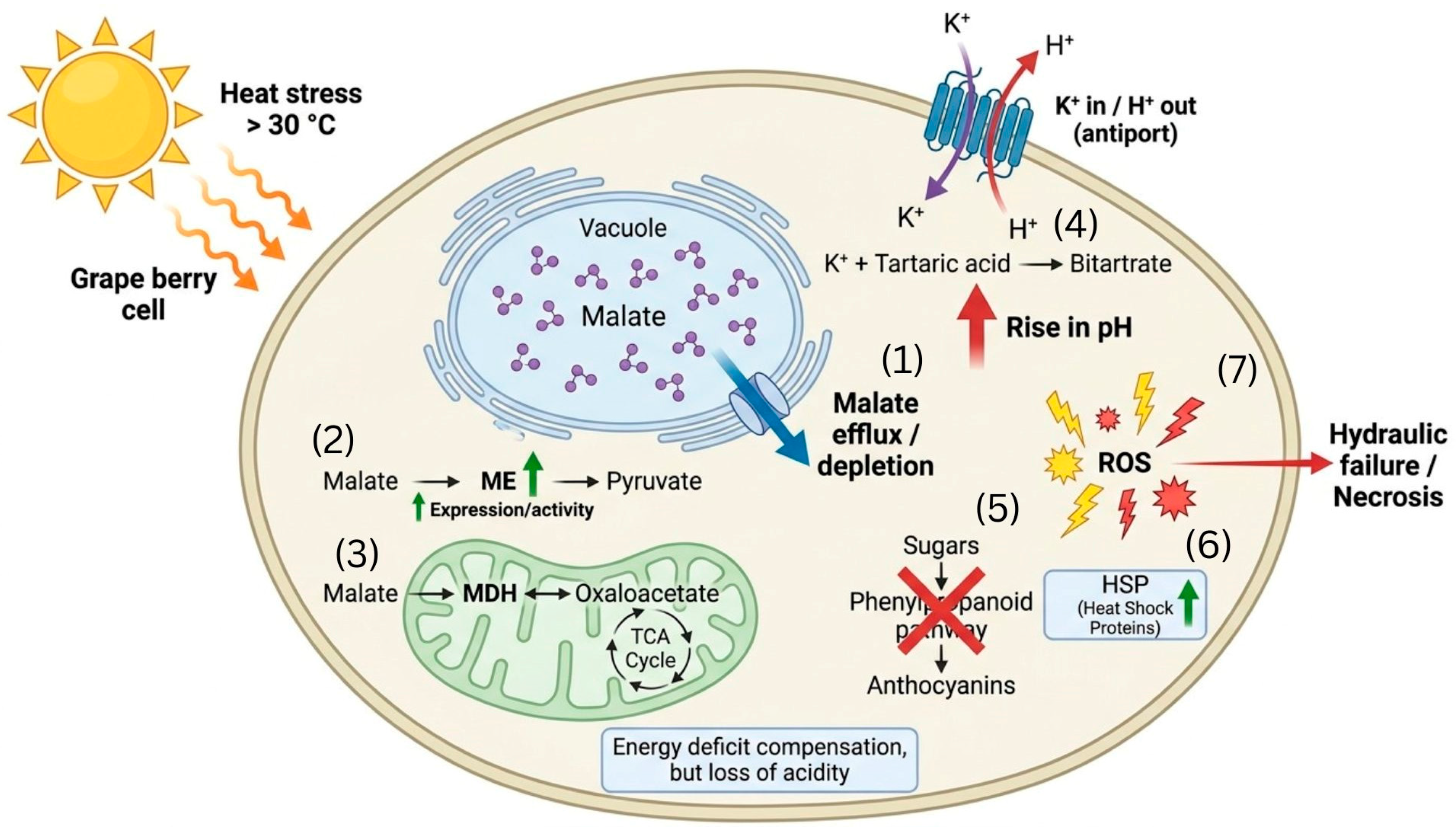
The accelerated cellular respiration of malic acid is directly proportional to heat intensity. At temperatures exceeding 30 °C, massive malate oxidation occurs, a finding corroborated by Ramos [17], who observed a decrease in malic acid content of up to 30% in the Tempranillo cultivar during hot vintage years compared to control years. Heat stress leads to the generation of reactive oxygen species and causes structural damage to cell membranes. During extreme heat waves, particularly when combined with a water deficit, hydraulic failure occurs in the berries—a disruption of water transport within the plant [18,19]. This process is illustrated in Figure 1 under reference number 7.
1.3. Potassium Accumulation in Grapes
Potassium (K+) is the most abundant cation in ripening grapevine berries [20]. It performs essential physiological and biochemical functions, including enzyme activation [21], cell membrane transport [22], anion neutralization [23,24], and osmoregulation [25]. Through these mechanisms, it helps maintain the cellular turgor necessary for cell expansion [26]. From an oenological perspective, however, its excessive accumulation poses a risk. Under conditions of heat stress, particularly during the ripening phase of the grapes, the concentration of K+ increases [27]. Potassium then binds with tartaric acid to form potassium hydrogen tartrate (bitartrate), which is sparingly soluble and precipitates during vinification [20,28]. This process leads to a depletion of free tartaric acid. However, the subsequent impact on pH is thermodynamically dependent on the initial pH of the matrix. As described [29], if the initial pH is above the tartaric acid inflection threshold of approximately 3.65—a scenario increasingly common in heat-stressed grapes-bitartrate precipitation shifts the chemical equilibrium to consume free hydrogen ions, thereby further increasing the pH. Conversely, if the initial pH is below 3.65, the precipitation releases hydrogen ions, decreasing the pH [20,28].
The membrane transport of K+ into cells is mediated by two systems: passive ion channels—such as the SIRK (Stomatal Inward Rectifying K+ channel) in the pericarp [30]–and active KUP/KT/HAK transporters [31]. The acronym KUP (K+ Uptake) refers to the potassium uptake system, KT (K+ Transporter) is a potassium transporter, and HAK (High-Affinity K+) is a high-affinity potassium transport system [32].
In grapevines, the VvKUP1 and VvKUP2 genes have been isolated; these putatively function as proton symporters, with their expression restricted primarily to the epidermis. This tissue-specific localization explains why the skin accumulates the highest potassium concentration among all berry tissues [31].
The dynamics of K+ transport shift significantly during the ripening phase. While cations are initially transported into the berry via the xylem, the traditional concept of its physical disruption following veraison has been extensively re-evaluated. Modern anatomical evidence [33] confirms that the peripheral xylem network remains structurally intact and physically continuous post-veraison. Although its net contribution to water influx is heavily downregulated [34], the preservation of a functional xylem path plays a critical physiological role. Under conditions of heat or water stress, ripening berries remain hydraulically connected to the parent vine, which allows for the discharge of surplus water via xylem backflow, physically concentrating the remaining solutes [35,36]. Moreover, as comprehensively reviewed by Villette et al. [37], this physical concentration is accompanied by active biological accumulation. During drought stress, specific K+ Shaker channels (such as VvK1.1, VvK1.2, and VvK3.1) are strongly up-regulated in the berries to facilitate osmotic adjustment. Together, the active influx of K+ and the passive loss of water via the intact xylem fundamentally exacerbate the concentration of potassium ions, driving up the must pH and limiting the efficacy of chemical acidification remedies in the winery.
1.4. Indirect Effects of Warming on Must Acidity
Furthermore, climate change affects must acidity indirectly by disrupting the metabolic processes of grape ripening. This phenomenon, referred to in the literature as “decoupling” (desynchronization), describes a state wherein the rate of sugar accumulation does not correspond with anthocyanin synthesis and development of the aromatic profile [38]. Consequently, grapes frequently attain high sugar levels while remaining phenolically immature.
Lecourieux et al. [39] elucidate the underlying nature of this problem. Utilizing proteomic profiling, they demonstrated that high temperatures suppress the activity of key enzymes within the phenylpropanoid pathway, resulting in the direct inhibition of anthocyanin synthesis in the skin. Instead of synthesizing pigments and secondary metabolites, the cells produce heat shock proteins (HSPs) for their own thermoprotection (see the blockage of the phenylpropanoid pathway under reference number 5 in Figure 1).
This desynchronization presents winemakers with a fundamental technological dilemma. If grapes are harvested based on optimal acidity levels, the resulting wines exhibit astringency and “green” notes due to immature tannins. Conversely, if the harvest is delayed to achieve sensory and phenolic ripeness, the berries are subjected to prolonged heat exposure. This leads to a decline in acidity due to increased malic acid respiration and concurrent potassium accumulation, ultimately resulting in an elevated pH of the final must.
Figure 1.
Schematic representation of metabolic and cellular changes in a grape berry exposed to heat stress (sunlight striking the berry’s cell wall). The diagram illustrates the efflux of malate from the vacuole, which is accelerated at high temperatures (1). The main mechanism of this degradation is the increased expression and activity of the malic enzyme (ME), which decarboxylates malate to pyruvate (2). Through this increased flux, the cell compensates for the energy deficit in the TCA cycle. In contrast, there are only negligible changes in the activity of malate dehydrogenase (MDH) and it is not involved in the direct regulation of malate (3) [12]. Potassium transport (4) across the cell membrane is mediated by passive ion channels and the active transporters KUP/KT/HAK [31]. In the schematic, this process is simplified to a K+/H+ antiport. Within the cytosol, potassium binds to tartaric acid to form bitartrate. This precipitation process leads to a decrease in free tartaric acid, which causes a rise in pH [20,28]. The red strikethrough of the phenylpropanoid pathway visualizes decoupling (5), wherein the rapid increase in sugars does not correspond to anthocyanin synthesis [38]. Elevated temperatures suppress the activity of key enzymes, leading to the inhibition of pigment synthesis in the skin. Instead of secondary metabolites, the cell produces heat shock proteins (HSPs) (6) [39]. Cell damage (7) (ROS) indicates that heat stress generates reactive oxygen species that cause damage to cell membranes [39]. At high temperatures combined with a water deficit, hydraulic failure and necrosis may occur [18,19].
1.5. Pre-Harvest Viticultural Approaches to Climate Change
Although this overview focuses primarily on post-harvest interventions, it is important to recognize that winemakers can also address the issue of climate change directly in the vineyard through various agronomic strategies. As Delić et al. [40] demonstrate, early or premature harvesting is an immediate approach that effectively maintains higher titratable acidity and lower pH. However, Zanchin et al. [41] point out that harvesting grapes before they reach full aromatic ripeness can result in wines with immature, “green” sensory profiles. To delay sugar accumulation and preserve acidity and phenolic ripeness, viticulturists employ specific canopy management and shading techniques. According to Jahnke et al. [42], practices such as short topping and targeted leaf removal can slow ripening, while acidity remains largely unaffected. In contrast, Faralli et al. [43] report that adopting a conservative summer pruning regimen reduces canopy porosity, lowers berry temperature, and improves the balance between sugars and acids at harvest. Shading the fruit zone with artificial nets directly delays the phenological cycle, reduces the total soluble solids content, and significantly increases titratable acidity [44]. Furthermore, Martínez-Lüscher et al. [45] confirm that partial shading with nets protects the berries from damage caused by heat waves and excessive solar radiation. Similarly, Menezes et al. [46] emphasize that natural shading by trees in agroforestry systems (vitiforestry) modifies the microclimate, which helps slow ripening. By lowering the temperature of the berries, shading prevents massive carbon losses through respiration, which would otherwise contribute to the degradation of organic acids during severe heat stress [47]. To further delay ripening, Cabral et al. [48] describe a technique known as “crop forcing,” which can shift the harvest date to cooler months and result in berries with significantly lower pH and higher titratable acidity, although this practice often causes a severe reduction in yields. These adaptations made directly in the vineyard thus ultimately serve as the primary defense against climate-induced loss of acidity, even before any post-harvest corrective measures are necessary.
2. Impacts of Climate Change on the pH and Acidity of Must and Wine
As a result of global warming, grapes ripen more rapidly, leading to an increase in their sugar content and pH, while titratable acidity decreases [49]. These climate-driven changes alter the traditional analytical and organoleptic profile of wine and pose a potential risk to its physicochemical and biological stability [50,51]. Mitigating these impacts not only requires adjustments to winemaking practices but also a comprehensive understanding of the vines’ biochemical response to heat stress, including the enzymatic degradation of malic acid and increased transport of potassium into the berries (see Section 1).
A key limitation of technological acidification is the robust buffering capacity of the must. The pH value does not solely depend on the content of titratable acids but is fundamentally dictated by the thermodynamic equilibrium of tartaric acid. Tartaric acid is a diprotic acid that exists in must as a mixture of molecular tartaric acid (), the bitartrate anion (), and the tartrate dianion () [52]. Climatic conditions, combined with selected agrotechnological practices, often lead to a severe excess of potassium () in the must. This elevated concentration directly impacts the ratio by neutralizing the acid and driving the formation of potassium hydrogen tartrate. This specific thermodynamic relationship, which defines the buffering capacity, can be mathematically represented by the Henderson-Hasselbalch equation [29,53,54]:
During pre-fermentative acidification, when exogenous tartaric acid is added to the matrix, it dissociates to establish a new equilibrium (). However, the abundant ions immediately interact with the newly formed . Because of this strong buffering system, a significant portion of the anticipated increase in free hydrogen ions () is absorbed by the equilibrium shift [20,29]. This interaction severely limits the actual reduction in pH [55,56]. Any technological attempt to stabilize the sensory profile, colour, and microbial stability through additional acidification is therefore limited by this mechanism.
Any technological attempt to stabilize the sensory profile, colour, and microbial stability through additional acidification is limited by this mechanism.
An elevated pH poses a direct risk to microbiological stability, as it exponentially reduces the proportion of the active molecular fraction of sulphur dioxide (SO2). Thus, to achieve the antimicrobial optimum (0.6–0.8 mg·L−1 of active molecular fraction of SO2) often total SO2 doses that reach regulatory limits are required [57,58,59]. Furthermore, environments with a pH > 3.5 promote the rapid proliferation of spoilage microorganisms, including bacteria of the genera Lentilactobacillus (specifically L. hilgardii) and Pediococcus, as well as Brettanomyces yeasts. Under such high-pH stress conditions, even typical malolactic starters like Oenococcus oeni can shift their metabolism, collectively increasing the risk of severe sensory defects such as “mousey” taint [59,60].
The pH value also affects the stability of anthocyanins, which form the basis of the red wine colour. In an acidic environment (pH < 3), these compounds predominantly exist as the flavylium cation, which gives the wine its intense red colour. At typical wine pH levels (3–4), the flavylium cation is in equilibrium with its colourless carbinol pseudobases, which become more prevalent once the pH reaches ≥ 3.7 [61]. These bases are unstable and undergo “ring-opening” reactions, meaning they transform into yellowish chalcones. This results in a loss of red hues in the wine [62].
In addition to reduced colour stability, wines made from musts with higher pH levels exhibit lower resistance to oxidation [63]. In an experiment with the Aglianico cultivar, these authors demonstrated that while the total tannin content increases slightly with rising pH, their reactivity with salivary proteins significantly decreases. Thus, elevated pH directly reduces the perception of astringency in wine.
3. Limitations of Chemical and Physical Methods of Acidification in Oenological Practice
Adjusting the acidity of musts and wines through chemical and physical methods is a standard oenological practice. However, this practice is constrained by several technological and sensory limitations. Furthermore, the International Organisation of Vine and Wine (OIV) strictly regulate the extent of these interventions. The maximum permitted increase in acidity for both chemical and physical acidification must not exceed 54 meq·L−1, which corresponds to 4 g·L−1 expressed as tartaric acid [64].
3.1. Critical Look at Acid Addition
The addition of organic acids to wine is associated with risks that affect both its stability and sensory profile. The type of acid chosen also significantly influences the wine’s resistance to oxidation [65]. In oenology, tartaric, malic, citric, lactic, or fumaric acids are commonly utilized.
3.1.1. Tartaric Acid
Tartaric acid is the preferred acidulant. Its primary advantage is that it is relatively resistant to microbial degradation. Consequently, it can be added to the must prior to the onset of alcoholic fermentation without the risk of off-flavours [66].
Although tartaric acid possesses high acidifying power [51], it is very difficult to accurately predict the final pH level following its addition. The reason for this is tartaric destabilization—the addition of tartaric acid induces the unpredictable precipitation of tartrate salts [67,68].
Although tartaric acid possesses high acidifying power [51], estimating the final pH level following its addition is often viewed as challenging in practice. While some recent literature still describes tartaric destabilization and subsequent precipitation as ‘unpredictable’ due to the sheer complexity of real-world winery conditions [69], the underlying physicochemical phenomena are actually governed by well-established thermodynamic equilibria. Precipitation criteria and crystallization kinetics have been extensively quantified, and mathematical tools such as the MEXTAR® (Société Laffort-Enologie, Bordeaux, France) software have been validated to accurately simulate and predict these tartaric precipitation thresholds using standard analytical parameters [29,70].
This pH-dependent thermodynamic behaviour fundamentally limits the efficacy of chemical acidification. When tartaric acid is added to climate-affected musts with an initial pH above the 3.65 inflection point, the resulting potassium bitartrate precipitation paradoxically counteracts the intended pH reduction, as described earlier (Section 1.3) [29,67,68]. Consequently, winemakers are often forced to add excessively high doses of tartaric acid just to push the pH below this critical threshold, risking sensory imbalance and approaching regulatory limits [64,71]. This specific chemical limitation highlights the strategic advantage of biotechnological acidification (discussed in Section 4). Bioacidification utilizes yeasts to produce lactic or malic acids. Organic acids that do not precipitate with potassium [72,73]. As a result, biological acidification can reliably lower the pH of high-potassium musts without being thermodynamically hindered by the 3.65 inflection point. As previously mentioned, each acid exhibits a different resistance to oxidation. Analyses utilizing high-performance liquid chromatography and nuclear magnetic resonance spectroscopy have demonstrated that tartaric acid protects natural anthocyanins from oxidative degradation significantly better than malic or citric acid [65].
3.1.2. Malic Acid
Acidification of the must using malic acid carries inherent risks. There is a potential for acid degradation by spoilage of lactic acid bacteria (LAB). Although malic acid does not precipitate to the same extent as tartaric acid, insufficient technological and microbiological management of the wine can trigger secondary malolactic fermentation [66].
Volschenk, Vuuren and Viljoen-Bloom [66] also note that a racemic mixture of D/L-malic acid is often utilized for acidification, which mitigates the risk of malolactic fermentation occurring in the bottle. The L-malic acid isomer is consumed during primary malolactic fermentation, whereas the D-isomer remains stable in the wine due to its resistance to microbial degradation.
The use of malic acid can have a direct negative impact on textural properties, though this effect is strictly determined by the wine’s phenolic matrix. The sensation of astringency arises when condensed tannins interact with and precipitate salivary proteins, leading to a loss of in-mouth lubrication. In red wines, malic acid has been shown to significantly enhance this specific tannin-protein reactivity, potentially eliciting a harsh, astringent mouthfeel that disrupts the sensory harmony [65]. Conversely, this textural disruption is generally absent in most white wines, as their negligible tannin concentrations preclude such protein precipitation mechanisms.
The addition of malic acid is also less effective than tartaric acid due to its weaker acidifying power (i.e., it does not adequately lower the pH) [51,71]. From the perspective of oxidation risks, Picariello, Rinaldi, Martino, Petracca, Moio and Gambuti [65] report that among the acids studied (tartaric, malic, and citric), malic acid most strongly stimulates oxidative reactions, culminating in the undesirable production of acetaldehyde and a consequent reduction in the wine’s longevity.
3.1.3. Citric Acid
Although citric acid exhibits a lower acidifying power than tartaric acid [65], the European Union permits its use for the acidification of wines [64].
Its application presents certain advantages and disadvantages. For example, in red wines, it increases stability against oxidation but simultaneously makes them more susceptible to colour loss [65]. In addition to adjusting acidity, citric acid acts as an inhibitor of spoilage microorganisms [74,75]. Of particular interest is its effect on S. cerevisiae yeast, in which it alters (shifts) primary metabolism towards lower production of ethanol and ATP (adenosine triphosphate) in favour of higher glycerol production. Given that the decrease in ATP production in S. cerevisiae correlates with rising pH, this explains why the growth of this yeast is more strongly inhibited at higher pH values [74].
A major risk associated with the use of citric acid is its degradation by lactic acid bacteria (LAB). This process begins concurrently with the degradation of malic acid; however, the degradation of citric acid proceeds more slowly [66,76]. Citrate, formed by the dissociation of citric acid, is transported into the cells by the enzyme citrate permease. The efficiency of this transport depends on pH. Optimal conditions vary by species: pH 5–6 for Lactococcus lactis [77], pH 4.0 for Lb. plantarum [78], and even lower at pH 3.5 for O. oeni [79]). Inside the cell, citrate is subsequently cleaved by citrate lyase into acetate and oxaloacetate (OAA). OAA is then converted to pyruvate by OAA decarboxylase [79]. This entire metabolic pathway is schematically represented in Figure 2.
Figure 2.
Schematic representation of the enzymatic conversion of citric acid to acetate and pyruvate. The left half depicts the extracellular environment. Here, citric acid is dissociated into citrate. Citrate is transported into the intracellular environment by citrate permease. In the intracellular environment (right half of the diagram), citrate is broken down by citrate lyase into acetate and oxaloacetate. Oxaloacetate is converted by OAA decarboxylase into pyruvate [79]. Created by the author based on [79].
The result of this metabolism, which is modulated by environmental pH and temperature, is the formation of acetate and diacetyl. These compounds influence the overall aromatic properties and affect the stability of the wine [80].
3.1.4. Lactic Acid
Lactic acid is a very weak acid; therefore, large quantities must be added to achieve the desired acidification [51,81].
Its application impacts the wine’s sensory profile. Tasters’ perception of the principal aromatic notes indicates that wines acidified in this manner exhibit greater aromatic intensity and complexity in their bouquet. This is corroborated by analytical results concerning the concentrations of esters and norisoprenoids, particularly in wines specifically acidified with lactic acid [71]. Furthermore, esterification can occur, a process in which lactic acid reacts with ethanol to form ethyl lactate [82]. Sensorially, this ester imparts a sweet, fruity aroma reminiscent of pineapple with a hint of brown sugar [83].
A specific challenge arises with the application of lactic acid to white and rosé wines that have not undergone malolactic fermentation. If a consumer knowingly prefers wines produced without this process, the presence of added lactic acid can be confusing [71].
3.1.5. Fumaric Acid
In 2021, the OIV approved the use of fumaric acid (FA) under resolution OIV-OENO 581A-2021. It is primarily utilized to inhibit lactic acid bacteria, thereby blocking malolactic fermentation (MLF). When added to the must or during alcoholic fermentation (AF), fumaric acid is metabolized into malic acid [71,84]. Davaux, Cottereau and Dubernet [71] note that acidification using fumaric acid is relatively complex due to its low solubility and the critical importance of proper timing when adding the acid to the must or wine. As previously mentioned, when FA is applied to the must or during alcoholic fermentation, it is metabolized by the yeast. Application after AF leads to a delay or the complete inhibition of MLF. Gancel, Payan, Koltunova, Jourdes, Christmann and Teissedre [51] conducted an experiment investigating the solubility and sensory properties of FA. They applied FA to musts from Cabernet Sauvignon and Sémillon cultivars. The acid was also added to wine produced from Cabernet Sauvignon, Merlot, and Sauvignon Blanc cultivars. The results of the experiment demonstrated that the solubility of FA in musts reaches 4.7 g·L−1, which is slightly lower than in water. In wine, however, its solubility increases due to the presence of alcohol and the hydrophobic nature of the acid. A solubility value of 9.3 g·L−1 was measured in Cabernet Sauvignon wine and as high as 14.9 g·L−1 in wines made from Sauvignon Blanc and Merlot [51]. Gancel, Payan, Koltunova, Jourdes, Christmann and Teissedre [51] also investigated its acidifying power (specifically, the amount required for a pH reduction of 0.1). The necessary application rate of FA (0.20 to 0.29 g·L−1) in must and wine is lower compared to other acidulants. In conclusion, although FA possesses a strong acidifying power and reliably inhibits MLF, its utilization requires precise timing (ideally waiting until the wine is finished) due to the risk of metabolization by yeast during primary fermentation. In practice, winemakers must also account for its relatively low solubility in must and wine.
In summary, the choice of organic acid for wine acidification involves balancing their specific physicochemical and sensory properties. A comprehensive overview of these characteristics for all the aforementioned acids is presented in Table 1.
Table 1.
Physicochemical and sensory properties of organic acids used for wine acidification.
3.2. Limitations of Physical Methods (Electrodialysis and Ion Exchangers)
Physical methods can lower the pH of wine through the partial extraction of cations (particularly potassium) utilizing a cation exchanger or bipolar electrodialysis [64].
Acidification of wine using cation-exchange resins is a method based on the principle of selective ion exchange. In this process, the liquid matrix (must or wine) flows through an insoluble granular matrix of polymer resin, to which mobile, positively charged counterions are covalently bound at its functional groups; these can then be exchanged with ions present in the must or wine. This method leads to an increase in titratable acidity and a corresponding decrease in pH [64,89,90].
Acidification via electromembrane treatment (bipolar membrane electrodialysis) is based on electrodialysis incorporating various types of ion-exchange membranes (anion-exchange, cation-exchange, and bipolar). Facilitated by these membranes, electrodialysis can either concentrate or separate ions. This method can not only be utilized for acidification but also for tartrate stabilization or the production of acids and bases [64,91].
Despite their advanced potential for automation, these methods encounter several technological and qualitative barriers:
3.2.1. Energy Consumption and Environmental Impact
Although the utilization of ion-exchange resins for must or wine treatment is highly effective, the operation of this technology is demonstrably associated with substantial energy consumption. This leads to greater operating costs and a negative environmental footprint [92].
3.2.2. Loss of Polyphenols and Degradation of Pigments
Physical ion extraction constitutes an invasive intervention into the wine matrix. Exposing must or wine to cation-exchange resins leads to a depletion of the total polyphenols. In red wines, this phenomenon is visually manifested as a perceptible reduction in colour intensity [71]. Akbulut and Coklar [93] similarly report a decrease in the total phenolic content following the application of ion-exchange resins to musts derived from white and red grape cultivars.
3.2.3. Decrease in Antioxidant Capacity
Akbulut and Coklar [93] investigated the effect of applying adsorbents (activated carbon) and ion-exchange resins (Dowex 50Wx8-100 and Amberlite XAD-16) on the antioxidant activity of musts from white and red grapes. The results (determined using the DPPH, ABTS, and FRAP methods) demonstrate that the antioxidant activity of both musts decreased following the application of the resins.
3.2.4. Impact on Assimilable Nitrogen Content
Bouissou et al. [94] found that acidification using bipolar electrodialysis and cation-exchange resins affects the distribution of nitrogenous compounds and the mineral composition of musts. While both processes primarily target the extraction of cations, particularly potassium, they also result in a loss of assimilable nitrogen. In general, cation-exchange resins extract more total nitrogen than electrodialysis. Resins remove more assimilable amino acids, whereas electrodialysis removes more ammonium ions. Another finding is the effect of must colour on the intensity of this process. In red musts, electrodialysis causes greater nitrogen losses than resins. In white musts, the situation is exactly the opposite, as cation-exchange resins remove more nitrogen. For musts with a low initial nitrogen content, it is therefore advisable to supplement nitrogen through nutrient additions.
3.2.5. Technological Fouling
The presence of polyphenols poses a problem for the separation systems. During industrial electrodialysis, ion-exchange membranes are subject to severe organic fouling, caused by polyphenolic compounds. This irreversibly impairs the separation performance of the equipment and dramatically shortens the service life of the membranes [95,96].
Attempts to compensate for climate related deficits by simply adding acids or extracting cations represents a major (even destructive) intervention in the wine matrix. As has been demonstrated [71,93], these methods irreversibly damage both the polyphenolic profile and the sensory harmony. For this reason, these physical oenological tools are becoming unsustainable in the long term. Modern oenology is therefore turning its attention toward biotechnological strategies.
4. Innovative Biotechnological Strategies
Given the technological and sensory limitations of physicochemical acidification, modern oenology is increasingly turning toward biotechnological innovation [72]. The International Organisation of Vine and Wine (OIV) define these practices as “biotechnological acidification,” which aims to increase titratable acidity and lower pH through the utilization of S. cerevisiae yeast and non-Saccharomyces genera capable of synthesizing L-malic, D/L-lactic, or succinic acid during alcoholic fermentation [72,97,98].
4.1. Bioacidification: The Use of Non-Saccharomyces Yeasts and Bacteria
The most extensively studied tool for bioacidification in the current literature is the use of non-Saccharomyces yeasts, with Lachancea thermotolerans (Filippov) Kurtzman, 2003 (formerly Kluyveromyces thermotolerans) absolutely dominant. This yeast is capable of converting a portion of the fermentable sugars into L-lactic acid [99], thereby lowering the pH of the must (wine) and increasing titratable acidity [73,100,101]. The critical aspects and technological limitations of this yeast are described below.
Although L. thermotolerans is highly effective, it is a yeast characterized by a low tolerance for ethanol [102]. Its application therefore requires co-inoculation or sequential inoculation with S. cerevisiae or other key oenological microorganisms to successfully complete fermentation [97,101]. A study by Kapsopoulou, Mourtzini, Anthoulas and Nerantzis [73] demonstrates that the final quantity of lactic acid produced (and consequently the final pH) is dependent on the timing of S. cerevisiae addition. With sequential inoculation, L-lactic acid production of up to 5.13 g·L−1 can be achieved if S. cerevisiae inoculation takes place after a three-day delay.
Beckner Whitener et al. [103] conducted a study utilizing a commercial L. thermotolerans yeast in wines produced from the Syrah and Sauvignon Blanc cultivars, observing that the yeast produced elevated concentrations of 3-methylthio-1-propanol. Sensorially, this compound manifests in the wine as aromas reminiscent of boiled potatoes, onions, cauliflower, or salty cheese [104,105].
Although the aforementioned yeasts currently represent the most researched biological strategies, the discussion would benefit from mentioning other microbial approaches currently being investigated. As stated by Benito et al. [106], a promising alternative to traditional malolactic fermentation, especially in musts from warmer regions with high pH, is the combined use of Schizosaccharomyces pombe and L. thermotolerans. Vicente et al. [107] add that within this synergy, specific strains of S. pombe effectively degrade malic acid, thereby ensuring microbiological stability, while L. thermotolerans produces lactic acid, which prevents an excessive drop in total acidity or even increases it. According to a study published by Urbina et al. [108], another significant tool for acidity management is the use of Lactiplantibacillus plantarum bacteria co-inoculated with L. thermotolerans and the yeast S. bayanus. The newly proposed biotechnology produces wines with higher final concentrations of lactic acid, glycerol, color intensity, ethyl lactate, and 2-phenylethyl acetate by 2.39 g∙L−1, 0.52 g∙L−1, 21%, 48%, and 37%, respectively, compared to the classical methodology where alcoholic fermentation is performed by the Saccharomyces genus and later by Oenococcus oeni. Englezos et al. [109] demonstrated that the inclusion of the yeast Starmerella bacillaris in mixed fermentations with S. cerevisiae leads to increased glycerol production, a slight reduction in ethanol and acetic acid content, and an increase in total acids. In addition to the aforementioned species, research by Vaquero et al. [110] highlights the potential of the Hanseniaspora genus. Their study reveals that co-inoculating L. thermotolerans with specific strains of Hanseniaspora opuntiae exerts a synergistic effect that increases lactic acid production. The authors also emphasize that Hanseniaspora species significantly enrich the sensory profile of the wine with desirable floral notes and esters.
4.2. Paradigm Shift: Saccharomyces cerevisiae as an Acid Producer
The cultivar-specific freshness of wines depends primarily on malic and tartaric acids. S. cerevisiae has traditionally been viewed in oenology as a yeast that degrades malic acid (via the malic enzyme, which catalyses the decarboxylation of malate to pyruvate), thereby causing an even greater loss of acidity during fermentation [111]. In the context of global warming, however, research has focused on an innovative strategy—transforming this yeast from a “consumer” into a “producer” of malic acid.
4.2.1. Natural Production and Isolation of Wild Strains (Non-GMO)
Extensive screening of wild populations has shown that the natural ability of S. cerevisiae to produce L-malate is extremely rare. A study that examined 282 strains isolated from various regions of Spain (Madrid, Córdoba, and La Rioja) revealed that only 4% of these strains were capable of producing a meaningful amount of L-malate (ranging from 0.5 to 1 g·L−1) [112].
To accurately assess the oenological significance of this endogenous production, these values must be contextualized against the climate-driven malic acid degradation described in Section 1. For instance, in the Tempranillo cultivar, average malic acid concentrations typically range between 2.69 and 3.15 g·L−1. During extreme heat waves, this content can be reduced by up to 31% [17], which translates to a loss of approximately 0.8 to 1.0 g·L−1. The production of 0.5 to 1 g·L−1 of malic acid is therefore not negligible. In fact, it can compensate for the vast majority of malic acid loss caused by the impacts of climate change. Furthermore, while wild strains alone represent an effective strategy for mitigating these effects, modern breeding techniques have demonstrated that this natural metabolic capacity can be amplified even further.
This L-malate production is highly dependent on the external environment. L-malate synthesis occurs primarily during the early phase of fermentation (between days 2 and 6). Furthermore, although partial reconsumption may occur during the yeast’s stationary and decline phases, the net malic acid balance remains positive, maintaining a stable, elevated concentration until the completion of alcoholic fermentation. An increase in malic acid content is promoted by a temperature range of 18 to 25 °C, with an optimum typically closer to 18–20 °C, which favours white winemaking dynamics. Another determining factor is pH; the amount of acid produced increases as the pH of the medium rises. This optimum near pH 5, typically determined in synthetic media [113], represents a physiological peak driven by the dissociation mechanism of malic acid () [112]. At this elevated pH, malate is completely dissociated, which prevents its re-entry into the yeast cell via simple diffusion and thereby protects it from subsequent intracellular degradation [112]. While this theoretical optimum is well above the typical pH range of grape musts (3.0–3.8), these strains maintain their physiological and competitive viability and, practical malate production remains technologically significant at oenologically relevant pH levels. For instance, Yéramian, Chaya and Suárez Lepe [112] demonstrated that at a standard must pH of 3.37, mean malic acid production still reached 0.43 g·L−1 (compared to 0.98 g·L−1 at pH 4.99). Another factor is sugar concentration, as a low sugar concentration in the must promotes malate production. Yéramian, Chaya and Suárez Lepe [112] worked with concentrations of 194, 220, and 269 g·L−1 in their study, observing the highest malic acid production at a concentration of 194 g·L−1. Production is also influenced by the concentration of YAN (yeast assimilable nitrogen). As the nitrogen concentration increases, the yeast malic acid production decreases. At higher concentrations, malic acid even undergoes degradation. In this context, a YAN concentration of 115 mg·L−1 proved to be the most suitable, while the other tested values (208 and 308 mg·L−1) were less favourable. However, targeting 115 mg·L−1 poses a significant oenological risk, as it falls below the critical threshold (140–150 mg·L−1) required to prevent sluggish or stuck fermentations and reductive off-flavours. A careful balance, such as using staggered nutrient additions, is necessary to ensure fermentation security without suppressing bioacidification [112].
4.2.2. Targeted Breeding and Selection (Marker-Assisted Selection)
To ensure a more technologically reliable production of organic acids, marker-assisted selection (MAS) is currently utilized [114]. A pivotal step in this process is the identification of quantitative trait loci (QTLs). These specific DNA segments allow for the precise mapping of the genetic predispositions for the production of desired compounds and the targeted monitoring of their heritability [115]. Although MAS employs advanced laboratory methods to analyse DNA and identify ideal offspring, it remains a strictly non-GMO approach. This is because no foreign genes are artificially introduced into the organism. Instead, the method is fundamentally based on controlled crossbreeding (hybridization) [116].
Recently, QTLs affecting malic acid metabolism in S. cerevisiae during alcoholic fermentation have been successfully identified [117]. Vion, Muro, Bernard, Richard, Valentine, Yeramian, Masneuf-Pomarède, Tempère and Marullo [72], building upon a previous study [118] in which they characterized parental S. cerevisiae strains, developed new strains capable of yielding a final difference malic acid at the end of alcoholic fermentation (up to 3.2 g·L−1) compared to standard strains. Crucially, this final concentration is primarily a consequence of significantly decreased degradation rather than upregulated de novo synthesis. This demonstrates that QTLs can be effectively utilized to increase acid content using S. cerevisiae, which, instead of its usual degradative action, becomes capable of actively preserving malic acid and fixing it within the wine. Despite this genetic advancement, the authors emphasize that the production capacity of specific strains (phenotypic variability manifested by differences in the total amount of malic acid produced) remains highly dependent on the matrix (the specific composition of the grape must) [72]. Vion, Muro, Bernard, Richard, Valentine, Yeramian, Masneuf-Pomarède, Tempère and Marullo [72] corroborated a previous study [119] focusing on the influence of pH, initial malic acid concentration, and glucose on malate consumption by S. cerevisiae, noting that the degradation of malic acid is dictated by its starting concentration. The conclusion, therefore, is that the lower the initial concentration of malic acid in the must, the higher the ultimate retentition of malic acid by the yeast [72,119]. Physiologically, this behaviour is driven by feedback inhibition and intracellular pH homeostasis; high initial malate levels trigger the yeast’s degradation pathways to prevent excessive internal acidification, whereas low initial levels fail to strongly activate these pathways, allowing the acid to be preserved.
Targeted breeding offers significant potential for the bioacidification of wine, but its primary limitation is its inherent dependence on the initial analytical values of the must. Furthermore, deploying these high-acid-retaining MAS strains requires careful monitoring of sensory and kinetic trade-offs, as such significant metabolic shifts can occasionally compromise other essential oenological traits, potentially leading to elevated volatile acidity or sluggish fermentations under nutrient-limiting conditions.
4.2.3. Genetic Modification (GMOs and CRISPR/Cas9)
The most radical and effective biotechnological approach is synthetic biology and direct genome editing utilizing CRISPR/Cas9 (Clustered Regularly Interspaced Short Palindromic Repeats/CRISPR-associated protein 9) [120].
The development of strains that respond to climate change and the decline in the natural acidity of grapes is currently proceeding in two primary directions. Traditional breeding methods (see Section 4.2.1 and Section 4.2.2 above) involve the selection of S. cerevisiae strains that, due to natural genetic predispositions (e.g., specific QTL loci), exhibit the ability to retain or produce higher amounts of malic acid during fermentation [72]. In addition, the tools of modern synthetic biology offer the possibility of performing targeted genetic modifications with high precision and entirely without foreign markers (so-called marker-free modifications), which streamlines the development of new strains [120,121,122]. These technologies enable precise interventions into the yeast metabolism, such as the targeted deletion of genes encoding undesirable byproducts or the insertion of metabolic pathways for malic acid degradation. While older approaches to modifying malate metabolism required the introduction of foreign genes via classical GMO methods, modern CRISPR/Cas9 synthetic biology tools allow these changes to be executed without the need to insert foreign genes [120,123].
Dequin et al. [124] conducted an experiment utilizing a genetically modified yeast strain for acidification. A gene from the bacterium Lactobacillus casei, which encodes NAD(+) lactic dehydrogenase, was inserted into S. cerevisiae. This engineered yeast produced lactic acid during the alcoholic fermentation of the must. This resulted in effective acidification and a reduction in the wine’s pH. The modified strains produced L(+)-lactic acid in the range of 1.6 to 4.1 g·L−1 (whereas unmodified strains produced less than 200 mg·L−1 of lactic acid). The pH was reduced by 0.23 to 0.35 units.
Although GMO yeasts allow for precise, targeted modification of metabolic pathways and thus ensure a high degree of control over the resulting acidity of the wine, their application in winemaking is severely limited. Within the European Union (and across most global wine markets), genetically modified strains face a strict legislative barrier—Directive 2001/18/EC [125]. Consequently, for practical oenology, non-GMO methods such as the isolation of wild strains and QTL-based selection currently remain the only realistically applicable tools.
4.3. Technological Aspects and Limits of Bioacidification
In the context of bioacidification through the use of S. cerevisiae, a fundamental technological question arises: Why does endogenously synthesized malic acid not degrade wine quality in the same way as its exogenous chemical addition (see Section 3.1)? The answer lies in the dynamics of integration into the wine matrix and in the redox state of the environment during fermentation. A single chemical addition of crystalline malic acid causes a sudden disruption of chemical equilibrium [65]. In contrast, the biological synthesis of L-malate occurs gradually during the active phase of fermentation [72]. The acid is thus seamlessly incorporated into the wine (matrix) with the concurrent release of yeast mannoproteins and glycerol. Mannoproteins interact directly with tannins (undergoing condensation), thereby demonstrably reducing their astringency. The resulting molecular complexes between mannoproteins and tannins enhance the wine’s body and the smoothness of its texture [126]. Although bioacidification using S. cerevisiae represents an innovative approach, it is not a technological “panacea.” Research indicates that these yeasts exhibit slower fermentation kinetics, which increases the risk of stuck fermentation (and the subsequent formation of undesirable residual sugar).
As demonstrated by the example of bioacidification, every technological intervention in the wine matrix carries specific risks and technological trade-offs. Table 2 provides a comprehensive comparison of these approaches. It clearly summarizes the types of interventions, their technological limitations, costs, and, last but not least, legislative frameworks. Winemakers should carefully consider all of these factors.
Table 2.
Overview of acidification methods and their limitations.
As summarized in Table 2, each acidification strategy presents distinct trade-offs. While chemical acidification remains the most cost-effective and accessible approach, it introduces risks of sensory imbalance and physicochemical instability. Physical methods provide powerful intervention capabilities but are burdened by high energetic and financial costs [128], alongside potential matrix degradation. Conversely, biological approaches offer a modern, economically viable, and legally permitted alternative, although their efficiency remains highly dependent on the initial matrix and requires precise fermentation management.
While Table 2 details the specific technological mechanisms and limitations, it is equally important to evaluate these methods from the perspective of their industrial maturity. To provide a clearer perspective for practitioners, Table 3 classifies all discussed acidification technologies according to their Technology Readiness Level (TRL) and current degree of practical adoption.
Table 3.
Classification of acidification technologies based on Technology Readiness Level (TRL) and practical adoption.
5. Conclusions
The challenge of climate-driven acidity loss can no longer be adequately addressed by relying solely on traditional chemical interventions or physical methods. As this review demonstrates, research and innovation in oenology are shifting toward advanced biotechnological solutions. While the use of non-Saccharomyces strains (e.g., L. thermotolerans) has become a commercial standard, the true future potential lies in the genetic and metabolic optimization of S. cerevisiae, particularly through quantitative trait loci (QTL) breeding and CRISPR/Cas9 engineering.
However, realizing this potential and transferring it into winemaking practice encounters critical operational bottlenecks. Industrial-scale application and economic feasibility remain major challenges—namely, the transition of these bioacidification strategies from controlled synthetic laboratory media to highly variable grape musts. Metabolic shifts (e.g., high de novo production of malic acid) impose significant energetic and physiological stress on the yeast cell. In the real-world environment of grape musts, the consequences of this metabolic burden can manifest negatively, notably through sluggish fermentation kinetics and an undesirable increase in volatile acidity. Mastering these interactions with the must’s specific nitrogen profile and environmental stress factors is therefore absolutely crucial for further development.
Furthermore, the widespread industrial application of these targeted technologies is strictly limited by the current legislative environment. Strict regulatory barriers in the European Union regarding new genomic techniques (NGTs) and CRISPR/Cas9 tools mean that direct genome editing remains a hurdle for the commercial sphere and is largely restricted to academic research. For practical winemaking, the only viable pathways are therefore marker-free breeding approaches, QTL-driven selection, and the meticulous selection of wild strains. Ultimately, maintaining the sensory balance and high quality of wines in a progressively warming climate will require a comprehensive approach. This means not only successfully overcoming the aforementioned physiological, operational, and legislative barriers, but also closely integrating these modern cellar technologies with targeted adaptive interventions directly in the vineyard.
Author Contributions
Writing—original draft, R.H. and K.K.; writing—review and editing, R.H. and K.K.; investigation, R.H.; visualization, R.H.; supervision, M.B. and J.S. All authors have read and agreed to the published version of the manuscript.
Funding
This work was financially supported by the Internal Grant Agency of MENDELU Faculty of Horticulture under project no. IGA-ZF/2026-SI1-001: Yeasts as a biotechnological tool for wine acidity management.
Institutional Review Board Statement
Not applicable.
Informed Consent Statement
Not applicable.
Data Availability Statement
No new data were created or analyzed in this study. Data sharing is not applicable to this article.
Acknowledgments
During the preparation of this manuscript/study, the authors used bioRender (https://www.biorender.com/) for the purposes of creating Figure 1 and Canva (https://www.canva.com/) for the purposes of creating Figure 2 and Graphical Abstract. The authors have reviewed and edited the output and take full responsibility for the content of this publication.
Conflicts of Interest
The authors declare no conflicts of interest.
Abbreviations
| TCA | Tricarboxylic Acid |
| MDH | Malate Dehydrogenase |
| TA | Titratable Acidity |
| K+ | Potassium |
| SIRK | Stomatal Inward Rectifying K+ channel |
| KUP | K+ Uptake |
| KT | K+ Transporter |
| HAK | High-Affinity K+ |
| HSPs | Heat Shock Proteins |
| ME | Malic Enzyme |
| ROS | Reactive Oxygen Species |
| OIV | the International Organisation of Vine and Wine |
| LAB | Lactic Acid Bacteria |
| OAA | Oxaloacetate |
| FA | Fumaric Acid |
| MLF | Malolactic Fermentation |
| AF | Alcoholic Fermentation |
| YAN | Yeast Assimilable Nitrogen |
| MAS | Marker-Assisted Selection |
| QTLs | Quantitative Trait Loci |
| GMO | Genetically Modified Organism |
| CRISPR/Cas9 | Clustered Regularly Interspaced Short Palindromic Repeats/CRISPR-associated protein 9 |
| NAD | Nicotinamide Adenine Dinucleotide |
| TRL | Technology Readiness Level |
References
- Gambetta, G.A.; Kurtural, S.K. Global warming and wine quality: Are we close to the tipping point? OENO One 2021, 55, 353–361. [Google Scholar] [CrossRef]
- Faralli, M.; Mallucci, S.; Bignardi, A.; Varner, M.; Bertamini, M. Four decades in the vineyard: The impact of climate change on grapevine phenology and wine quality in northern Italy. OENO One 2024, 58, 1–21. [Google Scholar] [CrossRef] [Scilit]
- Fraga, H. Viticulture and Winemaking under Climate Change. Agronomy 2019, 9, 783. [Google Scholar] [CrossRef] [Scilit]
- Reid, P.C.; Hari, R.E.; Beaugrand, G.; Livingstone, D.M.; Marty, C.; Straile, D.; Barichivich, J.; Goberville, E.; Adrian, R.; Aono, Y.; et al. Global impacts of the 1980s regime shift. Glob. Change Biol. 2016, 22, 682–703. [Google Scholar] [CrossRef] [Scilit] [PubMed]
- Drappier, J.; Thibon, C.; Rabot, A.; Geny-Denis, L. Relationship between wine composition and temperature: Impact on Bordeaux wine typicity in the context of global warming—Review. Crit. Rev. Food Sci. Nutr. 2019, 59, 14–30. [Google Scholar] [CrossRef] [Scilit] [PubMed]
- Martínez-Lüscher, J.; Kozikova, D.; Goicoechea, N.; Pascual, I. Elevated CO2 alleviates the exacerbation of evapotranspiration rates of grapevine (Vitis vinifera) under elevated temperature. Agric. Water Manag. 2024, 302, 108971. [Google Scholar] [CrossRef] [Scilit]
- Giannakopoulos, C.; Le Sager, P.; Bindi, M.; Moriondo, M.; Kostopoulou, E.; Goodess, C. Climatic changes and associated impacts in the Mediterranean resulting from a 2 °C global warming. Glob. Planet. Change 2009, 68, 209–224. [Google Scholar] [CrossRef] [Scilit]
- Kimball, B.; Kobayashi, K.; Bindi, M. Responses of agricultural crops to free-air CO2 enrichment. Adv. Agron. 2002, 77, 293–368. [Google Scholar] [CrossRef] [Scilit]
- Olesen, J.E.; Bindi, M. Consequences of climate change for European agricultural productivity, land use and policy. Eur. J. Agron. 2002, 16, 239–262. [Google Scholar] [CrossRef] [Scilit]
- Rabbinge, R.; Van Latesteijn, H.; Goudriaan, J. Assessing the greenhouse effect in agriculture. In Proceedings of the Environmental Change and Human Health: Ciba Foundation Symposium 175; John Wiley: Chichester, UK, 2007; pp. 62–79. [Google Scholar]
- Duchêne, E.; Schneider, C. Grapevine and climatic changes: A glance at the situation in Alsace. Agron. Sustain. Dev. 2005, 25, 93–99. [Google Scholar] [CrossRef] [Scilit]
- Sweetman, C.; Sadras, V.O.; Hancock, R.D.; Soole, K.L.; Ford, C.M. Metabolic effects of elevated temperature on organic acid degradation in ripening Vitis vinifera fruit. J. Exp. Bot. 2014, 65, 5975–5988. [Google Scholar] [CrossRef] [Scilit] [PubMed]
- Dominguez, D.L.E.; Cirrincione, M.A.; Deis, L.; Martinez, L.E. Impacts of Climate Change-Induced Temperature Rise on Phenology, Physiology, and Yield in Three Red Grape Cultivars: Malbec, Bonarda, and Syrah. Plants 2024, 13, 3219. [Google Scholar] [CrossRef] [Scilit] [PubMed]
- Pettenuzzo, S.; Cappellin, L.; Grando, M.S.; Costantini, L. Phenotyping methods to assess heat stress resilience in grapevine. J. Exp. Bot. 2022, 73, 5128–5148. [Google Scholar] [CrossRef] [Scilit] [PubMed]
- Rienth, M.; Torregrosa, L.; Luchaire, N.; Chatbanyong, R.; Lecourieux, D.; Kelly, M.T.; Romieu, C. Day and night heat stress trigger different transcriptomic responses in green and ripening grapevine (Vitis vinifera) fruit. BMC Plant Biol. 2014, 14, 108. [Google Scholar] [CrossRef] [Scilit] [PubMed]
- Kliewer, W.M. Effect of Day Temperature and Light Intensity on Concentration of Malic and Tartaric Acids in Vitis vinifera L. Grapes1. J. Am. Soc. Hortic. Sci. 1971, 96, 372–377. [Google Scholar] [CrossRef] [Scilit]
- Ramos, M.C. Effect of climate extremes and elevation on the Tempranillo grapevine response: Case study in Ribera Del Duero DO over the period 2004-2023. Int. J. Biometeorol. 2025, 69, 2337–2352. [Google Scholar] [CrossRef] [Scilit] [PubMed]
- Tilbrook, J.; Tyerman, S.D. Cell death in grape berries: Varietal differences linked to xylem pressure and berry weight loss. Funct. Plant Biol. 2008, 35, 173–184. [Google Scholar] [CrossRef] [Scilit] [PubMed]
- Krasnow, M.; Weis, N.; Smith, R.J.; Benz, M.J.; Matthews, M.; Shackel, K. Inception, Progression, and Compositional Consequences of a Berry Shrivel Disorder. Am. J. Enol. Vitic. 2009, 60, 24–34. [Google Scholar] [CrossRef] [Scilit]
- Boulton, R. The general relationship between potassium, sodium, and pH in grape juice and wine. Am. J. Enol. Vitic. 1980, 31, 182–186. [Google Scholar] [CrossRef] [Scilit]
- Leigh, R.A.; Wyn Jones, R.G. A hypothesis relating critical potassium concentrations for growth to the distribution and functions of this ion in the plant cell. New Phytol. 1984, 97, 1–13. [Google Scholar] [CrossRef] [Scilit]
- Patrick, J.W.; Zhang, W.; Tyerman, S.D.; Offler, C.E.; Walker, N.A. Role of membrane transport in phloem translocation of assimilates and water. Aust. J. Plant Physiol. 2001, 28, 697–709. [Google Scholar] [CrossRef] [Scilit]
- Maathuis, F.J.M.; Sanders, D. Mechanisms of potassium absorption by higher plant roots. Physiol. Plant. 1996, 96, 158–168. [Google Scholar] [CrossRef] [Scilit]
- Leigh, R.A. Potassium homeostasis and membrane transport. J. Plant Nutr. Soil. Sci. 2001, 164, 193–198. [Google Scholar] [CrossRef]
- Wada, H.; Shackel, K.A.; Matthews, M.A. Fruit ripening in Vitis vinifera: Apoplastic solute accumulation accounts for pre-veraison turgor loss in berries. Planta 2008, 227, 1351–1361. [Google Scholar] [CrossRef] [Scilit] [PubMed]
- Mengel, K.; Arneke, W.-W. Effect of potassium on the water potential, the pressure potential, the osmotic potential and cell elongation in leaves of Phaseolus vulgaris. Physiol. Plant. 1982, 54, 402–408. [Google Scholar] [CrossRef] [Scilit]
- Coombe, B.G. Influence of temperature on composition and quality of grapes. Acta Hortic. 1987, 206, 23–36. [Google Scholar] [CrossRef] [Scilit]
- Gerbaud, V.; Gabas, N.; Blouin, J.; Crachereau, J.-C. Study of wine tartaric acid saltstabilization by addition of carboxymethylcellulose (cmc): Comparison with the protective colloids effect. J. Int. Sci. Vigne 2010, 44, 231–242. [Google Scholar] [CrossRef] [Scilit]
- Moreno, J.; Peinado, R. Enological Chemistry; Academic Press: San Diego, CA, USA, 2012. [Google Scholar]
- Pratelli, R.; Lacombe, B.; Torregrosa, L.; Gaymard, F.; Romieu, C.; Thibaud, J.B.; Sentenac, H. A grapevine gene encoding a guard cell K(+) channel displays developmental regulation in the grapevine berry. Plant Physiol. 2002, 128, 564–577. [Google Scholar] [CrossRef] [PubMed]
- Davies, C.; Shin, R.; Liu, W.; Thomas, M.R.; Schachtman, D.P. Transporters expressed during grape berry (Vitis vinifera L.) development are associated with an increase in berry size and berry potassium accumulation. J. Exp. Bot. 2006, 57, 3209–3216. [Google Scholar] [CrossRef] [Scilit] [PubMed]
- Grabov, A. Plant KT/KUP/HAK potassium transporters: Single family—Multiple functions. Ann. Bot. 2007, 99, 1035–1041. [Google Scholar] [CrossRef] [Scilit] [PubMed]
- Choat, B.; Gambetta, G.A.; Shackel, K.A.; Matthews, M.A. Vascular function in grape berries across development and its relevance to apparent hydraulic isolation. Plant Physiol. 2009, 151, 1677–1687. [Google Scholar] [CrossRef] [Scilit] [PubMed]
- Chatelet, D.S.; Rost, T.L.; Shackel, K.A.; Matthews, M.A. The peripheral xylem of grapevine (Vitis vinifera). 1. Structural integrity in post-veraison berries. J. Exp. Bot. 2008, 59, 1987–1996. [Google Scholar] [CrossRef] [Scilit] [PubMed]
- Zhang, Y.; Keller, M. Discharge of surplus phloem water may be required for normal grape ripening. J. Exp. Bot. 2017, 68, 585–595. [Google Scholar] [CrossRef] [Scilit] [PubMed][Green Version]
- Keller, M.; Smith, J.P.; Bondada, B.R. Ripening grape berries remain hydraulically connected to the shoot. J. Exp. Bot. 2006, 57, 2577–2587. [Google Scholar] [CrossRef] [Scilit] [PubMed]
- Villette, J.; Cuellar, T.; Verdeil, J.L.; Delrot, S.; Gaillard, I. Grapevine Potassium Nutrition and Fruit Quality in the Context of Climate Change. Front. Plant Sci. 2020, 11, 123. [Google Scholar] [CrossRef] [Scilit] [PubMed]
- Martinez-Luscher, J.; Matus, J.T.; Gomes, E.; Pascual, I. Toward understanding grapevine responses to climate change: A multi-stress and holistic approach. J. Exp. Bot. 2025, 76, 2949–2969. [Google Scholar] [CrossRef] [Scilit] [PubMed]
- Lecourieux, D.; Kappel, C.; Claverol, S.; Pieri, P.; Feil, R.; Lunn, J.E.; Bonneu, M.; Wang, L.; Gomes, E.; Delrot, S.; et al. Proteomic and metabolomic profiling underlines the stage- and time-dependent effects of high temperature on grape berry metabolism. J. Integr. Plant Biol. 2020, 62, 1132–1158. [Google Scholar] [CrossRef] [Scilit] [PubMed]
- Delić, M.; Anđušić, A.; Topčić, F.; Blesić, M.; Behmen, F.; Smajić Murtić, M.; Murtić, S. Optimizing harvest timing: Impacts on physical characteristics and quality parameters of grapes. Not. Bot. Horti Agrobot. Cluj-Napoca 2025, 53, 14607. [Google Scholar] [CrossRef] [Scilit]
- Zanchin, A.; Lovat, L.; Marcuzzo, P.; Sozzi, M.; Marinello, F.; Tomasi, D. Improving the Oenological Potential of Grapes for Prosecco PDO Sparkling Wine Thanks to Nitrogen Fertigation. Agronomy 2023, 13, 1369. [Google Scholar] [CrossRef] [Scilit]
- Jahnke, G.; Szőke, B.Á.; Steckl, S.; Szövényi, Á.P.; Knolmajerné Szigeti, G.; Németh, C.; Jenei, B.G.; Nyitrainé Sárdy, D.Á. Delay in the Ripening of Wine Grapes: Effects of Specific Phytotechnical Methods on Harvest Parameters. Agronomy 2023, 13, 1963. [Google Scholar] [CrossRef] [Scilit]
- Faralli, M.; Cliceri, D.; Zanzotti, R.; Zorer, R.; Stefanini, M.; Angeli, A.; Zanoni, S.; Vrhovsek, U.; Roman, T.; Gasperi, F.; et al. Reshaping grapevine canopy management under climate change scenarios: The role of conservative summer pruning on leaf physiology, berry microclimate, wine aromatic and sensory profile. Sci. Hortic. 2025, 347, 114196. [Google Scholar] [CrossRef] [Scilit]
- Miccichè, D.; Puccio, S.; Di Lorenzo, R.; Turano, L.; Di Carlo, F.; Pisciotta, A. Adapting Viticulture to Climate Change: Impact of Shading in Sicily. Horticulturae 2025, 11, 163. [Google Scholar] [CrossRef] [Scilit]
- Martínez-Lüscher, J.; Chen, C.C.L.; Brillante, L.; Kurtural, S.K. Mitigating Heat Wave and Exposure Damage to “Cabernet Sauvignon” Wine Grape With Partial Shading Under Two Irrigation Amounts. Front. Plant Sci. 2020, 11, 579192. [Google Scholar] [CrossRef] [Scilit] [PubMed]
- Menezes, I.C.; Santos, M.; Bugalho, L.; Pereira, M.G. The Effects of Tree Shade on Vineyard Microclimate and Grape Production: A Novel Approach to Sun Radiation Modelling as a Response to Climate Change. Land 2024, 13, 1970. [Google Scholar] [CrossRef] [Scilit]
- Perera-Castro, A.V.; Hernández-Montes, E. Canopy Management Effects on Temperature and CO2 Dynamics in Garnacha Grapes Under Mediterranean Conditions. Physiol. Manag. Sustain. Crops 2025, 1, 5. [Google Scholar] [CrossRef] [Scilit]
- Cabral, L.I.; Teixeira, A.; Ferrier, M.; Lanoue, A.; Valente, J.; Rogerson, F.S.; Alves, F.; Carvalho, S.M.P.; Gerós, H.V.; Queiroz, J. Canopy management through crop forcing impacts grapevine cv. ‘Touriga Nacional’ performance, ripening and berry metabolomics profile. OENO One 2023, 57, 55–69. [Google Scholar] [CrossRef] [Scilit]
- Schultz, H.R. Global Climate Change, Sustainability, and Some Challenges for Grape and Wine Production. J. Wine Econ. 2016, 11, 181–200. [Google Scholar] [CrossRef] [Scilit]
- Mira de Orduña, R. Climate change associated effects on grape and wine quality and production. Food Res. Int. 2010, 43, 1844–1855. [Google Scholar] [CrossRef] [Scilit]
- Gancel, A.-L.; Payan, C.; Koltunova, T.; Jourdes, M.; Christmann, M.; Teissedre, P.-L. Solubility, acidifying power and sensory properties of fumaric acid in water, hydro-alcoholic solutions, musts and wines compared to tartaric, malic, lactic and citric acids. OENO One 2022, 56, 137–154. [Google Scholar] [CrossRef] [Scilit]
- Daudt, C.E.; Fogaça, A.d.O. Efeito do ácido tartárico nos valores de potássio, acidez titulável e pH durante a vinificação de uvas Cabernet Sauvignon. Ciênc. Rural. 2008, 38, 2345–2350. [Google Scholar] [CrossRef] [Scilit][Green Version]
- Rizzón, L.A.; Miele, A. Acidez na vinificação tinto das uvas Isabel, Cabernet Sauvignon a Cabernet Franc. Tecnol. Aliment. 2002, 32, 511–515. [Google Scholar] [CrossRef] [Scilit]
- Zoecklein, B.W.; Fugelsang, K.C.; Gump, B.H.; Nury, F.S. Tartaric Acid and Its Salts. In Production Wine Analysis; Zoecklein, B.W., Fugelsang, K.C., Gump, B.H., Nury, F.S., Eds.; Springer: Boston, MA, USA, 1990; pp. 289–315. [Google Scholar]
- Henderson, L.J. The theory of neutrality regulation in the animal organism. Am. J. Physiol.-Leg. Content 1908, 21, 427–448. [Google Scholar] [CrossRef] [Scilit]
- Hasselbalch, K.A. Die Berechnung der Wasserstoffzahl des Blutes aus der Freien und Gebundenen Kohlensäure Desselben, und die Sauerstoffbindung des Blutes als Funktion der Wasserstoffzahl; Julius Springer: Berlin/Heidelberg, Germany, 1916. [Google Scholar]
- Sudraud, P.; Chauvet, S.; Cazabeil, J.-M.; Bart, M.; Crebassa, B.; Rognon, G. Activité antilevure de l’anhydride sulfureux moléculaire. OENO One 1985, 19, 31. [Google Scholar] [CrossRef] [Scilit]
- Qiao, N.; Wittouck, S.; Mattarelli, P.; Zheng, J.; Lebeer, S.; Felis, G.E.; Ganzle, M.G. After the storm-Perspectives on the taxonomy of Lactobacillaceae. JDS Commun. 2022, 3, 222–227. [Google Scholar] [CrossRef] [Scilit] [PubMed]
- Costello, P.J.; Henschke, P.A. Mousy off-flavor of wine: Precursors and biosynthesis of the causative N-heterocycles 2-ethyltetrahydropyridine, 2-acetyltetrahydropyridine, and 2-acetyl-1-pyrroline by Lactobacillus hilgardii DSM 20176. J. Agric. Food Chem. 2002, 50, 7079–7087. [Google Scholar] [CrossRef] [Scilit] [PubMed]
- Moulis, P.; Miot-Sertier, C.; Cordazzo, L.; Claisse, O.; Franc, C.; Riquier, L.; Albertin, W.; Marchand, S.; de Revel, G.; Rauhut, D.; et al. Which microorganisms contribute to mousy off-flavour in our wines? OENO One 2023, 57, 177–187. [Google Scholar] [CrossRef] [Scilit]
- Brouillard, R.; Dubois, J.-E. Mechanism of the structural transformations of anthocyanins in acidic media. J. Am. Chem. Soc. 1977, 99, 1359–1364. [Google Scholar] [CrossRef] [Scilit]
- González-Manzano, S.; Santos-Buelga, C.; Dueñas, M.; Rivas-Gonzalo, J.C.; Escribano-Bailón, T. Colour implications of self-association processes of wine anthocyanins. Eur. Food Res. Technol. 2007, 226, 483–490. [Google Scholar] [CrossRef] [Scilit]
- Forino, M.; Picariello, L.; Rinaldi, A.; Moio, L.; Gambuti, A. How must pH affects the level of red wine phenols. LWT 2020, 129, 109546. [Google Scholar] [CrossRef] [Scilit]
- European Commission. List and description of the files of the OIV Code of Oenological Practices referred to in Article 3(2) of Commission Delegated Regulation (EU) 2019/934 (2022/C 187/01). Off. J. Eur. Union 2022, C 187, 1–72. [Google Scholar]
- Picariello, L.; Rinaldi, A.; Martino, F.; Petracca, F.; Moio, L.; Gambuti, A. Modification of the organic acid profile of grapes due to climate changes alters the stability of red wine phenolics during controlled oxidation. VITIS 2019, 58, 127–133. [Google Scholar] [CrossRef]
- Volschenk, H.; Vuuren, H.J.J.V.; Viljoen-Bloom, M. Malic Acid in Wine: Origin, Function and Metabolism during Vinification. S. Afr. Soc. Enol. Vitic. 2006, 27, 132–136. [Google Scholar] [CrossRef] [Scilit]
- Tan, Q.; Leng, Y.; Wang, J.; Huang, C.; Yuan, Y. Correlation and prediction of the solubility of the racemic tartaric acid–ethanol–water system with the NRTL model. J. Mol. Liq. 2016, 216, 476–483. [Google Scholar] [CrossRef] [Scilit]
- Cui, W.; Wang, X.; Han, S.; Guo, W.; Meng, N.; Li, J.; Sun, B.; Zhang, X. Research progress of tartaric acid stabilization on wine characteristics. Food Chem. X 2024, 23, 101728. [Google Scholar] [CrossRef] [Scilit] [PubMed]
- Payan, C.; Gancel, A.-L.; Jourdes, M.; Christmann, M.; Teissedre, P.-L. Wine acidification methods: A review. OENO One 2023, 57, 113–126. [Google Scholar] [CrossRef] [Scilit]
- Devatine, A.; Gerbaud, V.; Gabas, N.; Blouin, J. Prediction and mastering of wine acidity and tartaric precipitations: The Mextar; software tool. OENO One 2002, 36, 77–91. [Google Scholar] [CrossRef] [Scilit]
- Davaux, F.; Cottereau, P.; Dubernet, M. Comparaison de pratiques d’acidification en vinification en rouge: Impacts sur l’acidité, les caractéristiques chromatiques et organoleptiques des vins. BIO Web Conf. 2023, 56, 02014. [Google Scholar] [CrossRef] [Scilit]
- Vion, C.; Muro, M.; Bernard, M.; Richard, B.; Valentine, F.; Yeramian, N.; Masneuf-Pomarède, I.; Tempère, S.; Marullo, P. New malic acid producer strains of Saccharomyces cerevisiae for preserving wine acidity during alcoholic fermentation. Food Microbiol. 2023, 112, 104209. [Google Scholar] [CrossRef] [Scilit] [PubMed]
- Kapsopoulou, K.; Mourtzini, A.; Anthoulas, M.; Nerantzis, E. Biological acidification during grape must fermentation using mixed cultures of Kluyveromyces thermotolerans and Saccharomyces cerevisiae. World J. Microbiol. Biotechnol. 2007, 23, 735–739. [Google Scholar] [CrossRef] [Scilit]
- Nielsen, M.K.; Arneborg, N. The effect of citric acid and pH on growth and metabolism of anaerobic Saccharomyces cerevisiae and Zygosaccharomyces bailii cultures. Food Microbiol. 2007, 24, 101–105. [Google Scholar] [CrossRef] [Scilit] [PubMed]
- Stratford, M. Weak acid and ‘weak acid presevative’inhibition of yeasts. In Food Microbiology and Food Safety in the Next Millennium; Tuijtelaars, A.C.J., Samson, R.A., Rombouts, F.M., Notermans, S., Eds.; Foundation Food Micro 99: Veldhoven, The Netherlands, 1999; pp. 315–319. [Google Scholar]
- Pimentel, M.S.; Silva, M.H.; Cortês, I.; Faia, A.M. Growth and metabolism of sugar and acids of Leuconostoc oenos under different conditions of temperature and pH. J. Appl. Bacteriol. 1994, 76, 42–48. [Google Scholar] [CrossRef] [Scilit]
- García-Quintáns, N.; Repizo, G.; Martín, M.; Magni, C.; López, P. Activation of the Diacetyl/Acetoin Pathway in Lactococcus lactis subsp. lactis bv. diacetylactis CRL264 by Acidic Growth. Appl. Environ. Microbiol. 2008, 74, 1988–1996. [Google Scholar] [CrossRef] [Scilit] [PubMed]
- Kennes, C.; Dubourguler, H.C.; Albagnac, G.; Nyns, E.J. Citrate metabolism by Lactobacillus plantarum isolated from orange juice. J. Appl. Bacteriol. 1991, 70, 380–384. [Google Scholar] [CrossRef] [Scilit]
- Ramos, A.; Lolkema, J.S.; Konings, W.N.; Santos, H. Enzyme Basis for pH Regulation of Citrate and Pyruvate Metabolism by Leuconostoc oenos. Appl. Environ. Microbiol. 1995, 61, 1303–1310. [Google Scholar] [CrossRef] [Scilit] [PubMed]
- Radler, F. Yeasts-metabolism of organic acids. In Wine Microbiology and Biotechnology; Fleet, G.H., Ed.; Harwood Academic Publishers: Chur, Switzerland, 1993. [Google Scholar]
- Keng, A.; Symoneaux, R.; Lyne, A.; Botezatu, A. Comparative Study of the Sensory Impacts of Acidifiers for Red Wine Production. Beverages 2025, 11, 20. [Google Scholar] [CrossRef] [Scilit]
- Delgado, P.; Sanz, M.T.; Beltrán, S.; Núñez, L.A. Ethyl lactate production via esterification of lactic acid with ethanol combined with pervaporation. Chem. Eng. J. 2010, 165, 693–700. [Google Scholar] [CrossRef] [Scilit]
- Lloret, A.; Boido, E.; Lorenzo, D.; Medina, K.; Carrau, E.; Dellacassa, E.; Versini, G. Aroma variation in Tannat wines: Effect of malolactic fermentation on ethyl lactate level and its enantiomeric distribution. Ital. J. Food Sci./Riv. Ital. Sci. Degli Aliment. 2002, 14, 175–180. [Google Scholar]
- Kostelnikova, K.; Prusova, B.; Licek, J.; Sochor, J.; Baron, M. The Effect of New Inhibitors on Malolactic Fermentation of Wines. Fermentation 2025, 11, 621. [Google Scholar] [CrossRef] [Scilit]
- Sandua, D. The Chemistry of Wine: Aromas and Palates; David Sandua: Seattle, WA, USA, 2023. [Google Scholar]
- Fischer, J.R. Wine and Food-101: A Comprehensive Guide to Wine and the Art of Matching Wine with Food; AuthorHouse: Bloomington, IN, USA, 2006. [Google Scholar]
- Torres-Guardado, R.; Rozès, N.; Esteve-Zarzoso, B.; Reguant, C.; Bordons, A. Succinic acid production by wine yeasts and the influence of GABA and glutamic acid. Int. Microbiol. 2024, 27, 505–512. [Google Scholar] [CrossRef] [Scilit] [PubMed]
- Torres-Guardado, R.; Esteve-Zarzoso, B.; Rozès, N.; Bordons, A.; Reguant, C. Succinic acid significantly affects the global expression of Oenococcus oeni PSU-1. OENO One 2024, 58, 1–7. [Google Scholar] [CrossRef] [Scilit]
- Ibeas, V.; Correia, A.C.; Jordão, A.M. Wine tartrate stabilization by different levels of cation exchange resin treatments: Impact on chemical composition, phenolic profile and organoleptic properties of red wines. Food Res. Int. 2015, 69, 364–372. [Google Scholar] [CrossRef] [Scilit]
- Lasanta, C.; Caro, I.; Pérez, L. The influence of cation exchange treatment on the final characteristics of red wines. Food Chem. 2013, 138, 1072–1078. [Google Scholar] [CrossRef] [Scilit] [PubMed]
- Vecino, X.; Reig, M.; Gibert, O.; Valderrama, C.; Cortina, J.L. Integration of Monopolar and Bipolar Electrodialysis Processes for Tartaric Acid Recovery from Residues of the Winery Industry. ACS Sustain. Chem. Eng. 2020, 8, 13387–13399. [Google Scholar] [CrossRef] [Scilit]
- Zhang, Y. Sustainable Strategies for Wine Colloidal Stability: Innovations in Potassium Bitartrate Crystallization Control. Crystals 2025, 15, 401. [Google Scholar] [CrossRef] [Scilit]
- Akbulut, M.; Coklar, H. Effect of Adsorbent and Ion Exchange Resin Applications on Total Phenolic Content and Antioxidant Activity of White and Red Grape. Selcuk. J. Agric. Food Sci. 2015, 29, 31–33. [Google Scholar]
- Bouissou, D.; Escudier, J.-L.; Salmon, J.-M.; Casalta, E. Etude de l’impact de l’acidification par électrodialyse à membranes bipolaires et par résines échangeuses de cations sur les composés azotés et les minéraux du moût de raisin. Bull. l’OIV 2014, 87, 537–556. [Google Scholar]
- Bdiri, M.; Perreault, V.; Mikhaylin, S.; Larchet, C.; Hellal, F.; Bazinet, L.; Dammak, L. Identification of phenolic compounds and their fouling mechanisms in ion-exchange membranes used at an industrial scale for wine tartaric stabilization by electrodialysis. Sep. Purif. Technol. 2020, 233, 115995. [Google Scholar] [CrossRef] [Scilit]
- Bdiri, M.; Bensghaier, A.; Chaabane, L.; Kozmai, A.; Baklouti, L.; Larchet, C. Preliminary Study on Enzymatic-Based Cleaning of Cation-Exchange Membranes Used in Electrodialysis System in Red Wine Production. Membranes 2019, 9, 114. [Google Scholar] [CrossRef] [Scilit] [PubMed]
- Vicente, J.; Wang, L.; Brezina, S.; Fritsch, S.; Navascués, E.; Santos, A.; Calderón, F.; Tesfaye, W.; Marquina, D.; Rauhut, D.; et al. Enhancing wine fermentation through concurrent utilization of Lachancea thermotolerans and lactic acid bacteria (Oenococcus oeni and Lactiplantibacillus plantarum) or Schizosaccharomyces pombe. Food Chem. X 2024, 24, 102054. [Google Scholar] [CrossRef] [Scilit] [PubMed]
- OIV. Microbiological Acidification. Available online: https://www.oiv.int/standards/international-code-of-oenological-practices/part-ii-oenological-treatments-and-practices/musts/microbiological-acidification (accessed on 20 July 2026).
- Mora, J.; Barbas, J.I.; Mulet, A. Growth of Yeast Species During the Fermentation of Musts Inoculated with Kluyveromyces thermotolerans and Saccharomyces cerevisiae. Am. J. Enol. Vitic. 1990, 41, 156–159. [Google Scholar] [CrossRef] [Scilit]
- Sánchez-Suárez, F.; Peinado, R.A. Combined Effects of Cold Pre-Fermentative Maceration and the Use of Non-Saccharomyces Yeasts (L. thermotolerans and T. delbrueckii) on the Composition of Cayetana Blanca Wines Produced in a Semi-Arid Climate. Fermentation 2025, 11, 639. [Google Scholar] [CrossRef] [Scilit]
- Gallo, A.; Guzzon, R.; Ongaro, M.; Paolini, M.; Nardin, T.; Malacarne, M.; Roman, T.; Larcher, R. Biological acidification of “Vino Santo di Gambellara” by mixed fermentation of L. thermotolerans and S. cerevisiae. Role of nitrogen in the evolution of fermentation and aroma profile. OENO One 2023, 57, 205–217. [Google Scholar] [CrossRef] [Scilit]
- Kapsopoulou, K.; Kapaklis, A.; Spyropoulos, H. Growth and Fermentation Characteristics of a Strain of the Wine Yeast Kluyveromyces thermotolerans Isolated in Greece. World J. Microbiol. Biotechnol. 2005, 21, 1599–1602. [Google Scholar] [CrossRef] [Scilit]
- Beckner Whitener, M.E.; Carlin, S.; Jacobson, D.; Weighill, D.; Divol, B.; Conterno, L.; Du Toit, M.; Vrhovsek, U. Early fermentation volatile metabolite profile of non-Saccharomyces yeasts in red and white grape must: A targeted approach. LWT-Food Sci. Technol. 2015, 64, 412–422. [Google Scholar] [CrossRef] [Scilit]
- Cordente, A.G.; Espinase Nandorfy, D.; Solomon, M.; Schulkin, A.; Kolouchova, R.; Francis, I.L.; Schmidt, S.A. Aromatic Higher Alcohols in Wine: Implication on Aroma and Palate Attributes during Chardonnay Aging. Molecules 2021, 26, 4979. [Google Scholar] [CrossRef] [Scilit] [PubMed]
- Sun, Q.; Liu, X.; Zhou, Q.; Peng, X.; Guo, X.; Kong, B.; Yang, H.; Teng, C.; Cheng, L.; Zhang, C.; et al. Optimization of fermentation conditions for 3-methylthio-1-propanol production by Saccharomycopsis fibuligera Y1402 in tobacco matrix. Kuwait J. Sci. 2025, 52, 100345. [Google Scholar] [CrossRef] [Scilit]
- Benito, A.; Calderon, F.; Palomero, F.; Benito, S. Combine Use of Selected Schizosaccharomyces pombe and Lachancea thermotolerans Yeast Strains as an Alternative to the Traditional Malolactic Fermentation in Red Wine Production. Molecules 2015, 20, 9510–9523. [Google Scholar] [CrossRef] [Scilit] [PubMed]
- Vicente, J.; Kelanne, N.; Navascués, E.; Calderón, F.; Santos, A.; Marquina, D.; Yang, B.; Benito, S. Combined Use of Schizosaccharomyces pombe and a Lachancea thermotolerans Strain with a High Malic Acid Consumption Ability for Wine Production. Fermentation 2023, 9, 165. [Google Scholar] [CrossRef] [Scilit]
- Urbina, A.; Calderon, F.; Benito, S. The Combined Use of Lachancea thermotolerans and Lactiplantibacillus plantarum (former Lactobacillus plantarum) in Wine Technology. Foods 2021, 10, 1356. [Google Scholar] [CrossRef] [Scilit] [PubMed]
- Englezos, V.; Pollon, M.; Rantsiou, K.; Ortiz-Julien, A.; Botto, R.; Rio Segade, S.; Giacosa, S.; Rolle, L.; Cocolin, L. Saccharomyces cerevisiae-Starmerella bacillaris strains interaction modulates chemical and volatile profile in red wine mixed fermentations. Food Res. Int. 2019, 122, 392–401. [Google Scholar] [CrossRef] [Scilit] [PubMed]
- Vaquero, C.; Escott, C.; Heras, J.M.; Carrau, F.; Morata, A. Co-inoculations of Lachancea thermotolerans with different Hanseniaspora spp.: Acidification, aroma, biocompatibility, and effects of nutrients in wine. Food Res. Int. 2022, 161, 111891. [Google Scholar] [CrossRef] [Scilit] [PubMed]
- Vion, C.; Yeramian, N.; Hranilovic, A.; Masneuf-Pomarède, I.; Marullo, P. Influence of yeasts on wine acidity: New insights into Saccharomyces cerevisiae. OENO One 2024, 58, 1–17. [Google Scholar] [CrossRef] [Scilit]
- Yéramian, N.; Chaya, C.; Suárez Lepe, J.A. l-(−)-Malic Acid Production by Saccharomyces spp. during the Alcoholic Fermentation of Wine (1). J. Agric. Food Chem. 2007, 55, 912–919. [Google Scholar] [CrossRef] [Scilit] [PubMed]
- Schwartz, H.; Radler, F. Formation of l(-)malate by Saccharomyces cerevisiae during fermentation. Appl. Microbiol. Biotechnol. 1988, 27, 553–560. [Google Scholar] [CrossRef] [Scilit]
- Miao, S.; Wei, X.; Zhu, L.; Ma, B.; Li, M. The art of tartness: The genetics of organic acid content in fresh fruits. Hortic. Res. 2024, 11, uhae225. [Google Scholar] [CrossRef] [Scilit] [PubMed]
- Zuffa, F.; Lozano, L.; Letschka, T.; Costa, F.; Guerra, W. Pedigree-Based QTL Mapping Identifies Major Loci Associated to Fruit Sugar and Organic Acid Content in Apple. Horticulturae 2026, 12, 832. [Google Scholar] [CrossRef] [Scilit]
- Collard, B.C.; Mackill, D.J. Marker-assisted selection: An approach for precision plant breeding in the twenty-first century. Philos. Trans. R. Soc. Lond. B Biol. Sci. 2008, 363, 557–572. [Google Scholar] [CrossRef] [Scilit] [PubMed]
- Peltier, E.; Vion, C.; Abou Saada, O.; Friedrich, A.; Schacherer, J.; Marullo, P. Flor Yeasts Rewire the Central Carbon Metabolism During Wine Alcoholic Fermentation. Front. Fungal Biol. 2021, 2, 733513. [Google Scholar] [CrossRef] [Scilit] [PubMed]
- Vion, C.; Peltier, E.; Bernard, M.; Muro, M.; Marullo, P. Marker Assisted Selection of Malic-Consuming Saccharomyces cerevisiae Strains for Winemaking. Efficiency and Limits of a QTL’s Driven Breeding Program. J. Fungi 2021, 7, 304. [Google Scholar] [CrossRef] [Scilit] [PubMed]
- Delcourt, F.; Taillandier, P.; Vidal, F.; Strehaiano, P. Influence of pH, malic acid and glucose concentrations on malic acid consumption by Saccharomyces cerevisiae. Appl. Microbiol. Biotechnol. 1995, 43, 321–324. [Google Scholar] [CrossRef] [PubMed][Green Version]
- Nasuti, C.; Solieri, L.; Krogerus, K. 3.0 Strategies for Yeast Genetic Improvement in Brewing and Winemaking. Beverages 2025, 11, 100. [Google Scholar] [CrossRef] [Scilit]
- Pretorius, I.S. Tailoring wine yeast for the new millennium: Novel approaches to the ancient art of winemaking. Yeast 2000, 16, 675–729. [Google Scholar] [CrossRef]
- Modzelewska, A.; Jackowski, M.; Trusek, A. Optimization of beer mixed fermentation using Saccharomyces cerevisiae and Lactobacillus brevis. Eur. Food Res. Technol. 2023, 249, 3261–3269. [Google Scholar] [CrossRef] [Scilit]
- Volschenk, H.; Viljoen, M.; Grobler, J.; Bauer, F.; Lonvaud-Funel, A.; Denayrolles, M.; Subden, R.E.; Van Vuuren, H.J.J. Malolactic Fermentation in Grape Musts by a Genetically Engineered Strain of Saccharomyces cerevisiae. Am. J. Enol. Vitic. 1997, 48, 193–197. [Google Scholar] [CrossRef] [Scilit]
- Dequin, S.; Baptista, E.; Barre, P. Acidification of Grape Musts by Saccharomyces cerevisiae Wine Yeast Strains Genetically Engineered to Produce Lactic Acid. Am. J. Enol. Vitic. 1999, 50, 45. [Google Scholar] [CrossRef] [Scilit]
- European Parliament and the Council of the European Union. Directive 2001/18/EC of the European Parliament and of the Council of 12 March 2001 on the deliberate release into the environment of genetically modified organisms and repealing Council Directive 90/220/EEC—Commission Declaration. Off. J. L 2001, 44, 1–39. [Google Scholar]
- Escot, S.; Feuillat, M.; Dulau, L.; Charpentier, C. Release of polysaccharides by yeasts and the influence of released polysaccharides on colour stability and wine astringency. Aust. J. Grape Wine Res. 2001, 7, 153–159. [Google Scholar] [CrossRef] [Scilit]
- OIV. II.2.1.3.1.2.1 Acidification by Yeasts. Available online: https://www.oiv.int/standards/international-code-of-oenological-practices/part-ii-oenological-treatments-and-practices/musts/acidification-by-yeasts (accessed on 20 July 2026).
- Molina-Espeja, P. Next Generation Winemakers: Genetic Engineering in Saccharomyces cerevisiae for Trendy Challenges. Bioengineering 2020, 7, 128. [Google Scholar] [CrossRef] [Scilit] [PubMed]
- Carey, R. Simplifying the Modification of pH in Wine. WineBusiness Monthly, 1 February 2024.
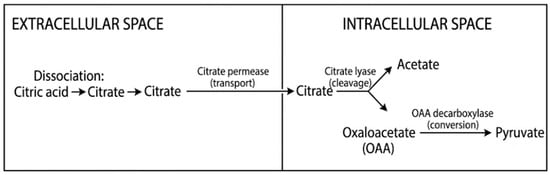
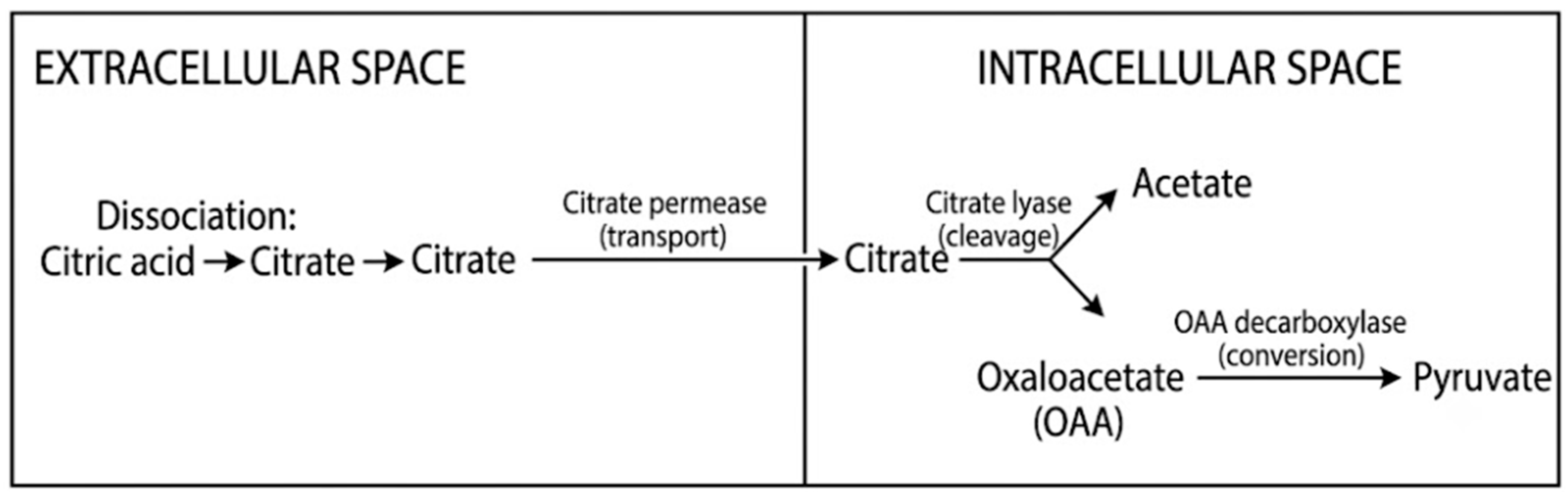

Disclaimer/Publisher’s Note: The statements, opinions and data contained in all publications are solely those of the individual author(s) and contributor(s) and not of MDPI and/or the editor(s). MDPI and/or the editor(s) disclaim responsibility for any injury to people or property resulting from any ideas, methods, instructions or products referred to in the content. |
© 2026 by the authors. Licensee MDPI, Basel, Switzerland. This article is an open access article distributed under the terms and conditions of the Creative Commons Attribution (CC BY) license.