


Abstract
The cosmetic and dermocosmetic industries are increasingly incorporating fermentation-derived ingredients for their benefits on skin barrier function, hydration, pigmentation, oxidative stress, and microbiome homeostasis. Advances in fermentation biotechnology have enabled the production of bioactive compounds, including organic acids, postbiotics, microbial lysates, bioactive peptides, bacteriocins, and fermentation-enhanced phytochemicals. These bioactives may support skin health through barrier reinforcement, modulation of melanogenesis, antioxidant activity, and microbiome interactions. Beyond topical applications, fermented functional foods and microbiome-derived metabolites may influence skin physiology through the gut–skin axis, linking microbial metabolism with systemic immune and barrier regulation. Fermentation also offers opportunities for sustainable production of dermocosmetic ingredients from renewable resources and agro-industrial by-products. However, evidence on fermentation-derived cosmetic ingredients, fermented foods, microbiome science, nutritional dermatology, and cosmetic biotechnology remains fragmented across disciplines. This review therefore introduces Fermentocosmetology as an integrative conceptual terminology, rather than a new discipline, to connect these research areas within a unified framework. Attention is given to bacteriocins as fermentation-derived antimicrobial peptides with emerging dermatological relevance, including activity against Cutibacterium acnes and Staphylococcus aureus. Overall, the proposed framework positions fermentation as a versatile platform connecting topical and systemic approaches to skin health while highlighting opportunities for microbiome-oriented, sustainable, and precision dermocosmetic innovation.
1. Introduction
The cosmetic and dermocosmetic industries have undergone substantial transformation in recent decades, driven by increasing demand for naturally derived, biologically active, and microbiome-compatible products. Conventional formulations based predominantly on synthetic ingredients are increasingly being complemented by fermentation-derived compounds with documented antioxidant, anti-inflammatory, anti-aging, depigmenting, and barrier-supportive properties [1]. Current advances in fermentation biotechnology, microbiome science, and nutritional dermatology have further stimulated scientific interest in fermentation-derived systems for skin health applications [2,3].
Among the biotechnological strategies supporting this transition, fermentation has emerged as an important platform for generating bioactive molecules relevant to skin physiology. Through microbial metabolism and biotransformation, fermentation can produce organic acids, bioactive peptides, bacteriocins, exopolysaccharides, vitamins, antioxidant metabolites, and postbiotic compounds with potential dermocosmetic applications [4,5]. In addition to improving ingredient functionality, fermentation may enhance bioavailability and biological activity through enzymatic modification of complex substrates into more accessible metabolites [3,6].
Growing evidence further indicates that skin health is closely linked to microbial homeostasis. Both the skin microbiome and gut microbiome contribute to barrier integrity, immune regulation, and inflammatory balance, while microbial metabolites generated through fermentation processes may influence skin physiology through interconnected pathways associated with the gut–skin axis [7,8,9]. These observations point to a dual mode of action for fermentation-derived compounds: direct topical modulation of epidermal physiology, and systemic influences mediated through microbiome-associated signaling.
Despite increasing research activity, studies investigating fermentation-derived cosmetic ingredients, fermented functional foods, postbiotics, microbiome science, and nutritional dermatology remain largely fragmented across disciplinary boundaries. Consequently, a comprehensive framework capable of integrating these interconnected research areas is still lacking. To address this gap, this review introduces Fermentocosmetology as an integrative conceptual terminology that connects fermentation science, microbiome research, nutritional dermatology, cosmetic biotechnology, and sustainability-oriented innovation within a common perspective. To the best of our knowledge, this is the first review to introduce Fermentocosmetology as a conceptual framework connecting fermentation-derived bioactives, microbiome-mediated mechanisms, fermented functional foods, and dermocosmetic applications.
2. Historical Roots and Scientific Validation of Fermented Beauty Practices
2.1. Traditional Fermented Beauty Practices
The use of fermentation-derived materials for personal care predates modern cosmetic science by several millennia. Historical and ethnobotanical records indicate that fermented dairy products, rice preparations, herbal extracts, fruit-derived ferments, and vinegar-based formulations were widely incorporated into traditional skin care practices across Mesopotamia, Anatolia, Egypt, China, Korea, and Japan [10]. These applications were developed empirically and were primarily based on observable effects such as skin softening, cleansing, moisturization, and improvement of skin appearance.
Among the most frequently reported examples are fermented milk preparations rich in lactic acid, fermented rice water used in East Asian beauty traditions, and fermented botanical extracts incorporated into traditional herbal remedies. Although the users of these preparations had no knowledge of microbial metabolism or bioactive compounds, the continued use of fermentation-derived materials across geographically distinct cultures suggests that they provided reproducible and perceptible benefits [10]. Consequently, many traditional fermentation-based beauty practices have attracted renewed scientific interest as modern microbiology, dermatology, and cosmetic biotechnology have begun to investigate the biological mechanisms underlying their reported effects.
2.2. Scientific Validation of Traditional Practices
Recent advances in fermentation science have provided mechanistic explanations for several traditional skin care practices. Fermentation is now recognized as a biological process capable of generating organic acids, peptides, vitamins, exopolysaccharides, microbial metabolites, and transformed phytochemicals with potential dermatological relevance [4,11].
One of the strongest clinical examples linking fermentation-derived products to skin health was reported by Lee et al. [12]. In this randomized, double-blind, placebo-controlled study involving 110 women aged 41–59 years, participants orally consumed Lactobacillus plantarum HY7714 at a dose of 1 × 10¹⁰ CFU/day or a placebo for 12 weeks. Compared with the placebo group, the intervention group demonstrated significant improvements in skin hydration, reductions in transepidermal water loss, decreased wrinkle depth, and improved skin elasticity. These findings demonstrate that orally administered HY7714 can influence skin physiological parameters and provide clinical support for the potential contribution of systemic gut–skin interactions to dermocosmetic outcomes.
Additional evidence has emerged from studies investigating fermentation-derived cosmetic ingredients. Lee et al. [13] evaluated a formulation containing ferment lysates of Lacticaseibacillus rhamnosus IDCC 3201 in human volunteers. The authors observed significant improvements in skin hydration together with reductions in transepidermal water loss, findings that were associated with enhanced epidermal barrier function and increased ceramide-related activity. Importantly, these results demonstrated that fermentation-derived microbial products can exert measurable dermatological benefits even in the absence of viable microorganisms.
Traditional plant-based fermented preparations have also received scientific support. Yang et al. [14] reported that microbial fermentation of rice increases the availability of amino acids, organic acids, vitamins, and phenolic compounds while enhancing antioxidant activity and skin-protective potential. Similarly, Hur et al. [15] reported that fermentation-induced biotransformation can modify phytochemical composition, generating lower-molecular-weight phenolic compounds with improved antioxidant properties. Ogrodowczyk and Drabińska [6] further reviewed that fermentation may improve the bioavailability of plant-derived bioactives through enzymatic degradation of complex phytochemical structures.
Collectively, these findings indicate that many historical fermentation-based beauty practices can now be interpreted through contemporary biochemical and dermatological frameworks. Rather than functioning solely as traditional remedies, fermented materials represent biologically active systems capable of generating compounds that influence skin hydration, barrier integrity, oxidative stress responses, and overall skin physiology. These developments provide a scientific foundation for the emerging concept of Fermentocosmetology, which seeks to integrate fermentation science, microbiome research, nutritional dermatology, and cosmetic biotechnology within a unified framework.
3. Fermentation Routes Generating Bioactives for Dermocosmetic Applications
Within the context of dermocosmetic applications, the contribution of fermentation should be interpreted at different levels. First, fermentation can function as a manufacturing route for chemically defined compounds, such as lactic acid and citric acid, whose biological effects are primarily determined by their chemical identity, concentration, and formulation rather than by their fermentation origin [16,17,18]. Second, fermentation can act as a biotransformation process, in which microbial enzymatic activities modify the chemical composition and bioavailability of substrates, particularly botanical materials [6,15]. Third, fermentation can generate complex bioactive systems, including ferment lysates, filtrates, postbiotic preparations, and mixtures of microbial metabolites, whose composition and functionality are intrinsically linked to the fermentation process [4,19]. These roles are not intended as mutually exclusive categories but provide a conceptual distinction for interpreting the evidence discussed in the following sections.
Before discussing the skin-related effects of fermentation-derived metabolites and microbial preparations, it is important to distinguish between cosmetic/dermocosmetic outcomes and therapeutic dermatological effects. In this review, outcomes such as skin hydration, transepidermal water loss, barrier function, pigmentation, elasticity, wrinkles, and other appearance-related parameters are considered primarily within the cosmetic or dermocosmetic context. In contrast, acne vulgaris, atopic dermatitis, melasma, impaired wound healing, and other clinically diagnosed skin disorders fall within the domain of therapeutic dermatology. Studies involving these conditions are included where they provide relevant mechanistic or translational evidence regarding the effects of fermentation-derived compounds on skin barrier function, inflammation, oxidative stress, or microbial homeostasis; however, such evidence should not be interpreted as directly supporting cosmetic efficacy or therapeutic claims for cosmetic products. Likewise, orally administered probiotics, fermented foods, and fermentation-derived preparations are discussed within the systemic or nutricosmetic dimension of the proposed framework rather than as topical cosmetic interventions.
3.1. Fermentation as a Manufacturing Route for Defined Cosmetic Bioactives
In the case of purified organic acids, fermentation should primarily be considered a biotechnological manufacturing route rather than the direct determinant of their dermatological activity. Once purified, the biological effects of compounds such as lactic acid and citric acid are governed predominantly by their chemical properties, concentration, formulation, and mode of application. Therefore, the evidence summarized below regarding their effects on skin physiology should be interpreted as evidence for the cosmetic functionality of these molecules, rather than as evidence for a fermentation-specific biological effect.
Organic acids represent some of the earliest and most extensively utilized fermentation-derived compounds in dermocosmetic formulations. Produced through microbial metabolism of carbohydrates, these molecules are no longer regarded solely as formulation additives but as biologically active ingredients capable of influencing epidermal renewal, skin hydration, pigmentation pathways, and barrier function. Their long history of cosmetic use, well-characterized mechanisms of action, and established industrial production make them foundational examples of fermentation-derived bioactives.
Lactic acid is among the best-characterized fermentation-derived cosmetic ingredients. Produced primarily by lactic acid bacteria, it belongs to the alpha-hydroxy acid (AHA) family and is widely incorporated into products targeting hydration, exfoliation, and photoaging. As reviewed by Kornhauser et al. [20], lactic acid promotes controlled desquamation through reduction of corneocyte cohesion within the stratum corneum, thereby accelerating epidermal turnover and improving skin texture. Clinical investigations using 12% ammonium lactate formulations reported increased epidermal thickness, enhanced dermal glycosaminoglycan deposition, and improved skin hydration following repeated application. These observations indicate that lactic acid can influence both epidermal structure and barrier quality through well-defined biological mechanisms.
At the molecular level, AHA-induced keratinocyte proliferation has been associated with activation of the transient receptor potential vanilloid-1 (TRPV1) channel, particularly in studies investigating glycolic acid. TRPV1-mediated calcium influx and ATP release can activate P2Y2 receptors and phospholipase C-dependent signaling, with subsequent engagement of the PI3K/Akt pathway contributing to keratinocyte proliferation and epidermal renewal [21]. As reviewed by Zhang et al. [21], topical AHAs may also accelerate epidermal turnover, supporting their exfoliating and skin-renewal properties.
Citric acid represents one of the most successful examples of industrial fermentation biotechnology. Global production currently exceeds two million tons annually, with microbial fermentation using Aspergillus niger accounting for the vast majority of commercial manufacturing [16]. In dermocosmetic applications, citric acid functions primarily as a pH regulator, metal-chelating agent, and mild exfoliant. Its favorable toxicological profile and formulation compatibility have contributed to widespread incorporation into cleansers, skin renewal products, and anti-aging formulations [17]. The transition from plant extraction to microbial fermentation further illustrates how biotechnology can improve scalability, sustainability, and manufacturing efficiency while maintaining ingredient functionality.
Among fermentation-derived secondary metabolites, kojic acid provides one of the clearest examples of a compound with a defined molecular target. Produced by several Aspergillus and Penicillium species, kojic acid is commonly used in depigmenting formulations at concentrations ranging from approximately 1% to 4%. Bentley [22] and Zilles et al. [18] reported that kojic acid inhibits melanogenesis through copper chelation at the active site of tyrosinase, the rate-limiting enzyme in melanin biosynthesis. By suppressing tyrosinase activity, kojic acid reduces melanin production and contributes to the management of melasma, post-inflammatory hyperpigmentation, and uneven skin tone [18].
Enzyme kinetic analyses have further characterized the inhibitory profile of kojic acid. Studies using Lineweaver-Burk plots have confirmed that kojic acid acts as a competitive inhibitor of mushroom tyrosinase, with IC50 values of approximately 26.8 microM against monophenolase activity and 52 microM against diphenolase activity, while the maximum reaction velocity (Vmax) remains constant and the Michaelis constant (Km) increases with increasing kojic acid concentrations [18]. Beyond direct enzyme inhibition, certain kojic acid derivatives have been shown to downregulate microphthalmia-associated transcription factor (MITF), the master regulator of melanogenesis gene expression, thereby attenuating transcription of tyrosinase and related melanogenic enzymes at the gene expression level, as demonstrated for the C-7 hydroxyl-modified derivative KAD2 [18]. This dual mechanism of action—direct copper chelation at the tyrosinase active site combined with MITF-mediated transcriptional suppression—distinguishes kojic acid and its derivatives from inhibitors that target only one point in the melanogenesis pathway.
Collectively, these examples demonstrate that fermentation-derived organic acids and related metabolites exert measurable biological effects through well-characterized molecular mechanisms. However, contemporary fermentation biotechnology extends beyond small-molecule metabolites and increasingly focuses on complex microbial products capable of interacting directly with skin barrier and immune pathways (Table 1).
Table 1.
Major fermentation-derived small-molecule bioactives relevant to dermocosmetic applications.
3.2. Postbiotics and Fermentation-Derived Microbial Metabolites
Unlike purified organic acids, postbiotics, microbial lysates, and fermentation filtrates represent complex bioactive systems whose composition and biological functionality are more directly dependent on the microbial strain, fermentation conditions, substrate, and downstream processing. These include microbial metabolites, cell wall fragments, enzymes, exopolysaccharides, fermentation filtrates, bioactive peptides, and microbial lysates that retain biological activity without requiring the presence of viable microorganisms [4,19]. Compared with live probiotic preparations, postbiotics offer important practical advantages, including improved formulation stability, enhanced safety profiles, longer shelf life, and greater manufacturing flexibility [4,19,24].
The biological relevance of postbiotics is primarily linked to their ability to regulate epidermal barrier function, oxidative stress responses, and cutaneous immune homeostasis. Fermentation-derived microbial products contain multiple bioactive molecules capable of interacting with keratinocytes and other skin-associated cells involved in barrier maintenance and inflammatory regulation. Through these interactions, postbiotics may influence epidermal differentiation, lipid metabolism, antimicrobial defense, and cellular responses to environmental stressors [4,19].
Mechanistic characterization of Cera-Glow®—a ferment lysate derived from Lacticaseibacillus rhamnosus IDCC 3201—indicated that its barrier-supporting activity may be associated with enhanced ceramide production in human epidermal keratinocytes through increased sphingomyelinase activity, potentially contributing to the maintenance of the stratum corneum lipid matrix. Clinical evaluation further supported its barrier-related effects: topical application significantly improved TEWL recovery in SLS-damaged skin, while facial skin hydration increased by 15.3% after two weeks and 34.2% after four weeks of application [13].
The ceramide-enhancing mechanism of Lacticaseibacillus rhamnosus IDCC 3201 lysates has been elucidated at the molecular level. Gene annotation and homology analyses identified the gba gene encoding beta-glucocerebrosidase as the primary effector responsible for converting glucosylceramide—abundant in human keratinocytes—into free ceramide. This enzymatic conversion supports the de novo ceramide pool within the stratum corneum lipid lamellae. Metabolomic profiling of fermentation supernatants by GC-TOF mass spectrometry further revealed elevated glycerate and serine concentrations, both of which serve as substrates for de novo ceramide biosynthesis via the serine palmitoyltransferase (SPT) pathway in the endoplasmic reticulum [25]. Complementarily, acid sphingomyelinase (aSMase, encoded by SMPD1)—which hydrolyzes sphingomyelin to ceramide and phosphocholine at the optimal pH of approximately 4.5 matching the acid mantle of healthy stratum corneum—represents a parallel enzymatic route that fermentation-derived lysates may activate. Together, these findings provide a mechanistic basis for the observed clinical improvements in barrier function and transepidermal water loss reduction.
Additional clinical evidence was provided by Cui et al. [26], who evaluated a lotion containing VHProbi® Mix R, a postbiotic complex composed of fermented lysates from Lacticaseibacillus rhamnosus, Lacticaseibacillus paracasei, Lactiplantibacillus plantarum, and Lactobacillus helveticus. Following 30 days of application, participants exhibited reduced transepidermal water loss, decreased skin redness, and improved moisturization. Mechanistic analyses further demonstrated antioxidant activity, enhanced keratinocyte proliferation, and protection against oxidative stress, ultraviolet B radiation, and Staphylococcus aureus-induced cellular injury.
Complementary mechanistic evidence was reported by Wang et al. [27] for Bifida ferment lysate. The authors demonstrated upregulation of barrier-associated genes including filaggrin (FLG), loricrin (LOR), involucrin (IVL), transglutaminase-1 (TGM1), and aquaporin-3 (AQP3). In addition, Bifida ferment lysate increased antimicrobial peptide expression, reduced intracellular reactive oxygen species generation, and suppressed inflammatory mediators including TNF-α, IL-8, and COX-2. These findings suggest simultaneous reinforcement of both physical and biochemical components of the epidermal barrier.
The biological significance of these gene expression changes warrants mechanistic contextualization. Filaggrin (FLG) undergoes proteolytic degradation in the stratum corneum to generate free amino acids and their derivatives that collectively constitute the natural moisturizing factor (NMF), a hygroscopic mixture critical for stratum corneum hydration and acid mantle maintenance. Loricrin (LOR) and involucrin (IVL) are principal structural components of the cornified envelope, a cross-linked protein scaffold that forms the innermost structural support of terminally differentiated corneocytes; their upregulation directly reinforces cornified envelope assembly. Transglutaminase-1 (TGM1) catalyzes the calcium-dependent cross-linking of loricrin and involucrin during cornified envelope formation, while aquaporin-3 (AQP3) constitutes the predominant water channel protein in human epidermis, regulating bidirectional water and glycerol transport between basal layers and the stratum corneum. The concurrent suppression of TNF-alpha, IL-8, and COX-2 observed with Bifida ferment lysate treatment reflects inhibition of the NF-kappaB and MAPK/AP-1 signaling cascades, which under inflammatory conditions drive matrix metalloproteinase (MMP) upregulation and accelerate collagen degradation in the underlying dermis. This combined barrier-reinforcing and anti-inflammatory molecular profile positions Bifida ferment lysate as a multi-target intervention relevant to both barrier-compromised and photoaged skin conditions [27].
The distinction between live microbial systems and cell-free postbiotic preparations carries practical implications for product development. Oral supplementation studies—including the 12-week controlled trial by Lee et al. [12] described in Section 2.2—demonstrate that fermentation-associated microorganisms can influence skin physiology through systemic pathways; yet translating these effects into stable topical or ingestible postbiotic formats requires identification of the specific bioactive components responsible. This has prompted growing interest in heat-inactivated preparations, cell wall fractions, and fermentation filtrates that retain immunomodulatory and barrier-related activity while offering the manufacturing stability required for cosmetic applications [4,19].
Further evidence supporting microbiome-oriented dermocosmetic interventions was provided by Li et al. [28], who evaluated a postbiotic formulation containing Lactobacillus fermentation lysate administered in combination with microneedling in 20 patients with mild-to-moderate acne vulgaris. Four weeks after treatment, Global Acne Grading System scores decreased by more than 50% relative to baseline, accompanied by improvements in erythema, pore appearance, and porphyrin-associated parameters. More than 85% of participants reported satisfaction with treatment outcomes. The authors proposed that restoration of skin barrier function and modulation of microbial homeostasis contributed to the observed clinical improvements.
The clinical potential of fermentation-derived lysate formulations extends to pediatric dermatological populations. Moazzen et al. [29] conducted a randomized clinical trial evaluating a postbiotic cream containing Lactobacillus ferment lysate in 52 pediatric patients with atopic dermatitis. The formulation demonstrated a favorable physicochemical profile, with a skin-compatible pH of 6.00 ± 0.02 and confirmed homogeneity under stability testing. After two months of treatment, the mean SCORAD index decreased from 50 ± 14.5 at baseline to 27.8 ± 10 in the postbiotic group, compared with a more modest reduction in the placebo group. Notably, the four-month recurrence rate was substantially lower in the postbiotic group (6.9%) relative to placebo-treated participants (30%), suggesting that fermentation-derived microbial products may confer durable clinical benefit beyond the active treatment period. This study provides mechanistic and translational evidence for the capacity of fermentation-derived preparations to influence skin barrier function and microbial homeostasis.
Parallel evidence supporting the dual capacity of fermentation-derived microbial preparations to improve both barrier function and skin microbial homeostasis was reported by Chaiyasut et al. [30]. In a controlled study involving 50 healthy subjects, a moisturizer containing heat-inactivated Bifidobacterium lactis and Lactobacillus plantarum paraprobiotics significantly reduced transepidermal water loss and increased stratum corneum moisture relative to baseline and placebo control, with effects observed both acutely (within four hours) and after four weeks of treatment. Microbiome analysis by next-generation sequencing further revealed meaningful shifts in cutaneous microbial composition, including suppression of Corynebacterium tuberculostearicum, a species associated with skin dysbiosis. These findings are notable in that they link quantifiable barrier improvements to concurrent modulation of the skin-resident microbial community, reinforcing the concept that fermentation-derived ingredients may act simultaneously on both the physical and biological components of cutaneous defense.
Large-scale real-world evidence further supports the clinical relevance of postbiotic formulations. Shi et al. [31] evaluated a cream containing the postbiotic extract Aquaphilus dolomiae (ADE-G2) in 1317 subjects presenting with various types of superficial skin impairment across dermatological practice settings. Dermatologists rated the formulation as effective in 93.8% of cases, and tolerability was assessed as good or very good in 98.5% of subjects. After approximately 16.7 days of use, severity scores for dermatological signs and symptoms decreased by 34.5% to 92.5% across subgroups (p < 0.0001), with immediate symptomatic relief reported by 88.3% of subjects following the first application. The breadth of this cohort—spanning infants, children, and adults with heterogeneous skin impairment profiles—provides a degree of external validity rarely achieved in controlled trial settings, underscoring the real-world translational relevance of postbiotic-based dermocosmetic formulations.
Beyond established probiotic genera, recent investigations have begun to characterize postbiotic candidates from less-studied skin-resident microorganisms. Kim et al. [32] identified Rothia kristinae BF00107, a rare skin commensal with a complete pantothenate biosynthesis pathway, as a novel postbiotic source with distinct dermatological properties. Fermentation filtrate derived from this strain suppressed pro-inflammatory cytokines including IL-1β and TNF-α in keratinocytes, and restored extracellular matrix homeostasis in UVB-irradiated fibroblasts by upregulating COL1A1 expression and reducing MMP-1 levels. Mechanistic experiments confirmed pantothenic acid as the key effector metabolite, with direct supplementation reproducing the anti-inflammatory and barrier-supporting effects of the intact fermentation product. Safety assessments, including the Human Repeat Insult Patch Test, Ames test, and irritation studies, confirmed the suitability of BF00107 for human applications. From a formulation perspective, this study expands the functional scope of skin microbiome-derived postbiotics beyond established probiotic genera and positions rare skin commensals as underutilized repositories of strain-specific bioactive activity.
Structural skin restoration represents a further dimension of postbiotic activity that extends beyond barrier function and inflammatory regulation. Badale et al. [33] proposed a synergistic framework combining Lactobacillus and Saccharomyces postbiotic lysates with Perilla frutescens-derived effector vesicles for atopic skin management. The quantitative elastin, collagen, IL-6, and CYP1A1 effects summarized in that review were not retained here because the underlying evidence included manufacturer technical reports rather than peer-reviewed primary studies. Peer-reviewed experimental evidence from Liu et al. [34] showed that P. frutescens leaf-derived extracellular vesicle-like particles delivered pab-miR-396a-5p and alleviated psoriasis-like inflammation by modulating IL-17 signaling in cellular and murine models. Although this evidence concerns psoriasis rather than atopic dermatitis, it supports the preclinical anti-inflammatory potential of plant-derived vesicles while highlighting the need for direct clinical validation in atopic skin.
3.3. Bacteriocins as Fermentation-Derived Antimicrobial Bioactives
Bacteriocins are ribosomally synthesized antimicrobial peptides produced by bacteria, particularly by lactic acid bacteria (LAB), and represent a structurally and functionally diverse group of fermentation-derived bioactives with growing relevance to skin health applications. Based on their structural and biochemical properties, bacteriocins are classified into three main classes: Class I lantibiotics (e.g., nisin, produced by Lactococcus lactis), which contain post-translationally modified amino acids including lanthipeptides that confer heat stability and broad-spectrum activity; Class II unmodified peptides (e.g., pediocin PA-1, enterocins), which are heat-stable and typically active against Listeria and Gram-positive skin pathogens; and Class III large heat-labile proteins. The primary antimicrobial mechanisms involve dissipation of the proton motive force, pore formation in the cytoplasmic membrane, and—for lantibiotics—inhibition of cell wall biosynthesis through binding to lipid II, collectively leading to membrane dysfunction and loss of cellular integrity. Although these mechanisms differ from those of many conventional antibiotics, resistance or tolerance to bacteriocins can also emerge through adaptive physiological responses or genetic changes affecting membrane composition, cell-surface properties, receptor availability, and stress-response systems [35,36].
The dermatological relevance of bacteriocins derives from their activity against key skin-associated pathogens. In the original experimental study, Oh et al. [37] demonstrated that a bacteriocin produced by Lactococcus sp. HY 449 inhibited Staphylococcus epidermidis, Staphylococcus aureus, Streptococcus pyogenes, and Cutibacterium acnes (formerly Propionibacterium acnes), supporting LAB-derived bacteriocins as candidate bioactives for microbiome-targeted dermocosmetic formulations. Kang et al. [38] subsequently reported that enterocin SL-5 formulated as a topical lotion significantly reduced inflammatory acne lesions and pustules compared with placebo. Strong supporting evidence for the anti-biofilm dimension of bacteriocin activity in skin contexts was provided by Cebrián et al. [39], who demonstrated that the head-to-tail cyclized bacteriocin AS-48, produced by Enterococcus species, exhibited high activity against clinical P. acnes isolates. Treatment of pre-formed biofilms with AS-48 resulted in dose- and time-dependent disruption of biofilm architecture and reduced bacterial viability, a property particularly relevant to acne management. Furthermore, Jin et al. [40] evaluated Pediococcus pentosaceus isolated from medicinal ginseng as a functional cosmetic ingredient, demonstrating antimicrobial activity against skin-associated pathogens alongside a favorable safety profile.
From a formulation perspective, bacteriocins offer several properties that align with contemporary requirements for dermocosmetic ingredients: their peptide-based structure confers biodegradability; their activity at low concentrations (often in the nanomolar to low micromolar range) is compatible with cosmetic use concentrations; and their origin from food-grade LAB strains supports regulatory acceptance. Importantly, Soltani et al. [36] systematically assessed the skin safety profile of nisin Z, pediocin PA-1, and bactofencin A using in vitro models including NHEK cell viability assays, the human cell line activation test (h-CLAT) for sensitization, and the EpiDerm™ model for skin irritation. Bacteriocin concentrations up to 400 μg/mL did not compromise NHEK cell viability or membrane integrity, though sensitization potential was observed above 100 μg/mL for some variants, underscoring the importance of concentration-dependent formulation design. Current limitations include sensitivity to proteolytic degradation in complex formulation matrices, which may necessitate encapsulation strategies such as liposomal or nanoparticulate delivery systems to preserve bioactivity. The expanding application landscape of LAB-derived bacteriocins—from food biopreservation to pharmaceutical and dermocosmetic uses—reflects a broader functional versatility that remains incompletely explored in clinical skin health settings [35,36,39,40] (Table 2).
Table 2.
Microbial-derived and postbiotic interventions with demonstrated skin-related effects.
3.4. Fermentation-Enhanced Phytochemicals
In contrast to fermentation used primarily as a manufacturing route for defined compounds, fermentation of botanical materials represents a biotransformation process in which microbial enzymatic activities directly modify the chemical composition of the original substrate. Unlike conventional extraction processes, fermentation actively alters phytochemical composition, often producing metabolites with enhanced bioavailability, antioxidant activity, and biological efficacy. Consequently, fermentation functions not only as a preservation process but also as a biological upgrading strategy capable of increasing the dermatological value of botanical ingredients.
One of the most important consequences of fermentation is the conversion of complex polyphenolic compounds into smaller and more bioaccessible molecules. Hur et al. [15] reviewed that microbial enzymes such as β-glucosidases, esterases, and phenolic acid decarboxylases can hydrolyze glycosylated polyphenols into aglycone forms with increased biological activity. These enzymatic biotransformations—including deglycosylation of flavonoids, hydrolysis of phenolic acid esters, and decarboxylation of hydroxycinnamic acids—may improve the availability of antioxidant compounds capable of interacting with cellular oxidative stress pathways.
The photoprotective relevance of these fermentation-enhanced phenolic acids is mechanistically linked to their capacity to activate the Nrf2/Keap1 antioxidant response pathway. Under basal conditions, Nrf2 is sequestered in the cytoplasm by its inhibitory binding partner Keap1. Oxidative stress or electrophilic compounds, including ferulic acid, disrupt Keap1-Nrf2 binding, enabling Nrf2 nuclear translocation and transcriptional activation of antioxidant response element (ARE)-driven genes encoding HO-1, NQO1 (NAD(P)H quinone oxidoreductase-1), superoxide dismutase, and glutathione S-transferase. Experimental studies further show that Nrf2 activation limits UVA-induced MMP-1 upregulation, while ferulic acid pretreatment reduces UVA-induced oxidative stress, senescence, and MMP-1/MMP-3 expression in human dermal fibroblasts, thereby counteracting photoaging-associated collagen degradation [41,42,43]. Notably, ferulic acid demonstrates photostability under UV conditions, unlike curcumin and certain other plant antioxidants that lose activity upon irradiation, making it particularly suitable for photoprotective formulations. Fermentation-mediated liberation of bound ferulic acid from plant cell wall ester linkages thus represents a biotechnological strategy for generating photoprotective ingredients with both enhanced bioavailability and inherent photostability.
Ogrodowczyk and Drabińska [6] further reviewed that lactic acid fermentation increases the accessibility of phenolic acids, including ferulic acid, caffeic acid, and p-coumaric acid, through enzymatic degradation of plant cell wall structures. These compounds exhibit well-established antioxidant properties and contribute to protection against oxidative damage associated with environmental stressors.
Kucharska [44] reviewed the biotechnological transformation of Asteraceae plants into cosmetic bioferments, including the enzymatic hydrolysis of glycosylated flavonoids into aglycones and lower-molecular-weight phenolic metabolites. Direct experimental support was provided by Liu et al. [45], who demonstrated that solid-state fermentation of dandelion increased flavonoid aglycone content by more than 65% (183.72 ± 2.24 versus 109.49 ± 1.05 mg/g) and improved DPPH radical-scavenging activity compared with the unfermented material. These findings provide primary evidence that fermentation-mediated conversion of flavonoid glycosides can enhance the antioxidant functionality of Asteraceae-derived ingredients. Nevertheless, improved topical skin penetration and clinical dermocosmetic efficacy require separate formulation-specific validation.
Recent evidence from fermented rice systems further illustrates the dermatological relevance of these fermentation-mediated biotransformations—encompassing enzymatic liberation of bound phenolic acids, hydrolysis of glycosylated flavonoids into bioavailable aglycone forms, and microbial conversion of macronutrients into bioactive secondary metabolites. According to the review by Yang et al. [14], microbial fermentation of rice significantly increased the concentration and accessibility of amino acids, vitamins, organic acids, and phenolic compounds while enhancing overall antioxidant activity. These biochemical modifications were associated with improved skin hydration, epidermal barrier support, photoprotection, and skin-brightening potential.
Taken together, these findings suggest that fermentation enhances the biological activity of plant-derived ingredients by generating more accessible and functionally active metabolites. Such enzymatic transformations thus provide a mechanistic rationale for the growing incorporation of fermented botanical ingredients into contemporary dermocosmetic formulations, bridging traditional phytotherapy with modern cosmetic biotechnology.
3.5. Fermentation-Derived Bioactives and Skin Aging
Skin aging is characterized by progressive structural and functional alterations affecting both the epidermis and dermis. Although intrinsic aging contributes to these changes, extrinsic factors such as ultraviolet radiation, environmental pollutants, and chronic oxidative stress substantially accelerate age-related deterioration. The mechanisms discussed in previous sections—including barrier disruption, oxidative stress, inflammatory signaling, and extracellular matrix degradation—collectively contribute to visible manifestations of skin aging.
The molecular mechanisms underlying extrinsic skin aging center on the activation of two interconnected signaling cascades: MAPK/AP-1 and NF-kappaB. Ultraviolet radiation and environmental reactive oxygen species (ROS) activate the MAPK family kinases ERK, p38, and JNK, which in turn induce activator protein-1 (AP-1) transcription factor activity. AP-1 directly upregulates matrix metalloproteinases (MMP-1, MMP-3, MMP-9), enzymes collectively responsible for degradation of type I and type III collagen and elastin in the dermal extracellular matrix, producing the structural collapse visible as wrinkles and loss of skin elasticity [46]. Concurrently, UV-activated NF-kappaB drives expression of proinflammatory cytokines including TNF-alpha, IL-1beta, and IL-6, establishing chronic low-grade cutaneous inflammation that further amplifies MMP activity and disrupts the TGF-beta/Smad pathway, reducing new collagen synthesis. ROS-induced fragmentation of existing collagen fibrils reduces fibroblast mechanical tension, which itself constitutes an additional stimulus for AP-1 activation and MMP-1 expression, creating a self-perpetuating cycle of extracellular matrix degradation. Fermentation-derived antioxidants and postbiotic preparations may therefore represent candidates for modulating these pathways; however, direct experimental confirmation remains formulation- and ingredient-specific [46].
Clinical evidence supporting the anti-aging potential of fermentation-derived ingredients was provided by Elvebakken et al. [47] in a randomized, double-blind, placebo-controlled study evaluating a topical formulation containing Lactiplantibacillus plantarum LB244R®. Participants applied the formulation for 56 days, and skin parameters were assessed at baseline, day 28, and day 56. Compared with placebo-treated controls, treatment resulted in significant improvements in skin hydration, elasticity, dermal density, and wrinkle-associated parameters, including reductions in crow’s feet severity. Ultrasound-based analyses further demonstrated improvements in subepidermal low-echogenic band (SLEB) characteristics, a recognized marker of photoaging-related dermal degeneration. Importantly, the formulation exhibited a favorable safety profile throughout the intervention period.
The observed improvements are consistent with mechanisms described throughout this section, including enhancement of epidermal barrier function, modulation of oxidative stress pathways, and preservation of dermal structural integrity. Collectively, available mechanistic and clinical evidence suggests that fermentation-derived bioactives may represent valuable components of future anti-aging dermocosmetic strategies. Nevertheless, the regulatory and clinical translation of these findings remains constrained by the limited number of large-scale randomized trials designed specifically to evaluate anti-aging endpoints; longer-duration studies with standardized outcome measures are needed (Table 3).
Table 3.
Fermentation-enhanced bioactives and clinically investigated anti-aging interventions.
4. Fermentocosmetology: An Integrative Conceptual Framework
Fermentocosmetology is defined here as an integrative conceptual framework that examines the production, characterization, delivery, and skin-related biological effects of fermentation-derived microorganisms, metabolites, and bioactive ingredients through both topical and systemic pathways. It connects fermentation biotechnology as the production platform; fermented cosmetic ingredients and postbiotics as functional products; the skin microbiome and gut–skin axis as biological targets and mechanistic interfaces; nutricosmetics as the oral delivery route; and sustainable biotechnology as the production and resource-utilization principle.
Fermentation biotechnology refers to the technological processes used to generate or transform bioactive materials, whereas fermented cosmetic ingredients and postbiotics represent products or functional outputs of these processes. The skin microbiome constitutes a local biological target for topically applied fermentation-derived ingredients, while the gut–skin axis describes systemic communication through which orally consumed probiotics, fermented foods, and microbial metabolites may influence skin physiology. Nutricosmetics represent the oral translational route linking nutrition and skin health, in contrast to conventional cosmetics that act primarily through topical application. Sustainable biotechnology, meanwhile, provides the production framework through which renewable substrates, agro-industrial side streams, and resource-efficient fermentation processes can be used to generate these bioactives. Fermentocosmetology therefore does not replace these established concepts but provides a framework for understanding their intersections in relation to skin health.
The evidence presented in the preceding sections demonstrates that fermentation-derived systems can influence skin health through multiple interconnected pathways. Fermentation generates bioactive compounds capable of directly affecting epidermal physiology, while fermented foods, microbial metabolites, and microbiome-associated mechanisms may contribute to systemic regulation of skin function. Despite increasing scientific interest in these areas, research remains dispersed across several disciplines, including fermentation science, microbiome research, nutritional dermatology, cosmetic biotechnology, and sustainability studies.
As illustrated in Figure 1, Fermentocosmetology is composed of five interconnected pillars: (i) fermentation science, which generates biologically active compounds through microbial metabolism; (ii) microbiome research, which explains interactions between microbial communities and skin physiology; (iii) nutritional dermatology, which links diet, microbial metabolism, and skin function through mechanisms such as the gut–skin axis; (iv) cosmetic biotechnology, which translates fermentation-derived discoveries into practical dermocosmetic formulations; and (v) sustainability and circular bioeconomy principles, which support environmentally responsible production of high-value cosmetic ingredients from renewable resources and agro-industrial side streams.
Figure 1.
Fermentation-derived bioactive compounds act on skin physiology through six interconnected mechanistic routes: (1) epidermal barrier regulation, via keratinocyte signaling and ceramide synthesis; (2) oxidative stress regulation, via Nrf2/ARE-mediated antioxidant defense; (3) inflammatory signaling modulation, via suppression of NF-κB and MAPK pathways; (4) skin microbiome modulation, restoring microbial balance and barrier-supportive metabolites; (5) pigmentation regulation, via inhibition of tyrosinase-dependent melanogenesis; and (6) dermal matrix homeostasis, via fibroblast-mediated collagen and elastin support. In addition to these six direct/topical routes, an indirect systemic pathway is shown, linking oral intake of fermented foods to skin outcomes through gut microbiota modulation, microbial metabolites, and systemic immune signaling (gut–skin axis). Arrows indicate directionality of biological effect; upward and downward arrows denote increase and decrease, respectively.
The framework further recognizes that skin health is influenced by both local and systemic biological processes. Topically applied fermentation-derived ingredients may improve hydration, barrier integrity, pigmentation control, and healthy aging, whereas fermented foods and microbiome-derived metabolites may contribute to skin physiology through the mechanisms mentioned before. Consequently, Fermentocosmetology provides a multidimensional perspective that extends beyond conventional cosmetic science and incorporates microbiome biology, nutrition, and sustainable biotechnology within a unified model.
Rather than representing a new scientific discipline, Fermentocosmetology should be viewed as a translational framework that facilitates integration among rapidly expanding research areas. The practical utility of this conceptual framework lies in its capacity to bridge disciplines that have evolved largely in parallel. Research on skin care [48], precision fermentation platforms [49], microbiome-targeted cosmetic formulations [48,50,51,52], and evidence-based nutricosmetic strategies [12,23,50,51,53] each addresses a different dimension of the same underlying question: how fermentation-derived systems can be harnessed to support skin health in a controlled, reproducible, and clinically meaningful way.
5. Fermented Functional Foods, Microbial Metabolites, and the Gut–Skin Axis
One of the distinguishing features of Fermentocosmetology is the recognition that skin health may be influenced not only by topical interventions but also by systemic biological processes. In parallel, precision fermentation technologies—which enable the targeted biosynthesis of specific bioactive compounds through engineered microbial platforms—are expanding the repertoire of fermentation-derived ingredients available for both topical and oral skin health applications [49]. Increasing evidence suggests that intestinal microorganisms, microbial metabolites, and fermented food-derived bioactives can affect skin physiology through interconnected immune, metabolic, and barrier-regulating pathways collectively described as the gut–skin axis [9,54].
The gut microbiota contributes to host physiology through the production of microbial metabolites, regulation of immune responses, and maintenance of epithelial barrier integrity. Among these metabolites, short-chain fatty acids (SCFAs), including acetate, propionate, and butyrate, have received considerable attention. Koh et al. [55] demonstrated that SCFAs are generated through microbial fermentation of dietary fibers in the colon and act as signaling molecules that regulate immune cell differentiation, inflammatory responses, and epithelial barrier function. These observations provide a mechanistic explanation for how microbial fermentation occurring within the gastrointestinal tract may influence physiological processes beyond the intestine, including those relevant to skin health.
At the cutaneous level, SCFAs exert barrier-supportive effects through multiple signaling pathways. Butyrate and propionate can influence skin homeostasis through signaling pathways involving PPAR-γ and AhR, thereby supporting keratinocyte differentiation and epidermal barrier function [56,57]. SCFAs may also contribute to antioxidant defense through Nrf2-related signaling, while butyrate can modulate gene expression through histone deacetylase (HDAC) inhibition and SCFA-responsive G protein-coupled receptors. These mechanisms provide a potential link between gut microbial fermentation and the regulation of cutaneous barrier and inflammatory responses. Consistent with this concept, altered SCFA availability has been associated with inflammatory skin conditions, while experimental studies suggest that SCFA supplementation may support immune balance and barrier repair [58].
Another pathway linking the gut microbiota to skin physiology involves microbial tryptophan metabolism. Gut microorganisms convert dietary tryptophan into bioactive metabolites through the indole, kynurenine, and serotonin pathways [59]. Among these, microbial indole derivatives, including indole-3-acetic acid (IAA) and indole-3-propionic acid (IPA), can activate AhR signaling and thereby influence epidermal barrier and immune homeostasis. Alterations in tryptophan metabolism during gut dysbiosis may shift metabolite profiles toward pro-inflammatory pathways, potentially contributing to systemic and cutaneous inflammatory responses. Thus, the tryptophan–AhR–skin axis provides an additional mechanistic link between gut microbial metabolism and skin physiology [59]. Notably, tryptophan-derived AhR ligands are not restricted to gut-derived metabolites: using a gnotobiotic model colonized with fifty human skin-commensal species, skin-resident bacteria were themselves shown to generate tryptophan metabolites that activate cutaneous AhR signaling and reinforce epidermal barrier function [60], indicating that both gut-derived and locally produced microbial tryptophan metabolites may converge on AhR-dependent regulation of skin barrier integrity.
Among oral intervention studies, the controlled trial by Lee et al. [12]—the findings of which are discussed in Section 2.2—provides the most direct clinical support for the gut–skin axis concept within a fermentation research context, demonstrating that targeted modulation of the gut microbiome through oral LAB supplementation can produce quantifiable dermatological outcomes.
Fermented foods may contribute to these effects through multiple complementary mechanisms. According to Tamang et al. [61], fermented foods constitute complex biological systems containing viable microorganisms, organic acids, bioactive peptides, vitamins, exopolysaccharides, and fermentation-derived metabolites. Valentino et al. [3] further emphasized that microbial metabolism occurring during fermentation can generate compounds with biological activities extending beyond their nutritional value. Consequently, fermented foods should not be viewed solely as dietary products but also as potential sources of microbiome-modulating molecules relevant to systemic health.
The distinction between oral and topical administration routes adds an important dimension to this discussion. De Almeida et al. [50] reviewed the crosstalk between the skin microbiota and the host across both systemic and topical intervention pathways, noting that imbalances in gut microbiome composition—attributable to dietary patterns, stress exposure, or antibiotic use—can manifest as dermatological conditions through skin–gut axis mechanisms. The authors further observed that topically applied probiotic and postbiotic preparations have demonstrated capacity to improve skin barrier function, reduce inflammation, and positively influence the appearance of acne-prone and eczema-prone skin, independent of systemic administration. This dual-route perspective reinforces the conceptual architecture of Fermentocosmetology, wherein fermentation-derived systems may influence skin health through parallel local and systemic biological pathways.
Clinical evidence assembled from nutraceutical dermatology further supports these observations. Mourelle et al. [53] reviewed the use of nutribiotics—encompassing pre-, pro-, syn-, post-, and paraprobiotics—in skin care, with particular attention to dermatological conditions including atopic dermatitis, psoriasis, acne, and rosacea. The review identified clinical studies indicating beneficial effects on skin barrier repair and wound healing across several of these conditions, while noting that the evidence base remains heterogeneous and dependent on specific strain, formulation, and delivery context. The authors proposed that the skin microbiome represents an emerging therapeutic target, and that nutraceutical modulation of gut and skin microbial ecosystems may provide complementary strategies to topical cosmetic interventions.
Several fermented foods have attracted particular scientific interest in this context. Yogurt and kefir provide lactic acid bacteria and bioactive peptides associated with microbiome support and immune regulation. Tarhana is a traditional fermented cereal-based food containing diverse lactic acid bacteria, including bacteriocin-producing strains [62]. Kimchi contains lactic acid bacteria together with phenolic compounds exhibiting antioxidant and anti-inflammatory properties [63]. Fermented soy products such as tempeh and miso contain bioactive peptides and isoflavone metabolites generated during microbial fermentation [3,61], whereas kombucha provides a mixture of organic acids, microbial metabolites, and polyphenol-derived compounds [64]. Although direct dermatological evidence remains limited for many fermented foods, these products collectively represent important sources of fermentation-derived bioactives that may contribute to gut-skin communication pathways.
Despite growing scientific interest, significant knowledge gaps remain. Much of the current evidence originates from microbiome, nutrition, and gastrointestinal research rather than dedicated dermatological clinical trials. Future studies should therefore focus on identifying specific fermentation-derived metabolites responsible for skin-related outcomes, establishing dose–response relationships, and conducting well-controlled human intervention studies evaluating both microbiome changes and dermatological endpoints. Such investigations will be essential for translating gut–skin axis research into evidence-based nutritional and dermocosmetic applications (Table 4).
Table 4.
Representative fermented foods, major fermentation-derived bioactives, and their potential relevance to the gut–skin axis.
6. Current Challenges and Research Limitations
Despite the growing body of evidence supporting fermentation-derived ingredients, postbiotics, fermented functional foods, and microbiome-oriented interventions, several scientific and translational challenges continue to limit the development of evidence-based Fermentocosmetology. Many of the promising findings reported in recent years originate from in vitro experiments, animal models, or small-scale human studies, making it difficult to establish robust clinical recommendations. While studies such as those conducted by Lee et al. [12], Lee et al. [13], Elvebakken et al. [47], and Cui et al. [26] provide encouraging evidence, the number of well-designed randomized controlled trials evaluating fermentation-derived interventions for dermatological outcomes remains relatively limited.
One of the major challenges involves the standardization of fermentation-derived materials. The composition of postbiotics, microbial lysates, fermented botanical extracts, and fermentation-derived metabolites can vary substantially depending on microbial strain selection, substrate composition, fermentation conditions, downstream processing methods, and storage conditions [1,4]. For example, the biological activity of a fermented plant extract may differ considerably depending on whether fermentation was performed using Lactobacillus, Bifidobacterium, Bacillus, or yeast species. Such variability complicates direct comparisons among studies and represents a significant obstacle for reproducibility and product standardization.
Beyond standardization and regulatory considerations, the safety and formulation-related limitations of fermentation-derived cosmetic ingredients also require careful consideration. Fermentation does not inherently guarantee the safety of the resulting preparation, and the final composition depends strongly on the microbial strain, substrate, fermentation conditions, and downstream processing. In poorly controlled or insufficiently characterized systems, undesirable metabolites, microbial toxins associated with certain microbial groups, or contaminants may be present, while incomplete substrate utilization may leave residual components that affect product quality or tolerability. Therefore, strain-level identification, appropriate microbial screening, controlled fermentation, and compositional characterization of the final preparation are essential, particularly for complex ferment filtrates, lysates, and postbiotic preparations. In addition, biological safety does not necessarily ensure dermatological tolerability. Organic acids and other fermentation-derived compounds may cause irritation at inappropriate concentrations or pH values, while complex microbial preparations may contain components with sensitization potential in susceptible individuals. Fermentation may also alter the color, odor, and physicochemical characteristics of botanical or microbial preparations, potentially affecting sensory acceptability and formulation compatibility. Furthermore, fermentation-derived metabolites may undergo degradation or compositional changes during processing and storage, emphasizing the need for stability testing and appropriate preservation strategies. These considerations highlight that the successful translation of fermentation-derived ingredients into dermocosmetic products requires not only demonstration of biological efficacy but also rigorous assessment of microbial safety, chemical composition, dermatological tolerability, sensory properties, and formulation stability [1,4,19,29,36].
A second limitation concerns the incomplete characterization of fermentation-derived bioactives. Although compounds such as lactic acid, kojic acid, and selected microbial lysates have been relatively well studied, the precise biological mechanisms underlying many postbiotics and fermented botanical ingredients remain insufficiently understood. In numerous studies, beneficial effects are reported without comprehensive metabolomic, proteomic, or biochemical characterization of the active compounds responsible for the observed outcomes. Consequently, the molecular pathways linking fermentation-derived metabolites to specific dermatological effects often remain speculative.
The emerging field of microbiome-oriented skin care faces additional challenges. The skin and gut microbiomes exhibit substantial interindividual variability influenced by age, sex, genetics, diet, geographical location, lifestyle, medication use, and environmental exposure [7,65]. As a result, responses to microbiome-targeted interventions may differ considerably among individuals. This variability may partially explain the inconsistent outcomes observed across some probiotic, postbiotic, and microbiome-related clinical studies.
Recent systematic evaluations of the postbiotic clinical trial landscape reinforce the need for methodological standardization. Kumar et al. [66] reviewed published postbiotic clinical investigations across multiple therapeutic areas, identifying metabolomics-based approaches including NMR, GC-MS, and LC-MS as essential tools for characterizing novel postbiotic candidates prior to clinical translation. The authors noted that while a growing number of trials demonstrate positive outcomes, heterogeneity in postbiotic classification, preparation methods, and outcome measurement continues to limit cross-study comparisons. This concern is compounded by the regulatory ambiguity surrounding postbiotic-containing products, which are frequently positioned at the intersection of cosmetics, nutraceuticals, and biotechnology across different jurisdictions. Alipour et al. [51] similarly reviewed randomized controlled trial evidence and confirmed beneficial effects of probiotics and postbiotics on skin hydration, elasticity, dermal density, and oxidative stress reduction, while emphasizing that future innovation will likely require integration of microbiome profiling, engineered microbial strains, and synbiotic formulations to achieve personalized and reproducible outcomes.
Another important limitation is the current lack of dose–response data. While many studies report beneficial effects of fermentation-derived ingredients, relatively few investigations systematically evaluate optimal concentrations, treatment durations, administration routes, or long-term safety profiles. For example, oral supplementation studies have reported beneficial effects following 12-week interventions, whereas topical studies often range from 30 to 56 days. However, comparative studies capable of defining optimal dosing strategies remain scarce. Such information is essential for translating experimental findings into practical dermatological and cosmetic applications.
Finally, regulatory and methodological challenges remain unresolved. Fermentation-derived ingredients are often positioned at the intersection of cosmetics, nutraceuticals, functional foods, and biotechnology products, creating uncertainty regarding regulatory classification and efficacy requirements across different jurisdictions. Furthermore, inconsistencies in study design, outcome measures, microbiome assessment methodologies, and reporting standards frequently limit cross-study comparisons and meta-analytical evaluations.
Addressing these challenges will require multidisciplinary collaboration among microbiologists, dermatologists, cosmetic scientists, food technologists, systems biologists, and regulatory experts. Greater emphasis on standardized fermentation protocols, comprehensive characterization of fermentation-derived metabolites, large-scale randomized clinical trials, and harmonized reporting frameworks will be essential for advancing Fermentocosmetology from a promising conceptual framework toward a mature evidence-based scientific field.
7. Future Perspectives of Fermentocosmetology
The future scientific value of Fermentocosmetology may lie not simply in expanding the use of existing fermentation-derived ingredients in cosmetic formulations, but in promoting the deliberate design of fermentation systems specifically for cosmetic and skin-health applications. In this context, the framework may encourage a transition from the identification of cosmetically relevant fermentation products toward cosmetic-purpose-designed fermentation, in which microorganisms, substrates, fermentation conditions, and downstream processes are selected and optimized according to predefined skin-related biological functions.
Precision fermentation provides an important technological basis for this transition. Advances in microbial engineering, synthetic biology, and systems biotechnology increasingly enable controlled production of bioactive compounds with defined functions [48,49]. Within a Fermentocosmetology framework, however, this principle could be extended beyond the production of individual molecules toward the rational generation of metabolites, postbiotic preparations, transformed botanical ingredients, and other bioactive systems designed to target specific outcomes such as epidermal barrier support, oxidative-stress regulation, microbiome homeostasis, or healthy skin aging. Such an approach would shift the research question from “Which fermentation-derived ingredients may benefit the skin?” to “How should fermentation be designed to generate a desired skin-related function?”
Another emerging area is the integration of multi-omics technologies into skin health research. Metabolomics, metagenomics, transcriptomics, and proteomics provide powerful tools for identifying fermentation-derived metabolites and elucidating their interactions with host physiology [48,52]. Comprehensive characterization of microbial metabolites may facilitate the discovery of novel bioactive compounds while improving mechanistic understanding of existing fermentation-derived ingredients. These approaches may also help identify biomarkers associated with treatment response, enabling more personalized intervention strategies.
Fermentocosmetology is grounded in a growing body of evidence indicating substantial interindividual variation in both skin and gut microbiome composition [7,48,65]. This variation has practical implications: the same fermented ingredient or postbiotic formulation may produce markedly different outcomes depending on the individual’s baseline microbiome profile, skin barrier status, and immune phenotype. Future clinical studies that incorporate pre-treatment microbiome profiling and stratify participants accordingly would significantly advance the mechanistic understanding of responder versus non-responder patterns.
The gut–skin axis remains an underexplored dimension in dermocosmetic practice. Whether co-administration of oral fermented foods and topical postbiotic formulations generates additive or synergistic effects—and whether an individual’s microbiome composition modifies therapeutic response—are questions that current evidence cannot answer but that prospective clinical trials are well-positioned to address [48,52].
A further conceptual distinction concerns the extent to which fermentation-derived interventions can be regarded as a uniform category. Purified fermentation-derived compounds, such as organic acids, are governed largely by their chemical identity, concentration, and formulation, whereas postbiotics, microbial lysates, and fermented botanical extracts remain more directly dependent on the producing strain, fermentation substrate, processing conditions, and downstream handling. This heterogeneity also has implications for how topical and systemic fermentation-derived approaches relate to one another. Topical formulations act mainly at the level of the skin barrier, local immune responses, and resident cutaneous microbial communities, whereas orally administered fermented foods and postbiotics are more likely to influence skin physiology indirectly, through gut microbial metabolism and gut–skin immune signaling. Whether these two routes act independently, additively, or synergistically has not yet been established, and clarifying this relationship remains an important direction for future Fermentocosmetology research.
Sustainability merits greater integration into future Fermentocosmetology research frameworks. Fermentation is inherently adaptable to circular bioeconomy models: agro-industrial residues, food processing by-products, and lignocellulosic biomass can serve as low-cost substrates for generating organic acids, bioactive peptides, and exopolysaccharides with cosmetic utility, reducing both production costs and environmental burden [49]. Upcycling fermentation residues into functional cosmetic raw materials also aligns with consumer-driven demand for traceable, sustainable ingredient sourcing.
To facilitate the maturation of Fermentocosmetology as a scientific framework, future research should prioritize five key areas: (i) large-scale randomized clinical trials evaluating fermentation-derived interventions; (ii) comprehensive molecular characterization of postbiotics and microbial metabolites; (iii) mechanistic investigations of gut–skin and skin microbiome interactions; (iv) development of standardized fermentation and reporting protocols; and (v) integration of precision fermentation, artificial intelligence, and multi-omics technologies for next-generation dermocosmetic innovation. Collectively, these advances may transform Fermentocosmetology from an emerging conceptual model into a scientifically validated platform for microbiome-compatible and sustainable skin health solutions.
8. Conclusions
This review demonstrates that fermentation contributes to skin-health-related applications at multiple levels: as a manufacturing route for chemically defined bioactives, as a biotransformation process that modifies the functionality of biological substrates, and as a platform generating complex microbial metabolites, lysates, postbiotics, and other bioactive systems. Available evidence indicates that these products may influence skin hydration, barrier integrity, pigmentation, oxidative stress, microbiome homeostasis, and healthy aging through both topical and systemic pathways.
Fermentocosmetology is proposed not as a new scientific discipline or as a claim that these individual concepts are novel, but as an integrative and application-oriented framework for interpreting them collectively. An important implication of this synthesis is that not all “fermentation-derived” evidence should be considered biologically equivalent. Distinguishing fermentation as a production route from fermentation as a biologically consequential biotransformation process provides a basis for more critical interpretation of existing evidence. At the same time, integrating topical interventions with microbiome-mediated and gut–skin pathways enables questions regarding their convergent or complementary biological effects to be addressed within a common framework.
The future value of Fermentocosmetology may therefore lie in moving from the use of fermentation-derived ingredients toward the design of fermentation systems for cosmetic and skin-health applications. Integration of precision fermentation, microbiome profiling, multi-omics, and artificial intelligence may enable microorganisms, substrates, and process conditions to be selected according to desired biological outcomes. In this sense, Fermentocosmetology provides not merely a new terminology, but a framework for generating testable research questions and guiding the development of microbiome-compatible, sustainable, and evidence-based fermentation strategies for future dermocosmetic innovation.
Author Contributions
Conceptualization, R.A.U. and Ö.Ş.; methodology, R.A.U.; investigation, R.A.U.; writing—original draft preparation, R.A.U.; writing—review and editing, R.A.U. and Ö.Ş.; supervision, Ö.Ş. All authors have read and agreed to the published version of the manuscript.
Funding
This research received no external funding.
Institutional Review Board Statement
Not applicable.
Informed Consent Statement
Not applicable.
Data Availability Statement
No new data were created or analyzed in this study. Data sharing is not applicable to this article.
Acknowledgments
The authors acknowledge the use of ChatGPT (GPT-5.6 Sol; OpenAI) for the generation of the visual elements of Figure 1. The figure was conceptually designed and content-verified by the authors, who reviewed, edited, and take full responsibility for its scientific accuracy.
Conflicts of Interest
The authors declare no conflicts of interest.
References
- Pérez-Rivero, C.; López-Gómez, J.P. Unlocking the potential of fermentation in cosmetics: A review. Fermentation 2023, 9, 463. [Google Scholar] [CrossRef] [Scilit]
- Marco, M.L.; Heeney, D.; Binda, S.; Cifelli, C.J.; Cotter, P.D.; Foligné, B.; Gänzle, M.; Kort, R.; Pasin, G.; Pihlanto, A.; et al. Health benefits of fermented foods: Microbiota and beyond. Curr. Opin. Biotechnol. 2017, 44, 94–102. [Google Scholar] [CrossRef] [Scilit] [PubMed]
- Valentino, V.; Magliulo, R.; Farsi, D.; Cotter, P.D.; O’Sullivan, O.; Ercolini, D.; De Filippis, F. Fermented foods, their microbiome and its potential in boosting human health. Microb. Biotechnol. 2024, 17, e14428. [Google Scholar] [CrossRef] [Scilit] [PubMed]
- Aguilar-Toalá, J.E.; Garcia-Varela, R.; Garcia, H.S.; Mata-Haro, V.; González-Córdova, A.F.; Vallejo-Cordoba, B.; Hernández-Mendoza, A. Postbiotics: An evolving term within the functional foods field. Trends Food Sci. Technol. 2018, 75, 105–114. [Google Scholar] [CrossRef] [Scilit]
- da Silva Vale, A.; de Melo Pereira, G.V.; de Oliveira, A.C.; de Carvalho Neto, D.P.; Herrmann, L.W.; Karp, S.G.; Soccol, V.T.; Soccol, C.R. Production, formulation, and application of postbiotics in the treatment of skin conditions. Fermentation 2023, 9, 264. [Google Scholar] [CrossRef] [Scilit]
- Ogrodowczyk, A.M.; Drabińska, N. Crossroad of tradition and innovation—The application of lactic acid fermentation to increase the nutritional and health-promoting potential of plant-based food products: A review. Pol. J. Food Nutr. Sci. 2021, 71, 107–134. [Google Scholar] [CrossRef] [Scilit]
- Byrd, A.L.; Belkaid, Y.; Segre, J.A. The human skin microbiome. Nat. Rev. Microbiol. 2018, 16, 143–155. [Google Scholar] [CrossRef] [Scilit] [PubMed]
- Mahmud, R.; Akter, S.; Tamanna, S.K.; Mazumder, L.; Esti, I.Z.; Banerjee, S.; Akter, S.; Hasan, R.; Acharjee, M.; Hossain, S.; et al. Impact of gut microbiome on skin health: Gut–skin axis observed through the lenses of therapeutics and skin diseases. Gut Microbes 2022, 14, 2096995. [Google Scholar] [CrossRef] [Scilit] [PubMed]
- Chai, J.; Deng, F.; Li, Y.; Wei, X.; Zhao, J. Editorial: The gut-skin axis: Interaction of gut microbiome and skin diseases. Front Microbiol. 2024, 15, 1427770. [Google Scholar] [CrossRef] [Scilit] [PubMed]
- Majchrzak, W.; Motyl, I.; Śmigielski, K. Biological and cosmetical importance of fermented raw materials: An overview. Molecules 2022, 27, 4845. [Google Scholar] [CrossRef] [Scilit] [PubMed]
- Abdul Hakim, B.N.; Oslan, N.J.X. A comprehensive review of bioactive compounds from lactic acid bacteria: Potential functions as functional food in dietetics and the food industry. Foods 2023, 12, 2850. [Google Scholar] [CrossRef] [Scilit] [PubMed]
- Lee, D.E.; Huh, C.S.; Ra, J.; Choi, I.D.; Jeong, J.W.; Kim, S.H.; Ryu, J.H.; Seo, Y.K.; Koh, J.S.; Lee, J.-H.; et al. Clinical evidence of effects of Lactobacillus plantarum HY7714 on skin aging: A randomized, double-blind, placebo-controlled study. J. Microbiol. Biotechnol. 2015, 25, 2160–2168. [Google Scholar] [CrossRef] [Scilit] [PubMed]
- Lee, M.; Kim, M.S.; Jang, S.H.; Kim, H.; Kim, G.S.; Lee, H.; Park, H.M.; Yang, J. Cera-Glow, ferment lysates of Lacticaseibacillus rhamnosus IDCC 3201, improves skin barrier function in clinical study. J. Cosmet. Dermatol. 2023, 22, 1879–1886. [Google Scholar] [CrossRef] [Scilit] [PubMed]
- Yang, F.; Hu, Y.; Wu, M.; Guo, M.; Wang, H. Biologically active components and skincare benefits of rice fermentation products: A review. Cosmetics 2025, 12, 29. [Google Scholar] [CrossRef] [Scilit]
- Hur, S.J.; Lee, S.Y.; Kim, Y.C.; Choi, I.; Kim, G.B. Effect of fermentation on the antioxidant activity in plant-based foods. Food Chem. 2014, 160, 346–356. [Google Scholar] [CrossRef] [Scilit] [PubMed]
- Cairns, T.C.; Nai, C.; Meyer, V. How a fungus shapes biotechnology: 100 years of Aspergillus niger research. Fungal Biol. Biotechnol. 2018, 5, 13. [Google Scholar] [CrossRef] [Scilit] [PubMed]
- Fiume, M.M.; Heldreth, B.A.; Bergfeld, W.F.; Belsito, D.V.; Hill, R.A.; Klaassen, C.D.; Liebler, D.C.; Marks, J.G.; Shank, R.C.; Slaga, T.J.; et al. Safety assessment of citric acid, inorganic citrate salts, and alkyl citrate esters as used in cosmetics. Int. J. Toxicol. 2014, 33, 16S–46S. [Google Scholar] [CrossRef] [Scilit] [PubMed]
- Zilles, J.C.; dos Santos, F.L.; Kulkamp-Guerreiro, I.C.; Contri, R.V. Biological activities and safety data of kojic acid and its derivatives: A review. Exp. Dermatol. 2022, 31, 1500–1521. [Google Scholar] [CrossRef] [Scilit] [PubMed]
- Dou, J.; Feng, N.; Guo, F.; Chen, Z.; Liang, J.; Wang, T.; Guo, X.; Xu, Z. Applications of probiotic constituents in cosmetics. Molecules 2023, 28, 6765. [Google Scholar] [CrossRef] [Scilit] [PubMed]
- Kornhauser, A.; Coelho, S.G.; Hearing, V.J. Applications of hydroxy acids: Classification, mechanisms, and photoactivity. Clin. Cosmet. Investig. Dermatol. 2010, 3, 135–142. [Google Scholar] [CrossRef] [Scilit] [PubMed]
- Zhang, X.; Tao, Y.; Xie, S.; Chen, Y.; Li, W. Applications of alpha hydroxy acids in cosmetics: A literature review. J. Dermatol. Sci. Cosmet. Technol. 2026, 100156. [Google Scholar] [CrossRef] [Scilit]
- Bentley, R. From miso, sake and shoyu to cosmetics: A century of science for kojic acid. Nat. Prod. Rep. 2006, 23, 1046–1062. [Google Scholar] [CrossRef] [Scilit] [PubMed]
- Augustyniak, A.; Gottardi, D.; Giordani, B.; Gaffey, J.; Mc Mahon, H. Dairy bioactives and functional ingredients with skin health benefits. J. Funct. Foods 2023, 104, 105528. [Google Scholar] [CrossRef] [Scilit]
- Wegh, C.A.M.; Geerlings, S.Y.; Knol, J.; Roeselers, G.; Belzer, C. Postbiotics and their potential applications in early life nutrition and beyond. Int. J. Mol. Sci. 2019, 20, 4673. [Google Scholar] [CrossRef] [Scilit] [PubMed]
- Kim, M.S.; Lee, M.; Oh, H.; Seo, W.; Kim, G.-S.; Ban, O.-H.; Shin, M.; Jung, Y.H.; Yang, J. Enhanced ceramides production by Lactobacillus rhamnosus IDCC 3201 and its proposed mechanism. Appl. Biol. Chem. 2021, 64, 50. [Google Scholar] [CrossRef] [Scilit]
- Cui, H.; Feng, C.; Zhang, T.; Martínez-Ríos, V.; Martorell, P.; Tortajada, M.; Cheng, S.; Cheng, S.; Duan, Z. Effects of a lotion containing probiotic ferment lysate as the main functional ingredient on enhancing skin barrier: A randomized, self-control study. Sci. Rep. 2023, 13, 16879. [Google Scholar] [CrossRef] [Scilit] [PubMed]
- Wang, R.; Yan, S.; Ma, X.; Zhao, J.; Han, Y.; Pan, Y.; Zhao, H. The pivotal role of Bifida Ferment Lysate on reinforcing the skin barrier function and maintaining homeostasis of skin defenses in vitro. J. Cosmet. Dermatol. 2023, 22, 3427–3435. [Google Scholar] [CrossRef] [Scilit] [PubMed]
- Li, Z.; Li, P.; Xu, Y.; Yan, C.; Ma, X.; Wang, H.; Cheng, H.; Zeng, J.; Li, T.; Li, X.; et al. Efficacy of a postbiotic formulation combined with microneedling for mild-to-moderate acne: A self-control study. J. Cosmet. Dermatol. 2025, 24, e16703. [Google Scholar] [CrossRef] [Scilit] [PubMed]
- Moazzen, N.; Ahanchian, H.; Golmohammadzadeh, S.; Delaram, K.; Sadeghi, T.; Masroor, A.H.; Khameneh, B. Lactobacillus ferment lysate: From formulation to clinical application. Interdiscip. Nurs. Res. 2025, 4, 73–82. [Google Scholar] [CrossRef] [Scilit]
- Chaiyasut, C.; Sivamaruthi, B.S.; Tansrisook, C.; Peerajan, S.; Chaiyasut, K.; Bharathi, M. Influence of paraprobiotics-containing moisturizer on skin hydration and microbiome: A preliminary study. Appl. Sci. 2022, 12, 12483. [Google Scholar] [CrossRef] [Scilit]
- Shi, Y.; Lain, E.; Frasson, N.; Ortiz-Brugués, A.; Stennevin, A. The real-world effectiveness and tolerability of a soothing cream containing the postbiotic Aquaphilus dolomiae extract-G2 for skin healing. Dermatol. Ther. 2024, 14, 697–712. [Google Scholar] [CrossRef] [Scilit] [PubMed]
- Kim, H.-B.; Kim, G.; Park, E.J.; Kim, H.J.; Yu, B.S.; Lee, D.-G.; Park, C.H.; Jo, H.; Park, H. Functional expansion of the skin microbiome: A pantothenate-producing Rothia strain confers anti-inflammatory and photoaging-protective effects. Int. J. Mol. Sci. 2025, 26, 12058. [Google Scholar] [CrossRef] [Scilit] [PubMed]
- Badale, A.; Zdrîncă, M.; Maghiar, L.; Magyar, I.; Zaha, D.C. Multi-kingdom synergy of Perilla frutescens-derived effector vesicles and postbiotics: A triple-action strategy for atopic dermatitis. Life 2026, 16, 769. [Google Scholar] [CrossRef] [Scilit] [PubMed]
- Liu, Y.; Tao, S.; Zhang, Z.; Li, T.; Wang, H.; Mu, J.; Wu, Y.; He, Z.; Zhang, C.; Lunter, D.J.; et al. Perilla frutescens leaf-derived extracellular vesicle-like particles carry pab-miR-396a-5p to alleviate psoriasis by modulating IL-17 signaling. Research 2025, 8, 0675. [Google Scholar] [CrossRef] [Scilit] [PubMed]
- Demirgül, F.; Kaya, H.İ.; Ucar, R.A.; Mitaf, N.A.; Şimşek, Ö. Expanding layers of bacteriocin applications: From food preservation to human health interventions. Fermentation 2025, 11, 142. [Google Scholar] [CrossRef] [Scilit]
- Soltani, S.; Boutin, Y.; Couture, F.; Biron, E.; Subirade, M.; Fliss, I. In vitro assessment of skin sensitization, irritability and toxicity of bacteriocins and reuterin for possible topical applications. Sci. Rep. 2022, 12, 4570. [Google Scholar] [CrossRef] [Scilit] [PubMed]
- Oh, S.; Kim, S.-H.; Ko, Y.; Sim, J.-H.; Kim, K.S.; Lee, S.-H.; Park, S.; Kim, Y.J. Effect of bacteriocin produced by Lactococcus sp. HY 449 on skin-inflammatory bacteria. Food Chem. Toxicol. 2006, 44, 552–559. [Google Scholar] [CrossRef] [Scilit] [PubMed]
- Kang, B.S.; Seo, J.G.; Lee, G.S.; Kim, J.H.; Kim, S.Y.; Han, Y.W.; Kang, H.; Kim, H.O.; Rhee, J.H.; Chung, M.-J.; et al. Antimicrobial activity of enterocins from Enterococcus faecalis SL-5 against Propionibacterium acnes, the causative agent in acne vulgaris, and its therapeutic effect. J. Microbiol. 2009, 47, 101–109. [Google Scholar] [CrossRef] [Scilit] [PubMed]
- Cebrián, R.; Arévalo, S.; Rubiño, S.; Arias-Santiago, S.; Rojo, M.D.; Montalbán-López, M.; Martínez-Bueno, M.; Valdivia, E.; Maqueda, M. Control of Propionibacterium acnes by natural antimicrobial substances: Role of the bacteriocin AS-48 and lysozyme. Sci. Rep. 2018, 8, 11766. [Google Scholar] [CrossRef] [Scilit] [PubMed]
- Jin, X.; Zheng, Q.; Nguyen, T.T.M.; Yi, G.S.; Yang, S.J.; Yi, T.H. Assessment of antimicrobial activity and safety of Pediococcus pentosaceus isolated from ginseng as a functional cosmetic ingredient. Microorganisms 2025, 13, 1093. [Google Scholar] [CrossRef] [Scilit] [PubMed]
- Chaiprasongsuk, A.; Panich, U. Role of phytochemicals in skin photoprotection via regulation of Nrf2. Front. Pharmacol. 2022, 13, 823881. [Google Scholar] [CrossRef] [Scilit] [PubMed]
- Chaiprasongsuk, A.; Lohakul, J.; Soontrapa, K.; Sampattavanich, S.; Akarasereenont, P.; Panich, U. Activation of Nrf2 reduces UVA-mediated MMP-1 upregulation via MAPK/AP-1 signaling cascades: The photoprotective effects of sulforaphane and hispidulin. J. Pharmacol. Exp. Ther. 2017, 360, 388–398. [Google Scholar] [CrossRef] [Scilit] [PubMed]
- Hahn, H.J.; Kim, K.B.; Bae, S.; Choi, B.G.; An, S.; Ahn, K.J.; Kim, S.Y. Pretreatment of ferulic acid protects human dermal fibroblasts against ultraviolet A irradiation. Ann. Dermatol. 2016, 28, 740–748. [Google Scholar] [CrossRef] [Scilit] [PubMed]
- Kucharska, E. Recent progress in fermentation of Asteraceae botanicals: Sustainable approaches to functional cosmetic ingredients. Appl. Sci. 2026, 16, 283. [Google Scholar] [CrossRef] [Scilit]
- Liu, N.; Song, M.; Wang, N.; Wang, Y.; Wang, R.; An, X.; Qi, J. The effects of solid-state fermentation on the content, composition and in vitro antioxidant activity of flavonoids from dandelion. PLoS ONE 2020, 15, e0239076. [Google Scholar] [CrossRef] [Scilit] [PubMed]
- Lai, C.F.; Esam, G.; Lin, Y.C.; Chung, R.J. From destruction to protection: Rethinking MMP-1 in skin aging and anti-aging strategies. Arch. Dermatol. Res. 2026, 318, 56. [Google Scholar] [CrossRef] [Scilit]
- Elvebakken, H.F.; Christensen, I.B.; Vedel, C.; Kjærulff, S. A proof of concept: Clinical anti-aging efficacy and safety of Lactiplantibacillus plantarum LB244R® applied topically in a double-blind placebo-controlled study. J. Cosmet. Dermatol. 2024, 23, 1233–1242. [Google Scholar] [CrossRef] [Scilit] [PubMed]
- Atallah, C.; El Abiad, A.; El Abiad, M.; Nakad, M.; Assaf, J.C. Bioengineered skin microbiome: The next frontier in personalized cosmetics. Cosmetics 2025, 12, 205. [Google Scholar] [CrossRef] [Scilit]
- Silva, S.; Bautista-Hernández, I.; Gomez-García, R.; Costa, E.M.; Machado, M. Precision fermentation as a tool for sustainable cosmetic ingredient production. Appl. Sci. 2025, 15, 9246. [Google Scholar] [CrossRef] [Scilit]
- De Almeida, C.V.; Antiga, E.; Lulli, M. Oral and topical probiotics and postbiotics in skincare and dermatological therapy: A concise review. Microorganisms 2023, 11, 1420. [Google Scholar] [CrossRef] [Scilit] [PubMed]
- Alipour, M.; Bonyad, R.; Ghasemi, S.; Khoshdooz, P.; Shafiee, F.; Hasannejad-Bibalan, M. Probiotics and postbiotics for skin care cosmetics. J. Trop. Med. 2026, 2026, 3125037. [Google Scholar] [CrossRef] [Scilit]
- Li, M.; Mao, J.; Diaz, I.; Kopylova, E.; Melnik, A.V.; Aksenov, A.A.; Tipton, C.D.; Soliman, N.; Morgan, A.M.; Boyd, T. Multi-omic approach to decipher the impact of skincare products with pre/postbiotics on skin microbiome and metabolome. Front. Med. 2023, 10, 1165980. [Google Scholar] [CrossRef] [Scilit] [PubMed]
- Mourelle, M.; Gómez, C.P.; Legido, J.L.; Pereira, L. Role of nutribiotics in skin care. Appl. Sci. 2024, 14, 3505. [Google Scholar] [CrossRef] [Scilit]
- Salem, I.; Ramser, A.; Isham, N.; Ghannoum, M.A. The gut microbiome as a major regulator of the gut–skin axis. Front. Microbiol. 2018, 9, 1459. [Google Scholar] [CrossRef] [Scilit] [PubMed]
- Koh, A.; De Vadder, F.; Kovatcheva-Datchary, P.; Bäckhed, F. From dietary fiber to host physiology: Short-chain fatty acids as key bacterial metabolites. Cell 2016, 165, 1332–1345. [Google Scholar] [CrossRef] [Scilit] [PubMed]
- Xiao, X.; Hu, X.; Yao, J.; Cao, W.; Zou, Z.; Wang, L.; Qin, H.; Zhong, D.; Li, Y.; Xue, P.; et al. The role of short-chain fatty acids in inflammatory skin diseases. Front. Microbiol. 2023, 13, 1083432. [Google Scholar] [CrossRef] [Scilit] [PubMed]
- Trompette, A.; Pernot, J.; Perdijk, O.; Alqahtani, R.A.A.; Domingo, J.S.; Camacho-Muñoz, D.; Wong, N.C.; Kendall, A.C.; Wiederkehr, A.; Nicod, L.P.; et al. Gut-derived short-chain fatty acids modulate skin barrier integrity by promoting keratinocyte metabolism and differentiation. Mucosal Immunol. 2022, 15, 908–926. [Google Scholar] [CrossRef] [Scilit] [PubMed]
- Nambidi, S.; Sennie, N.; Kondaveeti, S.; Banerjee, A.; Pathak, S.; Duttaroy, A. A review of short-chain fatty acids in gut and skin: Possible implications in skin aging. J. Funct. Foods 2025, 133, 107010. [Google Scholar] [CrossRef] [Scilit]
- Miyamoto, K.; Sujino, T.; Kanai, T. The tryptophan metabolic pathway of the microbiome and host cells in health and disease. Int. Immunol. 2024, 36, 601–616. [Google Scholar] [CrossRef] [Scilit] [PubMed]
- Uberoi, A.; Murga-Garrido, S.M.; Bhanap, P.; Campbell, A.E.; Knight, S.A.; Wei, M.; Chan, A.; Senay, T.; Tegegne, S.; White, E.K.; et al. Commensal-derived tryptophan metabolites fortify the skin barrier: Insights from a 50-species gnotobiotic model of human skin microbiome. Cell Chem. Biol. 2025, 32, 111–125.e6. [Google Scholar] [CrossRef] [Scilit] [PubMed]
- Tamang, J.P.; Cotter, P.D.; Endo, A.; Han, N.S.; Kort, R.; Liu, S.Q.; Mayo, B.; Westerik, N.; Hutkins, R. Fermented foods in a global age: East meets West. Compr. Rev. Food Sci. Food Saf. 2020, 19, 184–217. [Google Scholar] [CrossRef] [Scilit] [PubMed]
- Kaya, H.İ.; Şimşek, Ö. Characterization of Pediococcus acidilactici PFC69 and Lactococcus lactis PFC77 bacteriocins and their antimicrobial activities in tarhana fermentation. Microorganisms 2020, 8, 1083. [Google Scholar] [CrossRef] [Scilit] [PubMed]
- Park, K.Y.; Jeong, J.K.; Lee, Y.E.; Daily, J.W. Health benefits of kimchi (Korean fermented vegetables) as a probiotic food. J. Med. Food 2014, 17, 6–20. [Google Scholar] [CrossRef] [Scilit] [PubMed]
- Villarreal-Soto, S.A.; Beaufort, S.; Bouajila, J.; Souchard, J.P.; Taillandier, P. Understanding kombucha tea fermentation: A review. J. Food Sci. 2018, 83, 580–588. [Google Scholar] [CrossRef] [Scilit] [PubMed]
- SanMiguel, A.; Grice, E.A. Interactions between host factors and the skin microbiome. Cell. Mol. Life Sci. 2015, 72, 1499–1515. [Google Scholar] [CrossRef] [Scilit] [PubMed]
- Kumar, A.; Green, K.M.; Rawat, M. A comprehensive overview of postbiotics with a special focus on discovery techniques and clinical applications. Foods 2024, 13, 2937. [Google Scholar] [CrossRef] [Scilit] [PubMed]
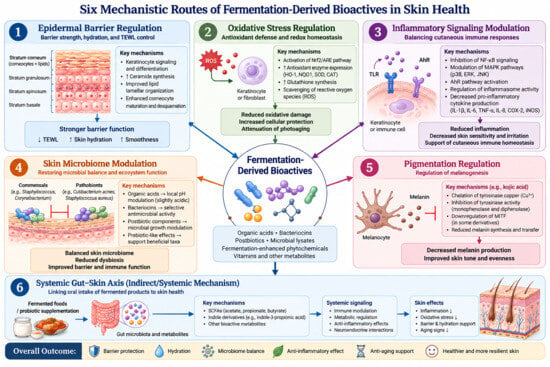
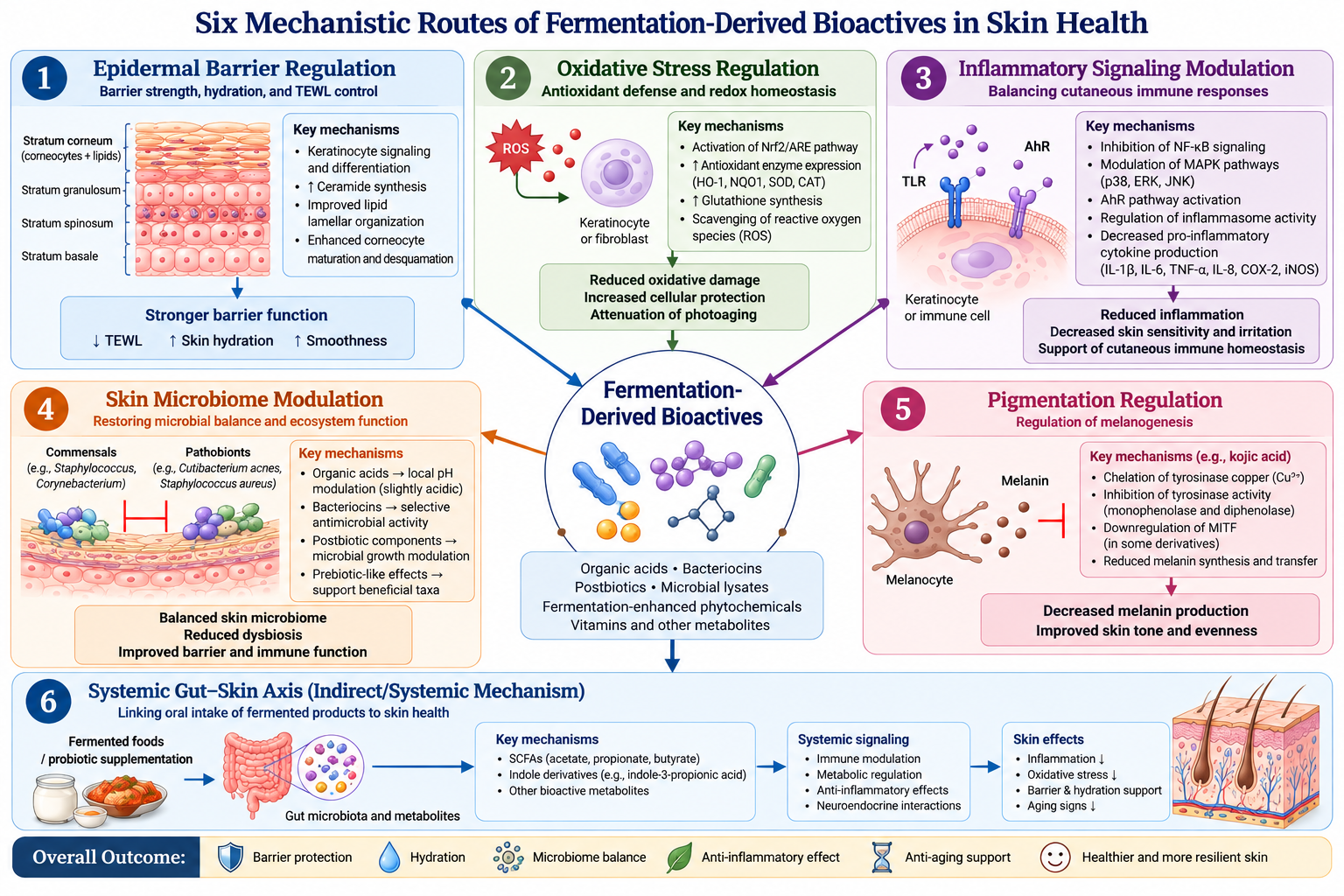

Disclaimer/Publisher’s Note: The statements, opinions and data contained in all publications are solely those of the individual author(s) and contributor(s) and not of MDPI and/or the editor(s). MDPI and/or the editor(s) disclaim responsibility for any injury to people or property resulting from any ideas, methods, instructions or products referred to in the content. |
© 2026 by the authors. Licensee MDPI, Basel, Switzerland. This article is an open access article distributed under the terms and conditions of the Creative Commons Attribution (CC BY) license.