Skip to Content

Journal of Fungi, Volume 7, Issue 12

2021 December - 106 articles

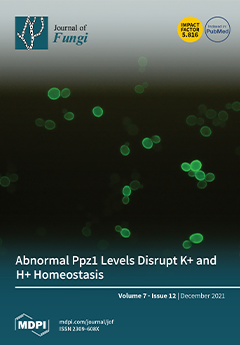
Cover Story: Phosphatase Ppz1 is the most toxic protein when overexpressed in Saccharomyces cerevisiae cells, but the reasons for its toxicity were not clear. Our results show that its overexpression results in a rapid decrease in K+ content and cytosolic pH and altered ability to acidify the medium. These phenomena, as well as the growth defect, are counteracted by the deletion of the plasma membrane Na+, K+/H+ antiporter Nha1. We experimentally prove that high levels of Ppz1 overactivate Nha1, leading to an excessive entry of H+ and efflux of K+, which is detrimental for growth. View this paper.
  • Issues are regarded as officially published after their release is announced to the table of contents alert mailing list .
  • You may sign up for email alerts to receive table of contents of newly released issues.
  • PDF is the official format for papers published in both, html and pdf forms. To view the papers in pdf format, click on the "PDF Full-text" link, and use the free Adobe Reader to open them.

Articles (106)

  • Case Report
  • Open Access
8 Citations
4,800 Views
7 Pages

Fungal Invasive Co-Infection Due to Aspergillus fumigatus and Rhizopus arrhizus: A Rhino-Orbital Presentation

  • Juan Pablo Ramírez-Hinojosa,
  • Salvador Medrano-Ahumada,
  • Roberto Arenas,
  • Arturo Bravo-Escobar,
  • Sara Paraguirre-Martínez,
  • Juan Xicohtencatl-Cortes,
  • Erick Martínez-Herrera and
  • Rigoberto Hernández-Castro

20 December 2021

Aspergillosis and mucormycosis are filamentous fungal infections occurring predominantly in immunocompromised patients. Fulminant process with rapid infiltration of the contiguous tissue is distinctive for both type of fungi. The rhinocerebral co-inf...

  • Article
  • Open Access
37 Citations
8,307 Views
108 Pages

Phylogenetic Reassessment, Taxonomy, and Biogeography of Codinaea and Similar Fungi

  • Martina Réblová,
  • Miroslav Kolařík,
  • Jana Nekvindová,
  • Kamila Réblová,
  • František Sklenář,
  • Andrew N. Miller and
  • Margarita Hernández-Restrepo

20 December 2021

The genus Codinaea is a phialidic, dematiaceous hyphomycete known for its intriguing morphology and turbulent taxonomic history. This polyphasic study represents a new, comprehensive view on the taxonomy, systematics, and biogeography of Codinaea and...

  • Review
  • Open Access
5 Citations
6,261 Views
15 Pages

Combination Therapy for HIV-Associated Cryptococcal Meningitis—A Success Story

  • William J. Hurt,
  • Thomas S. Harrison,
  • Síle F. Molloy and
  • Tihana A. Bicanic

20 December 2021

Cryptococcal meningitis is the leading cause of adult meningitis in patients with HIV, and accounts for 15% of all HIV-related deaths in sub-Saharan Africa. The mainstay of management is effective antifungal therapy, despite a limited arsenal of anti...

  • Article
  • Open Access
11 Citations
3,830 Views
12 Pages

Enhanced Virulence of Candida albicans by Staphylococcus aureus: Evidence in Clinical Bloodstream Infections and Infected Zebrafish Embryos

  • Yen-Mu Wu,
  • Po-Yen Huang,
  • Yi-Chuan Cheng,
  • Chih-Hua Lee,
  • Meng-Chieh Hsu,
  • Jang-Jih Lu and
  • Shao-Hung Wang

20 December 2021

Coinfection with Candida and Staphylococcus results in higher mortality in animal studies. However, the pathogenesis and interplay between C. albicans and S. aureus in bloodstream infections (BSIs) is unclear. This study determines the clinical featu...

  • Article
  • Open Access
34 Citations
6,589 Views
18 Pages

High Efficiency In Vitro Wound Healing of Dictyophora indusiata Extracts via Anti-Inflammatory and Collagen Stimulating (MMP-2 Inhibition) Mechanisms

  • Yasir Nazir,
  • Pichchapa Linsaenkart,
  • Chiranan Khantham,
  • Tanakarn Chaitep,
  • Pensak Jantrawut,
  • Chuda Chittasupho,
  • Pornchai Rachtanapun,
  • Kittisak Jantanasakulwong,
  • Yuthana Phimolsiripol and
  • Warintorn Ruksiriwanich
  • + 8 authors

20 December 2021

Dictyophora indusiata or Phallus indusiatus is widely used as not only traditional medicine, functional foods, but also, skin care agents. Biological activities of the fruiting body from D. indusiata were widely reported, while the studies on the app...

  • Article
  • Open Access
14 Citations
4,812 Views
13 Pages

Additions to Lyophyllaceae s.l. from China

  • Jize Xu,
  • Xiaodong Yu,
  • Nakarin Suwannarach,
  • Yi Jiang,
  • Wei Zhao and
  • Yu Li

20 December 2021

Four new species, viz. Calocybe coacta, C. fulvipes, C. vinacea and Clitolyophyllum umbilicatum, are described in northern China. Comparisons are made of macro- and micromorphological features among the new species and closely related species within...

  • Article
  • Open Access
17 Citations
4,716 Views
17 Pages

New Dothideomycetes from Freshwater Habitats in Spain

  • Viridiana Magaña-Dueñas,
  • José Francisco Cano-Lira and
  • Alberto Miguel Stchigel

20 December 2021

The Dothideomycetes are a class of cosmopolitan fungi that are present principally in terrestrial environments, but which have also been found in freshwater and marine habitats. In the present study, more than a hundred samples of plant debris were c...

  • Article
  • Open Access
11 Citations
3,138 Views
13 Pages

19 December 2021

Monascus pigments (MPs) have been used as food colorants for several centuries in Asian countries and are currently used around the world via Asian catering. The MPs biosynthetic pathway has been well-illustrated; however, the functions of a few gene...

  • Review
  • Open Access
70 Citations
13,175 Views
20 Pages

Sugarcane Smut: Current Knowledge and the Way Forward for Management

  • Muhammad Aslam Rajput,
  • Nasir Ahmed Rajput,
  • Rehana Naz Syed,
  • Abdul Mubeen Lodhi and
  • Youxiong Que

19 December 2021

Whip smut of sugarcane is the most serious and widely spread disease of sugarcane and causes a significant reduction in cane quantity and quality. The severity of this disease often depends on the pathogen races, environmental conditions, cultivar ge...

  • Article
  • Open Access
14 Citations
5,756 Views
23 Pages

Genome and Metabolome MS-Based Mining of a Marine Strain of Aspergillus affinis

  • Micael F. M. Gonçalves,
  • Sandra Hilário,
  • Marta Tacão,
  • Yves Van de Peer,
  • Artur Alves and
  • Ana C. Esteves

18 December 2021

Aspergillus section Circumdati encompasses several species that express both beneficial (e.g., biochemical transformation of steroids and alkaloids, enzymes and metabolites) and harmful compounds (e.g., production of ochratoxin A (OTA)). Given their...

  • Article
  • Open Access
9 Citations
3,696 Views
10 Pages

18 December 2021

Invasive aspergillosis (IA) is a severe mycosis caused by Aspergillus species. The infection mainly affects immunocompromised patients with a significant clinical burden. This study aimed to determine the clinical and epidemiological characteristics...

  • Case Report
  • Open Access
17 Citations
4,372 Views
15 Pages

Malignant Keratitis Caused by a Highly-Resistant Strain of Fusarium Tonkinense from the Fusarium Solani Complex

  • Jens Schrecker,
  • Berthold Seitz,
  • Tim Berger,
  • Loay Daas,
  • Wolfgang Behrens-Baumann,
  • Claudia Auw-Hädrich,
  • Sabine Schütt,
  • Sabine Kerl,
  • Sascha Rentner-Andres and
  • Herbert Hof

18 December 2021

Fusarium spp. are moulds ubiquitously distributed in nature and only occasionally pathogenic for humans. Species of the Fusarium solani complex are the predominant keratitis-inducing pathogens, because they are endowed with proper virulence factors....

  • Article
  • Open Access
15 Citations
4,266 Views
16 Pages

Biochemical Profile by GC–MS of Fungal Biomass Produced from the Ascospores of Tirmania nivea as a Natural Renewable Resource

  • Jamal M. Khaled,
  • Naiyf S. Alharbi,
  • Ramzi A. Mothana,
  • Shine Kadaikunnan and
  • Ahmed S. Alobaidi

17 December 2021

The edible fruiting bodies of desert truffles are seasonally collected and consumed in many regions of the world. Although they are very expensive, they are bought and sold as a result of considerable scientific reports confirming their health and nu...

  • Article
  • Open Access
15 Citations
4,329 Views
15 Pages

Vacuolar Protein-Sorting Receptor MoVps13 Regulates Conidiation and Pathogenicity in Rice Blast Fungus Magnaporthe oryzae

  • Xueming Zhu,
  • Lin Li,
  • Jiaoyu Wang,
  • Lili Zhao,
  • Huanbin Shi,
  • Jiandong Bao,
  • Zhenzhu Su,
  • Xiaohong Liu and
  • Fucheng Lin

17 December 2021

Magnaporthe oryzae (synonym Pyricularia oryzae) is a filamentous fungal pathogen that causes major yield losses in cultivated rice worldwide. However, the mechanisms of infection of M. oryzae are not well characterized. The VPS13 proteins play vital...

  • Article
  • Open Access
27 Citations
5,262 Views
21 Pages

17 December 2021

Asproinocybe and Tricholosporum are not well known, and their placement at the family level remains undetermined. In this study, we conducted molecular phylogenetic analyses based on nuc rDNA internal transcribed spacer region (ITS) and nuc 28S rDNA...

  • Article
  • Open Access
12 Citations
6,371 Views
18 Pages

17 December 2021

Microbial natural products have had phenomenal success in drug discovery and development yet form distinct classes based on the origin of their native producer. Methods that enable metabolic engineers to combine the most useful features of the differ...

  • Article
  • Open Access
44 Citations
5,847 Views
21 Pages

Why Is the Correct Selection of Trichoderma Strains Important? The Case of Wheat Endophytic Strains of T. harzianum and T. simmonsii

  • Alberto Pedrero-Méndez,
  • H. Camilo Insuasti,
  • Theodora Neagu,
  • María Illescas,
  • M. Belén Rubio,
  • Enrique Monte and
  • Rosa Hermosa

17 December 2021

The search for endophytic fungi in the roots of healthy wheat plants from a non-irrigation field trial allowed us to select 4 out of a total of 54 cultivable isolates belonging to the genus Trichoderma, identified as T. harzianum T136 and T139, T. si...

  • Article
  • Open Access
13 Citations
4,923 Views
18 Pages

Phylogenetic Relationships, Speciation, and Origin of Armillaria in the Northern Hemisphere: A Lesson Based on rRNA and Elongation Factor 1-Alpha

  • Junmin Liang,
  • Lorenzo Pecoraro,
  • Lei Cai,
  • Zhilin Yuan,
  • Peng Zhao,
  • Clement K. M. Tsui and
  • Zhifeng Zhang

17 December 2021

Armillaria species have a global distribution and play various roles in the natural ecosystems, e.g., pathogens, decomposers, and mycorrhizal associates. However, their taxonomic boundaries, speciation processes, and origin are poorly understood. Her...

  • Case Report
  • Open Access
2 Citations
3,216 Views
6 Pages

First Report of an Invasive Infection by Cephalotrichum gorgonifer in a Neutropenic Patient with Hematological Malignancy under Chemotherapy

  • Ana Álvarez-Uría,
  • Pilar Escribano,
  • Verónica Parra-Blanco,
  • José Francisco Cano-Lira,
  • Alberto Miguel Stchigel,
  • Gillen Oarbeascoa,
  • Patricia Muñoz and
  • Jesús Guinea

17 December 2021

The etiological agents of infrequent invasive fungal infections (IFI) are difficult to identify on the species level using classic morphological examination. We describe the first case of an IFI caused by Cephalotrichum gorgonifer in a neutropenic pa...

  • Article
  • Open Access
6 Citations
4,493 Views
19 Pages

Multilocus Phylogeography of the Tuber mesentericum Complex Unearths Three Highly Divergent Cryptic Species

  • Marco Leonardi,
  • Daniele Salvi,
  • Mirco Iotti,
  • Gian Luigi Rana,
  • Aurelia Paz-Conde and
  • Giovanni Pacioni

17 December 2021

Tuber mesentericum is an edible European black truffle, apparently easy to recognize, but showing a high degree of genetic variability. In this study, we performed an integrative taxonomic assessment of the T. mesentericum complex, combining a multil...

  • Article
  • Open Access
25 Citations
4,872 Views
24 Pages

Distribution and Assembly Processes of Soil Fungal Communities along an Altitudinal Gradient in Tibetan Plateau

  • Sarfraz Hussain,
  • Hao Liu,
  • Senlin Liu,
  • Yifan Yin,
  • Zhongyuan Yuan,
  • Yuguo Zhao and
  • Hui Cao

16 December 2021

In soil ecosystems, fungi exhibit diverse biodiversity and play an essential role in soil biogeochemical cycling. Fungal diversity and assembly processes across soil strata along altitudinal gradients are still unclear. In this study, we investigated...

  • Communication
  • Open Access
1 Citations
3,228 Views
10 Pages

15 December 2021

Meiotic crossover plays a critical role in generating genetic variations and is a central component of breeding. However, our understanding of crossover in mushroom-forming fungi is limited. Here, in Lentinula edodes, we characterized the chromosome-...

  • Article
  • Open Access
10 Citations
3,437 Views
13 Pages

Host-Specific Effects of Arbuscular Mycorrhizal Fungi on Two Caragana Species in Desert Grassland

  • Xin Guo,
  • Zhen Wang,
  • Jing Zhang,
  • Ping Wang,
  • Yaoming Li and
  • Baoming Ji

15 December 2021

Arbuscular mycorrhizal fungi (AMF), which form symbioses with most land plants, could benefit their hosts and potentially play important roles in revegetation of degraded lands. However, their application in revegetation of desert grasslands still fa...

  • Article
  • Open Access
12 Citations
4,260 Views
23 Pages

Phenotypic Characterization and Comparative Genomics of the Melanin-Producing Yeast Exophiala lecanii-corni Reveals a Distinct Stress Tolerance Profile and Reduced Ribosomal Genetic Content

  • Jillian Romsdahl,
  • Zachary Schultzhaus,
  • Christina A. Cuomo,
  • Hong Dong,
  • Hashanthi Abeyratne-Perera,
  • W. Judson Hervey and
  • Zheng Wang

15 December 2021

The black yeast Exophiala lecanii-corni of the order Chaetothyriales is notable for its ability to produce abundant quantities of DHN-melanin. While many other Exophiala species are frequent causal agents of human infection, E. lecanii-corni CBS 1024...

  • Article
  • Open Access
45 Citations
6,150 Views
28 Pages

15 December 2021

Tea-oil tree (Camellia oleifera) is an important edible oil woody plant with a planting area of over 3,800,000 hectares in southern China. Pestalotioid fungi are associated with a wide variety of plants worldwide along with endophytes, pathogens, and...

  • Article
  • Open Access
18 Citations
5,149 Views
19 Pages

Ustilago maydis Secreted Endo-Xylanases Are Involved in Fungal Filamentation and Proliferation on and Inside Plants

  • Ismael Moreno-Sánchez,
  • María Dolores Pejenaute-Ochoa,
  • Blanca Navarrete,
  • Ramón R. Barrales and
  • José I. Ibeas

15 December 2021

Plant pathogenic fungi must be able to degrade host cell walls in order to penetrate and invade plant tissues. Among the plant cell wall degrading enzymes (PCWDEs) produced, xylanases are of special interest since its degradation target, xylan, is on...

  • Article
  • Open Access
3 Citations
2,814 Views
17 Pages

Synthesis, Fungitoxic Activity against Botrytis cinerea and Phytotoxicity of Alkoxyclovanols and Alkoxyisocaryolanols

  • Adriana de Almeida Pinto Bracarense,
  • Jociani Ascari,
  • Giovanni Gontijo de Souza,
  • Thays Silva Oliveira,
  • Antonio Ruano-González,
  • Ana A. Pinto,
  • Maria Amélia Diamantino Boaventura,
  • Jacqueline Aparecida Takahashi,
  • Isidro G. Collado and
  • Antonio J. Macías-Sánchez
  • + 1 author

15 December 2021

Clovane and isocaryolane derivatives have been proven to show several levels of activity against the phytopathogenic fungus Botrytis cinerea. Both classes of sesquiterpenes are reminiscent of biosynthetic intermediates of botrydial, a virulence facto...

  • Article
  • Open Access
13 Citations
4,265 Views
14 Pages

Fungal Diversity and Composition of the Continental Solar Saltern in Añana Salt Valley (Spain)

  • Maia Azpiazu-Muniozguren,
  • Alba Perez,
  • Aitor Rementeria,
  • Irati Martinez-Malaxetxebarria,
  • Rodrigo Alonso,
  • Lorena Laorden,
  • Javier Gamboa,
  • Joseba Bikandi,
  • Javier Garaizar and
  • Ilargi Martinez-Ballesteros

14 December 2021

The Añana Salt Valley in Spain is an active continental solar saltern formed 220 million years ago. To date, no fungal genomic studies of continental salterns have been published, although DNA metabarcoding has recently expanded researchers&rs...

  • Review
  • Open Access
93 Citations
14,028 Views
19 Pages

Phytophthora infestans: An Overview of Methods and Attempts to Combat Late Blight

  • Artemii A. Ivanov,
  • Egor O. Ukladov and
  • Tatiana S. Golubeva

13 December 2021

Phytophthora infestans (Mont.) de Bary is one of the main pathogens in the agricultural sector. The most affected are the Solanaceae species, with the potato (Solanum tuberosum) and the tomato (Solanum lycopersicum) being of great agricultural import...

  • Article
  • Open Access
4 Citations
3,185 Views
9 Pages

Distinct Clinical and Laboratory Patterns of Pneumocystis jirovecii Pneumonia in Renal Transplant Recipients

  • Andreas M. J. Meyer,
  • Daniel Sidler,
  • Cédric Hirzel,
  • Hansjakob Furrer,
  • Lukas Ebner,
  • Alan A. Peters,
  • Andreas Christe,
  • Uyen Huynh-Do,
  • Laura N. Walti and
  • Spyridon Arampatzis

13 December 2021

Late post-transplant Pneumocystis jirovecii pneumonia (PcP) has been reported in many renal transplant recipients (RTRs) centers using universal prophylaxis. Specific features of PcP compared to other respiratory infections in the same population are...

  • Article
  • Open Access
23 Citations
6,380 Views
14 Pages

Evaluation of Native Entomopathogenic Fungi for the Control of Fall Armyworm (Spodoptera frugiperda) in Thailand: A Sustainable Way for Eco-Friendly Agriculture

  • Julius Rajula,
  • Sarayut Pittarate,
  • Nakarin Suwannarach,
  • Jaturong Kumla,
  • Aneta A. Ptaszynska,
  • Malee Thungrabeab,
  • Supamit Mekchay and
  • Patcharin Krutmuang

13 December 2021

Fall armyworm, Spodoptera frugiperda, entered Thailand in late 2018 and has now spread in several regions, with devastating effects in maize and rice production, which are some of the most important cereals in the world. Since then, farmers have util...

  • Article
  • Open Access
29 Citations
5,117 Views
18 Pages

Distribution and Origin of Major, Trace and Rare Earth Elements in Wild Edible Mushrooms: Urban vs. Forest Areas

  • Maja Ivanić,
  • Martina Furdek Turk,
  • Zdenko Tkalčec,
  • Željka Fiket and
  • Armin Mešić

12 December 2021

This paper investigates the composition of major, trace, and rare earth elements in 15 different species of wild edible mushrooms and the possible effect of urban pollution on elemental uptake. The collected mushrooms include different species from t...

  • Article
  • Open Access
2 Citations
3,288 Views
10 Pages

12 December 2021

We have characterized a homodimeric tRNA endonuclease from the euryarchaeota Ferroplasma acidarmanus (FERAC), a facultative anaerobe which can grow at temperatures ranging from 35 to 42 °C. This enzyme, contrary to the eukaryal tRNA endonucleases...

  • Review
  • Open Access
26 Citations
5,517 Views
10 Pages

Envisaging Antifungal Potential of Histatin 5: A Physiological Salivary Peptide

  • Pratibha Sharma,
  • Mehak Chaudhary,
  • Garima Khanna,
  • Praveen Rishi and
  • Indu Pal Kaur

12 December 2021

Fungi are reported to cause a range of superficial to invasive human infections. These often result in high morbidity and at times mortality. Conventional antifungal agents though effective invariably exhibit drug interactions, treatment-related toxi...

  • Article
  • Open Access
19 Citations
5,343 Views
14 Pages

Characterization of the Molecular Mechanisms of Resistance against DMI Fungicides in Cercospora beticola Populations from the Czech Republic

  • Ram Kumar,
  • Jana Mazakova,
  • Asad Ali,
  • Vishma Pratap Sur,
  • Madhab Kumar Sen,
  • Melvin D. Bolton,
  • Marie Manasova,
  • Pavel Rysanek and
  • Miloslav Zouhar

11 December 2021

Cercospora leaf spot (CLS), caused by the fungal pathogen Cercospora beticola, is the most important foliar pathogen of sugar beet worldwide. Extensive reliance on fungicides to manage CLS has resulted in the evolution of fungicide resistance in C. b...

  • Article
  • Open Access
16 Citations
3,563 Views
14 Pages

11 December 2021

Two new corticioid fungal species, Phanerochaete pruinosa and P. rhizomorpha spp. nov. are proposed based on a combination of morphological features and molecular evidence. Phanerochaete pruinosa is characterized by the resupinate basidiomata with th...

  • Article
  • Open Access
29 Citations
4,840 Views
18 Pages

11 December 2021

(1) Background: The white Hypsizygus marmoreus is a popular edible mushroom in East Asia markets. Research on the systematic investigation of the protein expression changes in the cultivation process of this mushroom are few. (2) Methods: Label-free...

  • Article
  • Open Access
6 Citations
2,907 Views
15 Pages

11 December 2021

Sirex noctilio along with its mutualistic fungal symbiont, Amylostereum areolatum (a white rot fungus), is an invasive pest that causes excessive damage to Pinus plantations in Northeast China. In 2015, S. noctilio were found to attack Pinus sylvestr...

  • Article
  • Open Access
4 Citations
3,755 Views
16 Pages

Aquatic Hyphomycete Taxonomic Relatedness Translates into Lower Genetic Divergence of the Nitrate Reductase Gene

  • Joana Mariz,
  • Ricardo Franco-Duarte,
  • Fernanda Cássio,
  • Cláudia Pascoal and
  • Isabel Fernandes

11 December 2021

Aquatic hyphomycetes are key microbial decomposers in freshwater that are capable of producing extracellular enzymes targeting complex molecules of leaf litter, thus, being crucial to nutrient cycling in these ecosystems. These fungi are also able to...

  • Review
  • Open Access
84 Citations
7,902 Views
20 Pages

A Visual and Comprehensive Review on COVID-19-Associated Pulmonary Aspergillosis (CAPA)

  • Simon Feys,
  • Maria Panagiota Almyroudi,
  • Reinout Braspenning,
  • Katrien Lagrou,
  • Isabel Spriet,
  • George Dimopoulos and
  • Joost Wauters

11 December 2021

Coronavirus disease 19 (COVID-19)-associated pulmonary aspergillosis (CAPA) is a severe fungal infection complicating critically ill COVID-19 patients. Numerous retrospective and prospective studies have been performed to get a better grasp on this l...

  • Case Report
  • Open Access
6 Citations
3,100 Views
5 Pages

Malassezia restricta Pneumonia in Solid Organ Transplant Recipients: First Report of Two Cases

  • Alessandra Mularoni,
  • Elena Graziano,
  • Alice Annalisa Medaglia,
  • Barbara Buscemi,
  • Taylor Eddens,
  • Lavinia Martino,
  • Daniele Di Carlo,
  • Antonio Cascio,
  • Pier Giulio Conaldi and
  • Paolo Antonio Grossi
  • + 1 author

10 December 2021

Emerging fungal infections are a major challenge in solid organ transplantation (SOT) and are associated with high morbidity and mortality. We report two cases of Malassezia restricta pneumonia in SOT recipients. Infections were diagnosed with molecu...

  • Review
  • Open Access
42 Citations
9,903 Views
21 Pages

10 December 2021

The use of targeted biologic therapies for hematological malignancies has greatly expanded in recent years. These agents act upon specific molecular pathways in order to target malignant cells but frequently have broader effects involving both innate...

  • Article
  • Open Access
16 Citations
3,871 Views
11 Pages

COVID-19-Associated Pulmonary Aspergillosis in Russia

  • Olga Shadrivova,
  • Denis Gusev,
  • Maria Vashukova,
  • Dmitriy Lobzin,
  • Vitaliy Gusarov,
  • Mikhail Zamyatin,
  • Anatoliy Zavrazhnov,
  • Mikhail Mitichkin,
  • Yulia Borzova and
  • Working Group
  • + 7 authors

10 December 2021

We studied the risk factors, etiology, clinical features and the effectiveness of therapy of COVID-19-associated pulmonary aspergillosis (CAPA) in adult patients. In this retrospective study, we included 45 patients with proven (7%) and probable (93%...

  • Article
  • Open Access
29 Citations
11,445 Views
13 Pages

Combination of Strobilurin and Triazole Chemicals for the Management of Blast Disease in Mushk Budji -Aromatic Rice

  • Fayaz Ahmad Mohiddin,
  • Nazir A. Bhat,
  • Shabir H. Wani,
  • Arif H. Bhat,
  • Mohammad Ashraf Ahanger,
  • Asif B. Shikari,
  • Najeebul Rehman Sofi,
  • Shugufta Parveen,
  • Gazala H. Khan and
  • Ayman EL Sabagh
  • + 3 authors

10 December 2021

Rice blast is considered one of the most important fungal diseases of rice. Although diseases can be managed by using resistant cultivars, the blast pathogen has successfully overcome the single gene resistance in a short period and rendered several...

  • Review
  • Open Access
10 Citations
5,273 Views
22 Pages

Recent Molecular Tools for the Genetic Manipulation of Highly Industrially Important Mucoromycota Fungi

  • Hassan Mohamed,
  • Tahira Naz,
  • Junhuan Yang,
  • Aabid Manzoor Shah,
  • Yusuf Nazir and
  • Yuanda Song

10 December 2021

Mucorales is the largest and most well-studied order of the phylum Mucormycota and is known for its rapid growth rate and various industrial applications. The Mucorales fungi are a fascinating group of filamentous organisms with many uses in research...

  • Article
  • Open Access
13 Citations
5,536 Views
23 Pages

The Solvent Dimethyl Sulfoxide Affects Physiology, Transcriptome and Secondary Metabolism of Aspergillus flavus

  • Laura H. Costes,
  • Yannick Lippi,
  • Claire Naylies,
  • Emilien L. Jamin,
  • Clémence Genthon,
  • Sylviane Bailly,
  • Isabelle P. Oswald,
  • Jean-Denis Bailly and
  • Olivier Puel

9 December 2021

Dimethyl sulfoxide (DSMO) is a simple molecule widely used because of its great solvating ability, but this solvent also has little-known biological effects, especially on fungi. Aspergillus flavus is a notorious pathogenic fungus which may contamina...

  • Article
  • Open Access
5 Citations
3,419 Views
14 Pages

Geographical Origin Does Not Modulate Pathogenicity or Response to Climatic Variables of Fusarium oxysporum Associated with Vascular Wilt on Asparagus

  • Alexandri María Brizuela,
  • Justyna Lalak-Kańczugowska,
  • Grzegorz Koczyk,
  • Łukasz Stępień,
  • Michał Kawaliło and
  • Daniel Palmero

9 December 2021

Asparagus crop is distributed worldwide, covering very different climatic regions. Among the different diseases that affect asparagus, vascular Fusarium wilt, caused by Fusarium oxysporum f. sp. aparagi (Foa), stands out. It is not only the cause of...

  • Article
  • Open Access
1 Citations
3,722 Views
18 Pages

8 December 2021

The primary role of the Cell Wall Integrity Pathway (CWI) in Saccharomyces cerevisiae is monitoring the state of the cell wall in response to general life cycle stresses (growth and mating) and imposed stresses (temperature changes and chemicals). Of...

of 3

Get Alerted

Add your email address to receive forthcoming issues of this journal.

XFacebookLinkedIn
J. Fungi - ISSN 2309-608X