


Abstract
In recent decades, there has been a worrying increase in the consumption of energy drinks, especially among the young population. These beverages have been linked to effects primarily on the nervous and cardiovascular systems; however, renal consequences remain poorly understood, particularly those associated with long-term consumption. The heterogeneity in consumption patterns, together with variability in consumer profiles, has limited the ability to obtain conclusive and consistent evidence on this issue. Therefore, it is essential to address this topic from a preclinical perspective under controlled experimental conditions. The aim of the present study was to evaluate the available preclinical evidence through a systematic review followed by a meta-analysis. Nineteen studies met the inclusion criteria, with rats being the most commonly used experimental model. Overall, the results show a significant association between energy drink consumption and impaired kidney function, as reflected in elevated levels of serum biomarkers such as creatinine, urea, and uric acid. Among these, serum creatinine (mean Hedges’ g = −1.40; 95% confidence interval: −2.55 to −0.25) and urea (Hedges’ g = −1.93; 95% confidence interval: −2.99 to −0.87) had the highest effect sizes and greater statistical robustness, suggesting a particularly significant impact on kidney function. Although fewer studies reported increased uric acid levels, this parameter may have pathophysiological relevance. Elevated uric acid has been associated with mechanisms such as inflammation, oxidative stress, and endothelial dysfunction, which may contribute to the progression of renal damage. Additionally, morphological alterations in glomerular and tubular structures were observed, particularly after prolonged exposure and at high doses. Despite the need for methodological improvements in future research, these findings highlight potential adverse renal effects that should be considered in the development of regulatory policies on energy drink consumption.
1. Introduction
In recent years, the consumption of energy drinks (EDs) has experienced a worrying increase worldwide. According to the European Food Safety Authority report issued in 2013, 68% of European adolescents (aged 10–18) had consumed EDs at least once in their lifetime, while in the adult group (18–65 years old), this number decreased to 30%. Alarmingly, around 18% of children aged between 3 and 10 also reported having consumed these beverages, highlighting a growing trend among youngsters, who are more susceptible to the effects of these stimulants [1].
This consumption pattern is not limited to Europe but it is also reflected on other continents. A recent global analysis, based on a meta-analysis by Aonso-Diego et al. [2] has confirmed that ED consumption remains high worldwide, especially among adolescent and young adult populations. This study posits that, despite concerted efforts to disseminate information regarding health risks associated with excessive consumption of these beverages, demand continues to increase [2]. This phenomenon is reflected in the projected growth of the global ED market, which is expected to continue to expand in the coming years [3]. Some populations have been identified as having a marked increase in ED consumption, such as gamers [4] and sports people [5], who turn to these drinks primarily for their ability to improve physical and mental performance. These groups benefit from the ingredients present in EDs, such as caffeine (50–500 mg per serving), taurine (1000–2000 mg), glucuronolactone (600–1200 mg), guarana (which provides additional caffeine), ginseng (200–400 mg), and sugars (20–40 g), among other compounds [6]. The primary effects sought by ED consumers appear to be associated with their high caffeine content. Caffeine has been demonstrated to exert a positive effect on several domains, including cognitive performance, visuospatial ability, and mood. Moreover, it has been demonstrated that caffeine has a stimulant effect, promoting alertness, concentration, and short-term memory [4,7]. Evidence has demonstrated that caffeine can enhance sporting performance. Consuming an ED containing a minimum of 3 mg/kg of caffeine before exercise can improve performance in endurance events such as cycling and 5 km races, increase distance covered at high intensity in team sports such as football and rugby, and improve time in sprint events such as 50 m swimming. It has also been demonstrated that caffeine has the capacity to enhance reaction and response times in specific circumstances [5,8]. Although caffeine is the main ingredient in EDs, other stimulants such as taurine may also play a role in the effects sought by consumers.
These ingredients can cause adverse effects, the most common being an increase in blood pressure and heart rate, which can increase the risk of cardiovascular events in susceptible individuals [9]. In addition, a prolongation of the QTc interval after consumption has been reported, which may predispose consumers to cardiac arrhythmias [10]. Excessive consumption of EDs has been demonstrated to induce insomnia, anxiety, and depressive symptoms [9,11] and even withdrawal symptoms when consumption is stopped [12]. Liver damage has also been documented [13,14], with some severe cases requiring transplantation [15]. However, the renal effects of EDs remain poorly understood. Although isolated cases of acute renal damage have been reported, these correspond to extreme situations such as excessive consumption (e.g., 12 cans of 250 mL in a single day) [16] or the presence of pre-existing pathologies such as cancer [17] or diabetes [18], which could be considered as renal risk factors. Although these events suggest a possible association between EDs and renal damage, further investigation is required to substantiate this association. The absence of consistent clinical evidence underscores the pressing need for further research in this domain. In addition to being scarce, the available clinical data is subject to many biases in terms of the exposed population, doses, consumption duration, and the concomitant administration of other potentially nephrotoxic substances and/or comorbidities. In this context, preclinical research provides a controlled environment in which the relationship between energy drinks and renal impairment can be established with greater precision, while minimizing the variability present in clinical studies. This work therefore aims to analyze the available preclinical evidence in this field through a systematic review followed by a meta-analysis.
2. Materials and Methods
The entire procedure described below was carried out in accordance with the Preferred Reporting Items for Systematic Reviews and Meta-Analyses guidelines. The protocol of this systematic review was registered on the PROSPERO platform (code: CRD42025629561, date: 12 February 2025).
2.1. Article Search
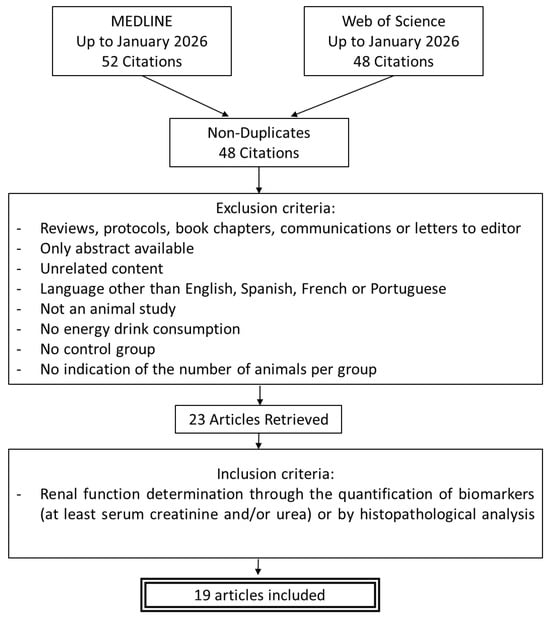
The complete paper search and selection process is shown in Figure 1. The literature search was performed for scientific articles related to possible kidney damage caused by energy drinks included in the Medline and Web of Science databases up to January 2025 (last search date: 8 January 2026). The following search strategy was used (MeSH terms and keywords were used in order to maximize article mining): on the PUBMED platform, the MeSH terms used were “energy drinks/adverse effects” [MeSH]. On both platforms, the terms were used independently as follows: “Energy drinks” AND (kidney OR renal); Caffeine AND taurine AND (kidney OR renal) AND (injury OR damage).
Figure 1.
Flowchart of the search process.
2.2. Exclusion and Inclusion Criteria
Any article that met at least one of the following criteria was excluded: (1) reviews, protocols, book chapters, communications, or letters to editor; (2) only abstract available; (3) unrelated content; (4) language other than English, Spanish, French, or Portuguese; (5) not an animal study; (6) no ED consumption; (7) no control group; (8) no indication of the number of animals per group. Of the remainder, only those that evaluated renal damage through the quantification of biomarkers (at least serum creatinine and/or urea) or through histopathological analysis were included. These selection stages were carried out independently by two researchers (A.G.C. and L.V.V.). If there were discrepancies, a third researcher (A.I.M.) resolved them.
2.3. Data Extraction
The following data were extracted from each article: study identification (first author and year), species, treatment administered (ED, dose, and time), size of study groups, renal function biomarkers (where available), and histopathological study findings (where available).
Once the profile of biomarkers used in most of the studies had been examined, serum creatinine, urea, and uric acid were selected for the meta-analysis stage. The mean value and standard deviation (SD) of these biomarkers were recorded for the ED-treated group and the control group. To ensure the comparability of these data, when the original article did not provide serum concentrations in mg/dL, the corresponding numerical conversion was performed. The SD was extracted directly from the work or calculated from the provided dispersion parameters.
2.4. Risk of Bias Assessment
The risk of bias of the included animal studies was assessed using the SYRCLE’s risk of bias tool for animal studies [19]. This tool is an adapted version of the Cochrane risk of bias tool designed specifically for preclinical in vivo research. It evaluates 10 domains of bias, including selection, performance, detection, attrition, reporting, and other sources of bias. Each domain was judged as having low, high, or unclear risk of bias based on predefined signaling questions. The assessment was performed by critically reviewing the methodological information reported in each study, including randomization procedures, allocation concealment, blinding, outcome assessment, and completeness of outcome data.
2.5. Meta-Analysis
Heterogeneity between studies was assessed using the chi-squared Q-test under the null hypothesis of homogeneity (p < 0.05 indicates heterogeneity) and the I2 parameter (I2 > 50% indicates high heterogeneity). Since the studies were heterogeneous for the three biomarkers, the random effects model was applied for the meta-analysis of the data. Based on the difference in means between the control group and the treated group in each study (that is, based on the result of the following subtraction: the mean biomarker level in the control group minus the mean biomarker level in the treated group), Hedges’ g (a standardized measure of effect size that is particularly suitable when sample sizes are small) and its 95% confidence interval were calculated for each study, and the combined value of these parameters was calculated [20]. Forest plots were constructed from these parameters.
In addition, funnel plots were constructed showing the Hedges’ g of each study versus its standard error to assess potential publication bias. Begg and Mazumdar [21] and Egger et al. [22] asymmetry tests were also applied.
All analyses described in this section were performed using the Meta-Essentials set of workbooks [23].
3. Results
3.1. Description of Included Studies
The characteristics of the studies included in this work are presented in Table 1.
Table 1.
Descriptive characteristics of the included studies. ED: energy drink; est.: estimated; n.i.: not indicated.
Following the completion of the search and screening phase, a total of 19 preclinical articles were included in the review. These articles evaluated the effect of different doses and brands of EDs on animals, with the exception of one article which evaluated the effect on rabbits. Treatment duration varied considerably, from 15 days of exposure to 120 days. Ten of them assessed animal renal function using serum creatinine and urea levels, followed by serum uric acid (quantified in six studies) and calcium, phosphorus, sodium, and potassium (considered in four or fewer studies). Fifteen of the included studies reported a renal histopathological study, but generally did not show quantitative data, so the meta-analysis was limited to studies that provided biomarker numerical data.
The risk of bias assessment using SYRCLE’s tool (Supplementary Table S1) showed that most of the included studies were rated as having an unclear risk of bias across several domains. This was mainly due to insufficient reporting of methodological details such as randomization procedures, allocation concealment, and blinding of investigators and outcome assessors, rather than evidence of inadequate conduct of these procedures. A smaller number of studies were judged to have a low risk of bias, particularly in domains where randomization or baseline characteristics were explicitly described. In many cases, studies reported approval by an ethical or animal care committee, where more detailed methodological information may have been specified, although this was not fully reported in the published articles. Overall, the predominance of unclear risk of bias reflects limited methodological transparency in the reporting of animal studies rather than necessarily poor methodological quality.
3.2. Evaluation of Renal Function
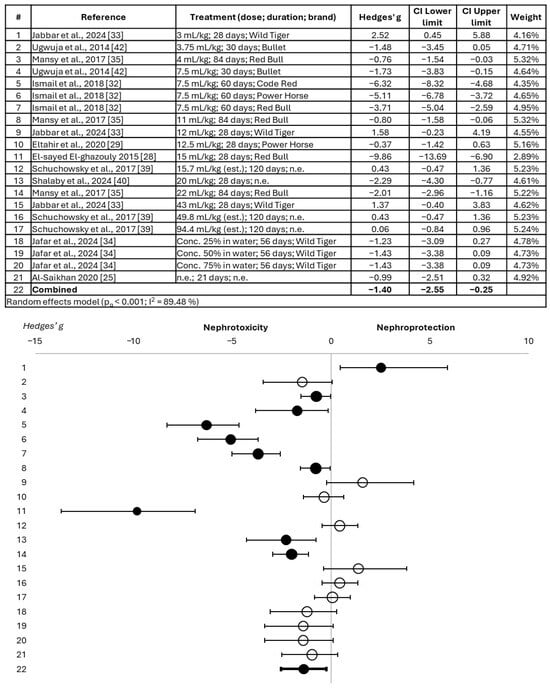
The forest plot presenting the Hedges’ g parameter (individual for each study and combined) for serum creatinine is shown in Figure 2.
Figure 2.
Forest plot showing the alteration of serum creatinine in animals treated with energy drinks versus those belonging to the control group [25,28,29,32,33,34,35,39,40,42]. Effect size is measured as Hedges’ g ± 95% CI. The black circles represent significant effects; the white circles represent non-significant effects. CI: confidence interval; est.: estimated; n.e.: not specified.
It is observed that 9 of the 21 treatments tested proved to be significantly nephrotoxic based on serum creatinine, obtaining a combined value also statistically significant in favor of nephrotoxicity (Hedges’ g mean = −1.40; 95% confidence interval = −2.55, −0.25). No clear dose–toxicity relationship was observed a priori, nor was a more pronounced nephrotoxic effect noted with prolonged administration. Only one study showed a more harmful effect, in which the Power Horse drink was administered at a dose of 12.5 mL/kg for 28 days. However, this appears to be peculiar to this single study, as other studies with a similar treatment did not show the same change in serum creatinine.
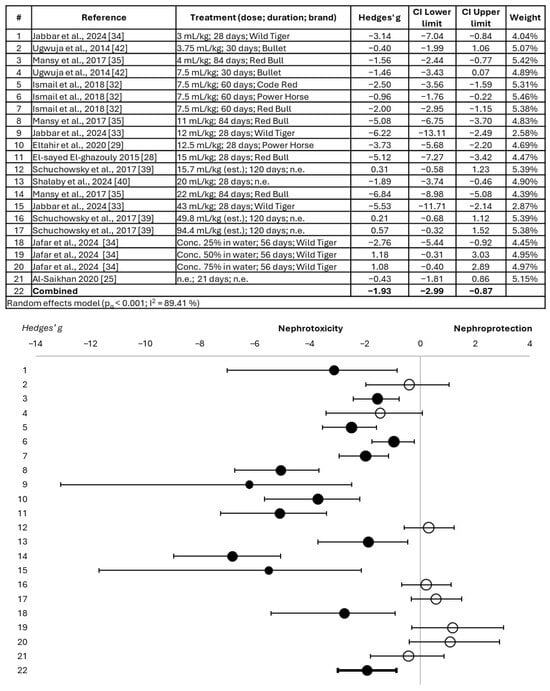
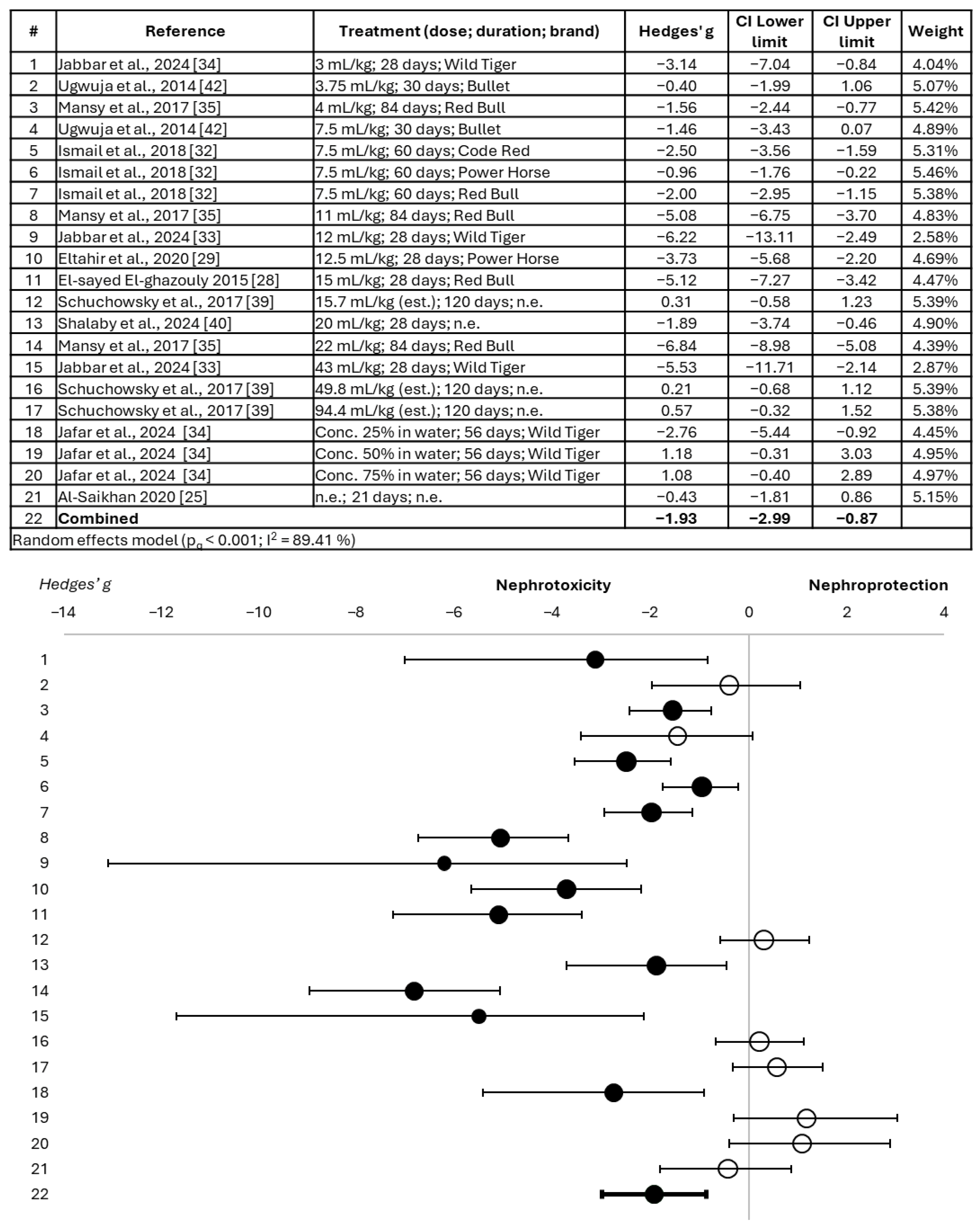
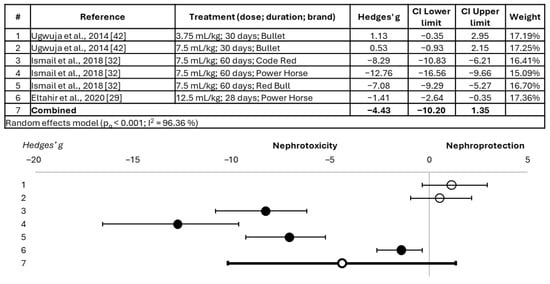
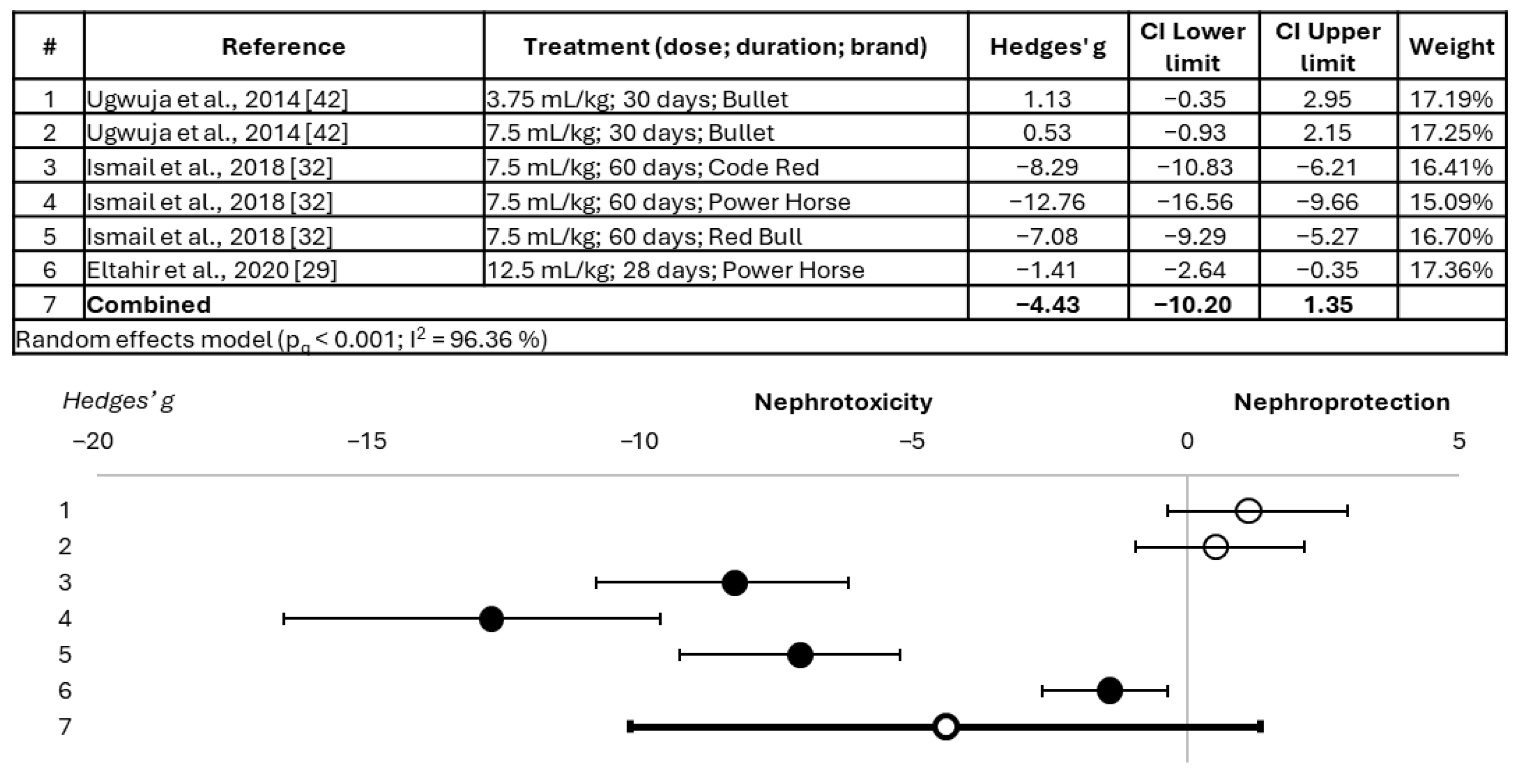
The nephrotoxic effect of the tested EDs is more evident in the analysis of serum urea modification (Figure 3), which showed a significant combined Hedges’ g of −1.93 (95% confidence interval = −2.99; −0.87). For this parameter, 13 of the 21 experimental treatments evaluated showed statistically significant detrimental effects on the kidneys. No administration pattern was identified as being more toxic, nor was a dose–duration–effect relationship identified. Finally, this meta-analysis revealed that, although serum uric acid alteration (Figure 4) showed an evident tendency towards nephrotoxicity, there is not yet sufficient scientific evidence to qualify it as significant. However, four of the six treatments showed a significant nephrotoxic effect for this parameter. Again, the Power Horse drink (administered at a dose of 7.5 mL/kg for 60 days) showed the most detrimental effects for this biomarker.
Figure 3.
Forest plot showing the alteration of serum urea in animals treated with energy drinks versus those belonging to the control group [25,28,29,32,33,34,35,39,40,42]. Effect size is measured as Hedges’ g ± 95% CI. The black circles represent significant effects; the white circles represent non-significant effects. CI: confidence interval; est.: estimated; n.e.: not specified.
Figure 4.
Forest plot showing the alteration of serum uric acid in animals treated with energy drinks versus those belonging to the control group [29,32,42]. Effect size is measured as Hedges’ g ± 95% CI. The black circles represent significant effects; the white circles represent non-significant effects. CI: confidence interval; est.: estimated; n.e.: not specified.
3.3. Publication Bias Evaluation
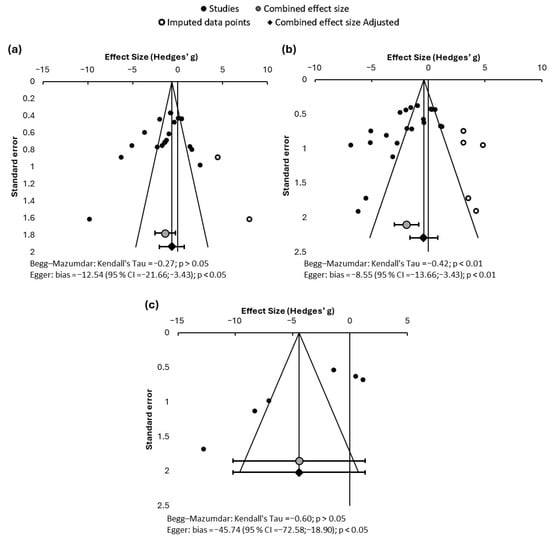
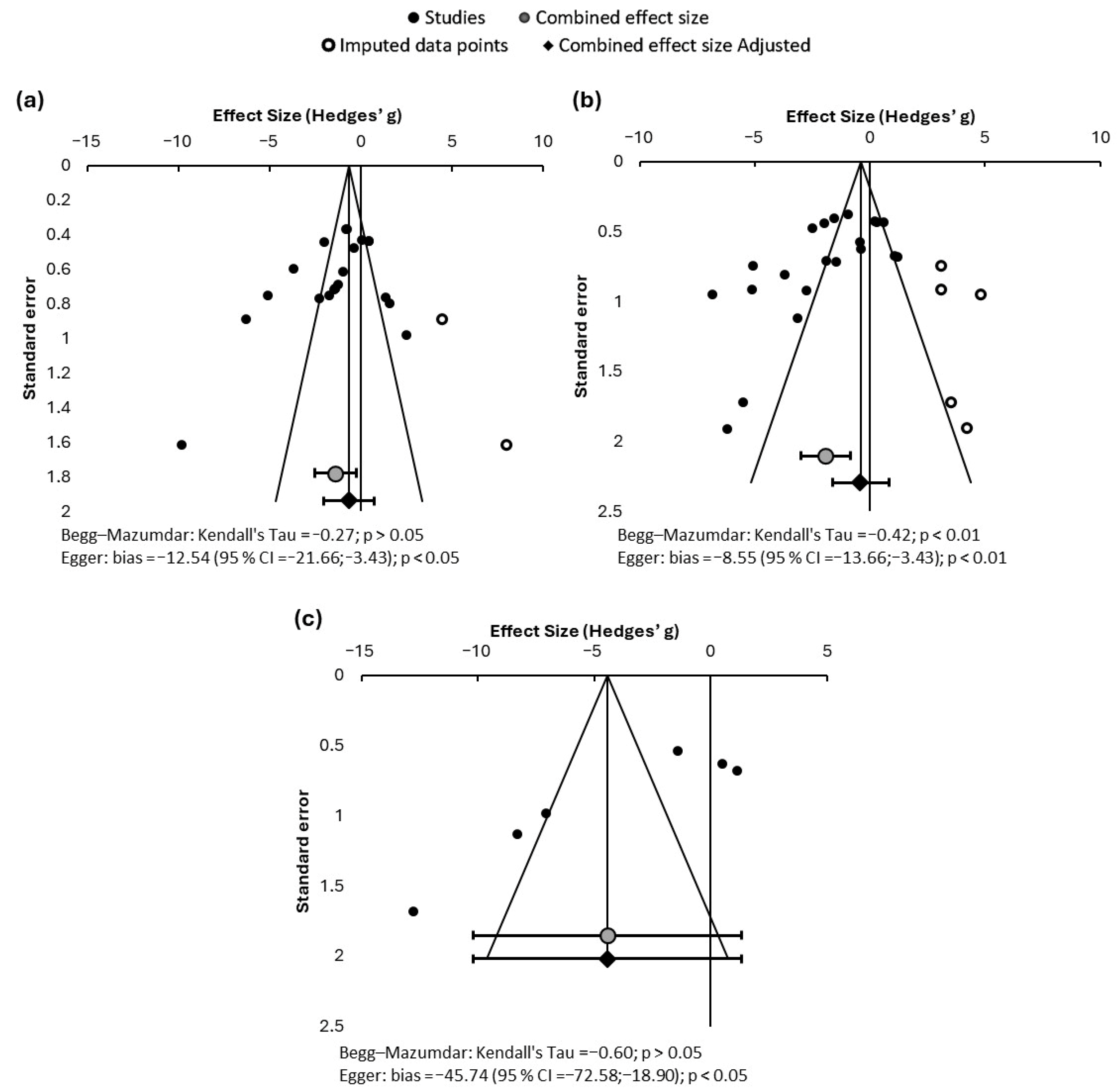
The graphical analysis and the results of the asymmetry tests applied are shown in Figure 5. For the three parameters analyzed, some asymmetry was identified, both graphically and numerically (although the test results sometimes contradict each other). It is therefore possible that publication bias exists. However, when analyzing the asymmetry shown in the funnel plots (which reveal a gap in published studies reporting highly nephroprotective effects attributable to ED), it is possible that this is due not so much to a true publication bias, but rather due to the fact that nephroprotection is not an effect that has been attributed to these products to date, which explains why it is more common to find publications showing no effect (neither harmful nor beneficial) or showing nephrotoxic effects.
Figure 5.
Funnel plots and asymmetry tests for serum creatinine (a), urea (b), and uric acid (c). Effect size is measured as Hedges’ g ± 95% confidence interval.
3.4. Histopathological Analysis
To understand the possible alterations in renal morphology caused by the consumption of ED, the information reported in the fifteen articles that showed renal histology studies was analyzed (Table 2). These results suggest that chronic consumption of ED can induce renal damage, affecting both glomerular and tubular structure. However, determining a dose-dependent relationship is complex. When comparing across studies, no consistent pattern emerges, with some investigations reporting no adverse effects even at high doses [40], while others show histological alterations even at lower doses [26,27]. However, in studies where multiple doses were assessed simultaneously, more pronounced renal damage is observed in groups exposed to higher doses, suggesting a possible dose–response relationship [35,36,37,41].
Table 2.
Histopathological alterations due to energy drink consumption. DCT: distal convoluted tubule; PCT: proximal convoluted tubule; est.: estimated; n.i.: not indicated creatinine and urea levels, followed by serum uric acid (quantified in six studies) and calcium, phosphorus, sodium, and potassium (considered in four or fewer studies). Fifteen of the included studies reported a renal histopathological study, but generally did not show quantitative data, so the meta-analysis was limited to studies that provided biomarker numerical data.
4. Discussion
The increasing ED consumption has been linked to several health conditions, with renal impairment emerging as a potential consequence of long-term use. However, the renal effects remain poorly understood. To the best of our knowledge, this study is the first systematic review and meta-analysis addressing ED-induced renal injury. Despite the bias of extrapolation to humans, the results obtained in animals provide us with information on the subject. However, it should be noted that these results do not include all the factors associated with human consumption, such as pathologies, individual vulnerability and interactions.
The findings of this study show an association between ED consumption and renal alterations, as evidenced by increased blood creatinine, urea and uric acid levels, as well as morphological changes to the glomerular and tubular structures. The authors selected creatinine and urea as the biomarkers for assessing renal function because these are commonly used in clinical practice [43]. A limited number of studies have also documented an increase in uric acid levels. Although this is not a marker commonly associated with the diagnosis of kidney damage, elevated uric acid levels are thought to contribute to kidney damage through mechanisms such as inflammation, oxidative stress and endothelial dysfunction [44]. Consequently, in addition to its potential value as a biomarker, uric acid might also act as a contributing factor in the progression of renal damage.
Despite the apparent impact of ED on renal function, no clear dose–response or exposure time-response relationship is observed when a meta-analysis of biomarker data is conducted. This lack of correlation is further supported by histological findings. However, when studies are evaluated individually, a relationship between higher doses and greater damage appears to be evident in those that assess multiple dose levels [35,36,37,41]. This may be partly due to the use of different rat strains with varying sensitivity to the renal effects of these beverages or to an inability to detect a consistent pattern. To resolve this dilemma, it is essential to enhance experimental design, as current studies often simplify the assessment of renal function, relying predominantly on biomarkers that have several limitations. These traditional markers, such as serum creatinine and urea, are not sensitive or specific enough to detect early renal damage. In contrast, histological findings reveal alterations consistent with chronic kidney disease in its early stages, that may not be detected using these standard biomarkers. This suggests that current methodologies may fail to identify subtle renal impairments before they progress. Fortunately, new biomarkers are emerging that offer greater sensitivity and specificity than conventional serum creatinine and urea. These biomarkers could play a crucial role in improving early diagnosis and monitoring in clinical settings by providing a more accurate and timely assessment of renal health and detecting kidney damage at earlier stages. For example, to determine tubular function, urinary excretion of proteins as neutrophil gelatinase-associated lipocalin (NGAL), kidney injury molecule-1 (KIM-1), N-acetyl-β-D-glucosaminidase (NAG), and liver-type fatty acid binding protein (L-FABP) can be evaluated; to determine whether inflammatory or tissue repair processes have occurred, interleukin-18 (IL-18), monocyte chemotactic protein-1 (MCP-1), osteopontin (OPN), a chemokine ligand with CC motif 14 (CCL14), among others, can be tested [45]. These biomarkers would provide more information on the type of damage, which, combined with histological studies, would help to better understand how ED affects kidney function and to distinguish between acute, chronic and sub-chronic processes.
In this study, it is observed that concerns about the renal effects of ED consumption are primarily focused on long-term exposure, rather than acute intake. This may be because acute effects are more evident and have already been reported in clinical settings. For instance, some case reports have described acute kidney injury following excessive consumption of ED, particularly when combined with factors such as intense physical activity, dehydration, or the concurrent alcohol consumption [18,46]. In contrast, the potential effects of chronic ED consumption on kidney health remain less clearly defined in humans. Two clinical studies have reported that the regular consumption of 2 to 7 cans of ED per week is associated with slight increases in serum creatinine levels, although these changes are less pronounced than those observed in preclinical models [47,48]. Conversely, a larger cross-sectional study involving 1031 participants revealed a higher prevalence of kidney stone formation among regular ED consumers, though no significant changes in kidney function biomarkers were detected [49]. A key challenge in obtaining conclusive evidence from human studies is the difficulty in accurately quantifying both the dose and duration of ED consumption. A significant proportion of the available data relies on retrospective reports, which limits their reliability. Therefore, well-designed prospective longitudinal studies are needed to evaluate the long-term progression of renal function in ED consumers, as opposed to assessments based solely on cross-sectional data collected at a single time point. Furthermore, the majority of these studies have been conducted on the adult population. However, the current focus is on the pediatric population, as it is estimated that 9% of cases of acute tubulointerstitial nephritis are associated with the use of ED [50]. Although the results observed in preclinical studies cannot be easily extrapolated to humans, the nephritis detected in children could be associated with the presence of inflammatory infiltrates, as well as evidence of fibrosis observed in the histological findings.
Of all the ED components, the high caffeine content appears to be the main cause of renal damage, via various mechanisms of action such as increased diuresis and oxidative stress. It has been demonstrated that caffeine exerts an effect on renal autoregulation and results in a reduction in renal blood flow [51]. Furthermore, the combined effects of caffeine, taurine and high sugar levels can result in structural changes to renal tissue, including edema and interstitial inflammation [41].
5. Conclusions
The results of this meta-analysis suggest that long-term consumption of EDs leads to renal damage, affecting both kidney morphology and function. However, the current evidence base is insufficient to ascertain whether this effect is dose- or time-dependent. Further studies incorporating design improvements are needed to address this uncertainty. The generation of this evidence is of crucial importance to inform public health policies aimed at regulating ED consumption, particularly among vulnerable populations such as children and adolescents.
Supplementary Materials
The following supporting information can be downloaded at: https://www.mdpi.com/article/10.3390/toxics14050376/s1, Table S1: Risk of bias assessment of the included animal studies using the SYRCLE’s tool.
Author Contributions
The original idea for this work was proposed by L.V.V., as was the registration of the search protocol. The three authors (L.V.V., A.G.C. and A.I.M.) performed the article selection (as explained in the Section 2), and data analysis was performed by A.G.C. All authors participated in data discussion and drafting the manuscript. L.V.V. completed the final manuscript and completed revisions. All authors have read and agreed to the published version of the manuscript.
Funding
This research received no external funding.
Institutional Review Board Statement
Not applicable.
Informed Consent Statement
Not applicable.
Data Availability Statement
No new data were created in this study. Data sharing is not applicable to this article.
Conflicts of Interest
The authors declare no conflicts of interest.
Abbreviations
The following abbreviations are used in this manuscript:
| ED | energy drink |
References
- EFSA “Energy” Drinks Report|EFSA. Available online: https://www.efsa.europa.eu/en/press/news/130306 (accessed on 4 June 2025).
- Aonso-Diego, G.; Krotter, A.; García-Pérez, Á. Prevalence of Energy Drink Consumption World-wide: A Systematic Review and Meta-analysis. Addiction 2024, 119, 438–463. [Google Scholar] [CrossRef] [Scilit] [PubMed]
- GVR Energy Drinks Market Size & Share|Industry Report, 2030. Available online: https://www.grandviewresearch.com/industry-analysis/energy-drinks-market (accessed on 4 June 2025).
- Schwager, L.E.; Helwig, N.J.; Rogers, E.M.; Banks, N.F.; Alpers, J.P.; Schulte, S.L.; Lockwood, C.M.; Jenkins, N.D.M. Novel Energy Drink Improves Cognitive Function and Mood, without Influencing Myocardial Oxygen Demand or Ventricular Repolarization in Adult Gamers: A Randomized, Double-Blind, Placebo-Controlled, Crossover Trial. J. Am. Nutr. Assoc. 2024, 43, 33–47. [Google Scholar] [CrossRef] [Scilit]
- Antonio, J.; Antonio, B.; Arent, S.M.; Candow, D.G.; Escalante, G.; Evans, C.; Forbes, S.; Fukuda, D.; Gibbons, M.; Harty, P.; et al. Common Questions and Misconceptions About Energy Drinks: What Does the Scientific Evidence Really Show? Nutrients 2024, 17, 67. [Google Scholar] [CrossRef] [Scilit]
- Jagim, A.R.; Harty, P.S.; Barakat, A.R.; Erickson, J.L.; Carvalho, V.; Khurelbaatar, C.; Camic, C.L.; Kerksick, C.M. Prevalence and Amounts of Common Ingredients Found in Energy Drinks and Shots. Nutrients 2022, 14, 314. [Google Scholar] [CrossRef] [Scilit]
- Alford, C.; Cox, H.; Wescott, R. The Effects of Red Bull Energy Drink on Human Performance and Mood. Amino Acids 2001, 21, 139–150. [Google Scholar] [CrossRef] [Scilit]
- Salinero, J.J.; Lara, B.; Del Coso, J. Effects of Acute Ingestion of Caffeine on Team Sports Performance: A Systematic Review and Meta-Analysis. Res. Sports Med. 2019, 27, 238–256. [Google Scholar] [CrossRef] [Scilit]
- Nadeem, I.M.; Shanmugaraj, A.; Sakha, S.; Horner, N.S.; Ayeni, O.R.; Khan, M. Energy Drinks and Their Adverse Health Effects: A Systematic Review and Meta-Analysis. Sports Health 2021, 13, 265–277. [Google Scholar] [CrossRef] [Scilit]
- Fletcher, E.A.; Lacey, C.S.; Aaron, M.; Kolasa, M.; Occiano, A.; Shah, S.A. Randomized Controlled Trial of High-Volume Energy Drink Versus Caffeine Consumption on ECG and Hemodynamic Parameters. J. Am. Heart Assoc. 2017, 6, e004448. [Google Scholar] [CrossRef] [Scilit]
- Silva Maldonado, P.; Ramírez Moreno, E.; Arias Rico, J.; Fernández Cortés, T.L. Patrones de Consumo de Bebidas Energéticas y Sus Efectos Adversos En La Salud de Adolescentes. Rev. Esp. Salud Publica 2022, 96, e202211085. [Google Scholar]
- Marmorstein, N.R. Energy Drink and Coffee Consumption and Psychopathology Symptoms Among Early Adolescents: Cross-Sectional and Longitudinal Associations. J. Caffeine Res. 2016, 6, 64–72. [Google Scholar] [CrossRef] [Scilit] [PubMed]
- Robin, S.; Buchanan, R.; Poole, R. Energy Drinks and Adolescents—A Hepatic Health Hazard? J. Hepatol. 2018, 68, 856–857. [Google Scholar] [CrossRef] [Scilit]
- Chhimwal, J.; Patial, V.; Padwad, Y. Beverages and Non-Alcoholic Fatty Liver Disease (NAFLD): Think before You Drink. Clin. Nutr. 2021, 40, 2508–2519. [Google Scholar] [CrossRef] [Scilit]
- Jesse, B.D.; Nguyen, N.V.; Balasanova, A.A. Acute Liver Failure and Liver Transplant After Excessive Energy Drink Consumption. Prim. Care Companion CNS Disord. 2024, 26, 23cr03613. [Google Scholar] [CrossRef] [Scilit] [PubMed]
- Kelsey, D.; Berry, A.J.; Swain, R.A.; Lorenz, S. A Case of Psychosis and Renal Failure Associated with Excessive Energy Drink Consumption. Case Rep. Psychiatry 2019, 2019, 3954161. [Google Scholar] [CrossRef] [Scilit] [PubMed]
- Al Yacoub, R.; Luczkiewicz, D.; Kerr, C. Acute Kidney Injury and Hepatitis Associated with Energy Drink Consumption: A Case Report. J. Med. Case Rep. 2020, 14, 23. [Google Scholar] [CrossRef] [Scilit]
- Greene, E.; Oman, K.; Lefler, M. Energy Drink–Induced Acute Kidney Injury. Ann. Pharmacother. 2014, 48, 1366–1370. [Google Scholar] [CrossRef] [Scilit]
- Hooijmans, C.R.; Rovers, M.M.; De Vries, R.B.; Leenaars, M.; Ritskes-Hoitinga, M.; Langendam, M.W. SYRCLE’s Risk of Bias Tool for Animal Studies. BMC Med. Res. Methodol. 2014, 14, 43. [Google Scholar] [CrossRef] [Scilit]
- Hedges, L.V. Distribution Theory for Glass’s Estimator of Effect Size and Related Estimators. J. Educ. Stat. 1981, 6, 107–128. [Google Scholar] [CrossRef] [Scilit]
- Begg, C.B.; Mazumdar, M. Operating Characteristics of a Rank Correlation Test for Publication Bias. Biometrics 1994, 50, 1088–1101. [Google Scholar] [CrossRef] [Scilit]
- Egger, M.; Smith, G.D.; Schneider, M.; Minder, C. Bias in Meta-Analysis Detected by a Simple, Graphical Test. BMJ 1997, 315, 629–634. [Google Scholar] [CrossRef] [Scilit]
- Suurmond, R.; van Rhee, H.; Hak, T. Introduction, Comparison, and Validation of Meta-Essentials: A Free and Simple Tool for Meta-Analysis. Res. Synth. Methods 2017, 8, 537–553. [Google Scholar] [CrossRef] [Scilit]
- Al-Basher, G.I.; Aljabal, H.; Almeer, R.S.; Allam, A.A.; Mahmoud, A.M. Perinatal Exposure to Energy Drink Induces Oxidative Damage in the Liver, Kidney and Brain, and Behavioral Alterations in Mice Offspring. Biomed. Pharmacother. 2018, 102, 798–811. [Google Scholar] [CrossRef] [Scilit]
- Al-Saikhan, F.I. Hepatic & Renal Toxicity of Energy Drinks, a Serious Health Risk, Wistar Albino Rats Study. J. Pharm. Res. Int. 2020, 32, 48–53. [Google Scholar] [CrossRef] [Scilit]
- Bano, S.S.; Ali, S.; Rana, R.; Ali, H.; Ahmad, A.; Khurshid, T. Histological Effects of Caffeinated Energy Drink Consumption and Its Withdrawal on Kidneys of Experimental Rats. J. Islam. Int. Med. Coll. (JIIMC) 2020, 15, 128–132. [Google Scholar]
- Bano, S.S.; Ali, S.; Ayub, S.; Ahmed, A.; Bajwa, I. Effects of Caffeinated Energy Drink Withdrawal on Histological and Biochemical Parameters of Adult Albino Rat Kidney. J. Med. Sci. 2020, 28, 107–111. [Google Scholar]
- El-sayed El-ghazouly, D. Histological and Immunohistochemical Study on the Effect of the Energy Drink “Red Bull” on the Renal Cortex of Adult Male Albino Rats and the Possible Protective Effect of Nigella Sativa Oil. Int. J. Life Sci. 2017, 6, 142–152. [Google Scholar]
- Eltahir, H.M.; Alamri, G.; Alamri, A.; Aloufi, A.; Nazmy, M.; Elbadawy, H.; Bahashwan, S.; Elbadawy, H.M.; Alahmadi, Y.M.; Abouzied, M. The Metabolic Disorders Associated with Chronic Consumption of Soft and Energy Drinks in Rats. Acta Biochim. Pol. 2020, 67, 79–84. [Google Scholar] [CrossRef] [Scilit]
- Hanna, D.B.; Al-Habashy, Y.M.; El Desouky, M.A.A.; Abd El Rahman, H.A. Impact of Energy Drinks on Hepatic and Renal Tissues in Pregnant Wistar Rats. Egypt. J. Vet. Sci. 2024, 56, 2729–2740. [Google Scholar] [CrossRef] [Scilit]
- Hegazy, K.; Elswaidy, N.; Kassab, A.; Elbakary, N. The Effect of Energy Drinks and Their Withdrawal on the Renal Cortex of Adult Male Albino Rats. Histological, Ultrastructural and Morphometric Study. Egypt. J. Histol. 2022, 46, 1282–1295. [Google Scholar] [CrossRef] [Scilit]
- Ismail, T.; Nassan, M.; Alkhedaide, A.; Soliman, M.; Mohamed, D. Molecular, Biochemical, and Pathological Impacts of Energy Drinks on Renin-Angiotensin-Aldosterone Pathway in Wistar Rats. Natl. J. Physiol. Pharm. Pharmacol. 2018, 8, 1140. [Google Scholar] [CrossRef] [Scilit]
- Jabbar, Y.D.; AL-Hakkak, Z.M. Effect of Energy Drink on Blood, Liver and Kidney Functions in Male Albino Rats. Alnakhla J. Sci. 2024, 13, 23–27. [Google Scholar] [CrossRef] [Scilit]
- Jafar, S.N. Changes in Biochemical and Sperm Parameters of Rats Drinking Energy Drinks. Cell. Mol. Biol. 2024, 70, 212–216. [Google Scholar] [CrossRef] [Scilit]
- Mansy, W.; Alogaiel, D.M.; Hanafi, M.; Zakaria, E. Effects of Chronic Consumption of Energy Drinks on Liver and Kidney of Experimental Rats. Trop. J. Pharm. Res. 2018, 16, 2849. [Google Scholar] [CrossRef] [Scilit]
- Memudu, A.E.; Olarenwaju, E.; Osahon, I.R.; Oviosun, A. Caffeinated Energy Drink Induces Oxidative Stress, Lipid Peroxidation and Mild Distortion of Cells in the Renal Cortex of Adult Wistar Rats. Eur. J. Pharm. Med. Res. 2020, 7, 817–824. [Google Scholar]
- Qassim, A.H.; Alsammak, M.A.; Ayoob, A.A. Histopathological Changes in Kidney and Pancreas Induced by Energy Drinks in Adult Male Rats. Iraqi J. Vet. Sci. 2022, 36, 111–116. [Google Scholar] [CrossRef] [Scilit]
- Rasheed, A.; Aslam, I.; Tafweez, R.; Bashir Kiani, M.R.; Ameer, M.K.; Saeed, A.A. Histological Consequences of Consumption of Energy Drink on Renal Tubules. Pak. Armed Forces Med. J. (PAFMJ) 2021, 71, 1736–1740. [Google Scholar] [CrossRef] [Scilit]
- Schuchowsky, E.; Schaefer, D.; Salvador, R.A.; Do Nascimento, A.E.; Til, D.; Senn, A.P.; Amaral, V.L.L. Effects of Energy Drinks on Biochemical and Sperm Parameters in Wistar Rats. Nutrire 2017, 42, 22. [Google Scholar] [CrossRef] [Scilit]
- Shalaby, E.; Eesa, A.N.; Khater, S.A. Assesment of Toxicity of Energy Drink and Alcohol Containing Beer on Different Organs of Experimental Rats by Comparison with Caffeine and Carbonated Beverages. Egypt. J. Forensic Sci. Appl. Toxicol. 2024, 24, 57–71. [Google Scholar] [CrossRef] [Scilit]
- Salih, N.; Abdul-Sadaand, I.; Abdulrahman, N. Histopathological Effect of Energy Drinks (Red Bull) on Brain, Liver, Kidney, and Heart in Rabbits. Med. J. Babylon 2018, 15, 16. [Google Scholar] [CrossRef] [Scilit]
- Ugwuja, E. Biochemical Effects of Energy Drinks Alone or in Combination with Alcohol in Normal Albino Rats. Adv. Pharm. Bull. 2014, 4, 69–74. [Google Scholar] [CrossRef] [Scilit]
- Urbschat, A.; Obermüller, N.; Haferkamp, A. Biomarkers of Kidney Injury. Biomarkers 2011, 16, S22–S30. [Google Scholar] [CrossRef] [Scilit]
- Casanova, A.G.; Morales, A.I.; Vicente-Vicente, L.; López-Hernández, F.J. Effect of Uric Acid Reduction on Chronic Kidney Disease. Systematic Review and Meta-Analysis. Front. Pharmacol. 2024, 15, 1373258. [Google Scholar] [CrossRef] [Scilit] [PubMed]
- Yang, A.Y. Comparison of Long-Term Efficacy and Renal Safety of Febuxostat and Allopurinol in Patients with Chronic Kidney Diseases. Int. J. Clin. Pharmacol. Ther. 2020, 58, 21–28. [Google Scholar] [CrossRef] [Scilit]
- Schöffl, I.; Kothmann, J.F.; Schöffl, V.; Rupprecht, H.D.; Rupprecht, T. “Vodka Energy”: Too Much for the Adolescent Nephron? Pediatrics 2011, 128, e227–e231. [Google Scholar] [CrossRef] [Scilit]
- Lockwood, C.M.; Moon, J.R.; Smith, A.E.; Tobkin, S.E.; Kendall, K.L.; Graef, J.L.; Cramer, J.T.; Stout, J.R. Low-Calorie Energy Drink Improves Physiological Response to Exercise in Previously Sedentary Men: A Placebo-Controlled Efficacy and Safety Study. J. Strength. Cond. Res. 2010, 24, 2227–2238. [Google Scholar] [CrossRef] [Scilit]
- Ragsdale, F.R.; Gronli, T.D.; Batool, N.; Haight, N.; Mehaffey, A.; McMahon, E.C.; Nalli, T.W.; Mannello, C.M.; Sell, C.J.; McCann, P.J.; et al. Effect of Red Bull Energy Drink on Cardiovascular and Renal Function. Amino Acids 2010, 38, 1193–1200. [Google Scholar] [CrossRef] [Scilit] [PubMed]
- Alblowi, S.; Safdar, O.; Aboulola, N.; Alharazy, D.; Najem, N. Renal Stone Prevalence and Risk Factors in Jeddah and Riyadh. J. Fam. Med. Prim. Care 2022, 11, 2839–2845. [Google Scholar] [CrossRef] [Scilit]
- Çelakil, M.; Taktak, A. Retrospective Analysis and Literature Review of Acute Tubulointerstitial Nephritis Cases Linked to Energy Drinks. Mustafa Kemal Üniversitesi Tıp Derg. 2021, 12, 94–99. [Google Scholar] [CrossRef] [Scilit]
- Costantino, A.; Maiese, A.; Lazzari, J.; Casula, C.; Turillazzi, E.; Frati, P.; Fineschi, V. The Dark Side of Energy Drinks: A Comprehensive Review of Their Impact on the Human Body. Nutrients 2023, 15, 3922. [Google Scholar] [CrossRef] [Scilit]

Disclaimer/Publisher’s Note: The statements, opinions and data contained in all publications are solely those of the individual author(s) and contributor(s) and not of MDPI and/or the editor(s). MDPI and/or the editor(s) disclaim responsibility for any injury to people or property resulting from any ideas, methods, instructions or products referred to in the content. |
© 2026 by the authors. Licensee MDPI, Basel, Switzerland. This article is an open access article distributed under the terms and conditions of the Creative Commons Attribution (CC BY) license.