


Abstract
Cigarette butt waste is a widespread form of tobacco-related litter and an increasingly recognized source of environmental contamination. This systematic review synthesized evidence on the environmental impacts of cigarette butts and other tobacco and nicotine product waste, including contaminant release, plastic-derived particle generation, affected environmental matrices, ecotoxicological effects, dose–effect relationships, and ecological and human health risk assessment within a One Health framework. Following PRISMA guidelines and PROSPERO registration, PubMed, Scopus, and Web of Science were systematically searched. Forty-seven studies were included. Cigarette butts and related waste were found to release diverse contaminants, including metals, nicotine, PAHs, VOCs, BTEX, pesticides, phenolic compounds, aromatic amines, and cellulose-acetate-derived micro- and nanoplastics. Nicotine emerged as a prominent contaminant, with rapid release and high modelled ecological risk reported in some studies. Freshwater and marine environments were most frequently investigated, while soils, urban environments, stormwater systems, landfills, and waste-management pathways were also represented. Experimental studies reported mortality, growth inhibition, oxidative stress, reproductive and developmental impairment, genotoxicity, metabolic and behavioral alterations, and community-level effects. Evidence on emerging nicotine product waste remained limited and was constrained by differences in product design, terminology, characterization, and experimental scenarios. Overall, these wastes represent hybrid chemical–particulate environmental stressors, although their substantial heterogeneity limits broader generalization.
1. Introduction
Cigarette butts (CBs) represent the most ubiquitous form of anthropogenic litter collected globally, with billions of units discarded into the environment annually, posing a severe threat to global ecosystems [1]. Manufactured predominantly from cellulose acetate, a synthetic plastic that is photodegradable but highly persistent, CBs act as complex chemical matrices that retain and subsequently release a myriad of toxic compounds generated during tobacco combustion [1]. Hazardous substances that compose CBs include polycyclic aromatic hydrocarbons (PAHs), heavy metals, nicotine, and plasticizers [2]. Consequently, post-consumption CB waste constitutes a hazardous point-source of environmental contamination rather than mere aesthetic litter [3]. When discarded into the environment, these residues undergo weathering processes, leading to the leaching of their chemical cargo into urban and natural ecosystems [3,4]. Freshwater and marine systems are particularly relevant because CBs can rapidly release soluble compounds into water and because discarded butts from urban and coastal settings may be transported through runoff into rivers, lakes, beaches, and marine ecosystems. Terrestrial environments are also of concern, as CBs can accumulate in soils, parks, streets, and green areas, where they may interact with plants, soil organisms, and microbial communities [5,6]. Ecotoxicological research has demonstrated adverse effects of CB leachates in various biological models, such as aquatic organisms and plants [7,8]. Concurrently, the paradigm of environmental health has evolved with the One Health approach, recognizing that ecosystems, animal populations, and human health are intrinsically linked [9].
Although conventional cigarette butts remain by far the most extensively investigated form of tobacco product waste, recent years have witnessed the emergence of additional waste streams associated with electronic nicotine delivery systems (ENDS), heated tobacco products, and alternative filter technologies [10,11]. These products differ in material composition, design, and chemical profile and may therefore release distinct mixtures of contaminants into the environment. Although only a limited number of studies have investigated these emerging waste types, the widespread global use of electronic cigarettes and other emerging nicotine products highlights the need to consider their post-consumer waste alongside conventional cigarette butts when evaluating the environmental consequences of tobacco and nicotine product waste [12]. Importantly, the safety of electronic cigarettes for users and bystanders and the environmental impacts associated with discarded e-cigarette products and residues represent distinct issues and should be evaluated separately.
Despite growing attention to tobacco product waste, the available evidence remains heterogeneous in terms of environmental matrices, exposure conditions, contaminants, biological models, and assessed outcomes [13], while its integrated synthesis within a One Health framework remains limited. Accordingly, this systematic review aimed to comprehensively evaluate the environmental contamination and potential health implications associated with cigarette butts and related tobacco and nicotine product waste. Specifically, we sought to: (i) characterize the types of tobacco-related waste and environmental matrices investigated; (ii) synthesize evidence on the release, occurrence, persistence, and environmental behavior of chemical contaminants and plastic-derived particles; (iii) evaluate the biological and ecotoxicological effects reported across terrestrial, freshwater, and marine organisms and ecosystems, including concentration- and time-dependent responses; (iv) summarize available ecological and human health risk assessments; and (v) integrate these findings with evidence from environmental monitoring and life cycle assessment to identify major knowledge gaps and implications from a One Health perspective.
2. Materials and Methods
2.1. Protocol and Reporting Framework
The systematic review was conducted in accordance with the PRISMA 2020 guidelines and followed an a priori protocol that predefined the objectives, eligibility criteria, search strategy, study-selection process, data-extraction procedures, and quality-assessment methods [14]. The protocol was prospectively registered in the International Prospective Register of Systematic Reviews (PROSPERO, CRD 420261446230) [15,16].
2.2. Eligibility Criteria and PECO Framework
The eligibility criteria were primarily guided by the Population, Exposure, Comparator, and Outcomes (PECO) framework [17], which was applied to the main review question concerning the environmental release of contaminants from cigarette butts and other tobacco and nicotine product waste and their associated ecotoxicological effects. Specifically, the population (P) comprised aquatic and terrestrial organisms, biological communities, and environmental matrices potentially affected by tobacco- and nicotine-product waste; the exposure (E) included post-consumption cigarette butts, either whole or fragmented, cigarette butt leachates, cigarette-filter-derived particles, and other tobacco and nicotine product waste; the comparator (C), when applicable, consisted of unexposed or control conditions, reference matrices, or different exposure levels; and the outcomes (O) included contaminant release and occurrence, particle generation, bioaccumulation, and biological or ecotoxicological effects across different levels of biological organization.
Given the broader scope of the review and the heterogeneity of the eligible study designs, additional eligibility criteria were defined to capture evidence from environmental monitoring and exposure assessment, ecological and human health risk assessment, and life cycle assessment studies. Accordingly, studies were eligible if they investigated cigarette butts or other tobacco and nicotine product waste and assessed contaminant release, environmental occurrence, fate or persistence, quantitative environmental pollution burden, plastic-derived particle generation, biological or ecotoxicological effects, environmental exposure, ecological or human health risks, or waste-related environmental impacts. Environmental monitoring studies focusing on tobacco-related litter were considered eligible when litter occurrence or abundance was quantitatively characterized using explicitly defined environmental pollution metrics or indices, such as litter density or pollution indices, thereby providing a quantitative assessment of the environmental pollution burden.
Ecotoxicological studies were eligible when they reported quantitative biological endpoints, including mortality, growth inhibition, reproductive or developmental impairment, oxidative stress, genotoxicity, metabolic or behavioral alterations, or community-level responses. Studies investigating unused or virgin cigarette filters were included only when they assessed environmentally relevant contaminant or particle release or provided direct comparisons with post-consumption cigarette butts.
Studies focusing exclusively on cigarette smoke or smoking exposure, filter design, performance or ventilation, or alternative filter materials without direct environmental relevance were excluded. Studies reporting only the presence, occurrence, or abundance of tobacco-related litter without quantitative characterization through environmental pollution metrics or indices, and without contaminant, exposure, risk, or toxicological assessment, were excluded. Studies reporting wildlife ingestion without contaminant, exposure, risk, or toxicological assessment were also excluded. Only peer-reviewed articles published in English were considered eligible.
These predefined eligibility criteria were systematically applied during full-text assessment, and a specific reason for exclusion was recorded for each article excluded at this stage.
2.3. Search Strategy
A comprehensive literature search was conducted in PubMed, Scopus, and Web of Science for studies published from January 2020 to June 2026. These databases were selected to provide complementary coverage of the multidisciplinary evidence relevant to the review: PubMed primarily covers biomedical and toxicological research, whereas Scopus and Web of Science provide broad coverage of environmental sciences, ecotoxicology, pollution, and other interdisciplinary fields. Their combined use was therefore considered appropriate to capture the different components of the One Health framework addressed in this review. The 2020 cutoff was selected to provide an updated synthesis of the most recent evidence, building on the literature already covered by previous reviews. The search strategy combined free-text terms related to cigarette butt and tobacco product waste, contaminant release, ecotoxicology, environmental pollution, and risk assessment. The core search strategy was: (“cigarette butt” OR “cigarette filter” OR “tobacco product waste” OR “cigarette waste”) AND (leachate OR toxicant* OR pollutant* OR contaminant* OR “heavy metal” OR PAH OR phthalate* OR “cellulose acetate” OR microplastic) AND (ecotoxicology OR ecotox OR “environmental pollution” OR “risk assessment” OR “environmental risk” OR “One Health”). The search strategy was adapted to the syntax and search fields of each database. No geographical restrictions were applied. In addition, the reference lists of all included studies were manually screened to identify potentially eligible publications not retrieved through the database searches.
2.4. Study Selection
All retrieved records were imported into Rayyan (web-based systematic review platform, Rayyan System Inc., Cambridge, MA, USA), which was used to manage the screening process and ensure a transparent and reproducible workflow [18]. After automatic and manual deduplication within the platform, the study selection proceeded through the standard Rayyan workflow, beginning with blind title and abstract screening conducted independently by two reviewers. Rayyan’s blinding feature allowed each reviewer to classify records without influence from the other, thereby reducing selection bias. Conflicts generated during this phase were subsequently unblinded and resolved through discussion, and when necessary, by consulting a third reviewer. Studies deemed potentially eligible were then subjected to full-text assessment within Rayyan, where inclusion and exclusion decisions were recorded along with justifications. The entire selection process, from initial import to final inclusion, is summarized in the PRISMA flow diagram. Study selection was independently performed by two reviewers (A.M and P.R), and any disagreements were resolved by consensus with a third reviewer (M.F.).
2.5. Data Extraction and Classification of Study Characteristics
Study characteristics were classified using a predefined operational framework developed by the review authors. Study design was assigned at a general methodological level using the categories laboratory experimental study, in vivo laboratory experimental study, in vitro laboratory experimental study, field observational study, combined field and laboratory study, and environmental risk assessment study, the latter being reserved for investigations primarily based on risk modelling without a substantive experimental component. The experimental model was classified separately to describe how each study was conducted and included laboratory leaching experiment, laboratory sorption experiment, laboratory ecotoxicological bioassay, whole-cigarette butt exposure bioassay, mesocosm exposure experiment, and field survey. Laboratory ecotoxicological bioassays encompassed exposure to cigarette-butt leachates, extracts, fibres, microplastics, nanoplastics, or other cigarette-butt-derived contaminants.
Variables measured in each study were reported as outcomes assessed, encompassing chemical concentrations, leaching parameters, biological and ecotoxicological endpoints, and risk-assessment metrics such as toxic equivalency and risk quotients. Each study was also classified according to the One Health domain(s) directly addressed by its objectives and measured outcomes. Animal health included biological or toxicological effects in animal organisms; plant health included biological, physiological, or toxicological effects on plant organisms, including terrestrial plants and aquatic macrophytes; environmental health encompassed environmental contamination, pollutant release, occurrence, fate or transport, littering, waste degradation or persistence, and ecosystem- or community-level effects; and human health included quantitative assessments of human exposure or potential health risk associated with contaminants released from cigarette butts or other tobacco and nicotine product waste, including carcinogenic and non-carcinogenic risk estimates. No study was classified exclusively within the human health domain; rather, human health was represented only in multi-domain studies in combination with environmental health.
Domain assignment was based on study objectives, experimental or observational models, and measured outcomes rather than solely on the environmental matrix used for sampling, leaching, or exposure. Thus, the use of an environmental medium did not, by itself, justify assignment to the environmental health domain. The domains were non-mutually exclusive, and individual studies could therefore be assigned to more than one domain. Studies directly addressing a single domain were classified as single-domain, whereas those directly addressing two or more domains were classified as multi-domain. Accordingly, multi-domain studies were represented in each relevant domain-specific category as well as being identified separately as multi-domain studies.
One Health domains were not extracted from the original articles but were independently assigned by the review authors using an operational framework adapted from the One Health High-Level Expert Panel (OHHLEP) definition of One Health, with particular emphasis on the environmental dimension relevant to cigarette butt pollution [19]. For the purposes of this review, the One Health framework was operationalized into four interconnected domains: human health, animal health, plant health, and environmental health. The data-extraction spreadsheet also captured the toxic substances investigated, ecotoxicological outcomes, key findings, quantitative measures when available, and study limitations. Data extraction was conducted independently by three reviewers (A.M., E.P., L.A.), and disagreements were resolved by consensus with a fourth reviewer (M.F.).
2.6. Risk of Bias Assessment
The methodological quality of the included studies was assessed according to study design. Experimental in vivo and in vitro toxicological studies were evaluated using the Toxicological Data Reliability Assessment Tool (ToxRTool) [20]. Environmental monitoring and exposure-assessment studies, human health risk assessment (HHRA) studies, life cycle assessment (LCA) studies, and laboratory experimental studies that were neither in vivo nor in vitro were evaluated using a review-specific methodological quality checklist developed a priori for this review. The checklist integrated methodological principles from internationally recognized frameworks, including the Office of Health Assessment and Translation (OHAT) Risk of Bias guidance developed by the U.S. National Toxicology Program, the U.S. Environmental Protection Agency (USEPA) Risk Assessment Guidance for Superfund (RAGS) for Human Health Evaluation, and the International Organization for Standardization (ISO) 14040 and ISO 14044 standards for Life Cycle Assessment [21].
The checklist comprised ten predefined domains: (i) clarity of study objectives; (ii) appropriateness of the study design; (iii) adequacy and representativeness of the sampling strategy; (iv) exposure characterization; (v) validity and description of analytical methods, including method validation and quality assurance/quality control (QA/QC), where relevant; (vi) quality and reliability of input data; (vii) transparency and scientific justification of model assumptions; (viii) uncertainty and sensitivity analyses, where applicable; (ix) appropriateness and reporting of statistical or modelling analyses; and (x) consistency between the reported results, acknowledged limitations, and authors’ conclusions (Table S1).
Each domain was rated as low methodological concern (2 points), moderate methodological concern (1 point), or high methodological concern (0 points). For the analytical methods domain, the highest score required both adequate methodological description and evidence of appropriate validation and/or QA/QC procedures. For the sampling strategy domain, the highest score required a clearly described and adequately representative sampling approach, whereas appropriate but less representative sampling strategies were rated as moderate methodological concern.
Domains 7 and 8 were applied only to studies that directly developed or implemented quantitative modelling or risk-modelling frameworks involving explicit assumptions. Descriptive calculations, pollution indices, concentration estimates, or the use of model-derived parameters from previously published sources were not considered sufficient to classify a study as a modelling study. When externally derived model outputs or parameters were used without direct implementation of the underlying model, their appropriateness was evaluated under the input data quality domain. For non-modelling studies, Domains 7 and 8 were rated as not applicable (N/A) and excluded from the total score.
For Domain 8, the highest score was assigned when a formal and sufficiently comprehensive uncertainty and/or sensitivity analysis was performed, whereas a moderate score was assigned when uncertainty in model inputs, assumptions, or outputs was only partially or qualitatively evaluated. General acknowledgement of study limitations was not considered an uncertainty analysis and was assessed under Domain 10.
For studies in which all ten domains were applicable, total scores ranged from 0 to 20, and methodological quality was classified as high (17–20), moderate (13–16), or low (≤12). For non-modelling studies, total scores ranged from 0 to 16 and were classified as high (14–16), moderate (10–13), or low (≤9). In mixed-design studies combining observational/environmental and in vivo or in vitro experimental components, the review-specific checklist was applied only to the observational/environmental component, while the experimental component was assessed separately using the corresponding ToxRTool module.
Each study was independently assessed by two reviewers (M.P. and P.R.), and disagreements were resolved by consensus with a third reviewer (G.L.T.).
3. Results
The literature search identified 261 records from three electronic databases. After removing 121 duplicate records, 140 articles were screened by title and abstract. At this stage, 78 records were excluded, including 14 reviews and 64 records not relevant to the review question. A total of 62 articles underwent full-text assessment, of which 15 were excluded because they addressed littering or monitoring only (n = 5), smoke chemistry or filter ventilation (n = 3), alternative or biodegradable filters without direct environmental relevance (n = 3), or wildlife ingestion only (n = 4). Consequently, 47 studies were included in the qualitative synthesis (Figure 1).
Figure 1.
Flowchart of the study selection process according to the PRISMA guideline.
3.1. Characteristics of the Included Studies According to One Health Domains
3.1.1. Environmental Health Domain
A total of 22 studies were classified within the environmental health domain. Published between 2020 and 2026, they were conducted in Germany, Iran, Italy, Brazil, France, China, India, the United States, and Indonesia, and included laboratory experimental, in vivo and in vitro experimental, field observational, and combined field–laboratory designs. The studies investigated the occurrence and distribution of cigarette butt waste, contaminant and particle release, leaching and sorption processes, ecological risk, and community-level biological responses across freshwater and marine waters, urban and coastal environments, recreational beaches, and stormwater systems.
Chemical investigations assessed nicotine, PAHs, BTEX, PCBs, OCPs, aromatic amines, phenolic compounds, and metals, while other studies examined cigarette-filter-derived microfibers, microplastics, and nanoplastics. Laboratory experiments used different aqueous media and exposure durations to characterize contaminant release and behavior, with several studies also assessing ecological risk through risk quotients, toxic equivalency, pollution indices, hazardous concentrations, or related metrics. Field and combined field–laboratory studies quantified cigarette butt abundance and spatial distribution and, in some cases, coupled environmental surveys with chemical characterization or controlled leaching experiments.
Community-level investigations evaluated phytoplankton abundance, richness and composition, as well as cyanobacterium–chytrid host–parasite responses, including growth, infection dynamics, oxidative and metabolic biomarkers, and microcystin concentrations. Overall, the environmental health evidence encompassed environmental occurrence, chemical and particulate contamination, contaminant fate and release, ecological risk, and community-level responses (Table 1).
Table 1.
Characteristics of the studies included in the systematic review within the Environmental health domain.
3.1.2. Plant Health Domain
A total of three studies were classified within the plant health domain. Published between 2022 and 2025, they were conducted in the United Kingdom, Poland/Czech Republic, and Türkiye and used in vivo or in vitro laboratory experimental designs. The investigated plant models included the freshwater macrophyte Lemna minor, Sinapis alba, Hordeum vulgare, and Allium cepa.
The studies evaluated exposure to smoked conventional cigarette butts or their leachates, unsmoked cigarette filters, and, in one study, used disposable e-cigarettes and extracted e-liquid. Outcomes included biomass, root length, frond number, chlorophyll content, seed germination and germination indices, as well as cytotoxic and genotoxic endpoints, including mitotic activity, chromosomal abnormalities, micronuclei, and total chromosomal damage. Exposure periods ranged from 72 h to 14 days, with cigarette-butt leachates tested at different concentrations and leaching durations (Table 2).
Table 2.
Characteristics of the studies included in the systematic review addressing the Plant health domain.
3.1.3. Animal Health Domain
A total of 12 studies were classified within the animal health domain. Published between 2020 and 2025, they were conducted in Egypt, Iran, South Korea, Portugal, Brazil, Slovenia, the United Kingdom, China, and India. All used in vivo laboratory experimental designs and investigated terrestrial, freshwater, and marine organisms, including earthworms, crustaceans, rotifers, molluscs, planarians, insects, and fish.
Experimental exposures involved smoked conventional cigarette butts or filters, unsmoked filters or cigarette butts, cigarette-butt leachates or elutriates, and cellulose-acetate-derived micro- or nanoplastics. Exposure media included artificial or agricultural soil, freshwater and standardized freshwater media, filtered rainwater, and artificial seawater. The studies assessed acute and chronic or sub-chronic effects across multiple biological endpoints, including mortality and survival, growth, reproduction, behaviour, feeding and locomotor activity, oxidative stress and antioxidant responses, neurotoxicity, metabolic and mitochondrial alterations, genotoxicity, histopathological changes, bioaccumulation, and molecular responses.
Overall, the animal health studies evaluated the effects of cigarette-butt leachates and cigarette-filter-derived particulate materials across terrestrial, freshwater, and marine animal models, using exposure periods ranging from acute assays of 24–48 h to longer-term experiments lasting several weeks, including assessment of post-exposure recovery in one study (Table 3).
Table 3.
Characteristics of the studies included in the systematic review addressing the Animal health domain.
3.1.4. Multi-Domain Studies and One Health Integration
A total of 12 studies were classified as multi-domain, addressing two or more predefined One Health domains. Published between 2021 and 2026, they were conducted in Spain, Italy, Chile, Bosnia and Herzegovina, Sweden, India, and Iran. Study designs included laboratory experimental, in vivo and in vitro laboratory experimental, combined field–laboratory, and environmental risk assessment studies. The most frequent combination was environmental health + animal health, while other studies addressed environmental health + human health, environmental health + plant health, or environmental health + animal health + plant health.
The multi-domain studies investigated contaminant and microfiber release, cigarette-butt degradation, environmental occurrence and littering, ecotoxicological effects, and ecological or human health risks. Experimental and observational approaches encompassed freshwater and marine environments, soils, coastal and urban settings, landfill systems, and modelled environmental compartments. Biological outcomes included mortality, immobilization, growth, reproduction and development, phytotoxicity, biomarker responses, bioaccumulation, and community-level effects, while risk-oriented studies assessed ecological and human health metrics, including hazard quotients, carcinogenic and non-carcinogenic risks, and life-cycle environmental impacts.
Overall, these studies integrated environmental contamination or waste-related processes with direct assessments of animal, plant, or human-health-related outcomes. Tobacco products investigated included smoked and unsmoked conventional cigarette butts or filters and, in some studies, electronic or heated tobacco product waste (Table 4).
Table 4.
Characteristics of the studies included in the systematic review addressing the multiple One Health domain.
3.2. Methodological Quality of the Included Studies
3.2.1. Methodological Quality of In Vitro Studies
Seven studies included an in vitro component and were assessed using ToxRTool. All seven studies were classified as reliable without restriction, with total scores ranging from 16/18 to 18/18. Bonanomi et al. (2026) and Lazo et al. (2024) achieved the maximum score (18/18) [58,59], while Guttmann et al. (2024), Jakimiuk et al. (2022), Michael et al. (2022), and Piccardo et al. (2021) scored 17/18 [33,36,44,65]. Martinez-Ruiz et al. (2026) received the lowest score (16/18) [35], but remained within the reliable without restriction category. Overall, the in vitro evidence showed consistently high methodological reliability, with no study classified as reliable with restrictions or not reliable (Table S2a).
3.2.2. Methodological Quality of In Vivo Studies
Twenty studies included an in vivo component and were assessed using ToxRTool. Sixteen studies were classified as reliable without restriction, whereas four were classified as reliable with restriction; no study was classified as not reliable. Total scores ranged from 16/21 to 20/21. Cho et al. (2025), Dolar et al. (2025), Olah-Kovacs et al. (2025), and Soleimani et al. (2023) achieved the highest score (20/21) [48,51,55,66].
The four studies classified as reliable with restriction were de Arragao Ferreira-Griz et al. (2026), Green et al. (2020), Green et al. (2023), and Sadic et al. (2025), with scores ranging from 16/21 to 17/21 [43,45,50,52]. Overall, the in vivo evidence showed predominantly high reliability, with 80% (16/20) of the assessed studies classified as reliable without restriction (Table S2b).
3.2.3. Methodological Quality of Other Environmental and Experimental Studies
The review-specific methodological quality checklist was applied to the environmental and laboratory experimental studies that were neither in vivo nor in vitro, including the relevant observational/environmental components of mixed-design studies. Among the 22 studies listed in Table S3, 9 were classified as having high methodological quality, 12 as moderate quality, and 1 as low quality. Scores ranged from 12/16 to 16/16 among non-modelling studies and from 12/20 to 17/20 among studies for which all ten domains were applicable.
The highest score among non-modelling studies was obtained by Yona et al. (2025) (16/16) [42], while El Hadri et al. (2021) and Nongdren et al. (2026) achieved the highest score among studies assessed across all ten domains (17/20) [31,63]. Kouhi et al. (2025) was the only study classified as low methodological quality (12/20) [34]. For mixed-design studies, only the observational/environmental component was considered in this assessment, while in vivo or in vitro components were evaluated separately using the corresponding study-design-specific tool (Table S3).
3.3. Main Findings According to One Health Domains
3.3.1. Environmental Health Domain
Studies addressing the environmental health domain documented the release, occurrence, persistence, degradation, and environmental fate of chemical contaminants and particulate materials derived from cigarette butts (CBs) and related tobacco product waste. Chemical analyses identified nicotine and cotinine; polycyclic aromatic hydrocarbons (PAHs); benzene, toluene, ethylbenzene, and xylenes (BTEX); polychlorinated biphenyls (PCBs); organochlorine pesticides; aromatic amines; phenolic compounds; and metals [22,27,68]. Release patterns varied according to chemical class, contact time, smoking status, cigarette-butt component, environmental ageing, and experimental conditions. PAH concentrations progressively increased during prolonged water contact, whereas BTEX compounds were rapidly released, reaching equilibrium within approximately 15 min [24,38].
Nicotine emerged as a prominent chemical contaminant in the available evidence. Dobaradaran et al. (2024) reported aqueous nicotine concentrations ranging from 0.04 to 3.04 mg/L, with release detected within the first 5 min of contact with water and concentrations exceeding predicted no-effect concentrations by several orders of magnitude; the resulting risk quotients indicated high ecological risk (RQ > 10) from the earliest investigated time point [25]. Nongdren et al. (2026), using a life-cycle assessment approach, estimated nicotine release at 2.095 mg per butt and identified nicotine as the dominant contributor to freshwater ecotoxicity during the littering phase, accounting for 93.31% of the estimated impact [63]. Similarly, Tan et al. (2026) reported a nicotine concentration of 744 mg/kg in discarded cigarette-butt waste and estimated that nicotine accounted for 75.15% of cumulative toxicity, identifying it as the principal contributor to acute toxicity [27].
Other chemical constituents also showed contaminant-specific release and risk profiles. PAHs, including benzo(a)pyrene, fluoranthene, anthracene, and naphthalene, were associated with aquatic contamination and, in some studies, concentrations exceeding environmental quality or risk-based thresholds [28,38]. Aromatic amines, including aniline and 2-naphthylamine, and phenolic compounds such as phenol, o-cresol, and 2,4-dimethylphenol also exceeded predicted no-effect concentrations under some experimental conditions [40,68]. Metals including Pb, Cd, Cr, Fe, Cu, Zn, and Mn were detected in cigarette-butt waste or leachates, with release kinetics varying according to the element and environmental conditions [28,29,36,42]. In seawater, for example, Yona et al. (2025) observed an early release peak for Cd, whereas Zn concentrations progressively increased over 30 days, and Fe showed a delayed peak after approximately one week [42]. Overall, these findings indicate that CBs release complex mixtures of chemical contaminants characterized by markedly different release kinetics, persistence, and environmental-risk profiles.
Several studies also documented the release and persistence of cellulose-acetate-derived particulate material. Belzagui et al. (2021) showed sustained release of microfibres from cigarette filters and limited degradation of cellulose acetate after prolonged exposure to aquatic media and natural sunlight [60]. Similarly, Mohammadi et al. (2025) reported a time-dependent increase in microfiber release from cigarette filters over 60 days, with greater release in seawater than in distilled water [57]. Long-term decomposition experiments similarly showed that, although CB mass and toxicity decreased over time, cellulose acetate degradation remained incomplete, and measurable biological effects persisted after up to 10 years [58].
Field investigations documented substantial CB contamination in urban and coastal environments, with abundance varying according to location, land use, season, and sampling approach. Yang et al. (2023) documented CB occurrence across beach, park, and market settings and combined field occurrence data with laboratory characterization of metals, PAHs, and plastic-derived particles [28]. Garshasbi et al. (2026), for example, reported a mean density of 3.71 CBs/m2 in an urban stormwater network, with all investigated stations classified as extremely dirty according to the applied Cigarette Butt Pollution Index [37].
Where comparisons among tobacco-product types were available, environmental profiles differed according to product composition. Mihajlović et al. [29] compared conventional cigarette butts with used HEETS tobacco sticks from a heated tobacco product (HTP).
The original study referred to the HEETS residues as “e-cigarette butts”; however, HEETS are consumables of heated tobacco products and should not be classified as electronic-cigarette waste.
Conventional smoked CBs contained higher mean Pb, Cr, and Cd concentrations, whereas Mn was higher in used HEETS tobacco sticks. Metal mobilization in both product types was strongly influenced by pH and contact time [29].
At the community level, dos Santos et al. (2024) reported concentration-dependent reductions in freshwater phytoplankton cell density and species richness, together with progressive alterations in community composition following exposure to cigarette-butt leachate [32].
Overall, environmental health studies characterized tobacco-product waste as a source of both complex chemical mixture and persistent particulate contamination, with contaminat release, environmental behaviour, and persistence varying according to chemical properties, product characteristics, environmental conditions, and ageing (Figure 2).
Figure 2.
Environmental release, persistence, and transport of chemical contaminants and cellulose-acetate-derived particles from cigarette butts and related tobacco-product waste. (a) Release of nicotine, polycyclic aromatic hydrocarbons (PAHs), metals, and cellulose-acetate particles from discarded cigarette butts into the environment; (b) ageing of cigarette butts over time and persistence of cellulose-acetate fibers/microplastics; (c) occurrence and transport of cigarette-butt waste in stormwater, coastal settings, and urban littered surfaces; (d) product-specific differences in leaching from conventional cigarette butts and electronic-cigarette/heated-tobacco-product waste, influenced by pH and contact time.
3.3.2. Animal Health Domain
Studies addressing the animal health domain reported lethal and sublethal effects across terrestrial, freshwater, and marine organisms. Outcomes included mortality and survival, immobilization, growth, reproduction and development, behavioral changes, oxidative stress, neurotoxicity, metabolic and mitochondrial dysfunction, genotoxicity, histopathological alterations, and bioaccumulation. Concentration-dependent responses were common, although effect magnitude and shape differed across species, life stages, exposure durations, and endpoints.
In freshwater gastropods, survival progressively declined with increasing CB-leachate concentration, with juvenile Bithynia tentaculata showing greater sensitivity than adults. At 5 CBs/L, fewer than 20% of juveniles survived after 24 h, while behavioral impairment occurred at lower concentrations [52]. Notably, biodegradable cellulose-filter CBs were not less toxic than conventional cellulose-acetate-filter CBs under the tested conditions.
Soleimani et al. [66] observed concentration- and time-dependent acute toxicity in Periophthalmus waltoni, with toxicity consistently following the order smoked CBs > smoked filters > unsmoked filters. The 96 h LC50 values were 1.37, 2.90, and 7.46 CB/L, respectively, and smoked CB leachates contained higher PAH and metal concentrations than the other materials [66]. Concentration-dependent toxicity was also observed in marine foraminifera, with marked species-specific sensitivity and shell decalcification; Rosalina globularis was the most sensitive taxon, with a 48 h LC50 of 1.9 CB/L in smoked-CB leachate corresponding to a nicotine concentration of approximately 3.7 mg/L [30].
Cigarette-filter-derived particles also produced adverse effects. Chronic exposure to CB-derived microfibres in whiteleg shrimp was associated with increased molting activity, reduced cuticle thickness, altered pigmentation, and gill damage [23]. In the marine rotifer Brachionus plicatilis, CB exposure impaired feeding and swimming behaviour and induced oxidative stress, metabolic disruption, and mitochondrial dysfunction, with adverse responses generally increasing with CB concentration [53]. Oxidative and antioxidant-system alterations were also reported in the freshwater snail Pila virens following CB exposure [54].
In Daphnia magna, smoked-filter microplastics caused greater acute and chronic toxicity than microplastics from unsmoked filters, including reproductive impairment and changes in oxidative-stress-, endocrine-, and moulting-related gene expression. Notably, nicotine was released from smoked-filter-derived microplastics in the Daphnia gut, suggesting that these particles may also act as carriers of associated chemical contaminants rather than exerting exclusively particle-mediated effects [48]. Similarly, Dolar et al. [51] found that microplastics derived from smoked cigarette filters generally produced stronger physiological and survival effects than particles derived from unsmoked filters across terrestrial and aquatic invertebrates. The authors related the greater toxicity of smoked-filter particles to their associated chemical load, including nicotine and metals, further supporting the combined chemical–particulate nature of cigarette-filter waste [51].
Direct comparisons with alternative cigarette products were less frequent. Piccardo et al. (2021) compared classic and electronic cigarette butts in marine bioassays and reported greater ecotoxicity for classic CBs, particularly smoked classic CBs, whereas electronic cigarette butts were associated with lower hazard classifications under the tested conditions [65].
Overall, the animal evidence showed substantial variability among models but repeatedly identified stronger biological effects for smoked conventional CB- or filter-derived materials than for corresponding unsmoked materials; where direct comparisons with electronic cigarette waste were available, conventional cigarette butts generally produced greater ecotoxicological effects (Figure 3).
Figure 3.
Main ecotoxicological effects of cigarette-butt and filter-derived waste across terrestrial, freshwater, and marine animal models, including concentration-dependent responses and product-related differences.
3.3.3. Plant Health Domain
Studies addressing the plant health domain evaluated seed germination, root and seedling development, biomass, chlorophyll-related parameters, mitotic activity, and cytogenetic alterations. Responses varied according to plant species, tobacco-product type, exposure concentration, and experimental conditions.
In Allium cepa, both smoked CB and unsmoked-filter leachates produced concentration-dependent physiological, cytotoxic, and genotoxic effects. Increasing concentrations progressively reduced root growth and mitotic activity and increased chromosomal abnormalities and micronuclei, with smoked CB leachate generally producing stronger effects than unsmoked-filter leachate [45].
Jakimiuk et al. (2022) reported species-dependent and biphasic responses in Sinapis alba and Hordeum vulgare. Low CB exposures occasionally stimulated germination or root growth, whereas increasing CB concentrations progressively reduced seed germination, germination indices, and root length, particularly in S. alba [44]. Lazo et al. (2024) similarly observed inhibition of germination and seedling growth in Lactuca sativa and Lolium perenne, with L. sativa showing greater sensitivity [59].
A direct comparison between conventional CB waste and electronic-cigarette-related waste was provided by Green et al. [43]. Exposure to one conventional CB/L stimulated Lemna minor biomass, root growth, frond number, and chlorophyll-a, whereas closed disposable e-cigarettes, experimentally opened/disassembled disposable e-cigarettes, and isolated e-liquid significantly reduced frond production. The responses to experimentally opened/disassembled devices and isolated e-liquid were similar, suggesting an important contribution of residual e-liquid under the tested experimental conditions. However, these two treatments represented experimentally modified exposure scenarios rather than exposure to an intact discarded device [43].
Thus, plant responses were not uniformly inhibitory and depended strongly on product type, plant species, and exposure level. The limited comparative evidence indicates that conventional CBs and disposable electronic-cigarette waste may produce qualitatively different biological responses under the specific experimental conditions tested (Figure 4).
Figure 4.
Plant responses to cigarette-butt and disposable-electronic-cigarette-related waste, highlighting species- and exposure-dependent effects and possible biphasic responses.
3.3.4. Multi-Domain Studies and One Health Integration
Multi-domain studies simultaneously addressed environmental processes and outcomes relevant to animal, plant, or human health. The identified combinations included environmental health + animal health, environmental health + plant health, environmental health + human health, and environmental health + animal health + plant health.
Belzagui et al. [60], classified as environmental health + animal health, directly linked microfiber release and environmental persistence with biological effects in Daphnia magna. The 48 h EC50 decreased from 0.067 SF/L for leachate alone to 0.017 SF/L in the presence of microfibres, while cellulose acetate showed limited degradation, thereby linking particulate persistence with increased biological toxicity [60].
Bonanomi et al. [58], addressing environmental, animal, and plant health, integrated long-term CB decomposition, chemical transformations, microbial-community changes, and ecotoxicological testing. Although toxicity declined during ageing, 10-year-old CBs continued to produce measurable effects, demonstrating the persistence of both environmental and biological impacts over prolonged time periods [58].
Several multi-domain studies provided direct comparisons among tobacco-product types. Oliva et al. (2021) compared smoked and unsmoked conventional-cigarette-filter leachates across marine and freshwater bioassays and generally observed greater toxicity for smoked materials, although concentration–response patterns varied among organisms and were not uniformly monotonic [56]. Piccardo et al. (2021) extended this comparison to materials described by the original authors as “electronic cigarette butts”, reporting higher overall toxicity for classic cigarette butts, particularly smoked classic CBs, while the materials classified as “electronic cigarette butts” in the original study showed lower hazard under the investigated conditions; toxicity was also modified by weathering conditions and duration [65].
Studies incorporating human health did so through quantitative risk assessment rather than direct measurement of human health effects. Mihajlović et al. [29] compared conventional cigarette butts with used HEETS tobacco sticks from a heated tobacco product and found product-specific differences in metal content and leaching, while modelled carcinogenic risk for Cd and Cr exceeded the authors’ acceptable thresholds under the assessed scenarios [29]. Torkashvand et al. (2021) similarly showed that the presence of cigarette butts increased heavy-metal concentrations in landfill leachate and resulted in higher estimated human-health hazard quotients and ecological risk, with freshly smoked cigarette butts producing greater effects than littered cigarette butts [64]. Nongdren et al. (2024) integrated CB littering, predicted surface-water contamination, and human-health risk estimates, whereas Nongdren et al. (2026) extended the assessment to the full cigarette life cycle and compared conventional cellulose acetate filters with biodegradable alternatives [63,67]. In the latter study, nicotine release during the littering phase was estimated at 2.095 mg per butt and accounted for 93.31% of the modelled freshwater ecotoxicity impact, identifying nicotine as a major chemical driver of the environmental burden associated with discarded cigarette waste [63].
In the latter LCA, alternative end-of-life strategies and biodegradable filters showed different environmental profiles from conventional cellulose acetate filters. Filters containing high proportions of flax, hemp, or jute reduced modelled impacts, with ≥90% of jute- or hemp-based filters showing the best endpoint performance among the alternatives evaluated [63].
The waste profiles of conventional cigarettes and emerging nicotine products differed substantially. Conventional CB waste primarily consisted of spent filters containing residual tobacco- and combustion-derived contaminants and cellulose acetate, whereas disposable ENDS generated a more heterogeneous waste stream involving the device and residual e-liquid [43]. Heated tobacco product waste represented a distinct category and should not be conflated with ENDS; in the available evidence, used HEETS tobacco sticks showed metal profiles and leaching behaviour that differed from conventional CBs [29]. Overall, comparative evidence across tobacco-product types was limited but informative. Conventional smoked cigarette butts generally showed greater chemical or ecotoxicological impacts than corresponding unsmoked materials, while the study by Piccardo et al. reported lower hazard for materials described as “electronic cigarette butts”, whereas disposable e-cigarette exposures produced inhibitory plant effects in Lemna minor under the specific experimental conditions tested [43,65]. Biodegradable filter alternatives showed lower modelled life-cycle impacts in one LCA, whereas biodegradable cellulose filters did not reduce leachate toxicity in one freshwater animal study. Given the limited number of direct comparisons and the substantial differences in product design, composition, and resulting waste, findings for one type of tobacco- or nicotine-product waste should not be extrapolated to other product categories without product-specific evidence (Figure 5).
Figure 5.
One Health integration of environmental contamination, ecological effects, product-specific differences, and modelled human-health risks associated with tobacco-product waste.
4. Discussion
This systematic review shows that cigarette butts (CBs) and related tobacco product waste represent persistent sources of environmental contamination, releasing both chemical contaminants and cellulose-acetate-derived particles. Across the 47 included studies, evidence encompassed environmental contamination, effects on animal and plant models, and, in a smaller subset of multi-domain studies, modelled human-health-related risks. Despite substantial heterogeneity in study designs, exposure conditions, environmental matrices, biological models, and endpoints, recurrent findings included contaminant release, persistence of filter-derived particulate material, and adverse biological responses. Consistent with previous reviews [3,13], these findings confirm the environmental persistence and ecotoxicological relevance of CB waste, while extending previous evidence through more recent data on dose-dependent effects, environmental risk assessment, emerging-tobacco-product waste, and their integration within an explicitly operationalized One Health framework.
The contribution of tobacco-product waste should also be considered relative to other pollution sources. While nicotine represents a characteristic tobacco-derived contaminant, PAHs and metals are not specific to cigarette waste and originate from multiple anthropogenic sources, including combustion, traffic, industrial activities, and urban runoff. Therefore, the available evidence does not allow the contribution of CBs to the overall environmental burden of PAHs and metals to be reliably quantified relative to these other sources. In contrast, cellulose acetate microfibers released from cigarette filters represent a more tobacco-product-specific source of particulate pollution [57,60]. Overall, the environmental relevance of cigarette butts lies in their widespread occurrence and their capacity to simultaneously release chemical contaminants and persistent plastic-derived particles.
The methodological appraisal showed that most individual studies met the reliability or methodological-quality criteria of the study-design-specific assessment tools applied. However, these findings should not be interpreted as indicating high certainty of the overall body of evidence. In particular, some methodological categories were represented by relatively few studies; for example, only seven studies included an in vitro component and were assessed using ToxRTool. Although all seven were classified as reliable without restriction, ToxRTool assesses the methodological reliability of individual studies and does not provide an inferential assessment of the certainty, consistency, or generalizability of the evidence base as a whole. Accordingly, the results of the methodological appraisal should be interpreted primarily as a structured descriptive characterization of the included studies. Limitations related to sampling representativeness, exposure characterization, analytical procedures, input data quality, modelling assumptions, and uncertainty assessment remained relevant in some studies.
The included studies documented the release of multiple contaminants, including nicotine, metals, PAHs, VOCs and BTEX, phenolic compounds, aromatic amines, pesticides, and cellulose-acetate-derived microfibers, microplastics, and nanoplastics [7,25,38,40,62]. These findings support considering CBs as hybrid chemical–particulate contaminants, rather than solely as sources of individual pollutants. Cellulose acetate filters can release persistent particles while simultaneously acting as reservoirs of tobacco- and combustion-derived chemicals [39,48,60]. This dual nature is relevant in the broader context of environmental microplastic exposure [46,69]. However, most studies did not distinguish the relative contribution of particles from that of associated chemicals; therefore, additive or interactive effects should be considered hypotheses requiring further investigation rather than established mechanisms.
The toxicological relevance of several chemical classes detected in CB waste is independently established. Metals such as cadmium, lead, and chromium can produce multiple toxic effects depending on chemical form, dose, and exposure conditions [70]; several PAHs have recognized carcinogenic properties and environmental exposure to BTEX compounds has been associated with a range of adverse health outcomes [71]. Nevertheless, their occurrence in CB waste demonstrates a toxicologically relevant source of environmental contamination but does not, by itself, demonstrate adverse effects in environmentally exposed human populations.
Quantitative evidence frequently showed increasing biological responses with CB concentration and, in some studies, exposure duration. Acute and sublethal effects were observed in some animal models, including mortality or immobilization, oxidative stress, reproductive and developmental impairment, and behavioral changes. Dose–effect patterns, however, were not uniform: non-monotonic or biphasic responses, species-specific sensitivity, and modification by environmental conditions were also observed. Consequently, the available evidence does not support a single toxicity threshold applicable across CB waste; effects depend on concentration, duration, product characteristics, biological model, and environmental context.
Within the environmental health domain, CBs were shown to release contaminants at different rates and to remain environmentally relevant after ageing. PAHs were progressively released during prolonged water contact, whereas BTEX compounds showed more rapid release; nicotine, aromatic amines, phenolic compounds, metals, and particulate material also displayed condition-specific release patterns [25,38,40]. Long-term experiments documented progressive degradation and chemical transformation but persistence of cellulose acetate and measurable biological effects after extended ageing [58]. Field investigations further documented CB accumulation in urban, coastal, recreational, and stormwater environments [37,61,72]. Thus, the environmental relevance of CB waste extends beyond visible littering to chemical release, particulate pollution, persistence, and contaminant transport.
Within the animal health domain, effects across terrestrial, freshwater, and marine organisms included mortality, impaired growth and reproduction, developmental and behavioral alterations, oxidative stress, neurotoxicity, metabolic dysfunction, genotoxicity, histopathological changes, and bioaccumulation [41,47,56]. Smoked CBs or smoked-filter-derived materials frequently showed greater toxicity than corresponding unsmoked materials, although this pattern was not universal. Particle-associated effects were also reported: cellulose acetate microfibers increased toxicity and physically interfered with Daphnia magna, while filter-derived microplastics affected reproductive and molecular endpoints [48,60]. The diversity of affected taxa and endpoints supports the biological activity of CB-derived contaminants, although heterogeneity among experimental models limits extrapolation to population- or ecosystem-level effects.
Evidence within the plant health domain was less extensive but showed effects on germination, root and seedling development, biomass, chlorophyll-related parameters, mitotic activity, and chromosomal integrity. Responses varied by species and exposure level, ranging from inhibition at increasing concentrations to biphasic responses characterized by stimulation at lower exposures. Cytotoxic and genotoxic effects were also observed in Allium cepa [45]. These findings indicate that plant responses are heterogeneous and cannot be inferred directly from animal ecotoxicological evidence.
The limited comparisons between conventional CBs and waste from alternative tobacco or nicotine products suggest product-specific environmental effects. Piccardo et al. (2021) compared classic cigarette butts with materials described by the original authors as “electronic cigarette butts”; however, the specific electronic-cigarette product or device associated with these materials was not clearly identified, limiting the reproducibility and interpretation of this comparison [65]. Green et al. (2023) found distinct responses of Lemna minor to conventional CBs, disposable-electronic-cigarette waste, and residual e-liquid [43,65]. Although Green et al. clearly characterized the disposable e-cigarettes investigated, the disassembled-device and isolated-e-liquid treatments should be interpreted as experimentally modified scenarios useful for identifying potential sources of toxicity rather than as direct simulations of the most common post-consumption disposal condition. Interpretation of [29] et al. also requires caution, as the residues described as “e-cigarette butts” were in fact used HEETS tobacco sticks from a heated tobacco product, highlighting the importance of accurate product identification [29]. Because conventional cigarette butts and HEETS tobacco sticks derive from products with different designs, materials, and physicochemical processes, differences in metal content and leaching should be interpreted as product-specific comparisons rather than as evidence of a general difference between conventional cigarettes and electronic nicotine delivery systems. Environmental pollution from electronic cigarettes is also likely to vary according to device configuration. Disposable e-cigarettes may enter the waste stream as assembled units containing batteries, electronic circuitry, metallic and plastic components, wicks, and residual e-liquid, whereas refillable tank systems and pod- or cartridge-based devices generate different combinations of replaceable components and residual-liquid-containing waste. Consequently, the relative importance of electronic waste, metallic and plastic components, and direct e-liquid release may differ substantially among device types. These differences should be considered when designing environmentally realistic exposure studies and preclude extrapolation of findings from one e-cigarette configuration to another [49]. Regulatory frameworks, collection and recycling systems, and extended producer responsibility schemes may further influence the environmental fate of these products. Alternative filter materials also produced inconsistent findings: biodegradable cellulose filters did not necessarily reduce leachate toxicity in freshwater organisms, whereas life-cycle modelling suggested lower impacts for some biodegradable filter compositions [52,63]. The current comparative evidence is therefore limited not only by the small number of studies but also by inconsistent product terminology, incomplete characterization of some investigated residues, differences in product design and physicochemical characteristics, and limited environmental realism of some experimental exposure scenarios. Accordingly, the available evidence is insufficient to establish a consistent hierarchy of environmental hazard among conventional cigarettes, electronic cigarettes, heated tobacco products, and alternative filters.
The multi-domain evidence is particularly relevant to the One Health interpretation because these studies directly connected environmental processes with animal, plant, or human health-related outcomes. Human health was not represented as an exclusive domain; human-health-related evidence derived primarily from exposure or risk modelling rather than epidemiological or biomonitoring studies. Accordingly, the available evidence does not establish a causal relationship between environmental CB exposure and human disease. Instead, it identifies potential exposure pathways and modelled risks involving contaminants of established toxicological relevance. This interpretation is consistent with the OHHLEP definition of One Health, which recognizes the interdependence of human, animal, plant, and ecosystem health, and with the Quadripartite One Health Joint Plan of Action, which explicitly addresses the human–animal–plant–environment interface [19]. Importantly, the evidence in this review was unevenly distributed across these dimensions, with environmental and animal health more extensively investigated than plant or human health.
These findings also have implications for environmental policy and waste management. Prevention of littering, dedicated collection and disposal systems, consumer information, and extended producer responsibility have been proposed as complementary approaches to reduce the environmental burden associated with tobacco-product waste [73]. In the European Union, Directive (EU) 2019/904 explicitly includes tobacco products with filters and filters marketed for use with tobacco products within extended producer responsibility provisions [74]. Product-design interventions and alternative end-of-life management strategies may also reduce selected environmental impacts; in one life-cycle assessment, some alternative filter materials showed lower modelled impacts than conventional cellulose acetate filters [63]. However, biodegradability alone should not be assumed to result in lower ecotoxicity, since the experimental evidence included in this review did not consistently demonstrate reduced toxicity for biodegradable filter alternatives. Nevertheless, evidence on the real-world effectiveness of specific mitigation strategies remains limited, and laboratory or life-cycle modelling results should not be assumed to translate directly into environmental benefits.
To our knowledge, this is the first systematic review to integrate experimental toxicology, environmental monitoring and exposure assessment, risk assessment, and life-cycle evidence on CB and related tobacco product waste within an explicitly operationalized One Health framework. This should be distinguished from being the first systematic review of CB pollution, as previous systematic reviews have addressed the environmental hazards and toxicity of CB waste [3,13]. Additional strengths include the use of study-design-specific methodological appraisal and the distinction between an environmental matrix used experimentally and an outcome directly attributable to the environmental health domain.
Several limitations of the available evidence should be considered. Much of the evidence was generated under controlled laboratory conditions, while cigarette brands, smoking status, ageing, leachate preparation, concentrations, exposure duration, analytical methods, species, and endpoints varied substantially. This heterogeneity is particularly relevant because the chemical profile of cigarette waste may change according to smoking status and environmental ageing; for example, primary aromatic amine concentrations were substantially higher in freshly smoked cigarette butts than in unsmoked cigarettes and remained detectable, although generally reduced, in aged cigarette butts collected from urban environments [26]. Aquatic systems were more extensively investigated than terrestrial environments, whereas chronic low-dose exposure, repeated contamination, mixture toxicity, bioaccumulation, trophic transfer, and direct human exposure remain comparatively understudied. Moreover, some experimental concentrations had uncertain environmental representativeness, and incomplete chemical characterization of leachates sometimes limited the attribution of biological effects to individual constituents.
The review process also has limitations. Restriction to peer-reviewed articles published in English may have excluded relevant evidence. Moreover, substantial heterogeneity in study designs, exposure metrics, organisms, endpoints, and reporting units precluded quantitative meta-analysis and the derivation of a unified toxicity threshold. Consequently, the evidence was synthesized narratively, supported by structured comparison of quantitative dose–effect data where sufficiently comparable.
Furthermore, despite the inclusion of 47 studies overall, the evidence was unevenly distributed across study designs and One Health domains, resulting in relatively small numbers of studies within some specific methodological categories. This limits the extent to which domain- or design-specific patterns can be generalized. In particular, the methodological quality assessments should be regarded as structured descriptive evaluations of the individual studies rather than as analytical estimates of the certainty of the evidence within each domain. This limitation is especially relevant to the in vitro evidence, for which only seven studies were available for ToxRTool assessment.
Future studies should prioritize standardized CB-leachate preparation and reporting, environmentally realistic chronic exposures, comprehensive chemical and particulate characterization, and harmonized ecotoxicological endpoints. Greater attention is needed for terrestrial ecosystems, community-level effects, bioaccumulation and trophic transfer, and direct comparisons among conventional cigarettes, electronic cigarettes, heated tobacco products, and alternative filter materials. Studies involving emerging nicotine products should ensure accurate identification of the product category and characterization of the investigated devices or residues, clearly distinguishing electronic nicotine delivery systems from heated tobacco products, and should adopt exposure conditions that reflect realistic patterns of use, disposal, physical damage, residual liquid content, and environmental weathering. Finally, combining environmental monitoring with human exposure assessment or biomonitoring would help determine whether exposure pathways identified experimentally translate into measurable human exposure and would strengthen the assessment of tobacco product waste within a One Health framework.
5. Conclusions
This systematic review supports the recognition of cigarette butts and related tobacco product waste as an environmental issue extending beyond conventional litter pollution and requiring consideration within a One Health perspective. Their combined chemical and particulate nature, together with the interconnections identified across different health domains, highlights the need for an integrated approach to their environmental assessment and management.
However, the heterogeneity of the available evidence and the limited integration of environmental, biological, and human exposure data currently constrain a comprehensive assessment of their overall impact. In particular, evidence concerning emerging tobacco and nicotine products remains insufficient to determine whether their environmental profiles differ consistently from those of conventional cigarettes. Interpretation of the available comparative evidence is further limited by inconsistent product terminology, incomplete characterization of some investigated residues, and differences in experimental exposure scenarios.
Future research should move towards standardized and environmentally realistic approaches, with greater integration of environmental monitoring, ecotoxicology, and human exposure assessment. Studies of emerging products should clearly distinguish electronic nicotine delivery systems from heated tobacco products and accurately characterize the devices and residues investigated. Such evidence will be essential to support more robust One Health risk assessment and to inform prevention strategies, product design, waste management, and regulatory measures aimed at reducing the environmental burden of tobacco product waste.
Supplementary Materials
The following supporting information can be downloaded at: https://www.mdpi.com/article/10.3390/toxics14100846/s1, Table S1: Review-specific methodological quality assessment checklist for laboratory experimental studies that are neither in vivo nor in vitro; Table S2a: ToxRTool reliability assessment of the in vitro components of the included studies (N = 7); Table S2b: ToxRTool reliability assessment of the in vivo components of the included studies (N = 20); Table S3: Methodological quality assessment of environmental and non-in vivo/non-in vitro studies (N = 22); Table S4: Main findings, dose–effect relationships, and study limitations of the included studies investigating the environmental and ecotoxicological impacts of cigarette butt and related tobacco product waste.
Author Contributions
Conceptualization, A.M., M.F. (Maria Fiore) and M.F. (Margherita Ferrante); methodology, A.M., P.R., M.F. (Maria Fiore) and G.L.T.; validation, M.F. (Maria Fiore), M.F. (Margherita Ferrante) and G.L.T.; formal analysis, A.M., P.R., M.P. and G.L.T.; investigation, A.M., P.R., E.P. (Eloise Pulvirenti), E.P. (Eliana Pellegrino) and L.A.; data curation, A.M., P.R., E.P. (Eloise Pulvirenti), E.P. (Eliana Pellegrino) and L.A.; writing—original draft preparation, A.M., P.R., E.P. (Eloise Pulvirenti), E.P. (Eliana Pellegrino), L.A. and M.P.; writing—review and editing, A.M., M.F. (Maria Fiore), M.F. (Margherita Ferrante) and G.L.T.; visualization, A.M., P.R. and M.P.; supervision, M.F. (Maria Fiore), M.F. (Margherita Ferrante) and G.L.T. All authors have read and agreed to the published version of the manuscript.
Funding
This research received no external funding.
Institutional Review Board Statement
Not applicable.
Informed Consent Statement
Not applicable.
Data Availability Statement
No new data were created or generated in this study. All data analyzed in this systematic review were extracted from the published studies included in the review. The data supporting the findings are provided within the article and its Supplementary Materials.
Acknowledgments
The authors have reviewed and edited the output and take full responsibility for the content of this publication.
Conflicts of Interest
The authors declare no conflicts of interest.
Abbreviations
The following abbreviations are used in this manuscript:
| Abbreviation | Definition |
| ASW | Artificial seawater |
| BTEX | Benzene, toluene, ethylbenzene, and xylenes |
| CBs | Cigarette butts |
| CF | Cigarette filter |
| DW | Deionized water |
| EC50 | Median effective concentration |
| ENDS | Electronic nicotine delivery systems |
| EU | European Union |
| HHRA | Human health risk assessment |
| ISO | International Organization for Standardization |
| LCA | Life cycle assessment |
| LC50 | Median lethal concentration |
| N/A | Not applicable |
| NPs | Nanoplastics |
| OCPs | Organochlorine pesticides |
| OHAT | Office of Health Assessment and Translation |
| OHHLEP | One Health High-Level Expert Panel |
| PAHs | Polycyclic aromatic hydrocarbons |
| PCBs | Polychlorinated biphenyls |
| PECO | Population, Exposure, Comparator, and Outcomes |
| PRISMA | Preferred Reporting Items for Systematic Reviews and Meta-Analyses |
| PROSPERO | International Prospective Register of Systematic Reviews |
| QA/QC | Quality assurance/quality control |
| RAGS | Risk Assessment Guidance for Superfund |
| RW | River water |
| SW | Seawater |
| ToxRTool | Toxicological Data Reliability Assessment Tool |
| TW | Tap water |
| USEPA | United States Environmental Protection Agency |
| VOCs | Volatile organic compounds |
References
- Araújo, M.C.B.; Costa, M.F. A critical review of the issue of cigarette butt pollution in coastal environments. Environ. Res. 2019, 172, 137–149. [Google Scholar] [CrossRef] [Scilit]
- Benavente, M.J.; Caballero, M.J.A.; Silvero, G.; López-Coca, I.; Escobar, V.G. Cellulose Acetate Recovery from Cigarette Butts. Proceedings 2018, 2, 1447. [Google Scholar] [CrossRef] [Scilit]
- Torkashvand, J.; Farzadkia, M.; Sobhi, H.R.; Esrafili, A. Littered cigarette butt as a well-known hazardous waste: A comprehensive systematic review. J. Hazard. Mater. 2020, 383, 121242. [Google Scholar] [CrossRef] [Scilit]
- Da Silva, N.F.; De Araújo, M.C.B.; Silva-Cavalcanti, J.S. Cigarette butts in the environment: A growing global threat? Environ. Rev. 2023, 31, 229–242. [Google Scholar] [CrossRef] [Scilit]
- Bonanomi, G.; Maisto, G.; De Marco, A.; Cesarano, G.; Zotti, M.; Mazzei, P.; Libralato, G.; Staropoli, A.; Siciliano, A.; De Filippis, F.; et al. The fate of cigarette butts in different environments: Decay rate, chemical changes and ecotoxicity revealed by a 5-years decomposition experiment. Environ. Pollut. 2020, 261, 114108. [Google Scholar] [CrossRef] [Scilit]
- Acarer Arat, S. A review on cigarette butts: Environmental abundance, characterization, and toxic pollutants released into water from cigarette butts. Sci. Total Environ. 2024, 928, 172327. [Google Scholar] [CrossRef] [Scilit]
- Lucia, G.; Giuliani, M.E.; d’Errico, G.; Booms, E.; Benedetti, M.; Di Carlo, M.; Fattorini, D.; Gorbi, S.; Regoli, F. Toxicological effects of cigarette butts for marine organisms. Environ. Int. 2023, 171, 107733. [Google Scholar] [CrossRef] [Scilit]
- Green, D.S.; Boots, B.; Da Silva Carvalho, J.; Starkey, T. Cigarette butts have adverse effects on initial growth of perennial ryegrass (gramineae: Lolium perenne L.) and white clover (leguminosae: Trifolium repens L.). Ecotoxicol. Environ. Saf. 2019, 182, 109418. [Google Scholar] [CrossRef] [Scilit]
- Pitt, S.J.; Gunn, A. The One Health Concept. Br. J. Biomed. Sci. 2024, 81, 12366. [Google Scholar] [CrossRef] [Scilit] [PubMed]
- Banks, E.; Yazidjoglou, A.; Brown, S.; Nguyen, M.; Martin, M.; Beckwith, K.; Daluwatta, A.; Campbell, S.; Joshy, G. Electronic cigarettes and health outcomes: Umbrella and systematic review of the global evidence. Med. J. Aust. 2023, 218, 267–275. [Google Scholar] [CrossRef] [Scilit]
- El-Kaassamani, M.; Yen, M.; Talih, S.; El-Hellani, A. Analysis of mainstream emissions, secondhand emissions and the environmental impact of IQOS waste: A systematic review on IQOS that accounts for data source. Tob. Control 2024, 33, 93–102. [Google Scholar] [CrossRef] [Scilit]
- World Health Organization. WHO Global Report on Trends in Prevalence of Tobacco Use 2000–2024 and Projections 2025–2030, 6th ed.; World Health Organization: Geneva, Switzerland, 2025; ISBN 978-92-4-011627-6. [Google Scholar]
- Beutel, M.W.; Harmon, T.C.; Novotny, T.E.; Mock, J.; Gilmore, M.E.; Hart, S.C.; Traina, S.; Duttagupta, S.; Brooks, A.; Jerde, C.L.; et al. A Review of Environmental Pollution from the Use and Disposal of Cigarettes and Electronic Cigarettes: Contaminants, Sources, and Impacts. Sustainability 2021, 13, 12994. [Google Scholar] [CrossRef] [Scilit]
- Page, M.J.; McKenzie, J.E.; Bossuyt, P.M.; Boutron, I.; Hoffmann, T.C.; Mulrow, C.D.; Shamseer, L.; Tetzlaff, J.M.; Akl, E.A.; Brennan, S.E.; et al. The PRISMA 2020 statement: An updated guideline for reporting systematic reviews. Int. J. Surg. 2021, 88, 105906. [Google Scholar] [CrossRef] [PubMed]
- Bernardo, W.M. PRISMA statement and PROSPERO. Int. Braz. J. Urol. 2017, 43, 383–384. [Google Scholar] [CrossRef] [Scilit]
- Posso, M.; Sala, M. PROSPERO—Reasons for its existence and why a systematic review and/or meta-analysis should be registered. Cir. Esp. Engl. Ed. 2024, 102, 386–388. [Google Scholar] [CrossRef] [Scilit]
- Morgan, R.L.; Whaley, P.; Thayer, K.A.; Schünemann, H.J. Identifying the PECO: A framework for formulating good questions to explore the association of environmental and other exposures with health outcomes. Environ. Int. 2018, 121, 1027–1031. [Google Scholar] [CrossRef] [Scilit] [PubMed]
- Ouzzani, M.; Hammady, H.; Fedorowicz, Z.; Elmagarmid, A. Rayyan—A web and mobile app for systematic reviews. Syst. Rev. 2016, 5, 210. [Google Scholar] [CrossRef] [Scilit] [PubMed]
- One Health High-Level Expert Panel (OHHLEP); Adisasmito, W.B.; Almuhairi, S.; Behravesh, C.B.; Bilivogui, P.; Bukachi, S.A.; Casas, N.; Cediel Becerra, N.; Charron, D.F.; Chaudhary, A.; et al. One Health: A new definition for a sustainable and healthy future. PLoS Pathog. 2022, 18, e1010537. [Google Scholar] [CrossRef] [Scilit] [PubMed]
- Schneider, K.; Schwarz, M.; Burkholder, I.; Kopp-Schneider, A.; Edler, L.; Kinsner-Ovaskainen, A.; Hartung, T.; Hoffmann, S. “ToxRTool”, a new tool to assess the reliability of toxicological data. Toxicol. Lett. 2009, 189, 138–144. [Google Scholar] [CrossRef] [Scilit]
- National Toxicology Program. Handbook for Conducting a Literature-Based Health Assessment Using OHAT Approach for Systematic Review and Evidence Integration; National Institute of Environmental Health Sciences: Research Triangle Park, NC, USA, 2019. [Google Scholar]
- Arfaeinia, H.; Masjedi, M.R.; Asgariyan, R.; Soleimani, F.; Alipour, V.; Dadipoor, S.; Saeedi, R.; Jahantigh, A.; Maryamabadi, A. Release of polychlorinated biphenyls (PCBs) and organochlorine pesticides (OCPs) from cigarette butts into the aquatic environment: Levels and ecotoxicity. Heliyon 2024, 10, e39046. [Google Scholar] [CrossRef] [Scilit]
- Kim, L.; Kim, S.A.; An, Y.-J. Microfibers from cigarette butts can induce exoskeletal alteration in whiteleg shrimp (Penaeus vannamei). Mar. Pollut. Bull. 2023, 197, 115734. [Google Scholar] [CrossRef] [Scilit]
- Dobaradaran, S.; Schmidt, T.C.; Kaziur-Cegla, W.; Jochmann, M.A. BTEX compounds leachates from cigarette butts into water environment: A primary study. Environ. Pollut. 2021, 269, 116185. [Google Scholar] [CrossRef] [Scilit]
- Dobaradaran, S.; Telgheder, U.; De-la-Torre, G.E.; Rockel, S.P.; Mutke, X.A.M.; Schmidt, T.C. Elucidating nicotine transfer into water environments via cigarette butt remaining parts. Environ. Pollut. 2024, 341, 122943. [Google Scholar] [CrossRef] [Scilit]
- Dobaradaran, S.; Mutke, X.A.M.; Schmidt, T.C.; Swiderski, P.; De-la-Torre, G.E.; Jochmann, M.A. Aromatic amines contents of cigarette butts: Fresh and aged cigarette butts vs unsmoked cigarette. Chemosphere 2022, 301, 134735. [Google Scholar] [CrossRef] [Scilit]
- Tan, Q.; Li, J.; Liu, L.; Zhan, K.; Shi, G. Neglected plastic waste from discarded cigarette butts: A case study on hazards identification in typical regions in China. Environ. Res. 2026, 293, 123712. [Google Scholar] [CrossRef] [Scilit]
- Yang, S.; Gu, C.; Jiao, Y.; Yang, Q. Research on the presence of cigarette butts and their leaching of chemical pollutants and microparticles: The case of Dalian, China. Front. Mar. Sci. 2023, 10, 1277402. [Google Scholar] [CrossRef] [Scilit]
- Mihajlović, D.; Lončar, N.; Đurić, A.; Đekanović, B.; Jelić, D. Exploring the heavy metals (Pb, Cd Cr, and Mn) content, kinetic dynamics and health risks in the cigarette butts in Bosnia and Herzegovina. Int. J. Environ. Anal. Chem. 2026, 106, 3392–3408. [Google Scholar] [CrossRef] [Scilit]
- Caridi, F.; Sabbatini, A.; Birarda, G.; Costanzi, E.; De Giudici, G.; Galeazzi, R.; Medas, D.; Mobbili, G.; Ricciutelli, M.; Ruello, M.L.; et al. Cigarette butts, a threat for marine environments: Lessons from benthic foraminifera (Protista). Mar. Environ. Res. 2020, 162, 105150. [Google Scholar] [CrossRef] [Scilit]
- El Hadri, H.; Lisa, J.M.; Gigault, J.; Reynaud, S.; Grassl, B. Fate of nanoplastics in the environment: Implication of the cigarette butts. Environ. Pollut. 2021, 268, 115170. [Google Scholar] [CrossRef] [Scilit]
- Dos Santos, N.P.; Maciel, M.G.R.; Guimarães, P.S.; Trindade, C.R.T.; Schneck, F. Negative effects of cigarette butt leachate on freshwater phytoplankton communities. Ecotoxicology 2024, 33, 884–892. [Google Scholar] [CrossRef] [Scilit]
- Guttmann, N.; Wolinska, J.; Spahr, S.; Martínez-Ruiz, E.B. Cigarette butts enable toxigenic cyanobacteria growth by inhibiting their lethal fungal infections. Ecotoxicol. Environ. Saf. 2024, 286, 117149. [Google Scholar] [CrossRef] [Scilit]
- Kouhi, K.; Abbasi-Tajaddod, A.; Gholami-Borujeni, F. Assessing cigarette butt pollution on recreational beaches: A comparative study of two sampling methods and their impact on metal release. Mar. Pollut. Bull. 2025, 211, 117416. [Google Scholar] [CrossRef] [Scilit]
- Martínez-Ruiz, E.B.; Fastner, J.; Spahr, S.; Wolinska, J. Synergistic and Antagonistic Effects of Chemical Pollutants and Parasitic Fungi on Cyanobacterial Metabolism. Environ. Toxicol. 2026; early view. [CrossRef] [Scilit]
- Michael, M.; Meyyazhagan, A.; Velayudhannair, K.; Pappuswamy, M.; Maria, A.; Xavier, V.; Balasubramanian, B.; Baskaran, R.; Kamyab, H.; Vasseghian, Y.; et al. The Content of Heavy Metals in Cigarettes and the Impact of Their Leachates on the Aquatic Ecosystem. Sustainability 2022, 14, 4752. [Google Scholar] [CrossRef] [Scilit]
- Garshasbi, F.; Kazemi Miraki, S.; Jokar, Z.; Maity, A.; Ramavandi, B. Quantitative assessment and spatial distribution of macroplastic and cigarette butt contamination in Bushehr’s stormwater system near the sensitive Persian Gulf coast. Mar. Pollut. Bull. 2026, 222, 118839. [Google Scholar] [CrossRef] [Scilit]
- Dobaradaran, S.; Schmidt, T.C.; Lorenzo-Parodi, N.; Kaziur-Cegla, W.; Jochmann, M.A.; Nabipour, I.; Lutze, H.V.; Telgheder, U. Polycyclic aromatic hydrocarbons (PAHs) leachates from cigarette butts into water. Environ. Pollut. 2020, 259, 113916. [Google Scholar] [CrossRef] [Scilit]
- Bakr, Z.; Aboulnasr, G.N.; El-Aal, M.A.; Elshimy, N.A.; Said, S.M. Ecotoxicological effects of cellulose acetate nanoplastic derived from cigarette butts on earthworm (Allolobophora caliginosa): Implications for soil health. Environ. Res. 2025, 284, 122189. [Google Scholar] [CrossRef] [Scilit]
- Dobaradaran, S.; Salemi, A.; De-la-Torre, G.E.; Telgheder, U.; Schmidt, T.C. The role of different remaining parts of cigarette butts in the transfer of phenolic compounds into the aquatic environment and their ecological risk. Sci. Total Environ. 2024, 957, 177584. [Google Scholar] [CrossRef] [Scilit]
- Banaee, M.; Beitsayah, A.; Zeidi, A.; Haghi, B.N.; Piccione, G.; Faggio, C.; Multisanti, C.R.; Impellitteri, F. Toxicity of cigarette butts (CBs) leachate on Nile tilapia (Oreochromis niloticus): Blood biochemical parameters, oxidative stress biomarkers, and metabolic profile. Ecotoxicol. Environ. Saf. 2024, 279, 116514. [Google Scholar] [CrossRef] [Scilit]
- Yona, D.; Firdausi, M.A.D.; Ramadhani, A.N.; Sari, S.H.J.; Yanuar, A.T.; Chuan, O.M. Spatial distribution and heavy metal leaching assessment of cigarette butts in coastal environments: Evidence from Prigi Bay, Indonesia. J. Hazard. Mater. Adv. 2025, 20, 100901. [Google Scholar] [CrossRef] [Scilit]
- Green, D.S.; Boots, B.; Olah-Kovacs, B.; Palma-Diogo, D. Disposable e-cigarettes and cigarette butts alter the physiology of an aquatic plant Lemna minor (Lemnaceae). Sci. Total Environ. 2023, 892, 164457. [Google Scholar] [CrossRef] [Scilit]
- Jakimiuk, A.; Bulak, A.; Martínez Barroso, P.; Podlasek, A.; Vaverková, M. Impact of Cigarette Butts on Plant Germination Based on Sinapis alba L. and Hordeum vulgare L. Seeds. J. Ecol. Eng. 2022, 23, 226–237. [Google Scholar] [CrossRef] [Scilit]
- Sadıç, E.; Çelik, T.A. Environmental hazards of light cigarette butts and filters: Physiological, cytotoxic, and genotoxic assessment using the Allium cepa L. assay. Environ. Sci. Pollut. Res. 2025, 32, 8415–8425. [Google Scholar] [CrossRef] [Scilit]
- Prata, J.C.; da Costa, J.P.; Lopes, I.; Duarte, A.C.; Rocha-Santos, T. Environmental exposure to microplastics: An overview on possible human health effects. Sci. Total Environ. 2020, 702, 134455. [Google Scholar] [CrossRef] [Scilit] [PubMed]
- Couto, S.; Rodrigues, S.; Patrão, R.; Vieira, M.; Antunes, S.C.; Pinheiro, C. Impact of cigarette butts elutriates on Artemia franciscana in a climate change context. Mar. Pollut. Bull. 2025, 211, 117345. [Google Scholar] [CrossRef] [Scilit]
- Cho, H.; Sung, S.; Lim, H.; Chung, S.; Kim, Y.J.; Lim, H.-B.; Kim, Y. Toxicological Assessment of Cigarette Filter-Derived Microplastics in Daphnia Magna. SSRN 2025. [Google Scholar] [CrossRef] [Scilit]
- Iturralde, K.; Karunarathne, S.; Selby, P.; Zawertailo, L. A Review of the Environmental Impacts of Post-Consumer Electronic Cigarette Waste and Disposal. Nicotine Tob. Res. 2026, 28, 700–709. [Google Scholar] [CrossRef] [Scilit]
- Ferreira-Griz, J.D.A.; Taniguchi, S.; Bícego, M.C.; Castro, Í.B.; Zanardi-Lamardo, E. Filtered threats: The impact of cigarette butt leachate on marine life. Mar. Pollut. Bull. 2026, 225, 119319. [Google Scholar] [CrossRef] [Scilit]
- Dolar, A.; Mušič, B.; Skalar, T.; Marolt, G.; Drobne, D.; Škapin, A.S.; Jemec Kokalj, A. Microplastics from cigarette filters: Comparative effects on selected terrestrial and aquatic invertebrates. Environ. Pollut. 2025, 374, 126199. [Google Scholar] [CrossRef] [Scilit]
- Green, D.S.; Kregting, L.; Boots, B. Smoked cigarette butt leachate impacts survival and behaviour of freshwater invertebrates. Environ. Pollut. 2020, 266, 115286. [Google Scholar] [CrossRef] [Scilit]
- Lian, H.; Xu, C.; Xu, P.; Tong, D.; Li, Z.; Cheng, X.; Zhang, K.; Xiang, X. Cigarette butts: A hidden toxic time bomb for aquatic metabolism and behavior. Environ. Pollut. 2025, 387, 127321. [Google Scholar] [CrossRef] [Scilit]
- Srikanth, K.; Sravani, S.S.; Pamanji, R.; Shaik, N.; Sivan, G.; Raju, N.V. Cigarette butts: A source of toxicity and potential disruption of Pila virens antioxidant mechanisms. Toxicol. Res. 2025, 14, tfaf056. [Google Scholar] [CrossRef] [Scilit]
- Olah-Kovacs, B.; White, H.J.; Tingey, T.; Boots, B.; Green, D.S. The impacts of smoked cigarette butt leachate on a common freshwater gastropod, Lymnaea stagnalis. Environ. Pollut. 2025, 376, 126425. [Google Scholar] [CrossRef] [Scilit]
- Oliva, M.; De Marchi, L.; Cuccaro, A.; Pretti, C. Bioassay-based ecotoxicological investigation on marine and freshwater impact of cigarette butt littering. Environ. Pollut. 2021, 288, 117787. [Google Scholar] [CrossRef] [Scilit]
- Mohammadi, A.; Bahrani, F.; De-la-Torre, G.E.; Saeedi, R.; Renner, G.; Schmidt, T.C.; Dobaradaran, S. Cigarette filters as a major source of microfibers in aquatic environments. Sci. Rep. 2025, 15, 36980. [Google Scholar] [CrossRef] [Scilit]
- Bonanomi, G.; Iacomino, G.; D’Esposito, D.; Monti, M.M.; Siciliano, A.; Santorufo, L.; Spampinato, M.; Ruocco, M.; Verrillo, M.V.; Spaccini, R.; et al. Long-term cigarette butts’ decomposition over 10 years reveals multi-stage microbial, chemical, and toxicological transformations. Environ. Pollut. 2026, 397, 127944. [Google Scholar] [CrossRef] [Scilit]
- Garrido Lazo, R.A.; Manrique Suárez, R.; Bravo Guerra, M.F.; Soto Silva, C.C.; Pizarro Konczak, J.; Ortiz Calderón, C. Ecotoxicological Impact of Cigarette Butts on Coastal Ecosystems: The Case of Marbella Beach, Chile. Sustainability 2024, 16, 9778. [Google Scholar] [CrossRef] [Scilit]
- Belzagui, F.; Buscio, V.; Gutiérrez-Bouzán, C.; Vilaseca, M. Cigarette butts as a microfiber source with a microplastic level of concern. Sci. Total Environ. 2021, 762, 144165. [Google Scholar] [CrossRef] [Scilit]
- Yang, Q.; Zhong, W.; Jiao, Y.; Zhang, Y.; Cheng, L.; Ruan, Y.; Yang, S. Littered cigarette butts in both coastal and inland cities of China: Occurrence and environmental risk assessment. Front. Mar. Sci. 2024, 11, 1388631. [Google Scholar] [CrossRef] [Scilit]
- Venugopal, P.D.; Hanna, S.K.; Gagliano, G.G.; Chang, H.W. No Butts on the Beach: Aquatic Toxicity of Cigarette Butt Leachate Chemicals. Tob. Regul. Sci. 2021, 7, 17–30. [Google Scholar] [CrossRef] [Scilit]
- Nongdren, L.; Parveen, N.; Vanapalli, K.R. Cradle to grave environmental analysis of cigarettes with emphasis on end-of-life management. Waste Manag. 2026, 219, 115553. [Google Scholar] [CrossRef] [Scilit]
- Torkashvand, J.; Godini, K.; Norouzi, S.; Gholami, M.; Yeganeh, M.; Farzadkia, M. Effect of cigarette butt on concentration of heavy metals in landfill leachate: Health and ecological risk assessment. J. Environ. Health Sci. Eng. 2021, 19, 483–490. [Google Scholar] [CrossRef] [Scilit]
- Piccardo, M.; Provenza, F.; Anselmi, S.; Broccoli, A.; Terlizzi, A.; Renzi, M. Use of Sediqualsoft® to Determine the Toxicity of Cigarette Butts to Marine Species: A Weather Simulation Test. J. Mar. Sci. Eng. 2021, 9, 734. [Google Scholar] [CrossRef] [Scilit]
- Soleimani, F.; Dobaradaran, S.; Vazirizadeh, A.; Mohebbi, G.; Ramavandi, B.; De-la-Torre, G.E.; Nabipour, I.; Schmidt, T.C.; Novotny, T.E.; Maryamabadi, A.; et al. Chemical contents and toxicity of cigarette butts leachates in aquatic environment: A case study from the Persian Gulf region. Chemosphere 2023, 311, 137049. [Google Scholar] [CrossRef] [Scilit]
- Nongdren, L.; Parveen, N.; Vanapalli, K.R. Cigarette butt littering as a potential source of water pollution and human health risk. J. Environ. Chem. Eng. 2024, 12, 114941. [Google Scholar] [CrossRef] [Scilit]
- Dobaradaran, S.; Schmidt, T.C.; Mutke, X.A.M.; De-la-Torre, G.E.; Telgheder, U.; Kerpen, K.; Plonowski, M. Aromatic amines leachate from cigarette butts into aquatic environments: Is there risk for water organisms? Environ. Res. 2023, 216, 114717. [Google Scholar] [CrossRef] [Scilit]
- Leslie, H.A.; Depledge, M.H. Where is the evidence that human exposure to microplastics is safe? Environ. Int. 2020, 142, 105807. [Google Scholar] [CrossRef] [Scilit]
- Jaishankar, M.; Tseten, T.; Anbalagan, N.; Mathew, B.B.; Beeregowda, K.N. Toxicity, mechanism and health effects of some heavy metals. Interdiscip. Toxicol. 2014, 7, 60–72. [Google Scholar] [CrossRef] [Scilit]
- Bolden, A.L.; Kwiatkowski, C.F.; Colborn, T. New Look at BTEX: Are Ambient Levels a Problem? Environ. Sci. Technol. 2015, 49, 5261–5276, Erratum in Environ. Sci. Technol. 2015, 49, 11984–11989. https://doi.org/10.1021/acs.est.5b03462. [Google Scholar] [CrossRef] [Scilit]
- Nitschke, T.; Bour, A.; Bergquist, M.; Blanchard, M.; Molinari, F.; Almroth, B.C. Smokers’ behaviour and the toxicity of cigarette filters to aquatic life: A multidisciplinary study. Microplast. Nanoplast. 2023, 3, 1. [Google Scholar] [CrossRef] [Scilit]
- World Health Organization. Tobacco and Its Environmental Impact: An Overview; World Health Organization: Geneva, Switzerland, 2017; ISBN 9789241512497. [Google Scholar]
- European Parliament and Council of the European Union. Directive (EU) 2019/904 of 5 June 2019 on the reduction of the impact of certain plastic products on the environment. Off. J. Eur. Union 2019, L155, 1–19. [Google Scholar]
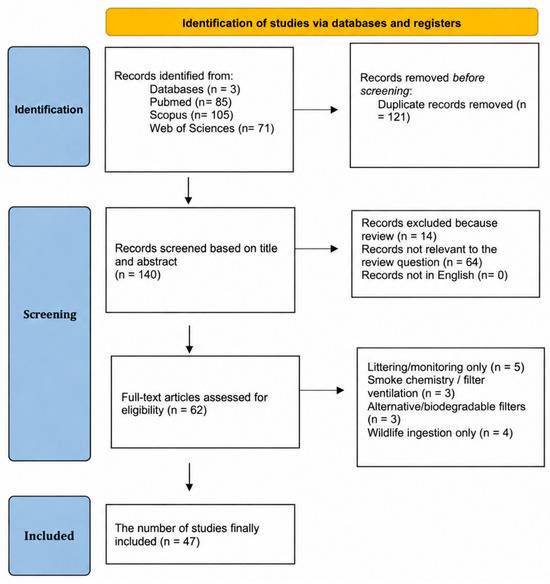
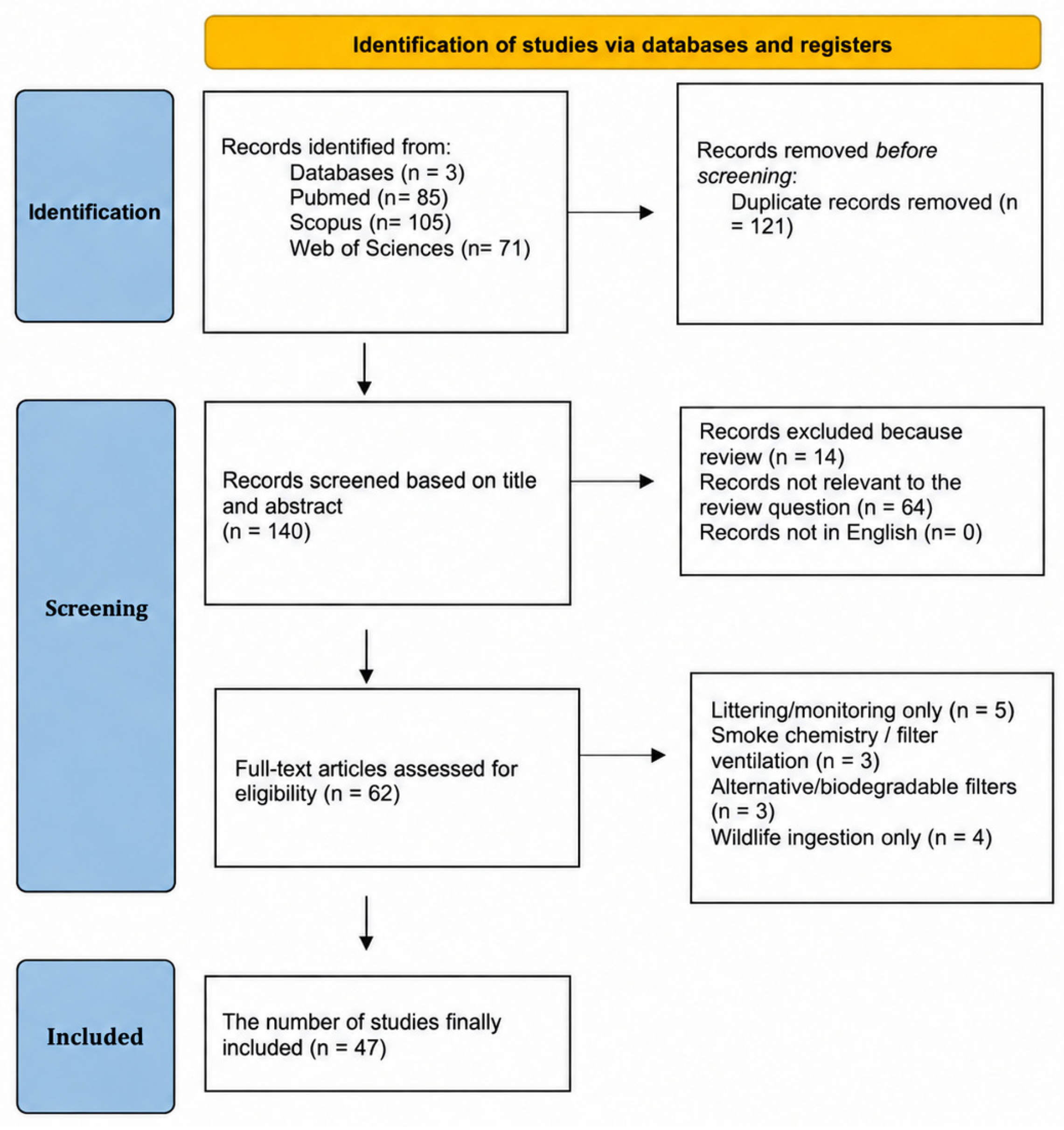
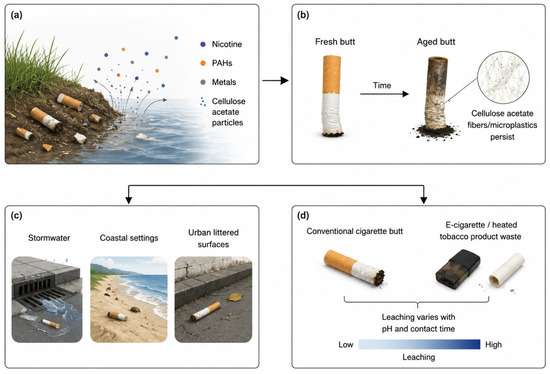
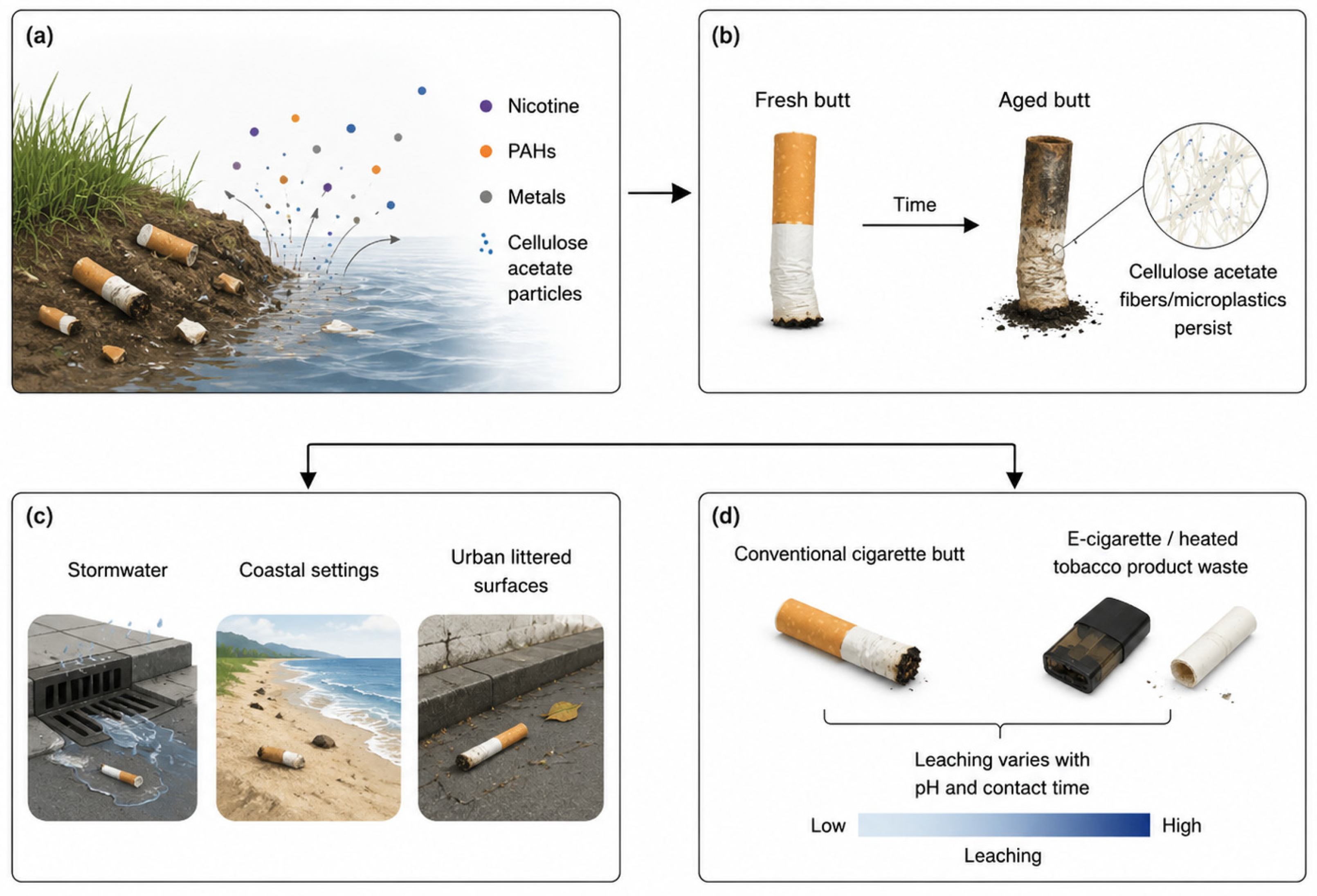
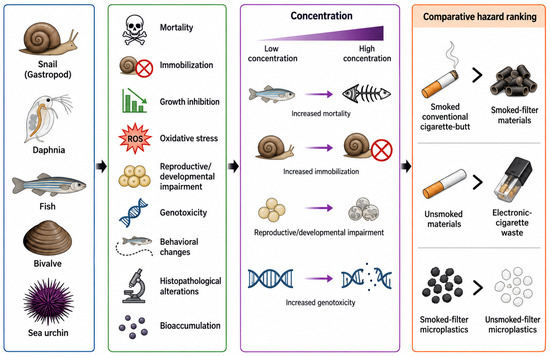
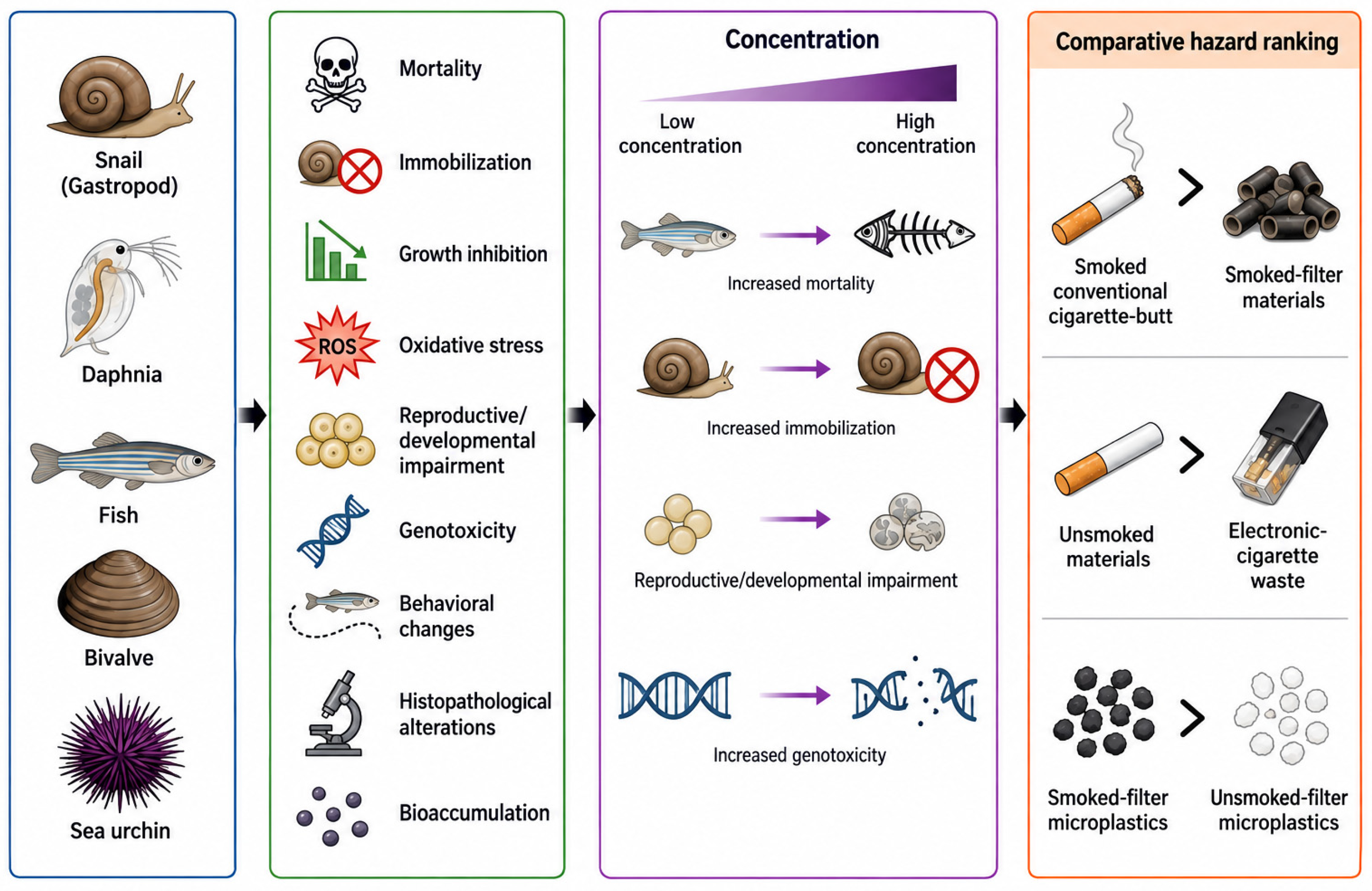
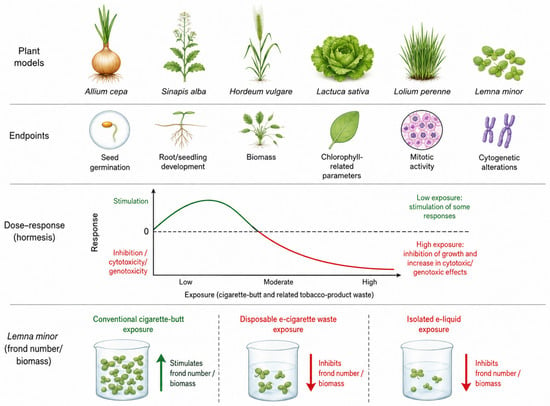
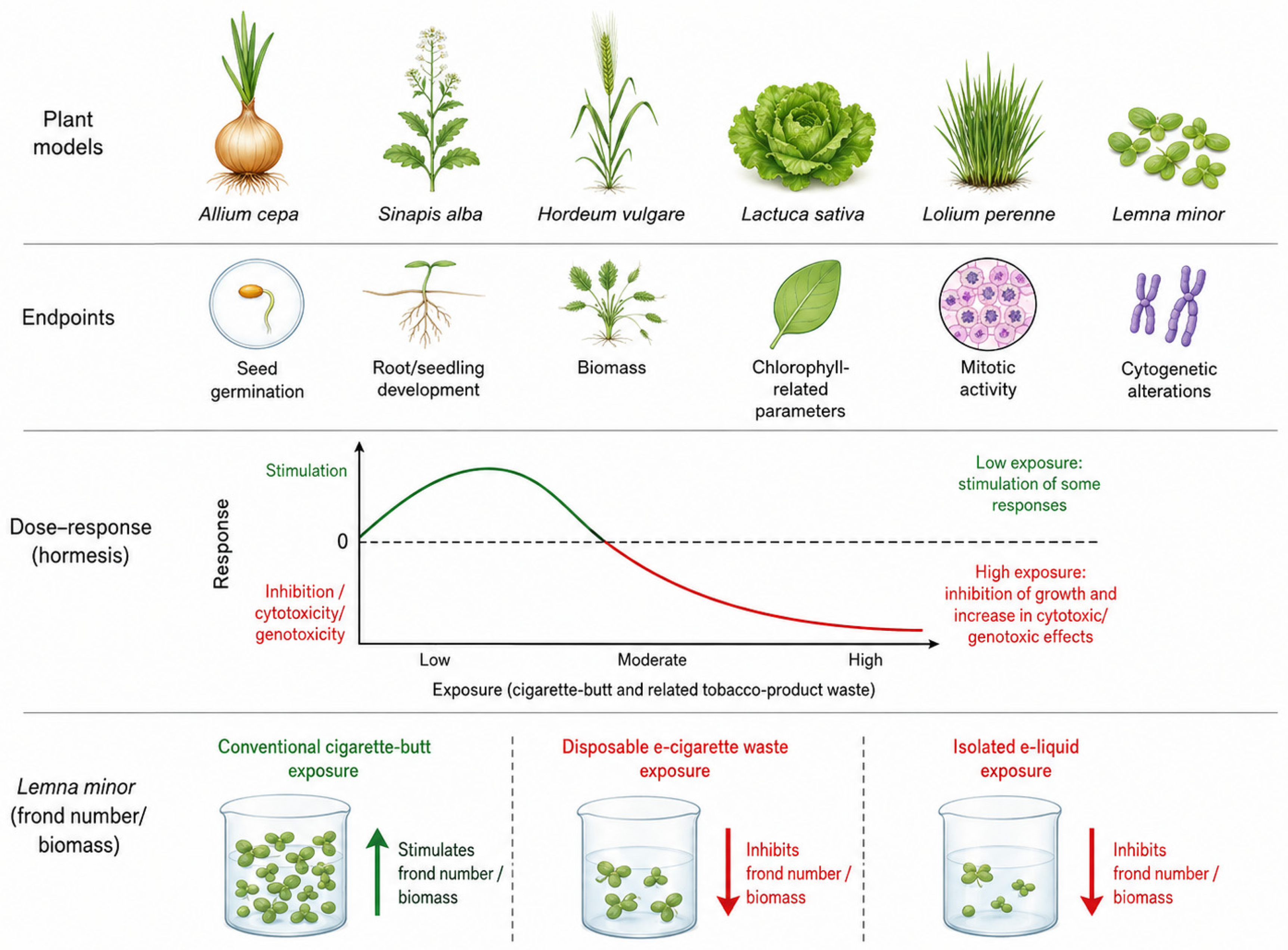
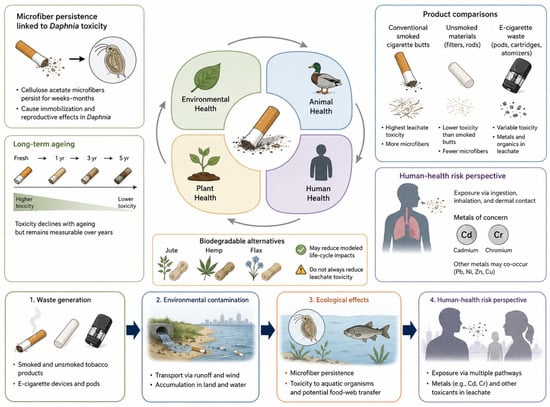
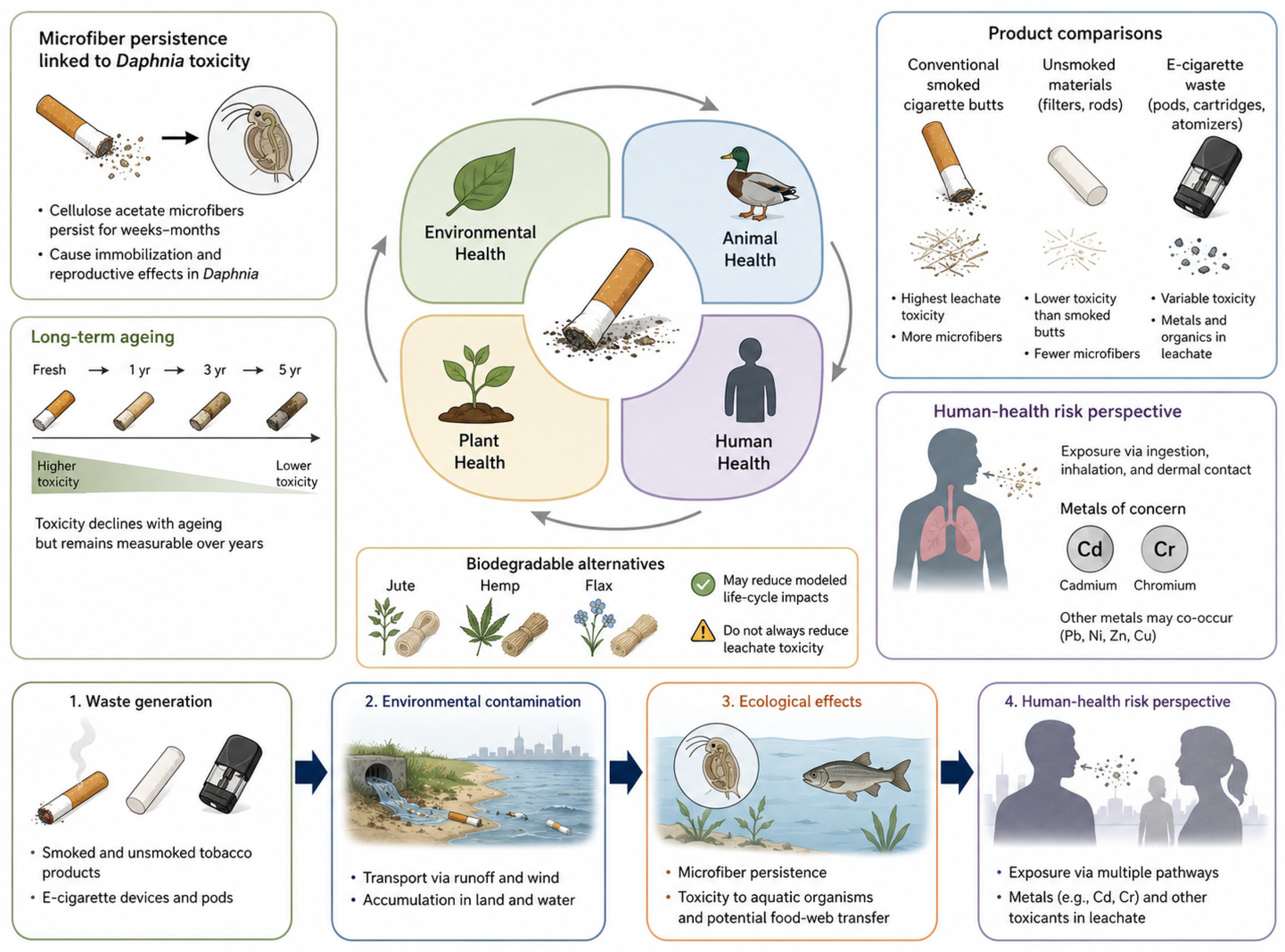

Disclaimer/Publisher’s Note: The statements, opinions and data contained in all publications are solely those of the individual author(s) and contributor(s) and not of MDPI and/or the editor(s). MDPI and/or the editor(s) disclaim responsibility for any injury to people or property resulting from any ideas, methods, instructions or products referred to in the content. |
© 2026 by the authors. Licensee MDPI, Basel, Switzerland. This article is an open access article distributed under the terms and conditions of the Creative Commons Attribution (CC BY) license.