Ready-to-Eat Sandwich Microbiota: Diversity, Antibiotic Resistance, and Strategies to Enhance Food Safety

 , , ,
, , ,
Abstract
1. Introduction
2. Commensal Microorganisms Associated with Sandwiches
3. Spoilage Microorganisms Associated with Sandwiches
4. Pathogenic Microorganisms Associated with Sandwiches and the Influence of Ingredients, Preparation, Handling, and Packaging
5. Pathogenic Microorganisms in Cook–Serve and Cook–Chill Sandwiches
5.1. Sandwich Prepared Under the Cook–Serve System
5.2. Cook–Chill Sandwich
6. Sandwich-Associated Food Poisoning Outbreaks
7. Sandwich Microbial Impact on Its Safety and Quality
8. Sandwich-Associated Pathogen Virulence Genes
9. Antibiotic Resistance in Sandwich-Associated Bacteria
9.1. Prevalence of Antibiotic Resistance in Ready-to-Eat Foods and Sandwich-Associated Bacteria
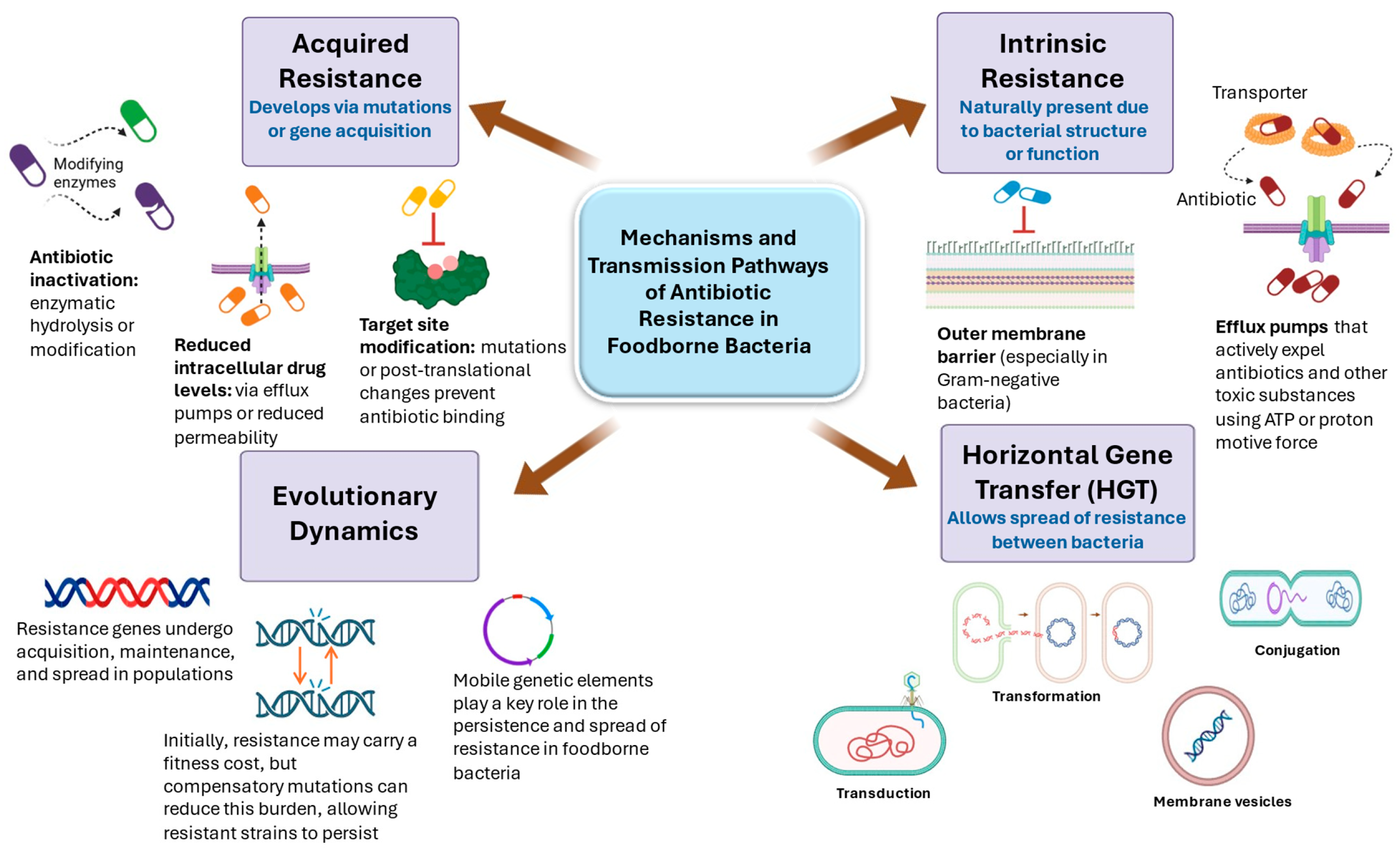
9.2. Mechanism of Antibiotic Resistance in Foodborne Bacteria
9.2.1. Intrinsic Bacterial Resistance to Antibiotics
9.2.2. Acquired Bacterial Antibiotic Resistance
9.2.3. Antibiotic Resistance Development by Horizontal Gene Transfer
9.3. Public Health Implications of Antibiotic-Resistant Bacteria in Sandwiches
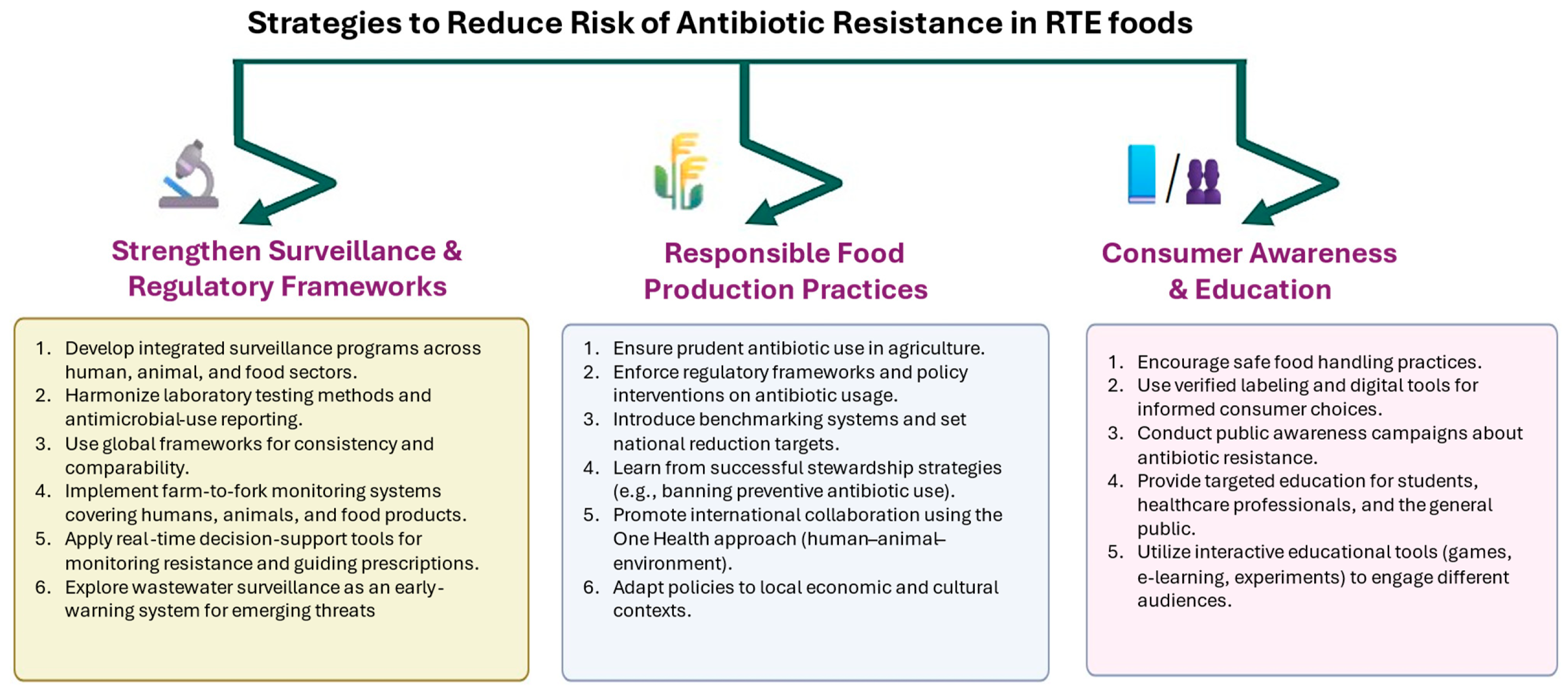
9.4. Strategies, Control Measures, and Recommendations to Reduce Risk of Antibiotic Resistance in Sandwiches and Other RTE Foods
10. Previous Studies’ Limitations
11. Conclusions
Author Contributions
Funding
Institutional Review Board Statement
Informed Consent Statement
Data Availability Statement
Acknowledgments
Conflicts of Interest
Abbreviations
| RTE | Ready-to-eat food |
| EHEC | Enterohemorrhagic E. coli |
| ETEC | Enterotoxigenic E. coli |
| EAEC | Enteroaggregative E. coli |
| EIEC | Enteroinvasive E. coli |
| DAEC | Diffuse-adherent E. coli |
| MIC | Minimum inhibitory concentration |
| ARB | Antibiotic-resistant bacteria |
| MRSA | Multidrug-resistant S. aureus |
| VRSA | Vancomycin-resistant S. aureus |
| MDR | Multidrug-resistant |
| ESBL | Extended-Spectrum β-Lactamases |
| AmpC | AmpC β-Lactamases |
| ARG | Antibiotic resistance genes |
| ATP | Adenosine triphosphate |
| PMF | Proton-motive force |
| MFS | Major facilitator superfamily |
| SMR | Small multidrug resistance family |
| HGT | Horizontal gene transfer |
References
- Codex Alimentarius Commission. Regional Guidelines for the Design of Control Measures for Street-Vended Foods (Africa) CAC/GL 22R-1997. 1997. Available online: https://www.fao.org/4/w6419e/w6419e05.htm (accessed on 9 December 2025).
- Necidová, L.; Bursová, Š.; Haruštiaková, D.; Bogdanovičová, K. Evaluation of Staphylococcus aureus growth and staphylococcal enterotoxin production in delicatessen and fine bakery products. Acta Vet. Brno 2022, 91, 417–425. [Google Scholar] [CrossRef]
- Huang, J.; Luo, Y.; Zhou, B.; Zheng, J.; Nou, X. Growth and survival of Salmonella enterica and Listeria monocytogenes on fresh-cut produce and their juice extracts: Impacts and interactions of food matrices and temperature abuse conditions. Food Control 2019, 100, 300–304. [Google Scholar] [CrossRef]
- Min, K.-J.; Jung, Y.-J.; Kwon, K.-Y.; Kim, J.-H.; Hwang, I.-G.; Yoon, K.-S. Effect of temperature on the production of staphylococcal enterotoxin and thermal inactivation kinetics of Staphylococcus aureus in selected ready-to-eat (RTE) foods in Korea. J. Food Saf. 2013, 33, 17–24. [Google Scholar] [CrossRef]
- Onohuean, H.; Olot, H.; Onohuean, F.E.; Bukke, S.P.N.; Akinsuyi, O.S.; Kade, A. A scoping review of the prevalence of antimicrobial-resistant pathogens and signatures in ready-to-eat street foods in Africa: Implications for public health. Front. Microbiol. 2025, 16, 1525564. [Google Scholar] [CrossRef]
- Hwang, C.A.; Juneja, V. Effects of salt, sodium pyrophosphate, and sodium lactate on the probability of growth of Escherichia coli O157:H7 in ground beef. J. Food Prot. 2011, 74, 622–626. [Google Scholar] [CrossRef] [PubMed]
- Söderqvist, K.; Tauson, H.; Vågsholm, I.; Tysklind, A.; Wallenbeck, A.; Kaden, R.; Hultén, K. Fate of Listeria monocytogenes, pathogenic Yersinia enterocolitica, and Escherichia coli O157:H7 gfp+ in ready-to-eat salad during cold storage: What is the risk to consumers? J. Food Prot. 2017, 80, 204–212. [Google Scholar] [CrossRef] [PubMed]
- Rodríguez-Caturla, M.Y.; Valero, A.; García-Gimeno, R.M.; Zurera, G. Development of a risk-based methodology for estimating survival and growth of enteropathogenic Escherichia coli on iceberg-lettuce exposed at short-term storage in foodservice centers. J. Microbiol. Methods 2012, 90, 273–279. [Google Scholar] [CrossRef] [PubMed]
- Malak, N.M.L.; Soliman, N.S.M. The effect of time and temperature variations on the microbial load and deterioration criteria of leftover cheeseburger sandwiches. Adv. Anim. Vet. Sci. 2021, 9, 1925–1932. [Google Scholar]
- Mahyuddin, N.A.; Nadia, H.; Wan-Zunairah, W.I. Evaluation of hygiene practices on microbiological quality of tuna sandwiches. In Theory and Practice in Hospitality and Tourism Research; CRC Press: Boca Raton, FL, USA, 2014; p. 411. [Google Scholar]
- Camellini, S.; Iseppi, R.; Condò, C.; Messi, P. Ready-to-Eat Sandwiches as Source of Pathogens Endowed with Antibiotic Resistance and Other Virulence Factors. Appl. Sci. 2021, 11, 7177. [Google Scholar] [CrossRef]
- Shah, S.P.; Wu, M.C.; Ho, T.T.; Chen, J.K.; Chow, M.H.; Ko, W.C.; Hu, S.W.; Huang, Y.F.; Chiu, C.S. Insights into the Microbiological Safety of Wooden Cutting Boards Used for Meat Processing in Hong Kong’s Wet Markets: A Focus on Food-Contact Surfaces, Cross-Contamination and the Efficacy of Traditional Hygiene Practices. Microorganisms 2020, 8, 579. [Google Scholar] [CrossRef]
- Al-Mutairi, A.N.; Enebe, P.U.; Al-Fouzan, M.A.; Eed, F.A. The Prevalence of Foodborne Pathogenic Bacteria on Cutting Boards and Their Ecological Correlation with Background Biota. AIMS Microbiol. 2016, 2, 138–151. [Google Scholar] [CrossRef]
- Eng, S.K.; Pusparajah, P.; Ab Mutalib, N.S.; Ser, H.L.; Chan, K.G.; Lee, L.H. Salmonella: A Review on Pathogenesis, Epidemiology and Antibiotic Resistance. Front. Life Sci. 2015, 8, 284–293. [Google Scholar] [CrossRef]
- Al-Kharousi, Z.S.; Guizani, N.; Al-Sadi, A.M.; Al-Bulushi, I.M.; Shaharoona, B. Hiding in Fresh Fruits and Vegetables: Opportunistic Pathogens May Cross Geographical Barriers. Int. J. Microbiol. 2016, 2016, 4292417. [Google Scholar] [CrossRef] [PubMed]
- Liu, W.; Ma, K.; Zhu, C.; Zhang, M.; Guo, B.; Yang, M.; Li, B. Isolation, Identification and Diversity of Lactic Acid Bacteria from Fermented Olive Juice in Morocco. Sci. Technol. Food Ind. 2021, 42, 108–113. [Google Scholar] [CrossRef]
- Wei, W.S.; Huang, A.S.; Liao, Y.-S.; Liu, Y.-N.; Chiou, C.-S. A large outbreak of salmonellosis associated with sandwiches contaminated with multiple bacterial pathogens purchased via an online shopping service. Foodborne Pathog. Dis. 2014, 11, 230–233. [Google Scholar] [CrossRef] [PubMed]
- Davis, S.; King, M.G.; Casson, J.W.; Gray, J.O.; Caldwell, D.G. End effector development for automated sandwich assembly. Meas. Control 2007, 40, 202–206. [Google Scholar] [CrossRef]
- Abidi, S.M.; Yamani, M.I. Microbiological and chemical profiles of retail falafel sandwich in Jordan. Afr. J. Food Agric. Nutr. Dev. 2024, 24, 25221–25239. [Google Scholar] [CrossRef]
- Kokkinakis, M.N.; Fragkiadakis, G.A.; Lapidakis, N.E.; Kokkinaki, A.N. Assessing microbiological quality of ready-to-eat prepacked sandwiches, in Crete, Greece. J. Food Sci. Technol. 2020, 57, 4220–4227. [Google Scholar] [CrossRef]
- Kumar, A. Polyphasic characterization of microbial community from the surface of Brassica oleracea (Cabbage) head. J. Pure Appl. Microbiol. 2015, 9, 1703–1710. [Google Scholar]
- Pérez-Cataluña, A.; Liserra, T.; De la Haba, A.F.; Moreno-Indias, I.; Cardenas-Loeza, B.E.; Arévalo-Villena, M.; García-Ruiz, A.; García-Martínez, T. Diversity and dynamics of lactic acid bacteria in Atole agrio, a traditional maize-based fermented beverage from South-Eastern Mexico, analysed by high throughput sequencing and culturing. Antonie Leeuwenhoek 2018, 111, 385–399. [Google Scholar] [CrossRef] [PubMed]
- Genaro, A.; Juliana, M.; Savilo, J. Isolation and identification of thermophilic lactobacilli from various species of dairy. Acta Microsc. 2020, 29, 239–243. [Google Scholar]
- Cantoni, C.; Stella, S.; Cozzi, M.; Iacumin, L.; Comi, G. Bacterial flora isolated on surfaces of ‘ricotta’ and of mould and smear ripened cheeses. Ind. Aliment. 2004, 43, 396–400. [Google Scholar]
- Cantoni, C.; Stella, S.; Iacumin, L.; Comi, G. Red coloured cheeses and related bacteria. Ind. Aliment. 2003, 42, 396–399. [Google Scholar]
- Gargano, V.; Scuotto, M.; Romano, A.; Aponte, M.; Cocolin, L.; Blaiotta, G.; D’Auria, M.V.; Succi, M.; Tremonte, P. Tracking the transfer of antimicrobial resistance genes from raw materials to sourdough breads. Food Biosci. 2024, 57, 103478. [Google Scholar] [CrossRef]
- Zeng, X.; Wang, T.; Li, X.; Li, Q.; Zhu, X. Effects of different salt concentrations on microbial community in sauce mash and quality of soy sauce. China Brew. 2023, 42, 65–72. [Google Scholar] [CrossRef]
- Devanthi, P.V.P.; Gkatzionis, K. Soy sauce fermentation: Microorganisms, aroma formation, and process modification. Food Res. Int. 2019, 120, 364–374. [Google Scholar] [CrossRef] [PubMed]
- Arslan, S.; Eyi, A.; Özdemir, F. Spoilage potentials and antimicrobial resistance of Pseudomonas spp. isolated from cheeses. J. Dairy Sci. 2011, 94, 5851–5856. [Google Scholar] [CrossRef]
- Chen, B.; Mei, J.; Xie, J. Research on the spoilage potential and metabolic patterns of specific spoilage bacteria in grouper (Epinephelus lanceolatus) during cold storage. Food Biosci. 2024, 62, 105377. [Google Scholar] [CrossRef]
- Fang, J.; Feng, L.; Lu, H.; Zhu, J. Metabolomics reveals spoilage characteristics and interaction of Pseudomonas lundensis and Brochothrix thermosphacta in refrigerated beef. Food Res. Int. 2022, 156, 111139. [Google Scholar] [CrossRef]
- Zhou, Z.; Li, X.; Zhu, T.; Lu, F.; Zhang, J.; Wang, J.; Wu, Z.; Niu, C. Characterization and interactions of spoilage of Pseudomonas fragi C6 and Brochothrix thermosphacta S5 in chilled pork based on LC-MS/MS and screening of potential spoilage biomarkers. Food Chem. 2024, 444, 138562. [Google Scholar] [CrossRef]
- Sini, K.; Skandamis, P.; Nychas, G. Shelf-life establishment of dairy products based on quality and safety determinants. J. Environ. Prot. Ecol. 2010, 11, 570–576. [Google Scholar]
- Pothakos, V.; Björkroth, J. Lactic Acid Bacteria in Food Spoilage. In Lactic Acid Bacteria: Microbiological and Functional Aspects, 5th ed.; Lahtinen, S., Ouwehand, A.C., Salminen, S., Von Wright, A., Eds.; CRC Press: Boca Raton, FL, USA, 2019; pp. 303–315. [Google Scholar] [CrossRef]
- Cenci-Goga, B.T.; Manuzza, M.E.; Donato, F.; Ciliberti, A.; Balzaretti, E.; Varisco, G.; Ranucci, S. Characterization and growth under different storage temperatures of ropy slime-producing Leuconostoc mesenteroides isolated from cooked meat products. J. Food Prot. 2020, 83, 1043–1049. [Google Scholar] [CrossRef] [PubMed]
- Snyder, A.B.; Biango-Daniels, M.N.; Hodge, K.T.; Worobo, R.W. Nature Abhors a Vacuum: Highly Diverse Mechanisms Enable Spoilage Fungi to Disperse, Survive, and Propagate in Commercially Processed and Preserved Foods. Compr. Rev. Food Sci. Food Saf. 2019, 18, 286–304. [Google Scholar] [CrossRef] [PubMed]
- Pellegrini, M.; Morello, R.; Roccato, A.; Iacumin, L.; Cozzi, M.; Zapparoli, G.; Manzocco, L.; Comi, G. Chalk Yeasts Cause Gluten-Free Bread Spoilage. Microorganisms 2025, 13, 1385. [Google Scholar] [CrossRef] [PubMed]
- Silva, S.; Rocha, S.; Rocha, R. Salmonella infection in poultry: A review on the pathogen and control strategies. Microorganisms 2023, 11, 2814. [Google Scholar] [CrossRef] [PubMed]
- Uzal, F.A.; Henderson, E.; Asin, J.; Alcaide, J. Botulism in fish: A review. J. Vet. Diagn. Investig. 2024, 36, 312–318. [Google Scholar] [CrossRef] [PubMed]
- Trudel-Ferland, M.; Levasseur, M.; Goulet-Beaulieu, V.; Jubinville, E.; Hamon, F.; Jean, J. Concentration of foodborne viruses eluted from fresh and frozen produce: Applicability of ultrafiltration. Int. J. Food Microbiol. 2024, 416, 110687. [Google Scholar] [CrossRef] [PubMed]
- Seymour, I.J.; Appleton, H. Foodborne viruses and fresh produce. J. Appl. Microbiol. 2001, 91, 759–773. [Google Scholar] [CrossRef]
- Jääskeläinen, E.L.; Häggblom, M.M.; Andersson, M.A.; Vanne, L.; Salkinoja-Salonen, M.S. Potential of Bacillus cereus for producing an emetic toxin, cereulide, in bakery products: Quantitative analysis by chemical and biological methods. J. Food Prot. 2003, 66, 1047–1054. [Google Scholar] [CrossRef]
- Shivanandappa, M.; Harisha, H.; Veena, K. Investigation of food poisoning outbreak in a temporary camp using mixed methodology approach. Asian J. Pharm. Clin. Res. 2023, 16, 136–138. [Google Scholar] [CrossRef]
- Little, C.L.; Omotoye, R.; Mitchell, R.T. The microbiological quality of ready-to-eat foods with added spices. Int. J. Environ. Health Res. 2003, 13, 31–42. [Google Scholar] [CrossRef]
- Pexara, A.; Govaris, A. Foodborne Viruses and Innovative Non-Thermal Food-Processing Technologies. Foods 2020, 9, 1520. [Google Scholar] [CrossRef] [PubMed]
- Sollid, J.U.; Furberg, A.S.; Hanssen, A.M.; Johannessen, M. Staphylococcus aureus: Determinants of human carriage. Infect. Genet. Evol. 2014, 21, 531–541. [Google Scholar] [CrossRef]
- Jonge, R. Predictable and unpredictable survival of foodborne pathogens during non-isothermal heating. Int. J. Food Microbiol. 2019, 291, 151–160. [Google Scholar] [CrossRef]
- Bejerholm, C.; Tørngren, M.A.; Aaslyng, M.D. Cooking of meat. In Encyclopedia of Meat Sciences, 2nd ed.; Dikeman, M.E., Devine, C., Eds.; Elsevier Inc.: Oxford, UK, 2014; pp. 370–376. [Google Scholar]
- Djimsa, B.A.; Abraham, A.; Mafi, G.G.; VanOverbeke, D.L.; Ramanathan, R. Effects of metmyoglobin reducing activity and thermal stability of NADH-dependent reductase and lactate dehydrogenase on premature browning in ground beef. J. Food Sci. 2017, 82, 304–313. [Google Scholar] [CrossRef] [PubMed]
- Sood, S.; Sharma, C. Bacteria in Indian food packaging papers and paperboards with various contents of pulp fiber. Food Nutr. Sci. 2019, 10, 349–357. [Google Scholar] [CrossRef]
- Mengistu, D.A.; Belami, D.D.; Tefera, A.A.; Asefa, Y.A. Bacteriological Quality and Public Health Risk of Ready-to-Eat Foods in Developing Countries: Systematic Review and Meta Analysis. Microbiol. Insights 2022, 15, 11786361221113916. [Google Scholar] [CrossRef]
- Büyükyörük, S.; Beyaz, D.; Göksoy, E.Ö.; Kök, F.; Koçak, P. Microbiological evaluation of ready-to-eat sandwiches served near hospitals and schools. Ank. Üniv. Vet. Fak. Derg. 2014, 61, 193–198. [Google Scholar] [CrossRef][Green Version]
- Borrusso, P.A.; Quinlan, J.J. Prevalence of Pathogens and Indicator Organisms in Home Kitchens and Correlation with Unsafe Food Handling Practices and Conditions. J. Food Prot. 2017, 80, 590–597. [Google Scholar] [CrossRef] [PubMed]
- Bell, R.L.; Dreesman, E.; Gräbel, F.; Hoelzer, K. The Persistence of Bacterial Pathogens in Surface Water and Its Impact on Global Food Safety. Pathogens 2021, 10, 1391. [Google Scholar] [CrossRef] [PubMed]
- Sosah, F.K.; Odoom, A.; Anim-Baidoo, I.; Donkor, E.S. How long do pathogens persist and survive in water? A systematic review. Front. Microbiol. 2025, 16, 1654785. [Google Scholar] [CrossRef]
- Zormati, S.; Kallel, I.; Sellami, H.; Gdoura, R. Influence of environmental and seasonal factors on microbial contamination levels in clam production areas in southern Tunisia: Escherichia coli, Salmonella spp., hepatitis A virus and norovirus. Rev. Sci. Tech. 2018, 37, 1049–1070. [Google Scholar] [CrossRef] [PubMed]
- Aghalari, Z.; Hosseini, S.R.; Jafarian, S.; Rezazadeh, M.; Mirzaei, M.; Esmaeili, E.; Hasanzadeh, P. Evaluation of chemical and microbial quality of food in northern Iran. J. Food Prot. 2021, 40, 40. [Google Scholar] [CrossRef]
- Mohamed, K.A.S.; Abd-Allah, S.M.S.; Ismail, H.A.M.A. Evaluation of hygienic and nutritional quality of kofta and sausage sandwiches in New Valley governorate. Assiut Vet. Med. J. 2022, 68, 1–5. [Google Scholar] [CrossRef]
- Rhee, S.J.; Lee, J.E.; Lee, C.H. Importance of lactic acid bacteria in Asian fermented foods. Microb. Cell Fact. 2011, 10, S5. [Google Scholar] [CrossRef] [PubMed]
- Asiegbu, C.V.; Lebelo, S.L.; Tabit, F.T. Microbial quality of ready-to-eat street vended food groups sold in the Johannesburg Metropolis, South Africa. J. Food Qual. Hazards Control 2020, 7, 18–26. [Google Scholar] [CrossRef]
- El-Shenawy, M.; El-Shenawy, M.; Mañes, J.; Soriano, J.M. Listeria spp. in street-vended ready-to-eat foods. Interdiscip. Perspect. Infect. Dis. 2011, 2011, 968031. [Google Scholar] [CrossRef]
- El-Rahman, S.S.; Samaha, I.A.; Haggag, Y.N.; Nossair, M.A. Incidence of some pathogenic bacteria in fast food sandwiches. Alex. J. Vet. Sci. 2018, 59, 103–108. [Google Scholar] [CrossRef]
- Fang, T.J.; Wei, Q.K.; Liao, C.W.; Hung, M.J.; Wang, T.H. Microbiological quality of 18 °C ready-to-eat food products sold in Taiwan. Int. J. Food Microbiol. 2003, 80, 241–250. [Google Scholar] [CrossRef]
- Hanashiro, A.; Morita, M.; Matté, G.R.; Matté, M.H.; Torres, E.A. Microbiological quality of selected street foods from a restricted area of Sao Paulo city, Brazil. Food Control 2005, 16, 439–444. [Google Scholar] [CrossRef]
- Abd-El-Malek, A. Microbiological quality of ready-to-eat liver sandwiches (Kibda). Glob. Vet. 2014, 13, 1097–1102. [Google Scholar] [CrossRef]
- Meldrum, R.J.; Smith, R.M.; Ellis, P.; Garside, J. Microbiological quality of randomly selected ready-to-eat foods sampled between 2003 and 2005 in Wales, UK. Int. J. Food Microbiol. 2006, 108, 397–400. [Google Scholar] [CrossRef]
- Sprenger, R. Hygiene for Management, 15th ed.; Highfield Publisher: Doncaster, UK, 2023. [Google Scholar]
- Al-Rahbi, A.; Al-Bulushi, I.; Al-Rizeiki, M.; Al-Subhi, L. Microbial characteristics of cook-chill sandwiches: Technical note. J. Agric. Mar. Sci. 2025, 30, 3. [Google Scholar] [CrossRef]
- Elshebrawy, H.A.; Kasem, N.G.; Sallam, K.I. Methicillin- and vancomycin-resistant Staphylococcus aureus in chicken carcasses, ready-to-eat chicken meat sandwiches, and buffalo milk. Int. J. Food Microbiol. 2025, 427, 110968. [Google Scholar] [CrossRef]
- Van Paepeghem, C.; Taghlaoui, F.; De Loy-Hendrickx, A.; Vermeulen, A.; Devlieghere, F.; Jacxsens, L.; Uyttendaele, M. Prevalence and growth potential of Listeria monocytogenes in innovative, pre-packed, plant-based ready-to-eat food products on the Belgian market. Int. J. Food Microbiol. 2024, 410, 110506. [Google Scholar] [CrossRef] [PubMed]
- Fathalla, M.S.; Mahyudin, N.A.; Ghazali, F.M.; Rukayadi, Y.; Jaafar, S.N. Detection of enterotoxin gene (Sea) and biofilm formation ability among multi-drug resistant Staphylococcus aureus isolated from shawarma sandwich sold at selected kiosks in Klang Valley, Malaysia. Food Res. 2020, 4, 1234–1244. [Google Scholar] [CrossRef]
- Morshdy, A.E.M.A.; Hussein, M.A.; Tharwat, A.E.; Fakhry, B.A. Prevalence of enterotoxigenic and multi-drug-resistant Staphylococcus aureus in ready to eat meat sandwiches. Slov. Vet. Res. 2018, 55, 367–374. [Google Scholar] [CrossRef]
- Yaici, L.; Hacini, M.; Boukli, N.; Benchouiha, N.; Hadj-Aissa, L.; Hani, K.; Boukoum, L. Spread of ESBL/AmpC-producing Escherichia coli and Klebsiella pneumoniae in the community through ready-to-eat sandwiches in Algeria. Int. J. Food Microbiol. 2017, 245, 66–72. [Google Scholar] [CrossRef]
- Lai, H.; Lin, G.; Wang, T.; Zhang, Y.; Liu, X.; Huang, J.; Song, S.; Huang, Y.; Zhang, R.; Wang, Z.; et al. Microbiological safety assessment of restaurants and HACCP-certified kitchens in hotels: A study in eastern China. Int. J. Food Microbiol. 2024, 425, 110868. [Google Scholar] [CrossRef] [PubMed]
- Poumeyrol, G.; Morelli, E.; Rosset, P.; Noel, V. Probabilistic evaluation of Clostridium perfringens potential growth in order to validate a cooling process of cooked dishes in catering. Food Control 2014, 35, 293–299. [Google Scholar] [CrossRef]
- Tirloni, E.; Stella, S.; de Knegt, L.V.; Gandolfi, G.; Bernardi, C.; Nauta, M.J. A quantitative microbial risk assessment model for Listeria monocytogenes in RTE sandwiches. Microb. Risk Anal. 2018, 9, 11–21. [Google Scholar] [CrossRef]
- Georgalis, L.; Garre, A.; Fernandez Escamez, P.S. Training in tools to develop Quantitative Risk Assessment using Spanish ready-to-eat food examples. EFSA J. 2020, 18, e181103. [Google Scholar] [CrossRef] [PubMed]
- Rosset, P.; Cornu, M.; Noël, V.; Morelli, E.; Poumeyrol, G. Time-temperature profiles of chilled ready-to-eat foods in school catering and probabilistic analysis of Listeria monocytogenes growth. Int. J. Food Microbiol. 2004, 96, 49–59. [Google Scholar] [CrossRef] [PubMed][Green Version]
- Jang, H.G.; Kim, N.H.; Choi, Y.M.; Rhee, M.S. Microbiological quality and risk factors related to sandwiches served in bakeries, Cafés, and sandwich bars in South Korea. J. Food Prot. 2013, 76, 231–238. [Google Scholar] [CrossRef] [PubMed]
- Thomas, J.; Govender, N.; McCarthy, K.; Erasmus, L.; Doyle, T.; Allam, M.; Ismail, A.; Ramalwa, N.; Sekwadi, P.; Ntshoe, G.; et al. Outbreak of listeriosis in South Africa associated with processed meat. N. Engl. J. Med. 2020, 382, 632–643. [Google Scholar] [CrossRef]
- Al-Abri, S.S.; Al-Jardani, A.K.; Al-Hosni, M.S.; Kurup, P.J.; Al-Busaidi, S.; Beeching, N.J. A hospital acquired outbreak of Bacillus cereus gastroenteritis in Oman. J. Infect. Public Health 2011, 4, 180–186. [Google Scholar] [CrossRef]
- Ercoli, L.; Gallina, S.; Nia, Y.; Auvray, F.; Primavilla, S.; Guidi, F.; Pierucci, B.; Graziotti, C.; Decastelli, L.; Scuota, S. Investigation of a Staphylococcal Food Poisoning Outbreak from a Chantilly Cream Dessert, in Umbria (Italy). Foodborne Pathog. Dis. 2017, 14, 407–413. [Google Scholar] [CrossRef]
- World Health Organization. Multi-Country Outbreak of Salmonella Typhimurium Linked to Chocolate Products—Europe and the United States of America. 2022. Available online: https://www.who.int/emergencies/disease-outbreak-news/item/2022-DON369 (accessed on 9 December 2025).
- Quinn, O.; Lane, C.; Hughes, H.E.; De Pinna, E.; Dallman, T.; Boxall, E.; Gobbi, E.; Charlett, A.; Insalata, V.; Chalmers, R.; et al. National outbreak of Shiga toxin-producing Escherichia coli O145:H28 associated with pre-packed sandwiches, United Kingdom, May–June 2024. Epidemiol. Infect. 2024, 152, e179. [Google Scholar] [CrossRef] [PubMed]
- Butt, S.; Lane, C.; Boxall, E.; Hughes, H.E.; Dallman, T.; Whitehead, M.; Gobbi, E.; Charlett, A.; Chalmers, R.; Insalata, V.; et al. Epidemiological investigations identified an outbreak of Shiga toxin-producing Escherichia coli serotype O26:H11 associated with pre-packed sandwiches. Epidemiol. Infect. 2021, 149, e178. [Google Scholar] [CrossRef]
- Kashima, K.; Sato, M.; Osaka, Y.; Sakakida, N.; Kando, S.; Ohtsuka, K.; Doi, R.; Chiba, Y.; Takase, S.; Fujiwara, A.; et al. An outbreak of food poisoning due to Escherichia coli serotype O7:H4 carrying astA for enteroaggregative E. coli heat-stable enterotoxin 1 (EAST1). Epidemiol. Infect. 2021, 149, e244. [Google Scholar] [CrossRef] [PubMed]
- Ortega-Benito, J.M.; Langridge, P. Outbreak of food poisoning due to Salmonella typhimurium DT4 in mayonnaise. Public Health 1992, 106, 203–208. [Google Scholar] [CrossRef]
- Whitworth, J. Hong Kong Outbreak Linked to Sandwiches Sickens 200 Food Safety News. 25 October 2023. Available online: https://www.foodsafetynews.com/2023/10/hong-kong-outbreak-linked-to-sandwiches-sickens-200/ (accessed on 9 December 2025).
- Food and Drug Administration. Outbreak Investigation of Listeria monocytogenes: Ready-to-Eat Foods. 2025. Available online: https://www.fda.gov/food/outbreaks-foodborne-illness/outbreak-investigation-listeria-monocytogenes-ready-eat-foods-may-2025 (accessed on 9 December 2025).
- Food Safety News. Spanish Food Poisoning Cases Linked to Sandwich; One Person Dead Food Safety News. 10 October 2024. Available online: https://www.foodsafetynews.com/2024/10/spanish-food-poisoning-cases-linked-to-sandwich-one-person-dead/ (accessed on 9 December 2025).
- Little, C.L.; Amar, C.F.; Awofisayo, A.; Grant, K.A. Hospital-acquired listeriosis associated with sandwiches in the UK: A cause for concern. J. Hosp. Infect. 2012, 82, 13–18. [Google Scholar] [CrossRef] [PubMed]
- Hedican, E.; Hoekstra, R.M.; Kretzschmar, K.; Ehlers, J.; Smith, S.B.; Knipe, B.; Jones, T.F. Restaurant Salmonella enteritidis outbreak associated with an asymptomatic infected food worker. J. Food Prot. 2009, 72, 2332–2336. [Google Scholar] [CrossRef] [PubMed]
- Newell, K.; Helfrich, K.; Isernhagen, H.; Jones, M.; Stickel, G.; McKeel, H.; Castrodale, L.; McLaughlin, J. Multipathogen Outbreak of Bacillus cereus and Clostridium perfringens Among Hospital Workers in Alaska, August 2021. Public Health Rep. 2024, 139, 195–200. [Google Scholar] [CrossRef] [PubMed]
- Khater-Dalia, F.; Heikal, G.E.; Shehata, A.A.; El-Hofy, F.I. The microbiological assessment of ready-to-eat food (liver and kofta sandwiches) in Tanta City. Benha Vet. Med. J. 2014, 25, 187–197. [Google Scholar]
- GSO 1016:2015 (E); Microbiological Criteria for Foodstuffs. Standardization Organization for G.C.C. (GSO), Gulf Standards: Riyadh, Saudi Arabia, 2015.
- Alberta Health Services (AHS). Microbial Guidelines for Ready-to-Foods; Alberta Health Services (AHS): Edmonton, AB, Canada, 2011. [Google Scholar]
- Zhang, Z.; Feng, L.; Xu, H.; Liu, C.; Shah, N.; Wei, H. Detection of viable enterotoxin-producing Bacillus cereus and analysis of toxigenicity from ready-to-eat foods and infant formula milk powder by multiplex PCR. J. Dairy Sci. 2016, 99, 1047–1055. [Google Scholar] [CrossRef]
- Oh, K.; Kim, S.; Park, M.; Cho, S. Development of a one-step PCR assay with nine primer pairs for the detection of five diarrheagenic Escherichia coli types. J. Microbiol. Biotechnol. 2014, 24, 862–868. [Google Scholar] [CrossRef]
- Vidal, M.; Kruger, E.; Durán, C.; Lagos, R.; Levine, M.; Prado, V.; Toro, C.; Vidal, R. Single multiplex PCR assay to identify simultaneously the six categories of diarrheagenic Escherichia coli associated with enteric infections. J. Clin. Microbiol. 2005, 43, 5362–5365. [Google Scholar] [CrossRef] [PubMed]
- Food Safety Authority of Ireland Scientific Committee. Advice on Shiga Toxin-Producing Escherichia coli (STEC) Detection in Food; Food Safety Authority of Ireland (FSAI): Dublin, Ireland, 2019. [Google Scholar]
- Food and Agriculture Organization of the United Nations; World Health Organization. Shiga Toxin-Producing Escherichia coli (STEC) and Food: Attribution, Characterization and Monitoring; WHO: Rome, Italy; FAO: Rome, Italy, 2018. [Google Scholar]
- Smith, J.; Fratamico, P.M. Escherichia coli and Other Enterobacteriaceae: Food Poisoning and Health Effects. In Encyclopedia of Food and Health; Trugo, L., Finglas, P., Eds.; Elsevier Ltd.: Amsterdam, The Netherlands, 2016; pp. 539–544. [Google Scholar] [CrossRef]
- Poimenidou, S.; Dalmasso, M.; Papadimitriou, K.; Fox, E.; Skandamis, P.; Jordan, K. Virulence gene sequencing highlights similarities and differences in sequences in Listeria monocytogenes serotype 1/2a and 4b strains of clinical and food origin from 3 different geographic locations. Front. Microbiol. 2018, 9, 1103. [Google Scholar] [CrossRef]
- Peiris, W. Listeria monocytogenes, a Food-Borne Pathogen. Master’s Thesis, Swedish University of Agricultural Sciences, Uppsala, Sweden, 2005. [Google Scholar]
- Haghi, F.; Zeighami, H.; Hajiloo, Z.; Derakhshan, S. High frequency of enterotoxin encoding genes of Staphylococcus aureus isolated from food and clinical samples. J. Health Popul. Nutr. 2021, 40, 27. [Google Scholar] [CrossRef]
- Le, H.H.T.; Dalsgaard, A.; Andersen, P.S.; Nguyen, H.M.; Ta, Y.T.; Nguyen, T.T. Large-scale Staphylococcus aureus foodborne disease poisoning outbreak among primary school children. Microbiol. Res. 2021, 12, 43–52. [Google Scholar] [CrossRef]
- Ikeda, T.; Omoe, F.I.; Nakano, M.S.; Omoe, H.B.; Sekiguchi, N.K. Characterization of Staphylococcus aureus strains and evidence for the involvement of non-classical enterotoxin genes in food poisoning outbreaks. FEMS Microbiol. Lett. 2005, 245, 131–136. [Google Scholar] [CrossRef]
- Alharbi, S.A.; Abdel-Ghaffar, M.H.; Kadher, N.R. Isolation and identification of pathogenic bacteria from ready-to-eat fast foods in Al-Quwayiyah, Kingdom of Saudi Arabia. Afr. J. Food Agric. Nutr. Dev. 2019, 19, 14739–14757. [Google Scholar] [CrossRef]
- Hernández, M.; Borrull, F.; Calull, M. Analysis of antibiotics in biological samples by capillary electrophoresis. TrAC Trends Anal. Chem. 2003, 22, 416–427. [Google Scholar] [CrossRef]
- Teuber, M. Spread of antibiotic resistance with food-borne pathogens. Cell. Mol. Life Sci. 1999, 56, 755–763. [Google Scholar] [CrossRef]
- Brauner, A.; Fridman, O.; Gefen, O.; Balaban, N.Q. Distinguishing between resistance, tolerance and persistence to antibiotic treatment. Nat. Rev. Microbiol. 2016, 14, 320–330. [Google Scholar] [CrossRef]
- Kawane, R.S. Studies on antibiotics and heavy metal resistance profiling of Escherichia coli from drinking water and clinical specimens. Biosci. Discov. 2012, 3, 292–295. Available online: https://jbsd.in/Vol%203%20No3/4%20Kawane%2014-17.pdf (accessed on 7 December 2025).
- Magnano San Lio, R.; Favara, G.; Maugeri, A.; Barchitta, M.; Agodi, A. How antimicrobial resistance is linked to climate change: An overview of two intertwined global challenges. Int. J. Environ. Res. Public Health 2023, 20, 1681. [Google Scholar] [CrossRef]
- Burnham, J.P. Climate change and antibiotic resistance: A deadly combination. Ther. Adv. Infect. Dis. 2021, 8, 2049936121991374. [Google Scholar] [CrossRef]
- Kaba, H.E.J.; Kuhlmann, E.; Scheithauer, S. Thinking outside the box: Association of antimicrobial resistance with climate warming in Europe—A 30 country observational study. Int. J. Hyg. Environ. Health 2020, 223, 151–158. [Google Scholar] [CrossRef]
- Al-Bayati, Z.A.K.; El-Sayed, A.I. Compounding Effects of Climate Change and Antibiotic Resistance. Iraq J. Sci. 2023, 64, 6465–6473. [Google Scholar] [CrossRef]
- Deng, Y.; Xu, H.; Su, Y.; Liu, S.; Xu, L.; Guo, Z.; Wu, J.; Cheng, C.; Feng, J. Horizontal gene transfer contributes to virulence and antibiotic resistance of Vibrio harveyi 345 based on complete genome sequence analysis. BMC Genom. 2019, 20, 761. [Google Scholar] [CrossRef] [PubMed]
- Kayode, A.J.; Okoh, A.I. Antimicrobial-resistant Listeria monocytogenes in ready-to-eat foods: Implications for food safety and risk assessment. Foods 2023, 12, 1346. [Google Scholar] [CrossRef] [PubMed]
- Salimi, Y.; Mirzavand, B.; Ayoubi, J. Determination of bacterial contamination isolated from sandwiches in Kerman City and their resistance to commonly used antimicrobials. Arch. Appl. Sci. Res. 2014, 6, 1100–1105. [Google Scholar]
- Ajaja, S.A.; Bozakoukb, I.H.; Abdalla, I.I.; Bumadian, M.M.; Bleiblo, A.M.; Keand, I.R. Bacterial contamination of fast food shawarma sandwiches in local restaurants in Benghazi city, Libya. Libyan J. Sci. Technol. 2020, 11, 104–109. [Google Scholar] [CrossRef]
- Hussein, M.; Eldaly, E.; Seadawy, H.; El-Nagar, E. Virulence and antimicrobial resistance genes of Escherichia coli in ready to eat sandwiches in Sharkia governorate. Slov. Vet. Res. 2018, 55, 383–392. [Google Scholar] [CrossRef]
- Khan, M.F.; Al-Shihi, A.A.; Al-Zaabi, A.S.; Bakheit, Z. Antimicrobial stewardship opportunities: An example from Oman. Oman Med. J. 2023, 38, e498. [Google Scholar] [CrossRef]
- Mesbah, A.; Mashak, Z.; Abdolmaleki, Z. A survey of prevalence and phenotypic and genotypic assessment of antibiotic resistance in Staphylococcus aureus bacteria isolated from ready-to-eat food samples collected from Tehran Province, Iran. Trop. Med. Health 2021, 49, 81. [Google Scholar] [CrossRef]
- Rajaei, M.; Moosavy, M.H.; Gharajalar, S.N.; Khatibi, S.A. Antibiotic resistance in the pathogenic foodborne bacteria isolated from raw kebab and hamburger: Phenotypic and genotypic study. BMC Microbiol. 2021, 21, 272. [Google Scholar] [CrossRef] [PubMed]
- Nimri, L.; Dahab, F.A.A.; Batchoun, R. Foodborne bacterial pathogens recovered from contaminated shawarma meat in northern Jordan. J. Infect. Dev. Ctries. 2014, 8, 1407–1414. [Google Scholar] [CrossRef]
- Van Schaik, W. The human gut resistome. Philos. Trans. R. Soc. B Biol. Sci. 2015, 370, 20140087. [Google Scholar] [CrossRef] [PubMed]
- Chattopadhyay, M.K. Antibiotic and heavy metal resistance of bacterial isolates obtained from some lakes in northern Germany. NSHM J. Pharm. Healthc. Manag. 2011, 2, 74–75. [Google Scholar]
- Krishna, M.P.; Varghese, R.; Hatha, A.A.M. Heavy metal tolerance and multiple drug resistance of heterotrophic bacterial isolates from metal contaminated soil. S. Pac. J. Nat. Appl. Sci. 2016, 34, 58–64. [Google Scholar] [CrossRef]
- Martínez, J.L. Antibiotics and antibiotic resistance genes in the environment: An ecosystem perspective. Environ. Pollut. 2008, 156, 1–13. [Google Scholar] [CrossRef]
- Blair, J.M.A.; Webber, M.A.; Baylay, A.J.; Ogbolu, D.O.; Piddock, L.J.V. Molecular mechanisms of antibiotic resistance. Nat. Rev. Microbiol. 2015, 13, 42–51. [Google Scholar] [CrossRef] [PubMed]
- Cox, G.; Wright, G.D. Intrinsic antibiotic resistance: Mechanisms, origins, challenges and solutions. Int. J. Med. Microbiol. 2013, 303, 287–292. [Google Scholar] [CrossRef] [PubMed]
- Horner, C.; Mawer, D.; Wilcox, M. Reduced susceptibility to chlorhexidine in staphylococci: Is it increasing and does it matter? J. Antimicrob. Chemother. 2012, 67, 2547–2559. [Google Scholar] [CrossRef]
- Gang, Z.; Jie, F. The intrinsic resistance of bacteria. Yi Chuan 2016, 38, 597–604. [Google Scholar]
- Zhang, G.; Ma, Y.; Zhang, R.; Xu, X.; Wang, M.; Lv, J.; Ma, L. A new subclass of intrinsic aminoglycoside nucleotidyltransferases, ANT(3″)-II, is horizontally transferred among Acinetobacter spp. by homologous recombination. PLoS Genet. 2017, 13, e1006602. [Google Scholar] [CrossRef]
- Woodford, N.; Ellington, M.J. The emergence of antibiotic resistance by mutation. Clin. Microbiol. Infect. 2007, 13, 5–18. [Google Scholar] [CrossRef] [PubMed]
- Roe, M.T.; Pillai, S.D. Monitoring and identifying antibiotic resistance mechanisms in bacteria. Poult. Sci. 2003, 82, 622–626. [Google Scholar] [CrossRef]
- Livermore, D.M.; Brown, D.F.J. Detection of beta-lactamase-mediated resistance. J. Antimicrob. Chemother. 2001, 48, 59–64. [Google Scholar] [CrossRef] [PubMed]
- Kaboudari, A.; Aliakbarlu, J.; Mehdizadeh, T. Simultaneous effects of food-related stresses on the antibiotic resistance of foodborne Salmonella serotypes. J. Food Prot. 2024, 87, 100350. [Google Scholar] [CrossRef]
- Colavecchio, A.; Cadieux, B.; Lo, A.; Goodridge, L.D. Bacteriophages contribute to the spread of antibiotic resistance genes among foodborne pathogens of the Enterobacteriaceae family—A review. Front. Microbiol. 2017, 8, 1108. [Google Scholar] [CrossRef]
- Yang, Y.; Zhou, L.; Zhou, B.; Zhao, Y. The horizontal transfer of genetic elements of antibiotic resistance in Streptococcus thermophilus. J. Pure Appl. Microbiol. 2013, 7, 919–925. [Google Scholar]
- Sukumar, S.; Roberts, A.P.; Martin, F.E.; Adler, C.J. Metagenomic insights into transferable antibiotic resistance in oral bacteria. J. Dent. Res. 2016, 95, 1018–1023. [Google Scholar] [CrossRef]
- Zhao, M.; Gu, X.; Chen, S.; Gu, H. Identification of outer membrane vesicles as a new vehicle mediating antibiotic resistance gene transfer in Campylobacter. J. Extracell. Vesicles 2025, 14, e10195. [Google Scholar] [CrossRef]
- Chopra, I.; Roberts, M. Tetracycline antibiotics: Mode of action, applications, molecular biology, and epidemiology of bacterial resistance. Microbiol. Mol. Biol. Rev. 2001, 65, 232–260. [Google Scholar] [CrossRef] [PubMed]
- Johnsen, P.J.; Townsend, J.P.; Bøhn, T.; Simonsen, G.S.; Sundsfjord, A.; Nielsen, K.M. Retrospective evidence for a biological cost of vancomycin resistance determinants in the absence of glycopeptide selective pressures. J. Antimicrob. Chemother. 2011, 66, 608–610. [Google Scholar] [CrossRef] [PubMed]
- Gasparrini, A.J.; Ciorba, M.A.; Giles, C.; Ridenhour, C.A.; Dantas, G. Tetracycline-inactivating enzymes from environmental, human commensal, and pathogenic bacteria cause broad-spectrum tetracycline resistance. Commun. Biol. 2020, 3, 241. [Google Scholar] [CrossRef]
- Li, X.; Wang, H.H. Tetracycline resistance associated with commensal bacteria from representative ready-to-consume deli and restaurant foods. J. Food Prot. 2010, 73, 1841–1848. [Google Scholar] [CrossRef]
- Jung, Y.; Matthews, K. Potential transfer of extended spectrum β-lactamase encoding gene, blashv18gene, between Klebsiella pneumoniae in raw foods. Food Microbiol. 2016, 60, 39–48. [Google Scholar] [CrossRef] [PubMed]
- Shousha, A.; Ibrahem, R.; El-Baradei, A.; El-Said, S.; Awad, A. Bacteriophages isolated from chicken meat and the horizontal transfer of antimicrobial resistance genes. Appl. Environ. Microbiol. 2015, 81, 4600–4606. [Google Scholar] [CrossRef] [PubMed]
- Paula, A.C.L.; Medeiros, J.D.; Azevedo, A.C.; De Assis Chagas, J.M.; Silva, V.L.; Diniz, C.G. Antibiotic resistance genetic markers and integrons in white soft cheese: Aspects of clinical resistome and potentiality of horizontal gene transfer. Genes 2018, 9, 106. [Google Scholar] [CrossRef]
- Wang, H.; Liu, J.; Jiang, Y.; Xu, F.; He, F.; Jiang, J.; Fang, B. Metagenomics and binning analysis unveiled the diversity and transfer patterns of antibiotic resistance genes in traditional pickled vegetables. Food Biosci. 2025, 73, 107709. [Google Scholar] [CrossRef]
- Kumarasamy, K.K.; Toleman, M.A.; Walsh, T.R.; Bagaria, J.; Butt, F.; Balakrishnan, R.; Chaudhry, U.; Doumith, P.; Giske, C.G.; Irfan, S.; et al. Emergence of a new antibiotic resistance mechanism in India, Pakistan, and the UK: A molecular, biological, and epidemiological study. Lancet Infect. Dis. 2010, 10, 597–602. [Google Scholar] [CrossRef] [PubMed]
- Hölzel, C.S.; Tetens, J.L.; Schwaiger, K. Unraveling the role of vegetables in spreading antimicrobial-resistant bacteria: A need for quantitative risk assessment. Foodborne Pathog. Dis. 2018, 15, 671–688. [Google Scholar] [CrossRef]
- Forslund, K.; Sunagawa, S.; Bork, P. Country-specific antibiotic use practices impact the human gut resistome. Genome Res. 2013, 23, 1163–1169. [Google Scholar] [CrossRef] [PubMed]
- Karami, N.; Nowrouzian, F.; Adlerberth, I.; Wold, A.E. Tetracycline resistance in Escherichia coli and persistence in the infantile colonic microbiota. Antimicrob. Agents Chemother. 2006, 50, 156–161. [Google Scholar] [CrossRef] [PubMed]
- Zhang, R.; Eggleston, K.; Rotimi, V.; Zeckhauser, R.J. Antibiotic resistance as a global threat: Evidence from China, Kuwait and the United States. Glob. Health 2006, 2, 6. [Google Scholar] [CrossRef]
- Chavan, P.; Vashishth, R. Antimicrobial resistance in foodborne pathogens: Consequences for public health and future approaches. Discov. Appl. Sci. 2025, 7, 70. [Google Scholar] [CrossRef]
- Negi, S.; Sharma, S. Ready to Eat Food: A Reason for enhancement in multidrug resistance in humans. Adv. Pharm. Bull. 2024, 14, 504–512. [Google Scholar] [CrossRef]
- Ntshanka, Z.; Ekundayo, T.C.; du Plessis, E.M.; Korsten, L.; Okoh, A.I. Occurrence and molecular characterization of multidrug-resistant vegetable-borne Listeria monocytogenes isolates. Antibiotics 2022, 11, 1353. [Google Scholar] [CrossRef]
- Durán, G.M.; Marshall, D.L. Ready-to-eat shrimp as an international vehicle of antibiotic-resistant bacteria. J. Food Prot. 2005, 68, 2395–2401. [Google Scholar] [CrossRef]
- Alsayeqh, A.F. Antibiotic resistance and emerging alternatives for controlling foodborne pathogens. Pak. Vet. J. 2025, 45, 499–514. [Google Scholar] [CrossRef]
- Acar, J.F.; Moulin, G. Integrating animal health surveillance and food safety: The issue of antimicrobial resistance. OIE Rev. Sci. Tech. 2013, 32, 383–392. [Google Scholar] [CrossRef] [PubMed]
- McEwen, S.A.; Aarestrup, F.M.; Jordan, D. Monitoring of antimicrobial resistance in animals: Principles and practices. In Antimicrobial Resistance in Bacteria of Animal Origin; ASM Press: Washington, DC, USA, 2019; pp. 397–413. [Google Scholar] [CrossRef]
- Khan, R.T.; Bhardwaj, M.; Kailoo, S.; Khajuria, R.; Rasool, S. A statistical study on awareness of antibiotic resistance among the general population. Indian J. Biochem. Biophys. 2024, 61, 504–509. [Google Scholar] [CrossRef]
- Miłobędzka, A.; van Schaik, W.; Dutilh, B.E.; van der Oost, J. Monitoring antibiotic resistance genes in wastewater environments: The challenges of filling a gap in the One-Health cycle. J. Hazard. Mater. 2022, 424, 127407. [Google Scholar] [CrossRef] [PubMed]
- Simões, A.S.; Candeias, S.; Bártolo, I.; Ramalheira, E.; Pinto, C.; Pinhão, M.J.; Almeida, M.A.; Pires, M.; Lameiras, A.; Simões, H.; et al. Participatory implementation of an antibiotic stewardship programme supported by an innovative surveillance and clinical decision-support system. J. Hosp. Infect. 2018, 100, 257–264. [Google Scholar] [CrossRef]
- Foxman, B.; Bair, B.T.; Soge, O.O.; Soneja, S.; Perin, J.; Karch, J.M.; Marra, G.V.; Geller, B.; Gentry, H.; Lye, E.S.; et al. Wastewater surveillance of antibiotic-resistant bacteria for public health action: Potential and challenges. Am. J. Epidemiol. 2025, 194, 1192–1199. [Google Scholar] [CrossRef] [PubMed]
- Zheng, S.; Li, Y.; Chen, C.; Wang, N.; Yang, F. Solutions to the dilemma of antibiotics use in livestock and poultry farming: Regulation policy and alternatives. Toxics 2025, 13, 348. [Google Scholar] [CrossRef] [PubMed]
- Patel, S.J.; Wellington, M.; Shah, R.M.; Ferreira, M.J. Antibiotic stewardship in food-producing animals: Challenges, progress, and opportunities. Clin. Ther. 2020, 42, 1649–1658. [Google Scholar] [CrossRef] [PubMed]
- Marvasi, M.; Casillas, L.; Vassallo, A.; Purchase, D. Educational activities for students and citizens supporting the one-health approach on antimicrobial resistance. Antibiotics 2021, 10, 1519. [Google Scholar] [CrossRef]
- Kirchhelle, C. Pharming animals: A global history of antibiotics in food production (1935–2017). Palgrave Commun. 2018, 4, 114. [Google Scholar] [CrossRef]
- Lecky, D.M.; Hawking, M.K.D.; Verlander, N.Q.; McNulty, C.A.M. Using interactive family science shows to improve public knowledge on antibiotic resistance: Does it work? PLoS ONE 2014, 9, e104556. [Google Scholar] [CrossRef]
- Bodie, A.R.; O’Bryan, C.A.; Olson, E.G.; Ricke, S.C. Natural antimicrobials for Listeria monocytogenes in ready-to-eat meats: Current challenges and future prospects. Microorganisms 2023, 11, 1301. [Google Scholar] [CrossRef] [PubMed]
- Silva, F.V.M.; Evelyn, K. Pasteurization of food and beverages by high pressure processing (HPP) at room temperature: Inactivation of Staphylococcus aureus, Escherichia coli, Listeria monocytogenes, Salmonella, and other microbial pathogens. Appl. Sci. 2023, 13, 1193. [Google Scholar] [CrossRef]
- Popa, E.E.; Sărădan, V.C.; Pop, I.M.; Vlaic, R.A.; Mitel, D.A.; Sărădan, M.B.; Mureșan, A.E. Antimicrobial active packaging containing nisin for preservation of products of animal origin: An Overview. Foods 2022, 11, 3820. [Google Scholar] [CrossRef] [PubMed]
- Mina, H.A.; Buckley, D.A.; Burnett, J.; Deering, A.J. Evaluation of commercially available produce antimicrobial washes to improve the quality and microbial safety of fresh produce. Int. J. Food Microbiol. 2025, 441, 111318. [Google Scholar] [CrossRef] [PubMed]
- Lippman, B.; Yao, S.; Huang, R.; Chen, H. Evaluation of the combined treatment of ultraviolet light and peracetic acid as an alternative to chlorine washing for lettuce decontamination. Int. J. Food Microbiol. 2020, 323, 108590. [Google Scholar] [CrossRef] [PubMed]
- Saleh, F.A.; Al-Otaibi, M.S.; Alshammari, N.F.; Al-Habeeb, A.A.; Alturairi, N.; Albahrani, S.H.; Elshafey, A. Comprehensive risk assessment and control measures in the food service chain of hospitals nutrition department: A case study in Al-Ahsa Governorate, Kingdom of Saudi Arabia. Front. Microbiol. 2025, 16, 1551446. [Google Scholar] [CrossRef]
- Li, T.; Chen, H.; Zhao, J.; Tao, Z.; Lan, W.; Zhao, Y.; Sun, X. Characterization of phage vB_SalM_SPJ41 and the reduction of risk of antibiotic-resistant Salmonella enterica contamination in two ready-to-eat foods. Antibiotics 2023, 12, 364. [Google Scholar] [CrossRef] [PubMed]
- Lima, J.C.R.; Silva, L.H.F.; Santos, T.P.; Leite, E.R.; Lima, M.F.; Salgado, M.A.C.; Santos, I.M. X-ray computed microtomography time-dependent analysis of sandwich bread in different storage conditions. X-Ray Spectrom. 2023, 52, 350–356. [Google Scholar] [CrossRef]
- Kothe, C.I.; Renault, P. Metagenomic driven isolation of poorly culturable species in food. Food Microbiol. 2025, 129, 104722. [Google Scholar] [CrossRef]



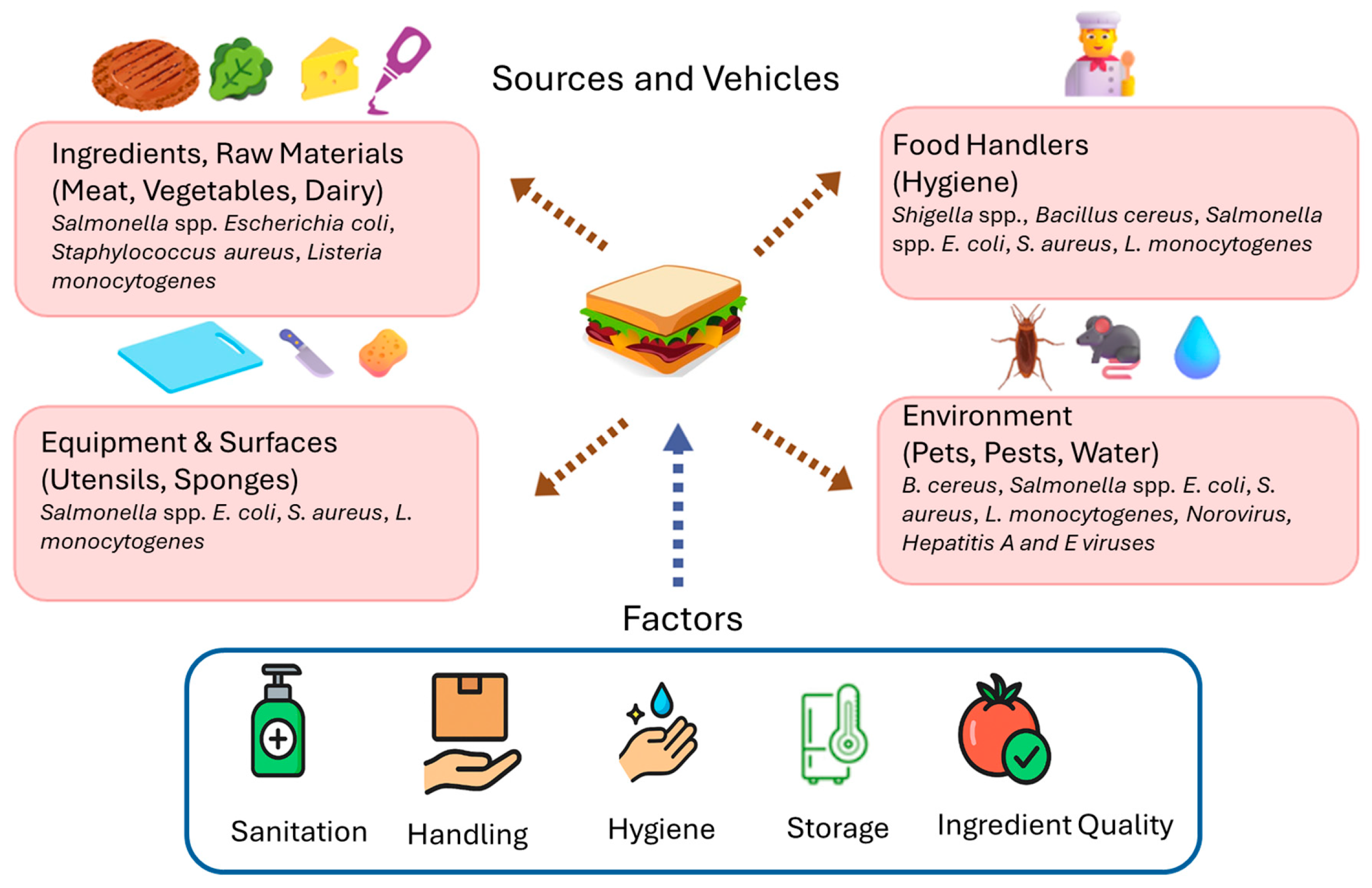
| Stage/Source | Food/Surface | Role | Most Possible Contaminant | References |
|---|---|---|---|---|
| Ingredients | Meat | Source | Listeria monocytogenes, E. coli, Shiga toxin-producing E. coli (STEC) | [18,19] |
| Poultry products | Source | Salmonella sp. | [38] | |
| Tuna | Source | Clostridium botulinum | [39] | |
| Salad (tomato, cucumber, cabbage, lettuce) | Vehicle | Noroviruses, hepatitis A, E. coli, Shiga toxin-producing E. coli (STEC), Salmonella sp. | [40,41] | |
| Bread | Source | Bacillus cereus | [42] | |
| Mayonnaise | Vehicle | Salmonella sp. | [43] | |
| Spices | Vehicle | B. cereus | [44] | |
| Preparation | Cutting board and knife | Vehicle | Serves as a vehicle for all the above microbes | [12,13] |
| Handling | Food handler | Source | Staphylococcus aureus, Noroviruses, hepatitis A, E. coli, Shiga toxin-producing E. coli (STEC), Salmonella sp. | [45,46] |
| Sandwich Type | Pathogen | References |
|---|---|---|
| Cheeseburger | Listeria monocytogenes | [60] |
| Hotdog sausages | Salmonella sp. | [60] |
| Chicken and meat shawarma | L. monocytogenes | [58] |
| Liver and minced meat | Salmonella Enteritidis, S. Typhimurium, S. Dublin, Shigella flexneri and S. dysenteriae | [61] |
| Seafood | Staphylococcus aureus, Bacillus cereus | [62] |
| Hotdog | E. coli and B. cereus | [63] |
| Chicken | Methicillin-resistant S. aureus | [68] |
| Deli slices | L. monocytogenes | [69] |
| Shawarma | S. aureus | [70] |
| Meat shawarma | S. aureus | [71] |
| Meat | Escherichia coli, Klebsiella pneumoniae | [72] |
| Eggs | E. coli, K. pneumoniae | [72] |
| System | Examples of Microbial Hazards | Growth Potential | Risk Factors | References |
|---|---|---|---|---|
| Cook–serve | Escherichia coli | Generally low if proper cooking and handling are maintained | Cross-contamination from food contact surfaces and chefs’ hands. | [73] |
| Campylobacter | High risk if hygiene is not maintained | Non-compliance with hygiene standards on food contact surfaces and chefs’ hands. | [67] | |
| Total coliforms | Can grow if temperature control is inadequate | Poor hand hygiene and improper sanitation practices. | [67] | |
| Cook–chill | Clostridium perfringens | High if cooling is not rapid and effective | Inadequate cooling processes. | [74] |
| Listeria monocytogenes | Can grow at refrigeration temperatures | Extended storage duration and temperature abuse. | [75,76,77] | |
| Bacillus cereus | Can grow if temperature control is inadequate | Improper holding temperature and cross-contamination. | [69] | |
| Staphylococcus aureus | Can grow if post-cooking handling is poor | Addition of ingredients after cooking and poor sanitation. | [78,79] | |
| Salmonella | Low if proper cooking and handling are maintained | Cross-contamination and improper sanitation. | [78] | |
| E. coli | Can grow if temperature control is inadequate | Extended storage duration and inadequate chilling. | [20] |
| Pathogen | Virulence Gene | References |
|---|---|---|
| Bacillus cereus | Nhe, hbl, CytK | [97] |
| Staphylococcus aureus | sea to see and seh | [96,105,106,82] |
| Listeria monocytogenes | InlA, prfA, hly | [103,104] |
| E. coli (ETEC) | sth, stp, lt | [98,99] |
| E. coli (EPEC) | eaeA, bfpA | [98,99] |
| E. coli (EAEC) | aggR | [98,99] |
| E. coli (EIEC) | ipaH | [98,99] |
| E. coli (DAEC) | daaE | [98,99] |
| E. coli (STEC) | stx1a, stx1c, stx1d, stx2a, stx2b, stx2c, stx2d, stx2e, stx2f, stx2g | [93,17,98,100,108] |
| Sandwich Type | Location | Bacteria | Antibiotic Resistance | References |
|---|---|---|---|---|
| Shawarma (chicken with tahini sauce and vegetables) | Klang Valley, Malaysia | Staphylococcus aureus | Ampicillin, penicillin, ciprofloxacin, tetracycline, kanamycin, trimethoprim, trimethoprim–sulfamethoxazole, gentamicin, cephalothin | [70] |
| Kofta, luncheon, burger, shawarma, hawawshi, liver, sausage | Zagazig, Egypt | S. aureus | Kanamycin, penicillin, neomycin, oxacillin, erythromycin, ampicillin, nalidixic acid | [72] |
| Meat, chicken, and fish | Sharkia Governorate, Egypt | Escherichia coli | Erythromycin, amoxicillin–clavulanic acid | [121] |
| Meat (kebab, hamburger) | Iran | E. coli, Salmonella spp., S. aureus, Listeria monocytogenes | Amoxicillin, penicillin, cefalexin | [124] |
| Shawarma (chicken and beef) | Jordan | E. coli, Salmonella spp., Citrobacter freundii, S. aureus | Tetracycline, streptomycin | [125] |
| Various (tuna and tomato, ham and cheese, tomato and mozzarella cheese, tuna and eggs, turkey and vegetables, shrimp and pink sauce, raw ham, smoked cheese and tomatoes, cooked ham and mushrooms, tuna and onions, cooked ham and artichokes, raw ham and eggplants) | Modena, Italy | S. aureus, Listeria spp. Yersinia spp. Citrobacter spp. | Amikacin, ciprofloxacin, ampicillin, oxacillin, imipenem, tetracycline, erythromycin, vancomycin | [11] |
Disclaimer/Publisher’s Note: The statements, opinions and data contained in all publications are solely those of the individual author(s) and contributor(s) and not of MDPI and/or the editor(s). MDPI and/or the editor(s) disclaim responsibility for any injury to people or property resulting from any ideas, methods, instructions or products referred to in the content. |
© 2026 by the authors. Licensee MDPI, Basel, Switzerland. This article is an open access article distributed under the terms and conditions of the Creative Commons Attribution (CC BY) license.
Share and Cite
Al-Bulushi, I.M.; Al-Kharousi, Z.S.; Al-Khusaibi, M.K.; Al-Sarmi, K.N.; Albloushi, M. Ready-to-Eat Sandwich Microbiota: Diversity, Antibiotic Resistance, and Strategies to Enhance Food Safety. Foods 2026, 15, 251. https://doi.org/10.3390/foods15020251
Al-Bulushi IM, Al-Kharousi ZS, Al-Khusaibi MK, Al-Sarmi KN, Albloushi M. Ready-to-Eat Sandwich Microbiota: Diversity, Antibiotic Resistance, and Strategies to Enhance Food Safety. Foods. 2026; 15(2):251. https://doi.org/10.3390/foods15020251
Chicago/Turabian StyleAl-Bulushi, Ismail M., Zahra S. Al-Kharousi, Mohammed K. Al-Khusaibi, Kamla N. Al-Sarmi, and Mohamedsaid Albloushi. 2026. "Ready-to-Eat Sandwich Microbiota: Diversity, Antibiotic Resistance, and Strategies to Enhance Food Safety" Foods 15, no. 2: 251. https://doi.org/10.3390/foods15020251
APA StyleAl-Bulushi, I. M., Al-Kharousi, Z. S., Al-Khusaibi, M. K., Al-Sarmi, K. N., & Albloushi, M. (2026). Ready-to-Eat Sandwich Microbiota: Diversity, Antibiotic Resistance, and Strategies to Enhance Food Safety. Foods, 15(2), 251. https://doi.org/10.3390/foods15020251