


Abstract
The global food industry is undergoing a critical shift toward sustainability, driven by high postharvest losses—reaching up to 40% for fruits and vegetables—and the need to reduce environmental impact. Sustainable postharvest innovations focus on improving quality, extending shelf life, and minimizing waste through eco-efficient technologies. Advances in non-thermal and minimal processing, including ultrasound, pulsed electric fields, and edible coatings, support nutrient preservation and food safety while reducing energy consumption. Although integrated postharvest technologies can reduce deterioration and microbial spoilage by 70–92%, significant challenges remain, including global losses of 20–40% and the high implementation costs of certain nanostructured materials. Simultaneously, eco-friendly packaging solutions based on biodegradable biopolymers and bio-composites are replacing petroleum-based plastics and enabling intelligent systems capable of monitoring freshness and detecting spoilage. Energy-efficient storage, smart sensors, and optimized cold-chain logistics further contribute to product integrity across distribution networks. In parallel, the circular bioeconomy promotes the valorization of agro-food by-products through the recovery of bioactive compounds with antioxidant and anti-inflammatory benefits. Together, these integrated strategies represent a promising pathway toward reducing postharvest losses, supporting food security, and building a resilient, environmentally responsible fresh produce system.
1. Introduction
Postharvest losses of fruits and vegetables represent one of the most pressing challenges for global food security and environmental sustainability. Due to their high perishability, improper handling, transportation and storage frequently lead to significant waste, with global losses ranging between 20% and 40% [1].
This corresponds to over one-third of food intended for human consumption [2], creating significant impacts on economic stability, environmental health, and resource efficiency. Such losses are particularly severe in low- and middle-income countries (LMICs), where limited infrastructure and inadequate cold-chain systems often push losses above 30% [3,4].
From the standpoint of sustainability, a food value chain is considered sustainable when it ensures social and economic development while preserving planetary resources for future generations [5]. Reducing food loss and waste (FLW) is therefore crucial to achieving the Sustainable Development Goals (SDGs), especially SDG 12.3, which targets the halving of global FLW; SDG 9, which encourages investment in innovation and resilient infrastructures; and SDG 13, centered on climate action [6,7]. Given that global food demand is projected to rise by 2050, the adoption of adequate postharvest strategies is not optional but essential for nutritional security [5,7].
There is an urgent need to adopt multilevel strategies—including improvements in food handling, education, infrastructure, and research capacity—to enhance environmental sustainability. This urgency is reinforced by global concerns: FAO and EU reports emphasize that the failure to mitigate and adapt to climate change represents one of the highest global risks (World Economic Forum, 2016) [7,8]. In response, governments worldwide are promoting sustainable economic development by encouraging businesses to reduce waste and energy consumption. Sustainable technologies—applied to products, processes, and services—are increasingly viewed as effective tools to minimize environmental impact through reduced raw-material usage and cleaner production pathways [9], a need further underscored by the fact that approximately 30–40% of fresh produce is lost annually, primarily due to inadequate postharvest handling, storage, and transportation [10].
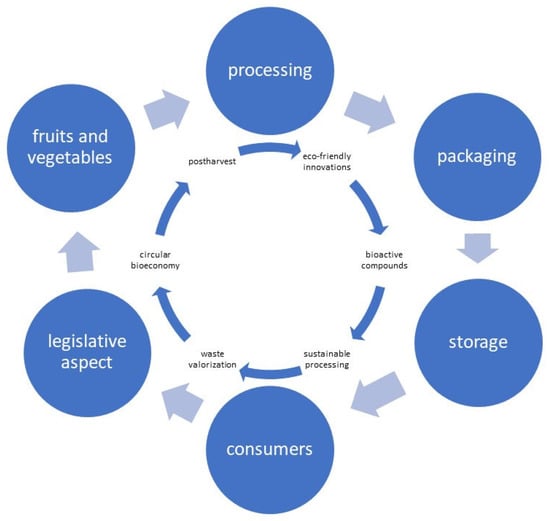
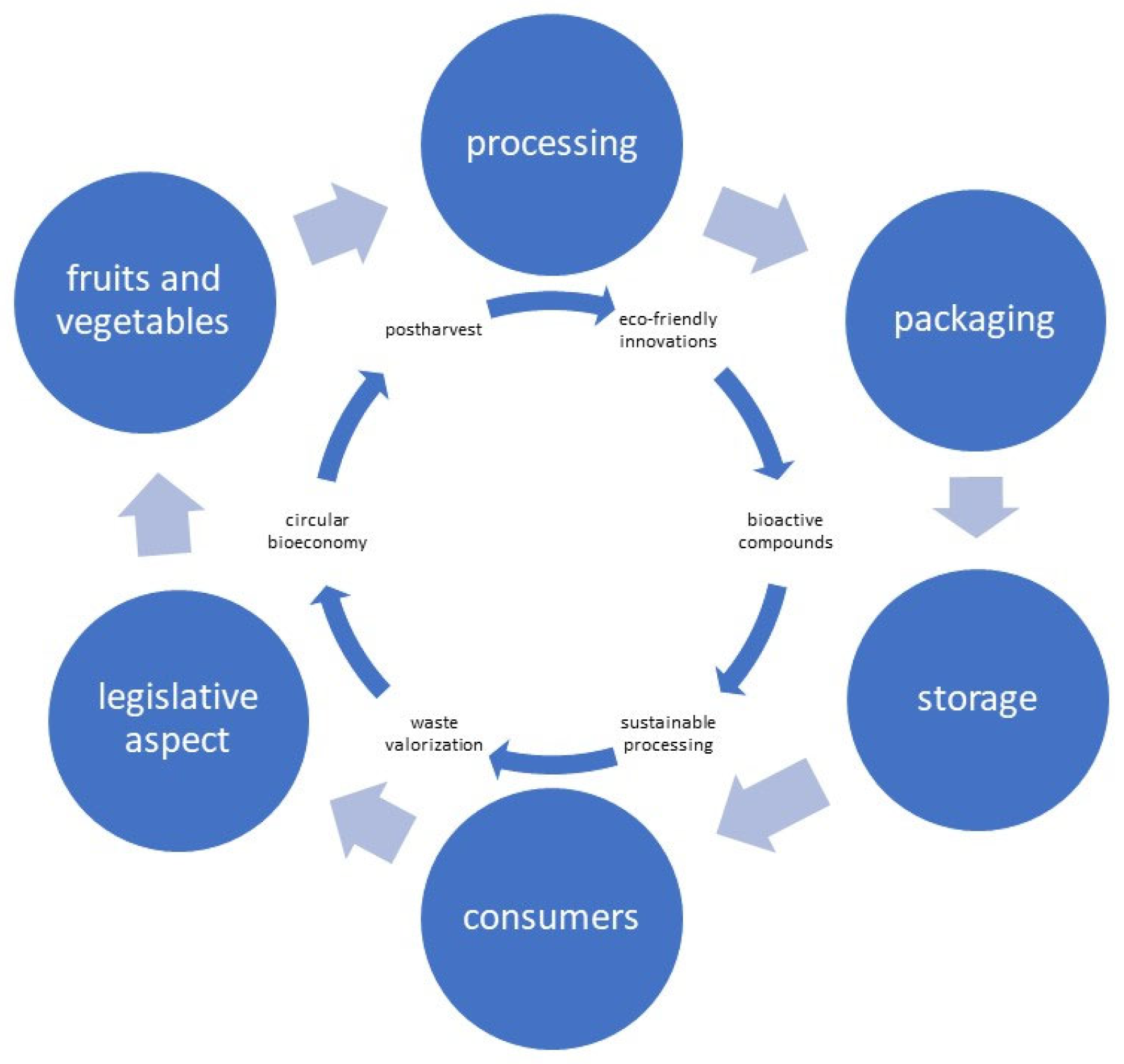
This review aims to evaluate innovative and sustainable strategies for postharvest disease management in fruits and vegetables—encompassing processing techniques, new packaging solutions (e.g., nanotechnology and edible coatings), storage, and legislative aspects, as well as their links to consumer perceptions and economic feasibility—while promoting the dissemination of research on effective and sustainable solutions that address the technical, economic, and regulatory barriers to their implementation, as outlined in the conceptual framework (Figure 1).
Figure 1.
Schematic conceptual framework.
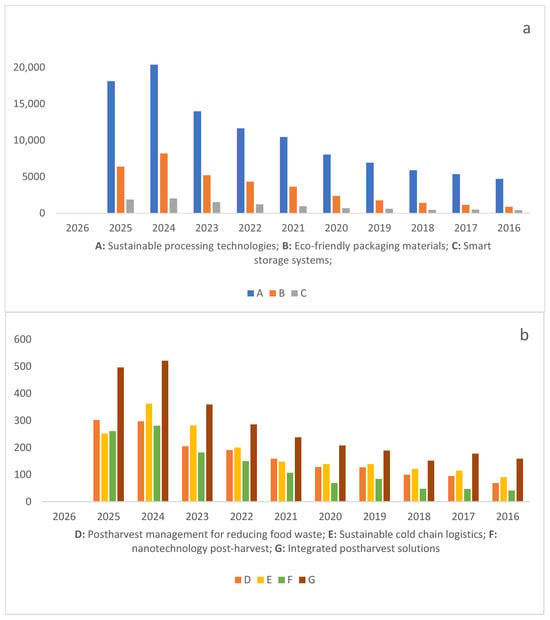
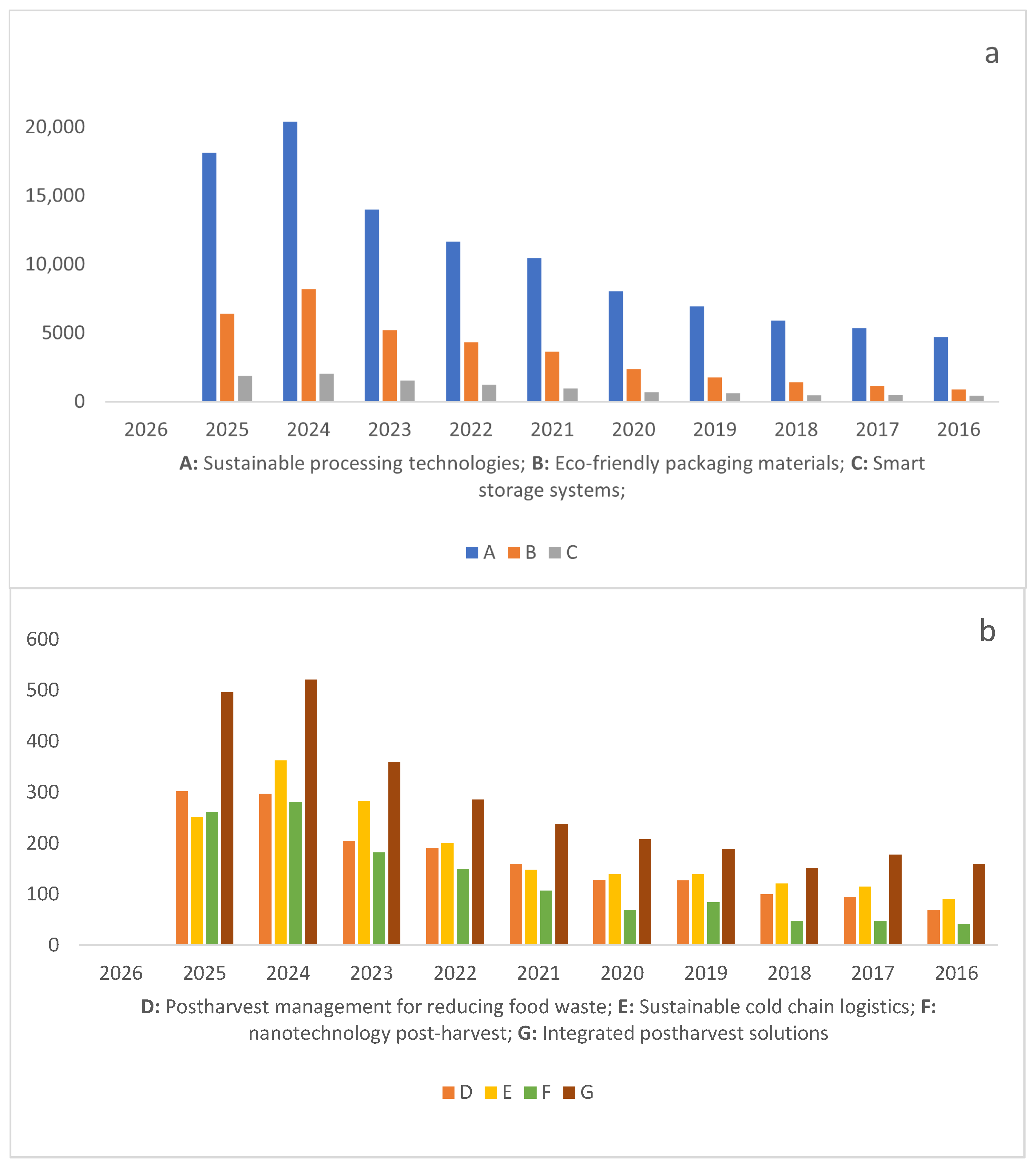
To further frame the relevance of this review, the scientific landscape in this field shows a substantial and growing research effort. Numerous literature reviews have been published across different subtopics, and publication volumes confirm a strong international focus on sustainable postharvest innovations. A search on ScienceDirect (2016–2026), limited to “Agricultural and Biological Sciences”, reveals particularly high output in sustainable processing technologies (105,628 articles) and eco-friendly packaging (35,452 articles) (Figure 2).
Figure 2.
(a) A: Sustainable processing technologies; B: Eco-friendly packaging materials; C: Smart storage systems; (b) D: Postharvest management for reducing food waste; E: Sustainable cold chain logistics; F: nanotechnology post-harvest; G: Integrated postharvest solutions.
The areas with the highest publication volumes include sustainable processing technologies (105,628 articles) and eco-friendly packaging materials (35,452 articles) (Figure 2a). Other crucial areas driving current scientific inquiry are: (Figure 2b)
- Smart storage systems (10,290 articles).
- Integrated postharvest solutions (2787 articles).
- Postharvest management for reducing food waste (1850 articles).
- Sustainable cold chain logistics (1674 articles).
- The applications of nanotechnology post-harvest (1270 articles).
These publication patterns reveal clear trends in current research priorities, particularly the focus on sustainable processing technologies and eco-friendly packaging, which together dominate the scientific output. This emphasis probably reflects growing industry demand for scalable, low-impact processing solutions and the need to reduce environmental burdens across the supply chain. In contrast, the lower volumes in areas such as smart storage systems, integrated postharvest solutions, and sustainable cold-chain logistics highlight emerging niches driven by technological innovation and by the global push to minimize postharvest losses. The expanding interest in nanotechnology applications further underscores a shift toward advanced, high-precision tools aimed at improving food quality, safety, and shelf life.
2. Sustainable Postharvest Technologies
Challenges, Opportunities and Critical Gaps
Postharvest deterioration is driven by physiological, biochemical, microbial, and logistical factors. Traditional mitigation strategies often rely on energy-intensive processes, synthetic chemicals, or non-renewable packaging materials, each carrying environmental and health trade-offs. Therefore, sustainable postharvest innovations must simultaneously address multiple dimensions: improved food safety, reduced environmental footprint, cost-effectiveness, and compliance with increasingly strict regulatory frameworks.
Fruits and vegetables are metabolically active and highly perishable, undergoing quality deterioration due to natural ripening and senescence processes. Their high moisture content and nutritional factors make them particularly susceptible to rapid deterioration and conducive to the growth of spoilage microorganisms [2,4,5]. Postharvest losses are primarily driven by physiological deterioration caused by technical, biological, and environmental factors [11]. Challenges arise because these commodities require prompt and efficient postharvest intervention due to their inherently short shelf life [4].
Inadequate preservation practices result in detrimental economic impacts throughout the supply chain. The magnitude of postharvest loss in the Mediterranean region, for example, in 2010–2015 was estimated to exceed USD 50 billion annually [12]. Losses negatively affect farmers’ earnings, household income, and overall food security [4]. Furthermore, FLW has alarming consequences for micro-nutrient losses, such particularly vitamins A and C, especially in fresh fruit and vegetables [6]. Addressing these inefficiencies is vital, considering the global attribution of $15 billion in losses and a 12% carbon footprint to postharvest inefficiencies [10].
Consumer perceptions are shifting toward greater concern regarding the environmental consequences of packaging materials [13]. This mindset strongly influences the push toward more sustainable alternatives and away from conventional petroleum-based plastics [12,14,15]. Consumers are increasingly demanding minimally processed and preservative-free foods, favoring natural, eco-friendly food solutions and clean-label products [16,17,18]. This trend encourages the adoption of sustainable and innovative disease control methods, rather than traditional chemical methods [1].
Recent advances in non-thermal and minimal processing methods allow quality preservation while reducing energy consumption and chemical use. Techniques such as high-pressure processing, pulsed electric fields, and UV treatments help maintain nutrients, color, and microbial safety. Advanced postharvest physical and chemical treatments and biocontrol techniques are being implemented to preserve the nutritional value and safety of fresh produce [2]. Emerging non-thermal technologies are moving into the spotlight as sustainable alternatives to conventional heat-based methods, which are often highly water-consuming and can cause detrimental effects on quality aspects, such as nutrient and flavor losses [19,20,21,22]. Non-thermal technologies (Table 1), offer strong sustainability benefits, such as reduced energy use, preservation of fresh-like quality, and avoidance of chemical sanitizers. The most common challenges include high equipment costs, limited penetration depth, and scalability issues for industrial adoption. Some methods may also induce undesirable quality changes (e.g., oxidation, softening) if not properly optimized. Therefore, selecting the appropriate technology requires balancing process effectiveness, product characteristics, and economic feasibility, often leading to hybrid or combined approaches to achieve optimal results.
Table 1.
Non-Thermal Sustainable Processing Technologies.
3. Innovations in Eco-Friendly Packaging and Regulatory Challenges
To contextualize these challenges, the following sections review technological options while critically evaluating limitations, scalability constraints, economic feasibility, and areas requiring further research effort.
Packaging plays a vital role in protecting perishable produce and extending shelf life, yet traditional plastic materials contribute to environmental pollution. Biodegradable polymers, compostable films, and edible packaging provide sustainable solutions without compromising protection. In addition, active and intelligent packaging systems can monitor freshness and enhance food safety.
Edible coatings, provide a sustainable approach by forming thin, edible layers composed of natural, biodegradable polymers, such as polysaccharides (chitosan, starch), proteins (whey protein, zein), and lipids (waxes) [10]. These coatings act as semi-permeable barriers that regulate gas exchange, reduce moisture loss, and suppress microbial growth. They offer antimicrobial activity and improve shelf life without residual odor or taste. Chitosan-based coatings, often enriched with essential oils or natural antioxidants derived from plant extracts (e.g., Aloe vera gel), are widely studied for enhancing the preservation of various fruits and vegetables [17]. Despite their advantages, edible coatings present several limitations, including variability in cost and challenges in achieving scalable, uniform application at the industrial level. Consumer acceptance may also be affected by concerns regarding coating visibility, texture, or perceived “added layers,” while companies must adapt processing lines and quality-control systems to ensure consistent performance. These factors highlight the need for careful optimization to balance efficacy, feasibility, and market acceptance.
The shift toward eco-friendly packaging is driven by the severe environmental issues associated with conventional petroleum-derived polymers, such as resource depletion and pollution [14]. Bioplastics, derived from renewable biomass resources like corn starch, sugarcane, or algae, offer a viable, often compostable and biodegradable alternative to traditional plastics. These materials, including polylactic acid (PLA) and starch-based films, break down naturally, aligning with the principles of a circular economy and reducing the carbon footprint [77]. Innovative packaging aims to improve quality and safety and extend shelf life with:
- Active packaging materials interact positively with the food or its environment to extend shelf life. This is achieved by incorporating bioactive compounds like antioxidants and antimicrobial agents, often sourced from agro-waste extracts, which are slowly released to the food surface [78].
- Intelligent packaging acts as an extension of the communication function, employing sensors and indicators (e.g., pH-sensitive dyes or bio-based sensors) to provide real-time, reliable information about the food’s condition, such as freshness, temperature, or spoilage status, directly to consumers [79].
New packaging technologies must be suitable for fresh produce quality maintenance while promoting environmental sustainability. Sustainable packaging designs focus on making solutions lighter and reusable, thereby reducing environmental impact and minimizing carbon footprints. Innovations include stackable containers and collapsible crates designed to enhance logistical efficiency and maintain produce integrity during transport [80]. Beyond these advances, recent literature highlights further developments and regulatory challenges shaping the transition toward sustainable packaging systems.
The food industry is rapidly shifting away from conventional petroleum-based plastics toward sustainable packaging solutions, particularly those involving biodegradable materials made from renewable biomass sources. Bioplastics, produced from renewable resources like corn starch, sugarcane, and algae, are key developments, often being compostable or biodegradable, with ongoing advances focusing on improving their durability and barrier properties [14]. Furthermore, renewable and biodegradable biocomposite materials—utilizing biomass sources such as coffee grounds and agricultural by-products like sugarcane bagasse and crop residues—are emerging as eco-friendly alternatives for disposable packaging [81,82]. Innovations like edible coatings are also crucial, as they help slow down ripening and extend shelf life during cold storage, directly supporting food quality preservation and waste reduction, just considering that in 2012, the global plastic production volume was 288 million tons [83].
From a regulatory perspective, innovation is hindered by the fragmented global framework for food-contact materials. Requirements differ widely between the EU, U.S., and emerging economies, generating uncertainty and compliance costs for manufacturers. The need for harmonized design certifications is increasingly recognized as essential to ensure global marketability. Consumer perception is another pivotal factor, especially in emerging markets where the concept of “eco-friendly packaging” is still poorly defined [13]. Most consumers associate sustainability primarily with biodegradability and recyclability, while affordability and aesthetic appeal remain decisive for market uptake.
In parallel, concerns over microplastic contamination—highlighted by EFSA in 2016—have accelerated global policy responses, including the EU ban on single-use plastics introduced in 2021 [84]. As shown by Khandeparkar et al. [14] traditional plastic packaging continues to cause environmental damage, raising the need for natural-source polymers as safer alternatives. Effective packaging materials must be cost-efficient, mechanically robust, and capable of providing excellent barrier protection, while simultaneously supporting innovations that lower carbon emissions, enhance food preservation, and ensure product safety [14].
However, the food industry faces a significant challenge in creating packaging that is both sustainable and affordable. Traditional packaging materials, primarily made from petroleum-based plastics, contribute to environmental pollution, resource depletion, chemical leaching into food, and difficulties in recycling. In response to growing environmental concerns, the industry is shifting toward sustainable packaging solutions, with a focus on biodegradable materials made from renewable biomass sources. A key development in this area is the rise of bioplastics—produced from renewable resources like corn starch, sugarcane, and algae—that are often compostable or biodegradable. Advances in bioplastics aim to improve their durability and barrier properties, making them more practical while addressing ecological and health issues. Currently, renewable and biodegradable biocomposite materials are gaining significant attention as eco-friendly solutions across various fields, including smart food packaging, biomedical applications, drug delivery, bio-membranes, automotive components, and industrial composting. Recent advancements in the fabrication methods and practical uses of biocomposites were explored by Moustafa et al. [81]. Biomass sources such as coffee grounds, nanocellulose, and date stones are being utilized as innovative reinforcing agents in biodegradable polymers to enhance their performance. A summary of he discussed materials is presented in Table 2.
Table 2.
Comparison of biodegradable packaging materials (bioplastics).
Nevertheless, the use of lignocellulosic materials as reinforcements poses some challenges, such as high moisture absorption, low wettability, and poor compatibility with many biopolymers. To address these limitations, the review suggests new processing strategies aimed at producing high-performance lignocellulosic-reinforced materials with improved characteristics. Additionally, it discusses the eco-friendly modification of organoclay (OC) using natural antibacterial substances like rosin and stearic acid to create non-toxic, expanded OC. This modified OC can serve both as a compatibilizer and reinforcing agent for otherwise incompatible biopolymers such as chitosan, carboxymethyl cellulose (CMC), and polylactic acid (PLA). Moreover, are important outlines future directions and highlights environmental challenges, including CO2 emissions and the need for risk assessments related to the use of bionanomaterials [81]. Green technology has become increasingly important in the packaging industry, particularly through the use of renewable, bio-based materials derived from agricultural waste. This approach helps manage waste, reduce stubble burning, and conserve forest resources. With the global shift away from single-use plastics, lignocellulosic materials show strong potential for disposable packaging. However, challenges remain regarding their degradation, chemical safety, and commercial use. The recent advancements in transforming agricultural by-products like sugarcane bagasse and crop residues into sustainable packaging solutions are highlighted by Bhardwaj et al. [82].
The large-scale adoption of bioplastics is primarily limited by high production costs and the difficulty of achieving competitive cost–performance ratios compared with petroleum-based plastics. PLA and PHA, in particular, remain expensive due to costly substrates and processing requirements, although blending strategies and the use of low-cost agro-waste materials (e.g., chitosan, cassava starch, citrus pectin) can partially mitigate expenses.
Scalability also poses major constraints, as most bioplastic systems are still developed at laboratory scale, and industrial implementation is hindered by challenges in feedstock collection, storage, transport, and the lack of efficient recycling and recovery infrastructure. Regulatory acceptance further complicates commercialization: strict guidelines governing food-contact materials, nanomaterial migration, and toxicity—especially within the EU—add complexity and increase compliance costs. Adoption is additionally impeded by performance limitations, including low mechanical strength, poor thermal stability, and high moisture sensitivity of many protein-, starch-, and cellulose-based materials. Consumer price sensitivity and inadequate post-use management systems further restrict market uptake, underscoring the need for improved material performance, cost-effective production, and supportive policy frameworks.
A broader view of biocomposites reveals expanding applications beyond food packaging—including biomedical, automotive, and industrial sectors—but their safe deployment requires further evaluation of CO2 emissions, toxicity, and life-cycle impacts.
Table 3 highlights the increasing academic interest in these topics, including the recent establishment of specialized journals such as Sustainable Food Technology (2024), which provide dedicated academic platforms for research dissemination.
Table 3.
Specialized Journals in the field grouped by topics, launch dates and research priorities.
4. The Circular Bioeconomy as an Integrated Approach to Waste and Bioactive Compound Valorization
Advancing sustainable postharvest solutions increasingly requires an integrated circular-bioeconomy perspective, in which innovative processing strategies extend beyond packaging and operate together with waste valorization to enhance resource efficiency and minimize environmental impact. Emerging techniques such as ultrasound exemplify this approach, as they aim to optimize extraction and preservation while improving process efficiency [87]. Meanwhile Fu et al. provide a broad overview of sustainable processing research, distinguishing between end-of-pipe and clean technologies and aligning the latter with the UNEP definition of clean production as a preventative, efficiency-oriented environmental strategy [88]. Their systematic review screened 964 articles but identified only 34 that met strict criteria, ultimately classifying sustainable technologies into CO2/emission reduction, material/fuel substitution, energy/material efficiency, and recycling. They also highlight key drivers of adoption, including regulatory pressure, firm characteristics, technological capability, certified systems, and inter-organizational cooperation [88].
Food system resilience increasingly depends on the ability to transform waste streams into valuable resources. Globally, one-third of food production is lost or wasted each year, encouraging the United Nations to set the target of halving food waste by 2030.
In this context, Mady et al. conducted a systematic review on food by-products from eggplant, taro, okra, and coconut, demonstrating their richness in phenolics (anthocyanins, luteolin, quercetin, catechins) and chlorophyll—compounds with antioxidant, anti-inflammatory, anti-mutagenic, and anti-genotoxic properties. These findings highlight the potential for developing new functional ingredients and nutraceuticals, though more phytochemical, biological, industrial, and clinical research is needed to enable full-scale applications [89].
5. Advanced Processing and New Evaluation Paradigms
Starting from the opportunities offered by the improved use of bioactive compounds derived from food by-products, the discussion naturally extends to the role of innovative processing and valorization strategies in shaping more sustainable and healthier food systems. Within this context, Ultra-Processed Foods (UPFs) represent a particularly debated category: although they are often criticized for their association with adverse health outcomes such as obesity and cardiometabolic risk, recent attempts to incorporate nutrient-rich residues or bioactive compound–containing by-products into UPF formulations add further complexity. Yet, the extent to which these processing approaches influence health effects—and how they are perceived by consumers—remains unclear. As highlighted in the review by Capozzi et al. [5] the authors aimed to reassess existing evidence, identify research gaps, and examine the potential of advanced processing technologies to enhance food matrices, valorize by-products, and promote sustainability within a circular economy framework. The authors advocate for new paradigms of food evaluation—anchored in enginomics, signaling, and precision nutrition—which must be supported by digital and AI tools, emerging technologies, multidisciplinary research, and collaboration between academia and industry.
In continuity with these emerging frameworks, the attention shifts entirely to the circular bioeconomy. This approach is positioned as the central, holistic, and sustainable strategy for food processing and transformation [90]. The framework focuses on the revalorization of agro-food by-products through conventional and advanced extraction strategies to create functional, health-promoting foods and beverages. These practices are framed as holistic and sustainable, balancing economic and social development with environmental protection. Effective implementation requires not only technological innovation but also supportive government policies and legal frameworks. Furthermore, consumer choices play a decisive role in shaping environmental, social, and economic impacts, reflecting current trends that show a growing demand for eco-friendly, minimally processed products with low carbon footprints and freedom from genetically modified organisms.
5.1. Comparative Analysis of Sustainable Food Technologies
In order to advance these circular and health-oriented perspectives, the global food industry is increasingly compelled to adopt innovative postharvest solutions and processing technologies that reduce waste and environmental burdens. Assessing these approaches in terms of efficiency, cost, and scalability (as summarized in Table 4) highlights the shift required from conventional methods to more sustainable alternatives, while also revealing important research gaps that remain to be addressed.
Table 4.
Comparative Analysis of Sustainable Technology Options.
5.2. Highlighting Research Gaps and Challenges
As reported in Table 4, significant gaps still remain in research on the adoption and implementation of sustainable technologies, particularly regarding widespread scale-up and economic feasibility, according to the main points summarized below:
- Scalability and Standardization: Despite its promise, ultrasound technology has limited reports at pilot or commercial scale. Key challenges include the lack of standardized methodologies, operational parameters, and data on thermophysical properties (e.g., density, heat capacity), making scale-up predictions unreliable. Research on the design, sizing, and modeling of ultrasound units, especially when integrated with other green technologies, is also scarce [87].
- Cost Prediction and Economic Viability: More studies are needed to assess the economic feasibility of green processing methods like ultrasound. Policymakers and technology providers require clearer information on relative advantages and costs to identify which technologies are suitable for promotion [88].
- Material Gaps in Packaging: Renewable packaging materials, such as lignocellulosic composites, face limitations in degradation behavior, migration properties, and commercial potential. Many biopolymer films exhibit low tensile strength, poor thermal stability, and low moisture resistance, constraining commercialization [14].
- Processing and Health Links: The direct role of specific processing techniques in linking Ultra-Processed Foods (UPFs) to adverse health outcomes remains unclear. Research is needed to refine or develop food evaluation and classification systems that incorporate processing factors impacting health and wellness [5].
Research should focus on underexplored process technologies, particularly material/fuel substitution and recycling approaches, while simultaneously addressing gaps through standardized methodologies, improved economic models, and targeted studies on material science and industrial scaling [87,88].
6. Conclusions and Future Perspective
The global food sector is undergoing a substantive paradigm transformation, prompted by the imperative to reduce postharvest losses—reaching up to 40% in fresh produce—and to mitigate the associated environmental burden. These pressures intersect with overarching global risks, notably those related to climate change mitigation and adaptation, thereby underscoring the urgency of transitioning toward more sustainable and resilient agri-food systems. Sustainable postharvest management increasingly relies on the deployment of advanced processing technologies, intelligent and energy-efficient storage systems, and environmentally compatible packaging solutions. Of particular relevance is the accelerating shift from conventional petroleum-based plastics toward biodegradable biopolymers and bio-composites derived from renewable biomass, supported by growing evidence of their environmental and functional advantages. Nonetheless, substantial impediments remain, including elevated production costs, limited scalability, regulatory inconsistencies across jurisdictions, and variable levels of consumer acceptance. These constraints must be addressed to enable broader industrial integration.
Achieving long-term sustainability necessitates a comprehensive and integrated strategy grounded in the principles of the circular bioeconomy. This involves not only the advancement of innovative technologies, but also the systematic valorization of agri-food by-products. Concurrently, emerging materials and techniques must conform to food-contact regulatory frameworks and remain responsive to evolving consumer expectations for environmentally responsible solutions. To facilitate the translation of these innovations into scalable, high-impact applications, future efforts should prioritize:
- Harmonized international regulatory frameworks for bioplastics and biodegradable packaging;
- Investment in infrastructure and technological capacity, particularly within low- and middle-income regions;
- Strengthened interdisciplinary collaboration spanning engineering, nutrition, microbiology, policy, and data science;
- Development of advanced decision-support systems integrating life-cycle assessment, artificial intelligence, and precision nutrition.
By addressing these strategic priorities, sustainable postharvest innovations can make a substantive contribution to achieving SDG 12.3, reinforcing global food system resilience, and advancing environmental stewardship.
Funding
This work has been funded by the European Union—NextGenerationEU, Mission 4, Component 1, under the Italian Ministry of University and Research (MUR) National Innovation Ecosystem grant ECS00000041—VITALITY—CUP: C43C22000380007.
Institutional Review Board Statement
Not applicable.
Informed Consent Statement
Not applicable.
Data Availability Statement
No new data were created or analyzed in this study. Data sharing is not applicable to this article.
Conflicts of Interest
The author declares no conflicts of interest.
Abbreviations
The following abbreviations are used in this manuscript:
| UPFs | Ultra-Processed Foods |
| FLW | food loss and waste |
| SDGs | Sustainable Development Goals |
| FAO | Food and Agriculture Organization (of the United Nations) |
| EU | European Union |
| EFSA | European Food Safety Authority |
| PGR | plant growth regulators |
| HHP | High Hydrostatic Pressure |
| PEF | Pulsed Electric Fields |
| UV | ultraviolet |
| OC | organoclay |
| CMC | carboxymethyl cellulose |
| PLA | polylactic acid |
| CO2 | carbon dioxide |
| PHA | Polyhydroxyalkanoates |
| GFPec | Grapefruit peel pectin |
| MD-LPE | medium-density poly-ethylene |
| S-NCs | Starch NanoCrystals |
| NCC | Nanocrystalline Cellulose |
| CNW | Cellulose Nanowhiskers |
| HM | high-methoxyl |
| WVP | Water Vapor Permeability |
| UNEP | United Nations Environment Program |
References
- Ullah, Q.; Waqar, M.; Sajjad, N.; Awlqadr, F.H.; Arshad, M.T.; Maqsood, S.; Sağlam, K.; Maqsood, N.; Hossain, S.; Ikram, A.; et al. Innovative Strategies for Postharvest Disease Management in Fruits and Vegetables: A Comprehensive Treatise. Food Sci. Nutr. 2025, 13, e70850. [Google Scholar] [CrossRef] [Scilit] [PubMed]
- Palumbo, M.; Attolico, G.; Capozzi, V.; Cozzolino, R.; Corvino, A.; de Chiara, M.L.V.; Pace, B.; Pelosi, S.; Ricci, I.; Romaniello, R.; et al. Emerging postharvest technologies to enhance the shelf-life of fruit and vegetables: An overview. Foods 2022, 11, 3925. [Google Scholar] [CrossRef] [Scilit] [PubMed]
- Oyewole, O.S.; Raji, M.A.; Kazeem, A.A.; Ajao, T.O.; Ibitoye, O.; Abel, O.O.; Solomon-Ibuwunwa, O.M.; Famakinwa, J.O.; Adewunmi, E.O. Smart technological innovations for postharvest loss reduction: A review. FUDMA J. Sci. 2025, 9, 299–307. [Google Scholar] [CrossRef] [Scilit]
- Verma, S.; Kumar, S.; Kumar, V.; Yadav, S.; Singh, P.; Saurabh, A.; Kumar, A.; Jain, M. Recent Advancements and Innovations in Post-harvest Handling, Storage, and Technology for Vegetables: A Review. Arch. Curr. Res. Int. 2025, 25, 161–180. [Google Scholar] [CrossRef] [Scilit]
- Capozzi, F.; Magkos, F.; Fava, F.; Milani, G.P.; Agostoni, C.; Astrup, A.; Saguy, I.S. A Multidisciplinary Perspective of Ultra-Processed Foods and Associated Food Processing Technologies: A View of the Sustainable Road Ahead. Nutrients 2021, 13, 3948. [Google Scholar] [CrossRef] [Scilit]
- Capone, R.; Bennett, A.; Debs, P.; Bucatariu, C.A.; El Bilali, H.; Smolak, J.; Lee, W.T.K.; Bottalico, F.; Diei-Ouadi, Y.; Toppe, J. Food Losses and Waste: Global Overview from a Mediterranean Perspective; International Centre for Advanced Mediterranean Agronomic Studies (CIHEAM): Paris, France; Food and Agriculture Organization of the United Nations (FAO): Rome, Italy, 2016; Chapter 9. [Google Scholar]
- Second International Conference on Nutrition. Available online: www.fao.org/3/a-mm215e.pdf (accessed on 6 August 2025).
- FAO Strategy on Climate Change 2022–2031. Available online: https://knowledge4policy.ec.europa.eu/publication/fao-strategy-climate-change-2022-2031_en#:~:text=FAO%20Strategy%20on%20Climate%20Change%202022%2D2031%20%7C%20Knowledge%20for%20policy&text=We%20mobilise%20people%20and%20resources,to%20inform%20policymaking%20across%20Europe.&text=Climate%20change%20is%20a%20global,action%2C%20including%20across%20agrifood%20systems (accessed on 14 October 2025).
- Schiederig, T.; Tietze, F.; Herstatt, C. Green innovation in technology and innovation management—An exploratory literature review. R D Manag. 2012, 42, 180–192. [Google Scholar] [CrossRef] [Scilit]
- Ashraf, M.A.; Khan, A.S.; Azam, M.; Ayyub, S.; Kaleem, M.M.; Nawaz, S.; Abubakar, M.; Khalid, B.; Riaz, T.; Asim, M.; et al. Innovative technologies in postharvest management of fruits and vegetables: A review. Eur. Food Res. Technol. 2025, 251, 3445–3463. [Google Scholar] [CrossRef] [Scilit]
- Sibanda, S.; Workneh, T.S. Potential causes of postharvest losses, low-cost cooling technology for fresh produce farmers in Sub-Sahara Africa. Afr. J. Agric. Res. 2020, 16, 553–566. [Google Scholar] [CrossRef] [Scilit]
- Kalaïtzis, P.; Craita Bita, E.; Hilmi, M. Innovative Postharvest Technologies for Sustainable Value Chain; International Centre for Advanced Mediterranean Agronomic Studies (CIHEAM): Paris, France; Food and Agriculture Organization of the United Nations (FAO): Rome, Italy, 2016; Chapter 11. [Google Scholar]
- Nguyen, A.T.; Parker, L.; Brennan, L.; Lockrey, S. A consumer definition of eco-friendly packaging. J. Clean. Prod. 2020, 252, 119792. [Google Scholar] [CrossRef] [Scilit]
- Khandeparkar, A.S.; Paul, R.; Sridhar, A.; Lakshmaiah, A.A.; Nagella, P. Eco-friendly innovations in food packaging: A sustainable revolution. Sustain. Chem. Pharm. 2024, 39, 101579. [Google Scholar] [CrossRef] [Scilit]
- Weber, C.J.; Haugaard, V.; Festersen, R.; Bertelsen, G. Production and Applications of Biobased Packaging Materials for the Food Industry. Food Addit. Contam. 2002, 19, 172–177. [Google Scholar] [CrossRef] [Scilit] [PubMed]
- Kumar, S.; Mukherjee, A.; Dutta, J. Chitosan based nanocomposite films and coatings: Emerging antimicrobial food packaging alternatives. Trends Food Sci. Technol. 2020, 97, 196–209. [Google Scholar] [CrossRef] [Scilit]
- Ayyub, S.; Khan, A.S.; Anwar, R.; Ali, S.; Hasan, M.U. Aloe vera gel coating extends marketability and maintains quality by reducing rachis Browning and preserving bioactive compounds of commercial table grape cultivars. Appl. Fruit. Sci. 2024, 66, 1843–1853. [Google Scholar] [CrossRef] [Scilit]
- Matloob, A.; Ayub, H.; Mohsin, M.; Ambreen, S.; Khan, F.A.; Oranab, S.; Rahim, M.A.; Khalid, W.; Nayik, G.A.; Ramniwas, S.; et al. A review on edible coatings and films: Advances, composition, production methods, and safety concerns. ACS Omega 2023, 8, 28932–28944. [Google Scholar] [CrossRef] [Scilit]
- Fan, X.; Wang, W. Quality of Fresh and Fresh-Cut Produce Impacted by Nonthermal Physical Technologies Intended to Enhance Microbial Safety. Crit. Rev. Food Sci. Nutr. 2022, 62, 362–382. [Google Scholar] [CrossRef] [Scilit]
- Ganesan, A.R.; Tiwari, U.; Ezhilarasi, P.N.; Rajauria, G. Application of Cold Plasma on Food Matrices: A Review on Current and Future Prospects. J. Food Process. Preserv. 2021, 45, e15070. [Google Scholar] [CrossRef] [Scilit]
- Dar, A.H.; Shams, R.; ul Eain Hyder Rizvi, Q.; Majid, I. Microwave and Ohmic Heating of Fresh Cut Fruits and Vegetable Products; Elsevier Inc.: Amsterdam, The Netherlands, 2019; ISBN 9780128161845. [Google Scholar]
- Usall, J.; Ippolito, A.; Sisquella, M.; Neri, F. Physical Treatments to Control Postharvest Diseases of Fresh Fruits and Vegetables. Postharvest Biol. Technol. 2016, 122, 30–40. [Google Scholar] [CrossRef] [Scilit]
- Rux, G.; Gelewsky, R.; Schlüter, O.; Herppich, W.B. High Hydrostatic Pressure Treatment Effects on Selected Tissue Properties of Fresh Horticultural Products. Innov. Food Sci. Emerg. Technol. 2020, 61, 102326. [Google Scholar] [CrossRef] [Scilit]
- Ramos-Parra, P.A.; García-Salinas, C.; Rodríguez-López, C.E.; García, N.; García-Rivas, G.; Hernández-Brenes, C.; Díaz de la Garza, R.I. High Hydrostatic Pressure Treatments Trigger de Novo Carotenoid Biosynthesis in Papaya Fruit (Carica papaya Cv. Maradol). Food Chem. 2019, 277, 362–372. [Google Scholar] [CrossRef] [Scilit]
- Hu, X.; Ma, T.; Ao, L.; Kang, H.; Hu, X.; Song, Y.; Liao, X. Effect of High Hydrostatic Pressure Processing on Textural Properties and Microstructural Characterization of Fresh-cut Pumpkin (Cucurbita pepo). J. Food Process Eng. 2020, 43, e13379. [Google Scholar] [CrossRef] [Scilit]
- Hu, K.; Peng, D.; Wang, L.; Liu, H.; Xie, B.; Sun, Z. Effect of Mild High Hydrostatic Pressure Treatments on Physiological and Physicochemical Characteristics and Carotenoid Biosynthesis in Postharvest Mango. Postharvest Biol. Technol. 2021, 172, 111381. [Google Scholar] [CrossRef] [Scilit]
- Kundukulangara Pulissery, S.; Kallahalli Boregowda, S.; Suseela, S.; Jaganath, B.A. Comparative Study on the Textural and Nutritional Profile of High Pressure and Minimally Processed Pineapple. J. Food Sci. Technol. 2021, 58, 3734–3742. [Google Scholar] [CrossRef] [Scilit] [PubMed]
- Paciulli, M.; Rinaldi, M.; Rodolfi, M.; Ganino, T.; Morbarigazzi, M.; Chiavaro, E. Effects of High Hydrostatic Pressure on Physico-Chemical and Structural Properties of Two Pumpkin Species. Food Chem. 2019, 274, 281–290. [Google Scholar] [CrossRef] [Scilit] [PubMed]
- Paciulli, M.; Ganino, T.; Meza, I.G.M.; Rinaldi, M.; Rodolfi, M.; Morbarigazzi, M.; Chiavaro, E. High Pressure and Thermal Processing on the Quality of Zucchini Slices. Eur. Food Res. Technol. 2021, 247, 475–484. [Google Scholar] [CrossRef] [Scilit]
- Li, X.; Farid, M. A review on recent development in non-conventional food sterilization technologies. J. Food Eng. 2016, 182, 33–45. [Google Scholar] [CrossRef] [Scilit]
- Li, J.; Shi, J.; Huang, X.; Wang, T.; Zou, X.; Li, Z.; Zhang, D.; Zhang, W.; Xu, Y. Effects of Pulsed Electric Field Pretreatment on Frying Quality of Fresh-Cut Lotus Root Slices. LWT 2020, 132, 109873. [Google Scholar] [CrossRef] [Scilit]
- López-Gámez, G.; Elez-Martínez, P.; Martín-Belloso, O.; Soliva-Fortuny, R. Pulsed Electric Fields Affect Endogenous Enzyme Activities, Respiration and Biosynthesis of Phenolic Compounds in Carrots. Postharvest Biol. Technol. 2020, 168, 111284. [Google Scholar] [CrossRef] [Scilit]
- López-Gámez, G.; Elez-Martínez, P.; Martín-Belloso, O.; Soliva-Fortuny, R. Changes of Carotenoid Content in Carrots after Application of Pulsed Electric Field Treatments. LWT 2021, 147, 111408. [Google Scholar] [CrossRef] [Scilit]
- Vanga, S.K.; Wang, J.; Jayaram, S.; Raghavan, V. Effects of Pulsed Electric Fields and Ultrasound Processing on Proteins and Enzymes: A Review. Processes 2021, 9, 722. [Google Scholar] [CrossRef] [Scilit]
- González-Casado, S.; Martín-Belloso, O.; Elez-Martínez, P.; Soliva-Fortuny, R. Enhancing the Carotenoid Content of Tomato Fruit with Pulsed Electric Field Treatments: Effects on Respiratory Activity and Quality Attributes. Postharvest Biol. Technol. 2018, 137, 113–118. [Google Scholar] [CrossRef] [Scilit]
- Sotelo, K.A.G.; Hamid, N.; Oey, I.; Pook, C.; Gutierrez-Maddox, N.; Ma, Q.; Ying Leong, S.; Lu, J. Red Cherries (Prunus avium Var. Stella) Processed by Pulsed Electric Field—Physical, Chemical and Microbiological Analyses. Food Chem. 2018, 240, 926–934. [Google Scholar] [CrossRef] [Scilit] [PubMed]
- Ribas-Agustí, A.; Martín-Belloso, O.; Soliva-Fortuny, R.; Elez-Martínez, P. Enhancing Hydroxycinnamic Acids and Flavan-3-Ol Contents by Pulsed Electric Fields without Affecting Quality Attributes of Apple. Food Res. Int. 2019, 121, 433–440. [Google Scholar] [CrossRef] [Scilit] [PubMed]
- Bagheri, H.; Abbaszadeh, S. Effect of Cold Plasma on Quality Retention of Fresh-Cut Produce. J. Food Qual. 2020, 2020, 8866369. [Google Scholar] [CrossRef] [Scilit]
- Tappi, S.; Ragni, L.; Tylewicz, U.; Romani, S.; Ramazzina, I.; Rocculi, P. Browning Response of Fresh-Cut Apples of Different Cultivars to Cold Gas Plasma Treatment. Innov. Food Sci. Emerg. Technol. 2019, 53, 56–62. [Google Scholar] [CrossRef] [Scilit]
- Zhou, D.; Li, T.; Cong, K.; Suo, A.; Wu, C. Influence of Cold Plasma on Quality Attributes and Aroma Compounds in Fresh-Cut Cantaloupe during Low Temperature Storage. LWT 2022, 154, 112893. [Google Scholar] [CrossRef] [Scilit]
- Ahmadnia, M.; Sadeghi, M.; Abbaszadeh, R.; Ghomi Marzdashti, H.R. Decontamination of Whole Strawberry via Dielectric Barrier Discharge Cold Plasma and Effects on Quality Attributes. J. Food Process. Preserv. 2021, 45, e15019. [Google Scholar] [CrossRef] [Scilit]
- Rana, S.; Mehta, D.; Bansal, V.; Shivhare, U.S.; Yadav, S.K. Atmospheric Cold Plasma (ACP) Treatment Improved in-Package Shelf-Life of Strawberry Fruit. J. Food Sci. Technol. 2020, 57, 102–112. [Google Scholar] [CrossRef] [Scilit]
- Li, X.; Li, M.; Ji, N.; Jin, P.; Zhang, J.; Zheng, Y.; Zhang, X.; Li, F. Cold Plasma Treatment Induces Phenolic Accumulation and Enhances Antioxidant Activity in Fresh-Cut Pitaya (Hylocereus undatus) Fruit. LWT 2019, 115, 108447. [Google Scholar] [CrossRef] [Scilit]
- Zhang, Y.; Zhang, J.; Zhang, Y.; Hu, H.; Luo, S.; Zhang, L.; Zhou, H.; Li, P. Effects of In-package Atmospheric Cold Plasma Treatment on the Qualitative, Metabolic and Microbial Stability of Fresh-cut Pears. J. Sci. Food Agric. 2021, 101, 4473–4480. [Google Scholar] [CrossRef] [Scilit]
- Giannoglou, M.; Stergiou, P.; Dimitrakellis, P.; Gogolides, E.; Stoforos, N.G.; Katsaros, G. Effect of Cold Atmospheric Plasma Processing on Quality and Shelf-Life of Ready-to-Eat Rocket Leafy Salad. Innov. Food Sci. Emerg. Technol. 2020, 66, 102502. [Google Scholar] [CrossRef] [Scilit]
- Hu, X.; Sun, H.; Yang, X.; Cui, D.; Wang, Y.; Zhuang, J.; Wang, X.; Ma, R.; Jiao, Z. Potential Use of Atmospheric Cold Plasma for Postharvest Preservation of Blueberries. Postharvest Biol. Technol. 2021, 179, 111564. [Google Scholar] [CrossRef] [Scilit]
- Singh, S.P.; Thakur, R. Postharvest applications of cold plasma treatment for improving food safety and sustainability outcomes for fresh horticultural produce. Postharvest Biol. Technol. 2024, 209, 112694. [Google Scholar]
- Mandal, R.; Singh, A.; Singh, A.P. Recent developments in cold plasma decontamination technology in the food industry. Trends Food Sci. Technol. 2018, 80, 93–103. [Google Scholar] [CrossRef] [Scilit]
- Kitsiou, M.; Purk, L.; Ioannou, C.; Wantock, T.; Sandison, G.; Harle, T.; Gutierrez-Merino, J.; Klymenko, O.V.; Velliou, E. On the evaluation of the antimicrobial effect of grape seed extract and cold atmospheric plasma on the dynamics of Listeria monocytogenes in novel multiphase 3D viscoelastic models. Int. J. Food Microbiol. 2023, 406, 110395. [Google Scholar] [CrossRef] [Scilit] [PubMed]
- Nikzadfar, M.; Kazemi, A.; Abooei, R.; Abbaszadeh, R.; Firouz, M.S.; Akbarnia, A.; Rashvand, M. Application of cold plasma technology on the postharvest preservation of in packaged fresh fruit and vegetables: Recent challenges and development. Food Bioprocess Technol. 2024, 17, 4473–4505. [Google Scholar] [CrossRef] [Scilit]
- Perinban, S.; Orsat, V.; Raghavan, V. Influence of Plasma Activated Water Treatment on Enzyme Activity and Quality of Fresh-Cut Apples. Food Chem. 2022, 393, 133421. [Google Scholar] [CrossRef] [Scilit]
- Darré, M.; Vicente, A.R.; Cisneros-Zevallos, L.; Artés-Hernández, F. Postharvest ultraviolet radiation in fruit and vegetables: Applications and factors modulating its efficacy on bioactive compounds and microbial growth. Foods 2022, 11, 653. [Google Scholar] [CrossRef] [Scilit]
- Pizzichetti, R.; Martín-Gamboa, M.; Pablos, C.; Reynolds, K.; Stanley, S.; Dufour, J.; Marugán, J. Environmental life cycle assessment of UV-C leds vs. mercury lamps and oxidant selection for diclofenac degradation. Sustain. Mater. Technol. 2024, 41, e01002. [Google Scholar] [CrossRef] [Scilit]
- Kyere, E.O.; Popovich, D.G.; Palmer, J.; Wargent, J.J.; Fletcher, G.C.; Flint, S. Reduction of the attachment, survival and growth of L. monocytogenes on lettuce leaves by UV-C stress. LWT 2021, 145, 111528. [Google Scholar] [CrossRef] [Scilit]
- Phonyiam, O.; Ohara, H.; Kondo, S.; Naradisorn, M.; Setha, S. Postharvest UV-C irradiation influenced cellular structure, jasmonic acid accumulation, and resistance against green mold decay in Satsuma Mandarin fruit (Citrus unshiu). Front. Sustain. Food Syst. 2021, 5, 684434. [Google Scholar] [CrossRef] [Scilit]
- Le, T.T.N.; Liao, C.T.; Wu, C.S.; Cheng, N.-J.; Yang, T.-H.; Yu, Y.-W.; Sun, C.-C. Can UVC radiation be useful in prolonging the shelf life of mangoes? Smart Agric. Technol. 2024, 9, 100612. [Google Scholar] [CrossRef] [Scilit]
- Ramalingam, S.; Le Myint, Z.; Ahn, S.Y.; Ryu, J.A.; Lee, S.-M.; Yun, H.K. UV-C treatment elicits resistant responses against Botrytis cinerea infection and the improvement of fruit characteristics in grapevines. Hortic. Environ. Biotechnol. 2024, 65, 707–724. [Google Scholar] [CrossRef] [Scilit]
- Hwang, H.J.; Kim, J.W.; Choi, J.B.; Chung, M.S. Effects of the specific wavelength and intensity of intense pulsed light (IPL) on microbial inactivation. Food Bioprocess Technol. 2024, 18, 1719–1729. [Google Scholar] [CrossRef] [Scilit]
- Vargas-Ramella, M.; Pateiro, M.; Gavahian, M.; Franco, D.; Zhang, W.; Khaneghah, A.M.; Guerrero-Sánchez, Y.; Lorenzo, J.M. Impact of pulsed light processing technology on phenolic compounds of fruits and vegetables. Trends Food Sci. Technol. 2021, 115, 1–11. [Google Scholar] [CrossRef] [Scilit]
- Yao, J.; Chen, W.; Fan, K. Recent advances in light irradiation for improving the preservation of fruits and vegetables: A review. Food Biosci. 2023, 56, 103206. [Google Scholar] [CrossRef] [Scilit]
- Pinto, L.; Cefola, M.; Bonifacio, M.A.; Cometa, S.; Bocchino, C.; Pace, B.; De Giglio, E.; Palumbo, M.; Sada, A.; Logrieco, A.F.; et al. Effect of red thyme oil (Thymus vulgaris L.) vapours on fungal decay, quality parameters and shelf-life of oranges during cold storage. Food Chem. 2021, 336, 127590. [Google Scholar] [CrossRef] [Scilit]
- Pinto, L.; Palma, A.; Cefola, M.; Pace, B.; D’Aquino, S.; Carboni, C.; Baruzzi, F. Effect of modified atmosphere packaging (MAP) and gaseous ozone pre-packaging treatment on the physico-chemical, microbiological, and sensory quality of small fruit. Food Packag. Shelf Life 2020, 26, 100573. [Google Scholar] [CrossRef] [Scilit]
- Caleb, O.J.; Mahajan, P.V.; Al-Said, F.A.; Opara, U.L. Modified atmosphere packaging technology of fresh and fresh-cut produce and the microbial consequences: A review. Food Bioprocess Technol. 2013, 6, 303–329. [Google Scholar] [CrossRef] [Scilit]
- Carrasco, G.; Urrestarazu, M. Green chemistry in protected horticulture: The use of peroxyacetic acid as a sustainable strategy. Int. J. Mol. Sci. 2010, 11, 1999–2009. [Google Scholar] [CrossRef] [Scilit]
- Cengiz, M.F.; Certel, M. Effects of chlorine, hydrogen peroxide, and ozone on the reduction of mancozeb residues on tomatoes. Turk. J. Agric. For. 2013, 38, 371–376. [Google Scholar]
- Singla, M.; Sit, N. Application of Ultrasound in Combination with other Technologies in Food Processing: A Review. Ultrason. Sonochem. 2021, 73, 105506. [Google Scholar] [CrossRef] [Scilit] [PubMed]
- Starek, A.; Kobus, Z.; Sagan, A.; Chudzik, B.; Pawlat, J.; Kwiatkowski, M.; Terebun, P.; Andrejko, D. Influence of ultrasound on selected microorganisms, chemical and structural changes in fresh tomato juice. Sci. Rep. 2021, 11, 3488. [Google Scholar] [CrossRef] [Scilit] [PubMed]
- Darsana, K.; Sivakumar, P. Potential of Ultrasound in Food Processing: An Overview. Curr. J. Appl. Sci. Technol. 2023, 42, 14–34. [Google Scholar] [CrossRef] [Scilit]
- Kumar, K.; Srivastav, S.; Sharanagat, V.S. Ultrasound assisted extraction (UAE) of bioactive compounds from fruit and vegetable processing by-products: A review. Ultrason. Sonochem. 2020, 70, 105325. [Google Scholar] [CrossRef] [Scilit]
- Perera, C.O.; Alzahrani, M.A.J. Ultrasound as a pre-treatment for extraction of bioactive compounds and food safety: A review. LWT 2021, 142, 111114. [Google Scholar] [CrossRef] [Scilit]
- Gupta, A.K.; Sahu, P.P.; Mishra, P. Ultrasound aided debittering of bitter variety of citrus fruit juice: Effect on chemical, volatile profile and antioxidative potential. Ultrason. Sonochem. 2021, 81, 105839. [Google Scholar] [CrossRef] [Scilit]
- Esteban-Lustres, R.; Sanz, V.; Domínguez, H.; Torres, M.D. Ultrasound-Assisted Extraction of High-Value Fractions from Fruit Industrial Processing Waste. Foods 2022, 11, 2089. [Google Scholar] [CrossRef] [Scilit]
- Chemat, F.; Rombaut, N.; Sicaire, A.G.; Meullemiestre, A.; Fabiano-Tixier, A.S.; Abert-Vian, M. Ultrasound assisted extraction of food and natural products. Mechanisms, techniques, combinations, protocols and applications. A review. Ultrason. Sonochem. 2017, 34, 540–560. [Google Scholar] [CrossRef] [Scilit]
- Kruszewski, B.; Boselli, E. Blackcurrant Pomace as a Rich Source of Anthocyanins: Ultrasound-Assisted Extraction under Different Parameters. Appl. Sci. 2024, 14, 821. [Google Scholar] [CrossRef] [Scilit]
- Silva, J.V.M.; Santos, A.S.; Pereira, G.A.; Chisté, R.C. Ultrasound-assisted extraction using ethanol efficiently extracted carotenoids from peels of peach palm fruits (Bactris gasipaes Kunth) without altering qualitative carotenoid profile. Heliyon 2023, 9, e14933. [Google Scholar] [CrossRef] [Scilit]
- Bhargava, N.; Mor, R.S.; Kumar, K.; Sharanagat, V.S. Advances in application of ultrasound in food processing: A review. Ultrason. Sonochem. 2021, 70, 105293. [Google Scholar] [CrossRef] [Scilit] [PubMed]
- Kaushalya, R.A.N.C.; Dhanushka, M.K.D.T.; Samarasekara, A.M.P.B.; Weragoda, V.S.C. Development of biodegradable packaging materials using polylactic acid (PLA) and locally extracted starch. In Proceedings of the Moratuwa Engineering Research Conference (MERCon), Moratuwa, Sri Lanka, 3–5 July 2019. [Google Scholar] [CrossRef] [Scilit]
- Khalil, R.K.S.; Sharaby, M.R.; Abdelrahim, D.S. Novel active edible food packaging films based entirely on citrus peel wastes. Food Hydrocoll. 2023, 134, 107961. [Google Scholar] [CrossRef] [Scilit]
- Müller, P.; Schmid, M. Intelligent packaging in the food sector: A brief overview. Foods 2019, 8, 16. [Google Scholar] [CrossRef] [Scilit] [PubMed]
- Wu, F.; Misra, M.; Mohanty, A.K. Challenges and new opportunities on barrier performance of biodegradable polymers for sustainable packaging. Prog. Polym. Sci. 2021, 117, 101395. [Google Scholar] [CrossRef] [Scilit]
- Moustafa, H.; Youssef, A.M.; Darwish, N.A.; Abou-Kandil, A.I. Eco-friendly polymer composites for green packaging: Future vision and challenges. Compos. Part B Eng. 2019, 172, 16–25. [Google Scholar] [CrossRef] [Scilit]
- Bhardwaj, A.; Alam, T.; Sharma, V.; Alam, M.S.; Hamid, H.; Deshwal, G.K. Lignocellulosic Agricultural Biomass as a Biodegradable and Eco-friendly Alternative for Polymer-Based Food Packaging. J. Package Technol. Res. 2020, 4, 205–216. [Google Scholar] [CrossRef] [Scilit]
- Parker, L. Eight Million Tons of Plastic Dumped in Ocean Every Year. 2015. Available online: http://news.nationalgeographic.com/news/2015/02/150212-ocean-debris-plastic-garbage-patches-science (accessed on 24 August 2025).
- Rankin, J. Single-Use Plastics Ban Approved by European Parliament. The Guardian 27 March 2019. Available online: https://www.theguardian.com/environment/2019/mar/27/the-last-straw-european-parliament-votes-to-ban-single-use-plastics (accessed on 24 August 2025).
- Alizadeh, Z.; Yousefi, S.; Ahari, H. Optimization of bioactive preservative coatings of starch nanocrystal and ultrasonic extract of sour lemon peel on chicken fillets. Int. J. Food Microbiol. 2019, 300, 31–42. [Google Scholar] [CrossRef] [Scilit]
- Sathish Kumar, R.K.; Dhilipkumar, T.; Anita Jessie, J.; Gaayathri, K.K.; Arumugam, S. Advancements in bio-polymeric composite materials for active and intelligent food packaging: A comprehensive review. Mater. Today Proc. 2023. [Google Scholar] [CrossRef] [Scilit]
- Mgoma, S.T.; Basitere, M.; Mshayisa, V.V.; De Jager, D. A Systematic Review on Sustainable Extraction, Preservation, and Enhancement in Food Processing: The Advancement from Conventional to Green Technology Through Ultrasound. Processes 2025, 13, 965. [Google Scholar] [CrossRef] [Scilit]
- Fu, Y.; Kok, R.A.W.; Dankbaar, B.; Ligthart, P.E.M.; van Riel, A.C.R. Factors affecting sustainable process technology adoption: A systematic literature review. J. Clean. Prod. 2018, 205, 226–251. [Google Scholar] [CrossRef] [Scilit]
- Mady, N.E.; Hashem, M.M.; Khallaf, I.S.A.; Hamdan, D.I.; Elhawary, S.S. From waste to health: A review on benefits of certain food by-products. Discov. Appl. Sci. 2025, 7, 1008. [Google Scholar] [CrossRef] [Scilit]
- Sariñana-Núñez, P.H.; Rocha-Guzmán, N.E.; Rivas-Arreola, M.J.; González-Laredo, R.F.; Moreno-Jiménez, M.R.; Gallegos-Infante, J.A.; González-Herrera, S.M. Circular Bioeconomy in Functional Foods and Beverages Development: A Sustainable Holistic Approach. In The Food-Energy-Water Triangle for Sustainable Development, 1st ed.; Apple Academic Press: Palm Bay, FL, USA, 2025. [Google Scholar]

Disclaimer/Publisher’s Note: The statements, opinions and data contained in all publications are solely those of the individual author(s) and contributor(s) and not of MDPI and/or the editor(s). MDPI and/or the editor(s) disclaim responsibility for any injury to people or property resulting from any ideas, methods, instructions or products referred to in the content. |
© 2025 by the author. Licensee MDPI, Basel, Switzerland. This article is an open access article distributed under the terms and conditions of the Creative Commons Attribution (CC BY) license (https://creativecommons.org/licenses/by/4.0/).