Abstract
Staphylococcus aureus is an important pathogen that can cause widespread infections as well as severe outbreaks of food poisoning. Recent studies have drawn attention to foodborne pathogens such as S. aureus endowed with the ability to form biofilms and increase resistance to antimicrobial agents as well as environmental stress, posing challenges to food safety. The Clp (caseinolytic protease) protein complex plays a crucial role in energy-dependent protein hydrolysis processes. This mechanism is a common way to maintain intracellular homeostasis and regulation in both prokaryotic and eukaryotic cells, especially under stress conditions. In S. aureus, multiple genes encoding Clp ATPase homologues have been identified: clpC, clpB, clpY, clpX, and clpL. This study investigated the roles of clpC in stress tolerance and biofilm formation of foodborne S. aureus RMSA24 isolated from raw milk. Our results showed that the deletion of the clpC gene significantly reduced the bacterium’s tolerance to heat, desiccation, hydrogen peroxide, and high osmotic pressure compared to wild type (WT). Furthermore, the clpC knockout mutant also exhibited a marked decrease in biofilm formation using Crystal Violet Staining (CVS) and Scanning Electron Microscopy (SEM). Finally, compared to WT, there was a total of 102 DEGs (differentially expressed genes), with a significant downregulation of genes related to biofilm formation (isaA and spa) and heat-shock response (clpP and danJ). These findings suggest that clpC regulates environmental tolerance in S. aureus by modulating the expression of stress- and biofilm-related genes, positioning it as a potential biomarker and a novel target for controlling contamination in the food industry.
1. Introduction
Staphylococcus aureus, a Gram-positive facultative anaerobe, colonizes ~30% of humans and dairy cattle [1,2] and frequently contaminates milk products, producing heat-stable enterotoxins that survive pasteurization and rank it among the top five causes of global foodborne outbreaks [3,4]. Beyond intoxication, the emergence of methicillin-resistant S. aureus (MRSA) sequence type (ST) 398 in bulk-tank milk and the recent isolation of vancomycin-intermediate (VISA) and linezolid-resistant strains from dairy herds underline the public health and economic relevance of this pathogen [5,6]. S. aureus persists in foods through broad physiological tolerance and polysaccharide intercellular adhesin (PIA)/eDNA/amyloid biofilms that greatly enhance desiccation and heat and oxidative resistance [7,8,9].
Milk is a fundamental raw material for various dairy products, such as pasteurized milk, cheese, and milk powder [9]. Food processing such as heat treatment, freeze-drying, and vacuum concentration are used to kill the harmful bacteria and extend the shelf life of dairy products [10]. Additionally, hydrogen peroxide (H2O2) is an excellent disinfectant that can effectively inactivate foodborne pathogens. Despite these measures, food poisoning caused by S. aureus in dairy products remains a significant concern. Most pathogens are killed during food processing (high temperature, drying, and oxidation), but occasionally there may be residual bacteria [11]. Biofilm formation represents a critical survival strategy that enables bacteria to withstand environmental stresses through structured community development and extracellular matrix production. Biofilms can enhance the immune capacity of bacteria, protecting them from adverse environmental conditions and increasing their survival rate [12]. Staphylococcus aureus has a strong biofilm formation ability [13]. Therefore, there are many reports of food poisoning caused by S. aureus in dairy products.
Clp ATPase constitutes a family of proteins that are highly related and widely present. The Clp ATPase family is a member of the AAA+ superfamily. A defining characteristic of this family is the presence of a conserved region comprising approximately 220 amino acid residues, commonly known as the AAA domain. This domain harbors several highly conserved motifs, among which the Walker A and Walker B motifs are critically involved in ATP-binding and hydrolysis, respectively, serving as essential sequence elements for the enzymatic activity of ATPases [14]. Members of the Clp ATPase family are classified based on whether they possess one or two ATP-binding domains. The first type of Clp proteins have two ATP-binding sites, namely ATP-1 and ATP-2, and are relatively large (with a size range of approximately 70 to 110 kDa). The length variation in the intervening region connecting ATP-1 and ATP-2, as well as the appearance of specific characteristic sequences, form the basis for classifying them into ClpA, ClpB, ClpC, ClpD, ClpE, and ClpL, which are the Clp 1 ATPase family members. The smaller, second type of Clp proteins, such as ClpX and ClpY, contain only one ATP-binding site and have the greatest similarity to ATP-2 [13,14]. The Clp protein complex plays an indispensable role in the regulation of cellular protein quality and the survival of the cell in S. aureus [15,16]. Furthermore, research has shown that the CLP protease plays a crucial role in the pathogenicity of the virulence factors of S. aureus [17,18].
Given the central role of protein synthesis in stress adaptation, we hypothesized that clpC might coordinate the translational reprogramming required for S. aureus to withstand food-relevant stresses and to build protective biofilms. To test this, we constructed an in-frame clpC deletion in the raw milk isolate S. aureus RMSA24 and quantified its (i) survival under desiccation, heat, H2O2, and high-osmolarity challenges, (ii) biofilm biomass and architecture, and (iii) genome-wide transcriptional response.
2. Materials and Methods
2.1. Bacterial Strain
The S. aureus strain RMSA24 was isolated from raw milk samples procured from a dairy store in Hefei, Anhui, China, and stored at −80 °C in Trypticase Soy Broth (TSB) (Sangon Biotech, Shanghai, China) containing 25% glycerol. Routine cultivation was performed in TSB or TSB agar media at 37 °C. All the obtained strains and plasmids used in this study are listed in Table 1.
Table 1.
List of strains and plasmids used in this study.
2.2. Construction of the clpC-Deficient Mutant and Growth Curve Analysis
We used shuttle plasmid pBT2 to inactivate clpC based on homologous recombination. Firstly, the upstream and downstream fragments flanking clpC were PCR-amplified from RMSA24 genomic DNA with the primers clpC-up-HindIII-F/clpC-up-R and clpC-down-F/clpC-down-BamHI-R, respectively. The erythromycin resistance (ermB) was amplified from plasmid pEC1 by the primer clpC-ermB-F/clpC-ermB-R. All of the PCR products were ligated using upstream and downstream fragments and ermB cassette fragments as a template with clpC-up-HindIII-F/clpC-down-BamHI-R by overlapping PCR. The products were digested with HindIII/BamHI and then ligated to the pBT2 plasmid using T4 ligase (Thermo Fisher Scientific). Firstly, the plasmid was transferred into S. aureus RN4220 for modification and then the modified plasmid was transferred into S. aureus RMSA24. After transforming the constructed shuttle plasmid pBT-clpC into a wild-type strain, the upstream and downstream homologous arms of clpC on the plasmid were double hybridized with the genome sequence of the wild-type strain according to the principle of homologous recombination. Then, the RMSA24ΔclpC strain was obtained through cultivation and antibiotic screening [12]. All the primers used in this study are shown in Table 2.
Table 2.
Primers used in this study.
The WT RMSA24 and RMSA24ΔclpC strains were inoculated into TSB medium and cultured until the exponential phase. Then, the strains were diluted with OD600 to 0.03 followed by continued culturing. The absorbance value at OD600 at different times was determined by a UV spectrophotometer. The growth curve was plotted based on the absorbance at different times.
2.3. Desiccation Survival Assay
Overnight cultures of WT RMSA24 and RMSA24ΔclpC were diluted to OD600 = 0.03 in fresh TSB and grown to mid-exponential phase at 37 °C for 4 h. Both the cultures (50 μL of each) were put in the drying oven at 37 °C for 24 h and 48 h, respectively. The colony-forming units (CFUs) were measured on TSB agar medium before and after drying; survival rates were calculated as (CFU_post-dry/CFU_pre-dry) × 100%. All assays were performed in triplicate [12].
2.4. High-Temperature Survival Assay
Overnight cultures of WT RMSA24 and RMSA24ΔclpC were diluted to OD600 = 0.03 in fresh TSB and grown to mid-exponential phase at 37 °C for 4 h. Both the cultures were taken as 100 μL and put in the drying oven at 58 °C for 10 min and 30 min. Using the 10-fold gradient dilution method, CFU measurements were performed on bacteria before and after high-temperature treatment to obtain bacterial survival ability. All assays were performed in triplicate [12].
2.5. H2O2 Pressure Survival Assay
The WT RMSA24 and RMSA24ΔclpC strains were inoculated into TSB medium and cultured until the stationary phase. A total of 880 mM of H2O2 was added to the culture followed by continued culturing for 30 min and 60 min. Then, the number of viable bacteria with dilution coating was calculated. All assays were performed in triplicate [12].
2.6. High-Osmotic Pressure Survival Assay
Exponential-phase cultures of WT RMSA24 and RMSA24ΔclpC were inoculated into TSB with different concentration NaCl (0%, 5%, 10%, 15%, and 20%) with an initial OD600 = 0.05 and incubated at 37 °C with shaking (200 rpm). OD600 was recorded every 2 h for 12 h in a microplate reader; three independent wells were measured at each time point [12].
2.7. Biofilm Formation
Briefly, the exponential-phase cultures (OD600) were diluted into fresh TSB supplemented with 1% glucose, transferred to a 96-well plates, and incubated at 37 °C for 24 h. Adherent bacteria were stained with crystal violet and washed with PBS (Phosphate-Buffered Saline) (Sangon Biotech, Shanghai, China) (pH7.4). The stained cells were dissolved in 33% acetic acid, then the OD492 absorbance values were detected by microplate reader [12].
The WT RMSA24 and RMSA24ΔclpC were cultured on a sterile coverslip in a six-well plate (5 mL per well) at 37 °C for 24 h. After the incubation, the coverslip was removed and washed three times with PBS solution. The biofilm was fixed with 2.5% glutaraldehyde (Shanghai Sangjine Company, Shanghai, China) at 4 °C for 12 h and then dehydrated with ethanol solution (Sangon Biotech) for 20 min. Subsequently, the biofilm bacteria on the coverslip were frozen-dried for 12 h and fixed with precious metals. Finally, the biofilm bacteria were observed by SEM [12].
2.8. Transcriptome Analysis
Overnight cultures of WT RMSA24 and RMSA24ΔclpC were diluted to OD600 = 0.03 in fresh TSB and grown to mid-exponential phase (4 h, 37 °C, 200 rpm). Total RNA was extracted with TRIzol (TransGen Biotech, Beijing, China), rRNA was depleted, and strand-specific libraries were prepared and sequenced by Biozeron Biotechnology Co., Ltd. (Shanghai, China). The transcriptome analysis was tested [19].
RNA extraction: Total RNA was extracted from the tissue using TRIzol® Reagent according to the manufacturer’s instructions (TransGen Biotech, Beijing, China and genomic DNA was removed using DNase I (TaKara, Beijing, China). Then RNA quality was determined using a 2100 Bioanalyser (Agilent, Santa Clara, CA, USA) and quantified using the ND-2000 (Termo Fisher Scientifc, Waltham, MA, USA). A high-quality RNA sample (OD260/280 = 1.8~2.2, OD260/230 ≥ 2.0, RIN ≥ 6.5, 28S:18S ≥ 1.0, >10 μg) was used to construct a sequencing library.
Library preparation and Illumina Hiseq sequencing: RNA-seq strand-specific libraries were prepared following the TruSeq RNA sample preparation kit from Illumina (San Diego, CA, USA), using 5 μg of total RNA. Briefly, rRNA removal was performed using the RiboZero rRNA removal kit (Epicenter) and fragmented using fragmentation buffer. cDNA synthesis, end repair, A-base addition, and ligation of the Illumina-indexed adaptors were performed according to Illumina’s protocol. Libraries were then size-selected for cDNA target fragments of 200–300 bp on 2% Low Range Ultra Agarose followed by PCR amplification using Phusion DNA polymerase (NEB) for 15 PCR cycles. After being quantified by TBS380, paired-end libraries were sequenced by Illumina NovaSeq 6000 sequencing (150 bp*2, Shanghai BIOZERON Co., Ltd., Shanghai, China).
Differential expression analysis and functional enrichment: To identify DEGs (differentially expression genes) between the two different samples, the expression level for each transcript was calculated using the fragments per kilobase of read per million mapped reads (RPKM) method. edgeR (https://bioconductor.org/packages/release/bioc/html/edgeR.html, accessed on 14 August 2021) was used for differential expression analysis. The DEGs between two samples were selected using the following criteria: (i) the logarithmic of fold change was greater than 2 and (ii) the false discovery rate (FDR) was less than 0.05. To understand the functions of the differentially expressed genes, GO (Gene Ontology) functional enrichment and KEGG (Kyoto Encyclopedia of Genes and Genomes) pathway analysis were carried out by Goatools (https://github.com/tanghaibao/Goatools, accessed on 14 August 2021) and KOBAS (http://kobas.cbi.pku.edu.cn/home.do, accessed on 14 August 2021), respectively. DEGs were significantly enriched in GO terms and metabolic pathways when their Bonferroni-corrected p-value was less than 0.05.
3. Results
3.1. Construction of clpC Knockout Strain
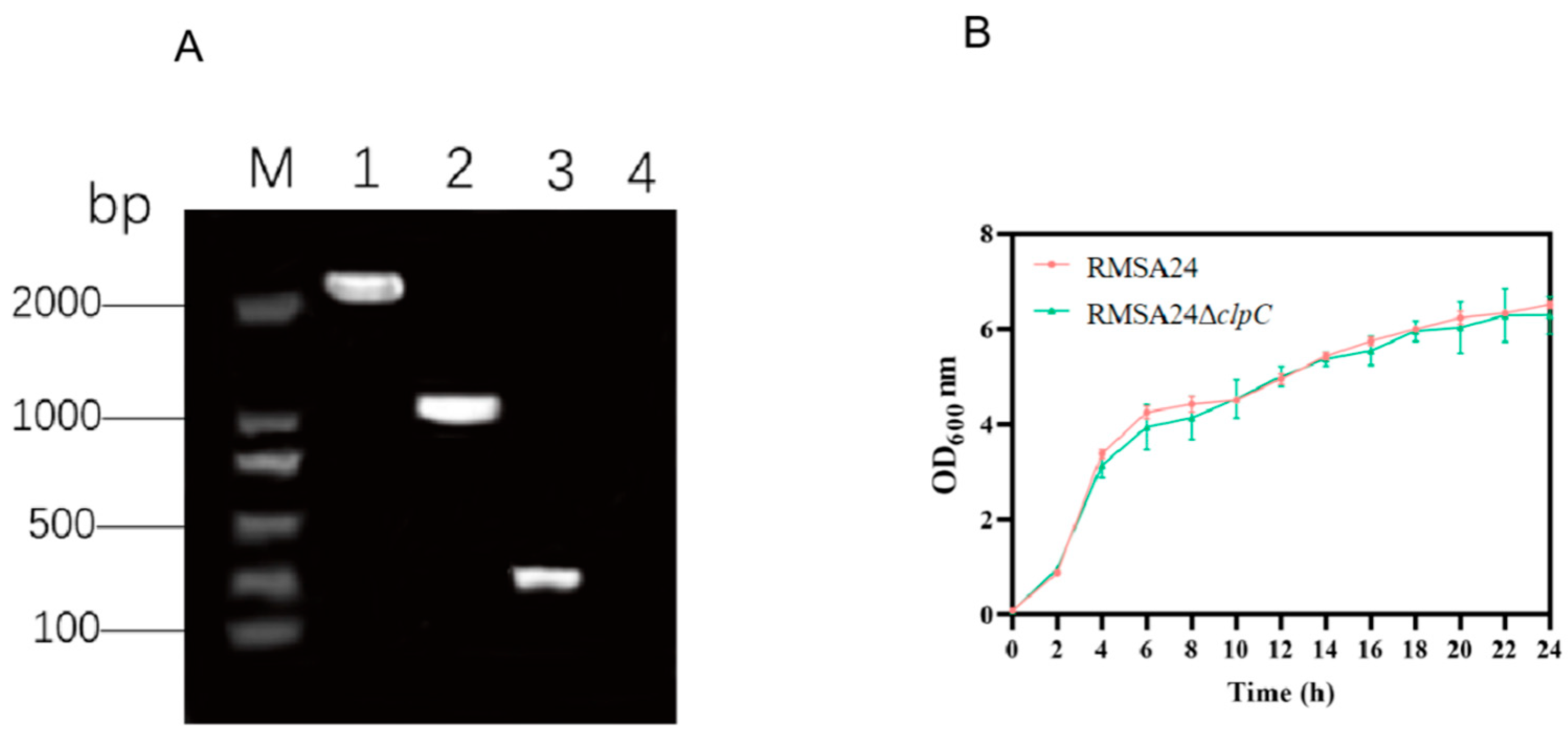
Genetic verification of clpC knockout in the RMSA24 PCR-based mutant strain: Using primers flanking the clpC locus, wild-type RMSA24 yielded a PCR product exceeding 2000 bp (Figure 1A, lane 1), and this product was the gene clpC. The mutant strain produced a ~1000 bp amplicon corresponding to the ermB resistance cassette insertion (Figure 1A, lane 2). Internal validation using check_clpC_in-F/check_clpC_in-R primers specific to the clpC coding sequence amplified the expected ~250 bp product from wild-type RMSA24 (Figure 1A, lane 3) but yielded no product from the mutant strain RMSA24ΔclpC (Figure 1A, lane 4); this product was a gene fragment in clpC, confirming complete deletion of the target gene. DNA sequencing of the PCR products further verified the precise replacement of clpC with the ermB resistance marker [12].
Figure 1.
Identification of the clpC mutant strain RMSA24ΔclpC (A): M: 2000 bp DNA marker; lane 1: WT; lane 2: RMSA24ΔclpC; lane 3: WT; lane 4: RMSA24ΔclpC; (B): Growth curves of strains RNSA24 and RMSA24ΔclpC.
To assess the impact of clpC deletion on bacterial fitness, growth kinetics of the RMSA24 and RMSA24ΔclpC strains were monitored spectrophotometrically at OD600. As shown in Figure 1B, the RMSA24ΔclpC mutant during the whole growth cycle was basically the same as that of the wild strain RMSA24, with both strains displaying similar lag phase duration, exponential growth rates, and maximum cell densities. These results indicate that clpC is dispensable for normal growth under the tested laboratory conditions.
3.2. Effect of clpC Knockout on Desiccation Tolerance in RMSA24
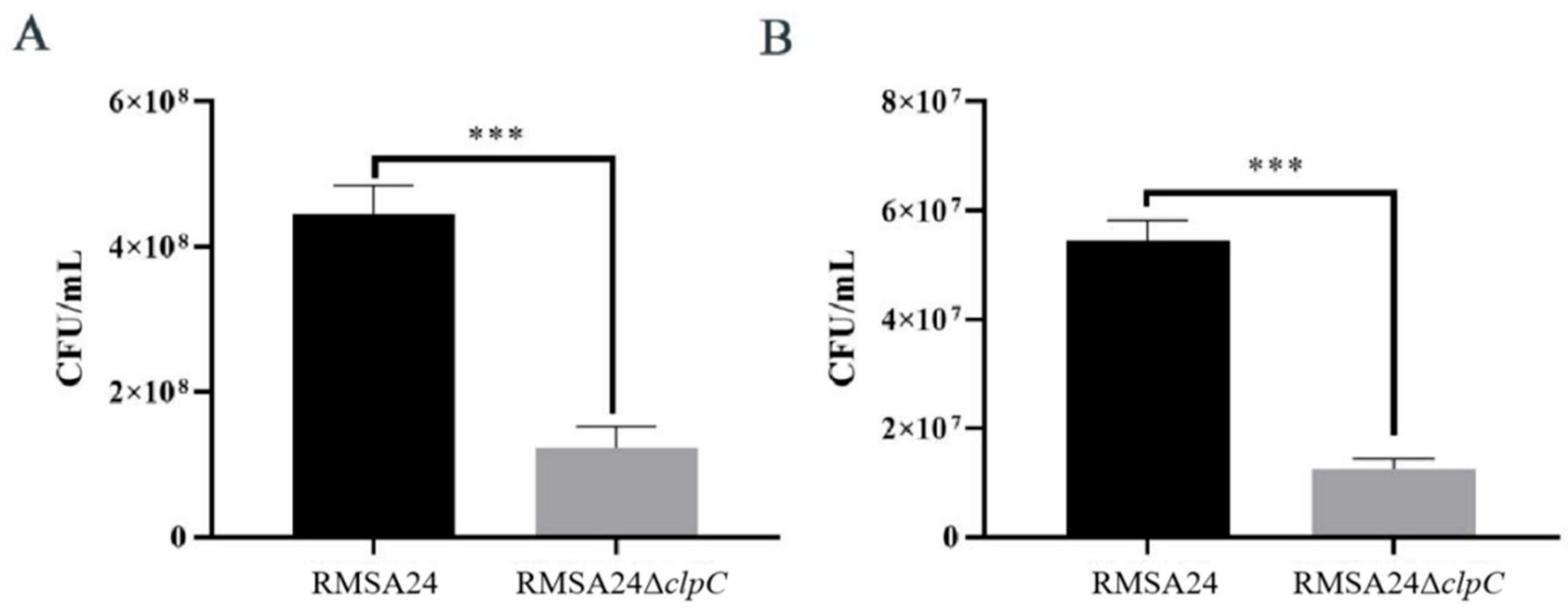
Dairy processing typically involves drying treatment to facilitate long-term storage and transportation. For this, we conducted controlled drying experiments comparing the viability of wild-type RMSA24 and the RMSA24ΔclpC mutant strain. Following dehydration, viable cell counts were determined by serial dilution plating at multiple time points. As demonstrated in Figure 2, significant differences in survival capacity were observed between the two strains. After 24 h of desiccation (Figure 2A), the clpC mutant exhibited a marked reduction in viability compared to the parental strain. This differential survival phenotype became even more pronounced after 48 h of drying (Figure 2B), indicating that the absence of clpC compromises the bacterium’s ability to withstand prolonged dehydration stress. Quantitative analysis revealed that the CFU of RMSA24ΔclpC was reduced 3.5-fold and 4.3-fold compared to wild-type RMSA24 after 24 and 48 h of desiccation, respectively.
Figure 2.
Viable counts of RMSA24 and RMSA24ΔclpC strains before and after drying treatment ((A): 24 h; (B): 48 h). ***, p < 0.001.
3.3. Effect of clpC Knockout on Thermotolerance in RMSA24
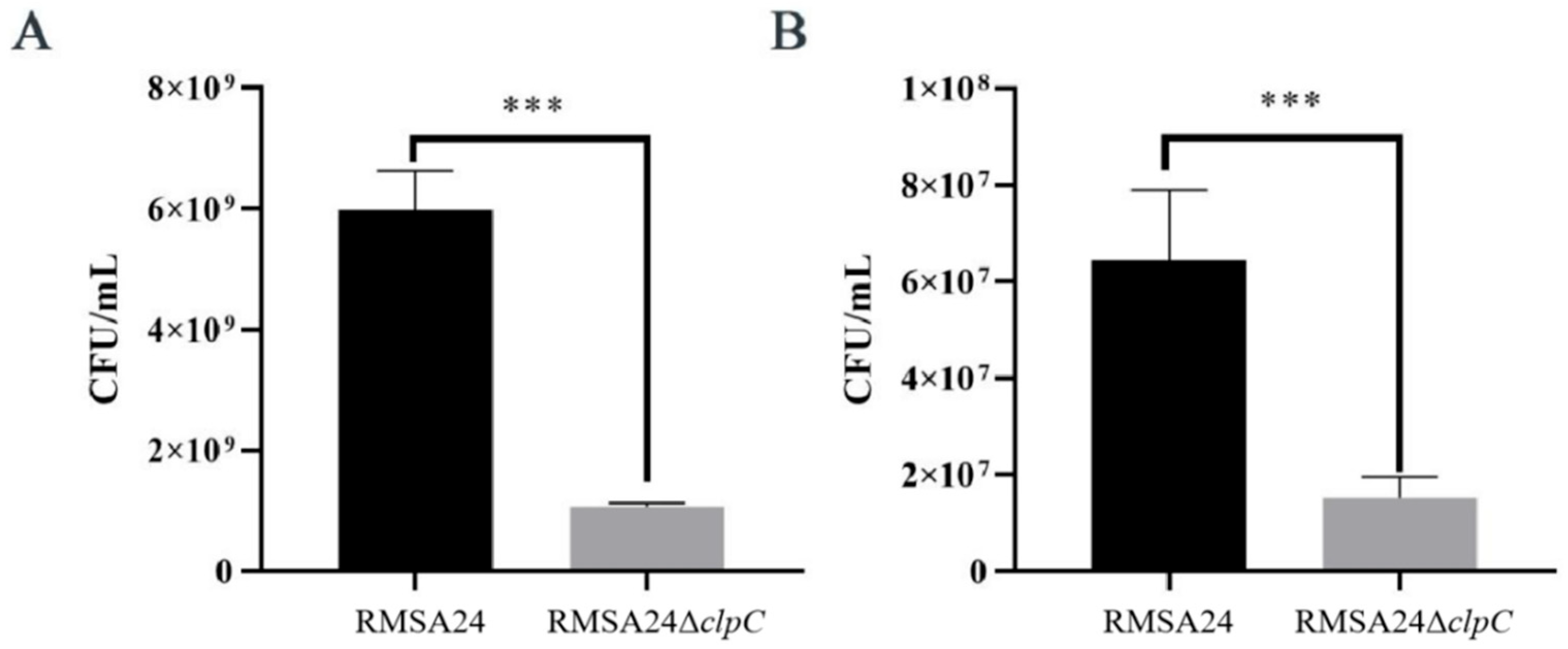
To investigate the role of clpC in bacterial thermotolerance, we assessed the survival capacity of wild-type RMSA24 and RMSA24ΔclpC under high-temperature stress conditions. As demonstrated in Figure 3, RMSA24ΔclpC exhibited significantly compromised thermotolerance compared to the parental strain. Following 10 min of heat exposure, RMSA24ΔclpC showed a 5.6-fold reduction in viable cell counts relative to wild-type RMSA24 (Figure 3A). This thermosensitive phenotype was sustained with prolonged heat stress, as the mutant strain displayed a 4.2-fold decrease in CFU after 30 min of high-temperature treatment (Figure 3B).
Figure 3.
Viable counts of RMSA24 and RMSA24ΔclpC strains before and after high-temperature treatment ((A): 10 min; (B): 30 min). ***, p < 0.001.
3.4. Effect of clpC Knockout on Oxidative Stress Resistance in RMSA24
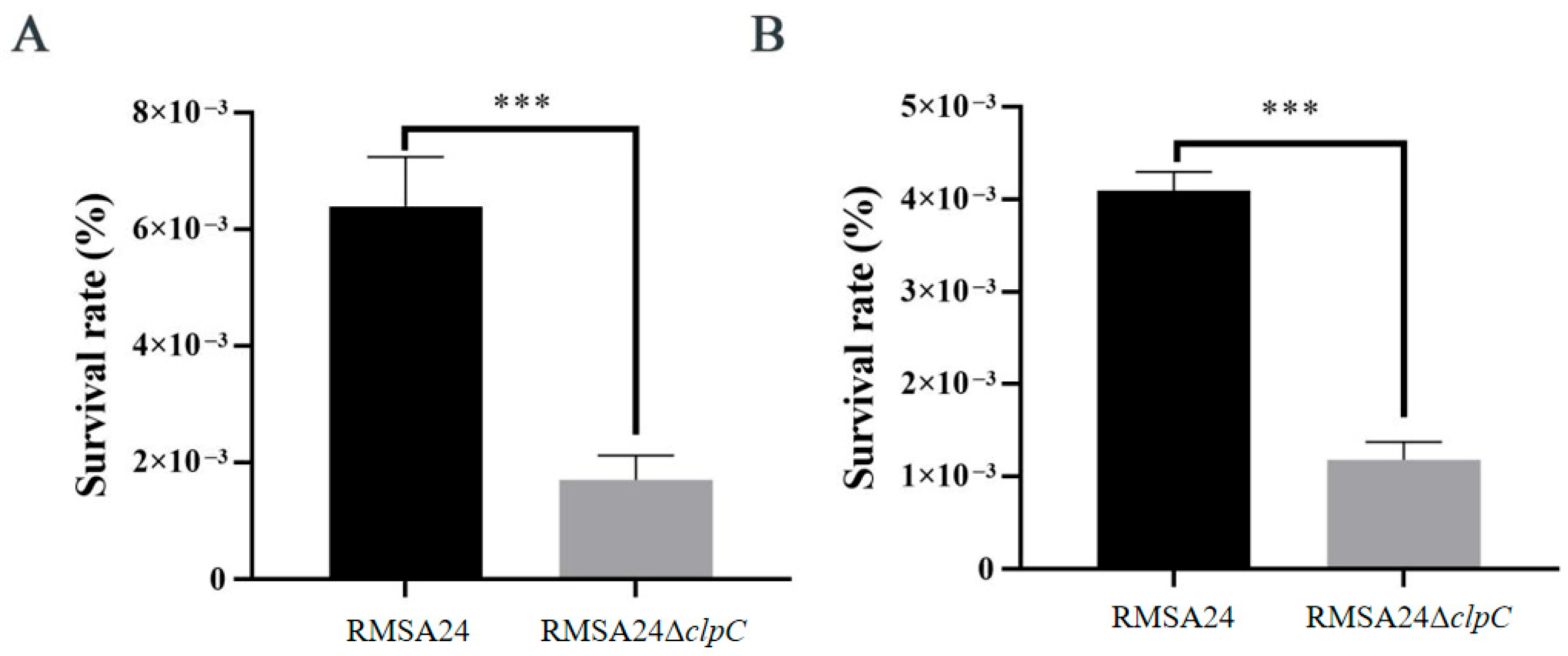
To investigate the role of clpC in bacterial oxidative stress resistance, we assessed the survival capacity of RMSA24 and RMSA24ΔclpC under H2O2 exposure. Both strains were challenged with 880 mM of H2O2 under standardized conditions, and viability was monitored over time. Following 30 min of H2O2 exposure, RMSA24ΔclpC showed markedly reduced survival rates compared to wild-type RMSA24 (Figure 4A). This sensitivity to oxidative stress was sustained with prolonged exposure, as the mutant strain continued to display significantly lower viability after 60 min of H2O2 treatment (Figure 4B).
Figure 4.
Survival rate of strains RMSA24 and RMSA24ΔclpC after H2O2 treatment ((A): 30 min; (B): 60 min). ***, p < 0.001.
3.5. Effect of clpC Knockout on Hyperosmotic Stress Tolerance in RMSA24
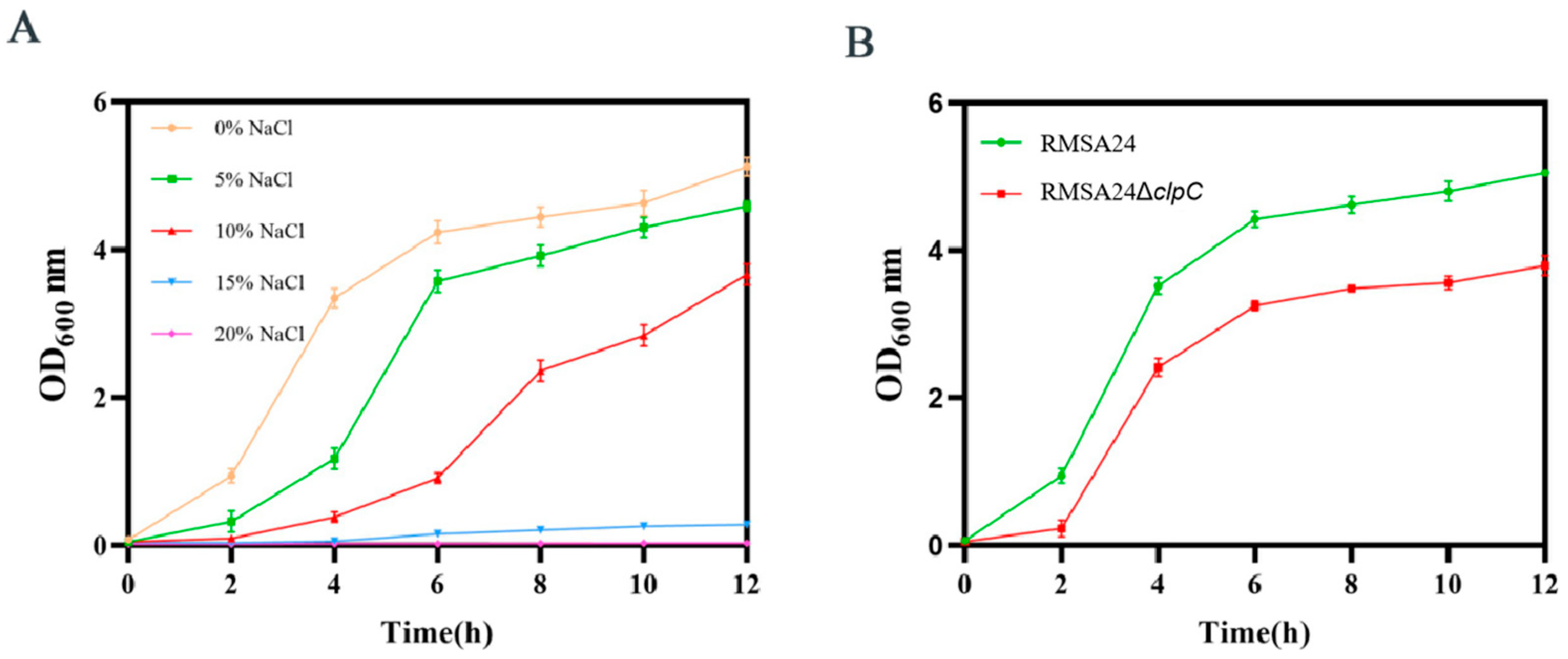
We first established the salinity tolerance threshold of the parental RMSA24 strain by monitoring growth across a NaCl concentration gradient (0–20% w/v) in TSB medium. As shown in Figure 5A, NaCl exposure exerted a concentration-dependent inhibitory effect on RMSA24 growth, with complete growth arrest observed at 20% NaCl. This concentration-dependent inhibition aligns with established mechanisms where hyperosmotic conditions impair bacterial growth through plasmolysis, protein denaturation, and disruption of cellular homeostasis. Based on these baseline data, we selected 5% NaCl (approximately 0.85 M) as a sub-lethal stress condition to evaluate the contribution of clpC to osmotic stress tolerance. Under these standardized hyperosmotic conditions, the RMSA24ΔclpC mutant exhibited significantly impaired growth compared to the wild-type strain (Figure 5B). The mutant strain displayed extended lag phase duration and reduced exponential growth rate, indicating that clpC deletion compromises the bacterium’s capacity to adapt to osmotic stress.
Figure 5.
Effect of different concentrations of NaCl on the growth of strains RMSA24 and RMSA24ΔclpC ((A): different concentrations of salt added; (B): with 5% NaCl added).
3.6. Effect of clpC Knockout on Biofilm Formation in RMSA24
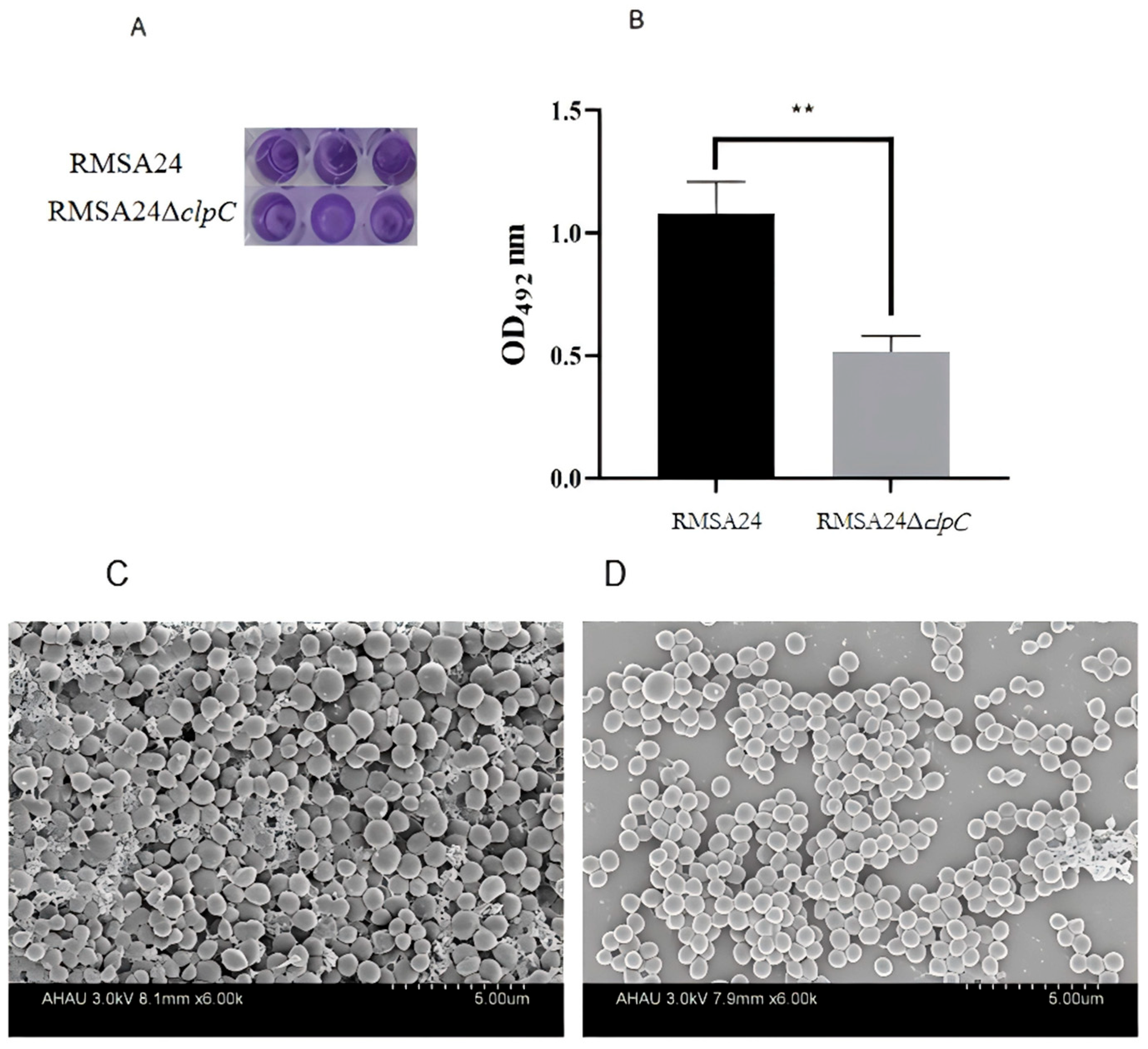
We conducted a comprehensive analysis comparing biofilm formation capacity between wild-type RMSA24 and the RMSA24ΔclpC mutant strain using the standardized crystal violet assay. As demonstrated in Figure 6A, visual inspection revealed marked differences in biofilm biomass between the two strains. Spectrophotometric quantification at 492 nm confirmed that the wild-type RMSA24 produced significantly more biofilm biomass than the clpC knockout strain (Figure 6B). To further characterize the structural differences in biofilm architecture, SEM imaging revealed that wild-type RMSA24 formed dense, three-dimensional biofilm structures with extensive extracellular matrix production (Figure 6C). In contrast, the RMSA24ΔclpC mutant exhibited sparse, poorly developed biofilms with minimal extracellular matrix deposition (Figure 6D). This structural deficiency indicates that clpC deletion not only reduces total biofilm biomass but also compromises the development of mature biofilm architecture.
Figure 6.
Detection of biofilm formation in strains RMSA24 and RMSA24ΔclpC ((A): a photograph of biofilms in the 96-well plates after staining with crystal violet; (B): CVS measured by optical density at 492 nm; (C): SEM of RMSA24; (D): SEM of RMSA24ΔclpC). **, p < 0.01.
3.7. Transcriptomic Analysis of clpC Knockout in RMSA24
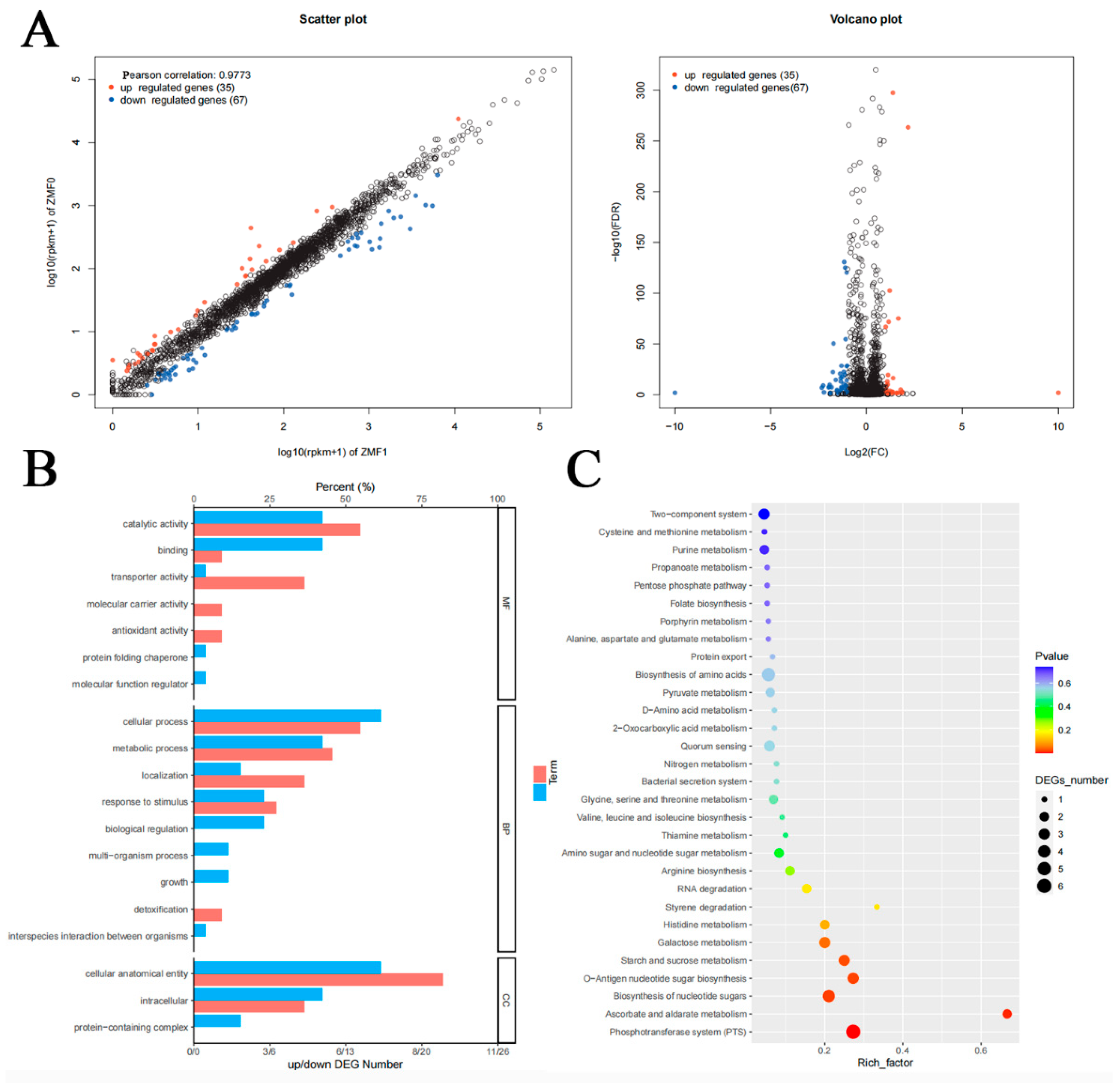
To elucidate the molecular mechanisms underlying the phenotypes observed in the RMSA24ΔclpC mutant, we performed comprehensive transcriptomic analysis comparing gene expression profiles between RMSA24 and the clpC knockout strain. RNA sequencing revealed significant alterations in global gene expression patterns, with a total of 102 differentially expressed genes (DEGs) identified using stringent criteria (adjusted p-value ≤ 0.05 and fold change ≥ 1.5). Among these, 35 genes were significantly upregulated while 67 genes were downregulated in the clpC mutant (Figure 7A). Notably, several key stress response- and biofilm-associated genes exhibited differential expression patterns. The clpC mutation resulted in the downregulation of isaA (immunodominant surface antigen A) and spa (staphylococcal protein A), both of which are implicated in biofilm formation and bacterial adhesion. Additionally, clpP (Casein lytic proteinase P) and the molecular chaperone gene dnaJ, critical for environmental stress adaptation and heat-shock response, were significantly downregulated in the mutant strain. These transcriptomic changes align with our phenotypic observations of compromised biofilm formation and reduced stress tolerance in the clpC knockout strain.
Figure 7.
Differentially expressed genes in transcriptome analysis of RMSA24 and RMSA24ΔclpC ((A): visualization scatter plot and volcano plot display; (B): GO secondary annotation diagram; (C): KEGG scatter map).
To systematically characterize the functional implications of these transcriptional changes, we performed Gene Ontology (GO) enrichment analysis, which revealed 19 significantly enriched GO terms (Figure 7B). The most prominent category was “cellular anatomical entity,” consistent with the established role of clpC in maintaining cellular structural integrity and metabolic regulation. Kyoto Encyclopedia of Genes and Genomes (KEGG) pathway analysis identified 30 significantly enriched pathways, with metabolic pathways representing the most significantly affected functional category (Figure 7C).
4. Discussion
This study provides the first comprehensive characterization of clpC in S. aureus RMSA24 isolated from raw milk, revealing its critical role as a global regulator of stress tolerance and biofilm formation in this important foodborne pathogen. Our findings demonstrate that clpC functions as a central hub coordinating bacterial responses to multiple environmental stresses encountered during food production and preservation, including thermal stress, desiccation, oxidative challenge, and hyperosmotic conditions. In industrial production, bacteria are subject to various environmental stress factors, such as high temperature and high pressure [19]. The Clp protein complex is crucial for the reactivation and folding of damaged proteins under stress conditions [20]. The importance of the heat-shock proteins ClpX and ClpP of S. aureus has been confirmed in terms of stress resistance and pathogenicity [21,22]. Our data indicate that the mutant can enhance the sensitivity to heat shock. Additionally, the expression level of clpP in the transcriptome data decreases along with the mutation. From this, it can be inferred that clpC affects the emergency response under high-temperature conditions by influencing the expression of clpP.
It was reported that clpC cannot affect the resistance of Staphylococcus aureus to hydrogen peroxide [18]. But these experiments were conducted using bacteria that were in the exponential phase. However, when using the stationary phase strain, clpC can affect the hydrogen peroxide stress tolerance. Therefore, the growth stage seems to be important for the role of clpC on oxidative stress resistance. clpP plays a crucial role by degrading oxidized proteins to maintain the reduced environment in the cell [22]. Therefore, clpC may affect the emergency response under oxidative stress resistance by influencing the expression of clpP based on the transcriptome results.
The substantial reduction in biofilm biomass and altered architectural development observed in the RMSA24ΔclpC mutant indicates that clpC-mediated translation is essential for the transition from planktonic to sessile lifestyle [23]. This phenotype was corroborated by transcriptomic data showing the downregulation of isaA and spa. The dynamic process of biofilm formation, involving attachment, maturation, and dispersion phases [24,25,26,27], appears to be disrupted at multiple stages in the absence of functional clpC. This finding is particularly relevant given the established correlation between biofilm formation and stress tolerance in S. aureus [28,29]. The integration of phenotypic data with transcriptomic analysis reveals that clpC functions as a global regulator coordinating multiple adaptive responses. The identification of 102 DEGs, with significant enrichment in metabolic pathways and cellular structural components, suggests that clpC-mediated translational control extends beyond stress response to encompass fundamental cellular processes. The downregulation of isaA and spa in RMSA24ΔclpC provides mechanistic insight into the biofilm defect, as these genes encode surface proteins essential for bacterial adhesion and biofilm structural integrity [30]. Similarly, the reduced expression of clpP and dnaJ explains the compromised thermotolerance, as dnaJ functions as a co-chaperone with dnaK, and clpP can degrade damaged or erroneous proteins in the heat-shock response system [22]. These findings suggest that clpC may facilitate the selective translation of stress-responsive mRNAs and can promote the expression of various proteins under stress conditions like IsaA, Spa, ClpP, and DnaJ. Therefore, this change affects the ability of stress resistance. This finding is consistent with previous studies demonstrating that clpC domains I, II, and III are highly conserved and essential for stress adaptation [31].
The ability of S. aureus to survive pasteurization and persist in dairy products represents a significant public health risk, as evidenced by numerous dairy-associated foodborne illness outbreaks [32,33,34,35]. Our findings indicate that clpC is essential for bacterial survival under food-processing conditions, which helps to identify this gene as a potential target for novel intervention strategies. The multi-stress resistance conferred by clpC suggests that targeting this protein could enhance the efficacy of existing food preservation methods. For instance, combination treatments that inhibit clpC function while applying thermal or osmotic stress could achieve synergistic bacterial inactivation. Furthermore, the identification of clpC-regulated genes such as isaA, spa, clpP, and dnaJ provides potential biomarkers for predicting bacterial survival capacity in food matrices.
5. Conclusions
This study establishes clpC as a previously unrecognized determinant of environmental robustness in S. aureus RMSA24 isolated from raw milk. Our findings showed that the deletion of clpC in the raw milk isolate RMSA24 decreased survival under heat, oxidative, osmotic, and desiccation challenges and reduced biofilm biomass and mean thickness. Transcriptome analysis revealed that the mutant downregulated the heat-shock chaperone gene clpP and dnaJ and the biofilm matrix genes spa and isaA, implicating clpC in a regulatory network that couples protein homeostasis to biofilm architecture. Our data indicate that clpC governs both stress-protective translation and the expression of adhesion/exopolysaccharide genes, positioning it as a dual-function node for intervention. Targeting clpC via small-molecule inhibitors or anti-clpC peptide–PNA antisense oligomers could weaken biofilm persistence and potentiate lethal sensitization, providing a next-generation strategy to curtail S. aureus contamination throughout the dairy continuum.
Author Contributions
Investigation, Methodology, Experiments, Writing—original draft, and Data curation, M.Z.; Methodology, Software, J.H.; Conceptualization, Writing—the review, Supervision, and Funding acquisition, T.X. All authors have read and agreed to the published version of the manuscript.
Funding
This work was financially supported by the National Natural Science Foundation of China (NSFC) (grant number: 32270194) and Research Funds of the Joint Research Center for Food Nutrition and Health of IHM (24242038).
Institutional Review Board Statement
Not applicable.
Informed Consent Statement
Not applicable.
Data Availability Statement
The original contributions presented in this study are included in the article. Further inquiries can be directed to the corresponding author.
Conflicts of Interest
The authors declare no conflicts of interest.
References
- Costa, F.G.; Mills, K.B.; Crosby, H.A.; Horswill, A.R. The Staphylococcus aureus regulatory program in a human skin-like environment. bioRxiv 2023. [Google Scholar] [CrossRef]
- González-Machado, C.; Capita, R.; Alonso-Calleja, C. Methicillin-Resistant Staphylococcus aureus (MRSA) in dairy products and bulk-tank milk (BTM). Antibiotics 2024, 13, 588. [Google Scholar] [CrossRef]
- Debeer, J.; Colley, J.; Cole, W.; Oliveira, A.; Waite-Cusic, J.; Soto, W. Staphylococcus aureus burden in frozen, precooked tuna loins and growth behavior during typical and “worst-case” processing Conditions. J. Food Prot. 2025, 88, 100539. [Google Scholar] [CrossRef]
- Kasela, M.; Ossowski, M.; Dzikoń, E.; Ignatiuk, K.; Wlazo, U.; Malm, A. The epidemiology of animal-associated methicillin-resistant Staphylococcus aureus. Antibiotics 2023, 12, 1079. [Google Scholar] [CrossRef] [PubMed]
- Gonzalez-Machado, C.; Alonso-Calleja, C.; Capita, R. Prevalence and types of methicillin-resistant Staphylococcus aureus (MRSA) in meat and meat products from retail outlets and in samples of animal origin collected in farms, slaughterhouses and meat processing facilities. A review. Food Microbiol. 2024, 123, 104580. [Google Scholar] [CrossRef] [PubMed]
- Freitas, R.G.K.J.; Assis, D.F.C.; Oliveira, D.M.R.T. Global prevalence of staphylococcal enterotoxins in food contaminated by Staphylococcus spp.—Systematic review and meta-analysis. J. Food Saf. 2024, 44, e13154. [Google Scholar] [CrossRef]
- Jiawei, S.; Hui, W.; Chengfeng, Z. Effect of biofilm on the survival of Staphylococcus aureus isolated from raw milk in high temperature and drying environment. Food Res. Int. 2021, 149, 110672. [Google Scholar] [CrossRef]
- Freitas, J.K.G.R.; Assis, C.F.D.; Oliveira, T.R.M.D. Prevalence of staphylococcal toxin in food contaminated by Staphylococcus spp.: Protocol for a systematic review with meta-analysis. PLoS ONE 2023, 18, e0282111. [Google Scholar] [CrossRef] [PubMed]
- Starkova, D.; Gladyshev, N.; Polev, D. First insight into the whole genome sequence variations in clarithromycin resistant Helicobacter pylori clinical isolates in Russia. Sci. Rep. 2025, 14, 20108. [Google Scholar] [CrossRef]
- Neuwald, A.F.; Aravind, L.; Spounge, J.L.; Koonin, E.V. AAA+: A class of chaperone-like ATPases associated with the assembly, operation, and disassembly of protein complexes. Genome Res. 1999, 9, 27–43. [Google Scholar] [CrossRef]
- Brandi, A.; Giangrossi, M.; Paoloni, S.; Spurio, R.; Giuliodori, A.; Pon, C. Transcriptional and post-transcriptional events trigger de novo infB expression in cold stressed Escherichia coli. Nucleic Acids Res. 2019, 47, 4638–4651. [Google Scholar] [CrossRef] [PubMed]
- Wang, H.; Hou, X.; Shen, J.; Wang, W.; Ye, Y.; Yu, J. Alternative sigma factor B reduces biofilm formation and stress response in milk-derived Staphylococcus aureus. LWT 2022, 162, 113515. [Google Scholar] [CrossRef]
- Chastanet, A.; Derré, I.; Nair, S.; Msadek, T. clpB, a novel member of the Listeria monocytogenes CtsR regulon, is involved in virulence but not in general stress tolerance. Bacteriology 2004, 186, 1165–1174. [Google Scholar] [CrossRef]
- Clarke, A.K. Variations on a theme: Combined molecular chaperone and proteolysis functions in Clp/HSP1000 proteins. J. Biosci. 1996, 21, 161–177. [Google Scholar] [CrossRef]
- Porankiewicz, J.; Wang, J.; Clarke, A.K. New insights into the ATP-dependent Clp protease: Escherichia coli and beyond. Mol. Microbiol. 1999, 32, 449–458. [Google Scholar] [CrossRef]
- Frees, D.; Chastanet, A.; Qazi, S.; Sørensen, K.; Hill, P.; Msadek, T.; Ingmer, H. Clp ATPases are required for stress tolerance, intracellular replication and biofilm formation in Staphylococcus aureus. Mol. Microbiol. 2004, 54, 1445–1462. [Google Scholar] [CrossRef]
- Donegan, N.P.; Thompson, E.T.; Fu, Z.; Cheung, A.L. Proteolytic regulation of toxin-antitoxin systems by ClpPC in Staphylococcus aureus. Bacteriology 2010, 192, 1416–1422. [Google Scholar] [CrossRef]
- Frees, D.; Sørensen, K.; Ingmer, H. Global virulence regulation in Staphylococcus aureus: Pinpointing the roles of ClpP and ClpX in the sar/agr regulatory network. Infect. Immun. 2005, 73, 8100–8108. [Google Scholar] [CrossRef]
- Pei, H.; Zhu, C.; Shu, F.; Lu, Z.; Wang, H.; Ma, K.; Wang, J.; Lan, R.; Shang, F.; Xue, T. Cody: An essential transcriptional regulator involved in environmental stress tolerance in foodborne Staphylococcu saureus rmsa24. Foods 2023, 12, 3166. [Google Scholar] [CrossRef]
- Ahmed, A.A.H.; Maharik, N.M.S.; Valero, A.; Kamal, S.M. Incidence of enterotoxigenic Staphylococcus aureus in milk and egyptian artisanal dairy products. Food Control 2019, 104, 20–27. [Google Scholar] [CrossRef]
- Hecker, M.; Schumann, W.; Volker, U. Heat-shock and general stress response in Bacillus subtilis. Mol. Microbiol. 1996, 19, 417–428. [Google Scholar] [CrossRef] [PubMed]
- Cebrian, G.; Sagarzazu, N.; Pagan, R.; Condon, S.; Manas, P. Development of stress resistance in Staphylococcus aureus after exposure to sublethal environmental conditions. Int. J. Food Microbiol. 2010, 140, 26–33. [Google Scholar] [CrossRef] [PubMed]
- Celano, B.; Pawlik, R.T.; Gualerzi, C.O. Interaction of Escherichia coli translation-initiation factor IF-1 with ribosomes. FEBS J. 2010, 178, 351–355. [Google Scholar] [CrossRef] [PubMed]
- Visioli, F.; Strata, A. Milk, dairy products, and their functional effects in humans: A narrative review of recent evidence. Adv. Nutr. 2014, 5, 131–143. [Google Scholar] [CrossRef]
- Lowy, F.D. Staphylococcus aureus Infections. N. Engl. Med. 1998, 339, 520–532. [Google Scholar] [CrossRef]
- Yin, W.; Wang, Y.; Liu, L.; He, J. Biofflms: The microbial “protective clothing” in extreme environments. Int. J. Mol. Sci. 2019, 20, 3423. [Google Scholar] [CrossRef]
- Guo, H.; Tong, Y.; Cheng, J.; Abbas, Z.; Li, Z.; Wang, J.; Zhou, Y.; Si, D.; Zhang, R. Biofilm and small colony variants—An Update on Staphylococcus aureus strategies toward drug resistance. Int. J. Mol. Sci. 2022, 23, 1241. [Google Scholar] [CrossRef]
- Lisa, M.; Yuri, U.; Kazuya, M. Fitness of spontaneous rifampicin-resistant Staphylococcus aureus isolates in a biofilm environment. Front. Microbiol. 2019, 10, 988. [Google Scholar] [CrossRef]
- Asao, T.; Kumeda, Y.; Kawai, T.; Shibata, T.; Oda, H.; Haruki, K.; Nakazawa, H.; Kozaki, S. An extensive outbreak of staphylococcal food poisoning due to low-fat milk in Japan: Estimation of enterotoxin A in the incriminated milk and powdered skim milk. Epidemiol. Infect. 2003, 130, 33–40. [Google Scholar] [CrossRef]
- Sadat, A.; Shata, R.R.; Farag, A.M.; Ramadan, H.; Alkhedaide, A.; Soliman, M.M.; Elbadawy, M.; Abugomaa, A.; Awad, A. Prevalence and characterization of PVL-Positive Staphylococcus aureus isolated from Raw Cow’s Milk. Toxins 2022, 14, 97. [Google Scholar] [CrossRef]
- Yang, T.; Zheng, W.; Wang, X. A novel hydrophobic peptide FGMp11: Insights into antimicrobial properties, hydrophobic sites on Staphylococcus aureus and its application in infecting pasteurized milk. Food Chem. Adv. 2024, 4, 100697. [Google Scholar] [CrossRef]
- Michel, A.; Agerer, F.; Hauck, C.R. Global regulatory impact of ClpP Protease of Staphylococcus aureus on regulons involved in virulence, oxidative stress response, autolysis, and DNA repair. J. Bacteriol. 2006, 188, 5783–5796. [Google Scholar] [CrossRef] [PubMed]
- Maudsdotter, L.; Imai, S.; Ohniwa, R.L.; Saito, S.; Morikawa, K. Staphylococcus aureus dry stress survivors have a heritable fitness advantage in subsequent dry exposure. Microbes Infect. 2015, 17, 456–461. [Google Scholar] [CrossRef]
- Beavers, W.N.; Skaar, E.P. Neutrophil-generated oxidative stress and protein damage in Staphylococcus aureus. Pathog. Dis. 2016, 74, ftw060. [Google Scholar] [CrossRef]
- Cebrián, G.; Sagarzazu, N.; Aertsen, A.; Pagán, R.; Condón, S.; Mañas, P. Role of the alternative sigma factor sigma on Staphylococcus aureus resistance to stresses of relevance to food preservation. Appl. Microbiol. 2009, 107, 187–196. [Google Scholar] [CrossRef] [PubMed]
Disclaimer/Publisher’s Note: The statements, opinions and data contained in all publications are solely those of the individual author(s) and contributor(s) and not of MDPI and/or the editor(s). MDPI and/or the editor(s) disclaim responsibility for any injury to people or property resulting from any ideas, methods, instructions or products referred to in the content. |
© 2025 by the authors. Licensee MDPI, Basel, Switzerland. This article is an open access article distributed under the terms and conditions of the Creative Commons Attribution (CC BY) license (https://creativecommons.org/licenses/by/4.0/).