


Abstract
Ilex guayusa Loes., known as guayusa, is a plant that has been used for generations by the indigenous peoples of the Ecuadorian Amazon for its medicinal properties, notably its stimulating effects. This bioactivity is primarily due to the presence of xanthine alkaloids such as caffeine, theobromine, and theophylline. In this study, the concentration of each alkaloid was determined in thirty populations throughout the Amazon region, with data ranging from 2065.0 mg/100 g to 364.8 mg/100 g for caffeine; 225.8 mg/100 g and 74.6 mg/100 g for theobromine; and 4.9 mg/100 g and 1.5 mg/100 g for theophylline. A statistical analysis was conducted on twenty-four guayusa populations by integrating alkaloid concentrations with altitude, climatic, and soil variables. Caffeine showed high variability among populations and was only weakly associated with elevation, whereas theobromine and theophylline were determined primarily by climatic and soil factors. These results indicate that methylxanthine accumulation in Ilex guayusa is driven by the combined influence of climatic and edaphic conditions rather than by a single environmental factor.
1. Introduction
The Amazon is home to the greatest plant biodiversity on the planet, accounting for 30% of all species [1,2,3]. In Ecuador, the Amazon region covers approximately half of the country’s total territory [4,5], and its natural boundary is the eastern foothills of the Andes mountain range, resulting in the presence of various types of ecosystems and climatic zones within the region, including: lowland evergreen forests, lowland evergreen forests flooded by whitewater, lowland evergreen forests flooded by blackwater, lowland floodplain palm forests, lowland lacustrine grasslands, piedmont evergreen forests, low montane evergreen forests, and low montane moist shrublands [6].
Some medicinal species, such as guayusa (Ilex guayusa Loes.), grow in more than one of the ecosystems mentioned above; therefore, a study of the variability of secondary metabolites based on location is warranted. Guayusa is a plant that has been cultivated for hundreds of years and is frequently used by the indigenous and mestizo cultures inhabiting the Ecuadorian Amazon rainforest [7,8].
Guayusa contains several notable secondary metabolites, including alkaloids, phenolic compounds, and terpenes [7], the most important of which, both in terms of concentration and bioactivity, are xanthine-type alkaloids such as caffeine, theobromine, and theophylline; caffeine can be found in high concentrations ranging from 1% to 3% [9], depending on the plant and the type of extraction method used. Caffeine is widely consumed worldwide for its stimulating properties, which can be both physical and mental [10,11,12,13,14,15,16], making it one of the most widely consumed alkaloids [17,18]. Theobromine is an alkaloid found in cacao (Theobroma cacao); like caffeine, it is a stimulant with effects on the cardiovascular system and overall well-being [19,20,21,22]. Theophylline is present in smaller amounts, with concentrations below 0.1%; its best-known property is acting as a bronchodilator [23,24].
The chemical composition varies and depends, among other factors, on altitude, ambient temperature, humidity, light intensity, soil type, and precipitation patterns [25,26,27]. Because guayusa grows throughout the Amazon region of Ecuador, it is important to analyze the concentration of each alkaloid, considering all provinces and various localities where the plant is cultivated and used for food and pharmaceutical purposes.
To supplement the above, we should mention that guayusa is considered one of the plant-based bioresources with the greatest commercial and economic potential within Ecuador’s biodiversity, generating approximately 12 million dollars in revenue [7], which makes it very important to identify the areas with the highest production of methylxanthines.
In this study, 30 guayusa samples were analyzed, collected from communities in Ecuador’s six Amazonian provinces; national parks and territories inhabited by uncontacted indigenous peoples were not included.
2. Materials and Methods
2.1. Reagents and Standards
Caffeine, Sigma-Aldrich St. Louis MO. USA, code C0750; Theobromine, Sigma-Aldrich, code T4500; Theophylline, Phyto Lab Reno NV. USA, code 82668; Ammonium hydroxide solution reagent, Sigma-Aldrich, code 221228; Dichloromethane anhydrous, Sigma-Aldrich, code 270997; Tetrahydrofuran 99.8%, Sigma-Aldrich, code 34865; Acetonitrile 99.8%, Sigma-Aldrich, code 34851.
2.2. Plant Material
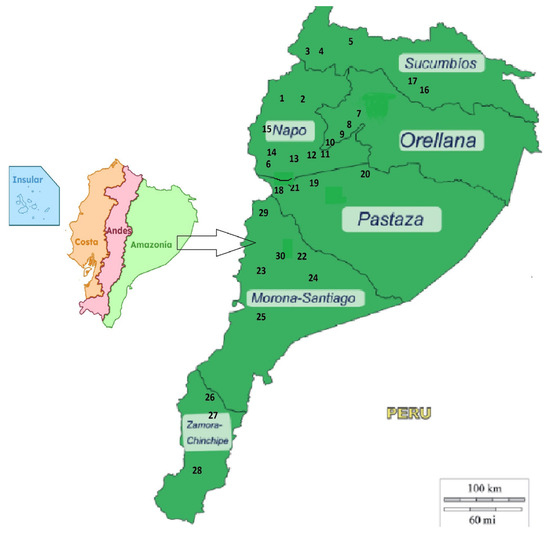
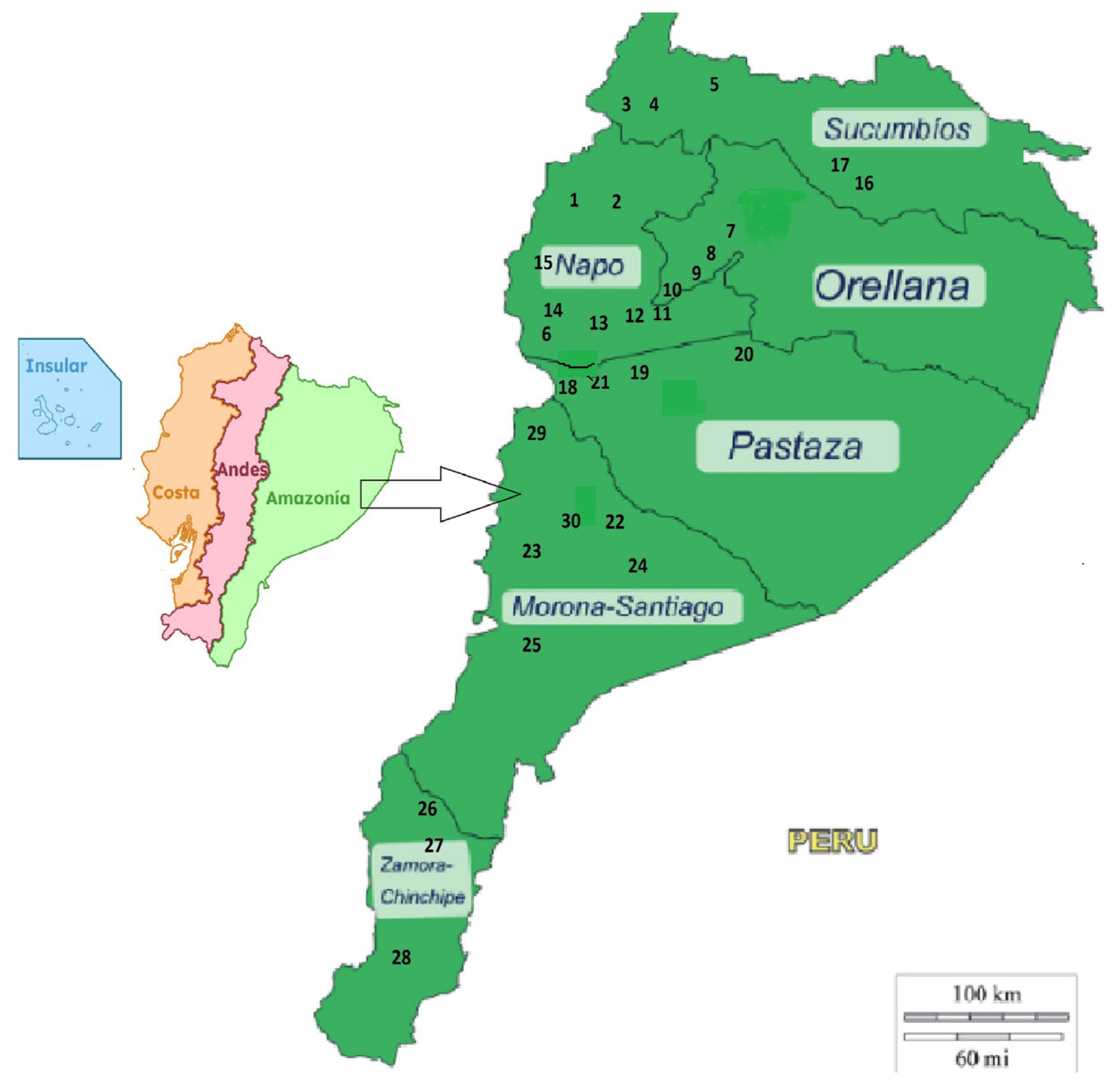
Plant material was collected at 30 sites across the six provinces of Ecuador’s Amazon region; no samples were collected in Yasuní National Park due to difficult access and the presence of indigenous peoples living in voluntary isolation within the park [28,29]. All of the locations are inhabited, either by indigenous peoples or by mestizo settlers. The plants collected were cultivated in small family farms. Details and locations of the collection sites are shown in Table 1 and Figure 1.
Table 1.
Information on the origin of the Guayusa samples.
Figure 1.
Location of guayusa samples in the Ecuadorian Amazon.
The collected specimens were identified at the herbarium of the Salesian Polytechnic University by botanist Marco Cerna.
2.3. Processing of Guayusa Simples
The guayusa leaves were carefully selected, discarding those that were damaged or stained. The plant material was washed and disinfected with a 1% sodium hypochlorite solution; the samples were then dried in a Binder KBF 240 oven at 60 °C for 48 h; finally, the plant material larger than 5 mm was ground in a mill. The material was stored at 4 °C in amber-colored containers.
2.4. Extraction of Alkaloids
Five grams of dried, crushed plant material were weighed on a Mettler Toledo ME204T/00 balance. The material was placed in an Erlenmeyer flask containing 50 mL of distilled water and shaken for 24 h in a Thermo Scientific 4310 orbital shaker. It was then filtered and made up to a volume of 50 mL with distilled water. Two milliliters of the aqueous extract were taken, 5 mL of 10% ammonium hydroxide were added, and the mixture was placed in a separatory funnel; finally, the xanthine alkaloids were extracted with 3 mL of dichloromethane on three occasions. The organic phase was transferred to a container and finally made up to 10 mL for injection into the HPLC, according to the methodology proposed by Radice & Vidari 2007 [30].
2.5. HPLC Analysis
The chromatographic conditions were adapted from Srdjenovic et al. (2008) [31] and modified for the present study. Analyses were performed using a Waters HPLC system equipped with a 1525 binary pump, a 2998 diode array detector, and Empower 3 software. Detection was carried out at 275 nm using a Hypersil GOLD LC-18 column (150 mm × 4.6 mm). Mobile phase A consisted of 1% tetrahydrofuran (THF), while mobile phase B was acetonitrile, using an A:B ratio of 90:10. The injection volume was 20 µL, the flow rate was 1 mL/min, and the total analysis time was 10 min. Calibration curves for caffeine, theobromine, and theophylline were experimentally obtained in the present study using six concentration levels (5, 10, 25, 50, 100, and 250 mg/L), with three replicates at each concentration level. The experimentally evaluated calibration range was 5–250 mg/L for all three analytes.
The limits of detection (LOD) and quantification (LOQ) were estimated from the calibration data obtained in the present study according to LOD = 3.3 Sa/m and LOQ = 10 Sa/m, where Sa is the standard deviation of the intercept of the respective calibration curve and m is its slope. The calculated LOD values were 0.28, 1.19, and 0.12 mg/L for caffeine, theobromine, and theophylline, respectively, whereas the corresponding LOQ values were 0.83, 3.61, and 0.35 mg/L. These calculated LOD and LOQ values should be distinguished from the experimentally evaluated calibration range (5–250 mg/L). Recovery was not experimentally determined in the present study. Therefore, LOD, LOQ, recovery, linear range, and correlation coefficient values previously reported by Srdjenovic et al. (2008) [31] are not used as validation parameters for the present method, since they were obtained under the chromatographic conditions of the original method rather than under the modified conditions applied in this study.
2.6. Data Filtering and Sample Size
Initially, 30 Ilex guayusa sampling sites were considered. Before conducting the statistical analyses, integrity and consistency criteria were applied to the environmental and analytical data. Sites lacking edaphic information in SoilGrids or presenting outlier values in methylxanthine concentrations were excluded. Outliers were identified using a statistical criterion based on a Z-score threshold of |Z| > 2, complemented by a Student’s t-test to assess significant differences from the variable mean (p < 0.05). The application of these criteria allowed only sites with complete edaphic information and without outlier concentration values to be retained, thereby minimizing potential distortions in model estimates. As a result of this filtering process, six sites—Jondachi, Tena, El Coca, Capihuara, Sucua, and Zumba HB—were excluded, yielding a final dataset of 24 sites for subsequent analyses.
2.7. Study Species and Sampling
This study was conducted on natural populations of Ilex guayusa Loes. distributed throughout Ecuador. Twenty-four sampling sites were selected to capture environmental variability across the species’ range. At each site, geographic coordinates (UTM) and elevation were recorded. Leaf samples were collected and subsequently analyzed to quantify three methylxanthines: caffeine, theobromine, and theophylline.
2.8. Environmental Variables
2.8.1. Bioclimatic Data
Bioclimatic variables (BIO1–BIO19) were obtained from the WorldClim database [32], which provides high-resolution spatial information. These variables represent temperature and precipitation patterns relevant to plant ecological responses.
2.8.2. Soil Data
Soil properties were obtained from SoilGrids and included sand and silt content, bulk density (bdod), soil pH (phh2o), cation exchange capacity (cec), soil organic carbon (soc), and nitrogen content [33].
2.9. Statistics
All analyses were performed in the R statistical environment (version 4.2.1). The relationship between methylxanthine composition and environmental variables was evaluated using redundancy analysis (RDA), implemented with the vegan package. Separate analyses were performed for bioclimatic and edaphic variables. Variables were selected using a forward-selection procedure with a significance threshold of p < 0.05. Model significance was assessed using permutation tests with 999 permutations.
The spatial structure of methylxanthine concentrations was evaluated using Moran’s I, implemented with the spdep package. For this purpose, a spatial weight matrix based on the four nearest neighbors (k = 4) was constructed and row-standardized. Statistical significance was assessed using permutation tests.
The relationship between elevation and methylxanthine concentrations was evaluated using linear and quadratic models. Model fitting and statistical tests were performed using base R functions. Model performance was compared using the adjusted coefficient of determination (adjusted R2) and analysis of variance (ANOVA).
Environmental variables were analyzed using their original values. Additionally, principal component analysis (PCA) was explored as a dimensionality-reduction strategy. However, models based on the first two principal components (PC1 and PC2) produced results consistent with those obtained using the original variables. Because individual predictors offer greater ecological interpretability, subsequent analyses were performed using the original variables.
3. Results
3.1. Determination of Caffeine, Theobromine, and Theophylline
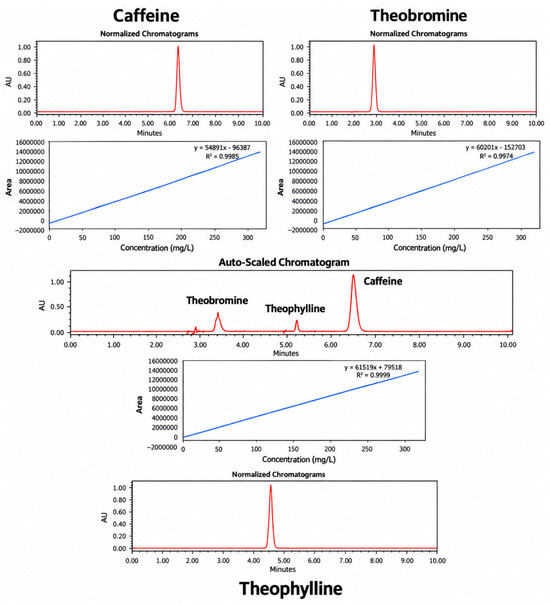
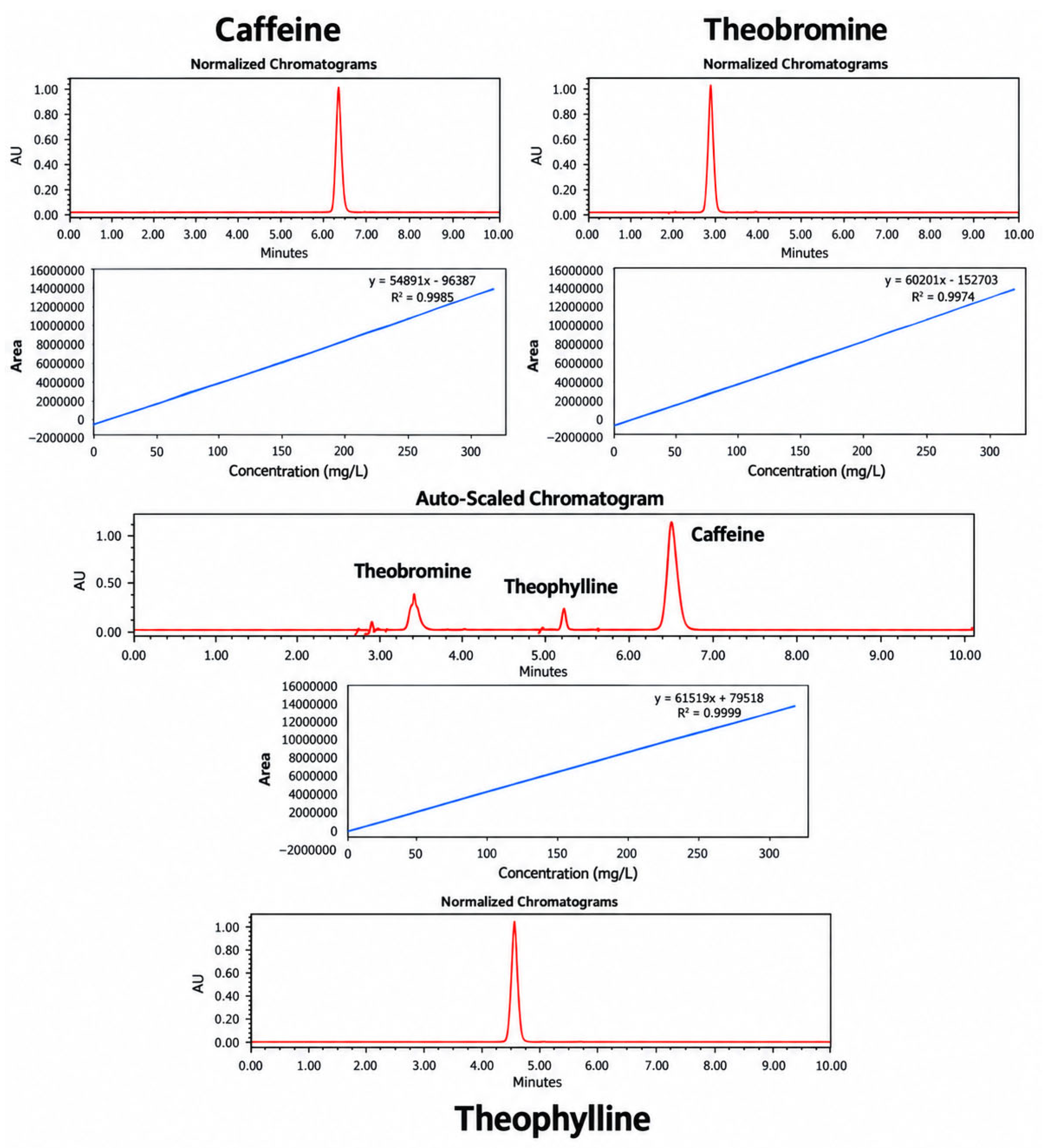
Caffeine, theobromine, and theophylline were detected in all 30 Guayusa samples. Caffeine is the most abundant alkaloid, with the highest concentration of 2065.0 mg/100 g found in the community of Taisha and the lowest of 364.8 mg/100 g in San José de Arajuno. The second most important alkaloid is theobromine, with the highest values reported in the community of Cotundo at 225.8 mg/100 g and the lowest in Jondachi at 74.6 mg/100 g. The concentration of theophylline is quite low compared to the two previous alkaloids, with just 4.9 mg/100 g in Cotundo and 1.5 mg/100 g in Jondachi. Figure 2 shows the chromatograms of the standards for each alkaloid and the chromatogram of one of the samples analyzed. Table 2 shows all the concentration values obtained for caffeine, theobromine, and theophylline for thirty guayusa samples analyzed.
Figure 2.
Comparative chromatographic separation of the alkaloids caffeine, theobromine, theophylline, and a guayusa sample. Calibration curve data: caffeine R2 = 0.999, Y = 54,556X – 86,926; theobromine R2 = 0.999, Y = 60,170X + 120,103; theophylline R2 = 0.999, Y = 61,605X + 64,852.
Table 2.
Concentrations of caffeine, theobromine, and theophylline in guayusa leaves from 30 locations in the Amazon region of Ecuador. Mean SD (n = 3), p < 0.05.
3.2. Analysis of Environmental, Soil Composition, and Geographic Factors Affecting the Presence of Xanthic Alkaloids
3.2.1. Effect of Altitude on Alkaloid Concentrations in Ilex guayusa
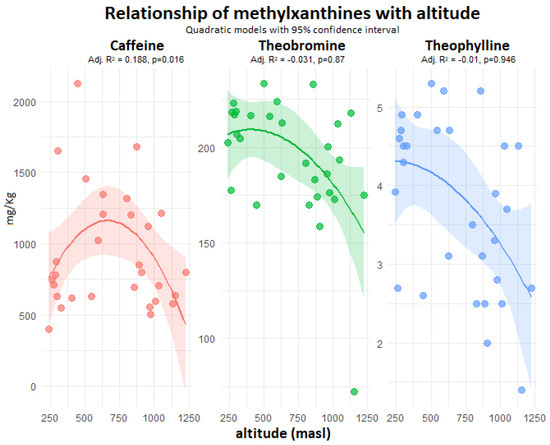
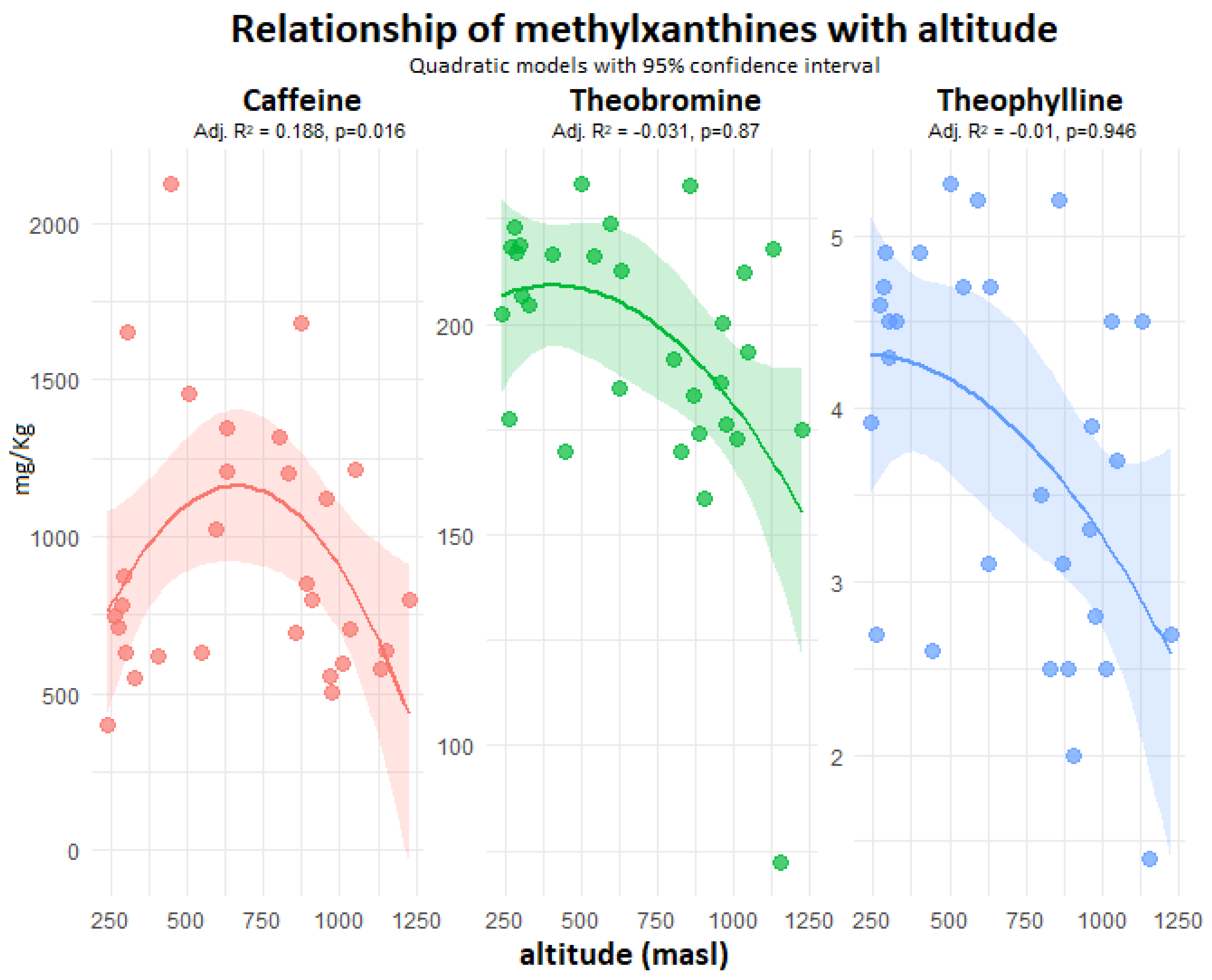
The quadratic models revealed that altitude has a selective and compound-dependent effect on alkaloid variability in Ecuadorian populations of Ilex guayusa. Of the three methylxanthines analyzed, only caffeine showed a significant response to the altitudinal gradient.
Caffeine showed a significant unimodal relationship with altitude (adjusted R2 = 0.188, p = 0.043), with both the linear and quadratic terms being significant (p < 0.05). The negative quadratic coefficient indicates a maximum concentration at around 629 m above sea level, followed by a decrease at higher elevations.
In contrast, neither theobromine nor theophylline showed significant relationships with altitude (adjusted R2 ≤ 0; p ≥ 0.43), and the inclusion of quadratic terms did not improve the fit of the models. Figure 3 illustrates the relationship between altitude and the concentration of each of the methylxanthines. These results indicate that altitude explains only a modest fraction of the variability in caffeine and has no detectable effects on the other methylxanthines.
Figure 3.
Relationship between methylxanthine concentration and altitude.
3.2.2. Effects of Bioclimatic Variables
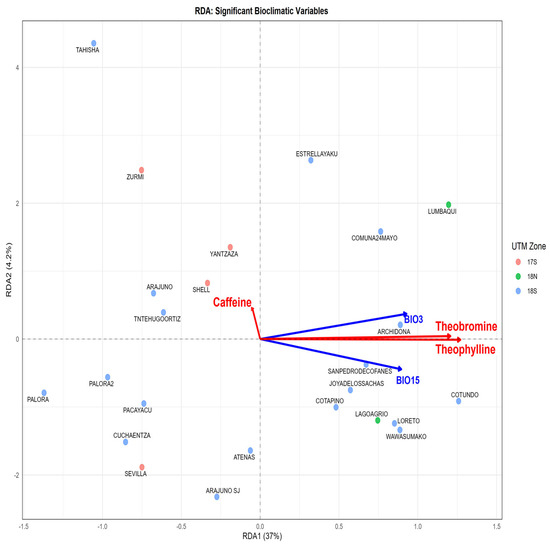
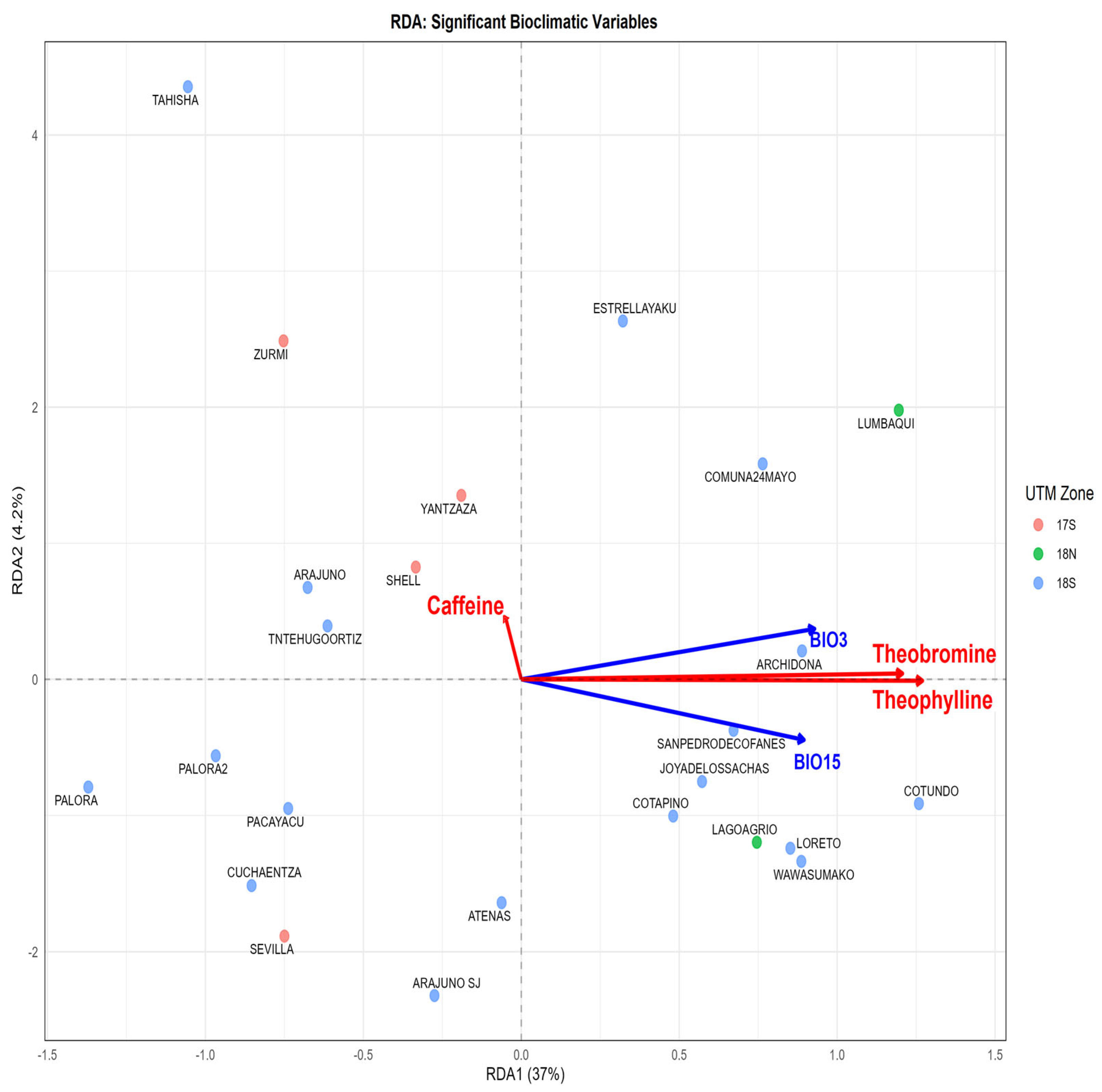
Redundancy analysis (RDA) identified isothermality (BIO3) and precipitation seasonality (BIO15) as the only significant bioclimatic predictors (p = 0.001), explaining 40% of the total variance (adjusted R2 = 0.356). Both variables showed strong positive associations with theobromine and theophylline:
- Theobromine: r = 0.638 (BIO15), r = 0.683 (BIO3);
- Theophylline: r = 0.686 (BIO15), r = 0.707 (BIO3).
In contrast, caffeine showed weak and nonsignificant correlations with these variables (|r| < 0.20).
The high loadings of BIO15 and BIO3 on the first axis of the RDA indicate that climatic variability is a major factor in the composition of methylxanthines, particularly for theobromine and theophylline. This climate-driven variability is evident in Figure 4.
Figure 4.
RDA of Bioclimatic Variables and Alkaloid Profiles across UTM Zones.
3.2.3. Effects of Edaphic Variables
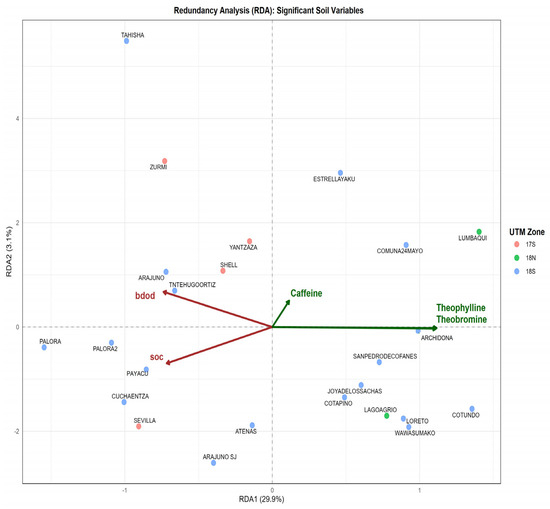
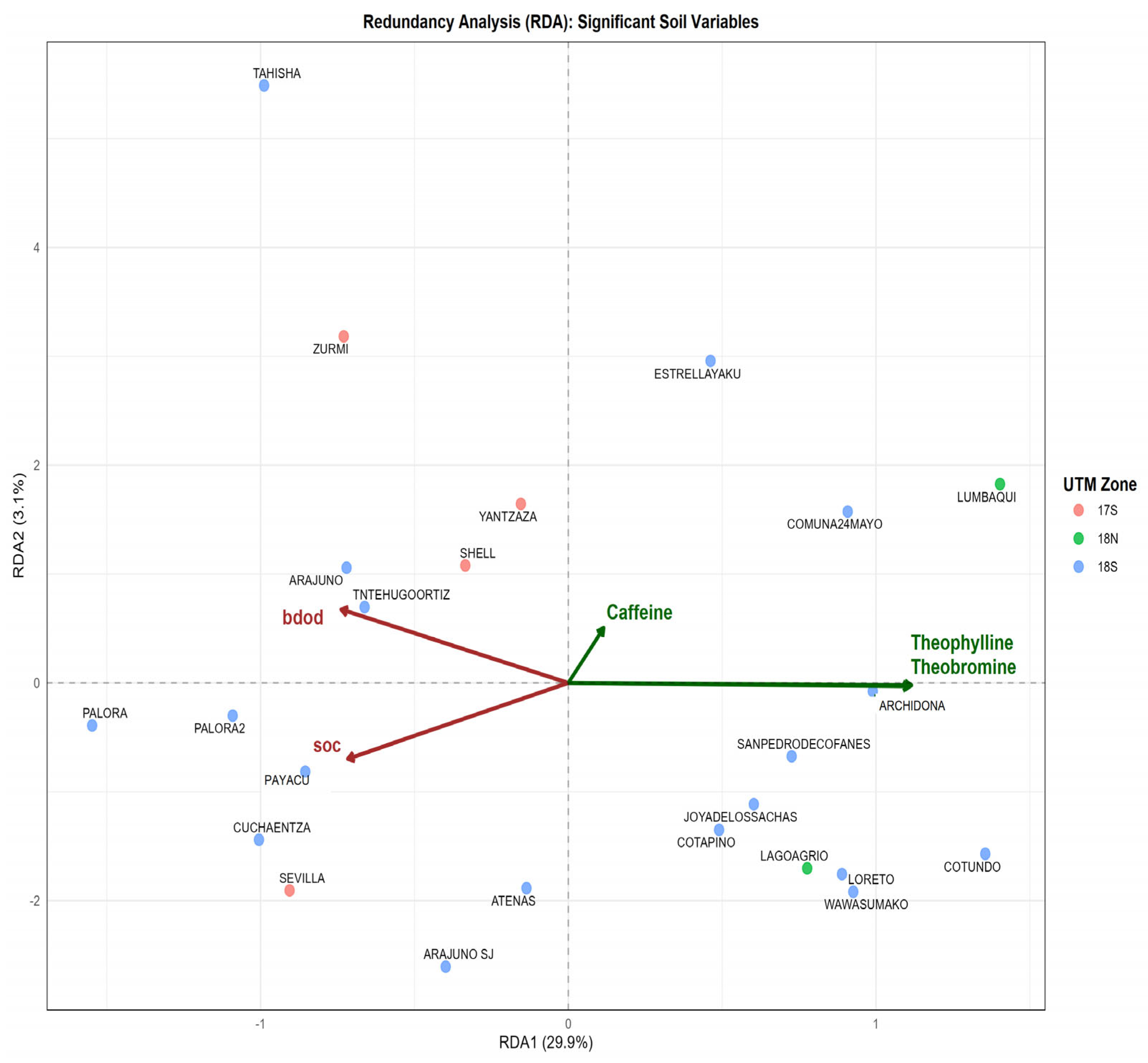
The edaphic RDA identified bulk density (bdod) and soil organic carbon (soc) as significant predictors (p = 0.003), explaining 30% of the total variance (adjusted R2 = 0.266).
Both variables showed consistent negative associations with theobromine and theophylline: Theobromine: r = −0.505 (bdod), r = −0.465 (soc); Theophylline: r = −0.504 (bdod), r = −0.471 (soc).
Caffeine showed weak correlations with soil variables (|r| ≤ 0.26), indicating a limited response to soil conditions.
The similar contributions of bdod and soc suggest that soil structure and organic matter act together to modulate alkaloid expression. The identified effects of soil variability are shown in Figure 5.
Figure 5.
Redundancy analysis (RDA) biplot of significant soil variables and methylxanthine concentrations (caffeine, theophylline, theobromine) across sampling sites.
3.2.4. Integrated Environmental Effects
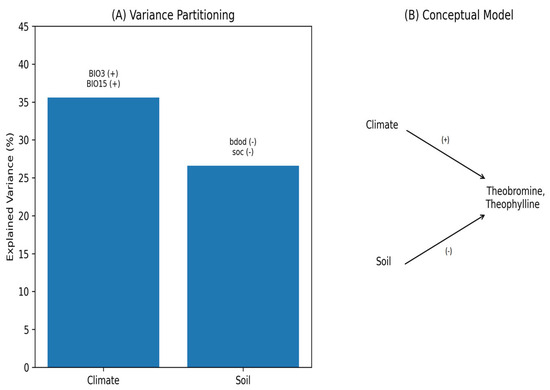
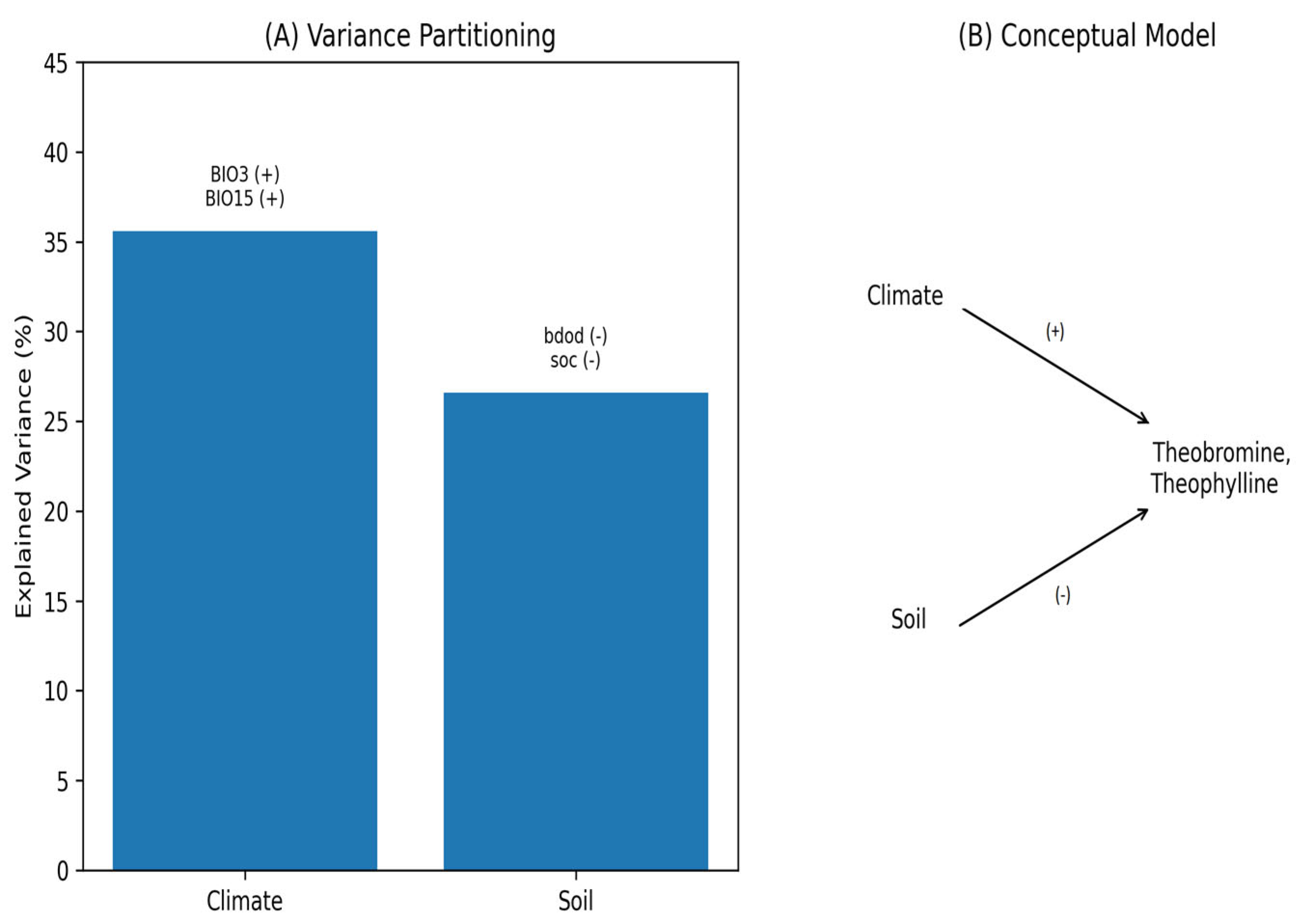
Bioclimatic and edaphic variables together explained 62.2% of the total variance, with 35.6% attributed to climate and 26.6% to soil.
These results indicate the following:
- Climatic factors are the primary determinants of variability in theobromine and theophylline;
- Soil properties act as secondary modulators;
- Caffeine shows a weak association with both environmental components.
The results are shown graphically in Figure 6.
Figure 6.
Variance partitioning and conceptual model of climate and soil effects on methylxanthine concentration.
3.2.5. Spatial Structure of Alkaloid Variability
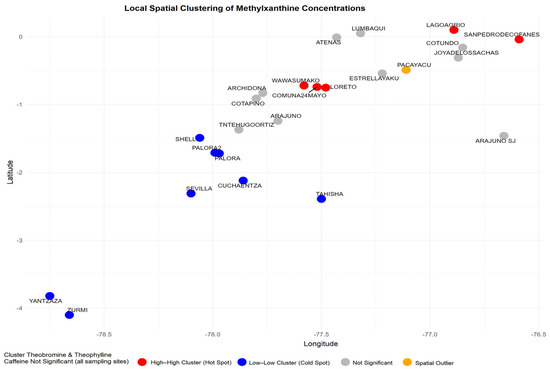
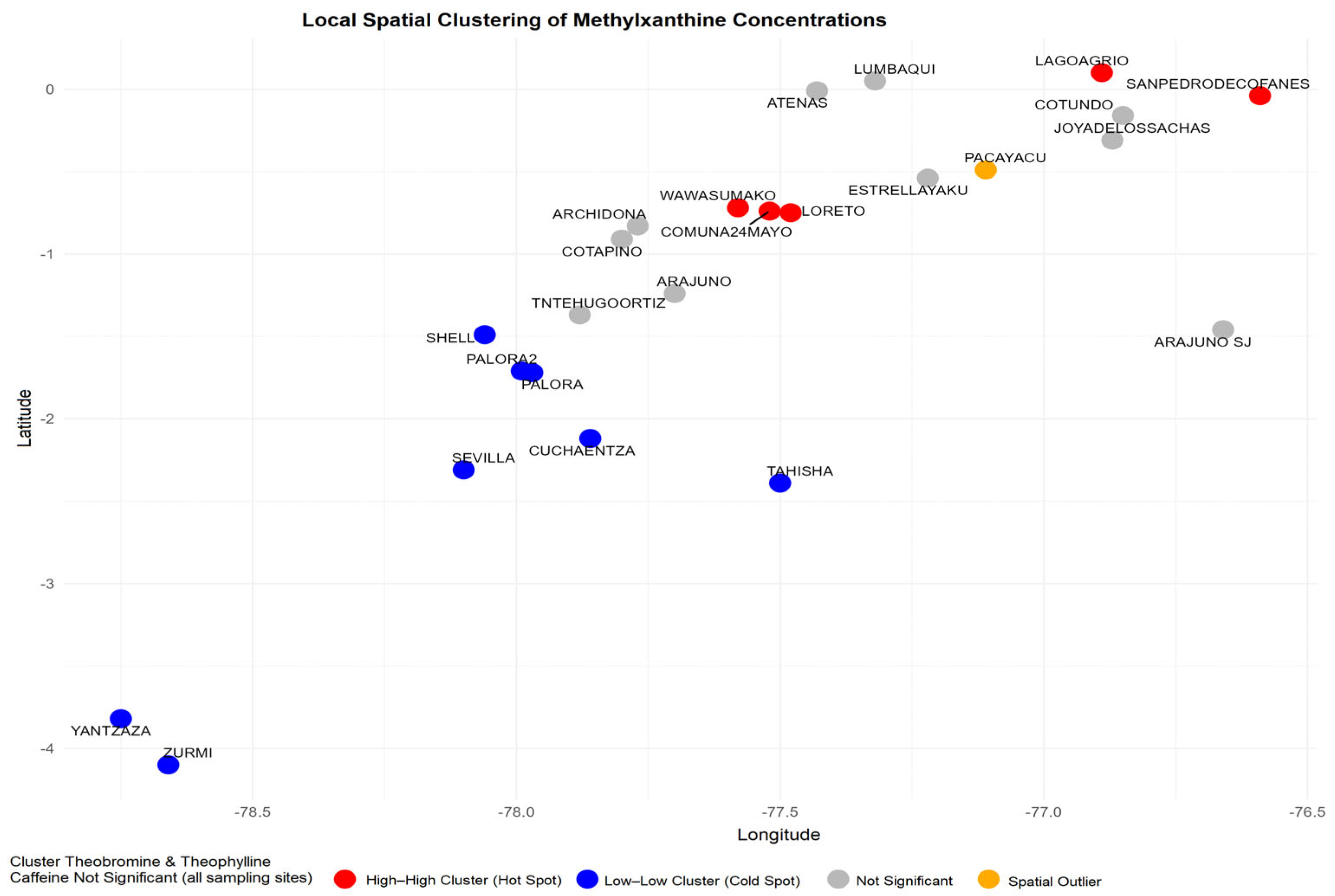
Spatial autocorrelation analysis revealed a strong and significant spatial structure (Moran’s I = 0.719, p < 0.001), indicating that alkaloid concentrations in Ilex guayusa are highly structured across the Ecuadorian landscape, as shown in Figure 7.
Figure 7.
Local spatial clustering of Methylxanthine concentrations.
This spatial pattern is consistent with the distribution of climatic and edaphic variables, suggesting that environmental heterogeneity underlies the observed spatial clustering, particularly in the case of theobromine and theophylline.
4. Discussion
Some findings from other studies on caffeine show maximum concentrations of around 3% [34,35]; in this study the highest value found was 2065.5 mg/100 g, approximately 2.07%. This difference stems from the extraction methodology, since other studies have used more efficient methods such as decoction or ultrasound-assisted extraction; despite this, the caffeine ranges are consistent with those reported in most previous studies [8,34,35,36]. Previous studies have reported theobromine levels ranging from 0.008% to 0.12% [8,36], which are lower than those reported in this study, where the percentage range is 0.08% to 0.23%. The reported concentration of theophylline is very low, which is consistent with the findings of this study, where the values range from 0.0015% to 0.0049%, while the literature indicates concentrations ranging from 0.002% to 0.005% [8]. The studies are consistent with previous research conducted on various guayusa samples.
4.1. Compound-Specific Environmental Regulations
The results indicate that the accumulation of methylxanthines in Ilex guayusa is not governed by a single common environmental gradient, but rather by compound-specific controls. Among the three alkaloids analyzed, caffeine showed a weak association with altitude, while theobromine and theophylline showed stronger relationships with climatic and edaphic variables. This pattern supports a model of differentiated metabolic regulation, in which different branches of the methylxanthine biosynthetic pathway respond independently to environmental stimuli.
This interpretation is consistent with the general evidence that plant secondary metabolism is highly sensitive to abiotic stress signals such as temperature, radiation, and water availability, which selectively regulate different classes of metabolites based on their ecological function [37]. In systems such as tea, it has been shown that environmental variation modifies secondary metabolite profiles in a compound-specific manner, depending on climatic and edaphic conditions [38]. In I. guayusa, recent studies have shown that light exposure, soil conditions, and leaf age collectively influence methylxanthine content [39].
4.2. Altitude as an Indirect Environmental Factor Affecting Caffeine Content
Although elevation significantly explained the variation in caffeine concentration, its explanatory power was limited (<20%), indicating that elevation acts primarily as a composite environmental indicator rather than as a direct causal factor. In tropical systems, altitudinal gradients generate simultaneous changes in temperature, solar radiation, and moisture availability, creating a set of environmental conditions that influence plant physiology and the synthesis of secondary metabolites [40]. Altitudinal gradients affect the production of secondary metabolites in plants by modifying both biotic and abiotic conditions [41].
This indirect role of altitude has been extensively documented. In tea, environmental factors associated with elevation influence secondary metabolites through complex interactions rather than through direct altitudinal effects [38]. Similarly, in coffee, biochemical composition is determined by climatic factors linked to altitude rather than by elevation alone [42,43]. The unimodal response observed for caffeine suggests that intermediate environmental conditions may optimize its biosynthesis.
4.3. Climate Control of Theobromine and Theophylline Accumulation
In contrast to caffeine, the absence of altitude-related effects for theobromine and theophylline suggests that other environmental variables better explain their variation. This is consistent with studies showing that environmental gradients can shape phenotypic variation [44]. Furthermore, genetic evidence in I. guayusa indicates that variables such as isothermality and thermal seasonality (BIO3 and BIO4) are key determinants of population structure [45], which reinforces the interpretation of altitude as an indirect gradient. This suggests that climatic gradients simultaneously influence metabolic expression and genetic differentiation.
The strong influence of isothermality (BIO3) and precipitation seasonality (BIO15) highlights the central role of climate variability in the composition of methylxanthines. Both variables were positively associated with theobromine and theophylline, suggesting that these compounds accumulate preferentially in environments with relative thermal stability and marked seasonal rainfall patterns. In contrast, caffeine was not significantly associated with any of the bioclimatic factors, suggesting distinct environmental regulation within the same group of alkaloids.
This pattern is consistent with evidence showing that climate is a key determinant of secondary chemistry in plants. Geographic, climatic, and edaphic factors have been linked to variation in metabolite profiles across various species [46]. Similarly, metabolomic studies of species in the genus Ilex have revealed chemodiversity associated with environmental conditions [9], while in Theobroma cacao, regional climatic variability has been shown to significantly affect metabolomic composition [47].
4.4. The Role of Soil in Metabolic Modulation
Soil variables, particularly bulk density and soil organic carbon, were significant predictors of alkaloid variability. Their negative association with theobromine and theophylline suggests that less is invested in these compounds under more favorable soil conditions.
This interpretation is consistent with ecological theories of resource allocation, which propose that plants balance their investment between growth and defense based on resource availability [48,49]. Under favorable conditions, plants tend to prioritize growth over the production of secondary metabolites.
However, the effect of soil depends on the environmental context. As has been described in Camellia sinensis L. crops, soil nutrients and management practices influence chemical quality, but their effects depend on interactions with other environmental factors [50]. In I. guayusa, it has been shown that soil properties interact with light and plant age to determine methylxanthine content [39], suggesting that soil acts as a modulator within a multifactorial system. Similarly, in Ilex paraguariensis, methylxanthine concentrations vary significantly depending on the developmental stage of the leaf, supporting the existence of differential regulation [51] that may be associated with soil nutritional characteristics.
4.5. Spatial Structure and Environmental Heterogeneity
The strong spatial autocorrelation observed indicates that chemically similar populations tend to cluster geographically. The geographic structuring of metabolic profiles has been extensively documented, showing that geographic location acts as an integrator of multiple environmental gradients [52]. In I. guayusa, the spatial distribution of climatic and edaphic variables likely explains the observed clustering.
Genetic evidence supports this interpretation. The presence of genetic clusters and the role of the environment in their formation indicate that spatial patterns reflect environment-induced genetic differentiation [45]. This behavior has also been reported in other plant species, for which climatic heterogeneity proved to be a determining factor in patterns of genetic differentiation and in the spatial distribution of populations [53].
4.6. Integration of Genetic and Environmental Variability
The proportion of unexplained variance is consistent with what is expected in ecological studies. Genotype × environment interactions are fundamental to phenotypic variation, especially in secondary metabolites [54].
In I. guayusa, moderate genetic diversity, high clonal diversity, and the existence of distinct genetic clusters have been reported [45]. This suggests that genetic structure contributes to the observed chemical variability.
Therefore, variation in methylxanthines can be interpreted as the result of the interaction between environmental gradients and underlying genetic diversity [55].
5. Conclusions
Overall, this study demonstrates that alkaloid variability in Ecuadorian populations of Ilex guayusa is primarily determined by climatic and edaphic factors, while altitude plays a secondary role specific to certain compounds.
The observed spatial pattern reflects environmental gradients and genetic differentiation. From an applied perspective, these results suggest that management practices such as planting within an optimal altitude range and soil selection—along with other factors described, such as shade control, site selection, and harvest timing—can influence phytochemical composition.
In another Ilex species, yerba mate (I. paraguariensis), it has been demonstrated that environmental conditions and cultivation systems affect chemical properties [55,56]. Similar results have been reported for I. guayusa [39], and its ethnobotanical significance underscores the importance of optimizing its production [57].
In conclusion, the integration of climatic, edaphic, spatial, and genetic factors is essential for understanding and optimizing secondary metabolism in Ilex guayusa, which will benefit the plant’s emerging production and industrialization efforts aimed at improving the economic well-being of Amazonian communities and promoting the development of supplements and energy drinks.
Author Contributions
Conceptualization, P.N. and C.L.; methodology, P.N. and C.L.; software, C.L. and E.O.; validation, C.L., P.N. and J.C.; formal analysis, C.L. and E.O.; investigation, P.N. and J.C.; resources, P.N.; data curation, M.Y.; writing—original draft preparation, P.N.; writing—review and editing, M.Y.; visualization, C.L.; supervision, C.L. and P.N.; project administration, P.N.; funding acquisition, P.N. All authors have read and agreed to the published version of the manuscript.
Funding
This research received no external funding.
Data Availability Statement
The original contributions presented in this study are included in the article. Further inquiries can be directed to the corresponding author.
Acknowledgments
We would like to thank Ana Falcón and Vanessa Quisphe, in the Natural Pharmaceutical Products program, for their work.
Conflicts of Interest
The authors declare no conflicts of interest.
References
- Guayasamin, J.M.; Ribas, C.C.; Carnaval, A.C.; Carrillo, J.D.; Hoorn, C.; Lohmann, L.G.; Riff, D.; Ulloa Ulloa, C.; Albert, J.S. Evolution of Amazonian biodiversity: A review. Acta Amaz. 2024, 54, e54bc21360. [Google Scholar] [CrossRef] [Scilit]
- Hopkins, M.J.G. Modelling the known and unknown plant biodiversity of the Amazon Basin. J. Biogeogr. 2007, 34, 1400–1411. [Google Scholar] [CrossRef] [Scilit]
- Cardoso, D.; Särkinen, T.; Alexander, S.; Amorim, A.M.; Bittrich, V.; Celis, M.; Daly, D.C.; Fiaschi, P.; Funk, V.A.; Giacomin, L.L.; et al. Amazon plant diversity revealed by a taxonomically verified species list. Proc. Natl. Acad. Sci. USA 2017, 114, 10695–10700. [Google Scholar] [CrossRef] [Scilit] [PubMed]
- Mestanza-Ramón, C.; Cuenca-Cumbicus, J.; D’orio, G.; Flores-Toala, J.; Segovia-Cáceres, S.; Bonilla-Bonilla, A.; Straface, S. Gold mining in the Amazon region of Ecuador: History and a review of its socio-environmental impacts. Land 2022, 11, 221. [Google Scholar] [CrossRef] [Scilit]
- Carrión-Mero, P.; Dueñas-Tovar, J.; Jaya-Montalvo, M.; Berrezueta, E.; Jiménez-Orellana, N. Geodiversity assessment to regional scale: Ecuador as a case study. Environ. Sci. Policy 2022, 136, 167–186. [Google Scholar] [CrossRef] [Scilit]
- De la Torre, L.; Navarrete, H.; Muriel, P.; Macía, M.J.; Balslev, H. La diversidad de ecosistemas en el Ecuador. In Enciclopedia de las Plantas Útiles del Ecuador; Herbario QCA de la Escuela de Ciencias Biológicas de la Pontificia Universidad Católica del Ecuador: Quito, Ecuador; Herbario AAU del Departamento de Ciencias Biológicas de la Universidad de Aarhus: Aarhus, Denmark, 2008; pp. 28–38. [Google Scholar]
- Noriega, P.; Moreno, E.; Falcón, A.; Quishpe, V.; Noriega, P.d.C. Guayusa (Ilex guayusa Loes.) Ancestral Plant of Ecuador: History, Traditional Uses, Chemistry, Biological Activity, and Potential Industrial Uses. Molecules 2025, 30, 2837. [Google Scholar] [CrossRef] [Scilit] [PubMed]
- Espinosa Andrade, A.; Vásquez-Castillo, W. Socio-cultural components related to the cropping, harvesting, and consumption of guayusa (Ilex guayusa Loes) in Amazonian Kichwa communities. PLoS ONE 2026, 21, e0349762. [Google Scholar] [CrossRef] [Scilit] [PubMed]
- Negrin, A.; Long, C.; Motley, T.J.; Kennelly, E.J. LC-MS Metabolomics and Chemotaxonomy of Caffeine-Containing Holly (Ilex) Species and Related Taxa in the Aquifoliaceae. J. Agric. Food Chem. 2019, 67, 5687–5699. [Google Scholar] [CrossRef] [Scilit] [PubMed]
- Fisone, G.; Borgkvist, A.; Usiello, A. Caffeine as a psychomotor stimulant: Mechanism of action. Cell. Mol. Life Sci. 2004, 61, 857–872. [Google Scholar] [CrossRef] [Scilit] [PubMed]
- Ikeda-Murakami, K.; Tani, N.; Ikeda, T.; Aoki, Y.; Ishikawa, T. Central nervous system stimulants limit caffeine transport at the blood–cerebrospinal fluid barrier. Int. J. Mol. Sci. 2022, 23, 1862. [Google Scholar] [CrossRef] [Scilit] [PubMed]
- Moreira-Silva, D.; Cunha-Rodrigues, M.C.; Speck, A.E.; Pandolfo, P. Cognitive stimulants: From caffeine to cannabinoids—Current and future perspectives. Front. Behav. Neurosci. 2025, 19, 1547970. [Google Scholar] [CrossRef] [Scilit] [PubMed]
- Becker, M.; Repantis, D.; Dresler, M.; Kühn, S. Cognitive enhancement: Effects of methylphenidate, modafinil, and caffeine on latent memory and resting state functional connectivity in healthy adults. Hum. Brain Mapp. 2022, 43, 4225–4238. [Google Scholar] [CrossRef] [Scilit] [PubMed]
- Kim, D.; Kim, S.; Yoon, M.; Um, M.Y.; Cho, S. Effects of Chronic Administration of Green Tea Ethanol Extract on Sleep Architecture in Mice: A Comparative Study with a Representative Stimulant Caffeine. Nutrients 2023, 15, 1042. [Google Scholar] [CrossRef] [Scilit] [PubMed]
- Sánchez-Martín, V.; Zhang, M.; Montero, L.; Ibáñez, E.; Mendiola, J.A.; del Castillo, M.D. Subcritical water extraction of Ilex guayusa for regulatory-compliant neuro-metabolic functional ingredients. Sustain. Chem. Pharm. 2026, 50, 102338. [Google Scholar] [CrossRef] [Scilit]
- Sequeda-Castañeda, L.G.; Bermeo-Pulido, L.D.; Piñeros-Castro, Y.; Costa, G.M.; Castillo-Quiroga, Y.M. Formulation and evaluation of a functional beverage from Ilex guayusa Loes. (Aquifoliaceae): Chemical analysis, antioxidant activity, and sensory acceptance. Food Humanit. 2026, 6, 101075. [Google Scholar] [CrossRef] [Scilit]
- Sharma, V.K.; Sharma, A.; Verma, K.K.; Gaur, P.K.; Kaushik, R.; Abdali, B. A Comprehensive Review on Pharmacological Potentials of Caffeine. J. Appl. Pharm. Sci. Res. 2023, 6, 16–26. [Google Scholar] [CrossRef] [Scilit]
- Knapik, J.J.; Steelman, R.A.; Trone, D.W.; Farina, E.K.; Lieberman, H.R. Prevalence of caffeine consumers, daily caffeine consumption, and factors associated with caffeine use among active duty United States military personnel. Nutr. J. 2022, 21, 22. [Google Scholar] [CrossRef] [Scilit] [PubMed]
- Zhang, M.; Zhang, H.; Jia, L.; Zhang, Y.; Qin, R.; Xu, S.; Mei, Y. Health benefits and mechanisms of theobromine. J. Funct. Foods 2024, 115, 106126. [Google Scholar] [CrossRef] [Scilit]
- Afzal, H.S.; Uttra, A.M.; Qasim, S.; Malik, A.; Mobashar, A. Theobromine as a multi-target therapeutic agent: Analgesic, anti-inflammatory, and anti-arthritic potential with network pharmacology insights. Ann. Pharm. Fr. 2025, 83, 1114–1129. [Google Scholar] [CrossRef] [Scilit] [PubMed]
- Gao, L.; Ge, W.; Peng, C.; Guo, J.; Chen, N.; He, L. Association between Dietary Theobromine and Cognitive Function in a Representative American Population: A Cross-Sectional Study. J. Prev. Alzheimer’s Dis. 2022, 9, 449–457. [Google Scholar] [CrossRef] [Scilit] [PubMed]
- Ademola, I.O.; Oboh, G.; Ademosun, A.O. Comparative Antioxidant and Anti-cholinesterase Properties of Catechin, Caffeine and Theobromine. Niger. J. Biochem. Mol. Biol. 2024, 39, 91–98. [Google Scholar] [CrossRef] [Scilit]
- Boylan, P.M.; Abdalla, M.; Bissell, B.; Malesker, M.A.; Santibañez, M.; Smith, Z. Theophylline for the management of respiratory disorders in adults in the 21st century: A scoping review from the American College of Clinical Pharmacy Pulmonary Practice and Research Network. Pharmacother. J. Hum. Pharmacol. Drug Ther. 2023, 43, 963–990. [Google Scholar] [CrossRef] [Scilit] [PubMed]
- Cho, S.H.; Cho, M.; Doo, M.; Ha, J.H. Pharmacological Evaluation of Respiratory Safety Following a Single Intravenous Administration of Theophylline in Sprague–Dawley Rats. J. Med. Food 2025, 28, 508–512. [Google Scholar] [CrossRef] [Scilit] [PubMed]
- Tariq, L.; Mangral, Z.A.; Islam, S.U.; Bhat, B.A.; Khuroo, A.A.; Dar, T.U.H. Chemodiversity and Biological Properties of Endangered Medicinal Herb Trillium govanianum along Himalayan Elevation Gradient. Chem. Biodivers. 2025, 22, e00471. [Google Scholar] [CrossRef] [Scilit] [PubMed]
- Hao, D.C.; Song, Y.; Xiao, P.; Zhong, Y.; Wu, P.; Xu, L. The genus Chrysanthemum: Phylogeny, biodiversity, phytometabolites, and chemodiversity. Front. Plant Sci. 2022, 13, 973197. [Google Scholar] [CrossRef] [Scilit] [PubMed]
- Joshi, M.; Tewari, G.; Pande, C.; Pandey, H.K.; Kharkwal, G.C.; Gangwar, A.; Tewari, L.M.; Bisht, M. Influence of altitudinal variation on the chemodiversity and in-vitro antioxidant potential of essential oils of Micromeria biflora (Buch.-Ham. ex D. Don) Benth. from Uttarakhand, India. Biochem. Syst. Ecol. 2025, 122, 105019. [Google Scholar] [CrossRef] [Scilit]
- Saqalli, M.; Béguet, E.; Maestripieri, N.; de Garine, E. “Somos Amazonia,” a New Inter-indigenous Identity in the Ecuadorian Amazonia: Beyond a Tacit Jus Aplidia of Ecological Origin? Perspect. Geogr. 2020, 25, 12–34. [Google Scholar] [CrossRef] [Scilit]
- Dominguez-Gaibor, I.; Talpă, N.; Bularca, M.C.; Hălălișan, A.F.; Coman, C.; Popa, B. Socioecological Dynamics and Forest-Dependent Communities’ Wellbeing: The Case of Yasuní National Park, Ecuador. Land 2023, 12, 2141. [Google Scholar] [CrossRef] [Scilit]
- Radice, M.; Vidari, G. Caracterización fitoquímica de la especie Ilex guayusa Loes. y elaboración de un prototipo de fitofármaco de interés comercial. La Granja 2007, 6, 3–11. [Google Scholar] [CrossRef] [Scilit]
- Srdjenovic, B.; Djordjevic-Milic, V.; Grujic, N.; Injac, R.; Lepojevic, Z. Simultaneous HPLC determination of caffeine, theobromine, and theophylline in food, drinks, and herbal products. J. Chromatogr. Sci. 2008, 46, 144–149. [Google Scholar] [CrossRef] [Scilit] [PubMed]
- World Clim. Data Base. Available online: https://www.worldclim.org/data/index.html (accessed on 8 June 2026).
- ISRIC. Data and Resources. Available online: https://isric.org/explore/ (accessed on 12 June 2026).
- Pardau, M.D.; Pereira, A.S.P.; Apostolides, Z.; Serem, J.C.; Bester, M.J. Antioxidant and Anti-Inflammatory Properties of Ilex guayusa Tea Preparations: A Comparison to Camellia sinensis Teas. Food Funct. 2017, 8, 4601–4610. [Google Scholar] [CrossRef] [Scilit] [PubMed]
- Lewis, W.H.; Kennelly, E.J.; Bass, G.N.; Wedner, H.J.; Elvin-Lewis, M.P.; Fast, D. Ritualistic Use of the Holly Ilex guayusa by Amazonian Jívaro Indians. J. Ethnopharmacol. 1991, 33, 25–30. [Google Scholar] [CrossRef] [Scilit] [PubMed]
- Cadena-Carrera, S.; Tramontin, D.P.; Bella Cruz, A.; Bella Cruz, R.C.; Müller, J.M.; Hense, H. Biological Activity of Extracts from Guayusa Leaves (Ilex guayusa Loes.) Obtained by Supercritical CO2 and Ethanol as Cosolvent. J. Supercrit. Fluids 2019, 152, 104543. [Google Scholar] [CrossRef] [Scilit]
- Akula, R.; Ravishankar, G.A. Influence of Abiotic Stress Signals on Secondary Metabolites in Plants. Plant Signal. Behav. 2011, 6, 1720–1731. [Google Scholar] [CrossRef] [Scilit] [PubMed]
- Ahmed, S.; Griffin, T.S.; Kraner, D.; Schaffner, M.K.; Sharma, D.; Hazel, M.; Leitch, A.R.; Orians, C.M.; Han, W.; Stepp, J.R.; et al. Environmental factors variably impact tea secondary metabolites in the context of climate change. Front. Plant Sci. 2019, 10, 939. [Google Scholar] [CrossRef] [Scilit] [PubMed]
- Fernández, M.A.; Ochoa, M.; Garzon, T.; Martinez, K.; Sinaluisa, I.; Pastuña-Fasso, J.V.; Espinosa de los Monteros-Silva, N.; Niño-Ruíz, Z.; Mogollón, N.G.S.; Diéguez-Santana, K. Exploring variability in the methylxanthine content within Ilex guayusa Loes: Impact of soil conditions, age, and sunlight exposure. ACS Agric. Sci. Technol. 2025, 5, 3. [Google Scholar] [CrossRef] [Scilit]
- Fick, S.E.; Hijmans, R.J. WorldClim 2: New 1-km Spatial Resolution Climate Surfaces for Global Land Areas. Int. J. Climatol. 2017, 37, 4302–4315. [Google Scholar] [CrossRef] [Scilit]
- Volf, M.; Laitila, J.E.; Kim, J.; Sam, L.; Sam, K.; Isua, B.; Sisol, M.; Wardhaugh, C.W.; Vejmelka, F.; Miller, S.E.; et al. Compound specific trends of chemical defences in Ficus along an elevational gradient reflect a complex selective landscape. J. Chem. Ecol. 2020, 46, 442–454. [Google Scholar] [CrossRef] [Scilit] [PubMed]
- Bertrand, B.; Vaast, P.; Alpizar, E.; Etienne, H.; Davrieux, F.; Charmetant, P. Comparison of bean biochemical composition and beverage quality of Arabica hybrids involving Sudanese-Ethiopian origins with traditional varieties at various elevations in Central America. Tree Physiol. 2006, 26, 1239–1248. [Google Scholar] [CrossRef] [Scilit] [PubMed]
- Joët, T.; Laffargue, A.; Descroix, F.; Doulbeau, S.; Bertrand, B.; de Kochko, A.; Dussert, S. Influence of environmental factors, wet processing and their interactions on the biochemical composition of green Arabica coffee beans. Food Chem. 2010, 118, 693–701. [Google Scholar] [CrossRef] [Scilit]
- Marcer, A.; Méndez-Vigo, B.; Alonso-Blanco, C.; Picó, F.X. Tackling intraspecific genetic structure in distribution models better reflects species geographical range. Ecol. Evol. 2016, 6, 2084–2097. [Google Scholar] [CrossRef] [Scilit] [PubMed]
- Erazo-García, M.P.; Guadalupe, J.J.; Rowntree, J.K.; Borja-Serrano, P.; Espinosa de los Monteros-Silva, N.; Torres, M.d.L. Assessing the genetic diversity of Ilex guayusa Loes., a medicinal plant from the Ecuadorian Amazon. Diversity 2021, 13, 182. [Google Scholar] [CrossRef] [Scilit]
- Karimi, A.K.; Krähmer, A.; Herwig, N.; Schulz, H.; Hadian, J.; Meiners, T. Variation of secondary metabolite profile of Zataria multiflora Boiss. populations linked to geographic, climatic, and edaphic factors. Front. Plant Sci. 2020, 11, 969. [Google Scholar] [CrossRef] [Scilit] [PubMed]
- Mihai, R.A.; Landazuri Abarca, P.A.; Tinizaray Romero, B.A.; Florescu, L.I.; Catană, R.; Kosakyan, A. Abiotic factors from different Ecuadorian regions and their contribution to antioxidant, metabolomic and organoleptic quality of Theobroma cacao L. beans, variety “Arriba Nacional”. Plants 2022, 11, 976. [Google Scholar] [CrossRef] [Scilit] [PubMed]
- Herms, D.A.; Mattson, W.J. The Dilemma of Plants: To Grow or Defend. Q. Rev. Biol. 1992, 67, 283–335. [Google Scholar] [CrossRef] [Scilit]
- Stamp, N. Out of the Quagmire of Plant Defense Hypotheses. Q. Rev. Biol. 2003, 78, 23–55. [Google Scholar] [CrossRef] [Scilit] [PubMed]
- Wen, B.; Zhang, X.; Ren, S.; Duan, Y.; Zhang, Y.; Zhu, X.; Wang, Y.; Ma, Y.; Fang, W. Characteristics of Soil Nutrients, Heavy Metals and Tea Quality in Different Intercropping Patterns. Agrofor. Syst. 2020, 94, 963–974. [Google Scholar] [CrossRef] [Scilit]
- Blum-Silva, C.H.; Chaves, V.C.; Schenkel, E.P.; Coelho, G.C.; Reginatto, F.H. The Influence of Leaf Age on Methylxanthines, Total Phenolic Content, and Free Radical Scavenging Capacity of Ilex paraguariensis Aqueous Extracts. Rev. Bras. Farmacogn. 2015, 25, 1–6. [Google Scholar] [CrossRef] [Scilit]
- Ahlstrand, N.I.; Reghev, N.H.; Markussen, B.; Hansen, H.C.B.; Eiriksson, F.F.; Thorsteinsdóttir, M.; Rønsted, N.; Barnes, C.J. Untargeted Metabolic Profiling Reveals Geography as the Strongest Predictor of Metabolic Phenotypes of a Cosmopolitan Weed. Ecol. Evol. 2018, 8, 6812–6826. [Google Scholar] [CrossRef] [Scilit] [PubMed]
- Ye, H.; Wu, J.; Wang, Z.; Hou, H.; Gao, Y.; Han, W.; Ru, W.; Sun, G.; Wang, Y. Population Genetic Variation Characterization of the Boreal Tree Acer ginnala in Northern China. Sci. Rep. 2020, 10, 13515. [Google Scholar] [CrossRef] [Scilit] [PubMed]
- Des Marais, D.L.; Hernandez, K.M.; Juenger, T.E. Genotype-by-Environment Interaction and Plasticity: Exploring Genomic Responses of Plants to the Abiotic Environment. Annu. Rev. Ecol. Evol. Syst. 2013, 44, 5–29. [Google Scholar] [CrossRef] [Scilit]
- Riachi, L.G.; Simas, D.L.R.; Coelho, G.C.; Marcellini, P.S.; Ribeiro da Silva, A.J.; Bastos de Maria, C.A. Effect of Light Intensity and Processing Conditions on Bioactive Compounds in Mate Extracted from Yerba Mate (Ilex paraguariensis A. St.-Hil.). Food Chem. 2018, 266, 317–322. [Google Scholar] [CrossRef] [Scilit] [PubMed]
- Nunes, M.T.; Ferreira, C.D.; de Moraes Flores, E.M.; Hoffmann, J.F.; Coradi, P.C. Elemental composition and physicochemical properties postharvest of the yerba mate produced in different cultivation systems and environments. Sci. Rep. 2026, 16, 15369. [Google Scholar] [CrossRef] [Scilit] [PubMed]
- Radice, M.; Scalvenzi, L.; Sablón Cossio, N. Ilex guayusa: A Systematic Review of Its Traditional Uses, Chemical Constituents, Biological Activities and Biotrade Opportunities. In Proceedings of the MOL2NET 2016, International Conference on Multidisciplinary Sciences; MDPI: Basel, Switzerland, 2016; pp. 1–7. [Google Scholar] [CrossRef] [Scilit]

Disclaimer/Publisher’s Note: The statements, opinions and data contained in all publications are solely those of the individual author(s) and contributor(s) and not of MDPI and/or the editor(s). MDPI and/or the editor(s) disclaim responsibility for any injury to people or property resulting from any ideas, methods, instructions or products referred to in the content. |
© 2026 by the authors. Licensee MDPI, Basel, Switzerland. This article is an open access article distributed under the terms and conditions of the Creative Commons Attribution (CC BY) license.