


Abstract
A new efficient coupled process to produce green solvent ethyl propionate was developed, which involved a fixed-bed reactor and pervaporation membrane separation. Firstly, the esterification reaction alone was investigated to explore reaction conditions and kinetics. Secondly, the pervaporation alone was investigated to explore separation conditions and the separation performance of pervaporation membranes. Then, the esterification reaction, coupled with pervaporation to enhance the reaction process, was investigated. Finally, the mathematical model of the esterification reaction, coupled with the pervaporation process, was established. The results showed that the conversion of ethanol reached 78.4% within 5 h. The reaction kinetics were obtained based on the pseudo-homogeneous (PH) model. Under the condition of a circulation flow rate of 100 L/h, the influence of concentration polarization could be well overcome, and a high level of pervaporation could be achieved. The pervaporation coefficients of the four-component system were obtained based on Fick’s law. The dehydration rate increased significantly with the increase in pervaporation temperature, which could effectively enhance the esterification reaction. The model could well predict the experimental results, and the experimental results were in good agreement with the theoretical calculations.
1. Introduction
A pervaporation membrane reaction (PVMR) device is a reactor that combines the membrane separation process with the catalytic reaction process in one unit. Membrane separation technology is a new, efficient separation technology developed in recent decades and gradually applied in industrial production. Due to the excellent performance that many other separation technologies cannot compare with, membrane separation technology has been increasingly widely applied in the petrochemical industry, medicine and health, food engineering, environmental engineering, biological engineering and other aspects in recent years, and has been highly valued by various industries [1,2,3].
Some of the most important components employed in the food, pharmaceutical, and cosmetic industries are synthesized using catalytic condensation and dehydration reactions that produce water as a byproduct. Since the 1990s, there has been a steadily growing interest in the application of membrane reactors for selective removal of the products from esterification reactors. Interestingly, the first work reporting a membrane reactor to improve esterification was a patent dating back to 1960 [4]. Esters are obtained by reacting alcohols and carboxylic acids in the presence of a homogeneous catalyst that traditionally consists of a mineral acid. Esters are very important components for the manufacture of medicines and solvents [5]. During ester synthesis, water is produced as a byproduct. In this case, water not only causes the inhibition mentioned previously (thermodynamic equilibrium limitation and catalyst deactivation), but may also hydrolyze the esters, thus hampering reaction efficiency. Many studies have shown that membrane reactors have obvious effects in improving the conversion rate and yield of esterification reactions, which is a promising application field in chemical engineering [5,6,7]. Wang et al. [8] reviewed the recent advances in polycrystalline metal–organic framework membranes for pervaporation, with emphasis on their fabrication strategies and separation performance. Wang et al. [2] developed hydrophobic ultrathin MOF membranes with tunable pore structures, and achieved efficient alcohol-permselective pervaporation, attributing the enhanced flux and selectivity to the precisely controlled aperture and surface wettability. Wang et al. [9] fabricated cationic covalent organic frameworks (COFs) filled with anionic alginate hybrid membranes, demonstrating that the electrostatic interactions between COFs and alginate matrix significantly improved the ethanol dehydration performance. Wu et al. [1] prepared COF/PDMS mixed matrix membranes for ethanol recovery via pervaporation, and found that the incorporation of COF particles created additional transport pathways, leading to an optimum filler loading that maximized the separation factor without sacrificing permeation flux. These recent studies collectively highlight the growing potential of advanced MOF and COF-based membrane materials in pervaporation applications, offering new insights into membrane design beyond the conventional reaction–separation coupling strategies reported earlier.
Pervaporated membrane reactors are classified according to the coupling method. At present, there are many coupling types, but they are generally divided into two categories [10]: First, the reactor and membrane separation element can be two different physical structural units, called an External Separation Unit (ESU). The second is to integrate the two structures into a single unit, called an In Situ Separation Unit (ISU). The ESU reactor has good operational advantages in terms of cleaning, maintenance and replacement of membrane materials because the membrane assembly is a single structural unit. In the ISU reactor, the membrane element and the reactor can be regarded as a whole structure. Generally, the membrane material is placed in the reactor. This coupling method avoids the waste of space and has the advantages of simplifying operation under experimental conditions, saving energy and raw materials, etc., and is widely used in biotechnology and biological processes where the feed phase is a gas or steam component. Although ISU shows better conversion results, the latter type of configuration is preferable when membrane durability is limited under the acidic conditions typical of esterification reactions.
Membrane material is the main component in a pervaporation membrane reactor. As a separation medium, a pervaporation membrane is a selectively permeable membrane, which is separated by the difference in dissolution and diffusion between the material and the membrane. Under the action of high temperature, the preferentially permeable component is driven through the membrane material by the vapor pressure difference on both sides of the membrane, and, finally, leaves the surface in a gaseous form under the action of the vacuum on the permeable side, and the refractory component is kept in the membrane to complete the solution separation. This membrane separation method differs from the traditional distillation process in that the components that pass through the membrane are generally referred to as permeates, while the substances that do not pass through the membrane are referred to as leachates. Under normal circumstances, the permeate will be condensed, collected in liquid form, and analyzed as a flux indicator of the membrane, while the permeate will be returned to the feedstock liquid to continue to participate in pervaporization. Because the pervaporation membrane determines the efficiency of separation, in the past few decades, a large number of researchers have invested their efforts in the preparation and research and development of pervaporation membrane materials, in order to prepare pervaporation membranes with excellent corrosion resistance, heat resistance and pressure resistance to be competent for more complex separation work. At present, there are many kinds of membrane materials in the field of pervaporation membrane separation. In this paper, according to the differentiation of membrane materials, there are mainly three categories: organic membrane materials, inorganic membrane materials, and organic–inorganic hybrid membranes composed of organic and inorganic materials. Inorganic materials have been widely concerned because of their good physical and chemical properties, adjustability and reusability. Polymer-based organic membranes dominate the current commercial market for separation due to their relatively low cost and good separation performance. However, the inherent limitations of conventional organic membranes in the development process have led to problems with dense state or low porosity, the inevitable permeability/selectivity tradeoff limitations of organic membranes, and their intolerance to polar solvents and short service life, which have hindered their widespread application in industry. Therefore, the preparation of organic–inorganic hybrid membranes to take into account the advantages of both is the current research focus of pervaporation membrane materials.
The hydrophilic silica film was formed by the sol–gel deposition method of ethyl orthosilicate (TEOS) on the porous alumina carrier, which was widely applied in early pervaporation solvent dehydration, but it was eventually found to have poor hydrothermal stability. Fortunately, the researchers found that adding organic group links to the structure can improve stability while still producing water-selective microporous materials, which is called “hybrid silica” or “organosilica”. This HybSi® membrane has a very high hydrothermal stability and can be used in the dehydration of various organics [11,12,13]. Li et al. [11] evaluated intermediate-layer engineering with composite sols for BTESM-derived hybrid silica membranes; the TiO2 SiO2 interlayer gave the best performance (flux 0.88 kg m−2 h−1, separation factor 1960), attributed to Ti–O–Si bridging bonds that enhanced hydrothermal stability. Ren et al. [12] developed a polyamide interlayer-supported ethylene-bridged silica membrane on PEEK for NMP dehydration, achieving a separation factor exceeding 10,000 and a flux of ~0.39 kg m−2 h−1 with excellent stability over 50 h. Liao et al. [14] fabricated flexible hybrid silica membranes on polymer substrates via ultrasonic spray coating, and obtained a water flux of 0.6 kg m−2 h−1 and a separation factor of ~1300 for isopropanol dehydration.
In this paper, the technology of pervaporation membrane separation is coupled with fixed-bed catalytic esterification. The aim is to strengthen the esterification reaction rate and ensure the high efficiency and stability of the esterification reaction. At the same time, the thermodynamic balance of ester production was broken and the yield of ester products was increased. Due to the removal of water, it is beneficial to subsequent operations such as product separation and purification. Compared with previous studies, the scientific novelty of this work lies in three aspects: (1) A systematic kinetic study of the esterification of ethanol with propionic acid catalyzed by NKC-9 resin was conducted using the pseudo-homogeneous model, and the activation energies of both forward and reverse reactions were determined under fixed-bed conditions. (2) The permeance values of all four components (ethanol, propionic acid, ethyl propionate, and water) through the HybSi® membrane were quantified as functions of temperature, providing a complete quaternary pervaporation transport model. (3) A coupled mathematical model integrating reaction kinetics and membrane separation was established and validated experimentally, enabling quantitative prediction of the coupled process performance. This integrated modeling approach for the ethanol–propionic acid–ethyl propionate–water quaternary system has not been reported previously.
2. Materials and Methods
2.1. Materials
Ethanol (EtOH, C2H6O, 99.7%, Shanghai, China), propionic acid (PA, C3H6O2, 99%, Shanghai, China) and ethyl propionate (EP, C5H10O2, 99%, Shanghai, China) were all purchased from Shanghai Aladdin Biochemical Technology Co. Ltd. The acid ion-exchange resin NKC-9 was supplied by the Chemical Plant of Nankai University, China. The pervaporation membranes, hydrophilic Hybsi® (organic–inorganic hybrid silica membrane), were purchased from Pervatech BV, the Netherlands. A more detailed description of these membranes can be found in previous papers.
2.2. Methods
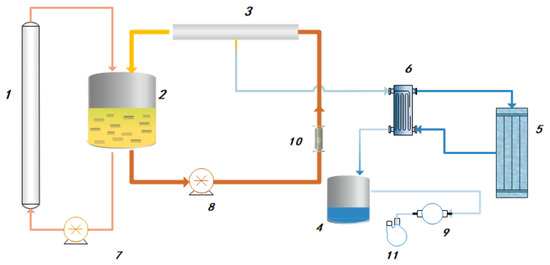
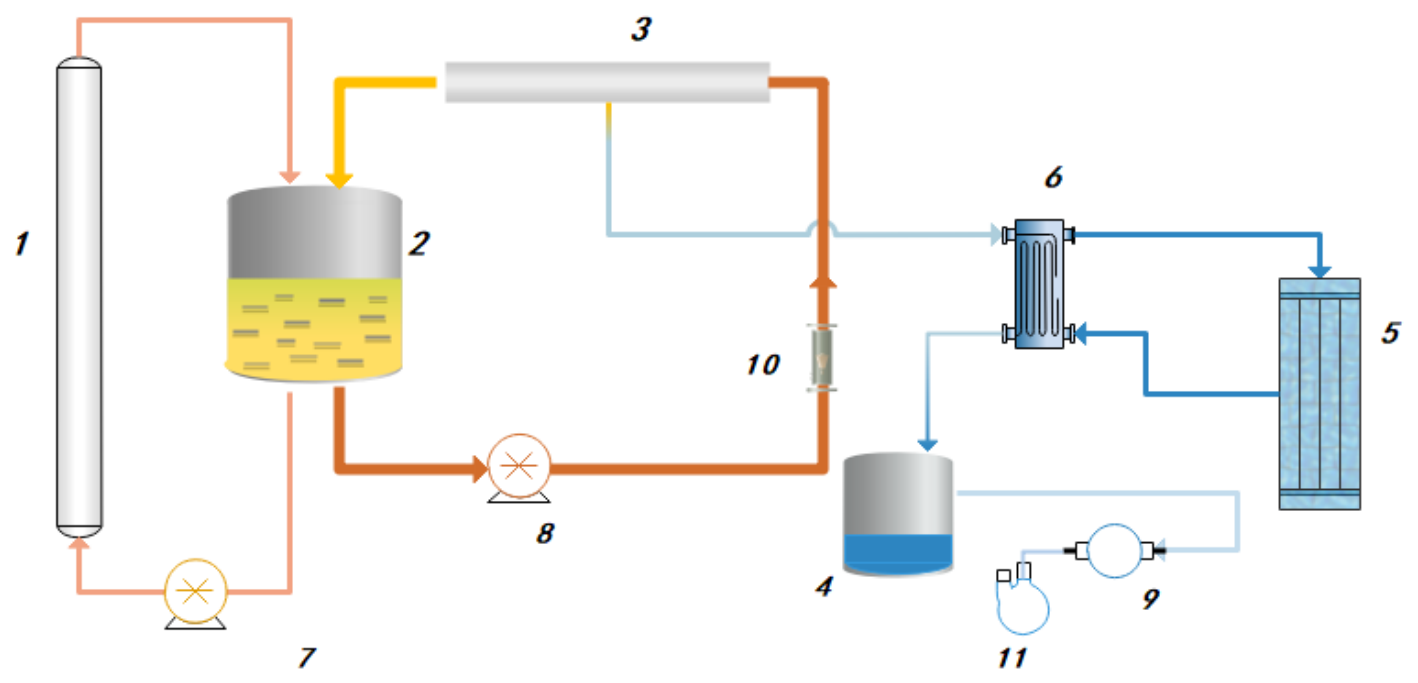
A set of small semi-intermittent pilot equipment was designed and constructed as shown in Figure 1. The device consists of two parts: a fixed-bed reactor (FBR) esterification unit coupled with a pervaporation unit. The ion exchange resin catalysts were packed in a fixed-bed column with an inner diameter of 30 mm and a length of 1000 mm. In order to preheat the material, a part of the fillers was filled at the inlet of the reactor. The feedstock was continuously provided through a gear pump (DA-800/1.0, Shandong Nilko Machinery Equipment Co., Ltd., Jinan, China) from the feedstock tank to the reactor until the end of the reaction. The heating belt was wrapped around the reactor to provide a stable heat source. A retractable temperature sensor was inserted inside the fixed-bed to detect the temperature at each detection point of the esterification reaction.
Figure 1.
Schematic of the experimental pervaporation unit. (1) Fixed-bed reactor; (2) feed tank; (3) membrane module; (4) collecting tank; (5) condenser; (6) heat exchanger; (7) constant flux pump; (8) gear pump; (9) vacuum pump; (10) flowmeter; (11) receiving bottle.
The pervaporation unit consists of a feed system, membrane separator and vacuum system. The feedstock was continuously provided through a gear pump (DA-800/1.0) from the feedstock tank to the membrane module. The membrane tube was a tubular HybSi® ceramic membrane with a length of 500 mm, an inner diameter of 7 mm and an outer diameter of 10 mm. The total membrane surface area was 0.011 m2. The vacuum on the permeate side of the membrane tube was controlled at 3 mbar by the vacuum system. The permeate vapor was cooled and condensed by cold traps with the cooling agent of ethanol.
The material of all pipes was stainless steel of grade AISI 316 L, which can easily resist acidic corrosion. The pipes were covered with a heat-insulating material to prevent heat losses to the environment. The volume of the feeding tank was 9 L and that of the collecting tank was 5 L. The flow rate range of retentate was 0–300 L/h, corresponding to a membrane tube linear velocity of 0–2.2 m/s, which is high enough for preserving concentration polarization at a low level [15]. The circulating flow rate of the fixed-bed reaction ranged from 0 to 30 mL/min.
For the separated esterification experiment, ethanol and propionic acid were added into the feed tank 1 and the pervaporation circulating line valve was closed. The catalysts and fillers were respectively loaded into the fixed-bed reactor. The reaction liquid was pumped into the reactor from bottom to top, preheated to a certain temperature through the filler, and then reacted with the catalyst. The reactor was heated by the heating belt in order to maintain the required reaction temperature. Samples were collected and analyzed at regular intervals.
For the separated pervaporation experiment, the prepared feed mixture was added into the feed tank 1 and the esterification circulation line was closed. The vacuum pump and cold trap’s circulating pump were turned on at the same time. Switch back to the membrane module line when the desired vacuum pressure was achieved. In order to ensure that no stream loss, a receiving bottle 11 was set downstream of the vacuum pump 6, and no condensed fluid was observed during the whole experiment. The permeating liquid and retentate were collected and analyzed at regular intervals.
For pervaporation-coupled reaction, the esterification circulation line and the pervaporation circulating line were open at the same time. It is necessary to match reasonable coupling conditions to study coupling dynamics.
The water content was measured using the Karl Fischer coulometric method and propionic acid content was quantified by acid–base titration. The content of ethyl propionate was determined by gas chromatography (GC-2014C, Island Shiotani Company of Japan, Kyoto, Japan) with an internal standard method using a flame ionization detector (FID). The internal standard was ethyl acetate. An Agilent DB-5 capillary column was used (30 m × 0.25 mm × 0.25 μm) with nitrogen as the carrier gas. The ethanol content could be calculated by normalization. Material balance was carried out throughout the whole experiment process and the results showed that the absolute error line was within 2%.
2.3. Theory
2.3.1. Conversion Rate Method
In this system, considering the mass and volume changes on the feed side coupled with pervaporation, calculating the conversion rate based on the concentration change in reactants became inaccurate. A small amount of propionic acid was detected on the permeate side, while propionic acid ethyl ester was not detected. Therefore, the conversion rate can be calculated based on the concentration ratio change in acid and ester on the recycle side. Under the stoichiometric feeding ratio, the relationship between conversion rate X and concentration w can be written as
where M1 and M2 are the relative molecular masses of propionic acid and ethyl propionate, respectively (g·mol−1); X is the conversion rate of propionic acid (dimensionless); and w1 and w2 are the mass concentrations of propionic acid and ethyl propionate, respectively (dimensionless).
2.3.2. Kinetics Model
Different kinetic models have been used to describe the esterification reaction catalyzed by ion exchange resins [16]. The pseudo-homogeneous model (PH) [17] assumes that the polymeric catalyst completely swells upon contact with polar solvents, resulting in easy access of the reactants to the active sites. This model has successfully been used to describe the esterification and transesterification reactions catalyzed by ion-exchange resins [16,17,18,19]. The PH model can be written as
where represents the rate of the PH model (mol·min−1); the activity αi = xiγi, xi is the mole fraction of component i (dimensionless); γi is the activity coefficient of component i (dimensionless); kf and kr are the forward apparent rate constant and the reverse apparent rate constant, respectively (mol·g−1·min−1); and is the mass of the catalyst used (g). In this work, the activity coefficients of the components in the liquid phase were calculated by using the UNIF-DMD (UNIversal Functional Activity Coefficient–Dortmund Modification/Database) equation [20] from Aspen Plus (V15).
Equation (2) was integrated by a Runge–Kutta–Fehlberg method. The parameters for the kinetic model were estimated by minimizing the sum of residual squares (SRSs) between the experimental data (Xexp) and that calculated from the kinetic model (Xcal). Mathematically, this can be written as Equation (3):
The temperature dependence of the reaction rate constant can be described by the Arrhenius law (Equation (4)) to obtain activation energy:
Equation (4) can also be rewritten as follows:
where A0 represents the pre-exponential factor (mol·g−1·min−1), Ea is the activation energy (kJ·mol−1), and R is the universal gas constant (8.314 J·mol−1·K−1).
2.3.3. Quaternary Dehydration Model
In the study of the pervaporation model, the permeability coefficient Q is usually used to represent the dehydration performance of the membrane. The mass transfer of a component through the membrane is based on Fick’s law [21], as shown in Equation (6). It should be noted that although the HybSi® membrane is hydrophilic and preferentially permeates water, the other organic components (ethanol, propionic acid, and ethyl propionate) also permeate through the membrane to a minor extent. Therefore, the flux of each component i (Ji) was determined experimentally for all four components, rather than assuming water-only permeation. This comprehensive approach allows for accurate mass balance closure in the coupled reaction–permeation system.
where Ji is the flux of the component i (mol·m−2·h−1), Qi is the permeance values of the component i (mol·m−2·h−1·bar−1), xi is the mole fraction of component i (dimensionless), γi is activity coefficient of the component i (dimensionless), Pisat is the saturated vapor pressure of component i (bar), Piperm is the permeation pressure of component i (bar), and yi is the mole fraction of component in the permeate side (dimensionless). In this work, the saturation vapor pressure of each pure component was calculated with the corresponding Antoine’s equations [22], and the activity coefficients of the pure component in the liquid phase were calculated by the UNIF-DMD equation from Aspen Plus. Permeation flux Ji can be measured by experiment, namely, membrane flux per unit time through per unit area, as shown in Equation (7):
where m is the total permeate mass (g), A is the effective membrane area (m2), Δt is the period of time (min), and ωi is the corresponding permeate weight fraction (dimensionless).
2.3.4. Coupled Model
To describe the performance of the pervaporation coupled esterification reaction, a mathematical model was established. We made the following assumptions:
- (1)
- A pseudo-homogeneous kinetic model was assumed. Kinetic data for the reaction were obtained through a separate esterification experiment.
- (2)
- The membrane is completely inert and it does not influence the reaction kinetics.
- (3)
- The membrane flux was obtained using the average temperature-dependent permeability. The concentration of each compound has a negligible effect on permeability.
- (4)
- Constant mixture density was considered.
- (5)
- Volume change related to the pervaporation was taken into account.
- (6)
- Perfect mixing was considered, namely, there are no concentration and temperature gradients in the reactor.
The coupled mathematical model is shown in Equations (8)–(12). The coupled reaction kinetics considers three factors: one is the esterification reaction kinetics, one is the pervaporation kinetics, and the other is the influence factor of the volume change on the concentration of each substance. The value range of each parameter was selected within the experimental temperature interval to facilitate the verification of the stability of the model. MATLAB 2022 was used to fit the kinetic equations according to the mathematical model.
Kinetics:
Flux through the membrane:
Esterification:
Volume change:
In Equations (8)–(12): is the net reaction rate of component in the coupled system (mol·min−1); ni is the molar quantity of component i (mol); t is time (min); νi is the stoichiometric coefficient of component i (negative for reactants, positive for products); Mcat is the mass of catalyst (g); V is the liquid volume in the feed tank (L); A is the effective membrane area (m2); Qi is the permeance of component i (mol·m−2·h−1·bar−1); xi is the mole fraction of component i (dimensionless); γi is the activity coefficient of component i (dimensionless); Pisat is the saturation vapor pressure of component i (bar); Piperm is the permeate-side partial pressure of component i (bar); ρ is the liquid density (g·L−1); FP is total mass flow rate of permeation (g/min); and is the average molecular weight (g·mol−1).
3. Results and Discussion
The experiments were divided into three different sets. First of all, a separate esterification experiment was carried out to obtain the kinetics of the esterification reaction. Secondly, a separate pervaporation experiment was carried out (without reaction) in order to check the membrane selectivity and to obtain permeance values for each compound. Finally, the esterification reaction coupling pervaporation experiment was studied. Meanwhile, a semi-batch model was developed to predict the pervaporation-coupled esterification reaction.
3.1. Esterification Reaction
3.1.1. Effect of Circulation Rate
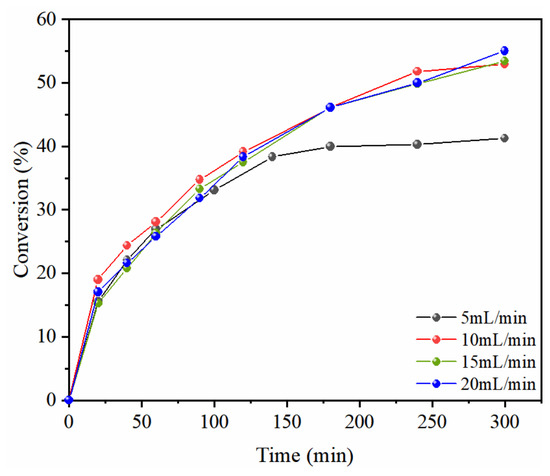
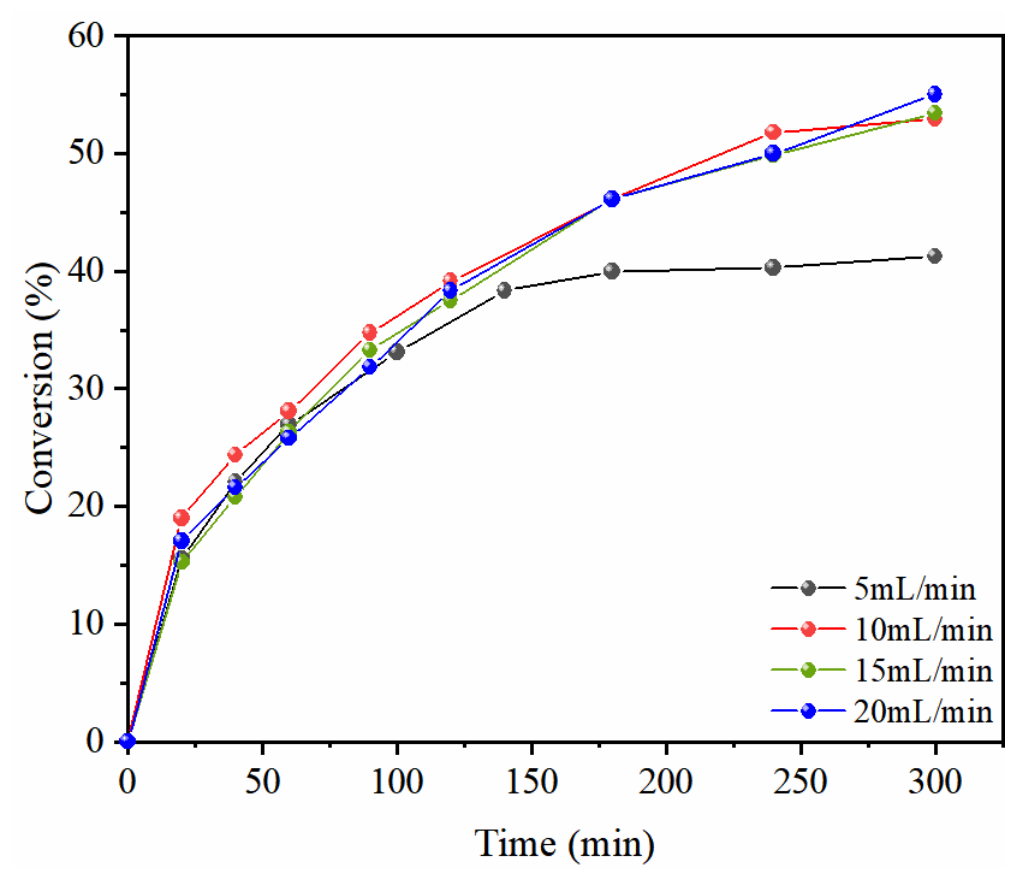
The effect of different circulation rates on the esterification reaction was examined under the same other conditions with a temperature of 60 °C, NKC-9 as catalyst, catalyst loading of 20% (wt/wt), and an initial mole ratio of EtOH:PA of 1:1. Total mass of solution was 1 kg (1.12 L). The results shown in Figure 2 indicated that the conversion of PA was independent of the liquid circulation except at 5 mL/min. At 5 mL/min, the liquid flow through the fixed-bed was too low to provide sufficient radial mixing and heat transfer, resulting in poor temperature uniformity and localized hot spots within the catalyst bed. These hot spots could accelerate side reactions or cause local vaporization, leading to the observed lower conversion. At flow rates of 10 mL/min and above, the external diffusion effect was negligible because the enhanced convective transport ensured uniform temperature distribution and sufficient reactant access to the catalyst active sites. At higher flow rates, the accumulated heat in the reactor was easy to take away and control the fixed-bed temperature. Therefore, the flow rate of 20 mL/min was adopted for subsequent experiments.
Figure 2.
Effect of circulating rate on conversion. Test conditions: temperature of 333.15 K, NKC-9 as catalyst, catalyst loading of 20% (wt/wt), initial mole ratio of EtOH:PA of 1:1.
3.1.2. Effect of Temperature
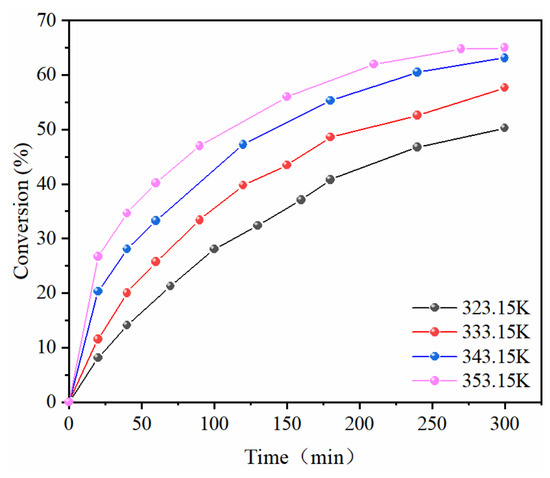
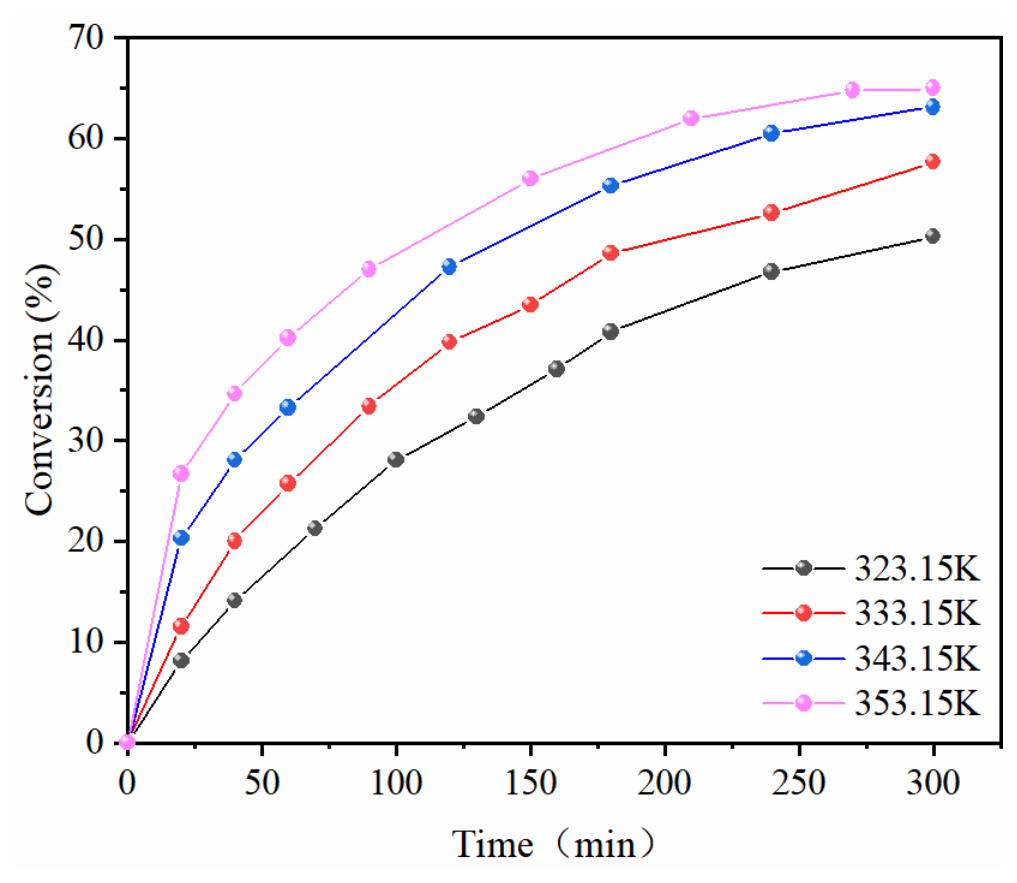
The effect of temperature on the esterification reaction process was studied in PBR, as shown in Figure 3. The azeotropic temperature of quaternary components was obtained from Aspen Plus. The esterification rate increased with the increase in reaction temperature. When the reaction temperature was higher than 343.15 K, the gradual range of esterification reaction rate began to decrease, and the promotion effect on the esterification reaction was gradually weakened with increasing temperature. In addition, during the initial stage of the reaction, the reactant concentration was high and the exothermic effect of the reaction may cause local overheating inside the fixed-bed reactor. This could lead to solution vaporization, which in turn affected the contact between the fluid and catalyst, increasing uncontrollable factors in the reaction. Under the esterification condition at 353.15 K, bubbles were observed within the liquid phase at the outlet of the fixed-bed. We also performed preliminary experiments at 363.15 K, but the results showed severe vaporization and unstable operation, making reliable kinetic data difficult to obtain. Therefore, these data were excluded from the kinetic analysis, as the reaction regime changed from liquid-phase to gas–liquid two-phase flow beyond 353.15 K. Therefore, the esterification reaction temperature in the PBR was set at 343.15 K.
Figure 3.
Effect of temperature on conversion. Test conditions: the flow rate of 20 mL/min, NKC-9 as catalyst, catalyst loading of 20% (wt/wt), initial mole ratio of EtOH:PA of 1:1.
3.1.3. Effect of the Initial Mole Ratio of Reactants
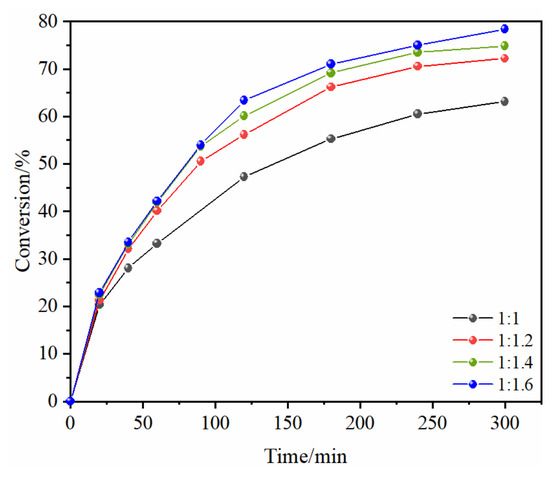
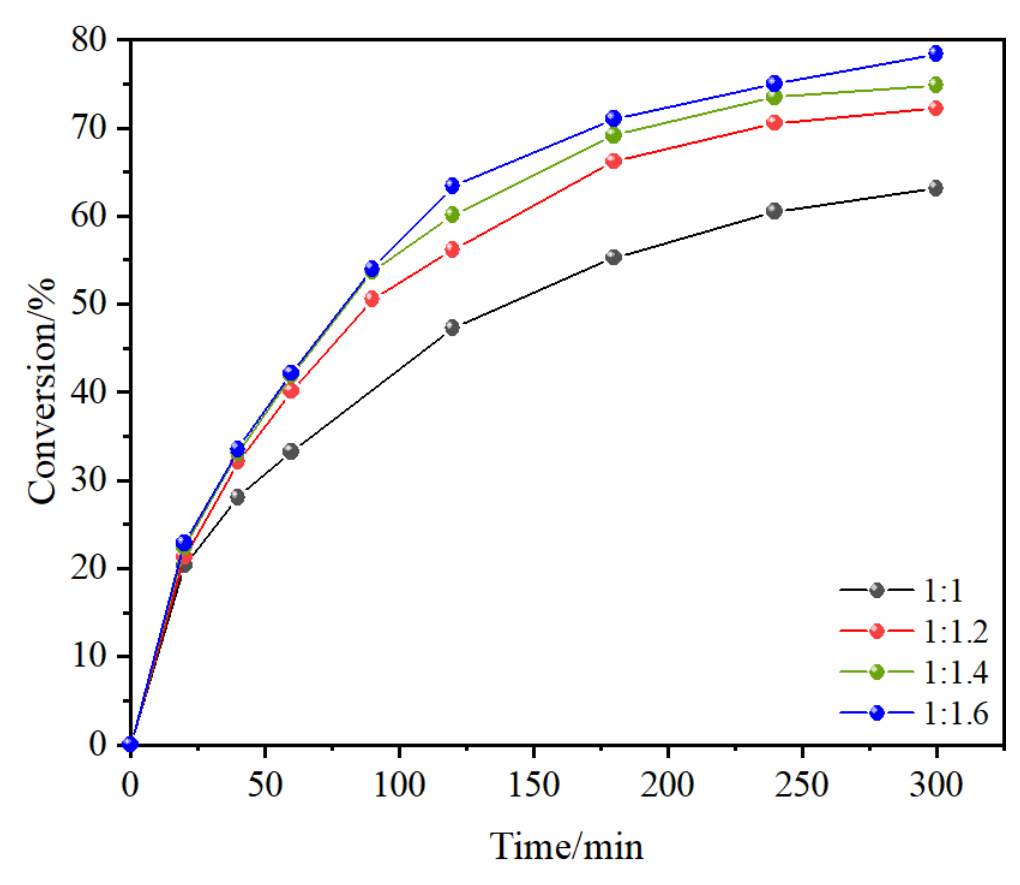
Different initial mole ratio of EtOH and PA (from 1:1 to 1:1.6) was examined at 70 °C with NKC-9 as a catalyst, as presented in Figure 4. It can be observed that the conversion of EtOH increased with the increase in the ratio. The conversion rate of ethanol was 78.4% within 5 h at initial mole ratio of 1:1.6. The choice of 1:1.6 rather than higher ratios (e.g., 1:2.0) represents a compromise between conversion enhancement and practical considerations: further increasing the propionic acid feed would not only provide diminishing returns in conversion improvement (as the marginal benefit decreased with increasing ratio) but also increase the cost of raw material recovery and downstream separation. The 1:1.6 ratio was selected as an economically reasonable balance for the subsequent coupling experiments. However, with the increase in the ratio, the benefit of improving the conversion decreased. Therefore, the initial mole ratio of EtOH and PA of 1:1.6 was adopted for subsequent experiments. These results could be used in coupling experiments to further improve the reaction rate and the conversion of alcohol as much as possible, so as to facilitate the industrial separation step.
Figure 4.
Effect of the initial mole ratio of reactants on conversion. Test conditions: temperature of 70 °C, NKC-9 as catalyst, the flow rate of 20 mL/min, catalyst loading of 20% (wt/wt).
3.1.4. Kinetics Study of Esterification Reaction
In this paper, a kinetic model was used to simulate the reaction of the esterification reaction in the FBR. On the premise of ignoring the influence of internal and external diffusion, the results of the reaction kinetics for the heterogeneously catalyzed synthesis of ethyl propionate were presented.
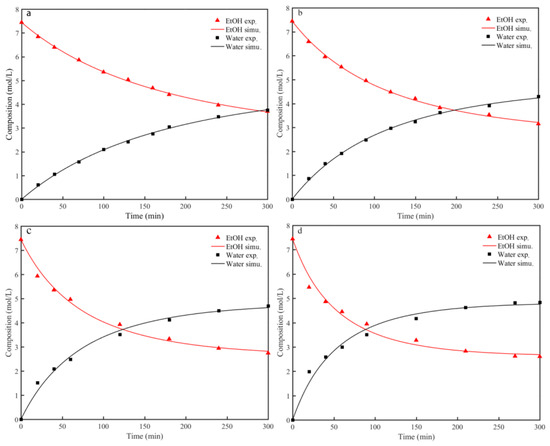
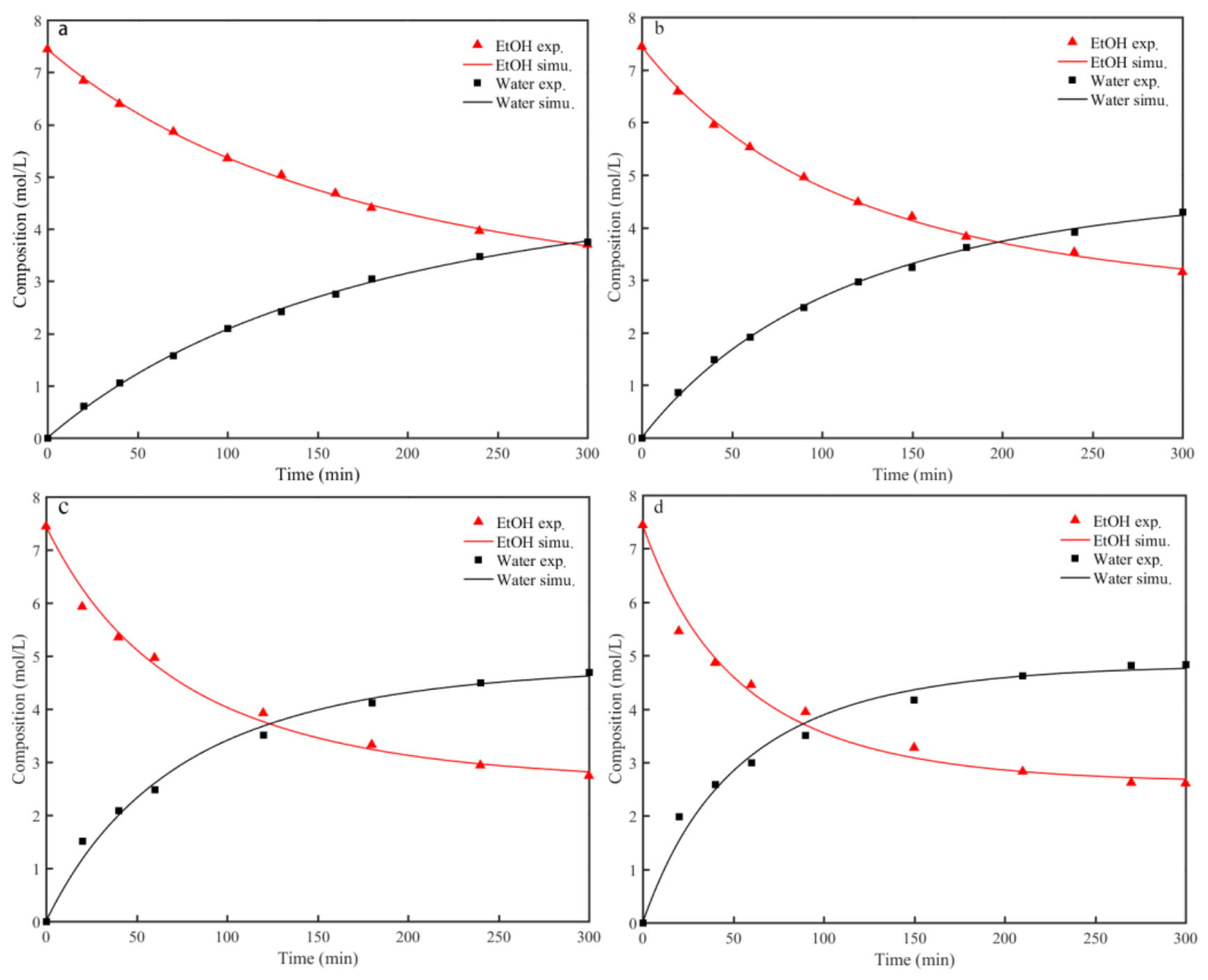
A kinetic study was performed in a temperature range from 50 to 80 °C for the esterification reaction. The experimental values and simulated curves by the PH model are shown in Figure 5. The fitted curves at temperatures between 50 °C and 70 °C match the experimental data points well. At 80 °C, there is a slight deviation between the initial experimental data points and the fitted curve. At higher temperatures, the contact form of the catalyst with the reaction liquid changes due to overheating and vaporization inside the reactor, leading to a deviation from the accuracy of the esterification kinetics research guided by the PH model. Overall, this error is acceptable.
Figure 5.
Various substances’ mole concentration vs. time at different temperatures for the esterification reaction: (a) 323.15 K. (b): 333.15 K. (c): 343.15 K. (d): 353.15 K.
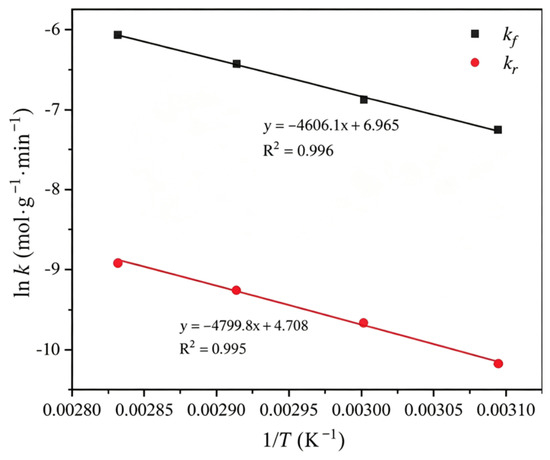
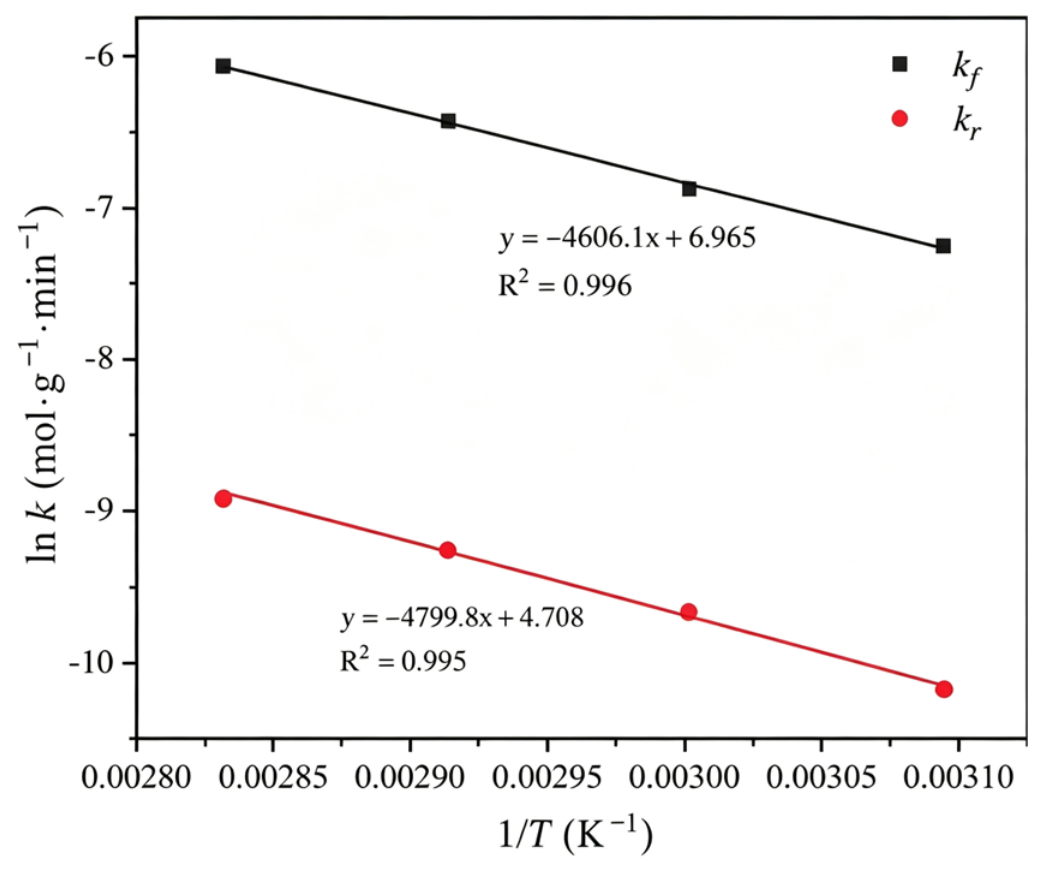
The values of the reaction rate constant according to the PH model at different temperatures are shown in Table 1 and Figure 6.
Table 1.
Parameters of PH model for the esterification reaction.
Figure 6.
Arrhenius plots of the reaction rate constants.
As can be seen, the results of the model were in good agreement with the experimental data. The activation energies of the forward and the reverse were 38.3 and 39.9 kJ·mol−1, respectively. The pre-exponential factor of the forward and the reverse was 1059 and 111.8 mol·g−1·min−1, respectively.
3.2. Quaternary Dehydration Performance
The formation and removal of water are the key factors of the following coupling process, so it is necessary to study the dewatering performance of the pervaporation membrane separately to provide data support for the subsequent coupling process to produce ethyl propionate.
The effect of different cross-flow rate and temperature on the separation performance for the quaternary mixture by using the Hybsi® membrane is presented in this section.
3.2.1. Effects of Circulating Flow Rate
In the process of pervaporation, there is concentration polarization on the membrane surface [23]. The most effective way to solve the concentration polarization is to increase the cross-flow velocity on the membrane surface, and then reduce the thickness of the near-wall layer, so that the concentration in the membrane interface region is consistent with that in the center region of the solution, and the influence of concentration polarization can be ignored.
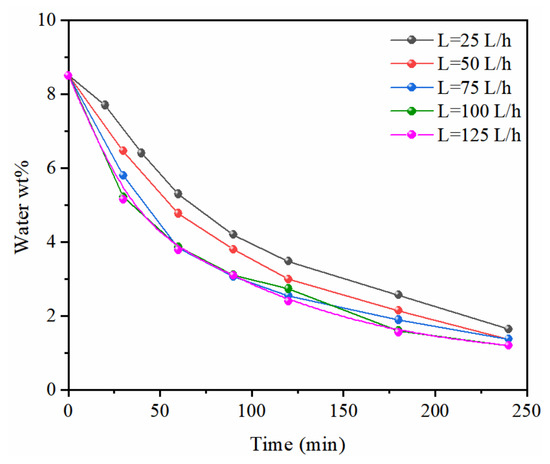
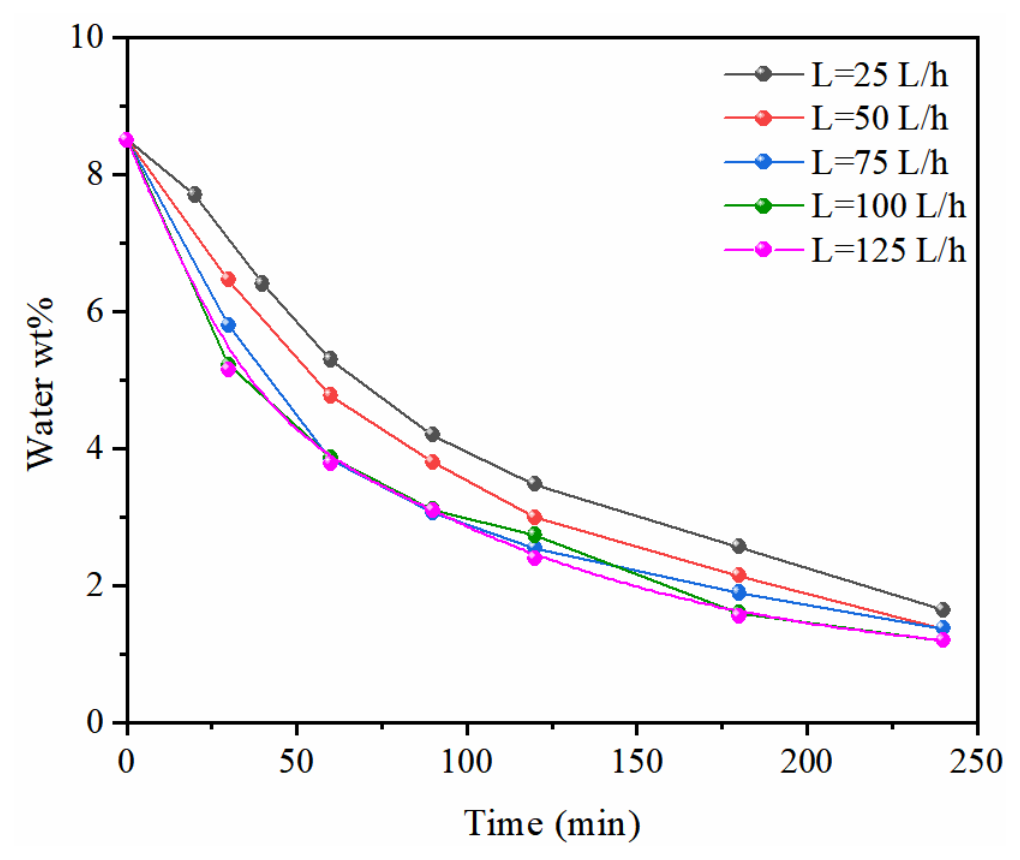
Figure 7 shows the influence of circulating flow rate on circulating water concentration during dehydration. The initial mixture containing ethyl propionate (EP) at 56.1 wt% was deliberately prepared to simulate the composition of the reaction mixture after esterification has progressed to a certain extent, allowing the pervaporation dehydration performance to be evaluated under realistic reaction-like conditions. This approach ensures that the measured permeance values are representative of the actual coupled process. With the increase in flow rate, the membrane surface velocity also increased, and the faster the water concentration on the circulating side decreased, the larger the water flux was. However, when the circulation flow rate was greater than 75 L/h, and the flow rate was further increased, the decreasing trend of water at the circulation side no longer changed and basically remained the same. Therefore, it can be considered that the influence of concentration polarization on the permeability flux can be basically ignored under this condition. In order to eliminate the effect of concentration polarization, the final circulating flow rate is set to L = 100 L/h.
Figure 7.
Effect of different cross-flow rate on water content in the circulating fluid. Test conditions: temperature of 333.15 K; initial mass fraction of EtOH: PA: EP: H2O of 13.3 wt%: 20.1 wt%: 56.1 wt%: 8.5 wt%.
3.2.2. Effects of Temperature
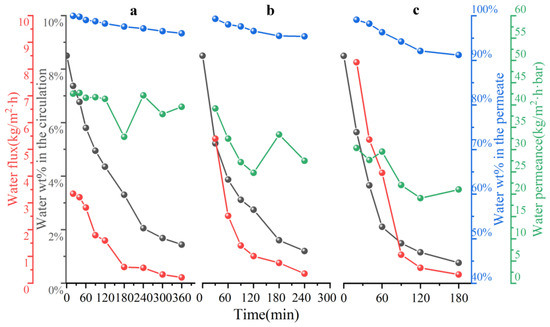
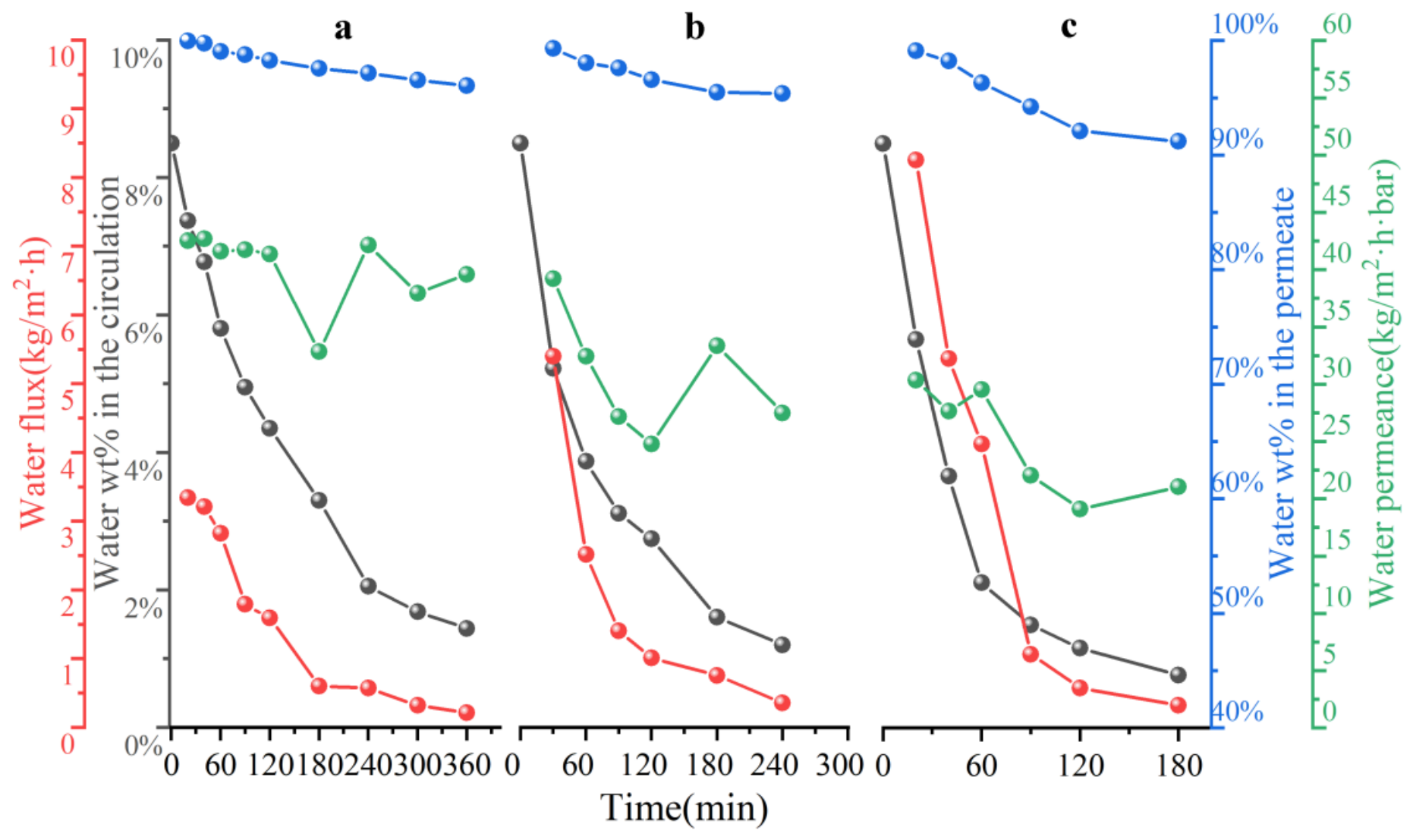
The performance parameters of the membrane at different temperatures were investigated, and then the coupling process was designed based on the permeability characteristics of the membrane. In this section, the term “water concentration in the circulating fluid” (expressed as wt%) refers to the mass fraction of water in the retentate (feed-side) liquid, while “water flux” (expressed as kg/m2·h1) refers to the mass of water permeating through the membrane per unit area per unit time. The term “water concentration in permeate” (expressed as wt%) refers to the mass fraction of water in the permeate liquid, while “water permeance” (expressed as kg/m2·h1·bar) refers to the mass of water passing through a unit area of the membrane per unit time under the driving force of a unit pressure difference (1 bar), representing the intrinsic permeability of the membrane material itself.
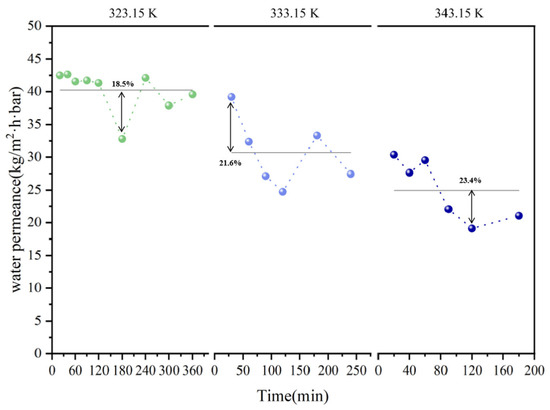
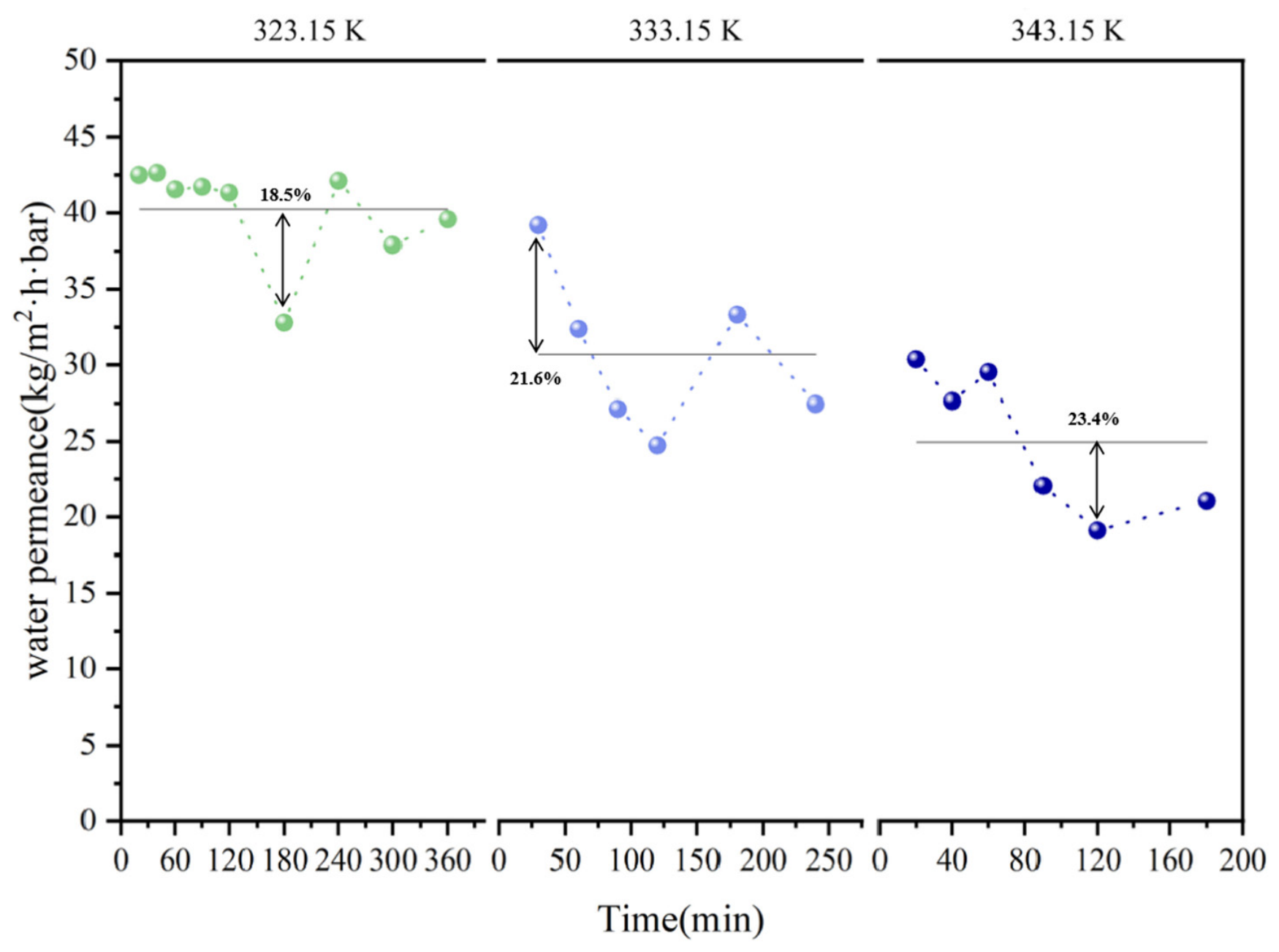
As shown in Figure 8, the permeate flux increased significantly with increasing temperature, because the driving force of pervaporation—the vapor pressure difference across the membrane—is strongly temperature-dependent. At the same temperature, as pervaporation proceeds, both the water content and water flux in the circulating tank decreased continuously. The water concentration in the permeate remained above 90% throughout the experiments, indicating that the membrane exhibited stable and high selectivity. With the same initial water concentration of 8.5 wt%, the time required to reduce the water content to 2.0 wt% was less than 1 h at 343.15 K, 2.5 h at 333.15 K, and 4 h at 323.15 K. This further confirms that higher temperatures enhance the dehydration rate. However, as shown in Figure 9, the permeability coefficient of water decreased with increasing temperature. This is attributed to the competing effects of temperature on sorption and diffusion: higher temperatures reduce adsorption on the membrane surface but facilitate diffusion within the membrane matrix. When the heat of adsorption exceeds the activation energy of diffusion, the overall permeability coefficient decreases with temperature [24,25].
Figure 8.
Water concentration profiles and water flux versus time for three different experiments carried out at (a) 323.15 K, (b) 333.15 K and (c) 343.15 K.
Figure 9.
The average permeability coefficient of water in a quaternary system.
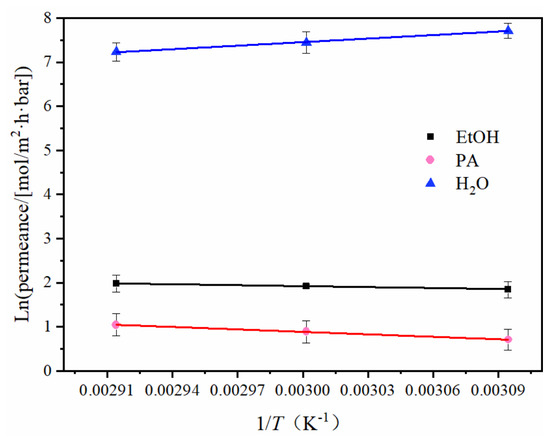
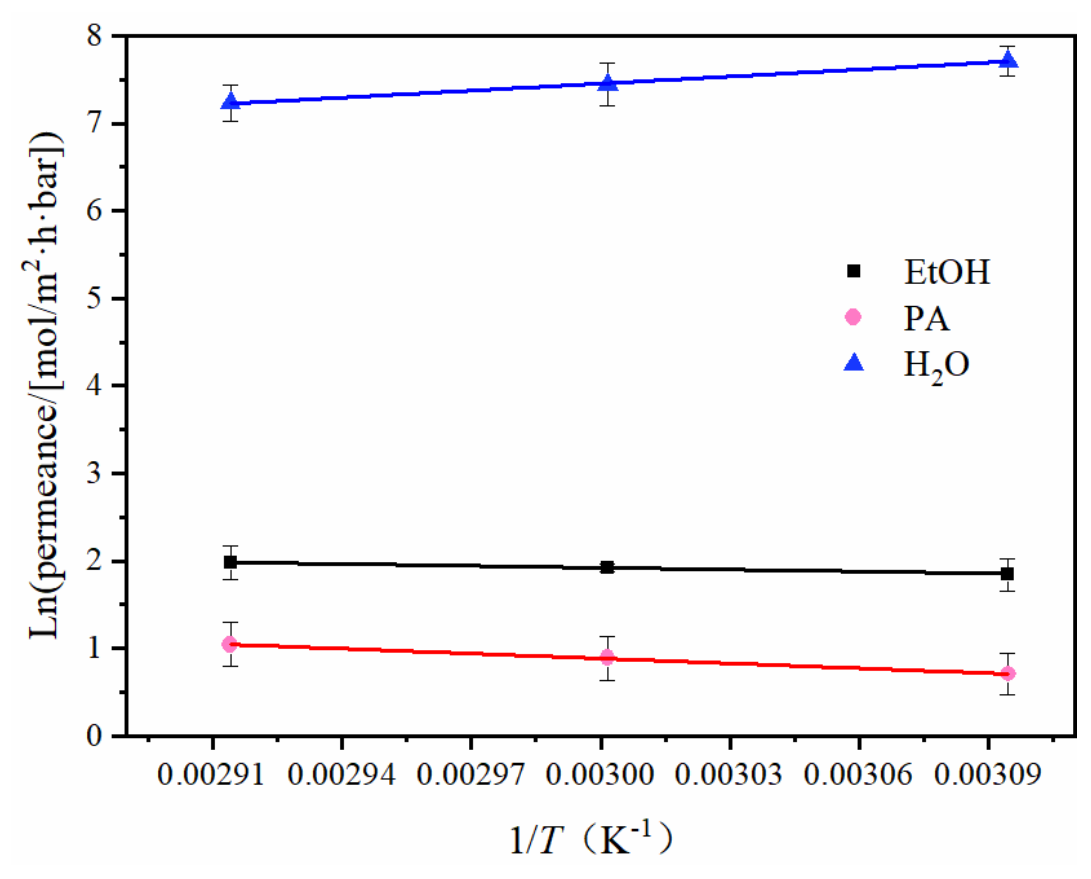
Using the same method [26], the average permeance values for each substance are shown in Table 2. The variation in the permeance values by fitting obtained and temperature conformed to the law of the Arrhenius equation, and the corresponding activation energies Ea and pre-exponential factors Q0 were obtained, as shown in Table 2 and Figure 10, which showed a good linear relationship.
Table 2.
Average permeance values at different temperatures for the components and the corresponding fitting parameters.
Figure 10.
Permeance data fitted to an Arrhenius-type correlation.
3.3. Coupled Reaction–Separation Performance
Using the reaction–separation coupling technology, the pervaporation membrane separation technology is coupled with the fixed-bed esterification reaction efficiently, and the water generated by the reaction is selectively separated to strengthen the esterification reaction, which has the advantages of being simple, with high efficiency, low energy consumption and no pollution.
Based on the above separate studies of the esterification reaction and pervaporation, the formation rate of water in the esterification reaction and the removal rate of water in the pervaporation process were obtained, which provided data support for the following coupling experiment. The effects of different pervaporation temperatures and initial molar ratio on esterification were investigated. At the same time, based on the above kinetic and osmotic model, the corresponding coupled model was established to predict the reaction of the pervaporation membrane reactor to esterification under different conditions.
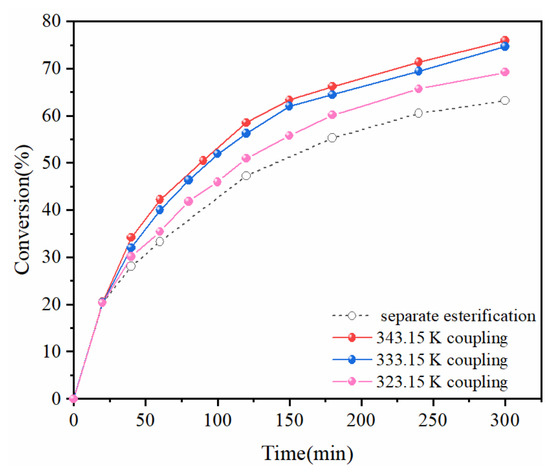
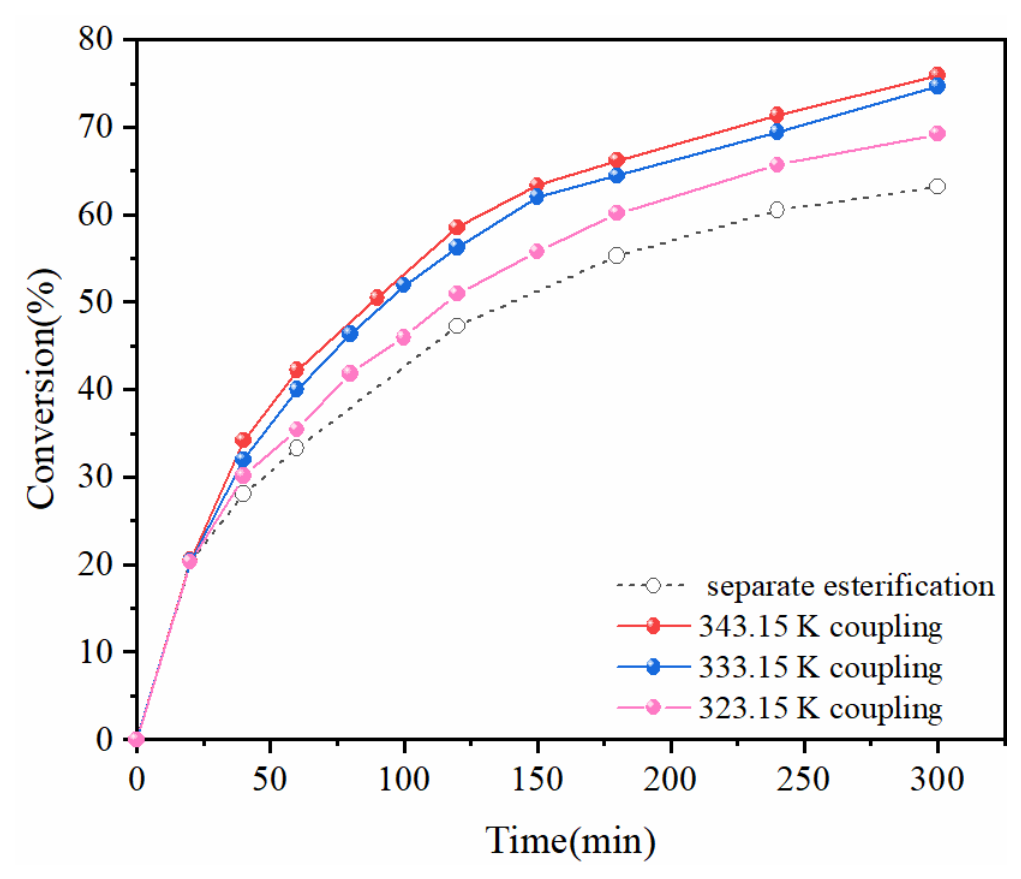
Temperature is an important factor affecting both esterification and pervaporation, which can promote the formation rate of esterification water and the dehydration rate of pervaporation. Coupling experiments were conducted at different pervaporation temperatures and compared with the independent esterification reaction without coupling.
As shown in Figure 11, when the pervaporation temperature was 343.15 K, compared with the separate esterification reaction, coupled pervaporation can significantly increase the reaction rate. The higher the pervaporation temperature, the faster the dehydration rate, resulting in a faster reaction rate. However, the reaction growth rate caused by rising temperature is no longer obvious to a certain extent. The reason may be that the forward and reverse reaction rate constants of the esterification reaction differed by two orders of magnitude, and the reverse reaction rate constant was very small. In the coupling process, when the water concentration was reduced to a certain extent, the impact of the reverse reaction was almost negligible and finally ignored. Therefore, the promotion effect of the esterification reaction was no longer obvious when the pervaporation temperature was continuously increased and the dehydration rate was increased to a certain extent. Therefore, considering the corrosion and pressure resistance of the equipment, the final pervaporation temperature was 333.15 K.
Figure 11.
Comparison of conversion between coupled process and separate esterification reaction at different pervaporation temperatures. Test conditions: catalyst loading of 20% (wt/wt), initial mole ratio of EtOH:PA of 1:1, fixed-bed reaction temperature of 343.15 K.
At the same time, the esterification reaction coupled with pervaporation dehydration obviously broke the thermodynamic equilibrium of the esterification reaction. Under the coupling condition of pervaporation at 343.15 K, the conversion rate reached 75.9% after 300 min of reaction. However, the conversion of the simple esterification reaction was only 63.15% under the same conditions.
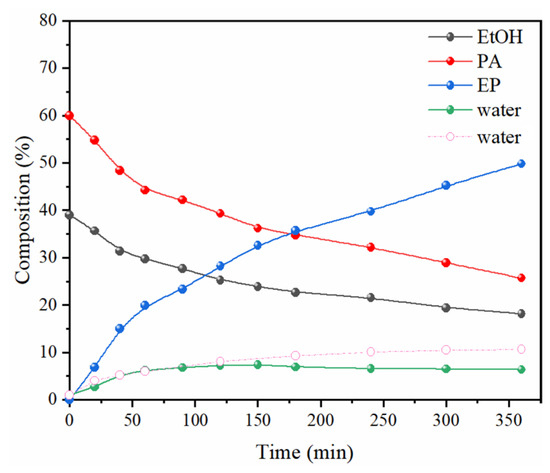
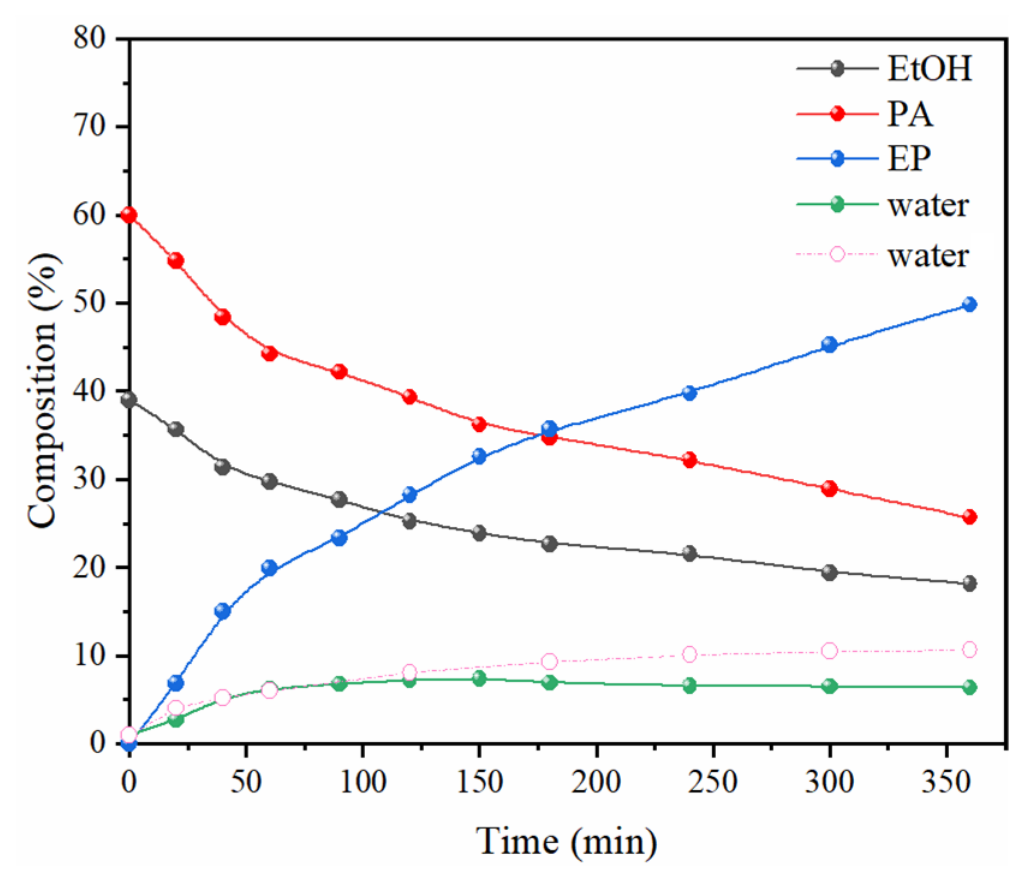
Figure 12 shows the variation in mass fractions of ethanol, propionic acid, ethyl propionate, and water as a function of time under the coupling condition of 333.15 K. By comparing the change in water, it can be seen that the water content of the separate esterification increased from about 1% to 10.6%, while for the coupling experiment, the water concentration showed an increasing trend during 0 to 1.5 h, which was almost consistent with the change in water in the separate esterification. At this time, the esterification reaction kinetics played a dominant role, and the formation rate of water was higher than the pervaporation rate of water. Meaningfully, over 1.5 h, the water content decreased continuously, where pervaporation played a dominant role.
Figure 12.
Feed composition as a function of time. Test conditions: catalyst loading of 20% (wt/wt), initial mole ratio of EtOH:PA of 1:1. ‘--○--’ is the change in water content in the separate 343.15 K esterification reaction.
Based on Figure 11 and Figure 12, the following conclusions can be drawn: the membrane reactor strengthened the esterification reaction of ethyl propionate, effectively improved the reaction efficiency of the esterification reaction, and the device ran stably and reliably. The pervaporation membrane has superior performance and can efficiently remove water to a lower concentration in high concentrations of organic matter, which can meet the dehydration demand of the esterification reaction of the system. The pervaporation membrane reactor broke the thermodynamic equilibrium of the esterification reaction by removing the product of the esterification reaction. The pervaporation membrane reactor improved the kinetic rate of the esterification reaction. As the coupled pervaporation temperature increased, the slope of the curve of esterification conversion rate with time also increased. However, when the temperature increased to a certain extent, the benefit of reaction growth rate caused by rising temperature was no longer obvious.
Modeling of Coupled Reaction–Separation Process
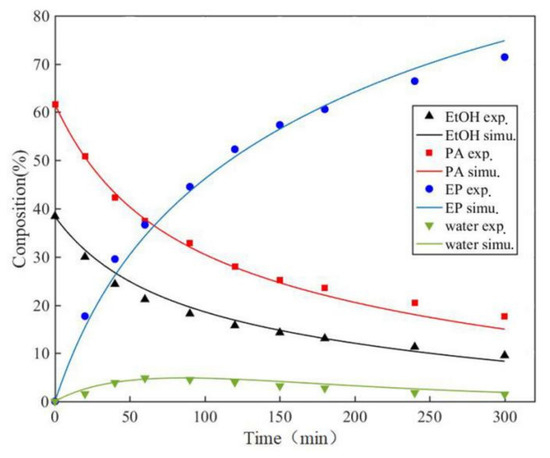
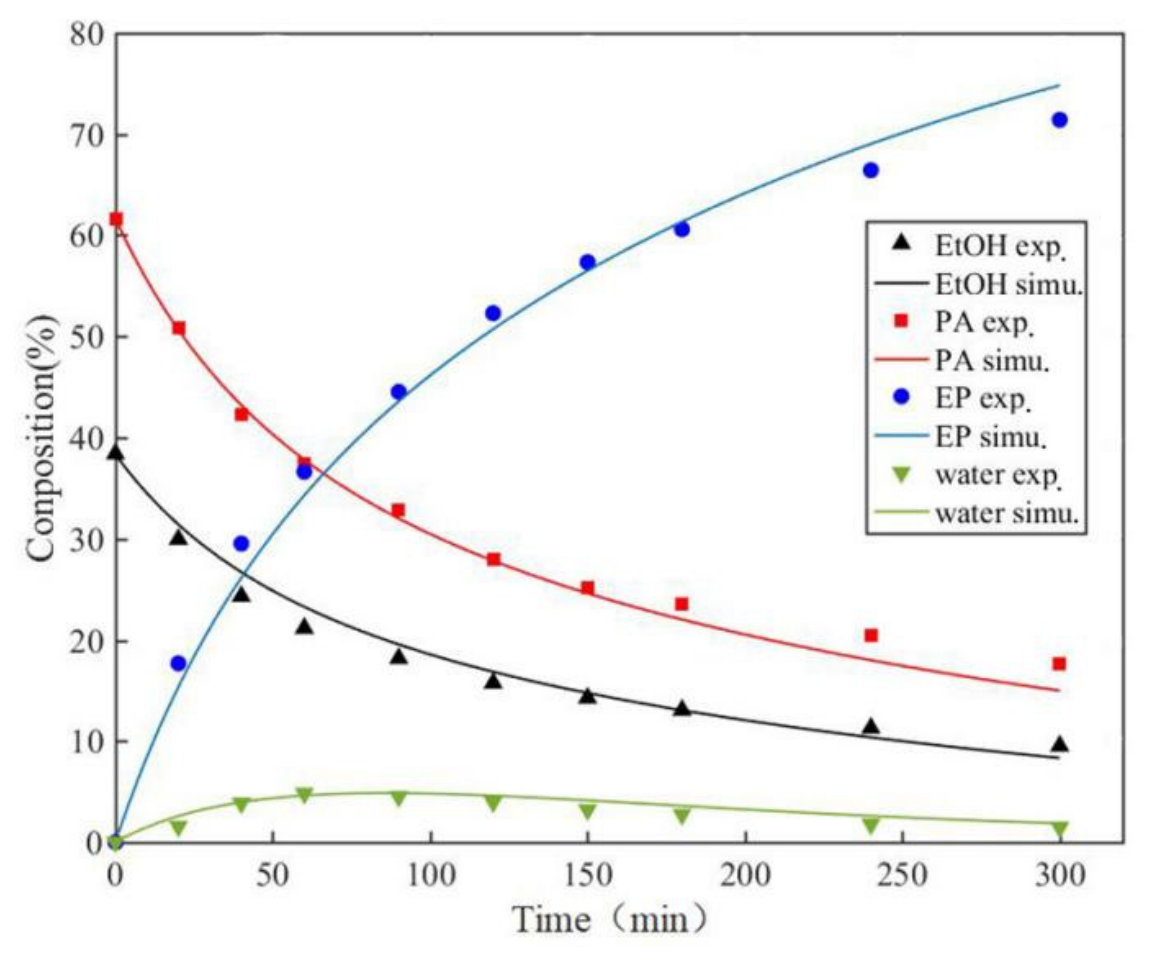
In order to describe the reaction process in the pervaporation coupled esterification reaction, a mathematical model was established. Figure 13 shows a comparison between the calculated model values and the experimental values of the mass fraction. The experimental results coincide with the theoretical calculations, which indicated that this model can effectively predict the coupled process. However, in the model calculation results, when the reaction time is longer, the ethyl propionate and propionic acid content tended to deviate from the experimental data, which may be due to the high value of the permeability coefficient of propionic acid, and the content of propionic acid is too small when the experimental value is taken, resulting in an inaccurate calculation error. These results clearly demonstrated the applicability of the coupled model and the assumptions made were reasonable.
Figure 13.
Mass fraction of different components vs. time and comparison between experimental and simulated data. Test conditions: catalyst loading of 20% (wt/wt), initial mole ratio of EtOH:PA of 1:1, fixed-bed reaction temperature of 343.15 K coupling pervaporation temperature of 343.15 K.
4. Conclusions
In this study, a new high-efficiency coupling process was developed when the pervaporation membrane separation technology was coupled with the fixed-bed esterification reaction to achieve high efficiency and a high conversion rate of the esterification reaction. The water produced by the reaction was selectively separated in time to break the thermodynamic equilibrium and promote the esterification reaction.
For the separated esterification performance, the results showed that the conversion rate of ethanol reached 78.4% within 5 h. The equilibrium constants and kinetic rate constants of forward and reverse reactions were obtained according to the pseudo-homogeneous (PH) model. For the separated pervaporation performance, the results showed that under the condition of a circulating flow rate, L = 100 L/h, the solution could overcome the influence of concentration polarization and achieve a higher level of pervaporation. At the same time, the higher the temperature, the higher the permeation flux. According to Fick’s law, the correlation between the permeability coefficient and temperature was obtained by averaging the permeability coefficient, which accorded with the Arrhenius equation. For the coupled reaction–separation process, the pervaporation membrane reactor broke the thermodynamic equilibrium of the esterification reaction. Finally, a mathematical model was established to describe the esterification process enhanced by coupling the pervaporation membrane separation technology.
This paper elucidates that the esterification reaction coupled with pervaporation can effectively enhance the esterification reaction, providing theoretical guidance and basis for the industrial application of the esterification reaction coupled with the pervaporation process.
Author Contributions
Conceptualization, M.Z. and J.W.; methodology, M.Z.; software, M.Z.; validation, M.Z. and J.W.; formal analysis, J.W.; investigation, J.W.; resources, M.Z.; data curation, M.Z.; writing—original draft preparation, J.W.; writing—review and editing, M.Z.; visualization, J.W.; supervision, M.Z.; project administration, M.Z.; funding acquisition, M.Z. and J.W. All authors have read and agreed to the published version of the manuscript.
Funding
This research was funded by the 2025 Ningde City “Competitive Bidding for Tackling Key Technical Problems” Major Technical Demand Project (grant number ND2025J002), Ningde Normal University (grant number 2018Y09), and the Natural Science Foundation of Fujian Province (grant number 2026J0011159).
Data Availability Statement
The original contributions presented in this study are included in the article. Further inquiries can be directed to the corresponding author.
Conflicts of Interest
The authors declare no conflicts of interest.
References
- Wu, Y.; Tian, Y.; He, X.; Guo, J.; Yi, K.; Yi, C. Preparation of Covalent Organic Framework/PDMS Mixed Matrix Membranes for Efficient Ethanol Recovery via Pervaporation. Ind. Eng. Chem. Res. 2024, 63, 19756–19766. [Google Scholar] [CrossRef] [Scilit]
- Wang, F.; Sun, H.; Shen, M.; Li, J.; Wang, N.; Meng, H.; An, Q.F. Hydrophobic ultrathin MOF membranes with tuning pore structure for efficient alcohol-permselective pervaporation. J. Membr. Sci. 2024, 698, 122615. [Google Scholar] [CrossRef] [Scilit]
- Pham, X.M.; Nguyen, N.T.; Van Bui, T.; Nguyen, N.H.T.; Nguyen, T.M.; Bui, P.N.; Nguyen, N.N.T.; Phong, M.T.; Nguyen, V.H.; Tran, L.H. Enhanced desalination performance and arsenate removal using semi-aromatic polyamide-based pervaporation membranes by modifying with amino-acids via interfacial polymerization. J. Appl. Polym. Sci. 2024, 141, 54749. [Google Scholar] [CrossRef] [Scilit]
- Binning, R.C.; Jennings, J.F. Organic Chemical Reactions Involving Liberation of Water. U.S. Patent 2,956,070, 11 October 1960. [Google Scholar]
- Uragam, T.; Kishimoto, J.; Miyata, T. Membrane reactor for acceleration of esterification using a special ionic liquid with reaction and separation and microwave heating. Catal. Today 2012, 193, 57–63. [Google Scholar] [CrossRef] [Scilit]
- Unlu, D.; Hilmioglu, N.D. Synthesis of Ethyl Levulinate as a Fuel Bioadditive by a Novel Catalytically Active Pervaporation Membrane. Energy Fuels 2016, 30, 2997–3003. [Google Scholar] [CrossRef] [Scilit]
- Gonçalves, F.d.R.; Borges, L.E.P.; Borges, C.P. Synthesis of Ethyl Acetate by Coupling a Heterogeneous Catalytic System with a Pervaporation Unit. Sep. Sci. Technol. 2005, 39, 1485–1500. [Google Scholar] [CrossRef] [Scilit]
- Wang, C.; Yan, X.; Liu, X. Polycrystalline Metal–Organic Framework Membranes for Pervaporation. Ind. Eng. Chem. Res. 2023, 62, 10787–10799. [Google Scholar] [CrossRef] [Scilit]
- Wang, Y.; Zhao, J.; Zhu, Z.; Wang, Y.; Zhao, J.; Yi, T.; Ma, Z.; Pan, F.; Jiang, Z. Enhanced ethanol dehydration performance of cationic COFs filled anionic alginate hybrid membranes. J. Membr. Sci. 2024, 705, 122906. [Google Scholar] [CrossRef] [Scilit]
- Marcano, J.G.S.; Tsotsis, T.T. Catalytic Membranes and Membrane Reactors; Wiley-VCH: Weinheim, Germany, 2018. [Google Scholar]
- Li, R.; Wu, H.; Zhou, Z.; Fan, X.; Peng, J. Intermediate layer engineering with composite sols for enhanced separation efficiency and hydrothermal stability of 1,2-bis(triethoxysilyl)methane-derived hybrid silica membranes. Microporous Mesoporous Mater. 2026, 399, 113865. [Google Scholar] [CrossRef] [Scilit]
- Ren, G.; Gong, G.; Zhang, N.; Xu, Z.; Liu, H.; Hu, Y. Polyamide interlayer supported organically bridged silica membrane for highly selective pervaporation dehydration of N-methyl pyrrolidone. J. Membr. Sci. 2025, 721, 123779. [Google Scholar] [CrossRef] [Scilit]
- Deng, W.; Cai, R.; Yang, H.; Gu, J.; He, L.; Xu, B. Hydrophobic Organic Hybrid Silica Gels with High Adsorption Selectivity for Fluorocarbon Solvents. ACS Omega 2025, 10, 20784–20793. [Google Scholar] [CrossRef] [Scilit] [PubMed]
- Liao, M.; Guan, H.; Zuo, H.; Ren, G.; Gong, G. High-Performance Flexible Hybrid Silica Membranes with an Ultrasonic Atomization-Assisted Spray-Coated Active Layer on Polymer for Isopropanol Dehydration. Membranes 2024, 14, 154. [Google Scholar] [CrossRef] [Scilit] [PubMed]
- Klinov, A.V.; Akberov, R.R.; Fazlyev, A.R.; Farakhov, M.I. Experimental investigation and modeling through using the solution-diffusion concept of pervaporation dehydration of ethanol and isopropanol by ceramic membranes HybSi. J. Membr. Sci. 2017, 524, 321–333. [Google Scholar] [CrossRef] [Scilit]
- Osorio-Viana, W.; Duque-Bernal, M.; Fontalvo, J.; Dobrosz-Gómez, I.; Gómez-García, M.Á. Kinetic study on the catalytic esterification of acetic acid with isoamyl alcohol over Amberlite IR-120. Chem. Eng. Sci. 2013, 101, 755–763. [Google Scholar] [CrossRef] [Scilit]
- Lee, M.J.; Wu, H.T.; Kang, C.H.; Lin, H.M. Kinetics of Catalytic Esterification of Acetic Acid with Amyl Alcohol over Amberlyst 15. J. Chem. Eng. Jpn. 2001, 34, 960–963. [Google Scholar] [CrossRef] [Scilit]
- Sanz, M.T.; Gmehling, J. Esterification of acetic acid with isopropanol coupled with pervaporation Part I, Kinetics and pervaporation studies. Chem. Eng. J. 2006, 123, 1–8. [Google Scholar]
- Xu, B.; Zhang, W.; Zhang, X.; Zhou, C. Kinetic study of transesterification of methyl acetate withn-butanol catalyzed by NKC-9. Int. J. Chem. Kinet. 2009, 41, 101–106. [Google Scholar] [CrossRef] [Scilit]
- Constantinescu, D.; Gmehling, J. Further Development of Modified UNIFAC (Dortmund), Revision and Extension 6. J. Chem. Eng. Data 2016, 61, 2738–2748. [Google Scholar] [CrossRef] [Scilit]
- Wijmans, J.G.; Baker, R.W. A simple predictive treatment of the permeation process in pervaporation. J. Membr. Sci. 1993, 79, 101–113. [Google Scholar] [CrossRef] [Scilit]
- Kobe, K.A. The properties of gases and liquids. J. Chem. Educ. 1959, 36, 154. [Google Scholar] [CrossRef] [Scilit]
- Lee, K.-J.; Wu, R.-M. Simulation of resistance of cross-flow microfiltration and force analysis on membrane surface. Desalination 2008, 233, 239–246. [Google Scholar] [CrossRef] [Scilit]
- Feng, X.S.; Huang, R.Y.M. Estimation of activation energy for permeation in pervaporation processes. J. Membr. Sci. 1996, 118, 127–131. [Google Scholar] [CrossRef] [Scilit]
- Bowen, T. Driving force for pervaporation through zeolite membranes. J. Membr. Sci. 2003, 225, 165–176. [Google Scholar] [CrossRef] [Scilit]
- Agirre, I.; Güemez, M.B.; Van Veen, H.M.; Motelica, A.; Vente, J.F.; Arias, P.L. Acetalization reaction of ethanol with butyraldehyde coupled with pervaporation. Semi-batch pervaporation studies and resistance of HybSi (R) membranes to catalyst impacts. J. Membr. Sci. 2011, 371, 179–188. [Google Scholar] [CrossRef] [Scilit]

Disclaimer/Publisher’s Note: The statements, opinions and data contained in all publications are solely those of the individual author(s) and contributor(s) and not of MDPI and/or the editor(s). MDPI and/or the editor(s) disclaim responsibility for any injury to people or property resulting from any ideas, methods, instructions or products referred to in the content. |
© 2026 by the authors. Licensee MDPI, Basel, Switzerland. This article is an open access article distributed under the terms and conditions of the Creative Commons Attribution (CC BY) license.