

Bioleaching of Copper Sulfide Ores: From Microbial Mechanisms to Industrial Applications


Abstract
1. Introduction
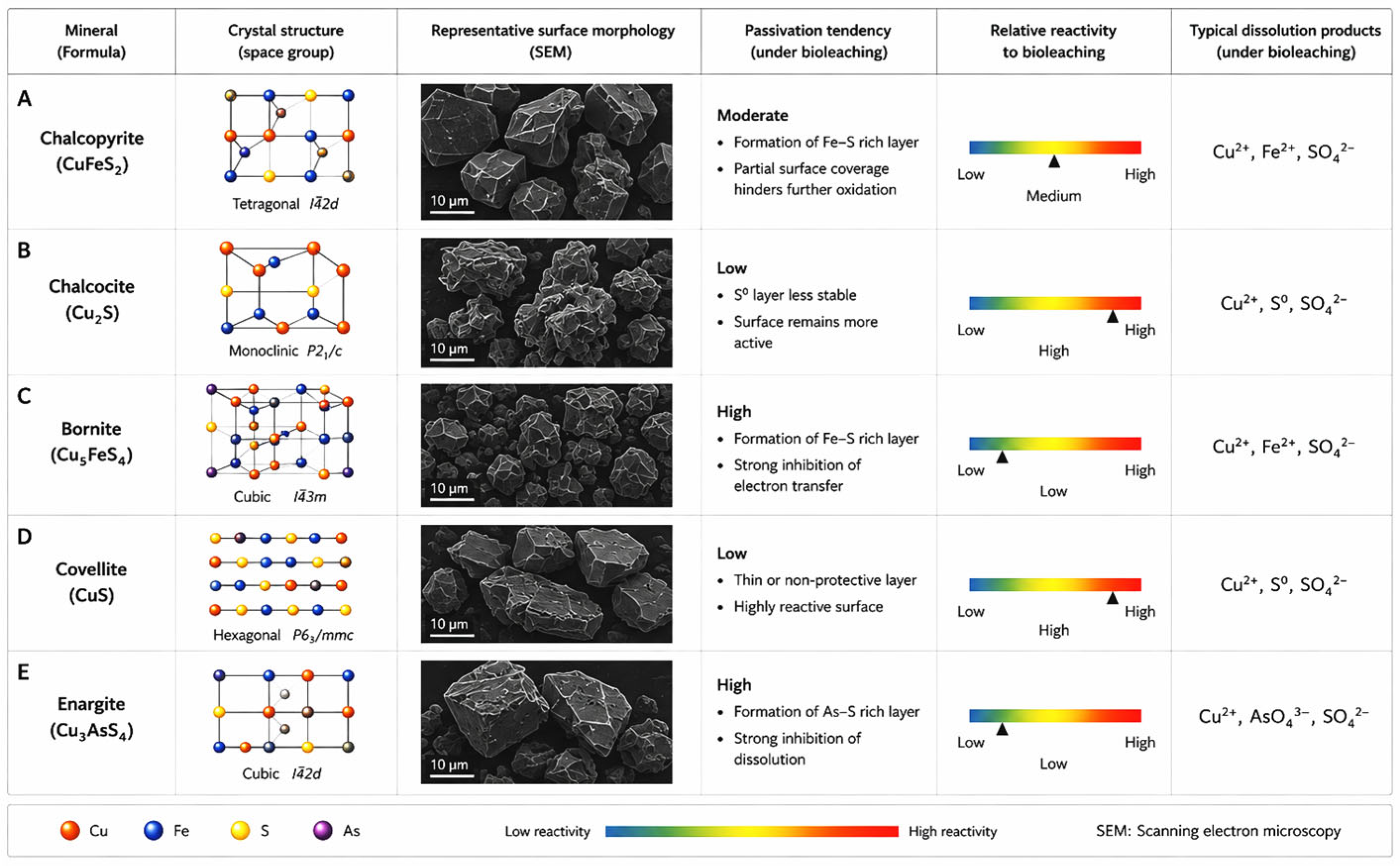
2. Mineralogical Controls on Bioleaching Behavior of Copper Sulfide Ores
2.1. Chalcopyrite: The Refractory Challenge
2.2. Chalcocite: The Ideal Candidate
2.3. Bornite: The Intermediate Case
2.4. Gangue Minerals Effects and Electrochemical Considerations
2.5. Mineral Liberation and Characterization
3. Microbial Diversity and Function in Copper Bioleaching
3.1. Acidithiobacillus Species: Primary Bioleaching Catalysts
3.2. Leptospirillum spp.: Specialized Iron Oxidizer
3.3. Sulfur-Oxidizing Microbes
3.4. Thermophilic Microbes
3.5. Microbial Communities and Dynamics
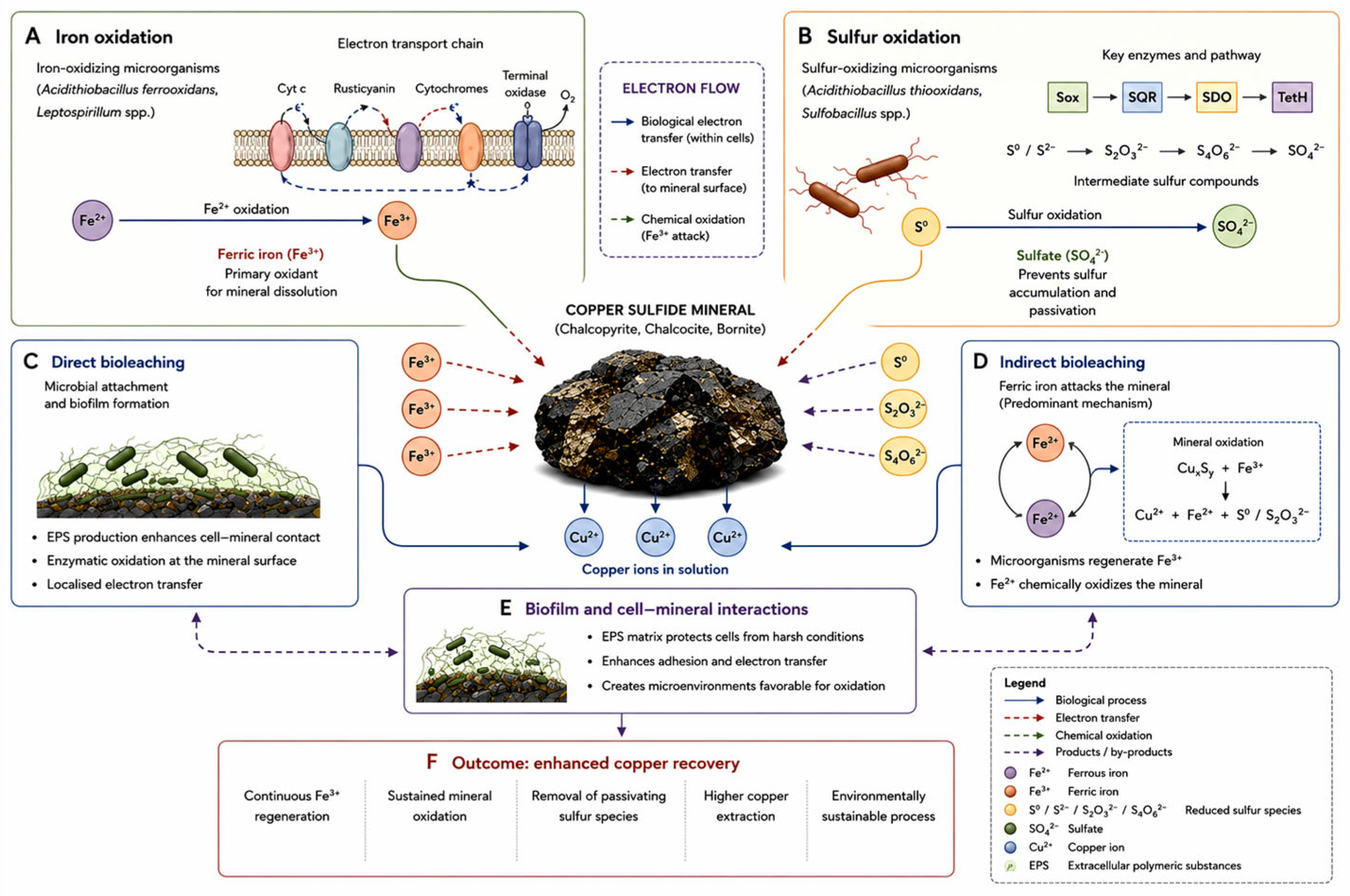
4. Molecular and Biochemical Mechanisms of Copper Sulfide Bioleaching
4.1. Iron Oxidation Pathway
4.2. Sulfur Oxidation Pathway
4.3. Direct and Indirect Mechanisms
4.4. Mineral Dissolution Pathways
4.5. Electrochemical Aspects of Mineral Dissolution
4.6. The Integrated Mechanistic Perspective
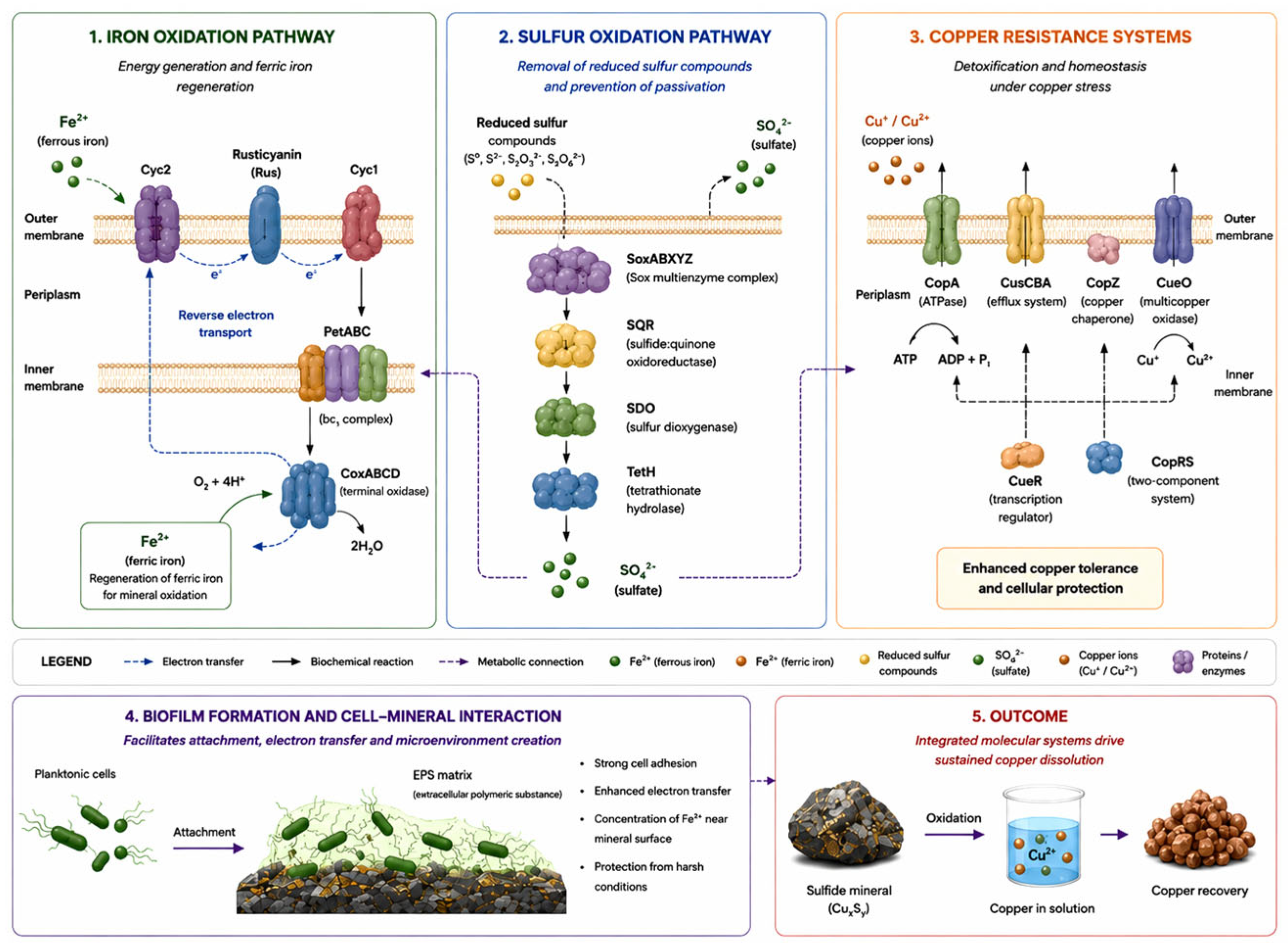
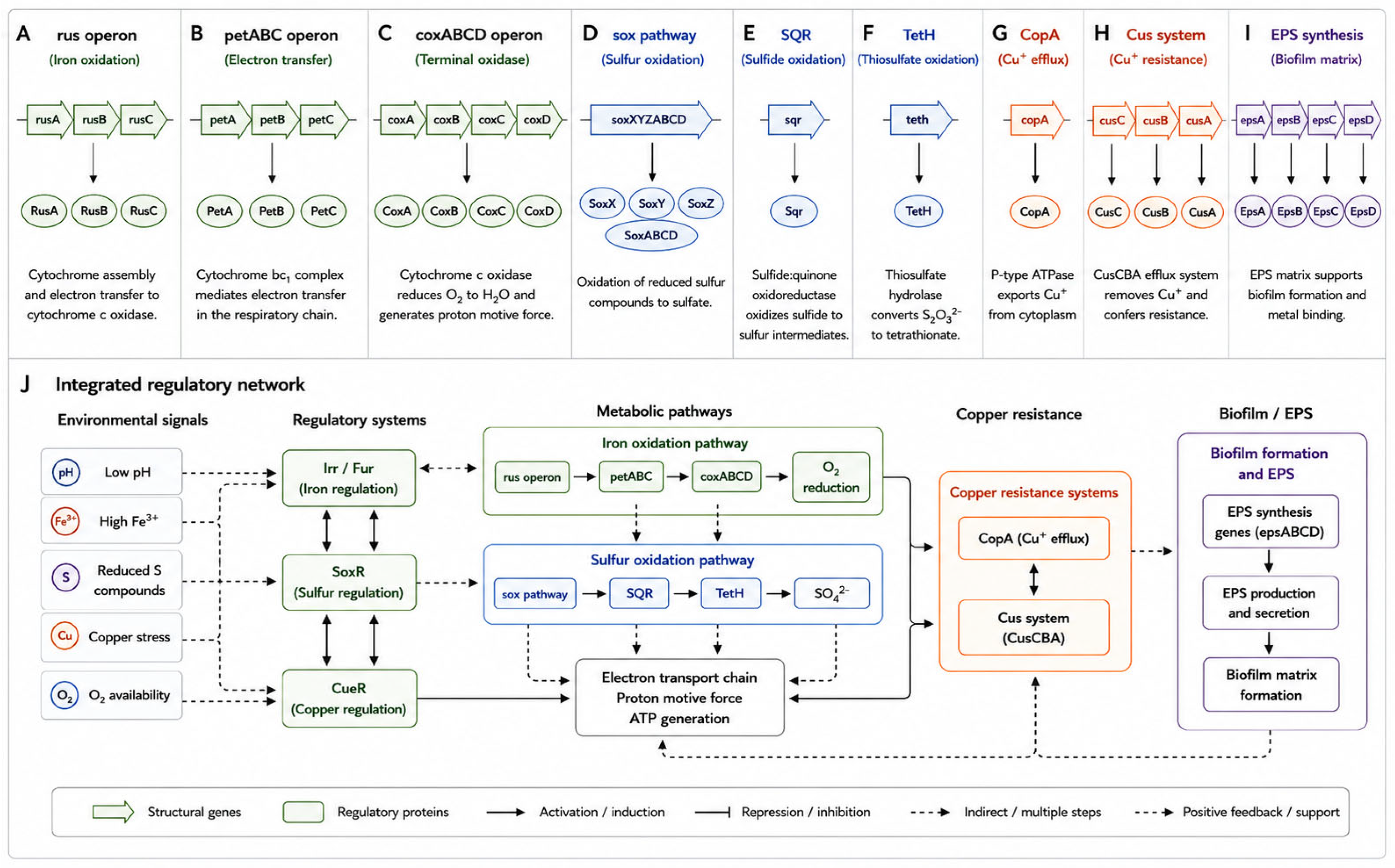
5. Molecular Basis of Copper Bioleaching: Genes, Proteins, and Metabolic Networks
5.1. Iron Oxidation Gene Network
5.2. Sulfur Oxidation Gene Network
5.3. Copper Resistance Systems
5.4. Biofilm Formation and Exopolymer Substances
5.5. Multi-Omics and Systems Biology Approaches
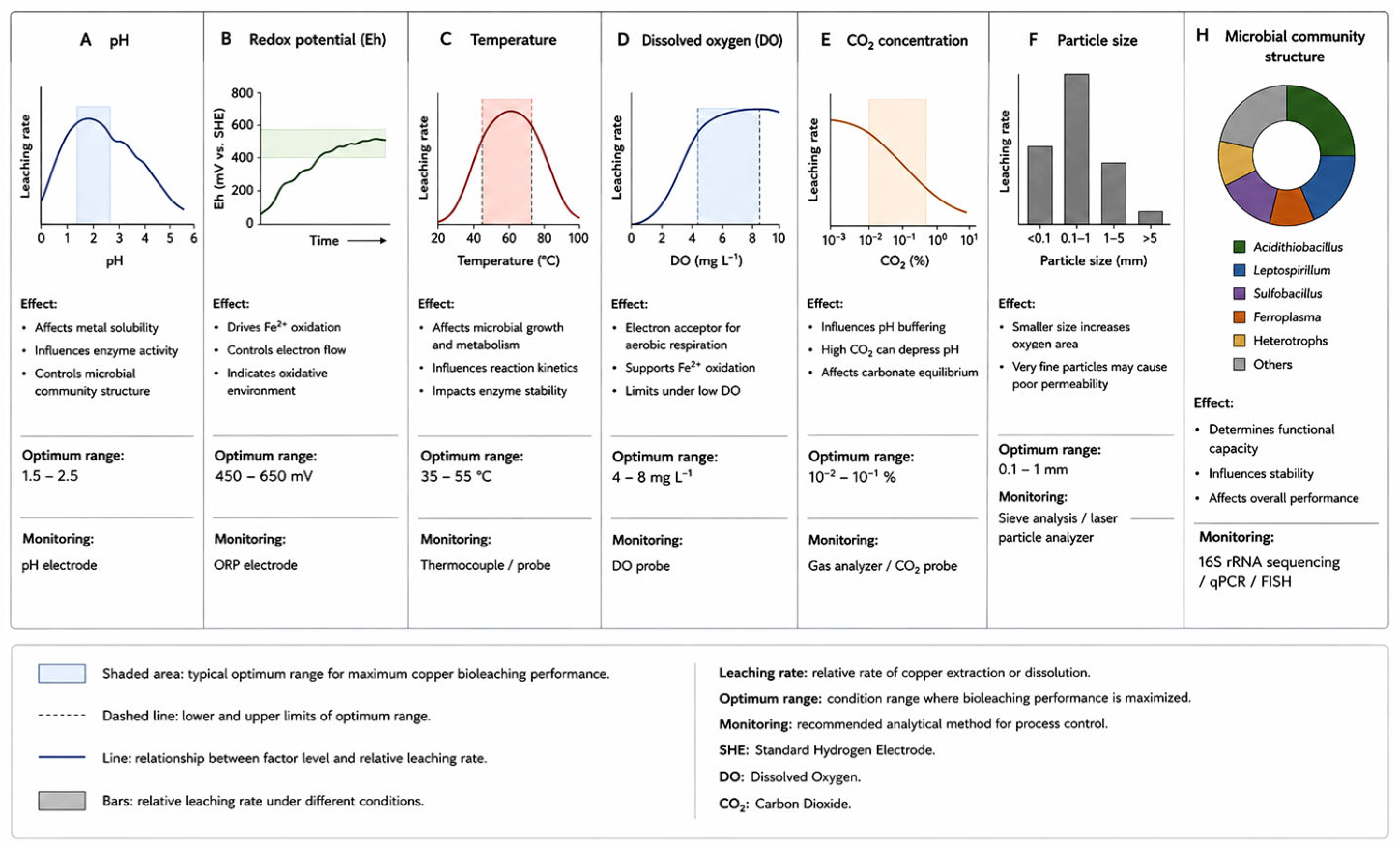
6. Environmental and Operational Elements That Regulate Copper Bioleaching
6.1. Temperature
6.2. pH and Oxidation Reduction Potential
6.3. Oxygen and Carbon Dioxide Availability
6.4. Particle Size and Pulp Density
6.5. Nutrient Availability and Solution Chemistry
6.6. Microbial Community Structure and Management
6.7. Integrated Process Optimization
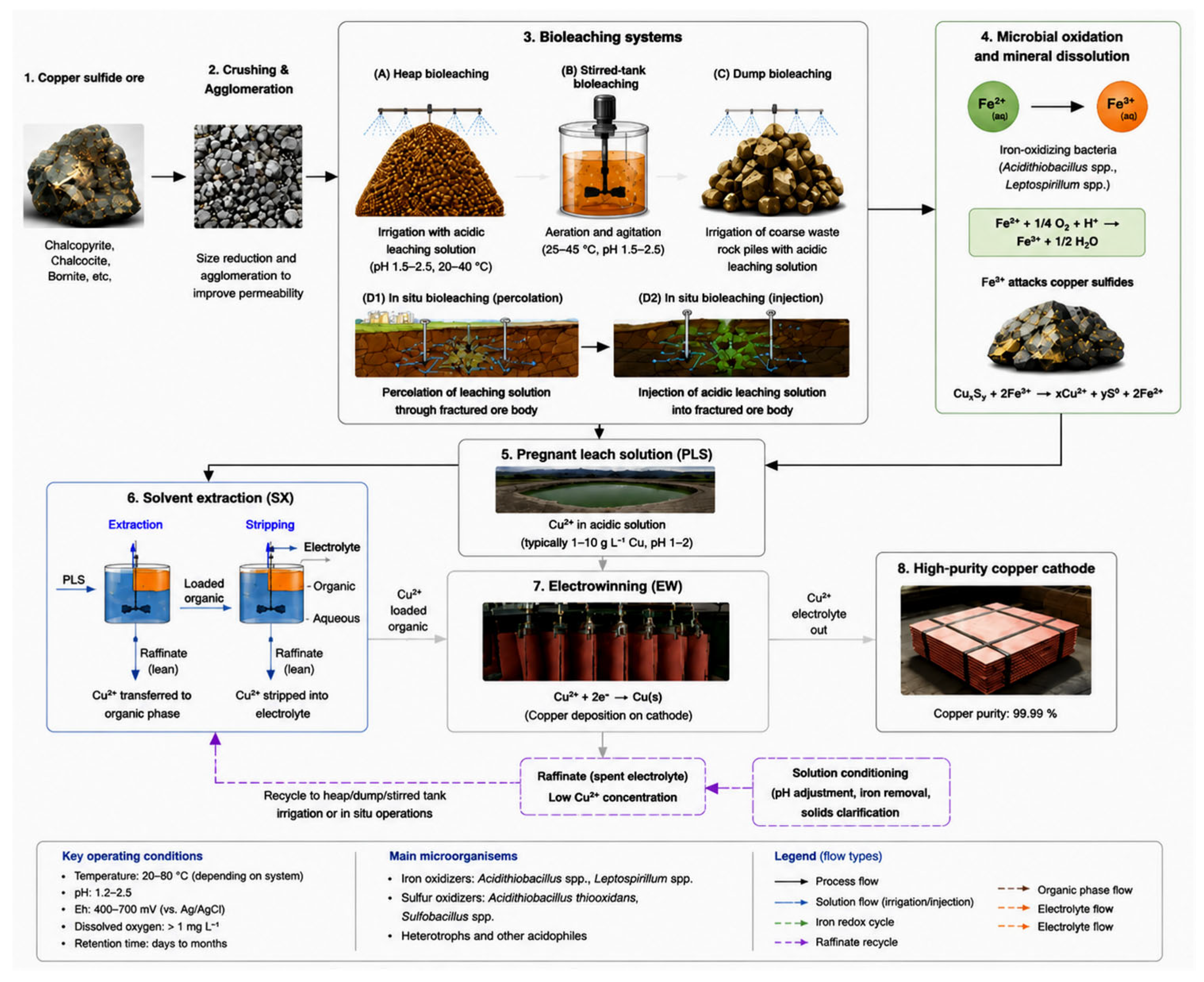
7. Copper Bioleaching: Industrial Applications and Process Optimization
7.1. Heap Bioleaching
7.2. Dump Bioleaching
7.3. Stirred-Tank Bioleaching
7.4. In Situ Bioleaching
7.5. Linking Ore Characteristics with Bioleaching Strategies
7.6. Processes Monitoring and Control
7.7. Digital Technology and Process Optimization
7.8. Industrial Implementation and Future Perspectives
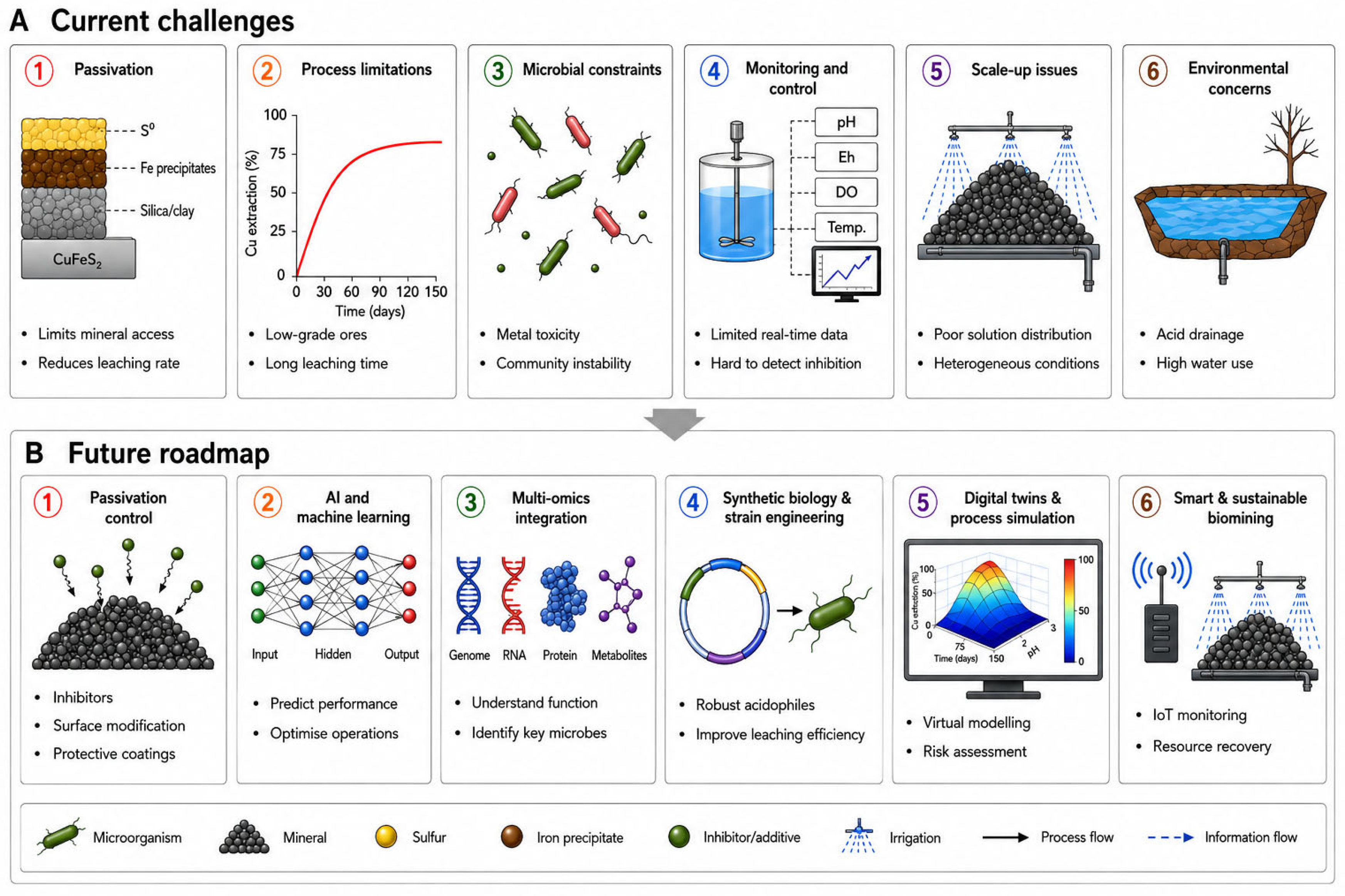
8. Current Challenges and Future Perspectives
8.1. Mineral Passivation
8.2. Slow Dissolution Kinetics
8.3. Microbial Response to Metal Stress
8.4. Scale-Up Challenges
8.5. Cutting-Edge Technology
8.6. Research Priorities
9. Conclusions
Author Contributions
Funding
Data Availability Statement
Conflicts of Interest
References
- Calvo, G.; Mudd, G.; Valero, A.; Valero, A. Decreasing Ore Grades in Global Metallic Mining: A Theoretical Issue or a Global Reality? Resources 2016, 5, 36. [Google Scholar] [CrossRef] [Scilit]
- Ericsson, M.; Drielsma, J.; Humphreys, D.; Storm, P.; Weihed, P. Why current assessments of ’future efforts’ are no basis for establishing policies on material use—A response to research on ore grades. Miner. Econ. 2019, 32, 111–121. [Google Scholar] [CrossRef] [Scilit]
- Peng, T.; Chen, L.; Wang, J.; Miao, J.; Shen, L.; Yu, R.; Gu, G.; Qiu, G.; Zeng, W. Dissolution and Passivation of Chalcopyrite during Bioleaching by Acidithiobacillus ferrivorans at Low Temperature. Minerals 2019, 9, 332. [Google Scholar] [CrossRef] [Scilit]
- Yin, S.; Wang, L.; Kabwe, E.; Chen, X.; Yan, R.; An, K.; Zhang, L.; Wu, A. Copper Bioleaching in China: Review and Prospect. Minerals 2018, 8, 32. [Google Scholar] [CrossRef] [Scilit]
- Liu, R.; Liu, S.; Bai, X.; Liu, S.; Liu, Y. Biooxidation of Arsenopyrite by Acidithiobacillus ferriphilus QBS 3 Exhibits Arsenic Resistance Under Extremely Acidic Bioleaching Conditions. Biology 2025, 14, 550. [Google Scholar] [CrossRef] [Scilit] [PubMed]
- Liu, Y. Screening, Characterisation, Mineral Bioleaching, and Genomics Analysis of Acidithiobacillus ferriphilus from Heavy-Metal-Rich Sulfide Acid Mine Drainage. In Microbiology and Biotechnology Research: An Overview, 1st ed.; Chen, L., Ed.; BP International: Kolkata, India; London, UK, 2026; pp. 71–135. [Google Scholar]
- Tong, Y.; Liu, Y. Integrative Chemical and Omics Analyses Provide Insights into Pentlandite Bioleaching by Acidithiobacillus ferriphilus WGS1. Int. J. Mol. Sci. 2026, 27, 5762. [Google Scholar] [CrossRef] [Scilit] [PubMed]
- Wang, K.; Liu, Y.; Liu, R.; Belqadi, W.; Zeng, W.; Yu, R.; Wu, X. Isolation, Sphalerite Bioleaching, and Whole Genome Sequencing of Acidithiobacillus ferriphilus QBS3 from Zinc-rich Sulfide Mine Drainage. Life 2025, 15, 792. [Google Scholar] [CrossRef] [Scilit] [PubMed]
- Wang, M.; Zeng, W.; Yan, Z.; Shen, L.; Yu, R.; Wu, X.; Li, J.; Qiu, G.; Streit, W.; Liu, Y. The Bio-Desulfurization of Cassiterite–Polymetallic Sulfide Ores Enhanced by a Consortium of Moderately Thermophilic Bacteria. Separations 2025, 12, 61. [Google Scholar] [CrossRef] [Scilit]
- Vera, M.; Schippers, A.; Hedrich, S.; Sand, W. Progress in bioleaching: Fundamentals and mechanisms of microbial metal sulfide oxidation–part A. Appl. Microbiol. Biotechnol. 2022, 106, 6933–6952. [Google Scholar] [CrossRef] [Scilit] [PubMed]
- Shangguan, X.; Liu, Y.; Liu, R.; Wang, K.; Belqadi, W.; He, J.; Tong, Y.; Shen, L.; Zeng, W.; Wu, X.; et al. Enhanced Chalcopyrite Dissolution in Acidic Culture Medium: The Impact of Arsenopyrite Presence. Minerals 2024, 14, 50. [Google Scholar] [CrossRef] [Scilit]
- Gericke, M. Review of the role of microbiology in the design and operation of heap bioleaching processes. J. S. Afr. Inst. Min. Metall. 2012, 112, 1005–1012. [Google Scholar]
- Abraham, A.P.; Schopf, S. Bioleaching as a biotechnological tool for metal recovery: From sewage to space mining. Front. Bioeng. Biotechnol. 2026, 13, 1712157. [Google Scholar] [CrossRef] [Scilit] [PubMed]
- Han, X.; Hu, Y.; Yue, Y.; Ding, Y.; Cao, B.; Shi, L.; Liu, J. Biofilm engineering through c-di-GMP tuning boosts bioleaching efficiency and arsenic tolerance in Acidithiobacillus ferrooxidans. Appl. Environ. Microbiol. 2026, 92, e0228825. [Google Scholar] [CrossRef] [Scilit] [PubMed]
- Christel, S.; Herold, M.; Bellenberg, S.; El Hajjami, M.; Buetti-Dinh, A.; Pivkin, I.V.; Sand, W.; Wilmes, P.; Poetsch, A.; Dopson, M. Multi-omics Reveals the Lifestyle of the Acidophilic, Mineral-Oxidizing Model Species Leptospirillum ferriphilumT. Appl. Environ. Microbiol. 2018, 84, e02091-17. [Google Scholar] [CrossRef] [Scilit] [PubMed]
- Brune, K.D.; Bayer, T.S. Engineering microbial consortia to enhance biomining and bioremediation. Front. Microbiol. 2012, 3, 203. [Google Scholar] [CrossRef] [Scilit] [PubMed]
- Nkuna, R.; Mohlomi, N.; Matambo, T.S. From Omics to Applications: How Bioinformatics and Multi-Omics Approaches Are Revolutionizing Metal Bioleaching. Minerals 2026, 16, 56. [Google Scholar] [CrossRef] [Scilit]
- Sasaki, K. Bioleaching of chalcopyrite: A review. J. MMIJ 2020, 136, 1–10. [Google Scholar] [CrossRef] [Scilit]
- Velásquez-Yévenes, L.; Malverde, S.; Quezada, V. A Sustainable Bioleaching of a Low-Grade Chalcopyrite Ore. Minerals 2022, 12, 487. [Google Scholar] [CrossRef] [Scilit]
- Peng, T.; Liao, W.; Wang, J.; Miao, J.; Peng, Y.; Gu, G.; Wu, X.; Qiu, G.; Zeng, W. Bioleaching and Electrochemical Behavior of Chalcopyrite by a Mixed Culture at Low Temperature. Front. Microbiol. 2021, 12, 663757. [Google Scholar] [CrossRef] [Scilit] [PubMed]
- Vera, M.; Schippers, A.; Sand, W. Progress in bioleaching: Fundamentals and mechanisms of bacterial metal sulfide oxidation—Part A. Appl. Microbiol. Biotechnol. 2013, 97, 7529–7541. [Google Scholar] [CrossRef] [Scilit] [PubMed]
- Watling, H.R. The bioleaching of sulphide minerals with emphasis on copper sulphides—A review. Hydrometallurgy 2006, 84, 81–108. [Google Scholar] [CrossRef] [Scilit]
- Whaley-Martin, K.; Chen, L.-X.; Nelson, T.C.; Gordon, J.; Kantor, R.; Twible, L.E.; Marshall, S.; McGarry, S.; Rossi, L.; Bessette, B.; et al. O2 partitioning of sulfur oxidizing bacteria drives acidity and thiosulfate distributions. Nat. Commun. 2023, 14, 2345. [Google Scholar] [CrossRef] [Scilit] [PubMed]
- Hong, M.; Liu, S.; Huang, X.; Yang, B.; Zhao, C.; Yu, S.; Liu, Y.; Qiu, G.; Wang, J. A review on bornite (bio)leaching. Miner. Eng. 2021, 170, 107245. [Google Scholar] [CrossRef] [Scilit]
- Bobadilla-Fazzini, R.A.; Poblete-Castro, I. Biofilm Formation Is Crucial for Efficient Copper Bioleaching From Bornite Under Mesophilic Conditions. Front. Microbiol. 2021, 12, 761997. [Google Scholar] [CrossRef] [Scilit] [PubMed]
- Dash, J.; Ojha, R.; Pradhan, D. Progress in bioleaching and its mechanism: A short review. Discov. Environ. 2025, 3, 238. [Google Scholar] [CrossRef] [Scilit]
- Qian, G.; Fan, R.; Huang, J.; Pring, A.; Harmer, S.L.; Zhang, H.; Rea, M.A.D.; Brugger, J.; Teasdale, P.R.; Gibson, C.T.; et al. Oxidative Dissolution of Sulfide Minerals in Single and Mixed Sulfide Systems under Simulated Acid and Metalliferous Drainage Conditions. Environ. Sci. Technol. 2021, 55, 2367–2378. [Google Scholar] [CrossRef] [Scilit] [PubMed]
- Zhao, Y. Electrochemical aspects of sulfide mineral dissolution during bioleaching. Electrochim. Acta 2023, 462, 142756. [Google Scholar]
- Koucham, M.; Ait-Khouia, Y.; Soulaimani, S.; El-Adnani, M.; Khalil, A. 3D Geostatistical Modeling and Metallurgical Investigation of Cu in Tailings Deposit. Minerals 2024, 14, 893. [Google Scholar] [CrossRef] [Scilit]
- Rouchalová, D.; Rouchalova, K.; Janakova, I.; Cablik, V.; Janstova, S. Bioleaching of iron, copper, lead, and zinc from sludge mining sediment at different particle sizes, pH, and pulp density. Minerals 2020, 10, 1013. [Google Scholar] [CrossRef] [Scilit]
- Saldaña, M.; Neira, P.; Gallegos, S.; Salinas-Rodríguez, E.; Pérez-Rey, I.; Toro, N. Mineral leaching modeling through machine learning algorithms: A review. Front. Earth Sci. 2022, 10, 816751. [Google Scholar] [CrossRef] [Scilit]
- Jia, Y.; Ruan, R.; Qu, J.; Tan, Q.; Sun, H.; Niu, X. Multi-Scale and Trans-Disciplinary Research and Technology Developments of Heap Bioleaching. Minerals 2024, 14, 808. [Google Scholar] [CrossRef] [Scilit]
- Pradhan, N.; Nathsarma, K.; Rao, K.S.; Sukla, L.; Mishra, B. Heap bioleaching of chalcopyrite: A review. Miner. Eng. 2008, 21, 355–365. [Google Scholar] [CrossRef] [Scilit]
- Panda, S.; Akcil, A.; Pradhan, N.; Deveci, H. Current scenario of chalcopyrite bioleaching: A review on the recent advances to its heap-leach technology. Bioresour. Technol. 2015, 196, 694–706. [Google Scholar] [CrossRef] [Scilit] [PubMed]
- Hong, M.-X.; Lin, H.; Yang, B.-J.; Xiao, J.; Liao, R.; Yu, S.-C.; Zhao, C.-X.; Liu, S.-T.; Sun, X.; Wang, J.; et al. Evolution of passivating species on bornite surface during electrochemical dissolution. Trans. Nonferrous Met. Soc. China 2023, 33, 1906–1918. [Google Scholar] [CrossRef] [Scilit]
- Schippers, A.; Sand, W. Bacterial leaching of metal sulfides proceeds by two indirect mechanisms via thiosulfate or via polysulfides and sulfur. Appl. Environ. Microbiol. 1999, 65, 319–321. [Google Scholar] [CrossRef] [Scilit] [PubMed]
- Chen, J.; Liu, Y.; Diep, P.; Mahadevan, R. Genetic engineering of extremely acidophilic Acidithiobacillus species for biomining. J. Hazard. Mater. 2022, 436, 129456. [Google Scholar] [CrossRef] [Scilit] [PubMed]
- Miettinen, H.; Bomberg, M.; Le, T.M.K.; Kinnunen, P. Identification and Metabolism of Naturally Prevailing Microorganisms in Mineral Processing. Minerals 2021, 11, 156. [Google Scholar] [CrossRef] [Scilit]
- Moya-Beltrán, A.; Beard, S.; Rojas-Villalobos, C.; Issotta, F.; Gallardo, Y.; Ulloa, R.; Giaveno, A.; Degli Esposti, M.; Johnson, D.B.; Quatrini, R. Genomic evolution of the class Acidithiobacillia: Deep-branching Proteobacteria living in extreme acidic conditions. ISME J. 2021, 15, 3221–3238. [Google Scholar] [CrossRef] [Scilit] [PubMed]
- Khachatryan, A.; Vardanyan, N.; Vardanyan, A.; Zhang, R.; Castro, L. The Effect of Metal Ions on the Growth and Ferrous Iron Oxidation by L. ferriphilum CC Isolated from Armenia Mine Sites. Metals 2021, 11, 425. [Google Scholar] [CrossRef] [Scilit]
- Vardanyan, A.; Khachatryan, A.; Castro, L.; Willscher, S.; Gaydardzhiev, S.; Zhang, R.; Vardanyan, N. Bioleaching of Sulfide Minerals by Leptospirillum ferriphilum CC from Polymetallic Mine (Armenia). Minerals 2023, 13, 243. [Google Scholar] [CrossRef] [Scilit]
- Bellenberg, S.; Salas, B.; Ganji, S.; Jorquera-Román, C.; Valenzuela, M.L.; Buetti-Dinh, A.; Unelius, C.R.; Dopson, M.; Vera, M. Diffusible signal factor signaling controls bioleaching activity and niche protection in the acidophilic, mineral-oxidizing Leptospirilli. Sci. Rep. 2021, 11, 16245. [Google Scholar] [CrossRef] [Scilit] [PubMed]
- Huang, Y.; Li, X.-T.; Jiang, Z.; Liang, Z.-L.; Wang, P.; Liu, Z.-H.; Li, L.-Z.; Yin, H.-Q.; Jia, Y.; Huang, Z.-S.; et al. Key Factors Governing Microbial Community in Extremely Acidic Mine Drainage. Front. Microbiol. 2021, 12, 761579. [Google Scholar] [CrossRef] [Scilit] [PubMed]
- Ibáñez, A.; Garrido-Chamorro, S.; Coque, J.J.R.; Barreiro, C. From Genes to Bioleaching: Unraveling Sulfur Metabolism in Acidithiobacillus. Genes 2023, 14, 1772. [Google Scholar] [CrossRef] [Scilit] [PubMed]
- Chen, L. Sulfur oxidation pathways in acidophilic chemolithotrophs: From genes to industrial applications. Crit. Rev. Biotechnol. 2023, 43, 1–18. [Google Scholar]
- Rawlings, D.E. Heavy metal mining using microbes. Annu. Rev. Microbiol. 2002, 56, 65–91. [Google Scholar] [CrossRef] [Scilit] [PubMed]
- Kölbl, D.; Memic, A.; Schnideritsch, H.; Wohlmuth, D.; Klösch, G.; Albu, M.; Giester, G.; Bujdoš, M.; Milojevic, T. Thermoacidophilic Bioleaching of Industrial Metallic Steel Waste Product. Front. Microbiol. 2022, 13, 864411. [Google Scholar] [CrossRef] [Scilit] [PubMed]
- Müller, C. Thermophilic bioleaching of chalcopyrite: Current status and future perspectives. Miner. Eng. 2023, 202, 108292. [Google Scholar]
- Panyushkina, A.; Fomchenko, N.; Babenko, V.; Muravyov, M. Effect of Temperature on Biobeneficiation of Bulk Copper-Nickel Concentrate with Thermoacidophilic Microbial Communities. Metals 2021, 11, 1969. [Google Scholar] [CrossRef] [Scilit]
- Ebrahimpour, S.; Abdollahi, H.; Gharabaghi, M.; Manafi, Z.; Tuovinen, O.H. Acid Bioleaching of Copper from Smelter Dust at Incremental Temperatures. Miner. Process. Extr. Metall. Rev. 2021, 43, 233–242. [Google Scholar] [CrossRef] [Scilit]
- Lane, K.R.; Jones, S.E.; Osborne, T.H.; Geller-McGrath, D.; Nwaobi, B.C.; Chen, L.; Thomas, B.C.; Hudson-Edwards, K.A.; Banfield, J.F.; Santini, J.M. Bioleaching microbial community metabolism and composition driven by copper sulphide mineral type. Environ. Microbiol. Rep. 2025, 17, e70261. [Google Scholar] [CrossRef] [Scilit] [PubMed]
- Li, N. Community ecology of acidophilic microorganisms in bioleaching environments. Trends Microbiol. 2023, 31, 1025–1037. [Google Scholar]
- Denef, V.J.; Banfield, J.F. In situ evolutionary rate measurements show ecological success of recently emerged bacterial hybrids. Science 2012, 336, 462–466. [Google Scholar] [CrossRef] [Scilit] [PubMed]
- Tyson, G.W.; Chapman, J.; Hugenholtz, P.; Allen, E.E.; Ram, R.J.; Richardson, P.M.; Solovyev, V.V.; Rubin, E.M.; Rokhsar, D.S.; Banfield, J.F. Community structure and metabolism through reconstruction of microbial genomes from the environment. Nature 2004, 428, 37–43. [Google Scholar] [CrossRef] [Scilit] [PubMed]
- Tonietti, L.; Esposito, M.; Cascone, M.; Barosa, B.; Fiscale, S.; Tomajoli, M.T.M.; Sbaffi, T.; Santomartino, R.; Covone, G.; Cordone, A.; et al. Unveiling the Bioleaching Versatility of Acidithiobacillus ferrooxidans. Microorganisms 2024, 12, 2407. [Google Scholar] [CrossRef] [Scilit] [PubMed]
- Bosecker, K. Bioleaching: Metal solubilization by microorganisms. FEMS Microbiol. Rev. 1997, 20, 591–604. [Google Scholar] [CrossRef] [Scilit]
- Jones, S.; Santini, J.M. Mechanisms of bioleaching: Iron and sulfur oxidation by acidophilic microorganisms. Essays Biochem. 2023, 67, 685–699. [Google Scholar] [CrossRef] [Scilit] [PubMed]
- Rawlings, D.E.; Johnson, D.B. The microbiology of biomining: Development and optimization of mineral-oxidizing microbial consortia. Microbiology 2007, 153, 315–324. [Google Scholar] [CrossRef] [Scilit] [PubMed]
- McCarthy, S.; Ai, C.; Blum, P. Chapter Four-Enhancement of Metallosphaera sedula Bioleaching by Targeted Recombination and Adaptive Laboratory Evolution. In Advances in Applied Microbiology; Gadd, G.M., Sariaslani, S., Eds.; Academic Press: Cambridge, MA, USA, 2018; pp. 135–165. [Google Scholar]
- Maezato, Y.; Johnson, T.; McCarthy, S.; Dana, K.; Blum, P. Metal Resistance and Lithoautotrophy in the Extreme Thermoacidophile Metallosphaera sedula. J. Bacteriol. 2012, 194, 6856–6863. [Google Scholar] [CrossRef] [Scilit] [PubMed]
- Singh, S. Recent advances in understanding the role of rusticyanin in Acidithiobacillus ferrooxidans iron oxidation. J. Bacteriol. 2022, 204, e00123-22. [Google Scholar]
- Zhang, R. Electron transfer pathways in acidophilic iron-oxidizing bacteria: From Cyc2 to terminal oxidases. Biochim. Biophys. Acta Bioenerg. 2023, 1864, 148976. [Google Scholar]
- Quatrini, R.; Appia-Ayme, C.; Denis, Y.; Ratouchniak, J.; Veloso, F.; Valdes, J.; Lefimil, C.; Silver, S.; Roberto, F.; Orellana, O.; et al. Insights into the iron and sulfur energetic metabolism of Acidithiobacillus ferrooxidans by microarray transcriptome profiling. Hydrometallurgy 2006, 83, 263–272. [Google Scholar] [CrossRef] [Scilit]
- Liu, Y.; Guo, S.; Yu, R.; Ji, J.; Qiu, G. HdrC2 from Acidithiobacillus ferrooxidans owns two iron-sulfur binding motifs but binds only one variable cluster between [4Fe-4S] and [3Fe-4S]. Curr. Microbiol. 2013, 66, 88–95. [Google Scholar] [CrossRef] [Scilit] [PubMed]
- Liu, Y.; Guo, S.; Yu, R.; Zou, K.; Qiu, G. A new cytoplasmic monohaem cytochrome c from Acidithiobacillus ferrooxidans involved in sulfur oxidation. Curr. Microbiol. 2014, 68, 285–292. [Google Scholar] [CrossRef] [Scilit] [PubMed]
- Liu, Y.; He, J.; Shangguan, X.; Liu, R.; Zeng, X.; Belqadi, W.; Wang, K.; Tong, Y.; Yu, R.; Zeng, W.; et al. Purification, Characterization, and Ferrous Oxidation Kinetics of Iron Oxidase from Acidithiobacillus ferridurans. Separations 2023, 10, 554. [Google Scholar] [CrossRef] [Scilit]
- Liu, Y.; Ji, J.; Yu, R.; Qiu, G. Expression, purification and molecular modeling of another HdrC from Acidithiobacillus ferrooxidans which binds only one [4Fe-4S] cluster. Curr. Microbiol. 2012, 65, 416–423. [Google Scholar] [CrossRef] [Scilit] [PubMed]
- Liu, Y.; Chen, L.; Shangguan, X.; Ouyang, J.; He, J.; Wang, K.; Tong, Y.; Yu, R.; Zeng, W.; Wu, X.; et al. Expression, Purification and Characterization of a Novel Rusticyanin from the Psychrotolerant Acidithiobacillus ferrivorans. Separations 2023, 10, 448. [Google Scholar] [CrossRef] [Scilit]
- Qi, Y.; Shangguan, X.; He, J.; Chen, L.; Jin, J.; Liu, Y.; Qiu, G.; Yu, R.; Li, J.; Zeng, W.; et al. Expression, purification, characterization and direct electrochemistry of two HiPIPs from Acidithiobacillus caldus SM-1. Anal. Biochem. 2022, 650, 114724. [Google Scholar] [CrossRef] [Scilit] [PubMed]
- Johnson, D.B.; Hallberg, K.B. Carbon, iron and sulfur metabolism in acidophilic micro-organisms. Adv. Microb. Physiol. 2008, 54, 201–255. [Google Scholar] [CrossRef] [Scilit] [PubMed]
- González, C. Biofilm formation and EPS production in Acidithiobacillus species during chalcopyrite bioleaching. Minerals 2023, 13, 1023. [Google Scholar]
- Luo, H. Quorum sensing and biofilm regulation in bioleaching microorganisms. Microorganisms 2024, 12, 422. [Google Scholar] [PubMed]
- Johnson, D.B. Biomining—Biotechnologies for extracting and recovering metals from ores and waste materials. Curr. Opin. Biotechnol. 2014, 30, 24–31. [Google Scholar] [CrossRef] [Scilit] [PubMed]
- Park, J. Staged bioleaching of copper sulfides: From chalcocite to chalcopyrite. J. Clean. Prod. 2024, 450, 141997. [Google Scholar]
- Moreno, G. Redox potential control in chalcopyrite bioleaching: A critical review. Minerals 2024, 14, 265. [Google Scholar]
- Li, Y. Genome analysis of A. ferrooxidans YQ-N3 reveals iron and sulfur metabolism. Minerals 2023, 13, 95. [Google Scholar]
- Wang, J. Systems biology of acidophilic microorganisms: From genomes to industrial biomining. Microb. Biotechnol. 2022, 15, 1250–1272. [Google Scholar]
- Zhang, J.; Liu, X.; Du, X.; Wang, X.; Zeng, Y.; Fan, S. Accumulated copper tailing solid wastes with specific compositions encourage advances in microbial leaching. Minerals 2024, 14, 1051. [Google Scholar] [CrossRef] [Scilit]
- Wang, Z. Cus and Cop systems for copper homeostasis in acidophilic bacteria. Environ. Microbiol. 2023, 25, 812–826. [Google Scholar]
- Inaba, Y.; West, A.C.; Banta, S. Glutathione Synthetase Overexpression in A. ferrooxidans Improves Halotolerance. Appl. Environ. Microbiol. 2021, 87, e01518-21. [Google Scholar] [CrossRef] [Scilit] [PubMed]
- Martinez, P. Copper resistance mechanisms in biomining microorganisms: CopA, CusCBA and beyond. Microbiol. Res. 2024, 278, 127546. [Google Scholar]
- Wang, Y.; Zhang, R.; Duan, J.; Shi, X.; Zhang, Y.; Guan, F.; Sand, W.; Hou, B. Extracellular Polymeric Substances and Biocorrosion/Biofouling. Int. J. Mol. Sci. 2022, 23, 5566. [Google Scholar] [PubMed]
- Li, M.; Wen, J. Recent progress in the application of omics technologies in the study of bio-mining microorganisms from extreme environments. Microb. Cell Fact. 2021, 20, 178. [Google Scholar] [CrossRef] [Scilit] [PubMed]
- Bulaev, A.; Kadnikov, V.; Elkina, Y.; Beletsky, A.; Melamud, V.; Ravin, N.; Mardanov, A. Shifts in the Microbial Populations of Bioleach Reactors Are Determined by Carbon Sources and Temperature. Biology 2023, 12, 1411. [Google Scholar] [CrossRef] [Scilit] [PubMed]
- Yang, Q.; Jia, Y.; Zhang, L.; Tan, Q.; Sun, H.; Jin, J.; Qu, J.; Ruan, R.; Zhang, C. Contribution of sessile acidophiles on chalcopyrite bioleaching under controlled redox potentials. Minerals 2025, 15, 480. [Google Scholar] [CrossRef] [Scilit]
- Huang, M.; Li, J.; Zhang, M.; Lu, F. Aeration effectiveness in column bioleaching: Microbial concentration responses, porosity evolution and copper sulfide leaching. Biochem. Eng. J. 2025, 223, 109925. [Google Scholar] [CrossRef] [Scilit]
- Rodrigues, M.L. Aeration strategies for heap bioleaching: CFD modeling and experimental validation. Chem. Eng. J. 2024, 485, 149885. [Google Scholar]
- Zhao, H. Carbon dioxide supply in heap bioleaching: Sources, limitations and optimization. Biochem. Eng. J. 2023, 198, 109012. [Google Scholar]
- Feng, Q. Particle size effects on bioleaching kinetics of copper sulfide ores. Powder Technol. 2023, 428, 118857. [Google Scholar]
- Po, A.; Cassayre, L.; Hubau, A.; Joulian, C.; Dakkoune, A.; Touze, S.; Julcour, C.; Bourgeois, F.; Guezennec, A.-G. Effect of particle size on bioleaching of chalcopyrite at moderate temperature. Miner. Eng. 2025, 223, 109885. [Google Scholar] [CrossRef] [Scilit]
- Wang, Y. Nutrient management in bioleaching systems: Nitrogen, phosphorus and trace elements. J. Biotechnol. 2024, 385, 12–24. [Google Scholar]
- Khachatryan, A.; Vardanyan, N.; Melkonyan, Z.; Zhang, Y.; Wang, C.; Zhang, R.; Vardanyan, A. Characterization of bacterial communities from an Artsvanik active tailing dump and Evaluation of their Potential to Improve Copper Recovery from Flotation Copper Concentrate. Geomicrobiol. J. 2025, 42, 882–897. [Google Scholar] [CrossRef] [Scilit]
- León, F.; Rojas, L.; Bazán, V.; Martínez, Y.; Peña, A.; Garcia, J. A systematic review of copper heap leaching: Key operational variables. Processes 2025, 13, 1513. [Google Scholar] [CrossRef] [Scilit]
- Kim, Y. Digital twin technology for real-time optimization of heap bioleaching operations. Comput. Chem. Eng. 2024, 182, 108589. [Google Scholar]
- Chandra, A.P.; Gerson, A.R. The mechanisms of pyrite oxidation and leaching: A fundamental perspective. Surf. Sci. Rep. 2010, 65, 293–315. [Google Scholar] [CrossRef] [Scilit]
- Sarkodie, E.K.; Jiang, L.; Li, K.; Yang, J.; Guo, Z.; Shi, J.; Deng, Y.; Liu, H.; Jiang, H.; Liang, Y.; et al. A review on the bioleaching of toxic metal(loid)s from contaminated soil: Insight into the mechanism of action and the role of influencing factors. Front. Microbiol. 2022, 13, 1049277. [Google Scholar] [CrossRef] [Scilit] [PubMed]
- Wang, Z.; Yang, B.; Wang, J.; Guo, K.; Zhang, X.; Liao, R.; Qiu, G. Technology development and industrial practice of distinct low-cost heap bioleaching at Monywa copper mine. Minerals 2025, 15, 985. [Google Scholar] [CrossRef] [Scilit]
- Jia, Y.; Sun, H.; Tan, Q.; Xu, J.; Feng, X.; Ruan, R. Industrial heap bioleaching of copper sulfide ore started with only water irrigation. Minerals 2021, 11, 1299. [Google Scholar] [CrossRef] [Scilit]
- Newsome, L.; Falagán, C. The Microbiology of Metal Mine Waste: Bioremediation Applications and Implications for Planetary Health. GeoHealth 2021, 5, e2020GH000380. [Google Scholar] [CrossRef] [Scilit] [PubMed]
- Brierley, C.L. How will biomining be applied in future? Trans. Nonferrous Met. Soc. China 2008, 18, 1302–1310. [Google Scholar] [CrossRef] [Scilit]
- Tapia, J.; Dueñas, A.; Cheje, N.; Soclle, G.; Patiño, N.; Ancalla, W.; Tenorio, S.; Denos, J.; Taco, H.; Cao, W.; et al. Bioleaching of Heavy Metals from Printed Circuit Boards with an Acidophilic Iron-Oxidizing Microbial Consortium in Stirred Tank Reactors. Bioengineering 2022, 9, 79. [Google Scholar] [CrossRef] [Scilit] [PubMed]
- Tezyapar Kara, I.; Kremser, K.; Wagland, S. Bioleaching metal-bearing wastes and by-products for resource recovery: A review. Environ. Chem. Lett. 2023, 21, 2665–2705. [Google Scholar] [CrossRef] [Scilit]
- Rojas, D. In-situ bioleaching: Challenges and opportunities for sustainable mining. J. Environ. Manag. 2023, 345, 118729. [Google Scholar]
- Johnson, D.B. The evolution, current status, and future prospects of using biotechnologies in the mineral extraction and metal recovery sectors. Minerals 2018, 8, 343. [Google Scholar] [CrossRef] [Scilit]
- Tarrés-Puertas, M.I.; Brosa, L.; Comerma, A.; Rossell, J.M.; Dorado, A.D. Architecting an open-source IIoT framework for real-time control and monitoring in the bioleaching industry. Appl. Sci. 2024, 14, 350. [Google Scholar] [CrossRef] [Scilit]
- Yang, H. Process monitoring and control in industrial bioleaching: From sensors to smart systems. Sensors 2024, 24, 1456. [Google Scholar] [PubMed]
- Roberto, F.F.; Schippers, A. Progress in bioleaching: Part B, applications of microbial processes by the minerals industries. Appl. Microbiol. Biotechnol. 2022, 106, 5913–5928. [Google Scholar] [CrossRef] [Scilit] [PubMed]
- Ding, N. From laboratory to industrial scale: Challenges and solutions in bioleaching scale-up. Chem. Eng. Sci. 2024, 292, 119987. [Google Scholar]
- Santos, A. Passivation layer formation in chalcopyrite bioleaching: Mechanisms and mitigation strategies. Corros. Sci. 2024, 228, 111830. [Google Scholar]
- Panyushkina, A.; Muravyov, M.; Fomchenko, N.V. Predominance of Alicyclobacillus tolerans in Bioleaching Community. Minerals 2022, 12, 396. [Google Scholar] [CrossRef] [Scilit]
- Liu, H. Multi-omics approaches for understanding microbial community dynamics in bioleaching systems. Biotechnol. Adv. 2023, 67, 108215. [Google Scholar]
- Dopson, M.; Baker-Austin, C.; Koppineedi, P.R.; Bond, P.L. Growth in sulfidic mineral environments: Metal resistance mechanisms in acidophilic micro-organisms. Microbiology 2003, 149, 1959–1970. [Google Scholar] [CrossRef] [Scilit] [PubMed]
- Saldaña, M.; Jeldres, M.; Galleguillos, F.M. Bioleaching Modeling–A Review. Materials 2023, 16, 3812. [Google Scholar] [CrossRef] [Scilit] [PubMed]
- Liu, X. Synthetic microbial consortia for enhanced bioleaching of chalcopyrite: Design principles and applications. Bioresour. Technol. 2024, 396, 130435. [Google Scholar]
- Zhou, S. Metabolic engineering of Acidithiobacillus ferrooxidans for improved copper bioleaching. Metab. Eng. 2023, 78, 45–58. [Google Scholar]
- Cozma, P.; Bețianu, C.; Hlihor, R.-M.; Simion, I.M.; Gavrilescu, M. Bio-Recovery of Metals through Biomining within Circularity-Based Solutions. Processes 2024, 12, 1793. [Google Scholar] [CrossRef] [Scilit]
- Gu, Y. Bioleaching of electronic waste: Current status and future outlook. J. Hazard. Mater. 2024, 465, 133225. [Google Scholar]
- Abashina, T.N.; Vainshtein, M. Current Trends in Metal Biomining with a Focus on Genomics Aspects and Attention to Arsenopyrite Leaching. Microorganisms 2023, 11, 186. [Google Scholar] [CrossRef] [Scilit] [PubMed]



| Mineral | Chemical Formula | Crystal System | Relative Bioleaching Rate | Primary Passivation Products | Dissolution Pathways | Typical Cu Recovery | Industria Significance |
|---|---|---|---|---|---|---|---|
| Chalcopyrite | CuFeS2 | Tetragonal | Low (0.5–1×) | S0, Jarosite (FeOOH), | Polysulfide | (30–60% (months-years)) | Largest world reserve; most refractory [37,38,39] |
| Chalcocite | Cu2S | Orthorhombic | High (5–10×) | Limited S0 | Thiosulfate | >90% (days–weeks) | High recovery; amenable to bioleaching [38] |
| Bornite | (Cu5FeS4) | Cubic/orthorhombic | Moderate (2–4×) | Variable | Mixed | 50–85% | Intermediate industrial importance [40,41] |
| Microorganism | Energy Source | Temperature Optimum (°C) | pH Range | Function | Metabolic Features | Relevance to Industry |
|---|---|---|---|---|---|---|
| Acidithiobacillus ferrooxidans | Fe2+, S0 | S0 28–35 | 1.5–2.8 | Oxidizes iron and sulfur | Rus operon, EPS production, versatile metabolism | Bioleaching bacteria [61] |
| Leptospirillum ferriphilum | Fe2+ | 30–37 | 1.0–2.0 | Iron oxidation | High Fe2+ affinity; high redox potential | Dominant in low pH piles [62] |
| Acidithiobacillus thiooxidans | reduced S0 and S | 28–35 | 0.5–2.5 | Sulfur oxidation | Sox complex, SQR, and TetH | Prevents sulfur poisoning [63] |
| Sulfobacillus thermosulfidooxidans | Fe2+, SO42− | 45–55 | 1.5–2.5 | Thermophilic oxidation | Mixotrophic, moderately thermophilic | Improved chalcopyrite dissolution [64] |
| Metallosphaera sedula | Fe2+, S0 | 65–75 | 1.0–3.0 | Oxidation at high temperature | Archaeal metabolism; hyper thermophilic | Industrial thermophilic [65] |
| Acidianus brierleyi | Fe2+, S0 | 65–70 | 1.0–2.5 | Hochtemperatur-oxidation | Archaeal iron oxidation; tolerance to high metals | Chalcopyrite leaching enhancement [66] |
| Parameter | Typical Operating Range | Biological and Chemical Effect | Impact on Copper Recovery | Limitation |
|---|---|---|---|---|
| Temperature | Depends on the microbial consortium (25–80 °C) | Controls microbial metabolism and oxidation kinetics | Higher temperature can accelerate sulfide oxidation and chalcopyrite dissolution | Microbial inhibition at sub-optimal temperatures [65] |
| pH | 1.5–2.5 (acidic) | Maintains acidophile activity and ferric iron stability | Low pH improves oxidant availability | Precipitation at elevated pH [63] |
| Redox potential | Optimum controlled (600–800 mV) | Controls Fe3+/Fe2+ balance | Determines oxidation capacity and dissolution rate | High passivation [63] |
| Oxygen | Sufficient aeration | Supports iron and sulfur oxidation | Improves ferric regeneration | Oxygen limitation in the heaps [62] |
| Carbon dioxide | Sufficient supply | Supports autotrophic growth | Maintains microbial biomass | Limitation in deep piles [63] |
| Particle size | Balanced surface area | Controls surface exposure | Smaller particles generally improve accessibility | Less permeable if too fine [101] |
| Pulp density | Specific to process | Affects oxygen transfer and microbial contact | Controls productivity | Metal toxicity [102] |
| Ore Type | Mineral Characteristics | Suitable Technology | Representative Microorganisms |
|---|---|---|---|
| Chalcocite/covellite | Highly reactive secondary sulfides; rapid oxidation kinetics | Heap or dump bioleaching | Acidithiobacillus ferrooxidans, A. thiooxidans, Leptospirillum spp. |
| Chalcopyrite | Refractory behavior; strong passivation tendency; slow dissolution | Stirred-tank or thermophilic bioleaching | Sulfobacillus spp., Metallosphaera sedula, Acidianus spp. |
| Bornite | Intermediate reactivity between chalcocite and chalcopyrite | Heap or controlled reactor systems | Mixed iron- and sulfur-oxidizing consortia |
| Complex intergrown ores | Poor liberation; strong mineral–gangue association | Pretreatment followed by controlled bioleaching | Adapted mixed microbial consortia |
| Technology | Feed Material | Advantages | Limitations | Typical Use |
|---|---|---|---|---|
| Heap bioleaching | Low grade ore | Easy to use, inexpensive, scalable | Slow kinetics, non-uniform conditions | Commercial copper production |
| Dump bioleaching | Pile | Low cost, little processing | Poor control, low recoveries | Legacy mining operations |
| Stirred-tank bioleaching | Concentrates | Fast kinetics, high recovery | High capital and operating costs | Refractory concentrates |
| In situ bioleaching | Underground ore | Less surface disturbance | Hydrogeological problems, containment | Emerging technology |
Disclaimer/Publisher’s Note: The statements, opinions and data contained in all publications are solely those of the individual author(s) and contributor(s) and not of MDPI and/or the editor(s). MDPI and/or the editor(s) disclaim responsibility for any injury to people or property resulting from any ideas, methods, instructions or products referred to in the content. |
© 2026 by the authors. Licensee MDPI, Basel, Switzerland. This article is an open access article distributed under the terms and conditions of the Creative Commons Attribution (CC BY) license.
Share and Cite
Abid, Z.; Liu, Y. Bioleaching of Copper Sulfide Ores: From Microbial Mechanisms to Industrial Applications. Separations 2026, 13, 234. https://doi.org/10.3390/separations13080234
Abid Z, Liu Y. Bioleaching of Copper Sulfide Ores: From Microbial Mechanisms to Industrial Applications. Separations. 2026; 13(8):234. https://doi.org/10.3390/separations13080234
Chicago/Turabian StyleAbid, Zulaikha, and Yuandong Liu. 2026. "Bioleaching of Copper Sulfide Ores: From Microbial Mechanisms to Industrial Applications" Separations 13, no. 8: 234. https://doi.org/10.3390/separations13080234
APA StyleAbid, Z., & Liu, Y. (2026). Bioleaching of Copper Sulfide Ores: From Microbial Mechanisms to Industrial Applications. Separations, 13(8), 234. https://doi.org/10.3390/separations13080234