


Abstract
Industrial tunnel pasteurizers are widely used for bottled liquid products because they provide a robust and continuous thermal treatment. However, operating conditions are often conservatively selected to ensure microbiological safety, which may result in excessive energy consumption and limited thermal efficiency. This study experimentally investigates the thermal behavior and energy performance of an industrial tunnel pasteurizer used for a sealed bottled herbal-based high-viscosity liquid formulation under both nominal and modified operating conditions. An instrumented bottle was developed to measure temperature evolution at different locations inside the bottle, including the product core. In parallel, the overall heat capacity of the bottle–product system was determined by differential scanning calorimetry, enabling the estimation of the thermal energy absorbed by the bottles. Mass and energy balances were applied to quantify the heat exchanged in each process stage and to estimate phase-specific and overall heat-transfer efficiencies. Under nominal conditions, the pasteurization requirement, defined as a temperature above 72 °C for at least 12 min at the coldest point, was fully satisfied, with the temperature remaining above 72 °C for approximately 22 min near the bottle wall and 17–18 min at the product core. The energy analysis showed that overall process efficiency was limited, indicating room for improvement. Three additional experimental tests were therefore carried out under modified temperature and flow-rate conditions. In all cases, the pasteurization target was maintained. The results demonstrate that the process complies with the prescribed pasteurization target while offering significant opportunities for energy savings through optimization of the operating parameters.
1. Introduction
Pasteurization is widely used for packaged liquid foods and related formulations because it ensures microbiological stability while preserving product quality to a greater extent than sterilization processes [1,2,3]. Unlike high-temperature sterilization, pasteurization operates under moderate temperature–time combinations aimed at inactivating vegetative microorganisms and specific enzymes without causing excessive thermal degradation [4,5,6,7].
In general, the effectiveness of a pasteurization process is defined by the achievement of three fundamental conditions:
- The target temperature must be reached at the coldest point within the product–container system.
- Such a temperature must be kept equal or higher than the target value for a minimum prescribed holding time.
- The treatment must not significantly impair product quality [1,2,4]. The identification of the cold spot is therefore central to process validation and depends on product rheology, container geometry, and heat transfer mechanisms [8,9].
In bottled liquid foods, heat transfer from the external heating medium to the product occurs through a combination of convection at the outer surface and conduction and/or natural convection inside the container. When the product exhibits high viscosity, internal convective motion is strongly suppressed and heat transfer is predominantly conductive [9,10,11,12,13]. Under these conditions, significant temperature gradients may develop between the bottle wall and the product core, resulting in delayed heating of the coldest region and reduced overall thermal efficiency [12,13,14]. Accurate determination of the thermal history at the product core is therefore essential for validating compliance with regulatory or process-specific criteria, typically expressed in terms of minimum temperature maintained for a given duration [1,2].
Previous studies have investigated tunnel pasteurization and related in-package thermal processes for several packaged foods and beverages, including bottled beer, canned beer, table olives packed in glass jars, and tomato-based products in glass bottles [14,15,16,17,18,19]. These studies have shown that product rheology, packaging configuration, and process conditions strongly influence the internal temperature distribution and, consequently, both treatment adequacy and process efficiency [14,15,16,17,18,19]. In particular, numerical and experimental studies on bottled beer and canned beer have highlighted the relevance of internal temperature gradients during tunnel processing [14,15,16,17], while investigations on glass-packed olives and tomato products have confirmed that the thermal response of the packaged product cannot be generalized independently of the food matrix and the container type [18,19].
Industrial tunnel pasteurizers commonly consist of multiple sequential zones characterized by controlled water spray temperatures and flow rates [20,21,22,23,24]. These zones typically include pre-heating, heating, holding, pre-cooling, and final cooling sections, allowing for progressive temperature adjustment of the packaged product [3,21,22,23,24]. Although this configuration is robust and widely implemented, operating parameters are often conservatively set to guarantee safety margins, potentially leading to excessive energy consumption and suboptimal thermal efficiency [25,26].
From an engineering perspective, the performance of tunnel pasteurizers is governed by the interaction between mass flow rates, heat transfer coefficients, residence time and the thermal capacity of the product–container system [2,22,24,27]. Dynamic modelling approaches have demonstrated that significant improvements in energy efficiency can be achieved through optimized time–temperature profiles and refined control of holding phases [22,25,26,27,28,29,30]. Moreover, energy analyses of industrial pasteurization systems indicate that a large fraction of supplied thermal energy is not effectively transferred to the product, resulting in moderate overall heat-transfer efficiencies [31,32,33,34,35,36]. Since the study was carried out on an industrial pasteurizer operating in a commercial production setting, the identity of the plant owner and the commercial product name are not disclosed for confidentiality reasons; however, the relevant operating conditions are reported.
The present study focuses on a sealed bottled herbal-based high-viscosity liquid formulation processed in glass containers, representative of product categories in which internal heat transfer is slowed by limited natural convection and may therefore become predominantly conduction-controlled. This application domain includes bottled viscous liquid foods and herbal-based formulations in glass containers, for which internal conductive resistance may control the thermal response and, therefore, the achievable process optimization margin.
The pasteurization process investigated in this study consists of five consecutive chambers (pre-heating at 54 °C, heating at 88 °C, holding at 88 °C, pre-cooling at 54 °C, and cooling at 30 °C), with a total residence time of 36 min and a conveyor speed of 250 mm/min. The process objective is to ensure that the temperature at the coldest point within the bottle remains at or above 72 °C for at least 12 min.
To verify real operating conditions, an instrumented bottle was specifically designed to measure internal temperatures at multiple locations, including the product core. In parallel, the overall heat capacity of the bottle–product system was experimentally determined using differential scanning calorimetry, enabling calculation of the energy absorbed during the process. The integration of in situ measurements with mass and energy balances allowed for quantification of heat exchanged in each process stage and estimation of phase-specific and global heat-transfer efficiencies.
Although tunnel pasteurizers have been widely studied, fewer works combine direct internal temperature measurements, experimentally determined thermal capacity of the bottle–product system, and stage-wise energy analysis under real industrial operating conditions, particularly for viscous bottled formulations.
The novelty of the present work lies in the integration of these three elements within an industrial tunnel-pasteurization case study, together with the experimental assessment of modified operating conditions aimed at reducing energy demand while preserving the required pasteurization target.
Accordingly, the present study aims to: (i) characterize the transient thermal behavior of the bottle–product system through direct internal temperature measurements; (ii) quantify the heat exchanged in each pasteurization phase via mass and energy balances; (iii) evaluate the heat-transfer efficiency of the baseline configuration; and (iv) assess operational modifications capable of reducing energy consumption while preserving the prescribed pasteurization criterion.
In this context, the present work should be interpreted as an experimental verification of compliance with an industrially prescribed pasteurization target, rather than as a study aimed at independently defining the microbiological safety criterion of the product.
By combining experimental instrumentation with thermodynamic analysis, the work provides a structured framework for improving the energy performance of existing industrial tunnel pasteurizers without altering their fundamental technological layout.
2. Materials and Methods
2.1. Description of the Tunnel Pasteurizer
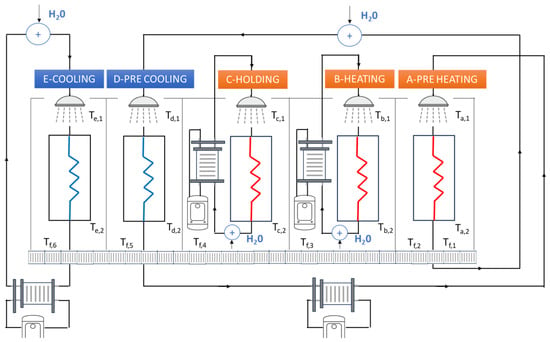
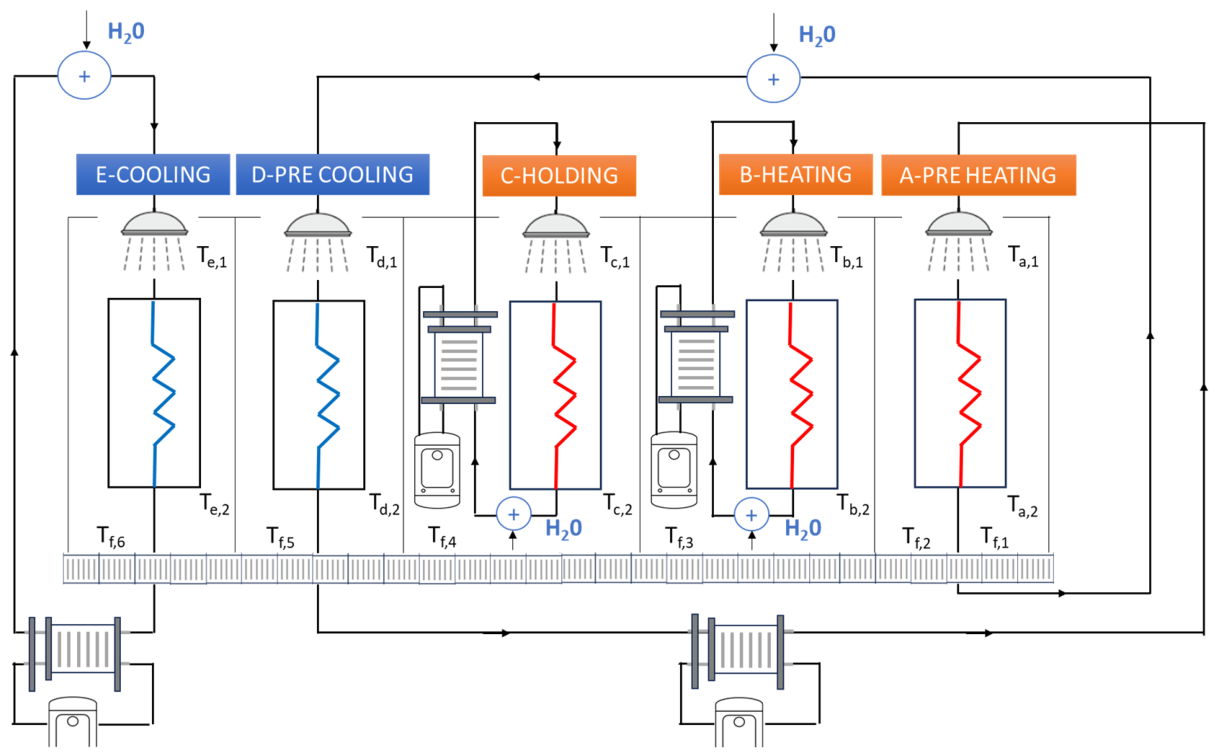
A conventional industrial tunnel pasteurizer for bottled liquid products was investigated. In this work, temperatures are expressed in degrees Celsius (°C) instead of kelvin (K), since Celsius is the customary and more informative unit for reporting thermal setpoints and operating conditions in industrial pasteurization processes. The system consists of five sequential chambers arranged along a continuous conveyor belt, designed to progressively heat and cool sealed glass bottles by means of controlled water spray systems. The overall layout of the pasteurization line is schematically illustrated in Figure 1.
Figure 1.
Schematic operating layout of the tunnel pasteurization process, composed of five sequential chambers: pre-heating, heating, holding, pre-cooling, and cooling.
Each chamber is characterized by a specific setpoint temperature, geometric length, and corresponding bottle residence time. According to the currently applied functioning scheme, the main operating parameters are summarized in Table 1. Temperature values are nominal process setpoints. The acceptable temperature ranges are those defined by the industrial plant for process control. The process is designed in order to maximize the recirculation of water among the various chambers, thus reducing the overall energy requirements. In particular, after passing through the pre-cooling chamber, water is recirculated and sent to the pre-heating one, to release to the entering new bottles the heat absorbed by the outcoming bottles during the pre-cooling phase. Chamber lengths are nominal geometrical dimensions, and residence times are nominal values derived from chamber length and conveyor speed under standard operating conditions.
Table 1.
Main operating characteristics of the five chambers composing the tunnel pasteurizer.
The total residence time inside the tunnel pasteurizer is 36 min, corresponding to a conveyor belt speed of 250 mm/min.
The process is designed to ensure that the temperature at the coldest point within the bottled product reaches at least 72 °C and remains above this threshold for a minimum of 12 min, thus satisfying the prescribed pasteurization condition.
This temperature–time target corresponds to the prescribed industrial pasteurization criterion adopted for the investigated product. It was not newly established in the present study, but was treated here as a predefined process requirement to be experimentally verified under real operating conditions.
Thermal energy is transferred from the sprayed water to the external surface of the bottle through forced convection. Heat then propagates through the bottle wall and into the product. Owing to the high viscosity of the treated formulation, internal fluid motion is negligible and heat transfer within the product occurs predominantly by conduction. This mechanism leads to a measurable temperature delay between the bottle wall and the product core, which governs the validation of the process.
Each chamber operates with a specific water flow rate and measurable inlet–outlet temperature difference. These parameters were recorded and used as boundary conditions for the mass and energy balances developed in the subsequent sections.
2.2. Bottle and Product Characteristics
The investigated sample consisted of a sealed glass bottle containing an herbal-based high-viscosity liquid formulation, with a nominal fill mass of approximately 180 g. For confidentiality reasons, the commercial identity and detailed composition of the product are not disclosed. From the thermal standpoint relevant to the present study, the product behaved as a viscous liquid with strongly limited internal convective motion during processing and, therefore, predominantly conduction-controlled internal heat transfer.
The masses used for the thermal-capacity analysis were 98.81 g for the glass bottle, 1.71 g for the cap, and 181.83 g for the contained product. Although a direct rheological characterization was outside the scope of the present work, the formulation was classified, from an engineering standpoint, as a high-viscosity bottled liquid system, consistent with the measured internal thermal gradients and with the absence of effective temperature homogenization during processing.
2.3. Determination of the Thermal Capacity of the Bottle–Product System
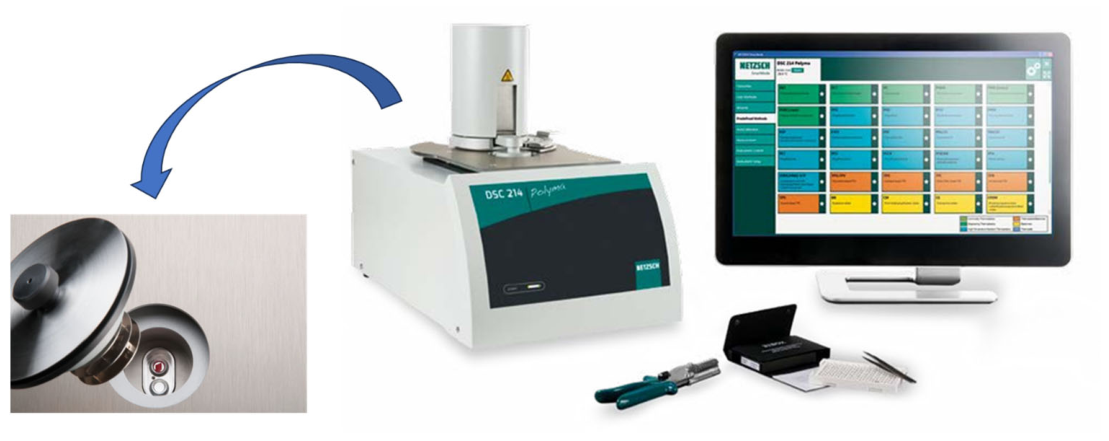
To quantify the energy absorbed during pasteurization, the overall heat capacity of the bottle–product system was experimentally determined. The analysis was performed on the three main components of the bottle–product system, namely the cap, the glass bottle, and the contained formulation, using the component masses reported in Section 2.2. Differential Scanning Calorimetry (DSC) (Figure 2) measurements were performed to determine the specific heat capacity of:
- The bottle cap;
- The glass bottle;
- The contained product.
Figure 2.
NETZSCH DSC 214 Polyma differential scanning calorimeter used to determine the heat-flow response and the specific heat capacity of the bottle–product system. Data sheet of DSC 214 Polyma could be found in [37].
The total heat capacity was calculated as
where
- are the specific heats of cap, bottle, and fluid;
- are their respective masses.
DSC measurements were carried out using a NETZSCH DSC 214 instrument (NETZSCH, Selb, Germany). on the three main components of the bottle–product system, namely the cap, the glass bottle, and the contained liquid formulation. In all three cases, Concavus Al crucibles with pierced lids were used, and the thermal program consisted of heating from −50 °C to 150 °C at 10 K/min. The sample masses were 11.77 mg for the cap, 28.8 mg for the glass bottle, and 30.74 mg for the liquid formulation. The instrument was temperature and sensitivity-calibrated prior to the measurements. The component-specific heat values obtained from these measurements were then combined with the corresponding component masses of the real bottle–product system to calculate the overall thermal capacity of the filled bottle, yielding a value of approximately 847 J/K. Based on DSC measurements, the present value is suitable to accurately describe the thermal capacity of the filled bottle, within the temperature range it assumes when passing through the tunnel pasteurizer.
This value was used to compute the thermal energy absorbed or released by each bottle in each process phase.
2.4. Operating Conditions and Boundary Parameters
The tunnel pasteurizer operates under predefined temperature setpoints and water flow rates that constitute the nominal operating conditions of the industrial process. These values represent the standard configuration adopted for routine pasteurization cycles and were used in this study as boundary conditions for the thermal and energy analyses.
Following the direction of bottle movement along the conveyor belt, the process is divided into five functional chambers:
- Pre-heating;
- Heating;
- Holding;
- Pre-cooling;
- Cooling.
For each chamber, the nominal inlet water temperature, outlet water temperature, and water flow rate were considered. These parameters define the thermal forcing imposed on the bottle and were used to reconstruct the theoretical temperature evolution within the bottle–product system.
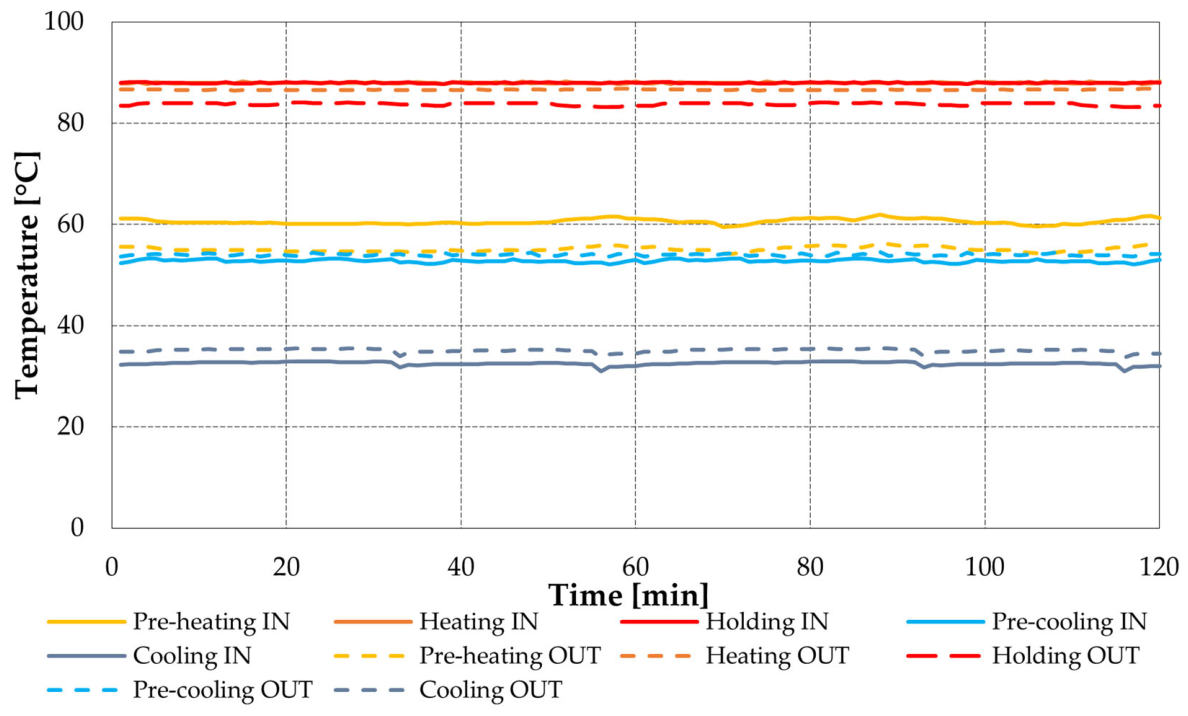
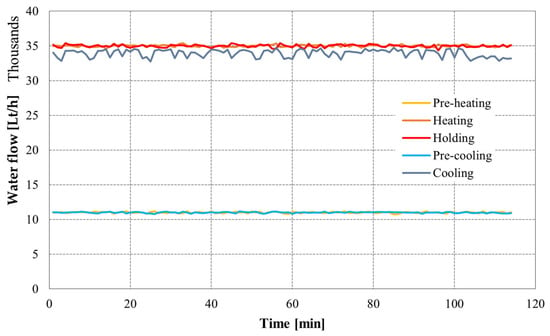
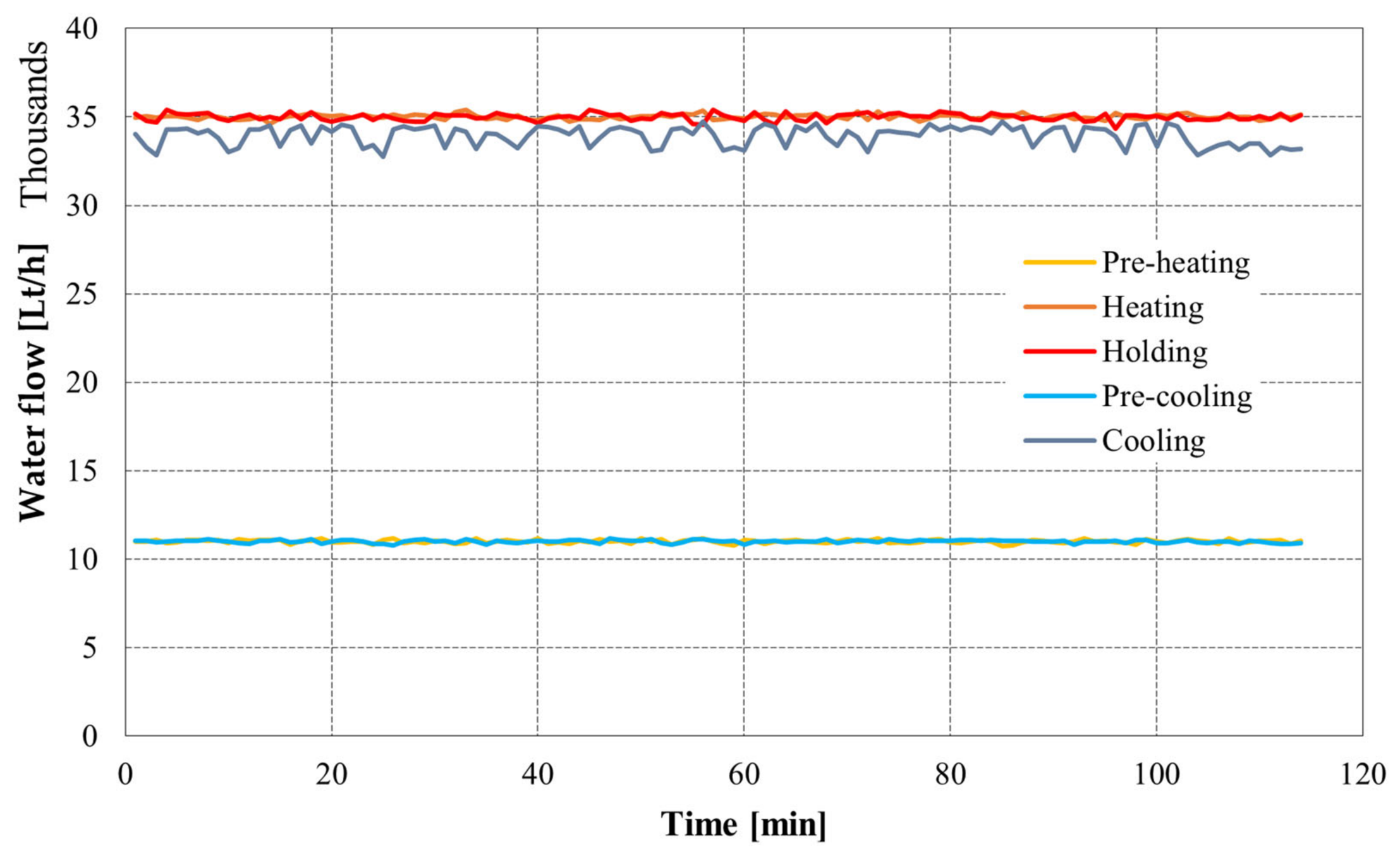
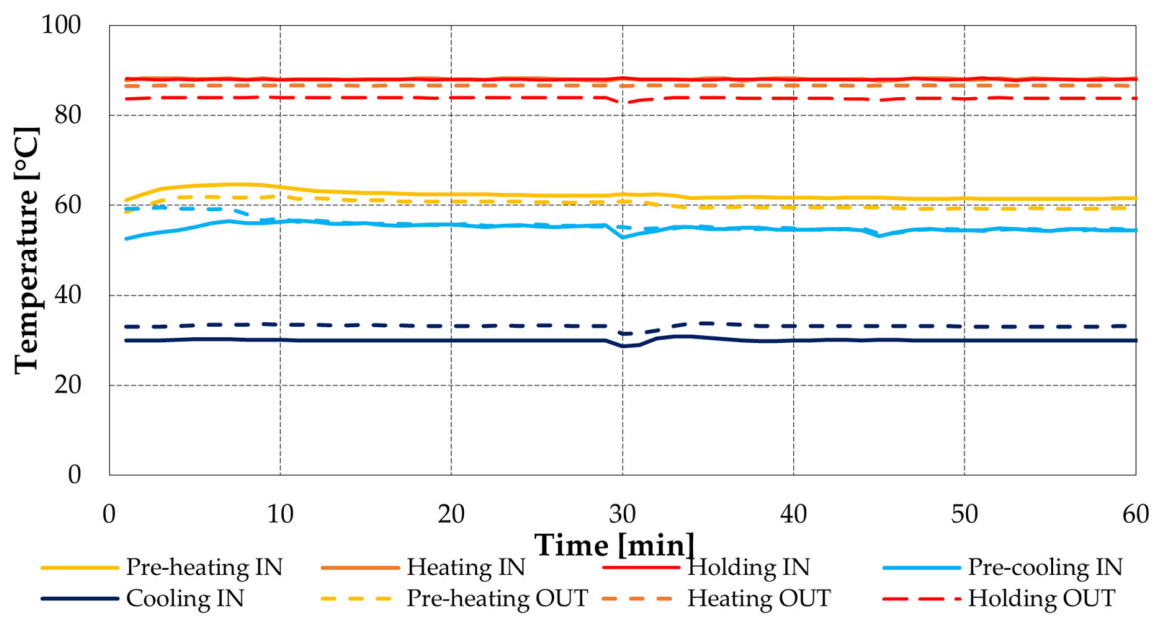
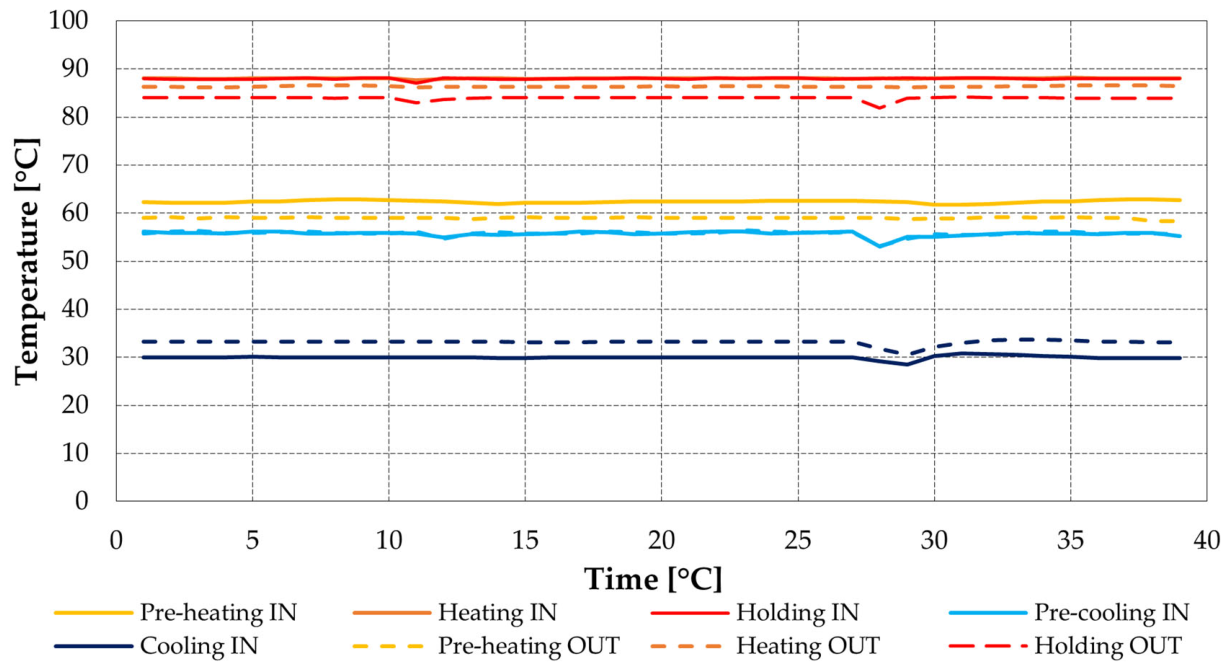
Figure 3 shows the nominal inlet and outlet water temperatures in each chamber, while Figure 4 reports the corresponding water flow rates.
Figure 3.
Nominal inlet and outlet water temperatures in each chamber.
Figure 4.
Nominal water flow rates in each chamber.
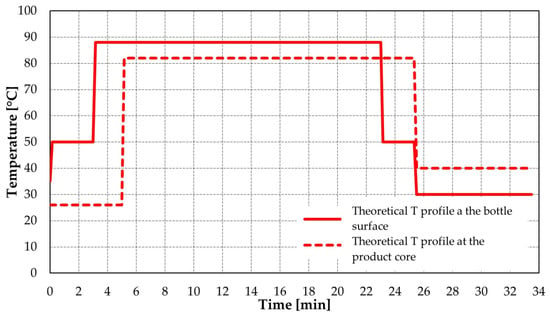
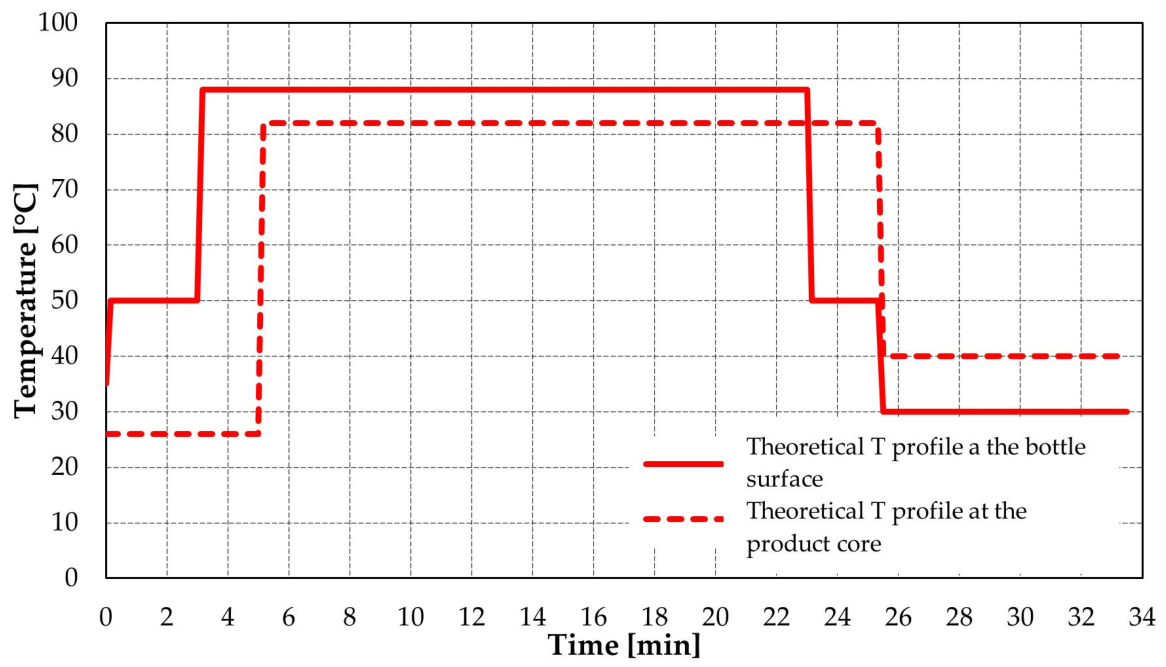
The combination of these setpoints determines the expected temperature profile at the bottle surface and, by conduction, at the product core. Based on these operating conditions, a theoretical temperature evolution was defined assuming:
- Forced convection between sprayed water and bottle surface;
- Conductive heat transfer within the product;
- Lumped thermal capacity of the bottle–product system.
The resulting theoretical temperature profile at the bottle surface and at the product core is presented in Figure 5. The reference profile was used only as a qualitative benchmark.
Figure 5.
Simplified reference temperature profile at the bottle surface and at the product core.
This theoretical reconstruction was used to verify compliance with the prescribed pasteurization criterion (core temperature ≥ 72 °C for ≥12 min) under nominal operating conditions. Experimental validation of the internal temperature evolution was subsequently performed using the instrumented bottle described in Section 2.4.
2.5. Instrumentation and Temperature Measurements
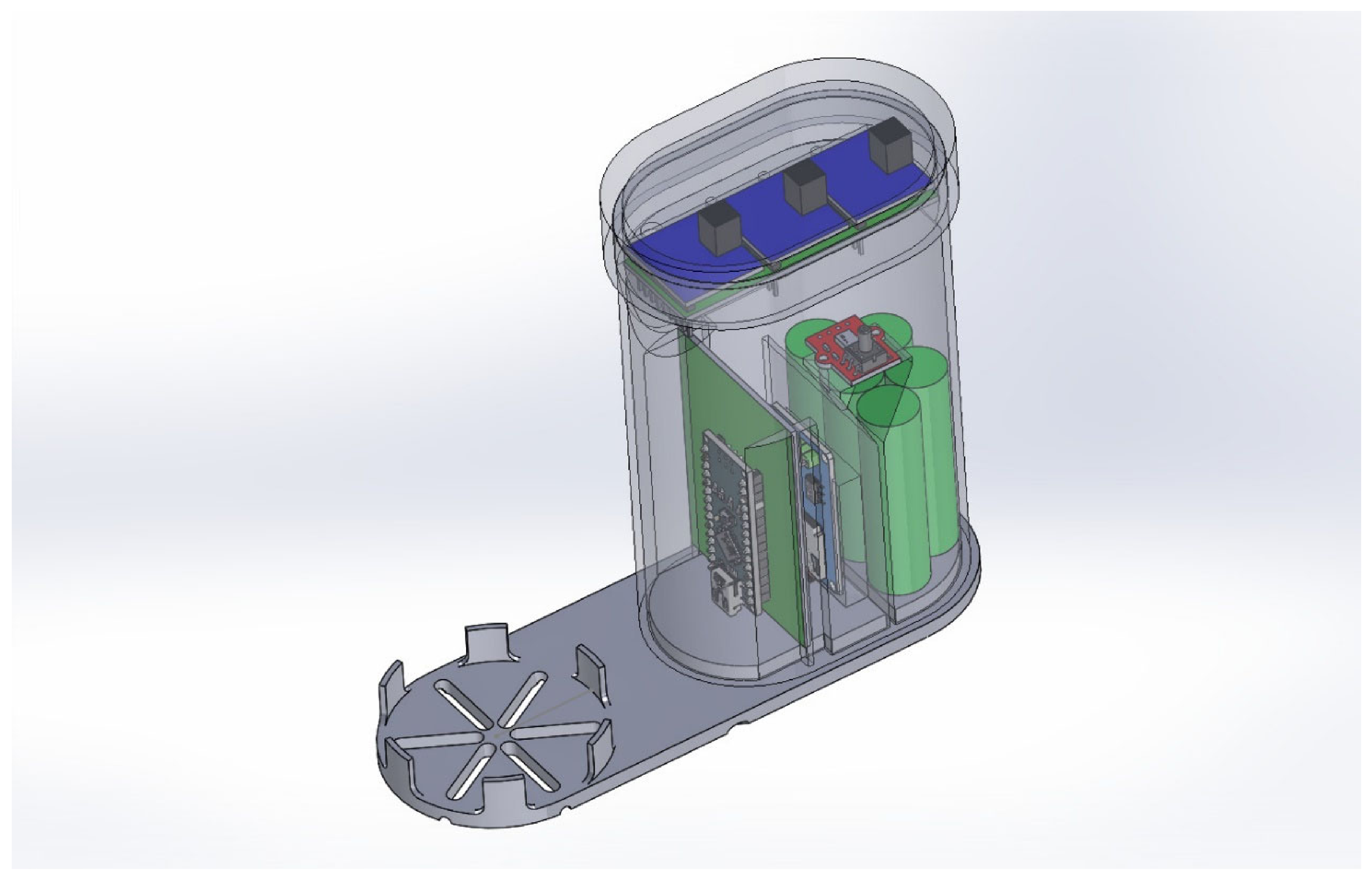
To monitor the actual thermal history inside the bottle during tunnel pasteurization, a dedicated instrumented bottle assembly was developed. The device was designed to measure temperature at different internal locations within the bottle while minimizing interference with the external spray-water heating and cooling conditions. A three-dimensional representation of the instrumented bottle is shown in Figure 6.
Figure 6.
Three-dimensional representation of the instrumented bottle.
The experimental device was built around the actual commercial glass bottle used for the investigated product. The additively manufactured components consisted of the external support structure and of a dedicated cap designed to allow sensor insertion while preserving bottle tightness during the tests. The device included:
- Three J-type thermocouples (having Class accuracy 1, by TC Direct) installed inside the bottle in order to monitor temperature at representative locations:
- -
- near the product core in the upper half of the bottle;
- -
- near the product core in the lower half of the bottle;
- -
- near the inner wall in the upper half of the bottle.
- One pressure sensor (accuracy ± 0.01 bar).
- A programmable data acquisition system (Arduino-based).
- SD card storage for offline data analysis.
The external support was specifically designed to keep the measuring system mechanically separated from the bottle body, so that the spray jets from the pasteurizer could directly impinge on the glass wall without significant obstruction. A dedicated controlled comparison between the instrumented configuration and a completely standard non-instrumented bottle was not carried out in the present study; accordingly, the setup should be interpreted as a measurement solution designed to minimize perturbation of the real process conditions rather than as a separately validated thermal replica. The support structure was manufactured in PLA HP, a polymer capable of withstanding temperatures up to 120 °C. Magnetic supports were integrated to facilitate secure positioning along the conveyor belt, and the system was powered by an internal battery pack in order to avoid external wiring.
To allow for internal sensor insertion, a dedicated cap equivalent to the industrial closure was manufactured and provided with sealed sensor passages. The thermocouple passages were sealed with epoxy resin in order to preserve bottle tightness during the experimental runs.
Two independent full-scale experimental campaigns were conducted under nominal operating conditions (13 September 2024 and 11 October 2024) in order to assess the repeatability of the measured temperature evolution inside the bottle. The acquisition system was configured before each run and operated continuously over the entire 36 min pasteurization cycle, with a sampling frequency selected to ensure adequate temporal resolution of the transient heating and cooling phases.
The present experimental campaign was not conceived as a formal statistical design of experiments. Accordingly, the two nominal-condition tests were used to verify repeatability of the thermal response, whereas the modified-condition tests were treated as exploratory validation tests aimed at assessing the preservation of the prescribed pasteurization criterion under alternative operating settings.
3. Experimental Thermal Behavior of the Bottle–Product System
Two full-scale experimental campaigns were conducted under nominal operating conditions (13 September and 11 October 2024).
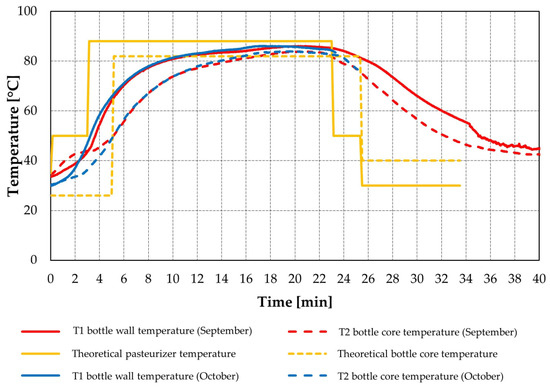
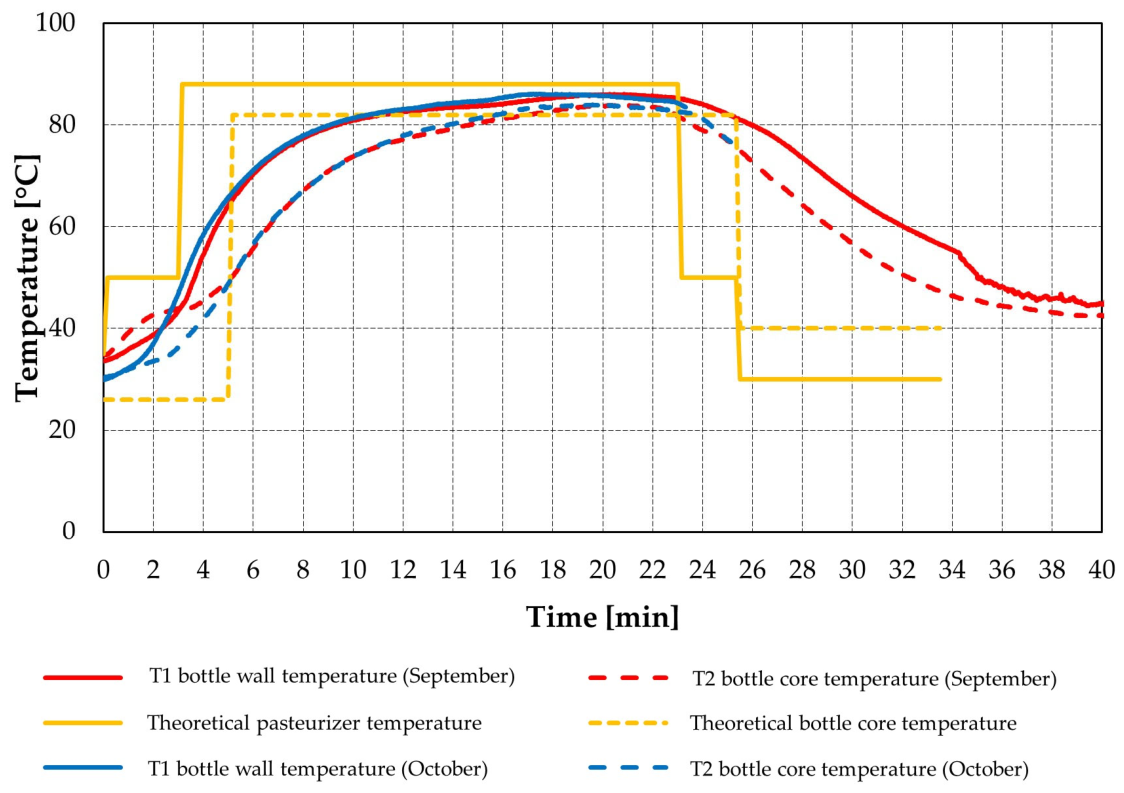
Figure 7 shows the measured temperature evolution at the bottle wall and at the product core for both tests, compared with the theoretical temperature profile derived from nominal operating setpoints.
Figure 7.
The measured temperature evolution at the bottle wall and at the product core, compared with the theoretical temperature profile derived from nominal operating setpoints.
The temperature curves obtained during the two campaigns are practically superimposed, demonstrating high repeatability of process operating conditions and measurement reliability.
No significant pressure variations were observed during the process; therefore, pressure data are not reported.
During the heating phase, a clear temperature delay is observed at the product core compared with the bottle wall. At certain time instants, temperature differences exceeding 15 °C were measured between the two positions.
The maximum temperature reached at the core is systematically lower than that measured near the internal wall.
This behavior confirms that heat transfer within the product occurs predominantly by conduction. From an engineering standpoint, this observed behavior is consistent with a high-viscosity packaged liquid system in which internal buoyancy-driven mixing is strongly limited over the residence time of the process. The high viscosity of the formulation suppresses internal convective motion, preventing thermal homogenization during the residence time inside the tunnel pasteurizer.
As a consequence, the internal temperature distribution remains non-uniform throughout the process.
This behavior is consistent with previous studies on tunnel pasteurization and in-package thermal processing, which showed that significant internal temperature gradients may develop when the product does not undergo effective internal convective mixing. In particular, Bhuvaneswari and Anandharamakrishnan [14] reported marked internal temperature gradients during tunnel pasteurization of bottled beer, while Dilay et al. [16] and Thongon et al. [17] highlighted the strong influence of operating conditions and package-scale heat transfer on the internal thermal response of bottled and canned beverages. The present results extend this interpretation to a high-viscosity bottled herbal-based formulation, for which the product core clearly remains the governing location for process validation. The measured temperatures were therefore evaluated against the prescribed pasteurization target defined in Section 2.1.
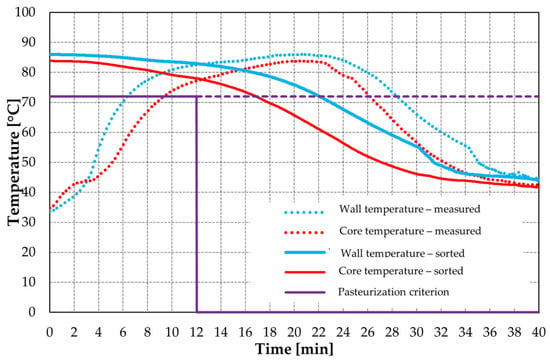
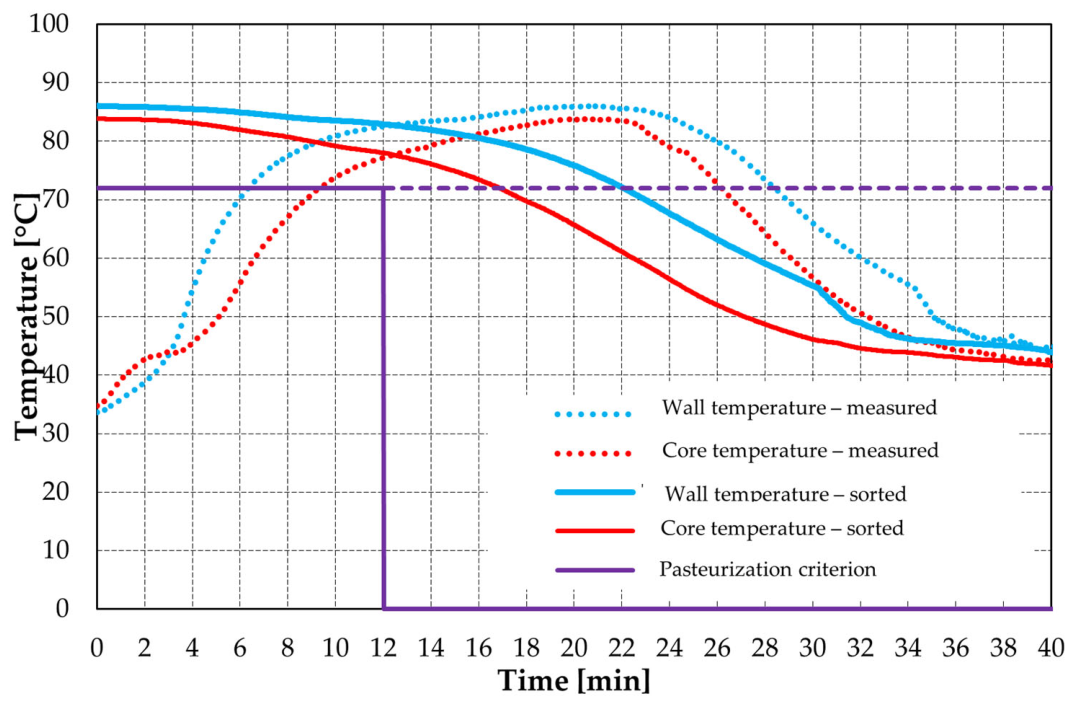
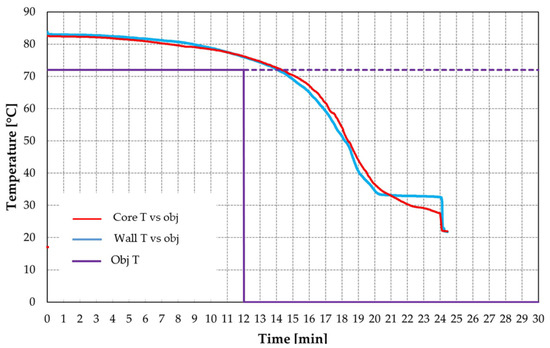
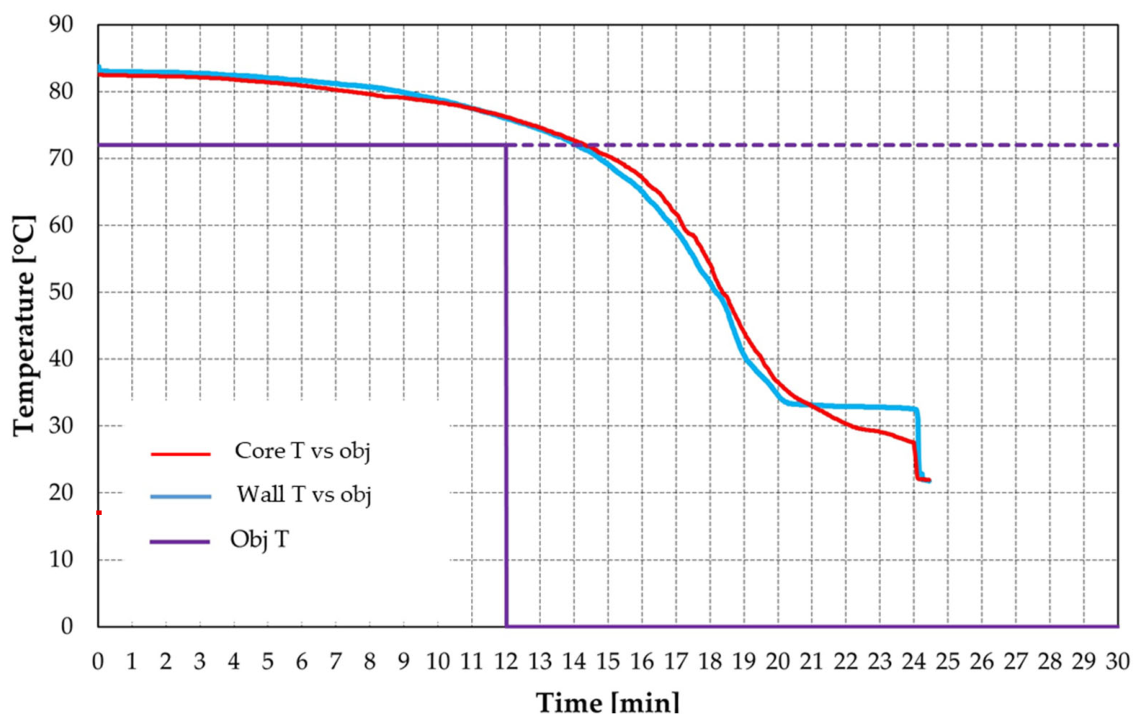
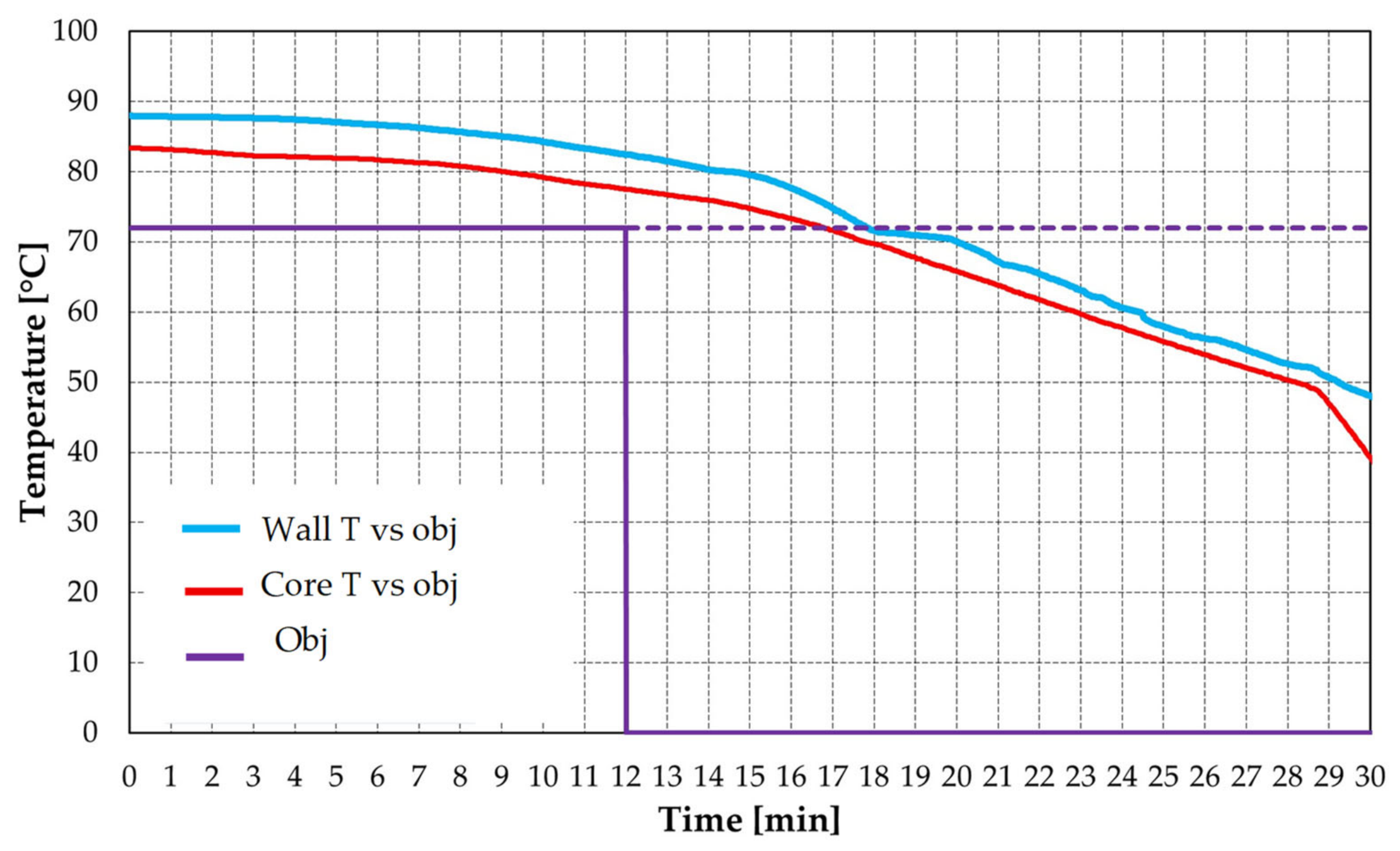
Figure 8 presents the ordered temperature values measured at the wall and at the core, allowing for direct visualization of the duration above the threshold temperature.
Figure 8.
Measured temperature at the bottle wall (blue) and at the core of the bottle (red). Solid lines: temporal evolution; dashed lines: temperature values sorted in descending order. The solid purple curve represents the target values, both in terms of time and temperature; its dashed extension helps to clearly visualize how long the temperatures near the wall and at the core of the bottle remain above the target value of 72 °C.
The experimental measurements demonstrated that:
- Near the bottle wall, temperature ≥ 72 °C is maintained for approximately 22 min.
- At the product core, temperature ≥ 72 °C is maintained for approximately 17–18 min.
Therefore, the pasteurization requirement is satisfied with a significant safety margin. From a process-validation perspective, this result confirms that compliance with the pasteurization target must be assessed at the slowest-heating internal location rather than inferred only from nominal chamber temperatures or from the bottle wall response. Similar conclusions were drawn in previous studies on tunnel pasteurization, where the internal thermal history of the packaged product was identified as the key variable for evaluating treatment adequacy and possible optimization margins [14,16,17].
4. Energy Analysis and Heat Transfer Efficiency
Building on the validated thermal behavior of the bottle–product system, a detailed energy analysis of the pasteurization process was performed. The operating parameters of each chamber, i.e., water flow rate and bottle residence time, were used to quantify the total water consumption and the associated heat exchange.
The efficiency indicators reported in this work were calculated deterministically from measured temperatures, nominal operating parameters, and mass and energy balances for each stage of the process.
The thermal energy exchanged in each stage was calculated from the measured inlet and outlet water temperatures. Heat released by the water was evaluated for the pre-heating, heating and holding stages, while heat recovery was quantified for the pre-cooling and cooling stages. The corresponding parameters are reported in Table 2.
Table 2.
Parameters useful for defining the amount of energy spent (during the first three steps) and recovered (in the last two) during the process.
The conveyor belt operates at a maximum capacity of 150 bottles min−1. Based on the residence times, the number of bottles simultaneously present in each chamber was determined. The thermal energy absorbed by a single bottle was calculated using the measured temperature variation within the bottle and the experimentally determined thermal capacity of the bottle–product system (847 J/K). The total heat exchanged in each chamber was then obtained by multiplying the per-bottle contribution by the number of bottles present.
The results are summarized in Table 3.
Table 3.
Parameters used to quantify the thermal energy exchanged by the bottles during the pasteurization process.
The comparison between the thermal energy exchanged by the water and that absorbed by the bottles enabled the evaluation of the heat-transfer efficiency of the pasteurizer. The efficiency was defined as the ratio between the thermal energy effectively transferred to the product and the total thermal energy supplied by the process. Therefore, the heating phase efficiency was calculated by considering the energy quantities related to the pre-heating, heating and holding phases. In detail, the total heat exchanged values, reported in Table 3 and related to these three phases, were added to each other and divided times the sum of heat exchanged values, related to the same phases and indicated in Table 2. The same procedure was adopted to determine the cooling phase efficiency, which involved the pre-cooling and cooling phases. Conversely, the overall process efficiency was calculated by considering the energy spent and the energy effectively exchanged with the bottles, during the whole process, without distinguishing between heating and cooling.
The following results were obtained:
- Heating phase efficiency: 37.29%
- Cooling phase efficiency: 47.54%
- Overall process efficiency: 40.57%
These results indicate that a significant fraction of the supplied thermal energy is not effectively utilized for product heating, particularly during the heating and holding stages. This result is consistent with the general behavior reported for industrial thermal-processing systems, in which only part of the supplied energy is effectively transferred to the product because of external and internal heat-transfer limitations. In tunnel pasteurizers, Lewicki [20] emphasized the importance of heat-transfer coefficients in determining process performance, while broader optimization studies have shown that conventional thermal processes are often operated with conservative margins that ensure safety but reduce overall energetic performance [18,26]. In the present case, the moderate overall efficiency can be physically interpreted in light of the strong internal thermal resistance of the bottled formulation, which limits the rate at which the supplied heat reaches the product core. Furthermore, the experimental results presented in Section 3 showed that the pasteurization condition is achieved with a considerable safety margin. In particular, the temperature at the product core remains above 72 °C for approximately 17–18 min, compared with a required minimum of 12 min.
The measured thermal history at the product core suggests the existence of a substantial safety margin under nominal operating conditions. On this basis, a reduction in the holding time may represent a plausible optimization option from an engineering standpoint. In particular, a 5 min holding stage was identified as a candidate scenario for reducing energy demand; however, this specific configuration was not directly tested in the present work and should therefore be regarded as a first order estimate requiring dedicated experimental validation. Under this hypothetical assumption, the thermal energy required during the holding stage would decrease from 97.15 MJ to 48.58 MJ, corresponding to an estimated overall reduction in process energy demand of approximately 33.7%. This value should be interpreted as an indicative process-scale estimate rather than as the outcome of a directly tested operating configuration. From an engineering standpoint, this finding is coherent with the optimization logic proposed in previous studies on thermal processing, according to which the holding stage is often the most suitable section for rational reduction once the coldest-point thermal history has been experimentally validated [18,26,27]. In this sense, the present work does not propose a generic reduction in residence time, but an experimentally supported adjustment based on the measured thermal response of the specific bottle–product system.
It should be noted that the present optimization analysis was not performed as a purely energy-driven exercise. The modified operating conditions were selected within the process-acceptability framework adopted for the investigated product and were evaluated only if the prescribed pasteurization target was maintained. In this sense, the optimization procedure was developed under constraints consistent with the industrial quality-control requirements associated with the product. Therefore, the identified optimization margins are specific to the investigated bottle–product system and should not be directly generalized to other bottled products, such as milk or fruit juices, characterized by different formulation, thermal sensitivity, and microbiological requirements.
5. Process Optimization Under Modified Operating Conditions
To further investigate potential energy savings, three additional experimental campaigns were conducted under modified operating conditions. The modified configurations were selected as engineering guided exploratory scenarios based on three criteria: (i) the thermal margin observed under nominal operating conditions; (ii) the process variables that could be practically adjusted on the industrial pasteurizer without altering its technological layout; and (iii) the process-acceptability constraints defined for the investigated product.
Accordingly, the three tested configurations were chosen to represent three practically relevant classes of intervention: (a) moderate modification of pre-heating and pre-cooling temperatures; (b) broader redistribution of stage temperatures along the process; and (c) combined modification of thermal forcing and water flow rate in the most energy-relevant stages.
The measurement methodology remained unchanged, while selected process parameters were varied to assess their impact on thermal performance.
The experimentally tested optimization scenarios considered in the present work involved modified chamber temperatures and, in one case, modified water flow rate, whereas the isolated reduction in the holding stage to 5 min was not tested as a standalone configuration.
The modified operating conditions were selected in agreement with the company quality-control criteria for the investigated product. The aim was not to exhaustively optimize the process space, but to experimentally verify whether selected, industrially feasible modifications could preserve compliance with the prescribed pasteurization target while indicating possible directions for energy improvement.
Due to practical constraints, the tests were carried out under partial-load conditions using a single instrumented bottle. Consequently, only the heat exchanged by the water in each chamber was directly evaluated.
Three configurations were investigated:
- Variation in temperatures in pre-heating and pre-cooling stages;
- Variation in temperatures in pre-heating, pre-cooling, and cooling stages;
- Combined variation in temperatures and flow rates.
In this sense, Section 5 should be interpreted as an exploratory optimization study under industrial operating constraints, rather than as a fully systematic optimization campaign.
5.1. Modified Temperatures in Pre-Heating and Pre-Cooling
This first configuration was designed to test whether a limited redistribution of thermal setpoints at the entrance and exit of the tunnel could modify the bottle thermal trajectory without affecting the central heating structure of the process.
The process temperatures were adjusted as follows: pre-heating at 65 °C and pre-cooling at 55 °C, while the remaining stages were kept unchanged.
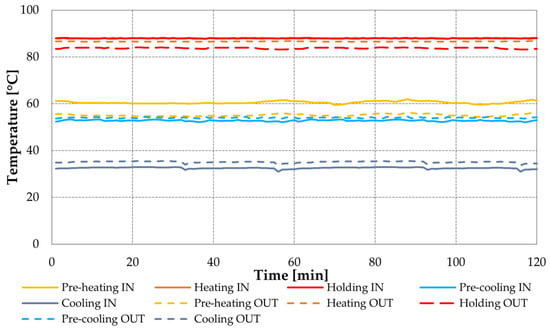
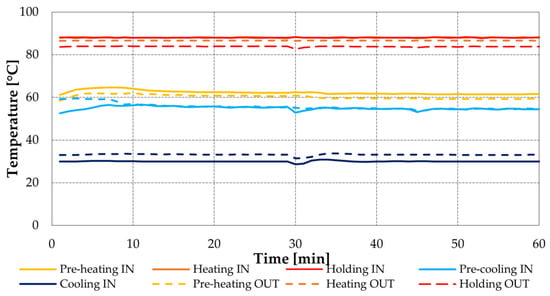
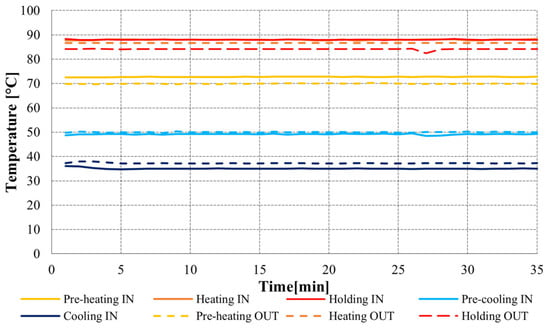
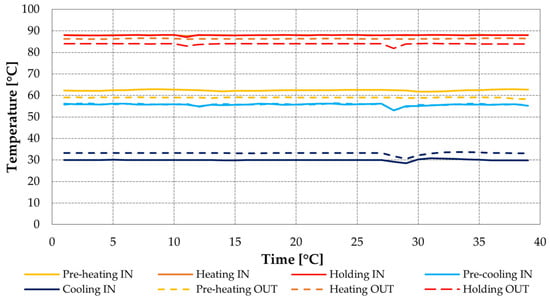
The results indicate that the pasteurization requirement is fully satisfied, with the product temperature remaining above 72 °C for at least 14 min at both the bottle wall and the core. The inlet and outlet water temperatures for each chamber are shown in Figure 9.
Figure 9.
Inlet and outlet water temperature for each pasteurizer chamber. The colors identify the different chambers, while solid lines represent inlet water temperatures and dashed lines represent outlet water temperatures.
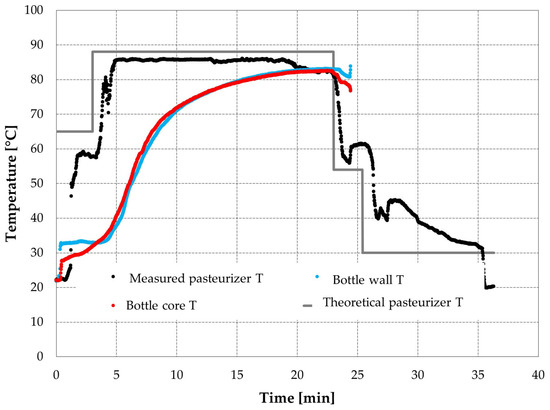
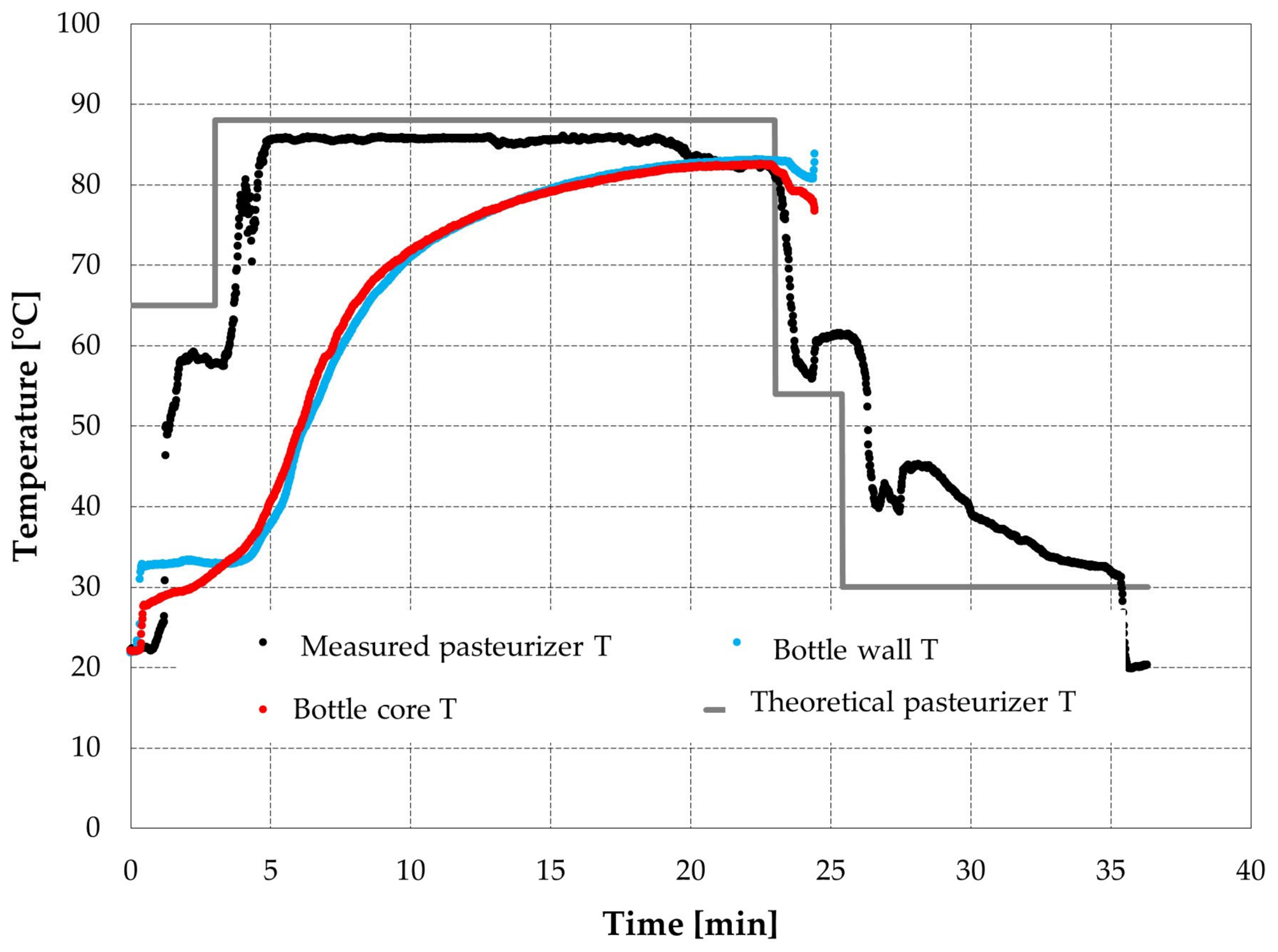
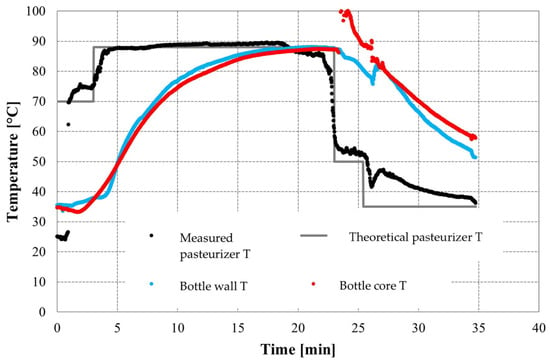
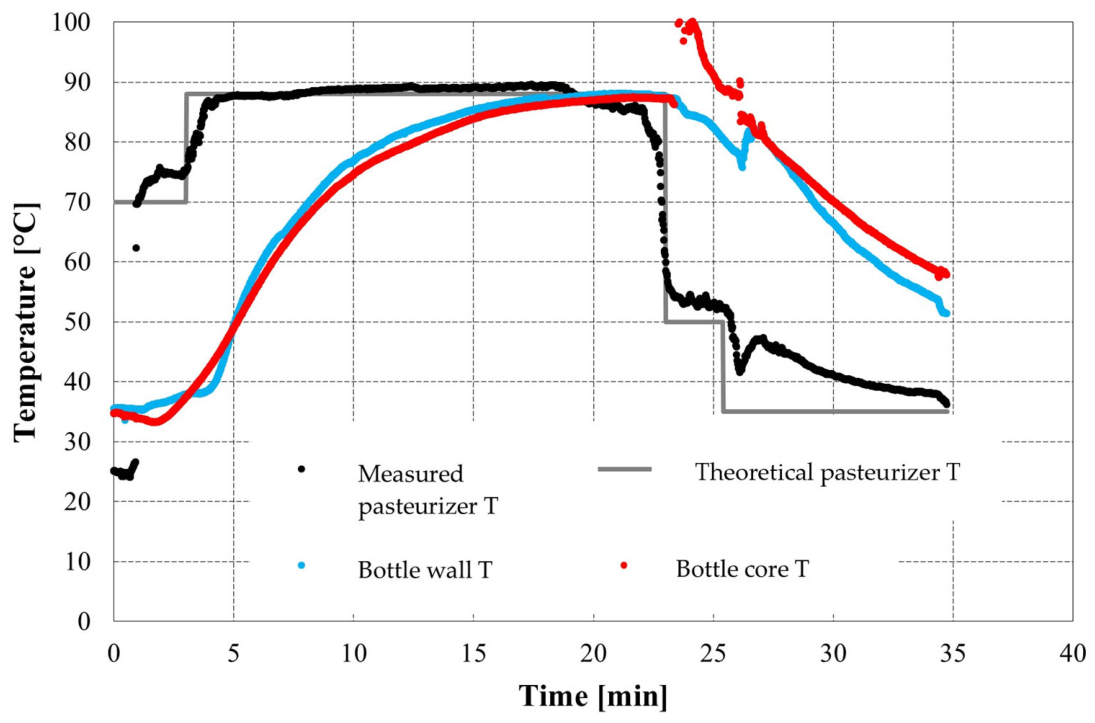
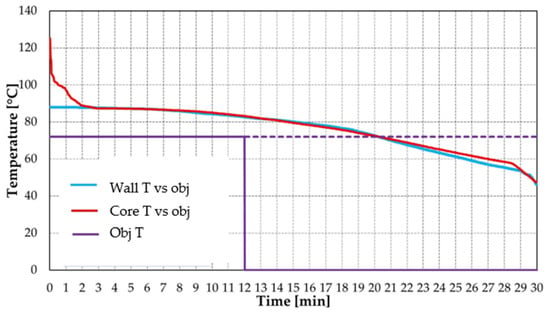
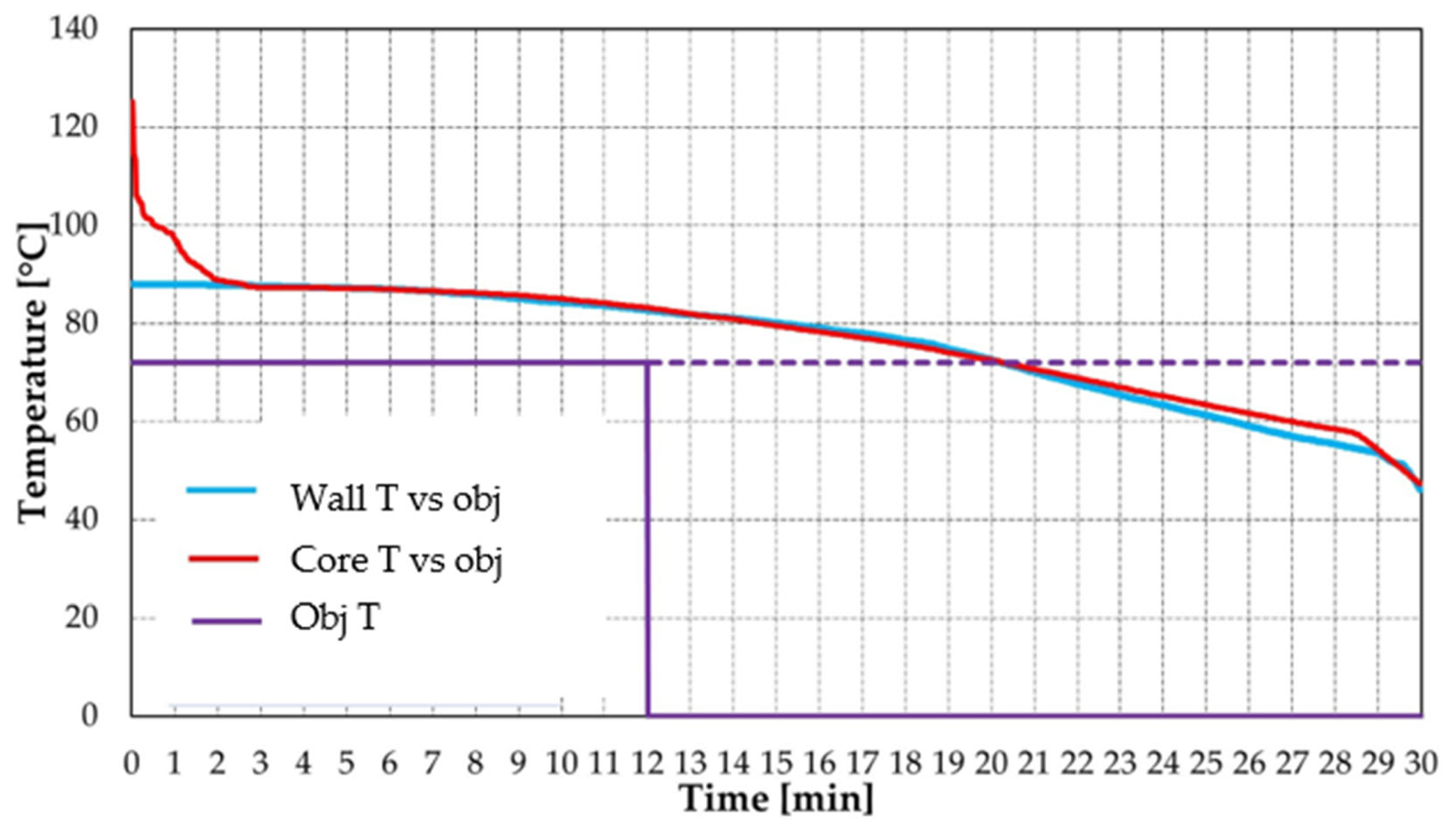
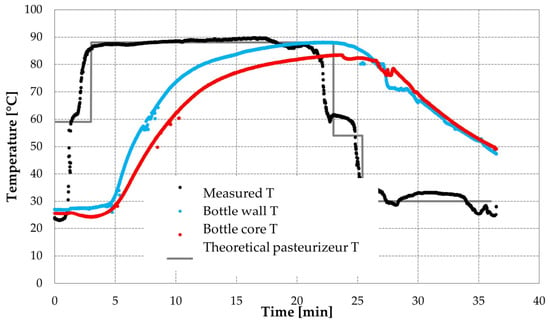
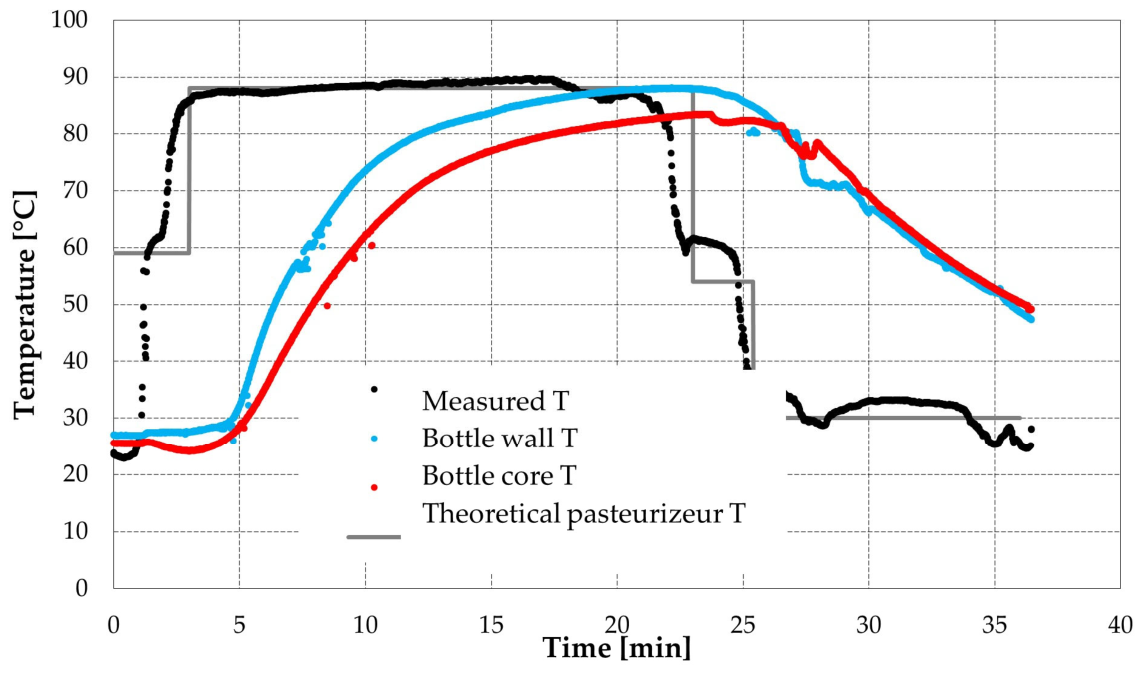
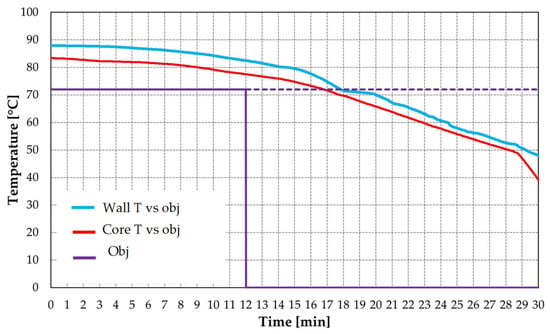
The temperature evolution during the test, both along the conveyor belt and within the bottle, is illustrated in Figure 10 and Figure 11. In particular, Figure 10 compares the theoretical temperature profile, the actual process temperature, and the temperatures measured inside the bottle at the wall and at the core. Figure 11 presents the same data sorted in descending order, allowing a direct visualization of the duration for which the temperature exceeds 72 °C.
Figure 10.
Temperature evolution during the test: theoretical process temperature (grey); measured process temperature (black); temperature at the bottle core (red); temperature at the bottle wall (blue).
Figure 11.
Temperature near the bottle wall (blue) and at the bottle core (red). Temperature values are sorted in descending order to clearly show how long the temperature remained above 72 °C. The solid purple curve represents the target values in terms of both temperature and time; its dashed extension helps visualize the duration for which the temperatures near the wall and at the bottle core remain above the target temperature of 72 °C region indicates the time interval during which the temperature exceeds the threshold value.
The modification of the operating conditions clearly enables compliance with the target requirement. The temperature remains above 72 °C for at least 14 min both at the bottle wall and at the core. Table 4 reports the operating parameters and the total thermal energy exchanged in each stage of the process. The result suggests that, for the investigated formulation, moderate adjustments to the pre-heating and pre-cooling conditions may alter the thermal trajectory inside the bottle without compromising target attainment. This is consistent with previous model-based studies showing that tunnel-pasteurization performance can be improved through refined management of time–temperature profiles rather than through indiscriminate increases in thermal load [24,26,27].
Table 4.
Operating parameters and thermal energy exchanged in each pasteurization stage.
5.2. Modified Temperatures in Multiple Stages
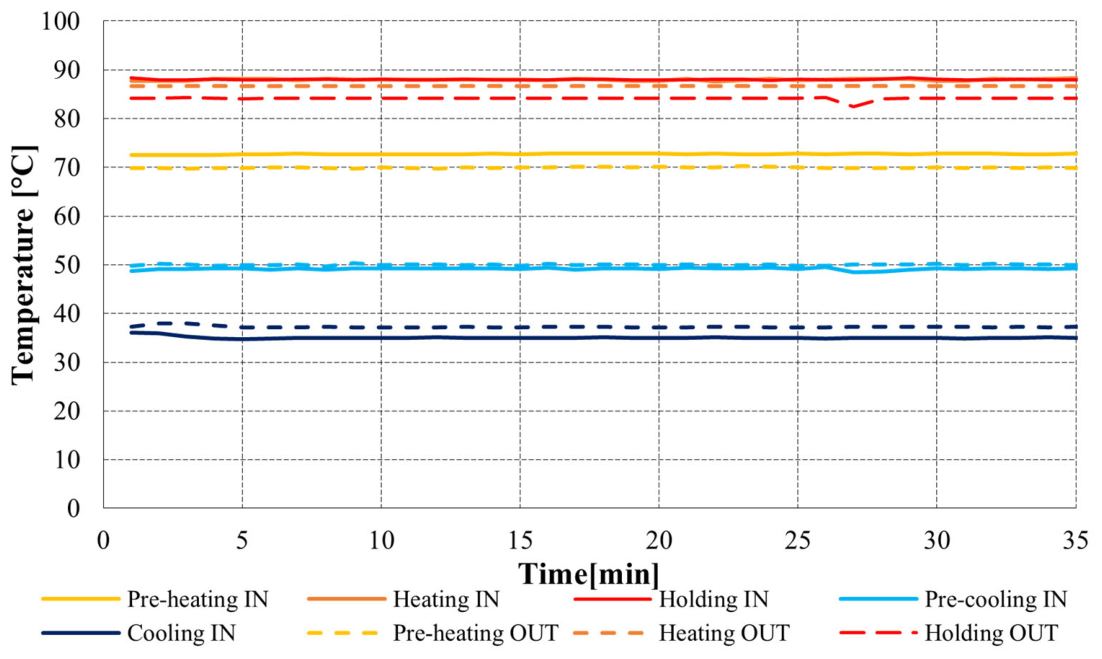
This second configuration was designed to explore a more pronounced redistribution of stage temperatures along the tunnel, while keeping the hydraulic configuration unchanged. In this configuration, the pre-heating temperature was increased to 70 °C, the pre-cooling temperature was reduced to 50 °C, and the final cooling temperature was increased to 35 °C.
The process significantly exceeded the required condition, with the temperature remaining above 72 °C for approximately 20 min. The inlet and outlet water temperatures for each chamber are shown in Figure 12.
Figure 12.
Inlet and outlet water temperature for each pasteurizer chamber. The colors identify the different chambers, while solid lines represent inlet water temperatures and dashed lines represent outlet water temperatures.
As in the previous case (Section 5.1), the next two diagrams (Figure 13 and Figure 14) illustrate the temperature trend and confirm achievement of the target required for pasteurization, while the process parameters and exchanged energy are summarized in Table 5.
Figure 13.
Temperature evolution during the test: theoretical process temperature (grey); measured process temperature (black); temperature at the bottle core (red); temperature at the bottle wall (blue).
Figure 14.
Temperature near the bottle wall (blue) and at the bottle core (red). Temperature values are sorted in descending order to clearly show how long the temperature remained above 72 °C. The solid purple curve represents the target values in terms of both temperature and time; its dashed extension helps visualize the duration for which the temperatures near the wall and at the bottle core remain above the target value of 72 °C.
Table 5.
Operating parameters and thermal energy exchanged in each pasteurization stage.
This second configuration made it possible not only to achieve but also to greatly exceed the target, since the temperature inside the bottle, both at the core and at the wall, remained above 72 °C for about 20 min. The larger safety margin observed in this configuration confirms that relatively limited changes in stage temperatures can significantly affect the integral thermal history of the packaged product. Similar conclusions were reported in previous studies on bottled and canned beverages, where changes in operating conditions produced measurable effects on the internal temperature evolution and on the adequacy of the pasteurization treatment [13,24,27].
5.3. Combined Modification of Flow Rate and Temperature
This third configuration was designed to assess the coupled effect of modifying both thermal setpoints and external convective forcing in the stages expected to have the largest influence on bottle heating. In the third configuration, the pre-heating temperature was set to 59 °C, while the water flow rate in the heating and holding stages was increased to 38,000 L h−1.
The pasteurization condition was again satisfied, with temperatures above 72 °C maintained for approximately 17–18 min. The inlet and outlet water temperatures for each chamber are shown in Figure 15.
Figure 15.
Inlet and outlet water temperature for each pasteurizer chamber. The colors identify the different chambers, while solid lines represent inlet water temperatures and dashed lines represent outlet water temperatures.
The experimental results are summarized in Figure 16 and Figure 17, while the process parameters and exchanged energy are reported in detail in Table 6.
Figure 16.
Temperature evolution during the test: theoretical process temperature (grey); measured process temperature (black); temperature at the bottle core (red); temperature at the bottle wall (blue).
Figure 17.
Temperature near the bottle wall (blue) and at the bottle core (red). Temperature values are sorted in descending order to clearly show how long the temperature remained above 72 °C. The solid purple curve represents the target values in terms of both temperature and time; its dashed extension helps visualize the duration for which the temperatures near the wall and at the bottle core remain above the target value of 72 °C.
Table 6.
Operating parameters and thermal energy exchanged in each pasteurization stage.
The temperatures measured at the bottle core and inner wall may differ at the beginning of the test, when the bottle enters the pasteurizer, depending on its initial temperature. Also in this case, the target was exceeded by a wide margin: the temperature remained above 72 °C for about 17 min at the bottle core and about 18 min at the bottle wall.
In this case, the combined modification of temperature and water flow rate confirms the coupled role of thermal driving force and external convective conditions in determining the internal response of the bottle–product system. This interpretation agrees with previous engineering studies on tunnel pasteurization and thermal-process optimization, in which performance was shown to depend not only on nominal stage temperatures, but also on external exchange conditions and on the internal thermal resistance of the packaged product [10,27,28].
Additional tests performed under different conveyor loading conditions (full load, partial load, and single-bottle configuration) showed that the temperature evolution inside the bottle is independent of the filling level. This result validates the use of partial-load experiments for the analysis of modified operating conditions.
6. Conclusions
The present study experimentally assessed the thermal behavior and energy performance of an industrial tunnel pasteurizer under nominal and modified operating conditions.
The measurements performed with the instrumented bottle confirmed that the pasteurization criterion was fully satisfied under nominal operating conditions. In particular, the temperature remained above the prescribed threshold for substantially longer than the minimum required time, both near the bottle wall and at the product core. The repeatability of the two full-scale measurement campaigns also demonstrated the stability of the process and the reliability of the adopted measurement approach.
The experimental results showed a marked temperature delay between the bottle wall and the product core during heating, with differences exceeding 15 °C at some time instants. This behavior is consistent with the high viscosity of the processed product, which suppresses internal convective motion and makes conductive heat transfer the dominant mechanism inside the bottle. As a consequence, the internal temperature distribution remains non-uniform throughout the process, and the product core governs process validation.
The energy analysis indicated that the current operating configuration is thermally effective but not fully efficient. The energy analysis indicated that the current operating configuration is thermally effective but not fully efficient, with an overall heat-transfer efficiency of about 40.6%, thus indicating that a significant fraction of the supplied thermal energy is not directly utilized for product heating.
Because the pasteurization target is achieved with a substantial safety margin, the holding stage appears to offer the greatest optimization potential. The present measurements suggest that a reduction in holding time may be feasible; however, the specific 5 min scenario discussed in this work should be interpreted as an indicative engineering estimate and would require dedicated experimental confirmation. The pasteurization target is achieved with a substantial safety margin; the holding stage appears to be oversized in the baseline configuration. The analysis suggests that a reduction in holding time could preserve compliance while decreasing overall process energy demand by about 33.7%. To further investigate possible optimization strategies, three additional tests were carried out under modified operating conditions. In all cases, the pasteurization requirement was maintained. Additional tests under modified operating conditions confirmed that the pasteurization target was maintained in all the investigated configurations, showing that selected changes in stage temperatures and, in one case, water flow rate can be tolerated without compromising process adequacy and preserving compliance with the prescribed pasteurization target.
Additional tests under different conveyor loading conditions showed that the temperature evolution inside the bottle is independent of the degree of conveyor filling. This finding supports the use of partial-load experiments for the analysis of modified operating conditions.
Overall, the results demonstrate that the investigated tunnel pasteurizer ensures effective pasteurization with a considerable safety margin, while also offering concrete opportunities for process optimization and energy saving through a more rational selection of operating parameters.
The proposed optimization margins are specific to the investigated herbal-based viscous bottled formulation and were assessed within the process constraints considered acceptable from the industrial quality-control standpoint. Their extension to other bottled products would require separate validation, since admissible operating conditions depend not only on energy performance but also on product formulation, thermal sensitivity, and microbiological requirements.
Author Contributions
Conceptualization, A.D.G. and A.M.G.; methodology, A.D.G. and A.M.G.; validation, A.M.G.; formal analysis, A.D.G.; investigation, A.D.G. and A.M.G.; resources, A.D.G. and A.M.G.; data curation, A.D.G.; writing—original draft preparation, A.D.G. and A.M.G.; writing—review and editing, A.D.G. and A.M.G.; visualization, A.D.G.; supervision, A.D.G. and A.M.G.; project administration, A.D.G. and A.M.G.; funding acquisition, A.D.G. and A.M.G. All authors have read and agreed to the published version of the manuscript.
Funding
This research received no external funding.
Data Availability Statement
The original contributions presented in this study are included in the article. Further inquiries can be directed to the corresponding author.
Conflicts of Interest
The authors declare no conflicts of interest.
References
- Stumbo, C.R. Thermobacteriology in Food Processing, 2nd ed.; Academic Press: New York, NY, USA, 1973. [Google Scholar]
- Di Giuseppe, A.; Gambelli, A.M. Innovative Retrofit Solutions to Reduce Energy Use and Improve Drying Performance in Conventional Hot-Air Herb Dryers. Processes 2026, 14, 1097. [Google Scholar] [CrossRef] [Scilit]
- Fellows, P.J. Food Processing Technology: Principles and Practice, 4th ed.; Woodhead Publishing: Cambridge, UK, 2017. [Google Scholar]
- Rahman, M.S. (Ed.) Handbook of Food Preservation, 3rd ed.; CRC Press: Boca Raton, FL, USA, 2020. [Google Scholar]
- Silva, V.M.; Gibbs, P.A.; Nuñez, H.; Almonacid, S. Pasteurization, thermal processes. In Encyclopedia of Food Microbiology, 2nd ed.; Academic Press: London, UK, 2014. [Google Scholar] [CrossRef] [Scilit]
- Polak, N.; Kalisz, S.; Kruszewski, B. High-temperature short-time and ultra-high-temperature processing of juices, nectars and beverages: Influences on enzyme, microbial inactivation and retention of bioactive compounds. Appl. Sci. 2024, 14, 8978. [Google Scholar] [CrossRef] [Scilit]
- Deák, T. Thermal treatment. In Food Safety Management: A Practical Guide for the Food Industry; Motarjemi, Y., Lelieveld, H., Eds.; Academic Press: San Diego, CA, USA, 2014; pp. 423–442. [Google Scholar] [CrossRef] [Scilit]
- Singh, R.P.; Heldman, D.R. Introduction to Food Engineering, 5th ed.; Academic Press: Cambridge, MA, USA, 2014. [Google Scholar]
- Toledo, R.T. Fundamentals of Food Process Engineering, 3rd ed.; Springer: New York, NY, USA, 2007. [Google Scholar]
- Datta, A.K. Porous media approaches to studying simultaneous heat and mass transfer in food processes. I: Problem formulations. J. Food Eng. 2007, 80, 80–95. [Google Scholar] [CrossRef] [Scilit]
- Park, H.W.; Yoon, W.B. Computational fluid dynamics (CFD) modelling and application for sterilization of foods: A review. Processes 2018, 6, 62. [Google Scholar] [CrossRef] [Scilit]
- Abdul Ghani, A.G.; Farid, M.M.; Chen, X.D.; Richards, P. Numerical simulation of natural convection heating of canned food by computational fluid dynamics. J. Food Eng. 1999, 41, 55–64. [Google Scholar] [CrossRef] [Scilit]
- Augusto, P.E.D.; Cristianini, M. Numerical simulation of packed liquid food thermal process using computational fluid dynamics (CFD). Int. J. Food Eng. 2011, 7, 10. [Google Scholar] [CrossRef] [Scilit]
- Bhuvaneswari, E.; Anandharamakrishnan, C. Heat transfer analysis of pasteurization of bottled beer in a tunnel pasteurizer using computational fluid dynamics. Innov. Food Sci. Emerg. Technol. 2014, 23, 156–163. [Google Scholar] [CrossRef] [Scilit]
- Horn, C.S.; Franke, M.; Blakemore, W.R.; Stannek, W. Modelling and simulation of pasteurization and staling effects during tunnel pasteurization of bottled beer. Food Bioprod. Process. 1997, 75, 23–33. [Google Scholar] [CrossRef] [Scilit]
- Dilay, E.; Vargas, J.V.C.; Amico, S.C.; Ordonez, J.C. Modeling, simulation and optimization of a beer pasteurization tunnel. J. Food Eng. 2006, 77, 500–513. [Google Scholar] [CrossRef] [Scilit]
- Thongon, R.; Netramai, S.; Kijchavengkul, T.; Yaijam, G.; Debhakam, R. Mathematical modeling and optimization of pasteurization for the internal pressure and physical quality of canned beer. Heliyon 2023, 9, e21493. [Google Scholar] [CrossRef] [Scilit]
- Catania, P.; Alleri, M.; Martorana, A.; Settanni, L.; Moschetti, G.; Vallone, M. Investigation of a tunnel pasteurizer for “Nocellara del Belice” table olives processed according to the “Castelvetrano method”. Grasas Aceites 2014, 65, e049. [Google Scholar] [CrossRef] [Scilit]
- Badin, E.E.; Mercatante, M.M.; Mascheroni, R.H.; Quevedo-León, R.; Ibarz, A.; Ribotta, P.D.; Lespinard, A.R. Effect of pasteurization on color, ascorbic acid and lycopene of crushed tomato: A computational study with experimental validation. J. Food Eng. 2023, 337, 111218. [Google Scholar] [CrossRef] [Scilit]
- Lewicki, P.P. Heat transfer in a tunnel pasteuriser. Part II: Heat transfer coefficients. J. Food Eng. 1984, 3, 91–115. [Google Scholar] [CrossRef] [Scilit]
- Di Giuseppe, A.; Gambelli, A.M.; Palliotti, A.; Nicolini, A.; Rossi, F. Application of a completely organic and bio-degradable sugar-based insulating coating to vine shoots, to prevent late frost damages. E3S Web Conf. 2021, 312, 12001. [Google Scholar] [CrossRef] [Scilit]
- Di Giuseppe, A.; Pazzaglia, A.; Fabbrizi, G.; Castellani, B.; Nicolini, A.; Rossi, F.; Cotana, F. Effects of a high-reflective mulching membrane on environmental parameters and food crops cultivation: Results from a summer season campaign. J. Phys. Conf. Ser. 2023, 2648, 012087. [Google Scholar] [CrossRef] [Scilit]
- Sruthy, G.N.; Sandhya, K.R.; Kumkum, C.R.; Mythri, R.; Sharma, M. Thermal processing technologies for food. In Current Developments in Biotechnology and Bioengineering; Elsevier: Amsterdam, The Netherlands, 2022; pp. 263–300. [Google Scholar] [CrossRef] [Scilit]
- Rossi, F.; Santamouris, M.; Garshasbi, S.; Cardinali, M.; Di Giuseppe, A. Thermochromic and retro-reflective materials. In Urban Heat Stress and Mitigation Solutions: An Engineering Perspective; Costanzo, V., Evola, G., Marletta, L., Eds.; Routledge: London, UK, 2021; pp. 274–300. [Google Scholar] [CrossRef] [Scilit]
- Banga, J.R.; Balsa-Canto, E.; Moles, C.G.; Alonso, A.A. Improving food processing using modern optimization methods. Trends Food Sci. Technol. 2003, 14, 131–144. [Google Scholar] [CrossRef] [Scilit]
- Abakarov, A.; Nunez, M. Thermal food processing optimization: Algorithms and software. J. Food Eng. 2013, 115, 428–442. [Google Scholar] [CrossRef] [Scilit]
- Gutierrez, C.G.C.C.; Diniz, G.N.; Gut, J.A.W. Dynamic simulation of a plate pasteurizer unit: Mathematical modeling and experimental validation. J. Food Eng. 2014, 131, 124–134. [Google Scholar] [CrossRef] [Scilit]
- Negiz, A.; Ramanauskas, P.; Çinar, A.; Schlesser, J.E.; Armstrong, D.J. Modeling, monitoring and control strategies for high temperature short time pasteurization systems—2. Lethality-based control. Food Control 1998, 9, 17–28. [Google Scholar] [CrossRef] [Scilit]
- Miri, T.; Tsoukalas, A.; Bakalis, S.; Pistikopoulos, E.N.; Rustem, B.; Fryer, P.J. Global optimization of process conditions in batch thermal sterilization of food. J. Food Eng. 2008, 87, 485–494. [Google Scholar] [CrossRef] [Scilit]
- Rawat, A.; Benyathiar, P.; Ozadali, F.; Mishra, D.K. Novel rapid cooling system design and modeling for continuous flow food processing systems. LWT 2022, 165, 113752. [Google Scholar] [CrossRef] [Scilit]
- Yildirim, N.; Genc, S. Thermodynamic analysis of a milk pasteurization process assisted by geothermal energy. Energy 2015, 90, 987–996. [Google Scholar] [CrossRef] [Scilit]
- Foster, A.M.; Brown, T.; Gigiel, A.J.; Alford, A.; Evans, J.A. Air cycle combined heating and cooling for the food industry. Int. J. Refrig. 2011, 34, 1296–1304. [Google Scholar] [CrossRef] [Scilit]
- Ozyurt, O.; Comakli, O.; Yilmaz, M.; Karsli, S. Heat pump use in milk pasteurization: An energy analysis. Int. J. Energy Res. 2004, 28, 833–846. [Google Scholar] [CrossRef] [Scilit]
- Balasubramanian, S.; Puri, V.M. Thermal energy savings in pilot-scale plate heat exchanger system during product processing using modified surfaces. J. Food Eng. 2009, 91, 608–611. [Google Scholar] [CrossRef] [Scilit]
- Başaran, A.; Yılmaz, T.; Çivi, C. Experimental investigation and evaluation of the thermodynamical performance of a novel hybrid design for milk pasteurization. Therm. Sci. Eng. Prog. 2023, 44, 102028. [Google Scholar] [CrossRef] [Scilit]
- Kumar, M.; Singh, G.; Mangal, S.K.; Taneja, S. Exergetic and exergo-economic assessment of orange juice pasteurization unit. Discov. Appl. Sci. 2026, 8, 220. [Google Scholar] [CrossRef] [Scilit]
- Data Sheet DSC. Available online: https://analyzing-testing.netzsch.com/_Resources/Persistent/1/1/3/a/113a82aa25c66d466843e79a134e449ecb15ac00/DSC_214_Polyma_en_web.pdf (accessed on 15 April 2026).

Disclaimer/Publisher’s Note: The statements, opinions and data contained in all publications are solely those of the individual author(s) and contributor(s) and not of MDPI and/or the editor(s). MDPI and/or the editor(s) disclaim responsibility for any injury to people or property resulting from any ideas, methods, instructions or products referred to in the content. |
© 2026 by the authors. Licensee MDPI, Basel, Switzerland. This article is an open access article distributed under the terms and conditions of the Creative Commons Attribution (CC BY) license.