


Abstract
Irrigation with pig slurry has been employed to discharge large volumes of slurry and to recover resources. However, using swine wastewater for agricultural irrigation may cause the accumulation of heavy metals in soil and their potential leaching to groundwater. Wastewater treatment plants (WWTPs) are crucial to mitigate heavy metal contents in swine wastewater through physical, chemical, and biological processes. This study tracked the fate of eight heavy metals in industrial swine farms: arsenic (As), cadmium (Cd), copper (Cu), chromium (Cr), lead (Pb), mercury (Hg), nickel (Ni), and zinc (Zn). Zn reported the highest removal (82 to 99%) in all WWTPs and Cu the lowest (−5 to 97%). Cu (0.59–1.64 mg L−1) and Zn (0.35–1.14 mg L−1) were the metals reported in all samples for the target treatment stages (influent, after biodigester, and effluent). Comparing the heavy metal concentration in the effluents, Cu and Zn reached the highest concentrations in all WWTPs. As, Cd, and Pb reported values under the practical quantification limit. In groundwater, Cr reported the highest average concentration in farm GP19 for upstream (0.006 mg L−1) and for downstream (0.032 mg L−1) in GP1. In irrigated soil the Cu and Zn reported the highest concentrations in all farms, showing an enrichment compared to natural soil, indicating that wastewater is the main source of these metals in soil in the farm areas. Although all metals met the Mexican and international regulations, total suspended solids (TSSs) and chemical oxygen demand (COD) for effluent were above the reference limits (TSS ≤ 24 mg L−1 and COD ≤ 72 mg L−1) more than ten and four times, respectively, for all WWTPs evaluated. These two parameters were positively related and significantly correlated (p < 0.05) with the presence of metals in the different water fractions, implying possible transport of metals in solids. Cd, Pb, and As, were never reported in treated wastewater and groundwater, but Cr and Hg were. This may be related to external activities such as agriculture for Cr. The enrichment of metals in irrigated soils can be related to the metal presence in groundwater due to leaching because of the karstic soil in the area.
1. Introduction
More than 124 million tons of pork are consumed worldwide per year [1]. Pig farms extensively use heavy metals such as Cu, Zn, and Cd as feed additives for growth promotion and infection prevention, similar to antibiotics [2,3]. Many heavy metals (Co [cobalt], Cu, Cr, iron [Fe], Mn [manganese], Mo [molybdenum], Se [selenium], Zn, and Ni) are essential nutrients with a wide array of vital physiological functions; they are usually added as additives in feed to satisfy the daily requirements [4]. According to 2002/32/EC [5], nonessential elements are As, Cd, Hg, and Pb, which can enter animal diets as contaminants [3].
It is estimated that each pig produces 4–8 L of wastewater per day, resulting in substantial and growing volumes [6]. Prompt treatment of the waste is necessary due to the complex nature of swine slurry. This mixture of excrement and urine produced in intensive livestock farming is particularly rich in essential nutrients such as nitrogen, phosphorus, and potassium, making it a valuable fertilizer for agricultural soils [7].
Wastewater from swine farms is a combination of drinking water, cleaning water, cooling water, and swine urine [8]. Appropriate treatment is crucial to prevent environmental and public health issues [9]. Reused livestock wastewater can cause soil and surface water pollution. Wastewater treatment technology should be synchronized with livestock development to avoid nutrient runoff, pathogen spread, and habitat degradation, among others [4,10]. According to Santos et al. [11] impact categories for human health are freshwater ecotoxicity, human carcinogenic toxicity, and marine ecotoxicity.
Intensively bred swine are usually housed in stables, where they produce large amounts of slurry containing substantial quantities of fertilizing nutrients [12], an organic matter useful for maintaining soil fertility [13]. However, excessive amounts of slurry can detract from fertilizing. Additional hazards associated with swine slurry can arise from too high contents of heavy metals accumulating in soil and crops [14] or leaching into ground and underground water [15].
The Yucatan state, in Mexico, where this research was developed, is the third national producer of pork meat; additionally, environmental problems (air, soil, and groundwater pollution) related to the large amount of water used to operate the farms, the large volumes of water extraction, and the large volumes of wastewater produced have been reported [16]. These concerns are particularly critical in water-sensitive regions with significant pig production, such as those underlain by karst landscapes, as in the case of the Yucatan state.
The karstic landscape has limited capacity to recycle slurry nutrients and to prevent groundwater pollution [17]. Due to the intrinsic characteristics of geological material, such as high porosity, poor soil development, and the presence of cracks, fissures, and fractures, karst environments are vulnerable to soil and aquifer contamination. These conditions allow for contaminants to easily infiltrate through the rock’s pores and discontinuities, reaching the aquifer directly [18].
Wastewater treatment plants (WWTPs) are a key solution for mitigating heavy metal contamination in livestock effluents. Through physical, chemical, and biological processes, WWTPs can effectively remove metallic pollutants, allowing for the safe reuse of treated water and minimizing the risk of heavy metal accumulation in agricultural soils. Ongoing updates and modernization of livestock wastewater treatment systems are essential to minimize exposure to waste and associated health risks for ecosystems and humans. Supported by national and international organizations such as FIRA, FIRCO, SEDUMA, and the World Bank, an extensive program to install biodigesters was implemented in the state of Yucatán between 2008 and 2016. These systems were predominantly anaerobic covered lagoon digesters, designed primarily for methane capture and flaring [19]. The residual organic load becomes problematic during subsequent processes. For instance, while disinfection is usually used to remove pathogens, toxic disinfection byproducts, such as trihalomethanes, are inevitably generated when disinfectants (e.g., chlorine, chlorine dioxide, or ozone) react with residual dissolved organic matter [20]. Consequently, if livestock wastewater is reused for irrigation, it can cause soil and surface water pollution [17].
This study explores the role of WWTPs in the sustainable management of water in livestock systems, emphasizing their effectiveness in removing heavy metals and the impact on groundwater and soil if removal is inefficient.
2. Materials and Methods
2.1. Farm Locations
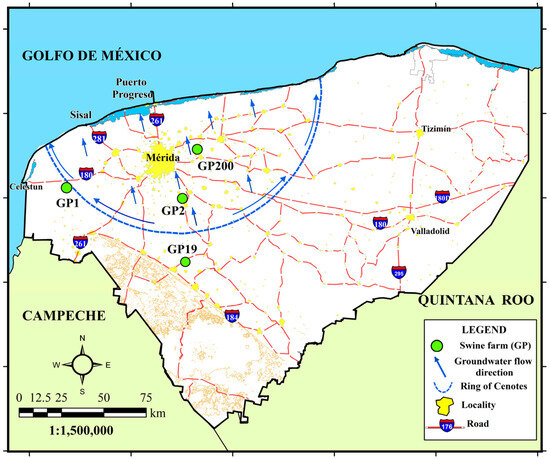
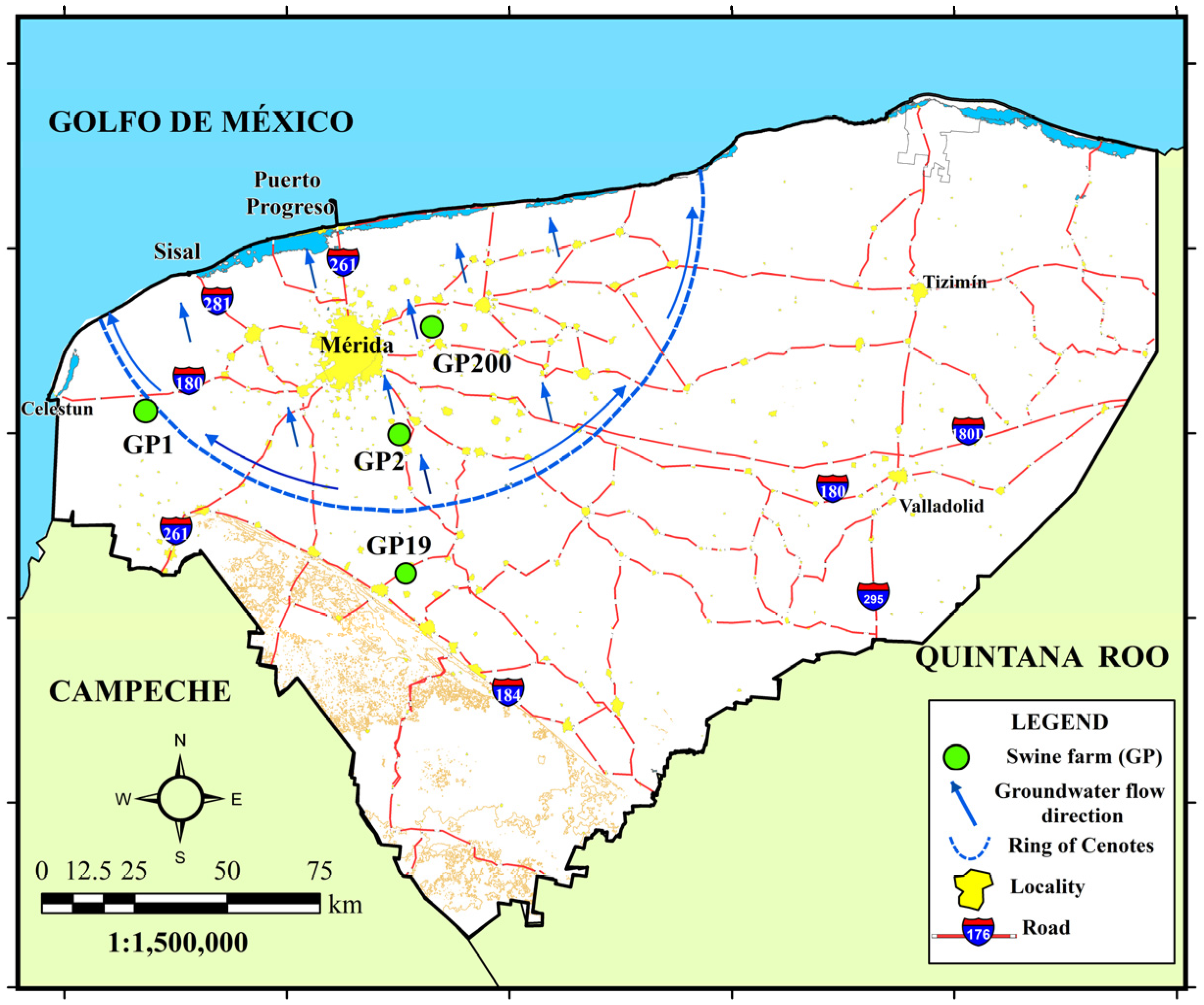
Four swine farms in Yucatan, Mexico, were chosen for this study based on their use of treated wastewater for agricultural irrigation. Figure 1 shows the spatial distribution of the farms (GP1, GP2, GP19, and GP200) according to their location in the state. Additionally, it can be observed in the direction of groundwater flow.
Figure 1.
Farm locations and spatial aspects of interest.
2.2. Swine Farms and Wastewater Treatment Characteristics
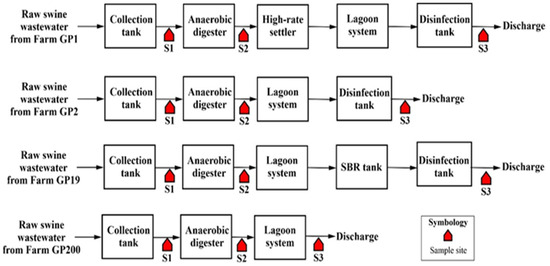
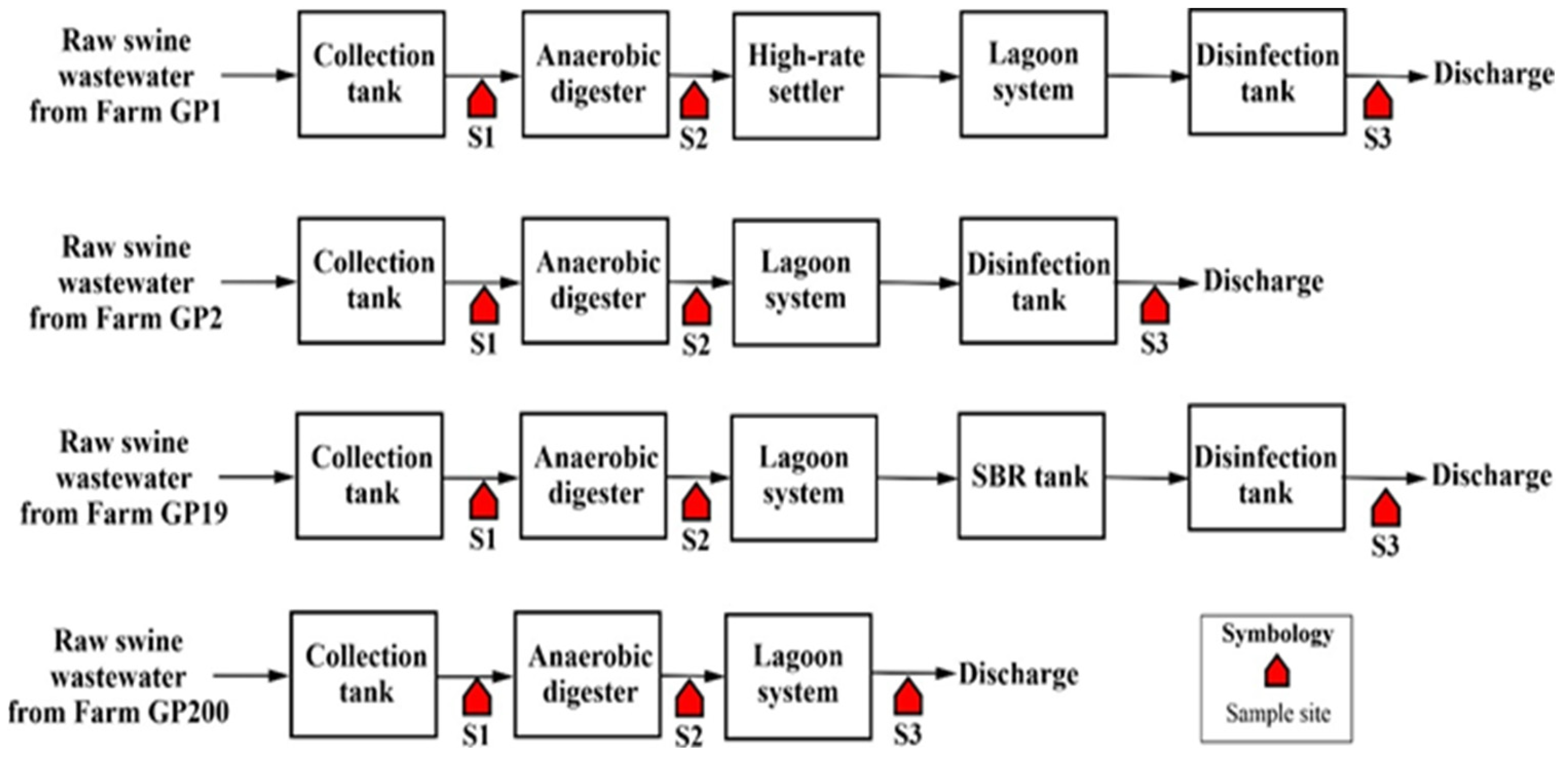
In Figure 2, it can be seen that farms use different wastewater systems depending on their piggery production. Sampling sites were selected on each farm to track the fate of heavy metals along the swine wastewater treatment train, depending on the systems’ configurations. Farm GP1 reports a treatment system consisting of a homogenizing sump, an anaerobic biodigester, a high-rate clarifier, two high-capacity sludge drying beds, an oxidation pond, and a disinfection sump. This farm has a capacity of 180,000 pigs annually (piglets ready for fattening). Farm GP2’s treatment system consists of two homogenizing sumps, a drum filter for biosolids removal, a parallel biodigester, and a lagoon system composed of three stabilization ponds in series; the third pond has an ozone disinfection system. This farm has a capacity for 40,000 pigs annually in the fattening stage. Farm GP1 uses its treated water for agroforestry irrigation, while Farm GP2 uses it for pasture irrigation. The GP19 farm, with a capacity to produce 25,000 fattening pigs annually, has two production modules, each with its own collection pit and pumping station. From there, the wastewater is directed to a drum filter for biosolids removal, an anaerobic biodigester, a two-lagoon system in series, a homogenizing tank, two parallel aeration reactors (sequencing batch reactor [SBR]), an ozone disinfection tank, and finally, the water is used to irrigate citrus trees, pasture, and vegetables. The GP200 farm, with a capacity to produce 12,300 fattening pigs annually, has a homogenizing sump and a screw separator to reduce solids. The water is then directed to an anaerobic biodigester, from which it is collected in a three-lagoon system in series. It is important to mention that the lagoon system also functions as a disinfection sump, as evidenced by the use of hypochlorite tablets in this process. Wastewater from the farm’s staff restrooms is sent to the wastewater treatment plant. The wastewater treated is then used for agricultural irrigation. For disinfection, GP1 uses copper sulfate, GP2 and GP19 use ozone, and GP200 uses hypochlorite tablets. Farms GP1 and GP19 are the two farms with the most modern and complete wastewater treatment.
Figure 2.
Wastewater treatment trains and sampling points in the industrial swine farms. S1: raw swine wastewater from collection tank; S2: wastewater after anaerobic digestion; S3: water for irrigation.
2.3. Wastewater and Groundwater Sampling
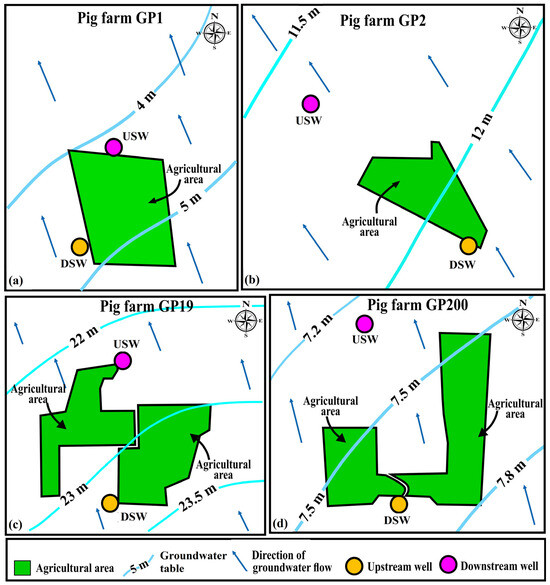
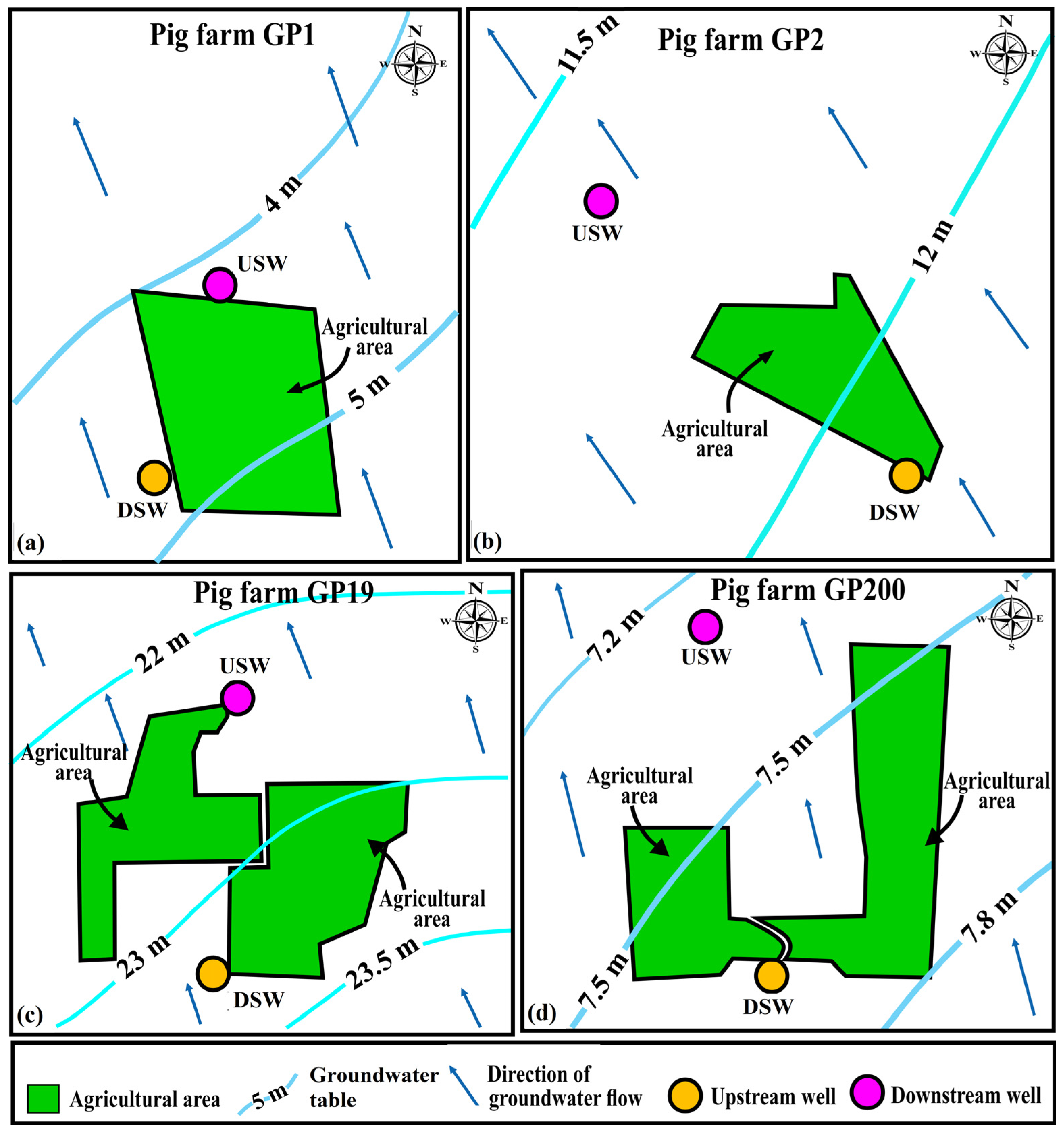
Wastewater (Figure 2) and groundwater (Figure 3) samples were collected to evaluate the treatment efficiency and potential environmental impact of the karstic aquifer. For sewage, samples were taken at three points in each system: the collection tank (S1: influent), after anaerobic treatment (S2), and the treated effluent used for irrigation (S3). Sampling for S1, S2, and S3 was performed in triplicate three times per week (Monday, Wednesday, and Friday), obtaining a composite sample each day. Additionally, for the study of metals in wastewater discharges (irrigation) and groundwater (downstream [DSW] and upstream [USW] wells), single samples from S3 were collected every two weeks (on Fridays) for three months, commencing in the same week as the wastewater treatment evaluations (S1, S2, and S3). Groundwater samples were collected from wells located along the groundwater flow direction (single samples), including upstream wells (W1) and downstream wells (W2) relative to the irrigation area, to assess potential infiltration or contamination from treated effluents. Acid-preserved samples were transported in high-density polyethylene bottles and stored at 4 °C until testing. The selection of monitoring wells was based on hydrogeological criteria, aquifer vulnerability, and spatial representativeness of the study area, with the purpose of evaluating the potential impact of pig farming activities on groundwater quality. The selection of monitoring wells was primarily based on the direction of groundwater flow (upstream and downstream) [21], proximity to potential sources of contamination, and the hydrogeological characteristics of the aquifer system. Additionally, the sampled wells were authorized by the residents.
Figure 3.
Schematic maps of areas used for irrigation using treated wastewater from pig farms. (a) Farm GP1, (b) Farm GP2, (c) Farm GP19, and (d) Farm GP200. USW: upstream well; DSW: downstream well.
Figure 3 shows the spatial distribution of wells and interest factors, such as the irrigation areas (agricultural areas). All farms use treated wastewater for agricultural or agroforestry irrigation within their farm areas.
2.4. Analytical Methods for Wastewater and Groundwater
The analytical methods used for the characterization of wastewater and groundwater are summarized in Table 1. These include standardized techniques for determining physicochemical parameters such as pH, settleable solids (SS), total suspended solids (TSS), chemical oxygen demand (COD), and heavy metals (As, Cd, Cu, Cr, Ni, Pb, Zn, and Hg), in accordance with Mexican and international standards.
Table 1.
Studied parameters in wastewater and groundwater.
2.5. Soil Sampling
Samples were collected in triplicate from the agricultural irrigation area of each farm. The samples were topsoil (0 to 25 cm deep). At each site, the soil was collected using a stainless-steel shovel. All samples were homogenized and quartered in the field, then sieved with a 2 mm stainless steel mesh. Approximately 1.0 kg of fine material was collected in clean plastic bags [28,29,30]. The soil remains refrigerated (4 °C) for 5 days prior to the corresponding laboratory analyses.
2.6. Analytical Methods for Soil
The samples were dried at 35 °C. Chemical analysis to determine the total Cu, Zn, Cr, and Ni was performed, then pulverized in a mechanical mortar grinder (Retsch) to a final particle size of 10 μm. Approximately 0.2 g of each dry sample with 2.0 mL of hydrofluoric acid (HF) and 3.0 mL of nitric acid (ACS quality) was added to a Teflon vessel and digested in a microwave reaction system model MARS 6 following the EPA method 3052 [31,32]. Then, the HF in the digested samples was neutralized with 5 mL of an aqueous solution of boric acid (4% v/v) as described by [33]. Quality control was achieved by laboratory blank duplicates, and the resulting solutions were analyzed by inductively coupled plasma-atomic emission spectrometry (ICP-AES) [34]. The accuracy of the analyses was determined using a certified reference material (CRM), Montana Soil 2710a, obtaining average recoveries of 109.4% for Cu, 98.1% for Zn, 94% for Cr, and 102.1% for Ni.
2.7. Data Analysis
Data analyses were performed using the StatGraphics® Centurion XVI by StatPoint Technology to determine the relationships (Kruskal–Wallis analysis at 95%; no normality observed) between the type of treatment and the metals removal, and the correlation (Ordinal Spearman correlation 95% of confidence; no normality of data observed) between water quality parameters (COD, SS, SST, pH) and heavy metals removal. When data were censored (<PQL [practical limit of quantification]), a Kaplan–Meier test and a Log-Rank test were used to assess whether there was a statistically significant difference in the probabilities of occurrence across subgroups defined by the factor of interest. A Multiple Correspondence Analysis (MCA) was conducted to examine the relationships between the study parameters and the identified factors. A cluster analysis using the nearest-neighbor method was developed. Additionally, Principal Component Analysis (PCA) was performed using Primer 6 version 6.1.16 & Permanova+ version 1.0.6 software.
3. Results and Discussion
3.1. Heavy Metals Removal from Wastewater
The results of the wastewater analysis show that As was below the practical quantification limit in all wastewater samples in the target unitary treatments (Table 2). Cd was below the practical quantification limit at the sampling point for farms GP1 and GP19. However, one sample in GP2 for the influent (0.0026 mg L−1) and one sample after the biodigester treatment (0.0032 mg L−1) showed Cd, whereas the effluent did not. For GP200, Cd was only detected in one sample from the effluent (0.01 mg L−1). Despite some samples reporting Cd, the values were below the reference value according to Mexican regulation for wastewater discharges [35] (Table 1), and even below limits established for drinking water in Mexico [36] and international regulations such as U.S EPA (0.005 mg L−1) [37]. Cd in wastewater is relatively common and is associated with residues of this metal in some foods, such as those of agricultural origin [38], and may result from the corrosion of galvanized pipes used in farm water supply systems [39]. Like Cd, Pb was a heavy metal reported only in one sample in the influent (0.006 mg L−1) for GP1 and GP19 (0.004 mg L−1). Similarly, for GP200, lead was detected in one influent sample (0.051 mg L−1) and one effluent sample from the biodigester (0.032 mg L−1). Pb, along with other metals such as Cu, Fe, and Zn, is associated with swine activity and the use of certain drugs [40]; for Pb, corrosion of plumbing systems is reported as a source of this metal in water treatment systems [39]. The fact that GP2 and GP19 were sampled at the beginning of the production periods may imply that some drugs were used; for GP1, its production is constant, so this should be the same cause. However, the Pb values were consistently below the Mexican regulations limit for wastewater discharges (0.3 mg L−1) [35].
Table 2.
Average concentrations (mg L−1) for total metals and interest parameters in the target wastewater treatment stages.
The Kruskal–Wallis analysis showed that the wastewater treatment type was significant (p < 0.05) in the removal of almost all detected heavy metals (Cu, Cr, Ni, and Zn) and for the target parameters TSS, and COD. The Kaplan–Meier and Log-Rank tests for Hg concentrations, due to the presence of censored data, showed that treatment type did not affect Hg removal (χ2 = 3; p > 0.05); in most samples, Hg levels were below the PQL. For GP19, Hg was detected at all monitoring points in the WWTP, indicating Hg presence in the effluent. GP19 reported Hg removals (40%) after treatment. Studies have reported that sedimentation can remove Hg bound to particulate matter through physicochemical processes such as adsorption and co-precipitation [39]. The results for this Hg suggest a particular situation for GP19: although this farm has a proper solid-removal system (vacuum drum filter), such as the GP2 and GP200 (Table 2), the Hg presence should be related to the higher pig production in GP19 and the insufficient capacity of the filter, and the fact that it is located before the first treatment set (biodigester). Other authors reported that Hg removal is positively correlated with SS and COD removal [41,42].
For Cd and Pb, the Kaplan–Meier and Log-Rank tests showed no significant effect from the wastewater treatment type and the removal of these metals. From the laboratory analyses, most reported values were below the PQL, indicating that the variability of Cd and Pb is low and that no significant amounts are present in the influent (S1) or effluent (S3). As mentioned previously, Cd in swine wastewater is associated with its residues in some foods of agricultural origin [38]. Pb presence in wastewater in farming activities is associated with the use of certain drugs during swine activities [40].
Regarding copper (Cu) and zinc (Zn), these metals are usually included as salts in pig diets [43,44], so their presence in treated water is not surprising. In both cases, Cu and Zn were below the Mexican wastewater discharge limits (5 mg L−1 for Cu and 15 mg L−1 for Zn). Notably, GP1 had the lowest influent Cu concentration, yet its effluent had the highest, indicating enrichment (Table 2). This discrepancy can be attributed to the fact that GP1 is the only farm using a Cu compound in its disinfection process.
Chromium (Cr) and other heavy metals occur naturally in key ingredients of animal feed, such as grains, vitamins, and additives, which facilitate metabolism and growth [45,46]. In this research, Cr was detected in all farms’ wastewater, but the treatments achieved Cr removal of 62–91%, with the lowest removal observed in GP200, the farm with the simplest wastewater treatment system. Similarly to the metals, Cr was below the Mexican limit for wastewater discharges (0.75 mg L−1).
In a wastewater treatment system, the removal of TSS and COD is important to ensure regulatory compliance and the efficient operation of the treatment facilities. As reported previously, the Kruskal–Wallis analysis indicated that wastewater treatment type was significant (p < 0.05) for TSS and COD concentrations in the effluent. The ordinal Spearman correlation showed that TSS concentration in the effluent had a significant (p < 0.05) and positive correlation with the Ni (ρ = 0.70) and Zn (ρ = 0.84) concentration in the effluent. TSS removals presented efficiencies in the range 95–97% (GP1 > GP2 > GP19 > GP200) (Table 2); however, despite these high efficiencies, effluents for all treatment systems did not comply with current Mexican regulations for SST (≤24 mg L−1) [35], even GP200 farm presented a TSS value 32 times above the limit. For Ni, its presence can be associated with the fact that it is common to find it in corrosive agents [44], which could have been present in the metal pipes in some of the treatment system processes; however, its concentration was always below the regulated limits (3 mg L−1) [35].
COD, like TSS, showed a significant (p < 0.05) and positive correlation with Ni (r2 = 0.72) and Cu (r2 = 0.47) concentrations in the effluent. These two metals are associated with adsorption removal [44], so high TSS and COD concentrations indicate their presence in the effluent.
COD in the influent of the WWTP, together with the specific rate of endogenous metabolism of the biomass, indirectly affected the heavy metal removal capacity [47]. This explains that, despite high removal efficiencies being reported, high COD concentrations control heavy metal levels in the effluents, along with other factors such as TSS. Although wastewater treatment systems such as biodigesters have been reported to achieve > 99% chemical oxygen demand (COD) removal, they are limited in their ability to eliminate nutrients and heavy metals [43]. COD and TSS were parameters monitored in this research, and results showed low removal efficiencies by the wastewater treatment systems evaluated, which were lower than those reported by the Mexican Secretariat of Environment [43]. Compared to Mexican regulation [35], COD was more than 10 times the maximum allowed limit (72 mg L−1), and TSS more than four times the maximum allowed limit (24 mg L−1), this is a concern, because organic and non-organic matter is not properly removed, and more toxic byproducts during the disinfection process can be originate [20]. The low removals of COD and STT may be related to the fact that all farms operate under high organic loads due to the large pig population.
3.2. Heavy Metals in Groundwater and Soil
Table 3 presents the physicochemical parameters and heavy metal concentrations analyzed in groundwater samples from different farms (GP1, GP2, GP19, and GP200). It includes a comparison with the Maximum Allowable Limits (MALs) established by NOM-127-SSA1-2021 [36], which regulates water quality for human consumption.
Table 3.
Average concentrations (mg L−1) for total metal and interest parameters in groundwater (n = 6).
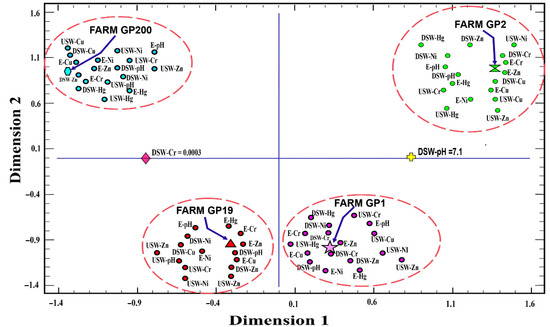
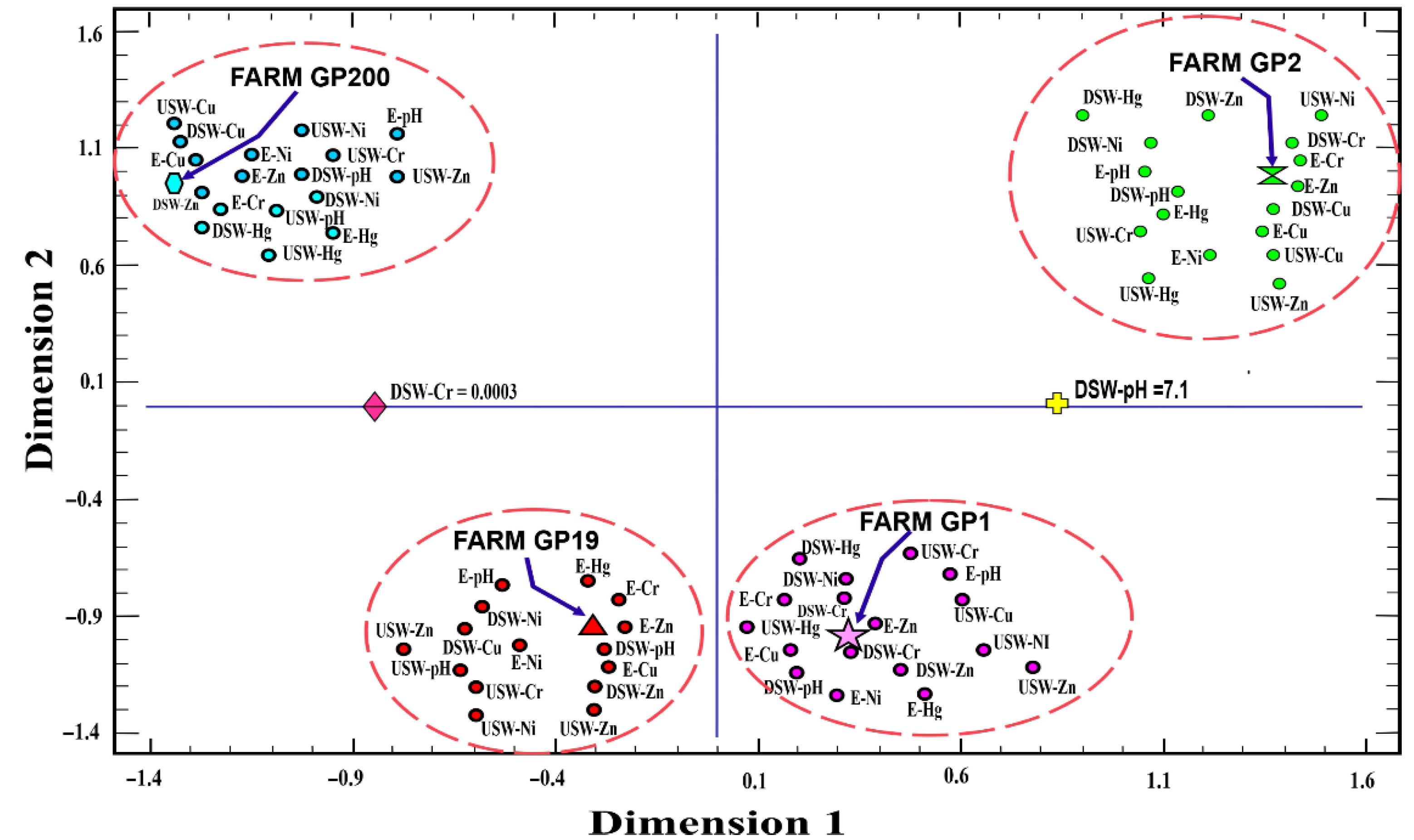
The presence of metals in the groundwater in the area where farms are located can explain the effect of using wastewater for agricultural irrigation [14,15]. Figure 4 shows the MCA, which reveals four distinct groups. These groups relate the presence of heavy metals in groundwater to the metals in the effluent used for irrigation.
Figure 4.
Multiple Correspondence Analysis (MCA) between study parameters and the identified factors related to the heavy metal presence in groundwater. USW: Upstream well with specific heavy metal; DSW: downstream well with specific heavy metal; Cu, Cr, Zn, Hg, and Ni: heavy metals in the effluent; pH: hydrogen potential in effluent. Red dashed line: clustered variables for the MCA.
The MCA shows four groups; each group is represented by a red oval, corresponding to each farm, and the heavy metals in the groundwater (upstream and downstream wells). This shows a spatial relationship.
The observed spatial segregation of the four farm clusters (GP200, GP2, GP19, and GP1) indicates significant heterogeneity in hydrogeochemical conditions and the presence of heavy metals within the studied groundwater system. This finding is consistent with similar studies where the interaction between anthropogenic and natural factors creates distinctive geochemical signatures in aquifers in agricultural or industrial areas [48,49].
Dimension 1, which primarily discriminates between the GP200–GP19 and GP1–GP2 clusters, can be interpreted as a gradient of variation in the concentration and type of heavy metals related to different sources of contamination. Soltaninia et al. [50] showed that the spatial variability of metals in groundwater was strongly influenced by land-use patterns. In this research, it is associated with swine farming.
Dimension 2, on the other hand, separates GP200 and GP2 from GP19 and GP1, suggesting differences in metal mobility influenced by redox conditions or pH. This is consistent with previous research demonstrating how physicochemical parameters, such as pH and redox potential, modulate the solubility and availability of heavy metals [51,52].
Only the Cr downstream well for GP200 was not associated with Cr in the effluent, indicating that no specific source is responsible for its presence. Perraki et al. [53] reported that fertilizers are among the sources of Cr in groundwater. It is important to note that GP200 is located in an agricultural area, and although it is not known which types of fertilizer are used there, this seems to be a potential Cr source.
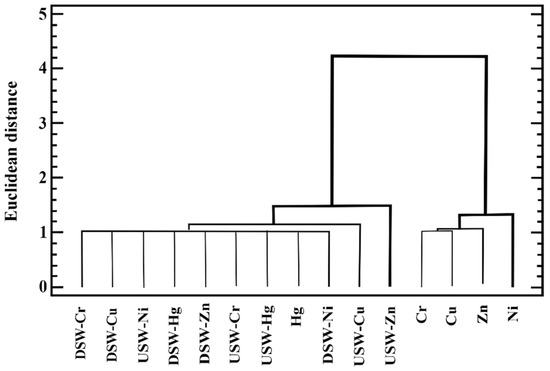
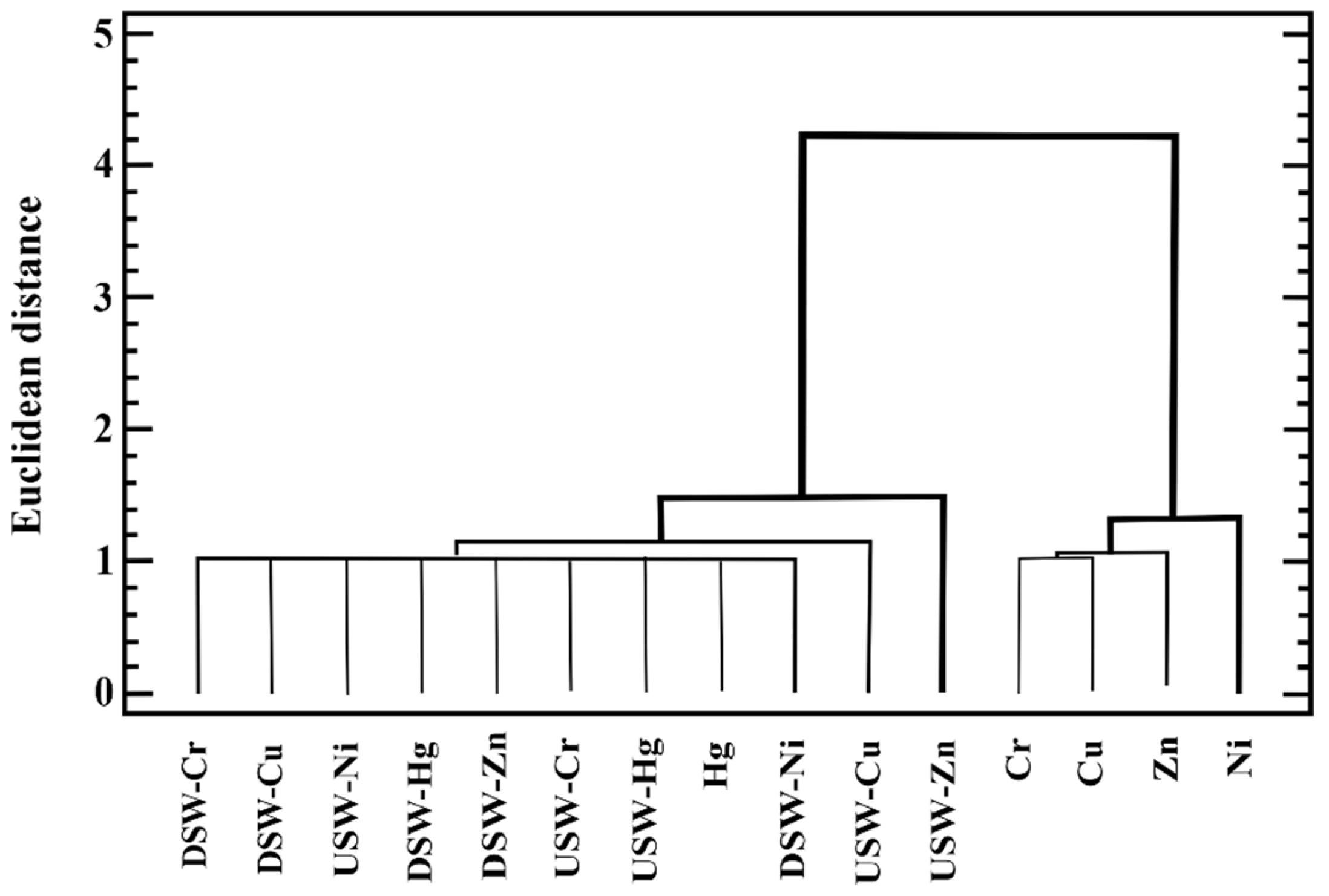
An additional cluster analysis was performed to identify patterns in the presence of heavy metals in groundwater and effluent (Figure 5), indicating that other sources and wastewater can contribute to these metals. The second cluster encompasses all heavy metals in the groundwater (both upstream and downstream). Notably, Hg is included in this cluster, indicating a possible relationship between Hg in groundwater and in the effluent.
Figure 5.
Cluster analysis (Euclidean distance nearest neighbor) for heavy metals in downstream and upstream wells, and effluent. USW: Upstream well with specific heavy metal; DSW: downstream well with specific heavy metal; Cu, Cr, Zn, Hg, and Ni: heavy metals in the effluent. Optimal Euclidean distance = 1.00011.
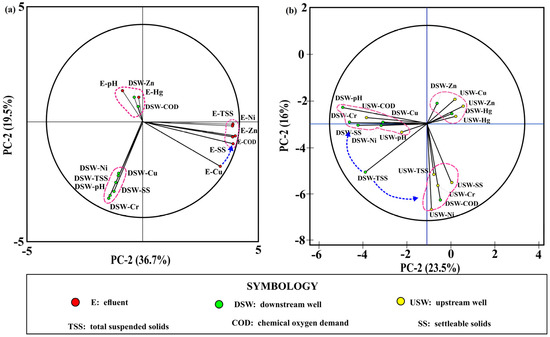
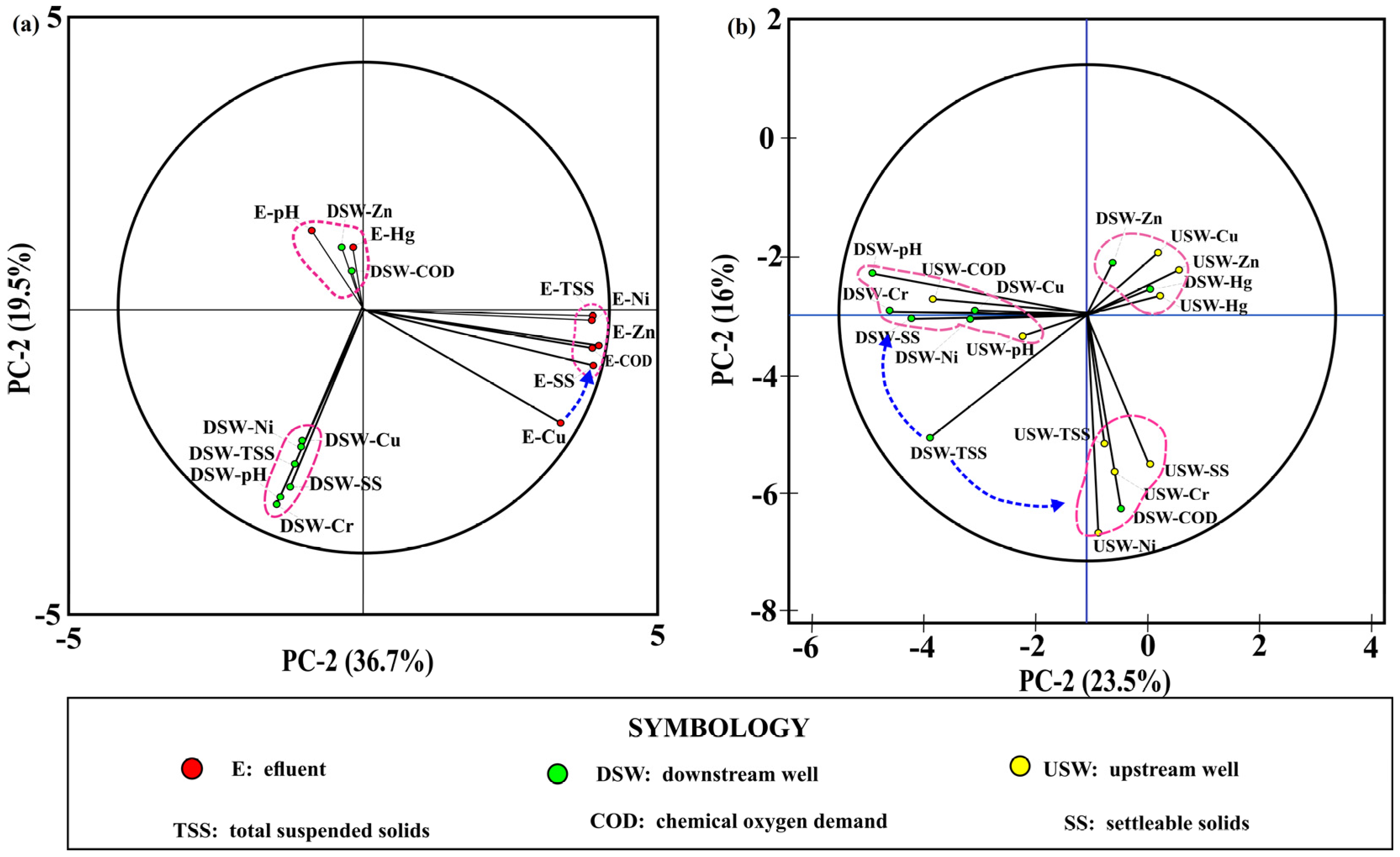
Additionally, a PCA was performed to determine the relationships between the presence of metals in the effluent and their presence in groundwater, considering upstream and downstream wells to the study farms (Figure 6).
Figure 6.
Bi-Graphic from Principal Component Analysis (PCA) for heavy metals in effluent and groundwater. (a) The relationship between the effluent and the downstream well, and (b) the relationship between the upstream and downstream wells. Pink dashed line: clustered variables.
The PCA was applied to evaluate relationships between heavy metal concentrations in effluents from swine farms and their occurrence in groundwater, considering upstream (USW) and downstream (DSW) wells relative to the study sites.
Figure 6a presents the biplot for the effluent (E) and downstream wells (DSWs). The first and second components (PC1: 36.7%; PC2: 19.5%) together explain 56.2% of the total variance. A clear differentiation is observed between the effluent parameters and those in the downstream groundwater. Effluents are primarily associated with COD, pH, Zn, Cu, Hg, and TSS, indicating the persistence of organic contaminants and metals in the discharge. In contrast, groundwater samples group with Ni, Cu, Cr, SS, and TSS, suggesting that metal mobilization and transport processes occur within the aquifer system.
COD in downstream wells (DSW-COD) showed an inverse relationship with most metals, except for Hg and Zn. This behavior suggests that the metals found in groundwater downstream are mainly influenced by anthropogenic activities, such as livestock or farming, rather than by natural sources, as supported by the positive correlations between Cu, Zn, Cr, and Ni in effluent and their corresponding concentrations in DSW. Furthermore, the positive association between TSS, SS, and metals in both effluent and groundwater confirms that suspended solids enhance the mobility of metals through adsorption and particle transport. Similar findings were reported by da Rosa Couto et al. [54], who noted that heavy metals in piggery farms accumulate in soil and subsequently leach into groundwater.
Figure 6b displays the PCA results for upstream (USW) and downstream (DSW) wells, where PC1 (23.5%) and PC2 (16%) explain 39.5% of the total variance. Upstream wells are associated with Zn, Cu, and Hg, indicating a basal presence of metals, likely derived from diffuse regional sources or agricultural practices [14,44], which were observed in the area. Conversely, downstream wells are linked to Ni, Cr, SS, and COD.
The correlation of Cr and Ni in upstream wells with TSS and SS, and their simultaneous relationship with DSW-COD, imply that these metals originate from both natural processes and anthropogenic inputs. Meanwhile, Cu showed no significant relation upstream but was associated with SST and SS downstream, indicating a localized impact in the vicinity of the farms.
These findings align with previous studies on the Yucatán Peninsula, which highlight the karst aquifer’s high vulnerability to contamination due to its rapid infiltration rate and limited natural attenuation [55,56]. The persistence of Ni, Cu, and Cr in groundwater shows that conventional treatment systems used in livestock and swine facilities and in urban and rural areas for wastewater treatment are not efficient at removing heavy metals. It is consistent with evidence of chronic contamination in rural aquifers [57].
Furthermore, the association of COD, TSS, and SS with effluents indicates that current treatment processes do not effectively reduce organic load or suspended solids, factors that enhance the mobility of heavy metals by acting as ligands or carriers in the aquifer. This underscores the need to optimize treatment technologies, including advanced oxidation processes (e.g., Fenton or ozonation) and the use of natural adsorbents or biochar, which have shown high efficiency in removing heavy metals from agro-industrial effluents [58,59].
From an environmental risk perspective, the results reinforce concerns about the contribution of swine wastewater discharges to groundwater contamination, which is the primary source of drinking water in rural Yucatán communities. The simultaneous presence of Ni, Cu, and Cr in downstream groundwater represents a threat to public health due to their bioaccumulative potential and chronic toxic effects, consistent with reports from other tropical karst systems exposed to livestock discharges [56,57].
The data analysis indicates that effluent used in irrigation can be a source of heavy metals in groundwater, although the extent of their contribution is unknown. For this research, effluent from the swine wastewater treatment system needed to be used for agricultural irrigation. Considering this particularity, soil samples from the irrigation area and non-agricultural soil from the farms were collected to determine heavy metal levels.
Table 4 shows the heavy metal concentrations for Cu, Zn, Cr, and Ni. All metals presented an enrichment in the irrigated soil compared to the natural soil, which implies that metals from effluent stay in the soil. Considering the previous analysis and the presence of heavy metals in groundwater, it is likely that soil is a source of these metals; however, farm wastewater effluent should also be considered a source.
Table 4.
Total heavy metal concentration (mg Kg−1) in soils of the study farms.
From an ANOVA analysis (95% confidence), it was observed that farms (GP1, GP2, GP19, and GP200) were significant (p < 0.05) for differences in Zn, Cr, and Ni concentrations in the soils. Farm type was not significant for Cu. Considering the soil type (natural soil and irrigated soil) as a factor, the ANOVA analysis (95% confidence) showed that this factor was significant for Cu, Zn, and Cr, but not for Ni.
Regarding heavy metals in piggery farms, some authors consider that the hazards associated with swine slurry can arise from high levels of heavy metals accumulating in soil and crops or from leaching into groundwater [15,44,60].
The study zone in Yucatan state is a karstic area, so leaching from soil to the groundwater of different pollutants such as heavy metals is a usual natural mechanism. The potential hazards of the slurries can be expected to arise from their high contents of heavy metals, especially Cu and Zn [16]; these two metals are widely used in the diet of pigs to prevent diarrhea (Zn) and promote the growth of pigs (Cu) [61]; so, although the diet formulation for pigs in the four farms was not provided, there is international evidence of Cu and Zn use in the production process [44].
Two very important aspects are the use of effluents from wastewater treatment facilities for farm irrigation and the presence of heavy metals in soil. For Cu, the irrigated soil presented 239 times the concentration reported in natural soil in GP2 and 103 times in GP200; these two farms have the simplest wastewater treatment system. For GP1 and GP19, the Cu in the irrigated soil was 9 and 14 times the concentration in the natural soil. About zinc, GP2 and GP200 presented the highest concentrations in irrigated soils, reaching 126 and 51 times the concentration reported for natural soil. Irrigated soil in GP1 and GP19 presented 2 and 27 times the concentration reported in natural soil. For Cr and Ni, no significant variations were observed in natural and irrigated soils, with the concentration in natural soil being less than one-tenth of the concentration in irrigated soil. This was reported for all farms (Table 4). The enrichment of Cu and Zn is at very high levels, consistent with previous reports [13] and with the presence of these two metals in the pigs’ diets on the farms [61].
Comparing the results with international standards, the European Union Standards [62] report a maximum limit for Cu of 140 mg kg−1 for agricultural soil, which is lower than values reported in this research in all farms in irrigated soil. For Zn, only GP1 showed values under the limit (300 mg kg−1). For Cr, irrigated soil in farms GP2 and GP19 reported values above the European Union Standards (150 mg kg−1). It is important to note that GP1 is the largest farm; however, it is a piglet production farm, so Cr is not essential during this stage. GP200 is the smallest farm, and the food requirement is lower than that of the other farms, so Cr, which is usually present in food during the fattening stage [61], was lower than in the other farms. Finally, Ni concentrations were below the limit in all farms.
In Mexico, there are no regulations regarding soil for specific pollutants. The fact that heavy metals in irrigated soil were, in some cases, above the limits set by international regulations is a concern. Heavy metal uptake is a risk in soils enriched in heavy metals used for agriculture [52]. This can affect crop productivity and also poses health hazards [63]. Uptake, translocation, and bioaccumulation can occur in plants [64].
This research presents the situation regarding heavy metals in wastewater in the Yucatán State, Mexico. The WWTPs offer an advantage in the region; however, despite their high metal-removal efficiency, irrigation with that water enriches the soils, reaching levels above international regulations for heavy metals in agricultural soils, the main soil uses in the studied area. This represents a risk due to the karst context in Yucatan, and even health concerns should be considered. So, wastewater irrigation in Yucatan is a disadvantage because the vulnerability of the Yucatan aquifer makes it prone to pollution when soil contains high metal concentrations, as was the case with Cu, Zn, and Cr.
4. Conclusions
Arsenic was not detected in any wastewater sample, whereas Cd and Pb were detected sporadically at concentrations below Mexican and international regulatory limits. Treatment type significantly influenced (p < 0.05) the removal of most heavy metals (Cu, Cr, Ni, and Zn), as well as TSS and COD. In contrast, Hg showed irregular behavior linked to inefficient solids separation. Positive correlations between TSS and Ni and Zn indicate their association with the particulate fraction. Despite high removal efficiencies (95–97%), effluents did not meet regulatory TSS limits, highlighting the need to optimize sedimentation and organic load control processes.
Multivariate analyses (MCA and PCA) revealed strong spatial and compositional links between heavy metals in the treated effluents and groundwater near swine farms, suggesting that wastewater reused for irrigation could be a source of metals in the study area. Upstream wells reflected background or diffuse sources. Zn and Hg showed spatial continuity between upstream and downstream sites, suggesting a mix of anthropogenic and natural sources. The isolated Cr case in GP200 points to additional agricultural inputs.
Effluents correlated with COD, TSS, SS, Zn, Cu, and Hg, whereas downstream groundwater showed associations with Ni, Cr, Cu, and suspended solids, indicating limited removal by conventional treatments. These findings highlight chronic contamination risks and underscore the need to optimize treatment technologies, including advanced oxidation and biochar-based adsorption, and to implement integrated monitoring for sustainable effluent reuse.
Soil analyses revealed substantial enrichment of Cu and Zn in irrigated soils compared to natural soils, particularly on farms with simpler treatment systems (GP2 and GP200), suggesting that effluents are the primary source of accumulation, since soil is irrigated only with treated wastewater. Cr and Ni showed minimal variations. Combined with groundwater analyses, these results indicate that effluent-derived metals persist in soils and can leach into the aquifer. The simultaneous presence of Ni, Cu, and Cr in downstream groundwater poses chronic environmental and public health risks, underscoring the karst aquifer’s vulnerability in the Yucatán and the critical need for improved wastewater management.
Author Contributions
All authors conceived the research. Conceptualization, A.M.E.-M.; Data curation, V.R.G.-E.; Investigation, A.M.E.-M., V.R.G.-E. and I.M.-A.; Methodology, A.M.E.-M., V.R.G.-E. and I.M.-A.; Project administration, G.G.-V.; Resources, G.G.-V.; Supervision, G.G.-V., C.A.Q.-F., M.d.C.P.-C. and R.M.-N.; Validation, A.M.E.-M.; Writing—original draft, A.M.E.-M., V.R.G.-E. and I.M.-A.; Writing—review and editing, G.G.-V., C.A.Q.-F., M.d.C.P.-C. and R.M.-N. All authors commented on previous versions of the manuscript. All authors have read and agreed to the published version of the manuscript.
Funding
This research was funded by the Secretariat of Science, Humanities, Technology and Innovation (SECIHTI, before CONAHCyT), which provided the support under the project “Estudio del impacto sobre el agua subterránea por las descargas de aguas residuales porcícolas (con y sin tratamiento) utilizadas como agua de riego agrícola en tres regiones del país (Sonora, Jalisco y Yucatán)”. Project number: No. 309980.
Data Availability Statement
The data presented in this study are available on request from the corresponding author, as some data belong to the local government.
Acknowledgments
To SECIHTI (before CONAHCyT), which provided support for developing the research.
Conflicts of Interest
The authors declare no conflicts of interest.
Abbreviations
The following abbreviations are used in this manuscript:
| WWTPs | Wastewater treatment plants |
| As | Arsenic |
| Cd | Cadmium |
| Cu | Copper |
| Cr | Chromium |
| Pb | Lead |
| Hg | Mercury |
| Ni | Nickel |
| Zn | Zinc |
| TSS | Total suspended solids |
| COD | Chemical oxygen demand |
| SBR | Sequencing batch reactor |
| SS | Settleable solids |
| pH | Hydrogen Potential |
| GPS | Global Positioning System |
| UTM | Universal Transverse Mercator |
| ICP-AES | Plasma-atomic emission spectrometry |
| CRM | Certified reference material |
| MCA | Multiple Correspondence Analysis |
| PCA | Principal Component Analysis |
| MAL | Maximum Allowable Limits |
References
- OECD. Meat Consumption (Indicator). 2025. Available online: https://data.oecd.org/agroutput/meat-consumption.htm (accessed on 20 September 2025).
- Yu, Z.; Gunn, L.; Wall, P.; Fanning, S. Antimicrobial resistance and its association with tolerance to heavy metals in agriculture production. Food Microbiol. 2017, 64, 23–32. [Google Scholar] [CrossRef] [Scilit]
- Hejna, M.; Onelli, E.; Moscatelli, A.; Bellotto, M.; Cristiani, C.; Stroppa, N.; Rossi, L. Heavy-metal phytoremediation from livestock wastewater and exploitation of exhausted biomass. Int. J. Environ. Res. Public Health 2021, 18, 2239. [Google Scholar] [CrossRef] [Scilit]
- Wu, X.; Nawaz, S.; Li, Y.; Zhang, H. Environmental health hazards of untreated livestock wastewater: Potential risks and future perspectives. Environ. Sci. Pollut. Res. 2024, 31, 24745–24767. [Google Scholar] [CrossRef] [Scilit]
- European Commission. Directive 2002/32/EC of the European Parliament and of the Council of 7 May 2002 on Undesirable Substances in Animal Feed. Off. J. Eur. Commun. 2002, L140, 10–21. [Google Scholar]
- García, D.; Posadas, E.; Grajeda, C.; Blanco, S.; Martínez-Páramo, S.; Acién, G.; Muñoz, R. Comparative evaluation of piggery wastewater treatment in algal-bacterial photobioreactors under indoor and outdoor conditions. Bioresour. Technol. 2017, 245, 483–490. [Google Scholar] [CrossRef] [Scilit] [PubMed]
- Duerschner, J.; Bartelt-Hunt, S.; Eskridge, K.M.; Gilley, J.E.; Li, X.; Schmidt, A.M.; Snow, D.D. Swine slurry characteristics as affected by selected additives and disinfectants. Environ. Pollut. 2020, 260, 114058. [Google Scholar] [CrossRef] [Scilit] [PubMed]
- Giang, N.T.H.; Huong, L.T.T.; Yabe, M.; Thang, N.T.; Hieu, V.N.; Son, C.T. Recycling wastewater in intensive swine farms: Selected case studies in Vietnam. J. Fac. Agric. Kyushu Univ. 2021, 66, 115–121. [Google Scholar] [CrossRef] [Scilit]
- Zambrano, W.; Banchón, C. Stabilization of swine wastes: A systematic review of its environmental impact and technological alternatives. Res. Soc. Dev. 2025, 14, e0514348315. [Google Scholar] [CrossRef] [Scilit]
- Silva, M.J.; Zainol, I.; Tanoeiro, J.R.; Sitowski, A.; Major, I.; Murphy, E.J.; Fehrenbach, G.W. Livestock slurry and sustainable pasture management: Microbial roles, environmental impacts, and regulatory perspectives in Ireland and Europe. Microorganisms 2025, 13, 788. [Google Scholar] [CrossRef] [Scilit]
- Santos, L.; Ferreira, M.; Domingos, I.; Oliveira, V.; Rodrigues, C.; Ferreira, A.; Ferreira, J. Life Cycle Assessment of Pig Production in Central Portugal: Environmental Impacts and Sustainability Challenges. Sustainability 2025, 17, 426. [Google Scholar] [CrossRef] [Scilit]
- Penha, H.G.V.; Menezes, J.F.S.; Silva, C.A.; Lopes, G.; de Andrade Carvalho, C.; Ramos, S.J.; Guilherme, L.R.G. Nutrient accumulation and availability and crop yields following long-term application of pig slurry in a Brazilian Cerrado soil. Nutr. Cycl. Agroecosyst. 2015, 101, 259–269. [Google Scholar] [CrossRef] [Scilit]
- Ferreira, G.W.; Benedet, L.; Trapp, T.; Lima, A.P.; Junior, V.M.; Loss, A.; Comin, J.J. Soil aggregation indexes and chemical and physical attributes of aggregates in a Typic Hapludult fertilized with swine manure and mineral fertilizer. Int. J. Recycl. Org. Waste Agric. 2021, 10, 1–17. [Google Scholar] [CrossRef] [Scilit]
- Tang, Y.; Wang, L.; Carswell, A.; Misselbrook, T.; Shen, J.; Han, J. Fate and transfer of heavy metals following repeated biogas slurry application in a rice–wheat crop rotation. J. Environ. Manag. 2020, 270, 110938. [Google Scholar] [CrossRef] [Scilit] [PubMed]
- Fernández-Labrada, M.; López-Mosquera, M.E.; García, L.; Barrio, J.C.; López-Fabal, A. Hazards of swine slurry: Heavy metals, bacteriology, and overdosing—Physicochemical models to predict the nutrient value. Anim. Sci. J. 2023, 94, e13849. [Google Scholar] [CrossRef] [Scilit] [PubMed]
- Bautista, F.; Aguilar, Y.; Guijón-Yescas, N. Pig farms in karst areas: How do we go from pollution to sustainability? Trop. Subtrop. Agroecosyst. 2022, 25, 1–23. [Google Scholar] [CrossRef] [Scilit]
- Rodríguez-López, A.; de los Ríos-Ibarra, E. Industrial poultry and swine groundwater pollution in a karstic environment: Yucatán, Mexico. Acad. Environ. Sci. Sustain. 2025, 2, 1–11. [Google Scholar] [CrossRef] [Scilit]
- Bautista, F. El Karst de México; Asociación Mexicana de Estudios Sobre el Karst: Ciudad de México, Mexico, 2023; p. 155. [Google Scholar]
- Pérez-Espejo, R.H.; Cervantes-Hernández, G.I. Mitigation Strategies. The Biodigester Program in Yucatan, Mexico. Península 2018, 13, 235–262. [Google Scholar]
- He, H.; Xu, H.; Li, L.; Yang, X.; Fu, Q.; Yang, X.; Zhan, W.; Wang, D. Molecular transformation of dissolved organic matter and the formation of disinfection by-products in full-scale surface water treatment processes. Sci. Total Environ. 2022, 838, 156547. [Google Scholar] [CrossRef] [Scilit]
- González-Herrera, R.; Sánchez-y-Pinto, I.; Gamboa-Vargas, J. Groundwater-flow modeling in the Yucatan karstic aquifer, Mexico. Hydrogeol. J. 2002, 10, 539–552. [Google Scholar] [CrossRef] [Scilit]
- Norma Oficial Mexicana NMX-AA-008-SCFI-2016; Análisis de Agua—Medición de pH en Aguas Naturales, Residuales y Residuales Tratadas—Método de Prueba. Diario Oficial de la Federación (DOF): Ciudad de Mexico, Mexico, 2016.
- Method 6010D (SW-846); Inductively Coupled Plasma–Optical Emission Spectrometry, Revision 5. U.S. Environmental Protection Agency (U.S. EPA): Washington, DC, USA, 2016.
- Method 7470A (SW-846); Mercury in Liquid Waste (Manual Cold-Vapor Technique), Revision 1. U.S. Environmental Protection Agency (U.S. EPA): Washington, DC, USA, 1994.
- Norma Oficial Mexicana NMX-AA-004-SCFI-2013; Análisis de Agua—Medición de Sólidos Sedimentables. Diario Oficial de la Federación (DOF): Ciudad de México, Mexico, 2013.
- Norma Oficial Mexicana NMX-AA-034-SCFI-2015; Análisis de Agua—Medición de Sólidos y Sales Disueltas. Diario Oficial de la Federación (DOF): Ciudad de México, Mexico, 2015.
- Norma Oficial Mexicana NMX-AA-032/2-SCFI-2011; Determinación de la Demanda Química de Oxígeno. Diario Oficial de la Federación (DOF): Ciudad de México, Mexico, 2011.
- Norma Oficial Mexicana NOM-021-SEMARNAT-2000; Que Establece las Especificaciones de Fertilidad, Salinidad y Clasificación de Suelos, Estudio, Muestreo y Análisis. Diario Oficial de la Federación (DOF): Ciudad de Mexico, Mexico, 2002.
- NMX-AA-132-SCFI-2006; Muestreo de Suelos Para la Identificación y Cuantificación de Contaminantes. Secretaría de Economía: Ciudad de Mexico, Mexico, 2006.
- Salminen, R.; Tarvainen, T.; Demetriades, A.; Duris, M.; Fordyce, F.M.; Gregorauskiene, V.; Kahelin, H.; Kivisilla, J.; Klaver, G.; Klein, H.; et al. FOREGS Geochemical Mapping. Field Manual. Geologian Tutkimuskeskus, Opas.; Geological Survey of Finland: Espoo, Finland, 1998; Guide 47. [Google Scholar]
- Method 3052; Microwave Assisted Acid Digestion of Siliceous and Organically Based Matrices; United States Environmental Protection Agency: Washington, DC, USA, 1996; p. 20. Available online: https://www.epa.gov/sites/default/files/2015-12/documents/3052.pdf (accessed on 30 November 2024).
- CEM. Application Note for Acid Digestion. SW846-3052—Soil and Sediment Total Digestion. 2015. Available online: https://cemcontenttype.s3.amazonaws.com/content/media-library/attachments/516_MetNote_DiscSPD_SW846-3052.pdf (accessed on 30 November 2024).
- CEM. Application Note for Acid Digestion. Boric Acid Neutralization. 2015. Available online: https://cem.com/boric-acid-hf-neutralization-mars-6 (accessed on 30 November 2024).
- Church, S.E.; Mosier, E.L.; Motooka, J.M. Mineralogical basis for the interpretation of multi-element (ICP-AES), oxalic acid, and aqua regia partial digestions of stream sediments for reconnaissance exploration geochemistry. J. Geochem. Explor. 1987, 29, 207–233. [Google Scholar] [CrossRef] [Scilit]
- Norma Oficial Mexicana NOM-001-SEMARNAT-2021; Que Establece los Límites Permisibles de Contaminantes en las Descargas de Aguas Residuales en Cuerpos Receptores Propiedad de la Nación. Diario Oficial de la Federación (DOF): Ciudad de Mexico, Mexico, 2022.
- Norma Oficial Mexicana NOM-127-SSA1-2021; Agua para Uso y Consumo Humano. Límites Permisibles de la Calidad del Agua. Diario Oficial de la Federación (DOF): Ciudad de Mexico, Mexico, 2021.
- EPA 600/B-83-025F; Updated Mutagenicity and Carcinogenicity Assessment of Cadmium. U.S. Environmental Protection Agency: Washington, DC, USA, 1985.
- Dai, S.Y.; Jones, B.; Lee, K.-M.; Li, W.; Post, L.; Herrman, T.J. Heavy metal contamination of animal feed in Texas. J. Regul. Sci. 2016, 1, 21–32. [Google Scholar] [CrossRef] [Scilit]
- U.S. EPA. National Primary Drinking Water Regulations; United States Environmental Protection Agency: Washington, DC, USA, 2024. Available online: https://www.epa.gov/ground-water-and-drinking-water/national-primary-drinking-water-regulations (accessed on 15 July 2025).
- SEMARNAT. Dictamen Diagnóstico Ambiental de la Actividad Porcícola en Yucatán; Secretaría de Medio Ambiente y Recursos Naturales: Ciudad de Mexico, Mexico, 2023. [Google Scholar]
- Wei, C.; Guo, J.; Fan, R.; Zhang, T.; Wang, X.; Chen, H.; Huang, S.; Hu, Y.; Zhang, G. Mercury discharge inventory based on sewage treatment process in China. Processes 2024, 12, 1534. [Google Scholar] [CrossRef] [Scilit]
- Hargreaves, A.J.; Vale, P.; Whelan, J.; Constantino, C.; Dotro, G.; Cartmell, E. Mercury and antimony in wastewater: Fate and treatment. Water Air Soil Pollut. 2016, 227, 89. [Google Scholar] [CrossRef] [Scilit] [PubMed]
- Mateos, G.G.; García Valencia, D.; Jiménez Moreno, E. Microminerales en Alimentación de Monogástricos: Aspectos Técnicos y Consideraciones Legales; Universidad Politécnica de Madrid: Madrid, Spain, 2004. [Google Scholar]
- Steinmetz, R.L.R.; Kunz, A.; Dressler, V.L.; de Moraes Flores, E.M.; Figueiredo Martins, A. Study of metal distribution in raw and screened swine manure. Clean Soil Air Water 2009, 37, 239–244. [Google Scholar] [CrossRef] [Scilit]
- Falcón-Martínez, J.; Domínguez-Vara, I.A.; Pescador-Salas, N.; Trujillo-Gutiérrez, D.; Bórquez-Gastelum, J.L.; Sánchez-Torres, J.E.; Morales-Almaraz, E.; Mondragón-Ancelmo, J.; Rodríguez-Gaxiola, M.A.; Velázquez-Garduño, G.; et al. Organic chromium supplementation in the diet of three porcine genotypes with different growth potential. Can. J. Anim. Sci. 2025, 105, 1–14. [Google Scholar] [CrossRef] [Scilit]
- Al-Hamouz, O.C.S.; Estatie, M.; Saleh, T.A. Removal of cadmium ions from wastewater by dithiocarbamate-functionalized pyrrole-based terpolymers. Sep. Purif. Technol. 2017, 177, 101–109. [Google Scholar] [CrossRef] [Scilit]
- Sylwan, I.; Thorin, E. Removal of heavy metals during primary treatment of municipal wastewater and possibilities of enhanced removal: A review. Water 2021, 13, 1121. [Google Scholar] [CrossRef] [Scilit]
- Reimann, C.; Garrett, R.G. Geochemical background—Concept and reality. Sci. Total Environ. 2005, 350, 12–27. [Google Scholar] [CrossRef] [Scilit]
- Tóth, G.; Kucserka, T. Effects of agriculture on surface and subsurface water resources—A review. Gradus 2022, 26, 66–82. [Google Scholar]
- Soltaninia, S.; Taghavi, T.; Hosseini, S.A.; Motamedvaziri, B.; Eslamian, S. The effect of land-use type and climatic conditions on heavy metal pollutants in urban runoff in a semi-arid region. Water Reuse 2022, 12, 384–402. [Google Scholar] [CrossRef] [Scilit]
- Smedley, P.L.; Kinniburgh, D.G. A review of the source, behavior and distribution of arsenic in natural waters. Appl. Geochem. 2002, 17, 517–568. [Google Scholar] [CrossRef] [Scilit]
- Wan, Y.; Liu, J.; Zhuang, Z.; Wang, Q.; Li, H. Heavy metals in agricultural soils: Sources, influencing factors, and remediation strategies. Toxics 2024, 12, 63. [Google Scholar] [CrossRef] [Scilit] [PubMed]
- Perraki, M.; Vasileiou, E.; Bartzas, G. Tracing the origin of chromium in groundwater: Current and new perspectives. Curr. Opin. Environ. Sci. Health 2021, 22, 100267. [Google Scholar] [CrossRef] [Scilit]
- Da Rosa Couto, R.; Ribeiro Lazzari, C.J.; Trapp, T.; De Conti, L.; Comin, J.J.; Martins, S.R.; Belli Filho, P.; Brunetto, G. Accumulation and distribution of copper and zinc in soils following the application of pig slurry for three to thirty years. Arch. Agron. Soil Sci. 2016, 62, 593–616. [Google Scholar] [CrossRef] [Scilit]
- Batllori, E.; Canto, S. Vulnerabilidad intrínseca a la contaminación del acuífero kárstico en Yucatán, considerando las Anomalías Gravimétricas de Bouguer. Bol. Soc. Geol. Mex. 2022, 74, e130921. [Google Scholar] [CrossRef] [Scilit]
- González Herrera, R.; Rodríguez Castillo, R.; Coronado Peraza, V. Atenuación natural en el acuífero yucateco. Rev. Int. De Contam. Ambient. 2007, 23, 5–15. Available online: http://www.scielo.org.mx/scielo.php?script=sci_arttext&pid=S0188-49992007000100001&lng=es&nrm=iso (accessed on 13 July 2025).
- Ponce-Hernández, A.; Carranza-Álvarez, C.; Ceballos-Maldonado, J.G.; Rubio-Gómez, J.A.; Martínez-Soto, D. Overview of the heavy metal contamination in Mexico: Sources of the contamination and issues in human health. Environ. Geochem. Health 2025, 47, 82. [Google Scholar] [CrossRef] [Scilit]
- Lupa, L.; Cocheci, L. Heavy Metals Removal from Water and Wastewater. Chapters. In Heavy Metals—Recent Advances; Almayyahi, B.A., Ed.; IntechOpen: London, UK, 2023. [Google Scholar] [CrossRef] [Scilit]
- Lizarazo-Marriaga, J.; Peña-Guzmán, C.A.; Hernández-Ruiz, E.J. Emerging technologies for the removal of heavy metals from wastewater: A review of recent advances. J. Environ. Manag. 2023, 336, 117637. [Google Scholar]
- Drescher, G.L.; Moura-Bueno, J.M.; Dantas, M.K.L.; Ceretta, C.A.; De Conti, L.; Marchezan, C.; Ferreira, P.A.A.; Brunetto, G. Copper and Zinc Fractions and Adsorption in Sandy Soil with Long-Term Pig Manure Application. Arch. Agron. Soil Sci. 2021, 68, 1930–1946. [Google Scholar] [CrossRef] [Scilit]
- PIC. Nutrient Specification Manual; Pig Improvement Company: Hendersonville, TN, USA, 2016. [Google Scholar]
- European Union. Heavy Metals in Wastes. European Commission on Environment. 2002. Available online: http://www.ec.europa.eu/environment/waste/studies/pdf/heavymetalsreport.pdf (accessed on 13 July 2025).
- Srivastava, V.; Sarkar, A.; Singh, S.; Singh, P.; de Araujo, A.S.F.; Singh, R.P. Agroecological Responses of Heavy Metal Pollution with Special Emphasis on Soil Health and Plant Performances. Front. Environ. Sci. 2017, 5, 64. [Google Scholar] [CrossRef] [Scilit]
- Rashid, A.; Schutte, B.J.; Ulery, A.; Deyholos, M.K.; Sanogo, S.; Lehnhoff, E.A.; Beck, L. Heavy Metal Contamination in Agricultural Soil: Environmental Pollutants Affecting Crop Health. Agronomy 2023, 13, 1521. [Google Scholar] [CrossRef] [Scilit]

Disclaimer/Publisher’s Note: The statements, opinions and data contained in all publications are solely those of the individual author(s) and contributor(s) and not of MDPI and/or the editor(s). MDPI and/or the editor(s) disclaim responsibility for any injury to people or property resulting from any ideas, methods, instructions or products referred to in the content. |
© 2026 by the authors. Licensee MDPI, Basel, Switzerland. This article is an open access article distributed under the terms and conditions of the Creative Commons Attribution (CC BY) license.