


Abstract
To ensure the long-term service quality of special soil subgrades under the humid, hot, and rainy environment of South China, this paper systematically reviews the research progress on three typical categories of special soils: soft clay, expansive soil, and high liquid limit clay. The literature is examined with emphasis on its relevance to the engineering characteristics, instability mechanisms, reinforcement technologies, and monitoring methods of these soils. A thematic comparative approach is adopted to synthesize findings from experimental investigations, numerical simulations, and field studies, with particular attention to hydro-mechanical interactions and engineering applicability. The instability mechanisms of special soils under heavy rainfall and hydro-mechanical coupling effects are analyzed, identifying the underlying mechanisms that induce non-uniform subgrade settlement and early distresses in upper pavement structures. Meanwhile, the evolution trends of reinforcement and monitoring technologies for special soils are reviewed. Soil stabilization techniques have increasingly incorporated industrial wastes and biomaterials, such as steel slag and lignin, which effectively enhance soil water stability and resistance to permanent deformation under cyclic loading. Concurrently, intelligent monitoring relies on the Internet of Things (IoT) sensing and data-driven algorithms to achieve dynamic and quantitative risk early warning. Finally, prospective research directions are identified, including long-term service performance under extreme environments, the development of advanced constitutive models under multi-field coupling, and the construction of intelligent collaborative control systems for subgrade-pavement structures. Overall, the review indicates that effective subgrade stabilization requires soil-specific reinforcement strategies integrating hydro-mechanical degradation mechanisms, long-term performance assessment, and reliable monitoring, while future research should prioritize field-validated models under recurrent rainfall and cyclic loading conditions.
1. Introduction
1.1. Literature Review
In the construction of high-grade highway and railway infrastructure, the long-term service performance of special soil subgrades (such as soft clay, expansive soil, and high liquid limit clay) remains a critical research topic in the geotechnical engineering community. As the supporting foundation of the pavement structure, the stability and deformation characteristics of the subgrade directly determine the integrity and smoothness of the upper pavement structure. In South China, particularly in Guangdong Province, the interlacing of a humid, hot, and rainy climate with complex hydrological conditions causes these special soils to exhibit more pronounced regional characteristics and engineering hazards. Although these soils are all susceptible to environmental and loading effects, their dominant instability mechanisms differ: soft clay is primarily characterized by consolidation settlement and time-dependent creep deformation, expansive soil by moisture-induced swelling-shrinkage and crack propagation, and high liquid limit clay by pronounced water sensitivity and strength degradation upon wetting.
In a comprehensive review, Luo et al. [1] explicitly pointed out that the hydrophilicity and cracking characteristics of special soils are the primary factors leading to subgrade instability. However, these findings primarily concern expansive soil slopes and do not fully account for the distinct deformation mechanisms of soft clay and high liquid limit clay. As transportation networks extend into regions with more complex geological environments, traditional subgrade reinforcement and evaluation methods are facing the dual challenges of an increasing frequency of extreme climate events and the urgent demand for green maintenance.
The selection of soft clay, expansive soil, and high liquid limit clay in this review is based on their dominant engineering characteristics rather than mutually exclusive soil classifications. Soft clay is primarily associated with high compressibility, low shear strength, and long-term settlement; expansive soil with moisture-induced swelling, shrinkage, and cracking; and high liquid limit clay with high plasticity, compaction difficulties, and wetting-induced strength degradation. High-plasticity clay (CH) generally has a liquid limit of at least 50%, together with the corresponding plasticity-chart criteria. However, high liquid limit clay may also exhibit expansive or soft-soil characteristics, depending on its mineralogical composition and physical state. Therefore, the three categories are discussed separately according to their predominant instability mechanisms and engineering treatment requirements, while acknowledging their potential classification overlap.
The distribution and evolution of special soils under the humid and hot environment of South China exhibit distinct regional specificity. The engineering geological hazards inherent in these problematic strata exhibit clear regional patterns governed by multi-scale structural defects. Research by Xu et al. [2] on high liquid limit clay in this region indicated that it presents a typical aggregated structure at the microscopic level and is extremely sensitive to moisture. Field experiments by Hou et al. [3] further confirmed that due to the composite characteristics of high compressibility and low strength inherent in the pristine soil, differential settlement often occurs during high embankment construction. In addition, Jiang et al. [4] utilized scanning electron microscopy (SEM) and mercury intrusion porosimetry (MIP) techniques to reveal the microstructure damage laws of expansive soils under cyclic drying and wetting. Their findings provide complementary evidence at different investigation scales, but the differences in soil types, testing conditions, and engineering objectives limit direct quantitative comparisons. Moreover, the time-dependent consolidation and creep behavior of soft clay cannot be adequately characterized by the moisture-induced deterioration mechanisms investigated for the other two soil categories.
These micro-level deteriorations may propagate into macroscopic deformation and strength degradation, potentially contributing to non-uniform subgrade settlement. This, in turn, induces additional stresses in the pavement structural layers, culminating in early rutting of flexible pavements or slab cracking and voiding of rigid pavements. Nevertheless, direct relationships between soil microstructural changes, accumulated subgrade deformation, and specific pavement distress modes remain insufficiently established across the three soil categories. Therefore, a rigorous analysis of the spatiotemporal evolution laws of these soil textures under the rainy background of South China is the scientific prerequisite for formulating targeted engineering countermeasures.
The degradation of subgrade stability is frequently governed by the coupling effects of extreme rainfall infiltration and complex hydraulic environments. The instability dynamics of these unsaturated systems are accelerated by heavy rainfall and transient seepage fields through strength attenuation and capillary rise. Intense rainfall not only leads to a rapid loss of soil matric suction, inducing shallow traction-type landslides, but also generates transient saturated zones and pore pressure accumulation due to the unsaturated characteristics of high liquid limit and expansive soils. A study by Jiang et al. [5] on a landslide along the Guang-Kun Expressway pointed out that the coupled “weight gain-softening” effect induced by rainfall infiltration is the critical dynamic mechanism for the instability of high liquid limit clay slopes. In contrast, Li et al. [6] investigated expansive soil slopes under short-duration rainfall with varying intensities and identified a progressive failure process involving localized erosion, crack propagation, and eventual slope collapse. Although both studies demonstrate the importance of rainfall-induced hydro-mechanical deterioration, the former emphasizes the combined effects of increased soil self-weight and strength reduction in high liquid limit clay, whereas the latter highlights the interaction between rainfall infiltration and crack development in expansive soil. These failure mechanisms are influenced by soil characteristics and rainfall conditions, and their applicability to other soil types and engineering settings requires careful consideration.
Such pronounced fluctuations in the internal moisture field of the subgrade not only threaten slope stability but also increase the moisture content of the pavement base via capillary action. This degrades the fatigue resistance and resilient modulus of the pavement structure, thereby accelerating pavement raveling and pothole formation. However, existing investigations have predominantly examined soil-specific failure mechanisms, while the comparative influence of hydro-mechanical deterioration on subgrade deformation and subsequent pavement damage has not been sufficiently synthesized. By integrating the available evidence across the three soil categories, the present review seeks to clarify their common hydraulic drivers, distinguish their dominant instability mechanisms, and establish a more coherent understanding of the relationships between subgrade degradation and pavement service performance.
In reservoir areas or water-abundant environments, frequent seasonal water level fluctuations trigger the redistribution of the internal stress field within the embankment. Integrating unsaturated soil mechanics theory with field measurement data [7,8] to reveal the dynamic degradation mechanisms of the subgrade-pavement system under complex hydraulic environments has become a key topic in current disaster prevention and mitigation research.
Confronting increasingly severe operation and maintenance challenges, special soil reinforcement technologies are transitioning from traditional passive support toward intelligent dynamic sensing and green chemical stabilization. This transition incorporates environmentally friendly chemical immobilization and data-driven intelligent monitoring. In the field of green improvement, Shahf et al. [9] proposed a scheme using plant extracts to regulate the cation exchange capacity (CEC) of soil, while Kong et al. [10] and Yin et al. [11], respectively, verified the effectiveness of lignin and steel slag in enhancing the dynamic stability of soil, particularly in suppressing the propagation of subgrade permanent deformation to the pavement under cyclic traffic loading. Meanwhile, Li et al. [12] explored the feasibility of low-carbon reinforcement utilizing fly ash-derived geopolymers. In terms of intelligent monitoring, relying on Internet of Things (IoT) sensor networks and wireless communications [13], the real-time tracking of subgrade displacements and pore water pressures has been successfully realized. The risk assessment model based on the Fuzzy Analytic Hierarchy Process (Fuzzy-AHP) constructed by Zhang et al. [14] provides a framework for evaluating slope instability risks by integrating multiple influencing factors. However, remote monitoring systems [13] and multi-criteria risk assessment models [14] address different aspects of instability management, and their integration into a unified framework linking monitored responses, physical degradation mechanisms, and long-term pavement performance remains insufficiently established.
However, existing reviews often isolate subgrade geotechnical behavior from pavement structural performance, resulting in a scale disconnection between micro-level soil degradation and macro-level pavement distresses. Furthermore, under complex hydraulic environments, the dynamic coupling mechanisms within the integrated subgrade-pavement system remain insufficiently synthesized. Meanwhile, a holistic review integrating low-carbon green stabilization with intelligent data-driven monitoring for precise maintenance is still lacking. Studies on plant-extract stabilization [9], lignin modification [10], and geopolymer-based improvement have demonstrated different material stabilization approaches, whereas remote monitoring and Fuzzy-AHP-based risk assessment have been investigated separately. However, the relative applicability of these technologies and their potential integration into long-term subgrade management have not been sufficiently evaluated within a common framework. Specifically, the cross-scale transmission linking micro-structural evolution (e.g., lattice expansion, pore restructuring, and chemical leaching under dynamic seepage) to macro-structural durability (e.g., resilient modulus degradation and cumulative differential settlement over extended service life) requires systematic clarification.
To address these gaps, this study systematically reviews the research progress on three major categories of special soils (soft clay, expansive soil, and high liquid limit clay) under the humid and hot environment of South China. The paper first summarizes their engineering geological characteristics and distribution laws; subsequently, it evaluates the subgrade degradation mechanisms under heavy rainfall and hydro-mechanical coupling effects. Finally, the integrated applications of green improvement materials and intelligent monitoring technologies are reviewed, and the impact of collaborative subgrade deformation on pavement service quality is discussed to provide theoretical support and technical references for enhancing the long-term stability of infrastructure in rainy regions. Specifically, Section 2, Section 3 and Section 4 examine the distinct mechanical characteristics, instability mechanisms, stability evaluation methods, and reinforcement strategies associated with soft clay, expansive soil, and high liquid limit soil, respectively, while also discussing relevant monitoring approaches where applicable. Building on these soil-specific investigations, Section 5 provides a cross-comparison of the three soil categories in terms of microstructural evolution, key design parameters, computational methods, monitoring technologies, and sustainable reinforcement strategies. Through this organization, the distinctive contribution of the present review lies in integrating previously dispersed findings into a comparative framework that identifies common environmental drivers, distinguishes soil-dependent degradation mechanisms, and evaluates their implications for subgrade stability and pavement service performance.
More specifically, this integration provides three complementary technical insights. First, it distinguishes the dominant deformation and failure mechanisms governing the three soil categories under rainfall infiltration, moisture fluctuations, and sustained or cyclic loading. Second, it relates these mechanisms to the principal functions and applicability limitations of reinforcement strategies, including consolidation and drainage improvement, structural reinforcement, lightweight filling, and material stabilization. Third, it identifies the monitoring variables most relevant to these mechanisms, such as settlement and pore water pressure in soft clay, moisture and deformation responses in expansive soil, and moisture-sensitive strength and deformation indicators in high liquid limit soil. By considering these relationships within the humid and rainy environment of South China, the review provides a mechanism-oriented basis for comparing engineering countermeasures and identifying priorities for future field validation, rather than treating instability mechanisms, reinforcement technologies, and monitoring methods as independent research topics.
1.2. Literature Search and Selection Methodology
A structured literature search was conducted using the Web of Science, Scopus, ScienceDirect, and Google Scholar. The search covered publications from January 1990 to November 2026, with the final search conducted on 3 November 2026. The search strategy focused on three major categories of problematic soils: soft clay, expansive soil, and high liquid limit soil.
The search terms included combinations of “soft clay”, “soft soil”, “expansive soil”, “high liquid limit soil”, “high liquid limit clay”, “highway subgrade”, “road embankment”, “slope stability”, “rainfall infiltration”, “wetting–drying cycles”, “hydro-mechanical coupling”, “soil reinforcement”, “ground improvement”, “constitutive model”, and “intelligent monitoring”. Boolean operators (AND/OR) were used to combine soil-related terms with engineering and environmental research topics.
Peer-reviewed journal articles, relevant conference papers, review articles, and foundational technical books were considered. Studies were included when they addressed the mechanical characteristics, instability mechanisms, reinforcement methods, stability assessment, or monitoring of the three target soil categories. Publications unrelated to highway subgrade engineering or lacking sufficient technical information for comparative analysis were excluded. Earlier foundational works were additionally identified through reference tracing when necessary.
The selected literature was organized according to soil type, investigation method, environmental and loading conditions, key mechanical parameters, reinforcement strategy, performance indicators, and reported limitations. A qualitative comparative synthesis was then conducted to identify common hydro-mechanical drivers, soil-specific failure mechanisms, and the applicability of different engineering countermeasures.
2. Soft Clay Embankment
2.1. Mechanical Characteristics and Rheological Mechanisms of Soft Clay
The stability and long-term safety of soft clay subgrade engineering essentially depend on the response of the soft clay microstructure under complex mechanical environments. Due to its high water content, high compressibility, and pronounced structurality, the mechanical behavior of soft clay characteristically exhibits marked time-dependent properties. Under the sustained application of embankment loads, soft clay undergoes not only the initial dissipation of pore water pressure but also long-term rheological deformation. This secondary consolidation settlement triggered by creep serves as the primary driver of infrastructure distress and non-uniform settlement. Therefore, clarifying the rheological mechanisms of soft clay, quantifying the sensitivity of key mechanical parameters, and constructing consolidation models capable of reflecting time effects are critical to developing rational reinforcement schemes.
At the fundamental constitutive level, characterizing these complex rheological behaviors requires robust theoretical frameworks capable of explaining non-linear viscoelastic evolution across intricate stress paths. The Equivalent Time Concept proposed by Yin and Graham [11] systematically elucidates the non-linear viscoelastic features of soil under an overconsolidated state, providing an established mechanistic groundwork. Their elastic viscoplastic model was calibrated and evaluated using laboratory creep and triaxial test data from a compacted sand-bentonite mixture, demonstrating its capability to reproduce time-dependent stress–strain responses under controlled testing conditions. However, such laboratory-scale agreement does not independently establish the model’s predictive reliability for full-scale soft clay embankments, where soil heterogeneity, drainage conditions, and construction loading histories may differ substantially. Furthermore, given that creep governs the continuous development of strain under constant effective stress, accurately capturing this viscoplastic strain accumulation remains central to predicting post-construction settlement.
However, when idealized laboratory data are transferred to practical engineering applications, predicting long-term rheological responses remains challenging due to the high randomness and parametric uncertainty inherent in coastal geological strata. Addressing the pronounced variability of coastal soft clay, recent studies have focused on statistical sensitivity analyses to rank and isolate primary material parameters. Utilizing three-dimensional numerical simulations coupled with the Soft Soil Creep (SSC) model and the Taguchi optimization method, parametric evaluations under typical operational fluctuations demonstrate that, as illustrated in Figure 1 [15], the modified creep index (μ*) exhibits the highest contribution rate to long-term settlement and lateral displacement. This contribution significantly exceeds that of conventional shear parameters, such as cohesion and the internal friction angle, demonstrating that the rigorous acquisition of time-dependent rheological indicators holds substantially higher diagnostic value in long-term subgrade evaluations than merely elevating static strength inputs. Nevertheless, parameter sensitivity analysis primarily identifies the relative influence of model inputs within the investigated numerical framework and should not be interpreted as direct evidence of field-scale predictive accuracy. Reliable application of the SSC model requires comparison of predicted time-dependent settlements and lateral displacements with field observations, together with consideration of site-specific soil stratification, drainage boundaries, and construction sequences.
Figure 1.
Sensitivity analysis of different input variables on settlement and lateral displacement. (a) effects of input parameters on settlement; (b) effects of input parameters on lateral displacement (derived from [15]).
To address the difficulty of acquiring these sensitive creep parameters from highly dispersed geotechnical profiles, recent research has combined data-driven surrogate inversion with empirical back-analysis. To mitigate uncertainty in parameter acquisition, the integration of hybrid machine learning architectures—specifically combining Particle Swarm Optimization (PSO) with the Random Forest (RF) algorithm—has successfully established robust non-linear mapping relationships, yielding higher prediction accuracy for soft clay creep parameters and establishing a consistent data foundation for multi-field finite element analysis (Figure 2) [16]. In the study by Zhang et al. [16], the predictive performance of the PSO–RF model was evaluated using literature-derived datasets, cross-validation, and independent testing data. Although these procedures demonstrate the model’s ability to estimate the creep index, they do not constitute direct field-scale validation of long-term embankment settlement predictions.
Figure 2.
Predictive model chain for soft clay subgrades (derived from [16,17]).
This machine learning approach directly complements empirical validation workflows; field-scale analysis of an experimental test embankment has systematically indicated that persistent discrepancies between numerical formulations and in situ instrumentation metrics frequently stem from parameter identification uncertainties and inherent stress–strain anisotropy [17]. More specifically, Müthing et al. [17] investigated a full-scale trial embankment constructed on soft clay at Ballina, Australia, using two-dimensional and three-dimensional finite element analyses. The numerical predictions were compared with in situ measurements of time-dependent settlement and pore water pressure dissipation, revealing noticeable discrepancies between the initial predictions and observed responses. To improve the agreement, sensitivity analyses and inverse parameter identification were conducted using the field monitoring data. The study demonstrated that field observations are essential not only for evaluating numerical predictions but also for identifying influential constitutive and hydraulic parameters. However, the resulting agreement remains dependent on model assumptions, selected calibration data, and the representativeness of the identified parameters, indicating that successful back-analysis does not necessarily guarantee reliable predictions at other sites. Consequently, embedding continuous parameter calibration within rheological investigations provides a robust methodology that aligns with the broader academic consensus regarding the cross-scale characterization of geotechnical variability [18]. Therefore, the field applicability of constitutive models should be assessed through their ability to reproduce monitored settlement and pore pressure responses under realistic construction and drainage conditions, rather than relying solely on laboratory calibration or numerical sensitivity analysis.
2.2. Stability Evaluation Theories, Computational Algorithm Innovations, and Failure Evolution
At the foundational theoretical level, evaluating the critical filling height and failure evolution of embankments on stratified soft foundations has transitioned from classical plane-strain simplifications toward three-dimensional kinematic limit analysis methods that incorporate spatial and structural boundary constraints. Moving beyond traditional method-of-slices frameworks that routinely neglect three-dimensional spatial effects, advanced upper-bound limit analysis formulations employ three-dimensional rotational log-spiral plastic failure mechanisms. By applying the energy dissipation balance equation under specified symmetric boundary planes, this methodology captures the kinematic stability of non-uniform foundations along complex, curvilinear slip surfaces (Figure 3) [19]. This kinematic approach has been extended to capture complex soil–structure interactions in reinforced ground; by integrating the discrete plastic failure modes of soil blocks sliding between adjacent pile rows, the overall upper-bound framework can determine the global safety factor (FSi) when the critical log-spiral failure envelope penetrates specific pile arrangements (Figure 4) [20]. Under these rigid-plastic material idealizations governed by associated flow rules and Mohr–Coulomb yield criteria, the mathematical mapping of strength parameters quantifies how the progressive morphology of the subsurface slip surface dictates the global stabilization threshold [21], aligning with core principles of classical soil plasticity mechanics.
Figure 3.
Three-dimensional failure mechanism of embankment over soft soil [19].
Figure 4.
Rotational failure mechanism for a pile-supported embankment [20].
In the domain of numerical evaluation frameworks, stability analyses of stratified foundations over consolidation time intervals increasingly incorporate heuristic optimization algorithms. Bhandary et al. [22] coupled the finite element method (FEM) with a genetic algorithm (GA) to evaluate the factors of safety for stratified consolidated foundations at varying time intervals. Grounded in the finite element discretization theory elucidated by Zienkiewicz et al. [23], this computational process utilizes the Mohr–Coulomb non-linear model to characterize the stress state of the soil. By employing the genetic algorithm to globally search for the most critical slip surface, the numerical challenge of stress discontinuity at multi-layered soil interfaces is effectively addressed. This application demonstrates the utility of heuristic search algorithms in identifying critical failure surfaces within non-homogeneous foundation profiles, extending earlier optimization concepts [24].
In coping with dynamic loads and complex geological risks, the simplification and validation of analytical models remain critical. Xiao et al. [25] proposed a simplified analytical model based on the pseudo-static method. Conjoined with the beam on elastic foundation theory, this model reveals the flexural-tensile failure process of pile foundations under lateral loads. Validated by centrifuge experiments, the results demonstrate that with an increase in the seismic coefficient, the factor of safety of the embankment exhibits a pronounced non-linear decrease. This phenomenon echoes the pioneering research by Hewlett and Randolph [26] regarding the soil arching effect in pile-supported embankments, corroborating the principle that dynamic actions impair the load-sharing efficiency between the piles and the surrounding soil.
Furthermore, regarding stability control during the construction phase, the joint monitoring and analysis of multiple indicators have become standard practice to guarantee safety. Zhang et al. [27] proposed an “inflection point analysis method” based on a three-indicator framework encompassing pore water pressure, settlement, and lateral displacement, coupled with the thin-layer rotational increment method to determine the ultimate filling height. The physical essence of this approach is to capture the structural precursors of subgrade failure through the synchronous, anomalous fluctuations of heterogeneous data streams. Concurrently, centrifuge model validations reveal that substituting plain concrete columns with reinforced structures effectively suppresses the brittle shear fracture of the pile body under lateral geotechnical thrust [28]. This progression from single-material reinforcement toward system-level structural optimization, supported by Pareto multi-objective design methods, provides reliable technical support for the long-term stability of highway subgrades in soft soil regions. In modern engineering practice, this empirical foundation is further enhanced by leveraging remote inclination and pore-pressure telemetry captured via Internet of Things (IoT) sensors, supporting the transition from traditional static evaluation to data-driven dynamic early-warning [13].
2.3. Application of Innovative Reinforcement Structures and Materials
This section focuses on reviewing the application mechanisms of innovative reinforcement structures and composite materials developed to address limited land resources and strict settlement control requirements. As infrastructure construction extends into complex geological regions, conventional methods such as soil replacement or preloading increasingly exhibit limitations in terms of land occupation, construction periods, and long-term stability. To this end, research has focused on lightweight replacement materials, spatial reinforcement structures, and high-performance composite foundation technologies. These approaches aim to mitigate soft ground deformation by altering stress transmission paths, reducing embankment self-weight, or increasing the shear strength of the foundation. However, the reported effectiveness of these reinforcement techniques depends on the characteristics of the foundation soil, loading conditions, drainage boundaries, reinforcement geometry, and evaluation criteria. Therefore, performance improvements obtained from different studies should be interpreted within their respective experimental or numerical conditions rather than compared directly using isolated performance indicators.
To improve the bearing capacity of weak foundations within confined engineering spaces, recent structural optimizations have progressed along two primary pathways: accelerated hydro-mechanical consolidation and geometric gravitational counterbalancing. In comparing drainage consolidation mechanisms, evaluations contrasting deep mixing lime columns with high-permeability stone columns have demonstrated a distinct divergence in stabilization pathways, as shown in Figure 5 [29]. Prakash and Krishnamoorthy [29] investigated a 5 m-high embankment over a 10 m-thick soft consolidating soil layer, with the groundwater table located at the ground surface. In their numerical model, the columns were 0.5 m in diameter and 6 m long, with a center-to-center spacing of 1.5 m. Embankment construction was simulated in successive loading stages, and the effectiveness of the columns was evaluated primarily in terms of settlement and factor of safety during consolidation. Deep lime columns primarily increase the initial factor of safety through cross-sectional replacement and localized chemical cementation reactions. Conversely, under classic Terzaghi one-dimensional consolidation conditions [30], stone columns are more effective in accelerating radial pore-water pressure dissipation and reducing post-construction secondary consolidation settlement by providing highly permeable drainage boundaries. The comparative results indicate that lime columns are more effective in improving embankment stability, whereas stone columns are more advantageous for accelerating consolidation and reducing post-construction settlement under the investigated conditions. Nevertheless, their relative effectiveness depends on column spacing, embankment soil properties, and drainage conditions.
Figure 5.
Variation in settlement with time for the soil with and without columns (derived from [29]).
To mitigate lateral deformation and excessive settlement in tight urban footprints, hydrodynamic improvement is structurally complemented by geometric innovations like the embedded loading berm (ELB) [31]. By embedding a granular filler with sufficient stiffness and mass beneath the subgrade slope, this structure balances the driving force generated by the embankment without requiring additional land occupation. Through FLAC 3D simulations, it was discovered that the subgrade stability could be improved by 21.36% when the ELB width and depth were optimized to 12 m and 6 m, respectively. It should be noted that this improvement was obtained under the embankment geometry, soil parameters, and boundary conditions adopted in the numerical model, rather than through a direct comparison across different engineering sites. Furthermore, according to parameter sensitivity analysis, the width of the ELB yields the most significant impact on the stability of the soft soil foundation, followed by its height and density. Within confined spaces, the optimization of these geometric dimensions holds considerable practical value for ensuring the global stability of high-filling subgrades, while providing a viable solution for subgrade reinforcement adjacent to existing buildings during urbanization. Nevertheless, the reported improvement is dependent on the geometry and mechanical properties of the embedded berm and the surrounding foundation soil. Therefore, the optimized dimensions and corresponding stability improvement should be regarded as case-specific results rather than universally applicable design values.
In terms of reducing embankment self-weight, the application of lightweight materials has received widespread attention. Gong et al. [32] explored the optimization of foamed lightweight soil (FLS) and found that FLS can significantly decrease subgrade settlement, as tabulated in Table 1. Their investigation combined field experiments with finite element simulations to examine the effects of filling thickness, material density, and reinforcement configuration on long-term embankment performance. The analysis considered a bridge approach embankment under construction and post-construction conditions, with settlement and stability evaluated over a 15-year period. During the post-construction operation period, the replaced embankment undergoes compression and consolidation under the combined effects of vehicle loads and its own dead weight. Due to its low density and high compressive strength, FLS reduces the overburden stress and effectively redistributes traffic loads. During this process, excess pore water in the underlying conventional subgrade is gradually dissipated under traffic loading, leading to primary consolidation and subsequent secondary compression. Furthermore, Gong et al. [32] compared conventional-fill replacement heights of 0, 3, 6, 9, and 12 m within a 12 m-high embankment. Increasing the replacement height reduced the use of FLS but increased settlement and decreased stability. The 6 m scheme, retaining 6 m of FLS above 6 m of conventional fill, was recommended as a case-specific compromise between settlement control, stability, and material economy, rather than a universally optimal solution. More generally, reinforcement selection should also consider durability under repeated wetting–drying, construction feasibility, and project-specific costs; however, these criteria cannot be quantitatively compared across the reviewed studies without consistent testing and economic data.
Table 1.
Post-construction settlement of embankment at bridgehead section under five working conditions of common fill replacement.
This stress-reduction strategy operates synergistically with three-dimensional and planar geosynthetic reinforcement layers. The deployment of three-dimensional geocell reinforcement structures over soft clay deposits activates a lateral confinement effect, distributing traffic loads across a wider area and increasing overall bearing capacity [33]. When the subgrade-pavement interface is subjected to high-frequency cyclic traffic loads [34], the implementation of specific biaxial geogrid matrices (Table 2) intercepts shear strain propagation, suppresses cumulative subgrade permanent deformation, and extends pavement structural life. However, the effectiveness of geocell and geogrid reinforcement should be evaluated separately because their reinforcing mechanisms and reported performance indicators differ. Geocells primarily provide three-dimensional confinement and improve load distribution, whereas geogrids provide planar tensile reinforcement that can restrict lateral deformation and reduce accumulated strain under cyclic loading. Their effectiveness depends on subgrade stiffness, reinforcement properties, placement depth, interface interaction, and loading conditions. Consequently, improvements in bearing capacity and cyclic deformation resistance reported in different studies should not be treated as directly interchangeable performance indicators.
Table 2.
Geogrid index properties.
Concurrently, regarding the deep stabilization of soft clay deposits, high-performance composite foundation technologies have advanced significantly. Zhang et al. [35] investigated the working mechanism of pervious concrete pile (PCP), gravel pile (GP), and low-grade concrete pile (LCP) composite foundations, revealing that PCPs combine high drainage efficiency with substantial load-carrying capacity, thereby accelerating the dissipation of excess pore water pressure. Their investigation was based on an expressway embankment constructed over soft ground in the Yellow River Delta, where a finite-difference model incorporating Biot’s consolidation theory was validated using in situ test data. The performance of the three pile systems was compared under embankment loading, considering excess pore water pressure, pile-soil stress ratio, lateral displacement, and settlement. Under the investigated conditions, the PCP composite foundation exhibited faster pore pressure dissipation and smaller post-construction settlement and lateral displacement than the alternative pile systems. This composite approach illustrates a pragmatic trend in soft ground reinforcement: the transition from mono-functional columns (dedicated solely to consolidation drainage or structural load-bearing) toward multi-functional hydro-mechanical column architectures. By establishing permeable yet structurally rigid column configurations, such as the PCP matrix, the foundation can simultaneously dissipate localized excess pore-water pressure via vertical drainage pathways while resisting buckling and bending stresses induced by traffic loading. Consequently, this joint mitigation of short-term consolidation settlement and long-term dynamic permanent deformation provides an effective methodology for maintaining pavement smoothness across problematic soil domains.
The comparative evaluation of reinforcement techniques is summarized in Table 3. The available studies indicate that the effectiveness of different reinforcement approaches depends strongly on the characteristics of the foundation soil, loading conditions, drainage boundaries, and the selected performance indicators. Lime columns and stone columns primarily target stability improvement and consolidation control, respectively, whereas embedded loading berms enhance stability by modifying the stress distribution and resisting forces. Foamed lightweight soil reduces embankment self-weight, while geosynthetic reinforcement improves load transfer and deformation resistance. In contrast, pervious concrete piles combine structural support with drainage functions. However, the reported improvements were obtained under different experimental, numerical, or field conditions, and therefore cannot be directly compared using a single performance metric. Accordingly, reinforcement selection should consider the dominant engineering problem, site-specific boundary conditions, construction feasibility, and long-term service requirements rather than relying solely on the magnitude of reported performance improvements.
Table 3.
Comparative assessment of reinforcement techniques for soft soil embankments under different soil, loading, and boundary conditions.
3. Expansive Soil Embankment
3.1. Characteristics and Multi-Scale Instability Mechanisms of Expansive Soils
The failure of expansive soil subgrades is a typical multi-scale physical-mechanical evolutionary process, driven by energy exchange and structural damage resulting from cyclic interactions between the internal mineral components of the soil mass and the atmospheric environment (such as rainfall and evaporation). In their comprehensive review, Luo et al. [1] pointed out that expansive soils possess pronounced hydrophilicity, cracking propensity, and strength degradation characteristics. These three core features constitute the intrinsic driving forces behind the instability of expansive soil subgrades. However, the relative importance of these mechanisms varies with clay mineral composition, initial water content, dry density, soil structure, and wetting–drying history. Therefore, the development of swelling, cracking, and strength degradation should not be interpreted as an identical sequence for all expansive soil slopes.
From a microscopic perspective, expansive soils are rich in strongly hydrophilic minerals, such as montmorillonite and illite. Utilizing scanning electron microscopy (SEM) and mercury intrusion porosimetry (MIP), investigations into the underlying swelling–shrinkage mechanism show that the mineral crystalline layers of montmorillonite are interconnected via weak van der Waals forces, which permit polar water molecules to readily penetrate the interlayer spaces (Figure 6) [4]. This process triggers significant expansion of the lattice interlayer spacing, macroscopically manifesting as volumetric swelling. Conversely, during the water-loss shrinkage process, the rapid increase in matric suction induces localized stress concentration within the soil matrix, resulting in the initiation of micro-cracks that progressively evolve into macroscopic network cracks. These descriptions should be distinguished from direct observations: changes in soil fabric and pore structure can be investigated through microstructural characterization, whereas the links among mineral hydration, suction variation, stress concentration, and macroscopic crack propagation represent mechanistic interpretations. Whether these processes result in continuous cracks or slope-scale instability also depends on the soil properties and mechanical boundary conditions.
Figure 6.
Structure and expansion mechanism of montmorillonite crystal layer [4].
At the macroscopic scale, this microstructural deterioration leads to marked degradation of shear strength parameters and a reduction in particle aggregate sizes. Utilizing improved constant-volume direct shear tests, it has been observed that during the water-absorption softening process, the effective contact area between particles diminishes due to lattice expansion, culminating in a non-linear attenuation of both cohesion and the internal friction angle [7]. Furthermore, following swelling, the fraction of particles smaller than 0.1 mm increases significantly, whereas particles within the range of 0.1–2 mm decrease correspondingly, as shown in Figure 7. This phenomenon indicates that the macro-aggregates of the soil undergo crushing and disaggregation upon swelling, leading to a continuous refinement of the soil gradation. In situ borehole shear tests (BST) further demonstrate that rainfall infiltration can induce a loss of over 50% in the shear strength parameters of shallow soil mass within a short duration, which serves as the direct trigger for shallow traction-type landslides [36].
Figure 7.
Particle size distribution (PSD) curve before and after swelling (derived from [7]).
Li et al. [6] discovered through laboratory model tests and numerical simulations that the failure of expansive soil slopes under the investigated rainfall and slope conditions exhibited a three-stage evolutionary pattern: the localized erosion stage, the crack propagation stage, and the collapse stage, as illustrated in Figure 8. During the localized erosion stage, atmospheric rainfall flushing induces shallow flow-sliding and surface erosion of the surficial expansive soil, concurrently initiating cracks at the slope shoulder. Driven by gravity, these cracks propagate vertically, yet are distributed transversally across the road shoulder, manifesting as distinct transverse softening zones. The reported surface erosion and crack development describe the failure characteristics identified in the investigated models, while the roles of infiltration-induced softening and stress redistribution provide a mechanistic interpretation of their evolution. The study highlights that rainfall intensity and duration influence the rate and extent of wetting, the development of pore water pressure, and the spatial distribution of deformation. Under short-duration rainfall conditions, stronger rainfall may accelerate surface erosion, crack development, and progressive instability, whereas lower rainfall intensity does not necessarily produce the same failure sequence. The occurrence of deeper instability under prolonged rainfall should therefore be evaluated separately rather than inferred directly from the short-duration rainfall results. During the crack propagation stage, the surficial soil at the slope shoulder is severely compromised by rainfall infiltration, developing noticeable tensile cracks and profile deformations. In the collapse stage, the ultimate failure of the expansive soil slope is characterized by dense, scaly spalling on the upper slope segment and structural collapse on the lower slope segment. Importantly, the location and progression of these failure stages are also influenced by soil expansiveness, initial moisture conditions, and slope geometry. For example, slope inclination and height affect the gravitational driving forces and potential failure geometry, while the configuration of the slope shoulder and toe may influence runoff concentration, infiltration, and localized deformation. These effects should be considered when applying the reported three-stage pattern to slopes with different engineering characteristics.
Figure 8.
Conceptual illustration of the progressive instability of an expansive soil slope under rainfall infiltration.
Regarding slope stabilization design, the stability calculation of expansive soils must incorporate the equivalent swelling pressure generated by moisture migration, which, coupled with the loss of matric suction, dictates the critical location of the potential slip surface [37]. Nevertheless, the relative influence of swelling pressure and suction reduction depends on the initial hydraulic state, soil properties, and slope geometry, and the predicted slip surface should therefore be interpreted within the adopted analytical assumptions. The synergistic effect between rainfall patterns and crack propagation constitutes a pivotal process driving the instability of expansive soil subgrades. Specifically, field observations indicate that pre-existing cracks within the soil mass significantly increase the depth and scope of rainfall infiltration, and the crack depth directly controls the distribution of the transient saturated zone within the seepage field [38]. However, the magnitude of this effect is influenced by the assumed crack geometry, soil permeability, rainfall boundary conditions, and initial moisture distribution. Therefore, numerical predictions of infiltration and transient saturation should not be presented as universally observed field behavior. This mechanism was validated by Zhao et al. [8], who constructed a stability analysis model accounting for water-absorption softening effects, thereby quantifying the impact of moisture field evolution on the factor of safety of the slope. Collectively, these studies indicate that rainfall characteristics, soil properties, pre-existing cracks, and slope geometry interact to control the initiation and development of expansive soil slope instability. Accordingly, the reported failure stages should be understood as condition-dependent manifestations of these interacting processes rather than a fixed evolutionary sequence.
3.2. Reinforcement Schemes and Large-Deformation Control Technologies for Expansive Soil Subgrades
The core of improving the stability of expansive soils lies in suppressing their swelling potential and enhancing their water stability. In engineering practice, the foundation treatment of high-filling expansive soil subgrades concurrently faces distinct challenges regarding time-dependent performance. Field experiments in China demonstrated that Quaternary Pleistocene expansive soils exhibit a composite characteristic of high compressibility and low strength, with a pristine natural bearing capacity of approximately 260 kPa [3]. Under large-scale filling loads, the release of the soil’s overconsolidation state combines with swelling-shrinkage deformation, frequently resulting in differential settlement at the subgrade margins.
To suppress this swelling potential, an environmentally friendly bio-stabilization scheme has been investigated to regulate the cation exchange capacity (CEC) of the soil mass via plant extracts, thereby reducing the hydrophilicity of soil particles from an electrochemical perspective [9]. From an eco-mechanical perspective, analyses on the influence of vegetation root systems on shallow stability showed that the reinforcing effect of roots can mitigate shallow slumping [39]; however, its protective efficacy is strictly constrained by the ratio of rainfall intensity to the soil hydraulic conductivity. In terms of industrial by-product utilization, the application of rice husk ash (RHA) as a binder on marginal soil subgrades can significantly enhance the anti-sliding stability of the embankment [40]. Furthermore, the efficacy of vitrified tile sludge (VTS) and coconut shell ash (CSA) as admixtures has been verified by Sowmyashree et al. [41] and Ikeagwuani et al. [42]. Their research demonstrated that the modified materials infill micro-pores through cementation and trigger pozzolanic reactions to generate cementitious hydration products, thereby maintaining the factor of safety of the soil body above 1.3 under extreme drying and wetting cycles.
For excavated or filled expansive soil slopes, pure material modification exhibits limited efficacy in resisting deep-seated sliding. In high-filling engineering, Hou et al. [3] contrasted dynamic compaction replacement with stone column reinforcement technologies, revealing that the replacement method increased the foundation bearing capacity from 260 kPa to 580 kPa, thereby effectively mitigating differential settlement in high embankments, as illustrated in Figure 9. To counter shallow slumping induced by intense rainfall, research by Liu [43] indicated that negative Poisson’s ratio (NPR) anchor bolts exhibit superior deformation accommodation compared to conventional anchor bolts, which more effectively accommodate the non-linear large-deformation characteristics of expansive soils.
Figure 9.
Comparison of P-S curves for static load test (derived from [3]).
3.3. Stability Evaluation Methods
Accurately predicting the long-term stability of expansive soil subgrades is critical to design optimization. In terms of analytical methods, the stability evaluation of expansive soil slopes reinforced with soil nails has been improved by modifying the conventional Swedish slip circle method to incorporate an equivalent swelling pressure that accounts for fluctuations in moisture content [37]. Concurrently, to address the discrete nature of crack propagation, upper-bound limit analysis formulations have been employed to investigate the efficiency of reinforcement structures under a coupled rotational-translational failure mechanism. The method in [37] was evaluated through an engineering example rather than using a statistical training–testing procedure.
Utilizing numerical simulation techniques, the coupled impacts of seepage softening and moisture-induced swelling deformation on the factor of safety of embankment slopes have been quantified, providing a theoretical foundation for disaster early warning [8]. These evaluation methodologies are progressively shifting from uncoupled static approximations toward fully coupled hydro-mechanical computations, emphasizing the dynamic equilibrium between the swelling stress field and the transient seepage field. Zhao et al. [8] validated their numerical approach using a high-fill embankment case in Yunnan Province, China. The measured displacements at the slope crest, middle, and toe were 0.47, 0.19, and 0.09 m, respectively, compared with calculated values of 0.45, 0.18, and 0.10 m when moisture-induced softening was considered. These comparisons provided field-based evidence supporting the applicability of the proposed method to the investigated embankment. Since the studies in [8,37] employed analytical or numerical approaches rather than data-driven predictive models, conventional dataset sizes and training–testing partitions were not applicable.
3.4. Intelligent Monitoring Technology Integration for Expansive Soil Subgrades and Slopes
Due to the latent nature and recurrent occurrence of expansive soil failures, conventional static evaluation methodologies often fail to satisfy the long-term safety requirements of high-grade highways. In recent years, the integration of artificial intelligence (AI), fuzzy mathematics, and Internet of Things (IoT) sensing technologies has provided new approaches for risk early warning and life-cycle management of expansive soil subgrades. However, these technologies have different levels of engineering validation, ranging from predictive modeling based on laboratory or simulated datasets to risk classification in engineering case studies and continuous field monitoring. Their practical reliability should therefore be assessed according to the origin and size of the validation dataset, the selected performance metrics, and the availability of independent field observations.
To address the non-linear behavior and parameter uncertainty of expansive soils, diverse intelligent algorithms have been applied to predictive modeling. Multiple linear regression (MLR) and information theory methods have been applied to construct a stability prediction model for modified expansive soil embankments under cyclic drying and wetting conditions [42]. In the study [42], the predictive models were evaluated using training and testing datasets derived from numerically simulated embankment stability scenarios under dry and wet conditions. The reported testing-set coefficients of determination (R2) for the MLR model were 0.898 and 0.910 under dry and wet conditions, respectively. The corresponding testing-set (R2) values for the adaptive neuro-fuzzy inference system (ANFIS) were 0.974 and 0.956. The corresponding training-set R2 values were 0.895 and 0.903 for MLR and 0.956 and 0.939 for ANFIS, under dry and wet conditions, respectively. The publicly accessible description of [42] reports distinct training and testing results but does not specify the total number of simulated cases, the subset counts, or the split ratio; these quantities therefore cannot be reliably stated here. These results demonstrate predictive agreement with the simulated stability data, but do not establish independent field-scale forecasting reliability. Moreover, while prediction-error measures such as those discussed by Hyndman and Koehler [44] are useful for evaluating model performance, they should not be confused with evidence of site-specific validation.
For regional-scale risk discrimination, a risk assessment model has been proposed based on the fuzzy analytic hierarchy process (Fuzzy-AHP) [14]. This algorithm integrates multivariate evaluation factors, such as rainfall intensity, topographical slope, and swelling potential, quantifying the triggering probability of slope instability via a fuzzy evaluation matrix, and has been applied to risk level classification in engineering practice. Specifically, Zhang et al. [14] developed the evaluation system using the characteristics of shallow sliding in 22 expansive soil road sections and demonstrated its application using two highway slope cases: the Nanning–Youyiguan Expressway and the western Sixth Ring Road of Beijing. The 22 road sections informed the risk-evaluation criteria, while the two selected highway slopes served as engineering applications of the resulting classification method; the study did not describe a conventional training–testing partition or an independent predictive holdout set. These applications provide case-based support for the model’s engineering feasibility; however, they do not by themselves establish a generalized probabilistic calibration or a quantified false-alarm rate for continuous early-warning applications.
Real-time monitoring of internal soil moisture content and displacement constitutes a fundamental prerequisite for achieving precise early warning. Regarding engineering application, Zhang et al. [45] proposed a stability analysis method for geogrid-reinforced expansive soil slopes that accounts for lateral swelling pressure and geogrid pullout resistance. The method was applied to the design of an expansive soil cut slope in Hubei Province, China. This constitutes an engineering application of an analytical design approach, rather than evidence of continuous field monitoring or independently quantified prediction accuracy. In contrast, a separate field investigation reported approximately two years of monitoring of a geogrid-reinforced expansive soil slope, including soil moisture content, lateral earth pressure, and geogrid tensile strain. The recorded variations provided direct evidence of the response of the reinforced slope to environmental wetting and drying. Nevertheless, such monitoring evidence should be distinguished from the validation of an automated instability prediction model, for which independent failure-event datasets and quantitative warning-performance indicators would be required.
With the development of computational methods, numerical simulations are progressing from simplistic stress analyses toward multi-field coupling and mechanistic optimization. Utilizing the kinematic upper-bound theorem of limit analysis coupled with genetic algorithm (GA) optimization search, the optimal reinforcement parameters have been determined for fissured expansive soil slopes stabilized by anchor cables [46]. This algorithm incorporated the fractal strength theory proposed by Xu [47], improving computational accuracy under complex instability mechanisms. Furthermore, leveraging the secondary development capabilities of ABAQUS, the dynamic interaction between vegetation root systems and the seepage field of expansive soils has been simulated [39], providing computational support for the refined design of eco-reinforcement schemes. This integration of numerical simulation and optimization algorithms offers a reliable framework for identifying critical parameters and optimizing reinforcement schemes in expansive soil engineering. Cheng et al. [46] compared their calculated upper-bound solution with published solutions and examined illustrative slopes reinforced with one or multiple rows of anchor cables; no training–testing split applies to this analytical optimization. Wang et al. [39] examined four simulated rainfall conditions, but did not report a separate field-validation dataset or a training–testing partition. However, optimization results and simulated stability improvements should not be interpreted as evidence of verified field performance unless comparisons with independent engineering measurements are reported. In particular, the reviewed studies do not provide a consistent set of field-based prediction errors, monitoring durations, or warning accuracy metrics that would permit a quantitative comparison of the long-term reliability of these methods.
4. High-Liquid-Limit Soil Embankment
4.1. Characteristics and Mechanical Behavior of High Liquid Limit Soils
The physical and mechanical properties of high liquid limit soils are primarily governed by their mineral components and microstructural topology, which dictate their inherent mechanical instability. High liquid limit soil is a broad engineering category rather than a material with uniform mineralogical composition or mechanical properties. For example, Wang et al. [48] examined high liquid limit soil from the Dongting Lake region, whereas Ma et al. [49] investigated high liquid limit clay from Wuhan, China. Differences in soil origin, classification indices, initial moisture state, and density must therefore be considered when comparing their reported strength and water-stability characteristics.
Microscopic observations via scanning electron microscopy (SEM) of undisturbed soil reveal that high liquid limit clay presents a typical flocculated structure or honeycomb structure [2]. In its undisturbed state, this structure possesses initial strength derived from electrochemical attraction and cementation among soil particles. However, owing to the high abundance of hydrophilic minerals such as montmorillonite and illite within the soil matrix [48], water infiltration promotes the expansion of the diffuse double layer, triggering the disaggregation and collapse of the microstructure. Investigations by Ma et al. [49] further corroborated that this microscopic metastable cemented structure results in poor macroscopic water stability, wherein the soil mass exhibits high strength in a desiccated state yet undergoes rapid softening and slaking upon wetting. However, this wetting-induced strength degradation should be interpreted in relation to the initial density, moisture condition, and specimen preparation procedure adopted in each investigation, rather than as an identical response for all high liquid limit soils.
During construction, high liquid limit soils exhibit significant challenges in compaction control. Standard compaction tests show that their compaction curves exhibit a characteristically flat profile, with the optimum moisture content being significantly higher than that of conventional clays [48,49]. For example, Ma et al. [49] conducted modified Proctor compaction tests in accordance with ASTM D1557 [50] using water contents ranging from 12% to 22% at 2-percentage-point intervals. For the untreated high liquid limit clay examined in that study, the reported optimum water content was 18.4%, and the maximum dry density was 1.81 g/cm3. These values describe the specific material and compaction procedure investigated and should not be directly generalized to soils tested using different compaction energies or classification criteria. This indicates that within a broad range of moisture content, the variation gradient of dry density is very small. In field construction, this phenomenon limits the effectiveness of conventional degree of compaction criteria in reflecting the actual mechanical state of the soil mass, often leading to superficial compaction with inadequate internal densification. Furthermore, the bearing capacity of this soil is highly sensitive to moisture fluctuations. California Bearing Ratio (CBR) tests conducted by Ma et al. [49] revealed that although shear strength can be sustained under natural moisture content conditions, the CBR value decreases sharply once subjected to water soaking, indicating poor immersion stability under the investigated specimen preparation, compaction, and soaking conditions. However, the CBR value must be interpreted with reference to the specimen dry density, initial water content, soaking procedure, and penetration-loading protocol. Moreover, any comparison with a minimum design CBR requirement should specify the applicable highway design standard, subgrade layer, and corresponding acceptance threshold. Because these conditions are not consistently reported across the cited studies, a universal CBR threshold cannot be established from the present comparison. This strength attenuation mechanism is fundamentally attributed to inter-particle lubrication and the reduction in effective cohesion caused by water ingress [5,51].
Considering that slope structures possess elongated geometric characteristics in the longitudinal direction, their mechanical responses closely approximate a plane strain state. Systematic comparative plane strain tests conducted on undisturbed, remolded, and modified high liquid limit soils reveal that undisturbed high liquid limit soils exhibit distinct initial strain softening under low confining pressures, followed by strain hardening induced by the rearrangement of soil particles after structural destruction, with the peak failure strain typically occurring at approximately 5% [2]. Specifically, Xu et al. [2] investigated high liquid limit clay collected from the Tongma Embankment in Anqing, China. The undisturbed soil had an in situ water content of approximately 30–34% and a dry density of 1.38–1.43 g/cm3. Consolidated undrained plane strain tests showed that, under relatively low consolidation stresses (below 150 kPa), the undisturbed specimens exhibited initial strain softening, with the peak axial strain occurring at approximately 5%. Therefore, the reported 5% strain should be interpreted as a condition-dependent experimental response rather than a universal failure-strain threshold for high liquid limit soils. Furthermore, the plane-strain tests reported by Refs. [2,52] indicate that the mechanical response of the investigated high-liquid-limit clay depends on its initial structure and confining stress conditions. Although Chai and Carter [53] examined progressive embankment failure on soft ground, their findings should not be interpreted as direct evidence of shear-band evolution in high-liquid-limit clay. Therefore, the long-term deformation and failure behavior of high-liquid-limit soil should be evaluated with consideration of soil structure, loading conditions, and moisture-dependent mechanical properties [54]. Accordingly, comparisons of reported strength or failure-strain values should specify the soil classification, initial density, moisture state, consolidation stress, drainage condition, and loading path.
4.2. Instability Evolution Mechanisms of High Liquid Limit Soil Subgrades
The instability of high liquid limit soil subgrades is rarely triggered by an isolated factor; rather, it is the cumulative outcome of complex interactions among the moisture field, stress field, and soil microstructure. Particularly under extreme rainfall events, high liquid limit soil subgrades exhibit prominent characteristics of shallow occurrence, hysteresis, and clustering.
High liquid limit soils are highly sensitive to atmospheric conditions. Wang et al. [55] discovered that the maximum desiccation stress generated during drying leads to significant non-uniform shrinkage of the internal structure, inducing the initiation of micro-cracks. During subsequent rainfall events, moisture infiltrates rapidly along these fissures, forming localized high-moisture zones. Tang et al. [56] further pointed out that frequent drying and wetting cycles significantly increase the surface fractal dimension and cracking degree of the soil mass, elevating its permeability by several orders of magnitude compared to its natural state and compromising the overall impermeability of the subgrade. Moisture migration during the initial stage of rainfall exhibits pronounced anisotropy; rainwater infiltrates rapidly downward along construction joints and desiccation cracks, giving rise to localized high-water-content zones rather than a uniform infiltration front. As rainfall continues, moisture progressively permeates into deeper sections of the fissures and the surrounding soil matrix, driving the shallow soil from an unsaturated state to a transient saturated state.
Analyses of the instability mechanisms of high liquid limit soils show that rainfall infiltration saturates the soil pores, increasing soil self-weight and the shear stress within the slope [51]. Concurrently, as moisture content increases, matric suction dissipates rapidly, leading to a sharp reduction in shear strength. In addition to rainfall infiltration, the insufficient bearing capacity of the high liquid limit soil foundation can also induce global instability. When the embankment height surpasses the critical threshold, deep-seated shear deformation coalesces with the surficial rainfall-induced softening zone, ultimately forming a deep-seated composite slip surface.
For subgrades during the operational period, the performance of high liquid limit soils under cyclic loading dictates the long-term service life of the pavement. Through cyclic triaxial tests, Yin et al. [57] discovered that remolded high liquid limit soils exhibit significant cumulative permanent deformation under cyclic stress. With an increasing number of load cycles, the internal soil microstructure undergoes structural breakdown, accompanied by the accumulation of excess pore water pressure, which triggers a continuous degradation of its dynamic modulus. This behavior frequently induces non-uniform settlement and structural pavement distress under recurrent traffic loading. However, the strength degradation associated with rainfall infiltration and wetting–drying cycles should be distinguished from permanent deformation accumulated under cyclic mechanical loading, because the corresponding experimental conditions and evaluation indicators are different. Consequently, the effectiveness of subsequent reinforcement measures should be assessed according to the dominant degradation mechanism and the specific moisture, loading, and drainage conditions investigated in each study.
4.3. Modification and Reinforcement Technologies for High Liquid Limit Soil Subgrades
To address the poor strength stability and insufficient dynamic performance inherent in high liquid limit soils, research has established methods encompassing physical skeleton optimization, chemical cementation, and industrial by-product recycling. These approaches differ in their primary reinforcement mechanisms and experimental evaluation conditions. Therefore, the reported improvements should be assessed in relation to soil classification, additive content, curing conditions, moisture state, and loading protocol. Yin et al. [57] verified the stabilization effect of steel slag particles on high liquid limit soils. Leveraging the high internal friction angle and latent hydraulic activity of steel slag, the unconfined compressive strength and shear strength of the soil mass are increased by optimizing the grain-size distribution, which effectively suppresses the accumulation of permanent strain under traffic loading. The cyclic deformation results in [57] should therefore be interpreted within the reconstituted-soil preparation conditions and the monotonic or cyclic loading protocols adopted in that investigation, rather than directly compared with strength improvements obtained from static tests in other studies.
Furthermore, investigations into the microscopic mechanisms of utilizing the industrial by-product lignin to modify high liquid limit soils via FT-IR and SEM analyses demonstrated that lignin molecules formed a spatial network among clay particles through surface coating and pore filling, which significantly increased the CBR values and shear strength of the soil mass while reducing its liquid limit and plasticity index. In this study, lignin contents of 0–6% were examined in the main mechanical testing program, with curing periods of 1, 7, and 28 days. The reported changes in CBR, strength, and resilient modulus should be interpreted according to these material proportions and curing conditions. In particular, results obtained after different curing periods cannot be regarded as directly comparable without accounting for the time-dependent development of the stabilized soil structure.
In terms of alternative chemical stabilization, a scheme utilizing sodium silicate and aluminum sulfate has been shown to effectively reduce the plasticity index of the soil mass [58]. Zhang et al. [58] investigated high liquid limit clay from the Nanning–Youyiguan Highway and identified a combination of 4% sodium silicate solution and 0.4% aluminum sulfate as an effective treatment under the tested conditions. After seven days of curing and three wetting–drying cycles, the treated soil exhibited a CBR of 15.6%, compared with 2.7% for the untreated soil subjected to the same number of cycles. The underlying mechanism lies in the formation of aluminum silicate gel that encapsulates particles and fills soil pores, improving the water stability of high liquid limit soils. Tang [56] evaluated the improvement performance of diverse industrial wastes on subgrade capacity, emphasizing the effectiveness of altering the surface charge of soil particles via chemical reactions to suppress hydrophilicity. However, the improvement mechanisms and performance indicators reported for different industrial waste materials depend on their chemical composition, dosage, and specimen preparation conditions, and should not be assumed to be equivalent to those of sodium silicate–aluminum sulfate treatment.
Regarding gradation optimization and physical skeleton reinforcement, research by Ma [49] and Zheng [51] primarily emphasized leveraging construction and demolition waste (CDW) or tunnel muck for gradation compensation. The introduction of coarse aggregates establishes a stable mechanical skeleton within the clay matrix, which significantly increases the resilient modulus of the subgrade and mitigates strength degradation induced by moisture infiltration. Nevertheless, the reported optimal contents are specific to the investigated aggregate grading, soil properties, compaction conditions, and performance criteria. Therefore, they should not be interpreted as universal optimum dosages for all high liquid limit soils.
A comparative summary of the reinforcement studies is presented in Table 4. The available evidence indicates that different stabilization approaches address different aspects of high-liquid-limit soil behavior. Steel slag reinforcement has been investigated for monotonic and cyclic mechanical responses, whereas lignin modification and sodium silicate–aluminum sulfate treatment have primarily been evaluated through strength, bearing capacity, and water-stability indicators. Recycled construction aggregates and tunnel slag mainly modify particle gradation and load transfer through the formation of a coarser soil skeleton. However, the reported performance improvements were obtained using different soil sources, additive contents, curing periods, moisture conditions, and loading protocols. Consequently, the relative effectiveness of these methods cannot be established solely from the reported increases in individual strength or bearing capacity indicators. For engineering selection, priority should be given to the dominant instability mechanism, required performance indicators, construction feasibility, and durability under the anticipated hydraulic and traffic loading conditions. Further field-scale investigations under comparable conditions are needed to establish the long-term effectiveness and economic applicability of these reinforcement methods.
Table 4.
Comparative assessment of reinforcement methods for high-liquid-limit soil subgrades under different treatment and testing conditions.
5. Comprehensive Comparison of Typical Problematic Subgrades
In evaluations of failure mechanisms and reinforcement technologies for problematic subgrades within the rainy and humid environments of South China, previous studies frequently examine individual soil types in isolation. To provide a comparative synthesis, this section presents a horizontal comparison of soft clay, expansive soil, and high liquid limit clay subgrades across seven key dimensions: microstructural evolution, primary design parameters, numerical computational algorithms, in situ dynamic monitoring, low-carbon material modification, cyclic wetting–drying stress paths, and matric suction evolution.
From the perspective of engineering geology, although the macro-scale failure modes manifested by these three categories of problematic soils during highway operations differ—such as excessive long-term settlement of soft clay foundations, shallow landslides of expansive soil slopes, and compaction difficulties in high liquid limit soil fills—their degradation mechanisms share common hydraulic drivers, primarily involving rainfall infiltration, moisture content fluctuations, and hydrodynamic seepage actions. However, their hydro-mechanical responses to wetting and drying are not identical. In predominantly saturated soft clay, repeated changes in hydraulic boundary conditions primarily affect pore water pressure dissipation, effective stress, and time-dependent consolidation, whereas matric suction becomes relevant mainly when partial saturation develops. In expansive soil, cyclic wetting and drying produce coupled suction changes, swelling–shrinkage deformation, and crack development. In high liquid limit soil, moisture variations alter suction, soil structure, and shear resistance, with the resulting response depending on compaction state and hydraulic history. Synthesizing these engineering features enables a direct comparison of mechanical deficiencies across diverse soil matrices, while providing a baseline for benchmarking the long-term water stability of modified materials, optimizing structural design methods, and developing data-driven maintenance protocols. The comprehensive multi-dimensional comparison is detailed in Table 5. To further synthesize the relationships among environmental actions, soil-specific instability mechanisms, governing geotechnical parameters, stability assessment methods, and reinforcement strategies, a conceptual comparison framework is presented in Figure 10. The framework distinguishes the dominant deformation and failure processes of soft clay, expansive soil, and high liquid limit soil while illustrating how these processes inform the selection of monitoring indicators and reinforcement approaches. Rather than establishing a universal quantitative prediction model, the diagram provides an integrated overview of the mechanisms and engineering considerations discussed throughout this review.
Table 5.
Multi-dimensional comparative matrix of highway subgrades in typical special soil areas.
Figure 10.
Conceptual framework linking environmental actions, soil-specific hydro-mechanical degradation mechanisms, governing geotechnical parameters, stability assessment methods, and targeted reinforcement strategies for soft clay, expansive soil, and high-liquid-limit soil subgrades.
The implications of subgrade instability for pavement structural performance differ among the three soil categories, although settlement, moisture-induced weakening, and cyclic deformation may interact during highway operation. For soft clay foundations, consolidation and creep can produce differential settlement, potentially inducing additional tensile and bending strains in the overlying pavement and contributing to cracking, surface unevenness, and reduced ride quality. For expansive soil subgrades, repeated moisture-induced swelling and shrinkage may generate differential vertical movements and localized support discontinuities, which can promote pavement cracking and accelerate deterioration under traffic loading. For high liquid limit soils, wetting-induced reductions in bearing resistance and stiffness, combined with cumulative permanent strain under repeated loading, may increase the susceptibility of flexible pavements to rutting and serviceability loss. These mechanisms are not mutually exclusive: differential settlement can redistribute pavement stresses, moisture weakening can reduce structural support, and subsequent traffic loading can accelerate the accumulation of permanent deformation. However, the relative importance of these interactions depends on pavement type, drainage conditions, soil state, and loading history.
It is important to distinguish experimentally observed soil responses from inferred pavement-level consequences. Field-scale investigations of soft clay embankments have provided evidence of settlement and pore water pressure evolution, while studies of reinforced flexible pavements over soft subgrades have examined permanent deformation under repeated loading. For expansive soils, rainfall-related seepage and stability analyses have demonstrated the importance of water absorption, softening, and fissure development, but these results do not, by themselves, establish measured pavement cracking or rutting. For high liquid limit soils, laboratory investigations have documented moisture-sensitive strength and bearing characteristics, and cyclic loading tests have characterized cumulative permanent deformation. Nevertheless, direct quantitative relationships between these material-scale responses and field-measured pavement distress indicators remain insufficiently established in the reviewed evidence. Accordingly, the relationships summarized in Table 6 are identified either as reported experimental or field observations or as plausible hydro-mechanical implications requiring further coupled subgrade–pavement validation.
Table 6.
Comparative analysis of subgrade instability mechanisms and their implications for pavement performance.
From a long-term engineering perspective, the effectiveness of reinforcement technologies should be evaluated using multiple criteria rather than short-term strength improvement alone. These criteria include mechanical performance, durability under repeated wetting–drying, construction feasibility, and economic implications. For expansive and high liquid limit soils, laboratory studies of chemical stabilization and alternative binders have reported improvements in strength or bearing-related indicators under specified curing and moisture conditions [10,49,51,56,58]. However, the available evidence differs in terms of soil properties, additive dosages, curing procedures, and wetting–drying protocols, limiting direct comparisons of durability. Moreover, laboratory evidence of improved water stability does not necessarily establish long-term field durability. Construction considerations, such as material availability, treatment uniformity, quality control, and compatibility with the existing subgrade, may also influence the feasibility of implementation. Similarly, economic advantages associated with industrial by-products or reduced use of lightweight materials should be interpreted cautiously unless supported by project-specific material, transportation, construction, maintenance, and life-cycle cost data. Therefore, the comparative assessment in this review distinguishes demonstrated mechanical improvements from durability expectations and potential economic benefits that require further validation.
Beyond evaluating individual reinforcement technologies, the comparative synthesis reveals the importance of linking soil-specific instability mechanisms with reinforcement selection, monitoring indicators, and pavement serviceability. For soft clay, consolidation and creep deformation require coordinated settlement control, drainage improvement, and pore-water-pressure monitoring [17,29,32]. For expansive soil, moisture-induced swelling–shrinkage and cracking highlight the need to integrate water-sensitive stability assessment, reinforcement measures, and moisture–displacement monitoring [8,14,38,45]. For high-liquid-limit soil, wetting-induced strength reduction and cyclic deformation suggest that stabilization performance should be assessed alongside moisture and deformation responses [10,49,51,57]. These comparisons indicate that reinforcement and monitoring strategies should be selected according to the dominant degradation mechanisms and their potential effects on pavement cracking, rutting, and long-term serviceability. Accordingly, the principal contribution of this review is to provide a mechanism-oriented framework connecting subgrade behavior, engineering countermeasures, and monitoring requirements under the humid and rainy conditions of South China.
6. Conclusions
This study systematically reviews research advances in three categories of typical problematic subgrade soils—soft clays, expansive soils, and high liquid limit soils—under the humid and hot environment of South China, providing a comprehensive synthesis across four dimensions: microscopic mechanisms, instability evolution, reinforcement technologies, and intelligent monitoring. Based on this evaluation, the primary conclusions are summarized as follows:
- Coupled Multi-Scale Instability Mechanisms: The instability of problematic soils originates from interactions between hydrophilic mineralogical components (e.g., montmorillonite and illite) and dynamic hydraulic environments. Rainfall infiltration in South China induces a coupled “weight gain-softening” effect that accelerates the loss of matric suction, alters effective stress paths, and triggers microstructural disaggregation. This process leads to macroscopic differential settlement, which subsequently induces long-term pavement cracking, rutting, and dynamic modulus attenuation. Consequently, capturing the multi-field coupling among subgrade stress fields, transient seepage fields, and pavement structural responses is essential for ensuring long-term service performance.
- Sustainable Reinforcement Technologies: Traditional physical or chemical reinforcement methodologies are progressively evolving toward low-carbon and sustainable approaches. Utilizing industrial by-products (e.g., steel slag, rice husk ash, and geopolymers) combined with biomaterials (e.g., lignin and plant extracts) to stabilize problematic soils improves bearing capacity and water stability via pore filling and pozzolanic cementation. Furthermore, these stabilized matrices exhibit improved dynamic stability, effectively suppressing permanent subgrade deformation under cyclic traffic loading. This green modification approach provides a viable solution for overcoming compaction difficulties in high liquid limit soils and mitigating cyclic swelling-shrinkage in expansive soils.
- Data-Driven Monitoring and Evaluation: Leveraging the Internet of Things (IoT), multi-criteria decision-making algorithms, and artificial intelligence technologies, risk management for problematic soil subgrades is transitioning from empirical static evaluations toward dynamic, quantitative early-warning. Risk evaluation models blending physical mechanisms with data-driven methods (e.g., Fuzzy-AHP and MLR models) can characterize the spatiotemporal evolution of moisture and displacement fields, offering robust decision support for long-term operation, maintenance, and asset management of transportation infrastructure.
Author Contributions
Conceptualization, D.S., Z.W. and W.K.; methodology, D.S. and W.K.; formal analysis, X.L., Z.C. and W.K.; investigation, D.S., X.L. and T.C.; resources, Z.W. and T.C.; data curation, X.L. and Z.C.; writing—original draft preparation, D.S. and X.L.; writing—review and editing, Z.W. and W.K.; visualization, X.L. and Z.C.; supervision, Z.W. and W.K.; project administration, D.S. and Z.W. All authors have read and agreed to the published version of the manuscript.
Funding
This research received no external funding.
Data Availability Statement
Data sharing is not applicable to this article as no new datasets were generated or analyzed during this study.
Conflicts of Interest
Authors Dianrui Shi and Zhanyi Chang were employed by the company Guangdong Communication Planning & Design Institute Group Co., Ltd. Author Zhaoyang Wang was employed by the company Guangdong Road & Bridge Construction Development Co., Ltd. Author Xue Liang was employed by the company Guangdong International Engineering Consultant Co., Ltd. Author Tingting Chen was employed by the company Guangdong Chaohui Freeway Co., Ltd. The remaining authors declare that the research was conducted in the absence of any commercial or financial relationships that could be construed as a potential conflict of interest.
References
- Luo, P.; Ma, M. Failure mechanisms and protection measures for expansive soil slopes: A review. Sustainability 2024, 16, 5127. [Google Scholar] [CrossRef] [Scilit]
- Xu, H.; Song, X.; Wang, L.; Wang, P.; Ma, L. Mechanical behavior and micro-scale mechanism of high liquid limit clay in plane strain conditions. Transp. Geotech. 2026, 60, 102022. [Google Scholar] [CrossRef] [Scilit]
- Hou, B.; Dang, F.; Ding, W.; Xue, H.; Zhan, H. Field experimental study on ground treatment of high fill embankments over expansive soils. Sci. Rep. 2025, 15, 30621. [Google Scholar] [CrossRef] [Scilit] [PubMed]
- Jiang, P.; Kong, Y.; Song, Z.; Zhao, R.; Zhan, J.; Lin, X. Development characteristics and sensitivity analysis of expansive soil slope. Geofluids 2022, 2022, 4303911. [Google Scholar] [CrossRef] [Scilit]
- Jiang, J.-J.; Cui, Z.-D. Instability of high liquid limit soil slope for the expressway induced by rainfall. Appl. Sci. 2022, 12, 10857. [Google Scholar] [CrossRef] [Scilit]
- Li, L.; Li, Y.; Xu, Y. Instability evolution of expansive soil slope due to short duration-varying intensities of rainfall. Eng. Fail. Anal. 2024, 161, 108313. [Google Scholar] [CrossRef] [Scilit]
- Lan, T.; Zhang, R.; Yang, B.; Meng, X. Influence of swelling on shear strength of expansive soil and slope stability. Front. Earth Sci. 2022, 10, 849046. [Google Scholar] [CrossRef] [Scilit]
- Zhao, S.; Zheng, J.; Yang, J. Stability analysis of embankment slope considering water absorption and softening of subgrade expansive soil. Water 2022, 14, 3528. [Google Scholar] [CrossRef] [Scilit]
- Shahf, M.; Rathod, N.; Prajapati, D.; Mehta, P.; Panchal, R. Enhancing soil stability: Using plant extracts to modify cation exchange capacity in expansive soils. Biocatal. Agric. Biotechnol. 2025, 68, 103666. [Google Scholar] [CrossRef] [Scilit]
- Kong, X.; Wang, G.; Liang, Y.; Zhang, Z.; Cui, S. The engineering properties and microscopic characteristics of high-liquid-limit soil improved with lignin. Coatings 2022, 12, 268. [Google Scholar] [CrossRef] [Scilit]
- Yin, J.-H.; Graham, J. Elastic viscoplastic modelling of the time-dependent stress-strain behaviour of soils. Can. Geotech. J. 1999, 36, 736–745. [Google Scholar] [CrossRef] [Scilit]
- Li, C.; Tan, G.; Weng, H.; Shi, J.; Li, S.; Xie, J. Feasibility of using FA and GGBS-derived geopolymer for high liquid limit soil stabilization. Front. Mater. 2025, 12, 1643683. [Google Scholar] [CrossRef] [Scilit]
- Jin, K. Remote Monitoring and Stability Analysis of Embankment Slope. In 2023 International Conference on Information Processing and Network Provisioning (ICIPNP); IEEE: New York, NY, USA, 2023. [Google Scholar] [CrossRef] [Scilit]
- Zhang, J.; He, P.; Xiao, J.; Xu, F. Risk assessment model of expansive soil slope stability based on Fuzzy-AHP method and its engineering application. Geomat. Nat. Hazards Risk 2018, 9, 389–402. [Google Scholar] [CrossRef] [Scilit]
- Gupta, P.; Mehndiratta, S.; Singh, S. Evaluating Long-Term Stability of Embankments on Soft Soils: A Numerical Study with Taguchi Optimization. Indian Geotech. J. 2025, 56, 3249–3262. [Google Scholar] [CrossRef] [Scilit]
- Zhang, P.; Yin, Z.-Y.; Jin, Y.-F.; Chan, T.H. A novel hybrid surrogate intelligent model for creep index prediction based on particle swarm optimization and random forest. Eng. Geol. 2020, 265, 105328. [Google Scholar] [CrossRef] [Scilit]
- Müthing, N.; Zhao, C.; Hölter, R.; Schanz, T. Settlement prediction for an embankment on soft clay. Comput. Geotech. 2018, 93, 87–103. [Google Scholar] [CrossRef] [Scilit]
- Phoon, K.K.; Kulhawy, F.H. Characterization of geotechnical variability. Can. Geotech. J. 1999, 36, 612–624. [Google Scholar] [CrossRef]
- Liu, X.; Song, B.; Sun, Z.; Jiao, W. Critical filling height of embankment over soft soil: A three-dimensional upper-bound limit analysis. Buildings 2025, 15, 395. [Google Scholar] [CrossRef] [Scilit]
- Li, P.-Y.; Dou, H.-Q.; Wang, H.; Nie, W.-F.; Chen, F.-Q. Stability analysis of pile-supported embankments over soft clay considering soil failure between piles based on upper bound theorem. Sustainability 2022, 14, 11652. [Google Scholar] [CrossRef] [Scilit]
- Chen, W.-F. Limit Analysis and Soil Plasticity; Elsevier: Amsterdam, The Netherlands, 2013. [Google Scholar]
- Bhandary, P.R.; Krishnamoorthy, A.; Rao, A.U. Stability Analysis of Embankments on Soft Consolidating Layered Foundation Soil. In Sustainability Trends and Challenges in Civil Engineering: Select Proceedings of CTCS 2020; Springer: Berlin/Heidelberg, Germany, 2021; pp. 1–8. [Google Scholar]
- Zienkiewicz, O.C.; Taylor, R.L. The Finite Element Method Set; Elsevier: Amsterdam, The Netherlands, 2005. [Google Scholar]
- Zames, G. Genetic algorithms in search, optimization and machine learning. Inf. Tech. J. 1981, 3, 301. [Google Scholar]
- Xiao, S.; Dai, T.; Li, S. Simplified Analysis Method of Seismic and Static Stability for Embankments Supported with Concrete Piles in Soft Ground. Transp. Res. Rec. 2025, 2679, 1329–1343. [Google Scholar] [CrossRef] [Scilit]
- Hewlett, W.; Randolph, M. Analysis of piled embankments. Int. J. Rock Mech. Min. Sci. 1988, 25, 297–298. [Google Scholar] [CrossRef] [Scilit]
- Zhang, M.; Li, N.-N.; Yang, M. The multi-factor control and evaluation of highway soft soil subgrade stability. Staveb. Obz.-Civ. Eng. J. 2022, 31, 427–443. [Google Scholar] [CrossRef] [Scilit]
- Xia, B.; Zheng, G.; Zhou, H.; Yu, X.; Zhao, J.; Diao, Y. Stability analysis and optimization of concrete column-supported embankments in soft soil. Acta Geotech. 2024, 19, 2515–2531. [Google Scholar] [CrossRef] [Scilit]
- Prakash, K.; Krishnamoorthy, A. Effectiveness of stone and deep mixing lime columns on stability of embankments constructed on soft consolidating soil. Geotech. Geol. Eng. 2023, 41, 533–552. [Google Scholar] [CrossRef] [Scilit]
- Von Terzaghi, K. Theoretical Soil Mechanics; Chapman & Hall: London, UK, 1948. [Google Scholar]
- Xiong, F.; Wang, X.; Yang, F.; Yang, J.; Hu, L.; Li, R. Analytical and numerical study on the stability of highway subgrade with embedded loading berm in soft soil area. Appl. Sci. 2022, 12, 12440. [Google Scholar] [CrossRef] [Scilit]
- Gong, J.; Liu, X.; Gao, Y.; Shao, Z.; Cheng, T.; Hong, B. Optimizing Foam Lightweight Soil Embankments: Enhancing Stability and Mitigating Settlement in Soft Soil Foundations. Appl. Sci. 2026, 16, 1849. [Google Scholar] [CrossRef] [Scilit]
- Gedela, R.; Karpurapu, R. Laboratory and numerical studies on the performance of geocell reinforced base layer overlying soft subgrade. Int. J. Geosynth. Ground Eng. 2021, 7, 7. [Google Scholar] [CrossRef] [Scilit]
- Tang, X.; Palomino, A.M.; Stoffels, S.M. Permanent deformation behaviour of reinforced flexible pavements built on soft soil subgrade. Road Mater. Pavement Des. 2016, 17, 311–327. [Google Scholar] [CrossRef] [Scilit]
- Zhang, J.; Cui, X.; Huang, D.; Jin, Q.; Lou, J.; Tang, W. Numerical simulation of consolidation settlement of pervious concrete pile composite foundation under road embankment. Int. J. Geomech. 2016, 16, B4015006. [Google Scholar] [CrossRef] [Scilit]
- Li, J.; Kong, L.; Jin, L.; Li, X. Influence of Rainfall Conditions and Loading Modes on the Stability of Expansive Soil Cut Slopes: Insight from In Situ Borehole Shear Test. Water 2025, 17, 694. [Google Scholar] [CrossRef] [Scilit]
- Kun-ming, W.; Jin-miao, F. A study on the method of stability calculation of soil nailing expansive soil slope. In IOP Conference Series: Earth and Environmental Science; IOP Publishing: Bristol, UK, 2019. [Google Scholar]
- Hou, D.; Zhou, Y.; Zheng, X. Seepage and stability analysis of fissured expansive soil slope under rainfall. Indian Geotech. J. 2023, 53, 180–195. [Google Scholar] [CrossRef] [Scilit]
- Wang, Y.; Xu, W.; Wang, Z.; Zhu, Y. The impact of vegetation roots on shallow stability of expansive soil slope under rainfall conditions. Appl. Sci. 2023, 13, 11619. [Google Scholar] [CrossRef] [Scilit]
- Sangeetha, J.; Nasvi, M.; Kurukulasuriya, L. Numerical study on slope stability analysis of the embankment constructed by treating marginal soils with rice husk ash blended binders. Indian Geotech. J. 2026, 56, 1822–1849. [Google Scholar] [CrossRef] [Scilit]
- Sowmyashree, T.; Balreddy, M.S. Stability Analysis of Embankment on Stabilized Expansive Soil. In Proceedings of the Indian Geotechnical Conference 2019: IGC-2019 Volume III; Springer: Berlin/Heidelberg, Germany, 2021. [Google Scholar]
- Ikeagwuani, C.C.; Nwonu, D.C. Stability analysis and prediction of coconut shell ash modified expansive soil as road embankment material. Transp. Infrastruct. Geotechnol. 2023, 10, 329–358. [Google Scholar] [CrossRef] [Scilit]
- Liu, Y. Stability analysis of an expansive soil slope under heavy rainfall conditions with different anchor reinforcements. Sci. Rep. 2025, 15, 819. [Google Scholar] [CrossRef] [Scilit] [PubMed]
- Hyndman, R.J.; Koehler, A.B. Another look at measures of forecast accuracy. Int. J. Forecast. 2006, 22, 679–688. [Google Scholar] [CrossRef] [Scilit]
- Zhang, R.; Long, M.; Lan, T.; Zheng, J.; Geoff, C. Stability analysis method of geogrid reinforced expansive soil slopes and its engineering application. J. Cent. South Univ. 2020, 27, 1965–1980. [Google Scholar] [CrossRef] [Scilit]
- Cheng, Y.; Xu, Y.; Wang, L.; Wang, L. Stability of expansive soil slopes reinforced with anchor cables based on rotational-translational mechanisms. Comput. Geotech. 2022, 146, 104747. [Google Scholar] [CrossRef] [Scilit]
- Xu, Y. Fractal approach to unsaturated shear strength. J. Geotech. Geoenvironmental Eng. 2004, 130, 264–273. [Google Scholar] [CrossRef] [Scilit]
- Wang, Y.; Zhang, H.; Zhang, Z. Experimental study on mechanics and water stability of high liquid limit soil stabilized by compound stabilizer: A sustainable construction perspective. Sustainability 2021, 13, 5681. [Google Scholar] [CrossRef] [Scilit]
- Ma, Q.; Hu, Z.; Hu, Z.; Li, J. Strength characteristics and micro-scale mechanism of high liquid limit clay treated by recycled construction and demolition wastes (CDW) aggregates. Constr. Build. Mater. 2022, 332, 127367. [Google Scholar] [CrossRef] [Scilit]
- ASTM D1557-12; Standard Test Methods for Laboratory Compaction Characteristics of Soil Using Modified Effort (56,000 ft-lbf/ft3 (2,700 kN-m/m3)). ASTM International: West Conshohocken, PA, USA, 2021.
- Zheng, X.; Shao, Z.; Zhao, N.; Li, C.; Wu, K. Performance evaluation of tunnel-slag-improved high liquid limit soil in subgrade: A case study. Materials 2022, 15, 1976. [Google Scholar] [CrossRef] [Scilit] [PubMed]
- Lv, Y.; Li, X.; Wang, Y. Particle breakage of calcareous sand at high strain rates. Powder Technol. 2020, 366, 776–787. [Google Scholar] [CrossRef] [Scilit]
- Chai, J.; Carter, J.P. Simulation of the progressive failure of an embankment on soft soil. Comput. Geotech. 2009, 36, 1024–1038. [Google Scholar] [CrossRef] [Scilit]
- Wu, K.; Shao, Z.; Qin, S.; Zhao, N.; Chu, Z. An improved nonlinear creep model for rock applied to tunnel displacement prediction. Int. J. Appl. Mech. 2021, 13, 2150094. [Google Scholar] [CrossRef] [Scilit]
- Wang, D.D.; Song, X.J.; Wang, L.X.; Xu, H.-B. Mechanical properties of structured high liquid limit clay under maximum drying stress conditions. Geomat. Nat. Hazards Risk 2024, 15, 2324971. [Google Scholar] [CrossRef] [Scilit]
- Tang, L.; Chen, Y.; Peng, J.; Cheng, Z. Influence of different industrial waste residues on engineering properties of high liquid limit soil and its microscopic mechanism. Buildings 2023, 13, 235. [Google Scholar] [CrossRef] [Scilit]
- Yin, C.S.; Wang, H.L.; Liu, X.M.; Yu, X.-Q.; Kang, X.; Khasanov, A. Monotonic and cyclic mechanical characteristics of reconstituted soil with high liquid limit reinforced by steel slag. Bull. Eng. Geol. Environ. 2025, 84, 149. [Google Scholar] [CrossRef] [Scilit]
- Zhang, W.; Zheng, H.; Qi, J.; Wang, B. Experimental study on the feasibility of using water glass and aluminum sulfate to treat complications in high liquid limit soil subgrade. Adv. Mater. Sci. Eng. 2015, 2015, 457978. [Google Scholar] [CrossRef] [Scilit]
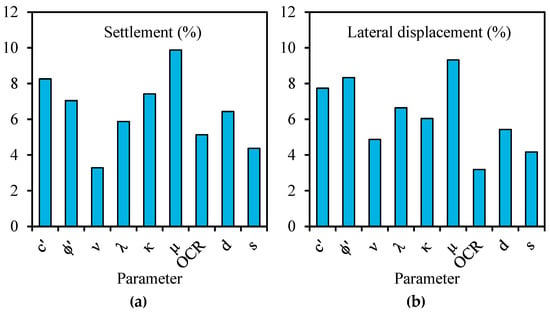
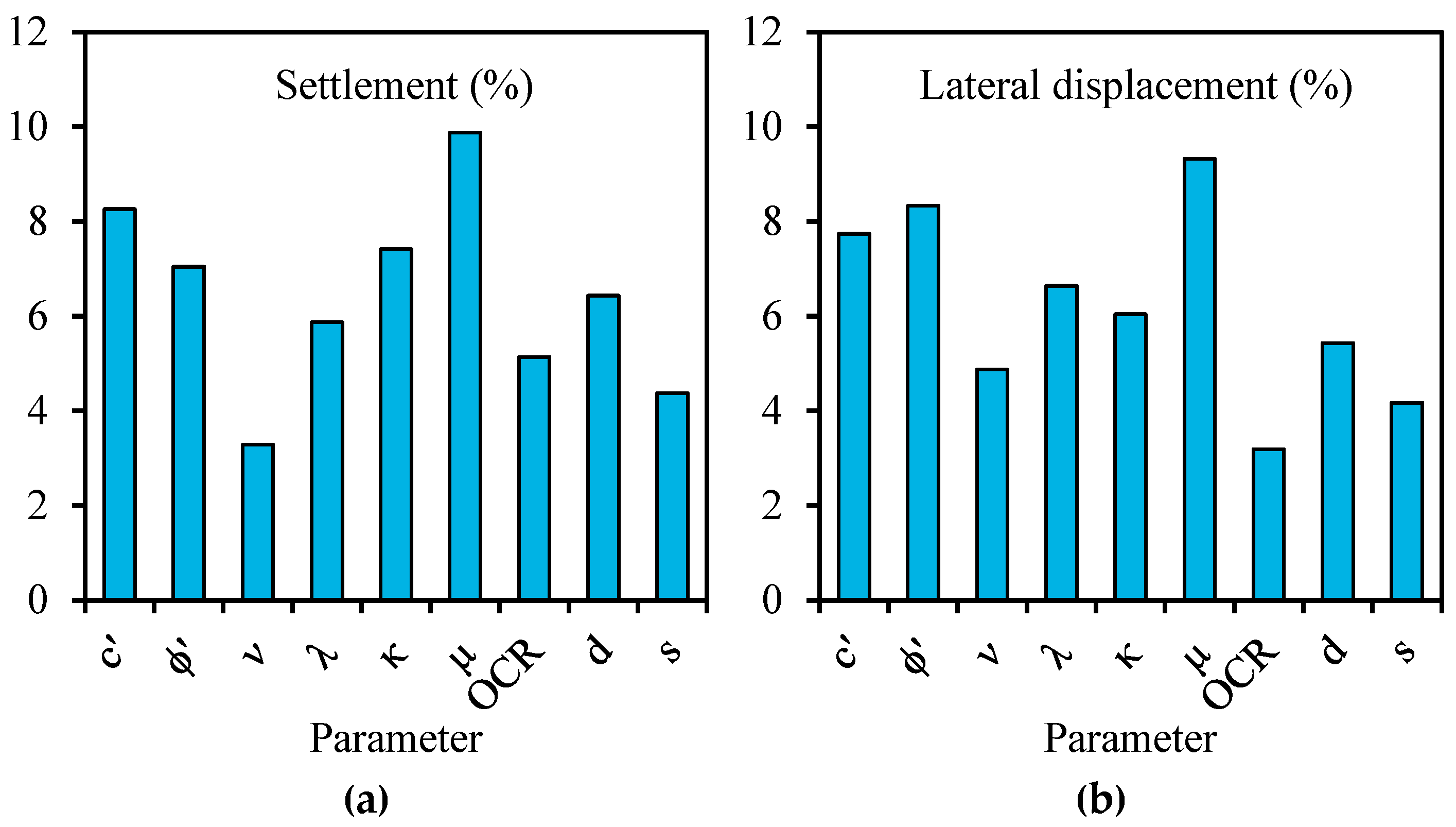
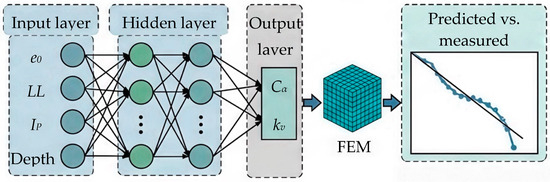
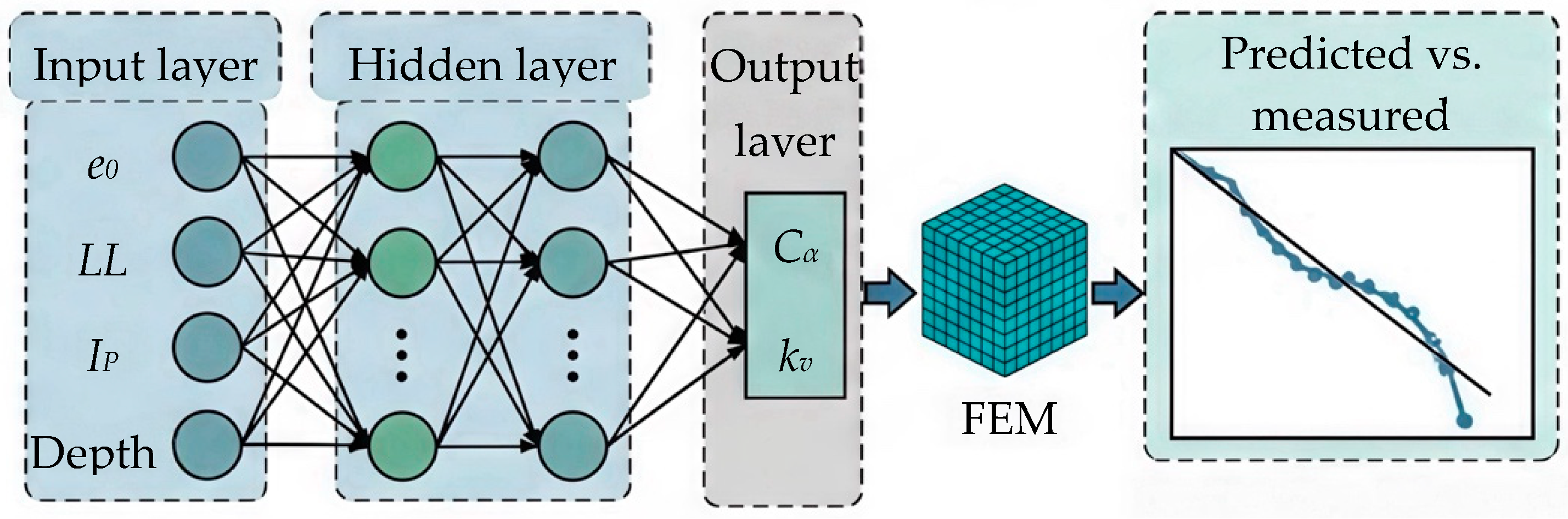
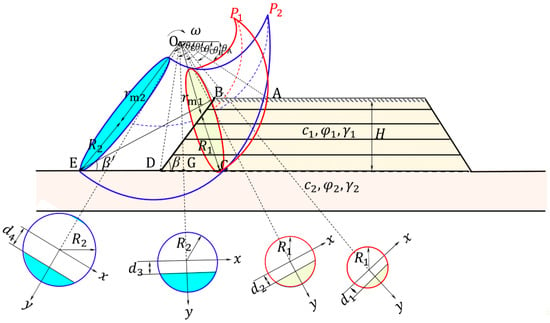
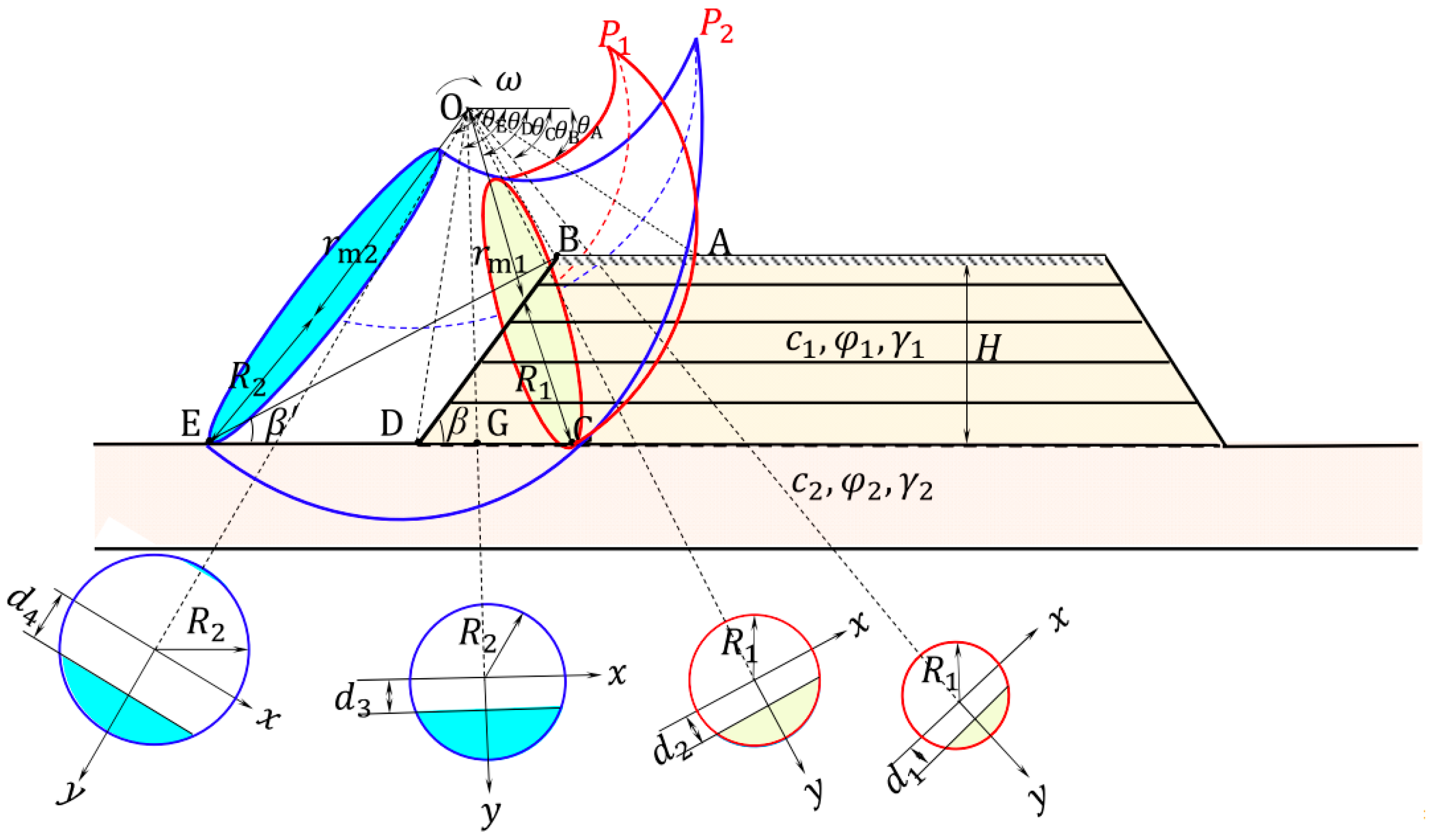
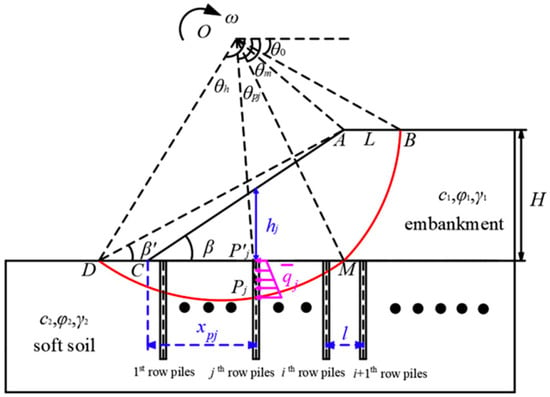
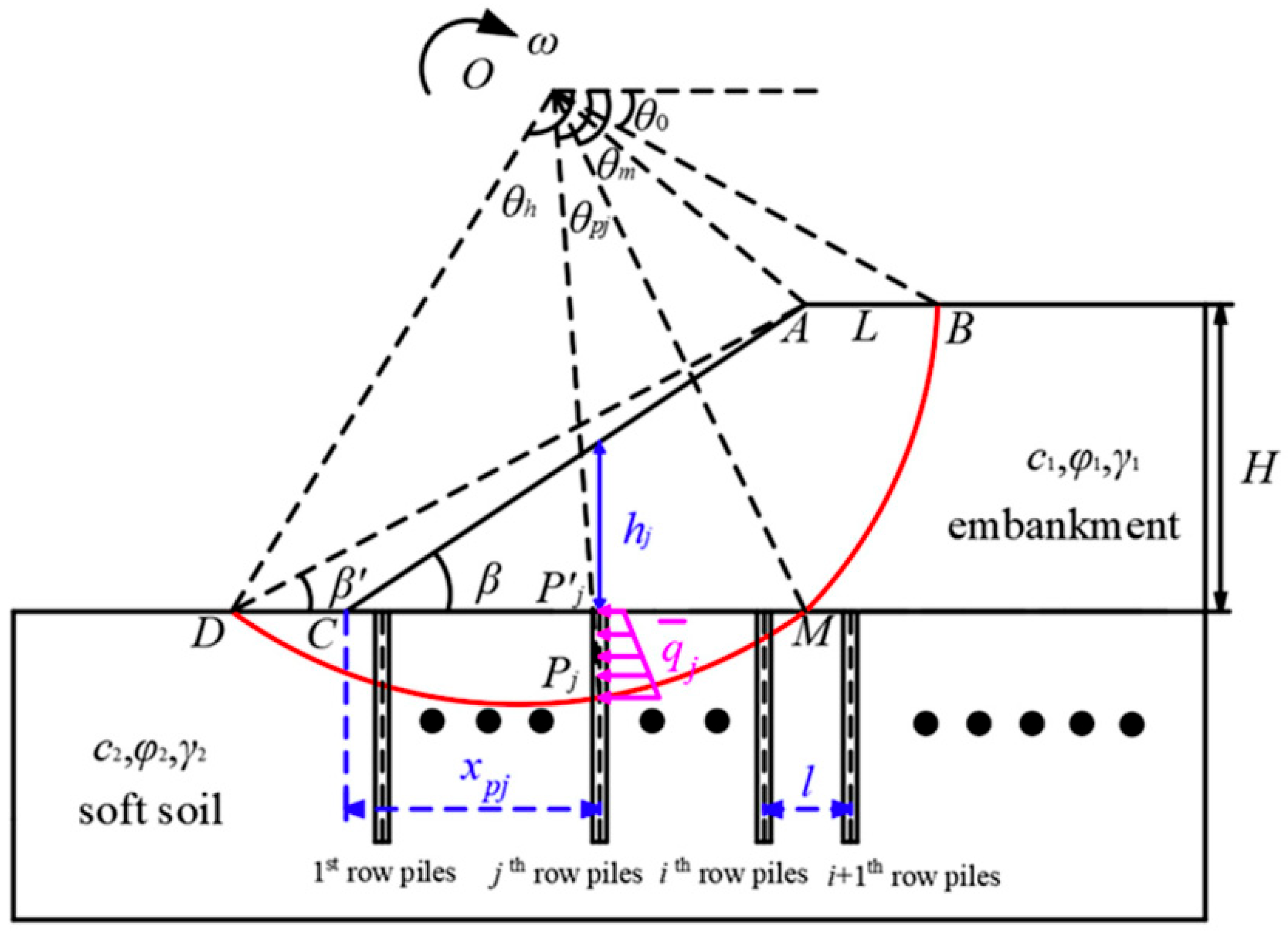
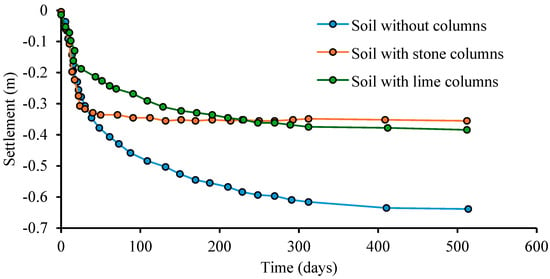
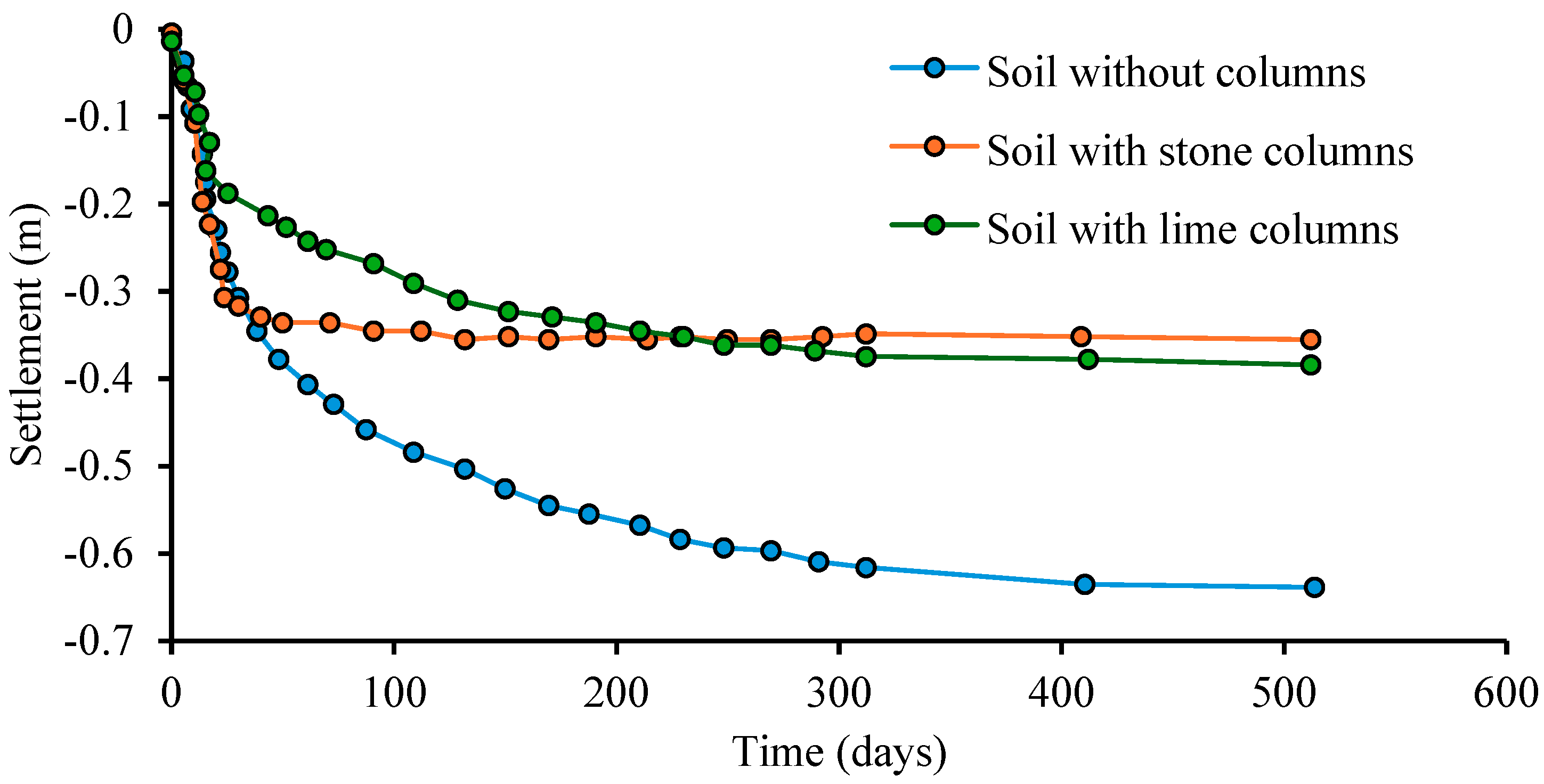
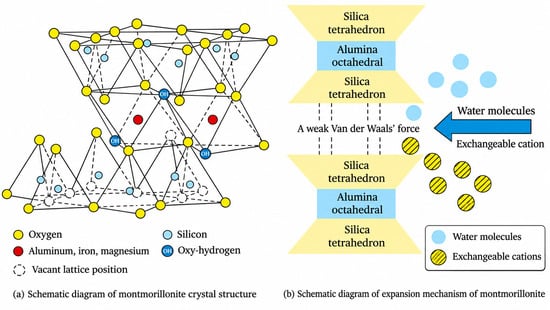
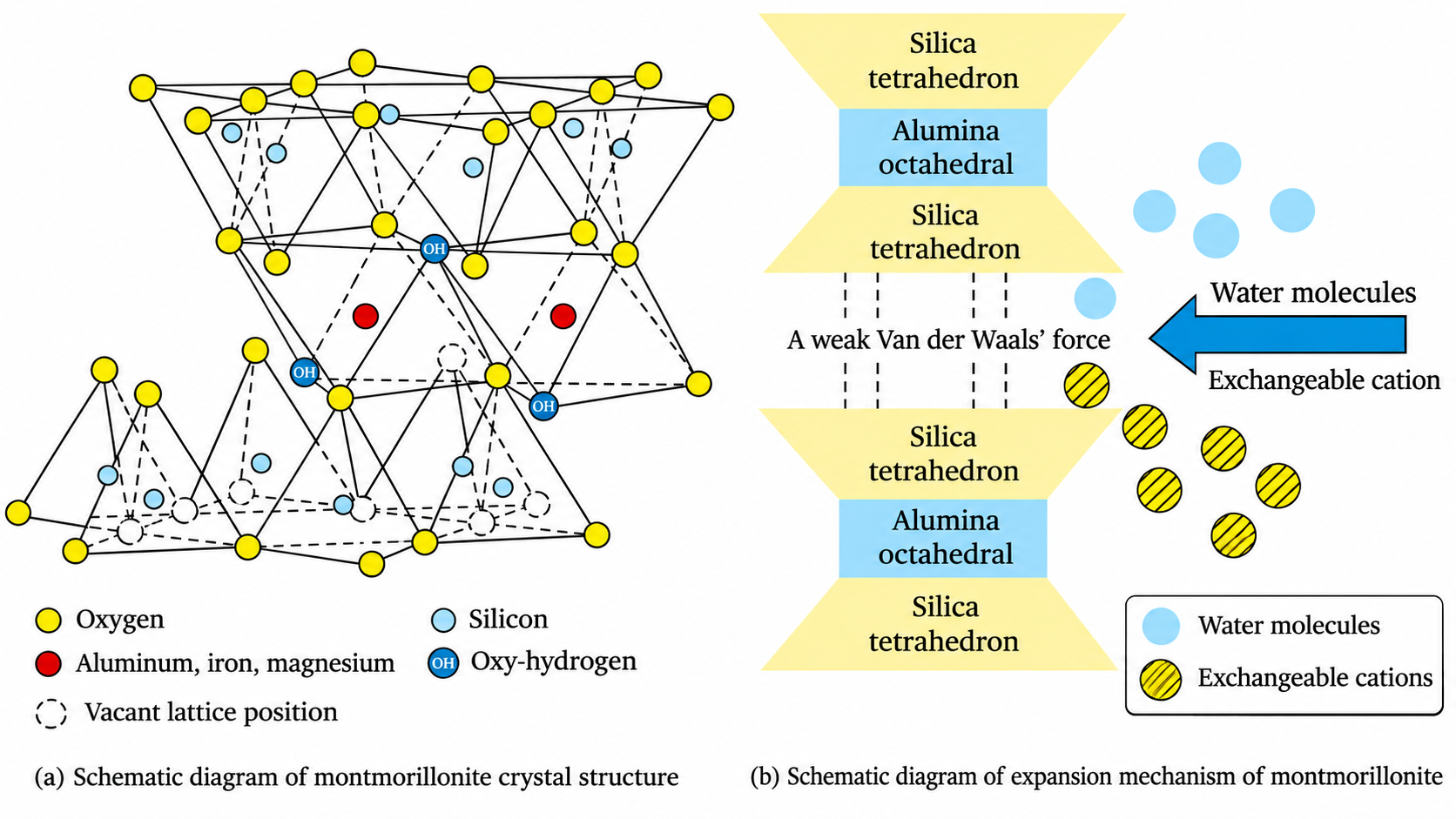
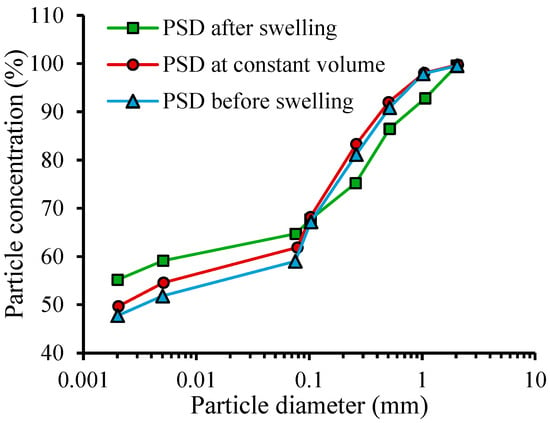
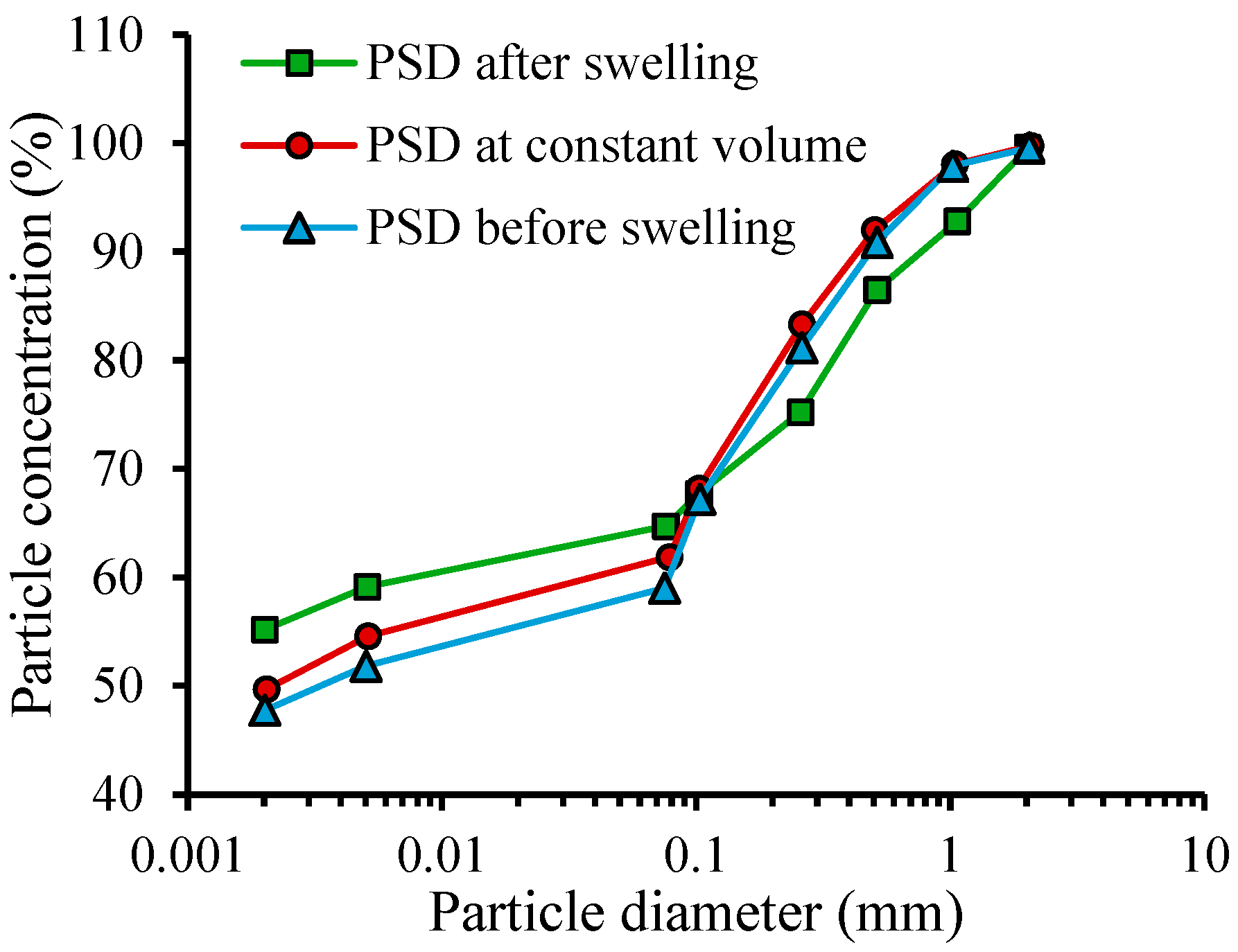
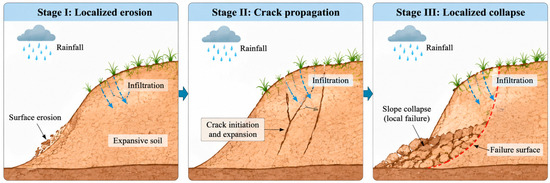
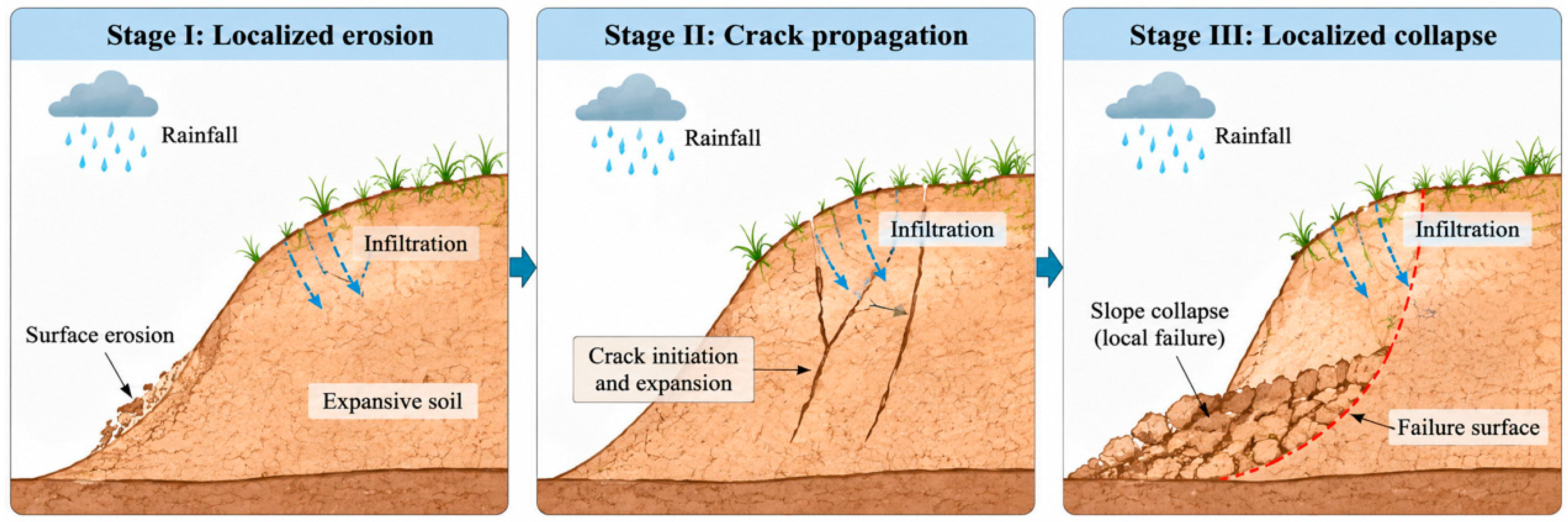
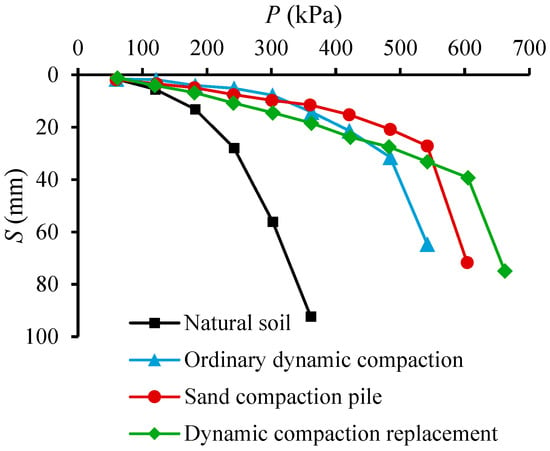
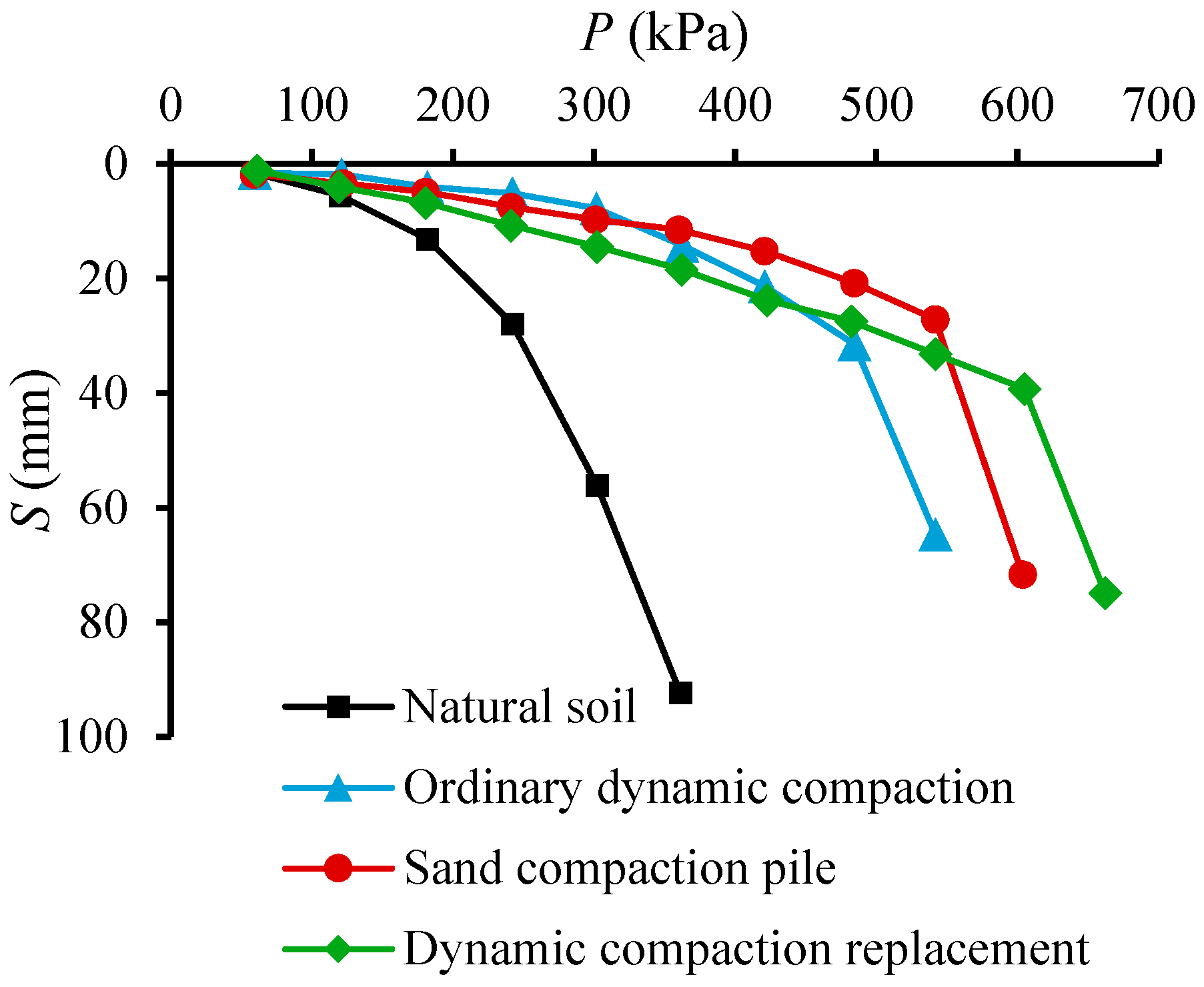
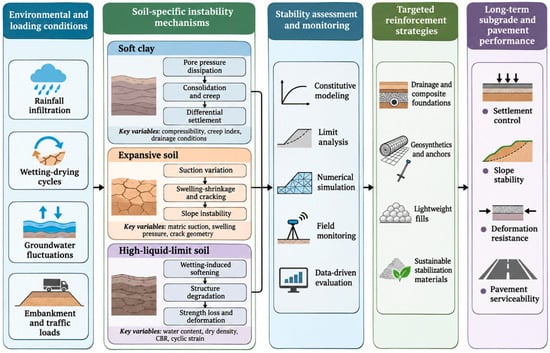
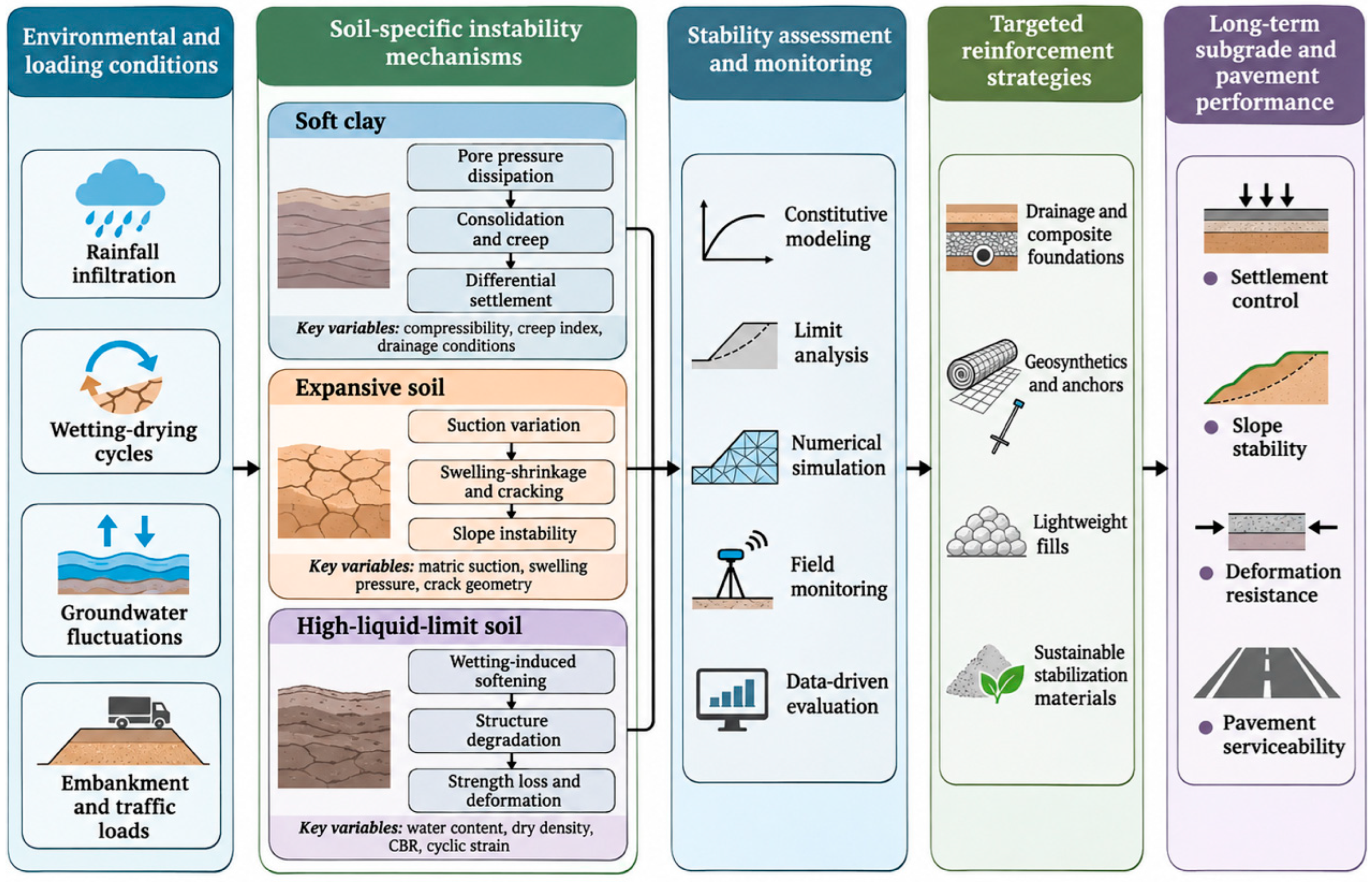

Disclaimer/Publisher’s Note: The statements, opinions and data contained in all publications are solely those of the individual author(s) and contributor(s) and not of MDPI and/or the editor(s). MDPI and/or the editor(s) disclaim responsibility for any injury to people or property resulting from any ideas, methods, instructions or products referred to in the content. |
© 2026 by the authors. Licensee MDPI, Basel, Switzerland. This article is an open access article distributed under the terms and conditions of the Creative Commons Attribution (CC BY) license.