


Abstract
Coalbed methane development is constrained by reservoir characteristics including high gas adsorption, high salinity, and high closure pressure, which impose significant limitations on conventional polymer fracturing fluids regarding viscosity enhancement, proppant transport, and fracture maintenance. In this study, a novel polymer fracturing fluid system, Z-H-PAM, was designed and synthesized to achieve strong salt tolerance, low adsorption affinity, and high elasticity to withstand closure pressure. This was accomplished through the molecular integration of a zwitterionic monomer ZM-1 and a hydrophobic associative monomer HM-2, forming a unified structure that combines rigid hydrated segments with a hydrophobic elastic network. The results indicate that ZM-1 provides a stable hydration layer and low adsorption tendency under high-salinity conditions, while HM-2 contributes to a high-storage-modulus, three-dimensional physically cross-linked network via reversible hydrophobic association. Their synergistic interaction enables Z-H-PAM to retain viscoelasticity that is significantly superior to conventional HPAM and to achieve rapid structural recovery in high-mineralization environments. Systematic evaluation shows that this system achieves a static sand-suspension rate exceeding 95% in simulated flowback fluid, produces broken gel residues below 90 mg/L, and results in a core damage rate of only 10.5%. Moreover, it maintains 88.8% of its fracture conductivity under 30 MPa closure pressure. Notably, Z-H-PAM can be prepared directly using high-salinity flowback water, maintaining high elasticity and sand-carrying capacity while enabling fluid recycling and reducing reservoir damage. This work clarifies the multi-scale mechanisms of strongly hydrated and highly elastic polymers in coalbed methane reservoirs, offering a theoretical and technical pathway for developing efficient and low-damage fracturing materials.
1. Introduction
As an important component of unconventional natural gas resources, coalbed methane (CBM) possesses significant advantages, including abundant reserves, high environmental cleanliness, and substantial development potential. It is increasingly playing a vital role in the global natural gas supply [1,2,3]. However, CBM reservoirs are characterized by their complexity, featuring a dual-porosity structure where micropores coexist with natural fractures. These reservoirs typically exhibit high fracture closure pressure, strong matrix adsorption capacity, and limited seepage pathways. These inherent properties pose considerable challenges throughout the fracturing process, encompassing fracture initiation, proppant placement, sand transport, and flowback. Furthermore, the formation water in coal seams often has high salinity. Ions such as Ca2+ and Mg2+ can cause conventional polymer chains to coil, salt out, or suffer from hydration layer disruption, leading to increased fluid loss, reduced flowback efficiency, and exacerbated reservoir damage [4]. Consequently, conventional fracturing fluid systems, primarily represented by partially hydrolyzed polyacrylamide (HPAM), struggle to maintain stable rheological properties and sufficient fracture conductivity in CBM extraction [5,6]. This limitation ultimately restricts gas desorption, migration, and production enhancement. Therefore, developing a novel polymer fracturing fluid system that retains stable structure, high elasticity, and strong hydration capacity under conditions of high salinity, high adsorption, and high closure pressure is crucial for improving the productivity of individual CBM wells.
Current fracturing fluid systems for CBM primarily include guar gum, surfactant-based fluids, and synthetic polymers. While guar gum provides good proppant transport, its high insoluble residue content significantly damages the low-permeability cleat system of coal. Similarly, although surfactant-based “clean” fluids minimize residue, they often suffer from high leak-off and operational costs. Consequently, synthetic polymers like HPAM remain a dominant choice due to their cost-effectiveness and adjustability [7,8]. Despite recent progress, traditional HPAM exhibits clear limitations in CBM environments: its hydration layer is easily compressed by salinity, leading to viscosity loss, while its flexible chains are prone to shear degradation and adsorption onto coal surfaces [9,10]. To address these issues, CBM fracturing fluids must evolve toward functionalized materials designed for strong hydration, anti-adsorption, and high elasticity.
Significant research efforts have focused on enhancing polymer viscoelasticity, salt tolerance, and stable network structure, yielding valuable insights [11,12]. Studies demonstrate that incorporating hydrophobic associative groups can form a physically cross-linked network via reversible hydrophobic aggregation, imparting high storage modulus and pronounced elasticity even at low polymer concentrations. Research on the structure-performance relationship of modified HPAM further confirms a positive correlation between hydrophobic chain length and both elasticity and salt resistance. For instance, certain hydrophobically modified associative polymers maintain stable rheology and proppant transport capability even in brines with 3000 mg/L salinity [13,14]. Zwitterionic monomers, such as those with betaine or sulfonate/quaternary ammonium inner salt structures, can form robust hydration shells under high salinity, inhibiting chain collapse and significantly reducing polymer adsorption on mineral surfaces. This improves dispersion stability and reservoir compatibility in saline environments [15]. On another front, Ge et al. proposed amphiphilic polymers that create an interface-stabilizing structure through the synergy of hydrophobic intercalation and hydration layer stabilization. Their molecular dynamics simulations, revealing a “sandwich effect” and reversible aggregation mechanism, provide important theoretical support for understanding the microscopic behavior of highly elastic polymers [16]. The mechanism by which viscoelasticity enhances recovery has also received strong support from reservoir studies. Anil et al. showed that highly elastic polymers can induce “necking and snap-off” of residual oil via stress transmission and pulling effects, achieving an 11–18% higher recovery factor compared to systems with equivalent viscosity [17]. Wang et al. further visualized this bridging and pulling action dominated by elasticity, demonstrating that highly elastic polymers can recover 8–15% more oil than conventional systems at the same viscosity [18]. Despite these theoretical advancements, field applications highlight persistent challenges. For example, in CBM operations, conventional HPAM fluids frequently experienced shear degradation rates exceeding 60% after passing through coiled tubing and perforations. This loss of viscosity led to premature sand screen-out and significant formation damage due to polymer residue blocking the cleat system [19,20]. Although these studies, from microscopic mechanisms to macroscopic displacement, prove the distinct advantages of highly elastic polymers, the specific design of polymer systems tailored to the high-salinity, high-adsorption, high-closure-pressure conditions of CBM reservoirs remains inadequate. Furthermore, a systematic understanding of the coupling mechanisms between their multi-scale structure, rheological behavior, and fracture support is still lacking.
Building upon the aforementioned research and the specific needs of CBM development, this study proposes the construction of a novel polymer system, Z-H-PAM, engineered for high elasticity and strong hydration with salt resistance. This is achieved through the synergistic integration of a zwitterionic unit (ZM-1) and a hydrophobic structural unit (HM-2). The ZM-1 unit, with its inner salt groups, is designed to form a stable hydration layer. This enhances chain extension in high-salinity coal seam water and reduces adsorption onto coal surfaces. The HM-2 hydrophobic unit creates reversible associative junctions, enabling the formation of an elastic network with a high storage modulus. This aims to improve fracture support stability under high closure pressure and sustain long-term conductivity after flowback. Concurrently, an inverse emulsion polymerization method is employed to synthesize a high-molecular-weight polymer with favorable solubility, ensuring practical applicability for field operations. Finally, through molecular structure characterization, rheological spectrum analysis, fluid loss/flowback experiments, and coal rock pore-scale seepage model tests, this study systematically investigates the underlying mechanisms linking robust hydration layers, highly elastic network structures, and enhanced seepage. The work aims to provide new material design strategies and a theoretical foundation for developing high-performance fracturing fluid systems suitable for CBM reservoirs.
2. Materials and Experiments
2.1. Materials
Acrylamide (AM, >99%), acrylic acid (AA, >99%), and 2-acrylamido-2-methylpropane sulfonic acid (AMPS, >99%) were purchased from Aladdin Reagent Co., Ltd. (Shanghai, China). To achieve high elasticity, salt resistance, and temperature tolerance in the polymer, two key functional monomers were synthesized: the zwitterionic monomer ZM-1 (a sulfobetaine methacrylate-type compound) and the hydrophobic associative monomer HM-2 (dodecyl acrylamide, C12AM). The main raw materials for their synthesis—N, N-dimethylacrylamide, 1,3-propanesultone, acryloyl chloride, and dodecylamine—were also obtained from Aladdin Reagent Co., Ltd (Shanghai, China). The polymerization initiation system, consisting of potassium persulfate (KPS), ascorbic acid (Vc), and azobisisobutyronitrile (AIBN), as well as the emulsifiers (Span 80 and Tween 80) and white oil, were all acquired from Sinopharm Chemical Reagent Co., Ltd. (Shanghai, China). All chemicals were of analytical or industrial grade. Experimental coal core samples and high-salinity flowback fluid (with total dissolved solids of approximately 9 × 10⁴ mg/L) were collected from field operations in the Qinshui Basin, Shanxi, China.
2.2. Synthesis of Functional Monomers
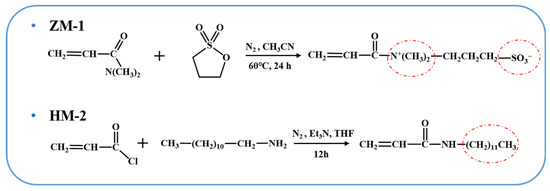
Synthesis of ZM-1: Under a nitrogen atmosphere, 0.1 mol of N, N-dimethylacrylamide and 0.12 mol of 1,3-propanesultone were dissolved in 150 mL of anhydrous acetonitrile. The reaction proceeded at 60 °C in the dark for 24 h. After completion, the solvent was removed under reduced pressure. The resulting solid was washed with ethyl acetate and dried under vacuum to yield a white product [21,22].
Synthesis of HM-2: In an ice bath under a nitrogen atmosphere, 0.1 mol of dodecylamine and triethylamine were dissolved in tetrahydrofuran (THF). A THF solution containing 0.1 mol of acryloyl chloride was added dropwise, maintaining the temperature below 10 °C. After complete addition, the mixture was warmed to room temperature and stirred for an additional 12 h. The precipitated salts were removed by filtration. The filtrate was concentrated, and the product was recrystallized from n-hexane to obtain white crystals. The synthesis routes for ZM-1 and HM-2 are illustrated in Figure 1.
Figure 1.
Synthetic routes for monomers ZM-1 and HM-2. The red circles highlight the zwitterionic unit of ZM-1 and the hydrophobic structural unit of HM-2.
2.3. Preparation of Z-H-PAM via Inverse Emulsion Polymerization
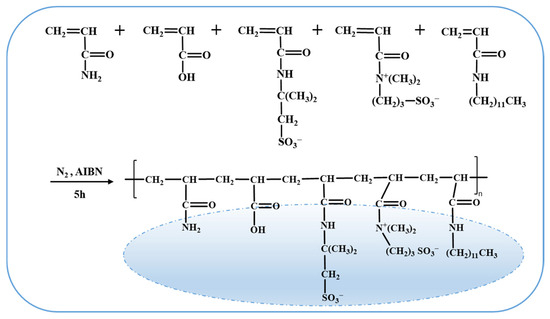
For polymerization, monomers with a total mass of 45 g were weighed according to the mass ratio AM:AA:AMPS:ZM-1:HM-2 = 62.2:15.6:11.1:6.7:4.4. The monomers were dissolved in 45 g of deionized water. A NaOH solution adjusted the pH to 7.0, followed by adding 0.03 g of KPS. Cooling of the aqueous phase proceeded in an ice bath. The oil phase consisted of 50 g of white oil and 3 g of a composite emulsifier (Span 80:Tween 80 = 4:1, HLB ≈ 5.7). Under high-speed shearing at 10,000 rpm (using an T25 digital Ultra-Turrax, IKA-Werke GmbH & Co. KG, Staufen, Germany), the aqueous phase was added to the oil phase and emulsified for 15 min in an ice-water bath (maintained at 10–15 °C) to form a stable W/O pre-emulsion. This pre-emulsion was transferred to a reactor, purged with nitrogen for 40 min to remove oxygen, and then cooled to 18 °C. Polymerization was initiated via dropwise addition of a reducing agent solution containing 0.02 g of Vc. The addition rate controlled a gradual temperature increase to 38 °C, at which point 0.01 g of AIBN was introduced to sustain the reaction. The maximum reaction temperature remained below 45 °C, with the mixture held under these conditions for 5 h. After cooling, 3% NP-10 phase inversion agent was added and stirring continued for 30 min. The final product was a Z-H-PAM emulsion with a solid content of approximately 40%. Figure 2 illustrates the synthesis process. For comparison, control polymers were synthesized using identical polymerization procedures, emulsification conditions, and post-treatment steps, but with different monomer compositions: the base sample P(AM-AA-AMPS) (monomer mass ratio 62.2:15.6:11.1), the copolymer containing ZM-1, P(AM-AA-AMPS-ZM-1) (mass ratio 62.2:15.6:11.1:6.7), and the copolymer containing HM-2, P(AM-AA-AMPS-HM-2) (mass ratio 62.2:15.6:11.1:4.4).
Figure 2.
Schematic flowchart for the synthesis of Z-H-PAM. The blue zones indicate the functional groups introduced by modification.
2.4. Structural Characterization and Morphology Observation
Fourier Transform Infrared (FTIR) spectroscopy was used to analyze the functional groups of purified polymer powder. The samples were prepared using the conventional KBr pellet method (without ATR). The three-dimensional network structure of freeze-dried samples was observed using Scanning Electron Microscopy (SEM, Magnification: 10,000×). A laser particle size analyzer was employed to determine the emulsion droplet size distribution. Thermogravimetric Analysis (TGA) was performed using a Q500 thermogravimetric analyzer (TA Instruments, New Castle, DE, USA) under a nitrogen atmosphere at a heating rate of 10 °C/min.
2.5. Rheological and Viscoelastic Property Testing
A six-speed viscometer was used to measure the apparent viscosity and viscosity retention rate of polymer solutions in fresh water and standard saline solutions (containing NaCl, KCl, CaCl2, MgCl2). A rotational rheometer was employed for steady shear tests (0.1–1000 s−1) to obtain flow curves and fit the power-law model. Thixotropic behavior was investigated through ascending-descending shear rate cycles. The linear viscoelastic region was determined via dynamic strain sweep tests. Within this region, frequency sweep tests (0.1–100 rad/s) were conducted to obtain the storage modulus (G′) and loss modulus (G″). Temperature and shear resistance were evaluated by constant shear (170 s−1) tests within the 70–140 °C range.
2.6. Evaluation of Key Fracturing Fluid Performance
Sand Suspension Performance: Z-H-PAM solution was mixed with 40/70 mesh quartz sand at different sand ratios in a graduated cylinder. The static sand suspension ratio was calculated after a period of settling. Proppant dynamic transport and placement were observed in a parallel-plate fracture simulation device.
Gel Breaking Performance: Ammonium persulfate was added to the fracturing fluid for gel breaking in a 90 °C water bath. Viscosity was measured periodically until it fell below 5 mPa·s, and the gel-breaking time was recorded. The surface/interfacial tension and residue content of the broken gel were also determined.
Fluid Loss and Anti-swelling Performance: The 30 min fluid loss volume was measured using a high-temperature, high-pressure fluid loss cell. The inhibition rate of the broken gel on the linear expansion of sodium bentonite was tested using a NP-01 shale expansion tester (Qingdao Haitongda Special Instrument Co., Ltd., Qingdao, China).
2.7. Core Damage and Conductivity Evaluation
Core Flow Damage Experiment: A coal core saturated with formation water was loaded into a core holder, and its initial permeability (K1) was measured. The broken gel was injected in the reverse direction, and the core was soaked at constant temperature for 2 h. Subsequently, forward flow was resumed to measure the damaged permeability (K2). The comprehensive damage rate (η) was calculated as η = (1 − K2/K1) × 100%.
Fracture Conductivity Test: Ceramic proppant was placed in a conductivity cell, and the initial conductivity under varying closure pressures was measured using a 2% KCl solution. After injecting and soaking the broken gel for 24 h, the conductivity was measured again. The retention rate was calculated to evaluate damage caused by residues.
2.8. Performance Evaluation for Flowback Fluid Reuse
A comprehensive ionic analysis was performed on the field-collected flowback fluid. Z-H-PAM fracturing fluid was prepared directly using this flowback fluid. Its dissolution, viscosity-building, rheological, and gel-breaking properties were systematically evaluated. Core flow experiments assessed its potential for reservoir damage. Combined with simulation experiments, the feasibility of its on-site reuse was analyzed.
3. Discussion
3.1. Structural Characterization
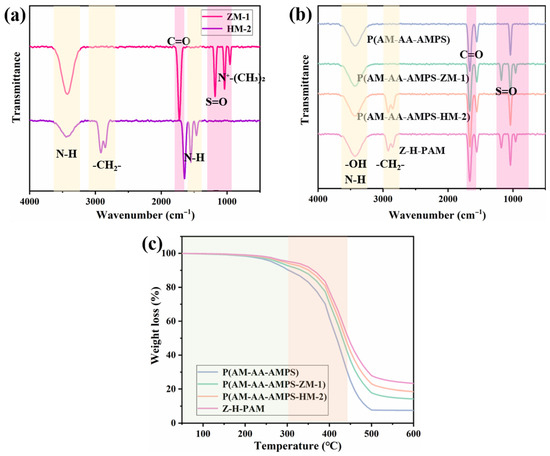
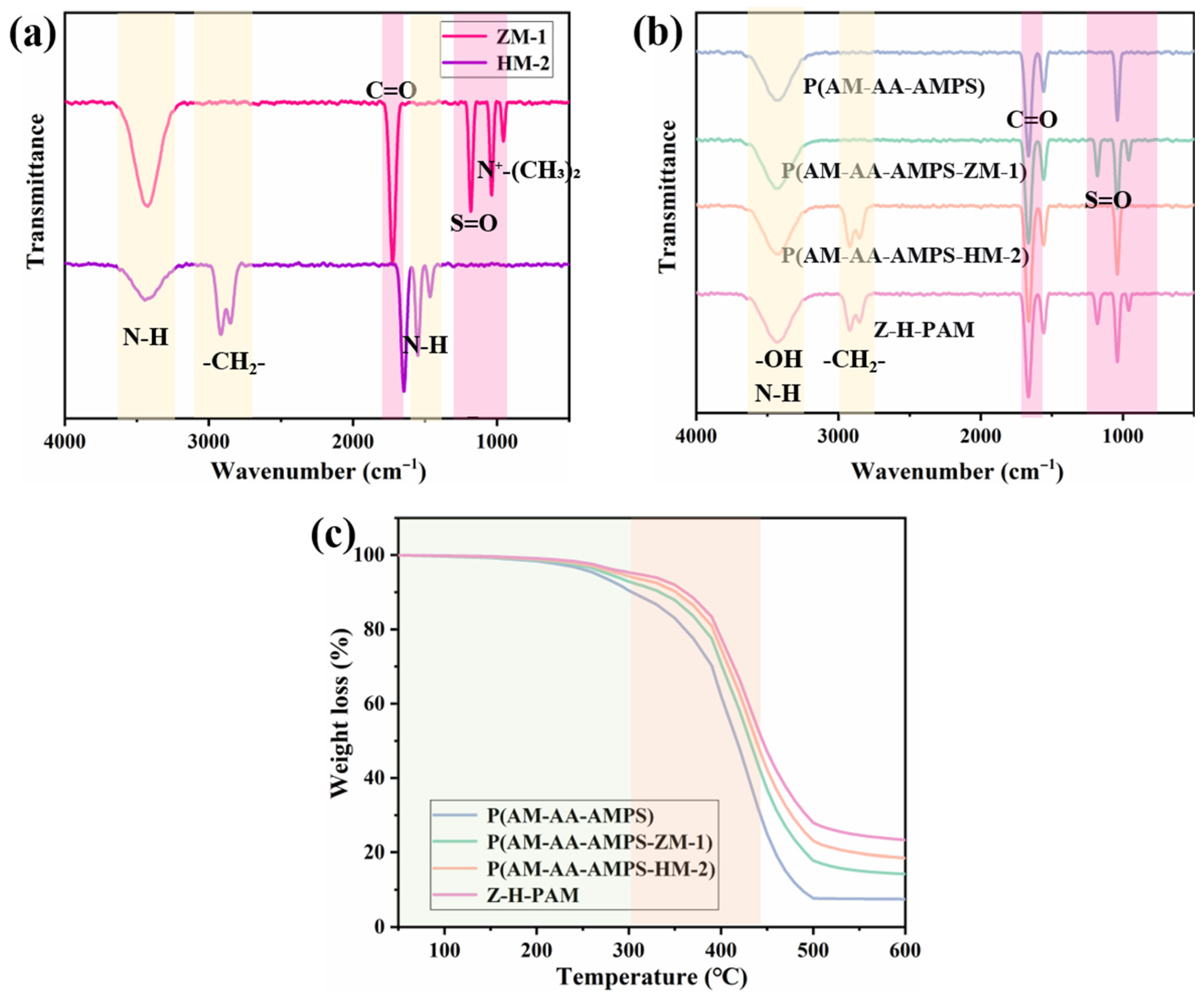
The structures of the synthesized functional monomers and polymers were first confirmed via Fourier Transform Infrared (FTIR) spectroscopy. As shown in Figure 3a, the monomer ZM-1 exhibits a characteristic stretching vibration peak for the ester carbonyl (C=O) group at 1725 cm−1. Strong peaks at 1182 cm−1 and 1038 cm−1 are attributed to the asymmetric and symmetric stretching vibrations of the sulfonate group, respectively [23]. Additionally, an absorption peak at 956 cm−1 corresponds to the characteristic presence of a quaternary ammonium group (N+-(CH3)2). These collective features confirm the successful synthesis of the sulfobetaine methacrylate-type structure. In the FTIR spectrum of monomer HM-2, characteristic absorption peaks for amide I (C=O) and amide II (N-H) bands appear at 1647 cm−1 and 1550 cm−1, respectively. Furthermore, intense peaks at 2918 cm−1 and 2850 cm−1 correspond to the symmetric and asymmetric stretching vibrations of methylene (-CH2-) groups, indicating the presence of the long alkyl chain in dodecyl acrylamide [23].
Figure 3.
Structural characterization and thermal stability analysis of synthesized monomers and polymers: (a) FTIR spectra of functional monomers; (b) FTIR spectra of the base polymer and its modified copolymers; (c) TGA curves of the polymers (under a nitrogen atmosphere).
The FTIR spectra of polymers resulting from the copolymerization of functional monomers with AM, AA, and AMPS are presented in Figure 3b. The base polymer, P(AM-AA-AMPS), shows characteristic absorption peaks for amide groups at 1665 cm−1 and 1610 cm−1. A peak at 1558 cm−1 is assigned to the stretching vibration of the carboxylate (-COO−) group, while a peak near 1040 cm−1 is characteristic of the sulfonate group from AMPS. Compared to the base polymer, the spectrum of P(AM-AA-AMPS-ZM-1) displays significantly enhanced absorption peaks for the sulfonate group at 1180 cm−1 and 1040 cm−1, along with a new, weak absorption near 960 cm−1, which is attributed to the contribution from the quaternary ammonium group in ZM-1. A notable change in the spectrum of P(AM-AA-AMPS-HM-2) is the pronounced enhancement of the methylene absorption peaks at 2918 cm−1 and 2850 cm−1, confirming the incorporation of the long alkyl chain from HM-2. The FTIR spectrum of Z-H-PAM incorporates all the aforementioned characteristic peaks. The intensities of these peaks are moderate, with no significant peak shifts observed, indicating the successful copolymerization of both ZM-1 and HM-2 into the same polymer chain without strong intermolecular interactions that would substantially alter the vibrational frequencies of functional groups.
Thermogravimetric analysis (TGA) was employed to evaluate the thermal stability of the polymers, with results shown in Figure 3c and summarized in Table 1. The thermal decomposition curves of all polymers exhibit three distinct stages. The first stage (30–200 °C), with a mass loss of approximately 2–3%, is primarily attributed to the evaporation of physically adsorbed water and residual solvent. The second stage (200–450 °C) represents the main decomposition phase, involving the extensive breakage of the polymer backbone and side groups, leading to a sharp decline in mass. The third stage (450–600 °C) corresponds to the slow carbonization of residues, where the weight loss rate decreases significantly, and the TGA curve stabilizes. Key thermal parameters, including the extrapolated onset decomposition temperature (T5%) and the residual char yield at 600 °C, are summarized in Table 1. The base polymer P(AM-AA-AMPS) has a T5% of 287 °C and a char yield of 7.5%. Introducing the zwitterionic monomer ZM-1 into P(AM-AA-AMPS-ZM-1) increases the T5% to 298 °C and the char yield to 14.3%. This improvement is attributed to the strong polar inner-salt structure of ZM-1, which enhances intermolecular interactions and may promote the formation of a more stable cross-linked char layer. The polymer P(AM-AA-AMPS-HM-2), incorporating the hydrophobic monomer HM-2, exhibits even higher thermal stability, with a T5% of 305 °C and a char yield of 18.6%. This is ascribed to cross-linking reactions involving the long alkyl chains during pyrolysis, enhancing char-forming ability. Notably, the dual-functional copolymer Z-H-PAM demonstrates optimal thermal stability, with the highest T5% of 312 °C and the highest char yield of 23.4%. This indicates a synergistic effect between ZM-1 and HM-2: ZM-1 enhances intermolecular bonding and thermal stability, while HM-2 provides effective char-forming sites. Their combined action guides the formation of a denser and more stable condensed-phase structure, thereby more effectively delaying thermal decomposition and increasing the residual char yield [24,25].
Table 1.
Characteristic thermal decomposition parameters of the polymers.
3.2. Emulsion Properties and Solution Aggregation State
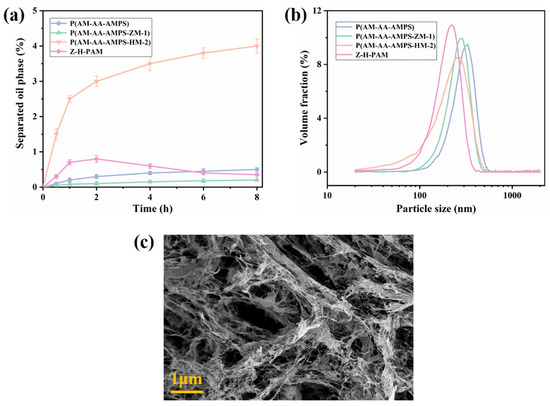
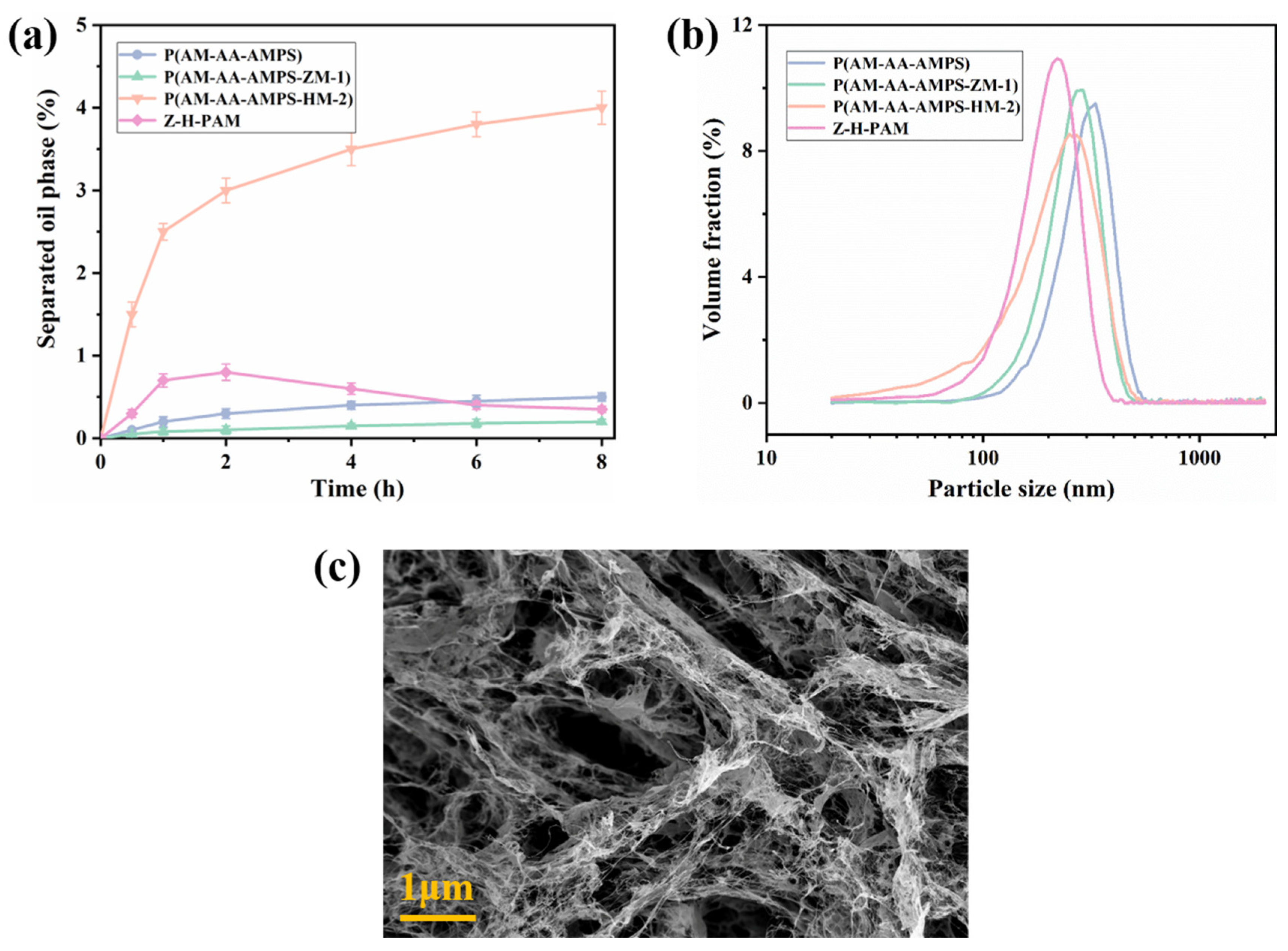
In inverse emulsion polymerization, the stability of the emulsion directly depends on the integrity of the oil-water interfacial film, ultimately influencing the quality of the final polymer [26,27]. After optimizing the hydrophilic-lipophilic balance (HLB) value of the emulsifier to 5.7, the static stability of pre-emulsions from different monomer systems was monitored over 8 h (Figure 4a). The base system, P(AM-AA-AMPS), exhibited slow Ostwald ripening, with its separation rate increasing linearly to 0.50%. Introducing the strongly hydrophilic zwitterionic monomer ZM-1 resulted in the P(AM-AA-AMPS-ZM-1) system displaying optimal stability, maintaining a separation rate consistently below 0.20%. This is attributed to the anti-polyelectrolyte characteristic of ZM-1, which forms a dense hydration layer in the aqueous phase, significantly increasing the dispersed phase viscosity and thereby suppressing droplet coalescence and phase separation. In contrast, the system containing only the hydrophobic associative monomer HM-2 showed a sharp decline in stability, with the separation rate rapidly reaching 2.5% within the first hour and ultimately stabilizing at 4.0%. The long alkyl chain of HM-2 possesses strong interfacial activity. Its migration to the oil-water interface and competitive adsorption with the emulsifiers (Span 80/Tween 80) disrupt the tight packing of the interfacial film, leading to rapid droplet coalescence.
Figure 4.
(a) Macroscopic stability and (b) microscopic particle size distribution of inverse emulsions from different monomer systems; (c) Microscopic aggregation morphology of Z-H-PAM in simulated high-salinity brine.
Notably, the stability evolution of the dual-functional Z-H-PAM system exhibited a unique non-monotonic trend. Its separation rate curve initially increased to 0.80% within the first 2 h, influenced by the interfacial migration of HM-2. However, during subsequent static standing, the separation rate decreased instead of increasing, finally stabilizing at 0.35%. This phenomenon suggests a dynamic process governed by kinetic and thermodynamic competition. Initially, the migration of HM-2 dominated the interfacial behavior. Over time, the strong hydration layer formed by ZM-1 provided a thermodynamic driving force, likely inducing a thermodynamically driven redistribution or better “anchoring” of some HM-2 hydrophobic segments from the interface back into the aqueous phase interior through intermolecular interactions, while simultaneously stabilizing the aqueous phase itself. This process allowed partial repair of the interfacial film, steering the overall emulsion stability toward a level superior to that of the base system. This dynamic competition accords with established principles of amphiphilic polymer interfacial assembly, substantiating the molecular-level synergy between ZM-1 and HM-2. The results demonstrate that ZM-1 functions dually: it imparts resistance to high-salinity environments while simultaneously counteracting the destabilizing effects of hydrophobic moieties during the initial emulsification process [28,29].
The particle size distribution results (Figure 4b) show high consistency between the microstructure of the pre-emulsions and their macroscopic stability performance. The distribution curves for P(AM-AA-AMPS), P(AM-AA-AMPS-ZM-1), and Z-H-PAM all exhibit a typical unimodal profile. The main peak is located in the 250–350 nm range, with a narrow and symmetrical distribution, indicating the formation of uniform, stable submicron droplets—an ideal foundation for successful inverse emulsion polymerization. In stark contrast, the P(AM-AA-AMPS-HM-2) system shows a distribution curve with a persistent and significant “tail” extending over a broad range from 500 nm to 2 microns, alongside the main peak. This feature clearly indicates the presence of numerous droplet aggregates of non-uniform size within this system, providing direct microscopic evidence for the disruption of interfacial integrity by the long alkyl chains of HM-2. Their migration to the oil-water interface interferes with the orderly arrangement of emulsifier molecules, inducing droplet coalescence and consequently causing the sharp decline in macroscopic stability. Crucially, the size distribution of the dual-functional Z-H-PAM nearly overlaps with that of the system containing only ZM-1, effectively eliminating the broadening tail induced by HM-2 alone. This result strongly demonstrates that the zwitterionic monomer ZM-1, through its powerful hydration and stabilizing effects, suppresses the interfacial disruptive behavior of HM-2 at the molecular level. This action preserves droplet uniformity at the microscopic scale and achieves synergistic stabilization macroscopically.
To directly reveal the authentic aggregation state of Z-H-PAM under simulated high-salinity conditions typical of coalbed methane reservoirs, this study employed scanning electron microscopy (SEM) to examine its morphology in a 10% standard saline solution. The results are presented in Figure 4c. Z-H-PAM exhibits a distinct, continuous, and relatively uniform three-dimensional network structure. Well-defined, moderately sized “junction points” are observable within the network, which demonstrates good structural connectivity without significant signs of aggregation collapse or isolated clusters. It should be noted that while the lyophilization process may introduce minor artifacts compared to the solution state, the observed morphology effectively reflects the skeleton of the polymer network. This morphology directly demonstrates the proposed synergistic mechanism: the hydrophobic HM-2 units provide the driving force for forming a physically cross-linked network by establishing junction points via hydrophobic association. Concurrently, the zwitterionic ZM-1 units, leveraging their strong hydration and electrostatic stabilization capabilities, maintain the extended conformation of the polymer chains in the high-salinity environment. This extension provides more effective contact sites for hydrophobic association while simultaneously employing electrostatic repulsion and steric hindrance effects to prevent excessive aggregation of the hydrophobic domains. Consequently, this synergy guides and stabilizes the formation of this interconnected and uniform network structure. These observations provide microscopic evidence for the cooperative mechanism between ZM-1 and HM-2 in constructing a highly elastic and salt-tolerant polymer system.
3.3. Rheological and Viscoelastic Properties
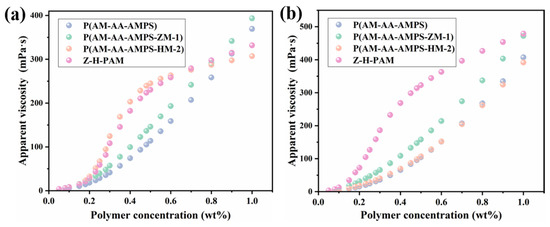
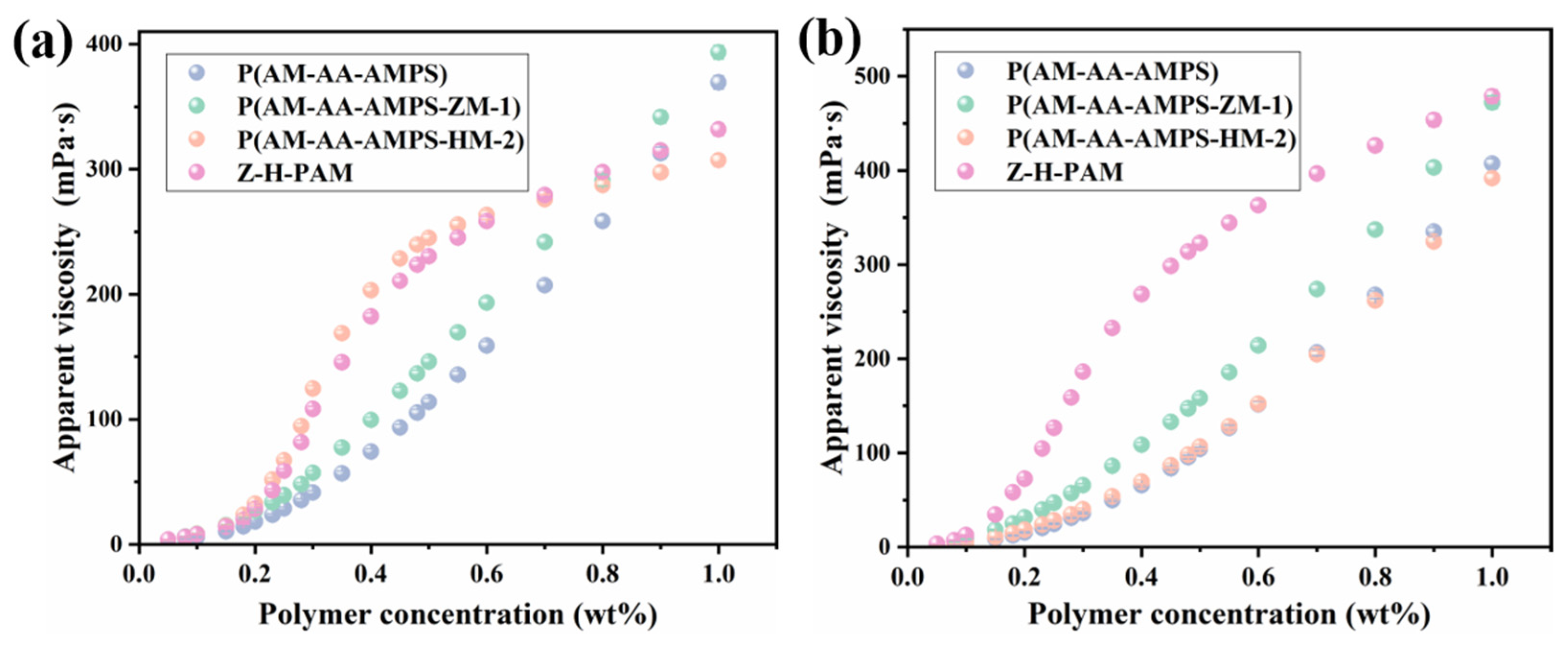
Rheological performance is a decisive factor for the transport and proppant-carrying capacity of fracturing fluids [30,31]. Figure 5 illustrates the relationship between the apparent viscosity and concentration for the four polymers in both fresh water and a 10 wt% standard brine. In the fresh water system (Figure 5a), the viscosity of all samples increases with rising concentration. Notably, for samples containing the hydrophobic associative monomer HM-2, namely P(AM-AA-AMPS-HM-2) and Z-H-PAM, the viscosity increase becomes significantly more pronounced at concentrations above approximately 0.25 wt%, reaching 245.1 mPa·s and 230.5 mPa·s, respectively, at 0.5 wt%. This phenomenon is attributed to the formation of a dynamic physical cross-linked network through hydrophobic association between HM-2 segments, contributing additional structural viscosity. In comparison, the base polymer P(AM-AA-AMPS) exhibited a viscosity of 114.0 mPa·s under the same conditions. The sample containing the rigid, salt-resistant monomer ZM-1, P(AM-AA-AMPS-ZM-1), showed a viscosity of 146.2 mPa·s, with its enhanced thickening capability stemming from increased chain rigidity and hydration volume provided by ZM-1.
Figure 5.
Apparent viscosity versus concentration for different polymers in (a) fresh water and (b) 10 wt% standard brine.
When the medium was switched to the high-salinity 10 wt% standard brine (Figure 5b), the performance differences stemming from molecular design were dramatically amplified, revealing the limitations of single functional modifications and the importance of synergistic design. The viscosity of P(AM-AA-AMPS-HM-2) suffered a precipitous drop, measuring only 106.8 mPa·s at 0.5 wt% concentration, corresponding to a viscosity retention rate of merely 43.6%. This indicates that the hydrophobic associative network, lacking protection from hydrophilic groups, was severely compromised under high ionic strength, leading to extensive dissociation of associative junctions. In stark contrast, P(AM-AA-AMPS-ZM-1) demonstrated excellent salt tolerance. Its viscosity in brine (158.3 mPa·s) was even slightly higher than in fresh water, with a retention rate of 108.3%. This fully reflects the ability of ZM-1 to maintain chain extension in saline environments through its anti-polyelectrolyte effect. However, its absolute viscosity remained insufficient. The most breakthrough performance came from the synergistically designed Z-H-PAM. As shown, its viscosity-concentration curve in brine rose sharply, reaching a high viscosity of 323.1 mPa·s at 0.5 wt%. This value not only far exceeded those of all other samples but also, remarkably, surpassed its own viscosity in fresh water, yielding a retention rate of 140.2%. This result provides strong evidence that the robust hydrophilic hydration shield constructed by the ZM-1 units along the molecular chain effectively protects the hydrophobic associative skeleton formed by HM-2 from severe shielding and disruption by multivalent ions. This intramolecular synergy between rigid, salt-resistant chain segments and elastic hydrophobic associative microdomains enables Z-H-PAM to successfully unify high elasticity and high salt tolerance at the molecular scale [32].
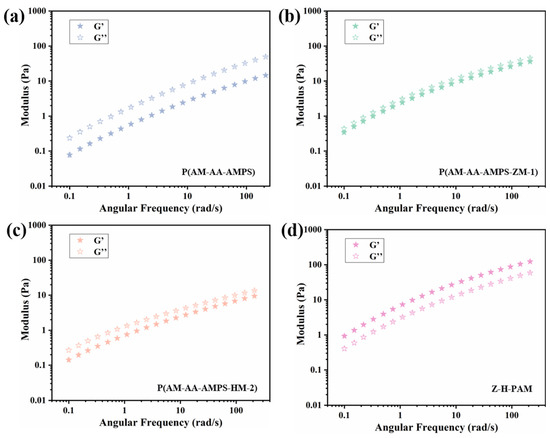
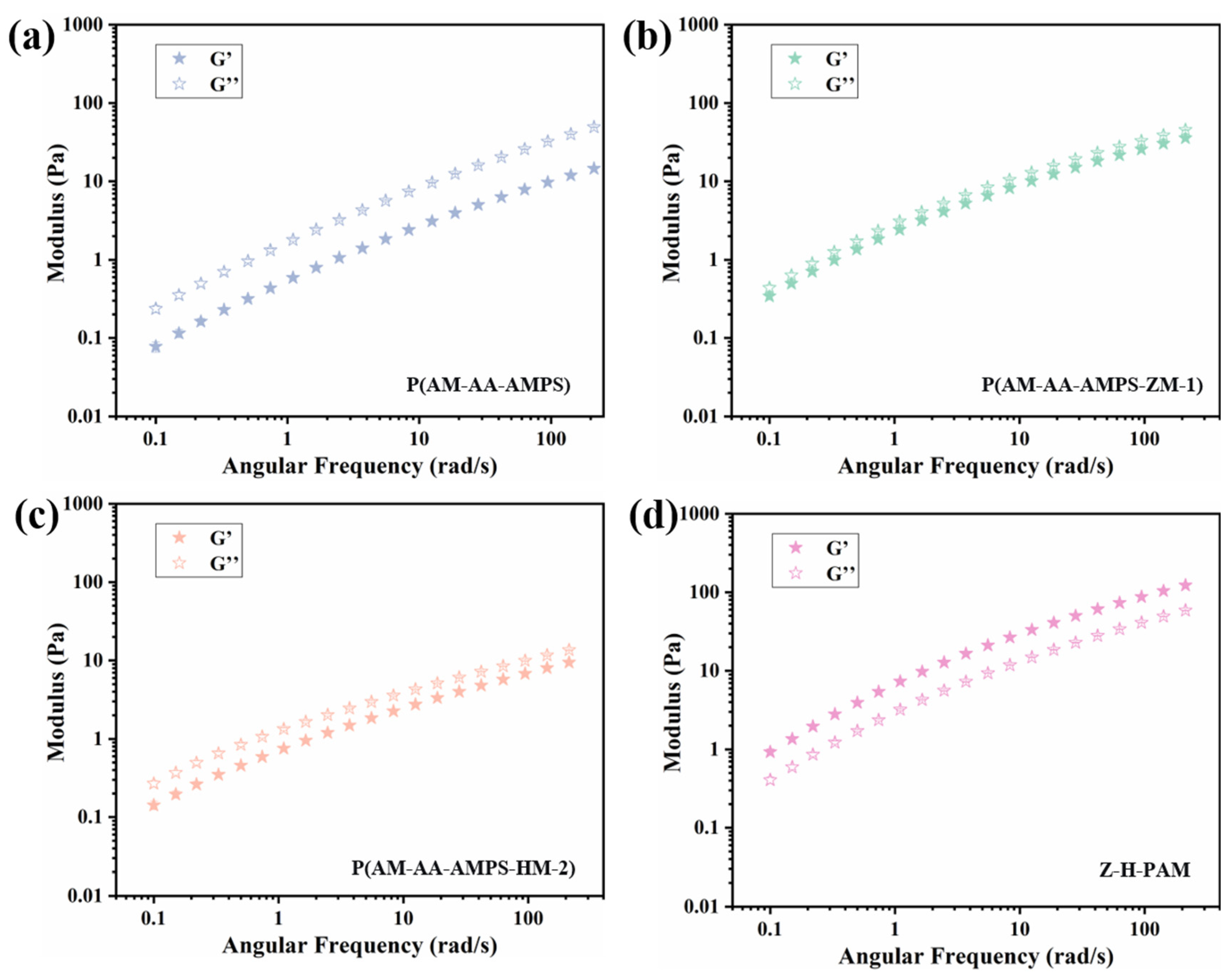
Dynamic oscillatory tests further revealed the viscoelastic nature of the internal solution structure from an energy perspective (Figure 6). Frequency sweeps conducted at 1% fixed strain in 10% brine revealed that for P(AM-AA-AMPS) and P(AM-AA-AMPS-ZM-1), the loss modulus (G″) remained higher than the storage modulus (G′) across the entire frequency range, displaying typical viscous fluid characteristics. Their structural strength primarily originates from chain entanglement and friction. The modulus curves for P(AM-AA-AMPS-HM-2) underwent a fundamental shift. Its G′ value decreased substantially and was surpassed by G″ over most of the frequency range, indicating the failure of its hydrophobic associative network in brine to provide an effective elastic response [33]. Only Z-H-PAM exhibited significant gel-like behavior. Its G′ remained consistently higher than G″ throughout the tested frequency range (0.1–100 rad/s), and at an angular frequency of 10 rad/s, the G′ value remained as high as 33.2 Pa.
Figure 6.
Dynamic viscoelastic response of different polymers in 10 wt% standard brine (at 1% fixed strain): storage modulus (G′) and loss modulus (G″) versus angular frequency. (a) P(AM-AA-AMPS); (b) P(AM-AA-AMPS-ZM-1); (c) P(AM-AA-AMPS-HM-2); (d) Z-H-PAM.
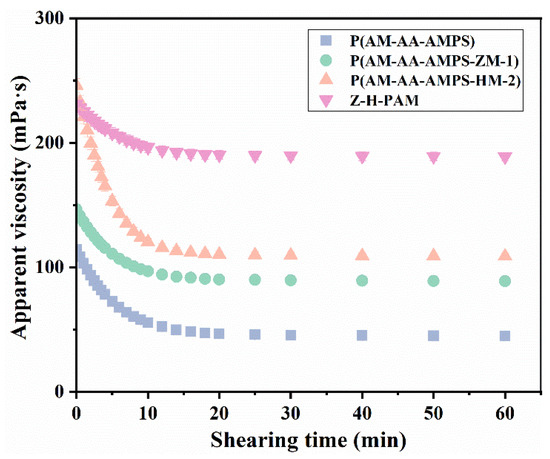
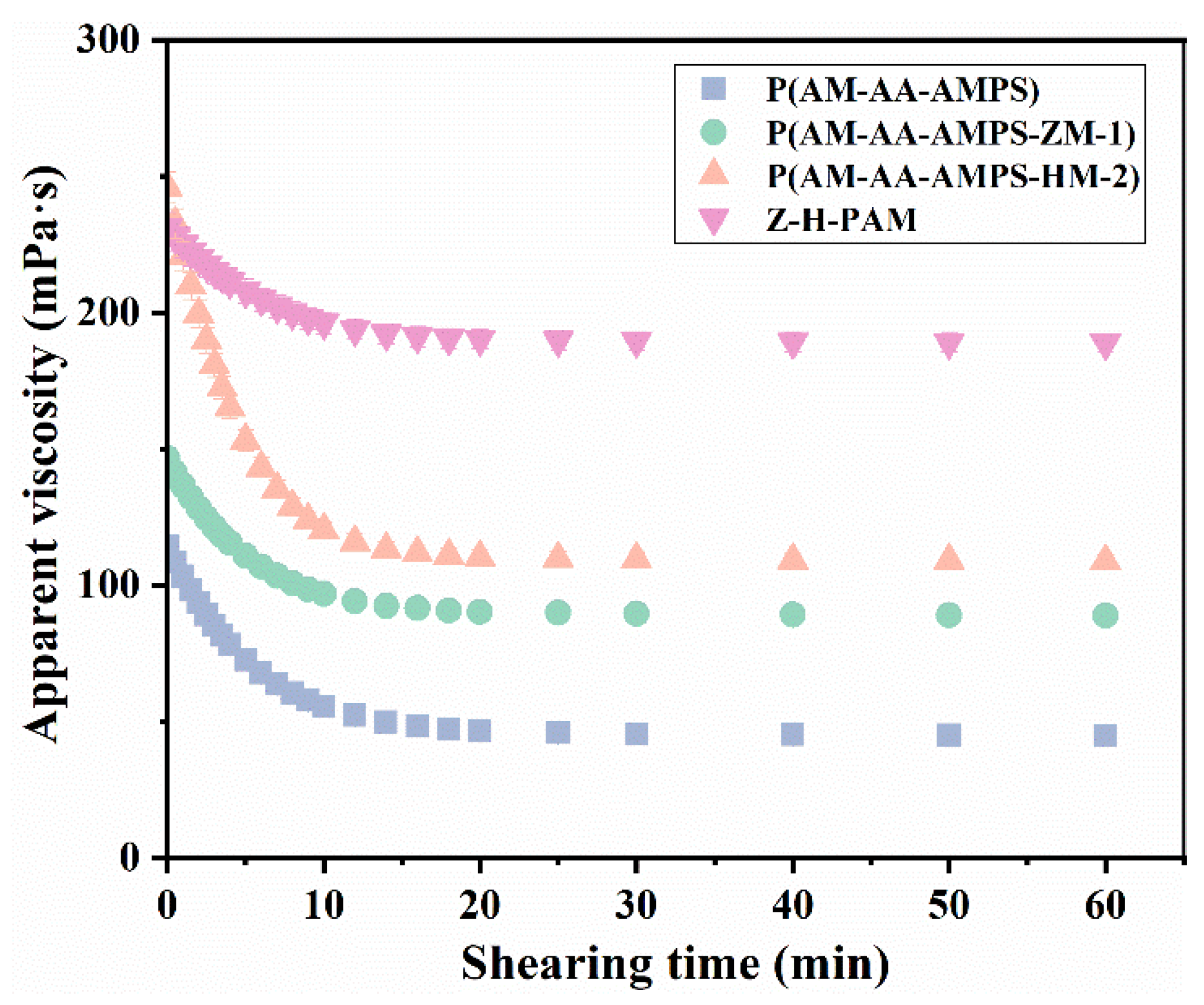
Temperature and shear resistance are core indicators for evaluating a fracturing fluid’s ability to withstand the challenges of high-temperature reservoirs in deep wells [34]. Tests were conducted under the harsh conditions of 120 °C with continuous shearing at 170 s−1 for 1 h (Figure 7). Under these conditions, all four polymers exhibited a decline in viscosity over time, but the extent and rate varied significantly. The base polymer, P(AM-AA-AMPS), demonstrated the weakest thermal and shear stability, with a final viscosity retention rate of only 39.2%. Although P(AM-AA-AMPS-HM-2) possessed the highest initial viscosity, its associative network proved highly sensitive to thermal and shear degradation, experiencing the fastest decay and achieving a final retention rate of merely 44.3%. Due to its enhanced chain rigidity, P(AM-AA-AMPS-ZM-1) exhibited better stability, with a retention rate of 60.6%. In contrast, Z-H-PAM displayed the most outstanding long-term stability, maintaining a viscosity of 188.8 mPa·s after one hour of shearing, corresponding to a retention rate of 81.7%. This exceptional thermal and shear stability originates from its unique synergistic architecture. The ZM-1 units enhance the rigidity of the molecular chains, increasing the overall viscous flow activation energy. Concurrently, the dynamic dissociation-reassociation behavior of the HM-2 associative junctions allows the supramolecular network to rapidly reconstruct itself after being disrupted by high temperature and shear. This combination of structural robustness and self-healing capability ensures consistent performance of the fracturing fluid throughout the entire operational process.
Figure 7.
Temperature and shear resistance of different polymers under high-temperature (120 °C) and high-shear (170 s−1) conditions (continuous shearing for 1 h).
3.4. Fracturing Fluid Application Performance
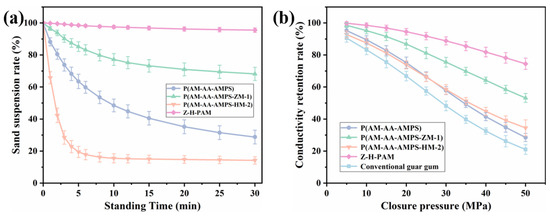
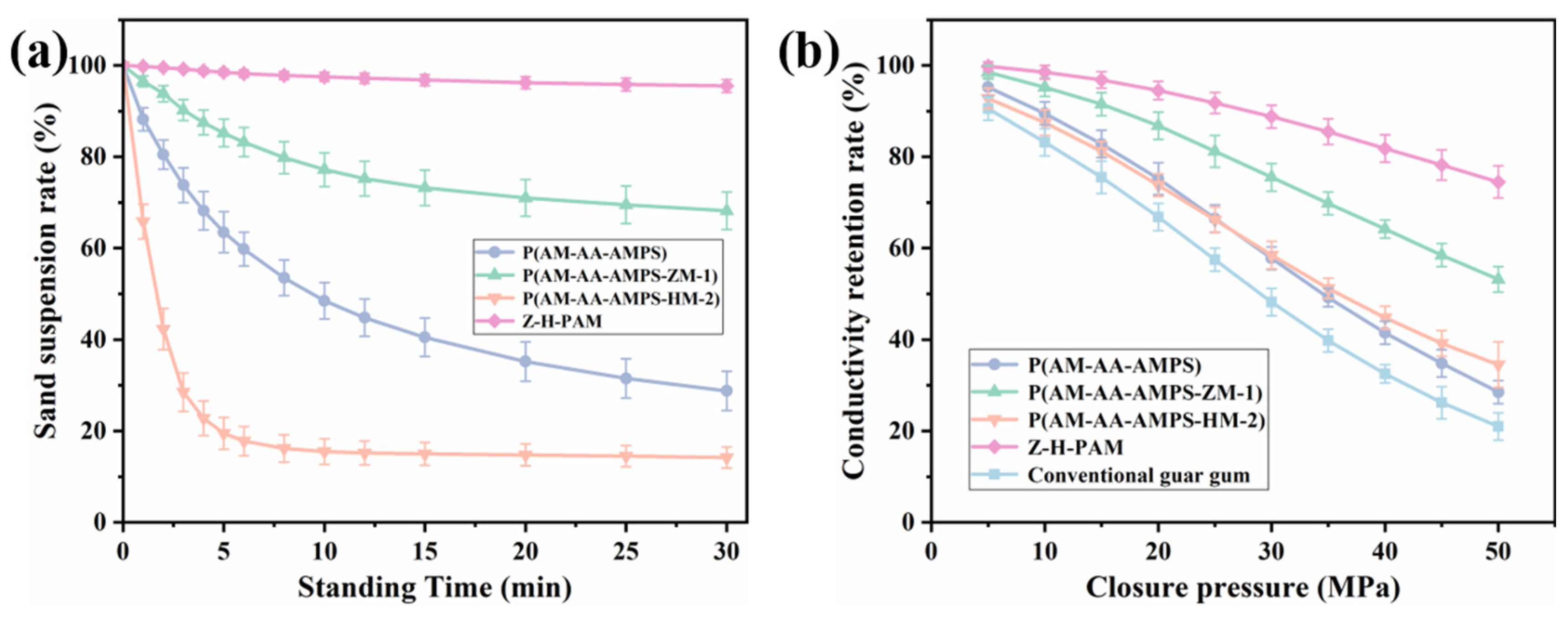
The primary functions of a fracturing fluid are efficient proppant transport and low-damage gel breaking [35,36]. To comprehensively evaluate the sand-carrying performance of the polymers in flowback fluid, 0.6 wt% polymer solutions were prepared in simulated CBM fracturing flowback fluid (~50,000 mg/L TDS). These solutions were mixed with 40/70 mesh quartz sand at a 30% sand concentration, and the static sand suspension ratio was monitored over time (Figure 8a). As shown, the Z-H-PAM system demonstrated exceptional static sand-carrying capacity, maintaining a suspension ratio consistently above 95.5% for 30 min with minimal change. The P(AM-AA-AMPS-ZM-1) system showed a relatively rapid decrease in the suspension ratio within the first 10 min before stabilizing, reaching 68.2% at 30 min. Conversely, the performance of the P(AM-AA-AMPS-HM-2) system severely deteriorated in brine, with proppant settling rapidly within 3 min. Its suspension ratio dropped below 30%, finishing at only 14.2%. The base polymer P(AM-AA-AMPS) exhibited intermediate performance, with a 30 min suspension ratio of 28.8%. These results correlate strongly with the dynamic rheological data for storage modulus (G′): only Z-H-PAM, with its high elastic modulus, forms a robust three-dimensional network capable of effectively resisting proppant settling under gravity, thereby providing stable static suspension.
Figure 8.
Static sand suspension performance and fracture conductivity retention of different polymer fracturing fluid systems: (a) Variation in static sand suspension ratio over time; (b) Conductivity retention rate of proppant packs versus closure pressure.
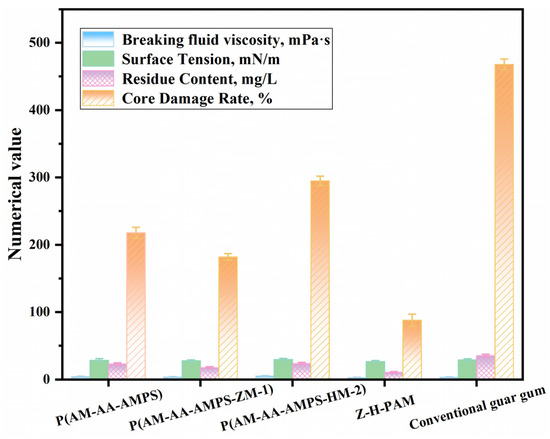
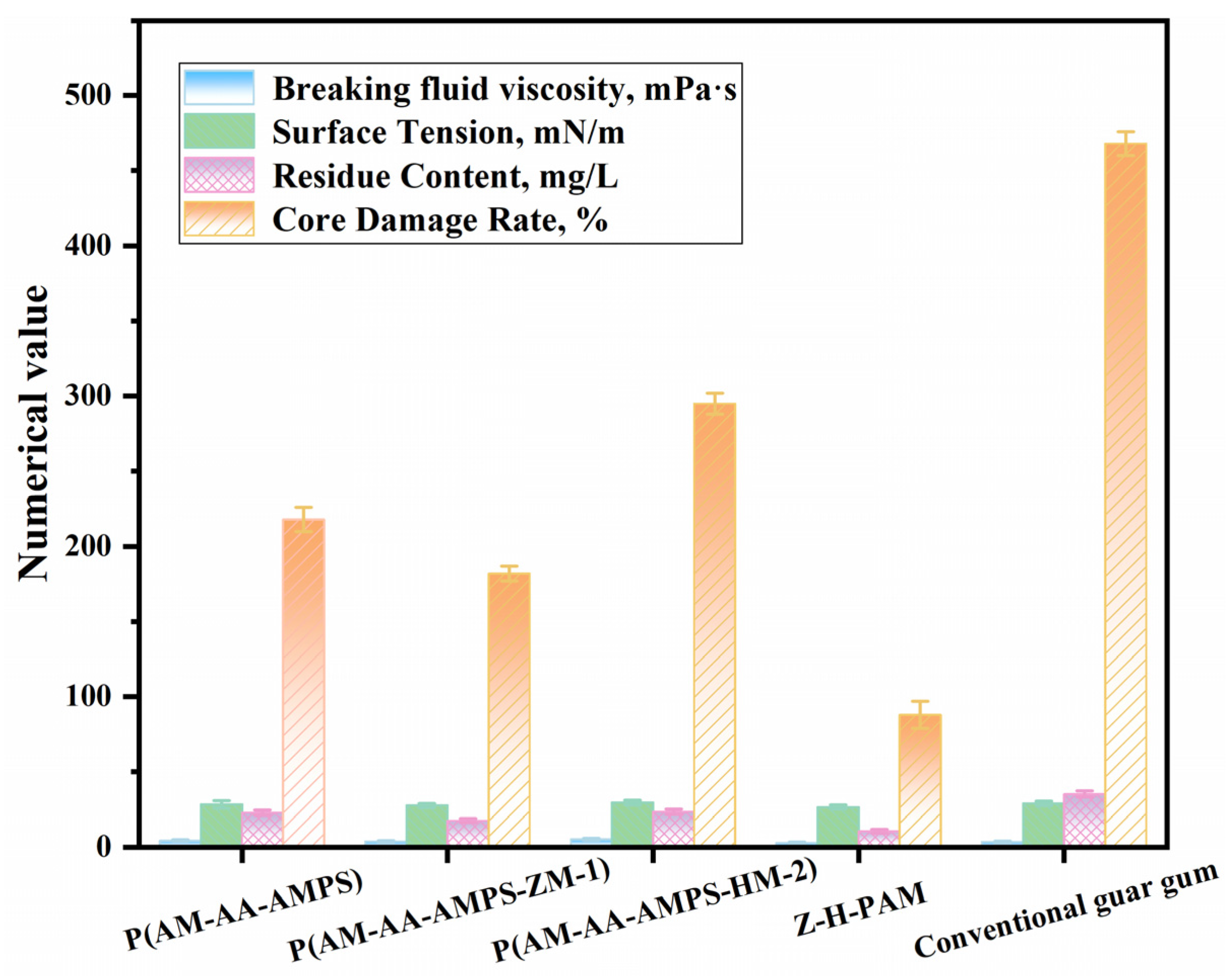
Gel breaking and reservoir damage characteristics are directly related to post-fracturing productivity. After gel breaking for 2 h at 90 °C with 0.03 wt% ammonium persulfate, the performance of the broken gels was comprehensively evaluated (Figure 9). The Z-H-PAM broken gel exhibited optimal three low characteristics: viscosity reduced to 2.95 mPa·s, surface tension measured 26.45 mN/m, and residue content was only 88 mg/L. Its damage rate to coal cores was the lowest at 10.5%, significantly lower than the 35.2% observed for a conventional guar gum-based fluid. In comparison, the P(AM-AA-AMPS-HM-2) broken gel, due to incomplete breakdown of its hydrophobic associative network, had a higher residue content (295 mg/L), leading to an increased core damage rate of 23.5%. The P(AM-AA-AMPS-ZM-1) broken gel caused relatively lower damage (17.6%), yet its pre-break solution inherently lacked sufficient elasticity for effective sand transport. The low-damage characteristic of Z-H-PAM primarily stems from its synergistic molecular design. The strong hydration layer and low adsorption tendency imparted by ZM-1 reduce polymer retention on coal pore surfaces. Furthermore, as a synthetic polymer with a regular chain structure, it undergoes more complete chain scission under oxidative gel breakers, leaving fewer sub-micron residual fragments.
Figure 9.
Performance evaluation of broken gel and reservoir damage for different polymer fracturing fluid systems: broken gel viscosity, surface tension, and residue content; damage rate to coal core samples.
Fracture conductivity is the critical pathway connecting the reservoir to the wellbore. Figure 8b shows the conductivity retention rate of ceramic proppant packs, after 24 h of immersion in different broken gels, as a function of closure pressure. At all tested pressures, the Z-H-PAM system demonstrated the highest conductivity retention. Under a 30 MPa closure pressure, its retention rate reached 88.8%, significantly outperforming the P(AM-AA-AMPS-HM-2) system (58.5%) and the conventional guar system (48.2%). The P(AM-AA-AMPS-ZM-1) system had a retention rate of 75.5%. While conductivity decreased for all systems with increasing closure pressure, Z-H-PAM exhibited the most gradual decline rate. This excellent retention of conductivity under high stress is directly attributed to the three low characteristics (low viscosity, low tension, low residue) of the Z-H-PAM broken gel, facilitating its flowback from the proppant pack interstices during fracture closure and minimizing physical blockage and chemical adsorption damage to the flow channels.
3.5. Compatibility with Flowback Fluid
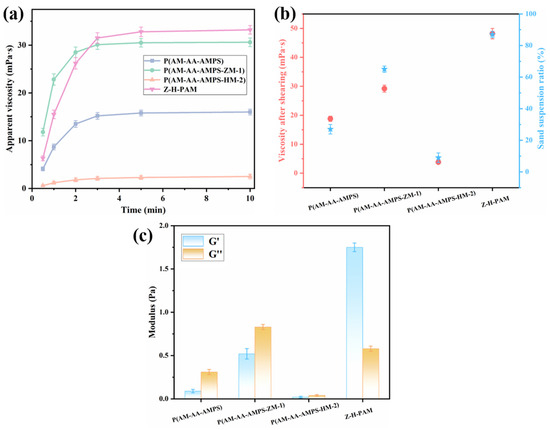
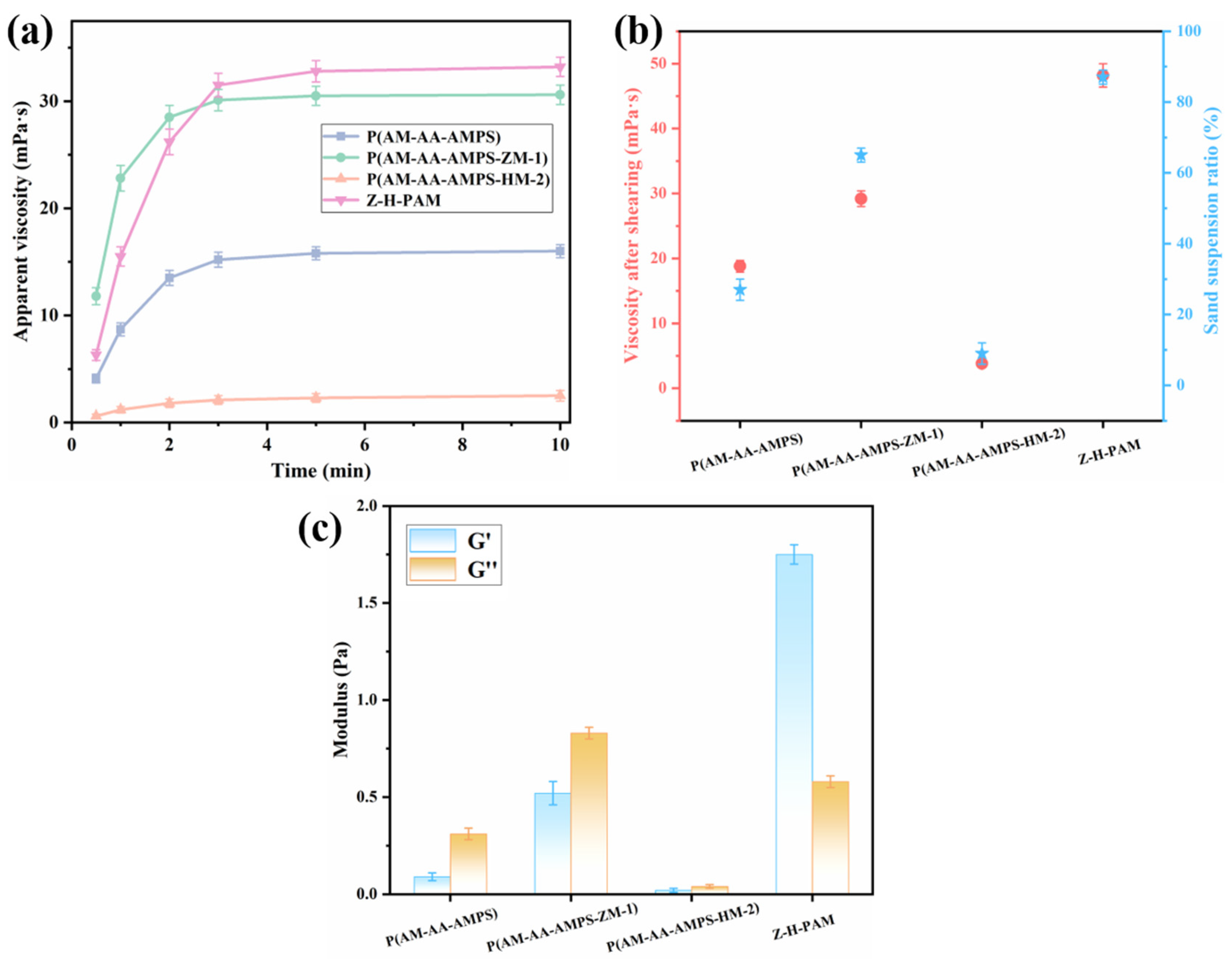
The direct utilization of high-salinity fracturing flowback fluid (total dissolved solids ~9 × 10⁴ mg/L) for preparing fracturing fluid is crucial for reducing operational costs and promoting sustainable development [37]. The performance of the four polymer systems was systematically evaluated in this flowback fluid medium. As shown in Figure 10a, the base polymer, P(AM-AA-AMPS), exhibited slow viscosity development, reaching a final viscosity of only 16.0 mPa·s. This is attributed to chain coiling caused by the compression of the electrical double layer by salt ions. Introducing the zwitterionic monomer ZM-1 resulted in the sample P(AM-AA-AMPS-ZM-1) dissolving and building viscosity rapidly, aided by its anti-polyelectrolyte effect, achieving a viscosity of 30.1 mPa·s within 3 min. However, the performance of the sample containing only the hydrophobic monomer HM-2, P(AM-AA-AMPS-HM-2), deteriorated severely, with a final viscosity as low as 2.5 mPa·s, indicating its hydrophobic associative network was completely suppressed in the high-salinity environment.
Figure 10.
Comprehensive performance evaluation of different polymer systems in high-salinity fracturing flowback fluid: (a) Viscosity development during dissolution; (b) Long-term thermal stability (viscosity retention) and static sand suspension ratio; (c) Dynamic viscoelastic response (storage modulus G′ and loss modulus G″).
The synergistically designed Z-H-PAM displayed a distinct dissolution behavior. Its initial viscosity increase was slightly slower due to the influence of hydrophobic association. However, after approximately 2 min, its viscosity increased rapidly and surpassed that of the ZM-1-containing sample, reaching a final value of 33.2 mPa·s. This demonstrates the effective stabilization of the hydrophobic network by ZM-1. The performance advantage was further reflected in thermal stability and sand-carrying capacity (Figure 10b). After prolonged shearing at 90 °C, Z-H-PAM maintained the highest viscosity of 48.2 mPa·s. Its static sand suspension ratio was as high as 87%, significantly outperforming the ZM-1 sample (65%) and the base polymer (27%). The HM-2 sample, due to its extremely low viscosity, exhibited almost no sand-carrying capacity, with a suspension ratio of 9%.
The origin of this performance disparity lies in the viscoelastic nature of the solutions (Figure 10c). Rheological testing revealed that only Z-H-PAM exhibited clear elastic-dominated behavior (G′ = 1.75 Pa > G″ = 0.58 Pa) in the flowback fluid. While the ZM-1 sample possessed some structural strength, it remained viscous-dominated (G″ > G′). The modulus values for both the base and HM-2 samples were close to the instrumental background noise, indicating a failure to form an effective network. These comparative experiments confirm the limitations of single-functionalization strategies in high-salinity flowback fluid: ZM-1 provides salt tolerance but cannot impart high elasticity, while the elastic network from HM-2 completely fails under high salinity. Only the molecularly synergistic design of Z-H-PAM simultaneously achieves salt resistance, high elasticity, and stable sand transport in flowback fluid, providing a practical solution for its direct reuse.
4. Conclusions
This study successfully developed a highly elastic and salt-resistant polymer, Z-H-PAM, through a molecular synergistic strategy, providing an effective solution to the performance degradation of fracturing fluids in coalbed methane (CBM) reservoirs characterized by high salinity and high adsorption. Key experimental data demonstrate the system’s superior performance: it forms an elastic-dominated three-dimensional network even in brine with ~9 × 10⁴ mg/L TDS (G′ > G″, G′ = 33.2 Pa at 10 rad/s); it achieves a static sand suspension ratio exceeding 95%, yields broken gel with residue content below 90 mg/L, and causes only 10.5% core damage; after exposure to 30 MPa closure pressure, it retains 88.8% fracture conductivity, significantly outperforming conventional systems. The synthesis cost of Z-H-PAM is approximately 15–20% higher than that of conventional HPAM due to the functional monomers. However, this is offset by the ability to reuse flowback fluid and the reduced need for clay stabilizers. Storage tests indicate the emulsion remains stable for over 6 months at room temperature. Compatibility tests showed good miscibility with common bactericides. These exceptional properties originate from the synergistic interaction between ZM-1 and HM-2. Specifically, the ZM-1 unit utilizes its anti-polyelectrolyte effect to maintain viscosity in high-salinity brines and reduce adsorption damage; simultaneously, the HM-2 unit constructs a robust elastic network to support fractures under high closure pressure. Their combined action ensures structural stability and self-recovery capability under harsh conditions involving high temperature, salinity, and shear. However, the introduction of functional monomers slightly increases the raw material cost compared to conventional HPAM. Future work will focus on optimizing the synthesis process to reduce costs and conducting field pilot tests to further validate its pumpability and compatibility with field equipment.
Author Contributions
P.B., Investigation, Writing—original draft. Q.L., Conceptualization, Methodology, Writing—review and editing. W.W. (Wenfeng Wang), Conceptualization, Methodology, Writing—review and editing. W.W. (Wenlong Wang), Data Curation, Formal analysis, Writing—review and editing. All authors have read and agreed to the published version of the manuscript.
Funding
Major Science and Technology Special Project of Xinjiang Uygur Autonomous Region (No. 2022A03014), National Natural Science Foundation of China (No. 42402176, 42472236).
Data Availability Statement
The original contributions presented in this study are included in the article. Further inquiries can be directed to the corresponding author.
Conflicts of Interest
The authors declare no conflicts of interest.
References
- Li, J.; Xu, B.; Zhu, L.; He, X.; Yang, J.; Li, Y.; Liu, T. Mechanism of Polymer Regulated High Internal Phase CO2-in-Water Foam Viscoelasticity for Enhanced Oil Recovery. Fuel 2025, 384, 134050. [Google Scholar] [CrossRef] [Scilit]
- Saw, R.K.; Singh, A.; Maurya, N.K.; Mandal, A. A Mechanistic Study of Low Salinity Water-Based Nanoparticle-Polymer Complex Fluid for Improved Oil Recovery in Sandstone Reservoirs. Colloids Surf. A 2023, 666, 131308. [Google Scholar] [CrossRef] [Scilit]
- Zou, Q.; Zhang, T.; Ma, T.; Tian, S.; Jia, X.; Jiang, Z. Effect of Water-Based SiO2 Nanofluid on Surface Wettability of Raw Coal. Energy 2022, 254, 124228. [Google Scholar] [CrossRef] [Scilit]
- Guo, J.; Wang, F.; Zhao, Y.; Wang, P.; Wang, T.; Yang, J.; Yang, B.; Ma, L. A Laboratory Experimental Study on Enhancing the Oil Recovery Mechanisms of Polymeric Surfactants. Molecules 2024, 29, 1321. [Google Scholar] [CrossRef] [Scilit] [PubMed]
- Zhang, Y.; Feng, Y.; Li, B.; Han, P. Enhancing Oil Recovery from Low-Permeability Reservoirs with a Self-Adaptive Polymer: A Proof-of-Concept Study. Fuel 2019, 251, 136–146. [Google Scholar] [CrossRef] [Scilit]
- Ricceri, F.; Farinelli, G.; Giagnorio, M.; Zamboi, A.; Tiraferri, A. Optimization of Physico-Chemical and Membrane Filtration Processes to Remove High Molecular Weight Polymers from Produced Water in Enhanced Oil Recovery Operations. J. Environ. Manag. 2022, 302, 114015. [Google Scholar] [CrossRef] [Scilit] [PubMed]
- Zhao, M.; Li, Y.; Dai, C.; Chen, Y.; Yang, Z.; Liu, K.; Ma, Z. Development of Novel Silicon Quantum Dots and Their Potential in Improving the Enhanced Oil Recovery of HPAM. Langmuir 2024, 40, 3181–3189. [Google Scholar] [CrossRef] [Scilit]
- Mahran, S.; Attia, A.; Saha, B. Synthesis of Green Thermo-Responsive Amphoteric Terpolymer Functionalized Silica Nanocomposite Derived from Waste Vegetable Oil Triglycerides for Enhanced Oil Recovery (EOR). J. Cleaner Prod. 2022, 380, 135024. [Google Scholar] [CrossRef] [Scilit]
- Yang, Y.; Wang, Y.; Liu, Y.; Liu, P. Enhancing Oil Recovery in Low-Permeability Reservoirs Using a Low-Molecular Weight Amphiphilic Polymer. Polymers 2024, 16, 1036. [Google Scholar] [CrossRef] [Scilit]
- Guo, C.; Xu, Y.; Deng, N.; Huang, X. Efficient degradation of organophosphorus pesticides and in situ phosphate recovery via NiFe-LDH activated peroxymonosulfate. Chem. Eng. J. 2025, 524, 169107. [Google Scholar] [CrossRef] [Scilit]
- Pan, X.; Huang, X.; Deng, N. Short-Chain Carboxylic Acids Influencing Mineralization Mechanisms of Ferrihydrite Transformation to Hematite and Goethite. Environ. Sci. Technol. 2025, 59, 12910–12919. [Google Scholar] [CrossRef] [Scilit]
- Yang, P. Characterization of Viscoelastic Properties of Hydrolyzed Polyacrylamide Using the Stress Recovery Experiment. Sci. Bull. 2004, 49, 780–784. [Google Scholar] [CrossRef] [Scilit]
- Cao, Z.; Yan, J.; Miao, J.; Wang, J.; Wang, Z.; Zhang, L. Synthesis and Evaluation of Gemini Surfactant-Polymer Copolymers as Viscosity Reducer for Enhancing Heavy Oil Recovery. Chem. Eng. J. 2025, 521, 166868. [Google Scholar] [CrossRef] [Scilit]
- Kudaibergenov, S.; Koetz, J.; Nuraje, N. Nanostructured Hydrophobic Polyampholytes: Self-Assembly, Stimuli-Sensitivity, and Application. Adv. Compos. Hybrid Mater. 2018, 1, 649–684. [Google Scholar] [CrossRef] [Scilit]
- Kumar, A.; Mandal, A. Characterization of Rock-Fluid and Fluid-Fluid Interactions in Presence of a Family of Synthesized Zwitterionic Surfactants for Application in Enhanced Oil Recovery. Colloids Surf. A 2018, 549, 1–12. [Google Scholar] [CrossRef] [Scilit]
- Di, Z.; Wang, Y.; Chang, C.; Song, H.; Lu, X.; Cheng, F. Synergistic gas-slag scheme to mitigate CO2 emissions from the steel industry. Nat. Sustain. 2025, 8, 763–772. [Google Scholar] [CrossRef] [Scilit]
- Anil; Azeem, A.; Kumar, A.; Saxena, A. Experimental Investigation of the Effect of Viscoelasticity on Enhanced Oil Recovery during Polymer Flooding. ACS Omega 2025, 10, 47847–47856. [Google Scholar] [CrossRef] [Scilit]
- Wang, F.; Xu, H.; Liu, Y.; Jiang, Y.; Wu, C. Experimental Study on the Enhanced Oil Recovery Mechanism of an Ordinary Heavy Oil Field by Polymer Flooding. ACS Omega 2023, 8, 14089–14096. [Google Scholar] [CrossRef] [Scilit] [PubMed]
- Li, J.; Xiong, Y.; Zhang, Y.; Lan, K. A novel self-healing and degradable plugging material for high temperature gas well. J. Mol. Liq. 2023, 376, 121473. [Google Scholar] [CrossRef] [Scilit]
- Wang, S.; Wu, C.; Zheng, P.; Zheng, J.; Zhao, L.; Fu, Y.; Li, X. Evaluation of Fracturing Effect of Coalbed Methane Wells Based on Microseismic Fracture Monitoring Technology: A Case Study of the Santang Coalbed Methane Block in Bijie Experimental Zone, Guizhou Province. Energies 2025, 18, 5708. [Google Scholar] [CrossRef] [Scilit]
- Hladysh, S.; Dvořáková, J.; Proks, V. Synthesis and Anti-Fouling Properties of Zwitterionic Poly(L-Glutamic Acid). Macromol. Res. 2023, 31, 593–601. [Google Scholar] [CrossRef] [Scilit]
- An, L.; Yu, Y.H.; Chen, J.; Bae, J.H.; Youn, D.H.; Jeong, H.M.; Kim, Y.S. Synthesis and Characterization of Tailor-Made Zwitterionic Lignin for Resistance to Protein Adsorption. Ind. Crops Prod. 2021, 167, 113514. [Google Scholar] [CrossRef] [Scilit]
- Ibad, S.M.; Padmanabhan, E. Lithofacies, Mineralogy, and Pore Types in Paleozoic Gas Shales from Western Peninsular Malaysia. J. Pet. Sci. Eng. 2022, 212, 110239. [Google Scholar] [CrossRef] [Scilit]
- Zamani, A.M.; Moslemi, A.; Hassani, K. Experimental Investigation into Effects of the Natural Polymer and Nanoclay Particles on the EOR Performance of Chemical Flooding in Carbonate Reservoirs. Pet. Sci. 2024, 21, 951–961. [Google Scholar] [CrossRef] [Scilit]
- Rong, L.; Zhang, B.; Qiu, H.; Zhang, H.; Yu, J.; Yuan, Q.; Wu, L.; Chen, H.; Mo, Y.; Zou, X.; et al. Significant generational effects of tetracyclines upon the promoting plasmid-mediated conjugative transfer between typical wastewater bacteria and its mechanisms. Water Res. 2025, 287, 124290. [Google Scholar] [CrossRef] [Scilit] [PubMed]
- Pei, H.; Zhang, G.; Ge, J.; Jiang, P.; Zhang, J.; Zhong, Y. Study of Polymer-Enhanced Emulsion Flooding to Improve Viscous Oil Recovery in Waterflooded Heavy Oil Reservoirs. Colloids Surf. A 2017, 529, 409–416. [Google Scholar] [CrossRef] [Scilit]
- Liu, Y.; Zhou, L.; Wan, X.; Tang, Y.; Liu, Q.; Li, W.; Liao, J. Synthesis and Characterization of a Temperature-Sensitive Microcapsule Gelling Agent for High-Temperature Acid Release. ACS Omega 2024, 9, 20849–20858. [Google Scholar] [CrossRef] [Scilit]
- Tao, X.; Zheng, Z.; Yu, H.; Liu, H.; Li, Y.; Zhang, J.; Liu, J.; Zheng, L. Internal Blocking and Bonding to Strengthen the Mechanical Properties and Prevent Collapse and Leakage of Fragmented Coalbed Methane (CBM) Reservoirs by Cohesive Drilling Fluids. Geoenergy Sci. Eng. 2024, 241, 213136. [Google Scholar] [CrossRef] [Scilit]
- Zhai, C.; Xiang, X.; Zou, Q.; Yu, X.; Xu, Y. Influence Factors Analysis of a Flexible Gel Sealing Material for Coal-Bed Methane Drainage Boreholes. Environ. Earth Sci. 2016, 75, 385. [Google Scholar] [CrossRef] [Scilit]
- Olabode, O.; Oni, B.; Dike, H.; Akinsanya, O.; Ajidahun, J.; Olaniyan, D. Investigating the Effect of Salt Concentration on Oil Recovery during Guar Gum Polymer Flooding: A Simulation Study. Results Eng. 2024, 22, 102269. [Google Scholar] [CrossRef] [Scilit]
- Salem, K.G.; Tantawy, M.A.; Gawish, A.A.; Salem, A.M.; Gomaa, S.; El-hoshoudy, A.N. Key Aspects of Polymeric Nanofluids as a New Enhanced Oil Recovery Approach: A Comprehensive Review. Fuel 2024, 368, 131515. [Google Scholar] [CrossRef] [Scilit]
- Pu, W.; Zhao, S.; Wang, S.; Wei, B.; Yuan, C.; Li, Y. Investigation into the Migration of Polymer Microspheres (PMs) in Porous Media: Implications for Profile Control and Oil Displacement. Colloids Surf. A 2018, 540, 265–275. [Google Scholar] [CrossRef] [Scilit]
- Meng, T.; Liu, R.; Cai, J.; Cheng, X.; He, Z.; Zhao, Z. Breaking structural symmetry of atomically dispersed Co sites for boosting oxygen reduction. Adv. Funct. Mater. 2025, e22046. [Google Scholar] [CrossRef] [Scilit]
- Scott, A.J.; Romero-Zerón, L.; Penlidis, A. Evaluation of Polymeric Materials for Chemical Enhanced Oil Recovery. Processes 2020, 8, 361. [Google Scholar] [CrossRef] [Scilit]
- Zuo, C.; Liu, P.; Du, J.; Wu, G.; Chen, X.; Liu, J. A Review: Supramolecular Polymers Used in High-Temperature Fracturing Fluids Research Status and Prospects on the Coupling Relationship between Molecular Conformation and Temperature Resistance Mechanism. Geoenergy Sci. Eng. 2025, 247, 213699. [Google Scholar] [CrossRef] [Scilit]
- Zhang, B.; Guo, B.; Wu, G.; Li, S.; Shen, J.; Xing, S.; Ying, Y.; Yang, X.; Zhang, X.; Hu, M.; et al. Preparation of Temperature Resistant Terpolymer Fracturing Fluid Thickener and Its Working Mechanism Study via Simulation Methods. Materials 2025, 18, 1171. [Google Scholar] [CrossRef] [Scilit]
- Zhang, Y.; Mao, J.; Zhao, J.; Yang, X.; Xu, T.; Lin, C.; Mao, J.; Tan, H.; Zhang, Z.; Yang, B.; et al. Preparation of a Hydrophobic-Associating Polymer with Ultra-High Salt Resistance Using Synergistic Effect. Polymers 2019, 11, 626. [Google Scholar] [CrossRef] [Scilit] [PubMed]

Disclaimer/Publisher’s Note: The statements, opinions and data contained in all publications are solely those of the individual author(s) and contributor(s) and not of MDPI and/or the editor(s). MDPI and/or the editor(s) disclaim responsibility for any injury to people or property resulting from any ideas, methods, instructions or products referred to in the content. |
© 2026 by the authors. Licensee MDPI, Basel, Switzerland. This article is an open access article distributed under the terms and conditions of the Creative Commons Attribution (CC BY) license.