


Abstract
The Colombian Caribbean region has favorable conditions for Creole-Antillean avocado production, providing an agro-industrial feedstock with potential for value-added oil processing. This study evaluates the process-level sustainability of avocado oil production using the Sustainability Weighted Return on Investment (SWROIM) methodology, which integrates economic, environmental, exergetic, technical, and inherent-safety performance within a single decision-support metric. The process was modeled in Aspen Plus® and included mechanical preparation, pulp drying, hexane extraction, solvent recovery, and product cooling. The evaluated configuration exhibited a potential environmental impact of 0.50 PEI/kg, an overall exergy efficiency of 31%, a Total Inherent Safety Index of 16, and a Total Cost of Energy of 1056.65 USD/day, revealing performance gaps relative to the selected reference conditions, particularly in the environmental and thermodynamic dimensions. The economic assessment yielded a total capital investment of USD 6.43 million, an annual profit after taxes of USD 3.40 million, and an ROI of 52.84%. Integration of the non-economic indicators resulted in a base-case SWROIM of 147.83%. Weighting-factor sensitivity produced SWROIM values between 101.47% and 118.50% when individual sustainability dimensions were prioritized, with the environmental-priority scenario yielding the lowest value. Target-value sensitivity further showed SWROIM values ranging from 129.76% to 168.22% under combined variations in benchmark stringency. These results identify environmental-impact reduction, energy integration, and solvent management as the main priorities for process improvement while demonstrating the usefulness of SWROIM for multidimensional assessment at the conceptual design stage.
1. Introduction
The avocado (Persea americana) represents a fruit of considerable agro-industrial interest because of the lipid-rich composition of its pulp and the presence of bioactive compounds such as unsaturated fatty acids, tocopherols, carotenoids, and phenolic compounds [1]. In the Colombian Caribbean, particularly in Montes de María, the Creole-Antillean or West Indian avocado (Persea americana var. americana) constitutes an important agricultural resource and is extensively cultivated within regional agroforestry production systems [2]. Beyond fresh consumption, the transformation of avocado pulp into oil provides an opportunity to increase the value of the crop and diversify its industrial utilization [3].
Avocado oil has attracted growing interest because it generally contains high proportions of monounsaturated fatty acids, particularly oleic acid, together with lipid-soluble bioactive compounds that have motivated its investigation for food, cosmetic, and pharmaceutical applications [3,4]. However, the composition and quality of the recovered oil are influenced by multiple intrinsic and processing factors, including cultivar, fruit maturity, geographical origin, drying conditions, extraction technique, purification, and storage [4]. Therefore, specific product properties cannot be inferred solely from extraction yield and require dedicated chemical characterization. From a process-engineering perspective, solvent-based extraction can provide high lipid recovery, particularly when hexane is used, but requires adequate pulp pretreatment and moisture reduction and introduces concerns associated with solvent handling, environmental emissions, and residual solvent in the product [5]. Consequently, the performance of avocado oil production depends not only on extraction yield but also on the appropriate management of material, solvent, and energy flows throughout the processing chain.
The industrial implementation of solvent-based avocado oil production presents relevant engineering challenges. Avocado pulp typically contains a high moisture fraction, which makes drying an important pretreatment step before solvent extraction and increases the thermal demand of the process [6]. In addition, the use of hexane introduces environmental and inherent-safety concerns because solvent losses must be minimized and adequate containment and recovery systems are required to reduce volatile emissions, occupational exposure, and flammability hazards [7]. At the industrial scale, solvent recovery through evaporation, distillation, and condensation also contributes to the overall energy requirement of the extraction process [7]. Consequently, improvements in thermal integration, solvent recovery, feedstock conditioning, and process safety are essential for increasing the efficiency and sustainability of avocado oil production systems [6].
These characteristics make avocado oil production a multidimensional process-design problem. Economic profitability must be considered together with environmental impacts, energy-quality degradation, utility requirements, and inherent hazards, particularly because improvements in one dimension may produce penalties in another [8]. For example, increasing solvent circulation may favor lipid recovery while simultaneously increasing solvent-handling and recovery requirements, whereas more intensive drying can facilitate extraction but at the expense of greater thermal-energy demand [5,7]. Consequently, evaluating the process exclusively through yield or economic indicators may provide an incomplete representation of its overall performance, reinforcing the need for integrated assessment approaches capable of capturing interactions and trade-offs among process-performance dimensions [8].
Different methodologies are available to characterize these dimensions individually. Economic indicators such as return on investment (ROI), net present value (NPV), and payback period are commonly used in techno-economic assessments to quantify financial feasibility and capital recovery [9]. Environmental methodologies such as Life Cycle Assessment (LCA) provide a life-cycle perspective of environmental burdens, whereas the Waste Reduction Algorithm (WAR) quantifies the generation and output of potential environmental impacts at the process level [9,10]. Exergy analysis complements conventional energy assessment by quantifying irreversibilities and the degradation of energy quality within process systems [11]. Technical resource-efficiency approaches based on water–energy–production interactions enable the joint evaluation of resource consumption, energy requirements, and productive performance within integrated systems [12], while inherent-safety methodologies enable hazardous substances and operating conditions to be assessed during the conceptual design stage [13]. Although these tools provide valuable information individually, their separate application does not directly capture the interactions and trade-offs among the different sustainability dimensions [8,9].
Broader integration frameworks have therefore been developed to support sustainability-oriented decision-making. Life Cycle Sustainability Assessment (LCSA), for example, combines environmental Life Cycle Assessment (LCA), Life Cycle Costing (LCC), and Social Life Cycle Assessment (S-LCA) to address environmental, economic, and social dimensions from a life-cycle perspective [14]. Multi-criteria decision-making (MCDM) approaches can likewise integrate heterogeneous criteria and compare alternatives while incorporating different decision-maker or stakeholder preferences [15]. These approaches are particularly useful when sustainability assessment requires broader life-cycle boundaries, the simultaneous consideration of multiple criteria, or the comparison of alternative solutions [14,15]. However, the present study addresses a defined avocado oil production process at the conceptual design stage, for which detailed process-level environmental, economic, thermodynamic, technical, and inherent-safety indicators are already available.
Within this scope, the Sustainability Weighted Return on Investment (SWROIM) methodology provides a suitable integration framework because it extends conventional economic return by incorporating sustainability- and safety-related performance indicators into a single quantitative metric [16]. Rather than replacing LCSA or other multi-criteria approaches, SWROIM offers a process-level decision-support structure that is consistent with the information available during conceptual process assessment [14,15,16]. Its formulation enables indicators with different performance meanings to be expressed relative to selected reference conditions and incorporated into the economic return through weighting factors [16]. In addition, variation of the weighting factors allows the influence of alternative sustainability priorities on the integrated result to be examined [16].
Previous studies of Creole-Antillean avocado oil production in northern Colombia have separately characterized its environmental performance through the WAR algorithm [17], thermodynamic performance through exergy analysis [17], inherent safety through the ISI methodology [17], economic performance through techno-economic assessment [18], and technical performance through the Water–Energy–Product framework [19]. Although these evaluations provide detailed information on specific process-performance dimensions, their separate application does not reveal how simultaneous deviations from selected environmental, thermodynamic, technical, and safety reference conditions affect an integrated process-level sustainability metric [8,16]. This limitation is particularly relevant for solvent-based avocado oil production because the same processing configuration combines energy-intensive drying and solvent-recovery operations with hexane handling, resource consumption, economic requirements, and environmental impacts [17,18,19,20,21]. An integrated assessment is therefore useful not only for quantifying multidimensional performance but also for identifying which sustainability dimensions exert the strongest restrictive influence on the overall process assessment.
Accordingly, this study applies the Sustainability Weighted Return on Investment (SWROIM) methodology [16] to the linear production of avocado oil from Creole-Antillean avocados cultivated in northern Colombia. Environmental performance is evaluated through the WAR algorithm, economic performance through ROI, thermodynamic performance through overall exergy efficiency, technical performance through the WEP-based Total Cost of Energy, and inherent safety through the Total Inherent Safety Index. These indicators are integrated using defined benchmark values and weighting factors, while sensitivity analyses are performed to examine the influence of both alternative sustainability priorities and variations in the selected target values. The study therefore aims to provide a process-level sustainability assessment capable of identifying the main performance gaps and supporting the prioritization of engineering improvements for avocado oil production.
2. Materials and Methods
2.1. Process Description
The avocado oil production process was modeled in Aspen Plus® (https://www.aspentech.com/en/products/engineering/aspen-plus) using the UNIQ-RK property method, which combines the UNIQUAC activity-coefficient model for the liquid phase with the Redlich–Kwong equation of state for the vapor phase [22]. This thermodynamic framework was used to estimate phase behavior and thermodynamic properties required for the material and energy balances throughout the drying, extraction, distillation, condensation, and cooling operations. Because the evaluated configuration consists exclusively of physical transformation and separation stages, no chemical-reaction or kinetic models were required. The operating conditions, process configuration, and principal simulation assumptions were established according to the previously developed computer-aided model of Creole-Antillean avocado oil production in northern Colombia [17].
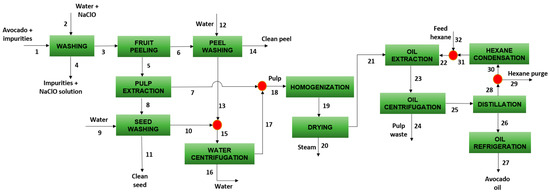
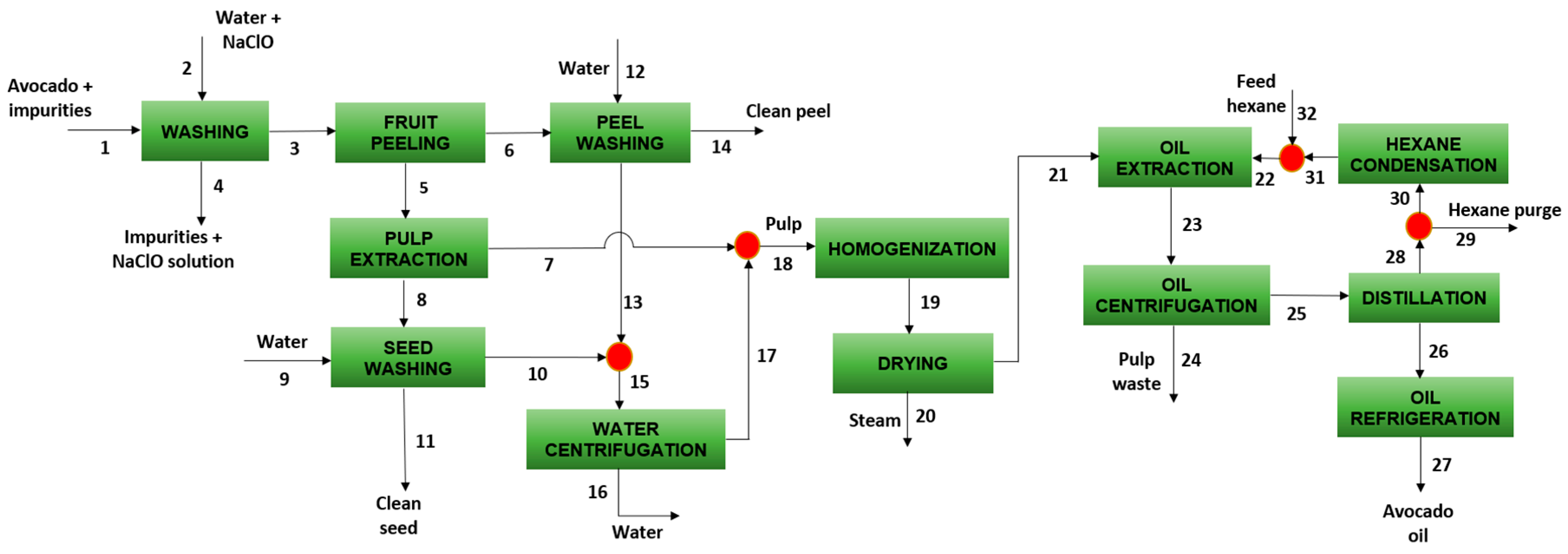
The process evaluated in this study corresponds to the linear production of avocado oil from Creole-Antillean avocado pulp and comprises mechanical preparation, thermal conditioning, solvent extraction, and separation operations, as illustrated in Figure 1. Fresh avocados (stream 1) are initially washed using a sodium hypochlorite solution (stream 2) to remove surface impurities, producing cleaned fruit (stream 3) and an aqueous waste stream (stream 4). The cleaned fruit subsequently undergoes peeling and pulping, during which the peel (stream 6) and seed (stream 8) are separated from the pulp (stream 7). Residual pulp adhering to the peel and seed is recovered through additional washing steps (streams 12 and 9, respectively). The resulting suspension is subjected to centrifugation, producing a recovered-pulp stream (stream 17) that is reincorporated into the main pulp line and an aqueous stream containing the removed moisture (stream 16).
Figure 1.
Process diagram for obtaining avocado oil from the pulp of native avocados grown in Montes de María, Colombia.
The combined pulp from the primary pulping and recovery stages (streams 7 and 17) is sent to homogenization (streams 18–19), where particle-size reduction improves the physical conditioning of the material for subsequent processing. The homogenized pulp is then dried at approximately 70 °C and atmospheric pressure (streams 19–21), removing water from the biomass matrix as a vapor stream (stream 20) [23]. Moisture reduction prior to extraction improves contact between the lipid-containing solid matrix and the organic solvent and reduces the likelihood of emulsion formation during downstream separation. The resulting dried pulp (stream 21) is subsequently directed to the extraction stage.
During extraction, the dried pulp is contacted with hexane (stream 32), allowing lipids to transfer into the solvent-rich phase. The resulting mixture of oil, hexane, and residual solids (stream 23) is sent to centrifugation, where the defatted solid fraction (stream 24) is separated from the liquid oil–hexane mixture (stream 25). The liquid phase is subsequently processed in a distillation system to separate the solvent from the extracted oil. Vaporized hexane (stream 28) is condensed and returned to the extraction section through the solvent-recycle loop (streams 31–32), while a purge stream (stream 29) prevents the accumulation of non-recovered material within the recycle circuit. The separated oil (stream 26) is finally cooled to obtain the final avocado oil product (stream 27).
The process model was constructed using both experimental and literature-based information. The feed representation incorporated the experimentally determined fatty-acid profile of Creole-Antillean avocado pulp from the Montes de María region, obtained by gas chromatography with flame ionization detection (GC/FID), whereas the remaining operating conditions and auxiliary process parameters were established from literature data incorporated into the previously developed process model [17,18,19]. Model consistency was subsequently assessed by comparison with independent experimental data available in the literature. The simulated oil extraction yield was 65.19%, compared with the 64.76% reported by Reddy et al. for solvent extraction of avocado pulp, corresponding to an agreement of 99.34% [21]. Similarly, the simulated avocado oil density was 0.881 g/cm3, compared with an experimentally reported value of 0.896 g/cm3, corresponding to an agreement of 98.29% [22]. Additional comparisons of the density and viscosity of representative fatty acids, including palmitic, stearic, and oleic acids, showed agreements above 97% relative to experimental literature data [23]. These comparisons support the use of the simulation as the process basis for the subsequent sustainability assessment. However, because the model was not calibrated against dedicated pilot-scale operating data, the results should be interpreted within the scope of a simulation-based conceptual process assessment. A detailed stream-by-stream material balance, including mass flow rates, operating temperatures, pressures, and principal stream compositions, together with the energy requirements of the main process units, is provided in Tables S1 and S2 of the Supplementary Material.
2.2. Sustainability Weighted Return on Investment (SWROIM)
The Sustainability Weighted Return on Investment (SWROIM) methodology was applied to integrate the economic, environmental, exergetic, technical, and inherent-safety performance of the avocado oil production process into a single process-level metric [16]. SWROIM extends the conventional return-on-investment concept by incorporating non-economic sustainability and safety indicators into the economic return through relative-performance terms and weighting factors [16]. In the present study, the economic dimension provides the financial basis of the metric, whereas the environmental, exergetic, technical, and inherent-safety dimensions modify this basis according to their performance relative to predefined reference conditions. The indicators selected for each dimension, their mathematical definitions, and their preferred directions of performance are summarized in Table 1.
Table 1.
Assessments and indicators required to calculate SWROIM for the oil production from Creole-Antillean avocados.
The SWROIM value was calculated using Equation (1), where AEP represents the annual economic profit used as the economic basis of the assessment, TCI is the total capital investment, wi is the weighting factor assigned to sustainability indicator i, and Ri represents the dimensionless relative performance of each indicator with respect to its selected target value. Because the indicators considered in this study have different preferred directions of performance, their relative-performance terms were defined accordingly [16]. Overall exergy efficiency was treated as a benefit indicator, for which higher values represent improved performance; therefore, its relative-performance term was calculated as Ri = Ii/Ii,target. In contrast, the PEI output rate, Total Inherent Safety Index (ISI), and Total Cost of Energy (TCE) were treated as burden indicators, for which lower values represent improved performance; consequently, their relative-performance terms were calculated as Ri = Ii,target/Ii. This directional treatment ensures that the contribution of each indicator to SWROIM is consistent with its physical interpretation and that poorer environmental, safety, or technical performance does not artificially increase the integrated metric.
The target values used in the SWROIM calculation were established as benchmarking reference conditions rather than as universal performance thresholds or values assumed to be directly attainable by the evaluated avocado oil process. For the environmental dimension, a PEI output rate of 0.02 PEI/kg was defined in the present study as a deliberately stringent low-impact reference condition for benchmarking purposes. For the exergetic dimension, an overall exergy efficiency of 59%, previously reported for crude palm oil production in northern Colombia, was selected as an external benchmark for energy-quality utilization [24]. Although both systems involve agro-industrial vegetable-oil processing, this comparison does not imply technological equivalence because the avocado oil process additionally involves pulp drying, hexane extraction, distillation, and solvent recovery. For inherent safety, an ISI value of 11 reported for crude palm oil production using the same index-based methodology was adopted as a comparative low-hazard reference [24]. Finally, a TCE target of 572.55 USD/day was adopted as a process-specific technical reference derived from the Water–Energy–Product assessment framework previously applied to Creole-Antillean avocado oil production [19].
Feedstock-specific characteristics were retained on the evaluated-process side of the comparison. In particular, the experimentally characterized composition of Creole-Antillean avocado influences the material distribution and oil recovery represented in the process model [17], whereas the high moisture content of avocado pulp directly affects the thermal requirement associated with the drying stage [6,17]. These feedstock and process characteristics are consequently reflected in the environmental impact, exergy efficiency, and energy-cost indicators calculated for the evaluated configuration [17,19]. Therefore, differences between the evaluated indicators and their respective targets are interpreted as performance gaps relative to the selected reference conditions rather than as evidence of regulatory non-compliance, operational failure, or technical infeasibility.
The environmental performance of the avocado oil production process was evaluated using the Waste Reduction Algorithm (WAR), implemented through the WARGUI software (Version 2022) [10]. Mass flow rates and stream compositions obtained from the Aspen Plus® process simulation were used as input data for the environmental assessment [17]. The analysis considered the chemical species represented in the process streams, including fatty acids, hexane, sodium hypochlorite, water, and the remaining components included in the process model. Environmental impacts were quantified across the eight conventional WAR categories: Human Toxicity Potential by Ingestion (HTPI), Human Toxicity Potential by Inhalation or Dermal Exposure (HTPE), Terrestrial Toxicity Potential (TTP), Aquatic Toxicity Potential (ATP), Global Warming Potential (GWP), Ozone Depletion Potential (ODP), Photochemical Oxidation Potential (PCOP), and Acidification Potential (AP) [10,17].
As expressed in Equation (2), the potential environmental impact associated with the process output streams is determined from the mass flow rate of each stream, the mass fraction of each chemical species, and the corresponding category-specific environmental impact potential [10]. These impact potentials are based on physicochemical, toxicological, and atmospheric-effect parameters incorporated into the WAR/WARGUI framework. The assessment considered both process material streams and energy-related contributions within the system boundaries previously defined for the environmental evaluation of this avocado oil production route [17]. The resulting PEI output rate was normalized by the avocado oil production rate and expressed as PEI/kg of product for subsequent incorporation into the SWROIM calculation.
The economic performance of the avocado oil production process was evaluated through the return on investment (ROI), calculated according to Equation (3) as the ratio between the annual profit after taxes (PAT) and the total capital investment (TCI) [18]. PAT represents the annual net economic benefit remaining after accounting for operating costs, depreciation, and applicable taxes, whereas TCI represents the capital investment required for process implementation [18]. Accordingly, ROI expresses the annual after-tax profitability of the process relative to the invested capital. Within the SWROIM framework, this economic return constitutes the financial basis of the integrated metric and is subsequently modified according to the relative performance and weighting of the environmental, exergetic, technical, and inherent-safety indicators [16].
The thermodynamic performance of the avocado oil production process was evaluated through overall exergy efficiency, calculated according to Equation (4). This indicator quantifies the fraction of the total exergy supplied to the process that is preserved as useful exergy after accounting for losses associated with process irreversibilities [17]. In Equation (4), represents the total exergy lost or destroyed within the system, whereas corresponds to the total exergy entering the process. Unlike conventional energy-efficiency indicators, exergy efficiency accounts for both the quantity and quality of energy and therefore provides a more rigorous measure of thermodynamic performance. Within the SWROIM framework, overall exergy efficiency was treated as a benefit indicator, meaning that higher values represent improved process performance [11].
The inherent-safety performance of the avocado oil production process was evaluated using the Total Inherent Safety Index (ISI) proposed by Heikkilä, calculated according to Equation (5) as the sum of the Chemical Inherent Safety Index (ICH) and the Process Inherent Safety Index (IPS) [13,17]. The chemical sub-index accounts for the intrinsic hazardous properties and interactions of the substances involved in the process, including flammability, explosiveness, toxicity, corrosiveness, and chemical-interaction effects, whereas the process sub-index considers factors associated with material inventory, operating temperature and pressure, equipment, and process structure [13]. The methodology is specifically intended for application during the conceptual design stage, when detailed process information may still be limited [13]. In the present SWROIM assessment, ISI was treated as a burden indicator, meaning that lower values represent improved inherent-safety performance.
The technical performance of the avocado oil production process was represented by the Total Cost of Energy (TCE), following the Water–Energy–Product (WEP) assessment previously applied to this production route [19]. TCE was calculated according to Equation (6) from the electricity and natural-gas requirements obtained from the process simulation. The evaluated configuration required 234.44 MJ/h of electricity and 1828.02 MJ/h of natural gas, corresponding to a total energy demand of 2062.46 MJ/h [19]. Utility prices of 0.41 USD/kWh for electricity and 10 USD/MMBTU for natural gas were adopted following the economic assumptions used in the previous WEP assessment, and the corresponding energy requirements were converted to their billing units and expressed on a daily operating basis [19]. Within the SWROIM framework, TCE was treated as a burden indicator, for which lower values represent improved technical performance.
Sensitivity Analysis of Weighting Factors and Target Values
A sensitivity analysis was performed to evaluate the influence of two methodological components of the SWROIM assessment: the weighting factors assigned to the sustainability dimensions and the target values selected as benchmarking reference conditions. Both analyses were conducted independently while maintaining the environmental, exergetic, technical, and inherent-safety process-performance indicators unchanged.
The first analysis evaluated the influence of the weighting factors assigned to each sustainability dimension. In the base case, equal importance was assigned to the environmental, technical, exergetic, and inherent-safety dimensions by setting all weighting factors to 1.0. Subsequently, four priority scenarios were defined in which one dimension retained a weighting factor of 1.0, whereas the remaining dimensions were assigned a value of 0.5, representing a comparatively lower level of importance, as summarized in Table 2. In the present study, the weighting factors were not normalized to a fixed sum because they were used as relative levels of importance rather than as fractional contributions. This formulation makes it possible to evaluate how prioritizing each sustainability dimension modifies the integrated SWROIM result while preserving the contribution of the remaining criteria.
Table 2.
Weighting-factor scenarios used in the SWROIM sensitivity analysis.
The second sensitivity analysis examined the influence of the selected target values on the SWROIM result. Each target was independently varied by ±10% and ±20% relative to its base value, while the remaining targets, process indicators, and weighting factors were maintained at their base-case conditions. For each sustainability indicator i, the modified target was calculated as , where is the original target value and corresponds to −0.20, −0.10, +0.10, or +0.20.
Because the evaluated indicators have different preferred directions, the interpretation of target variation depends on the nature of each indicator. For overall exergy efficiency, which is treated as a benefit indicator, increasing the target represents a more demanding reference condition, whereas decreasing it represents a less demanding benchmark. In contrast, for PEI output rate, ISI, and TCE, which are treated as burden indicators, decreasing the target represents a more stringent reference condition and increasing it represents a less demanding benchmark. This analysis therefore evaluates the sensitivity of the integrated SWROIM result to uncertainty or variability in the selected benchmarking conditions without modifying the simulated performance of the process.
In addition to the individual variations, combined target scenarios were evaluated by simultaneously modifying all reference values by ±10% and ±20% according to their preferred performance direction. More stringent scenarios were generated by increasing the exergy-efficiency target while reducing the PEI, ISI, and TCE targets, whereas less stringent scenarios were obtained through the opposite variation. These scenarios provide an integrated assessment of the robustness of SWROIM when the overall level of expected process performance is modified.
3. Results and Discussion
3.1. Oil Production Indicators vs. Indicator Targets for SWROIM Determination
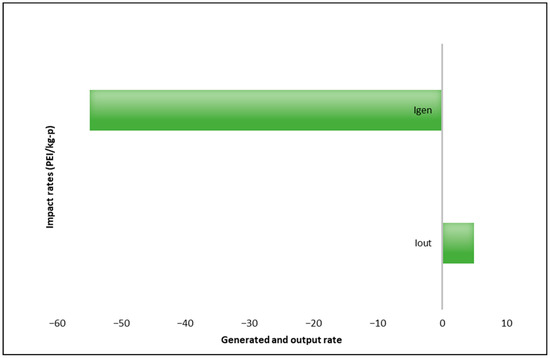
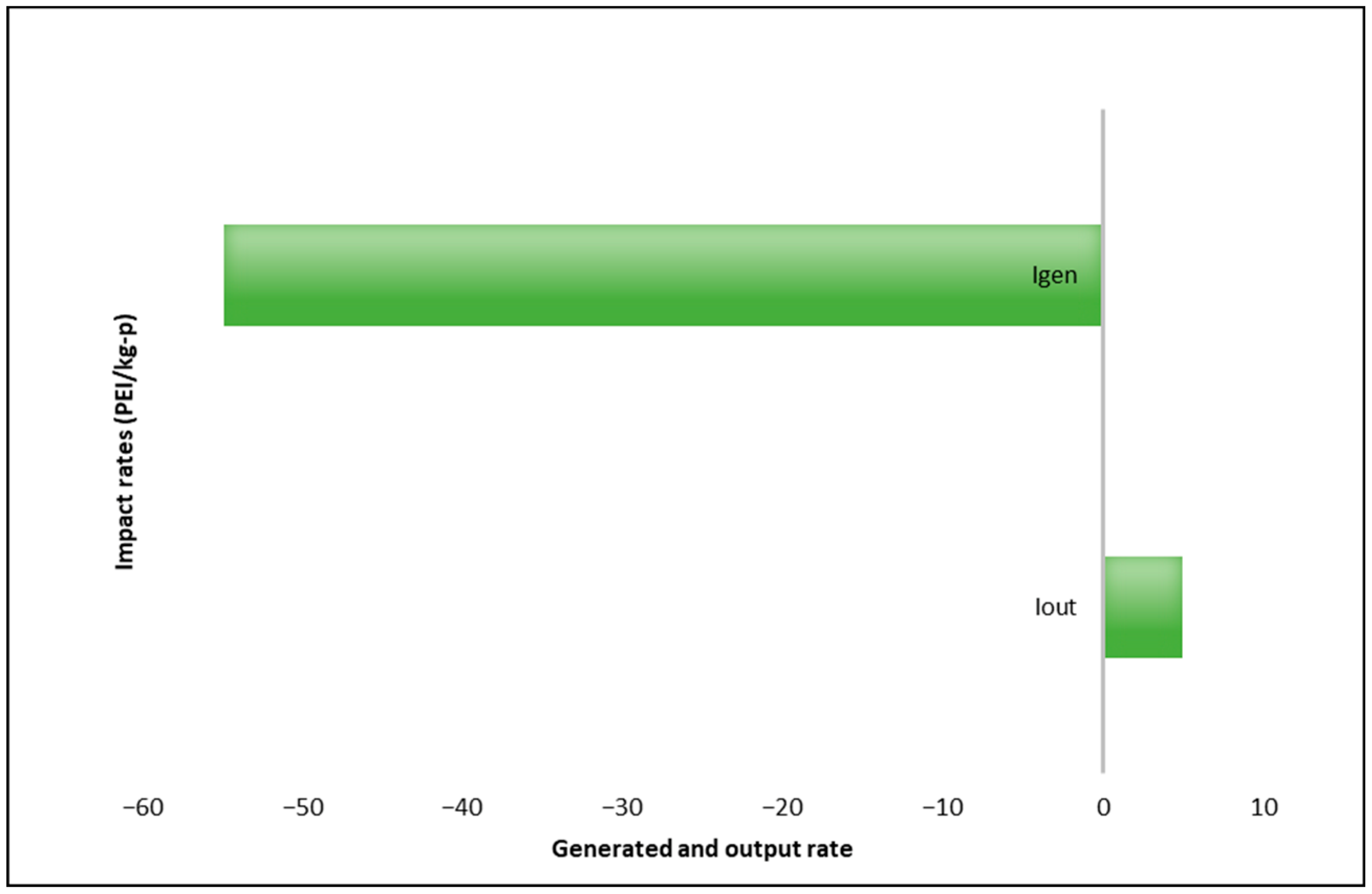
The environmental assessment yielded a PEI output rate of 0.50 PEI/kg of avocado oil, as shown in Figure 2. This value represents the potential environmental impact leaving the process per unit mass of product and integrates the contributions associated with material streams and energy use within the defined WAR system boundaries [17]. The previous WAR evaluation of this avocado oil production route showed that the magnitude of the environmental impact depends on whether product and energy contributions are included in the assessment, with normalized output impacts falling within the range reported for the different evaluated cases. The environmental profile is influenced by both solvent handling and utility consumption. In the toxicological categories, the original WAR analysis identified Aquatic Toxicity Potential (ATP) as one of the most relevant contributions when product-related impacts were included, primarily because of the presence of hexane in the extraction section [17]. Hexane also contributes to terrestrial and human-toxicity-related categories if losses occur from the solvent-recovery loop. In contrast, the recovery and recirculation of hexane reduce the generation of photochemical oxidation impacts by limiting the amount of solvent released from the process. From the atmospheric perspective, the inclusion of the energy source increases the environmental burden, particularly through the Acidification Potential (AP) category, confirming that the thermal requirements of the process constitute an additional environmental hotspot.
Figure 2.
Generated and output potential environmental impact rates for the avocado oil production process.
Although the previous WAR assessment reported comparatively low output PEI values for this avocado oil production route [17], the interpretation changes when the result is evaluated against the more demanding SWROIM reference condition adopted in the present study. The calculated value of 0.50 PEI/kg is substantially higher than the selected target of 0.02 PEI/kg, revealing a pronounced environmental performance gap. This difference should not be interpreted as evidence that the process is environmentally unacceptable in absolute terms, but rather as an indication that its current performance remains far from the low-impact benchmark selected for the integrated sustainability assessment. Accordingly, solvent-loss minimization, improved hexane recovery, and reductions in process energy demand constitute relevant opportunities for reducing the environmental gap identified in the SWROIM assessment [7,17].
It is also important to distinguish this SWROIM benchmark from regulatory compliance. The PEI output rate calculated through WAR is a process-level potential-impact indicator and does not correspond to a pollutant-specific emission or discharge limit established under Colombian environmental regulations. Colombian legislation establishes specific maximum permissible values and emission standards for point-source wastewater discharges and atmospheric emissions from stationary sources, respectively [25,26]. Therefore, the difference between 0.50 PEI/kg and the selected 0.02 PEI/kg benchmark cannot by itself be interpreted as regulatory non-compliance or as evidence that plant operation would be subject to suspension. Regulatory compliance would require comparison of the relevant individual emissions, discharges, and operating conditions with the applicable legal requirements [25,26]. In the present study, PEI is used exclusively as a comparative sustainability indicator for identifying environmental performance gaps and prioritizing process-improvement opportunities.
The exergetic evaluation of the avocado oil production process resulted in an overall exergy efficiency of 31%, indicating that a limited fraction of the exergy supplied to the system is preserved as useful process output. The stage-by-stage behavior is consistent with the previous exergy assessment of this production route, which identified the centrifugation stage as the main contributor to residual-stream exergy and the distillation, condensation, and cooling section as the principal source of process irreversibilities because of its high utility-exergy requirement [17]. These results indicate that the thermodynamic limitations of the process arise from two complementary mechanisms: exergy leaving the system through residual material streams and exergy destruction associated with energy-intensive separation and thermal operations [17]. Homogenization and drying also contribute to the overall thermodynamic demand of the process, while solvent recovery remains a particularly relevant energy-intensive section [18,21]. Accordingly, heat recovery and thermal integration, improved integration of the solvent-recovery section, and further utilization of residual pulp, peel, and seed streams represent relevant opportunities for improving the overall exergy performance of the process [17].
When compared with the selected external benchmark of 59% reported for crude palm oil production in northern Colombia [24], the avocado oil process exhibits a substantial thermodynamic performance gap. This comparison should be interpreted as a benchmark for energy-quality utilization rather than as an assumption of technological equivalence between the two production systems. The lower exergy efficiency observed for avocado oil production is consistent with the additional requirements associated with pulp drying, solvent extraction, centrifugation, distillation, condensation, solvent recovery, and residual-stream generation [17]. Therefore, the difference relative to the selected benchmark identifies opportunities for thermodynamic improvement rather than indicating technical infeasibility.
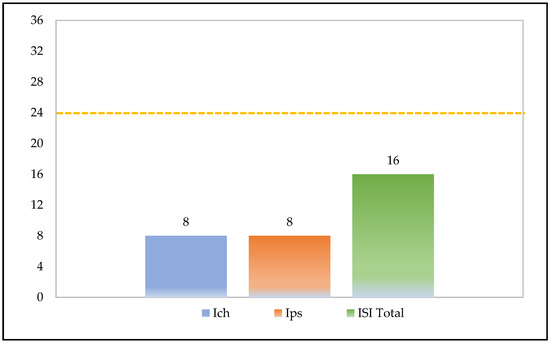
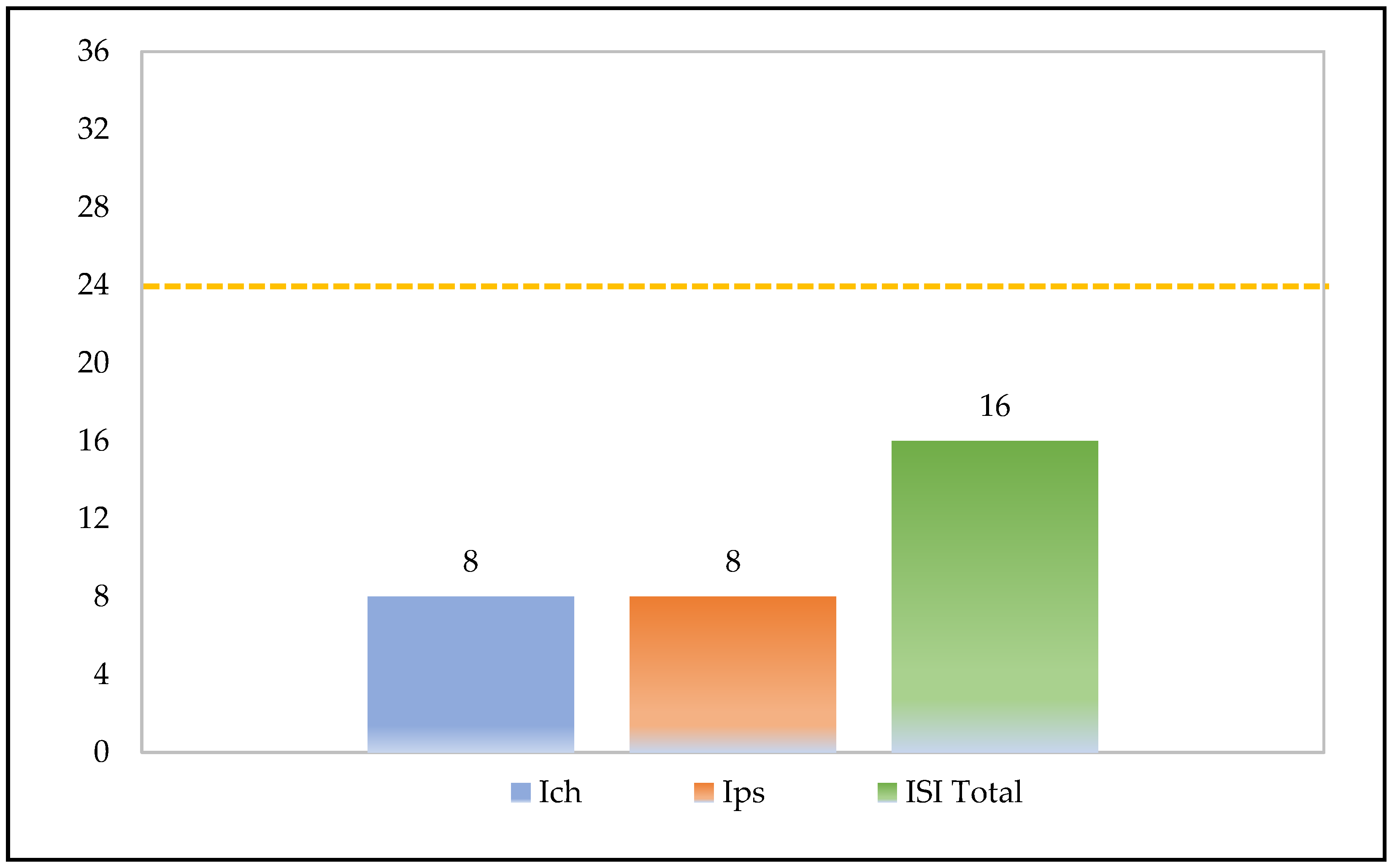
The inherent-safety assessment yielded a Total Inherent Safety Index (ISI) of 16, comprising a Chemical Inherent Safety Index (ICH) of 8 and a Process Inherent Safety Index (IPS) of 8, as shown in Figure 3. This value remains below the reference value of 24 commonly used in applications of Heikkilä’s methodology to represent a neutral inherent-safety performance [13]. Accordingly, the evaluated configuration exhibits a comparatively favorable inherent-safety profile according to the ISI screening criterion. However, an ISI below this reference value should not be interpreted as the absence of relevant hazards, because the total score reflects the combined contribution of intrinsic chemical hazards and process-related conditions.
Figure 3.
Inherent Safety Index for Creole-Antillean avocado oil extraction.
The chemical contribution is primarily associated with the use of hexane in the extraction and solvent-recovery sections. Its low flash point, flammability, and capability to form flammable or explosive vapor–air mixtures make solvent handling one of the principal inherent-safety concerns of this production route [17]. In contrast, the absence of chemical-reaction stages limits the contribution of reaction-related subindices within the chemical component of the ISI [13,19]. From the process perspective, the main contributions are associated with material inventory, equipment characteristics, and the thermal operations required for drying, distillation, and solvent recovery [17]. Previous inherent-safety assessment of this avocado oil production route similarly identified solvent flammability and process-equipment characteristics among its principal hazard contributors [17]. Nevertheless, the comparatively moderate operating conditions of the process, with temperatures around 70 °C in the principal thermal stages and pressures generally close to atmospheric conditions, limit the temperature- and pressure-related contributions to the process safety index [17].
When compared with the selected low-hazard benchmark of ISI = 11 reported for crude palm oil production in northern Colombia [24], the evaluated avocado oil process exhibits a higher inherent-hazard level. This difference is consistent with the additional hazards associated with hexane extraction and solvent-recovery operations in the avocado oil process [17]. However, the comparison should not be interpreted as evidence of unsafe operation, because the value of 11 is used in the present study as a comparative reference condition rather than as a universal safety threshold. Consequently, the gap between the evaluated ISI and the selected benchmark identifies opportunities for further inherent-safety improvement, particularly through reductions in solvent inventory, improved solvent containment and recovery, and, where technically feasible, the consideration of extraction alternatives with lower solvent-related hazards [17].
The technical evaluation resulted in a Total Cost of Energy (TCE) of 1056.65 USD/day for the avocado oil production process [19]. This value corresponds to a total energy requirement of 2062.46 MJ/h, distributed between 1828.02 MJ/h of natural gas and 234.44 MJ/h of electricity [19]. Consequently, approximately 88.63% of the process energy demand is supplied by natural gas, whereas electricity accounts for 11.37%, showing that the evaluated configuration is strongly dependent on fossil-based thermal energy. The previous WEP assessment of this production route also reported a specific energy intensity of 19,929 MJ/t of product, confirming the high energy requirement of the process [19]. The predominance of thermal energy in food-processing systems is consistent with broader industrial trends, where drying, extraction, evaporation, and related heating operations are among the main contributors to process heat demand [27].
The predominance of natural gas in the evaluated avocado oil process is associated mainly with the thermal requirements of pulp drying and solvent recovery [17,19]. The WEP assessment further showed that replacing the current mixed energy supply with a fully electricity-based configuration would substantially increase the operating energy cost, whereas the combined use of natural gas and electricity provides a more favorable cost structure for the required process duties [19]. Nevertheless, the high energy intensity indicates that further improvements should focus on reducing the energy requirement itself through heat recovery, thermal integration, and optimization of the drying and solvent-recovery sections [17,27,28]. Waste-heat recovery is particularly relevant for thermally intensive industrial systems because it can reduce primary-energy consumption and improve overall energy utilization [28]. When compared with the selected technical reference of 572.55 USD/day, the calculated TCE reveals a substantial performance gap. Because TCE is treated as a burden indicator within SWROIM, this deviation reduces the contribution of the technical dimension to the integrated metric. Accordingly, the principal technical opportunity lies in reducing the overall energy requirement of the process rather than merely replacing one energy source with another.
Taken together, the environmental, exergetic, inherent-safety, and technical assessments reveal performance gaps of different magnitudes relative to the selected SWROIM reference conditions, as summarized in Table 3. The most pronounced deviation is observed in the environmental dimension, where the PEI output rate of 0.50 PEI/kg substantially exceeds the low-impact benchmark of 0.02 PEI/kg. Thermodynamic performance also remains below the selected external reference, with an overall exergy efficiency of 31% compared with the 59% benchmark reported for crude palm oil production [24], while the TCE of 1056.65 USD/day indicates a considerable technical gap relative to the selected 572.55 USD/day reference [19]. Inherent safety presents a comparatively smaller deviation: the ISI of 16 remains below the methodological reference value of 24 associated with Heikkilä’s screening approach [13], but above the selected low-hazard benchmark of 11 [24]. These differences are reflected in the relative-performance terms used in the SWROIM calculation and demonstrate that the evaluated process does not perform uniformly across sustainability dimensions. Such differentiated behavior among environmental, economic, technical, and safety-related criteria is a central reason for employing integrated process-sustainability assessment approaches rather than interpreting individual indicators in isolation [29]. In the present case, the environmental dimension emerges as the most restrictive criterion, whereas inherent safety exhibits the closest performance to its selected reference condition. These indicator-level results provide the basis for evaluating how the non-economic sustainability dimensions modify the economic return through the integrated SWROIM metric.
Table 3.
Evaluated indicators, target values, and relative-performance terms used in the base-case SWROIM calculation.
3.2. SWROIM Evaluation for the Oil Production from Creole-Antillean Avocados
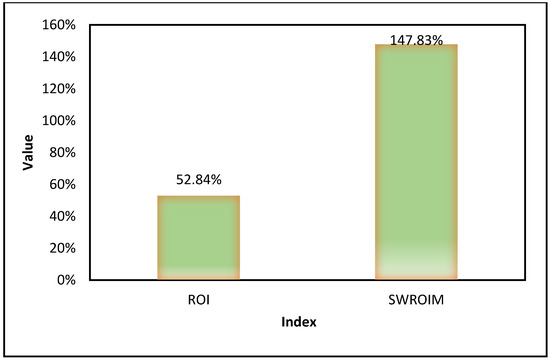
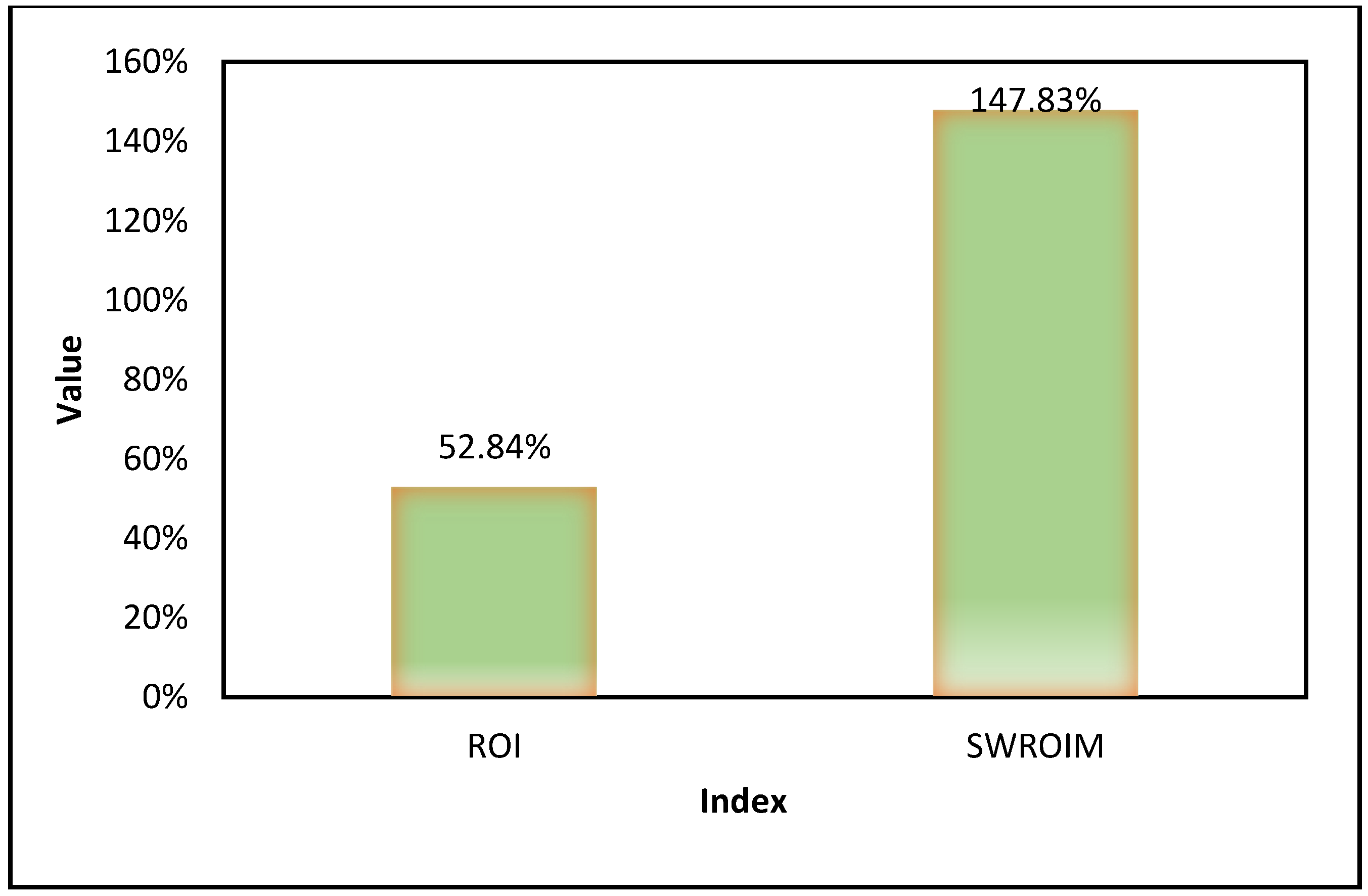
The economic assessment resulted in a total capital investment (TCI) of USD 6,433,363.54 and an annual profit after taxes (PAT) of USD 3,399,383.73, yielding an ROI of 52.84% according to Equation (3) [18]. These values were obtained from the previously published techno-economic assessment of the same Creole-Antillean avocado oil production route, in which capital requirements, operating expenditures, depreciation, taxation, production capacity, and product revenues were explicitly considered [18]. Importantly, the avocado oil selling price used in the economic model was treated as an external techno-economic input and was not derived from the simulated chemical composition of the final oil. Therefore, the absence of dedicated experimental characterization of the final product does not affect the mathematical calculation of TCI, PAT, or ROI, although it does limit the extent to which the assumed selling price can be considered representative of a specific commercial oil grade. Accordingly, the reported ROI should be interpreted as the economic performance of the evaluated process under the assumptions adopted in the referenced techno-economic study, including feedstock availability and cost, product selling price, utility costs, operating conditions, and production scale [18,30], rather than as a universally transferable or experimentally validated profitability value.
When the environmental, exergetic, technical, and inherent-safety dimensions were incorporated through Equation (1), the resulting SWROIM increased to 147.83%, as shown in Figure 4. This value represents the economic return adjusted by the relative performance of the sustainability indicators with respect to their selected reference conditions [16]. Importantly, the increase from ROI to SWROIM should not be interpreted as evidence that all sustainability dimensions exhibit favorable or target-compliant performance. As shown in Table 3, all four non-economic indicators present performance gaps relative to their respective benchmarks, with the environmental dimension showing the largest deviation. Rather, the SWROIM value reflects the combined contribution of the relative-performance terms and their assigned weighting factors within the integrated formulation [16].
Figure 4.
Comparison between ROI and SWROIM for Creole-Antillean avocado oil production.
The difference between the conventional ROI and SWROIM therefore illustrates the additional information provided by the multidimensional assessment. While ROI captures only the relationship between annual profitability and invested capital, SWROIM incorporates the extent to which environmental, thermodynamic, technical, and inherent-safety performance approaches the selected reference conditions [16]. In the present case, the comparatively low relative-performance term of the environmental indicator limits its contribution to the integrated metric, whereas inherent safety presents the closest performance to its selected benchmark. Because the interpretation of composite sustainability metrics depends on the weighting and aggregation structure used to combine individual indicators, the integrated result should always be interpreted together with its underlying dimensions and methodological assumptions [31]. Consequently, the SWROIM result should be regarded as a process-level decision-support metric that combines economic return with sustainability-related performance, rather than as a certification that the process has achieved an overall sustainable or optimal condition.
3.3. SWROIM Sensitivity Analysis for Oil Production from Creole-Antillean Avocados
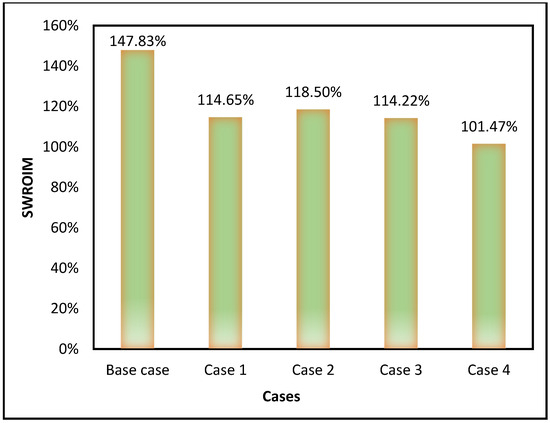
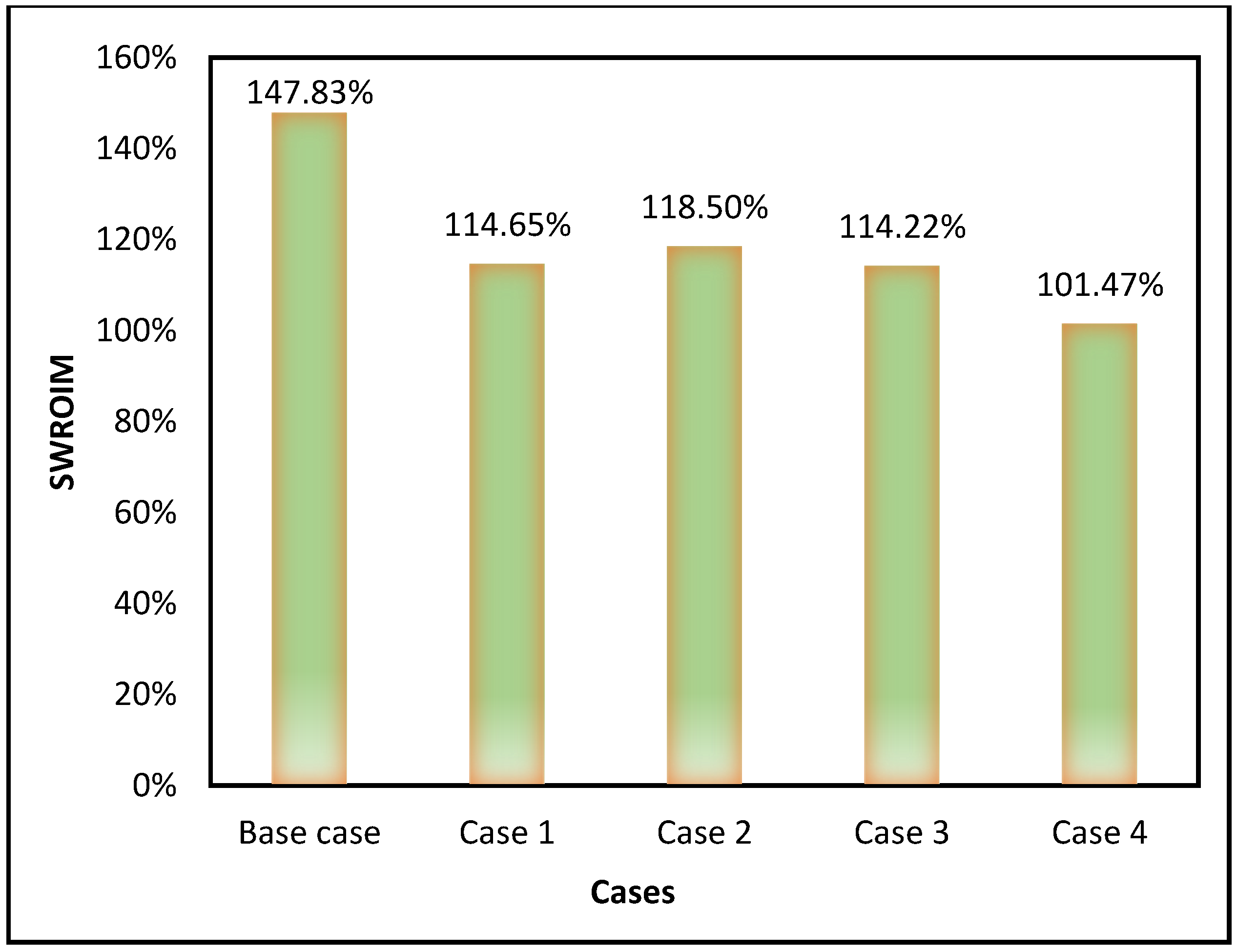
The weighting-factor sensitivity analysis was performed using the scenarios defined in Table 2. The base case, in which all sustainability dimensions were assigned the same importance level (wi = 1.0), resulted in a SWROIM value of 147.83%, as shown in Figure 5. This case represents the integrated assessment in which environmental, technical, exergetic, and inherent-safety performance are all considered at their highest predefined importance level.
Figure 5.
SWROIM values under the weighting-factor sensitivity scenarios for Creole-Antillean avocado oil production.
When one sustainability dimension was prioritized by retaining a weighting factor of 1.0 while the remaining dimensions were assigned a lower importance level of 0.5, the SWROIM values ranged from 101.47% to 118.50%. Because the four priority scenarios use the same weighting structure, their comparison provides a direct indication of how the relative performance of each sustainability dimension influences the integrated metric. The highest SWROIM among these scenarios was obtained when inherent safety was prioritized (118.50%), consistent with the fact that ISI exhibited the highest relative-performance term among the non-economic indicators and therefore the closest performance to its selected benchmark.
Prioritizing the technical dimension resulted in a SWROIM of 114.65%, while emphasizing exergy performance produced a similar value of 114.22%. The proximity of these results reflects the comparable relative-performance terms obtained for TCE and overall exergy efficiency. In both cases, the evaluated process remains substantially separated from the corresponding reference conditions, indicating that reductions in energy demand and thermodynamic irreversibilities represent important opportunities for process improvement [18,21]. The lowest SWROIM value was obtained for the environmental-priority scenario (101.47%). This result is consistent with the PEI output rate exhibiting the lowest relative-performance term among all evaluated sustainability indicators. When environmental performance retains the highest importance while the comparatively better-performing technical, exergetic, and safety dimensions are assigned lower weights, its pronounced deviation from the selected PEI benchmark exerts the strongest restrictive effect on the integrated metric. The sensitivity analysis therefore identifies the environmental dimension as the principal performance limitation of the evaluated process, followed by the thermodynamic and technical dimensions, whereas inherent safety shows the closest performance to its selected reference condition.
Overall, the weighting analysis demonstrates that the SWROIM result is sensitive to the relative importance assigned to the sustainability dimensions. This behavior is consistent with the general formulation of composite indicators, for which changes in weighting can modify the influence exerted by individual dimensions on the aggregated result [31,32]. Rather than indicating that one criterion should be optimized independently, the differences among the priority scenarios show how the integrated assessment changes when decision-making emphasis shifts among environmental, technical, thermodynamic, and inherent-safety performance. These results reinforce the need to prioritize environmental-impact reduction while simultaneously addressing energy demand and exergy losses in future process-improvement strategies [18,21].
3.4. Target-Value Sensitivity Analysis
The target-value sensitivity analysis evaluated the influence of the selected benchmarking conditions on the integrated SWROIM result. The choice of reference or normalization conditions can affect the magnitude and interpretation of composite sustainability indicators, making sensitivity analysis relevant for assessing the dependence of the aggregated result on methodological assumptions [33,34]. Accordingly, each target was independently varied by ±10% and ±20% while maintaining the remaining targets, process indicators, and weighting factors at their base-case values. This procedure isolates the effect of benchmark selection from variations in the simulated process performance. As summarized in Table 4, the magnitude of the SWROIM response differed among sustainability dimensions, reflecting the different relative-performance terms associated with each indicator.
Table 4.
Effect of individual target-value variations on SWROIM for Creole-Antillean avocado oil production.
The environmental target exhibited the lowest influence on the integrated metric. Variations in the PEI benchmark produced only limited changes in SWROIM relative to the base case. This comparatively small response is explained by the large existing gap between the evaluated PEI output rate and its selected target, which results in a low relative-performance term. Therefore, moderate variations in the environmental benchmark produce only small changes in its contribution to the integrated metric. This result does not imply that the environmental dimension is unimportant; rather, it remains the most restrictive performance dimension, but its already limited contribution makes SWROIM comparatively less sensitive to moderate perturbations of the PEI target.
Greater sensitivity was observed for the technical and exergetic reference conditions. Changes in the TCE target modify SWROIM according to the burden-indicator formulation, such that a higher target represents a less demanding reference condition and consequently increases its relative contribution. In contrast, increasing the exergy-efficiency target establishes a more demanding benchmark and reduces the corresponding relative-performance term. The inherent-safety target produced the largest individual variation in SWROIM, consistent with ISI exhibiting the highest relative-performance term among the non-economic indicators. Because the evaluated ISI lies comparatively closer to its reference value, changes in that benchmark exert a greater proportional effect on the integrated metric. This behavior illustrates how the selection of reference values used to normalize or score individual indicators can affect their effective contribution to an aggregated sustainability measure [35,36]. Overall, the individual target analysis demonstrates that sensitivity to benchmark selection is determined not only by the magnitude of the performance gap but also by the relative position of each process indicator with respect to its target. Thus, although environmental performance remains the main limitation of the process, variations in the inherent-safety, exergetic, and technical targets exert a stronger influence on the numerical SWROIM value.
In addition to the individual variations, combined scenarios were evaluated by simultaneously modifying all target values according to their preferred performance direction. More stringent conditions were generated by decreasing the targets of the burden indicators (PEI, ISI, and TCE) while increasing the exergy-efficiency target, whereas the opposite changes were applied to construct less stringent scenarios. Evaluating alternative methodological assumptions and reference conditions is particularly relevant for composite indicators because sensitivity and robustness analyses help determine the extent to which the aggregated result depends on the choices adopted during its construction [35]. The corresponding SWROIM results are summarized in Table 5.
Table 5.
SWROIM response to combined variations in target stringency.
As the overall benchmarking conditions became less stringent, SWROIM increased relative to the base case, whereas progressively more demanding targets reduced the integrated value. The combined variations produced a larger response than the individual target perturbations because all sustainability dimensions were modified simultaneously. Under the least stringent scenario, SWROIM increased to 168.22%, whereas the most stringent combined scenario reduced it to 129.76%, compared with the base-case value of 147.83%. Nevertheless, SWROIM remained positive throughout the evaluated range, showing that the positive integrated result was preserved under the combined target variations considered. This finding should not be interpreted as insensitivity to benchmark selection, since the magnitude of SWROIM changed appreciably across the scenarios. Rather, it demonstrates that the numerical value of the composite metric depends on the reference conditions adopted, reinforcing the importance of interpreting an aggregated indicator together with its underlying assumptions and component indicators [36].
4. Conclusions
The present study applied the Sustainability Weighted Return on Investment (SWROIM) methodology to integrate the economic, environmental, exergetic, technical, and inherent-safety performance of Creole-Antillean avocado oil production within a process-level assessment framework. The economic evaluation resulted in a total capital investment of USD 6.43 million and an annual profit after taxes of USD 3.40 million, corresponding to an ROI of 52.84%. When the non-economic sustainability dimensions were incorporated, the base-case SWROIM reached 147.83%. This result should not be interpreted as evidence that all sustainability dimensions achieve favorable or target-compliant performance; rather, it represents the economic return adjusted by the relative performance of the environmental, thermodynamic, technical, and inherent-safety indicators with respect to the selected reference conditions.
The indicator-level assessment revealed clear and differentiated performance gaps. The environmental dimension represented the main limitation, with a PEI output rate of 0.50 PEI/kg compared with the selected benchmark of 0.02 PEI/kg. The overall exergy efficiency of 31% also remained substantially below the 59% thermodynamic reference, while the Total Cost of Energy of 1056.65 USD/day reflected the high thermal demand associated primarily with pulp drying and solvent recovery. Inherent safety exhibited the closest performance to its selected benchmark: the process obtained an ISI of 16, remaining below the methodological screening limit of 24 but above the comparative low-hazard reference of 11. Overall, these results indicate that future process improvement should prioritize environmental-impact reduction, heat and energy integration, and solvent-management strategies while maintaining the comparatively favorable inherent-safety profile.
The sensitivity analyses further clarified the behavior of the integrated metric. When individual sustainability dimensions were prioritized through the weighting factors, SWROIM ranged from 101.47% to 118.50%, with the environmental-priority scenario producing the lowest value and the inherent-safety-priority scenario the highest. This confirms that environmental performance exerts the strongest restrictive effect on the integrated assessment, whereas inherent safety remains comparatively closer to its reference condition. Target-value sensitivity showed a different pattern: although the environmental dimension remained the largest performance gap, SWROIM was more responsive to variations in the inherent-safety, exergetic, and technical benchmarks. Under the combined target scenarios, SWROIM varied from 129.76% under the most stringent condition to 168.22% under the least stringent condition, while remaining above the conventional ROI throughout the evaluated range. These results indicate that the magnitude of SWROIM depends on both the relative importance assigned to each dimension and the benchmarking conditions adopted, reinforcing the need to interpret the integrated value together with its underlying indicators and reference assumptions.
The findings should be interpreted within the scope of a simulation-based conceptual process assessment. Although the process model incorporated experimentally determined feed-composition data and was evaluated against independent literature values for extraction yield and relevant physical properties, the final avocado oil product was not experimentally characterized under dedicated laboratory or pilot-scale operating conditions. In addition, the WAR-based environmental assessment is restricted to the defined process boundaries and does not constitute a cradle-to-grave Life Cycle Assessment. Therefore, the reported economic, environmental, exergetic, technical, inherent-safety, and SWROIM results should be regarded as decision-support information for process screening and engineering prioritization rather than as definitive evidence of industrial-scale performance. Future work should include pilot-scale validation, final-product characterization, process-integration alternatives, and broader life cycle assessment before full-scale implementation is considered.
Supplementary Materials
The following supporting information can be downloaded at: https://www.mdpi.com/article/10.3390/pr14193084/s1, Table S1: Detailed material balance and operating conditions of the Creole-Antillean avocado oil production process; Table S2: Global resource and energy parameters used in the technical assessment of Creole-Antillean avocado oil production.
Author Contributions
Conceptualization, T.C.H.-R., V.P.-P. and Á.D.G.-D.; methodology, T.C.H.-R. and V.P.-P.; software, T.C.H.-R. and V.P.-P.; validation, T.C.H.-R. and V.P.-P.; formal analysis, T.C.H.-R. and V.P.-P.; investigation, T.C.H.-R. and V.P.-P.; resources, Á.D.G.-D.; data curation, T.C.H.-R. and V.P.-P.; writing—original draft preparation, T.C.H.-R. and V.P.-P.; writing—review and editing, T.C.H.-R., V.P.-P. and Á.D.G.-D.; visualization, Á.D.G.-D.; supervision, Á.D.G.-D.; project administration, Á.D.G.-D.; funding acquisition, Á.D.G.-D. All authors have read and agreed to the published version of the manuscript.
Funding
This research was funded by Universidad de Cartagena and the Colombian Ministry of Science, Technology, and Innovation (MINCIENCIAS) through the project “Evaluación de la sostenibilidad de una topología de biorrefinería en cascada para el aprovechamiento de la semilla del aguacate Hass cultivado en la región amazónica” code SIGP 100307, as part of the program “Desarrollo de un modelo de bioeconomía para la obtención de productos derivados de la semilla de aguacate Hass con aplicabilidad en el sector agrícola y alimentario en el departamento del Putumayo”, code SIGP 99160, and contract 112721-442-2023.
Data Availability Statement
The data that support the findings of this study are available from the corresponding author, Á.D.G.-D., upon reasonable request.
Acknowledgments
The authors thank the University of Cartagena and Colombian Ministry of Science, Technology and Innovation MINCIENCIAS.
Conflicts of Interest
The authors declare no conflicts of interest.
References
- Nascimento, A.P.S.; Duarte, M.E.M.; Rocha, A.P.T.; Barros, A.N. Bioactive Compounds, Technological Advances, and Sustainable Applications of Avocado (Persea americana Mill.): A Critical Review. Foods 2025, 14, 2746. [Google Scholar] [CrossRef] [Scilit] [PubMed]
- Burbano-Figueroa, O. West Indian Avocado Agroforestry Systems in Montes de María (Colombia): A Conceptual Model of the Production System. Rev. Chapingo Ser. Hortic. 2019, 25, 75–102. [Google Scholar] [CrossRef] [Scilit]
- Cervantes-Paz, B.; Yahia, E.M. Avocado Oil: Production and Market Demand, Bioactive Components, Implications in Health, and Tendencies and Potential Uses. Compr. Rev. Food Sci. Food Saf. 2021, 20, 4120–4158. [Google Scholar] [CrossRef] [Scilit] [PubMed]
- Aras, A.K.; Hastuti, A.A.M.B.; Windarsih, A.; Rohman, A. Overview of Factors Affecting the Fatty Acid Composition of Avocado Oil: Impact on Nutritional Value Based on Nutri-Score Algorithm. Compr. Rev. Food Sci. Food Saf. 2026, 25, e70441. [Google Scholar] [CrossRef] [Scilit] [PubMed]
- Qin, X.; Zhong, J. A Review of Extraction Techniques for Avocado Oil. J. Oleo Sci. 2016, 65, 881–888. [Google Scholar] [CrossRef] [Scilit] [PubMed]
- Flores, M.; Saravia, C.; Vergara, C.E.; Avila, F.; Valdés, H.; Ortiz-Viedma, J. Avocado Oil: Characteristics, Properties, and Applications. Molecules 2019, 24, 2172. [Google Scholar] [CrossRef] [Scilit] [PubMed]
- Cravotto, C.; Claux, O.; Bartier, M.; Fabiano-Tixier, A.-S.; Tabasso, S. Leading Edge Technologies and Perspectives in Industrial Oilseed Extraction. Molecules 2023, 28, 5973. [Google Scholar] [CrossRef] [Scilit] [PubMed]
- de Faria, D.R.G.; de Medeiros, J.L.; Araújo, O.Q.F. Sustainability Assessment for the Chemical Industry: Onwards to Integrated System Analysis. J. Clean. Prod. 2021, 278, 123966. [Google Scholar] [CrossRef] [Scilit]
- Pérez-Almada, D.; Galán-Martín, Á.; Contreras, M.D.M.; Castro, E. Integrated Techno-Economic and Environmental Assessment of Biorefineries: Review and Future Research Directions. Sustain. Energy Fuels 2023, 7, 4031–4050. [Google Scholar] [CrossRef] [Scilit]
- Young, D.M.; Cabezas, H. Designing Sustainable Processes with Simulation: The Waste Reduction (WAR) Algorithm. Comput. Chem. Eng. 1999, 23, 1477–1491. [Google Scholar] [CrossRef] [Scilit]
- Elazab, M.A.; Elshaarawy, M.K.; Yasser, Y.; Elgebaly, A.; ElBahloul, A.A. A Comprehensive Review of Exergy Analysis in Sustainable Engineering Systems: Fundamentals, Methods, Applications, and Challenges. Int. Commun. Heat Mass Transf. 2026, 175, 111119. [Google Scholar] [CrossRef] [Scilit]
- Borge-Diez, D.; García-Moya, F.J.; Rosales-Asensio, E. Water Energy Food Nexus Analysis and Management Tools: A Review. Energies 2022, 15, 1146. [Google Scholar] [CrossRef] [Scilit]
- Heikkilä, A.-M. Inherent Safety in Process Plant Design: An Index-Based Approach; VTT Publications 384; Technical Research Centre of Finland: Espoo, Finland, 1999. [Google Scholar]
- Padilla-Rivera, A.; Hannouf, M.; Assefa, G.; Gates, I. A Systematic Literature Review on Current Application of Life Cycle Sustainability Assessment: A Focus on Economic Dimension and Emerging Technologies. Environ. Impact Assess. Rev. 2023, 103, 107268. [Google Scholar] [CrossRef] [Scilit]
- Štilić, A.; Puška, A. Integrating Multi-Criteria Decision-Making Methods with Sustainable Engineering: A Comprehensive Review of Current Practices. Eng 2023, 4, 1536–1549. [Google Scholar] [CrossRef] [Scilit]
- Guillen-Cuevas, K.; Ortiz-Espinoza, A.P.; Ozinan, E.; Jiménez-Gutiérrez, A.; Kazantzis, N.K.; El-Halwagi, M.M. Incorporation of Safety and Sustainability in Conceptual Design via a Return on Investment Metric. ACS Sustain. Chem. Eng. 2018, 6, 1411–1416. [Google Scholar] [CrossRef] [Scilit]
- González-Delgado, Á.D.; Herrera-Rodríguez, T.C.; Parejo-Palacio, V.R. Extracción de Aceite de Aguacate: Seguridad, Sostenibilidad e Ingeniería Computacional; Sello Editorial Americana: Barranquilla, Colombia, 2025. [Google Scholar]
- Herrera-Rodriguez, T.; Parejo-Palacio, V.; Gonzalez-Delgado, A. Techno-Economic Evaluation of Creole Avocado Biomass Valorization via Oil Production in North-Colombia. Chem. Eng. Trans. 2022, 92, 409–414. [Google Scholar] [CrossRef]
- De Hoyos-Montiel, J.D.; Rojas-Flores, S.; González-Delgado, Á.D. Integrated Water–Energy–Product Assessment of Creole-Antillean Avocado Oil Processing. Sustainability 2026, 18, 6051. [Google Scholar] [CrossRef] [Scilit]
- Aspen Technology, Inc. Aspen Physical Property System: Physical Property Methods; Aspen Technology, Inc.: Bedford, MA, USA, 2025; Available online: https://esupport.aspentech.com/S_Article?id=000103438 (accessed on 5 August 2026).
- Reddy, M.; Moodley, R.; Jonnalagadda, S.B. Fatty Acid Profile and Elemental Content of Avocado (Persea americana Mill.) Oil—Effect of Extraction Methods. J. Environ. Sci. Health Part B 2012, 47, 529–537. [Google Scholar] [CrossRef] [Scilit] [PubMed]
- Macías Fuyo, D.A.; Rodríguez Parra, D.F. Sustitución de Grasa por Aceite de Aguacate en la Elaboración de Salchicha tipo Frankfurt. Bachelor’s Thesis, Universidad de La Salle, Bogotá, Colombia, 2021. Available online: https://hdl.handle.net/20.500.14625/33636 (accessed on 15 September 2026).
- Cedeño González, F.O.; Prieto González, M.M.; Bada Gancedo, J.C.; Alonso Suárez, R. Estudio de la densidad y de la viscosidad de algunos ácidos grasos puros. Grasas Aceites 1999, 50, 359–368. [Google Scholar] [CrossRef] [Scilit][Green Version]
- González-Delgado, Á.D.; Barajas-Solano, A.F.; León-Pulido, J. Evaluating the Sustainability and Inherent Safety of a Crude Palm Oil Production Process in North-Colombia. Appl. Sci. 2021, 11, 1046. [Google Scholar] [CrossRef] [Scilit]
- Ministerio de Ambiente y Desarrollo Sostenible. Resolución 0631 de 2015, por la Cual se Establecen los Parámetros y los Valores Límites Máximos Permisibles en los Vertimientos Puntuales a Cuerpos de Aguas Superficiales y a los Sistemas de Alcantarillado Público y se Dictan Otras Disposiciones; Ministerio de Ambiente y Desarrollo Sostenible: Bogotá, Colombia, 2015.
- Ministerio de Ambiente, Vivienda y Desarrollo Territorial. Resolución 0909 de 2008, por la cual se Establecen las Normas y Estándares de Emisión Admisibles de Contaminantes a la Atmósfera por Fuentes Fijas y se Dictan Otras Disposiciones; Ministerio de Ambiente, Vivienda y Desarrollo Territorial: Bogotá, Colombia, 2008.
- Faraldo, F.; Byrne, P. A Review of Energy-Efficient Technologies and Decarbonating Solutions for Process Heat in the Food Industry. Energies 2024, 17, 3051. [Google Scholar] [CrossRef] [Scilit]
- Chen, W.; Huang, Z.; Chua, K.J. Sustainable Energy Recovery from Thermal Processes: A Review. Energy Sustain. Soc. 2022, 12, 46. [Google Scholar] [CrossRef] [Scilit]
- Jia, X.; Li, Z.; Wang, F.; Qian, Y. Integrated Sustainability Assessment for Chemical Processes. Clean Technol. Environ. Policy 2016, 18, 1295–1306. [Google Scholar] [CrossRef] [Scilit]
- Louw, J.; Dogbe, E.S.; Yang, B.; Görgens, J.F. Prioritisation of Biomass-Derived Products for Biorefineries Based on Economic Feasibility: A Review on the Comparability of Techno-Economic Assessment Results. Renew. Sustain. Energy Rev. 2023, 188, 113840. [Google Scholar] [CrossRef] [Scilit]
- Gan, X.; Fernandez, I.C.; Guo, J.; Wilson, M.; Zhao, Y.; Zhou, B.; Wu, J. When to Use What: Methods for Weighting and Aggregating Sustainability Indicators. Ecol. Indic. 2017, 81, 491–502. [Google Scholar] [CrossRef] [Scilit]
- Becker, W.; Saisana, M.; Paruolo, P.; Vandecasteele, I. Weights and Importance in Composite Indicators: Closing the Gap. Ecol. Indic. 2017, 80, 12–22. [Google Scholar] [CrossRef] [Scilit] [PubMed]
- Pollesch, N.L.; Dale, V.H. Normalization in Sustainability Assessment: Methods and Implications. Ecol. Econ. 2016, 130, 195–208. [Google Scholar] [CrossRef] [Scilit]
- Kelemen, A.; Szabó, Z.K.; Bozóki, S.; Szádoczki, Z.; Hartvig, Á.D. A Sensitivity Analysis of Composite Indicators: Min/Max Thresholds. Environ. Sustain. Indic. 2024, 23, 100453. [Google Scholar] [CrossRef] [Scilit]
- Saisana, M.; Saltelli, A.; Tarantola, S. Uncertainty and Sensitivity Analysis Techniques as Tools for the Quality Assessment of Composite Indicators. J. R. Stat. Soc. Ser. A Stat. Soc. 2005, 168, 307–323. [Google Scholar] [CrossRef] [Scilit]
- Greco, S.; Ishizaka, A.; Tasiou, M.; Torrisi, G. On the Methodological Framework of Composite Indices: A Review of the Issues of Weighting, Aggregation, and Robustness. Soc. Indic. Res. 2019, 141, 61–94. [Google Scholar] [CrossRef] [Scilit]

Disclaimer/Publisher’s Note: The statements, opinions and data contained in all publications are solely those of the individual author(s) and contributor(s) and not of MDPI and/or the editor(s). MDPI and/or the editor(s) disclaim responsibility for any injury to people or property resulting from any ideas, methods, instructions or products referred to in the content. |
© 2026 by the authors. Licensee MDPI, Basel, Switzerland. This article is an open access article distributed under the terms and conditions of the Creative Commons Attribution (CC BY) license.