


Abstract
While the split diesel bracketing ammonia (D/N/D) injection mode has shown high potential for performance enhancement in ammonia/diesel dual-fuel engines, its key operational parameters require systematic investigation. This study conducts a numerical investigation to systematically evaluate the D/N/D injection parameters. The effects of the start of diesel pre-injection (SODI-pre), start of diesel main injection (SODI-main), and diesel split ratio (DSR) on combustion and emission characteristics were systematically evaluated. Results indicate that at an SODI-pre of −15 °CA ATDC and an SODI-main of −5 °CA ATDC with a DSR of 15% minimizes equivalent indicated specific fuel consumption (EISFC: 156.7 g/kWh), NOx (8.6 g/kWh), and CO2 (192.5 g/kWh) but leads to relatively high knock index (KI: 1.15 MPa/°CA) and incomplete combustion emissions (CO, soot, unburned NH3, and HC). Retarding SODI-main to −1 °CA ATDC and raising the DSR to 30% substantially reduces the incomplete combustion emissions, with unburned NH3 and HC reaching 0.009 and 0.003 g/kWh, respectively, while offering a favorable overall trade-off among EISFC (157.9 g/kWh), KI (1.19 MPa/°CA), CO (0.067 g/kWh), soot (0.083 g/kWh), NO (9.7 g/kWh), and CO2 (194.0 g/kWh). Consequently, the selected injection strategy provides a favorable trade-off between thermal performance and multi-pollutant control.
1. Introduction
Driven by the imperative of deep decarbonization in the transportation sector, developing sustainable alternative energy sources has become paramount in replacing traditional fossil fuels [1,2]. Conventional decarbonization pathways, including electrification, natural gas, biofuels, and hydrogen, still face distinct technical bottlenecks regarding volumetric energy density, life-cycle carbon footprint, or supply-chain logistics [3]. In contrast, ammonia has rapidly emerged as a promising zero-carbon fuel due to its superior volumetric hydrogen density and compatibility with well-established transport and storage infrastructure. Importantly, life-cycle analysis shows that green ammonia synthesized via renewable-energy-driven Haber–Bosch processes achieves up to a 92% reduction in full life-cycle CO2 emissions relative to diesel, presenting a highly effective solution for internal combustion engine decarbonization [4].
Although ammonia is regarded as a promising carbon-free energy carrier, its application in internal combustion engines is constrained by its unfavorable combustion characteristics, including a high autoignition temperature, low laminar flame speed, and narrow flammability range [5,6]. To overcome these limitations, ammonia/diesel dual-fuel (ADDF) combustion has been proposed, in which diesel acts as a high-reactivity ignition promoter for ammonia in compression-ignition (CI) engines [7]. Previous studies have demonstrated that the combustion and emission characteristics of ADDF engines are highly sensitive to fuel injection and substitution strategies, with most early investigations focusing on ammonia port fuel injection (PFI). Reiter and Kong [8] investigated the combustion and emission characteristics of a turbocharged four-cylinder engine operating in the ADDF mode. Their results showed that ammonia PFI prolonged the ignition delay and reduced the in-cylinder temperature and pressure, while increasing the ammonia energy ratio (AER) progressively increased NO, CO, and HC emissions. Yang et al. [9] reported that ammonia PFI could substantially reduce CO2 emissions in ADDF engines; however, increasing the ammonia substitution ratio prolonged the combustion process, decreased thermal efficiency, and increased NH3 and N2O emissions. Li et al. [10] investigated the effects of key diesel injection parameters and AER in an ammonia PFI ADDF engine, demonstrating that diesel pre-injection promoted ammonia oxidation, thereby improving thermal efficiency and reducing NH3 and N2O emissions. Zhang et al. [11] further reported that appropriately designed diesel split-injection strategies enhanced the reactivity of the ammonia–air mixture, resulting in improved thermal efficiency and reduced unburned NH3 and N2O emissions. Liu et al. [12] found that increasing the AER to 60% reduced CO2 emissions by more than 50%, while optimizing diesel injection pressure and timing increased the brake thermal efficiency from 30.2% to 31.9% and substantially reduced NH3 emissions in an ammonia/diesel reactivity-controlled compression-ignition (RCCI) engine. Despite these advances, ammonia PFI inherently provides limited control over in-cylinder mixture stratification, and the increasing ammonia substitution ratio can lead to slower and less complete combustion, resulting in deteriorated thermal efficiency and increased NH3 and N2O emissions. These limitations have motivated the development of ammonia/diesel direct-injection (ADDI) strategies, which offer greater flexibility in controlling the spatial and temporal distribution of ammonia and diesel within the cylinder and therefore provide greater potential for simultaneously improving combustion efficiency and emissions performance.
ADDI combustion lies in its capability to achieve precise spatial and temporal control of fuel distribution within the cylinder. Such control provides greater flexibility in tailoring local reactivity and mixture stratification, thereby offering considerable potential for improving combustion efficiency, mitigating pollutant formation, and maintaining high power density. Consequently, ADDI has emerged as a promising approach among advanced ammonia/diesel dual-fuel combustion strategies. Current research on ADDI has primarily focused on several critical parameters, including fuel injection timing and pressure, injector configuration, and the spatial arrangement of the injection systems. Chen et al. [13] investigated the effects of multiple-injection strategies in a liquid ammonia/diesel dual direct-injection engine and found that optimized ammonia injection timing and pressure accelerated combustion and significantly reduced NOx emissions, although excessively high injection pressure tended to increase N2O emissions. Zhang et al. [14] developed a liquid ammonia high-pressure direct-injection (HPDI) strategy for ADDF engines and reported that, even at an ammonia energy fraction of 80%, the indicated mean effective pressure and thermal efficiency increased by 8.9% and 10.6%, respectively, while optimized injection parameters effectively reduced unburned NH3 and NOx emissions. Nadimi et al. [15] reported that retarding the ammonia injection timing from −25 to −10 °CA markedly reduced NOx, CO, and NH3 emissions by 31.4%, 39.6%, and 31.3%, respectively, highlighting the strong influence of ammonia injection timing on combustion and emissions. Shin et al. [16] numerically investigated liquid ammonia direct injection in an ADDF engine and demonstrated that optimized ammonia and diesel injection timings substantially improved combustion efficiency while reducing NO and unburned NH3 emissions compared with premixed ammonia combustion. Bjørgen et al. [17] demonstrated that combustion and emission characteristics in a high-pressure ADDF engine were highly sensitive to the injection phasing between ammonia and diesel, with temporally overlapping injections providing a favorable trade-off between combustion efficiency and NH3 slip. Tian et al. [18] experimentally investigated ammonia/diesel diffusion combustion and found that ammonia injection pressure and the relative injection timing between ammonia and diesel significantly affected the combustion characteristics. In particular, injecting ammonia into the diesel flame promoted ammonia oxidation and improved combustion efficiency. Yang et al. [19] reported that optimized injection arrangements and ammonia injection timing enabled a high-pressure ammonia/diesel dual-fuel engine to achieve an indicated thermal efficiency of 51.26% while maintaining relatively low NOx and NH3 emissions. Wang et al. [20] further investigated the effects of injector angle and injection pressure, showing that increasing the injector angle from 90° to 180° improved spray–air interaction and combustion characteristics, leading to soot reductions of up to 32%, while higher injection pressures further enhanced fuel atomization and evaporation. In our previous work [21], three distinct injection strategies—D/N (diesel injected before ammonia), N/D (ammonia injected before diesel), and D/N/D (split diesel injection bracketing ammonia)—were evaluated in an ammonia/diesel dual-fuel engine. The D/N/D mode demonstrated superior performance in balancing ignition reliability, combustion stability, and emissions reduction through stratified mixture formation and assisted ignition.
As discussed above, although previous studies have demonstrated the strong sensitivity of ADDI combustion to injection timing, injection pressure, and injection phasing, most investigations have focused on a single diesel injection event or on separately investigating the effects of individual ammonia and diesel injection parameters. The coordinated effects of multiple diesel injections positioned before and after ammonia injection remain insufficiently understood. In particular, placing the ammonia injection between a diesel pre-injection and a diesel main injection creates two distinct reactivity-control events: the pre-injected diesel can establish a locally reactive environment and promote ammonia ignition, while the subsequent diesel main injection can further regulate the heat release process and combustion phasing. This D/N/D configuration therefore provides an additional degree of freedom for controlling the temporal and spatial evolution of mixture reactivity, potentially enabling a better balance among ammonia oxidation, combustion efficiency, combustion intensity, and pollutant formation than conventional single diesel injection strategies. Motivated by this consideration, the present study systematically investigates the D/N/D injection strategy, with particular emphasis on the start of diesel pre-injection (SODI-pre), start of diesel main injection (SODI-main), and diesel split ratio (DSR). The effects of these parameters on combustion characteristics and emissions are analyzed to elucidate the underlying coupling mechanisms between diesel injection sequencing and ammonia combustion. Through a parametric investigation of diesel injection phasing and split ratio, this study aims to identify a favorable parameter combination for enhancing ammonia utilization while mitigating key emissions, thereby providing new insights into the design and performance improvement of high-performance ammonia/diesel dual-fuel engines.
2. Numerical Methodology
Numerical simulations were performed using the CONVERGE 2.4 CFD platform. The primary physical and chemical sub-models selected for the CFD calculations, with n-heptane (NC7H16) as the diesel surrogate fuel, are summarized in Table 1, while the engine specifications and operating conditions are listed in Table 2. Liquid ammonia was injected at 335 K, at which the saturation pressure is approximately 2.7 MPa. With a rail pressure of 18 MPa and an in-cylinder pressure exceeding the saturation pressure at SODI-main, it was treated as a single-phase liquid, and flash boiling was not considered. The primary spray breakup was modeled using the KH-RT model. A correlation-based discharge coefficient of 0.71 and a 12° solid-cone spray with zero swirl were adopted.
Table 1.
Key sub-models in CFD simulation.
Table 2.
Engine specifications and operation conditions.
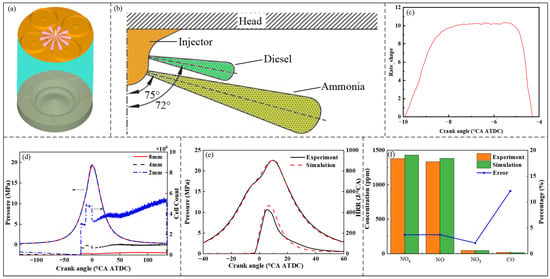
Figure 1a,b illustrates the in-cylinder mesh geometry alongside the dual-direct-injection configuration. Specifically, a coaxial injector design was adopted to enable independent control over diesel and ammonia injection: the diesel nozzle array features 10 orifices (0.213 mm diameter) operating at 120 MPa, whereas the ammonia array comprises 10 orifices (0.300 mm diameter) operating at 18 MPa. The NH3 injection rate was prescribed using the user-defined rate shape profile, as shown in Figure 1c, which defines the temporal distribution of fuel delivery, while the total injected mass is specified separately. All simulations were conducted at a constant engine speed of 1100 rpm with an AER of 60% under a specified partial-load condition rather than at the rated-power condition of 230 kW. Based on the injected fuel masses per cycle, the total fuel energy was calculated to be 1449 J/cycle using the lower heating values of NH3 and diesel (18.8 and 44.6 MJ/kg, respectively). To systematically evaluate the injection strategies, SODI-pre, SODI-main, and DSR were varied under a constant energy input, as detailed in Table 3. The fixed values of SODI-pre, SODI-main, and DSR for the respective parameter sweeps were −15 °CA ATDC, −5 °CA ATDC, and 30%, respectively. The ammonia injection timing was fixed at −10 °CA ATDC. Although the ammonia injection temporally overlaps with the SODI-pre or SODI-main under some operating conditions, the three injection events maintain the prescribed sequence of diesel pre-injection, ammonia injection, and diesel main injection. Therefore, the injection strategy is consistently defined as the D/N/D mode.
Figure 1.
(a) Chamber and injector layout; (b) Injection angles; (c) NH3 injection rate profile; (d) Grid independence; (e) Pressure and HRR comparison; (f) Emissions and error.
Table 3.
Configurations of simulation cases.
A grid independence study was conducted using three base grid sizes (8, 4, and 2 mm), with adaptive mesh refinement and fixed nozzle refinement applied near the injection regions. Figure 1d compares the in-cylinder pressure and computational cost. Taking the 2 mm grid as the benchmark, the 4 mm grid yielded a peak in-cylinder pressure lower by only 0.36%, while reducing the computation time by 62.7%. Peak in-cylinder pressure was selected as the primary criterion because it provides an integrated response to fuel injection, mixing, ignition, and heat release, thereby reflecting the overall combustion response to mesh resolution. The 4 mm grid was therefore selected for subsequent HRR and emission simulations as a balance between accuracy and computational efficiency. In addition, a three-layer local mesh refinement was applied around the NH3 and diesel injection zones to better capture spray development, fuel–air mixing, and the combustion process. The time step was adaptively controlled, with a maximum time step of 0.1 ms. The solver automatically reduced the time step when rapid changes in flow, temperature, or chemical reaction rates occurred to maintain numerical stability and convergence.
To ensure numerical accuracy, the model was validated against experimental measurements from Yang et al. [31] under operating conditions of 17.16 bar indicated mean effective pressure (IMEP) and 1100 rpm. As illustrated in Figure 1e,f, the calculated in-cylinder pressure and HRR agree well with the experimental data, with maximum deviations of 3.4% and 7.4%, respectively. The emission deviations are generally below 5%, except for CO, which shows a maximum deviation of approximately 12.5%, likely due to its sensitivity to local mixing, temperature distribution, and late-stage oxidation. NOx emissions were calculated using the extended Zeldovich model to account for thermal NO formation, while the detailed NH3/n-heptane chemical mechanism was used to resolve the relevant ammonia combustion and nitrogen-containing reaction pathways. Overall, the numerical results support the reliability of the CFD model. NH3, HC, and soot were not included in the available experimental data and therefore could not be independently validated.
In this study, equivalent indicated specific fuel consumption (EISFC) and knock index (KI) were selected as key metrics for evaluating engine performance. EISFC quantifies fuel economy and is defined as the ratio of the total energy input of the consumed fuels, converted to an equivalent mass of diesel, to the indicated work produced [32]. KI is used to characterize the combustion intensity based on the pressure-rise characteristics in the cylinder and is calculated as the average maximum pressure rise rate (PRRmax) across N monitoring points in the cylinder [33]. Here, N represents the number of monitoring points, and a single monitoring point (N = 1) was selected at the location exhibiting the maximum PRR, thereby capturing the most severe local pressure-rise behavior without spatial averaging. The instantaneous cylinder pressure at this point was evaluated as a function of crank angle, and the PRRmax within each engine cycle was determined at a crank-angle resolution of 0.1 °CA. KI was then calculated according to Equation (2). A higher KI indicates a greater pressure-rise intensity and is therefore used to compare the relative combustion intensity among different injection conditions.
where MN and MD represent the mass of ammonia and diesel, respectively, while HN and HD denote their respective lower heating values. The indicated work (Wi) is calculated from intake valve closure (IVC) to exhaust valve opening (EVO) over each engine cycle.
3. Results and Discussion
3.1. Effect of SODI-Pre on Engine Performance and Emissions in D/N/D Mode
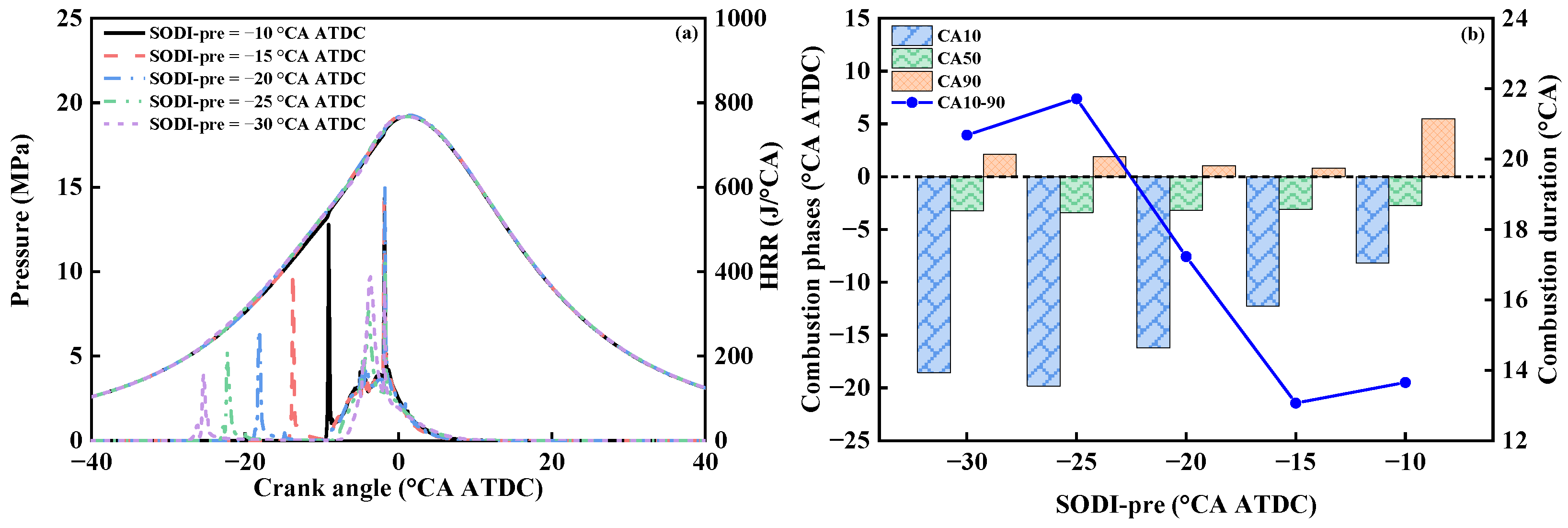
Figure 2a illustrates the variations in in-cylinder pressure and heat release rate (HRR) under different SODI-pre timings. As SODI-pre is advanced, the overall combustion phase shifts forward, accompanied by a slight increase in peak in-cylinder pressure. This behavior is attributed to the extended mixing duration between the pre-injected diesel and air, which fosters a more homogeneous mixture, thereby enhancing the ignition and combustion environment for the subsequent main injection. The HRR profiles exhibit a distinct bimodal shape, where the first peak corresponds to the pre-injected diesel combustion and the second peak represents the combined combustion of the ammonia fuel and main diesel. The occasional sharp HRR peaks represent short-duration instantaneous fluctuations and do not indicate sustained heat release over the entire combustion duration. Advancing SODI-pre causes the first HRR peak to appear earlier with a reduced magnitude, as lower ambient temperatures and pressures at earlier crank angles inhibit the combustion of the pre-injected fuel. Conversely, the second HRR peak shows a non-monotonic trend—first increasing and then decreasing—indicating that moderate pre-injection advancement promotes main combustion, whereas overly advanced pre-injection hinders ammonia ignition and flame propagation. Figure 2b illustrates the effects of SODI-pre on the combustion phases and duration. CA10, CA50, and CA90 represent the crank angles corresponding to 10%, 50%, and 90% of cumulative heat release, defining the start of combustion, combustion phasing, and end of combustion, respectively, while the overall combustion duration is defined as CA10–CA90. Within the SODI-pre range of −10 to −25 °CA ATDC, advancing SODI-pre leads to earlier CA10 and CA50 due to the extended mixing time and thermal effect of pre-combustion heat release, which enhance subsequent ignition. However, further advancing SODI-pre to −30 °CA ATDC retards CA10 and CA50 because the early injection occurs under relatively low in-cylinder temperature and pressure conditions. The vaporization of pre-injected diesel absorbs heat from the surrounding charge, producing a cooling effect that lowers the thermal state of the charge during the subsequent polytropic compression process, thereby reducing chemical reactivity and delaying combustion. Additionally, advancing SODI-pre continuously prolongs CA10–CA90, indicating a more dispersed heat release profile and enhanced late-stage burning.
Figure 2.
Effects of SODI-pre on in-cylinder pressure, HRR (a), and combustion phases and duration (b).
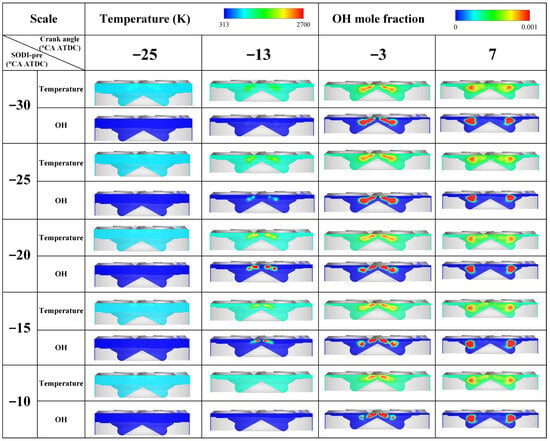
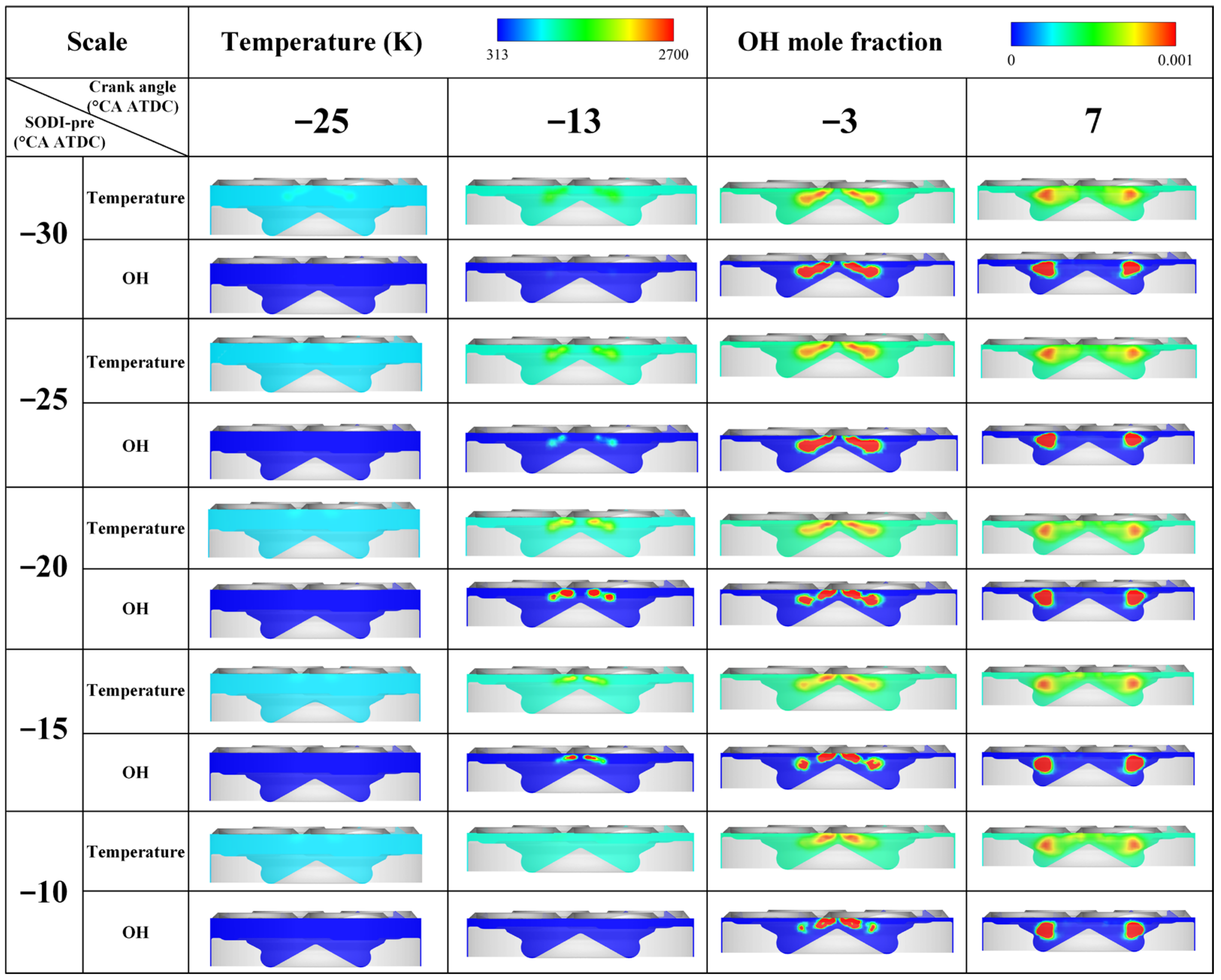
Figure 3 illustrates the in-cylinder temperature and OH radical distributions under various SODI-pre timings. As SODI-pre is advanced, the temperature rise occurs earlier in the cycle. At −3 °CA ATDC, an advanced SODI-pre produces a more uniform temperature distribution within the combustion chamber, whereas a delayed SODI-pre induces pronounced thermal stratification and localized high-temperature zones. This behavior is attributed to the enhanced diesel–air premixing under earlier pre-injections, which promotes a more spatially dispersed premixed flame. Conversely, delayed SODI-pre confines combustion to diesel-rich spray regions, yielding high temperature gradients and hot spots. At −13 °CA ATDC, the peak OH mole fraction displays a non-monotonic trend with advancing SODI-pre, reaching its maximum at −20 °CA ATDC. Moderately advancing SODI-pre elevates the in-cylinder thermal environment; however, excessively early pre-injection induces local charge cooling, which could attenuate combustion intensity and suppress OH radical formation. By −3 °CA ATDC, early SODI-pre yields a continuous and spatially extended OH distribution driven by the expansion of the high-temperature zone. In contrast, delayed SODI-pre concentrates OH radicals within the diesel spray cores, resulting in localized high-concentration pockets over a confined region.
Figure 3.
Effects of SODI-pre on spatial distributions of in-cylinder temperature and OH radical.
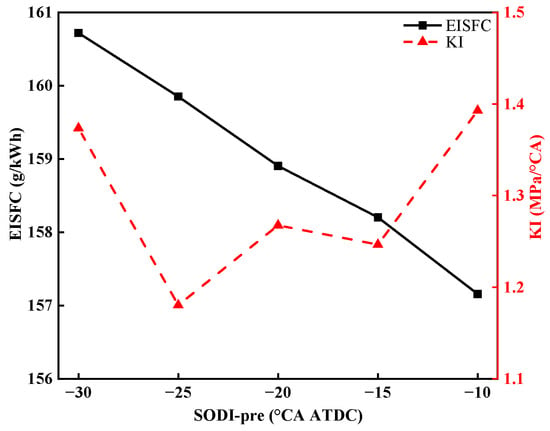
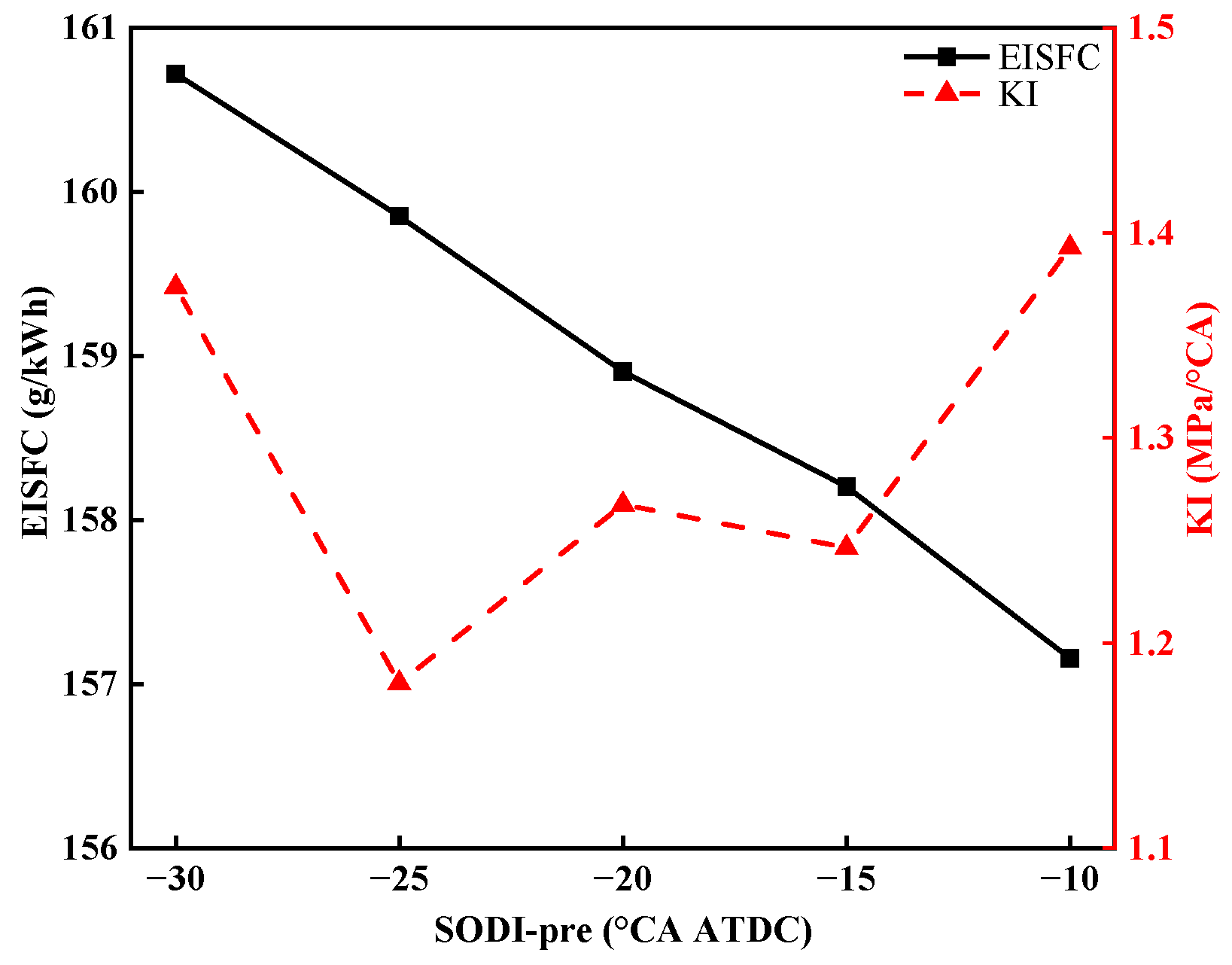
Figure 4 illustrates the variations in EISFC and KI under different SODI-pre conditions. Advancing SODI-pre continuously increases EISFC, which is attributed to the forward shift in combustion phasing away from top dead center (TDC), thereby degrading overall thermal efficiency. The KI remains below 2.0 MPa/°CA across all tested cases, demonstrating a low knock propensity. The peak KI occurs at an SODI-pre = −10 °CA ATDC, where the close proximity of pre-injected diesel and ammonia injections induces strong inter-spray interactions. The increased injection interaction may affect the local fuel–air mixing and ignition process, resulting in a longer ignition delay. The associated accumulation of fuel before ignition may contribute to a more rapid subsequent heat release and, consequently, a higher KI [34].
Figure 4.
Effects of SODI-pre on EISFC and KI.
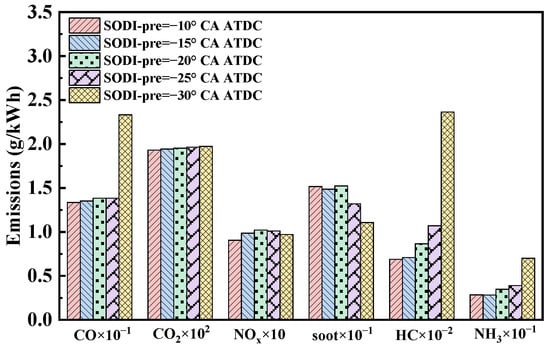
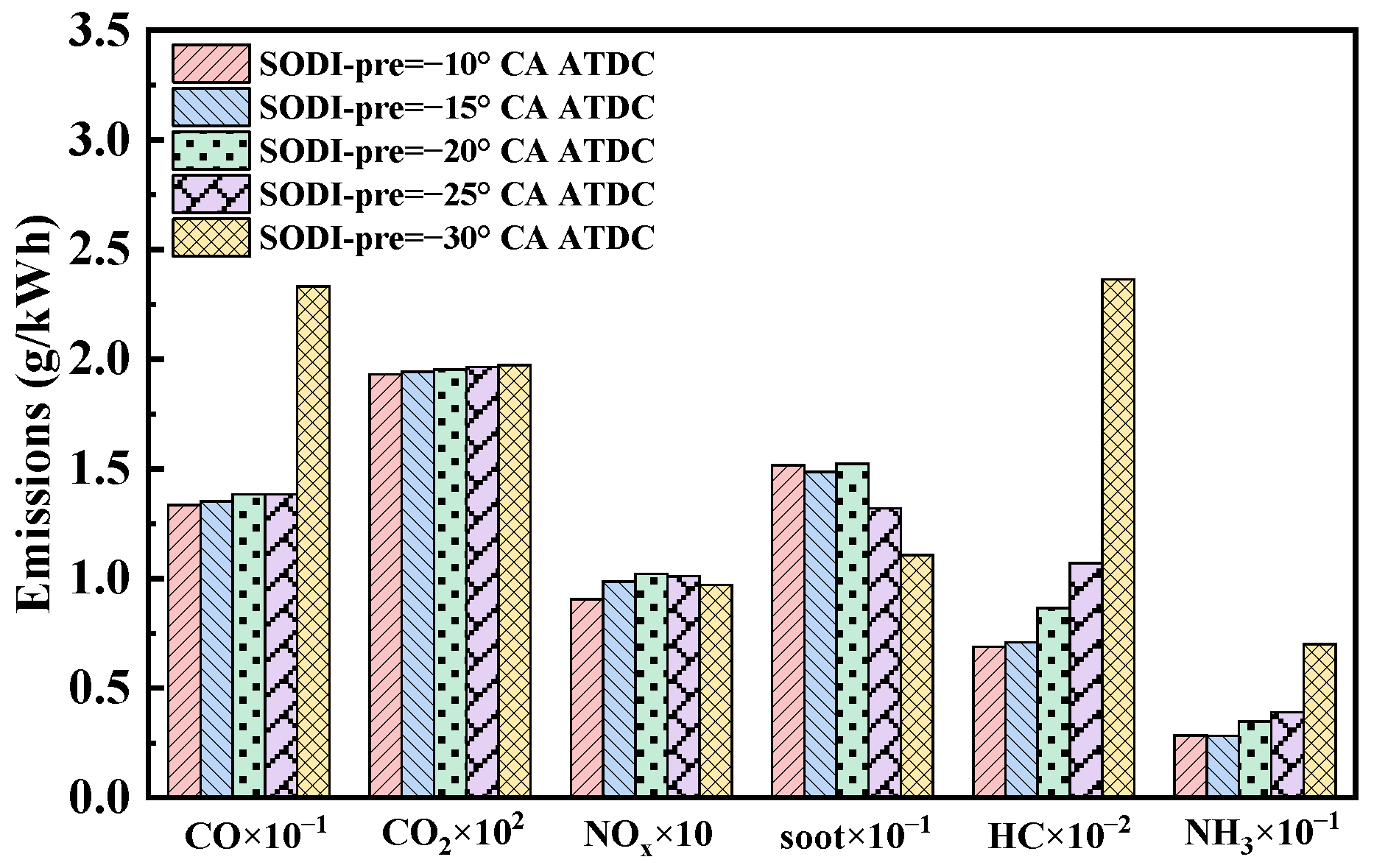
Figure 5 displays the engine emission characteristics under various SODI-pre timings. As SODI-pre is advanced, NOx emissions exhibit a non-monotonic trend—first increasing and then decreasing. This behavior is driven by elevated in-cylinder combustion temperatures under moderately advanced pre-injections, contrasted with suppressed NOx thermal formation under excessively early timings. Both CO and HC emissions remain low and stable within the SODI-pre range of −10 to −25 °CA ATDC, but rise sharply at −30 °CA ATDC, signifying marked combustion deterioration. Meanwhile, soot emissions decrease continuously with advancing SODI-pre owing to enhanced diesel–air mixing homogeneity and soot oxidation. In contrast, unburned NH3 emissions gradually increase, indicating that excessively early pre-injection is detrimental to complete ammonia combustion.
Figure 5.
Effects of SODI-pre on engine emissions.
3.2. Effect of SODI-Main on Engine Performance and Emissions in D/N/D Mode
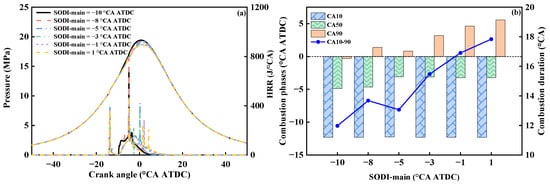
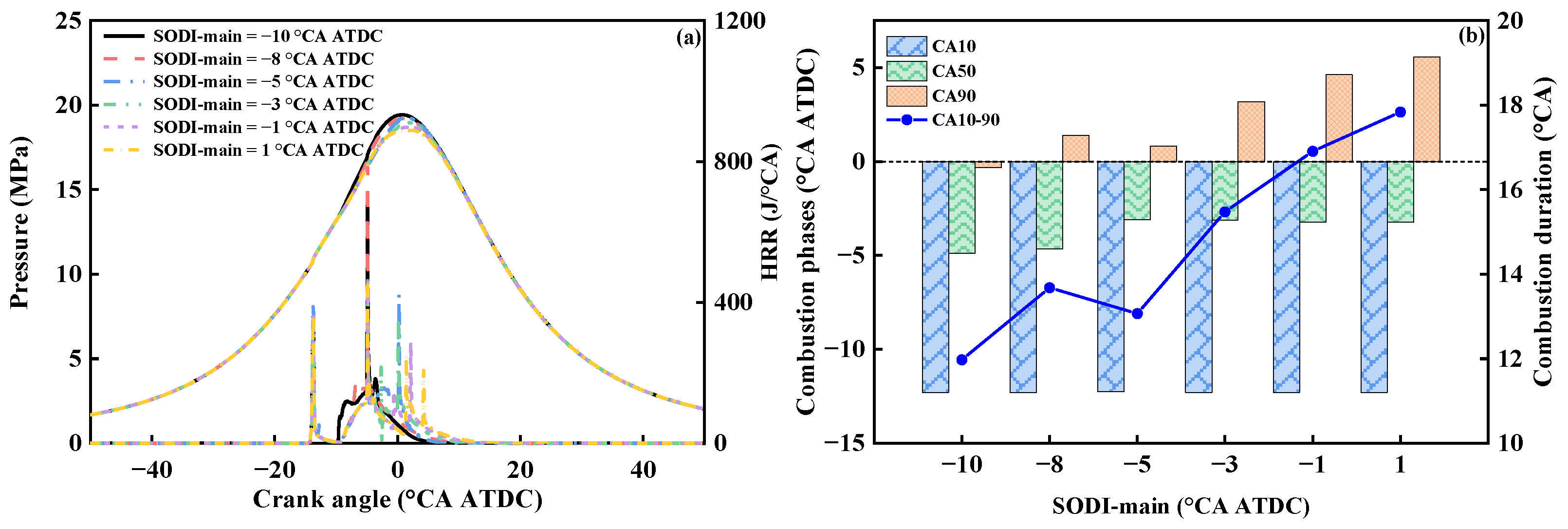
Figure 6a illustrates the variations in in-cylinder pressure and HRR under different SODI-main conditions. Advancing SODI-main elevates both the peak in-cylinder pressure and peak HRR, while concentrating the overall heat release process. This behavior is attributed to the extended mixing duration prior to ignition, which fosters a more homogeneous diesel–air mixture and leads to more rapid and intense energy release. In contrast, when SODI-main is retarded to 1 °CA ATDC, combustion predominantly shifts into the expansion stroke, where the expanding cylinder volume suppresses the pressure rise and slows the combustion rate, producing a broader and flatter HRR profile. As shown in Figure 6b, SODI-main exerts a minimal influence on CA10. However, advancing SODI-main advances CA50 and reduces the overall combustion duration of CA10–90, driven by a higher premixed combustion fraction that advances the heat release peak. When SODI-main is retarded past TDC, downward piston movement weakens the thermodynamic pressure and temperature rise. Consequently, heat release occurs primarily during expansion, resulting in a delayed CA50 and prolonged post-combustion that extends total burn duration.
Figure 6.
Effects of SODI-main on in-cylinder pressure, HRR (a), and combustion phases and duration (b).
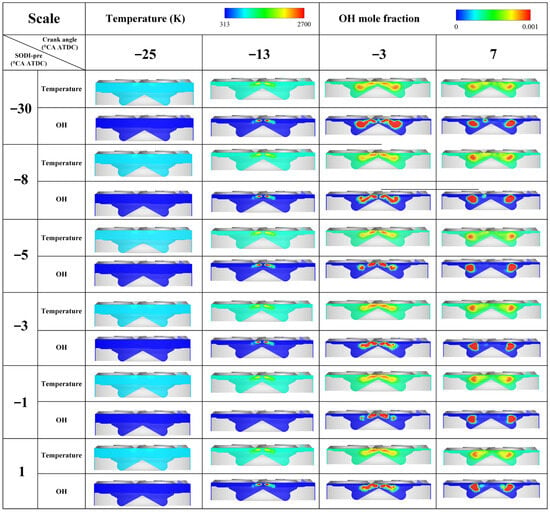
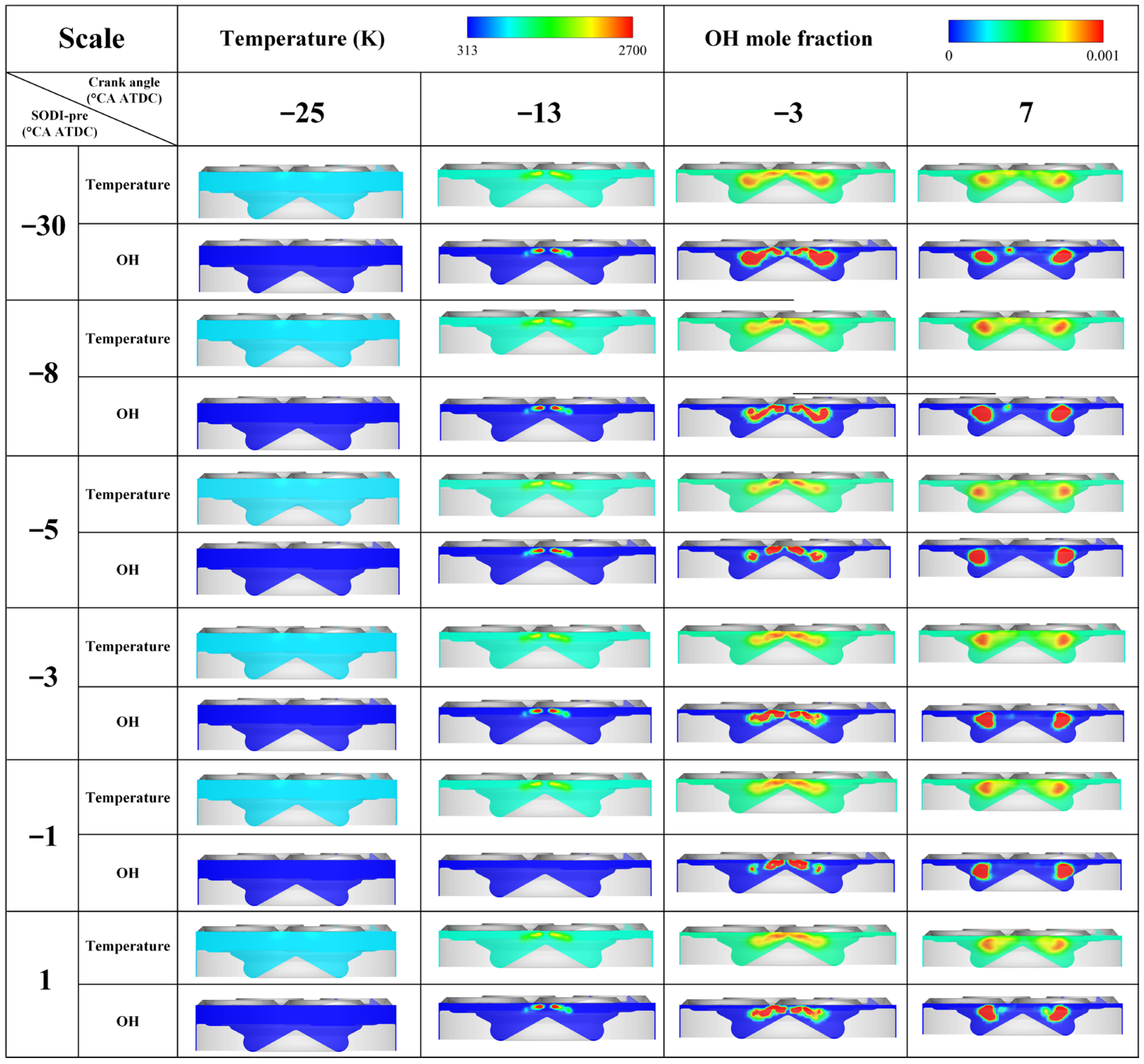
Figure 7 displays the effect of SODI-main on in-cylinder temperature and OH distribution. At −3 °CA ATDC, advancing SODI-main increases peak temperature and expands the high-temperature zone. This is driven by improved fuel–air mixing and a more homogeneous mixture, which enhances flame propagation. Conversely, delaying SODI-main shortens mixing time, shifting the process toward diffusion-dominated combustion with high temperatures concentrated near the spray flame front. Consequently, advancing SODI-main increases the overall OH concentration and produces a more localized, intense distribution. OH radicals initially form around the spray periphery before expanding into the core combustion chamber, facilitated by the enlarged high-temperature region. In contrast, delayed main injection causes insufficient mixing and non-uniform local equivalence ratios, resulting in suppressed OH formation and a contracted spatial spread.
Figure 7.
Effects of SODI-main on spatial distributions of in-cylinder temperature and OH radical.
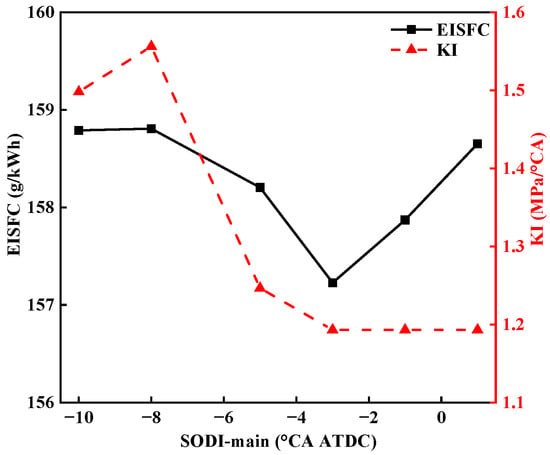
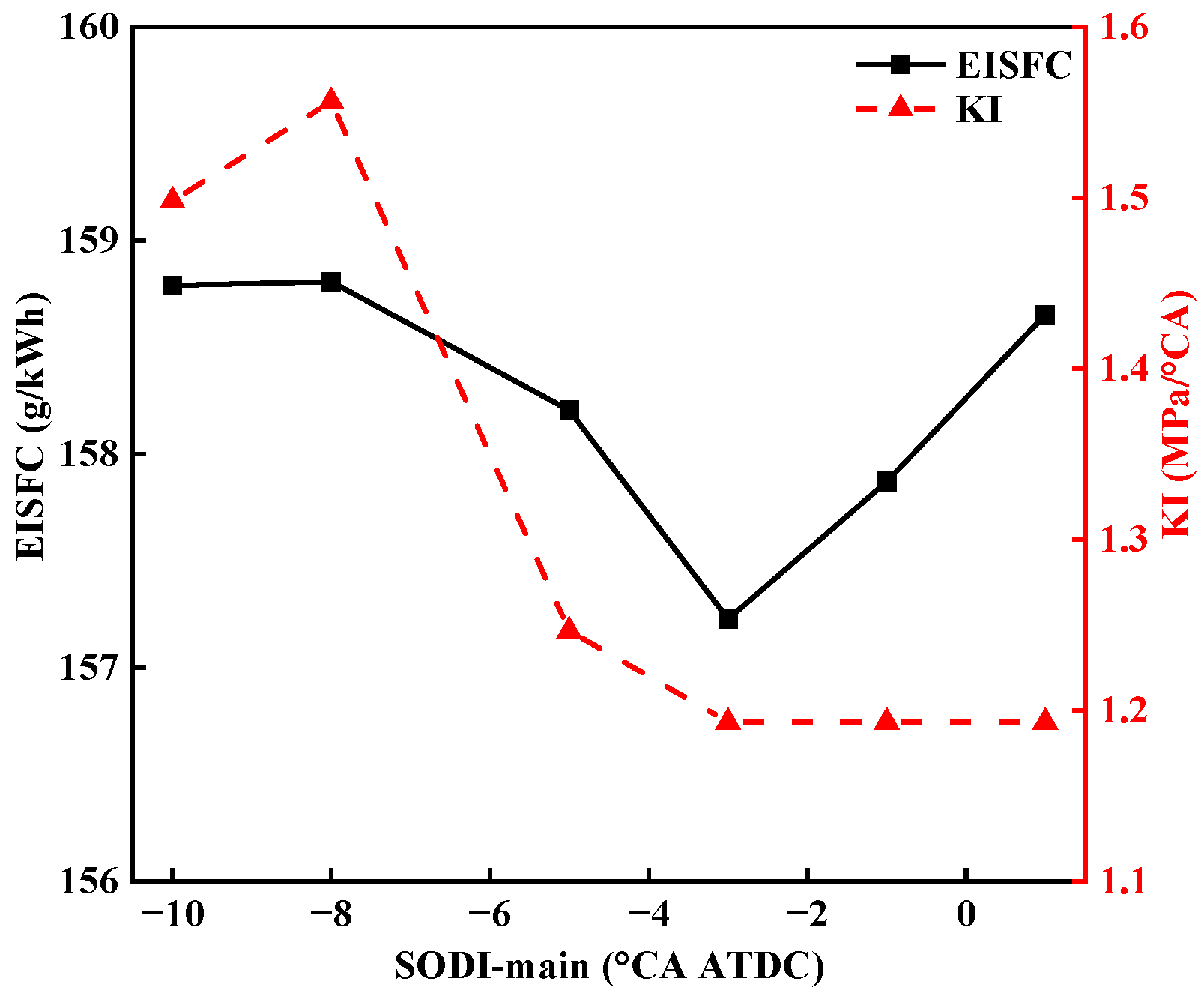
Figure 8 illustrates the effects of SODI-main on EISFC and KI. The minimum EISFC occurs at −3 °CA ATDC, with either advancing or retarding SODI-main causing EISFC to rise. While advancing SODI-main produces a large premixed combustible mixture and accelerates the combustion rate, excessive advance increases negative compression work [35]. Conversely, excessive delay shifts combustion predominantly into the expansion stroke, weakening quasi-constant-volume combustion and reducing thermal efficiency. Regarding knock risk, KI remains relatively high, between −8 and −10 °CA ATDC, due to a higher premixed combustion fraction. This triggers an excessively rapid initial heat release, sharp pressure rise, and strong pressure waves, thereby increasing knock propensity.
Figure 8.
Effects of SODI-main on EISFC and KI.
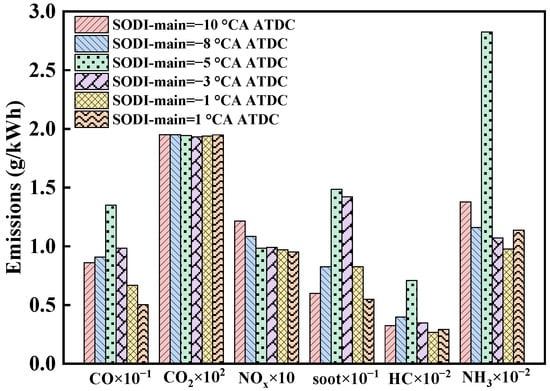
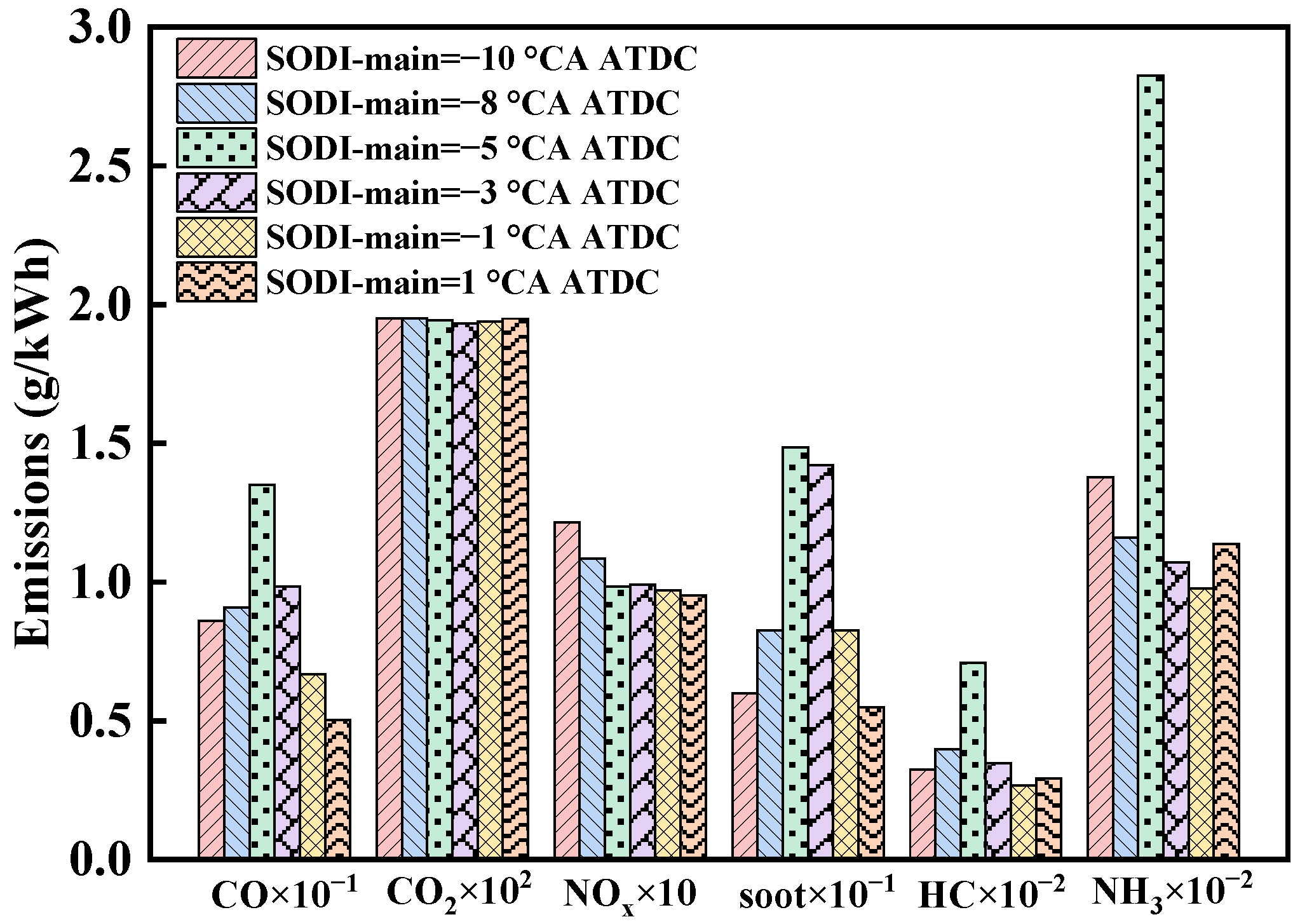
Figure 9 illustrates the effects of SODI-main on engine emissions. While SODI-main timing has minimal impact on CO2, NH3, and HC emissions, advancing SODI-main significantly increases NOx emissions. This is driven by higher peak temperatures and an expanded high-temperature region, which accelerate nitrogen activation and thermal NO formation. Conversely, CO and soot emissions initially increase and then decrease across the tested range. From −10 to −5 °CA ATDC, advancing the main injection enhances combustion and CO post-oxidation, thereby lowering CO and soot levels. Meanwhile, retarding the main injection within −5 to 1 °CA ATDC improves mixing between oxygen and the high-temperature zone, similarly promoting CO oxidation and reducing emissions.
Figure 9.
Effects of SODI-main on engine emissions.
3.3. Effect of DSR on Engine Performance and Emissions in D/N/D Mode
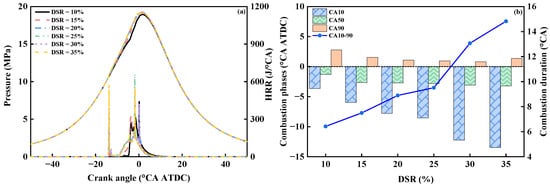
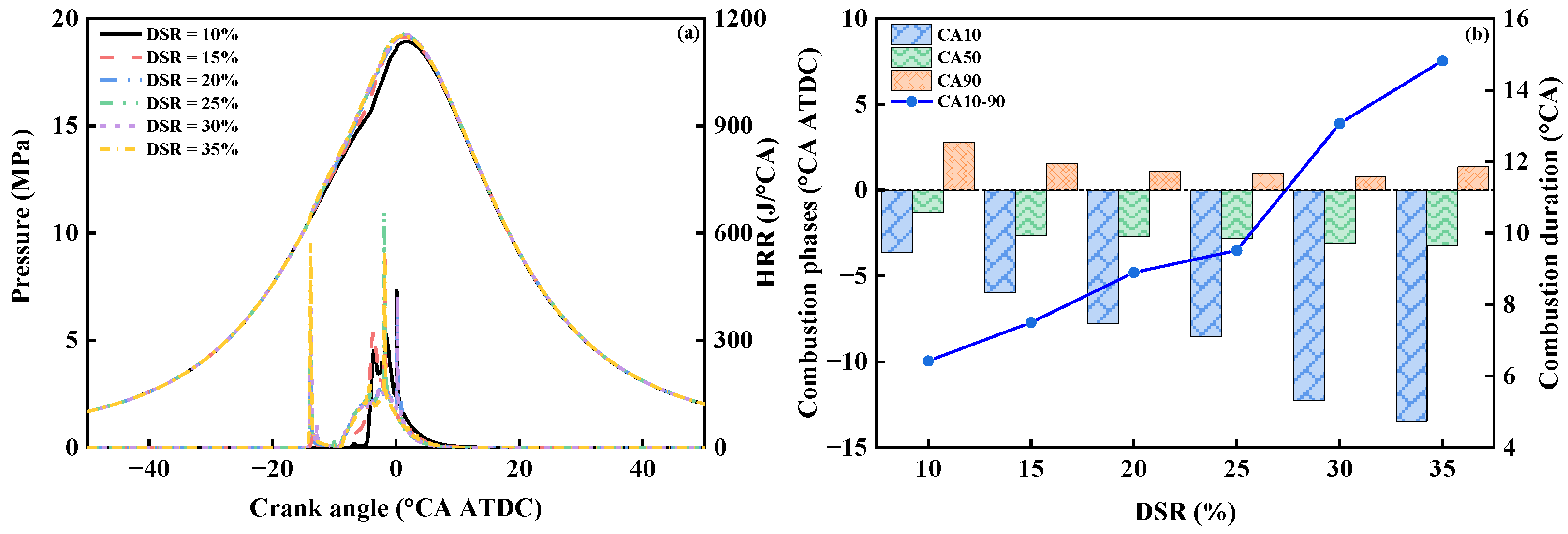
Figure 10a illustrates the effects of DSR on in-cylinder pressure and HRR. Increasing DSR elevates the peak in-cylinder pressure, primarily because the increased pre-injected diesel promotes earlier combustion phasing and more concentrated heat release near the main combustion stage. The additional diesel provides more ignition sources, which may facilitate the subsequent combustion of the ammonia–air mixture [36]. The HRR displays distinct multi-peak characteristics: at DSR = 35%, the first peak—dominated by pilot diesel combustion—reaches its maximum, whereas at DSR = 25%, the second peak—driven by the combined combustion of main-injected diesel and ammonia—is maximized. Overall, a moderate increase in DSR benefits main combustion, whereas an excessive DSR reduces main-injected diesel quantity, weakening its synergistic combustion with ammonia. Figure 10b shows the impact of DSR on combustion phasing and duration. As DSR increases, CA10 and CA50 advance progressively, whereas CA10–90 is prolonged. The increased pilot diesel fraction enhances early reactivity and heat release, facilitating earlier ignition and establishing favorable conditions for main diesel/ammonia combustion, which advances CA50. However, excessive DSR decreases the main injection mass, dampening the intensity of the main combustion phase. This shifts heat release toward a more distributed profile and promotes late-stage burning, ultimately extending the total combustion duration.
Figure 10.
Effects of DSR on in-cylinder pressure, HRR (a), and combustion phases and duration (b).
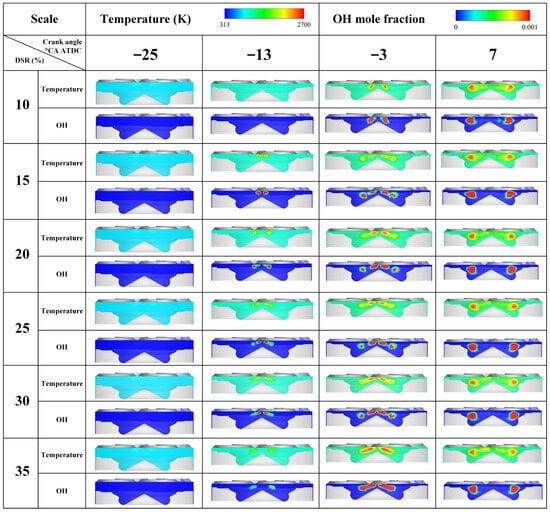
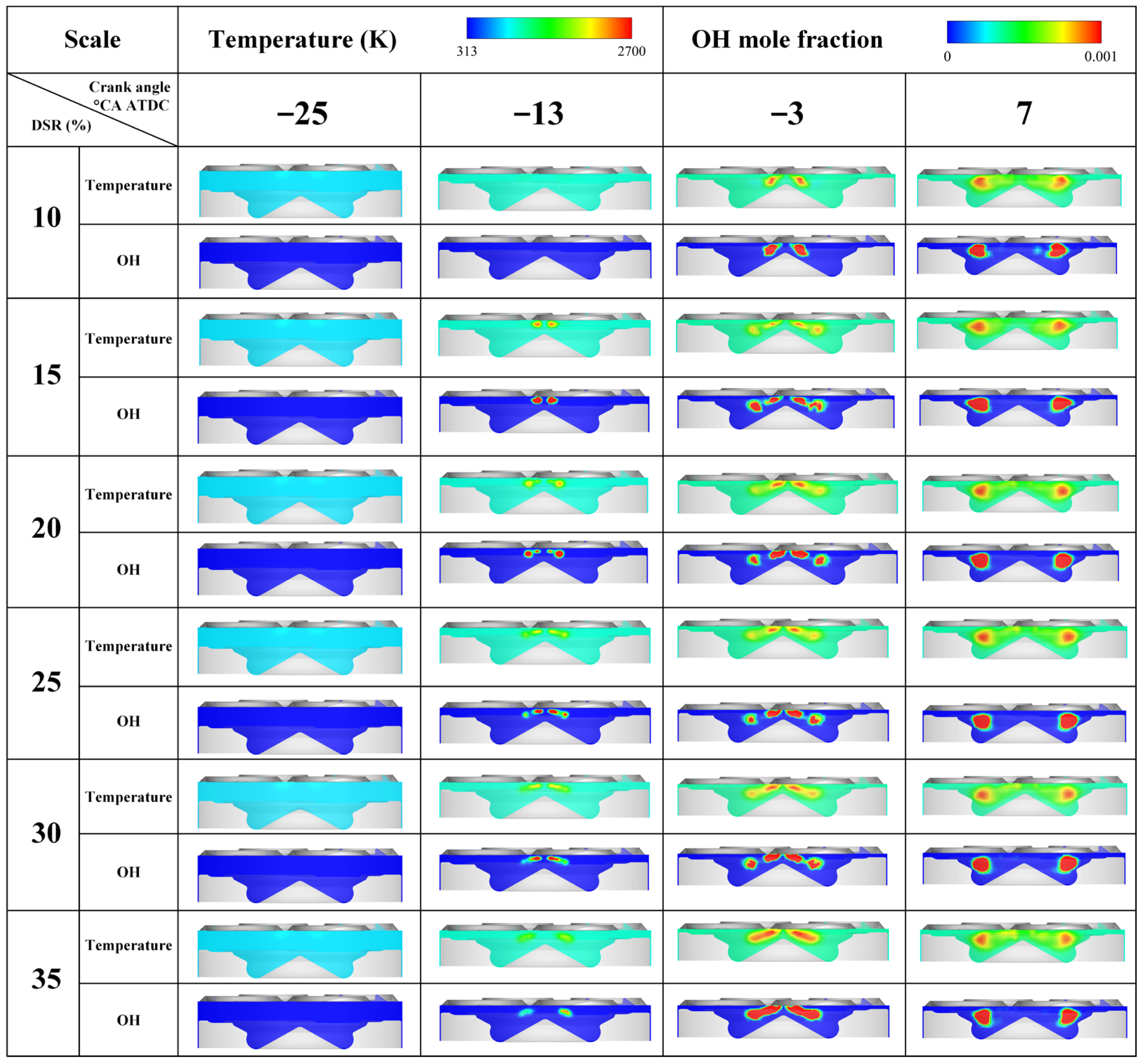
Figure 11 depicts the in-cylinder temperature and OH distribution under varying DSR conditions. At −3 °CA ATDC, increasing DSR raises the average cylinder temperature and expands the high-temperature zone. A larger pilot diesel mass generates more widely distributed ignition centers and highly reactive zones, elevating the local temperature of the surrounding ammonia mixture and promoting its combustion. The subsequent combustion of main-injected diesel interacts with these reactive zones, producing a broader and more uniform high-temperature field. At low DSR, regions with high OH concentrations remain localized near the injector and along the diesel spray path. As DSR increases, the overall OH concentration rises significantly, expanding throughout most of the combustion chamber. The additional pilot diesel yields more initial OH radicals and reactive centers, effectively activating the ammonia–air mixture and boosting overall reactivity. Consequently, the process transitions from a localized flame-kernel-dominated combustion mode to a widely distributed, rapid combustion regime.
Figure 11.
Effects of DSR on spatial distributions of in-cylinder temperature and OH radical.
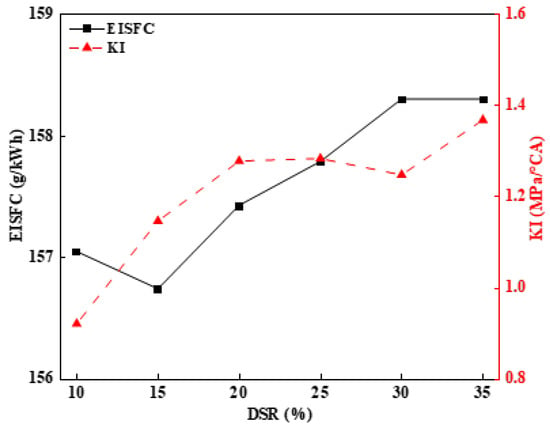
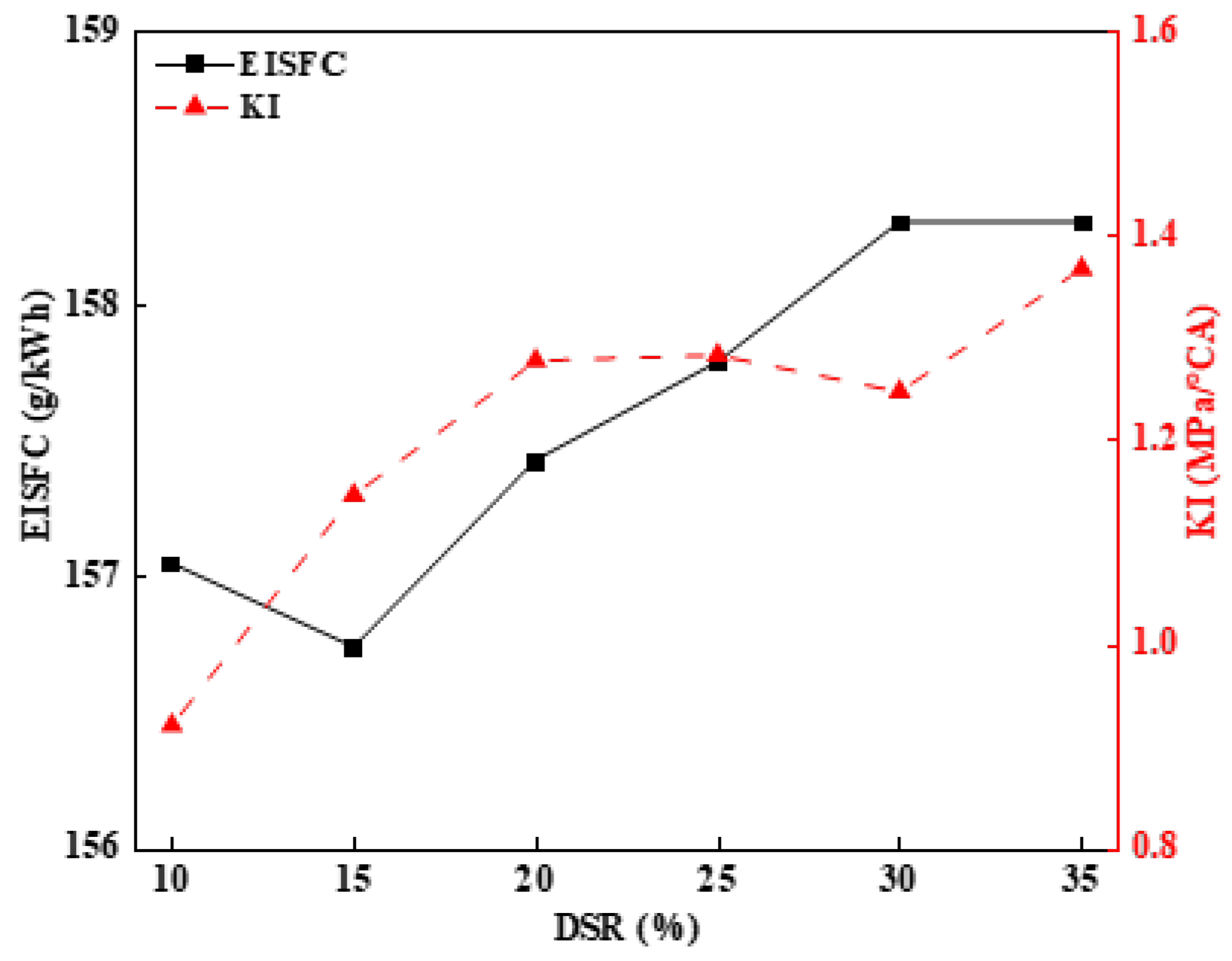
Figure 12 shows the effects of DSR on EISFC and KI. EISFC reaches its minimum at a DSR of 15%, after which further increases in DSR lead to an overall increasing trend in both EISFC and KI. At low DSR, the ammonia–air mixture is insufficiently activated, leading to poor combustion efficiency and higher EISFC; however, the relatively mild combustion process produces limited cylinder pressure fluctuations, keeping KI low. As DSR increases moderately, the increased pre-injected diesel provides additional ignition sources and promotes earlier and more concentrated heat release, thereby enhancing the quasi-constant-volume combustion characteristics. This improves thermal conversion efficiency and reduces EISFC. Conversely, an excessively high DSR may be associated with increased pre-injected diesel–wall interaction and advanced combustion phasing, which could increase negative compression work and cylinder pressure oscillations, thereby contributing to higher EISFC and KI.
Figure 12.
Effects of DSR on EISFC and KI.
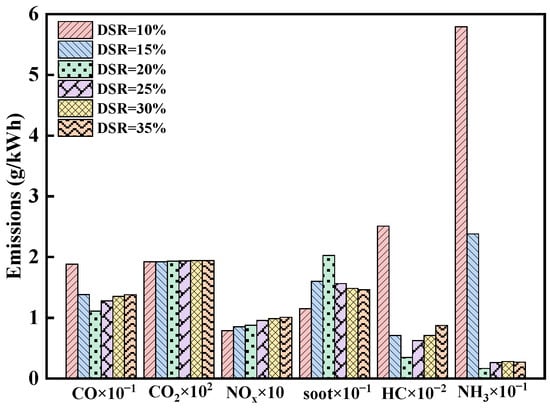
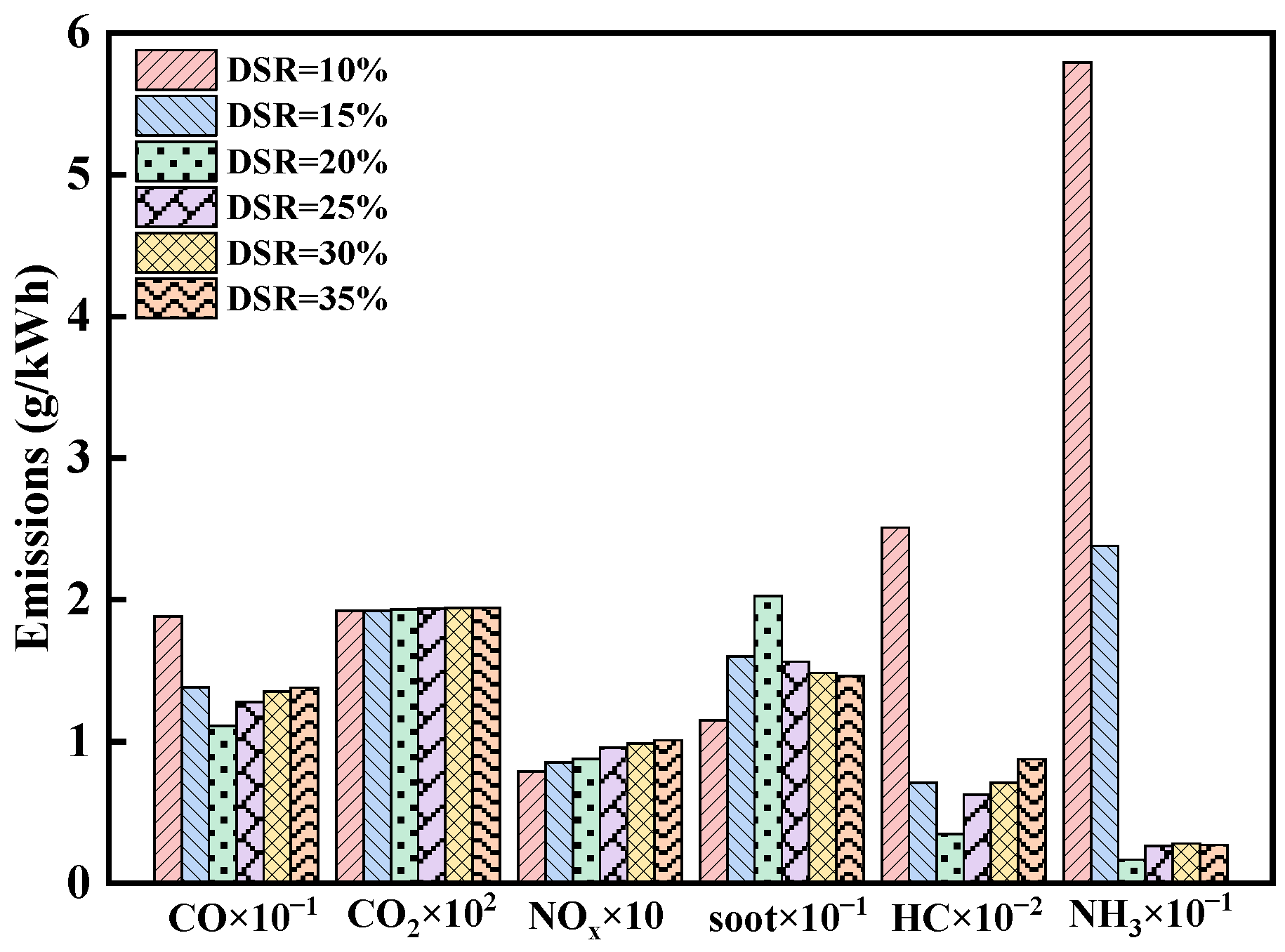
Figure 13 displays the engine emission characteristics under varying DSR conditions. While changes in DSR have little impact on CO2 and soot emissions, CO and HC emissions exhibit a U-shaped trend, first decreasing and then increasing as DSR rises. A moderate DSR increase creates a highly reactive in-cylinder environment enriched with free radicals, effectively activating the slow-burning ammonia mixture and promoting complete fuel oxidation. However, an excessively high DSR may lead to poor local air mixing, causing CO and HC emissions to rise. Concurrently, increasing DSR elevates overall cylinder temperatures, which accelerates thermal NOx formation and drives a continuous rise in NOx emissions.
Figure 13.
Effects of DSR on engine emissions.
Based on the systematic parametric analysis, a favorable overall trade-off condition was identified at SODI-pre = −15 °CA ATDC, SODI-main = −1 °CA ATDC, and DSR = 30%. The conditions identified from the individual parametric sweeps, such as SODI-pre = −10 °CA ATDC and DSR = 15%, represent favorable conditions for the corresponding individual parameters rather than the final overall condition. The final parameter combination was selected by jointly considering the effects of SODI-pre, SODI-main, and DSR on fuel economy, combustion intensity, and emission characteristics. Compared with the condition providing the lowest EISFC, KI, NOx, and CO2, this parameter combination substantially reduces CO, soot, unburned NH3, and HC, while causing only limited increases in EISFC, KI, NOx, and CO2. Therefore, it represents a favorable overall compromise under the investigated operating condition. Since the present investigation was conducted at a specific partial-load condition (1100 rpm, 60% AER, and 1449 J/cycle), the identified injection parameters should not be directly extrapolated to idle or full-load conditions, where changes in in-cylinder temperature, pressure, and mixture conditions may alter ignition and combustion characteristics. Future studies will further investigate the applicability of the selected injection parameters under a wider range of engine loads, including idle and full-load conditions.
From the perspective of heavy-duty emission regulations, the selected injection strategy provides favorable combustion and emission characteristics, with low CO (0.067 g/kWh), HC (0.003 g/kWh), and unburned NH3 (0.009 g/kWh) emissions. These values are below the corresponding Euro VI reference limits for CO and HC, although direct comparison should be treated cautiously because the results are obtained from a single partial-load CFD condition. The relatively high NO emission is partly attributable to the nitrogen-containing nature of ammonia fuel, which promotes NO formation through additional nitrogen-related reaction pathways. The NOx emission of 9.7 g/kWh remains substantially higher than heavy-duty regulatory limits, indicating that in-cylinder combustion control alone is insufficient and that selective catalytic reduction (SCR) would be required for practical applications. The soot emission of 0.083 g/kWh also indicates the potential need for a diesel particulate filter (DPF), while an ammonia slip catalyst (ASC) could be considered to further control residual NH3 emissions. Overall, compliance with heavy-duty emission regulations would require appropriate exhaust after-treatment and validation over regulatory test cycles and a wider range of engine operating conditions.
4. Conclusions
This study systematically investigates the effects of key injection parameters on D/N/D combustion. The primary conclusions are summarized as follows:
(1) SODI-pre serves as a key parameter governing initial ignition kernel formation and overall combustion phasing. Advancing SODI-pre within a favorable range creates a favorable thermal environment that accelerates main combustion. However, excessive advancement may induce severe wall impingement and premature reactivity release, which can deteriorate ammonia flame propagation, prolong combustion duration, and adversely affect both EISFC and emissions. Within the SODI-pre sweep, SODI-pre = −10 °CA ATDC provides a favorable combustion performance, with an EISFC of 157.16 g/kWh and a KI of 1.39 MPa/°CA, while maintaining relatively low pollutant emissions. Therefore, −10 °CA ATDC was identified as the favorable condition for the SODI-pre sweep.
(2) SODI-main governs the intensity and kinetic pathway of the main heat release phase, exhibiting a clear transition at −3 °CA ATDC. Advancing SODI-main enhances pre-combustion mixing, thereby promoting complete oxidation, whereas retarding SODI-main suppresses thermal NOx formation by lowering the peak in-cylinder temperature. Setting SODI-main at −1 °CA ATDC provides a favorable balance between combustion efficiency and pollutant suppression, with a slight penalty in KI (1.19 MPa/°CA), while maintaining low CO (0.067 g/kWh), soot (0.083 g/kWh), unburned NH3 (0.0098 g/kWh), and HC emissions (0.0027 g/kWh), together with competitive EISFC (157.90 g/kWh) and NOx (9.69 g/kWh).
(3) DSR dictates the spatial distribution of reactivity and radical density. Increasing DSR enhances ignition energy to activate the sluggish ammonia–air mixture. Nevertheless, excessive DSR starves the main injection quantity, weakening main flame propagation and driving late-stage combustion, which elevates EISFC, KI, and emissions. A DSR of 15% yields the lowest EISFC (156.74 g/kWh), NOx (8.56 g/kWh), and CO2 (192.50 g/kWh), though at the expense of higher KI (1.15 MPa/°CA) and unburned species (CO, soot, NH3, and HC).
(4) Considering the critical trade-off between fuel economy, knock suppression, and complete oxidation of ammonia/diesel, the selected injection parameter set (SODI-pre = −15 °CA ATDC, SODI-main = −1 °CA ATDC, and DSR = 30%) effectively reduces incomplete combustion products (CO, soot, unburned NH3, and HC) with marginal penalties in fuel consumption and NOx/CO2 emissions. Under the investigated condition of 1100 rpm, 56% AER, and 1449 J/cycle, this parameter set provides a favorable trade-off between combustion performance and emissions for ammonia/diesel dual direct-injection combustion.
Author Contributions
Conceptualization, B.W. and C.L.; investigation, B.W., C.L., J.H. and Z.Z.; writing—original draft preparation, B.W. and Z.Z.; writing—review and editing, Y.L. and S.Y.; supervision, Y.L. and S.Y.; funding acquisition, Y.L. All authors have read and agreed to the published version of the manuscript.
Funding
This research was funded by Science and Technology Innovation Program of Hunan Province (Grant No. 2025RC3018).
Data Availability Statement
The original contributions presented in this study are included in the article. Further inquiries can be directed to the corresponding authors.
Conflicts of Interest
The authors declare no conflicts of interest.
Nomenclature
| Abbreviation | Definition |
| ADDF | Ammonia/diesel dual-fuel |
| AER | Ammonia energy ratio |
| D/N/D | Split diesel injection bracketing ammonia |
| SODI-pre | Start of diesel pre-injection |
| SODI-main | Start of diesel main injection |
| DSR | Diesel split ratio |
| EISFC | Equivalent indicated specific fuel consumption |
| KI | Knock index |
| PRRmax | Maximum pressure rise rate |
| CA10/CA50/CA90 | 10%/50%/90% of cumulative heat release |
References
- Ryu, K.; Zacharakis-Jutz, G.E.; Kong, S.-C. Effects of gaseous ammonia direct injection on performance characteristics of a spark-ignition engine. Appl. Energy 2014, 116, 206–215. [Google Scholar] [CrossRef] [Scilit]
- Chai, W.S.; Bao, Y.; Jin, P.; Tang, G.; Zhou, L. A review on ammonia, ammonia-hydrogen and ammonia-methane fuels. Renew. Sustain. Energy Rev. 2021, 147, 111254. [Google Scholar] [CrossRef] [Scilit]
- Wijayasekera, S.C.; Hewage, K.; Razi, F.; Sadiq, R. Fueling tomorrow’s commute: Current status and prospects of public bus transit fleets powered by sustainable hydrogen. Int. J. Hydrogen Energy 2024, 66, 170–184. [Google Scholar] [CrossRef] [Scilit]
- Agyekum, E.B.; Odoi-Yorke, F.; Abbey, A.A.; Ayetor, G.K. A review of the trends, evolution, and future research prospects of hydrogen fuel cells—A focus on vehicles. Int. J. Hydrogen Energy 2024, 72, 918–939. [Google Scholar] [CrossRef] [Scilit]
- Cheng, Q.; Muhammad, A.; Kaario, O.; Ahmad, Z.; Martti, L. Ammonia as a sustainable fuel: Review and novel strategies. Renew. Sustain. Energy Rev. 2025, 207, 114995. [Google Scholar] [CrossRef] [Scilit]
- Cardoso, J.S.; Silva, V.; Rocha, R.C.; Hall, M.J.; Costa, M.; Eusébio, D. Ammonia as an energy vector: Current and future prospects for low-carbon fuel applications in internal combustion engines. J. Clean. Prod. 2021, 296, 126562. [Google Scholar] [CrossRef] [Scilit]
- Yousefi, A.; Guo, H.; Birouk, M. Effect of diesel injection timing on the combustion of natural gas/diesel dual-fuel engine at low-high load and low-high speed conditions. Fuel 2019, 235, 838–846. [Google Scholar] [CrossRef] [Scilit]
- Reiter, A.J.; Kong, S.-C. Combustion and emissions characteristics of compression-ignition engine using dual ammonia-diesel fuel. Fuel 2011, 90, 87–97. [Google Scholar] [CrossRef] [Scilit]
- Yang, C.; Wang, Z.; Li, J.; Cheng, X. Effects of ammonia energy fractions, diesel injection timings, and loads on combustion and emission characteristics of PFI-DI ammonia-diesel engines. Int. J. Engine Res. 2024, 25, 743–757. [Google Scholar] [CrossRef] [Scilit]
- Li, G.; Chen, R.; Wang, X.; Li, T.; Zheng, K.; Liu, S.; Liu, Y.; Lv, X. Intake pre-injection diesel strategy to enhance the combustion and reduce emissions in an ammonia-diesel dual-fuel (ADDF) engine ignited by pilot fuel: Effects of pilot fuel injection and ammonia energy ratio. Appl. Therm. Eng. 2026, 302, 131733, Correction in Appl. Therm. Eng. 2026, 132960, in press. [Google Scholar] [CrossRef] [Scilit]
- Zhang, F.; Yang, C.; Wang, Z.; Cheng, X. The coupling effects of split diesel injection multi-variables on combustion and emission characteristics of an ammonia/diesel dual-fuel engine. Int. J. Engine Res. 2025, 26, 783–795. [Google Scholar] [CrossRef] [Scilit]
- Liu, J.; Wang, X.; Zhao, W.; Sun, P.; Ji, Q. Effects of ammonia energy fraction and diesel injection parameters on combustion stability and GHG emissions characteristics in a low-loaded ammonia/diesel dual-fuel engine. Fuel 2024, 360, 130544. [Google Scholar] [CrossRef] [Scilit]
- Chen, Z.; Wan, Y.; Awad, O.I.; Pan, Z. Effect of multiple injection strategy under high ammonia ratio on combustion and emissions of liquid ammonia/diesel dual DI engine. Atmosphere 2025, 16, 94. [Google Scholar] [CrossRef] [Scilit]
- Zhang, Z.; Di, L.; Shi, L.; Yang, X.; Cheng, T.; Shi, C. Effect of liquid ammonia HPDI strategies on combustion characteristics and emission formation of ammonia-diesel dual-fuel heavy-duty engines. Fuel 2024, 367, 131450. [Google Scholar] [CrossRef] [Scilit]
- Nadimi, E.; Przybyła, G.; Løvås, T.; Peczkis, G.; Adamczyk, W. Experimental and numerical study on direct injection of liquid ammonia and its injection timing in an ammonia-biodiesel dual injection engine. Energy 2023, 284, 129301. [Google Scholar] [CrossRef] [Scilit]
- Shin, J.; Park, S. Numerical analysis and optimization of combustion and emissions in an ammonia-diesel dual-fuel engine using an ammonia direct injection strategy. Energy 2024, 289, 130014. [Google Scholar] [CrossRef] [Scilit]
- Bjørgen, K.O.P.; Emberson, D.R.; Løvås, T. Combustion of liquid ammonia and diesel in a compression ignition engine operated in high-pressure dual fuel mode. Fuel 2024, 360, 130269. [Google Scholar] [CrossRef] [Scilit]
- Tian, J.; Zhang, X.; Cui, Z.; Ye, M.; Wang, Y.; Xu, T.; Dong, P. Visualization study on ammonia/diesel dual direct injection combustion characteristics and interaction between sprays. Energy Convers. Manag. 2024, 299, 117857. [Google Scholar] [CrossRef] [Scilit]
- Yang, R.; Yu, Z.; Yue, Z.; Yao, M. Effect of fuel injection spatial and temporal arrangement on high-pressure direct-injection ammonia/diesel dual-fuel combustion. Fuel 2025, 387, 134409. [Google Scholar] [CrossRef] [Scilit]
- Wang, C.; Chen, Z.; Li, T.; Zhao, P.; Chen, H. A comparative study the spray and combustion of diesel and ammonia engine under cross and horizontally-opposed dual direct injection. J. Energy Inst. 2025, 120, 102076. [Google Scholar] [CrossRef] [Scilit]
- Li, Y.; Huang, J.; Huang, L.; Chen, Y. Exploring advanced injection mode for ammonia/diesel dual direct-injection engines. Energy 2025, 333, 137397. [Google Scholar] [CrossRef] [Scilit]
- Han, Z.; Reitz, R.D. Turbulence modeling of internal combustion engines using RNG κ-ε models. Combust. Sci. Technol. 1995, 106, 267–295. [Google Scholar] [CrossRef] [Scilit]
- Ricart, L.M.; Reltz, R.D.; Dec, J.E. Comparisons of diesel spray liquid penetration and vapor fuel distributions with in-cylinder optical measurements. J. Eng. Gas. Turbines Power 1999, 122, 588–595. [Google Scholar] [CrossRef] [Scilit]
- O’Rourke, P.J.; Amsden, A.A. A Spray/Wall Interaction Submodel for the KIVA-3 Wall Film Model. SAE Trans. 2000, 109, 281–298. [Google Scholar]
- Schmidt, D.P.; Rutland, C.J. A New Droplet Collision Algorithm. J. Comput. Phys. 2000, 164, 62–80. [Google Scholar] [CrossRef] [Scilit]
- Luo, H.; Svendsen, H.F. Theoretical model for drop and bubble breakup in turbulent dispersions. AIChE J. 1996, 42, 1225–1233. [Google Scholar] [CrossRef] [Scilit]
- Senecal, P.; Pomraning, E.; Richards, K.; Briggs, T.; Choi, C.; McDavid, R. Multi-dimensional modeling of direct-injection diesel spray liquid length and flame lift-off length using CFD and parallel detailed chemistry. SAE Trans. 2003, 1331–1351. [Google Scholar]
- Xu, L.; Chang, Y.; Treacy, M.; Zhou, Y.; Jia, M.; Bai, X.S. A skeletal chemical kinetic mechanism for ammonia/n-heptane combustion. Fuel 2023, 331, 125830. [Google Scholar] [CrossRef] [Scilit]
- Wang, H.; Yao, M.; Yue, Z.; Jia, M.; Reitz, R.D. A reduced toluene reference fuel chemical kinetic mechanism for combustion and polycyclic-aromatic hydrocarbon predictions. Combust. Flame 2015, 162, 2390–2404. [Google Scholar] [CrossRef] [Scilit]
- Anetor, L.; Odetunde, C.; Osakue, E.E. Computational analysis of the extended zeldovich mechanism. Arab. J. Sci. Eng. 2014, 39, 8287–8305. [Google Scholar] [CrossRef] [Scilit]
- Yang, R.; Yue, Z.; Zhang, S.; Yu, Z.; Wang, H.; Liu, H.; Yao, M. A novel approach of in-cylinder NOx control by inner selective non-catalytic reduction effect for high-pressure direct-injection ammonia engine. Fuel 2025, 381, 133349. [Google Scholar] [CrossRef] [Scilit]
- Wang, B.; Wang, H.; Duan, B.; Yang, C.; Hu, D.; Wang, Y. Effect of ammonia/hydrogen mixture ratio on engine combustion and emission performance at different inlet temperatures. Energy 2023, 272, 127110. [Google Scholar] [CrossRef] [Scilit]
- Liang, L.; Reitz, R.; Iyer, C.; Yi, J. Modeling knock in spark-ignition engines using a G-equation combustion model incorporating detailed chemical kinetics. SAE Tech. Pap. 2007, 2007-01-0165. [Google Scholar]
- Qi, W.; Zhang, W.; Ming, P.; Jia, M. Numerical simulation of high-pressure fuel spray by using a new hybrid breakup model. At. Sprays 2017, 27, 999–1023. [Google Scholar] [CrossRef] [Scilit]
- Tóth-Nagy, C. Study of the negative work area in the p-V diagram of an HCCI engine. Eng. Proc. 2024, 79, 22. [Google Scholar] [CrossRef] [Scilit]
- Huang, Y.; Lyu, L.; Liang, J.; Yang, H.; Zhu, N.; Sang, H.; Zhang, X. Performance and emission characteristics of marine ammonia/diesel dual-fuel engines at different diesel substitution rates. Fuel 2025, 379, 132967. [Google Scholar] [CrossRef] [Scilit]

Disclaimer/Publisher’s Note: The statements, opinions and data contained in all publications are solely those of the individual author(s) and contributor(s) and not of MDPI and/or the editor(s). MDPI and/or the editor(s) disclaim responsibility for any injury to people or property resulting from any ideas, methods, instructions or products referred to in the content. |
© 2026 by the authors. Licensee MDPI, Basel, Switzerland. This article is an open access article distributed under the terms and conditions of the Creative Commons Attribution (CC BY) license.