


Abstract
Municipal solid waste incineration (MSWI) fly ash is an environmentally challenging residue and a potential secondary source of critical raw materials. This study investigated the occurrence and geochemical relationships of 24 selected major, critical, and trace elements or element groups in 30 samples collected from a Polish MSWI facility. Left-censored concentrations were treated using Tobit regression, whereas compositional data analysis (CoDA), non-negative matrix factorization (NMF), consensus analysis, and bootstrap resampling were applied to identify and evaluate multielement associations. Three statistically inferred compositional domains were distinguished: an Sb-Tl-Be domain consistent with volatilization, gas-phase transport, condensation, and capture during flue-gas treatment; a mixed Fe-Zn-Cu-Co domain compatible with mineral, metallic, and thermochemical contributions; and a comparatively stable P-Mg-Sr-Li-Sc-REE assemblage associated with matrix-related constituents. Consensus and bootstrap analyses supported the reproducibility of the dominant associations within the investigated dataset, but the inferred domains should be treated as process hypotheses rather than as directly verified mineralogical phases. Comparison with published MSWI residue data showed that most concentrations fall within reported ranges, whereas volatile and technology-related elements display greater inter-facility variability than matrix-associated elements. The proposed workflow provides a reproducible framework for identifying statistically supported element associations and for prioritizing subsequent mineralogical, leaching, mass-balance, and recovery tests.
1. Introduction
Municipal solid waste incineration (MSWI) has become an integral component of modern waste management systems, particularly in regions where landfill diversion, energy recovery, and resource efficiency are key policy objectives. The continuous growth of municipal waste generation, combined with increasingly stringent environmental regulations, has accelerated the development of waste-to-energy (WtE) facilities capable of simultaneously reducing waste volumes and recovering electricity and heat. Compared with landfilling, thermal treatment significantly decreases waste mass and volume while enabling partial recovery of energy and materials. Nevertheless, the sustainability of WtE systems depends not only on energy production but also on the management and valorization of the solid residues generated during combustion, including bottom ash and fly ash [1,2,3].
Among these residues, municipal solid waste incineration fly ash (MSWI-FA) represents the most challenging fraction because it accumulates volatile inorganic compounds, soluble salts, heavy metals and metalloids captured during flue gas cleaning. The mineralogical and chemical composition of fly ash is controlled by numerous interacting factors, including waste composition, combustion temperature, residence time, cooling conditions and the configuration of air pollution control (APC) systems. Consequently, fly ash is generally classified as hazardous waste in many countries and requires appropriate treatment before disposal or utilization. At the same time, the enrichment of numerous valuable metals has shifted scientific attention from considering fly ash exclusively as an environmental liability towards recognizing it as a potential secondary resource within circular economy strategies [4,5,6].
The transition towards a circular economy and low-carbon technologies has substantially increased the demand for critical raw materials (CRMs), including rare earth elements (REE), Ga, Ge, In, Li, Sb, Sc and platinum-group elements. These materials are indispensable for renewable energy technologies, electric vehicles, batteries, permanent magnets, advanced electronics and other strategic industrial applications. However, their supply remains vulnerable due to the geographical concentration of primary production and increasing geopolitical uncertainties. Consequently, the European Union has identified CRMs as a strategic priority and, through the Critical Raw Materials Act, has emphasized the importance of diversifying supply chains and increasing the contribution of secondary resources. In this context, anthropogenic deposits, including industrial residues and waste generated by waste-to-energy systems, are increasingly regarded as valuable sources of critical elements rather than solely as materials requiring disposal [3,7].
Municipal solid waste incineration fly ash is a potential secondary resource because thermal processing can enrich numerous volatile and technology-critical elements within a relatively small mass of residue. Several studies have demonstrated that MSWI fly ash contains elevated concentrations of antimony, copper, Ga, Ge, In, Zn, REE, and precious metals, although their abundance varies considerably among facilities depending on waste composition, combustion conditions and flue-gas cleaning technologies [5,8]. Recent investigations have therefore shifted from considering fly ash exclusively as hazardous waste towards evaluating its possible resource potential within urban mining strategies and the circular economy. Similar conclusions were reached in our previous studies on municipal waste incineration residues, which demonstrated enrichment of critical and valuable elements in bottom ash, as well as substantial variability related to waste composition and operational conditions [5,8,9,10,11].
The resource potential of MSWI fly ash is determined not only by the concentration of individual elements but also by their geochemical associations and the processes controlling their distribution. During waste incineration, elements undergo complex transformations involving volatilization, condensation, oxidation, sorption, and incorporation into newly formed mineral phases. As a consequence, volatile and semi-volatile elements such as Zn, Sb, Bi, Tl, and Cd are typically enriched in fly ash through gas-phase transport followed by condensation on fine particles during flue-gas cooling, whereas refractory elements, including Fe, Sc, V and most rare earth elements (REE), predominantly remain associated with mineral phases inherited from the waste matrix. The final elemental composition therefore reflects the combined effects of waste composition, combustion conditions, residence time, and the efficiency of air pollution control (APC) systems rather than a single controlling mechanism [4,5,6].
Previous investigations have primarily focused on determining elemental concentrations, enrichment factors, leaching behavior, or recovery technologies, confirming that MSWI fly ash may contain economically significant amounts of Zn, Cu, Sb, REE, platinum-group elements, and other technology-critical metals [5,8]. Our previous studies on incineration residues demonstrated considerable temporal variability of major and trace elements, enrichment of critical and precious metals, and the importance of statistical data exploration for understanding elemental variability and potential resource relevance [9,10,11,12]. Nevertheless, concentration data alone provide limited insight into the mechanisms governing element co-occurrence and partitioning, and it does not establish technical recoverability. Elements exhibiting similar concentrations may originate from entirely different geochemical processes, whereas elements controlled by common physicochemical mechanisms may display strong associations despite considerable differences in abundance. Identifying these relationships is therefore essential for understanding fly ash geochemistry and for selecting targets for subsequent recovery, leaching, and mineralogical testing [5,8,9,10,11,12].
Although advanced analytical techniques have substantially improved the characterization of MSWI fly ash, the interpretation of complex multielement datasets remains a significant challenge. Conventional statistical approaches, including pairwise correlation analysis and descriptive statistics, are valuable for exploratory investigations but often fail to distinguish directly from indirect relationships among elements and do not adequately address the compositional nature of geochemical data. Because elemental concentrations are constrained by a constant-sum effect, apparent correlations may arise solely from mathematical closure rather than reflecting genuine geochemical interactions. Compositional Data Analysis (CoDA) overcomes this limitation by transforming concentration data into an unconstrained Euclidean space, allowing statistically valid interpretation of relative elemental relationships [13,14]. Consequently, CoDA has become an increasingly important framework for geochemical and environmental investigations involving multielement datasets and anthropogenic materials [15].
Recent years have also witnessed a rapid expansion of data-driven approaches in waste management and environmental engineering. Machine learning has been successfully applied to predict fly ash generation, optimize combustion processes, estimate ash fusion temperatures, identify heavy-metal leaching patterns, classify ash origin, and evaluate the immobilization of hazardous [16,17,18,19,20]. These studies demonstrate the growing importance of data-driven techniques for analyzing complex waste systems. However, they have primarily focused on prediction, classification, or process optimization, whereas considerably less attention has been devoted to identifying the intrinsic geochemical relationships governing the occurrence and co-enrichment of critical elements in fly ash.
Interpretable data-driven methods provide an attractive alternative because they enable the identification of hidden structures within multivariate datasets while preserving the possibility of geochemical interpretation. Non-negative Matrix Factorization (NMF) identifies latent components representing groups of elements with similar loading patterns, which may be consistent with common physicochemical controls, whereas bootstrap resampling enables assessment of the internal robustness and reproducibility of inferred relationships. These approaches provide a complementary analytical framework capable of revealing statistically inferred domains that cannot be identified using conventional descriptive statistics alone. Similar data-driven strategies have recently proved effective in environmental geochemistry, mineral fingerprinting, coal ash characterization and waste material classification, highlighting their potential for extracting process-oriented hypotheses from high-dimensional compositional datasets [15,21,22].
Despite the growing interest in the resource potential of MSWI fly ash, existing studies have predominantly focused on elemental concentrations, leaching behavior, environmental risk assessment, and the development of recovery or stabilization technologies [5,6,23]. Although several investigations have successfully applied machine learning and other data-driven approaches to optimize incineration processes, predict fly ash properties, classify waste materials, or model heavy-metal mobility, considerably less attention has been devoted to interpreting the intrinsic geochemical relationships among critical and trace elements [16,17,19]. In particular, the integration of compositional data analysis with network modelling and matrix factorization to identify statistically inferred geochemical domains and process-related element associations in MSWI fly ash remains limited. Consequently, the mechanisms controlling the co-occurrence, partitioning, and enrichment of critical elements during thermal waste treatment are still insufficiently understood. Addressing this knowledge gap is essential for improving the interpretation of complex compositional datasets and for supporting the design of subsequent tests relevant to resource recovery within the framework of urban mining and the circular economy [5,6,16,17,19,23].
The present study applies an interpretable data-driven framework to investigate the occurrence and geochemical relationships of critical and trace elements in municipal solid waste incineration fly ash generated at a Polish waste-to-energy facility. Unlike previous studies, which primarily emphasized elemental concentrations or recovery technologies, this work integrates Tobit regression, Non-negative Matrix Factorization (NMF), and bootstrap validation to identify reproducible multielement domains and statistically supported process hypotheses. The specific objectives were to characterize the occurrence and variability of critical and trace elements in MSWI fly ash, identify statistically supported geochemical associations and latent element groups using complementary data-driven methods, evaluate the stability of the identified relationships through bootstrap resampling, and discuss how the observed patterns can guide further mineralogical, leaching, mass-balance, and recovery-oriented investigations. By combining compositional statistics with interpretable network analysis, this study aims to provide new insights into the geochemical organization of MSWI fly ash and to demonstrate the potential of advanced data-driven approaches for supporting resource-oriented waste management.
2. Materials and Methods
2.1. Study Site, Fly Ash Sampling and Chemical Analysis
The study was conducted using fly ash samples collected from an industrial-scale municipal solid waste incineration (MSWI) plant located in southern Poland. The waste-to-energy (WtE) facility operates two independent grate-fired combustion lines with a combined treatment capacity of approximately 245,000 Mg of municipal waste per year (31 Mg h−1). Municipal waste is thermally treated in moving grate furnaces equipped with horizontal waste-heat boilers for combined heat and power generation.
The air pollution control (APC) system consists of selective non-catalytic reduction (SNCR) using a urea solution for nitrogen oxide removal, semi-dry flue gas treatment with hydrated lime for acid gas neutralization, activated carbon injection for the adsorption of heavy metals and organic pollutants, and pulse-jet fabric filters for particulate removal. These technologies effectively retain particulate matter, volatile inorganic compounds, and trace elements within the fly ash fraction, resulting in the enrichment of numerous environmentally significant and potentially valuable elements.
The investigated material consisted of hazardous municipal solid waste incineration fly ash generated during the flue gas cleaning process (European Waste Catalogue, EWC code 19 01 13*). Because the material was collected after hydrated-lime and activated-carbon injection and subsequent filtration, it represents final fly ash mixed with air-pollution-control reaction products and residual sorbents; where this process distinction is relevant, the term air-pollution-control residue (APCr) is used. Thirty samples were collected during the first 30 weeks of 2021 at weekly intervals under routine operating conditions. Samples were collected directly from sealed Big-Bag storage containers after the APC system, ensuring that each sample was representative of the final residue generated during normal plant operation. Sampling was carried out in accordance with the requirements of PN-EN 14899:2006 [24] and the recommendations for sampling solid residues from thermal waste treatment proposed by Skutan and Gloor (2014) [25].
Prior to chemical analysis, all samples were dried, homogenized, crushed, and pulverized following standard laboratory procedures. Samples were digested using modified aqua regia, and elemental concentrations were determined using inductively coupled plasma mass spectrometry (ICP-MS), whereas major oxides were determined by inductively coupled plasma optical emission spectrometry (ICP-OES). The analytical programme included major oxides, major and trace elements, rare earth elements (REE), precious metals, and elements listed as Critical Raw Materials (CRMs) or CRM candidates by the European Union. Analytical quality assurance and quality control (QA/QC) were performed using certified reference materials (STD BVGEO01 and OREAS 262). All chemical analyses were carried out by the accredited laboratory Bureau Veritas Commodities Canada Ltd. (Vancouver, BC, Canada).
2.2. Dataset Preparation
The complete analytical programme comprised major oxides, major and trace elements, rare earth elements (REE), precious metals, and critical raw materials (CRMs). For the purposes of the present study, a subset of variables was selected to investigate the geochemical relationships among elements of environmental and resource significance in municipal solid waste incineration fly ash. The final dataset included 24 variables representing critical raw materials, technology-relevant elements, and selected geochemically important constituents.
The analyzed variables comprised B, Be, Bi, Co, Cu, Ga, Ge, Fe, In, Li, Mg, Nb, P, Pd, Pt, Sb, Sc, Sr, Tl, V, W, Zn, HREE, and LREE. The LREE group included Ce, La, Nd, Pr, and Sm, whereas the HREE group comprised Dy, Er, Eu, Gd, Ho, Lu, Tb, Tm, and Yb.
Because several elements occurred at concentrations below the analytical limit of detection (LOD), the dataset contained left-censored observations. The proportion of censored values differed among elements and was generally low to moderate. The highest proportion was observed for Nb and Pd, whereas Ge and Tl exhibited comparatively few censored observations. Since inappropriate treatment of left-censored data may introduce bias into multivariate statistical analyses, censored observations were handled using a model-based approach described in Section 2.4.
Prior to multivariate analysis, the dataset was examined for completeness, consistency, and analytical quality. Elements characterized by sufficient data completeness and environmental relevance were retained for further analyses. Subsequently, descriptive statistical analyses were performed to evaluate the distributional properties of the variables and to identify potential outliers before applying compositional and network-based methods.
2.3. Descriptive Statistics
Following the treatment of left-censored observations, descriptive statistical analysis was performed to characterize the distributional properties of each variable. Normality was assessed using the Shapiro–Wilk test, which evaluates the null hypothesis that a sample originates from a normally distributed population [26]. The test statistic W is based on the correlation between ordered sample values and their expected normal scores, providing high power for small to moderate sample sizes (n < 50), making it particularly suitable for the present dataset (n = 30). In addition, standard descriptive statistics were calculated, including minimum, maximum, mean, median and standard deviation, to quantify central tendency and dispersion “https://github.com/MonikaChu/CriticalElementsFlyAshMSWI_SouthernPoland (accessed on 10 September 2026)”. Potential extreme observations were identified using Rosner’s test for multiple outliers, which iteratively tests the most extreme observations against the assumption of approximate normality [27]. The procedure allows detection of up to k outliers while controlling the overall Type I error rate and is recommended for environmental datasets where multiple extreme values may occur.
Due to the compositional nature of geochemical data and strong inter-element dependencies, a log-transformation was applied to reduce skewness and stabilize variance. The transformed dataset was subsequently standardized (z-score normalization) prior to multivariate modeling.
2.4. Treatment of Left-Censored Data
Concentration data reported below the analytical limit of detection (LOD) represent left-censored observations, meaning that the true value is known only to fall below a fixed threshold but is not directly quantified. Such censoring is common in environmental and geochemical datasets and may substantially bias statistical inference if handled improperly. Several approaches have been proposed for treating left-censored data, including simple substitution methods (e.g., replacing values with LOD/2 or LOD/√2), robust nonparametric techniques, and model-based methods such as regression on order statistics (ROS) or maximum likelihood estimation (MLE). Although substitution methods are widely used due to their simplicity, they may distort the variance structure and bias statistical relationships, particularly as the proportion of censored observations increases [28,29,30]. Therefore, model-based approaches are generally recommended for multivariate environmental analyses.
In this study, left-censored observations were treated using Tobit regression, a censored regression model originally proposed by Tobin [31]. In contrast to univariate substitution methods, the multivariate Tobit imputation exploits inter-element relationships during the estimation process. Although Tobit regression is not a compositional model, its multivariate framework is conceptually compatible with subsequent compositional data analysis, as it preserves the dependence structure among chemical constituents before log-ratio transformation. The Tobit model assumes an underlying latent normally distributed variable and estimates parameters using maximum likelihood while explicitly accounting for censoring at the LOD threshold. This approach preserves the covariance structure of the dataset and provides statistically consistent estimates of conditional expectations for censored observations. Predicted values derived from the fitted Tobit models were used to replace measurements below LOD, while measured concentrations were retained unchanged. Compared with arbitrary substitution methods, Tobit regression reduces bias in variance and correlation estimates and is particularly suitable for multivariate geochemical datasets with moderate proportions of censored data [29,32]. Models were implemented using the survival package, with the analytical LOD specified for each element defining the left-censoring threshold. Separate Tobit regression models were fitted for each element containing observations below the analytical LOD. Measured concentrations served as the response variable, whereas observations below the element-specific LOD were treated as left-censored values. Predictor variables were selected individually for each censored element based on published evidence of geochemical associations and co-occurrence patterns reported in previous studies. This approach ensured that each Tobit model incorporated predictors with established geochemical relevance rather than relying solely on statistical relationships within the analyzed dataset. Specifically, Zn, Cu, Fe, and Ga were used as predictors for Ge; Cu, Zn, and Pt for Pd; HREE, Sc, Fe, and LREE for Nb; and Sb, Zn, and Cu for Tl.
Because the Gaussian Tobit model does not impose a lower physical bound, some predicted values may fall below zero. Since concentrations are physically constrained to non-negative values and censored observations are expected to lie within the interval between zero and the LOD, only negative predictions were adjusted. To facilitate identification of Tobit-imputed observations in the final dataset, negative predictions were replaced with fixed values of 0.0199 mg kg−1 for Nb and 0.0099 mg kg−1 for Pd, corresponding to 0.0001 mg kg−1 below their respective analytical LODs (0.02 and 0.01 mg kg−1). This approach ensured that only negative model predictions were adjusted to physically plausible positive values immediately below the corresponding analytical LOD, while all remaining Tobit predictions were retained unchanged. This post-processing step affects only a small subset of imputed values and does not modify observed (non-censored) measurements.
2.5. Compositional Data Analysis
To account for the compositional nature of the geochemical dataset, the imputed concentration matrix was analyzed within the framework of compositional data analysis (CoDA). Since elemental concentrations represent parts of a whole and are therefore subject to the closure constraint, a centered log-ratio (CLR) transformation was applied. Prior to transformation, a small pseudo-count (1 × 10⁻⁶) was added to all variables to ensure numerical stability during logarithmic transformation. To evaluate the sensitivity of the compositional analysis to the selected pseudo-count, the analyses were repeated using pseudo-counts of 1 × 10⁻⁸, 1 × 10⁻⁶, and 1 × 10⁻⁴. The resulting variation matrices, total compositional variance, and rankings of pairwise log-ratio variation were compared across the tested values. The CLR transformation maps compositional data from the simplex to Euclidean space while preserving the relative information among chemical components, thereby enabling statistically meaningful multivariate interpretation and reducing the risk of spurious associations caused by the closure effect.
CoDA and non-negative matrix factorization (NMF) were applied as complementary analytical approaches. Whereas CoDA was used to investigate the relative compositional structure of the dataset following CLR transformation, NMF was performed independently on the non-negative imputed concentration matrix to identify latent multielement patterns. Because the two methods operate in different mathematical spaces, their results were interpreted as complementary rather than directly equivalent. CoDA identifies proportional relationships after removing the closure effect through CLR transformation, whereas NMF captures latent patterns of co-occurrence in the non-negative concentration matrix. Consequently, the purpose of CoDA was to evaluate compositional relationships unaffected by closure, whereas NMF was used to identify latent multielement structures in the observed concentration data. Agreement between the two approaches was therefore interpreted as convergence between complementary analytical frameworks rather than evidence that closure has no influence on NMF. The combined use of these approaches enabled the interpretation of both compositional relationships and latent geochemical domains underlying the elemental distribution in fly ash.
2.6. Non-Negative Matrix Factorization
Non-negative matrix factorization (NMF) was applied to identify latent compositional patterns controlling the distribution of elements in fly ash. NMF decomposes a non-negative data matrix X (samples × elements) into two lower-rank non-negative matrices representing sample-specific component contributions (W) and element loadings (H) [33,34].
Prior to analysis, only numerical variables representing elemental concentrations were retained. Following Tobit imputation, a small constant (1 × 10⁻⁶) was added to ensure strictly positive values required by the NMF algorithm. Factorization was performed using the Brunet algorithm [35] implemented in the NMF package for R, which is based on multiplicative update rules and has been widely applied to environmental and geochemical datasets [36].
To determine the optimal number of latent components, a rank survey was performed for factorization ranks ranging from two to five using 50 independent runs for each rank. Model performance was evaluated using the cophenetic correlation coefficient, residual sum of squares (RSS), dispersion coefficient, and silhouette width. Based on these complementary quality metrics and the interpretability of the resulting geochemical patterns, a three-component solution was selected for further analysis.
The final NMF model was computed using 100 independent runs to improve solution stability. The resulting basis matrix (H) describes the contribution of each element to the extracted latent components, whereas the coefficient matrix (W) represents the contribution of these components across individual samples. Each element was assigned to the component for which it exhibited the highest loading, and the loading matrix was visualized using a row-scaled heatmap to facilitate the interpretation of relative enrichment patterns and latent compositional domains.
To visualize the relationships among elements, an NMF-based similarity network was constructed from the basis matrix (H). Pairwise similarities were calculated as the normalized product of the loading matrix (S = HHᵀ), with diagonal values set to zero. To emphasize the strongest associations and improve network readability, only similarities equal to or greater than the 85th percentile of the positive similarity distribution were retained, whereas weaker connections were omitted from the network visualization. The threshold was selected a priori and applied uniformly to all analyses solely for visualization purposes; the underlying similarity matrix remained unchanged.
The robustness of the selected three-component solution was further evaluated using a consensus matrix summarizing the frequency with which pairs of elements were assigned to the same latent component across repeated NMF runs. Model stability was additionally assessed using the cophenetic correlation coefficient, dispersion coefficient, and basis silhouette coefficient, providing quantitative measures of the reproducibility and separation of the extracted latent components. Because no universally accepted minimum sample size has been established for NMF, the reliability of the extracted components was evaluated using repeated factorization, consensus analysis, and bootstrap resampling rather than relying on a predefined sample-size criterion.
2.7. Bootstrap Analysis
The robustness of the element association network derived from the NMF loading matrix was evaluated using non-parametric bootstrap resampling following the bootstrap principles introduced by Efron [37]. A total of 500 bootstrap replicates were generated to assess the stability of edge weights across resampled datasets. The comparison between the original network and bootstrap estimates enabled the identification of reproducible element associations. Connections characterized by consistently high edge weights and low variability were considered robust, whereas highly variable edges were interpreted with caution, following current recommendations for network accuracy assessment [38].
2.8. Environment
All statistical analyses were performed in the R statistical environment (version 4.4.2; R Foundation for Statistical Computing, Vienna, Austria) using RStudio (version 2026.01.1 Build 403). Data preprocessing, visualization, and statistical analyses were conducted using dedicated R packages. Compositional data analysis (CoDA), including centered log-ratio (CLR) transformation and variation matrix calculations, was performed using the compositions package. Non-negative matrix factorization and consensus analysis were carried out using the NMF package, whereas network visualization was performed using qgraph. Heatmaps were generated using pheatmap, and data manipulation and visualization were supported by packages from the tidyverse ecosystem, including dplyr, tidyr, ggplot2, and tibble. Statistical analyses of censored observations were performed using the survival package, while multiple outlier detection was conducted using EnvStats. All figures presented in this study were generated in R. Reproducibility was ensured by setting fixed random seeds for all stochastic analyses, including non-negative matrix factorization and bootstrap resampling.
3. Results
3.1. Elemental Composition and Distribution of MSWI Fly Ash
A subset of the elemental concentration data used in the present study, together with the sampling methodology, analytical procedures, and corresponding descriptive statistics, was previously published by the authors in Geologos [10]. The present study includes a broader set of elements and applies a substantially extended statistical analysis. To promote transparency and reproducibility, the complete dataset used in the present study is also publicly available in the GitHub repository “https://github.com/MonikaChu/CriticalElementsFlyAshMSWI_SouthernPoland (accessed on 10 September 2026)”.
Prior to exploratory data analysis, a total of 34 concentrations below the limit of detection (LOD), representing 4.7% of all analytical results, were imputed using element-specific left-censored Tobit regression models. Four elements contained censored observations, namely Ge (5 observations; 16.7%), Pd (13; 43.3%), Nb (12; 40.0%), and Tl (4; 13.3%). Predictor variables were selected individually for each element based on published evidence of geochemical associations and co-occurrence patterns reported in the literature. Specifically, Zn, Cu, Fe, and Ga were used as predictors for Ge; Cu, Zn, and Pt for Pd; Fe, Sc together with LREE and HREE for Nb; and Zn, Sb, and Cu for Tl.
All Tobit models provided a significantly better fit than the corresponding intercept-only models, as confirmed by likelihood ratio tests (Ge: χ2 = 32.04, p < 0.001; Pd: χ2 = 17.93, p < 0.001; Nb: χ2 = 16.52, p = 0.002; Tl: χ2 = 17.75, p < 0.001). This approach enabled the estimation of censored values while preserving geochemically meaningful relationships among the analyzed elements and retaining the complete dataset for subsequent multivariate analyses.
For Nb and Pd, the fitted Tobit models produced 10 and 9 negative predicted values, respectively. Because negative concentrations are physically impossible, these predictions were replaced with fixed values of 0.0199 mg kg−1 for Nb and 0.0099 mg kg−1 for Pd, corresponding to values 0.0001 mg kg−1 below the analytical LODs (0.02 and 0.01 mg kg−1, respectively). This approach ensured physically meaningful concentrations while allowing imputed observations to remain readily identifiable within the dataset.
Instead, the exploratory data analysis focuses on evaluating data distribution and identifying potential extreme observations prior to advanced multivariate analyses. This was achieved using violin plots together with the Shapiro–Wilk normality test and Rosner’s test for multiple outlier detection. Assessing distributional properties and identifying potential outliers was considered essential because these characteristics may substantially influence correlation structure, network estimation, and matrix factorization results.
The normality of elemental concentration distributions was evaluated using the Shapiro–Wilk test, which is particularly suitable for small sample sizes (n = 30). For p-values ≥ 0.05, the null hypothesis of normality could not be rejected, whereas p-values < 0.05 indicated statistically significant deviations from a normal distribution [26].
The results demonstrated that the distributions of B, Be, Ge, HREE, In, LREE, Li, Nb, P, Pd, Pt, Sb, Sc, Tl, W did not follow a normal distribution (p < 0.05). For the remaining elements, no statistically significant departure from normality was observed. The distribution patterns in violin plots were consistent with the Shapiro–Wilk test results, illustrating positively skewed distributions for several elements and confirming the heterogeneous nature of elemental concentrations in MSWI fly ash (Figure 1).
Figure 1.
Violin plots of elemental concentration distributions. The diamond indicates the mean, the horizontal line indicates the median, the box represents the interquartile range (IQR), and individual points represent observations.
Potential extreme observations were evaluated using Rosner’s test (generalized Extreme Studentized Deviate, ESD), which is appropriate for moderate sample sizes (n = 30) and allows detection of multiple outliers while controlling the overall Type I error rate (α = 0.05). The maximum number of potential outliers was set to six, corresponding to 20% of the dataset. It should be emphasized that Rosner’s test identifies statistically extreme values relative to the assumed distribution and does not imply analytical errors or measurement artifacts [27]. The violin plots (Figure 1) provided additional visual support for the statistical results by highlighting observations located outside the main density of the distributions. For several elements, these observations coincided with pronounced distributional skewness, indicating that the detected outliers most likely represent natural geochemical variability associated with episodic changes in waste composition or combustion conditions rather than analytical inconsistencies.
The analysis revealed the presence of statistically significant potential outliers in B, Be, Cu, Nb, Pt, Sb, Tl, W. For most of these elements, a single potential outlier was detected, whereas four extreme observations were identified for Nb, two for Tl and W. No statistically significant outliers were found for Bi, Co, Fe, Ga, Ge, HREE, In, LREE, Li, Mg, P, Pd, Sc, Sr, V, and Zn. The limited number of detected extreme values indicates generally stable concentration patterns, while the identified outliers may reflect episodic variability in waste composition or process-related fluctuations rather than analytical inconsistencies.
3.2. CoDA
To characterize the compositional structure of the fly ash dataset, the variation matrix was calculated within the framework of compositional data analysis (CoDA) (Figure 2A). The variation matrix represents the variance of pairwise log-ratios between elements and constitutes one of the fundamental measures of compositional variability. Unlike conventional correlation coefficients, it evaluates the stability of relative abundances between components and is therefore not affected by the closure constraint inherent to compositional data.
Figure 2.
Compositional variability inferred from CoDA. (A) Variation matrix showing pairwise log-ratio variances between elements. Lower values (blue) indicate stable proportional relationships, whereas higher values (red) indicate greater compositional variability. (B) Mean pairwise log-ratio variance of individual elements and (C) Compositional variation network.
Visual inspection of the variation matrix (Figure 2A) revealed that most pairwise log-ratio variances were low, resulting in a predominantly dark-blue matrix. This pattern indicates that the majority of elements maintained relatively stable proportional relationships throughout the sampling period. In contrast, distinct horizontal and vertical bands associated primarily with Nb and Pd, and to a lesser extent Ge, exhibited markedly higher variation values. These bands indicate that the proportional relationships involving these elements were substantially more variable than those observed for the remaining compositional system.
The mean pairwise log-ratio variance calculated for each element (Figure 2B) revealed substantial differences in compositional stability. The lowest average variation values were observed for Ga, HREE, Li, LREE, Mg, Sc, Sr, P, V, and Zn, indicating stable proportional relationships with the remaining components of the composition. Conversely, Pd exhibited by far the highest average variation, followed by Ge and Nb, demonstrating considerably greater compositional heterogeneity. The remaining elements showed intermediate pairwise log-ratio variation, indicating moderate stability of their proportional relationships across samples.
The ranking of pairwise log-ratio variances revealed several element pairs characterized by exceptionally low variation values, indicating highly stable proportional relationships throughout the investigated samples “https://github.com/MonikaChu/CriticalElementsFlyAshMSWI_SouthernPoland (accessed on 10 September 2026)”. The most stable association was observed for Li-LREE (variation = 0.002), followed by LREE-Sc (0.003), Mg-Sr (0.004), and Li-Sc (0.004). Additional pairs exhibiting low compositional variability included Ga-Mg, Ga-Sr, LREE-Sr, Sc-V, HREE-LREE, and Mg-V, all with variation values below 0.01.
In contrast, the highest variation values were dominated by pairs involving Pd, indicating that this element exhibited the greatest compositional variability within the dataset “https://github.com/MonikaChu/CriticalElementsFlyAshMSWI_SouthernPoland (accessed on 10 September 2026)”. The largest variation was observed for the Pd-Nb pair (2.086), followed by Ge-Nb (1.404), Pd-In (0.901), Pd-Be (0.835), Pd-Cu (0.796), Pd-Tl (0.795), and Pd-P (0.792).
The total compositional variance of the fly ash dataset was 9.042, indicating a moderate overall variability in elemental composition. Despite the presence of several highly variable trace elements, particularly Pd, Nb, and Ge, the majority of pairwise log-ratio variances remained comparatively low, indicating that the dataset retained a coherent compositional structure. The sensitivity analysis demonstrated that the CoDA results were insensitive to the selected pseudo-count. Identical total compositional variance (9.042), identical rankings of the 20 most stable element pairs, and perfect Spearman correlations (ρ = 1.000) between the variation matrices were obtained for pseudo-counts of 1 × 10⁻⁸, 1 × 10⁻⁶, and 1 × 10⁻⁴. These findings indicate that the compositional relationships identified in the present study are robust with respect to the choice of pseudo-count within the tested range.
To facilitate interpretation of the variation matrix, a compositional variation network was constructed using inverse pairwise log-ratio variances (Figure 2C). The network revealed a well-defined central compositional domain comprising Ga, HREE, Li, LREE, Mg, Sc, Sr, and V interconnected by the strongest edges and corresponding to the most stable proportional relationships. Several other elements, including Be, Bi, Co, Cu, Fe, Ge, In, Nb, Pd, Pt, Tl, and W occupied more peripheral positions and were connected by fewer strong edges, indicating weaker proportional relationships with the central compositional assemblage. Among these, Pd and Nb exhibited the greatest compositional variability, consistent with the results of the variation matrix and mean log-ratio variance analysis.
3.3. Latent Geochemical Domains Identified by NMF
Non-negative matrix factorization (NMF) identified three major latent components in the fly ash dataset. These components are interpreted as statistically inferred compositional domains that may reflect different controls on element distribution, rather than as directly observed mineralogical or process units. The resulting component structure is illustrated by the heatmap of row-scaled contributions, which highlights relative enrichment patterns across elements.
The optimal factorization rank was determined using the NMF rank survey (Figure 3A), which evaluated several complementary quality metrics, including the cophenetic correlation coefficient, residual sum of squares (RSS), explained variance (evar), dispersion, silhouette coefficients, and matrix sparseness. The cophenetic correlation coefficient reached its highest value at rank 4 but remained similarly high for rank 3, indicating stable clustering in both solutions. In contrast, RSS and residuals decreased rapidly between ranks 2 and 3, whereas only marginal improvements were observed for higher ranks, suggesting diminishing returns from increasing model complexity. Likewise, explained variance exceeded 99.9% for rank 3 and increased only slightly thereafter, indicating that most of the data structure was already captured by three components.
Figure 3.
Identification and visualization of latent geochemical domains using non-negative matrix factorization (NMF). (A) Rank survey for selecting the optimal number of latent components. (B) Heatmap of element loadings for the selected three-component solution. (C) Network representation of element associations derived from the NMF loading matrix.
Although the cophenetic correlation coefficient continued to increase up to rank 5, the remaining quality metrics indicated that the principal data structure had already been captured by the three-component solution. In particular, RSS and residuals exhibited an elbow after rank 3, while explained variance exceeded 99.9% and improved only marginally for higher ranks. Moreover, both basis and coefficient silhouette values decreased substantially for ranks above 3, indicating poorer separation of the latent components. Examination of the corresponding loading matrices further showed that solutions with four and five components primarily subdivided the original domains rather than revealing additional geochemically meaningful latent structures. Therefore, rank 3 was selected as the most parsimonious solution, balancing goodness of fit, component stability, separation, and interpretability. The stability of the selected three-components NMF solution was evaluated using multiple quality metrics. The model showed a cophenetic correlation coefficient of 0.848, a dispersion coefficient of 0.258, and a basis silhouette coefficient of 0.697, indicating good separation of the elemental signatures and satisfactory stability of the extracted latent components.
The heatmap of row-scaled element contributions (Figure 3B) reveals the statistical grouping of variables within the three-component solution. Component V1 is defined by high positive loadings for Sb, Tl, and Be. Component V2 captures a distinct assemblage dominated by Pd, Ge, W, Zn, and Bi, with secondary contributions from Fe, Cu, and Co. Component V3 is characterized by a robust multielement clustering that includes Mg, P, Sr, Li, Sc, Ga, V, Pt, Nb, and both LREE and HREE. Based on these mathematical loading profiles, each analyzed element was assigned to a single dominant latent domain.
To facilitate the interpretation of latent relationships identified by non-negative matrix factorization (NMF), an association network was constructed from the element loading matrix (H). The similarity between pairs of elements was quantified using the matrix product
where each element of S reflects the similarity of loading profiles across all latent components. The resulting similarity matrix was normalized, and only similarities equal to or greater than the 85th percentile of the positive similarity distribution were retained, thereby preserving the strongest 15% of pairwise associations for network visualization while reducing visual complexity. Nodes represent individual elements, while edges connect elements exhibiting similar contributions to the latent NMF components. Node colors indicate the dominant NMF component, defined as the component with the highest loading for a given element, whereas node size is proportional to the cumulative contribution of the element across all components.
The NMF-derived association network (Figure 3C) revealed a core–periphery organization of the latent compositional structure. The central part of the network was formed primarily by Mg, P, Fe, Zn, Cu, and Co, which exhibited the highest connectivity and served as the main structural backbone linking the remaining elements. LREE, together with Li, Sc, Sr, and V, formed a densely interconnected subnetwork connected to the central core through multiple strong edges, indicating highly similar loading profiles.
In contrast, the outer regions of the network comprised elements connected by fewer strong edges than those forming the central core. These peripheral nodes exhibited more distinct loading profiles, indicating lower similarity to the dominant latent compositional structure.
The displayed network summarizes the strongest similarities in NMF loading profiles among elements rather than all pairwise associations. The network topology is characterized by a densely connected central assemblage linked to several peripheral element groups. Rather than forming completely isolated clusters, the three inferred latent domains remain interconnected through shared loading patterns, illustrating the continuity of geochemical relationships within the investigated fly ash. Consequently, the network should be interpreted as a visualization of the strongest statistical associations derived from the NMF loading matrix rather than as evidence of causal relationships or phase-specific associations.
Consensus analysis supported the stability of the selected three-component NMF solution (Figure 4). Three distinct consensus blocks were observed along the diagonal of the matrix, indicating that most elements were consistently assigned to the same latent component across 100 independent NMF runs. The third component exhibited the highest internal consistency, as evidenced by a compact block with consensus values approaching 1.0, suggesting highly reproducible co-assignment of elements such as Li, Sr, LREE, HREE, Sc, Pt, and V. The first component, comprising primarily Fe, Cu, and Nb, also showed high assignment stability. In contrast, the second component displayed more diffuse boundaries, with intermediate consensus values between some elements, indicating partial overlap with neighboring latent structures. Overall, the consensus matrix supports the robustness of the selected rank and confirms that the extracted latent components represent stable compositional patterns within the analyzed fly ash dataset.
Figure 4.
Consensus matrix obtained from 100 independent NMF runs for the selected rank (k = 3), illustrating the reproducibility of element clustering across repeated factorization. Cell colors represent consensus values, corresponding to the frequency with which pairs of elements were assigned to the same latent component across repeated factorizations. Dendrograms show the hierarchical clustering of the consensus matrix. The annotation bars indicate the final basis assignment, consensus cluster membership, and silhouette values of individual elements. Well-defined diagonal blocks indicate stable and reproducible latent compositional structures.
3.4. Robustness of the Inferred Relationship
The network derived from the non-negative matrix factorization (NMF) loading matrix (Figure 5A) revealed a well-defined structure of element associations based on similar contributions to the latent components. Unlike conventional correlation-based networks, the edges represent the similarity of element loading profiles across the extracted NMF components, thereby identifying groups of elements that consistently contribute to the same statistically inferred domains.
Figure 5.
Bootstrap assessment of the stability of NMF-derived element associations. (A) Bootstrap-supported element association network. (B) Ranking of the strongest associations based on mean bootstrap edge weights (±SD).
The strongest and most reproducible association was observed between Mg and Fe, followed by P-Fe, Zn-Fe, Mg-P, and Mg-Zn (Figure 5A). These elements formed the central part of the network and were characterized by high bootstrap support, indicating that their co-occurrence within the same latent component was consistently reproduced across resampled datasets. The dominant role of Fe together with Mg, P, and Zn is compatible with a stable mineral-related compositional domain that constitutes one of the principal statistical signatures of the analyzed fly ash.
Additional stable associations involved Sr-Fe, Sr-Mg, Sr-Zn, Cu-Fe, Sb-Fe, B-Fe, and B-Mg, although these relationships were characterized by lower edge weights. The persistence of these associations across bootstrap replicates indicates that they also contribute to the underlying compositional structure, albeit with weaker affinity than the central Mg-Fe-P-Zn assemblage.
Bootstrap resampling confirmed the internal reproducibility of the identified element associations (Figure 5B). The strongest edges exhibited consistently high mean weights accompanied by low standard deviations and coefficients of variation, demonstrating that the inferred relationships were reproducible under repeated resampling of the available dataset. In particular, the associations Mg-Fe, P-Fe, Zn-Fe, Mg-P, and Mg-Zn remained stable throughout the bootstrap procedure, supporting the reliability of the extracted latent compositional domains within this dataset.
In contrast, weaker associations displayed lower mean edge weights and greater variability across bootstrap iterations, suggesting that these relationships should be interpreted with greater caution. Nevertheless, the overall network topology remained highly consistent, indicating that the principal compositional domains identified by NMF are internally robust with respect to resampling variability.
Overall, bootstrap analysis confirmed the reproducibility of the strongest NMF-derived associations, whereas weaker peripheral relationships showed substantially greater variability.
3.5. Comparison with Published MSWI Fly Ash Data
A comparison of mean element concentrations obtained in this study with literature ranges reported for municipal solid waste incineration residues indicates both consistencies and notable deviations (Figure 6). For most elements, the measured concentrations fall within the ranges reported in previous studies, confirming the general representativeness of the analyzed material.
Figure 6.
Comparison of element concentrations with published MSWI fly ash data. Figure prepared based on data reported in the following publications: [4,39,40,41,42,43,44].
Elements such as Co (24.4 mg kg−1), B (117.6 mg kg−1), Cu (357.8 mg kg−1), Zn (4255 mg kg−1), P (4721 mg kg−1), and Mg (10,200 mg kg−1) are well within the literature ranges, indicating typical behavior for fly ash from municipal waste incineration. In contrast, LREE (36.4 mg kg−1) and HREE (3.93 mg kg−1) were slightly below the lower limits of the reported ranges (Figure 6). This difference may reflect variations in waste composition, combustion conditions, or air-pollution-control systems.
Several elements are located near the lower end or below the literature ranges. In particular, Tl (0.039 mg kg−1), Ge (0.123 mg kg−1), Nb (0.040 mg kg−1), Be (0.637 mg kg−1), Sr (301 mg kg−1), and V (25.8 mg kg−1) are slightly below typical ranges, which may reflect differences in the mineral composition of the waste stream. A similar trend is observed for In (0.115 mg kg−1), Pd (0.042 mg kg−1), and Pt (0.036 mg kg−1), which are close to or slightly above the lower detection limits reported in the literature.
In contrast, some elements such as Bi (8.03 mg kg−1), Pd (0.04 mg kg−1), Pt (0.04 mg kg−1), and Sb (144 mg kg−1) are positioned within the lower to intermediate part of the literature range, suggesting moderate enrichment but not extreme accumulation compared to other facilities.
Overall, the comparison indicates that the studied fly ash is generally consistent with literature data, while deviations observed for selected trace elements highlight the influence of site-specific factors such as waste composition, combustion conditions, and air pollution control technologies.
The UCC-normalized profile shows pronounced enrichment of several volatile and anthropogenic elements. Sb exhibits the highest enrichment, exceeding UCC abundance by more than two orders of magnitude, while Zn and Bi are also strongly enriched. Cu, Pd, and Pt likewise display elevated normalized concentrations, consistent with an anthropogenic contribution to the investigated fly ash.
In contrast, LREE and HREE occur slightly below UCC levels, indicating limited enrichment during thermal treatment and supporting their association with the mineral fraction. Fe, Mg, and Sr show concentrations close to or moderately above UCC values, whereas Nb, Tl, and Ge exhibit low normalized concentrations.
Overall, the UCC-normalized pattern distinguishes enrichment of volatile and anthropogenic elements from the comparatively stable behavior of matrix-associated elements. This differentiation is consistent with the compositional and NMF results, which indicate distinct groups of elements with different geochemical behavior.
A more detailed comparison was performed with three representative studies that reported comparable datasets for selected critical and trace elements (Table 1). These studies were selected because they provide sufficiently broad elemental coverage and represent different municipal solid waste incineration facilities and air pollution control systems. The comparison is organized according to the statistically inferred domains identified in the present study, allowing similarities and differences among facilities to be discussed without repeating the general concentration overview.
Table 1.
Comparison of representative element concentrations in MSWI fly ash reported in selected studies and the present work in mg kg−1.
The greatest differences among studies were observed for volatile elements. Zinc and antimony, which constitute the principal volatilization-condensation domain identified by the compositional and NMF-based analyses, exhibited considerably lower concentrations in the present study than those reported by Fabricius et al. [5], although they remained within the range observed in other facilities. Zinc reached 4255 mg kg−1, compared with approximately 38,000 mg kg−1 reported by Fabricius et al. [5] while Sb averaged 144 mg kg−1 compared with 1845 mg kg−1. Similarly, Bi concentrations were substantially lower than those reported by Fabricius [5] and Aghabeyk et al. [45]. In contrast, Tl concentrations were remarkably similar among facilities despite their very low absolute values. These differences most likely reflect variations in waste composition, combustion conditions, and the efficiency of air pollution control systems, all of which influence the volatilization and subsequent condensation of semi-volatile elements onto fly ash particles.
The anthropogenic domain showed markedly lower concentrations of Cu than reported in both Fabricius et al. and Aghabeyk et al. [45], whereas the values remained close to those reported by Bogush et al. Copper is strongly associated with metallic waste fractions, particularly electrical and electronic equipment, and therefore its abundance largely reflects the composition of the municipal waste stream entering the facility. Cobalt exhibited only minor inter-study variability, suggesting a relatively stable anthropogenic contribution independent of regional differences in waste composition. The lower Cu concentration observed in the present study is nevertheless consistent with the network analysis, where Cu formed an independent geochemical domain associated primarily with Fe rather than with volatile elements.
Technology-related elements displayed the largest relative differences between studies. Gallium concentrations were similar to those reported previously, whereas Ge, In and Nb occurred at substantially lower concentrations than in Fabricius et al. Indium was present only at trace levels (0.12 mg kg−1), compared with approximately 14 mg kg−1 in the Swedish facility investigated by Fabricius et al. [5]. Likewise, tungsten concentrations were considerably lower than those reported by both Fabricius and Aghabeyk et al. [45], Palladium and platinum remained detectable only at trace concentrations, consistent with previous observations indicating their occurrence in municipal fly ash but at levels strongly dependent on the proportion of catalyst-derived and electronic waste. These pronounced differences demonstrate that technology-critical elements are highly sensitive to local waste composition and therefore show much greater inter-facility variability than lithogenic elements.
In contrast, elements associated with the mineral matrix showed substantially greater consistency among the investigated facilities. Iron concentrations were nearly identical to those reported by Fabricius et al. [5], while magnesium and strontium also exhibited only moderate variability. Scandium showed remarkably similar concentrations across all available studies, supporting its interpretation as a conservative lithogenic tracer. Vanadium likewise displayed only limited variation despite being influenced by both mineral and anthropogenic sources. Rare earth elements exhibited particularly high consistency, with LREE and HREE concentrations almost identical to those reported by Fabricius et al. [5], indicating that combustion processes exert relatively little influence on their partitioning compared with volatile metals. This agreement is consistent with the lithogenic domain inferred from both CoDA-based network analysis and NMF [5].
Elements associated with the secondary mineral fraction were reported less frequently in the literature, limiting comprehensive comparison. Lithium, phosphorus and beryllium were available only in a small number of studies, preventing broader evaluation. Nevertheless, the concentrations observed in the present work indicates that these elements form a distinct statistical group rather than following the behavior of either volatile metals or the primary mineral matrix. Their co-occurrence with REE and Mg in the NMF analysis is compatible with association with secondary phosphate-bearing or aluminosilicate constituents formed during combustion and subsequent cooling.
Overall, the comparison indicates that the greatest variability among MSWI facilities concerns volatile and technology-critical elements, whereas lithogenic elements and rare earth elements remain comparatively stable. This pattern is consistent with the domains inferred from the compositional and NMF-based analyses and suggests that differences between facilities are influenced primarily by combustion-related partitioning processes, air-pollution-control configuration, and local waste composition rather than by random analytical variability.
4. Discussion
4.1. Integrated Interpretation of the Compositional Domains
Although CoDA and NMF operate in distinct mathematical spaces, their outputs converge on a highly consistent element organization. CoDA identifies stable proportional relationships after removing the closure effect, whereas NMF captures latent co-occurrence patterns within the non-negative concentration matrix. The total reconstructed variance and the high consensus values (Figure 4) confirm that these statistical groupings are robust structural features of the dataset rather than mathematical artifacts of model initialization. Together with consensus analysis and bootstrap resampling, the consistent element groupings identified by both approaches indicate that the elemental composition is structured by a limited number of reproducible latent domains. These domains should nevertheless be regarded as statistically supported process hypotheses rather than as directly identified mineral phases [15,35,47,48].
From a methodological perspective, distinguishing a stable compositional core from elements displaying greater relative variability is compatible with evaluating different modes of elemental occurrence. A year-long investigation of 65 elements in MSWI fly ash [5] similarly demonstrated the value of identifying temporal homogeneity versus isolated concentration maxima attributed to discrete particle types. Furthermore, large monitoring datasets and cross-facility comparisons [49,50] underscore that residue composition inherently varies with plant configuration, sampling location, and flue-gas-cleaning technology. By evaluating these relational patterns rather than concentration data alone, advanced data exploration provides a framework to capture subtle technology-related inputs even without contemporaneous information on the waste feed or operational covariates [49,50].
4.2. Thermochemical Controls and the Role of Air-Pollution-Control Operations
The Sb-Tl-Be domain is consistent with the general influence of volatilization, gas-phase transport, condensation, and surface sorption during combustion and flue-gas cooling. However, volatility should not be treated as a fixed elemental property. The behavior of a metal or metalloid depends on its chemical species, oxygen potential, chlorine and sulfur availability, temperature history, and interaction with mineral surfaces. Laboratory studies have demonstrated pronounced effects of temperature, atmosphere, and chlorination on the vaporization or retention of Cd, Pb, Zn, Sb, and other metals [51,52,53]. These controls also underpin current classifications of stabilization and separation strategies for MSWI fly ash [54]. Accordingly, the first NMF domain most plausibly records the integrated outcome of furnace conditions, cooling, and particle capture rather than volatilization alone.
Antimony illustrates this complexity particularly well. Although chlorination can promote Sb volatilization, oxygen- and calcium-rich conditions can stabilize Sb in less volatile antimonate-bearing forms [55]. More generally, studies of thermal treatment show that gas atmosphere and reaction kinetics can alter the distribution of metals between condensed and residual phases [52,53]. The association of Sb with a condensation-related domain is therefore plausible, but it does not imply that all Sb was transferred through the gas phase or that it occurs in a single readily extractable form. The environmental and technological significance of this domain depends on Sb speciation and leachability, which were not measured in the present study [56].
The Fe-Zn-Cu-Co domain also requires a mixed interpretation. Fe is characteristic of entrained mineral and metallic particles, whereas Zn and Cu may be derived from both mechanically entrained material and species that were volatilized, condensed, or sorbed during gas cleaning. Zn, in particular, may occur in soluble salts as well as in more stable silicate, aluminate, ferrite, or spinel-related forms [54,57,58]. Its association with Fe therefore supports incorporation into, or sorption onto, Fe-bearing particles but does not exclude a preceding volatile pathway. This dual behavior explains why a simple volatile-versus-refractory classification is insufficient for the second domain [58].
The sampling position is essential for this interpretation. According to the process description, samples were collected after the injection of hydrated lime and activated carbon and after capture in pulse-jet filters. Material collected at this point contains combustion-derived fly ash together with reaction products and residual sorbents from flue-gas cleaning; combustion and APC contributions therefore cannot be separated from the available bulk-concentration data. In the literature, such a mixture is commonly described as an air-pollution-control residue (APCr), rather than as untreated fly ash alone. In this manuscript, the term MSWI fly ash is retained where it refers to the regulatory waste fraction, whereas APCr is used where the post-treatment sampling position and contribution of gas-cleaning reagents are important. More importantly, the identified domains may partly record reagent dosing, acid-gas neutralization, sorption, and filter operation; residue chemistry has been shown to differ among combustion and flue-gas-cleaning systems [49,50]. This process specificity limits direct comparison with ashes sampled upstream of gas-cleaning reagents [49,50,56,59].
4.3. Mineralogical Plausibility of the P-Mg-Sr-REE Domain
The third domain, comprising P, Mg, Sr, Li, Sc, and REE, has a plausible mineralogical basis. Investigations of MSWI ash have documented non-random REE distributions and the occurrence of REE in oxide- and phosphate-related environments [44,60]. Synchrotron-based work identified Y-bearing Al-Fe oxides and phosphates as important Y hosts and reported Y and Nd in oxide, xenotime, or monazite-like environments, with Ce associated with apatite and monazite [60]. These observations provide literature-based support for interpreting the P-REE-Sr association as a relatively stable phosphate- and oxide-bearing fraction. The close proportionality of LREE and HREE in the present dataset is also consistent with their common control by persistent mineral constituents rather than by independent volatilization-condensation pathways [44].
This comparison must remain explicitly conditional. Bulk elemental associations cannot determine whether P, Sr, Mg, Sc, Li, and REE occur within the same particles or crystal structures. Particle-scale studies demonstrate that individual MSWI fly-ash grains are chemically and mineralogically heterogeneous [58,61]. The statistical domain may therefore combine several phases that respond similarly across the 30 sampling weeks. Consequently, terms such as phosphate-bearing domain or mineral-associated fraction are justified as working interpretations, whereas statements that the elements are incorporated into a specific mineral phase would require X-ray diffraction, automated SEM-EDS mineralogy, electron-probe analysis, or X-ray absorption spectroscopy [60,61]. The same qualification applies to the inferred Fe-bearing hosts of Zn, Cu, and Co [58].
The results nevertheless extend concentration-based studies by identifying which elements maintain stable relative relationships. Comparable CoDA and machine-learning approaches have shown that latent multielement structures can reveal geochemical controls that are not evident from individual concentrations alone [15,62]. The present work transfers this logic to MSWI residues, while the mineralogical diversity of waste-derived ash means that cross-material analogies should be used as mechanistic support rather than as direct phase identification [44,61].
4.4. Temporal Variability, Facility Specificity, and Transferability
Weekly sampling over 30 weeks captures medium-term variability more effectively than a single composite sample and provides a reasonable basis for distinguishing persistent from episodic associations at the investigated facility. The comparatively stable matrix-related ratios agree with the low temporal heterogeneity reported for most elements in a separate one-year MSWI fly-ash study [5]. At the same time, long-term and cross-facility datasets show that within-plant variation and differences among technologies can remain substantial [49,50]. In contrast, the high variation involving Pd, Nb, and Ge indicates that a mean concentration alone may be a poor descriptor of their occurrence. For these elements, the frequency, magnitude, and duration of concentration pulses may be more relevant to recovery planning than the annual or campaign means.
The comparison with published datasets confirms both common process controls and strong facility effects. Earlier work on incineration residues from southern Poland identified enrichment of selected critical and valuable elements but also substantial differences among residue types and individual samples [10]. Published studies likewise report variation related to ash type, plant configuration, and sampling campaign [44,49,50]. The present analysis adds a relational perspective by showing that inter-facility differences are likely to be greatest for volatile and technology-related elements, whereas the REE-Sc-Li-Mg-Sr assemblage is more internally stable. Nevertheless, only one installation and one sampling campaign were examined. Geographic continuity or universal domain structure cannot be inferred without applying the same analytical workflow to multiple plants with harmonized sampling positions, digestion methods, detection limits, and APC configurations.
Operational covariates would materially strengthen the process interpretation. Future sampling should be synchronized with waste composition, furnace temperature, oxygen concentration, reagent consumption, filter pressure drop, and ash production rate because both feed variability and process configuration affect residue composition [49,50]. Sampling at successive process locations—for example, boiler ash, material upstream of sorbent injection, and final filter residue—would distinguish furnace-derived associations from those generated during gas cleaning [59]. Repeating the campaign in different seasons and years would also show whether the present domains are temporally persistent [5].
4.5. Implications for Critical Raw Material Recovery and Environmental Management
Several analyzed elements are included among the critical or strategic raw materials recognized by the European Union, including Sb, Bi, Co, Ga, Ge, Li, Mg, platinum-group metals, REE, and W [7]. Criticality, however, describes supply risk and economic importance; it does not establish that recovery from a particular residue is technically or economically feasible. Studies that evaluate the resource potential of MSWI residues therefore combine concentration with ash production, temporal variation, mineral host, and extractability [5,60]. Resource assessment must additionally consider selectivity, reagent consumption, contaminant co-mobilization, and the management of secondary effluents [63,64].
The identified domains offer a rational basis for designing such follow-up tests, but they do not by themselves demonstrate recoverability. A stable P-Mg-Sr-REE domain may justify testing extraction schemes targeted at phosphate- and oxide-bearing material, whereas a variable Pd-Nb-Ge signal would require feedstock monitoring, mass-flow assessment, or pre-concentration before a continuous recovery process could be considered. The Fe-Zn-Cu-Co association suggests that processes targeting Zn or Cu should evaluate their partitioning between soluble surface salts and Fe-bearing or refractory fractions [58]. Acid leaching can mobilize many elements from MSWI fly ash but may produce chemically complex solutions from which selective separation remains challenging [5,63]. Reviews of recovery technologies likewise emphasize trade-offs among extraction efficiency, process duration, cost, and secondary-stream management [60,64]. Therefore, elevated concentration or network centrality should not be equated with recoverability [5,58,60,63,64].
The same distinction is necessary for environmental assessment. Total concentration does not determine mobility, and metals associated with exchangeable, salt, carbonate, oxide, or residual fractions can display different leaching behavior [54,57]. Zinc speciation studies further demonstrate that the same element can occur in phases with markedly different expected solubility [58]. The present domains can be used to select representative targets for sequential extraction and pH-dependent leaching, but they cannot replace these tests [56]. Integrating compositional structure with speciation and leaching data would allow the same framework to support both resource recovery and hazard control.
4.6. Methodological Limitations and Validation Priorities
The agreement among CoDA, NMF, consensus analysis, and bootstrap resampling is a strength of the study, although CoDA and NMF evaluate different properties of the dataset. Consequently, agreement between the inferred domains should be interpreted as convergence between complementary analytical frameworks rather than direct confirmation of equivalent structures. NMF solutions are not unique and may vary with rank selection, initialization, scaling, and the set of included variables. Consensus and cophenetic diagnostics improve rank selection and internal stability assessment, but they do not independently demonstrate the physical reality of the extracted components [35]. Likewise, geochemical CoDA frameworks distinguish statistical structure from validated process interpretation [62]. The very high reconstructed variance therefore indicates good representation of the analyzed matrix; it is not evidence that the three components correspond uniquely to three geochemical processes.
The ratio of 30 samples to 24 variables is modest, particularly for rare elements with substantial censoring. Although no universally accepted minimum sample size has been established for NMF, the reliability of the factorization depends primarily on matrix structure, signal-to-noise ratio, factorization rank, and solution stability rather than on a predefined sample-size criterion. The available dataset allowed exploratory identification of internally reproducible patterns, but it limits the precision of covariance estimates, the stability of weak edges, and the external generalizability of the NMF domains. Bootstrap resampling assesses the sensitivity of the solution to perturbations within the same dataset; it does not replace validation using independent samples, additional campaigns, or other facilities. Because the samples were collected at weekly intervals, some short-term temporal dependence between consecutive observations cannot be excluded. An exploratory assessment indicated positive lag-1 autocorrelation for several elements; however, the available 30-week dataset is insufficient to reliably evaluate longer-term temporal patterns or seasonality. Consequently, bootstrap resampling should be interpreted as an assessment of the internal stability of the extracted latent components rather than temporal independence or external generalizability. Tobit-based treatment is preferable to simple substitution of values below detection limits, but all imputation approaches can influence covariance and log-ratio structure. Methods developed specifically for compositional data with nondetects emphasize the need to evaluate uncertainty and sensitivity to the imputation model [65,66]. More broadly, log-ratio interpretation depends on the selected parts and reference structure [48]. A sensitivity analysis performed using pseudo-counts of 1 × 10⁻⁸, 1 × 10⁻⁶, and 1 × 10⁻⁴ showed identical variation matrices, total compositional variance, and rankings of the most stable log-ratio pairs, indicating that the compositional interpretation was insensitive to the selected pseudo-count for the present dataset. A useful extension would therefore repeat the CoDA and NMF analyses under alternative admissible treatments of censored values and report whether domain membership and the strongest network edges remain unchanged [48,65,66].
External validation is the principal remaining requirement. The three-domain solution should be tested on independent samples from the same plant, on material collected before and after APC reagent injection, and on residues from installations with different furnace and gas-cleaning systems [49,50]. Mineralogical characterization, mass-balance calculations, and leaching or extraction experiments should then be used to determine whether the statistically inferred domains correspond to separable phases, recoverable fractions, and distinct environmental behaviors [58,60,61]. Until such validation is completed, the workflow should be presented as a robust exploratory framework for generating process and recovery hypotheses, not as a definitive mineralogical classification [48,50,58,60,61,62].
5. Conclusions
This study shows that the combined application of compositional data analysis (CoDA), non-negative matrix factorization (NMF), consensus analysis, and bootstrap resampling provides an integrated framework for investigating the multielement organization of municipal solid waste incineration residues. In contrast to approaches based exclusively on individual concentrations or pairwise correlations, the workflow accounts for the relative structure of compositional data, identifies latent assemblages, and evaluates whether the inferred relationships persist under repeated perturbation of the dataset. The principal contribution of the proposed workflow is not only the identification of latent geochemical patterns but also the assessment of their reproducibility and robustness.
Within the investigated 30-week dataset, three principal statistically inferred compositional domains were identified. The Sb-Tl-Be domain is consistent with volatilization, gas-phase transport, condensation, and capture during flue-gas treatment. The Fe-Zn-Cu-Co domain most likely reflects mixed contributions from entrained mineral and metallic particles, surface sorption, and thermochemical redistribution. The P-Mg-Sr-Li-Sc-REE domain is compatible with a comparatively coherent matrix-related assemblage associated with phosphate- and oxide-bearing constituents. Taken together, these results suggest that the distribution of the analyzed elements is influenced by coupled physicochemical processes and recurring multielement associations rather than by the fully independent behavior of individual elements.
Bootstrap resampling and consensus analysis showed that the dominant associations and the principal network topology were reproducible within the available samples. The persistence of these associations indicates that the inferred compositional domains are unlikely to result solely from random sampling variability, reducing the likelihood that the three-domain solution is an artifact of a particular NMF initialization or individual sampling events. Statistical stability, however, does not constitute direct mineralogical identification and does not demonstrate that each latent component corresponds to a single physical phase or process. The domains should therefore be interpreted as robust process hypotheses. Confirmation of the proposed phosphate-, oxide-, salt-, and Fe-bearing hosts requires phase-resolved evidence from X-ray diffraction, automated SEM-EDS, electron-probe analysis, or X-ray absorption spectroscopy.
The sampling position is also central to the interpretation. Because the material was collected after hydrated-lime and activated-carbon injection and subsequent filtration, it contains combustion-derived fly ash together with reaction products and residual sorbents generated by air-pollution-control operations; these contributions cannot be separated using the present bulk-concentration dataset. The analyzed material is therefore more precisely described as an air-pollution-control residue than as untreated fly ash alone when process interpretation is discussed. Its compositional domains reflect the combined influence of waste input, furnace conditions, cooling history, reagent dosing, and filtration. Published studies confirm that many elements occur within comparable concentration ranges across MSWI facilities, while also documenting substantial temporal and inter-facility variability related to combustion and gas-cleaning technology. Consequently, the present results characterize one installation and one sampling campaign; they cannot be interpreted as evidence of a universal domain structure without harmonized multi-facility and multi-season validation.
The identified domains provide a rational basis for prioritizing further environmental and resource-recovery investigations, but they do not demonstrate feasibility. A stable P-Mg-Sr-Li-Sc-REE association may justify targeted examination of phosphate- and oxide-bearing fractions, whereas highly variable signals involving Pd, Nb, Ge, In, and platinum-group elements require temporal mass-flow assessment before continuous recovery can be considered. Similarly, the Fe-Zn-Cu-Co domain indicates that extraction studies should distinguish soluble surface salts from metals incorporated into more refractory oxide, silicate, aluminate, ferrite, or spinel-related phases. Nevertheless, neither elevated concentration nor network centrality demonstrates technical recoverability, economic viability, or environmental mobility. These properties must be evaluated through mineralogical speciation, sequential or pH-dependent leaching, selective separation experiments, reagent and energy balances, and assessment of secondary liquid and solid waste streams.
The proposed workflow is transferable to other complex compositional materials, including MSWI bottom ash, coal combustion products, metallurgical residues, and mining by-products, provided that closure, censored observations, model uncertainty, and process-specific sampling are treated explicitly. The next stage of validation should combine independent sampling across plants, seasons, and successive process locations with operational covariates, phase-resolved mineralogy, and leaching behavior. Such integration would determine whether the statistically inferred domains correspond to separable material fractions and distinct environmental responses. Accordingly, the present study establishes a reproducible analytical basis for generating and prioritizing geochemical hypotheses, while recognizing that decisions concerning critical raw material recovery or residue management require additional mineralogical, process, environmental, and economic evidence.
Author Contributions
Conceptualization, B.B. and M.C.; methodology, M.C.; validation, B.B. and M.C.; formal analysis, B.B. and M.C.; investigation, B.B. and M.C.; writing—original draft preparation, B.B. and M.C.; writing—review and editing, B.B. and M.C.; visualization, M.C.; project administration, B.B. All authors have read and agreed to the published version of the manuscript.
Funding
The project was partially supported within the statutory research of the Faculty of Geology, Geophysics and Environmental Protection, AGH University of Krakow. The project was also partially supported under the Excellence Initiative—Research University program, AGH University of Krakow.
Data Availability Statement
The data presented in this study are openly available in GITHUB at https://github.com/MonikaChu/CriticalElementsFlyAshMSWI_SouthernPoland (accessed on 10 September 2026).
Acknowledgments
During the preparation of this manuscript, the authors used ChatGPT-5.5 (OpenAI) to improve clarity and readability of the language. After using this tool, the authors carefully reviewed and edited all content and take full responsibility for the final manuscript. The use of generative AI did not replace original scholarly input at any stage of the research process.
Conflicts of Interest
The authors declare no conflicts of interest.
References
- Banaś, M.; Pająk, T.; Ciuła, J. Municipal Solid Waste Incineration with Energy Recovery: A Critical Review of Process Performance, Emissions, Residues, and System Integration. Energies 2026, 19, 2698. [Google Scholar] [CrossRef] [Scilit]
- Jędrusiak, R.; Bielowicz, B.; Drobniak, A. From Waste to Value: Recovering Critical Raw Materials from Urban Mines in the European Union And United States. Gospod. Surowcami Miner. Miner. Resour. Manag. 2023, 39, 43–63. [Google Scholar] [CrossRef] [Scilit]
- Bielowicz, B. Waste as a Source of Critical Raw Materials—A New Approach in the Context of Energy Transition. Energies 2025, 18, 2101. [Google Scholar] [CrossRef] [Scilit]
- Funari, V.; Braga, R.; Bokhari, S.N.H.; Dinelli, E.; Meisel, T. Solid Residues from Italian Municipal Solid Waste Incinerators: A Source for “critical” Raw Materials. Waste Manag. 2015, 45, 206–216. [Google Scholar] [CrossRef] [Scilit] [PubMed]
- Fabricius, A.-L.; Renner, M.; Voss, M.; Funk, M.; Perfoll, A.; Gehring, F.; Graf, R.; Fromm, S.; Duester, L. Municipal Waste Incineration Fly Ashes: From a Multi-Element Approach to Market Potential Evaluation. Environ. Sci. Eur. 2020, 32, 88. [Google Scholar] [CrossRef] [Scilit] [PubMed]
- Teng, F.; Wang, Z.; Ren, K.; Liu, S.; Ding, H. Analysis of Composition Characteristics and Treatment Techniques of Municipal Solid Waste Incineration Fly Ash in China. J. Environ. Manag. 2024, 357, 120783. [Google Scholar] [CrossRef] [Scilit] [PubMed]
- The European Parliament and the Council of the European Union REGULATION (EU) 2024/1252 OF THE EUROPEAN PARLIAMENT AND OF THE COUNCIL of 11 April 2024 Establishing a Framework for Ensuring a Secure and Sustainable Supply of Critical Raw Materials and Amending Regulations (EU) No 168/2013, (EU) 2018/858, (EU) 2018/1724 and (EU) 2019/1020. 2024. Available online: https://eur-lex.europa.eu/eli/reg/2024/1252/oj/eng (accessed on 10 September 2026).
- Funari, V. The Critical Raw Materials Potential of Anthropogenic Deposits: Insights from Solid Residues of Municipal Waste Incineration; Università di Bologna: Bologna, Italy, 2016. [Google Scholar]
- Chuchro, M.; Bielowicz, B. Critical Elements in Incinerator Bottom Ash from Solid Waste Thermal Treatment Plant. Energies 2025, 18, 4186. [Google Scholar] [CrossRef] [Scilit]
- Bielowicz, B.; Chuchro, M. Exploring Elemental Variability in Incineration Residues for Urban Mining: A Case Study from Southern Poland. Geologos 2025, 31, 201–213. [Google Scholar] [CrossRef] [Scilit]
- Chuchro, M.; Bielowicz, B. Exploratory Analysis of Seasonal Variability and Recovery Potential of Al, Cu, Fe, and Zn in Municipal Solid Waste Incineration Bottom Ash. Sci. Rep. 2025, 15, 39960. [Google Scholar] [CrossRef] [Scilit] [PubMed]
- Chuchro, M.; Bielowicz, B. Descriptive and Predictive Analysis of Trace Metals in Coal Ash: Statistical Insights and Modeling. Gospod. Surowcami Miner. Miner. Resour. Manag. 2026, 42, 89–111. [Google Scholar] [CrossRef] [Scilit]
- Aitchison, J. The Statistical Analysis of Compositional Data; Blackburn Press: Caldwell, NJ, USA, 2003. [Google Scholar]
- van den Boogaart, K.G.; Tolosana-Delgado, R. Analyzing Compositional Data with R; Springer: Berlin/Heidelberg, Germany, 2013. [Google Scholar]
- Nadirov, R.; Kamunur, K.; Mussapyrova, L.; Batkal, A.; Tyumentseva, O.; Karagulanova, A. Integrated Compositional Modeling and Machine Learning Analysis of REE-Bearing Coal Ash from a Weathered Dumpsite. Minerals 2025, 15, 734. [Google Scholar] [CrossRef] [Scilit]
- Lin, X.; Huang, W.; Wang, R.; Chen, M.; Chen, J.; Li, X.; Yan, J. Fly Ash Yield Prediction-Enabled Optimization of Municipal Solid Waste Incineration: Reducing Fly Ash Generation, Disposal Costs, and Carbon Emissions. Waste Manag. 2026, 222, 115670. [Google Scholar] [CrossRef] [Scilit] [PubMed]
- Liu, Z.; Lu, M.; Zhang, Y.; Zhou, J.; Wang, J. Identification of Heavy Metal Leaching Patterns in Municipal Solid Waste Incineration Fly Ash Based on an Explainable Machine Learning Approach. J. Environ. Manag. 2022, 317, 115387. [Google Scholar] [CrossRef] [Scilit] [PubMed]
- Wang, R.; Rong, B.; Ma, S.; Ma, D.; Wu, L.; Ma, H.; Ma, Y.; Wang, S.; Hu, H.; Liu, C. Prediction of Ash Fusion Temperatures of Municipal Solid Waste Incinerator Ash Based on Support Vector Regression. J. Energy Inst. 2023, 111, 101438. [Google Scholar] [CrossRef] [Scilit]
- Qi, C.; Wu, M.; Xu, X.; Chen, Q. Chemical Signatures to Identify the Origin of Solid Ashes for Efficient Recycling Using Machine Learning. J. Clean. Prod. 2022, 368, 133020. [Google Scholar] [CrossRef] [Scilit]
- Guo, L.; Xu, X.; Wang, Q.; Park, J.; Lei, H.; Zhou, L.; Wang, X. Machine Learning-Based Prediction of Heavy Metal Immobilization Rate in the Solidification/Stabilization of Municipal Solid Waste Incineration Fly Ash (MSWIFA) by Geopolymers. J. Hazard. Mater. 2024, 467, 133682. [Google Scholar] [CrossRef] [Scilit] [PubMed]
- Lin, L.; Ren, C.; Qu, S.; Xiao, Y.; Li, Y.; Liu, X.; Wang, H.; Lin, Z. Robust Source Tracing for Solid Waste via Machine Learning-Enabled Mineralogical Fingerprinting. Resour. Conserv. Recycl. 2026, 234, 109068. [Google Scholar] [CrossRef] [Scilit]
- Chuchro, M.; Bielowicz, B. Application of Data Exploration Methods for Evaluating Relationships between Elements in Incineration Bottom Ash. In Proceedings of the 2025 International Conference on Artificial Intelligence, Computer, Data Sciences and Applications (ACDSA); IEEE: Piscataway, NJ, USA, 2025; pp. 1–6. [Google Scholar] [CrossRef] [Scilit]
- He, Y.; Jiang, Y.; Ren, L.; Qian, C.; Zhang, H.; Zhong, Y.; Qu, X.; Dou, J.; Zhang, S.; Ding, J.; et al. Recent Advances in Heavy Metal Stabilization and Resource Recovery from Municipal Solid Waste Incineration Fly Ash. Toxics 2025, 13, 695. [Google Scholar] [CrossRef] [Scilit] [PubMed]
- PN-EN 14899; Charakteryzowanie Odpadów—Pobieranie Próbek Materiałów—Struktura Przygotowania i Zastosowania Planu Pobierania Próbek. Polski Komitet Normalizacyjny: Warszawa, Poland, 2006. (In Polish)
- Skutan, S.; Gloor, R. Methodenband: Probenahme, Probenaufbereitung und Analyse Fester Rückstände der Thermischen Abfallbehandlung und Deren Aufbereitungsprodukten; Stiftung Zentrum für Nachhaltige Abfall- und Ressourcennutzung (ZAR): Hinwil, Switzerland, 2014; Available online: https://www.zar-ch.ch/fileadmin/user_upload/Contentdokumente/Oeffentliche_Dokumente/Methodenband_DE.pdf (accessed on 19 August 2026).
- Shapiro, S.S.; Wilk, M.B. An Analysis of Variance Test for Normality (Complete Samples). Biometrika 1965, 52, 591. [Google Scholar] [CrossRef] [Scilit]
- Rosner, B. Percentage Points for a Generalized ESD Many-Outlier Procedure. Technometrics 1983, 25, 165–172. [Google Scholar] [CrossRef]
- Helsel, D.R. Less than Obvious—Statistical Treatment of Data below the Detection Limit. Environ. Sci. Technol. 1990, 24, 1766–1774. [Google Scholar] [CrossRef] [Scilit]
- Helsel, D.R. Nondetects and Data Analysis: Statistics for Censored Environmental Data; Wiley-Interscience: Hoboken, NJ, USA, 2005. [Google Scholar]
- Lubin, J.H.; Colt, J.S.; Camann, D.; Davis, S.; Cerhan, J.R.; Severson, R.K.; Bernstein, L.; Hartge, P. Epidemiologic Evaluation of Measurement Data in the Presence of Detection Limits. Environ. Health Perspect. 2004, 112, 1691–1696. [Google Scholar] [CrossRef] [Scilit] [PubMed]
- Tobin, J. Estimation of Relationships for Limited Dependent Variables. Econometrica 1958, 26, 24–36. [Google Scholar] [CrossRef] [Scilit]
- Antweiler, R.C.; Taylor, H.E. Evaluation of Statistical Treatments of Left-Censored Environmental Data Using Coincident Uncensored Data Sets: I. Summary Statistics. Environ. Sci. Technol. 2008, 42, 3732–3738. [Google Scholar] [CrossRef] [Scilit] [PubMed]
- Lee, D.D.; Seung, H.S. Learning the Parts of Objects by Non-Negative Matrix Factorization. Nature 1999, 401, 788–791. [Google Scholar] [CrossRef] [Scilit] [PubMed]
- Devarajan, K. Nonnegative Matrix Factorization: An Analytical and Interpretive Tool in Computational Biology. PLoS Comput. Biol. 2008, 4, e1000029. [Google Scholar] [CrossRef] [Scilit] [PubMed]
- Brunet, J.-P.; Tamayo, P.; Golub, T.R.; Mesirov, J.P. Metagenes and Molecular Pattern Discovery Using Matrix Factorization. Proc. Natl. Acad. Sci. USA 2004, 101, 4164–4169. [Google Scholar] [CrossRef] [Scilit] [PubMed]
- Gaujoux, R.; Seoighe, C. A Flexible R Package for Nonnegative Matrix Factorization. BMC Bioinform. 2010, 11, 367. [Google Scholar] [CrossRef] [Scilit] [PubMed]
- Efron, B. Bootstrap Methods: Another Look at the Jackknife. Ann. Stat. 1979, 7, 1–26. [Google Scholar] [CrossRef] [Scilit]
- Epskamp, S.; Borsboom, D.; Fried, E.I. Estimating Psychological Networks and Their Accuracy: A Tutorial Paper. Behav. Res. Methods 2018, 50, 195–212. [Google Scholar] [CrossRef] [Scilit] [PubMed]
- Rudnick, R.L.; Gao, S. Composition of the Continental Crust. In Treatise on Geochemistry; Elsevier-Pergamon: Oxford, UK, 2003; pp. 1–64. [Google Scholar]
- Hans Wedepohl, K. The Composition of the Continental Crust. Geochim. Cosmochim. Acta 1995, 59, 1217–1232. [Google Scholar] [CrossRef] [Scilit]
- Allegrini, E.; Maresca, A.; Olsson, M.E.; Holtze, M.S.; Boldrin, A.; Astrup, T.F. Quantification of the Resource Recovery Potential of Municipal Solid Waste Incineration Bottom Ashes. Waste Manag. 2014, 34, 1627–1636. [Google Scholar] [CrossRef] [Scilit] [PubMed]
- Vogelsang, C.; Umar, M. Municipal Solid Waste Fly Ash-Derived Zeolites as Adsorbents for the Recovery of Nutrients and Heavy Metals—A Review. Water 2023, 15, 3817. [Google Scholar] [CrossRef] [Scilit]
- Rusănescu, C.O.; Rusănescu, M. Application of Fly Ash Obtained from the Incineration of Municipal Solid Waste in Agriculture. Appl. Sci. 2023, 13, 3246. [Google Scholar] [CrossRef] [Scilit]
- Funari, V.; Bokhari, S.N.H.; Vigliotti, L.; Meisel, T.; Braga, R. The Rare Earth Elements in Municipal Solid Waste Incinerators Ash and Promising Tools for Their Prospecting. J. Hazard. Mater. 2016, 301, 471–479. [Google Scholar] [CrossRef] [Scilit] [PubMed]
- Aghabeyk, F.; Chen, B.; Brito van Zijl, M.; Ye, G. Physicochemical Characterization and Resource Recovery Potential of Hazardous Municipal Solid Waste Incineration (MSWI) Fly Ash and Air Pollution Control (APC) Residues in the Netherlands. J. Environ. Manag. 2025, 384, 125579. [Google Scholar] [CrossRef] [Scilit] [PubMed]
- Bogush, A.; Stegemann, J.A.; Wood, I.; Roy, A. Element Composition and Mineralogical Characterisation of Air Pollution Control Residue from UK Energy-from-Waste Facilities. Waste Manag. 2015, 36, 119–129. [Google Scholar] [CrossRef] [Scilit] [PubMed]
- Grunsky, E.; Greenacre, M.; Kjarsgaard, B. GeoCoDA: Recognizing and Validating Structural Processes in Geochemical Data. A Workflow on Compositional Data Analysis in Lithogeochemistry. Appl. Comput. Geosci. 2024, 22, 100149. [Google Scholar] [CrossRef] [Scilit]
- Greenacre, M.; Grunsky, E.; Bacon-Shone, J.; Erb, I.; Quinn, T. Aitchison’s Compositional Data Analysis 40 Years on: A Reappraisal. Stat. Sci. 2023, 38, 386–410. [Google Scholar] [CrossRef] [Scilit]
- Nedkvitne, E.N.; Borgan, Ø.; Eriksen, D.Ø.; Rui, H. Variation in Chemical Composition of MSWI Fly Ash and Dry Scrubber Residues. Waste Manag. 2021, 126, 623–631. [Google Scholar] [CrossRef] [Scilit] [PubMed]
- Valentim, B.; Guedes, A.; Kuźniarska-Biernacka, I.; Dias, J.; Predeanu, G. Variation in the Composition of Municipal Solid Waste Incineration Ash. Minerals 2024, 14, 1146. [Google Scholar] [CrossRef] [Scilit]
- Jakob, A.; Stucki, S.; Kuhn, P. Evaporation of Heavy Metals during the Heat Treatment of Municipal Solid Waste Incinerator Fly Ash. Environ. Sci. Technol. 1995, 29, 2429–2436. [Google Scholar] [CrossRef] [Scilit] [PubMed]
- Falcoz, Q.; Gauthier, D.; Abanades, S.; Flamant, G.; Patisson, F. Kinetic Rate Laws of Cd, Pb, and Zn Vaporization during Municipal Solid Waste Incineration. Environ. Sci. Technol. 2009, 43, 2184–2189. [Google Scholar] [CrossRef] [Scilit] [PubMed]
- Lane, D.J.; Jokiniemi, J.; Heimonen, M.; Peräniemi, S.; Kinnunen, N.M.; Koponen, H.; Lähde, A.; Karhunen, T.; Nivajärvi, T.; Shurpali, N.; et al. Thermal Treatment of Municipal Solid Waste Incineration Fly Ash: Impact of Gas Atmosphere on the Volatility of Major, Minor, and Trace Elements. Waste Manag. 2020, 114, 1–16. [Google Scholar] [CrossRef] [Scilit] [PubMed]
- Ajorloo, M.; Ghodrat, M.; Scott, J.; Strezov, V. Heavy Metals Removal/Stabilization from Municipal Solid Waste Incineration Fly Ash: A Review and Recent Trends. J. Mater. Cycles Waste Manag. 2022, 24, 1693–1717. [Google Scholar] [CrossRef] [Scilit]
- Paoletti, F.; Sirini, P.; Seifert, H.; Vehlow, J. Fate of Antimony in Municipal Solid Waste Incineration. Chemosphere 2001, 42, 533–543. [Google Scholar] [CrossRef] [Scilit] [PubMed]
- Quina, M.J.; Santos, R.C.; Bordado, J.C.; Quinta-Ferreira, R.M. Characterization of Air Pollution Control Residues Produced in a Municipal Solid Waste Incinerator in Portugal. J. Hazard. Mater. 2008, 152, 853–869. [Google Scholar] [CrossRef] [Scilit] [PubMed]
- Chuai, X.; Yang, Q.; Zhang, T.; Zhao, Y.; Wang, J.; Zhao, G.; Cui, X.; Zhang, Y.; Zhang, T.; Xiong, Z.; et al. Speciation and Leaching Characteristics of Heavy Metals from Municipal Solid Waste Incineration Fly Ash. Fuel 2022, 328, 125338. [Google Scholar] [CrossRef] [Scilit]
- Rissler, J.; Fedje, K.K.; Klementiev, K.; Ebin, B.; Nilsson, C.; Rui, H.M.; Klufthaugen, T.M.; Sala, S.; Johansson, I. Zinc Speciation in Fly Ash from MSWI Using XAS—Novel Insights and Implications. J. Hazard. Mater. 2024, 477, 135203. [Google Scholar] [CrossRef] [Scilit] [PubMed]
- Quina, M.J.; Bordado, J.C.; Quinta-Ferreira, R.M. Treatment and Use of Air Pollution Control Residues from MSW Incineration: An Overview. Waste Manag. 2008, 28, 2097–2121. [Google Scholar] [CrossRef] [Scilit] [PubMed]
- Wen, Y.; Hu, L.; Liu, P.; Wang, Q.; Garcia, E.; Yan, W.; Tang, Y. Rare Earth Element (REE) Speciation in Municipal Solid Waste Incineration Ash. Appl. Geochem. 2025, 178, 106239. [Google Scholar] [CrossRef] [Scilit]
- Dahlan, A.V.; Kitamura, H.; Tian, Y.; Sakanakura, H.; Shimaoka, T.; Yamamoto, T.; Takahashi, F. Heterogeneities of Fly Ash Particles Generated from a Fluidized Bed Combustor of Municipal Solid Waste Incineration. J. Mater. Cycles Waste Manag. 2020, 22, 836–850. [Google Scholar] [CrossRef] [Scilit]
- Grunsky, E.C. The Interpretation of Geochemical Survey Data. Geochem. Explor. Environ. Anal. 2010, 10, 27–74. [Google Scholar] [CrossRef] [Scilit] [PubMed]
- Funari, V.; Mäkinen, J.; Salminen, J.; Braga, R.; Dinelli, E.; Revitzer, H. Metal Removal from Municipal Solid Waste Incineration Fly Ash: A Comparison between Chemical Leaching and Bioleaching. Waste Manag. 2017, 60, 397–406. [Google Scholar] [CrossRef] [Scilit] [PubMed]
- Wang, H.; Zhu, F.; Liu, X.; Han, M.; Zhang, R. A Mini-Review of Heavy Metal Recycling Technologies for Municipal Solid Waste Incineration Fly Ash. Waste Manag. Res. J. A Sustain. Circ. Econ. 2021, 39, 1135–1148. [Google Scholar] [CrossRef] [Scilit] [PubMed]
- Palarea-Albaladejo, J.; Martín-Fernández, J.A.; Buccianti, A. Compositional Methods for Estimating Elemental Concentrations below the Limit of Detection in Practice Using R. J. Geochem. Explor. 2014, 141, 71–77. [Google Scholar] [CrossRef] [Scilit]
- Palarea-Albaladejo, J.; Martín-Fernández, J.A.; Olea, R.A. A Bootstrap Estimation Scheme for Chemical Compositional Data with Nondetects. J. Chemom. 2014, 28, 585–599. [Google Scholar] [CrossRef] [Scilit]
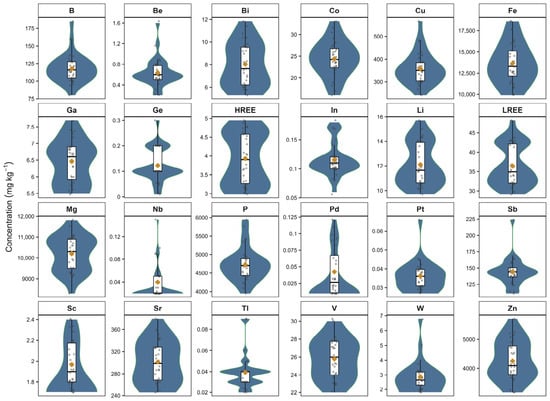
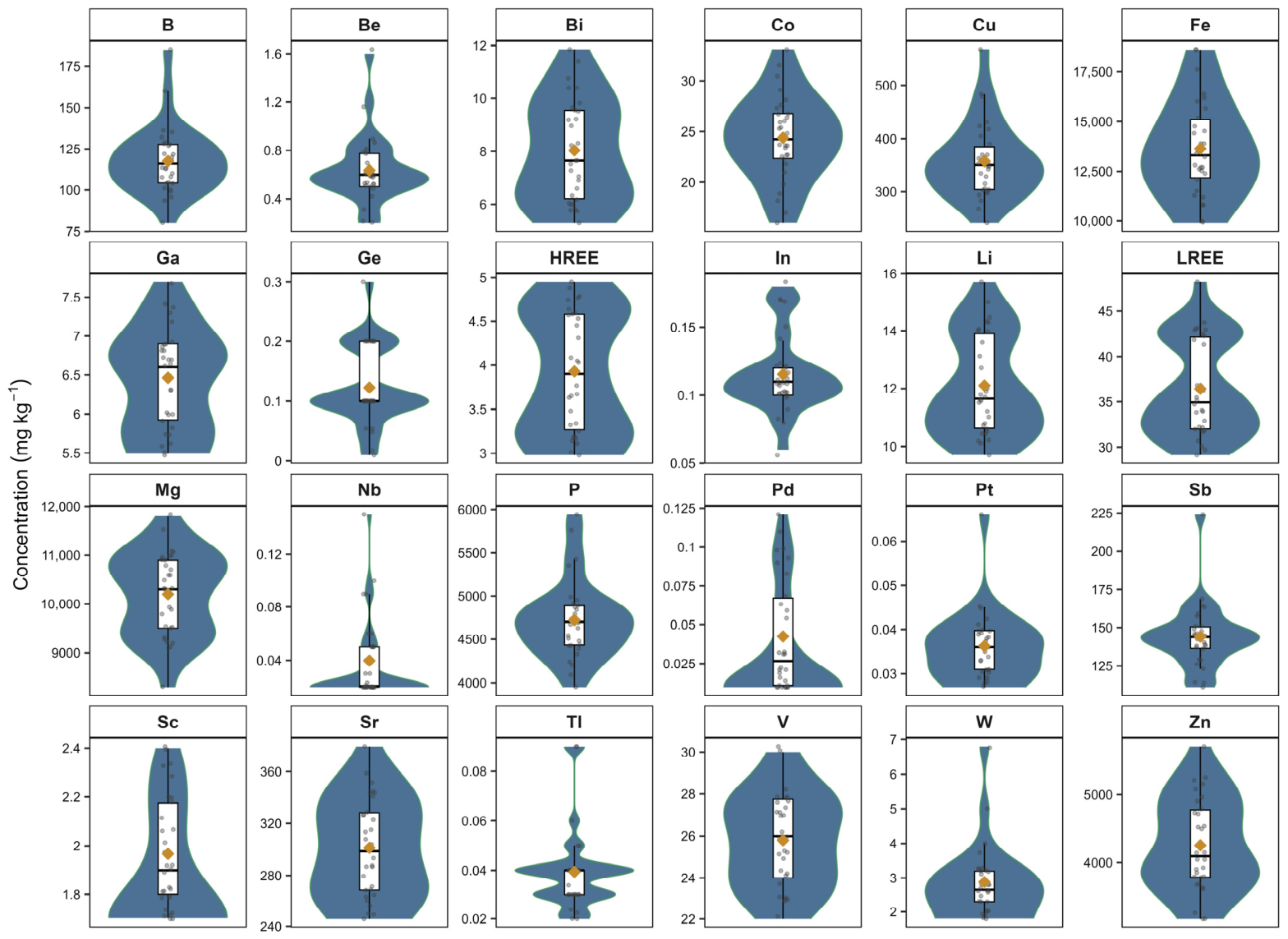
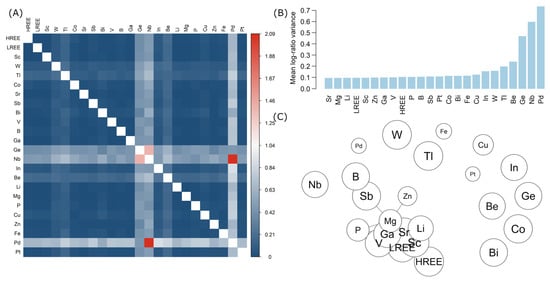
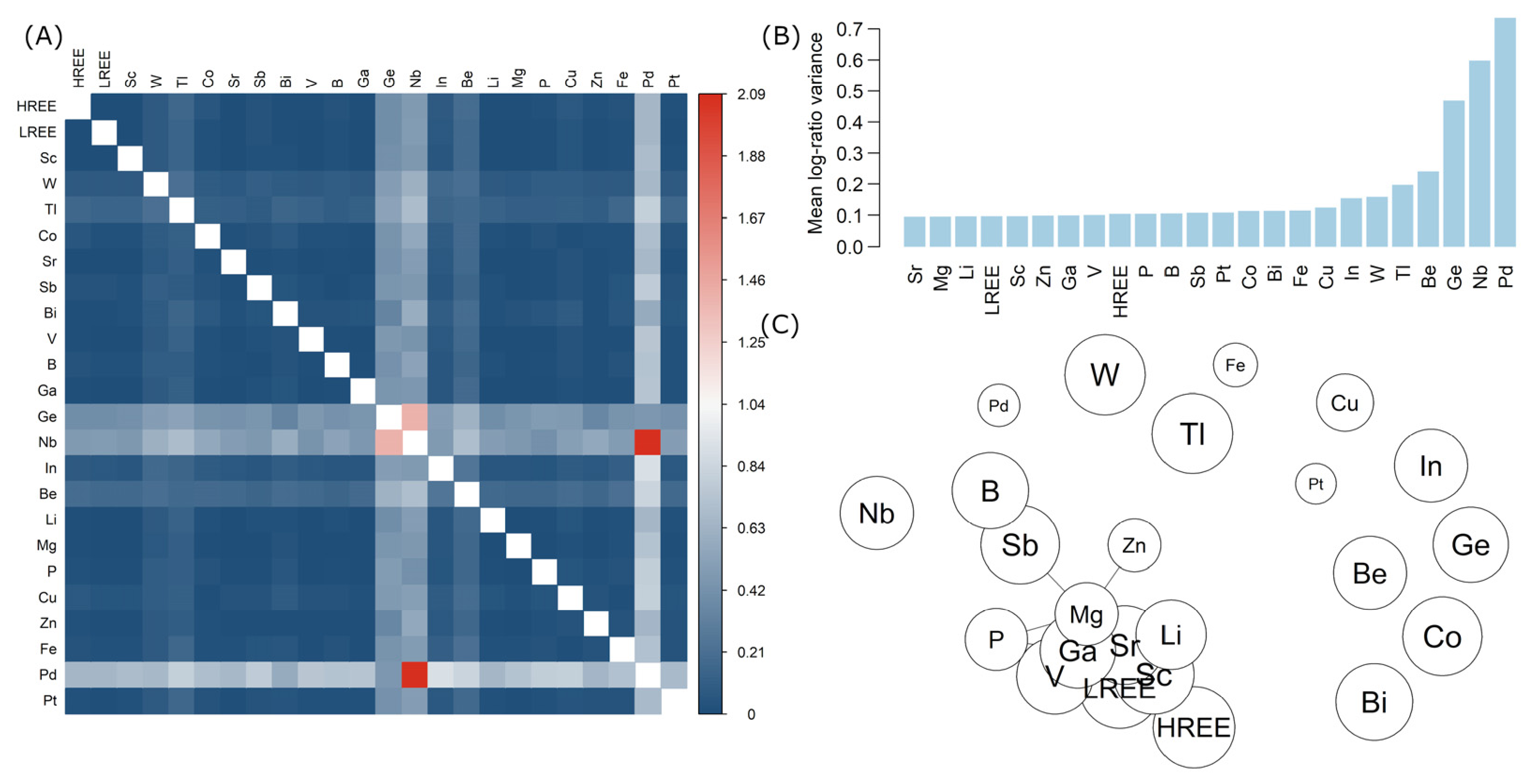
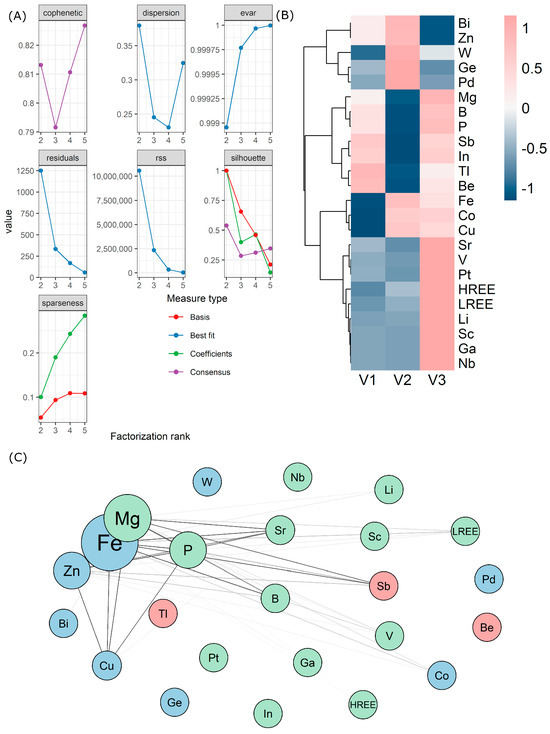
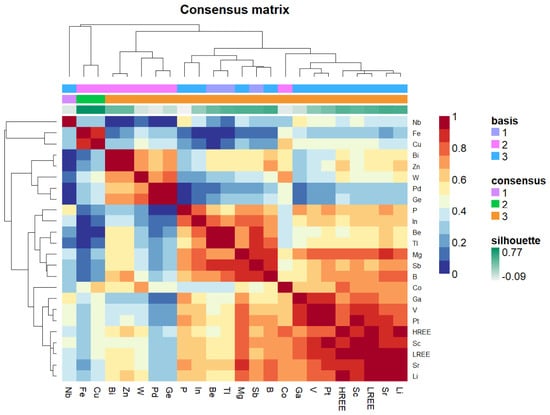
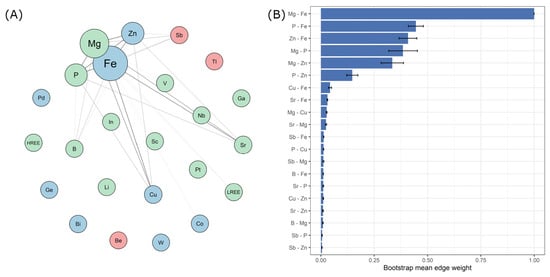
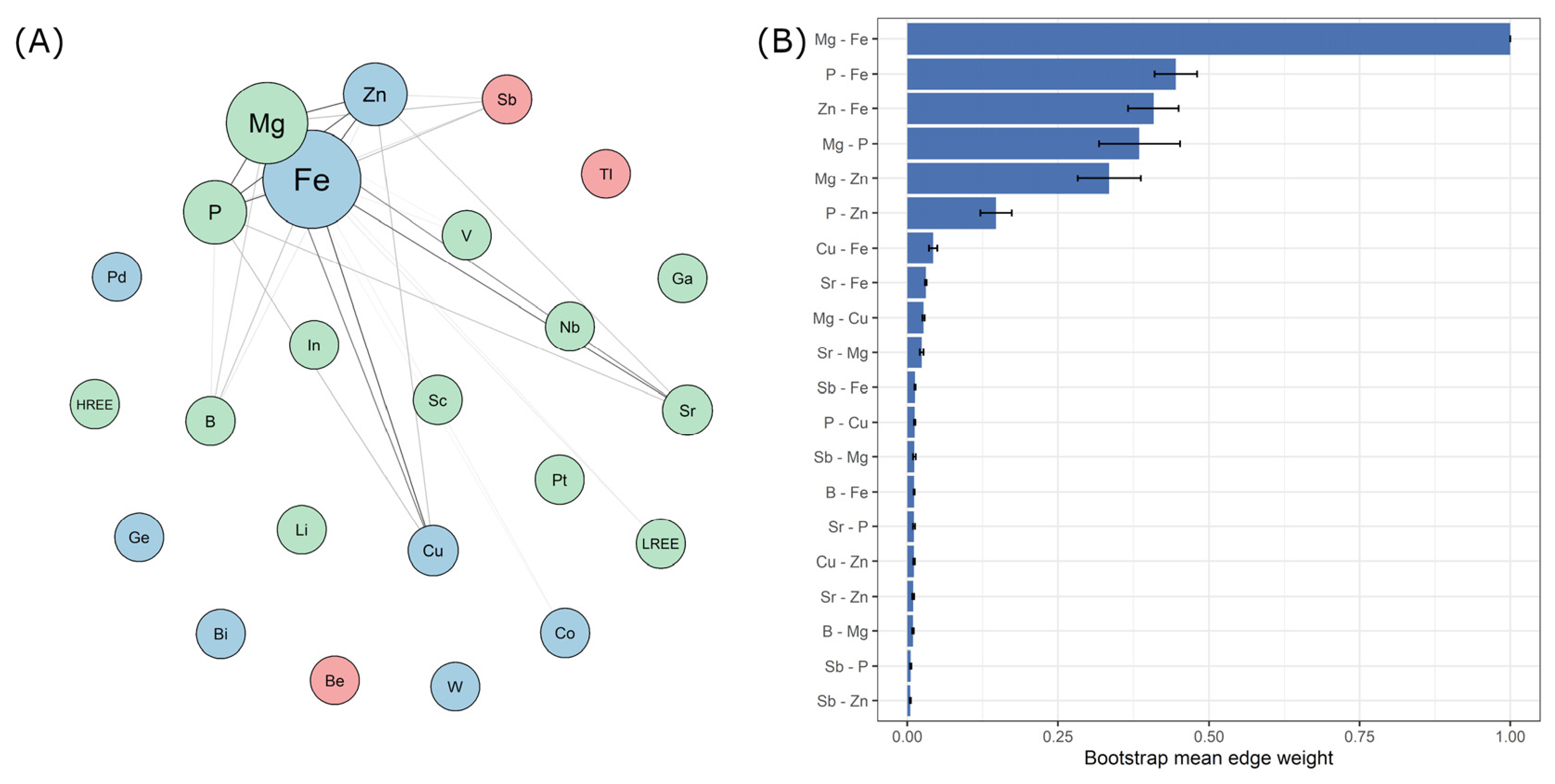
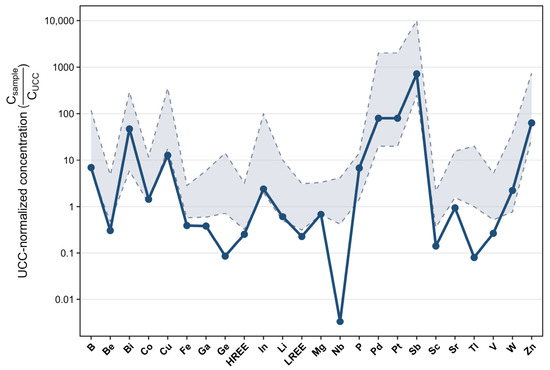
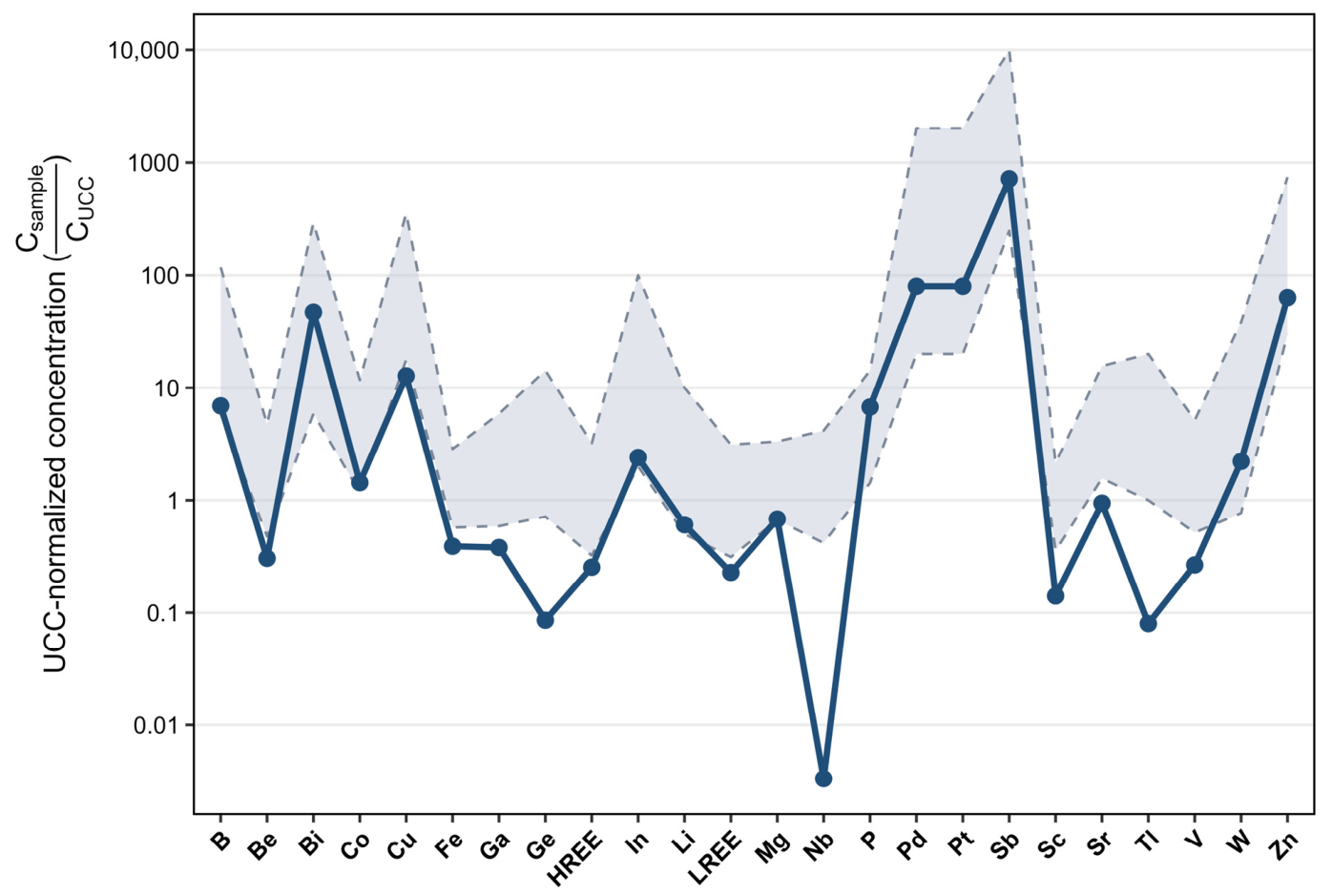

Disclaimer/Publisher’s Note: The statements, opinions and data contained in all publications are solely those of the individual author(s) and contributor(s) and not of MDPI and/or the editor(s). MDPI and/or the editor(s) disclaim responsibility for any injury to people or property resulting from any ideas, methods, instructions or products referred to in the content. |
© 2026 by the authors. Licensee MDPI, Basel, Switzerland. This article is an open access article distributed under the terms and conditions of the Creative Commons Attribution (CC BY) license.