


Abstract
This study investigates the feasibility of utilizing locally sourced Nicotiana tabacum biomass from Adıyaman, Türkiye, as a cost-effective biosorbent for the removal of copper and chemical oxygen demand (COD) from industrial wastewater originating from the Adıyaman Organized Industrial Zone. Batch adsorption experiments were conducted to systematically investigate the influence of solution pH, contact time, and initial metal concentration on adsorption performance. The untreated wastewater exhibited elevated pollution levels, with mean chemical oxygen demand and copper concentrations of 925 ± 391 mg/L and 2.54 ± 0.97 mg/L, respectively. Four tobacco-derived biosorbents (Çelikhan, Ova, Bulam, and Çağlan) were evaluated under optimized experimental conditions (pH ≈ 8.3, 60 min contact time, and a biosorbent dosage of 2.2 g/L). The Çelikhan biosorbent exhibited the highest copper removal efficiency (approximately 83%), whereas chemical oxygen demand removal ranged between 28% and 34%. The adsorption kinetics were well described by the pseudo-second-order model, with coefficients of determination ranging from 0.987 to 1.000. Isotherm analysis further indicated favorable adsorption behavior, with a maximum Langmuir adsorption capacity of 1.867 mg/g. Fourier transform infrared (FT-IR) spectroscopy confirmed the involvement of hydroxyl, carbonyl, and ester functional groups in metal binding. These findings highlight tobacco biomass as a sustainable and cost-effective biosorbent for industrial wastewater treatment. This study presents the first comprehensive evaluation of locally sourced Adıyaman tobacco biomass as a biosorbent for the removal of copper and organic pollutants from real industrial wastewater, integrating kinetic, isotherm, and FT-IR analyses to elucidate the underlying adsorption mechanisms.
1. Introduction
Rapid population growth and industrialization have significantly intensified anthropogenic pressures on freshwater resources, thereby exacerbating existing challenges related to water quality and availability [1]. Accelerated urbanization and industrial expansion have substantially increased both the quantity and complexity of wastewater discharges, thereby amplifying associated environmental and public health risks [2,3]. Untreated or inadequately treated wastewater frequently contains persistent and bioaccumulative pollutants, particularly heavy metals, which pose significant threats to aquatic ecosystems and human health owing to their toxic, mutagenic, and carcinogenic characteristics [4].
Industrial effluents constitute a major source of water pollution, typically comprising a complex mixture of organic and inorganic contaminants, with heavy metals such as Cu, Ni, Co, Cd, Pb, Mn, Cr, and Zn representing particularly significant constituents [5,6]. In contrast to biodegradable contaminants, heavy metals are resistant to conventional wastewater treatment processes, bioaccumulate across trophic levels, and present substantial acute and chronic risks to human health [7]. Industrial activities, including metal plating, mining, textile dyeing, and chemical manufacturing, are major sources of toxic metal discharge into aquatic ecosystems [8]. Unregulated industrial effluents have degraded rivers in Turkey, often exceeding limits for nitrites, BOD5, COD, and heavy metals, with treatment commonly relying on precipitation, ion exchange, and adsorption [9,10].
Conventional methods are costly and produce secondary wastes, highlighting biosorption as an efficient and sustainable alternative via metal–biomass interactions [11,12]. Biosorption represents a cost-effective and efficient strategy for trace metal removal with minimal sludge generation, driven by mass transfer processes and characterized using kinetic and isotherm models [13,14]. Fourier transform infrared (FT-IR) spectroscopy is extensively employed to identify functional groups involved in metal binding, offering molecular-level insights into the mechanisms of biosorption [15,16]. Agricultural residues, such as nicotiana tabacum (tobacco), represent promising biosorbents due to their abundance, low cost, biodegradability, and lignocellulosic functional groups that facilitate heavy metal removal [17,18]. Despite Turkey being a top-ten global tobacco producer, yielding over six million tons annually (~5000 tons from Adıyaman), the use of locally sourced tobacco as a biosorbent for industrial wastewater treatment remains largely unexplored [19,20,21].
Toxic, persistent, and bioaccumulative heavy metals, including Cd, Pb, Cr, Cu, Zn, Ni, and Mn, are consistently discharged into aquatic environments through industrial activities such as electroplating, mining, textile processing, and chemical manufacturing [22]. Even trace concentrations of metals can disrupt ecosystems, diminish biodiversity, and pose significant human health risks through bioaccumulation [23]. Industrial effluents have adversely impacted water systems globally, increasing BOD, COD, and heavy metal concentrations in rivers such as Turkey’s Gediz, while also contaminating soils, sediments, and groundwater in developing regions [24]. Conventional heavy metal removal methods are constrained by high costs, elevated energy requirements, and secondary waste generation, highlighting the need for sustainable alternatives such as biosorption and phytoremediation [25]. Biosorption, whereby functional groups on biological matrices sequester metal ions through ion exchange, complexation, chelation, and adsorption, represents a promising alternative to conventional wastewater treatment methods [26,27]. Biosorption kinetics are commonly described using pseudo-first-order and pseudo-second-order models, with the latter being more appropriate for processes governed by chemisorption [28]. Equilibrium isotherms, including Langmuir, Freundlich, and Temkin models, describe the distribution of metal ions on biosorbents, whereas FT-IR spectroscopy and surface analyses are employed to identify functional groups and elucidate the molecular mechanisms underlying heavy metal biosorption [29,30]. Plant-derived biomass, including rice husk and sugarcane bagasse, constitutes a cost-effective biosorbent owing to its lignocellulosic composition and functional groups, with local availability and preparation costs determining its practical applicability [31].
Khan et al. [32] emphasized that the utilization of locally abundant agricultural residues can reduce biosorbent costs and improve the scalability of biosorption processes. Saad et al. [33] demonstrated that unmodified rice straw effectively adsorbs Pb(II), indicating that plant biomass can serve as an efficient heavy metal adsorbent without requiring pretreatment. Yang et al. [34] reported that Nicotiana tabacum (tobacco) contains functional groups capable of binding heavy metals, underscoring its potential as an effective biosorbent. Qi and Aldrich [35] reported that tobacco dust effectively adsorbs Pb (II), Cu (II), Zn (II), Cd (II), and Ni (II) (39.6–24.5 mg/g), with facile desorption in dilute HCl, while its negatively charged surface facilitates metal binding. Dere [36] reported that effluents from the Adıyaman Organized Industrial Zone (ADOSB) exhibit elevated pollutant levels, highlighting locally sourced tobacco biomass as a sustainable and cost-effective biosorbent. Velázquez, C. C. H. et al. s [37] demonstrated that commercial tobacco biomass exhibits substantial efficacy in removing Cr (VI) under controlled experimental conditions. Ahmed et al. [38] presented a comprehensive review of tobacco waste-derived adsorbents, including raw biomass, biochar, and activated carbon, emphasizing their effectiveness in heavy metal remediation. Wang, Y. et al. [39] developed an integrated biosorption–pyrolysis approach for Pb removal, effectively immobilizing lead within the generated biochar. Abdi, O., and Kazemi, M. [40] reviewed heavy metal biosorption, comparing diverse biosorbents and providing insights into their relative efficiencies. Although plant-based biosorbents have been extensively studied, the application of tobacco biomass for industrial wastewater treatment remains relatively underexplored, with few studies integrating mechanistic investigations through kinetics, isotherms, and FT-IR analyses. The paucity of studies on tobacco-based biosorbents in industrial contexts underscores the need to translate laboratory findings into practical applications, motivating this study to advance sustainable heavy metal remediation utilizing locally available biomass. Shar et al. [41] demonstrated that biochar-based strategies not only enhance heavy metal removal but also improve the physiological resilience of tobacco plants. Du et al. [42] reported that a biochar-based composite hydrogel efficiently removes heavy metals from aqueous solutions and mitigates cadmium-induced stress in tobacco seedlings. Wu et al. [43] demonstrated that tobacco exhibits distinct growth responses, metal accumulation, and translocation patterns in relation to vanadium, underscoring its potential applicability in phytoremediation strategies. Lei et al. [44] developed a CNF@MN@MX composite membrane that achieved near-complete Cr (VI) reduction under visible light, exhibiting excellent reusability over 20 cycles.
Aim of the Study
This study evaluates the potential of locally sourced Nicotiana tabacum biomass from Adıyaman as a sustainable and cost-effective biosorbent for the removal of copper and organic pollutants from industrial wastewater originating from the Adıyaman Organized Industrial Zone (ADOSB). This research assesses the effects of operational parameters on adsorption and employs kinetic modeling, equilibrium isotherms, and FT-IR spectroscopy to elucidate biosorption mechanisms, bridging laboratory findings with practical applications.
2. Experimental Methodology
Industrial wastewater was collected from the Adıyaman Organized Industrial Zone (ADOSB) in southeastern Turkey, a site where textile, food, and metal processing effluents are discharged into the Eğri River [21]. Wastewater samples were preserved at 4 °C to prevent biological and chemical changes [45], while locally sourced Nicotiana tabacum L. was washed, oven-dried, ground, sieved (250–500 µm), and stored in airtight desiccated containers for use as a biosorbent. The physicochemical properties of the wastewater, including pH, electrical conductivity (EC), biochemical oxygen demand over 5 days (BOD5), total dissolved solids (TDS), chemical oxygen demand (COD), and turbidity, were determined using standardized analytical methods. Heavy metals, including nickel (Ni), copper (Cu), cobalt (Co), cadmium (Cd), lead (Pb), chromium (Cr), manganese (Mn), and zinc (Zn), were quantified via atomic absorption spectrophotometry (AAS, PerkinElmer, Waltham, MA, USA) following digestion with a nitric acid–hydrogen peroxide (HNO3–H2O2, Merck, Darmstadt, Germany) mixture. Batch biosorption experiments were performed using 100 mL of metal ion solutions in 250 mL flasks, with 0.1 g of biosorbent added and agitated at 150 rpm. Residual metal concentrations were determined by atomic absorption spectrophotometry (AAS), and the equilibrium adsorption capacity (qe, mg/g) was subsequently calculated. Adsorption kinetics and equilibrium isotherms were modeled and assessed using R2 and residual error analyses in OriginPro 2023 (OriginLab Corporation, Northampton, MA, USA) and MATLAB R2023a (MathWorks, Natick, MA, USA). FT-IR spectroscopy (Bruker, Karlsruhe, Germany) in the range of 4000–400 cm−1 was employed to identify functional groups involved in metal binding, with shifts in hydroxyl, carboxyl, amino, and phosphate vibrations providing insights into the underlying biosorption mechanisms. All experiments were performed in triplicate, with analytical accuracy confirmed (R2 > 0.999) and statistical significance evaluated using one-way ANOVA (p < 0.05), supporting the efficacy of Adıyaman Nicotiana tabacum biomass as a sustainable and cost-effective biosorbent. Table 1 presents the sectoral distribution within the Adıyaman Organized Industrial Zone, which predominantly comprises garment manufacturing facilities.
Table 1.
Distribution of sectors in Adıyaman OSB by street.
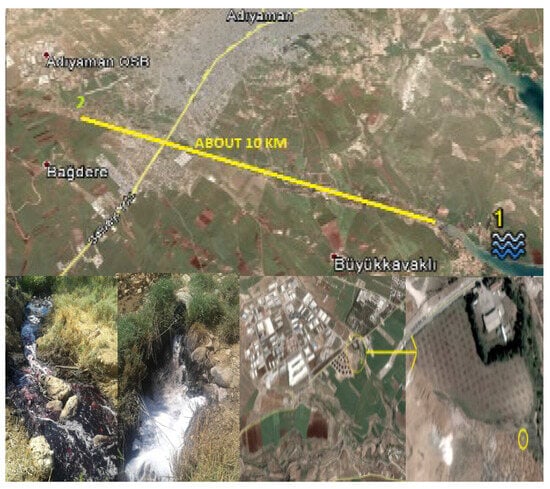
Table 1 illustrates the distribution of industrial sectors along the streets of the Adıyaman Organized Industrial Zone (OSB), with garment and clothing facilities being the most prevalent, whereas sectors such as prefabricated construction, marble processing, irrigation, and honey packaging are more localized. Certain sectors, including furniture manufacturing, are absent or unspecified, indicating a concentrated industrial profile within the OSB. Industrial wastewater from ADOSB, located approximately 10 km from Atatürk Dam Lake, is discharged untreated into the Eğri River (Figure 1; Table 2).
Figure 1.
Discharge points of ADOSB industrial wastewater.
Table 2.
Geographic coordinates of the ADOSB industrial wastewater discharge point.
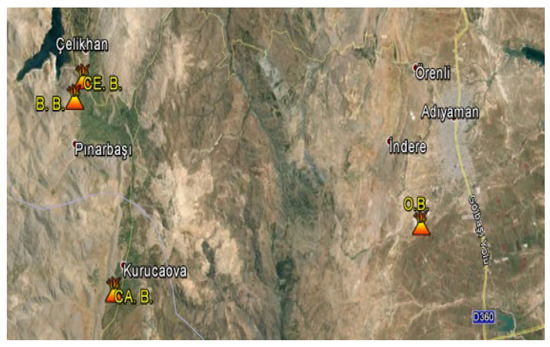
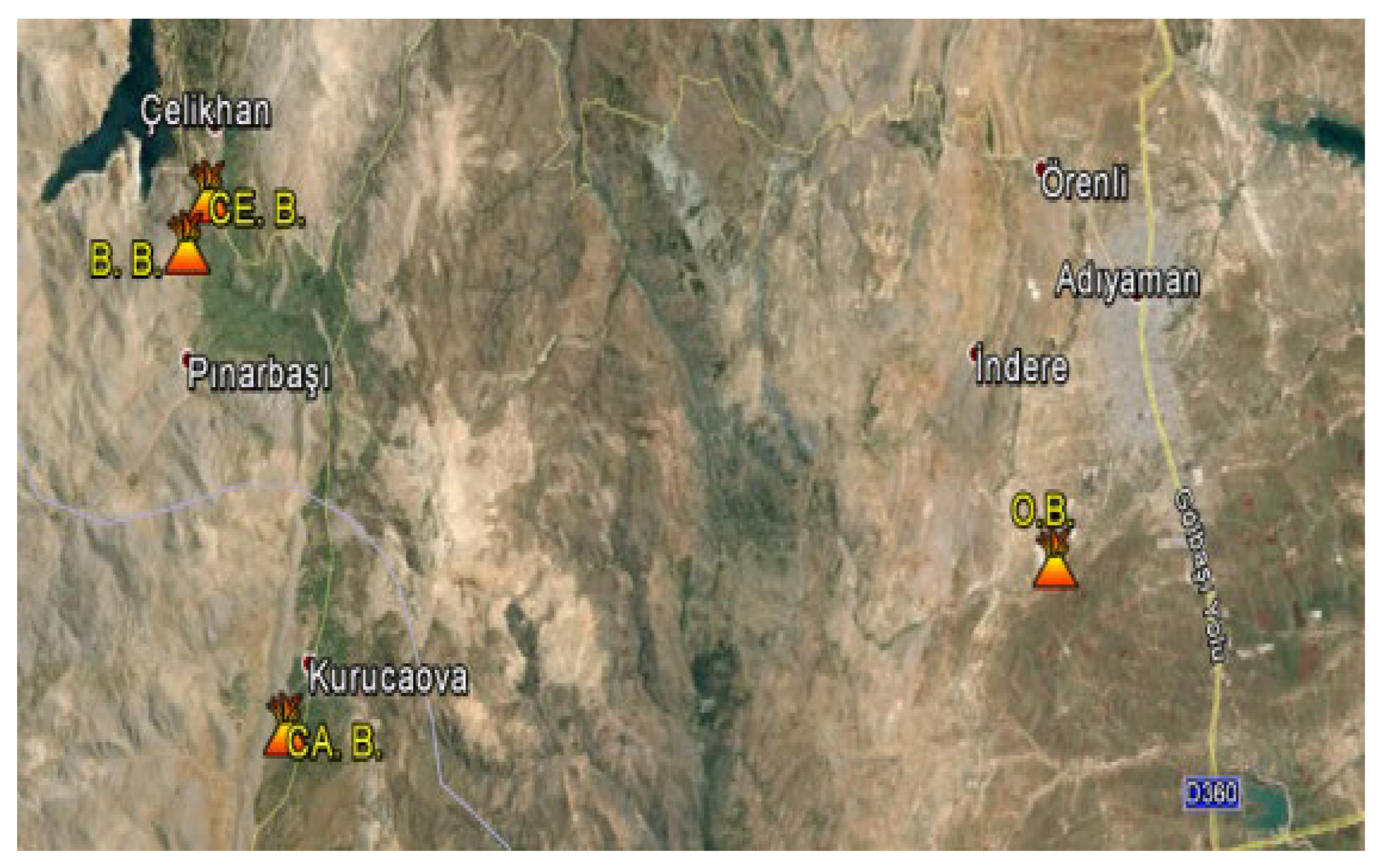
Figure 1 depicts the spatial configuration of the ADOSB and its principal industrial wastewater discharge locations. Point 1 indicates the confluence of the Eğri River with Atatürk Dam Lake, which is affected by industrial effluents, while Point 2 represents the direct discharge of untreated ADOSB wastewater, highlighting potential contamination risks. The figure further illustrates the distribution of industrial activities in proximity to critical water resources, underscoring the need for sustainable wastewater management. Table 2 presents the geographic location of the ADOSB industrial wastewater discharge point in WGS84 coordinates (latitude and longitude in degrees, minutes, and seconds), along with the elevation and its accuracy. These data facilitate precise site identification and support reproducibility of environmental assessments. Pollution loads (COD, BOD, TP, TN) were calculated from flow rates measured via the velocity–area method. pH and ORP were measured with a Thermo Orion STA-RA2145 meter (Thermo Fisher Scientific, Waltham, MA, USA), and temperature, TDS, salinity, and conductivity with a YSI EC-300 device (YSI Inc., Yellow Springs, OH, USA). Color, nutrients, and surfactants were analyzed spectrophotometrically; heavy metals (Mn, Ni, Cu, Zn, Pb, Co, Cr, Cd) via standard chemical methods; K+ and Ca2+ by flame photometry (JENWAY PFP7, Bibby Scientific Ltd., Staffordshire, UK); and FT-IR (ATR, PerkinElmer, Waltham, MA, USA) was used to examine biosorption mechanisms between tobacco biomass and metal ions. Raw tobacco biomass was collected from the Adıyaman Central (Ova), Pınarbaşı, Çelikhan, and Kurucaova districts, as well as surrounding areas [21] (Figure 2; Table 3).
Figure 2.
Collection sites of raw tobacco biosorbents: Ova, Çelikhan, Çağlan, and Bulam.
Table 3.
Coordinates and elevation of raw tobacco biosorbent sites.
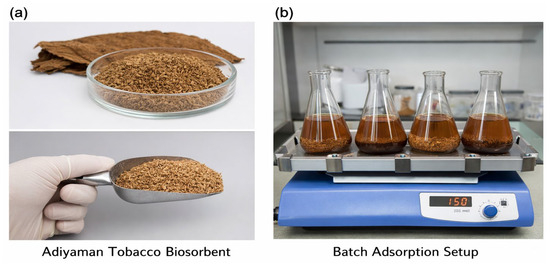
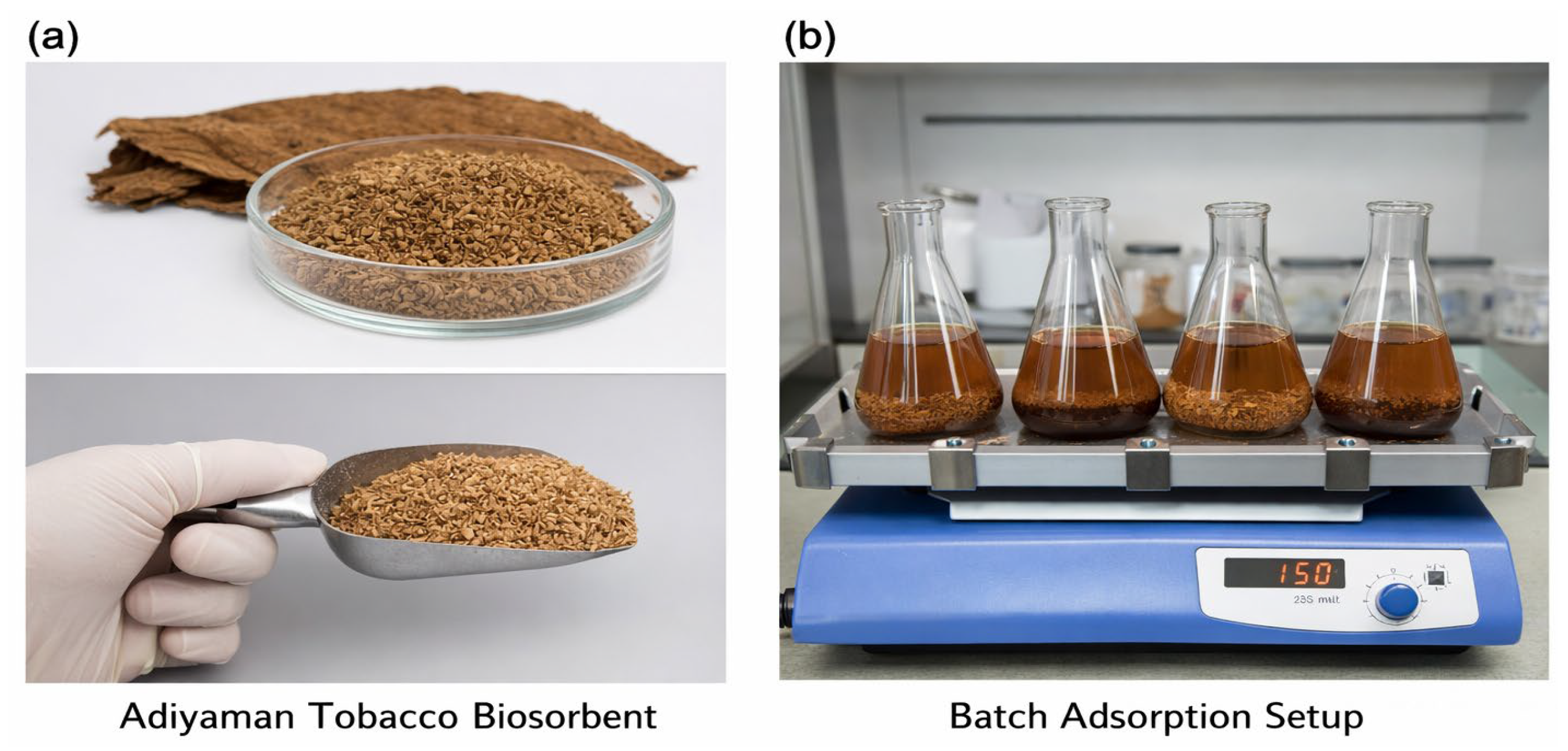
Figure 2 illustrates the experimental framework and geographic sources of tobacco biomass, including ADOSB wastewater sampling, biosorbent preparation, adsorption experiments, and analysis of COD and heavy metals. Biomass collection sites—Ova, Çelikhan, Çağlan, and Bulam—were selected based on high yield and sustainable availability, demonstrating the feasibility of using locally sourced, cost-effective, and environmentally sustainable biosorbents. Table 3 provides the coordinates and elevations (730–1470 m) of the collection sites, measured with Garmin eTrex 20 GPS (Garmin Ltd., Olathe, KS, USA), ensuring precise localization and contextualizing environmental factors influencing biomass quality. The raw tobacco biomass was washed with distilled water, oven-dried at 105 °C for 24 h, granulated, chemically activated with 1% H2SO4 for 24 h, neutralized, rewashed, dried, and sieved (1 mm). Batch adsorption experiments were conducted using 100 mL wastewater and 0.22 g biosorbent, with agitation on a Wise Shake SHO-2D and filtration through 0.45 mm membranes (Figure 3). Biosorbent addition marked t = 0, and samples were collected at regular intervals for analysis.
Figure 3.
Experimental setup of the biosorption experiment with Adıyaman tobacco biomass: (a) prepared tobacco biosorbent; (b) batch adsorption setup.
Figure 3 presented experimental setup of the biosorption process using Adıyaman tobacco biomass from Ova, Çelikhan, Bulam, and Çağlan. The photograph illustrates the operational steps, including biomass preparation, contact with industrial wastewater, and sample collection for heavy metal analysis. Biosorption capacity () and removal efficiencies were determined as described in the methodology. The removal efficiency of the biosorbent () was calculated using Equation (1). To express as a percentage, the equation includes the factor × 100:
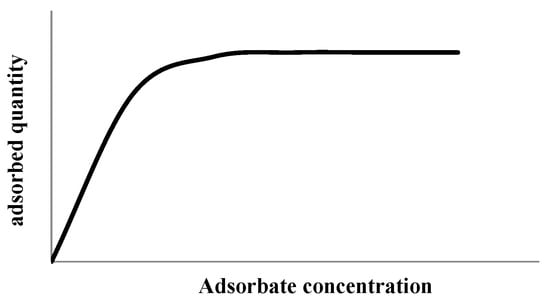
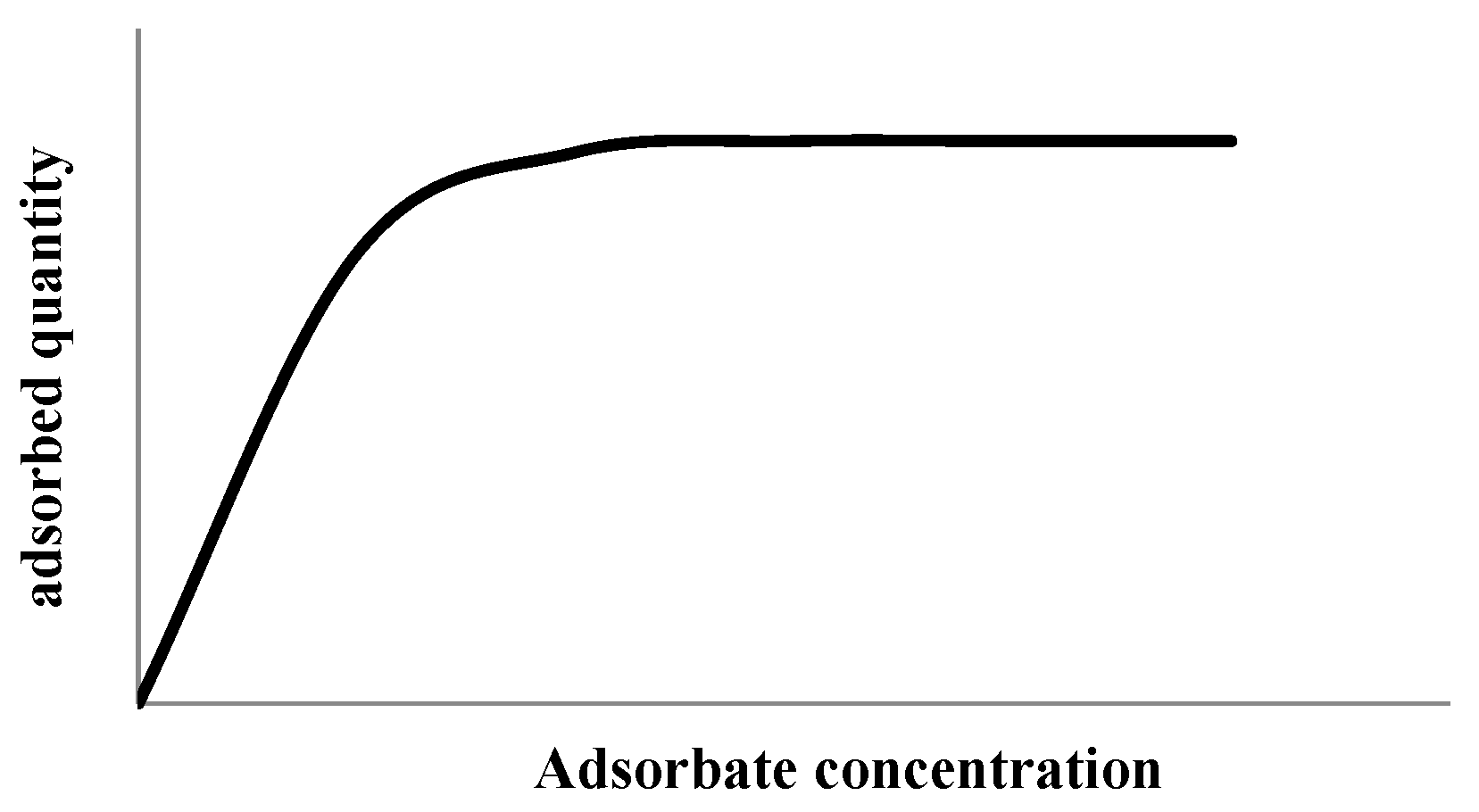
The biosorption capacity (qe) was calculated using the formula , where is in mg/g, and in mg/L, in L, and in g. The performance of Bulam, Çelikhan, Ova, and Çağlan tobacco biosorbents for Cu, Ni, and Co removal was evaluated using Langmuir, Freundlich, Temkin, and Dubinin–Radushkevich (D–R) isotherm models. The Langmuir isotherm, assuming homogeneous sites and monolayer adsorption, was used to characterize adsorption, which initially increases linearly with concentration until surface saturation (Figure 4).
Figure 4.
Amount of substance adsorbed on the surface at maximum saturation.
Figure 4 shows biosorbent adsorption versus adsorbate concentration, with an initial linear increase at low concentrations due to abundant active sites. As active sites saturate, adsorption slows until equilibrium, forming a monolayer and reaching maximum capacity, consistent with Langmuir isotherm behavior and reflecting the biosorbent’s efficiency and limitations.
3. Results and Discussion
This section presents the key findings, including biosorption performance and isotherm analyses, to evaluate the effectiveness of tobacco-based biosorbents for heavy metal removal from industrial wastewater. ADOSB wastewater was collected as 24 h composite samples every two months in accordance with TS EN ISO 5667 [46], with physicochemical properties summarized in Table 4.
Table 4.
Characteristics of ADOSB wastewater.
Table 4 shows ADOSB wastewater with high BOD5/COD, slight alkalinity (pH 8.74), variable color (Pt-Co 393–2625), ORP –97 mV, temperature 32 °C, and elevated conductivity/TDS, indicating potential impacts on water quality. Nutrients (TP 5.15 ± 1.31 mg/L; TN 14.68 ± 7.94 mg/L) and heavy metals (Cu 2.54 ± 0.97; Ni 1.94 ± 1.18; Co 1.81 ± 0.58 mg/L) pose environmental and health risks, while variability in anionic surfactants reflects the complex composition of ADOSB wastewater, guiding source identification and treatment strategies. Table 4 values were compared with mixed industrial wastewater discharge standards per the Water Pollution Control Regulation, summarized in Table 5.
Table 5.
ADOSB wastewater vs. discharge standards for mixed industrial effluents.
Table 5 shows ADOSB wastewater exceeding limits for COD, TSS, and TP, while TKN and pH meet standards; heavy metals show variable compliance, highlighting environmental risks and the need for comprehensive monitoring. The wastewater contains pollutants capable of impacting receiving water quality. Figure 5 depicts relationships among COD (925 mg/L), BOD (516 mg/L), color (393–2625 Pt-Co), pH (8.74), and correlations between color, pH, and heavy metals (Ni 1.94 mg/L, Cu 2.54 mg/L, Co 1.81 mg/L). Physicochemical parameters of ADOSB wastewater were measured as follows: pH and ORP with Thermo Orion STA-RA2145 meter (Thermo Fisher Scientific, Waltham, MA, USA) at room temperature; temperature, electrical conductivity, total dissolved solids, and salinity with YSI EC-300 multi-parameter device (YSI Inc., Yellow Springs, OH, USA); heavy metals (Cu, Ni, Co, Cd, Pb, Cr, Mn, Zn) via atomic absorption spectrophotometry (AAS) after HNO3–H2O2 digestion; K+ and Ca2+ by flame photometry (JENWAY-PFP7); and color and nutrients by spectrophotometric analysis. Biosorption experiments were performed in 250 mL flasks with 100 mL solution, 0.22 g biosorbent, agitated at 150 rpm, 25 ± 2 °C, and FT-IR spectra were collected in the 4000–400 cm−1 range using PerkinElmer ATR-FTIR instrument (PerkinElmer Inc., Waltham, MA, USA). Batch adsorption experiments were conducted using 100 mL of metal-containing wastewater in 250 mL Erlenmeyer flasks, with 0.1 g of biosorbent added (1 g/L dosage). Flasks were agitated at 150 rpm at room temperature (~25 ± 2 °C) for up to 120 min. The pH was adjusted to the desired value using 0.1 M HCl or NaOH. All experiments were performed in triplicate, and the mean values ± standard deviation are reported. Residual metal concentrations were measured using atomic absorption spectrophotometry (AAS), and adsorption capacity (qe, mg/g) was calculated accordingly. Kinetic and isotherm analyses were performed using OriginPro 2023 and MATLAB R2023a, while FT-IR spectroscopy (4000–400 cm−1) identified functional groups involved in metal binding.
Figure 5.
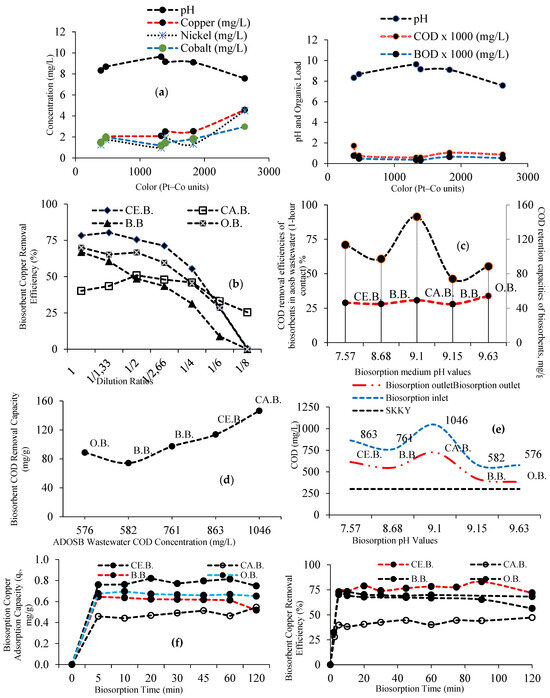
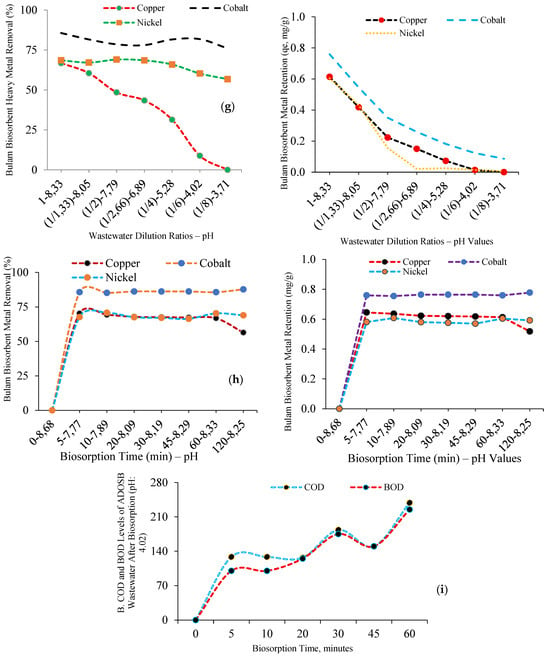
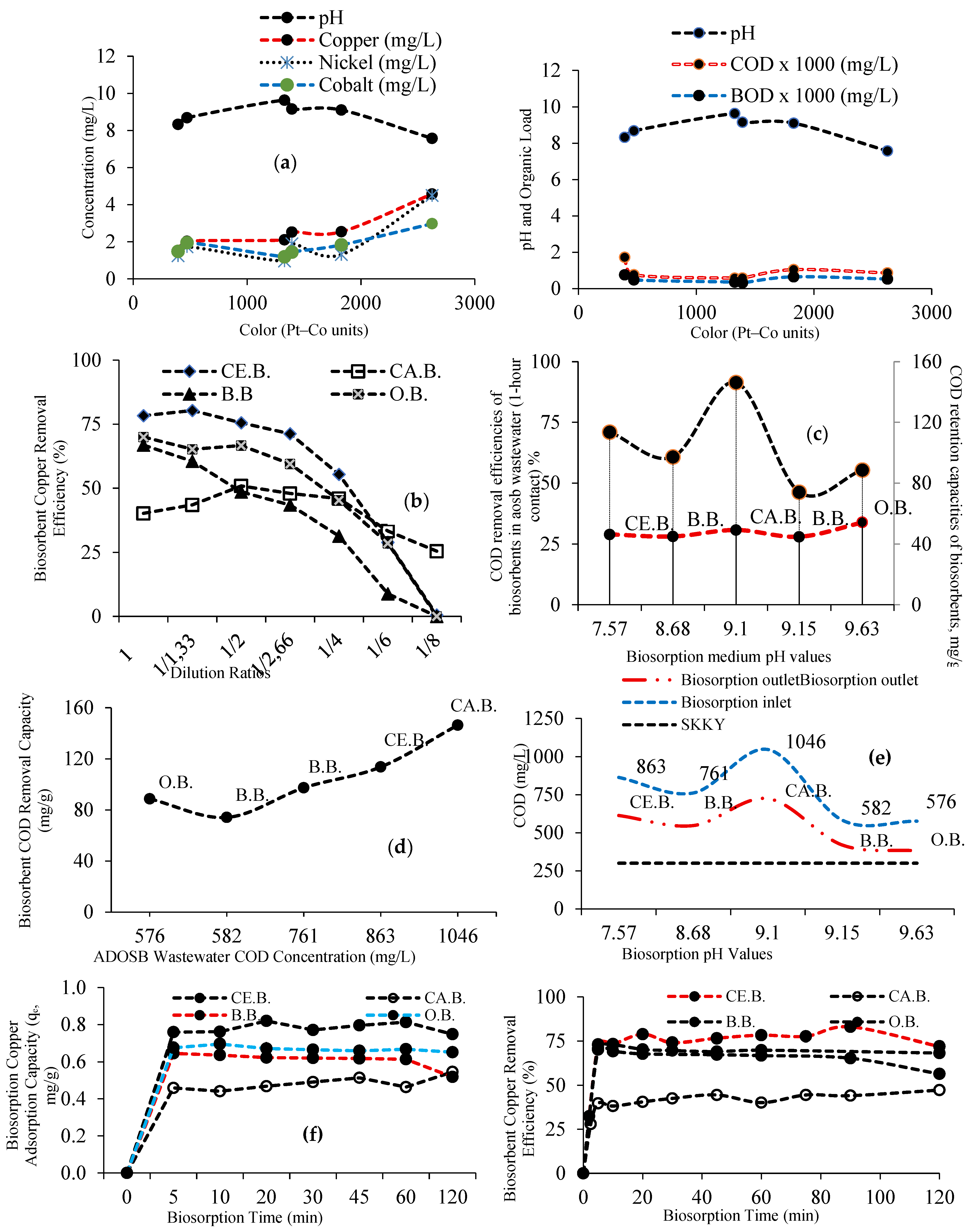
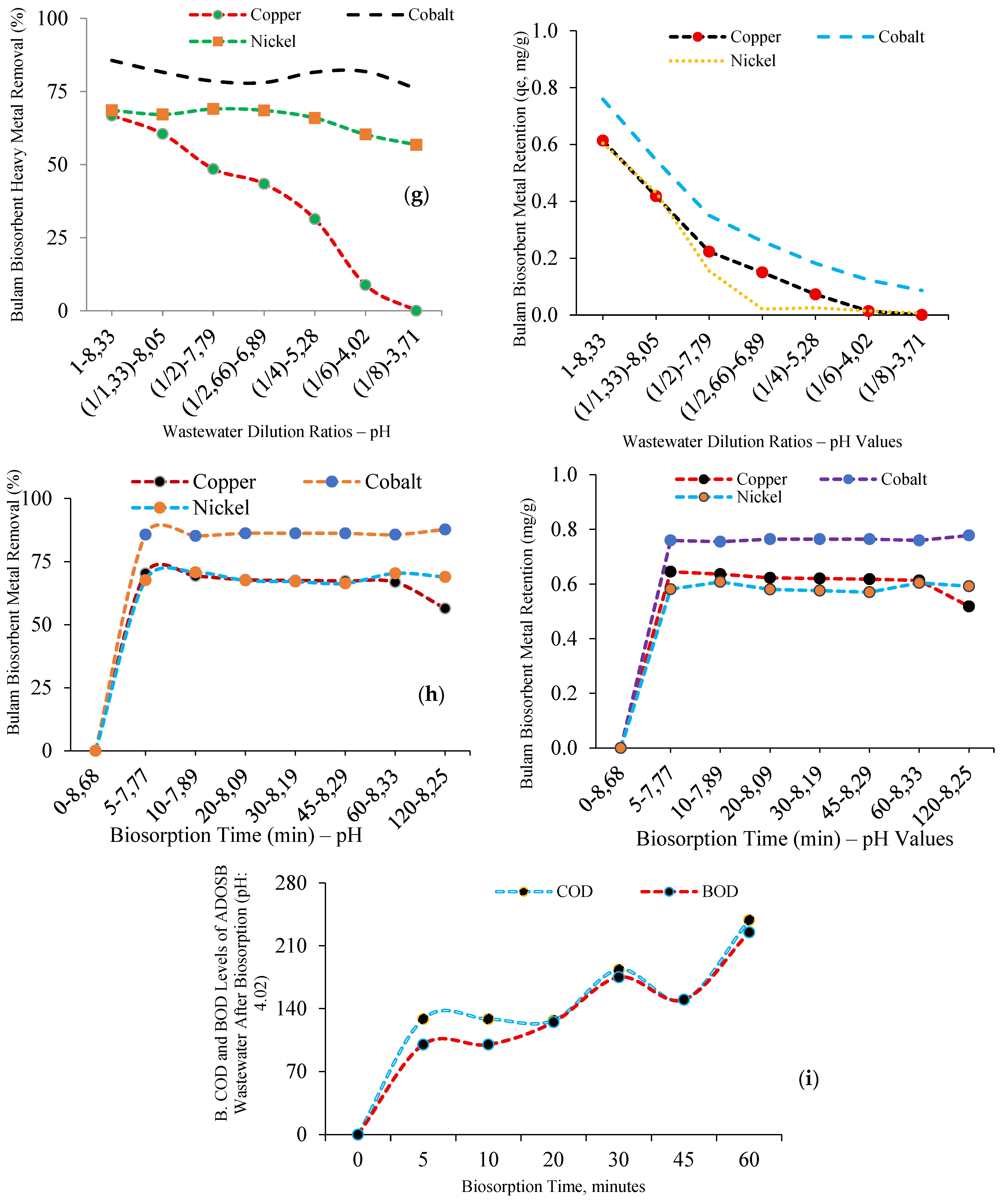
Tobacco biosorbent performance in ADOSB wastewater: (a) variation of pH and metal concentrations with color; (b) effect of dilution ratios on biosorption efficiency; (c) relationship between biosorption pH and COD removal; (d) effect of COD concentration on biosorption capacity; (e) variation of COD with biosorption pH; (f) effect of biosorption time on metal adsorption capacity; (g) effect of dilution ratios on heavy metal removal efficiency; (h) effect of biosorption time on heavy metal removal efficiency; (i) variation of COD and BOD with biosorption time.
Figure 5a illustrates the relationships among ADOSB wastewater color, pH, COD, BOD, and heavy metals (Cu, Ni, Co). Color intensity generally increases with COD and BOD, indicating higher pollution loads, whereas no consistent correlation is observed between pH and metal concentrations. The figure highlights the complex, mixed-industrial nature of the wastewater and supports a better understanding of parameter interactions relevant to treatment evaluation. Figure 5b shows that the copper removal efficiency and retention capacity of Çelikhan, Ova, Bulam, and Çağlan biosorbents decrease with increasing wastewater dilution due to reduced concentration gradients. Performance differences among biosorbents persist, emphasizing the need for optimized operating conditions to achieve effective copper removal. Figure 5c shows that COD retention and removal vary strongly with pH, with Çağlan and Ova performing best near neutral to mildly alkaline conditions. While dilution reduces metal adsorption, pH remains a key determinant of biosorption efficiency, highlighting the need for optimized treatment conditions. Figure 5d shows that the tobacco-based biosorbents exhibit varying COD removal capacities due to differences in their surface properties. The results demonstrate their overall effectiveness for COD reduction in industrial wastewater. Figure 5e shows that COD reduction by tobacco biosorbents improves under mildly alkaline conditions but remains above SKKY limits. Ova and Çağlan perform best, underscoring the strong pH dependence of COD removal. Figure 5f shows that copper adsorption capacity and removal efficiency increase rapidly during the initial contact period and then level off as equilibrium is reached. Çelikhan exhibits the highest and fastest removal, followed by Ova, Bulam, and Çağlan. The trend reflects typical biosorption kinetics and highlights performance differences among the biosorbents. Figure 5g demonstrates that increasing dilution progressively reduces wastewater pH, leading to diminished retention capacities of the Bulam biosorbent for Co, Cu, and Ni. The decline is minimal for Co and Ni but pronounced for Cu, indicating greater pH sensitivity. At a 1/6 dilution, the initial pH (8.33) decreases to 4.02, reflecting a transition to acidic conditions that substantially impairs metal adsorption. Figure 5h shows that pH remained stable during the 0–120 min period, with the Bulam biosorbent reaching maximum Co, Ni, and Cu retention within the first 5 min. Co and Ni remained constant afterward, while Cu declined by ~10% after 60 min. This indicates rapid initial uptake followed by metal-specific equilibrium behavior. Isotherm analyses were performed under optimal conditions (pH 8.33, 60 min, 200 rpm, 2.2 g/L) using Langmuir, Freundlich, Temkin, and D–R models. Figure 5i shows the effect of Bulam biosorbent on COD and BOD reduction in ADOSB wastewater under acidic conditions. During the 0–120 min kinetic period, COD, BOD, and metal (Co, Cu, Ni) concentrations declined rapidly in the initial phase, followed by stabilization as equilibrium was reached. These results highlight the biosorbent’s effective initial pollutant removal and subsequent approach to steady-state conditions.
Table 6 provides a detailed characterization of the physicochemical properties of ADOSB wastewater and systematically evaluates the performance of tobacco-derived biosorbents across varying operational conditions. The monthly characterization of ADOSB wastewater demonstrates substantial variability in pH and chromatic intensity, with July exhibiting the maximum color load and dye absorbance, whereas May and March display comparatively attenuated values. The continuous detection of Remazol Yellow, Red, and Blue across all monitoring months indicates sustained dye discharge into the wastewater system. The COD retention and removal performance of the tobacco-derived biosorbents varies markedly with pH, with Çağlan Biosorbent demonstrating the highest retention capacity (146.36 mg/g) and a 31% removal efficiency, indicating its superior adsorption capability relative to the other materials. Ova Biosorbent attains the highest COD removal efficiency (34%) despite its moderate retention capacity, whereas Celikhan and Bulam Biosorbents exhibit lower retention and removal levels (28–29%), underscoring the pH-dependent and material-specific variability in organic pollutant removal. Copper adsorption by the tobacco-derived biosorbents displays a clear time-dependent trend, characterized by rapid initial uptake and gradual stabilization toward equilibrium; Celikhan Biosorbent achieves the highest capacity (0.8193 mg/g at 20 min), whereas Çağlan, Bulam, and Ova Biosorbents show comparatively lower yet steady adsorption levels. Minor fluctuations at extended contact times (e.g., 120 min) suggest equilibrium and possible desorption, underscoring rapid adsorption kinetics and distinct biosorbent performance. Metal retention by Bulam Biosorbent declines progressively with increasing dilution and decreasing pH, reflecting reduced metal availability and weakened binding under acidic conditions. Maximum Co, Cu, and Ni adsorption (0.7591, 0.6136, and 0.6045 mg/g) occurs in undiluted wastewater at pH 8.33, while retention decreases sharply below pH 6, with Cu and Ni uptake nearly eliminated at the highest dilution levels. These trends confirm the pronounced pH dependence of biosorption and the biosorbent’s preferential affinity for cobalt, while the substantial COD and BOD increases observed at pH 4.02 indicate organic leaching from the Bulam biosorbent under acidic conditions. COD and BOD increased sharply with contact time, peaking at 239% and 225% at 60 min, respectively, confirming that low pH destabilizes the biosorbent matrix and promotes the release of biodegradable organics. The Bulam biosorbent exhibited rapid pH-dependent metal uptake within the first 5 min, followed by stable adsorption, with peak Co and Ni retention at 120 min and a slight decline in Cu, confirming fast surface binding and equilibrium-controlled behavior.
Table 6.
Physicochemical changes and biosorption performance.
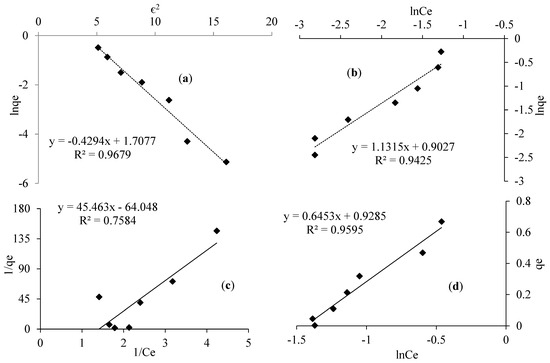
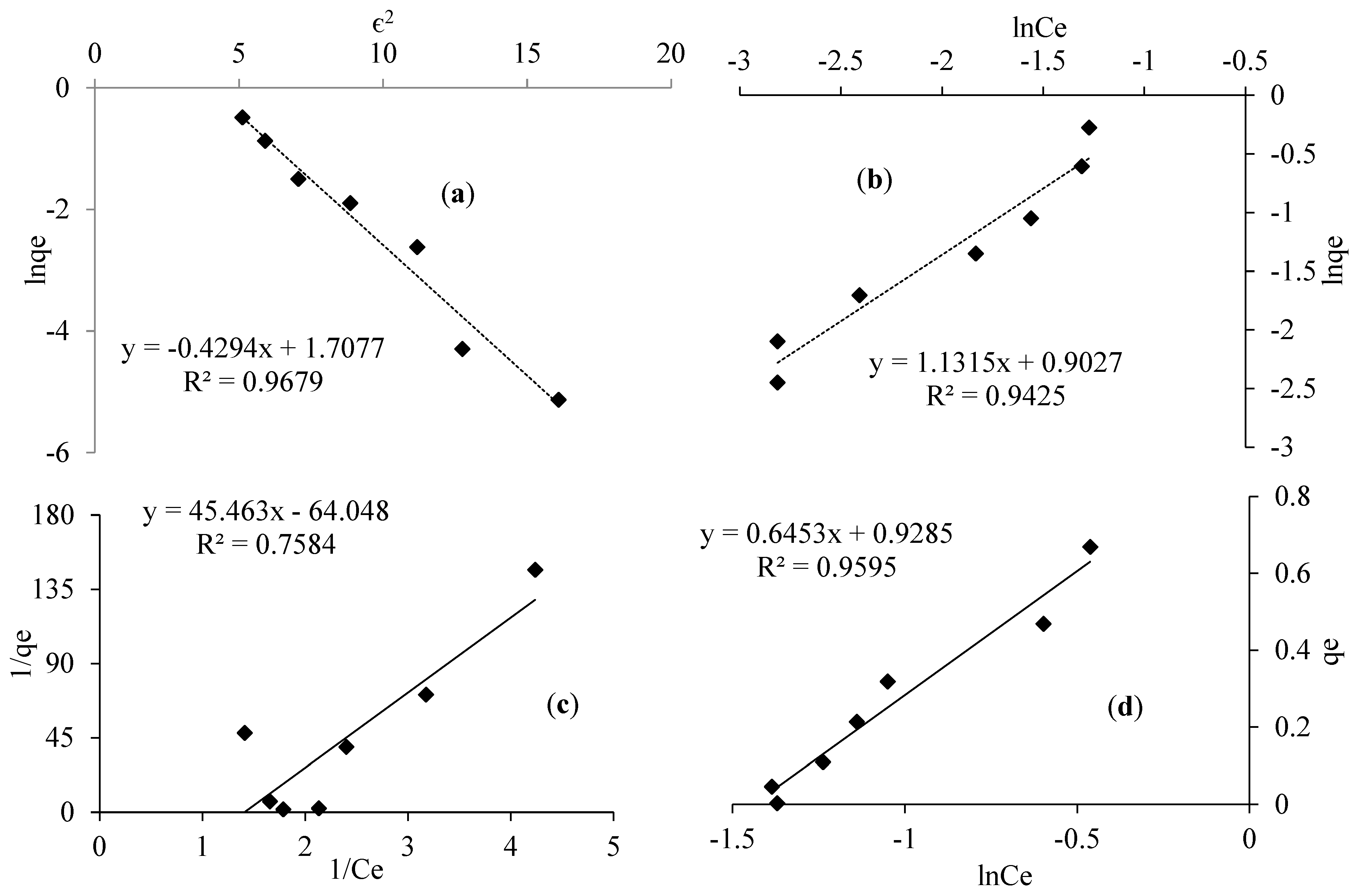
Figure 6a depicts the Dubinin–Radushkevich (D–R) isotherm for copper biosorption onto the Bulam biosorbent. The D–R model facilitates mechanistic interpretation by quantifying the mean adsorption energy, thereby distinguishing between physisorption and chemisorption processes. The results indicate that copper adsorption on Bulam is primarily physisorption, governed by diffusion-controlled, low-energy surface interactions rather than chemisorption. Figure 6b demonstrates that cobalt adsorption onto the Bulam biosorbent conforms well to the Freundlich isotherm, indicating multilayer uptake on a heterogeneous surface, with the constant reflecting high affinity and confirming favorable adsorption under the tested conditions. The model indicates that cobalt adsorption on Bulam is governed by heterogeneous surface energies rather than uniform monolayer coverage. Figure 6c indicates that nickel adsorption onto the Bulam biosorbent follows the Langmuir isotherm (R2 = 0.758), with a maximum monolayer capacity mg/g and a favorable separation factor , reflecting efficient and thermodynamically favorable adsorption on a homogeneous surface. Figure 6d illustrates that copper adsorption onto the Ova biosorbent is well described by the Temkin isotherm (R2 = 0.960), with the adsorption heat constant indicating energetically uniform binding sites and favorable adsorbent–adsorbate interactions.
Figure 6.
Adsorption isotherm models describing heavy-metal biosorption from ADOSB wastewater onto tobacco-derived biosorbents: (a) Dubinin–Radushkevich isotherm for copper on Bulam, (b) Freundlich isotherm for cobalt on Bulam, (c) Langmuir isotherm for nickel on Bulam, and (d) Temkin isotherm for copper on Ova.
Table 7 presents the biosorption parameters for copper removal from ADOSB wastewater using the Bulam biosorbent, as characterized by the Langmuir, Freundlich, Temkin, and Dubinin–Radushkevich (D–R) isotherm models. The Langmuir model indicates moderate maximum adsorption ( mg/g) with favorable sorption (), while the Freundlich parameters ( L/g; ) reflect efficient multilayer adsorption on a heterogeneous surface. Temkin constants indicate moderate interaction, and the D–R model (qmax = 1.079 mg/g; E = 5.516 kJ/mol) confirms primarily physical adsorption, with R2 = 0.796–0.968 showing that all four isotherms effectively describe copper uptake on Bulam. The Langmuir model (R2 = 0.913) indicates favorable monolayer adsorption (Qmax = 2.311 mg/g; R_L = 0.419), while the Freundlich model (R2 = 0.943; K_F = 0.884 L/g; n = 2.466) confirms favorable multilayer adsorption on a heterogeneous surface. The Temkin (R2 = 0.800) and D–R (R2 = 0.917; qmax = 3.276 mg/g; E = 1.044 kJ/mol) models indicate that copper adsorption on Bulam is favorable and primarily governed by physisorption with monolayer and heterogeneous surface contributions. Isotherm parameters indicate limited nickel adsorption on Bulam, with the Langmuir model showing low capacity (Qmax = 1.409 mg/g) and a moderate separation factor (R_L = 0.273), reflecting weak monolayer adsorption. Freundlich (K_F = 0.376 L/g; n = 2.032), Temkin, and D–R (E = 1.605 kJ/mol) parameters indicate weak nickel–Bulam interactions, confirming that adsorption is primarily physisorption and that Bulam has limited capacity for nickel removal under the tested conditions. Copper adsorption onto the Çelikhan biosorbent was assessed via Langmuir, Freundlich, Temkin, and D–R isotherms, with the Langmuir model (Ka = 0.152 L/mg; Qmax = 0.110 mg/g; R2 = 0.006) indicating poor fit and limited monolayer adsorption. The Freundlich model (R2 = 0.119) indicates weak multilayer adsorption, whereas the Temkin model (R2 = 0.671) suggests moderate adsorbent–adsorbate interactions. The D–R model (R2 = 0.102; E = 4.795 kJ/mol) indicates predominantly physical adsorption with low capacity, confirming that the Çelikhan biosorbent exhibits limited affinity and uptake for copper under the studied conditions. Copper biosorption onto the Ova biosorbent was evaluated via Langmuir, Freundlich, Temkin, and D–R isotherms, indicating moderate monolayer adsorption (Qmax = 2.118 mg/g; R_L = 0.184), favorable multilayer adsorption (K_F = 0.258 L/g; n = 6.449), strong Temkin interactions (B = 4.216; R2 = 0.960), and predominantly physical uptake (qmax = 1.173 mg/g; E = 7.725 kJ/mol). Copper biosorption onto the Çağlan biosorbent follows Langmuir (Qmax = 0.822 mg/g; R_L = 0.324), Freundlich (K_F = 0.787 L/g; n = 2.703), Temkin (B = 5.000; R2 = 0.991), and D–R (qmax = 1.759 mg/g; E = 1.535 kJ/mol) isotherms, indicating moderate monolayer, favorable multilayer, strong interactions, and predominantly physical adsorption.
Table 7.
Isotherm parameters (Langmuir, Freundlich, Temkin, and D–R) for metal biosorption from ADOSB wastewater onto tobacco-derived biosorbents (Bulam, Çelikhan, Ova, and Çağlan).
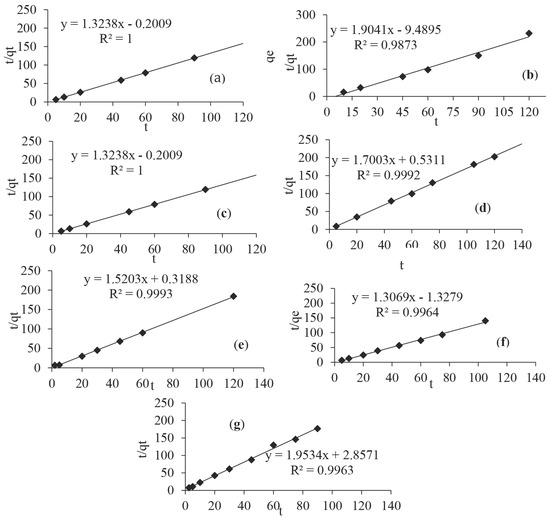
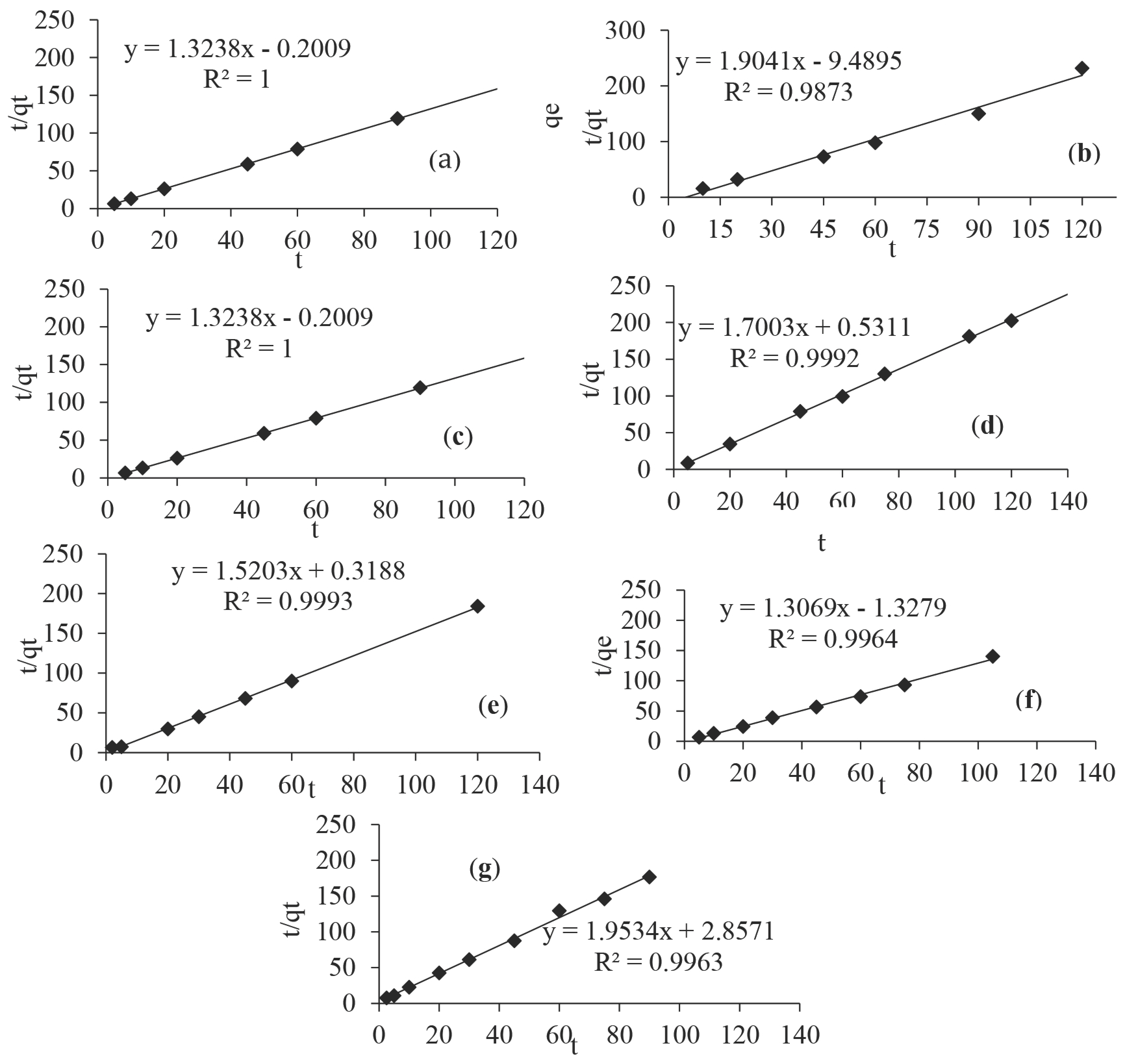
Figure 7 illustrates the kinetic analysis of heavy-metal biosorption from ADOSB wastewater onto tobacco-derived biosorbents. Figure 7a depicts the Temkin isotherm for copper adsorption onto the Çağlan biosorbent, with lnCe versus qe exhibiting a strong linear correlation (R2 = 0.9908), indicating that adsorption is governed by uniform binding energies and enhanced interactions at elevated surface coverage. Figure 7b–g illustrates pseudo-second-order kinetic plots (t versus t/qₜ) for metal biosorption, demonstrating that the adsorption processes on the respective tobacco-derived biosorbents are primarily governed by chemisorption mechanisms. All biosorbents show excellent linearity (R2 = 0.9873–1), confirming that the pseudo-second-order model accurately captures the adsorption kinetics of copper, cobalt, and nickel onto Bulam, Ova, Çelikhan, and Çağlan biosorbents. The increasing t/qₜ slope with time reflects rapid initial uptake followed by gradual a fapproach to equilibrium. The figure demonstrates that metal biosorption follows predictable kinetic behavior, exhibiting high model conformity (R2), thereby confirming the efficacy and reliability of the tobacco-derived biosorbents under the tested conditions.
Figure 7.
Kinetic analyses of metal biosorption from ADOSB wastewater: (a) Temkin isotherm for copper onto Çağlan biosorbent; (b–g) pseudo-second-order kinetic model plots for copper, cobalt, and nickel adsorption onto Bulam, Ova, Celikhan, and Çağlan biosorbents.
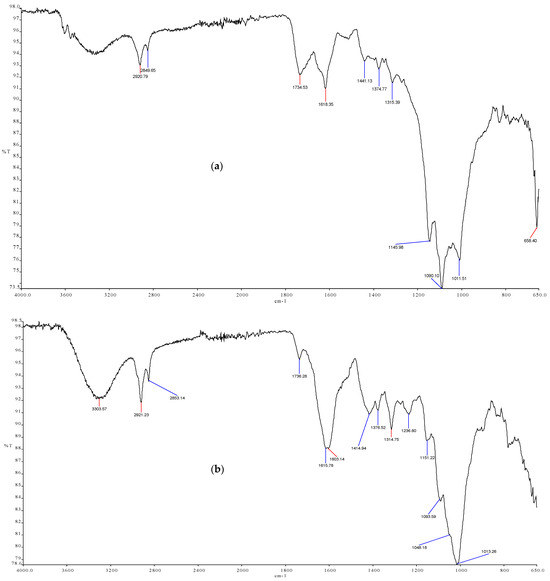
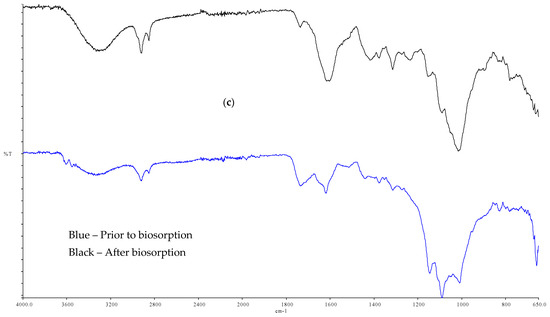
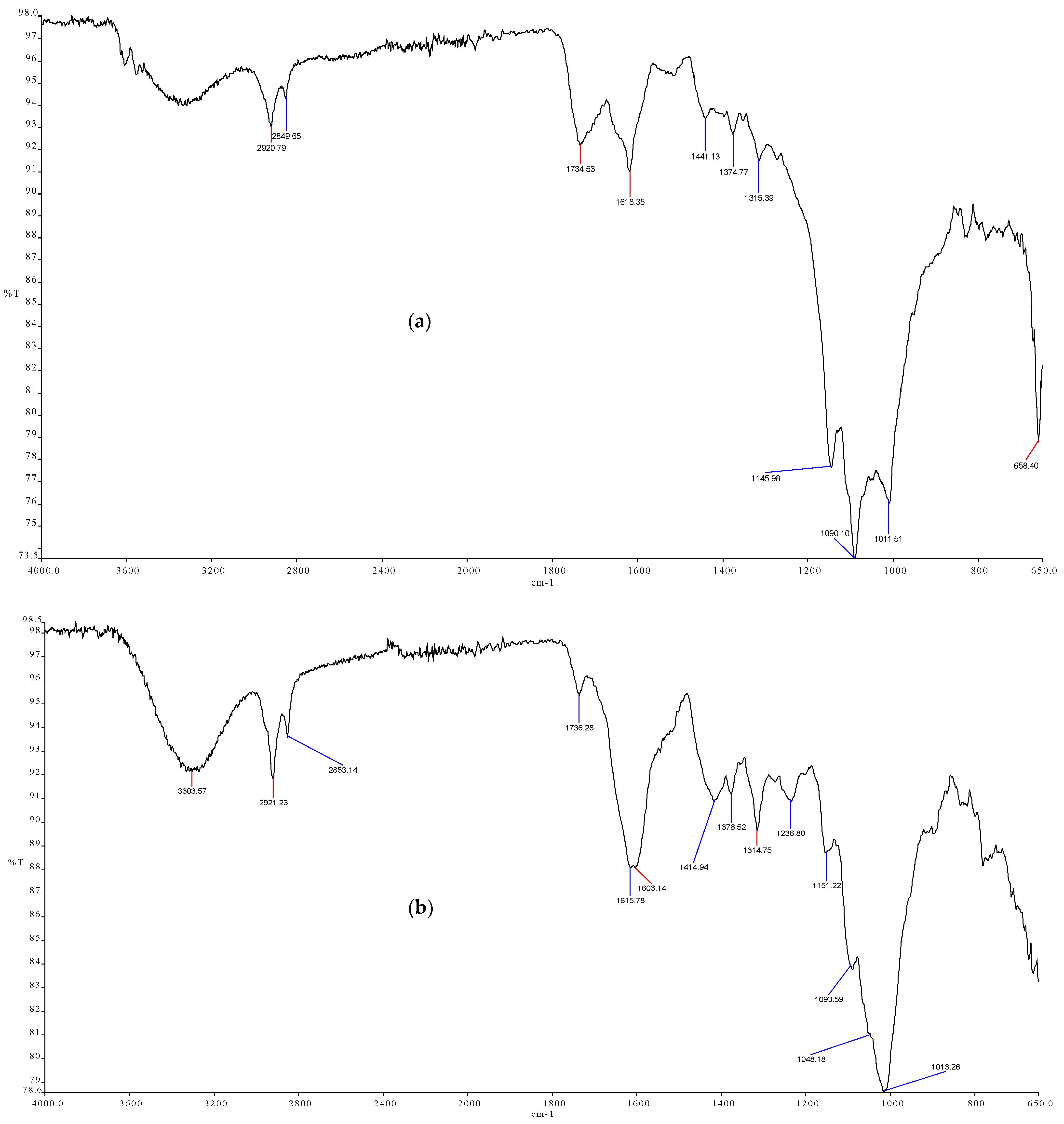
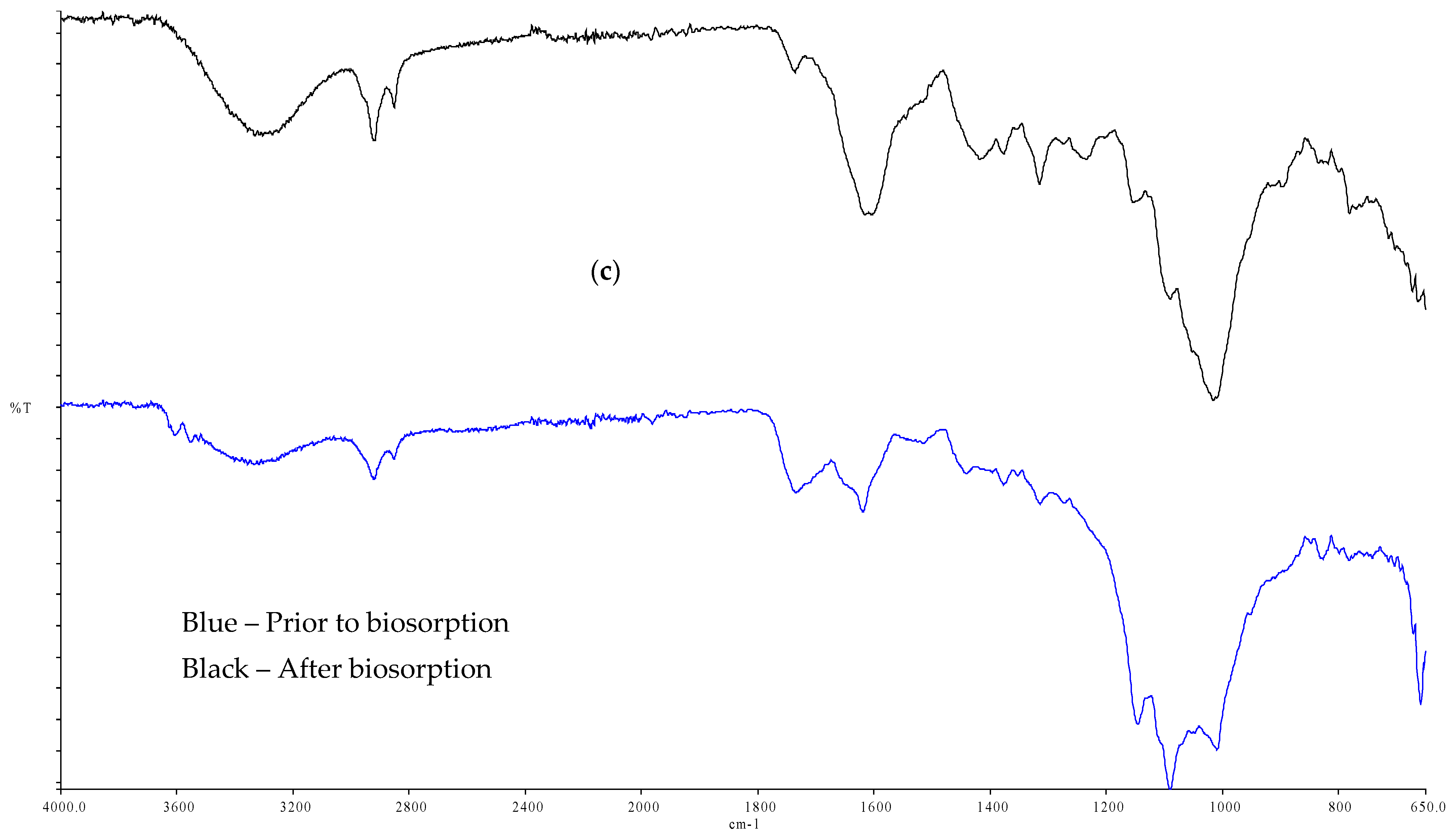
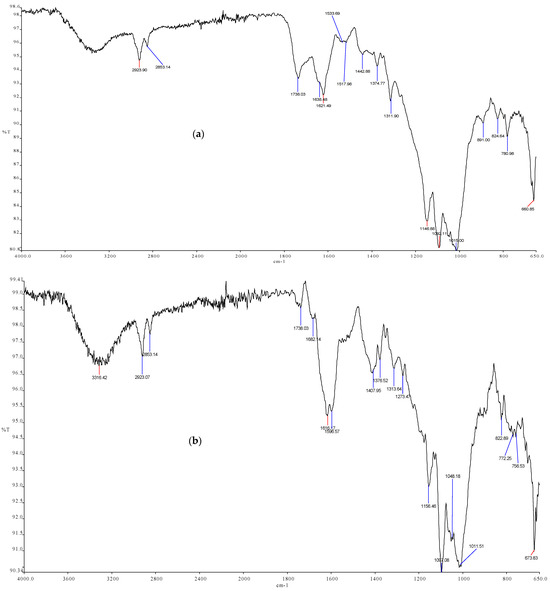
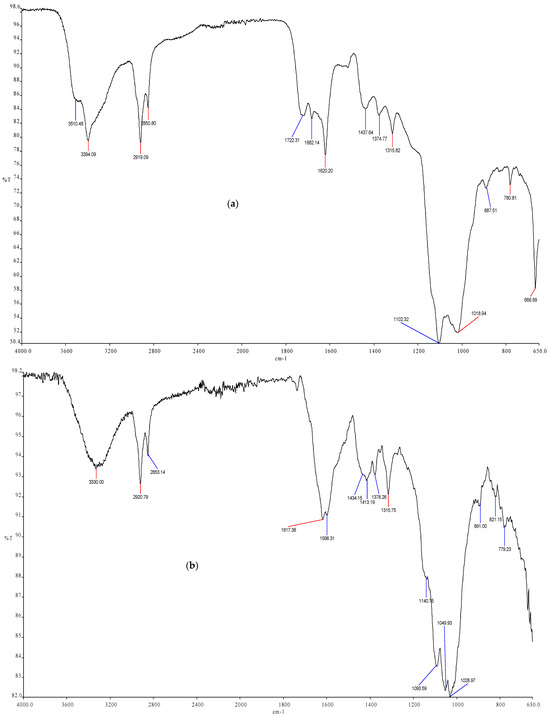
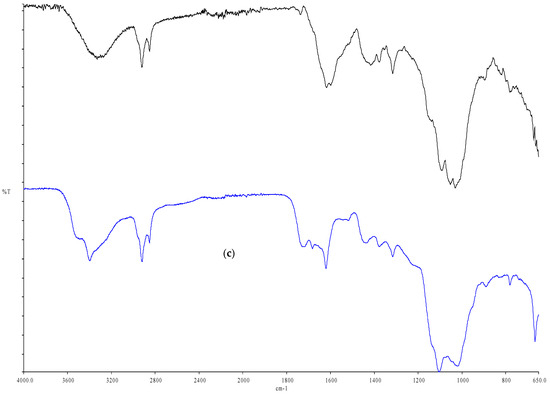
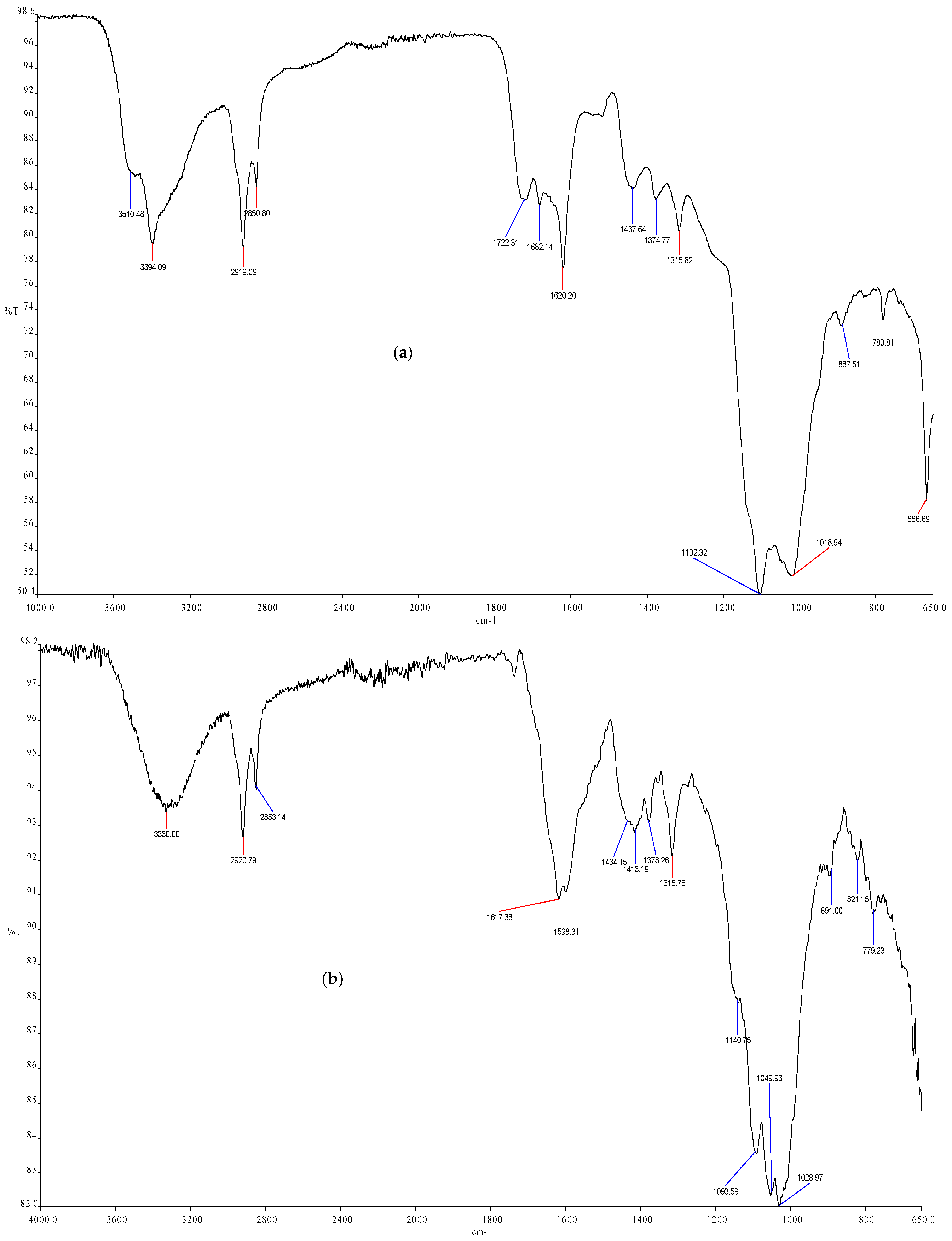
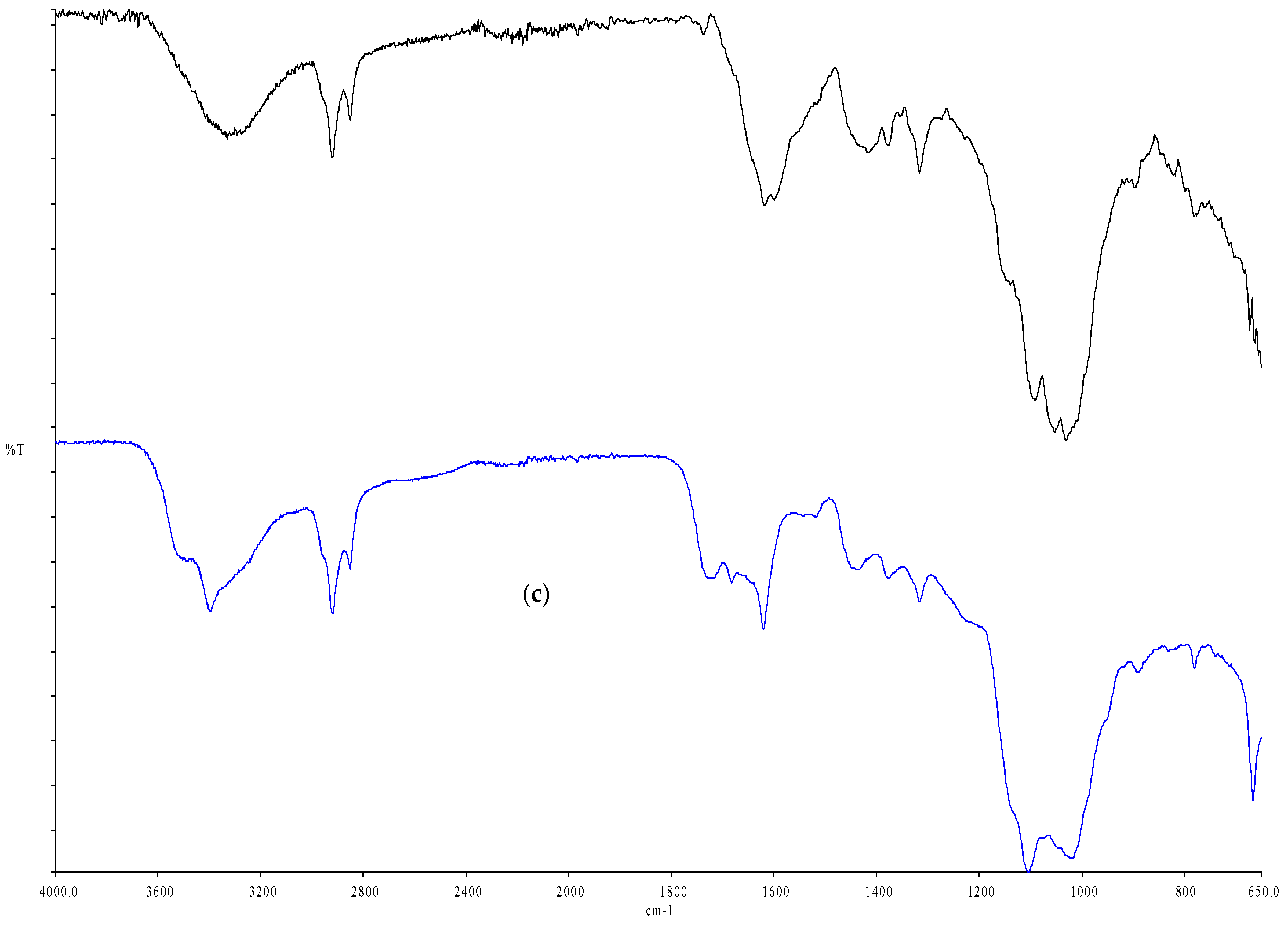
Table 8 summarizes the kinetic parameters for Cu, Co, and Ni biosorption from ADOSB wastewater onto Bulam, Ova, Celikhan, and Çağlan, evaluated using PFO, PSO, Weber–Morris, and Elovich models, with equilibrium capacities (qd,exp) and pH values reported for kinetic analysis. Across all biosorbents and metal ions, the Pseudo-Second-Order model consistently yielded the highest correlation coefficients (R2 = 0.9873–1.000), indicating that chemisorption governs the adsorption kinetics. For Bulam, Cu biosorption (pH 7.77, qd,exp = 0.645 mg/g) followed PSO kinetics with k2 = 0.3821 g/mg·h and qd,cal = 0.525 mg/g (R2 = 0.9873), surpassing the PFO model (R2 = 0.899). Similarly, Co (pH 7.78, qd,exp = 0.764 mg/g) and Ni (pH 7.89, qd,exp = 0.608 mg/g) adsorption adhered to PSO kinetics with R2 = 1.000 and 0.9992, and qd,cal = 0.755 and 0.588 mg/g, respectively. For Ova, Cu adsorption (pH 7.89, qd,exp = 0.696 mg/g) followed PSO kinetics (k2 = 7.250 g/mg·h, qd,cal = 0.658 mg/g, R2 = 0.9993), indicating rapid surface-controlled uptake. Cu adsorption on Celikhan (pH 8.41, qd,cal = 0.765 mg/g, R2 = 0.9964) and Çağlan (pH 8.25, qd,cal = 0.537 mg/g, R2 = 0.9946) similarly conformed to PSO kinetics. Intra-particle diffusion (kᵢ = 0.069–0.111 mg/g·h0·5) partly influences adsorption, but low R2 indicates it is not rate-limiting. Elovich parameters (β = 42.7–2.5×10¹⁵ g/mg; α = 15.6–476.2 mg/g·h) reflect heterogeneous surfaces and complex sorption kinetics. High PSO R2 values and realistic qd,cal indicate chemisorption dominates Cu, Co, and Ni removal, with Bulam and Ova showing the most efficient kinetics due to surface properties and porosity. Figure 8, Figure 9, Figure 10 and Figure 11 show the FT-IR spectra of the Bulam, Ova, Çelikhan, and Çağlan biosorbents before and after biosorption, with comparative spectra (c) highlighting the chemical changes induced by biosorption.
Table 8.
Kinetic parameters for the biosorption of Cu, Co, and Ni from ADOSB wastewater onto different biosorbents.
Figure 8.
FT-IR spectra of the Bulam biosorbent before biosorption (a,b), after biosorption (c), and the comparative spectra illustrating changes due to biosorption.
Figure 9.
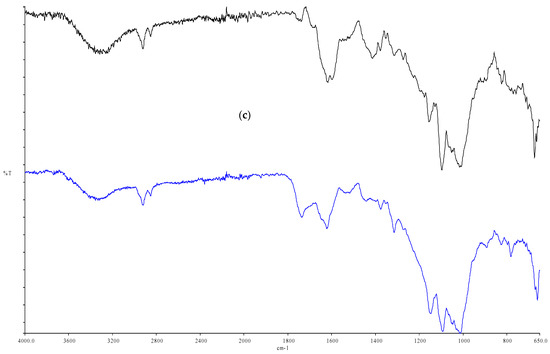
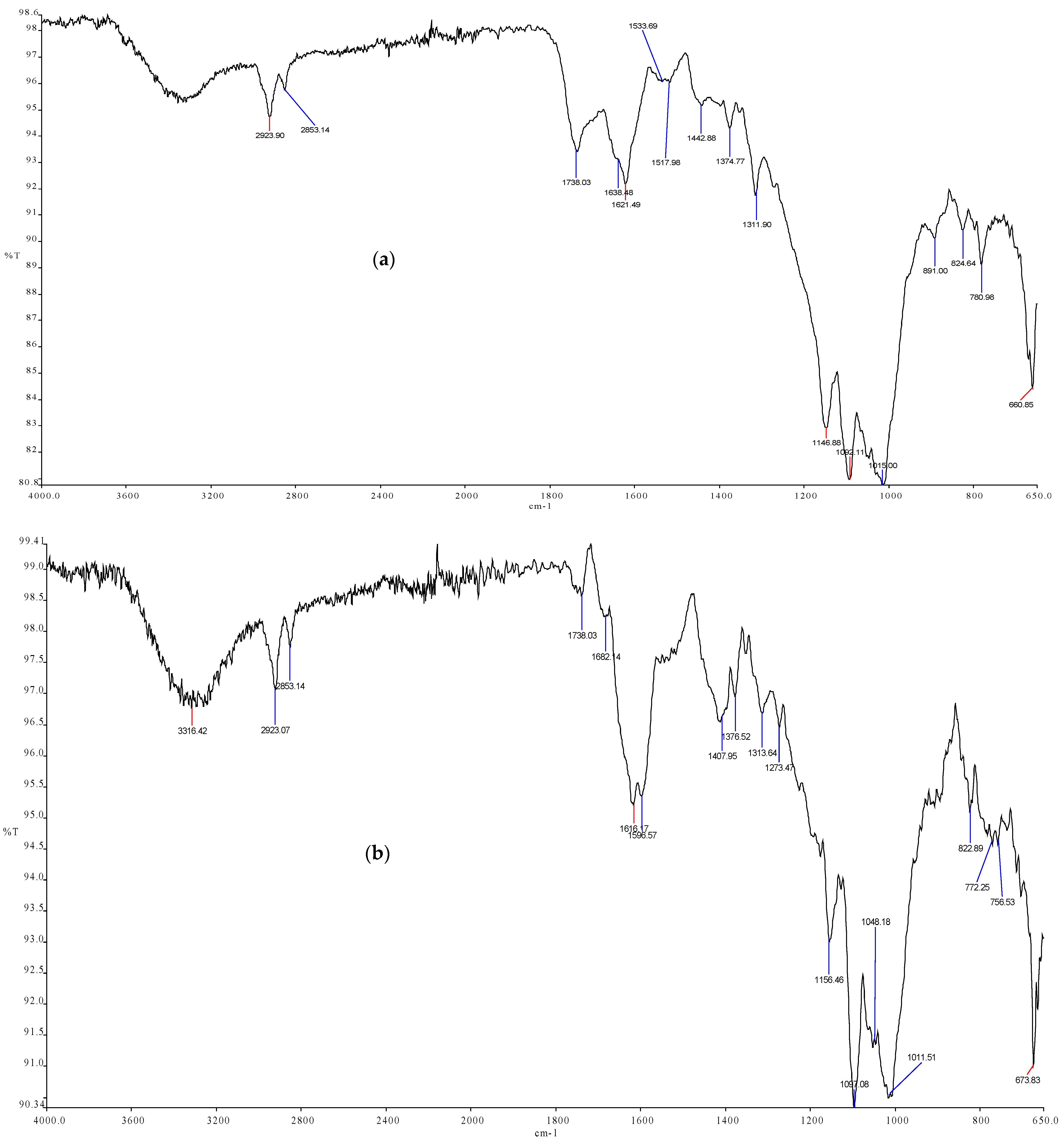
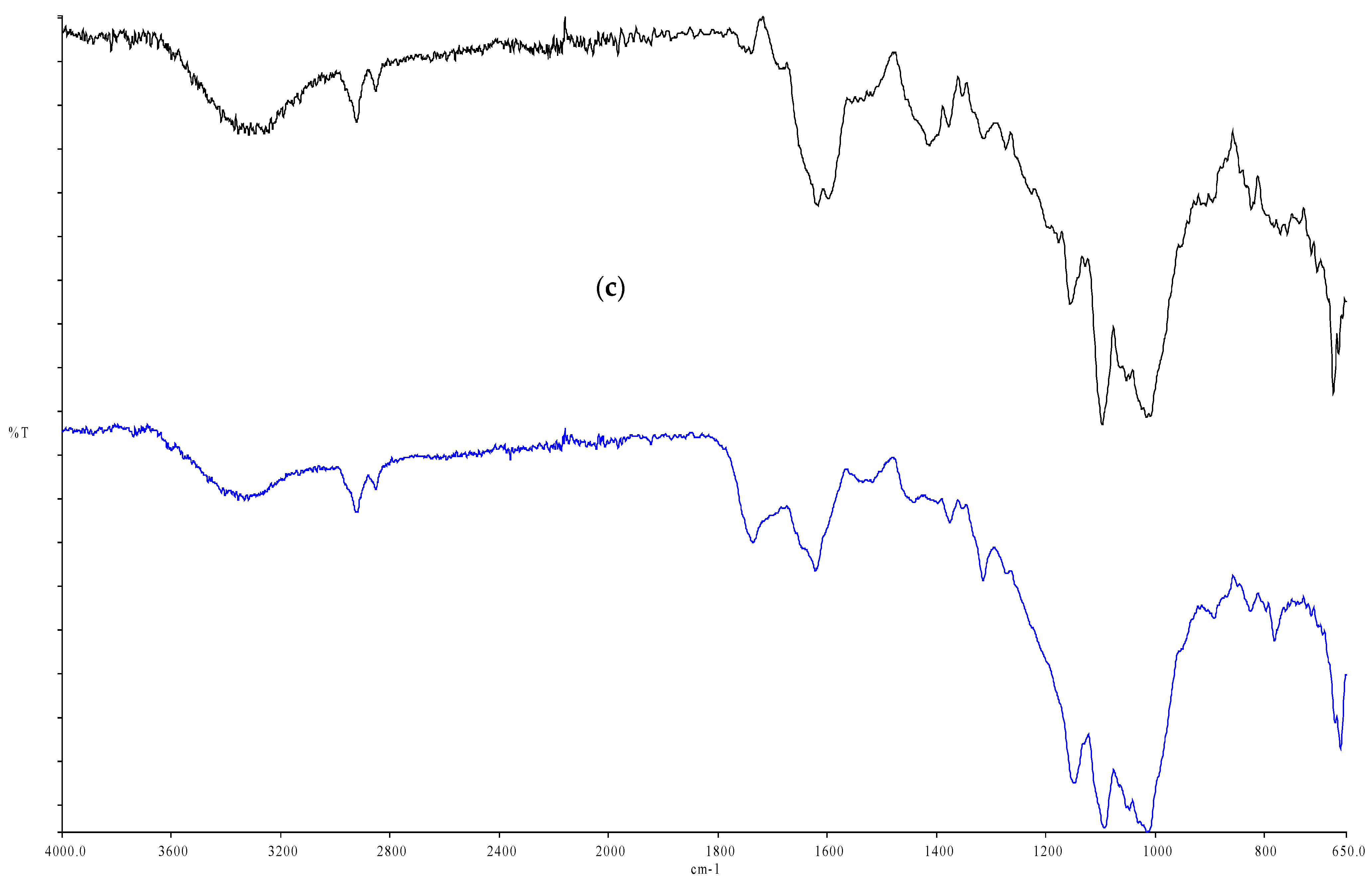
FT-IR spectra of the Ova biosorbent: (a) before biosorption, (b) after biosorption, and (c) comparison of spectra before and after biosorption.
Figure 10.
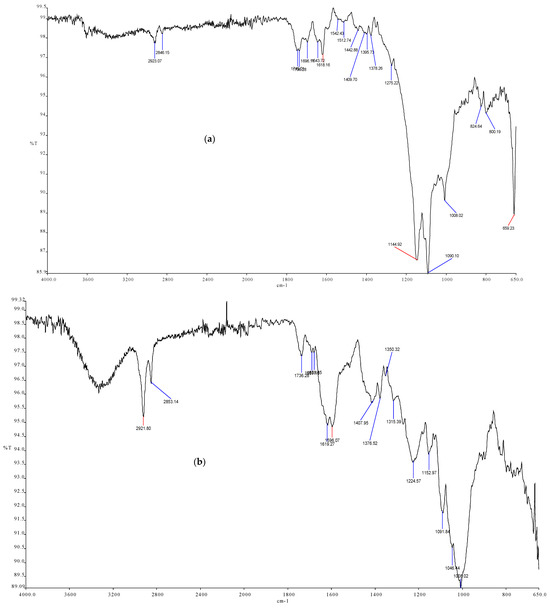
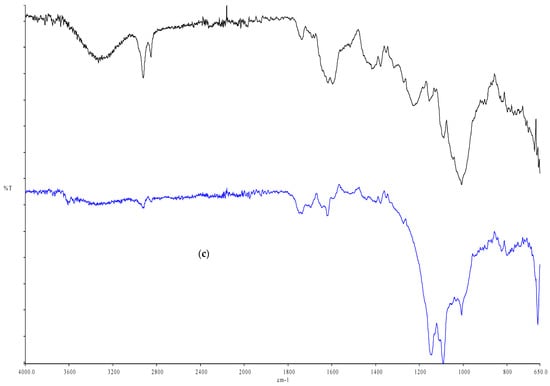
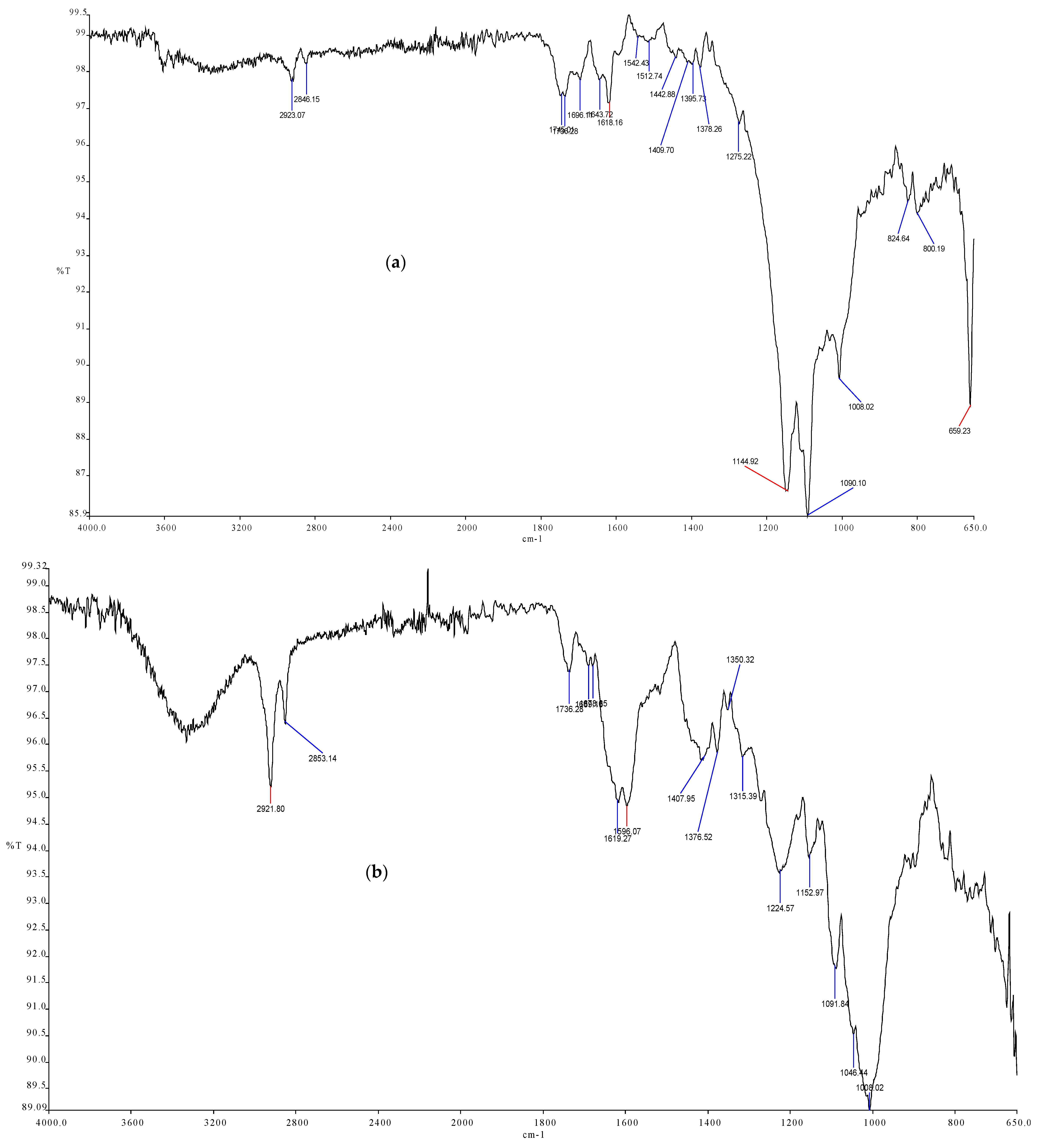
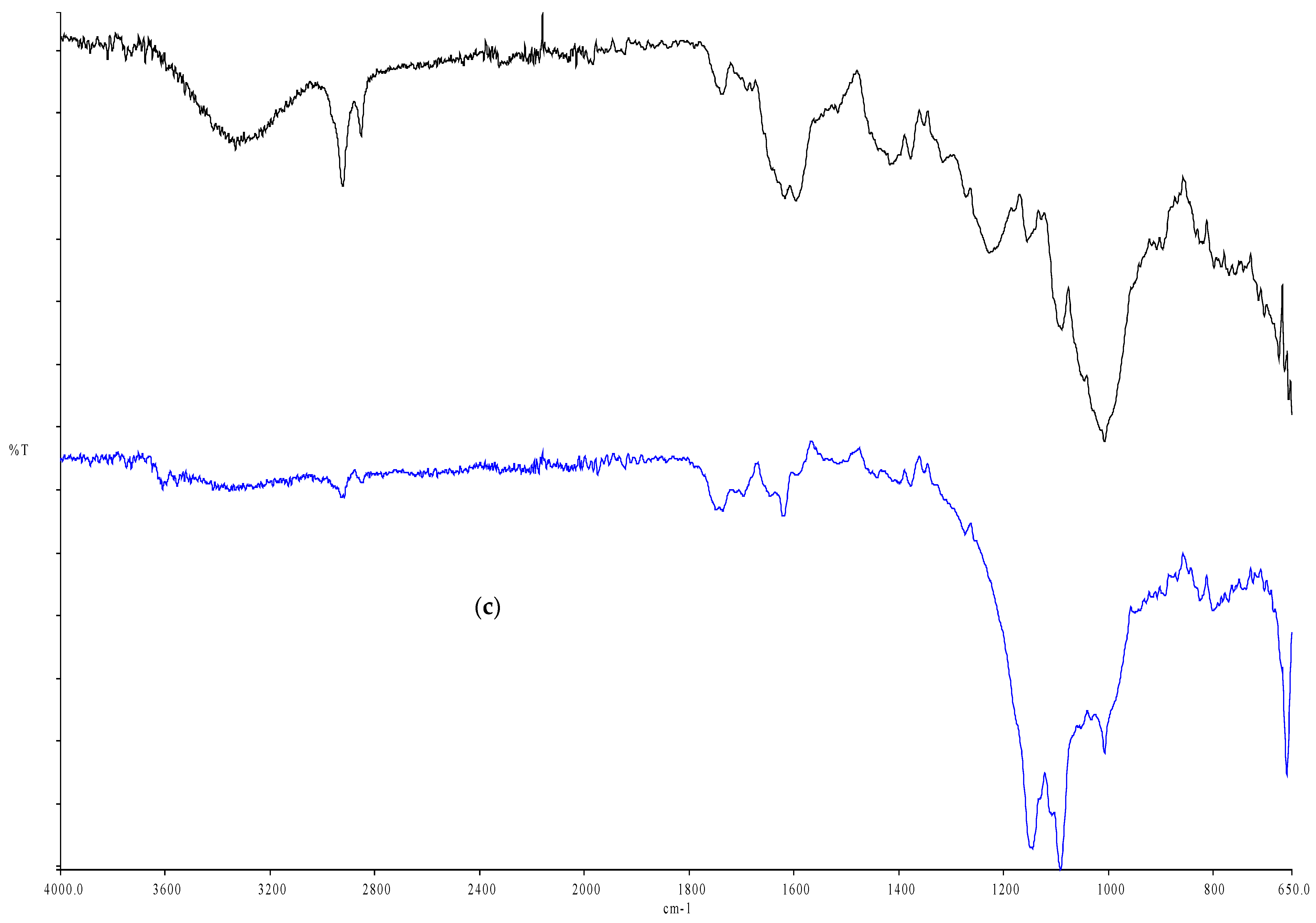
FT-IR spectra of the Çelikhan biosorbent: (a) before biosorption, (b) after biosorption, and (c) comparison of the spectra before and after biosorption.
Figure 11.
FT-IR spectra of the Çağlan biosorbent: (a) before biosorption, (b) after biosorption, and (c) comparison of the spectra before and after biosorption.
Figure 8 presents the FT-IR spectra of the Bulam biosorbent before and after the biosorption of Cu, Co, and Ni ions, highlighting the surface functional groups involved in the adsorption process and the structural changes induced by metal binding. Noticeable spectral shifts and variations in band intensities are observed in several characteristic regions, particularly the C–O stretching vibrations (1145–1011 cm−1), C=O carbonyl bands (1618–1734 cm−1), and O–H/C–H stretching regions (2850–2921 cm−1). These changes indicate the active participation of ester, carbonyl, and hydroxyl functional groups in the biosorption mechanism. Figure 8a indicates that the FT-IR spectrum of the Bulam biosorbent prior to biosorption exhibits several characteristic absorption bands corresponding to functional groups typically found in lignocellulosic biomaterials. A broad band in the 3200–3500 cm−1 region is attributed to O–H stretching vibrations, reflecting the presence of hydroxyl groups associated with alcohols, phenols, and adsorbed moisture. The peaks observed at 2920–2850 cm−1 correspond to aliphatic C–H stretching vibrations. In addition, the absorption band around 1600–1650 cm−1 is assigned to C=O stretching or aromatic C=C vibrations, while bands in the 1000–1300 cm−1 region are associated with C–O stretching vibrations of alcohol, ester, or ether groups. These functional groups represent potential active sites responsible for metal ion binding during the biosorption process. Figure 8b shows that the detailed FT-IR spectrum further confirms the presence of abundant oxygen-containing functional groups, including hydroxyl, carbonyl, and carboxyl groups, on the biosorbent surface. The distribution and relative intensities of these absorption bands indicate that the biosorbent possesses a chemically reactive surface capable of interacting with dissolved metal ions. Such interactions may occur through mechanisms such as surface complexation, ion exchange, and hydrogen bonding, which collectively contribute to the biosorption capacity of the material.
Figure 8a shows the comparative FT-IR spectra of the biosorbent before and after biosorption, revealing noticeable shifts in peak positions and variations in band intensities, particularly within the O–H, C=O, and C–O spectral regions. These spectral changes confirm the involvement of these functional groups in the adsorption of Cu, Co, and Ni ions. The observed modifications in the characteristic bands suggest that the biosorption process is predominantly governed by surface complexation and electrostatic interactions, where hydroxyl, carbonyl, and ester groups act as primary binding sites for the immobilization of metal ions on the Bulam biosorbent surface. Figure 9 shows similar spectral comparisons for the Ova biosorbent before and after copper biosorption.
Figure 9a presents the FT-IR spectrum of the Ova biosorbent prior to biosorption, showing characteristic absorption bands typical of lignocellulosic materials. The broad band at 3200–3500 cm−1 corresponds to O–H stretching vibrations, while peaks near 2920–2850 cm−1 are attributed to aliphatic C–H stretching. The bands around 1600–1700 cm−1 are associated with C=O or aromatic C=C vibrations, and those within 1000–1300 cm−1 correspond to C–O stretching vibrations of alcohol, ester, or ether groups, indicating potential active sites for metal ion adsorption. Figure 9b shows the FT-IR spectrum after copper biosorption, where noticeable shifts in peak positions and variations in intensities are observed. In particular, the C–O stretching bands shift from 1146–1015 cm−1 to 1156–1011 cm−1, while C=O bands shift from 1621–1638 cm−1 to 1616–1682 cm−1, accompanied by changes near 2923 cm−1 (O–H/C–H region). These shifts indicate the involvement of oxygen-containing functional groups in the biosorption process. Figure 9c compares the spectra before and after biosorption. The observed spectral shifts and intensity variations confirm that hydroxyl, carbonyl, and ester groups participate in metal binding. These modifications suggest that the adsorption mechanism is primarily governed by surface complexation and electrostatic interactions, where these functional groups serve as the main binding sites for copper ions on the Ova biosorbent surface.
Figure 10a presents the FT-IR spectrum of the Çelikhan biosorbent prior to biosorption, showing characteristic bands typical of lignocellulosic materials. The broad band at 3200–3500 cm−1 corresponds to O–H stretching, while peaks at 2920–2850 cm−1 are attributed to aliphatic C–H stretching. Bands around 1600–1700 cm−1 correspond to C=O or aromatic C=C vibrations, and peaks within 1000–1300 cm−1 are associated with C–O stretching of alcohol, ester, or ether groups, indicating potential adsorption sites. Figure 10b shows the FT-IR spectrum after copper biosorption. Noticeable shifts in peak positions and intensity variations occur in several functional groups, particularly C–O (1145–1090 → 1153–1092 cm−1), C=O (1618–1745 → 1619–1689 cm−1), and O–H/C–H (2846–2923 → 2853–2922 cm−1), indicating interactions between the biosorbent surface and copper ions. Figure 10c compares the spectra before and after biosorption. The observed band shifts and intensity changes confirm that hydroxyl, carbonyl, and ester groups actively participate in metal binding. These results suggest that copper adsorption on the Çelikhan biosorbent is mainly governed by surface complexation and electrostatic interactions involving oxygen-containing functional groups.
Figure 11a presents the FT-IR spectrum of the Çağlan biosorbent before biosorption, showing characteristic bands typical of lignocellulosic biomaterials. The broad band at 3200–3500 cm−1 corresponds to O–H stretching vibrations, indicating hydroxyl groups. Peaks around 2920–2850 cm−1 are attributed to aliphatic C–H stretching, while bands in the 1600–1700 cm−1 region correspond to C=O or aromatic C=C vibrations. Additional peaks within 1000–1300 cm−1 are associated with C–O stretching of alcohol, ester, or ether groups, representing potential adsorption sites.
Figure 11b shows the FT-IR spectrum after biosorption. Compared with the initial spectrum, shifts in peak positions and changes in band intensities are observed, particularly in the O–H, C=O, and C–O regions, indicating interactions between the biosorbent surface and metal ions.
Figure 11c compares the spectra before and after biosorption. The observed spectral shifts and intensity variations confirm the involvement of hydroxyl, carbonyl, and ester functional groups in the adsorption process. These results suggest that metal uptake on the Çağlan biosorbent is mainly controlled by surface complexation and electrostatic interactions involving oxygen-containing functional groups.
The FT-IR spectra of the Bulam biosorbent before and after Cu, Co, and Ni biosorption are presented in Figure 8. Noticeable spectral shifts were observed in the C–O stretching vibrations, which changed from 1145–1011 cm−1 to 1150–1015 cm−1, indicating the participation of ester functional groups in the metal-binding process. In addition, the C=O (carbonyl) stretching bands shifted from 1618–1734 cm−1 to 1615–1725 cm−1, suggesting interactions between carbonyl groups and the adsorbed metal ions. A reduction in the intensity of the O–H and C–H stretching bands located at 2850–2921 cm−1 was also observed after biosorption. These spectral modifications collectively confirm that ester, carbonyl, and hydroxyl functional groups play a significant role in the adsorption mechanism of metal ions. Comparable spectral shifts were also identified for the Ova, Çelikhan, and Çağlan biosorbents (Figure 9, Figure 10 and Figure 11), indicating a consistent adsorption mechanism across all tobacco-derived biosorbents, where similar functional groups contribute to metal binding.
Table 7 and Table 8 summarize the adsorption isotherm and kinetic parameters for the biosorption of Cu, Ni, and Co onto the Bulam, Ova, Çelikhan, and Çağlan biosorbents. For clarity and consistency, all parameters used in the theoretical adsorption models are defined in the table footnotes as follows:
- qe—adsorption capacity at equilibrium (mg/g);
- Ce—equilibrium metal concentration in solution (mg/L);
- Qmax—maximum monolayer adsorption capacity (mg/g);
- Ka—Langmuir adsorption constant (L/mg);
- R_L—dimensionless separation factor;
- K_F—Freundlich adsorption constant (L/g);
- n—Freundlich intensity parameter (dimensionless);
- A—Temkin equilibrium binding constant (L/g);
- B—Temkin constant related to the heat of adsorption (J/mol);
- β—Dubinin–Radushkevich (D–R) constant (mol2/J2);
- qmax, D–R—maximum adsorption capacity obtained from the D–R model (mg/g);
- E—mean adsorption energy (kJ/mol);
- q_d,exp—experimentally determined adsorption capacity (mg/g);
- q_d,cal—calculated adsorption capacity (mg/g);
- k1—pseudo-first-order rate constant (1/h);
- k2—pseudo-second-order rate constant (g/mg·h);
- h—initial adsorption rate (mg/g·h);
- ki—intra-particle diffusion rate constant (mg/g·h0·5);
- α—Elovich initial adsorption rate (mg/g·h);
- β—Elovich desorption constant (g/mg).
Discussion
Industrial wastewater poses serious risks to environmental quality and human health due to the presence of high organic loads and toxic heavy metals. The physicochemical characterization of untreated ADOSB wastewater revealed elevated pollutant levels, with COD (925 ± 391 mg/L) and TSS (235 ± 64 mg/L) exceeding the discharge limits of 300 mg/L and 100 mg/L, respectively, according to national wastewater discharge standards. In addition, considerable concentrations of heavy metals were detected, including Cu (2.54 ± 0.97 mg/L), Ni (1.94 ± 1.18 mg/L), and Co (1.81 ± 0.58 mg/L), indicating a significant potential risk to aquatic ecosystems if discharged without adequate treatment. Similar pollutant levels in industrial effluents have been reported in previous studies investigating textile and mixed industrial wastewater streams, where heavy metals and organic contaminants significantly degrade receiving water quality [47,48]. The biosorption experiments demonstrated that tobacco-derived biosorbents can effectively remove heavy metals from industrial wastewater. Copper removal efficiencies followed the order Çelikhan (~83%) > Ova (~73%) > Bulam (~71%) > Çağlan (~47%), indicating that adsorption performance strongly depends on the physicochemical properties of the biosorbent surface. Similarly, COD removal efficiencies ranged between 28% and 34%, with Ova biosorbent achieving the highest COD removal (34%), while Çağlan biosorbent exhibited the highest COD adsorption capacity (146.36 mg/g). These results highlight the important influence of biosorbent composition, surface functional groups, and operational parameters such as pH. Previous research has shown that lignocellulosic agricultural residues possess abundant active functional groups that facilitate heavy metal adsorption through surface complexation and ion-exchange mechanisms [49]. Kinetic analysis indicated that metal adsorption occurred rapidly during the initial stage of the process. For example, Bulam biosorbent achieved a copper adsorption capacity of 0.645 mg/g within the first 5 min, approaching equilibrium with 0.6136 mg/g at 60 min, indicating rapid surface binding followed by stabilization. Similarly, the maximum adsorption capacities for cobalt (0.7591 mg/g) and nickel (0.6045 mg/g) were obtained under optimal conditions. The rapid uptake during the early stage can be attributed to the availability of abundant active adsorption sites on the biosorbent surface. Comparable adsorption behavior has been reported for plant-based biosorbents used in the removal of heavy metals from industrial wastewater, where most adsorption occurs during the first minutes of contact due to strong electrostatic interactions between metal ions and surface functional groups [50]. The adsorption kinetics were best described by the pseudo-second-order model, with correlation coefficients ranging from R2 = 0.9873 to 1.000, indicating that chemisorption is the dominant rate-controlling mechanism. For example, copper adsorption onto Bulam biosorbent exhibited a kinetic constant of k2 = 0.382 g/mg·h, while cobalt adsorption showed a higher rate constant of k2 = 8.723 g/mg·h, suggesting stronger interactions between cobalt ions and the biosorbent surface. In contrast, the pseudo-first-order model exhibited significantly lower correlation coefficients (R2 = 0.0007–0.899), indicating limited applicability for describing the adsorption process. Similar kinetic behavior has been reported in biosorption studies involving agricultural biomass, where the pseudo-second-order model frequently provides the best fit due to surface chemical interactions governing the adsorption mechanism [51]. Isotherm modeling further clarified the adsorption mechanism. The Langmuir model predicted a maximum copper adsorption capacity (Qmax) of 1.867 mg/g for Bulam biosorbent, indicating moderate monolayer adsorption on homogeneous sites, while the Freundlich constant (n = 4.941) confirmed favorable multilayer adsorption on heterogeneous surfaces. Additionally, the Temkin model for Ova biosorbent exhibited a strong correlation (R2 = 0.960) with an adsorption heat constant B = 4.216, suggesting relatively uniform adsorption energies across the surface. The Dubinin–Radushkevich model yielded a mean adsorption energy (E = 5.516 kJ/mol), indicating that the adsorption process is primarily governed by physical interactions rather than strong chemical bonding, as adsorption energies below 8 kJ/mol are typically associated with physisorption. Similar adsorption mechanisms have been reported in studies investigating heavy metal removal using plant-based biosorbents. FT-IR analysis provided additional evidence for the biosorption mechanism by revealing shifts in key functional groups after metal adsorption. Significant spectral changes were observed at 1145–1011 cm−1 (C–O), 1618–1734 cm−1 (C=O), and 2850–2921 cm−1 (O–H/C–H), indicating the active involvement of hydroxyl, carbonyl, and ester groups in metal binding. These functional groups facilitate adsorption through complexation and electrostatic interactions between metal ions and the biosorbent surface. Similar FT-IR spectral shifts have been widely reported for lignocellulosic biosorbents used in heavy metal removal processes. Overall, the results demonstrate that locally cultivated tobacco biomass can serve as a low-cost, environmentally sustainable biosorbent for the removal of heavy metals and organic pollutants from industrial wastewater. The relatively high adsorption efficiencies, rapid kinetic behavior, and favorable isotherm characteristics highlight the potential applicability of these biosorbents in wastewater treatment systems. Furthermore, the use of agricultural biomass for biosorption aligns with sustainable waste management strategies and circular economy principles, offering an effective solution for mitigating heavy metal pollution in industrial effluents.
4. Conclusions
This study demonstrated that tobacco-derived biosorbents are effective and sustainable materials for treating industrial wastewater from ADOSB. Among the investigated varieties, the Celikhan biosorbent exhibited the highest adsorption performance for copper and COD removal, highlighting the importance of biosorbent type in determining treatment efficiency. The biosorption process was significantly influenced by operational parameters such as contact time, pH, and initial contaminant concentration, with optimal removal observed at near-neutral pH and relatively short contact times. Kinetic and isotherm analyses indicated that the adsorption process follows pseudo-second-order kinetics and is well described by the Langmuir model, suggesting predominantly chemisorption on a monolayer surface. Overall, the results demonstrate that tobacco waste can serve as a low-cost and environmentally friendly biosorbent, supporting waste valorization and circular economy principles. Future research should investigate the removal of additional pollutants, evaluate regeneration and reusability of the biosorbents, and assess pilot-scale applications to confirm practical feasibility.
- Limitations and Potential Improvement of Tobacco Biosorbents
Although the locally sourced tobacco biosorbents demonstrated measurable adsorption of copper, cobalt, and nickel from ADOSB wastewater, the observed adsorption capacities (e.g., Qmax = 1.867 mg/g for Cu) are lower than those of some previously reported biomass-based adsorbents. This limitation is attributed to the use of untreated, raw biomass, which has a relatively low surface area and limited number of active binding sites.
To enhance adsorption performance, several strategies can be considered:
Chemical modification: Functionalization of tobacco biomass with acids, bases, or chelating agents can increase the density of active functional groups and improve metal affinity.
Activation: Physical or chemical activation (e.g., thermal treatment, phosphoric acid, or potassium hydroxide) can increase surface area and porosity, promoting higher adsorption capacity.
Biochar conversion: Pyrolysis of tobacco biomass generates a porous biochar with enriched surface functional groups, which has been shown to significantly improve heavy-metal removal.
Future studies can explore these approaches to optimize tobacco-based biosorbents, thereby enhancing their practical applicability for industrial wastewater treatment.”
Funding
This research received no external funding. The authors confirm that there is no financial support to report.
Data Availability Statement
No new data were created or analyzed in this study.
Acknowledgments
The author sincerely acknowledges the support of the Scientific Research Projects Unit of Adıyaman University (Project No. MÜFBAP/2012-0002), which provided the funding necessary for this study. The author also expresses his gratitude for the valuable guidance and resources that enabled the successful completion of the experimental investigations and comprehensive performance analyses. All individuals included in this section have provided their consent for acknowledgement.
Conflicts of Interest
The author declares no conflicts of interest.
References
- Pahlow, M.; Van Oel, P.; Mekonnen, M.; Hoekstra, A. Increasing pressure on freshwater resources due to terrestrial feed ingredients for aquaculture production. Sci. Total Environ. 2015, 536, 847–857. [Google Scholar] [CrossRef] [Scilit] [PubMed]
- Yue, X.; Wu, Y.; Wang, Y.; Li, W.; Wang, Y.; Sun, G.; Zhang, H.O. Does Urban Economic Development Increase Sewage Discharge Intensity? A Case Study of 288 Cities in China. Water 2025, 17, 2251. [Google Scholar] [CrossRef] [Scilit]
- Turgay, D. AĞIR METAL-KARAÇAM-TEMİZ HAVA; Güven Plus Grup A.Ş.: Istanbul, Turkey, 2022. [Google Scholar]
- Toroğlu, E.; Toroğlu, S.; Alaeddinoğlu, F. AKSU ÇAYI’NDA (KAHRAMAN MARAŞ) AKARSU KİRLİLİĞİ Water Pollution in the Aksu River (Kahraman Maraş). Coğrafi Bilim. Derg. 2006, 4, 93–103. [Google Scholar]
- Ilhan, S.; Cabuk, A.; Filik, C.; Caliskan, F. Effect of pretreatment on biosorption of heavy metals by fungal biomass. Trak. Univ. J. Sci. 2004, 5, 11–17. [Google Scholar]
- Alhas, E.; Oymak, S.A.; Karadede Akin, H. Heavy metal concentrations in two barb, Barbus xanthopterus and Barbus rajanorum mystaceus from Atatürk Dam Lake, Turkey. Environ. Monit. Assess. 2009, 148, 11–18. [Google Scholar] [CrossRef] [Scilit]
- Üstün, G.E.; Solmaz, S.K.A.; Birgül, A. Regeneration of industrial district wastewater using a combination of Fenton process and ion exchange—A case study. Resour. Conserv. Recycl. 2007, 52, 425–440. [Google Scholar] [CrossRef] [Scilit]
- Ertuğrul, S.; San, N.O.; Dönmez, G. Treatment of dye (Remazol Blue) and heavy metals using yeast cells with the purpose of managing polluted textile wastewaters. Ecol. Eng. 2009, 35, 128–134. [Google Scholar] [CrossRef] [Scilit]
- Liu, H.-L.; Chen, B.-Y.; Lan, Y.-W.; Cheng, Y.-C. Biosorption of Zn (II) and Cu (II) by the indigenous Thiobacillus thiooxidans. Chem. Eng. J. 2004, 97, 195–201. [Google Scholar] [CrossRef] [Scilit]
- Hussein, H.; Ibrahim, S.F.; Kandeel, K.; Moawad, H. Biosorption of heavy metals from waste water using Pseudomonas sp. Electron. J. Biotechnol. 2004, 7, 30–37. [Google Scholar] [CrossRef] [Scilit]
- Horsfall, M.J.; Arbia, A.; Spiff, A. Removal of Cu (II) and Zn (II) ions from wastewater by cassava (Manihot esculenta Cranz) waste biomass. Afr. J. Biotechnol. 2003, 2, 360–364. [Google Scholar] [CrossRef] [Scilit]
- Vieira, R.H.; Volesky, B. Biosorption: A solution to pollution? Int. Microbiol. 2000, 3, 17–24. [Google Scholar]
- Arbabi, M.; Hemati, S.; Amiri, M. Removal of lead ions from industrial wastewater: A review of Removal methods. Environment 2015, 2, 105–109. [Google Scholar]
- Saǧ, Y.; Kutsal, T. Determination of the biosorption heats of heavy metal ions on Zoogloea ramigera and Rhizopus arrhizus. Biochem. Eng. J. 2000, 6, 145–151. [Google Scholar] [CrossRef] [Scilit]
- Kumari, A.R.; Babu, P.J.; Rao, C.K.; Rao, G.N.; Swathi, P.; Sailokesh, R. Comparative study on kinetics, equilibrium and thermodynamics of the adsorption of copper (II) by plant biopolymers. Afr. J. Adv. Biotechnol. 2014, 2, 13–32. [Google Scholar]
- Deng, L.; Su, Y.; Su, H.; Wang, X.; Zhu, X. Sorption and desorption of lead (II) from wastewater by green algae Cladophora fascicularis. J. Hazard. Mater. 2007, 143, 220–225. [Google Scholar] [CrossRef] [Scilit]
- Sivük, U.G.H.A.H.; Ataseven, Y.; Gül, U.; Arısoy, H.; Sivük, H.; Ataseven, Y. Alternatif ürün projesi kapsamında tütün ve bazı ürünler arasında kârlılık karşılaştırmaları. Tekirdağ Ziraat Fakültesi Derg. 2009, 6, 215–226. [Google Scholar]
- Özcebe, H.; Attila, S.; Bolat, R.; Forouz, A.; Koçyiğit, K.; Özkan, Ö.; Taşçı, B. Kamu Çalışanlarının Televizyonda Yayınlanan Tütün Karşıtı Reklam Filmleri Hakkındaki Bazı Görüşleri. Turk. Thorac. J. 2013, 14, 64–71. [Google Scholar]
- Yıldırım, U.D. Tarımda trafik kazalarının ekonomi politiği ve mevsimlik tarım işçileri. Sav Katkı 2016, 2, 80–99. [Google Scholar]
- World Health Organization. WHO Report on the Global Tobacco Epidemic, 2008: The MPOWER Package; World Health Organization: Geneva, Switzerland, 2008. [Google Scholar]
- Dere, T.; Çekim, M. Tütün Bitkisinin Çevre Biyoteknolojisindeki Kullanım Olanakları; Güven Plus Grup Danışmanlık A.Ş. Yayınları: Istanbul, Turkey, 2022. [Google Scholar]
- Oladimeji, T.; Oyedemi, M.; Emetere, M.; Agboola, O.; Adeoye, J.; Odunlami, O. Review on the impact of heavy metals from industrial wastewater effluent and removal technologies. Heliyon 2024, 10, e40370. [Google Scholar] [CrossRef] [Scilit]
- Babaniyi, B.R.; Olamide, I.G.; Fagbamigbe, D.E.; Adebomi, J.I.; Areo, I.F. Environmental pollution and the entrance of toxic elements into the food chain. In Phytoremediation in Food Safety; CRC Press: Boca Raton, FL, USA, 2024; pp. 109–124. [Google Scholar]
- Çetin, H.C.; Harmancıoğlu, N.; Sarıyıldız, A.; Silay, A.E. Gediz nehri su kalitesi parametrelerinin eğilim analizi. In İzmir Kent Sempozyumu; TMMOB: Ankara, Turkey, 2009; pp. 603–611. [Google Scholar]
- Beolchini, F.; Pagnanelli, F.; Toro, L.; Veglio, F. Copper biosorption by Sphaerotilus natans confined in UF membrane module: Experimental study and kinetic modeling. Hydrometallurgy 2004, 72, 21–30. [Google Scholar] [CrossRef] [Scilit]
- Kanamarlapudi, S.L.R.K.; Chintalpudi, V.K.; Muddada, S. Application of biosorption for removal of heavy metals from wastewater. In Biosorption; IntechOpen: Rijeka, Croatia, 2018. [Google Scholar]
- Gouda, S.A.; Taha, A. Biosorption of heavy metals as a new alternative method for wastewater treatment: A review. Egypt. J. Aquat. Biol. Fish. 2023, 27, 135–153. [Google Scholar] [CrossRef] [Scilit]
- Mo, H.; Shan, H.; Xu, Y.; Liao, H.; Lu, M.; Peng, S.; Zhao, Y. The Sustainable Remediation of Antimony (III)-Contaminated Water Using Iron and Manganese-Modified Graphene Oxide–Chitosan Composites: A Comparative Study of Kinetic and Isotherm Models. Sustainability 2024, 16, 7599. [Google Scholar] [CrossRef] [Scilit]
- Sadeek, S.A.; Negm, N.A.; Hefni, H.H.; Wahab, M.M.A. Metal adsorption by agricultural biosorbents: Adsorption isotherm, kinetic and biosorbents chemical structures. Int. J. Biol. Macromol. 2015, 81, 400–409. [Google Scholar] [CrossRef] [Scilit]
- Ramrakhiani, L.; Ghosh, S.; Sarkar, S.; Majumdar, S. Heavy metal biosorption in multi component system on dried activated sludge: Investigation of adsorption mechanism by surface characterization. Mater. Today Proc. 2016, 3, 3538–3552. [Google Scholar] [CrossRef] [Scilit]
- Ungureanu, E.L.; Mocanu, A.L.; Stroe, C.A.; Panciu, C.M.; Berca, L.; Sionel, R.M.; Mustatea, G. Agricultural byproducts used as low-cost adsorbents for removal of potentially toxic elements from wastewater: A comprehensive review. Sustainability 2023, 15, 5999. [Google Scholar] [CrossRef] [Scilit]
- Khan, E.; Virojnagud, W.; Ratpukdi, T. Use of biomass sorbents for oil removal from gas station runoff. Chemosphere 2004, 57, 681–689. [Google Scholar] [CrossRef] [Scilit]
- Saad, A.A.; Amer, R.A.; Tayeb, E.H.; Nady, N.; Mohamed, R.G. Unmodified rice straw for the lead removal approach from synthetic lead solution. Alex. Sci. Exch. J. 2020, 41, 43–52. [Google Scholar] [CrossRef] [Scilit]
- Yanga, W.; Yang, G.; Hu, Q.; Yin, J.; Xie, G. Determination of heavy metal ions in tobacco and tobacco additives. S. Afr. J. Chem. 2006, 59, 17–20. [Google Scholar]
- Qi, B.; Aldrich, C. Biosorption of heavy metals from aqueous solutions with tobacco dust. Bioresour. Technol. 2008, 99, 5595–5601. [Google Scholar] [CrossRef] [Scilit] [PubMed]
- Dere, T. Adıyaman organize sanayi bölgesi (ADOSB) ve endüstriyel atıksularının karakterizasyonu üzerine bir durum değerlendirmesi. Balıkesir Üniversitesi Fen Bilim. Enstitüsü Derg. 2021, 23, 345–357. [Google Scholar]
- Velazquez, C.C.H.; Garcia, K.B.C.; Rodríguez, I.A. Usefulness of the Biomass of Tobacco (Nicotiana tabacum) for The Elimination of Chromium (VI) from Polluted Waters. Univers. J. Green Chem. 2024, 2, 1–11. [Google Scholar] [CrossRef] [Scilit]
- Ahmed, M.J.; Hameed, B.H. Recent progress on tobacco wastes–derived adsorbents for the remediation of aquatic pollutants: A review. Environ. Res. 2024, 247, 118203. [Google Scholar] [CrossRef] [Scilit]
- Wang, Y.; Lü, J.; Feng, D.; Guo, S.; Li, J. A biosorption-pyrolysis process for removal of Pb from aqueous solution and subsequent immobilization of Pb in the char. Water 2020, 12, 2381. [Google Scholar] [CrossRef] [Scilit]
- Abdi, O.; Kazemi, M. A review study of biosorption of heavy metals and comparison between different biosorbents. J. Mater. Environ. Sci. 2015, 6, 1386–1399. [Google Scholar]
- Shar, A.G.; Zhang, L.; Lu, A.; Ahmad, M.; Saqib, M.; Hussain, S.; Zulfiqar, U.; Wang, P.; Zhang, L.; Rahimi, M. Unlocking biochar’s potential: Innovative strategies for sustainable remediation of heavy metal stress in tobacco plants. Scientifica 2025, 2025, 6302968. [Google Scholar] [CrossRef] [Scilit]
- Du, F.; Liu, L.; Pan, Y.; Wu, C.; Wang, R.; Zhao, Z.; Fan, W.; Song, H.; Shi, Y.; Wang, J. A novel biochar-based composite hydrogel for removing heavy metals in water and alleviating cadmium stress in tobacco seedlings. Sci. Rep. 2023, 13, 15656. [Google Scholar] [CrossRef] [Scilit]
- Wu, Z.-Z.; Yang, J.-Y.; Zhang, Y.-X.; Wang, C.-Q.; Guo, S.-S.; Yu, Y.-Q. Growth responses, accumulation, translocation and distribution of vanadium in tobacco and its potential in phytoremediation. Ecotoxicol. Environ. Saf. 2021, 207, 111297. [Google Scholar] [CrossRef] [Scilit]
- Lei, W.; Sun, M.; Zhang, W.; Liang, L.; Ding, Z.; Tang, X.; Dai, H.; Liu, X.; Qi, P.; Wang, Y. Synergistic interfacial engineering of CNF@ MN@ MX composite membranes for highly efficient and recyclable photocatalytic detoxification of Cr (VI). Chem. Eng. J. 2026, 530, 173410. [Google Scholar] [CrossRef] [Scilit]
- American Public Health Association. Standard Methods for the Examination of Water and Wastewater; American Public Health Association: Washington, DC, USA, 1926; Volume 6. [Google Scholar]
- TS ISO 5667-10; Water Quality—Sampling—Part 10: Guidance on Sampling of Wastewater. Turkish Standards Institution (TSE): Ankara, Türkiye, 2021.
- Ali, I.; Asim, M.; Khan, T.A. Low cost adsorbents for the removal of organic pollutants from wastewater. J. Environ. Manag. 2012, 113, 170–183. [Google Scholar] [CrossRef] [Scilit] [PubMed]
- Bhatnagar, A.; Sillanpää, M.; Witek-Krowiak, A. Agricultural waste peels as versatile biomass for water purification–A review. Chem. Eng. J. 2015, 270, 244–271. [Google Scholar] [CrossRef] [Scilit]
- Foo, K.Y.; Hameed, B.H. Insights into the modeling of adsorption isotherm systems. Chem. Eng. J. 2010, 156, 2–10. [Google Scholar] [CrossRef] [Scilit]
- Crini, G.; Lichtfouse, E. Advantages and disadvantages of techniques used for wastewater treatment. Environ. Chem. Lett. 2019, 17, 145–155. [Google Scholar] [CrossRef] [Scilit]
- Vijayaraghavan, K.; Yun, Y.-S. Bacterial biosorbents and biosorption. Biotechnol. Adv. 2008, 26, 266–291. [Google Scholar] [CrossRef] [Scilit] [PubMed]

Disclaimer/Publisher’s Note: The statements, opinions and data contained in all publications are solely those of the individual author(s) and contributor(s) and not of MDPI and/or the editor(s). MDPI and/or the editor(s) disclaim responsibility for any injury to people or property resulting from any ideas, methods, instructions or products referred to in the content. |
© 2026 by the author. Licensee MDPI, Basel, Switzerland. This article is an open access article distributed under the terms and conditions of the Creative Commons Attribution (CC BY) license.