


Abstract
Fast pyrolysis of vegetable oils and residues generates bio-oil (BO), a renewable hydrocarbon source with high acidity that limits its direct use in refineries. In this study, BOs were produced from refined soybean oil (RSO) and waste cooking oil (WCO) at 525 °C in a continuous bench-scale pyrolysis at 525 °C, with a 390 ± 8 g h−1 feed rate, under steady-state conditions. The resulting bio-oils exhibited high acidity (acid index of 145 and 127 mg KOH g−1, respectively) and elevated olefinic and oxygen contents, making them corrosive and unsuitable for co-refining with petroleum. To reduce acidity, ethyl esterification was performed using lipase B from Candida antarctica (CALB), using a Box–Behnken 33 factorial design. Variables included temperature (40–60 °C), bio-oil:ethanol mass ratio (1:1–1:5), and catalyst concentration (3–10% w/w). The acid index was reduced by up to 76%, with optimal conditions (62 °C, 1:1 mass ratio, 11% CALB) yielding a final value of 28 mg KOH g−1. Similar reductions were obtained for waste cooking oil bio-oil, confirming robustness across feedstocks. CALB retained over 70% activity after three cycles, demonstrating stability. This enzymatic esterification process shows strong potential for lowering bio-oil acidity, enabling integration into petroleum refineries, diversifying feedstocks, and advancing renewable fuel production.
1. Introduction
The growing demand for sustainable energy alternatives has driven the development of renewable fuels, such as bio-oil (BO) derived from biomass, which can replace or complement fossil fuels [1,2]. BO is a reddish-brown liquid that can be obtained through the pyrolysis of triglyceride-rich biomass, such as vegetable oils, animal fats, and used cooking oil. This biofuel has gained attention as a potential substitute for petroleum due to its high energy density and the possibility of being derived from residues [3].
The direct use of BO as a biofuel is currently limited due to its complex chemical composition, which includes carboxylic acids, phenols, aldehydes, ketones, alcohols, esters, aromatic compounds, and a small fraction of water. The high acidity, resulting from the thermal degradation of triacylglycerols and the presence of carboxylic acids, such as acetic and formic acids, makes BO corrosive and affects its properties [3]. Additionally, thermal instability and the presence of oxygenated compounds hinder its storage and transport, meaning that it needs to be refined before it can be used as a biofuel [4]. Several strategies have been proposed to improve the quality of BO, including catalytic hydrogenation [5] and the removal of acidic compounds through physical or chemical processes [6]. Among these approaches, enzymatic esterification stands out as a promising method for reducing acidity, as it allows the selective conversion of carboxylic acids into esters, reducing acidity without the need for severe reaction conditions or excessive production of toxic residues [7]. This enzymatic process is catalyzed by lipases (EC 3.1.1.3), which are widely used due to their high selectivity and ability to act in non-aqueous media, providing a more environmentally friendly alternative than traditional chemical catalysis [8,9].
The enzymatic approach to reducing acidity has received relatively little attention. Simonato et al. [4] used the lipase B from Candida antarctica (CALB, Novozym 435) to catalyze the ethyl esterification of BO derived from soybean oil (SBO), obtaining reductions of 60% in the acid index (AI). However, it is necessary to optimize reaction conditions to reduce reaction time and improve process efficiency. The aim of the present study is, therefore, to optimize the esterification of BO catalyzed by CALB (Figure 1). Different reaction conditions were evaluated, including the mass ratio (MR) of substrates, temperature, and catalyst concentration, in a solvent-free system, aiming to reduce the AI of the BO to levels compatible with industrial standards. The process was optimized using a BO produced from refined soybean oil (RSO) and further applied to BO derived from waste cooking oil (WCO). RSO and WCO were selected as raw materials because they represent two strategically relevant lipid sources. RSO is a stable, well-characterized oil, widely available in Brazil and suitable for controlled optimization of the esterification process. WCO, in turn, is a low-cost and abundantly generated residue, whose composition in Brazil is predominantly soybean oil, thereby allowing evaluation of the robustness of the optimized process under realistic, residue-based conditions.
Figure 1.
Ethyl esterification of bio-oil carboxylic acids mediated by Candida antarctica lipase B (CALB).
2. Materials and Methods
2.1. Materials
RSO was purchased from a local market, while WCO was kindly donated by a local restaurant. Immobilized CALB (Candida antarctica lipase B, Novozym 435) was provided by Novonesis A/S (Lyngby, Denmark). Ethanol (≥99.5%) and n-hexane (≥99.5%) were obtained from ACS (São Paulo, Brazil). Oleic acid (≥90%) was purchased from Sigma-Aldrich, St. Louis, MO, USA. Propyl alcohol and NaOH solution (0.05 mol L−1) were of analytical grade from Êxodo Científica (São Paulo, Brazil). n-alkane standards and the FAME (fatty acid methyl ester) standard mixture were sourced from Supelco Inc. (São Paulo, Brazil).
2.2. Thermal Cracking Procedure
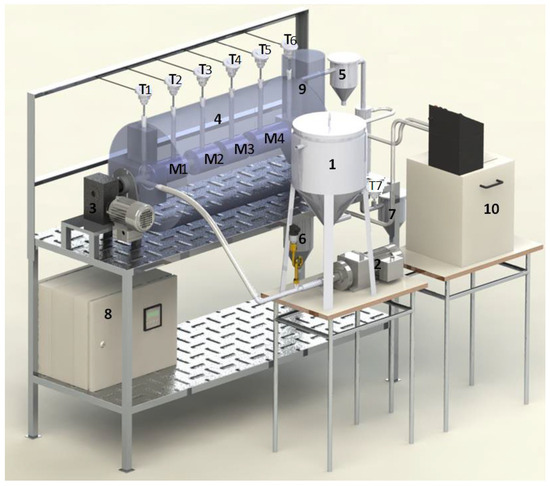
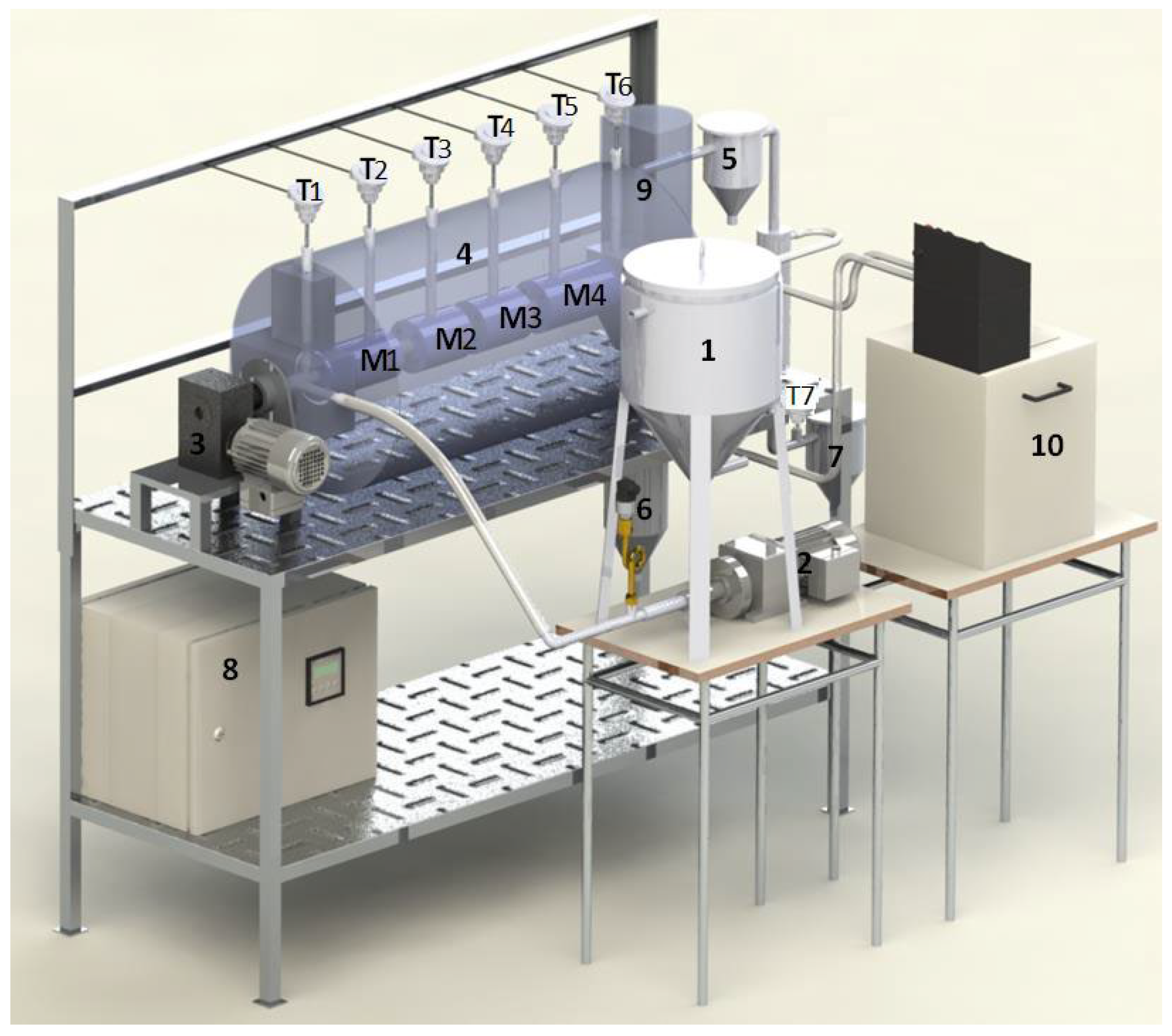
The BOs used in esterification reactions were obtained by thermal cracking of RSO and WCO in a bench-scale auger reactor operating in continuous mode under steady-state conditions [3] (Figure 2). The process was conducted at 525 ± 0.25 °C with a mass flow rate of 390 ± 8 g h−1 for RSO and WCO.
Figure 2.
Schematic representation of the bench-scale auger reactor used for the thermal cracking of oils. (1) Feed tank; (2) Positive displacement pump; (3) Auger conveyor; (4) Reaction zone; (M1–M4) Independent heating control zones; (T1–T6) Type-K thermocouples distributed along the reactor; (5–7) Condensate collection tanks; (8) Electrical control and automation cabinet; (9) Water-cooled condenser; (10) Thermal bath. The reactor operated under isothermal conditions and was thermally insulated with ceramic fiber.
A mass balance of the thermal cracking process gives
where , , and correspond to the masses of the feedstock, BO, gas, and coke, respectively. Triplicates were performed for each raw material, and product yields were expressed as mean ± standard deviation.
The yields of the BO, gas, and coke fractions were calculated as:
where , and represent the yields of BO, gas, and coke, respectively.
The BO yield was determined gravimetrically on the basis of the total collected mass, while the gas yield was obtained by measuring the volumetric flow rate and composition. Since coke could not be collected and weighed, its yield was estimated by difference.
The residence time in the reactor (tr) was calculated following [3]:
where is the residence time, Vr is the reactor volume, is the mass flow and is the average density of the vaporized reaction mixture.
The BOs were stored in amber glass bottles at 4 °C to ensure stability.
Hereafter, the BOs obtained from RSO and WCO will be referred to as RSBO and WCBO, respectively.
2.3. Preliminary Studies
Preliminary studies were performed on the effects of RSBO washing and the effect of CALB concentration on the reduction in AI, as described in the following subsections.
2.3.1. Effect of RSBO Washing
RSBO was washed with distilled water at mass percentages of 5, 10, 25, 50, 100, and 200% relative to the RSBO mass. The mixtures were placed in 15 mL Falcon tubes and centrifuged at 5000× g for 5 min at room temperature (25 °C). After centrifugation, the samples were allowed to stand for 3 h. The washed RSBO and residual aqueous phase were then separated and analyzed for AI.
2.3.2. Effect of CALB Concentration
Based on the experimental conditions previously optimized by Simonato et al. [4], namely 40 °C, a CALB concentration of 5% w/w, and a BO to ethanol MR of 1:3, we tested CALB at 3, 5, and 10% w/w relative to RSBO for AI reduction. Higher CALB concentrations were not evaluated because loadings above 10% (w/w) increase the viscosity of the reaction medium, hindering mixing and sample collection. Moreover, CALB is a costly biocatalyst, and using larger amounts would substantially raise operational expenses without evidence of proportional improvements in acid index reduction.
In each experiment, 2.5 g of RSBO and 7.5 g of ethanol were placed in a 50 mL Erlenmeyer flask, sealed, and incubated for 5 h at 180 rpm on an orbital shaker. After incubation, 100 µL samples were withdrawn and analyzed for AI by the titrimetric method (Section 2.6.1).
2.4. Experimental Design for Ethyl Esterification Optimization Using a Box–Behnken 33 Factorial Approach
A Box–Behnken 33 factorial design (Table 1) with 15 experiments, including three replicates at the central point, was used to optimize the reduction in AI of RSBO. The independent variables evaluated were the concentration of CALB (3, 5, and 10% by mass in relation to RSBO), MR (RSBO to ethanol, of 1:1, 1:3, and 1:5) and temperature (40, 50, and 60 °C). The response variable was the percentage of reduction in AI of the samples after 6 h of incubation.
Table 1.
Experimental conditions for the Box–Behnken 33 design used to reduce the acidity index of refined soybean oil (RSBO).
Esterifications were performed in 50 mL Erlenmeyer flasks containing CALB (3, 5, or 10%), 2.5 g of RSBO, and the amount of ethanol required to achieve the desired MR. The mass of bio-oil was fixed at 2.5 g (≈4.5 mL) in all factorial design experiments. Ethanol was added according to the desired mass ratio: 2.5 g for 1:1, 7.5 g for 1:3, and 12.5 g for 1:5, corresponding to total reaction volumes of approximately 7–8 mL, 12–13 mL, and 17–18 mL, respectively. The reaction medium (ethanol and RSBO) was homogenized and equilibrated at the desired temperature (40, 50, or 60 °C). Agitation was maintained at 180 rpm, as preliminary tests showed that higher speeds caused immobilized CALB to adhere to the flask walls, reducing effective catalyst-substrate contact and compromising reaction performance. Time zero was set at the time of CALB addition, with the first aliquot being withdrawn immediately. At fixed intervals (every 3 h), 100 μL samples were taken from the reaction mixture and analyzed for AI (Section 2.6.1), during 6 h. Reactions were carried out in sealed Erlenmeyer flasks.
After the the kinetic experiments, performed under optimal conditions, the residual activity of CALB (% relative to the first batch) was determined using the standard method for the esterification of oleic acid with ethanol (Section 2.6.2). To achieve this, CALB was separated from the spent reaction medium by vacuum filtration using Whatman (Maidstone, UK) No. 1 filter paper. It was then washed three times with 20 mL of n-hexane and placed in a desiccator under partial vacuum for 16 h at 4 °C to dry. The dried CALB was stored at 4 °C until it was used for the determination of residual esterification activity.
2.5. Stability of CALB in Successive Reaction Cycles
Esterifications were performed under the optimal conditions determined from the factorial design (62 °C, a 1:1 MR of BO to ethanol, and 11% (w/w) of CALB) for both RSBO and WCBO. Reactions were performed in sealed 125 mL Erlenmeyer flasks. After each cycle of 6 h, the reaction mixture was filtered through Whatman No. 1 filter paper. The filtrate was reserved for AI analysis, while the immobilized enzyme retained on the filter paper was washed three times with 20 mL of tert-butanol, then dried under partial vacuum in a desiccator at 4 °C for 16 h. The recovered enzyme was subsequently reused in a new reaction cycle under the same conditions. The AI was determined from 100 µL aliquots collected at the beginning and end of each reaction.
2.6. Analytical Methods
2.6.1. Acid Index
The AI values of RSO, WCO, RSBO, WCBO, esterified RSBO and WCBO were determined according to ASTM D 5555-95 [10]. Briefly, 30 mL of propyl alcohol and 4 drops of phenolphthalein indicator were added to 100 mg of the sample in a 250 mL Erlenmeyer flask. The mixture was titrated with a standardized NaOH solution (0.05 mol L−1) until a persistent pink color was observed. Blank titrations were performed under the same conditions for correction. Since NaOH was used instead of KOH, a correction factor was included in the calculation to express the acid index in terms of mg KOH g−1, as recommended by the standard method. The AI was calculated as
where V2 is the volume of NaOH solution used for the sample (mL), V1 is the volume used in the blank (mL), CNaOH is the concentration of the NaOH solution (mol L−1), f is the correction factor applied to account for the use of NaOH instead of KOH, and m is the mass of the sample used in the analysis (g). The constant 56.1 corresponds to the molar mass of KOH (g mol−1), allowing the result to be expressed in mg KOH per gram of sample.
The results were expressed as the percentage reduction in the acid index (AIR) of the samples:
where AIo and AIf represent the initial and final AI values, respectively.
2.6.2. Residual Esterification Activity
The residual esterification activity of CALB was evaluated using the synthesis of ethyl oleate from oleic acid and ethanol as the standard reaction. The assays were performed in 25 mL Erlenmeyer flasks containing 50 mg of CALB and 5 mL of reaction medium, under orbital shaking at 180 rpm and 40 °C. The reaction medium consisted of 70 mmol L−1 oleic acid and 210 mmol L−1 ethanol (1:3 molar ratio), solubilized in n-hexane. Aliquots of 100 μL were withdrawn from the reaction medium for the determination of residual free fatty acid concentration by the colorimetric method of Lowry-Tinsley [11].
For the colorimetric method, 100 μL of the reaction sample was added to 2 mL Eppendorf tubes containing 1150 μL of n-hexane and 250 μL of the color reagent (aqueous solution of 5% w/v copper (II) acetate, previously adjusted to pH 6.0–6.2 with pyridine). The mixture was vortexed for 40 s and then allowed to decant for phase separation. The absorbance of the organic phase was measured at 715 nm using a spectrophotometer (Shimadzu, Kyoto, Japan, model UV-1800).
All analyses were performed in duplicate. To calculate the esterification activity, the initial rate of FFA consumption was considered, corresponding to the slope of the linear region at the beginning of the plot of fatty acid concentration (μmol) versus time (min). The specific esterification activity (EA) was expressed in units per gram of enzyme (U g−1):
where dNFFA/dt is the initial rate of consumption of FFA (μmol min−1) and m is the mass of enzyme (g). One unit (U) of enzymatic activity was defined as the consumption of 1 μmol of fatty acid per min in an organic medium under the assay conditions.
2.6.3. Physical and Chemical Analyses
Physical and chemical analyses were performed with RSO and WCO and also with crude RSBO and WCBO. Density was determined according to ASTM D 5355 [12], using a 20 mL pycnometer, while an Ostwald/Cannon-Fenske viscosimeter and opaque liquids number 150 and 100 were used for viscosity evaluation [13,14]. The water contents of crude BOs and esterified samples were measured by the coulometric method [15] with a Karl Fischer titrator (model HI 903, Hanna Instruments, Woonsocket, RI, USA). The heats of combustion of crude BOs and esterified samples were determined according to ASTM D 240 [16] with a bomb calorimeter (IKA, Staufen, Germany, model C200).
The oxygen contents of crude BOs were determined using an elemental analyzer (EuroVector, Pavia, Italy, model EA3100). The combustion reactor, packed with copper and cobalt, operated at 1000 °C and 50 kPa. Separation was performed using a 1.5 m × 6 mm stainless steel column, with helium (99.99%) as the carrier gas. The total analysis time was 300 s, and detection was performed using the instrument’s thermal conductivity detector (TCD) at 100 °C.
A manual gas sampling technique was used to collect non-condensable gases during the thermal cracking. A 60 mL plastic syringe with a three-way stopcock was connected to a silicone hose (3.5 mm inner diameter) positioned at the reactor outlet. The plunger was slowly withdrawn to draw the gaseous fraction, minimizing atmospheric contamination. After sampling, the syringe was sealed, and the gas sample was immediately injected into a gas chromatograph for compositional analysis (Section 2.6.4). To estimate the gas flow rate, the silicone hose attached to the reactor outlet was submerged in a graduated cylinder filled with water. The displaced water volume was measured and used to calculate the volume of gas evolved under each pyrolysis condition.
Fourier transform infrared (FTIR) spectra were obtained using a Bruker Vertex (Billerica, MA, USA) 70v spectrometer equipped with an attenuated total reflectance (ATR) attachment. Spectra were recorded in transmittance mode in the 4000–500 cm−1 range, with 16 scans and a spectral resolution of 4 cm−1. This analysis was performed to characterize the functional groups present in crude (RSBO and WCBO) and esterified bio-oils.
2.6.4. Gas Chromatography Analyses
Non-condensable gas samples were analyzed by gas chromatography with flame ionization detection/thermal conductivity detection (GC-FID/TCD) on a gas chromatograph (Shimadzu, model GC-17A) equipped with a Carboxen 1000 column (5 m × 2 mm, stainless steel). Argon was used as the carrier gas. The oven temperature started at 40 °C for 6 min, increased to 220 °C with a ramp of 20 °C min−1 and then stayed at 220 °C for 20 min. The injector temperature was 100 °C and the detector temperature was 200 °C. The analysis aimed to identify components such as CO, CO2, methane, hydrogen and light hydrocarbons (C2–C4 range).
BO samples were analyzed by GC-FID to determine the compounds according to their carbon number distribution by comparison with n-alkane standards, on a gas chromatograph (Agilent Technologies, Santa Clara, CA, USA model 7890B) equipped with an RTX-1 capillary column (30 m × 0.32 mm × 3.00 ηm), with He as the carrier gas. The oven temperature started at 50 °C for 2 min, increased to 280 °C at a ramp of 5 °C min−1 and then remained at 220 °C for 12 min. The injector temperature was 100 °C and the detector temperature was 200 °C.
The identification of related compounds in bio-oils was performed using a gas chromatograph coupled to a mass spectrometer (GC-MS, Shimadzu, model Nexis GC-2030. Shimadzu Corporation, Kyoto, Japan) equipped with an SH-I-5MS capillary column (30 m × 0.25 mm × 0.25 μm). Helium (grade 5.0, Air Liquide, Blumenau, SC, Brazil) was used as the carrier gas with a split ratio of 1:200. The injector temperature was set to 250 °C. The furnace program consisted of initial holding at 60 °C for 2 min, followed by heating at 10 °C min−1 to 200 °C and then at 5 °C min−1 to 240 °C. This procedure was applied to crude and esterified bio-oils (RSBO and WCBO).
2.6.5. Statistical Analysis
Statistical analysis and graphing were performed using Origin(Pro) version 2025b (Learning Edition) software. The values presented in the figures and tables of this work correspond to means ± the sample standard deviation. Statistica version 7 software (StatSoft™) was used for the factorial design and its analysis.
3. Results and Discussion
3.1. Thermal Cracking
Thermal cracking experiments were performed to produce BOs for subsequent esterification reactions, using both RSO and WCO as feedstocks. For RSO, the residence time in the reactor (tr) was calculated as 4.38 ± 0.15 s, and the average mass fractions of crude BO, char, and non-condensable gases were 0.65 ± 0.05, 0.18 ± 0.08, and 0.17 ± 0.03, respectively. For WCO, the residence time in the reactor was 4.51 ± 0.23 s, with corresponding mass fractions of 0.63 ± 0.08, 0.17 ± 0.11, and 0.20 ± 0.04 for BO, char, and non-condensable gases, respectively, confirming that thermal cracking under fast pyrolysis conditions favors the formation of liquid BO as the main product.
3.1.1. Gas Chromatography Characterization of Non-Condensable Gases
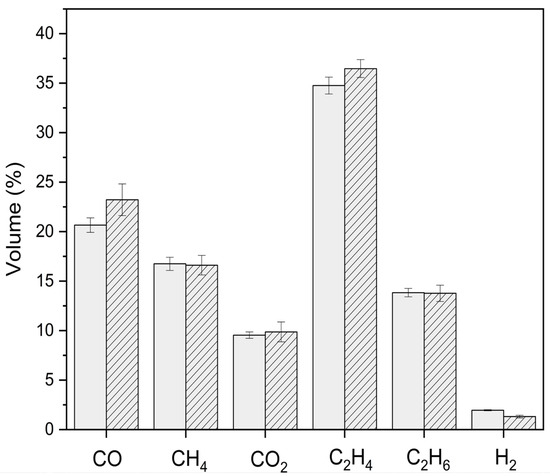
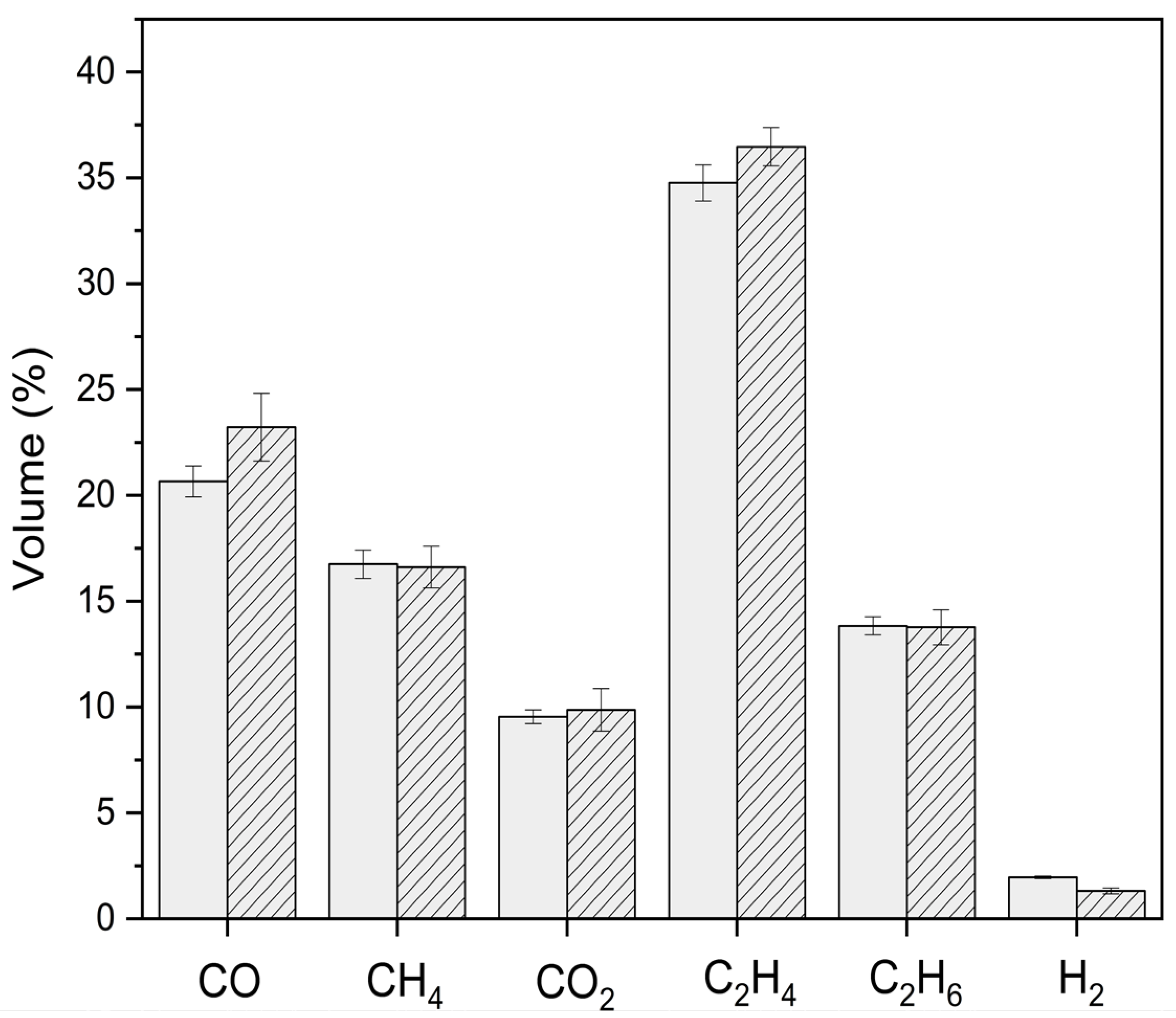
The non-condensable gases contained C2–C4 hydrocarbons as the dominant fraction (49% for RSO and 50% for WCO), followed by CO (20% for RSO and 23% for WCO), CH4 (16% for RSO and WCO), CO2 (9% for RSO and WCO) and H2 (2% for both) (Figure 3). The high proportion of light hydrocarbons indicates thermal cracking of long-chain and secondary compounds originally present in the BO [17]. C2–C4 hydrocarbons, including ethane, ethene (ethylene), propane, propene (propylene), butenes and butanes, are valuable intermediates that are widely used in the chemical and energy sectors. These light olefins serve as essential building blocks for the production of polymers, such as polyethylene and polypropylene, as well as high-octane gasoline via alkylation processes [18]. They are also used in the synthesis of important chemicals such as ethylene glycol and acrylic acid [19].
Figure 3.
Composition of the non-condensable gases from bio-oils. RSO ( ) and WCO (
 ) as feedstocks.
) and WCO () as feedstocks.
The detection of H2 (2%) in the gas fraction is consistent with the behavior of non-catalytic thermal cracking, which typically does not favor significant hydrogen formation [6]. In contrast, the presence of CO (25%) and CO2 (9%) indicates that deoxygenation reactions, such as decarbonylation and decarboxylation, partially contributed to the removal of oxygen from triglycerides [20]. However, this removal was insufficient to fully reduce the AI of the crude BO, which remained high.
3.1.2. Characterization of Bio-Oils and the Byproducts of Cracking
Compared to RSO and WCO, there was a significant reduction (approximately 88%) in viscosity for both RSBO and WCBO, along with a small decrease (around 4%) in density values (Table 2). This reduction in viscosity is due to the breakdown of long hydrocarbon chains into shorter molecules during pyrolysis [6]. Low values of viscosity facilitate the pumping and atomization of bio-oil in industrial processes.
Table 2.
Physical and chemical properties of the feedstocks (RSO, WCO) and their corresponding bio-oils (RSBO, WCBO).
The water content of both BOs was low, 0.5% v/v for RSBO and 0.8% v/v for WCBO, which is favorable both for subsequent processing steps and for meeting current fuel standards.
The AI values were high for RSBO (145 mg KOH g−1) and WCBO (127 mg KOH g−1), reflecting the elevated concentration of FFA, which is characteristic of BOs obtained from pyrolysis or thermal cracking of vegetable oils and oily residues [21]. This high acidity highlights the need for a pre-treatment step, such as esterification, to bring the product in line with industrial specifications.
The oxygen content of the bio-oils was ~2% lower than that of their respective raw materials, consistent with partial deoxygenation during thermal cracking. This parameter influences both the stability and calorific value of the fuel and is crucial for assessing the need for additional steps aimed at reducing undesirable oxygenated compounds.
In general, the pyrolysis results for both RSBO and WCBO are similar, indicating that both feedstocks are suitable for the esterification process.
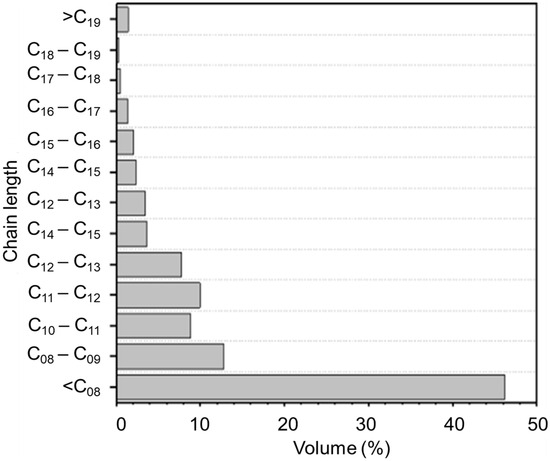
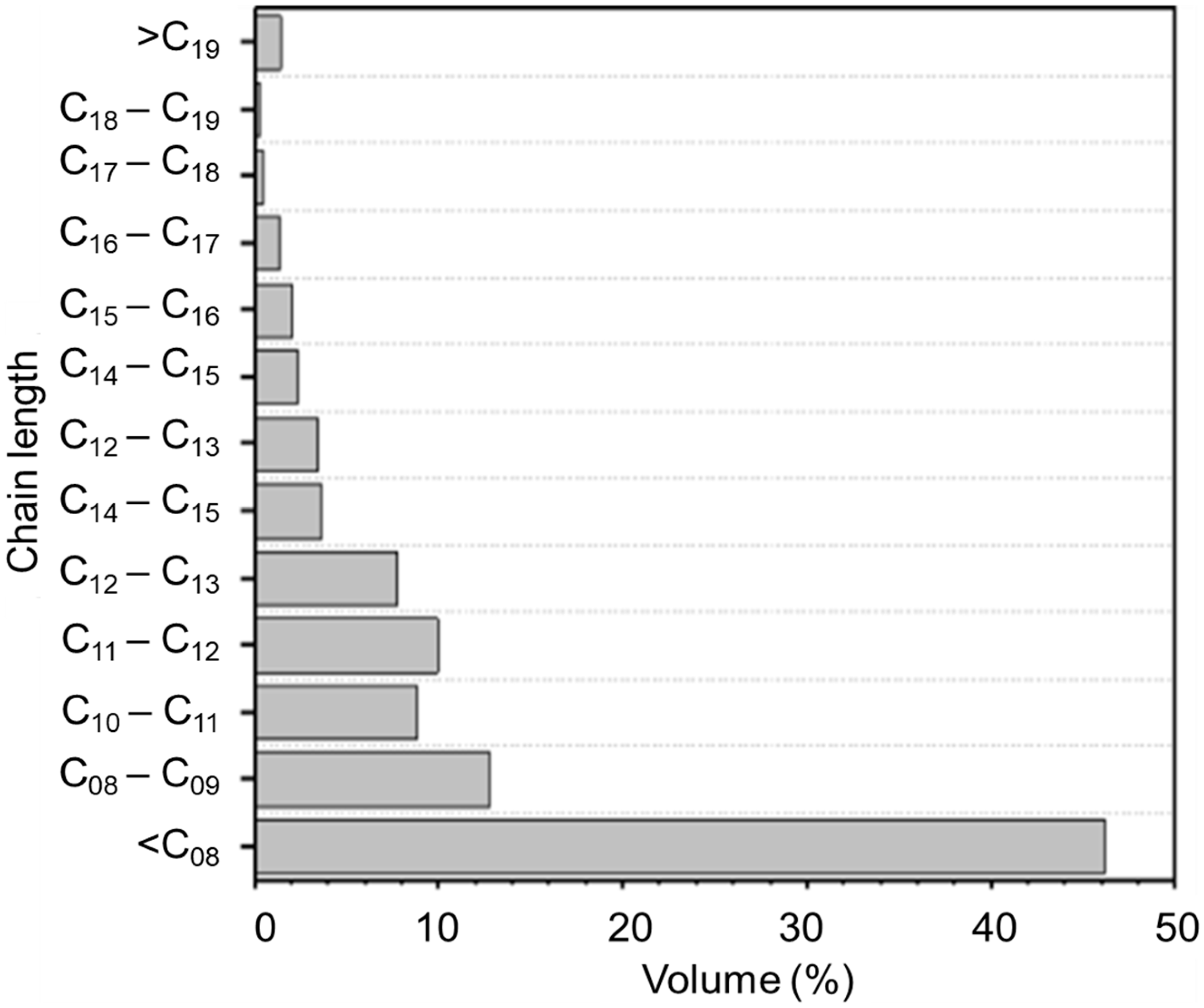
RSBO had 33% of its compounds in the C8–C11 range (Figure 4), a distribution comparable to those found in gasoline and kerosene fractions. Additionally, around 25% of the detected compounds had carbon numbers above C12, with less than 5% exceeding C18. This composition shows the effectiveness of thermal cracking in converting high-molecular-weight, low-volatility molecules into lighter, more volatile fractions, enhancing their suitability for fuel-related applications [20].
Figure 4.
Distribution of compounds in RSBO by carbon chain length.
3.2. Preliminary Studies for Reducing the Acid Index of RSBO
3.2.1. Effect of Bio-Oil Washing in Esterification Reactions
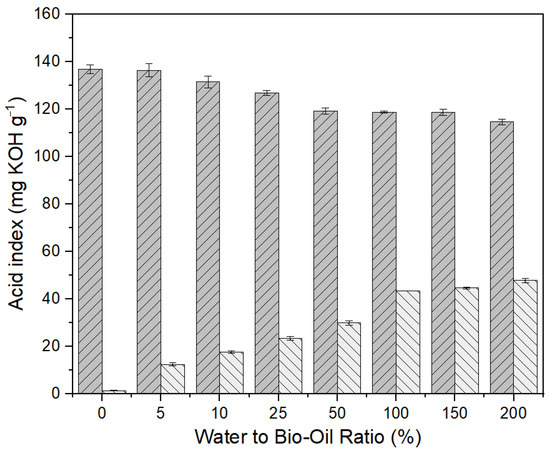
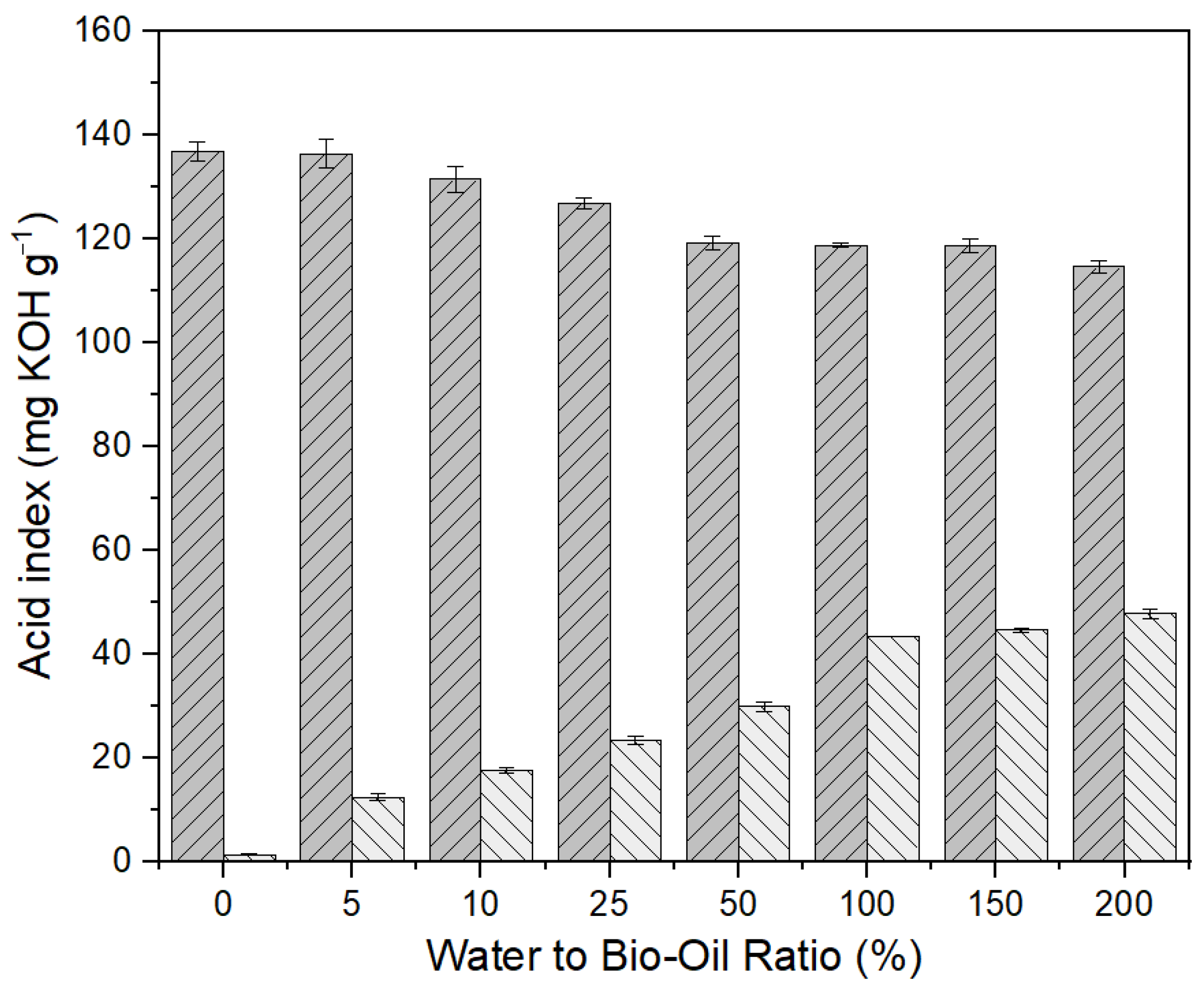
The preliminary washing of RSBO with different water volumes resulted in a reduction in the AI, with the maximum decrease of 12.4% (from 137 to 120 mg KOH g−1 RSBO) being obtained when a water-to-bio-oil ratio of 50% was used (Figure 5). Higher water ratios did not further decrease the AI (p = 0.06). Additionally, the acid index (AI) of the wash water was measured, with the highest value observed when 200% water was used. These results suggest that the reduction in AI following washing is primarily due to the removal of short-chain carboxylic acids (such as acetic, propionic, and butyric acids), which are more water-soluble and migrate into the aqueous phase during washing [22]. Long-chain fatty acids, which are mainly responsible for acidity during esterification, remain in the organic phase and are unaffected by washing.
Figure 5.
Effect of water washing on the acid index of RSBO prior to esterification. Wash water ( ) and RSBO (). Conditions: the experiments were performed in 15 mL Falcon tubes, at 25 °C. After centrifugation (5000× g for 5 min), the samples were allowed to stand for 3 h. The AI was determined according to ASTM D 5555-95 [10].
RSBO washed with a water-to-bio-oil ratio of 50% was then used in esterification experiments, performed with 5% (w/w) of CALB for 6 h at 45 °C. There was no significant difference between the AIR of the samples with or without washing (72% for washed and 73% for unwashed RSBO), so the washing step was not included in further experiments.
3.2.2. Effect of CALB Mass
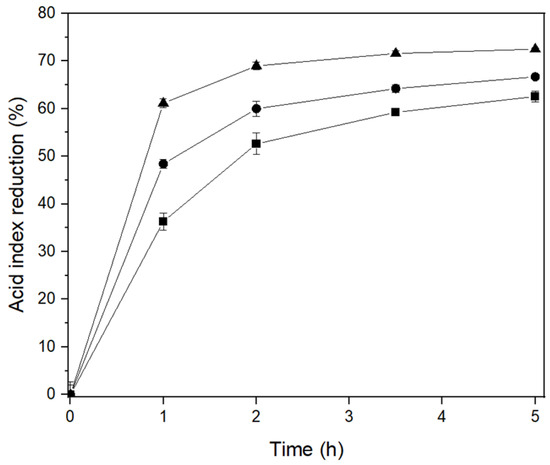
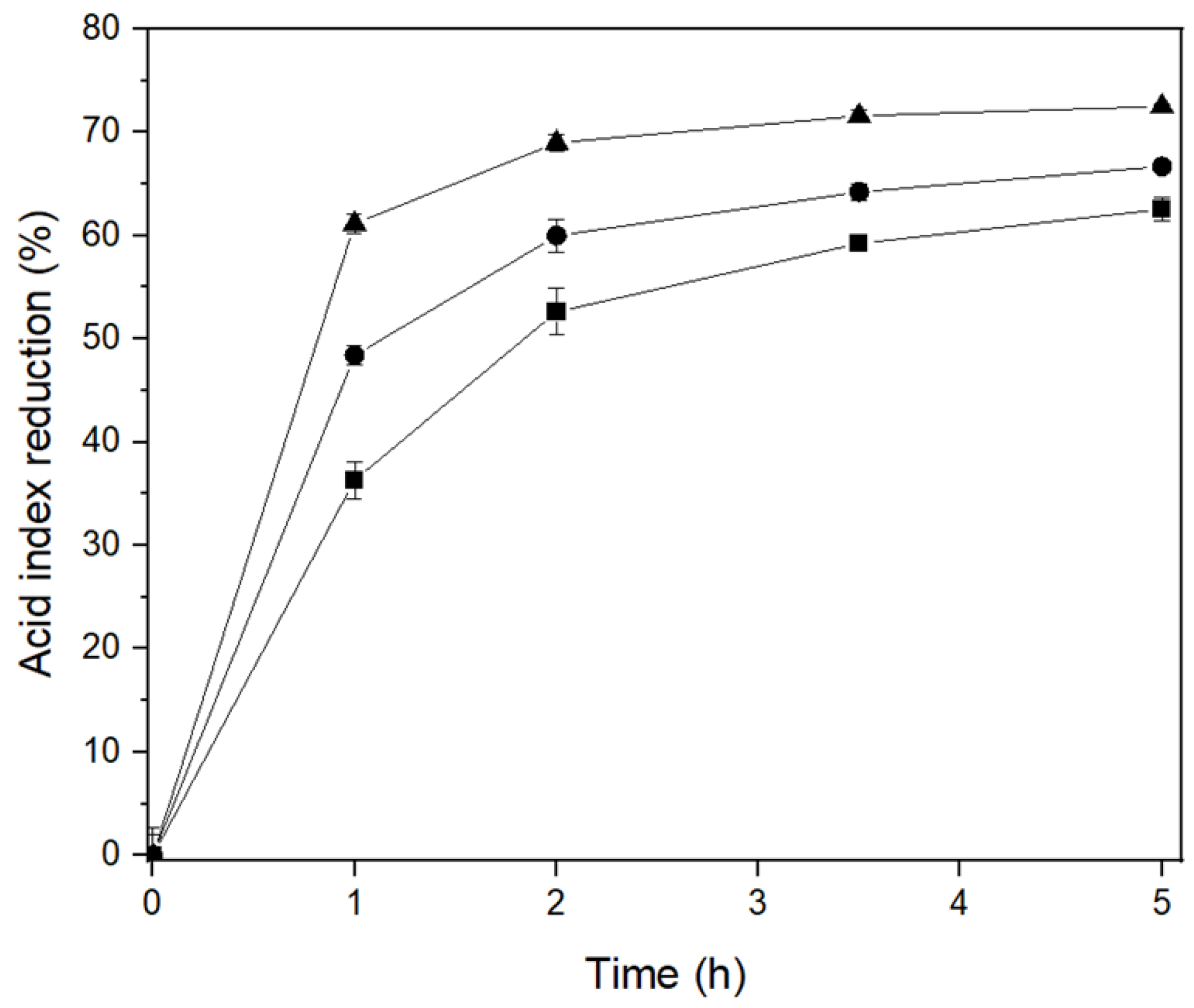
Initial studies focused on identifying an appropriate experimental region for the factorial design experiment. We started with the conditions established by Simonato et al. [4], namely a 1:3 MR (RSBO to ethanol) and incubation at 40 °C. We then examined the effect of CALB concentration in the reaction medium (3, 5 and 10%, w/w). The results are expressed in terms of AIR (Figure 6). The AIR obtained after 5 h reaction increased with increasing CALB concentration, being 62, 65 and 73% for 3, 5 and 10% of CALB, respectively. The AIR values were not significantly different (p > 0.05). The observed variability is in line with the expected experimental variability of esterification reactions involving crude bio-oil, a heterogeneous and compositionally complex system.
Figure 6.
Effect of CALB mass on percentage acid index reduction during esterification of the RSBO. Legend: CALB concentrations relative to RSBO of ■ 3% w/w; ● 5% w/w; and ▲ 10% w/w. Conditions: the experiments were performed in a 50 mL Erlenmeyer flask; MR RSBO to ethanol of 1:3, at 40 °C, and 180 rpm. The AI was determined according to ASTM D 5555-95 [10].
3.3. Improvement of the Ethylic Esterification Conditions Using a Box–Behnken 33 Factorial Design
Since washing the BO prior to esterification did not improve the AIR, and based on the results in Figure 6, indicating that the best CALB concentration was 10% under conditions of a MR of 1:3 (RSBO to ethanol) and a temperature of 40 °C, we used a Box–Behnken 33 factorial design to optimize the reaction conditions for RSBO, with the AIR after 6 h of reaction as the response variable. We evaluated the effects of CALB concentration (3 to 10% w/w), RSBO to ethanol MR (1:1 to 1:5 w/w), and temperature (40 to 60 °C). The experimental conditions and responses (AIR) are presented in Table 3. The design included three replicates at the central point (CALB 5% w/w, MR 1:3, temperature 50 °C). The results for AIR were analyzed using Analysis of Variance (ANOVA, Table 4).
Table 3.
Experimental conditions and percentage acid index reduction (AIR) results for the Box–Behnken 33 design applied to the esterification of RSBO a.
Table 4.
Analysis of Variance (ANOVA) for the acid index reduction results obtained from the Box–Behnken factorial design applied to the ethyl esterification of RSBO.
For AIR, the coefficient of determination (R2 = 0.985) indicates that the model fits well to the data. Additionally, the calculated F-value for the regression (35.71) is 7.6-fold higher than the tabulated F-value (4.68), demonstrating the robustness of the model.
The Shapiro–Wilk test (W = 0.968, p = 0.511) (Figure S8) confirmed that the residuals were distributed normally, meeting the requirements for ANOVA and validating the statistical reliability of the model.
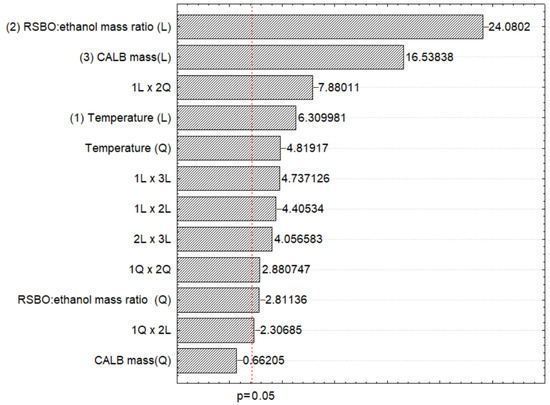
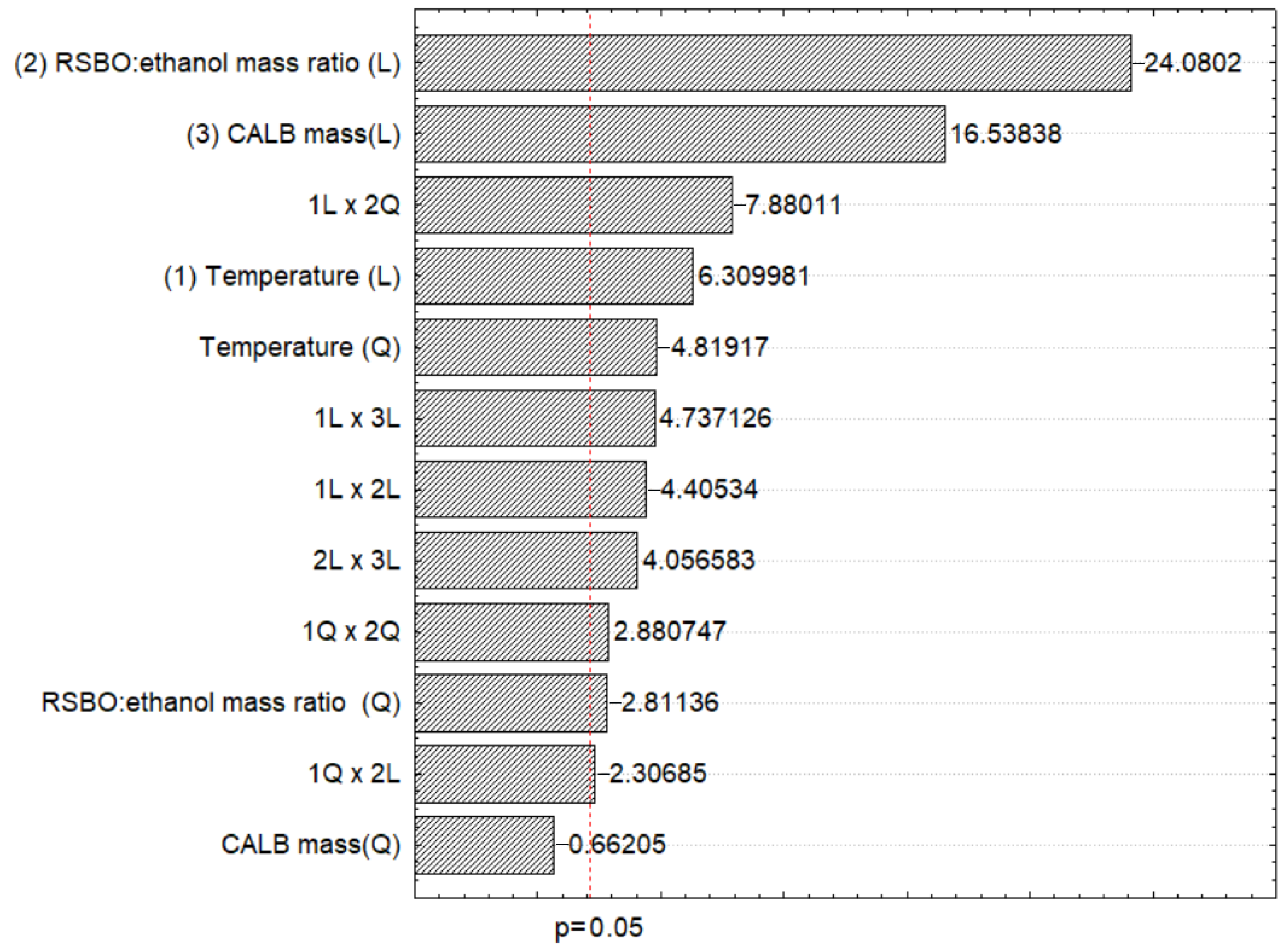
As demonstrated by the Pareto chart (Figure 7), the most significant factors were the RSBO:ethanol MR (linear), with a negative effect on the response, and the CALB concentration (linear), with a positive effect on the response. Both the linear and quadratic terms for temperature were significant, with positive and negative effects, respectively. Some interaction terms were also significant. The interaction between temperature (linear) and mass ratio (quadratic) was particularly significant. Other significant interactions included the mass ratio (linear) with the CALB concentration (quadratic) and the temperature (linear) with the CALB concentration (quadratic).
Figure 7.
Pareto chart of the effects of factors on acid index reduction in bio-oil (RSBO), with a confidence interval of 95%. The red dashed line at p = 0.05 indicates the threshold for statistical significance. Bars extending beyond this line represent variables with significant influence on the response.
The factors and interactions that were not significant were disregarded, yielding a simplified model that fit the experimental data with an R2 of 0.985, indicating high predictive capacity:
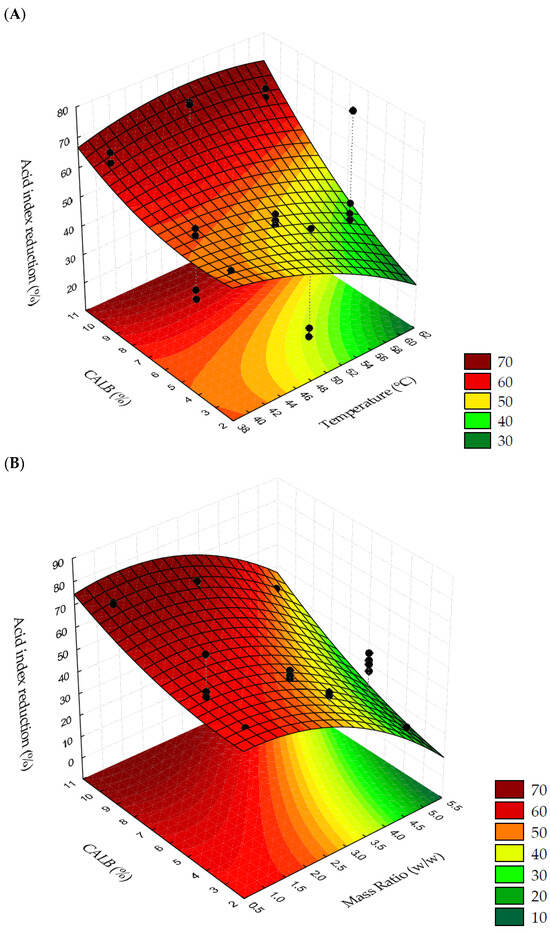
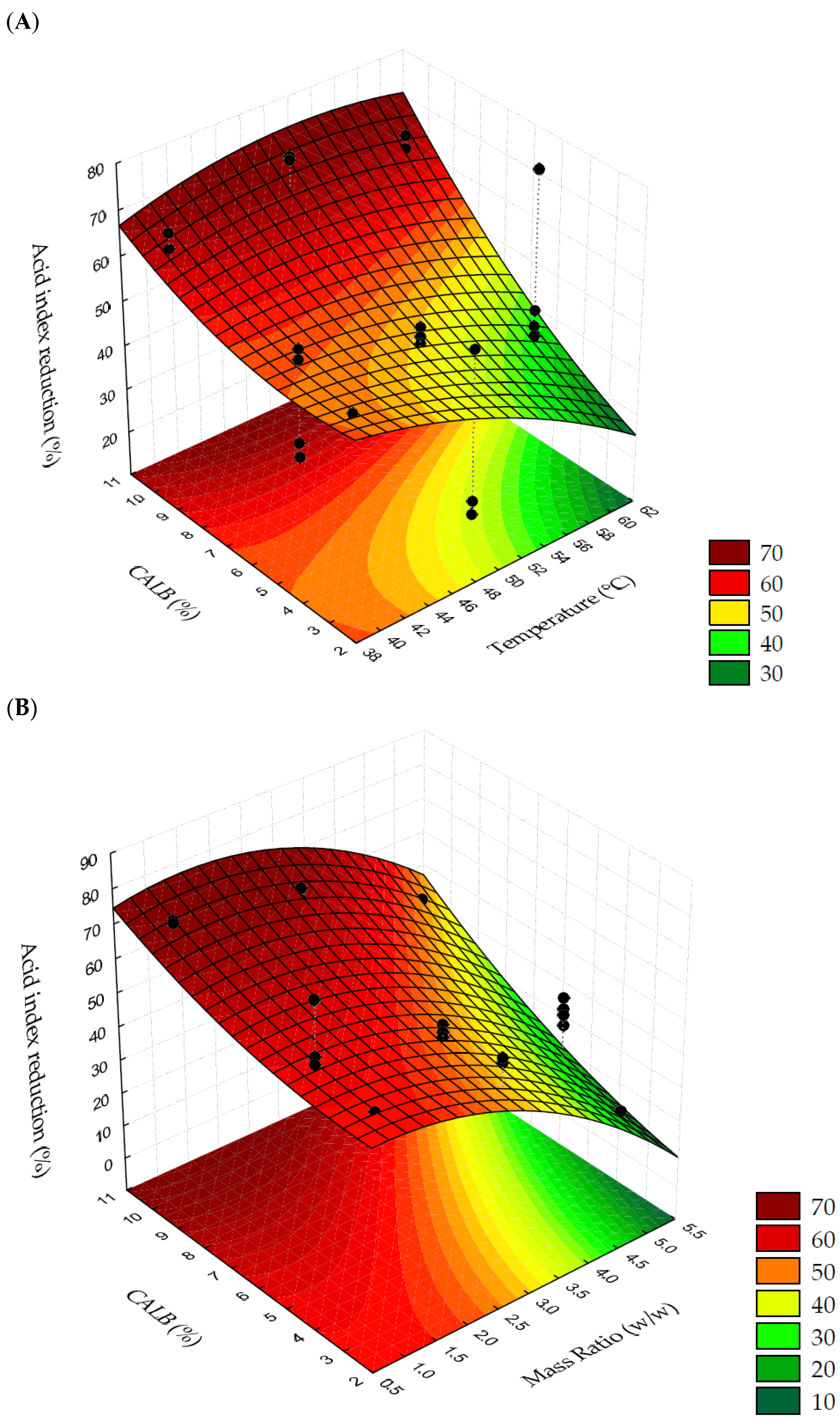
Response surfaces were generated to illustrate the effects of the independent variables on the AIR (Figure 8). Higher temperatures, combined with a lower RSBO:ethanol MR and a higher CALB concentration, give higher AIR values. Equation (9) predicts a maximum AIR of 82% at 62 °C, obtained with an RSBO:ethanol MR of 1:1, and a CALB concentration of 11% w/w.
Figure 8.
Response surfaces obtained from the 33 Box–Behnken factorial design used for optimizing the reduction in acid index in the bio-oil derived from triglyceride biomass (RSBO). (A) Effect of CALB concentration and temperature, with the RSBO:ethanol MR held constant at 1:3. (B) Effect of CALB concentration and RSBO:ethanol MR, with the temperature held constant at 50 °C. The black dots represent the experimental data points used to fit the response surface model.
3.4. Kinetics of Bio-Oil Esterification
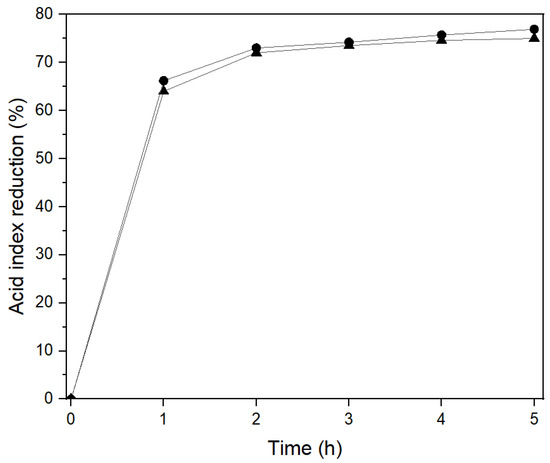
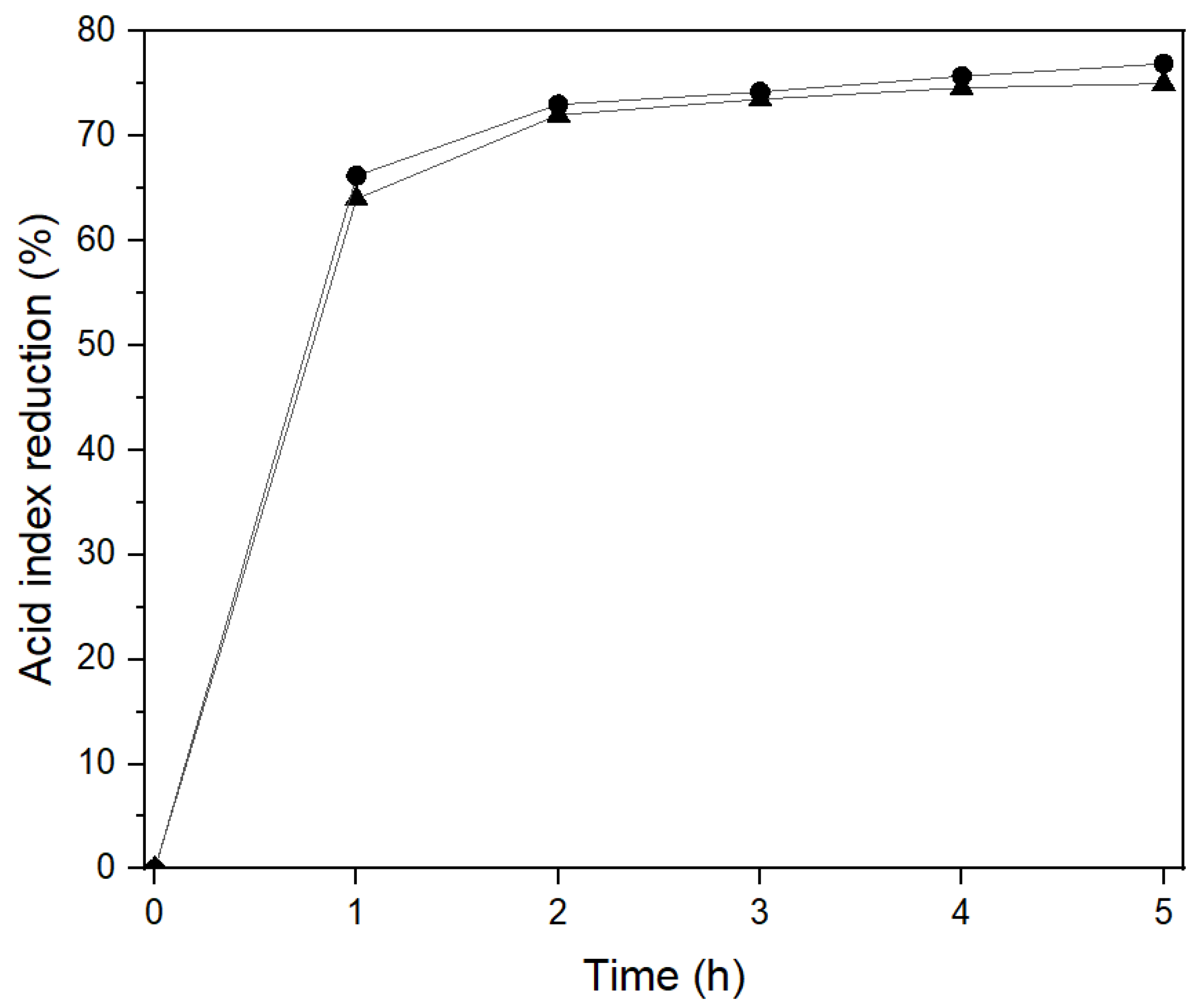
The esterification kinetics were followed, for both RSBO and WCBO, under the optimal conditions predicted above by Equation (9). At 5 h, the AIR was 77% for RSBO and 75% for WCBO (Figure 9). The presence of non-esterifiable short-chain carboxylic acids, the loss of enzymatic activity, or the depletion of ethanol in the reaction medium could potentially cause the slow reaction rate after 2 h, resulting in AIR values lower than the optimum value of 82% predicted by the model. Experiments performed with the addition of more ethanol at 2 h of reaction did not result in an increase in AIR, demonstrating that the depletion of ethanol was not the reason for the lower-than-expected AIR. To check whether the loss of CALB activity was responsible for the lower-than-expected AIR, the residual esterification activity of CALB was determined at the end of the 5 h of reaction. This residual activity was 74% of the activity at zero time, indicating that loss of activity was not responsible for the slow reaction rate after 2 h.
Figure 9.
Kinetics, under the predicted optimal conditions, of the esterification of RSBO and WCBO, catalyzed by CALB. Legend: ● RSBO; ▲ WCBO. Conditions: the experiments were performed in a 50 mL Erlenmeyer flask; mass ratio RSBO to ethanol of 1:1, at 62 °C, 11% of CALB, and 180 rpm. The acid index was determined according to ASTM D 5555-95 [10].
This experiment also demonstrated that good acid index reduction (AIR) results could be achieved with WCBO, which is produced from a lower-quality feedstock than RSBO.
3.5. Stability of CALB After Esterification Cycles
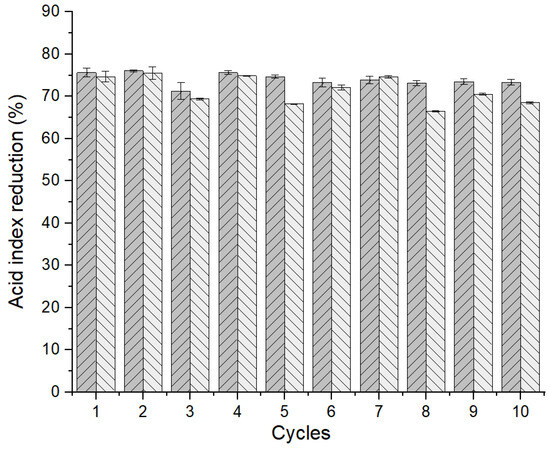
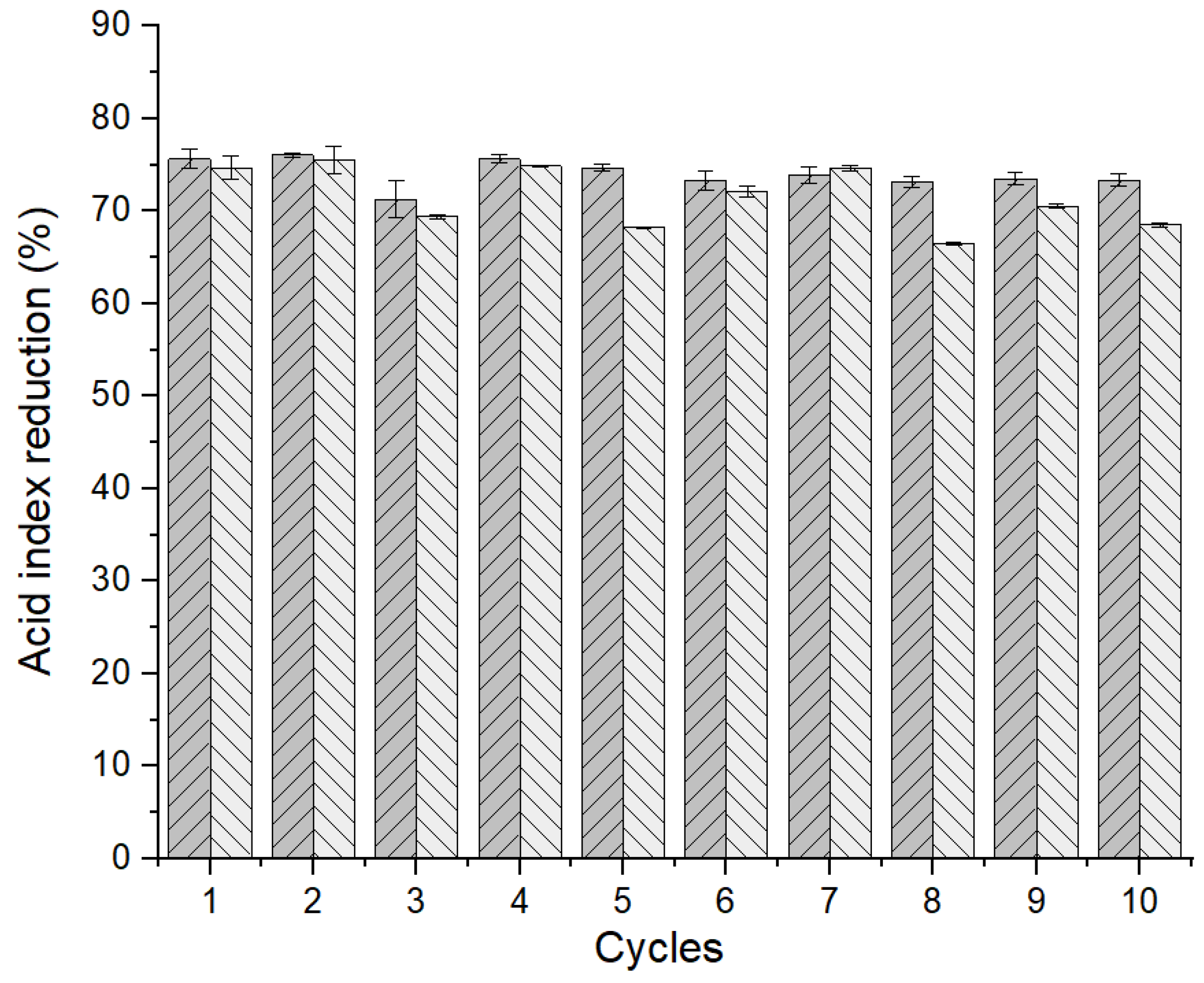
CALB-reuse experiments were performed with RSBO and WCBO, using optimized reaction conditions (62 °C, a BO to ethanol mass ratio of 1:1, and 11% w/w CALB). After each reaction cycle, CALB was recovered by filtration, washed twice with 15 mL of tert-butanol, dried in a desiccator, and stored at 4 °C overnight. Over ten consecutive 6 h cycles, the AIR remained stable, with only a 3% decrease for RSBO and a 5% decrease for WCBO from the first to the tenth cycle (Figure 10), demonstrating high reusability of the enzyme.
Figure 10.
Acid index reduction in RSBO and WCBO promoted by CALB over 10 consecutive cycles of 6 h. Key: RSBO (); WCBO (). Reaction conditions: T = 62 °C, BO:ethanol MR = 1:1, CALB loading = 11% (w/w, relative to BO). The acid index was determined according to ASTM D 5555-95 [10].
); WCBO (). Reaction conditions: T = 62 °C, BO:ethanol MR = 1:1, CALB loading = 11% (w/w, relative to BO). The acid index was determined according to ASTM D 5555-95 [10].
3.6. Characterization of Esterified Bio-Oils
The oxygen contents of esterified RSBO and WSBO were measured and compared to their non-esterified counterparts (Table 2). The reactions significantly increased oxygen levels (20.9–21.4%) and led to a notable decrease in the higher heating value (HHV) (~33 MJ kg−1). This outcome results from both the incorporation of ester groups and the presence of residual ethanol, which was not removed. Excess oxygen from ethanol can be eliminated by distillation, while oxygen bound in esters and acids must be removed during upgrading in downstream steps, particularly through hydrotreatment. This process is facilitated by the reduced acidity achieved after esterification, allowing bio-oil to be processed under standard refinery conditions [23].
Spectroscopic and chromatographic analyses supported the esterification results and confirmed the conversions that occurred in the bio-oils. FTIR spectra (Figure S9) of both RSBO and WCBO exhibited similar profiles, with the crude bio-oils showing two distinct carbonyl groups associated with carboxylic acid functions. After enzymatic esterification, the carbonyl region intensified and shifted, consistent with the formation of ester groups, while additional bands attributable to residual ethanol were observed, indicating that the alcohol was not removed from the final product. Complementarily, the GC-MS chromatograms (Figure S10) of the crude bio-oils exhibited multiple peaks associated with carboxylic acids and other oxygenated compounds formed during thermal cracking. After esterification, the chromatographic profiles showed a marked reduction in the signals attributed to carboxylic acids and the appearance of peaks consistent with ethyl esters, indicating the successful conversion of the acidic components. Combined FTIR and GC-MS evidence clearly demonstrates the transformation of bio-oil into a less acidic and more stable product, reinforcing the effectiveness of CALB-catalyzed esterification as a pretreatment step.
3.7. Main Contributions of This Work
This study presents two key innovations: the optimization of AI reduction through esterification and the application of CALB for treating bio-oil derived from waste cooking oil (WCO). The main outcome was a substantial decrease in AI, with the best result showing a reduction from 145 mg KOH g−1 to 35 mg KOH g−1, representing a 76% decrease. Compared to previous studies using CALB for AI reduction in bio-oil from refined soybean oil, our process achieved a significantly greater reduction—76% in this study versus 60% reported by Simonato et al. [4]. Additionally, reaction kinetics revealed that the esterification process reaches a plateau within 2 h, allowing the reaction time to be shortened from 6 to 2 h, thereby enhancing process efficiency.
Beyond acidity reduction, the thermal cracking step itself produced a major improvement in fuel properties, with viscosity decreasing by 88–91% compared to the original oils. This reduction reflects the breakdown of long hydrocarbon chains into shorter molecules, facilitating pumping and atomization in industrial processes. The subsequent enzymatic esterification step specifically targeted acidity, lowering the acid index to levels compatible with further refining. Importantly, the approach proved effective for both refined soybean bio-oil and waste cooking bio-oil, confirming robustness across distinct feedstocks.
When compared against chemical catalytic methods, our enzymatic approach demonstrated comparable performance with distinct advantages. For instance, Ramos et al. [6] also reported a higher reduction of 94.7%, through methyl esterification using sulfuric acid and methanol at 65 °C. Although methanol has high reactivity, its toxicity, volatility, and fossil-based origin make it less suitable for sustainable processing. In contrast, our enzymatic method used ethanol, a renewable and less hazardous alcohol, under milder conditions and without the need for corrosive reagents or post-reaction neutralization. This aligns with green chemistry principles, reduces operational complexity, and lowers energy consumption.
Another important finding was the stability of CALB, which retained catalytic activity after 10 consecutive reaction cycles. This durability supports its potential for industrial-scale applications, minimizing enzyme costs and enhancing the viability of using lipid residues for biofuel production. However, although esterification successfully reduced acidity, the final AI values (28–35 mg KOH g−1) remain above conventional fuel specifications. Therefore, the enzymatic process should be considered a pre-treatment step, requiring integration with additional refining strategies such as fractional distillation, deoxygenation, or hydrogenation to meet full compliance.
Overall, these results provide a promising foundation for scaling up enzymatic esterification of bio-oils obtained from low-cost feedstocks. Future work should focus on refining process parameters, integrating complementary upgrading routes, and evaluating the economic feasibility of large-scale implementation.
4. Conclusions
Fast pyrolysis of refined soybean oil and waste cooking oil generated bio-oils with high acidity indices (145 and 127 mg KOH g−1, respectively), restricting their direct application as fuels. Ethyl esterification catalyzed by immobilized Candida antarctica lipase B reduced acidity by up to 76%, reaching a minimum value of 28 mg KOH g−1 under optimized conditions (62 °C, 1:1 bio-oil:ethanol mass ratio, 11% CALB). The process was effective for both refined soybean bio-oil and waste cooking bio-oil, and the enzyme retained activity over ten reuse cycles. These results demonstrate that enzymatic esterification significantly improves bio-oil quality by lowering acidity while maintaining biocatalyst stability, enabling compatibility with refinery integration.
Supplementary Materials
The following supporting information can be downloaded at: https://www.mdpi.com/article/10.3390/pr13124085/s1, Figure S1: Calibration chromatogram used for oxygen content quantification by elemental analysis (EuroVector EA3100); Figure S2: Chromatogram of refined soybean oil (RSO), showing 11.9% (w w−1) oxygen; Figure S3: Chromatogram of waste cooking oil (WCO), showing 13.7% (w w−1) oxygen; Figure S4: Chromatogram of bio-oil from refined soybean oil (RSBO) obtained by thermal cracking at 525 °C, showing 9.7% (w w−1) oxygen; Figure S5: Chromatogram of bio-oil from waste cooking oil (WCBO) under the same cracking conditions, showing 11.1% (w w−1) oxygen; Figure S6: Chromatogram of esterified bio-oil from refined soybean oil (RSBO esterified) after enzymatic treatment with CALB, showing 20.9% (w w−1) oxygen; Figure S7: Chromatogram of esterified bio-oil from waste cooking oil (WCBO esterified) after enzymatic esterification with CALB, showing 21.4% (w w−1) oxygen; Figure S8: Shapiro-Wilk normality plot of ANOVA residuals for acid index reduction in bio-oil. The residuals closely follow the reference line, indicating that the assumption of normality is satisfied; Figure S9: Fourier transform infrared (FTIR) spectra of crude and esterified bio-oils obtained from refined soybean oil (RSBO) and waste cooking oil (WCBO); Figure S10: Gas chromatography–mass spectrometry (GC–MS) chromatograms of the crude and esterified bio-oils (RSBO, WCBO, esterified RSBO, and esterified WCBO).
Author Contributions
Conceptualization, A.G.G., V.R.W., V.B. and N.K.; methodology, A.G.G. and L.P.W.; validation, A.G.G.; formal analysis, A.G.G., L.P.W., V.R.W. and V.B.; investigation, A.G.G.; resources, N.K., V.R.W. and V.B.; data curation, A.G.G., L.P.W. and N.K.; writing—original draft preparation, A.G.G.; writing—review and editing, V.R.W., V.B., N.K. and D.A.M.; visualization, A.G.G. and L.P.W.; supervision, N.K., V.R.W. and V.B.; project administration, N.K.; funding acquisition, N.K. All authors have read and agreed to the published version of the manuscript.
Funding
A.G.G. and L.P.W. acknowledge support from the Brazilian Federal Agency for Support and Evaluation of Graduate Education (CAPES, Process 88881.709747/2022-01). V.R.W. acknowledges financial support from the Foundation for Research Support of the State of Santa Catarina (FAPESC 2023TR001517) and N.K. acknowledges financial support from the National Council for Scientific and Technological Development (CNPq no 302903/2023-2). N.K. and D.A.M. also thank CNPq for the research scholarships.
Data Availability Statement
The data presented in this study are available in this article.
Acknowledgments
Special thanks to Marcos Lúcio Corazza for his support and for awarding the doctoral scholarship that made this research possible. The authors also thank the Chromatography Laboratory of FURB (LAC-FURB) for access to analytical facilities, and Luana Curbani and Dilamara Riva Scharf for their valuable assistance in data acquisition.
Conflicts of Interest
The authors declare no conflict of interest.
Abbreviations
| AI | Acid Index |
| AIR | Acid Index Reduction |
| ANOVA | Analysis of Variance |
| BO | Bio-oil |
| CALB | Candida antarctica lipase B |
| EA | Esterification activity |
| FFA | Free Fatty Acids |
| GC-MS | Gas Chromatography–Mass Spectrometry |
| HHV | Higher Heating Value |
| MR | Mass Ratio (ratio between bio-oil and ethanol) |
| RSBO | Refined Soybean Bio-oil |
| RSO | Refined Soybean Oil |
| tr | Residence Time |
| Vr | Reactor volume |
| WCO | Waste Cooking Oil |
| WCBO | Waste Cooking Bio-oil |
References
- Gómez-Castro, F.I.; Gutiérrez-Antonio, C.; Romero-Izquierdo, A.G.; May-Vázquez, M.M.; Hernández, S. Intensified technologies for the production of triglyceride-based biofuels: Current status and future trends. Renew. Sustain. Energy Rev. 2023, 184, 113580. [Google Scholar] [CrossRef] [Scilit]
- Salaheldeen, M.; Mariod, A.A.; Aroua, M.K.; Rahman, S.M.A.; Soudagar, M.E.M.; Fattah, I.M.R. Current State and Perspectives on Transesterification of Triglycerides for Biodiesel Production. Catalysts 2021, 11, 1121. [Google Scholar] [CrossRef] [Scilit]
- Beims, R.F.; Botton, V.; Ender, L.; Scharf, D.R.; Simionatto, E.L.; Meier, H.F.; Wiggers, V.R. Effect of degree of triglyceride unsaturation on aromatics content in bio-oil. Fuel 2018, 217, 175–184. [Google Scholar] [CrossRef] [Scilit]
- Simonato, C.L.; Gonçalves, A.; Piske, B.E.; Chiarello, L.M.; Botton, V.; Ender, L.; Wiggers, V.R. Evaluation of the potential of ethyl esterification reaction catalyzed by enzyme to improve the quality of bio-oil. Renew. Energy Power Qual. J. 2023, 21, 149–153. [Google Scholar] [CrossRef] [Scilit]
- Xu, Y.; Zhang, L.; Lv, W.; Wang, C.; Wang, C.; Zhang, X.; Zhang, Q.; Ma, L. Two-step esterification–hydrogenation of bio-oil to alcohols and esters over Raney Ni catalysts. Catalysts 2021, 11, 818. [Google Scholar] [CrossRef] [Scilit]
- Ramos, E.S.; Zimmermann, D.; Beims, R.F.; Chiarello, L.M.; Botton, V.; Simionatto, E.L.; Wiggers, V.R. Evaluation of ethylic and methylic esterification reactions to reduce acidity of crude bio-oil. Environ. Prog. Sustain. Energy 2020, 39, 134–141. [Google Scholar] [CrossRef] [Scilit]
- Török, B.; Schäfer, C.; Kokel, A. Heterogeneous Catalysis in Sustainable Synthesis; Elsevier: Amsterdam, The Netherlands, 2022; ISBN 978-0-12-817825-6. [Google Scholar]
- Jaeger, K.E. Bacterial lipases. FEMS Microbiol. Rev. 1994, 15, 29–63. [Google Scholar] [CrossRef] [PubMed]
- Kapoor, M.; Gupta, M.N. Lipase promiscuity and its biochemical applications. Process Biochem. 2012, 47, 555–569. [Google Scholar] [CrossRef] [Scilit]
- ASTM D555595; Standard Test Method for Determination of Free Fatty Acids Contained in Animal, Marine, and Vegetable Fats and Oils Used in Fat Liquors and Stuffing Compounds. ASTM International: West Conshohocken, PA, USA, 2001.
- Lowry, R.R.; Tinsley, I.J. Rapid colorimetric determination of free fatty acids. J. Am. Oil Chem. Soc. 1976, 53, 470–472. [Google Scholar] [CrossRef] [Scilit] [PubMed]
- ASTM D 5355; Test Method for Specific Gravity of Oils and Liquid Fats. ASTM International: West Conshohocken, PA, USA, 2021. [CrossRef] [Scilit]
- ASTM D 445; Test Method for Kinematic Viscosity of Transparent and Opaque Liquids (and Calculation of Dynamic Viscosity). ASTM International: West Conshohocken, PA, USA, 2024. [CrossRef] [Scilit]
- ASTM D 446; Specifications and Operating Instructions for Glass Capillary Kinematic Viscometers. ASTM International: West Conshohocken, PA, USA, 2017. [CrossRef] [Scilit]
- ASTM D 6304; Test Method for Determination of Water in Petroleum Products, Lubricating Oils, and Additives by Coulometric Karl Fischer Titration. ASTM International: West Conshohocken, PA, USA, 2020. [CrossRef] [Scilit]
- ASTM D 240; Test Method for Heat of Combustion of Liquid Hydrocarbon Fuels by Bomb Calorimeter. ASTM International: West Conshohocken, PA, USA, 2019. [CrossRef] [Scilit]
- Chang, C.-C.; Wan, S.-W. China’s Motor Fuels from Tung Oil. Ind. Eng. Chem. 1947, 39, 1543–1548. [Google Scholar] [CrossRef] [Scilit]
- Albright, L.F. Alkylation of isobutane with C3–C5 olefins to produce high-quality gasolines: Physicochemical sequence of events. Ind. Eng. Chem. Res. 2003, 42, 4283–4289. [Google Scholar] [CrossRef] [Scilit]
- Galadima, A.; Muraza, O. Catalytic thermal conversion of CO2 into fuels: Perspective and challenges. Renew. Sustain. Energy Rev. 2019, 115, 109333. [Google Scholar] [CrossRef] [Scilit]
- Wiggers, V.R.; de Souza, R.R.G.; Wienhage, G.; Porto, T.; Barros, A.A.; Chiarello, L. Soybean oil pyrolysis in a continuous bench-scale reactor for light olefin production. Chem. Ind. Chem. Eng. Q. 2025, 31, 249–256. [Google Scholar] [CrossRef] [Scilit]
- Nichols, P.C.; Holman, R.T. Pyrolysis of saturated triglycerides. Lipids 1972, 7, 773–779. [Google Scholar] [CrossRef] [Scilit]
- Silva, R.V.S.; Pereira, V.B.; Stelzer, K.T.; Almeida, T.A.; Romeiro, G.A.; Azevedo, D.A. Comprehensive study of the liquid products from slow pyrolysis of crambe seeds: Bio-oil and organic compounds of the aqueous phase. Biomass Bioenergy 2019, 123, 78–88. [Google Scholar] [CrossRef] [Scilit]
- Lestari, S.; Mäki-arvela, P.; Beltramini, J.; Lu, G.Q.M. Transforming triglycerides and fatty acids into biofuels. ChemSusChem 2009, 4072, 1109–1119. [Google Scholar] [CrossRef] [Scilit] [PubMed]



Disclaimer/Publisher’s Note: The statements, opinions and data contained in all publications are solely those of the individual author(s) and contributor(s) and not of MDPI and/or the editor(s). MDPI and/or the editor(s) disclaim responsibility for any injury to people or property resulting from any ideas, methods, instructions or products referred to in the content. |
© 2025 by the authors. Licensee MDPI, Basel, Switzerland. This article is an open access article distributed under the terms and conditions of the Creative Commons Attribution (CC BY) license (https://creativecommons.org/licenses/by/4.0/).