


Highlights
What are the main findings?
- Issues at macro-, meso- and micro-levels accumulate and compound one another throughout the long COVID care pathway.
- These difficulties can generate a cascade of social downgrading; rather than preventing it, the health-care system contributes to it.
What are the implications of the main findings?
- Complementary interventions are needed across levels, including for training health-care and social-insurance professionals, in addition to developing patient-informed clinical protocols.
- Improving the quality, safety, and equity of care requires the collection of patient experience over time, rather than only once.
Abstract
Background/Objectives: Long COVID, which can significantly impair patients’ functional abilities and quality of life, affects an estimated 2.1 million people in France. Better understanding of how affected individuals navigate the health-care system over time is required to adapt care to their needs. This study aimed to map care trajectories in France from the patients’ perspectives. Methods: We conducted a qualitative study among 33 adults with long COVID, as part of a participatory research project involving a patient organization. Semi-structured interviews were analyzed by thematic inductive and patient journey mapping approaches. Results: We identified six key stages in these trajectories, ranging from the onset of unexplained symptoms to learning to live differently. The pathway often began with a general practitioner’s dismissal or minimization of their symptoms. Diagnostic delay followed. Diagnosis was frequently patient-initiated and further prolonged by geographical inequalities in specialist access; for some, it remained unattained despite embodied certainty. Multiple issues accumulated, each potentiating the others throughout the pathway, resulting in progressive social decline. This process was not simply a consequence of the disease itself but was actively produced and amplified by failures at every level of the health-care and social-insurance systems. Conclusions: Findings suggest that long COVID care pathways can actively contribute to, rather than prevent, social downgrading, which thus appears to be a care-induced social trajectory. These results call for longitudinal research among underrepresented groups, alongside concrete action: improved training for clinicians and social insurance practitioners, better-coordinated referral pathways, and structural reform of the health-care–social insurance interface.
1. Introduction
More than 778 million people have had confirmed cases of COVID-19 worldwide, and an estimated 18.2 million excess deaths were associated with the pandemic between January 2020 and December 2021 [1]. The vast majority of those infected have recovered, but some have developed symptoms persisting into the medium- or long-term, commonly referred to as long COVID. Various definitions of long COVID have been proposed [2], including that of the World Health Organization, based on a consensus of international experts: “following a probable or confirmed SARS-CoV-2 infection, continuation or development of new symptoms 3 months after the initial infection, with these symptoms lasting for at least 2 months with no other explanation [3].”
Long COVID is a multisystem condition, linked to more than 200 recorded symptoms that often fluctuate over time [4]. The most common include intense fatigue and respiratory, psychological, neurological, and dermatological symptoms. These often persist over time: 42% of people with long COVID reported at least one symptom affecting their daily lives 2 years after their initial infection, a proportion that fell to 20% after 3 years [5,6]. The meta-analysis by Hou et al. of 429 studies worldwide estimated its overall prevalence at 36% among people with a confirmed COVID-19 diagnosis [7]. In 2022 in France, this rate was estimated at 4.0% of the general population and at 8.0% among people with a probable or confirmed COVID-19 diagnosis, that is, around 2.1 million individuals. Thirty percent of these had severe cases, i.e., the condition had a significant impact on their daily life and its quality [8].
Long COVID substantially impairs quality of life. A recent meta-analysis found that 58% of patients reported that theirs, overall, was poor. The dimensions most often reported were pain or discomfort (41%), anxiety or depression (37%), mobility (36%), and daily activities (28%) [9]. Long COVID’s economic burden is also considerable, estimated for OECD countries at 0.1–0.2% of GDP, or around $135 billion a year [9]. In France alone, it may have caused the loss of more than 295 million work hours in 2024, through job loss, reduced working hours, or sick leave, at a cost potentially exceeding $21 billion [10].
No validated curative treatment for long COVID currently exists, and evidence for the effectiveness of the therapeutic options remains limited. Management remains largely symptomatic and relies on strategies to help patients adapt to their symptoms and pace themselves [11]. International guidelines agree on the key role played by primary care physicians, the need for a multidisciplinary approach, and the importance of rehabilitation. The French National Authority for Health (Haute Autorité de Santé, HAS, an independent public scientific organization, with the improvement of quality in the health, social, and medical–social sectors as a primary mission) has published a guide on care pathways for people with long COVID that sets out a comprehensive, step-by-step approach to care for patients with this diagnosis. Depending on the nature of symptoms and their severity, general practitioners (GPs) should refer patients to appropriately specialized physicians, paramedical professionals, and/or psychological or social support services [12].
Better understanding patients’ experiences and interactions with the health-care system is essential both for patients and public health. Patient journey mapping is an emerging field of research that can help address these questions through its production of visual and narrative maps that trace patients’ trajectories through this system. It is increasingly used to identify the challenges faced by patients, particularly those with chronic conditions, as it helps to identify barriers to effective care and opportunities for improvement [13,14].
This approach draws on several distinct academic traditions: user-centered design, with its emphasis on mapping user interactions with the health-care system to identify barriers and improve service delivery [15]; narrative medicine, which positions the patient’s story as a legitimate source of experiential knowledge [16]; and the sociology of chronic diseases, particularly the concept of illness trajectory, which takes their social consequences into account along with their biomedical course. Developing secondary and tertiary prevention programs for long COVID requires an understanding of patients’ perspectives and of the obstacles or disruptions they encounter along their care pathways [17,18]. Such an understanding can inform a participatory approach to program planning and implementation.
While the existing qualitative research has produced valuable insights into specific dimensions of the long COVID experience, it has tended to focus on isolated aspects of patient trajectories rather than on their health-care journeys as a whole. In particular, it has not examined how issues accumulate, how one obstacle leads to the next, or what significant social consequences ensue. In France, the only published qualitative study on this topic focused exclusively on post-COVID anosmia and ageusia [19]. Here, we present findings from a qualitative study conducted among 33 people with long COVID in France, as part of the participatory research project “Improving the care pathway for long COVID in general practice”. It was launched in 2022 with a dual scientific and practical objective: to document the care pathways and experiences of long COVID, and to develop a program model designed to improve the quality of its care. The study’s main objectives were to (1) describe and understand patients’ experiences, emotions, and needs, and identify key moments in their pathways, such as disruptions, roadblocks, turning points, and breakthroughs; and (2) analyze how care pathways, and more broadly, patients’ social environments, contribute to the social consequences of long COVID, beyond the effects of the illness itself. The study thus contributes both to the sociology of chronic illness and to the evidence base needed to improve policies and practices in long COVID care.
2. Materials and Methods
2.1. Study Design
This qualitative study is based on semi-structured interviews of patients with long COVID conducted in France between June and December 2023. It is reported in accordance with the COREQ criteria [20] and the Standards for Reporting Qualitative Research [21].
2.2. Patient and Public Involvement
This research project took place in partnership with #ApresJ20 Covid Long France, a patient organization representing people with this illness in France. As recommended by the UK Standards for Public Involvement [22], this organization was involved at every stage of the research project, starting with its review of the protocol before funding. The participating association representatives are all co-authors of this article and brought their knowledge of the illness and of the care pathways described by participants. In particular, the association representatives reviewed the study’s interview guide, advised on the sampling and recruitment strategy, facilitated patient recruitment, contributed to the interpretation of the findings, and reviewed and commented on the draft of this manuscript.
2.3. Recruitment Criteria and Procedure
Persons meeting the inclusion criteria were aged 18 years or older and chosen because they were severely affected by the COVID-19 pandemic [23], differed geographically and demographically, spoke French, and lived in one of 3 French regions (Auvergne-Rhône-Alpes, Île-de-France, or Provence-Alpes-Côte d’Azur). They had a confirmed or probable SARS-CoV-2 infection, with symptoms explained by no other diagnosis and persisting for at least 6 months, a period allowing for sufficient reflection on their care pathway. Eligibility relied on self-reported diagnosis, without verification of medical records.
For the recruitment, we distributed a flyer via email and social media and posted it on the #AprèsJ20 association’s website. It outlined the study objectives, methodology, and target population, and described how to participate. Snowball recruitment supplemented these methods: participants were asked to recommend others potentially interested in the study [24]. To ensure a diverse sample, we took the participants’ socio-demographic characteristics (gender, age, place of residence, socioeconomic status) into account. To include a wide range of experiences and care pathways, we also paid particular attention to their medical history (duration and severity of the initial infection; and number, severity and progression of prolonged symptoms). All those contacted received an information sheet detailing the study’s framework, objectives and procedures. Recruitment continued until the research team considered that the sample was sufficiently diverse and that data saturation had been reached [25]. As they discussed participants’ profiles, care trajectories, and emerging themes during monthly meetings, the 3 interviewers assessed saturation pragmatically and iteratively. They halted recruitment after the 33rd interview, when they determined that the last few had provided neither new profiles nor substantial new information. Before the interview, those agreeing to participate signed a written consent form, including consent to recording the interview. They received a €15 gift voucher as compensation for their time.
2.4. Data Collection
The 3 researchers (HD, a senior social psychologist, and CR and JV, both general practice residents trained in qualitative research) divided up the interviews, all by videoconference. They used a semi-structured interview guide with open-ended questions (see Supplementary Materials) covering the following topics: illness history and its consequences; care pathway timeline and details (health-care professionals consulted, care and follow-up, medical tests and treatments, referrals); challenges encountered; resources sought and used; satisfaction with the care received and the reasons therefore; and ways to improve this care pathway. The interviewers, mindful of the fatigue that the interview might cause and of the participants’ well-being, systematically offered them the option of taking breaks and/or continuing the interview at a later date. None of the participants asked to stop the interview, but 4 asked for it to be paused briefly.
2.5. Reflexivity
The research team was multidisciplinary. None of the 3 interviewers (see Section 2.4) had experienced long COVID. The wider author team included 3 representatives of the partner patient organization (2 with research training, all with experiential knowledge), GPs from university departments of general practice, and researchers specialized in interventional research, sociology and public health. The presence of clinicians among both interviewers and authors was an important reflexive issue, as many accounts concerned encounters with physicians, including GPs. This position may have shaped both what participants chose to share and how we read these accounts. To address this, the analysis combined clinical and nonclinical perspectives, and preliminary interpretations were discussed in working groups that included the patient organization representatives, whose perspectives carried substantial weight. We consider this consistent with the study aims, while acknowledging that it also shaped our interpretive stance.
2.6. Data Analysis
All interviews were audio-recorded, transcribed verbatim, anonymized, and checked by the interviewer. Transcripts were coded with NVivo 13 software. Two complementary analytical approaches were used and their results then synthesized.
First, an inductive thematic analysis explored participants’ lived experience and the meanings they attributed to it. Three researchers (HD, CR, and JV) read all transcripts several times to become familiar with the data, identified emerging themes (open coding), and grouped them into main themes (axial coding) [26]. Each researcher first coded the interviews they had conducted. All 3 then reviewed the full corpus to check the consistency and stability of the codes. Discrepancies were discussed during monthly meetings between the researchers involved in coding, as a form of researcher triangulation [27]. They were resolved through discussion of the interview excerpts and of the meaning accorded to each code. Because coding was inductive and the codebook was developed iteratively through investigator triangulation, no formal intercoder agreement statistic was calculated.
Second, a trajectory-based analysis in the biographical tradition [28,29] examined how care unfolded over time. Each participant’s pathway was reconstructed as a chronological sequence of care events and social consequences, and these trajectories were then compared.
Finally, we synthesized these trajectories into a patient journey map that showed the care pathway’s main stages, its recurring barriers, and points of disruption. As no standardized approach to journey mapping exists [14], we describe our methodological choices explicitly. The map was developed in 3 stages. First, HD structured each of the 33 participants’ trajectories into individual journey maps covering the items to be considered: touchpoints, pain points, turning points, barriers and facilitators, emotional states, and social consequences. These maps retraced each pathway in detail, preserving the specificity of each experience. Six participants had also kept detailed personal notes during their journey, which supported the reconstruction. Second, the individual maps were compared to identify shared phases, recurring patterns, and common turning points, while retaining the diversity of trajectories. This analysis focused on the sequence of events rather than themes. It examined the order in which obstacles accumulated and the social consequences that followed at each stage, as described by patients. Third, these shared elements were consolidated into a final map comprising 6 phases. Phases were delineated on the basis of sequences common to several trajectories, shared emotions, and turning points marking a shift in the pathway. The aim was not for every participant to pass through every phase, but for each phase to reflect a recurring pattern in the data. Atypical trajectories and disruptions of care are mentioned and described in the Section 3, alongside the corresponding phase of the map.
3. Results
The sample consisted of 33 adults with long COVID. Interviews, which were conducted via Zoom video calls, lasted 1 h 9 min on average (min: 31 min; max: 2 h 20 min). Participants were aged 25 to 77 years, and 64% were women. About half lived in urban or suburban areas and the others in rural areas. All participants, except two students and one retiree, were working at the time of their COVID infection (91%). Most participants (79%) were from middle- or upper-class backgrounds. The majority had been infected more than 2 years before the survey and reported that their initial symptoms had been low or moderate (55%). Multiple infections were reported by 42% of participants. At the time of the interview, nearly two-thirds (70%) had severe chronic symptoms that seriously affected their everyday life. Eleven were employed (33%), five of them part-time (15%). Four were retired (12%), including two who had taken early retirement. The others (55%) were either on sick leave or receiving disability benefits (Table 1).
Table 1.
Participants’ sociodemographic and disease-related characteristics at the time of the interview (n = 33).
Using patient journey mapping, we identified six key stages in long COVID pathways, ranging from the onset of unexplained symptoms to learning to live differently (Figure 1). The care trajectory varied considerably across sociodemographic profiles, although certain structural patterns remained strikingly consistent.
Figure 1.
Long COVID journey map.
3.1. Stage 1—When Something Feels Wrong: The Onset of Unexplained Symptoms
3.1.1. Unprecedented Symptoms: Variety, Unfamiliarity, and Unpredictability of Long COVID
Participants reported more than 80 different symptoms overall. Some dated back to the initial infection and persisted, while others appeared later, either gradually or intermittently. Severe fatigue, described in strikingly intense terms such as “exhaustion” and “devastating fatigue”, was the symptom reported most often. Headaches, muscle and joint pain, memory and attention problems, tachycardia, and shortness of breath were also mentioned frequently. Beyond their variety, what distinguished long COVID symptoms was their unfamiliarity. Even common symptoms resisted ordinary comparison. As one participant put it: “These are truly unique sensations, completely unlike anything else I’ve ever experienced… it’s special and indescribable” (I5, F, 77 years). Participants also consistently highlighted their symptoms’ sudden, unpredictable, and fluctuating nature, described by vivid metaphors such as “waves”, “ups and downs”, “yo-yos”, and “rollercoasters.” This unpredictability severely disrupted their daily lives, generating profound uncertainty and sometimes discouragement and despair.
3.1.2. A Body Sending Signals: Bodily Discomfort, Symptoms Gradually Multiplying and Becoming Chronic
Several participants expressed a sense that something was happening in their bodies at the initial stage, a diffuse form of somatic perception, without being able to name it or gauge its seriousness. As one participant recalled: “I felt that something was wrong, but I couldn’t quite put my finger on it” (I23, F, 62 years). Certain signs encouraged them to seek medical advice: failure to recover from COVID after several weeks or months, multiplication or worsening of symptoms, unusually severe fatigue (“I was getting more and more tired and was actually sleeping more and more, up to 16 h a day” (I6, F, 36 years)), alarming manifestations such as paralysis or intense chest pain, and a growing inability to keep up daily activities.
For nine participants, symptoms went largely unnoticed for a long period, especially when they appeared months after the initial infection or developed gradually and insidiously. Issues developed almost unconsciously, “creeping up on you slowly, bit by bit, drop by drop” until they reached a tipping point that could no longer be ignored: “Enough is enough! I can’t go on like this” (I1, F, 42 years). Others engaged in a process of symptom rationalization, drawing on available lay explanatory frameworks to make sense of what they were experiencing and enable them to minimize its significance. For example, fatigue was attributed to an active lifestyle, family demands, or a recent bereavement, and physical decline to aging. This interpretive work was often socially reinforced by those around them, whose reassurances (“it’s normal to be tired given everything you’ve been through”) inadvertently delayed recognition of the illness. For some participants, this rationalization also reflected their acknowledged tendency to dismiss their own bodily signals: “I’m not used to listening to myself” (I20, F, 57 years).
3.2. Stage 2—Doctors’ Dismissal: The Early Medical Journey
3.2.1. The First Medical Consultation: When Expected Reassurance Becomes Dismissal
The first medical encounter occurred at varying intervals following the initial COVID infection, ranging from a few weeks to almost a year. For almost all participants (30/33), the GP served as the first point of contact, either during an appointment specifically made for these symptoms, or incidentally, during a consultation for another reason. These early consultations were marked by a systematic pattern of medical minimization: symptoms were downplayed or dismissed by the GP, no further investigations were ordered, and no follow-up was offered. The dominant clinical stance was one of reassurance, which participants considered to invalidate their perceptions. As one participant recalled, “For him, everything was fine, there was no problem” (I17, M, 61 years). Another was simply told to wait: “She said: don’t worry, wait 10–15 days, and things will calm down” (I7, M, 40 years).
Several participants reported feeling unheard and misunderstood, with their concerns treated as exaggerated or unfounded. For some, particularly younger patients, this dismissal took a more acute form, with consultations described as rushed and superficial: “He did not examine me or anything, it lasted 5 min” (I12, F, 28 years). Patients interpreted this speed as a sign that their suffering did not warrant serious medical attention and found it deeply frustrating.
3.2.2. Navigating in the Dark: A Difficult Start and the Burden of Waiting
For 22/33 participants, this failure to recognize their distress at first contact marked the start of a prolonged journey: repeated GP visits, emergency care, successive referrals to specialists, and a series of inconclusive examinations. Thus, each new consultation often led to another referral or another examination without result. Many felt that the health-care system was not equipped to respond to their condition: “I went back quite a few times to see my GP, but nothing ever came of it” (I9, M, 35 years).
This experience was not merely logistically burdensome; it also had an emotional cost. Patients felt caught in a cycle of repetition: retelling their story, resubmitting to examinations, and re-encountering disbelief, with diminishing returns and mounting exhaustion: “It was always the same story: repeating things over and over again, and hearing time and time again that it was nothing or that we were imagining things. After a while, you start to wonder: what was the point of all those appointments, anyway?” (I4, F, 46 years). This repetitive structure generated a compounding burden: not only were patients’ symptoms unrecognized, but the very effort of repeatedly seeking their recognition became, over time, an additional source of exhaustion and demoralization.
The experience of waiting was another source of distress. For 8/33 participants, the intervals between referrals and appointments, or between examinations and results, were not experienced as neutral pauses but as periods of acute abandonment, during which they remained symptomatic, without answers or support: “All that wasted time is time when we, as patients, are left without answers, stuck with our symptoms. I’ve never felt as alone as I do in those moments” (I23, F, 62 years). Some also feared that these delays were costing them a chance of earlier treatment or recovery: “We waste time before we get help. Who knows if that wasted time isn’t actually making things worse?” (I1F, 42 years). These waiting periods functioned as structuring moments of enforced passivity imposed by the rhythm of the health-care system yet borne entirely by the patient. They contributed to growing anxiety and a sense of isolation that extended beyond the medical sphere.
3.2.3. From Dismissal to Blame: The Delegitimization of Long COVID Patients
Around two-thirds of participants reported negative interactions with doctors. These went far beyond simple indifference, amounting to an active and damaging process of delegitimizing their symptoms, their stories and their experience as patients. The most common form was symptom trivialization. Doctors followed the broader cultural and clinical tendency to treat fatigue as a universal human experience rather than a legitimate medical concern. They thus routinely dismissed as ordinary or exaggerated what many patients found to be their most debilitating symptom: “He told me it was normal to be tired with work and three children” (I30, F, 43 years).
A second, more damaging form involved the psychologization of symptoms: doctors repeatedly suggested that complaints were psychological in origin, effectively pathologizing the patient rather than the illness and transforming clinical dismissal into a moral judgment: “He told me I was exaggerating my symptoms, that maybe I was just unhappy with my life” (I21, F, 28 years). In some cases, this extended to overtly stigmatizing behavior; one participant recalled a doctor snatching a symptom list from her hands and declaring, “if you really need a list to help you remember, that means you don’t actually have the symptoms!” (I12, F, 57 years). Others encountered explicit blame: “He glanced at his watch, cut me off, and said, ‘You’re wasting my time’” (I17, M, 61 years). Here, the doctor treated the patient not as someone in need of care, but as a burden.
These encounters caused a considerable cumulative emotional and psychological toll. Patients described feeling misunderstood, frustrated, humiliated, and profoundly wronged. Perhaps most damaging was the self-doubt these interactions induced: “The doctors told me it was all in my head and I started questioning myself. At one point I told myself: ‘they’re right, it’s me.’ It hurt me deeply; it’s still a deep scar” (I17, M, 61 years). For many participants, these experiences also produced a lasting loss of trust in health-care professionals and the health-care system. More broadly, this mistrust durably shaped their subsequent care-seeking behavior. In a few cases, the cumulative weight of dismissal and blame led patients to disengage from the health-care system altogether and abandon the search for medical recognition and care.
3.3. Stage 3—Disease Without a Name: A Diagnostic Odyssey
3.3.1. Normal Results, Multiple Diagnoses: The Paradoxes of Diagnostic Uncertainty
A defining feature of the diagnostic stage was the systematic disconnection between patients’ lived experience of illness and the results of medical investigations. Numerous tests were performed yet results consistently came back normal; this paradox left both patients and professionals without a framework to make sense of what was happening. For patients, this discrepancy was not reassuring but deeply disorienting: the absence of objective findings deprived them of the medical legitimacy that a positive result would have conferred. As one participant recalled, “The neurologist told me: that’s good news, there’s nothing wrong with you. I said, ‘but what am I supposed to do about my symptoms?’ That was another bit of a blow” (I2, F, 42 years).
Several participants (6/33) received successive, sometimes contradictory, diagnoses from different specialists, such as hyperventilation, magic encephalomyelitis, fibromyalgia, migraines, and sleep apnea. They noted that each specialist addressed the part of the problem that fell within their own field, but no one attempted to draw the findings together. As one participant noted ironically: “After consulting a whole host of specialists, I ended up with half a dozen different diagnoses” (I23, F, 62 years). The increasing number of diagnoses did not resolve, but rather increased, the uncertainty and left patients responsible for making sense of the findings.
3.3.2. Patients First Named Long COVID: Its Recognition Continues to Begin Mostly with Them, Sometimes by Chance
Long COVID as a diagnostic possibility rarely emerged directly from a straightforward clinical pathway initiated by a health-care professional. Instead, it was most often patients who first named what was happening to them, after they encountered the concept of long COVID in online searches, social media, or patient communities. “I came across some personal accounts. I saw people talking about exhaustion and brain fog. That term really resonated with me: that was exactly it!” (I8, M, 25 years). Once patients raised the possibility, GPs’ responses varied widely, from a thorough investigation of the hypothesis to referral of the patient to an expert center, to outright rejection of the idea. In the latter case, the patient was forced to press the issue and put forward their arguments, sometimes unsuccessfully. “I went to see my doctor, banging my fist on the table and saying: enough is enough! This can’t go on! We’ve got to do something here!” (I2, F, 45 years).
In some cases, however, recognition came from a GP (9/33) or from another health-care professional (i.e., gynecologist or psychologist) (4/33), generally because they had recently encountered the condition through other patients or continued professional training: “The GP said, ‘I attended a training course last week, and what you’re describing sounds like a classic case of long COVID’” (I15, M, 34 years). Finally, recognition depended less on the severity or clarity of symptoms than on timing and fortuitous exposure to relevant information. It was, in short, a matter of circumstance rather than a stable structured process.
3.3.3. Waiting for a Formal Diagnosis: Delays, Inequalities, and the Social Stakes of Medical Recognition
Identifying long COVID as a possible explanation did not, in itself, translate into access to a formal diagnosis. For most participants, this remained a protracted and arduous process, because the absence of a biological marker for the condition rendered diagnosis inherently one of exclusion rather than confirmation. On average, participants waited 1 to 2 years to receive a formal diagnosis, typically after referral to a long COVID center, a battery of tests, and the systematic ruling out of alternative conditions. “I waited several months to see the infectious disease specialist. He ordered one last blood test and told me, ‘If nothing comes up, I think we can assume it’s long COVID.’ That was in late November; we met again in early January with the results and that’s when we got the diagnosis” (I15, M, 34 years). These delays were compounded by significant territorial inequalities: long COVID expert centers are unevenly distributed, and some regions have none. Patients thus have long waiting times or no local access at all. For many, the only option was to travel far from home: “I had to wait until October 2023, 18 months later, to get a proper diagnosis. I had to travel over 300 km from my home” (I31, F, 46 years). Accordingly, access to diagnosis was shaped not only by the complexity of the condition itself, but by where patients happened to live. Surprisingly, it does not appear to have been shaped by early (vs late) infection. Although we had expected these issues to be more pronounced among participants infected early in the pandemic, before official definitions and clinical guidance were available, participants infected later described similar experiences of dismissal and medical wandering, and their access to diagnosis was only marginally faster.
Beyond its clinical dimension, this prolonged diagnostic uncertainty had direct and tangible economic and social implications. Without a formal diagnosis, patients lacked the institutional recognition required to access treatment, benefits, and workplace accommodations. Six participants had still not received a diagnosis at the time of the interview; despite their certainty about their condition, they remained in a state of diagnostic limbo, suspended between embodied certainty and the absence of medical validation: “As far as I’m concerned, there’s no doubt that I have long COVID, but I don’t think I’ll ever have any definitive proof. It’s too complicated” (I9, M, 35 years).
Those who did receive a diagnosis experienced profound relief, for several reasons: it opened the way to treatment and recovery, and it provided the validation they had systematically been denied. The diagnosis functioned as material proof of suffering that had long been questioned: “It was reassuring to have something to show for it to be able to say, ‘I’ve got a piece of paper that says I’m having trouble breathing and it’s not all in my head.’ It also showed people that there was something wrong with me” (I12, F, 28 years). In this sense, the diagnostic document was not simply a clinical tool, but also a means of reclaiming credibility in the eyes of both the medical system and the broader social world.
3.4. Stage 4—Trying Everything: The Search to Feel Better
3.4.1. When Medicine Has No Answer: Patients’ Intensive Search for Relief
In the absence of any curative treatment, the management of long COVID relies primarily on activity adaptation (pacing), rehabilitation, and symptomatic treatments, an approach that many participants found inadequate. Confronted with persistent symptoms and a medical system unable to offer definitive relief, patients engaged in help-seeking behavior—restlessly, determinedly searching for anything that might alleviate their suffering and restore some semblance of normal life. “I think the best thing to do is to try as many things as possible, to keep trying things constantly, until we find something that works. I won’t give up” (I21, F, 28 years). This search frequently extended beyond the boundaries of conventional medicine. Faced with the limitations of mainstream health-care, many participants turned to complementary and alternative therapies, not out of naivety, but out of necessity. “I’ve tried just about everything there is to try in alternative medicine. I’ve had holistic osteopathy, kinesiology, magnetism… I can’t remember anymore, I’ve tried so many things” (I32, M, 27 years). This readiness to try anything speaks to a deeper dynamic: the fewer answers provided by the health-care system, the further toward the outer borders of medical practice patients were pushed in a displacement both emotionally exhausting and financially costly.
3.4.2. Between Relief and Harm: The Ambivalent Role of Rehabilitation in Long COVID Care
Various types of rehabilitative therapy emerged as a central component of long COVID management, with most participants undertaking at least one, but often several, programs involving paramedical professionals (such as respiratory, vestibular or cognitive rehabilitation). Nearly one-third of participants with the most severe symptoms also engaged in intensive and multidisciplinary outpatient rehabilitation programs lasting several weeks or months.
When rehabilitation was delivered by attentive and informed professionals, it was one of the rare positive experiences in an otherwise difficult care trajectory. Participants described these relationships in strikingly affective terms, as sources of comfort, encouragement, and genuine listening that stood in sharp contrast to the dismissal encountered elsewhere in the health-care system. “I’ve been seeing the same physical therapist since August 2022. Thank goodness he’s there. He listens to me, and I’m happy to go see him” (I31, F, 46 years). In a journey marked by disbelief and institutional indifference, these therapeutic relationships carried a significance that extended well beyond their clinical function.
However, access to quality rehabilitation was far from universal. Territorial inequalities again came into play, with significant waiting times in some regions that left patients without support for extended periods: “I didn’t receive speech therapy for over a year” (I23, F, 62 years). More seriously, some participants were treated by professionals who were insufficiently trained in long COVID management, with potentially severe consequences. Inappropriate rehabilitation protocols, including those that pushed patients beyond their limits regardless of their condition, triggered significant relapses: “I had three two-hour sessions a week. At every session, they increased the difficulty. It didn’t matter if we fainted, they still forced us to keep going. For me, that caused a 6-month relapse” (I21, F, 28 years). These cases illustrate a paradox that runs through the entire care trajectory: a health-care system that, in attempting to treat long COVID, sometimes itself became a source of harm. For the most severely affected patients, the limitations of conventional rehabilitation eventually prompted referral or self-referral to specialist long COVID centers.
3.4.3. A Glimpse of Adequate Care: The Promise and Limitations of Long COVID Centers
Just over a third of participants, primarily those with the most severe symptoms, received care at a specialized long COVID center. Yet access to these centers was far from straightforward, since there were multiple, cumulative barriers. A first obstacle was institutional invisibility: expert centers lacked visibility within the broader health-care system, and patients most commonly learned of their existence through informal channels (for example, word of mouth from other patients, health-care professionals, or patient associations) rather than through any systematic referral pathway. Eligibility criteria were frequently unknown to both patients and referring clinicians, leading some to self-exclude on the assumption that these centers were reserved for the most severely ill patients. Where centers were known and accessible in principle, waiting times typically exceeded several months, and where they existed at all, they were concentrated in large urban centers. For patients with neurological symptoms, the logistical challenge of travelling to these appointments was not merely inconvenient but genuinely debilitating, and frequently required aid from family members. “I agonized over it for days: how on earth was I going to get to [city name]? In the end, my husband stepped up and drove me there” (I16, F, 38 years).
For those who did access specialist care, the experience stood in marked contrast to much of what had preceded it. The multidisciplinary model, combining medical, psychological, and social evaluation with personalized support and patient education, was widely appreciated. But what participants emphasized above all was the quality of the therapeutic relationship; many considered that feeling welcomed, listened to, and believed after months or years of dismissal marked a genuine turning point in their care trajectory. The expertise of professionals was described with terms such as “knowledgeable”, “up to date with current research”, or “genuinely invested in the condition”. They inspired a confidence that had been systematically eroded by earlier encounters: “You could tell he knew his subject; I felt I was in good hands” (I22, F, 42 years). In a journey marked by epistemic injustice and institutional indifference, being taken seriously by a competent professional carried a significance that extended well beyond the clinical encounter.
Yet even within specialist care, limitations persisted. The most frequently cited concerned the absence of adequate follow-up. Appointments every six months were experienced not as a sign of stability but as abandonment, reinforcing the sense of isolation that had characterized the entire trajectory: “Given our condition, an appointment every 6 months is clearly not enough. We really feel as though we’ve been left to fend for ourselves” (I4, F, 46 years). For many, specialist care offered a glimpse of what adequate support might look like, while simultaneously underscoring how far the system remained from providing it consistently.
3.5. Stage 5—A Cascade of Failures: How the Care Journey Amplifies and Contributes to Social Decline
Most participants described themselves as healthy and active before contracting COVID-19. The illness went on to have a profound and sometimes irreversible impact on their family, professional, and social lives. Several participants, particularly younger people, spoke of a clear break in their life trajectory, accompanied by growing vulnerability and social isolation. Four main mechanisms drove this decline.
First, early dismissal or minimization of symptoms led to GPs’ delay in providing sick leave and forced patients to keep working beyond their actual capacities. This non-recognition of their illness contributed to the worsening of their condition, which in turn amplified the social consequences they subsequently faced: greater restrictions on daily activities, longer sick leave, and income loss, a cascade in which this failure to name the patient’s condition translated directly into material precarity.
A second mechanism operated through the structural sluggishness of the health-care system itself. Repeated waiting times between consultations had a strong psychological impact and exacerbated social isolation. One participant, who had been advised to rest fully until a comprehensive medical assessment had been completed, had her sick leave extended for months not because her condition worsened, but because the system could not deliver the assessment in time. The considerable social and psychological consequences included prolonged income loss and enforced withdrawal from a professional life that had given her a strong sense of identity and meaning.
A third mechanism revealed how structural health-care failures intersect with pre-existing social inequalities. One participant with severe neurological symptoms was referred for speech and language therapy, but waiting times in her area stretched between one and two years. Her GP refused to authorize a return to work until this care was delivered, leaving her suspended in enforced inactivity for months. She was, however, a single mother and could no longer afford to feed her family adequately. This example illustrates that structural failures do not produce social demotion uniformly. Where financial resources are available, gaps in care can be partially circumvented; where they are not, and family vulnerability compounds individual precarity, the consequences can be devastating. Perhaps the most striking illustration concerned patients who experienced significant and lasting relapses following inappropriate rehabilitation that resulted in their losing the ability to walk, leave their homes, or sustain basic daily activities. This loss of functional autonomy was not a natural progression of their illness, but a direct consequence of a therapeutic decision.
A final mechanism operated at the interface of health-care and social protection systems. Several participants encountered social insurance practitioners insufficiently informed about long COVID, which led to refusals of their applications for long-term medical leave, prolonged administrative appeals, or an abrupt suspension of benefits after a review that concluded their condition no longer warranted continued absence. For patients who had already spent months navigating a health-care system that did not believe them, this amounted to a second institutional abandonment, one that deepened an already fragile situation.
3.6. Stage 6—A Life Rewritten: Mourning, Adaptation, and Renegotiation
3.6.1. From Biographical Rupture to Reconstruction: Grief, Acceptance, and Benefit Finding
The social downgrading documented here did not unfold in a biographical vacuum. For most participants, it was inseparable from a deeper process of identity disruption and reconstruction. Long COVID cut a sharp line into their life story, creating a before and an after that restructured how they understood themselves and their lives. “Before” was consistently described in idealized terms, a kind of lost paradise: “I used to have an interesting job, a happy relationship, a social life, and a comfortable lifestyle. I used to have it all! The life of my dreams, really” (I3, M, 45 years). The infection itself was experienced as a biographical rupture: “I haven’t been the same person since March 2020” (I25, M, 48 years). This sense of irreversible loss gave rise, at first, to reactions echoing the classic stages of grief: anger, denial, and, eventually, for some, acceptance. The prevailing emotions of the early period were despair, helplessness, a sense of wasting and missing out on life. They gradually gave way, for many, to a more difficult and ambivalent process of biographical reconstruction, characterized by the renegotiation of identity, priorities, and expectations in light of a permanently altered existence. This also helped some participants find an unexpected meaning in the experience of illness. The enforced slowdown of long COVID led some to rediscover neglected aspects of life, to reprioritize relationships over professional achievement, or to develop a heightened awareness of the present moment: “Going for a walk, just 200 m, but seeing all the butterflies and all the flowers. Illness also teaches you to slow down and refocus on your own needs, on what you want, on where you feel at ease” (I27, F, 42 years). Because these accounts coexist in most cases with ongoing suffering, loss, and constraint, they should not be read as simple narratives of resilience or redemption. Rather, they reflect the adaptive capacity of individuals confronted with circumstances they did not choose and cannot fully escape.
3.6.2. Keeping Life Going: Pacing, Adaptation and the Invisible Work of Self-Management
Confronted with a daily life profoundly disrupted by unpredictable and fluctuating symptoms, participants developed a range of active and often effortful adaptive strategies to preserve as normal a life as possible. The most widely reported was pacing, i.e., the deliberate regulation of energy expenditure to reduce exhaustion and avoid post-exertional malaise. Participants described learning, often through painful trial and error, to break their activities into smaller parts, to build in systematic rest periods, and to resist the temptation to overexert on good days. As one woman said, “I do hardly anything at home, I get plenty of rest, and I pace myself” (I30, F, 43 years). Pacing is far from a natural or intuitive response; it requires a fundamental cognitive and behavioral shift, involving deliberate monitoring of physical limits. Energy became a finite resource to be rationed, forcing difficult trade-offs. Priority was most often given to work, in order to preserve household income, and to time with children; these choices came at the expense of social life and leisure activities, often reduced to a minimum or eliminated altogether.
Many participants also described far-reaching adaptations at home and at work. Domestic tasks were reorganized, simplified, or delegated to family members, placing a significant and often unacknowledged burden on caregivers, particularly partners and children. In professional life, participants negotiated teleworking, reduced hours, or modified responsibilities. Some had chosen, or were considering, a career change to find a role compatible with their new limitations: “Before, I was managing around 40 people. Now I’m more involved in project management and work from home two days a week, which allows me to manage my time differently and get some rest” (I28, M, 59 years). Nonetheless, these accommodations, which were rarely straightforward, depended on the goodwill of employers, the availability of supportive family members, and financial means sufficient to absorb the cost of reduced income. For those without these resources, such strategies remained out of reach.
4. Discussion
4.1. Comparison with the Literature and Contributions from Our Study
This study maps the long COVID care trajectory as experienced by patients in France: its sequential unfolding, the accumulation of difficulties over time, and the resulting social consequences. Our findings confirm and extend several themes already identified in the international qualitative literature on the care pathways of long COVID and other post-infectious diseases: the difficulties of navigating a fragmented system [30,31,32,33,34,35], dismissal or minimization of symptoms by health professionals and its psychological toll [31,33,36,37,38,39,40], diagnostic uncertainty and delays [30,32,33,37,41], lack of GP attention and empathy [32,34,42], and patients taking charge of their own care journey [42]. In France, a 2024 survey by the patient organization #ApresJ20 Covid long France, our partner in this project, similarly reported major medical and social difficulties, including inappropriate care, psychologization of symptoms, lack of professional training, and near-absent social support [43].
While corroborating these accounts, our findings make three further contributions. First, they allow us to situate the long COVID care trajectory within the broader landscape of contested illnesses and rare diseases, with which it shares a structural pattern rooted in the absence of an objective or generally accepted framework. Second, our results allow a multilevel account (macro, meso, and micro) of the mechanisms producing this trajectory, showing how barriers interact and reinforce one another across levels of the health-care system. Third, they illustrate how these barriers translate over time into a three-stage process of care-induced social decline: rather than isolated moments of difficulty, our patient journey mapping reveals their cumulative and sequential structure.
Most significantly for research and policy, it shows that this downgrading is in part actively produced and amplified by failures of the health-care and social-welfare systems, not merely a consequence of the disease itself. These contributions become clearer when our study is set against the one closest to it in design. Figueiredo et al. studied 14 people with long COVID in Australia [44]. Like us, they used journey mapping, and showed that trajectories are shaped by resources, barriers, and turning points rather than by symptoms alone. Through three months of prospective follow-up, their study captures day-to-day fluctuations in symptoms and coping strategies, and maps patients’ situations by levels of agency and social support. Our study shifts the focus from the patient to the pathway. Covering the entire trajectory, from infection to its social consequences, it shows how difficulties accumulate and gradually translate into loss of employment, income, and relationships—a process that a three-month window centered on wellbeing cannot capture.
It also identifies turning points that are institutional decisions as much as clinical events and shows how barriers at the macro-, meso- and micro-levels intertangle. Finally, it invites a different reading of agency: patients who change doctors, scour online forums and coordinate their own care appear in our data less as displaying an individual disposition than as performing the coordination work that the system fails to provide and shifts onto them, a burden they are unequally equipped to carry. Whereas their implications concern tailoring support to individual patient profiles, ours call for changes in the organization of care itself.
4.2. Long COVID Trajectories: Shared Patterns with Contested Illnesses and Rare Diseases but Also Distinctive Features
The long COVID care trajectory shares a common structure with other contested illnesses [45], such as Lyme disease [29,46,47], fibromyalgia [48,49,50], and myalgic encephalomyelitis/chronic fatigue syndrome (ME/CFS) [51,52,53,54,55], and with the diagnostic odysseys reported in rare diseases [56,57]. Across these conditions, patients consistently report symptoms that professionals psychologize or dismiss, as well as epistemic injustice, prolonged diagnostic delays, and care they must coordinate themselves in the absence of a systematic and efficient institutionalized care pathway.
An illness that is not yet well understood cannot be reliably diagnosed or treated, and clinicians, confronted with symptoms they cannot situate within an existing nosological framework, find themselves in an uncomfortable position, as they are implicitly expected to reach a diagnosis that they cannot produce. Sociological work on medically unexplained symptoms suggests that this uncertainty threatens clinicians’ authority and sense of competence [58] and is often reframed as the patient’s failure rather than as a limitation of medical knowledge [59]. The lack of an established diagnostic and therapeutic framework thus appears to be the central factor behind these shared difficulties, more so than the illness itself. Dumit captures this precisely: without an established biological fact to anchor it, an illness falls outside the categories through which medicine and society recognize suffering. Patients are thus left to construct their own legitimacy as best they can [60]. When this exclusion persists, its consequences extend beyond the clinical encounter: Charmaz’s “deep scar” describes how repeated disbelief and delegitimization can leave lasting psychological, emotional, and identity-related damage [61].
Long COVID nonetheless presents specific care-pathway features. First, it emerged suddenly as a mass phenomenon within a few months, in the midst of a pandemic that had already left health-care professionals physically and psychologically exhausted and pushed institutions to their limits. At that point, everyone wanted to put COVID behind them and move on. Hundreds of thousands of patients thus arrived in a strained system without trained specialists and protocols applicable in the field. On the other hand, the gradual growth of ME/CFS and fibromyalgia patient populations over decades allowed (however imperfectly) for some incremental, if insufficient, adaptation of care pathways over time [62,63].
Second, the demographic profile of patients with long COVID reshapes the pathway itself. These patients face a twofold vulnerability: they are predominantly women, and women’s symptom reports are systematically more likely to be dismissed or psychologized [64]; and their young age raises a largely unresolved issue of biographical consequences (interrupted careers and study courses, family projects) unfolding over an uncertain time horizon and not currently built into how post-COVID care is organized or followed up.
4.3. Barriers and Resources Across Levels: A Multi-Layered Analysis
The difficulties documented across the six stages of the long COVID care trajectory do not operate at a single level, each combining specific barriers with specific, unevenly distributed resources.
4.3.1. Macro Level: The Institutional Lag
At the macro level, long COVID is increasingly recognized by international and European organizations, such as the World Health Organization [3], the Organisation for Economic Co-operation and Development [9], or the European Commission [65], and by a growing number of countries, including France. In practice, however, this recognition has translated only partially into action on the ground. Health professionals are still widely unfamiliar with the condition, and policy responses remain limited and largely confined to the health sector, especially in France [66]. This is consistent with one of our findings, namely the persistent difficulty in having the condition recognized and obtaining a diagnosis, from the start to the end of the pandemic.
These issues stem first of all from the organization of care. Expert centers remain unevenly distributed across the territory, absent in some regions, and overwhelmed in others, thus reproducing pre-existing geographical inequalities in access to care [67]. Furthermore, these structures lack human and financial resources, and their long-term viability is sometimes threatened. Designed for acute conditions with clear biomarkers, the social protection system appears poorly suited to a chronic, fluctuating illness with no biomarkers. Clinical guidelines do exist in France, but their dissemination and uptake by practitioners remain insufficient [66], when the scale of the problem requires swift and effective dissemination.
4.3.2. Meso Level: The Missing Owner
At the meso level, the fragmentation observed in patients’ trajectories reflects a deeper structural mismatch: health-care systems remain organized around organ-based specialties, whereas long COVID is multisystemic and lacks a stable pathophysiological framework that could anchor it within any one discipline. No specialty is structurally positioned to “own” the condition and institutionally mandated to ensure the coherence of the overall trajectory: coordination becomes an orphaned function. Following Corbin and Strauss’s concept of illness trajectory work [68], we observe that this coordination does not disappear when institutions fail to provide it: it is displaced most of the time onto patients themselves, who must track their own symptoms across specialists and chase or build the continuity the system does not supply. For example, the Long COVID Companion app was co-developed by the Luxembourg Institute of Health, patients, and health professionals, in collaboration with the patient organization #ApresJ20 Covid Long France, to help people track their symptoms and support discussions with their health-care providers [69]. Seen in this light, the multidisciplinary specialist centers that patients have identified as turning points are less a model of integrated care than a symptom of what is structurally missing elsewhere: they informally recreate in a single site the coordination ordinary pathways fail to produce. They thus function as a workaround rather than serving as evidence that the underlying gap has been resolved. This is not specific to France: most OECD countries have similarly adopted regionally organized multidisciplinary clinics as their primary response to long COVID [66], and similar access difficulties (long waits, uneven regional availability, continued reliance on patient self-organization) have been documented in the UK, Austria, and Germany alike [70,71,72], despite their markedly differing funding and governance models. This cross-national convergence suggests that the underlying difficulty is not a matter of national implementation but reflects a more fundamental mismatch between organ-based, specialty-driven health systems and a multisystemic condition that resists integration into any single existing paradigm.
4.3.3. Micro Level: A Spiral of Doubts
At the micro level, many participants described doubt circulating between clinicians and patients. They reported that clinicians, unfamiliar with the condition and without objective markers to rely on, minimized or psychologized their symptoms. This can be read as testimonial injustice in Fricker’s sense [73]: patients’ accounts were discounted because they could not be corroborated by the evidence that clinical practice treats as authoritative. Some patients, in turn, expressed their own doubts, second-guessing their own bodily signals. These doubts rarely concerned the reality of the symptoms themselves but rather focused on their origin (psychological or not) and the legitimacy of patients’ claims to be ill. Clinicians’ dismissals, repeated from consultation to consultations, were gradually internalized. Some participants took up the stereotype conveyed to them and turned it against themselves, a process described as self-stigma [74]. This internalization can also be read as an effect of symbolic violence, which Bourdieu and Passeron [75] have defined as the power to impose meanings as legitimate while concealing the power relations on which that power rests. The medical field’s authority to define legitimate illness is accepted by the very patients it disqualifies, because the arbitrariness of its criteria, based here on the primacy of objective markers, is misidentified as the natural order of medicine. Participants who wonder whether they are “really” ill are thus applying to themselves the categories that exclude them. Similar circuits, from illegitimate verdicts to self-blame, have been described in ME/CFS [76]. A recent meta-synthesis of the narratives of patients with long COVID brings to light the largely invisible forms of symbolic violence experienced by people with this condition, and their consequences in terms of epistemic injustice and helplessness [77]. Our participants’ first-hand accounts show this mechanism unfolding across consultations. Symbolic violence requires no intent: clinicians were applying the prevailing assumptions of a field that constrains them too. Where testimonial injustice describes the discounting of patients’ accounts and self-stigma, and their internalization by patients, symbolic violence names the relation of domination within which both operate.
This spiral was interrupted only where an external source of legitimacy intervened, such as a knowledgeable clinician willing to validate the patient’s experience despite the absence of biomarkers, or a peer community offering collective recognition. Acting as alternative sources of symbolic capital, these figures broke the misidentification on which symbolic violence depends. They restored patients’ epistemic authority and supplied the collective interpretive resources that were otherwise lacking. This spiral of doubt thus links the micro level to the macro: a biomedical paradigm centered on objective markers shapes the encounters in which doubt is produced, circulated, and internalized.
4.4. From Care Pathway Failures to Social Downgrading: A Three-Stage Process
The barriers documented above do not operate in isolation: their accumulation and intensification across the care trajectory generate effects that extend well beyond the health-care system.
The first stage is gradual vulnerability: a step-by-step erosion of the financial, social, and psychological resources that underpin social participation. These patients only maintain their roles and activities partially, or in a degraded form, and at a growing cost. These steps echo Bury’s classic account of chronic illness as “biographical disruption” [78], the gradual unsettling of taken-for-granted assumptions about one’s body, roles, and future. This dynamic has been documented across a range of chronic conditions, from diabetes to cancer and stroke [79,80,81,82,83].
The second stage involves rupture. Critical events, such as job loss or demotion, forced career change, interrupted or reduced benefits, exhaustion of sick leave entitlements, and separation from or dependence on a partner or family member, convert accumulated vulnerability into concrete and often irreversible losses. What matters here is their contingency, as products of specific institutional decisions rather than inevitable outcomes of illness severity. Certain care-related moments (refusal of paid sick leave, suspension of benefits after an administrative review, or inadequate rehabilitation that triggers a several-month relapse) function as biographical events in their own right. These turning points, which can be dated and attributed to a specific decision, durably redirect or disrupt patients’ trajectories [84]. Several studies in the United Kingdom have reported a strikingly similar dynamic, with some cohorts describing a similar spiral from reduced working hours and job insecurity to social isolation and a pervasive sense of abandonment [85]. Similarly, British interview-based studies show how phased returns to work and interrupted sick pay translate directly into financial hardship and psychological distress [86,87].
The third stage is social deterioration itself: durable decline across occupational, economic, interpersonal, and biographical dimensions, experienced by patients as an injustice, a fate that a different institutional response might have averted. Together, these three stages constitute a care-induced social trajectory, i.e., a process in which the health-care system does not merely fail to arrest social downgrading but actively contributes to it. This finding resonates with Dale Dannefer’s theory of cumulative disadvantage [88], developed in life-course sociology to explain how modest disparities widen over time through self-reinforcing institutional mechanisms. This framework was elaborated primarily to account for the compounding of socioeconomic inequality across the life course (education, labor market position, and retirement wealth). Our data suggest that the same structural logic operates over a much shorter and more acute time frame, driven by a succession of failures (diagnostic delay, administrative rigidity, and disbelief) that actively manufacture disadvantage rather than simply failing to correct it.
4.5. Limitations of the Study
This study has several limitations. First, the sampling strategy, which relied partly on recruitment through patient associations, may have introduced a selection bias toward more educated patients with long-standing symptoms of intermediate severity: sick enough to seek help, but not so ill as to be unable to do so. The sample may therefore over-represent those who were both motivated and physically able to participate in research. Despite our efforts to ensure the representation of a range of profiles and experiences by diversifying the sample in terms of age, gender, socioeconomic background, and illness severity, the mechanisms described in this study may differ among more socially disadvantaged populations, or those with the most severe physical disabilities, whose experiences may be underrepresented in this study. Conversely, people with persistent but milder symptoms, who may have had little contact with health-care services or patient organizations, were represented by only a few participants. This group warrants specific investigation in future research as their experiences of recognition and legitimacy may differ from those of patients with severe symptoms and consequences.
Second, the qualitative nature of the study and the moderate sample size, while appropriate for the exploratory aims of patient journey mapping, do not allow us to generalize the mechanisms identified in this study, even if their comparison with the literature suggests that they are analytically plausible and empirically grounded.
Finally, the retrospective dimension of the methodology introduces a potential for recall bias, further compounded by the fact that many participants experienced severe cognitive symptoms, including memory and concentration difficulties, that may have affected the precision of their accounts. However, this limitation was partially mitigated by the fact that a substantial number of participants had kept detailed journals of their care trajectory that provided a contemporaneous record that grounded their narratives in specific dates, events, and interactions. Moreover, the involvement of a patient organization throughout the research process, from protocol design to data interpretation, helped to ensure that the trajectories described here remain grounded in patients’ lived experiences.
5. Conclusions
This study mapped long COVID care trajectories as experienced by patients and examined how they unfolded over time, how problems accumulated, and what social consequences followed. Tracing the pathway from first symptoms to social outcomes across six stages, we observed a process of progressive social downgrading that was not simply a consequence of the disease itself, but was actively produced and amplified by cumulative failures operating at macro-, meso-, and micro-levels of the closely linked health-care and social protection systems. Symptom dismissal, delayed diagnosis, fragmented care, inappropriate rehabilitation, (self-)stigmatization, and administrative non-recognition interacted and potentiated one another, depleting patients’ resources and generating biographical ruptures, with social consequences that can be both severe and long-lasting. Consequences were made more acute by the fact that long COVID predominantly affects young adults still building their careers, family life, and social identity. We propose to conceptualize this process as a care-induced social trajectory, in which the health-care system contributes to producing social downgrading rather than preventing it, with implications for how chronic illness is theorized and how policy responses are designed.
These findings offer several directions for both research and action. On the research side, longitudinal studies tracking long COVID trajectories in real time are needed, as are studies that prioritize underrepresented populations (ethnic minorities, socially disadvantaged individuals, and patients in medically underserved areas, all of whose experiences are likely to differ significantly from those documented here). Pediatric and adolescent long COVID also remains comparatively understudied and merits dedicated investigation, especially as their care pathways and biographical stakes (interrupted schooling or disrupted development) likely differ substantially from the adult trajectories described here. Comparative research across national health-care systems would help distinguish universal features of long COVID care trajectories from system-specific features amenable to intervention. Finally, future research could draw more systematically on the concept of symbolic violence to examine how medical definitions of legitimate illness are imposed, internalized, and contested, both in clinical encounters and in broader social interactions. Interactional approaches, such as the analysis of recorded consultations, and studies including clinicians’ perspectives would usefully complement studies based on patients’ narratives, including our own.
On the policy side, several complementary interventions could be implemented within existing structures at comparatively low cost: training clinicians and social insurance practitioners to recognize and counter symptom dismissal and patient (self-)stigmatization. Administrative improvements could include standardized clinical protocols that reflect patient expectations, the organization of tele-expertise and hub-and-spoke arrangements linking existing expert centers to primary care, and formal designation of responsibility for care coordination.
More fundamentally, the interface between the health-care and the social protection and insurance systems must be reformed. Administrative decisions should be calibrated to the fluctuating and often prolonged course of long COVID, rather than assuming a stable diagnosis. This is a longer-term institutional change, but one we consider essential to breaking the trajectories documented here. More broadly, our findings suggest that the social burden of long COVID cannot be addressed through clinical care alone: how the care pathway is organized itself shapes social inequality. Care must therefore be evaluated by its effects not only on patients’ clinical outcomes but also on their social trajectories.
Supplementary Materials
The following supporting information can be downloaded at https://www.mdpi.com/article/10.3390/healthcare14223967/s1, Document S1: Interview guide.
Author Contributions
Conceptualization, H.D. and P.V.; methodology, H.D., P.V., N.A. and P.O.; validation, H.D., P.V., C.R., J.V., N.A., P.O., C.-O.C., R.L. and X.G.; formal analysis, H.D., C.R. and J.V.; investigation, H.D., C.R. and J.V.; resources, P.O. and C.-O.C.; data curation, H.D., C.R. and J.V.; writing—original draft preparation, H.D.; writing—review and editing, P.V., P.O., S.D.-G., D.A., NA, P.P.-W., R.L. and X.G.; visualization, H.D.; supervision, P.V.; project administration, H.D. and P.V.; funding acquisition, H.D. and P.V. All authors have read and agreed to the published version of the manuscript.
Funding
This research was funded by ANRS Maladies Infectieuses Emergentes (ANRS-MIE), grant number ECTZ212247.
Institutional Review Board Statement
The study was conducted in accordance with the Declaration of Helsinki, and approved by the Ethics Committee) of Aix-Marseille-University (authorization no: 023-04-13-13, date of approval 2 May 2023).
Informed Consent Statement
Informed consent was obtained from all subjects involved in the study.
Data Availability Statement
The datasets generated and/or analyzed during the current study are not publicly available due to confidentiality and privacy considerations but are available from the corresponding author on reasonable request.
Acknowledgments
All authors thank all the participants for generously sharing their experiences, the patient organization #ApresJ20 Covid Long France for facilitating recruitment, and Jo Ann Cahn, for reviewing the manuscript’s English. During the preparation of this manuscript, the author used Claude Sonnet 5.5 (Anthropic) for the purposes of generating a figure and for language editing and stylistic suggestions on the manuscript. The authors have reviewed and edited the output and take full responsibility for the content of this publication.
Conflicts of Interest
The authors declare no conflicts of interest.
References
- Wang, H.; Paulson, K.R.; Pease, S.A.; Watson, S.; Comfort, H.; Zheng, P.; Aravkin, A.Y.; Bisignano, C.; Barber, R.M.; Alam, T.; et al. Estimating Excess Mortality Due to the COVID-19 Pandemic: A Systematic Analysis of COVID-19-Related Mortality, 2020–2021. Lancet 2022, 399, 1513–1536. [Google Scholar] [CrossRef] [Scilit] [PubMed]
- Ely, E.W.; Brown, L.M.; Fineberg, H.V. Long Covid Defined. N. Engl. J. Med. 2024, 391, 1746–1753. [Google Scholar] [CrossRef] [Scilit] [PubMed]
- Soriano, J.B.; Murthy, S.; Marshall, J.C.; Relan, P.; Diaz, J.V. A Clinical Case Definition of Post-COVID-19 Condition by a Delphi Consensus. Lancet Infect. Dis. 2022, 22, e102–e107. [Google Scholar] [CrossRef] [Scilit] [PubMed]
- Davis, H.E.; McCorkell, L.; Vogel, J.M.; Topol, E.J. Long COVID: Major Findings, Mechanisms and Recommendations. Nat. Rev. Microbiol. 2023, 21, 133–146. [Google Scholar] [CrossRef] [Scilit] [PubMed]
- Rahmati, M.; Udeh, R.; Yon, D.K.; Lee, S.W.; Dolja-Gore, X.; McEVoy, M.; Kenna, T.; Jacob, L.; López Sánchez, G.F.; Koyanagi, A.; et al. A Systematic Review and Meta-Analysis of Long-Term Sequelae of COVID-19 2-Year after SARS-CoV-2 Infection: A Call to Action for Neurological, Physical, and Psychological Sciences. J. Med. Virol. 2023, 95, e28852. [Google Scholar] [CrossRef] [Scilit] [PubMed]
- Rahmati, M.; Udeh, R.; Kang, J.; Dolja-Gore, X.; McEvoy, M.; Kazemi, A.; Soysal, P.; Smith, L.; Kenna, T.; Fond, G.; et al. Long-Term Sequelae of COVID-19: A Systematic Review and Meta-Analysis of Symptoms 3 Years Post-SARS-CoV-2 Infection. J. Med. Virol. 2025, 97, e70429. [Google Scholar] [CrossRef] [Scilit] [PubMed]
- Hou, Y.; Gu, T.; Ni, Z.; Shi, X.; Ranney, M.L.; Mukherjee, B. Global Prevalence of Long COVID, Its Subtypes, and Risk Factors: An Updated Systematic Review and Meta-Analysis. Open Forum Infect. Dis. 2025, 12, ofaf533. [Google Scholar] [CrossRef] [Scilit] [PubMed]
- Coste, J.; Tebeka, S.; Decio, V.; Makovski, T.T.; Alleaume, C.; Gallay, A.; Carcaillon-Bentata, L. Prevalence of Post-COVID-19 Condition in the French General Population after the First Epidemic Waves. Infect. Dis. Now 2023, 53, 104631. [Google Scholar] [CrossRef] [Scilit] [PubMed]
- OECD. Addressing the Costs and Care for Long COVID. The Long Shadow of the Pandemic; OECD Health Policy Studies; OECD Publishing: Paris, France, 2026. [Google Scholar]
- Economist Impact. An Incomplete Picture: Understanding the Burden of Long Covid; Economist Impact: London, UK, 2024. [Google Scholar]
- Sanal-Hayes, N.E.M.; Mclaughlin, M.; Hayes, L.D.; Mair, J.L.; Ormerod, J.; Carless, D.; Hilliard, N.; Meach, R.; Ingram, J.; Sculthorpe, N.F. A Scoping Review of “Pacing” for Management of Myalgic Encephalomyelitis/Chronic Fatigue Syndrome (ME/CFS): Lessons Learned for the Long COVID Pandemic. J. Transl. Med. 2023, 21, 720. [Google Scholar] [CrossRef] [Scilit] [PubMed]
- Haute Autorité de Santé. Guide Parcours de Soins de L’adulte avec des Symptômes Prolongés de la COVID-19; Haute Autorité de Santé: Saint-Denis, France, 2024. [Google Scholar]
- Bulto, L.N.; Davies, E.; Kelly, J.; Hendriks, J.M. Patient Journey Mapping: Emerging Methods for Understanding and Improving Patient Experiences of Health Systems and Services. Eur. J. Cardiovasc. Nurs. 2024, 23, 429–433. [Google Scholar] [CrossRef] [Scilit] [PubMed]
- Davies, E.L.; Bulto, L.N.; Walsh, A.; Pollock, D.; Langton, V.M.; Laing, R.E.; Graham, A.; Arnold-Chamney, M.; Kelly, J. Reporting and Conducting Patient Journey Mapping Research in Healthcare: A Scoping Review. J. Adv. Nurs. 2023, 79, 83–100. [Google Scholar] [CrossRef] [Scilit] [PubMed]
- Lemon, K.N.; Verhoef, P.C. Understanding Customer Experience throughout the Customer Journey. J. Mark. 2016, 80, 69–96. [Google Scholar] [CrossRef] [Scilit]
- Charon, R. Narrative MedicineA Model for Empathy, Reflection, Profession, and Trust. JAMA 2001, 286, 1897–1902. [Google Scholar] [CrossRef] [Scilit] [PubMed]
- Hossain, M.M.; Das, J.; Rahman, F.; Nesa, F.; Hossain, P.; Islam, A.M.K.; Tasnim, S.; Faizah, F.; Mazumder, H.; Purohit, N.; et al. Living with “Long COVID”: A Systematic Review and Meta-Synthesis of Qualitative Evidence. PLoS ONE 2023, 18, e0281884. [Google Scholar] [CrossRef] [Scilit] [PubMed]
- Turk, F.; Sweetman, J.; Chew-Graham, C.A.; Gabbay, M.; Shepherd, J.; van der Feltz-Cornelis, C. Accessing Care for Long Covid from the Perspectives of Patients and Healthcare Practitioners: A Qualitative Study. Health Expect. 2024, 27, e14008. [Google Scholar] [CrossRef] [Scilit] [PubMed]
- Chazarenc, M.; Bohnenkamp, L. Le Ressenti et Le Vécu de l’anosmie et de l’agueusie Post-Covid: Une Étude Qualitative Par Focus Groups. Médecine 2024, 20, 375–380. [Google Scholar] [CrossRef] [Scilit]
- Tong, A.; Sainsbury, P.; Craig, J. Consolidated Criteria for Reporting Qualitative Research (COREQ): A 32-Item Checklist for Interviews and Focus Groups. Int. J. Qual. Health Care 2007, 19, 349–357. [Google Scholar] [CrossRef] [Scilit] [PubMed]
- O’Brien, B.C.; Harris, I.B.; Beckman, T.J.; Reed, D.A.; Cook, D.A. Standards for Reporting Qualitative Research: A Synthesis of Recommendations. Acad. Med. 2014, 89, 1245–1251. [Google Scholar] [CrossRef] [Scilit] [PubMed]
- UK Public Involvment Standards Development Partnership. UK Standards for Public Invovlment in Research; National Institute for Health and Care Research: London, UK, 2019. [Google Scholar]
- Hozé, N.; Paireau, J.; Lapidus, N.; Tran Kiem, C.; Salje, H.; Severi, G.; Touvier, M.; Zins, M.; de Lamballerie, X.; Lévy-Bruhl, D.; et al. Monitoring the Proportion of the Population Infected by SARS-CoV-2 Using Age-Stratified Hospitalisation and Serological Data: A Modelling Study. Lancet Public Health 2021, 6, e408–e415. [Google Scholar] [CrossRef] [Scilit] [PubMed]
- Parker, C.; Scott, S.; Geddes, A. Snowball Sampling. In SAGE Research Methods Foundations; SAGE Publications Ltd.: London, UK, 2019. [Google Scholar]
- Francis, J.J.; Johnston, M.; Robertson, C.; Glidewell, L.; Entwistle, V.; Eccles, M.P.; Grimshaw, J.M. What Is an Adequate Sample Size? Operationalising Data Saturation for Theory-Based Interview Studies. Psychol. Health 2010, 25, 1229–1245. [Google Scholar] [CrossRef] [Scilit] [PubMed]
- Braun, V.; Clarke, V. Using Thematic Analysis in Psychology. Qual. Res. Psychol. 2006, 3, 77–101. [Google Scholar] [CrossRef] [Scilit]
- Denzin, N.K. Triangulation: A Case for Methodological Evaluation and Combination. In Sociological Methods; SAGE Publications Ltd.: London, UK, 1978. [Google Scholar]
- Bertaux, D. Les Récits de Vie: Perspective Ethnosociologique; Nathan: Paris, France, 1997. [Google Scholar]
- Lutaud, R.; Verger, P.; Peretti-Watel, P.; Eldin, C. When the Patient Is Making the (Wrong?) Diagnosis: A Biographical Approach to Patients Consulting for Presumed Lyme Disease. Fam. Pract. 2024, 41, 534–542. [Google Scholar] [CrossRef] [Scilit] [PubMed]
- Baz, S.A.; Fang, C.; Carpentieri, J.D.; Sheard, L. ‘I Don’t Know What to Do or Where to Go’. Experiences of Accessing Healthcare Support from the Perspectives of People Living with Long Covid and Healthcare Professionals: A Qualitative Study in Bradford, UK. Health Expect. 2023, 26, 542–554. [Google Scholar] [CrossRef] [Scilit] [PubMed]
- Kaufmann, J.; Gould, O.; Lloyd, V. Seeking Care for Long COVID: A Narrative Analysis of Canadian Experiences. J. Patient Exp. 2023, 10, 23743735231151770. [Google Scholar] [CrossRef] [Scilit] [PubMed]
- Ladds, E.; Rushforth, A.; Wieringa, S.; Taylor, S.; Rayner, C.; Husain, L.; Greenhalgh, T. Persistent Symptoms after Covid-19: Qualitative Study of 114 “Long Covid” Patients and Draft Quality Principles for Services. BMC Health Serv. Res. 2020, 20, 1144. [Google Scholar] [CrossRef] [Scilit] [PubMed]
- Hawke, L.D.; Nguyen, A.T.P.; Sheikhan, N.Y.; Strudwick, G.; Rossell, S.L.; Soklaridis, S.; Kloiber, S.; Shields, R.; Ski, C.F.; Thompson, D.R.; et al. Swept under the Carpet: A Qualitative Study of Patient Perspectives on Long COVID, Treatments, Services, and Mental Health. BMC Health Serv. Res. 2023, 23, 1088. [Google Scholar] [CrossRef] [Scilit] [PubMed]
- Kingstone, T.; Taylor, A.K.; O’Donnell, C.A.; Atherton, H.; Blane, D.N.; Chew-Graham, C.A. Finding the “right” GP: A Qualitative Study of the Experiences of People with Long-COVID. BJGP Open 2020, 4, bjgoen20X101143. [Google Scholar] [CrossRef] [Scilit] [PubMed]
- Schmachtenberg, T.; Königs, G.; Dragaqina, A.; Roder, S.; Müller, F.; Müllenmeister, C.; Schröder, D.; Dopfer-Jablonka, A.; Vieth, K.; El-Sayed, I. “There Is No One Who Helps You with It”: Experiences of People with Long COVID Regarding Medical Care, Therapeutic Measures, and Barriers in the German Healthcare System: Results of a Qualitative Study with Four Focus Groups. BMC Health Serv. Res. 2023, 23, 1160. [Google Scholar] [CrossRef] [Scilit] [PubMed]
- Loft, M.I.; Foged, E.M.; Koreska, M. An Unexpected Journey: The Lived Experiences of Patients with Long-Term Cognitive Sequelae After Recovering from COVID-19. Qual. Health Res. 2022, 32, 1356–1369. [Google Scholar] [CrossRef] [Scilit] [PubMed]
- Au, L.; Capotescu, C.; Eyal, G.; Finestone, G. Long Covid and Medical Gaslighting: Dismissal, Delayed Diagnosis, and Deferred Treatment. SSM Qual. Res. Health 2022, 2, 100167. [Google Scholar] [CrossRef] [Scilit] [PubMed]
- Buttery, S.; Philip, K.E.J.; Williams, P.; Fallas, A.; West, B.; Cumella, A.; Cheung, C.; Walker, S.; Quint, J.K.; Polkey, M.I.; et al. Patient Symptoms and Experience Following COVID-19: Results from a UK-Wide Survey. BMJ Open Respir. Res. 2021, 8, e001075. [Google Scholar] [CrossRef] [Scilit] [PubMed]
- Ireson, J.; Taylor, A.; Richardson, E.; Greenfield, B.; Jones, G. Exploring Invisibility and Epistemic Injustice in Long Covid-A Citizen Science Qualitative Analysis of Patient Stories from an Online Covid Community. Health Expect. 2022, 25, 1753–1765. [Google Scholar] [CrossRef] [Scilit] [PubMed]
- Maclean, A.; Hunt, K.; Brown, A.; Evered, J.A.; Dowrick, A.; Fokkens, A.; Grob, R.; Law, S.; Locock, L.; Marcinow, M.; et al. Negotiation of Collective and Individual Candidacy for Long Covid Healthcare in the Early Phases of the Covid-19 Pandemic: Validated, Diverted and Rejected Candidacy. SSM Qual. Res. Health 2023, 3, 100207. [Google Scholar] [CrossRef] [Scilit] [PubMed]
- Moretti, C.; Collaro, C.; Terzoni, C.; Colucci, G.; Copelli, M.; Sarli, L.; Artioli, G. Dealing with Uncertainty. A Qualitative Study on the Illness’ Experience in Patients with Long-COVID in Italy. Acta Biomed. 2022, 93, e2022349. [Google Scholar] [CrossRef] [Scilit] [PubMed]
- Kohn, L.; Dauvrin, M.; Detollenaere, J.; Primus-de-Jong, C.; Maertens de Noordhout, C.; Castanares-Zapatero, D.; Cleemput, I.; Van den Heede, K. Difficulties encountered by long COVID patients in the Belgian health system. Santé Publique 2022, 34, 663–673. [Google Scholar] [CrossRef] [Scilit] [PubMed]
- ApresJ20 Association Covid Long France. EntendsMoi. In Parcours de Soins des Personnes Atteintes de COVID Long: Retours D’expérience des Personnes Majeures en Bretagne et en Occitanie; ApresJ20 Association Covid Long France: Lucé, France, 2025. [Google Scholar]
- Figueiredo, B.; Sheahan, J.; Luo, S.; Bird, S.; Wong Lit Wan, D.; Xenos, S.; Itsiopoulos, C.; Jessup, R.; Zheng, Z. Journey Mapping Long COVID: Agency and Social Support for Long-Hauling. Soc. Sci. Med. 2024, 340, 116485. [Google Scholar] [CrossRef] [Scilit] [PubMed]
- Greco, C.; Cross, S. Knowing or Not Knowing: The Practical and Moral Complexity of Diagnostic-Seeking Pathways in Situations of Medical Uncertainty. Anthropol. Med. 2026, 33, 1–16. [Google Scholar] [CrossRef] [Scilit] [PubMed]
- Forestier, E.; Gonnet, F.; Revil-Signorat, A.; Zipper, A.C. Cheminement Diagnostique et Vécu Des Patients Se Pensant Atteints de «Maladie de Lyme Chronique». Rev. Médecine Interne 2018, 39, 912–917. [Google Scholar] [CrossRef] [Scilit] [PubMed]
- Nymark, A.; Huniche, L.; Skarphedinsson, S.; Christensen, H.M. Initial Symptoms and Late Complication in Lyme Neuroborreliosis from the Perspective of Patients and Relatives: A Qualitative Study. BMC Prim. Care 2024, 25, 379. [Google Scholar] [CrossRef] [Scilit] [PubMed]
- Yung, K.; Jadhav, D.; Ma, C.; Majgaonkar, S.; Manai, E.; Pearson, J. Exploring Patient Activation and Self-Management Experiences in Adults with Fibromyalgia: A Qualitative Evidence Synthesis. Rheumatol. Adv. Pract. 2025, 9, rkaf025. [Google Scholar] [CrossRef] [Scilit] [PubMed]
- Nacu, A.; Benamouzig, D. La fibromyalgie: Du problème public à l’expérience des patients. Santé Publique 2010, 22, 551–562. [Google Scholar] [CrossRef] [Scilit]
- Byrne, A.; Jones, K.; Backhouse, M.; Rose, F.; Moatt, E.; van der Feltz-Cornelis, C. Patient and Primary Care Practitioners’ Perspectives on Consultations for Fibromyalgia: A Qualitative Evidence Synthesis. Prim. Health Care Res. Dev. 2023, 24, e58. [Google Scholar] [CrossRef] [Scilit] [PubMed]
- Blease, C.; Carel, H.; Geraghty, K. Epistemic Injustice in Healthcare Encounters: Evidence from Chronic Fatigue Syndrome. J. Med. Ethics 2017, 43, 549–557. [Google Scholar] [CrossRef] [Scilit] [PubMed]
- Hunt, J.; Runacres, J.; Herron, D.; Sheffield, D. Exploring the Experience of Healthcare-Related Epistemic Injustice among People with Myalgic Encephalomyelitis/Chronic Fatigue Syndrome. Qual. Rep. 2024, 29, 1125–1148. [Google Scholar] [CrossRef] [Scilit]
- Melby, L.; Nair, R. Das “We Have No Services for You… so You Have to Make the Best out of It”: A Qualitative Study of Myalgic Encephalomyelitis/Chronic Fatigue Syndrome Patients’ Dissatisfaction with Healthcare Services. Health Expect. 2024, 27, e13900. [Google Scholar] [CrossRef] [Scilit] [PubMed]
- Snell, G.E.; Seage, C.H.; Mercer, J. A Phenomenological Study on the Lived Experience of Men with Chronic Fatigue Syndrome. J. Health Psychol. 2023, 29, 13591053231186385. [Google Scholar] [CrossRef] [Scilit] [PubMed]
- Stormorken, E.; Jason, L.A.; Kirkevold, M. Factors Impacting the Illness Trajectory of Post-Infectious Fatigue Syndrome: A Qualitative Study of Adults’ Experiences. BMC Public Health 2017, 17, 952. [Google Scholar] [CrossRef] [Scilit] [PubMed]
- EURORDIS-Rare Diseases Europe. International Joint Recommendations to Address Specific Needs of Undiagnosed Rare Disease Patients; EURORDIS: Paris, France, 2016; Available online: https://download2.eurordis.org/documents/pdf/Undiagnosed-International-Joint-Recommendations.pdf (accessed on 15 November 2026).
- Tumiene, B.; Graessner, H. Rare Disease Care Pathways in the EU: From Odysseys and Labyrinths towards Highways. J. Community Genet. 2021, 12, 231–239. [Google Scholar] [CrossRef] [Scilit] [PubMed]
- Nettleton, S. “I Just Want Permission to Be Ill”: Towards a Sociology of Medically Unexplained Symptoms. Soc. Sci. Med. 2006, 62, 1167–1178. [Google Scholar] [CrossRef] [Scilit] [PubMed]
- Jutel, A. Medically Unexplained Symptoms and the Disease Label. Soc. Theory Health 2010, 8, 229–245. [Google Scholar] [CrossRef] [Scilit]
- Dumit, J. Illnesses You Have to Fight to Get: Facts as Forces in Uncertain, Emergent Illnesses. Soc. Sci. Med. 2006, 62, 577–590. [Google Scholar] [CrossRef] [Scilit] [PubMed]
- Charmaz, K. Loss of Self: A Fundamental Form of Suffering in the Chronically Ill. Sociol. Health Illn. 1983, 5, 168–195. [Google Scholar] [CrossRef] [Scilit] [PubMed]
- Friedman, K.J. Advances in ME/CFS: Past, Present, and Future. Front. Pediatr. 2019, 7, 131. [Google Scholar] [CrossRef] [Scilit] [PubMed]
- Fitzcharles, M.-A.; Ste-Marie, P.A.; Pereira, J.X. Fibromyalgia: Evolving Concepts over the Past 2 Decades. CMAJ 2013, 185, E645–E651. [Google Scholar] [CrossRef] [Scilit] [PubMed]
- Samulowitz, A.; Gremyr, I.; Eriksson, E.; Hensing, G. “Brave Men” and “Emotional Women”: A Theory-Guided Literature Review on Gender Bias in Health Care and Gendered Norms towards Patients with Chronic Pain. Pain Res. Manag. 2018, 2018, 6358624. [Google Scholar] [CrossRef] [Scilit] [PubMed]
- European Commission: European Health and Digital Executive Agency; Heide, I.; Lambert, M.; Hansen, J. Mapping Long COVID Across the EU—Definitions, Guidelines and Surveillance Systems in EU Member States—Final Report; Publications Office of the European Union: Luxembourg, 2024. [Google Scholar]
- La Provôté, S.; Lassarade, F.; Berta, P.; Leseul, G. Effets Indésirables des Vaccins et Dernières Évolutions des Connaissances Scientifiques sur la COVID-19; Office Parlementaire D’évaluation des Choix Scientifiques et Technologiques; Sénat: Paris, France, 2024. [Google Scholar]
- Espinosa Gonzalez, A.; Suzuki, E. The Impacts of Long COVID Across OECD Countries; OECD Health Working Papers; OECD Publishing: Paris, France, 2024. [Google Scholar]
- Corbin, J.M.; Strauss, A.L. Unending Work and Care: Managing Chronic Illness at Home; Jossey-Bass Publishers: Hoboken, NJ, USA, 1988. [Google Scholar]
- Fischer, A.; Aguayo, G.; Pinker, I.; Oustric, P.; Lachaise, T.; Wilmes, P.; Larché, J.; Benoy, C.; Fagherazzi, G. Co-Design of a Voice-Based App to Monitor Long COVID Symptoms with Its End-Users: A Mixed-Method Study. Digit. Health 2024, 10, 20552076241272671. [Google Scholar] [CrossRef] [Scilit] [PubMed]
- Gamillscheg, P.; Łaszewska, A.; Kirchner, S.; Hoffmann, K.; Simon, J.; Mayer, S. Barriers and Facilitators of Healthcare Access for Long COVID-19 Patients in a Universal Healthcare System: Qualitative Evidence from Austria. Int. J. Equity Health 2024, 23, 220. [Google Scholar] [CrossRef] [Scilit] [PubMed]
- NHS England. The NHS Plan for Improving Long COVID Services; NHS England: London, UK, 2022. [Google Scholar]
- Stengel, S.; Gölz, L.; Kolb, J.; Tarbet, K.; Völler, S.; Koetsenruijter, J.; Szecsenyi, J.; Merle, U. First Insights into Multidisciplinary and Multispecialty Long COVID Networks-a SWOT Analysis from the Perspective of Ambulatory Health Care Professionals. Front. Med. 2023, 10, 1251915. [Google Scholar] [CrossRef] [Scilit] [PubMed]
- Fricker, M. Epistemic Injustice: Power and the Ethics of Knowing; Oxford University Press: Oxford, UK, 2007. [Google Scholar]
- Rodrigues, J.M.; Cruz, A.S.; Queirós, C. Understanding Stigma in Mental Illness: A Novel Literature-Based Model of Development. Psychiatry Int. 2025, 6, 21. [Google Scholar] [CrossRef] [Scilit]
- Bourdieu, P.; Passeron, J.-C. La Reproduction; Editions de Minuit: Paris, France, 1970. [Google Scholar]
- Gimeno Torrent, X. The Circuit of Symbolic Violence in Chronic Fatigue Syndrome (CFS)/Myalgic Encephalomyelitis (ME) (I): A Preliminary Study. Health Care Women Int. 2022, 43, 5–41. [Google Scholar] [CrossRef] [Scilit] [PubMed]
- Martínez-Rivera, O.; Benavent-Vallès, E. La Violencia Simbólica Hacia Las Personas Con Covid Persistente a Través de Sus Narraciones. Aposta Rev. Cienc. Soc. 2026, 24, e9. [Google Scholar]
- Bury, M. Chronic Illness as Biographical Disruption. Sociol. Health Illn. 1982, 4, 167–182. [Google Scholar] [CrossRef] [Scilit] [PubMed]
- Orbea-Cevallos, A.; Aguirre-Benitez, A.; Castillo-Gonzáles, M.E.; Acosta-Espana, J.D. Beyond Glycemic Control: Biographical Disruption and the Lived Experience of Youth with Type 1 Diabetes. Curr. Diabetes Rev. 2026, 22, e15733998458230. [Google Scholar] [CrossRef] [Scilit] [PubMed]
- Rowland-Coomber, S.; Stevens, E.; McKevitt, C.; Williamson, N.J.; Muzafar, I.; Neate, T.; Chapman, M.; Bhalla, A.; Wolfe, C.D.A.; Marshall, I.J.; et al. “A Completely Different Person”: Embodied Dialectics and Biographical Disruption After Stroke. Sociol. Health Illn. 2025, 47, e70113. [Google Scholar] [CrossRef] [Scilit] [PubMed]
- Saunders, B. “It Seems like You’re Going around in Circles”: Recurrent Biographical Disruption Constructed through the Past, Present and Anticipated Future in the Narratives of Young Adults with Inflammatory Bowel Disease. Sociol. Health Illn. 2017, 39, 726–740. [Google Scholar] [CrossRef] [Scilit] [PubMed]
- Trusson, D.; Pilnick, A.; Roy, S. A New Normal?: Women’s Experiences of Biographical Disruption and Liminality Following Treatment for Early Stage Breast Cancer. Soc. Sci. Med. 2016, 151, 121–129. [Google Scholar] [CrossRef] [Scilit] [PubMed]
- Cluley, V.; Burton, J.O.; Quann, N.; Hull, K.L.; Eborall, H. Biographical Dialectics: The Ongoing and Creative Problem Solving Required to Negotiate the Biographical Disruption of Chronic Illness. Soc. Sci. Med. 2023, 325, 115900. [Google Scholar] [CrossRef] [Scilit] [PubMed]
- Wheaton, B.; Gotlib, I. Trajectories and Turning Points over the Life Course: Concepts and Themes. In Stress and Adversity Over the Life Course: Trajectories and Turning Points; Cambridge University Press: Cambridge, UK, 1997; pp. 1–25. [Google Scholar]
- Eberhardt, J.; Gibson, B.; Portman, R.M.; Carthy, N.; Rowlands, S.; Batchelor, R.; Kane, L.; Kılınç, S. Psychosocial Aspects of the Lived Experience of Long COVID: A Systematic Review and Thematic Synthesis of Qualitative Studies. Health Expect. 2024, 27, e70071. [Google Scholar] [CrossRef] [Scilit] [PubMed]
- May, T.; Aughterson, H.; Fancourt, D.; Burton, A. Financial Adversity and Subsequent Health and Wellbeing during the COVID-19 Pandemic in the UK: A Qualitative Interview Study. SSM Qual. Res. Health 2023, 3, 100224. [Google Scholar] [CrossRef] [Scilit] [PubMed]
- Boutry, C.; Patel, P.; Holmes, J.; Radford, K.; Bolton, C.E.; Evangelou, N.; das Nair, R.; Morriss, R. Returning to Work with Long Covid in the UK during Lockdown and Other COVID-19 Restrictions: A Qualitative Study. PLoS ONE 2024, 19, e0307062. [Google Scholar] [CrossRef] [Scilit] [PubMed]
- Dannefer, D. Cumulative Advantage/Disadvantage and the Life Course: Cross-Fertilizing Age and Social Science Theory. J. Gerontol. B Psychol. Sci. Soc. Sci. 2003, 58, S327–S337. [Google Scholar] [CrossRef] [Scilit] [PubMed]
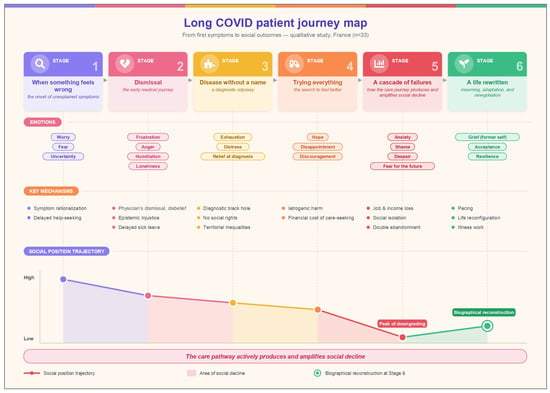
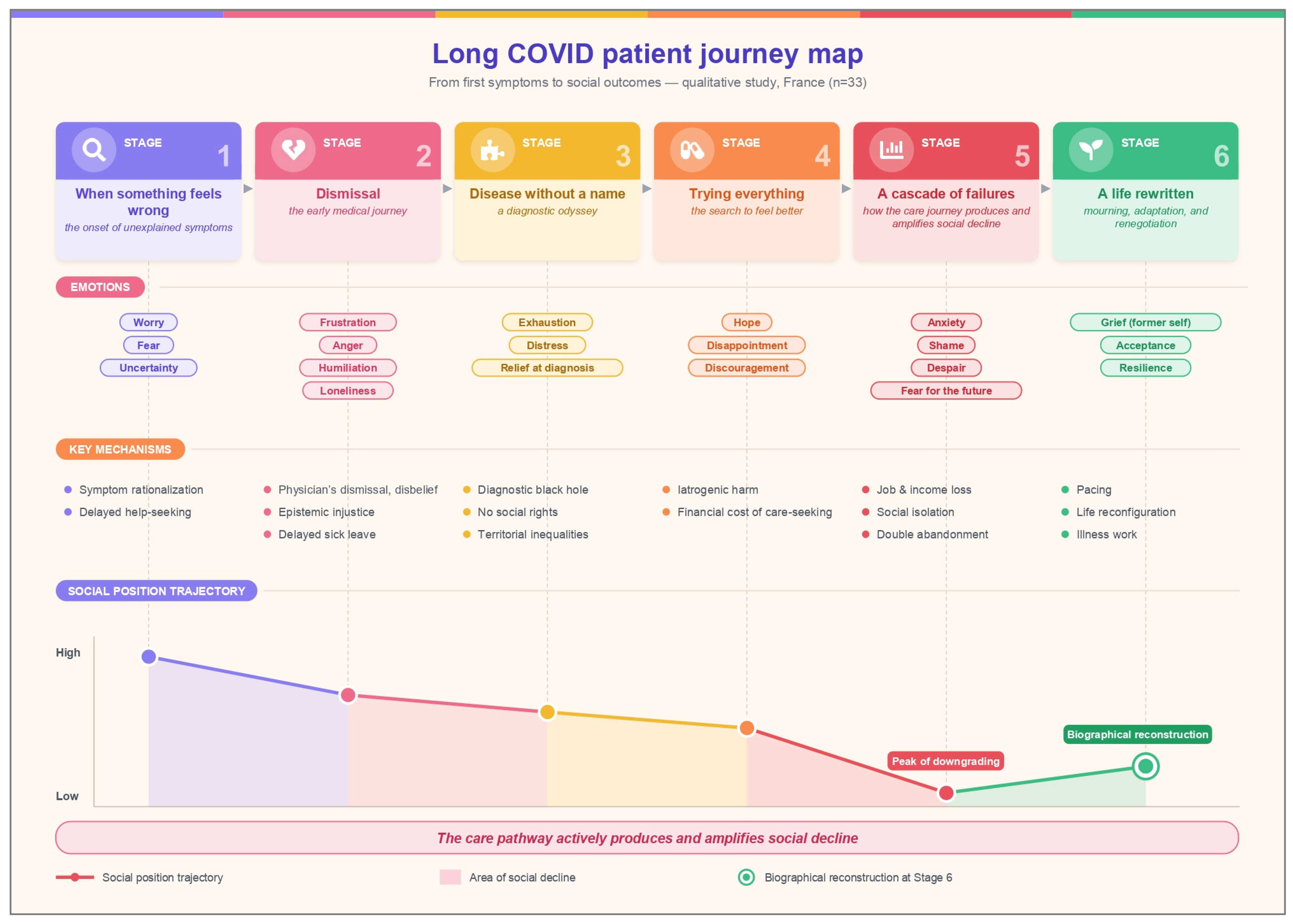

Disclaimer/Publisher’s Note: The statements, opinions and data contained in all publications are solely those of the individual author(s) and contributor(s) and not of MDPI and/or the editor(s). MDPI and/or the editor(s) disclaim responsibility for any injury to people or property resulting from any ideas, methods, instructions or products referred to in the content. |
© 2026 by the authors. Licensee MDPI, Basel, Switzerland. This article is an open access article distributed under the terms and conditions of the Creative Commons Attribution (CC BY) license.