


Abstract
This study presents and tests a model of vocational choice based on Gottfredson’s theory to explain the relatively low interest in teaching as a career and its underlying determinants. We propose that career choice criteria and vocational interests mediate the relationship between demographic and socio-economic factors and individuals’ perceived likelihood of choosing teaching as a profession. The study was conducted in Israel using a sample of 420 young adults at an early stage of vocational decision-making. Participants completed validated measures assessing career choice criteria, vocational interests, and a range of demographic and socio-economic variables. The findings provide partial support for the proposed model. Specifically, social vocational interests, along with prioritization of self-actualization and status as career choice criteria, were found to mediate the relationships between certain demographic factors, socio-economic status, prior academic achievement, and the perceived likelihood of choosing teaching as a career. Further analysis suggests that teaching is often perceived as a fallback option rather than a primary career choice. These findings are discussed in relation to current policies and ongoing personnel shortages in the education system.
1. Introduction
One of the most pressing challenges facing the education sector today is attracting talented individuals to the teaching profession. International evidence consistently highlights increasing difficulties in recruiting and retaining qualified educators amid shifting labor markets and rising professional expectations (OECD, 2023, 2025). Policy discussions often emphasize structural solutions, such as salary reforms or alternative certification pathways. However, a deeper issue remains insufficiently addressed: understanding the factors that lead individuals to consider—or dismiss—teaching as a viable career option.
Research in this area has traditionally focused on individuals already enrolled in teacher education programs, examining their motivations and professional values (Alvariñas-Villaverde et al., 2022; Wang et al., 2025). While this work provides valuable insights, it overlooks a critical earlier stage in career development: how young adults evaluate teaching relative to alternative occupations before committing to a specific career path. Moreover, studies conducted after entry into teacher education may be influenced by post hoc rationalizations and population-selection bias. The present study addresses this gap by shifting attention to the pre-commitment stage of career consideration, examining how teaching is evaluated alongside other career options prior to occupational commitment.
Career choice can be conceptualized as a series of decision-making processes through which individuals gradually select and commit to a vocation. These processes typically involve defining professional aspirations and interests, selecting educational or training pathways, and ultimately choosing a career trajectory (American Psychological Association, n.d.). Decisions evolve as individuals weigh alternatives in relation to personal aspirations and social expectations, from early development through adulthood (Watson & McMahon, 2019). During this process, some professions are actively considered, while others are implicitly or explicitly excluded—whether through deliberate rejection or lack of consideration altogether.
Career consideration is influenced by multiple factors. One key factor is perceived personal congruence, or the degree to which individuals feel that a profession aligns with their interests, preferred activities, and sense of purpose. Another factor is the extent to which career options meet broader evaluative criteria, such as status, economic security, and opportunities for advancement—criteria that are often formed prior to occupational commitment (Christensen et al., 2019; Pavin Ivanec & Defar, 2023). While many contemporary models emphasize the proactive pursuit of interests, the present study draws on Gottfredson’s theory of circumscription and compromise. This framework is particularly relevant to the issue of teacher recruitment because it highlights the “negative” selection process, explaining how certain occupations are ruled out or excluded from an individual’s range of acceptable options long before active exploration begins.
Building on established career choice theories, this study examines how vocational interests, career choice criteria, and background characteristics relate to the perceived likelihood of choosing teaching. Specifically, it aims to better understand how teaching is included in—or excluded from—individuals’ acceptable set of career options prior to making a formal occupational commitment.
2. Literature Review
2.1. Career Choice as a Constrained Developmental Decision Process
Career choice is a developmental process shaped by the interaction between individual determinants, social background, and perceived opportunity structures (Leung, 2008). These result in a series of decisions shaping individuals’ work life. One of the personal level factors most often associated with career choice is that of occupational preference. Occupational preferences are shaped by innate temperament, personality traits, and evolving evaluations across adolescence and early adulthood. During these processes, personal values are constantly weighed against contextual and structural constraints, shaped, and modified (Watson & McMahon, 2019; See et al., 2022). This perspective suggests that career pathways are patterned by social background and settings, gender, and internalized value orientations long before formal entry into the labor market (Jones & Hite, 2021a, 2021b; Wu et al., 2026).
Within this framework, research examining the choice of teaching as a career identifies a multidimensional profile of factors associated with the choice: prospective teachers typically negotiate a balance between vocational interests, perceived competence, and altruistic desires, as well as practical aspects of the profession such as schedules, job security, and more (Bergmark et al., 2018; Pavin Ivanec & Defar, 2023). However, these determinants are embedded within broader perceptions of the profession’s status and demands. Decisions to enter teaching are heavily influenced by socially constructed images of the profession and prevailing labor-market conditions (Heinz, 2015). Individuals assess teaching as a choice option through a comparative lens, evaluating anticipated returns, such as level of challenge or interest, professional recognition, economic rewards, against perceived job demands (Wang et al., 2025).
Ultimately, career choice is bounded by perceived feasibility and comparative labor-market opportunities (Heinz, 2015; Hennessy & Lynch, 2017). This provides the foundation for examining how occupational alternatives are filtered before individuals commit to the profession. From this perspective, career choice can be understood not as a single decision but as a progressive filtering process structured by the interaction of vocational interests, career choice criteria, and life constraints through which occupations become acceptable, negotiable, or excluded options.
2.2. Gottfredson’s Theory of Circumscription and Compromise in Career Choice
To explain this filtering process, Gottfredson’s theory (Gottfredson, 1981) conceptualizes career choice as a developmental, socially embedded process of elimination. The strength of this framework lies in its focus on how individuals systematically exclude career options before a final decision is made. Unlike models that focus primarily on the proactive pursuit of vocational interests, Gottfredson emphasizes the “zone of acceptable alternatives”—the cognitive boundaries within which an individual feels socially and personally “at home”. This perspective is particularly instrumental for investigating the recruitment crisis in teaching, as it allows for an analysis of why the profession is often dismissed or ruled out as “unthinkable” during the early stages of social and prestige-based filtering (Mancenido, 2021). Gottfredson proposes that individuals progressively broaden and restrict their range of acceptable options, long before formal decisions occur, shaped by evolving self-concepts and perceived social realities.
Through circumscription, individuals construct cognitive maps of the occupational world, categorizing roles by prestige, gender type, and field (Gottfredson, 2004). This process involves ruling out occupations perceived as incompatible with one’s social identity, aspired status, and more. These may begin with gender and cultural appropriateness and later incorporate social status and perceived ability often learned through parental role modeling (Brott, 1993; Watson & McMahon, 2019). At the same time, a more complex and intricate perception of careers, jobs, and their responsibilities emerge, widening as well as restricting options for future choice. By adolescence, aspirations often stabilize within a zone of acceptable alternatives, reflecting internalized social expectations (Cochran et al., 2011; Junk, 2008). When preferred options seem unattainable, individuals sacrifice some of their preferences to preserve those that are most relevant and important to them, typically interests or social compatibility (Gottfredson, 2004; Pryor & Taylor, 1986). Modern extensions of the theory highlight that compromise is also shaped by perceived social approval and cultural expectations (Gati et al., 1997; Mutlu et al., 2024).
Beyond socio-economic and other environmental factors, career choice criteria, such as anticipated status, security, and fulfilment, serve as the primary metrics used to determine whether teaching fits within this zone of acceptable alternatives. Gottfredson’s theory provides a clear developmental framework accounting for the dynamics depicted above. It also supports the possible mediation model proposed in this study. It suggests that exogenous factors, such as socio-economic background and gender, do not influence career choice directly. Instead, they shape the individual’s vocational interests and the specific career choice criteria they prioritize. In this sense, these interests and criteria act as psychological mediators: they translate social positioning and past experiences into a concrete set of inclusion/exclusion rules, which ultimately dictate the perceived likelihood of committing to a teaching career. By testing this mediation, we examine not only if demographics matter, but how they are cognitively processed through the lenses of interests and occupational prestige.
2.3. Career Choice Criteria as Operational Expressions of Career Choice
Empirically examining these processes requires identifying the evaluative mechanisms through which such judgments are formed. Career choice criteria represent the operational expression of these mechanisms, functioning as cognitive benchmarks that guide whether an occupation is included in—or excluded from—an individual’s consideration set (See et al., 2022). Research suggests that individuals prioritize these criteria differently, resulting in distinct preference profiles (Whaley, 2023).
Vocational interests and identity compatibility are foundational to this process; career aspirations are more likely to persist when roles align with personal meaning, enjoyment, and self-concept (Hennessy & Lynch, 2017; Pavin Ivanec & Defar, 2023). However, these intrinsic considerations are weighed against external factors, including social valuation—such as perceived status, recognition, and prestige—as well as material conditions like compensation and working environment. For instance, individuals may exclude occupations perceived as offering limited advancement opportunities, even when those occupations provide intrinsic satisfaction (Heinz, 2015).
Decision-makers also evaluate anticipated returns, such as salary and job security, in relation to alternative career options (Wang et al., 2025; Wu et al., 2026). In addition, lifestyle considerations—including work–life balance and compatibility with future family roles—play an important role in shaping career preferences (Jackson et al., 2010). Finally, the potential for social contribution remains a significant criterion, particularly in the context of teaching, where perceived social value may be weighed against more instrumental rewards (Augustinienė & Stanišauskienė, 2025; Onyefulu et al., 2022).
Taken together, developmental career theory explains how occupational choice alternatives are narrowed down, while career choice criteria specify the evaluative dimensions through which this process ends up in commitment to a certain career path.
2.4. Career Choice of Teaching
Based on the above, occupational choices can be understood as gradually emerging through a process of comparative evaluation, in which professions are assessed against criteria reflecting desirable work and career characteristics (Lent & Brown, 2013). Within this evaluative framework, teaching is included in an individual’s consideration set only to the extent that it meets these broader benchmarks relative to alternative career paths.
This process is closely linked to identity formation. Individuals tend to pursue roles that align with and express their developing self-concept while excluding occupations associated with social images they perceive as incompatible with their identity (Betz, 1994).
The Factors Influencing Teaching Choice (FIT-Choice) framework (Watt & Richardson, 2007) operationalizes this comparison by demonstrating that individuals weigh teaching against other occupations offering differing levels of interest, satisfaction, as well as status, salary, and career mobility. Consequently, the social meaning and occupational image of teaching become primary determinants of its desirability. Internationally, teaching is often perceived as an ambivalent choice: while viewed as socially meaningful, it is frequently ranked lower in prestige or economic reward compared to other high-status professional pathways (Heinz, 2015; See et al., 2022). Moreover, the typical age at which individuals make an initial commitment to a career (i.e., by pursuing professional or academic studies in a field of interest) may range between 18 and the late 20s. At this stage, decision-makers may still retain vivid memories of their own teachers and school experiences, which may shape their perceptions of teaching as a potential vocation. Consequently, the likelihood of considering teaching is dictated not by profession-specific interest alone, but by how the profession competes with the perceived returns of the wider labor market.
The teaching profession encompasses diverse specializations ranging from early childhood to secondary education. Each has distinct entry requirements, demands, characteristics and at time social status. That said, the present study treats teaching as a single occupational category. This choice is theoretically grounded in the focus on preliminary vocational choice among young adults. At this developmental stage, individuals tend to evaluate teaching based on its broad “occupational image” (Gottfredson, 2004) and general characteristics relative to other professions. Only very few individuals at the beginning of their career search know that they wish to become ‘a programmer specializing in data transfer packaging and coding’. Most will simply consider programming at this point, with specialization coming later in the process (e.g., Ko et al., 1998). By maintaining this level of granularity, we can compare the perceived likelihood of entering the teaching field as a whole against alternative professional pathways, capturing the initial process of circumscription where the profession is either included in or excluded from the individual’s zone of acceptable alternatives.
3. The Current Study
Despite ongoing research on the choice of teaching as a career and teacher recruitment, the available evidence predominantly focuses on individuals who have already entered teacher education or are already practicing teachers (See et al., 2022). However, focusing primarily on these populations overlooks the earlier developmental stages where occupational alternatives are narrowed through evaluation and elimination (Cochran et al., 2011). This creates a significant gap in our understanding of why many young adults exclude teaching as a potential career option before active career decision-making or professional commitment takes place. Conceptually, there is a lack of evidence regarding how demographics, broader interests, career choice criteria, and past achievement interact to shape perceptions of teaching as a legitimate alternative in the ‘zone of acceptable alternatives’. Addressing this gap is vital to understanding why many individuals exclude teaching from their zone of acceptable alternatives long before active decision-making takes place.
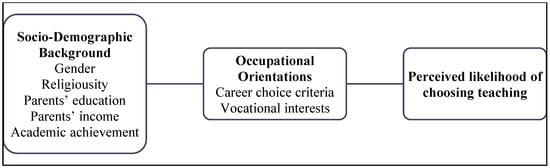
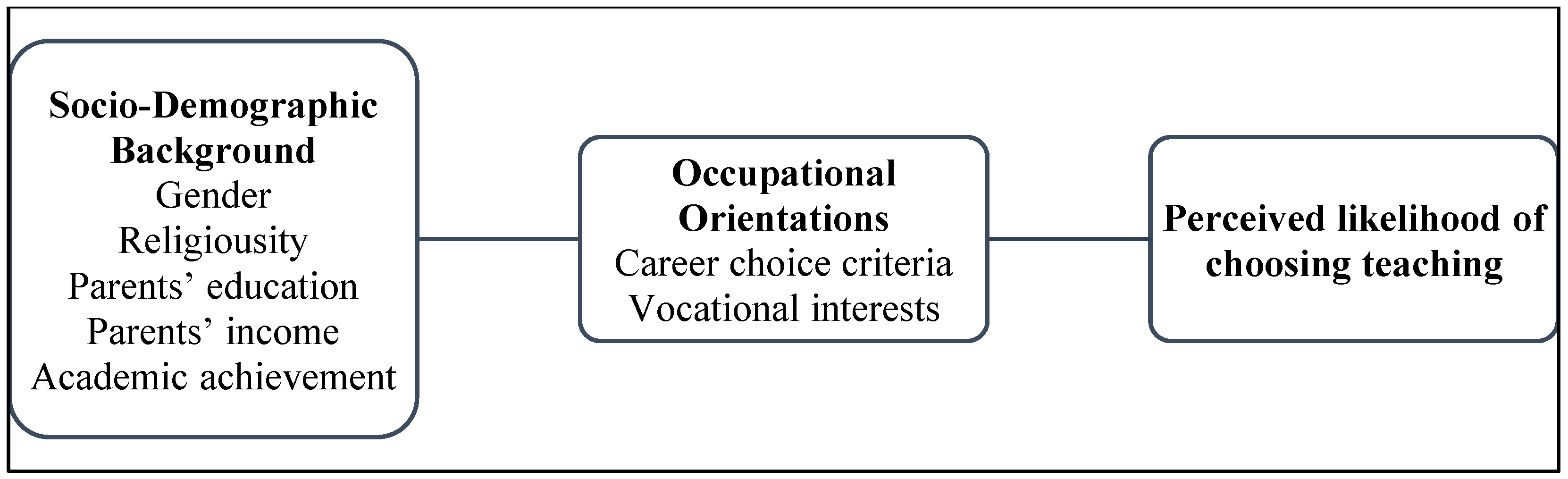
Therefore, the present study examines teaching not as an isolated vocational choice option or through retrospective accounts, but as a possible choice within a broader career evaluation process, investigating how socio-demographic background and general career choice criteria shape the likelihood that teaching enters individuals’ consideration sets. Building on the theoretical models reviewed above, we propose a process-focused model describing how socio-economic status, parental role models, and previous academic achievement may shape young adults’ perceived occupational possibilities when considering future professions and career pathways. The model (Figure 1) proposes that this evaluation is shaped by the interaction between three sets of factors: socio-demographic background, which structures perceived opportunities; occupational orientations and vocational interests, reflecting personal values and pre-dispositions regarding professional success; and career choice criteria, serving as the measurable metrics individuals use to determine whether a profession is acceptable.
Figure 1.
The proposed study model.
The proposed model suggests that in accordance with Gottfredson’s theory, background and socio-demographic factors shape both expectations and career choice criteria. Other demographic factors such as gender and religiosity may shape individuals’ interests in specific career paths, thus representing both individual pre-dispositions and social level preferences and boundaries set for the selection process. Highschool attainment also plays a role according to the theoretical framework in opening or closing options based on attainment required for acceptance or entry into the relevant preparation programs.
Once individuals’ vocational interests and career choice criteria are formed, they shape the range of occupations that are perceived as viable options. In this study, we operationalize this perceived viability through the perceived likelihood of choosing teaching as a future vocation, treating it as a quantifiable proxy for the extent to which teaching is included within an individual’s consideration set. Accordingly, we hypothesized that vocational interests and career choice criteria would mediate the associations between personal and socio-demographic characteristics and the perceived likelihood of choosing a teaching career among young adults who have not yet committed to a specific career path.
4. Method
To test the proposed model, we adopted a quantitative approach that enabled the examination of associative patterns and directional relationships between the study variables. A cross-sectional design was selected to facilitate data collection under conditions of minimal intervention and maximal procedural uniformity, thereby reducing potential sources of bias. Statistical analyses were then employed to enable the simultaneous examination of a complex multi-layered model while minimizing capitalization on chance.
4.1. Sample
The study sampled young adults from the general population prior to vocational commitment. The sample included 420 young adults aged 18–28 (M = 21.12, SD = 3.62), of whom approximately 46% were women (n = 193) and the remainder men (54%, n = 227). This relatively balanced gender distribution was intentionally maintained to better reflect the broader labor market, in contrast to the predominantly female cohorts typically found among individuals who have already committed to teacher education.
Participants were recruited through the distribution of a questionnaire link in youth-oriented groups by several research assistants representing different age cohorts. The sample was drawn from online communities, high school graduate cohorts, and young adults meeting the following inclusion criteria: participants were required to be graduates of the formal national education sectors, including both the state and state-religious sectors, and to not yet have committed to a specific career pathway in practical terms (e.g., enrolling in higher education studies or vocational training programs). Among the respondents, 68% identified as secular (n = 286), 22% as traditional (n = 92), and approximately 10% as religious (n = 42). Table 1 herein summarizes the main demographics collected for our sample.
Table 1.
Demographic statistics (n = 420).
4.2. Instruments
To assess the variables of the proposed model, several dedicated questionnaires were administered. The instruments are detailed below.
4.2.1. Demographic Information
Participants reported age, gender, parents’ education, household income (relative to the national average), educational intentions (whether they intended to pursue studies, and if so, at what level—vocational or academic), prior academic achievement (high school GPA), academic orientation (humanities and arts, social sciences, computer science, sciences), and level of religiosity.
4.2.2. Individual Determinants and Interests
These instruments collectively assess the internal determinants that shape an individual’s evaluation of professional pathways. Three specific instruments were used:
- Vocational Interests: A translated version of the OIP (Occupational Interest Profiler) was used. Developed by the U.S. Department of Labor and periodically updated, its short nform includes 60 occupations categorized into six domains (based on Holland’s vocational preference model). The tool is widely used for assessing vocational interests and career choice criteria and demonstrates high validity (Psytech International, 2014). Due to its structure and grading method, reporting internal consistency is meaningless.
- Need for Achievement: A Hebrew version of the achievement motivation questionnaire by Lang and Fries (2006) was used. This 10-item scale assesses the extent to which individuals are oriented toward attaining life goals and demonstrating tangible achievements. The questionnaire has been validated across diverse contexts and demonstrates good reliability and validity ranging between 0.72–0.81.
- Career choice criteria: A modified version of the questionnaire developed by Arnon et al. (2015) was used. The instrument outlines various considerations in choosing a profession and allows respondents to rate their importance. Reported reliability was 0.82, as tested by the original authors. Since the career choice criteria measurement tool was modified, an exploratory factor analysis was conducted on the criteria scores to validate its structure. Table 2 summarizes the findings.Table 2. Exploratory factor analysis on career choice criteria.
The analysis suggests the existence of two factors explaining over 51% of the variance in the career choice criteria. A possible interpretation is that the first factor relates to work conditions, while the second relates to the characteristics of the work itself.
4.2.3. Assessment of Career Choice Context
The following components were used to map the participants’ current vocational landscape by identifying their broader range of acceptable careers alongside a specific measurement of interest in teaching. Data were collected regarding the following components:
- Career Choice Set: Participants were asked to list up to three professions they were considering as possible future careers. The free-text occupation choices were coded into broad professional fields, drawing on the logic of standard occupational classifications. These categories were used to summarize the main professional domains represented in the participants’ responses and were not intended to classify participants into vocational versus post-secondary educational pathways.
- Perceived Likelihood of Choosing Teaching as a Career: Participants were asked to indicate the perceived likelihood of choosing each of several professions as a future career on a percentage scale ranging from 0% (“absolutely not”) to 100% (“absolutely certain”). The professions included software engineering, teaching (from kindergarten through high school), social work, biology, and business administration. Participants evaluated each profession separately. All items except teaching served as distractors; the variable of interest was the perceived likelihood of choosing teaching as a career.
4.3. Procedure
Following approval by the institutional ethics committee (Ministry of Education approval number 14265), research assistants within the relevant age ranges distributed a link to the questionnaires, accompanied by a description of the study as one examining young adults’ professional interests and career planning in Israel, during July–September 2025. The focus on teaching as a career option was intentionally not mentioned to minimize potential bias. The researchers had no means of tracking potential participants who chose not to take part, as no identifying information was collected from individuals who did not complete the questionnaires, in accordance with the anonymity requirements. Data were analyzed using SPSS version 29.0 and AMOS version 24.0.
5. Findings
5.1. Descriptive Statistics
Before testing the research hypotheses, we examined the distribution of the key research variables (criteria and vocational interests). Table 3 details the findings:
Table 3.
Descriptive statistics of the main research variables.
The differences in the number of valid responses across measures, as presented above, were first examined to rule out systematic bias. The analysis suggested that because each measure and subscale consisted of multiple items, even a small number of missing responses could result in a participant’s subscale score not being calculated. No systematic pattern was identified in the missing data. Given that the sample size remained sufficiently large to ensure adequate statistical power, we chose not to impute the missing values artificially.
The vocational interests’ measures show medium-to-low differentiation, as expected in a sample of young individuals who have not yet committed to a career path. The career choice criteria showed a normal distribution range, and self-actualization and intellectual challenge were the criteria perceived as most important, while investment in career-preparation, and following that, work dynamism, were judged as less important by the participants.
Another central variable in the study was the primary outcome measure—the perceived likelihood of choosing teaching as a career. Participants were asked to indicate, on a percentage scale ranging from 0 to 100, how likely they believed they were to choose a career in teaching. Only 290 respondents answered this question, which may itself reflect ambivalence or avoidance regarding the teaching profession. Among those respondents, only a very small proportion (5%) reported a high likelihood (above 60%) of pursuing a career in teaching, and only 1% reported a 90% likelihood of choosing teaching as a future profession. As expected, the distribution was highly non-normal and strongly skewed, with a mean of 17.34% (Mode = 0.00; Median = 10.00) and a relatively large standard deviation (SD = 22.21; Range = 100; IQR = 28). Skewness was 1.53 and kurtosis was 2.11.
To gain deeper insight into the participants’ perceived likelihood of choosing teaching as a career, we analyzed the proportion of respondents who indicated interest in various occupational groups as their first priority, based on the 290 participants who answered these questions. The findings are summarized in Table 4.
Table 4.
Number and percentage of respondents reporting selected career fields as their first priority (n = 290).
Focusing specifically on the ranking of teaching as a career across different priority levels, it is evident that only a very small proportion of respondents (approximately 3%) viewed teaching and education as a first-priority career. This finding becomes even more striking when comparing the participants’ choices between first and third priority (participants could rank up to three priorities, from 1 to 3). The proportion selecting teaching as a third priority (i.e., a default or fallback option) increased from 3.10% to 6.80%—more than double.
5.2. Model Testing
To test the model, we conducted path analysis in Amos 29.0 software. The initial full model did not demonstrate an adequate fit to the data.
In a second step, variables that did not show meaningful associations with other variables in the model were removed, while keeping and maintaining the positions of the remaining variables in the model as they were in the original—to still represent the same theoretical constructs presented here. The model was re-estimated. This revised model demonstrated a borderline acceptable fit. As shown, the removed variables included some demographic indicators (mother’s income, mother’s education, and age), all vocational interest domains except for social interests, and most career choice criteria except for self-actualization and status.
In a third step, non-significant paths were removed from the remaining model, while making sure we did not change the theoretical meaning of the model and the roles each of the variables played in it. This procedure followed good practices mentioned in the methodological literature (e.g., Weston & Gore, 2006; Xiong et al., 2025). The resulting reduced model demonstrated a good fit to the data collected in the present sample.
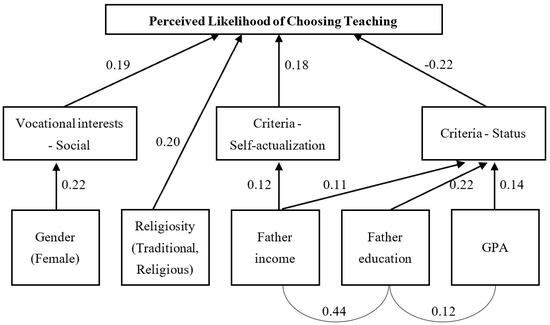
This final model is presented in Figure 2. Although reduced relative to the original model, it still retained all major conceptual domains included in the initial theoretical framework and preserved the overall process structure proposed by the study.
Figure 2.
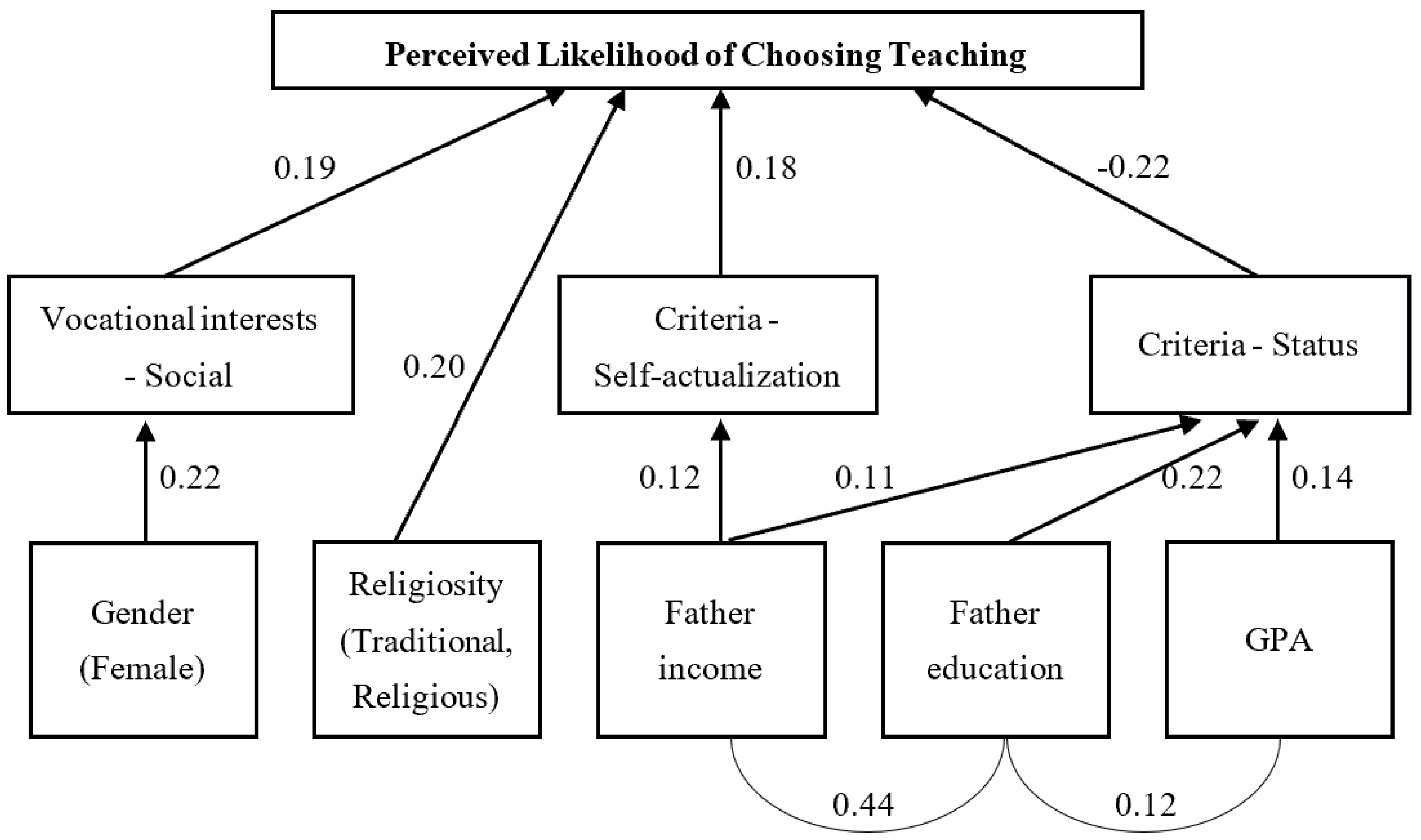
Empirical path model. Notes: All shown paths were statistically significant at p < 0.05 or better; error terms were omitted for the sake of ease of presentation; goodness-of-fit indices: GFI = 0.93, CFI = 0.99, RMSEA = 0.01, χ2(22) = 13.78, p < 0.05. For additional indicators in the mode, see Appendix A.
These results partially support the proposed mediation model, in which vocational interests for social professions (to which teaching traditionally belongs), along with career choice criteria related to self-actualization and status, mediated the associations between personal characteristics- namely gender (female), socio-economic indicators (e.g., father’s, but not mother’s, income and education), and prior academic attainment—and the perceived likelihood of choosing teaching as a career. While social vocational interests and self-actualization were positively associated with the perceived likelihood of choosing teaching, status-oriented criteria were negatively correlated with the same outcome. Of the background measures that entered the model only, religiosity (traditional, religious) was directly linked to the perceived likelihood of choosing teaching. Gender (female) was found to be associated with vocational interests (suggesting that women leaned more than men toward social vocations). Fathers’ education and income were associated positively with status as a criterion for career choice, and therefore less likely to select teaching. However, there is more to it: fathers’ income was also positively associated with self-actualization criteria for career selection, thus indirectly positively associating with the choice of teaching.
6. Discussion
The human resource crisis in the teaching profession is multifaceted, encompassing not only quantitative shortages but also concerns about the quality and future sustainability of the profession, which is increasingly deprived of high-quality human capital (Edwards et al., 2025). Factors such as teacher turnover, burnout, and attrition play significant roles in this growing crisis. At the same time, there is a troubling trend of declining interest in teaching careers, with fewer individuals choosing to enter the profession (Donitsa-Schmidt, 2025).
Policy interventions that focus on immediate and visible factors—such as salary, compensation, and professional development—have shown only limited effectiveness (Kraft & Lyon, 2024). These limitations underscore the need to better understand why the teaching profession has lost part of its appeal.
Existing research on career choice motivations has largely focused on practicing teachers or teacher candidates. However, because these groups already include individuals who have committed to teaching, such studies may be subject to selection biases that obscure the very barriers we seek to identify.
To address this gap, the present study shifts attention to an earlier, pre-commitment stage of occupational consideration. It proposes a comprehensive model—grounded in major vocational theories—that integrates socio-demographic characteristics, vocational interests, and career choice criteria as factors influencing the likelihood of choosing a teaching career. In doing so, the study contributes to the literature by examining not only why individuals may choose teaching, but also how and why the profession is excluded from young adults’ range of acceptable career options before any active commitment is made.
The empirical model, based on a sample of 420 young adults living in Israel, provides partial support for the hypothesized association system proposed in this study. Vocational interests in the social professions, alongside two career choice criteria (self-actualization and status), mediate the associations between personal (GPA), demographic (gender), and socio-economic characteristics (father’s income and education) and the perceived likelihood of choosing teaching as a career.
These results are generally congruent with existing evidence linking certain vocational interests and socio-economic background with a career in teaching (Namazova, 2023). However, the integration of these different factors within a single model helps identify and understand more complex effects within the ‘psycho-social ecosystem of career choice’. Some of the factors included in the model may work indirectly and have more than one implication for the career choice process (Christensen et al., 2022). Thus, for example, the influence of father’s income and education points to a complex role for socio-economic status in shaping career choices in general, and the choice of teaching in particular. It suggests that more established backgrounds may simultaneously foster self-actualization orientations that support choosing teaching, while also reinforcing status-oriented criteria that discourage it, potentially reflecting processes of social learning through exposure to a successful parental model. From a theoretical perspective, the findings provide support and examples for Gottfredson’s framework of circumscription and compromise to the context of teacher recruitment, highlighting how teaching may be filtered out during early occupational evaluation processes rather than only examined retrospectively after professional commitment.
Also of interest are the factors included in the original model that did not enter the empirical one: age was not associated with any of the model’s measures, nor was mother’s socio-economic background. Among the mediators, most vocational interests (except social) did not enter the model, suggesting that teaching is perceived primarily as a pedagogical, interpersonal role rather than one tied to subject-matter domains. Similarly, most career choice criteria (e.g., intellectual challenge, dynamism, work environment, social support) were not retained. Within our sample, the two dominant criteria for choosing teaching were self-actualization (positively associated) and status (negatively associated), highlighting the perceptual double-edged nature of teaching: a valued yet low-status profession (Rots et al., 2002).
These findings, together with evidence that interest in teaching rises when it is considered a second- or third-choice career (i.e., a “backup plan”), offer new and troubling insights into why younger generations are increasingly reluctant to pursue teaching. The findings suggest that teaching may increasingly function as a secondary or fallback occupational option within young adults’ broader career consideration sets rather than as a primary aspirational pathway. Our results may suggest that teaching is no longer perceived as a high-potential career option for many young adults. In a labor market where long-term job security may no longer function as a dominant organizing principle for career choice (Mohapatra et al., 2017) while social status continues to play a significant role, young adults may increasingly defer to teaching as a secondary or fallback option, even when the profession aligns with their personal values and characteristics.
If such dynamics shape career choice, two concerning trends may emerge: a gradual decline in younger generations’ interest in teaching, and a parallel decline in the quality of applicants. When teaching is perceived as a ‘backup plan’, individuals with higher attainment and greater human capital are more likely to secure positions in preferred careers, leaving less competitive candidates to enter teaching when alternative paths are unavailable.
6.1. Study Limitations and Directions for Future Studies
Several limitations should be noted when interpreting this study’s results. First, the cross-sectional design and reliance on self-reported evaluations of career likelihood limit both causal inference and the ability to assess how early career considerations translate into actual educational and occupational trajectories. While this approach is appropriate for capturing pre-commitment decision processes and avoids post-selection bias, longitudinal research is needed to examine how vocational interests and career choice criteria develop over time and shape eventual career choices. Second, the sample was drawn from a single national context. While this may constrain direct generalization to certain cultural and job-market settings, the patterns identified—particularly the role of socio-economic background and the tension between self-actualization and status—are grounded in established vocational theories and findings from different countries and cultures (e.g., Kraft & Lyon, 2024) and are therefore likely to extend beyond this context. Nevertheless, cross-cultural research is needed to examine how these mechanisms manifest across different educational systems and labor-market conditions.
Additionally, this study relied exclusively on quantitative measures, which, while providing a broad structural overview of career modeling, may not capture the nuanced, subjective experiences behind vocational choices. Incorporating qualitative data in future studies, such as through interviews or focus groups, would provide deeper insights into the personal narratives and specific deliberative processes individuals undergo when navigating the tensions between interests and social constraints.
Furthermore, the study operationalized teaching as a single occupational category. While this aligns with the investigation of broad career perceptions during preliminary vocational choice, it does not account for the internal variance within the profession. Since different levels, such as early childhood versus secondary education, or specializations like STEM and special education, may carry distinct social statuses and demand different vocational interests, future research should explore whether the processes of circumscription and compromise function differently across these specific educational sub-sectors.
6.2. Implications
The present findings carry implications that may extend beyond the immediate context of this study. Education systems globally are facing increasing challenges in attracting and retaining qualified teachers, potentially reflecting a broader structural tension between the societal importance of teaching and its perceived position within contemporary labor markets. The current results suggest that at the stage of initial career decision-making, teaching is often evaluated unfavorably relative to alternative professions, particularly along key criteria such as status, economic rewards, and perceived opportunities for advancement, professional autonomy, and well-being.
From a theoretical perspective, these findings reinforce the need to conceptualize career choice in teaching not only in terms of interests or fit, but as a comparative evaluative process shaped by competing career choice criteria. Teaching appears to be positioned as a socially meaningful yet structurally disadvantaged option within individuals’ consideration sets, highlighting a persistent misalignment between its perceived social value and its perceived career returns.
From a practical standpoint, the findings suggest that addressing teacher shortages requires more than incremental or isolated policy measures. While our study did not directly measure policy effectiveness or applicant quality, the results point toward the need for systemic, multi-dimensional approaches aimed at reshaping the perceived profile of the profession. In particular, efforts could focus on enhancing the perceived status of teaching, strengthening its association with professional autonomy and opportunities for development, and aligning its public image with the criteria that guide young adults’ career decisions.
Teaching may be framed as a high-skill, intellectually demanding, and development-oriented career, ensuring that these attributes are reflected in both policy, preparation, and practice. Without such alignment, teaching is likely to remain a secondary or fallback option within individuals’ career considerations, thus perpetuating existing recruitment challenges.
Author Contributions
Conceptualization, L.Z., R.K. and M.E.H.; Methodology, L.Z. and R.K.; Software, L.Z.; Validation, L.Z. and R.K.; Formal analysis, L.Z.; Investigation, L.Z., R.K. and M.E.H.; Resources, L.Z. and M.E.H.; Writing—original draft, L.Z. and R.K.; Writing—review & editing, L.Z., R.K. and M.E.H.; Visualization, L.Z., R.K. and M.E.H.; Supervision, L.Z. and M.E.H.; Project administration, L.Z.; Funding acquisition, L.Z., R.K. and M.E.H. All authors have read and agreed to the published version of the manuscript.
Funding
This research was funded by Mofet Institute, grant number 269/2024 and The APC was funded by Tel Hai University research authority.
Institutional Review Board Statement
The study was conducted in accordance with the Declaration of Helsinki, and approved by the institutional ethics committee Ministry of Education (protocol code 14265 and date of approval 27 October 2024).
Informed Consent Statement
Informed consent was obtained from all subjects involved in the study.
Data Availability Statement
The data presented in this study are available on request from the corresponding author. (Data is not freely available due to anonymity and privacy commitments.)
Acknowledgments
During the preparation of this manuscript, the authors used Generative Artificial Intelligence (GenAI) tools (e.g., ChatGPT 5.5, Gemini 3.5) to support language editing, phrasing refinement, and organizational revision of the text. All conceptual development, data analysis, interpretation of findings, and final academic decisions remained the sole responsibility of the authors. The authors carefully reviewed and edited all AI-assisted outputs and take full responsibility for the content of the manuscript.
Conflicts of Interest
The authors declare no conflict of interest.
Appendix A. Direct and Indirect Effects, Path Statistics Summary
| Path Coefficients | ||||||||
| 95% Confidence Interval | ||||||||
| Estimate | Std. Error | z-Value | p | Lower | Upper | |||
| Mot_status | → | chanceteach | −3.528 | 1.667 | −2.116 | 0.034 | −6.795 | −0.260 |
| Mot_fulfilment | → | chanceteach | 2.011 | 2.882 | −1.851 | 0.046 | 0.659 | 4.637 |
| OIP_soc | → | chanceteach | 1.458 | 0.776 | 1.878 | 0.040 | 1.063 | 2.979 |
| Sex | → | chanceteach | 1.868 | 3.765 | 0.496 | 0.620 | −5.511 | 9.247 |
| Religiosity | → | chanceteach | 5.928 | 2.692 | 2.202 | 0.028 | 0.652 | 11.205 |
| EDUF | → | chanceteach | −1.095 | 1.332 | −0.822 | 0.411 | −3.707 | 1.516 |
| SalaryF | → | chanceteach | 0.585 | 1.767 | 0.331 | 0.740 | −2.878 | 4.048 |
| Matricul_ExamG | → | chanceteach | −0.005 | 0.177 | −0.027 | 0.978 | −0.351 | 0.341 |
| Sex | → | Mot_status | −0.053 | 0.203 | −0.262 | 0.794 | −0.451 | 0.344 |
| Religiosity | → | Mot_status | 0.122 | 0.148 | 0.821 | 0.411 | −0.169 | 0.412 |
| EDUF | → | Mot_status | −0.171 | 0.073 | −2.354 | 0.019 | −0.313 | −0.029 |
| SalaryF | → | Mot_status | 1.041 | 0.100 | 2.413 | 0.030 | 0.155 | 0.238 |
| Matricul_ExamG | → | Mot_status | 0.018 | 0.010 | 1.851 | 0.044 | −0.001 | 0.037 |
| Sex | → | Mot_fulfilment | −0.097 | 0.118 | −0.826 | 0.409 | −0.328 | 0.133 |
| Religiosity | → | Mot_fulfilment | 0.058 | 0.086 | 0.669 | 0.503 | −0.111 | 0.226 |
| EDUF | → | Mot_fulfilment | 0.071 | 0.042 | 1.785 | 0.042 | 0.012 | 0.154 |
| SalaryF | → | Mot_fulfilment | 0.031 | 0.058 | 0.538 | 0.591 | −0.083 | 0.145 |
| Matricul_ExamG | → | Mot_fulfilment | 0.003 | 0.006 | 0.524 | 0.600 | −0.008 | 0.014 |
| Sex | → | OIP_soc | 1.389 | 0.388 | 3.575 | <0.001 | 0.627 | 2.150 |
| Religiosity | → | OIP_soc | −0.256 | 0.283 | −0.904 | 0.366 | −0.812 | 0.299 |
| EDUF | → | OIP_soc | 0.058 | 0.141 | 0.411 | 0.681 | −0.219 | 0.335 |
| SalaryF | → | OIP_soc | 0.025 | 0.192 | 0.131 | 0.896 | −0.351 | 0.401 |
| Matricul_ExamG | → | OIP_soc | −0.005 | 0.019 | −0.283 | 0.777 | −0.042 | 0.031 |
References
- Alvariñas-Villaverde, M., Domínguez-Alonso, J., Pumares-Lavandeira, L., & Portela-Pino, I. (2022). Initial motivations for choosing teaching as a career. Frontiers in Psychology, 13, 842557. [Google Scholar] [CrossRef] [Scilit]
- American Psychological Association. n.d. Career choice. APA dictionary of psychology. Available online: https://dictionary.apa.org/career-choice (accessed on 25 June 2026).
- Arnon, R., Frenkel, P., & Rubin, I. (2015). Me? A teacher?! Considerations concerning the choice of teaching as a profession. Dapim: Journal for Studies and Research in Education, (59), 17–44. (In Hebrew) [Google Scholar]
- Augustinienė, A., & Stanišauskienė, V. (2025). Motives for choosing the turn to a teaching career. Frontiers in Education, 10, 1606598. [Google Scholar] [CrossRef] [Scilit]
- Bergmark, U., Lundström, S., Manderstedt, L., & Palo, A. (2018). Why become a teacher? Student teachers’ perceptions of the teaching profession and motives for career choice. European Journal of Teacher Education, 41(3), 266–281. [Google Scholar] [CrossRef] [Scilit]
- Betz, N. (1994). Self-concept theory in career development and counseling. Career Development Quarterly, 43, 32–42. [Google Scholar] [CrossRef] [Scilit]
- Brott, P. (1993). Gottfredson’s theory of circumscription and compromise: Implications for career counseling [Doctoral dissertation, The University of North Carolina at Greensboro]. [Google Scholar]
- Christensen, S. S., Davies, R. S., Harris, S. P., Hanks, J., & Bowles, B. (2019). Teacher recruitment: Factors that predict high school students’ willingness to become teachers. Education Sciences, 9(4), 282. [Google Scholar] [CrossRef] [Scilit]
- Christensen, S. S., Davies, R. S., Larsen, R. A., Harris, S., Hanks, J., & Bowles, B. (2022). Parental perceptions of the teaching profession: Factors that predict parental encouragement of students to enter the teaching profession. Education Sciences, 12(11), 734. [Google Scholar] [CrossRef] [Scilit]
- Cochran, D., Wang, E., Stevenson, S., Johnson, L., & Crews, C. (2011). Adolescent occupational aspirations: Test of Gottfredson’s theory of circumscription and compromise. Career Development Quarterly, 59, 412–427. [Google Scholar] [CrossRef] [Scilit]
- Donitsa-Schmidt, S. (2025). Teacher shortage in Israel: A policy analysis of recruitment, preparation, and retention. Journal of Education for Teaching, 51(5), 847–865. [Google Scholar] [CrossRef] [Scilit]
- Edwards, D. S., Kraft, M. A., Christian, A., & Candelaria, C. A. (2025). Teacher shortages: A framework for understanding and predicting vacancies. Educational Evaluation and Policy Analysis, 47(3), 703–729. [Google Scholar]
- Gati, I., Houminer, D., & Fassa, N. (1997). Framings of career compromises: How career counselors can help. Career Development Quarterly, 45, 390–399. [Google Scholar] [CrossRef] [Scilit]
- Gottfredson, L. S. (1981). Circumscription and compromise: A developmental theory of occupational aspirations. Journal of Counseling Psychology, 28(6), 545. [Google Scholar] [CrossRef] [Scilit]
- Gottfredson, L. S. (2004). Schools and the g factor. The Wilson Quarterly, 28, 35–45. [Google Scholar]
- Heinz, M. (2015). Why choose teaching? An international review of empirical studies exploring student teachers’ career motivations and levels of commitment to teaching. Educational Research and Evaluation, 21(3), 258–279. [Google Scholar] [CrossRef] [Scilit]
- Hennessy, J., & Lynch, R. (2017). “I chose to become a teacher because”. Exploring the factors influencing teaching choice amongst pre-service teachers in Ireland. Asia-Pacific Journal of Teacher Education, 45(2), 106–125. [Google Scholar] [CrossRef] [Scilit]
- IBM Corp. (2025). IBM SPSS statistics for windows (Version 29.0) [Software]. Available online: http://www.ibm.com/products/spss-statistics (accessed on 25 June 2026).
- Jackson, Z., Wright, S., & Perrone-Mcgovern, K. (2010). Work-family interface for men in nontraditional careers. Journal of Employment Counseling, 47, 157–166. [Google Scholar] [CrossRef] [Scilit]
- Jones, L., & Hite, R. (2021a). A global comparison of the circumscription and compromise theory of career development in science career aspirations. School Science and Mathematics, 121, 381–394. [Google Scholar] [CrossRef] [Scilit]
- Jones, L., & Hite, R. (2021b). Why are girls not becoming scientists?: Using circumscription and compromise career development theory to analyze gendered science career aspirations. Journal of Women and Minorities in Science and Engineering, 28, 1–21. [Google Scholar] [CrossRef] [Scilit]
- Junk, K. (2008). Stability of career aspirations: A test of Gottfredson’s theory of circumscription and compromise [Master’s thesis, Iowa State University]. [Google Scholar] [CrossRef] [Scilit]
- Ko, C. Y., Whang, E. E., Karamanoukian, R., Longmire, W. P., & McFadden, D. W. (1998). What is the best method of surgical training?: A report of America’s leading senior surgeons. Archives of Surgery, 133(8), 900–905. [Google Scholar] [PubMed]
- Kraft, M. A., & Lyon, M. A. (2024). The rise and fall of the teaching profession: Prestige, interest, preparation, and satisfaction over the last half century. American Educational Research Journal, 61(6), 1192–1236. [Google Scholar] [CrossRef] [Scilit]
- Lang, J. W., & Fries, S. (2006). A revised 10-item version of the Achievement Motives Scale. European Journal of Psychological Assessment, 22(3), 216–224. [Google Scholar] [CrossRef] [Scilit]
- Lent, R. W., & Brown, S. D. (2013). Social cognitive model of career self-management: Toward a unifying view of adaptive career behavior across the life span. Journal of Counseling Psychology, 60(4), 557. [Google Scholar] [CrossRef] [Scilit] [PubMed]
- Leung, A. (2008). The big five career theories. In J. A. Athanasou, & R. Van Esbroeck (Eds.), International handbook of career guidance (pp. 115–132). Springer. [Google Scholar] [CrossRef] [Scilit]
- Mancenido, Z. (2021). How high achievers learn that they should not become teachers. Harvard Educational Review, 91(4), 433–456. [Google Scholar] [CrossRef] [Scilit]
- Mohapatra, A. K., Saxena, A., Joshi, D., & Chaturvedi, N. (2017). Does job security matter for generation Y? A behavioural analysis. Pacific Business Review International, 10(5), 92–98. [Google Scholar]
- Mutlu, S., Ziegler, B., & Granato, M. (2024). Logics of career choice—Concept and results of an approval-sensitive career guidance workshop. Frontiers in Psychology, 14, 1235221. [Google Scholar] [CrossRef] [Scilit] [PubMed]
- Namazova, N. (2023). Changing the level of education and career choice depending on the socioeconomic status of the family: Evidence from Azerbaijan. Sustainability, 15(22), 15845. [Google Scholar] [CrossRef] [Scilit]
- OECD. (2023). Education at a glance 2023: OECD indicators. OECD Publishing. [Google Scholar] [CrossRef] [Scilit]
- OECD. (2025). Education at a glance 2025: OECD indicators. OECD Publishing. [Google Scholar] [CrossRef] [Scilit]
- Onyefulu, C., Madalińska-Michalak, J., & Bavli, B. (2022). Teachers’ motivation to choose teaching and remain in the profession: A comparative mixed methods study in Jamaica, Poland and Turkey. Power and Education, 15, 37–65. [Google Scholar] [CrossRef] [Scilit]
- Pavin Ivanec, T., & Defar, A. (2023). Motivation for the choice of the teaching profession: The role of prospective teachers’ personality traits, emotional competence, and life-satisfaction. Sage Open, 13(2), 1–10. [Google Scholar] [CrossRef] [Scilit]
- Pryor, R., & Taylor, N. (1986). What would I do if I couldn’t do what I wanted to do? Investigating career compromise strategies. Australian Psychologist, 21, 363–376. [Google Scholar] [CrossRef] [Scilit]
- Psytech International. (2014). Technical manual for the occupational preference inventory. Psychtech International. Available online: https://psytech.com/Resources/TechnicalManuals (accessed on 8 December 2014).
- Rots, I., Sabbe, E., & Aelterman, A. (2002, September 11–14). The feminization and the social status of the teaching profession. European Conference on Educational Research, Lisbon, Portugal. [Google Scholar]
- See, B. H., Munthe, E., Ross, S. A., Hitt, L., & El Soufi, N. (2022). Who becomes a teacher and why? A systematic synthesis of international evidence. Review of Education, 10, e3377. [Google Scholar]
- Wang, W., He, R., Wang, Z., & Fan, X. (2025). From beliefs to satisfaction: Understanding motivational dynamics from the perspectives of pre-service teachers. European Journal of Teacher Education. [Google Scholar] [CrossRef] [Scilit]
- Watson, M., & McMahon, M. (2019). Back to the future: Child career development. In International handbook of career guidance. Springer. [Google Scholar] [CrossRef] [Scilit]
- Watt, H. M., & Richardson, P. W. (2007). Motivational factors influencing teaching as a career choice: Development and validation of the FIT-choice scale. The Journal of Experimental Education, 75(3), 167–202. [Google Scholar] [CrossRef] [Scilit]
- Weston, R., & Gore, P. A., Jr. (2006). A brief guide to structural equation modeling. The Counseling Psychologist, 34(5), 719–751. [Google Scholar] [CrossRef] [Scilit]
- Whaley, T. (2023, April 13–16). Motivational differences among career profiles using Gottfredson’s career choice dimensions. 2023 AERA Annual Meeting, Chicago, IL, USA. [Google Scholar] [CrossRef] [Scilit]
- Wu, X., Zhang, Y., Song, H., & Zhou, S. (2026). Paths to teaching: Unveiling the impact of family capital and career values on Chinese pre-service teachers’ career intentions in a large-scale sample. Teachers and Teaching, 1–19. [Google Scholar] [CrossRef] [Scilit]
- Xiong, Z., Xia, H., Ni, J., & Hu, H. (2025). Basic assumptions, core connotations, and path methods of model modification—Using confirmatory factor analysis as an example. Frontiers in Education, 10, 1506415. [Google Scholar] [CrossRef] [Scilit]

Disclaimer/Publisher’s Note: The statements, opinions and data contained in all publications are solely those of the individual author(s) and contributor(s) and not of MDPI and/or the editor(s). MDPI and/or the editor(s) disclaim responsibility for any injury to people or property resulting from any ideas, methods, instructions or products referred to in the content. |
© 2026 by the authors. Licensee MDPI, Basel, Switzerland. This article is an open access article distributed under the terms and conditions of the Creative Commons Attribution (CC BY) license.