


Abstract
This study examines how the concept of academic success is constructed and represented both in international scientific literature and in the perceptions of higher education students, using the OPSA 2.0 project at the Polytechnic University of Leiria as a case study. Adopting an exploratory multimethod approach, the research combines bibliometric analysis of publications indexed in Scopus (2020–2025) with qualitative content analysis of students’ responses collected through participatory workshops. The bibliometric results reveal that academic success is increasingly conceptualised as a multidimensional construct, structured around institutional, pedagogical, psychological, and identity-related dimensions. However, the analysis of students’ perceptions shows a predominance of instrumental and performance-oriented representations, particularly associated with grades, course completion, and employability. At the same time, emerging references to well-being, resilience, and personal fulfilment suggest a gradual shift towards more holistic understandings of success. By articulating global research trends with local student narratives, the study highlights the coexistence of traditional and emergent conceptualisations of academic success in higher education. The findings underline the relevance of institutional strategies, such as OPSA 2.0 Project, that promote a comprehensive and preventive approach to student success. Methodologically, the study demonstrates the potential of combining bibliometric mapping with qualitative analysis to bridge macro-level scientific developments and micro-level lived experiences.
1. Introduction
The concept of academic success in higher education has undergone significant conceptual expansion over recent decades, reflecting both the diversification of student populations and the increasing complexity of institutional missions. Traditionally associated with academic performance and degree completion, academic success is now widely recognised as a multidimensional construct encompassing cognitive, social, emotional, and professional dimensions (York et al., 2015; Gonçalves et al., 2024). This shift aligns with broader transformations in higher education, where success is no longer understood solely in terms of measurable outcomes, but also in relation to students’ well-being, engagement, identity development, and long-term trajectories (Advance HE, 2019; Stock et al., 2022; OECD, 2025).
Despite this theoretical evolution, important tensions remain within the field. On the one hand, a growing body of research emphasises holistic and student-centred approaches, highlighting the role of factors such as self-efficacy, resilience, and learning strategies in shaping academic trajectories (Schneider & Preckel, 2017). On the other hand, institutional practices and dominant evaluation frameworks continue to privilege performance-based indicators, such as grades, retention, and completion rates. This coexistence of paradigms reveals a conceptual and operational misalignment that raises critical questions about how academic success is defined, measured, and experienced in contemporary higher education.
Moreover, while scientific literature has progressively incorporated more complex and integrative perspectives, less attention has been given to how students themselves understand and construct the meaning of academic success. Classical models of student persistence and integration (Tinto, 1993, 2012) underscore the importance of students’ experiences and sense of belonging (Pedler et al., 2022); however, there remains a need to more explicitly connect these experiential dimensions with the evolving conceptual frameworks identified in the literature. In this regard, students should not be viewed merely as recipients of institutional strategies, but as active agents in the construction of meaning around academic success.
It is within this theoretical and empirical gap that the present study emerges. The research aims to examine how the concept of academic success is constructed and represented both in international scientific production and in the perceptions of higher education students. Empirically, the study focuses on a sample from the Polytechnic University of Leiria, within the framework of the OPSA 2.0 Project, an institutional initiative designed to promote academic success through a holistic and preventive approach (Gonçalves et al., 2024). It is precisely this gap between the theoretical complexity attributed to academic success in literature and the subjective constructions students bring to it that motivates the present study.
By combining bibliometric mapping with qualitative analysis of students’ perceptions, this study advances the field in three keyways. First, it provides a systematic and up-to-date overview of how academic success has been conceptually structured in recent international scientific literature published between 2020 and 2025, identifying dominant themes and emerging trends. Second, it brings forward the students’ perspective as a central analytical dimension, addressing a relative gap in the literature concerning how academic success is subjectively understood and experienced. Third, by articulating global research patterns with local empirical evidence, the study exposes the coexistence of competing conceptualisations of academic success, highlighting the misalignment between institutional frameworks and students’ representations.
Specifically, this study addresses two interrelated research questions: (i) How is academic success conceptualised in recent international scientific literature (2020–2025)? (ii) How do higher education students construct and represent academic success in their own perceptions?
2. Theoretical Framework: Academic Success in Higher Education
The definition of academic success is neither linear nor consensual. It encompasses a multiplicity of factors ranging from academic performance itself to the development of personal, social, and professional competences that evolve throughout time, with labour market demands, and with the increasingly diverse profiles of students in higher education. This diversity renders the concept complex and multifaceted, allowing it to be framed through different perspectives and dimensions. As Farias et al. (2024) highlight, academic success in higher education is a multidimensional construct influenced by personal, social, adaptive, and learning-related variables, whose relevance varies according to the nature of the programmes and students’ trajectories.
York et al. (2015) identified six key components of academic success in higher education that provide a useful analytical framework for this discussion: (1) academic performance, traditionally assessed through formal evaluation results; (2) achievement of learning outcomes, both in formal contexts and through extracurricular experiences, the so-called “hidden curriculum”; (3) skills acquisition, such as the ability to apply knowledge critically; (4) satisfaction, understood as students’ positive perception of their educational path; (5) persistence and resilience, reflecting students’ capacity to overcome challenges and complete their studies successfully; and (6) post-graduation performance, when graduates transfer acquired competences to the workplace and to their personal lives. Complementing this view, Schneider and Preckel (2017) demonstrate that successful students tend to show high self-efficacy, prior achievement, intelligence, conscientiousness, and a goal-oriented use of learning strategies. Equally, teachers play a pivotal role, as effective teaching in higher education requires structured course design, clear learning goals, and consistent feedback practices. Academic success, therefore, emerges from the dynamic interplay between individual dispositions and institutional practices.
Recognising the multidimensional nature of academic success, higher education institutions bear the responsibility of implementing systematic and holistic programmes that ensure students not only complete their studies but also do so with a sense of accomplishment and the confidence to face professional and personal challenges. As Advance HE (2019) notes, student success encompasses academic achievement, progression, employability, engagement with the discipline, and the development of transversal skills—the combination of which enables students to realise the transformative potential of higher education.
In this regard, universities must create environments in which students from diverse backgrounds can flourish. As Wood and Breyer (2017) observe, providing access alone is insufficient; institutions must sustain students’ motivation and engagement by fostering conditions that support effective and deep learning. This holistic perspective aligns with Mateus (2023), who argues for the implementation of an integrative concept of student support in higher education, where the various variables contributing to academic success are combined with attention to students’ happiness and well-being.
The Polytechnic University of Leiria (IPLeiria), for example, has invested in a project adopting a preventive and holistic approach that anticipates potential challenges and plans integrated actions promoting, beyond scientific knowledge, transversal competences, self-regulated learning strategies, well-being, and intrinsic motivation. As Costa et al. (2024) contend, “to be successful in higher education is much more than obtaining good academic results or even completing a degree with a positive classification” (p. 7).
Empirical evidence reinforces this multidimensional perspective. Cerdeira et al. (2018) demonstrate that students’ prior internal school grades are stronger predictors of higher education performance than national examination scores, while social support, gender, and working status also play relevant roles depending on the type and prestige of the institution. Similarly, Farias et al. (2024) found that extracurricular engagement, interaction with teachers, and family income significantly affect performance indicators across different course types.
Ultimately, as the American Federation of Teachers (2011) emphasises, student success goes far beyond course completion or academic performance; it entails meaningful learning experiences, effective institutional support, and the promotion of well-being and personal fulfilment. This perspective is reinforced by Marinho-Araujo et al. (2024), who argue that higher education’s mission must deliberately encompass students’ psychosocial development, including the cultivation of transversal, personal, socioaffective, and ethical–political competencies, as a structural dimension of a broader conception of academic success. Higher education, therefore, must not only educate for knowledge and competence but also cultivate resilience, satisfaction, and purpose, which are the foundations of genuine academic success.
3. Analytical Framework
Drawing on these theoretical perspectives, this study is analytically grounded in Tinto’s (1993, 2012) model of student integration and persistence, which holds that academic success emerges from the dynamic interaction between institutional conditions, students’ sense of belonging, academic engagement, and individual commitment. This framework was selected because it bridges the macro-level dynamics captured by bibliometric mapping—such as the evolution of research themes around retention, progression, and wellbeing—and the micro-level narratives expressed in students’ own representations of success.
While other theoretical perspectives, such as Astin’s (1984) Theory of Student Involvement, Self-Determination Theory (Ryan & Deci, 2000), and Bourdieu’s (1986) concept of Cultural Capital, offer complementary lenses for understanding academic trajectories, Tinto’s integrative model was prioritised for its capacity to organise the four analytical dimensions that structure this study: (i) academic performance and institutional progression; (ii) psychological and emotional wellbeing; (iii) identity formation and personal goals; and (iv) employability and future expectations. These dimensions serve as the interpretive lenses through which both the bibliometric clusters and the students’ perceptions are examined and compared.
4. Materials and Methods
4.1. Study Design: A Bibliometric Analysis of Academic Success
This study combines exploratory bibliometric mapping techniques with a qualitative analysis of students’ perceptions. Bibliometric mapping may be understood as a systematic analytical procedure that enables the visualisation and interpretation of the intellectual structure of a research field through the examination of publication patterns, citation networks and thematic relationships among scientific outputs (Donthu et al., 2020; Donthu et al., 2021). Rather than adopting a fully integrated mixed-methods design, the two components are treated as complementary analytical layers: the bibliometric analysis provides a macro-level mapping of the scientific field, while the qualitative analysis offers a micro-level perspective grounded in students’ lived experiences.
In terms of methodology, this research is considered ‘mixed’, as it combines quantitative bibliometric analysis techniques with a critical interpretation of a qualitative nature (Gil, 2002, 2008). Rather than mere quantification, the aim is to understand the meanings students attribute to their experiences, by analysing the narratives, discourses and perceptions that emerge from the corpus. The adoption of a multimethod exploratory design is particularly appropriate for this study, as it allows for the integration of quantitative mapping of scientific production with qualitative interpretation of meanings, thereby providing a more comprehensive understanding of both structural trends and subjective representations. In this way, it is possible to construct an in-depth understanding of how the challenges and conceptions of academic success are symbolically configured within the context of higher education.
Nature-wise, this study is classified as ‘applied research’, as it is geared towards the production of applied knowledge; that is, it is aimed at solving specific problems and addressing local interests and contexts (Pradanov & Freitas, 2013, p. 51; Gil, 2008, p. 27). In terms of its objectives, this research is ‘descriptive’ in nature (Pradanov & Freitas, 2013, pp. 52–53), as by observing and interpreting students’ perceptions, it seeks to map discursive patterns and symbolic relationships that shape the way academic success is conceived within the context of higher education.
The objectives of this research are to understand how the concept of ‘academic success’ is constructed and represented both in international academic literature and in the perceptions of higher education students, specifically a sample from the Polytechnic University of Leiria, in the context of the OPSA 2.0 programme1. Previous studies (Cantú et al., 2024, 2025; Cantú & Milhano, 2025; Cantú & Sousa, 2025) have demonstrated the relevance of applying bibliometric techniques to the mapping of scientific fields, enabling critical analyses which, within the fields of Cultural Studies, the Arts and Education, have revealed patterns, trends and conceptual links of great utility for contemporary research agendas.
To this end, we conducted (i) a bibliometric analysis (Donthu et al., 2021; Linnenluecke et al., 2020; van Eck & Waltman, 2014) of the term ‘academic success’, with the aim of identifying developments in the field and the main theoretical strands associated with it. Using co-word analysis, (ii) we sought to delineate thematic clusters and map emerging trends related to this topic. Subsequently, these results were (iii) linked to the data collected from students at the Polytechnic University of Leiria, in order to situate their perceptions within the broader framework of academic trends, enabling an understanding of the extent to which local discourses and practices engage with, converge on, or diverge from global orientations on the subject, through content analysis. Bibliometric analysis, although quantitative in its procedures, requires qualitative interpretation to reveal the meanings embedded in scientific production. In addition to measuring scientific output, bibliometrics enables the mapping of intellectual and thematic structures, the identification of emerging trends, and an understanding of how certain concepts take shape and evolve over time (Donthu et al., 2020, 2021; Gutiérrez-Salcedo et al., 2018; Mukherjee et al., 2022; van Eck & Waltman, 2014). In this study, its use aims not only to quantify research patterns regarding academic success, but above all to interpret them critically, relating them to students’ perceptions and narratives, to reveal symbolic meanings and implications within the context of higher education. Despite their growing popularity, bibliometric analyses are highly dependent on database coverage, search strategies, keyword selection and citation practices, factors that may influence the representation of a field and potentially exclude relevant contributions. To mitigate these limitations, the present study adopted transparent search procedures, clearly defined inclusion criteria and systematic data-cleaning processes. Nevertheless, the findings should be interpreted as a representation of the field based on the selected corpus rather than as an exhaustive account of all scholarly contributions.
The methodological protocol adopted in this study aimed to compile a set of documents for analysis, extracted from the Scopus database (https://scopus.com/) (accessed on 1 September 2025). Scopus was selected due to its extensive multidisciplinary coverage, international scope, and high-quality indexing standards. It provides access to a broad range of peer-reviewed publications, including articles, books, and conference proceedings, ensuring both the robustness and the representativeness of the dataset. Moreover, Scopus offers structured, standardised metadata, which facilitates the application of bibliometric techniques and enhances the reliability and comparability of results across studies.
We seek to examine the interconnections between the topics under study through the keyword ‘academic success’. The use of the term ‘academic success’ as a search descriptor is justified by its widespread adoption in international literature and its consolidation as a key analytical category in higher education research (York et al., 2015; Schneider & Preckel, 2017). Furthermore, its high frequency of occurrence in major scientific databases such as Scopus ensures both the relevance and comparability of the retrieved corpus, enabling a consistent mapping of the field. This choice is further supported by recent scholarship that continues to employ ‘academic success’ as the primary conceptual lens for examining student outcomes in higher education (Kocsis & Molnár, 2024; Manulat, 2025; Liu et al., 2025), confirming its enduring relevance as an organising construct in contemporary research and its suitability as a search term for capturing the breadth and diversity of contributions to the field.
To this end, several stages of data filtering and organisation were carried out, as outlined below, ensuring the consistency of the final corpus analysed. The choice of bibliometric analysis is justified by its relevance in identifying emerging trends and detecting research synergies, allowing us to observe the evolution of the conceptual fields in question (Donthu et al., 2021, p. 285). Bibliometrics proves advantageous not only for the quantitative rigour it offers, but also for the possibility of critically interpreting the relationships between the analysed content, providing an integrated understanding of the field under study. The analysis was carried out using VOSviewer software (version 1.6.20), which enables the creation of data visualisation maps, graphically representing connections between authors, journals, keywords, institutions, publication periods and term frequency (van Eck & Waltman, 2010).
The research followed the guidelines proposed by Donthu et al. (2021, pp. 291–294), which structure bibliometric analysis into four complementary phases: (i) firstly, the clear definition of the study’s objectives and scope; next, (ii) the selection of the most appropriate analytical techniques; then, (iii) the systematic collection of data from the chosen database; and, finally, (iv) the conduct of the analysis itself, accompanied by the presentation and critical interpretation of the results.
In (i), the definition of objectives, the study seeks to map the scientific literature on academic success available in Scopus2. The research protocol enabled the compilation of a set of documents which, through bibliometric analysis, help to identify authors, publications and key themes related to academic success.
In the second phase (selection of techniques), a combination of performance analysis (PA) and science mapping (SM) was employed (Donthu et al., 2021, p. 288). PA was carried out using the indicators total publications (TP) and number of active years (NAY) (Donthu et al., 2021, p. 289), enabling an assessment of research productivity in the field and its evolution over time. As for SM, the co-word analysis (CWA) (Donthu et al., 2021, p. 289) was used; by analysing the co-occurrence of keywords and terms present in the abstracts, it enabled the detection of thematic clusters and the mapping of the conceptual structure of research on academic success through content analysis of the abstracts and content analysis of the keywords of the articles included in the sample. When combined, these techniques offer an integrated view of scientific output, combining the characterisation of productivity with the identification of research trends and synergies.
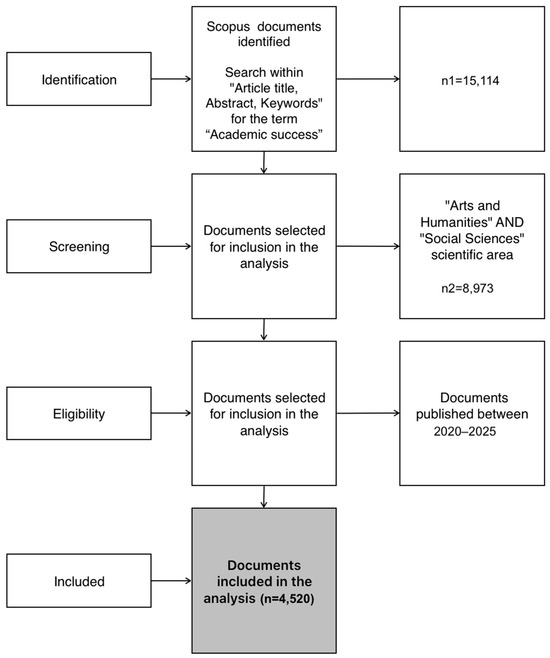
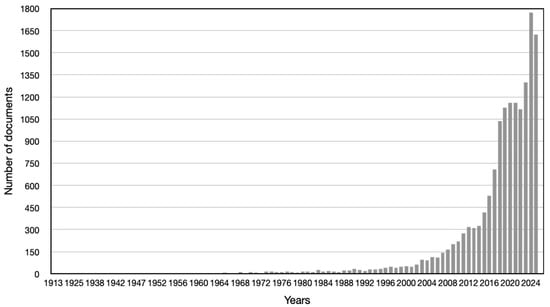
In the third stage, (iii) the systematic data collection, the corpus for analysis was extracted from the database. In the context of a systematic review, the study selection stage is fundamental to ensuring the consistency and clarity of the analysed corpus. To this end, the PRISMA guidelines (Moher et al., 2010) were used to structure the filtering process and specify the inclusion criteria adopted in the selection of the final sample. Based on this protocol, the search descriptors were defined and the documents were extracted. A total of 15,114 (n1 = 15,114) documents were identified in the Scopus database through a search for the term ‘academic success’ in the title, abstract and keywords fields. Restrictions were then applied to the scientific fields of Social Sciences and Arts and Humanities. This restriction was applied to ensure conceptual coherence with the research focus, as these domains concentrate most scholarly work directly addressing educational processes, student experiences, and the conceptual development of academic success, reducing the sample to 8973 (n2 = 8973) records.
In a subsequent stage, the time period was narrowed down to 2020–2025, the most recent period, which allows for an understanding of publication trends, resulting in a final sample of 4520 (n = 4520) documents: the final sample considered for analysis (see Figure 1). The temporal delimitation to the period between 2020 and 2025 was defined to capture the most recent developments and emerging trends in the field, particularly considering the transformations in higher education following the COVID-19 pandemic. This timeframe enables a focused analysis of contemporary conceptualisations of academic success.
Figure 1.
Flowchart of the process for selecting studies for analysis, developed in accordance with the PRISMA statement (Moher et al., 2010).
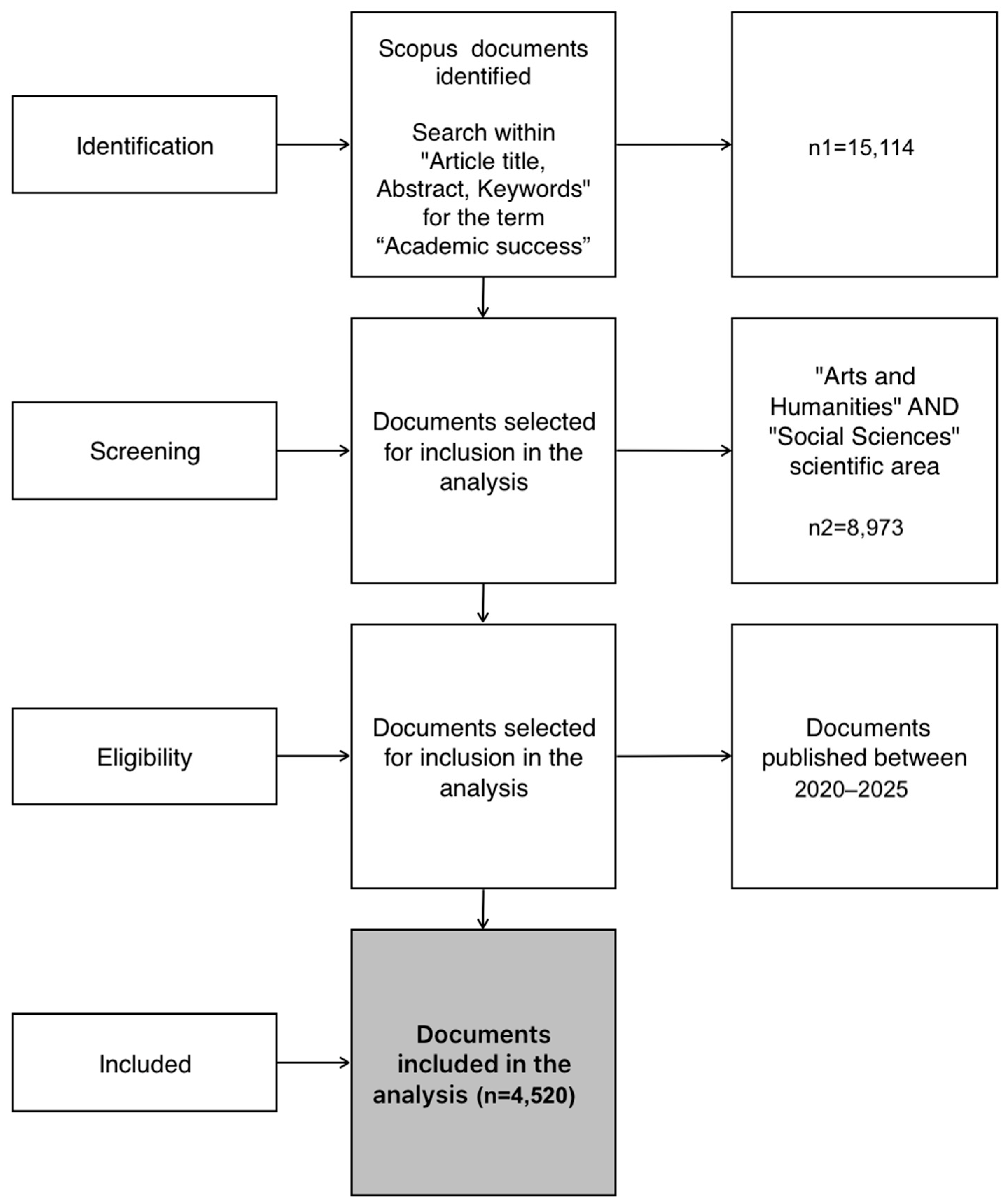
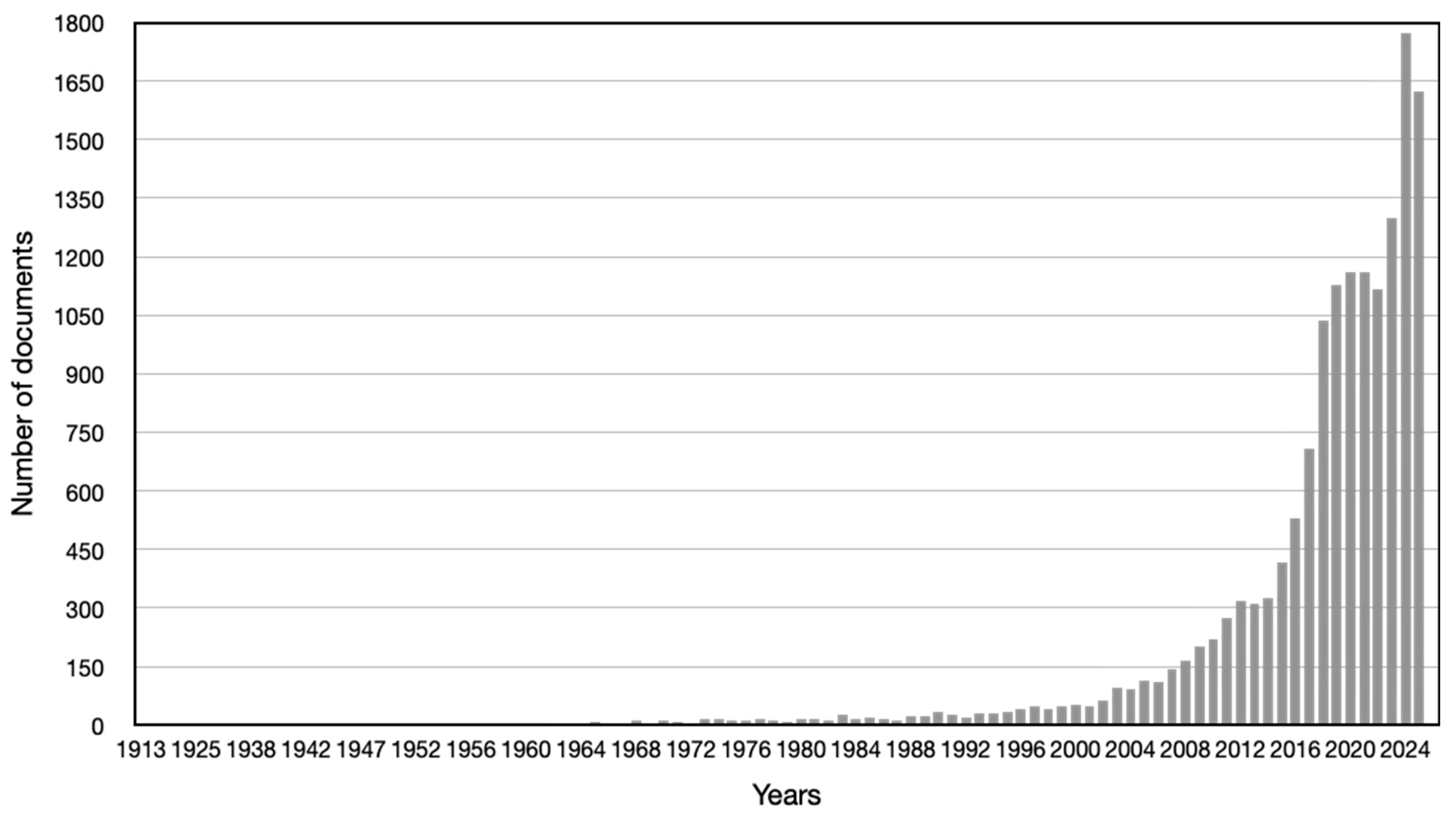
The analysis was carried out on the two levels indicated above: on the one hand, an examination of existing research as a quantitative expression of the field (PA); on the other, the mapping of conceptual and discursive links that reveal how the different works relate to one another (SM) (Donthu et al., 2021, pp. 287, 288, 294). In the Performance Analysis (PA) stage, the identified scientific output was quantified to recognise the volume of publications in the field under study. The initial search in the Scopus database identified a total of 15,114 (TP = 15,114) documents related to the term “academic success”. After applying the defined filters (see Figure 1), a sample of 4520 publications were obtained for NAY analysis. Although the final analytical corpus was delimited to publications from 2020–2025, the historical publication timeline presented below was retrieved from the broader Scopus dataset to contextualise the long-term evolution of the field. The data presented in Figure 2, Table 1 and Table 2 show the annual distribution of these publications over the period from 1913 to 2025 (the entire range available on the platform), allowing us to observe the recent evolution of scientific output on the topic, which is growing rapidly and has seen significant growth over the last 5 years, with annual scientific output on academic success averaging 1394 publications, highlighting the consolidation and continued growth of interest in this field of research.
Figure 2.
Number of documents published per year. Author’s image.
Table 1.
Abbreviations used to denote the bibliometric analysis techniques and metrics employed 1.
Table 2.
Number of articles published per year (NAY). Author’s image 1.
Concerning SM (Donthu et al., 2021, p. 288), this was applied with the aim of revealing the intellectual and conceptual structure of the field under study, enabling an understanding of the interrelationships between terms. This approach is not limited to measuring scientific productivity but intends to highlight the connections that underpin knowledge production; in the co-word analysis (CWA) (Donthu et al., 2021, p. 289), the co-occurrence of keywords and terms present in the abstracts was analysed, enabling the detection of thematic clusters and the mapping of the conceptual structure of the field. This technique is particularly suitable for identifying latent thematic structures, as it captures semantic relationships that may not be explicitly reflected in author-defined keywords. It enables the identification of emerging sub-themes or new discursive connections and proves to be more sensitive to the diversity of perspectives present in research on academic success.
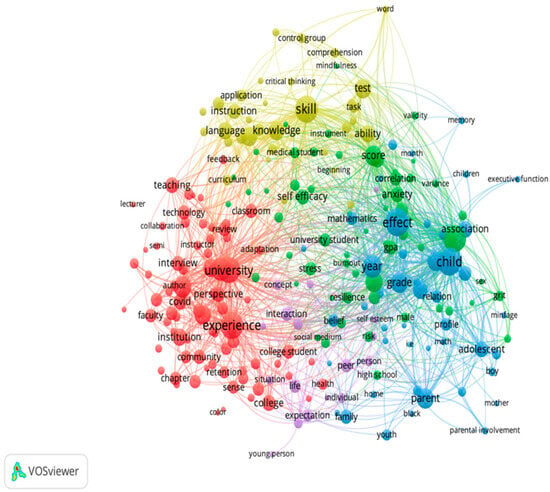
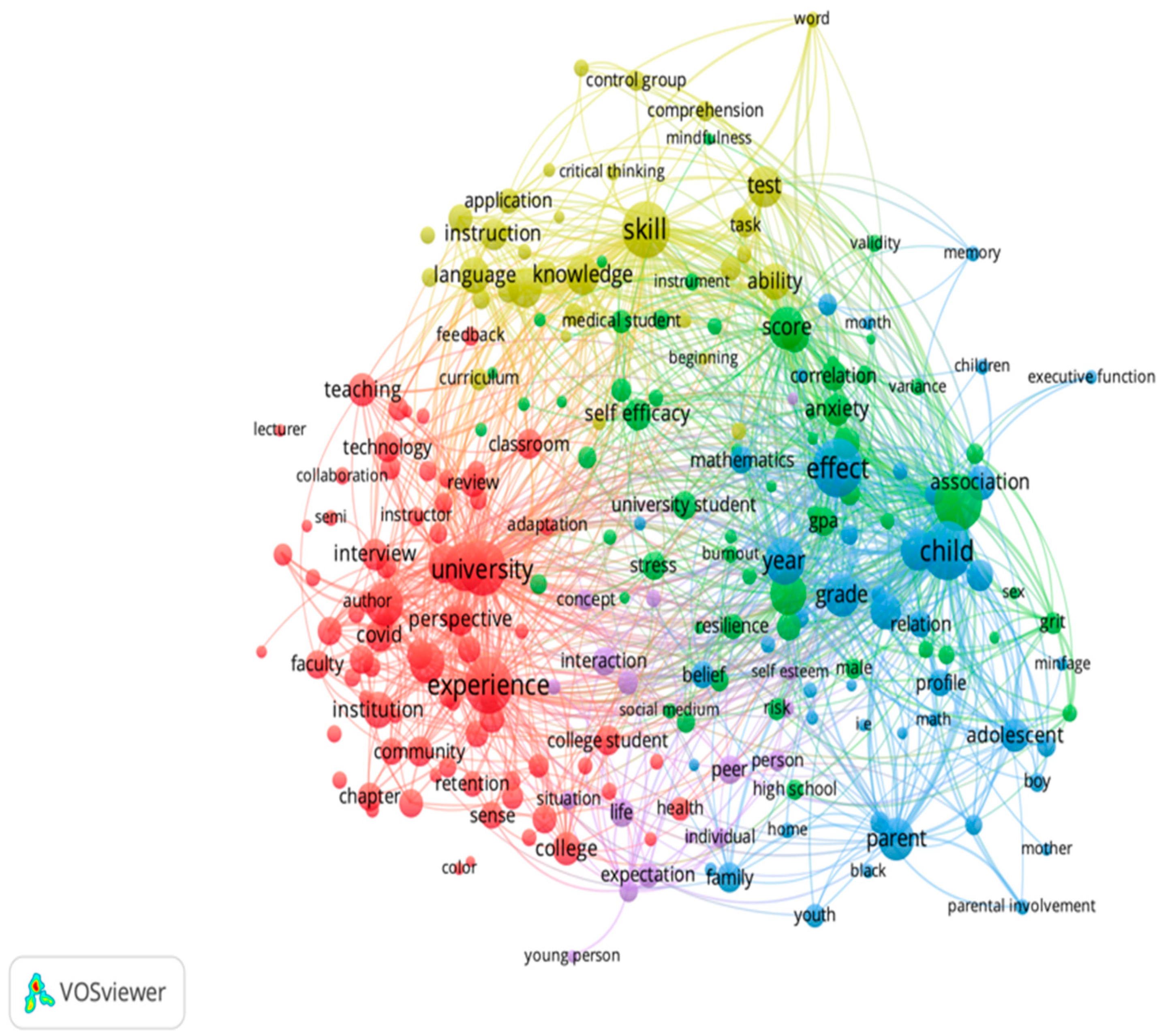
Co-word analysis (CWA) was applied with the aim of examining the co-occurrence of terms found in the abstracts, enabling the identification of emerging topics within the field of research on academic success. According to Donthu et al. (2021, p. 289), this technique assumes that words that frequently appear together are conceptually related, exploring existing or potential relationships between topics within a field of research based on the written content of the publications themselves. The resulting maps (Figure 3 and Figure 4) highlight the proximity between certain terms and the formation of a network of interconnections that reveals the thematic structure of the field under study, as well as the trends and temporal patterns of the publications. The analysis enabled the identification of distinct thematic groupings, with the following clusters present; the co-occurrence analysis allowed the identification of five main thematic groupings. The (i) red cluster is related to higher education and the university experience, bringing together terms such as university, adaptation, classroom, instructor, technology, lecturer, collaboration, experience, institution, community, retention and health. This cluster indicates contents related to the role of higher education institutions and pedagogical practices in academic success, highlighting how factors such as adaptation to the university context, the use of technologies, collaboration between lecturers and students, as well as health and retention conditions, are articulated within the educational experience. The second identified cluster is the (ii) blue cluster, which includes terms such as child, adolescent, parent, youth, parental environment, math, grade, year, mathematics and memory. This cluster reflects contents related to childhood and adolescence, including references to the role of the parental environment and to school performance in specific areas such as mathematics, suggesting the presence of studies that articulate family and cognitive factors within the academic trajectory. The third identified grouping is the (iii) yellow cluster, which brings together terms such as skill, language, knowledge, curriculum, instruction and ability. This cluster reflects contents associated with academic competences and the teaching–learning process, including references to curriculum, instructional practices and the development of knowledge. The fourth identified grouping is the (iv) green cluster, which brings together terms such as score, anxiety, risk, resilience, self-efficacy and burnout. This cluster reflects contents related to psychological and emotional factors associated with academic performance, including references to risk (burnout) and students’ resilience. The fifth grouping corresponds to the (v) purple cluster, which includes terms such as expectation, individual, self-esteem, life and interaction. This cluster reflects contents related to identity and to personal and relational dimensions, encompassing aspects such as expectations, self-esteem and social interactions.
Figure 3.
Number of documents published per year. Author’s image. Network of co-occurring terms extracted from abstracts, with a frequency threshold of more than 50 occurrences. Author’s image.
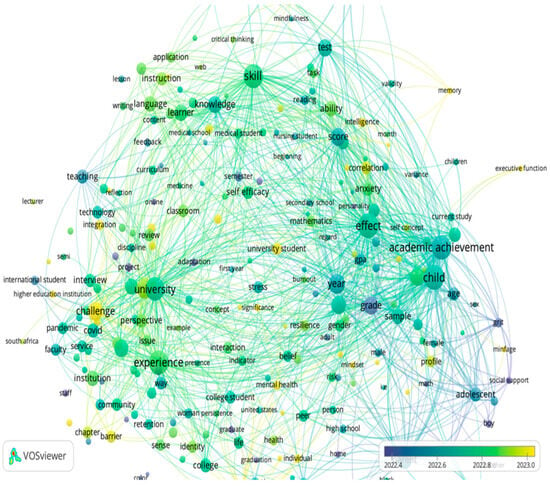
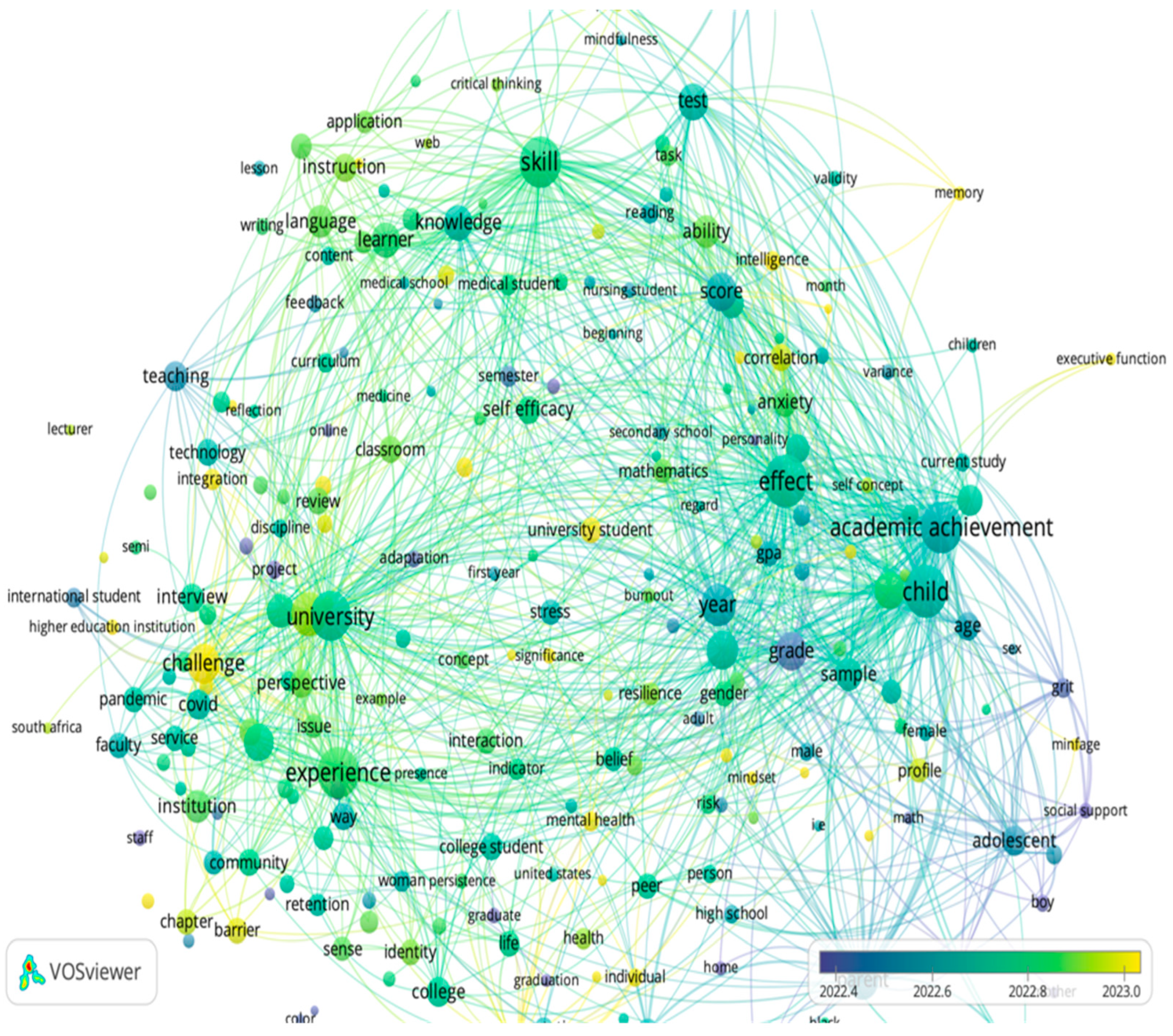
Figure 4.
Trends in the network of co-occurring terms extracted from abstracts, considering only those with a frequency above 50 occurrences. Author’s image.
In addition to identifying thematic clusters, a co-word analysis was also carried out and mapped using a timeline of co-occurrence trends, enabling the most recent topics in the field of research on academic success to be highlighted. Whilst the first co-occurrence map (Figure 3) provides an overview of the relationships between terms, the second graph (Figure 4), structured as a timeline, highlights the most current content, primarily dating from 2023 onwards—the most recent trends. In this context, concepts such as ‘individual’, ‘challenge’, ‘integration’, ‘university student’, ‘mental health’, ‘mindset’, ‘intelligence’, ‘memory’ and ‘executive function’ come to the fore, reflecting contemporary research into the student experience, mental health, cognitive development and the skills required to meet the current challenges of higher education.
This methodological articulation enables a novel analytical perspective by linking large-scale scientific patterns with students’ lived experiences, an approach that remains underexplored in the literature on academic success.
4.2. Study Context: Framing OPSA 2.0 Project Within the Mission of IPLeiria
The Polytechnic University of Leiria (IPLeiria) is a public higher education institution located in the central region of Portugal, comprising five schools and offering undergraduate, graduate, and technical–professional programmes across campuses in Leiria, Caldas da Rainha, Peniche, Torres Vedras, and Pombal. Guided by values of quality, inclusion, and innovation, IPLeiria aligns its strategic orientation with the European Standards and Guidelines for Quality Assurance (ESG) and the national benchmarks set by the Agency for Assessment and Accreditation of Higher Education (A3ES).
Beyond guaranteeing access, IPLeiria has adopted a multidimensional approach to student support, recognizing the diversity of its student population in terms of age, socioeconomic background, prior academic pathways, and career aspirations (Delnoij et al., 2020; Ribeiro et al., 2017; OECD, 2025). This approach acknowledges that flexible institutional responses are essential to promote academic success, foster resilience, and reduce dropout rates, particularly during the transition from secondary to higher education (Costa et al., 2024).
Over the years, several institutional initiatives have been developed, from pedagogical innovation projects (Skills4Future) to inclusion programmes (100% in®), addressing isolated dimensions of student experience. However, these initiatives often fell short of capturing academic success as a holistic construct. It is within this context that the Observatory for Academic Success (OPSA 2.0) was created, emerging from a multidisciplinary and participatory process involving academic staff, student support services, pedagogical councils, and student representatives.
4.2.1. OPSA 2.0 Project: A Holistic Institutional Strategy
OPSA 2.0 was formally launched in 2024 under the national sub-measure Innovation and Pedagogical Modernisation in Higher Education—Programme for the Promotion of Success and Reduction of School Dropout, aligned with the Recovery and Resilience Plan (RRP 2021–2026) and Next Generation EU, highlighting the strategic importance of national public investment in strengthening institutional capacity, innovation, and social resilience. Its design responds to two core institutional challenges: (i) reducing dropout among first-year students, who are particularly vulnerable to integration difficulties and misaligned expectations; and (ii) promoting a multidimensional conception of academic success that extends beyond grades and degree completion to encompass resilience, employability, and personal development (Bernardo & Esteban, 2017; Mateus, 2023; Tavares et al., 2024). These priorities were reinforced by institutional data showing fluctuating dropout and ECTS completion rates in the post-COVID-19 period.
The project is structured around seven strategic axes (programmes), which together constitute a preventive and systemic institutional framework (Mangas & Monteiro, 2025), as presented in Table 3.
Table 3.
OPSA 2.0 Strategic Programmes 1.
By integrating these programmes, OPSA 2.0 consolidates a coherent institutional culture centred on student success, inclusion, and well-being (Mangas & Monteiro, 2025), providing the empirical and institutional framework within which this study is situated.
4.2.2. OPSA 2.0 as a Case Study
The OPSA 2.0 project was conceived as an institutional strategy oriented towards and with students, adopting a participatory approach from its conception. Its definition and structure were the result of a collaborative process that actively involved student representative bodies, recognising them as key players in the development of policies and practices to promote academic success. This methodological choice is supported by contemporary literature, which emphasises the importance of listening to student voices to align institutional policies with students’ real needs and expectations (Cook-Sather, 2006; Fielding, 2004; Bovill et al., 2011; Carey, 2013).
Despite the efforts of the OPSA 2.0 Coordination team during the first semester of implementation, namely through institutional dissemination of its programmes, awareness-raising activities, and the creation of structured support mechanisms, the project remained largely unknown to a significant proportion of students, particularly first-year students. This finding revealed a key challenge: the need to strengthen the proximity of OPSA 2.0 to its main target audience.
In this context, at the beginning of the second semester of the 2025/2026 academic year, the OPSA 2.0 Coordination decided to adopt a strategy of decentralising its initiatives, giving rise to the initiative aptly named “OPSA 2.0 goes to School”. This initiative consisted of the coordination team visiting the five schools of the Polytechnic University of Leiria, holding face-to-face sessions specifically aimed at first-year students.
Characterisation of the Student Sample
The sociodemographic characterisation of the students participating in the initiative provides an understanding of the profile of the audience directly involved in the action. Analysis of the responses collected in the different sessions shows a clear predominance of students aged between 18 and 19, with these two age groups accounting for most participants. In all the sessions held, these ages appear to be the most representative, with a residual dispersion across other ages, including a few isolated cases of older students.
This pattern confirms that the initiative effectively reached students in direct transition from secondary to higher education, corresponding to the traditional profile of first-year entrants. The minority presence of non-traditional students, although relevant from the point of view of institutional diversity, does not alter the dominant trend of a young population in the early stages of academic, social and institutional adaptation. The age concentration observed is particularly relevant when analysed in the light of the literature that identifies the first year as a critical period in the academic career, marked by challenges of academic and social integration, redefinition of expectations and progressive construction of autonomy (Tinto, 1993, 2012; Kift et al., 2010; Thomas, 2012; Pedler et al., 2022; Costa & Caldeira, 2024). Empirical evidence has shown that it is during this initial period that processes of institutional belonging, involvement, inclusion, and persistence are consolidated (or weakened), with a direct impact on academic performance. Thus, the decentralisation strategy adopted by OPSA 2.0 is consistent with scientific evidence pointing to the importance of early interventions in promoting institutional inclusion and integration and preventing dropout.
The Project Development
The sessions were designed using workshop and gamification strategies as a pedagogical approach aimed at increasing student engagement, motivation, and active participation. The use of interactive digital tools, such as Kahoot and Mentimeter, created a dynamic, accessible environment aligned with the communication styles of younger generations, promoting attention, participation, and cognitive engagement. The literature has shown that gamification, when applied intentionally and in a pedagogically structured way, enhances intrinsic motivation, academic engagement and a sense of belonging, particularly in contexts of reception and integration in higher education (Deterding et al., 2011; Hamari et al., 2014; Buckley & Doyle, 2017; Zainuddin et al., 2020).
In addition to presenting OPSA 2.0 as an institutional project, these sessions aimed to clearly and accessibly disseminate information about programmes directly aimed at students, namely the Mentoring Programme, the Tutoring Programme, and the Special Learning Support Programmes. However, rather than being merely informative, the initiative was intentionally designed as a space for active listening and critical reflection.
After six months of running the project, and in a continuous effort to adapt and improve, the Coordination team considered it essential to ask students about their own conception of academic success. To this end, participants were asked the open question: “What does academic success mean to you?”.
The data were collected within participatory and experimental workshop sessions of a pedagogical and exploratory nature, in which students were invited to voluntarily and anonymously share their perceptions of academic success through interactive digital tools. Participants were informed about the purpose of the activity, and participation was entirely voluntary. The data collected were anonymous, and no personal or identifiable information was recorded. Given that the activities were non-invasive, pedagogically oriented, and did not involve sensitive data, formal ethical approval and written informed consent were not required according to institutional guidelines. Nevertheless, all procedures followed general ethical principles for scientific research, including respect for autonomy, confidentiality, and data protection.
The qualitative analysis followed an inductive coding process. Students’ open-ended responses were initially grouped according to semantic similarity and subsequently organised into broader analytical categories. These categories were then compared with the thematic clusters identified through the bibliometric analysis. Given the exploratory nature of the study and the brevity of participants’ responses, the analysis aimed to identify recurrent meaning patterns rather than produce exhaustive interpretative coding.
5. Results
The following section presents the findings from both analytical components: the bibliometric mapping and the qualitative analysis of students’ responses. It should be noted that the annual distribution of publications over the period 1913–2025 was presented in Section 4.1 (Figure 2 and Table 2) as part of the bibliometric procedure description; the results that follow focus on the thematic and conceptual analysis of the 2020–2025 corpus.
The analysis of the responses collected within the workshop sessions reveals a conception of academic success strongly anchored in traditional and instrumental dimensions. The most frequent responses refer to ideas such as “finishing the course”, “good grades”, “getting good grades” and “passing the subjects”. These categories appear across the different sessions, revealing a representation of success predominantly associated with completing the course and assessment performance.
At the same time, there are references to the achievement of personal goals (“achieving my goals”, “reaching targets”, “fulfilment”), as well as expectations of future employability (“good job”, “employment”, “good salary in the future”). These responses indicate that academic success is seen as a means of social mobility and professional fulfilment.
Less frequently, but conceptually relevant, there are also references to dimensions of well-being and personal fulfilment, such as “being happy”, “being psychologically well”, “mental health”, “resilience” and “personal development”. The presence of these responses, although in the minority, points to a more holistic and multidimensional conception of academic success, in line with recent trends in international research that emphasise the role of mental health, mindset and psychosocial integration in the university experience.
When cross-referenced with the results of the bibliometric analysis developed in this study, the students’ perceptions reveal a strong convergence with the clusters associated with academic performance and skills (yellow and red clusters), as well as a still incipient but significant presence of elements associated with psychological and identity factors (green and purple clusters). This relative gap between the centrality attributed to performance and the lower explicit value placed on subjective dimensions reinforces the importance of institutional projects such as OPSA 2.0, whose multidimensional approach seeks precisely to broaden the concept of academic success beyond formal results.
The systematic correspondence between the categories emerging from the students’ responses and the clusters identified in the bibliometric analysis is summarised in Table 4.
Table 4.
Analysis of Mentimeter categories and bibliometric clusters 1.
In this regard, the “OPSA 2.0 Goes to School” initiative serves as a key strategic tool, not only for raising awareness of existing support mechanisms, but also for fostering a gradual alignment between students’ perceptions and the institution’s vision of academic success. By promoting active participation, critical reflection and the valuing of student voices, this initiative reinforces the role of students as co-creators of their academic journeys and contributes to the consolidation of an institutional culture centred on success, inclusion and well-being.
6. Discussion
While the empirical component of the study is based on a specific institutional context, the aim is not statistical generalisation but analytical transferability. The case of the Polytechnic University of Leiria provides a situated perspective that enables the exploration of broader conceptual dynamics, contributing to the understanding of how global trends are locally interpreted and experienced. In this context, the discussion that follows seeks to place the empirical evidence collected in the context of the OPSA 2.0 initiative within the broader intellectual landscape of research on academic success. This section adopts a relational perspective, examining the extent to which the meanings attributed to academic success by first-year students at the Polytechnic University of Leiria resonate with, reproduce, or diverge from the conceptual patterns identified in the international scientific literature trends. By articulating the thematic clusters revealed through co-word analysis with the categories emerging from the Mentimeter responses, the analysis aims to explore how global discursive configurations intersect with local perceptions and lived experiences within higher education. In doing so, the discussion seeks to illuminate the tensions, absences, and emergent dimensions that shape understandings of academic success in institutional contexts. Table 5 is provided to operationalise this analytical comparison and to highlight the link between global trends and local perceptions.
Table 5.
Analysis of Mentimeter categories and bibliometric clusters 1.
The correlation between the emerging categories from Mentimeter and the five clusters identified in the bibliometric analysis reveals a strong convergence between local perceptions and global trends in research on ‘academic success’. There is a predominance of clusters associated with academic performance and institutional experience (red and yellow), suggesting that students tend to interpret success primarily through instrumental and outcome-oriented indicators. References to completing the degree, obtaining high grades and progressing academically emerge as central markers of success, reflecting a representation strongly anchored in formal educational achievement and institutional validation.
Nevertheless, the presence, albeit less prominent, of references to well-being, resilience and mental health brings students’ narratives closer to the latest trends within the area, which have increasingly emphasised the psychosocial, identity-related and formative dimensions of the academic journey. This conceptual shift reveals a progressively more integrated understanding of success, which is not limited to quantitative performance indicators, but incorporates factors such as emotional balance, a sense of belonging, personal purpose and preparation for entering the workforce.
At the same time, a closer examination of the empirical data presented in Table 4 allows a more detailed interpretation of how different dimensions of academic success are hierarchically structured in the students’ responses. The clusters associated with institutional progression and learning performance (red and yellow) show the highest levels of convergence with the Mentimeter data. In particular, the yellow cluster presents a very high correspondence with the students’ responses, which frequently refer to indicators such as “good grades”, “high averages”, “learning” and “retaining knowledge”. These results reinforce the central role of assessment and knowledge acquisition in students’ representations of success, suggesting that academic achievement continues to be predominantly interpreted through measurable outcomes within the teaching–learning process—a pattern that resonates with Schneider and Preckel’s (2017) observation that performance-based indicators remain central to students’ self-assessment, even as institutional frameworks increasingly emphasise transversal competencies.
The red cluster also presents a high degree of convergence, as students repeatedly define success in terms of persistence and completion of the academic trajectory. Expressions such as “finishing the course”, “completing the degree” and “passing all the subjects” reveal how institutional progression remains a key marker of success within the higher education experience. This emphasis reflects a representation of academic success strongly linked to formal educational pathways and institutional validation.
The purple cluster, associated with expectations and identity formation, likewise presents a high level of convergence between the international literature and the students’ perceptions. Responses such as “achieving my goals”, “personal fulfilment”, “getting a good job” and “having a good salary” illustrate how academic success is often framed as a pathway towards professional mobility and life accomplishment. In this sense, higher education is perceived not only as an academic environment but also as a symbolic space where personal aspirations, future career prospects and social recognition intersect.
Thus, the joint analysis suggests the coexistence of two interpretative frameworks: a traditional approach, of a meritocratic and evaluative nature, and an emerging approach, of a holistic nature, centred on subjective experience and the sustainability of the academic journey. This duality should not be understood as contradictory, but rather as indicative of an ongoing paradigm shift in higher education, in which academic success tends to be reconceptualised as a multidimensional phenomenon, linking performance, personal development and psychosocial integration.
Building on this interpretive tension, the following analysis examines the findings along three interrelated axes: (i) convergences with existing literature; (ii) divergences and unexpected patterns, and; (iii) broader implications for higher education practice. This analysis aims to situate empirical evidence within the wider scholarly debate and analysis on academic success.
The first axis of analysis concerns the points of convergence between the bibliometric mapping and students’ perceptions. The findings confirm that academic success continues to be predominantly conceptualised around performance-based and institutional dimensions. This pattern is visible both in the dominance of the red cluster (retention, completion, institutional progression) and the yellow cluster (assessment, learning strategies, skill development) in scientific literature, and in the responses collected through the OPSA 2.0 sessions, where grades, course completion, and employability emerged as the most salient markers of success. This convergence is consistent with well-established findings in the field: performance indicators remain central to how academic success is operationalised in both research and institutional practice (Schneider & Preckel, 2017; York et al., 2015), and instrumental representations of success continue to dominate students’ self-perceptions across different institutional contexts (Gonçalves et al., 2024).
More revealing, however, are the points of divergence. The blue cluster, which groups concepts associated with adolescent development, family context, and early educational trajectories, is virtually absent from students’ self-reported representations of academic success. This is noteworthy: while researchers and institutional frameworks increasingly acknowledge the role of prior socialisation and family capital in shaping academic trajectories, students themselves do not spontaneously mobilise these categories when defining their own success. A similar pattern emerges in relation to the green cluster. Although wellbeing, mental health, resilience, and belonging feature prominently in the bibliometric map as a growing field of inquiry, they appear only tentatively in students’ responses. Despite substantial evidence that mental health challenges are pervasive and persistent in post-pandemic higher education (Liverpool et al., 2023; Stock et al., 2022), students appear not to have fully internalised wellbeing as a core component of academic success. Belonging, though recognised in the literature as a critical driver of engagement, motivation, and retention (Pedler et al., 2022; Thomas, 2012), similarly remains peripheral in students’ spontaneous definitions of success.
Taken together, these convergences and divergences reveal a significant misalignment between the holistic frameworks promoted by institutions and researchers and the predominantly instrumental representations held by students. Academic success appears to be conceptualised by students primarily in terms of measurable outputs (grades, credentials, employability) while dimensions such as wellbeing, belonging, and personal development remain largely implicit or unacknowledged. This gap is not merely a theoretical concern: it carries direct practical implications. Institutions that invest in holistic support structures, such as the OPSA 2.0 project at IPLeiria, risk limited impact if students do not share the conceptual framework underpinning these interventions. Closing this representational gap requires not only the provision of support services, but also active pedagogical and communicative work to help students recognise and value the broader dimensions of their own academic trajectories.
7. Limitations and Implications for Practice and Future Research
This study presents several limitations that should be acknowledged. First, the bibliometric analysis relied on a single database (Scopus) and a single search descriptor (“academic success”), which may have excluded relevant studies indexed under related terms such as “student success”, “academic achievement”, or “student retention”. Second, the qualitative analysis was conducted in a single institutional context, which limits the transferability of findings to other settings. Third, the brevity of participants’ responses, collected through interactive digital tools in workshop sessions, constrains the depth of interpretative analysis possible.
Despite these limitations, the study offers a situated and methodologically transparent perspective on how academic success is constructed and experienced in contemporary higher education, and the constraints identified here point, in themselves, to productive directions for future inquiry, as outlined in the following section.
From a practical standpoint, the findings suggest that higher education institutions should invest in explicitly communicating holistic conceptions of academic success to students, particularly during the first year of study. The dominance of performance-oriented representations in students’ responses indicates that institutional narratives centred on wellbeing, belonging, and personal development have not yet been fully internalised. Institutional strategies such as OPSA 2.0 may play a crucial role in bridging this gap.
Future research should expand the sample across different institutions and national contexts, incorporate longitudinal designs to track changes in students’ perceptions over time, and explore the role of social background and prior educational experiences in shaping representations of academic success.
8. Conclusions
This study sought to examine how the concept of academic success is constructed and represented across two interconnected dimensions: international scientific production and students’ perceptions within higher education, taking the OPSA 2.0 project at the Polytechnic University of Leiria as a situated case study. By combining bibliometric analysis with the content analysis of students’ responses, the research made it possible to identify not only the main thematic trends shaping the contemporary field of academic success but also the ways in which these broader discursive formations resonate with local student understandings.
The findings reveal that international research on academic success is increasingly structured around a multidimensional framework, bringing together institutional, pedagogical, psychological and identity-related dimensions. At the local level, however, students’ perceptions remain predominantly anchored in instrumental and performance-oriented representations, particularly those associated with course completion, grades, academic progression and employability. At the same time, the presence of references to mental health, resilience, well-being and personal fulfilment suggests the emergence of a broader understanding of success, one that moves beyond formal achievement alone and begins to incorporate psychosocial and subjective dimensions of the academic journey.
The study points to the coexistence of two interpretative logics in higher education. These include a traditional logic, centred on measurable outcomes and institutional validation, and an emergent logic, more closely aligned with holistic and student-centred conceptions of success. Rather than being mutually exclusive, these logics coexist and reveal an ongoing reconfiguration of how success is imagined, experienced and institutionally framed within contemporary higher education.
From a theoretical perspective, this study contributes to current discussions on academic success by demonstrating that it should not be understood as a fixed or universally defined outcome, but rather as a dynamic, negotiated, and context-dependent construct. The findings highlight the coexistence of multiple interpretative frameworks, revealing how dominant performance-oriented models persist alongside emerging holistic conceptions centred on well-being, identity, and personal development. This duality reflects an ongoing reconfiguration of the concept within higher education, reinforcing the need to critically reassess how success is defined, measured, and operationalised.
Methodologically, the articulation between bibliometric mapping and qualitative analysis proved particularly productive, as it enabled the connection between macro-level scientific trends and micro-level student perceptions. This combined approach offers a robust framework for future research, allowing for a more nuanced understanding of how global scientific discourses are translated, appropriated, and reinterpreted within specific institutional contexts.
Finally, the case of OPSA 2.0 demonstrates the relevance of institutional strategies that do not reduce academic success to performance indicators alone, but instead seek to integrate support, belonging, well-being and pedagogical innovation into a broader culture of student success. In this regard, the study reinforces the importance of listening to students as active subjects in the construction of more inclusive, reflexive and sustainable higher education environments.
Future research may deepen this line of inquiry by expanding the sample, comparing different institutional contexts, and exploring in greater detail how students’ social backgrounds, trajectories and lived experiences shape their understandings of academic success. In parallel, bibliometric analysis should be understood as an ongoing analytical and interactive procedure, as the identification of thematic clusters depends on the continuous evolution of the scientific field, as well as on the different perspectives, search strategies and keyword parametrisations underpinning each study. In this sense, the configurations identified here should be understood as a dynamic mapping, open to refinement as new publications, descriptors, and conceptual approaches emerge. Future research may also benefit from advancing this line of inquiry through the development of a meta-analysis. While the present study has sought to map the conceptual, thematic and epistemological contours of the field through bibliometric procedures, a meta-analytical approach would enable a complementary examination of the empirical evidence produced across different studies.
Ultimately, this study underscores the importance of rethinking academic success as a multidimensional and evolving construct that must be aligned with the realities of increasingly diverse student populations. Institutional strategies, such as OPSA 2.0, play a crucial role in this process by fostering stronger, more inclusive, and preventive approaches to student success. However, achieving meaningful alignment requires not only structural interventions but also a deeper engagement with students’ own understandings and experiences. In this sense, recognising students as active agents in the construction of academic success emerges as a key condition for the development of more coherent, responsive, and sustainable higher education systems.
Author Contributions
S.S.M.: Writing—original draft, Writing—review & editing, Conceptualization, Methodology, Project administration, Supervision, Funding acquisition; C.M.: Writing—original draft, Writing—review & editing, Conceptualization, Methodology, Project administration, Supervision, Funding acquisition; W.A.C.: Writing—original draft, Writing—review & editing, Conceptualization, Methodology, Project administration, Supervision. All authors have read and agreed to the published version of the manuscript.
Funding
The Observatory for Academic Success (OPSA 2.0) project is co-financed by the Recovery and Resilience Plan—PRR, through NextGenerationEU, under Investment RE-C06-i07—Impulso Mais Digital, sub-measure Innovation and Pedagogical Modernization in Higher Education—Programme to Promote Success and Reduce School Dropouts in Higher Education, under the responsibility of the Directorate General for Higher Education (DGES).
Informed Consent Statement
Informed consent was waived due to the anonymous, non-invasive, and pedagogical nature of the data collection, which did not involve sensitive data, in accordance with institutional guidelines.
Data Availability Statement
The data presented in this study are available upon reasonable request from the corresponding author. The data are not publicly available due to ethical considerations, as the data were collected within participatory workshop sessions and, despite being anonymised, may allow indirect identification of participants.
Acknowledgments
The work of Susana Sardinha Monteiro is supported by national funds through FCT—Foundation for Science and Technology, I.P., under the Programme Contract UID/04112/2025. The Wok of Catarina Mangas is supported by national funds through FCT—Foundation for Science and Technology, I.P., under the Programme Contract UID/04647/2025.
Conflicts of Interest
The authors declare no conflicts of interest.
Notes
| 1 | The OPSA 2.0 project-the Observatory for Academic Success at the Polytechnic University of Leiria is an initiative funded by the Recovery and Resilience Plan (PRR), aimed at promoting academic success and preventing students from dropping out, particularly among first-year students. Based on an integrated and inclusive approach, it involves teaching staff, students and institutional services through initiatives such as academic tutoring and student mentoring, as well as innovative teaching practices and programmes to support integration (https://www.ipleiria.pt/projeto/opsa-2-0/) (accessed on 14 May 2026). |
| 2 | Data was extracted on 1 September 2025 from the Scopus platform at the following address: https://www.scopus.com/results/results.uri?s=TITLE-ABS-KEY%28%22Academic+success%22%29+AND+PUBYEAR+%3E+2019+AND+PUBYEAR+%3C+2026+&cluster=subjabbr%2C%22SOCI%22%2Ct%2C%22ARTS%22%2Ct&limit=10&origin=searchhistory&sort=plf-f&src=s&sot=b&sdt=cl&sessionSearchId=ccaf186106e04c57199912e43ce4eb7d (accessed on 1 September 2025). |
References
- Advance HE. (2019). Essential frameworks for enhancing student success—Enhancing student success in higher education. Advance HE. Available online: https://www.advance-he.ac.uk/sites/default/files/2020-05/Enhancing%20Student%20Success%20in%20Higher%20Education%20Framework.pdf (accessed on 10 March 2026).
- Alves, A., & Gonçalves, V. (2024). Construindo a docência na profissão académica: Possibilidades da formação em pedagogia no ensino superior. Revista Portuguesa de Educação, 37(1), e24015. [Google Scholar] [CrossRef] [Scilit]
- American Federation of Teachers. (2011). Student success in higher education. American Federation of Teachers. Available online: https://www.aft.org/sites/default/files/media/2014/studentsuccess0311.pdf (accessed on 10 March 2026).
- Astin, A. W. (1984). Student involvement: A developmental theory for higher education. Journal of College Student Personnel, 25(4), 297–308. [Google Scholar]
- Bernardo, A., & Esteban, M. (2017). ¿Por qué abandonan los estudios los universitarios? In L. Almeida, & R. Castro (Eds.), Ser estudante no ensino superior: As respostas institucionais à diversidade de públicos (pp. 158–176). Universidade do Minho. [Google Scholar]
- Bourdieu, P. (1986). The forms of capital. In J. Richardson (Ed.), Handbook of theory and research for the sociology of education (pp. 241–258). Greenwood. Available online: https://www.ucg.ac.me/skladiste/blog_9155/objava_66783/fajlovi/Bourdieu%20The%20Forms%20of%20Capital%20_1_pdf (accessed on 13 March 2026).
- Bovill, C., Cook-Sather, A., & Felten, P. (2011). Students as co-creators of teaching approaches, course design, and curricula: Implications for academic developers. International Journal for Academic Development, 16(2), 133–145. [Google Scholar] [CrossRef] [Scilit]
- Buckley, P., & Doyle, E. (2017). Gamification and student motivation. Interactive Learning Environments, 25(9), 1162–1175. [Google Scholar]
- Cantú, W. A., Gomes, N. P., & Grunfeld, M. P. (2025). Bridging the gap between the present and the future: Exploring the weak signal concept from a trend studies cultural perspective. In J. Reis, J. Cascalho, M. Peter, L. Reis, & M. Tiago (Eds.), Marketing and smart technologies. ICMarkTech 2024. smart innovation, systems and technologies (Vol. 439, pp. 233–246). Springer. [Google Scholar] [CrossRef] [Scilit]
- Cantú, W. A., & Milhano, S. (2025). Creative crossroads: A bibliometric analysis of subcultures, arts, and countercultures in shaping emerging sociocultural trends. In N. Martins, & D. Brandão (Eds.), Advances in design and digital communication v. DIGICOM 2024 (Vol. 51, pp. 487–497). Springer. [Google Scholar] [CrossRef] [Scilit]
- Cantú, W. A., Milhano, S., & Magueta, L. (2024). Emotions, arts and intervention: Trends, synergies and perspectives through a bibliometric analysis. Revista Conhecimento Online, 2. [Google Scholar] [CrossRef] [Scilit]
- Cantú, W. A., & Sousa, J. G. (2025). The language of cultural studies and the arts: A digital mapping of entanglements and trends based on the digital humanities. E-Revista de Estudos Interculturas, (1), 1–23. [Google Scholar] [CrossRef]
- Carey, P. (2013). Students as co-producers in a marketised higher education system: A case study of students’ experience of participation in curriculum design. Innovations in Education and Teaching International, 50(3), 250–260. [Google Scholar] [CrossRef] [Scilit]
- Cerdeira, L., Almeida, L. S., Costa, A. R., & Gonçalves, C. (2018). Predictors of student success in higher education: Secondary school internal scores versus national exams. Higher Education Quarterly, 72(4), 304–313. [Google Scholar] [CrossRef] [Scilit]
- Cook-Sather, A. (2006). Sound, presence, and power: “Student voice” in educational research and reform. Curriculum Inquiry, 36(4), 359–390. [Google Scholar] [CrossRef] [Scilit]
- Costa, A. R., & Caldeira, A. (2024). Da aprendizagem ao sucesso académico: A perspetiva dos estudantes do ensino superior. In A. R. Costa, A. Caldeira, C. Marinho-Araujo, & L. S. Almeida (Eds.), Sucesso académico no ensino superior (pp. 119–135). ADIPSIEDUC. [Google Scholar]
- Costa, A. R., Caldeira, A., Marinho-Araujo, C., & Almeida, L. S. (Eds.). (2024). Sucesso académico no ensino superior. Associação para o Desenvolvimento da Investigação em Psicologia da Educação. [Google Scholar]
- Delnoij, L. E., Dirkx, K. J., Janssen, J. P., & Martens, R. L. (2020). Predicting and resolving non-completion in higher (online) education—A literature review. Educational Research Review, 29, 100313. [Google Scholar]
- Deterding, S., Dixon, D., Khaled, R., & Nacke, L. (2011). From game design elements to gamefulness. In Proceedings of the 15th international academic MindTrek conference (pp. 9–15). ACM. [Google Scholar]
- Donthu, N., Kumar, S., Mukherjee, D., Pandey, N., & Lim, W. M. (2021). How to conduct a bibliometric analysis: An overview and guidelines. Journal of Business Research, 133, 285–296. [Google Scholar] [CrossRef] [Scilit]
- Donthu, N., Kumar, S., & Pattnaik, D. (2020). Forty-five years of journal of business research: A bibliometric analysis. Journal of Business Research, 109, 1–14. [Google Scholar] [CrossRef] [Scilit]
- Farias, R. V., Gouveia, V. V., & Almeida, L. S. (2024). Indicadores do sucesso acadêmico na educação superior: Análise segundo natureza dos cursos. Psicologia Escolar Educacional, 28, 2024. [Google Scholar] [CrossRef] [Scilit]
- Fielding, M. (2004). Transformative approaches to student voice: Theoretical underpinnings, recalcitrant realities. British Educational Research Journal, 30(2), 295–311. [Google Scholar] [CrossRef] [Scilit]
- Filho, J., & Silveira, I. (2021). Detecção precoce de estudantes em risco de evasão usando dados administrativos e aprendizagem de máquina. Revista Ibérica de Sistemas e Tecnologias de Informação, E40, 480–495. [Google Scholar]
- Gil, A. (2002). Como elaborar projetos de pesquisa (4th ed.). Atlas S.A. [Google Scholar]
- Gil, A. (2008). Métodos e técnicas de pesquisa social. Atlas. [Google Scholar]
- Gonçalves, G. S., Serra, F. A. R., Storopoli, J. E., Scafuto, I. C., & Rafael, D. N. (2024). Undergraduate student retention activities: Challenges and research agenda. SAGE Open, 14(2), 1–21. [Google Scholar] [CrossRef] [Scilit]
- Gutiérrez-Salcedo, M., Martínez, M. Á., Moral-Munoz, J. A., Herrera-Viedma, E., & Cobo, M. J. (2018). Some bibliometric procedures for analyzing and evaluating research fields. Applied Intelligence, 48(5), 1275–1287. [Google Scholar] [CrossRef] [Scilit]
- Hamari, J., Koivisto, J., & Sarsa, H. (2014). Does gamification work? A literature review. In Proceedings of the 47th Hawaii international conference on system sciences (pp. 3025–3034). IEEE. [Google Scholar]
- Kift, S., Nelson, K., & Clarke, J. (2010). Transition pedagogy: A third-generation approach to FYE—A case study of policy and practice for the higher education sector. The International Journal of the First Year in Higher Education, 1(1), 1–20. [Google Scholar] [CrossRef] [Scilit]
- Kocsis, Á., & Molnár, G. (2024). Factors influencing academic performance and dropout rates in higher education. Oxford Review of Education, 51(3), 414–432. [Google Scholar] [CrossRef] [Scilit]
- Linnenluecke, M. K., Marrone, M., & Singh, A. K. (2020). Conducting systematic literature reviews and bibliometric analyses. Australian Journal of Management, 45(2), 175–194. [Google Scholar] [CrossRef] [Scilit]
- Liu, C., Abu Bakar, Z., & Xu, Q. (2025). Self-regulated learning and academic achievement in higher education: A decade systematic review. International Journal of Research and Innovation in Social Science, 9(3), 4488–4504. [Google Scholar] [CrossRef] [Scilit]
- Liverpool, S., Moinuddin, M., Aithal, S., Owen, M., Bracegirdle, K., Caravotta, M., Walker, R., Murphy, C., & Karkou, V. (2023). Mental health and wellbeing of further and higher education students returning to face-to-face learning after COVID-19 restrictions. PLoS ONE, 18(1), e0280689. [Google Scholar] [CrossRef] [Scilit] [PubMed]
- Mangas, C., & Monteiro, S. S. (2025). Enhancing student success through a multi-dimensional approach: The OPSA 2.0 project at the polytechnic university of Leiria. Education Sciences, 15(12), 1681. [Google Scholar] [CrossRef] [Scilit]
- Manulat, J. B. (2025). Key predictors of academic success in flexible learning environments: A PLS-SEM analysis. Frontiers in Education, 10, 1633040. [Google Scholar] [CrossRef] [Scilit]
- Marinho-Araujo, C., Armando, J., & Almeida, L. S. (2024). Sucesso académico no ensino superior: Os vetores do desenvolvimento psicossocial e as competências transversais como referência. In A. R. Costa, A. Caldeira, C. Marinho-Araujo, & L. S. Almeida (Eds.), Sucesso académico no ensino superior (pp. 34–57). ADIPSIEDUC. [Google Scholar]
- Mateus, A. (2023). Sucesso e inclusão: Medidas e iniciativas de apoio aos estudantes do ensino superior. Direção Geral do Ensino Superior. [Google Scholar]
- Moher, D., Liberati, A., Tetzlaff, J., & Altman, D. G. (2010). Preferred reporting items for systematic reviews and meta-analyses: The PRISMA statement. BMJ, 339, b2535. [Google Scholar] [CrossRef] [PubMed]
- Monteiro, S. S., & Mangas, C. (2026). Fostering student success through peer mentoring: Understanding student mentors’ motivations. International Journal of Advances in Signal and Image Sciences, 12, 1089–1100. [Google Scholar] [CrossRef] [Scilit]
- Mukherjee, D., Lim, W. M., Kumar, S., & Donthu, N. (2022). Guidelines for advancing theory and practice through bibliometric research. Journal of Business Research, 148, 101–115. [Google Scholar] [CrossRef] [Scilit]
- OECD. (2025). Higher education in Portugal: Policies for access and success. OECD Publishing. [Google Scholar] [CrossRef] [Scilit]
- Pedler, M. L., Willis, R., & Nieuwoudt, J. E. (2022). A sense of belonging at university: Student retention, motivation and enjoyment. Journal of Further and Higher Education, 46(3), 397–408. [Google Scholar] [CrossRef] [Scilit]
- Pradanov, C., & Freitas, E. (2013). Metodologia do trabalho científico: Métodos eTécnicas da pesquisa e do trabalho académico (2nd ed.). Universidade Feevale. [Google Scholar]
- Ribeiro, F., Cabreira, C., Silva, A. P., & Cravino, J. (2017). Intervir para reduzir o abandono: Recursos, respostas institucionais e intervenção em situações de risco de abandono na Universidade de Trás-os-montes e Alto Douro. In L. Almeida, & R. Castro (Eds.), Ser estudante no ensino superior: As respostas institucionais à diversidade de públicos (pp. 177–196). Universidade do Minho. [Google Scholar]
- Ryan, R. M., & Deci, E. L. (2000). Self-determination theory and the facilitation of intrinsic motivation. American Psychologist, 55(1), 68–78. [Google Scholar] [CrossRef] [Scilit] [PubMed]
- Schneider, M., & Preckel, F. (2017). Variables associated with achievement in higher education: A systematic review of meta-analyses. Psychological Bulletin, 143(6), 565–600. [Google Scholar] [CrossRef] [Scilit] [PubMed]
- Seco, G., Alves, S., Filipe, L., Pereira, A. P., & Duarte, A. L. (2012). Desenvolvimento de competências transversais no ensino superior: A experiência do serviço de apoio ao estudante do Instituto Politécnico de Leiria. In A. Noutel, E. Brutten, G. Pires, & I. Huet (Eds.), Ensino superior: Saberes, experiências e desafios. Ideia Editora. [Google Scholar]
- Stock, C., Helmer, S. M., & Heinrichs, K. (2022). COVID-19 related disruption in higher education students’ health and wellbeing: Implications for university action. Frontiers in Public Health, 10, 1015352. [Google Scholar] [CrossRef] [Scilit] [PubMed]
- Tavares, O., Sin, C., & Amaral, A. (2024). Sucesso académico no ensino superior: Políticas e práticas. In A. R. Costa, A. Caldeira, C. Marinho-Araujo, & L. S. Almeida (Eds.), Sucesso académico no ensino superior (pp. 14–33). ADIPSIEDUC. [Google Scholar]
- Thomas, L. (2012). Building student engagement and belonging in higher education at a time of change. Paul Hamlyn Foundation. [Google Scholar]
- Tinto, V. (1993). Leaving college: Rethinking the causes and cures of student attrition (2nd ed.). University of Chicago Press. [Google Scholar]
- Tinto, V. (2012). Completing college: Rethinking institutional action. University of Chicago Press. [Google Scholar]
- van Eck, N. J., & Waltman, L. (2010). Software survey: VOSviewer, a computer program for bibliometric mapping. Scientometrics, 84(2), 523–538. [Google Scholar] [CrossRef] [Scilit] [PubMed]
- van Eck, N. J., & Waltman, L. (2014). Visualizing bibliometric networks. In Measuring scholarly impact (pp. 285–320). Springer International Publishing. [Google Scholar] [CrossRef] [Scilit]
- Veiga Simão, A. M., Flores, M. A., Fernandes, S., & Figueira, C. (2008). Tutoria no ensino superior: Concepções e práticas. Sísifo: Revista de Ciências da Educação, 7, 75–88. [Google Scholar]
- Wood, L. N., & Breyer, Y. A. (2017). Success in higher education. In L. N. Wood, & Y. A. Breyer (Eds.), Success in higher education (pp. 1–19). Springer. [Google Scholar] [CrossRef] [Scilit]
- York, T. T., Gibson, C., & Rankin, S. (2015). Defining and measuring academic success. Practical Assessment, Research, and Evaluation, 20(1), 5. [Google Scholar] [CrossRef]
- Zainuddin, Z., Chu, S. K. W., Shujahat, M., & Perera, C. J. (2020). The impact of gamification on learning and instruction. Educational Research Review, 30, 100326. [Google Scholar] [CrossRef] [Scilit]

Disclaimer/Publisher’s Note: The statements, opinions and data contained in all publications are solely those of the individual author(s) and contributor(s) and not of MDPI and/or the editor(s). MDPI and/or the editor(s) disclaim responsibility for any injury to people or property resulting from any ideas, methods, instructions or products referred to in the content. |
© 2026 by the authors. Licensee MDPI, Basel, Switzerland. This article is an open access article distributed under the terms and conditions of the Creative Commons Attribution (CC BY) license.